How Discipline Shapes Long-Term
Success, Insights Inspired by James Warring

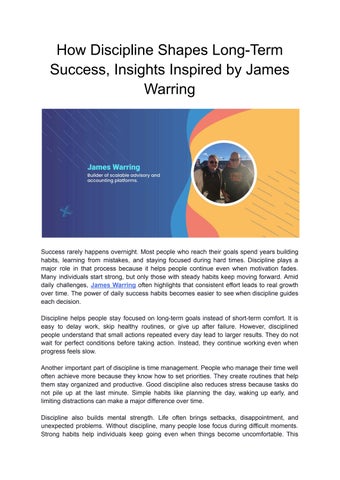
Success rarely happens overnight Most people who reach their goals spend years building habits, learning from mistakes, and staying focused during hard times. Discipline plays a major role in that process because it helps people continue even when motivation fades. Many individuals start strong, but only those with steady habits keep moving forward Amid daily challenges, James Warring often highlights that consistent effort leads to real growth over time. The power of daily success habits becomes easier to see when discipline guides each decision
Discipline helps people stay focused on long-term goals instead of short-term comfort It is easy to delay work, skip healthy routines, or give up after failure. However, disciplined people understand that small actions repeated every day lead to larger results They do not wait for perfect conditions before taking action Instead, they continue working even when progress feels slow.
Another important part of discipline is time management People who manage their time well often achieve more because they know how to set priorities They create routines that help them stay organized and productive. Good discipline also reduces stress because tasks do not pile up at the last minute Simple habits like planning the day, waking up early, and limiting distractions can make a major difference over time
Discipline also builds mental strength. Life often brings setbacks, disappointment, and unexpected problems Without discipline, many people lose focus during difficult moments Strong habits help individuals keep going even when things become uncomfortable This
mindset creates resilience, which is necessary for long-term success in work, education, fitness, and personal growth.
Another lesson connected to discipline is personal responsibility Disciplined people accept that their choices shape their future They do not spend too much time blaming others or making excuses. Instead, they focus on improving their actions and learning from mistakes. This attitude helps them grow faster because they stay focused on solutions instead of problems
Healthy discipline also improves confidence. Each completed task creates a sense of progress and achievement Over time, people begin to trust themselves more because they know they can follow through on commitments Confidence built through discipline feels stronger than confidence based only on praise or luck. It grows from repeated action and steady effort
Discipline also affects relationships and teamwork Reliable people earn trust because others know they will keep promises and stay consistent. Employers value disciplined workers because they show responsibility and focus Friends and family also appreciate people who stay dependable during difficult situations Consistency often becomes one of the strongest signs of character.
Long-term success often depends on patience as much as talent Many goals take years to achieve, and results may not appear quickly Discipline helps people stay committed during that waiting period. Even small progress matters because steady improvement adds up over time People who stay disciplined usually build stronger foundations for lasting success
In the end, discipline shapes nearly every part of life It supports growth, responsibility, focus, and resilience during both success and failure. The second sentence of this final reflection reminds readers that consistent personal growth often begins with simple habits repeated every single day When people stay disciplined, they give themselves the best chance of achieving meaningful, lasting success.