Dedicated
HOSPITAL PROFESSIONAL NEWS IRELAND

Ocular surface control starts with Lacrifill®
Take control of your patients’ ocular surface with Lacrifill®:
✔ Hyaluronic acid canalicular gel1
✔ Maintains natural lubricating tears on the ocular surface1
✔ Each administration provides dry eye relief for 6 months1


IN THIS ISSUE: NEWS: Pilot for SelfAdministration of Medicines Page 4 CONFERENCE: Royal College of Physicians of Ireland Leadership Forum Page 7
FEATURE: Barriers to Early Melanoma Diagnosis Page 15 CLINICAL: Complex PCI in Contemporary Hospital Practice Page 23 CPD: Bladder Cancer Page 29 AWARDS: Irish Pharmacy Awards Hospital Finalists 2026 Page 33
INTERVIEW: Reshaping Traumatic Brain Injury Diagnosis Page 58
Call for papers: make your contribution to Hospital Professional News
Articles
Research Papers
Reviews
Programme Descriptions
Reports
Case Reports
Letters to Editor
Support fellow hospital professionals as well as aspiring junior professionals and early-year hospital pharmacists
Practice reports share innovations on any area of practice, including delivering clinical services, pharmacy administration, or new approaches to inform and engage with patients
Perspective articles focus on a specific field or discipline and discuss current advances or future directions, and may include original data as well as expert insight and opinions



Contents Foreword
Hospital Consultants Leading Digital Charge P5
Pharmacy Memorandum of Understanding P6
RCPI Institute of Obstetricians & Gynaecologists Spring Conference P8
Advancing Multidisciplinary Excellence in Melanoma Care P16
Irish Pharmacy Awards 2026 –Hospital Finalists Revealed P33
Powering Advanced Nursing and Midwifery Practice P39
Transforming Breast Cancer Detection P48
REGULARS
Feature: Complex PCI in Contemporary Hospital Practice P23
CPD: Bladder Cancer P29

Editor
Welcome to the May issue of Hospital Professional News, where this month we focus on innovation, leadership and clinical excellence shaping the future of hospital care in Ireland.
Across the healthcare system, there is growing recognition that embracing innovation and strengthening collaboration will be essential in meeting the increasing demands facing our hospitals and healthcare services. In this issue, we report on the publication of the Health Information and Quality Authority’s assessment of Teledermatology, a development warmly welcomed by the Irish Hospital Consultants Association. The report confirms that digital imaging-supported referrals represent a safe and effective clinical pathway, with the potential to significantly improve access to care, reduce waiting lists and support the management of hundreds of thousands of additional patients in the years ahead. Importantly, it also highlights the innovative work already being carried out by Consultants and healthcare teams nationwide who continue to adopt technologydriven solutions to enhance patient outcomes.

Feature: CAR-T Therapy in Multiple Myeloma P42
Feature: Overseas Obesity Care P52
Clinical R&D: P60
Hospital Professional News is a publication for Hospital Professionals and Professional educational bodies only.
All rights reserved by Hospital Professional News. All material published in Hospital Professional News is copyright and no part of this magazine may be reproduced, stored in a retrieval system or transmitted in any form without written permission.
IPN Communications Ltd have taken every care in compiling the magazine to ensure that it is correct at the time of going to press, however the publishers assume no responsibility for any effects from omissions or errors.
PUBLISHER
IPN Communications Ltd.
77 Camden Street Lower, Dublin D02 XE80 Office: +353 (01) 2339121
GROUP DIRECTOR
Natalie Maginnis natalie@ipn.ie
EDITOR
Kelly Jo Eastwood kelly-jo@ipn.ie
CONTENT AND DIGITAL
CREATOR
Chantal Thurlby-Alexander chantal@hospitalprofessionalnews.ie +353 87 337 9258
ACCOUNTS

Fiona Bothwell fiona@ipn.ie
SALES & BUSINESS
DEVELOPMENT LEAD
Sibongile Swan Mude swan@hospitalprofessionalnews.ie
CONTRIBUTORS
Desmond J Tobin
Michelle Lonergan
Dr Marcus Choo
JJ Coughlan
Robert Byrne
Colm Hanratty
Dr. Waseem Darwish
Professor John McCaffrey
Professor Danile Cagney
Mr Gregory Nason
Dr Ciara Barrett
Anna Marie Kiernan
Dr Deirdre Forde
Dr Kate McCann
Sumaya Shaikh
Carel W le Roux
DESIGN DIRECTOR
Ian Stoddart Design


Leadership and collaboration are also central themes in this month’s edition. We feature coverage from the recent Royal College of Physicians of Ireland Leadership Forum, where clinicians, policymakers and senior health officials came together to examine how stronger partnership and medical leadership can help build a more sustainable healthcare system. At a time of increasing complexity across healthcare delivery, the discussions reinforced the importance of strategic workforce planning, good governance and shared responsibility in shaping the future of patient care in Ireland.
Clinically, this issue includes an insightful feature on Complex PCI in Contemporary Hospital Practice: Expanding Treatment Options for High-Risk Coronary Disease, authored by JJ Coughlan, Robert Byrne and Colm Hanratty. The article explores the evolving role of complex percutaneous coronary intervention in treating high-risk coronary disease and highlights the advances continuing to transform cardiovascular care within modern hospital practice.
We are also pleased to feature coverage of the hospital finalists in the 2026 Irish Pharmacy Awards. This year marks an important milestone for the Awards, with the introduction of dedicated hospital pharmacy categories recognising the outstanding contribution of hospital pharmacists, technicians and multidisciplinary teams. These additions reflect the increasingly vital role hospital pharmacy plays across the patient journey — from medicines optimisation and patient safety initiatives to clinical leadership, research and innovation. It is fitting that excellence across all areas of pharmacy practice is now being recognised and celebrated on a national stage.
As always, we hope this issue provides valuable insight, professional learning and a platform to highlight the outstanding work taking place throughout Ireland’s hospitals and healthcare services.
New Pilot for Self-Administration of Medicines
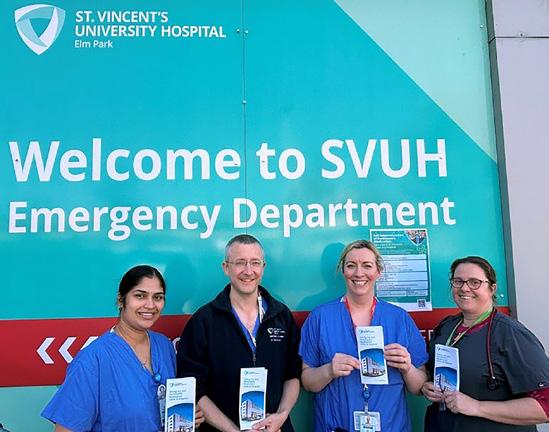
St. Vincent’s University Hospital (SVUH) has launched what is believed to be the first hospital pilot in Ireland allowing eligible patients with Parkinson’s to selfadminister certain time-critical medication while in hospital.
The initiative, which begins in the Emergency Department and on an inpatient Care of the Older
PMI Masterclass
Persons’ ward, aims to address a well-recognised challenge in Parkinson’s care: delays in medication administration during hospital stays.
Parkinson’s medication must be taken at specific times throughout the day. Even short delays can lead to worsening symptoms, mobility issues and significant
Clinical colleagues at St. Vincent’s University Hospital marking the launch of the Self-Administration of Parkinson’s Medication pilot in the Emergency Department. The initiative supports eligible patients to receive certain time-critical Parkinson’s medicines on time while in hospital
distress for patients. In busy acute settings, standard medication rounds do not always align with these precise timings.
Under the new pilot, patients who normally manage their own Parkinson’s medication at home may continue to take certain time-critical medicines themselves in hospital, once assessed as suitable by the clinical team. All other medicines remain nurse administered.
Dr Tom MacMahon, Consultant in Emergency Medicine at SVUH, said the programme represents a practical step forward in patientcentred care.
“We know that timing is critical for people living with Parkinson’s. Even small delays can have a real impact on symptoms. This pilot
allows suitable patients to maintain their established routine in a safe, structured way, while remaining under full clinical oversight. It improves safety and enhances the patient experience in a busy hospital environment.”
The programme was developed in collaboration with Emergency Medicine, Care of the Older Person, Nursing, Pharmacy and specialist Parkinson’s services and aligns with national guidance on time-critical medicines.
Niamh O’Hanlon, Chief II Pharmacist at SVUH, said the pilot is firmly grounded in medication safety principles.
“This is about reducing the risk of omitted or delayed doses while maintaining strong clinical governance. Only certain timecritical Parkinson’s medicines are included, and every patient is individually assessed. Supporting appropriate self-administration can make a meaningful difference to patients’ comfort and outcomes.” Phase 1 of the pilot is now live in the Emergency Department and on Our Lady’s Ward. If successful, the model will expand to additional wards.
The Pharmaceutical Managers’ Institute are delighted to partner with the University of Galway’s Health Economics and Policy Analysis Centre (HEPAC) to deliver a one-day short course in Health Economic Modelling for Health Technology Assessment in Ireland. The course has been designed to provide a practical, accessible introduction to cost-effectiveness modelling, while also offering valuable insights and applied learning for professionals already working with HTA and economic models. It takes place on Thursday June 18th from 9.30-4pm at the Irish Management Institute, Sandyford, Dublin.
This course is designed for HEOR, Market Access, and adjacent professionals working in the pharmaceutical and healthcare sectors. No prior modelling experience is required. The course is specifically designed to make modelling concepts approachable and practical, while still delivering meaningful value to participants with existing knowledge or experience.
Cautious Welcome for PA Review
The Irish Medical Organisation (IMO) has cautiously welcomed the publication by the HSE of an independent review of the role of physician assistant (PA) in the Irish public health system but has warned that concerns around regulation and resourcing need to be addressed for the grade to integrate effectively.
The IMO said that it welcomed the review’s clear distinction between doctor and PA, and its recommendation to refer to the grade as ‘physician assistant’ rather than ‘physician associate’, to minimise the risk of patients confusing the grade with that of
a doctor. It also welcomed the review outlining limitations to the scope of practice.
However, it said that no clear regulatory obligations have been outlined, and it is unclear how consultants would be in a position to supervise, train and monitor PAs given their existing onerous workload.
Speaking today, Professor Matthew Sadlier, President of the IMO and a consultant psychiatrist, said: “While the IMO cautiously welcomes this review, significant work remains. The physician assistant role must remain a
support to the clinical team, not a substitute for a doctor. The HSE’s review categorically states that the role of physician assistant must not be employed in such a manner. It is also our position that the implementation of the position into a clinical team should only happen where consultants have been engaged with directly.
“There remain notable concerns amongst doctors around the lack of clear regulatory obligations in relation to the role. Moreover, expecting already overstretched consultants to supervise and train PAs without a substantial increase in consultant numbers is simply
not realistic. Resourcing and regulation will determine whether this new initiative succeeds or fails.”
He added that the work of PAs cannot negatively impact on the training of NCHDs which should be the priority, and that NCHDs should not be expected to undertake any training or supervision role in respect of PAs.
The IMO said it expects the HSE to engage with it in discussions regarding a national framework around the introduction of the PA position into the health system.
Hospital Consultants Leading Digital Charge
The Irish Hospital Consultants Association (IHCA) has welcomed the publication of the Health Information and Quality Authority (HIQA) report on the use of Teledermatology, saying it builds on the innovative work by Consultants across the country who are adopting new technologies to improve patient care and reduce waiting lists.
The HIQA Health Technology Assessment (HTA) confirms that Teledermatology, the use of digital imaging to support referrals, is a safe and effective clinical pathway. HIQA estimates that while requiring a modest investment of ¤2.7 million over 10 years, this approach could enable the management of an additional 270,000 patients.
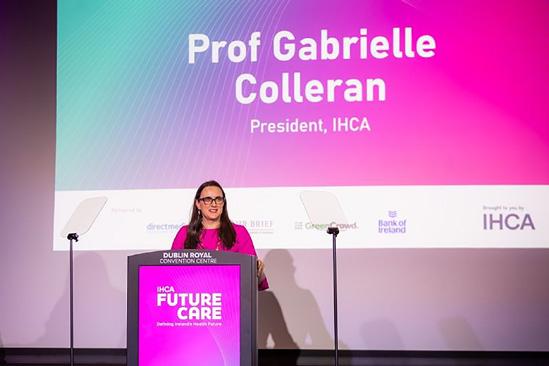
IHCA President Prof Gabrielle Colleran said, “We welcome HIQA’s endorsement of Teledermatology. Our members have long advocated for integrating digital technology to triage cases more effectively and to ensure patients are seen in the right place at the right time. This is one important aspect of essential innovation in Dermatology Services to improve access and
Professor Gabrielle Colleran, President, IHCA
ensure that patients with urgent needs can be identified and treated within the time frame needed. We acknowledge the ongoing support of the Department of Health and the HSE in providing the necessary frameworks for our members to deliver such solutions, in particular outgoing Secretary General Robert Watt, who has been a consistent driver of innovation, quality and efficiency within the Health Service. Programmes like the HSE SPARK Consultant Innovation Fund are vital in allowing frontline Consultants to pilot and scale these transformative technologies.”
The HIQA report arrives as dermatology waiting lists remain at unacceptable levels. The Authority notes that there were over 60,000 patients in Ireland on waiting lists for a Consultant Dermatologist appointment in June 2025. This has risen slightly since, with 60,710 now awaiting an outpatient appointment at the end of February 2026. Of
these, 3,600 are children. The Dermatology outpatient waiting list currently represents almost 10% of the entire national outpatient waiting list.
The IHCA highlights that while innovation is a powerful tool, it must be supported by a credible plan to address chronic workforce shortages and capacity deficits:
• Recruitment Gap: While 114 Consultant Dermatologists are
World Pharmacists Day 2026
“Empowering pharmacists for healthier futures” will be the theme for World Pharmacists Day 2026, celebrated annually on 25 September.
The theme highlights the essential role pharmacists play in improving health outcomes across communities and health systems. As healthcare evolves due to demographic shifts, noncommunicable diseases, digital innovation and climate pressures, empowering pharmacists with the right skills, recognition and systems support is critical. It will also emphasise the shared responsibility of governments, policymakers, regulators, health insurers and the public to create enabling environments in which pharmacists can fully realise their impact.
World Pharmacy Week (19–25 September) will continue to recognise the contributions of the wider pharmacy workforce, including pharmaceutical scientists, pharmacy technicians and collaborative partners.
registered in Ireland, only 64 were employed in the public system at the end of 2024.
• Long Wait Times: Routine wait times for dermatology now extend to three years in some regions.
• Urgent Need: HIQA itself concludes that Teledermatology alone cannot bridge the gap, stating there remains an “urgent need to recruit more consultant dermatologists”.

“Empowering pharmacists means equipping them with the competencies, recognition and working environments necessary to meet evolving health needs,” said FIP president Mr Paul Sinclair, AM. “Pharmacists are uniquely positioned at the intersection of medicines supply, scientific innovations and patient care delivery. When they are enabled to practise to the full extent of their expertise, health systems are more
accessible, more responsive and more sustainable.”
FIP emphasises that empowering the profession is not optional, but essential to building stronger, future-ready systems.
World Pharmacists Day (25 September) marks the anniversary of the inception of FIP in 1912 and was adopted by the FIP Council in 2009. As such, the World
Pharmacists Day campaign is led by FIP every year, with the theme chosen by the FIP Board.
In 2020, FIP also created World Pharmacy Week, extending the celebrations of the entire profession and overtly encompassing all sectors of the pharmacy profession. Any reference to “World Pharmacists Day” or “World Pharmacy Week” should, therefore, include FIP.
Pharmacy Memorandum of Understanding

SETU and University Hospital Waterford (UHW) have formally signed a Memorandum of Understanding (MOU) establishing a strategic framework for collaboration across education, research, and clinical practice in pharmacy.
The agreement sets out a structured approach to discussions and future initiatives between the two organisations, with a focus on enhancing opportunities for students, staff, and healthcare professionals,
while ultimately improving patient outcomes.
Professor Veronica Campbell President of SETU said, “This MoU represents an important step in strengthening the link between academic education and clinical pharmacy practice. By working closely with the Pharmacy Department at University Hospital Waterford, we can ensure our pharmacy graduates are equipped with the knowledge, skills, and experience required to deliver highquality, patient-centred care, while
also fostering a strong culture of research and innovation.”
Cliona Hayden Pharmacist Executive Manager, UHW added, “Pharmacists are central to delivering safe, high quality, and sustainable healthcare. This partnership with SETU aligns strongly with UHW’s mission to provide patient centred care to our region, while ensuring effective stewardship of healthcare resources. Investing in strong clinical–academic collaboration supports better
All-Ireland Schools of Pharmacy Conference
Ben O'Sullivan, CEO of University Hospital Waterford, is pictured with Professor Veronica Campbell, President of SETU. They are pictured with representatives of SETU and UHW (L-R) Doireann Shanahan-Ball (UHW); Tracie Swift (UHW); Eimear McGowan (UHW); David Lumsden (UHW); Dr Claire Lennon. Head of Department of Pharmacy (SETU); Cliona Hayden, Pharmacist Executive Manager (UHW); Darren Walsh (UHW); Cathy Naylor (UHW); Dr Laurence Fitzhenry, Head (Waterford) Faculty of Science and Computing; and Sarah Browne, MPSI and Pharmacy Lecturer (SETU), at the signing of a MoU in Waterford
outcomes for patients and long term value for the health system.”
Ben O’Sullivan CEO, UHW and Kilcreene Regional Orthopaedic Hospital noted, “The MoU outlines several key areas for potential collaboration, including interprofessional education (IPE), research opportunities; potential for programme development, as well as placements for students of SETU’s Master of Pharmacy (MPharm) programme.”
Through shared expertise and resources, SETU and UHW aim to strengthen clinical pharmacy practice, delivering the most relevant and future-focused education and training for pharmacy students.
The All-Ireland Schools of Pharmacy Conference 2026, hosted by Ulster University, will be held on the Coleraine campus on Thursday 3rd and Friday 4th September 2026.
The fee is ¤60 and includes full access to all conference sessions and entry to the conference dinner on Thursday 3rd September.
This year’s theme, “Discovery to Care – Translating Research into Real-World Impact,” will highlight how advances across the pharmaceutical sciences are transforming patient care and healthcare delivery.
The conference will bring together researchers, educators, clinicians and students from across the island of Ireland to share the latest research in pharmaceutical science and pharmacy practice.
Stroke Action Plan
Minister for Health Jennifer Carroll MacNeill has signed the Stroke Action Plan for Europe which aims to transform stroke care across the Continent by 2030.
The Irish Heart Foundation played a significant role in developing the Plan, which targets major improvements across the entire chain of care including prevention, acute care, rehabilitation and community-based life after stroke services and supports.
Minister Carroll MacNeill said she
signed the Plan in recognition of the high burden of stroke on individuals, families, carers and society. “We know that as our population ages, the incidence of stroke is expected to rise substantially. The Stroke Action Plan for Europe sets out a clear roadmap for the development of evidence-informed stroke policy and services in Ireland to meet our demographic challenges.”
HSE National Stroke Programme lead Prof Ronan Collins said, “The
burden of stroke is enormous on Irish society with one in four of us having a stroke in our lifetime. National and international research now predicts that new cases of stroke could rise by up to 59% in the next two decades.”
Irish Heart Foundation Director of Advocacy and Patient Support Chris Macey described the signing of the Stroke Action Plan for Europe as, ‘a landmark day for stroke care in Ireland and for tens of thousands of people of
all ages and walks of life affected by the condition. The signing of the action plan marks a solid commitment to the development of comprehensive prevention, acute treatment and rehabilitation services that will minimise death and disability from stroke. Signing the Plan also signifies our commitment to creating post discharge protocols and supports that will help maximise the ability of survivors to live the best lives possible after stroke strikes.’
Shaping the Future of Healthcare
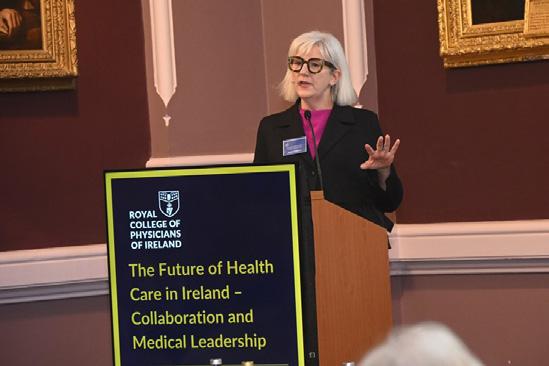
Leaders from across Ireland’s health system gathered recently at the Royal College of Physicians of Ireland (RCPI) Leadership Forum to explore how collaboration and medical leadership can strengthen the future of healthcare delivery.
The event brought together clinicians, policymakers and senior health officials to address the growing complexity of healthcare in Ireland. Population growth, an ageing population and rising demand are continuing to reshape how care is delivered. Speakers highlighted how aligned leadership, strategic workforce planning and strong governance are essential to ensuring a sustainable system for the future.
Opening the forum, RCPI President Dr Diarmuid O'Shea emphasised that meaningful progress depends on partnership. He highlighted that bringing together clinicians, policymakers and health system leaders in shared partnership is “the foundation on which a successful, thriving and responsive healthcare system is built.”
An address from Ms Anne O'Connor, Chief Executive Officer of the Health Service Executive, highlighted the scale of change facing healthcare systems globally and nationally. Speaking just weeks into her tenure, she described healthcare as “a single ecosystem,” stressing that reform must be built with clinicians rather than imposed.
“Change that does not meaningfully engage clinicians fails,” she said. “Reform must be built with clinicians, using their professional
Professor Mary Horgan, Chief Medical Officer
Ms
Anne O'Connor,
Chief Executive Officer of the Health Service Executive
judgment, mobilising clinical insight and sharing responsibility.”
She pointed to demographic change, rising demand and increasing complexity as defining challenges for the decades ahead. By the late 2030s, one in five people in Ireland will be over 65, shifting care needs toward long-term management and community-based services.
“The difficult truth is what we are experiencing is not a series of short-term shocks but a sustained shift in underlying demand,” she said, adding that “a system that survives through effort alone eventually exhausts the people who sustain it.”
Workforce planning for the decades ahead was another key focus of the forum. Professor Anthony O'Regan, Medical Director of NDTP, outlined the need for data-driven, long-term planning aligned with population trends and service demand. He highlighted the complexity of planning for a growing and ageing population and said, “If you don’t have data, you can’t measure,” emphasising the importance of robust workforce information to support future planning.
The forum also examined how innovation and critical thinking can support better healthcare delivery.
Professor Mary Horgan, Chief Medical Officer at the Department of Health, spoke about the need to rethink traditional approaches in a rapidly changing system.
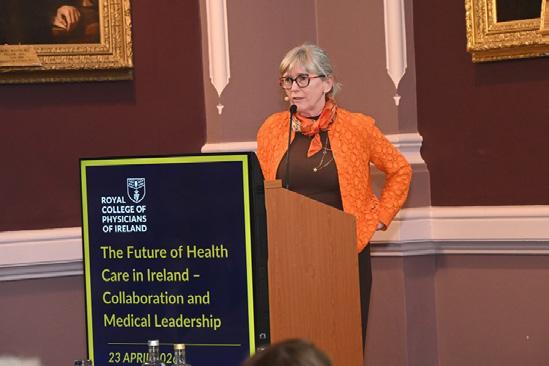
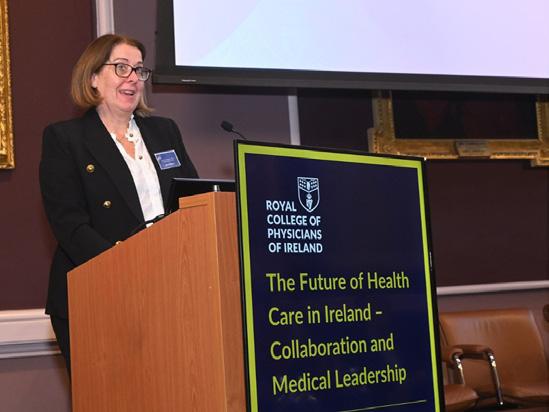
“It isn’t about doing the same thing all the time - it’s about doing things differently with the resources we have,” she said, highlighting the role of digital transformation, multidisciplinary collaboration and community-based care in improving outcomes for patients. The forum also heard from Ms Rachel Kenna, Chief Nursing Officer at the Department of Health, Professor Ed McKone, Dean of the Institute of Medicine, Dr Suzanne O’Sullivan, Chair of the Institute of Obstetricians and Gynaecologists, and Dr Colm Henry, Chief Clinical Officer at HSE, reflecting the breadth of clinical and system leadership involved in shaping future healthcare delivery. Professor Trevor Duffy, RCPI Director of Healthcare Leadership, and Dr Colm Henry moderated an engaging panel discussion.
Dr Suzanne O’Sullivan, Chair of the Institute of Obstetricians and Gynaecologists
A clear theme emerged throughout the day with collaboration, aligned leadership, strong governance and long-term workforce planning all central to building a more resilient and responsive health system. The importance of education, training and lifelong learning, a central focus of the college, was reflected throughout the discussions, particularly in supporting both doctors and the wider interprofessional team as healthcare continues to evolve.
As Ms O’Connor emphasised, “Developing and supporting medical leadership through protected time, training, authority and accountability is not a nice to have. It is essential. It is an essential infrastructure for a modern healthcare system.”
A full report from the forum will be published by RCPI, setting out the key insights and recommendations from the discussions and supporting its ongoing work across Ireland’s health system.
PSI Announces Phased Increase in Registration Fees from May 2026
The Pharmaceutical Society of Ireland (PSI) has confirmed that registration and related application fees for pharmacists and pharmacies will increase from 1 May 2026, marking the first revision to the regulator’s fee structure in 17 years.
The changes follow an independent review of the PSI’s funding model, commissioned in 2025 and carried out by consultancy firm Forvis Mazars. The review was undertaken to support the PSI Council in ensuring the organisation can continue to effectively deliver its statutory responsibilities and maintain public confidence in pharmacy regulation in Ireland.
According to the PSI, the review concluded that the current fee model no longer reflects the true cost of regulation and recommended that fees move towards a cost-recovery basis, in line with recognised best practice for professional regulatory bodies operating with limited Exchequer funding.
The PSI said that registrationrelated fees remain its primary source of income and noted that fees had remained unchanged since the current structure was introduced almost two decades ago.
Following consideration of the review findings, the PSI Council proposed amendments to the statutory Fees Rules and launched a public consultation between 30 October and 27 November 2025. The new Fees Rules were subsequently signed into law on 20 April 2026 and will come into operation on 1 May 2026.
Recognising the significance of the increases for pharmacists and pharmacy businesses, the PSI Council has decided to phase the changes in gradually over a three-year period, with revised fees applying across 2026, 2027 and 2028.
The updated fees will apply to:
• new registration applications,
• annual continued registration,
• applications for the internet supply list,
• and a range of related registration services.
However, the PSI confirmed that there will be no increase in fees associated with the Third Country Qualification Recognition process, as those fees were revised separately in 2025.
In a statement accompanying the announcement, the PSI acknowledged that fee increases are unlikely to be welcomed by registrants, but stressed that maintaining effective regulatory oversight remains central to its public protection role.
“The primary responsibility of the PSI is to uphold our public protection responsibilities, supporting those we regulate to deliver safe patient care and services to the public,” the regulator stated.
The PSI added that the Council also has a responsibility to ensure the organisation’s long-term financial sustainability so it can continue to carry out its statutory functions effectively.
The regulator pointed to increasing levels of regulatory activity and growing demands across its core functions as key drivers behind the decision.
Registration fees, it said, support:
• regulatory oversight,
• operational costs,
• strategic objectives,
• and the continued delivery of patient safety and public protection initiatives.
The PSI also stated that it continues to examine opportunities to manage costs, improve efficiencies, and ensure value for money in its operations.
The phased approach to implementation, according to the PSI, is intended to mitigate the immediate impact of the increases by spreading the changes over time.
Further details on the revised fee schedules for 2026–2028 are available through the PSI website.
New Director of Health Professions Education Centre

RCSI University of Medicine and Health Sciences has announced the appointment of Professor Fiona Kent as Director of the Health Professions Education Centre (HPEC).
Professor Kent will build on RCSI’s established strengths in health professions education and lead the development of
an ambitious new strategy for HPEC. She will continue her focus on interprofessional learning to advance the University’s educational practice and support innovation in curriculum design.
Her vision for health professions education is driven by sustainable innovation in health workforce development. She prioritises
meaningful engagement with patients, clinical partners and the wider community, enabling RCSI to play a leading role in educating a highly skilled workforce that improves human health outcomes.
Professor Kent is an awardwinning international leader in interprofessional learning and health professions education with over 15 years of clinical experience as a neurological physiotherapist and more than 15 years in academic leadership roles.
Since joining RCSI in 2024, Professor Kent has served as Deputy Director of HPEC and has
played a key role in expanding educational programmes, including the development of a new MSc in Health Professions Education and advancing the interprofessional learning strategy across the university. She previously held senior leadership roles at Monash University in Melbourne, Australia including Acting Associate Dean Learning and Teaching, and has led and implemented an interprofessional and digital health curriculum that has received national and international awards.
Her research also focuses on patient-centred approaches to education, interprofessional collaboration and educational innovation. She has an extensive publication record with over 50 research outputs and an H-index of 26 and has contributed to internationally recognised work shaping health professions education policy and practice. She is Associate Editor of the Journal of Interprofessional Care and sits on the International Editorial Advisory Board of Medical Education.
Professor Fiona Kent
New Osteoarthritis Care Pathway
Results from a review of a new osteoarthritis pathway for hip and knee patients shows faster access to care, improved patient outcomes and major cost savings across two pilot sites, transforming how osteoarthritis is treated in Ireland.
The National Osteoarthritis Hip and Knee Pathway was developed by the RCSI HSE National Clinical Programme for Trauma and Orthopaedic Surgery in collaboration with the HSE Modernised Care Pathway Programme.
Between April 2023 and May 2025, more than 2,000 patients were managed through the pathway. 1,059 (51%) were direct GP referrals, from 67 GP practices participating across the two pilot sites.
58 (5.5%) patients required a specialist outpatient appointment with an orthopaedic surgeon. Each of these appointments were scheduled within 10 weeks of referral in line with Sláintecare targets. Only 25 (2.36%) patients proceeded to a surgical intervention.
1,197 (58%) patients participated in group-based interventions which were facilitated by either a physiotherapist/dietitian or both within 10 weeks of referral. More than 130 group sessions and education classes were
delivered in seven communitybased locations across the pilot sites during the project period. Group capacity varied from 10–20 participants depending on available facilities and staffing resources. 23% of patients engaged with the dietitian for advice and support. Over 85% reported a high level of satisfaction with the group interventions.
Prior to the introduction of this model, the average time patients were waiting for a first orthopaedic appointment was 16 months at University Hospital Waterford and 27 months at Our Lady’s Hospital, Navan.
Throughout the project, Patient Reported Outcomes Measures were collected and aligned with data collected by the Irish National Orthopaedic Register. Current available data from the two sites demonstrates that when the Oxford hip score/ knee score was used, more than 72% of patients reported positive changes in terms of pain reduction and improved function.
The pathway has also delivered significant financial efficiencies, generating estimated cost savings of ¤220,220 through the avoidance of 1,001 outpatient appointments. The reduction in repeat GP attendances, more efficient use of consultant time, and the ability for physiotherapists and dietitians to work to the top

of their scope, further contributed to the project’s success.
Funded through the Department of Health’s Sláintecare Integration Innovation Fund, the pathway was tested between January
2023 and June 2025 at Our Lady’s Hospital, Navan, University Hospital Waterford and within the Community Healthcare Network regions of Carlow, Kilkenny and Meath.
New Clarity Brought to Pancreatic Cancer
Researchers at Trinity College Dublin have published a major new review that brings fresh clarity to one of the deadliest forms of cancer - pancreatic cancer - by mapping how the disease operates at every level. The review is published in the journal Cancer Letters.
Pancreatic cancer has the worst survival rate of any major cancer, with just 13% of patients alive five years after diagnosis. Late detection, aggressive tumour biology, limited treatment options and less research funding, has meant progress has been frustratingly slow.
Now, scientists at the Trinity St James’s Cancer Institute (TSJCI), the first comprehensive cancer centre in Ireland, have taken a
different approach: instead of focusing on a single biological pathway or target, they have assembled a comprehensive “playbook” of the disease, showing how multiple biological systems interact to drive its growth. Published in the prestigious journal Cancer Letters, the comprehensive review applies the most up-to-date “Hallmarks of Cancer” framework - a globally recognised generic model describing the essential traits of cancer, first developed in 2000 by Douglas Hanahan and Robert Weinberg - to pancreatic cancer in unprecedented detail.
Rather than treating pancreatic cancer as a single problem, the paper describes how it is driven by a complex network of factors,
including: genetic mutations, the tumour microenvironment, immune system evasion, metabolic changes, tumour-nerve interactions, and even the microbiome.
By integrating the findings from hundreds of studies across these multiple areas, the review highlights how these processes work together, not in isolation, to make pancreatic cancer so difficult to treat.
Lead author Dr Laura Kane, Research Ireland Postdoctoral Research Fellow, said, “Pancreatic cancer is not driven by one pathway, it’s a highly coordinated system. What we’ve done is bring all of that complexity together into a single, usable framework. By showing how these different
mechanisms connect, we can start to see where the real vulnerabilities of the disease may lie.”
Crucially, the study moves beyond simply summarising existing research. It identifies where scientific understanding is strongest, where gaps remain, and where future efforts should be focused.
One of the key messages is that single-drug approaches are unlikely to succeed. Instead, the authors argue that progress will depend on smarter, combinationbased treatments that target multiple hallmarks of the disease at once. This shift in thinking could have important implications for how clinical trials are designed and how new therapies are developed.
Spotlight on Endometriosis
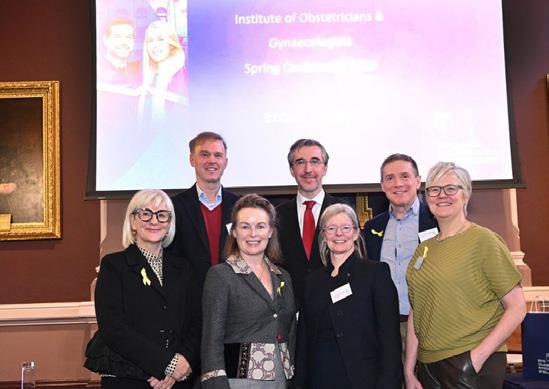
The diagnosis and management of endometriosis - a long-term condition affecting about onein-ten women in Ireland – was the focus of RCPI Institute of Obstetricians & Gynaecologists Spring Conference, held at No. 6 Kildare Street recently.
The important college meeting –the produce of several months’ planning by institute chair Dr Suzanne O’Sullivan – was opened by Minister for Health Jennifer Carroll MacNeill.
At the conference, the minister announced funding has been ringfenced in 2026 for an additional 65 posts specifically for endometriosis services –representing a 180% increase in the dedicated endometriosis workforce. ¤2 million in research funding available for women’s health, including endometriosis projects, was also announced.
The first session began with general practitioner Dr Ciara McCarthy (HSE GP Clinical Lead in Women’s Health) who explained how a new HSE National Framework for the Management of Endometriosis integrates a pathway for general practitioners to refer patients from primary care to gynaecology, ultrasound, and fertility hub. Dr McCarthy said that general practitioners are well-placed to develop a long-lasting trusting relationship with patients, and may introduce early on a possible diagnosis of endometriosis. A radiologist’s perspective was given by Dr Maeve O’Sullivan (Tallaght University Hospital), who explained the role of imaging in diagnosing endometriosis. Dr O’Sullivan said the first line of investigation is a transvaginal ultrasound. A Magnetic Resonance Imaging (MRI) scan is to be subsequently
recommended if the ultrasound is inconclusive or negative.
An insight into how an Irishbased obstetrician-gynaecologist may subspecialise in treating endometriosis was given by Dr Laurentina Schaler (Rotunda Hospital), who secured a postCSCST (Certificate of Satisfactory Completion of Specialist Training) fellowship to train in Germany for two years. “You’ll improve knowledge of instruments and technology. You’ll gain advancements in technology that you might bring home to your own unit. You’ll experience collaboration with multidisciplinary teams, with pain management, gastrointestinal unit, urology, and mental health,” she said. A colorectal surgeon’s perspective was given by Mr Cillian Clancy (Tallaght University Hospital), who discussed how the multidisciplinary team structure allows colorectal surgeons to be involved in pre-operative decisionmaking and planning. He spoke of the importance of discussing the fertility wishes of the patient, of false comparisons between endometriosis rectal resections and rectal cancer treatments, and how sharing MRI imaging with patients had a therapeutic effect on patients finally seeing their disease.
International expertise and perspectives were shared by obstetricians-gynaecologists who travelled from Portugal and Scotland. Dr Nuno Martins –an obstetrician-gynaecologist at Viseu Dão-Lafões hospital in Portugal, and Congress President of the European Board & College of Obstetrics and Gynaecology - spoke to the complexity of laparoscopic surgery for endometriosis, and how to manage risk and complications. Prof Andrew Horne - an academic
Mr Cillian Clancy, Tallaght University Hospital; Dr Nuno Martins, Viseu Dão-Lafões, Portugal/Congress President of the European Board & College of Obstetrics and Gynaecology and Professor Andrew Horne, University of Edinburgh/ President, World Endometriosis Society. Front: Dr Suzanne O’Sullivan, RCPI Institute of Obstetricians & Gynaecologists Chair, Dr Ciara McCarthy, HSE GP Clinical Lead in Women’s Health, Dr Cathy Burke, Clinical Lead, Cork Maternity University Hospital supraregional endometriosis Centre and Dr Aoife O’Neill, Clinical Lead at the Tallaght University Hospital supraregional endometriosis centre.
gynaecologist with a focus on endometriosis pain at University of Edinburgh, and president of the World Endometriosis Society – looked at what the evidence suggested for future trends in endometriosis care.
The conference heard from the clinical leads of the countries two supra-regional endometriosis centres. Surgical approaches in endometriosis care were discussed by obstetriciangynaecologist Dr Cathy Burke (Clinical Lead at the Cork Maternity University Hospital supraregional endometriosis Centre).
The modelling of endometriosis services within the new HSE Framework was explained by Dr Aoife O’Neill (Clinical Lead at the Tallaght University Hospital supraregional endometriosis centre).
In a session focused on patient partnerships, Dr Cliona Murphy shared a recorded interview with Cllr Áine Smith, a Fianna Fáil councillor elected to Cavan County Council, who has endometriosis. Cllr Smith described how she spent her thirties dedicated to finding medical professionals to help her treat long-term pain she experienced after coming off birth control pills. She described receiving incorrect diagnoses from several health professionals before finally a fertility nurse suggested she consider endometriosis.
Eventually, an obstetriciangynaecologist and surgeon confirmed stage four endometriosis. “It was quite a shock but it was such a relief. Finally, somebody knew what was wrong with me,” she said. Upon election in 2023, Cllr Smith’s first motion to Cavan County Council was to call on the Department of Health to invest more in endometriosis treatment.
There are other reasons to improve women-centred care. Prof Louise Kenny, internationally renowned researcher in women’s and childhood heatlh, and Pro Vice Chancellor of the University of Liverpool’s Faculty of Health & Life Sciences, quoted a survey by the Department of Health and Social Care UK stating 84% of female participants felt they weren’t listened to by their doctor. Annual litigation spend on obstetrics in England currently exceeds £1.14bn. Dr Minna Geissler (consultant obstetrician-gynaecologist, Cork University Maternity Hospital and South Infirmary Victoria Hospital) spoke of the impact of endometriosis on fertility and how best to protect fertility while treating endometriosis.
A final session dedicated to Endometriosis research in Ireland began with a presentation by Dr Mariarosaria Cuozzo (Department of Anatomy and Neuroscience, University Hospital Cork) about a new pilot multisystem biomarker exploring links between stress, pain, microbiome and inflammation in Endometriosis.
An audit at Tallaght University Hospital by Dr Barbara Burke (HST Obstetrics & Gynaecology trainee) found that after Endometriosis surgery found that gonadotropin-releasing hormone (GnRH) agonist for supressing production of sex hormones was appropriately reserved for the most complex cases.
A joint study by Dr Mary Barrett (obstetrician-gynaecologist, Cork University Maternity Hospital) and Dr Bernard Kennedy (HST Obstetrics & Gynaecology trainee) reviewed all surgeries for presumed Endometriosis between 2014-2023 at the Cork site. The study found 78% of patients experiencing symptomatic improvement post-surgery for Endometriosis, but it also urged that symptomatic improvement isn’t related to pain cyclicity. The recurrence of Endometriosis symptoms post operatively is well documented, and repeat surgeries are often performed.
The conference concluded with Dr Radka Fahey (UCD National Institute for Bioprocessing Research & Training), who, with aid of Marie Skłodowska-Curie funding, uncovered evidence of glycome – the sugar complement of an organism – being used as a potential biomarker for endometriosis. Dr Fahey said next steps will involve validating and extending research in this area.
Wegovy® delivers quality weight loss1,2,5 and provides cardiovascular risk reduction1,3ɬ

Safety and tolerability profile comparable to the GLP-1 RA class in general1
Wegovy® is recommended in the ESC CCS guidelines for cardiovascular risk reduction4
tThis product is subject to additional monitoring. ESC = European Society of Cardiology. CCS = Chronic Coronary Syndrome. GLP-1 RA = Glucagon Like Peptide 1 Receptor Agonist.
Wegovy®t(semaglutide) Please refer to the full Summary of Product Characteristics (SmPC) before prescribing. Wegovy® 0.25 mg FlexTouch® solution for injection in pre-filled pen. Wegovy® 0.5 mg FlexTouch® solution for injection in pre-filled pen. Wegovy® 1 mg FlexTouch® solution for injection in pre-filled pen. Wegovy® 1.7 mg FlexTouch® solution for injection in pre-filled pen. Wegovy® 2.4 mg FlexTouch® solution for injection in pre-filled pen. Indication(s): Adults: Wegovy® is indicated as an adjunct to a reduced-calorie diet and increased physical activity for weight management, including weight loss and weight maintenance, in adults with an initial Body Mass Index (BMI) of ≥30 kg/m2 (Obesity) or ≥27 kg/m2 to <30 kg/m2 (overweight) in the presence of at least one weight-related comorbidity e.g. dysglycaemia (prediabetes or type 2 diabetes mellitus), hypertension, dyslipidaemia, obstructive sleep apnoea or cardiovascular disease. For trial results with respect to cardiovascular risk reduction, obesity-related heart failure, and populations studied, see section 5.1. of the Wegovy® SmPC. Adolescents: Wegovy® is indicated as an adjunct to a reduced-calorie diet and increased physical activity for weight management in adolescents ages 12 years and above with obesity* and body weight above 60 kg. Treatment with Wegovy® should be discontinued and re-evaluated if adolescent patients have not reduced their BMI by at least 5% after 12 weeks on the 2.4 mg or maximum tolerated dose. *See table 1 in the Wegovy® SmPC for BMI cut-off points for obesity by sex and age. Posology and administration: Administered once weekly at any time of the day, with or without meals. Injected subcutaneously in the abdomen, in the thigh or in the upper arm. The injection site can be changed. It should not be administered intravenously or intramuscularly. For the 7.2 mg dose, inject three doses of 2.4 mg one after each other. The injections can be administered in the same body area but should be at least 5 cm apart. Injection sites should always be rotated to reduce the risk of injection site amyloid deposits. The day of weekly administration can be changed if necessary, as long as the time between doses is at least 3 days (>72 hours). After selecting a new dosing day, once-weekly dosing should be continued. Adults: The maintenance dose of semaglutide 2.4 mg once-weekly is reached by starting with a dose of 0.25 mg. To reduce the likelihood of gastrointestinal symptoms, the dose should be escalated over a 16-week period to the maintenance dose. If needed, the dose can be increased to 7.2 mg once weekly after a minimum of 4 weeks on the 2.4 mg dose in adults with BMI ≥ 30 kg/m2 at treatment initiation. If no additional clinical improvement in body weight is observed with 7.2 mg, lower the dose to 2.4 mg once weekly. In case of significant gastrointestinal symptoms, consider delaying dose escalation or lowering to the previous dose until symptoms have improved. Adolescents: For adolescents ages 12 years and above, the same dose escalation schedule as for adults should be applied. The dose should be increased until 2.4 mg (maintenance dose) or maximum tolerated dose has been reached. Weekly doses higher than 2.4 mg are not recommended in the adolescent population. Patients with type 2 diabetes: When initiating Wegovy®, consider reducing the dose of concomitantly administered insulin or insulin secretagogues (such as sulfonylureas) to reduce the risk of hypoglycaemia. Missed dose: If a dose is missed, it should be administered as soon as possible and within 5 days after the missed dose. If more than 5 days have passed, the missed dose should be skipped, and the next dose should be administered on the regularly scheduled day. If more doses are missed, reducing the starting dose for re-initiation should be considered. Elderly: No dose adjustment is required based on age. Renal impairment: No dose adjustment is required for patients with mild or moderate renal impairment. Experience in patients with severe renal impairment is limited. Semaglutide is not recommended for use in patients with severe renal impairment (eGFR <30 mL/min/1.73m2) including patients with end-stage renal disease. Hepatic impairment: No dose adjustment is required for patients with mild or moderate hepatic impairment. Experience in patients with severe hepatic impairment is limited. Semaglutide is not recommended for use in patients with severe hepatic impairment and should be used cautiously in patients with mild or moderate hepatic impairment. Paediatrics: The safety and efficacy of semaglutide in children below 12 years of age have not been established. Contraindications: Hypersensitivity to the active substance or to any of the excipients. Special warnings and precautions for use: Cases of pulmonary aspiration have been reported in patients receiving GLP-1 receptor agonists undergoing general anaesthesia or deep sedation. Therefore, the increased risk of residual gastric content due to delayed gastric emptying should be considered prior to performing procedures with general anaesthesia or deep sedation. Use of GLP-1 receptor agonists may be associated with gastrointestinal adverse reactions. This should be considered when treating patients with impaired renal function, as nausea, vomiting, and diarrhoea may cause dehydration, which in rare cases can lead to a deterioration of renal function. Patients treated with semaglutide should be advised of the potential risk of dehydration in relation to gastrointestinal side effects and take precautions to avoid fluid depletion. Acute pancreatitis has been observed with the use
of GLP-1 receptor agonists. Patients should be informed of the characteristic symptoms of acute pancreatitis. If pancreatitis is suspected, Wegovy® should be discontinued; if confirmed, Wegovy® should not be restarted. Caution should be exercised in patients with a history of pancreatitis. In the absence of other signs and symptoms of acute pancreatitis, elevations in pancreatic enzymes alone are not predictive of acute pancreatitis. Data from epidemiological studies indicates an increased risk for nonarteritic anterior ischaemic optic neuropathy (NAION) during treatment with semaglutide. There is no identified time interval for when NAION may develop following treatment start. A sudden loss of vision should lead to ophthalmological examination and treatment with semaglutide should be discontinued if NAION is confirmed. Wegovy® should not be used as a substitute for insulin in patients with type 2 diabetes. Wegovy® should not be used in combination with other GLP-1 receptor agonist products. Patients treated with Wegovy® in combination with a sulfonylurea or insulin may have an increased risk of hypoglycaemia. The risk of hypoglycaemia can be lowered by reducing the dose of sulfonylurea or insulin when initiating treatment with a GLP-1 receptor agonist. In patients with diabetic retinopathy treated with semaglutide, an increased risk of developing diabetic retinopathy complications has been observed. Patients with diabetic retinopathy using semaglutide should be monitored closely and treated according to clinical guidelines. There is no experience with Wegovy® in patients with type 2 diabetes with uncontrolled or potentially unstable diabetic retinopathy. In these patients, treatment with Wegovy® is not recommended. Semaglutide treated patients with gastroparesis may experience more serious or severe gastrointestinal adverse events. Semaglutide should be used with caution in these patients, and semaglutide is not recommended if gastroparesis is severe. The safety and efficacy of Wegovy® has not been investigated in patients treated with other products for weight management, with type 1 diabetes, with severe renal or hepatic impairment or with congestive heart failure New York Heart Association (NYHA) class IV. Use in these patients is not recommended. There is limited experience with Wegovy® in patients aged 85 years or more, with mild or moderate hepatic impairment, with inflammatory bowel disease. Use with caution in these patients. If semaglutide is used in combination with a sulfonylurea or insulin, patients should be advised to take precautions to avoid hypoglycaemia while driving and using machines. Fertility, pregnancy and lactation: Women of childbearing potential are recommended to use contraception when treated with semaglutide. There are limited data from the use of semaglutide in pregnant women. Therefore, semaglutide should not be used during pregnancy. If a patient wishes to become pregnant, or pregnancy occurs, semaglutide should be discontinued. Semaglutide should be discontinued at least 2 months before a planned pregnancy due to the long half-life. In lactating rats, semaglutide was excreted in milk. A risk to a breast-fed child cannot be excluded. Semaglutide should not be used during breast-feeding. Effect on fertility unknown. Undesirable effects: Very common (≥1/10): Headache, vomiting, diarrhoea, constipation, nausea, abdominal pain, fatigue. Common (≥1/100 to <1/10): Hypoglycaemia in patients with type 2 diabetes, dizziness, dysgeusia, dysaesthesia, diabetic retinopathy in patients with type 2 diabetes, gastritis, gastrooesophageal reflux disease, dyspepsia, eructation, flatulence, abdominal distension, cholelithiasis, hair loss, injection site reactions. Uncommon (≥1/1,000 to <1/100): Hypotension, orthostatic hypotension, increased heart rate, acute pancreatitis, delayed gastric emptying, increased amylase, increased lipase. Rare (≥1/10,000 to <1/1,000): Anaphylactic reaction, angioedema. Very rare (<1/10 000): Non-arteritic anterior ischaemic optic neuropathy (NAION). Not known (cannot be estimated from the available data): Intestinal obstruction. The SmPC should be consulted for a full list of side effects. MA number(s): Wegovy® 0.25 mg FlexTouch® EU/1/21/1608/006. Wegovy® 0.5 mg FlexTouch® (1.5 ml cartridge) EU/1/21/1608/007. Wegovy® 0.5 mg FlexTouch® (3 ml cartridge) EU/1/21/1608/012. Wegovy® 1 mg FlexTouch® EU/1/21/1608/008. Wegovy® 1.7 mg FlexTouch® EU/1/21/1608/009. Wegovy® 2.4 mg FlexTouch® EU/1/21/1608/010. Legal category: Product subject to prescription which may not be renewed. For complete prescribing information please refer to the SmPC which is available on www.medicines.ie or by email from infoireland@novonordisk.com or from the Clinical, Medical and Regulatory Department, Novo Nordisk Limited, 1st Floor, Block A, The Crescent Building, Northwood Business Park, Santry, Dublin 9, Ireland. Date last revised: February 2026. IE26SEMO00055.
tThis medicinal product is subject to additional monitoring. This will allow quick identification of new safety information. Adverse events should be reported to the Health Products Regulatory Authority. Information about adverse event reporting is available at www.hpra.ie. Adverse events should also be reported to Novo Nordisk on Tel: 01 8629700 or complaintireland@novonordisk.com.
*From baseline to week 72. Data presented here from the STEP UP trial are based on the trial product estimand, which describes the treatment effect if all people adhered to treatment, whereas the primary treatment policy estimand describes the treatment effect regardless of treatment adherence. When applying the treatment policy estimand, people treated with Wegovy® 7.2 mg achieved a superior weight loss of 18.7% vs placebo of 3.9%. The proportion of patients with a body weight reduction of ≥25% was greater with Wegovy® 7.2 mg (31.2%), vs placebo (0%).1
ɬ People living with overweight or obesity and established cardiovascular disease without diabetes.
Ŧ The co-primary endpoints were percentage change in body weight and the proportion of patients with a body weight reduction of 5% or greater for Wegovy® 7.2 mg vs placebo.1
Applying the trial product estimand, the proportion of patients with a body weight reduction of ≥5% was greater with Wegovy® 7.2 mg (93.2%), vs placebo (35.7%).1
¥Confirmatory secondary endpoint.
References: 1. Wegovy® Summary of Product Characteristics www.medicines.ie 2. Wharton S, Freitas P, Hjelmesæth J, et al. Once-weekly semaglutide 7.2 mg in adults with obesity (STEP UP): a randomised, controlled, phase 3b trial. Lancet Diabetes Endocrinol. 2025; S2213-8587(25)00226-8. 3. Lincoff AM, Brown-Frandsen K, Colhoun HM, et al. Semaglutide and cardiovascular outcomes in obesity without diabetes. N Engl J Med. 2023;389(24):2221-2232 4. Vrints C, Andreotti F, Koskinas KC, et al. 2024 ESC Guidelines for the management of chronic coronary syndromes. Eur Heart J. 2024;45(36):3415-3537. 5. Hjelmesæth J, Bhat S, Garvey WT, et al. Effect of semaglutide on body composition and proximal muscle strength: the STEP UP trial. Presented at: The 61st European Association for the Study of Diabetes (EASD) Annual Meeting; September 15-19, 2025; Vienna, Austria.
IACR Launches Guidelines for Cardiac Rehabilitation
For over 30 years, the Irish Association of Cardiac Rehabilitation (IACR) has represented cardiac rehabilitation (CR) professionals and promoted the highest possible quality of life for people living with cardiac disease through evidence-based, high-quality CR. Even with advances in modern medicine, comprehensive CR remains a cornerstone of cardiovascular care – reducing mortality, lowering hospital readmissions, and improving patients’ quality of life.
CR is a clear example of the scientist-practitioner model in action: its practice is grounded in scientific evidence, and as new research emerges, CR continues to evolve to best meet the needs of people living with heart disease. As with all medical interventions, CR delivers its proven benefits only when it is performed correctly and in alignment with protocols validated through rigorous peer-reviewed research. Achieving optimal patient outcomes depends on the consistent application of these evidence-based practices, supported by strong leadership and adequate resourcing.
IACR has consistently demonstrated this leadership by promoting best practice to ensure patients receive the highest quality supports and advocating for the resources necessary to deliver high-quality CR services
nationwide. Recent initiatives include on-site training by the Mayo Clinic in the delivery of high-performance CR (2022 and 2024); and supporting staff from all CR centres in Ireland to become certified in 2025 through the International Council of Cardiovascular Prevention and Rehabilitation (ICCPR). Following these successful initiatives, IACR is now pleased to launch updated IACR Guidelines for Cardiac Rehabilitation (2025).
At its core, this document offers a clear, step-by-step guide to the essential components of modern CR, detailing how each should be delivered and the standards required throughout the programme. When fully adopted, CR programmes will align with best international standards and ensure the consistent delivery of high-quality CR.
Key strengths of IACR (2025) Guidelines for Cardiac Rehabilitation include:
Evidence-based Approach: The fourth edition of IACR guidelines builds on previous versions, adopts a systematic and fully documented methodology, synthesising international guidance and formulating recommendations based on the strongest available evidence. This rigorous approach allowed the guideline development group (GDG) to draw together the strengths of multiple international
guidelines, producing a robust and operational framework to support the effective delivery of CR services in Ireland. This approach also enhanced transparency throughout the development process.
Comprehensiveness:
The guidelines provide recommendations across all core components of CR, encompassing the full patient journey and multiple delivery models. Phase 3 centrebased CR is identified as the gold standard, with home-based CR and tele-rehabilitation recognised as emerging options.
Detailed Recommendations:
Each step of the CR process is covered in clear and practical detail (including structural requirements, exercise prescription and monitoring, lifestyle interventions, and psychosocial support) and provides actionable guidance for CR healthcare practitioners working in the realworld clinical setting.
Multidisciplinary Focus:
Interdisciplinary input was prioritised throughout the development process ensuring clinical breadth and practical applicability. In addition, pathways for specific interventions and referral criteria for selected CR participants are clearly outlined. This reflects the complex, multifaceted nature of contemporary state-of-the-art CR.
Inclusivity and Patientcentredness: Evidence-based interventions are balanced with considerations of accessibility and patient preference. Tailored recommendations are also provided for specific cardiovascular conditions (e.g., spontaneous coronary artery dissection) and distinct patient demographics. Systematic patient identification and referral strategies further strengthen inclusivity.
Quality and Outcomes: Validated quality indicators are introduced to assess and monitor CR programme performance. These align with international standards and provide both a framework for CR audit and an opportunity to close the CR evidence-practice gap. The guidelines were also subject to rigorous international peer review.
An overview of CR is outlined in figure 1 below.
Only through the equitable expansion of CR centres—each meeting the standards set out in these guidelines—can we ensure that all patients with cardiovascular disease have access to an evidence-based, cost-effective, and safe intervention irrespective of their place of residence.
The guideline document is available on the IACR websitehttps://iacronline.ie/guidelines/
Phase 1 - In hospital Patient Assessment, Education and Engagement
Patient Assessment
Tailored Education
Psychological Support
Individulised Discharge Plan
Promotion of CR
Phase 2 - Early Out-Patient Phase
Virtual/ Group/ Individual Patient Assessment
Tailored Education
Referral to MDT/ Support Services as required Promotion of CR
Phase 3 - Early Formal Supervised Out-Patient CR Programme
Initial Assessment
Individualised Programme
Min 12 supervised ET sessions
Education/ Secondary Prevention
Inclusive of all core components
Psychological Support
End of Programme Assessment
Return to society/ workforce
Phase 4 - Maintenance of Ongoing CR Activities
Community facility and/ or home-based training
Exercise Training
Tailored self management support
Prevention of recurrence
Figure 1: Overview of Cardiac Rehabilitation. CR, Cardiac rehabilitation; MDT, multidisciplinary team; ET, exercise training.
Demystifying Inherited Conditions
Trinity College Dublin scientist, Dr Dylan Ryan, will lead an eightyear project that seeks to better understand why people with inherited mitochondrial disorders are often more vulnerable to severe infections.
People living with these conditions can experience profound neurological impairment alongside a range of other complications, including muscle weakness and fatigue, heart issues, vision and hearing loss, and gastrointestinal symptoms.
These complex disorders may present in childhood or adulthood and are currently incurable. They often substantially reduce both life expectancy and overall quality of life, with affected individuals facing reduced independence, severe disability, and frequent hospital admissions. In many cases, sepsis is a leading cause of morbidity and mortality.
Mitochondria are widely known as the structures that generate energy inside our cells, but they also play an important role in controlling the immune system.
The new project will see Dr Ryan home in on harmful mutations in mitochondrial DNA, which are a major cause of primary mitochondrial disorders, and then investigate how these mutations alter the behaviour of immune cells.
Although patients with these disorders frequently experience recurrent infections and
Dr
Dylan Ryan, Trinity College Dublin
inflammatory complications, the reasons for this remain poorly understood. This project aims to redress the balance, by uncovering the biological link(s) between mitochondrial dysfunction and impaired host defence.
Specifically, the study will centre on macrophages, which are frontline immune cells that help the body detect and eliminate pathogens, such as bacteria and viruses.
Dr Ryan, Assistant Professor in Trinity’s School of Biochemistry and Immunology, based in the Trinity Biomedical Sciences Institute (TBSI), said, “By combining advanced metabolic profiling, infection models and preclinical studies, we will test whether mitochondrial DNA mutations drive these immune cells into a persistent state of ‘false alarm’ that weakens antibacterial defence and promotes damaging inflammation. We will also assess whether these abnormalities can be reversed using targeted therapeutic strategies.”
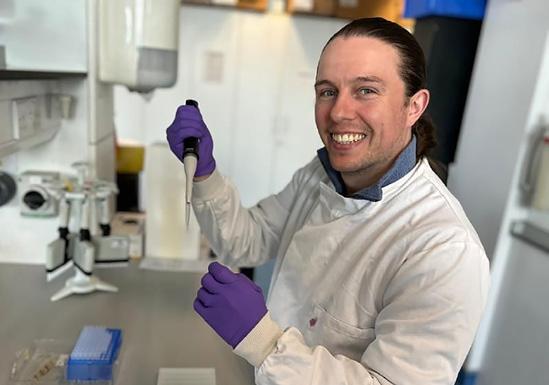
“In combination, we expect to gain new insights into infection risk in mitochondrial disease, and believe these insights may have wider relevance for understanding immune dysfunction in conditions such as sepsis, autoimmunity and ageing,” said Dr Ryan.
“I am delighted to have secured this prestigious Wellcome funding and am especially excited to now build a strong research team at Trinity College Dublin with the goal of uncovering how mitochondrial DNA mutations reshape immune responses. The aim is to help deliver new, more effective treatments for these conditions –but we can only put these on the radar if we first better understand the biological mechanisms.”
“In combination, we expect to gain new insights into infection risk in mitochondrial disease, and believe these insights may have wider relevance for understanding immune dysfunction in conditions such as sepsis, autoimmunity and ageing,”
Prof. Sinéad Ryan, Dean of Research at Trinity, added: “I extend warm congratulations to Dylan on this outstanding achievement. Wellcome Career Development Awards are among the most competitive and prestigious fellowships internationally, so this success offers a powerful endorsement of the originality, ambition and potential of his research programme.”
“Thrive, Trinity’s Strategic Plan, commits us to supporting and enabling researchers to create new knowledge and address societal challenges so we are delighted that Dylan will build his team here in Trinity.”
About the Wellcome Career Development Award
Wellcome Career Development Awards support mid-career researchers with the potential to be international research leaders in their fields. Awardees will develop their research capabilities, drive innovative programmes of work and deliver significant shifts in understanding related to human life, health and wellbeing.
Dr Ryan is the third Trinity researcher to receive this prestigious award, following in the footsteps of Dr Irina Kinchin and Dr Nollaig Bourke from the School of Medicine. This achievement further cements Trinity’s position as the leading institution on the island of Ireland for Wellcome Career Development Awards, with Trinity researchers securing three of the seven awards granted to date.
What is the potential impact of this research?
Summer Skin
Hidden Risks: Understanding Sun Damage in Skin of Colour

As Ireland’s population becomes increasingly diverse, community pharmacists are encountering a broader range of patient needs — including those relating to skin health across different skin tones. A common misconception persists that individuals with darker skin are not at risk of sun damage or skin cancer, which can lead to delayed diagnosis and poorer outcomes. In this issue, we speak with Desmond J. Tobin, Full Professor of Dermatological Science and Director of the Charles Institute of Dermatology at University College Dublin, to explore the realities of sun risk in darker skin, the challenges in recognising skin cancers, and the crucial role pharmacists can play in education, early detection, and patient support.
1. There is a common perception that people with darker skin tones are not at risk of sun damage or skin cancer. From a dermatological perspective, how accurate is this belief and what should healthcare professionals understand about sun risk across different skin types?
Skin tone is often characterised by level and type of melanin in the epidermis of our skin and reflects one’s ability to make brown/black eumelanin or red/ yellow pheomelanin. Typically, skin protection is conferred by levels of eumelanin, which is much more photostable (and so protective) than pheomelanin.
Desmond J. Tobin, Full Professor of Dermatological Science and Director of the Charles Institute of Dermatology at University College Dublin
Broadly speaking skin protection from sunlight (especially ultraviolet A and -B radiation) is assessed by susceptibility to sunburn. Light skin tones are grouped into skin phototype (SPT)-I and II. While darker, more sunburn resistant skin tones are grouped into SPT-III to -VI. These are relative categories. People of darker skin tones can get sunburned, and even peel. The usual early signs of sun-burn (redness or erythema) seen in light skinned individuals are disguised in darker skin tones. Thus, we need to educate people with darker skin tones of their need to interpret how unprotected sun exposure can adversely affect their skin, especially as the warning signs can be obscured by their darker tone. Beyond acute burn/ peel, darker skin tones tend to reveal photoaging signs later in their lives compared to lighter skin people, due to this relativelyprotective higher eumelanin level.
2. Are there particular challenges or differences in recognising skin cancers, including melanoma, in patients with darker skin tones?
Yes, this is a key point. The evidence is already clear - skin cancers tend to be diagnosed later in people with darker skin tones (due to colour contrast differences compared to light-tone skin), when they often are more advanced and when they are often more difficult to treat. Also, black individuals may present with different subtypes of a particular skin cancer, eg. Melanoma. Here
Acral Lentiginous Melanoma is more common and can appear on/around ‘hidden areas’ like nails and soles of the feet, and so not typically associated with sun exposure. While much rarer than for white skin, black skin can still develop sun-induced melanoma. In darker skin toned people Basal Cell Carcinoma often shows as a brown/black growth and not the pink patch seen in lighter skin.
3. As Ireland’s population becomes increasingly diverse, are there important considerations pharmacists should be aware of when advising patients from different ethnic backgrounds about sun protection?
Yes, that darker toned skin can still burn/peel/undergo carcinogenic changes if not protected, especially during prolonged high-UVR index exposures. That darker skin toned people can develop ALL the main skin cancers, including basal cell carcinoma, squamous cell carcinoma, and melanoma, even if they are less common.
4. What practical sun safety advice should pharmacists be giving patients with darker skin tones who may feel they do not need sun protection or who might be unaware of the dangers of UV rays in Ireland, even when it seems overcast.
While darker skin toned people have more protective melanin, this protection is not complete i.e., is not a sufficient shield against both skin photodamage and skin cancers. Pharmacists should emphasise this reality, especially for those who move from high UVR-index parts of the world to less sunny Ireland, where they may develop a false sense of security. In Ireland we all need to take sun-safety measures especially during April to September months, when UV-index can reach 3 or higher. This level of UV can still be present when overcast (up to 90% of UV\R still penetrates cloud to reach our skin). Skin damage from the sun still happens, even if the darker-skin people cannot see it or feel it i.e. as they are less likely to sunburn than pale skinned individuals. Thus, these darker skinned patients are at risk of skin cancer diagnosis at a more advanced and dangerous stage, making it harder to treat.
5. Are there particular signs or symptoms pharmacists should be mindful of that would warrant referral to a GP or dermatologist?
New moles or changing moles, dark streaks under nails, and non-healing sore/ulcer or skin patches, dark spots appearing on their palms, soles, or under nails. Scalp is also an area of attention, often ignored.
6. From a clinical perspective, are there specific presentations or anatomical sites where melanoma or other skin cancers may appear more commonly in patients with darker skin?
Yes, see above. But should also look inside mouth and genital areas to see if darker/ discoloured skin appears.
7. Finally, from your perspective, what role can community pharmacists play in improving awareness and early detection of skin cancer?
Create a safe space for people with darker skin to bring their skin concerns to their attention, as they may include under-represented and marginalised groups. Have posters/flyers/handouts available to customers for casual perusal. The accessibility of pharmacies to all, and their prominence on the street, represents an ideal first-line space for engagement with this cohort. Identification of at risk/high-risk customers could facilitate triage/referral for lesions that cause concern.
Summary:
• The level of melanin in darker skin does not provide complete protection against skin photodamage and skin cancers.
• Pharmacists are positioned on the ideal and a highly accessible front-line to educate customers with skin of color and to potentially tirage and refer those with suspicious lesions to the GP or dermatologist.
• Hospital clinicians in Ireland, especially of Irish geographic ancestry, need to be upskilled in the area of all pigmentary lesional and variants, given the serious consequences of delayed diagnosis to the patient.
Melanoma
Barriers to Early Melanoma Diagnosis in Ireland
The incidence of melanoma almost trebled between 1994 and 2017 in Ireland and is expected to increase by 172 per cent between 2015 and 2045, potentially giving rise to 3,078 new cases of melanoma annually. Melanoma disproportionately affects younger age groups, with one-in-three cases (33 per cent) occurring in people under 50 years of age, according to the National Cancer Registry of Ireland.
We know the early detection of melanoma is crucial to increase the likelihood of effective treatment and cure. The five-year survival rate for people diagnosed with stage one melanoma in Ireland is 100 per cent. If melanoma isn’t detected until it reaches stage four, the five-year survival rate drops to 41 per cent.
There are some signs that we encourage people to pay attention to, and to raise with their GP to aid in the early detection of melanoma. We advise people to see their GP if they notice any new or changing pigmented lesion/dark spot on the skin; a long-standing pigmented lesion on the skin which is changing progressively in shape, size or colour regardless of age; a new pigmented line in a nail, especially where there is associated damage to the nail; or a lesion growing under a nail.
It’s also important for them to go their GP if they develop a pigmented lesion which has changed in appearance, or which is persistently itching or bleeding; an ‘ugly duckling’ pigmented
lesion, which is one that looks different to all the other pigmented lesions that person has, and we also encourage familiarity with the ABCDE lesion system as this can help to determine whether a mole or skin lesion is suspicious for melanoma.
Ideally patients will be able to identify signs of melanoma, they will be seen quickly by their GP and, if their GP deems it necessary, they will receive a referral to a dermatologist. But we know things don’t always go seamlessly and that some people do face barriers when it comes to factors around getting a melanoma diagnosis.
One of the barriers which we actively try to address in our Skin Cancer Awareness Campaign, which kicked off this month and will run throughout the summer, is a lack of awareness around the signs of melanoma. And for some people who do know the signs and symptoms, they can have a delayed presentation to their GP due to fear, as they hope the skin change that they’ve noticed will go away on its own.
Lower levels of health literacy can mean patients present to their GP at a later stage when the melanoma could have progressed, and a lack of awareness of referral pathways can pose another barrier.
It is essential that healthcare professionals and patients can recognise the early signs of melanoma. Your GP is your first port of call. If a GP suspects that
Michelle Lonergan, Cancer Awareness Nurse at the Irish Cancer Society
a patient has melanoma skin cancer, they can refer them to a pigmented lesion clinic (PLC) or to a dermatology or plastic surgery service so their skin change can be investigated, and it can be determined if it is, or is not, melanoma.
We know that securing access to get a mole or skin change assessed can be a barrier for some, with some people not being registered with a GP at all or having to wait longer than they would like to, to see a GP. The cost of a GP appointment can also be a barrier.
When it comes to getting a dermatologist to check a skin change or mole, we know that waiting times can be several months in some cases in the public system. According to HIQA, Irish dermatology services are “under significant pressure”, with more than 60,000 patients waiting for an appointment as of June 2025. Some people are waiting up to three years for a routine appointment.
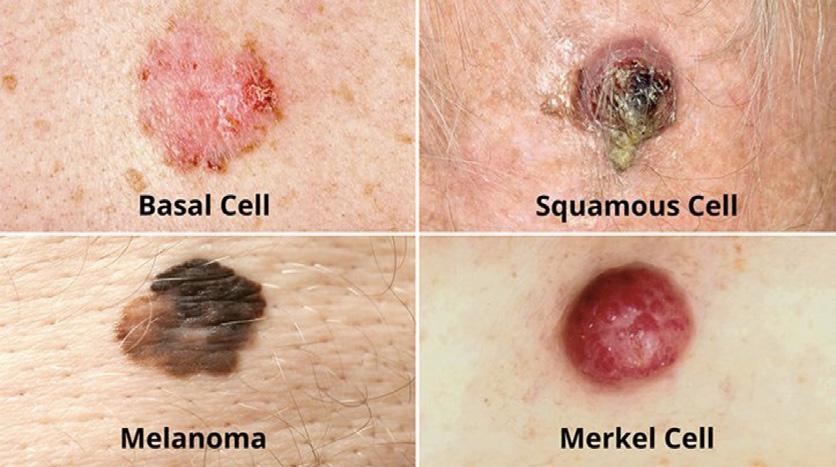

HIQA has warned about the potential health risks to delays in accessing specialist dermatology services, such as reduced survival for cancers diagnosed at later stages and increased physical and psychological burden for patients. Distance from a pigmented lesion clinic can be a potential challenge. A 2019 study by the Department of Dermatology, South Infirmary Victoria University Hospital (SIVUH), Cork and the Department of Histopathology at University Hospital Kerry (UHK) found that cases of melanoma diagnosed locally in UHK presented at an advanced stage compared to the national average.
The study’s authors noted that they suspected that the lack of access to a local pigmented lesion clinic in Kerry and long distances to travel to the SIVUH pigmented lesion clinic were barriers to melanoma diagnosis for the Kerrybased patients who were part of the study, particularly those who were elderly or disadvantaged.
Within the context of barriers to the detection of melanoma, it’s important to note that there are still opportunities for the early detection of melanoma – meaning more effective treatment and an increased likelihood of cure.
We aim to improve the early detection of melanoma through our Skin Cancer Awareness Campaign that encourages selfchecking, and by empowering people with the knowledge and tools to seek help and to know the signs and symptoms of melanoma. We know that this can make a difference and can lead to better patient outcomes.
Melanoma Forum
The Irish Melanoma Forum 2026: Advancing Multidisciplinary Excellence in Melanoma Care
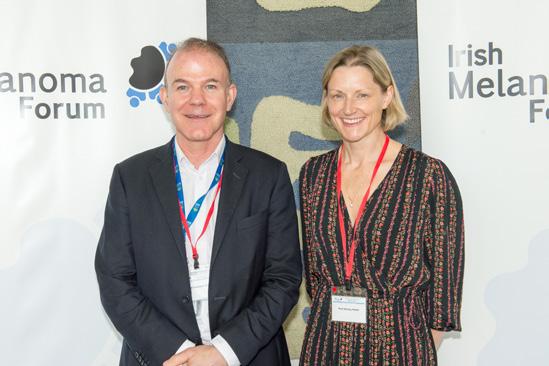
Melanoma continues to represent one of the most rapidly evolving areas within oncology, characterised by major advances in immunotherapy, targeted treatments, and precision diagnostics. In Ireland, where incidence rates remain among the highest in Europe, the need for coordinated, multidisciplinary collaboration is critical. The Irish Melanoma Forum (IMF) has, over more than a decade, become the principal national platform for such collaboration—bringing together clinicians, scientists, and patient advocates to drive improvements in melanoma care, research, and policy.
The 14th Annual Scientific Meeting of the Irish Melanoma Forum will take place on Friday 29th May 2026 at O’Reilly Hall, University College Dublin, continuing this important tradition. Building on the success of previous years, particularly the highly regarded 2025 meeting, this year’s programme reflects a field in transition—moving decisively toward integrated, personalised, and translational melanoma care.
Leadership and Organisation
The success of the Irish Melanoma Forum is underpinned by strong clinical and academic leadership. The 2026 meeting has been co-chaired by:
• Professor Shirley Potter, Consultant Plastic and Reconstructive Surgeon, St James’s Hospital, and Clinical Professor at University College Dublin
• Professor Desmond J. Tobin, Full Professor and Director of the Charles Institute of Dermatology, University College Dublin
Professor Potter and Professor Tobin have co-chaired the Irish Melanoma Forum for the past six years and have played a central role in developing and sustaining the IMF as a national collaborative network. Their continued leadership reflects a deliberate integration of clinical expertise and scientific research, ensuring that the forum remains both clinically relevant and academically robust and is a recognised platform for multidisciplinary melanoma collaboration.
Reflecting on the 2025 Forum
The 2025 meeting provided a strong foundation for the current programme, with a clear emphasis on multidisciplinary collaboration and translational research. International leaders such as Professor John Kirkwood (University of Pittsburgh) and Professor David Fisher (Harvard Medical School) delivered keynote lectures addressing melanoma biology, immunotherapy, and the future of team science in oncology.
Sessions explored a broad range of themes, including:
• Molecular biomarkers and gene expression profiling
• Advances in melanoma surgery and systemic therapy
• Tumour biology and mechanisms of resistance
• Psychosocial aspects of care and patient advocacy
Importantly, the 2025 forum also highlighted key challenges facing melanoma care in Ireland, including access to advanced therapies, the need for improved research infrastructure, and the
importance of prevention and public awareness strategies.
Irish Melanoma Forum 2026: Programme Overview
The 2026 scientific programme reflects a mature and forward-looking agenda, structured around melanoma management, translational research, and prevention.
1. Evolving Paradigms in Melanoma Management
A central highlight of this year’s meeting is the keynote address by Professor Alexander van Akkooi, Professor of Melanoma Surgical Oncology at the Melanoma Institute Australia. His lecture on neo-adjuvant immunotherapy in melanoma will explore how emerging systemic therapies are reshaping surgical decision-making and redefining treatment pathways.
This is complemented by a key clinical session delivered by Dr Sarah Lochrin, Medical Oncologist at St Vincent’s University Hospital, Dublin, who will present on neoadjuvant and adjuvant therapy in cutaneous melanoma. This topic is of particular relevance given the increasing integration of systemic therapies into earlier stages of disease and the implications for multidisciplinary care planning.
Further expanding the clinical scope, Dr Jennifer Garioch, Consultant Dermatologist at Norfolk and Norwich University Hospital, will discuss the use of T-VEC (talimogene laherparepvec) in patients with in-transit metastases, highlighting the role of intralesional therapies in contemporary melanoma management.
In addition, Dr Patrick Ormond, Consultant Dermatologist at St James’s Hospital, Dublin, will address non-clinical interventions in melanoma, emphasising behavioural, educational, and supportive strategies that complement medical and surgical treatment.
Together, these sessions reflect a clear shift toward more integrated and individualised care pathways.
2. Translational and Clinical Research
The IMF continues to prioritise the integration of laboratory
science with clinical practice. The 2026 programme includes a dedicated research session featuring Professor Caroline Le Poole, Professor of Dermatology, Microbiology and Immunology at Northwestern University, Chicago. Her lecture on pigmentation as a melanoma vulnerability will explore novel biological insights with potential therapeutic implications.
This builds on themes from the 2025 meeting, where translational research—including biomarker discovery and extracellular vesicle analysis—was a key focus.
The continuity between these programmes highlights the IMF’s role in fostering a sustained and evolving national research agenda.
A defining feature of the forum remains the inclusion of oral research presentations selected from abstract submissions, providing an important platform for trainees and early-career researchers. These presentations, alongside moderated poster sessions, ensure that emerging research is showcased and that academic engagement remains central to the meeting.
In addition to the main scientific programme, the parallel melanoma nursing symposium will once again provide a dedicated forum for clinical nurse specialists and allied health professionals, focusing on patient-centred care, education, and survivorship.
Running alongside this, the Cancer Trials Ireland Melanoma DSSG meeting will facilitate discussion on clinical trial development, national recruitment strategies, and collaborative research priorities—further strengthening Ireland’s clinical trials infrastructure in melanoma.
3. Prevention, Public Health, and Policy
A particularly important addition to the 2026 programme is the session on sunbeds in Ireland, delivered by Dr Breeda Neville, Consultant in Public Health Medicine with the National Cancer Control Programme (NCCP), and Maria McEnery, NCCP Cancer Prevention Officer.
This session reflects a growing recognition of the importance of prevention in reducing melanoma incidence. Ireland continues to face challenges related to ultraviolet exposure and tanning behaviours, particularly among younger populations. Addressing
Professor Desmond Tobin and Professor Shirley Potter
these issues requires coordinated efforts across healthcare, policy, and public education.
The inclusion of this topic demonstrates the IMF’s commitment not only to treatment but also to prevention and population health.
Industry Partnership and Support
The continued success of the Irish Melanoma Forum is made possible through the generous support of industry partners. Pharmaceutical sponsorship plays a critical role in enabling the delivery of a highquality scientific programme, supporting international speakers, educational initiatives, and the overall organisation of the meeting. It is important to acknowledge that the forum could not run without this support, and the contribution of industry partners is both valued and essential.
As part of the programme, a lunchtime symposium sponsored by Bristol Myers Squibb (BMS) will provide additional educational
content, reflecting the important role of industry in advancing therapeutic innovation and clinician education.
Education, Collaboration, and Impact
The Irish Melanoma Forum offers significant value to healthcare professionals across disciplines. Key benefits include:
• Exposure to international and national expertise
• Access to clinically relevant, practice-changing information
• Opportunities for networking and collaboration
• Engagement with emerging research and innovation
• Contribution to national discussions on melanoma care and policy
The meeting is particularly valuable for trainees and earlycareer professionals, providing opportunities to present research, engage with experts, and develop professional networks.
Women in Pharma Awards
The Women in Pharma Awards 2026 took place on 29 April at the Crowne Plaza Hotel, Santry, bringing together industry leaders to celebrate the outstanding achievements of women across Ireland’s pharmaceutical and life sciences sectors.
Now firmly established as a key event within the industry calendar, the awards recognise excellence, innovation and leadership among individuals, teams and organisations, shining a spotlight on the vital contribution women make across all areas of the sector.
The evening’s highest honour, the Overall Leader Award, was presented to Emma Kilgallon of West Pharmaceutical Services in recognition of her exceptional leadership and impact within the industry. The prestigious Legacy Award was awarded to Jean Casey of Eli Lilly, acknowledging her longstanding contribution and influence within the pharma community.
Takeda Ireland emerged as one of the standout organisations on the night, securing multiple awards across key categories. Deirdre Connaughton was recognised for Excellence in Senior Leadership — Pharma, while Marie Smith received the award for Best Clinical
Why Attend the Irish Melanoma Forum 2026?
Attendance at the IMF provides a unique opportunity to engage with the full spectrum of melanoma care—from basic science to clinical management and public health. The meeting is highly relevant to:
• Dermatologists
• Plastic and Reconstructive Surgeons
• Medical Oncologists
• Pathologists
• Radiologists
• Clinical Nurse Specialists and Allied Health Professionals
• General Practicioners
• Researchers and trainees
Given the pace of change in melanoma care, staying informed is essential. The IMF offers a focused, high-quality educational experience that is directly applicable to clinical practice in Ireland.
Conclusion
The Irish Melanoma Forum 2026 represents an important milestone in the ongoing development of melanoma care in Ireland. Through strong leadership, multidisciplinary collaboration, and the integration of research and clinical practice, the forum continues to drive progress in this rapidly evolving field.
With a comprehensive and forward-looking programme, contributions from leading national and international experts, and a strong emphasis on education, collaboration, and prevention, this year’s meeting promises to be both informative and impactful.
Healthcare professionals involved in melanoma care are strongly encouraged to attend. The forum not only provides an opportunity to update knowledge but also to contribute to shaping the future of melanom care in Ireland.
To register for IMF2026 go to https://conferencediary.ie/ registration.php
Operations Leadership. Victoria Hampson was honoured for Best Marketing and Communications Leadership, and Rachel Torreggiani was named Rising Star of the Year, reflecting the organisation’s strength across both established and emerging leadership.
A wide range of achievements across the sector were also recognised, highlighting the diversity of roles and expertise within the industry. Dr Gemma Robinson of Acorn Regulatory Consulting Services was awarded Excellence in Senior Leadership, Contract Services, while Alette Ramos Hunt of Novartis received the award for Excellence in Pharma and Life Sciences. Rose Kidd of ICON plc was recognised for Excellence in Senior Leadership within Life Sciences.
Leadership in education and mentoring was acknowledged through Nicola Rice of Innopharma Technical Services, while Liz Allan of Exyte received the award for Best Engineering and Manufacturing Operations Leadership. Victoria Ramos of Grifols Worldwide Operations was recognised for Best Finance Leadership, and Emma Kilgallon also received the award for Best HR Leadership.

Further winners included Áine Hopkins of PTC Therapeutics for Best Quality Leadership, Lisa Mullaney of Medguard Healthcare for Best Sales and Commercial Leadership, and Mary Moran of AbbVie for Best Site Leadership. Flavia Baccaro of AbbVie was honoured with the award for Best Supply Chain and Logistics Leadership.
Team achievements were also celebrated, with the Cancer Trials Ireland Start-Up Team recognised as Best Female-Led Team, while the AbbVie Affiliate Leadership Team secured the award for Best Female-Led Team
(Large). BioMarin Pharmaceutical was named Workplace of the Year, reflecting its commitment to fostering an inclusive and supportive environment.
The Women in Pharma Awards programme, established under the umbrella of the Irish Pharma Industry Awards, continues to grow in significance each year. The initiative is dedicated to recognising and promoting the achievements of women within the pharmaceutical and life sciences sectors, while encouraging greater visibility, representation and leadership across the industry.
Pictured are the winners from the 2026 Women in Pharma Awards
Irish College of Ophthalmologists Annual Conference 2026 Set for Galway
The Irish College of Ophthalmologists Annual Conference 2026 will take place at the The Galmont Hotel & Spa from Wednesday, 13 May to Friday, 15 May, bringing together eye care specialists from across Ireland and abroad for three days of scientific sessions, education and networking.
Recognised as one of the key events in the Irish ophthalmic calendar, this year’s conference will feature an extensive programme covering major clinical and professional topics in ophthalmology, with dedicated symposia focusing on cataract surgery, glaucoma and oculoplastics.
The conference will also include sessions on paediatric ophthalmology, managing neuropathic pain in ophthalmology, building effective and sustainable teams, and practical “Top Ten Tips” presentations. Workshops, paper and poster presentations, and the ICO Medal Awards will also form part of the scientific programme.
A distinguished line-up of international speakers is expected to attend, including Professor Keith Barton and Mr Jimmy Uddin from Moorfields Eye Hospital, Professor Uday Devgan, widely known as “The Cataract Coach”, from Los Angeles, and Professor Alvin Young of The Chinese University of Hong Kong.
Professor Keith Barton, Glaucoma
Specialist at Moorfields Eye Hospital and Professor of Ophthalmology at University College London, will deliver the Annual Mooney Lecture 2026 titled “The Challenge for Surgeons Managing Glaucoma.”
The annual European Society of Ophthalmology (SOE) Lecture 2026 will be presented by Dr Ann O’Connell,
Consultant Ophthalmologist with HSE South East.
Organisers say the meeting will also provide valuable opportunities
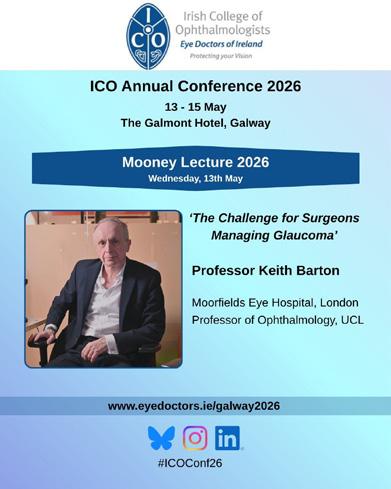
for delegates to connect with colleagues and engage with the wider ophthalmology community in Ireland.
New Irish Research Identifies Predictors of Clinical Progression in Alzheimer’s Disease
Researchers at Tallaght University Hospital (TUH) and the School of Medicine at Trinity College Dublin have identified two blood tests that can help predict which people with Alzheimer’s disease are most likely to experience faster progression of symptoms. Episodes of delirium – a sudden change in thinking, awareness or attention often triggered by illness, infection or certain medications were also linked to more rapid decline. In one of the largest and most detailed studies of its kind, researchers followed more than 300 people from nine European Countries living with mild-tomoderate Alzheimer’s disease over 18 months. Researchers found that two blood-based biomarkers - p-tau217, which reflects Alzheimer’s disease proteins in the brain, and GFAP, which reflects brain inflammation
were strongly associated with faster loss of memory, thinking ability, and independence.
People with higher levels of these markers declined more quickly over time. Importantly, the study showed that these biomarkers were more informative than a panel of other commonly-measured blood inflammation markers, which did not predict disease progression once Alzheimer’s disease was established. Measurement of these biomarkers was possible due the use of advanced technology in the Trinity Translational Medicine Institute (TTMI).
These emerging bloods tests are not currently clinically available, but standardised laboratory assays to measure their use in Alzheimer’s disease diagnosis are currently undergoing review with the European Medicines Agency for clinical use. TUH anticipates
that p tau217 testing will become available within specialist memory services the Hospital later this year, enabling earlier integration of these advances into clinical pathways. This represents a significant step toward translating research findings into real world patient benefit.
The rollout in TUH is being led by Prof Gerard Boran and Eoin Begley, and will play a pivotal role in this rapid translation of innovation into practice. Their commitment to adopting validated biomarker technologies at the earliest opportunity reflects TUH’s strategic focus on delivering cutting edge, evidence based diagnostics that enhance patient care and support personalised treatment planning.
The current findings extend their known use in the diagnosis of Alzheimer’s disease and show
they may also be important in identifying how quickly Alzheimer’s disease progresses.
The study also found that episodes of delirium - a sudden state of confusion often triggered by illness or hospitalisation - were linked to significantly faster disease progression. People who experienced one or more episodes of delirium during the 18-month study declined substantially faster than those who did not. The impact of delirium was considerable, highlighting the importance of preventing, recognising and treating delirium wherever possible. The findings also underline the need to carefully account for delirium in clinical trials of new Alzheimer’s disease treatments, as the impact of delirium was so substantial that it may obscure the clinical effects of potential new treatments.
New
Ocular surface control starts with Lacrifill®
Take control of your patients’ ocular surface with Lacrifill®:
✔ Hyaluronic acid canalicular gel1
✔ Maintains natural lubricating tears on the ocular surface1
✔ Each administration provides dry eye relief for 6 months1 Safety issues should be reported to Nordic Pharma by email at lacrifill-vigilance@nordicpharma.com



For more information about Lacrifill® and the Instructions for Use, visit www.lacrifill.ie
http://www.hpra.ie
Surfer’s Ear
Surfer’s Ear and Summer ENT Risks: What Pharmacists Need to
Know
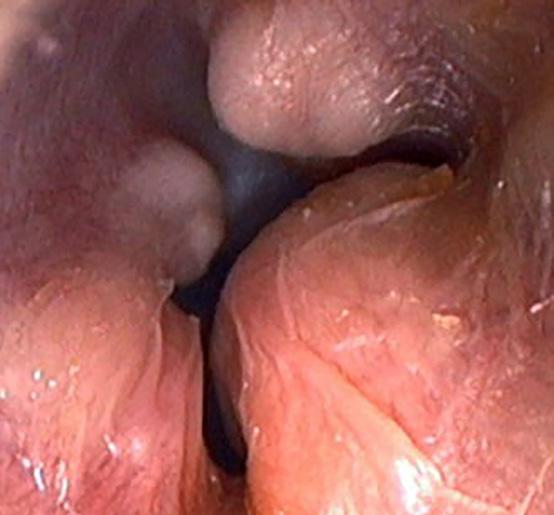
As Ireland’s love of open water swimming, surfing and coastal activities continues to grow, so too does the incidence of earrelated conditions linked to water exposure. While “swimmer’s ear” is widely recognised, another condition — surfer’s ear — remains less well understood, despite being surprisingly common in Ireland’s climate.
Dr Marcus Choo, ENT Consultant at Sligo University Hospital, highlights the importance of awareness, early recognition, and prevention — particularly for community pharmacists who are often the first point of contact for patients presenting with ear complaints. A hidden but common condition
Surfer’s ear, clinically known as exostoses, is a condition where the ear canal develops bony growths in response to repeated exposure to cold water. Unlike many ear conditions, it develops gradually and is often asymptomatic in its early stages.
“Typically, the risk of developing clinically evident surfer’s ear increases in proportion to time spent in cold water,” explains Dr Choo. “Around 66% of Irish surfers have evidence of the condition,
although most are unaware they have it.”
Ireland’s climate plays a significant role. With water temperatures rarely exceeding 17°C, even seasonal or recreational water users are at risk.
“It’s not just surfers,” Dr Choo notes. “Open water swimmers, triathletes and kayakers are all susceptible. As participation in these activities has increased over the past decade, we’re seeing a corresponding rise in cases.”
Surfer’s ear vs swimmer’s ear
One of the key challenges in practice is distinguishing surfer’s ear from swimmer’s ear (otitis externa), as patients often use the terms interchangeably.
Swimmer’s ear is an infection of the outer ear canal, typically caused by water trapping and subsequent bacterial or fungal growth. It is particularly common in warm, humid environments but is also frequently seen in Ireland among pool users and open water swimmers.
Surfer’s ear, by contrast, is not an infection but a structural change in the ear canal. Symptoms usually
only develop once the canal becomes significantly narrowed.
“When the canal is blocked by 70–80%, water and wax can become trapped,” says Dr Choo. “This can lead to a feeling of blockage, hearing loss, and eventually infection.”
Recognising symptoms and red flags
For pharmacists, recognising the difference between routine ear complaints and more serious issues is essential.
Patients with surfer’s ear may initially present with:
• A sensation of blocked ears
• Reduced hearing
• Recurrent infections
Pain, swelling or discharge usually indicates a secondary infection.
Swimmer’s ear, on the other hand, often presents with:
• Ear pain, particularly when touching the ear
• Swelling at the entrance of the ear canal
• Discharge
It may also occur following swimming or water exposure, particularly in warm or crowded environments.
Dr Choo advises that certain symptoms should prompt immediate referral:
• Persistent pain or discharge
• Hearing loss
• Fever
• Bleeding from the ear
• Severe or spreading redness
• Vertigo
“These can indicate that the infection is spreading beyond the ear canal and require urgent medical attention,” he says.
When to refer
Pharmacists play a key triage role in identifying when patients should be referred for further assessment.
“Anyone with persistent symptoms — particularly pain, discharge or hearing loss — should be assessed by a GP,” says Dr Choo. “If there is suspicion of a perforated eardrum, non-ototoxic drops should be used.”
Patients with recurrent infections or ongoing symptoms should be referred to an ENT specialist, particularly if surfer’s ear is suspected.
In more advanced cases, surgical intervention may be required.
“This involves widening the ear canal under general anaesthetic,” Dr Choo explains. “Recovery can take up to six weeks before water activities can resume.”
Prevention: a key role for pharmacists
Given the link between cold water exposure and surfer’s ear, prevention is critical — and pharmacists are well placed to advise patients on practical strategies.
“Anything that reduces cold water entering the ear canal will help,” says Dr Choo.
Recommended measures include:
• Wearing ear plugs during water activities
• Using swim caps or hoods in colder conditions
• Ensuring ear plugs are comfortable and properly fitted
“The type of ear plug is less important than whether the patient will actually use it,” he adds. “Encouraging patients to try different options can improve compliance.”
For patients prone to swimmer’s ear, additional measures may help:
• Using alcohol-based ear drops after swimming to evaporate trapped water
Surfer's Ear
Now Available in a 2 mg dose for adults with Type 2 Diabetes1
HSE reimbursement effective from 01 May 2026


Start on Ozempic®, Stay on Ozempic®
Safety profile comparable across all doses1,2
Abbreviated Prescribing Information Ozempic® (semaglutide). Please refer to the Summary of Product Characteristics (SmPC) before prescribing. Ozempic® 0.25 mg solution for injection in pre-filled pen, Ozempic® 1 mg solution for injection in pre-filled pen: One ml of solution contains 1.34 mg of semaglutide (human glucagon-like peptide-1 (GLP-1) analogue). Ozempic® 0.5 mg solution for injection in pre-filled pen: One ml of solution contains 0.68 mg of semaglutide. Ozempic® 2 mg solution for injection in pre-filled pen: One ml of solution contains 2.68 mg of semaglutide. Indication: Ozempic® is indicated for the treatment of adults with insufficiently controlled type 2 diabetes mellitus as an adjunct to diet and exercise • as monotherapy when metformin is considered inappropriate due to intolerance or contraindications • in addition to other medicinal products for the treatment of diabetes. For trial results with respect to combinations, effects on glycaemic control, cardiovascular disease and kidney events and the populations studied, see sections 4.4, 4.5 and 5.1 of the Ozempic® SmPC. Posology and administration: Administered once weekly at any time of the day, with or without meals. Injected subcutaneously in the abdomen, thigh or upper arm. Starting dose: 0.25 mg once weekly. After 4 weeks the dose should be increased to 0.5 mg once weekly. After at least 4 weeks with a dose of 0.5 mg once weekly, the dose can be increased to 1 mg once weekly to further improve glycaemic control. After at least 4 weeks with a dose of 1 mg once weekly, the dose can be increased to 2 mg once weekly to further improve glycaemic control. If a dose is missed: administer as soon as possible and within 5 days after the missed dose. If more than 5 days have passed, the missed dose should be skipped, and the next dose should be administered on the regularly scheduled day. In each case, patients can then resume their regular once weekly dosing schedule. The day of weekly administration can be changed, as long as the time between two doses is at least 3 days. After selecting a new dosing day, once-weekly dosing should be continued. When Ozempic® is added to existing metformin and/or thiazolidinedione therapy or to a sodium-glucose cotransporter-2 inhibitor (SGLT2) inhibitor, the current dose of metformin and/or thiazolidinedione or SGLT2 inhibitor can be continued unchanged. When Ozempic® is added to a sulfonylurea (SU) or insulin, a reduction in dose of SU or insulin should be considered to reduce the risk of hypoglycaemia. Blood glucose self-monitoring is necessary to adjust the dose of SU and insulin, particularly when Ozempic® is started and insulin is reduced. A stepwise approach to insulin reduction is recommended. Children: No data available. Elderly: No dose adjustment required. Renal impairment: No dose adjustment is required for patients with mild, moderate or severe renal impairment. Experience in patients with end-stage kidney disease is limited. Hepatic impairment: No dose adjustment is required for patients with hepatic impairment. Experience with severe hepatic impairment is limited. Caution should be exercised when treating these patients with semaglutide. Contraindications: Hypersensitivity to the active substance or to any of the excipients. Special warnings and precautions for use: Should not be used in patients with type 1 diabetes mellitus or for the treatment of diabetic ketoacidosis (DKA). Not a substitute for insulin. DKA has been reported in insulin-dependent patients whom had rapid discontinuation or dose reduction of insulin. There is no experience in patients with congestive heart failure NYHA class IV and is therefore not recommended in these patients. Pulmonary aspiration has been reported in patients receiving GLP-1 receptor agonists undergoing general anaesthesia or deep sedation. Therefore, the increased risk of residual gastric content due to delayed gastric emptying should be considered prior to performing procedures with general anaesthesia or deep sedation. Use of GLP-1 receptor agonists (RAs) may be associated with gastrointestinal adverse reactions. This should be considered when treating patients with impaired renal function as nausea, vomiting, and diarrhoea may cause dehydration which in rare cases can lead to a deterioration of renal function. Patients treated with semaglutide should be advise of the potential risk of dehydration in relation to gastrointestinal side effects and take
precautions to avoid fluid depletion. Acute pancreatitis has been observed with the use of GLP-1 RAs. Patients should be informed of the characteristic symptoms of acute pancreatitis. If pancreatitis is suspected, semaglutide should be discontinued; if confirmed, semaglutide should not be restarted. Exercise caution in patients with a history of pancreatitis. Use of semaglutide in combination with a SU or insulin may have an increased risk of hypoglycaemia; consider reducing the dose of SU or insulin when initiating treatment with Ozempic®. In patients with diabetic retinopathy treated with insulin and semaglutide, an increased risk of developing diabetic retinopathy complications has been observed. Exercise caution when using semaglutide in patients with diabetic retinopathy treated with insulin, monitor such patients closely and treat according to clinical guidelines. Rapid improvement in glucose control has been associated with a temporary worsening of diabetic retinopathy, but other mechanisms cannot be excluded. Ozempic® 2 mg is not recommended in patients with type 2 diabetes with uncontrolled or potentially unstable diabetic retinopathy. Data from epidemiological studies indicates an increased risk for non-arteritic anterior ischaemic optic neuropathy (NAION) during treatment with semaglutide. There is no identified time interval for when NAION may develop following treatment start. A sudden loss of vision should lead to ophthalmological examination and treatment with semaglutide should be discontinued if NAION is confirmed. Semaglutide treated patients with gastroparesis may experience more serious or severe gastrointestinal adverse events. Semaglutide should be used with caution in these patients, and semaglutide is not recommended if gastroparesis is severe. When semaglutide is used in combination with a SU or insulin, patients should be advised to take precautions to avoid hypoglycaemia while driving and using machines. Fertility, pregnancy and lactation: Women of childbearing potential are recommended to use contraception when treated with semaglutide. Should not be used during pregnancy or breast-feeding. Discontinue at least 2 months before a planned pregnancy. Effect on fertility unknown. Undesirable effects: Very common (≥1/10): Hypoglycaemia when used with insulin or sulfonylurea, nausea, diarrhoea. Common (≥1/100 to <1/10): Hypoglycaemia when used with other oral antidiabetic medications, decreased appetite, dizziness, headache, diabetic retinopathy complications, vomiting, abdominal pain, abdominal distension, constipation, dyspepsia, gastritis, gastro-oesophageal reflux disease, eructation, flatulence, cholelithiasis, fatigue, increased lipase, increased amylase, weight decreased. Uncommon (≥1/1 000 to <1/100): Hypersensitivity, dysgeusia, increased heart rate, acute pancreatitis, delayed gastric emptying, injection site reactions. Rare (≥1/10 000 to <1/1 000): Anaphylactic reaction. Very rare (<1/10 000): Non-arteritic anterior ischaemic optic neuropathy (NAION). Not known (cannot be estimated from available data): Angioedema, intestinal obstruction, dysaesthesia. The SmPC should be consulted for a full list of side effects. MA numbers: Ozempic® 0.25 mg pre-filled pen EU/1/17/1251/002. Ozempic® 0.5 mg pre-filled pen EU/1/17/1251/012.Ozempic® 1 mg pre-filled pen EU/1/17/1251/005. Ozempic® 2 mg pre-filled pen EU/1/17/1251/010. Each pre-filled pen delivers 4 doses and includes 4 disposable NovoFine® Plus needles. Legal Category: POM. For complete prescribing information, please refer to the SmPC which is available on www. medicines.ie or by email from infoireland@novonordisk.com or from the Clinical, Medical and Regulatory Department, Novo Nordisk Limited, 1st Floor, Block A, The Crescent Building, Northwood Business Park, Santry, Dublin 9. Date last revised: March 2026
Adverse events should be reported to the Health Products Regulatory Authority. Information about adverse event reporting is available at www hpra.ie. Adverse events should also be reported to Novo Nordisk on Tel: 01 8629 700 or complaintireland@ novonordisk.com
References 1. Ozempic® Summary of Product Characteristics www.medicines.ie 2. Frías JP, et al. Efficacy and safety of once-weekly semaglutide 2.0 mg versus 1.0 mg in patients with type 2 diabetes (SUSTAIN FORTE): a doubleblind, randomised, phase 3B trial. Lancet Diabetes Endocrinol. 2021;9(9):563–574.
Ozempic® is a prescription only medication. Ozempic® and the Apis bull logo are registered trademarks owned by Novo Nordisk A/S. April 2026. IE26SEMO00117
Novo Nordisk Limited, First Floor, Block A, The Crescent Building Northwood Business Park, Santry, Dublin 9, D09 X8W3, Ireland Tel: 01 862 9700 Fax: 01 862 9725
Email: infoireland@novonordisk.com Web: www.novonordisk.ie
Surfers Ear
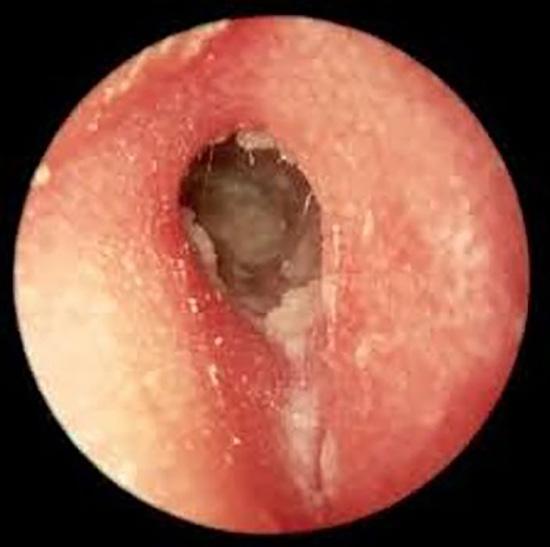
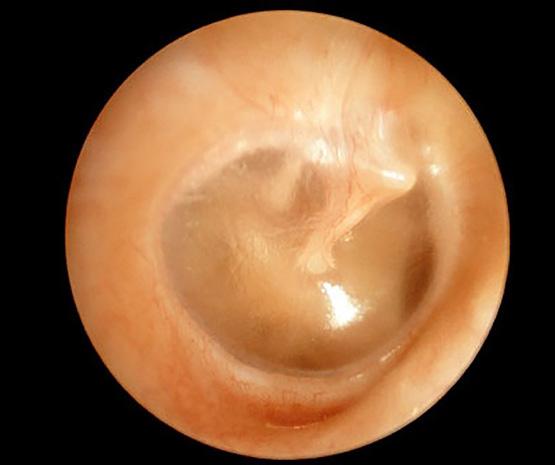
• Placing Vaseline-coated cotton wool in the ears before swimming
• Avoiding water retention in the ear canal
Interestingly, despite awareness of the risks, compliance with protective measures remains inconsistent.
“Many people know they should use ear plugs but don’t,” says Dr Choo. “Comfort, cost and reduced hearing are common barriers — and sometimes it’s simply habit.”
Common summer presentations
During the summer months, swimmer’s ear remains the most common ear complaint seen in pharmacy.
“Increased water exposure, travel to warmer climates, and crowded swimming environments all contribute,” Dr Choo explains.
The most common bacterial causes include Staphylococcus aureus and Pseudomonas aeruginosa, which should be considered when selecting appropriate treatment.
Pharmacists should also be aware of broader ENT risks associated with summer.
The overlooked role of UV exposure
While ear infections are a key concern, Dr Choo emphasises that UV exposure remains a significant but often under-recognised issue.
“The ears are constantly exposed to the sun, yet often overlooked when applying sun protection,” he says.
Despite Ireland’s climate, skin cancers remain common, and the ears are a frequent site of concern.
“Protecting the skin, including the ears, is a simple but effective way to reduce risk,” he adds.
Public health messaging
From a prevention perspective, Dr Choo highlights several key messages pharmacists can reinforce:
• Protect ears from prolonged cold water exposure
• Use ear plugs, swim hats or hoods where appropriate
• Avoid inserting cotton buds into the ear canal
• Use olive oil sprays to maintain ear canal health
• Seek early advice for persistent symptoms
For patients with recurrent infections, having antibiotic ear drops available when travelling may also be beneficial.
“Pharmacists are ideally placed to deliver these messages,” he says. “They are accessible, trusted, and often the first point of contact.”
Supporting better awareness
Ultimately, improving awareness of conditions such as surfer’s ear — alongside more common issues like swimmer’s ear — is key to reducing long-term complications.
As water-based activities continue to grow in popularity, so too does the need for proactive education and prevention.
“Simple measures can make a significant difference,” concludes Dr Choo. “With the right advice and early intervention, many of these conditions are entirely preventable.”
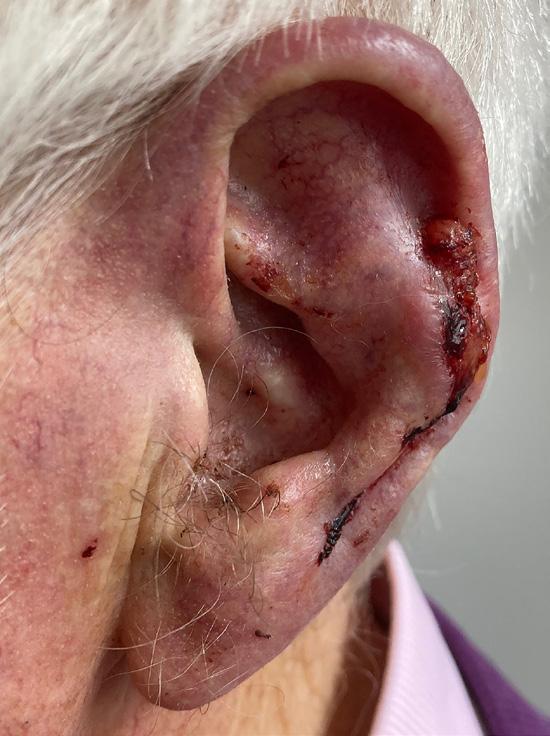
Otits Externa
Normal Ear
Ear Cancer
Complex PCI in Contemporary Hospital Practice: Expanding Treatment Options for High-Risk Coronary Disease Coronary Disease
Written by Authors: JJ Coughlan1,2, Robert Byrne1,2 and Colm Hanratty1
Author Affiliations: 1Cardiovascular Research Institute, Mater Private Network, Eccles Street 73, Dublin 7, D07 WKW8, Ireland; 2School of Pharmacy and Biomolecular Sciences, RCSI University of Medicine and Health Sciences, Dublin, Ireland
Introduction
In modern practice, cardiologists are encountering increasing numbers of higher risk patients with complex patterns of coronary artery disease (CAD). This is partly as a result of our ageing population, as older patients more commonly present with more complex patterns of disease and tend have more co-morbidities. While coronary artery bypass grafting (CABG) is commonly used to treat complex patterns of coronary disease, many patients are not suitable for cardiac surgery due to their age, frailty or co-morbidities. This means that their only interventional treatment option is via minimally invasive percutaneous coronary intervention (PCI). Within the interventional cardiology community, the concept of complex, high risk, indicated procedures (CHIP) has emerged and is generally used to describe procedures which are of higher complexity and risk, due to the pattern of disease and/or the characteristics of the patient.
These CHIP patients include patients with completely blocked arteries (referred to as chronic total occlusions or CTOs), and patients who have developed recurrent problems after previous bypass surgery or stenting. These problems can include that their bypass grafts have failed, or they have developed recurrent narrowing or blockages within previously implanted stents. CHIP patients are often older, frailer and can have significant comorbidities (e.g., renal failure and cancer). Many of these patients have significant symptoms and poor quality of life due to their coronary disease. In some cases, they may have been told there is no viable therapeutic option for their condition. Given the perceived complexity of their disease or concern regarding higher procedural risk, these patients are less likely to be
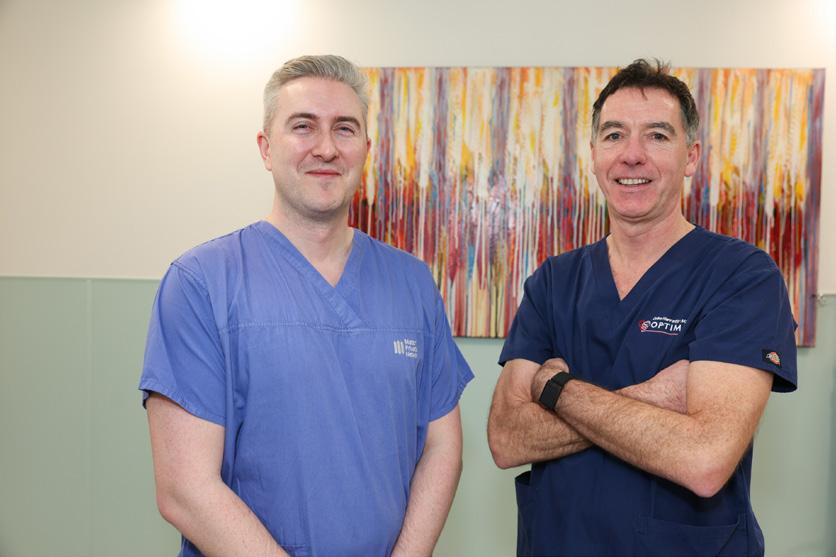
offered interventional treatment and may end up being managed with medications alone, despite significant ongoing symptoms.
In order to address this clinical need, we have set up a dedicated complex PCI program in our centre, the Mater Private Network in Dublin (Figure 1). A key aim of the complex PCI program is to provide complex and highrisk patients with a dedicated treatment pathway. Similar to a standard PCI procedure, the goals of complex PCI are to improve both clinical symptoms and long-term outcomes. In order to treat these patients, we often need to use advanced procedural techniques and technologies, which are not available in all centres. In this article, we provide an overview of the Mater Private Network complex PCI program, highlighting how it functions in real world clinical practice.
Defining complexity
While the term complex PCI is commonly used within the scientific literature, there is no single accepted definition of a ‘complex’ or ‘high risk’ patient. However, there are certain patterns of disease or types of patients that are commonly agreed to be more complex or higher risk than standard PCI procedures. More complex PCI procedures include; left main stem PCI, two stent bifurcation PCI, advanced calcium modification (e.g., rotational atherectomy and intravascular lithotripsy) and CTO PCI. Higher risk patients can include older patients, frail patients, patients with depressed left ventricular function, and patients with significant co-morbidities. While more work needs to be done to standardise the working definition of CHIP PCI, there is broad consensus amongst operators with
respect to the types of lesions and patients that are more complex and higher risk.
Patient selection and clinical decision making
Our complex PCI service functions as a quaternary referral centre, accepting referrals from colleagues across the country as well as from our own colleagues within the Mater Private Network. While some patients are referred by their primary cardiologists after having procedures in other centres, others independently seek a second opinion from our service. Some patients have been told that it is not possible or advisable to treat their coronary artery disease due to the complexity of the disease pattern or the perceived risk of intervention.
Dr JJ Coughlan and Dr Colm Hanratty, who lead the complex PCI service in the Mater Private Network Dublin
Coronary Disease
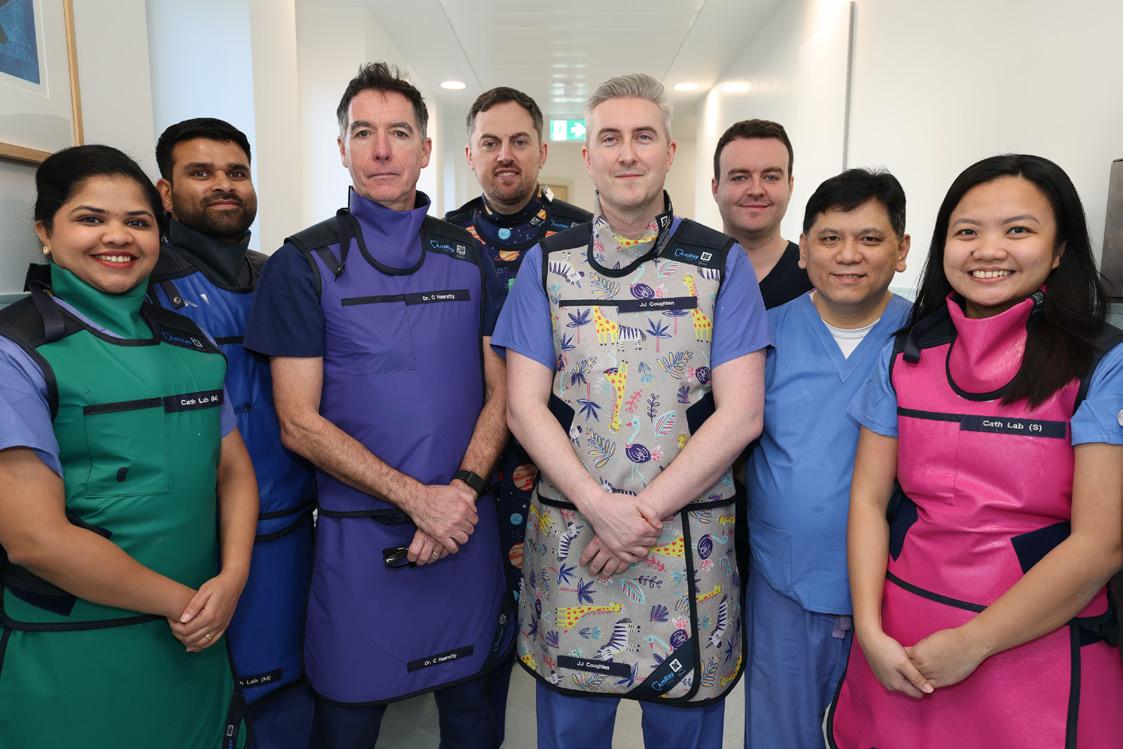
Multidisciplinary input
Once a patient is referred to our service, we will usually start by reviewing their previous procedures in order to better understand the relevant issues. We will commonly need to perform an updated angiogram to define the current status of their coronary arteries and decide upon a proposed treatment plan. Given the complex nature of their disease, we will discuss with the patient and their families regarding their potential treatment options. This is important in order to ensure that we are all aligned with respect to the goals of treatment and the potential risks. The two main reasons we perform PCI are to improve prognosis and symptoms, and discussion with the patient (and their families) allows us to make clear to them what we are trying to achieve in their individual circumstances. For example, while CTO PCI has not been shown to reduce mortality, it has been consistently associated with improvements
in anginal symptoms and quality of life. Conversely, significant left main disease is associated with a significant risk of mortality with medical treatment alone and intervention is performed in these cases as it is felt to confer a survival benefit.
An 84-year-old man was referred for CTO PCI. His right coronary artery was known to be chronically occluded within a previously stented segment on coronary angiography (Figure 2, Panel A). He had ongoing exertional symptoms, and a cardiac MRI had demonstrated a large area of ischemia in the right coronary artery territory. After discussion with the patient, we proceeded to CTO PCI of the RCA, opening up the artery and restoring flow to this myocardial territory (Figure 2, Panel B).
Like most aspects of modern medical care, our complex PCI service relies on multidisciplinary input from a variety of caregivers (Figure 1). Given the complexity of the disease we treat, we discuss a large proportion of our cases at our weekly multidisciplinary case conference meeting. This is attended by the wider members of our team, including interventional cardiologists, non-interventional cardiologists, and cardiothoracic surgeons. Complex and high-risk cases are
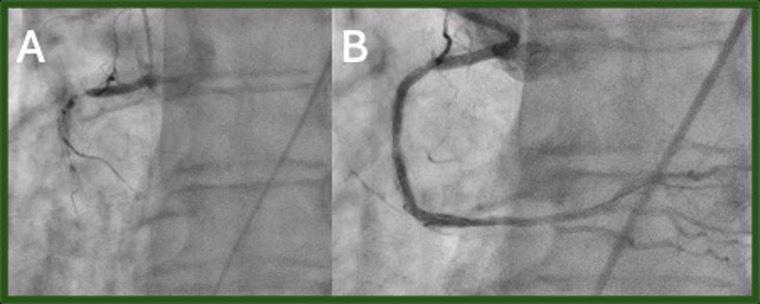
Case vignette 1.
Figure 1. The complex PCI team, which consists of consultant interventional cardiologists, complex PCI fellows, specialist nurses, radiographers and cardiac physiologists
Figure 2. CTO PCI in an 84 year old man
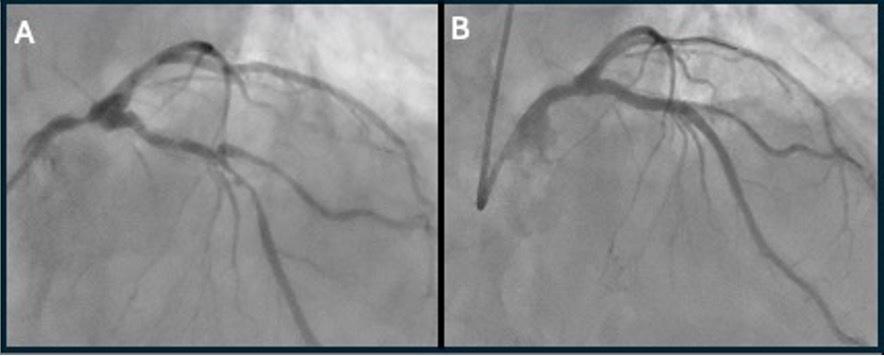
presented and discussed amongst the wider group in an effort to obtain consensus regarding the optimal treatment strategy. The multidisciplinary team meeting also results in referrals to our service from colleagues. For example, some patients with complex patterns of disease may be judged to be too high risk for cardiac surgery and are therefore referred to our service for complex PCI.
Our complex PCI team is led primarily by two interventional cardiologists. However, the team is a multidisciplinary one and includes specialist cath lab nurses, physiologists and radiographers, as well as other interventional cardiologists in our centre. We work with the team to ensure all members are comfortable with, and trained in preparing, the specialised equipment used in our procedures. We also have two complex PCI fellows, who are advanced trainees specialising in complex and high-risk PCI. We commonly perform cases with our interventional cardiology colleagues in a collaborative fashion. The concept of ‘double scrubbing’ (i.e., having two
consultants scrubbing for the same case) can facilitate optimised procedural efficiency and is felt to be particularly advantageous for complex procedures where large amounts of specialised equipment are utilised.
Periprocedural care
The complex PCI service performs high volumes of CHIP procedures, requiring an efficient team working together to maintain the delivery of high-quality care. In order to achieve this alignment amongst our team, we place a strong focus on pre-procedural planning. Cases and strategies are discussed in advance to ensure that all members of the team are aware of the procedural plan. The team performs a hard stop time out before each procedure to summarise the patient’s history and the treatment plan. We also inform the nursing and cardiac physiology staff members in advance regarding the equipment that are likely to be required for each procedure. Ensuring our colleagues are informed of the proposed plan increases procedural efficiency and minimises time wastage.
Hospital Pharmacists Boost Conference
This is important as the risk of complications is increased the longer a procedure goes on.
Case vignette 2.
An 87-year-old male presented with exertional angina and was found to have complex left main and left anterior descending artery disease (Figure 3, Panel A). Given his age and chronic kidney disease, he was judged not to be suitable for coronary artery bypass grafting surgery. As such he was referred to our service for complex PCI to his left main coronary artery and left anterior descending artery with an excellent procedural result (Figure 3, Panel B).
Outcomes and real-world impact
Our complex PCI list has been operating for a number of years now. We perform an average of over 5 PCI procedures per list, of which 4 are classified as complex PCI procedures. This means that in the past 12 months, we have been able to perform over 200 complex PCI procedures, including over 60 CTO procedures. It would not be possible to treat these volumes of patients without a dedicated operating list and a
highly specialised team. As part of our ongoing quality improvement and audit activity, we maintain a continuous audit of periprocedural and 30-day clinical outcomes for all PCI procedures performed in our centre. These data have demonstrated that we perform these complex and high-risk PCI procedures with an extremely low complication rate, highlighting that CHIP patients can be treated efficiently and safely by dedicated teams.
In addition to our clinical activities, we place a strong focus on education. This involves running courses on complex PCI for both our consultant colleagues and trainees. We also perform live cases and record cases, which are used to deliver education in both national and international conferences. By doing this, we hope to expand the number of doctors with the skillset needed to perform complex PCI, which will help increase the numbers of patients who can be treated.
Summary
Complex and higher risk coronary artery disease patients are commonly encountered in modern clinical practice. We believe that these patients are best treated by dedicated complex PCI teams, who routinely perform complex procedures. In order to address this growing need, we have developed a dedicated complex PCI program which delivers high quality care to this patient population. We continue to expand this service and train other doctors in complex PCI, with the hope of providing high quality care to as many patients as possible.
The third edition of the European Association of Hospital Pharmacists (EAHP) BOOST, will take place in magical Krakow, between 13 and 14 November 2026. This year, BOOST is dedicated to exploring the evolving and transformative role of Artificial Intelligence (AI) in hospital pharmacy practice.
AI is rapidly transforming healthcare systems worldwide, offering new opportunities to improve the safety, efficiency, and quality of pharmaceutical care, if guided properly. From predictive analytics and clinical decision support to medication management automation and workflow optimisation, AI technologies are beginning to reshape how hospital pharmacists deliver care and contribute to multidisciplinary healthcare teams.
Recognising the growing importance of these developments, EAHP BOOST 2026 will provide a platform for hospital pharmacists, healthcare professionals, researchers, start-up digital health innovators, and policymakers to come together and explore how AI can be responsibly and effectively integrated into hospital pharmacy settings.
Get access to emerging evidence, delivered by expert keynote speakers, highlighting practical experiences from institutions that are already implementing AI-driven tools.
By bringing together diverse perspectives from across the healthcare and technology ecosystems, EAHP BOOST 2026 aims to empower hospital pharmacists to engage with digital innovation and play an active role in shaping the future of AI-enabled pharmaceutical care. Visit www.eahp.eu for further information.
Figure 3. Left main PCI in an 87 year old man
The evolving use of daratumumab in multiple myeloma treatment
Monoclonal
antibodies now the
“backbone” of treatment for patients with multiple myeloma, Dr Sally Moore tells Danielle Barron

During her specialist registrar training in haematology training at University College London Hospital, Dr Sally Moore recalls the “pleasure” she derived from looking after multiple myeloma patients, despite the challenging treatment landscape.
Currently the Myeloma Clinical Lead at University Hospital Bristol, who also co-hosts an information podcast on the condition, Dr Moore says her greatest satisfaction in the clinic now comes from “tailoring the treatment and services to meet patient needs”.
“Over the last decade, we have seen the advent of the second and third generation immunomodulators, the second and third generation proteasome inhibitors, then daratumumab coming to the fore and now the bispecific antibodies and the antibody drug conjugates. It’s been such a journey.”
Although treatments such as thalidomide and bortezomib offered patients better outcomes than previously, Dr Moore notes they were associated with significant side effects., This provided valuable insights, she says. “But because we understood how well those drugs worked, the second and third generations came through which had improved efficacy and fewer toxicities, and patients are still benefiting from that now.” 1
A significant evolution, however, occurred with the introduction of
the anti-CD38 antibodies such as daratumumab and also the ability to combine these with other effective agents.
“Instead of just having two drugs to offer a patient, you had three or you had four, all targeting the myeloma in different ways,” she explains. Dr. Moore elaborates that this multi-modal approach has contributed to improved patient outcomes, including longer durations of remission and, for some patients, deep and sustained responses, reflecting the increased effectiveness of available treatments.
She recalls the anticipation for daratumumab’s availability as a single agent in the fourth-line setting, recognising that this expanded therapeutic options beyond thirdline treatments.
“There was more to offer people and there was more hope to offer people.”
Another notable advancement was the advent of the subcutaneous treatment, which Dr Moore says, “lightened the load”. “Suddenly you had a drug, which not only worked but was also very deliverable.”
At the same time, the outlook for the relapsed/refractory patient is improving. The POLLUX trial illustrated that the addition of daratumumab to lenalidomide and dexamethasone significantly lengthened progression-free sur-
vival among patients with relapsed or refractory multiple myeloma.
Dr Moore highlights the significance of these findings, particularly for a subpopulation of multiple myeloma patients that have been historically underserved. She notes the results are encouraging, especially given the observed tolerability of these therapies and the notable separation of survival curve.8
She adds that limited access in the UK has presented challenges but in private practice she has observed positive responses with DRd in relapsed patients, including older, frailer individuals who maintained treatment well, achieving durable, deep remissions.
Haematologists have gained considerable experience with daratumumab and Dr Moore highlights the impact of the frontline MAIA study. This landmark trial showed that daratumumab plus lenalidomide and dexamethasone (D-Rd) improved progression-free survival and overall survival in transplant-ineligible multiple myeloma patients.12
“To have a regimen which works with so few toxicities in patients has really shifted the dial.”
The landmark PERSEUS trial showed that the addition of subcutaneous daratumumab to VRd [bortezomib, lenalidomide, and dexamethasone] induction and consolidation therapy and lenalidomide maintenance therapy,
conferred a significant benefit with respect to progression-free survival among transplantation-eligible patients with newly diagnosed multiple myeloma. The study also highlighted the feasibility of a fixed duration of daratumumab treatment, which Dr Moore suggests allows for potential re-use following disease progression for patients achieving strong initial responses. The results of the trial indicate that despite the addition of a fourth drug (daratumumab), the safety profile was consistent with the known side effects of daratumumab and no unexpected side effects were reported.13
Dr Moore has used this quadruplet regimen with her patients in the UK and experienced positive results both in terms of efficacy and tolerability. “What we are seeing is increased efficacy, increased overall response rates, increased steps of remission,” she says. “Because we’ve now got good induction and consolidation as well as maintenance, fewer people are having tandem transplants because it’s not necessary.”
The publication of the CEPHEUS trial results last year further affirmed the efficacy of this regimen in transplant-ineligible patients with newly diagnosed multiple myeloma. Dr Moore notes that these findings contribute to a convergence of outcomes between certain transplant-ineligible and eligible patients, offering similar therapeutic benefits for specific patient groups.
The use of daratumumab is expected to continue to evolve, and Dr Moore anticipates it will maintain a central role in therapy, with monoclonal antibodies such as daratumumab
becoming an established component of everyday practice. “It’s routine to offer a quad if you can, versus a triplet or a triplet versus a doublet if you’re more limited. And it’s very routine to have a monoclonal antibody in there. And to not do so, in my opinion, it is far from optimal. We need to be offering that early on rather than going in more gently with fewer drugs because you can’t necessarily titrate up in the same way.”
References available on request
Dr Sally Moore

DARZALEX® 20 mg/ml Concentrate for Solution for Infusion and 1,800 mg Solution for Injection. ABBREVIATED PRESCRIBING INFORMATION. ACTIVE INGREDIENT(S): Daratumumab. Please refer to Summary of Product Characteristics (SmPC) before prescribing. INDICATION(S): Darzalex SC and IV: Newly diagnosed multiple myeloma: in combination with lenalidomide/ dexamethasone or bortezomib/melphalan/prednisone in adults, ineligible for autologous stem cell transplant; in combination with bortezomib, thalidomide and dexamethasone in adults, eligible for autologous stem cell transplant. Relapsed/Refractory multiple myeloma: Monotherapy for adults whose prior therapy included a proteasome inhibitor and an immunomodulatory agent and who have demonstrated disease progression on last therapy. In combination with lenalidomide/dexamethasone or bortezomib/dexamethasone in adults who have received ≥ one prior therapy. Darzalex SC only: in combination with bortezomib/ lenalidomide/dexamethasone in adults with newly diagnosed multiple myeloma; in combination with pomalidomide and dexamethasone for the treatment of adult patients with multiple myeloma who have received one prior therapy containing a proteasome inhibitor and lenalidomide and were lenalidomiderefractory, or who have received at least two prior therapies that included lenalidomide and a proteasome inhibitor and have demonstrated disease progression on or after the last therapy. Smouldering multiple myeloma (SMM): Darzalex SC as monotherapy in adults at high risk of developing multiple myeloma. AL Amyloidosis: Darzalex SC in combination with cyclophosphamide, bortezomib and dexamethasone for the treatment of adult patients with newly diagnosed systemic light chain (AL) amyloidosis. DOSAGE & ADMINISTRATION: Administration by healthcare professional where resuscitation facilities are available, intravenous (IV) infusion or subcutaneous (SC) injection. For SC injection, resuscitation facilities required only for first dose. Adults: Recommended IV dose: 16 mg/kg body weight. Dilute with sodium chloride 0.9% solution for injection and administer by IV infusion using incremental escalation of infusion rate, only if previous infusion well-tolerated. SC dose: inject 15 mL (1,800 mg) Darzalex solution for SC injection into the subcutaneous tissue of the abdomen approximately 7.5 cm to the right or left of the navel over approximately 3-5 minutes according to dosing schedule. Patients > 120 kg, flat-dose 1,800 mg SC, efficacy not established. SC injection: no dose adjustments based on body weight recommended. Darzalex solution for SC
DARZALEX® 20 mg/ml Concentrate for Solution for Infusion and 1,800 mg Solution for Injection. ABBREVIATED PRESCRIBING INFORMATION. ACTIVE INGREDIENT(S): Daratumumab. Please refer to Summary of Product Characteristics (SmPC) before prescribing. INDICATION(S): Darzalex SC and IV: Newly diagnosed multiple myeloma: in combination with lenalidomide/ dexamethasone or bortezomib/melphalan/prednisone in adults, ineligible for autologous stem cell transplant; in combination with bortezomib, thalidomide and dexamethasone in adults, eligible for autologous stem cell transplant. Relapsed/Refractory multiple myeloma: Monotherapy for adults whose prior therapy included a proteasome inhibitor and an immunomodulatory agent and who have demonstrated disease progression on last therapy. In combination with lenalidomide/dexamethasone or bortezomib/dexamethasone in adults who have received ≥ one prior therapy. Darzalex SC only: in combination with bortezomib/ lenalidomide/dexamethasone in adults with newly diagnosed multiple myeloma; in combination with pomalidomide and dexamethasone for the treatment of adult patients with multiple myeloma who have received one prior therapy containing a proteasome inhibitor and lenalidomide and were lenalidomiderefractory, or who have received at least two prior therapies that included lenalidomide and a proteasome inhibitor and have demonstrated disease progression on or after the last therapy. Smouldering multiple myeloma (SMM): Darzalex SC as monotherapy in adults at high risk of developing multiple myeloma. AL Amyloidosis: Darzalex SC in combination with cyclophosphamide, bortezomib and dexamethasone for the treatment of adult patients with newly diagnosed systemic light chain (AL) amyloidosis. DOSAGE & ADMINISTRATION: Administration by healthcare professional where resuscitation facilities are available, intravenous (IV) infusion or subcutaneous (SC) injection. For SC injection, resuscitation facilities required only for first dose. Adults: Recommended IV dose: 16 mg/kg body weight. Dilute with sodium chloride 0.9% solution for injection and administer by IV infusion using incremental escalation of infusion rate, only if previous infusion well-tolerated. SC dose: inject 15 mL (1,800 mg) Darzalex solution for SC injection into the subcutaneous tissue of the abdomen approximately 7.5 cm to the right or left of the navel over approximately 3-5 minutes according to dosing schedule. Patients > 120 kg, flat-dose 1,800 mg SC, efficacy not established. SC injection: no dose adjustments based on body weight recommended. Darzalex solution for SC
DARZALEX® 20 mg/ml Concentrate for Solution for Infusion and 1,800 mg Solution for Injection. ABBREVIATED PRESCRIBING INFORMATION. ACTIVE INGREDIENT(S): Daratumumab. Please refer to Summary of Product Characteristics (SmPC) before prescribing. INDICATION(S): Darzalex SC and IV: Newly diagnosed multiple myeloma: in combination with lenalidomide/ dexamethasone or bortezomib/melphalan/prednisone in adults, ineligible for autologous stem cell transplant; in combination with bortezomib, thalidomide and dexamethasone in adults, eligible for autologous stem cell transplant. Relapsed/Refractory multiple myeloma: Monotherapy for adults whose prior therapy included a proteasome inhibitor and an immunomodulatory agent and who have demonstrated disease progression on last therapy. In combination with lenalidomide/dexamethasone or bortezomib/dexamethasone in adults who have received ≥ one prior therapy. Darzalex SC only: in combination with bortezomib/ lenalidomide/dexamethasone in adults with newly diagnosed multiple myeloma; in combination with pomalidomide and dexamethasone for the treatment of adult patients with multiple myeloma who have received one prior therapy containing a proteasome inhibitor and lenalidomide and were lenalidomiderefractory, or who have received at least two prior therapies that included lenalidomide and a proteasome inhibitor and have demonstrated disease progression on or after the last therapy. Smouldering multiple myeloma (SMM): Darzalex SC as monotherapy in adults at high risk of developing multiple myeloma. AL Amyloidosis: Darzalex SC in combination with cyclophosphamide, bortezomib and dexamethasone for the treatment of adult patients with newly diagnosed systemic light chain (AL) amyloidosis. DOSAGE & ADMINISTRATION: Administration by healthcare professional where resuscitation facilities are available, intravenous (IV) infusion or subcutaneous (SC) injection. For SC injection, resuscitation facilities required only for first dose. Adults: Recommended IV dose: 16 mg/kg body weight. Dilute with sodium chloride 0.9% solution for injection and administer by IV infusion using incremental escalation of infusion rate, only if previous infusion well-tolerated. SC dose: inject 15 mL (1,800 mg) Darzalex solution for SC injection into the subcutaneous tissue of the abdomen approximately 7.5 cm to the right or left of the navel over approximately 3-5 minutes according to dosing schedule. Patients > 120 kg, flat-dose 1,800 mg SC, efficacy not established. SC injection: no dose adjustments based on body weight recommended. Darzalex solution for SC
Use
DARZALEX® (daratumumab) at the earliest opportunity in multiple myeloma
Use DARZALEX® (daratumumab) at the earliest opportunity in multiple myeloma
Use DARZALEX® (daratumumab) at the earliest opportunity in multiple myeloma
DARZALEX® + Rd results in mPFS 61.9 months vs 34.4 months for Rd alone1*
DARZALEX® + Rd results in mPFS 61.9 months vs 34.4 months for Rd alone1*
injection should never be injected into areas where the skin is red, bruised, tender, hard or areas where there are scars, rotate injection site. During treatment with Darzalex SC injection, do not administer other medicinal products for subcutaneous use at the same site as Darzalex. Check the vial labels to ensure that the appropriate formulation (IV or SC formulation) and dose is being given as prescribed. For dose and schedule of medicinal products administered with DARZALEX, refer to SmPC 4.2 and the corresponding SmPC for other products. Administer pre- and postinjection medicinal products to reduce the risk of infusion-related reactions (IRRs). Recommended concomitant medications for management of infusion/injection-related reactions (IRRs): administer pre- IV infusion/ SC Injection medicinal products to all patients 1-3 hours prior to every infusion (corticosteroid, antipyretics and antihistamine. For SMM indication a leukotriene inhibitor is also recommended). For SC injections, pre-medications can be given orally from the first dose. When dexamethasone is backgroundregimen specific corticosteroid, this dose will serve as premedication on infusion days. If pre-medication dexamethasone is given on infusion day, do not take additional background regimen specific corticosteroids (e.g. prednisone) on Darzalex administration days. Post- IV infusion/SC injection medicinal products should be administered to reduce the risk of delayed IRRs: administer oral corticosteroid. SC injections: if the patient experiences no major IRRs after the first three SC injections, postinjection corticosteroids (excluding any background regimen corticosteroids) may be discontinued. Consider short/long acting bronchodilators and inhaled corticosteroids in patients with history of chronic obstructive pulmonary disorder. IV Infusion: Any grade/severity IRRs, interrupt Darzalex immediately and manage symptoms. Re-starting Darzalex IV infusion: reduce infusion rate (refer to SmPC); Grade 4 IRRs (or third occurrence of Grade 3) – permanently discontinue. IV and SC: For haematological toxicity dose delay may be required to allow recovery of blood cell counts. No dose reductions of Darzalex recommended. Consider anti-viral prophylaxis for prevention of herpes zoster virus reactivation. Children: No data available. Elderly/Renal impairment/Hepatic impairment: No dose adjustments.
No new safety concerns were observed1*
DARZALEX® + Rd results in mPFS 61.9 months vs 34.4 months for Rd alone1*
*In newly diagnosed transplantineligible multiple myeloma patients. Median follow-up of 64.5 months1 No new safety concerns were observed1*
*In newly diagnosed transplantineligible multiple myeloma patients. Median follow-up of 64.5 months1 No new safety concerns were observed1*
*In newly diagnosed transplantineligible multiple myeloma patients. Median follow-up of 64.5 months1
injection should never be injected into areas where the skin is red, bruised, tender, hard or areas where there are scars, rotate injection site. During treatment with Darzalex SC injection, do not administer other medicinal products for subcutaneous use at the same site as Darzalex. Check the vial labels to ensure that the appropriate formulation (IV or SC formulation) and dose is being given as prescribed. For dose and schedule of medicinal products administered with DARZALEX, refer to SmPC 4.2 and the corresponding SmPC for other products. Administer pre- and postinjection medicinal products to reduce the risk of infusion-related reactions (IRRs). Recommended concomitant medications for management of infusion/injection-related reactions (IRRs): administer pre- IV infusion/ SC Injection medicinal products to all patients 1-3 hours prior to every infusion (corticosteroid, antipyretics and antihistamine. For SMM indication a leukotriene inhibitor is also recommended). For SC injections, pre-medications can be given orally from the first dose. When dexamethasone is backgroundregimen specific corticosteroid, this dose will serve as premedication on infusion days. If pre-medication dexamethasone is given on infusion day, do not take additional background regimen specific corticosteroids (e.g. prednisone) on Darzalex administration days. Post- IV infusion/SC injection medicinal products should be administered to reduce the risk of delayed IRRs: administer oral corticosteroid. SC injections: if the patient experiences no major IRRs after the first three SC injections, postinjection corticosteroids (excluding any background regimen corticosteroids) may be discontinued. Consider short/long acting bronchodilators and inhaled corticosteroids in patients with history of chronic obstructive pulmonary disorder. IV Infusion: Any grade/severity IRRs, interrupt Darzalex immediately and manage symptoms. Re-starting Darzalex IV infusion: reduce infusion rate (refer to SmPC); Grade 4 IRRs (or third occurrence of Grade 3) – permanently discontinue. IV and SC: For haematological toxicity dose delay may be required to allow recovery of blood cell counts. No dose reductions of Darzalex recommended. Consider anti-viral prophylaxis for prevention of herpes zoster virus reactivation. Children: No data available. Elderly/Renal impairment/Hepatic impairment: No dose adjustments. CONTRAINDICATIONS: Hypersensitivity to active substance or excipients. SPECIAL WARNINGS & PRECAUTIONS: Please refer to SmPC for information on the following special warnings and precautions: Traceability; Infusion-related reactions, Neutropenia/ Thrombocytopenia, Interference with indirect antiglobulin
injection should never be injected into areas where the skin is red, bruised, tender, hard or areas where there are scars, rotate injection site. During treatment with Darzalex SC injection, do not administer other medicinal products for subcutaneous use at the same site as Darzalex. Check the vial labels to ensure that the appropriate formulation (IV or SC formulation) and dose is being given as prescribed. For dose and schedule of medicinal products administered with DARZALEX, refer to SmPC 4.2 and the corresponding SmPC for other products. Administer pre- and postinjection medicinal products to reduce the risk of infusion-related reactions (IRRs). Recommended concomitant medications for management of infusion/injection-related reactions (IRRs): administer pre- IV infusion/ SC Injection medicinal products to all patients 1-3 hours prior to every infusion (corticosteroid, antipyretics and antihistamine. For SMM indication a leukotriene inhibitor is also recommended). For SC injections, pre-medications can be given orally from the first dose. When dexamethasone is backgroundregimen specific corticosteroid, this dose will serve as premedication on infusion days. If pre-medication dexamethasone is given on infusion day, do not take additional background regimen specific corticosteroids (e.g. prednisone) on Darzalex administration days. Post- IV infusion/SC injection medicinal products should be administered to reduce the risk of delayed IRRs: administer oral corticosteroid. SC injections: if the patient experiences no major IRRs after the first three SC injections, postinjection corticosteroids (excluding any background regimen corticosteroids) may be discontinued. Consider short/long acting bronchodilators and inhaled corticosteroids in patients with history of chronic obstructive pulmonary disorder. IV Infusion: Any grade/severity IRRs, interrupt Darzalex immediately and manage symptoms. Re-starting Darzalex IV infusion: reduce infusion rate (refer to SmPC); Grade 4 IRRs (or third occurrence of Grade 3) – permanently discontinue. IV and SC: For haematological toxicity dose delay may be required to allow recovery of blood cell counts. No dose reductions of Darzalex recommended. Consider anti-viral prophylaxis for prevention of herpes zoster virus reactivation. Children: No data available. Elderly/Renal impairment/Hepatic impairment: No dose adjustments. CONTRAINDICATIONS: Hypersensitivity to active substance or excipients. SPECIAL WARNINGS & PRECAUTIONS: Please refer to SmPC for information on the following special warnings and precautions: Traceability; Infusion-related reactions, Neutropenia/ Thrombocytopenia, Interference with indirect antiglobulin
CONTRAINDICATIONS: Hypersensitivity to active substance or excipients. SPECIAL WARNINGS & PRECAUTIONS: Please refer to SmPC for information on the following special warnings and precautions: Traceability; Infusion-related reactions, Neutropenia/ Thrombocytopenia, Interference with indirect antiglobulin
test (indirect Coombs test), Interference with determination of complete response, Hepatitis B virus (HBV) reactivation, Body weight (> 120 kg), Excipients. SIDE EFFECTS: Very common: IRRs (Darzalex IV), upper respiratory tract infection, COVID-19, pneumonia, bronchitis, neutropenia, thrombocytopenia, anaemia, lymphopenia, leukopenia, decreased appetite, hypokalaemia, insomnia, peripheral neuropathy, headache, paraesthesia, dizziness, hypertension, cough, dyspnoea, constipation, diarrhoea, nausea, vomiting, abdominal pain, rash, musculoskeletal pain, arthralgia, muscle spasms, oedema peripheral, fatigue, pyrexia, asthenia. SC only: injection site reactions. Common: IRRs (Darzalex SC), urinary tract infection, sepsis, cytomegalovirus infection, hypogammaglobulinemia, hyperglycaemia, hypocalcaemia, dehydration, syncope, atrial fibrillation, pulmonary oedema, pancreatitis, pruritus, chills. Uncommon: Hepatitis B Virus reactivation. Refer to SmPC for further information on side effects. LEGAL CATEGORY: Prescription only medicine (POM). PRESENTATIONS, PACK SIZES, MARKETING AUTHORISATION NUMBER(S): 5 ml vial (100 mg daratumumab), X 1, EU/1/16/1101/001; 20 ml vial (400 mg daratumumab), X 1, EU/1/16/1101/002; 15 ml vial (1 800 mg daratumumab), X 1, EU/1/16/1101/004. MARKETING AUTHORISATION HOLDER: JanssenCilag International NV, Turnhoutseweg 30, B-2340 Beerse, Belgium. FURTHER INFORMATION IS AVAILABLE FROM: Janssen Sciences Ireland UC, Barnahely, Ringaskiddy, IRL – Co. Cork P43 FA46. Prescribing information updated: July 2025.
test (indirect Coombs test), Interference with determination of complete response, Hepatitis B virus (HBV) reactivation, Body weight (> 120 kg), Excipients. SIDE EFFECTS: Very common: IRRs (Darzalex IV), upper respiratory tract infection, COVID-19, pneumonia, bronchitis, neutropenia, thrombocytopenia, anaemia, lymphopenia, leukopenia, decreased appetite, hypokalaemia, insomnia, peripheral neuropathy, headache, paraesthesia, dizziness, hypertension, cough, dyspnoea, constipation, diarrhoea, nausea, vomiting, abdominal pain, rash, musculoskeletal pain, arthralgia, muscle spasms, oedema peripheral, fatigue, pyrexia, asthenia. SC only: injection site reactions. Common: IRRs (Darzalex SC), urinary tract infection, sepsis, cytomegalovirus infection, hypogammaglobulinemia, hyperglycaemia, hypocalcaemia, dehydration, syncope, atrial fibrillation, pulmonary oedema, pancreatitis, pruritus, chills. Uncommon: Hepatitis B Virus reactivation. Refer to SmPC for further information on side effects. LEGAL CATEGORY: Prescription only medicine (POM). PRESENTATIONS, PACK SIZES, MARKETING AUTHORISATION NUMBER(S): 5 ml vial (100 mg daratumumab), X 1, EU/1/16/1101/001; 20 ml vial (400 mg daratumumab), X 1, EU/1/16/1101/002; 15 ml vial (1 800 mg daratumumab), X 1, EU/1/16/1101/004. MARKETING AUTHORISATION HOLDER: JanssenCilag International NV, Turnhoutseweg 30, B-2340 Beerse, Belgium. FURTHER INFORMATION IS AVAILABLE FROM: Janssen Sciences Ireland UC, Barnahely, Ringaskiddy, IRL – Co. Cork P43 FA46. Prescribing information updated: July 2025.
test (indirect Coombs test), Interference with determination of complete response, Hepatitis B virus (HBV) reactivation, Body weight (> 120 kg), Excipients. SIDE EFFECTS: Very common: IRRs (Darzalex IV), upper respiratory tract infection, COVID-19, pneumonia, bronchitis, neutropenia, thrombocytopenia, anaemia, lymphopenia, leukopenia, decreased appetite, hypokalaemia, insomnia, peripheral neuropathy, headache, paraesthesia, dizziness, hypertension, cough, dyspnoea, constipation, diarrhoea, nausea, vomiting, abdominal pain, rash, musculoskeletal pain, arthralgia, muscle spasms, oedema peripheral, fatigue, pyrexia, asthenia. SC only: injection site reactions. Common: IRRs (Darzalex SC), urinary tract infection, sepsis, cytomegalovirus infection, hypogammaglobulinemia, hyperglycaemia, hypocalcaemia, dehydration, syncope, atrial fibrillation, pulmonary oedema, pancreatitis, pruritus, chills. Uncommon: Hepatitis B Virus reactivation. Refer to SmPC for further information on side effects. LEGAL CATEGORY: Prescription only medicine (POM). PRESENTATIONS, PACK SIZES, MARKETING AUTHORISATION NUMBER(S): 5 ml vial (100 mg daratumumab), X 1, EU/1/16/1101/001; 20 ml vial (400 mg daratumumab), X 1, EU/1/16/1101/002; 15 ml vial (1 800 mg daratumumab), X 1, EU/1/16/1101/004. MARKETING AUTHORISATION HOLDER: JanssenCilag International NV, Turnhoutseweg 30, B-2340 Beerse, Belgium. FURTHER INFORMATION IS AVAILABLE FROM: Janssen Sciences Ireland UC, Barnahely, Ringaskiddy, IRL – Co. Cork P43 FA46. Prescribing information updated: July 2025.
Adverse events should be reported. Healthcare professionals are asked to report any suspected adverse reactions via: HPRA Pharmacovigilance, Website: www.hpra.ie. Adverse events should also be reported to Janssen Sciences Ireland UC, a Johnson & Johnson company, on 0044 1494 567447 or at dsafety@its.jnj.com.
Adverse events should be reported. Healthcare professionals are asked to report any suspected adverse reactions via: HPRA Pharmacovigilance, Website: www.hpra.ie. Adverse events should also be reported to Janssen Sciences Ireland UC, a Johnson & Johnson company, on 0044 1494 567447 or at dsafety@its.jnj.com.
Adverse events should be reported. Healthcare professionals are asked to report any suspected adverse reactions via: HPRA Pharmacovigilance, Website: www.hpra.ie. Adverse events should also be reported to Janssen Sciences Ireland UC, a Johnson & Johnson company, on 0044 1494 567447 or at dsafety@its.jnj.com.
mPFS, median progression free survival; Rd, lenalidomide + dexamethasone; SC, subcutaneous.
mPFS, median progression free survival; Rd, lenalidomide + dexamethasone; SC, subcutaneous.
mPFS, median progression free survival; Rd, lenalidomide + dexamethasone; SC, subcutaneous.
References: 1. Facon T, et al. Daratumumab/lenalidomide/ dexamethasone in transplant-ineligible newly diagnosed myeloma: MAIA long-term outcomes. Leukemia. 2025;39(4):942-950. CP-569853 | Date of Preparation: March 2026
References: 1. Facon T, et al. Daratumumab/lenalidomide/ dexamethasone in transplant-ineligible newly diagnosed myeloma: MAIA long-term outcomes. Leukemia. 2025;39(4):942-950.
References: 1. Facon T, et al. Daratumumab/lenalidomide/ dexamethasone in transplant-ineligible newly diagnosed myeloma: MAIA long-term outcomes. Leukemia. 2025;39(4):942-950.
CP-569853 | Date of Preparation: March 2026
CP-569853 | Date of Preparation: March 2026
Medical Council announces a phased increase to annual registration fees for doctors
The Medical Council has announced a phased increase to annual retention fees for registered doctors, effective from the 2026 annual retention process, which opens in late May 2026. This is the first change to annual retention fees since 2015.
Under the phased approach, a 10% increase will apply in 2026, followed by a further 10% increase in 2027. For the majority of registered doctors, this brings the annual retention fee from ¤605 to ¤665 in 2026, and ¤732 in 2027.
Rationale
Strong, effective regulation is essential for patient safety and upholding the integrity of medical practice in Ireland. The fee structure has remained unchanged for over ten years, during which time the cost of medical regulation has grown considerably.
Since the last change to annual retention fees in 2015, the demands on regulatory infrastructure have grown substantially. Medicine is now
more complex than ever, with increasing registration volumes, advances in technology, rising operational costs, and new ethical challenges placing fresh demands on regulation.
To future-proof regulatory capacity and ensure it remains fair, responsive, and effective for patients, doctors, and the public, the Medical Council requires sustainable funding. This increase in registration fees is therefore a necessary investment that will strengthen and secure a system that continues to serve well into the future.
Specific cohorts
The Medical Council has designed the fee structure to reflect the circumstances of different cohorts:
• Doctors who have qualified in the last three years will see no increase in either 2026 or 2027, with fees remaining at ¤560.
• Doctors aged over 70 will see a modest increase of ¤5 in 2026, with no further increase
in 2027, resulting in a fee of ¤75 for both years.
• Doctors on maternity, adoptive, surrogacy or sick leave will continue to benefit from a 50% refund of retention fees paid within the current registration year.
• Doctors with international protection or refugee status will continue to benefit from a nominal registration fee of ¤5 for their first year.
fee structure
Efficiencies and service improvements
The Medical Council noted that despite the fee freeze, it has continued to invest in service improvements. Registration processing times have substantially reduced recently, and legislative reforms to the complaints process have introduced more timely resolution mechanisms and enhanced powers to address vexatious or unsubstantiated complaints at an early stage. These improvements strengthen patient safety while supporting a fairer process for doctors.
Doctors Over 70 Years of age on the Register
Efficiencies and service improvements
Tackling Medical Scientist Shortages
Efficiencies and service improvements
The Medical Council noted that despite the fee freeze, it has continued to invest improvements. Registration processing times have substantially reduced recently, reforms to the complaints process have introduced more timely resolution mechanisms enhanced powers to address vexatious or unsubstantiated complaints at an early improvements strengthen patient safety while supporting a fairer process for doctors.

A new partnership between Atlantic Technological University (ATU) and the Health Service Executive (HSE) aims to address persistent staffing shortages in Ireland’s diagnostic laboratory services, while simultaneously upskilling existing healthcare workers through a structured, part time education pathway.
The Higher Diploma in Science in Medical Science, developed by ATU’s Medical Science Programme Board within the Department of Analytical, Biopharmaceutical and Medical Sciences, Faculty of Science and Health, has been created in direct response to long standing capacity challenges across hospital laboratories. The
The Medical Council noted that despite the fee freeze, it has continued to invest improvements. Registration processing times have substantially reduced recently, reforms to the complaints process have introduced more timely resolution mechanisms enhanced powers to address vexatious or unsubstantiated complaints at an early improvements strengthen patient safety while supporting a fairer process for doctors.
CEO, Medical Council said, "This phased adjustment to doctors’ necessary to sustain the highest standards of medical regulation that doctors and expect. We have been deliberate in designing protections for newly qualified doctors specific cohorts, and we remain committed to using doctors' fees efficiently and
CEO, Medical Council said, "This phased adjustment to doctors’ necessary to sustain the highest standards of medical regulation that doctors and expect. We have been deliberate in designing protections for newly qualified doctors specific cohorts, and we remain committed to using doctors' fees efficiently and
"Effective regulation is the cornerstone of patient safety. We’re satisfied that a phased y to sustain a robust and effective regulatory system. can continue to deliver the regulatory framework that underpins public confidence profession, while reflecting the real cost pressures that have built over a decade”,
"Effective regulation is the cornerstone of patient safety. We’re satisfied that a phased y to sustain a robust and effective regulatory system. can continue to deliver the regulatory framework that underpins public confidence profession, while reflecting the real cost pressures that have built over a decade”,
programme has been designed in collaboration with the HSE and sits under the Memorandum of Understanding between ATU and the West and North West HSE region.
The two year, part time programme provides an alternative graduate entry route to becoming a CORU registered Medical Scientist,
Back row (L–R): Dr Brigid Hoban, Programme Director of the Higher Diploma in Medical Science; Maria Molloy, Deputy Hospital Manager, Galway University Hospitals; Thomas Smyth, Head of School of Life Sciences, ATU; Elaine Dobell, Regional Director of HSCP, HSE West and North West; Dr Eugene McCarthy, Head of Department of Analytical, Biopharmaceutical and Medical Sciences, ATU; Dr Mary McGrath, Front row L-R: 1. Dr Joanne Gallagher, Dean of Faculty of Science and Health, ATU; Tony Canavan, Regional Executive Officer, HSE West and North West; Dr Orla Flynn, President of ATU; Pat Mulhare, HSE National Laboratory Programme Manager
specifically targeting medic al laboratory aides who already work within the health service and hold a Level 8 degree in a relevant science discipline.
Participants remain in paid employment throughout their studies, allowing the health service to build future capability without removing experienced staff from frontline laboratory environments.
CPD
CPD
60 Second Summary
Bladder cancer is broadly categorised into non–muscle invasive (NMIBC) and muscle invasive disease (MIBC), two entities that differ markedly in biology, clinical behaviour, and therapeutic approach. NMIBC represents the majority of new diagnoses and generally carries a favourable prognosis, with a relatively low risk of progression. In contrast, MIBC is an aggressive malignancy associated with substantial morbidity and mortality; nearly half of affected patients develop metastatic disease within two years of diagnosis despite definitive local therapy.
Perioperative imaging in bladder cancer is limited by several diagnostic constraints. CT urography remains the most accessible modality but performs poorly in assessing detrusor muscle invasion, contributing to frequent understaging before radical cystectomy.
The therapeutic landscape has evolved rapidly with the advent of immune checkpoint inhibitors, which have become foundational in the management of metastatic urothelial carcinoma.
The perioperative treatment landscape for MIBC has expanded significantly with the integration of immune checkpoint inhibitors. Recent phase 3 evidence has demonstrated that combining immunotherapy with standard cisplatin based chemotherapy can meaningfully enhance clinical outcomes.
Shared decision making remains essential, particularly regarding urinary diversion. Comprehensive counselling on the advantages, limitations, and lifestyle implications of ileal conduit diversion, continent cutaneous diversion, and orthotopic neobladder reconstruction enables patients to make informed choices aligned with their values and functional expectations.
Authors: Written
by
Dr. Waseem Darwish MB, BCH, MSc, MRCPI
Special acknowledgement to Professor John McCaffrey, OncologistProfessor Danile Cagney, Radiation OncologistMr Gregory Nason, Urologist and Dr Ciara Barrett, Pathologist




1. REFLECT - Before reading this module, consider the following: Will this clinical area be relevant to my practice?
2. IDENTIFY - If the answer is no, I may still be interested in the area but the article may not contribute towards my continuing professional development (CPD). If the answer is yes, I should identify any knowledge gaps in the clinical area.
3. PLAN - If I have identified a
knowledge gap - will this article satisfy those needs - or will more reading be required?
4. EVALUATE - Did this article meet my learning needs - and how has my practise changed as a result? Have I identified further learning needs?
5. WHAT NEXT - At this time you may like to record your learning for future use or assessment. Follow the
Bladder Cancer: Perioperative Management and Evolving Therapeutic Strategies
Transforming Perioperative Care in Bladder Cancer: From Chemotherapy to Immunotherapy and Biomarker Guided Strategies
Bladder cancer is broadly categorised into non–muscleinvasive (NMIBC) and muscleinvasive disease (MIBC), two entities that differ markedly in biology, clinical behaviour, and therapeutic approach. NMIBC represents the majority of new diagnoses and generally carries a favourable prognosis, with a relatively low risk of progression. In contrast, MIBC is an aggressive malignancy associated with substantial morbidity and mortality; nearly half of affected patients develop metastatic disease within two years of diagnosis despite definitive local therapy.
Histological variants of bladder cancer have a direct impact on perioperative management, particularly for patients undergoing radical cystectomy. Expert guidelines, including the American Urological Association, recommend early radical cystectomy for patients with variant histology, especially in NMIBC, due to the increased risk of upstaging and poor response to bladder-sparing approaches. Variant histology is generally considered a contraindication to conservative management, and if bladder preservation
is contemplated, restaging transurethral resection is advised. However, most patients with variant histology benefit from aggressive surgical intervention.
Decisions regarding perioperative systemic therapy are also influenced by histological subtype. Neoadjuvant chemotherapy is standard for muscle-invasive disease, and patients with variant histology (such as neuroendocrine, micropapillary, sarcomatoid, and adenocarcinoma) may achieve similar rates of pathological downstaging as those with pure urothelial carcinoma. However, only neuroendocrine (small cell) tumors have demonstrated a clear overall survival benefit from neoadjuvant chemotherapy, and variant histology are more likely to harbour occult nodal metastases even after apparent complete response. For urothelial carcinoma with divergent differentiation, neoadjuvant chemotherapy does not confer a survival benefit, and adjuvant chemotherapy has not been shown to improve survival for most variant histology, in contrast to pure urothelial carcinoma. Accurate pathological diagnosis is therefore essential to guide perioperative management.
Multidisciplinary care is required to tailor counselling and treatment planning for patients with variant histology, and integration of histological subtype into prognostic models and risk stratification tools is recommended to optimise outcomes.
Imaging Challenges in the Perioperative Setting
Perioperative imaging in bladder cancer is limited by several diagnostic constraints. CT urography remains the most accessible modality but performs poorly in assessing detrusor muscle invasion, contributing to frequent understaging before radical cystectomy. MRI, particularly multiparametric protocols and VI RADS offers improved local staging, though accuracy may be reduced by post biopsy inflammation and its use is not yet universal. Nodal staging also remains suboptimal: CT relies on size criteria that miss micrometastases, while diffusion weighted MRI improves sensitivity but still cannot reliably detect small volume disease. For distant metastases, CT provides good specificity but limited sensitivity, and FDG PET CT adds value only

Dr. Waseem Darwish
Professor John McCaffrey
Professor Danile Cagney
Mr Gregory Nason
30 CPD 124: BLADDER CANCER
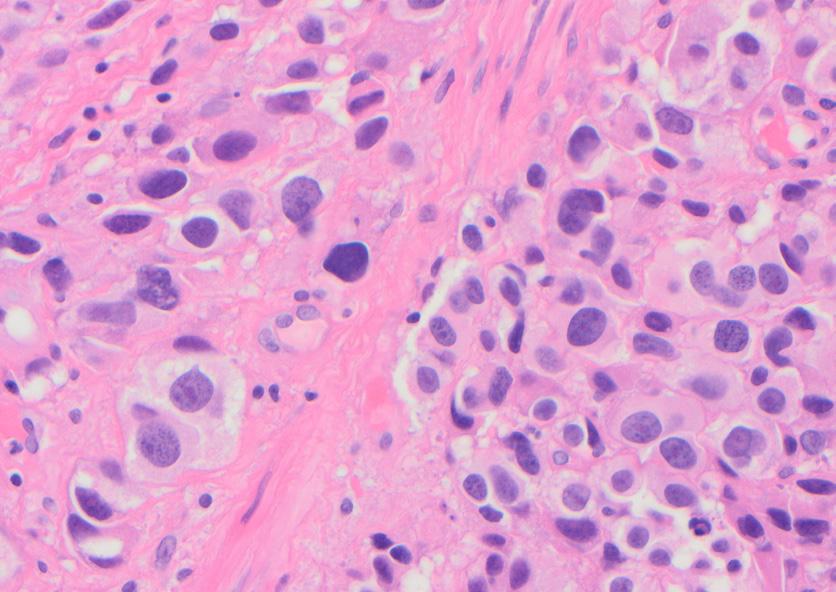
in selected cases, consistent with major guideline recommendations. Post treatment imaging introduces further complexity, as surgical and therapeutic changes can mimic recurrence. MRI and VI RADS show emerging promise for response assessment, but validation in the post operative and post intravesical therapy setting is ongoing.
The introduction of platinumbased chemotherapy into the perioperative management of bladder cancer dates back to the late 1980s and 1990s, when cisplatin-containing regimens were first systematically evaluated for their impact on outcomes in muscle-invasive bladder cancer (MIBC). Early randomised trials demonstrated that neoadjuvant cisplatin-based combination chemotherapy such as MVAC (methotrexate, vinblastine, doxorubicin, and cisplatin) and CMV (cisplatin, methotrexate, and vinblastine) administered prior to radical cystectomy, significantly improved both overall and disease-specific survival compared to surgery alone. Subsequent meta-analyses confirmed an absolute survival benefit of 5–8% at five years, establishing neoadjuvant platinum-based chemotherapy as the standard of care for eligible patients.
In the early 2000s, the combination of gemcitabine and cisplatin (GC) emerged as an alternative to MVAC, offering comparable efficacy with a more favourable toxicity profile. Both MVAC and GC are considered first-line options for neoadjuvant therapy. The development of dose-dense MVAC (dd-MVAC) aimed to further enhance pathological response rates, and randomised trials, such as VESPER, have compared ddMVAC with GC in the perioperative setting. These studies indicate higher local control rates with dd-MVAC, though overall survival at five years remains similar between regimens.
The role of adjuvant platinumbased chemotherapy has also been explored, though the evidence is less robust than for neoadjuvant therapy. Some clinical trials and meta-analyses suggest a reduction in the risk of death, but the overall survival benefit remains controversial. As a result, adjuvant chemotherapy is generally reserved for patients with high-risk pathological features who did not receive neoadjuvant treatment.
Guidelines from the American Urological Association and the European Association of Urology recommend neoadjuvant cisplatinbased chemotherapy for patients with MIBC, with adjuvant therapy
considered for select high-risk individuals. The evolution of platinum-based chemotherapy has been pivotal in improving perioperative outcomes in bladder cancer, and ongoing research continues to refine optimal regimens and sequencing.
Immunotherapy and Novel Modalities
The therapeutic landscape has evolved rapidly with the advent of immune checkpoint inhibitors, which have become foundational in the management of metastatic urothelial carcinoma. Their favourable efficacy and tolerability have catalysed extensive investigation of immunotherapy alone or in combination with cytotoxic chemotherapy, other immunotherapeutic agents, and emerging modalities such as antibody-drug conjugates in both neoadjuvant and adjuvant settings. These developments are reshaping the management strategies for MIBC and redefining perioperative standards of care.
The initial management of non–muscle-invasive bladder cancer (NMIBC) centers on transurethral resection of the bladder tumor (TURBT), which serves both as a definitive diagnostic procedure and as primary local therapy. For patients with low or intermediaterisk disease, guidelines
Plasmacytoid
recommend a single, immediate postoperative instillation of intravesical chemotherapy— most commonly gemcitabine or mitomycin C—administered within 24 hours of TURBT. This approach effectively reduces recurrence risk, though it does not significantly impact progression or overall survival. In cases of intermediate or high-risk NMIBC, intravesical bacillus Calmette–Guérin (BCG) remains the standard of care. Induction therapy followed by tailored maintenance BCG substantially decreases rates of recurrence and progression, continuing to represent the most effective bladder-preserving strategy for this population.
Recent advances, exemplified by the MoonRISe-1 and SunRISe clinical trials utilising TAR devices, are reshaping the therapeutic landscape for NMIBC. These sustained-release, targeted intravesical therapies have demonstrated improved response rates and reduced recurrence, offering bladder-sparing options for patients with limited alternatives. Such innovations are establishing new standards for personalised care in NMIBC, heralding a shift toward precision medicine and individualised treatment strategies.
MIBC necessitates a more intensive, multimodal treatment strategy. Neoadjuvant cisplatin based combination chemotherapy, most commonly dose dense MVAC or gemcitabine/cisplatin followed by radical cystectomy with pelvic lymph node dissection remains the established standard of care. Robust evidence demonstrates that platinum based neoadjuvant therapy confers a meaningful survival advantage, with an approximate 8% absolute improvement in 5 year overall survival, and is therefore recommended for all eligible patients.
For individuals who did not receive neoadjuvant chemotherapy or who exhibit high risk pathological features at cystectomy (such as pT3/4 disease or nodal involvement), adjuvant systemic therapy has traditionally been considered. Although the evidence base is more heterogeneous than for neoadjuvant treatment, adjuvant chemotherapy has been
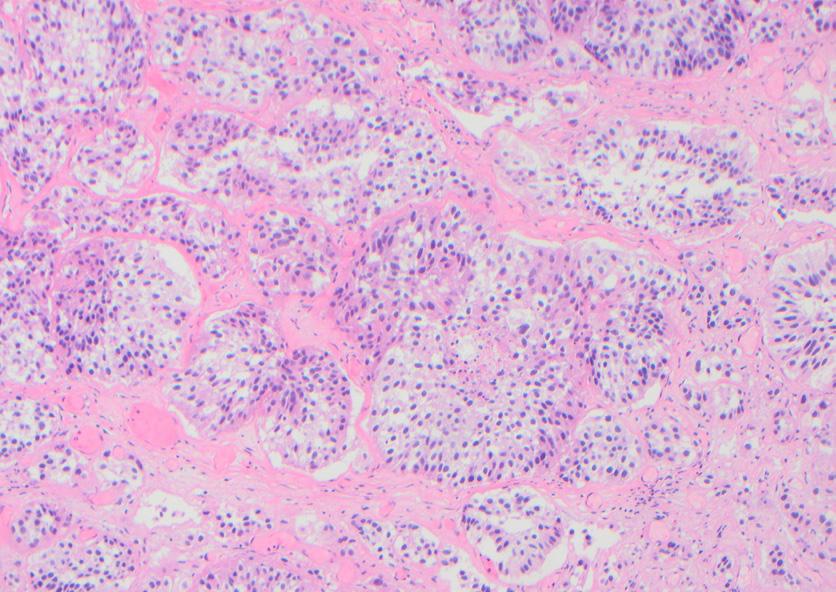
used selectively to mitigate the substantial risk of recurrence in this population.
Bladder sparing approaches may be appropriate for carefully selected patients who desire organ preservation or are not optimal surgical candidates. Trimodality therapy with maximal TURBT followed by concurrent chemoradiation offers a curative alternative for patients with solitary tumors, absence of carcinoma in situ, and good baseline bladder function. Partial cystectomy may also be considered in rare, highly selected cases with favourable tumour characteristics.
Emerging Evidence and Future Directions
The perioperative treatment landscape for MIBC has expanded significantly with the integration of immune checkpoint inhibitors. Recent phase 3 evidence has demonstrated that combining immunotherapy with standard cisplatin based chemotherapy can meaningfully enhance clinical outcomes. The NIAGARA trial evaluated neoadjuvant durvalumab in combination with gemcitabine/cisplatin followed by radical cystectomy and adjuvant durvalumab, compared with neoadjuvant chemotherapy alone. This perioperative strategy resulted in significant
improvements in both event free and overall survival, without increasing surgical morbidity, establishing a new benchmark for cisplatin eligible patients.
In parallel, adjuvant immune checkpoint inhibitors have become an important option for patients with high risk pathological features following cystectomy. Agents such as nivolumab and pembrolizumab are now approved in this setting, offering recurrence risk reduction for individuals who either did not receive neoadjuvant therapy or who remain at substantial risk despite standard treatment.
Beyond the perioperative context, the therapeutic armamentarium for advanced and metastatic urothelial carcinoma continues to evolve. Antibody–drug conjugates, including enfortumab vedotin, have demonstrated robust activity and are increasingly incorporated into treatment algorithms, often in combination with immunotherapy. These agents are also being explored in earlier disease settings, raising the possibility that future perioperative strategies may integrate targeted payload based therapies alongside or in place of traditional chemotherapy.
Biomarker development is increasingly central to refining perioperative decision making in muscle invasive bladder cancer.
Among emerging tools, circulating tumor DNA (ctDNA) has shown particular promise as a dynamic marker of minimal residual disease and a predictor of recurrence risk. Early studies suggest that postoperative ctDNA positivity strongly correlates with early relapse, raising the possibility that ctDNA guided strategies could identify patients most likely to benefit from adjuvant systemic therapy while sparing others from unnecessary treatment. Ongoing trials are evaluating ctDNA both as a prognostic biomarker and as a tool to tailor perioperative therapy. As these approaches mature, ctDNA guided management may enable a more individualised perioperative paradigm, complementing advances in immunotherapy and targeted agents.
Surgical Techniques and Lymphadenectomy
Open radical cystectomy (ORC) remains the conventional surgical standard for bladder cancer, entailing bladder removal via a large abdominal incision, typically accompanied by pelvic lymph node dissection and urinary diversion. In contrast, robotassisted radical cystectomy (RARC) employs minimally invasive robotic technology to achieve the same oncologic objectives,
Nested
frequently incorporating intracorporeal urinary diversion. Both techniques are indicated for muscle-invasive bladder cancer and select high-risk non–muscle-invasive cases, and each demands advanced surgical proficiency and multidisciplinary perioperative management. Recent randomised controlled trials and long-term follow-up studies have established that RARC is non-inferior to ORC regarding progression-free, cancer-specific, and overall survival. Notably, the RAZOR trial and subsequent investigations report comparable two-year progression-free survival rates, with some evidence suggesting improved ten-year cancer-specific survival in T3 disease for RARC, though overall survival differences remain statistically insignificant. Lymph node yield and positive surgical margin rates are similar between the two approaches, with certain data indicating a higher lymph node yield for RARC, particularly when intracorporeal diversion is performed.
RARC consistently demonstrates reduced intraoperative blood loss and lower transfusion requirements compared to ORC (median blood loss: 200 mL vs. 550 mL; transfusion rates: 22% vs. 41%). However, RARC is associated with longer operative times, reflecting the complexity of minimally invasive techniques. Hospital length of stay may be modestly reduced with RARC, especially in older patients, though findings are inconsistent across studies. Health-related quality of life and functional outcomes, including continence and erectile function, are largely equivalent at six months and beyond, though RARC may offer improved early postoperative quality of life and severe daytime continence.
Recent multicentre randomised trials, including SWOG S1011 (2024), have established that standard pelvic lymphadenectomy typically yields a median of 24 lymph nodes, while extended lymphadenectomy yields 39. However, routine practice often results in lower yields, with higher numbers seen at specialised centres. Crucially, the latest high-quality evidence—including large randomised trials and meta-
32 CPD 124: BLADDER CANCER
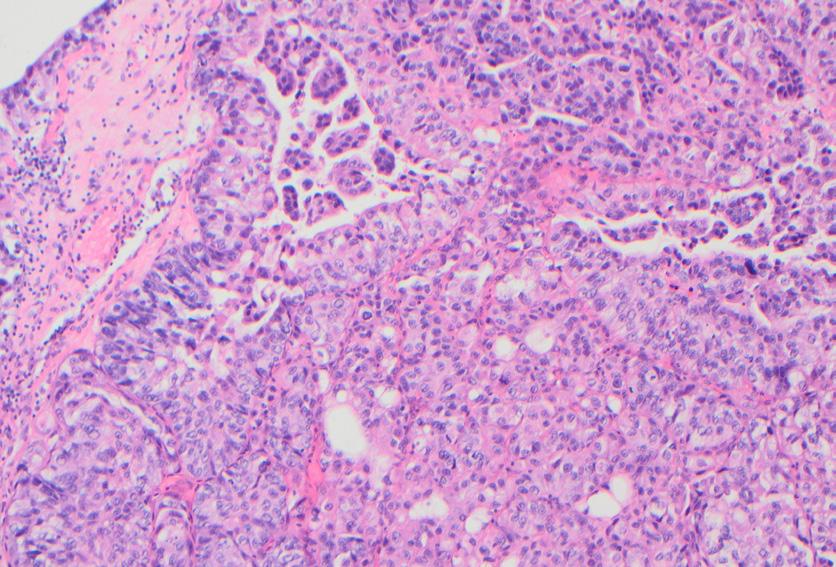
analyses—shows that extended lymphadenectomy does not improve recurrence rates or overall survival compared to the standard approach. Extended templates are associated with increased perioperative complications and mortality, and while some observational studies suggest possible benefits in recurrencefree survival, these findings are not confirmed by randomised data and may be biased.
Current guidelines from the American Urological Association, ASCO, and SUO recommend a standard lymphadenectomy template for staging, rather than routine use of extended dissection for therapeutic benefit. Persistent gaps remain in understanding cost-effectiveness, the role of surgeon expertise, and long-term outcomes due to limited follow-up and methodological variability in existing studies.
Evolving Bladder Preservation Strategies
Bladder preservation with trimodality therapy (TMT), combining maximal transurethral resection of the bladder tumor, chemotherapy, and radiotherapy (RT), was often reserved for nonsurgical candidates for radical cystectomy. Recent metaanalyses show that outcomes of TMT and radical cystectomy are similar. In the meta-analyses they identified eighty-seven studies.
No significant differences in OS (HR: 1.05; 95% confidence interval [CI]: 0.78-1.40) and CSS (HR: 1.05; 95% CI: 0.69-1.58) were found for TMT compared with RC. In patients treated with TMT, the complete response was achieved in 74.4% (95% CI: 69.1-79.1), the estimated rate of intravesical recurrence was 23.1% (95% CI: 19.0-27.7), and the rate of grade ≥3 acute toxicity was 11.4% (95% CI: 4.0-28.4). This is a promising strategy that offers comparable outcome to radical cystectomy.
PMID: 39578213
More recent bladder-preservation approaches include combining targeted RT (MRI) and immune checkpoint inhibitors (ICIs), ICIs and chemotherapy, and selecting patients based on genomic biomarkers and clinical response to systemic therapies. PMID 40851456
Patient-Centred Care and Future Directions
Patient centred care is increasingly recognised as a critical component of optimal perioperative management in bladder cancer. Enhanced recovery after surgery protocols have become standard in many centres, incorporating multimodal analgesia, early mobilisation, optimised nutrition, and standardised perioperative pathways to reduce complications, shorten hospital stay, and improve functional recovery. Geriatric
co management is particularly valuable for older adults, who represent a substantial proportion of bladder cancer patients and often present with frailty, multimorbidity, or functional vulnerability. Collaborative assessment and optimisation can mitigate perioperative risk and support safer surgical outcomes.
Attention to organ sparing strategies is also growing as the traditional radical cystectomy may significantly impact sexual function, continence, and pelvic support. Selective preservation of reproductive and pelvic structures, when oncologically appropriate, can improve postoperative quality of life without compromising cancer control.
Shared decision making remains essential, particularly regarding urinary diversion. Comprehensive counselling on the advantages, limitations, and lifestyle implications of ileal conduit diversion, continent cutaneous diversion, and orthotopic neobladder reconstruction enables patients to make informed choices aligned with their values and functional expectations. These discussions are integral to achieving long term satisfaction and optimising postoperative adaptation.
Despite substantial progress in perioperative management, important gaps remain in the evidence base. The role of
Micropapillary
perioperative radiotherapy either as an adjunct to surgery or as part of multimodal bladder preserving strategies remains incompletely defined. Existing data are heterogeneous, and prospective trials are needed to clarify which patient subsets may derive meaningful benefit, particularly those with high risk pathological features or limited response to systemic therapy.
Long term survivorship care is another area requiring further development. As more patients experience durable remission with contemporary systemic therapies, structured survivorship pathways addressing functional recovery, metabolic health, psychosocial wellbeing, sexual function, and long term complications of urinary diversion are increasingly essential. Standardised models of follow up and supportive care remain limited, underscoring the need for dedicated research and consensus driven frameworks.
is a Consultant Medical Oncologist at the Mater Private Network, Dublin, where he specialises in the management of genitourinary cancers, with a particular focus on bladder, prostate, and renal malignancies. He plays an active role within the hospital’s multidisciplinary uro oncology service, contributing to integrated pathways in perioperative systemic therapy and advanced treatment planning.
Dr. Darwish completed his medical degree followed by postgraduate training in internal medicine and medical oncology, achieving Membership of the Royal College of Physicians of Ireland. He has a strong academic interest in evidence based cancer care, with ongoing involvement in clinical research, collaborative MDT guideline development, and the translation of emerging therapeutic data into real world Irish practice.
He is committed to medical education and regularly contributes to professional development initiatives for clinicians, trainees, and allied health professionals. His clinical work is grounded in a patient centred approach that emphasises personalised care, multidisciplinary collaboration, and timely access to modern oncologic treatments.
References available on request






The Irish Pharmacy Awards 2026
The Irish Pharmacy Awards 2026 – Finalists Revealed
As Ireland’s leading pharmacy publications, Hospital Professional News and Irish Pharmacy News are proud to officially launch the Irish Pharmacy Awards 2026 — the most prestigious and anticipated celebration of pharmacy excellence across the entire profession.





For the first time, the Awards will expand to fully reflect the evolving pharmacy landscape, with the introduction of dedicated hospital pharmacy categories recognising the vital contribution of hospital pharmacists, technicians and multidisciplinary teams. This marks an important step in ensuring that excellence across all areas of pharmacy practice is acknowledged and celebrated at a national level.
Each year, the Awards shine a spotlight on the individuals and teams who deliver exceptional care and drive continuous improvement within healthcare. Within hospital pharmacy, this excellence

is seen through clinical leadership, medicines optimisation, patient safety initiatives, research, innovation and the critical role pharmacists and technicians play within multidisciplinary teams. In an increasingly complex healthcare environment, hospital pharmacy continues to demonstrate its value at every stage of the patient journey.
The Irish Pharmacy Awards are more than a ceremony — they are a national platform for recognition, collaboration and professional pride. They celebrate those who are advancing clinical practice, improving patient outcomes and contributing to the delivery of safe, effective and innovative healthcare services across Ireland.
In 2026, the Awards will once again bring together over 650 pharmacy professionals from across community, hospital and industry settings for an evening of celebration, networking and industry recognition at the Clayton Hotel, Burlington Road, Dublin on Saturday 6th June 2026.




Entries opened across all categories in March, including the newly introduced hospital pharmacy awards and on the following pages we showcase the shortlisted Finalists.
• Medisource Hospital Pharmacy Technician of the Year
• Pharmasource Hospital Pharmacist of the Year
• HPN Pharmacy Team of the Year Alongside a wide range of established categories recognising excellence across the wider pharmacy profession.
Whether you are recognising an outstanding colleague, celebrating the achievements of your department, or showcasing innovation within hospital pharmacy practice, the Irish Pharmacy Awards provide a unique opportunity to highlight excellence, share best practice and inspire the profession nationwide. We look forward to celebrating with you in June 2026.






Awards







The Irish Pharmacy Finalists Finalists


Medisource Hospital Pharmacy Technician of the Year 2026

Sharon Curran is a highly accomplished Senior Pharmacy Technician and Team Leader within the Clinical Trials Pharmacy Service at Tallaght University Hospital. With over 25 years dedicated to clinical trials, she has played a pivotal role in developing and sustaining a specialised service that provides patients with safe access to innovative and life-changing therapies.
Sharon leads the full clinical trials medicines pathway, ensuring the safe procurement, storage, dispensing, and accountability of investigational and compassionate access medicines in line with Good Clinical Practice and regulatory standards. Her expertise and meticulous attention to detail underpin the safe delivery of complex treatments, while her proactive approach to reviewing protocols and managing risks makes a significant contribution to patient safety and clinical governance.
A natural leader and mentor, Sharon is central to the training and development of pharmacy staff, embedding high standards of compliance, accuracy, and professionalism across the team.
Jessica Turner, St John of God Hospital
Jessica Turner is an exceptional Senior Pharmacy Technician at St John of God University Hospital, where she has rapidly progressed into a leadership role through her commitment to excellence, innovation, and patient-centred care. Working within a specialist psychiatric setting, Jessica leads key dispensary operations, medicines management processes, and hospital-wide stock systems, ensuring safe and efficient medication use for a vulnerable patient population.
A passionate advocate for advancing the role of the pharmacy technician, Jessica has successfully completed the Accuracy Checking Pharmacy Technician programme and played a leading role in implementing a Tech-Check framework within her hospital. This initiative has enhanced efficiency, reduced pharmacist workload, and strengthened medication safety, with the model now adopted by other hospitals nationally.
Jessica is also a trailblazer as one of Ireland’s first Specialist Pharmacy Technicians in Psychiatry. Through advanced training and continuous professional development, she has developed expertise in complex psychiatric medicines, supporting services such as the Clozapine clinic and improving patient understanding and adherence.

Sharon Curran, Tallaght University Hospital
Tatiana Fernandes is an outstanding Senior Pharmacy Technician at Blackrock Health at Galway Clinic, recognised for her commitment to advancing pharmacy practice through innovation, leadership, and a strong focus on patient safety. Since beginning her career in 2015, she has continuously developed her expertise, progressing into a senior role and becoming a driving force for service improvement within her department.
Tatiana has demonstrated exceptional dedication to professional development, completing advanced qualifications in clinical pharmacy, accuracy checking, pharmacy management, and most notably a Master’s in Health Informatics. This unique combination of clinical and digital expertise has enabled her to play a key role in enhancing medication safety through the effective use of electronic health record systems.
Her research into clinical decision support systems and alert fatigue has had a measurable impact, highlighting the critical role of pharmacy interventions in preventing medication errors and improving prescribing safety. This work has strengthened awareness across multidisciplinary teams and reinforced the value of pharmacy input in patient care.


Helen Glassett is an exceptional Senior Pharmacy Technician and Dispensary Procurement Lead at St Patrick’s Mental Health Services, recognised for her leadership, innovation, and unwavering commitment to patient safety. With over a decade of service in SPMHS and a wealth of experience across both hospital and community pharmacy, Helen plays a pivotal role in ensuring the safe, efficient, and cost-effective supply of medicines within a complex mental health setting.
Helen’s expertise spans procurement, dispensary management, and specialist medicines such as clozapine, where she is deeply involved in patient-facing services and clinical support. She has demonstrated outstanding leadership in managing workflow, supervising and mentoring staff, and driving continuous improvement across the department. Her proactive approach to medicines shortages and product sourcing ensures continuity of care while always prioritising patient safety.
A key achievement has been her role in advancing technician practice through the introduction of accuracy checking, helping to optimise workflow and enable pharmacists to focus on clinical care. She has also led the development of critical SOPs and safety initiatives, including risk-reduction measures for look-alike/sound-alike medicines and the introduction of “Time Critical Medicines” alerts, directly improving medication safety.
Louise Hunt is an outstanding Senior Pharmacy Technician at St James’s Hospital. With nearly a decade of hospital pharmacy experience, Louise has consistently demonstrated excellence across clinical services, operational management, and national professional leadership.
Currently leading pharmacy services within the South Dublin Surgical Hub, Louise has played a pivotal role in establishing and managing medicines supply for this flagship national initiative. Her proactive, solutions-focused approach ensures the seamless availability of critical medicines, supporting high-volume surgical activity while maintaining the highest standards of patient safety and efficiency. Her ability to anticipate demand, optimise stock management, and collaborate with multidisciplinary teams has been central to the success of this evolving service.
Louise is a passionate advocate for service improvement and innovation. Beyond her hospital role, Louise is currently President of the National Association of Hospital Pharmacy Technicians (NAHPT), where she provides national leadership in promoting the profession and advancing key priorities such as technician regulation.

Helen Glassett, St Patrick’s Mental Health Services
Tatiana Fernandes, Blackrock Health Galway Clinic
Louise Hunt, St James’s Hospital
The Irish Pharmacy
Awards 2026


Pharmasource Hospital Pharmacist of the Year 2026
Peter Duddy, The Coombe Hospital
Peter Duddy is a highly respected hospital pharmacist whose career spans over two decades of leadership, clinical excellence, and innovation in maternal and neonatal care. As Deputy Pharmacist Executive Manager and Pharmacy Lead for Neonatology and Medication Safety at the Coombe Hospital, he plays a central role in shaping safe, effective, and forward-thinking pharmacy services within one of Ireland’s busiest specialist hospitals.
Peter’s expertise in neonatal pharmacotherapy and medication safety has had a profound impact on patient care, particularly for some of the most vulnerable patients in the healthcare system. He has led the development of critical guidelines, introduced smart infusion pump technology, and pioneered digital prescribing tools that are now embedded in daily clinical practice. His work consistently improves safety, efficiency, and clinical decision-making across multidisciplinary teams.
Mahreen Khosa, Mater Private Hospital
Mahreen Khosa is an outstanding hospital pharmacist whose work consistently demonstrates clinical excellence, leadership, and a clear commitment to advancing pharmacy practice within a complex oncology setting. As an advanced specialist pharmacist in aseptic compounding, haematology and oncology, she plays a pivotal role in ensuring the safe and effective delivery of systemic anticancer therapies within a high-throughput environment.
Mahreen combines technical expertise with a proactive, solutions-driven approach to patient safety. She played a key role in the successful implementation of a new electronic health record system, identifying and resolving prescribing discrepancies and developing practical training tools that continue to support safe prescription verification across the team. Her ability to translate complex systems into clear, structured processes has had a lasting impact on service quality and staff confidence.

Edwina Morrissey, Tallaght University Hospital
Edwina Morrissey is an outstanding Advanced Specialist Pharmacist in Medication Safety whose work has had a transformative impact on patient safety at Tallaght University Hospital. As Founder and Chair of the hospital’s Medication Safety Committee and a key member of the VTE Prevention Committee, she has embedded a culture of safety, collaboration, and continuous improvement across the organisation.
Edwina’s leadership is evident in her multidisciplinary approach, bringing together medical, nursing, pharmacy, and quality teams to identify risks, implement system-wide improvements, and deliver impactful education programmes. Her innovative use of data analysis, audit, and simulation-based training ensures that medication safety initiatives are not only implemented but continuously measured and refined.


Cathal Hannafin, The Coombe Hospital
Cathal Hannafin is an exceptional hospital pharmacist whose specialist work in neonatology has had a profound impact on patient safety and clinical care for some of the most vulnerable patients in the healthcare system. As a Senior Pharmacist in the Neonatal Intensive Care Unit at the Coombe Hospital, he plays a critical role in delivering complex, evidencebased pharmaceutical care to extremely preterm and critically ill infants. Cathal combines advanced clinical expertise with a proactive, solutionfocused approach. In an area where evidence is often limited, he applies rigorous clinical judgement, translating emerging data into safe, practical treatment plans that directly improve patient outcomes. His work in antimicrobial optimisation, guideline development, and innovative therapies demonstrates both clinical excellence and a strong commitment to advancing neonatal pharmacy practice.
Julie Coffey, St James’s Hospital
Julie Coffey is an Advanced Specialist Pharmacist in Cardiology at St James’s Hospital, recognised for her clinical expertise, leadership, and significant contribution to patientcentred care. With over a decade of experience in cardiology, Julie plays a pivotal role across inpatient, critical care, cath lab, and cardiac rehabilitation services, ensuring safe and effective medicines use for complex cardiac patients.
A highly valued member of the multidisciplinary team, Julie is central to clinical decisionmaking, providing expert guidance on high-risk therapies such as anticoagulants and antiplatelets. Her work in medication optimisation, patient counselling, and discharge planning has had a direct and meaningful impact on patient safety and outcomes.
Julie is also a leader in service development and education. She has developed key cardiology protocols, contributed to regional initiatives such as the STEMI pathway, and continuously updates the St James’s Hospital Medicines Guide, an essential resource supporting best practice across the hospital.

The Irish Pharmacy
Awards
HPN Hospital Pharmacy Team of the Year 2026

Mater Misericordiae University Hospital Pharmacy, Dublin
The Mater Hospital Pharmacy Team is an exceptional, multidisciplinary group whose scale, expertise, and collaborative culture underpin the safe and effective delivery of medicines across one of Ireland’s busiest acute hospitals. What sets this team apart is its ability to consistently deliver high-quality care in a complex and demanding environment. Through robust governance structures, including over 80 standard operating procedures and the innovative Mater Medicines Guide app, the team ensures standardisation, safety, and access to evidence-based practice across the hospital.
The Tallaght University Hospital Pharmacy Team is a highly skilled, forward-thinking multidisciplinary team delivering exceptional, patient-centred care across a complex acute hospital setting. Structured across specialised areas including clinical services, aseptic compounding, medication safety, cancer care, and informatics, the team works seamlessly to ensure the safe, effective, and efficient use of medicines at every stage of the patient journey.
This team stands out for its ability to lead and deliver major transformational projects while maintaining outstanding day-to-day services.


The Pharmacy Team at Blackrock Health at Galway Clinic is a highly collaborative, multidisciplinary group delivering safe, efficient, and patient-centred care across both inpatient and outpatient services. A key strength of this team is its seamless integration of roles. Pharmacists lead on clinical review, medicines reconciliation, and antimicrobial stewardship, while pharmacy technicians manage dispensing, procurement, and ward supply.
University Hospital Limerick Pharmacy Purchasing Team, Limerick
The Pharmacy Purchasing Team at University Hospital Limerick plays a critical and often unseen role in ensuring the safe, continuous supply of medicines in a high-demand acute hospital environment. Operating within a fast-paced and expanding hospital, this dedicated team of pharmacy technicians works seamlessly across roles, demonstrating flexibility, resilience, and a shared commitment to patient care.
Despite significant challenges, including national medicine shortages and increasing service demands, the team has consistently maintained supply continuity through efficient procurement, stock management, and strong collaboration with pharmacists.

Tallaght University Hospital Pharmacy, Tallaght
Blackrock Health Pharmacy, Galway Clinic
Innovation in Action: Powering Advanced Nursing and Midwifery Practice
Innovation is not a concept that has evolved with modern technology. From hygiene reform, to clinical academia development to evolution into scientific advancements, Innovation has progressively become woven into the fabric of current healthcare. It is no longer a side project or a luxury for those with resources. Innovation has become essential to ensuring the delivery of safe and effective care in hospitals across the country. As clinicians, with an ever-aging population we feel the increasing demand on already stretched services. Escalating multimorbidity, limited bed availability and increasing waiting lists are creating a critical need for innovative strategies to strengthen patient care.
Yet, the progression of nursing and midwifery through innovation is what is truly reshaping the landscape of acute hospital care in Ireland. The emergence and strengthening of advanced specialist roles in Nursing and Midwifery is not only directly enhancing patient outcomes but is creating a blueprint for others to follow. Over the past decade, Ireland has made it a national priority in implementing Advanced Nurse/Midwife Practitioner (ANMP) roles, transitioning from less than 0.2% of the workforce practising at an advanced level to becoming recognised as a global leader in advanced practice development. This shift has been fuelled by targeted government investment, national reform programmes and policy frameworks, which have streamlined and strengthened the pathway towards advanced practice roles
From caring to creating change
Empowering nurses and midwives to recognise service barriers and develop solutions rooted in day-to-day clinical experience is becoming an essential driver of improvement across the health system. Initiatives such as the HSE Spark Innovation Programme gives frontline workers the confidence, support and the space to question safely and refine ideas that respond directly to the challenges they encounter in acute healthcare. By enabling clinicians to lead in transformative change, the programme helps
Written by Anna Marie Kiernan, National Nursing/Midwifery Innovation Fellow, HSE Spark Innovation Programme
Anna Marie Kiernan is an RANP in Pain Medicine and a National Nursing & Midwifery Innovation Fellow with the HSE Spark Innovation Programme. Based at Croom Orthopaedic Hospital Limerick, she has led service redesign initiatives that significantly reduced patient wait times. With postgraduate qualifications in Pain Management, Healthcare Innovation, and Service Design, she focuses on sustainable, human-centred care. She has codeveloped extended reality tools for chronic pain self-management in the areas of procedural pain and incidental pain management support. As a national fellow, Anna Marie is focused on developing innovation literacy and skills in healthcare and supporting frontline staff-led innovation.
build a stronger sense of ownership and encourages creative problem-solving to accelerate practical improvements, which benefit both the patient and the organisation.
The growth of advanced practice roles in nursing and midwifery across Ireland reflects a significant shift in how care is delivered.
Over two decades ago, nursing was still widely seen as a supportive and largely subordinate profession where nurses and midwives were perceived as assisting doctors rather than autonomous practitioners. The reform of healthcare education had a profound and often underestimated influence on the evolution of nursing and midwifery. Reflecting on this progression, it becomes clear that the shift from apprenticeship-based training to university based and research informed programmes shaped the progression from roles previously identified as vocational to true professionals. It modernised and reshaped the professional identity and perceived value of the disciplines. It legitimised nursing and midwifery as knowledge-generating disciplines and positioned them as integral leaders in health-system improvement.

As postgraduate pathways have expanded, advanced practice roles emerged. Professions which are supported by robust theoretical foundations and clinical competence frameworks. These roles demonstrate the professions’ capacity for complex decision-making, prescribing, diagnostics and leadership across multidisciplinary teams. With education as the catalyst, nursing and midwifery moved from reactive disciplines to proactive drivers of innovation, patient safety and service redesign. The use of critical enquiry and evidencebased practice has enabled practitioners to interpret clinical presentations through analytical reasoning rather than anecdotal habit and enabled the thoughtful contribution to diagnostic and therapeutic discussions.
Innovation is not a decoration around advanced practice, it is its backbone. It is the foundation on which the role was developed. Advanced roles require autonomy, streamlined systems and reconfigured pathways that leverage their full scope. Without innovation, advanced practice becomes constrained by legacy systems.
Innovation as the backbone of advanced practice
Across Ireland, the growth of advanced nursing and midwifery practice has been extraordinary. What was once a small, niche cohort has expanded into a diverse workforce of ANPs across emergency care, rheumatology, respiratory, oncology, cardiology, fracture liaison services and chronic disease management to
Innovation
name but a few. The specialities are endless. This evolution did not happen by chance. It emerged from national policies, structured frameworks and local teams willing to trial new models of care. The expansion of advanced practice roles represents a transformative innovation within Irish healthcare. Based on the Department of Health’s Final Evaluation Report there has been substantial impact. It has been shown that ANPs reduce specialist waiting lists by 3.9 patients per week, prevent approximately 4.3 hospital admissions weekly and also shorten the emergency care patient experience time by up to 2 hours and 43 minutes. Ninety-five percent of patients reported positive experiences with ANP-led care. The expansion of ANMP roles also facilitates access to diagnostics, prescribing and independent decision-making, which as a result enhances the efficiency in acute hospital pathways.
From a personal reflective standpoint, the integration of advanced practice has demonstrated how innovation is not solely technological but can be based in process, profession and structure. It has reconfigured traditional clinical hierarchies and amplified the leadership capacity of nurses and midwives, which has embedded specialist expertise directly at the point of care. This aligns with international guidance and Ireland’s broader strategic priorities for integrated and person-centred care.
As Ireland continues to invest in specialist nursing and midwifery roles, sustaining innovation ecosystems that empower frontline professionals remains vital. By harnessing the insight of those who experience service barriers first-hand, the health system ensures that innovation is meaningful, grounded and impactful which ultimately strengthens acute hospital care and advancing the future of the profession.
Innovation creates space for progressive clinical autonomy
When systems continually improve, advanced practice clinician roles evolve and progressively thrive. Within the authors outpatient chronic pain management service, a redesigned triage process and the integration of structured digital assessment has enabled ANP-led review of neuropathic pain presentations. This has supported a continuously improving service model, resulting in shorter waiting times to effective treatment and earlier clinical intervention for patients. Nationally the same pattern is evident:
• Emergency departments have redesigned triage and patient flow models to support Advanced Nurse Practitioners (ANPs) in independently managing minor injury presentations. This approach has contributed to reduced patient length of stay and helped relieve pressure on overcrowded
clinical areas, supporting safer and more efficient care delivery.
• Rheumatology and respiratory services have implemented nurse-led biologics review clinics and structured chronic disease management pathways, enabling more efficient use of specialist nursing expertise and releasing consultant capacity to focus on patients with complex care needs.
• Oncology services have implemented Advanced Nurse Practitioner led toxicity management pathways, supporting early identification and intervention for treatment-related side effects and contributing to a reduction in unplanned hospital admissions.
• Late-effects and survivorship clinics led by advanced practitioners provide structured, proactive follow-up for patients living beyond breast cancer, haematological malignancies and prostate cancer. These

clinics support ongoing symptom management, surveillance and timely escalation where needed. It also streamlines long-term follow-up and frees specialist teams to focus on complex care.
Across these examples, innovation has enabled the role rather than the other way around. Advanced practice has emerged as a means of bringing structure and safety to previously fragmented or high pressure care environments. The roles often serve as the connective tissue within redesigned pathways. However, the Covid 19 pandemic disrupted and challenged long-established as well as evolving ways of working to expose the limits of traditional, face-to-face models of care. As a response, we saw services rapidly adopt digital and emerging innovative technologies to sustain essential services. Since then, these technologies have evolved beyond being reactive solutions to now becoming strategically embedded to sharpen service delivery.
Research and innovation hubs
With the need to translate sitespecific transformative innovation into practice, a new ecosystem of identifying innovation quality through supported design and implementation began to emerge. In response, research and innovation hubs began developing to provide structured environments where clinical challenges could be addressed through collaboration testing, and evaluation. Partnerships developed between hospitals and universities, such as Trinity’s innovation centre, the Mater Pillar Centre and hospital innovation offices to support the design and pilot of frontline projects.
Research and innovation hubs provide practical spaces where frontline staff can work together with designers to develop and test new ideas grounded in everyday service needs. Through this collaborative approach, digital tools such as oncology toxicity decision-support systems and remote monitoring platforms have been introduced and refined. Other developments include digital pain diaries used ahead of consultation and support on redeveloping human centred design based pathways to care. Collectively, these innovations improve safety and support of an individualised approach to care while giving the opportunity for advanced practitioners to practice at the top of their scope.
Virtual reality innovation extending pain management beyond the acute setting
In several Irish hospitals, virtual reality is being used to support patient care. In the Pain Excellence Centre, Limerick, Virtually Pain Free is an ANP led virtual reality initiative delivering measurable improvements in pain outcomes across acute and community pathways. The ShineVR platform is accessed with phones used via a mobile phone mountable headset, creating the affordable and accessible 36° virtual reality based platform which provides distraction techniques and psychoeducation for pain conditions such as chemotherapy induced peripheral neuropathy. Evaluation of data to date shows that 76% of users experience an improvement across all outcome measures, with average reduction in pain intensity of 19% and pain interference scores of 33%. Success in the field has resulted in diffusion to other areas to reduce anxiety secondary to the environment and from procedures.
Innovative digital monitoring supporting earlier intervention in heart failure care
Fluid Heart Tracker, a CE approved app developed by Norma Caples, Registered Advanced Nurse Practitioner in Heart Failure at University Hospital Waterford, is supporting earlier intervention across Irish acute heart failure services. The app automatically identifies clinically significant weight gain (≥2 kg over seven days), a recognised trigger for acute decompensation, addressing a key gap in paper based monitoring where up to 66% of patients have cognitive or numeracy difficulties. Multicentre Irish evaluation across 12 acute hospital sites (n=179) demonstrated improved daily monitoring engagement and earlier help seeking compared with traditional logbooks, a recognised factor in reducing avoidable admissions. The app is now referenced within Ireland’s National Model of Care for Heart Failure, highlighting the impact of ANP led digital innovation on acute service demand.
Strengthening cancer surveillance pathways in acute services through human centred redesign
At the South Infirmary Victoria University Hospital (SIVUH)
in Cork, an Advanced Nurse Practitioner led Head and Neck Oncology service have redesigned cancer surveillance within the acute setting. The ANP independently delivers outpatient surveillance clinics, manages new referrals and assesses patients presenting to ENT casualty with suspected recurrence or treatment-related complications. Service evaluation demonstrated that almost 2,000 patients were managed through ANP-led clinics over a two-year period with high patient satisfaction and timely identification of recurrence and second primary tumours. By shifting routine surveillance and urgent assessment to advanced nursing practice, the service has reduced pressure on consultant-led clinics, improved patient flow and enhanced continuity of care within acute oncology pathways.
Advanced practice emerges from recognising the unmet needs of specific patient cohorts and addressing this through the delivery of responsive services designed to support them. Moving beyond meeting these deficits, advanced practitioners bring an ability to subtly, yet progressively, improve care delivered beyond initial design by addressing the needs of service users while being informed by daily clinical realities. When this practitioner insight is combined with empathy and an understanding of the wider system, innovation emerges that balances patient experience, workforce sustainability and organisational needs. In this way, advanced practice enables models of care, which are not only clinically effective but also aligned with the needs of all stakeholders across the health service.
Building Innovation That Lasts: Supporting sustainability
Irish hospitals do not need to start from scratch to support the delivery of meaningful innovation into advanced practice. Well-established national frameworks already provide a strong foundation to the professions that can be adapted locally. Governing bodies such as the Nursing & Midwifery Board of Ireland (NMBI) and the Office of Nursing & Midwifery Services Director (ONMSD) offer guidance and policy, which offers clear pathways for role development, accountability and integration. Sláintecare principles and National Clinical Programme models of care
provide a practical blueprint for implementing innovation. This is by setting out clear priorities for integrated, patient-centred and care-closer-to-home service delivery. When used as guidance, these documents help align new initiatives with national policy which ensures innovations are clinically grounded, scalable and embedded within established pathways rather than developed in isolation.
Equally important is the recognition that innovation thrives more through support and engagement than through oversight and governance. While governance does provide safety and structure, progress in innovation is accelerated when staff are enabled and actively involved in shaping solutions and trusted to implement them. Hospitals that foster interdisciplinary collaboration and clinical champions consistently report stronger momentum and uptake. A supported workforce is an engaged workforce. Engagement drives ownership, creativity and sustainability. By prioritising empowerment alongside governance, organisations can create an environment where advanced practice innovation becomes an integrated part of everyday service improvement rather than an exceptional activity.
From the Frontline to the Future Innovation in advanced nursing and midwifery practice is no longer emerging in silos within healthcare. It is shaping how care is delivered and progressed. Anything is possible when clinical insight, advanced education and supportive structures align. Advanced practitioners are uniquely positioned to see service gaps early. There is the experience to respond with empathy and design solutions which improve outcomes for patients while strengthening the wider health service. When these efforts are nurtured through trust and clear national direction then innovation becomes sustainable rather than occasional. As Irish healthcare continues to navigate rising demand and complexity, empowering advanced practice is not simply an investment in roles. It is a means of supporting safer pathways, better experiences and a more adaptable system. The future of healthcare will be built by those closest to care who will be supported to lead meaningful change
CAR-T Therapy
Overcoming Microenvironment-Driven Resistance to CAR-T Therapy in Multiple Myeloma – Part 1
Written by Gabriel Saez1, Randy Khusial1, Kamron Hamedi1,*, Nathan Arreola2, Helen Khuu3 and Heather Kissel1
1Department of Internal Medicine, Virginia Mason Franciscan Health–St. Joseph Medical Center, Tacoma, WA 98405, USA
2Saint Louis University School of Medicine, St. Louis, MO 63104, USA
3Touro College of Osteopathic Medicine, New York, NY 10027, USA
Multiple myeloma (MM) is a difficult-to-control hematologic disease driven by uncontrolled expansion of malignant plasma cells and the uncontrolled production of monoclonal antibodies. It is characterised by widespread immune dysfunction and disruption of the bone marrow microenvironment (BMME), leading to bone reabsorption, lytic lesions, and myelosuppression. These processes drive morbidity and mortality through skeletal fragility, increased calcium reabsorption with hypercalcemia, kidney failure, and immunosuppression with opportunistic infections. Despite advances in treatment, relapses and development of treatment resistance have made lasting remission a challenge. Chimeric antigen receptor T cell (CAR-T) therapy is a rapidly growing area of study in autoimmune and oncologic diseases and has shown promise for directed therapies against new therapeutic targets, including investigations of MM and targets within the
BMME to address mechanisms of treatment resistance.
Many trials have investigated CAR-T therapies in MM, with over 70 trials spanning diverse targets and strategies. Trials such as KarMMa, CARTITUDE-1, and CARTITUDE-4 were groundbreaking in demonstrating CAR-T efficacy against malignant plasma cells in MM. KarMMa evaluated idecabtagene vicleucel, a B cell maturation antigen (BCMA)-directed CAR-T, in triple-therapy-resistant MM refractory to immunomodulatory therapy, proteasome inhibitors, and anti-CD38 antibodies. KarMMa demonstrated efficacy in aggressive treatment-resistant disease, but control was not definitive; the average response duration was 10.7 months, and progression-free survival was 8.8 months after a single dose. Cytokine release syndrome (CRS) and transient, but clinically significant cytopenias with related complications occurred in almost all the treated patients,
though mortality attributed to idecabtagene vicleucel was small. KarMMa also demonstrated effective T cell expansion and durability, but persistence did not guarantee durable disease control, as reflected by the response duration and progression-free survival (Table 1).1,2,3,4
The CARTITUDE trials evaluated the safety and use of ciltacabtagene autoleucel in relapsed or refractory multiple myeloma. Ciltacabtagene also targets BCMAs and demonstrated significant efficacy in resistant MM in CARTITUDE-1, with an overall response rate of 97.9% and a median time to best response of 2.6 months.5 Compared with KarMMa, CARTITUDE-1 reported higher response rates and improved duration of this response and progression-free survival. These outcomes occurred despite a lack of detectable CAR-T cells in most patients by 6 months, suggesting durability of the clinical effect without CAR-T
survival. Hematologic adverse events occurred in over 90% of the patients, with most recovering within 1–2 months (Table 1).6,7,8,9
A key barrier is durability of remission, limited by waning CAR-T persistence and CAR-T exhaustion with reduced effectiveness. While prolonged antigen exposure commonly drives T cell exhaustion through nuclear factor of activated T cells (NFAT) and inhibitory immune checkpoint pathways, extrinsic BMME factors such as transforming growth factor beta (TGF-β) and galactin-9 (GAL9) can push T cell populations toward exhaustion. Post-infusion proliferation of an inhibitory T cell lineage (Tregs) against CAR-T cells has been noted and is suspected to contribute to exhaustion and relapse.13 MM cell lines have also been observed to shed BCMA into the BMME as a soluble form that can bind CAR-T cells and reduce binding affinity to membranebound BCMA, facilitating antigenpositive escape.14
Table 1. The anti-BCMA CAR-T trial outcomes. This table outlines some of the characteristics and results of landmark trials regarding the safety, efficacy, and adverse events regarding the use of anti-BCMA CAR-T therapy in the treatment of MM
CAR-T therapy in the treatment of MM.
Table 1. The anti-BCMA CAR-T trial outcomes. This table outlines some of the characteristics and results of landmark trials regarding the safety, efficacy, and adverse events regarding the use of anti-BCMA
Start with OMJJARA momelotinib
See patients with myelofibrosis and anaemia in a
Omjjara is indicated for the treatment of disease-related splenomegaly or symptoms in adult patients with moderate to severe anaemia who have primary myelofibrosis, post polycythaemia vera myelofibrosis or post essential thrombocythaemia myelofibrosis and who are Janus Kinase (JAK) inhibitor naïve or have been treated with ruxolitinib. 1
▼ This medicinal product is subject to additional monitoring. This will allow quick identification of new safety information. Healthcare professionals are asked to report any suspected adverse reactions.
ACVR1 = activin A receptor, type 1; JAKi = Janus Kinase inhibitor.

Learn more about Omjjara:
Prescribing Information and Important Safety Information Omjjara Summary of product characteristics, available at www.medicines.ie. Accessed June 2025
Abbreviated Prescribing Information
Omjjara 100, 150 and 200 mg film-coated tablets Abbreviated Prescribing Information (Refer to Summary of Product Characteristics (SmPC) before prescribing). PRESENTATONS: Each 100 mg tablet contains momelotinib dihydrochloride monohydrate equivalent to 100 mg of momelotinib and 50.8 mg of lactose monohydrate. Each 150 mg tablet contains momelotinib dihydrochloride monohydrate equivalent to 150 mg of momelotinib and 76.1 mg of lactose monohydrate. Each 200 mg tablet contains momelotinib dihydrochloride monohydrate equivalent to 200 mg of momelotinib and 101.5 mg of lactose monohydrate. INDICATION: The treatment of disease-related splenomegaly or symptoms in adult patients with moderate to severe anaemia who have primary myelofibrosis, post polycythaemia vera myelofibrosis or post essential thrombocythaemia myelofibrosis and who are Janus Kinase (JAK) inhibitor naïve or have been treated with ruxolitinib. POSOLOGY AND ADMINISTRATION: Treatment should be initiated and supervised by a physician experienced in the use of anticancer medicinal products. Omjjara should not be used in combination with other JAK inhibitors. The recommended dose is 200 mg once daily. Complete blood cell count and liver function tests must be performed before initiating treatment, periodically during treatment, and as clinically indicated. For dose modifications due to adverse reactions see SmPC. Treatment with Omjjara should be discontinued in patients unable to tolerate 100 mg once daily. Duration of use: Treatment may be continued for as long as the benefit-risk remains positive for patients, as assessed by the treating physician. Missed dose: If a dose of Omjjara is missed, the next scheduled dose should be taken the following day. Two doses should not be taken at the same time to make up for the missed dose. Elderly (≥ 65 years): No dose adjustment necessary. Renal impairment (>15 mL/min): No dose adjustment necessary. Omjjara has not been studied in patients with end-stage renal disease. Hepatic impairment: No dose adjustment is recommended for patients with mild or moderate hepatic impairment. The recommended starting dose is 150 mg once daily in patients with severe hepatic impairment (Child-Pugh Class C). Paediatric population: No data available. Omjjara is for oral use only and can be taken with or without meals. CONTRAINDICATIONS: Hypersensitivity to momelotinib or to any of the excipients. Pregnancy and breast-feeding. WARNINGS/PRECAUTIONS: Omjjara should not be initiated in patients with active infections. Physicians should carefully observe patients for signs and symptoms of infection and initiate appropriate treatment promptly. Patients with chronic HBV infection who receive Omjjara should have their chronic HBV infection treated and monitored according to clinical HBV guidelines. A complete blood count including platelet count should be obtained before initiating treatment with Omjjara, periodically during treatment, and as clinically indicated. Dose interruption or reduction may be required. Liver function tests should be obtained before initiating treatment with Omjjara, periodically during treatment, and as clinically indicated. If increases in ALT, AST or bilirubin related to treatment are suspected, dose interruption or reduction may be required. Prior to initiating or continuing therapy with Omjjara, the benefits and risks for the individual patient should be considered particularly in patients 65 years of age and older, patients who are current or past long-time smokers, and patients with history of atherosclerotic cardiovascular disease or other cardiovascular risk factors. Patients with symptoms of thrombosis should be promptly evaluated and treated appropriately. Lymphoma and other malignancies have been reported in patients receiving JAK inhibitors, including Omjjara. However, a causal association has not been established Women using systemically acting hormonal contraceptives should add a barrier method during treatment and for at least 1 week after the last dose of Omjjara. Patients with rare hereditary problems of galactose intolerance, total lactase deficiency or glucose-galactose malabsorption should not take Omjjara. Patients who experience dizziness or blurred vision after taking Omjjara should observe caution when driving or using machines INTERACTIONS: Co administration of strong CYP3A4 inducers may lead to decreased momelotinib exposure and consequently a risk for reduced efficacy. Therefore, additional monitoring of the clinical signs and symptoms of myelofibrosis is recommended with concomitant use of momelotinib and strong CYP3A4 inducers (including but not limited to carbamazepine, phenobarbital, phenytoin, and St John’s wort [Hypericum perforatum]). Caution and monitoring for adverse reactions are advised with concomitant use of OATP1B1/1B3 inhibitors, including ciclosporin. Momelotinib may increase exposure to other sensitive BCRP substrates, including sulfasalazine; monitor for adverse reactions. Caution is advised when administering momelotinib with P-gp substrates with a narrow therapeutic index. Caution is advised when administering momelotinib with sensitive substrates of OCT1, MATE1 and MATE2-K (e.g., metformin). Narrow therapeutic index or sensitive substrate medicinal products of CYP1A2 (e.g., theophylline, tizanidine) or CYP2B6 (e.g., cyclophosphamide) should be co-administered with momelotinib with caution. Fertility, pregnancy and lactation: Fertility: No clinical data. Omjjara is contraindicated during pregnancy. If Omjjara is used during pregnancy, or if the patient becomes pregnant while taking this medicinal product, the patient should discontinue treatment and be advised of the potential hazard to the foetus. Omjjara is contraindicated during breast-feeding. UNDESIRABLE EFFECTS: Very common (≥ 1/10): Thrombocytopenia, dizziness, headache, cough, diarrhoea, abdominal pain, asthenia, fatigue. Common (≥ 1/100, < 1/10): Urinary tract infection, upper respiratory tract infection, pneumonia, nasopharyngitis, COVID19, cystitis, bronchitis, oral herpes, sinusitis, herpes zoster, cellulitis, respiratory tract infection, sepsis, lower respiratory tract infection, oral candidiasis, rash, skin infection, gastroenteritis, neutropenia, Vit B1 deficiency, syncope, peripheral neuropathy, paraesthesia, blurred vision, vertigo, hypotension, haematoma, flushing, vomiting, constipation, arthralgia, pain in extremity, pyrexia, ALT increased, AST increased, contusion. For more details on undesirable effects, see SmPC. Marketing Authorisation (MA) Holder: GlaxoSmithKline Trading Services Limited, 12 Riverwalk, Citywest Business Campus, Dublin 24, Ireland. MA Nrs: EU/1/23/1782/001- 003. Legal category: POM A. Date of preparation of API: April 2025. Code: PI-14515. Further information available on request from GlaxoSmithKline, 12 Riverwalk, Citywest Business Campus, Dublin Tel: 01-4955000.
Adverse events should be reported directly to the Health Products Regulatory Authority (HPRA) on their website: www.hpra.ie Adverse events should also be reported to GlaxoSmithKline on 1800 244 255.
Trademarks are owned by or licensed to the GSK group of companies. @2025 GSK or licensor. PM-IE-MML-JRNA-250002 | August 2025
References: 1. Omjjara Summary of product characteristics, available at www.medicines.ie. Accessed August 2025

CAR-T Therapy
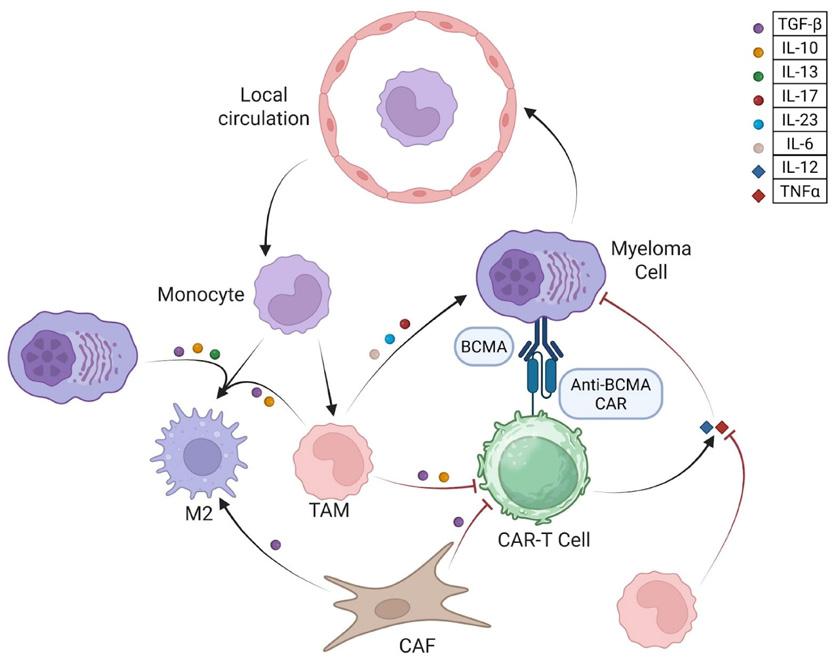
Although the treatment options for multiple myeloma are far more extensive than they have historically been, no therapies consistently induce complete remission due to multiple mechanisms, often centered on the BMME. CAR-T therapy has been a revolutionary addition to MM treatment, but is still imperfect, and we must overcome barriers to reverse resistant disease. As identified above, impaired CAR-T durability in MM most often reflects intrinsic and extrinsic factors that reduce proliferation and cause exhaustion of chimeric T cells. This review further explores the extrinsic BMME factors that drive these barriers and summarises the current efforts to bypass them. This review also highlights the need for biomarker monitoring to recognise therapy failure earlier and identify foci of resistance that can more effectively guide salvage therapy.
Barriers of the MM Bone Marrow Niche
Cell-Mediated Immunosuppression
As a malignant plasma cell, MM is uniquely able to insert itself into a protective BM niche consisting of multiple cell lines and pathways. The BM niche is comprised of hematopoietic stem cells, mesenchymal stem cells, vascular endothelial cells, osteoblasts, and BM stromal cells,
which maintain an environment conducive to appropriate proliferation and growth. Within this microenvironment, MM cells leverage Tregs, myeloid-derived suppressor cells (MDSCs), macrophages, monocytes, and natural killer (NK) cells to promote tumor survival, often by blunting immune responses. These cells also generate a cytokine milieu shaped by MM cells to reinforce immunosuppression and protect tumor cells.15,16,17
Within the tumor microenvironment (TME), macrophages regulate innate and adaptive immunity, and their polarisation state shapes antitumor immune responses with a spectrum spanning from pro-inflammatory, tumoricidal type 1 macrophages (M1) phenotypes to immunoregulatory, tumorsupportive M2 phenotypes. In MM, the BMME favors M2-like polarisation through soluble mediators, including transforming growth factor-β (TGF-β), interleukin (IL)-10, and IL-13, along with tumor-derived metabolic and mechanical cues (Figure 1).18
Myeloma cells recruit circulating monocytes and reprogram tissueresident macrophages into tumorassociated macrophages (TAMs), which dominate the marrow niche and reinforce immune dysfunction. TAMs sustain immunosuppression through inhibitory cytokines such as TGF-β and IL-10, while also producing pro-tumor inflammatory
Figure 1
mediators, including IL-17 and IL-23, promoting genomic instability, impairing immune surveillance, and accelerating functional exhaustion of effector lymphocytes (Figure 1). TAMs expand in tumor niches and support functions overlapping with type 2 macrophages (M2s), including anti-inflammatory IL-10 signaling, propagation of M2 differentiation, production of IL-6 (critical to MM development) and TGF-β, and inhibition of IL-12 and tumor necrosis factor alpha (TNFα) signaling (Figure 1).15 Collectively, macrophage and monocyte-driven signaling establishes a profoundly immunosuppressive marrow environment that limits CAR-T persistence and durability of response. In MM patients treated with CAR-T therapy, increased monocyte numbers and increased TGF-β activity were associated with increased markers of T cell exhaustion and decreased proliferation, which may reduce persistence of the chimeric T cells.19
Figure 1. Cell-mediated signaling pathways interfering with CAR-T cell efficacy against MM cells. CAR-T cells can be limited by multiple pathways from multiple cell lines within the TME and within BM. MM cells recruit monocytes from peripheral circulation into the TME, and then promote differentiation to M2 cells through production of TGF-β, IL-10, and IL-13.
Monocytes in the TME can also differentiate to TAMs which also produce TGF-β and IL-10. This same TGF-β and IL-10, as well as TGF-β from CAFs, suppress CAR-T cell function. TAMs have an additional function by producing IL-6, IL-23, and IL-17, while promoting MM cell survival and function and inhibiting IL-12 and TNFα produced by CAR-T cells, which would otherwise inhibit MM cell function (red arrows).
MDSCs are myeloid progenitor cells that are particularly contributory in malignancy. In tumor niches, MDSCs often show increased programmed death ligand (PD-L)1 expression, in part as a response to exaggerated hypoxia. PD-L1 binding to programmed cell death protein 1 (PD-1) on T cells is associated with MDSC-derived IL-10 and suppression of effector T cell activity, including CAR-T cells (Figure 2).20 Mechanistically, PD-1 acts as a co-inhibitor that interferes with T cell receptor (TCR) activation and CD28 signaling, preventing effective phosphorylation of downstream pathways such as phosphoinositide 3-kinase (PI3K) and protein kinase C theta (PKCθ), suppressing nuclear factor kappa B (NF-κB), decreasing TNFα production, and reducing cytotoxic activity.21,22,23 PD-1 activation also induces basic leucine zipper ATFlike transcription factor (BATF), a transcription factor for membraneassociated ring-CH-type finger 5 (MARCH5), decreasing the T cell receptor responses to cytokines, including IL-2, and promoting receptor degradation.24 PD-1 binding can additionally impair glucose and amino acid processing by T cells, resulting in impaired metabolism and function (Figure 2).25 GAL-9 is another factor found on MDSCs that interact with T cell immunoglobulin and mucin domain 3 (TIM-3) on CAR-T cells, decreasing interferon gamma (IFN-γ) production and inducing T cell death (T-helper type 1 (TH1) cells specifically) (Figure 2).26 This loop causes expansion of the MDSCs with further T cell disruption and immunosuppression.
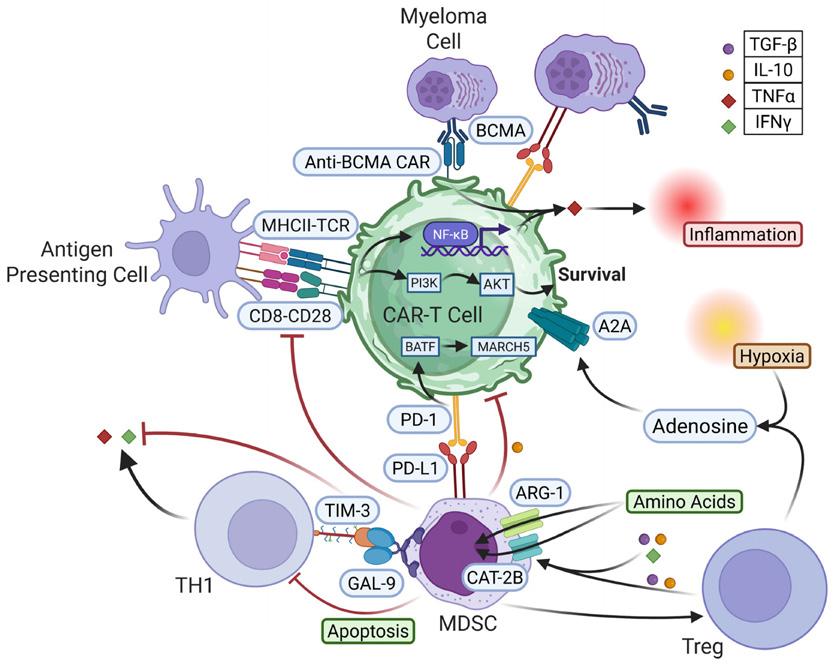
Figure 2. Various antiCAR-T immunosuppressive pathways within the MM tumor microenvironment. MDSCs bind to CAR-T cells through PD-1/PD-L1 interactions, causing activation of BATF and production of MARCH5 within the T cells. In the MDSCs, IL-10 is produced and inhibits CAR-T cell function. MDSCs also inhibit CD8/CD28 interactions between CAR-T cells and antigen presenting cells to impede CAR-T cell function and survival, though this is not the primary anti-tumor pathway for anti-BCMA CAR-T cell activity. MDSCs influence Treg differentiation, leading to IL-10, TGF-β, and adenosine production by Tregs. IL-10 and TGF-β, in addition to circulating INF-γ, increase the ARG-1 and CAT-2B expression levels of MDSCs, leading to consumption of amino acids, preventing metabolism in CAR-T cells. Adenosine, both from Tregs and from hypoxia, binds to the A2A receptors on CAR-T cells and impedes function. MDSCs bind T cells through GAL-9/ TIM-3, leading to apoptosis, and have a particular affinity for TH1 cells. PD-1/PD-L1 binding also occurs between CAR-T cells and myeloma cells, leading to CAR-T cell suppression.
Beyond ligand/receptor signaling, MDSCs suppress T cells through metabolic restriction. Cytokines, including TGF-β, IL-4, IL-10, and IFN-γ, increase the quantities of
cationic amino acid transporter 2B (CAT-2B) and arginase-1 (ARG1) on MDSCs, driving L-arginine uptake from the microenvironment and stunting T cell proliferation (Figure 2). MDSCs can also deplete intracellular L-arginine within T cells via methylglyoxal transfer, impairing proteins incorporating L-arginine and crippling T cell function. MDSCs further deplete tryptophan and cystine required by T cells.27 Adenosine plays a large role in these interactions. MDSCs and hypoxic environments cause increased production of adenosine compounds that degrade into adenosine in the microenvironment. This available adenosine then binds to MDSCs, stromal cells, and T cells, causing increased immunosuppression through MDSC activity and inhibition of T cell function (Figure 2).28 MDSCs also generate reactive oxygen species (ROS) and nitric oxygen (NO), which can impede proliferation and promote apoptosis in cytotoxic T cells and CAR-T cells. In parallel, MDSCs promote differentiation of Tregs, often through TGF-β signaling and ROS production.28
Closely related to MDSCs and TAMs are cancer-associated fibroblasts (CAFs). CAFs are a stromal subtype that produce fibroblast activating protein (FAP) and secrete IL-6 and TGF-β (Figure 1). In MM, the number of CAFs is increased, and they
promote tumor growth, while also suppress CAR-T proliferation and degranulation through inhibitory cytokine pathways.29
Tregs represent a significant immunosuppressive pathway that is reinforced by the cell populations above and promotes further Treg differentiation. This is mediated by IL-10 production to suppress effector T cell function and TGF-β to both suppress effector cells and promote differentiation toward Tregs. PD-1/PD-L1 interactions on T cells, influenced by MDSCs, also shift T cell populations toward Tregs. Once differentiated, Tregs participate in adenosine generation and suppression of effector T cell activity (Figure 2).30
Some other supporting cells, including osteoclasts, produce cytokines that promote MM survival and immunosuppression. A proliferation-inducing ligand (APRIL) produced by osteoclasts binds BCMA on MM cells and increases PD-L1 expression, causing PD-1/PD-L1-mediated suppression of T cells and a loop in which activated T cells drive osteoclast activity and additional APRIL production.31,32 APRIL binding BCMA also promotes MM survival and growth through the protein kinase RNA-like endoplasmic reticulum kinase (pERK1/2), mitogen-activated protein kinase (MAPK), protein
2
kinase B (AKT), NF-κB, myeloid cell leukemia 1 (MCL1) and B cell lymphoma 2 (BCL2) pathways (Figure 3).33 B cell activating factor (BAFF), produced by multiple cell types, including macrophages and some MM cells, binds BCMA and transmembrane activator and cancer-associated-macrophagelike (CAML) interactor (TACI) on MM cells to promote antiapoptotic pathways, including BCL2 and MCL1, reinforcing APRIL function to bind BCMA and TACI (Figure 3).31,33,34 Osteoclast-derived insulin-like growth factor-1 (IGF-1) promotes MM growth through MAPK, AKT, and NF-κB signaling similar to APRIL.34,35 IGF-1 can also strengthen immunosuppression by promoting Treg proliferation (Figure 3).31,35 While APRIL, BAFF, and IGF-1 do not often directly contribute to CAR-T therapy failure, they emit strong survival signals (in part via BCMA binding) with some capacity to induce Treg predominance. A reciprocal and self-amplifying feedback loop exists between malignant plasma cells and osteoclasts. Myeloma cells induce osteoclast differentiation and activation, while hyperactivated osteoclasts enhance tumor progression, promote angiogenesis, and suppress immune surveillance. The emerging evidence demonstrates activated osteoclast upregulation of PD-1/PD-L1 signaling, diminishing T cell proliferation and cytotoxic activity and attenuating antitumor immune responses.15,36
Figure 3. Osteoclast and BMSC effects on MM and CAR-T cells in the bone marrow microenvironment. Osteoclasts secrete APRIL, which bind to BCMA on MM cells, increasing PD-L1 expression on MM cells. Binding BCMA also reinforces multiple pathways, including pERK, MAPK, BCL2, AKT, NF-κB, and MCL1, which have various effects on MM cells, ultimately leading to cell growth, expansion, and survival. MM cells also produce BAFF that binds to TACI to similarly stimulate BCL2 and MCL1 survival pathways. MM cell activation releases RANK, causing osteoclast production of MMP-9
Figure
CAR-T Therapy
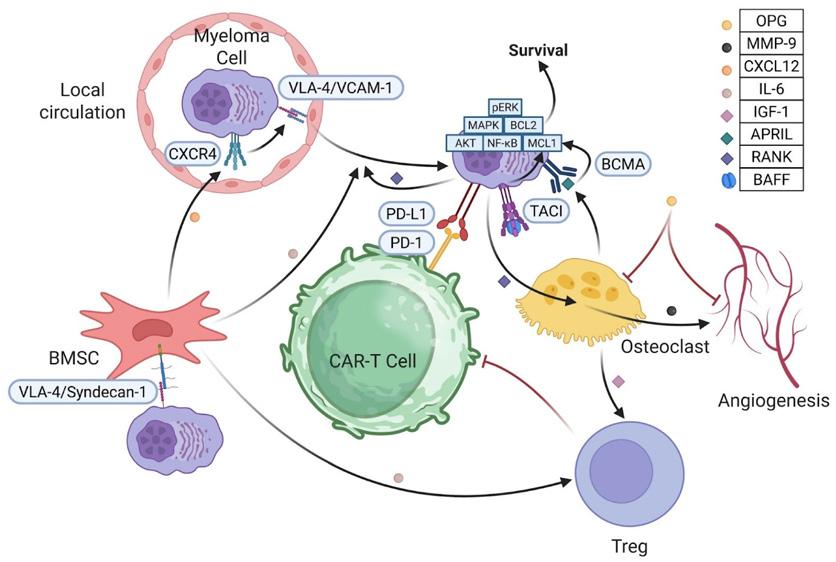
encouraging new angiogenesis. Osteoclast-driven production of IGF-1 promotes Treg differentiation and direct CAR-T cell suppression. BMSCs can bind MM cells through VLA-4/syndecan-1 interactions, causing release of CXCL12 and IL-6. CXCL12 is a chemoattractant for CXCR4 on circulating MM cells, the binding of which stimulates VLA-4/VCAM-1 binding for migration into the bone marrow ME. IL-6 from BMSCs and RANK from MM cells further promote this migration and homing of circulating MM cells into the bone marrow ME. IL-6 from BMSCs also promotes Treg differentiation.
Vascular remodeling further defines the myeloma marrow ecosystem and contributes to immune exclusion. Crosstalk between osteoclasts and myeloma cells increases the number of angiogenic mediators, such as vascular endothelial growth factor (VEGF) and osteopontin, driving endothelial expansion and reinforcing osteoclastogenesis. Receptor activator of nuclear factor kappa-B ligand (RANKL)driven osteoclast activation promotes angiogenesis through osteoclast-derived matrix metalloproteinase-9 (MMP-9), while osteoprotegerin inhibits both osteoclast formation and neovascular development, positioning the RANKL/ osteoprotegerin (OPG) axis as a central regulator of marrow remodeling (Figure 3).15,37,38 Collectively, this osteoclast–vasculature–myeloma triad
establishes a remodeled marrow niche that protects malignant cells, suppresses immune effector function, and limits effective CAR-T engagement within the tumor-infiltrated BM.
Stromal and Endothelial Adhesion Networks
Stromal features of the BMME contribute to disease progression drug resistance across different disease states and may contribute to suppression of CAR-T activity. A major mechanism is adhesion networks between MM cells, integrins, and fibronectin that confer resistance to apoptosis and are observed in drug resistant MM as cell adhesion-mediated drug resistance (CAM-DR).39 Adhesion to the ECM also induces growth-stimulating and immunosuppressive cytokine production from other BM cell lines. This resistance to apoptosis may extend to CAR-T therapy, representing an additional barrier to CAR-T durability in MM. While these interactions have not often been studied directly in relation to CAR-T therapy in MM, their anti-apoptotic effects are in direct competition with the cytotoxic effects of CAR-T therapy.31,40
Stromal and endothelial changes may contribute to CAR-T failure through mechanisms that intersect with cell-mediated suppression. The PD-L1 and GAL9 pathways expand MDSCs, while sustaining immunosuppressive function, and MDSC-derived ROS further increases stromal hostility.41
Figure 3
Stromal C-X-C motif chemokine ligand (CXCL)12 contributes to MM protection within the niche. Bone marrow stromal cells (BMSCs) are a primary producer of CXCL12, which acts as a chemoattractant for CXCL12–C-X-C motif chemokine receptor (CXCR)4 expressed on hematopoietic stem cells, including MM B cells (Figure 3).38 This chemotaxis is aided by integrins such as very late antigen-4 (VLA-4) and vascular cell adhesion molecule 1 (VCAM-1), promoting MM adhesion and migration into BM; CXCR4 signaling also enhances homing and cell survival through IL-6 and VEGF activity (Figure 3) [37,39]. Osteoclast activity through osteopontin (OPN) production and RANK signaling has also been associated with CXCL12/CXCR4 in MM.42 While CXCL12/CXCR4 does not directly prevent T cell migration into the MM niche, it preferentially homes MM cells and macrophages that are differentiated to suppress T cell activity.38
Within the BM, MM cells bind BMSCs, as well as bind fibronectin via syndecan-1 and VLA-4, increasing structural coherence and inducing IL-6 production by BMSCs. IL-6 promotes MM survival and Treg differentiation and is a key driver of CAM-DR (Figure 3). While these integrins do not directly inhibit CAR-T cells in MM, T cell activity has been suppressed in high-density collagen environments in breast cancer. This correlates with variable regions of T cell infiltration
within the MM niche, though this appears to be significantly mediated by dendritic cells.43,44 These BMSC-dependent stromal networks are key drivers of CAM-DR, and the activity of BMSCs and their anti-apoptotic effects on MM cells have been linked to resistance to CAR-T cell activity, strengthening the connection between these survival mechanisms and treatment failure [45]. While future research will need to further elucidate the roles CAM-DR, fibronectin, and adhesion networks play in CAR-T therapy failure in MM, these competing survival and antiapoptotic pathways are in direct opposition to CAR-T cell function and must be overcome when significant enough to influence treatment success.
The BMME in MM also develops physical and metabolic constraints that limit CAR-T function. MM marrow is more hypoxic than unaffected marrow due to proliferation; hypoxia acidifies the microenvironment and increases genetic instability, promoting MM progression. Hypoxia increases adenosine, which binds the adenosine A2A (A2A) receptors on T cells to suppress proliferation and tumor cytotoxicity, and also impacts macrophages and other immune lineages to further induce immunosuppression (Figure 2).46,47
One additional mechanism of escape is BCMA shedding into the microenvironment, mediated by γ-secretase cleavage of membrane-bound BCMA, which reduces the effectiveness of BCMA-targeted CAR-T therapy.48 These barriers share overlapping pathways, but also distinct contributions to CAR-T limitation in MM; optimising CAR-T will require addressing each barrier through CAR-T modification and/ or adjunct therapies targeting these inhibitory mechanisms.
References available on request
• 100 publications
• 100 publications
• 770 webpages and 6 patient education video programmes on www.cancer.ie
• 770 webpages and 6 patient education video programmes on www.cancer.ie
More to come in 2026
More to come in 2026
Our work is:
Our work is:
• evidence based
• evidence based
• peer reviewed
• peer reviewed
We are Ireland’s largest producer of cancer information. Order our publications straight to your workplace for free.
We are Ireland’s largest producer of cancer information. Order our publications straight to your workplace for free.

• updated regularly Your patients can speak to our cancer nurses by calling our Support Line on Freephone 1800 200 700, emailing supportline@irishcancer.ie or visiting a Daffodil Centre. Ask us about our Telephone Interpreting Service.
• updated regularly Your patients can speak to our cancer nurses by calling our Support Line on Freephone 1800 200 700, emailing supportline@irishcancer.ie or visiting a Daffodil Centre. Ask us about our Telephone Interpreting Service.
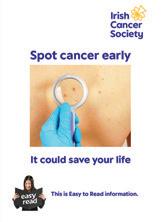

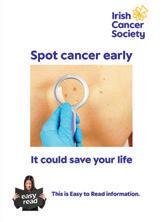




Breast Cancer
Transforming Breast Cancer Detection
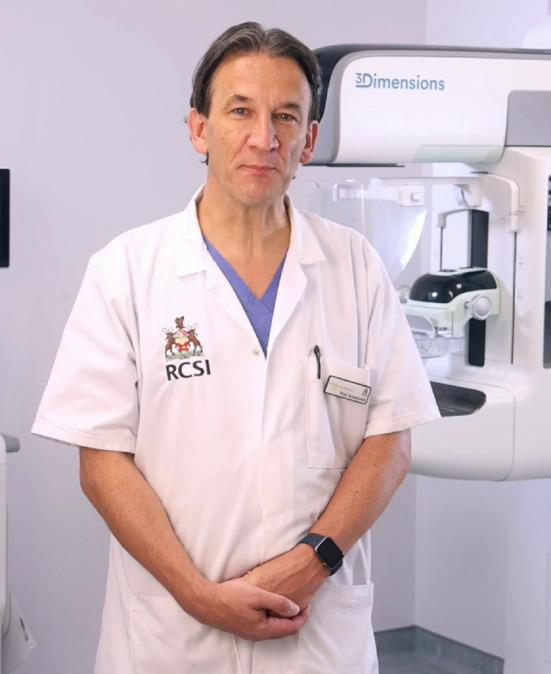
Artificial intelligence is set to transform breast cancer detection and treatment in Ireland, with major international trials showing AI-supported screening can detect up to 30% more breast cancers while dramatically reducing pressure on overstretched radiology services. Breast Cancer Ireland, Ireland’s leading breast cancer charity, says the findings mark a turning point for precision oncology, as AI, advanced imaging and targeted therapies reshape cancer care in Ireland in 2026 and beyond.
A recent survey of more than 1500 women attending the symptomatic clinic at the Beaumont Breast Centre, Dublin examined Irish patient’s views on the role of AI in healthcare, and in detection of breast cancer. Almost half of women (46%) agree that the use of AI in healthcare is a good idea, and 61% were comfortable with their mammogram being read by both a radiologist and an AI tool. However, patients remain somewhat cautious of this new technology with two thirds (66%) claiming that they would still prefer a radiologist to review their mammogram – even if AI was shown to be more accurate.
Two landmark studies – the MASAI trial in Sweden and the AI-STREAM trial in South Korea – show that AI used alongside specialist breast radiologists significantly improves cancer detection without increasing false alarms. Crucially, AI also identifies smaller, earlier-stage cancers, when treatment is most effective.
Professor Arnold Hill*, Chairman of Breast Cancer Ireland, and Consultant Breast & General Surgeon at the Beaumont RCSI Cancer Centre, said the implications of this for patients and the health system are profound.
“This is one of the most important developments we’ve seen in breast cancer screening in decades,” Prof Hill said.
“For decades, mammography has been the cornerstone of early breast cancer detection. It’s a powerful tool, but it’s not perfect. Some cancers can be challenging to spot on a mammogram, especially in patients with dense breast tissue. With increasing demand for screening, many countries, including Ireland, have a shortage of breast radiologists – the highly-trained doctors who read mammograms. This puts pressure on the system and can lead to delays in diagnosis.”
Professor
Arnold Hill, Chairman of Breast Cancer Ireland_ Consultant Breast & General Surgeon, Beaumont Hospital
According to Dr Prof Nuala Healy, Consultant Radiologist at the Breast Cancer Ireland–funded Beaumont Breast Centre, AI is already reshaping how specialists work. “AI gives breast radiologists an additional pair of expert eyes – prioritising the most challenging mammograms, helping detect subtle early cancers and easing routine workload so that radiologists can focus on complex patient imaging and procedures”
From AI to Robotics and Targeted Drugs
Prof Hill added “Detection is only the first step however. Ireland is entering an exciting new era where AI-led diagnosis, molecular profiling, robotics and targeted therapies are converging. Newer drugs, including Abemaciclib for high-risk breast cancer and advanced HER2-targeted therapies, are allowing more personalised treatment plans. At the same time, precision surgery means many patients –particularly those over 70 – can now avoid lymph node surgery, reducing complications and recovery time.
He continued “Whilst AI doesn’t replace clinical expertise – it most certainly enhances it. Detecting up to 30% more cancers, while reducing radiologists’ workload by almost half, AI is a very significant advancement. Earlier diagnosis means more targeted treatment, less invasive surgery and better outcomes for the 3700 women impacted in Ireland every year.”
AI + Precision Treatment = The New Oncology Model
In Sweden, the up-to-date results from the MASAI trial***, published in 2025, involving over 100,000 women, showed AI-supported screening detected 338 cancers compared to 262 with traditional double-reading (where two radiologists reviewed each mammogram). As a result, Radiologist workload fell by 44%. Early results from South Korea’s AI-STREAM trial are similarly impressive, showing a 14% increase in detection, again without increasing unnecessary recalls. Crucially, AI support did not lead to more false alarms or unnecessary recalls. In fact, it helped radiologists spot smaller, early-stage cancers that are easier to treat and more likely to result in a cure.
“This is real precision oncology in action,” Prof Hill continued. “We are tailoring treatment to the biology of each patient’s cancer, not using a one-sizefits-all approach. AI, advanced drugs and less invasive surgery are working together to improve survival and quality of life.”
Aisling Hurley, CEO of Breast Cancer Ireland says “The challenge now is ensuring Irish patients benefit quickly and equitably from these advances. The science is moving fast –and with the right investment in research and cutting-edge facilities, Ireland can be a world class leader in AI-enabled breast care – not a follower”. She continued “As always, we are urging people of all ages to be aware of the 8 signs and symptoms of the disease, to check themselves monthly, and to attend screenings when invited. AI and precision oncology are powerful – but they only work if people come forward for screening when invited and are fully breast aware in advance of this – so that they spot any cause for concern early. Early detection, backed by cuttingedge technology, is ultimately what saves lives.”

IN UNRESECTABLE OR METASTATIC BREAST CANCER1-3

ENHERTU therapeutic indications in mBC include3:
ENHERTU as monotherapy is indicated for the treatment of adult patients with unresectable or metastatic HER2-positive breast cancer who have received one or more prior anti-HER2-based regimens.
ENHERTU as monotherapy is indicated for the treatment of adult patients with unresectable or metastatic HER2-low breast cancer who have received prior chemotherapy in the metastatic setting or developed disease recurrence during or within 6 months of completing adjuvant chemotherapy.
ABBREVIATED PRESCRIBING INFORMATION
▼ENHERTU® (trastuzumab deruxtecan) 100 mg powder for concentrate for solution for infusion Consult Summary of Product Characteristics (SmPC) before prescribing.
Indication: • HER2-positive breast cancer: Monotherapy for the treatment of adult patients with unresectable or metastatic HER2-positive breast cancer who have received one or more prior antiHER2-based regimens. • HER2-low and HER2-ultralow breast cancer: Monotherapy for the treatment of adult patients with unresectable or metastatic hormone receptor (HR)-positive, HER2low or HER2-ultralow breast cancer who have received at least one endocrine therapy in the metastatic setting and who are not considered suitable for endocrine therapy as next line of treatment. Monotherapy for the treatment of adult patients with unresectable or metastatic HER2low breast cancer who have received prior chemotherapy in the metastatic setting or developed disease recurrence during or within 6 months of completing adjuvant chemotherapy. Presentation: One vial of powder for concentrate for solution for infusion contains 100 mg of trastuzumab deruxtecan. After reconstitution, one vial of 5 mL solution contains 20 mg/mL of trastuzumab deruxtecan. Dosage and Administration: Enhertu should be prescribed by a physician and administered under the supervision of a healthcare professional experienced in the use of anticancer medicinal products. In order to prevent medicinal product errors, it is important to check the vial labels to ensure that the medicinal product being prepared and administered is Enhertu (trastuzumab deruxtecan) and not trastuzumab or trastuzumab emtansine. Enhertu should not be substituted with trastuzumab or trastuzumab emtansine. HER2-positive breast cancer: Patients must have documented HER2-positive tumour status, defined as a score of 3 + by immunohistochemistry (IHC) or a ratio of ≥ 2.0 by in situ hybridization (ISH) or by fluorescence in situ hybridization (FISH) assessed by a CE-marked in vitro diagnostic (IVD) medical device. If a CE-marked IVD is not available, the HER2 status should be assessed by an alternate validated test. HER2-low or HER2-ultralow breast cancer: Patients should have documented HER2-low tumour status defined as a score of IHC 1+ or IHC 2+/ISH-, or HER2-ultralow tumour status, described as IHC 0 with membrane staining (IHC>0<1+), as assessed by a CE-marked IVD medical device. If a CE-marked IVD is not available, the HER2 status should be assessed by an alternate validated test. Recommended dose: Breast cancer: 5.4 mg/kg given as an intravenous (IV) infusion once every 3 weeks (21-day cycle) until disease progression or unacceptable toxicity. Method of administration: Initial dose should be administered as a 90-minute IV infusion. If well tolerated, subsequent doses may be administered as 30-minute infusions. Infusion rate of Enhertu should be slowed or interrupted if the patient develops infusion-related symptoms. Permanently discontinue in case of severe infusion reactions. Do not administer as an IV push or bolus. Please see SmPC for complete information. Premedication: Enhertu is emetogenic, which includes delayed nausea and/or vomiting. Prior to each dose of Enhertu, patients should be premedicated with a combination regimen of two or three medicinal products (e.g., dexamethasone with either a 5-HT3 receptor antagonist and/or an NK1 receptor antagonist, as well as other medicinal products as indicated) for prevention of chemotherapy-induced nausea and vomiting. Dose modifications: Management of adverse reactions may require temporary interruption, dose reduction, or treatment discontinuation of Enhertu per SmPC guidelines. Dose modifications are required for interstitial lung disease (ILD)/ pneumonitis, neutropenia, febrile neutropenia and decreased left ventricular ejection fraction. Dose should not be re-escalated after a dose reduction is made. Permanently discontinue for symptomatic ILD/pneumonitis (Grade 2 or greater), if LVEF <40% or absolute or absolute decrease from baseline is >20%, or in symptomatic congestive heart failure. Delayed or missed dose: If a dose is delayed or missed, it should be administered as soon as possible. The schedule should be adjusted to maintain a 3-week interval between doses. The infusion should be administered at the dose and rate the patient tolerated in the most recent infusion or at reduced dose if indicated. Elderly: No dose adjustment is required in patients aged 65 years or older. Limited data are available in patients ≥ 75 years of age. Renal impairment: No dose adjustment is required in patients with mild or moderate renal impairment. The potential need for dose adjustment in patients with severe renal impairment or end-stage renal disease cannot be determined due to insufficient data. A higher incidence of Grade 1 and 2 ILD/pneumonitis leading to an increase in discontinuation of therapy has been observed in patients with moderate renal impairment. Patients with moderate or severe renal impairment should be monitored carefully for adverse reactions including ILD/pneumonitis. Hepatic impairment: No dose adjustment is required in patients with total bilirubin ≤ 1.5 times upper limit of normal (ULN), irrespective of aspartate transaminase (AST) value. The potential need for dose adjustment in patients with total bilirubin > 1.5 times ULN, irrespective of AST value, cannot be determined; therefore, these patients should be monitored carefully. Use with caution in patients with moderate and severe hepatic impairment. Contraindications: Hypersensitivity to the active substance or to any of the excipients. Each 100 mg vial contains 1.5 mg of polysorbate 90 (E433). Warnings and Precautions: Traceability: The name and the batch number of the administered product should be clearly recorded. Interstitial lung disease (ILD)/pneumonitis: Cases of ILD, and/or pneumonitis, have been reported with Enhertu. Fatal outcomes have been observed. Patients should be advised to immediately report cough, dyspnoea, fever, and/or any new or worsening respiratory symptoms. Patients should be monitored for signs and symptoms of ILD/
pneumonitis. Evidence of ILD/pneumonitis should be promptly investigated. Patients with suspected ILD/pneumonitis should be evaluated by radiographic imaging, preferably a computed tomography (CT) scan. Consultation with a pulmonologist should be considered. Patients with a history of ILD/ pneumonitis or moderate or severe renal impairment may be at increased risk of developing ILD/ pneumonitis and should be monitored carefully. Please see SmPC for dose modifications in the event of ILD/pneumonitis developing. Neutropenia: Complete blood counts should be monitored prior to initiation of Enhertu and prior to each dose, and as clinically indicated. Based on the severity of neutropenia, dose interruption or reduction may be required. Left ventricular dysfunction: Left ventricular ejection fraction (LVEF) decrease has been observed with anti-HER2 therapies. Standard cardiac function testing (echocardiogram or MUGA scanning) should be performed to assess LVEF prior to initiation of Enhertu and at regular intervals during treatment as clinically indicated. LVEF decrease should be managed through treatment interruption. Enhertu should be permanently discontinued if LVEF of less than 40% or absolute decrease from baseline of greater than 20% is confirmed and in patients with symptomatic congestive heart failure (CHF). Embryo-foetal toxicity: Enhertu can cause foetal harm in pregnant women. In post-marketing reports, use of trastuzumab in pregnancy resulted in cases of oligohydramnios manifesting as fatal pulmonary hypoplasia, skeletal abnormalities and neonatal death. The topoisomerase I inhibitor component of Enhertu, DXd, can also cause embryo-foetal harm if administered to a pregnant woman. Patients with moderate or severe hepatic impairment: There are limited data in patients with moderate hepatic impairment and no data in patients with severe hepatic impairment. As metabolism and biliary excretion are the primary routes of elimination of DXd, Enhertu should be administered with caution in patients with moderate and severe hepatic impairment. Interaction with other medicinal products and other forms of interaction: No dose adjustment is required during coadministration of trastuzumab deruxtecan with medicinal products that are inhibitors of CYP3A or OATP1B or P-gp transporters. Pregnancy and Lactation: Enhertu can cause foetal harm when administered to a pregnant woman. Pregnancy status of women of childbearing potential should be verified prior to initiation. Administration to pregnant women is not recommended and the patient should be informed of the potential risks to the foetus. Women of childbearing potential should use effective contraception during treatment and for at least 7 months following the last dose. Male patients with female partners of reproductive potential should use effective contraception during treatment and for at least 4 months after the last dose. Women who become pregnant must immediately contact their doctor. If a woman becomes pregnant during treatment with Enhertu or within 7 months following the last dose, close monitoring is recommended. It is not known if trastuzumab deruxtecan is excreted in human milk, therefore, women should not breast-feed during treatment with Enhertu or for 7 months after the last dose. No dedicated fertility studies have been conducted with trastuzumab deruxtecan. Before starting treatment, male patients should be advised to seek counselling on sperm storage. Please see SmPC for further details. Ability to Drive and Use Machines: May have a minor influence on the ability to drive and use machines. Patients should be advised to use caution when driving or operating machinery in case they experience fatigue, headache or dizziness during treatment. Undesirable Events: Consult SmPC for further information on side effects. Enhertu 5.4 mg/kg: The most common National Cancer Institute – Common Terminology Criteria for Adverse Events (NCI-CTCAE v.5.0) Grade 3 or 4 adverse reactions were neutropenia, anaemia, fatigue, leukopenia, thrombocytopenia, nausea, lymphopenia, hypokalaemia, transaminases increased, diarrhoea, vomiting, decreased appetite, pneumonia, and ejection fraction decreased. Grade 5 adverse reactions occurred in 1.4% of patients, including ILD/ pneumonitis (1.1%). Very common: Upper respiratory tract infection, anaemia, neutropenia, thrombocytopenia, leukopenia, hypokalaemia, decreased appetite, headache, interstitial lung disease, cough, nausea, vomiting, constipation, diarrhoea, abdominal pain, stomatitis, dyspepsia, transaminases increased, alopecia, musculoskeletal pain, fatigue, pyrexia, ejection fraction decreased, weight decreased. Common: Pneumonia, lymphopenia, febrile neutropenia, pancytopenia, dehydration, dizziness, dysgeusia, dry eye, vision blurred, dyspnoea, epistaxis, abdominal distension, gastritis, flatulence, rash, pruritus, skin hyperpigmentation, oedema peripheral, blood alkaline phosphatase increased, blood bilirubin increased, blood creatinine increased, infusion-related reactions. Legal Category: Product subject to prescription which may not be renewed (A). Marketing Authorisation Number: EU/1/20/1508/001. Marketing Authorisation Holder: Daiichi Sankyo Europe GmbH, Zielstattstrasse 48, 81379 Munich, Germany. Further product information available on request from: Daiichi Sankyo Ireland Ltd, Unit 29, Block 3, Northwood, Dublin 9, Ireland. Date of API preparation: 12/2025. Veeva ID: IE/ADC/12/25/0003.
▼This medicinal product is subject to additional monitoring. Adverse events should be reported. Reporting forms and information can be found at www.hpra.ie. Adverse events should also be reported to Daiichi Sankyo Ireland Ltd Pharmacovigilance by email at pharmacovigilance_ie@daiichisankyo.com or please call +353 1 489 3000. As Enhertu® is a biological medicine, healthcare professionals should report adverse reactions by brand name and batch number.
Reference: 1. Siddiqui T, et al. Ann Med Surg (Lond). 2022;82:104665. 2. Escrivá-de-Romaní S, et al. Cancer Drug Resist. 2023;6(1):45-58. 3. ENHERTU (trastuzumab deruxtecan). Summary of Product Characteristics. Available at www.medicines.ie VEEVA ID: IE/ADC/11/25/0015 | Date of Preparation: December 2025
Andropause
Testosterone Deficiency: Understanding the ‘Male Menopause’ and the Role of Early Intervention

As awareness of menopause continues to grow, a parallel but less understood condition in men is beginning to gain attention — Testosterone Deficiency (TD), often referred to as “male menopause” or andropause. Despite being a recognised medical condition, it remains underdiagnosed and frequently misunderstood, with many men either unaware of the symptoms or reluctant to seek help.
Dr Deirdre Forde, Medical Director and Founder of Ceile Medical, explains that Testosterone Deficiency is both a clinical and biochemical syndrome associated with advancing age and underlying health conditions. It is characterised not only by low levels of testosterone in the blood, but also by a range of physical, psychological and sexual symptoms that can significantly impact quality of life.
A recognised but overlooked condition
While TD is a recognised medical issue, Dr Forde highlights that it is still poorly understood in general practice and often overlooked as a contributing factor to many common symptoms in men.
“Men frequently present with issues such as low mood, fatigue or poor concentration, but the underlying cause may not be immediately identified as testosterone deficiency,” she explains.
Certain groups are at higher risk.
Men with chronic conditions such as type 2 diabetes, obesity, liver or renal disease, sleep apnoea, or HIV are more likely to have low testosterone levels. In addition, a range of medications — including opioids, corticosteroids, anti-psychotics and some chemotherapy drugs — can contribute to reduced testosterone.
Other causes include natural ageing, testicular injury or disease, pituitary tumours, genetic conditions such as Klinefelter’s syndrome, and lifestyle factors such as alcohol use and chronic stress.
Recognising the early signs
One of the key challenges with TD is recognising the early symptoms, which can often be subtle or dismissed. According to Dr Forde, some of the first signs men may notice include:
• Loss of early morning erections
• Reduced libido
• Poor sleep
• Decreased muscle strength
• Difficulty concentrating Importantly, the loss of night-time erections may also be an early indicator of cardiovascular risk.
“Up to 67% of men experience erectile dysfunction before developing cardiovascular disease
Dr Deirdre Forde, Medical Director and Founder of Ceile Medical
within three to five years,” she notes, highlighting the importance of early assessment.
How men present in practice
In clinical settings, men rarely present directly with concerns about testosterone levels. Instead, they may report symptoms such as depression, low motivation, mood swings or relationship difficulties.
“Very often, the real issue — erectile dysfunction — is not mentioned unless the healthcare professional asks directly and sensitively,” says Dr Forde. “There can be a strong sense of embarrassment or perceived failure, which prevents men from opening up.”
Routine blood tests may reveal clues such as anaemia or borderline diabetes, which should prompt further investigation, including testosterone testing. Interestingly, Dr Forde notes that women are often the ones who first recognise the symptoms in their partners and encourage them to seek help.
Breaking the taboo
Despite increasing awareness, TD remains a sensitive topic for many men. Reluctance to seek medical advice continues to be a significant barrier, contributing to poorer health outcomes.
“Many men will avoid attending their GP until they are significantly unwell,” Dr Forde explains. “Education is key — both for patients and healthcare professionals.”
She recommends that men adopt a proactive approach to their health, including regular checkups. Testosterone levels naturally decline by approximately 1% per
year from the age of 35–40, but younger men are not immune, particularly in the context of stress or lifestyle factors.
Treatment and lifestyle approaches
Management of Testosterone Deficiency typically involves a combination of medical treatment and lifestyle interventions.
Testosterone Replacement Therapy (TRT) is the mainstay of treatment and is available in several forms, including gels and injectable preparations. However, it is not suitable for all patients — particularly those wishing to maintain fertility, as TRT can suppress sperm production. In such cases, alternative treatments such as clomiphene may be considered.
TRT is also contraindicated in men with certain conditions, including prostate cancer, male breast cancer, severe heart failure, or elevated haematocrit levels.
Alongside pharmacological treatment, lifestyle plays a crucial role. Dr Forde emphasises the importance of:
• A balanced diet including healthy fats
• Managing stress to reduce cortisol levels
• Adequate sleep, as testosterone production peaks during sleep
• Supplementation where appropriate, including vitamin D3, omega-3, zinc and magnesium
In some cases, medications such as PDE5 inhibitors (e.g. tadalafil) may also be prescribed, not only to address erectile dysfunction but also for their potential cardiovascular benefits.
A role for early intervention
Ultimately, increasing awareness of Testosterone Deficiency is essential to improving outcomes for men. Earlier recognition, open conversations, and proactive health management can all help to reduce the long-term impact of the condition.
As Dr Forde concludes, “We need to normalise these discussions and ensure men feel comfortable seeking help. With the right approach, TD is a highly manageable condition — but only if it is recognised.”
Mental Health Act 2026 Signed into Law
Uachtarán na hÉireann, Catherine Connolly, has signed the Mental Health Act 2026 into law, following consideration of the Bill that completed all stages in the Oireachtas.
Minister for Mental Health, Mary Butler TD, has today welcomed the enactment of the new Mental Health Act, “This Act has been a professional and personal priority for me since I took up office as Minister for Mental Health. I am so proud to see the Mental Health Act 2026 signed into law today, after years of drafting, consultation and debate. I believe this Act represents the right balance between all the
various perspectives to ensure a person-centred and human rights approach to mental health care in Ireland.”
“This Act represents a new era for Ireland’s Mental Health services. We are introducing a range of additional safeguards for people accessing mental health services, better protecting their rights and ensuring that people will have a voice and choice in their own care and treatment. The new Act will also see all community mental health services, including residential services and community CAMHS, registered and regulated for the first time in the history of the State.”
Regarding the commencement of the new Act, Minister Butler said: “There are a number of significant changes in the 268-section Act that our mental health services will need to adapt to. As the Act becomes law, work has already begun to commence the legislation. This includes the drafting of secondary legislation, the development of additional training and education for professionals working under the new Act, and awareness-raising of the changes for people accessing services under the Act. I want to see the Act commenced at the earliest opportunity, and I will be seeking additional funding in the Estimates process for 2027 to put
in place the necessary resources to make the new Mental Health Act a success.”
The Minister concluded, “I am very proud to see the Mental Health Act 2026 reach this milestone. Today will be remembered as an important day in the history of Irish Mental Health services, and I would like to pay tribute to everyone involved in bringing the Act into law. I look forward to commencing the Mental Health Act 2026 as soon as possible and ensuring that the rights of people accessing Mental Health services are fully vindicated while receiving the highest possible quality of care.”
Faculty of Occupational Medicine Spring Conference marks start of 50th anniversary year
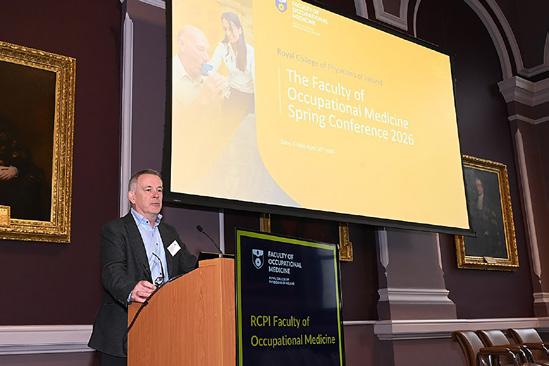
The RCPI Faculty of Occupational Medicine Spring Conference, held on 10 April, marked the beginning of the faculty’s 50th anniversary year. The event brought together occupational health professionals to explore key issues shaping the specialty.
The conference featured keynote addresses, expert-led sessions and panel discussions giving attendees the opportunity to examine emerging challenges and share practical insights across a range of clinical and workplace health topics.
Speaking at the conference, Dean of the Faculty of Occupational Medicine, Dr Alex Reid, highlighted
the importance of maintaining an enquiring mindset, working collaboratively and ensuring that occupational medicine continues to have a strong voice in protecting and promoting worker health. He also pointed to the specialty’s unique role in shaping workplace health policy.
There were two 50th anniversary keynote addresses at the conference. The first was delivered by Professor Raymond Agius of the University of Manchester who examined the occupational health implications of the pandemic and the future direction of the specialty. He cautioned against a return to pre-pandemic norms and called
for a more strategic, preventionfocused approach.
“We cannot lapse into ‘business as before’ because it would entail accepting a partly preventable risk to health at work, posing unacceptable risks for some individuals and workplaces and weakening pandemic resilience,” he said. “We need a substantial paradigm shift and a multidisciplinary strategy to protect workers from airborne infections.”
Professor Agius also emphasised the role of occupational medicine in working alongside public health while maintaining its distinct focus. He highlighted its contribution to risk reduction, worker rehabilitation, evidencebased advice and the importance of advocacy as a core function of the specialty.
The second keynote was delivered by Dr Finola M Ryan who put a spotlight on the important role of occupational health in performing arts looking at the workplace hazards from physical to ergonomic to psychosocial.
The conference also featured a legal update from Lewis Silkin on workplace accommodations and the concept of reasonableness in
employment law. It also included a presentation from the Health and Safety Authority on protecting workers’ health through effective regulations.
Clinical sessions addressed a range of topics relevant to occupational practice including Parkinson’s disease, functional neurological disorder, migraine management and occupational lung disease. These sessions highlighted the importance of supporting workers with complex health conditions and the evolving clinical challenges facing occupational physicians.
The conference also saw the official launch of the Faculty of Occupational Medicine’s 50th anniversary art competition. The competition, organised in collaboration with the RCPI Heritage Centre, aims to highlight the faculty’s work and explore the intersection of work and medicine through visual art. It is open to trainees, licentiates, members, fellows and RCPI staff across the College and its faculties and institutes.
The Spring Conference marks a milestone in the faculty’s 50th anniversary celebrations, highlighting its ongoing commitment to advancing occupational medicine and supporting safer, healthier workplaces.
Dean of the Faculty of Occupational Medicine, Dr Alex Reid
Lifestyle medicine at the interface of managing patients returning from online or overseas obesity care

Almost 60% of the Irish population over age 15 have overweight or obesity, creating an ever-growing unmet need for comprehensive and integrated clinical weight management services. As a result, patients increasingly seek treatment from cosmetic clinics abroad or online services. Reasons for doing so may be financial costs, perceived risk/benefits, or previous negative experience with weight stigma in healthcare settings. With no central registry, it is impossible to know the statistics or to estimate the mounting costs to the health system. (Conversely, it is also impossible to know where these costs/risks have been offset by benefit of weight loss and reduction in chronic disease costs.) In all areas of medicine now, clinicians are increasingly likely to encounter patients who have sought obesity treatment but have had limited professional
supportive or no follow-up care. Limited access to ongoing longterm care, lack of integrated services, costs, waiting lists, and geography are among the factors currently impacting patient health outcomes in obesity care.
Mounting evidence supports that patients need ongoing long-term and individualized obestiy care that takes into account factors such as the patients’ goals of care and risks/benefits of treatment. Many obesity services in Ireland currently adhere to current NICE guidelines which discharges patients back for an annual follow-up with primary care after 2 years. However, there are some pitfalls with that approach. Patients may not attend for those appointments, patients may choose not disclose treatments to primary care, or primary care may be underresourced to take that on that
Written by Dr Kate McCann MB BCh MRCSI DipIBLM
care. Our best international evidence increasingly shows improved health outcomes when patients engage with lifelong - at least annual - engagement with obesity care.
Lifestyle medicine has a critical role in the evidence-based prevention and treatment of chronic disease, including obesity and obesity-related complications, such as diabetes, hypertension, and arthritis. Lifestyle medicine should be considered among the foundations of obesity care due to its impact on metabolic outcomes, particularly in longterm roles for patients prescribed GLP1a and patients post bariatric surgery to help minimize the risk of weight recurrence. A recent meta-analysis showed the ongoing and structured lifestyle interventions were most effective in limiting weight recurrence after obesity treatment.
Ethical Note: The below composite narratives below are compromised from the author’s clinical experience in past 12 months. All details have been altered to protect patient identity consistent with the BrownLifespan Checklist for Narratives.
“Carol”* is 38 years old. She has a great GP who was ready to discuss weight management with her when she was ready. The GP prescribed GLP1a treatment and referred her for lifestyle intervention support. However, the medications did not work for Carol. And despite having private health insurance, Carol was denied coverage for bariatric surgery in an accredited hospital here in Ireland. She subsequently made the decision to have surgery
through a cosmetic clinic; it did not include any post-operative or ongoing obesity care. She asked for help to organize postoperative follow-up with dietetics, endocrinology, and psychotherapy. Challenges in finding this include lack of accessible public clinics or various private options, Carol’s ongoing ability to self-pay what insurance won’t cover as well as her geography.
Take-Away
Many options for bariatric surgery, both here and abroad, do not include post-operative or ongoing care. Patients are left to check-in with their GP if needed. Potential pitfalls in this approach include that many GPs are simply not resourced to provide postbariatric care. Even if they are upskilled in the area, they lack access to adequate services such as dietetics, psychology, medical exercise programmes and even certain standard laboratory tests. “Tina” is only 19. She had struggled with weight her entire life, and when she was old enough, she accessed GLP1a treatment through an online-only service. She had no weight-check or routine labs. She had no counselling on the need for contraception. Her blood pressure was never checked. She was not advised on vitamin supplementation, nutrition, or physical activity. She was not screened for eating disorders. A family member is a nurse and very supportive, but was concerned that she might need more support and advised Tina to seek medical care. On presentation to clinic, her routine labs show multiple deficiencies. A pregnancy test was positive. She was recently referred back to obesity medicine postpartum by her midwife.
2 Take-aways
1. There is a growing number of online services providing GLP1a medication prescriptions to patients, so clinicians in diverse areas of practice need to be aware of these medications and the potential gap in wholepatient care. Obesity is highly associated with malnutrition but a surprising number of patients who are prescribed GLP1a medications are not fully aware of the importance of nutrition, vitamins, routine safety bloods, or the need for contraception if they are sexually active.
2. A recent study found that patients who suddenly stop these medication prior to pregnancy have increased risk of hypertension, gestational diabetes, pregnancy-related weight gain, and pre-term delivery.ii Women of childbearing age deserve frank, unbiased, and informed discussions about contraception and fertility planning, but are not always getting that opportunity.
“Mick” has a history of severe PTSD. He first had a gastric balloon done in Türkiye a number of years ago. He didn’t talk to his GP at the time about it as he was embarrassed. The gastric balloon worked for a while and he lost some weight. When his weight recurred, he went back a few years later and had bariatric surgery. He’s not entirely sure on the details. He never had followup care organized. Weight has recurred again; routine laboratory tests show pre-diabetes and he reports worsening polyarthralgia. He is reluctant to get started after all these years with medical exercise/ physiotherapy, dietetics, and psychotherapy. There has been a lot of logistical work to build his new team -- trying to work out the geography, logistics, waiting lists, insurance coverage, budget for self-pay, and traumainformed practices.
Take-aways
1. There is a direct relationship between trauma- particularly childhood/adolescent adverse events - and obesity. Trauma informed practice approaches are needed as part of obesity care.
2. Where patients live can have an impact on quality of care. For example, programmes such as ExWell are not available in every area, and certain areas have no registered dietitians or psychotherapists available or taking new patients, even in private sectors.
“Ann” is 52 years old. She is referred to a general medicine clinic in her local hospital with worsening vague symptoms of fatigue and brain fog. Her background is significant for depression, hypertension, arthritis, and obesity. She has been on the waiting list for public obesity medicine services for years now. She is out of work, and cannot afford to self-pay for GLP1a treatment or surgery. Her STOPBANG screen in clinic that day was 7/8 (she loses only one point for being female). She laughs when sleep apnoea is raised as a possibility – “Oh, my husband will tell you I’ve had that for years! He

nudges me awake at night when I stop breathing.” She is referred for sleep studies; the waiting list in her area is currently almost 2 years.
Take-away
It is estimated that as much as 90% of the patients with sleep apnoea remain undiagnosed. A STOP-BANG screen is quick and easy to do in clinic, and worth doing in cases of patients with the disease of obesity. However, long waiting lists for polysomnography are common in many areas of the country, and are not integrated into whole-patient obesity care. Patients who present to respiratory services with mild OSA may be given advice to lose weight with few follow-up services available to help support them, depending on their area.
“Sam” is 29. He has attends private mental health facilities. His psychiatrist is keen to start him on GLP1a treatment to help stabilize his weightiii, and he is referred to private obesity medicine. However, during his next inpatient admission, the mental health hospital has few resources or patient supports available to support prescribed lifestyle interventions including registered dietetic support or medical exercise. He has limited access to the necessary occupational therapy due to resourcing. Arrangements are made for a dietitian outside of the hospital; he has to rely on friends or family to drive him between the hospital and the dietitian’s clinic. He
attends a couple of appointments with obesity medicine from the hospital bed via telehealth when no one can drive him. He needed a 24 hour blood pressure monitor, but it had to be deferred until after his discharge.
Take-away
The need for integration of mental health services with wider medical services has been highlighted multiple times over recent years. The emerging evidence for the role of GLP1a medication for patients, particularly those at risk from weight gain from atypical antipsychotics, highlights that this is a growing gap in care needs to be urgently addressed.
“Gus” is 43. He had gastric band put in a cosmetic clinic abroad 3 years ago. He lost a little weight at first, but has increasing problems with symptoms of reflux and discomfort. He has metabolic complications of prediabetes and MASLD. He was referred for support with GLP1a treatment, but combination of the effects of the band and the side effects of the medication are problematic. His insurance does not cover removal of the band and the removal here in Ireland costs more than the insertion abroad. Obesity treatment is held while he remains on a public waiting list.
Take-away
Gastric bands are no longer recommended as a first-line treatment for obesity in most international guidelines. However,
these are still widely available in cosmetic clinics abroad. Literature suggests that around 35% will need to be removed due to complications at some point; some studies cite a number over 50%. The cost of follow-up care will fall on the patient and is often not covered by insurance.
“Sylvia” has been on GLP1a treatment for 6 years. First, she was one drug and then her weight plateaued on treatment, and then began to recur. Her online doctor prescribed a newer, but much more expensive, drug when it became available. She is struggling to continue to pay for the maximum dose. She suddenly stops the drugs when she runs out of money. She’s done so well that she knows that can “keep it off herself now”. She notes a sudden increase in hunger and weight recurring within weeks, and is now understandably distressed as she cannot continue to budget for the ¤6000/year drug cost going forward. She is reluctant to go back to her doctor to discuss as she feels that she will be told her only option is to find a way to pay for more medication.
Take-aways
1. Patients who start on these drugs should be counselled on length of treatment and total treatment costs upfront. It is not uncommon for patients to titrate up the doses slowly of these drugs for months to achieve the first 5 – 10% weight loss. Cost of the medication can cause
Obesity
problems, such as self-adjusting dosages erratically or going up more quickly than they can safely tolerate due to sensitivity to GI side effects. In all cases, when the drug needs to be stopped due to cost, patients deserve to have discussions about risks/benefits and a strategy for ongoing care which should include comprehensive, and sometimes intensive, lifestyle interventions.
2. Patients who have insurance coverage or other benefits that may cover one treatment but not another deserve a frank and unbiased discussion about the total costs of treatments as part of informed decision making. A patient may, for example, be eligible for insurance coverage of bariatric surgery
but not insurance coverage of medication (assuming both treatments are appropriate for patients and in line with patient’s own goals).
“Orla” is 32 and used an online service to access GLP1a treatment. She has a high level of health literacy, so has also been working with a personal trainer and a registered dietitian. Her online service encouraged to be transparent with her healthcare professionals about her current medication for safety reasons. So when she attends her local hospital for a routine appointment, she discloses that she has been using the medication. “Oh, you cheated,” is the reply.
Weight stigma has no place in healthcare settings, and
yet patients regularly report experiencing it. When patients are reluctant to discuss their weight or accessing treatment options, or fail to disclose that they have had treatment, the opportunity to provide safe and whole-patient care is lost. This is likely among the biggest reasons why we truly have no idea of the true scope of the potential gap in care and the impact that it is having on patient outcomes.
References
i Chen, H., Guo, X., Long, T. et al. Recurrent Weight Gain after Weight Loss Induced by Lifestyle Intervention, Metabolic and Bariatric Surgery, or Semaglutide in Adults with Obesity: A Systematic Review of Randomized Controlled
Trials. OBES SURG 36, 792–803 (2026). https://doi.org/10.1007/ s11695-025-08415-1
ii Maya J, Pant D, Fu Y, et al. Gestational Weight Gain and Pregnancy Outcomes After GLP-1 Receptor Agonist Discontinuation. JAMA. 2025;334(24):2186–2196. doi:10.1001/jama.2025.20951
iii Jacobson S, Margolese N, Margolese HC. GLP-1 Receptor Agonists as a Novel Solution for Antipsychotic-Induced Weight Gain in Severe and Persistent Mental Illness. Can J Psychiatry. 2025 Oct 15:7067437251386626. doi: 10.1177/07067437251386626. Epub ahead of print. PMID: 41091899; PMCID: PMC12528064.
Next-Generation Prostate Cancer Prognostic Test

OncoAssure Ltd, an Irish medical diagnostics company headquartered at NovaUCD in Dublin, last month announced an exclusive partnership with Illinoisbased GoPath Diagnostics. Under this agreement, GoPath, a leading full-service CAP-accredited and CLIA-certified anatomic, molecular, and digital pathology company, will hold the exclusive rights to provide the OncoAssureTM Prostate test throughout the United States.
OncoAssureTM Prostate is a next-generation clinically validated prognostic test designed to support clinical decision-making
for men diagnosed with localized prostate cancer. By integrating advanced genomic data with well-validated clinical variables, the test empowers physicians and patients to make personalized, data-driven treatment decisions at two critical points in the prostate cancer pathway, post-biopsy and post-surgery.
Clinical Validation1,2 of OncoAssureTM Prostate demonstrates how it improves risk stratification over standard clinical and pathological information, optimizing patient management after diagnosis.
Patients with a higher OncoAssureTM Prostate result were 4.4 times more likely to experience biochemical recurrence within five years compared to patients with a lower result.
Separately, patients with a higher test result were 9.7 times more likely to experience adverse pathology, associated with more aggressive cancer, compared to patients with a lower result.
This collaboration leverages GoPath's extensive resources in the Urological field and its national sales infrastructure to meet the growing demand for validated prognostic testing in the US urology segment.
“Partnering with GoPath represents an important step in expanding access to OncoAssureTM Prostate in the United States. By combining our
focus on clinically meaningful biomarker development with GoPath’s proven capabilities in delivering high-quality diagnostic services, we can better support clinicians with actionable insights at key decision points in prostate cancer management,” said, Des O’Leary, CEO, OncoAssure Ltd.
“Partnering with OncoAssure allows us to expand our prostate cancer portfolio from morphologic and molecular diagnosis, targeted immunotherapies, and germline testing, to now include a clinically validated prognostic test, OncoAssureTM Prostate, for prostate cancer patients, which is a very significant step forward. By combining OncoAssure’s genomic innovation with our national sales infrastructure, we are better positioned to support urologists with actionable insights across key decision points in the patient journey,” said, Dr Jim Lu, CEO and Medical Director, GoPath Diagnostics.
Representatives from both companies will be available at the 2026 American Urological Association (AUA) Annual Meeting, May 15–18, 2026, at the Walter E. Washington Convention Center, Washington, DC. Visit GoPath Diagnostics at Booth 3515 and OncoAssure at Booth 4108 to learn more about OncoAssureTM Prostate and the partnership.
Pictured at NovaUCD in Dublin is Des O’Leary, CEO, OncoAssure. (Credit - Hedgehogs Vs Foxes)
Using gut hormones to disrupt hospital admissions of patients with cardio-kidneymetabolic complications in the future
Written by Sumaya Shaikh, Carel W le Roux, Diabetes Complications Research Centre, University College Dublin, Ireland
Introduction
Cardio-kidney-metabolic (CKM) syndrome represents a convergent and escalating clinical crisis, driven by the synergistic interaction of cardiovascular disease (CVD), chronic kidney disease (CKD), obesity, liver disease, and type 2 diabetes mellitus (T2DM). This interconnected pathophysiological network fuels a relentless cycle of recurrent hospitalisations, progressive organ dysfunction, and premature mortality, placing an unsustainable burden on modern healthcare systems.1,2
Recent advances in gut hormone–based therapies have emerged as a promising strategy to address the underlying drivers of the CKM syndrome. By targeting the causes of multiple cardio-kidney-metabolic pathways simultaneously, these agents may offer a novel opportunity to reduce disease progression and disrupt the cycle of recurrent hospital admissions.3
1. New Gut Hormone Treatments: GLP-1, GIP, Glucagon, Amylin (and Their Combinations) and Key Outcome Trials (TRIUMPH, SYNCHRONIZE CVOT, REDEFINE 3, HF-POLARIS)
Gut hormone–based therapies are transforming the management of cardio-kidney-metabolic (CKM) syndrome by targeting an important cause, the disease of obesity.
Glucagon-like peptide-1 (GLP1) receptor agonists, such as semaglutide and liraglutide, exert their effects through multiple mechanisms, including weight loss independent but glucosedependent insulin secretion, delayed gastric emptying, and central control of the disease of obesity, leading to improved glycaemic control, weight loss, and inflammation to reduce cardiovascular and chronic kidney events.4,5,6 GLP-1 medications are now also available in oral forms of semaglutide and orforglipron.7,8
Dual incretin therapies, particularly the GLP-1/GIP receptor agonist tirzepatide, is more effective at the control of obesity through
the addition of GIP-mediated effects, including enhanced insulin secretion, improved β-cell function, and modulation of adipose tissue metabolism. This complementary action results in greater weight reduction and improved insulin sensitivity compared with GLP-1 monotherapy.9 In patients with diabetes, cardiovascular events are reduced to the same extend as dulaglutide.10
Building on this approach, triple agonists such as retatrutide, targeting GLP-1, GIP, and glucagon receptors, have demonstrated even greater weight loss and metabolic improvements in phase 2 trials, with potential implications for cardiometabolic risk reduction.11
Amylin analogues such as Cagrilintide mimic endogenous amylin, which is co-secreted with insulin from pancreatic β-cells, enhancing satiety, delaying gastric emptying, and suppressing postprandial glucagon secretion. These effects improve postprandial glucose control and reduce caloric intake. When combined with GLP-1 receptor agonists such as Semaglutide, particularly in the cagrilintide–semaglutide combination (CagriSema), they exert complementary effects on the disease of obesity, resulting in greater weight loss than either therapy alone.12
Ongoing outcome trials and hypotheses
The TRIUMPH outcomes programme is evaluating Retatrutide based on the hypothesis that triple agonism of the GLP-1, GIP, and glucagon receptors may lead to greater impact of the CKM syndrome, with the potential to translate into reductions in major adverse cardiovascular events (MACE) and hospitalisations.13 Phase 2 clinical trial data support this rationale, demonstrating substantial weight loss, inflammation, and glycemic improvements.11 This will be the first trial that will have dual primary endpoints testing cardiovascular


events and chronic kidney disease events. Secondary endpoints will also test hospitalisations related to heart failure and acute coronary syndromes.
The SYNCHRONIZE cardiovascular outcomes trial (CVOT) will test the hypothesis that an oxyntomodulin analogue, targeting GLP-1 and glucagon receptors, can reduce major adverse cardiovascular events (MACE) including cardiovascular death, myocardial infarction, and stroke as well as cardiovascularrelated hospitalisations.14 It will also help determine whether a new oxyntomodulin analogue can reduce recurrent hospital admissions due to heart failure and other cardio-kidneymetabolic diseases.
REDEFINE 3 is based on the hypothesis that combined gut hormone therapy using cagrilintide and semaglutide (CagriSema) will lead to sustained weight reduction and maintain the benefits of semaglutide on its own to improved cardiovascular outcomes, thereby further slowing progression of cardio-kidneymetabolic (CKM) diseases.15 Beyond weight reduction alone, the trial aims to evaluate the broader impact on vascular function, cardiac structure, and renal endpoints.15 The underlying
concept is that early and sustained metabolic intervention may disrupt obesity related complications such as cardiovascular and renal disease, and may contribute to reducing long-term complications and hospitalisation rates.
Specifically in the heart failure setting, HF-POLARIS is based on the hypothesis that gut hormone–based therapies can improve functional capacity, reduce congestion, and optimise metabolic status, particularly in patients with heart failure with preserved ejection fraction (HFpEF) and heart failure with minimally reduced ejection fraction.16 By targeting both weight loss dependent and weight loss independent pathways, the zenagamtide may address key drivers of heart failure progression. These physiological improvements are expected to translate into reductions in heart failure–related hospitalisations and cardiovascular events.
Collectively, these therapies and outcome trials reflect a paradigm shift, in how gut hormones are emerging not only as metabolic treatments but as diseasemodifying strategies capable of altering the natural history of cardio-kidney-metabolic diseases and reducing the burden of recurrent hospitalisation.
Carel W le Roux
Sumaya Shaikh
CKM Syndrome

2. Hospitalisation and mortality outcomes of STEP-HFpEF, STEPHFpEF Diabetes, and SUMMIT
Recent trials have provided important evidence that gut hormone-based therapies can improve clinical outcomes in patients with heart failure with preserved ejection fraction (HFpEF), a population characterised by high rates of hospitalisation and morbidity.
The pooled analyses of the STEP-HFpEF and STEP-HFpEF Diabetes trials demonstrated that semaglutide was superior to placebo in improving heart failure–related symptoms, physical function, and exercise capacity, alongside significant reductions in body weight.17 These findings were consistent in patients with and without type 2 diabetes, indicating similar benefits in symptom burden and functional status.17
Although hospitalisation was not a primary endpoint in these trials, the observed improvements in symptoms and functional capacity are clinically meaningful. Reduced dyspnoea and improved exercise tolerance are associated with a lower risk of heart failure decompensation, a major driver of hospital admissions. In addition, weight loss may reduce left ventricular filling pressures, improve ventricular compliance, and decrease systemic congestion, thereby lowering the likelihood of acute hospitalisation. A post-hoc pooled analysis of the
data did suggest a reduction in hospital admission and death.17
In contrast, the SUMMIT trial provides direct evidence of outcome modification. In patients with obesity-related HFpEF, treatment with tirzepatide was associated with a significant reduction in a composite endpoint of cardiovascular death and worsening heart failure events, including hospitalisation.18
These findings supports the emerging role of gut hormones in reducing heart failure–related hospitalisations and adverse cardiovascular outcomes in patients with cardio-kidneymetabolic diseases.
3. Hospitalisation and mortality outcomes of FLOW
The FLOW trial provides important evidence for the role of GLP-1 receptor agonists in patients with chronic kidney disease (CKD) and type 2 diabetes, a population characterised by a high risk of hospitalisation, morbidity, and mortality.
Semaglutide was associated with a significant reduction in a composite endpoint of kidney failure, sustained decline in kidney function, or death from renal or cardiovascular causes.6 These findings demonstrate that GLP-1 receptor agonists can disrupt metabolic drivers such as obesity and type 2 diabetes to slow the progression of kidney
The SELECT trial extended these findings to patients with obesity without diabetes, showing that semaglutide reduced major adverse cardiovascular events and was associated with fewer hospital admissions and reduced length of stay in hospital. Together these substantially reduced healthcare utilisation.3
The SURPASS-CVOT trial showed that tirzepatide was non-inferior to the know cardiovascular benefits of dulaglutide in patients with type 2 diabetes at high cardiovascular risk.19 Taken together, these findings demonstrate that gut hormone–based therapies reduce cardiovascular events and, in selected populations, contribute to meaningful reductions in hospitalisation and mortality, reinforcing the role of gut hormones as disease-modifying strategies in cardio-kidneymetabolic diseases.
Conclusion
disease while also providing cardiovascular protection. Although hospitalisation was not a primary endpoint of the FLOW trial, the observed reductions in both cardiovascular and renal events are clinically relevant. These events represent major drivers of hospital admissions in CKD populations, particularly through acute kidney injury, heart failure exacerbations, and other cardiovascular complications. In this high-risk population, where overlapping cardio-kidney-metabolic dysfunction drives frequent hospitalisation, these combined benefits are likely to translate into reductions in downstream hospital admissions. Overall, these findings reflect a paradigm shift in which gut hormone–based interventions are emerging as disease-modifying strategies capable of altering the natural history of cardio-kidneymetabolic disease and reducing recurrent hospitalisations.
4. Hospitalisation and mortality outcomes of LEADER, SUSTAIN 6, SELECT, and SURPASS-CVOT
In the LEADER trial, liraglutide was associated with a significant reduction in major cardiovascular events and cardiovascular death in patients with type 2 diabetes at high cardiovascular risk.5 A similar population was studied in the SUSTAIN 6 trial that demonstrated semaglutide also significantly reduced major adverse cardiovascular events.4
Gut hormone–based therapies are redefining the management of cardio-kidney-metabolic diseases by targeting the root cause of many of these diseases. Addressing the shared mechanisms across metabolic, cardiovascular, and renal pathways, the drugs can now be consider as disease modifying rather than weight loss drugs. This allows clinicians to move away from the traditional organ-specific approaches to reduce hospitalisation across the CKM spectrum. Early use in high-risk individuals can delay progression to overt disease, while in established CKM populations, improvements in haemodynamics, metabolic control, and renal function reduce acute decompensation and recurrent admissions, thus reducing healthcare utilisation.3,18
At a system level, widespread adoption could alleviate pressure on inpatient services and enable a transition toward preventive, outpatient-focused care. If access and implementation challenges are addressed, gut hormone–based therapies have the potential to disrupt the cycle of recurrent hospitalisation and represent a pivotal advance in the long-term management of CKM disease. Beyond clinical outcomes, this paradigm shift is likely to improve patient-reported outcomes, functional capacity, and overall quality of life across the CKM spectrum, resulting in patients living longer and better, with a reduced health care utilisation. References available on request
Prestigious Fellowship for Dr Woods
Dr Ian Woods, StAR Lecturer in the Department of Anatomy and Regenerative Medicine and FutureNeuro Research Ireland Centre and Principal Investigator in the RCSI Tissue Engineering Research Group (TERG), has been awarded a prestigious Royal Society-Research Ireland University Research Fellowship.
Dr Woods is one of three exceptional early-career researchers in Ireland to receive the highly competitive awards. The fellowships provide a share of over ¤5.5 million in funding over eight years to support independent, high-impact research careers.
Congratulating Dr Woods on the award, Professor Fergal O’Brien, Deputy Vice Chancellor for Research and Innovation at RCSI, said: “We warmly congratulate Dr Woods on receiving this prestigious Royal SocietyResearch Ireland University Research Fellowship. This award recognises Ian’s exceptional potential as a research leader and the innovative nature of his work in brain repair. It is also a significant milestone for RCSI, marking the first time the University has been awarded this highly competitive fellowship. We look forward to supporting Ian as he advances research with the potential to make a meaningful impact on patients’ lives.”
The Royal Society-Research Ireland University Research Fellowship is a flagship initiative designed to identify and support outstanding scientists who have the potential to become future leaders in their fields. In 2025, a total of 39 fellowships were awarded to exceptional researchers across the UK and Ireland, enabling them to pursue ambitious, curiosity-driven research with the potential for significant societal impact.
Dr Woods’ research project, MX-REGEN, aims to develop an innovative approach to repairing traumatic brain injury (TBI), a condition that can result in long-term disability, including memory loss, chronic pain and impaired mobility.
Currently, there are no established treatments capable of directly repairing damaged brain tissue. Dr Woods’ work explores how electrical stimulation can be used to encourage the regeneration of neurons, critical cells responsible for brain function. He will use advanced 3D printing techniques to create tiny, implantable structures that deliver controlled electrical signals directly to injured areas of the brain.
These implants will combine conductive micro-scale materials with supportive biomaterials

designed to reduce scarring and create a favourable environment for cell regrowth. By refining the design and understanding how different structures influence nerve regeneration, the project aims to develop a minimally invasive, injectable implant that could be delivered as part of a neurosurgical procedure. This novel approach has the potential to transform treatment options for patients with traumatic brain injuries, offering a new pathway toward functional recovery.
Welcoming the announcement, Dr Diarmuid O’Brien, CEO of Research Ireland, said: “As reaffirmed in our Strategy launched earlier this month, Research Ireland is committed to building a world-class environment where talent can pursue curiosity-driven research with real impact. Through this partnership, the Royal SocietyResearch Ireland University Research Fellowships are providing outstanding, early-career researchers with stability and resources they need to advance Ireland’s future, for the benefit of both economy and society.”
Hantavirus Cluster Raises Clinical Questions on Transmission and Acute
A suspected hantavirus cluster linked to international travel has prompted renewed clinical attention, following multiple deaths and confirmed cases currently under investigation by the World Health Organization. The situation has raised important questions regarding transmission dynamics, particularly in relation to rare instances of human-tohuman spread.
Hantaviruses are RNA viruses transmitted primarily through exposure to infected rodent excreta. The Centers for Disease Control and Prevention confirms that infection typically occurs via inhalation of aerosolised viral particles.
While most strains do not transmit between humans, the Andes virus
Respiratory Risk
has demonstrated limited personto-person transmission under conditions of prolonged close contact, a distinction that remains clinically significant.
Clinically, infection presents in a biphasic pattern, with non-specific prodromal symptoms followed by potential rapid progression to Hantavirus Pulmonary Syndrome (HPS), characterised by pulmonary oedema and acute respiratory failure.
Mortality rates remain high, estimated at 30–40% in reported cases.
There is no targeted antiviral therapy, and management relies on early recognition and supportive care, including intensive respiratory support where required.
What this means for Irish hospitals
While the risk of local transmission remains low, the current cluster reinforces the need for diagnostic vigilance, particularly in emergency and acute care settings.
Patients presenting with acute respiratory compromise and a recent travel history should prompt consideration of rare zoonotic infections, including hantavirus, within differential diagnoses.
“The clinical challenge is not managing confirmed hantavirus, but recognising it early enough to act,” says an Irish infectious diseases consultant. “In a busy emergency department, these cases can initially appear indistinguishable from influenza or other viral pneumonias.”
From an infection prevention perspective, standard precautions remain appropriate in most cases, with heightened awareness advised where unusual transmission patterns are suspected.
System-level implications
• Reinforces importance of travel history in triage protocols
• Highlights need for early escalation in unexplained respiratory deterioration
• Underscores role of multidisciplinary coordination, particularly in ICU settings
Although unlikely to impact Irish healthcare systems directly, the outbreak serves as a timely reminder of how quickly rare pathogens can enter clinical consideration in an interconnected world.
Dr Ian Woods
New Rapid Test Offers Breakthrough in Traumatic Brain Injury Assessment
Simple 15-minute blood test could reshape traumatic brain injury diagnosis in Irish Emergency Departments
Interview by Chantal Alexander/HPN
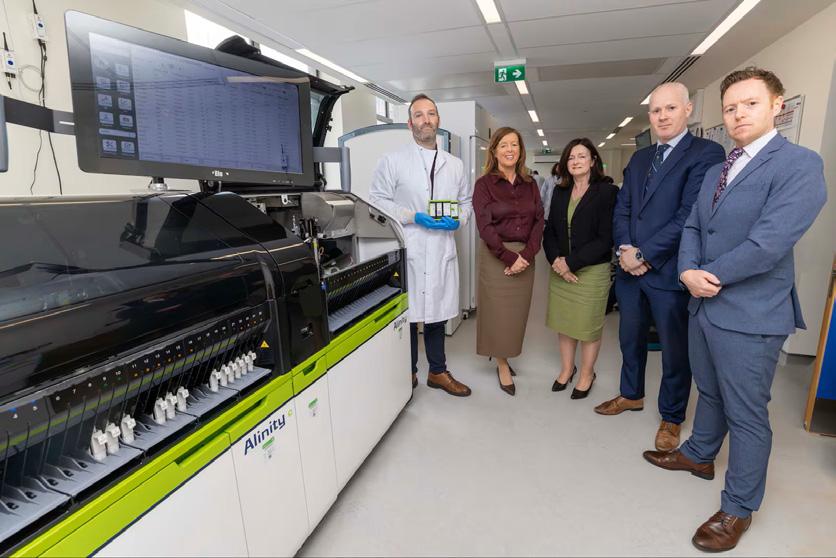
A 15-minute blood test could reshape how traumatic brain injury is diagnosed in Irish Emergency Departments, according to new research from the Mater Hospital. We spoke to Professor Phil O’Halloran, Consultant Neurosurgeon, and Dr Paula O’Shea, Consultant Clinical Biochemist, about the BAMBI study, its early findings, and what it could mean for hospital practice.
Traumatic brain injury, particularly in its milder forms, remains one of the more complex challenges facing Emergency Departments. Patients often present with symptoms that are difficult to interpret, while clinicians must balance caution with the realities of limited time and resources. It is within this space that the BAMBI study is attempting to make an impact.
“The gap BAMBI is addressing is whether a blood test can help identify patients who are likely to have a negative CT scan,” explains Prof O’Halloran.
This seemingly simple objective speaks to a much broader issue in emergency care. Many
patients undergo CT imaging as a precaution, despite ultimately having no detectable injury. While this approach prioritises safety, it contributes to longer waiting times, increased demand on radiology, and pressure on already strained departments.
“In practical terms,” Prof O’Halloran continues, “you can think of two different pathways for the same patient.”
In the current system, a patient presenting with suspected mild traumatic brain injury will be triaged, assessed, and then often wait for CT imaging. Once performed, the scan must be reviewed before a decision is made about discharge or admission. This process can take several hours.
By contrast, the BAMBI pathway introduces a different sequence. A blood sample is taken at triage, processed within minutes, and a result is returned within the hour.
“If that result is negative, alongside the clinical examination, that patient could be sent home,” he
says. “The difference between those two pathways is quite stark.”
The implications extend beyond individual cases. Improving flow through Emergency Departments has a knock-on effect across the hospital, freeing up beds and allowing other patients to access care more quickly.
At the centre of the BAMBI test are two biomarkers, GFAP and UCHL1, both of which are indicators of brain cell injury. Dr O’Shea explains their significance in clinical terms.
“GFAP reflects injury to supporting brain cells and disruption of the blood-brain barrier, while UCHL1 is more associated with neuronal cell body injury,” she says.
“When both markers are below their thresholds, the result is interpreted as negative, and the clinical value is that it may help rule out CT-visible traumatic brain injury in selected patients.”
Importantly, the test is designed as a support tool rather than a replacement for existing diagnostics.
Pictured in the Mater hospital in Dublin are specialist medical scientist Ian Walsh, hospital chief executive Josephine Ryan Leacy, Dr Paula O'Shea, Prof Phil O'Halloran and Dr Shane Broderick
“It’s an adjunct, not a replacement,” Dr O’Shea emphasises. “It supports clinical decision-making, but it doesn’t replace CT scans or clinical judgement.”
The early results of the study have drawn particular attention, with the test identifying all CT-detected head injuries in the pilot cohort. However, both researchers are careful to avoid overstatement.
“The study was conducted under research conditions,” Prof O’Halloran explains. “Patients still received standard care, including CT imaging, and both the clinical teams and the laboratory were blinded to each other’s results.”
This design strengthens the findings, but the relatively small sample size means further validation is essential.
“We had 215 patients in total, with 19 CT-positive cases,” Dr O’Shea adds. “For clinical reassurance and confidence, we need a larger, appropriately powered study.”
Understanding the limitations is just as important as recognising the potential. Age, for example, plays a significant role in how biomarkers behave.
“As you get older, you have more baseline leakage of these biomarkers into the bloodstream,” Prof O’Halloran explains. “That can lead to false positives.”
Renal function is another factor, as impaired clearance can cause biomarker levels to rise independently of acute injury. Timing also matters, with the test performing best when blood is drawn within 12 hours of the initial injury.
Despite these considerations, the potential impact on patient flow is considerable. The pilot data suggests that CT avoidance could
increase significantly if the test is used alongside clinical assessment.
“The pilot suggests potential CT avoidance could increase from around 27 per cent to 50 per cent with age-adjusted interpretation,” says Dr O’Shea.
“If validated, that means fewer low-yield scans, faster decisions, and shorter time spent in the Emergency Department.”
The benefits are not limited to efficiency. Reducing unnecessary CT scans also lowers patient exposure to radiation, an often overlooked but important aspect of care.
From a systems perspective, the potential for cost savings is clear, although not yet proven.
“The savings would likely come from avoidance of CT scans and improved flow,” Dr O’Shea notes. “But the economic case is promising rather than proven at this stage.”
Work is already underway to assess this more formally, including analysis of both direct costs and broader operational impacts.
Introducing the test into routine practice would require more than simply making it available. Both clinicians emphasise that
implementation involves a series of operational and clinical steps.
“It’s not simply about buying the test,” Prof O’Halloran says. “You need laboratory validation, quality control, trained staff, and a clear pathway that defines how hospital teams act on the result.”
Turnaround time is particularly critical. While the assay itself may be rapid, the true clinical value lies in the total time from blood draw to an authorised result that can inform decision-making.
“From a laboratory perspective, reliability is central,” Dr O’Shea adds. “We need robust sample handling, defined thresholds, and consistent turnaround times so that the result is clinically useful.”
The next phase of the BAMBI study will be key to determining whether these early findings translate into real-world practice. Supported by HSE Spark Innovation funding, the research will expand to include 2,000 patients.
“The larger study is designed to answer the questions the pilot couldn’t,” Dr O’Shea explains. “Can the test maintain safety in a larger cohort? Does it perform well across different patient groups? And can results be delivered quickly enough to influence realtime decisions?”
This stage is less about proving concept and more about building confidence.
“The next step is validation, not hype,” she says.
Beyond its immediate clinical applications, the research also reflects a broader shift in how traumatic brain injury is approached.
“The current classification systems, like the Glasgow Coma Scale, are quite coarse,” Prof O’Halloran says. “What biomarkers offer is a molecular insight into brain injury, which adds another layer to how we assess patients.”
This evolving model combines clinical presentation, imaging, biomarkers, and patient-specific factors, moving towards a more personalised approach to care.
On an international level, the study places Ireland firmly within ongoing discussions about the role of biomarkers in TBI diagnostics.
“It’s not just about whether the biomarkers work,” Dr O’Shea says. “It’s about how to use them safely and intelligently in clinical practice.”
Looking ahead, there is also potential for this approach to be explored in other types of brain
Triple Graduate ‘Oscar of Science’
A doctor and UCD triple-graduate has received a top award at the “Oscars of Science” for a discovery that transformed global understanding of two devastating brain diseases.
Dr Bryan Traynor was honoured with the prestigious Breakthrough Prize in Life Sciences along with Dr Rosa Rademakers.
In 2011, both doctors independently and simultaneously identified the main genetic cause of both amyotrophic lateral sclerosis (ALS), a form of motor neurone disease, and frontotemporal dementia (FTD), a type of early-onset dementia.
Dr Traynor and Dr Rademakers each discovered that in tens of thousands of patients, both diseases share the same root cause: a mutation in the C9orf72 gene.
This mutation is responsible for about one-third of inherited cases of both diseases in Europe.
Dr Bryan Traynor and Dr Rose Rademakers. Credit: Getty Images for Breakthrough Prize
Its discovery brought together two areas of research that were previously separate, showed that the diseases share underlying causes, and made it possible to offer genetic testing to affected families.
It also helped researchers start developing treatments, one of which is now being tested in clinical trials.
The award was presented by singer John Legend and the co-founder and CEO of Google DeepMind, Demis Hassabis, at a ceremony hosted by the Breakthrough Prize Foundation in Los Angeles.
A Dublin native now based in the US, Dr Traynor received his undergraduate medical degree, his medical doctorate and his PhD from the UCD School Of
injury, although this would require further research.
“The biology may be relevant beyond mild traumatic brain injury,” she notes. “But each clinical setting needs its own evidence.”
For now, the focus remains firmly on validation and collaboration.
“We are a single hospital in Ireland,” Prof O’Halloran says. “We would very much like to collaborate with other hospitals across the country on this topic.”
Their message to hospital teams is clear. The evidence is promising, but careful, evidence-based implementation is essential.
“It’s a very good rule-out tool, particularly in younger patients,” Dr O’Shea concludes. “But we need the larger study to confirm its role before it becomes part of routine care.”
For Emergency Departments navigating increasing demand and complexity, the idea of a rapid, reliable blood test offers a glimpse of a more efficient future. Whether BAMBI becomes part of that future will depend on the results of the next phase, but the direction of travel is already clear: faster decisions, better use of resources, and a more precise approach to patient care

Medicine. He also received a Master’s in Medical Science from Harvard-Massachusetts Institute of Technology HST in 2004.
Dr Traynor, a senior investigator at the National Institute on Ageing, is internationally recognised for his work uncovering the genetic basis of neurodegenerative disease. With
more than 200 publications and numerous major awards, his work continues to shape the direction of research in this field.
He has also completed a neurology residency and fellowship at Massachusetts General Hospital and Brigham and Women’s Hospital in Boston.
Clinical R&D
IRISH HEALTHCARE LEADERS TO UNITE IN DUBLIN TO ADVANCE NATIONAL PATIENT ACCESS ROADMAP
This month’s Patient Access Conference will examine the practical realities of delivery as Ireland targets a 180-day reimbursement decision timeline for innovative treatments
Key leaders from across the Irish healthcare system will convene at the RDS Concert Hall in Dublin on Thursday, April 30th, for a landmark conference aimed at bridging the gap between policy and patient access to medicines.
AXIS Reimbursement Experts Ltd will host the conference, entitled Patient Access in Ireland: From Commitment to Delivery. It will unite all key stakeholders including policy, payers, clinicians, patient advocates, and industry experts, to examine the practical realities of improving access to medicines in Ireland.
This month’s conference comes at a pivotal moment for the Irish healthcare system, with the recently-announced fouryear Framework Agreements between the Irish Pharmaceutical Healthcare Association (IPHA), Medicines for Ireland (MFI) and the Irish State. The IPHA / DOH/ DEPR/ HSE 2026 Agreement focuses on accelerating patient access to innovative medicines, with a central commitment from all parties to achieve a 180-day reimbursement decision timeline by Q1 2029.
The conference aims to address the current delays in reimbursement, and to highlight the importance of strategic partnerships and meaningful collaborations to drive progress. It will focus on the strategic and operational issues that shape access to medicines in Ireland, with discussions centred on how commitments, when fully embraced by all parties involved, can translate into timely and meaningful delivery for patients.
This is the second time AXIS Reimbursement Experts Ltd has hosted a Patient Access Conference in Ireland. The first event, in February 2023, shone a light on the significant complexity, uncertainty and risk for new medicine development in Ireland. At the time, a full Health Service Executive health technology assessment (HTA) was taking 2.6 years, on average, to reach a funding decision.
This month’s conference will hear from a host of high-profile leaders from across the Irish Access system. Attendees will hear from senior representatives from the Department of Health, Health

Service Executive’s National Centre for Pharmacoeconomics, Health Protection Regulatory Authority, as well as leading clinicians, pharmaceutical industry executives, international HTA experts, and patient advocacy groups.
Among those to address the conference will be David Cullinane (Head of Medicines Pricing and Reimbursement, FASPM, Department of Health), Professor Michael Barry (Clinical Director of the NCPE and Clinical Lead for the HSE Medicines Management Programme), and Linda Fitzharris (Head of the HSE Corporate Pharmaceutical Unit and HSE Pharmacy Function). Also speaking will be Anne Willsemsen (Chair of the HTA Coordination Group's subgroup on Joint Clinical Assessment and Senior Advisor at Zorginstituut Nederland), and Ellen McGrath (Medicine Shortages and Borderline Classification Manager, HPRA).
AXIS Founder and Chief Executive, Brenda Dooley, will host the conference, as well as moderating the panel discussions. Topics on the day will include medicine shortages, health technology assessment, reimbursement pathways, the implications of European Joint Clinical Assessment, the realities of implementation in Ireland, and the role of collaboration in improving timely patient access.
The first of the day’s two panels will focus on access to innovative oncology treatments, with the second addressing the value in hope for patients with rare diseases. The event will hear from both the CEO and Head of Advocacy at Debra Ireland, who will reflect on the lived experience of bringing an orphan medicine through the system in Ireland.
Speaking ahead of the conference, AXIS Reimbursement Experts’ Brenda Dooley said the event on April 30th is about “uniting all stakeholders, and moving beyond high-level commitment to practical delivery.”
“There is real momentum now around medicine access reform in Ireland, but meaningful progress will depend on how well all stakeholders work together in practice. Our aim is to bring together the leaders shaping those decisions and to create a neutral forum for informed, constructive discussion about what needs to happen next,” she said.
“The conference will focus on how Ireland can continue to improve patient outcomes through faster and more equitable access to new medicines, as well as ensuring Ireland continues to be recognised as an attractive market for pharmaceutical companies. There will also be a specific focus on the oncology and rare disease space – areas where timely access can be truly transformative for patients and families,” added Ms Dooley.
BR HEALTHCARE APPOINTED DISTRIBUTOR FOR BIC® RAZORS IN RETAIL PHARMACIES ACROSS IRELAND
BR Healthcare is pleased to announce its appointment as one of the distributors for BIC® Razors within retail pharmacy channels throughout Ireland. This strategic partnership will see BR Healthcare manage the distribution and sales BIC’s razor portfolio to independent and symbol pharmacy groups nationwide.
The agreement strengthens BR Healthcare’s growing personal care portfolio and reinforces its position as a trusted distribution partner within the Irish pharmacy sector. With immediate effect, pharmacies across Ireland will have streamlined access to BIC’s leading range of high-quality, affordable shaving products for men and women.
BIC is globally recognised for delivering reliable, highperformance shaving solutions, combining innovation and value. Through this partnership, BR Healthcare will focus on expanding visibility, optimising category performance, and supporting pharmacy partners with tailored promotional programmes, pointof-sale materials, and dedicated account management.
Commenting on the appointment, Laura Payne BR Healthcare said:
“We are delighted to be appointed as one of the distributors for BIC® Razors in Irish retail pharmacies. BIC is an internationally respected brand with strong consumer recognition and trust. This partnership aligns perfectly with our strategy to bring leading personal care brands to the Irish pharmacy market, supported by exceptional service and commercial expertise.”
The collaboration is expected to deliver growth opportunities within the shaving category, enhancing pharmacy offerings with a brand known for quality, innovation, and everyday value.
Pharmacy customers can expect:
• Full access to BIC’s core and seasonal razor ranges
• Competitive pricing decided by the pharmacies and promotional support
• Reliable nationwide distribution
• Dedicated sales and merchandising support
BR Healthcare will commence distribution immediately, with stock now available to order.

David Briggs, Head of Sales, BiC, Yvonne McGarry, BiC, Laura Payne, Head of Healthcare, BR Marketing, Gordon Kennedy, CEO, BR Marketing
Brenda Dooley, AXIS Founder and CEO
Pharmacist Seeking to Acquire a Community Pharmacy
Experienced pharmacist actively looking to purchase a community pharmacy in Louth, Meath, Monaghan, Cavan, or North Dublin. If you are an independent pharmacy owner considering retirement, succession, or a potential sale, I would welcome a confidential, no-obligation conversation.
Complete discretion is assured at all times. Please contact: debbiegraham@ipn.ie
HIQA COMMENCES ASSESSMENT OF NEW ADDITION TO THE NATIONAL NEWBORN BLOODSPOT SCREENING PROGRAMME
The Health Information and Quality Authority (HIQA) has today published a protocol for a health technology assessment (HTA) of the addition of congenital adrenal hyperplasia (CAH) to the National Newborn Bloodspot Screening Programme. This HTA was requested by the National Screening Advisory Committee (NSAC) and will inform NSAC’s recommendation on whether the National Newborn Bloodspot Screening Programme should be expanded to include CAH.
CAH is a group of inherited autosomal recessive conditions affecting the adrenal glands located on top of each kidney, which are responsible for producing hormones including cortisol, aldosterone, and androgens. The condition ranges from mild to severe forms. As existing newborn screening methods are only designed to detect more severe forms of the condition (that is, classic CAH), HIQA’s assessment will focus on this form.
In the most severe form of classic CAH, the body cannot produce enough aldosterone and cortisol, the hormones that regulate electrolyte balance, maintain blood pressure and support the body’s stress response. If not identified and treated urgently, a severe loss of salt and water balance can lead to a life-threatening adrenal crisis in early life. The signs of CAH differ by sex, with females typically identified earlier because there may be physical signs of the condition which are not apparent in males.
This HTA will look at the overall benefit-harm balance of including CAH as part of the National
Newborn Bloodspot Screening Programme. The protocol published today outlines the methodological approach that HIQA’s evaluation team will adopt to synthesise the evidence and develop HIQA’s advice to NSAC.
Commenting on today’s protocol, HIQA’s Deputy CEO and Director of Health Technology Assessment, Dr Máirín Ryan, said:
“The National Newborn Bloodspot Screening Programme screens for rare but serious conditions in Ireland. As part of our assessment, we will review international guidelines on newborn screening for CAH, and evaluate its clinical effectiveness and safety alongside the budgetary and organisational considerations associated with its addition. This will help to inform a recommendation by the National Screening Advisory Committee to the Minister for Health.”
The National Newborn Bloodspot Screening Programme currently
screens for nine rare but serious conditions, and has an uptake of 99.9%. Each year, the NNBSP identifies over 120 babies with one of the conditions included in the screening panel.
INDUSTRY LEADERS TO ADDRESS WORKFORCE CHALLENGES AT INSPIRE CONFERENCE IN CORK
Ireland’s pharmaceutical and life sciences sector is facing a growing demand for skilled talent, and this challenge will take center stage at the ISPE Ireland Affiliate’s flagship INSPIRE Conference, taking place on Thursday 14th May 2026 at Páirc Uí Chaoimh, Cork.
With more than 800 professionals expected to attend, INSPIRE 2026 will bring together industry leaders, innovators, educators, and emerging talent to explore the future of pharmaceutical manufacturing, digital transformation, and workforce development.
A key feature of this year’s event is a dedicated Careers Fair, this initiative aims to connect students, graduates, and experienced professionals with leading employers from across Ireland’s thriving life sciences ecosystem.
Alongside the Careers Fair, a largescale trade exhibition featuring over 70 vendors will showcase the latest technologies and solutions shaping the industry. Attendees will gain insights into how innovation and digitalisation are transforming roles and skill requirements, further highlighting the importance of continuous upskilling and workforce readiness.
The conference programme will include keynote speakers from IDA and presentations from MSD,
Astellas, Amgen, ERA Sciences and many more, with panel discussions, and interactive sessions including a live podcast being recorded onsite and workshops throughout the day there truly is something for everyone.
The event will be hosted by media personality Anna Daly, with a special keynote address from comedian and broadcaster Dermot Whelan, who will offer a unique perspective on resilience, mindset, and performance in a fast-paced and evolving sector, many thanks to all our sponsors on the day including our Headline sponsor Veolia Ireland.
All attendees will have the opportunity to stay on for our exclusive BBQ networking session where we will have some familiar GAA stars helping round off a fantastic event. We encourage all participants to join us for the evening, enhancing both the professional and social value of your Inspire experience.
Speaking ahead of the event, Adrienne Fleming, ISPE Ireland Affiliate Vice-Chair, said: ISPE Ireland’s Inspire is an exceptional opportunity to learn, connect, and be inspired by industry leaders. Access to this level of insight and networking— completely free of charge— makes it an unmissable event for anyone looking to grow and stay connected within our sector.
INSPIRE is free to attend, with strong demand expected. Tickets are available on Eventbrite by searching ISPE IRE INSPIRE 2026. Follow updates via the ISPE Ireland LinkedIn page.

Image attached: L-R, Gary O’Brien, ISPE Ireland Secretary (Flexachem), Philip Gammell, ISPE Ireland Chair (Astellas), Carolann Power, ISPE Ireland Affiliate Manager (Prochem Engineering) , Eoin Reidy, ISPE Ireland Events lead (Getinge), Adrienne Fleming, ISPE Ireland Vice-Chair (TUD) and Michael Kent, ISPE Ireland Inspire PM (Prochem Engineering)
Clinical R&D
UNIVERSITY HOSPITAL GALWAY PATIENTS HONOURED AT SPECIAL AWARDS CEREMONY
Sixteen patients attending the Diabetes Outpatient Clinic at University Hospital Galway were honoured at a special awards ceremony recently held in Croí. At the event, Diabetes Ireland recognised the individuals for living with type 1 diabetes, presenting 50- and 65-year achievement medals in acknowledgement of their courage, perseverance, and lifelong commitment to managing the condition.
The recipients, 10 women and 6 men, from Galway, Mayo, Clare and Tipperary, received either a 50-year or 65-year medal. (One recipient of a 65-year medal and 15 recipients of a 50-year medal).
Currently, approximately 308,000 people are living with diabetes in Ireland.
Tomás Griffin, Consultant Physician/Diabetologist at University Hospital Galway, said: “We are deeply honoured to celebrate this extraordinary group of people who have lived with diabetes for 50 years or more. Their resilience and determination inspire us all, demonstrating that it is not only possible, but empowering, to live active, healthy, and fulfilling lives with diabetes.
“Reaching this milestone is never solely an individual achievement. It also reflects the steadfast support, care, and encouragement of families, friends, and communities.
“Over the decades, diabetes care has advanced dramatically, from early insulin regimens and manual glucose testing to modern technologies such as continuous glucose monitoring, insulin pumps, and hybrid closed-loop systems. These innovations have transformed daily management and improved both outcomes and quality of life in profound and lasting ways.”
The ceremony highlights both the personal achievements of the recipients and the remarkable advancements in diabetes care over the past five decades, celebrating the resilience of those living with the condition and the support of their communities.
Kieran O’Leary, CEO, Diabetes Ireland said: “Our Living Well With Diabetes” ceremony celebrates life with diabetes and it is an honour and a privilege to present medals to people with diabetes who have lived over 50 years managing their condition on a daily basis and adapting to the many changes in treatment over the years. This group of recipients are among a special group of 400 people who have received a medal.”
HIQA PUBLISHES ASSESSMENT OF IMMUNISATION AGAINST RSV
HIQA has today published a health technology assessment (HTA) of immunisation against respiratory syncytial virus (RSV) in Ireland. The HTA was requested by the Department of Health
with the aim of informing longterm policy decisions by the Minister for Health regarding the immunisation of infants and older adults against RSV. RSV is a common seasonal viral infection that affects the lungs and upper airways. RSV does not usually cause serious illness, but some groups, such as infants and older people, are at increased risk of severe illness. Every winter in Ireland, more than 7,000 people are diagnosed with RSV, with historically a large number of young children requiring admission to hospital, especially infants aged less than one year.
For the infant population, HIQA looked at immunising just those born during the RSV season or all babies during their first RSV season. It also considered different immunisation products, that is a maternal vaccine (administered to the mother) or a monoclonal antibody (administered to the baby). All RSV immunisation products considered were found to be safe and effective. HIQA found that all of the approaches would result in significant reductions in medically attended cases and RSV-related hospitalisations in infants. The estimated cost to the HSE over five years ranged from ¤15.6 million to provide the maternal vaccine to pregnant women whose baby will be born during RSV season, to ¤58.5 million for a strategy providing a monoclonal antibody to all babies during their first RSV season.
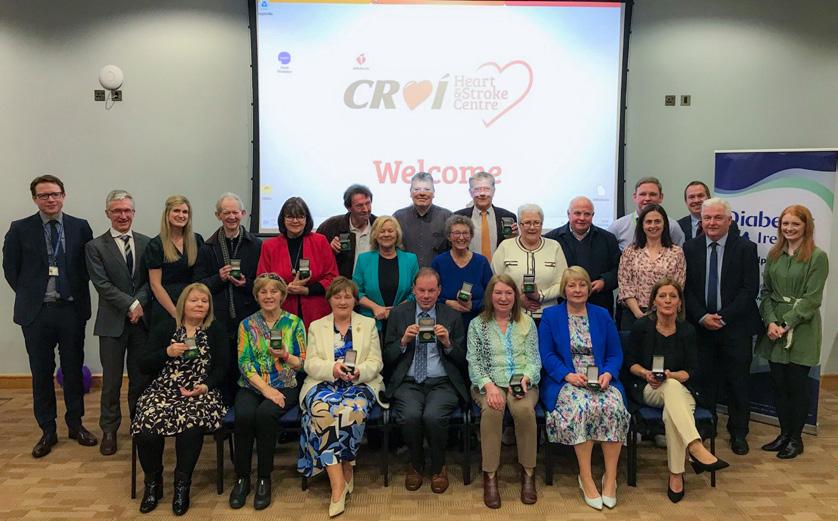
For the older adult population, RSV vaccination was also found to be safe and effective. However, the effectiveness of the vaccines, which are given as a once-off dose, wanes over time. The estimated cost of offering the vaccine to adults aged 80 years and older, the adult age group who are most at risk of RSV-related hospitalisation and death, was ¤70.6 million over five years.
Commenting on the findings, HIQA’s Deputy CEO and Director of Health Technology Assessment, Dr Máirín Ryan, said:
“RSV results in a substantial burden of illness for vulnerable groups. It also creates a lot of challenges for our healthcare system, particularly in paediatric healthcare. RSV results in approximately 1,800 hospital discharges and 130 ICU stays in children aged less than two years each year. Approximately 9 in every 10 of these discharges are in children aged less than one year and occur mostly between October and December. In those aged 65 years and older, there are approximately 120 discharges each year with a primary diagnosis of RSV. Approximately 1 in every 2 of these discharges are in those aged 80 years and older. These seasonal RSV surges can lead to scheduled care being delayed, increase pressure on staff and undermine the resilience of the healthcare system.”
Dr Ryan continued:
“RSV immunisation significantly reduces hospitalisation with the greatest benefit in infants due to the highest burden of disease in this patient group. While it would reduce winter overcrowding and help make our health service more resilient, it is very expensive. Our healthcare budget is finite, and cost effectiveness is an important part of any healthcare decision.”
HIQA’s HTA noted that longer-term effectiveness and safety data are likely to become available in the near future, which may influence the cost effectiveness of RSV immunisation.
WINNERS OF THE UNIVERSITY OF LIMERICK ‘DRAGON’S DEN’ MEDICAL DEVICE INNOVATION SHOWCASE ANNOUNCED
The winners of the fourth annual University of Limerick (UL) ‘Dragon’s Den’ Medical Device Innovation Showcase were announced this week. The event, sponsored by Edwards Lifesciences, the leading global structural heart innovation company, was held on 15th April at UL’s Bernal Institute. The
Sixteen patients attending the Diabetes Outpatient Clinic at University Hospital Galway were honoured at a special ceremony in Croí, where Diabetes Ireland presented 50- and 65-year medals recognising their lifelong resilience, dedication, and commitment to living with type 1 diabetes

winning team was announced as NaviCor Medical.
The event provides an opportunity for three teams of Biomedical Engineering students from the University’s Masters programme (Year 4) to pitch medical device concepts to a distinguished panel of industry and academic leaders. The event showcases student capability, providing a high visibility platform for some of the top innovators and an inspiration for students in Years 1–3 of their studies.
NaviCor Medical's winning project, EchoTrack, featured an innovative ultrasound-visible catheter tip. This advancement allows for realtime tracking during procedures, significantly enhancing accuracy and safety while minimising the need for fluoroscopy and reducing radiation exposure in cardiac and vascular interventions.
The event also included keynote addresses from Edwards Lifesciences and Engineers Ireland and was attended by an audience comprising of 225 UL biomedical students, faculty members and the Head of the School of Engineering.
Emmet Kelly, Vice President & General Manager, Edwards Lifesciences Ireland, said:
“Building on the foundation of our collaboration with the University of Limerick through a Memorandum of Understanding last year, our partnership with the Dragons’ Den showcase further reinforces our commitment to fostering innovation, developing talent and making a lasting impact, both locally and globally. We value the opportunity
(niraparib and abiraterone acetate dual action tablet) with prednisone or prednisolone (AAP) in combination with androgen deprivation therapy (ADT), for the treatment of patients with metastatic hormone-sensitive prostate cancer (mHSPC) and BRCA1/2 mutations (germline and/ or somatic).
Prostate cancer is Ireland's most prevalent male cancer, with approximately 4,000 annual diagnoses, frequently detected through prostate-specific antigen (PSA) testing. Metastatic hormonesensitive prostate cancer, also known as metastatic castrationsensitive prostate cancer (mCSPC), refers to prostate cancer that still responds to ADT and has spread to other parts of the body. Ireland ranks seventh globally and fourth in Europe in age-adjusted incidence rates, with 99.8 cases per 100,000 population annually.
two decades in the treatment of prostate cancer, we are driven by the belief that the next frontier of care requires more personalised treatment approaches that address the specific drivers of high-risk disease. This announcement is an important step towards integrating targeted precision medicine into routine care."
The approval is supported by data from the Phase 3 AMPLITUDE study, which evaluated the efficacy and safety of the niraparib/ AAP combination compared with placebo plus AAP in 696 patients with mHSPC and HRR gene alterations. The study demonstrated clinically meaningful and statistically significant improvements in its primary endpoint of radiographic progression-free survival (rPFS).
to support an event that further deepens our relationship with the University of Limerick.”
Dr John Mulvihill, Course Director of BioMedical Engineering, Chair of ULREG, Associate Professor BioMechanics and MechanoBiology commented,
"The UL Dragons’ Den Medical Device Innovation Showcase continues to be a cornerstone event for our Biomedical Engineering programme, and the consistent support from industry leaders like Edwards Lifesciences is invaluable. It’s a high-visibility platform where our students truly shine, demonstrating their ability to tackle complex challenges and develop solutions that have realworld impact. This collaboration is instrumental in preparing our graduates to become leaders in medical technology."
The Dragons’ Den has a strong track record of launching student success. A recent highlight includes a UL team becoming the first allfemale group to win the Engineers Ireland Innovative Student of the Year award in 2024, and the first UL winners in 15 years.
EUROPEAN COMMISSION APPROVES AKEEGA® (NIRAPARIB AND ABIRATERONE ACETATE DUAL ACTION TABLET) FOR THE TREATMENT OF PATIENTS WITH BRCA1/2MUTATED METASTATIC HORMONE-SENSITIVE PROSTATE CANCER (MHSPC)
Johnson & Johnson have announced that the European Commission (EC) has approved an indication extension for AKEEGA®
Most patients with metastatic hormone-sensitive prostate cancer (mHSPC) ultimately develop resistance to available therapies and progress to metastatic castration-resistant prostate cancer (mCRPC) – an aggressive stage of disease with limited longterm survival.
Approximately one in four patients with mHSPC harbour homologous recombination repair gene alterations (HRR) – most commonly BRCA1/2 – which are associated with faster disease progression and often shorter survival. As current mHSPC treatment approaches are not biomarker-selected and do not specifically address underlying DNA repair deficiencies, this highrisk population faces a significant unmet need for novel therapies.
Dr. Lynda Corrigan, Consultant Medical Oncologist at Tallaght University Hospital said: "Metastatic hormone-sensitive prostate cancer patients with BRCA1/2 mutations currently face a challenging disease with poor outcomes to standard first line treatments, and shorter survival. The marketing authorisation of this dual action tablet is an important development, offering a new treatment approach that can intervene earlier and target the disease's genetic drivers, with the potential to improve long- term outcomes for these patients."
"At Johnson & Johnson we are committed to advancing truly innovative, precision medicine solutions for patients," said Brid Seoighe, Medical Director, Johnson & Johnson Innovative Medicine Ireland. "Building on our deep legacy spanning nearly
Patients with BRCA1/2 mutations showed the greatest benefit of treatment with the niraparib/ AAP combination (n=191), as after 30.7 months of followup, the median rPFS was not yet reached compared to 26 months in patients treated with the placebo plus AAP (n=196), corresponding to a reduction in the risk of radiographic progression or death by 48 percent (hazard ratio [HR] 0.52, 95 percent confidence interval [CI], 0.37-0.72, p<0.0001.
Treatment with the niraparib/AAP combination also significantly prolonged the time to symptomatic progression in patients with BRCA alterations (HR 0.44, 95 percent CI, 0.29-0.68, p=0.0001).
The second interim analysis of overall survival was consistent with the first interim analysis and favoured the niraparib/AAP combination, with a 20 percent reduction in risk of death (HR 0.80, 95 percent CI, 0.58-1.11) in patients with BRCA mutations. Follow-up is ongoing.
The safety profile of the niraparib/ AAP combination in mHSPC was consistent with that observed in mCRPC, for which the niraparib/AAP combination is currently authorised. The most common Grade 3/4 adverse events (AEs) with the niraparib/ AAP combination were anaemia and hypertension; however, treatment discontinuations due to AEs remained low and AEs were manageable with dose modifications and supportive care. Data from the AMPLITUDE study were presented at the 2025 American Society of Clinical Oncology (ASCO) Annual Meeting and selected for inclusion in the Best of ASCO and ASCO Press Programme.
Left to right: Kevin Finn (Director of Engineering, Edwards Lifesciences), Leona Sheehy (student), Hannah Brind (student), Kes Cheevers (student), Ele Madigan (student), Amy Ward (student), Prof. John Mulvihill (Course Director of Biomedical Engineering, UL)
Now Available in a 2 mg dose for adults with Type 2 Diabetes1
HSE reimbursement effective from 01 May 2026
Start on Ozempic®, Stay on Ozempic®
Safety profile comparable across all doses1,2
Abbreviated Prescribing Information Ozempic® (semaglutide). Please refer to the Summary of Product Characteristics (SmPC) before prescribing. Ozempic® 0.25 mg solution for injection in pre-filled pen, Ozempic® 1 mg solution for injection in pre-filled pen: One ml of solution contains 1.34 mg of semaglutide (human glucagon-like peptide-1 (GLP-1) analogue). Ozempic® 0.5 mg solution for injection in pre-filled pen: One ml of solution contains 0.68 mg of semaglutide. Ozempic® 2 mg solution for injection in pre-filled pen: One ml of solution contains 2.68 mg of semaglutide. Indication: Ozempic® is indicated for the treatment of adults with insufficiently controlled type 2 diabetes mellitus as an adjunct to diet and exercise • as monotherapy when metformin is considered inappropriate due to intolerance or contraindications • in addition to other medicinal products for the treatment of diabetes. For trial results with respect to combinations, effects on glycaemic control, cardiovascular disease and kidney events and the populations studied, see sections 4.4, 4.5 and 5.1 of the Ozempic® SmPC. Posology and administration: Administered once weekly at any time of the day, with or without meals. Injected subcutaneously in the abdomen, thigh or upper arm. Starting dose: 0.25 mg once weekly. After 4 weeks the dose should be increased to 0.5 mg once weekly. After at least 4 weeks with a dose of 0.5 mg once weekly, the dose can be increased to 1 mg once weekly to further improve glycaemic control. After at least 4 weeks with a dose of 1 mg once weekly, the dose can be increased to 2 mg once weekly to further improve glycaemic control. If a dose is missed: administer as soon as possible and within 5 days after the missed dose. If more than 5 days have passed, the missed dose should be skipped, and the next dose should be administered on the regularly scheduled day. In each case, patients can then resume their regular once weekly dosing schedule. The day of weekly administration can be changed, as long as the time between two doses is at least 3 days. After selecting a new dosing day, once-weekly dosing should be continued. When Ozempic® is added to existing metformin and/or thiazolidinedione therapy or to a sodium-glucose cotransporter-2 inhibitor (SGLT2) inhibitor, the current dose of metformin and/or thiazolidinedione or SGLT2 inhibitor can be continued unchanged. When Ozempic® is added to a sulfonylurea (SU) or insulin, a reduction in dose of SU or insulin should be considered to reduce the risk of hypoglycaemia. Blood glucose self-monitoring is necessary to adjust the dose of SU and insulin, particularly when Ozempic® is started and insulin is reduced. A stepwise approach to insulin reduction is recommended. Children: No data available. Elderly: No dose adjustment required. Renal impairment: No dose adjustment is required for patients with mild, moderate or severe renal impairment. Experience in patients with end-stage kidney disease is limited. Hepatic impairment: No dose adjustment is required for patients with hepatic impairment. Experience with severe hepatic impairment is limited. Caution should be exercised when treating these patients with semaglutide. Contraindications: Hypersensitivity to the active substance or to any of the excipients. Special warnings and precautions for use: Should not be used in patients with type 1 diabetes mellitus or for the treatment of diabetic ketoacidosis (DKA). Not a substitute for insulin. DKA has been reported in insulin-dependent patients whom had rapid discontinuation or dose reduction of insulin. There is no experience in patients with congestive heart failure NYHA class IV and is therefore not recommended in these patients. Pulmonary aspiration has been reported in patients receiving GLP-1 receptor agonists undergoing general anaesthesia or deep sedation. Therefore, the increased risk of residual gastric content due to delayed gastric emptying should be considered prior to performing procedures with general anaesthesia or deep sedation. Use of GLP-1 receptor agonists (RAs) may be associated with gastrointestinal adverse reactions. This should be considered when treating patients with impaired renal function as nausea, vomiting, and diarrhoea may cause dehydration which in rare cases can lead to a deterioration of renal function. Patients treated with semaglutide should be advise of the potential risk of dehydration in relation to gastrointestinal side effects and take
precautions to avoid fluid depletion. Acute pancreatitis has been observed with the use of GLP-1 RAs. Patients should be informed of the characteristic symptoms of acute pancreatitis. If pancreatitis is suspected, semaglutide should be discontinued; if confirmed, semaglutide should not be restarted. Exercise caution in patients with a history of pancreatitis. Use of semaglutide in combination with a SU or insulin may have an increased risk of hypoglycaemia; consider reducing the dose of SU or insulin when initiating treatment with Ozempic®. In patients with diabetic retinopathy treated with insulin and semaglutide, an increased risk of developing diabetic retinopathy complications has been observed. Exercise caution when using semaglutide in patients with diabetic retinopathy treated with insulin, monitor such patients closely and treat according to clinical guidelines. Rapid improvement in glucose control has been associated with a temporary worsening of diabetic retinopathy, but other mechanisms cannot be excluded. Ozempic® 2 mg is not recommended in patients with type 2 diabetes with uncontrolled or potentially unstable diabetic retinopathy. Data from epidemiological studies indicates an increased risk for non-arteritic anterior ischaemic optic neuropathy (NAION) during treatment with semaglutide. There is no identified time interval for when NAION may develop following treatment start. A sudden loss of vision should lead to ophthalmological examination and treatment with semaglutide should be discontinued if NAION is confirmed. Semaglutide treated patients with gastroparesis may experience more serious or severe gastrointestinal adverse events. Semaglutide should be used with caution in these patients, and semaglutide is not recommended if gastroparesis is severe. When semaglutide is used in combination with a SU or insulin, patients should be advised to take precautions to avoid hypoglycaemia while driving and using machines. Fertility, pregnancy and lactation: Women of childbearing potential are recommended to use contraception when treated with semaglutide. Should not be used during pregnancy or breast-feeding. Discontinue at least 2 months before a planned pregnancy. Effect on fertility unknown. Undesirable effects: Very common (≥1/10): Hypoglycaemia when used with insulin or sulfonylurea, nausea, diarrhoea. Common (≥1/100 to <1/10): Hypoglycaemia when used with other oral antidiabetic medications, decreased appetite, dizziness, headache, diabetic retinopathy complications, vomiting, abdominal pain, abdominal distension, constipation, dyspepsia, gastritis, gastro-oesophageal reflux disease, eructation, flatulence, cholelithiasis, fatigue, increased lipase, increased amylase, weight decreased. Uncommon (≥1/1 000 to <1/100): Hypersensitivity, dysgeusia, increased heart rate, acute pancreatitis, delayed gastric emptying, injection site reactions. Rare (≥1/10 000 to <1/1 000): Anaphylactic reaction. Very rare (<1/10 000): Non-arteritic anterior ischaemic optic neuropathy (NAION). Not known (cannot be estimated from available data): Angioedema, intestinal obstruction, dysaesthesia. The SmPC should be consulted for a full list of side effects. MA numbers: Ozempic® 0.25 mg pre-filled pen EU/1/17/1251/002. Ozempic® 0.5 mg pre-filled pen EU/1/17/1251/012.Ozempic® 1 mg pre-filled pen EU/1/17/1251/005. Ozempic® 2 mg pre-filled pen EU/1/17/1251/010. Each pre-filled pen delivers 4 doses and includes 4 disposable NovoFine® Plus needles. Legal Category: POM. For complete prescribing information, please refer to the SmPC which is available on www. medicines.ie or by email from infoireland@novonordisk.com or from the Clinical, Medical and Regulatory Department, Novo Nordisk Limited, 1st Floor, Block A, The Crescent Building, Northwood Business Park, Santry, Dublin 9. Date last revised: March 2026
Adverse events should be reported to the Health Products Regulatory Authority. Information about adverse event reporting is available at www hpra.ie. Adverse events should also be reported to Novo Nordisk on Tel: 01 8629 700 or complaintireland@ novonordisk.com
References 1. Ozempic® Summary of Product Characteristics www.medicines.ie 2. Frías JP, et al. Efficacy and safety of once-weekly semaglutide 2.0 mg versus 1.0 mg in patients with type 2 diabetes (SUSTAIN FORTE): a doubleblind, randomised, phase 3B trial. Lancet Diabetes Endocrinol. 2021;9(9):563–574.
Ozempic® is a prescription only medication. Ozempic® and the Apis bull logo are registered trademarks owned by Novo Nordisk A/S. April 2026. IE26SEMO00117
Novo Nordisk Limited, First Floor, Block A, The Crescent Building Northwood Business Park, Santry, Dublin 9, D09 X8W3, Ireland Tel: 01 862 9700 Fax: 01 862 9725
Email: infoireland@novonordisk.com Web: www.novonordisk.ie