Hukyndra 40 mg solution for injection in pre-filled syringe. One 0.4 ml single dose pre-filled syringe contains 40 mg adalimumab. Hukyndra 40 mg solution for injection in pre-filled pen. One 0.4 ml single dose pre-filled pen contains 40 mg adalimumab. Indications: 1) Rheumatoid arthritis 2) Juvenile idiopathic arthritis 3) Axial spondyloarthritis 4) Psoriatic arthritis 5) Psoriasis 6) Paediatric plaque psoriasis 7) Hidradenitis suppurativa (HS) 8) Crohn’s disease 9) Paediatric Crohn’s disease 10) Ulcerative colitis 11) Paediatric ulcerative colitis 12) Uveitis 13) Paediatric uveitis. Marketing authorisation holder: STADA Arzneimittel AG, Stadastrasse 2-18, 61118 Bad Vilbel, Germany. Marketing authorisation numbers: EU/1/21/1589/002, EU/1/21/1589/005. Distributed by Clonmel Healthcare Ltd. Medicinal product subject to medical prescription. Refer to the Summary of Product Characteristics (SmPC) for full prescribing information. A copy of the SmPC is available upon request or alternatively please go to: www.clonmelhealthcare.ie. Date of Preparation: January 2023. 2023/ADV/HUK/019H.

http://biosimilars.stada
IN THIS ISSUE:
NEWS: Pharmacy Placements
Welcomed
Page 4
MEDICINES: EMA step up to prevent shortages
Page 8
REPORT: Research Survey on Breast Cancer
Page 12
PEER REVIEW: Early Onset Colorectal Cancer
Page 24
PEER REVIEW: Cancer Therapies
Page 36
PRESCRIBING: Safe and Effective Practice
Page 54
CLINICAL: Diabetes Ireland
Annual Report
Page 76
HOSPITAL
IRELAND
HPN August 2023 Issue 111 HOSPITALPROFESSIONALNEWS.IE This Publication is for Healthcare Professionals Only
PROFESSIONAL NEWS
Ireland’s Dedicated Hospital Professional Publication
40 mg 40 mg
CIBINQO is a convenient once-daily oral JAK1 inhibitor for moderate-to-severe atopic dermatitis (AD) that o ers1-4


Significant skin clearance at week 12, with sustained control at week 481-3,5
Rapid itch relief, superior to dupilumab + TCS at week 2 for CIBINQO 200 mg + TCS, with significant results as early as day 41,6

A once-daily pill available in multiple doses that can be used with or without medicated topical therapies so you can tailor treatment to meet the individual needs of your patients1-3,7,8
CONSISTENT SAFETY PROFILE: Rigorously studied in >3500 patients across 7 clinical trials, including one ongoing LTE 9


PRESCRIBING INFORMATION CIBINQO® ▼ (ABROCITINIB)


Please refer to full Summary of Product Characteristics (SmPC) before prescribing Cibinqo®.


Presentation: Film-coated tablets containing 50 mg, 100 mg, or 200 mg abrocitinib. Each tablet contains 1.37 mg, 2.73 mg, and 5.46 mg of lactose monohydrate, respectively. Indications: For the treatment of moderate-to-severe atopic dermatitis in adults who are candidates for systemic therapy. Dosage: Treatment should be initiated and supervised by a healthcare professional experienced in the diagnosis and treatment of atopic dermatitis. Posology: The recommended starting dose is 100 mg or 200 mg once daily based on individual patient characteristics. A starting dose of 100 mg once daily is recommended for patients at higher risk of venous thromboembolism (VTE), major adverse cardiovascular event (MACE) and malignancy. If the patient does not respond adequately to 100 mg once daily, the dose can be increased to 200 mg once daily. A dose of 200 mg once daily may be appropriate for patients who are not at higher risk of VTE, MACE and malignancy with high disease burden or for patients with an inadequate response to 100 mg once daily. Upon disease control, dose should be decreased to 100 mg once daily. If disease control is not maintained after dose reduction, re-treatment with 200 mg once daily can be considered. The lowest e ective dose for maintenance should be considered. Discontinuation of treatment should be considered in patients who show no evidence of therapeutic benefit after 24 weeks. Cibinqo can be used with or without medicated topical therapies for atopic dermatitis. Treatment initiation: TTreatment should not be initiated in patients with a platelet count < 150 × 103/mm3, an absolute lymphocyte count (ALC) < 0.5 × 10³/mm3, an absolute neutrophil count (ANC) < 1.2 × 10³/mm3 or who have a haemoglobin value < 10 g/dL. Dose interruption: If a patient develops a serious infection, sepsis or opportunistic infection, dose interruption should be considered until the infection is controlled. Interruption of dosing may be needed for management of laboratory abnormalities. Missed doses: If a dose is missed, patients should be advised to take the dose as soon as possible unless it is less than 12 hours before the next dose, in which case the patient should not take the missed dose. Thereafter, dosing should be resumed at the regular scheduled time. Interactions: In patients receiving dual strong inhibitors of cytochrome CYP2C19 and moderate inhibitors of CYP2C9, or strong inhibitors of CYP2C19 alone (e.g., fluvoxamine, fluconazole, fluoxetine and ticlopidine), the recommended dose of Cibinqo should be reduced by half to 100 mg or 50 mg once daily. Treatment is not recommended concomitantly with moderate or strong inducers of CYP2C19/CYP2C9 enzymes (e.g., rifampicin, apalutamide, efavirenz, enzalutamide, phenytoin). In patients receiving acid reducing agents (e.g. antacids, proton pump inhibitors and H2 receptor antagonists), 200 mg once daily dose of abrocitinib should be considered (see section 4.5). Renal impairment: No dose adjustment is required in patients with mild renal impairment, i.e., estimated glomerular filtration rate (eGFR) of 60 to < 90 mL/min. In patients with moderate (eGFR 30 to < 60 mL/min) renal impairment, the recommended dose of Cibinqo should be reduced by half to 100 mg or 50 mg once daily. In patients with severe (eGFR < 30 mL/min) renal impairment, 50 mg once daily is the recommended starting dose. The maximum daily dose is 100 mg. Cibinqo has not been studied in patients with end-stage renal disease (ESRD) on renal replacement therapy. Hepatic impairment: No dose adjustment is required in patients with mild (Child Pugh A) or moderate (Child Pugh B) hepatic impairment. Cibinqo must not be used in patients with severe (Child Pugh C) hepatic impairment. Elderly: For patients 65 years of age and older, the recommended dose is 100 mg once daily. Paediatric population: The safety and e cacy of Cibinqo in children under 12 years of age have not yet been established. No data are available. Cibinqo has been studied in adolescents 12 to < 18 years of age. However, because of bone findings in juvenile rats (comparable to a 3 month old human), additional long-term data in growing adolescents is needed to conclude that the benefits outweigh the risks. Method of administration: This medicinal product is to be taken orally once daily with or without food at approximately the same time each day. In patients who experience nausea, taking Cibinqo with food may improve nausea. Tablets should be swallowed whole with water and should not be split, crushed, or chewed because these methods have not been studied in clinical trials. Contra-indications: Hypersensitivity to the active substance or to any of the excipients. Active serious systemic infections, including tuberculosis (TB), severe hepatic impairment, pregnancy, and breast-feeding.
Warnings and Precautions:
Abrocitinib should only be used if no suitable treatment alternatives are available in patients:
• 65 years of age and older;
• patients with history of atherosclerotic cardiovascular disease or other cardiovascular risk factors (such as current or past long-time smokers);
• patients with malignancy risk factors (e.g. current malignancy or history of malignancy)
Infections/serious infections: Serious infections have been reported in patients receiving Cibinqo. The most frequent serious infections in clinical studies were herpes simplex, herpes zoster and pneumonia. As there is a higher incidence of infections in the elderly and in the diabetic populations in general, caution should be used when treating the elderly and patients with diabetes. In patients 65 years of age and older abrocitinib should only be used if no suitable treatment alternatives are available. Treatment must not be initiated in patients with an active, serious systemic infection. Risks and benefits of treatment prior to initiating Cibinqo should be considered. Patients should be closely monitored for the development of signs and symptoms of infection during and after treatment with abrocitinib. A patient who develops a new infection during treatment should undergo prompt and complete diagnostic testing and appropriate antimicrobial therapy should be initiated. The patient should be closely monitored, and therapy should be temporarily interrupted if the patient is not responding to standard therapy. Tuberculosis: Tuberculosis was observed in clinical studies with abrocitinib. Patients should be screened for TB before starting treatment and yearly screening for patients in highly endemic areas for TB should be considered. Abrocitinib must not be given to patients with active TB. For patients with a new diagnosis of latent TB or prior untreated latent TB, preventive therapy for latent TB should be started prior to initiation of treatment. Viral reactivation: Viral reactivation, including herpes virus reactivation (e.g., herpes zoster, herpes simplex), was reported in clinical studies. The rate of herpes zoster infections was higher in patients who were treated with 200 mg, 65 years of age and older, with a medical history of herpes zoster, with a confirmed ALC < 1 × 10³/mm3 prior to the event and patients with severe atopic dermatitis at baseline. If a patient develops herpes zoster, temporary interruption of treatment should be considered until the episode resolves. Screening for viral hepatitis should be performed in accordance with clinical guidelines before starting therapy and during therapy. Patients with evidence of active hepatitis B or hepatitis C (positive hepatitis C PCR) infection were excluded from clinical studies. Patients who were hepatitis B surface antigen negative, hepatitis B core antibody positive, and hepatitis B surface antibody positive had testing for hepatitis B virus (HBV) DNA. Patients who had HBV DNA above the lower limit of quantification (LLQ) were excluded. Patients who had HBV DNA negative or below LLQ could initiate treatment; such patients had HBV DNA monitored. If HBV DNA is detected, a liver specialist should be consulted. Vaccination: No data are available on the response to vaccination in patients receiving Cibinqo. Use of live, attenuated vaccines should be avoided during or immediately prior to treatment. Prior to initiating treatment with this medicinal product, it is recommended that patients be brought up to date with all immunisations, including prophylactic herpes zoster vaccinations, in agreement with current immunisation guidelines. Venous thromboembolism (VTE): Events of deep venous thrombosis (DVT) and pulmonary embolism (PE) have been reported in patients receiving abrocitinib. In a large randomized active-controlled study of tofacitinib (another JAK inhibitor) in rheumatoid arthritis patients 50 years and older with at least one additional cardiovascular risk factor, a dose dependent higher rate of VTE including deep venous thrombosis (DVT) and pulmonary embolism (PE) was observed with tofacitinib compared to TNF inhibitors. A higher rate of VTE was observed with abrocitinib 200 mg compared to abrocitinib 100 mg. In patients with cardiovascular or malignancy risk factors abrocitinib should only be used if no suitable treatment alternatives are available. In patients with known VTE risk factors other than cardiovascular or malignancy risk factors, abrocitinib should be used with caution. VTE risk
factors other than cardiovascular or malignancy risk factors include previous VTE, patients undergoing major surgery, immobilisation, use of combined hormonal contraceptives or hormone replacement therapy, inherited coagulation disorder. Patients should be re-evaluated periodically during abrocitinib treatment to assess for changes in VTE risk. Promptly evaluate patients with signs and symptoms of VTE and discontinue abrocitinib in patients with suspected VTE, regardless of dose Major adverse cardiovascular events (MACE): Events of MACE have been observed in patients taking abrocitinib. In a large randomized active-controlled study of tofacitinib (another JAK inhibitor) in rheumatoid arthritis patients 50 years and older with at least one additional cardiovascular risk factor, a higher rate of major adverse cardiovascular events (MACE), defined as cardiovascular death, non-fatal myocardial infarction (MI) and non-fatal stroke, was observed with tofacitinib compared to TNF inhibitors. Therefore, in patients 65 years of age and older, patients who are current or past long-time smokers, and patients with history of atherosclerotic cardiovascular disease or other cardiovascular risk factors, abrocitinib should only be used if no suitable treatment alternatives are available. Malignancy (excluding non-melanoma skin cancer [NMSC]): Lymphoma and other malignancies have been reported in patients receiving JAK inhibitors, including abrocitinib. In a large randomized active controlled study of tofacitinib (another JAK inhibitor) in rheumatoid arthritis patients 50 years and older with at least one additional cardiovascular risk factor, a higher rate of malignancies, particularly lung cancer, lymphoma and non-melanoma skin cancer (NMSC) was observed with tofacitinib compared to TNF inhibitors. A higher rate of malignancies (excluding non-melanoma skin cancer, NMSC) was observed with abrocitinib 200 mg compared to abrocitinib 100 mg. In patients 65 years of age and older, patients who are current or past long-time smokers, or with other malignancy risk factors (e.g. current malignancy or history of malignancy), abrocitinib should only be used if no suitable treatment alternatives are available. Non-melanoma skin cancer: NMSCs have been reported in patients receiving abrocitinib. Periodic skin examination is recommended for all patients, particularly those who are at increased risk for skin cancer. Haematologic abnormalities: Confirmed ALC < 0.5 × 10³/mm3 and platelet count < 50 × 103/mm3 were observed in less than 0.5% of patients in clinical studies. Treatment with abrocitinib should not be initiated in patients with a platelet count < 150 × 103/mm3, an ALC < 0.5 × 10³/mm3, an ANC < 1.2 × 10³/mm3 or who have a haemoglobin value < 10 g/dL. Complete blood count should be monitored 4 weeks after initiation of therapy and thereafter according to routine patient management. Lipids: Dose dependent increases in blood lipid parameters were reported in patients treated with abrocitinib compared to placebo. Lipid parameters should be assessed approximately 4 weeks following initiation of therapy and thereafter according to the patient’s risk for cardiovascular disease. The e ect of these lipid parameter elevations on cardiovascular morbidity and mortality has not been determined. Patients with abnormal lipid parameters should be further monitored and managed according to clinical guidelines, due to the known cardiovascular risks associated with hyperlipidaemia. Elderly: The safety profile observed in elderly patients was similar to that of the adult population with the following exceptions: a higher proportion of patients 65 years of age and older discontinued from clinical studies and were more likely to have serious adverse reactions compared to younger patients; patients 65 years and older were more likely to develop low platelet and ALC values; the incidence rate of herpes zoster in patients 65 years of age and older was higher than that of younger patients. There are limited data in patients above 75 years of age. Use in patients 65 years of age and older: Considering the increased risk of MACE, malignancies, serious infections, and all-cause mortality in patients 65 years of age and older, as observed in a large randomised study of tofacitinib (another JAK inhibitor), abrocitinib should only be used in these patients if no suitable treatment alternatives are available. Immunosuppressive conditions or medicinal products: Patients with immunodeficiency disorders or a first-degree relative with a hereditary immunodeficiency were excluded from clinical studies and no information on these patients is available. Combination with biologic immunomodulators, potent immunosuppressants such as ciclosporin or other Janus kinase (JAK) inhibitors has not been studied. Their concomitant use with abrocitinib is not recommended as a risk of additive immunosuppression cannot be excluded. Lactose: Patients with rare hereditary problems of galactose intolerance, total lactase deficiency or glucose-galactose malabsorption should not take this medicinal product. Drug Interactions: Potential for other medicines to a ect pharmacokinetics of abrocitinib: Abrocitinib is metabolised predominantly by CYP2C19 and CYP2C9 enzymes, and to a lesser extent by CYP3A4 and CYP2B6 enzymes, and its active metabolites are renally excreted and are substrates of the organic anion transporter 3 (OAT3). Therefore, exposures of abrocitinib and/or its active metabolites may be a ected by medicinal products that strongly inhibit or induce theses enzymes and transporter. Dose adjustments, as appropriate, may be required. Co-administration with products which increase gastric pH: When abrocitinib 200 mg was administered concomitantly with famotidine 40 mg, an H2-receptor antagonist, abrocitinib active moiety exposures decreased by approximately 35%. The e ect of elevating gastric pH with antacids, or proton pump inhibitors (omeprazole) on the pharmacokinetics of abrocitinib has not been studied and may be similar to that seen with famotidine. The higher 200 mg daily dose should be considered for patients treated concomitantly with products which increase gastric pH, as they may reduce the e cacy of abrocitinib. Potential for Cibinqo to a ect pharmacokinetics of other medicinal products: No clinically significant e ects of Cibinqo were observed in drug interaction studies with oral contraceptives. Caution should be exercised for concomitant use of abrocitinib with dabigatran. Caution should be exercised as the levels of P-gp substrates with a narrow therapeutic index, such as digoxin, may increase. Caution should be exercised when using abrocitinib concomitantly with narrow therapeutic index medicines that are primarily metabolised by CYP2C19 enzyme (e.g. S mephenytoin and clopidogrel). Dose adjustment may be required for other medicines primarily metabolised by CYP2C19 enzyme in accordance with their product information (e.g. citalopram, clobazam, escitalopram and selumetinib). Fertility, pregnancy, and lactation: Women of childbearing potential: Women of reproductive potential should be advised to use e ective contraception during treatment and for 1 month following the final dose of Cibinqo. Pregnancy planning and prevention for females of reproductive potential should be encouraged. Pregnancy: There are no or limited amount of data on the use of abrocitinib in pregnant women. Studies in animals have shown reproductive toxicity. Abrocitinib has been shown to cause embryo-foetal lethality in pregnant rats and rabbits, skeletal variations in the foetuses of pregnant rats and rabbits and to a ect parturition and peri/postnatal development in rats. Cibinqo is contraindicated during pregnancy. Breast-feeding: There are no data on the presence of abrocitinib in human milk, the e ects on the breast fed infant, or the e ects on milk production. Abrocitinib was secreted in milk of lactating rats. A risk to newborns/infants cannot be excluded and Cibinqo is contraindicated during breast feeding. Fertility: Based on the findings in rats, oral administration of Cibinqo may result in temporary reduced fertility in females of reproductive potential. The e ects on female rat fertility were reversible 1 month after cessation of abrocitinib oral administration. Driving and operating machinery: Cibinqo has no e ect on the ability to drive or use machines. Side E ects: The most commonly reported adverse reactions are nausea (15.1%), headache (7.9%), acne (4.8%), herpes simplex (4.2%), blood creatine phosphokinase increased (3.8%), vomiting (3.5%), dizziness (3.4%) and abdominal pain upper (2.2%). The most frequent serious adverse reactions are infections (0.3%) including herpes simplex, herpes zoster, and pneumonia. Refer to SmPC for further information on side e ects. Legal Category: S1A. Marketing Authorisation Numbers: EU/1/21/1593/002 - Cibinqo 50 mg (28 film-coated tablets), EU/1/21/1593/007 - Cibinqo 100 mg (28 film-coated tablets); EU/1/21/1593/012 - Cibinqo 200 mg (28 film-coated tablets). Marketing Authorisation Holder: Pfizer Europe MA EEIG, Boulevard de la Plaine 17, 1050 Bruxelles, Belgium. For further information on this medicine please contact Pfizer Medical Information on 1800 633 363 or at medical.information@pfizer.com. For queries regarding product availability please contact: Pfizer Healthcare Ireland, Pfizer Building 9, Riverwalk, National Digital Park, Citywest Business Campus, Dublin 24 + 353 1 467 6500.
▼ This medicinal product is subject to additional monitoring. This will allow quick identification of new safety information. Healthcare professionals are asked to report any suspected adverse reactions. See section 4.8 of the SmPC for how to report adverse reactions.
Last revised: 03/2023.
Ref: CQ 5_0 IE.
References: 1. Bieber T, Simpson EL, Silverberg JI, et al. N Engl J Med. 2021;384(12):1101-1112. 2. Simpson EL, Sinclair R, Forman S, et al. Lancet. 2020;396(10246):255-266. 3. Silverberg JI, Simpson EL, Thyssen JP, et al. JAMA Dermatol 2020;156(8):863-873. 4. Boeri M, Sutphin J, Hauber B, et al. J Dermatolog Treat. 2020 Nov 2:1-10. doi:10.1080/09546634.1832185. 5. Reich K, Silverberg JI, Papp K, et al. Presented at the Revolutionizing Atopic Dermatitis Virtual Conference; 13 June 2021. 6. Ständer S, Kwatra SG, Silverberg JI, et al. Am J Clin Dermatol. 2023;24(1):97-107. doi: 10.1007/s40257-022-00738-4. 7. Cibinqo Summary of Product Characteristics. 8. Blauvelt A, Silverberg JI, Lynde CW, et al. J Am Acad Dermatol. Published online 17 August 2021. doi: 10.1016/j.jaad.2021.05.075. 9. Simpson EL, Silverberg JI, Nosbaum A, et al. British Journal of Dermatology, 2023;188,supp2. doi: 10.1093/bjd/ljac140.025.
Although some clinical trials included adolescents, please note that CIBINQO is indicated for the treatment of moderate-to-severe atopic dermatitis in adults who are candidates for systemic therapy.

TCS includes low- to medium-potency topical corticosteroids, topical calcineurin inhibitors, or topical phosphodiesterase 4 inhibitors, per protocol guidance in JADE COMPARE.
Nonmedicated topicals were also required.1
AD=atopic dermatitis; JAK=Janus kinase; LTE=long-term extension; TCS=topical corticosteroid. © 2023 Pfizer Inc. All rights reserved. March 2023. PP-CIB-IRL-0103


Whether your patients’ moderate-to-severe AD is FIERCE or TAMER,
Potential for building capacity in higher education for pharmacy P4
Recommendations issued to prevent shortages P8
New guidelines for breast cancer treatment P9
Cancer Trials Ireland announce new survey P12
Drug Treatment Demand report highlights concerns P15
Regius Professor Appointment for Professor Rose Anne Kenny P74


Diabetes Ireland Annual Report P76
REGULARS
Peer Review: Severe Psoriasis P16
Peer Review: Early Onset Colorectal Cancer P24
Peer Review: Lung Cancer
Diagnostic Pathways P32
Peer Review: Paediatric Urology Part 1 P38
Clinical R&D: P78
Hospital Professional News is a publication for Hospital Professionals and Professional educational bodies only. All rights reserved by Hospital Professional News. All material published in Hospital Professional News is copyright and no part of this magazine may be reproduced, stored in a retrieval system or transmitted in any form without written permission. IPN Communications Ltd have taken every care in compiling the magazine to ensure that it is correct at the time of going to press, however the publishers assume no responsibility for any effects from omissions or errors.
PUBLISHER
IPN Communications Ireland Ltd


Clifton House, Lower Fitzwilliam Street, Dublin 2 (01) 669 0562
GROUP DIRECTOR
Natalie Maginnis n-maginnis@btconnect.com
EDITOR
Kelly Jo Eastwood
EDITORIAL
editorial@hospitalprofessionalnews.ie
Editor
In one of our lead news stories this month, The Irish Hospital Consultants Association (IHCA) has warned that a lack of public hospital capacity and hospital Consultants across the Midlands region is resulting in increasing waiting times for treatment that is impacting on patient outcomes.
At the end of May there were 34,284 people waiting for an outpatient appointment, inpatient/ day case treatment or procedure at the three Midland Regional Hospitals in Mullingar, Portlaoise and Tullamore. This is an increase of an additional 7,634 (+29) since 2015.
Commenting on the waiting list and hospital beds analysis IHCA Vice President Professor Anne Doherty said, “The increasing waiting lists for care continue to impact healthcare outcomes for some of our most vulnerable patients. Government must commit the necessary capital spend in the Budget in October to deliver extra capacity for patients in the Midlands. Unfortunately, the Government’s current plans for four new elective hospitals and six surgical hubs will not result in any additional capacity in the region.”
Turn to page 10 to read the full story.
In other news, findings by the Health Research Board show cocaine has overtaken opioids to become the most common problem drug. A Health Research Board (HRB) report into drug treatment demand has found that 12,009 cases* were treated for problem drug use in 2022. Almost four in ten of those cases were never treated before.
This report describes trends in treated problem drug use (excluding alcohol) for the seven-year period from 2016 to 2022. The data is drawn from the National Drug Treatment Reporting System (NDTRS), the national surveillance system that records and reports on cases of drug and alcohol treatment in Ireland. More details on this are available on page 15.
ACCOUNTS
Fiona Bothwell cs.ipn@btconnect.com
SALES EXECUTIVE
Avril Boyd avril@hospitalprofessionalnews.ie

CONTRIBUTORS
Fardod O’Kelly | Theresa Lowry-Lehnan
Cathal O'Connor | Berbie Byrne
Darren Roche Garret | O'Connell
Michael O'Connell | Michelle Murphy
John Bourke | Maeve Lynch
Mary Bennet | Mary O’Reilly
Anna Linehan | Aleksandar Krstic
Walter Kolch | Kieran Sheahan
Des C. Winter | Dr Ray McDermott
Dr Sally Griffith | Dr David Breen
Catherine M Kelly | Dr Ferdia Bolster
Dr Bibi Ayesha Bassa | Dr David Ryan
Dr Tomas Breslin | Dr Emma Reid
Professor Derek G Doherty

Dr Caitriona Cahir
Professor Kathleen Bennett
DESIGN DIRECTOR
Ian Stoddart Design
The August issue of Hospital Professional News carries the annual Peer Review special focus section. We have a number of contributed articles across varying therapeutic areas, including ‘Oncotherapeutic Strategies in Early Onset Colorectal Cancer’ written by Dr Ray McDermott and colleagues on page 24; ‘Symptomatic Lung Cancer Diagnostic Pathways’ written by Dr Sally Griffiths and Dr David Breen on page 32, and ‘Quality Improvement and Patient Safety in Paediatric Urology – Part 1: History and Adaptation’ authored by Mr Fardod O’Kelly and colleagues on page 38.
I hope you enjoy the issue.
3 HOSPITALPROFESSIONALNEWS.IE | HPN • AUGUST 2023 August Issue Issue 111 5
Contents Foreword
15 12 74 HOSPITAL PROFESSIONAL NEWS IRELAND Ireland’s Dedicated Hospital Professional Publication HOSPITALPROFESSIONALNEWS.IE @HospitalProNews HospitalProfessionalNews
Building Capacity for Pharmacy Places
Joanne Kissane, PSI Registrar and Chief Officer
training in pharmacy. The PSI is responsible for accrediting and approving educational programmes for pharmacy and for setting the accreditation standards that must be met on an ongoing basis by the approved pharmacy programme providers.
and identifying new academic institutions interested in providing new MPharm programmes.
The Pharmaceutical Society of Ireland (PSI), the pharmacy regulator, has welcomed the announcement of the potential for building capacity in higher education programmes for pharmacy.

The Higher Education Authority (HEA) report to Government recommends that with additional investment, there is scope to create over 190 places in pharmacy
education annually and up to 1,400 places across healthcare and veterinary medicine.
The announcement by Government Ministers follows the request to the Higher Education Authority to assess the potential for additional third level places to meet future workforce needs and skills development across five professional disciplines.
The PSI was pleased to participate in the HEA’s Expert Advisory Panel earlier this year to review institutions’ proposals for expanding the capacity of academic places.
As the regulatory authority for pharmacy in Ireland, the PSI has an important role in assuring high standards of education and
Tallaght Health Hackathon
As the regulatory authority for pharmacy in Ireland, the PSI has an important role in assuring high standards of education and training in pharmacy. The PSI is responsible for accrediting and approving educational programmes for pharmacy and for setting the accreditation standards that must be met on an ongoing basis by the approved pharmacy programme providers.
PSI Registrar and Chief Officer, Joanne Kissane, said: “While there is work yet to be done to identify funding and put in place the key components needed to roll-out these significant education and training programmes, we welcome the consideration being given by Government for healthcare education capacity including the options outlined for pharmacy through expansion of places within existing programmes
“The standard of pharmacy programmes in Ireland is high, and we will play our part to support any future developments so that, with education providers, we maintain the requisite high standards in education and training for qualifying pharmacists whose knowledge and competence must meet patient and health service needs and ensure safe and effective patient care.
"The opportunity to increase the number of pharmacy graduates in Ireland aligns with some of our ongoing work undertaken with partners across the health, pharmacy and education space, to consider workforce issues and to create a framework to respond to future pharmacy workforce needs as part of a whole of healthcare approach. These recommendations include ensuring that the number of pharmacy students being trained in Ireland is sufficient to meet the needs of the sector, informed by national strategic workforce planning and modelling."
Tallaght University Hospital alongside TU Dublin confirmed September 22nd and 23rd as the dates for the third health hackathon, an event that is supported by Amazon Web Services.
Students from three TU Dublin campuses come together to solve challenges set by clinicians. Each project group are given time with the clinicians so they could ask more detailed questions, the understanding of the brief and development of the concept were very important elements of the final scoring.
There are four award categories this year under which the winning projects will be selected including Innovation with greatest potential; Best use of technology, Innovation with greatest patient benefit and Most innovative solution.
“I cannot wait for this event, each year the students and their suggestions are so well thought out and articulated, I leave the event having learnt something each year and excited as to how the projects can be implement in TUH but also benefit the wider healthcare settings.” Lucy Nugent, Chief Executive Officer, TUH.
Digital Health for Hospital Pharmacy
This year's General Assembly of the European Association of Hospital Pharmacists (EAHP) adopted a new Position Paper on Digital Health. The role of hospital pharmacists is changing and so is the environment they work in. Digitalisation is impacting a vast spectrum of healthcare services ranging from electronic prescribing, medical records, and automation, text message prompts that remind patients to take their medicine, and artificial intelligence revolutionising treatment.
The Position Paper encourages national governments, hospital administrations, and European institutions to take all necessary steps to ensure that a uniform informatic structure for health data and clear standards for the interoperability of information technology systems used in healthcare is in place. In this sense, decision-makers at both national and European levels need to ensure the involvement of hospital pharmacists in the design, development, and specification of parameters as well as the evaluation and maintenance of information communication technology within the medicines processes. Furthermore, the European Commission and Member States need to establish funding programmes that support hospitals in updating their digital infrastructure.
To ensure that no one is left behind, there should be the complementary use of paper and electronic patient information leaflets where access of patients to the information cannot be ensured otherwise. Also, a recommendation is given to raising awareness among users and appropriate regulatory oversight mechanisms for digital health applications to ensure that they have a positive impact and adequately protect patient data. Visit www.eahp.eu for further details.
4 AUGUST 2023 • HPN | HOSPITALPROFESSIONALNEWS.IE News
Mental Health Commission Report raises Concerns
The Irish Hospital Consultants Association has commented on the publication of the independent report by the Mental Health Commission into the Child and Adolescent Mental Health Service (CAMHS).
The Association said, “The report published today by the Mental Health Commission, the scale and severity of the findings and recommendations must be taken as cause for serious action.
“Unfortunately, many of the findings are not surprising to those who are working within Ireland’s mental health services on a day-to-day basis. We are trying to provide care in very complex and constrained conditions for young people who need care for urgent severe mental health crises
– being able to ensure their timely assessment, care and follow-on monitoring is critical but incredibly challenging in the current environment.
“Time and time again, Consultants and others in the service have raised the serious concerns about staffing and capacity shortages and highlighted the impact this has on young people’s mental health and their ongoing care needs. Lessons are not being learned.
“Meanwhile, the growing deficits are stark. Currently CAMHS funding is approximately 0.63% of the overall Health Budget, at just ¤125.18m.
“Today’s report confirms that the vast majority of CAMHS teams are significantly below the recommended staffing levels,
some below 50% of recommended levels. Some of these services are missing a third of the required Psychiatry Consultants, as these permanent posts remain vacant or only filled on a temporary, agency, or locum basis.
“There are only 51 CAMHS inpatient beds operational across the country at any one time, falling well short of the 130 beds recommended in the Government’s ‘Vision for Change’ strategy.
“The very fact that our benchmarks for staffing and bed levels are rooted in a 17-yearold mental health policy, also points to a lack of priority given to addressing this issue over the past decade and more.
“The current approach is simply not good enough and is failing
Enhancing Care for Older People
Team at Portiuncula University Hospital, from left, Lisa O’Looney, Senior Physiotherapist; Maria Lennon, Senior Occupational Therapist; Karen Hurley, Assistant Staff Officer; Dr Shabahat Ali, Geriatric Medical Registrar; Kelley Mc Carthy, Clinical Nurse Specialist and Stella Hannon, Therapy Assistant

Portiuncula University Hospital’s Frailty at the Front Door Service was introduced to provide a holistic assessment and intervention to patients over 75 presenting with frailty to the Emergency Department (ED).
The service is ED based and identifies and assesses patients presenting with frailty and provides individualised interventions. Many people present to the service following a fall or with changes in their ability to complete everyday tasks. Early comprehensive assessment can improve their healthcare outcomes and experience and can support their further recovery at home.
The Service commenced in September 2021 as part of the Enhanced Community Care programme (ECC) to improve and expand community health services and reduce pressure on hospital services. This year the Frailty Front Door (FFD) Team has supported
discharge directly home in 55% of older people assessed by referring them to community services, in keeping with the Sláintecare vision of providing the right care, in the right place, at the right time.
The Frailty Front Door Team consists of a Clinical Nurse Specialist, Senior Occupational Therapist, Senior Physiotherapist, Geriatric Medical Registrar, Therapy Assistant and Assistant Staff Officer.
Dr Laura Bandut, Emergency Medical Consultant at Portiuncula
University Hospital stated, “The Frailty at the Front Door Service provides great expertise in the assessment and management of older patients presenting to ED. They ensure a multidisciplinary approach within ED environment working towards avoiding unnecessary admissions to hospital. The FFD Team is a great addition to our ED team and has significantly enhanced the quality of patient care by putting in place appropriate follow up and continuity of care for this cohort of patients in the community.”
our youngest and most vulnerable patients. Our priority must be ensuring all our young people have the best chance of a good quality of life, whether they require lifelong treatment to make that happen or not – this should be the goal of our national health policy.
“There are many strands that have to come together, involving all pillars of the health system –GPs, Consultants, Allied Health Professionals - to ensure these highly vulnerable patients are cared for as required.
“Our hope is that this report drives such a collaborative, whole-ofservice approach to ensuring an end-to-end care pathway under the oversight of dedicated clinical leadership for CAMHS.”
James Keane, Hospital Manager said, “The introduction of the Frailty at the Front Door Service is part of our on-going commitment to ensure quality of care for the older person is foremost. The team ensures early multidisciplinary involvement is available at the ‘front door’ and can provide an alternative pathway to hospital admission for many.
“This specialist team provide care, treatment and support to improve the patients’ experience and help them to return home to live as independently as they can.”
5 HOSPITALPROFESSIONALNEWS.IE | HPN • AUGUST 2023
News
The Frailty Front Door
Support for Fair cost-based Approach on EMA Fees
The European Parliament ENVI committee has recognised the importance of a fair, costbased approach for the EMA fee system in line with the European Court of Auditors. This comes together with a simpler fee structure, adequate financing and transparent evaluation of costs with the objective to provide equitable support to the EMA and the national competent authorities (NCAs) conducting assessments and other activities on behalf of EMA.
The cost-based approach is critical for generic and biosimilar medicines to keep regulatory fees at a reasonable level and to avoid the withdrawal of older, but essential, medicines from national markets. While the cost of regulatory processes may be irrelevant for high-profitmargin medicines, for generic
medicines with very low margins, regulatory costs can be critical in maintaining older products or supplying products to small markets or markets with lower or even zero profitability.
Recently published data shows that this over-consolidation of generic medicine supply is a serious risk for supply. Therefore, from a generic medicine perspective, fees must be reasonable, affordable and aligned with true costs for regulatory authorities as stipulated in the Parliament’s position.
Medicines for Europe has called on the Parliament to maintain a strong negotiating position and to reject the Council’s across-the-board and unjustified 20% increase of regulatory fees and event 300% increase in pharmacovigilance fees in comparison to the current
amount, that will fall mainly on lowcost generic medicines.
In a statement they say, ‘The Council position in in blatant contradiction with the clear recommendations of the European Court of Auditors that fees should be cost-based and proportionate. The off-patent medicines sector operates in a highly regulated market where medicine prices are capped by national pricing and reimbursement authorities at very low levels and are subject to automatic price reduction measures, known as reference pricing. Most Member States apply additional price reduction measures to our medicines in the form of price freezes, clawback measures, mandatory rebates, rebate contracts and nonnegotiable price reductions.
‘This combination of cost inflation, increasing regulatory costs, including EMA fees and price control policies threatens the availability of medicines and makes EU manufacturing unsustainable.’ Beata Stepniewska Deputy Director General & Head of Regulatory Affairs at Medicines for Europe said, “Fees should be fairly redistributed among EMA and NCAs to limit any high increase and to reflect time invested in the assessment of medicinal products. We call on the Parliament to strongly defend its position vis-à-vis the Council which is dramatically increasing costs for low margin generic medicines thereby threatening supply and availability of the most essential medicines. The financial burden on the generic industry will be disproportionately high with direct impacts on equitable access to medicines in Europe.”
‘Proof of Concept’ Grant for Irish Researcher
Professor Dimitrios Zevgolis
based biomedical industries, creating new employment and revenue,” he said.
“I am grateful to all REMODEL and UCD personnel and collaborators, funding agencies, and, of course, friends and family for their continued support and patience. This ERC PoC Award is testament to the power of coming together with shared visions to face common challenges.”
The deadline for the third round of the 2023 ’Proof of Concept’ call is 21 September 2023. For more information about applying visit www.erc.europa.eu/apply-grant/ proof-concept
A UCD researcher has been awarded a coveted European Research Council (ERC) ’Proof of Concept’ grant to further his investigation into macromolecular crowding in cell cultures, and its use in regenerative medicine.
Professor Dimitrios Zevgolis, from the UCD School of Mechanical and Materials Engineering, was one of three Irish academics among 66 new grantees of the European grant, which aims to help researchers explore the commercial and societal potential of their research.

The grants, worth ¤150,000, bridge the gap between discoveries stemming from frontier research and the practical application of the findings, and are made available as part of the European Union’s research and innovation programme, Horizon Europe. Director of the Regenerative, Modular & Developmental Engineering Laboratory (REMODEL) at University College Dublin, Professor Zevgolis’s ERC Proof of Concept project ‘DECIPHER - Decellularised Extracellular Carpets for the Innovative Production of Human
Engineered Replicates’ builds on a ERC Consolidator Award he received in 2019.
With his team at UCD, Professor Zevgolis has been exploring the power of macromolecular crowding in eukaryotic cell culture - hoping to use the findings in the fields of cell culture technologies, medical devices and regenerative medicine.
“This new programme has been designed to demonstrate feasibility in addressing real-life challenges in an economically-viable, socially-responsible, equitable and sustainable manner, ultimately increasing the international competitiveness of European-
All Principal Investigators in one of the ERC frontier research main grants (Starting, Consolidator, Advanced or Synergy) are eligible to participate and apply for an ERC Proof of Concept Grant. Principal Investigators in an ongoing main grant, or Principal Investigators in a main grant that has ended less than 12 months before 1 January 2023, are eligible to apply.
The Principal Investigator must be able to demonstrate the relation between the idea to be taken to proof of concept and the ERC frontier research project (Starting, Consolidator, Advanced or Synergy) in question.
6 AUGUST 2023 • HPN | HOSPITALPROFESSIONALNEWS.IE News
ABBREVIATED PRESCRIBING INFORMATION – IRELAND
This medicinal product is subject to additional monitoring. This will allow quick identification of new safety information. Healthcare professionals are asked to report any suspected adverse reactions. See section 4.8 of the SmPC for how to report adverse reactions.
Apexxnar®▼ suspension for injection in pre-filled syringe
Pneumococcal polysaccharide conjugate vaccine (20-valent, adsorbed)

Presentation: Each 0.5 mL dose of Apexxnar contains 2.2 micrograms of each of the following polysaccharide serotypes: 1, 3, 4, 5, 6A, 7F, 8, 9V, 10A, 11A, 12F, 14, 15B, 18C, 19A, 19F, 22F, 23F, 33F and 4.4 micrograms of polysaccharide serotype 6B. Each polysaccharide is conjugated to the CRM197 carrier protein and adsorbed on aluminium phosphate. 1 dose (0.5 mL) contains approximately 51 µg CRM197 carrier protein and 0.125 mg aluminium.
Indications: Active immunisation for the prevention of invasive disease and pneumonia caused by Streptococcus pneumoniae in individuals 18 years of age and older. Apexxnar should be used in accordance with o cial recommendations taking into consideration the risk of invasive disease and pneumonia in di erent age groups, underlying comorbidities as well as the variability of serotype epidemiology in di erent geographical areas.
Dosage and Administration: For intramuscular injection. Individuals ≥ 18 years of age and older: One single dose. The need for revaccination with a subsequent dose of Apexxnar has not been established. Based on the clinical experience with Prevenar 13, if the use of 23-valent pneumococcal polysaccharide vaccine is considered appropriate, Apexxnar should be given first. Special populations: There are no data with Apexxnar in special populations. Limited experience from clinical studies with Prevenar 13 are available in adults at higher risk of pneumococcal infection either immunocompromised individuals or following bone marrow transplantation. Based on these data the following posology was recommended for Prevenar 13: Individuals at higher risk of pneumococcal infection (e.g., individuals with sickle cell disease or HIV infection), including those previously vaccinated with 1 or more doses of PPSV23, were recommended to receive at least 1 dose of Prevenar 13. In individuals with a hematopoietic stem cell transplant (HSCT), the recommended immunisation series with Prevenar 13 consisted of 4 doses of 0.5 mL each. The primary series consisted of 3 doses, with the first dose given 3 to 6 months after HSCT and with an interval of at least 1 month between doses. A booster dose was recommended 6 months after the third dose.
Contra-indications: Hypersensitivity to the active substances, to any of the excipients, or to diphtheria toxoid.

Warnings and Precautions: Do not administer intravascularly. Appropriate medical treatment and supervision must be available in case of anaphylaxis. Vaccination should be postponed in individuals su ering from acute severe febrile illness. However, the presence of a minor infection, such as a cold, should not result in the deferral of vaccination. It should not be given to individuals with thrombocytopenia or a bleeding disorder that would contraindicate intramuscular injection. The risk of bleeding in patients with coagulation disorders needs to be carefully evaluated before intramuscular administration of any vaccine, and subcutaneous administration should be considered if the potential benefit clearly outweighs the risks. Apexxnar will only protect against Streptococcus pneumoniae serotypes included in the vaccine and will not protect against other microorganisms that cause invasive disease and pneumonia. As with any vaccine, Apexxnar may not protect all individuals receiving the vaccine from pneumococcal disease. Safety and immunogenicity data on Apexxnar are not available for individuals in immunocompromised groups. Vaccination should be considered on an individual basis. Individuals with impaired immune responsiveness, whether due to the use of immuno-suppressive therapy, a genetic
defect, human immunodeficiency virus (HIV) infection, or other causes, may have reduced antibody response to active immunisation. The clinical relevance of this is unknown. In adults across all studied age groups, formal non-inferiority criteria were met although numerically lower geometric mean titres were observed with Apexxnar for most of the serotypes compared to Prevenar 13, however the clinical relevance of this observation for immunocompromised individuals is unknown.
Drug Interactions: Apexxnar may be administered concomitantly with seasonal influenza vaccine (QIV; surface antigen, inactivated, adjuvanted). In subjects with underlying conditions associated with a high risk of developing life-threatening pneumococcal disease, consideration may be given to separating administrations of QIV and Apexxnar (e.g., by approximately 4 weeks). Apexxnar can be administered concomitantly with COVID-19 mRNA vaccine (nucleoside modified).
Fertility, Pregnancy & Lactation: There are no data from the use of Apexxnar in pregnant women. Animal studies do not indicate direct or indirect harmful e ects with respect to reproductive toxicity. Administration of Apexxnar in pregnancy should only be considered when the potential benefits outweigh any potential risks for the mother and foetus. It is unknown whether Apexxnar is excreted in human milk. Side E ects: As Apexxnar contains the same 13 serotype-specific capsular polysaccharide conjugates and the same vaccine excipients as Prevenar 13, the adverse reactions already identified for Prevenar 13 have been adopted for Apexxnar. In clinical trials, the safety profile of Apexxnar was similar to that of Prevenar 13. No new adverse reactions were identified as compared to Prevenar 13. When Apexxnar was administered to adults aged ≥ 65 years together with the third (booster) dose of a COVID-19 mRNA vaccine (nucleoside modified), the tolerability profile generally resembled that of the COVID-19 mRNA vaccine (nucleoside modified) administered alone. Very common (≥ 1/10): Headache, joint pain, muscle pain, vaccination-site pain/tenderness, fatigue. Common (≥ 1/100 to < 1/10): Vaccination-site induration/ swelling, vaccination-site erythema, pyrexia. Uncommon (≥ 1/1,000 to < 1/100): Hypersensitivity reaction including face oedema, dyspnoea, bronchospasm, diarrhoea, nausea, vomiting, rash, angioedema, vaccination-site pruritus, lymphadenopathy, vaccination-site urticaria, chills. The following adverse reactions have been spontaneously reported during the postmarketing use of Prevenar 13, which may also occur with Apexxnar. These events were reported voluntarily from a population of uncertain size, so it is not possible to reliably estimate their frequency or to establish, for all events, a causal relationship to vaccine exposure: Anaphylactic/anaphylactoid reaction, including shock, erythema multiforme, vaccination-site dermatitis. Additional information in special populations in studies with Prevenar 13: Adults with HIV infection have similar frequencies of adverse reactions, except that pyrexia and vomiting were very common and nausea common. Adults with an HSCT have similar frequencies of adverse reactions, except that pyrexia, vomiting, and diarrhoea were very common.

For full prescribing information see the Summary of Product Characteristics.
Legal Category: S1A. Package Quantities: Pack of 1 single-dose pre-filled syringe (with separate needle).

Marketing Authorisation Numbers: EU/1/21/1612/002. Marketing Authorisation Holder: Pfizer Europe MA EEIG, Boulevard de la Plaine 17, 1050 Bruxelles, Belgium.
For further information on this medicine please contact: Pfizer Medical Information on 1800 633 363 or at medical.information@pfizer.com. For queries regarding product availability please contact: Pfizer Healthcare Ireland, Pfizer Building 9, Riverwalk, National Digital Park, Citywest Business Campus, Dublin 24 + 353 1 4676500.
Last revised: 12/2022.
Ref: PE 3_0.
vaccination and chronic respiratory diseases. Int J Chron Obstruct Pulmon Dis. 2017;12:3457-3468.
For more information about APEXXNAR® scan the QR code

PP-PNR-IRL-0027 | Date of Preparation: May 2023
APEXXNAR® is indicated for active immunisation for the prevention of invasive disease and pneumonia caused by Streptococcus pneumoniae in individuals 18 years of age and older.1
▼
1.
Summary
2. Froes F,
N,
F.
older.
References
APEXXNAR.
of Product Characteristics.
Roche
Blasi
Pneumococcal
Designed to deliver long-lasting immunity.1,2
Helps protect against the 20 Streptococcus pneumoniae serotypes included in the vaccine.1
Stepping up to Prevent Shortages
The European Commission, the Heads of Medicines Agencies (HMA) and the European Medicines Agency have issued recommendations for actions to avoid shortages of key antibiotics used to treat respiratory infections for European patients in the next winter season. These recommendations, which have been developed through the Executive Steering Group on Shortages and Safety of Medicinal Products (MSSG), complement the process to develop an EU list of critical medicines. In close cooperation with the EU Member States, the Commission will take operational follow-up actions, including, if necessary, possible joint procurements.
Recommendations to ensure sufficient supply for EU patients

If the demand in the coming winter season is similar to an average level of consumption in previous years, the data collected suggest that supply to the EU of oral formulations of key first and second-line antibiotics for respiratory infections will match demand in the coming winter season. EMA and the European Health Emergency Preparedness and Response Authority (HERA) will continue to work with marketing authorisation holders to strengthen measures to increase the supply of some intravenous antibiotics.
To be better prepared for the winter season, the EMA’s Executive Steering Group on Shortages and Safety of Medicinal Products (MSSG) agreed on the following recommendations for pro-active actions:
• Increase the production of key antibiotics: To avoid shortages in the upcoming autumn and winter season, EMA and HERA are recommending to continue to engage with marketing authorisation holders to step up measures to increase production. Early action ahead of the autumn and winter season should give manufacturers enough time to ensure they have sufficient manufacturing capacity to meet the demands.
• Monitoring of supply and demand: EMA and the Commission, together with Member States will continue to monitor the demand and supplies in cooperation with companies. Given that the measures taken are designed to ensure sufficient supply, all stakeholders are reminded to order medicines as normal, with no need to stockpile medicines. Stockpiling medicines can put further strain on supplies and cause or worsen shortages.
Public awareness and prudent use: Antibiotics should be used prudently to maintain their efficacy
and avoid antimicrobial resistance. Medical professionals have a key role to play, and antibiotics should only be prescribed to treat bacterial infections. They are not suitable for treating viral infections such as cold and flu, where they are not effective. Citizen awareness-raising initiatives are also advised.
Next steps
In line with the European Council conclusions of June 2023, EMA and the Commission through HERA will continue to closely monitor demand and supply and interact with marketing authorisation holders throughout the rest of the year to detect early any unexpected shortfalls of supplies and take any necessary measures. A dedicated HERA Board meeting with representatives of the Member States’ Ministries of Health, the Commission and the industry will take place on Thursday, 20 July to discuss the matter further and agree on possible additional steps.
Stella Kyriakides, Commissioner for Health and Food Safety, said, “The availability of medicines is a crucial component of a strong European Health Union. It is essential that we take action now to prepare ahead of next winter and ensure that potential shortages of antibiotic medicines are avoided. Today we are taking
an important step on measures to address our immediate needs for key antibiotics, complementing the on-going process to develop an EU list of critical medicines. Operational follow-up by HERA and EMA will now follow as a matter of priority.”
“Based on the data received we are working to ensure that we are better prepared for the upcoming winter season,” said Professor Karl Broich, chair of the Heads of Medicines Agencies (HMA). “These early projections will allow the European medicines regulatory network to work with stakeholders to take measures in advance and prevent potential shortages for patients in the upcoming winter season.”
“It is important that manufacturers take early action, ahead of the winter season, so that they can ramp up manufacturing capacity where necessary,” adds Emer Cooke, EMA’s Executive Director.
8 AUGUST 2023 • HPN | HOSPITALPROFESSIONALNEWS.IE News
Emer Cooke, EMA Executive Director “The availability of medicines is a crucial component of a strong European Health Union. It is essential that we take action now to prepare ahead of next winter and ensure that potential shortages of antibiotic medicines are avoided”
Heart Failure Patients feeling ‘Abandoned’
More than a quarter of heart failure patients in Ireland (26.9%) feel abandoned after being discharged from hospital, new data has shown. And three quarters say their psychological needs to help them cope with the chronic disease are not being met, according to the Irish Heart Foundation research.
The charity is meeting a delegation of TDs and Senators in Leinster House on Tuesday (June 27) to express alarm over the “persistent under-prioritisation in care” - as one patient claims many feel invisible.
‘The needs of heart failure patients in Ireland’ survey paints a grim picture of post-hospital care. It reveals that 74% said their psychological support needs are not being met, half are failing to get the cardiac rehabilitation they need, while almost 40% of working age patients have neither a medical card nor GP visit card.
“Heart failure affects people of all ages and stages of life in Ireland, a large proportion of whom can be of working age, but unable to work or having to work part time,” said Clare-based Pauline O’Shea, 50, who was diagnosed 11 years ago.
“People in my situation have been invisible and we need to be recognised; there are thousands
like me, who went from a two income household, to one, but still face mortgages, bills and medical costs and have dependants to support.
“The least we deserve is a medical card once diagnosed with heart failure.”
Heart failure occurs when the organ stops working as well as it should and finds it more difficult to pump blood around the body efficiently. There are more than 10,000 new cases in Ireland every year and at least 90,000 people are living with the condition.
Over a third (36%) experience a five-year mortality, higher than for most cancers and it accounts for an estimated 7% of all in-patient bed days in Irish hospitals.
The Irish Heart Foundation will tell politicians it wants action on five key areas:
* A national Heart Failure Registry equipping health service planners with the information to plan future services and help cut excessive mortality and hospital readmission rates;
* Medical cards for all heart failure patients, removal of prescription charges and an assessment
of the economic impact of the condition on patients;
* Expansion of services to tackle the psychological impact of the disease - currently available in just four hospitals nationwide;
* Investment in practical, social and emotional supports in the community that reduce readmissions and improve quality of life;
* Full access for all patients to cardiac rehabilitation.
“Awareness and understanding of the condition among both the public and policymakers is low,” said Dr Angie Brown, Consultant Cardiologist and Medical Director with the Irish Heart Foundation.

“This is contributing to a persistent, long-term underprioritisation of heart failure.
“Although a lot has been achieved, more needs to be done. Our survey of almost 200 heart failure patients
reveals a population of all ages, all walks of life and from throughout the country who are struggling amid a variety of unmet needs.”
TD and Oireachtas Health Committee member, John Lahart, who invited the charity to share its report with TDs and Senators, said: “We need to see significant changes in policy and service provision, and the reinstatement of a Deputy CMO role within the Department of Health to mirror their HSE clinical counterpart.”
New Guidelines for Breast Cancer Treatment
line with the best and most recent scientific evidence available, which in turn benefits the patients.
A new National Clinical Guideline for treatment of patients with breast cancer has been published by the HSE National Cancer Control Programme (NCCP).
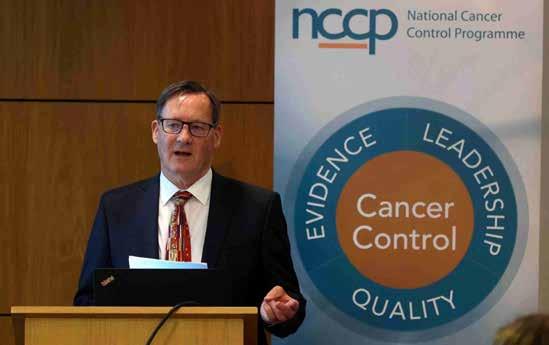
Under the new guideline, for some patients, their total radiotherapy dose can be provided over a shorter timeframe, i.e. within
one week compared with three to five weeks. For others, new techniques recommended will reduce the burden of attending hospital for radiotherapy treatment.
It was developed in consultation with oncology patients and doctors and will improve the standard and consistency of clinical practice in
Professor Risteárd Ó Laoide, National Director, HSE NCCP, said: “This is welcome news for patients undergoing treatment for breast cancer. The guideline sets out recommendations that will mean shorter treatment time for some patients, and therefore fewer in-hospital appointments. This will create some additional capacity in the service, meaning more patients can be treated in the same timeframe than previously.”
The guideline was developed by a multi-disciplinary group
chaired by Dr Eve OToole, Head of Evidence and Quality Hub in the NCCP, who said: “We worked with radiation oncology clinicians and engaged with patient representatives to develop this evidence-based guideline. We integrated their clinical experience and patient values with the best current evidence to formulate recommendations for clinical practice. The patient focus group provided views of those who are most impacted by its recommendations, and their valuable feedback shaped the overall guideline.”
Breast cancer is the second most commonly diagnosed cancer in Ireland, and the most common cancer among females (National Cancer Registry Ireland, 2022).
According to the National Cancer Registry of Ireland (NCRI), there was an average of 3,392 cases of invasive breast cancer diagnosed in Ireland annually between 2018–2020.
9 HOSPITALPROFESSIONALNEWS.IE | HPN • AUGUST 2023
News
Dr Angie Brown, Consultant Cardiologist and Medical Director with the Irish Heart Foundation
Professor Risteárd Ó Laoide, National Director, HSE NCCP
Poorer Health Outcomes due to Deficits

and Tullamore. This is an increase of an additional 7,634 (+29) since 2015.
To see how outpatient waiting lists have increased see the table below.
Of the almost 30,000 people waiting for an outpatient appointment at Mullingar, Portlaoise and Tullamore Hospitals, a fifth (5,900 or 20%) have been waiting longer than a year. Regional Hospital Mullingar alone has seen its ‘long-waiters’ for outpatient appointments and inpatient/day case procedures increase by 17% and 20% respectively in the first five months of 2023.
since the start of 2020, just 25 beds were in the Midlands – all of these at Regional Hospital Tullamore. As a result, more than 800 people have been added to the three main hospital waiting lists in the region since the start of the year, which is an increase of almost 2.5% and in the opposite direction to Government’s Waiting List Action Plan for 2023 - which should equate to a reduction of approx. 3,400 people from lists in the Midlands.
Poorer Health Outcomes due to Deficits
The IHCA said patients will unfortunately continue to languish on trolleys and unacceptable waiting lists, and suffer poorer outcomes as a result, until the Government implements credible, funded, time-bound plans which address the growing demand for care in the Midlands.
Commenting on the waiting list and hospital beds analysis IHCA Vice President Professor Anne Doherty said, “The increasing waiting lists for care continue to impact healthcare outcomes for some of our most vulnerable patients. Government must commit the necessary capital spend in the Budget in October to deliver extra capacity for patients in the Midlands.
The Irish Hospital Consultants Association (IHCA) has warned that a lack of public hospital capacity and hospital Consultants across the Midlands region is resulting in increasing waiting times for treatment that is impacting on patient outcomes.
Bed capacity and waiting lists in the region
The Irish Hospital Consultants Association (IHCA) has warned that a lack of public hospital capacity and hospital Consultants across the Midlands region1 is resulting in increasing waiting times for treatment that is impacting on patient outcomes.
At the end of May there were 34,284 people waiting for an outpatient appointment, inpatient/ day case treatment or procedure at the three Midland Regional Hospitals in Mullingar, Portlaoise
Despite dangerously high hospital bed occupancy rates in the region (up to 95.3% at Regional Hospital Mullingar3, well above the recommended maximum of 80-85%), the Midlands is being ignored in the Government’s limited bed capacity expansion plans.
At the end of May there were 34,284 people waiting for an outpatient appointment, inpatient/day case treatment or procedure at the three Midland Regional Hospitals in Mullingar, Portlaoise and Tullamore.2 This is an increase of an additional 7,634 (+29) since 2015.
Out of the 970 additional inpatient hospital beds opened nationally
Outpatient waiting lists have increased as follows:
But because the shortage of beds is so severe in the region, acutely ill patients are admitted, and essential surgical and other care is cancelled due to the significant capacity deficits. More than 3,700 operations and hospital appointments were cancelled in the first four months of 2023 alone at the three Midland hospitals. The region also has one of the highest Consultant vacancy rates in the country, with 29% of permanent Consultant posts (51 posts) vacant or filled on a temporary or agency basis – 10 more post not filled as needed compared with a year earlier.
“The Midlands has one of the lowest numbers of acute beds on a population basis in Ireland at 2.13 beds per 1,000 population. The hospitals need about 240 additional beds to bring us up to the national average of 2.89 beds per 1,000 population, which is too low to start with, and an extra 860 acute hospital beds to bring the region up to the EU average. That’s more than a doubling in the number of public hospital beds at the three Midlands hospitals – or the equivalent of St James’s Hospital in Dublin.
“Unfortunately, the Government’s current plans for four new elective hospitals and six surgical hubs will not result in any additional capacity in the region,” said Professor Doherty.
The IHCA has welcomed Minister Stephen Donnelly’ s plans to expedite capacity expansion through a rapid build programme and calls on the Government to urgently commit the promised ¤1 billion capital budget to open these beds as indicated, including in the Midlands.
Date for your Diary
The Irish Pharmacy Union National Pharmacy Conference takes place this year on Saturday, 21st October in Johnstown House Estate in Enfield, Co. Meath.

Of the almost 30,000 people waiting for an outpatient appointment at Mullingar, Portlaoise and Tullamore Hospitals, a fifth (5,900 or 20%) have been waiting longer than a year. Regional Hospital Mullingar alone has seen its ‘long-waiters’ for outpatient appointments and inpatient/day case procedures increase by 17% and 20% respectively in the first five months of 2023.
Bed capacity and waiting lists in the region
This event, plays a vital role in supporting pharmacists with CPD, covering a range of clinical and business topics.
This is the first face to face conference since 2019 and will also mark the start of the celebrations of the 50th Anniversary of the IPU. The event will provide support to the pharmacy profession through an extensive programme of events, education sessions and ‘The Great Debate’.
Despite dangerously high hospital bed occupancy rates in the region (up to 95.3% at Regional Hospital Mullingar3, well above the recommended maximum of 8085%), the Midlands is being ignored in the Government’s limited bed capacity expansion plans.
Out of the 970 additional inpatient hospital beds opened nationally since the start of 2020, just 25 beds were in the Midlands – all of these at Regional Hospital Tullamore.4
As a result, more than 800 people have been added to the three main hospital waiting lists in the region since the start of the year, which is an increase of almost
10 AUGUST 2023 • HPN | HOSPITALPROFESSIONALNEWS.IE News
Hospital No. awaiting outpatient
in 2015 No. awaiting outpatient appointments in 2023 Change in past 8 years MRH Mullingar 6,235 11,176 +4,941 (+79%) MRH Portlaoise 3,758 5,514 +1,756 (+47%) MRH Tullamore 13,305 13,287 -18 (-0.1%) TOTALS 23,298 29,977 +6,679 (+29%)
appointments
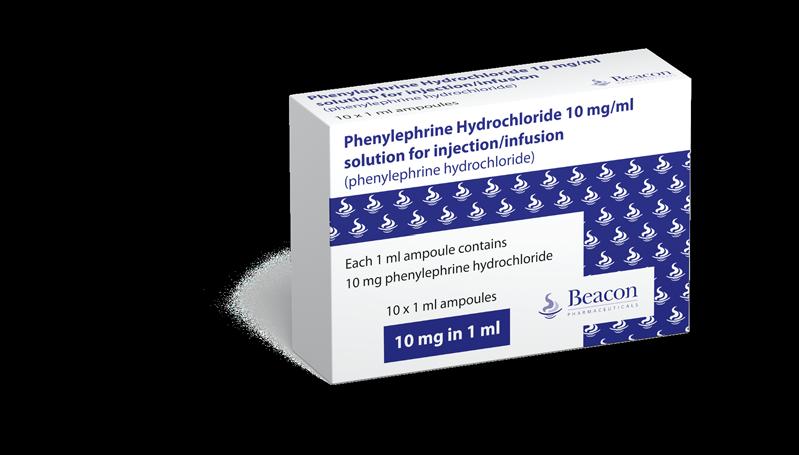
Phenylephrine Hydrochloride 10mg/ml Solution for Injection/Infusion
Therapeutic Indication
For the treatment of hypotensive states during spinal anaesthesia or drug-induced hypotension.
Posology and Method of Administration
Subcutaneous and intramuscular injection: Phenylephrine injection may be administered subcutaneously or intramuscularly in a dosage of 2 to 5mg with further doses of 1 to 10mg if necessary according to response.
Intravenous bolus injection: Phenylephrine hydrochloride injection may be administered in a dose of 100 to 500 micrograms by slow intravenous injection as a 0.1% w/v solution, repeated as necessary after at least 15 minutes.
Continuous infusion: 10mg in 500ml of glucose 5% w/v injection or sodium chloride 0.9% w/v injection may be infused intravenously, initially at a rate of up to 180 micrograms per minute, reduced according to response to 30-60 micrograms per minute.
Children: 100 micrograms/kg bodyweight subcutaneously or intramuscularly.
This medicine should only be administered by healthcare professionals with appropriate training and relevant experience.
Available in a pack of 10 x 1ml ampoules.
Each 1ml ampoule contains 10mg phenylephrine hydrochloride equivalent to 8.2mg phenylephrine.
Shelf life : 3 Years unopened. After opening and dilution, chemical and physical in-use stability has been demonstrated for 24 hours at room temperature. From a microbiological point of view, the product should be used immediately. If not used immediately, in-use storage times and conditions prior to use are the responsibility of the user and would normally not be longer than 24 hours at 2-8°C.
Prescribing information
Refer to the full Summary of Product Characteristics (SmPC) before prescribing. Name and active ingredients: Phenylephrine Hydrochloride 10mg/ml solution for injection/infusion. Each 1ml ampoule contains 10mg phenylephrine hydrochloride equivalent to 8.2mg phenylephrine. Pharmaceutical form: Solution for injection/infusion. Clear, colourless, sterile solution. Indications: For the treatment of hypotensive states during spinal anaesthesia or drug-induced hypotension. Posology and method of administration: See SmPC section 4.2 for full information concerning dosage, preparation, administration, duration and special populations. Contraindications: Hypersensitivity to the active substance or to any of the excipients listed in section 6.1 of the SmPC. Patients taking non-selective monoamine oxidase inhibitors (MAOIs), or within 14 days of ceasing such treatment due to risk of paroxysmal hypertension and possibly fatal hyperthermia (see section 4.5). Patients with severe hypertension. Patients with severe hyperthyroidism. Patients with peripheral vascular disease due to the risk of ischemic gangrene or vascular thrombosis. Special warnings and precautions for use: Special caution should be exercised when administering phenylephrine to patients with pre-existing cardiovascular disease such as ischaemic heart disease, arrhythmias, arterial hypertension, aneurysms, or non-severe peripheral vascular insufficiency. Anginal pain may be precipitated in patients with angina pectoris. For full details, see SmPC, section 4.4. Adverse reactions: During the use of Phenylephrine, the following adverse reactions have been observed, the frequency of which have not been accurately established: Reflex bradycardia, reflex tachycardia, cardiac arrhythmias, anginal pain, palpitations, cardiac arrest, hypertension, hypotension, flushing, headache, cerebral haemorrhage, vertigo, fainting, head discomfort, dyspnoea, pulmonary oedema, vomiting, salivary hypersecretion, difficulty in urination, urinary retention, sweating, temporary tingling, cold feeling on the skin, alterations in glucose metabolism. Extravasation of phenylephrine can cause tissue necrosis. Presentations: Type 1 amber glass ampoule with ceramic break ring. Pack size: 10 ampoules. Legal Classification: POM. Marketing Authorisation Number: PA0298/027/001 Distributed by Athlone Pharmaceuticals Limited. Date of preparation: April 2022. IE23/001/SmPC Nov 2022.


Adverse events should be reported. Reporting forms and information can be found on the HPRA website (www.hpra.ie) or by email medsafety@hpra.ie Adverse events should also be reported to Kent Athlone Pharma Group on (090) 666 1109 or medical@kent-athlone.com. Additional information available on request.
Your partner of choice, when excellence matters.
For further information on this product, please contact Gavin Butler, Key Account Manager, Athlone Pharmaceuticals Ltd., Ballymurray, Co. Roscommon Tel: + 353 (0) 87 3354523 | Email: Gavin.Butler@kent-athlone.com
Date of preparation: May 2023 Ref: IE2023/002/00
Secondary Breast Cancer Journeys Highlighted
Cancer Trials Ireland, the national organisation dedicated to advancing cancer clinical trials, has announced details of a new research survey of women with breast cancer whose cancer has spread, also known as secondary or metastatic breast cancer. The survey – Ireland’s first-ever patientled research to undergo rigorous ethics and scientific approval – is being spearheaded by Siobhan Gaynor, a former research scientist who has also been diagnosed with secondary breast cancer.
The survey will investigate patients’ experiences of their cancer journey – from discussions with medical teams to accessing information sources, from sexuality and fertility issues to financial stresses, from mental health impacts to conversations with family and children, from participating in exercise programmes to engaging with palliative care. Among a wide range of questions, respondents will also be asked how they felt their diagnosis was delivered, and how and when life expectancy should be discussed, if appropriate. The survey is aiming to recruit up to 300 patients
who have been diagnosed with stage IV secondary breast cancer and is now available online at www.cancertrials.ie.
Making Life Easier
Siobhan Gaynor, a member of Cancer Trials Ireland Patient Consultants’ Committee, was first diagnosed with breast cancer in May 2019. In October 2020, Siobhan was diagnosed with secondary breast cancer and
is now receiving a targeted oral chemotherapy and hormone therapy. Having worked for over 30 years in developing medicines and undertaking clinical trials, and now as co-chief investigator for this study, Siobhan is determined to make life better for others:

“Once I finished active treatment for my initial diagnosis of primary breast cancer, I was more than happy to move on with a renewed sense of how precious life is. Receiving the news of secondary breast cancer, and knowing that it is currently incurable, was a completely different animal to deal with. It left me reeling. Suddenly having to confront my own mortality, I felt traumatised, afraid and lost.
“For me, coping with my secondary diagnosis, there were clear gaps in areas such as access to information and emotional support. I wondered ‘do I tell my family?’, ‘how long will I live for?’, ‘how much will it cost me?’. I had lots of questions but few answers. Yet, I was struck by the fact that there was very little by way of scientific research into these most difficult and upsetting aspects of my care. Talking to other patients, I learned that this was very much their experience too and so the need for this study began to formulate in my mind.
“Diseases happen to people and patients are the ultimate experts in their own bodies. Answering ‘the why’ of health research, it is vital that we capture and learn from these real-life experiences. With my science background, I wanted the survey to be on a solid scientific footing and evidencebased with which to drive change in cancer care, to develop new health and psychosocial services and resources, and to make life that little bit better for those who may follow in our footsteps.”
Led by Patients
For the other co-chief investigator on the study, Professor Seamus O’Reilly, Consultant Oncologist and Vice Clinical Lead, Cancer Trials Ireland, this research has the potential to influence not only breast cancer care, but how other advanced cancers are cared for as well:

“This is the first time in Ireland that a piece of research has been developed by patients for patients with the same rigorous approach as a clinical trial. We believe that this will assist us in our mission to improve cancer care for all patients. While most secondary breast cancers are currently incurable, thanks to treatment advances, women are living longer. However, we also need a very clear focus on quality-of-life aspects, such as emotional well-being and symptom control.
“While secondary breast cancer has the highest prevalence of all stage IV cancers, we anticipate that the outcomes of this work will also inform other patient-led research for stage IV cancers such as prostate, colorectal, and lung.”
The development of the survey has been overseen by a steering committee with experts in psycho-oncology, palliative care, social care, radiation and medical oncology, and, of course, patients. Over 30 patients with secondary breast cancer were also involved in developing the survey, which has undergone a rigorous scientific and ethics review process by the Royal College of Surgeons in Ireland.
For more information on the work of Cancer Trials Ireland, visit www.cancertrials.ie
12 AUGUST 2023 • HPN | HOSPITALPROFESSIONALNEWS.IE Report
Professor Seamus O'Reilly, Vice Clinical Lead, Cancer Trials Ireland
Siobhan Gaynor, member of Cancer Trials Ireland Patient Consultants' Committee
More Pain on Waiting Lists
The Irish Hospital Consultants Association (IHCA) has warned that inaction by the Government to urgently address the root causes of hospital capacity deficits and Consultant shortages will mean the targets set out in its Waiting List Action Plan for 2023 will not be achieved.
The latest figures from the National Treatment Purchase Fund (NTPF) released today show significant increases in the number of people waiting for care at the midpoint of the Government’s Action Plan.
The ¤443 million plan set out to reduce waiting lists for outpatient, inpatient and day case appointments by 10% or 69,000 by the end of the year, compared with the number waiting at the start of 2023.1 However, six months into 2023 and instead of an expected reduction of around 34,500 people, the latest NTPF figures confirm that 17,165 additional people have in fact been added to these three main waiting lists – a 51,650 shortfall.
The IHCA says that outpatient appointments have seen the largest increases in the number of people waiting – a further 13,600
people added in first six months of 2023, instead of the pro rata target reduction of over 32,000 expected at the halfway point of the Action Plan.
Consultants are increasingly struggling to provide care to public hospital patients and are particularly concerned that there are now 890,800 people on some form of hospital waiting list, an increase of over 20,700 (2%) this year alone.
Record 933 Consultant posts unfilled

The waiting list increases come as separate figures from the HSE show that a record 933 Consultant posts remain unfilled or filled on a temporary, locum or agency basis. This is an increase of 206 approved Consultant posts, or an additional 28%, not filled as needed compared with this time two years ago.
Analysis by the IHCA reveals that the increase in the number of unfilled Consultant posts over the past two years is as follows:
Commenting on today’s NTPF figures and Consultant vacancies,
Accelerating Pharmacy Immunisations
Professor Rob Landers, IHCA President
IHCA President Professor Robert Landers, said, “As set out in our Pre-Budget Submission launched this week, it is clear that the Government must commit the estimated ¤4 billion in capital funding needed to build and open essential hospital improvements already announced by the Minister for Health.
“The NTPF figures released today confirm our fears that without addressing the very obvious shortages of Consultants, hospital
beds, theatres, diagnostic and other facilities the Government will not address the core problems facing our public hospitals.
“The fact that so many Consultant posts remain vacant should be an unequivocal signal to Government and Health Service Management that the current conditions in our public hospitals do not create an environment in which skilled medical and surgical specialists want to work and which is driving our trained specialists abroad to pursue their careers.”
A policy toolkit aimed at member organisations of the International Pharmaceutical Federation (FIP) and seeking to accelerate pharmacy-based lifecourse immunisation has been published recently.
A life-course immunisation approach recognises that health is shaped by a series of events that occur throughout life, including vaccinations known to benefit specific age groups and vulnerable groups. Disease prevention and health promotion is just as important during older age as it is in childhood, the authors of the toolkit write.
For example, older adults are more vulnerable to more severe forms of several vaccine-preventable diseases, including influenza, COVID-19 and pneumococcal pneumonia. The World Health Organization Immunization Agenda 2030, recommends that all member states adopt a life-course approach to immunisation and the United Nations Decade of Healthy Ageing Action Plan 2021–2030 urges the scale up of age-friendly primary health care to provide a comprehensive range of services for older people, including vaccination. Harnessing the power that pharmacists have to deliver the life-course approach to vaccination is key, the authors say.
The toolkit “Supporting life-course immunisation through pharmacy-based vaccination: enabling equity, access and sustainability” outlines three key policy areas that need to be addressed:
1) Regulations and prescribing;
2) Service remuneration models; and
3) Access to data and vaccination records. For each area, case studies from different countries are presented along with enablers and barriers.
13 HOSPITALPROFESSIONALNEWS.IE | HPN • AUGUST 2023
News Consultant Posts May 2021 June 2023 Difference Vacant Posts 331 480 +149 (+45%) Temporary/Locum 295 356 +61 (+21%) Agency Filled 77 68 -9 (-12%) Unknown Status (likely vacant) 24 29 +5 (21%) Total not filled as needed 727 933 +206 (+28%)
Optimising Vitamin D to benefit Inflammation
Ageing experts at Trinity College
Dublin and the University of Limerick have shown associations of vitamin D status with C-reactive protein (CRP, a measure of inflammation) in older adults.
Inflammation and CRP
CRP can be a blood measure of inflammation in the body. High levels can indicate infection while lower, but still higher than normal, levels can indicate low-grade inflammation. Scientists think that this low-grade constant inflammation (which is common in older adults) can lead to a slow accumulation of damage and be a major risk factor for many of the chronic diseases of ageing including cardiovascular disease, mental health decline, diabetes etc. Anything that could help decrease CRP levels in the blood may have a positive impact on chronic disease prevention.
Vitamin D
Vitamin D (‘Sunshine vitamin’) is needed for bone health and
recently has been linked with immune function. Previous research from the Irish Longitudinal Study On Ageing (TILDA) has shown that 1 in 8 older Irish adults are deficient in the vitamin with those most at risk including the oldest, smokers, those with low household incomes, smokers, those living with obesity.
Previous work from Professor Rose Anne Kenny and Dr Eamon Laird has also reported on the association of vitamin D with COVID.
The new study used data from TILDA, and examined participants aged 50 years and over who were assessed at Wave 1 of the study and who provided measurement of vitamin D and CRP.
Key Findings:
• The study finds that a deficient vitamin D status was associated with significantly higher CRP levels (inflammation).
• Having a sufficient vitamin D status reduced the risk of a
Online Health Data Tool
Performance and Integration, Joe Ryan


high CRP level compared to being deficient
• These findings remained even after adjusting for other factors such as physical activity, smoking and alcohol, obesity, educational level, kidney function, biological sex and age.
• Overall, those who were younger, male, had tertiary education, not obese, a nonsmoker, and had less than three chronic diseases had significantly lower CRP levels
• Factors that increased the risk of high CRP levels included: included obesity, smoking, being female, physical inactivity, chronic conditions and poorer kidney function and diabetes.
• These observations also provide reassurance for food policy makers that fortification of foods to increase levels of vitamin D could have the potential for health benefits and is not linked with adverse results for inflammation
Dr Eamon Laird, Lead author of the study, said, “This study is very important given the high prevalence of vitamin D deficiency and chronic disease in older adults living in Ireland. Our findings along with previous trials in this area suggest that optimising vitamin D status to above deficient levels could help to benefit the inflammation pathway in community dwelling older adults. "Given that the FSAI just recently changed the vitamin D intake guidelines for older adults to 15ug per day (600 IU), our findings should provide further reassurance for policy makers to show that maintaining a sufficient vitamin D status is actually linked with lower levels of inflammation and did not increase the risk. Remember vitamin D is one component: in order to have the lowest risk of inflammation people should think about vitamin D in combination with regular physical activity, healthy lifestyle, adequate sleep and social interactions."
The Department of Health has launched an innovative new online visual health data monitoring tool, created to provide an overview of the performance and health outcomes of the health service. Operated by the Department of Health in partnership with the Health Service Executive (HSE), the Prototype Visualisation Platform for the Health System Performance Assessment (HSPA) Framework will help policymakers, healthcare providers, researchers and patients to better assess and improve system accountability, fairness, and efficiency as we progress towards universal healthcare for all.
The new HSPA website has been populated with health data in the areas of life expectancy, disease outcomes, health risk factors such as; smoking and obesity, the level of access to health services, affordability, the quality of the care provided, as well as the efficiency of health services.
HSPA data indicates that life expectancy at birth in Ireland is consistently above the EU
average, at 84.3 years for women and 80.5 years for men in 2021, with increases of 1.2 years and 1.8 years respectively in the last decade, compared with a decrease of 0.2 years and an increase of 0.1 years respectively for EU-27 member countries in the same period.
Figures for 2022 show the leading causes of death in Ireland include respiratory diseases, circulatory diseases (like stroke and heart attack) and cancer, with overall mortality rates continuing to decline steadily. Ongoing investment, through the National Cancer Strategy, Sharing the Vision, Healthy Ireland initiatives and wider health service reforms
and improvements, is intended to support increases in life expectancy, and to reduce mortality rates from chronic disease.
HSE National Director for Operational Performance and Integration, Joe Ryan said, "Where we have previously focused on recording the quantity of our services, ultimately our aim is to measure the outcomes of what we deliver, the experience of patients in accessing and receiving our services together with assessing the value of our services. In the HSE we will work with our committees and our Board to transform the way in which we plan, measure, report and improve. The HSPA will assist with this."
14 AUGUST 2023 • HPN | HOSPITALPROFESSIONALNEWS.IE News
HSE National Director for Operational
Report into Drug Treatment Demand
Findings by the Health Research Board show cocaine has overtaken opioids to become the most common problem drug.
A Health Research Board (HRB) report into drug treatment demand has found that 12,009 cases* were treated for problem drug use in 2022. Almost four in ten of those cases were never treated before. This report describes trends in treated problem drug use (excluding alcohol) for the seven-year period from 2016 to 2022. The data is drawn from the National Drug Treatment Reporting System (NDTRS), the national surveillance system that records and reports on cases of drug and alcohol treatment in Ireland.
The Health Research Board (HRB) is Ireland’s lead funding agency supporting innovative health research and delivering data and evidence that improves people’s health and patient care. We are committed to putting people first, and ensuring data and evidence are used in policy and practice to overcome health challenges, advance health systems, and benefit society and economy.
Cocaine was the most common drug reported, accounting for one in three cases. This was followed by opioids (mainly heroin). Cannabis was the third most common drug reported, followed by benzodiazepines.
Commenting on the key findings in the report, HRB Chief Executive,
Dr Mairéad O’Driscoll, said: “Our latest data provides insights into the patterns observed in drug treatment. Like last year, we are seeing an increase in cocaine as a problem drug. This year, it has surpassed opioids. The data we have collated will support practices in relation to treatment as well as underpinning action on preventative measures.”

Dr Anne Marie Carew, Research Officer at the HRB, said: “There has been a considerable rise in the number seeking treatment for cocaine use in recent years. This is the result of the rise in use of cocaine as well as an increase in the provision of specific services to treat cocaine use.”
Different drugs generated varied treatment demand across age groups:
• Cannabis - 19 years of age or younger
• Cocaine - 20-34 year olds
• Opioids - over 35 year olds.
Polydrug use (problem use of more than one drug)
• Polydrug use was common and was reported by over half of cases (57%)
• Cannabis (40%) was the most common additional drug, followed by alcohol (36%), cocaine (36%) and benzodiazepines (32%).
*It is important to note that each record in the National Drug Treatment Reporting System (NDTRS) database, where this data is drawn from, relates to a treatment episode (a case), and not to a person. This means that the same person could be counted more than once in the same calendar year if they had more than one treatment episode in that year.
Biomedical Imaging Research Project Secures ¤2.5m
A new University College Dublin (UCD) led pan-European research project using correlative multimodal imaging (CMI) to improve the understanding of biomedical processes of disease and drug therapy has secured ¤2.5 million in funding.
CLEXM (Correlative Light, Electron and X-ray Microscopy), a 4-year project involving 7 partner organisations in 4 countries, has been funded by Horizon Europe under the Marie SkłodowskaCurie Actions Doctoral Network (MSCA-DN) programme. The project which officially commences this September will fund nine (9) PhD candidate projects across the partner organisations.
SiriusXT, a UCD spin-out company based in Dublin, which has developed the first commercial, laboratory-based, soft x-ray microscope, is among the partner organisations.
CMI is used by researchers to obtain a composite view of a biological sample with the multidimensional information about its structure, dynamics, function and chemical composition required to understand biomedical processes and diseases.
There is a growing need for disease and drug therapy researchers to better understand the linkages between structural and functional changes that occur
in a cell and to be able to observe these from the cellular (micrometre) to the molecular (nanometre) scale. Correlative Light and Electron Microscopy (CLEM) is the current state-of-the-art for achieving this, but the technique is extremely complex and slow.
The overall focus of the 9 CLEXM research projects is to demonstrate that the integration of a third imaging technique, Soft X-ray Tomography (SXT), into CLEM will make it easier and faster for researchers to correlate cellular structure with cellular function.
This will lead to a more complete view of the processes of disease and drug therapy by creating a
composite view of a biological sample with multidimensional information about its macro-, meso- and microscopic structure, dynamics, function and chemical composition to develop more effective drug therapies.
Three of the nine research projects will take place in UCD, two of these projects will be supervised by Professor Jeremy Simpson, College Principal, UCD College of Science and Professor Oliver Blacque, UCD School of Biomolecular and Biomedical Science and the third project will be supervised by Dr Sergey Kapishnikov, SiriusXT.
15 HOSPITALPROFESSIONALNEWS.IE | HPN • AUGUST 2023 News
HRB Chief Executive, Dr Mairéad O’Driscoll
Biological and JAK inhibitor therapy outcomes for severe psoriasis in trisomy 21

1Department of Dermatology, South Infirmary Victoria University Hospital, Cork, Ireland; 2Department of Medicine, University College Cork, Cork, Ireland; 3 Department of Dermatology, University Hospital Limerick, Limerick; 4Department of Dermatology, University Hospital Waterford, Waterford
five for TNFα-inhibitors and one for ustekinumab (Table 1). There has been no report of Janus kinase inhibition (JAKi) for psoriasis in T21. The aim of this study was to review the outcomes of patients with T21 and severe psoriasis treated with biologic agents or JAKi in our region. Given the cytokine dysfunction described above, our hypothesis was that TNFα inhibition should provide clinical benefit for severe psoriasis in T21.
Methods
of more than 10 or body surface area of more than 10%. Adequate response to treatment was defined as a Physician Global Assessment score of 0 (indicating clear skin), or 1 (indicating almost clear skin).
Results
Trisomy 21 (T21) is associated with autoimmunity, related to abnormal monocyte and circulating cytokine populations.1 There are defects in innate and adaptive immunity in T21 with higher levels of tumor necrosis factor-α (TNFα), interleukin- (IL) 1β, and interferons (IFN).1 However, the prevalence of psoriasis in T21 is similar to the general population with no clear signal for increased severity.2 T21associated immune dysregulation may have implications for efficacy, safety, and drug survival of biologic medications.
Other common dermatological disorders in T21 include xerosis, seborrheic and atopic dermatitis, keratosis pilaris, folliculitis, hidradenitis suppurativa, alopecia areata, vitiligo, onychomycosis, and scabies; and other papulosquamous disorders such as crusted scabies or pityriasis rubra pilaris.2 Ireland has one of the highest incidences of T21 with 1 in 444 live births affected, and approximately 110 infants with T21 born annually in Ireland.3 There have been six published reports of biologic use for psoriasis in T21:
Ethical approval was granted by our clinical research and ethics committee (ECM 4 (oo) 22/02/2022). Patients were identified by searching the databases of three dermatology departments in Munster, Ireland. The research was also advertised through the social media channels of the Down Syndrome Ireland network. Retrospective reviews were performed using a uniform data collection sheet, collating information on demographic details, comorbidities, previous therapies, current therapies, and response to therapies. Severe psoriasis was defined as a Psoriasis Area Severity Index score
Twenty-one patients were identified (age range 6–48 years; Table 2). Most (62%, n = 13) were male and most (76%, n = 16) did not have a first degree relative with psoriasis. Overall, 33% of patients had arthritis, but all children (n = 6) had arthritis, while only 7% (n = 1) of adults had arthritis. A small proportion of patients had known comorbid nail disease (14%), ischaemic heart disease (5%), inflammatory bowel disease (5%), or hepatic steatosis (10%). Nearly half of patients (48%) were obese, defined as a body mass index (BMI) over 30 in adults or a BMI over the 95th centile in children. In terms of non-biologic therapies, a third (n = 7) had received narrow band ultraviolet B phototherapy, over half (n = 13) had been treated with methotrexate, and smaller numbers had received ciclosporin (n = 1), acitretin (n = 3), fumaric acid esters (n = 2), and apremilast (n = 2). Patients had been treated with a mean of 2 (range, 0–5) of these therapies prior to transition to biologic/JAKi treatment.
Abbreviations: ADA, adalimumab; CSA, ciclosporin; ETAN, etanercept; MTX, methotrexate; N/A, not applicable; Top, topical; USTE, ustekinumab
In terms of biologic therapy, 90% (18/20) of TNFα inhibitor trials failed with five etanercept failures, nine adalimumab failures, two golimumab failures, and two infliximab failures. The two patients who responded to adalimumab were children with comorbid psoriatic arthritis, who also had a parent with psoriasis. Almost two-thirds (7/11) of patients achieved persistently clear/almost clear skin with ustekinumab. IL-17 inhibition was successful for one third (2/6) of patients and IL-23 inhibition was successful for two thirds (2/3) of patients. IL-6 inhibition with tocalizumab was not helpful for two children. All three patients (one adult, two children) who had comorbid

16 AUGUST 2023 • HPN | HOSPITALPROFESSIONALNEWS.IE Peer Review | Psoriasis
Cathal O'Connor
Written by Cathal O'Connor1,2, Berbie Byrne3, Darren Roche1, Garret O'Connell4, Michael O'Connell4, Michelle Murphy1,2, John Bourke1, Maeve Lynch3, Mary Bennett1
Year Authors Sex Age Failed agents Successful agents Follow-up 2008 Alcaide et al. Male 30 Top ETAN <9 months 2012 Talamonti et al. Unknown 31 ADA, ETAN USTE N/A 2012 Marmon et al. Male 12 Top ADA 2 years 2012 Marmon et al. Male 20 MTX, ETAN ADA 3 years 2017 Adamczyk et al. Female 12 Top, CSA ETAN 10 weeks 2021 Madani et al. Male 33 Top ADA 7 months
TABLE 1. Previously reported outcomes for biologic therapy for severe psoriasis in trisomy 21
HIT BACK
AGAINST CROHN’S DISEASE WITH RINVOQ®▼ (upadacitinib)

PRESCRIBING INFORMATION (PI). RINVOQ®▼ (upadacitinib) 15 mg prolonged release tablets; 30mg prolonged-release tablets; 45 mg prolonged-release tablets. Refer to Summary of Product Characteristics (SmPC) for full prescribing information. PRESENTATION: Each tablet contains upadacitinib hemihydrate, equivalent to 15mg of upadacitinib in the 15mg tablet, 30mg in the 30mg tablet and 45mg in the 45mg tablet.
INDICATION: Treatment of moderate to severe active rheumatoid arthritis (RA) and active psoriatic arthritis (PsA) in adult patients who have responded inadequately to, or who are intolerant to one or more diseasemodifying anti-rheumatic drugs (DMARDs). RINVOQ may be used as monotherapy or in combination with methotrexate. Treatment of active non-radiographic axial spondyloarthritis (nr-axSpA) in adult patients with objective signs of inflammation as indicated by elevated C-reactive protein (CRP) and/or magnetic resonance imaging (MRI), who have responded inadequately to nonsteroidal anti-inflammatory drugs (NSAIDs). Treatment of active ankylosing spondylitis (AS) in adult patients who have responded inadequately to conventional therapy.
Treatment of moderate to severe atopic dermatitis (AD) in adults and adolescents 12 years and older who are candidates for systemic therapy. Treatment of adult patients with moderately to severely active ulcerative colitis (UC) or moderately to severely active Crohn’s disease (CD) who have had an inadequate response, lost response or were intolerant to either conventional therapy or a biologic agent. DOSAGE AND
ADMINISTRATION: Intended for use under guidance and supervision of a physician experienced in diagnosis and treatment of conditions for which upadacitinib is indicated. Dosage: RA, PsA, AS, and nr-axSpA: Recommended oral dose is 15mg once daily. Consideration should be given to discontinuing treatment in patients with AS and nr-axSpA who have shown no clinical response after 16 weeks of treatment. Some patients with initial partial response may subsequently improve with continued treatment beyond 16 weeks. AD: Adults: Recommended oral dose is 15 mg or 30 mg once daily based on individual patient presentation (see SmPC for details). A dose of 15 mg is recommended for patients at higher risk of venous thromboembolism (VTE), major adverse cardiovascular events (MACE) and malignancy. The lowest effective dose to maintain response should be used. For patients ≥ 65 years of age, the recommended dose is 15mg once daily. Adolescents from 12 to 17 years weighing at least 30 kg: Recommended oral dose is 15mg once daily. Consideration should be given to discontinuing upadacitinib treatment in any patient who shows no evidence of therapeutic benefit after 12 weeks of treatment. UC: Induction; Recommended oral dose is 45mg once daily for 8 weeks. For patients who do not achieve therapeutic benefit by week 8, 45mg once daily may be continued for an additional 8 weeks. Discontinue treatment in patients with no evidence of therapeutic benefit by week 16. Maintenance; Recommended oral dose is 15mg or 30mg once daily based on individual patient presentation (see SmPC for details). A dose of 15 mg is recommended for patients at higher risk of VTE, MACE and malignancy. The lowest effective dose to maintain response should be used. Patients ≥ 65 years of age: recommended dose is 15 mg once daily. In patients who have responded to treatment with upadacitinib, corticosteroids may be reduced and/or discontinued in accordance with standard of care. For patients with UC receiving strong inhibitors of cytochrome P450 (CYP) 3A4 the recommended induction dose is 30 mg once daily and maintenance dose is 15 mg once daily. CD: Induction; Recommended oral dose is 45mg once daily for 12 weeks. For patients who have not achieved adequate therapeutic benefit after the initial 12-week induction, 30mg once daily may be considered. For these patients, upadacitinib should be discontinued if there is no evidence of therapeutic benefit after 24 weeks of treatment. Maintenance; Recommended oral dose is 15mg or 30mg once daily based on individual patient presentation (see SmPC for details). A dose of 15mg once daily is recommended for patients at higher risk of VTE, MACE and malignancy. The lowest effective dose to maintain response should be used. Patients ≥ 65 years of age: recommended dose is 15 mg once daily. In patients who have responded to treatment with upadacitinib, corticosteroids may be reduced and/or discontinued in accordance with standard of care. For patients with CD receiving strong inhibitors of cytochrome P450 (CYP) 3A4 the recommended induction dose is 30 mg once daily and maintenance dose is 15 mg once daily. (see SmPC for more details). Special Populations: Elderly: Upadacitinib should only be used in patients ≥65 years if no suitable treatment alternatives are available. For AD patients ≥ 65 years of age, a dose higher than 15mg once daily is not recommended. For RA, PsA, AS and nraxSpA there are limited data for patients 75 years of age and older. For UC and CD maintenance therapy, a dose higher than 15 mg once daily is not recommended in patients ≥ 65 years of age. For UC and CD patients ≥ 75 years of age the safety and efficacy of upadacitinib has not been established. Renal: No dose adjustment required in mild-moderate renal impairment. Patients with severe renal impairment should use upadacitinib with caution (See SmPC for dose adjustments). Upadacitinib has not been studied in subjects with end stage renal disease and is therefore not recommended for use in these patients. Hepatic impairment: No dose adjustment is required in patients with mild (Child-Pugh A) or moderate (Child-Pugh B) hepatic impairment. Should not be used in patients with severe (Child Pugh C) hepatic impairment. Paediatric Population: Safety and efficacy in RA, AS, PsA, nr-axSpA, UC and CD in children and adolescents aged 0 to 18 years and in AD in children under 12 years of age has not been established. No clinical exposure data are available in AD adolescents < 40 kg.
CONTRAINDICATIONS: Hypersensitivity to active substance or excipients. Active tuberculosis (TB) or active serious infections. Severe hepatic impairment. Pregnancy. SPECIAL WARNINGS AND PRECAUTIONS: See SmPC for full details. Upadacitinib should only be used if no suitable treatment alternatives are available in patients: 65 years of age and older; with history of atherosclerotic cardiovascular disease or other cardiovascular risk factors (such as current or past long-time smokers) or with malignancy risk factors (e.g. current malignancy or history of malignancy). Immunosuppression: Combination use, with immunosuppressants e.g. azathioprine, 6-mercaptopurine, ciclosporin, tacrolimus, and biologic DMARDs or other JAK inhibitors has not been evaluated in clinical studies and is not recommended as the risk of additive immunosuppression cannot be excluded.
Serious infections: Serious and fatal infections have been reported. Caution when treating patients ≥65 years. Frequently reported – pneumonia and cellulitis. Bacterial meningitis and sepsis have been reported. Opportunistic infections reported – TB, multidermatomal herpes zoster, oral/oesophageal candidiasis, and cryptococcosis. Do not initiate treatment in patients with active, serious infection, including localised infections.
Consider the risk/benefit of treatment in patients with: chronic or recurrent infection, history of serious or opportunistic infection, those exposed to TB, those who have resided or travelled in areas of endemic TB or endemic mycoses, those with underlying conditions that may pre-dispose patients to infection, those with
diabetes. Closely monitor patients for signs and symptoms of infection during and after treatment. Interrupt treatment if the patient develops a serious/opportunistic infection. If infection is controlled, resume treatment following risk/benefit consideration. A higher rate of serious infections was observed with upadacitinib 30mg compared to upadacitinib 15mg. Tuberculosis: Pre-screen patients for active or latent TB. RINVOQ should not be given to patients with active TB. Consider anti-TB therapy in patients with previously untreated latent TB or in patients with risk factors for TB infection. Consult with a physician with experience in TB therapy to assess whether initiating anti-TB therapy is appropriate for an individual patient. Monitor patients for the development of signs and symptoms of TB, including patients who tested negative for latent TB infection prior to initiating therapy. Viral reactivation: Cases of herpes virus reactivation have been reported e.g. herpes zoster. If herpes zoster is reactivated, consider interruption of upadacitinib therapy until the episode resolves. Screen for viral hepatitis and monitor regularly for reactivation before starting and during therapy with upadacitinib. Patients, positive for hepatitis C antibody/hepatitis C virus RNA and hepatitis B surface antigen/hepatitis B virus DNA were excluded from clinical studies. If hepatitis B virus DNA is detected while receiving RINVOQ, a liver specialist should be consulted. Vaccination: Use of live, attenuated vaccines during or immediately prior to therapy is not recommended. It is recommended that patients be brought up to date with all immunisations, including prophylactic zoster vaccinations prior to starting therapy, in agreement with current immunisation guidelines. Malignancy: Lymphoma, NMSCs and other malignancies have been reported in patients receiving JAK inhibitors, including upadacitinib. There is a higher rate of malignancies and NMSCs with upadacitinib 30mg compared to 15mg. Periodic skin examination is recommended for all patients, particularly those with risk factors for skin cancer. See SmPC for full details. Haematological abnormalities: Do not start therapy if Absolute Neutrophil Count <1 x 10⁹ cells/L, Absolute Lymphocyte Count <0.5 x 10⁹ cells/L and Hb <8 g/dL. Monitor patients and temporarily stop therapy if abnormal haematological parameters as specified are detected during routine patient management. Gastrointestinal perforations: Events of diverticulitis and gastrointestinal perforations have been reported. Use with caution in patients who may be at risk for gastrointestinal perforation (e.g., patients with diverticular disease, a history of diverticulitis, or who are taking non-steroidal anti-inflammatory drugs (NSAIDs), corticosteroids, or opioids). Patients with active Crohn’s disease are at increased risk for developing intestinal perforation. Patients presenting with new onset abdominal signs and symptoms should be evaluated promptly for early identification of diverticulitis or gastrointestinal perforation. Major adverse cardiovascular events: Events of MACE were observed in clinical studies of upadacitinib (See SmPC for full details). Lipids: Monitor total cholesterol, low-density lipoprotein (LDL) and high-density lipoprotein (HDL) at 12 weeks and thereafter according to international guidelines for hyperlipidaemia. Elevated LDL in clinical trials decreased to pre-treatment levels in response to statin therapy, although evidence is limited. The effect of these lipid parameter elevations on cardiovascular morbidity and mortality has not been determined. Hepatic transaminase elevations: Monitor liver enzymes at baseline and thereafter according to routine patient management. Prompt investigation of the cause of liver enzyme elevation is recommended to identify potential cases of drug-induced liver injury. In such cases therapy should be interrupted until this diagnosis is excluded. Venous thromboembolism: Deep vein thrombosis (DVT) and pulmonary embolism (PE) were observed in clinical trials for upadacitinib. Use therapy with caution in patients with known VTE risk factors other than cardiovascular or malignancy risk factors. Risk factors include previous VTE, patients undergoing major surgery, immobilisation, use of combined hormonal contraceptives or hormone replacement therapy, and inherited coagulation disorder. Patients should be re-evaluated periodically during upadacitinib treatment to assess for changes in VTE risk and treatment should be discontinued in patients with suspected VTE. Hypersensitivity: Anaphylaxis and angioedema have been reported in patients receiving upadacitinib. Discontinue treatment and institute appropriate therapy if significant hypersensitivity occurs. INTERACTIONS: Upadacitinib is metabolised mainly by CYP3A4 and plasma exposures may be affected by CYP3A4 inhibitors or inducers. Upadacitinib 15 mg once daily should be used with caution in patients receiving chronic treatment with strong CYP3A4 inhibitors. Upadacitinib 30 mg once daily dose is not recommended for patients with atopic dermatitis receiving chronic treatment with strong CYP3A4 inhibitors. For patients with ulcerative colitis or Crohn’s disease using strong CYP3A4 inhibitors, the recommended induction dose is 30 mg once daily and the recommended maintenance dose is 15 mg once daily (see Dosage and Administration). Avoid food and drink containing grapefruit during treatment with upadacitinib. See SmPC for full details. FERTILITY, PREGNANCY AND LACTATION: Upadacitinib is contraindicated during pregnancy. Women of childbearing potential should be advised to use effective contraception during treatment and for 4 weeks following the final dose of upadacitinib. Female paediatric patients and/or their parents/caregivers should be informed about the need to contact the treating physician once the patient experiences menarche while taking upadacitinib. Upadacitinib should not be used during breast-feeding. The effect of upadacitinib on human fertility has not been evaluated. ADVERSE REACTIONS: Refer to SmPC for full details on adverse reactions. Very common adverse reactions (≥1/10): upper respiratory tract infections, acne. Common adverse reactions (≥1/100 to <1/10): bronchitis, herpes zoster, herpes simplex, folliculitis, influenza, urinary tract infection, pneumonia, non-melanoma skin cancer, anaemia, neutropaenia, lymphopaenia, urticaria, hypercholesterolaemia, hyperlipidaemia, cough, abdominal pain, nausea, rash, fatigue, pyrexia, increased blood CPK/ALT/AST, increased weight and headache.
▼ This medicinal product is subject to additional monitoring. This will allow quick identification of new safety information. Healthcare professionals are asked to report any suspected adverse reactions via HPRA Pharmacovigilance; website: www.hpra.ie. LEGAL
CLASSIFICATION: POM (S1A). MARKETING AUTHORISATION NUMBER/ PRESENTATION: EU/1/19/1404/001: RINVOQ 15 mg prolonged-release tablets in cartons of 28 tablets; EU/1/19/1404/006: RINVOQ 30 mg prolonged-release tablets in cartons of 28 tablets; EU/1/19/1404/010: RINVOQ 45 mg prolonged-release tablets in cartons of 28 tablets. MARKETING AUTHORISATION HOLDER: AbbVie Deutschland GmbH & Co. KG, Knollstrasse, 67061 Ludwigshafen, Germany. Further information is available from AbbVie Limited, 14 Riverwalk, Citywest Business Campus, Dublin 24, Ireland. DATE OF REVISION: April 2023. PI-1404-010. IE-RNQG-230025 | July 2023
Family history of psoriasis was defined as a first-degree relative (parent or sibling) with psoriasis
arthritis treated with the JAKi tofacitinib achieved an adequate response following at least three biologic failures. The mean number of biologic/JAKi therapies received in this population (n = 21) was 2.1 (range, 1–5) with an overall biologic survival rate of 31%, suggesting a treatment-resistant population. Overall, 81% (17/21) of patients required a switch from their index biologic treatment. The four patients who remained on their index biologic treatment were all started on ustekinumab. No patient had therapy withdrawn because of adverse events.
Primary failure (21/29) was more common than secondary failure (8/29), suggesting mechanistic failure rather than immunogenicity.
Discussion
This is the largest series of patients with T21 and severe psoriasis treated with biologic/JAKi therapy. In adults, the rate of comorbidities was relatively low with less than 15% having arthritis or nail involvement. However, all children in the study had arthritis, probably related to the fact that children with psoriatic arthritis are more likely to start a biologic medication because of the potential for permanent joint damage. The rate of obesity was high, which is common in both T21 and severe
psoriasis. Obesity is associated with a 25%–30% reduction in efficacy for biologic therapy.4 There was a very poor response to TNFα inhibition, a good response to ustekinumab, and an excellent response to tofacitinib in the small number of patients treated in this series. Ustekinumab has the benefit of higher dosing for heavier patients, although it is rare for patients with T21 to weigh over 100 kg due to their relatively short stature. Ustekinumab may also be preferable to JAKi because of potentially reduced infectious, thrombotic, cardiovascular, and cancer risks. Two children who responded to TNFα inhibition had parents with severe psoriasis, which might suggest that their immunophenotype relates to genes other than those directly related to T21. Reassuringly, no patient required biologic cessation due to adverse events such as infection or abnormal blood tests.
Most treatments prescribed for severe psoriasis target cytokines, particularly interleukins such as 12/23, 17, and 22.5 However, the IFN pathway is the major signaling cascade consistently activated by T21 in human cells.6 Furthermore, signal transduction of IFN requires binding to its receptors (IFNAR1, IFNAR2, and IFNAR3), which are
encoded on chromosome 21,7 and are triplicated in T21. With the additional copy of chromosome 21, IFN sensitivity is increased. Therefore, patients with T21 have both higher levels of, and enhanced sensitivity to, IFN. This is similar to the immune profile seen in paradoxical psoriasis, which is also driven by aberrant IFN signaling,8 and has been shown by Irish colleagues to affect downstream immune pathways.9 If dysfunctional IFN is the underlying disorder, then interleukinbased therapies that target alternative pathway cytokines are less likely to be helpful.
The rheumatology literature has already recommended that JAK inhibition, via direct effect on receptors which suppress IFN-signaling pathways, be considered as a first-line therapy for psoriatic arthritis in T21, given the IFN hyperactivation.10 Other considerations include that the risks of major adverse cardiovascular events11, 12 and dementia13 are higher in both T21 and in severe psoriasis, and that these risks may be modified by immunomodulatory therapy.14
Following the results of this study, our new hypothesis is that because of elevated levels of IFN, inhibitors of JAK/STAT signaling
should provide benefit, but that ILdirected biologic agents (such as IL-12 and IL-23) may also provide benefit by interfering with IFNmediated inflammation.
The Irish National Register for Children with Down Syndrome (https://nbci.ie/dsregister/) was established in 2015. We hope that this register will facilitate prospective immune-profiling and mechanistic studies investigating our hypothesis and help to formulate specific guidance for patients with T21.
Limitations of this study include the retrospective data collection, the relatively small number of patients given the examined outcome of treatment efficacy, and the lack of immune profiling to assess immunophenotypes objectively. Previous trials have shown that IL-17 inhibitors and IL-23 inhibitors are superior to TNFα inhibitors in terms of efficacy.15 This trend was also seen in this study, so it is not possible to state that the results of this study are specific to patients with T21. Strengths include the size of the cohort, given the rarity of previously reported outcomes, and the long-term follow-up.
In summary, this is the largest series of biologic outcomes for severe psoriasis in T21, with almost four times the total number of cases previously reported. Failure of TNFα inhibition is common; ustekinumab therapy should be considered first line, and there is an emerging role for JAK inhibition, given the interferon hyperactivation seen in these patients. Future studies should examine immune parameters to verify these clinical outcomes. References available on request
18 AUGUST 2023 • HPN | HOSPITALPROFESSIONALNEWS.IE
Peer Review | Psoriasis
n = 21 Variable n (%) Sex Male 13 (61.9) Female 8 (38.1) Age Mean 24.7 years Range 6–48 years Family history psoriasisa Yes 5 (23.8) No 16 (76.2) Comorbidities Arthritis 7 (33.3) Nail involvement 3 (14.3) Ischaemic heart disease 1 (4.8) Inflammatory bowel disease 1 (4.8) Hepatic steatosis 2 (9.5) Obesity 10 (47.6)
psoriasis
TABLE 2. Demographic details of patients with trisomy 21 on biologic therapy for severe
for the right patient, at the right time
• Long-term safety and efficacy profile spanning 5 years in psoriasis (PsO) and psoriatic arthritis (PsA)1,2

• Improved quality of life sustained up to 5 years1,2
• No laboratory prescreening or ongoing drug-specific monitoring1
• No label warning against use with live vaccines1
• 9-hour half-life, rapid clearance1
Is now the right time to move your patients on to OTEZLA?
OTEZLA® (apremilast) 10mg, 20mg and 30mg film coated-tablets
Brief Prescribing Information
Refer to the Summary of Product Characteristics (SPC) before prescribing
Further information is available upon request
Presentation: 10mg, 20mg and 30mg film coated-tablets.
Indications: Psoriatic arthritis: OTEZLA, alone or in combination with Disease Modifying Antirheumatic Drugs (DMARDs), is indicated for the treatment of active psoriatic arthritis (PsA) in adult patients who have had an inadequate response or who have been intolerant to a prior DMARD therapy. Psoriasis: OTEZLA is indicated for the treatment of moderate to severe chronic plaque psoriasis in adult patients who failed to respond to or who have a contraindication to, or are intolerant to other systemic therapy including ciclosporine, methotrexate or psoralen and ultraviolet-A light (PUVA).
Dosage and administration: Treatment with OTEZLA should be initiated by specialists experienced in the diagnosis and treatment of psoriasis or psoriatic arthritis. The recommended dose of OTEZLA is 30mg twice daily taken orally in the AM and PM, approximately 12 hours apart, with no food restrictions. The film-coated tablets should be swallowed whole. An initial dose titration is required per the following schedule: Day 1: 10mg in the AM; Day 2: 10mg in the AM and 10 mg in the PM; Day 3: 10mg in the AM and 20mg in the PM; Day 4: 20mg in the AM and 20mg in the PM; Day 5: 20mg in the AM and 30mg in the PM; Day 6 and thereafter: 30mg twice daily in the AM and PM. No re-titration is required after initial titration. If patients miss a dose, the next dose should be taken as soon as possible. If it is close to the time for their next dose, the missed dose should not be taken and the next dose should be taken at the regular time.
Patients with severe renal impairment: The dose of OTEZLA should be reduced to 30mg once daily in patients with severe renal impairment (creatinine clearance of less than 30mL per minute estimated by the Cockcroft-Gault equation). For initial dose titration in this group, it is recommended that OTEZLA is titrated using only the AM doses and the PM doses be skipped. Paediatric population: The safety and efficacy of OTEZLA in children aged 0 to 17 years have not been established. No data is available.
Contraindications: Hypersensitivity to the active substance(s) or to any of the excipients. OTEZLA is contraindicated in pregnancy. Pregnancy should be excluded before treatment can be initiated. Special warnings and precautions: Diarrhoea, nausea and vomiting: Severe diarrhoea, nausea, and vomiting associated with the use of OTEZLA have been reported. Most events occurred within the first few weeks of treatment. In some cases, patients were hospitalized. Patients 65 years of age or older may be at a higher risk of complications. Discontinuation of treatment may be necessary. Psychiatric disorders: OTEZLA is associated with
an increased risk of psychiatric disorders such as insomnia and depression. Instances of suicidal ideation and behaviour, including suicide, have been observed in patients with or without history of depression. The risks and benefits of starting or continuing treatment with OTEZLA should be carefully assessed if patients report previous or existing psychiatric symptoms or if concomitant treatment with other medicinal products likely to cause psychiatric events is intended. Patients and caregivers should be instructed to notify the prescriber of any changes in behaviour or mood and of any suicidal ideation. If patients suffered from new or worsening psychiatric symptoms, or suicidal ideation or suicidal attempt is identified, it is recommended to discontinue treatment with OTEZLA. Severe renal impairment: See dosage and administration section. Underweight patients: OTEZLA may cause weight loss. Patients who are underweight at the start of treatment should have their body weight monitored regularly. In the event of unexplained and clinically significant weight loss, these patients should be evaluated by a medical practitioner and discontinuation of treatment should be considered. Lactose content: Patients with rare hereditary problems of galactose intolerance, total lactase deficiency or glucose-galactose malabsorption should not take this medicinal product.
Interactions: Co-administration of strong cytochrome P450 3A4 (CYP3A4) enzyme inducer, rifampicin, resulted in a reduction of systemic exposure of OTEZLA, which may result in a loss of efficacy of OTEZLA. Therefore, the use of strong CYP3A4 enzyme inducers (e.g. rifampicin, phenobarbital, carbamazepine, phenytoin and St. John’s Wort) with OTEZLA is not recommended.
In clinical studies, OTEZLA has been administered concomitantly with topical therapy (including corticosteroids, coal tar shampoo and salicylic acid scalp preparations) and UVB phototherapy.
OTEZLA can be co-administered with a potent CYP3A4 inhibitor such as ketoconazole, as well as with methotrexate in psoriatic arthritis patients and with oral contraceptives.


Pregnancy, lactation and fertility: Women of childbearing potential should use an effective method of contraception to prevent pregnancy during treatment. OTEZLA should not be used during breast-feeding. No fertility data is available in humans.
Undesirable effects: Psychiatric disorders: In clinical studies and post-marketing experience, uncommon cases of suicidal ideation and behaviour, were reported, while completed suicide was reported post-marketing.
The most commonly reported adverse reactions with OTEZLA in these indications are gastrointestinal (GI) disorders including diarrhoea (15.7%) and nausea (13.9%). These GI adverse reactions generally occurred within the first 2 weeks of treatment and usually resolved within 4 weeks.

Adverse reactions reported in the psoriatic arthritis and/or psoriasis clinical trial programme and post marketing experience
include: very common (≥1/10) diarrhoea*, nausea*; common (≥1/100 to <1/10) bronchitis, upper respiratory tract infection, nasopharyngitis*, decreased appetite*, insomnia, depression, migraine*, tension headache*, headache*, cough, vomiting*, dyspepsia, frequent bowel movements, upper abdominal pain*, gastroesophageal reflux disease, back pain*, fatigue; uncommon (≥1/1,000 to <1/100) hypersensitivity, suicidal ideation and behaviour, gastrointestinal haemorrhage, rash, urticaria, weight loss; not known (cannot be estimated from the available data) angioedema. *At least one of these adverse reactions was reported as serious. Please consult the SPC for a full description of undesirable events.
Pharmaceutical Precautions: Do not store above 30ºC. Legal category: POM. Presentation and Marketing Authorisation
Numbers: Initiation pack containing 27 film coated tablets (4 x 10mg, 4 x 20mg, 19 x 30mg) - EU/1/14/981/001; 30mg film coated tablets in a pack size of 56 tablets - EU/1/14/981/002. Marketing Authorisation Holder: Amgen Europe B.V. Minervum 7061, 4817 ZK Breda, The Netherlands. Further information is available from Amgen Ireland Limited, 21 Northwood Court, Santry, Dublin D09 TX31. OTEZLA is a trademark owned or licensed by Amgen Inc., its subsidiaries, or affiliates.
Date of preparation: April 2020 (Ref: IE-OTZ-2000019).
Adverse reactions/events should be reported to the Health Products Regulatory Authority (HPRA) using the available methods via www.hpra.ie. Adverse events should also be reported to Amgen Limited on +44 (0)1223 436441.
Abbreviations: PDE4, phosphodiesterase-4; PsA, psoriatic arthritis; PsO, psoriasis.


References: 1. OTEZLA (apremilast). Summary of Product Characteristics; 2. Kavanaugh A, et al. Arthritis Res Ther. 2019;21:118;
3. Augustin M, et al. J Eur Assoc Dermatol Venereol. 2021;35:123–134;




4. Wollenhaupt J, et al. Presented at EULAR 2020; 3–6 June 2020; Virtual: Poster FRI0365; 5. Crowley JA, et al. Presented at the 73rd Annual Meeting of the American Academy of Dermatology; 20–24 March 2015; San Francisco, CA: P894; 6. Rich P, et al. J Am Acad Dermatol. 2016;74(1):134–142; 7. Reich K, et al. Dermatol Ther. 2022;12:203–221.
© 2022 Amgen Inc. All rights reserved. Amgen Ireland Ltd., 21 Northwood Court, Santry, Dublin 9 IE-OTZ-0622-00004
Date of preparation:
August 2022
OTEZLA is an intracellular PDE4 inhibitor with demonstrated efficacy in high-impact areas, which can improve your patient’s quality of life1–7
OTEZLA is the simple oral choice for your adult patients with moderate to severe psoriasis or active psoriatic arthritis1
Palms Scalp Nail Itch Genital
PsO Plaque psoriasis
Enthesitis Dactylitis Nail involvement Skin psoriasis
Limited joint involvement
PsA Psoriatic arthritis
Images depict fictional patients.
This is a promotional advertisement from LEO Pharma for IE healthcare professionals.

For the treatment of moderate to severe atopic dermatitis in adult and adolescent patients 12 years and older who are candidates for systemic therapy1

TIME TO PRESS PLAY
Prescribing Information for Adtralza® (tralokinumab) 150 mg solution for injection in pre-filled syringe


Please refer to the full Summary of Product Characteristics (SmPC) (www.medicines.ie) before prescribing.
This medicinal product is subject to additional monitoring. This will allow quick identification of new safety information. Healthcare professionals are asked to report any suspected adverse reactions. Indications: Treatment of moderate-tosevere atopic dermatitis in adult and adolescent patients 12 years and older who are candidates for systemic therapy. Active ingredients: Each pre-filled syringe contains 150 mg of tralokinumab in 1 mL solution (150 mg/mL). Dosage and administration: Posology: The recommended dose of tralokinumab for adult and adolescent patients 12 years and older is an initial dose of 600 mg (four 150 mg injections) followed by 300 mg (two 150 mg injections) administered every other week as subcutaneous injection. Every fourth week dosing may be considered for patients who achieve clear or almost clear skin after 16 weeks of treatment. Consideration should be given to discontinuing treatment in patients who have shown no response after 16 weeks of treatment. Some patients with initial partial response may subsequently improve further with continued treatment every other week beyond 16 weeks. Tralokinumab can be used with or without topical corticosteroids. The use of topical corticosteroids, when appropriate, may provide an additional effect to the overall efficacy of tralokinumab. Topical calcineurin inhibitors may be used, but should be reserved for problem areas only, such as the face, neck, intertriginous and genital areas. If a dose is missed, the dose should be administered as soon as possible and then dosing should be resumed at the regular scheduled time. No dose adjustment is recommended for elderly patients, patients with renal impairment or patients with hepatic impairment. For patients with high body weight (>100 kg), who achieve clear or almost clear skin after 16 weeks of treatment, reducing the dosage to every fourth week might not be appropriate. The safety and efficacy of tralokinumab in children below the age of 12 years have not yet been established. Method of administration: Subcutaneous use. The pre-filled syringe should not be shaken. After removing the pre-filled syringes from the refrigerator, they should be allowed to reach room temperature by waiting for 30 minutes before injecting. Tralokinumab is administered by subcutaneous injection into the thigh or abdomen, except the 5 cm around the navel. If somebody else administers the injection, the upper arm can also be used. For the initial 600 mg dose, four 150 mg tralokinumab injections should be administered consecutively in different injection
IL, interleukin.
sites within the same body area. It is recommended to rotate the injection site with each dose. Tralokinumab should not be injected into skin that is tender, damaged or has bruises or scars. A patient may self-inject tralokinumab or the patient’s caregiver may administer tralokinumab if their healthcare professional determines that this is appropriate. Contraindications: Hypersensitivity to the active substance or to any of the excipients. Precautions and warnings: If a systemic hypersensitivity reaction (immediate or delayed) occurs, administration of tralokinumab should be discontinued and appropriate therapy initiated. Patients treated with tralokinumab who develop conjunctivitis that does not resolve following standard treatment should undergo ophthalmological examination. Patients with pre-existing helminth infections should be treated before initiating treatment with tralokinumab. If patients become infected while receiving tralokinumab and do not respond to antihelminth treatment, treatment with tralokinumab should be discontinued until infection resolves. Live and live attenuated vaccines should not be given concurrently with tralokinumab. Fertility, pregnancy and lactation: There is limited data from the use of tralokinumab in pregnant women. Animal studies do not indicate direct or indirect harmful effects with respect to reproductive toxicity. As a precautionary measure, it is preferable to avoid the use of tralokinumab during pregnancy. It is unknown whether tralokinumab is excreted in human milk or absorbed systemically after ingestion. Animal studies did not show any effects on male and female reproductive organs and on sperm count, motility and morphology.
Side effects: Very common (≥1/10): Upper respiratory tract infections. Common (≥1/100 to <1/10): conjunctivitis, conjunctivitis allergic, eosinophilia, injection site reaction. Uncommon (≥1/1,000 to <1/100): keratitis. Precautions for storage: Store in a refrigerator (2°C-8°C). Do not freeze. Store in the original package in order to protect from light. Legal category: POM. Marketing authorisation number and holder: EU/1/21/1554/002. LEO Pharma A/S, Ballerup, Denmark. Last revised: October 2022
Reference number: REF-22407
Reporting of Suspected Adverse Reactions
Adverse events should be reported.
Reporting forms and information can be obtained from: HPRA Pharmacovigilance, Website: www.hpra.ie
Adverse events should also be reported to Drug Safety at LEO Pharma by calling +353 1 4908924 or e-mail medical-info.ie@leo-pharma.com
References: 1. Adtralza® SPC. 2. Duggan S. Drugs 2021;81(14):1657–1663. 3. Bieber T. Allergy 2020;75:54–62.
Date of preparation: December 2022
more at www.adtralza.ie Adtralza®
Learn
The first licensed
biologic that
inhibits
IL-13
alone, 1,2 a key driver of atopic dermatitis signs and symptoms.3
IE/MAT-62263 Further information can be found in the Summary of Product Characteristics or from: LEO Pharma, Cashel Road, Dublin 12, Ireland. E-mail: medical-info.ie@leo-pharma.com
® Registered trademark
Not an actual patient. For illustrative purposes only. Individual results may vary.
Peer Review | Psoriatic Arthritis

Posttranslational modifications in psoriatic arthritis: A systematic literature review Brief
aUniversidad Militar Nueva Granada, School of Medicine, Clinical Immunology Group, Bogotá, Colombia
bUniversidad El Bosque, Cellular and Molecular Immunology Group INMUBO, Bogotá, Colombia
Highlights
• Posttranslational modifications in PsA: Citrullination, carbamylation, phosphorylation, glycosylation, acetylation, methylation, and oxidative stress modulate protein function.
• Diagnostic & prognostic implications: Antibodies targeting citrullinated peptides & carbamylated proteins improve PsA diagnosis & correlate with worse disease progression.
• Role of glycosylation: Increased inflammation suggests it is a therapeutic target in PsA.
• Phosphorylation & PsA pathogenesis: pSTAT3, SIRT2, Th17, and IL-22 relate to PsA, offering potential research targets.
• Understanding PsA complexity: Posttranslational modifications associate with diagnosis, prognosis, and disease outcomes, guiding future research and therapies.
Psoriasis (PsO) is an inflammatory skin condition that affects people between the ages of 30 and 40 years, with similar frequency between men and women. The estimated prevalence is 1%–2% of the population. Of patients with PsO, 40% of cases may have joint involvement, which is recognized as psoriatic arthritis (PsA). PsO may precede the onset of arthritis by 10 years.1, 2, 3 Both PsO and PsA represent spectra of the same disease, for which specific diagnostic biomarkers are unavailable. On the other hand, posttranslational modifications (PTMs) refer to amino acid side chain modifications in some proteins after their biosynthesis.
There are >400 different types of PTMs, which affect many aspects of protein functions. Such modifications occur as crucial molecular regulatory mechanisms to modulate diverse cellular processes. These processes have a significant impact on the structure and function of proteins. Disruption in PTMs can lead to the dysfunction of vital biological processes and hence to various diseases.4 Scarce information is available on PsA.
This systematic literature review aims to thoroughly gather all published evidence that meets the search and eligibility criteria regarding PTMs in PsA.
Protocol and registry
We conducted a systematic review of the literature according to the Preferred Reporting Items for Systematic Review and Meta-analysis (PRISMA) guidelines of 2015 [5]. The protocol was registered in PROSPERO in
2022 (CRD42022360029). The main objective of the study was written in population-interventioncomparator-outcome format. The main outcome was defined as an association in the indices for both diseases such as the Psoriasis Area Severity Index (PASI), Disease Activity in Psoriatic Arthritis (DAPSA), Nail Psoriasis Severity Index (NAPSI), Dermatology Life Quality Index (DLQI), Psoriatic Arthritis Quality of Life (PsO-QoL), and Short Form Health Survey (SF36) and PTMs in PsA; secondary outcomes and diagnosis or prognosis were also considered.

Results
Seven posttranslational modifications were identified: citrullination, carbamylation, phosphorylation, glycosylation, acetylation, methylation, and oxidative stress. Anti-citrullinated peptide and anti-carbamylated protein have been evaluated in rheumatoid arthritis. There is now information suggesting that
these antibodies may be helpful in improving the diagnosis of PsA and that they may demonstrate a correlation with worse disease progression (erosions, polyarticular involvement, and poor treatment response). Glycosylation was associated with increased inflammation and phosphorylation products related to the expression of SIRT2 and pSTAT3 or the presence of Th17 and cytokine interleukin-22, suggesting a possible therapeutic target.
We identified a total of 587 articles. After removing duplicates and scanning by title and abstract, 437 articles remained. After applying eligibility criteria and evaluating the full text of 58 articles, we ultimately included 47 articles in the analysis (Fig. 1).
Discussion
There has been difficulty in identifying a valuable diagnostic/ prognostic biomarker in PsA.56,57 In recent years, PTMs have
HOSPITALPROFESSIONALNEWS.IE | HPN • AUGUST 2023 21
Written by Omar-Javier Calixtoa b, Maria-Alejandra Meneses-Toroa, Edward-Camilo Vera-Parraa, Juan-Manuel Bello-Gualteroa , Consuelo Romero-Sancheza b, Sandra J. Perdomob
been critical in the pathogenic development of multiple diseases, with particular interest in their application as biomarkers in different autoimmune diseases [58]. Otherwise, PTMs have received less attention, as there are many technical challenges related to their measurement.58 The present systematic literature review attempted to summarize scientific information on PTMs in patients with PsA (Fig. 2).
Although PsA and RA share similar pathophysiological mechanisms, their pathogenesis pathways differ, for example, in the predominance of lymphocyte T phenotypes. In RA disease, citrullination induces autoantibodies such as anti-CCP
Peer Review | Psoriatic Arthritis
or ACPA with valuable diagnostic power,59 which is why they have been included in the current classification criteria60 and are considered preclinical markers.61,62 However, it may also be present in others joint conditions, particularly autoimmune diseases.63 Despite being found more frequently in patients with PsA than in PsO, citrullination occurs in a small percentage of patients, unlike in RA (0%–20% in individuals diagnosed with PsA), which limits its diagnostic performance. However, it is the second etiology (after RA) in terms of frequency of positive ACPA, which makes it possible to identify different clinical subsets, as it has a tendency to be related
to peripheral joint involvement (symmetric polyarticular or asymmetric oligoarticular), the concomitant presence of RF, and an association with the shared epitope (HLA DRB1*04).64 Although older age and a higher frequency of lung involvement have been associated with citrullination, those patients interestingly influence methotrexate monotherapy survival and response to anti-TNF therapy. The results against erosive disease and other traditional radiologic findings are contradictory, whereas in RA, this association has been described historically.65 In addition, the study of anti-CCP in SF does not have diagnostic or clinical importance in scenarios of PsA compared with RA.66
Other models of antibodies against citrullinated proteins such as vimentin29,30 or fibrin32 showed low frequencies— between 15.2%–24.0% and 9.8%, respectively—without clinically characterizing a subtype of patients in an important way.
Another serological PTM is carbamylation, which also induces the formation of autoantibodies carbamylated peptides (antiCarp). Anti-Carp had been also studied in RA patients, with a lower diagnostic power than those classically described for ACPA and RF, associated with disease activity and severe joint damage.67 However, Anti-Carp is also present in other arthritis conditions. More
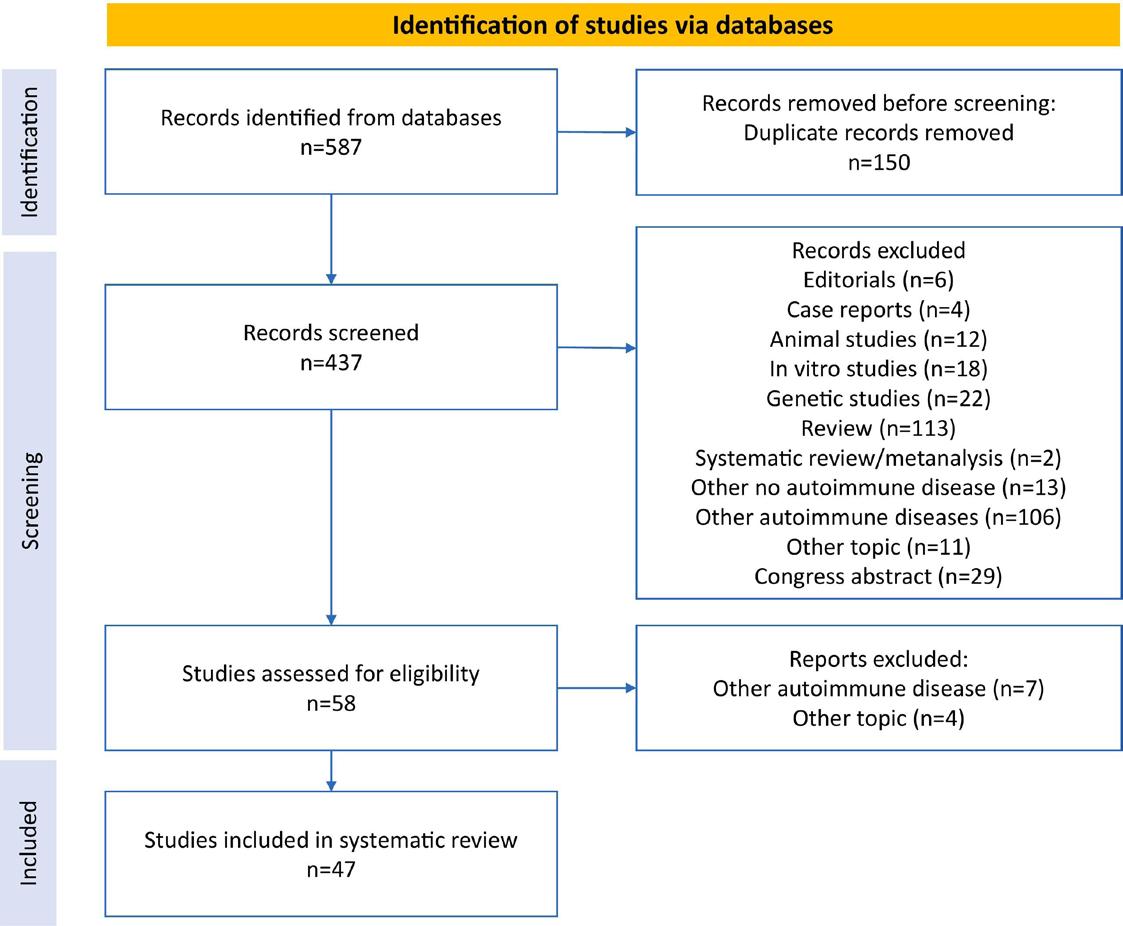
AUGUST 2023 • HPN | HOSPITALPROFESSIONALNEWS.IE 22
Fig. 1. PRISMA 2020 flow chart for new systematic reviews which included searches of databases, registers, and other sources
recently, in the hope of expanding this evidence, researchers have sought to identify the association between anti-CarP and PsA, and they have found this same association with more significant disease activity and severe joint damage, independent of the presence of ACPA, with good sensitivity and specificity values.68
Phosphorylation as PTM has been reported in systemic lupus erythematosus (SLE), celiac disease, and inflammatory bowel disease.69,70,71,72,73 In this systematic literature review, five studies evaluated the phosphorylation of p38, MAPK, signal transducer and activator of transcription (STAT) 1, STAT3, Ibκα, and Akt/ mTOR, identifying an impact in cellular activation or regulation pathways influencing inflammation and possible treatment target or treatment response.47,48,49,50,51
Oxidative stress has been evaluated in rheumatic diseases. Dysfunction in oxygen reduction enzymes such as superoxide dismutase, catalase, glutathione peroxidase, peroxiredoxins, thioredoxins, and thioredoxin reductases has been shown to promote apoptosis, inflammation, and formation of autoantibodies in SLE and RA.74,75,76,77,78 In the case of PsA, studies identified in synovium and PMBCs an imbalance in redox and an inflammatory profile supporting previous results.53,55 On the other hand, glycosylation of immunoglobulins has been reported to influence effector function. One study used the galactosylation ratio as a discriminatory tool in RA as compared with OA;79 galactosylated glycans from IgG were evaluated in PsA in two different works with diagnostic and treatment response
utility.43,46 Acetylation of histones in seronegative RA has been evaluated with evidence of crossreactivity with ACPA.80 In their 2018 study conducted in patients with PsA, Ovejero-Benito et al. reported an increase in histone methylation and also found that PsO and PsA reduced histone acetylation. However, no clinical association was evident, possibly due to the small sample size.52
The main limitations of the included studies were their high heterogeneity, including differences in the PsA population, diagnostic criteria, geographical regions, and ethnicity, as well as different types of samples and procedure reproducibility. Multiple measurement techniques were used with highly mixed results; different control groups were considered within the studies, and differences in the investigated outcome were reported, some focusing on diagnostic utility, others on prognosis, and a fraction on treatment response. For instance, pooling the data of the original articles would be highly difficult due to the heterogeneity
of study design and reported outcomes, and the heterogeneity in disease severity could affect the treatment output.
Despite the heterogeneity and methodological challenges, the importance of PTMs in rheumatology and, significantly, PsA is growing. Validation of biomarkers in different populations is needed to confirm the reports included in the present systematic literature review for future research and clinical practice implementation.
Conclusions
Evidence from the information collected show that the main PTM were citrullination, phosphorylation, carbamylation, and glycosylation in PsA. The latter is useful for defining patient subtype. Our study further highlighted the importance of conducting quality studies so that the results can be trusted with more certainty.
References available on request
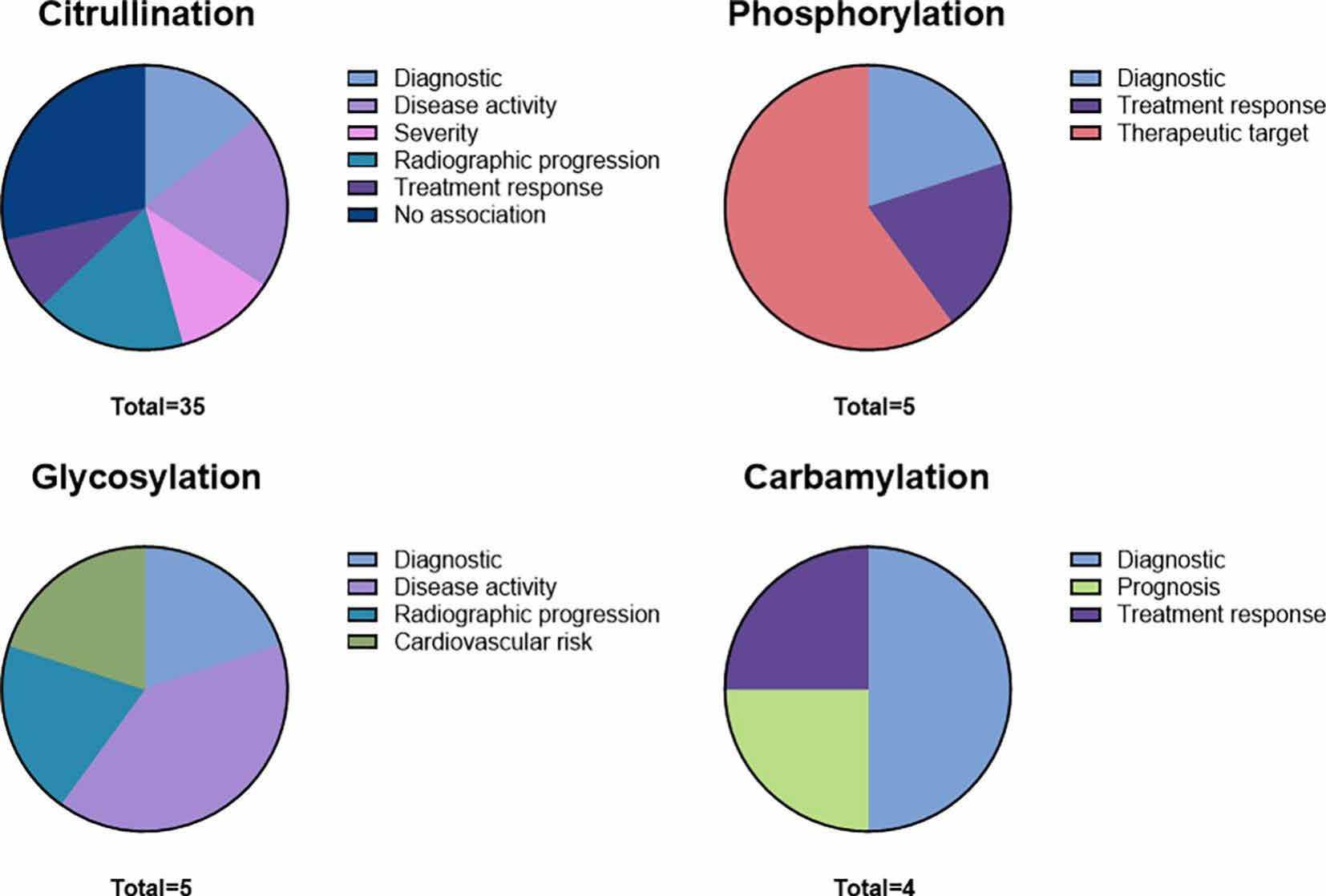
HOSPITALPROFESSIONALNEWS.IE | HPN • AUGUST 2023 23
Fig. 2. Posttranslational modifications and possible clinical applications
Oncotherapeutic Strategies in Early Onset Colorectal Cancer
 Written by Mary O’Reilly
McDermott1
1Centre for Colorectal Disease, St. Vincent’s University Hospital, Elm Park, D04 YN26 Dublin, Ireland
2Systems Biology Ireland, School of Medicine, University College Dublin, Belfield, D04 V1W8 Dublin, Ireland
3Conway Institute of Biomolecular & Biomedical Research, University College Dublin, Belfield, D04 V1W8 Dublin, Ireland
thought to be due to an increase in screening for colorectal cancer. Screening in the later onset cohort acts to identify precancerous polyps or early-stage adenomas. The purpose of this review is to summarize current guidance with regard to the treatment strategies of EOCRC.
2. Risk Factors for the Development of Colorectal Cancer
Introduction
Colorectal cancer is the third most common cancer among either sex in the United States and also the third most common cause of cancer-related mortality.1 Early onset colorectal cancer (EOCRC) now accounts for 1 in 10 diagnoses of this cancer subtype.2 The distinction between EOCRC and late-onset colorectal cancer (LOCRC) is not clear. However, it is largely agreed that age 50 is an acceptable arbitrary cut-off value, as this is the age that many countries begin to screen for colorectal cancer (CRC). The NCRI database also shows that the incidence of CRC among those under 50 is rising at an alarming rate.3 This trend of increased incidence of EOCRC is
seen across the globe, while the incidence of LOCRC is steadily declining. A recent publication analyzing the worldwide trends of EOCRC showed that the incidence of CRC increased by more than 100% from 95,737 in 1990 to 226,782 in 2019.4
The issue of the increasing incidence of EOCRC brings many challenges and clinical dilemmas. The first issue is trying to understand why the incidence of the disease is increasing at such a high rate in our youth. Since 1994, CRC incidence in individuals younger than 50 years has been increasing by 2% per year, whilst stability, and even a decline, in the later onset group has been seen.5 The decline in incidence seen in the later onset cohort is
CRC is a heterogeneous disease, with many risk factors increasing the likelihood of developing the disease. A history of inflammatory bowel disease increases the risk of the development of CRC.6 Other risk factors for the development of CRC include smoking, alcohol consumption, a diet high in red and processed meats, diabetes mellitus, physical inactivity, raised BMI (body mass index), and early exposure to antibiotics.7 Risk factors for development of CRC are summarized in Figure 1. In the EPIC cohort of almost 350,000 individuals, those who adhered to five healthy lifestyle factors (normal BMI, recommended amount of physical activity, non-smoking, mild alcohol consumption, and healthy diet) had a hazard ratio for the
development of CRC of 0.63 (95% CI, 0.54–0.74) compared with those who adhered to 1 or none of the factors.8 The 2010 global burden of disease study identified a diet lacking in milk and a diet lacking in whole grains to be the main risk factors for the development of EOCRC worldwide.4 All of the risk factors described share a common endpoint of the altered constitution of the gut microbiota. Intestinal dysbiosis is understood to play a pivotal role in carcinogenesis by disrupting the anti-inflammatory effects of the gut microbiome.9 Many dietary compounds, such as heterocyclic amines and polycyclic aromatic hydrocarbons, directly exert genotoxic effects on the gut as the barrier function of the microbiome is disrupted. An interesting study demonstrated, over generations of mice, that a diet of high fat and simple carbohydrates resulted in an altered microbiome with reduced diversity.10 These changes cause an increased incidence of inflammatory and malignant intestinal disease in murine models.11
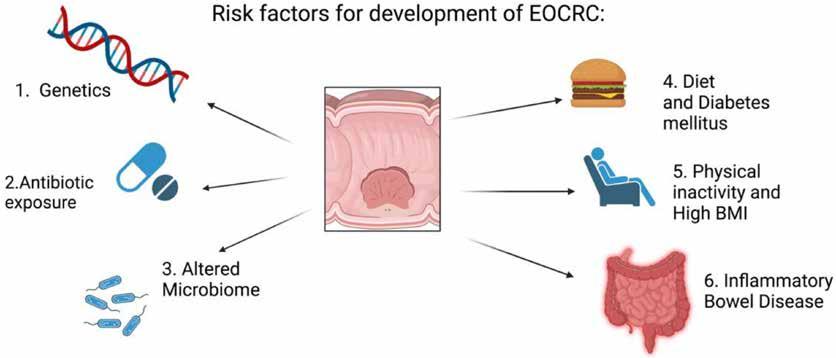
3. Cancer Predisposition Syndromes
Hereditary cancer syndromes have an incidence rate of less than 5% in the general population12 and are an important cause of CRC. The incidence is higher in younger patients, with approximately 20% of those under 50 who are diagnosed with colorectal cancer being affected by hereditary cancer syndromes.5 The most common hereditary cancer
AUGUST 2023 • HPN | HOSPITALPROFESSIONALNEWS.IE
24 Peer Review | Colorectal Cancer
Figure 1. Risk factors for the development of EOCRC. Figure developed using Biorender.com.
Dr Ray McDermott
1,*, Anna Linehan1, Aleksandar Krstic2, Walter Kolch2,3, Kieran Sheahan1, Des C. Winter1 and Ray
syndrome is Lynch syndrome; it accounts for 2% to 4% of all CRC cases13 and approximately onethird of the CRC cases in patients younger than 35 years.14 It is inherited in an autosomal dominant manner. This hereditary syndrome results from germline mutations in DNA mismatch repair (MMR) genes (MLH1, MSH2, MSH6, and PMS2),15 as seen in Figure 2. Its presence is usually detected by analyzing for microsatellite instability (MSI), which results from MMR deficiency and is detected as alterations in the length of repetitive DNA sequences in the tumor tissue, caused by the insertion or deletion of repeated units.16 If immunohistochemistry shows that MLH1 expression is absent in the tumor, then it is necessary to test for mutations in the BRAF gene. If a BRAF mutation is present, it is not a case of Lynch syndrome.17 A mutation of BRAF indicates that MLH1 expression is down-regulated through the somatic methylation of the promoter region of the gene.18 Another way to determine this is by testing for MLH1 promoter methylation. A large, retrospective, international, multicenter, observational study found 25% of EOCRCs to demonstrate MSI.19
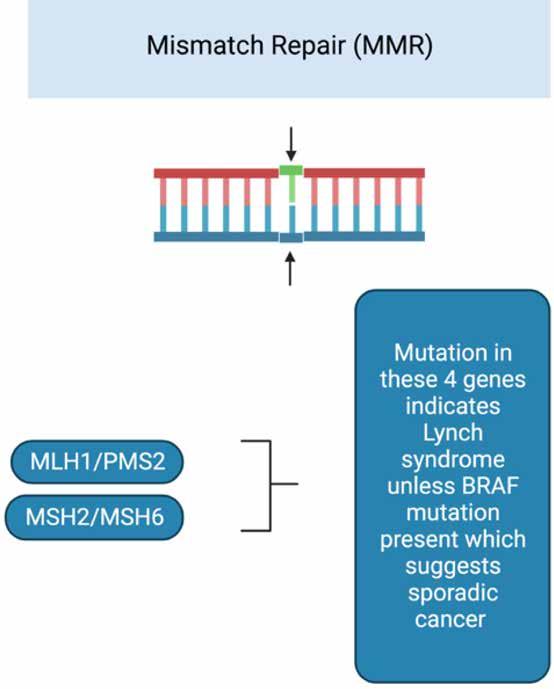
Other hereditary cancer syndromes, such as familial adenomatous polyposis (FAP), also increase the risk of developing colorectal cancer. FAP is inherited in an autosomal dominant manner. Overall, 80% of patients with FAP have a germline mutation in the adenomatous polyposis coli (APC) gene.20 A subset of people with FAP has a biallelic mutation of the MYH gene.21 Patients with FAP tend to develop more than 100 colorectal adenomas. If left without treatment, the majority will develop colorectal adenocarcinoma by 40 years of age. A variant is attenuated FAP, where patients develop 10 to 100 colorectal adenomas. A clear genotype–phenotype relationship exists: APC mutations between codons 1445 and 1578 are associated with an increased risk of desmoid tumors—patients with attenuated FAP usually have mutations at the 5′ (proximal to codon 1517) or the 3′ end (distal to codon 1900) of the APC gene. Patients who have FAP where an identifiable mutation cannot be found are at a higher risk for more aggressive disease.22
4. Diagnostic Delays
The initial investigation for patients undergoing screening
or experiencing symptoms suggestive of colorectal cancer is a colonoscopy; this will confirm the diagnosis pathologically. Once the diagnosis is confirmed, baseline computed tomography (CT) of the chest, abdomen, and pelvis and a carcinoembryonic antigen (CEA) test are the standard studies for the investigation of colorectal cancer. Magnetic resonance imaging (MRI) of the pelvis may be requested by surgeons to decipher whether a patient with rectal cancer is a surgical candidate and to assist with planning the surgery. Occasionally, positron emission tomography (PET) scanning may be useful if metastatic disease cannot be ruled out by CT. The most important prognostic colorectal cancer indicator is the pathological stage at presentation. The tumor stage is calculated using TNM staging.
The fact that these patients typically seek medical attention much later than their older counterparts is a significant challenge. Studies have shown that painless bleeding, which is often dismissed as hemorrhoids, can occur up to 3 years before other CRC symptoms.23 A sense of invincibility in young adults, combined with a lack of medical insurance in the United States, contributes to delayed presentation.24 CRC diagnosis in younger patients is usually determined, on average, 6 months after onset of symptoms.25 Society still views this disease as a condition of older age. Therefore, hesitancy and misdiagnosis on the part of both the patient and physician, who expect the symptoms to be related to a benign disease process, are common. Due to the delay in diagnosis, there is a higher proportion of patients presenting with metastatic disease compared to their older counterparts. Studies have shown that up to 76% of patients younger than 30 years of age present with stage III or IV disease,26 compared with less than 50% of patients over 50 years of age.27 Increased awareness of the incidence of colorectal disease among the young is needed in both the medical and wider community.
5. Treatment Strategies
Another challenge in the treatment of colorectal cancer is the nonuniform response to anticancer drugs and resistance to drugs to which the cancer was once susceptible. This review will discuss treatment strategies for patients with EOCRC. While many of the principles for treating cancer of the colon and the rectum are similar in the EOCRC cohort compared with the LOCRC cohort, there are some differences. The EOCRC cohort generally has fewer comorbidities and higher performance status, meaning that they tend to be treated more aggressively with chemotherapy and radiotherapy by oncologists.28 The need to discuss fertility risks and counseling regarding family planning presents itself more frequently in the EOCRC cohort. There are inconsistencies in the literature as to whether this aggressive approach translates to an improved prognosis, with some data reporting a similar or improved survival29,30 and others reporting a worse prognosis in EOCRC patients.31 A multimodal, patient-tailored approach— combining pharmaceutical agents, such as chemotherapy and immunotherapy, radiotherapy, and surgery—may be essential to improve morbidity and mortality from this disease. Much work is underway to develop drugs to target the driver mutations of EOCRC. This personalized medicinal approach will reduce the number of long-term side effects of chemotherapy that this group is exposed to.
In order to divide colorectal cancer into subtypes to predict responsiveness to antineoplastic drugs, many attempts to identify genetic targets have been made.32 Unfortunately, the identification of molecular markers to guide therapy selection in colorectal cancer has not been plentiful. The targets currently being explored include KRAS mutations. A recent phase I/II study showed the benefit of using targeted therapy in patients with GI cancers harboring KRAS G12C mutations.33 HER-2, NTRK, and RET driver mutations can be targeted with drugs, but these are rarely seen in colorectal populations. Those with microsatellite instability should be treated with immunotherapy.34 Genes that lead to the development of colorectal cancer are either oncogenes that have developed enhanced functioning or tumor suppressor genes that have lost their function. The Cancer Genome Atlas has identified 32 frequently mutated
HOSPITALPROFESSIONALNEWS.IE | HPN • AUGUST 2023 25
Figure 2. Genes involved in the development of Lynch syndrome. Figure developed using Biorender.com.
somatic genes in colorectal cancer, of which, APC, TP53, KRAS, NRAS, PIK3CA, FBXW7, SMAD4, TCF7L2 CTNNB1, SMAD2, FAM123B (also known as WTX), and SOX9 were the most commonly mutated.35 Figure 3 shows common genetic mutations seen in EOCRC. PIK3CA is the only mutated gene in this list that can be targeted with an FDA-approved drug. A study by Yuan et al. used multiomics to identify genetic susceptibility genes for colorectal cancer, and they were successful in showing 66 susceptibility genes and their loci.36 As part of their study, they combined the regression results of the expression of quantitative trait loci analyses from three large studies, the Genotype-Tissue Expression, Cancer Genome Atlas, and Colonomics projects, with their meta-analysis. This enabled them to identify 18 additional susceptibility genes in CRC which were not previously described. Xu et al.37 sought to identify new genetic drivers associated with CRC. They identified two new genes associated with CRC, LRRC26 and REP15, which also acted as prognostic biomarkers. Studies have shown that somatic copy number alteration (SCNA) is one of the most common structural mutations in colorectal cancer.38
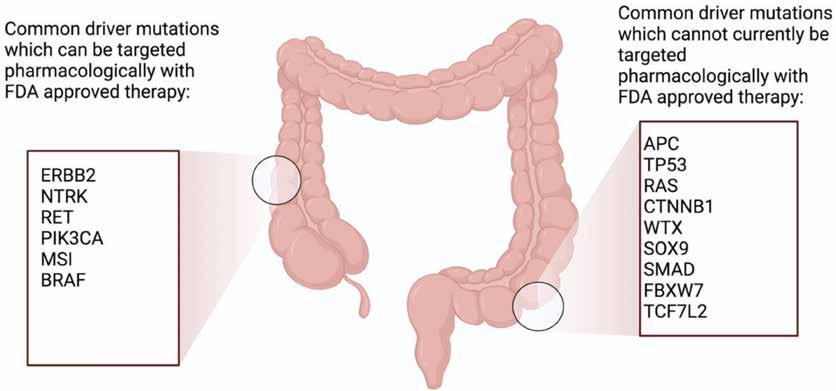
SCNA genes are regarded as driver genes for cancer development.39
A number of SCNA genes are showing potential for use as prognostic markers for patients with colorectal cancer. Studies have shown that a high copy number of mitochondrial DNA can indicate a poor prognosis in advanced colorectal cancer, suggesting that metabolic changes are associated with more aggressive forms of the disease.40 Further studies to ensure consistency and reproducibility are needed.
Due to the difficulty of developing a classification relying on genomic alterations, an expression-based classification was proposed. In 2015, a new stratification of molecular subtypes was developed by an international consortium that integrated data from six different transcriptome-based classifiers.41 The four identified consensus molecular subtypes (CMS) show the individual activation levels of cancer pathways and distinct genomic alterations: CMS1 (MSI immune), microsatellite unstable, and hypermutated; CMS2 (canonical), epithelial, chromosomally unstable, marked MYC- and WNT-signaling activation; CMS3 (metabolic), epithelial, with evident metabolic dysregulation; and CMS4 (mesenchymal). It has been shown that the CMS subtypes have predictive and prognostic abilities—an example of this was improvements in overall survival that were associated with the use of Bevacizumab compared with Cetuximab in CMS1.42
6. Chemotherapy Regimens Used in EOCRC
5-Fluorouracil is the first-line chemotherapeutical agent used for CRC. It is usually used in combination with other chemotherapeutical agents. It is administered in two ways: either by continuous infusion via access to central venous circulation or orally in the form of Capecitabine. It works as an antimetabolite to prevent cell proliferation. It primarily inhibits the enzyme thymidylate synthase, thereby blocking the thymidine formation required for DNA synthesis.43 Other drugs commonly used in CRC include Oxaliplatin, a platinum drug that inhibits DNA synthesis,44 and Irinotecan, which works by inhibiting topoisomerase I.45
7. Treatment of Metastatic
Metastatic colorectal cancer with no potential for surgical resection cannot be cured. The necessary considerations when making treatment decisions will include the tumor characteristics, the patient’s performance status and comorbidities, the treatment schedule, expected toxicities, and the mutational profile of the tumor. The aim of treatment in this setting is to improve quality of life and prolong life expectancy. The current treatment options include various drugs, which can be used in combination or as single agents. First-line systemic treatment options for those who are microsatellite stable (MSS) and do not have a druggable driver mutation include FOLFOX (continuous infusion of 5-FU and Oxaliplatin), CAPEOX (Capecitabine and Oxaliplatin), FOLFIRI (continuous infusion 5-FU and Irinotecan), and FOLFOXIRI (continuous infusion of 5-FU, Oxaliplatin, and Irinotecan).46 Large, randomized control trials and meta-analyses have not selected one of the above chemotherapy combinations to be superior to the others.47,48 Oxaliplatin can cause peripheral neuropathy and thrombocytopenia. Irinotecan can cause diarrhea and lymphocytopenia.
8. Additional Targeted Agents in Metastatic EOCRC
All patients with metastatic disease should have their tumors assessed for mutations in KRAS, NRAS, and BRAF. This testing can be conducted on the primary colorectal tumor or the metastasis, as the results are similar in both specimen types.49 Bevacizumab is a humanized monoclonal antibody that counteracts the effects of vascular endothelial growth factor
(VEGF), which is important in tumor angiogenesis. A number of metanalyses have shown that the use of Bevacizumab in combination with chemotherapy in a first-line setting confers a clinical benefit.50,51 Cetuximab and panitumumab are monoclonal antibodies directed against the epidermal growth factor receptor (EGFR). Cetuximab is a chimeric monoclonal antibody, whereas Panitumumab is a completely human monoclonal antibody. Patients with a known KRAS mutation (exon 2, 3, 4) or NRAS mutation (exon 2, 3, 4) should not be treated with either antiEGFR therapy cetuximab or panitumumab.52 A BRAF V600E mutation makes a response to panitumumab or cetuximab highly unlikely unless given together with a BRAF inhibitor [53]. There is evidence for use of EGFR inhibitors in RAS wildtype, left-sided primary tumors (splenic flexure to rectum). The phase III CALGB/SWOG 80,405 trial54 assessed the use of EGFR inhibitors vs. VEGF in combination with chemotherapy in a first-line setting. They found that RAS wildtype, right-sided tumors (caecum to hepatic flexure) had longer overall survival if treated with bevacizumab than if treated with cetuximab in a first-line setting. Patients with RAS wild-type, left-sided primary tumors (splenic flexure to rectum) had a longer overall survival if they received treatment with cetuximab rather than bevacizumab.
9. Manipulation of The Immune System to Treat EOCRC
The recent advent of immunotherapy commenced a renaissance of oncotherapeutics in EOCRC. In CRC, the immune microenvironment is crucial for disease development, response to treatment, and prognosis.55 Those CRCs that demonstrate microsatellite instability (MSI) have a higher tumor mutational burden.19 Approximately 5% of all metastatic colorectal cancer will be MSI high.56 MSI high status is a biomarker that indicates the response to immunotherapy. These patients should receive a PD-1 inhibitor alone or in combination with a CTLA-4 inhibitor.57 Much work has been done to develop an ‘immunoscore’, which is a classification system to predict responses to immunotherapy
AUGUST 2023 • HPN | HOSPITALPROFESSIONALNEWS.IE
EOCRC
26
Review |
Peer
Colorectal Cancer
Figure 3. Common genetic mutations seen in EOCRC. Figure developed using Biorender.com.
Pemetrexed 25 mg/mL
A room temperature stable ready-to-dilute concentrate

based on CD3 and CD8 lymphocyte populations in the tumor core and invasive margin. It is not currently used in clinical practice.58 The tumor microenvironment in MSS disease is one which comprises cancerassociated fibroblasts and protumorigenic macrophages, which cause the suppression of T cells and promote tumor development.59 Immunogenic cell death can be triggered by therapies, such as radiation or chemotherapy,60 and it is hypothesized that this may render the tumor more susceptible to immunotherapy.
POLE and POLD1 are genes that encode DNA polymerases with proofreading activity.61 Mutations in these genes result in large numbers of single nucleotide variants. Colorectal cancers driven by somatic POLE mutations occur in 1–2% of colorectal cancers; POLD1 mutations are very uncommon.62 POLE mutant colorectal cancers carry a favorable prognosis.63 They feature excellent responses to immune checkpoint blockades [64] due to the high mutational burden, which triggers a strong neoantigen response.65 Temko et al.66 analyzed endometrial and colorectal carcinomas and colorectal adenomas to assess how early in tumorigenesis the POLE mutation occurs and the immune response associated with the mutation. They found that the T cell infiltrate in POLE mutant cancers was the same as the infiltrate in the precursor lesions, and the absolute number of neoantigens was much higher than in other cancers. From this data, it could be inferred that somatic POLE mutations are early events in the cancers in which they occur. Given that these cancers are relatively common and appear to respond to checkpoint inhibition, consideration should be given to checking MSS EOCRC for somatic POLE mutations.
10. Treatment of Early-Stage EOCRC
Surgical resection is the main treatment modality for localized early-stage colon cancer. Patients with a bulky nodal disease on imaging or clinical T4 tumors should be considered for neoadjuvant chemotherapy with fluoropyrimidine-based chemotherapy to decrease the size of the tumor prior to resection, based on evidence from the FOxTROT study.67 This study showed that neoadjuvant chemotherapy was associated with a decrease in incomplete resections (5% vs. 10%; p = 0.001). The status of the resection margins as well as the number of
removed nodes are very important determinants of prognosis. Adjuvant therapy can augment the chance of a cure in patients with high-risk colon cancer. All patients with a node-positive disease should receive chemotherapy with a 5-FU element (i.e., FOLFOX or CAPEOX) for 3–6 months or 6 months of capecitabine. There is no consensus over which regimen is superior [68]. Chemotherapy should be considered in patients who have a node-negative disease with a T4 tumor or a T3 tumor with disease features that indicate there is a high risk of recurrence (i.e., poorly differentiated/ undifferentiated histology; lymphatic/vascular invasion; bowel obstruction; <12 lymph nodes examined; perineural invasion; localized perforation; close, indeterminate, positive margins; or tumor budding).69
Universal testing for MMR or MSI is recommended for all EOCRC patients. The literature suggests that a deficiency in MMR protein expression or MSI-high (MSI-H) tumor status may be a predictive marker of decreased benefit, and possibly even a detrimental impact, from adjuvant therapy with fluoropyrimidine in patients with stage II disease. Thus, in those patients, adjuvant chemotherapy should be avoided.70
For low-risk rectal cancers (T1–T2 with no positive nodes and no high-risk features), the recommended practice is transabdominal resection with total mesorectal excision. Neoadjuvant or adjuvant therapy is not recommended in this setting.71 If the tumor is upstaged pathologically, then the patient should undergo adjuvant chemotherapy. For any tumors that are T3 or T1–2 tumors with positive nodes, the literature shows that there are benefits to treating the tumor preoperatively with chemoradiotherapy and chemotherapy upfront.71 This is called total neoadjuvant therapy. A number of randomized trials have established the benefit of adding chemotherapy (most often 5-FU/leucovorin or capecitabine) to radiotherapy for the treatment of localized rectal cancer. The use of concurrent chemoradiation is thought to increase local radiotherapy sensitization and the systemic control of the disease (i.e., increased pathological responses and the eradication of micrometastases).72 Preoperative chemoradiotherapy can increase the rates of pathologically complete responses and sphincter preservation.73
11. Oligometastatic Disease
Approximately 50% of patients diagnosed with CRC develop colorectal metastases,74,75 with more than 80% of these patients developing unresectable metastatic liver disease.76 A subset of these patients will be candidates for surgical resection with curative intent. Meta-analyses report a 5-year overall survival rate as high as 71% following the resection of a solitary liver lesion.77 Determining which patients are surgical candidates is essential; all diseased tissue should be removed with clear surgical margins, and a sufficient quantity of liver tissue should remain to allow for adequate liver function. Some data have shown that there is a higher rate of hepatic resection among younger patients.78 However, a review carried out in the English NHS comparing the rates of hepatic resection in EOCRC to LOCRC for all cancers diagnosed between 2014 and 2018 did not show a significant difference between the two groups.79 Another study showed that older populations can also have favorable outcomes, and that age alone should not be used as the deciding factor for hepatic resection.80 An interesting study by Parisi et al. assessed overall survival after liver resection for colorectal metastasis versus noncolorectal metastasis and found the colorectal group had an overall survival time of 54 months vs. 32 months in the non-colorectal metastasis group.81 Those who are not surgically resectable at the outset can be treated neoadjuvantly in an attempt to shrink the tumor and render the patient resectable. There are a number of 5-FU-based regimens, such as FOLFIRI, FOLFOX, or FOLFOXIRI, in combination with anti-epidermal growth factor receptor (EGFR) inhibitors, that have been successful in converting unresectable disease to resectable disease.82,83 It is common practice that even patients who are resectable candidates from the outset should complete perioperative chemotherapy. There is a debate as to which regimen should be followed and whether neoadjuvant or adjuvant therapy is superior. It is essential that patients with resectable disease do not miss the opportunity to proceed to surgery if their disease progresses whilst on neoadjuvant chemotherapy. In total, patients should not have more than 6 months of perioperative chemotherapy. The phase III Tribe study assessed the efficacy of upfront treatment with Bevacizumab combined
with FOLFOX, FOLFIRI, and FOLFOXIRI.84 The conclusion was that the three regimens are equivalent and can be used in the neoadjuvant setting prior to surgery. In patients with dMMR, immunotherapy can be considered. In this instance, there is not yet any clinical trial data, but there are a number of case studies that have reported benefits from immunotherapy before hepatic resection.85
In the same way that hepatic resection can be used with curative intent, highly selected patients with isolated pulmonary metastasis can undergo resection in a similar manner. One analysis showed a 3-year overall survival rate of 78%.86 There is no clear consensus on the use of local therapies for non-resectable metastatic disease. Transcatheter arterial chemoembolization, Yttrium-90 microsphere radioembolization, and hepatic arterial infusion chemotherapy have similar levels of efficacy in patients with unresectable colorectal hepatic metastases.87 There is debate about the timing of the use of the mentioned modalities as well as the use of these modalities.
12. Future Perspectives for the Treatment of Early Onset Colorectal Cancer
There are a number of emerging strategies that have the potential to revolutionize the treatment of EOCRC. Liquid biopsies hold the promise to become a gold standard method of diagnosing and monitoring those with colorectal cancer in the near future. The wealth of information that liquid biopsies can provide has numerous applications, including diagnosis, prognosis, therapeutic response prediction, and the detection of relapse in those who were treated with curative intent. The liquid biopsy takes the form of a small-volume (approx. 10 mL) venous blood sample, which can be collected in a low-cost, minimally invasive manner.88 After diagnosis and treatment commencement, it can be used in conjunction with tissue biopsy to assess responses to treatment and disease relapse. ctDNA is a tumor-specific free DNA fragment released during apoptosis from the primary tumor or associated metastatic deposits, thus allowing it to serve as a biomarker for diagnosis, prognosis, and prediction.89 It is thought that ctDNA is released by all tumor sites, including metastasis, and therefore, may provide invaluable information with regard to tumor heterogeneity.
AUGUST 2023 • HPN | HOSPITALPROFESSIONALNEWS.IE
28 Peer Review | Colorectal Cancer
Legal Category: POM S1A. Marketing Authorisation Holder: Pfizer Europe MA EEIG, Boulevard de la Plaine 17, 1050 Bruxelles, Belgium. For further information please contact: Pfizer Healthcare Ireland, 9 Riverwalk, National Digital Park, Citywest Business Campus, Dublin 24 or Medical Information on 1800 633 363 or at medical.information@pfizer.com
T This medicinal product is subject to additional monitoring. This will allow quick identification of new safety information. Healthcare professionals are asked to report any suspected adverse reactions. Refer to section 4.8 of the SPC for how to report adverse reactions.
Please see summary of product characteristics for more information.

PP-BIO-IRL-0149 All rights reserved. September 2021
▼
Tumor-specific mutations allow the tumor DNA to be differentiated from other non-specific free DNA that originates from normal cells. There are two ways in which ctDNA is currently used for therapeutics.90 The first method is using a targeted approach to detect specific mutations in genes that are actionable, such as NTRK and ERBB2. The other method is an untargeted approach, where whole genome sequencing is performed on the DNA.
As discussed earlier in this review, targeted therapies for the treatment of EOCRC have the potential to effectively treat the condition whilst decreasing therapy-associated toxicities. A promising therapeutic target in colorectal cancer is the enzyme nicotinamide N-methyltransferase (NNMT), which is upregulated in this malignancy and contributes to its aggressiveness.91 A number of NNMT inhibitors are already available and could be tested for colorectal cancer management
and also for enhancing chemotherapeutic efficacy.92,93,94 Finally, changes to the gut microbiome may be a cause or indicate the development of CRC. Much work is ongoing to identify techniques to prevent and treat CRC. One area that is under scrutiny is the identification of long non-coding RNAs (lncRNAs), which are RNA segments longer than 200 nucleotides that do not have the ability to code for proteins. LncRNAs can be used to diagnose and recognize the progression, recurrence, and chemoresistance of CRC. LncRNAs have the potential for exploitation to develop new strategies that can assist in diagnosis, prognostication, and drug development for colorectal cancer.95,96

13. Conclusions
EOCRC has become a terrifyingly prevalent medical illness in the last two decades. This review
has discussed the incidence, etiology, and treatment strategies for EOCRC. Although there are numerous hypotheses attempting to explain the underlying causes of this cohort effect, we do not completely understand the recent dramatic increase in incidence. It is likely that genetics, lifestyle factors, and the microbiome all influence this condition. Large-scale clinical trials have improved the prognosis of patients at the population level by devising protocols based on data collected for the cohort as a whole. However, we know that significant intra-patient and intra-tumor heterogenicity exists. This is especially true for EOCRC, as we do not fully understand the pathogenesis of the disease. It is clear that standard, firstline regimens should not serve in a ‘one size fits all’ manner. The journey toward precision oncology is a critical step in improving outcomes for individual patients. However, developing
Peer Review | Abstract
tailor-made treatment plans for patients based on the tumor’s perceived vulnerabilities to specific agents remains challenging. The diversity across human cancers and limited knowledge of drug–tumor interactions remain as barriers. Further multiomic studies of colorectal cancer hold the key to unlimited access to precision oncology. As previously suggested, it appears that EOCRC behaves as a distinct clinical and molecular entity to LOCRC. Additionally, these patients have complex physical, spiritual, sexual, and psychosocial needs, which may require a multidisciplinary approach involving the general practitioner, surgeon, radiation oncologist, medical oncologist, psychologist, and fertility specialist. Continued research to obtain a better understanding of the reasons why these patients are developing the disease will enable us to devote more resources to the prevention and cure of the disease. References available on request
A Systematic Review of Cost-Effectiveness Analyses of Colorectal Cancer Screening in Europe: Have Studies Included Optimal Screening Intensities?
Written by Rajani Pokharel1, Yi-Shu Lin1, Ethna McFerran2 & James F. O’Mahony1
1Centre for Health Policy and Management, School of Medicine, Trinity College Dublin, Dublin, Ireland
2Patrick G Johnston Centre for Cancer Research, School of Medicine, Dentistry and Biomedical Sciences, Queen’s University Belfast, Belfast, Northern Ireland
the current screening policies with a focus on the screening interval.
Methods
Abstract
Objective
To assess the range of strategies analysed in European costeffectiveness analyses (CEAs) of colorectal cancer (CRC) screening with respect to the screening intervals, age ranges and test cut-offs used to define positivity, to examine how this might influence what strategies are found to be optimal, and compare them with
We searched PubMed, Web of Science and Scopus for peerreviewed, model-based CEAs of CRC screening. We included studies on average-risk European populations using the guaiac faecal occult blood test (gFOBT) or faecal immunochemical test (FIT). We adapted Drummond’s ten-point checklist to appraise study quality.
Results
We included 39 studies that met the inclusion criteria. Biennial screening was the most frequently used interval which was analysed in 37 studies. Annual screening was assessed in 13 studies, all of which found it optimally costeffective. Despite this, 25 of 26 European stool-based programmes
use biennial screening. Many CEAs did not vary the age range, but the 14 that did generally found broader ranges optimal. Only 11 studies considered alternative FIT cut-offs, 9 of which found lower cut-offs superior. Conflicts between current policy and CEA evidence are less clear regarding age ranges and cut-offs.
Key Points for Decision Makers
Conclusions
The existing CEA evidence indicates that the widely adopted biennial frequency of stool-based testing in Europe is suboptimal. It is likely that many more lives could be saved throughout Europe if programmes could be offered with more intensive annual screening.
Most colorectal cancer (CRC) screening programmes in Europe employ biennial screening using stool-based tests.

This review assessed the screening intensities analysed by European CEAs of stool-based CRC screening, and while many only assessed biennial screening all of those that also considered annual screening found it to be optimally cost-effective.
Our findings indicate that many European CEAs of CRC screening have not included a sufficient range of screening strategies in their analyses and imply that current European CRC screening is likely of suboptimal intensity and that many more lives could be saved if programmes could offer annual screening.
AUGUST 2023 • HPN | HOSPITALPROFESSIONALNEWS.IE
30 Peer Review | Colorectal Cancer

HOSPITAL PROFESSIONAL NEWS IRELAND Ireland’s Dedicated Hospital Professional Publication HOSPITAL PROFESSIONAL NEWS IRELAND Ireland’s Dedicated Hospital Professional Publication
Peer Review | Lung Cancer
Symptomatic Lung Cancer Diagnostic Pathways
Written by S Griffiths, D Breen - Department of Respiratory Medicine, Galway University Hospital


of cancer diagnoses and ongoing improvements in cancer management.
According to the NCRI, cancers with poorer average prognosis have shown substantial relative increases in survival, with more than a doubling of survival for lung cancer since the 1990s. 5-year net survival for lung cancer from 2014-2018 was 19%, which represents a 15%+ change in 5-year net survival compared to data from 1994-1998. (Figure 12)
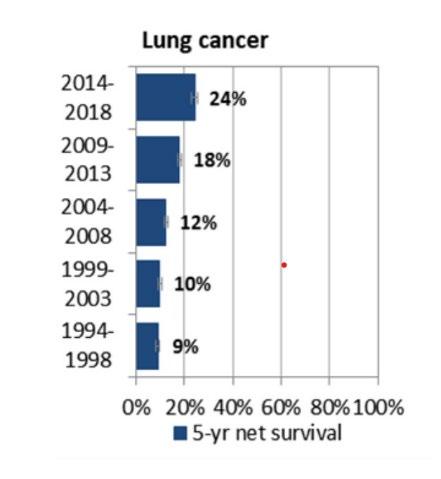
in environments of care and complex patient presentations. The principal objective of the NCG is to improve the quality of care received by patients. Other objectives include improving patient outcomes, potential for reduction in morbidity and mortality, and improvement in quality of life. In Ireland there are eight hospitals designated as cancer centres.
Early Symptoms of Lung Cancer
Introduction
Lung cancer is the most common cause of cancer mortality worldwide and the 3rd most common cancer diagnosis in Ireland.1,2 Smoking is the biggest risk factor in the development of lung cancer in Ireland, followed by radon exposure, which is estimated to account for approximately 300 lung cancer cases per year.3 The HSE and Healthy Ireland has made smoking cessation policy a priority, with a target of a Tobacco-Free Ireland by 2025. The focus on smoking cessation is evidenced by national strategies including the first workplace ban on smoking worldwide implemented in Ireland in 2004. Galway University Hospital, along with many other hospital groups implement a campus-wide smoking ban.
The prognosis of patients with lung cancer is closely related to stage at time of diagnosis, so early recognition, referral and diagnosis is vitally important to improve outcomes. There is growing interest in lung cancer screening programs following large scale UK, European and US studies, with national programs and pilot programs currently in development throughout Europe.
2018-2020 there were a total of 2,672 new diagnosis of lung cancer (1457 male, 2672 female).2
Complete cancer prevalence is defined as the number of persons surviving with or following a diagnosis in Ireland. The NCRI report a prevalence of 3.5% at the end of 2020 in Ireland, amounting to 7321 persons –patients living with a diagnosis of lung cancer, either undergoing active or palliative treatment, or longer-term survivors.2
Cancer is the leading cause of death in Ireland. 32% of deaths occurring in 2019 were attributed to neoplasms, and 30% in 2020. Lung cancer was the leading cause of cancer death in both sexes, with an average of 1,916 deaths per year or 19% of cancer deaths in women and 21% of cancer deaths in men during the period of 20162018. Lung cancer is a common diagnosis, and remains a highfatality malignancy, with only 4% of lung cancer patients still alive at the end of 2020.2
According to the NCRI, cancers with poorer average prognosis have shown substan�al rela�ve increases in survival, with more than a doubling of survival for lung cancer since the 1990s. 5-year net survival for lung cancer from 2014-2018 was 19%, which represents a 15%+ change in 5-year net survival compared to data from 1994-1998. (Figure 1 (2))
Improved survival in recent years
Lung cancer is projected to increase by 105% in females, and by 131% in males, predicting annual numbers of cases of 3,137 males and 2,313 females by 2045.4 This will have a major impact on service provision needs to ensure we can maintain access to rapid and appropriate diagnostics and management.
NCCP lung cancer guideline
The NCCP National Clinical Guideline (NCG) on Diagnosis, staging and treatment of patients with lung cancer5 was developed in 2017 and applies to adults with newly diagnosed lung cancer, or patients with a suspected diagnosis of lung cancer in a hospital setting. Providing standardised clinical care to patients is a priority. The NCCP guideline aims to provide an evidence-based approach to circumnavigate factors that impact care provision, including variation
The cardinal symptom of lung cancer is haemoptysis, but the British Thoracic Society recommends urgent chest X-ray to all patients with symptoms of cough, fatigue, shortness of breath, chest pain, weight loss or appetite loss, or with signs of finger clubbing, supraclavicular or persistent cervical lymphadenopathy, or chest signs consistent with lung cancer.6 A recent study has demonstrated that an increasing number of patients are now presenting with symptoms of dyspnoea or cough, and, in contrast, symptoms of haemoptysis and decreased appetite have declined.7 Early recognition and referral for symptoms concerning for lung cancer is key to achieving early diagnosis, curative treatment and improved survival rates.8
Rapid Access Lung Clinic:
The National Cancer Strategy has
Incidence, prevalence, mortality
Lung cancer is the 3rd most common cancer in men, and 2nd most common cancer in females, comprising 11% and 11% respectively between the years 2018-2020 according to the most recent published NCRI report for cancer registrations. Between
Lung cancer is still the leading cause of cancer death in both sexes (21% and 19% respectively). However, there has been a dramatic increase in cancer survivorship, with the 2022 NCRI annual statistics reporting a >50% increase in numbers of cancer survivors compared with one decade ago, reflecting an increase in both the number
AUGUST 2023 • HPN | HOSPITALPROFESSIONALNEWS.IE 32
Figure 12
Dr Sally Griffiths Dr David Breen
KEYTRUDA: helping to redefine overall survival expectations for more patients with mNSCLC1-4
KEYTRUDA® (pembrolizumab)


ABRIDGED PRODUCT INFORMATION Refer to Summary of Product Characteristics before prescribing. PRESENTATION KEYTRUDA 25 mg/mL: One vial of 4 mL of concentrate contains 100 mg of pembrolizumab. INDICATIONS KEYTRUDA as monotherapy is indicated for the treatment of adults and adolescents aged 12 years and older with advanced (unresectable or metastatic) melanoma. KEYTRUDA as monotherapy is indicated for the adjuvant treatment of adults and adolescents aged 12 years and older with Stage IIB, IIC or III melanoma and who have undergone complete resection. KEYTRUDA as monotherapy is indicated for the first-line treatment of metastatic non-small cell lung carcinoma (NSCLC) in adults whose tumours express PD-L1 with a ≥50% tumour proportion score (TPS) with no EGFR or ALK positive tumour mutations. KEYTRUDA, in combination with pemetrexed and platinum chemotherapy, is indicated for the first-line treatment of metastatic non-squamous NSCLC in adults whose tumours have no EGFR or ALK positive mutations. KEYTRUDA, in combination with carboplatin and either paclitaxel or nab-paclitaxel, is indicated for the first-line treatment of metastatic squamous NSCLC in adults. KEYTRUDA as monotherapy is indicated for the treatment of locally advanced or metastatic NSCLC in adults whose tumours express PD-L1 with a ≥1% TPS and who have received at least one prior chemotherapy regimen. Patients with EGFR or ALK positive tumour mutations should also have received targeted therapy before receiving KEYTRUDA. KEYTRUDA as monotherapy is indicated for the treatment of adult and paediatric patients aged 3 years and older with relapsed or refractory classical Hodgkin lymphoma (cHL) who have failed autologous stem cell transplant (ASCT) or following at least two prior therapies when ASCT is not a treatment option.
KEYTRUDA as monotherapy is indicated for the treatment of locally advanced or metastatic urothelial carcinoma in adults who have received prior platinum-containing chemotherapy. KEYTRUDA as monotherapy is indicated for the treatment of locally advanced or metastatic urothelial carcinoma in adults who are not eligible for cisplatin-containing chemotherapy and whose tumours express PD L1 with a combined positive score (CPS) ≥ 10. KEYTRUDA as monotherapy or in combination with platinum and 5-fluorouracil (5-FU) chemotherapy, is indicated for the first-line treatment of metastatic or unresectable recurrent head and neck squamous cell carcinoma (HNSCC) in adults whose tumours express PD-L1 with a CPS ≥ 1. KEYTRUDA as monotherapy is indicated for the treatment of recurrent or metastatic HNSCC in adults whose tumours express PD-L1 with a ≥ 50% TPS and progressing on or after platinum-containing chemotherapy. KEYTRUDA, in combination with axitinib, is indicated for the first-line treatment of advanced renal cell carcinoma (RCC) in adults. KEYTRUDA, in combination with lenvatinib, is indicated for the first line treatment of advanced renal cell carcinoma in adults. KEYTRUDA as monotherapy is indicated for the adjuvant treatment of adults with renal cell carcinoma at increased risk of recurrence following nephrectomy, or following nephrectomy and resection of metastatic lesions. Microsatellite instability high (MSI-H) or mismatch repair deficient (dMMR) cancers Colorectal cancer (CRC) KEYTRUDA as monotherapy is indicated for adults with MSI-H or dMMR colorectal cancer in the following settings: - first line treatment of metastatic colorectal cancer - treatment of unresectable or metastatic colorectal cancer after previous fluoropyrimidine based combination therapy. Non-colorectal cancers KEYTRUDA as monotherapy is indicated for the treatment of the following MSI H or dMMR tumours in adults with (a) advanced or recurrent endometrial carcinoma, who have disease progression on or following prior treatment with a platinum containing therapy in any setting and who are not candidates for curative surgery or radiation, (b) unresectable or metastatic gastric, small intestine, or biliary cancer, who have disease progression on or following at least one prior therapy. KEYTRUDA, in combination with platinum and fluoropyrimidine based chemotherapy, is indicated for the first-line treatment of locally advanced unresectable or metastatic carcinoma of the oesophagus or HER-2 negative gastroesophageal junction adenocarcinoma in adults whose tumours express PD-L1 with a CPS ≥ 10. KEYTRUDA, in combination with chemotherapy as neoadjuvant treatment, and then continued as monotherapy as adjuvant treatment after surgery, is indicated for the treatment of adults with locally advanced, or early stage triple negative breast cancer at high risk of recurrence. KEYTRUDA, in combination with chemotherapy, is indicated for the treatment of locally recurrent unresectable or metastatic triple negative breast cancer in adults whose tumours express PD L1 with a CPS ≥ 10 and who have not received prior chemotherapy for metastatic disease. KEYTRUDA, in combination with lenvatinib, is indicated for the treatment of advanced or recurrent endometrial carcinoma in adults who have disease progression on or following prior treatment with a platinum containing therapy in any setting and who are not candidates for curative surgery or radiation. KEYTRUDA, in combination with chemotherapy with or without bevacizumab, is indicated for the treatment of persistent, recurrent, or metastatic cervical cancer in adults whose tumours express PD L1 with a CPS ≥ 1. DOSAGE AND ADMINISTRATION See SmPC for full details. Therapy must be initiated and supervised by specialist physicians experienced in the treatment of cancer. The recommended dose of KEYTRUDA in adults is either 200 mg every 3 weeks or 400 mg every 6 weeks administered as an intravenous infusion over 30 minutes. The recommended dose of KEYTRUDA as monotherapy in paediatric patients aged 3 years and older with cHL or patients aged 12 years and older with melanoma is 2 mg/kg bodyweight (up to a maximum of 200 mg), every 3 weeks administered as an intravenous infusion over 30 minutes. For use in combination, see the Summary of Product Characteristics (SmPC) for the concomitant therapies. KEYTRUDA must not be administered as an intravenous push or bolus injection. When administering KEYTRUDA as part of a combination with intravenous chemotherapy, KEYTRUDA should be administered first. Treat patients until disease progression or unacceptable toxicity (and up to maximum duration of therapy if specified for an indication). For the adjuvant treatment of melanoma or RCC, KEYTRUDA should be administered until disease recurrence, unacceptable toxicity, or for a duration of up to one year. Refer to the SmPC for dosing in neoadjuvant and adjuvant treatment of locally advanced, or early stage triple-negative breast cancer at high risk of recurrence. KEYTRUDA, as monotherapy or as combination therapy, should be permanently discontinued (a) For Grade 4 toxicity except for: endocrinopathies that are controlled with replacement hormones; or haematological toxicity, only in patients with cHL in which KEYTRUDA should be withheld until adverse reactions recover to Grade 0-1; (b) If corticosteroid dosing cannot be reduced to ≤10 mg prednisone or equivalent per day within 12 weeks; (c) If a treatment-related toxicity does not resolve to Grade 0 1 within 12 weeks after last dose of KEYTRUDA; (d) If any event occurs a second time at Grade ≥ 3 severity. Patients must be given the Patient Alert Card and be informed about the risks of KEYTRUDA. Special populations Elderly: No dose adjustment necessary. Renal impairment: No dose adjustment needed for mild or moderate renal impairment. No studies in severe renal impairment. Hepatic impairment: No dose adjustment needed for mild or moderate hepatic impairment. No studies in severe hepatic impairment. Paediatric population: Safety and efficacy in children below 18 years of age not established except in paediatric patients with melanoma or cHL. CONTRAINDICATIONS Hypersensitivity to the active substance or to any excipients. PRECAUTIONS AND WARNINGS Assessment of PD-L1 status When assessing the PD-L1 status of
or false positive determinations.
administration of corticosteroids and/or supportive care. Immune related adverse reactions have also occurred after the last dose of pembrolizumab. Immune-related adverse reactions affecting more than one body system can occur simultaneously. Immune-related adverse reactions are immune-related pneumonitis, immune-related colitis, immune-related hepatitis, immune-related nephritis, immune-related
endocrinopathies (including adrenal insufficiency, hypophysitis, type 1 diabetes mellitus, diabetic ketoacidosis, hypothyroidism, and hyperthyroidism), Immune-related skin adverse reactions (also including Stevens-Johnson syndrome (SJS) and toxic epidermal necrolysis (TEN)), Refer to SmPC for more information and management of immune-related adverse reactions. Complications of allogeneic Haematopoietic Stem Cell Transplant (HSCT): Cases of graft-versus-host-disease (GVHD) and hepatic veno-occlusive disease (VOD) have been observed in patients with classical Hodgkin lymphoma undergoing allogeneic HSCT after previous exposure to pembrolizumab. Infusion-related reactions: Grades 1, 2, 3 or 4 infusion reactions including hypersensitivity and anaphylaxis, could be seen with pembrolizumab treatment. Refer to SmPC for more information and management of infusion-related reactions. Overdose: There is no information on overdose with pembrolizumab. In case of overdose, monitor closely for signs or symptoms of adverse reactions and treat appropriately. INTERACTIONS No formal pharmacokinetic drug interaction studies have been conducted with pembrolizumab. No metabolic drug drug interactions are expected. The use of systemic corticosteroids or immunosuppressants before starting pembrolizumab should be avoided because of their potential interference with the pharmacodynamic activity and efficacy of pembrolizumab. Corticosteroids can be used as premedication, when pembrolizumab is used in combination with chemotherapy, as antiemetic prophylaxis and/or to alleviate chemotherapy-related adverse reactions. FERTILITY, PREGNANCY AND LACTATION Women of childbearing potential Women of childbearing potential should use effective contraception during treatment with pembrolizumab and for at least 4 months after the last dose of pembrolizumab. Pregnancy No data on use in pregnant women. Do not use during pregnancy unless the clinical condition of the woman requires treatment with pembrolizumab. Breast-feeding It is unknown whether pembrolizumab is secreted in human milk. A risk to newborns/ infants cannot be excluded. Fertility No clinical data available. SIDE EFFECTS Refer to SmPC for complete information on side effects. Pembrolizumab is most commonly associated with immune-related adverse reactions. Most of these reactions resolved with appropriate medical treatment or withdrawal of pembrolizumab. The most serious adverse reactions were immune-and infusion-related adverse reactions. When pembrolizumab is administered in combination with axitinib or lenvatinib, refer to the SmPC for axitinib or lenvatinib prior to initiation of treatment. For additional lenvatinib safety information related to advanced RCC see the SmPC for Kisplyx and for advanced EC see the SmPC for Lenvima. Monotherapy: Very Common: anaemia, hypothyroidism, decreased appetite, headache, dyspnea, cough, abdominal pain, nausea, vomiting, constipation, musculoskeletal pain, arthralgia, asthenia, oedema, pyrexia, diarrhoea, pruritus, rash, fatigue. Common: pneumonia, thrombocytopenia, neutropenia, lymphopenia, hyponatraemia, hypokalaemia, hypocalcaemia, insomnia, neuropathy peripheral, lethargy, dry eye, cardiac arrhythmia (including atrial fibrillation), hypertension, hyperthyroidism, insomnia, dizziness, dysgeusia, pneumonitis, colitis, dry mouth, hepatitis, severe skin reactions, vitiligo, dry skin, eczema, alopecia, dermatitis acneiform, erythema, dermatitis, myositis, pain in extremity, arthritis, influenza like illness, chills, AST and ALT increases, increase in blood alkaline phosphatase, hypercalcaemia, blood bilirubin increased, blood creatinine increased, infusion related reaction. In combination with chemotherapy: Very Common: neutropenia, anaemia, thrombocytopenia, leukopenia, hypothyroidism, hypokalaemia, decreased appetite, insomnia, neuropathy peripheral, headache, dizziness, dysgeusia, dyspnoea, cough, nausea, diarrhoea, vomiting, abdominal pain, constipation, alopecia, rash, pruritus, arthralgia, musculoskeletal pain, myositis, pyrexia, fatigue, asthenia, oedema, ALT increase, AST increased. Common: pneumonia, febrile neutropenia, lymphopenia, infusion related reaction, adrenal insufficiency, thyroiditis, hyperthyroidism, hyponatraemia, hypocalcaemia, lethargy, dry eye, cardiac arrhythmia (including atrial fibrillation), hypertension, pneumonitis, colitis, gastritis, dry mouth, hepatitis, severe skin reactions, erythema, dermatitis acneiform, dermatitis, dry skin, eczema, pain in extremity, arthritis, acute kidney injury, influenza-like illness, chills, blood creatinine increased, blood alkaline phosphatase increased, hypercalcaemia, blood bilirubin increased. In combination with axitinib or lenvatinib: Very Common: urinary tract infection, anaemia, hypothyroidism, decreased appetite, headache, dysgeusia, hypertension, dyspnoea, cough, diarrhoea, abdominal pain, nausea, vomiting, constipation, rash, pruritus, arthralgia, musculoskeletal pain, myositis, pain in extremity, fatigue, asthenia, oedema, pyrexia, lipase increased, alanine aminotransferase increased, aspartate aminotransferase increased, blood creatinine increased. Common: pneumonia, neutropenia, thrombocytopenia, lymphopenia, leukopenia, infusion-related reaction, adrenal insufficiency, hyperthyroidism, thyroiditis, hyponatraemia, hypokalaemia, hypocalcaemia, insomnia, dizziness, neuropathy peripheral, lethargy, dry eye, cardiac arrhythmia (including atrial fibrillation), pneumonitis, colitis, pancreatitis, gastritis, dry mouth, hepatitis, severe skin reactions, dermatitis, dry skin, erythema, dermatitis acneiform, alopecia, arthritis, nephritis, influenza like illness, chills, amylase increased, blood bilirubin increased, blood alkaline phosphatase increased, hypercalcaemia. PACKAGE QUANTITIES KEYTRUDA 25 mg/mL: 4 mL of concentrate in a 10 mL Type I clear glass vial.
Legal Category: POM. Marketing Authorisation numbers EU/1/15/1024/002 Marketing Authorisation holder Merck Sharp & Dohme B.V., Waarderweg 39, 2031 BN Haarlem, The Netherlands. Date of revision: October 2022. © 2022 Merck & Co., Inc., Rahway, NJ, USA and its affiliates. All rights reserved. Further information is available on request from: MSD, Red Oak North, South County Business Park, Leopardstown, Dublin, D18 X5K7 or from www.medicines.ie. Adverse events should be reported. Reporting forms and information can be found at www.hpra.ie. Adverse events should also be reported to MSD (Tel: 01-2998700) II126 Adverse events should be reported. Reporting forms and information can be found at www.hpra.ie. Adverse events should also be reported to MSD (Tel: 01-2998700)

Immune-related adverse reactions
adverse reactions, including severe
pembrolizumab. Most immune related adverse reactions occurring during treatment with
interruptions of pembrolizumab,
the tumour, it is important that a well-validated and robust methodology is chosen to minimise false negative
Immune-related
and fatal cases, have occurred in patients receiving
pembrolizumab were reversible and managed with
Reference 1. Keytruda Summary of Product Characteristics, October 2022, available at www.medicines.ie.
Gandhi L, et al. Pembrolizumab plus Chemotherapy in Metastatic Non-Small-Cell Lung Cancer. N Engl J Med. 2018;378:2078-2092. 3. Paz-Ares L, et al. Pembrolizumab plus Chemotherapy for Squamous Non-Small-Cell Lung Cancer. N Engl J Med. 2018;379:2040–2051. 4. Reck, M et al. Pembrolizumab versus chemotherapy for PDL1 positive-non-small cell lung cancer, N Eng J Med 2016, 375(19)1823-1833. ALK=anaplastic lymphoma kinase; EGFR=epidermal growth factor receptor; mNSCLC=metastatic non–small cell lung carcinoma; PDL1=programmed death ligand 1. Red Oak North, South County Business Park, Leopardstown, Dublin D18 X5K7, Ireland. IE-KEY-00670 Date of Preparation: November 2022 Line Histology PD-L1 <1% or unknown PD-L1 1-49% PD-L1 >50% 1st line Combination* Therapy2 NONSQUAMOUS √ √ √ 1st line Combination** Therapy 3 SQUAMOUS √ √ √ 1st line*** Monotherapy4 NON-SQUAMOUS AND SQUAMOUS X X √ * KEYTRUDA, in combination with pemetrexed and platinum chemotherapy, is indicated for the first-line treatment of metastatic non-squamous NSCLC in adults whose tumours have no EGFR or ALK positive mutations. ** KEYTRUDA, in combination with carboplatin and either paclitaxel or nab-paclitaxel, is indicated for the first-line treatment of metastatic squamous NSCLC in adults. *** KEYTRUDA, as monotherapy, is indicated for the first-line treatment of metastatic non-small cell lung carcinoma (NSCLC) in adults whose tumours express PD-L1 with a≥ 50% tumour proportion score (TPS) with no EGFR or ALK positive tumour mutations.
2.
(pembrolizumab) Infusion 25mg/ml
Peer Review | Lung Cancer
prioritised early diagnosis of lung cancer as a quality improvement priority for the Department of Health, with a goal of a 15% relative increase in lung cancers diagnosed at stage I and stage II. The Rapid Access Lung Clinic pathway, with GPs as the primary referrers, has a vital role in early recognition of symptoms of suspected lung malignancy such as haemoptysis, or an abnormal chest x-ray which should prompt early referral to rapid access pathways.5 The NCCP Key Performance Indicators targets that 95% of referrals to RALC should be offered an appointment to be seen at clinic within 10 working days of receipt of a referral.
The Rapid Access Lung Clinic in Galway University Hospital commenced in 2011 and provides a one-stop-shop for diagnostic investigations in our ambulatory unit in Merlin Park Hospital. This unique approach to RALC allows patients to access imaging, bronchoscopy, pleural investigation, ultrasound +/- neck lymph node sampling and lung function testing in one visit.
In Galway University Hospital, a total of 563 patients attended RALC in 2021, with 499 to the time of reporting in August 2022. 543 patients attended RALC or were offered an appointment within 10 working days of receipt of referral, which equates to 96.4% of all referrals in 2021, meeting the key performance target set by the HSE.9
Diagnostic approach to suspected lung cancer in Galway University Hospital
The GUH Interventional Respiratory Unit offers patients access to initial diagnostic tests and staging procedures in a same-day visit, utilising specialist resources to maximise patient contact and aiming to reduce delay between symptom onset and diagnosis, as well as reducing time and cost-oftravel of patient visits. The aim of the interventional Respiratory Unit is to meet the targets set by the NCCP in time-to-diagnosis and time-to-treatment.
There is an evolving landscape of multimodality invasive diagnostic procedures in the work up of suspected lung malignancy, with a focus in recent research on the importance of neck ultrasound and lymph node sampling. An overview of techniques offered in our centre is provided below, in accordance with the NCCP National Clinical Guideline, complemented by thoracic surgical investigations if indicated.
Radiological investigation
Contrast enhanced CT scanning: In the majority of cases, the first line investigation is CT scanning of the chest to identify and further characterise the suspected lung malignancy. The national clinical guideline recommends contrastenhanced CT-scanning of the chest and upper abdomen to include the entire liver and adrenals, regardless of chest X-ray results.
FDG PET CT: PET-CT is recommended for mediastinal and hilar lymph node staging in patients with potentially radically treatable non-small cell lung cancer, prior to invasive staging. If PET positive hilar/mediastinal adenopathy is identified, the highest stage node can be biopsied by appropriate invasive procedure to confirm metastatic spread.
CT/MRI head: In patients with signs/symptoms of brain metastases, or those with stage III NSCLC who are suitable for curative treatment, a contrast enhanced CT of the head/MRI head should be offered.
Bronchoscopic techniques
The choice of bronchoscopic investigation depends on a number of factors, including the location of the primary tumour, patient performance status, clinical expertise and variability of resources between centres.
Flexible bronchoscopy: Flexible bronchoscopy has a good diagnostic sensitivity (83% - 88%)5 for central lesions, defined as a central tumour within proximal one-third of the hemithorax, or enlarged N1 nodes (>1cm). This investigation is particularly useful in solitary central lesions in order to establish a histological or cytological diagnosis. In Galway University hospital, this is facilitated in our ambulatory Interventional Respiratory Unit as a day-case procedure.
Endobronchial ultrasound (EBUS) and endoscopic ultrasound: EBUS-guided transbronchial needle aspiration has high sensitivity and specificity in identifying malignancy in mediastinal and hilar lymph nodes and patients with lung cancer.10 It plays a central role in diagnostics and is often the first investigation of choice, as accurate mediastinal nodal staging is crucial in non-small cell lung cancer, aiding in the identification of patients who are appropriate for surgical resection. EBUS is performed using a flexible bronchoscope with an ultrasound probe attached and can be performed under conscious sedation as a day-case procedure . Transbronchial needle aspiration of the mediastinal nodes is performed for cytological diagnosis. When used in combination with EUS-B a greater number of mediastinal lymph nodes can be visualised and sampled, providing a more comprehensive nodal staging. (Figure 2)
The NCCP guideline recommends that EBUS-TBNA +/- EUS-FNA should be offered to patients prior to mediastinoscopy, a more invasive procedure which confers a higher risk of complications, morbidity and mortality. The use of these techniques also readily allows for repeat sampling of the mediastinum if required.
In Galway University Hospital, a total of 580 flexible bronchoscopies and 431 EBUS were performed via our Interventional Respiratory Unit in
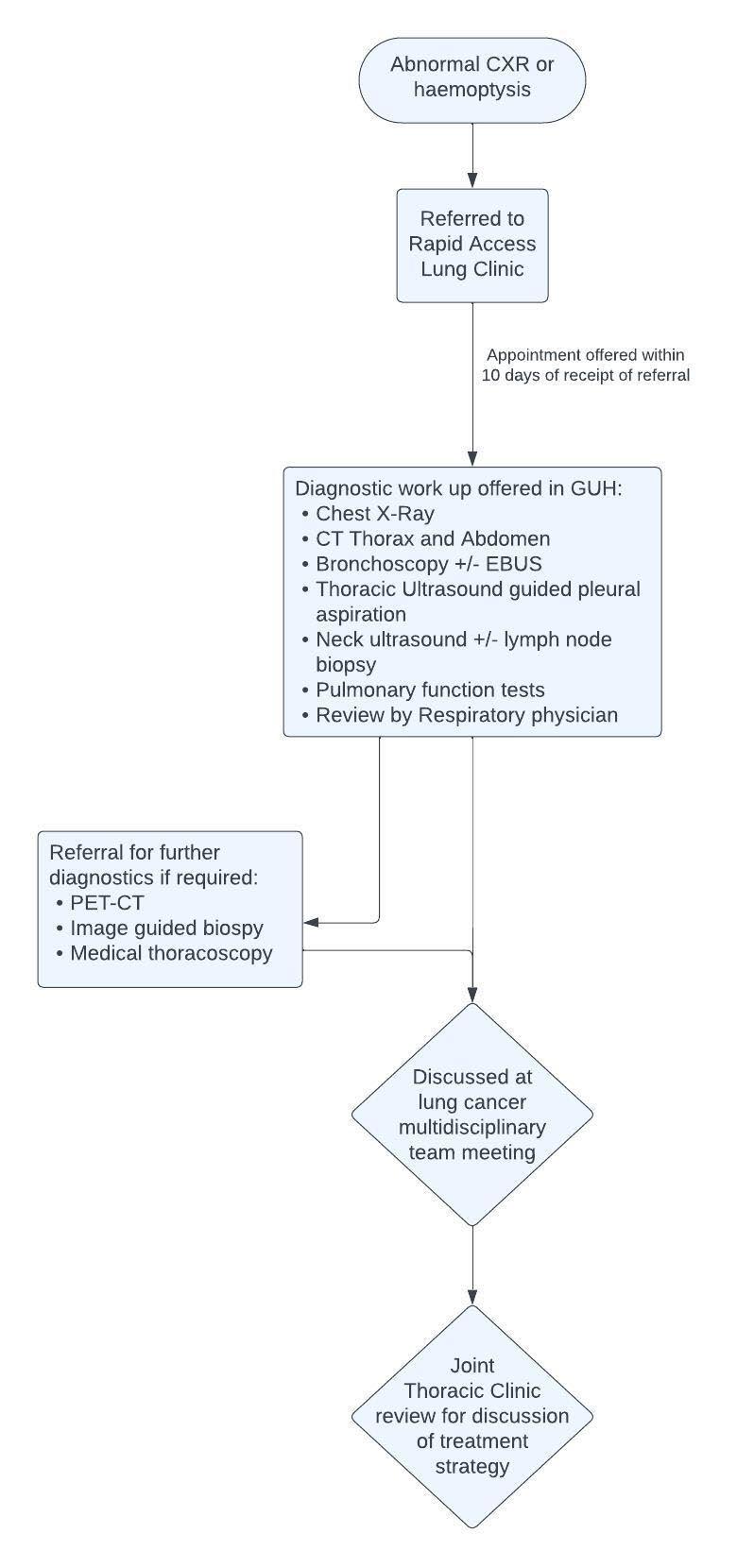
AUGUST 2023 • HPN | HOSPITALPROFESSIONALNEWS.IE 34
A review of the impact of MDM presentation demonstrated that MDM-discussed patients were more likely to undergo treatment and had a 25% lower risk of mortality.19
The overall proportion of new attendances at RALC nationally who were diagnosed with a primary lung cancer was 31%. Our RALC in Galway University Hospital reports similar rates, with 30% of new attendees receiving a diagnosis of primary lung cancer in 2018, 36% in 2017 and 32% in 2016. A high proportion of patients remain diagnosed through nonspecialist respiratory clinics, which can impact on timely access to appropriate diagnostic pathways, multidisciplinary discussion and treatment planning.
Joint Thoracic Clinic
2022, an increase from 464 and 320 respectively in 2021.
Rigid bronchoscopy: Rigid bronchoscopic procedures are offered to specific patients following MDM discussion, for the purpose of surgical debulking of the cancer, relief of endobronchial obstruction, and airway stenting. It can be performed with therapeutic or palliative intent.
performed at the bedside, or in an ambulatory capacity, and increases accuracy and therefore diagnostic yield of the procedure.12
Navigational bronchoscopy: Peripheral pulmonary nodules are a frequent presentation of lung cancer, and present a challenge in obtaining a tissues diagnosis. Development of navigational bronchoscopy has improved diagnostic yield to approximately 71%. Limitations to navigational bronchoscopy include limited access to resources, both in technology and clinician expertise.11 This is an expanding area of interest and research, and appears to be a safe and effective modality which offers the possibility of improved diagnostic yield for peripheral lung lesions.10
Pleural Investigations
The British Thoracic Society recommends that at least 30ml should be sent for cytological examination. The NCCP recommends that 50ml of pleural fluid and cell block preparation are sent, which aids in immunohistochemical diagnosis. In cases where the initial cytological analysis is non-diagnostic, at least one more pleural fluid specimen could be sent , however further invasive investigations should be considered early if there remains a non-diagnosed exudative effusion after initial assessment. The BTS guideline 2022 recommends that in patients with a suspected pleural malignancy and nondiagnostic pleural aspiration, a radiology guided pleural biopsy or thoracoscopy should be performed for tissue diagnosis.
(bronchoscopy/EBUS). It is particularly useful for confirmation of staging following PET-CT. Fine-needle aspiration or core biopsy of a pathologically enlarged lymph node is performed under ultrasound guidance on patients with cervical lymphadenopathy identified on clinical examination or CT/PET-CT by trained respiratory physicians . Studies report a diagnostic yield of 84%-90.5% based on lymph node sampling alone.16,17 This suggests that neck ultrasound and lymph node sampling is feasible, with high diagnostic accuracy from a minimally invasive procedure.
The NCCP guideline recommends that EBUS-TBNA +/- EUS-FNA should be offered to pa�ents medias�noscopy, a more invasive procedure which confers a higher risk of complica�ons, morbidity and mortality. The use of these techniques also readily allows for repeat sampling of the medias�num if required.
Multidisciplinary Team Approach
As discussed, significant advances have been made in lung cancer diagnosis and staging, resulting in an increasing variability in biology, tumour burden, immunohistochemical biomarkers and therefore a broad range of prognoses for any given pathology and stage. This necessitates targeted patient discussions about suitable treatment modalities to ensure optimal outcomes. The Joint Thoracic Clinic in Galway University Hospital is a collaborative approach to treating patients with lung cancer. Multidisciplinary cancer clinics can streamline lung cancer services, with an aim to decrease time from diagnosis to treatment.20 This model of cancer care has also been shown to improve patient satisfaction and increase collaboration and communication among multidisciplinary team members.21
In Galway University Hospital, a total of 580 flexible bronchoscopies and 431 EBUS were performed via our Interven�onal Respiratory Unit in 2022, an increase from 464 and 320 respec�vely in Rigid bronchoscopy: Rigid bronchoscopic procedures are offered to specific pa�ents following discussion, for the purpose of surgical debulking of the cancer, relief of endobronchial obstruc�on, and airway sten�ng. It can be performed with therapeu�c or pallia�ve intent.
Conclusion
Pleural aspiration is indicated for all patients with a pleural effusion in the setting of suspected lung malignancy. Diagnostic pleural aspiration remains an important intervention and may lead to a diagnosis in many cases. It is recommended to be performed under ultrasound guidance, which has the benefit of being able to be
If a pleural effusion is confirmed to be malignant, either histologically or cytologically, it is associated with a poorer prognosis13, as it confirmed metastatic disease (Stage IV) as per TNM staging criteria.14
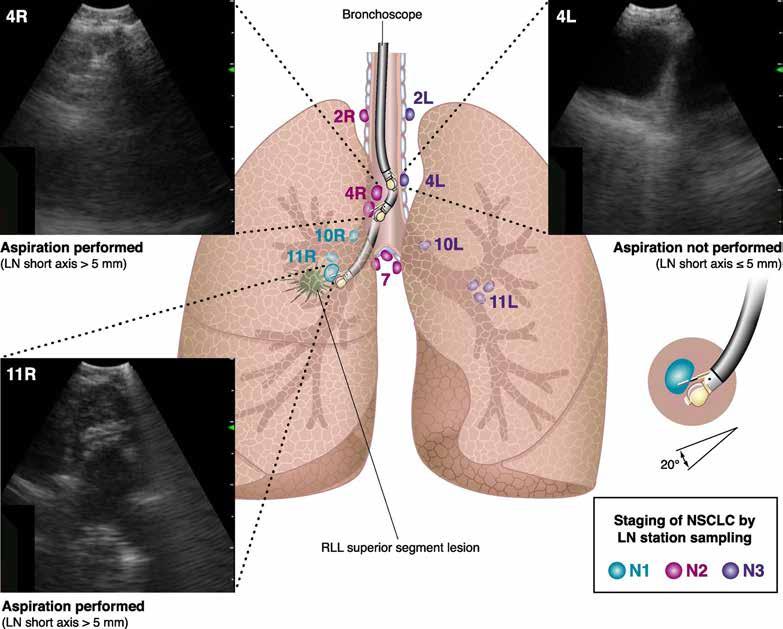
Neck Ultrasound
Pleural:
Neck ultrasound and lymph node sampling either via FNA or Core biopsy has an important role in suspected lung malignancy15, and in turn can reduce the burden of more invasive procedures
The diagnosis, staging and treatment of patients with lung cancer requires a multidisciplinary approach in an acute hospital setting, including respiratory physicians, radiologists, thoracic surgeons, oncologists, radiation oncologists, pathology services, specialist nurses and palliative care. This multidisciplinary approach is increasingly essential given the rapidly evolving complexity of lung cancer diagnosis, including multimodality invasive diagnostic interventions, expanded biomarker testing, and novel therapeutics.18 The HSE National Cancer Strategy targets 95% compliance with discussion of patient cases at MDM. Nationally, 92% of cases were discussed between Jan-Jun 2018.
A coordinated approach to assessment, diagnostics followed by MDM discussion can result in significant improvement of services with faster completion of the diagnostic pathway and commencement of therapy. Galway University Hospital has developed rapid access to pathways including the utilisation of the Interventional Respiratory Unit to provide one stop assessments of patients with presumed lung cancer. The Joint Thoracic clinic is a unique multidisciplinary clinic that ensures early discussion of diagnosis and stage and same day review of the treatment plan.
Naviga�onal bronchoscopy: Peripheral pulmonary nodules are a frequent presenta�on of lung cancer, and present a challenge in obtaining a �ssues diagnosis. Development of naviga�onal bronchoscopy has improved diagnos�c yield to approximately 71%. Limita�ons to naviga�onal bronchoscopy include limited access to resources, both in technology and clinician exper�se. This is an expanding area of interest and research, and appears to be a safe and effec�ve modality which offers the possibility of improved diagnos�c yield for peripheral lung lesions. (10)
References available on request
Pleural aspira�on is indicated for all pa�ents with a pleural effusion in the se�ng of suspected malignancy. Diagnos�c pleural aspira�on remains an important interven�on and may lead to
It
HOSPITALPROFESSIONALNEWS.IE | HPN • AUGUST 2023 35
Figure 2 (19)
diagnosis in many cases.
is recommended to be performed under ultrasound guidance, which
219
Figure
CAR-T Cells – Revolutionising Cancer Therapies?
Written by Derek G. Doherty Professor in Immunology
Trinity College Dublin
CAR-T Cells – Revolutionising Cancer Therapies?
Written by Derek G. Doherty, Professor in Immunology, Trinity College Dublin

the nucleus. Binding of the tumour antigen to the CAR of this CAR-T cell, leads to activation, proliferation and killing of the cells expressing the recognised tumour antigen.
Evolution of CAR-T cells
After decades of having the invasive treatments of chemotherapy, radiotherapy and surgery as the only effective therapies against cancer, more targeted approaches which exploit the way our immune systems react against tumours have started making their way into our hospitals. One such treatment, CAR-T cell therapy, receiving much attention at present, has recently become a treatment option at St. James’s Hospital, Dublin for patients with B cell malignancies. This novel immunotherapy has complete remission rates for chronic lymphocytic leukaemia and non-Hodgkin lymphoma of 35–70% and is being tested for many other solid and liquid cancers in clinical trials. CAR-T cells are designer cells capable of multiple effector functions with unlimited potential for refinements for the treatment of infectious and immune-mediated diseases as well as cancer. They are derived from a patient’s own immune cells, making them expensive personalised therapies, but cheaper and better off-the-shelf treatments for multiple patients are being developed. CAR-T cells are being tested alone or in combination with chemotherapy, radiotherapy, surgery and immunotherapies such as checkpoint inhibitor antibody therapies. But what are CAR-T cells and how do they work?
lymphocytes, which recognise changes to cells that signify tumour transformation, and kill them by activating the natural processes of cell death. These killer cells include cytotoxic T lymphocytes (CTL) which recognise peptides derived from tumour antigens, natural killer (NK) cells which detect altered expression cell-surface proteins, and innate T cells which recognise metabolic changes in tumour cells. Tumour killing by CTLs, NK cells and innate T cells is supported by a variety of other cells, which provide cytokines, antibodies and other chemical messengers that activate the cytotoxic activities and mop up the cellular debris after tumour killing has taken place. A multitude of immunotherapeutic approaches that promote tumour cell killing are being tested in clinical trials and many have been licenced for cancer treatment.
invariant natural killer T (NKT) cells, recognise molecular changes that are common to many tumour types and therefore display broad specificity of tumour recognition. Clinical trials employing these cells are ongoing for many cancers, and although results look promising, none have yet been licenced for treatment. In contrast, most CTLs display a high specificity of antigen recognition. This is facilitated by using a diversity of clonotypic antigen receptors, known as the T cell receptor (TCR), and each TCR is specific for a given antigen.
After decades of having the invasive treatments of chemotherapy, radiotherapy and surgery as the only effective therapies against cancer, more targeted approaches which exploit the way our immune systems react against tumours have started making their way into our hospitals. One such treatment, CAR-T cell therapy, receiving much attention at present, has recently become a treatment option at St. James’s Hospital, Dublin for patients with B cell malignancies. This novel immunotherapy has complete remission rates for chronic lymphocytic leukaemia and non-Hodgkin lymphoma of 35–70% and is being tested for many other solid and liquid cancers in clinical trials. CAR-T cells are designer cells capable of multiple effector functions with unlimited potential for refinements for the treatment of infectious and immune-mediated diseases as well as cancer. They are derived from a patient’s own immune cells, making them expensive personalised therapies, but cheaper and better off-the-shelf treatments for multiple patients are being developed. CAR-T cells are being tested alone or in combination with chemotherapy, radiotherapy, surgery and immunotherapies such as checkpoint inhibitor antibody therapies. But what are CAR-T cells and how do they work?
Cellular therapies for cancer
Recently, cellular therapies involving the adoptive transfer of CTLs, NK cells or innate T cells have made their way into cancer immunotherapy. The cytotoxic cells are taken from the patient and modified and expanded ex vivo to generate large numbers of anti-tumour effector cells, which are then reinfused into the patient.
T cells with TCRs that recognise individual tumour antigens may be present at frequencies lower than 1 in 100,000 T cells in blood. This problem of low frequency can be overcome using, instead of T cells isolated from blood, T cells extracted from tumour material (tumour-infiltrating lymphocyte or TILs), which are likely to contain higher numbers of tumour antigen-specific T cells.
The first generation of CAR-T cells expressed the extracellular variable fragment of an antibody specific for a tumour antigen attached to the intracellular domains of the CD3-ζ protein, which transmits the activating signal once the TCR is ligated by an antigen (Figure 1). However, T cell activation normally requires two signals – one through the TCR and a second costimulatory signal generated through ligation of a second receptor. Several costimulatory receptors on T cells have been described, and CD28 and 4-1BB are the receptors whose signalling domains have been chosen for inclusion in most CARs. Second generation CARs have either the 4-1BB or CD28 domains, and third generation CARs have both costimulatory domains. The fourth generation of CARs, known as ‘T cells redirected for antigenunrestricted cytokine-initiated killing (TRUCKs)’ contain additional intracellular domains that signal the production of key cytokines such as interleukin-12, which further stimulates anti-tumour immune responses, or proteins that can enhance the efficacy and safety of CAR-T therapy (Figure 1). And the future is limitlessthe technologies are available to create T cells expressing multiple CARs, each activating multiple signalling domains, so that a number of stimuli can be used to turn on different anti-tumour responses, such as cytotoxicity and cytokine production, as well as to provide signals such as adhesion molecules and chemokine receptors to help guide the T cells to the tumours.
Cellular therapies for cancer
Killing of tumour cells is principally mediated by cytotoxic
It is important that the transferred cells can recognise the tumour cells, and different types of immune cells have different ways to recognise the tumours. NK cells and innate T cells, such as gamma/delta (γδ) T cells and
T cells with the relevant tumour antigen-specific TCRs can also be manufactured by genetically altering them by transfecting them with a TCR specific for a particular tumour antigen, creating a TCR-T cell. Alternatively, T cells can be engineered to express a chimeric antigen receptor (CAR), by replacing the endogenous TCR with a recombinant cellsurface protein composed of the tumour antigen-binding region of an antibody attached to the T-cell intracellular signalling domains that transmit stimulatory and costimulatory signals to
Successes and limitations of CAR-T cell therapies
To date, CAR-T cell therapy is the only cellular therapy that has been licenced for treatment of cancer patients and has been used to treat patients with B cell malignancies at St. James’s Hospital, Dublin, since 2021. Two different second-generation CAR
Killing of tumour cells is principally mediated by cytotoxic lymphocytes, which recognise changes to cells that signify tumour transformation, and kill them by activating the natural processes of cell death. These killer cells include cytotoxic T lymphocytes (CTL) which recognise peptides derived from tumour antigens, natural killer (NK) cells which detect altered expression cell-surface proteins, and innate T cells which recognise metabolic changes in tumour cells. Tumour killing by CTLs, NK cells and innate T cells is supported by a variety of other cells, which provide cytokines, antibodies and other chemical messengers that activate the cytotoxic activities and mop up the cellular debris after tumour killing has taken place. A multitude of immunotherapeutic approaches that promote tumour cell killing are being tested in clinical trials and many have been licenced for cancer treatment.
AUGUST 2023 • HPN | HOSPITALPROFESSIONALNEWS.IE 36 Peer Review | Car-T
Cells
constructs are used - Kymriah (Novartis) and Yescarta (Kite). Both consist of an extracellular portion containing the variable regions of the heavy and light chains of an antibody which detects CD19 present on B cells. This is attached to a polypeptide containing the intracellular domains of the CD3-ζ protein, which normally transmits activating signals to T cells upon ligation of the TCR. Additionally, the Kymriah CAR contains the co-stimulatory 4-1BB domain, whereas the Yescarta CAR contains the costimulatory CD28 domain. Binding of the CAR to CD19 on B cells results in conformational changes to these intracellular domains that lead to full activation and costimulation of the CAR-T cell and cytotoxic killing of the B cell.
While CAR-T cell therapies have made tremendous strides in the arena of haematological malignancies, they are not without undesirable side effects, including excessive B cell depletion, neurological toxicities, autoimmune disease and the cytokine release syndrome, a systemic inflammatory response caused by cytokines released by infused CAR T cells, which can lead to widespread organ dysfunction.
they infiltrate the tumour and provide inflammatory signals leading to the activation and recruitment of other anti-tumour cells of the immune system.
Figure 1. Protein structures of the T cell receptor and 1st, 2nd, 3rd and 4th generation CAR-T cells. Extracellular domains of the proteins are shown in blue and intracellular signalling domains of CD3-ζ, CD28, 4-1BB and cytokine receptors are shown a s red, yellow, green and orange motifs, respectively
At present, no CAR-T cell therapies have been licenced for the treatment of solid organ malignancies. Clinical trials of CAR-T cells for brain, colorectal, pancreatic, renal, liver, prostate, ovarian, breast and lung cancers are ongoing, but are still being met with challenges due to the histopathological characteristics of the tumour, a lack of known tumour-specific antigens, immunosuppressive tumour microenvironments and off-target toxicity that can be life-threatening. One alternative in the area of solid tumours is the generation of CAR-macrophages, which can be engineered so that
Another challenge for CAR-T cell therapy is that, since most T cells recognise antigens presented by major histocompatibility complex (MHC) molecules, CAR-T cells must be engineered using the patient’s own cells to prevent allogeneic rejection of MHCmismatched cells or graft-versushost disease. This requires CAR-T cell therapies to be personalised and expensive. One possible solution to this problem is the generation of CAR-NK cells and CAR-innate T cells, which are not MHC-restricted and therefore will not cause allogeneic tissue rejection, meaning that the cells from one donor can be used as an ‘off-the-shelf’ therapy for multiple patients. Several CARtransfected NK, γδ and NKT cell types are currently being tested in clinical trials.
A final problem that has recently been studied is that, while CAR-T
cells persist for long periods in the blood after infusion into patients, they acquire inhibitory receptors over time that lead to a state of cell exhaustion and stop working against the tumour cells. Studies are taking place to see if the combined use of checkpoint inhibitor drugs and CAR-T cells can overcome this inhibition.
The future
CAR-T cell therapies have revolutionised treatment for haematological malignancies and show great promise for the treatment of solid tumours. The technological advances in this area make it possible to create T cells with designer specificities in terms of target cell recognition and effector functions, so it is likely that CAR-T cell therapies will be expanded for the treatment of infectious and immune-mediated diseases. To date, 1,087 clinical trials using CAR-T cells have been reported in ClinicalTrials.gov, indicating that this technology is here to stay and represents an important addition to the current pillars of cancer treatment.
HOSPITALPROFESSIONALNEWS.IE | HPN • AUGUST 2023 37
Extracellular
and intracellular signalling δ ε γ ε α T cell receptor β ζ VH scFv CD28 CD3 CD3 ζ ζ ζ ζ ζ CD28 4-1BB CD28 4-1BB Cytokine VL 1st generation CAR TRUCK 2nd generation CAR 3rd generation CAR
Figure 1. Protein structures of the T cell receptor and 1st, 2nd, 3rd and 4th generation
domains of the proteins are shown in blue
Quality Improvement and Patient Safety in Paediatric Urology – Part 1: History and Adaptation
Written by Fardod O'Kelly MD MBA
MB MA DipHealthIT DipQuIPS
AdvDipMedLaw
FRCS(Urol)
FFSEM FEBU
Consultant Paediatric, Adolescent and Reconstructive Urological Surgeon
Academic Senior Lecturer in Postgraduate Surgical Education, Surgical Affairs - Royal College of Surgeons in Ireland
Clinical Assistant ProfessorUniversity College Dublin
Adjunct Assistant Professor, Paediatric Urology - University of Wisconsin, USA
European Association of Urology Guidelines Panel Member

despite some overlap. Quality improvement has been defined as ‘data-guided activities to bring about immediate improvements in healthcare delivery in particular settings.’ The aim of QI is to change local processes to achieve acceptable standards of care, whereas traditional research seeks to determine the standards themselves and may have minimal flexibility accompanied by higher costs and data requirements.
To understand quality improvement (QI) in health care, one must accept that change, especially in medicine, is constant and inevitable. This is especially pertinent in the field of surgery. However, QI is not a novel concept, with ancient cuneiforminscribed clay tablets suggesting the idea of health QI dates as far back as King Hammurabi (ca. 17th century B.C.) in Babylon. This codex surprisingly included rates for surgical procedures (eye surgery, fractures, etc.), fees based on ability to pay, objective outcome measures to assess quality of care, outcomes information for data collection, and publicized consumer and patient rights. As surgeons, dealing with risk and patient safety (PS) among multiple specialties, multidisciplinary collaboration has become the standard of care to ensure optimal outcomes. Quality improvement concepts, such as stakeholder engagement and the creation of truly representative improvement metrics, however, have yet to become widely accepted within the surgical culture. It would benefit the surgical community from saying ‘let us have a look at this from another point of view. Is there a better way we can understand our role and the field within which we practice?’. This historical review was written with the view of QI novices in mind, to try to give a flavor of some of the historical aspects of the field without overwhelming readers of some of the methodological complexities.
We now practice in an era of value-based healthcare subject to financial and personnel restrictions, quantified by the ratio of quality (health outcomes) divided by cost (V = Q/$). Value is an extremely important consideration in modern day practice and defines the framework for modern QI by measuring outcomes and results, not inputs. If value is improved, patients, payers, providers, and suppliers can all benefit while the economic sustainability of the healthcare system increases. As a result of this framework, preventable errors have become a major focus of quality initiatives. Surgical complications and errors are audited to search for rootcauses to establish interventions to prevent these events from recurring. Perhaps the primary stimulus to pursue QI and PS as well was the publication of ‘To Err is Human (1999)’ by the Institute of Medicine. This pivotal contribution supported that health care is a very high-risk business. Whereas traditionally fingers were pointed at an individual when morbidity and/ or mortality occurred, and there was realization that required better systems were required protect not only patients from human error but also healthcare workers from becoming second victims of bad outcomes.
The concept of QI as it pertains to PS must be differentiated from traditional research, i.e., randomized controlled trials and clinical epidemiological methods,
Early QI initiatives did not appear to enter the medical literature until around the mid-19th century in Europe. It is not clear why this may be the case, as it is likely that they existed before then, but it may reflect the reporting culture at that time, the establishment of medical journals, or perhaps the emerging divergent philosophy of patientcentered care from the previous era of dogma and paternalism.
John Snow is held in high regard as one of the founding fathers of modern epidemiology. During the 1848 cholera epidemic in London, he retrospectively analyzed the geographical distribution of cases in relation to local water purity and hypothesized that water quality could determine spread. Following a subsequent and more severe outbreak in 1854, he traced the origin to a single pump and tried to convince the parish council to remove the pump handle, which led to an eradication of the outbreak. His findings were then corroborated by the parish curate Henry Whitehead, who demonstrated that 700 deaths had taken place within a 250-yard radius of the pump. This important discovery was as remarkable for the lack of professional repercussions as it was for the prevention of further deaths. Apart from some disdain from the local parish church, his findings appear to have been unanimously lauded. Others have not been so lucky.
Ignaz Semmelweis was a Hungarian obstetrician who practiced in Vienna, Austria, in the mid-19th century. At that time, there were two free adjacent maternity units in the city. Obstetricians were trained in one unit and midwives in the other. The incidence of puerperal (postpartum) sepsis and maternal
death was three times higher in the former, which could not be explained by foul humors in the air (miasmatic theory), as they would then be expected to affect both. Semmelweis became convinced that the etiological agent must be endemic. He crucially observed that the post-mortem pathology from women who died from puerperal fever was the same as that of his friend and supervisor (Jakob Kolletschka), who he dissected after he died from a minor injury obtained while he himself was dissecting a cadaver. He quickly realized that obstetricians attended to women at the hospital following morning cadaveric dissections. This led to him proposing the practice of handwashing in a chlorinated lime solution in 1847 which subsequently decreased mortality from 18% to 1%. Sadly, his theory was slow to gain traction with many opponents both locally and abroad. The first foreign reaction to his work was a vitriolic letter from James Young Simpson of Edinburgh who complained that if Semmelweis was familiar with British medical literature, he would know that the British had long regarded puerperal fever as contagious and preventable by precisely the methods that Semmelweis was recommending. Ultimately, Semmelweis' professorship was not renewed, and he left Austria embittered by his experiences. It did not help that he went on to insult his superiors and colleagues and refused to analyze his results and make small, continuous changes, the cornerstone of continuous QI. His professional correspondence also became increasingly aggressive with such quotes as, ‘You, Herr Professor, have been a partner in this massacre’ and ‘Should you, Herr Hofrath, without having disproved my doctrine, continue to train your pupils [against it], I declare before God and the world that you are a murderer and the “History of Childbed Fever” would not be unjust to you if it memorialized you as a medical Nero’. Semmelweis suffered a nervous breakdown in 1865 and was committed to an asylum where he died 14 days later at the age of 47 years, ironically from a bloodstream infection caused by
AUGUST 2023 • HPN | HOSPITALPROFESSIONALNEWS.IE 38 Peer Review | Urology
INDIC A T E D FOR




















Legal Category: S1A. Marketing Authorisation Holder: Pfizer Europe MA EEIG, Boulevard de la Plaine 17, 1050 Bruxelles, Belgium. For further information on this medicine please contact: Pfizer Medical Information on 1800 633 363 or at medical.information@pfizer.com













XELJANZ is indicated for the treatment of adult patients with moderately to severely active ulcerative colitis (UC) who have had an inadequate response, lost response, or were intolerant to either conventional therapy or a biologic agent.
XELJANZ in combination with methotrexate (MTX) is indicated for the treatment of moderate to severe active rheumatoid arthritis (RA) in adult patients who have responded inadequately to, or who are intolerant to one or more disease-modifying antirheumatic drugs.
XELJANZ in combination with MTX is indicated for the treatment of active psoriatic arthritis (PsA) in adult patients who have had an








































inadequate response or who have been intolerant to a prior diseasemodifying antirheumatic drug (DMARD) therapy.

XELJANZ is indicated for the treatment of adult patients with active ankylosing spondylitis (AS) who have responded inadequately to conventional therapy.
XELJANZ is indicated for the treatment of active polyarticular juvenile idiopathic arthritis (rheumatoid factor positive [RF+] or negative [RF-] polyarthritis and extended oligoarthritis), and juvenile psoriatic arthritis (PsA) in patients 2 years of age and older, who have responded inadequately to previous therapy with DMARDs.

PP-XEL-IRL-0822 | Date of preparation: October 2022
| UC | PsA | JIA | AS
RA
a gangrenous wound on his right hand. Semmelweis' findings did not gain widespread acceptance until after germ theory was proposed by Louis Pasteur and acted upon by Joseph Lister with great success.
Joseph Lister arguably embodied the quintessential characteristics of a surgeon invested in QI methodology. Around his time in the UK, there was a movement to abolish hospital-based surgery because of overwhelming infection and gangrene. Although Fracastoro of Verona postulated that contagious disease could be caused by invisible organisms in 1546, no one paid any heed to what this meant. By the 1850s, there was no emphasis on hygiene, hand and instrument washing, or hospital cleanliness. Growing mushrooms and maggots on bed linen was commonplace. Employing Pasteur's work on fermentation and envisioning this process to be the same as that causing infection and gangrene, Lister changed the treatment of compound fractures from amputation to limb preservation and blazed a path for abdominal and other intracavity surgery. Lister initially began by recognizing that inflammation, then considered to be pathologic, often led to tissue gangrene and necrosis. His intellectual breakthrough stemmed from his theory that wound sepsis was caused by the same agents promoting fermentation and putrefaction which could be halted with carbolic acid in the same way that creosote was used to disinfect sewage. Importantly, he published the multiple small, iterative changes, and alterations he made to his wound care regimens,
which led to significant reductions in morbidity and mortality. This resulted in skepticism from many researchers who felt that his many protocol changes undermined his theory and that many germs were still too small to be isolated under microscopes. While this antiseptic theory began to get traction in Europe and the USA, he mistakenly attributed all infections to bad air, a throwback to miasmatic theory. He also failed to engage his stakeholders and refused to acknowledge important collaborators, which ultimately proved detrimental in his quest towards professional advancement.
Although the remarkable achievements above may be considered traditional research, they also represent early forms of QI; clinicians at the heart of reallife situations, making proactive, iterative changes with an immediate impact on patient care. One of the major limitations of these examples, however, was that they were not based on rigorously collected data or established standards of care.

There are a number of recent publications attempting to focus on QI in paediatric urology each looking for small gains using a number of different techniques to improve patient outcomes, increase efficiency and reduce costs.
Opioids in hypospadias surgery: Prescription opioids have been extensively to manage postoperative pain in children. A growing body of evidence from the adult literature, suggests however, that healthcare providers may be prescribing far more opioids than required, with some
studies demonstrating equivalent post-operative pain and clinical outcomes with their omission. The objectives of this prospective study were to assess the current heterogeneity of practice in postoperative opioids prescription following day case hypospadias surgery, to establish a streamlined discharge protocol, and to reduce the use of post-operative opioid prescription by 30% within a 4-month period through the use of systemic forcing functions, PlanStudy-Do-Act (PDSA) cycles, and education. Following the point of intervention, there was a significant and sustained drop in opioid prescription, with an absolute reduction of 35%, and a relative reduction of 56%. There was no significant difference in patient age, pain scores, or outcomes pre- and post-intervention. This omission of opioids in hypospadias cohorts was achieved within a quality improvement framework without any adverse clinical outcomes or balancing measures.
Opioid usage in day case
urologic surgery: While opioids have a role in multimodal postoperative analgesia, there is emerging data that they may not be routinely required after pediatric surgery. Two hundred sixty-five patients were included. They were predominantly male with median age 2.6 years. The mean number of opioid doses prescribed per patient was 5.8 (SD 2.8, range 3-20). Over half of patients used no opioids, and mean opioid use was one dose. Those prescribed >5 doses took on average 3.4 times more doses compared to those prescribed >5 (P = .0003), and this was the only factor significantly associated with
the amount of opioid used. These findings suggested that opioids are over-prescribed after outpatient pediatric urologic surgery, with 95% of patients having leftover medication and 54% not using any opioids at all. While opioid requirements were low across all sub-cohorts, patients who were prescribed more opioid doses used significantly more doses.
Time Driven Activity Based
Costing and vesicoureteric reflux: The approach to the management of vesicoureteral reflux remains variable despite being a common pediatric diagnosis, which makes costing unpredictable. The aim of this study is to employ time driven activity-based costing to characterize institutional costs of 3 management pathways for vesicoureteral reflux. Process maps were developed for vesicoureteral reflux management based on practice guidelines applicable to a hypothetical female patient with vesicoureteral reflux index with grade 3 unilateral reflux without bowel bladder dysfunction. The costs of 3 management pathways were described, including watch and wait, minimally invasive endoscopic surgery with dextranomer/ hyaluronic acid and open reimplantation surgery. Costs for each pathway were calculated using the capacity cost rate ($/ minute) for institutional resources and time estimates of resource use captured through direct observation and electronic medical record data. A substantial range of total costs ($CAD) was observed for all pathways including watch and wait ($1,683.58 to $2,041.12), minimally invasive endoscopic surgery ($2,616.35 to $4,012.89) and open reimplantation surgery ($3,317.76 to $3,924.82). Total costs for a single dimercaptosuccinic acid scan accounted for 8% to 15% of any pathway's overall costs. Material costs for voiding cystourethrogram imaging and endoscopic surgery were high at 59% and 64% to 76% of their individual total costs, respectively. For open reimplantation surgery, high costs were attributable to the longer use of operating room space and inpatient postoperative stay.
Adapting Lean methodology towards surgical tray rationalisation: Lean methodologies have been used successfully in both industry and healthcare to reduce waste. The operating room (OR) and
AUGUST 2023 • HPN | HOSPITALPROFESSIONALNEWS.IE 40
Review | Urology
Peer
Figure 1: Water pump at Broad St, London. This was the site of the cholera epidemic in 1854 as described by John Snow, and an early example of the epidemiological techniques which would influence quality improvement in medicine the following century
central supplies department (CSD) are areas associated with high hospital costs. The aim of this study was to employ Lean methodologies to support the rationalisation of surgical trays in paediatric inguinoscrotal surgery in order to reduce instrument wastage, processing times and overall costs in a European setting. Rationalization of the inguinoscrotal tray led to a 34.7% reduction in tray size, with a concomitant time-reduction of >2 min per case. The average overall instrument utilisation rate increased from 56% to 80% across users. Cost savings were projected at ¤5380.40 per annum
based on current changes. There were no differences in operative time, or adverse outcomes. At the hospital level, the reduction in variation, and rationalisation of this single surgical tray could lead to both operational (Tray assembly process; Operating rooms; Ergonomic functionality) as well as economic (Sterilisation; Instrument repair; Purchases) financial and ergonomic improvements for the healthcare system. The reduction in time taken to count and sterilise instruments can lead to a potential manpower saving involving a redistribution of activities to other areas which may require them. Surgical tray rationalisation is
therefore emerging Lean concept with overlap across a number of specialities, and represents a technique by which to manage costs, and improve supply chain efficiency without any adverse effect in patient healthcare outcomes.
The demands of today's physician are far different from a generation ago and even from a decade ago. With each day, external influences are mandating issues that surround our performance. In the world of value-based care, too often decisions are made related to costs the providers of care, and surgeons have not been adequately trained to establish
and advocate for which metrics should be used and which ones are necessary to analyze quality of care. It thus behooves smaller subspecialties like pediatric urology to work cohesively to identify quality issues that are measurable and can be used as benchmarks for us to continuously improve. Quality improvement has come a long way since the early days of Lister and has now reached an age of maturity where positive quantifiable differences in patient care can be made to mirror the concomitant advances in technology and communication.
References available on request
Peer Review | Abstract
Establishing severe acute respiratory infection (SARI) surveillance in a sentinel hospital, Ireland, 2021 to 2022
1European Programme for Intervention Epidemiology Training (EPIET), European Centre for Disease Prevention and Control (ECDC), Stockholm, Sweden
2Health Service Executive-Health Protection Surveillance Centre (HPSC), Dublin, Ireland
4University College Dublin (UCD) Clinical Research Centre, Dublin, Ireland
3Department of Microbiology, St. Vincent’s Hospital, Dublin, Ireland
5Department of Infectious Diseases, St. Vincent’s Hospital, Dublin, Ireland
6University College Dublin (UCD) National Virus Reference Laboratory, Dublin, Ireland 7University College Dublin (UCD) School of Medicine, Dublin, Ireland
8Emergency Department, St. Vincent’s Hospital, Dublin, Ireland 9Department of Public Health, Eastern Region of Ireland, Dublin, Ireland 10University College Dublin (UCD) Centre for Experimental Pathogen Host Research, Ireland
Background
In 2020, due to the COVID-19 pandemic, the European Centre for Disease Prevention and Control (ECDC) accelerated development of European-level severe acute respiratory infection (SARI) surveillance.

Aim
We aimed to establish SARI surveillance in one Irish hospital as part of a European network E-SARI-NET.
Methods
We used routine emergency department records to identify cases in one adult acute hospital. The SARI case definition was adapted from the ECDC clinical criteria for a possible COVID-19 case. Clinical data were collected using an online questionnaire. Cases were tested for SARSCoV-2, influenza and respiratory syncytial virus (RSV), including whole genome sequencing (WGS) on SARS-CoV-2 RNA-positive samples and viral characterisation/
sequencing on influenza RNApositive samples. Descriptive analysis was conducted for SARI cases hospitalised between July 2021 and April 2022.
Results
Overall, we identified 437 SARI cases, the incidence ranged from two to 28 cases per week (0.7–9.2/100,000 hospital catchment population). Of 431 cases tested for SARS-CoV-2 RNA, 226 (52%) were positive. Of 349 (80%) cases tested for influenza and RSV RNA, 15 (4.3%) were positive for influenza and eight (2.3%) for RSV. Using WGS, we identified Delta- and Omicron-dominant periods. The resource-intensive nature of manual clinical data collection, specimen management and laboratory supply shortages for influenza and RSV testing were challenging.
Conclusion
We successfully established SARI surveillance as part of E-SARINET. Expansion to additional sentinel sites is planned following
formal evaluation of the existing system. SARI surveillance requires multidisciplinary collaboration, automated data collection where
Key public health message
possible, and dedicated personnel resources, including for specimen management.
What did you want to address in this study?
In this study, we wanted to describe how we established sentinel surveillance of severe acute respiratory infection (SARI) in an Irish hospital, to outline the structures, processes and resources that are required for sustainable SARI surveillance, and to bring attention to the public health benefits of SARI surveillance data. We hope that our study helps to guide other countries to establish SARI surveillance.
What have we learnt from this study?
Implementing SARI surveillance is challenging. Multidisciplinary collaboration and communication, automating data collection and linkage of datasets where possible are important, as is ensuring that dedicated resources are in place for each step of the surveillance and sample management workflow.
What are the implications of your findings for public health?
Surveillance of SARI is important for public health in Ireland. The data are used at hospital and national level to assess the impact and burden of respiratory viruses, to inform public health services planning, and for pandemic preparedness and response. The data are included in a weekly national surveillance report, a weekly European surveillance report, and in European SARI, COVID-19 and influenza vaccine effectiveness monitoring.
HOSPITALPROFESSIONALNEWS.IE | HPN • AUGUST 2023 41
Melissa Brady1,2, Roisin Duffy2,3, Lisa Domegan2, Abigail Salmon3, Binita Maharjan4, Cathal O'Broin5, Charlene Bennett6, James Christle4, Jeff Connell6, Laura Feeney4, Nadra Nurdin5, Patrick Mallon5,10, Peter Doran4,7, Rosa McNamara8, Sarah O'Grady4, Sinead McDermott3, Naomi Petty-Saphon2,9, Joan O’Donnell2
Immunotherapy with pembrolizumab in a patient with advanced non-small-cell lung cancer with high PD-L1
expression and MET exon 14 splice site mutation
Written by Paulina Terlecka1, 2, Pawel Krawczyk1, Anna Grenda1, Izabela Chmielewska1, Janusz Milanowski1
sion of the disease. When the disease disseminated, the patient developed neurological symptoms related to central nervous system (CNS) metastases. Despite the advanced stage of the disease, the patient benefited spectacularly from the immunotherapy administered following stereotactic radiotherapy of the CNS metastases, although we detected a MET exon 14 skipping mutation. The benefits from the immunotherapy continue despite the discontinuation of the pembrolizumab treatment.
1Department of Pneumonology, Oncology, and Allergology, Medical University of Lublin, Poland
2Department of Endocrinology, Diabetology and Metabolic Diseases, Medical University of Lublin, Poland

Case report
A 69-year-old woman who had not smoked for 25 years was admitted to the Department of Pneumonology, Oncology, and Allergology in summer 2017 due to a persistent low-grade fever after a recent respiratory infection. The chest X-ray (CXR) examination showed a round shadow in the left lung. Therefore, the additional diagnostics included chest and abdominal cavity computed tomography (CT), which revealed the presence of a peripherally located, smooth-bordered, left upper lobe lesion measuring 40 × 35 × 42 mm and enlarged left hilar, mediastinal, and subcarinal lymph nodes. Apart from the lung, there were no lesions suggesting distant metastases. The disease stage was initially classified as IIIB (cT2aN3M0). The patient’s status was good (grade 1 according to the WHO/ECOG performance status scale). Due to the suspicion of a proliferative process, bronchoscopy with endobronchial ultrasound-guided thin needle aspiration (EBUS-TBNA) was performed. Pathological examination revealed pulmonary adenocar-
Pembrolizumab is a humanized monoclonal anti-body directed against the programmed death 1 (PD-1) receptor on the surface of lymphocytes. Pembrolizumab monotherapy can be used as a first-line regimen in treatmentnaive patients with advanced non-small-cell lung cancer (NSCLC) with programmed death ligand 1 (PD-L1) expression
Paulina Terlecka
in ≥ 50% of tumor cells.1 The abnormalities of the MET gene are rarely detected in NSCLC patients. Assessment of MET gene disorders is recommended in patients with non-squamous NSCLC in the case of exclusion of mutations in the EGFR (epidermal growth factor receptor) gene and rearrangement of the ALK (anaplastic lymphoma kinase) and
ROS1 genes or simultaneously with the examination of these genetic abnormalities when the next generation sequencing (NGS) is used. The most common MET abnormalities include amplification of the gene and the exon 14 splice site mutation.
The presence of this abnormality is an indication for the use of MET tyrosine kinase inhibitors, i.e. tepotinib or capmatinib.2 We present a case report of a female patient with lung adenocarcinoma, who initially presented with persistent low-grade fever after a respiratory tract infection. The chemoradiotherapy resulted in short-term remission of the disease.
When the disease disseminated, the patient developed neurological symptoms related to central nervous system (CNS) metastases. Despite the advanced stage of the disease, the patient benefited spectacularly from the immunotherapy administered following stereotactic radiotherapy of the CNS metastases, although we detected a MET exon 14 skipping mutation. The benefits from the immunotherapy continue despite the discontinuation of the pembrolizumab treatment.
cinoma. Molecular tests did not show any abnormalities in the EGFR, ALK, or ROS1 genes; however, a very high level of PD-L1 expression on the malignant cells was detected (90% of cells expressing the molecule). The patient was qualified for sequential chemoradiotherapy, which started in September 2017. Imaging with CT performed after two cycles of combined cisplatin and vinorelbine chemotherapy showed partial response according to the RECIST 1.1 (Response Evaluation Criteria in Solid Tumors). The lesion in the upper lobe of the left lung was reduced to 24 × 25 mm. The mediastinal and hilar lymph nodes decreased to a maximum dimension of 14 mm in the long axis. Unfortunately, the positron emission tomography-computed tomography (PET-CT) examination performed after three chemotherapy cycles revealed the presence of a focal lesion with a moderate SUV ( standardized uptake value) within the left suprarenal gland. The lesion had not been detected previously. Surgical consultation was conducted twice to qualify the patient for resection of the suprarenal gland. The patient was not qualified for surgery due to the probably benign nature of the lesion. After four chemotherapy cycles, the patient underwent radical radiotherapy at a dose of 62 Gy.
Case report
A 69-year-old woman who had not smoked for 25 years was
In May 2018, the patient presented with vertigo. Magnetic resonance imaging (MRI) of the brain revealed progression of the disease, inter alia three metastatic lesions in the central nervous system (CNS). The lesions were located in the right parietal region near the cerebellar falx, on the border of the


and the right cerebellar peduncle,
in the right frontoparietal area (Fig. 1A–B). The patient was qualified for
AUGUST 2023 • HPN | HOSPITALPROFESSIONALNEWS.IE 42
Peer Review | Lung Cancer
ONCOLOGY IN CLINICAL PRACTICE 2023, Vol. 19, No. 1
A B
pons
and
Figure 1. A. Magnetic resonance imaging of the brain in the sagittal projection showing metastatic lesions in the central nervous system located in the right parietal region near the cerebellar falx and on the border of the pons; B. Magnetic resonance imaging of the brain in the frontal projection showing metastatic lesions in the central nervous system located on the border of the pons
Figure 1. A. Magnetic resonance imaging of the brain in the sagittal projection showing metastatic lesions in the central nervous system located in the right parietal region near the cerebellar falx and on the border of the pons; B. Magnetic resonance imaging of the brain in the frontal projection showing metastatic lesions in the central nervous system located on the border of the pons and in the right frontoparietal area
disease, inter alia three metastatic lesions in the central nervous system (CNS). The lesions were located in the right parietal region near the cerebellar falx, on the border of the pons and the right cerebellar peduncle, and in the right frontoparietal area (Fig. 1A–B). The patient was qualified for stereotactic radiotherapy of the CNS metastases, which was performed in May 2018.
represent pseudoprogression, inflammatory lesions,
admitted to the Department of Pneumonology, Oncology, and Allergology in summer 2017 due to a persistent low-grade fever after a recent respiratory infection. The chest X-ray (CXR) examination showed a round shadow in the left lung. Therefore, the additional diagnostics included chest and abdominal cavity computed tomography (CT), which revealed the presence of a peripherally located, smooth-bordered, left upper lobe lesion measuring 40 × 35 × 42 mm and enlarged left hilar, mediastinal, and subcarinal lymph nodes. Apart from the lung, there were no lesions suggesting distant metastases. The disease stage was initially classified as IIIB (cT2aN3M0).
infiltrative lesions
stereotactic radiotherapy of the CNS metastases, which was performed in May 2018.
Imaging with CT performed after two cycles of combined cisplatin and vinorelbine chemotherapy showed partial response according to the RECIST 1.1 (Response Evaluation Criteria in Solid Tumors). The lesion in the upper lobe of the left lung was reduced to 24 × 25 mm. The mediastinal and hilar lymph nodes decreased to a maximum dimension of 14 mm in the long axis. Unfortunately, the positron emission tomographycomputed tomography (PET-CT) examination performed after three chemotherapy cycles revealed the presence of a focal
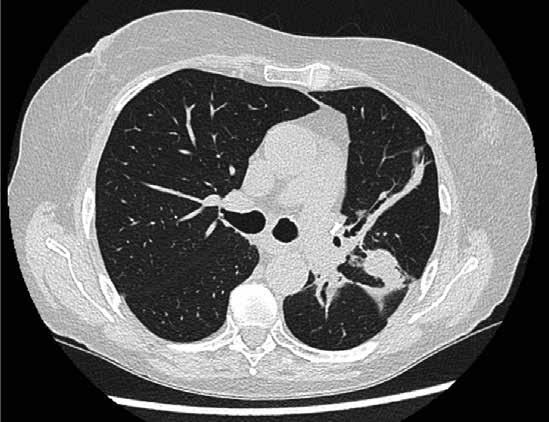
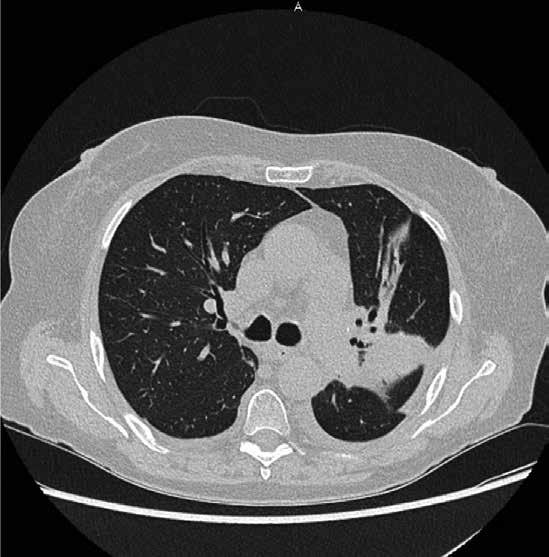
lesion with a moderate SUV (standardized uptake value) within the left suprarenal gland. The lesion had not been detected previously. Surgical consultation was conducted twice to qualify the patient for resection of the suprarenal gland. The patient was not qualified for surgery due to the probably benign nature of the lesion. After four chemotherapy cycles, the patient underwent radical radiotherapy at a dose of 62 Gy. In May 2018, the patient presented with vertigo. Magnetic resonance imaging (MRI) of the brain revealed progression of the
Given the radical aim of chemoradiotherapy applied in 2017, in June 2018 the patient was qualified for first-line pembrolizumab monotherapy at a dose of 200 mg every three weeks. Due to the good tolerance of the treatment, it was decided to increase the dose of pembrolizumab to 400 mg scheduled every six weeks in September 2019. Three days after the first administration of pembrolizumab in a higher dose, the patient was admitted to the hospital due to an episode of fever, general weakness, severe joint pain, and a moderate dry cough. The symptoms resolved quickly after appropriate treatment. Due to the above-described complications, a chest CT was performed. It showed the presence of lesions suggesting pseudoprogression, inflammatory lesions, or radiotherapy-induced perihilar infiltrative lesions on the left lung (Fig. 2).
Pembrolizumab treatment was discontinued, and a control CT scan revealed regression of the new lesions and partial remission of the tumor and metastatic lymph nodes (Fig. 3). Immunotherapy was continued despite the high risk of intensification of the side effects. Gradual regression of malignant lesions was revealed. The patient
The patient’s status was good (grade 1 according to the WHO/ ECOG performance status scale). Due to the suspicion of a proliferative process, bronchoscopy with endobronchial ultrasound-guided thin needle aspiration (EBUS-TBNA) was performed. Pathological examination revealed pulmonary adenocarcinoma. Molecular tests did not show any abnormalities in the EGFR, ALK, or ROS1 genes; however, a very high level of PDL1 expression on the malignant cells was detected (90% of cells expressing the molecule).
The patient was qualified for sequential chemoradiotherapy, which started in September 2017.
Given the radical aim of chemoradiotherapy applied in 2017, in June 2018 the patient was qualified for first-line pembrolizumab monotherapy at a dose of 200 mg every three weeks. Due to the good tolerance of the treatment, it was decided to increase the dose of pembrolizumab to 400 mg scheduled every six weeks in September 2019. Three days after the first administration of pembrolizumab in a higher dose, the patient was admitted to the hospital due to an episode of fever, general weakness, severe joint pain, and a moderate dry cough. The symptoms resolved quickly after appropriate treatment. Due to the above-described complications, a chest CT was performed. It showed the presence of lesions suggesting pseudoprogression, inflammatory lesions, or radiotherapy-induced perihilar infiltrative lesions on the left lung (Fig. 2). Pembrolizumab treatment was discontinued, and a control CT scan revealed regression of the new lesions and partial remission of the tumor and metastatic lymph nodes (Fig. 3). Immunotherapy was continued despite the high risk of intensification of the side effects. Gradual regression of malignant lesions was revealed. The patient reported feeling well throughout the treatment period. Imaging examinations of the CNS showed no recurrence or
and peribronchial thickenings in the lower lobes of both lungs and a 30 mm area of consolidation in the segment of the right lung. The infiltrative lesion in the left lung cavity increased to 24 mm, and the area of the hilar consolidation increased to 45 × 22 mm (Fig.
Imaging of the chest showed four nodules in the apex of the right lung with a maximum size of up to 10 mm and two nodules in segment 6th of the left lung with a maximum size of 7 mm. The patient initially reported weakness, which she linked to the administration of the
HOSPITALPROFESSIONALNEWS.IE | HPN • AUGUST 2023 43
Paulina Terlecka et al., Immunotherapy with pembrolizumab in a patient with advanced non-small-cell lung cancer
4).
COVID-19 vaccine (Comirnaty). Subsequently,
Figure 2. High-resolution chest computed tomography) showing the presence of lesions that could
or radiotherapyinduced perihilar
on the left side
Figure 3. High-resolution chest computed tomography of the lung showing regression of the lesions and partial remission of the primary lesion
new metastases. A three-year progression-free sur-
High-resolution chest computed tomography of the lung performed in February 2021, showing an untypical image of intense thickening of bronchial walls and peribronchial infiltrations in the lower lobes of both lungs and a 30 mm area
Paulina Terlecka et al., Immunotherapy with pembrolizumab in a patient with advanced non-small-cell lung cancer
Figure 3. High-resolution chest computed tomography of the lung showing regression of the lesions and partial remission
of the primary lesion
Figure 2. High-resolution chest computed tomography) showing the presence of lesions that could represent pseudoprogression, inflammatory lesions, or radiotherapyinduced perihilar infiltrative lesions on the left side
Figure 3. High-resolution chest computed tomography of the lung showing regression of the lesions and partial remission of the primary lesion
High-resolution chest computed tomography) of lesions that could represent inflammatory lesions, or radiotherapyinfiltrative lesions on the left side
Figure 4. High-resolution chest computed tomography of the lung performed in February 2021, showing an untypical image of intense thickening of bronchial walls and peribronchial infiltrations in the lower lobes of both lungs and a 30 mm area of consolidation in the 5th segment of the right lung
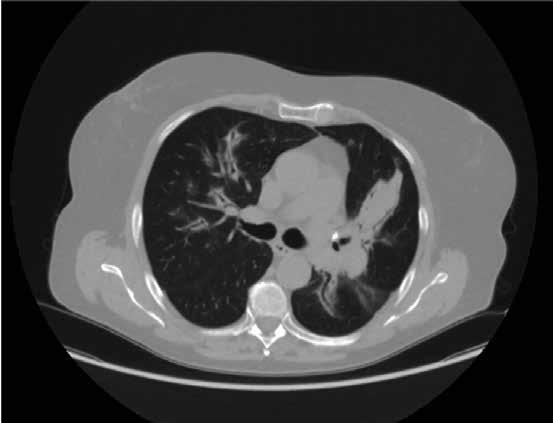
radiotherapy of the CNS metastases, which 2018.
aim of chemoradiotherapy ap2018 the patient was qualified pembrolizumab monotherapy at a dose of weeks. Due to the good tolerance decided to increase the dose of mg scheduled every six weeks in days after the first administrain a higher dose, the patient hospital due to an episode of fever, severe joint pain, and a moderate dry resolved quickly after appropriate above-described complications, performed. It showed the presence of pseudoprogression, inflammatory radiotherapy-induced perihilar infiltrative (Fig. 2). Pembrolizumab treatand a control CT scan revealed lesions and partial remission of metastatic lymph nodes (Fig. 3). Imcontinued despite the high risk of side effects. Gradual regression revealed. The patient reported the treatment period. Imagthe CNS showed no recurrence three-year progression-free surachieved with the patient’s well-being
reported feeling well throughout the treatment period. Imaging examinations of the CNS showed no recurrence or new metastases. A three-year progression-free survival (PFS) was achieved with the patient’s well-being and high quality of life. In February 2021, chest CT showed a very un-typical image of intense thickening of bronchial walls and peribronchial thickenings in the lower lobes of both lungs and a 30 mm area of consolidation in the 5th segment of the right lung. The infiltrative lesion in the left lung cavity increased to 24 mm, and the area of the hilar consolidation increased to 45 × 22 mm (Fig. 4).
chest CT showed a very unthickening of bronchial walls
Imaging of the chest showed four nodules in the apex of the right lung with a maximum size of up to 10 mm and two nodules in segment 6th of the left lung with a maximum size of 7 mm. The patient initially reported weakness, which she linked to the administration of the COVID-19 vaccine (Comirnaty). Subsequently, the patient reported dyspnea. The immunotherapy was discontinued in March 2021, after 33 months of treatment, due to suspected progression. Bronchoscopy was performed to confirm the nature of the infiltrative and peribronchial lesions. No neoplastic cells were found in the collected material — pathology showed intense inflammatory lesions in the bronchial mucosa.
Given the clinical image, several additional genetic analyses were carried out. We conducted nextgeneration sequencing (NGS) examination using the Ion Torrent technology on the S5 sequencer (Thermo Fisher Scientific,
patient with a rare mutation in the MET gene, that theoretically does not favor the effectiveness of immunotherapy. The optimal duration of immunotherapy in cancer patients is unknown.
Immunotherapy in clinical trials was used for up to 2 years or more in responding patients. However, it is observed that benefits from immunotherapy may persist after therapy discontinuation, regardless of the reason. Anti-PD-1 antibodies bind to the PD-1 receptor on circulating T lymphocytes for 3 months after a single dose of treatment.4 Moreover, the effectiveness of immunotherapy is triggered by a persistent adaptive immune response through the activity of memory T cells that may be present for months.5
Waltham, USA). We performed a simultaneous analysis of DNA and RNA isolated from tumor tissue from formalin-fixed paraffinembedded (FFPE) block. DNA isolation was performed using the QIAamp DNA FFPE Tissue Kit (Qiagen, Hilden, Germany). RNA isolation was performed using the RecoverAll Total Nucleic Acid Isolation Kit for FFPE (Thermo Fisher Scientific, Waltham, USA). Sequencing was performed using the Oncomine Focus Assay (Thermo Fisher Scientific, Waltham, USA) allowing targeted sequencing and analysis of mutations, SNV (single nucleotide variation), and CNV (copy number variation) changes, as well as gene fusions in 52 genes related to the pathology of solid tumors.
corticosteroids, suggested that the lesions described above were unrelated to disease progression but were associated with another complication of the immunotherapy. Therefore, the patient did not receive pembrolizumab or any other systemic treatment and is now under close observation. Followup imaging studies revealed continuous regression of the inflammatory lesions in the lungs (Fig. 5).
and peribronchial thickenings in the lower lobes of both lungs and a 30 mm area of consolidation in the 5th segment of the right lung. The infiltrative lesion in the left lung cavity increased to 24 mm, and the area of the hilar consolidation increased to 45 × 22 mm (Fig. 4).
In melanoma patients treated with pembrolizumab in clinical trials, a 2-year disease-free survival rate was reported in 67 of 105 complete responders who discontinued pembrolizumab and were observed without any anticancer therapy.6 Similarly, long-lasting responses persisting despite treatment discontinuation have been reported in NSCLC patients treated with immunotherapy.7 The CheckMate-153 clinical trial prospectively addressed the question about the optimal duration of immunotherapy.8
Imaging of the chest showed four nodules in the apex of the right lung with a maximum size of up to 10 mm and two nodules in segment 6th of the left lung with a maximum size of 7 mm. The patient initially reported weakness, which she linked to the administration of the COVID-19 vaccine (Comirnaty). Subsequently, the patient reported dyspnea. The immunotherapy was discontinued in March 2021, after 33 months of treatment, due to suspected progression. Bronchoscopy was performed to confirm the nature of the infiltrative
The NGS study showed the presence of a pathogenic skipping mutation in the MET gene, in the region of introns 13-15, which resulted in the deletion of exon 14 in the transcript. The mutation in the ClinVar or Varsome databases has a pathogenic status and is associated with the risk of osteofibrous dysplasia.3 To confirm the NGS result, we conducted the RT-qPCR (reverse transcriptasequantitative PCR) test using the Lung Cancer RNA Panel kit (EntroGen, Inc., Woodland Hills, Canada), which enables simultaneous assessment of the occurrence of ALK, ROS1, and RET gene fusions, as well as MET exon 14 skipping mutations in mRNA. The test result was positive for the MET skipping mutation and negative for the other targets.
The thorough analysis of the radiological image and histology, as well as a good response to
The persistent effectiveness of the pembrolizumab immunotherapy despite therapy discontinuation was demonstrated. Imaging of the brain performed in August 2021 showed no disease progression. Due to the concomitant MET gene abnormality, the patient may benefit from the treatment with MET inhibitors. However, given the stabilization of the disease, there are no indications for the administration of the next line of therapy. The patient is in a good general condition and her postdiagnosis survival time is now 4.5 years (January 2022).
Discussion
The case report presented here is unique for two reasons. The first reason is the 9-month persistence of the response to immunotherapy after discontinuation of the pembrolizumab treatment caused by grade 3 pulmonary toxicity according to the Common Terminology Criteria for Adverse Events (CTCAE) v. 2.0. classification. Interestingly, pneumotoxicity appeared 3 years after the initiation of treatment. The second reason is the effectiveness of this immunotherapy in a
Patients with pretreated advanced NSCLC with nivolumab efficacy after 1 year were randomized to two groups: the continuous nivolumab group vs. the observation group that resumed nivolumab retreatment at disease progression. Patients treated with nivolumab continuously had a significantly longer PFS and insignificantly longer overall survival (OS) than the ones who discontinued immunotherapy [hazard ratio (HR) = 0.42 and HR = 0.63, respectively for PFS and OS]. These results suggested that treatment duration in patients who were benefiting from immunotherapy should last longer than 1 year.9 Mesenchymal epithelial transition (MET) receptor alterations, including the MET exon 14 skipping mutation, are oncogenic in NSCLC and may induce patients’ sensitivity to targeted therapy. The MET exon 14 skipping mutation is one of the rare molecular disorders observed in NSCLC patients. It usually occurs in elderly non-smoking females (over 75 years of age). It is considerably more frequent in patients with adenocarcinoma than in patients with squamouscell carcinoma. The prevalence of
AUGUST 2023 • HPN | HOSPITALPROFESSIONALNEWS.IE 44
Peer Review | Lung Cancer
65
Figure 3. High-resolution chest computed tomography of the lung showing regression of the lesions and partial remission of the primary lesion
Figure 4. High-resolution chest computed tomography of the lung performed in February 2021, showing an untypical image of intense thickening of bronchial walls and peribronchial infiltrations in the lower lobes of both lungs and a 30 mm area of consolidation in the 5th segment of the right lung
Figure 5. High-resolution chest computed tomography performed in December 2021 showing continuous regression of the inflammatory lesions in the lungs
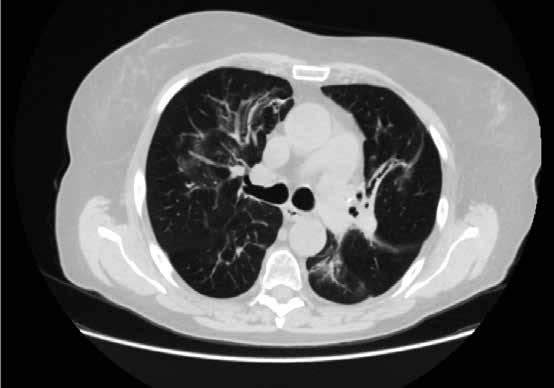
only 12% of patients with EGFR mutations and none of the patients with ALK gene rearrangements. The median PFS was 3.4 months, which was the longest time compared to that in patients with other genetic driver alterations (EGFR, BRAF, and KRAS gene mutations, ALK, ROS1, and RET gene rearrangements, and HER2 gene amplification).
splice site mutations in the MET gene is estimated at approximately 4–4.5% of NSCLC patients.10
Tepotinib or capmatinib therapy should be the first-line treatment in NSCLC patients with MET exon 14 mutations. Certain efficacy of crizotinib, cabozantinib, and glesatinib in such patients has been also demonstrated.2
Unfortunately, these drugs are not reimbursed in Poland and there is no routine testing for mutations in the MET gene.
Therefore, NSCLC patients with this genetic abnormality most often receive first-line chemotherapy, chemoimmunotherapy, or immunotherapy, depending on the presence of comorbidities and PDL1 expression on the tumor cells. The presence of genetic driver abnormalities is usually associated with the low sensitivity of NSCLC patients to immunotherapy with anti-PD-1 or anti-PD-L1 antibodies. As shown by Gainor JF et al.11, only 3.6% of NSCLC patients with EGFR gene mutations or ALK gene rearrangements responded to second-line immunotherapy, in contrast to 23.3% of patients without these genetic abnormalities. The median PFS in patients with EGFR gene mutations or ALK gene rearrangements receiving immunotherapy was only 2.1 months.11
These observations were confirmed by clinical trials in which atezolizumab (e.g., OAK trial), nivolumab (CheckMate 057 trial), and pembrolizumab (KEYNOTE-010 trial) were used as second-line treatment. These studies involved 8–14% of NSCLC patients with EGFR
lesions. No neoplastic cells were found material — pathology showed intense the bronchial mucosa. image, several additional genetic out. We conducted next-gener(NGS) examination using the Ion the S5 sequencer (Thermo Waltham, USA). We performed a siDNA and RNA isolated from formalin-fixed paraffin-embedded isolation was performed using FFPE Tissue Kit (Qiagen, Hilden, isolation was performed using the Nucleic Acid Isolation Kit for FFPE Scientific, Waltham, USA). Sequencusing the Oncomine Focus Assay Scientific, Waltham, USA) allowing and analysis of mutations, SNV variation), and CNV (copy number well as gene fusions in 52 genes pathology of solid tumors. The NGS presence of a pathogenic skipping gene, in the region of introns the deletion of exon 14 in the mutation in the ClinVar or Varsome pathogenic status and is associated osteofibrous dysplasia [3]. To confirm conducted the RT-qPCR (reverse transcriptase-quantitative PCR) test using the Lung (EntroGen, Inc., Woodland enables simultaneous assessment ALK, ROS1, and RET gene fusions, skipping mutations in mRNA. positive for the MET skipping mutathe other targets. analysis of the radiological image as a good response to corticosthe lesions described above disease progression but were associcomplication of the immunotherapy. did not receive pembrolizumab treatment and is now under Follow-up imaging studies revealed of the inflammatory lesions in persistent effectiveness of the immunotherapy despite therapy disdemonstrated. Imaging of the brain 2021 showed no disease progresconcomitant MET gene abnormality, from the treatment with MET given the stabilization of the dis-
performed in December 2021
of the inflammatory lesions in the lungs
Discussion
gene mutations. The risk of death in the patients receiving the immunotherapy was higher or similar to patients receiving second-line chemotherapy (HR = 1.24, 1.18, and 0.88, respectively).12–14 As explained by the authors, single genetic driver abnormalities are associated with a low tumor mutation burden (TMB) and a low number of neoantigens. In turn, a small number of tumorspecific antigens results in low immunogenicity of the tumor, which is invisible to immune cells. However, the situation in patients with splice site mutations in the MET gene is different. Spigel D et al.15 assessed tumor burden mutation (TMB — mutations/Mb) using comprehensive genomic profiling (CGP).
gene. In this group, there were 41% of patients with high PD-L1 expression (≥ 50% of tumor cells with PD-L1 expression).
The case report presented here is unique for two reasons. The first reason is the 9-month persistence of the response to immunotherapy after discontinuation of the pembrolizumab treatment caused by grade 3 pulmonary toxicity according to the Common Terminology Criteria for Adverse Events (CTCAE) v. 2.0. classification. Interestingly, pneumotoxicity appeared 3 years after the initiation of treatment. The second reason is the effectiveness of this immunotherapy in a patient with a rare mutation in the MET gene, that theoretically does not favor the effectiveness of immunotherapy.
The top quartile of the number of somatic mutations in lung cancer patients was classified as high TMB. The mean number of somatic mutations in NSCLC patients with MET gene mutations was 6.2, which was almost twice as high as in patients with EGFR gene mutations and ALK gene rearrangements (4.5 and 3.1, respectively). About 10% of patients with MET mutations had a high value of TMB (more than 10 mutations/Mb) in comparison with 8% of patients with high TMB in the group with EGFR gene mutations and 4% of such patients in the group with ALK gene rearrangements. Moreover, almost half of NSCLC patients with splice site mutations in the MET gene had a moderate number of somatic mutations (elevated compared to an average TMB of 7.3).15 Sabari et al.16 identified 111 patients with mutations in exon 14 of the MET
The absence of PD-L1 expression was diagnosed in 37% of patients with MET gene alterations. The median TMB in patients with MET gene mutations was lower than that of unselected NSCLC patients in both independently evaluated cohorts: 3.8 vs. 5.7 mutations/ Mb (n = 78 vs. n = 1769, cohort A) and 7.3 vs. 11.8 mutations/Mb (n = 62 vs. n = 1100, cohort B).16 In a study conducted by Maziers J et al., PD-L1 expression was found in 90% of patients with mutations or amplification of the MET gene.17 The presented data showed that patients with MET exon 14 mutations usually exhibit high PD-L1 expression and quite high TMB. Therefore, the use of immunotherapy in these patients is justified in the second-line setting following the inability to use MET inhibitors. Patients with various genetic driver abnormalities were involved in the IMMUNOTARGET study, including 36 patients with mutations in exon 14 of the MET gene or with amplification of this gene. Most of the patients received second- or third-line immunotherapy.
The optimal duration of immunotherapy in cancer patients is unknown. Immunotherapy in clinical trials was used for up to 2 years or more in responding patients. However, it is observed that benefits from immunotherapy may persist after therapy discontinuation, regardless of the reason. Anti-PD-1 antibodies bind to the PD-1 receptor on circulating T lymphocytes for 3 months after a single dose of treatment [4]. Moreover, the effectiveness of immunotherapy is triggered by a persistent adaptive immune response through the activity of memory T cells that may be present for months [5].
Disease control through immunotherapy was achieved in 50% of patients with MET splice site mutations, and partial response was observed in 15% of the patients. For comparison, disease control was achieved in 32–33% of patients with EGFR gene mutations and ALK gene rearrangements, and response to the treatment was observed in
In melanoma patients treated with pembrolizumab in clinical trials, a 2-year disease-free survival rate was reported in 67 of 105 complete responders who discontinued pembrolizumab and were observed without any anticancer therapy [6]. Similarly, long-lasting responses persisting despite treatment discontinuation have been reported in NSCLC patients treated with immunotherapy [7].
The CheckMate-153 clinical trial prospectively addressed the question about the optimal duration of
Furthermore, the achievement of therapeutic response and long PFS depended mainly on the PD-L1 expression on tumor cells, which was frequently detected in patients with MET gene mutations. The median OS in patients with splice site mutations in the MET gene was 18.4 months, which is comparable to the median OS in patients without genetic abnormalities.17 In a study conducted by Sabari et al.16, the objective response rate to immunotherapy was 17% in NSCLC patients with MET exon 14 mutations, and their median PFS was 1.9 months (the number of response-evaluable patients was 24). The responses were not enriched in tumors with PD-L1 expression on ≥ 50% of tumor cells or with high TMB.16 The present observations and findings reported by other authors confirm that pembrolizumab may be highly effective in NSCLC patients with the MET exon 14 skipping mutation, especially in the case of high PD-L1 expression on tumor cells.16–18
These observations justify undertaking clinical trials based on the use of a combination of immunotherapy and therapy with MET tyrosine kinase inhibitors. A clinical trial (NCT03647488), which compared the efficacy of a second-line spartalizumab and capmatinib combination treatment vs. docetaxel, was conducted in NSCLC patients without a MET gene status assessment. The trial was unsuccessful as 55% of the patients had early disease progression and 28% had serious side effects of the therapy. However, only patients with advanced NSCLC with MET exon 14 skipping mutations are eligible for the ongoing trial NCT04323437. Although the results of this trial are still incomplete, the data reported in the present study encourage optimism.
References available on request.
HOSPITALPROFESSIONALNEWS.IE | HPN • AUGUST 2023 45
PRACTICE 2023, Vol. 19, No. 1
Figure 5. High-resolution chest computed tomography
showing continuous regression
Abo218 Rheumatoid Arthritis Outcomes: A Multicentre Cross-Sectional Study of Patients in Ireland
Written by G. Murphy1, D. Kane2, K. O’rourke3, C. Sheehy4, F. B. O’shea5, R. Conway5, D. Veale6, A. Camon7, D. Moran8
1Cork University Hospital, Rheumatology, Cork, Ireland; 2Tallaght University Hospital, Rheumatology, Dublin, Ireland; 3Midland Regional Hospital Tullamore, Rehumatology, Dublin, Ireland; 4University Hospital Waterford, Rheumatology, Waterford, Ireland; 5St James’s Hospital, Rheumatology, Dublin, Ireland; 6St. Vincent’s University Hospital, Rheumatology, Dublin, Ireland; 7Midland Regional Hospital Tullamore, Rheumatology, Tullamore, Ireland; 8AbbVie, Medical Affairs, Dublin, Ireland
Abstract
Background: Despite increasing treatment options for RA, many patients still do not appear to achieve remission, especially in more established disease.1
Objectives: To evaluate disease outcomes and quality of life (QoL) of DMARD treated patients with RA in clinical remission (CR) in routine Irish rheumatology clinics vs those with residual disease activity.
Methods: A multicentre, crosssectional study with a 9-month recruitment period (Mar-Nov 2021). Demographics, disease activity, patient reported outcomes, comorbidities, workability & healthcare resource utilisation
(HRU) data were collected. Patients on a stable dose of any DMARD (> 3 months) were classified according to disease activity state as follows:
• Responder group 1 (RG1) CR (CDAI≤2.8)
• Responder group 2 (RG2) CR/ Low Disease Activity (LDA) (CDAI>2.8 -10) &
• Non-responders (NR) moderate/ high disease activity (CDAI>10)
Results: 130 RA patients were recruited (Table 1). 69% were female, mean age of 60.1 yrs and disease duration of 11.5 yrs. There was no significant difference in seropositivity between responder and non-responder groups (~75% RF+, ~69% ACPA+), 69% were treated with advanced therapy (biologic/targeted synthetic DMARDs), primarily TNFi’s.
• 26% of patients were in CR, 32% in LDA & 42% NR. Significant differences in QoLprimary endpoint were noted between CR/LDA patients vs NR group. The difference in QoL index score (EQ5D-5L) for patients in CR and LDA vs those in remission alone, suggest QoL is considerably higher in patients in CR compared even to those in LDA.
• Joint pain (VAS), fatigue (FACIT-F) and function (HAQDI) scores all yielded strong negative correlations, indicating that CR/LDA patients had significantly better outcomes than those with MDA/HDA (Figure 1). A similar pattern was seen amongst patients in CR vs LDA, although significance was not achieved.
• In addition, more impaired productivity was noted in NR vs
CR/LDA regarding ability to work and perform regular ‘non-work’ activities.
• Comorbidities were common, affecting over 90% of the non-responder group and 74% of patients in CR. The NR group had higher proportions of patients with cardiac, gastrointestinal, psychiatric and vascular disorders vs patients in CR/LDA.
• With respect to HRU, more patients in the NR group required medical visits for both RA and non-RA reasons vs patients in CR/LDA.
• Of the 54 patients in MDA/HDA, the study found there was a plan to add or switch DMARD, for only 32% of patients.
Conclusion: Overall, these data support the treat-to-target approach of striving for remission in RA, with important differences reported between non-responder & responder groups 1 & 2 but additionally between patients achieving CR vs LDA. The relatively low % of non-responder patients with a documented ‘action plan’, suggests improved approaches to shared decision making are warranted for patients not yet at the agreed target.
Reference 1. Smolen JS, Aletaha D, Bijlsma JW, Breedveld FC, Boumpas D, Burmester G, Combe B, Cutolo M, de Wit M, Dougados M: Treating rheumatoid arthritis to target: recommendations of an international task force. Ann Rheum Dis. 2010, 69: 631-637.
AUGUST 2023 • HPN | HOSPITALPROFESSIONALNEWS.IE 46
Review | Rheumatoid
Peer
Arthritis
RG1 1 N=34 RG 2 N=76 NR N=54 Age Mean (SD), yrs 57.1 (12.91) 57.6 (13.13) 63.7 (13.00) Female, mean N (%) 23 (67.6) 51 (67.1) 38 (70.4) Duration of disease, yrs, mean (SD) 12.1 (10.5) 11.2 (11.4) 11.3 (11.02) Comorbidities, n (%) 25 (73.5) 36 (85.7) 49 (90.7) Employed^, n (%) 19 (55.8) 37 (48.6) 11 (20.3) Employment sick leaves due to RA^*, mean (SD) 0.3 (0.58) 0.3 (0.57) 0.6 (1.21) Smoking status: Never smoked, n (%) 17 (50.0) 35 (46.1) 18 (33.3) Alcohol Units, mean (SD) 4.0 (5.98) 3.3 (6.31) 3.8 (6.05) Disease Activity (CDAI score) 1.21 (0.883) 4.06 (3.088) 19.46 (11.162)
^ Patients in either full or part time employment *Sick leave in the past 6 months
Table 1 Patient Characteristics
Rheumatoid arthritis macrophages are primed for inflammation and display bioenergetic and functional alterations
Rheumatology key messages
• RA macrophages clearly memorize the phenotype of their precursor cells and are primed for inflammation.
• RA-activated macrophages display a hyper-inflammatory and hyper-metabolic phenotype coupled with blunted phagocytosis.
• NAMPT and STAT3 regulate this distinct phenotype; manipulation of these pathways restores macrophage homeostatic functions.
Myeloid cells such as macrophages and monocytes make up the majority of innate immune cells during inflammation and are believed to be local and systemic amplifiers of disease critically involved in shaping inflammation through a variety of mechanisms. Notably, activated macrophages promote a number of pro-inflammatory mechanisms in the synovium such as abundant overexpression of crucial RAassociated cytokines such as TNFα and IL-1β 1 In addition, macrophages secrete high levels of matrix-degrading enzymes, present antigen to T and B cells, phagocytose and drive bone resorption.2–4 Furthermore, CD68+ synovial macrophage expression strongly correlates with disease activity and is inversely related to in vivo synovial PO2 levels,5–7 and synovial sub-lining (SL) macrophages are the only cell type found to date that are consistently reduced in RA responders, regardless of treatment type.5, 8–11
Upon entry into the synovium, monocytes differentiate into macrophages in response to factors such as M-CSF (CSF1), IL-34 or GM-CSF (CSF2), inducing the expression of macrophageassociated genes.12 This process is
particularly enhanced in response to inflammatory conditions and physiological stress.13 Typically, macrophage functional subsets have been characterized into classical inflammatory ‘M1-like’ and tissue-resolving ‘M2-like’ phenotypes. The ‘M1-like’ macrophages are described as the dominant phenotype in the RA joint. Möttönen and colleagues demonstrated that 68% of RA SF macrophage-like synoviocytes display a phenotype typical of inflammatory macrophages.14 A more recent study confirmed the pro-inflammatory phenotype of ex vivo isolated CD14+ RA SF macrophages.15 This is perhaps due to the inflammatory milieu of the synovial microenvironment.16
The differing functions of polarized macrophages may be influenced by their bioenergetic status, as recent studies have indicated enhanced glycolytic flux and a concomitant impairment in the tricarboxylic acid (TCA) cycle is associated with the inflammatory function of ‘M1like’ macrophages.17 This is particularly interesting in the context of RA whereby synovial CD68+ macrophages are strongly associated with metabolic activity, mitochondrial dysfunction and oxidative stress in vivo, and
inversely related to in vivo synovial pO2 levels.5, 7, 8, 16
We have previously reported that circulating monocytes in RA are primed for hyper-inflammatory and hyper-metabolic mechanisms, an early phenomenon that precedes clinical manifestations of disease.18 Therefore, in this study we investigate whether this distinct phenotype is maintained in RA myeloid cells upon differentiation into mature ex vivo macrophages and whether we can identify potential targets for resolution of inflammation.
Patient recruitment
Patients with established RA were recruited from the Rheumatology Department at St Vincent’s University Hospital, Dublin, Ireland. Patients fulfilling the ACR classification criteria were included in this investigation;19 all patients were required to give fully informed written consent, approved by the St Vincent’s Healthcare Group Medical Research and Ethics Committee. Patient assessment included same-day tender and swollen joint count (TJC/SJC), ESR, CRP, RF and ACPA, and global health visual analogue scale.19 Healthy blood was obtained
from anonymous healthy control (HC) donors from St James’s Hospital, Dublin. Ethical approval was obtained by the School of Medicine Research Ethics Committee, Trinity College Dublin.

CD14+ monocyte and monocyte-derived macrophage isolation and culture
Peripheral blood mononuclear cells (PBMC) were isolated from blood by density gradient centrifugation (Lymphoprep; Stemcell Technologies, Vancouver, Canada). A positive selection of CD14+ cells was performed by adding MACS superparamagnetic microbeads (Miltenyi-Biotec, Bergisch Gladbach, Germany) conjugated with monoclonal anti-human CD14 antibodies to freshly prepared PBMC in MACS buffer (Miltenyi-Biotec). Isolated PBMC were then magnetically sorted and labelled to yield a pure (≥95%) population of CD14+ monocytes. Freshly isolated monocytes were cultured in RPMI 1640 (Thermo Fisher Scientific, MA, USA) supplemented with 10% fetal calf serum, HEPES (20 mM), penicillin–streptomycin (100 μg/ ml), amphotericin B (0.25 μg/ ml) (Gibco-BRL, UK) and 50 μg/ ml of gentamycin (Sigma-Aldrich, Missouri, USA).
HOSPITALPROFESSIONALNEWS.IE | HPN • AUGUST 2023 47 Peer Review | Rheumatoid Arthritis
Ursula Fearon
Written by Megan M Hanlon, Trudy McGarry, Viviana Marzaioli, Success Amaechi, Qingxuan Song, Sunil Nagpal, Douglas J Veale, Ursula Fearon
CD14+ monocytes were seeded at a density of 2 × 10⁶ cells/well in a 6-well plate and cultured in complete RPMI supplemented with M-CSF (50 ng/ml) (PeproTech, London, UK) for 8 days to derive in vitro macrophage cultures. Macrophages were then polarized for 24 h to either ‘M1-like’ macrophages using LPS (100 ng/ ml) (Enzo Life Sciences, Belgium) or IFNγ (20 ng/ml) (PeproTech, UK) or ‘M2-like’ macrophages using IL-4 (20 ng/ml) (PeproTech, UK). For functional studies, macrophages were detached using Accutase cell detachment solution (SigmaAldrich, Ireland) for 20 min at 37°C. M1-polarized macrophages were also inhibited with STATTIC (5 μM) and FK866 (100 μM) for 24 h following polarization. CD14+ monocytes were also analysed either ex vivo or following 24 h stimulations with LPS (100 ng/ml) (Enzo Life Science, UK).
Seahorse
Oxygen consumption rate (OCR) and extracellular acidification rate (ECAR), reflecting oxidative phosphorylation and glycolysis respectively, were measured using the Seahorse XFe96 analyser (Agilent Technologies). Macrophages were detached using Accutase cell-detachment solution (Sigma-Aldrich, Ireland), seeded at a density of 50 000 cells/well in a 96-well Seahorse microplate (Agilent Technologies) and allowed to adhere for 1 h in RPMI. Cells
were polarized into ‘M1-like’ and ‘M2-like’ macrophages and incubated overnight. Cells were then washed and further incubated with Seahorse medium for 1 h at 37°C in a non-CO2 incubator, before undergoing a Mito Stress test using the Seahorse XFe96 Analyser. Basal oxidative phosphorylation/ glycolysis was calculated by the average of three baseline OCR/ECAR measurements, respectively. Specific metabolic inhibitors: oligomycin (2 μg/ ml), trifluorocarbonylcyanide phenylhydrazone (FCCP) (mitochondrial uncoupler) (5 μM) and antimycin A (complexIII inhibitor) (2 μM) (all Agilent Technologies) were further injected to assess the metabolic capacity of macrophages.
Transmission electron microscopy
To investigate the morphology and number of mitochondria in RA and HC monocyte–derived macrophages, transmission electron microscopy was used. Macrophages were seeded at density of 2 × 10⁶ cells/well on day 0 and polarized on day 8 for 24 h. Cells were fixed in glutaraldehyde (3% in 0.05 M potassium phosphate buffer, pH 6.8; Sigma-Aldrich) for 1 h at room temperature. Samples were processed and analysed using a Jeol-JEM2100 LaB6 (operated at 100 Kv). Digital images were
Figure 1: RA myeloid cells are hyper-inflammatory. (A) Representative flow cytometry plots and dot plots depicting frequency of monocyte subsets in RA (n = 4) and HC blood (n = 4). Data expressed as mean (S.E.M.) using Mann–Whitney U test; *P < 0.05 significantly different from healthy. (B) Dot plots of inflammatory gene expression in RA (n = 10–11) and HC (n = 8–9) activated circulating monocytes. (C) Dot plots of inflammatory gene expression in RA (n = 7–11) and HC (n = 7–8) monocyte-derived ‘M1’ macrophages. Data normalized to housekeeping control, expressed as mean (S.E.M.) using unpaired t-test or Mann–Whitney U test; *P < 0.05 significantly different from HC. HC: healthy control
obtained using an AMT XR80 capture system and ImageJ software. High-powered images of 5 cells/sample were taken. The number of mitochondria was counted and the average, per sample, was calculated. The average number of elongated mitochondria/field of view from n = 5 samples were also counted and represented as a percentage of total mitochondria (elongated and regular oval shaped).
Phagocytosis assay
Receptor-mediated endocytosis was assessed using DQ-labelled OVA (Thermo Fisher Scientific, MA, USA). Macrophages were detached using Accutase, washed, collected in flow tubes and incubated with 4 µL OVA-DQ either at 0°C (passive phagocytosis) or 37°C (active phagocytosis) for 15 min, and subsequently washed twice. Quantification of the cells’ phagocytic profiles was obtained using FortessaFlow-Cytometer and analysed using FlowJo software.
RNA-sequencing
High quality RNA was isolated from RA polarized monocytederived macrophages using the RNeasy kit (QIAGEN) and the purity of RNA samples was assessed using a NanoDrop 2000 spectrophotometer (ThermoFisher). RNA samples were reverse transcribed and sequence libraries were generated by Janssen Pharmaceutical (Spring House, PA, USA) using the NuGen Ovation Universal RNA-sequencing (RNA-seq) System. The resulting sequencing libraries were analysed using the Cali-per LabChip GX and quantified using KAPA qPCR. Libraries were normalized and pooled. Each pool was then clustered and sequenced on an Illumina NextSeq500 instrument using 2× 100 bp paired-end reads, following manufacturer’s
instructions. Raw read quality was evaluated using FastQC before reads were trimmed for adaptors and sequence quality. Trimmed reads were aligned to human CRCh38.84 reference genome using STAR RNA-seq aligner. Aligned reads were quantified for each gene. Aligned data were evaluated for quality using several quality metrics (e.g. mapping rate, coverage) and visually inspected for samples deviating from the population across multiple metrics and principal component analysis. Statistical analysis of RNA-seq data was performed in R (version-3.5.1).
Differential gene analysis was performed with edgeR package to normalize and identify differentially expressed genes (DEGs) from counts data. Gene counts were converted to log2 counts per million, quantile normalized, and precision weighted. RNA-seq gene features were considered differentially expressed if they satisfied a 2-fold change and false discovery rate <0.05 cut-off. False discovery rate control was performed with the Benjamini–Hochberg procedure. Heatmaps and volcano plots were generated in R with the heatmap.2 and EnhancedVolcano functions in the gplots package. Hierarchical clustering was performed with Ward’s linkage. Ingenuity Pathway Analysis (IPA) was used to identify canonical pathways overrepresented within DEGs.
RESULTS
Inflammatory profiling of RA circulating monocyte and monocyte-derived macrophages
To examine the role of myeloid cells in the pathogenesis of RA, we examined the frequencies of circulating monocyte populations in healthy and RA peripheral blood. A significant decrease in
AUGUST 2023 • HPN | HOSPITALPROFESSIONALNEWS.IE 48
| Rheumatoid
Peer Review
Arthritis
Figure 2: RA monocyte-derived macrophages have altered cellular bioenergetics. (A) Average OCR seahorse profile of HC (n = 10) and RA (n = 10) M1 macrophages before and after injections of oligomycin, FCCP and antimycin
(B) Graphs demonstrating baseline OCR and ATP synthesis quantification of HC (n = 10) and RA (n = 10) M1 macrophages. (C) Representative transmission electron microscopy images of RA and HC M1 macrophages. Dense, elongated mitochondria are indicated by red arrows. Scale bar represents 500 nm. Graphs represent total numbers of mitochondria, and percentage of elongated mitochondria in HC (n = 3) and RA (n = 3) M1 macrophages.
(D) Average ECAR profile and (E) dot plots representing baseline ECAR and maximal glycolytic capacity of HC (n = 10) and RA (n = 10) M1 macrophages. (F) Dot plots depicting gene expression of PFKFB3, HK2 and HIF1α in RA (n = 8–10) and HC (n = 7–8). (G) Overall metabolic profile of HC (n = 10) and RA (n = 10) monocyte-derived M1 macrophages. Data expressed as mean (S.E.M.) and using Mann–Whitney U test or unpaired t-test; *P < 0.05, **P < 0.01, significantly different from HC. OCR: oxygen consumption rate; FCCP: trifluorocarbonylcyanide phenylhydrazone; ECAR: extracellular acidification rate; HC: healthy control
frequency of classical monocytes coupled with a significant increase intermediate monocytes (Fig. 1A, P < 0.05) was demonstrated in RA compared with HC, with little difference observed for the nonclassical subset (Fig. 1A). Next, we focused on the entire CD14+ monocyte population, reflective of both classical and intermediate subsets (Supplementary Fig. S1, available at Rheumatology online) and examined inflammatory gene expression. We demonstrated that CD14+ RA monocytes are primed for inflammatory mechanisms with significant increases in proinflammatory cytokines such as OSM, MCP-1 and IL-8 (Fig. 1B, P < 0.05) compared with HC.
To assess whether the hyperinflammatory phenotype of monocytes is maintained upon differentiation into macrophages, we cultured monocytes for 8 days in the presences of M-CSF to generate monocyte-derived macrophages. We demonstrated
that mature ex vivo RA macrophages clearly memorize the inflammatory phenotype of their precursor cells as indicated by significant increases in inflammatory markers in RA macrophages compared with HC (Fig. 1C, P < 0.05). Together these data indicate that monocytes in the RA periphery are preprogrammed for inflammation and upon differentiation into macrophages at the site of inflammation, this memory bias towards inflammation persists.
RA macrophages are highly metabolically active
Using the Seahorse XFe96 Flux analyser we examined the bioenergetic profiles of RA and HC monocyte-derived macrophages. Average OCR indicates a significant induction of baseline OCR and hence, an increased reliance on oxidative phosphorylation in RA ‘M1-like’ macrophages compared with
their healthy counterparts (Fig. 2A and B, P < 0.05). This is paralleled by a significant induction of ATP synthesis in RA ‘M1-like’ compared with HC ‘M1-like’ (Fig. 2B, P < 0.05). While ultrastructural analysis demonstrated similar numbers of mitochondria between RA and HC macrophages (Fig. 2C), examination of mitochondrial morphology revealed that RA macrophages displayed a greater frequency of larger, more dense, elongated mitochondria (red arrows) (Fig. 2C, P < 0.05), suggesting alterations in mitochondrial function.
Moreover, average ECAR profiles demonstrate a trending increase in baseline glycolysis in RA macrophages compared with HC (Fig. 2D and E). This was associated with increased maximal glycolytic capacity and significantly increased expression of key metabolic genes, PFKFB3, HK2 and HIF1α, in RA macrophages compared with HC (Fig. 2E and F,
P < 0.05). This resulted in an overall metabolic shift in the phenotypic profile whereby RA macrophages are in a highly energetic phenotype compared with HC (Fig. 2G).
Transcriptional profiling of RA polarized macrophages
Next RNA-seq analysis was performed on ‘M1-like’ and ‘M2-like’ macrophages. Principal component analysis, unsupervised hierarchical clustering and volcano plots demonstrate that RA ‘M1-like’ macrophages cluster separately from ‘M2-like’ (Fig. 3A–C), indicating distinct transcriptional signatures. IPA revealed enrichment of many key inflammatory and metabolic pathways as demonstrated in Fig. 3D. We then performed in vitro analysis of polarized RA macrophages to further validate transcriptional data. Firstly, we demonstrate significant enrichment of OSM, IL-6, IL-1 and chemokines (RANTES) in RA ‘M1-like’ macrophages compared with ‘M2-like’ (Fig. 3G). Moreover, IPA analysis revealed enrichment of metabolic pathways such as HIF1α signalling in ‘M1like’ macrophages. We further validated the enrichment of HIF1α and other key glycolytic enzymes, HK2 and PFKFB3, at both the gene and protein level in RA inflammatory macrophages (Fig. 3H and I). In contrast, TCA cycle and oxidative phosphorylation pathways were observed to be key pathways in anti-inflammatory macrophages (Fig. 3D and E). Using the Seahorse analyser, we demonstrate that RA ‘M2-like’ macrophages are in an aerobic state while pro-inflammatory ‘M1-like’ have transitioned to a glycolytic/energetic phenotype (Fig. 3J).
One of the key effector functions of macrophages is their ability to engulf and destroy cellular debris and foreign material [20], so we examined the phagocytic functional capacity of polarized macrophages. Representative flow-cytometry dot plots reveal blunted phagocytosis of OVA-DQ by inflammatory RA macrophages compared with M0 and ‘M2like’. Further quantification indicates a significant decrease in the phagocytic capacity of RA inflammatory macrophage populations, relative to RA M0 and RA ‘M2-like’ (Fig. 2B, P < 0.05). Representative histograms indicate the shift from passive to active phagocytosis. These data suggest
HOSPITALPROFESSIONALNEWS.IE | HPN • AUGUST 2023 49
Figure 3: RA monocyte-derived macrophages are transcriptionally and functionally distinct. (A) Principal component analysis, (B) unsupervised hierarchical clustered heatmap and (C) volcano plot of DEGs between in RA M1 and M2 monocyte-derived macrophages. (D) Ingenuity Pathway Analysis of enriched pathways in RA M1 compared with M2. (E) Dot plots depicting inflammatory and metabolic gene expression of RA polarized monocyte-derived macrophages (n = 7–10). (F) Representative western blot demonstrating protein expression of HK2, PFKFB3 and β-actin for RA M0, M1 and M2 macrophages from three independent RA patients. (G) Overall metabolic profiles of polarized RA M0, M1 and M2 macrophages (n = 10). (H) Representative flow cytometry dot plots demonstrating the phagocytic capacity of RA M0, M1 and M2 macrophages. (I) Bar graph representing the difference in phagocytic ability between M0, M1 and M2 macrophages (n = 10). Data expressed as mean (S.E.M.) using Wilcoxon signed rank and paired t-test; *P < 0.05 significantly different. DEGs: differentially expressed genes
that the hyper-inflammatory profile of ‘M1-like’ RA macrophages results in a functional impairment in their ability to phagocytose. Indeed, failure to clear cellular debris may stimulate other infiltrating immune cells and thus perpetuate the inflammatory response further.21
Distinct RA macrophage phenotype is STAT3 dependent
Given the key role of cellular metabolism in shaping myeloid cell phenotype and function we decided to focus on DEGs with a significant role in cellular bioenergetics. The resulting pathway diagram allows the homing in on central hubs. Interestingly, many molecules of the JAK/STAT signalling pathway are clustered at the epicentre of this diagram.
This was of significant interest as the JAK/STAT pathway was one of the top enriched pathways in RA ‘M1-like’ macrophages compared with ‘M2-like’ in the IPA analysis (Fig. 3D and E). Specifically, within this pathway, STAT3 signalling was observed to be enriched in RA inflammatory macrophages (Fig. 3D and E) and is one of the central nodes of the STRING analysis (Fig. 4A). Gene expression indicates that
RA inflammatory macrophages have significantly elevated STAT3 expression (Fig. 4B, P < 0.05). This was also confirmed at the protein level (Fig. 4C), suggesting that STAT3 signalling is associated with macrophage inflammatory function in RA.
Moreover, inhibition of STAT3 using the selective inhibitor STATTIC resulted in significant decreased expression of pro-inflammatory mediators (Fig. 4D, P < 0.05), with minimal effect on cell viability as demonstrated by annexin/ PI apoptosis and crystal violet assays (Supplementary Fig. S2, available at Rheumatology online). Representative flow cytometry plots clearly depict the minimal effect of STATTIC on cell viability when compared with vehicle control (75% vs 80.7% live cells) as observed by annexin V/PI expression (Supplementary Fig. S2A, available at Rheumatology online). No significant effect of STATTIC was observed for SOCS3 gene expression (Supplementary Fig. S3A, available at Rheumatology online.) STAT3 inhibition, however, fails to restore phagocytic function in inflammatory macrophages; instead STATTIC decreases RA inflammatory macrophage phagocytic function further (Fig.
4E). In addition, STAT3 inhibition significantly dampened expression of HIF1α, the master regulator of cellular bioenergetics, as well as the glycolytic enzyme HK2 in inflammatory RA macrophages (Fig. 4D, P < 0.05). In parallel, average energy profiles are depicted in Fig. 4F and demonstrate that STAT3 inhibition results in downregulation in both oxidative phosphorylation and glycolysis, along with significant decreases in baseline glycolysis, mitochondrial respiration, maximal respiratory capacity and ATP synthesis (Fig. 4G, P < 0.05).
Novel role for metabolic enzyme NAMPT in driving RA macrophage phenotype
Analysis of the DEGs between RA ‘M1-like’ and ‘M2-like’ macrophages also identified NAMPT and several other genes involved in NAD+ metabolism (such as IDO1/2, NNMT and KYNU) as central molecules in polarization of inflammatory RA macrophages (Fig. 5A and B). NAMPT is a rate-limiting enzyme in the NAD+ salvage pathway and has been implicated in RA pathogenesis.22–24
NAMPT inhibition resulted in significant abrogation of proinflammatory mediators (Fig. 5C,
P < 0.05) and reciprocal inhibition of STAT3 gene expression and activation (Fig. 5D, P < 0.05, Supplementary Fig. S3B, available at Rheumatology online), suggesting interplay between these two key signalling pathways. Finally, the reduced phagocytic phenotype of RA inflammatory macrophages is partially reversed upon NAMPT inhibition (Fig. 5E), with no effect on cell viability as demonstrated by annexin/ PI apoptosis and crystal violet assays (Supplementary Fig. S2, available at Rheumatology online). Representative flow cytometry plots indicate 80.7% live cells (annexin V/PI expression; Q4) in DMSO vehicle control vs 77.7% live cells in FK866-treated cells, indicating little to no effect of NAMPT inhibition on macrophage viability (Supplementary Fig. S2A, available at Rheumatology online).
Discussion
Macrophages are a heterogeneous family of immune cells, critically involved in directing the immune response in RA. They are remarkably plastic which allows them to assume a classically activated, pro-inflammatory ‘M1-like’ state or an alternatively activated, immunoregulatory ‘M2-like’ state, two distinct poles of a wide macrophage activation state spectrum. Deciphering the mechanisms underpinning macrophage polarized phenotype may provide insights into the signalling pathways that contribute to the imbalance of inflammatory macrophages that has been reported in RA pathogenesis.
In this study we demonstrate that RA monocyte-derived macrophages are poised to produce pro-inflammatory mediators and retain a memory bias from their circulating monocyte precursors towards inflammation. The induction of pro-inflammatory mechanisms is coupled with altered mitochondrial morphology and enhancement of both oxidative phosphorylation and glycolysis in RA compared with HC. Further analysis of polarized RA macrophages revealed striking differences in inflammatory, bioenergetic and phagocytic function. Transcriptomic differences revealed specific enrichment of members of the JAK-STAT signalling pathway, particularly STAT3, in addition to enrichment of many members of the NAD salvage pathway, particularly NAMPT in RA pro-inflammatory macrophages. Using specific inhibitors for both STAT3 (STATTIC) and NAMPT (FK866) resulted in
AUGUST 2023 • HPN | HOSPITALPROFESSIONALNEWS.IE 50 Peer Review | Rheumatoid Arthritis
Figure 4: STAT3 regulation of macrophage phenotype. (A) STRING analysis of metabolism associated DEGs enriched in RA M1 vs M2. (B) Dot plot depicting STAT3 gene expression in RA polarized monocyte-derived macrophages (n = 9). (C) Representative western blot demonstrating protein expression of pSTAT3 and β-actin control for M0, M1 and M2 macrophages from three independent RA patients. (D) Dot plots representing inflammatory and metabolic gene expression of RA M1 macrophages ± STATTIC (n = 4–11). (E) Line graphs and representative histogram representing phagocytic activity of RA M1 macrophages ± STATTIC (n = 5). (F) Average Seahorse bioenergetic profiles demonstrating OCR and ECAR of RA M1 macrophages ± STATTIC RA (n = 4). (G) Dot plots representing baseline OCR, ECAR, maximal respiratory capacity and ATP synthesis of RA M1 macrophages ± STATTIC RA (n = 4). Data expressed as mean (S.E.M.) using Wilcoxon signed rank and paired t-test; *P < 0.05 significantly different. DEGs: differentially expressed genes; OCR: oxygen consumption rate; ECAR: extracellular acidification rate
inhibition of the hyperinflammatory phenotype observed in these RA macrophages, and reciprocal interplay between these two signalling pathways. Finally, the observed decreased phagocytic function of pro-inflammatory RA macrophages was reversed upon NAMPT inhibition.
Consistent with previous studies [25–28] we demonstrate that the intermediate subpopulation (CD14+CD16+) of circulating monocytes is significantly increased in RA compared with HC, which are associated with a pro-inflammatory function.25–28 Gene expression analysis revealed
that RA monocytes are primed for inflammation and display hyperinflammatory gene signatures, consistent with our recent study [18]. Interestingly, however, RA monocyte-derived macrophages maintain the hyper-inflammatory memory bias of their precursor cells, with significantly higher
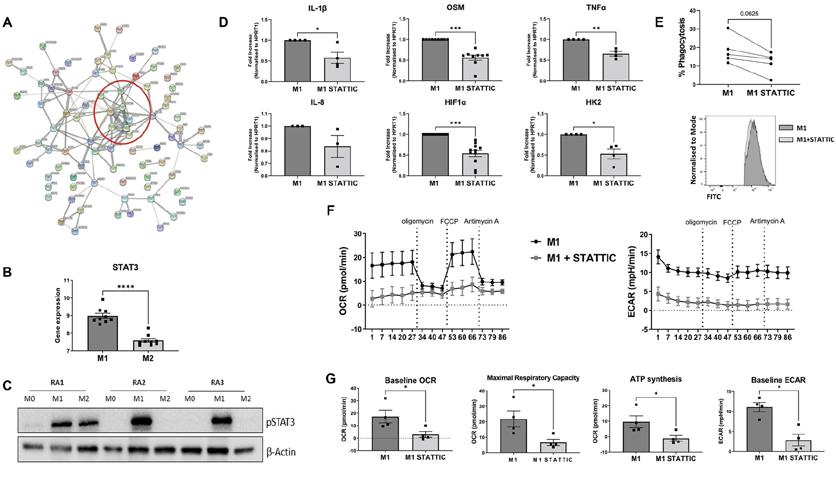
expression of pro-inflammatory cytokines compared with HC. This is in line with studies examining monocytes/macrophages in coronary artery disease suggesting that monocytes are preprogramed for inflammation and subsequent differentiation into pro-inflammatory macrophages.29 Interestingly, monocyte priming appears to be disease specific, with studies indicating that circulating monocytes from GCA patients display inflammatory signatures similar to HC.30 Recent evidence has demonstrated the importance of metabolic rewiring in guiding the functional phenotype of macrophages.31 In this study we demonstrate that RA macrophages are highly energetic and display a state of heightened mitochondrial activity compared with HC, thus indicating they are already metabolically primed once they enter the synovial space. We also demonstrate significant increased expression of key metabolic genes, PFKFB3, HK2 and HIF1α, in RA macrophages compared with healthy ones. Although we have not investigated this at the protein level, our previous study in RA circulating monocytes confirms significant protein upregulation of these key glycolytic enzymes in RA monocytes compared with healthy ones.18 This was further reflected in the ultrastructure analysis of RA macrophage mitochondria which exhibit a dominance of elongated, dense mitochondria compared
Figure 5: Novel role for NAMPT in directing macrophage inflammatory phenotype. (A) Bar chart depicting NAD+ metabolism associated DEGs enriched in RA M1 vs M2. (B) STRING analysis of DEGs enriched in RA M1 vs M2. (C) Average Seahorse bioenergetic profiles demonstrating OCR and ECAR of RA M1 macrophages ± FK866 (n = 8). (D) Dot plots representing baseline OCR, ECAR and maximal respiratory capacity of RA M1 macrophages ± FK866 (n = 8). (E) Dot plots representing inflammatory gene expression of RA M1 macrophages ± FK866 (n = 6–10). (F) Dot plot representing STAT3 gene expression in RA inflammatory macrophages ± FK866 (n = 6). (G) Line graphs and representative histogram representing phagocytic activity of RA inflammatory macrophages ± FK866 (n = 3). Data expressed as mean (S.E.M.) using Wilcoxon signed rank and paired t-test; *P < 0.05 significantly different. DEGs: differentially expressed genes
HOSPITALPROFESSIONALNEWS.IE | HPN • AUGUST 2023 51
with healthy macrophages, consistent with studies reporting remodelling of mitochondriaassociated membranes in RA and coronary artery disease macrophages to enhance mitochondrial activity.32 This link between metabolic plasticity and inflammation in RA is not surprising. Many studies report a bioenergetic crisis within the inflamed synovium, highlighting the role of altered cellular bioenergetics in driving RA pathogenesis.25, 33–36 Previous studies have shown that succinate-mediated stabilization of HIF1α results in IL-1β secretion and reactive oxygen species production from macrophages,26, 27 while GPR91-deficient mice display reduced macrophage activation and IL-1β production.28 Studies have also demonstrated that deletion of HIF1α in myeloid cells of CIA mice results in decreased macrophage infiltration and joint swelling due to reduced macrophage mobility and invasive capacity.37 Additionally, silencing of the amino acid transporter, SLC7A5, results in a significant decrease of IL-1β and glycolysis in RA monocytes and macrophages.38
In this study we also demonstrate significant functional impairment in the phagocytic ability of M1 macrophages compared with M0 and M2 macrophages. Delayed or reduced phagocytosis has previously been observed in RA mononuclear phagocytes, leading to an increase in reactive oxygen species generation and resulting in subsequent prioritization of chemotactic behaviour and cytokine release over phagocytosis.39 In the context of RA, the failure of M1-polarized macrophages to efficiently clear cellular debris, coupled with their observed hyper-inflammatory phenotype, may further stimulate the infiltration of other immune cells into the synovium, thus propagating the inflammatory response.21
This study identified a key role for the transcription factor STAT3 in influencing RA macrophage polarization. STAT3 also mediates inflammatory and metabolic effects in RA monocytes, indicating that this mechanism occurs early in macrophage differentiation.18 Previous studies have shown that activation of STAT3 is associated with in vivo synovial hypoxia in RA, while hypoxia-induced STAT3 activation causes upregulation of
HIF1α 40, 41 Furthermore, inhibition of JAK-STAT signalling switches the metabolic and inflammatory profile of synovial cells, including monocytes away from pathogenic mechanisms and towards resolution of inflammation.18,42 Furthermore, we and others have demonstrated bidirectional interactions between STAT3 and key glycolytic enzymes HIF1α, PKM2 and HK2 as well as glycolysis itself.18, 29, 40, 41, 43 In addition, we demonstrate that STAT3 inhibition fails to restore the phagocytic activity of inflammatory RA macrophages. This is in line with previous studies demonstrating that macrophage pSTAT3 is a prophagocytic mediator via a STAT3–IL-10–IL-6 feedback loop to allow macrophages to maintain their scavenging functions.44, 45
Finally, this study highlights the role of the novel metabolic target NAMPT, with pharmacological inhibition of NAMPT leading to a decrease in the pro-inflammatory profile in RA macrophages. Previous studies have shown elevated expression of NAMPT in the synovial tissue, SF and serum of RA patients.24, 46–48 This is in line with studies
Peer Review | Abstract
demonstrating that FK866 results in deceased RA disease severity and joint inflammatory cytokine secretion,49 and reduced inflammatory mediator expression in RA monocytes indicating that NAMPT plays a key role early in the life cycle of macrophages. Interestingly NAMPT inhibition also results in significantly reduced STAT3 gene expression, thus linking these two key signalling pathways.
In summary, we demonstrate that RA monocyte-derived macrophages are imprinted with disease-specific hyperinflammatory and hyper-metabolic signatures, and retain this functional commitment, such that mature macrophages conserve this phenotype and results in impaired phagocytic ability, indicating that monocytes are capable of building immunological memory via epigenetic imprinting.50 Finally, our data suggest that targeting of NAMPT and/or STAT3 could a promote resolution of chronic inflammation observed in RA driven by the myeloid compartment.
References available on request
The mammalian target of rapamycin contributes to synovial fibroblast pathogenicity in rheumatoid arthritis
1Molecular Rheumatology, School of Medicine, Trinity College Dublin, Trinity Biomedical Sciences Institute, Dublin, Ireland 2Translational Immunopathology, School of Biochemistry & Immunology and School of Medicine, Trinity College Dublin, Trinity Biomedical Sciences Institute, Dublin, Ireland 3EULAR Centre of Excellence, Centre for Arthritis and Rheumatic Diseases, St. Vincent’s University Hospital, Dublin, Ireland 4School of Biochemistry and Immunology, Trinity College Dublin, Trinity Biomedical Sciences Institute, Dublin, Ireland 5School of Medicine, Trinity College Dublin, Trinity Biomedical Sciences Institute, Dublin, Ireland
Objectives: The mammalian target of Rapamycin (mTOR) is a metabolic master regulator of both innate and adaptive immunity; however, its exact role in stromal cell biology is unknown. In this study we explored the role of the mTOR pathway on Rheumatoid Arthritis synovial fibroblast (RASF) metabolism and activation and determined if crosstalk with the Hippo-YAP pathway mediates their effects.
Methods: Primary RA synovial fibroblasts (RASF) were cultured with TNFα alone or in combination with the mTOR inhibitor Rapamycin or YAP inhibitor Verteporfin. Chemokine production, matrix metalloproteinase (MMP)
production, and adhesion marker expression were quantified by real-time PCR, ELISA, and/or Flow Cytometry. Invasion assays were performed using Transwell invasion chambers, while wound repair assays were used to assess RASF migration. Cellular bioenergetics was assessed using the Seahorse XFe96 Analyzer. Key metabolic genes (GLUT-1, HK2, G6PD) were measured using real-time PCR. Reanalysis of RNA-Seq analysis was performed on RA (n = 151) and healthy control (HC) (n = 28) synovial tissue biopsies to detect differential gene and pathway expression. The expression of YAP was measured by Western Blot.
Results: Transcriptomic analysis of healthy donor and RA synovial
tissue revealed dysregulated expression of several key components of the mTOR pathway in RA. Moreover, the expression of phospho-ribosomal protein S6 (pS6), the major downstream target of mTOR is specifically increased in RA synovial fibroblasts compared to healthy tissue. In the presence of TNFα, RASF display heightened phosphorylation of S6 and are responsive to mTOR inhibition via Rapamycin. Rapamycin effectively alters RASF cellular bioenergetics by inhibiting glycolysis and the expression of rate limiting glycolytic enzymes. Furthermore, we demonstrate a key role for mTOR signaling in uniquely mediating RASF migratory and invasive mechanisms,
which are significantly abrogated in the presence of Rapamycin. Finally, we report a significant upregulation in several genes involved in the Hippo-YAP pathway in RA synovial tissue, which are predicted to converge with the mTOR pathway. We demonstrate crosstalk between the mTOR and YAP pathways in mediating RASF invasive mechanism whereby Rapamycin significantly abrogates YAP expression and YAP inhibition significantly inhibits RASF invasiveness.
Conclusion: mTOR drives pathogenic mechanisms in RASF an effect which is in part mediated via crosstalk with the Hippo-YAP pathway.
AUGUST 2023 • HPN | HOSPITALPROFESSIONALNEWS.IE 52
| Rheumatoid
Peer Review
Arthritis
Brianne E. Barker1,2, Megan M. Hanlon1,3, Viviana Marzaioli1,3, Conor M. Smith4, Clare C. Cunningham1,3, Jean M. Fletcher4,5, Douglas J. Veale3, Ursula Fearon1,3, Mary Canavan2*
Lead your patients to stronger bones with Prolia®1-4

6,7,8,9*
* Prolia® should not be stopped without considering alternative treatment in order to prevent rapid bone mineral density loss and a potential rebound in vertebral fracture risk.6
PROLIA® (denosumab) Brief Prescribing Information
Please refer to the Summary of Product Characteristics (SmPC) before prescribing Prolia. Pharmaceutical Form: Pre-filled syringe with automatic needle guard containing 60 mg of denosumab in 1 ml solution for injection for single use only. Contains sorbitol (E420). Indication: Treatment of osteoporosis in postmenopausal women at increased risk of fractures. Dosage and Administration: 60 mg Prolia administered as a subcutaneous injection once every 6 months. Patients must be supplemented with calcium and vitamin D. No dosage adjustment required in patients with renal impairment. Prolia should not be used in children aged < 18 years because of safety concerns of serious hypercalcaemia. Give Prolia patients the package leaflet and patient reminder card Re-evaluate the need for continued treatment periodically based on the benefits and potential risks of denosumab on an individual patient basis, particularly after 5 or more years of use. Contraindications: Hypocalcaemia or hypersensitivity to the active substance or to any of the product excipients. Special Warnings and Precautions: Traceability: Clearly record the name and batch number of administered product to improve traceability of biological products. Hypocalcaemia: Identify patients at risk for hypocalcaemia Hypocalcaemia must be corrected by adequate intake of calcium and vitamin D before initiation of therapy. Clinical monitoring of calcium levels is recommended before each dose and, in patients predisposed to hypocalcaemia, within 2 weeks after the initial dose. Measure calcium levels if suspected symptoms of hypocalcaemia occur. Renal Impairment: Patients with severe renal impairment (creatinine clearance < 30 ml/min) or receiving dialysis are at greater risk of developing hypocalcaemia. Skin infections: Patients receiving Prolia may develop skin infections (predominantly cellulitis) requiring hospitalisation and if symptoms develop then they should contact a health care professional immediately. Osteonecrosis of the jaw (ONJ): ONJ has been reported rarely with Prolia 60 mg every 6 months. Delay treatment in patients with unhealed open soft tissue lesions in the mouth. A dental examination with preventative dentistry and an individual benefit:risk assessment is recommended prior to treatment with Prolia in patients with concomitant risk factors. Refer to the SmPC for risk factors for ONJ. Patients should be encouraged to maintain good oral hygiene, receive routine dental check-ups and immediately report oral symptoms during treatment with Prolia. While on treatment, invasive dental procedures should be performed only after careful consideration and avoided in close proximity to Prolia administration. The management plan of patients who develop ONJ should be set up in close collaboration between the treating physician and a dentist or oral surgeon with expertise in ONJ. Osteonecrosis of the external auditory canal: Osteonecrosis of the external auditory canal has been reported with Prolia. Refer to the SmPC for risk factors. Atypical femoral fracture (AFF): AFF has been reported in patients receiving Prolia. Discontinuation of Prolia therapy in patients suspected to have AFF should be considered pending evaluation of the patient based on an individual benefit risk assessment. Long-term antiresorptive treatment: Long-term antiresorptive treatment may contribute to an increased risk for adverse outcomes such as ONJ and AFF due to significant suppression of bone remodelling.
Concomitant medication: Patients being treated with Prolia should not be treated concomitantly with other denosumab containing medicinal products. Warnings for Excipients: Patients with rare hereditary problems of fructose intolerance should not use Prolia. Interactions: Prolia did not affect the pharmacokinetics of midazolam, which is metabolized by cytochrome P450 3A4 (CYP3A4). There are no clinical data on the co-administration of denosumab
and hormone replacement therapy (HRT), however the potential for pharmacodynamic interactions would be considered low. Pharmacokinetics and pharmacodynamics of Prolia were not altered by previous alendronate therapy. Fertility, pregnancy and lactation: There are no adequate data on the use of Prolia in pregnant women and it is not recommended for use in these patients. It is unknown whether denosumab is excreted in human milk. A risk/ benefit decision should be made in patients who are breast feeding. Animal studies have indicated that the absence of RANKL during pregnancy may interfere with maturation of the mammary gland leading to impaired lactation post-partum. No data are available on the effect of Prolia on human fertility. Undesirable Effects: The following adverse reactions have been reported: Very common (≥ 1/10) pain in extremity, musculoskeletal pain (including severe cases). Common (≥ 1/100 to < 1/10) urinary tract infection, upper respiratory tract infection, sciatica, constipation, abdominal discomfort, rash, alopecia and eczema. Uncommon (≥ 1/1000 to < 1/100): Cellulitis, ear infection and lichenoid drug eruptions. Rare (≥ 1/10,000 to < 1/1,000): Osteonecrosis of the jaw, hypocalcaemia (including severe symptomatic hypocalcaemia and fatal cases), atypical femoral fractures, and hypersensitivity (including rash, urticaria, facial swelling, erythema and anaphylactic reactions). Very rare (< 1/10,000): Hypersensitivity vasculitis. Please consult the Summary of Product Characteristics for a full description of undesirable effects. Pharmaceutical Precautions: Prolia must not be mixed with other medicinal products. Store at 2°C to 8°C (in a refrigerator). Prolia may be exposed to room temperature (up to 25°C) for a maximum single period of up to 30 days in its original container. Once removed from the refrigerator Prolia must be used within this 30 day period. Do not freeze. Keep in outer carton to protect from light. Legal Category: POM. Presentation and Marketing Authorisation Number: Prolia 60 mg: Pack of 1 pre-filled syringe with automatic needle guard; EU/1/10/618/003. Price in Republic of Ireland is available on request. Marketing Authorisation Holder: Amgen Europe B.V., Minervum 7061, NL-4817 ZK Breda, The Netherlands. Further information is available from Amgen Ireland Limited, 21 Northwood Court, Santry, Dublin D09 TX31. Prolia is a registered trademark of Amgen Inc. Date of PI preparation: May 2022 (Ref: IE-PRO-0322-00006) Adverse reactions/events should be reported to the Health Products Regulatory Authority (HPRA) using the available methods via www.hpra.ie. Adverse reactions/events should also be reported to Amgen Limited on +44 (0)1223 436441 or Freephone 1800 535 160.
References:
1. Prolia® [denosumab], Summary of Product Characteristics.
2. Cummings SR et al, N. Eng. J Med 2009;361:756-765.
3. Holzer G et al, J Bone Miner Res 2009;24(3):468-74.
4. Poole K et al; J Bone Miner Res 012; 27 (suppl1):S44 abstract 1122.
5. Bone HG, et al; Lancet Diabetes Endocrinol. 2017;5:513-23;3-23.
6. Tsourdi E, et al. Bone. 2017;105:11–7.
7. Hernlund E, et al. Arch Osteoporos. 2013;8:136;
8. Kanis JA, et al. Osteoporos Int. 2019;30:3–44;
9. Brown JBMR 2013 Vol28 pp746-752.
Amgen Ireland 21 Northwood Court, Santry, Dublin 9, Ireland. © 2022 Amgen Inc. All rights reserved. IE-PRO-0522-00002. Date of preparation: June 2022 10 YEARS
5
DATA
Osteoporosis is a serious ongoing condition and ongoing treatment is required.
Nurse Prescribing: Safe and Effective Practice
The NMBI Practice Standards and Requirements for Education Programmes for Nurses and Midwives with Prescriptive Authority sets out the educational standards and requirements for nurse and midwife prescriptive authority. The domains of competence represent the levels of knowledge, skills and competence the prescribing candidate must achieve in order to prescribe safely and effectively.
Theresa notes that good prescribing practice should support patient care and encourage treatment concordance and adherence while considering clinical response, tolerability, and lifestyle factors.
taken to ensure that safety is maximised, and risk is minimised within professional practice,” she told us.

“Nurse prescribers must have a thorough understanding of the medication they prescribe, including side effects and possible interactions. They must be proficient in practice and demonstrate the understanding, skills and knowledge required to carry out a competent history, assessment and examination specific to the patient’s presenting condition.
Prescribing medication is a significant addition to a registered nurse’s scope of practice. As a professional skill it builds on the qualifications and competencies traditionally recognised at the point of general nurse registration.
We recently spoke to Theresa Lowry Lehnen, RGN, RNP, PhD, Clinical Nurse Specialist and Associate Lecturer with South East Technological University to discuss how systematic clinical decision-making and rigorous risk management processes within relevant clinical governance frameworks inform prescribing decisions and help maximise safe and effective practice as a Registered Nurse Prescriber (RNP).
A nurse prescribing candidate attains the competencies of prescriptive authority by completing an accredited nurse prescribing educational programme. When considered competent to prescribe as per the HEI’s standards for the theoretical and clinical components of the programme, the prescribing candidate gains formal recognition by entry to the Registered Nurse Prescriber division of the register maintained by the NMBI.
“Minimising risk and maximising effectiveness are two key underlying principles of nurse prescribing practice,” Theresa told us.
“Safe and effective practice is founded on a thorough understanding of the theory,
concepts, legislation, frameworks, policies, procedures and guidelines pertaining to nurse prescribing. Patient safety is paramount. Therefore, professional and ethical nurse prescribing practice must be based on systematic clinical decision-making and rigorous risk management processes within relevant clinical governance frameworks. Such processes inform prescribing decisions and help maximise safe and effective practice as a registered nurse prescriber (RNP).
“Prescribing medication is a complex and multi-faceted process which can be associated with adverse risks and inadvertent consequences. Prescriptive authority is therefore governed by a dual framework of professional regulation and legislation pertaining to medication and its associated regulations.
“Practice standards, decisionmaking frameworks, clinical governance structures and NMBI guidelines outline the criteria for safe and effective nurse prescribing practice. They provide a regulatory framework and professional guidance for prescriptive authority which should be subject to continuous quality assurance and regular audits. The laws and regulations, the standards, frameworks and criteria are designed to assure the public of the RNP’s accountability and professional competence. They ensure that appropriate measures of clinical- and self-governance are in place.”
“Patients should be included in clinical decision-making processes which affect them, providing them with choices, while ensuring that prescriptive practice is also safe and appropriate,” she says. “Unsafe practices are a leading cause of medication errors worldwide. The World Health Organisation’s Global Patient Safety Challenge: Medication Without Harm outlines key local, national and global actions required to reduce the level of medication-related harm, among them patient engagement, education and training, communication and teamwork, professional competence and incident reporting and learning.
“Continuous professional development, education, audit, and evaluation of nurse prescribing practice maximise safe and effective prescribing. Audit, monitoring and evaluation of prescribing practice is a continuous process. It promotes best practice and measures the clinical outcomes and effectiveness of care.”
Prescribing medication is a complex process often associated with side-effects, risks, and unintended consequences.
It is paramount. Teresa says, and in the patient’s best interest to minimise risk and maximise the effectiveness of prescribed medications. “While most medication errors are avoidable, risk cannot always be eliminated. However, as a registered nurse prescriber every step must be
“This includes understanding the relevance of any diagnostic tests and results in relation to specific conditions and medications. In practice, the RNP must be satisfied that the patient’s presenting condition is within their scope of clinical and prescriptive practice. An understanding of pharmacology, the patient’s needs and the condition being treated help determine the most appropriate medication including dose, form, frequency and route of administration based on the individual patient’s characteristics. “Prescribed medication must be safe, evidence-based and in the patient’s best interest. Underlying principles of good prescribing practice involve selecting appropriate, safe and costeffective medicines, individualised for the patient’s needs. While pharmaceutical reference books such as the BNF and Irish Medicines Formulary inform prescribing decisions and guide safe practice, each individual consultation must also closely examine the patient’s past medical history, current medications (including OTC, herbal remedies, vitamins and food supplements, homeopathic medications, and any possible interactions), known allergies, sensitivities, and previous drug reactions.
“Other relevant factors that may need to be addressed include pregnancy, breastfeeding, co-morbidities, polypharmacy, cognitive impairment, or difficulties adhering to medication regimen. In addition, social, occupational, and family history must be taken into consideration, and lifestyle factors such as smoking, alcohol and
AUGUST 2023 • HPN | HOSPITALPROFESSIONALNEWS.IE 54 Peer Review | Stroke
An interview with Theresa Lowry Lehnen, RGN, RNP, PhD, Clinical Nurse Specialist and Associate Lecturer with South East Technological University
illicit drug use explored to assess potential risks or interaction with the medication prescribed.”
Theresa goes on to highlight that good prescribing practice involves patient education and a management plan for follow-up, monitoring and evaluation of care.
“Reviewing medications and monitoring the effectiveness of treatment at each visit enhances patient safety. This is particularly important when polypharmacy exists and in patients with comorbidities. Patients should be provided with clear explanations and a rationale for the medication prescribed, including name, description, purpose, dose, frequency, duration, route, and any additional instructions required.
“Any potential side effects or interactions with other medicines or food products should be discussed, and patients advised what to do if they have any concerns. Prescriptions issued must comply with legislation and NMBI practice standards. They should state the precise medication, generic name, regimen, dose, strength, route and frequency, the patient’s name, address, date of birth, date of initiation of the medication and maximum duration.
Abbreviations are avoided, and only internationally and nationally recognised units are used.
“All prescriptions issued are dated and signed and include the nurse prescriber’s NMBI personal identification number (PIN). Should an error occur, the script should be reissued rather than altered or crossed out.

“In my personal practice, I do not prescribe MDA and offlabel medication. However, it is important to be aware that particular requirements are necessary for Schedule 4 and 5 MDA drugs and a named schedule 2 or 3 MDA drug to be prescribed and issued by an RNP.”
Nurse prescribers have no legal authority to prescribe for any condition or change the route of administration for any Schedule 2 or 3 MDA medication not listed in Schedule 8, she adds.
“Issuing prescriptions for off-label use and EMPs must be within the RNP’s scope of practice. Nurse prescribers must be aware of PPPGs and governance regarding off-label prescribing and the use of medical products outside of the terms of marketing authorisation
in Ireland by the HPRA or EMA. Issuing a prescription verbally, by telephone, email or fax, is not permitted under normal circumstances.
“However, provision under Regulation 8 of the Medicinal Products Prescription and Control of Supply Regulations (2003, amended 2007) allows certain prescription-only medicines to be supplied in emergency situations where a written prescription cannot be issued immediately. Legislation changes were issued to facilitate the safe supply of medicines during the COVID-19 pandemic.
“Under the new provision, the National electronic prescription transfer system allows for the transfer of a prescription between the prescriber and dispensing pharmacy by electronic means. However, any prescription sent outside of the National electronic prescription transfer system by fax or personal or commercial email accounts is not recognised in the legislation as a legally valid prescription.”
Theresa says that important considerations apply within nurse prescriptive practice.
“In the case of repeat prescriptions, an established therapeutic relationship must exist with the patient, and an assessment of the need for continued treatment carried out and documented. The actions of prescribing and administering medication are separated as part of an episode of care, except in agreed circumstances. In keeping with professional practice,
prescribing for oneself, family or friends should not be undertaken. All nurse prescribing decisions and actions undertaken must be documented. Documentation provides information and continuity of care and promotes quality and evidence-based practice. Comprehensive documentation is a legal requirement and an integral part of the prescribing consultation to ensure accountability and patient safety, thus minimising risk in practice.
“To comply with standards and ensure safe and effective nurse prescribing, risk assessment tools and guidelines must be in place, including PPPGs for medication safety, managing adverse events and incident reporting.
“If a medication error or adverse incident occurs, nursing and medical interventions must be implemented immediately, focusing first on the patient’s physical needs to ensure safety and limit potential adverse effects. Medication adverse risk management guidelines and protocols must be strictly followed and adhered to. Line management and relevant staff must be informed of the incident as soon as possible and the National Medicines Information Centre (NMIC) and/or the National Poisons Information Centre (NPIC) contacted where appropriate. The patient, their family or carer must be made aware and informed of the incident as per the National HSE Open Disclosure Policy. The incident and all actions taken must be documented and incident management forms completed and returned.
“Medication errors resulting in adverse reactions must be reported to HPRA in accordance with their criteria. The National Incident Report Form (NIRF) should be completed and returned as soon as possible after the incident occurs, usually within one working day.”
The main objective of incident reporting and management is to learn from the incident to reduce the risk of its reoccurrence and ensure the safety of future patients.
Theresa concludes, “Registered nurse prescribers’ decisions are based on pharmaceutical knowledge, professional judgement and practical skills, and underpinned by an in-depth understanding of the relevant professional, legal and ethical frameworks and guidelines. Safe and effective practice in the best interest of patients is of the highest importance and must take precedence in nurse prescribing practice.
“A commitment to continuous education and professional development, including regular audit, monitoring and evaluation of care ensures safe and effective prescribing practice within the clinical setting. While risk cannot always be fully eliminated, it can be minimised, and effectiveness maximised, through collaborative working, clear communication, systematic clinical decision-making and rigorous risk management processes within relevant clinical governance frameworks.”
55
HOSPITALPROFESSIONALNEWS.IE | HPN • AUGUST 2023
Endocrine Therapy in Breast Cancer


Informing interventions to improve uptake of adjuvant endocrine therapy in women with breast cancer
Five to 10 years of adjuvant endocrine therapy (AET) is recommended in women with estrogen receptor-positive (ER+) breast cancer to prevent recurrence and mortality.1
However, many women (28-60%) do not take their AET as prescribed.2 Discontinuing or taking less than 80% of prescribed doses (henceforth, non-adherence) has been associated with a 3-fold increased risk of cancer recurrence and raised risk of mortality.3
Recently, studies have identified modifiable determinants of AET non-adherence, with the aim of better supporting AET adherence. These modifiable determinants include side-effects, lack of medication-taking routine, lack of social support, negative beliefs about AET, low self-efficacy and dissatisfaction with patienthealthcare provider relationship. However, a limitation of previous research has been the lack of incorporation of theoretical frameworks to help understand how these modifiable determinants may relate to each other and predict non-adherence, to inform intervention development.
The Theoretical Domains Framework (TDF) and Perceptions and Practicalities Approach
(PAPA) can both be used to identify root causes of nonadherence.4.5 The TDF distils numerous psychological theories into 14 domains for understanding and changing behaviour.4
PAPA specifies the “minimum ingredients” for developing adherence interventions, namely specific Perceptions (e.g. beliefs about the treatment and condition) and Practicalities (e.g. capabilities and resources) which influence an individual’s motivation and ability to take their medication.5 Our study aimed to address the current gaps in evidence by:
(i) using the TDF to measure key modifiable determinants of AET non-adherence and; (ii) examining the inter-relationships between these modifiable determinants and non-adherence, using PAPA, in women with stages I–III breast cancer prescribed AET in Ireland.

In total 2,535 women; (i) aged ≥18 years; (ii) with a diagnosis of stages I–III, ER+ or PR+ breast cancer during 01/07/2009-30/06/2014; (iii) who had tumour-directed surgery; (iv) were prescribed AET (selective estrogen receptor modulator, SERM; aromatase inhibitor, AI) within 1 year of breast cancer diagnosis and up to 5 years, were identified from the National Cancer Registry Ireland. The
women were invited, by post, to self-complete a questionnaire measuring; (i) sociodemographics; (ii) modifiable determinants of AET non-adherence and; (iii) nonadherence. Women who reported regularly missing doses or who had stopped taking AET were classified as non-adherent. Modifiable determinants of AET nonadherence were measured using a TDF-based questionnaire and relationships between the individual determinants and non-adherence were examined using chi-square tests and Wilcoxon rank sum tests. A structural equation model (SEM) was developed using PAPA to examine inter-relationships between the modifiable determinants of AET (TDF domains) and non-adherence.
1,606 women with stages I–III breast cancer prescribed AET completed the questionnaire. The mean age was 60 years (SD=10.2, range 34–86 years). In total, 395 women (25%) were classified as non-adherent. Non-adherent women reported significantly lower self-efficacy than adherent women and were less likely to use coping skills such as positive reinterpretation and growth, active coping and acceptance. They also had a significantly lower perceived necessity to take AET and higher concerns about adverse effects.
They reported significantly less use of self-monitoring, as well as difficulties remembering to take their AET, especially when there were changes/interruptions to their normal routine. The SEM examined inter-relationships between these determinants and explained 59% of the variation in AET nonadherence. Perceiving that AET may disrupt your lifestyle, activities and interests was associated with a lower belief in the necessity of taking AET and higher negative outcome expectancies, leading to non-adherence. Women who reported they were informed about why they were taking AET, how it works, their risk of side-effects and what to do if they experienced side-effects had a higher belief in the necessity of taking AET. They also had fewer negative outcome expectancies, better use of coping skills and as a result greater adherence. Active self-monitoring and self-regulation of medication taking were also associated with adherence and women who did not perceive their AET to be a necessity/ important were more likely to forget to take it.
Our findings suggest that AET adherence can be perceived as interrelated appraisals and behaviours around the necessity of taking AET for prevention of recurrence versus concerns about adverse effects. With gaps in knowledge about AET, lack of coping skills to allay fears and deal with potential side-effects and poor medication management techniques/low prioritisation all contributing to reduced adherence. This implies that adherence support will be more effective if a multi-faceted approach is applied that addresses both PAPA Perceptions (e.g. beliefs and outcomes expectancies) and PAPA Practicalities (e.g. capability and resources) to nonadherence concurrently.
Breast cancer care continues to evolve. For ER+ breast cancer
56 Peer Review | Breast Cancer
Dr Caitriona Cahir
AUGUST 2023 • HPN | HOSPITALPROFESSIONALNEWS.IE
Written by Dr Caitriona Cahir, Lecturer, Data Science Centre, RCSI, Professor Kathleen Bennett, Associate Professor, Biostatistics, Population Health Sciences, RCSI and Catherine M. Kelly, Mater Private Hospital
Professor Kathleen Bennett
Catherine M. Kelly
REFERENCES:
KISQALI—the
NCCN RECOMMENDED
National Comprehensive Cancer Network® (NCCN®) now recognizes ribociclib (KISQALI®) as the only CDK4/6 inhibitor in combination with an AI designated as a Category 1 Preferred regimen in first-line HR+/HER2- mBC4,5
KISQALI is not indicated for concomitant use with tamoxifen 4
1. Hortobagyi GN, Stemmer SM, Burris HA, et al. Overall survival results from the phase III MONALEESA-2 trial of postmenopausal patients with HR+/HER2− advanced breast cancer treated with endocrine therapy ± ribociclib. Presented at: European Society of Medical Oncology; September 16-21, 2021.
2. Im S-A, Lu Y-S, Bardia A, et al. Overall survival with ribociclib plus endocrine therapy in breast cancer. N Engl J Med. 2019;381(4):307-316.

3. Slamon DJ, Neven P, Chia S, et al. Overall survival with ribociclib plus fulvestrant in advanced breast cancer. N Engl J Med. 2020;382(6):514-524.
4. Referenced with permission from the NCCN Clinical Practice Guidelines in Oncology (NCCN Guidelines®) for Breast Cancer V.2.2023. © National Comprehensive Cancer Network, Inc. 2023. All rights reserved. Published February 7, 2023. Accessed February 10, 2023. To view the most recent and complete version of the guideline, go online to NCCN.org. NCCN makes no warranties of any kind whatsoever regarding their content, use, or application and disclaims any responsibility for their application or use in any way.
5. Kisqali Summary of Product Characteristics. www.medicines.ie; access March 2023.
ABBREVIATED PRESCRIBING INFORMATION
Please refer to Summary of Product Characteristics (SmPC) before prescribing.
Kisqali (ribociclib) 200 mg film-coated tablets
Presentation: Film-coated tablets (FCT) containing 200 mg of ribociclib and 0.344 mg soya lecithin.
Indications: Kisqali is indicated for the treatment of women with hormone receptor (HR)-positive, human epidermal growth factor receptor 2 (HER2)-negative locally advanced or metastatic breast cancer in combination with an aromatase inhibitor or fulvestrant as initial endocrine-based therapy, or in women who have received prior endocrine therapy
In pre- or perimenopausal women, the endocrine therapy should be combined with a luteinising hormone-releasing hormone (LHRH) agonist.
Dosage and administration:
Adults: The recommended dose is 600 mg (3 x 200 mg FCT) taken orally, once daily for 21 consecutive days followed by 7 days off treatment, resulting in a complete cycle of 28 days.
Kisqali should be used together with 2.5 mg letrozole or another aromatase inhibitor or with 500 mg fulvestrant.
When Kisqali is used in combination with an aromatase inhibitor, the aromatase inhibitor should be taken orally once daily continuously throughout the 28-day cycle. Please refer to the Summary of Product Characteristics (SmPC) of the aromatase inhibitor for additional details.
When Kisqali is used in combination with fulvestrant, fulvestrant is administered intramuscularly on days 1, 15 and 29, and once monthly thereafter. Please refer to the SmPC of fulvestrant for additional details.
Treatment of pre- and perimenopausal women with the approved Kisqali combinations should also include an LHRH agonist in accordance with local clinical practice
Management of severe or intolerable adverse reactions (ARs) may require temporary dose interruption, reduction or discontinuation of Kisqali. Please see section 4.2 of SmPC for recommended dose modification guidelines.
Kisqali can be taken with or without food (see section 4.5).The tablets should be swallowed whole and should not be chewed, crushed or split prior to swallowing.
Special populations: ♦Renal impairment: Mild or moderate: No dose adjustment is necessary.







Severe: A starting dose of 200 mg is recommended in patients with severe renal impairment. Kisqali has not been studied in breast cancer patients with severe renal impairment. Caution should be used in patients with severe renal impairment with close monitoring for signs of toxicity. ♦Hepatic impairment: Mild: No dose adjustment is necessary. Moderate or severe: Dose adjustment is required, and the starting dose of 400 mg once daily is recommended.
♦Elderly (>65 years): No dose adjustment is required. ♦Pediatrics(<18 years): Safety and efficacy have not been established.
Contraindications: Hypersensitivity to the active substance or to peanut, soya or any of the excipients.
Warnings/Precautions: ♦Neutropenia was most frequently reported AR A complete blood count (CBC) should be performed before initiating treatment. CBC should be monitored every 2 weeks for the first 2 cycles, at the beginning of each of the subsequent 4 cycles, then as clinically indicated. Febrile neutropenia was reported in 1.4% of patients exposed to Kisqali in the phase III clinical studies. Patients should be instructed to report any fever promptly. Based on the severity of the neutropenia, Kisqali may require dose interruption, reduction, or discontinuation as described in Table 5 (see section 4.2).
♦Hepatobiliary toxicity - increases in transaminases have been reported. Liver function tests (LFTs) should be performed before initiating treatment. LFTs should be monitored every 2 weeks
for the first 2 cycles, at the beginning of each of the subsequent 4 cycles, then as clinically indicated. If grade ≥2 abnormalities are noted, more frequent monitoring is recommended. Recommendations for patients who have elevated AST/ALT grade ≥ 3 at baseline have not been established. Based on the severity of transaminase elevations, Kisqali may require dose interruption, reduction, or discontinuation as described in Table 5 (see section 4.2).
♦QT interval prolongation has been reported with Kisqali. The use of Kisqali should be avoided in patients who have already or who are at significant risk of developing QTc prolongation.
The ECG should be assessed prior to initiation of treatment. Treatment with Kisqali should be initiated only in patients with QTcF values <450 msec. The ECG should be repeated at approximately Day 14 of the first cycle and at the beginning of the second cycle, then as clinically indicated. In case of QTcF prolongation during treatment, more frequent ECG monitoring is recommended Appropriate monitoring of serum electrolytes (including potassium, calcium, phosphorous, and magnesium) should be performed prior to initiation of treatment, at the beginning of the first 6 cycles, and then as clinically indicated. Any abnormality should be corrected before the start of Kisqali treatment. Based on the observed QT prolongation during treatment, Kisqali may require dose interruption, reduction, or discontinuation as described in Table 5 (see section 4.2).
Based on the E2301 study QTcF interval data, Kisqali is not recommended for use in combination with tamoxifen ♦Critical visceral disease. The efficacy and safety of ribociclib have not been studied in patients with critical visceral disease. ♦Severe cutaneous reactions
Toxic epidermal necrolysis (TEN) has been reported with Kisqali treatment. If signs and symptoms suggestive of severe cutaneous reactions (e.g. progressive widespread skin rash often with blisters or mucosal lesions) appear, Kisqali should be discontinued immediately. ♦Interstitial lung disease/pneumonitis ILD/pneumonitis has been reported with CDK4/6 inhibitors including Kisqali.
Patients should be monitored for pulmonary symptoms indicative of ILD/pneumonitis which may include hypoxia, cough and dyspnoea and dose modifications should be managed in accordance with Table 5 (see section 4.2) Based on the severity of the ILD/pneumonitis, which may be fatal, Kisqali may require dose interruption, reduction or discontinuation as described in Table 5 (see section 4.2).
♦Blood creatinine increase ribociclib may cause blood creatinine increase – if this occurs it is recommended that further assessment of the renal function be performed to exclude renal impairment.
♦CYP3A4 substrates.ribociclib may interact with medicinal products which are metabolised via CYP3A4, which may lead to increased serum concentrations of CYP3A4 substrates (see section 4.5). Caution is recommended in case of concomitant use with sensitive CYP3A4 substrates with a narrow therapeutic index and the SmPC of the other product should be consulted for the recommendations regarding co-administration with CYP3A4 inhibitors
Pregnancy, Fertility and Lacation
♦Pregnancy: Pregnancy status should be verified prior to starting treatment as Kisqali can cause foetal harm when administered to a pregnant woman.
♦Women of childbearing potential who are receiving Kisqali should use effective contraception (e.g. double-barrier contraception) during therapy and for at least 21 days after stopping treatment with Kisqali. ♦Breast-feeding: Patients receiving Kisqali should not breast-feed for at least 21 days after the last dose. ♦Fertility: There are no clinical data available regarding effects of ribociclib on fertility. Based on animal studies, ribociclib may impair fertility in males of reproductive potential.
♦Effects on ability to drive and use machines Patients should be advised to be cautious when
driving or using machines in case they experience fatigue, dizziness or vertigo during treatment with Kisqali.
Interactions: ♦Concomitant use of strong CYP3A4 inhibitors should be avoided, including, but not limited to, clarithromycin, indinavir, itraconazole, ketoconazole, lopinavir, ritonavir, nefazodone, nelfinavir, posaconazole, saquinavir, telaprevir, telithromycin, verapamil, and voriconazole. Alternative concomitant medicinal products with less potential to inhibit CYP3A4 should be considered. Patients should be monitored for ARs. If concomitant use of a strong CYP3A4 inhibitor cannot be avoided, the dose of Kisqali should be reduced (see section 4.2 of SmPC). ♦Grapefruit or grapefruit juice should be avoided. ♦Concomitant use of strong CYP3A4 inducers should be avoided, including, but not limited to, phenytoin, rifampicin, carbamazepine and St John’s Wort (Hypericum perforatum). An alternative medicinal product with no or minimal potential to induce CYP3A4 should be considered. ♦Caution is recommended when Kisqali is administered with sensitive CYP3A4 substrates with narrow therapeutic index (including, but not limited to, alfentanil, ciclosporin, everolimus, fentanyl, sirolimus, and tacrolimus), and their dose may need to be reduced. ♦Concomitant administration of Kisqali at the 600 mg dose with the following CYP3A4 substrates should be avoided: alfuzosin, amiodarone, cisapride, pimozide, quinidine, ergotamine, dihydroergotamine, quetiapine, lovastatin, simvastatin, sildenafil, midazolam, triazolam. ♦Caution and monitoring for toxicity are advised during concomitant treatment with sensitive substrates of drug transporters P-gp, BCRP, OATP1B1/1B3, OCT1, OCT2, MATE1 and BSEP which exhibit a narrow therapeutic index, including but not limited to digoxin, pitavastatin, pravastatin, rosuvastatin and metformin. ♦Co-administration of Kisqali with medicinal products with known potential to prolong the QT interval should be avoided such as antiarrhythmic medicinal products (including, but not limited to, amiodarone, disopyramide, procainamide, quinidine and sotalol) and other medicinal products known to prolong the QT interval including, but not limited to, chloroquine, halofantrine, clarithromycin, ciprofloxacin, levofloxacin, azithromycin, haloperidol, methadone, moxifloxacin, bepridil, pimozide and intravenous ondansetron. Kisqali is not recommended for use in combination with tamoxifen.
Adverse reactions: ♦Very common: Infections, neutropenia, leukopenia, anaemia lymphopenia, decreased appetite, headache, dizziness, dyspnoea, cough, nausea, diarrhoea, vomiting, constipation, stomatitis, abdominal pain, dyspepsia alopecia, rash, pruritus, back pain, fatigue, peripheral oedema, asthenia, pyrexia, abnormal liver function tests. ♦Common:, thrombocytopenia, febrile neutropenia, hypocalcaemia, hypokalaemia, hypophosphataemia, vertigo, lacrimation increased, dry eye, syncope, dysgeusia, hepatotoxicity, erythema, dry skin, vitiligo, dry mouth, oropharyngeal pain, blood creatinine increased, electrocardiogram QT prolonged, interstitial lung disease (ILD)/pneumonitis. ♦Please refer to SmPC for a full list of adverse reactions.
Legal Category: POM
Pack sizes: Unit packs containing 21, 42 or 63 FCTs. Not all pack sizes may be marketed.
Marketing Authorisation Holder: Novartis Europharm Limited


Vista Building
Elm Park, Merrion Road
Dublin 4
Ireland
Marketing Authorisation Numbers: EU/1/17/1221/003 & 005.
Full prescribing information is available on request from Novartis Ireland Ltd, Vista Building, Elm Park Business Park, Dublin 4. Tel: 01 2601255 or at www.medicines.ie
Prescribing information last revised: January 2023
Reporting suspected adverse reactions of the medicinal product is important to Novartis and the HPRA. It allows continued monitoring of the benefit/risk profile of the medicinal product. All suspected adverse reactions should be reported via HPRA Pharmacovigilance, website www.hpra.ie. Adverse events could also be reported to Novartis preferably via www.report.novartis.com or by email: drugsafety.dublin@novartis.com or by calling 01 2080 612.
February 2023 | IE253121-1
2023 Novartis
©
A9N6
Novartis Ireland Ltd, Vista Building, Elm Park Business Park, Merrion Road, Dublin 4, D04
only CDK4/6 inhibitor with statistically signi cant overall survival across all 3 phase III trials1–3
2023 UPDATE
AET remains the cornerstone of care. Better tools to predict the women who will benefit from chemotherapy have resulted in a decline in its use. However, more complex endocrine oral therapies are gradually being introduced into the clinic. In particular CDK4/6 inhibitors which will be taken alongside AET in those with high risk disease and increasing use of ovarian function suppression in younger women.6 These trends make it increasingly important to improve support for the well-being of women with breast cancer. Using the model developed here, to underpin future interventions, may improve adherence and, hence, reduce recurrence and improve survival in breast cancer.
References
1. Davies C et al. Relevance of breast cancer hormone receptors and other factors to the efficacy of adjuvant tamoxifen: patient-level metaanalysis of randomised trials. Lancet 2011; 378(9793):771–784
2. Murphy CC et al. Adherence to adjuvant hormonal therapy among breast cancer survivors
Peer Review | Abstract
in clinical practice: a systematic review. Breast Cancer Res Treat 2012; 134(2):459–478
3. Font R et al. Influence of adherence to adjuvant ET on disease-free and overall survival: a population-based study in Catalonia Spain. Breast Cancer Res Treat. 2019; 175(3):733–740
4. Cane J et al. Validation of the theoretical domains framework for use in behaviour change and implementation research. Implement Sci 2012; 7:37
5. Horne R et al. Supporting adherence to medicines for long-term conditions: a perceptions and practicalities approach based on an extended common-sense model. Eur Psychol. 2019; 24(1):82–96
6. Johnston, S.R.D., et al. Abemaciclib plus endocrine therapy for hormone receptorpositive, HER2-negative, nodepositive, high-risk early breast cancer (monarchE): results from a preplanned interim analysis of a randomised, open-label, phase 3 trial. Lancet Oncol, 2023. 24(1): p. 77-90.
Informing interventions to improve uptake of adjuvant endocrine therapy in women with breast cancer: a theoretical-based examination of modifiable influences on non-adherence
Written by Caitriona
Kathleen Bennett1, Stephan U.
Catherine M. Kelly3, Mary Wells4, Eila Watson5 & Linda Sharp6 1Data Science Centre, School of Population Heath Sciences, RCSI University of Medicine and Health Sciences, Dublin, Ireland 2Faculty of Kinesiology, University of New Brunswick, Fredericton, Canada 3Mater Private Hospital, Dublin, Ireland 4Imperial College Healthcare NHS Trust, Imperial College London, London, UK 5Oxford Institute of Nursing, Midwifery and Allied Health Research (OxINMAHR), Faculty of Health and Life Sciences, Oxford Brookes University, Oxford 6Population Health Sciences Institute, Newcastle University Centre for Cancer, Newcastle University, Newcastle upon Tyne
Purpose
To inform intervention development, we measured the modifiable determinants of endocrine therapy (ET) nonadherence in women with breast cancer, using the Theoretical Domains Framework (TDF) and examined inter-relationships between these determinants and non-adherence using the Perceptions and Practicalities Approach (PAPA).
Methods
Women with stages I–III breast cancer prescribed ET were identified from the National

Cancer Registry Ireland (N = 2423) and invited to complete a questionnaire. A theoretically based model of non-adherence was developed using PAPA to examine inter-relationships between the 14 TDF domains of behaviour change and self-reported non-adherence. Structural equation modelling (SEM) was used to test the model.
Results
A total of 1606 women participated (response rate = 66%) of whom 395 (25%) were non-adherent. The final SEM with three mediating latent variables (LVs) (PAPA
Perceptions: TDF domains, Beliefs about Capabilities, Beliefs about Consequences; PAPA Practicalities: TDF domain, Memory, Attention, Decision Processes and Environment) and four independent LVs (PAPA Perceptions: Illness intrusiveness; PAPA Practicalities: TDF domains, Knowledge, Behaviour Regulation; PAPA External Factors: TDF domain, Social Identity) explained 59% of the variance in nonadherence and had an acceptable fit (χ2(334) = 1002, p < 0.001; RMSEA = 0.03; CFI = 0.96 and SRMR = 0.07) Knowledge had a significant mediating effect on non-
adherence through Beliefs about Consequences and Beliefs about Capabilities. Illness intrusiveness had a significant mediating effect on non-adherence through Beliefs about Consequences. Beliefs about Consequences had a significant mediating effect on non-adherence through Memory, Attention, Decision Processing and Environment.
Conclusions
By underpinning future interventions, this model has the potential to improve ET adherence and, hence, reduce recurrence and improve survival in breast cancer.
58
Review |
AUGUST 2023 • HPN | HOSPITALPROFESSIONALNEWS.IE
Peer
Breast Cancer
Cahir1,
Dombrowski2,
The Rise in E-Cigarettes and Vaping
With the growth in popularity of e-cigarettes in recent years, there is concern in terms of their use by young people. Plans to ban the sale of e-cigarettes to under18s are being introduced, but currently there is no mandatory age restriction on the sale of e-cigarettes and their marketing may promote adolescent use
Nicotine exposure can harm adolescent brain development, and may act as a ‘gateway’ to smoking initiation among the youth.
Theresa Lowry Lehnen, Clinical Nurse Specialist and Associate Lecturer South East Technological University recently spoke to Irish Pharmacy News about the rise in use of e-cigarettes and vaping products.
Electronic nicotine dispensing systems (ENDS) commonly known as electronic cigarettes, and vaping products have revolutionised smoking and the tobacco industry over the last two decades. Often considered less harmful than conventional cigarette smoking, e-cigarette and vaping products have transformed nicotine use, particularly among young people, repopularising it and creating a new generation of users. The market is expected to grow annually by 3.44% (CAGR 2023-2027).
Plans to introduce a ban on selling e-cigarettes to under-18 has secured approval from the Republic of Ireland’s cabinet. New laws, due to be enacted this summer, will limit which retailers can sell nicotine-inhaling products in the Republic of Ireland.
Electronic cigarettes first entered the global marketplace in 2006. The fourth-generation ecigarettes were introduced in 2016, and have had the greatest impact on e-cigarette use and vaping behaviour. There was an exponential rise in e-cigarette use associated with their arrival, especially in the adolescent population. Many of the fourthgeneration devices can deliver nicotine similarly to smoking cigarettes and levels can peak within 5 minutes of inhaling the aerosol.
Because e-cigarettes are combustion-free, and many of the damaging effects of tobacco are derived from this reaction, there
is a common assumption that e-cigarettes or vaping is safer than conventional cigarette smoking.
“Vaping is not harm free,” says Theresa. “Most vaping liquid products contain nicotine, which is the same addictive substance found in tobacco. The addictive potential of nicotine may mean that people who vape are more likely to become cigarette smokers. Vaping may damage the lungs; release free radicals, which promote cancer development in the body; weaken the immune system; and delay brain development in foetuses, children, and teenagers.
“Nicotine has significant biologic activity and adversely affects several physiological systems including the cardiovascular, respiratory, immunological and reproductive systems, and can also compromise lung and kidney function. In addition to its toxicological effects on foetus development, nicotine can disrupt brain development in adolescents and young adults. The vapour liquid in e-cigarette products is dangerous if swallowed, and vaping also delivers dangerous chemicals, including diacetyl, cancer-causing chemicals, heavy metals, and volatile organic compounds.”
Vaping products are often used as an aid to stopping smoking; however, e-cigarettes are not licenced medicines to aid smoking cessation.
Theresa adds, “The World Health Organisation suggests that ecigarettes cannot be considered as a viable method to stop smoking, due to a lack of evidence, and the results of studies addressing the use of e-cigarettes as a smoking cessation tool remain controversial.
“There are strong differences of opinion on e-cigarettes between countries. Brazil, Uruguay and India have banned the sale of e-cigarettes, while others such as the United Kingdom support the device to quit smoking. Increasing number of adolescent users and reported deaths in the United States prompted the government to ban the sale of flavoured e-cigarettes in 2020.
“The HSE does not recommend vaping for smoking cessation. Licenced smoking cessation products go through strict quality
and safety checks before they can be sold to the public. While there are some regulations for vaping products, the system is not strictly regulated, unlike the system for licenced smoking cessation medicines.”
The lethal dose of nicotine for an adult is estimated at 30–60 mg. 5 mls of a 20 mg/ mL nicotinecontaining refill is equivalent to 100 mg of nicotine. Theresa adds, “Given that nicotine easily diffuses from the dermis to the bloodstream, acute nicotine exposure by e-liquid spilling can be toxic. Devices with rechargeable refills are an issue of concern with e-cigarettes, especially when e-liquids are not sold in child-safe containers, increasing the risk of spilling, swallowing or breathing.
“Global data on the numbers of individuals using e-cigarettes are limited. Only about half of the adult population has been surveyed regarding its use. Using established epidemiological calculations for assessing use, Jerzynski et al, estimate that 68 million adults globally were vaping, in 2020.
“In 2019, 4.5% of US adults aged 18 years and older used e-cigarettes, almost doubling in 2 years. For adults 45 years and older, most were current or former smokers. The highest prevalence of e-cigarette use was found in adults aged 18–24 years, and more than half of these individuals had never smoked cigarettes.
These statistics support the idea that a considerable number of people are not using electronic nicotine dispensing systems for smoking cessation.”
One of the major issues in the e-liquid market is the range of nicotine content available. Depending on the manufacturer, the concentration can be presented as low, medium or high, expressed as mg/mL or as a percentage (% v/v).
Concentrations range from 0%, nicotine-free option to 20 mg/ mL (2.0%) the maximum nicotine threshold according to directive 2014/40/EU of the European Parliament and the European Union Council.
“Despite this normative, some commercial e-liquids have nicotine concentrations close to 54 mg/ mL, much higher than the limits established by the European Union. Recently the Elf bar range was removed from many retail stores in the UK due to certain flavour products exceeding maximum nicotine levels. The Elf Bar 600 was found to have at least 50% more than the legal limit for nicotine e-liquid,” Theresa notes.
“The most common components of e-liquids are PG (1,2-propanediol), and glycerol or glycerine (propane-1,2,3-triol). Both types of compounds are used as humectants to prevent the e-liquid from drying out. With regards to toxicity, little is known about the effects of humectants when they are heated and chronically inhaled.
HOSPITALPROFESSIONALNEWS.IE | HPN • AUGUST 2023 59 Peer Review | Vaping
An interview with Theresa Lowry Lehnen, RGN, RNP, PhD, Clinical Nurse Specialist and Associate Lecturer with South East Technological University
“Studies have indicated that PG can induce respiratory irritation and increase the probability of asthma development, and both PG and glycerol from e-cigarettes might reach concentrations sufficiently high to potentially cause irritation of the airways. Airway epithelial injury induced by acute vaping of PG and glycerol aerosols (50:50 vol/ vol), with or without nicotine, has been reported in two randomised clinical trials. Although PG and glycerol are the major components of e-liquids other components have been detected, including formaldehyde, acetaldehyde and acrolein, 3 carbonyl compounds with known high toxicity.
“Other compounds detected in aerosols include acetamide, a potential human carcinogen, and some aldehydes. The range of e-liquid flavours available to consumers is extensive and is used to attract both current smokers and new e-cigarette users, which is a growing public health concern.”

The evidence of potential association between cardiovascular
risks and e-cigarette use is evolving and often controversial, Theresa told us.
“Results from a Swedish randomised control study, presented at the European Respiratory Society Congress in September 2021, suggested that aerosolised nicotine from vaping was associated with increased thromboembolic activity and disruption of small vessel dilation and relaxation. Earlier studies have shown conflicting evidence about blood pressure and heart rate reactions associated with e-cigarette use, possibly related to the generation of devices used and nicotine concentration.
“Overall, the consensus is that vaping alone presents less harm to blood pressure and heart rate regulation than the use of traditional combustible cigarettes. However, studies are needed to determine these effects. Evidence suggests that adolescents who regularly use e-cigarettes are highly susceptible to nicotine addiction and rates of addiction have increased sharply since the arrival of the fourthgeneration devices.”
Tobacco cigarette smoking is the primary cause of preventable cardiovascular death. The WHO estimates there are 1.1 billion cigarette smokers globally.
Theresa concludes, “The morbidity and mortality associated with smoking tobacco is well established and is estimated to be responsible for over 7 million deaths annually worldwide.
E-cigarettes and vaping products do not produce tar or carbon monoxide, two of the most harmful elements in tobacco smoke. Electronic nicotine dispensing systems could be an alternative to conventional tobacco cigarettes, with less side effects; however, stricter sale control, and proper regulation of the industry including flavour restriction, as well as further toxicological and chronic effects studies are necessary.
“Vigorous research is ongoing on the association between electronic cigarette use and acute lung injury. More studies and longterm data are needed to assess potential benefits and harms of electronic nicotine
dispensing systems and vaping products. Considering the known harm that tobacco use poses to global health, the questions of safety and efficacy of e-cigarette use for smoking cessation requires careful appraisal. There is growing evidence that adolescent vaping is a gateway to smoking traditional combustible cigarettes.
Vaping amongst teenagers in Ireland increased from 23% in 2015 to 39% in 2019, according to research carried out in secondary schools by the Irish Tobacco Free Research Institute. The NDAS survey for 2019-20 shows that 14.9% of the population aged 15 year and older had used e-cigarettes at least once in their lifetime. The Health Behaviour in School-aged Children study shows that e-cigarette use is about twice as common as tobacco smoking and that adolescents who use e-cigarettes are three to five times more likely to start smoking tobacco cigarettes compared to those who never used e-cigarettes.
This evidence suggest that the increase in e-cigarette use by teens poses a threat to the Tobacco Free Ireland policy goal of a smoking prevalence less than 5% by 2025. The European Schools Project on Alcohol and Other Drugs study shows that more students reported using e-cigarettes in 2019 than in 2015, and the use of e-cigarettes among students is now more common than cigarette smoking. Almost four in 10 students (39%) had tried e-cigarettes. Almost one in 5 (18%) are current users.
“Recent evidence shows teenagers, who were identified as low risk for smoking cigarettes, are more likely to start smoking after using e-cigarettes than those who have never used, suggesting that an entire cohort of adolescents who would not have initiated tobacco use, will now be exposed to those risks. Increasing numbers of adolescents report dual use, exposing them to the associated risk of this behaviour. Greater prevention efforts and policy are required globally to prevent adolescents and other vulnerable populations from initiating tobacco or e-cigarette use. Health care professionals, scientists, and policy makers must consider the influence of the tobacco industry on the data used to decide policy. Support of independent research and transparent policy and regulation development is essential, especially as the devices, vaping liquids and ingredients evolve.”
60 Peer Review | Vaping
AUGUST 2023 • HPN | HOSPITALPROFESSIONALNEWS.IE
Viatris
Empowering people worldwide
to live healthier at every stage of life

With 1,600 people working across five sites in Ireland, Viatris provides access to medicines, develops innovative solutions and improves healthcare for patients.
Newenham Court, Malahide Road, Dublin 17, Dublin, Ireland.
Viatris.ie
Job Code: CC-2023-001
Date of Preparation: July 2023
www.viatris.ie
Adoptive Immunotherapy and High-Risk Myeloma
Written by Catherine Duane1,*,Michael O’Dwyer2 and Siobhan Glavey1,3

1
Department of Haematology, Beaumont Hospital, D09 V2N0 Dublin, Ireland
2Department of Haematology, University of Galway, H91 TK33 Galway, Ireland
3Department of Pathology, Royal College of Surgeons in Ireland, D09 V2N0 Dublin, Ireland
*Author to whom correspondence should be addressed
Multiple myeloma (MM) is a haematological malignancy characterised by clonal proliferation of plasma cells in the bone marrow.1 MM demonstrates a variable clinical course with alternating periods of remission and treatment response with relapse and disease progression. MM is the second most common haematological malignancy, accounting for approximately 1.8% of all new cancer diagnoses worldwide and 2.9% of global cancer deaths.2
While MM remains an incurable malignancy, there have been significant advances in treatment in recent decades, resulting in vastly improved survival rates.1 The worldwide estimated relative survival at 5 years is 57.9%, as calculated between 2012 and 2018.2 However, the survival rate for patients with high-risk multiple myeloma (HRMM) is significantly worse than standard-risk MM, with a 5-year overall survival (OS) of approximately 40%, compared to 82% in those without high-risk features.2
The introduction of proteasome inhibitors (PIs) and immunomodulatory drugs (IMiDs) led to a dramatic improvement in clinical outcomes for MM, which were further enhanced by the development of monoclonal antibody therapies targeting CD38 and SLAMF7.3,4 The introduction
of antibody therapies provided new therapeutic options for relapsed and refractory disease, thus lengthening overall survival. However, MM is a heterogenous disease with a highly variable clinical outcome, and the relatively recent improvement in overall survival has not been consistent across the patient population.5 This variable clinical course reflects the diverse molecular profile of MM and the category of patients with HRMM.2 Furthermore, the clonal evolution of MM under the selective pressure of treatment has been shown to occur frequently, which may contribute to disease progression and resistance to therapy.6 Despite therapeutic advances, patients with unfavourable prognostic markers, such as high-risk cytogenetics, a high number of circulating plasma cells, and extramedullary disease remain poorly responsive to treatment.5,7 There is a need for personalised, risk-adjusted treatment approaches for MM in order to maximise therapeutic benefit and reduce toxicity. In recent years, advanced treatments including bispecific antibodies and cellular immunotherapies such as chimeric antigen receptor T cell therapy (CAR-T), and T cell receptor therapy (TCR-T) have been developed. Patients with high-risk features that have not attained the same therapeutic benefits
of recent frontline regimens require innovative treatment strategies to improve the clinical outcomes in this difficult-totreat cohort. Cellular therapies have shown great success in the management of haematological malignancies, including B cell leukaemia and lymphoma using CAR-T therapy.8,9,10 Adoptive cell therapies for MM include synthetic CAR T-cells directed at myeloma cell targets and the newer T cell receptor (TCR) therapeutic strategies. The application of the CAR therapeutic construct to other immune cells, including natural killer cells (CAR-NK), presents a strong therapeutic candidate, and is currently undergoing further investigation.11 In MM, CAR-T therapy has demonstrated impressive success in treatment of relapsed or refractory patients. However, due to a variety of factors, many patients still experience early relapse following treatment, and the role played by disease risk status in relapse has not yet been fully characterised. Strategies for overcoming CAR-T resistance mechanisms and increasing therapeutic durability are needed, particularly in relation to HRMM. This review aims to explore the role of novel adoptive immunotherapies in the treatment of HRMM.
2. High-Risk Multiple Myeloma
The concept of high-risk MM has evolved in the past decade to incorporate specific prognostic factors including both cytogenetic and clinical biomarkers. Several risk stratification tools have been developed with the aim of identifying patients with high-risk disease. The Revised International Staging System (R-ISS) was established in 2015 to improve the specificity of risk stratification of patients, compared to the standard International Staging System (ISS). The revised tool incorporates two additional prognostic factors: lactate dehydrogenase (LDH) level and cytogenetic risk, identifying three specific high-risk chromosomal
abnormalities: t(4;14), t(14;16), and del17p.2 The inclusion of specific cytogenetics followed the publication of large-scale studies, consistently linking their presence with a poor prognosis.12,13 The R-ISS was recently further updated to include the independent poor prognostic factors of 1q gain (three copies of 1q) or amplification (≥ four copies), as part of R2-ISS.14 The presence of two high-risk factors is considered double-hit myeloma and the presence of three or more high-risk factors is triple-hit myeloma. However, even within the genetically defined high-risk subgroups, there is outcome heterogeneity, suggesting the presence of other factors in disease evolution and the need to further expand the risk stratification of patients.15 Aside from the features included in the R-ISS/R2-ISS, several other biological and clinical prognostic factors have been identified which could further inform the definition of HRMM, such as the presence of extra-medullary disease and high levels of circulating plasma cells (≥5 cells/ μL), both of which are independent poor prognostic factors.16,17,18 Frailty status, as determined by the International Myeloma Working Group (IMWG) scoring system, is also an independent predictor of overall survival.19 In addition to genetic and clinical parameters of risk status, there is also a cohort of patients who are refractory to induction therapy or experience early relapse within 12 months, who do not possess the established markers of highrisk disease; these patients are classified as functional high risk (FHR) and typically demonstrate increased mutations affecting the IL-6/JAK/STAT3 pathway.20,21 These patients represent a further therapeutic challenge, given their limited response to frontline therapy.
Almost all patients with MM eventually relapse with disease progression. Of note, 10–20% of patients experience early death within 2 years of diagnosis and
62 Peer Review | Myeloma
RCSI Prof. Siobhan Galvey
AUGUST 2023 • HPN | HOSPITALPROFESSIONALNEWS.IE
these cases are generally patients with HRMM, such as those with extramedullary disease (EMD) or high-risk cytogenetic abnormalities (CAs) including t(4;14), t(14;16), t(14;20), gain (1q), del (17p), and TP53 mutations.22,23,24 Indeed, HRMM patients have significantly poorer responses to treatment and overall clinical outcomes.22 Thus, there is a need to develop novel therapeutic strategies and riskstratified guidelines for MM, with particular consideration of frontline and rescue treatment options for patients with HRMM.
Therapeutic Advances in High-Risk Multiple Myeloma
Newly diagnosed patients with HRMM represent a therapeutic challenge. This patient population generally has a poor prognosis with standard first-line therapy, experiencing earlier relapse, disease progression, and death, compared with standard-risk patients. There are a limited number of first-line phase III trials focused entirely on HRMM. Furthermore, the number of high-risk patients included generally represents a relatively small proportion, typically <20%, with most trials performing retrospective (planned or post hoc) analysis of high-risk subgroups, rather than stratifying patients by risk group at trial commencement.25,26,27 Developing effective treatment options for patients with HRMM at diagnosis and relapse remains a significant challenge and an area of unmet clinical need.28,29,30 Several studies have advocated for an adjusted
treatment regimen for high-risk patients, including intensification of frontline therapy, altering the sequence of treatments, and introducing cellular therapy at an earlier stage.31 Current recommendations for HRMM include the International Myeloma Working Group (IMWG) recommended triplet induction therapy with a PI, lenalidomide, and dexamethasone, followed by ASCT.13 The ongoing GMMGCONCEPT trial (NCT03104842) evaluates an intensified quadruplet regimen of isatuximab, carfilzomib, lenalidomide, and dexamethasone (Isa-KRd) as a frontline therapy in HRMM.32 Interim results from this trial demonstrated favourable outcomes with regard to early response rates and two-year progression-free survival (PFS) associated with this intensified frontline regimen in high-risk patients. Notably, however, the SWOG 1211 trial (NCT01668719) evaluating quadruplet therapy in HRMM patients, involving the addition of anti-SLAMF7 monoclonal antibody elotuzumab to bortezomib, lenalidomide, and dexamethasone (RVdelotouzumab), did not produce improved clinical outcomes associated with the addition of the fourth agent.33 The ongoing OPTIMUM/MUKnine (NCT03188172) trial, evaluates the efficacy of daratumumab in combination with bortezomib, lenalidomide, cyclosphosphamide, and dexamethasone (Dara-CVRd) as an induction therapy in patients with ultra-high-risk disease (UHiRMM) (≥2 high-risk genetic lesions or plasma cell leukaemia).34
Additionally, this trial evaluated an intensification of consolidation and maintenance therapy with the addition of daratumumab to these regimens in the UHiRMM cohort. Dara-VRd was continued post-ASCT for 18 cycles, followed by Dara-R maintenance therapy. Interim results demonstrated favourable PFS in this cohort (77% at 30 months) when compared to the Myeloma XI (39.8% at 30 months) and MASTER trials (58% at 24 months).35,36
Improved understanding of the bone marrow and immunological microenvironment have paved the way for the development of highly effective immunotherapies, including bispecific antibodies and T-cell engagers, as well as adoptive cellular therapies.37,38 Cellular therapies, including CAR-T and TCR therapies, have demonstrated promising clinical response rates in relapsed or refractory myeloma (R/RMM). However, there is growing interest in the application of these novel treatment strategies in the frontline therapy setting for patients with HRMM.
3. Adoptive Immunotherapy for Multiple Myeloma
Adoptive cellular immunotherapies represent an emerging field of treatment options for patients with R/RMM and particularly patients with HRMM. As the body of evidence grows for the deployment of advanced cell-based therapies, such as CAR-T therapies and TCR-based therapies, their role in the treatment of patients with HRMM is of particular interest.
Several adoptive therapies have been approved for clinical use, with others currently under active investigation in clinical trials. To date, two CAR-T cell products, idecabtagene vicleucel (ide-cel) and ciltacabtagene autoleucel (ciltacel), have been approved for the treatment of R/RMM. There are several other CAR-T products in clinical trials at present (Table 1 and Table 2), as well as TCR therapies and cutting-edge CARNK cell therapy products. There are several challenges associated with adoptive immunotherapy, including the complexity of the manufacturing process, prolonged vein-tovein time, adverse events, and treatment resistance mechanisms. Adverse events associated with T-cell adoptive therapies have been well described in the literature.39,40,41 This is particularly significant for CAR-T therapy where extensive cytokine release frequently results in Cytokine Release Syndrome.41 CRS is an inflammatory state triggered by the release of cytokines and chemokines.42 Other notable adverse outcomes are immune effector cell-associated neurotoxicity syndrome (ICANS), cytopenia, and infections.43,44
4. CAR-T Cell Therapy in Multiple
Chimeric antigen receptor T-cell (CAR T-cell) therapy has emerged in recent years as a promising immunotherapy for haematological malignancies, with several treatments currently licensed for relapsed refractory MM. CAR
high-risk cytogenetic abnormalities; EMD, extramedullary disease; NR, not reached; CRS, cytokine release syndrome; ICANS, immune effector cell-associated neurotoxicity syndrome.
CRS, cytokine release syndrome; ICANS, immune effector cell-associated neurotoxicity syndrome
Myeloma
HOSPITALPROFESSIONALNEWS.IE | HPN • AUGUST 2023 63
Table 1. Selection of landmark trials for CAR-T therapy in MM. Abbreviations: HR-CA, high-risk cytogenetic abnormalities; EMD, extramedullary disease; NR, not reached;
Trial Number/Name Phase CAR Construct Target Number of Patients at Last Update Disease Risk Status: HighRisk Cytogenetics/Extramedullary Disease (%) ORR (%) Median PFS (Months) Adverse Events: Grade ≥3 CRS/ICANs (%) Ref NCT03361748/KarMMa I/II Bb2121/Ide-cel BCMA 140 HR-CA: 35% EMD: 39% 73% 8.8 CRS 5% ICANS 3% [61] NCT03430011/EVOLVE I/II JCARH125/Orva-cel BCMA 115 HR-CA 41% 91% NR CRS 2% ICANS 4% [62] NCT03548207/CARTITUDE1 I/II JNJ-68284528/ LCAR-B38M/ Ciltacabtagene autoleucel (Cilta-cel) BCMA 97 HR-CA 24% EMD: 13% 97% NR CRS 5% ICANS 9% [63] NCT03274219/CRB-402 I/II bb21217 BCMA 72 Data unavailable 69% NR CRS 4% ICANS 7% [64] NCT04133636/CARTITUDE2 III JNJ-68284528 /LCAR-B38M/ Ciltacabtageneautoleucel (Cilta-cel) BCMA 20 HR-CA: 15% EMD: 25% 95% NR CRS 10% ICANS 0% [65]
Table 1. Selection of landmark trials for CAR-T therapy in MM. Abbreviations: HR-CA,
T-cells targeting specific tumour surface antigens are generated using T cells from the patient which are genetically modified to incorporate a specific tumourtargeting receptor. The chimeric antigen receptors are recombinant structures where the binding site of a monoclonal antibody is fused to intracellular signalling molecules and a co-stimulatory domain, such as the 4-1BB molecule in the two approved CAR-T products.44,45 Within the standard CAR structure there is a single chain variable fragment (scFv), comprised of immunoglobulin heavy and light chain variable regions, resulting in recognition of tumour surface antigens without MHC-restricted antigen presentation.45 Not all CARs employ an scFv; for example, some use ligands and some utilise heavy chain only. Thus, CARs are comprised of an antigen recognition domain and an intracellular T cell activation domain, conferring dual-signalling capabilities, facilitating T cell expansion and activation upon repeated exposure to the target antigen.46 Following successful development of CAR-T therapies targeting CD19 for refractory non-Hodgkin’s B-cell lymphoma (B-NHL) and B-cell acute lymphoblastic leukaemia (B-ALL), a CAR T-cell therapy targeting B-cell maturation antigen (BCMA) in MM was developed.47,48 There are currently two anti-BCMA
CAR-T therapies licensed for treatment of relapsed refractory MM: idecabtagene vicleucel (idecel) and ciltacabtagene autoleucel (ciltacel). The major adverse effects associated with CAR-T therapy are cytokine release syndrome (CRS), immune effector cell neurotoxicity syndrome (ICANS), and cytopenias.49 These toxicities may limit the widespread adoption of this therapy, particularly in frail patients.
BCMA is a transmembrane glycoprotein expressed on plasma cells and is a member of the tumour necrosis factor (TNF) receptor superfamily.50 BCMA is involved in promoting the survival of long-lived plasma cells.51,52 BCMA is expressed on plasma cells, both normal and clonal, but not on haematopoietic stem cells or non-haematological cells.53 Notably, BCMA is highly expressed on MM cells and its expression is maintained through relapse, extramedullary spread, and residual disease post-therapy.54
Anti-BCMA CAR T-cell therapy has been shown to elicit a therapeutic response, improving OS and PFS in patients with R/RMM.47,55,56
Patients with extramedullary disease, a cohort with an invariably poor prognosis, also benefited from anti-BCMA CAR-T therapy, although these patients generally had a shorter PFS (121 days vs. 361 days) and OS (248 days vs.
HR-CA, high-risk cytogenetic abnormalities; EMD, extramedullary disease.
1024 days) compared to those without extramedullary disease.57 Of note, 45% of patients in this study had high-risk cytogenetic abnormalities, three patients with extramedullary disease and six patients without. Despite the favourable clinical outcomes associated with anti-BCMA CAR-T therapy, the therapeutic response is often short-term with disease relapse and progression in many patients, and this is particularly prevalent among HRMM patients.47,58 Alternative CAR-T therapeutic targets are currently being investigated, including GPRC5D.59,60 Furthermore, there is ongoing research into strategies to overcome resistance mechanisms in order to improve the durability of the response to CAR-T therapy, particularly in HRMM patients who have a significantly shorter PFS and OS post-CAR-T.58
CAR-T Therapy, Resistance Mechanisms, and High-Risk Patients
CAR-T therapy is complex, expensive, and is associated with significant risk of adverse events with variable durability regarding clinical response and outcomes. Thus, optimising patient selection is an important consideration. Disease risk status has been demonstrated as an important factor to inform the correct selection of therapy for patients with MM.
Patients with HRMM generally have a poor prognosis with current first-line therapeutic options, highlighting an unmet therapeutic need for this subgroup. The results from the ongoing CARTITUDE-2 study (NCT4133636) cohort B, which enrolled functional high-risk patients (progression ≤12 months after ASCT or ≤12 months after start of anti-myeloma therapy), demonstrated early and deep clinical responses to cilta-cel CAR-T therapy.65 A recently published meta-analysis of 17 trials, involving a cumulative 723 patients, evaluated the evidence for CAR-T therapy in patients with high-risk disease, defined as the presence of high-risk cytogenetics, EMD, or an R-ISS stage III.58 ORR and MRD were the main efficacy outcomes used. A high-risk cytogenetic profile was associated with a significantly worse ORR, when compared to standard-risk genetics (p = 0.01). Furthermore, the presence of high-risk cytogenetics was associated with a worse outcome in terms of PFS (p < 0.001) and an increased risk of MRD positivity, although this was not statistically significant (p = 0.06). Overall, it was concluded that high-risk cytogenetics were associated with a 70% increased risk of progression, relapse, or death. Interestingly, EMD was not associated with a significantly worse ORR following CAR-T therapy (p = 0.26). With regard
64 Peer Review | Myeloma AUGUST 2023 • HPN | HOSPITALPROFESSIONALNEWS.IE
Table 2. Selection of dual-targeted CAR-T cell therapy trials in MM. Abbreviations: HRMM, high-risk MM; R/RMM, relapsed or refractory MM; ORR, overall response rate; MRD, minimal residual disease; PFS, progression-free survival; HR-CA, high-risk cytogenetic abnormalities; EMD, extramedullary disease
Trial Number/Name Phase Dose CAR-T Cells per kg Dual Targets Number of Patients at Last Update Disease Risk Status: HighRisk (%) Clinical Response ORR MRD % Median Follow-up (Months) Adverse Events: Grade ≥3 CRS/ICANs (%) Ref ChiCTR1800018143 I 4 × 10⁶/kg BCMA CD38 23 R/R MM HR-CA 74% EMD 39% ORR 87% MRD 87% PFS 17.2 months 9 CRS 17% ICANS 0% [76] ChiCTR1900026286 I/II 2.1 × 10⁶/kg BCMA CD38 16 R/RMM HR-CA EMD 50% ORR 87.5% PFS rate 68.8% at 1 year 11.5 CRS 32% ICANS 0% [77] ChiCTR-OIC17011272 II 1 × 10⁶/kg BCMA CD19 62 R/RMM HR-CA 24% R-ISS II/III 81% ORR 92% MRD 77% PFS 18.3 months 21.3 CRS 10% ICANS 3% [81] NCT04935580 I/II 1 × 10⁵/kg 2 × 10⁵/kg 3 × 10⁵/kg BCMA CD19 13 HRMM 100% patients had ≥1 highrisk feature (CA EMD IgD/IgE subtype, LDH > upper limit normal, R-ISS II/III ORR 100% MRD 100% 5.3 CRS 0% ICANS 0% [83] ChiCTR1800017051 II 2 × 10⁶/kg BCMA CD38 22 R/RMM HR-CA 86.4% EMD 13.6% R-ISS II/III 100% ORR 91% MRD 46% PFS rate 48.7% at 2 years 24 CRS 27% ICANS 0% [84]
Table 2. Selection of dual-targeted CAR-T cell therapy trials in MM. Abbreviations: HRMM, high-risk MM; R/RMM, relapsed or refractory MM; ORR, overall response rate; MRD, minimal residual disease; PFS, progression-free survival;
More time to live the life they want

DARZALEX® + VTd offers newly-diagnosed transplant-eligible patients:
A 45% increase in rates of MRD-negativity* and a 53% reduction in risk of disease progression or death vs. VTd alone†1

DARZALEX® 20 mg/ml Concentrate for Solution for Infusion and 1 800 mg Solution for Injection PRESCRIBING INFORMATION

ACTIVE INGREDIENT(S): Daratumumab





















Please refer to Summary of Product Characteristics (SmPC) before prescribing.
INDICATION(S): Newly diagnosed multiple myeloma: in combination with lenalidomide/dexamethasone or bortezomib/melphalan/ prednisone in adults, ineligible for autologous stem cell transplant; in combination with bortezomib, thalidomide and dexamethasone in adults, eligible for autologous stem cell transplant. Relapsed/ Refractory multiple myeloma: Monotherapy for adults whose prior therapy included a proteasome inhibitor and an immunomodulatory agent and who have demonstrated disease progression on last therapy. In combination with lenalidomide/dexamethasone or bortezomib/dexamethasone in adults who have received ≥ one prior therapy. Darzalex SC: in combination with pomalidomide and dexamethasone for the treatment of adult patients with multiple myeloma who have received one prior therapy containing a proteasome inhibitor and lenalidomide and were lenalidomiderefractory, or who have received at least two prior therapies that included lenalidomide and a proteasome inhibitor and have demonstrated disease progression on or after the last therapy. AL Amyloidosis: Darzalex SC in combination with cyclophosphamide, bortezomib and dexamethasone for the treatment of adult patients with newly diagnosed systemic light chain (AL) amyloidosis.
DOSAGE & ADMINISTRATION: Administration by healthcare professional where resuscitation facilities are available, intravenous (IV) infusion or subcutaneous (SC) injection. For SC injection, resuscitation facilities required only for first dose. Adults:

Recommended IV dose: 16 mg/kg body weight. Dilute with sodium chloride 0.9% solution for injection and administer by IV infusion using incremental escalation of infusion rate, only if previous infusion well-tolerated. SC dose: inject 15 mL (1 800 mg) Darzalex solution for SC injection into the subcutaneous tissue of the abdomen approximately 7.5 cm to the right or left of the navel over approximately 3-5 minutes according to dosing schedule. Patients > 120 kg, flat-dose 1 800 mg SC, efficacy not established. SC injection: no dose adjustments based on body weight recommended. Darzalex solution for SC injection should never be injected into areas where the skin is red, bruised, tender, hard or areas where there are scars, rotate injection site. During treatment with Darzalex SC injection, do not administer other medicinal products for subcutaneous use at the same site as Darzalex. Check the vial labels to ensure that the appropriate formulation (IV or SC formulation) and dose is being given as prescribed. For dose and schedule of medicinal products administered with DARZALEX, refer to SmPC 4.2 and the corresponding SmPC for other products. Administer pre- and post- injection medicinal products to reduce the risk of infusion-related reactions (IRRs). Recommended concomitant medications for management of infusion/injection-related reactions (IRRs): administer pre- IV infusion/ SC Injection medicinal products to all patients 1-3 hours prior to every infusion (corticosteroid, antipyretics and antihistamine). For SC injections, pre-medications can be given orally from the first dose. When dexamethasone is background-regimen specific corticosteroid, this dose will serve
as pre-medication on infusion days. If dexamethasone given on infusion day, do not take additional background regimen specific corticosteroids (e.g. prednisone). Post- IV infusion/SC injection medicinal products should be administered to reduce the risk of delayed IRRs: administer oral corticosteroid. SC injections: if the patient experiences no major IRRs after the first three SC injections, post-injection corticosteroids (excluding any background regimen corticosteroids) may be discontinued. Consider short/long acting bronchodilators and inhaled corticosteroids in patients with history of chronic obstructive pulmonary disorder. IV Infusion: Any grade/ severity IRRs, interrupt Darzalex immediately and manage symptoms. Re-starting Darzalex IV infusion: reduce infusion rate (refer to SmPC); Grade 4 IRRs (or third occurrence of Grade 3) – permanently discontinue. For haematological toxicity dose delay may be required to allow recovery of blood cell counts. No dose reductions of Darzalex recommended. Consider anti-viral prophylaxis for prevention of herpes zoster virus reactivation.
Children: No data available. Elderly/Renal impairment/Hepatic impairment: No dose adjustments.



CONTRAINDICATIONS: Hypersensitivity to active substance or excipients.
SPECIAL WARNINGS & PRECAUTIONS: IRRs: can cause serious IRRs including anaphylactic reactions. Majority occurred following first IV infusion/SC injection. Fatal outcomes have been reported with IV infusion. IV infusion: monitor for IRRs throughout the IV infusion, continue monitoring post-IV infusion until symptoms resolve. For SC injection, median time to onset of IRRs was 3.7 hours following injection, monitor IRRs especially in the first and second SC injection. IV infusion: interrupt Darzalex for any severity IRRs. Institute medical management/supportive treatment as needed. For both IV and SC Darzalex if an anaphylactic reaction or life-threatening (Grade 4) IRR occurs, initiate appropriate emergency resuscitation immediately and discontinue Darzalex immediately and permanently.
Neutropenia/Thrombocytopenia: Darzalex may increase neutropenia and thrombocytopenia induced by background therapy; monitor for infections & periodic complete blood cell counts (refer to relevant SmPCs); consider supportive care. Indirect Antiglobulin Test (Indirect Coombs Test): Daratumumab binds to CD38; may mask detection of antibodies to minor antigens; ABO and Rh blood typing not impacted. Interference may occur up to 6 months post-treatment. Type and screen patients prior to starting daratumumab; consider phenotyping; red blood cell genotyping not affected by daratumumab. Inform blood transfusion centres when appropriate. If emergency transfusion required, give noncross-matched ABO/RhD-compatible RBCs. Hepatitis B virus (HBV) reactivation: Fatal cases reported in patients treated with Darzalex. Perform HBV screening before initiation of treatment. Suspend treatment in patients who develop reactivation of HBV while on Darzalex. Patient’s with body weight >120 kg receiving SC injection potential for reduced efficacy. IV infusion contains sodium. SC injection contains sorbitol.
SIDE EFFECTS: Very common: IRRs, pneumonia, bronchitis, upper respiratory tract infection, anaemia, neutropenia, thrombocytopenia, lymphopenia, leukopenia, decreased appetite, peripheral sensory neuropathy, paraesthesia, headache, hypertension, cough, dyspnoea, nausea, diarrhoea, constipation,
vomiting, back pain, muscle spasms, fatigue, pyrexia, oedema peripheral, asthenia. SC only: insomnia, arthralgia, rash. Common: urinary tract infection, influenza, sepsis, cytomegalovirus infection, hypogammaglobulinemia, hyperglycaemia, hypocalcaemia, dehydration, fainting, atrial fibrillation, pulmonary oedema, pancreatitis, chills. SC only: dizziness, musculoskeletal chest pain, pruritus, injection site reactions. Other side effects: HBV reactivation (uncommon), anaphylactic reaction (rare). Refer to SmPC for other side effects.
LEGAL CATEGORY: Prescription only medicine
PRESENTATIONS, PACK SIZES, MARKETING AUTHORISATION NUMBER(S) PRESENTATIONS PACK SIZES MARKETING AUTHORISATION NUMBER(S)
X1
EU/1/16/1101/001
5 ml vial (100mg daratumumab)
20 ml vial (400mg daratumumab)
15 ml vial (1 800 mg daratumumab)
X1
EU/1/16/1101/002
EU/1/16/1101/004
X1
MARKETING AUTHORISATION HOLDER: Janssen-Cilag International NV Turnhoutseweg 30, B-2340 Beerse, Belgium


FURTHER INFORMATION IS AVAILABLE FROM: Janssen Sciences Ireland UC, Barnahely, Ringaskiddy, IRL – Co. Cork P43 FA46 Prescribing information last revised: January 2022
Adverse events should be reported. Healthcare professionals are asked to report any suspected adverse events via: HPRA Pharmacovigilance, Website: www.hpra.ie Adverse events should also be reported to, Janssen Sciences Ireland UC on 1800 709 122 or at dsafety@its.jnj.com.


*DVTd: 64% vs. VTd: 44% (p<0.0001)
†HR 0.47 (95% CI: 0.33–0.67; p<0.0001)
CI, confidence interval; DVTd, DARZALEX®, Velcade®, thalidomide, dexamethasone; MRD, minimal residual disease; VTd, Velcade®, thalidomide, dexamethasone.

References:
1. Moreau P, et al. Lancet. 2019;394(10192):29–38.x
April 2022 CP-311361
to PFS and OS, however, the presence of EMD was associated with a significantly worse outcome. The 2-year follow-up of the CARTITUDE-1 trial, a phase Ib/ II study evaluating the safety and efficacy of cilta-cel in heavily pre-treated patients with R/RMM, found that deep and durable responses were maintained at 2 years; however, the duration of response, PFS, and/or OS were lower in the high-risk subgroup.63 Similarly, Hansen et al. recently published a study documenting real-world experience with idecel which also demonstrated an inferior PFS in patients with HRMM.66 It would be expected that patients with a baseline poorer prognosis and higher risk disease would have worse outcomes following therapy than standardrisk patients; however, assessing the efficacy of treatments in this patient subgroup is a fundamental step towards risk-adjusted clinical management. It is likely that the reason for worse clinical responses to CAR-T therapy is multi-factorial and underscores the importance of understanding and overcoming resistance to CAR-T therapy. Possible resistance mechanisms are linked to antigen escape, CAR-T cell exhaustion, and the complex tumour microenvironment in MM, an issue of even greater significance in HRMM patients.67,68,69,70
4.1.1. Antigen Escape and Dual-Targeting CAR-T Cells
Patients with high-risk cytogenetics and EMD have a significantly worse response to CAR-T therapy with regard to PFS and OS and thus further investigation of resistance mechanisms and how they may be overcome is of critical importance in this subgroup. Antigen escape, as a result of downregulation or loss of the antigen under therapeutic pressure, is a potential source of resistance.67,71 The role of antigen escape for BCMA CAR-T cell resistance has not yet been fully elucidated. While there is certainly a decline in BCMA expression following treatment with BCMA CAR-T cells, at the time of documented progression, patients often have significant residual BCMA expression on malignant plasma cells.72,73
Notably, mutations in the BCMA epitope, preventing the binding of bispecific antibody therapy, have been described. It is unclear at present whether a similar process may play a role in CAR-T resistance, but in this setting, BCMA expression would remain
detectable while the CAR would no longer be able to bind.74
It is likely that the more genetically unstable the MM clones are, such as in HRMM, the greater the risk of clonal evolution resulting in antigen escape. There are a number of strategies under evaluation to overcome antigen escape mechanisms; in particular, the use of dual-targeted CAR-T cells that simultaneously target two antigens.75 Several trials have combined CD38 or CD19 targeting mechanisms with BCMA, as a bispecific CAR-T therapy.76,77,78,79,80
A recent phase II trial with 62 relapsed refractory patients evaluating a dual targeted antiCD19 and BCMA CAR-T therapy demonstrated that this treatment had an ORR of 92% and induced a durable response with a median PFS of 18.3 months, with a 21.3 month median follow-up.81 Of note, 29% of patients in this study had a high-risk cytogenetic profile and 24% had EMD. Interestingly, subgroup analyses in this study did not demonstrate any significant association between high-risk cytogenetics and PFS or OS posttherapy. However, patients with EMD had a significantly poorer PFS, with a median of 8.3 months versus 21.4 months in those without EMD.
Other notable alternative targets for CAR-T therapy include SLAMF7 and GPRC5D.59,82 Importantly, the results of recent small trials suggest that GPRC5D-targeting CAR-T cells demonstrated clinical efficacy in patients who were previously refractory for anti-BCMA CAR-T therapy,59,60 thus presenting a possible alternative pathway to overcome antigen escape in BCMA CAR-T therapy.
CAR-T Exhaustion and the Tumour Microenvironment
CAR-T cell exhaustion, manifesting as dysfunction and impaired persistence, likely contributes to short-lived clinical remission and subsequent disease progression post-therapy.85,86 The optimal persistence of CAR-T cells in MM is unknown and a lack of longterm persistence is not necessarily associated with a poor outcome. Of note in the CARTITUDE-1 trial, the favourable efficacy results for cilta-cel were achieved despite a lack of detectable CAR-T persistence in the peripheral blood.87 The mechanisms underlying this therapeutic process are unclear; it is possible that CAR-T cells migrate to and persist at low levels in the bone marrow. Alternatively, if CAR-T cells do not persist and yet therapeutic
response is observed, this suggests that highly active shortterm immunotherapy can elicit a very effective clinical response and that short-term potency of CAR-T therapy, rather than long-term persistence, is the priority. The immunosuppressive tumour microenvironment, suboptimal T-cell function as a result of multiple previous lines of myeloma therapy, and persistent antigen stimulation are likely synergistic factors contributing to CAR-T cell exhaustion.85,88,89 Optimising the CAR-T cell structure, including modification of co-stimulatory molecules and improving CAR-T effector function to alter the tumour immune microenvironment are potential strategies to reduce CAR-T exhaustion and thus improve the duration of the response to therapy.90,91
The complex tumour microenvironment (TME) in MM is highly immunosuppressive, resulting from the increased expression of myeloid-derived suppressor cells (MDSCs), tumour-associated M2-like macrophages (M2 TAMs), N2 neutrophils, regulatory T cells (Tregs), regulatory B cells (Bregs), and plasmacytoid dendritic cells.92 The dysregulated and immunosuppressed TME contributes to immune escape and resistance to immunotherapy for MM through upregulation of anti-apoptosis proteins, promotion of CAR-T cell exhaustion, and impairment of CAR-T cytotoxicity.70,93 Overexpression of anti-apoptotic proteins, possibly mediated by adhesion to bone marrow stromal cells, results in MM cell resistance to CAR-Tmediated killing.94 Furthermore, the upregulated expression of checkpoint inhibitors, such as programmed death-ligand 1 (PDL1) by MM cells, further impairs immune activity by mediating T-cell exhaustion and impairing cytokine production.95 It is likely that a cascade of events in the TME occur following failure of CAR-T cells to kill resistant MM cells, resulting in overactivation of CAR-T cells, which then induces an increase in immune checkpoint receptors such as PD-1, LAG-3, TIM3, and TIGIT, which can then be exploited by MM cells. It is possible that combination with immune checkpoint inhibitors could improve CAR-T function. An alternative strategy is to modify the CAR-T cells to disrupt the target immune checkpoint, such as PD-L1.96,97 Several other strategies to overcome the complex TME have been developed, including utilising cytokines
and proinflammatory ligands to enhance CAR-T cell efficacy, as well as the combination of CAR-T therapy with an oncolytic virus.98,99,100 Oncolytic viruses may be utilised in MM to transform the cold TME to hot, an approach which may be particularly beneficial to patients with TP53 deletions or mutations.101
4.1.3. CAR-T in Frontline Therapy for High-Risk Patients
Sequencing and stratification of therapeutic options based on disease risk status is a consideration in the management of MM, with several published and ongoing studies advocating for risk-adjusted frontline therapy. For example, a recent meta-analysis demonstrated that patients with high-risk cytogenetics benefited from the addition of the antiCD38 monoclonal antibody Daratumumab as part of the backbone regimen in earlier lines of therapy, compared to standard-risk patients.30 The conclusion from this meta-analysis was that patients with newly diagnosed HRMM may benefit from an altered, more intensive backbone regimen as the first line therapy and advocates for a risk-adjusted guideline for frontline therapy selection. The addition of Daratumumab to frontline induction, consolidation, and maintenance therapies for HRMM has been shown to improve MRD-negativity rates among high-risk patients.102 The achievement of sustained MRD negativity may be considered a surrogate for longer PFS and OS, regardless of cytogenetic risk.103,104 Thus, attainment of a durable MRD negativity may offset the poor prognosis associated with high-risk cytogenetics, emphasising the importance of frontline therapy selection. However, patients with high-risk disease are less likely to achieve MRD negativity than standard-risk patients and therefore may require intensification of their frontline therapy. Given the documented survival benefit from achieving and maintaining MRD negativity, the addition of CAR-T to frontline treatments for HRMM could increase the proportion of patients who achieve sustained MRD and thus improve prognosis.
A small single-arm trial evaluating the efficacy and safety of a dualtarget anti-CD19/BCMA CAR-T therapy post-ASCT as a frontline therapy for HRMM demonstrated an overall response rate (ORR) of 100%.79 Notably, 70% of patients showed sustained minimal residual disease (MRD) for >2 years, with a median follow up of 42 months.
66 Peer Review | Myeloma AUGUST 2023 • HPN | HOSPITALPROFESSIONALNEWS.IE
Furthermore, the interim results of a larger ongoing trial evaluating an anti-BCMA/CD19 dual-targeting CAR-T therapy as a frontline therapy in newly diagnosed HRMM patients post-ASCT has demonstrated favourable results with 100% of patients achieving an overall clinical response (ORR), 69% achieving a stringent complete response (sCR), and 100% attaining MRD at a median follow-up of 5.3 months.83 The results of these studies suggest that CAR-T therapy in earlier lines of treatment may induce deep responses in HRMM patients. It is possible that this altered sequencing of treatment strategy, including CAR-T therapy as a frontline treatment, could overcome the poor therapeutic response of this patient subgroup. In HRMM where baseline prognosis is poor, early application of adoptive immunotherapy at a time when there is a lighter disease burden and potentially greater bone marrow reserve may result in improved outcomes for this cohort. Furthermore, implementation of adoptive therapies at an earlier stage of treatment would reduce the consequences of heavy pre-treatment, resulting in a less compromised immune status and better T cell fitness, increasing the therapeutic benefit. The ongoing KarMMa-4 trial (NCT04196491) is a multi-centre, open-label study evaluating the use of CAR-T in HRMM patients (R-ISS III) who have received a maximum of three induction cycles.61 The ongoing CARTITUDE-2 (NCT4133636) study which includes a cohort of functional high-risk patients (cohort B), 16% of whom also possess high-risk cytogenetics, is evaluating the efficacy and safety of CAR-T (cilta-cel) therapy in patients who received only one line of prior therapy.65 The PFS at 12 months in this cohort was 90%, with MRD negativity achieved in 93% of patients.
An important finding published in the Real-World Experience study by Hansen at al. was that patients with prior exposure to a BCMA-targeted therapy had lower response rates and shorter PFS.66 Similarly, results published by Cohen et al. as part of CARTITUDE-2 (NCT04133636) demonstrated reduced clinical efficacy associated with cilta-cel treatment in patients with prior anti-BCMA therapy exposure.105 Thus, consideration of previous lines of therapy is necessary with the aim of anti-BCMA therapy avoidance if CAR-T is planned, particularly in high-risk patients. The difficulty, however, is that patients with high-risk,
aggressive disease may not have the time to wait for the complex manufacturing and administration of traditional autologous CAR-T product and may need to proceed with off-the-shelf anti-BCMA products. This clinical dilemma highlights the unmet need for an accelerated CAR-T manufacturing process such as FasTCAR-T (NCT04236011; NCT04182581), as well as off-the-shelf solutions such as CAR-NK cells.
4.2. CAR-NK Therapy for Multiple Myeloma
As outlined above, CAR-T therapy has seen significant advances and therapeutic success in recent years; however, limitations, including immune escape, CAR-T exhaustion, and adverse events, have prompted the exploration into the application of CAR technology to other immune cells, particularly natural killer (NK) cells. NK cells are the primary antitumour effector cells of the innate immune system and important mediators of antibody-dependent cellular cytotoxicity (ADCC).106,107 NK cells possess the ability to kill virally infected or malignant cells without prior immunologic encounter. Immune surveillance has a significant role in the development and progression of MM, with dysfunction and evasion of NK cells, in particular, playing a crucial role in disease progression and relapse.108,109
NK cells are CD56-positive, CD3negative, innate lymphoid cells that respond to virally infected or cancer cells with a variety of effector functions, mainly cell killing and production of proinflammatory cytokines. NK cells have a series of germ line-encoded activating and inhibitory receptors, and the activation status of NK cells is dependent on a delicate balance between activating signals on the one hand and inhibitory signals on the other. Loss of MHC class I on tumour cells leading to reduced inhibition of NK cells via KIR inhibitory receptors and/ or recognition of stress-induced ligands on tumour cells may lead to the activation of NK cells. Once an NK cell commits to killing a target cell, it releases perforin and granzyme, inducing cell lysis. NK cells can also kill via the death receptor pathway, which is mediated by Fas ligand or TRAIL and the release of cytokines, such as IFN-gamma and TNFalpha which are very important in promoting a subsequent adaptive immune response. Finally, in the presence of antibodies, engagement of CD16 leads to strong activation, which can override other inhibitory signals leading
to antibody-dependent cellular cytotoxicity (ADCC). NK cells are capable of innate recognition of myeloma cells via their activating receptors.110 The administration of unmodified cord-derived NK cells following autologous stem cell transplant generated promising preliminary data, supporting the safety and potential efficacy of allogeneic NK cell transfer in patients with high-risk MM.111 Several studies have demonstrated the anti-myeloma effects of NK cells, including in vitro studies which documented the ability of NK cells to recognise and initiate lysis in MM cell lines and primary patient myeloma cells.112,113 Furthermore, it has been demonstrated that MM patients with a higher NK cell activity at presentation have a better cumulative survival, compared to those with low NK activity.114 Thus, NK cells present a strong new therapeutic candidate for adoptive immunotherapy, possessing certain intrinsic properties that may overcome some limitations associated with T cell-based therapies. The therapeutic harnessing of NK cells for anti-tumour activity is not an entirely new concept in the MM treatment paradigm. Established therapeutics including immunomodulators (IMiDs), proteasome inhibitors (PIs), and monoclonal antibodies exert their anti-myeloma activity through engagement of immune function and the direct or indirect activation of NK cells.115
Adoptive techniques generate large numbers of highly activated NK cells via ex vivo propagation strategies, which can then be re-infused to MM patients. CARs represent a promising platform for the delivery of adoptive NK therapy. It has been demonstrated that genetically modified CARs can direct NK cells towards malignant cell-specific killing, as well as retaining the CARindependent mechanisms of NKmediated cytotoxicity.116
Allogeneic CAR-NK cell therapies could have many advantages over existing autologous CAR-T cell therapies. NK cells can recognize tumours in multiple different ways, potentially reducing the risk of failure due to antigen escape. NK cells are well tolerated with minimal risk of inducing CRS and ICANS toxicity. Unlike allogeneic T cells, NK cells do not cause GVHD and can be safely administered without the need for complex engineering.117,118 CAR-T therapy requires the use of autologous T cells, which coupled with the complex manufacturing
process prolongs the vein-tovein time, a significant issue for high-risk patients with rapidly progressing disease in need of urgent treatment. Furthermore, as relapsed or refractory MM patients are generally heavily treated prior to CAR-T therapy, low T cell counts in the peripheral blood presents a challenge for autologous harvest.119 Off-the-shelf NK cell therapies are immediately available, unlike autologous CAR T cells, benefiting patients with aggressive disease, in need of a rapid therapeutic response. Furthermore, batch manufacturing means that many patients can be treated by a single donor, markedly reducing costs. Indeed, as discussed above (Section 4.1.3), it now appears that prior treatment with a BCMA BSAB reduces the effectiveness of subsequent CAR-T cell therapy. In cases where treatment with CAR-T cells is the desired option, for example in HRMM patients, but where immediate treatment is required, CAR-NK cells could provide a bridge to subsequent CAR-T treatment, without compromising their efficacy, as might be the case following bispecific antibody treatment.
While clinical trials for CAR-NK are still ongoing, it appears that this therapy is well tolerated, with minimal risk of cytokinemediated toxicity.120 Pre-clinical studies evaluating CAR-NKs targeting MM antigens, including CD38, SLAMF7, and CD138, have demonstrated encouraging results11,121,122 which warrant further development in early phase clinical trial studies. At present there are at least four active phase I clinical trials registered evaluating the safety and efficacy of BCMAtargeted CAR-NK cell therapy (NCT05008536, NCT05652530, NCT03940833, NCT05182073).
5. T-Cell Receptor-Based (TCR) Adoptive Therapy
T-cell receptor (TCR)-based adoptive therapy utilises genetically modified T cells that are directed to bind specific tumour antigens.41 TCR-T cells differ from CAR T-cells in structure and function, including a lack of co-stimulatory function and the ability of TCR-T cells to recognise peptide motifs bound to MHC, facilitating recognition of both surface and intracellular antigens.123 Furthermore, TCR-T cells are also exquisitely more sensitive than CAR-T cells and can recognise antigens at a very low level. This mechanistic difference would suggest a possible advantage compared to CAR T-cells; however, this
HOSPITALPROFESSIONALNEWS.IE | HPN • AUGUST 2023 67
is counterbalanced by the risk of inefficacy upon MHC downregulation on tumour cells.124 Antigen selection is a critical step in the TCR therapeutic process to avoid “on-target off-tumour” toxicity and adverse events. Cancer testis antigens (CTAs) are preferred targets for TCR-T, given that their expression in normal tissues is limited to germ cells, such as testes, which do not have HLA class I, thus reducing the risk of “on target” adverse events.125 A phase I/II clinical trial of a TCR therapy recognising a naturally processed peptide shared by the cancer/testis antigens NY-ESO-1 and LAGE-1, was conducted in 20 antigenpositive MM patients with results published in 2015 by Rapoport et al.126 NY-ESO-1 and LAGE-1 were expressed in approximately 33% and 49% of MM patients retrospectively.124 Of note, it has been previously demonstrated that expression of NY-ESO-1 in advanced MM correlated with high-risk cytogenetic features.127 In this study by Rapoport et al., the patients received TCR therapy on day 1 post-autologous stem cell transplant (ASCT) and were then started on standard lenalidomide maintenance therapy. The authors reported that 70% of patients achieved near complete response (nCR) after treatment and the median progression-free survival (PFS) was 19.1 months (95% CI 8.5—not reached). Rapoport et al. described the clinical course of one patient with advanced refractory MM with extramedullary disease and high-risk cytogenetics (t(4;14)), following TCR therapy.126 The patient attained a CR with normalisation of the bone marrow and clearance of extramedullary disease. The patient later relapsed, developing progression at a new extramedullary site; however, notably, the expression of NY-ESO-1 and LAGE-1 remained absent until the patient’s death
at 2 years post-infusion, suggesting the role of ongoing immune surveillance and antigen escape in MM.
A longer-term study (SPEAR-T) evaluating the efficacy and functional persistence of optimised TCR-T following ASCT was published by Stadtmauer and colleagues, with 52% of the cohort being progression-free at 1-year post-treatment.128 The median PFS was 13.5 months (95% CI, 8.9–31.1 months) and median OS was 35.1 months (95% CI; 22.7 months not reached).
Regarding the safety profile of TCR-T, this study reported that 52% of patients experienced serious adverse events (AEs), including neutropenia, autologous graft versus host disease, and atrial fibrillation. There were, however, no reports of cytokine release syndrome (CRS) and no adverse event reports consistent with neurotoxicity. There were no deaths attributed to adverse events in the study participants. Thus, in this small cohort, there was an acceptable safety profile associated with TCR therapy.
A total of 48% of patients in this cohort had at least one cytogenetic abnormality, with one patient having a del17p; however, it is unclear if any patients had other high-risk chromosomal abnormalities such as t(4;14), or t(14;16). It is therefore difficult to comprehensively assess the impact of this treatment on patients with high-risk cytogenetics. Regarding long-term persistence of engineered T cells, functional studies demonstrated that 92% of the 25-patient cohort maintained quantifiable enhanced T-cells in the peripheral blood at day 100 post-infusion, with 40% at 1 year and 8% at 5 years post-infusion. Functionality was evaluated based on cytokine production. Correlation between persistence of engineered T cells, functionality, and clinical outcome was not ascertained due to the small sample size. This study demonstrated longterm persistence of engineered TCR T-cells up to 5 years postinfusion; however, the impact on clinical outcomes, such as PFS and OS, remain unclear due to the relatively small cohort size. Furthermore, given that patients received TCR therapy following ASCT and were receiving standard lenalidomide maintenance therapy, it is difficult to ascertain the relative contribution of the TCR therapy to the clinical outcomes. Notably, a phase I/II clinical trial (NCT01892293) with six enrolled participants evaluating a TCR targeting the same peptide in
patients with relapsed refractory MM without concomitant ASCT was commenced in 2013. Only two of the six patients received the engineered T-cell therapy, and the study was terminated without publication of the data.129
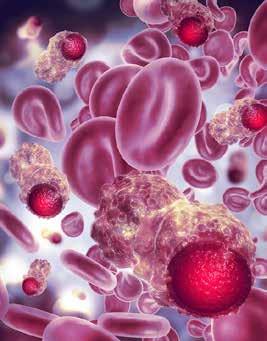
TCR Therapy Resistance Mechanisms and High-Risk Patients
In a similar manner to CAR-T, several likely mechanisms of resistance have been identified for TCR therapy, including downregulation of tumour antigen expression resulting in immune evasion, clonal selection pressure, T cell exhaustion, and lack of T-cell persistence.38 Further modification of the TCR engineering process is ongoing in an effort to increase efficacy and prolong TCR therapeutic durability. In a 2020 study, Stadtmauer et al. further developed NY-ESO-1TCR T-cells by knocking out the endogenous TCR α and β chains and PD-1 using CRISPR–Cas9 gene editing.96 The rationale for this additional gene modification was to address the issue of persistently produced endogenous TCR α and β chains pairing with therapeutic TCR chains, likely resulting in reduced targeted TCR expression, as well as increased off-tumour adverse events.130,131 Additionally, the knockout of immune checkpoint molecule PD-1 expression was designed to reduce T-cell exhaustion or dysfunction via this pathway.132 The results of this study demonstrated extended persistence of the engineered T cells and in vitro experiments comparing the additional knockout T-cells to the NY-ESO-1 TCR transduced cells without additional gene modifications demonstrated higher antigen-specific cytotoxicity associated with the additional knockout products. Of note, only two MM patients were enrolled in this trial. Furthermore, while inclusion criteria required that all patients have a diagnosis of relapsed refractory MM with multiple prior lines of therapy, there was no record of the patients’ disease risk status on the basis of R-ISS and no outline of cytogenetic abnormalities.
The previously outlined studies demonstrate a possible role for TCR therapy in MM and an acceptable safety profile. However, there is a paucity of data in relation to TCR therapy for patients with high-risk disease, and this is the patient population with the greatest therapeutic need. The optimum timing of treatment with TCR therapy in patients with HRMM also requires evaluation.
There is a need for further studies with a larger cohort size, including patients with high-risk cytogenetics and risk subgroup analyses, to evaluate the realworld clinical efficacy of TCR therapy, particularly in HRMM.
6. Conclusions
In recent years, there has been significant advances in the development of immunotherapies for the treatment of MM. Important progress has been made in the design and application of adoptive cellular therapies for MM, including two licensed, FDA- and EMAapproved, CAR-T cell therapies. CAR-T has demonstrated impressive clinical results in patients with R/RMM; however, there remains several challenges with this treatment, including the complex manufacturing process, prolonged vein-to-vein time, and disease resistance and relapse. Other adoptive cellular therapies, currently in clinical trials, including TCR-therapy and more recently CAR-NK cell constructs, offer alternative therapeutic mechanisms and show conceptual attractiveness. These therapies may also offer a complimentary or synergistic approach for CAR-T therapy, if used in combination. Patients with HRMM have the most critical need for novel advanced therapeutic options; however, there is a paucity of data to inform treatment strategy for this specific subgroup. Further trials specifically designed to investigate and optimize this therapeutic approach in prospectively recruited high-risk patients, rather than solely as a subgroup analysis of larger studies, are needed.133 The results of ongoing studies, such as the GMMG-CONCEPT and OPTIMUM/MUKnine trials, as outlined above will be useful in this regard. There is particular interest in the sequencing of therapeutic strategies in patients with HRMM and consideration of CAR-T in frontline treatment for this patient population is warranted, based on ongoing studies. Given that the prognosis worsens with each relapse and patients with HRMM are more likely to experience early relapse, there is a need for frontline treatments that provide disease control with durable responses and prolonged survival. Understanding the tumour microenvironment and factors that contribute to disease resistance, particularly in HRMM patients, will be crucial in the optimisation of established adoptive cellular therapies and development of the next generation of agents.
References available on request
68 Peer Review | Myeloma AUGUST 2023 • HPN | HOSPITALPROFESSIONALNEWS.IE
Case report: Venous thromboembolism
Bilateral deep vein thrombosis. Inferior vena cava abnormalities. KILT syndrome
Written by Dr Bibi Ayesha Bassa, Emergency Medicine Registrar/PhD-Candidate; Dr David Ryan, Emergency Radiology Fellow; Dr Tomas Breslin, Emergency Medicine Consultant; Dr Emma Reid, MbBChBAO and Dr Ferdia Bolster, Radiologist. Emergency and Trauma Radiology



Abstract: Venous thromboembolism (VTE), comprising deep vein thrombosis (DVT) and pulmonary embolism (PE), is associated with significant morbidity and mortality. Congenital absence of the inferior vena cava (IVC) is reported in current literature as a rare risk factor for DVT. The presence of kidney and IVC abnormalities on computed tomography together with lower limb thrombosis is collectively referred to as KILT syndrome (Kidney and IVC Abnormalities with Leg Thrombosis), an extremely rare cause of extensive bilateral lower limb DVT.
We present a case of KILT syndrome, diagnosed for the first time after the age of 60 years and the first case reported in the Irish population. The patient presented to the emergency department with unilateral limb pain with a prior history of provoked DVT. Clinical gestalt, a high Wells Score, and raised D-Dimer strongly supported a diagnosis of DVT. Lower limb duplex ultrasound confirmed bilateral external iliac and femoral vein thrombus, with computed tomography venography revealing an absent infrarenal IVC and atrophy of the left kidney. The medical team subsequently admitted the patient for therapeutic anticoagulation and investigation. After review by haematology, the patient was discharged on an indefinite duration of anticoagulation with follow-up with our coagulation services. In any patient with bilateral lower limb DVT, comprehensive assessment and investigation, with particular emphasis on imaging, is imperative to exclude rare associated conditions.
is essential to define lifelong thromboprophylaxis strategies for these patients.
In this case report, we look at the most likely clinical scenario physicians will encounter, leading them to make the incidental yet rare diagnosis.
Patient Background

Introduction
Acute venous thromboembolism (VTE) is composed of deep vein thrombosis (DVT) and pulmonary embolism (PE). Acute pulmonary
embolus is a potentially lifethreatening condition associated with a high in and out of hospital mortality.1 VTE is the leading cause of preventable hospital mortality2 and has significant
long-term sequelae, with current evidence suggesting VTE is a leading cause of disabilityadjusted life years (DALYs) lost3, 4 and associated with high healthcare cost.3
There are many conditions associated with the hypercoagulable states affecting Virchow's triad in the development of VTE. KILT syndrome is one rare associated syndrome.5 The term KILT syndrome describes the existence of kidney and inferior vena cava (IVC) abnormalities together with lower limb thrombosis.5 Due to its low reported prevalence, there is currently limited knowledge regarding aetiology and early detection. Despite this, our ability as clinicians to expose clinical cues and diagnose KILT
A Caucasian female in her late 60s presented to the emergency department (ED) with worsening right limb pain after returning from an overseas trip on a short haul flight. The patient described having fallen on the limb a few weeks prior and had since noticed progressive swelling of the right calf.
On enquiry, the patient had a normal birth and childhood history. She had 3 uneventful pregnancies. Her background medical comorbidities included gastrooesophageal reflux disease (GORD) and lower limb varicose veins.
The patient’s surgical history included an uneventful elective transabdominal hysterectomy thirty years ago for menorrhagia and dysmenorrhea associated with menstruation. She was discharged and readmitted 10 days later due to back and right leg pain. She was found to have developed a postoperative extensive right lower limb DVT. She was successfully treated with a short duration of Warfarin with no further recurrence.

HOSPITALPROFESSIONALNEWS.IE | HPN • AUGUST 2023 69 Peer Review | Thrombosis
Dr Bibi Ayesha Bassa
Dr David Ryan
Dr Tomas Breslin
Dr Emma Reid
Dr Ferdia Bolster
Clinical Findings
Clinically, the patient was hemodynamically stable with normal vital signs. On examination, her right calf measured 2cm larger than the left with grade one pitting oedema. The calf was tender to palpation with no signs suggestive of cellulitis. Mildly engorged varicosities and skin hyperpigmentation, consistent with chronic venous insufficiency, were noted, in keeping with established post-thrombotic syndrome following her first DVT thirty years earlier. Similar signs of chronic venous insufficiency were also present on the left leg. The neurovascular status of both limbs was intact, with strong distal pulses. The remainder of the respiratory, cardiovascular, and abdominal examination was unremarkable.
Diagnostic Assessment
Pre-test probability for a DVT was calculated and the patient had a Wells Score of 4, placing her in the high-risk group for a DVT. An electrocardiogram demonstrated sinus rhythm. Blood tests demonstrated a raised D-Dimer level of 3.82 ug/mL with a normal full blood count (FBC) and C-reactive protein (CRP).
A lower limb duplex ultrasound scan (USS) confirmed thrombus within the right external iliac vein, femoral vein, and proximal popliteal vein. Due to the extent of the thrombus, the sonographer proceeded to image the contralateral limb, and thrombus was also identified within the left external iliac vein and left femoral vein. The common iliac veins and inferior vena cava (IVC) were poorly visualized and computed tomography venography (CTV) was recommended to exclude more proximal/central thrombus
as well as to screen for potential malignancy.
On CTV, the infrarenal IVC appeared absent, with a tiny calibre vein replacing it. Multiple venous collaterals were noted extending along the anterior thighs, into the pelvis via small external iliac vein collaterals, and throughout the retroperitoneum. The suprarenal IVC remained patent. (Fig. A - B) Marked atrophy of the left kidney was also observed. (Fig. D)
Therapeutic Intervention
The patient was treated with therapeutic dose Tinzaparin (175IU/kg). Following duplex USS and CTV results, the patient was referred to the on-call medical team for further investigation of bilateral DVT and an absent infrarenal IVC. During her admission, the patient had consistently normal renal function. She continued to receive therapeutic dose Tinzaparin and
reported mild improvement in her pain.
The patient was subsequently reviewed by haematology, who advised an indefinite duration of anticoagulation with one outpatient follow-up with the coagulation services.
Follow-Up and Outcome
On day 3 of her admission, the patient was changed to a direct oral anticoagulation (DOAC) and discharged home on Apixaban 10 mg twice daily for the first seven days, followed by Apixaban 5 mg twice daily thereafter.
The patient will follow-up with haematology services in 3 months to ensure tolerance and adherence, and thereafter will continue to receive care from their general practitioner.
Discussion
Timeline
Timeline
Date Relevant Past Medical History and Interventions
1992 Elective transabdominal hysterectomy for menorrhagia and dysmenorrhea associated with menstruation
1992 Readmitted 10 days later due to back and right leg pain. Diagnosed with postoperative (R) lower limb DVT.
1993 Successfully completed short course of Warfarin therapy
Date Summaries from Initial Visit Diagnostic Testing Interventions 2022
• Presented to emergency department with right leg pain following a short haul flight.
• Clinical examination: Right calf > 2cm compared with left and tender to palpation. Associated grade one pitting oedema.
• No signs suggestive of cellulitis.
• Mildly engorged varicosities and skin hyperpigmentation noted on both legs.
• Wells Score 4
• D-Dimer: 3.82 ug/mL.
• Lower limb duplex USS: Thrombus within the right external iliac vein, femoral vein, and proximal popliteal vein as well as left external iliac vein and left femoral vein.
• Computed tomography venography: Absent infrarenal IVC replaced by tiny calibre vein. Multiple venous collaterals. Patent suprarenal IVC.
• Admitted under medical team
• Treated with therapeutic dose
Tinzaparin (175IU/kg)
• Discharged on indefinite duration of anticoagulation as per haematology services: Apixaban 5 mg
twice daily
The term KILT syndrome was first coined by Van Veen et al in 2002, to describe the existence of kidney and inferior vena cava (IVC) abnormalities together with lower limb thrombosis.5 KILT syndrome is vanishingly rare, with fewer than twenty cases described in the medical literature.5-16
Anomalies of the inferior vena cava in themselves are rare, occurring in about 0.6-2% of individuals with congenital structural heart disease but only 0.3-0.6% of the general population.17 Double IVC and left-sided IVC account for the most common variants, with an incidence of 0.2-3% and 0.20.5%, respectively.18 The absence of some segment of a mature IVC is often diagnosed incidentally, most commonly during workup of DVT (as in our case) or on other routine cross-sectional imaging of the abdomen and pelvis.19
An absent IVC is recognised to be associated with otherwise idiopathic DVT.20 DVT in the presence of an absent IVC occurs most commonly in young males and usually in the absence of precipitating factors. In reported cases of an absent IVC, rightsided renal anomalies were noted in 6% of cases, with left renal anomalies found in 2.7%.21 Our case is particularly interesting considering the patient’s advanced age at diagnosis.
IVC anomalies result from the abnormal persistence or regression of embryological veins. The absence of the entire IVC is
AUGUST 2023 • HPN | HOSPITALPROFESSIONALNEWS.IE 70 Peer Review | Thrombosis
of embryological origin, whilst the absence of only the infrarenal IVC, as in the case presented, is likely due to intrauterine or perinatal thrombosis,22, 23 resulting in hypoplasia rather than agenesis of the segment.15 The contribution of a genetic predisposition toward such IVC anomalies and KILT has been explored in two published case reports, one of an absent infrarenal IVC in a father and son pair who both had bilateral DVTs, as well as a second interesting case of KILT syndrome described in siblings by Duicu et al.16, 21 The occurrence of such cases brings into consideration the potential for research into genetic testing, screening, and early detection.
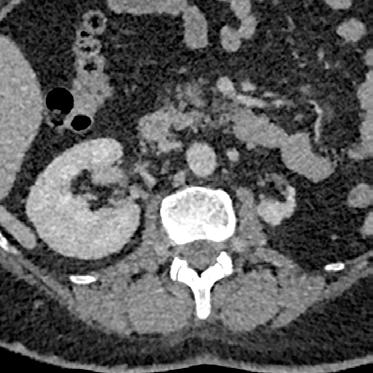
In the correct clinical setting, IVC anomalies and KILT should be considered in patients presenting with extensive, recurrent, proximal bilateral DVTs and those with young onset venous insufficiency.24 To date, there are no extensive records of IVC anomalies, with the largest study suggesting a male predominance, the median age at diagnosis of 40 years, and the presence of bilateral DVT in 81% of patients. There is no reference to renal anomalies in this paper.25 This illustrates a further potential learning point for the authors: the importance of extensively investigating patients with bilateral lower limb DVT to exclude such associations. IVC anomalies may be as common as inherited thrombophilia, with an estimated
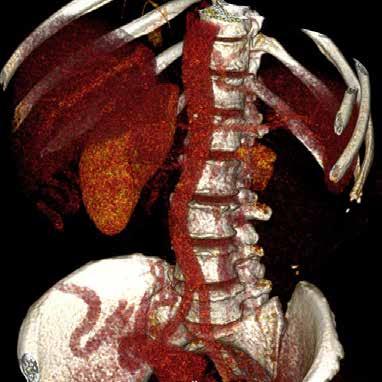
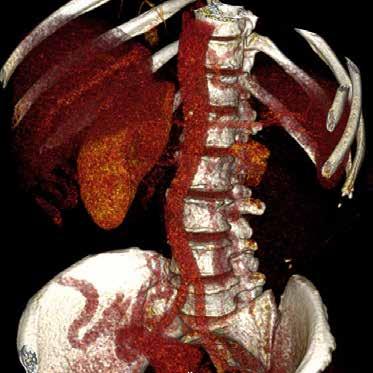
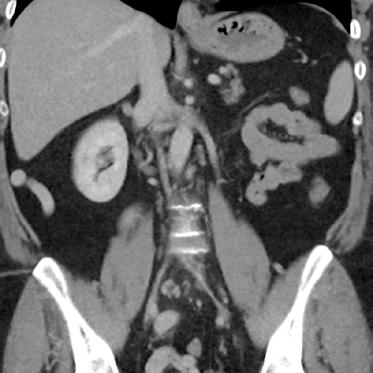
5% of patients with DVT under 30 having an absence of some portion or all of their IVC, emphasizing that structural causes of DVT should always be considered in addition to physiological.26
In summary, our case appears to be the first reported case of KILT syndrome in the Irish population. The fact that the patient had only experienced a single episode of provoked DVT prior to her index presentation, with minimal, if any, symptoms of venous insufficiency, suggests a potential for a much higher prevalence of undiagnosed KILT syndrome.
Learning Points
1. Patients with bilateral lower limb deep vein thrombosis should be investigated thoroughly to exclude any anatomical abnormality.
2. When investigating DVT, an extension of thrombus into the external iliac veins with a lack of respiratory variation of the common femoral vein on doppler ultrasound should prompt consideration for computed tomography venography to exclude proximal thrombosis or anatomical abnormalities.
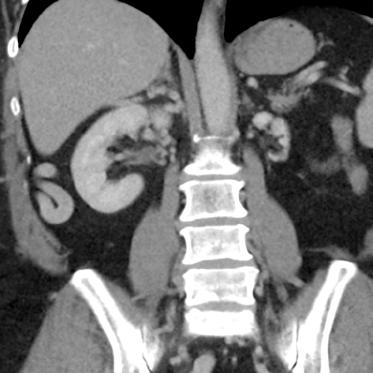
3. KILT syndrome is a rare condition that should be considered in cases of bilateral lower limb deep vein thrombosis.
Patient Perspective
I hurt my knee while on holiday abroad. I had used over-thecounter creams while away, which took the pain away temporarily. On my return home, after six weeks of ongoing knee pain, I visited an urgent care clinic. The doctor there was more concerned about my calf than my knee as it was swollen. I was referred to the emergency department urgently.
After some blood work, it was discovered I had a clot. I was in shock as I was not expecting to hear that. I was also quite worried as I have had a DVT in the past following a hysterectomy. Whilst an inpatient, I was told I had an absent infrarenal IVC. At first, I didn't understand or know what this was, as I had never heard about this previously.
Initially, I was extremely worried, given my age and past medical history. I was reassured by the medical team and given a treatment plan. I also have a keen interest in travel, so I was reassured I could still travel but take extra precautions such as
wearing compression stockings and ensuring to move about on the flight.
Acknowledgements
The authors wish to thank Dr Lebo Malale for comments on the manuscript.
Conflicts of Interest
The authors have no conflicts of interest to declare.
Funding
This research did not receive any specific grant from funding agencies in the public, commercial, or not-for-profit sectors.
Ethical Approval
This case report did not require ethical approval for its transcription and publication.
Consent
Informed consent for the publication of this case report has been obtained from the patient.
References available on request
HOSPITALPROFESSIONALNEWS.IE | HPN • AUGUST 2023 71
Figures A - C: Coronal and axial contrast enhanced CT images demonstrating absence of the normal infrarenal segment of the IVC (white asterisk) which is reduced in calibre measuring 6mm, with normal suprarenal IVC (white arrow) and atrophic left kidney (white arrowhead).
* *
* *
Figure D: 3-Dimensional reconstruction showing the normal suprarenal IVC (white arrow) and atrophic left kidney. AA, abdominal aorta; L, liver; RK, right kidney; S, spleen.
A B C D
A B D
Study calls for Renaming of Obesity
of this complex disease that centres on environmental, genetic, physiological, behavioural and developmental factors, not on body weight or on BMI. New appetite-control medications are generating phenomenal demand worldwide, but patients with obesity may be sent to the back of the queue on the mistaken assumption that they do not need the medication as much as patients with diabetes. The researchers suggest that clearer terminology could play a role in addressing this inequity.
Professor Finucane said: “Semaglutide is approved as a treatment for obesity, just as it is for diabetes. There is a deeply stigmatising idea out there that people with obesity are looking for an easy way out, that these medicines provide a low-effort alternative to healthy diet and lifestyle. But for people living with the disease of obesity, these drugs don’t make behavioural change unnecessary, nor do they make it easy – they just make it possible.”
We must change the way we talk about obesity to improve public understanding of the disease, according to a new study.
Researchers at University College Cork (UCC) and University of Galway are calling for ‘obesity’ to be renamed in order to help the public and policymakers to better understand the disease of obesity, and drive advances to treat and prevent it.
Published in Obesity Reviews, their study highlights ongoing confusion about the term ‘obesity’, which
currently can refer to the disease of obesity or to a BMI range, or a combination of the two.
Dr Margaret Steele, a postdoctoral researcher in UCC’s School of Public Health, and Professor Francis Finucane, Consultant Endocrinologist and Professor of Medicine in the University of Galway, explored different or conflicting understandings of the term ‘obesity’.
The researchers suggest it is time to reconsider whether the term ‘obesity’ conveys the reality
Dr Margaret Steele said: “Our focus should be on the underlying pathophysiology and not on body size. For people with the disease of obesity, treatment is not optional or cosmetic. A different diagnostic term such as ‘adipositybased chronic disease’ could more clearly convey the nature of this disease, and avoid the confusion and stigma that may occur if we keep using the term ‘obesity’, which has become synonymous with body size.”
Professor Francis Finucane described new Irish Medical Council guidance warning doctors against using Ozempic for obesity as morally problematic.

The researchers point out that this is very different from celebrities using drugs like semaglutide to become “fashionably” thin.
Dr Steele said: “This is why we need to clarify what we mean by obesity. Many of the people we see on TikTok or Instagram reporting on their semaglutide journeys do not have the disease of obesity. When we talk about treating and preventing obesity, our focus should be on healthy food environments, and appropriate treatment for people living with chronic metabolic diseases. We hope this new research will help drive home the point that this is about helping people live well, not making everyone skinny.”
Two appointments at Beacon Hospital
Beacon Hospital has announced two new senior management appointments with a new Chief Operations Officer and Chief Financial Officer.
Jacqueline Robinson has been appointed Chief Operations Officer, bringing over 14 years’ experience in various senior roles in Irish and UK hospitals to her new position.

Jacqueline will play a vital role in the operation of Beacon Hospital, as it continues to invest in growth and expansion in the years ahead.
Before joining Beacon Hospital, she was General Manager for St. Luke's Radiation Oncology Network.
Prior to this, she was Operations Manager for Cancer Services at St. James’s Hospital in Dublin, and also held senior pharmacist roles in St. James’s Hospital and in North Middlesex Hospital with the NHS.
Meanwhile, Ian O’Keeffe has been appointed Chief Financial Officer. Ian has been part of Beacon Hospital for over six years having previously held the position of Finance Director.

Prior to joining Beacon in 2016, Ian trained in PriceWaterhouseCoopers and worked with Independent News and Media for six years.
Ian O’Keeffe, Chief Financial Officer at Beacon Hospital said, “I am delighted to join the executive management team here at the hospital. The hospital has been on an incredible growth drive over the past number of years, fuelled by the high levels of energy and commitment shown by our staff across all disciplines. We have an experienced and dedicated finance team in place here at Beacon and I’m honoured to lead them as we grow both in size and complexity of services.”
72 AUGUST 2023 • HPN | HOSPITALPROFESSIONALNEWS.IE
News
Jacqueline Robinson COO
Ian O'Keeffe CFO
SUSPECT ATTR-CM

(TRANSTHYRETIN AMYLOID CARDIOMYOPATHY)

A LIFE-THREATENING DISEASE THAT CAN GO UNDETECTED
Life-threatening, underrecognized, and underdiagnosed, ATTR-CM is a rare condition found in mostly older patients in which misfolded transthyretin proteins deposit in the heart.1-7 It is vital to recognize the diagnostic clues so you can identify this disease.
CONSIDER THE FOLLOWING CLINICAL CLUES, ESPECIALLY IN COMBINATION, TO RAISE SUSPICION FOR ATTR-CM AND THE NEED FOR FURTHER TESTING
heart failure with preserved ejection fraction in patients typically over 60 years old5-7
to standard heart failure therapies (ACEi, ARBs, and beta blockers)8-10
between QRS voltage and left ventricular (LV) wall thickness11-13
of carpal tunnel syndrome or lumbar spinal stenosis3,8,14-20
showing increased LV wall thickness6,13,16,21,22
H FpEF I NTOLERANCE DISCORDANCE DIAGNOSIS E CHO N ERVOUS SYSTEM
LEARN HOW TO RECOGNIZE THE CLUES OF ATTR-CM AT:


—autonomic nervous system dysfunction-including gastrointestinal complaints or unexplained weight loss6,16,23,24
3. Connors LH, Sam F, Skinner M, et al. Heart failure due to age-related cardiac amyloid disease associated with wild-type transthyretin: a prospective, observational cohort study. Circulation. 2016;133(3):282-290. 4. Pinney JH, Whelan CJ, Petrie A, et al. Senile systemic amyloidosis: clinical features at presentation and outcome. J Am Heart Assoc. 2013;2(2):e000098. 5. Mohammed SF, Mirzoyev SA, Edwards WD, et al. Left ventricular amyloid deposition in patients with heart failure and preserved ejection fraction. JACC Heart Fail. 2014;2(2):113-122. 6. Maurer MS, Hanna M, Grogan M, et al. Genotype and phenotype of transthyretin cardiac amyloidosis: THAOS (Transthyretin Amyloid Outcome Survey). J Am Coll Cardiol. 2016;68(2):161-172.
7. González-López E, Gallego-Delgado M, Guzzo-Merello G, et al. Wild-type transthyretin amyloidosis as a cause of heart failure with preserved ejection fraction. Eur Heart J. 2015;36(38):2585-2594. 8. Narotsky DL, Castano A, Weinsaft JW, Bokhari S, Maurer MS. Wild-type transthyretin cardiac amyloidosis: novel insights from advanced imaging. Can J Cardiol. 2016;32(9):1166.e1-1166.e10. 9. Brunjes DL, Castano A, Clemons A, Rubin J, Maurer MS. Transthyretin cardiac amyloidosis in older Americans. J Card Fail. 2016;22(12):996-1003. 10. Castaño A, Drach BM, Judge D, Maurer MS. Natural history and therapy of TTR-cardiac amyloidosis: emerging disease-modifying therapies from organ transplantation to stabilizer and silencer drugs. Heart Fail Rev. 2015;20(2):163-178.
11. Carroll JD, Gaasch WH, McAdam KP. Amyloid cardiomyopathy: characterization by a distinctive voltage/mass relation. Am J Cardiol. 1982;49:9-13. 12. Cyrille NB, Goldsmith J, Alvarez J, Maurer MS. Prevalence and prognostic significance of low QRS voltage among the three main types of cardiac amyloidosis. Am J Cardiol. 2014;114(7):1089-1093. 13. Quarta CC, Solomon D, Uraizee I, et al. Left ventricular structure and function in transthyretin-related versus light-chain cardiac amyloidosis. Circulation. 2014;129(18):1840-1849. 14. Connors LH, Prokaeva T, Lim A, et al. Cardiac amyloidosis in African Americans: Comparison of clinical and laboratory features of transthyretin V122I amyloidosis and immunoglobulin light chain amyloidosis. Am Heart J. 2009;158(4):607-614. 15. Nakagawa M, Sekijima Y, Yazaki M, et al. Carpal tunnel syndrome: a common initial symptom of systemic wild-type ATTR (ATTRwt) amyloidosis. Amyloid. 2016;23(1):58-63. 16. Rapezzi C, Merlini G, Quarta CC, et al. Systemic cardiac amyloidoses: disease profiles and clinical courses of the 3 main types. Circulation. 2009;120(13):1203-1212. 17. Sperry BW, Reyes BA, Ikram A, et al. Tenosynovial and cardiac amyloidosis in patients undergoing carpal tunnel release. J Am Coll Cardiol. 2018;72(17): 2040-2050. 18. Westermark P, Westermark GT, Suhr OB, Berg S. Transthyretin-derived amyloidosis: probably a common cause of lumbar spinal stenosis. Ups J Med Sci. 2014;119(3):223-228. 19. Yanagisawa A, Ueda M, Sueyoshi T, et al. Amyloid deposits derived from transthyretin in the ligamentum flavum as related to lumbar spinal canal stenosis. Mod Pathol. 2015;28(2):201-207. 20. Sueyoshi T, Ueda M, Jono H, et al. Wild-type transthyretin-derived amyloidosis in various ligaments and tendons. Hum Pathol. 2011;42(9):1259-1264. 21. Phelan D, Collier P, Thavendiranathan P, et al. Relative apical sparing of longitudinal strain using two-dimensional speckle-tracking echocardiography is both sensitive and specific for the diagnosis of cardiac amyloidosis. Heart. 2012;98(19):1442-1448. 22. Ternacle J, Bodez D, Guellich A, et al. Causes and consequences of longitudinal LV dysfunction assessed by 2D strain echocardiography in cardiac amyloidosis. JACC Cardiovasc Imaging 2016;9(2):126-138. 23. Coelho T, Maurer MS, Suhr OB. THAOS - The Transthyretin Amyloidosis Outcomes Survey: initial report on clinical manifestations in patients with hereditary and wild-type transthyretin amyloidosis. Curr Med Res Opin. 2013;29(1):63-76. 24. Swiecicki PL, Zhen DB, Mauermann ML, et al. Hereditary ATTR amyloidosis: a single-institution experience with 266 patients. Amyloid. 2015;22(2):123-131.
The health information contained in this ad is provided for educational purposes only. Date of Preparation: February 2021 GCMA code: PP-RDP-IRL-0105
References 1. Sipe JD, Benson MD, Buxbaum JN, et al. Amyloid fibril proteins and amyloidosis: chemical identification and clinical classification International Society of Amyloidosis 2016 Nomenclature Guidelines. Amyloid. 2016;23(4):209-213.
2. Maurer MS, Elliott P, Comenzo R, Semigran M, Rapezzi C. Addressing common questions encountered in the diagnosis and management of cardiac amyloidosis. Circulation. 2017;135(14):1357-1377.
S U S P E C T A N D D E T E C T . I E
Regius Professor Appointment for Rose Anne

Professor Rose Anne Kenny appointed first ever female Regius Professor of Physic (1637) at Trinity
Adolescent Psychiatry and the Vice Provost Orla Sheils, Professor in Molecular Diagnostics.
research and education, in light of the challenges and opportunities of being a female clinician scientist.
The School of Medicine, Trinity College and Head of School
Professor Colin Doherty recently celebrated the Schools’ female full professors and marked the appointment of the first ever female Regius Professorship of Physic (1637) at Trinity College Dublin, Regius Professor Rose Anne Kenny.
Professor Kenny becomes the first female physician to take the prestigious seat, which has been held by 23 prior distinguished professors over the centuries including the famous John Stearne, William Stokes and Victor Synge. It was awarded first to Dr John Stearne (1662), best known as the founder of the Royal College of Physicians of Ireland.
The Regius Professorship of Physic is the oldest professorship in Ireland and one of the oldest Medical Professorships in Europe (the Latin, Physic, referring to the
art or practice of healing disease). The seat, dating from 1637, was the fifth Regius professorship created after Aberdeen (1497), Cambridge (1540) Oxford (1546) and Edinburgh (1637). It is an honorary appointment in recognition of outstanding scholarship in teaching and research in medicine.
Rose Anne Kenny already holds the Chair of Medical Gerontology (2006), is Fellow (2007) at Trinity College Dublin, Consultant Physician at St. James’s Hospital, Dublin, and is well known as founding Principal Investigator of the Irish Longitudinal Study on Ageing (TILDA).
At the full day event, which took place in the Tercentenary Hall of Trinity Biomedical Sciences Institute, all full professors who are physician scientists or scientists from the school were invited to give an overview of their careers,
The opening address was given by Senator Mary Henry and the event was chaired by Blanaid Daly, Professor of Special Care Dentistry. Professor Colin Doherty was also delighted to welcome Dame Regius Louise Robinson, Professor of Primary Care and Ageing (Newcastle University) as the first speaker and one of only two female Regius Professors in the UK and Ireland.
The Trinity female full professors who presented on the day were Maeve Lowery, Professor of Translational Cancer Medicine, Susan Smith, Professor of General Practice, Orla Hardiman, Professor of Neurology, Juliette Hussey, Professor of Cancer Rehabilitation and Survivorship, Cliona O’Farrelly, Professor of Comparative Immunology, Eleanor Molloy, Professor of Paediatrics and Child Health, Ursula Fearon, Professor of Rheumatology and notably, Regius Rose Anne Kenny, Professor of Medical Gerontology, who received a standing ovation.
Four other full professors who could attend the event are Aideen Long, Professor of Translational Medicine, Deirdre Murphy, Professor of Obstetrics, Louise Gallagher, Professor of Child and
Following the event, Regius Professor Rose Anne Kenny said, “It was an honour to celebrate our female Full Professors and Physician Scientists in the School of Medicine alongside the Regius professorship. The quality of work presented was stunning, and I particularly enjoyed knowing more about these great colleagues. Such events are so important in recognising and celebrating women in our Trinity community and those who support them. I look forward to seeing this momentum grow.”
Professor Colin Doherty, Head of School noted, “This was a unique event in our calendar and one that we will continue to celebrate. Despite a 400-year history, the School of Medicine at Trinity College Dublin, for various historic, social and indefensible reasons, has only grown the female talent amongst our female academics over the last 30-40 years. It was particularly fitting to join this event with a celebration of the appointment of the first female Regius Professor of Physic, Regius Rose Anne Kenny in Trinity. Today was a recognition of the past opportunity costs and a celebration of the promise of future success of this fantastic group of clinicians and researchers. I want to thank Dame Regius Louise Robinson, one of only 3 Regius Professors along with Regius Kenny who graced us with her presence for the event.”
Recall notice for Sabril 500mg film-coated tablets, PA 540/23/1
The HPRA has advised that batch no. 2006B of Sabril 500mg film-coated tablets, PA 540/23/1 is being recalled with immediate effect. This recall is to pharmacy level.
The recall has been initiated, as a precaution, due to the presence of trace amounts of the impurity tiapride.
Wholesalers can download a copy of the wholesale recall letter.Pharmacist can download a copy of the pharmacy recall letter. Both available at www.hpra.ie
As the recall is to pharmacy level, patients are not required to take any actions.
Product name or type:Sabril 500mg film-coated tablets
Authorisation Number: PA 540/23/1
Serial Or Batch Number And Expiry Date:Batch no.2006B, Expiry date: 11.2025
Authorisation Holder: Sanofi-Aventis Ireland Limited
74 AUGUST 2023 • HPN | HOSPITALPROFESSIONALNEWS.IE
News
Professor Rose Anne Kenny
Pitching Innovative Health Solutions
Students at RCSI University of Medicine and Health Sciences have pitched ideas to help solve global healthcare challenges as part of the 2023 Student Innovation Challenge.

The challenge is a part of the RCSI Research Summer School which has been taking place over the month of June, immersing Undergraduate students in the diverse RCSI research environment.
The Student Innovation Challenge Pitch Day is the culmination of four weeks of work by the student teams, who, supported by training in market research, intellectual property and research commercialisation, develop innovations that have the potential solve challenges in healthcare.
The innovation challenge provides undergraduate students with a unique opportunity to work solving challenges under the supervision of an RCSI clinician scientist Challenge Leader, allowing them to acquire key problem-solving, innovation and entrepreneurial skills.
Led by RCSI Head of Innovation Dr Aoife Gallagher, this year’s challenge saw 60 RCSI Research Summer School students working with expert challenge leaders on real clinical problems to become innovators, communicators and ultimately help them become skilled clinical practitioners.
At the pitch event yesterday, The Pink Pathway Team led by Dr Sandra Hembrecht successfully presented their ideas to a panel of judges, including industry experts, to become the winners of the challenge. The team developed a rapid access breast cancer pre-operative care pathway to streamline a breast cancer patient’s journey from diagnosis to treatment.
Commenting on the high quality of all of the team pitches, Dr Gallagher said: “This year’s teams showcased remarkable ingenuity in addressing real-world problems across key healthcare areas. The solutions pitched are a great demonstration of the active collaboration between academics, clinicians and patients that we support and encourage at RCSI to drive advancements in healthcare.”
The teams were tasked with addressing challenges presented by RCSI researchers in key RCSI research areas: neurological and psychiatric disorders, vascular biology, cancer, endocrinology, cardiology and microbiology.

The full list of innovation challenges presented by the RCSI Challenge Leaders were:
• Dr Peter Widdess Walsh: Detection of nocturnal seizures in epilepsy patients.
• Dr Douglas Mulholland: Improved deployment of inferior vena cava filters
• Dr Katie Giblin: Prevention of surgical site infection
The winners of the 2023 RCSI Student Innovation Challenge ‘The Pink Pathway Team’ with team leader Dr Sandra Hembrech
• Dr Leanne Cusson: Dispelling myths and increasing awareness of polycystic ovary syndrome
• Dr Sandra Hembrecht: Optimisation of the breast cancer pre-operative care pathway
• Dr JJ Coughlan: Improved left radial access in coronary catheterisation procedures
• Dr Liah McElligott: Dance therapy to help Parkinson’s disease patients
Future of Future of pharmacIE pharmacIE


Friday,
Connect with future pharmacists


TICKETS

75 HOSPITALPROFESSIONALNEWS.IE | HPN • AUGUST 2023 News
at APPEL's exclusive careers event. Book your ticket now!
20th October 1pm - 4pm RCSI, 123 St Stephen
Diabetes Ireland publish Annual Report
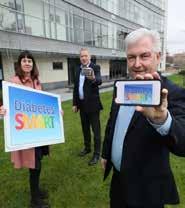
Diabetes Ireland recently launched its 2022 Annual Report summarising its work and activities in the areas of diabetes advocacy, education, support, and awareness. Below we give an overview of their report.
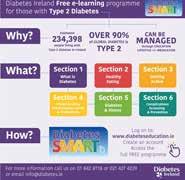
“Throughout 2022, Diabetes Ireland continued to provide its services to the diabetes community ensuring that thousands of people continued to receive education, support, and motivation to maintain good management of their condition. Likewise, the continuing support of our members and the diabetes community has helped Diabetes Ireland enormously in maintaining our services, and for this, we are extremely grateful.
“Advocacy was once again a main priority of Diabetes Ireland. Our aim is to see improved public services, better and quicker access to good quality care, diabetes technology and medications, and better recognition of diabetes and the diabetes community by the Government and its public officials. Work is continuously ongoing to achieve improvements that will benefit the diabetes community. Diabetes Ireland launched its 2023 Pre-budget submission in the summer of 2022 which proposed a number of immediate actions for implementation to improve the quality of life for over 295,000 people living with diabetes and reduce the long-term costs of preventable diabetes complications. Following a positive and engaging meeting with the Minister for Health in advance of the budget, we were delighted to see new budgetary funding allocated for a range of diabetes priorities.
“Diabetes Ireland also called for the setting up of a diabetes task force to develop a 10-year National Diabetes Strategy that provides vision, leadership, and direction so that the HSE can recruit the staff required and improve the quality of life for people living with diabetes and reduce the long-term costs to the health service of diabetes complications. We are hopeful that we will see this come to fruition in the near future.
“Diabetes Ireland continued to offer excellent support and services to people with diabetes and their families. In 2022, we aimed to deliver services to people with diabetes and their families by increasing awareness of diabetes
and encouraging them to make positive lifestyle changes.
“Diabetes SMART was launched as a free interactive online education platform which is available at www. diabeteseducation.ie. Developed by Diabetes Ireland with support from Novo Nordisk, this free interactive programme was launched to meet increasing demand from people with Type 2 diabetes who want to learn more about their condition and how to manage it effectively.
“A campaign to highlight the need for people living with Diabetes to be aware of their kidney health. was launched in collaboration with the Irish Kidney Association and supported by Astra Zeneca. The campaign focused on raising awareness of the link between diabetes and kidney disease and highlighting that screening for kidney disease is a routine part of your diabetes care and encouraged all people with diabetes to discuss their risk of kidney disease with their Doctor or Nurse and to take all the necessary steps to ensure their kidneys remain as healthy as possible.
“The summer months saw a return to face-to-face events with a number of outdoor family events held, followed by various Christmas parties in December.
“Both our Diabetes Ireland Care Centres in Cork and Dublin continue to be extremely busy with high numbers attending each Centre. As well as providing podiatry, Diabetic Retina Screening and counselling services, our Care Centre’s continue to be a fantastic resource for people seeking support and information on the many facets of diabetes, for both people who may be recently diagnosed and for those living years with the condition and who need some additional support to manage their condition more effectively.
“As ever, our goal is to support, educate, motivate, and empower people with diabetes and their families and to advocate for optimum health care for all those with diabetes in Ireland. As well as maintaining current services, we are committed to growing our services long into the future. We need and want you to become and stay a member so we can mutually support each other.
“Once again, we cannot express enough our appreciation for the

ongoing support we receive from our current volunteers, fundraisers, healthcare professionals, members, employees, corporate supporters and the HSE for
helping us help our community. We must all continue to work together for people with diabetes in Ireland so that we can all live long and healthy lives.”
%

2022
Support & Information
o p l e c o n t a c t e d o u r h e l p l i n e w i t h 8 8 % o f c a l l e r s s e e k n g i n f o r m a t i o n a n d s u p p o r t o n d i a b e t e s m a n a g e m e n t a n d a c c e s s i n g d i a b e t e s s e r v i c e s
Become a member
b i n a r s C O
4 v i r t u a l e d u c a t i o n w e b i n a r s & o n e v i r t u a l c o n f e r e n c e h e l d w i t h m o r e t h a n 2 2 5 0 p e o p e r e g i s t e r i n g t o a t t e n d o n e o r m o r e w e b i n a r s
8 8 p e o p l e a t t e n d e d o n e o f o u r w e l l b e n g w o r s h o p s
Education & Awareness
Diabetes Ireland focused on ch ldren with diabetes and their fam lies n 2022 Our Back to School awareness campa gn was held n August 2022, wh ch aims to help teachers, SNA s, parents, and diabetes teams with the transit on for ch ldren w th diabetes head ng back to school

Many schoo s supported our Go Blue for World Diabetes Day campaign for which we are extremely grateful
We held our first post covid n-person events for younger children l ving with Type 1 diabetes and the r fami ies with summer picn cs held in Dublin and Cork and Christmas parties held in Cork, Donegal an Dublin More than 120 fam lies attended one or more of these events
In March 2022 a new campa gn #CKD was launched on World K dney Day with the Irish Kidney Association h ghlight ng that peop e l v ng w th Diabetes should be aware of their kidney health Work ng n partnership with the Ir sh Kidney Assoc ation, CKD Steering Comm ttee and AstraZenca to create an effective campaign to promote awareness of this issue H ghlight ng the persona story of Rachel who was diagnosed with type 1 diabetes at 8 years of age and later diagnosed with stage 4 chron c k dney disease at 28 years of age Reach ng an audience of 667,589 n August 2022 Diabetes Ireland continues to promote th s campaign - see www diabetes e

In January 2022, Diabetes SMART was aunched as a free interact ve onl ne education p atform Developed by D abetes Ire and w th support from Novo Nordisk this free programme meets the increasing demand from peop e with Type 2 diabetes who want to earn more about the r cond t on & how to manage t effectively See wwww d abetes ie for more informat on
Advocacy
and direct on so that the HSE can recruit the staff required and improve the qua ity of ife for peop e l ving w th d abetes and reduce the ong-term costs to the hea th serv ce of d abetes comp ications
We ran awareness campa gns promoting the mportance of getting both
76 AUGUST 2023 • HPN | HOSPITALPROFESSIONALNEWS.IE News
88% AIM To see mproved public services, better & quicker access to good quality of care, diabetes technology med cat ons better recognition of diabetes & the diabetes commun ty by the Government & its pub ic off cials To ach eve mprovements that will benefit the d abetes community D i a b e t e s I r e l a n d A n n u a l R e p o r t 193 562 v sitors accessed www d abetes ie for nformation 29 195 people fo low us across our various social med a platforms 19,000 people recieve our monthly ezine 5 , 6 9 8 p e
E d u c a t i o n w e
E M O T I O N A L W E L L B E I N G W O R K S H O P S
2 6
a
6
E
Diabetes Ire and a so ca led for the setting up of a d abetes task force to develop a 10-year Nationa Diabetes Strategy that prov des v sion eadership,
D E
9 p e o p e l i v i n g w t h T y p e 2 D i a b e t e s
t t e n d e d o u r
m o n t h C O D E
d u c a t i o n p r o g r a m m e
the nfluenza vaccination and pneumococcal vaccine for the diabetes community Our health promot on team de ivered 28 commun ty d abetes educat on sess ons to a range of community groups and workplace staff and 35 d abetes educat on workshops were del vered to the staff of Nurs ng and Long-Term Res dentia Homes and Intel ectual D sabi ity Centres 2023 Pre-budget subm ssion proposed a number of mmediate act ons for mplementat on to improve the qual ty of l fe for over 297 000 people l v ng w th diabetes and reduce the ong-term costs of preventab e d abetes compl cations New budgetary funding al ocated for a range of HSE diabetes pr orities D abetes Federation of Ire and (T/A Diabetes Ireland) is a registered charity CHY 6906 info@diabetes ie www diabetes ie 01-8428118
Switch to Simponi and drive on
Effectiveness of golimumab in rheumatology patients after failure of initial TNFαi therapy - A pooled data analysis.
1
Simponi, in combination with methotrexate (MTX), is indicated for:2

• the treatment of moderate to severe, active rheumatoid arthritis in adults when the response to disease-modifying anti-rheumatic drug (DMARD) therapy including MTX has been inadequate.
• the treatment of severe, active and progressive rheumatoid arthritis in adults not previously treated with MTX
Scan here to download ‘Switch to Simponi and drive on’ leaflet
Simponi 50 mg, 100 mg Solution for Injection in pre-filled pen
Simponi 50 mg Solution for Injection in pre-filled syringe (golimumab)
ABRIDGED PRODUCT INFORMATION Refer to Summary of Product Characteristics before prescribing PRESENTATION Simponi 50 mg solution for injection in pre-filled pen Simponi 50 mg solution for injection in pre-filled syringe Simponi 100 mg solution for injection in pre-filled pen INDICATIONS Rheumatoid Arthritis (RA): Simponi, in combination with methotrexate (MTX), is indicated for: the treatment of moderate to severe, active rheumatoid arthritis in adults when the response to disease-modifying anti-rheumatic drug (DMARD) therapy including MTX has been inadequate; the treatment of severe, active and progressive rheumatoid arthritis in adults not previously treated with MTX. Simponi, in combination with MTX, has been shown to reduce the rate of progression of joint damage as measured by X-ray and to improve physical function; Psoriatic Arthritis (PsA): Simponi, alone or in combination with MTX, is indicated for the treatment of active and progressive PsA in adults when the response to DMARD therapy has been inadequate. Simponi has been shown to reduce the rate of progression of peripheral joint damage as measured by X-ray in patients with polyarticular symmetrical subtypes of the disease and to improve physical function. Ankylosing Spondylitis (AS): Simponi is indicated for the treatment of severe, active AS in adults who have responded inadequately to conventional therapy. Non-radiographic axial spondyloarthritis (nr-Axial SpA): Simponi is indicated for the treatment of severe, active nr-Axial SpA who have had an inadequate response to or are intolerant to NSAIDs Ulcerative colitis (UC): Simponi is indicated for treatment of moderately to severely active UC in adult patients who have had an inadequate response to conventional therapy including corticosteroids and 6-mercaptopurine (6-MP) or azathioprine (AZA), or who are intolerant to or have medical contraindications for such therapies. Polyarticular juvenile idiopathic arthritis (pJIA): Simponi 50mg in combination with MTX is indicated for the treatment of polyarticular juvenile idiopathic arthritis in children with a body weight of at least 40 kg, who have responded inadequately to previous therapy with MTX. DOSAGE AND ADMINISTRATION Simponi should be injected subcutaneously. Treatment should be initiated and supervised by qualified physicians experienced in the diagnosis and treatment of RA, PsA, AS, nr-Axial SpA, UC or pJIA. After proper training in subcutaneous injection technique, patients may self-inject, if their physician deems it appropriate. RA: Simponi 50 mg given once a month, on the same date each month, concomitantly with MTX. PsA: Simponi 50 mg given once a month, on the same date each month, alone or in combination with MTX. AS and nr-Axial SpA: Simponi 50 mg given once a month, on the same date each month. Clinical response is usually achieved within 12-14 weeks of treatment (3 or 4 doses). Continued therapy should be reconsidered in patients who show no evidence of therapeutic benefit within this time period. In patients weighing more than 100 kg who do not achieve an adequate clinical response after 3 or 4 doses, increasing the dose of golimumab to 100 mg once a month may be considered, taking into account the increased risk of certain serious adverse reactions with the 100 mg dose compared with the 50 mg dose. UC: Patients weighing < 80 kg: Simponi given as an initial dose of 200 mg, followed by 100 mg at week 2. Patients who have an adequate response should receive 50 mg at week 6 and every 4 weeks thereafter. Patients who have an inadequate response may benefit from continuing with 100 mg at week 6 and every 4 weeks thereafter. Patients weighing ≥ 80 kg: Simponi given as an initial dose of 200 mg, followed by 100 mg at week 2, then 100 mg every 4 weeks. During maintenance treatment, corticosteroids may be tapered, following clinical practice guidelines. Clinical response is usually achieved within 12-14 weeks of treatment (after 4 doses). pJIA: Simponi 50 mg administered once a month, on the same date each month, for children with a body weight of at least 40 kg. Clinical response is usually achieved within 12 to 14 weeks of treatment (after 3-4 doses). Missed dose: If a patient forgets to inject Simponi on the planned date, the forgotten dose should be injected as soon as the patient remembers. The patient should be instructed not to inject a double dose. Older patients (≥ 65 years): no dose adjustment required. Paediatric patients (<18 years): For indications other than pJIA, Simponi is not recommended. Patients with renal and hepatic impairment: Simponi is not recommended. CONTRAINDICATIONS Patients with a hypersensitivity to golimumab or any of the excipients; Patients with active tuberculosis (TB) or other severe infection such as sepsis and opportunistic infections; patients with moderate or severe heart failure (NYHA class III/IV). PRECAUTIONS AND WARNINGS Infections: Patients must be monitored closely for infection before, during and for 5 months after cessation of treatment. Exercise caution when considering golimumab in patients with chronic infection or a history of recurrent infection including use of concomitant immunosuppressive therapy. Golimumab should not be given to patients with clinically important active infection. Patients should be advised of the potential risk factors. Bacterial infections (including sepsis and pneumonia), mycobacterial (including TB), invasive fungal and opportunistic infections, including fatalities, have been reported. The invasive fungal infection should be suspected if they develop a serious systemic illness. There was a greater incidence of serious infections, including opportunistic infections and TB, in patients receiving golimumab 100 mg compared with patients receiving golimumab 50 mg. Serious infections have occurred in patients on concomitant immunosuppressive therapy that, in addition to their underlying disease, could predispose them to infection. There have been reports of active TB in patients receiving golimumab, including patients previously treated for latent TB. Patients should be evaluated for active or latent TB before golimumab treatment. All such tests should be recorded on the Patient Reminder Card provided with the product. If active TB is diagnosed, treatment with golimumab should not be initiated. If latent TB is diagnosed, treatment with anti-TB therapy must be initiated before initiation of golimumab. Patients on golimumab should be monitored closely for signs and symptoms of active TB and advised to seek medical advice if signs and/or symptoms of TB appear. Hepatitis B (HBV) reactivation: Reactivation of HBV occurred in patients receiving golimumab who were chronic carriers. Some cases had a fatal outcome. Patients should be tested for HBV infection before initiating treatment with golimumab Malignancies and lymphoproliferative disorders: Caution is advised when considering golimumab treatment in patients with history of malignancy or continuing treatment in patients who develop a malignancy, additional caution should be exercised in patients with increased risk for malignancy due to heavy smoking. A risk for the development of malignancies in children and adolescents cannot be excluded. Rare cases, usually fatal, of hepatosplenic T-cell lymphoma (HSTCL) have been reported, the majority of cases occurred in adolescent and young males nearly all on concomitant treatment with azathioprine (AZA) or 6-mercaptopurine (6–MP). The potential risk with the combination of AZA or 6-MP and golimumab should be carefully considered. A risk for the development for HSTCL in patients treated with TNF-blockers cannot be excluded. Colon dysplasia/carcinoma - Screen for dysplasia in all patients with UC who are at increased risk or had a prior history for dysplasia or colon carcinoma. In newly diagnosed dysplasia patients the risks and benefits of continued golimumab use should be carefully assessed. Melanoma and Merkel cell carcinoma (all TNF-blocking agents including golimumab) have been reported, periodic skin examination is recommended, particularly for
patients with risk factors for skin cancer. Heart Failure: Golimumab should be used with caution in patients with mild heart failure (NYHA class I/II). Patients should be closely monitored and golimumab must be discontinued in patients who develop new or worsening symptoms of heart failure. Some cases had a fatal outcome. Neurological events: Use of anti-TNF therapy, including golimumab, has been associated with cases of new onset or exacerbation of clinical symptoms and/or radiographic evidence of central nervous system demyelinating disorders, including multiple sclerosis and peripheral demyelinating disorders. Discontinuation of golimumab should be considered if these disorders develop. Carefully consider the benefits and risks before initiation of therapy in patients with a history of demyelinating disorders. Surgery: Patients requiring surgery whilst on golimumab therapy should be closely monitored for infections. Autoimmune processes: If a patient develops symptoms suggestive of a lupus-like syndrome following treatment with golimumab and is positive for antibodies against double-stranded DNA, treatment should be discontinued. Haematological reactions: There have been post-marketing reports of pancytopenia, leukopenia, neutropenia, agranulocytosis, aplastic anaemia, and thrombocytopaenia in patients receiving TNF-blockers, including golimumab. Patients should be advised to seek medical attention if they develop signs and symptoms suggestive of blood dyscrasias. Discontinuation should be considered in patients with significant haematologic abnormalities. Vaccinations/therapeutic infectious agents: It is recommended that live vaccines or any therapeutic infectious agents should not be given concurrently. Allergic reactions: If an anaphylactic reaction or other serious allergic reaction occurs, administration of golimumab should be discontinued immediately, and suitable treatment initiated. The needle cover of the pre-filled pen contains latex and may cause allergic reactions in those sensitive to latex. Special populations: Older patients (≥ 65 years): Adverse events, serious adverse events and serious infections in patients aged ≥65 were comparable to those observed in younger patients. However, caution should be exercised when treating the elderly, particular attention should be paid to infections. There were no patients age 45 and over in the nr-Axial SpA study. Paediatric patients (<18 years): Vaccinations: it is recommended that prior to initiating golimumab therapy, paediatric patients be brought up to date with all immunisations in agreement with current immunisation guidelines. Excipients: Simponi contains sorbitol (E420). In patients with rare hereditary problems of fructose intolerance, the additive effect of concomitantly administered products containing sorbitol (or fructose) and dietary intake of sorbitol (or fructose) should be taken into account. INTERACTIONS Combination of golimumab and other biological therapeutics used to treat the same conditions as golimumab, including anakinra and abatacept is not recommended. PREGNANCY AND LACTATION Administration of golimumab is not recommended during pregnancy or breast-feeding. Women of childbearing potential should use adequate contraception and continue its use for at least 6 months after the last golimumab treatment. SIDE EFFECTS Refer to SmPC for complete information on side effects
Very Common (≥ 1/10): upper respiratory tract infection; Common (≥1/100): bacterial infections, lower respiratory tract infections, viral infections, bronchitis, sinusitis, superficial fungal infections, abscess, leukopenia (including neutropenia), anaemia, allergic reactions, autoantibody positive, depression, insomnia, dizziness, headache, paraesthesia, hypertension, asthma and related symptoms, dyspepsia, gastrointestinal and abdominal pain, nausea, gastrointestinal inflammatory disorders, stomatitis, alanine aminotransferase increased, aspartate aminotransferase increased, pruritus, rash, alopecia, dermatitis, pyrexia, asthenia, injection site reaction, chest discomfort, bone fractures were reported. Serious, including fatal adverse events have been reported including septic shock, lymphoma, leukaemia, melanoma, Merkel cell carcinoma, hepatosplenic T-cell lymphoma*, leukopenia, thrombocytopaenia, pancytopaenia, aplastic anaemia, agranulocytosis, serious systemic hypersensitivity reactions (including anaphylactic reaction), skin exfoliation, vasculitis (systemic), sarcoidosis, demyelinating disorders, congestive heart failure, arrhythmia, ischaemic coronary artery disease, thrombosis, interstitial lung disease and lupus-like syndrome. * Observed with other TNF-blocking agents. Paediatric population: pJIA: The safety of golimumab has been studied in a phase III study of 173 pJIA patients from 2 to 17 years of age. The average follow-up was approximately two years. In this study, the type and frequency of adverse events reported were generally similar to those seen in adult RA studies. PACKAGE QUANTITIES 1 x 50 mg pre-filled pen containing 50 mg of golimumab in 0.5 ml solution for injection 1 x 50 mg pre-filled syringe containing 50 mg of golimumab in 0.5 ml solution for injection 1 x 100 mg pre-filled pen containing 100 mg of golimumab in 1 ml solution for injection Legal Category: Prescription Only Medicine. Marketing Authorisation Number 50 mg Pre-filled Pen EU/1/09/546/001 50 mg Pre-filled Syringe EU/1/09/546/003 100 mg Pre-filled
Pen EU/1/09/546/005 Marketing Authorisation Holder Janssen Biologics B.V., Einsteinweg 101, 2333 CB Leiden, The Netherlands Date of Revision of Text: February 2019 © Merck Sharp & Dohme Ireland (Human Health) Limited 2019. All rights reserved. Further information is available on request from: MSD, Red Oak North, South County Business Park, Leopardstown, Dublin 18 or from www.medicines.ie. X-083G-Feb2019. Adverse events should be reported. Reporting forms and information can be found at www.hpra.ie Adverse events should also be reported to MSD (Tel: 01-299 8700) References 1. Govoni M, et al. Poster presented at the American College of Rheumatology; Philadelphia, PA, USA; November 10-14, 2022. Abstract available at Arthritis Rheumatol. 2022; 74 (suppl 9). 2. Simponi Summary of Product Characteristics Feb 2023 IE-GOL-00230 Date of Preparation: July 2023 Red Oak North, South County Business Park, Leopardstown, Dublin D18 X5K7 Ireland
Clinical R&D
VITRAKVI® (LAROTRECTINIB), RECIEVES FIRST TUMOURAGNOSTIC APPROVAL IN IRELAND
Bayer Ireland has announced that Vitrakvi® (larotrectinib), a first-inclass oral TRK inhibitor, has been granted reimbursement in Ireland. It is indicated for the treatment of adult and paediatric patients with solid tumours that display a Neurotrophic Tyrosine Receptor Kinase (NTRK) gene fusion, who have a disease that is locally advanced, metastatic or where surgical resection is likely to result in severe morbidity, and who have no satisfactory treatment options.
Larontrectinib is the first treatment in the EU to receive a tumouragnostic indication. The drug has demonstrated high response rates and durable responses in adults and children with TRK fusion cancer, including central nervous system (CNS) tumours. It is already approved in the U.S., Canada, Brazil, Japan, the UK, countries of the European Union (EU) and China, under the brand name Vitrakvi®. The product is approved across all solid tumours in adults and children of all ages who have cancer with an NTRK gene fusion. The marketing authorization in the European Union, granted by the European Commission was based on clinical data of across the Phase I trial of adult patients, the Phase II NAVIGATE trial in adult and adolescent patients and the Phase I/II pediatric SCOUT trial. In an expanded dataset, 244 evaluable adult and pediatric patients out of 260 total patients with TRK fusion cancer across 25 different tumour types were analysed with longer follow-up (cut-off July 20, 2021).
Results showed larotrectinib continued to demonstrate powerful efficacy and a favorable safety profile. Investigators observed an objective response rate (ORR) of 69% (95% confidence interval [CI] 63–75), including 26% (n=64) complete responses (CR). The median time to response among all evaluable patients was 1.8 months (range: 0.9-16.2 months) and the median duration of response (DoR) was 32.9 months (95% CI 27.3–41.7) with median follow-up of 28.3 months. Median overall survival (OS) was not reached at a median follow-up of 32.2 months; the 48-month OS rate was 64% (95% CI 55–73). The median progressionfree survival (PFS) was 29.4 months (95% CI 19.3-34.3) at a median follow-up of 29.3 months.
“We welcome the approval of
Vitrakvi® (larontrectinib) for patients in Ireland. With larontrectinib, we have seen rapid, robust and durable responses with a consistent and manageable safety profile in patients with TRK fusion cancer, regardless of the age of the patient or where in the body the tumor is located. Cancer care is currently undergoing a paradigm shift and as this new era of precision oncology treatment unfolds, we are continuing to focus on delivering innovative medicines such as larotrectinib, which can provide value to patients and their treating clinican”. said Dr Tristan Cooper, Medical Director at Bayer Ireland.
INTRODUCING AYA ELECTROLYTE PLUS
AYA, the leading Irish vitamin and supplement brand for all the family is delighted to announce the launch of AYA Electrolyte Plus.
AYA Electrolytes Plus provides a rapid hydration formula enriched with 13 vitamins and minerals. Designed to give you an energy boost and help in the reduction in tiredness and fatigue.
AYA Electrolytes PLUS contains essential minerals including magnesium which contributes towards electrolyte balance and is essential for taking water into the cells effectively.
The formulation includes vitamins B and C which aid towards normal energy yielding metabolism and a reduction in tiredness & fatigue to promote general well-being.
The Effervescent tablets dissolve instantly in water and the nutrients
are absorbed quickly in the body. Available in two delicious flavours, Lemon, and Lime & Blackcurrant. If you want to Live the AYA way and give your body, fast hydration, an energy boost, and immunity support, AYA Electrolytes Plus is for you.

AYA Brand Partner and Irish International Footballer Amber Barrett says ‘’I take my diet and lifestyle seriously. I have partnered up with multivitamin brand AYA, which is now a mainstay of my daily routine. It’s a good fit for me to help stay healthy, not get run-down or get colds. AYA has recently launched a new Electrolyte Plus product which I will ensure I take plenty of ahead of the World Cup. AYA Electrolytes Plus provides rapid hydration, gives an energy boost, and contains vitamins and minerals! It’s my go to, to ensure I am feeling good and game ready.
AYA Brand Partner and Irish International rugby player
Robbie Henshaw says, ‘’Aya Electrolytes helps me through my busy schedule. It is a potent powerhouse formula with 13 vitamins and minerals. It helps my immunity and general well-being. I also find taking AYA Electrolytes really helps to support the reduction in tiredness and fatigue’’.
AYA is committed to delivering only the highest quality food supplements and vitamins to support health and well-being for all the family. The range of 39 products caters for adults, children, and babies. Exclusive
to Irish pharmacy AYA is widely available across the country including Allcare Pharmacy, Life Pharmacy, Hickeys Pharmacy, McCauley Pharmacy, and other leading Groups and Independent Pharmacies, where staff are trained to give advice and guidance on appropriate products. AYA’s research-backed products are formulated by scientists to deliver noticeable health benefits to customers and are gluten-free and vegan-friendly or vegetarian.
The distinctive blue bottles of AYA’s adult range reflect the iconic apothecary of the old world, with contents that have been formulated based on the latest cutting-edge research. While many of AYA’s colourful kids and baby range are unique products that contribute to the overall development in healthy children, and others help to support certain requirements or conditions.
AYA Electrolyte Plus available in pharmacies for 8.95eur nationwide NOW.
REPAIR, HYDRATE AND ILLUMINATE YOUR COMPLEXION WITH LIQUID GOLD
If there’s one trend that never stops trending, it’s beautiful skin. And, while make-up fads come and go, glowing, dewy, low-maintenance skin works both as a base for make-up and on its own. But how do we get a daily glow as well as long-lasting hydration and repair? Meet Instant Glow Rosehip Oil. Trilogy’s latest innovation combines the long-term benefits of our beloved Certified Organic Rosehip Oil, with responsibly sourced mica for a golden glow and instant illumination. Its silky to the touch and when you use it daily, it nourishes and repairs skin while making you think twice about opting for make-up.
This liquid gold power packed glass dropper bottle contains:
• Rich in omegas and a Trilogy icon, our Rosehip oil is cold pressed to guarantee a minimum 80% omegas 3,6, and 9 to hydrate and restore skin.
• Nature-identical and sustainably sourced mica pigments in shades of copper, sunflower gold, and iridescent pearl give its warm and sheer hue.
• Exclusive-to-Trilogy VanilleActiv2 is a new anti-ageing lipid that supports collagen production. Extracted from would-bewasted vanilla beans, it’s our newest ingredient innovation.
78 AUGUST 2023 • HPN | HOSPITALPROFESSIONALNEWS.IE
• Derived from olives, Squalane is an oil-like emollient.
• Help replenish skin’s natural moisture with Macadamia Oil and Avocado Oil.
How to Use: After cleansing and toning (and applying any serums), take one to two pumps of Instant Glow and massage into your face, neck and decolletage for a sun-kissed glow. This silky formula makes for a smooth base before applying make-up, or even mixed with your foundation for coverage with an extra glow.
Trilogy Instant Glow Rosehip Oil RRP ¤40.95 (30ml)

Where to Find Us: Trilogy products are available from selected health stores and pharmacies nationwide including Nourish, The Health Store, The Hopsack, LloydsPharmacy, McCauley Health and Beauty Pharmacy, Meaghers Pharmacy or online at www. cloud10beauty.com.
For further information, images or interviews please contact: Aoife Horgan |aoife@versify.ie | 0879911893
NEW PHASE 2 DATA
DEMONSTRATE POTENTIAL BENEFIT OF NIPOCALIMAB FOR PREGNANT INDIVIDUALS
AT HIGH RISK OF EARLYONSET SEVERE HAEMOLYTIC DISEASE OF THE FOETUS AND NEWBORN (HDFN)
The Janssen Pharmaceutical Companies of Johnson & Johnson have announced positive results from the proof-of-concept Phase 2 open-label UNITY clinical trial for the treatment of pregnant individuals at high risk of early-onset severe (EOS) haemolytic disease of the foetus and newborn (HDFN).
A statistically significant (54 percent [n=7/13]) proportion of participants who received nipocalimab achieved the primary endpoint of a live birth at or after gestational age of 32 weeks without intrauterine transfusions
(IUTs) compared to the historic reference point of 10 percent, which was derived from published and unpublished data.
Among the seven participants who achieved the primary endpoint, the median gestational age at delivery was 37 and 1/7 weeks. This study demonstrates the potential for nipocalimab to help address the underlying disease mechanism of EOS HDFN. If approved, nipocalimab would be the first anti-neonatal Fc receptor (FcRn) treatment and the first approved non-surgical intervention for pregnancies at high risk of HDFN in the European Union. These data will be presented for the first time at the Fetal Medicine Foundation World Congress in Valencia, Spain on 26 June, 2023.
Nipocalimab is currently the only therapy reported in clinical development for the treatment of alloimmunisedc pregnant individuals at high risk of severe HDFN, a serious and rare condition which occurs when the blood types of a pregnant individual and the foetus are incompatible, potentially causing life-threatening anaemia in the foetus or infant.
“Pregnancies affected by HDFN currently experience a high treatment burden, such as repeated, invasive IUTs that require access to specialty care and put the life of the foetus at risk,” said Kenneth J. Moise Jr., M.D., Professor, Department of Women’s Health and Director, Comprehensive Fetal Care Center, at Dell Medical School of the University of Texas at Austin and lead study investigator.
“I find these data encouraging, as they suggest the possibility of providing families with an effective, non-surgical HDFN treatment option if approved.”
In the UNITY clinical trial, 12 of 13 participants experienced a live birth.1 Additional results show:
• In pregnancies that met the primary endpoint of a live birth at gestational age of or after 32 weeks without IUTs (54 percent; n=7/13), one infant required a simple (blood) transfusion. In pregnancies requiring an IUT (n=6/13), all live-born infants (n=5/5) required a simple transfusion. Among the 12 liveborn infants, one infant required an exchange (blood) transfusion.
• The median gestational age at the first IUT was 28 and 3/7 weeks (range: 24 1/7 – 31 5/7 weeks) for those with live births.
• There were no reports of foetal hydrops.
Nipocalimab was generally well tolerated across all the dose groups studied in pregnant individuals at high risk for EOS HDFN:
• One pregnancy resulted in foetal demise due to complications following an IUT performed at gestational age 22 and 5/7 weeks. These complications were considered unrelated to nipocalimab. There were no maternal or infant deaths.
• The most frequently reported adverse events (AEs) were events that are not uncommonly reported in pregnancy or underlying HDFN.
• In the majority of participants, serious adverse events (SAEs [n=4]) were primarily related to HDFN or to various pregnancyassociated conditions and occurred with no discernible pattern or relationship to treatment with nipocalimab. Two participants who experienced live births demonstrated SAEs possibly related to nipocalimab. One participant experienced a subchorionic haematoma,h foetal growth restriction and foetal heart rate deceleration. The other participant experienced premature separation of the placenta.
• Neonatal and infant serum immunoglobulin G (IgG) approximated normal physiological nadirs at 24 weeks of age. Overall, in neonates/infants with maternal nipocalimab exposure, there were no unusual/unexpected childhood illnesses and infections reported in neonates/ infants are generally those that are commonly seen during the neonatal period through infancy.
Nipocalimab was shown to demonstrate an acceptable benefit-risk profile given the favourable efficacy results in the study, the significant unmet medical need with a potential for foetal/neonatal morbidity or mortality, and was overall well tolerated, supporting further clinical development for the treatment of HDFN.
“Despite advances in prenatal and neonatal care, people affected by an HDFN- pregnancy still experience a high treatment burden and babies may still require medical intervention after birth,” said Ludovic de Beaucoudrey, Ph.D., Senior Director, Therapeutic Area Lead, Immunology, Janssen-Cilag Limited. “We are motivated by this urgency to deliver a new treatment option and remain committed to
building on the orphan designation granted to nipocalimab by the European Medicines Agency, further exploring the potential of this medicine as we strive to make meaningful progress in addressing HDFN.”
JANSSEN MARKS FIRST APPROVAL WORLDWIDE FOR AKEEGA® (NIRAPARIB AND ABIRATERONE ACETATE DUAL ACTION TABLET) WITH EC AUTHORISATION FOR THE TREATMENT OF PATIENTS WITH METASTATIC CASTRATION RESISTANT PROSTATE CANCER WITH BRCA1/2 MUTATIONS
The Janssen Pharmaceutical Companies of Johnson & Johnson have announced that the European Commission (EC) has granted marketing authorisation for AKEEGA® (niraparib and abiraterone acetate [AA]), in the form of a dual action tablet (DAT), given with prednisone or prednisolone, for the treatment of adults with metastatic castrationresistant prostate cancer (mCRPC) and BRCA1/2 mutations (germline and/or somatic) in whom chemotherapy is not clinically indicated.
Prostate cancer is one of the most common cancers in men in Ireland with about 3,940 men diagnosed each year. Despite treatment advances, mCRPC remains an incurable, deadly disease. BRCA1/2 gene mutations have been identified in approximately 10-15 percent of mCRPC patients and are more likely to cause aggressive disease, poor outcomes, and a shorter survival time.
Professor Ray McDermott, Clinical Professor of Medical Oncology at Tallaght University Hospital said, “Metastatic castrationresistant prostate cancer remains a lethal disease, with high unmet needs in terms of treatment options, particularly for patients with BRCA1/2 gene mutations. The development of innovative therapies is vital to provide patients with new treatment options. The dual action tablet of niraparib with abiraterone acetate is a promising first line targeted treatment option for men with mCRPC and BRCA1/2 mutations. With BRCA testing now publicly available in Ireland, I hope this medicine will reach the right patients at the right time when available here.”
The EC authorisation, which also marks the first worldwide approval for AKEEGA®, is based on results of the randomised, double-blind, placebo controlled,
79 HOSPITALPROFESSIONALNEWS.IE | HPN • AUGUST 2023
Clinical R&D
Phase 3 MAGNITUDE study (NCT03748641). The trial assessed whether the addition of niraparib to AAP improved outcomes in those with untreated mCRPC, with or without alterations in homologous recombination repair (HRR) associated genes (which are involved in the repair of damaged DNA), including BRCA1/2. A total of 423 patients with HRR gene alterations were enrolled, 225 (53.2 percent) of whom had BRCA mutations, making it the largest cohort of BRCA1/2-positive patients with first line mCRPC in any clinical study to date.
Dr Thorsten Giesecke, General Manager, Commercial Business, Janssen Sciences Ireland UC, said: “Janssen’s legacy in innovation and the development of treatments for prostate cancer spans more than a decade. We remain committed to harnessing the power of science to bring solutions to patients at every stage of their cancer journey. The MAGNITUDE trial was prospectively designed as a precision medicine study to identify the specific population of patients who would most benefit from niraparib with AAP, and potentially increase the likelihood of treatment success. This approval marks an exciting step in the right direction, changing the outlook for patients with mCRPC for the better.”
The primary endpoint for MAGNITUDE was radiographic progression-free survival (rPFS), as analysed by blinded central review. Niraparib plus AAP significantly improved rPFS in all HRR-positive patients (Hazard Ratio [HR] 0.73; 95 percent Confidence Interval [CI], 0.56 to 0.96; p=0.022). This improvement was most pronounced in patients with BRCA1/2 gene mutations, where a statistically significant 47 percent risk reduction was observed for rPFS. With additional median follow-up at 24.8 months in the BRCA subgroup, rPFS by central review demonstrated a consistent and clinically meaningful treatment effect favouring niraparib plus AAP, with a median rPFS of 19.5 months compared with 10.9 months for placebo plus AAP. Additionally, there was a trend towards improved overall survival (OS) with niraparib plus AAP, strong improvement in time to symptomatic progression (TSP) and clinically meaningful improvement in time-to-initiation of cytotoxic chemotherapy (TCC).
The observed safety profile of the combination of niraparib and AAP was consistent with the known
safety profile of each agent. Of the patients with HRR gene alterations, 67 percent experienced Grade 3/4 adverse events (AEs) in the combination arm versus 46.4 percent in the control arm. The most common grade 3 AEs were anaemia (28.3 percent versus 7.6 percent) and hypertension (14.6 percent versus 12.3 percent) with niraparib and AAP versus placebo and AAP, respectively. The combination of niraparib and AAP also maintained overall quality of life in comparison with placebo and AAP.
Niraparib is a highly selective poly adenosine diphosphate-ribose polymerase (PARP) inhibitor. Together with AA plus prednisone, the combination DAT regimen targets two oncogenic drivers in patients with mCRPC, namely alterations in the androgen receptor axis and in BRCA1/2. This is the first DAT formulation available in the European Union for patients with mCRPC with BRCA mutations.
POSITIVE TOPLINE PHASE 2B DATA IN ATOPIC DERMATITIS SUPPORT AMLITELIMAB AS A POTENTIAL FIRST AND BEST-IN-CLASS NOVEL INVESTIGATIONAL ANTIOX40-LIGAND MONOCLONAL ANTIBODY
The primary endpoint was met in a Phase 2b study (STREAMAD) of amlitelimab in adults with moderate-to-severe atopic dermatitis whose disease cannot be adequately controlled with topical medications or for whom topical medications are not a recommended treatment approach.
In this dose-ranging study, treatment with amlitelimab resulted in statistically significant improvements in average Eczema Area and Severity Index (EASI) score from baseline at 16 weeks compared to placebo for all four subcutaneous doses that were studied. There were also improvements in key secondary outcome measures and continued improvements were observed through week 24 in primary and key secondary outcomes. Biomarker results support an effect on both type 2 and non-type 2 pathways.
Amlitelimab was well-tolerated in the study across all dose arms and no new safety concerns were identified.
Naimish Patel, M.D. Head of Global Development, Immunology and Inflammation, Sanofi said, “While we have made significant
strides in the treatment of atopic dermatitis, there are patients who are still in need of new options. We believe that the results from this Phase 2b study with amlitelimab support our perspective that targeting OX40-Ligand has the potential to provide a first and best-in-class treatment option that addresses type 2 and non-type 2 inflammation to meet the individual needs of people living with atopic dermatitis and other chronic inflammatory diseases. We look forward to advancing into a larger Phase 3 clinical development program and continuing to drive momentum in our Immunology pipeline to deliver first or best-inclass treatments.”
Amlitelimab is a fully human nondepleting monoclonal antibody that binds to OX40-Ligand, a key immune regulator, and has the potential to be a first-inclass treatment for a range of immune-mediated diseases and inflammatory disorders, including moderate-to-severe atopic dermatitis and asthma. By targeting OX40-Ligand, amlitelimab aims to restore immune homeostasis between pro-inflammatory and regulatory T cells.
Detailed efficacy and safety results from this trial will be presented in a future scientific forum. Amlitelimab is currently under clinical investigation, and its safety and efficacy have not been evaluated by any regulatory authority.
FDA APPROVES BEYFORTUS™ (NIRSEVIMAB-ALIP) TO PROTECT INFANTS AGAINST RSV DISEASE
The U.S. Food and Drug Administration (FDA) has approved Sanofi and AstraZeneca’s Beyfortus™ (nirsevimab-alip) for the prevention of respiratory syncytial virus (RSV) lower respiratory tract disease (LRTD) in newborns and infants born during or entering their first RSV season, and for children up to 24 months of age who remain vulnerable to severe RSV disease through their second RSV season. The companies plan to make Beyfortus available in the U.S. ahead of the upcoming 2023-2024 RSV season.
RSV is the leading cause of hospitalization for infants under the age of one in the U.S., averaging 16 times higher than the annual rate for influenza.1,2 Each year, an estimated 590,000 RSV disease cases in infants under one require medical care, including physician office, urgent care, emergency room visits and hospitalizations.3
Thomas Triomphe, Executive Vice President, Vaccines, Sanofi said, “Today’s approval marks an unprecedented moment for protecting infant health in the U.S., following an RSV season that took a record toll on infants, their families, and the U.S. healthcare system. Beyfortus is the only monoclonal antibody approved for passive immunization to provide safe and effective protection for all infants during their first RSV season. I am proud that, by prioritizing this potential gamechanger, we are now about to bring Beyfortus to American families.”
The FDA decision follows the positive recommendation of the FDA Antimicrobial Drugs Advisory Committee and was based on the extensive Beyfortus clinical development program spanning three pivotal late-stage clinical trials. Across all clinical endpoints, a single dose of Beyfortus demonstrated high and consistent efficacy against RSV LRTD extending through five months, a typical RSV season.
Beyfortus was well tolerated with a favorable safety profile that was consistent across all clinical trials. The overall rates of adverse events were comparable between Beyfortus and placebo and the majority of adverse events were mild or moderate in severity. The most common adverse events were rash and injection site reactions. The single administration of Beyfortus was developed to correspond with the beginning of the RSV season for babies born prior to the season or at birth for those born during the RSV season. In clinical trials, Beyfortus helped prevent RSV LRTD requiring medical care in all infant populations studied, including those born healthy at term, late preterm or preterm, or with specific health conditions that make them vulnerable to severe RSV disease.
UCD-LED PAN EUROPEAN BIOMEDICAL IMAGING RESEARCH PROJECT SECURES
¤2.5 MILLION IN FUNDING
A new University College
Dublin (UCD) led pan-European research project using correlative multimodal imaging (CMI) to improve the understanding of biomedical processes of disease and drug therapy has secured ¤.5 million in funding.
CLEXM (Correlative Light, Electron and X-ray Microscopy), a 4-year project involving 7 partner organisations in 4 countries, has been funded by Horizon Europe
80 AUGUST 2023 • HPN | HOSPITALPROFESSIONALNEWS.IE
under the Marie SkłodowskaCurie Actions Doctoral Network (MSCA-DN) programme. The project which officially commences this September will fund nine (9) PhD candidate projects across the partner organisations.
SiriusXT, a UCD spin-out company based in Dublin, which has developed the first commercial, laboratory-based, soft x-ray microscope, is among the partner organisations.
CMI is used by researchers to obtain a composite view of a biological sample with the multidimensional information about its structure, dynamics, function and chemical composition required to understand biomedical processes and diseases.
There is a growing need for disease and drug therapy researchers to better understand the linkages between structural and functional changes that occur in a cell and to be able to observe these from the cellular (micrometre) to the molecular (nanometre) scale.
Correlative Light and Electron Microscopy (CLEM) is the current state-of-the-art for achieving this, but the technique is extremely complex and slow.
The overall focus of the 9 CLEXM research projects is to demonstrate that the integration of a third imaging technique, Soft X-ray Tomography (SXT), into CLEM will make it easier and faster for researchers to correlate cellular structure with cellular function.
This will lead to a more complete view of the processes of disease and drug therapy by creating a composite view of a biological sample with multidimensional information about its macro-, meso- and microscopic structure, dynamics, function and chemical composition to develop more effective drug therapies.
Three of the nine research projects will take place in UCD, two of these projects will be supervised by Professor Jeremy Simpson, College Principal, UCD College of Science and Professor Oliver Blacque, UCD School of Biomolecular and Biomedical Science and the third project will be supervised by Dr Sergey Kapishnikov, SiriusXT.
Professor Jeremy Simpson, said, “UCD is very pleased to be the Project Coordinator of project CLEXM. It provides an excellent opportunity to collaborate and build relationships with leading European research organisations as well as funding three PhD
projects in UCD and building expertise in correlative multimodal cell imaging.”
Tony McEnroe, CEO, SiriusXT, said, “As an SME, developing a highly innovative cell imaging microscope for the disease research and drug discovery markets, project CLEXM provides us with access to leading research talent, funding to achieve our development goals and an opportunity to collaborate with leading research organisations, many of whom are target customers for our microscope.”
Professor Simpson added, “The overarching objective of CLEMX project is to provide high-level training in the field of correlative multimode imaging to a new generation of doctoral candidates to provide them with the transferrable skills necessary for thriving careers in a high-growth area that will aid researchers in their quest to understand disease and to develop effective therapies.”
The other project partners in addition to UCD and SiriusXT are; Institut Pasteur (France), Aalen University (Germany), Ruprecht-Karls University Heidelberg (Germany), Synchrotron Soleil (France) and ALBA Synchrotron (Spain).
BIOPHARMACEUTICAL COMPANY ABBVIE LAUNCHES NEW SCHOOLS’ PRIZE TO HELP SPARK AN INTEREST IN STEM
Deirdre Clune MEP recently joined employees of the biopharmaceutical company
AbbVie to launch a science, technology, engineering & mathematics (STEM)-focused schools’ prize.

The AbbVie STEM Prize encourages engagement in STEMrelated learning. The company said it wished to showcase the exciting and diverse educational and career opportunities that can be unlocked for young people who develop an interest in these subjects.
The project will roll out to national schools in Dublin, Cork, Sligo and Mayo in September, to coincide with the start of the new school year.
Participating schools will have an opportunity to win STEM-related materials to the value of ¤30,000. Schools that enter will be asked to demonstrate how they might use STEM to solve challenges in their communities.
In partnership with other interested groups, AbbVie previously published the STEM Paths report exploring barriers to engagement in science-related subjects and careers in Ireland. The document highlighted the negative impact that low levels of STEM student interest might have on Ireland’s high-value pharma, biopharma and medical device sectors.
The company also runs a Back to School for STEM initiative. It supports employees from six of AbbVie’s sites around the country to visit local schools, including their alma maters, to talk about their jobs and the difference working in pharma makes to wider society
Speaking at the launch, former civil engineer Deirdre Clune MEP said she was passionate about STEM and delighted to support the initiative.
“It is great to see AbbVie engaging with young people in their schools to highlight the wide variety of career options open to students who may study STEM. The traditional role of Scientist or Engineer has evolved and there are many variations required in today’s workplace. Companies such as AbbVie require a large pool of talent across a range of areas to conceive, develop and deliver their products in a safe and sustainable manner. This initiative will make students and their teachers aware of those opportunities.”
AbbVie General Manager, Andrés Rodrigo Díaz, explained that a research-driven company like AbbVie had to be proactive in its support of STEM in local communities and showcase the diverse opportunities that are available in the pharmaceutical industry.
“Ireland has a highly developed employee talent base, but the global market is very competitive. As an innovation-based company, we need to continuously engage with parents, teachers, schools, and others to highlight the broad range of high-quality opportunities that come from studying STEM disciplines. It’s our job to inspire the next generation of STEM workers and enthusiasts.”
81 HOSPITALPROFESSIONALNEWS.IE | HPN • AUGUST 2023
L-R Andrés Rodrigo Díaz and Malcolm Garde, AbbVie, with Deirdre Clune MEP, and pupils Frank Krysiak (9); Phoebe Purcell (9); Sophie Purcell (12) and Rían McGovern (8)
Clinical R&D
PAT SMULLEN CHAIR IN PANCREATIC CANCER
Cancer Trials Ireland, the national organisation dedicated to advancing cancer clinical trials, has announced the creation of the Pat Smullen Chair in Pancreatic Cancer at University College Dublin (UCD). The new position will anchor expertise in pancreatic research in Ireland with the ambition of creating a global centre of excellence for treatment and research of this form of cancer which has one of the poorest outcomes.
“The position will receive ¤900,000 (¤180,000 per annum) in funding over five years from Cancer Trials Ireland’s Pat Smullen Pancreatic Cancer Fund with matching funding for the role from the HSE National Cancer Control Programme (NCCP),” says Eibhlín Mulroe, CEO of Cancer Trials Ireland. “UCD will then take over Cancer Trials Ireland funding contribution to continue the partnership with the HSE NCCP.”
The new Chair will share their time between their clinical work as a treating physician at St Vincent’s University Hospital – the national surgical centre for pancreatic cancer – and their research work at UCD School of Medicine. At UCD, they will work to identify, attract, open and monitor new pancreatic cancer trials for patients
in Ireland. UCD School of Medicine is welcoming applications for the position from today.
Ms Mulroe continued, “The Pat Smullen Pancreatic Cancer Fund arises from various fundraising endeavours undertaken by champion jockey, Pat Smullen, his family, and the horse racing community, following his diagnosis with pancreatic cancer in March 2018. The inaugural fundraising event – the Irish Champions Weekend – raised ¤2.6m in September 2019, with further fundraising events having raised an additional ¤367,000 to date.
“Sadly, Pat died in September 2020, but his legacy lives on and the fund he created includes new treatment options for 174 patients with pancreatic cancer, at no cost to themselves, or to the State. The announcement of this Chair position will help to further develop the research infrastructure in place in hospitals, meaning we will be better able to support the development of pancreatic cancer clinical trials and be ready to take full advantage of important treatment advances when they come along.”
Global Leader
For Professor Ray McDermott, Clinical Lead for Cancer Trials
Ireland – and Pat Smullen’s treating doctor – the new Chair in Pancreatic Cancer will see patients reaping the rewards, “This is a huge step forward towards making Ireland a global leader

in pancreatic cancer research and treatment. A position like this is intended to attract a world expert in the disease, who, in turn, will garner the attention of other leading clinicians wishing to work jointly and develop partnerships. Pharmaceutical companies developing treatments in this space will also want to get involved and I have no doubt that Irish patients will reap the rewards of this exciting development in the near future. I commend the vision of Cancer Trials Ireland, University College Dublin, the HSE National Cancer Control Programme and, most of all, Pat’s wife, Frances Crowley, in coming together to make all of this possible.”
Challenging to Treat
According to the Irish Cancer Society, there are approximately 620 people diagnosed with pancreatic cancer each year in Ireland. Unfortunately, the disease is both challenging to treat and to study. Biopsies of pancreatic cancer can be difficult to get, due to the location of the pancreas, and even when large tumour samples are extracted, they often provide very few cancer cells to study, due to the diffuse spread of cells in surrounding tissue. In addition, as its incidence is lower than more common forms of cancer, such as breast, lung, and colorectal cancers, to date, pancreatic cancer hasn’t seen the same levels of attention that other cancers attract.
Research funded by the Pat Smullen Pancreatic Cancer Fund so far:
• A total of 15 patients have been recruited to a Paricalcitol trial around improving chemotherapy effectiveness in people with newly diagnosed pancreatic cancer.
• A total of 22 patients will be recruited to a trial for patients with advanced stage pancreatic cancer that have failed treatment. The first patient was recruited in late June.
• A new radiotherapy study has been developed to investigate if a novel radiation delivery technique can improve outcomes in 67 patients with operable/borderline-operable pancreatic cancer.
• A study, known as the FEED study, has been submitted for ethical approval that will recruit 70 patients for a nutritional intervention to strengthen patient resilience and recovery from pancreas tumour surgery.
• Funding of ¤100,000 provided for a Next Generation Sequencer (NGS) machine in St Vincent’s University Hospital (important in the treatment of pancreaticobiliary cancer). The hospital expects two new appointments in molecular pathology returning from Harvard Medical School this summer on the back of this initiative.
For more information on the work of Cancer Trials Ireland, visit www.cancertrials.ie, and on the Pat Smullen Pancreatic Cancer Fund, visit www.cancertrials.ie/ pat-smullen
NEW STUDY LOOKS AT DEVELOPMENTAL MILESTONES OF ‘PANDEMIC BABIES’ AT TWO YEARS
A study involving RCSI researchers has found that a small proportion of babies born early in the COVID-19 pandemic had gaps in their communication skills at age two and could benefit from additional support.
Published in Archives of Disease in Childhood, the research builds on findings from a study last year on ‘pandemic babies’ at 12 months of age. The new study looks at communication and other developmental milestones in twoyear-olds who were born in the first months of the COVID-19 and lived through lockdown as babies, and compared them with results for two-year-olds who were born before the pandemic began.
82 AUGUST 2023 • HPN | HOSPITALPROFESSIONALNEWS.IE
L-R Prof. Risteárd Ó Laoide, Frances Crowley, Prof. Ray McDermott and Eibhlín Mulroe
Reassuringly, it found no differences between pandemicborn and pre-pandemic babies in most other aspects of development, and no differences in behavioural outcomes, at the age of two years. However, the new findings about communication point to the need for continued screening and the importance of resources being made available to support children who may need them in the future.
The CORAL (Impact of Corona Virus Pandemic on Allergic and Autoimmune Dysregulation in Infants Born During Lockdown) study looks at what life was like for babies born in the first three months of the COVID-19 pandemic. The project involves researchers from RCSI, Children’s Health Ireland (CHI) and University College Cork.
Study co-author Dr Susan Byrne, RCSI Department of Paediatrics and FutureNeuro SFI Centre, said: “Lockdown presented babies with a very different environment, where they were less likely to interact with people outside of the immediate family group. In the CORAL study, we had previously shown that pandemic-born babies in Ireland had slightly reduced social communication skills relative to their counterparts who had not experienced lockdown as babies. We can’t say exactly why that was but we did show that these babies had very small social circles. In the first year of life a quarter of the pandemic-born babies in the CORAL group did not meet another child of their own age. For this new study, we followed up with the same group of pandemicborn babies when they had just turned two.”
Parents in the CORAL study filled out standard questionnaires and checklists about their child’s development and milestones. The researchers then compared the CORAL results with answers recorded in a previous study, BASELINE, which tracked the development of babies born Ireland before COVID-19.
Their findings showed that by the age of two, parents of both pandemic and pre-pandemic babies reported similar results in areas such as movement, personal and social interactions and solving problems. A small but measurable difference in answers about communication between the two groups remained, however, with a larger proportion of pandemic-born babies scoring below standardised cut-offs for developmental concern
in the communication domain (11.9%) when compared with babies who had been born before the pandemic (5.4%).
“We were able to demonstrate that most of their developmental and behavioural outcomes at this age were comparable to pre-pandemic born babies, except for mild differences in communication,” said Dr Byrne, who is a researcher with FutureNeuro and consultant paediatric neurologist in Children’s Health Ireland at Crumlin. “The majority of pandemic-born babies had entirely normal communication scores, but in the overall group there was a statistically relevant higher proportion at risk of developmental concerns compared to the pre-pandemic group.“
These findings are the first to report this mild communication deficit in pandemic-born babies in Ireland, according to study co-author Professor Johnathan Hourihane, who noted the need for continued monitoring and support, particularly as the children approach school-going age: “Our findings highlight the need to continue national developmental screening programmes for all children, and provide the appropriate resources for early intervention services.”
The CORAL Study is supported by the Temple Street Hospital Foundation in Dublin, Ireland and the Clemens von Pirquet Foundation in Geneva, Switzerland.
GALWAY BREASTFEEDING CLINIC CELEBRATES WIN
A unique breastfeeding clinic designed to support mothers who are having difficulty breastfeeding has won two Irish Healthcare Centre Awards. The ‘Well Baby Breastfeeding Clinic’ in Galway won Best Community Outpatient Initiative of the year and Clinical Team of the year at an awards ceremony in May.

The ‘Well Baby Breastfeeding Clinic’, the first of its kind in Ireland, is a collaboratation between the Maternity Department at University Hospital Galway (UHG) and the Department of Public Health Nursing, Community Healthcare West and was designed to support mothers who are having difficulty breastfeeding in the early weeks of their breastfeeding journey.
The clinic was set up in response to an identified need to help mothers who were presenting with their babies to the emergency department with common feeding related problems as there was no alternative referral pathway for them.
Dr Ethel Ryan, Consultant Neonatologist and Paediatrician at University Hospital Galway and one of the initiators of the ‘Well Baby Breastfeeding Clinic’, explains; “Breastfeeding is a learned skill acquired through education, observation and experience. While it is the most natural way to feed babies,
breastfeeding issues in the early weeks tend to be time sensitive.
“At our Shantalla clinic here in Galway, we currently see infants born at University Hospital Galway and all clinic referrals come through either the postnatal ward at UHG or your local Public Health Nurse.
“The first ‘Well Baby Breastfeeding Clinic’ was held in December 2021 and saw 270 patients in the first year of service. This represented 10% of all infants born at University Hospital Galway in 2022. A second clinic per week was added in January 2023 as a result of increased demand for the service.”
“By identifying and addressing feeding issues as early as possible, it facilitates improved breastfeeding outcomes and therefore we aim to see all mothers and their infants in the same week of referral where possible,” added Dr Sinéad Gavin, General Practitioner, International Board Certified Lactation Consultant and Clinical Lead for the ‘Well Baby Breastfeeding Clinic’.
The clinic identifies breastfeeding issues such as latching and positioning issues, low milk supply, tongue tie, poor or slow weight gain, excess wind, cracked nipples, mastitis and over supply of milk. Each mother and baby receives a 45-minute appointment which includes a comprehensive history assessment, a breastfeeding evaluation, infant oral assessment and a personalised treatment plan. Tongue tie release procedure is also performed, if required.
83 HOSPITALPROFESSIONALNEWS.IE | HPN • AUGUST 2023
Helen Martin, Director of Public Health Nursing, Community Healthcare West; Maureen O’Connell, Public Health Nurse, Community Healthcare West; Dr Ethel Ryan, Neonatologist and Paediatrician, University Hospital Galway; Dr Sinead Gavin, GP and Clinical Lead for the ‘Well Baby Breastfeeding Clinic’; Ailish Killilea, Assistant Director of Public Health Nursing, Community Healthcare West; Maggie Coyne, Public Health Nurse, Community Healthcare West; Mary Boyle, Administration, Shantalla Clinic and Frances Burke, Lactation Consultant, Community Healthcare West
THE FASTEST GROWING ORAL REGIMEN FOR PLHIV 1*

DURABLE AND ROBUST 2,3
DOVATO
PART OF HEALTHY LIVING WITH HIV WITHOUT TDF, TAF AND ABC

DOVATO is indicated for the treatment of HIV-1 in adults and adolescents above 12 years weighing at least 40 kg, with no known or suspected resistance to the integrase inhibitor class, or lamivudine.
Abridged Prescribing Information
Dovato (dolutegravir 50mg/lamivudine 300mg) tablets
See Summary of Product Characteristics (SmPC) before prescribing.

Presentation: Film-coated tablet containing dolutegravir sodium equivalent to 50 mg dolutegravir and 300 mg lamivudine debossed with “SV-137” on one face. Indication: HIV-1 in adults & adolescents above 12 years of age weighing >40kg, with no known or suspected resistance to the integrase inhibitor class, or lamivudine. Dosing: One tablet once daily with or without food. Use an additional 50mg tablet of dolutegravir approximately 12 hours after the dose of Dovato when co-administered with efavirenz, nevirapine, tipranavir/ritonavir, etravirine (without boosted PI), carbamazepine, oxcarbazepine, phenytoin, phenobarbital, St John’s Wort or rifampicin. Elderly: Limited data in 65+ yrs. Renal impairment: Not recommended in patients with creatinine clearance < 30 mL/min. For patients with a sustained creatinine clearance between 30 and 49 mL/min see SmPC section 4.4. Hepatic impairment: Caution in severe hepatic impairment (Child-Pugh grade C). Contraindications: Hypersensitivity to any ingredient. Co-administration with substrates of OCT-2 with narrow therapeutic windows, such as fampridine. Special warnings/precautions: Risk of hypersensitivity reactions. Discontinue dolutegravir and other suspect agents immediately. Risks of osteonecrosis, immune reactivation syndrome. Monitor LFTs in Hepatitis B/C co-infection and ensure effective Hepatitis B therapy. Caution with metformin: monitor renal function and consider metformin dose adjustment. Use with etravirine requires boosted PI or increased dose of dolutegravir. Use with Mg/Al-containing antacids requires dosage separation. Use with calcium, multivitamins or iron also requires dosage separation if not taken at the same time with food. Use with cladribine or emtricitabine not recommended. When possible, avoid chronic co-administration of sorbitol or other osmotic acting alcohols (see SmPC
section 4.5). If unavoidable, consider more frequent viral load monitoring. Fertility, pregnancy and lactation: Human fertility - no data; animal fertility - studies indicate no effects. Women of childbearing potential (WOCBP) should be counselled about the potential risk of neural tube defects including consideration of effective contraceptive measures. If a woman plans pregnancy, the benefits and the risks of continuing treatment should be discussed with the patient. The safety and efficacy of a duel regime has not been studied in pregnancy. If a pregnancy is confirmed in the first trimester while on Dovato, the benefits and risks of continuing Dovato versus switching to another antiretroviral regimen should be discussed with the patient taking the gestational age and the critical time period of neural tube defect development into account (see SmPC section 4.6). There have been reports of mitochondrial dysfunction in HIV-negative infants exposed in utero and/or post-natally to nucleoside analogues. Do not breast-feed. Side effects: See SmPC for full details. Headache, GI disturbance, insomnia, abnormal dreams, depression, anxiety, dizziness, somnolence, rash, pruritus, alopecia, fatigue, arthralgia, myalgia, hypersensitivity, completed suicide, suicidal ideation or suicide attempt, panic attack, hepatitis, blood dyscrasias, acute hepatic failure, pancreatitis, angioedema, rhabdomyolysis, lactic acidosis, peripheral neuropathy. Elevations of bilirubin, ALT, AST and CPK. Weight increased. MA Nr: EU/1/19/1370/001. MA holder: ViiV Healthcare BV, Van Asch van Wijckstraat 55H, 3811 LP Amersfoort, Netherlands. Legal Category: POM A. Date of preparation of API: September 2022. Code: PI-6305. Further information available from GlaxoSmithKline, 12 Riverwalk, Citywest, Business Campus, Dublin 24. Tel: 01-4955000.
Adverse events should be reported directly to the Health Products Regulatory Authority (HPRA) on their website: www.hpra.ie. Adverse events should also be reported to GlaxoSmithKline on 1800 244 255.

*From November 2020 through October 2021, over 39 markets and territories with data sources available.
References: 1. Data on file. Regimen market share growth November 2020-October 2021. REF-146400. ViiV Healthcare group of companies. Research Triangle Park, NC. 2. Cahn P, Sierra Madero J, Arribas JR, et al. Three-year durable efficacy of dolutegravir plus lamivudine in antiretroviral treatment-naïve adults with HIV-1 infection. AIDS. 2022;36(1): 39-48. doi:10.1097/QAD.0000000000003070



3. Osiyemi O, De Wit S, Ajana F, et al. Efficacy and safety of switching to dolutegravir/lamivudine (DTG/3TC) versus continuing a tenofovir alafenamide-based 3- or 4-drug regimen for maintenance of virologic suppression in adults living with HIV-1: results through week 144 from the phase 3, non-inferiority TANGO randomized trial. Clin Infect Dis. 2022;ciac036 and suppl 1-18. doi:10.1093/cid/ciac036
or
DOVATO is owned by or
to the ViiV
of
©2023
Healthcare
licensed
Healthcare group
companies.
ViiV
group of companies
its licensor.
of preparation: February 2023 PM-IE-DLL-ADVT-230001
Date
For your patients living with HIV, make DOVATO a part of their healthy future.
Virological suppression is the first step to achieving