HEALTH/BENEFITSWIRES Why are employees stressed?
Gen Z Seeking Mental Health Help Younger workers’ mental health has taken a hit
X Experiencing financial problems: 81% X Fears of job security, workload and other issues: 77% X Getting coronavirus or having a loved one get it: 60% X Having to socially distance from loved ones: 47% X The upcoming U.S. presidential election: 44% X Social justice issues: 41% X Not having access to health care because of COVID-19: 35%
QUOTABLE
SOURCE: MetLife
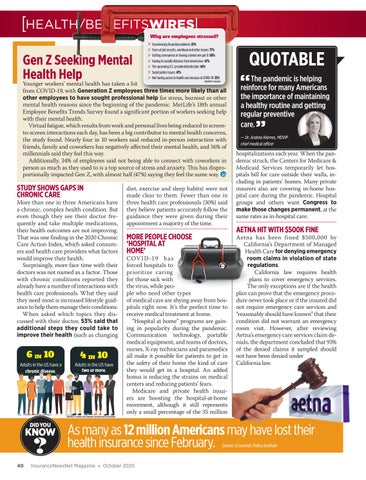
from COVID-19, with Generation Z employees three times more likely than all other employees to have sought professional help for stress, burnout or other mental health reasons since the beginning of the pandemic. MetLife’s 18th annual Employee Benefits Trends Survey found a significant portion of workers seeking help with their mental health. Virtual fatigue, which results from work and personal lives being reduced to screento-screen interactions each day, has been a big contributor to mental health concerns, the study found. Nearly four in 10 workers said reduced in-person interaction with friends, family and coworkers has negatively affected their mental health, and 56% of millennials said they feel this way. Additionally, 34% of employees said not being able to connect with coworkers in person as much as they used to is a top source of stress and anxiety. This has disproportionally impacted Gen Z, with almost half (47%) saying they feel the same way.
STUDY SHOWS GAPS IN CHRONIC CARE
More than one in three Americans have a chronic, complex health condition. But even though they see their doctor frequently and take multiple medications, their health outcomes are not improving. That was one finding in the 2020 Chronic Care Action Index, which asked consumers and health care providers what factors would improve their health. Surprisingly, more face time with their doctors was not named as a factor. Those with chronic conditions reported they already have a number of interactions with health care professionals. What they said they need most is increased lifestyle guidance to help them manage their conditions. When asked which topics they discussed with their doctor, 53% said that additional steps they could take to improve their health (such as changing
6 IN 10
4 IN 10
Adults in the US have a chronic disease.
Adults in the US have two or more.
SOURCE: Centers for Disease Control and Prevention
DID YOU
KNOW
?
40
diet, exercise and sleep habits) were not made clear to them. Fewer than one in three health care professionals (30%) said they believe patients accurately follow the guidance they were given during their appointment a majority of the time.
MORE PEOPLE CHOOSE ‘HOSPITAL AT HOME’
C OV I D -19 h a s forced hospitals to prioritize caring for those sick with the virus, while people who need other types of medical care are shying away from hospitals right now. It’s the perfect time to receive medical treatment at home. “Hospital at home” programs are gaining in popularity during the pandemic. Communication technology, portable medical equipment, and teams of doctors, nurses, X-ray technicians and paramedics all make it possible for patients to get in the safety of their home the kind of care they would get in a hospital. An added bonus is reducing the strains on medical centers and reducing patients’ fears. Medicare and private health insurers are boosting the hospital-at-home movement, although it still represents only a small percentage of the 35 million
The pandemic is helping reinforce for many Americans the importance of maintaining a healthy routine and getting regular preventive care. — Dr. Andrea Klemes, MDVIP chief medical officer
hospitalizations each year. When the pandemic struck, the Centers for Medicare & Medicaid Services temporarily let hospitals bill for care outside their walls, including in patients’ homes. Many private insurers also are covering in-home hospital care during the pandemic. Hospital groups and others want Congress to make those changes permanent, at the same rates as in-hospital care.
AETNA HIT WITH $500K FINE
Aetna has been fined $500,000 by California’s Department of Managed Health Care for denying emergency room claims in violation of state regulations. California law requires health plans to cover emergency services. The only exceptions are if the health plan can prove that the emergency procedure never took place or if the insured did not require emergency care services and “reasonably should have known” that their condition did not warrant an emergency room visit. However, after reviewing Aetna’s emergency care services claim denials, the department concluded that 93% of the denied claims it sampled should not have been denied under California law.
As many as 12 million Americans may have lost their health insurance since February.
InsuranceNewsNet Magazine » October 2020
Source: Economic Policy Institute