ACTIVITIES
The mangrove estuary and saltwater pond in the remote La Sagesse Nature Centre make it a prime bird watching area where green-backed and little blue herons may be spotted alongside Caribbean coots, the Grenada Flycatcher – which, by the way, keeps the population of mosquitoes to a minimum – and the Northern Jacana.
run by Ocean Spirits, a non-profit conservation organisation which focuses primarily on marine turtles found throughout Grenada’s coastal waters and beaches, is dedicated to the survival of the endangered species. As marine turtles face the prospect of extinction, foundations like Ocean Spirits and KIDO Ecological Research Station work with communities, government departments and international scientific organisations to ensure that the spectacle of a nesting or foraging turtle remains a key component of Grenada’s unique and vibrant biodiversity.
Colourful tropical birds such as the Purple-throated Carib, Broad-winged Hawk (known here as the gree-gree), Lesser Antillean Swift, Antillean Euphonia, Antillean Crested Hummingbird (known as the doctor bird), and Lesser Antillean Tanager (known as the soursop) can also be spotted high up in the mountains of Grenada’s interior, in the Grand Etang rainforest whose lush vegetation provides shelter for a variety of species.
Grenada’s marine life also includes an abundance of fish especially at the Marine Protected Area where Manta Rays, Stingrays and even Seahorses are regularly spotted. The island’s reefs are also a haven for sharks, lobsters, giant moray eels and sea turtles species mentioned above, which swim along or near the spectacular walls and wrecks found between Grenada and sister isle Carriacou.
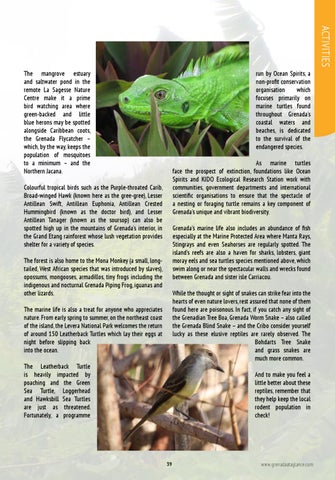
The forest is also home to the Mona Monkey (a small, longtailed, West African species that was introduced by slaves), opossums, mongooses, armadillos, tiny frogs including the indigenous and nocturnal Grenada Piping Frog, iguanas and other lizards.
While the thought or sight of snakes can strike fear into the hearts of even nature lovers, rest assured that none of them found here are poisonous. In fact, if you catch any sight of the Grenadian Tree Boa, Grenada Worm Snake – also called the Grenada Blind Snake – and the Cribo consider yourself lucky as these elusive reptiles are rarely observed. The Bohdarts Tree Snake and grass snakes are much more common.
The marine life is also a treat for anyone who appreciates nature. From early spring to summer, on the northeast coast of the island, the Levera National Park welcomes the return of around 150 Leatherback Turtles which lay their eggs at night before slipping back into the ocean. The Leatherback Turtle is heavily impacted by poaching and the Green Sea Turtle, Loggerhead and Hawksbill Sea Turtles are just as threatened. Fortunately, a programme
And to make you feel a little better about these reptiles, remember that they help keep the local rodent population in check!
39
www.grenadaataglance.com