CORE EXERCISES FOR Runners

TRAINING PLANS FOR EVERY LEVEL
POST-RUN BREAKFASTS

CORE EXERCISES FOR Runners
TRAINING PLANS FOR EVERY LEVEL
POST-RUN BREAKFASTS

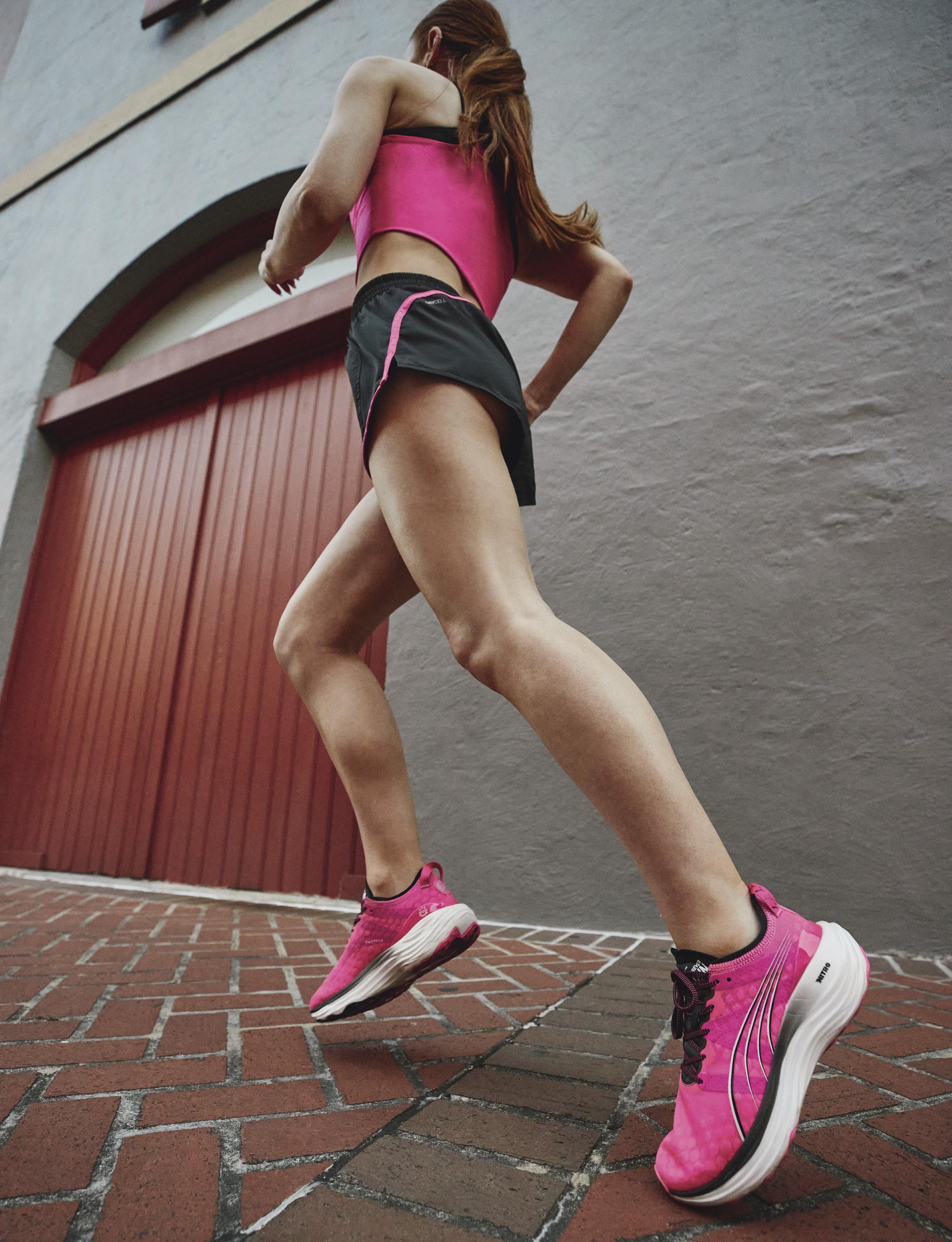


 Cover photography by Michael van Mierlo


VOLUME 32, ISSUE 4
A leader in the industry for over 31 years, IMPACT Magazine is committed to publishing content provided by the best experts in their fields for those who aspire to higher levels of health and fitness.

PUBLISHER & EDITOR - IN - CHIEF Elaine Kupser elaine@impactmagazine.ca
GUEST EDITOR Louise Hodgson-Jones corsa.communications@shaw.ca
ART DIRECTION & GRAPHIC DESIGN Spindrift Design Studio Inc. hregehr@studiospindrift.com
ASSISTANT EDITOR Emily Meyer emily@impactmagazine.ca
COPY EDITOR Tom Lundteigen
BUSINESS DEVELOPMENT & CONTENT Erin Phelan erin@impactmagazine.ca
BUSINESS DEVELOPMENT & EXECUTIVE SALES Lisa Briscoe lisa@impactmagazine.ca
PARTNERSHIPS & MARKETING Rhyan Pietromonaco rhyan@impactmagazine.ca

LEGAL COUNSEL Gregory Forrest
PRINTING Dollco Print Solutions Group DISTRIBUTION Media Classified Streetbox Media
CONTACT IMPACT Magazine Head O ce 2007 2nd St. S.W. Calgary, AB T2S 1S4 403.228.0605
ADVERTISING advertising@impactmagazine.ca EDITORIAL editor@impactmagazine.ca
SUBSCRIPTIONS
$45 for one year, or $70 for two years (includes GST) impactmagazine.ca/subscriptions

WEBSITE www.impactmagazine.ca
SOCIAL impactmagcanada impactmag impactmag impact-magazine
The opinions expressed in IMPACT Magazine are the writers’ and not necessarily those of the publication. IMPACT Magazine advises you to consult your physician if you do not follow a regular fitness program. All content is the property of IMPACT Productions Inc. and cannot be reproduced in any form without written consent of IMPACT Productions Inc. © 2023 Impact Productions Inc.


DR. STUART MCGILL
Stuart is a professor Emeritus at the University of Waterloo, ON. He has authored over 240 scientific journal papers and four books. As Chief Scientific O cer of Backfitpro.com he is a leading expert on low back pain, rehabilitation and performance training.

BACKFITPRO
MIKE VAN MIERLO

Mike is a photographer and video editor from Orange County, CA. With over a decade of experience in settings including sports, commercial and live broadcast he has worked for some of the biggest multinational athletic brands and is passionate about creating engaging experiences that resonate with audiences.
MIKEVANMIERLO
DR. BRITTANY MORAN
Brittany is a chiropractor and run coach in Toronto, ON. She works at The Runner’s Academy as a chiropractor and is the founder and head coach of StrideWise Running. In her spare time she trains for marathons at a sub-elite level with a personal best of 2:33.
STRIDEWISERUNNING TORUNNINGCHIRO
LARA PENNO
Lara is a personal trainer and endurance coach based in Vancouver, B.C. She oversees the run club at The Right Shoe and the 10 km run clinics at Rackets & Runners. She has competed in many races from 5 km, marathons and 50 triathlons including IRONMAN Canada.

CITIUSTRAINING LARAPENNO
Bridget is a physiotherapist and running coach with Mile2Marathon in Calgary, AB. She competed at the varsity level in cross-country and track and continues to train competitively. She uses her running experience and her seven years as a physiotherapist to help runners reach their goals.


BRIDGETPYKE
Jaritt is a movement-based chiropractor in Victoria B.C. He has been in clinical practice for 14 years and a Certified Strength and Conditioning Specialist for 16 years. Injuries as a collegiate track athlete propelled him to pursue a career helping others to restore functional movement through rehabilitation and performance.

JARITTP
CONTRIBUTORS Ed Bickley, Janey Brown, Dr. Will Bulsiewicz, Scott Cruickshank, Chantal Davis, Sophia De Santis, Scott Fortner, Lisa Harvey, Yana Hempler, Louise Hodgson-Jones, Candice Hutchings, Naomi Keane, Christopher Kelsall, Dr. Stuart McGill, Doug McNish, Dr. Ty McKinney, Emily Meyer, Coleman Molnar, Dr. Brittany Moran, Jahmeek Murray-Taylor, Lara Penno, Erin Phelan, Bridget P yke, Dr. Jaritt P tolemy, Kevin Smith, Sandra Spencer, Hannah Sunderani, Matthew Travaglini, Nisha Vora, Jessica Natale Woollard, Cal Zaryski.
PHOTOGRAPHY Albatros Adventure Marathons, Amcm/MainGuy, Paolo Avila, Australian Outback Marathon, Berlin Marathon, Emma Arsenault, Breakaway Promotions, Matt Cecill, Mark Conlon/Antarctic Ice Marathon, Jason Dam, Sophia De Santis, Pam Doyle, Jeremie Dupont, Luis Escoba, FinisherPix, Scott Fortner, Karen Fuchs/Reggae Marathon, Leon Hamlet, Eduardo Hernandez, Candice Hutchings, Adam Lapierre, Trudie Lee, John Litherland, Mike van Mierlo, Graham McKerrell, R.Mackay/Queenstown M arathon, Chr istopher M orris, D oug M cNish, M idnight S un M arathon, Paris 2024, W Eric S nell, S nr., S andra S pencer, Fran Steeds, Hannah S underani, N isha Vora.

Get ready to elevate your urban living experience. Envision an incredible 40 acres of lush green space, connected by a network of multi-use pathways that offer an engaging way to navigate this NW community and are the perfect way to stay active and enjoy the outdoors. The 12 km pathway system is seamlessly integrated into the surrounding environment, providing beautiful and harmonious connections with nature. This is just one of the ways that University District is dedicated to enhancing the community experience. Come and explore the endless possibilities of this vibrant community today!
Visit myuniversitydistrict.ca to learn more.
elcome to our annual Running Issue and 2023 RACE SOURCE GUIDE. We’re here to inspire you all year long. No matter your age, gender, fitness level, or experience, running is an inclusive activity. We believe running is for every body.
With the return of in-person races, I’m looking forward to lacing up my runners alongside my friends and industry colleagues once again. I’ve missed coming together at fitness expos, the race day jitters, the rush of adrenaline at the start line and the welcoming, cheering crowd of supporters along the route, especially at the finish line.
Whether it’s your first 5 km race or an ultramarathon you’re going after this year, we will all share the anticipation and accomplishment that only a race day can provide.
A little training always comes in handy! This issue will give you the motivation and the pro-training tips that you’ll need to reach your running goals this year. We have everything from 10 km to Half-IRONMAN training plans, periodization training, ladder workouts, cardio cross-training, breathing techniques, race day nutrition and even suggestions of what time of day is best to run. And that’s just the beginning!
Our Canada’s Top Fitness Trainers Jahmeek Murray and Naomi Keane o er
up strength training and core exercises that will help you stay injury-free and improve that PB.
You will be inspired by our Athlete with IMPACT stories which, as always, are nothing short of remarkable. You will meet Jodi Moore, Peter Field and Latoya Shauntay Snell – three people who, trust us, you’ll want to know about. Read their stories starting on page 34 . And for the icing on the cake, flip to our Final Impact story to read about how Trevor Stokes is transforming innercity students’ lives with running.
We would like to thank Rory Linkletter for gracing this issue’s cover and sharing his exceptional accomplishments with IMPACT. We’ll all be watching you and cheering for you in your quest to qualify for the 2024 Paris Olympics!
If your bucket list is in need of some new items, take a look at our top Destination Marathons Around the World feature and start planning your next active adventure, near or far. The full story of over 35 marathons can be found on our website.
And, of course, there is delicious, completely plant-based food! Breakfast is on the menu for this issue! You can look forward to some well-deserved post-race recipes from our top chefs.
Here’s to a new race season, new running friendships and personal bests. See you at the start line.

Didn’t get your hands on a favourite edition of IMPACT? Or maybe your best friend secretly borrowed it from you? No worries. Subscribe to our FREE newsletter and digital edition online at www.impactmagazine.ca.




IMPACT Picks
The global running apps market is projected to reach US $1.44 billion in 2028 from US $562 million in 2021 (Absolute Reports Pvt Ltd, 2022). With all the choices out there for the runner, how do you know which is the best for you?

IMPACT has compiled 10 of the best apps we feel will help you with your run goals and performance.
Eager to add running into your fitness routine? 5K Runner is a great app for that. With run/walk intervals, this app will take you from couch potato to your first 5-kilometre run in eight weeks. What’s more, once you’ve conquered the 5K Runner training program, jump over to the 10K Runner app from the same app designers.


APPLE | ANDROID ( FREE TRIAL )

This wildly popular app has more than 170 million users worldwide. adidas Running is more than just a run tracker. The app o ers challenges and virtual races to help keep you motivated toward achieving your goals. The app has built-in GPS tracking, and you can monitor duration, distance, calories burned, and heart-rate data. Also available in the app: yoga, hiking, cycling and more.
APPLE | ANDROID ( FREE, PREMIUM SUBSCRIPTION AVAILABLE )
Runkeeper is designed to keep your running motivations high and your fitness goals in sight. Run may be in the name, but that’s not all you can track. Track a variety of activities including walking, hiking, skating, yoga, rowing and more. With audio cues, virtual challenges and running groups, Runkeeper is a great app to keep you engaged and working hard.
APPLE | ANDROID ( FREE, PREMIUM SUBSCRIPTION AVAILABLE )

MapMyRun tracks just about everything when it comes to fitness. Log 600+ activities from running to yoga, crosstraining to cycling, walking to Pilates and everything in between. Apart from tracking performance parameters like pace, distance, elevation and route, MapMyRun allows you to automatically sync data from other fitness apps and devices to keep you on track and help you in your fitness journey.
APPLE | ANDROID ( FREE, PREMIUM SUBSCRIPTION AVAILABLE )

Whether you’re a beginner looking to take up running, a solo runner looking for some company or an avid runner looking for stats, Nike Run Club is the perfect app to get you on your way. With GPS run tracking, audio-guided runs and custom coaching, reaching your goals while staying motivated is easy. Connect with friends and other runners through experiences and challenges for an extra boost of fun and motivation.
APPLE | ANDROID ( FREE )
If you’re a runner who prefers to get your strides on a treadmill, the Peloton app brings fun and excitement to indoor running. With classes, expert coaches, themed runs and more, staying motivated is easy. Don’t have a Peloton treadmill? Don’t worry, this app can be used in combination with any treadmill.

APPLE | ANDROID ( FREE 30 - DAY TRIAL )
RunGo is a fantastic choice for those looking for some outdoor adventure. Enjoy turn-by-turn navigation and the ability to plan your own route or choose from one of the more than 600,000 routes worldwide. With routes in 171 countries, you will also have access to verified routes like race courses, city tours and virtual races.
APPLE | ANDROID ( FREE, PREMIUM SUBSCRIPTION AVAILABLE )
You may have heard of the Down Dog app for Yoga; however, in December 2021, this popular app introduced Running, an app extension that provides users with a new workout every day of the year. Users can customize their settings to suit their needs. Select whether you will run outdoors or on a treadmill, set the focus to speed or endurance and select whether you are a beginner, intermediate or advanced runner to get the most out of your workout.
APPLE | ANDROID ( MONTHLY/YEARLY SUBSCRIPTION )
Strava is a staple for many athletes. Get in-depth performance metrics for running and cycling. Strava syncs with most devices, making it easy to monitor and map your training and performance, so you can train smarter. With an unmatched network of trails and roads, whatever route you’re looking for, if it’s been run or cycled, it’s on the app. Take your experience one step further with Summit, Strava’s customizable training and workout subscription service for live performance reviews.
APPLE | ANDROID ( FREE, PREMIUM SUBSCRIPTION AVAILABLE )
It’s exactly as the name implies. Lace up your runners and get ready because the zombies are coming. You can hear their grunts and groans growing closer, leaving you only one choice –run! This fun app includes virtual races, more than 600 action-packed missions and training plans. Plus, sync your run logs. Zombies, Run! also has a 5-kilometre training program app for beginners.

APPLE | ANDROID ( FREE, PREMIUM SUBSCRIPTION AVAILABLE )

Mayfair Diagnostcs is the frst medical imaging company in Canada to ofer private pay body compositon profle (BCP) services! Using our MRI technology and an artfcial intelligence and bioinformatcs platorm, BCP MRI provides an individualized descripton of a person’s body compositon based on a rapid MRI scan.
Finding your individual body compositon profle is important because your fat-to-muscle rato can be diferent from someone who is the same height, weight, and age as you. Your scale can only tell you your weight, and body mass index (BMI) only tells you the rato of your weight to your height; they don’t measure body fat.
BCP MRI can provide a greater understanding of your body and the ability to personalize clinical care. It shows a greater depth of informaton than BMI, allowing a detailed look at your tssue.
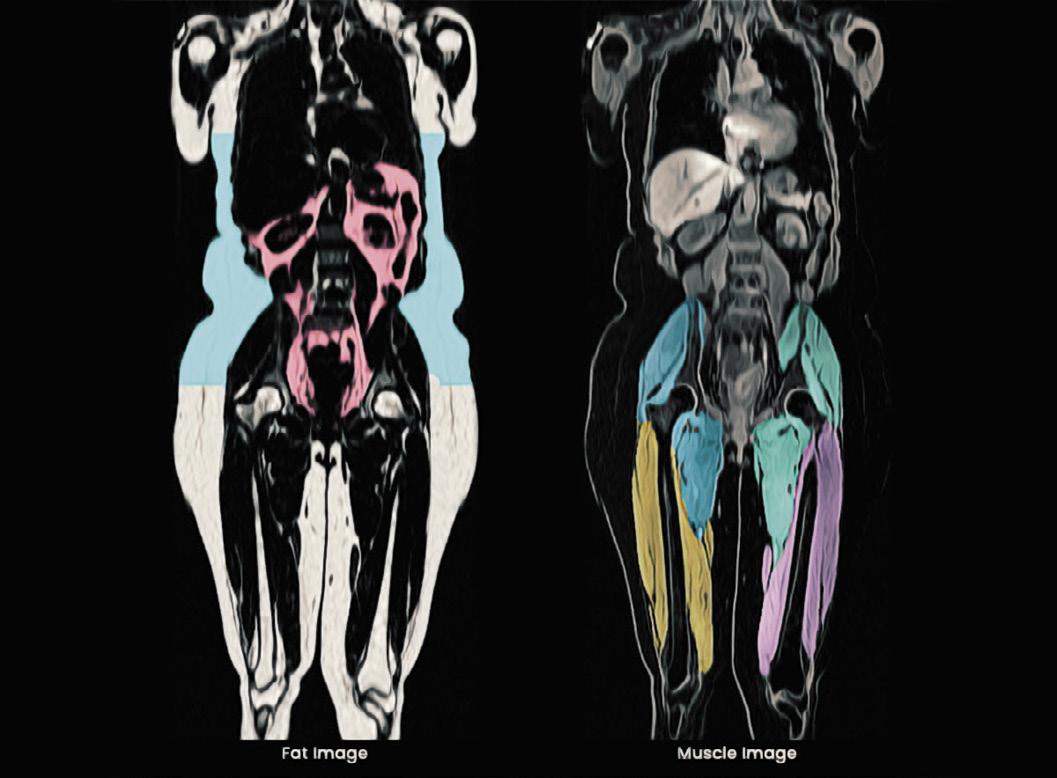
The BCP MRI scan measures the amount of fat and muscle in major body and organ areas. It looks at the following:
• Visceral adipose tssue – Also known as visceral fat, this is belly fat found deep within your abdominal cavity, surrounding your stomach, liver, and intestnes.
• Abdominal subcutaneous adipose tssue – Also known as subcutaneous fat, this type of fat is just below your skin.
• Liver fat – Fat within the liver can cause infammaton, which can damage the liver.
• Muscle volume – The amount of muscle you have.
• Muscle fat infltraton – Amount of fat present within muscle tssue, a measure of muscle quality.
A healthy body compositon profle shows less fat and more muscle mass. An increase in visceral fat can lead to increased health risks, specifcally for diabetes and heart disease.
BCP MRI services are ofered as private pay services only. They are not covered by the Alberta Health Care Insurance Plan.
A BCP MRI must be requested by a healthcare practtoner.
As part of this exam, Mayfair Diagnostcs will perform a neckto-knee MRI scan at our Mayfair Place locaton. Once your images have been gathered, they will be sent for analysis and a Mayfair radiologist will generate a report that is sent to your referring doctor within fve business days.
This report will provide patent-specifc body compositon profle measurements and comparisons to reference data ranges, giving context to the results. Each measurement is visualized in a bar plot, where each patent’s informaton is presented in relaton to the distributon within a body-size and sex-specifc reference populaton.
For more informaton about this exam and its cost, visit our website or contact us at 403-777-3000.

Make the most of your running season and crush those PB’s!
BY NAOMI KEANE GRAHAM MCKERRELL One of Canada’s Top Fitness Instructors, 2021 and owner of Oranj Fitness in Airdrie, AB.NAOMIKEANE
ORANJ FITNESS AIRDRIEAPPAREL: BÄRE ACTIVEWEAR
HAIR & MAKEUP: KRISTYN KELLAR
With warmer weather around the corner and our spring and summer race dates in our calendars, runners across the country are ready to make the most of the season ahead. A part of making the most of our race season is working on our personal bests. To improve our PB’s as runners we must consider our core as more than just our abs. A comprehensive core program for runners needs to include the hamstrings, glutes, lower back, and obliques. Here are four exercises that will help you get the most of your training program and help you crush those personal bests!
8-10 each leg
Deadlifts are an e ective exercise to build hamstring and lower back strength. Opting for a single-leg variation o ers an added challenge while improving balance and mobility at the same time.

• Start standing tall with feet hip-width apart, weights in hands, and arms down by your side.
• Hinge forward from your hips and allow one leg to lift behind you as your chest moves towards the ground in front of you.
• Your planted, standing leg is your working leg. Focus on driving through your heel and feel your hamstring extend and contract as you hinge forward and up.
Pro Tip: Focus on keeping both hip bones parallel as you perform this exercise. We tend to allow the hip on our lifted leg to rotate upwards instead of down and parallel.
16-20 alternating right and left
Building endurance and strong form in your plank is a phenomenal way to improve overall abdominal strength. Adding an alternating toe tap will help to build strength in your stride, obliques, and upper body.


• Start in a forearm plank, palms rooted underneath your shoulders, spine neutral, and legs extended long behind you.
• Ensure you have your navel engaged with your spine and that your legs are active.

• From here add the alternating toe tap. Tap your right foot behind your left wrist.
• Reach your right foot back to meet your left foot, arriving back in your full-arm plank. Repeat on other side. Left foot to right wrist and back again to plank.
Pro Tip: In your plank, try spreading your fingers and palms wide. Utilize the tiny muscles in your palms to strengthen your foundation under your shoulders. This will help keep your spine in alignment and improve the overall e ectiveness of this exercise. ➝
8-12 on each side
Side planks are known for building full abdominal strength, lower-back strength, and pelvic strength –aka the container. A strong core will help you run more e ciently: longer distances and faster paces with less e ort and more comfort in your body.


• To start, plant your right palm down on the floor and extend your legs out to the side. Stack your feet together to form your side-plank position. You can drop your bottom knee if you’d like more support in this position.
• You can either hold this position and increase the length of each set or continue to add on the progression.
• From your side plank, lift your left arm straight up and lift your left leg up as well.


• Work from feet stacked and progress to a single-leg lift. Pro Tip: Work on keeping your body in one long straight line with your hips lifted and your ribs pulled in. For an added challenge, look up to your top arm as you lift your top leg.

10-15 on each leg
Isolated glute work is a great way to ensure that our hip flexors don’t end up doing all the work. Common running injuries can sometimes stem from weak glutes, and/ or improper firing of the glutes. This exercise will help balance strength in each hip and improve overall performance of your running form and technique.
• Start on your back, knees bent, arms down by your sides. Plant your palms on the floor for added support. Extend one leg out and allow this leg and your hips to hover a few inches above the floor.
• Drive your planted foot into the floor and squeeze your glute. As you press into your heel, raise your hips and extended leg into a full bridge position. Squeeze your glute at the top of the range of motion.
• With control, lower back down to the starting position and repeat.
Pro Tip: When you press into your bridge, try pressing into the outside edge of your planted foot. This will help to recruit more glute tissue.
10-15 each side
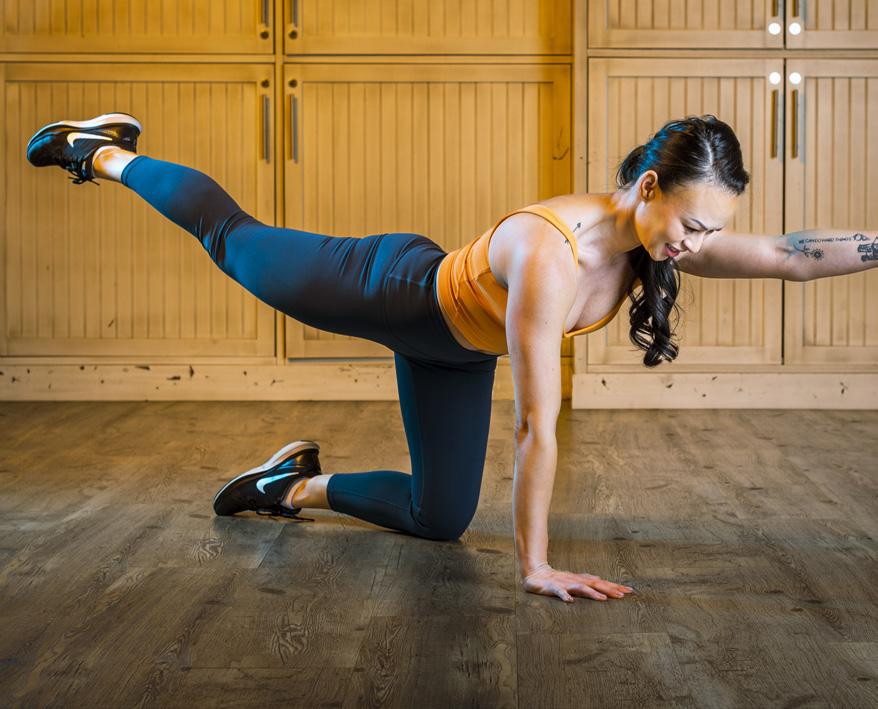
This exercise is an excellent option for strengthening your rectus and transverse abdominal muscles, as well as getting in a little glute action too!


• Start on the floor in a tabletop position. Ensure your palms are directly under your shoulders and your knees are under your hips.
• Extend your right leg back behind you, and your left arm in front of you. Engage your leg behind and focus on contracting your glute, hamstring, and back. Work on keeping your hips and shoulder square, and your extended limbs parallel to the ground.
• Draw your right knee and left elbow together in a crunch position. Feel your abs engage in this part of the range of motion. Extend and repeat again.
Pro Tip: To make this exercise more dynamic, change the direction of your extensions. Reach your right arm out to the right corner and left leg to the back left corner.
OVER 80 GROUP FITNESS CLASSES INCLUDED WITH MEMBERSHIP
AFFORDABLE RATES FOR PERSONAL TRAINING

25,000 SQUARE FEET OF FITNESS CENTRE SPACE

2 OLYMPIC SIZE POOLS
UP TO 17% OFF REGISTERED PROGRAMS AND EARLY REGISTRATION MNPcentre.com


A heavy lower-body day to get you strong and powerful, and prevent injuries while sprinting
 BY JAHMEEK MURRAY-TAYLOR EMMA ARSENAULT
Firefighter, ex-pro athlete, personal trainer at All Day Fit, and one of Canada’s Top Fitness Trainers 2022 in Toronto, ON. JAHJAHBANKS ALLDAYFIT.CO
BY JAHMEEK MURRAY-TAYLOR EMMA ARSENAULT
Firefighter, ex-pro athlete, personal trainer at All Day Fit, and one of Canada’s Top Fitness Trainers 2022 in Toronto, ON. JAHJAHBANKS ALLDAYFIT.CO
Strength training not only has the potential to reduce your risk of injury by correcting muscle imbalances and improving muscle activation, but it will also increase the e ciency of your sprinting biomechanics which results in improved sprinting performance.

Rep Range 6-8 | Sets 4
All Day Fit 5 Coaching Cues:
1. Corkscrew your feet into the floor - encourages awareness and tension in foot.
2. Big breath in, brace your core.
3. Elbows in and up to engage your lats.
4. Open your hips as you pull yourself into the bottom.
5. Drive your feet into the floor to stand tall.
Rest the barbell across your shoulders, elbows forward with your fingertips under the bar. The weight of the bar is on your shoulders, and your fingertips provide some control.
The key to a good front rack is having su ciently “high elbows.” In practical terms, your upper arms should be close to parallel with the floor in the front rack, with your elbows pointing straight ahead.
Rep 6-8 | Sets 4
All Day Fit 5 Coaching Cues:
1. Line up the middle of your foot with the middle of the trap bar.
2. As you hinge imagine pushing your bum to the wall behind you.

3. Place hand directly in middle of the bar.
4. Pull slack out of the bar to engage your lats.
5. Drive your feet into the ground to stand tall.
The trap bar deadlift is a total-body movement that can be utilized across various sports. Both veteran athletes and newcomers to the gym alike can benefit from training the trap bar deadlift due to its wide applicability.


The design of the trap bar allows you to align the weight closer to your centre of mass. By standing within the frame instead of behind a standard barbell, you can increase your leverage and assume a more upright posture. I highly recommend the trap bar over the standard barbell for most people! ➝

Reps 6-8/side | Sets 3
All Day Fit 5 Coaching Cues:
1. Start in the bottom position.
2. Plant leg slightly tighter than 90 degrees.
3. Square your hips.
4. Squeeze under your armpits to engage lats.
5. Push through front foot to bring you to standing.
The Bulgarian split squat is a single-leg squat where the back leg is elevated on a bench or a sturdy chair.
Any time you can work your body unilaterally —meaning that you target one side of your body independently from the other—you can improve side-to-side muscle imbalances!

Reps 8-10/side | Sets 3
All Day Fit 5 Coaching Cues:


1. In a side-plank position, place the top leg on a bench with the bottom leg under the bench.


2. Lift the hips until your body is in a straight line.
3. March knee to hip while maintaining a long spine.
The Copenhagen plank strengthens the adductors to protect against adductor strains when sprinting!


An achievable plan for anyone wanting to improve their 10 km time
BY LISA HARVEY TORONTO WOMEN’S RUN/FINISHERPIX1992 Olympian - 10,000 metres, three-time World Outdoor Track Team Member, eight-time World Cross-Country National Team Member, multiple time Canadian medalist at distances from track to the marathon, 2022 University of Calgary Hall of Fame Inductee, Mile2Marathon Run Coach in Calgary, AB. LISARUNSWIM
The 10 km is one of the most challenging and rewarding race distances. You begin fast with the excitement of the spectators and fellow participants, then settle into your rhythm and finish strong over the last two k ilometres. Would you like to improve your 10 km time but just haven’t been able to shave o the last few seconds? Runners of all abilities can reach their goal 10 km time with this eight-week plan. Before starting this plan you should be comfortable running for 30 minutes at least three times per week. Trust the process and believe in your abilities!
The plan consists of a workout (Thursday), long run (Sunday), two easy runs (Tuesday/Friday), and an optional cross-training day. Running by e ort (i.e. how your body feels) at the beginning is the key to determining the running pace that feels best for you. The long run—called Long Slow Distance (LSD)—should be done at a comfortable pace that you could maintain for an hour or more. Think about controlled breathing, relaxed arm swing, low knee lift, and feet touching the ground lightly with each stride. Easy runs are shorter runs during the week where you are running 1530 seconds faster than your long run. The workouts are a chance to practice race paces and good running form. They consist of a 15-minute easy warm-up run, strides, intervals, and 10 - 15-minute easy cool down.
• Include rest days, strength, and flexibility exercises.
• Wear supportive running shoes with good cushioning. Try a few runs in new shoes before the race.
• Eat a balanced diet, sleep well, and drink water throughout the day.
• Be patient – listen to your body and take time o running early to avoid injuries.
• Be consistent – follow the plan and move the workouts to fit your work/life schedule.
Strides – Accelerations to practice faster leg turnover and good running form (good posture, knees driving forward, arms bent). On an 80 - 100 metre flat stretch of pathway or grass, think about starting at an easier pace and finishing fast.
5 km Pace – Based on your last 5 km race or 10 seconds per km faster than your last 10 km race pace.
Negative split – Run at your long run pace for the first half of the run and then try to run slightly faster for the second half.
Fartlek – Speed play in a continuous run. They are repetitions where you are running by feel at a perceived level of exertion of 7 - 8 on a scale of 10. Fartlek benefits runners by helping them adapt to changes of pace in a race without needing to take rest breaks, and further boosts their fitness with the active recovery.
15 min easy + 3 strides and drills, 5 km, cool down: 10-15 min easy

The half-marathon distance isn’t half of anything. The name is deceptive and in my experience the distance has always required an e ort more suited for a ‘double 10 km’ than anything else. Training for the distance needs to retain some of the ‘speed’ elements of 10 km training, while also ensuring that the runner is ready for a longer distance.
The 21.1 km program is primarily aimed at intermediate runners who have already been running regularly for at least a few months, have a few races behind them and want to take their training to the next level.

• KISS (Keep It Simple S…..) – Some training programs describe paces with an alphabet soup of terms—threshold pace, interval pace, lactate threshold pace, etc.—which lends them ‘exactness’ but unnecessary for the beginner or intermediate runner. My program expresses itself in terms of a single measure e.g., HMP, easy, steady (see Legend).
• Race your way into shape –
Incorporating ‘test races’ into training serve to both test a runner’s fitness— allowing them to adjust their training paces in upcoming workouts—and to add a few extra workouts to the schedule. A time trial at race pace can be substituted if there isn’t a half-marathon on a race
calendar. Use these e orts to honestly assess your ‘race fitness,’ both physically and in terms of your perception. If they are faster or easier than expected you can carefully lower your training pace; if they are slower, adjust your target pace to be a bit higher.
• Ladders are our friend – The program makes use of ladders in two variations:
(a) ‘up-and-down’ ladders where the repetition distance starts short, increases to a maximum, then works back down and (b) ‘down’ ladders—in which the maximum distance is the start point and the entire workout works ‘down’ the ladder. The rest period between repetitions can be easy jogging for the same length of time as the previous repetition. The decreasing length of the later repetitions allows the runner to easily maintain pace through the entire workout.
• Race pace as a habit – The weekly schedule consists of a rest day, a strength-workout day, a half-marathon pace run, and several easy runs, one of which is a long run. By the time you arrive at the start line you should have experienced enough kilometres at your target race pace that the e ort feels both familiar and, in the early kilometres, easy. This only comes from rehearsing the pace consistently during training.
HMP – Half-marathon pace is the pace being aimed for in the target race.
EASY PACE – Used in the majority of runs and for warm-ups and cool downs, is conversational pace.
STEADY PACE – Conversational pace but any conversation is brief and a bit di cult
STRENGTH – Is a percentage of HMP.
WU – Warm-up.
CD – Cool down.
WARM - UP – Prescribed distance or time running at an easy pace to warm up your body for the harder e ort to come.
COOL DOWN – Prescribed distance or time running at an easy pace to help with recovery.

DRILLS – To help your body warm-up and mobilize. Drills could include dynamic stretching (leg swings, hip hurdles) and/ or running drills (ABCs, side shu es/ crossovers).
EASY PACE – Running at an e ort during which you can maintain a conversation (no need to slow yourself down unnecessarily).
MARATHON PACE ( MP ) – The pace at which you want to run your marathon. This can be adjusted for weather, terrain, altitude, etc.
This plan has been designed for a runner who has either recently completed a half-marathon and is looking to step up in distance to the marathon, or for a runner who has run marathons before and is looking to improve their time.
This plan aims to provide a wellbalanced schedule for a runner who is already running four to five days a week, with at least one run of one hour in duration. There are built-in recovery weeks, and structured long runs to
keep you feeling fresh and engaged in the program. For the recovery weeks you will see a drop in weekly mileage (Tuesday, Thursday, Saturday) after three consecutive weeks of building. The long runs hover around the 20 kilometre mark for weeks three to seven so you have time to adapt to that distance before the long run increases in week eight.
As with any training plan, it is easier done with a group, so encourage your running friends to start this plan with you, or look for running groups in your city.
HALF - MARATHON PACE ( HMP ) – Pace at which you ran your last half-marathon, or your goal half-marathon pace.
STRIDES – 80 - 100 m or 10 - 20 seconds of running at 80 per cent of your sprinting speed. Work into these, where the first and second strides are treated as an acceleration, and you gradually increase the pace every one-third of the distance. For the remaining strides aim to reach your top speed sooner and run smoothly throughout the stride (this is not an all-out sprint, strides are used to get your body primed to run quicker in a workout, or to shake out the legs after an easy run).
Matthew Travaglini, a multiple provincial and national medallist in distances from 1500 m to 10 km and coach with Mile2Marathon from Calgary, AB. Bridget Pyke, former varsity and now current competitive cross-country and track athlete, physiotherapist and coach with Mile2Marathon from Calgary, AB. MATTTRAVAGLINI AND MILE2MARATHON MILE2MARATHON BRIDGETPYKE4 strides, 5 x (3 min hard @ 5-10 km e ort, 2 min easy) 15 min warm-up and cool down
4 strides, 8 x (2 min hard @ 5-10 km e ort,
min easy) 15 min warm-up and cool down
4 strides, 5 x 1 km @ 5km race e ort with 2 min easy between, 15 min warm-up and cool down
4 strides, 2 x 10 min @ 10 km race e ort with 2 min easy between, finish with 4 x 1 min fast1 min easy, 15 min warm-up and cool down
4 strides, 12 min, 8 min @ 10 km e ort 6 min @ 5 km e ort 2 min whatever you have left with
min a bit faster, 4 min a bit faster, 3 min faster, 2 min faster, 1 min fastest with 2 min easy between all, 15 min warm-up and cool down
4 strides, 2 x 15 min @ HMP with 5 min easy between, 4 x 1 min fast with 90 sec rest, 15 min warm-up and cool down
4 strides, 8 x 4 min @ 10 km pace with 2 min easy between, 6 x 2 min a bit faster with 1 min rest 15 min warm-up and cool down
min easy Rest or cross train
min easy + 6 x 100 m strides
min easy + 6 x 100 m strides
km long run, 5 km warm-up
x ( 4km at MP - 1 km easy) 5 km cool down
27 km progression long run, 5 km chunks starting at easy run pace, increasing e ort every 5 km so that 20 - 25 km is at MP and 25 - 27 km just quicker than MP
12 Rest 50 min easy
13 Rest 60 min easy
14 Rest 50 min easy
15 Rest 40 min easy
16 Rest
30-40 min easy
Drills, 4 strides, 5 min, 7 min, 10 min, 7 min, 5 min all @ 10 km e ort with 2 min easy between all 15 min warm-up and cool down
Drills, 4 strides, 6 x 1 km @ 5 km e ort with 2 min easy between, 15 min warm-up and cool down
Drills, 4 strides, 20 min between 10 km - HMP 4 min rest 6 x 1 min fast with 90 sec rest, 15 min warm-up and cool down
Drills, 4 strides, 3 x 7 min @ 10 km e ort with 2 min easy between, 6 x 45 sec fast with 90 sec rest 15 min warm-up and cool down
Drills, 4 strides, 10 min @ MP 3 min faster 2 min fast and strong 2 min rest between all, 15 min warm-up and cool down
45 min easy
45 min easy
40 min easy
30 min easy
20-30 min easy
Rest or cross train
45 min easy + 5 x 100 m strides
30 km long run, 5 km warm-up 2 x (9 km ramp - 3 km easy - 3 km MP - 3 km just quicker than MP1 km easy) 5 km easy cool down
Rest or cross train
Rest or cross train
Rest or cross train
Rest or cross train
45 min easy + 5 x 100 m strides
28 km Long Run 4 km warm-up 5 x (2 km MP - 1 km surge to slightly quicker than MP - 1 km easy) 4 km easy cool down
40 min easy + 4 x 100 m strides 22 km long run at easy pace
30 min easy + 4 x 100 m strides 16 km long run, 5 km easy, 6 km MP, 5 km easy
20 min easy 10 min, 4 strides with walk back rest, 10 min
RACE DAY
 BY CALVIN ZARYSKI FRAN STEEDS, FINISHERPIX
The 12-week program I have outlined is achievable for anyone who has comfortably completed a few sprint or standard distance triathlons. However, making this jump can be intimidating. The total time to swim, bike and run 70.3 miles (113 km) requires a proper training plan to become ultraendurance fit.
It is important to be consistent in training particularly with a weekly routine. Each day of the program and its scheduling has a purpose so stick with it. You may find the overall fatigue running the half-marathon pace similar to the back end of a marathon, so be prepared for the same. In the last six weeks several sessions in each discipline will be beyond the race distance; that is normal. On race day expect the unexpected and celebrate your health and fitness by racing in the moment. The race is a means to challenge yourself physically and mentally.
• No need to swim fast but rather safely with confidence. Open water practice is a must.
• Practice your nutrition in training so that you can ingest fuel and hydrate on the bike ride.
• Break up the race into these segments: swim start, end of swim, transition 1, first 10 km on bike, halfway on bike, transition 2, first 5 km into the run, halfway into the run, final 5 km.
• Accept poor sleep the night before the event. It won’t a ect your performance.
• Review your training the night before the race to build mental confidence and focus on execution.
• Prioritize training in this order: long bike rides, long runs, simulated brick workouts, simulated triathlons, a few open water swims ideally with others.

For more important information on training, you can check out my paper: Training Principles and Issues for Ultra-endurance Athletes (Current Sports Medicine Report, 2005).
FTP – Functional Training Power or 30 min time trial e ort
TT – Time trial triathlon position
WU – Warm-up
CD – Cool down
R – Rest
MP – Marathon pace
HMP – Half-marathon pace
Gold medallist in the 2021, and silver medallist in the 2013 World 70.3 IRONMAN Championships, 10x World XTERRA Champion, 3x Triathlon Canada Coach of the Year and 3x Alberta Triathlon Coach of the Year, from Calgary, AB. ZARYSKICALVIN CALVIN.ZARYSKI CALVINZARYSKIRory Linkletter’s faith in himself and passion for running could see him reach his full potential in the marathon and half-marathon distances
 BY LOUISE HODGSON -JONES MIKE VAN MIERLO
LOUISEHODGSONJONES LOUISEHODGSONJO
APPAREL: PUMA
B.C.
Through the highs and lows of his running career Rory Linkletter attributes his Christian faith for keeping him focused and on the right path. The former Canadian half-marathon record holder has had to make some tough decisions—particularly in 2021 when he was going through challenges, both personally and professionally—but one thing that has never wavered is his passion for running and the career path he chose in high school. Looking a lot younger than his 26 years, the Calgary-born Linkletter calls Flagsta , Arizona his home, and although he became a U.S. citizen in 2020, his loyalty and running for Canada is something he is very proud of. “I have competed for Canada since the World Juniors in 2015, and it is something that I will continue to do,” he says.
With a goal of competing in the marathon at the 2024 Paris Olympics, he is training for the London Marathon on April 23 and if that goes well, possibly Chicago in October. But he is very practical and level-headed, taking one race at a time, knowing that anything can happen in training or in a race. He also likes to leave the training to his coach, former U.S. long distance champion, Ryan Hall. But he admits he would like to “take a bite” out of his marathon 2:10 PB he set at the World Athletics Championships last year in Eugene, OR. “Flirting with a 2:09 goal would be awesome, but I will let the training and Ryan dictate my goal.” Linkletter is firmly committed to the marathon distance, but with his physique he could equally concentrate and succeed at middle distance. He excels at speed workouts which could be attributed to his early years competing in cross-country and track. He didn’t start running until Grade 9. “I was really a ball-sport athlete and was undersized going into high school.” But he joined his school’s cross-country team and immediately liked it. “I started low in the rankings and then saw myself progressing up the ladder. There is gratification in seeing your times and your rank improve among your peers.”
School was in Utah where he and his mother moved to from Calgary after his parents divorced. With the state being known as a classic running hub, it took Linkletter a while to get on to the varsity team, which he eventually did for cross-country and track.
It was then that he knew he wanted to pursue running seriously and made the decision to attend Brigham Young University (BYU). Admitting it was a “rational decision based on my goals to continue to run,” he found success in college, coming second in the 10,000 metres at the NCAA track and field championships— “the highlight of my collegiate career”— and becoming the 3x all-American in track and cross-country. “I had higher finishes in track so the 5,000 and 10,000 metre events were definitely my calling.” ➝
IMPACT guest editor, communications and event specialist in Victoria,The leap—which essentially it was—to the marathon was necessitated by his desire to make the 2020 Olympic team. “I graduated in 2019 and at that time the Olympics were set for 2020, and I had a better chance of making the team running the marathon than another discipline.” Such was his confidence, he plunged straight into marathon training and debuted at the 2019 Toronto Waterfront Marathon with a credible 2:16:42 performance.
A move to Flagsta to work with HOKA Northern Arizona (NAZ) Elite followed and the opportunity to run some half-marathons, which he admits he had more success with. But in 2021 he experienced some challenges and seemed to lose his way. The death of his father that year hit him hard but was softened by the birth of his first child, Jason (he met Jill at BYU and married in 2018). He had some bad results and felt “something was o .”
“I felt I had to leave (HOKA NAZ Elite) to be able to reach the next level I wanted,” he reflects. To walk away from a comfortable sponsor was a brave move for Linkletter. He knew that and looking back, is proud of his decision. “I was comfortable there but felt something was wrong and I had to change.”
In late 2021 Ryan Hall came into his life. Hall, the U.S. half-marathon record holder, retired in 2016 to coach. “Ryan was a perfect fit for me. I admired him and approached him to coach me. He is smart and a motivational figure in my life.”
Hall knew that Linkletter was in great shape. “I was grateful for all the great coaching he received before he came to me as it all laid the foundation for the next step that Rory was ready to make,” he says. But there were skills he wanted to work with him on from the outset. “I wanted him to have a healthy body so I re-enforced to him the necessity of eating enough food to be at a healthy body weight, and making sure he nailed his sleep. I also initially reduced his volume as he had been running high mileage for a fairly long time, and I wanted him to focus on his 5 km/10 km development at a lower volume before bringing it back up for marathon training.”
The unsponsored Linkletter said he ran the best races of his life in early 2022, including setting the then Canadian halfmarathon record in Houston (1:01:08), a record that had stood for 23 years. Sponsors were noticing and he signed with PUMA shortly afterwards. He realizes he is lucky. “Not many get to have a second chance. I am excited to have PUMA take me to the Olympics and beyond.”
With the World Athletics Championships taking place in July 2022, it was time to put the new coach/athlete partnership to the real test. Linkletter had a good track season leading up to the event. “We hit the 5 km work hard all winter and spring, which set up a nice, short and surprise build for the marathon,” explains Hall. “We worked hard in the gym to increase the power in his legs for not only the shorter distances, but for the marathon as well. I believe one of the reasons marathoners slow down over time is because they lose a lot of power in their legs from years and years of high volume.”
Linkletter didn’t go into the championships with a goal in mind. “It is hard to set a goal in a World Championship. Unlike a major marathon where you know other people’s paces, at the Worlds it is a wait-and-see. You find out on the day who is in good shape.” Linkletter was on form setting a personal best and enjoying every minute: “It was fun and exhilarating and I just went with the flow.”
With a focus on London next month—he will also be running the New York City Half-Marathon on March 19—Hall is working on his speed. “I need him to keep and increase his 5 km speed. If he has that in place and continues to develop his aerobic capacity, then good things will happen.” Recovery is a strength of his. “He typically responds to high volume and a heavy training load very well. He is as diligent with his recovery—sleep, nutrition, massage, etc.—as he is with his training. It doesn’t matter how we train if we aren’t able to recover and absorb that training.”
Linkletter’s typical week consists of two runs a day, some days incorporating sprints or track work; a long run and two strength/ cross-training sessions a week. Five weeks of hard training will be followed by a down week that may include a race. It’s gruelling and tough but Linkletter enjoys it. Hall says he is a workhorse: “he has the ability to ‘bring it’ to the workout.”
His favourite workout Hall calls ‘K’s for Days.’ These are 20 x 1 km repeats with a 200-metre jog recovery between, each at a little faster than marathon pace. “Kilometre repeats are the staple of any training. For me it is easy, I focus on running for three minutes and get through them one at a time,” say Linkletter.
Not surprisingly Linkletter doesn’t have to worry about what he eats. He admits he is constantly eating, never counts calories and isn’t on any nutrition plan. “I don’t have any rules, I eat until I am full!” His indulgence—or some would say quirk—is to eat breakfast at odd times of the day. “I will have lunch or dinner then follow up with wa es and syrup or cereal.”
The 2024 Olympics may be 17 months away but the qualifying window opened in January and ideally Linkletter wants to nail his place early, in London. But he is very pragmatic about it. With the selection based on ranking and time he knows he will have competition. “I am trying not to get caught up in it. I may run the best marathon of my life but if three others run faster then so be it.”
Then there is that little rivalry between him and Ben Flanagan who broke his half-marathon record in October 2022 by just eight seconds. (The record has since been broken again by Cam Levins in February in a time of 60:18). “I see it as a carrot to chase down the road,” he says.
Having gone through a few hurdles in his life, Linkletter is now settled and content with his life. Being Christian is the forefront of who he is, he says. He is running well, has a supportive coach and a happy home life with a second child expected this year. “I get up every day and love my training and I get to come home to be with my family. I live in this beautiful place surrounded by people I love. It is perfect.”
Not many get to have a second chance. I am excited to have PUMA take me to the Olympics and beyond.
Twelve weeks out from the London Marathon Linkletter started his marathon training block – here is a typical week.

• Monday: a.m. - 10 miles; p.m. - 6 miles
• Tuesday: a.m. - 5 x 2 miles @ half-marathon effort; p.m. - strength and cross-training (included squats, lunges with dumbbells, hip thrusters, stairs, stepper)
• Wednesday: a.m. - 10 miles; p.m. - 6 miles
• Thursday: a.m. - 10 miles; p.m. - 6 miles
• Friday: a.m. - long run, 36 km (22 miles) @ 3:30/km pace; p.m. - strength and weights (similar to Tuesday)
• Saturday: a.m. - 8 miles easy; p.m. - 5 miles easy
• Sunday: a.m. – track, 8 x 800 metre @ 5km / 10km effort with 400 metre jog recovery/some fast 200 metres /cool down; p.m. - 5 miles
• Half Marathon 1:01:08
• Marathon 2:10:24
FL - 2021
TX - 2022
Athletic Championships, Eugene, OR - 2022
Latoya Shauntay Snell remembers the time well. It was about a week before Hurricane Sandy hit land and devastated the U.S. that Snell received a devastating diagnosis of her own.
Snell’s doctor told her that she had an L5-S1 herniated disc and that she would begin to lose mobility.
“The idea of losing my mobility for a temporary amount of time was devastating, but the way that my doctor was framing it was, ‘you have a couple of years of mobility, and you’re possibly going to go into a state where you won’t be able to use your legs,’” says Snell.
As a recent graduate from culinary school facing demanding hours and constant standing, this diagnosis meant the end of her career before it even began. Pain from her herniated disk had forced her onto short-term disability, but now she faced the reality of being on disability long-term. A shocking thought being in her 20s, Snell fell into a depression.
Then, on May 25, 2013, while scrolling social media, she came upon a fitness coach’s account. She was impressed with the coach’s level of fitness, but that wasn’t what gave Snell her “a-ha” moment. Rather it was the joy that the coach exuberated with each movement. It was then that Snell realized her journey could be about the joy of movement rather than just losing weight.
With the assistance of physical therapy, Snell became active. She started slowly by weaving in walking and biking. In the first year, she lost 100 lbs. She fell in love with running, began training for her first half-marathon and joined a running group called Black Girls Run.
Snell recalls the positivity and support that the group gave her. They taught her the basics of running. They taught her to breathe—to trust—in herself and in others.
“When you’re in that environment, you’re not just running on your own. You’re leaning on your community – for someone to give you those words of encouragement, to give you that support and comradery. That’s really what kept me in that space,” she says.
Black Girls Run encouraged Snell to run a 10 km race first, with one woman from the group running the last 800 metres with her. Crossing the finish line was an emotional experience for Snell. As proud tears streamed down her cheeks, her running partner turned to her and asked when she planned to do a marathon.
Having not even completed her halfmarathon yet, Snell was shocked. She laughed. She explains that she went into the race believing it would be a “one and done.” She wasn’t a runner and had no intention of being one. However, that one question—that one moment—changed things for her.
“When one person believes in you, that’s enough to spark something within yourself,” says Snell. “That was essentially how I got into long-distance running. I could actually see myself being in this for the long run. I could celebrate my gift of mobility – something my doctor told me I would not have.”
However, a dark cloud loomed over Snell’s success. She was su ering from a serious eating disorder. She was down 170 lbs, working out six days a week for two to three hours a day and surviving o
1,200 – 1,400 calories. To top it o , she was receiving backlash online, criticizing her for her weight loss. She was told she was too skinny. She had lost too much weight. She was even accused of having a drug addiction.
While training for her first marathon, Snell ended up in the hospital, which became a turning point in her fitness journey. She wasn’t happy, and she was ready to change her relationship with food and drop the stigmas and shame.
That is when Snell launched her blog, Running Fat Chef, an open and honest dialogue where she shares both the highs and lows of her experiences and fitness journey.
The blog has been her liberation, a place where she can unapologetically show who she is and what drives her, along with the struggles she faces both mentally and physically. Snell still experiences pain from her herniated disk, and in 2017 she was diagnosed with endometriosis, which, at stage four, can sometimes prevent her from moving much at all.
However, she refuses to let her conditions define her, much less stop her. She has more than 200 running and obstacle course events under her belt, including more than 25 marathons, five ultra-marathons, and 25 half-marathons.
“There are going to be some moments where there is rain. There are going to be some moments that it seems like the sunshine is not coming,” says Snell. “But I promise you, you can make your own sunshine. You can make the best out of your situation.”

When one person believes in you, that’s enough to spark something within yourself.
APPAREL: ASICS/RUNNERS’ DEN
At 14, many boys are playing sports and adjusting to being teens. However, Peter Field was adjusting to life without his sight.
Field was diagnosed with glaucoma, an eye disease causing optic nerve damage that is rare among young people.
Being visually impaired left Field with little support or access to sports. He went from playing recreational soccer and cross-country running to avoiding athletics altogether.
“I don’t think they knew what to do with me,” said Field. “I would skip gym and nobody really cared.”
It wasn’t until Field was in his mid-20s that he returned to athletics with the blind community in Ottawa through a sport called Goalball, a Paralympic team sport specifically designed for visually impaired athletes.
He started in track and field, setting a 100-metre personal best of 14 seconds. Field then got into dragon boating, followed by his first triathlon in 2010. He enjoyed running, eventually increasing his distance to 10 kms and then half-marathons.
While running with a Paralympic friend, Field mentioned that he wanted to do a marathon, but he just didn’t think he’d be able to, having struggled with the halfmarathon distance. His friend encouraged
him. “Well, of course you can. Just get a training plan.”
Field found an app and began to train. And at 58-years-old, he ran his first marathon in Victoria, B.C. Just six weeks later he followed it up by running in the California International Marathon. In those six weeks, Field went from a time of 4:32 to 4:19.
Then… the pandemic hit.
The pandemic forced many people to to get creative with their workout routines. A lot of people turned to running. However, that was no longer an option for Field.
The greatest obstacle that Field experiences when it comes to running is finding and keeping a running guide, especially in the small municipality of Hope, B.C. (he divides his time between Hope and Port Coquitlam).
With the pandemic came physical distancing regulations and Field was no longer able to do what he loved because his lifeline—his guide—wasn’t able to run shoulder-to-shoulder with him.
For a period of time, gyms were closed, meaning Field’s usual personal training sessions and treadmill runs were also not possible, leaving him with limited options.

“I just kind of took to walking, usually two-hour walks every day,” he says. “But every time a runner ran past me, I would grit my teeth. People took to running in
the pandemic, well, the opposite happened to me, where for six weeks my running was totally curtailed.”
Following the COVID-19 pandemic, Field met Miles Bissky through the Hope Running Club. The two clicked as a pair.
If you were out for a jog or walk on the trails of Hope and Bissky and Field ran by you, you might not notice anything di erent. You’d see two obviously seasoned athletes out doing what they do, maybe chatting about life or the road in front of them, running shoulder-to-shoulder. You might also notice a short tether connecting the two.
“There are di erent techniques to tether,” says Field, explaining the simple yet e ective way he has been able to run such races as the BMO Vancouver Marathon and his hardest challenge yet, the iconic Boston Marathon. “You can tether by the wrist, with a tether that’s about a foot long or so, or you can tether by the waist. I prefer a waist tether because that leaves your arms free.”

The act of “guiding” a visually impaired runner isn’t all that complicated, according to Field. At least it isn’t with him. There aren’t more than a few techniques and the rest is all verbal communication. He claims
he could train a new guide from scratch in five minutes, so long as they’re willing.
“Peter is a strong runner; he’s dedicated,” says Bissky, pointing to the hours of treadmill miles Field logs by himself. “I’d describe him as a gritty runner.”
He’s also a grateful runner. The fact that all guides act as volunteers isn’t lost on him. Field is thankful for all the guides he’s run with over the years, including the Boston local who guided the first half of his Boston run, and the California-based guide who flew across the country to lead him through the second half. With her on the other end of the tether, Field crossed the finish line in 4:50.
So, what’s next for Field? He has signed up for a series out of Chilliwack, B.C. in which he will run three half-marathons. Although the race is not virtual, he has chosen to participate virtually on di ering dates because the race director will be his running guide.
For now, find him in the gym focusing on strength and conditioning training with his personal trainer, or doing what he loves best – running the trails and roads in Hope, his guide by his side.
“I just find [running] incredible for my mental and physical health,” says Field. “I just feel better when I do it. I really look forward to my run.”
I just find [running] incredible for my mental and physical health. I just feel better when I do it.
I really look forward to my run.
Despite battling multiple medical diagnoses Jodi Moore is running the best times of her life
BY SCOTT CRUICKSHANK TRUDIE LEEA Calgary, AB-based writer covering all levels of sport for websites, newspapers, and magazines all over Canada.
SCOTTLCRUICKSHANK BYCRUICKSHANK
APPAREL: ON RUNNING/GORD’S RUNNING STORE

What’s more impressive than filling a running résumé with 50 marathons and five ultramarathons?
What’s more impressive than posting personal-best times by the age of 48?
What’s more impressive than progressing without the aid of coaches?
Answer: Jodi Moore ticking those boxes while coping with autism, attention-deficit/hyperactivity disorder, dyspraxia, and sensory processing di erences. The diagnoses were made only eight years ago, but she’s been dealing with these conditions all her life—and still banking countless miles.
“I have often wondered if I didn’t have all this, would I be a faster and stronger runner?” says Moore. “But if I was typical and able to do the things that everybody else does, I might not need running for what it does for me. I don’t think I would be in very good health right now if I wasn’t a runner. It’s my way of dealing with stress. It’s my anti-depressant.”
When in need of mood-boosting, however, she isn’t someone who can just tug on a pair of tights and dart out the front door. Coordination complications, including the inability to stand on one foot for more than a couple of seconds, prevent the Calgary resident from tackling technical trails or braving icy conditions.
Nearly blind in her left eye, visual impairment creates anxiety, and sensory sensitivity means that sudden noises, like a cyclist’s bell on a pathway, can drop her on the spot. Bright light—during a sunny day or, worse, from the glare of snow on the ground—stops her from stepping outside.
Indoor workouts aren’t easy, either, and as much as she’d like to address her low muscle tone, strength training triggers migraine headaches. But, despite daily hurdles, she’s never considered abandoning the sport. Determined to maintain fitness, she punishes her basement treadmill: over the years she’s burned out three of the contraptions. By striding inside or on byways, she manages to thump out 110 weekly kilometres.
Moore refuses to imagine a life without running.
“No matter how much I’m pushing myself, it’s relaxing,” says the 49-year-old, wearing dark glasses during an evening conversation in her living room. “It’s a way of grounding myself: just me and the road. It’s probably the closest I can come to having some kind of rhythm. It is kind of soothing.”
Moore, who graduated with a Bachelor of Arts in psychology from Athabasca University a year ago with plans to pursue
her master’s degree, says lacing up her sneakers as a child and nowadays, is linked to self-worth.
“I started running as therapy to prove to myself that I could do this and I wasn’t a complete waste of space like everyone thought I was,” says Moore, who finished the 2021 New York City Marathon in 3:28:05—her best-ever time. “I don’t have a hero. I don’t have a running mentor. I just said to myself that I was going to do this.”
And despite a kitchen table nearly buckling under the weight of well-earned medals and trophies, she’s not finished. Moore has knocked o five of the six World Marathon Majors—Tokyo remains on her to-do list. The idea of clocking sub-four-hour marathons in all 50 of the U.S. states appeals to her. “Don’t limit yourself. Don’t let anybody tell you that you can’t do something,” she says. “Switch o the part of your brain that says, ‘I can’t do it,’ and keep on going.”
Growing up in Vancouver, running was the one thing she could count on. As a little girl with few friends, she would trot around the schoolyard to kill time during the lunch break. The slowest member of the Grade 5 track team, she discovered that the farther she ran the more she enjoyed it. She remembers breezing through a local 10 km. “I wasn’t even tired,” recalls Moore. “It was like, ‘I can keep going.’”
For her birthday, she got a card referring to her as a “marathon runner.” Well-meaning, but inaccurate. So she decided to earn that title.
With the odds stacked against her—self-trained and undernourished (“borderline anorexic”) and wearing tattered shoes—the 13-year-old winced through all 42.2 kilometres of the 1987 Vancouver Marathon. “Everything hurt,” she says. “It hurt for a week to walk. I’d be at school climbing the stairs and I’d be, ‘Ow, ow, ow.’”
But diminish her appetite for the sport? Hardly. “Oh, I wanted more.” A year later, she bagged another marathon.
Running was becoming everything in Moore’s world. It served as an “escape” from a less-than-loving home life. “I didn’t get along with (my guardians) and they didn’t think too much of me.” And running was something she could do well. For a troubled kid, something like that resonates. Still does, in fact.
“I had a hard time with a lot of school stu . I wasn’t smart, I wasn’t popular, I wasn’t good at anything. I was always the last one picked for sports. But I could run marathons,” says Moore. “When you’re good at a lot of things, then one thing might not have much significance for you. But when running is one of the very few things you’re actually capable of doing?”
She laughs. “Then it’s all about the running.”
Don’t limit yourself. Don’t let anybody tell you that you can’t do something. Switch off the part of your brain that says, ‘I can’t do it,’ and keep on going.

After a few years of virtual races, travel restrictions and uncertainty, it’s time to start dreaming big again. We’ve compiled the ultimate bucket list of marathons from around the world. From our own backyard to the chilly shores of Antarctica and everything in between, we’re taking you on a global adventure.
Get your passport ready and lace up those runners because whether you’re a seasoned marathoner or you’ve flirted with the idea of running one, these marathons are going to inspire you.
Big Sur International Marathon
For one of the most scenic marathons in the world, try this point-to-point course along Highway 1 from Big Sur to Carmel. Spectacular scenery including crashing waves and towering redwoods will be a welcome distraction from the distance you have to cover. This race has a limited number of entries, so don’t wait to book.


APRIL | Big Sur, California
WWW.BIGSURMARATHON.ORG
BSIMEVENTS
LUIS ESCOBAR
Columbia Gorge Marathon
Enjoy spectacular fall colours as you run along the Columbia River Gorge. The route passes by waterfalls, slips through the small town of Mosier and o ers a fantastic view at the Rowena Viewpoint turnaround.

OCTOBER | Hood River, Oregon
WWW.COLUMBIAGORGEMARATHON.COM
COLUMBIAGORGEMARATHON
ADAM LAPIERRE/ BREAKAWAY PROMOTIONS
Reggae Marathon
Good vibes, reggae music and an unbeatable pre-race pasta party make this marathon a standout. A massive spread of every kind of pasta plus other carbs will fuel your muscles through the marathon and beyond.
DECEMBER | Negril, Jamaica
WWW.REGGAEMARATHON.COM
REGGAEMARATHON
KAREN FUCHS/REGGAE MARATHON ➝

With an elevation change of only 74 feet, the Royal Victoria Marathon o ers runners a scenic route along the ocean with a few gentle hills. You’ll run through the famous Beacon Hill Park, past the B.C. parliament buildings and enjoy views across the Strait of Juan de Fuca to the Olympic Mountains of Washington.

OCTOBER | Victoria, British Columbia
WWW.RUNVICTORIAMARATHON.COM
RUNVICTORIAMARATHON
MATT CECIL
Not only was the Calgary Marathon the first in Western Canada, but it is also Canada’s longest-running marathon, celebrating its 59th birthday this year. A lot has changed since 1963 when 19 men took part in the first-ever event. Now thousands of people from around the world flock to Calgary to run through downtown and the scenic southwest neighbourhoods of the city.

MAY | Calgary, Alberta
WWW.CALGARYMARATHON.COM
CALGARYMARATHON
ANGELA BURGER
To get your fill of fantastic mountain scenery, you can’t beat this marathon. Your race begins in the mountain village of Ban and takes you on an incredibly beautiful journey through amazing natural landscapes. You’ll pass Vermillion Lakes and travel along the scenic Bow River returning to cheering crowds in downtown Ban
JUNE | Ban , Alberta
WWW.BANFFMARATHON.COM
BANFFMARATHON
PAM DOYLE

Run through the Entabeni Game Reserve accompanied by herds of antelope, grazing gira es or trumpeting elephants! With a couple of big hills and surfaces ranging from deep sand to pavement, this race is sure to challenge your limits. But the magnificent scenery and amazing wildlife are sure to take your run to another dimension.

JUNE | Limpopo, South Africa
WWW.BIG - FIVE - MARATHON.COM
ALBATROSADVENTUREMARATHONS
ALBATROS ADVENTURE MARATHONS
This marathon will make your bucket list happy as you run in the shadow of Africa’s tallest mountain – Mount Kilimanjaro. Start your race in the northern town of Moshi. The 2023 route took runners uphill first, towards the looming mountain before coming back down through the town. Feeling extra adventurous? Extend your stay and hike to the top of the world-famous mountain.

FEBRUARY | Moshi, Tanzania
WWW.KILIMANJAROMARATHON.COM
KILIMANJAROMARATHON
KILIMANJARO MARATHON

Recognized by Guinness World Records as the southernmost marathon on earth, the Antarctic Ice Marathon is not for the faint of heart—or for the faint of money as this once-in-a-lifetime race has an entry fee of US$21,500. Departing from Punta Arenas, Chile, participants will fly to the Union Glacier camp in Antarctica, where the race will begin. Be sure to pack your layers, as temperatures range from -10 C to -20 C during this time of year.
DECEMBER | Antarctica
WWW.ICEMARATHON.COM
ANTARCTICICEMARATHONOFFICIAL
MARK CONLON / ANTARCTIC ICE MARATHON ➝
The Berlin Marathon is one of the most prestigious marathons in the world. Holding world records for fastest marathons for both men and women, Berlin’s cool conditions, flat and well-maintained roads make it a popular spot for athletes. Set o on this history-making course around the culturally rich city, passing landmarks like the Brandenburg Gate.
WWW.BMW - BERLIN - MARATHON.COM
BERLINMARATHON

What better way to see the iconic sights of London than by running through the city? Beginning at Blackheath and finishing on the Mall in front of Buckingham Palace, this mainly flat course will see you pass through Greenwich Park, run across Tower and London Bridge and head along the Embankment to Parliament Square. There’s literally a piece of history to see along every inch of the route.

WWW.TCSLONDONMARATHON.COM
LONDONMARATHON
Although geographically considered to be part of North America, this northern land is actually part of Denmark, making it a unique bucket-list location on it’s own, but imagine testing your trail-running skills on this spectacular midnight race.
Beginning and ending at the historic Hotel Hvide Falk, runners head through the picturesque town of Ilulissat before tackling Greenland’s rough terrain. Run past impressive icebergs in the Ilulissat Ice ord, a UNESCO World Heritage Site. With virtually no flat parts along the trail, the rewarding views will make up for the challenging run.

WWW.ICEFJORD - MIDNIGHT - MARATHON.COM
ALBATROSADVENTUREMARATHONS
ALBATROS ADVENTURE MARATHONS
Marathon des Châteaux du Médoc
It may be the longest eating and drinking race in the world with over 20 places along the marathon route to stop for wine tastings and treats including grapes and ice cream. The course takes you through more than 50 scenic vineyards around the Medoc region and participants are required to run in costume, which just adds to the fun.

SEPTEMBER | Bordeaux, France
WWW.MARATHONDUMEDOC.COM
MARATHONDUMEDOC
AMCM/MAINGUY
Paris 2024 Mass Participation Marathon

This is a marathon for the history books. With Paris hosting the 2024 Olympic and Paralympic Games, they have introduced the Mass Participation Marathon. For the very first time, running events open to the general public will be held, so amateur athletes can run the same route as the Olympic marathon. Experience the unique and original route, which highlights the history of the area. Begin at Paris City Hall and pass by Paris’s beautiful monuments on the way to Versailles before returning to the finish line on the Esplanade des Invalides.
AUGUST 2024 | Paris, France
WWW.PARIS2024.ORG
PARIS2024
PARIS 2024
Midnight Sun Marathon
Starting at 8:30 p.m., this race is for night owls. But don’t worry about bringing a headlamp—the sun won’t dip far below the horizon at this northern locale. Located 400 kilometres north of the Arctic Circle, Tromsø has 24 hours of sunlight in June. Expect a scenic route through the city with rolling hills.

JUNE | Tromsø, Norway
WWW.MSM.NO
MIDNIGHT_SUN_MARATHON
MIDNIGHT SUN MARATHON ➝
Bagan Temple Marathon

The challenge with this course doesn’t come in the elevation, as it is relatively flat, but in the hot and dusty conditions. However, runners will be easily distracted by the wonderous atmosphere as they pass beautiful ancient temples, sacred pagodas and small friendly villages.
NOVEMBER | Bagan, Myanmar
WWW.BAGAN - TEMPLE - MARATHON.COM
ALBATROSADVENTUREMARATHONS
ALBATROS ADVENTURE MARATHONS
Queenstown Marathon
This primarily flat course features 70 per cent hard-packed trails and 30 per cent paved surfaces. You’ll pass through the stunning Lake District surrounding Queenstown with a backdrop of majestic mountains and pastoral countryside.

NOVEMBER | Queenstown, New Zealand
WWW.QUEENSTOWN - MARATHON.CO.NZ
QUEENSTOWNMARATHON
RMACKAY/QUEENSTOWN MARATHON
Australian Outback Marathon
This race is the quintessential “Down Under” experience. Australia’s famous Uluru is the backdrop to the starting line, with the outback’s red dusty landscape stretching out before you. As you run, enjoy the stunning views of Kata Tjuta (The Olgas) and the barren landscape of Northern Australia. The course itself is relatively flat, with few short sand dunes rewarding your hard work with stunning views of the outback.

JULY | Yulara, Australia
WWW.AUSTRALIANOUTBACKMARATHON.COM
AUSTRALIANOUTBACKMARATHON
AUSTRALIAN OUTBACK MARATHON
Petra Desert Marathon
Is there any place more enchanting to begin a marathon than the ancient cave city of Petra? With the starting line in the Street of Facades, this marathon will treat runners to history, culture and nature. Runners will pass mountainside carvings, ancient tombs, monasteries and caves before being released into the arid Jordanian desert.

SEPTEMBER | Petra, Jordan
WWW.PETRA - DESERT - MARATHON.COM
ALBATROSADVENTUREMARATHONS
ALBATROS ADVENTURE MARATHONS
Tokyo Marathon
The Tokyo Marathon is one of the six major marathons held in the world. Even though the marathon expects close to 40,000 participants, the organization and e ciency of the event are topnotch. If you’re looking for fun, this is the marathon for you. Embrace the atmosphere as nearly two million spectators take to the streets to cheer you on as you pass by modern skyscrapers and traditional Japanese temples. There is entertainment along the way and people dressed up in all sorts of exciting and outrageous costumes.
MARCH | Tokyo, Japan
WWW.MARATHON.TOKYO/EN
TOKYOMARATHON
TOKYO MARATHON FOUNDATION

Run along the gravel roads of Torres del Paine National Park, one of the most stunning regions of the world. The breathtaking scenery of lakes and snow-capped mountains will be a welcomed distraction from the strenuous, hilly course and relentless and hostile climate of the area.

SEPTEMBER | Puerto Natales, Chile
WWW.PATAGONIANINTERNATIONALMARATHON.COM
PATAGONIANMARATHON
PAOLO ÁVILA
A chiropractor at The Runner’s Academy, founder and head coach of StrideWise Running, marathoner with a personal best of 2:33 from Toronto, ON. TORUNNINGCHIRO STRIDEWISERUNNING THERUNNERSACADEMY

Training can get a little monotonous, especially if you have a long marathon training cycle and have been following the same plan more than once. Which is why it is important to add variety in both your training and workouts.
If you’ve been distance training for a while, it’s likely that you’ve also incorporated some form of intervals or speed training. If purposeful training is a new endeavour, speed and interval training is a great way to increase your fitness. Here we discuss one specific interval style workout: the ladder.
You can incorporate ladder workouts on hills any time in your training cycle.
Simply speaking, speed training is how we get faster. By working closer to our Vo2 max we can increase our aerobic capacity and our ability to run faster for longer. The other way to think about it is, if your top-end speed increases, all other paces should get faster as well.
The ladder is a workout in which the interval distances and speeds are changing throughout. They can start longer and slower and get progressively shorter and faster, or vice versa. Alternatively, workouts can be structured as pyramids, moving up and coming back down between distances and speeds.
In a 2020 study from the European Journal of Applied Physiology it was found that high-intensity, decreasing interval training was the best way to spend more time closer to your VO2 max. Bottom line: the more time you spend near VO2 max, the more you can improve your aerobic capacity and better aerobic capacity means faster running.
Additionally, more recent research (European Journal of Applied Physiology, 2023) found that having a longer, slower opening interval and prolonging the first rest period, improved time to exhaustion and time near VO2 max, in running specifically. In short, as longer intervals deplete energy, you get increased benefit from the shorter, faster intervals, meaning the ladder is a great bang for your workout buck!
There can also be psychological benefits as it breaks up challenging work and since it gets shorter and faster it can feel much more doable. However, if you are going from short to long it can be a great way to work on the mental challenges in the late stages of a long workout or race. Anytime training gets tough, it is an opportunity to work through it and better prepare yourself for race day.
With so many di erent combinations, this style of workout whether it be tempo, hills or Fartlek, can be built into just about any period of a training cycle and even in the base season. The track version (it does not have to be on a track) can be especially good as you are getting closer to race day, as a way to sharpen up and build confidence in your ability to run fast.
This style of workout can also be beneficial for basically any race distance, as it’s easily adaptable. See the examples and give them a try in your next training cycle. Your fitness will thank you.
FARTLEK:
• 10 - 15 min warm-up and cool down
• 7 min + 6 min + 5 min + 4 min + 3 min + 2 min + 1 min
• Pace: Start at marathon pace and get faster with each one
• Rest: Easy 3:30 min run/walk in between each interval
TEMPO:
• 10 - 15 min warm-up and cool down
• 15 min @ MP* + 10 min @ HMP** + 5 min @ 10 km pace
• Rest: 5 min / 3 min easy between (can be running or walking)
HILLS:
• 10 - 15 min warm-up and cool down
• 90 sec + 75 sec + 1 min + 45 sec + 30 sec + 15 sec
• Hard up / easy down
• Hill gradient: use what you have but it should be enough to make you work a little harder
TRACK, THE CLASSIC:
• 10 - 15 min warm-up and cool down
• 2,000 metres + 1,600 metres + 1,200 metres + 800 metres + 400 metres + 2 x 200 metres
• Rest can be flexible 2:30 min - 1:30 min in between each interval, this is actual rest not active as the ones above
LONG RUN WORKOUT:
• 10 km easy
• 6 km @ MP+ 1 - 2 km easy + 4 km @ MP + 1 - 2 km easy + 2 km @ MP + 1 km easy + 1 km faster than MP
• 3 km easy
*MP: Marathon pace
**HMP: Half-marathon pace
Note: All of these workouts can be adapted based on level by decreasing the number of intervals e.g., for the track you could start at 1,600 metres or 1,200 metres.
In summary, intervals start longer and get shorter while the pace starts slower and gets faster (or vice versa). The ladder is a great way to effectively work on your aerobic capacity and can be adapted any time during your training cycle and to any race distance. Lastly, remember workouts are meant to be challenging, that gives you the opportunity to practice working through it, so come race day you are ready.
Have fun giving this workout style a try.
There are benefits beyond outdoor running or treadmill workouts when you want to get stronger, faster and more e cient
 BY ERIN PHELAN
Coach, trainer,
fitnessexpert and freelance writer, named one of IMPACT Magazine’s Canada’s Top Fitness Instructors 2023, in Toronto, ON.
ERINPHELANFIT ERINPHELANFITNESS ERINPHELANFIT
Cross-training is a widely used approach to structure training programs for competitive athletes. “I usually train on the elliptical three to four times a week for 30 - 40 minutes to supplement my training,” says Canadian elite runner Natasha Wodak. “I normally run between 130 - 160 kilometres weekly during a marathon build, and cross-training is a great way to train aerobically without the same impact running has on my body.”
Studies point to the value of cross-training to transfer the cardiovascular training e ects between modalities, such as swimming and cycling. For the average runner, cross-training is important not only for improving VO2 max, but also in those moments where you can’t run—whether due to injury, overtraining or simply psychological fatigue.
Cross-training with additional cardiovascular equipment will make you a better overall runner, says Andrea Smith, a run coach at BlackToe Running in Toronto, ON. “A key factor in developing aerobic fitness (VO2 max) is the volume of training, and specifically the volume of high-intensity training,” says Smith. “While running is e ective for developing aerobic fitness, highintensity running intervals can be very fatiguing. There is often a fine line between training stress, adaptation and recovery. Once you overstep that line, it compromises both your recovery and performance.”
Sean Allt, owner of Backcountry Strength in Chilliwack, B.C., says cross-training is essential to help mitigate the risk of repetitive-use injuries. “Running in particular can cause a lot
of wear and tear on the joints, so supplementing your cardiovascular training with non-weight bearing activities, like cycling, rowing or swimming helps save your joints.”
To optimize cardiovascular training for running, you have to put in a lot of slow and low heart-rate training—70 - 80 per cent of total training time—alternating with high bursts of high heart-rate work for the remaining 20 - 30 per cent, says Lauren Roberts, a registered physiotherapist at The Running Physio in Toronto. “Sometimes, it can be risky to progress your runs longer, or do super hard workouts, because of an injury or another limiting factor. In this case, you can replicate your running workouts by approximating your heart-rate zones during a cross-training activity.”

If you are injured and unable to run, choose an option that doesn’t strain the already injured area, says Roberts. “ITB syndrome (runner’s knee) tends to become more irritated when the knee is bent about 30 degrees—which is what the elliptical repeatedly puts you in, as opposed to the stationary bike which utilizes a greater range. But, if you have a hip injury that doesn’t like a lot of flexion, the elliptical will be a better choice.”
So, the verdict is in: don’t just run. These three pieces of cardio equipment are essential for your cross-training program.
Stationary bikes are e ective not only for building strength in the muscles you use running, but also in helping develop your aerobic capacity. “Jumping on a bike is a low-impact way to strengthen quads, glutes and core, making you an overall stronger runner,” says Smith. “It can also help increase blood flow to your calves, quads, glutes and hamstrings, flushing out lactic acid helping them repair. The cycling motion itself can reduce muscle and joint sti ness and could be a key tool in injury prevention.”
One advantage of cycle training is increased training volume, which benefits aerobic fitness and conditioning. “Cycling workouts must be purposeful,” says Smith. “Cycling interval workouts are a great way to transfer fitness over to running—aerobic and anaerobic workouts that can be done on a bike that replicate the intensity of running and push your body hard, forcing it to adapt quickly.” There is also far less impact on joints on an indoor bike, making recovery from harder workouts faster.
Allt explains that rowing is a great way to improve overall fitness, including upper body and core. “Fun fact: your paces on a rowing machine will closely mimic your running times when you get the technique down. You might only be able to run one tempo session or hard track session per week, but you can get a second equally hard workout in with significantly less strain on the body,” says Allt. “This also gives you a mental break so the next run feels fresher.”
Runners will sometimes focus on lower-body strength training and more running, forgetting the importance of the upper body, core and building overall strength. “Cross-training makes your entire body stronger and works your muscles in di erent ways. We all know the law of diminishing returns so adding variability via cross-training on the rower flattens the curve.”
The elliptical allows you to not only get a great aerobic workout, strengthening the heart, lungs and muscles—which builds stamina and endurance—it also takes the impact away from the joints, and is a great tool for higher-intensity interval training. “The motion of the elliptical is very similar to running,” says Wodak, “But I only use hard-style intensity on the elliptical when I’m injured, otherwise I keep my heart rate between 125 and 140 bpm.
A 2014 study (Orthopaedic Journal of Sports Medicine) found the elliptical significantly reduced weight bearing on joints, which makes it a great piece of equipment when returning to training. Wodak adds the mental health component is key: “When we are injured, we miss running and the endorphin high of a good workout. You can smash a good session on the elliptical and get those same endorphins. Great music and podcasts help.”
Running in particular can cause a lot of wear and tear on the joints, so supplementing your cardiovascular training with non-weight bearing activities, like cycling, rowing or swimming helps save your joints.
Personal trainer, endurance coach, has completed over 50 triathlons including Ironman Canada and numerous running races, based in Vancouver, B.C.
 CITIUSTRAINING LARA PENNO
As a collegiate runner growing up in Montreal, we had distinct seasons that shaped a natural cycle for my periodized training program. The autumn focus was cross-country, followed by an early winter o -season, then strength-base building, transitioning into speed peaking again in the spring with track and finishing with another short down period. Summers were spent enjoying the local road running circuit. It was easy to map out the year following the seasons.
Since moving to British Columbia in 1998 and working as an endurance coach to local athletes, I was struck by the lack of a natural annual training cycle because of the mild climate. Everyone was training non-stop without a structured plan which left many of these athletes feeling burnt out, injured and stagnant.
I introduced my athletes to the concept of program periodization—a methodical approach—breaking training into segments or periods that maximize potential and the achievement of peak performance. Periodization and planning provide a broader picture of a yearly training plan, encouraging runners to select key events— rather than racing too frequently—perform their best and recover adequately.
Before you kick o your race season, sit down and map out your year. Think ahead as to what your key races, goals or physical adventures will be. From there, break down your calendar into distinct phases/ cycles. You will hear of terms applied to this type of planning such as macro, meso and micro cycling. These simply mean organizing for the long, intermediate, and short term. Start with a broad picture of your year, and then segment into yearly, quarterly, monthly, and weekly blocks of training. Factor in all your life demands such as work, school, family, trips, etc.
When periodizing your training, experiment with a variety of scheduling options. I find most people do well starting on a three-week plan that expands to six weeks, 12 weeks, 18 weeks and then 24 weeks. You can repeat this sequence to one year. Working on this three-week cycle is a strategy that is easy to manage from a scheduling perspective and also produces good results with fewer injuries.
Additionally, a longer build phase to plan for a key event allows for more wiggle room, taking into consideration life’s hiccups such as work, illness, and kids. For example, plan for six months to train for a marathon rather than three months.
There are many ways to slice up a training program and each person needs to find the best fit for them. Some athletes work well on a one-week build/one-week recovery cycle and some prefer to build for three weeks and recover for one. Find the secret sauce that works for you and experiment with di erent strategies.
Once your plan is laid out, dive into your specific race preparation program. Typically, the longer the race, the further ahead you will want to plan for your event date. Marathon runners should allow for at least a 24-week build, half-marathoners 18 weeks, and five-to-10 kilometre runners, a 12-week block.
Periodization has evolved since its inception and now most runners should blend a variety of training intensities into their entire program rather than have set phases that focus on one level, such as having a long base building segment where they run slow all the time, and then moving to the next phase and then adding speed. We have learned that the body responds better, and athletes have fewer injuries if their training includes some level of higher intensity at each training stage. Include a progressive build of intensity from the onset of your program. Choosing the types of intensity such as sustained tempo runs, short/fast intervals, and hill repeats will depend on the distance and terrain of your event.
Be methodical in your planning and progressively add training volume and intensity. Avoid adding more than 10 per cent of total distance or time to a given week. For example, if you are running three times a week for 60 minutes at each run, equalling a total of 180 minutes, do not increase by more than 18 minutes in the next week. These 18 minutes can be spread out as six minutes on each run or added to your long run. The third week of this smaller block will be an active recovery week where you drop both volume and intensity and include extra cross-training like biking, swimming, or hiking. After this decrease in training, your body will be ready to take on the next three-week cycle, gradually layering on more volume and intensity.
Without a structured program, athletes often take downtime solely when injured, sick, or life gets too busy. When recovery times are planned the body is able to restore and adapt from the load at the previous training phase, and equally important, reap the psychological benefits of the rest by giving permission to train less.
After a peak event is completed, planning for an “o -season” or down-phase is critical for physical and psychological recovery. The recommended active recovery range for racing is approximately one day for every mile run.
Marathon = three to four weeks
Half-marathon = two weeks
10 kilometres = 10 days
5 kilometres = five days
I suggest athletes take a full one to two weeks o running after a marathon. For halfmarathons, 10 km and 5 km races running can resume when muscle soreness subsides. Reduce both your volume and intensity, keeping most training sessions at an easy pace by cross-training and enjoying di erent activities to fully benefit from the running break. You will feel often more excited and energized to tackle your next goal.
All runners, regardless of experience, will benefit from periodization and program planning. Recreational exercisers and firsttime runners should consider a structured approach to maintain consistency, reduce injuries, and run faster.
 BY KEVIN SMITH JASON DAM/STRIDEWISE RUNNING
President of Marathon Dynamics Inc., NCCP-certified running coach for 30 years, 2016 Canada Run Series National Masters Champion and 2020 Ontario Half-Marathon age-group champion, from Toronto, ON.
Runners are bombarded almost daily with recommendations on all kinds of great ideas and advice that we should act on to improve our running. But amidst the blizzard of wellintentioned advice, one often unsung hero of long-term success is most definitely running form drills. Running form itself, or biomechanics, can be defined as the way one’s body moves through space when engaged in the act of running. But what are running form drills?
Essentially, they are a way of breaking the entirety of the running stride into smaller segments, to isolate parts of the full gait cycle, making it easy to rehearse and improve specific aspects, before putting it all back together again to define your own natural running form.
• Most commonly, after a 10 - 15 min easy jog warm-up, before harder, faster more intense running, such as intervals, hill repetitions, time trials and/or races.
• We often recommend practicing running form drills at least one to two other times per week, after other, usually shorter, easy runs as well, especially for newer or novice runners, to help establish and reinforce ideal movement patterns before “bad habits” become entrenched.

• Reduce injury risk and safely ready the body for imminent fast running.
• Strengthen key running muscles.
• Practice neuromuscular patterning for better coordination.
• Establish greater range of motion and functional flexibility.
• Ultimately to improve performance.
• Find a clear, straight, flat stretch of pavement, grass or running track, that’s at least 40 metres long.
• Throughout all drills, focus on tall, erect posture, and make sure your breathing is deep, full and relaxed (i.e. belly breathing). Strive for “yoga on the move” and you’ve got it.
• Gently engage your core muscles and try to limit vertical— up and down—movement of your hips. Stay “horizon quiet.”
• Perform one to three sets, 30 - 40 metres for each drill.
There are many drills out there but here we are concentrating on the ‘big 4.’ And even if you’ve only got five minutes to spare it is worthwhile fitting them into your running schedule.
• Running A’s or “Running Skips” – start with a high-knee lift march, and when comfortable graduate to a more forceful “thrust” of the forward knee (opposite elbow back) that pulls your body forward (rather than pushing o your back foot).
• Running Bs or “Paw Backs” – tall posture, high-knee lift, gently extend lead foot to activate hamstring, and draw lead foot directly underneath hip at ground contact/weight transfer (opposite elbow back).
• Running Cs or “Butt Kicks” – hop on balls of feet, lifting heels close to glutes, emphasizing quick compact cadence.
• Running Ds or “High Knees” – hop on balls of feet, lifting knees in front of you, up close to hip height, trying to pop quickly o your feet, minimizing ground contact time.
Three great adjuncts to run form drills, often completed in conjunction with running drills, are:
• Dynamic Mobility Exercises – leg swings, hip circles, lunges, squats and “scoops.”
• Static Stretching – quadriceps, hamstrings, calves and “ITB” (iliotibial band).
• Striders or Strides – six to seven reps of 80 - 120 metre-long gentle, progressive accelerations to “near but not” sprinting, focusing on smoothly increasing stride rate, e ort and speed by the end of each rep.
As a runner and coach of over 30 years I have been practicing and instructing regular running form drills hundreds of times per year. I am virtually certain that a big part of my long-term running and coaching success is due to regular running form drills. Give them a try and see for yourself.
A complete and extensive list, along with short video demos of each drill, is available at Marathon Dynamics YouTube channel.
 BY CHRISTOPHER KELSALL LEON HAMLET ( FROM GARTH GILMORE COLLECTION )
Lydiard-certified level II coach, managing editor of Athletics Illustrated, president and general manager of the Vancouver Island Race Series.
ISLANDRACESERIES ATHLETICSILLUSTRATED ATHILLUSTRATED
Arthur Lydiard of New Zealand was a pioneer in the sport of distance running. His coaching and his training principles were revolutionary during the 1950s and 1960s and are now standard practice for many coaches and athletes today.
Take Yuki Kawauchi, the famous “citizen runner” of Japan who trains primarily by Lydiard principles. The 2018 Boston Marathon winner ran himself into the Guinness World Record book, literally, by completing 100 sub-2:20 marathons. “I use the Lydiard training principles but I don’t do all of them in practice,” he says. “In fact, Lydiard has stated ‘It is more e ective to have continuous runs than dividing into small amounts,’ and ‘It is good enough to have one run in a day,’ which is my style.”
Lydiard training is governed by a set of five principles that apply to all runners of all abilities, and in fact many endurance athletes including cyclists, swimmers, Nordic skiers, and rowers.
Many believe that Lydiard training is exclusively about running 100 miles (162 kilometres) per week and running long slow distances, but this is incorrect. Yes, his Olympians ran approximately 162 kilometres per week, but he would coach anyone. For example, he was the first person to get cardiac patients outside walking and running to strengthen the heart, when at the time it was standard practice to “recover” while resting in bed. It is now common protocol to recover from a heart attack via exercise.
On occasion, he sounded as though he was contradicting himself. For example, when he would publicly speak and use the term “long slow distance” he was referring to one of two types of long runs and their relative pace compared to other running e orts.
One is a run that provides a very specific recovery purpose. For example, a burnt-out international athlete may have toured Australia, New Zealand, followed by Europe, and then North America, racing over a very long period of time. The athlete would perhaps need aerobic refreshing long runs, which can be done extremely slow, sometimes back-to-back. This happened to one of his athletes who felt stale after his long tour. Lydiard told him to go run for three hours, two days in a row, and as slow as possible. He did and returned to form soon afterwards.
Perhaps science can give us the physiological reasons why those dead-slow long runs refreshed fried athletes, but we know it worked.
Also, a long-run pace or e ort is about perspective. In comparison to how fast his elite runners raced an 800-metre, 1500-metre or 5,000-metre distance event, a three-hour-long run over big hills is comparatively slow. Before Lydiard, long, slow running wasn’t part of a training program for middle-distance athletes.

The training cycle begins with a long phase of aerobic running to build endurance and lay the base foundation for fast training and a good performance on race day. This could last from as short as eight weeks to six months. Commonly eight to 12 weeks were undertaken, depending on the runner. During this phase, no anaerobic training is done, so no racing or hard interval sessions.
For most runners, this means you may enjoy the benefit of easy, medium, steady, and strong runs done mostly in relaxed e orts. A once-per-week or every-other-week “out-and-back” run could be added, where you run the same route out and back at an even, but strong e ort. As the weeks go by, your run time becomes shorter or the distance you cover in that time becomes longer. Voila! You are becoming aerobically fitter. The key is to run at the same even pace the entire time and to run very strong, without straining. One should finish the run saying, “I could have run faster if I had to, however, I am glad I didn’t.”
For those who believe one must stay in touch with their speed, there is a weekly Fartlek session that is run by feel. Additionally, easy strides are incorporated on a recovery or easy run—neither of which should be anaerobic. ➝
His coaching and his training principles were revolutionary during the 1950s and 1960s and are now standard practice for many coaches and athletes today.
The Lydiard way allows for you to adjust your e ort levels based on how you are responding to training stimuli to optimize your fitness improvement.
Today we have the luxury of heart rate monitors (HRM) to give us feedback on our heart rate. When our heart rate is running high we likely haven’t recovered from training or are under the weather. This is a time to train lightly until fully recovered. The next principle is about training by feel, to rely on your instincts. But it is important, whether you develop the powerful instincts to be able to tell if you are recovered or if you rely on an HRM, to be willing to adjust your training e orts and distances according to these signals.
Lydiard coined the phrase “train, don’t strain.” There is a time for running really fast, but first things first. A properly developed aerobic foundation allows you to run more speed volume than you may otherwise be able to withstand when it is time to do so.
Learning to accurately interpret the language of your physiology allows the runner to stretch the training envelope while avoiding the perils of overtraining.
Lorraine Moller, president of the Lydiard Foundation and fourtime Olympian (bronze medallist in the Marathon at Barcelona, 1992) wrote a wonderful article titled Becoming a Body Whisperer. These two principles: Feeling Based Training and Response Regulated Training can be done best when you unplug completely from devices for some or all of your runs. Rather than be distracted by your HRM or pace via your watch or music or podcasts. Listen to your own breathing and the feedback your body is naturally providing while on a run. Tuning out via music distracts from your very natural ability to read body signals. With Lydiard training you are not “surviving the distance,” you are striving to be better at it.
Rather than train for everything at the same time, train in order. You will hear runners talk about their hill training, speed work, tempo runs and time trials or races and long runs, all done during the same week. This is not optimal.
There is a process for runners of all abilities that starts with the base phase first and ends with sharpening so that the runner is completely ready to perform on race day. This training is based on the methodology of developing the building blocks like a pyramid so that you are ready on race day to perform your best. The peak of the pyramid can sit higher if the base at the bottom is bigger (and done first).
Ever notice a fellow runner has a poor race and immediately after finishing he or she begins to talk about what the problem could be, guessing the whole time? When a runner haphazardly throws all the ingredients into the weekly training program, they get mixed and random results that they have no real explanation for. The answer is usually to throw more so-called “speed work” at the problem, compounding the issue.
The later phases of Lydiard training are designed to sharpen the runner to a point where they are in peak condition—like the top of the pyramid. So that on race day the athlete (of all abilities) is in an excellent position to run the best race possible.
I have seen race winners, age-groupers, mid-packers, and backof-the-pack runners all start their watch as the gun sounds and then click stop at the finish line when the race is over. Everyone looks at their watch to see how they have done. Almost every single participant has a time or placement goal even if they keep it silent, no matter how modest or elite that goal may be.
Running the Lydiard way isn’t just for serious athletes; Lydiard would never refuse to coach based on ability.

There are many misconceptions about the Arthur Lydiard method of endurance training. Following the sequence of training and adhering to the above five principles will provide a sound foundation to train whether under the guidance of a coach or on your own.
“If your coach cannot explain why you are doing any particular run, get a new coach.” – Arthur Lydiard.


PHOTOGRAPHY:
Graham McKerrellWe’ve teamed up once again with our top runners from across Canada who tested the best road-running shoes to help you make your selections this year. Let’s face it, running always begins with a great pair of running shoes. Have a scroll through the pages for some of the upgraded classics, and new technology that will help you find inspiration for the sole.
What’s the ‘Drop’ You Say?
This is the di erence between the heel and the forefoot measurements, or in other words, how much your toes ‘drop’ below your heel. Why is this important? Because a higher drop can lead to more heel striking and also transfers some strain away from the lower leg and up towards the knee. A lower drop will shift the load further down to your calf. Check with an expert, choose what feels comfortable to you and take into account your running mechanics and history of injuries.
Altra
$180 W
Altra
$170 M
Outroad
8.9 oz. | 0 mm Drop www. altrarunning.com
I almost always run a combination of road and trail, so it was nice to have a shoe that was good on both types of terrain. While I can’t wear zero drop very often due to Achilles issues, it was nice to run in Altras again, which are great for people with toe-joint issues who need extra space in the toe box. They were somewhat sti to start but relaxed as the run went on, and felt light and responsive.
AMY PUZEY, Invermere, B.C. – 2x Team Canada member at the World Mountain Running Championships, mother of six.
$210 W
9.17 oz. | 8 mm Drop www. asics.com/ca
GEL-NIMBUS® 25
I barely recognized this 25th edition of the Nimbus. I immediately noticed the knit tongue and heel tab and how well the shoe hugged my foot. The upper is not nearly as overbuilt as earlier versions of this model, which adds to the lightness of the shoe. I was impressed with its cushioned, plushy ride. The toe box fits on the narrow side so consider going up half a size. This is a great everyday trainer for easy mileage and recovery runs.
CAT YOUNG , Calgary, AB – Competitive runner and life-long endurance athlete.
VIA Olympus
11 oz. | 0 mm Drop www. altrarunning.com
These have all the features you’ve come to expect from Altra: a roomy toe box, zero drop heel-to-toe o set, and an appropriate amount of cushion for longer runs. The shape of the maximalist sole has a more aggressive rocker, which may help with promoting a proper toe-o on each stride. The shape of the rocker encourages proper mechanics from heel-strike to toe-o but less comfortable when I started running with more of my typical mid-foot strike.


SEAN ALLT, Squamish, Chilliwack, B.C. – A 15-year veteran of the fitness industry, experienced ultrarunner, founder & head coach at BackcountryStrength.com, and one of IMPACT Magazine’s Top Trainers in 2022.
$210 M
GEL-NIMBUS® 25 10.3 oz. | 8 mm Drop www.a sics.com/ca
Asics has redesigned the Nimbus 25 to appeal to male and female moderate- to high-mileage, neutral runners. Asics removed the forefoot gel but created a larger pureGEL pad in the heel-strike area. This change with the ultra-soft Flight Foam Blast Plus provides a soft touch down and gentle forward rock. The knitted stretchy tongue and perfectly padded heel cup provides a super comfortable but secure upper. I love this shoe for track session, tempo e orts and long slow-paced runs.
,
Brooks
$220 W
Hyperion Max 6.7 oz. | 8 mm Drop www. brooksrunning.com

These shoes literally rock! The ‘rapid roll’ rockered sole promotes a swift and smooth transition, impact to toe-o . This neutral trainer aptly delivers performance on peppy outings. The nitrogen-infused midsole provides a lightweight and soft cushion underfoot, without excessive compression to lose road feel. An upper that allows a snug fit, a cleverly flared sole, and a grippy outsole all instill confidence in a secure ride. A smart choice for a runner that logs many zippy miles.
SYL CORBETT, Calgary, AB – World Cup and World Championship competitor in triathlon , duathlon, mountain running, snowshoeing and marathons. Private consultant to pro-athletes.
Brooks $220 M
HOKA
$180 W
7.3 oz. | 5 mm Drop www. hoka.com


CLIFTON 9
When I first stepped into these shoes, I immediately noticed the stack height, but quickly adapted as I was cruising in ultimate comfort. The fit is well-designed with a snug heel and roomy toe box. The heel pull tab is quite significant but doesn’t detract from the shoe. My only issue was chafing caused by the top eyelet, easily resolved by lacing down a level. The lightweight cushioning is great for easy runs. They’re not the most responsive for faster-paced runs, but they hit the mark for comfort.
SABRINA WILKIE , Surrey, B.C. – Physiotherapist, Mom of four, avid road and cross-country runner, 2:45 marathoner.
Hyperion Max
7.8 oz. | 8 mm Drop www. brooksrunning.com
This shoe is light and responsive and can be used for training or racing. It is a good choice for “neutral” runners. It o ers speedy heel-to-toe transitions and has plenty of ultralight DNA Flash cushioning to help absorb impact, even through the midsole. I found the fit to be extremely comfortable due to the stretch-woven upper and 3D fit print. The shoe provided a snappy, speedy feel for workouts and the rubber outsole provided decent traction. This is a great new addition to the Brooks line-up of shoes.

8.7
The Clifton 9 is a maximalist daily runner equipped with HOKA’s MetaRocker midsole. It provides thick cushioning with an energy-saving design. I found it fits narrow but was quite comfortable and was a great runner for long-distance daily miles. This is a great shoe for easypaced running or getting in some extra miles following higher-intensity workouts or a large-volume week. The Clifton 9 has both a softer and thicker foam midsole than previous iterations.
Mizuno
$180 W
Mizuno
$180 M
Wave Rider 26 Roxy Edition
8.3 oz. | 12 mm Drop www. mizunousa.com
A traditional, reliable and neutral daily running shoe. The Mizuno Enerzy foam midsole felt plush and stable. The recycled upper gave a nice locked-down feel and felt comfortable and supportive. A workhorse daily trainer that’s durable and cushioned, I would recommend this shoe for someone who is looking for a moderately cushioned and responsive neutral daily trainer.
EMILY SETLACK , Trenton, ON – 2:29 Canadian marathoner & mountain runner.
New Balance
$299.99 W
6.3 oz. | 4 mm Drop www. newbalance.ca
FuelCell SuperComp Elite V3
These shoes had a nice feel out of the box. They’re lightweight and bouncy, and the sock-fit upper supports well. Because of the foam sole in combination with the carbon fibre plate, they’re super fast with great energy return. The internal lacing stitches protrude and can cause some rubbing. If you have high arches, the integrated tongue design could make them feel a bit too snug around the top of the foot. They’re also on the narrower side, so not the best for wide feet (like mine!).
JULIE HAMULECKI , Toronto, ON – Coached by her husband Adam Takacs. She runs on the national 100 km team and currently holds the Canadian Women’s 100 km road record.
Wave Rider 26
10.4 oz. | 12 mm Drop www. mizunousa.com


The Mizuno Wave Runner 26 is light, responsive and ready to run right out of the box and built solid bottom to top. The durable X10 outsole sets the stage gripping treadmill, track and road equally well. The Enerzy foam and the higher heel drop makes this a comfortable shoe for heelstriking runners and controlled downhill running. This neutral shoe has a built-in wave plate, a tight heel box and a wider toe box wrapped up in a breathable and light upper throw. It’s solidly my long-run shoe this season.
PETE ESTABROOKS , Calgary, AB – One of Canada’s foremost fitness experts, ultrarunner and coach is happiest when running in the mountains.
Balance $299.99 M FuelCell SuperComp Elite V3
8.1 oz. | 4 mm Drop www. newbalance.ca
I was excited to try New Balance’s latest carbon-plated high-end racer. I have put in a few miles in the prior iteration and this is definitely an upgrade. The midsole foam material is firmer, with a lively and bouncy feel. The shoe is stable when cornering and feels fast and responsive, without losing any comfort. With a less aggressive rocker than many super shoes, one might expect the forward propulsion and snap to be lacking, but that isn’t the case. Highly recommended.
Nike
$235 W
Nike
$235 M
Invincible 3 Women’s Road Running Shoes

9.0 oz. | 9 mm Drop www. nike.com
It’s been a long time since I’ve been this excited to try a new shoe. It practically bounced out of the box. At first glance the sole looks beefy, but once on the shoe’s max cushioning o ered a soft springy landing with each step. The midfoot is narrower compared to Nike’s Pegasus and feels secure in all the right places while the toe box is roomy. After training in the Pegasus for years, the Invincible 3 might just be my new go-to trainer.

Invincible 3 Men’s Road Running Shoes

11.2 oz. | 8.4 mm Drop www. nike.com
This shoe is a blast to run in. I couldn’t wait to get out the door after putting these on my feet. The ZoomX foam provides crazy amounts of cushioning without feeling bulky. The springy ride of this shoe may take some getting used to depending on what you are familiar with. I got used to it fairly quickly and wouldn’t hesitate to use this shoe as my daily road trainer.
$209.99 W Cloudmonster, Fawn | Turmeric
8.1 oz. | 6 mm Drop www. on-running.com
Every time I put on an On running shoe I am impressed by the fit, look, and the obvious durability before I even take a s tep. These shoes are comfortable, breathable, and light, yet offer great support and durability. Their CloudTec foam pods are super responsive, and the toe bed is plenty wide but still hugs the foot to prevent any movement. I am looking forward to spending more time in the Cloudmonsters, my favourite On shoe yet!
RACHAEL
$179.99 M
10.6 oz. | 9 mm Drop www. on-running.com
Cloudrunner, Metal | Midnight
This is a high-performance training shoe with a unique design providing excellent support and cushioning for runners. Featuring ON’s signature CloudTec technology, it consists of cushioning pods that compress upon impact and then rebounds, providing a comfortable and responsive ride. The shoe’s upper is made of a breathable mesh material that keeps the foot cool and dry, and the outsole provides excellent traction on both wet and dry surfaces. A great choice for runners looking for a comfortable and supportive shoe.

PUMA
$210 W
PUMA $210 M
Deviate Nitro 2
7.4 oz. | 6 mm Drop www. puma.com
This shoe is built for extreme comfort and stability. It is light considering the durability it provides and fits comfortably snug with no heel slip or lace mishaps. Its durable outer will hold up in all weather, and I would definitely recommend these shoes for all levels of training!


Saucony
$180 W
Ride 16 7.8 oz. | 8 mm Drop www. saucony.ca
Call this your new daily road trainer! The Ride 16 has a fantastic lockdown fit, smooth ride, is su ciently lightweight, and has copious cushion. This vastly versatile shoe has a secure performance-type fit and also comes in a wide option. The Ride 16 is an excellent choice if you’re looking for a shoe that can handle many e orts while still clocking in a significant number of kilometres.
MANDY GILL , Vancouver, B.C. – Ultramarathon runner (road and trail), health expert and international keynote speaker, and IMPACT Top Vegan Athlete.
Deviate Nitro 2
www. puma.com
9.2 oz. | 8 mm Drop
The wonderful combination of cushion and kick results in a gentle foot strike followed by a responsive rebound. A well cradled heel and snug but not crunchy toe box adds to the comfort necessary to make this my long road run training shoe this season.
Saucony
$180 M
Ride 16 8.8 oz. | 8 mm Drop www. saucony.ca
A versatile light-weight daily trainer, the Saucony Ride 16 hits a chord combining cushion, response and fit. An accommodating toe box, snug heel counter and secure lockdown allows the foot to dictate the ride and entice the runner’s miles.

ANDREW RUSSELL , Saanichton, B.C. – A young parent seeking out roads, trails and mountains with the family, dog and friends. Forever competitive on the road and trail scene.

$205 W
6.4 oz. | 4 mm Drop www. sketchers.ca
GO RUN RAZOR 4
The GO RUN Razor 4 is a lighter-weight training road shoe with a soft ride. The toe box is narrow which may suggest going up half a size for some with wider feet. The insole provides decent support in the medial arch. Considered a performance trainer featuring a carbon-infused plate, this shoe will perform well for some quicker workouts as well as some daily runs. Overall, a decent shoe for training and potentially some races.
CATRIN JONES , Victoria, B.C. – 50 km, 50 mile and 6-hour Canadian record holder.
Topo
$135 W
7.7 oz. | 5 mm Drop www. topoathletic.com
Athletic Ultrafly 4
A super lightweight and cushy road shoe that wraps around my narrow, high-arched foot well with the superior lacing system. There’s a perfect amount of flexibility and stability in the sole, which adds more comfort. The Ultrafly 4 has a wide toe box, and they fit true to size. I wore these in a 12 km road race and was very happy with the performance. The fulllength ZipFoam cushioning reduced the impact of racing while my feet still felt light and quick! This is my go-to road shoe right now.
MELISSA ROSS , Nanaimo, B.C. – Competitor at the Canadian 10K Championships, Canadian Cross-Country Championships and World Mountain Running Championships, enjoying running all over Nanaimo with her son in the stroller.
Skechers
$205 M GO RUN RAZOR 4 8 oz. | 4 mm Drop www. sketchers.ca

The Razor 4 is best suited for the open road. It features a breathable mono mesh upper with a medium toe box. The cushioned midsole will add a whopping 1-1/2 inches to your standing height. Finishing the shoe is a durable Goodyear outsole with minimal tread. Beyond the lightweight, breathable, and highly cushioned features is most notably the HYPER ARC rocker bottom. The rocker shape is forgiving at any speed and encourages a fast turnover for your next stride.
Topo $160 M Specter 8.1 oz. | 5 mm Drop www. topoathletic.com
This is a super light, fast-feeling shoe that could be used for all runs. This shoe is stable enough to use every day, but cushioned enough that once it’s broken in, it will be your go-to shoe for recovery runs and your long runs. The big rocker helps to keep you on your toes and assists in a fast turnover. The single-layer upper provides great breathability and flexibility in the forefoot, and the tighter weave in the midfoot and back of the shoe allows for a secure fit without feeling heavy.


PHIL HIOM , Kamloops, B.C. – After a complete rupture of his Achilles tendon in November, Hiom’s main goal for 2023 is to get back to running with the plan of being back to ultra-trail running by the end of the year.

$324 W
$324 M
Primus Trail Knit FG
8.8 oz. | 0 mm Drop www.vivobarefoot.com/ca
Comfy, stylish and versatile. One of the goals of a minimalist footshaped shoe is to allow the small muscles in your feet to activate better to contribute to stability and strength. Transitioning from more of a traditional, supportive shoe to Vivos has been surprisingly easy for me. As a casual runner, this has been a slower transition in order to get my body used to a new way of working. They are worth the price as they are also good for walking, strength training and hiking.
LISETTE CHENG , Vancouver, B.C. – A registered physiotherapist and Certified Hand Therapist mainly working in outpatient orthopaedic trauma at Vancouver General Hospital.
$180 W
Forza Runner 6.4 oz. | 0 mm Drop www. xeroshoes.com
Xero shoes have minimal cushion, a wide forefoot and a secure heel. The inside of the shoe is seamless, and the new lacing system eliminates any pressure points on the side of the foot, making the shoes comfortable even without socks. The sole has excellent flexibility while still providing adequate protection from rocks. I found the shoe a bit warm and sweaty for barefoot running, and the ankle cu rubbed the bottom of my ankle bone during the break-in period.
JOANNA FORD , Calgary, AB – Ultramarathon runner with a passion for running long distances in the mountains.
Primus Trail Knit FG
8.8 oz. | 0 mm Drop www.vivobarefoot.com/ca


The all-around best barefoot shoe on the market, Vivobarefoot places the foot at a mechanical advantage to optimize biomechanics through the kinetic chain. The minimalistic design is the perfect blend of fashion meets function, promoting optimal foot health while maximizing performance. I highly recommend Vivobarefoot for anyone who is looking to take their training to the next level. It starts from the ground up.
MARK CESARI , Vancouver, B.C. – A certified Athletic Trainer and Strength & Conditioning Specialist for nearly 20 years, works with high-profile athletes and has master’s degrees in both Human Movement and Sports Health Care.
$170 M
Forza Runner 8.2 oz. | 10 mm Drop www. xeroshoes.com
At a time when max cushioning, carbon plates and super stack heights are ruling the running world, barefoot running is making a comeback of its own. Xero’s Forza Runner is a lighter, more flexible version of the company’s already trimmed-down running shoe. With a sock-like feel and a removable insole for those wanting an even more minimalist feel, it’s not for the faint of heart. But if less is more, this shoe might just be for you.


Intramuscular Stmulaton (IMS) is a needling procedure that goes beyond trigger point dry needling. It is a total system for diagnosing and treatng persistent myofascial pain syndromes (chronic pain conditons that occur with no obvious sign of injury or infammaton), including muscle, joint, tendon, bursal, fascial, neural, and biomechanical problems. The IMS approach is based on a law of science Cannon’s law of denervaton supersensitvity. This law states that problems in muscles, and in fact all body tssues, can be caused by problems in the nervous system. IMS helps athletes in many ways, especially regarding their sport-related injuries and during rehabilitaton. IMS can successfully help athletes in the following issues:
1. Joint problems (osteoarthrits): IMS works on joint pain by easing the muscle tension holding and compressing the joint which can cause increased pain and decreased range of moton. With IMS athletes not only get instant relief from the joint compression but also minimize the chances of developing a degeneratve issue like osteoarthrits in the future.
2. Nerve pain (sciatca): IMS helps desensitze infamed nerves while restoring fexibility and movement paterns. Most of the athletes who develop sciatca due to their sport or while training for the sport get benefted immensely from this procedure.
3. Headaches (tension-type): IMS works on headaches by easing the muscle tension that refers to the head’s pain in muscles like your upper trapezius. Most high-intensity training athletes
develop this constant tension-type headache limitng their performance, and IMS is to go soluton.
4. Jaw problems (temporomandibular dysfuncton): IMS works on jaw restrictons by releasing the muscles that open and close the jaw to decrease muscle tension, imbalances, and joint issues of clicking locking.
5. Muscle strains and ligament sprains: IMS helps by reducing the muscle tension in the shortened muscles due to overuse or underuse in any area of the body.
6. Post-operatve procedures (ACL reconstructon): IMS needling can help get the quad muscles actvatng as they once did pre-surgery to jumpstart your ability to straighten your leg.
7. Post fracture: IMS needling can help actvate atrophied calf muscles, a er you have been immobilized in a walking boot for an extended tme.
8. Whiplash: IMS needling can help to decrease muscle tension and reduce pressure on the joints of the neck to decrease pain to facilitate rehabilitaton of the weak and injured muscles.
ust about every injury or pain state creates dysfuncton within the surrounding muscle tssue, which can be efectvely treated with this technique. For example, an ankle sprain may result in tght muscles along the shin or in the calf, which can lead to excessive pain and discomfort in the ankle. In this situaton, dry needling can be used to relax and o oad these muscles to provide optmal conditons for the healing of ligaments and tendons.


RUNNING EVENTS | TRIATHLONS | ADVENTURE RACES | WALKS
DUATHLONS | OBSTACLE RACES | CYCLING EVENTS
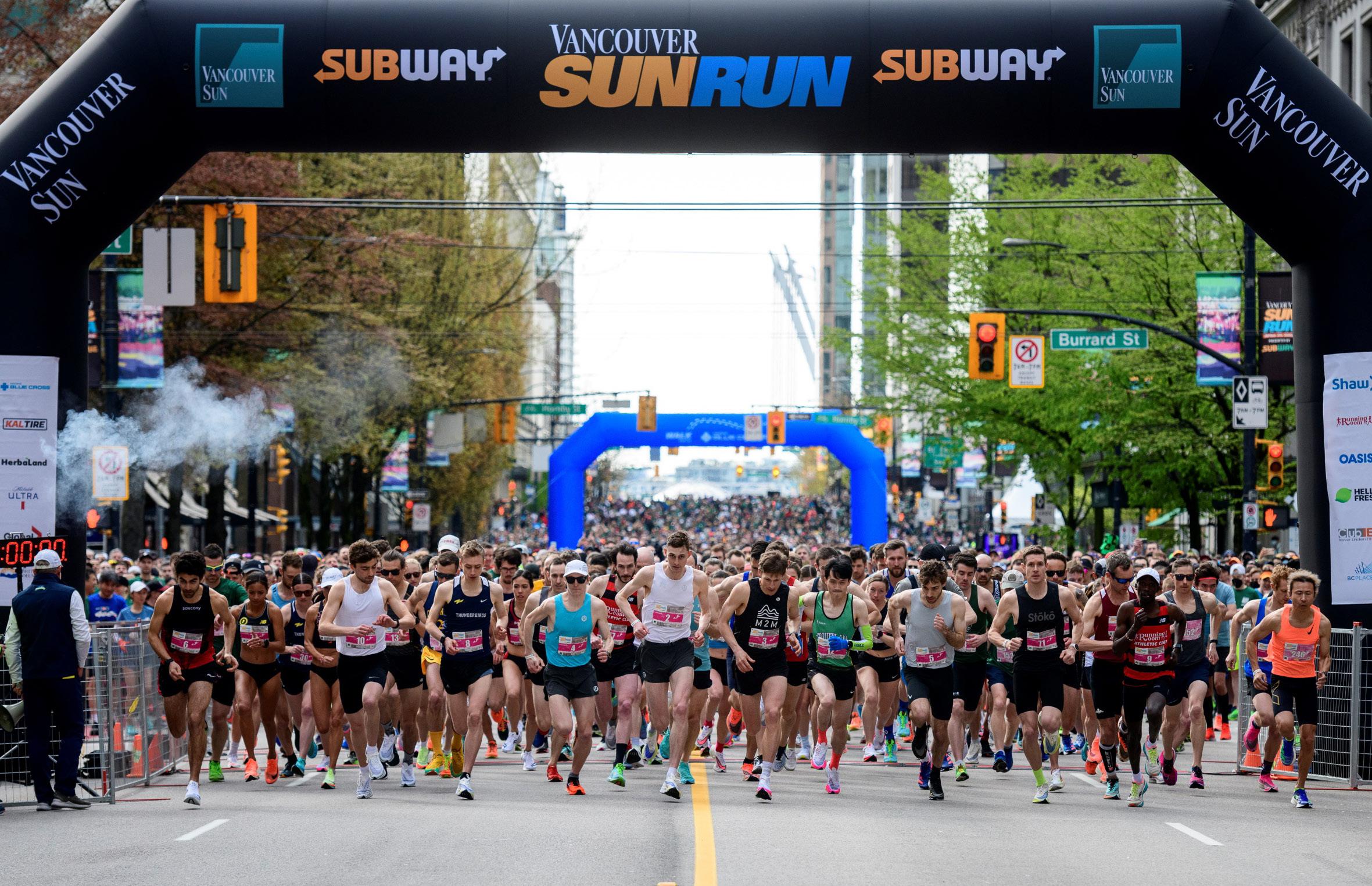


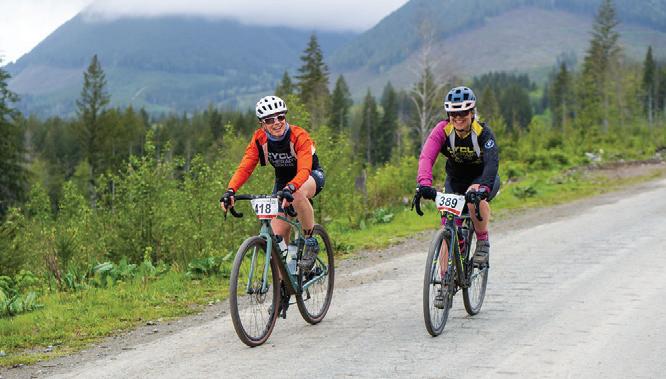


The Vancouver Sun Run is open to all runners and walkers of ALL levels. Celebrate your personal achievement in health and fitness by registering solo or as part of a team. Participate in person or virtually.
- Individual 10K
- Shaw Mini Sun Run 2.5K
- Oasis Youth Team Challenge
- Shaw Team Division
- Walk with Pacific Blue Cross
- Virtual Experience Presented by Fresh Prep FOR


info@vancouversunrun.com #VanSunRun

Start MARCH 2023 Location
Mar 04 Arctic Fox Winter Stage Race
Calgary, AB
Mar 04 Dirty Feet Snowshoe Race #3 Kamloops, BC
Mar 05 Victoria Goddess Run
Victoria, BC
Mar 05 Fraser Valley Trail Races - Manning Park Manning Park, BC
Mar 08 Secret 3K
Calgary, AB
Mar 19 Barcelona Marathon Barcelona, Spain
Mar 25 Big Jungle Run
Mar 25 Spring Run for Fun
Mar 26 Around The Bay Road Race
Burnaby, BC
Redmond, WA
Hamilton, ON
Start APRIL 2023 Location
Apr 08 Big Easter Run
Vancouver, BC
Apr 08 The Whidbey Woods Trail Run Whidbey Island, WA
Apr 15 NN Rotterdam Marathon Rotterdam, Netherlands
Apr 15 OAT Run (Olympic Adventure Trail Run) Port Angeles, WA
Apr 15 5 Peaks Trail Running Series: Alice Lake Alice Lake, BC
Apr 16 Vancouver Sun Run
Vancouver, BC
Apr 16 Dirty Feet Trail Race #1 - Presented by HOKA Kamloops, BC
Apr 16 Spring Trio 5/10/15 km
Calgary, AB
Apr 22 Foot Levelers Blue Ridge Marathon Roanoke, VA
Apr 22 Gravel Unravel: Gamble Graveller
Olympic Pen, WA
Apr 23 London Marathon London, England
Apr 26 Spring Trio Trail
Calgary, AB
Apr 28 BC Backyard Ultra Salmon Arm, BC
Apr 29 Jasper Canadian Rockies Half Marathon Jasper, AB
Apr 29 Limestone Race Weekend Kingston, ON
Apr 29 Bighorn Bushwack Advendure race Kelowna, BC
Apr 30 Mississauga Marathon (Half, 21.1K, 10K)
Mississauga, ON
Apr 30 Novo Nordisk ‘Hazel’ 5K Mississauga, ON
Apr 30 Big Sur International Marathon Big Sur, CA
Apr 30 Get Shit Done 5km, 10km, 21km
Start MAY 2023
Calgary, AB
Location
May 06 Edmonton First Responders Half Marathon Edmonton, AB
May 06 The Freestyle 5K & 1K Kids Run Toronto, ON
May 06 The Cumby Cumberland, BC
May 06 5 Peaks Trail Running Series: Golden Ears Golden Ears, BC
May 06 5 Peaks Trail Running Series: Kelso Kelso, ON
May 06 Suntrail Pure Grit Trail Race Wiarton, ON
May 06 Hardwood SingleTrack Classic Barrie, ON
May 06 TransRockies Gran Fondo Moab Moab, UT
May 06 SingleTrack Classic Barrie, ON
May 07 Leading Edge Physiotherapy RunWild St. Albert, AB
May 07 BMO Vancouver Marathon Vancouver, BC
May 07 FOODFARE – Winnipeg Police Half Marathon Winnipeg, MB
May 07 Toronto Marathon Toronto, ON
May 07 The Ranney Gorge Run Trent Hills, ON
May 07 Demi-Marathon Lévis Lévis, QC
May 07 Dirty Feet Kal Park 50 Vernon, BC
May 07 5 Peaks Trail Running Series: Terwillegar Park Edmonton, AB
May 07 Cowichan Crusher Gravel Fondo Lake Cowichan, BC
May 07 Shoppers Drug Mart® Run for Women - Moncton Moncton, NB
May 07 Know Where to Turn Airdrie, AB
May 07 Dirty Feet Kal Park 50 - Presented by HOKA Vernon, BC
May 13 5 Peaks Trail Running Series: Sikome Lake Calgary, AB
May 13 Red Deer PCN Women’s ALOHA Fun Run Red Deer, AB
May 13 Medicine Hat Massacre Elkwater, AB
May 13 Physio Fit Run Winnipeg. MB
May 13 Edmonton Gorilla Run
Edmonton, AB
May 13 5KM Route La Clinique Du Coureur Lac Beauport, QC
May 13 Toronto Spartan Event Weekend Orono, ON
May 13 Lakou Backyard Ultra Parkland County, AB
May 13 Survival of the Fittest Squamish, BC
May 13 Run and Walk to Remember
May 13 Conquer the Canuck
Altona, MB
Cambridge, ON
May 13 Shoppers Drug Mart® Run for Women - Waterloo Waterloo, ON
May 13 Shoppers Drug Mart® Run for Women - Vancouver Vancouver, BC
May 13 Eyeball the Wall
May 14 Sport Chek Mother’s Day Run, Walk and Ride
May 14 Blossom 13K
May 14 Sporting Life 10K
May 14 Westwood Lake Triathlon
May 14 Run Around The Square
Calgary, AB
Calgary, AB
Penticton, BC
Toronto, ON
Nanaimo, BC
Goderich, ON
May 14 Wild Rose Women’s Triathlon - Drumheller Drumheller, AB
May 14 Sasamat Ice Cracker Open Water Swim and SwimRun Challenge
May 20 Chris Walker Memorial Giants Head Grind
Vancouver, BC
Summerland,BC
May 20 Whitefish Marathon, Half Marathon & 5K Whitefish, MT
May 20 Conquer the Coulee Medicine Hat, AB
May 21 Windermere Marathon
Spokane, WA
May 21 PUMA Toronto Women’s Half Marathon/5K/10K Toronto, ON
May 21 Scotiabank Blue Nose Marathon Halifax, NS
May 21 Woody’s RV World Marathon Red Deer, AB
May 21 Union Trail Medicine Hat, AB
May 23 Expedition Canada
May 26 Half Corked Marathon
May 26 The Women’s Soap Run
May 27 SulphurSprings Trail Race
Penticton, BC
Osoyoos, BC
Canmore, AB
Ancaster, ON
May 27 Run for Water Trail Race 10K, 25K, 50K Trail Races Abbotsford, BC
May 27 5 Peaks Trail Running Series: “Touch the Sky”
May 27 Blackfoot Ultra
May 27 Cycle Canada Century Ride
May 27 Terroir Run
May 27 The Jack Ride
May 27 Boyne Book It Fun Run
May 27 Tamarack Ottawa Race Weekend
May 27 Blackwell Dairy Fun Run
May 27 Dairy Capital Run
May 27 Storm the Trent Haliburton
Durham, ON
Sherwood Park, AB
Toronto, ON
PE County, ON
Caledon, ON
Carman, MB
Ottawa, ON
Kamloops, BC
Woodstock, ON
Albion Hills, ON
May 27 Shoppers Drug Mart® Run for Women - Oakville Oakville, ON
May 27 Shoppers Drug Mart® Run for Women - Edmonton Edmonton, AB
May 27 Northwest Tandem Rally
May 28 Oak Bay Half Marathon
May 28 Edinburgh Marathon
May 28 Saskatchewan Marathon
May 28 MS Walk
May 28 SUDBURYROCKS!!! Marathon
May 28 Subaru IRONMAN 70.3
Sequim, WA
Victoria, BC
Edinburgh, Scotland
Saskatoon, SK
Multiple Locations
Sudbury, ON
Victoria, BC


Open Water Swim and SwimRun Events
TOP-QUALITY EVENTS AND TRAINING PROGRAMS ACROSS CANADA!

MAY 14
VANCOUVER, BC Sasamat Open Water Swim and SwimRun Challenge
JUNE 11
WELLAND, ON Welland Open Water Swim and SwimRun Challenge
JUNE 11
VANCOUVER, BC Sasamat Fresh and Salty Open Water Swim and SwimRun Challenge
WORLD CHAMPIONSHIP QUALIFIER
JUNE 24
EDMONTON, AB Elk Island SwimRun Challenge Challenge and Open Water Swim
JULY 1
CAVENDISH, PEI Cavendish SwimRun Challenge
JULY 9
COLLINGWOOD, ON Collingwood July 9 Open Water Swim and SwimRun Challenge

JULY 15
KENORA, ON Kenora Mudskipper Challenge
WORLD CHAMPIONSHIP QUALIFIER
PARRY SOUND, ON Parry Sound Open Water Swim and SwimRun Challenge
JULY 23
WORLD CHAMPIONSHIP QUALIFIER
SUMMERSIDE, PEI Summerside Open Water Swim and SwimRun Challenge
JULY 29/30
WORLD CHAMPIONSHIP QUALIFIER
WELLAND, ON Canaqua Sports Midsummer Classic Open Water Swim and SwimRun Challenge

AUG. 6
AUG. 13
OTTAWA, ON Riverkeeper Open Water Swim
AUG. 12/13
PINAWA, MB Pinawa Multisport - Open Water Swim and Triathlon
AUG. 19/20
LOWES SACKVILLE, NS Nova Scotia Open Water Swim and SwimRun Challenge

SEPT. 10
WELLAND, ON Welland Open Water Swim
SEPT. 17
VANCOUVER, BC Sasamat Mudskipper SwimRun Challenge and Open Water Swim
Register at www.canaquasports.com

May 28 Servus Calgary Marathon Calgary, AB
May 28 Shoppers Drug Mart® Run for Women - St. John’s St. John’s, NL
May 28 Shoppers Drug Mart® Run for Women - Markham Markham, ON
May 28 Ski to Sea Bellingham, WA
May 28 Plunge for the Cure Vancouver, BC
May 30 La Course de la Releve Dolbeau, QC
Start JUNE 2023 Location
Jun 01 Life Cycle Everywhere, AB
Jun 01 Manulife Heart & Stroke Ride for Heart Toronto, ON
Jun 03 Whistler Half Marathon Whistler, BC
Jun 03 Oliver Sprint/Standard Tri/Du Oliver, BC
Jun 03 Ice ord Midnight Marathon Ilulissat, Greenland
Jun 03 The Ban Jasper Relay Ban , AB
Jun 03 Pelee Island Winery Half Marathon Pelee Island, ON
Jun 03 Twelve Mile Creek Half Marathon St. Catharines, ON
Jun 03 Hungry Hungry Half Kelowna, BC
Jun 03 PDX Triathlon at Blue Lake Portland, OR
Jun 03 Rock ‘n’ Roll Marathon: San Diego San Diego, CA
Jun 03 Be Fearless Trail Marathon, 21k & 11k Squamish, BC
Jun 03 Run, Walk & Ruck for Mental Wellness Regina, SK
Jun 03 Shoppers Drug Mart® Run for Women - Winnipeg Winnipeg, MB
Jun 03 Newport Marathon and Half Newport, OR
Jun 03 Gran Fondo Jasper Jasper, AB
Jun 04 Shoppers Drug Mart® Run for Women - Ottawa Ottawa, ON
Jun 04 Ride Don’t Hide Victoria, BC
Jun 04 Oliver Half Iron & Aquabike Oliver, BC
Jun 04 5 Peaks Trail Running Series: Whitemud Park Edmonton, AB
Jun 04 Footstock Cochrane, AB
Jun 04 Run Apart/Run Up for Down Syndrome Burnaby, BC
Jun 04 Subaru Triathlon Series Milton Milton, ON
Jun 04 WBYO’s 5ish Fun Run Winnipeg, MB
Jun 04 Gutsy Walk for Crohn’s and Colitis Canada Multiple Locations
Jun 04 Beat Beethoven Kingston, ON
Jun 04 Course des Pompiers Laval, QC
Jun 04 Pharmaprix® Course pour les femmes - Quebec City Quebec City, ON
Jun 04 Calgary Ulta Trail Run
Calgary, AB
Jun 09 Branch Out Bike Tour Invermere, BC
Jun 10 Women’s 4 Hour – Mountain Bike Relay Oro Station, ON
Jun 10 Moon In June Road Race
Burlington, ON
Jun 10 5 Peaks Trail Running Series: Rattlesnake Point Rattlesnake, ON
Jun 10 5 Peaks Trail Running Series: Canmore Nordic Centre #1 Canmore, AB
Jun 10 Mud Hero Ottawa
Jun 10 Tri for Evan
Jun 10 Wasa Lake Triathlon
Ottawa, ON
Calgary, AB
Cranbrook, BC
Jun 10 Shoppers Drug Mart® Run for Women - Toronto Toronto, ON
Jun 10 Shoppers Drug Mart® Run for Women - Saskatoon Saskatoon, SK
Jun 10 Women’s 4 Hour MTB Relay
Jun 11 Bettys’ Run for ALS
Jun 11 Ride Don’t Hide
Barrie, ON
Calgary, AB
Kelowna, BC
Jun 11 Freedom to Move: Run, Walk, & Wheel for Dystonia Toronto, ON
Jun 11 Wetaskiwin Triathlon
Jun 11 Survivorfest Running Event
Jun 11 TRi KiDS Triathlon Series - Burlington
Jun 11 Tour De Grand
Wetaskiwin, AB
Sherwood Park, AB
Burlington, ON
Cambridge, ON
Jun 11 Victoria Youth Triathlon
Jun 11 Spring ARK Fest
Victoria, BC
Burlington, ON
Jun 11 Welland Open Water Swim & SwimRun Challenge Welland, ON
Jun 11 Dirty Feet Mtn Bike Race
Jun 11 Chinook Classic Triathlon
Kamloops, BC
Chestermere, AB
Jun 11 Pharmaprix® Course pour les femmes - Montreal Montreal, QC
Jun 11 Shoppers Drug Mart® Run for Women - London London, ON
Jun 11 Sasamat Fresh & Salty SwimRun Challenge & Open Water Swim
Jun 11 Chestermere Loop the Lake Run
Vancouver, BC
Chestermere, AB
Jun 16 Blueshore Financial Longest Day Road Race Vancouver, BC
Jun 16 TransRockies Golden 24 Golden, BC
Jun 17 Niagara Ultra Niagara Falls, ON
Jun 17 North Sun Ultra
Edmonton, AB
Jun 17 CFB Esquimalt Navy Run Victoria, BC
Jun 17 Subaru Triathlon Series Guelph Lake I Guelph, ON
Jun 17 Tour du Lac Brome Knowlton, QC
Jun 17 TriGator for Kids Elmira, ON
Jun 17 Half on the Head Half Marathon and 10 K Kerry, Ireland
Jun 17 Big Five Marathon Limpopo, South Africa
Jun 17 Midnight Sun Marathon Tromsø, Norway
Jun 17 Kelowna Wine Country Half Marathon Kelowna, BC
Jun 17 “Run To The Farmers’ Market” Half Marathon Millarville, AB
Jun 17 Backyard Ultra - Dirty Feet Beat The Buzzer Sun Peaks, BC
Jun 17 Shoppers Drug Mart® Run for Women - Hamilton Hamilton, ON
Jun 17 Shoppers Drug Mart® Run for Women - Calgary Calgary, AB
Jun 17 Millarville Run to the Farmers’ Market Half Marathon Diamond Valley, AB
Jun 17 Dirty Feet Beat The Buzzer - Back Yard Ultra Kamloops, BC
Jun 17 Gravel Unravel: Bon Jon Pass Out Quilcene, WA
Jun 18 Manitoba Marathon Winnipeg, MB
Jun 18 Ban Marathon, Half Marathon & 10K Ban , AB
Jun 23 Pacific Distance Carnival & Canadian 10,000m Championships Burnaby, BC
Jun 23 Vertical Slam Ultimate Challenge Taylor, BC
Jun 23 Sadownik Miles for Smiles 1-24 hrs Fort St John, BC
Jun 23 Kona Marathon Kona, HI
Jun 24 Mud Hero Toronto North Toronto, ON
Jun 24 5 Peaks Trail Running Series: “Slabtown Sprint” Uxbridge, ON
Jun 24 World Triathlon Montreal Montréal, QC
Jun 24 Woody’s Triathlon Red Deer, AB
Jun 24 Woody’s Triathlon - Kids of Steel Red Deer, AB
Jun 24 MultiSport Canada Rose City Triathlon Weekend Welland, ON
Jun 24 Slay The Dragon Trail Running Race Vernon, BC
Jun 24 Subaru 5i50 Sprint Triathlon Mont-Tremblant, QC
Jun 24 Rundle’s Revenge Canmore, AB
Jun 24 Kananaskis 100 Mile Relay Kananaskis, AB
Jun 24 MS Bike Multiple Locations
Jun 24 Minotaur SkyRace and Mini-Taur 10 km Crowsnest Pass, AB
Jun 24 Elk Island SwimRun Challenge & Open Water Swim Edmonton, AB
Jun 24 Padden Triathlon Bellingham, WA
Jun 25 IRONMAN 70.3 Mont-Tremblant Mont-Tremblant, QC
Jun 25 Kal RATS Sprint Triathlon Vernon, BC
Jun 25 Vancouver Half Marathon & 5K Vancouver, BC
Jun 25 Tri-S’more Tri-Diva Strathmore, AB
Jun 25 Shoppers Drug Mart® Run for Women - Whitby Whitby, ON
Jun 25 Shoppers Drug Mart® Run for Women - Victoria Victoria, BC
Jun 29 Québec Mega Trail Beaupré, QC


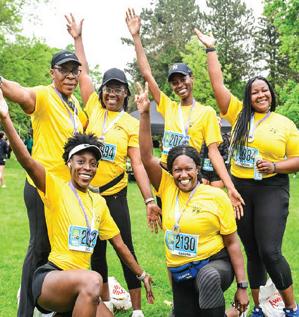


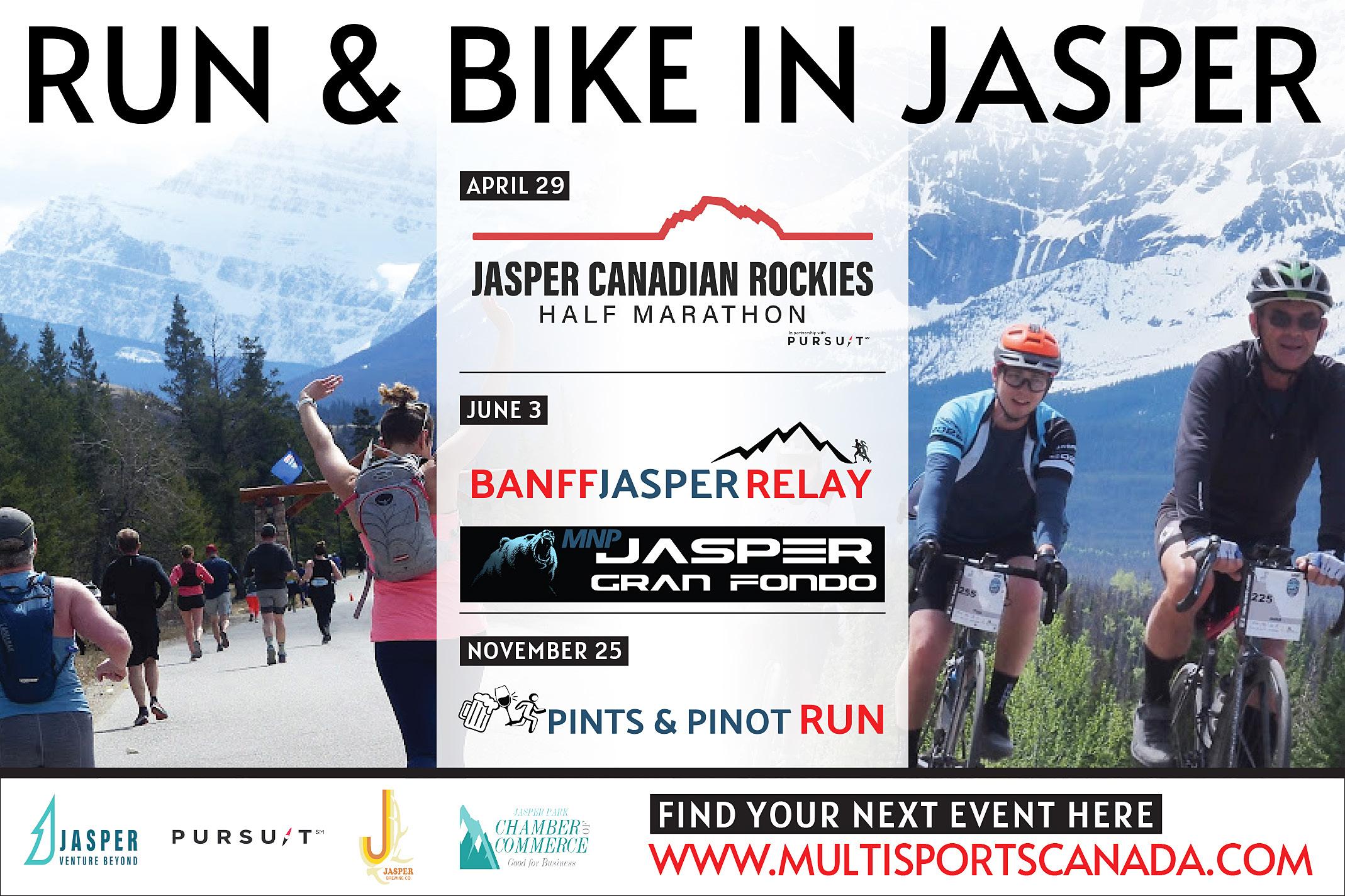


Start
JULY 2023
Location
Jul 01 Canada Day Road Race Multiple Locations
Jul 01 OFFICIAL CANADA D’EH RUN™ 5K 2022 Amherstburg, ON
Jul 01 Canada Day Run & Walk Regina, SK
Jul 01 Diamond Valley Splash and Dash Turner Valley, AB
Jul 01 Run Regina Canada Day Run & Walk Regina, SK
Jul 01 Cavendish SwimRun Challenge Cavendish, PEI
Jul 02 Great White North Triathlon Stony Plain, AB
Jul 02 Okanagan Trestles Tour Penticton, BC
Jul 03 BC Bike Race North Vancouver, BC
Jul 04 Yukon River Quest Whitehorse, YK
Jul 07 Flapjack 15 Multiple Locations
Jul 08 Gran Fondo Badlands Drumheller, AB
Jul 08 The Limberlost Challenge Lake of Bays, ON
Jul 08 Sinister 7 Ultra - 100 mile Crowsnest Pass, AB
Jul 08 Sinister 7 Ultra - 50 mile Crowsnest Pass, AB
Jul 08 Sinister 7 Ultra - 50 km Crowsnest Pass, AB
Jul 08 Knee Knackering North Shore Trail Race West Vancouver, BC
Jul 08 Summit 700 presented by Salomon Blue Mountain Resort, ON
Jul 08 Young Hearts Triathlon Invermere, BC
Jul 08 Soup 2 Nutz Vernon, BC
Jul 08 MultiSport Canada Bracebridge Triathlon & Duathllon Bracebridge, ON
Jul 09 XTERRA Victoria Victoria, BC
Jul 09 Heart of the Rockies Open Water Swim Invermere, BC
Jul 09 Heart of the Rockies Gran Fondo Invermere, BC
Jul 09 Heart of the Rockies Triathlon & Duathlon Invermere, BC
Jul 09 Collingwood Open Water Swim & SwimRun Challenge Collingwood, ON
Jul 09 Stampede Road Race Calgary, AB
Jul 09 IRONMAN 70.3 Muskoka Huntsville, ON
Jul 09 Prospera Granfondo Axel Merckx Okanagan Penticton, BC
Jul 10 The Midsummer 8K Kelowna, BC
Jul 12 Le Tour du Lac Labrecque Labrecque, QC
Jul 13 TransRockies Singletrack 6 Fernie, BC
Jul 14 XTERRA Quebec Québec City, QC
Jul 14 Summer Night 5K London, ON
Jul 15 Kenora Mudskipper Challenge & Open Water Swim Kenora, ON
Jul 15 San Lorenzo River Marathon Santa Cruz, CA
Jul 15 Reggie Ramble Gravel Grinder Warkworth, ON
Jul 15 Interior Savings Across the Lake Swim Kelowna Kelowna, BC
Jul 15 Broken Goat Rossland, BC
Jul 15 5 Peaks Trail Running Series: Albion Hills Albion Hills, ON
Jul 15 Powderface Marathon & Half Marathon Powderface Mountain, AB
Jul 15 VFAC Summerfast 10K Vancouver, BC
Jul 16 Subaru Triathlon Series - Niagra Grimsby Grimsby, ON
Jul 16 SAGELANDS Half Iron, Triathlon Osoyoos, BC
Jul 16 Dirty Feet Trail Race #3 - Presented by HOKA Vernon, BC
Jul 16 Victoria Half Olympic & Sprint Triathlon Victoria, BC
Jul 22 Lake Windermere Aquathlon Windemere, BC
Jul 22 Enbridge Ride to Conquer Cancer Multiple Locations
Jul 22 5 Peaks Trail Running Series: Cypress Mountain West Vancouver, BC
Jul 22 Mud Hero Manitoba Winnipeg, MB
Jul 22 5 Peaks Trail Running Series: “Run the Pines” Durham, ON
Jul 22 Tour de Whatcom Bellingham, WA
Jul 22 5 Peaks Trail Running Series: Bowmont Park Calgary, AB
Jul 22 Bluewater Triathlon and Duathlon
Jul 22 Buckin’ Hell
Jul 22 Elk Valley Ultra
Jul 22 Rugged Maniac Obstacle Race
Brights Grove, ON
North Vancouver, BC
Fernie, BC
Calgary, AB
Jul 22 The Range Gravel Cycling Classic Claresholm, AB
Jul 22 Spartan Red Deer Sprint & Super Weekend Red Deer, AB
Jul 22 XTERRA Conquer the Crater Sudbury, ON
Jul 22 Sylvan Lake Open Water Swim
Sylvan Lake, AB
Jul 22 Totem to Totem Marathon Skidegate, Haida Gwaii, BC
Jul 22 Summer Epic 8 Hour MTB Relay Barrie, ON
Jul 22 Gravel Unravel: Why-Not-Chee
Jul 23 5 Peaks Trail Running Series: Goldbar
Jul 23 Parry Sound Open Water Swim
Wynoochee Lake, WA
Edmonton, AB
Parry Sound, ON
Jul 23 Nova Scotia Marathon/Half Marathon and 10K Barrington, NS
Jul 23 Chinook Classic Gran Fondo
Calgary, AB
Jul 23 Shuswap Ultra Salmon Arm, BC
Jul 23 Toronto Triathlon Festival
Toronto, ON
Jul 24 Annual Virtual CAN Fund #150Women BE EPIC Run Multiple Locations
Jul 24 La Course de la Traversée Roberval , QC
Jul 26 Victoria Splash & Dash Championships
Victoria , BC
Jul 29 Australian Outback Marathon Yulara, Australia
Jul 29 MS Bike Grand Bend to London
Jul 29 Toronto Carnival Run
Grand Bend, ON
Toronto, ON
Jul 29 Jack and Jill’s Downhill Marathon North Bend, WA
Jul 29 Summerside Open Water Swim & SwimRun Challenge Summerside, PEI
Jul 30 IRONMAN 70.3 Calgary
Jul 29 IRONKIDS Calgary
Rocky View, AB
Calgary, AB
Jul 30 Summerside Mudskipper SwimRun Challenge Summerside, PEI
Jul 30 Subaru Triathlon Series Owen Sound Owen Sound, ON
Start AUGUST 2023
Location
Aug 02 La Petite Patte Jeannoise Métabetchouan, QC
Aug 02 MRA Family Ice Cream Run #2 Winnipeg, MB
Aug 05 The Lucky Triathlon Festival Woodland, WA
Aug 05 Canadian Death Race - 118 km Grande Cache, AB
Aug 05 Near Death Marathon - 42 km Grande Cache, AB
Aug 05 Kids Death Race - 6 km Grande Cache, AB
Aug 05 Not Since Moses Five Islands, NS
Aug 05 Tour de Lavender Sequim, WA
Aug 06 Subaru Iron Girl Canada Women’s Triathlon Grimsby, ON
Aug 06 Canaqua Sports Midsummer Classic
Welland, ON
Aug 06 Camarillo Marathon Camarillo, CA
Aug 07 Dartmouth Natal Day Road Race
Aug 11 Fat Dog 120 Trail Race
Aug 11 Columbia River Triathalon & Endurance Sports Festival
Dartmouth, NS
Manning Park, BC
Vancouver, WA
Aug 12 Ottawa Spartan Super 10K & Sprint 5K Weekend Calabogie, ON
Aug 12 5 Peaks Trail Running Series: “Cider Under the Moon” Uxbridge, ON
Aug 12 Bruce Peninsula Multisport Race
Aug 12 Kincardine Women’s Triathlon
Aug 12 Mud Hero Montreal
Wiarton, ON
Kincardine, ON
Montréal, QC
Aug 12 Rock the Quarry Tri and Mile Swim Goshen, IN
Aug 12 Mont-Tremblant Half-Marathon
Aug 12 Dream Nation Apparel 24 Hours
Aug 12 Loop the Lake Invermere
Montréal, QC
Duncan, BC
Invermere, BC
JUNE 17, 2023
START: Oil elds Arena, Diamond Valley (formerly Black Diamond) at 7:30 a.m.
FINISH: Millarville Farmers’ Market, Millarville Racetrack
A half marathon, two-person half marathon relay and the COBS Cinnamon Bun Run (8 miles) are all point-to-point near Calgary, nishing at the Millarville Farmers’ Market, southern Alberta’s largest outdoor market.
Enjoy a morning of running, shopping, music and great food.
EXCELLENT SWAG, including a unique nisher’s medal.
ENTRY FEES:
Half Marathon - $85 until March 31, $95 until May 31, $105 until June 10
Half Marathon Relay - $135 until March 31, $155 until May 31, $175 until June 10


COBS Cinnamon Bun Run 8-Miler - $75 until March 31, $85 until May 31, $95 until June 10 *free shuttle service pre- and post-race for runners
Check



Aug 12 Pinawa Multisport Festival Pinawa, MB
Aug 13 XMan Montreal Sutton, QC
Aug 13 Ottawa Spartan Trail Calabogie, ON
Aug 13 Riverkeeper Open Water Swim Ottawa, ON
Aug 13 Back-Country Trail Run & Mtn Bike Race Elkwater, AB
Aug 13 Wild Rose Women’s Triathlon - Calgary Calgary, AB
Aug 13 Lake Chaparral Triathlon Calgary, AB
Aug 14 TransRockies Run Buena Vista, CO
Aug 16 La Course Endurance du Fjord La Baie, QC
Aug 16 Big Superhero Run Richmond, BC
Aug 19 Big White Peak Challenge Big White, BC
Aug 19 Helsinki Marathon Helsinki, Finland
Aug 19 Iron Legs Mountain Races Bragg Creek, AB
Aug 19 Nova Scotia Open Water Swim Lower Sackville, NS
Aug 19 MultiSport Canada Toronto Island Triathlon Toronto Island, ON
Aug 19 Squamish 50 Squamish, BC
Aug 19 MS Bike - Ottawa to Brockville Ottawa, ON
Aug 19 Dirty Feet Heartbreak 100K, 50K & Relay! Kamloops, BC
Aug 19 Ryder Hesjedal’s Tour de Victoria Victoria, BC
Aug 19 Run Regina I Love Regina Run & Walk Regina, SK
Aug 19 Dirty Feet Heartbreak 100 Kamloops, BC
Aug 20 Wooly Bully Races Amherst Island, ON
Aug 20 TRi KiDS Triathlon Series - Niagara Port Colborne, ON
Aug 20 Servus Edmonton Marathon Edmonton, AB
Aug 20 Calgary Women’s Run
Calgary, AB
Aug 20 Annapolis Royal 5K Annapolis Royal, NS
Aug 26 5 Peaks Trail Running Series: Chickakoo Chickakoo Lake, AB
Aug 26 Toronto Women’s Run 10K/5K
Aug 26 Black Spur Ultra - 108 km
Aug 26 Black Spur Ultra - 54 km
Aug 26 Prison Break Race
Toronto, ON
Kimberley, BC
Kimberley, BC
Rawdon, QC
Aug 26 5 Peaks Trail Running Series: Whistler Blackcomb Whistler, BC
Aug 26 MS Bike - Velo SP Mauricie
Mauricie, QC
Aug 26 MultiSport Canada Wasaga Beach Tri & Duathlon Wasaga Beach, ON
Aug 26 Sioux Narrows Swim Festival
Aug 26 Seattle Marathon Summer 5K/10K
Aug 26 Gruesome Twosome 22K, 11K & 5K
Aug 26 Moose Mountain Trail Races
Aug 27 Cobequid Trail Run
Aug 27 Subaru IRONMAN 70.3 Canada
Aug 27 SuperPower 5K: Run, Walk, or Fly
Aug 28 TransRockies Gravel Royale
Start
SEPTEMBER 2023
Sep 02 Marathon des Châteaux du Médoc
Sioux Narrows, ON
Seattle, WA
Aldergrove BC
West Bragg Creek, AB
Truro, NS
Penticton, BC
Toronto, ON
Panorama, BC
Location
Bordeaux, France
Sep 02 Petra Desert Marathon Petra, Jordan
Sep 02 Subaru Triathlon Series - Guelph Lake II
Sep 03 TRi KiDS Triathlon Series - Milton
Sep 03 Fast Days of Summer 5000
Sep 03
Love is Love Mile
Sep 03 Walk in the Park
Sep 03 Kauai Marathon and Half Marathon
Sep 04 Vancouver Triathlon
Sep 07 Beat Beethoven
Guelph, ON
Milton, ON
Kelowna, BC
Calgary, AB
Kamloops, BC
Koloa, HI
Vancouver, BC
Calgary, AB
Sep 08 Finlayson Arm 28K/50K/100K
Sep 08 Klondike Road Relay
Sep 08 Lost Soul Ultra
Sep 08 Ultra Trail Harricana
Sep 08 Kidney March
Sep 08 GMS Queen City Marathon
Victoria, BC
Whitehorse, YK
Lethbridge, AB
La Malbaie, QC
Calgary, AB
Regina, SK
Sep 08 Run Regina Halloween Run & Walk Regina, SK
Sep 08 Ladakh Marathon Leh, India
Sep 09 The Weekend To Conquer Cancer
Toronto, ON
Sep 09 Triathlon Esprit de Montreal Montréal, QC
Sep 09 The Ultra Night Run
Multiple Locations
Sep 09 5 Peaks Trail Running Series:Canmore Nordic Centre #2 Canmore, AB
Sep 09 5 Peaks Trail Running Series: Heart Lake Heart Lake, ON
Sep 09 Patagonian International Marathon Puerto Natales, Chile
Sep 09 Kootenay Gran Fondo
Cranbrook, BC
Sep 09 RBC Gran Fondo Whistler Whistler, BC
Sep 09 GOAT Run (Great Olympic Adventure Trail Run) Port Angeles, WA
Sep 09 Best in the West Triathlon Festival Foster, OR
Sep 09 Bighorn Bushwack Adventure Race Penticton, BC
Sep 09 Cancervive Ride for Wellspring Ban , AB
Sep 10 Welland Canal Open Water Swim Welland, ON
Sep 10 RBC Race for the Kids
Sep 10 TransSelkirks Run
Sep 10 30 km des Rives de Boucherville
Vancouver, BC
Revelstoke, BC
Boucherville, QC
Sep 10 Canmore Rocky Mountain Half Marathon, 10K & 5K Canmore, AB
Sep 10 Constantine Yorkville Run
Sep 10 Dinosaur Valley Half Marathon
Sep 10 Okanagan Rail Ride
Toronto, ON
Drumheller, AB
Vernon, BC
Sep 10 Kananaskis Run Bike Run BLITZ Duathlon Kananaskis, AB
Sep 11 The Divide 200 - 200 mile
Sep 15 Marathon by the Sea
Sep 15 Golden Ultra
Crowsnest Pass, AB
Saint John, NB
Golden, BC
Sep 15 Kettle Mettle Gravel Fondo Penticton, BC
Sep 15 Kettle Mettle 2-Day Gravel Stage Race Okanagan, BC
Sep 16 Kettle Mettle Classic 50km, 100km, 138km+ Penticton, Kelowna, BC
Sep 16 Oasis ZooRun
Sep 16 Appletree Marathon, Half & 5K
Sep 16 Lake2Lake Ride
Sep 16 Freaky Creeky 50
Sep 16 Tough Mudder Toronto Weekend
Sep 16 Beaver Flat 50
Toronto, ON
Vancouver, WA
Vernon, BC
Vernon, BC
Toronto, ON
Saskatchewan, SK
Sep 16 Swamp Donkey Adventure Race Falcon Lake, MB
Sep 16 Tobermory Trail Race Weekend – Run The Edge Tobermory, ON
Sep 16 X Ultra Marathon
Drumheller, AB
Sep 17 Sasamat Mudskipper SwimRun Challenge Belcarra, BC
Sep 17 Canada Army Run
Sep 17 Mt. Baker Hill Climb
Sep 22 Marathon Beneva de Montréal
Sep 23 Sight Night Edmonton
Sep 23 Big Hurt Multi-Sport Race
Ottawa, ON
Deming, WA
Montréal, QC
Edmonton, AB
Port Angeles, WA
Sep 23 Melissa’s Road Race Ban , AB
Sep 23 Mind Over Mountain Adventure Race
Sep 23 Castle Alpine Trail Race - 28 km
Sep 23 Moran Constitutional Relay
Cumberland, BC
Crowsnest Pass, AB
Orcas Island, WA





Sep 23 River’s Edge Ultra
Sep 24 Under Armour Eastside 10K
Parkland, AB
Vancouver, BC
Sep 24 BCBR Gravel Explorer Penticton, BC
Sep 24 2023 BMW Berlin Marathon Berlin, Germany
Sep 24 Chicago Half Marathon / 5K Chicago, IL
Sep 24 Vancouver Spirit Run
Vancouver, BC
Sep 24 Treherne Run for the Hills Treherne, MB
Sep 24 Run the River Fall Challenge
Edmonton, AB
Sep 24 The Wild Run Calgary, AB
Sep 24 Big Pirate Run
Sep 24 Saskatoon Heartbeat Run
Richmond, BC
Saskatoon, SK
Sep 24 Calgary Heartbeat Run Calgary, AB
Sep 24 Edmonton Heartbeat Run
Edmonton, AB
Sep 24 Rainforest Trail Run Burnaby, BC
Sep 24 Dirty Feet Trail Race #4 - Presented by HOKA Kamloops, BC
Sep 29 Beneva Quebec City Marathon Québec City, QC
Sep 30 Wilderness Traverse Dorset, ON
Sep 30 Ultra Paine Puerto Natales, Chile
Sep 30 5 Peaks Trail Running Series: “Harold Town Harvest Run” Peterborough, ON
Sep 30 Rum Runners Relay Halifax, NS
Sep 30 5 Peaks Trail Running Series: Weaselhead Calgary, AB
Sep 30 Sea 2 Sky Gravel Fondo Squamish, BC
Sep 30 2023 Annual Reconciliation Run (Half Marathon) Birtle, MB
Oct
Oct
Oct 01 Fernie Half Marathon
Oct 01 Light the Night
Oct 02 CIBC Run for the Cure
Multiple Locations
Oct 07 Wandering Moose Kelowna, BC
Oct 07 Grizzly Ultra Marathon & Relaly Canmore, AB
Oct 07 Valley Harvest Marathon New Minas, NS
Oct 07 Toronto Women’s 8K/5K Toronto, ON
Oct 08 Royal Victoria Marathon, Half Marathon & 8K Victoria, BC
Oct 08 Sparkasse 3-Länder Marathon Lindau, Germany
Oct 08 Bank of America Chicago Marathon Chicago, IL
Oct 08 IG Wealth Managment Alzheimer Walk & Run Calgary, AB
Oct 08 Lisbon Marathon Lisbon, Portugal
Oct 13 Nevada Half Marathon Lake Tahoe, CA
Oct 13 Prince Edward Island Marathon Charlottetown, PE
Oct 14 Live Love Run 21K/10K/5K Langley BC.
Oct 14 Penticton Beer Run
Penticton, BC
Oct 14 Sight Night Red Deer Red Deer, AB
Oct 14 Dirty Feet Run 4 Donuts Kamloops, BC
Oct 14 Run the Peninsula Larry Scott Trail Race Port Townsend, WA
Oct 14 Wintergreen Ekiden Relay Race Bragg Creek, AB
Oct 15 Long Beach Marathon & Half Marathon Long Beach, CA
Oct 15 Amsterdam Marathon Amsterdam, Netherlands
Oct 15 Edge to Edge Marathon Ucluelet, BC
Oct 15 Lachine Bonneville Half Marathon Montréal, QC
Oct 15 17th Annual Strachan Hartley Legacy Run (5K, 10K) North Vancouver, BC
Oct 15 TCS Toronto Waterfront Marathon
Oct 15 Trails to Taps Relay
Toronto, ON
Bellingham, WA
Oct 21 Mochas and Marshmallows Night Run Calgary, AB
Oct 21 Mochas and Marshmallows Kids Run Calgary, AB
Oct 21 Blue Mountain Spartan Trifecta Weekend Blue Mountains, ON
Oct 22 Columbia Gorge Marathon Hood River, OR
Oct 22 Peak-2-Peak Adventure Run
Burlington, ON
Oct 22 Cowichan Autumn Classic Duncan, BC
Oct 22 Niagara Falls International Marathon Niagara Falls, ON
Oct 22 Saskatoon First Responders Half Marathon Saskatoon, SK
Oct 22 Calgary First Responders Half Marathon
Calgary, AB
Oct 22 Dirty Feet Trail Race #5 - Presented by HOKA Predator Ridge Resort, BC
Oct 23 Yeti Marathon Khangsar, Nepal
Oct 28 5 Peaks Trail Running Series: Mt. Seymour North Vancouver, BC
Oct 28 Napa Wine Country Marathon Napa County, CA
Oct 28 Dash of Doom
Calgary, AB
Oct 28 5 Peaks Trail Running Series: Mansfield Mansfield, ON
Oct 28 Run Red Deer Halloween Half Red Deer, AB
Oct 28 Stoked Oats Trail Run Bragg Creek, AB
Oct 28 Run Regina Halloween Run & Walk
Oct 29 Frankfurt Marathon
Oct 29 Monster Dash
Oct 29 Scary Run Half Marathon, 10K & 5K
Start NOVEMBER 2023
Regina, SK
Frankfurt, Germany
Burnaby, BC
Washougal, WA
Location
Nov 05 Le Marathon des Alpes-Maritimes Nice-Cannes Cannes, France
Nov 05 15 km au pied du Mont Saint-Hilaire Mont Saint-Hilaire, QC
Nov 05 New York City Marathon New York City, NY
Nov 05 Two Cities Marathon
Nov 05 Istanbul Marathon
Nov 12 Athens Marathon
Nov 12 Last Chance Half Marathon & 10K
Nov 12 Raid the Hammer Adventure Run
Nov 18 Queenstown Marathon
Nov 18 Sight Night Calgary
Fresno, CA
Istanbul, Turkey
Athens, Greece
Calgary, AB
Dundas, ON
Queenstown, New Zealand
Calgary, AB
Nov 18 Redlands Big Bear Marathon Redlands, CA
Nov 19 The Fat Ass Trail Run
Nov 25 Bagan Temple Marathon
Nov 25 Pints + Pinot Run
Nov 25 Seattle Kids Marathon
Nov 26 Seattle Marathon
Nov 25 Santa Rec Run
Start
DECEMBER 2023
Dec 01 The 12Ks of Christmas
Batawa, ON
Bagan, Myanmar
Jasper, AB
Seattle, WA
Seattle, WA
Penticton, BC
Location
Calgary, AB
Dec 01 Reggae Marathon, Half Marathon & 10K Negril, Jamaica
Dec 09 The Big Elf Run
Dec 10 Stu Your Stockings Run
Vancouver, BC
Calgary, AB
Dec 13 Antarctic Ice Marathon Antarctica
Dec 16 San Diego Holiday Half Marathon
Dec 17 Santa 5K
Dec 26 Boxing Day 10 & 4 Mile Runs
San Diego, CA
Bellingham, WA
Hamilton, ON


IRRC ARE LOCALLY OWNED COMMUNITY DRIVEN SPECIALTY RUNNING STORES


 BY DR. STUART MCGILL
Professor Emeritus, University of Waterloo, and Chief Scientific O cer, Backfitpro.com, author of four books on spine health and how to eliminate back pain, from Waterloo, ON.
BY DR. STUART MCGILL
Professor Emeritus, University of Waterloo, and Chief Scientific O cer, Backfitpro.com, author of four books on spine health and how to eliminate back pain, from Waterloo, ON.
Core stability is a great influencer. It is the driving force for speed in the sprinter and e ciency in endurance runners. Here we explore three basic concepts of core stability for the athlete incorporating stability, mobility, elasticity, and pulsed muscle activation.
The first concept of core stability involves assisting the transmission of power that is developed in the hips to drive the legs. Here, as the skeleton forms a linkage, proximal sti ness enhances distal athleticism, or specifically, core sti ness produces more speed on the leg side of the hip while unwanted spine bending is arrested in the proximal (pelvis and spine) side. Consider the right leg at foot strike. The hip and thigh muscles are activated to prevent their collapse, followed by the driving force required for the next stride cycle. Now consider the frontal plane where the right hip experiences the decelerating forces on foot strike, and the reaction forces of the unsupported left hip to drop towards the ground. Together with the stressful lateral bending of the spine, this is an ine cient use of energy. While this can be prevented to some degree by the right hip abductors, our work has shown that the left lateral core musculature is essential to hold up the left side of the pelvis to prevent the left hip drop. A similar situation occurs in the sagittal plane. Consider the gluteal musculature and associated fascia that cross the hip joint. The distal connection to the femur creates a very desirable leg extension. However, the proximal connections into the pelvis and associated fascia impose flexion stressors on the spine and a posterior pelvic tilt on the pelvis. Controlling these with a stable core will enhance the sprinter’s speed and the propulsive force in the endurance runner.
The second concept of core stability involves the storage and recovery of elastic energy with each running cycle. The skeletal linkage when bound together with muscles, tendons, and fascia forms a complex elastic system. Two more essential properties of linkage mechanics are introduced:
1. The body uses joint sti ness to control motion;
2. When a muscle contracts it creates both force and sti ness.
Sti ness and elasticity must work together to control the optimal storage and recovery of elastic energy, together with relaxation to facilitate the speed of muscle length changes. Recovery of elastic contributions requires skillful muscle pulses. Tuning the “e ective mass” of the core/torso with core stability is the di erence between pushing rope and pushing stone. Activating core/torso muscles together creates muscle and fascia slings linking arm motion to leg propulsion. Furthermore, the elastic components of the fascia muscle complex are tuned with posture, for example running “tall” is a trait of success (Benzie: The Lost Art of Running, 2020). The skilled athlete “tunes” both the activation and the elastic contributions.
Core stiffness must be tuned ‘just right’ to optimize storage and recovery of elastic energy.
The third element of core stability involves breathing and ventilatory mechanics. Some 100-metre sprinters hardly take a breath, or if they do it is a “sip” of air usually at 60 - 70 metres. They have found that allowing loss of air pressure compromises the tuned sti ness through the core, resulting in unwanted eccentric contractions that absorb some of the stored elastic energy, leading to a loss of top-end speed. The endurance athlete, however, coordinates breathing by tuning the core musculature to enhance hydrostatic pressure, movement of visceral contents, and enhanced e ciency of the diaphragm.
Over the past 35 years we have measured spine stability, resilience and performance in a wide variety of athletes. Three exercises, which became known as the McGill big three, kept surfacing as a superior way to tune appropriate sti ness and resilience: the bird dog exercise for the back, the side plank for the lateral core, and a modified curl up for the anterior core. Some of the fastest and most successful running athletes use these as foundational exercises to:
• Arrest proximal movements in the running cycle.
• Potentiate the storage in recovery of elastic energy.
• Enhance breathing e ciency.
• Build a higher training capacity for the track and strength and conditioning work.

Progressions of the big three include specific drills to enhance running athleticism. These concepts are detailed in my book, Ultimate Back Fitness and Performance, (2017) that summarizes athletic progressions. For those runners with back pain, they should start by following the self-assessment and pain reduction program first synthesized in my other book, Back Mechanic (2015).
In summary, tuned core stability is essential for the linkage to move. Core sti ness must be tuned “just right” to optimize storage and recovery of elastic energy. Better runners develop cleaner and more precise pulses of muscular force to allow faster muscle length change and speed. They “tune” the sti ened “e ective mass” of the torso to assist propulsive elastic e ciency, and “tune” elastic fascial sti ness with tall running posture. Begin training with the big three and progress accordingly to enhance optimal elasticity, and muscular pulsing.
To perform well you have to master the fundamentals. Yet, when I observe the running community, we appear to be overlooking the most fundamental aspect to good running mechanics, performance and recovery: breathing. More specifically, nasal breathing. Let’s explore some of the benefits and extrapolate on why nasal breathing is fundamental to making good runners.
Believe it or not, the mouth is designed primarily for eating and vocalizing, not for breathing. It is becoming increasingly recognized amongst health professionals that chronic mouth breathing can lead to significant health complications such as high blood pressure, anxiety and sleep apnea, to name a few. Despite increasing research, mouth breathing seems to be given a pass during exercise, simply because it is much easier than its alternative: nasal breathing. To the untrained nasal breather, it is much easier to breathe through the mouth, leading people to believe that nasal breathing is a limiting factor in training and performance. This increase in di culty is what leads the exercise community to dismiss the nose as an e cient breathing device.
Since most runners are looking to run faster and/or farther, adopting a strategy that initially seems to impede this seems counter-intuitive. Even though we are designed to breathe nasally, the adage “use it, or lose it” comes to mind. Thus, there
is a reconditioning period necessary with making the switch from mouth breathing to nasal breathing during physical activity. It is a humbling process that will initially run contrary to our competitive desire to make continuous and linear progress, as it can typical take anywhere from three weeks to three months.
There are two reasons why the simple solution of simply closing your mouth is not so easy in application. The first reason is more obvious. As the nose is a smaller passage than the mouth, we are required to slow down our breath rate. This slower breath rate can lead to a feeling of “air hunger,” which is the other reason we are inclined to open our mouth. To an unconditioned nasal breather, this is very uncomfortable, and the urge to open the mouth often becomes too great. However, the drive to breathe, or air hunger, that comes with an increased workload does not come from a lack of oxygen as most people believe.

As exercise intensity increases so too does oxygen demand. Yet it is the build-up of carbon dioxide (CO2)—the byproduct of cellular respiration—that drives our breath rate. Only a very small amount of CO2 buildup is required to trigger air hunger and more than double our breath rate. In which case, the mouth acts as a quick release valve for o -loading CO2 . As it happens, we tend to carry a large enough oxygen reserve in the bloodstream to accommodate
a significant drop in oxygen levels before sounding the alarm to breathe. In essence we are training our brains to tolerate higher levels of CO2 because its presence plays a very important role in oxygen delivery to the tissues. The “Bohr E ect” states that when CO2 is low—due to overbreathing—our hemoglobin has a greater a nity for the oxygen it is carrying. When CO2 levels are higher, the hemoglobin will more readily release its oxygen molecules, thereby increasing oxygen delivery to tissues in need.
Nasal breathing not only improves oxygen delivery to the tissues, it also improves the e ciency in which oxygen is exchanged at the lungs. The nose acts as a turbine to drive inhaled air deeper into the larger, lower lobes of the lungs. This allows for greater surface area for gas exchange—oxygen in and CO2 out—and takes advantage of a greater blood supply (due to gravity). Nitric oxide is an airway-opening gas that pools in the nasal
A movement-based chiropractor in clinical practice for 14 years; certified Strength and Conditioning Specialist for 16 years, helping others to restore functional movement while bridging the gap between injury, rehabilitation and performance, in Victoria, B.C.cavity and follows the inhaled breath into the lungs, further increasing oxygen exchange capacity. In contrast, mouth breathing is correlated with apical breathing, which is a shallow breathing pattern higher in the chest. Since less air is able to reach the alveoli (site of gas exchange) of the larger, blood rich lower lobes, more air is lost to dead space as a result. This “lost” air cannot be used for gas exchange as it is caught in the throat, bronchi and bronchioles of the lungs. A subsequent increase in breath rate to compensate only ensures that more air will be lost to dead space, making mouth breathing much less e cient than nasal breathing.
This will also have strong implications on training and recovery as the heart must beat faster to accommodate a faster breath rate. Heart rate is generally what we use to determine exertion and intensity levels, and ultimately determining how much recovery is required. Therefore, a conditioned nasal breather benefits from reduced exertion
and stress load during a given activity, which fundamentally improves one’s ability to recover between runs, since less recovery is needed, which in and of itself has significant implications with regards to training volume and injury prevention.
Lastly, good breathing mechanics are imperative to good running mechanics. Remember, the nose drives the air deeper, which helps to utilize the diaphragm, aka the breathing muscle. An apical breathing pattern adversely influences the diaphragm and its ability to generate the intra-abdominal pressure needed to stabilize the spine and joint systems throughout the body leading to compensatory posture, movement and motor control. This is further exacerbated by an open-mouth posture as it shifts the head forward and further alters spine and joint position, while shifting the centre of mass forward. All these factors combined contribute to aberrant running mechanics

while making any semblance of good mechanics more challenging to maintain, especially when fatigued.
If you are inclined to adopt the health and performance benefits of being a conditioned nasal breather, there are many resources and tools to aid in your success. The book Breath by James Nestor is a great resource to start, while authors Patrick McKeown, Anders Olsson and John Douillard’s books give practical training applications while further expanding on the science.
Using Breath Right® nasal strips or nasal dilators make the transition easier. Taping the mouth shut at night is becoming a popular method for improving sleep quality and overall health in addition to improving CO2 tolerance. However, it is how you breathe throughout the day that has the most influence on how you breathe during physical activity and sleep, making it the best place to start. Overall, the process is challenging but rewarding.
Remember, the nose drives the air deeper, which helps to utilize the diaphragm, aka the breathing muscle.
Industry experts share their tips on how to prevent running injuries
 BY YANA HEMPLER
Personal trainer, coach and fitness writer who is passionate about helping beginner runners improve their speed, strength and endurance, from Victoria, B.C.
YHEMPLER YANAHEMPLERFITNESS YHEMPLER
Without a doubt running injuries can take all the joy out of running, as well as have a negative impact on your mental health. While some injuries are caused by simple accidents—such as a trip or fall on a trail—others can be prevented by adapting training methods and listening to your body.
Cal Zaryski, owner of CriticalSpeed.com, in Calgary, AB, has been coaching endurance athletes of all ages and abilities for 35 years and is clear on his strategy for reducing injury. “Hire an experienced professional coach who is highly educated in biomechanics, stress load management and scheduling at the very least,” he says.
Scott Simpson, from Saanich Physiotherapy in Victoria, B.C., also agrees that runners should work with an experienced coach or mentor as they can monitor and structure the workload. “One of the key elements, particularly when training for longer events, is load management so that you build your volume up gradually,” he says.
Zaryski also recommends adding cross-training. “Instead of accumulating mileage or duration running, figure out what
percentage of your weekly training time needs to be scheduled for enhancing recovery rather than loading more stress.”
Some examples of cross-training options include cycling, swimming, elliptical and even anti-gravity treadmill running. Zaryski is also a big advocate of deep-water running, which is something that most runners rarely do.
Julian Cooper, a registered physiotherapist in Vancouver, B.C., says that runners must recover well and address problem areas proactively. “The importance of recovery cannot be understated for both training adaptation—i.e., getting fitter and faster—and injury prevention purposes.”
Recovery includes adequate sleep, stress reduction/ management, proper nutrition, training program adjustments, cross-training, as well as easy running. Recovering well involves the ability to “listen to your body” and knowing when to stop. Therefore, persistent aches, soreness, and niggles are often warning signs of injuries.
In addition, Cooper states that: “You must switch up the pace because if you are running at the same pace for all your runs you will be stressing your joints, muscles, and tendons in the same repetitive manner, increasing your risk of being sidelined with injury.”

Furthermore, he recommends including hills, speed intervals and even track sessions in your training program to increase your fitness and vary the repetitive stress of running.
“Running more frequently, as opposed to longer, can e ectively stimulate musculoskeletal adaptations while mitigating the ‘boom and bust’ cycle. Being consistent with your running will allow your body to adapt to the impact stress of running and can protect you against future injury,” Cooper adds.
Dr. Trent Stellingwer from the Canadian Sport Institute Pacific in Victoria, B.C. is a leading sport scientist and coach. He states that runners should be aware of the signs and symptoms of Relative Energy Deficiency in Sport (RED-S). “Runners with RED-S have been shown to be 4.5 times more likely to have a stress fracture.”
RED-S occurs when calorie intake is insu cient to meet the calories expended through exercise, which can lead to poor bone health and a nutritional imbalance, hence the risk of stress fractures.
Monitoring volume increase is also crucial. Stellingwer states that runners must not only slowly increase volume at less than 10 –15 per cent per week, but also not increase fast running speeds too soon and not constantly run on harder surfaces.
Simpson concurs with mixing up running surfaces, emphasizing that running on soft terrain should be done when possible. But he adds: “There are no quick fixes or quick results when it comes to training for long distance events.”
As we can see, a sound training plan must have the right balance between volume and intensity as well as cross-training. Working with the right coach will help ensure that you can maintain the right balance between your hard and easy days. You must also recognize the signs and symptoms of overtraining and injuries before it’s too late.
Being consistent with your running will allow your body to adapt to the impact stress of running and can protect you against future injury.

Ilike to think that I am a morning person in spirit, as I often wake up early. However, to say I am a morning person in practice would be an outright lie. A recent early morning running engagement proved that point. The thought of leaving the comfort of my bed one January morning to endure the Alberta winter seemed like a Herculean task to me. However, my desire to leave a positive impression with my colleagues compelled me to get ready and meet them.
This experience got me pondering if there might be additional health benefits to this preference for early morning exercise compared to my preference for running well after the sunrise. So, I put on my neuroscientist hat and identified two possible hypotheses:
1. Exercise in the morning has additional physiological health benefits over exercise later in the day. A recently published study from the U.K. (European Journal of Preventive Cardiology, 2022) provides some great insight into this hypothesis. They used wearable technology to classify people as either early morning, late morning, or afternoon exercisers and linked this data up to health records of cardiovascular health. The early morning people had the lowest risk of cardiovascular diseases, which got me curious why.
A separate study published in Cell Metabolism (2022) explored the metabolic changes following exercise in either the morning or night and found that the time of day impacted the number of hormones released and their coordination across the heart, muscles, and liver. The results even suggested that early morning exercise could promote ketone metabolism, which in turn would support people’s e orts to maintain the ketogenic diet.
While there were some mixed results, both studies together suggest that exercise in the early morning changes our body’s hormone response, and this creates unique health benefits over exercise later in the day. So it looks like this first hypothesis is supported.
2. People who have better health tend to exercise in the morning. We all know that there are “morning people” and “night people.” In my personal experience, it’s best not to mix
the two before 10:00 a.m. Neuroscientists have also recognized this distinction and coined the term chronotype to study di erences between morning and night people.
One study published in SAGE Open examined personality di erences between the two chronotypes and found that morning people, on average, tend to be less sensitive to stress, more organized, and “self-starters.” For cardiovascular health, these personality traits are critical to consider. Chronic stress has negative impacts on our overall health, but particularly our heart health, so morning people likely experience less stress-related heart strain. More conscientious people tend to be more on top of their health concerns, leading to overall better health in the long run. Indeed, another study (The Journal of Nutrition, 2021) found that women who were night people often had a higher risk for cardiovascular disease and that this link could in part be explained by less healthy dietary preferences. One of my running colleagues on my morning run definitely displayed these personality traits, so it’s likely that this second hypothesis is also supported.
If you would like to invest in long-term cardiovascular health, incorporating early morning exercise into your routine is a key part of a successful strategy. However, if you are not a morning person, this could be a challenging goal. Even if you are a morning person, it could still be a challenging goal.
The key to success in health is starting small, sustainably and as easily as possible. Returning to my story about my early morning run on a cold winter’s morning, I used evidence-based strategies to achieve my goal of actually doing the run. To start with, I made sure to go to bed on time, as a good night’s sleep is the foundation for all brain health. Knowing my willpower is extremely weak in the morning, I prepared all of my clothes for the morning beforehand, so I literally just had to wake up, get dressed and go. I wanted to reduce any obstacles that could cause friction toward achieving my goals. Finally, I had accountability, as I really wanted to leave a good impression with my colleagues.
So, if you aren’t a morning runner but want to try an early foray perhaps start o with one morning run per week. As you achieve success, you can begin to challenge yourself with bigger goals and accumulate the health benefits.
 BY JANEY BROWN JEREMIE DUPONT
JANEYBWORLD JANEYBWORLD
BY JANEY BROWN JEREMIE DUPONT
JANEYBWORLD JANEYBWORLD
Depression can a ect people of all ages and backgrounds. It is mainly characterized by feelings of prolonged sadness, hopelessness, and a loss of interest or pleasure in previously enjoyable activities. Unfortunately, many people still view depression as an inherent weakness or personal failing, perpetuating the stigma and shame around seeking help. Often a lack of compassion for mental illness can be traced to a lack of education.
To help reverse the impact of the stigma, we need to better support ourselves and others. Read on to discover a metaphor designed to help you distinguish and articulate the di erence between depression and sadness.
Firstly, what is the di erence between sadness and depression? When you’re feeling sad, there is usually a source or situation that you can link it to.
I am sad because I didn’t get the job I was hoping for.
I am sad because I miss someone.
I am sad because I had to work instead of going to a concert with all my friends.
The subjects that create sadness vary in intensity, but the subjects themselves are the trigger for feeling sad. Sadness is simply a mood and it is short-term. For example, it is possible that you can initially feel sad about something, and after a sustained period of time, you become depressed. Once this happens, you are no longer in a mood of sadness; you’ve in a sense become the sadness.
Depression also changes the chemistry of your brain and alters your perception. It clouds your memory and judgement, making it di cult to imagine that you’ve ever felt any di erently or that you will ever feel happy again. It can last for months, sometimes years, and reoccur several times in one’s life. In other words, you can be sad about a thing; depression is the thing.
The following metaphor is inspired by my friend and licensed mental health counsellor, Aaron Moore, whom I’ve spent over 50 hours training with in his mental health courses.
Picture being on a beautiful island beach with a bunch of your friends. The sun is shining and sparkling on the water. The air is warm on your skin. Everyone is smiling, laughing, and listening to music. Some people are playing volleyball or soccer in the sand.
Then all of a sudden, a thick, grey, damp fog creeps its way o the water and onto the beach surrounding you. The warm air on your skin has been replaced with a cold, wet dew. You are inhibited from seeing the reality of your surroundings clearly: all you see is fog.
It appears that you are entirely alone; there’s just one strange thing: you can still hear everyone else playing in the sand, laughing, and carrying on like nothing’s changed. You try to call out to them, explain your experience, and ask for help, but they can’t seem to understand why you’re unable to enjoy yourself.
They can’t relate to why you would feel so scared, unmotivated, and spacey on such a sunny, clear and perfect day.
You try to be more descriptive and tell them about the fog, but they respond with things like: “Try waving your arms around to clear the fog. Put in some e ort and maybe it will blow away.” Or, “You need to reframe your mindset: just believe it’s sunny again. Fake it till you make it.”
This heightens your feelings of isolation and loneliness. No one is taking you seriously. No one believes you’re telling the truth. You seem to be the only one in this mysterious fog which you have already tried everything in your power to get rid of. You don’t have control over the weather, so pretending that it’s sunny doesn’t actually bring the sun out. You’ve tried faking it, but you never seem to make it.
A teacher of movement, mindfulness and mental resilience to professional athletes and corporate executives, Janey was a 2021 Canada’s Top Fitness Instructor, from Toronto, ON.Every now and then, for no apparent reason, the fog will lighten up slightly for a few minutes or a few hours but then inevitably return, making your emotional state completely unpredictable and thus your request for support unclear and confusing to yourself, and others.
You desperately want to capitalize on these moments of clear skies, but you’re afraid if you show laughter, it will be harder to convince people of your struggle. You try to move forward through the fog but get more lost because you can’t see clearly. You become stranded in one place until you build the strength to try again.
You exert every bit of energy you have just to take a step forward, but the heaviness of the fog makes you feel like you’re in slow motion, exhausting you easily from your attempts. Passively or blatantly, you’re accused, more and more, of being overdramatic, lazy, negative, and ungrateful.
The loop continues and hopelessness ensues, eventually turning the fog to a downpour.
If you’re trying to hold on to hope, things will change, but it’s almost like the rain has changed the way your brain operates and has convinced you that the only way out is to let go and give up.
When the “fog” or rain (aka depression) lingers for too long, it can transform your mind and brain into something even you wouldn’t recognize.
After several years of experiencing depression and anxiety on and o , my brain changed so much that I went from someone who knew exactly what they wanted in life to a complete loss of purpose on earth and frequent suicidal thoughts.
I was becoming convinced that maybe I had been depressed for so long because my fate was to die young. Potentially, the only meaning to my life would come out of my death, I would think.
This was not me; this was the depression talking.
It’s imperative that you fight tooth and nail with everything you’ve got left, to make progress in rowing out of that rain—or the sh*t storm, if you prefer.
What I’ve learned is that the only way to get o “isolation island” is to build a rowboat with the following materials:
• Professional counselling or therapy: half of the wood needed to build the boat.
• Medication: the other half of the wood needed to build the boat.
• Self-compassion and forgiveness: one oar.
• Living in a stable, predictable, safe environment: the other oar.
• A daily resilience routine including meditation, movement, uplifting music, creativity, connecting with loved ones, proper nutrition with supplements that support the immune system and mood, right hours of sleep, lots of water, no booze: all of the screws that hold the boat together.
• Community: the lifeline should you go overboard.
Your boat doesn’t have to be fancy, just functional, and, of course, these are just examples of what could help build your boat. Your combination of materials might look di erent than this.
It will likely take trial and error to see what works for you. Once the boat is built, consistency will win the day. No one can physically row the boat for you. It’s up to you to put one stroke after the other. There will be moments when the water is calm and moments when you’ve got to row like hell against the tide just to get out of bed.
In any case, moving out of depression requires a multi-pronged, malleable method. Your regimen won’t be the same as someone else’s, and it won’t be the same for all time.
It’s understandable if you’re unsure of how to help if you’re uninformed on mental health challenges and/or you simply can’t relate. But consider that depressed people aren’t necessarily asking for a solution from you. They’re asking for a connection. They’re asking to be heard. To be seen. They’re asking to be accepted and loved just the way they are, while they fight to evolve.
Instead, they are often told to get over themselves. That they’re too in their own head. That they must be attracting their unhappiness. They’re accused of being irrational. Prompted to think of all they have to be grateful for. Reminded that “it could always be worse,” which ultimately makes them feel even worse. They’re completely misunderstood and part of them doesn’t even understand themselves. Part of them wants to abandon themselves, always looking for a way out of their own skin, out of their own mind.
Here’s the thing: we humans have a hard time being present with someone who is su ering because we’re afraid of feeling helpless. Ironically though, that is how they feel. So, meeting them in their place of helplessness is the most compassionate thing we can do for them.
Instead of trying to “fix” depressed people with advice and solutions, which might only heighten the sense of disconnection, try this approach instead:
• Validate their experience by saying in your own words: “This must be so challenging and frustrating.” Ideally, you would mirror back something they said, rather than guess what they’re feeling or impose your interpretation on them.
• Show them that they’re worthy of reliable connection in your own words: “You’re not alone in this. I’m right here beside you.”
• Co-create a path forward in your own words: “I don’t have the answers, but how can I support you while we figure out the next best steps together?” Assisting them in finding professional help could be a powerful first step.
Those struggling with depression ultimately require compassion from themselves and from others. Mental health education is a critical step in forming depression compassion and ending the stigma.
Originally published in the Elephant Journal as Instead of trying to Fix Depressed People, Try This. (Brown, 2022)
Educator on finding energy balance for a variety of lifestyles including elite athletes and marathon participants; advocate for sustainable food security programs in local and international communities through her work in the non-profit sector, from Victoria, B.C. CHANTAL.DAVISYYJ
Whether you are new to endurance events such as marathons or have run a few races, recognizing the nutritional needs of your body can make a big di erence. Even better if you start experimenting with calorie distribution when you begin training; waiting until the big event is not the time to be shifting your diet. The most glaring reason for that is the impact a diet change can have on your digestive system. You don’t want to be running for the bathroom when you should be focusing on the course.
Simply put, caloric distribution is the ratio of nutrients—carbohydrates, protein, and fat—in your daily diet. Don’t be afraid of calories; what is important is the variety and timing of the calories you are consuming. Each type of nutrient can be metabolized into macronutrients for energy, but the degree of di culty to break them down varies. Carbohydrates are the preferred macro of the body due to the ease of converting glucose into glycogen for energy, making it an easy source during intense training. The body can only store so much glycogen but you can improve storage capacity by building muscle mass. This is especially beneficial for the carb-loading session before the race. A good starting point is to consume four to eight grams per kilogram of body weight, with the high end suited to longer training sessions.
Second in line are fats as they provide the most density of energy per gram. However, they take more e ort to digest so aren’t ideal to consume ahead of training sessions. This is because of how the body regulates its functions. During periods of strain the body diverts resources to support the working muscles, heart, and lungs. If you consume too much fat before you train, it may cause bloating and gastrointestinal upset which contributes to the phenomenon known as runner’s diarrhea. Better to save the fat for a rest and digest period. A good range is 15 - 30 per cent of total dietary intake per day, with a focus on mono- and polyunsaturated fats.
Protein is not the best source of energy because when it is used, it means that muscle tissue is being broken down. This tissue loss will also impact the storage capacity of glycogen. It is best to use protein as a restorative macro to support recovery during training. Best to aim for 0.7 - 1.0 grams per kilogram of body weight on training days and 0.5 - 0.7 grams on rest days.
Now that you have a point of reference, it’s time to experiment so you can find a balance well ahead of the race. A good place to start is to think about how much energy you use in a day, outside of training. Even at rest the body is using energy to metabolize nutrients and repair, this is known as your resting metabolic rate. Other activities such as chores, moving around the house and work
can also add up which is why your normal eating habits will likely be insu cient during training.
Did you know that on average a runner burns 100 calories per mile? The consequences of a calorie deficit can be muscle loss, poor sleep, illness, fatigue, and irritability. To avoid these and to keep the motivation high you need to nourish your body and find the right combination for you. A great way to keep track and make modifications is to keep a training diary which you can use to record a timeline of what you ate and how long you trained, as well as how you felt. These notes can help you create a game plan to use during race week so you can focus on the race and enhance your physical and mental stamina. Another important element to give your body the best chance of success is hydration. For your body to make use of the nutrients you eat it needs water to assist in the process. Hydration helps reduce the chance of illness from training stress and keeps your mental health optimal. It is also a critical aspect to good digestive function and is another component to help thwart runner’s diarrhea. Contrary to what many think, dehydration is a top contributor to digestive dysfunction and can cause diarrhea. Marathons are a test of physical and mental endurance and ensuring you are hydrated can help boost your performance and keep you on track.
Here are some easy-to-follow tips to maximize your diet before the big race:

• Prepping meals is a useful tool for adequate calorie intake.
• Keep track of how you feel throughout so you know what works.

• Experiment with new foods well ahead of race day.
• Keep high fibre, fat, and protein to a minimum on training days.

• Stay on top of hydration.

Carb load the night before race day
• White rice burrito bowl with spiced tofu, avocado, peppers, and salsa
• Roasted potato stu ed with spinach, smoked tofu, and pesto sauce
• Sweet potato and peanut stew
Breakfast on race day (3 – 4 hours before)
• ¾ cup oatmeal with stewed apples
• White toast with 2 Tbsp. nut butter and berries
• Energy-rich smoothie
Right before the race (1 – 2 hours before)
• Banana with 1 Tbsp. nut butter
• 2 - 3 chocolate tahini bites (see recipe)
• 1 energy gel or bar

Recovery day
• Protein-heavy smoothie

• Hummus and pita
• Brown rice and beans
• Coconut yogurt with banana
• 1 1 ⁄ 2 cups fresh dates
• 1 cup cashews or preferred nut
• 3 Tbsp. maple syrup or honey
• ½ cup tahini
• 4 Tbsp. cocoa powder

• 1 tsp. vanilla
• Pinch of salt
Pulse nuts until they are chopped to size you prefer, remove and set aside. Pulse dates in food processor until they come together in a ball, add back in nuts and rest of ingredients and process until mixture comes together.
Scoop out into 1 1 ⁄ 2 Tbsp. balls and store in fridge. If you don’t have a food processor you can slice dates open and remove the pit and mix the rest of the ingredients together to stu into the date.
In extracts from his Fiber Fueled Cookbook, Dr. B. explains what causes food sensitivity and how it can be treated
BY DR. WILL BULSIEWICZBoard-certified in internal medicine and gastroenterology, expert in nutrition, digestive diseases and the gut, contributed to 20+ published scientific articles and author of the bestseller, Fiber Fueled, from Charleston, SC.
THEGUTHEALTHMD THEGUTHEALTHMD
Iconsider the Big Three of food sensitivity are constipation, celiac disease, and gallbladder dysfunction. If you suspect you have one of these, your treatment needs to address that issue first. Even though irritable bowel syndrome (IBS) is the most common cause of food sensitivity, I consider these the Big Three because they are frequent causes of food intolerances, they’re highly treatable, and once you treat them, you’ll find that your food intolerances will improve dramatically. Let’s dig into them and some of the other causes of food intolerance that you should be conscious of.
The number one cause of gas, bloating, and food sensitivities in my clinic is constipation. It’s incredible how many people have constipation as the genesis of their problem and don’t even realize they’re constipated. If you poop every day or even several times a day with diarrhea you could still be constipated! Constipation isn’t defined by the frequency of bowel movements. Instead, it’s the manifestation of symptoms or digestive disruption caused by inadequate evacuation of stool.
The solution is to establish rhythm. Your body thrives on rhythm. When we are constipated, we are out of rhythm, out of balance. We need to get things moving once more and get into that flow state where bowel movements are e ortless, complete, and, frankly, enjoyable. I am being totally serious. Having a good, healthy bowel movement absolutely should be one of the highlights of your day! You should look forward to it and feel satisfied afterwards. If you don’t, we have work to do.
Celiac disease is an inflammatory, immune-mediated condition in which the immune system becomes activated when you consume gluten. In nature, gluten is a protein found in wheat, barley, and rye. But in the real world, where most people don’t really eat whole grains, gluten is, well, everywhere: most processed foods, deli meats, soy sauce, make-up, and many prescription drugs. Potatoes are inherently gluten-free, but if your restaurant serves up fries prepared in oil that’s touched gluten, then they’re contaminated.
Celiac disease is a genetically motivated condition (if you don’t have the gene then you can’t have the condition) and
can manifest in several di erent ways. Classically there’s diarrhea, bloating, gas, and abdominal pain after a meal but it can also present with constipation. Weight loss happens with malabsorption. Iron deficiency anemia can set in and cause fatigue. Outside the intestine, celiac can present with arthritis, dental enamel defects, osteoporosis, elevated liver tests, neurological symptoms, and even infertility. Lastly, I’ve diagnosed celiac disease in people who are completely free of symptoms but have a first-degree family member with celiac disease. The most important thing is to consider celiac disease as a possibility for the symptoms. Open your mind to whether it’s possible. If it is a possibility, then you must be appropriately tested for it.

The gallbladder is a small little sack that sits under your liver in your right upper quadrant. Its job is to store liver juice called bile, which helps us to digest fat in our diet. When we eat a meal, particularly a high-fat meal, our gallbladder squeezes to release this digestive juice down a series of tubes, almost like a water slide, called the bile ducts. The bile splashes down into
the small intestine, just after the stomach, where it mixes with food and goes to work.
Here’s the issue. There are a million and one ways that the gallbladder can cause symptoms. The classic textbook. The gallbladder can cause pain in the middle upper abdomen, right upper or right lower quadrant, or the back on the right side. I’ve even seen it cause chest pain, similar to acid reflux. Naturally, if you have chest pain, you need to make sure your heart is safe first. The gallbladder will not cause left-sided pain, whether front or back. So if the pain is on the left side, it ain’t your gallbladder!
The gallbladder isn’t just about pain, though. In fact, sometimes there’s no pain at all. It can also cause chronic nausea, gas and bloating, and discomfort after meals. It’s for this reason that I’ve got the gallbladder on my mind as a possibility for anyone su ering from food intolerances or who has upper GI issues.
There’s no silver bullet that will fix gallbladder problems, but evidence suggests that a whole food, plant-centred diet rich in fibre, plant protein, and unsaturated fats reduce our likelihood of having gallbladder dysfunction. Co ee has also been found to be protective, which I personally celebrate. On the flip side, gallbladder disease is more common with increased intake of saturated fat and dietary cholesterol from red and processed meats and eggs or sugar and other ultraprocessed grains.
The Big Three are not actually the three most common causes of food sensitivity, but they are the three that I always make sure we rule out first because, if present, they can be quickly fixed and food sensitivity will improve dramatically when that is the case.
However here are a few other conditions that could be the genesis of your symptoms.
• Acid-related issues: Otherwise known as acid-peptic disorders among gastroenterologists, these can include ulcers in the stomach or small intestine, irritation of the
To help alleviate food sensitivity you need to restore rhythm. These tips below can help with constipation and the others causes of food sensitivity we discussed.
• Drink at least six—ideally eight—glasses of water per day.
• Ramp up your physical activity. When you move, your colon moves to expel both poop and gas. That’s what we’re trying to accomplish, right?
• Slowly increase your fibre intake. Increased fibre intake can often help get the bowels moving. Consider introducing prunes, oats, ground flax, or chia seeds and slowly increasing over time.
• Consider a fibre supplement. I’m a big believer and have had tremendous success with them in my clinic. Some of the options include wheat dextrin, acacia powder, psyllium husk, partially hydrolyzed guar gum, and glucomannan. Always start low and go slow. If you feel like it’s making things worse, back o
• Add magnesium before bedtime. Magnesium is great for sleep, anxiety, headaches, and also constipation. Generally you want to opt for magnesium oxide, magnesium citrate, or magnesium sulfate. The dosing depends on the formulation, and your magnesium level should be checked before starting and once you reach a steady dose.
stomach lining called gastritis, or gastroesophageal reflux disease. They occur when there is an imbalance between stomach acid secretion and the stomach lining’s defence mechanisms.
• Pancreatic insu ciency: This means that the pancreas is not able to pump out enough digestive enzymes to allow you to properly digest your food. It tends to be triggered by fat in the diet, because this is the macronutrient that our pancreas struggles to keep up with the most.
• Inflammatory bowel disease (IBD): This includes Crohn’s disease and ulcerative colitis. They are immunemediated inflammatory conditions where the immune system goes on the attack, and as a result the intestine becomes inflamed. Ulcerative colitis is, by definition, limited to the colon. Crohn’s disease, on the other hand, can manifest anywhere from the lips to the bottom, but is most common in the colon and the last part of the small intestine, called the terminal ileum.
• Bile acid malabsorption (BAM!): Bile is released from the liver to help us absorb fat, but in the case of BAM, an excess of bile acids actually irritates the lining of the intestine and causes diarrhea. It’s easily treated with a bile salt binding agent.
• Irritable bowel syndrome (IBS): I left perhaps the most common cause of food intolerances for last. So why not include it in the Big Three? It’s about treating the person with food intolerances due to IBS or another disorder of digestive function. The Big Three are the conditions that I want to make sure are not present, because if they are, then you need to correct them first and get them out of the way. But if they’re not, you may ultimately land on a diagnosis of IBS. It presents with abdominal pain and a change in bowel habits. Symptoms improve when you have a bowel movement. There’s no test to prove that you have IBS, so it’s generally diagnosed if you have the pattern of symptoms and you’ve ruled out everything else.
Reprinted with courtesy from The Fiber Fueled Cookbook (Penguin Random House, 2022) by Dr. Will Bulsiewicz.

Chia seed pudding is a perfect healthy breakfast or snack
RECIPE AND PHOTOGRAPHY BY SOPHIA DESANTIS
A food photographer, recipe creator, and health coach in San Diego, CA. She brings brands to life through her brilliant photography, simple, fresh style and unique recipes. Through her health coaching, she helps people feel empowered instead of overwhelmed when it comes to their health and wellness.
VEGGIESDONTBITE VEGGIES DON’T BITE
This peanut butter chia pudding recipe takes only seven ingredients and about 30 minutes to come together.
It’s creamy, delicious and dairy free!
Prep Time – 5 minutes
Setting Time – 30 minutes
Serves 2
• ¾ cup dairy-free milk of choice, the creamier the milk, the richer the flavour will be
• ¼ cup plain dairy-free yogurt (see note)
• ¼ cup chia seeds
• 2 Tbsp. PB2 powdered peanut butter (see note)
• 1-2 Tbsp. sweetener of choice, I used maple syrup (optional for added sweetness)
• 1 tsp. vanilla extract
• Pinch of salt
OPTIONAL TOPPINGS:
• Sliced bananas
• Homemade caramel
• Chopped nuts
• Peanut butter, or powdered peanut butter mixed with a little dairy-free milk in a 2:1 ratio
1. Add all ingredients into a bowl.
2. Whisk well to combine. Do this quickly so it doesn’t clump. You can also whisk everything but the chia seeds, then slowly add the chia seeds in while whisking to prevent them from clumping.
3. Allow pudding to set in the fridge for at least 30 minutes; you can also make this the night before.
4. Top with what you prefer and enjoy!
NOTE: You can omit the yogurt but it gives a creamier end result. You can also use a thick and creamy milk-like coconut milk from the can to get the same creamy flavour.
The powdered peanut butter helps give this recipe a delicious yet lower-fat and calorie option. If you do not have it, you can use 2 Tbsp. peanut butter.
Nutrition facts per serving
Calories 202; protein 9 g; fat 12 g; carbs 19 g.
RECIPE AND PHOTOGRAPHY BY DOUG MCNISH
Executive vegan chef, consultant, author, educator, activist and father from Toronto, ON.
DOUGMCNISH DOUGLAS - MCNISHEgg and milk-soaked bread fried in butter is not necessarily the first thing you think of when you think of vegan cuisine. Thankfully, here is the perfect recipe to replace this decadent breakfast staple. In this version, eggs are substituted with a little bit of soft tofu and flour, giving this dish the same body and texture as traditional French toast. B on appétit!
Makes 9 slices
Serves 3
INGREDIENTS
Mascarpone
• 2 cups water
• 1 Tbsp. agar powder
• 2 cups raw cashews, soaked and drained (see note)
• ¼ cup deodorized coconut oil
• 3 Tbsp. maple syrup
• 1 tsp. finely grated lemon zest
• 2 Tbsp. freshly squeezed lemon juice
• 1 Tbsp. pure vanilla extract
• 1 ⁄4 tsp. sea salt
Strawberry Compote
• 1 cup frozen strawberries
• 3 Tbsp. sugar
• 1 Tbsp. pure vanilla extract
• 1 tsp. freshly squeezed lemon juice
• ¼ tsp. cinnamon
French Toast
• 1 cup unsweetened almond milk
• 1 ⁄ 3 cup chopped firm
vacuum-packed tofu
• ¼ cup all-purpose flour
• 1 Tbsp. agave nectar
• ½ tsp. cinnamon
• ½ tsp. pure vanilla extract
• ¼ tsp. black salt
• 9 slices of your favourite bread
• Vegetable oil, for cooking
FOR SERVING
• Maple Syrup
• Fresh berries (optional)
1. Preheat the oven to 200 F (100 C). Line a baking sheet with parchment paper.
2. Make the Mascarpone: In a small pot, combine the water and agar powder. Bring to a boil, uncovered, then reduce the heat to a simmer and cook, stirring constantly, one to two minutes.
3. In a high-speed blender, combine the agar mixture with the drained cashews, coconut oil, maple syrup, lemon zest, lemon juice, vanilla, and salt. Blend until smooth and creamy. Transfer to a container and refrigerate until cold, about three hours. Remove from the fridge and place in a food processor fitted with a metal blade. Process until smooth and creamy.
4. Make the Strawberry Compote: In a small saucepan, combine the strawberries, sugar, vanilla, lemon juice, and cinnamon and bring to boil, uncovered. Reduce the heat to a simmer and cook, stirring occasionally, until the mixture thickens, about 15 minutes.
5. Make the French Toast: In a blender, combine the almond milk, tofu, flour, agave, cinnamon, vanilla, and black salt. Blend until smooth and creamy. Transfer the batter to a medium bowl.
6. In a large frying pan, preferably nonstick, heat just enough vegetable oil to coat the bottom of the pan over medium-high heat. Dip a slice of bread in the batter. Turn and dip the bread in the batter again so that all sides are coated evenly.
You want the bread to be completely covered in batter. Cook the bread until golden brown on the bottom, three to four minutes. Flip and continue cooking until the other side is golden brown, three to four more minutes. You may need to add a little oil to the pan when you flip the bread. Transfer to the prepared baking sheet and keep warm in the oven while you cook the remaining slices of French toast.
7. To serve, place six slices of the French toast on a work surface. Generously spread the mascarpone over each slice, followed by a layer of strawberry compote. For each serving, stack two slices of French toast, slathered with the mascarpone and strawberry compote, on top of one another. Top each stack with a plain slice of French toast. Serve immediately with maple syrup and fresh berries, if using.
NOTE:
To soak the cashews, place them in a large bowl with 4 cups (1 L) of hot water for at least one hour or overnight, covered, and stored in the fridge. Drain and rinse the cashews, discarding the soaking liquid.
Calories 700; protein 16 g; fat 34 g; carbs 82 g.


These coconut flour pancakes are light and flu y, gluten-free, sweet and moist
RECIPE AND PHOTOGRAPHY BY HANNAH SUNDERANI Founder and creator of Two Spoons in Toronto, ON. TWOSPOONS.CA TWO SPOONSMade with coconut flour and gluten-free baking flour, enjoy as a delightful a nd satisfying brunch post-run.
Prep Time – 10 minutes
Cook Time – 20 minutes
Servings – 12 pancakes
• 1 1 ⁄ 2 cups unsweetened almond milk
• 1 4 cup mashed banana ( 1 ⁄ 2 medium banana)
• 1 4 cup coconut flour
• 1 cup gluten-free baking flour
• 2 Tbsp. natural peanut butter
• 1 Tbsp. maple syrup (more for serving)
• 1 tsp. baking powder
• 1 4 tsp. baking soda
• Pinch sea salt
• Splash coconut oil or olive oil, for greasing
• Strawberry chia jam, optional for serving
1. In a high-speed blender, combine the almond milk, mashed banana, coconut flour, gluten-free baking flour, natural peanut butter, maple syrup, baking powder, baking soda and sea salt. Blend until smooth.
2. Lightly grease a large non-stick skillet with coconut oil over medium heat. Give the batter a good stir, then pour the batter into the pan in two heaping tablespoon portions, cooking two or three at a time. Cook until little tiny bubbles cover the surface of the pancakes and the bottom is golden brown, about two minutes. Flip and continue to cook until also golden brown on the bottom, about two minutes more. Add more oil to the pan as needed to keep the pancakes from sticking.
To keep pancakes warm while cooking preheat oven to 200 F. Transfer the pancakes to the prepared baking sheet and keep warm in the oven while you cook the remaining pancakes.
Nutrition facts per serving
Calories 88; protein 3 g; fat 3 g; carbs 14 g
Strawberry Chia Jam
• 1 cup frozen strawberries
• 3 Tbsp. sugar
• 1 Tbsp. pure vanilla extract
• 1 tsp. freshly squeezed lemon juice
• ¼ tsp. cinnamon
Prep Time – 10 minutes
Cook Time – 20 minutes
Total Time – 1 hour
Makes approximately 1 ½ cups
INGREDIENTS
• 1 lb. seasonal strawberries (500 g)
• 1 ⁄4 cup agave
• 2 Tbsp. chia seeds
• 1 ⁄ 2 tsp. vanilla extract
• Pinch sea salt
1. Chop strawberries into chunks and toss in a saucepan on medium-high heat. Cook strawberries, stirring often, until they begin to soften and release water. Turn down to a simmer, add agave, chia seeds, vanilla and salt, and simmer strawberries stirring occasionally until the liquid is reduced by half.
2. Remove from heat and let sit for at least 15 minutes to thicken.
Nutrition facts per serving
Calories 25; protein 0.5 g; fat 0.4 g; carbs 5 g.
Fall in love with breakfast again with these healthy cookies
RECIPE AND PHOTOGRAPHY BY SCOTT FORTNER AND SANDRA SPENCER
Creators of a plant-based food blog called Planted and Picked, they are based in Mahone Bay, NS. Sandra is a certified holistic nutritionist with a certificate in vegan nutrition. Scott is the site’s photographer and is an avid runner, completing nine marathons on plant power.
PLANTEDANDPICKED PLANTED AND PICKED
These incredible-tasting nut butter breakfast cookies are gluten-free, oil-free, vegan, low in sugar and wonderfully nutritious. Slightly crispy on the outside and chewy on the inside, who says you can’t have cookies for breakfast?
Prep Time – 15 minutes
Cook Time – 18 minutes
Makes – 12 cookies
INGREDIENTS
• 1 ½ cups slow cooking rolled oats
• ½ cup almond flour
• ¾ cup unsweetened almond butter
• 1 cup mashed bananas (2 large bananas)
• 2 Tbsp. flax meal
• ¼ cup shredded coconut
• ¼ cup maple syrup
• 1 tsp. cinnamon
• 1 tsp. vanilla extract
• ¼ cup chopped raw cashews
• ¼ cup pumpkin seeds
• ¼ cup sunflower seeds
• ¼ cup dried cranberries
• ¼ cup raisins
• ¼ tsp. sea salt

1. Preheat oven to 350 F.
2. In a large bowl, mash bananas. Add all the remaining ingredients and mix well.
3. Measure out about ¼ cup for each cookie and place on a large baking tray. Press down slightly. These cookies won't rise or spread out in the pan.
4. Bake for about 18 minutes. Place cookies on a cooling rack.
Nutrition facts per serving
Calories 268; protein 8 g; fat 16 g; carbs 27 g.


The perfect way to wow your weekend brunch guests
RECIPE ANDPHOTOGRAPHY
BY NISHA VORAAuthor of The Vegan Instant Pot Cookbook and creator of Rainbow Plant Life, a vegan food blog, based in San Diego, CA.
RAINBOWPLANTLIFE RAINBOW PLANT LIFE
These i ndulgent, vegan quesadillas a re packed with a hearty tofu scramble, a smoky and chewy mushroom bacon, lots of vegan cheese, and served with an easy avocado salsa!
Prep Time – 30 minutes
Cook Time – 1 hour
Serves 4
Quesadillas
• Mushroom Bacon (recipe below)
• Tofu Scramble (recipe below)
• 2 cups shredded vegan cheese of choice
• 8 large flour tortillas (can use gluten-free tortillas)
• Cooking oil of choice for cooking quesadillas
• For Serving: Avocado-Tomato Salsa (recipe below or salsa of choice and/or vegan sour cream)
Mushroom Bacon
• 8 oz. of king oyster mushrooms OR shiitake mushroom caps
• 2 Tbsp. tamari or soy sauce (I use reduced-sodium tamari)
• 1 Tbsp. olive oil, plus more for brushing the pan
• 1 2 Tbsp. toasted sesame oil
• 1 2 tsp. liquid smoke (optional but adds that nice smoky flavour)
• 1 2 tsp. pure maple syrup
• 1 2 tsp. smoked paprika (use more if not using liquid smoke)
Tofu Scramble
• 1 (14-ounce or ~400g) block of extra firm tofu
• 1 2 tsp. kala namak (also known as Himalayan black salt (or just use sea salt))
• Freshly cracked black pepper to taste
• 1 2 tsp. ground turmeric
• 1 2 tsp. paprika
• 3 Tbsp. nutritional yeast
• 1 4 cup unsweetened plain non-dairy milk
• 1 Tbsp. olive oil
Avocado-Tomato Salsa
• 1 2 pint cherry tomatoes (~150g), quartered
• 1 2 small red onion, chopped
• 1 4 cup chopped cilantro
• 1 jalapeño, diced
• 1 lime, juiced
• 1 2 tsp. kosher salt
• 2 small ripe avocados, or 1 large ripe avocado, diced
1. Mushroom Bacon: Adjust oven rack to centre position and preheat oven to 350 F. Fit a cooling rack onto a rimmed baking sheet and then line it with a sheet of parchment paper (or aluminum foil). Brush the parchment paper with a bit of olive oil.
2. Slice the mushrooms. If using king oyster mushrooms, slice lengthwise into 1/8- to 1/6-inch slices. If using shiitake mushrooms, slice lengthwise into 1/4-inch thin slices.
3. Combine the tamari, 1 Tbsp. olive oil, sesame oil, liquid smoke, maple syrup, and smoked paprika in a shallow dish and whisk to combine.
4. Add the sliced mushrooms, and stir gently to combine. Marinate the mushrooms at room temperature for at least 20 minutes, or up to 60 minutes. (While the mushrooms are marinating, make the tofu scramble.)
5. Arrange the mushrooms in a single layer on the baking sheet.
6. Bake the mushrooms for 20 minutes. Flip mushroom slices carefully with a thin spatula and continue baking until they are well-browned and chewy but crisp, about 20 minutes longer.
7. Remove from the oven and transfer the mushrooms to a paper towel-lined plate to drain any excess oil.
8. Tofu Scramble: Place the block of tofu on a cutting board lined with paper towels. Cover the tofu with paper towels and then place a heavy cookbook or skillet on top of the tofu block. Press for at least 10 minutes, or up to 30 minutes.
9. Crumble the pressed tofu with a fork or your hands into large chunks.
10. Mix together the kala namak (or sea salt), black pepper, turmeric, paprika, and nutritional yeast in a small bowl. Pour in the almond milk and whisk to combine.
11. Heat a large skillet over medium-high heat. Once hot, add the olive oil. Then add the crumbled tofu and break it apart as needed with a wooden spoon or spatula. Add the spice mixture and stir until well combined. Cook for 5-7 minutes until the tofu is lightly browned.
12. Quesadillas: Assemble the quesadillas. Spread an even layer of the vegan cheese (1/2 cup) onto one of the eight tortillas. Arrange 1/4 of the tofu scramble on top (about 1/3 cup) and 1/4 of the mushroom bacon on top. Place another tortilla on top to cover.
13. Lightly grease a large skillet with a bit of oil and place over medium heat. Once the skillet is hot, add the prepared quesadilla to the skillet. Place a smaller skillet on top of the quesadilla so that it presses down on the quesadilla, resulting in a nice crispy exterior. Cook the quesadillas for 2-3 minutes or until nicely browned on one side, then flip and cook another 1-2 minutes, or until both sides are crispy and nicely browned. Repeat with the remaining sauce, filling, and tortillas.
14. Avocado-Tomato Salsa: In a bowl, combine all of the ingredients except for the avocado and stir to combine. Then add in the avocado and gently toss to combine, taking care not to mash the avocado. Taste, and add more salt or lime juice as needed.
15. Serve the quesadillas with the Avocado-Tomato Salsa or salsa of your choice and vegan sour cream, if desired.
This is the crispiest, tastiest vegan bacon out there
 RECIPE AND PHOTOGRAPHY BY CANDICE HUTCHINGS
Creator of The Edgy Veg and author of “The Edgy Veg: 138 Carnivore-Approved Vegan Recipes,” in Toronto, ON. EDGYVEG THEEDGYVEG
RECIPE AND PHOTOGRAPHY BY CANDICE HUTCHINGS
Creator of The Edgy Veg and author of “The Edgy Veg: 138 Carnivore-Approved Vegan Recipes,” in Toronto, ON. EDGYVEG THEEDGYVEG
Prep time – 20 minutes
Cook times – 7 minutes
Serves – roughly 30 pieces
• 8-10 pieces of rice paper
• 4 Tbsp. nutritional yeast
• 1 Tbsp. garlic powder
• 4 Tbsp. olive oil
• 6 Tbsp. tamari (or soy sauce if you don’t have tamari)
• ½ tsp. liquid smoke (you can also sub 1 Tbsp. BBQ sauce if you do not have access to liquid smoke)
• 1 Tbsp. maple syrup
• ½ tsp. ground black pepper
• ½ tsp. of smoked paprika
• 1 ½ tsp. mushroom seasoning or MSG
1. Preheat the oven to 400 F.
2. Prepare two baking sheets with sheets of parchment paper.
3. In a bowl, whisk together all the ingredients except the rice paper. This will become your marinade. Transfer it to a lipped plate or casserole dish wide enough for the rice paper.
4. Place one sheet of rice paper onto the marinade and flip. Make sure it’s coated and starting to soften slightly.
5. Place onto a cutting board. Dip a second sheet of rice paper and place it on top of the first.
6. Now using a pizza cutter, cut rice paper into thick bacon-like strips.
7. Repeat the technique with remaining rice paper until the baking sheet is filled, whisking the marinade every so often to prevent separation.
8. Bake for about 7 to 8 minutes, until crisp.

9. The strips burn easily, so keep an eye on the baking sheet and remove it from the sheet right away.
10. You can store leftover rice paper bacon in an airtight container at room temperature for up to three days or in the fridge for a few weeks.
NOTE:
If you like softer, chewier bacon follow these preparation instructions instead.
1. Cut the rice paper sheets into strips as instructed above.
2. Place sheets into the bowl of water until soft, remove from water and carefully lay one on top of each other on a cutting board, removing excess water with fingers and allowing to dry for 2 minutes or until they have fused together.
3. Dip this strip directly into the marinade, and remove excess with fingers, then place on the baking sheet.
4. Bake as directed above.
Nutrition facts per serving
Calories 34; protein 1 g; fat 2 g; carbs 3 g.
Streetfront alternative education program transforms middle schoolers into marathoners
BY JESSICA NATALE WOOLLARD CHRISTOPHER MORRIS Writer, teacher and communications professional in Victoria, B.C. JRWOOLLARDThree mornings a week, a group of middle school students takes to the streets for training runs through Vancouver’s Downtown Eastside.
The inner-city route winds past all manner of complex societal issues on display—poverty, homelessness, substance use, mental illness, crime. Politicians have called the area hell on earth.
But for the 22 kids at Streetfront, an alternative education program, this neighbourhood is home. It’s where they live and go to school and where, every Monday, Wednesday, and Friday, at 10:45 a.m., they slip on donated running shoes and develop confidence, commitment and perseverance step by step.
“Running is a perfect vehicle for life,” says Trevor Stokes, Streetfront’s teacher and department head. “Maybe you can only run 1 kilometre when you start, but if you keep at it, you’ll get to 4 kilometres, 7 kilometres, 12 kilometres, 15 kilometres.
Launched in 1977, Streetfront o ers a school program for grades eight to 10 that incorporates physical activity into 40 per
cent of the day. It caters to 10- to 13-yearolds who’ve had disruption to their education. Some haven’t been attending school; many are facing social, emotional and behavioural issues.
“Some programs use running as punishment,” Stokes explains. “’You’ve done something wrong; go out and run some laps.’ It couldn’t be more opposite to us. It’s therapy.”
For 20 years, Streetfront has had the same three sta —Stokes along with Barry Skillin the teacher support, and Gord Howey, a school counsellor, who retired in January 2023. The three have participated in every training run alongside the kids.

The students, many of whom are BIPOC (Black, Indigenous and People of Colour), log 300 to 500 kilometres a year. Over and above that mileage, they enter marathons, half-marathons, and 10 kms, thanks to support from the community, which allows Streetfront to cover costs for students.
In May, Streetfront will have 40 people running the Vancouver Marathon and 20 running the half-marathon. The school
purchases extra entries for alumni who return to run under the Streetfront banner. Often, these alumni have not been actively training, but they are drawn to the practice that helped them during their early teen years.
“They’ll lace up those sneakers, and they’ll run 32, and they’ll die on the course before they give up,” Stokes says. “Five hours later, they’ll be crossing the finish line like the freaking champions they are.”
There are alumni with good-news stories—for example, one teaches in the Vancouver school district, another has run 26 marathons and 35 half-marathons—and there are others who face the challenges prevalent in the Downtown Eastside: poverty, addiction, trauma.
Stokes knows Streetfront can’t transform every aspect of the students’ lives, but he hopes the experience gives them the tools and vision to put in e ort when they need to.
On average, it’s 55,000 strides to finish a marathon, he explains. “I always tell the kids, that’s 55,000 opportunities to quit. Imagine how much a rmation you get when you don’t quit 55,000 times?”
The alumni know they are welcome to visit Streetfront for an infusion of care and support anytime. And, they can join a run to remind them of their capacity to endure, to weather storms, to believe in themselves.
Three years ago, a struggling alumnus ran the Vancouver Marathon out of the blue. He said he wanted his young daughter to see him cross the finish line, and she did.
“It makes me so f***ing proud,” Stokes says. “That’s the story of Streetfront.”


ONLY OXYGEN WATER
INCREASES STAMINA
ENHANCES SPORTS PERFORMANCE

STRENGTHENS THE IMMUNE SYSTEM
REDUCES STRESS AND IMPROVES SLEEP
IMPROVES SKIN HEALTH
www.oxygenglobalbrands.com
www.onlyoxygenwater.com
