Funded by the Illinois Soybean Checkoff
What Lies Beneath
Soy is diving into underwater markets with aquaculture.
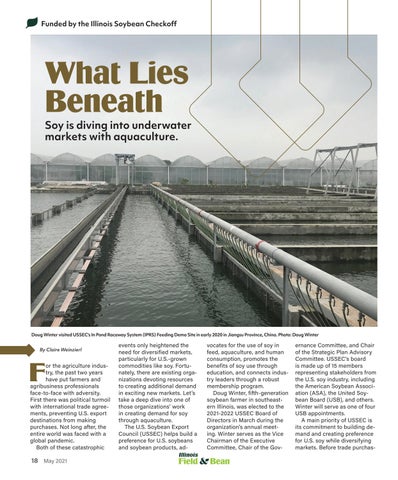
Doug Winter visited USSEC's In Pond Raceway System (IPRS) Feeding Demo Site in early 2020 in Jiangsu Province, China. Photo: Doug Winter
By Claire Weinzierl
F
or the agriculture industry, the past two years have put farmers and agribusiness professionals face-to-face with adversity. First there was political turmoil with international trade agreements, preventing U.S. export destinations from making purchases. Not long after, the entire world was faced with a global pandemic. Both of these catastrophic
18 May 2021
events only heightened the need for diversified markets, particularly for U.S.-grown commodities like soy. Fortunately, there are existing organizations devoting resources to creating additional demand in exciting new markets. Let’s take a deep dive into one of those organizations’ work in creating demand for soy through aquaculture. The U.S. Soybean Export Council (USSEC) helps build a preference for U.S. soybeans and soybean products, ad-
vocates for the use of soy in feed, aquaculture, and human consumption, promotes the benefits of soy use through education, and connects industry leaders through a robust membership program. Doug Winter, fifth-generation soybean farmer in southeastern Illinois, was elected to the 2021-2022 USSEC Board of Directors in March during the organization’s annual meeting. Winter serves as the Vice Chairman of the Executive Committee, Chair of the Gov-
ernance Committee, and Chair of the Strategic Plan Advisory Committee. USSEC’s board is made up of 15 members representing stakeholders from the U.S. soy industry, including the American Soybean Association (ASA), the United Soybean Board (USB), and others. Winter will serve as one of four USB appointments. A main priority of USSEC is its commitment to building demand and creating preference for U.S. soy while diversifying markets. Before trade purchas-