August 2019
Integration: The importance of inserting medical students in the community from the beginning of the course to make them more engaged and humanized Alice Tabita Lemes Fernandes da Silva, Angela Theresa Zuffo Yabrude, Christine Bouwman, Larissa Morastoni HĂśhn, Sofia Schmitt Schlindwein IFMSA-Brazil
/ifmsa
@ifmsa
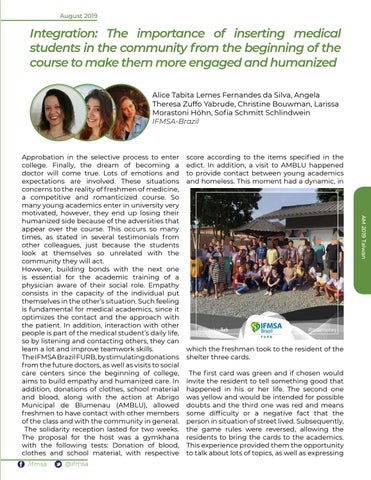
score according to the items specified in the edict. In addition, a visit to AMBLU happened to provide contact between young academics and homeless. This moment had a dynamic, in
AM 2019 Taiwan
Approbation in the selective process to enter college. Finally, the dream of becoming a doctor will come true. Lots of emotions and expectations are involved. These situations concerns to the reality of freshmen of medicine, a competitive and romanticized course. So many young academics enter in university very motivated, however, they end up losing their humanized side because of the adversities that appear over the course. This occurs so many times, as stated in several testimonials from other colleagues, just because the students look at themselves so unrelated with the community they will act. However, building bonds with the next one is essential for the academic training of a physician aware of their social role. Empathy consists in the capacity of the individual put themselves in the other’s situation. Such feeling is fundamental for medical academics, since it optimizes the contact and the approach with the patient. In addition, interaction with other people is part of the medical student’s daily life, so by listening and contacting others, they can learn a lot and improve teamwork skills. The IFMSA Brazil FURB, by stimulating donations from the future doctors, as well as visits to social care centers since the beginning of college, aims to build empathy and humanized care. In addition, donations of clothes, school material and blood, along with the action at Abrigo Municipal de Blumenau (AMBLU), allowed freshmen to have contact with other members of the class and with the community in general. The solidarity reception lasted for two weeks. The proposal for the host was a gymkhana with the following tests: Donation of blood, clothes and school material, with respective
which the freshman took to the resident of the shelter three cards. The first card was green and if chosen would invite the resident to tell something good that happened in his or her life. The second one was yellow and would be intended for possible doubts and the third one was red and means some difficulty or a negative fact that the person in situation of street lived. Subsequently, the game rules were reversed, allowing the residents to bring the cards to the academics. This experience provided them the opportunity to talk about lots of topics, as well as expressing