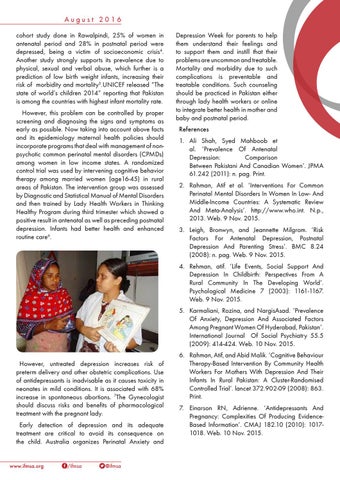
August 2016 cohort study done in Rawalpindi, 25% of women in antenatal period and 28% in postnatal period were depressed, being a victim of socioeconomic crisis4. Another study strongly supports its prevalence due to physical, sexual and verbal abuse, which further is a prediction of low birth weight infants, increasing their risk of morbidity and mortality5.UNICEF released “The state of world’s children 2014” reporting that Pakistan is among the countries with highest infant mortality rate. However, this problem can be controlled by proper screening and diagnosing the signs and symptoms as early as possible. Now taking into account above facts and its epidemiology maternal health policies should incorporate programs that deal with management of nonpsychotic common perinatal mental disorders (CPMDs) among women in low income states. A randomized control trial was used by intervening cognitive behavior therapy among married women (age16-45) in rural areas of Pakistan. The intervention group was assessed by Diagnostic and Statistical Manual of Mental Disorders and then trained by Lady Health Workers in Thinking Healthy Program during third trimester which showed a positive result in antenatal as well as preceding postnatal depression. Infants had better health and enhanced routine care6.
Depression Week for parents to help them understand their feelings and to support them and instill that their problems are uncommon and treatable. Mortality and morbidity due to such complications is preventable and treatable conditions. Such counseling should be practiced in Pakistan either through lady health workers or online to integrate better health in mother and baby and postnatal period. References 1. Ali Shah, Syed Mahboob et al. ‘Prevalence Of Antenatal Depression: Comparison Between Pakistani And Canadian Women’. JPMA 61.242 (2011): n. pag. Print. 2. Rahman, Atif et al. ‘Interventions For Common Perinatal Mental Disorders In Women In Low- And Middle-Income Countries: A Systematic Review And Meta-Analysis’. http://www.who.int. N.p., 2013. Web. 9 Nov. 2015. 3. Leigh, Bronwyn, and Jeannette Milgrom. ‘Risk Factors For Antenatal Depression, Postnatal Depression And Parenting Stress’. BMC 8.24 (2008): n. pag. Web. 9 Nov. 2015. 4. Rehman, atif. ‘Life Events, Social Support And Depression In Childbirth: Perspectives From A Rural Community In The Developing World’. Psychological Medicine 7 (2003): 1161-1167. Web. 9 Nov. 2015. 5. Karmaliani, Rozina, and NargisAsad. ‘Prevalence Of Anxiety, Depression And Associated Factors Among Pregnant Women Of Hyderabad, Pakistan’. International Journal Of Social Psychiatry 55.5 (2009): 414-424. Web. 10 Nov. 2015.
However, untreated depression increases risk of preterm delivery and other obstetric complications. Use of antidepressants is inadvisable as it causes toxicity in neonates in mild conditions. It is associated with 68% increase in spontaneous abortions. 7The Gynecologist should discuss risks and benefits of pharmacological treatment with the pregnant lady. Early detection of depression and its adequate treatment are critical to avoid its consequence on the child. Australia organizes Perinatal Anxiety and
www.ifmsa.org
/ifmsa
@ifmsa
6. Rahman, Atif, and Abid Malik. ‘Cognitive Behaviour Therapy-Based Intervention By Community Health Workers For Mothers With Depression And Their Infants In Rural Pakistan: A Cluster-Randomised Controlled Trial’. lancet 372.902-09 (2008): 863. Print. 7. Einarson RN, Adrienne. ‘Antidepressants And Pregnancy: Complexities Of Producing EvidenceBased Information’. CMAJ 182.10 (2010): 10171018. Web. 10 Nov. 2015.