


Volume 4, Number 1 (December 2024)
Publication date: December 2024 [online] an IATEFL Teacher Development Special Interest Group publication ISSN Number 2957-4374


Publication date: December 2024 [online] an IATEFL Teacher Development Special Interest Group publication ISSN Number 2957-4374
The goal of the TDAJ is to provide an open-access platform for teacher development-specific evidence-informed articles which is published and can be read by the wider ELT community. For this, TDAJ requires both academic rigour and the use of accessible language to express ideas. TDAJ is a prime example of teacher development on its own: in addition to experienced researchers, we encourage new writers to reflect on their own practice and share ideas of good practice regarding teacher development topics; we provide writing and editing support where useful. For more information about this and regarding becoming an author, please visit tdsig.org/tdaj.
We would like to thank Bridge Education Group. Cambridge University Press & Assessment and NILE for their support, which makes it possible for TDSIG to maintain all our initiatives, including this publication.
Article types
We accept articles of varying lengths to appeal to a wide variety of readers and to accommodate a wider variety of content. In this issue, you’ll find that excluding references, tables, and appendices, articles fall between:
● shorter: 1500-2500 words, and
● longer: 3500-5000 words.
We also recognise and value different types of approach to information dissemination from author to reader. As a result, though quality must meet standards expected and articles undergo a peer-review process, we welcome articles that include research, commentary, and informed practice.
Key themes
As we aim to be distinct from publications by other IATEFL special interest groups, we welcome referenced articles which primarily focus on aspects of teacher development involved in one of the following categories:
● Bottom-up Teacher Development (e.g. lesson observations, personalized professional development plans, teacher empowerment, etc.)
● Teacher Identity (i.e. how teachers’ beliefs/attitudes and different identities affect teacher development and teaching)
● Teacher as researcher (i.e. ways in which research can be a teacher development tool)
● Mentoring (e.g. Induction/orientation programs, mentoring novice/experienced teachers)
● Pedagogies (e.g. developing inclusive, critical, etc. pedagogy into one’s practice)
TDSIG committee
The TDAJ editorial team consists of volunteer members of the TDSIG Committee with the support of volunteer reviewers from the TDSIG community where required.
TDAJ Subcommittee: Kirti Chandra, Elizabeth Coleman, Cecília Lemos Harmer, Jake Kimball
TDSIG Committee: Kirti Chandra, Elizabeth Coleman, Cecília Lemos Harmer, Maria Eugenia Ianiro, Jake Kimball, Taíza Lombardi,Kristina Novik, Didar Moldazhanov, Helen Slee, James Taylor
Copyright notice
Copyright for whole issue IATEFL 2024. IATEFL retains the right to reproduce part or all of this publication in other publications, including retail and online editions as well as on our websites. Contributions to this publication remain the intellectual property of the authors. Any requests to reproduce a particular article should be sent to the relevant contributor and not IATEFL. Articles which have first appeared in IATEFL publications must acknowledge the IATEFL publication as the original source of the article if reprinted elsewhere. Published by IATEFL, 2-3 The Foundry, Seager Road, Faversham, ME13 7FD, UK. www.iatefl.org
Disclaimer
Views expressed in the Teacher Development Academic Journal (TDAJ) are not necessarily those of the editor(s), of the IATEFL Teacher Development Special Interest Group, or its staff or trustees
To these and future authors
TDSIG sincerely thanks all the contributing authors for their hard work and commitment to teacher development in ELT and choosing to share their ideas, qualitative and quantitative research, and commentaries in this volume of the TDAJ. Without you, our journal would not exist.

If you are interested in contributing your work to a future volume of the TDAJ, please visit our website (tdsig.org/tdaj) where information on submissions is located. We aim to publish at least one volume every year.
Foreword: Teacher change over time
Jake Kimball 7
Differentiated instruction in an English as a second language class
Daniela Gonçalves de Araújo Antoniazzi 8
The impact of coaching in educators’ development: Documenting change and progress
Pablo Molina Byers 21
Mentoring: facilitating and developing a positive mentee experience
Richard Cowen 37
Student engagement in classroom activities in pre-service EFL teacher education programmes
Turaeva Guzal Tojidinovna
47
Reimagining mentorship: Navigating teaching realities in remote areas
Patricia Ibiapina 57
Teachers as leaders in action research
Ljerka Vukić and Grazzia Maria Mendoza-Chirinos 63
Teaching English during the War: Changing and Documenting the Changes
Nataliia Krynska, Olena Rozdolyanska and Yaroslava Litvovchenko 69
Jake Kimball
Change is an inevitable part of life, and that change is the heartbeat of personal growth and progress. This concept of change is especially relevant to us as teachers. In the world of education, we are at the forefront of an ever-evolving landscape. Context matters little. From dusty classrooms with chalkboards to ones blessed with interactive smartboards. From traditional teacher-fronted lectures to communicative, student-centered activities. From mentee to mentor. Our journey as a teacher is one marked by continuous transformation.
Teacher Development Academic Journal (TDAJ) Volume 4 focuses on "Action Research –Developing and Documenting Change." It explores the dynamic nature of our teaching profession. It is a tribute to the resilience and adaptability of TDSIG members who constantly evolve. These articles and reflections delve into the challenges and rewards of change. As you engage with this volume, note that change is not so much a challenge but an opportunity a path to becoming an even more impactful and effective educator. You will find reflections on minor adjustments that led to significant classroom outcomes in the face of broader shifts driven by political instability, educational philosophies, and teaching context.
Our contributors provide a nuanced, global perspective on balancing innovation with tradition in a world where societal expectations and technological advancements shift rapidly. We invite you to consider turning points in your own career those moments that have led you to evolve as an educator.
We embrace conversations about change and the profound ways it shapes us, both as individual educators and as a collective within the IATEFL TD SIG community. We are immensely grateful to our contributors who have shared their expertise and pedagogical insights. Their stories serve as both a source of inspiration and a call to embrace the ongoing journey of professional growth, and we are grateful for the insights and experiences they bring to these pages.
We hope you enjoy it.

Jake Kimball has been a member of TDSIG and part of the publications committee since 2023. He edited this volume.
Daniela Gonçalves de Araújo Antoniazzi
Abstract
This paper reflects on differentiation and equity in English as a Second Language classes for high school students at a private bilingual school in the city of São Paulo, where students have different readiness regarding using English as the means of instruction. To achieve this, the teacher should work with a backward design, have a growth mindset, and believe that "all students are smart and can learn provided they have appropriate support" (Cohen and Lotan, 1997). The present research impacted the researcher's teaching practice after finding that although the learning goal should be maintained, sometimes activities, evaluations, and texts must be differentiated.
Introduction
The main objective of this paper is to reflect on differentiation and equity in English as a Second Language classes. To do this, I analysed the works of Cohen & Lotan (1997), Heineke and McTighe (2018), Tomlinson and McTighe (2006), Bondie and Zusho (2018), and Sousa and Tomlinson (2018), among others. This analysis led to a reflection on my teaching practice, referred to in the final part of the text.
Context
In recent years, the city of São Paulo (Brazil) has seen a huge expansion of bilingual schools in its city centre and outskirts. As this is a relatively new phenomenon, bilingual schools are challenged by the necessity of guiding teenagers with varying English as a Second Language (ESL) backgrounds into native-like readers, writers, listeners, and speakers.
Thus, our context is a private bilingual school class in the West Zone of São Paulo, where real beginners and native-like learners study together and must be challenged to enable equitable learning opportunities for each student. More specifically, our study will focus on thirty 9th graders, approximately 14 years old, divided into two mixed-gender groups in non-leveled classrooms. The majority of the students are from a high-income class, although several have scholarships for being children of staff members, and one student has a socioeconomic scholarship.
Furthermore, these 9th graders weekly attend six 50-minute English classes that follow an adaptation of a native American reading and writing program (so that students eventually will be able to read and write a variety of genres) and two 50-minute English classes to work on pronunciation and spelling using a phonics method. Finally, their teacher is an educator with twelve years' experience who truly believes "All students are smart, and all students can learn provided they are given the opportunity and are supported by the teacher." (Cohen and Lotan, 1997, p. 3).
At the onset, we should clarify that despite all being Brazilians, our students can be considered "culturally and linguistically diverse" since they come from different cultural backgrounds (such as religious, race, gender, abilities, etc.) and present different English language levels, as well as unequal opportunities for speaking the target language in authentic contexts.
Having said that, this paper aims to consider differentiation theories and strategies to find those that could be used by English middle and high school teachers working in a bilingual school class and also to research teachers' mindsets and the possible consequences of a biased attitude on their students' academic experience. Moreover, although differentiation can be undertaken from three different perspectives, namely student's readiness, interest, and learning style, we will focus on the differentiation based on student's readiness since it has been the most challenging in the context analysed and the most influential in terms of the teacher's expectations and the students' achievement.
Consequently, the study is motivated by the teacher's personal belief that even learners with an elementary knowledge of English should work on essential knowledge, understanding, and skills for their grades; learners also have the opportunity to develop and demonstrate their reading and writing abilities by reading and writing excerpts from the news, essays or short stories, provided they are supported by the teacher, colleagues, help resources, and differentiated instructions.
Over the years, students and teachers in English as a Second/Foreign Language (ESL or EFL) classes have been experiencing the challenges of a culturally and linguistically diverse class, together with the challenge of providing everyone with an equitable opportunity to learn and benefit from instructions and activities. In trying to solve this issue, much research has been conducted to understand how teachers' expectations of students' performance determine their teaching decisions and differentiating choices, as well as how their choices can impact students' outcomes.
Some of the authors included in the review were Cohen and Lotan (1997, 2014), Tomlinson and McTighe (2006), Celce-Murcia and Snow (2014), Gibbons (2015), Bondie and Zusho (2018), Heineke and McTighe (2018), Sousa and Tomlinson (2018), etc.
To begin with, Sousa and Tomlinson (2018) define differentiation as a learner-centered approach through which the teacher addresses any student who is not ready for the content they are being exposed to and fills students' knowledge, understanding or skills gaps by "moving backward and forward with essential content in order to guarantee real growth to all students" (Sousa and Tomlinson, 2018, p. 8). On the other hand, Bondie and Zusho (2018) cite Tomlinson's 2006 definition of differentiation as "a teacher response to learner's needs guided by general principles of differentiation such as respectful tasks, flexible grouping, and ongoing assessment and adjustment" (Tomlinson, 1999, p. 15, cited in Bondie and Zusho, 2018). Comparing both definitions, the second seems more faithful to our current reality since it considers learners' gaps and students who have already met the learning goals.
Secondly, teachers' expectations of students' performance must be weighed as Rubie-Davis (2010, p. 121) presents studies that bring the self-fulfilling prophecy effect theory, according to which, when teachers expect their students to perform at high levels, they do. Moreover, highly differentiating teachers, who provide different work to students according to their high or low expectations of students' abilities, are believed to send them a message that may contribute to their fixed mindset (Rubie-Davis, 2010, 123-124).
Advocating for a low-differentiation mindset, Heineke and McTighe (2018) emphasize the need to work with backward design and ensure that learning goals and criteria will not be changed based on our expectations of learners' performance. Instead, similarly to Tomlinson and Sousa (2018), they insist we should use a culturally responsive pedagogy in which instructions teach up while the scaffolds consider students' profiles and readiness to allow learners from any culturally and linguistically diverse environment to reach the big idea goal and be able to transfer their acquired knowledge to other areas.
Moreover, they affirm that "to plan instruction that is culturally and linguistically responsive, teachers begin by recognizing, prioritizing, and integrating students' linguistic backgrounds, strengths, and needs." (See Figure 1)
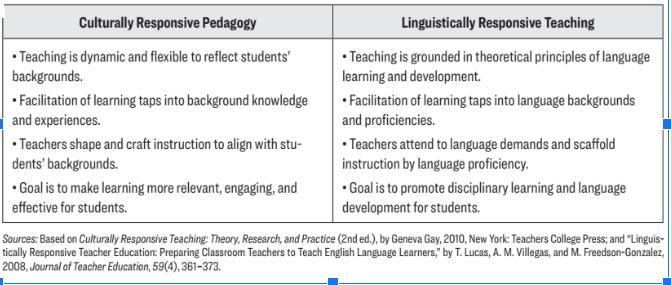
(Heineke and McTighe, 2018, p. 37, Figure 3.1)
Furthermore, according to Heineke and McTighe (2018), even native or native-like students need to be taught the academic language for each discipline they go through, which they refer to as disciplinary language. Knowing that teachers must be aware that proficiency in a second language can be accomplished both by: "1) transferring knowledge and abilities from their diverse cultural and linguistic backgrounds; and 2) through social interaction during teachers' strategic integration of scaffolds and supports."(Heineke and McTighe, 2018, p. 25)
Moreover, according to the same authors, as low-differentiating teachers believe all students can learn provided they receive appropriate support, are provided with complex instruction, and are stimulated in a growth mindset, these teachers take responsibility for their students' learning processes by organizing them in groups of interest or mixed-ability,
stimulating mastery goals and intrinsic motivation, as well as viewing their mistakes as an opportunity to learn, encouraging peers to teach each other, while focusing on individual progress and achievements. Therefore, according to Tomlinson and McTighe (2018), classes with positive teachers' attitudes toward students tend to achieve better performance.
Consequently, according to Sousa e Tomlinson (2018, p. 9), the bedrock of effective teaching is:
1. Creating a safe, challenging, and supportive environment;
2. Delineating essential knowledge, understanding, and skills in a content area focusing on high engagement and a teach-up curriculum that will also challenge advanced learners;
3. Using diagnostic and formative assessment on knowledge, understanding, and skills throughout the segment of study;
4. Using ongoing assessment to plan upcoming instructions that will move every learner ahead;
5. Being flexible in working individually with students when needed and guiding students to comprehend the purpose of a differentiated classroom to address students' differences. (Adapted)
Based on the above, 1) an invitational learning environment, 2) quality curriculum, 3) Persistent formative Assessment, 4) responsive instruction, and 5) leading students and managing flexible classroom routines are non-negotiable when working on differentiation. Not to mention that if you have a growth mindset and believe that even though your students may differ in "their initial talents and aptitudes, interests, or temperaments" (Dweck, 2017, p. 16), all of them can accomplish any goal as far as they make an effort and are supported by their peers and teachers. Likewise, content, such as essential knowledge, understanding, and skills, will also be non-negotiable.
Thus, on the grounds of students' readiness, interest, and learning profile, teachers may differentiate the way students gain access to content, the process, and the product used to evaluate students' performance while taking care of providing an effective and safe environment that meets students' needs, through a variety of instruction strategies such as graphic organizers, scaffolded reading, front-loading vocabulary, small-group instruction, mode of expression options, learning contracts, learning or interest centres, independent inquiry, sidebar studies, jigsaw reading. (Adapted from Sousa and Tomlinson, 2018, p. 11)

The instruction strategies described by Sousa and Tomlinson (2018, p. 11) are especially useful when we consider transferring background knowledge and skills from one language to another. This means that if a student is a good reader in their first language (L1), they will probably be a good reader in L2, given that speaking, listening, reading, and writing skills are completely transferable from one language to another.
To help teachers plan the "when, why, and how" to create differentiated classes, Bondie and Zusho (2018) introduced a decision-making framework denominated ALL-ED (All Learners Learning Every Day) that is based on adjustments and sustainable class routines. They defend the premise that if teachers establish a classroom routine where students can work independently, they will have more time to focus, consider their students' learning processes and achievements, and work on necessary adjustments in real time.
An interesting feature in the ALL-ED differentiation strategy is that most of the job is done by students themselves, who are trained on a Self-Regulated Learning Routine that intersects OSCAR (Objectives, Starting Position, Criteria, Action Patterns, and Reflection), leaving the teacher the role of defining MUST HAVE and AMAZING criteria while scaffolding or helping resources are made available for independent use. (See Figure 2)
OSCAR
Objective
Starting position
Criteria
Action Pattern
SELF-REGULATED ROUTINE
Planning
Monitoring
Action Pattern Control
Return to Reflect Reflecting
Figure 2: OSCAR and Self-Regulated Routine. Bondie and Zusho (2018, p. 46)
Similar to ALL-ED, Heineke and McTighe (2018) state backwards design and differentiated instructions would establish a rigorous curriculum through high-quality instruction that would support the simultaneous acquisition of both language and content, as well as generate a more independent learner since it would work not only on content but especially on how the content is taught and learned.
Given the above, we may consider the use of Complex Instruction defined by Cohen and Lotan (1997) as "a pedagogical approach that enables teachers to teach at a high intellectual level in academically, linguistically, racially, ethnically, as well as socially heterogeneous classrooms" even if these students are not proficient in the language of instruction (p. 15). Throughout their texts, they discuss the class organization and the strategies used for organizing learning experiences, including group work design (Cohen and Lotan, 1997, 2014) that will also challenge and enhance advanced students. Following the same intention of Cohen and Lotan (1997, 2014), besides recommending the use of classroom routines, Bondie and Zusho also emphasize allowing students to work in small groups in which they are given a role, such as speaker, listener, recorder, reporter; differently, however, they affirm that the resource management must be done before or after group discussions.
Yet, although researchers such as Sousa and Tomlinson (2018) have also advocated the pitfalls of establishing a differentiated curriculum, especially when comparing a growth mindset teacher to a fixed mindset one, they consider using different material or leveled texts when texts' language seems to be in a frustration level to the student. In any way, most authors, including Heineke and McTighe (2018), do not recommend adapting the curriculum or the essential knowledge, understanding and skills, especially if it is watering down the curriculum or learning goals.
Relevant and useful differentiation strategies based on student's readiness
For this research to be conducted, a growth mindset was ideal, together with an attitude of eliciting effort and joining students in their journey, doing whatever it takes to guide them to success. Therefore, they "teach up," stretching students' abilities and encouraging the development of Bloom's Taxonomy's higher-order thinking skills while supporting and scaffolding activities for students with learning gaps. Hence, following Lotan's Complex Instruction groups, they use flexible groups formed by mixed-abilities students and provide students with "respectful tasks that are equally interesting, appealing, important and dependent on high levels of reasoning." (Sousa and Tomlinson, 2018, p. 32).
Thus, they identify OSCAR by backwards designing the curriculum objective, evaluation criteria, and learning experiences, applying diagnostic evaluations, and creating action patterns that include the activities that will be performed by students and selecting those that will need adjustments or scaffolds. In addition to these steps, they constantly reflect on class strategies and outcomes.
Furthermore, as presented by Cohen and Lotan (1997, 2014), based on the diagnostic evaluations, they use Complex Instruction to allow any student, whatever point of learning they are, to grow their knowledge, understanding, and skills through different stations and
active methodologies that provide them with learning experiences. At this point, teachers will choose a differentiation approach to adjust instructions using the thinking routine CARR Check (Clarify, Access, Rigour, and Relevance Check) within the learning community while keeping the same goals, resources, and assessments. Eventually, adjustments are made during classroom routines with an individual or a group of students based on the teacher's monitoring skills.
The teacher will use the CARR Check to adjust SHOp (Structures for Tasks, Help and Options) to monitor students' work. This monitoring could be done by posing questions to encourage higher-order thinking skills or answering students' doubts with thought-provoking questions.
An important point, when working with differentiated instructions, should be allowing all students to work on both Bloom's lower and higher-order skills at the same time, as Bloom's Taxonomy was developed for evaluation and not for teaching.
Therefore, if you work with groups, they should comprise students with mixed abilities and specific roles such as facilitator (the one who explains the task), materials manager (the one responsible for acquiring the necessary resources), group moderator (who is responsible for easing interpersonal conflicts and for being attentive to each member they must make sure everybody speaks and is listened to), timekeeper (responsible for making the group aware of the time they have), and reporter (responsible for reporting what the group have discussed to the whole class). It is crucial to mention that Complex Instruction strategies usually create individual and collective products, thus encouraging collaborative and cooperative learning.
Even though Differentiated Instruction seems to focus on the individual rather than on collective work, both ALL-ED and Complex Instruction approaches can work with students individually or divided into stations where they will work on different tasks so that they accomplish the same goal, meaning that in both approaches instructions and tasks, as well as the number of groups' members and the material they receive may vary. At the same time, the essential learning objective is maintained.

A feature that can be used with Complex Instruction and ALL-ED to differentiate is the "Menu" approach, introduced by McThighe (2021), according to which we keep the essential knowledge, understanding, and skills that will be developed by learners while giving them options to produce and deliver their final products. An example of this could be students reading and analysing novels to explain their stories, themes, or techniques to their peers using a variety of genres, such as podcasts, reviews, video reviews, articles, essays, comics, poetry, songs, or games. In addition, developing a brochure on nutrition or a healthy menu may have differentiated the students' familiarity with their audience or context, for instance.
Furthermore, the work by Sit (2017, p. 109, 110) highly advises us to make instructions explicit and clear so that students are aware of their learning goals and the knowledge and skills necessary to accomplish them. The instructions should also bring "powerful questions" that will activate students' critical thinking and facilitate their learning.
Another substantial strategy to work with differentiation is providing different supporting systems and tasks at different complexity levels to students who need scaffolding or previously required knowledge coverage and to have "anchor activities" available for the advanced or fast-finisher students. Moreover, when thinking of anchor activities, according to Sousa and Tomlinson (2018, adapted from p. 194), they should focus on essential knowledge, understanding, and skills that are worth students' time and effort and are sufficiently interesting to warrant students' attention, while not fluffy, punitive, or graded.
Furthermore, all students should be taught procedures to obtain help when the teacher is busy. Among these procedures, we could mention attentive listening to initial instructions, peer instruction, and having alternative materials to help scaffold learning or guide students in their tasks.
Considering the above within the present context, as English lessons usually work on reading and writing on a variety of themes, our essential knowledge is developing the skills to comprehend and write a variety of genres such as argumentative, narrative texts, poetry,
etc. In developing this, our task will be to include real experiences in which students will not only read a variety of texts and answer comprehension questions but also analyse the language used to appreciate discursive techniques in a way they can use when writing their texts.
Having said that, differentiating in an English as a Second Language Class includes exploring the genres' structures first with model analysis and then with supported and process writing in which diagnostic and formative writings precede the summative one and provide students with specific theme vocabulary, linking words and starting sentences, for example.
Reading should also be scaffolded and supported by informing the genre and asking students to read it for the first time just to learn what it is generally about so that they can work on skimming and scanning activities that will help them to get more concrete ideas from the text, before going to more abstract comprehension. Most of the time, an openended questionnaire that starts with superficial scanning questions will be a path to lead students to a deeper comprehension of the text.
Since the beginning of our research (May 2023), students have been exposed to a variety of genres such as advertisement and propaganda, articles and essays, news, and short stories. To make this possible, regardless of the genre being explored, students were always encouraged and guided to analyse their structure, the most common connectives used in the texts, as well as their language choices and discursive strategies to convey meaning.
This approach was selected to stimulate critical thinking, a Bloom's Taxonomy high-thinking order skill, in all our students. Therefore, while more advanced students were working on recognizing the use of repetition (for example, through the use of synonyms or paraphrasing, figures of speech, etc.), our less skilled students were not only guided to notice less abstract language and how the ideas were organized but also on some reading strategies that could help them to overcome every day reading challenges, while avoiding translation.(See Figure 3)
Global Reading Strategies (GLOB)
Allow readers to intentionally monitor or manage their reading
● Preview the text before reading
● Skim the length and organization of the text
● Scan to get specific
Problem Solving Strategies (PROB)
Help readers to directly solve reading difficulties
● Read slowly and adjust your reading speed to deal with difficult material
● Try to get back on track when losing
Support strategies (SUP)
Basic mechanisms to enhance reading comprehension
● Read aloud to understand the text
● Taking notes while reading to understand the text and make larger
information
● Decide what to read closely and what to ignore
● Use Background knowledge
● Use context clues
● Use tables, figures, pictures
● Think if the content fits the reading purpose
● Critically analyse and evaluate the information
● Pay close attention to bold or italic
concentration
● Guess the meaning of unknown words
● [Rely on cognate words]
● Use prefixes, suffixes, and roots to guess the meaning of words
● Stop occasionally to think about what you have read
● Picturing or visualizing the information to increase retention
connections
● Underline/highlight and circle information
● Paraphrase
● Go back and forth to find relationships among ideas
● Summarizing what you have read to reflect on important information and key points
● Discussing what you have read with others to solidify connections and understanding
● Make a mind map
● Use reference materials to identify terms or ideas that you do not initially understand
● Ask yourself questions you would like to have answered through your reading
● Think about information in both English and native language
Figure 3 - Adapted from Lien (2011) and Par (2020)
Additionally, the activities provided were built to make students more confident about their reading ability, so they went from less challenging to more challenging questions. Thus, firstly, students were guided through a shared read-through, during which they should orally discuss the texts' main ideas (GIST - General Information) in small mixed-ability groups. After that, they scanned the text to get specific information, such as dates, places, etc., so that they could work on the comprehension questions, language, and genre analysis.
They were also instructed to work independently (individually or in pairs) on reading a novel and crafting a reading log through different thinking routines. Working independently was a moment for the teacher to monitor their performance and consider how to adjust and ensure learning and the story's comprehension. During these moments, the students were also provided with supporting resources such as dictionaries or from their peers.
Following the theories cited in this review, our work with both groups has been structured as described below:
● Diagnostic Writing Activity: students were invited to write diagnostic texts to acknowledge their starting point in the genres (argumentative and narrative texts). To analyse their genre skills, they were allowed to write about any theme they found interesting or were passionate about.
● Instruction: all students took part in mini-lessons; moreover, students were provided with handouts on genre and vocabulary or prompts to help them with their production. Therefore, while more advanced students were able to work more freely without following prompts in the handouts, less fluent students made use of these and were able to build more standard texts. Working on news, for example, they had the leading questions to guide them in creating the lead paragraph. Then, they were stimulated to write at least two more paragraphs to include additional ideas or information.
● Ongoing assessment: students were monitored daily throughout their writing process, which meant they had the opportunity to receive support from the teacher. At the same time, writing and submitting a first draft for feedback on language, content, and structure so they could rewrite it before being marked. It is crucial to mention that the feedback did not solve language, content, or structure issues but pointed out what could be improved there with notes such as "SVA" (for Subject-verb agreement); or "Who are you recommending this book/film/game for?"; "Add the synopsis to your development."
Peer feedback was also frequently used during peer feedback activities; students were guided to read and evaluate the clarity of each other's work. Peer feedback was also a tool frequently used during the activities and in peer feedback activities; students were guided to read and evaluate the clarity of each other’s work.
In addition, when working on "research-based essays," for example, besides the steps mentioned above, students were guided on finding sources. Then, they divided their work into stating arguments, selecting evidence, paraphrasing evidence, and writing their essay. In addition, when working on “research-based essays” for example, besides the steps mentioned above, students were guided on finding sources and then had their work divided into stating arguments, selecting evidence, paraphrasing evidence and writing their essay.
● Differentiated feedback based on student readiness: even though the entire course was designed to generate growth opportunities for all students, each student received feedback on genre, content, cohesion, coherence, and language, such that they all had to work on an aspect of these criteria. More fluent writers, for example, were guided on using more advanced linking words and complex compound sentences.
● Final assessment: students submitted their final text version and were graded.
Working with differentiated instructions has not been easy, even though many resources, theories, and approaches are available. I had to make choices, and when doing that, I was afraid of setting low expectations for my students and impairing their development. Moreover, I faced colleagues and co-workers who stated I should have adapted the curriculum or the evaluation criteria because some students could not keep up with their peers.
Then, analysing all the scenarios and considering my students' learning objectives, I noticed they could work on communicative achievement in writing and reading. This enabled my students to read their texts using reading strategies with a glossary or a dictionary when they needed to address vocabulary. At the same time, I could organize questions that followed the same order as in the text. In this manner and with time, they would have experienced higher-order thinking skills, and eventually, they could explore the texts' language and discourse to build their understanding.
In addition, writing should be done by transferring their first language knowledge to English or by exploring the genre structure in open questions that allow them to use their language according to their English level. They would also have a model to follow and analyse their structure.
On this journey, however, I encountered some setbacks as some students' English was really at beginner level, and they became stuck when reading parts of the texts I chose. I was confident that they would be able to read if they used the reading strategies I had taught reading strategies to other classes. Nevertheless, some students became frustrated, especially when the text included figures of speech.
Eventually, after the hard work and frustration presented by some of my students, I came to agree with Sousa and Tomlinson (2018) when they stated that sometimes the texts have to be changed. Despite this, however, I have seen much improvement in various students and students for whom writing has become easier during the semester.
Considering the literature available, although I found many books on differentiation, many were published by the same authors. Furthermore, there is a lack of extensive work specialized in teaching a second language.
The Author
Daniela Gonçalves de Araújo Antoniazzi is an experienced, qualified English and Portuguese Teacher with a bachelor's degree and Teaching Credentials issued by Universidade de São Paulo (USP). She is a CELTA holder specializing in Instructional Design, English teaching, and Bilingualism.

References
Bondie, R., & Zusho, A. (2018). Differentiated instruction made practical: Engaging the Extremes through Classroom Routines. Routledge.
Cohen, E. G., & Lotan, R. A. (2014b). Designing groupwork: Strategies for the Heterogeneous Classroom. Teachers College Press.
Cohen, E. G., & Lotan, R. A. (2014). Designing groupwork: Strategies for the Heterogeneous Classroom. Teachers College Press.
Dweck, C. (2017). Mindset - Updated Edition: Changing The Way You think To Fulfil Your Potential. Hachette UK.
Gibbons, P. (2015). Scaffolding language, scaffolding learning: Teaching Second Language Learners in the Mainstream Classroom. Heinemann Educational Books.
Gottlieb, M. (2016). Assessing English Language Learners: Bridges to Educational Equity: Connecting Academic Language Proficiency to Student Achievement. Corwin Press.
Heineke, A. J., & McTighe, J. (2018). Using understanding by design in the culturally and linguistically diverse classroom. ASCD.
Lien, Hsin-Yi. (2011). EFL Learners’ Reading Strategy Use in Relation to Reading Anxiety. Language Education in Asia. 2. 199-212. 10.5746/LEiA/11/V2/I2/A03/Lien.
Par, Leonardus. (2020) The Relationship between Reading Strategies and Reading Achievement of the EFL Students. International Journal of Instruction. V. 13, N. 2, p. 230. Available at: https://files.eric.ed.gov/fulltext/EJ1249084.pdf. Accessed on: 25/01/23.
Ritchhart, R., Church, M., & Morrison, K. (2011). Making thinking visible: How to Promote Engagement, Understanding, and Independence for All Learners. John Wiley & Sons.
Rubie‐Davies, C. M. (2009). Teacher expectations and perceptions of student attributes: Is there a relationship? British Journal of Educational Psychology, 80(1), 121–135. https://doi.org/10.1348/000709909x466334
Sit, H. W. (2017). Inclusive Teaching Strategies for Discipline-based English Studies: Enhancing Language Attainment and Classroom Interaction in a Multicultural Learning Environment. Springer.
Sousa, D. A., & Tomlinson, C. A. (2018). Differentiation and the brain: How Neuroscience Supports the Learner-friendly Classroom.
Tomlinson, C. A., & McTighe, J. (2006). Integrating differentiated instruction & understanding by design: Connecting Content and Kids. ASCD.
Pablo Molina Byers
Abstract
This article delves into the transformative power of non-directive coaching for educators. It explores how coaching fosters pedagogical shifts and acts as a catalyst for meaningful transformations, nurturing a dynamic educational landscape where innovation, change, and growth thrive. I have accompanied educators through professional growth and have witnessed their empowerment to adapt teaching practices effectively. By documenting change throughout their coaching processes, distinct cases illuminate diverse experiences and outcomes. I would love for this article to share the profound impact of this approach, offering insights into a future where teaching excellence is nurtured through agency, collaborative inquiry, and action research.
"The only constant in life is change." - Heraclitus
Yes, quite a cliché sentence to use for an academic article opener. But it IS true. So, if change is constant, how do we know? How do we become aware of it? How often do we reflect, record, and document it in our professional journeys? How do we use those records (if at all) to encourage development and change? How do we actually do action research?
Well, this article looks to share how using a coaching approach for educators' professional development is so transformational in part because of how it encourages self-reflection and documents change.
The article will:
1. Outline the key principles of coaching that relate to action research,
2. Show what structure is followed to ensure reflection, planning, and action,
3. Share what tools are used to record change and progress,
4. Showcase the results found from two informal case studies.
These four elements construct a robust, observable, and documented picture from which we can draw conclusions and act upon regarding the different methods available for professional development (PD) in our industry. What is coaching for educators in the context of this article? How is it different from mentoring, training, and language coaching?
In favour of focus and clarity, a table is provided (see Appendix 1) where you can better observe the differences between coaching for educators and other approaches used for PD. The table aims to serve as a general guide and is non-exhaustive as it simply compares the main features of different approaches.
Definition of coaching for educators:
Coaching for educators is a collaborative, reflective process where a coach accompanies an educator to identify goals, develop strategies, and plans to implement changes that improve professional practices and, ultimately, the students' learning experience. It is a nonevaluative partnership emphasizing continuous professional growth through guided reflection and strategic action.
For this article, the term 'educator' will refer to the wide variety of roles within the sector. By educators, I refer to teachers, trainers, materials and course writers and designers, directors of studies, academic managers, directors, school owners, etc.
Key principles of coaching that relate to action research:
Firstly, if we understand the steps of action research to be:
1. Develop a plan of action.
2. Implement the plan, strategy, or activity.
3. Observe its effects.
4. Reflect on the effects and make changes accordingly.
Then, three key principles relate coaching to action research. These are that it is goaloriented, requires reflective practice, and is an ongoing process.
To maximise the effectiveness of any coaching process, it is imperative also to adhere to the principles that govern the profession and make it an ethical and standardised practice. Some of these principles are non-directiveness, agency of the educator, judgment-free active listening, trust, and confidentiality.
Back to how it relates to action research, coaching focuses on setting and achieving specific, measurable goals. These can often be related to improving classroom practices, student
engagement, and personal and professional soft skills such as connection, time management, communication, active listening, or emotional management. Because these goals are measurable, they are also recordable.
To identify and define their goal or ideal/wanted outcome (situation B), educators have to reflect on their current practices, situations, or classroom realities to have a clear vision of the starting point (situation A). Obviously then, reflective practice is central to coaching. Through evocative, open questions, educators reflect on their experiences, analyse their actions and results obtained, make informed observations, and "land" their learning. By this, I mean to become consciously aware of their new vision, perspective, knowledge, or realisation.
This is the beginning of our action research. We start by reflecting on the starting point and where we want to be instead. We observe the differences and develop a plan of action to implement.
With situations A and B clearly identified and defined, we can work on that action plan by including possible steps or mid-term goals that will get us from A to B.
Unlike one-time training sessions or courses, coaching is an ongoing process supporting sustained professional growth over time. However, being an ongoing process does not make it endless. Quite the contrary, every coaching process is time constrained. On average, substantial changes and effects take around three months to be implemented and visible, and educators normally experience between 4-8 sessions to get there.
This is partly achieved thanks to following a GROW structure.
The GROW structure (Goal, Reality, Options, Will) is a widely used coaching framework that helps educators set and achieve their goals through a structured conversation. It facilitates and encourages learning by making direct use of action research elements.

Initial or exploratory session: The objective of this first session is to produce a plan on how the educator is going to go from "Situation A" to "Situation B."
After this initial session, each following session starts with a revision of their action plan, what results it has brought, how it has gotten the educator closer to their goal (situation B), and what the next step they want to focus on that will get them even closer. This last projection of "what the next step is to continue forward," marks the beginning of the 'G stage'.
Goal: Based on the findings from the previous action plan and the observations taken from it, we now move on to clearly identifying and defining what the educator needs next to continue progressing. In this stage, we engage with the different stages of action research as we build on the observed effects of previous actions, learn from the observations, and reflect on the next actions needed. We are also gearing towards developing a new action plan to aid us in taking those actions.
Reality: Once the goal is clearly identified and defined, we explore the current reality around that new objective. Educators assess their current situation, identifying strengths, weaknesses, and obstacles. This step involves a candid discussion about what is happening right now. We can see how this stage engages with action research since reflecting on current needs is necessary to decide on the following action. This stage normally brings newfound awareness and perspectives to aid educators on their learning journey.
Options: Equipped with their new learning, educators integrate them into advancing towards their goal. They generate multiple pathways to success by brainstorming various strategies and solutions. Therefore, we are directly contributing to the stage prior to plan development by considering which option would advance progress the most.
Will: Finally, educators commit to specific actions to reach their goal. This crucial stage finds its highest success rate when the plans are as detailed as possible. This includes considerations such as setting timelines, identifying potential obstacles and resources needed, when, how often, till when, where, how, the all-important 'what for,' the level of commitment to this action plan, and how aligned this action plan is with the overall goal of the process. This stage relates to action research since it directly develops an action plan.
Between the end of this session and the following session, the educator will:
● Implement the plan, strategy, or activity.
● Observe its effects and results.
● Reflect on the effects/results and make changes accordingly.
All this information is collected at the beginning of the following session, coming full circle. Educators create a clear and detailed record of their development by systematically using the GROW structure and documenting the discussions and decisions made during sessions. This ongoing documentation helps them stay accountable, reflect on their progress, and make informed adjustments to their strategies. We will now explore the tools used to record and document said development.
3. Documenting change: capturing the transformational journey
As we saw before, a key aspect of effective coaching is focusing on measurable goals. This documentation serves as a tangible record of their journey, offering insights into their development, challenges, and achievements. Therefore, it is vital for reference regarding documenting change and acting on action research. Here are a few common tools used during and between sessions.
Standard tools to document change.
Session notes: Through active listening, the coach and educator can take notes during each session, capturing key points, reflections, and action plans. It is of vital importance that these notes use the same words the educator has produced and not the words the coach has interpreted. These notes serve as stepping stones, documenting the educator's progress and changes over time. Before the beginning of the following session, or when sitting down to act on their action plan, the starting point is often these notes taken from previous sessions.
For educators, hearing or reading their words is a powerful anchor to their process. You can find a sample copy in the resource pack attached at the end of the article in the "references" section.
Self-Reflection Forms: The most profound documentation method is the self-reflection form (Appendix 2) completed by educators after each coaching session. These forms prompt them to reflect on their learning, insights, and areas for growth, fostering metacognition and self-awareness.
Recordings: In addition to written notes, recordings of coaching sessions provide valuable insights into the dynamics of the coaching relationship and the nuances of educators' reflections. Recordings provide the valuable opportunity to observe yourself in a conversation from a different perspective as a third-party observer. This observational position can bring insight and allow educators to harness hindsight.
What is more, with Zoom's latest AI integration, you can get summaries of the topics and takeaways from each session, providing yet another method of recording the process. I personally facilitate these after educators have already completed their self-reflection forms so as not to influence their own conclusions. Please refer to the resource pack in the "references" section to access a sample session.
End-of-process Questionnaire: These are a collection of questions designed to encourage educators' reflections on the overall process, their goal, their changes, and the resources they have obtained. It stands as a final statement of their progress and ability to continue their learning journey on their own.
Learning journals or Logbooks: In addition to the above methods of documentation, which could be considered part of the system, learning journals or logbooks serve as invaluable tools for capturing the nuances of educators' development journey. In contrast to the previous methods, logbooks or learning journals are private. These personal reflections offer a space for educators to record their thoughts, insights, and epiphanies, providing an even richer, more in-depth awareness of their growth over time. This facilitates meaningful dialogue with their coach and can often bring about more efficient learning.
Specific coaching tools that also document change
Within a coaching session, there might be instances where the use of specific tools would benefit the educator. These tools directly engage with action research since they explore current situations and help devise future outcomes. Hence, they are vital initial stepping stones in developing actionable plans to promote and document change. Below I simply offer two examples widely used in many coaching practices.
Inspired by the "Wheel of Life," the "Wheel of the Educator" is a visual tool that helps educators evaluate different aspects of their professional lives. This wheel is divided into segments, each representing a key area of their role, which they have identified and chosen. Examples include classroom management, lesson planning, student engagement, professional development, work-life balance, communication, leadership, delegating, training, and team building. Educators can gain a holistic view of their current professional state by assessing their satisfaction and effectiveness in each area. Please refer to the resource pack in the "references" section to access a sample template.
Goal Setting: Based on their assessment, educators identify the area they want to improve and start designing specific goals for each area.
Action Plan: Educators develop an action plan to achieve their goals. This includes specific strategies, resources needed, and a timeline for implementation.
Regular Reviews: Periodic reviews of the wheel allow educators to track their progress, reflect on their experiences, and adjust their action plans as necessary.
By documenting their ratings, goals, and reflections, educators can create a detailed record of their professional growth. This visual and structured approach makes identifying patterns, addressing challenges, measuring progress, and celebrating successes easier.
The climber
"The Climber" is a visualisation technique that encourages educators to project their future selves or situations, fostering a forward-thinking mindset and motivating continuous improvement. This method involves guided visualisation exercises where educators imagine themselves overcoming challenges and achieving their professional goals. It primes educators to start with the end in mind, facilitating possible steps to take in an actionable plan.
Future Projection: Educators visualise a specific future scenario, such as successfully implementing a new teaching strategy or achieving a balanced work-life routine. They focus on the feelings, behaviours, and outcomes associated with these achievements.
Reflection and Planning: After the visualisation, educators reflect on their experience and identify the steps needed to reach their envisioned future. This includes setting short-term and long-term goals.
Documentation: Educators document their visualisations, reflections, and action plans. This record serves as a motivational tool and a tangible reminder of their aspirations and the path they need to follow.
A personal favourite is the use of pictures. Encouraging educators to draw a picture of their future enables them to anchor the image visually, which functions as a reminder and source of motivation. You can access a sample audio and picture in the resource pack in the "references" section. This last technique was adapted and implemented in the following case study.
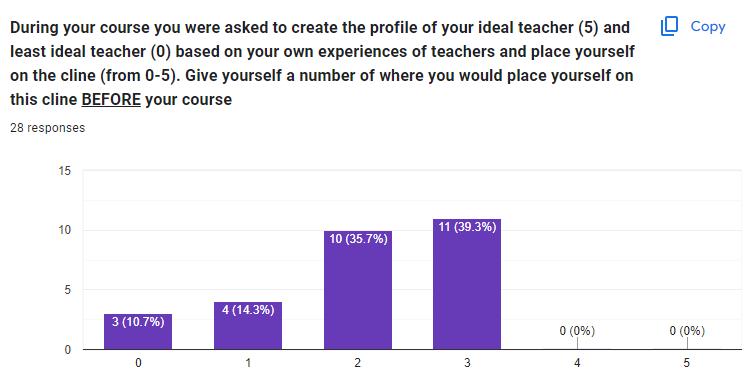
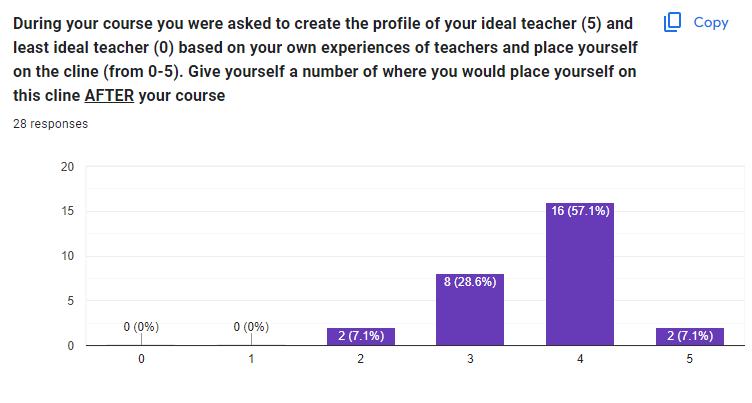
In collaboration with Paul Ashe, we have tested the effects and benefits of using coaching techniques in teacher training contexts. Trainee teachers enrolled in their CELTA courses were asked to envision their 'ideal teacher' at the beginning of the course and to write down the following information:
● how that teacher behaves,
● what their voice is like,
● what their body language looks like,
● how they dress,
● how students react to them,
● how they move around the room,
● how they plan,
● what their strengths are,
● what their main characteristics are.
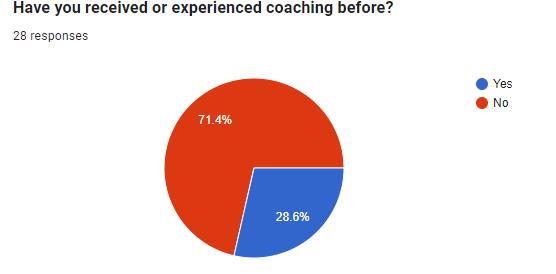
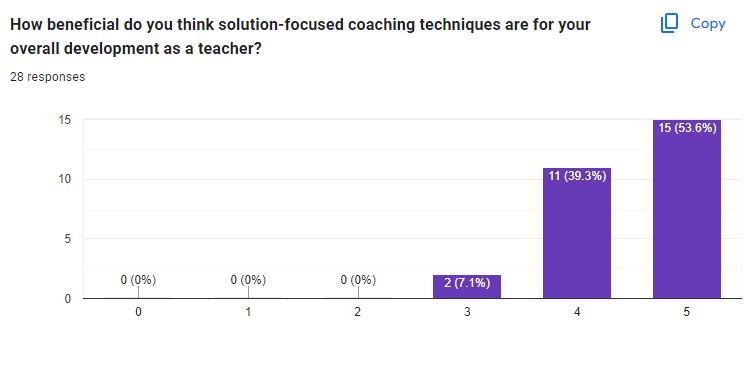
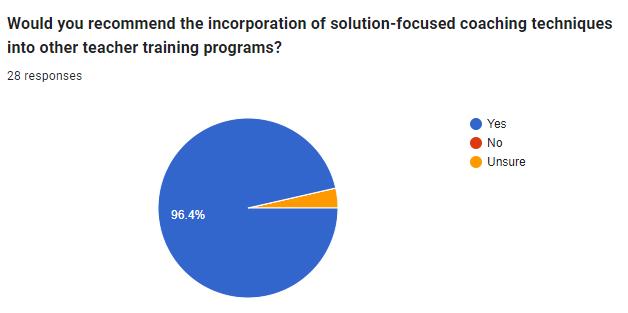
Then, throughout the course, trainers repeatedly referred trainee teachers to their 'ideal teacher' to check their progress. The data obtained from the questions in Appendix 3 demonstrates the positive impact this isolated coaching technique has had on the development of teachers. Further in its favour, it highlights how in line coaching and action research are since this visualisation tool has helped educators design plans, carry them out, observe their effects, and re-evaluate accordingly in favour of professional development.
In another endeavour of action research, I have accompanied educational professionals in their personal and professional development through coaching processes. The distinction with the previous case study is that these professionals have experienced coaching in a fuller sense as opposed to the isolated use of a coaching tool like "The Climber."
In Appendix 4, we can read the personal testimony of Lisa Dold, Head of Training at ACEIA (Andalusian Association of Language Centres).
For a summary of other professionals' changes, please refer to Appendix 5.
For a fuller account of the experience these educators have had through coaching, you can access some of the feedback they provided. Please refer to the resource pack in the "references" section.
The personal reflections collected, along with the data from the previous case study, showcase the profound transformational power of coaching as a PD approach and how the action-research nature of the process makes change and development so much more impactful and long-lasting.
Having analysed how coaching integrates action research and reflection, the framework it follows, the tools used to document change, and especially these two case studies, it is apparent that it has positively impacted the PD of the educators who have experienced it.
Whether through isolated coaching techniques or comprehensive coaching processes, educators reported significant improvements in their professional practices. Arguably, they reported even more change in their personal growth.
The integration of coaching into educators' professional development proves then to be a powerful approach, partly due to its inherent action research nature and the essential element of reflection. The iterative cycle of planning, implementing, observing, and reflecting fosters continuous improvement and ensures that changes are relevant, effective, and sustainable.
Another factor contributing to the transformative power of coaching could be inferred to be the documentation and sharing of the process, which allow for objective accountability. Interestingly, some of the research on accountability has found that:
Having an idea or goal: 10% likely to complete the goal
Consciously deciding that you will do it: 25%
· Deciding when you will do it: 40%
Planning how to do it: 50%
Committing to someone that you will do it: 65%
· Having a specific accountability appointment with someone you have committed to: 95%
(Adapted from - https://www.afcpe.org/news-and-publications/the-standard/2018-3/the-power-of-accountability/ )
Overall and conclusively, there is a positive case for using coaching for PD. To me, the most significant benefit of coaching in educators' development is its impact on students' learning experiences. When educators improve their practices and grow professionally and personally safeguarding their personal fulfillment and well-being, our students benefit from a higher quality of education.
Furthermore, it could be argued that by integrating coaching (and therefore action research and reflection) into educational institutions, we could foster cultures and communities of dynamic and supported continuous improvement, empowering individuals at all levels. This would help us better navigate the complexities of our societal roles, lead with integrity, and ultimately live more connected with ourselves and others.
Then, if we know "The only constant is change," perhaps we could take the opportunity to envision teacher development and education from a different light and adapt to our educators' needs so that they are as best prepared as possible to help their learners, who are our future. What change would that bring about in the world? And how would we document it?
The Author
My name is Pablo Molina Byers, founder of Generación Futura, where I accompany educators and educational institutions to manage and achieve change and progress through coaching, mentoring, and training. My mission is for the educators of today to inspire, transcend, and enjoy for the benefit of our future generations.
References
Collaborator: Paul Ashe - https://www.linkedin.com/in/paul-ashe/?locale=es_ES
Collaborator: Lisa Dold - ACEIA - https://aceia.es/aceia-en-cifras/
Accountability facts: https://www.afcpe.org/news-and-publications/the-standard/2018-3/thepower-of-accountability/
Resource pack with tools and materials referred to in the article - (You'll have to provide feedback and basic contact details): https://forms.gle/eXcnLMdNnsRcJBer8

Appendix (1):
Approach Coaching
Objective
Improve teaching practices and professional growth
Focus Specific professional goals and reflective practice
Relationship
Collaborative, nondirective, goaloriented
Duration Can be short-term or long-term, depending on goals
Approach Non-directive, facilitates selfdiscovery and strategic action
Interaction
Two-way communication, reflective practice
Evaluation Non-evaluative, supportive and developmental
Outcome
Improved teaching practices, professional growth, positive student outcomes
Mentoring
Career development and general professional guidance
Broad professional and career guidance
Directive, experienced mentor guiding less experienced mentee
Typically long-term
Training
Impart specific skills or knowledge
Skill acquisition and knowledge transfer
Trainer-led, often one-way communication
Language Coaching
Enhance language proficiency
Mixed, sharing knowledge and experiences
Mentor provides advice and guidance
Often short-term, based on course or program duration
Directive, instructive and structured
Language-specific content and skills
Combination of directive and nondirective approaches
Varies, based on language proficiency goals
Mix of directive feedback and nondirective facilitation
One-way communication from trainer to participants
Non-evaluative, supportive
General career development and professional advice
Evaluative, may involve assessments
Acquisition of specific skills or knowledge
Interactive, involving practical exercises and feedback
May include assessments of language proficiency
Improved language skills and proficiency
Coach: Pablo Molina Byers
Educator:
Session #:
1. Session Summary
2. What have you learnt from this session?
Session Date:
3. Where and how can you apply what you've learnt?
4. How does this relate to your objective(s)?
5. What do you feel this session has missed?
6. What goal(s) have you set for yourself?
7. What is your action plan before the next session?
Appendix (3):
Appendix (4):
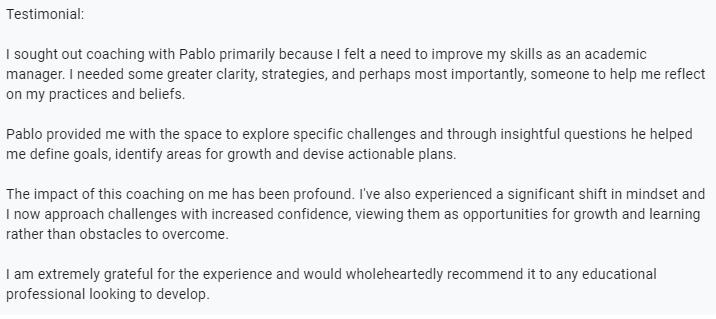
Question: What significant changes have you undergone since the start of the process? How important have these changes been for you?
Freeing myself from issues that worried me and hindered achieving some objectives and moving forward. Through this process, I have learnt to focus on situations differently and enjoy better experiences and more satisfactory results with my group of students
There have been several: I feel a change in my motivation towards my conversations, now viewing them as opportunities for growth and learning. This has definitely grown as a result of the process. Focusing on it felt like I was giving it the time, space, and importance to develop it, and this motivated me. I feel more aware of my thinking processes and what helps me think more clearly, as well as the specificity I need to apply to my goal-setting. This change has also been really important as I have been talking through things more frequently, having realised that this helps me think more clearly.
I have changed on an organisational level and on a personal level. It has helped me realise that not everything is black or white and that there are other ways to solve things.
The changes have been quite significant, especially when it comes to reflection and selfanalysis. Everything I have learnt during the process has changed me enormously. Now I feel that I can face any everyday situation with much greater confidence.
Above all, I have more peace, tranquillity, and happiness. I have managed to reduce levels of stress and anxiety. Another change has been loving and respecting myself, especially at work, which has been equally important during my process as it weighed heavily on me and I have been able to free myself.
I would highlight my willpower and confidence to achieve the set goal as significant changes, both of which have been further strengthened. These changes are very important to me on a personal level because they give me greater empowerment when it comes to carrying out other goals in my life.
My relationship with my surroundings and my people is easier and more fluid. These changes have been quite important as I get angry less often
Richard Cowen
Abstract
This article will focus on how mentoring enables one to support the future development of the mentee. Having passed initial qualification, such as CELTA, the mentee then often finds him/herself in a job with the minimum preparation time to succeed in the demanding EFL classroom. The support given by the mentor can actually make or break the new or inexperienced teacher, so the mentor role is vital. This action research will follow the mentoring of several relatively inexperienced teachers at the British Council in Poland and record how the mentoring programme impacted the teachers concerned.
Introduction
The term ‘mentoring’ is used in many different contexts, but to establish a definition in the context of teacher education, we may say that ‘mentoring is typically described as a process to help develop teaching practices, involving a nurturing relationship between a less experienced and a more experienced person, who guides a role model and adviser.’ (Bigelow, 2002; Haney 1997). This definition would seem to encapsulate the essence of mentoring in teacher education and is readily applicable to the context of this research study. The mentor/mentee relationship is by definition reciprocal and collaborative in that whilst the mentor provides support, feedback, information, and models appropriate practice to the mentee, the latter in turn, engages in a dialogic process by maintaining a flow of information to the mentor in terms of their professional and personal development and concerns as they embark on their initial or early teaching career. As such the mentor/mentee relationship can be likened to a ‘master’ / ‘apprentice’ relationship although it should be mentioned that the mentee can provide an impetus for the mentor to also develop as a more rounded professional. For example, ‘mentoring’ can be seen as an essential tool of CPD (Continued Professional Development), as the mentor might well be motivated in his/her role to expand their perspectives within the profession away from the bread-and-butter work of teaching in the classroom.
The mentoring paradigm might be analogous to Maslow’s Hierarchy of Needs. In order to conceptualise this, we can look at three hierarchies, including Maslow’s original hierarchy:
Maslow’s original Hierarchy of Needs
A conceptualisation of a teacher’s Hierarchy of Needs:
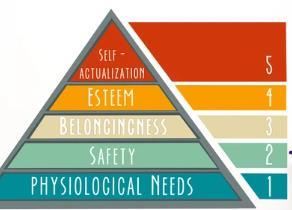
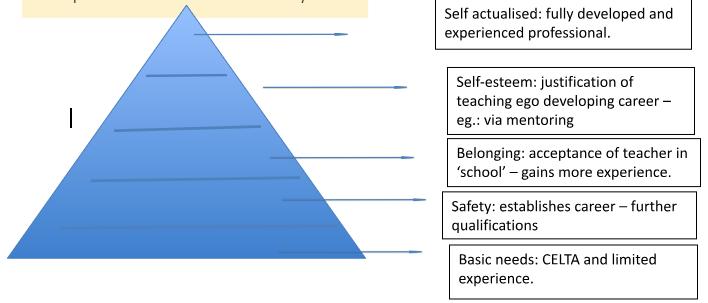
It can be observed that as far as the mentoring process is concerned, it is the second stage towards the base of the pyramid which is vitally important for the mentee. Having gained initial qualification through CELTA or an equivalent, the mentee then pursues his/her career as a TEFL teacher. Crucially however, the success or otherwise of this initial teaching experience is dependent upon the second stage (Safety and security). This is true not only for the mentee, but also for the other stakeholders in the institution – such as students, directors of studies, senior teachers, school directors, and others. If successfully negotiated, all stakeholders stand to benefit – but for our purposes, most essentially the ‘new’ teacher.
This is the point at which the mentor comes to prominence. The mentee’s need for support, advice, and a psychological sense of security can potentially be met by the mentor. Regarding the mentor, s/he is likely to be motivated in the role of ‘mentor’ by a desire to achieve a higher position on the teacher’s hierarchy of needs to the stages of ‘self-esteem’ and ‘selfactualisation’. At these stages, the mentor has acquired extensive experience in the classroom and has probably furthered his/ her qualifications – for instance, through DELTA and/or a postgraduate degree. Assuming that the mentor is motivated to develop further, it is plausible that he/she will adopt an approach in which the sharing of acquired knowledge will appeal as it will help to justify his/her raison d’etre in the profession.

The research was carried out at the British Council in Warsaw, Poland, and featured teachers early in their teaching careers. The British Council in Poland utilises a foundation entry system in which newly qualified teachers or teachers with limited experience can join the organisation on the proviso that they commit to a professional development programme. This programme comprises an induction programme, an in-house teaching course ‘Teaching Support Programme’ (TSP), and a mentoring system that aims to support and integrate these new teachers into the teaching style of the British Council. Within Poland (British Council has teaching centres in Warsaw, Krakow, and Wroclaw) there are five foundation entry teachers this academic year. Mentoring is seen as an essential part of the foundation programme.
One of the mentees is Dutch and has completed his Master studies in The Netherlands. The second mentee is a British native and has recently completed his CELTA. He started working at the British Council in January of this year. The other mentees are non-native teachers, two from Poland and one from Ukraine. Two of these teachers worked as learning assistants at the British Council before becoming teachers. They have all completed master’s studies and most have completed CELTA. These teachers work with a variety of age groups and levels, but most are either Primary (5–11-year-olds) or Secondary teachers (12-17 year olds). Master’s studies and most have completed CELTA. These teachers work with a variety of age groups and levels, but most are either Primary (5–11-year-olds) or Secondary teachers (12-17 year olds).
As a mentor at the British Council in Warsaw, over the last few years, I have been interested in analysing how effective the mentoring has been. Anecdotal evidence suggested that for the mentees, mentoring was indeed effective, but I wanted to gain a deeper insight into how the mentoring process impacted the mentees and so I decided to carry out a survey and interview my mentees.
Developing an improvement plan (see Appendix 2)
A foundation entry-level teacher will typically be observed very early on in the academic year and a mentor – appointed by the teaching centre management – is made fully aware of the feedback the teacher received. Based on feedback from the original observer, the mentor then arranges an initial meeting with the mentee, and a development plan is drawn up. Whilst feedback from the initial observation is obviously important, it is not the only determinant of the plan. During the initial discussion, other perceived areas for development are also integrated into the plan. It should be emphasised that the development plan is a dynamic document and changes as perceived needs emerge. For instance, subsequent observations might uncover other developmental needs or in discussions between the mentor and mentee, other needs might emerge which need addressing. The development plan is therefore a ‘live’ document that is subject to the emerging needs of the mentee.
Parallel to the mentoring plan, the mentee also follows a TSP (Teaching Support Programme) in which s/he follows a British Council course covering the basic areas of effective classroom teaching (lesson planning, classroom management, etc). The mentee is observed several times during the academic year with the observation focused on each of these basic areas. The observation is either carried out by the mentor or alternatively, an academic manager
and the feedback from these observations contributes to updating the mentee’s development plan.
Aside from the ‘academic’ aspects of the Plan, pastoral care is also part of the development plan. For instance, it might be that a personal issue is having a negative effect on classroom performance so the mentor encourages a relationship in which the mentee can feel comfortable discussing personal issues – perhaps, for example, the mentee is having some settling in problems in what is likely to be a new environment.
As mentioned above, the plan for the mentee derives from a combination of areas which have been flagged for development from his/her observation feedback, the TSP programme, the Learning and Development Plan, and from discussion and consultations between the mentee and the mentor. The plan is then implemented over the academic year and discussed weekly with the mentee to check progress. The plan is dynamic and further areas for development are added and implemented accordingly. Additionally, personal and pastoral care is included in the plan so as a more holistic approach is provided for. Weekly meetings between mentor and mentee give each party an opportunity to update the other regarding the effective implementation of the plan.
In implementing the plan, the mentor is in contact with a senior teacher and sends the latter a weekly update of the meeting with the mentor. The senior teacher will also update the mentor with details of any observations or other developments regarding the mentee. Hence, there is a constant interaction in progress as illustrated below:
Observations
TSP
Senior Teacher& MGMT
Pastoral needs
INSETTs
LDP
From all perspectives – mentee, mentor, senior teachers, and management, and ultimately students – it seems the mentoring plan worked well and yielded mutual benefits for all concerned.
The mentee is the greatest beneficiary because s/he is placed at the centre of the plan. Without a mentoring process the mentee might well find the need to integrate into the organisation jarring and challenging. The mentoring plan is in place to help the new teacher manage this integration. Evidence from the survey and anecdotal feedback suggests that the mentoring process and development plan do help the mentee settle into their new working environment (see below). As regards the mentor, the Plan enables the mentor to organise in an efficient way the process of the teacher’s integration into a new working environment.
The holistic layout of the plan means that potential problems and issues can be anticipated and accommodated into the plan. Thus, the mentor has a tool which is instrumental in smoothing the process and establishing meaningful criteria for the successful integration of the teacher. The organisation (in this instance, the British Council) needs to ensure that newly recruited teachers settle in as smoothly and quickly as possible so as they (the teacher) are ready to execute teaching duties to as high a standard as possible.
Reflection on the effects of the plan
The survey was carried out on MS Forms (see Appendix 1). In total, I asked 13 open questions, aiming for more qualitative rather than quantitative feedback. As there were relatively few mentees in this case study, I thought that this was a good opportunity to undertake deeper research through a qualitative approach. I then interviewed the mentees to further substantiate their responses from the survey to gain greater insight into their responses.
The findings of the survey were overwhelmingly positive. Virtually all of the teachers had a first degree and had completed CELTA before commencing work at the British Council. Expectations of mentoring (Q2) included: ‘someone experienced in the field who would be prepared to help a less experienced teacher’, to ‘someone to help me create interesting lessons’, and ‘someone who will guide and advise me whenever required.’ The reality of being mentored (Q3) included one comment in which the mentoring ‘was not as intimidating as expected’ to ‘just as expected’. One mentee added: ‘there was lots of emotional and mental support, so I felt comfortable about “being myself.” For Q5, mentees found that expectations had been met, even exceeded. For Q6, mentees found that the practical help and advice given ‘was irreplaceable’ and that ‘I had a terrific rapport with my mentor.’ Likewise, for Q7, mentees unanimously commented that mentoring had had a positive impact on their teaching, especially for those mentees who were faced with teaching either YL or early years. Help and advice with classroom management issues were to the fore here. Regarding Q10, again all the mentees agreed that the mentoring process had helped them feel more settled in their relatively new environment. Q11 – improvements to the mentoring process included a request for ‘group mentoring sessions’ to work alongside individual mentoring – something which we will consider in next year’s mentoring programme.
Another request was that perhaps it would be an idea to having a ‘meet the mentor’ session at the beginning of the year to help lessen stress before initially meeting their personal mentor. For Q13, one teacher compared the ‘new teacher’ experience of a colleague at another school who did not receive any mentoring and was directly thrust into the classroom. She commented that she could not imagine such a situation compared with the mentoring process at the British Council.
Conclusions
It is quite clear that the mentoring process at the British Council has been very successful and that all stakeholders have recognised the positive impact and consequent benefits which have accrued due to the process. At the centre of the process is of course the mentee. S/he at the beginning of the academic year is faced with having to quickly integrate into the teaching centre and is expected to cope with myriad challenges which in turn can be intimidating, especially at a school with high expectations of teaching excellence. The mentoring process seeks to assist the new teacher in overcoming the physical and mental obstacles the teacher will face in this daunting new environment. The mentor is charged with providing a cushion for the mentee – helping to absorb pressure and smooth the new teaching environment the teacher finds him/herself facing.
As a consequence, it is very clear that new, inexperienced teachers will benefit enormously from the establishment of a mentoring system and process. The mentoring process acts as a ‘buffer’ in that the mentee feels protected and more secure whilst at the same time the system provides for a ‘transition’ stage allowing the new teacher to settle into his/her environment knowing that they have the support of an experienced person to fall back on and seek advice from as and when required. From the point of view of the mentor, the process enables the seasoned teaching professional to pass on his/her experience and know-how to the new teacher. As such, mentoring at its best enacts a Community of Practice (COP) where the expert, experienced practitioner helps and supports the apprentice teacher as they embark on the early stages of their teaching career. Speaking from personal experience, the mentor is giving back something to the profession as s/he passes on advice and a measure of expertise from their teaching career and experience.
My research has substantiated and confirmed my initial thoughts that mentoring is an essential tool in facilitating the integration of new teachers into the school. One might turn to Krashen’s ‘affective filter’ hypothesis and apply this equally well to the new teacher as to students. It seems highly likely that the new teacher’s classroom experience is more likely to be positive and effective if s/he feels secure and comfortable in their role if they know that they have someone reliable and trustworthy to turn to if and when difficulties occur in and out of the classroom. I would therefore highly recommend that schools should establish a mentoring programme in order to ensure that new teachers are able to integrate as smoothly as possible into the school and fulfil the demands placed upon them by students, senior teachers, and school management.
The Author
Richard Cowen has worked at the British Council for the last 22 years. He has held various positions within the organisation. He also works as an examiner and has experience or working as an EAP tutor in the UK. He holds an MA and DELTA. Outside of teaching he is a keen cyclist, reader, and traveller.
Bibliography
Bigelow. M. (2002) What do preservice EFL teachers expect from mentors? Creating Teacher Community: Research and Practice in Language Teacher Education https://carla.umn.edu/resources/LTE_conference_proceedings.pdf
Haney. A. ‘The Role of Mentorship in the Workplace’ in Workshop Education, edited by M.C. Taylor pp211-228 Toronto Ontario Culture Concepts 1997 (ED 404 573)
Krashen, S. D. (1982). Principles and Practice in Second Language Acquisition. The University of Michigan Pergamon.
Maslow, A. H. (1943). A theory of human motivation. Psychological Review, 50(4), 370–396. https://doi.org/10.1037/h0054346
Appendix (1): Mentoring Questionnaire and Survey to Mentees at British Council 2023-4
Hi All,
I've been asked to contribute a research article about mentoring to an ELT publication. In order to help me write the article, I'd be grateful if you could complete the questionnaire below. It will take you no longer than 30 minutes, optimally about 20 minutes. The details you provide will be genuinely useful as it will inform my research article. Please be assured that any information you give will be treated as anonymous. Thanks in advance, Richard. :)
1.Please give a very brief outline of your previous ELT experience and qualifications prior to joining BC.
2.What did you understand by ‘mentoring’ before you started the process?
3.How has your understanding of ‘mentoring’ changed since?
4.What were your expectations of the mentoring process at the outset?
5.Have your expectations been met? Why / Why not?
6.Which part(s) of the mentoring process did you find most useful?
7.What impact has the mentoring process had in your classroom practice?
8.What were your expectations of your mentor?
9.Have those expectations been met? Why? / Why not?
10.Has the mentoring process helped you feel more settled and integrated in your teaching environment?
11.How could the mentoring process be improved?
12.Would you recommend ‘mentoring’ as an effective process to help new or inexperienced teachers? Why / Why not?
13.Is there anything else you would like to add?
Appendix (2): Development Plan for Mentees
Name: ___________________
GOALS:
Goals for academic year (to be discussed and agreed with mentor):
Why did you choose these goals?
How will you achieve the goals?
Whose help will you need to achieve your goals?
What resources will you need to achieve your goals?
Reflection – use the space below to regularly update your goals. New goals an also be introduced as the academic year progresses.
Whilst planning your goals, think about your strengths and weaknesses. How could you strengthen your weaker areas whilst also continuing to develop your strengths.
Observations
Use your observation feedback form to note down action points for future development below.
TSP 3
Ensure during future observations that you consider your action points.
TSP 4
TSP 5
List the INSETTs you have attended (minimum number to be agreed with mentor). How useful were the INSETTS and what did you learn from them?
(Teacher Support Programme)
Learning points from course: Use the space below to reflect on what you have learnt from each stage of the TSP.
TSP 1: TSP 2:
Turaeva Guzal Tojidinovna
Abstract
This study aims to identify the reasons for low student engagement in modules at a preservice teacher education program at Namangan State University in Uzbekistan and to implement better teaching strategies considering students' needs and interests. My exploratory study showed that students expect teacher educators to provide knowledge they can take to schools as teachers and provide interesting and productive lessons. Besides, according to the study results, students expect teacher educators to help with their digital literacy skills and self-directed learning strategies. To fulfill student expectations for digital literacy, pedagogical (teaching) skills, and better language proficiency, new interventions in the EFL (English as a Foreign Language) teacher education program introduced more technology and various websites useful for both language improvement and English language teaching.
Introduction
Due to the growth of demand for the English language around the world, Uzbekistan also introduced a language learning policy to improve the educational system of Uzbekistan in 2013. Based on the language learning policy, the English language has become a mandatory subject in the curriculum from the first grade in public and private schools. However, as Madaminov and Ashurova (2019) state, EFL teachers' views and beliefs on educational policies in general and the development of English language curricula at schools have been neglected, mainly because most teachers have specific preconceived ideas or beliefs on how to approach English teaching. Pre-service teacher educators at state and private universities believe that language proficiency is enough for student-teachers to be competent teachers.
Also, the recent language learning policy in Uzbekistan requires that pre-service teachers have a language certificate with a B2 level from their respective institutions upon graduation. Pre-service teacher educators deny the importance of understanding learners' needs and are unaware of classroom investigation. Most teachers at state universities struggle with student engagement problems during lessons because of the gap between students' knowledge, beliefs, and curriculum.
Student engagement is essential in the classroom, as it helps to deliver lessons more effectively and productively. When students are engaged in learning, they learn actively and become academically successful. Active participation of students always brings success to the lessons. Moore (cited in Duchaine, 2018) defines student engagement as a process when a student focuses on a teacher or materials, asks and responds to questions, and complements specific activities and assignments related to the lesson. Duchaine (2018)
believes that strategies that increase active engagement directly impact student achievement and help students organize and store information; therefore, asking questions, checking for understanding, providing and monitoring independent work, and offering corrective feedback ensure proper learning and allow for correction of errors before faulty learning.
As Haydon, Mancil, and Van Loan (as cited in Duchaine, 2018) state, giving opportunities for students to respond to academic tasks during instruction resulted in a 30% increase in ontask behavior and decreased disruptions while teaching. Brophy (1979) states that student participation and time-on-task are essential for learning and affect the correlation between active participation and academic achievement (as cited in Duchaine, 2018). Student engagement is essential in pre-service teacher educator programs because it sets the foundation for future teachers to develop self-directed learning strategies, which helps them to organize lessons productively and effectively later in their teaching careers.
As we live in the era of technology, digital literacy skills are also required of a future language teacher. As Sharma and Ranjan (2016) believe, it is important to promote student interest in learning so that they can learn more autonomously and effectively. They must love learning first to study better. Martin and Bolliger (2018b) state that integrating technology to enhance student engagement could increase students' satisfaction, motivate them to learn, relieve the sense of isolation, and increase their participation in the lessons (as cited in Chuong, 2022). Other scholars (Kaur and Nadarajan, 2020) say that teachers could enhance students' engagement and active participation in the classroom effectively by using technological hardware and software such as computers, tablets, online teaching and learning applications (as cited in Chuong, 2022). So, teaching digital literacy skills to pre-service teachers at universities is essential.
To improve my students' pedagogical, teaching, and language skills, I conducted an exploratory research project at Namangan State University. In my lessons, I had problems with student engagement. Smith and Rebolledo (2021) state that exploratory action research is a form of inquiry that teachers can engage in to understand their situations better and take action for improvement. The exploratory action research approach to professional development enhances teachers' abilities to explore and solve classroom problems for themselves. I have set exploratory research questions to better understand the root of my challenging situation. Then I collected qualitative and qualitative data by conducting interviews with the teachers and students, analyzing my reflective notes, and gathering informal feedback on lessons. I also surveyed students and analyzed their midterm and final exam results.
The exploratory action research was conducted in one of the state universities in Uzbekistan, Namangan State University. The study participants were fourth-year students in a pre-service teacher education program at the English language faculty. After graduating from the university, students gain a bachelor's degree in teaching English as a Second Language, and most of them go to work in public and private schools. I teach a module called Teaching
English Language by Integrating Skills. This module is quite a big module and is based on the curriculum. The students should be taught more than 180 hours per year starting from the second year. This module mainly covers the methodology of teaching English to non-native speakers, and according to the requirements of this module, pre-service teacher educators should learn new strategies and use of technology for use later in their teaching careers.
Most students at Namangan State University have transferred their education from neighboring countries such as Kyrgyzstan, Kazakhstan, and Tajikistan. This is because the university entrance exams are quite competitive due to the small number of places. They should collect the required grades in three main subjects to be accepted. By contrast, neighboring countries accept students without required exams. The main thing students should do to enter is pay a tuition fee, which is lower than in Uzbekistan. However, during Covid 19, the Government of Uzbekistan brought back students and allowed them to continue their education in their homeland. The main issue here is that based on the current changes in the language learning policy, students should obtain a B2 language certificate upon graduation if they want to find a job in the public or private sectors. All these requirements and changes affect students and teachers due to the differences in perceptions and beliefs. Students want to obtain a B2 language certificate, but the curriculum is designed for students at the B2 language level based on CEFR descriptions. However, students' knowledge is lower than that of B2 students, and the gap between their knowledge and context de-motivates students by lowering their engagement during the Teaching English Language by Integrating Skills module.
The research was conducted by implementing qualitative and quantitative data analysis tools. For qualitative data, interviews with teachers and students. For quantitative data, online survey responses were gathered from students. Then, a literature review was undertaken. Charts were used to analyze quantitative data, and the interview was analyzed using coding methods, where the responses from the students were analyzed by finding the main key points. Teacher observation notes were also included.
The survey from students, teacher's reflective notes, students' feedback at the end of the lessons, and students' overall performance from the midterm and final exams were gathered to collect data for the action plan.
Quantitative and qualitative data collection methods were used for exploratory action research. The following tools were used for qualitative data collection: teacher's reflective notes, observations and interviews with the teachers and students, and informal oral feedback. For quantitative data collection, tools included surveys from the students and students' midterm and final exam results.
The research questions were developed using a Handbook for Exploratory Action Research (Smith, & Rebolledo, 2019) and narrowing down the research focus. In the research section, I paid attention to the problems by categorizing them into exploring my perception, studying others' perceptions, and exploring students' behavior. There are the questions for exploratory action research:
1. What prevents my students from becoming less engaged during the Teaching English Language by Integrated Skills module?
2. How can I improve engagement with my students in the Teaching English Language by Integrated Skills module?
Planned schedule
Details
Date/Time Tools/Materials
Search language improvement websites January 29February-1 computer, internet connection V
To send the link for students and ask them to use websites during their practicum February 2-9 social media (telegram) V
To create and conduct a survey and ask students to rate the websites February 10-17 Pollmaker online tool for conducting survey
Introducing Website 1 - to improve language skills and teaching. with the topics:1.Young People’s English Language Skills Decreasing, 2. Early Literacy: Vocabulary
3. Early literacy: Comprehension
4. How A Rural US School System Makes Gains in Math…….
Checking students' comprehension and observing their participation during the lessons. To provide students with reading and listening activities (group discussions).
Reading articles: When Being Wrong Leads To More Empathy And Better Teaching, to improve reading, critical thinking skills, and teaching.
March - May https://learningen glish.voanews.com /s?k=Language%20 teaching&tab=all& pi=1&r=any&pp=1 0
March https://learnenglis h.britishcouncil.org /skills/speaking
April https://www.esllab.com/tips-forteachers/empathy /
Adding more gestures while explaining activities to do during the classes and showing them samples of how to perform tasks in order to support students’ comprehension.
Share the link with students to improve their self-directed learning strategies (students can improve their speaking skill).
Organizing midterm exam and calculating their overall performance
To collect data from the students how they improved their language and teaching skills. (qualitative; interview, quantitative; survey)
Organizing final exams and calculating their overall performance
Participants
March-May 2024 Champion teachers: stories of exploratory action research (reading material). V
March-May https://www.talke nglish.com/studym ethod.aspx
March last week
May (last week) audio recorder, poll maker online tool
June 28, 2024
Informal interviews were conducted with two English language teachers who also teach the Teaching English Language by Integrating Language Skills module at Namangan State University. Eight students from one group were invited to respond to the questionnaire, and the same students were interviewed.
Two teachers were interviewed about their students' participation in my classes, and both stressed the need to change the materials the government provides. The materials the government provides for the transfer students, whose language ability was lower than those who passed the entrance exam. They also stated that there was a gap between their language ability and materials, and they added that to understand and participate in the activities in the Teaching English Language by Integrating Skills module, they should be at B2 or B2+ level; however, most of the students in the chosen group are at B1 level. Language certificates given by 2019 at a level B1 and above by the State Testing System had been given the privilege for university applicants at their entrance exam with maximum points from the foreign language. They advised from their teaching experience to provide materials to students that are manageable and interesting for them because students are more willing to do tasks that improve their language skills. As Chuong (2022) states, a high level of student engagement should be a priority because the more students are engaged, the more they learn, and the more they achieve.
Student responses to the questionnaire
- 62.5% of the students found the activities quite challenging but useful; 37.5% of the participants did not find the activities difficult.
- When they were questioned where they faced challenges in performing tasks, 37.5% responded that they found difficulties due to the lack of language ability to perform the task; 25% considered that to perform the activities, students should have teaching experience; 25% did not see any challenges and 12.5% did not respond to the question.
- To the question about suggestions for activities that can be used in future classes, 62.5% students responded that they wanted to have other activities that they can do based on their language proficiency; and 37.5% students responded that there is no need for improvement, and it was interesting to learn something for them.
Student interviews
To the question whether they liked the activities that I had used in the Teaching English Language by Integrating Skills module, 25% of students answered they would like to have more discussions where they could improve their language ability; 12.5% responded that they did not care about anything related to education because the only thing they want to get is a diploma and get married; 37.5% said that they came to lessons very tired because they are married and have another responsibilities such as household chores. And only 25% of them said they liked the activities I had used during the classes because they did them using their gadgets. Chuong (2022) believes using technology as media in the classroom is very helpful because it can increase the student’s interest in learning. D’Angelo (2018) stated that by incorporating technology into the curriculum, instructors can improve student engagement and academic achievement (cited in Chuong, 2022).
I. During the Integrated Language Teaching Skills module, I observed that 11 out of 14 students were not active and only four performed the activities I had chosen for them. Before choosing those activities, I was sure the students would engage with them. However, the practice showed a different picture. When I checked, I saw only a few active students. Most were busy doing other tasks such as exam preparation tests, surfing the internet, or checking their private messages.
II. I decided to investigate the situation and develop a more detailed explanation. I tried to take notes throughout the teaching process, especially while students performed classroom activities. Some students were active, others were passive, and some did not understand what to do. And I had to repeat the instructions and ask them whether they understood and even sometimes clarified my instructions. Only active students responded that they understood and could repeat my instructions.
Even though the students’ major is related to teaching English after graduating, they face challenges completing activities due to the lack of language ability related to learning new tools to improve teaching during the Teaching English Language by Integrating Skills module. They could not perform the task, and some did not even know professional vocabulary. They should have a B2 or B2+ language level in four skills or at least three to perform in-class activities. To engage with in-class activities, I should consider their language ability and select or modify them to match their needs because, as Chuong (2022) notes, encouraging students to participate in learning activities is a necessary part of the teaching process.
Cruickshank, Newell, and Cole (2010) state that students’ language proficiency kept them from improving due to the challenges in keeping up with the courses, and they spent much more time doing the basic course readings. As a result, it makes it difficult to perform classroom activities. They also add that content-based courses do not meet specific needs, and this model should be supplemented by other strategies such as preliminary courses, individual tutoring, and self-directed learning. According to Singh and Han (2010) pre-service teachers should be able to use knowledge of five semiotic systems: audio, video, spatial, gestural, and print.
They also state that experiential knowledge of literacy, culture, and technology are key resources for pre-service teachers to gain knowledge of the world, and shape their behaviors, which can be used to exercise power over their lives. Lazebna and Prykhodko (2021) agree that a computer cannot replace the teacher during the lessons of a foreign language. Still, it can be used as an effective assistant, which improves the quality of training and effectiveness of control during classes. Pino-Silva (as cited in Lazebna and Prykhodko, 2021) states that the computer bridges traditional and new literacies and fostered foreign language and content learning, technology skills, and critical thinking.
Based on the articles and my finding I decided to do following:
1. Share and select language skills improvement websites.
2. Share the links for websites with the students while they are in practicum.
3. Conduct a survey to collect website suggestions.
4. Use the websites selected by the students during the Teaching English Language by Integrating Skills module.
5. Observe students' participation during the lesson.
6. Conduct informal interviews with students after the lessons to know whether they liked to do new activities and learned something new during the lessons.
7. Collect students' results from the midterm and final exams.
8. Analyze survey results from the students at the end of the module.
Action level findings: Survey results
The pre-service teacher practicum students were asked to suggest useful websites they can use as teachers or learners. For the selection process, two weeks were given, and various links were shared with the students. Here are the following results of the survey:
- 10% of students gave the preference for Voice of America Learning English
- 30% of students selected English as a Second Language podcast
- 30% of students selected Daily English Conversations
- 30% of students selected British Council Learn English
- no student selected RANDALL'S ESL Cyber Listening Lab
- no student selected other websites
Teacher’s reflective notes
Students had chosen the websites according to their interests and had plenty of time to use them as teachers during their practicum time. Based on their preference, I would use those websites to help students improve their language ability and familiarize them with the vocabulary needed for teaching. In the first lesson, I used the British Council Learn English website and organized the discussion with the students. They actively participated, with 10 out of 14 students engaging in discussion and doing the activities provided on the website.
Students informal feedback
At the end of the lesson, some students said that the lesson was very productive and that they had learned useful phrases and words; they added that they liked the lesson.
Students overall performance from the midterm and final exam
Students performance from the midterm exam:
- 79% successfully passed the midterm exam, seven of them got excellent marks (5), and 4 got good marks (4).
- 21% of students got satisfactory marks, which is 3.
Students performance from the final exam
Overall, all students successfully passed the final exam; 57% of them got excellent marks (5), and 43% of students got good marks (4).
Conclusion
Most students were engaged in class activities, actively participating in organized discussions. Ten out of 14 students were engaged in discussions. In the second part of my lesson, I used the preferred websites that the students suggested. The websites I used included Voice of America, BBC Learning English, English as a Second Language podcast, Daily English Conversations, and British Council Learn English, where students first watched videos and memorized some phrases. After completing the tasks provided on the sites, their performance was assessed. Almost all students did the tasks. At the end of the lessons, some gave oral feedback about the lesson. They said the lessons were interesting and useful because they had learned new phrases during the Teaching English Language by Integrated Skills module.
Helping students improve their language proficiency is important, and I have changed my attitude to the lesson. I can engage my students in classroom activities if their needs and language proficiency level are considered. Changes to the subject materials should be made. If the students are engaged in classroom activities, they can learn subject-related materials. As Uden, Ritzen, and Pieters (2013) state, satisfied teachers could have a more positive attitude toward the students, which eventually positively affects perceived student engagement. Tasks were not challenging or based on students' language level, which was B1. I can improve my teaching by considering students’ needs and interests. Only in this case, I will have an engaging classroom environment. I will also reach the target of teaching something new that students can use in the long run. Finally, students' overall performance test results and surveys should be collected at the end of the term.
The Author
Turaeva Guzal Tojidinovna, English language teacher at Namangan State University, Uzbekistan. Working experience: total: 11 years, at public school № 64 is nine years, and at Namangan State University, two years. PhD student at Webster University. Presented at an IATEFL professional development event entitled Teacher Research! International Online Conference, 2024. May 9 and 10.
References
Chuong, Ph. T. (2022). Effects of using technology to engage students in learning English at a secondary school. International Journal of Language Instruction, Volume 1 (1;2022), 86-90.
Cruickshank, K., Newell, S. and Cole, S. (2010). Meeting English language needs in teaching education: a flexible support module for non-English speaking background students. AsiaPacific Journal of Teacher Education. Volume 31 (3). 242.
Duchaine, E. L. (2018). Increase engagement and achievement with response cards: Science and Mathematics inclusion classes. Learning disabilities: A Contemporary Journal. Volume 16 (2), 159.
Labezna, N. and Prykhodko, A. (2021). Digital discourse of English language acquisition. Journal of Language and Linguistic Studies. Volume 17 (2). 971-982.
Madaminov, M. and Ashurova, U. (2019). A critical review of the proposed changes to the EFL curriculum in public schools in Uzbekistan. Kinjo Gakuin University Repository.
Singh, M. and Han, J. (2010). Teacher education for World English speaking pre-service teachers: Making transnational knowledge exchange for mutual learning. Teaching and Teacher Education. Volume 26. 1301-1302.
Smith, R. & Rebolledo, P. (2019). A handbook for exploratory action research. British Council.
The decision of the Head of State (2019, May, 13). Measures to implement certificates of national and international assessment systems for admission to higher education institutes. https://kun.uz/uz/news/2019/12/03/kirish-imtihonida-chet-tilidan-maksimal-ball-olishuchun-qaysi-darajaga-ega-bolish-kerak
Uden, J. M., Ritzen, H. and Pieters, J. M. (2013). I think I can engage my students. Teachers’ perceptions of student engagement and their beliefs about being a teacher. Teaching and Teacher Education. Volume 32. 43-46.
Websites
1. https://learningenglish.voanews.com/p/5610.html
2. https://www.eslpod.com/
3. https://www.youtube.com/@DailyEnglishConversation
4. https://learnenglish.britishcouncil.org/skills/speaking
5. https://www.esl-lab.com
Abstract
Patricia Ibiapina
As a mentor for novice teachers in a remote area of North India, I initially believed inundating them with theoretical knowledge was the best approach. Immersing myself in numerous books enhanced my understanding of the what, how, when, and why of classroom tasks. However, I overlooked a crucial aspect: the whom. Each teacher operates within unique contexts, yet this diversity is often neglected, especially in second language teaching. While I had read about personalizing materials to enhance relevance, I soon realized the challenge of teaching in resource-constrained environments where a mere chalkboard serves as the sole instructional tool. This experience compelled me to rethink and adapt my mentoring strategies accordingly.
In a world in which language teachers are eager to use artificial intelligence to help enhance their abilities in the classroom, it is quite difficult to imagine lesson plan preparation that includes resources that have nothing to do with cutting-edge technology. As a novice teacher trainer, I embarked on my journey, like many others, filled with theoretical knowledge and enthusiasm. Upon completing my Train the Trainer course, I eagerly seized the opportunity to serve as a mentor for teachers in the remote region of Ladakh, located in northern India. Before diving into the mentorship, it was challenging to fully grasp what the experience would entail despite having had a few preliminary meetings.
Having explored the four language skills, I strongly advocate for teachers to delve deeper into understanding listening, reading, speaking, and writing. During the sessions, I couldn't help but notice the quietness among the teachers. Initially, I attributed this to potential cultural differences; being Brazilian, I recognize my tendency to be lively and expressive, so I sometimes anticipate a more reserved demeanor from individuals from other cultures.
I had initially envisioned that providing theoretical sessions would empower teachers to enhance their lesson preparation skills, eventually leading us to integrate the latest technologies seamlessly. However, overlooking a fundamental principle significantly impacted our success in the program: listening to the teachers themselves. Just as we are expected to listen to our students, a practice I consistently uphold, I realized its paramount importance.
Since commencing my journey teaching private lessons in various companies, I've come to appreciate the unique needs of each student. While it may seem convenient for teachers to
deliver the same content, employ identical methods, and use uniform materials for all learners, it raises a critical question: Why do we teach what we teach?
As a CELTA-certified teacher, I initially structured my session preparations based on the methodology I learned during my CELTA course. After delving into the theory of language abilities and sharing these insights with my teachers, I reached a point of reflection regarding the effectiveness of these sessions. It was during the final session that I had a moment of realization.
I simply asked the teachers what they wanted to focus on in the next session, and the responses I received were eye-opening:
● "How can I cover all language abilities effectively in a 40-minute lesson?"
● "What strategies can I use to encourage English speaking among my 7-year-old students?"
● "I aim to integrate grammar instruction and maximize vocabulary and verb learning for my students."
These questions highlighted teachers' practical challenges and aspirations to optimize their teaching strategies for better outcomes and lesson preparation. In Ladakh, teachers are well-acquainted with the conventional grammar-translation teaching method, which is frequently taught in universities and teacher training programs. Nevertheless, amidst today's technological advancements, such as virtual reality glasses and artificial intelligence, it's easy to forget that our teaching methods might not be the only approaches available.
Action Plan: What steps should you take when you realize your initial approach isn't as relevant for your mentees as you thought? Good teachers always have a backup plan (or two). I decided to reverse the lesson structure. Instead of starting with my agenda, I asked teachers to share their challenges, and together, we crafted lesson plans based on their needs. Shifting from a top-down to a bottom-up approach was pivotal for the progress and well-being of the teachers in the program.
Indian culture values respect and dedication, and I realized I might not have received meaningful responses if I had not probed about their expectations. As their mentor, they looked to me for guidance, but I came to understand that I was often providing answers to questions they hadn't yet voiced.
"Being a good teacher is a necessary but not sufficient condition for being a teacher trainer," as Richardson aptly pointed out (Richardson, 2017). I realized this firsthand; having been a teacher for nearly two decades, I knew the craft of teaching inside out. However, the challenge arose when teaching teachers with vastly different perspectives and interests.
Drawing from my novice teacher experience, I recalled the overwhelming feeling of not knowing where to start. Back then, I clung to the teacher's guide like a sacred text, afraid to question its authority. But simplicity was key. Teachers needed practical tools, not just theoretical knowledge:
1. Understanding learner stages (Vygotsky, Piaget) for age-appropriate teaching strategies, such as the potential pitfalls of teaching complex grammar to young learners.
2. Concept Checking Questions (CCQs) and Instructional Checking Questions (ICQs) to ensure comprehension.
3. Drilling techniques for language practice and fluency.
4. Visual aids like flashcards for enhanced understanding.
5. Group work and pair activities to foster collaboration and communication.
6. Modeling effective teaching behaviors for teachers to emulate.
7. Providing timely prompting and constructive feedback.
8. Incorporating regular review and recycling of material.
9. Personalizing lessons to students' interests and needs.
10. Adapting teaching methods based on classroom dynamics and feedback.
These simple yet effective tools became the cornerstone of my approach to teacher training, bridging the gap between theoretical knowledge and practical application in the classroom.
Some of the techniques mentioned above might seem like second nature to many of us, as they are integral to our daily teaching routines. However, it's crucial to acknowledge the knowledge background of my mentees in terms of teaching methods and approaches. They were primarily exposed to the translation method, which significantly influenced their language learning and teaching expectations.
Their approach to teaching stemmed from their own experiences of how they were taught the language, emphasizing translation and possibly overlooking more interactive and communicative methods. Recognizing this foundational knowledge and addressing their expectations became key to our training sessions.
We began our collaboration using an approach akin to how I engage with my students. I started by modeling teaching techniques and then exposed my mentees to similar tasks, urging them to design activities based on our previous sessions while considering their teaching contexts and student demographics. For example, I emphasized the importance of leveraging local culture, nature, and architecture in lesson planning.
As a Brazilian living near the beach, I often incorporated elements from my surroundings into lessons to enhance student engagement. It made perfect sense for me to teach summer-related lexis such as "beach umbrellas," "sunbathe," "coconut water," and "suntan lotion." Similarly, teaching vocabulary about local animals like the "black or golden lion tamarin," "anteater," or "pink dolphin" resonated well with my coastal environment. However, I made it clear that such contexts might not be as relevant for teachers in regions closer to the Himalayas, where snow, mountains, and a diverse range of wildlife, including leopards, are prevalent.
This process of adapting material to fit the local reality and vice versa was a novel concept for many teachers. I emphasized the importance of teaching content that resonates with students' lived experiences. For instance, why teach the tale of Ariel when we have our own local mermaid, Iara, with indigenous characteristics? By integrating aspects of my indigenous heritage, such as my surname, into lessons, I could captivate students' interest and foster a deeper connection to the material.
After refining the 'Needs Analysis Questionnaire for an In-Service Course' to aid in planning, I then transitioned to putting theory into practice by guiding teachers on enhancing their abilities, achieving their goals, and fostering reflection upon them.
Mentees began implementing the ideas discussed in our sessions. They took on the responsibility of reporting what worked well for them and how they believed they and their students benefited from these strategies. To facilitate this, we held and recorded our input sessions on Zoom, and the supporting material was available on Google Classroom. As the mentees had to prepare their lessons from scratch, it was fundamental that they had enough samples of lessons with clear stages for reference. PPP (Presentation, Practice, Production) and TBLT (Task-Based Language Teaching) were the approaches that best fit their context, and we used many lessons from the British Council and BBC Learning English websites.
Our sessions focused on designing simple yet effective tasks, such as:
1. Create a set of characters for students to recognize their names and practice using pronouns when referring to them.
2. Collaboratively negotiating classroom rules to involve students in learning and give them a sense of responsibility.
3. Designing a variety of tasks based on the Zone of Proximal Development (ZPD) theory, which explains the optimal level of challenge for student learning.
4. Incorporating a teddy bear character to narrate stories in class, adds an engaging element to storytelling.
5. Implementing split storytelling to allow students time to absorb content and engage more deeply.
6. Using hidden slips of paper with commands placed strategically around the classroom, encouraging active participation and reducing teacher-centered instruction.
7. Introducing vocabulary consolidation games like tic-tac-toe, memory games, and story reconstruction using flashcards.

Conclusion
Stepping out of my comfort zone filled with myths, beliefs, and assumptions about teaching, has been an enlightening journey. A pivotal lesson I've learned, one that I've applied to my personal life, is the importance of aligning what we offer with what others truly need. No matter how prepared we may feel or how much we have to offer, if it doesn't meet the needs of others, we must reassess our approach.
I've realized that the most valuable gift we can give others is listening actively and understanding their reality. This experience has taken me back to the early 2000s when I relied on books and the guidance of experienced colleagues rather than an abundance of online resources. It was a time when personal connections and shared experiences were invaluable in guiding my teaching practices.
The Author
Patricia Ibiapina has been teaching English since 2006. She has spearheaded a language program for a university in Dubai and its branch in Angola, and now she's a teacher's mentor for teachers in India. She holds TKT 1, 2, and 3, TESOL, CELTA, and Train the Trainer.
References
Piaget, J. (1952). The Origins of intelligence in children. New York: International Universities Press.
Vygotsky, L. S. (1978). Mind in Society: The Development of Higher Psychological Processes Cambridge, MA: Harvard University Press.
Tanner, R., & Green, C. (1998). Tasks for Teachers: A Trainer Book. Pearson Education Limited.
Harmer, Jeremy. (2015). The Practice of English Language Teaching (5th ed.). Pearson Education ESL.
Richardson, S. (2017). Becoming a Teacher Trainer: The Skills and Knowledge You Need. ELT Journal
Melia-Leigh, B., & Northall, N. (2020). 500 Ideas for Teacher Training in English Language Teaching. Pavilion Publishing.
Ljerka Vukić and Grazzia Maria Mendoza-Chirinos
Abstract
Action research is a tool that allows classroom teachers to address challenges and make informed decisions about solutions that cater to their particular context. Through this article, the authors share an experience from a teacher in Croatia who led an action research project in her classroom aimed at differentiating instruction for her learners to build engagement and empower her learners based on a multilevel classroom with diverse needs. Her research aimed not only to understand her classroom context and enact change but also to undergo the action research process first-hand to determine whether this is a process that all teachers can lead. With this, the authors propose an action research model that classroom teachers can follow to support them in addressing challenges while engaging in evidence-based approaches through action research.
The action research
Action research began in the 1940s through the work of Kurt Lewin. It emphasizes how researchers and practitioners collaborate to face and solve classroom challenges. Action research is dynamic, exploratory, and participatory. It can support teachers in reflecting and critically analyzing their contexts.
This action research project was conducted in Šćitarjevo Primary School (Croatia). It is a state school with around 350 students. Students study the English language from grade one to eight, with two lessons a week in the first four years and three lessons a week from grade five. The purpose of the research was to address the issue of mixed-ability classrooms. The teacher in charge was not satisfied with the level of participation and motivation of gifted students, and she assumed that they were not challenged enough, as a lot of teaching time was dedicated to special needs students. This class has a teacher assistant who helps students with special educational needs, and the teacher assumes that gifted students need more incentive and attention to achieve their full potential. A strategy considered to address the issue was differentiated instruction, and the exploration was to see if implementing it would have any effect on the level of participation and motivation of students. Instruction and the exploration was to see if implementing it would have any effect on the level of participation and motivation of students.
The participants of this research were 24 students from Grade 5a. This class was chosen because the teacher noticed it had high levels of mixed-ability learners (5 students with special educational needs and several gifted students). This research becomes relevant for the context because this is the reality in many Croatian schools. Moreover, the fast-moving world and students moving from one country to another or from one culture to another will probably create more mixed-ability classrooms. It is also relevant to research because teachers usually lack objective and contextualized data on their classroom issues and can
rely only on foreign studies and their intuition and assumptions. The research thus provided a starting point for professional development for many teachers, and it will result in practical classroom ideas.in practical classroom ideas.
The general objective of the research was to respond to the needs of mixed-ability students. The specific objectives were to identify students' needs (fast finishers or gifted students, special education needs students), classify students by their abilities and knowledge for teaching, and design varied student activities. The research question was whether differentiated instruction benefits the level of participation and motivation of students, and the sub-questions were as follows: Are gifted students (fast finishers) more motivated to participate in class? Are special educational needs students given more support by the teacher due to differentiation? were as follows: Are gifted students (fast finishers) more motivated to participate in class? Are special educational needs students given more support by the teacher due to differentiation?
The research was carried out over one week and three 45-minute lessons. The topic of the lessons was food; the learning objectives of the first lesson were to present vocabulary for food and drink, to categorize food and drink, and to talk about food and drink by expressing likes and dislikes. The learning objectives of the second lesson were to learn about the special festivity days in the United Kingdom, how they are celebrated and what food is prepared, to present wishes and greetings, and to write an invitation to the party. The objectives of the third lesson were to present and practise uncountable and countable nouns and to present and practise partitives.
For the research, a Fast-finishers Corner was set up at the back of the classroom, where students who finished the work went to do extra activities provided by the teacher Simple and engaging activities that require minimal introduction by the teacher and are easily checked were introduced so that the lesson flow is undisturbed. The activities used were digital Wordwall games and games printed on paper. Students were given a choice of which activity they preferred to do. The activities covered the same content as the content taught in the lesson (crossword puzzles with food items, cutlery, cooking utensils, matching games, labelling games, etc.). The Fast-finishers Corner had rules of behaviour displayed on the wall for the students to read and follow.so that the flow of the lesson is undisturbed. The activities used were digital Wordwall games and games printed on paper. Students were given a choice of which activity they preferred to do. The activities covered the same content as the content that was being taught in the lesson (crossword puzzle with food items cutlery and cooking utensils, matching games, labelling games etc.). The “fast finishers corner” had rules of behaviour displayed on the wall for the students to read and follow.
The research used three sources to collect the data: the teacher assistant, the students (three fast finishers), and the teacher. Data from the teacher's assistant was gathered from the observation sheet she completed after each lesson. In contrast, data from the students was collected from the questionnaire three students completed after participating in three lessons, with extra activities provided. The teacher-researcher reflected on the research process by answering questions about the teaching process, starting with lesson planning. Special care was taken while setting up the observation sheet for the teacher assistant and the questionnaire for the students, ensuring that the same topics were covered for both but from different perspectives so that the analyses could be done and the data could be
meaningfully compared. The topics were the level of challenge in the extra activities for fast finishers, the enjoyment felt during participating in the extra activities, the possible confusion with the understanding of procedures on how to do the activities, the beliefs about the connection between the activities and the knowledge gained, the level of support provided by the teacher for all learners and the impact of this differentiation of instruction on all students. The same topics were covered for both, teacher and students, but from different perspectives, so that the analyses can be done and the data can be meaningfully compared.
The results were interesting food for thought and included the following: learners and the teacher estimated that students enjoyed the activities and that their English would improve due to extra work. Both the teacher and the teacher's assistant strongly agreed that the support received from the teacher for special educational needs students and fast finishers increased. There is close agreement on the claim that differentiating instruction is beneficial for all students, and it was evident from the results of the activities developed. Regarding the level of challenge for the students, we can see that one student thinks the activities were still not challenging enough, but two others claim that they were. The topic of confusion with the task is mostly neutral (neither agree nor disagree) with all three sources, and the tendency is to claim that all disagree that there was confusion in the classroom management aspect. In her reflection, the teacher became aware that her concerns about classroom management and the lesson flow were unnecessary, and she viewed this insight as the most valuable outcome of the research for her. The confusion with the task is mostly neutral (neither agree nor disagree) with all three sources and the tendency is towards the claim that all disagree that there was confusion in the classroom management aspect. In her reflection, the teacher became aware that her concerns about the classroom management and the flow of the lesson were unnecessary and she viewed this insight to be the most valuable outcome of the research for her.
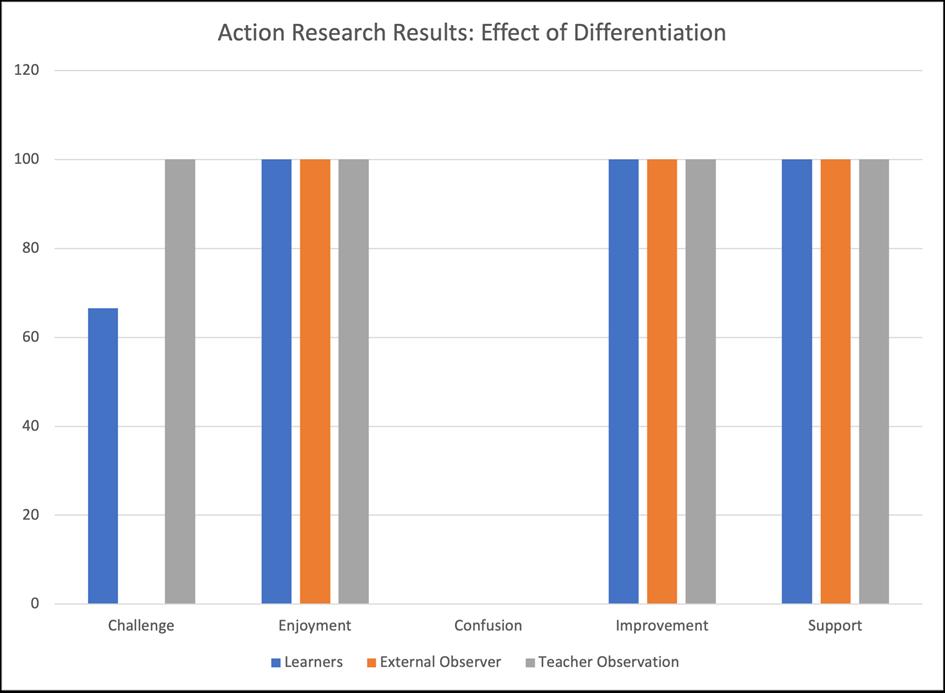
The model
Building on this initiative intended to inform educational theoretical approaches while setting an example of what action research can look like in the classroom. It is a first step towards giving teachers a voice in education research for education (Alrichter, 1993) and, especially when it comes to language learning, provides a stage where teachers can face and address challenges. (Edwards & Burns, 2015). where teachers can face and address challenges. (Edwards & Burns, 2015).
We can best describe the model used for this research as the approach followed by The Action Research Cycle, which involves these basic steps: these basic steps:
1. Plan the research for the issue you want to tackle by incorporating the plan into your lesson planning and teaching.
2. Determine the participants of the research and how the data will be gathered and analysed.
3. Act upon your plan.
4. Observe.
5. Analyse the data and reflect upon the process.
6. Share your research findings and experience with other teachers.6.Share your research findings and experience with other teachers.
This model is easy to follow, and it can be used by teachers who want to solve challenges they face in classrooms. The model is valuable for teachers because their challenges are often similar and rarely addressed academically since students and contexts change quickly. Academic research often follows slowly, while teachers need objective data to make informed decisions. For teachers, the challenges they face are often similar and rarely dealt with academically, since students and contexts change quickly and the academic research often follows slowly while teachers need objective data in order to be able to make informed decisions.
Once the findings of the research are made public via articles in teacher magazines or are shared in talks, presentations, or workshops in teacher conferences or meetups, they serve as a data-driven and objective starting point for fruitful teacher discussions, which then lead to shared practical teaching ideas, tips and activities used by many professionals. In talks, presentations, or workshops in teacher conferences or meetups, they serve as data-driven and objective starting points for fruitful teacher discussions which then lead to shared practical teaching ideas, tips, and activities used by many professionals.
This simple and efficient model can serve as a bridge between academic thought and practice in everyday classrooms. It can be easily applied by teachers publicly shared via teachers' publications (magazines and newsletters), workshops, and lectures of everyday classrooms. It can be easily applied by teachers, and publicly shared via teachers’ publications (magazines and newsletters), workshops, and lectures.
Therefore, I believe teachers will be willing to engage in action research since it adds to the professionalisation of their field, boosts teachers' self-confidence, allows collaboration with colleagues from the whole world, gives teachers wider perspectives, and opens new professional challenges and opportunities.
The experience related to this research is valuable in teaching; the teacher involved now has objective data I can rely on in lesson planning. One benefit of the research is that it can be a starting point for new approaches and strategy development that stem from objective research data. Therefore, the data will be used by the teacher future professional development workshops with teachers in Zagrebačka County in Croatia and with teachers in HUPE (The Association of Teachers of English in Croatia) and also write an article about my experience in BETA Bulgaria (Bulgarian English Teachers' Association) Newsletter as well as HUPEzine (HUPE Newsletter). of Teachers of English in Croatia) and also write an article about my experience in BETA Bulgaria (Bulgarian English Teachers’ Association) Newsletter as well as HUPEzine (HUPE Newsletter).
Conversations with colleagues in similar contexts taught me that mixed-abilities classrooms are prevalent in today's schools. Moreover, international professional development experiences, the fast-moving world, the migration of people, and technological influences mix our classrooms in terms of abilities, knowledge, and backgrounds. This issue is here to stay. The world is changing quickly; people are moving from one culture to another more than ever, and our classrooms only reflect the wider society If we share our experiences, we can better respond to the needs of our mixed-ability students. People move from one culture to another more than ever and our classrooms only are a reflection of the wider society. If we share our experience, we have a better chance of responding to our mixed abilities students’ needs.
Ljerka Vukić graduated from the University of Zagreb with a degree in English language and literature and Philosophy. I have been working as a primary English teacher for over 20 years. I also work as a teacher trainer for teachers from fifteen schools in my county. I am interested in special needs as well as gifted students' needs, and my current professional development field of interest is action research of mixed-ability classrooms. Students’ need, and my current professional development field of interest is action research of mixed ability classrooms.
Grazzia Maria Mendoza-Chirinos has been an educator for 30 years at all levels. Currently, I am a researcher at WIDA @ UW-Madison. Her research interests include Multilingualism, CBLT CALL, and Learner Empowerment and Agency. She is a former TESOL International Association Board Member, founder, former President of HELTA TESOL in Honduras, and Former President of LAC TESOL. She is also currently a mentor for EVE.founder and former President HELTA TESOL in Honduras and Former President LAC TESOL. She is also currently a mentor for EVE.
References
● Altrichter, H. (1993). The Concept of Quality in Action Research: Giving Practitioners a Voice in Educational Research. Qualitative Voices in Educational Research. Routledge
● Edwards, E. & Burns, A. (2015). Language teacher action research: achieving sustainability. ELT Journal, 70(1), 6-15 https://doi.org/10.1093/elt/ccv060
● Lewin, K. (1946). Action research and minority problems. Journal of Social Issues, 2(4), 34-46 https://doi.org/10.1111/j.1540-4560.1946.tb02295.x
Nataliia Krynska, Olena Rozdolyanska and Yaroslava Litvovchenko
Three English lecturers from Ukraine explore the experience of teaching English at the university during the war through a series of meetings with each other. Teachers' reflections on the first online lessons since the beginning of the war in 2022 are compared to the lessons in 2024, after two years of the war. The teacher's research sheds light on the techniques that can be used in situations of extreme emergencies and uncertainty, such as the onset of war in the country.
This paper is about two cases of teaching English as FL after the beginning of the full-scale Russian invasion of Ukraine. Together with my colleagues from two universities in the frontline city of Kharkiv, we explored what was happening in their classrooms after the teaching process was resumed and compared it to the lessons in 2024, after two years of war. During the online meetings set within the cooperative development framework, I worked as an Understander - I listened actively and empathetically. At the same time, my colleagues, acting as speakers, reflected on those lessons with the attempt to articulate their concerns at that time. These sessions were recorded, and afterward, we analysed the transcripts, added our comments, explored the problems deeper, and drew conclusions.
We found that the approach to academic load and the number of tasks was changing as the situation did not get better, and we adapted to the learners and their circumstances regarding the direct and indirect consequences of the war. Our findings can shed light on the immediate steps that a teacher can take in the situation of extreme emergency and uncertainty, such as the onset of such a situation, as well as the ways to cope with stress and build resilience during a long-lasting war.
On the 24th of February 2022, the full-scale Russian invasion started in Ukraine. Air strikes, bombardments, and destruction of the buildings brought disruption to all spheres of the country. To allow teachers and students to decide what to do, the universities suspended the teaching process after the beginning of the war. Some Ukrainians decided to relocate farther from the frontline but stay in Ukraine; others opted to re-settle abroad. From April 2022 till now, the universities located in the frontline city of Kharkiv, which is a 30-minute ride from the frontline, have worked in the blended online mode.
For English language lecturers, it means regular online meetings with their students and synchronous teaching modes through different learning management systems, video conferencing platforms, and social messengers. This can be Google Classroom, Zoom meetings, Moodle, WhatsApp and Telegram. If the meeting is interrupted by an air strike or is preceded by it at night, the lecturers are allowed to switch to asynchronous mode and send
or post the materials and tasks of the cancelled lesson. Teachers' reflections on the first online lessons since the beginning of the war in 2022 often involve their personal experiences of surviving and looking for a safe place to stay. According to the US Association for the UN High Commissioner for Refugees, approximately 3.7 million Ukrainians have been displaced within their own country. At the same time, nearly 6.5 million have fled, seeking refuge in other countries around the world. Based on the recent report on higher education in Ukraine (Nikolaiev, 2023), 25,000 educators left Ukraine, while some continue working online from other countries. The experience of travelling, living, and returning to Ukraine becomes an important part of documenting changes in lecturers' perceptions, ideas, and beliefs about teaching language at the university. To explore these changes, we present reflections on immediate events and lessons learnt from that experience by each lecturer chronologically: after the beginning of the invasion and two years after.
Method and procedures
In this paper, we illustrate the process of documenting changes in the teaching process explored with the help of the Cooperative Development (CD) technique. The CD framework was introduced by Edge (1992), and it enables teachers to reflect on their own experiences and improve their professional practices in collaboration with other teachers in a nonjudgmental environment. This interaction is based on a set of rules prohibiting judging, criticizing, and offering suggestions or opinions during the CD talk (Edge, 1992). This nature of CD communication reinforces teachers’ intrinsic motivation to explore and discover their own ideas, thoughts, and solutions to issues (Edge & Attia, 2014). Learning through articulation is at the heart of CD (Edge, 2002). As Mann (2002) points out, "through articulation, we see connections that we had not seen before, and we make distinctions that had not seemed to be there".
With my colleagues – English lecturers from Kharkiv universities – we held three CD sessions: May 2023, January 2024, and March 2024. Based on non-defensive and non-judgmental interaction supported by our collegial relationship, we explored and developed ideas from concerns and most problematic areas of teaching to the lessons learnt while overcoming the challenges, i.e., we extrapolated from ordinary to higher levels (Edge & Attia, 2014). Extracts 1 and 2 will serve as a summary of the reflection on delivering online lessons in the situation of acute emergency and uncertainty, while extracts 3 and 4 present the exploration process of the teaching process for next year. Each extract is followed by a lecturer's analysis of the session
When the war started, I left my home and went to Latvia. During the first weeks of my refugee life, it was especially important to me to understand that I still had my job. The first month of the war, we did not work. We survived. The university suspended all activities and gave us a brief time to re-settle in our new roles as refugees. When the suspension period was over, we faced reality - we needed to get back to our teaching. Since the pandemic year of 2020, the university has worked in a blended mode supported by Google Classroom as a learning management system (LMS), so the tasks for students continued to be assigned in asynchronous learning even during the first weeks of the war. However, eventually, I had to start online meetings with the students in synchronous mode in addition to sending materials to them via Google Classroom.
I will never forget those first online lessons. I was in front of a blank screen, and no one was there. It felt as if I was in a tunnel. Then, I saw that one student tried to connect and join the meeting a glimpse of hope that they would get through and a feeling of excitement when it finally happened. I was happy. I did not complain that only one out of fifteen usual attendees was there. Later, day by day, one lesson after another, there were more students. Slowly, the situation changed, but in that first lesson, there was only one student. I faced one or two students in each academic group during those first days. The first thing to do on that day and the days and weeks that followed was to ask about their health and safety and what they knew about other students. Sometimes, students had some information. Sometimes, they knew nothing about their group mates. I met students who were happy to see me and be back to study. They were far away from our city of Kharkiv. Also, I met students who were in Kharkiv, which was at that time under constant bombardment. Or students who were stranded in the occupied territory. None of those could manage to escape. They were very depressed.
After a good talk which repeated itself from one lesson to another, I realised that most of the students did not have regular Internet access. Also, they were without laptops or computers because when they fled, they could take only the necessities of life with them. The absence of connectivity and equipment would mean they could not do homework as it was usually done using the LMS. Furthermore, I understood that it would be exceedingly difficult to assess them because they could not complete any online tasks.
Reflecting on what I learned about such situations in the classroom, I can name two crucial points:
1. It was important to understand the technical issues our students faced. This understanding came through the talk and sharing. There were different circumstances for each student. Connectivity and energy problems influenced those who stayed in Ukraine, while those who left their places often did not have computers and/or Internet access in their temporary accommodation.
2. Feelings of anger and despair were all over our heads. We all - the students and I – felt anxiety and insecurity, suffering from loss and uncertainty. Talking about this was another important task. In our lessons, students complained about depressive thoughts, the troublesome process of settling down in a new place, and lack of motivation to continue their studies. They wanted to be heard and to be understood by their teacher.

Trying to manage this, I decided to reduce the number of tasks given to learners. I adjusted the type of activities to the circumstances. In the lessons, I offered some short grammar blocks followed by my explanation, students' comments, and topic examples. I asked students to write the tasks in their copybooks if they could not access links on the tasks.
To help students cope with stress and build resilience, I encouraged them to stay connected and follow the learning routine, not to worry if they had to miss a lesson and feel free to email me. This allowed for a less cognitive load and decreased academic pressure on the students. At the same time, I learnt to maintain my own well-being: balancing long, tough hours of online teaching and life in a new place, walking and shopping, and staying in touch with my family and colleagues via messengers.
The war found me at Kupiansk, a small town occupied by the Russian army during the first days of the invasion, and left me stranded in the town immediately. As there was no safe opportunity to return to the city of Kharkiv, I decided to continue teaching online via Zoom and social messengers. I informed all my students that we would suspend our lessons for a while and reassured them that soon we would get more information on our next steps.
While I was communicating with the students via messenger, access to the Internet and telecommunication got worse and worse. Soon, I received confirmation from the department about resuming lessons in blended-learning mode. As soon as possible. In my situation, when Ukrainian Internet providers were cut off from the network, getting stable and safe connectivity was an exceedingly challenging task. At first, I tried to find a place with Internet in Kupiansk itself. When I realized the Internet was currently unavailable in most areas of the town, I found a way to travel to the large town with a more stable connection. Twice a week, I took an hour's ride to the neighboring town where I could use public networks and get access to the learning management system of our university. I would update the materials on the platform, send my feedback to the students, mark their assignments, and download all new messages and files my students had sent. Sometimes, I had to spend hours wandering in the local supermarket where connectivity was one the best in the area. As time passed by, I made a friend with a local woman who offered me to stay at her place while I was working on my online routine.
Today, after a long and dangerous journey back to Kharkiv, when I finally reunited with my hometown, friends, and colleagues, I think consistency and continuity of teaching are the main means to build resilience in my students and myself. I would like to emphasize two points:
1. Being committed to the routine of posting tasks, sending feedback, and marking their work helped me to manage asynchronous online learning. Students and I worked together and motivated each other - I was busy checking their assignments and preparing new materials. Students tried to meet the requirements and deadlines of the assignments. I saw that students
checked my regular feedback, which I recorded as a voice message and sent back to the student. It was uplifting.
2. I did not decrease the academic pressure on the students. They knew that I would help them if they asked for help, but my idea was to give us a feeling of normality, at least in our lessons. My efforts to continue teaching gave me the right to ask for the students' efforts, and during the exam, I saw the results of their efforts.
I believe that regular tasks with clear deadlines, followed by the teacher's feedback and the next tasks helped the students build their resilience. Apart from stressful and uncertain situations that happened in our real lives, all those wartime challenges we faced (to provide for our basic needs and restore physical safety and security) I, as a teacher, and all my students had something to do in our virtual classroom. Sticking to a routine and not giving up was vital as if we had a magic world where life was still like it was before the war.
I learnt a lot about myself as a teacher during that time. I realized how important this job is for me. Every time, when I sent the last message with my feedback, I felt relieved. I think it was because a teacher's responsibility and duty to stay with the students and support them meant a lot to me.
Two years of complete uncertainty and regular changes made me stronger. I have learnt how to adapt myself to the circumstances, and I have become more stress-resistant – if something happens and it puts me out of control, I don't panic and take the situation as it is.
For example, there is no electricity to hold the final online meetings, or there is a new requirement from the student office for maintaining electronic logbooks for those who attend the lessons. There is no fear any longer. We keep on going with our teaching routine: online meetings, links to tasks and exercises which I can check later, submission of results to the student office, consultation, and tutorials for the students who missed lessons. I found a good balance between the input I provide students with and the output I expect them to present. So, the tasks I give them are not too easy but not too time-consuming. The main point of any task is to let students stay in the flow of learning.
Another big achievement is our collection of online resources tailored for each module within our curriculum. I would never have been able to accomplish this task on my own – but together with my colleagues, we managed to form a kind of online course that contains materials from different platforms related to the topics we teach, the adaptation of our own materials for use online, video materials to support self-study and vocabulary sets for each topic. We were doing it all this time to improve our teaching and make it less dependent on the tutor's availability or a learner at the lesson. As a result, we have a complete pack of resources for teaching online for the next two years. It makes me feel relieved.
When I reflect on the experience of teaching online during the war for the last two years, I see how flexible and versatile my approach to teaching is now. I mastered many online
platforms for teaching English because I wanted to be sure that even if one day I could not make an online lesson, I would have good alternatives to provide input and control output. I had to find a solution for the challenges of wartime: not all students can be present, some of them are not at their homes, or they have to study and work at the same time. Some of them can turn up at the end of the term willing to catch up on what they missed.
I still believe that staying connected and following the learning routine is vital to building resilience and continuing learning. I balanced cognitive load and academic pressure through regularity and consistency of learning tasks. Our pack of resources gave me the flexibility to decide which materials to use and how many tasks to assign to each student.
My own well-being has finally improved. After long, tough hours of online teaching, planning the lessons, and managing the resources, I finally can live my life. Staying in touch with the students via messengers, providing them feedback, and setting achievable goals for them is a part of my teaching now. The success of this communication impacts my well-being outside of work.
Extract 4. Yaroslava (March 2024)
It is hard to believe that it has been two years since the beginning of the war. I don't think I changed my approach to teaching a lot. I would say I became stricter with my new students in terms of the requirements of English proficiency. I don't need to explain to students who learn English as a foreign language how important this language is for us. After all the hardships all Ukrainians faced when leaving their country in 2022, it is unarguable for everyone that English is not just a subject in the BA curriculum. I can tell hundreds of stories of how English proficiency helped my students to cross the borders and find shelter in Europe, get better jobs, settle down, and become independent. My newly enrolled first-year students listen to me and accept my approach: studying in university during the war costs a lot for their parents, so we take study very seriously and don't make excuses for missing lessons. Following this approach to study, I rarely have issues with the students who don't attend the lessons and cannot pass the exam at the end of the term.
What has changed in my teaching is the tools. Before the war and its first months, I relied on written tasks to check and assess the student's progress. Now, I want to use the opportunity to meet students during live sessions – 100 percent. Most of the tasks I ask students to complete are focused on spoken language, namely the production of short texts or definitions. Today, during the test, I expect students to be able to explain specific terms, processes, and phenomena using the vocabulary and grammar we have been learning. Module by module, they accumulate vocabulary and grammar input so that when asked, they can talk about specific topics. I encourage them to experiment with the language, the forms, and the words – we all now feel much closer to the English-speaking environment, which motivates us.
Looking back at these two long years, I see a huge difference between asynchronous online learning and live face-to-face online lessons. The students and I still motivate each other, but now our interaction tries to simulate the communication needs of the students in case they
have to leave the country. The academic pressure on the students has changed a bit in terms of the nature of the tasks and assignments – they are mostly presentations, talks, and discussions.
Analysis
I believe that task-based learning works better when learners can see the practical use of vocabulary and grammar in real circumstances, such as when they live as refugees or work in another country or see it as a possible scenario. I am absolutely sure that planning, management, and regular checks of short periods of our semester are essential steps in building resilience, maintaining the well-being of students and a teacher, and keeping an optimal pace of learning. I learnt to be more flexible, and though I try to treat all my students equally, I feel strongly attached to those students who went with me through those first months of the war. And I respect their traumatic experience and keep it in mind when working with them.
Conclusion
In this paper, we dealt with the reflections on one of the most challenging teaching experiences one can imagine - teaching during the war. Any war conflict has a massive impact on people's lives because it threatens basic human needs for safety and security. The experience of teaching during the war demonstrates how teachers and students build their resilience through different means, and one of them is continuing their commitment to teaching and studying. The lecturers used two different perspectives on the approach to academic load at the beginning of the war, and each case served one aim – to provide both a teacher and learners with consistency and continuity of teaching routine.
Based on the above analysis conducted by the lecturers after CD sessions, we believe that using CD can provide a space for teachers to reflect on personal and professional Development. Using CD techniques to document teaching changes increases awareness of changes and achievements. It connects the teacher's intellectual knowledge with practice, trials with their beliefs, and legitimizes changes made to their teaching.
The Authors
Nataliia Krynska, Professional Association of English Language Teachers, Ukraine
Olena Rozdolyanska, Kharkiv National University of Radio Electronics, Ukraine
Yaroslava Litvovchenko, V. N. Karazin National University of Kharkiv, Ukraine
References
Edge, J. (1992). Cooperative Development. ELT Journal, 46(1),62-70.
Edge, J. & Attia, M. (2014). Cooperative Development: a non-judgmental approach to individual Development and increased collegiality. In Actas de las VI y VII. Jornadas Didácticas del Instituto Cervantes de Mánchester (pp. 65-73). Instituto Cervantes. https://cvc.cervantes.es/Ensenanza/biblioteca_ele/publicaciones_centros/PDF/manchester _2013-2014/07_edge-attia.pdf
Mann, S. (2002). The Development of discourse in a discourse of Development: a case study of a group constructing a new discourse. [Unpublished doctoral thesis]. The University of Aston.
War in Ukraine: Reshaping the Higher Education Sector. Analytical Report / Ye. Nikolaiev, G. Riy, I. Shemelynets. Kyiv: Borys Grinchenko Kyiv University, 2023. 74 pages.
Teacher Development Academic Journal is a publication of the IATEFL Teacher Development Special Interest Group. ©2023.
When citing this publication, please use this paginated version. For example:
Walker, L., Carson, M., Datti, D., and Lee, J. (2020). Joining the club: Teachers collaborate to develop a research mindset and unlock the benefits of teacher research. Teacher Development Academic Journal 1(1), 66-38.