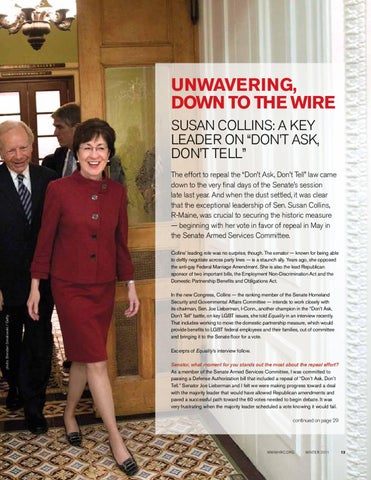
Unwavering, Down to the Wire Susan Collins: A Key Leader on “Don’t Ask, Don’t Tell” The effort to repeal the “Don’t Ask, Don’t Tell” law came down to the very final days of the Senate’s session late last year. And when the dust settled, it was clear that the exceptional leadership of Sen. Susan Collins, R-Maine, was crucial to securing the historic measure — beginning with her vote in favor of repeal in May in the Senate Armed Services Committee.
photo: Brendan Smialowski / Getty
Collins’ leading role was no surprise, though. The senator — known for being able to deftly negotiate across party lines — is a staunch ally. Years ago, she opposed the anti-gay Federal Marriage Amendment. She is also the lead Republican sponsor of two important bills, the Employment Non-Discrimination Act and the Domestic Partnership Benefits and Obligations Act. In the new Congress, Collins — the ranking member of the Senate Homeland Security and Governmental Affairs Committee — intends to work closely with its chairman, Sen. Joe Lieberman, I-Conn., another champion in the “Don’t Ask, Don’t Tell” battle, on key LGBT issues, she told Equality in an interview recently. That includes working to move the domestic partnership measure, which would provide benefits to LGBT federal employees and their families, out of committee and bringing it to the Senate floor for a vote. Excerpts of Equality’s interview follow. Senator, what moment for you stands out the most about the repeal effort? As a member of the Senate Armed Services Committee, I was committed to passing a Defense Authorization bill that included a repeal of “Don’t Ask, Don’t Tell.” Senator Joe Lieberman and I felt we were making progress toward a deal with the majority leader that would have allowed Republican amendments and paved a successful path toward the 60 votes needed to begin debate. It was very frustrating when the majority leader scheduled a vote knowing it would fail. continued on page 29
WWW.HRC.ORG
winter 2011
13