2 minute read
From the President


Gavin Finkelstein impact of delays to new and emerging therapies for Medical Services Advisory Committee (MSAC), which for governments, but the process for timely evaluation reviews of how medicines are assessed for funding. access despite a favourable recommendation from and children with severe and moderate haemophilia A
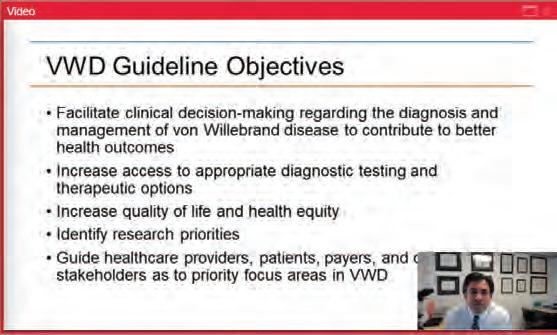
NEW WFH HAEMOPHILIA GUIDELINES
The new World Federation of Hemophilia (WFH) guidelines for the management of haemophilia were published in August 2020. We have been advised by the Australian Haemophilia Centre Directors’ Organisation (AHCDO) that the Guidelines for the management of haemophilia in Australia (2016) will also be reviewed following this.
The WFH guidelines include a range of new recommendations following the innovations in treatment and care that have emerged in the last five years or so, such as the use of genetics in diagnosis, new treatment approaches and use of new products. The new guidelines recognise that haemophilia can be managed very differently than before, with a focus on achieving more effective haemostasis (blood clotting) and improved health outcomes.
However, as before, the new WFH guidelines are built on the very important framework for haemophilia care and treatment that includes:
p rinciples of care national coordination and delivery of haemophilia care co mprehensive haemophilia care network of haemophilia treatment centres national patient registry national or regional procurement of haemophilia therapies
ACCESS TO TREATMENT
This framework has existed in Australia since the National Blood Agreement (2003) when all governments agreed to share the cost of publicly funded treatment products for people with bleeding disorders. It remains our preferred system, but it can be improved. On one hand it has been exciting to see the range of treatment options and new innovations coming globally, but frustrating that in Australia we HFA started a discussion in 2019 about the potential our community. For example, extended half-life (EHL) clotting factors were first registered in Australia in 2014, and adopted as the standard care in similar health care economies for much longer, yet they only became publicly available to all Australians with haemophilia in July 2020 as a result of the recent government tenders. This is despite a positive recommendation from the is the relevant government committee to review suitability for government funding for haemophilia treatments. A positive recommendation from MSAC is followed by processes under the National Blood Agreement to make new therapies available. EHLs will make a real difference to the health outcomes for many people with haemophilia A and haemophilia B in our community, and it is a relief they will now be available to everyone.
We came to a consensus with treating health professionals that some new medicines could lead to better health outcomes for patients and reduced costs and the issues that should be taken into account needed review. Recently I was pleased when the Federal government announced some health sector Some of this work will be relevant to bleeding disorders and we will participate.
At the time of writing, people with severe and moderate haemophilia A with and without inhibitors who could benefit from Hemlibra® still do not have MSAC. Hemlibra® is a new treatment option for adults experience long delays to access them.
(with and without inhibitors), and many people treated with it report no bleeds at all. It is not HFA’s job to recommend specific treatments, but it is our job to advocate for a range of best practice publicly-funded treatment products so our members can decide with their treating doctor which product is best for them.