Enable Injections
increasing adoption and [the combination product] now represents over 50% share of all Neulasta purchases. This has been a great example of a very successful lifecycle management strategy.”2
A WINNING PATIENT ENGAGEMENT STRATEGY Amgen has found a key to patient engagement with a winning combination product. Without the integration of their drug with a delivery system that patients found far more convenient, would Neulasta be as commercially successful in the face of biosimilar approvals? It’s doubtful. Other pharma executives are thinking about patient engagement as well, more than the general news or trade press would have one believe. For example, most interviews with GSK’s new head of R&D, Hal Barron, result primarily in reports about the drug pipeline and its implications for the company’s business. But apparently there’s more on his mind. In a television interview on business channel CNBC, discussing GSK’s investment in 23andMe, Barron had the opportunity to slip in that, in addition to obtaining access to 23andMe’s vast trove of data, GSK would have the benefit of access to engaged patients, those who have given permission for their genetic information to be used in research. That cohort of accessible patients could be invaluable to GSK. “Patient value has now become synonymous with business value,” said Josh Bramwell, Director of industry group eyeforpharma. “Companies listening to the growing patient voice and incorporating those insights into the design of products, trials and strategy are being rewarded with higher uptake and better outcomes.”
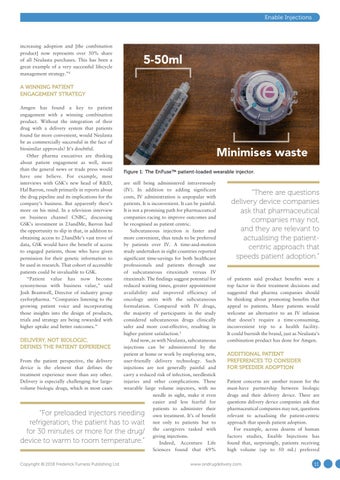
Figure 1: The EnFuse™ patient-loaded wearable injector.
are still being administered intravenously (IV). In addition to adding significant costs, IV administration is unpopular with patients. It is inconvenient. It can be painful. It is not a promising path for pharmaceutical companies racing to improve outcomes and be recognised as patient centric. Subcutaneous injection is faster and more convenient, thus tends to be preferred by patients over IV. A time-and-motion study undertaken in eight countries reported significant time-savings for both healthcare professionals and patients through use of subcutaneous rituximab versus IV rituximab. The findings suggest potential for reduced waiting times, greater appointment availability and improved efficiency of oncology units with the subcutaneous formulation. Compared with IV drugs, the majority of participants in the study considered subcutaneous drugs clinically safer and more cost-effective, resulting in higher patient satisfaction.3 DELIVERY, NOT BIOLOGIC, And now, as with Neulasta, subcutaneous DEFINES THE PATIENT EXPERIENCE injections can be administered by the patient at home or work by employing new, From the patient perspective, the delivery user-friendly delivery technology. Such device is the element that defines the injections are not generally painful and treatment experience more than any other. carry a reduced risk of infection, needlestick Delivery is especially challenging for largeinjuries and other complications. These volume biologic drugs, which in most cases wearable large volume injectors, with no needle in sight, make it even easier and less fearful for patients to administer their “For preloaded injectors needing own treatment. It’s of benefit refrigeration, the patient has to wait not only to patients but to for 30 minutes or more for the drug/ the caregivers tasked with giving injections. device to warm to room temperature.” Indeed, Accenture Life Sciences found that 69% Copyright © 2018 Frederick Furness Publishing Ltd
“There are questions delivery device companies ask that pharmaceutical companies may not, and they are relevant to actualising the patientcentric approach that speeds patient adoption.” of patients said product benefits were a top factor in their treatment decisions and suggested that pharma companies should be thinking about promoting benefits that appeal to patients. Many patients would welcome an alternative to an IV infusion that doesn’t require a time-consuming, inconvenient trip to a health facility. It could burnish the brand, just as Neulasta’s combination product has done for Amgen.
ADDITIONAL PATIENT PREFERENCES TO CONSIDER FOR SPEEDIER ADOPTION Patient concerns are another reason for the must-have partnership between biologic drugs and their delivery device. There are questions delivery device companies ask that pharmaceutical companies may not, questions relevant to actualising the patient-centric approach that speeds patient adoption. For example, across dozens of human factors studies, Enable Injections has found that, surprisingly, patients receiving high volume (up to 50 mL) preferred
www.ondrugdelivery.com
11