Tradiciones
Yucatecas Yucatecan Traditions
E
l estado de Yucatán siempre se ha caracterizado por ser un país lleno de costumbres y tradiciones.Tanto en la ciudad como en las poblaciones cercanas se puede disfrutar durante todo el año una gran cantidad de fiestas y celebraciones, las cuales mayormente se realizan conmemorando a los santos patronos y en honor a los aniversarios de las ciudades o pueblos. En estas festividades que comúnmente duran por toda una semana, la gente del pueblo viste los trajes típicos y adorna con banderas de colores la
iglesia del pueblo, la comisaría y los lugares principales donde se realizan las diversas actividades organizadas para la ocasión. Como festejos tradicionales no pueden faltar las vaquerías, los gremios, los bailes con grupos musicales, y las ferias donde se exhiben una cantidad de productos típicos de la región.
Y
ucatán State has always been characterized by being a region full of customs and traditions. Both in Mérida, the capital city, and in nearby towns and communities, one can enjoy a large number of festivals and celebrations, which
Trajes Regionales
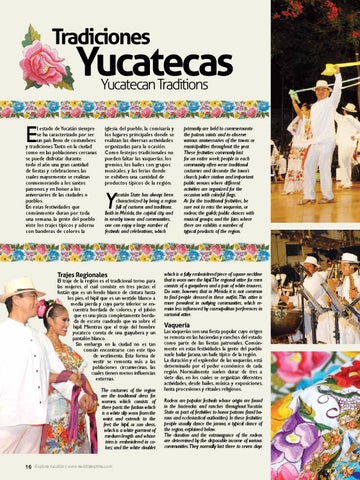
El traje de la región es el tradicional terno para las mujeres, el cual consiste en tres piezas: el fustán que es un fondo blanco de cintura hasta los pies, el hipil que es un vestido blanco a media pierda y cuya parte inferior se encuentra bordada de colores, y el jubón que es una pieza completamente bordada de escote cuadrado que va sobre el hipil. Mientras que el traje del hombre yucateco consta de una guayabera y un pantalón blanco. Sin embargo en la ciudad no es tan común encontrarse con este tipo de vestimenta. Esta forma de vestir se remonta más a las poblaciones circunvecinas, las cuales tienen menos influencias externas. The costumes of the region are the traditional dress for women, which consists of three parts: the fustian which is a white slip worn from the waist and extends to the feet; the hipil, or sun dress, which is a white garment of medium length and whose trim is embroidered in colors; and the white doublet 16
Explore Yucatán | www.revistaexplore.com
primarily are held to commemorate the patron saints and to observe various anniversaries of the towns or municipalities throughout the year. These festivities commonly last for an entire week; people in each community often wear traditional costumes and decorate the town’s church, police station and important public venues where different activities are organized for the occasion with colorful flags. As for the traditional festivities, be sure not to miss the vaquerías, or rodeos; the guilds; public dances with musical groups; and the fairs where there are exhibits a number of typical products of the region.
which is a fully embroidered piece of square neckline that is worn over the hipil.The regional attire for men consists of a guayabera and a pair of white trousers. Do note, however, that in Mérida it is not common to find people dressed in these outfits. This attire is more prevalent in outlying communities, which remain less influenced by cosmopolitan preferences in sartorial attire.
Vaquería
Las vaquerías son una fiesta popular cuyo origen se remota en las haciendas y ranchos del estado como parte de las fiestas patronales. Comúnmente en estas festividades la gente del pueblo suele bailar Jarana, un baile típico de la región. La duración y el esplendor de las vaquerías, está determinado por el poder económico de cada región. Normalmente suelen durar de tres a siete días, en los cuales se organizan diferentes actividades, desde bailes, música y exposiciones, hasta procesiones y rituales religiosos. Rodeos are popular festivals whose origin are found in the haciendas and ranches throughout Yucatán State as part of festivities to honor patrons (land barons and ecclesiastical authorities). In these festivities people usually dance the jarana, a typical dance of the region, explained below. The duration and the extravagance of the rodeos are determined by the disposable income of various communities.They normally last three to seven days