KITTY'S KORNER
by Deborah Hansen
RUB-A-DUB-DUB,
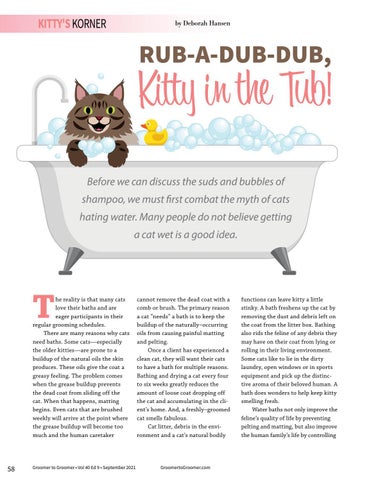
Kitty in the Tub! Before we can discuss the suds and bubbles of shampoo, we must first combat the myth of cats hating water. Many people do not believe getting a cat wet is a good idea.
T
he reality is that many cats love their baths and are eager participants in their regular grooming schedules. There are many reasons why cats need baths. Some cats—especially the older kitties—are prone to a buildup of the natural oils the skin produces. These oils give the coat a greasy feeling. The problem comes when the grease buildup prevents the dead coat from sliding off the cat. When that happens, matting begins. Even cats that are brushed weekly will arrive at the point where the grease buildup will become too much and the human caretaker
58
Groomer to Groomer • Vol 40 Ed 9 • September 2021
cannot remove the dead coat with a comb or brush. The primary reason a cat “needs” a bath is to keep the buildup of the naturally–occurring oils from causing painful matting and pelting. Once a client has experienced a clean cat, they will want their cats to have a bath for multiple reasons. Bathing and drying a cat every four to six weeks greatly reduces the amount of loose coat dropping off the cat and accumulating in the client’s home. And, a freshly–groomed cat smells fabulous. Cat litter, debris in the environment and a cat’s natural bodily
GroomertoGroomer.com
functions can leave kitty a little stinky. A bath freshens up the cat by removing the dust and debris left on the coat from the litter box. Bathing also rids the feline of any debris they may have on their coat from lying or rolling in their living environment. Some cats like to lie in the dirty laundry, open windows or in sports equipment and pick up the distinctive aroma of their beloved human. A bath does wonders to help keep kitty smelling fresh. Water baths not only improve the feline’s quality of life by preventing pelting and matting, but also improve the human family’s life by controlling