SPECIAL REPORT: IRRIGATION it is being dug, constant grading measurements are necessary. The width of the trench will depend on how large the drainage problem is. Smaller drainage problems can be handled with a trench that is 5 to 6 inches wide, while larger problems will require a larger trench.
⑤ Add the fabric
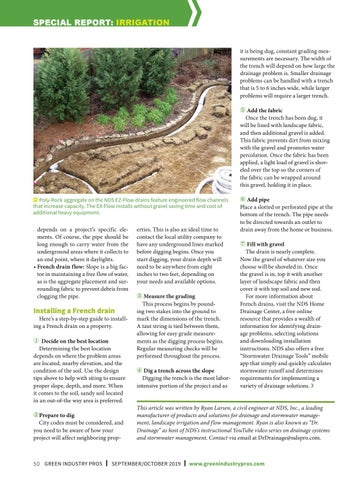
Once the trench has been dug, it will be lined with landscape fabric, and then additional gravel is added. This fabric prevents dirt from mixing with the gravel and promotes water percolation. Once the fabric has been applied, a light load of gravel is shoveled over the top so the corners of the fabric can be wrapped around this gravel, holding it in place. Poly-Rock aggregate on the NDS EZ-Flow drains feature engineered flow channels that increase capacity. The EX-Flow installs without gravel saving time and cost of additional heavy equipment.
depends on a project’s specific elements. Of course, the pipe should be long enough to carry water from the underground areas where it collects to an end point, where it daylights. • French drain flow: Slope is a big factor in maintaining a free flow of water, as is the aggregate placement and surrounding fabric to prevent debris from clogging the pipe.
Installing a French drain
Here’s a step-by-step guide to installing a French drain on a property.
① Decide on the best location
Determining the best location depends on where the problem areas are located, nearby elevation, and the condition of the soil. Use the design tips above to help with siting to ensure proper slope, depth, and more. When it comes to the soil, sandy soil located in an out-of-the way area is preferred.
②Prepare to dig
City codes must be considered, and you need to be aware of how your project will affect neighboring prop-
50 GREEN INDUSTRY PROS
GIP0919_48-51_Irrigation_rw.indd 50
❙
erties. This is also an ideal time to contact the local utility company to have any underground lines marked before digging begins. Once you start digging, your drain depth will need to be anywhere from eight inches to two feet, depending on your needs and available options.
③ Measure the grading
This process begins by pounding two stakes into the ground to mark the dimensions of the trench. A taut string is tied between them, allowing for easy grade measurements as the digging process begins. Regular measuring checks will be performed throughout the process.
④ Dig a trench across the slope
Digging the trench is the most laborintensive portion of the project and as
⑥ Add pipe
Place a slotted or perforated pipe at the bottom of the trench. The pipe needs to be directed towards an outlet to drain away from the home or business.
⑦ Fill with gravel
The drain is nearly complete. Now the gravel of whatever size you choose will be shoveled in. Once the gravel is in, top it with another layer of landscape fabric and then cover it with top soil and new sod. For more information about French drains, visit the NDS Home Drainage Center, a free online resource that provides a wealth of information for identifying drainage problems, selecting solutions and downloading installation instructions. NDS also offers a free “Stormwater Drainage Tools” mobile app that simply and quickly calculates stormwater runoff and determines requirements for implementing a variety of drainage solutions. ❯
This article was written by Ryan Larsen, a civil engineer at NDS, Inc., a leading manufacturer of products and solutions for drainage and stormwater management, landscape irrigation and flow management. Ryan is also known as “Dr. Drainage” as host of NDS’s instructional YouTube video series on drainage systems and stormwater management. Contact via email at DrDrainage@ndspro.com.
SEPTEMBER/OCTOBER 2019
❙
www.greenindustrypros.com
9/17/19 10:28 AM
C
O