Business Retention & Expansion (BR&E) Committeе
Most new jobs and investment in a community are created by existing companies. As an economic development strategy, the return on the investment of human and financial resources on local businesses is greater than when invested on prospective new businesses. Plus, new business recruitment is made easier when there is a happy and healthy local business climate and existing firms become ambassadors for the community.
The purpose of the BR&E committee is to help existing local businesses grow, expand and overcome obstacles. The BRE Committee and volunteers conduct formal face-to-face business surveys every three years to gather vital information to provide assistance to local firms. The following two years after the survey the chamber implements symposiums, forums and classes to help in the areas that businesses indicated need.
Here a few of the areas that the Grants Pass & Josephine County Chamber of Commerce BRE Committee focuses and offers support:
1. Retaining local businesses: Retaining established businesses is crucial for the economic stability and growth of a community. The committee works towards identifying and addressing the needs and challenges faced by local businesses, helping them overcome obstacles and remain operational within the community.
2. Economic development: Local businesses play a significant role in generating employment opportunities, contributing to the tax base, and fostering economic growth. By retaining and expanding businesses, the committee helps to create a vibrant and sustainable business environment, leading to job creation and increased economic activity.
3. Business support and resources: The committee serves as a central point of contact and support for local businesses. It offers resources, expertise, and assistance to address the needs of businesses, ranging from regulatory compliance to access to financing, marketing support, workforce development, and more. This support helps businesses thrive and stay competitive.
4. Community stability and identity: Local businesses often contribute to the unique character and identity of a community. They provide essential goods, services, and a sense of place. By preserving and expanding local businesses, the committee helps maintain community cohesion, ensures a diverse commercial landscape, and enhances the overall quality of life for residents.
5. Collaborative networking: The committee acts as a platform for collaboration and networking between businesses, government agencies, economic development organizations, and other stakeholders. By fostering these connections, the committee facilitates knowledge-sharing, promotes partnerships, and enables businesses to leverage collective resources and expertise for their growth and success.
6. Proactive problem-solving: The committee proactively identifies challenges and opportunities for businesses and takes steps to address them. By conducting surveys, gathering data, and engaging in regular communication with local businesses, the committee can anticipate potential issues and implement strategic initiatives to overcome them, such as advocating for supportive policies or providing targeted training programs.
7. Business expansion and attraction: In addition to retention, the committee also focuses on facilitating the expansion of existing businesses. By identifying growth opportunities, assisting with access to capital, and providing guidance on market expansion, the committee helps businesses expand their operations, create more jobs, and contribute to the economic vitality of the community. Furthermore, successful expansion stories can attract new businesses to the area, bolstering the local economy further.
The BR&E Committee plays a vital role in supporting and fostering the growth of local businesses. By retaining existing businesses, providing support and resources, promoting collaboration, and facilitating expansion, the committee contributes to economic development, community stability, and overall prosperity.


Josephine County and Grants Pass, Oregon
Business Retention And Expansion Program
2025 Visitation Survey
Executive Summary
Committee Members:
Mark Stutzman, Farmers Building Supply 2026 Chair
Lowell Gibson, NiceBadge 2025 Chair
Jamie Cartwright, Cartwrights Market & Cartwrights Taprock Northwest Grill
Melissa Hayes, KW Commercial
Rob Hambleton, BBSI
Dave Thomason, Thomason Hospitality
Steve Roe, Roe Motors
Ruth Swain, SBDC
Tyler Worthley, WorkSource Oregon
Jaymes Tadlock, Evergreen Federal Bank
Tyler Cook, ESAM
Chuck Rund, Charleston Research
Terrill Roper, SOREDI
Karen Chase, Energy Trust
Liaisons:
City of Grants Pass: Dana Pearce
Business Oregon: Marta Tarantsey
Regional Solutions: Jessica LaBerge
Josephine County and Grants Pass, Oregon Business Retention And Expansion Program
2025 Visitation Survey
Executive Summary
Key Findings
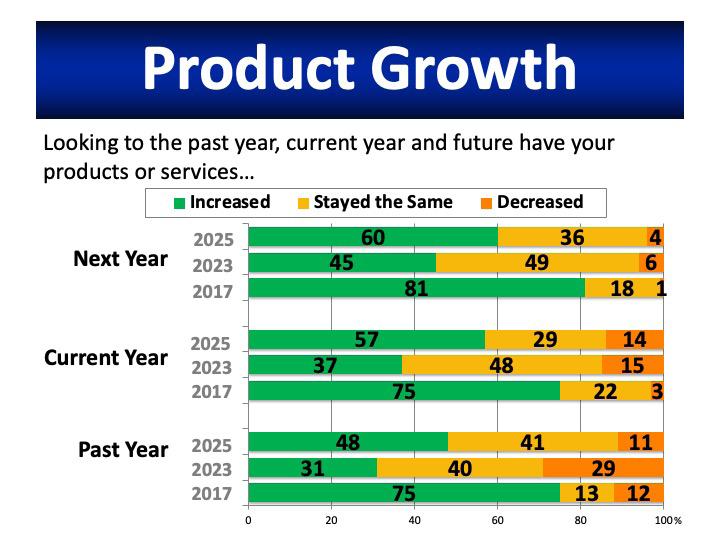
Josephine County businesses report rebounding rates of growth in products and sales compared to post-pandemic levels. While current-year growth estimates have increased since our last survey, most businesses expect increases in products and services in the coming year as well.
Broader economic issues are the biggest concern, chiefly decreasing consumer confidence, threat of recession, and inflation.
Workforce concerns also resonate, with affordable housing and available childcare also impacting businesses.
Many aspects of the area are highly rated, both as a place to live and as a place to do business. The friendly, small town feel and support of loyal customers are especially valued.
Many City services receive high ratings, led by Grants Pass fire and police protection, disposal/recycling, public works, and tourism. County services tend to be less well-known, with the Fairgrounds and the County Sheriff’s office topping the rankings.
In Uncertain Economic Climate:
Employee Recruitment and Retention Remain Important Concerns
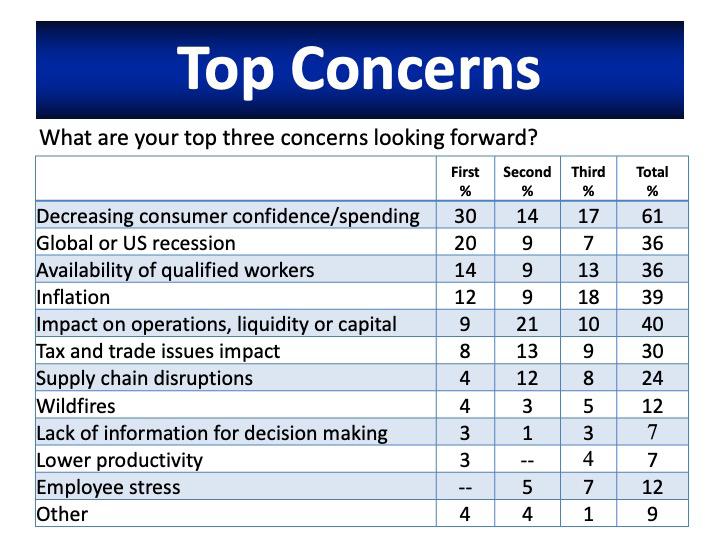
The broader economic issues across the nation are the biggest concern facing Josephine County businesses today, chiefly decreasing consumer confidence (30%), threat of a US or global recession (20%), and inflation (12%).Local or regional business leaders do not have control over these nationwide concerns. So, we took a deeper and broader look at why these issues play such a prominent role in business leaders’ concern. Many economic sources were consulted, and the Michigan Index of Consumer Sentiment is seen as helpful to gain a better understanding. At the time the BR&E Survey was in the field, the MI Index was recorded at an all-time low for some groups.
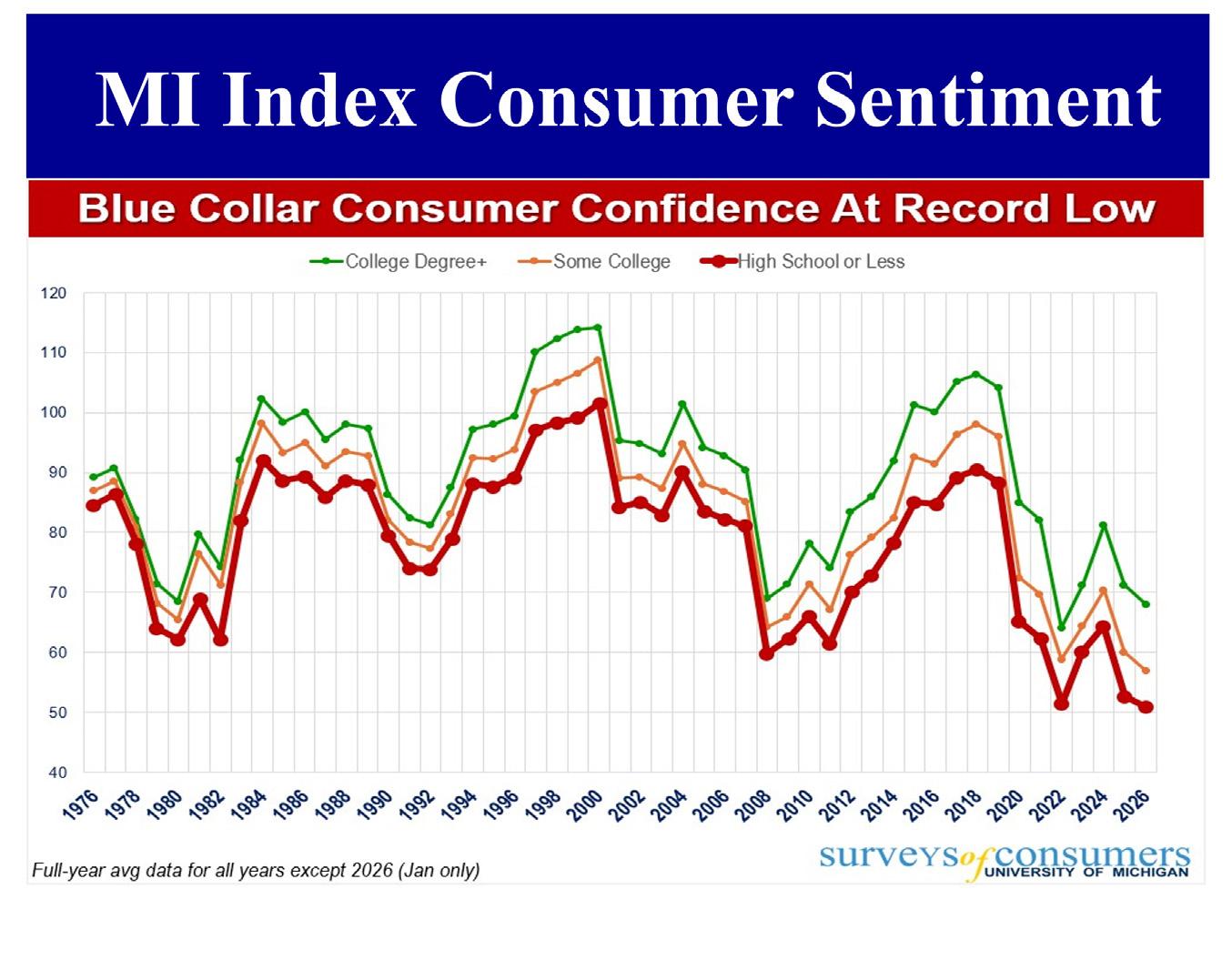
The MI Consumer Sentiment Index measures the health of the economy; current financial health (short term); long-term economic growth; business and buying conditions; and other elements. Consumer Sentiment is important as Consumer Spending accounts for 68.1% of the U. S. Economy. The largest measured segments include Housing (33.3%); Transportation (16.7%); and Food (12.8%) of the economy respectively. Other factors were analyzed including consumption trends, tariffs, and A.I. All pointed to uncertainty in the marketplace stimulating business concerns.
Concerns about capital/liquidity (9%) and tax and trade issues (8%) also make the list. Amid these economic uncertainties, issues related to employee recruitment and retention remain of significant concern, with 14% concerned about the availability of qualified workers, the third most frequently cited concern.
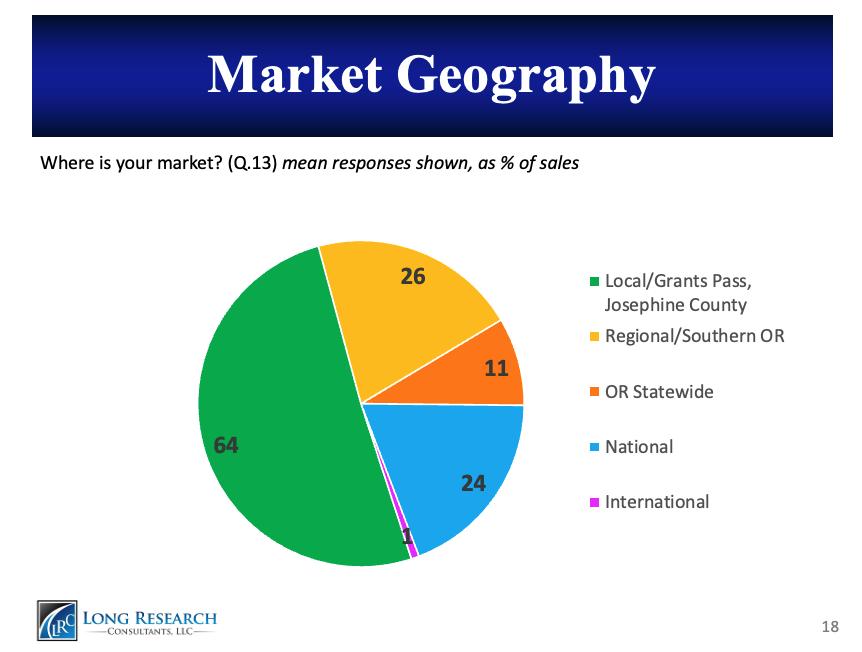
As would be expected most businesses describe their market as local (64%), Grants Pass & Josephine County, with another 26 % saying Regional/Southern Oregon. Surprisingly, 24% say their market is National and when that is compared to Oregon Statewide which is only 11%, this raises some interesting questions. What is driving the National market and why is the Statewide market so low? (Further study required).
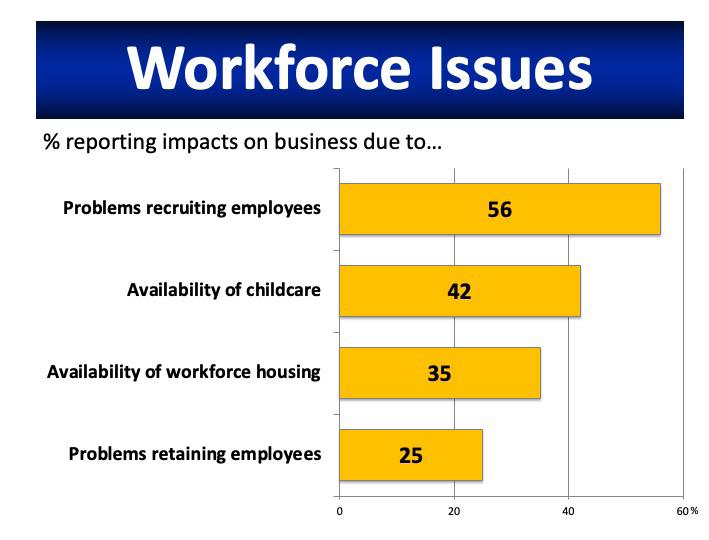
Over half (56%) of local businesses report having problems recruiting employees. Some of the difficulty may be attributable to deficiencies in the availability of childcare services and workforce housing. Forty-two percent of businesses say the availability of childcare has impacted their business and 35% report being impacted by the availability of workforce housing. These numbers show some improvement from the prior survey, when 53% felt the impacts of childcare availability and 42% reported being impacted by workforce housing availability. Despite this improvement, when asked about disadvantages of operating in this community, housing availability/homelessness tops the list, mentioned by 23%. The next most frequently mentioned response is that there are no disadvantages to operating in this community.
Josephine County Business GrowthRates Rebound Despite Industry-Wide Lags
In the second survey in this series since the Covid-19 pandemic, Josephine County businesses report growth rates recovering toward pre-pandemic levels. Following significant dips in the growth of products and services during and after the pandemic, majorities of local businesses now anticipate growth for 2025, as well as the year ahead.
While the previous business climate survey, conducted late 2022 through early 2023, found current year-growth dropping from 75% in 2017 to 37%, the latest survey finds 57% reporting growth in products and services for 2025. Similarly, looking ahead to the next year, 60% of businesses now report anticipating expanding products and services for 2026, compared to just 45% who expected increases on the heels of the pandemic.
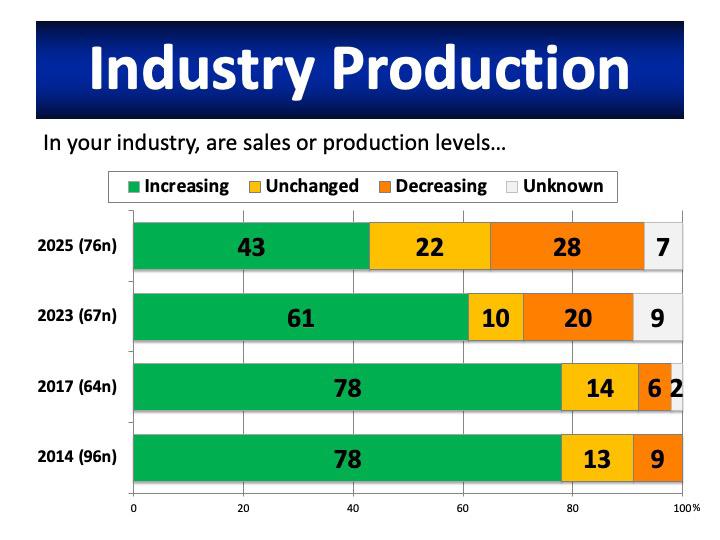
The percentage who report increasing sales or production levels in their industry (43%) however continues a downward trend, and more than a quarter now say sales or production levels in their industry are decreasing. Notably, we did not survey businesses during the pandemic so the prior survey reflects optimism that sales and production were rebounding from a significantly lower point, while about twice as many (22%) now see sales and production leveling off in the current economy. Despite these industry-wide lags, the number predicting increases in web-based sales is up from 27% for the current year to 39% for the coming year, while about one-in-five (22%) say web-based sales don’t apply to their business.
Area Businesses are Innovating with New Products and Technologies
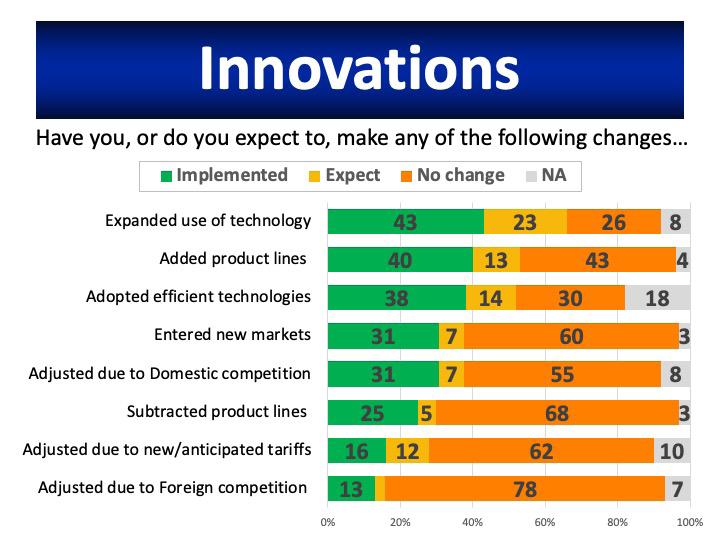
Regardless of e-tail adoption, the expanded use of technology is the most frequent change or innovation reported by Josephine County businesses, with 43% reporting they have expanded their use of technology in the past three years and another 23% reporting they expect to. Additionally, 38% report having adopted more efficient technologies.
Underscoring the product and sales growth described above, four-in-ten have added product lines while 31% have entered new markets. Thirty-one percent have made adjustments due to domestic competition while 13% faced adjustment due to foreign competition. About one-in-six (13%) made adjustments due to new or anticipated tariffs.
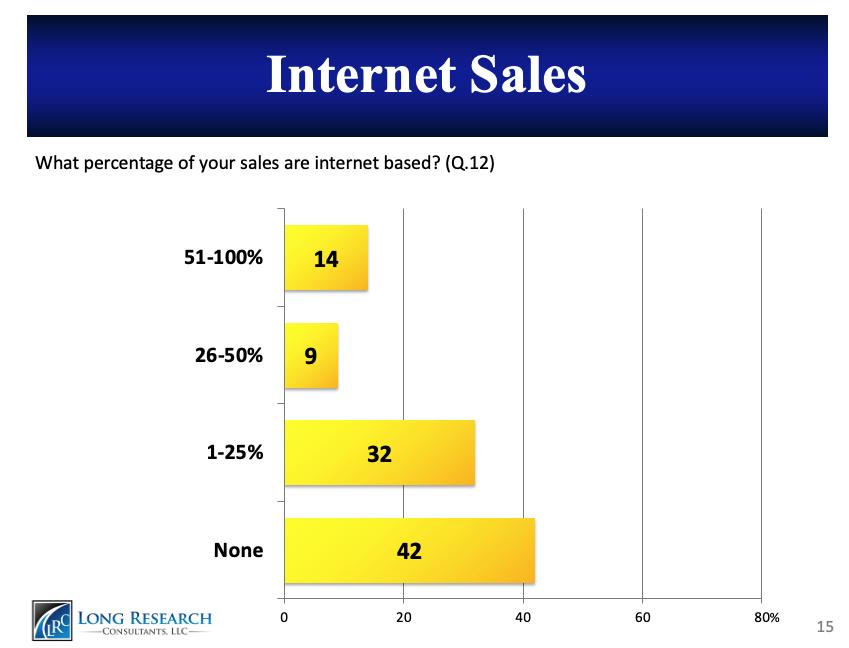
Business is addressing technological change, however when asked about the number of sales generated on the Internet only 23% say 25% or more of their sales come from the Internet. Forty two percent say ‘No Sales’ come from the internet and 32% say that a quarter or less of their sales are internet based. The Web is not driving much business locally.












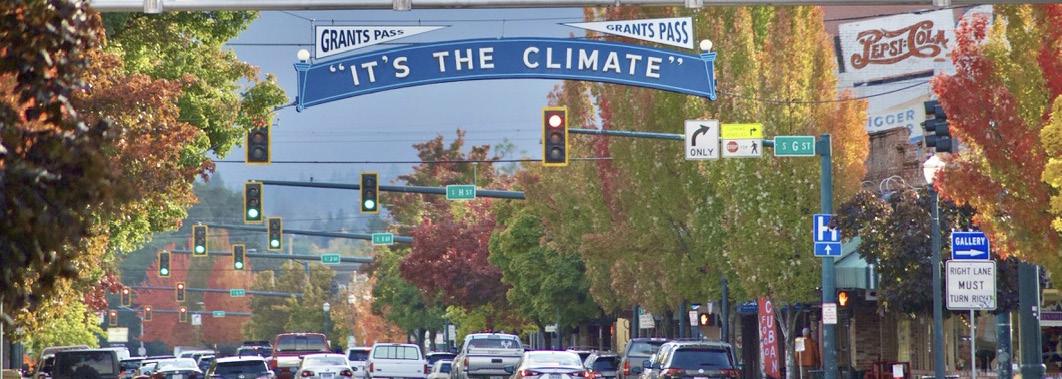
Josephine County, Highly Rated for Sense of Community and Quality of Life,
Seen as a Good Place to do Business
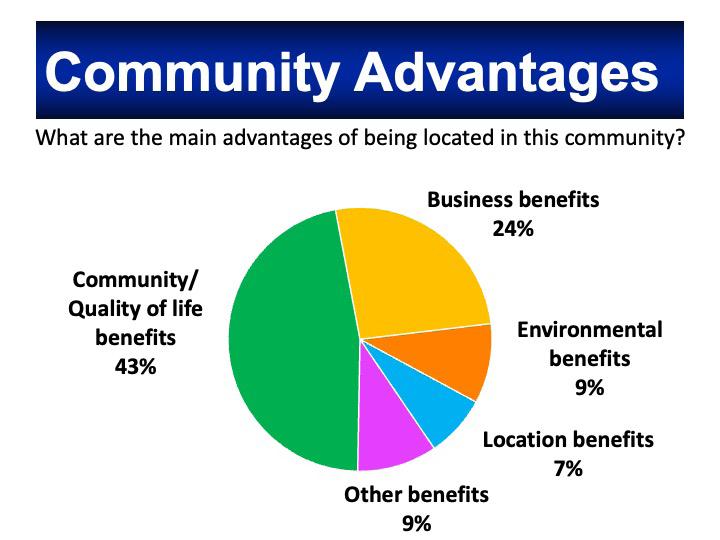
Area businesses see many advantages to operating in this community, chief among them the sense of community and quality of life (43%), including 12% who mention the small town feel. One quarter (24%) mention benefits related to the business community (especially the support of loyal customers, 9%, Chamber involvement, 5%, and networking, 3%), while benefits associated with the natural environment and location are mentioned by 9% and 7%, respectively.
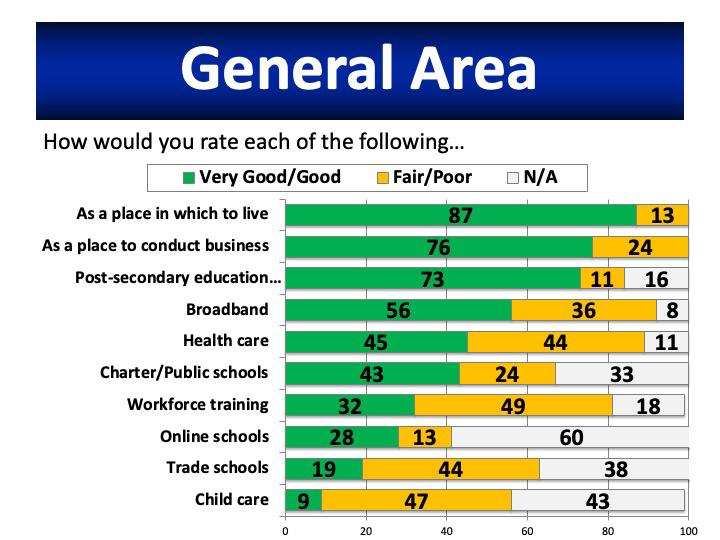
Businesses also rate the area highly as a place to live (87% very good or good), and as a place to do business (76% good/very good). Post secondary education (73%) and broadband service (56%) are also favorably viewed by more than half. Workforce training, childcare, and trade schools are seen as ripest for improvement.
Methodology
This survey of business leaders and owners was conducted among businesses in Josephine County including Grants Pass. Interviews were conducted by volunteers over a period from September through November 2025. Businesses were not randomly selected for participation but were identified by committee to represent the broader sample of businesses in Josephine County. This selection process has been used since the inception of the study in 1995. This is the ninth survey conducted over the past thirty years.
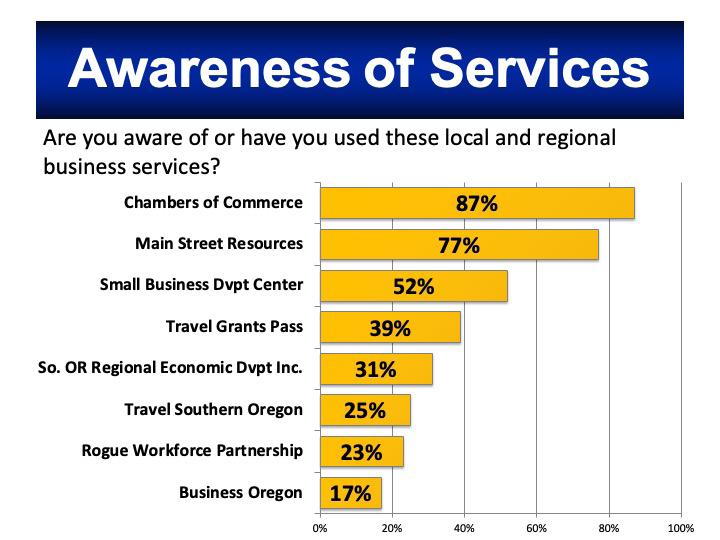
Eighty-seven percent of businesses surveyed say they are aware of or have used the Chambers of Commerce, while 77% are familiar with Main Street Resources. Just over half (52%) report familiarity with the Small Business Development Center, followed by Travel Grants Pass (39%), and Southern Oregon Regional Economic Development, Inc. (31%). One quarter are familiar with Travel South Oregon. Twenty-three percent are aware of Rogue Workforce Partnership and 17% are aware of Business Oregon.
Community Services Rated Highly, with Room to Improve in Key Areas for Business Growth
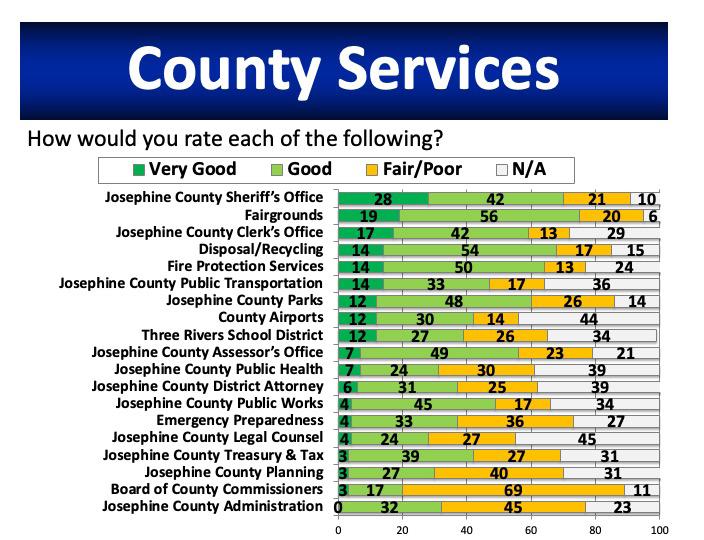
The Josephine County Sheriff’s Office receives the highest ratings among county services with 70% good/very good and 28% very good. County services are otherwise generally less well known with about one-quarter or more unable to rate 12 of the 17 services tested. However, most county services receive more positive than negative ratings. Notably, 40% rate Josephine County Planning as only fair or poor, and 69% grant fair or poor ratings to the County Commissioners.
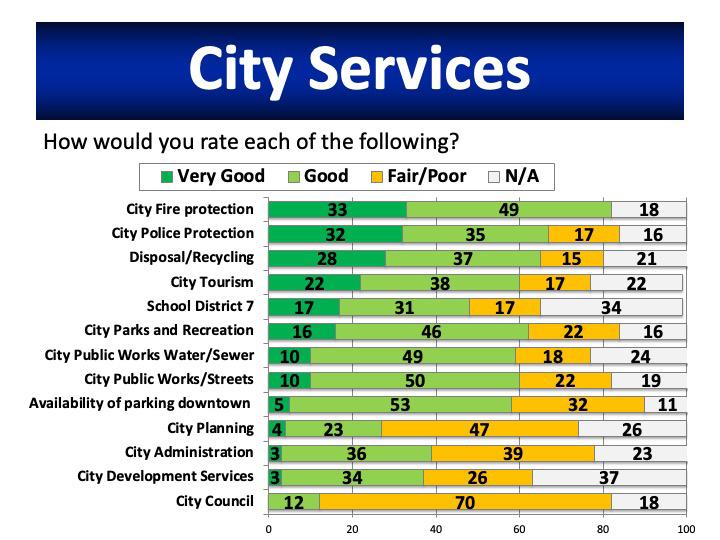
Josephine County businesses give the local community high scores for many local services and amenities. The top-rated city services are fire protection (82% good/very good with 33% very good), police (67% good/very good), disposal/recycling (65%), and parks and rec (62%). City tourism (60%), streets (60%), water/sewers (59%) and downtown parking (58%) are also all seen by majorities as either good or very good. Thirty-four percent were unable to rate school district 7, while city planning (27%), development (37%), and administration (39%) also received large shares of “NA” responses. City Council (12% good/ very good) received the lowest ratings but were also unrated by about one-in-five.
Thank You
City of Grants Pass and Josephine County Sponsors of the Survey.
ROGUE COMMUNITY COLLEGE SMALL BUSINESS & DEVELOPMENT CENTER for volunteer training.
The Grants Pass and Josephine County Chamber of Commerce would like to thank the volunteers who contributed to the survey. Your help was invaluable to completing the interviews with the businesses:
Richard Amneus
SBDC
Sharron Bison .............................. Volunteer
Meghan Boehm ...........................
Cat Bonney
Doug Bradley
Dan Buck
Bradley Clark
Karen Coburn
Jennifer Conner ...........................
Southern Oregon Aspire, Inc.
Webb Mountain Arts
Holiday Inn Express
Visit Grants Pass
City of Grants Pass
Volunteer
Farmer’s Building Supply
Ryan DeRoo ................................. SOREDI
Bill Ertel
Susan Feehan
Colt Foster
Lowell Gibson
Kevin Gill ......................................
Hugh Griffiths ..............................
Melissa hayes ..............................
Cynthia Hewitt
Terry Hopkins
Christy Kiltz
Shirley Liska
Premier West Properties
Retired/Our Foster Kids
Foster Strategies
Nicebadge
Clouser Drilling
Met One / SBDC
KW Commercial
Cynthia’s Home Sweet Home
GPJC Chamber
RCC SBDC
Red Hott Promos
Valerie Lovelace .......................... Retired
Alan Meyer ...................................
Pacific Power
Tom Parker Ambassadors
Dana Pearce
Ryan Queener
Terrill Roper
Chuck Rund
City of Grants Pass
MasterBrand
SOREDI
Charlton Research Company
Steve Sobhi .................................. BBSI
Mark Stutzman ............................
Christie Swafford
Jaymes Tadlock
Marta Tarantsey
Dave Thomason
Farmer’s Building Supply
GPJC Chamber
Evergreen Federal Bank
Business Oregon
Thomason Hospitlity
Kathy Wallmann .......................... Retired
Terri Wiley
Evergreen Federal Bank
Economic Profile of Josephine County, Oregon
A Snapshot of the Local Economy Supporting Our Business Community
Josephine County, Oregon, located in the heart of Southern Oregon, serves as an important regional hub for commerce, tourism, and community life. Anchored by the city of Grants Pass and surrounded by the natural beauty of the Rogue River and Siskiyou Mountains, the county’s economy reflects a blend of small-business entrepreneurship, healthcare services, outdoor recreation, and traditional industries such as manufacturing and wood products.
The results of the Chamber’s recent Business Retention & Expansion (BR&E) survey provide valuable insight into how local businesses are experiencing today’s economy. Understanding the broader economic landscape helps place those survey responses in context and highlights both the opportunities and challenges facing employers across Josephine County.
Population and Community Characteristics
Josephine County is home to approximately 88,000 residents, according to recent U.S. Census estimates. The county spans roughly 1,640 square miles, encompassing the cities of Grants Pass and Cave Junction as well as numerous rural communities. Grants Pass serves as the economic center of the county and provides many of the region’s employment, healthcare, and commercial services. (U.S. Census Bureau)
Demographically, Josephine County has a slightly older population than both the state and national averages. The median age is approximately 47.5 years, reflecting the county’s appeal as both a retirement destination and a community where many residents choose to remain long term. This demographic trend influences workforce availability, healthcare demand, and economic development priorities.
Household incomes remain somewhat lower than the statewide average. The median household income is approximately $60,000, and about 13–14 percent of residents live below the poverty line, according to U.S. Census data. While these figures reflect challenges common to many rural communities, they also
highlight the importance of maintaining strong local employment opportunities and supporting business growth. (U.S. Census Bureau)
Labor Market and Employment Trends
Josephine County’s labor market includes roughly 34,000 workers, supporting an economy made up largely of small businesses and service-based industries. The unemployment rate tends to fluctuate seasonally due to tourism, construction, and outdoor recreation sectors that experience higher activity during warmer months.
Recent data indicates the county’s unemployment rate has averaged around 6.8 percent, somewhat higher than Oregon’s statewide average. According to the Oregon Employment Department, employment levels in the Grants Pass metropolitan area have remained relatively stable in recent years, though employers continue to report challenges finding workers in key occupations. (Oregon Employment Department; QualityInfo.org)
Workforce availability remains one of the most commonly cited challenges among local businesses. Employers frequently report difficulty recruiting skilled workers in fields such as healthcare, construction trades, technical occupations, and certain professional services.
Major Industries Driving the Local Economy
Several key industries form the foundation of Josephine County’s economy. Health Care and Social Assistance is the county’s largest employment sector, employing more than 5,700 workers. Healthcare providers, clinics, and senior care facilities serve not only local residents but also patients from surrounding rural communities. The aging population suggests that this sector will continue to grow in importance over the coming decade. (Data USA)
Retail Trade is another major employer with nearly 4,900 jobs. Grants Pass functions as the retail center for much of southwestern Oregon and parts of northern California, drawing shoppers from surrounding rural communities.
Manufacturing employs approximately 3,400 workers and continues to play an important role in the regional economy. While the timber industry has evolved significantly over the past several decades,
wood products manufacturing and light industrial production remain an important source of family-wage employment. (Data USA)
In addition to these sectors, tourism and hospitality represent a significant part of the county’s economic identity. The Rogue River and surrounding wilderness areas attract thousands of visitors annually for rafting, fishing, and outdoor recreation. This tourism activity supports hotels, restaurants, retail shops, and guide services throughout the region.
Wages and Occupational Trends
Josephine County’s workforce is heavily concentrated in several common occupational groups including office and administrative support, sales, management, and service occupations. These jobs reflect the county’s service-oriented economy and the strong presence of small businesses.
Higher-wage sectors in the region include utilities, finance and insurance, and professional and technical services, which tend to offer some of the highest average salaries in the county. Healthcare professions and skilled trades also provide important pathways to family-wage careers. (Data USA)
However, many local employers continue to report challenges filling specialized positions, particularly in healthcare, construction trades, and technical fields. Workforce training and education partnerships remain important tools for addressing these shortages.
Entrepreneurship and Small Business
Josephine County’s economy is built largely on small businesses. According to federal business statistics, the county contains more than 2,100 employer establishments, the majority of which employ fewer than ten people. In addition, thousands of sole proprietors and self-employed entrepreneurs contribute to the region’s economic activity. (U.S. Census Bureau)
This entrepreneurial spirit is one of the county’s greatest economic strengths. Local businesses provide jobs, support community organizations, and help define the character of the region’s commercial districts.
Organizations such as the Grants Pass & Josephine County Chamber of Commerce, the Small Busines-
Development Center, and regional economic development partners work to support this business ecosystem through networking opportunities, advocacy efforts, and educational programs.
Opportunities and Challenges
Josephine County possesses several economic strengths that continue to support long-term growth. The region’s natural beauty and quality of life attract visitors and new residents alike. Healthcare and tourism industries provide economic stability, while manufacturing and construction offer opportunities for skilled workers.
At the same time, several challenges remain. Workforce shortages, an aging population, and the need for continued economic diversification all affect the region’s long-term economic outlook.
Addressing these challenges will require collaboration between businesses, educators, workforce organizations, and community leaders. Investments in workforce development, entrepreneurship, and infrastructure will help ensure Josephine County remains a strong place to live, work, and do business.
Looking Forward
Josephine County’s economy continues to evolve while maintaining the entrepreneurial spirit and community values that define Southern Oregon. The insights gathered through the Chamber’s business survey provide valuable feedback from local employers and help guide efforts to strengthen the business environment.
By understanding the broader economic trends shaping the region, local leaders and businesses can work together to support sustainable growth and ensure that Josephine County’s economy remains resilient for years to come.