Women in Milling

This month contains an annual event close to my heart: International Women’s Day. And so it feels timely to celebrate the contributions of women to milling, past and present.

- ‘Beans in toast’ - Can Britain raise the pulse?
- Determination of rheological properties of dough


- Automatic drum emptier: A unique technology for toxic/explosive powdery products

millingandgrain.com March 2023 In this issue: Milling and Grain . Volume 134 . Issue 3 . March 2023 Proud supporter of Download the Milling and Grain app to your smart phone INARECEN T POLL, MILLINGANDGRA I N W A S V O#DET LLIMDETSURTTSOMI GN MEMYBENIZAGAM SRE O F U K F L OU MILLERS YOUR GLOBAL
Volume 134 Issue 3
PARTNER


WHAT WE DO Designing FLOUR MILLING Manufacturing Turnkey project Service +86 371 68631308 info@g-grain.com www.g-grain.com SCAN ME FOR BROCHURE


Handle bulk with efficiency and reliability
Pneumatic and mechanical ship (un)loaders

Up to 2500 tph for loaders and up to 1200 tph for unloaders.
Low noise & no dust emission
Turnkey solutions for cereals, soy flour, fertilizer, pellets and more...


Perendale Publishers Ltd
7 St George’s Terrace St James’ Square, Cheltenham, Glos, GL50 3PT, United Kingdom
Tel: +44 1242 267700
Publisher
Roger Gilbert rogerg@perendale.co.uk
International Marketing Team
Darren Parris darrenp@perendale.co.uk
Asia Marketing Team
Dante Feng
Tel: +886 227930286 dantef@perendale.com
Latin America Marketing Team
Clarissa Garza de Yta Tel: +52 669 120 0140 clarissag@perendale.com
Cristina María Roldán Otero Tel: +44 1242 267700 cristinaot@perendale.co.uk
Nigeria Marketing Team
Nathan Nwosu Tel: +234 8132 478092 nathann@perendale.com
Egyptian Marketing Team
Mohamed Baromh Tel: +20 100 358 3839 mohamedb@perendale.com
Turkey, Eurasia and Middle East Marketing Team
Mehmet Ugur Gürkaynak Tel: +90 537 3646457 mehmetg@perendale.com
Editorial Manager

Joy (Jyothsna) Nelloolichalil joyn@perendale.co.uk
Editorial Assistant
Shannon Parsons shannonp@perendale.co.uk
Niamh Cassidy niamhc@perendale.co.uk
Digital community manager


Levana Hall levanah@perendale.co.uk
International Editors
Dr Roberto Luis Bernardi robertob@perendale.com

Professor Wenbin Wu wenbinw@perendale.com

Mehmet Ugur Gürkaynak mehmetg@perendale.com

Design Manager
James Taylor jamest@perendale.co.uk
Circulation & Events
Tuti Tan tutit@perendale.co.uk

Development Manager
Antoine Tanguy antoinet@perendale.co.uk
VOLUME 134 ISSUE 3 NEWS 10-28 42 Women in Milling 46 ‘Beans in toast’ - Can Britain raise the pulse? 52 Determination of rheological properties of dough 56 Grain quality assessment in the new age: GRAMS-M10 mobile app for accurate grain analysis 60 Four good reasons to include soy in diet formulation for young animals STORAGE 58 Automatic drum emptier: A unique technology for toxic/ explosive powdery products 8 PUBLISHER Roger Gilbert 104 INTERVIEW Thomas Kaesar ©Copyright 2019 Perendale Publishers Ltd. All rights reserved. No part of this publication may be reproduced in any form or by any means without prior permission of the copyright owner. More information can be found at www.perendale.com Perendale Publishers Ltd also publish ‘The International Milling Directory’ and ‘The Global Miller’ news service EVENTS 80 Event listings, reviews and previews COLUMNS 10 MAG TV 10 The Global Miller 20 Mildred Cookson 24 Dr Mahmoud Riyad 28 The Rex Wailes collection FACES 106 People news from the global milling industry TRAINING 33 Industry training news PRODUCT FOCUS 36 CASE STUDY 78 INDUSTRY PROFILE 76 Grain & Feed Milling Technology magazine was rebranded to Milling and Grain in 2015 March 2023 COVER IMAGE: Women in Milling - see more on page 42 FEATURES millingandgrain.com ISSN No: 2058-5101 ‘Beans in toast’ - Can Britain raise the pulse? See more on page 46
MARKETS
70
John Buckley
I heard it on the radio ...
From the BBC evening news, as I start to write my editorial, I’m informed that tomatoes and other early summer fruits and vegetables might have to be ‘rationed’ by some UK supermarkets due to poor spring growing conditions in southern of Spain and North Africa.

What are we to do?
Roger Gilbert
Go without? Now there’s a thought to be considered. Would we be prepared to go without to help reduce the transportation associated with growing crops, vegetables and even animal products long distances from where we consume them? I’m not so sure we would do that voluntarily.
Food rationing was the order of the day here in the UK following the Second World War but at a point in time when the whole population was pulling together to make the best of a bad situation left after four or so years of intensive fighting across Europe, the Middle East and Asia.
There was camaraderie in facing a difficult situation together - and that coupled with stoic good humour of British people helped to pull the country through.
That might not be the case in a situation almost 100 years on when the cause we are asked to address is not universally agreed upon. Rationing on a national scale and involving all aspects of imported foodstuffs might not work as well and while there was an end sight to rationing following WWII there would be no possibility of future relief from rationing in response to managing climate change.
There is a place for globalisation in our world - and we all know it.
James Cooper writes in this edition about alternative, locally produced protein sources to supplement a basic food staple, bread. He looks at the possible inclusion of locally grown faber beans to add to bread’s nutritional value and at using a crop that can be grown readily in the UK - a win-win he calls it. There is a significant three-year project underway to evaluate such a change might have on an essential food source.
We in the milling industry rely on global supplies of wheat varieties that make up the wide range of flours that bakers in particular, and consumers in turn, have come to expect from us on a daily basis. Tampering with the supply chain can only cause anxiety at one extreme to human health implications at the other. However, we cannot sit by and feel comfortable what we are doing without explanation. Transparency is everything. We have to make our case for the continuing global trade in grain crops so that millers can continue to deliver the best and most relied upon staple at prices consumers can afford everywhere.
Reducing food miles is not the answer. Producing locally grown grains to compliment imported basics is very much a way forward and millers must be open to engaging in that development.
By that I mean we have to show a willingness to moderate
our production processes to handle smaller intakes of grains from local farmers and produce flours that retailers and bakeries would like to use. In the eyes of consumers ‘local is good’ and we are in a position to provide an integrated approach bringing together local-and-global supply chains to benefit consumers and assist towards greater self-sufficiency. This does not just apply to flour millers but to animal feed millers as well.
We should also have higher expectations of ourselves in explaining what we do and why. We should look into the true cost in terms of the carbon footprint associated with growing, harvesting and moving significant volumes of grain and how that compares to the cost of locally produced milling raw materials. I would not be surprised that the cost in terms of price and carbon per kg at the mill intake favours that coming farthest.
We live in a world where self-sufficiency for many nations is not possible or realistic; where populations have fare outpaced their country’s ability to provide sufficient food from local sources, year-round.
Worldwide we have a strong and sound milling industry for flour and feed that uses the same equipment, processing the same types and varieties of grain and raw materials to produce a vast array of end products for bakeries and farmers that meet local and cultural needs.
It’s up to us to champion the success of our globally, joined-up milling industry in terms of safety, nutrition, economies of scale and affordability by identifying and justifying our impact on the planet.
World Flour Day - March 20th

There is every good reason for you to remember when World Flour Day is - that’s because we have carried the date on the cover of each edition for the past year, and prior to that.
World Flour Day is the day in which we should celebrate those who are involved in the production of flour right from the development of the wheat and grain varieties we use. There is a website for World Flour Day (https://worldflourday.com/) where I’m requesting all of you to visit and leave your thoughts and your plans for World Flour Day in your communities. Let’s show and tell the world who we are and why what we do is so essential!
I hope you enjoy this edition of Milling and Grain … after all, you won’t hear this content on your radio.
Milling and Grain has a cooperative partnership with COFCOET

Annual Subscription Rates
Inside UK: UK£100
Outside: US$150/€133
More Information
www.millingandgrain.com
http://gfmt.blogspot.co.uk
PINGLE.
PROFESSIONAL MANUFACTURER

★ ISO 9001:2015 CERTIFIED
Аdd: Zhengding, Shijiazhuang,Hebei,China
Tel: +86-311-88268111 Fax: +86-311-88268777
E-mail:pingle@pingle.cn / www.pinglemachine.com
OF GRAIN MACHINERY
★ INTEGRATED MILLING SOLUTION PROVIDER
NewsMilling

Welcome to the third edition of this year’s Milling and Grain magazine, let me begin by offering my sincere condolences and sympathy to Turkey and Syria for their devastating loss in the powerful earthquake. We urge our readers to consider donating to support these two countries’ recovery effort in any possible way.
IPPE 2023 - Interview with Giuseppe Bigliani and Noam Silberstein, AGI


Giuseppe Bigliani, International Account Executive also at AGI talks to Roger about opportunities at the Online Milling School.
Giuseppe tells Milling and Grain magazine about his experience stating that if you’re in the petfood, aquafeed, or milling business, attending these courses is a must! The knowledge and experience gained from direct contact with experts in the field gives attendees a first-hand learning experience and invaluable knowledge of every step of the production process.
To find out more about the OMS, go to: www.onlinemillingschool.com


Noam Silberstein, Senior Vice President of Global Feed at AGI, talks to Roger Gilbert, the publisher of Milling and Grain magazine, during the 2023 IPPE Exhibition, which was held over threedays in Atlanta, Georgia, USA from January 24-26, 2023.
Noam tells us about the companies’ development in the feed sector, their initial focus being North America, Brazil, and LATAM. Now, AGI is launching into feed milling proper with its Flexmill Solution which involves its new Flexmill feed system.
To view both interviews, visit Milling and Grain’s home page and follow the MAGTv link.


mymag.info/e/1593
To start off this edition, I would like to emphasise the importance of the month March to you all- in the Northern hemisphere, spring begins and so does the time for planting. In the Southern hemisphere, autumn draws in so the harvest season must start. Not only does March signify the beginning and ending of harvests, but there is a very significant date that should be in every miller’s calendar- March 20th, World Flour Day.
Here in UK, we narrowly escaped a recession but we are stuck in the stage of ‘stagflation’ - weak growth and elevated inflation mimicking the economic turmoil of the 1970s. Experts are giving out varied opinions on how the economy can survive, but the fact that unemployment has started to rise suggests one thing: this is going to hurt. For a little look into our news surrounding the world, in Germany Evonik has invested €25 million into a new production plant and multiplies production capacity for probiotics.
ADM opens a US$30 million+ state-of-the-art production facility in Spain and AB Vista broadens their portfolio on gut-health with a product acquisition. You can gain some more insight into these interesting things in our news section of the magazine or on our website.
Mentioning the world further, we offer some inside information on IPPE 2023 with lots of pictures from Atlanta, USA. Members of our team visited the event and got to reconnect and meet with many people from around the world. We also have an amazing report on IAOM MEA in Jeddah, Saudi Arabia where they tell us all the fun facts about the stuff that happened at the event.
Finally, we have a little reminder about VIV Asia as well. Milling and Grain are not only attending this event in Bangkok, but we’re also helping host three separate conferences too. If you didn’t get a chance to attend then you’ve truly missed out on some amazing talks that happened.
If you or your company would like to share your own experiences at these global events or would like to showcase any new products in either our magazine or website, then shoot us an email here:
editorial@perendale.co.uk
gfmt.blogspot.com See more videos from all aspects of the industry at millingandgrain.com/videos
10 | March 2023 - Milling and Grain

The Milling Journal 2023
Milling Journal is a new online publication by Perendale Publishers Ltd., United Kingdom with its distinguished track record of technical and trade magazines in the agricultural, aquaculture and food sciences. This new peer-reviewed scientific journal will serve academia and the commercial milling sectors and related cereal and grain industries with high-quality papers. Milling is at the heart of products for both the human and the animal feed sector. It is envisaged to address fundamental and advanced technologies in the conversion of grain, cereals, pulses and legumes via milling to create diverse and bespoke secondary products. For example, ground wheat, corn, oats, barley, sorghum, beans and peas are widely used for human foods. The downstream byproducts of bioethanol and potable alcohol from fermentation of ground grain are notable areas for research findings towards provision of sustainable animal feed ingredients.
The Journal will particularly embrace scientific and technical information on novel processes enabling the generation of ingredients for manufacture of bread, cakes, confectionary, pasta and a plethora of applications for diverse types of breakfast cereals, beverages and the infant formula markets. We also consider papers on complete animal feed manufacture as a core topic. These usually require pre-grinding and milling/flaking of grain and cereals for terrestrial animal feeds such as for poultry, swine, ruminants and equine. Animal feed production can involve drying, milling, pelleting, steam and pressure conditioning, shaping and texturisation dependent on specific machinery. Processes such as extrusion, cooking and expansion are of paramount importance with much research being undertaken on engineering, both mechanical and electrical. Effective storing and preservation methods offer opportunities for papers.
Manuscripts can consist of scientific work in the form of typical standard papers, short scientific communications or as review articles.
In essence, Milling Journal will appeal to the scientist, technician, feed manufacturer and at various levels in academia such as undergraduate, masters, PhD students and post-doctoral researcher being an invaluable source of validated information and a potential location for their own research findings.
The manuscripts will be fully peer-reviewed by appropriate members of our editorial board and approved finally by the Editor-in Chief.
These OA papers will be available on our official website millingandgrain.co.uk and printed in the magazine as well as being downloadable. Links will be provided within our existing Milling and Grain magazine.
Please do not hesitate to get in touch with any queries at journal@perendale.co.uk.

ADM opens $30 million production facility in Spain


ADM, one of the world's leaders in science-backed nutrition solutions, has announced that it has opened a new production facility in Valencia, Spain to help meet rising global demand for probiotics, postbiotics and other products that support health and well-being.
The production facility represents an investment north of $30 million and a more than five-fold increase in ADM's production capacity, increasing it to 50 metric tons per year. The facility will allow ADM to supply growing markets for probiotics and postbiotics in the U.S., Asia-Pacific and Europe. ADM expects its customer base will more than triple over the next five
the company fulfil its expansion strategy in the health and well-being sector. ADM is on its way to realising its ambition to increase health and wellness revenue from over US$500 million in 2022 to $2 billion within 10 years.
“Health and well-being is one of the three enduring trends powering ADM's growth strategy: Consumers are increasingly aware of the role their gut microbiome can play in their everyday lives, and they're seeking nutrition solutions that are backed up by science-based research,” says Mark Lotsch, president, Global Health & Wellness. 'ADM is a leader in meeting this growing global demand, and we're continuing to invest in the cutting
Kult brand of products.
The new facility is located close to ADM's pioneering research and development center in the University of Valencia Scientific Park, where ADM scientists undertake activity including next-generation genome sequencing and early-stage testing of new bacterial strains.
Market research estimates that the probiotic supplements retail market could surge to $10.4 billion by 2027
Milling and Grain - March 2023 | 13 Milling News
You Have A Vision For Your Business.

Cimbria can bring it to life.
We’ve been doing it for over 75 years. With dedicated experts at your side from start to finish and beyond, Cimbria will help you grow with confidence. So you can look forward to a prosperous future.
Do you have a unique grain or seed processing challenge? From customized plant design to turnkey installations and expert support, Cimbria can help find the right solution for your success.

Cimbria.com A/S Cimbria Thisted, Denmark Phone +45 96 17 90 00 cimbria.holding@agcocorp.com
World Flour Day 2023

Focus on the Future of World Nutrition! On March 20th, the global milling community will come together to honour the significance of flour, a staple food for mankind with the theme "The Future of Flour”.
The FlourWorld Museum in Wittenburg launched this initiative for the global celebration of the “white gold of life” once a year on 20th March – from New York to Sydney, from Buenos Aires to Mexico City, Lisbon to Moscow. This date, halfway between the two solstices, was deliberately chosen for “World Flour Day.” In the Northern hemisphere the spring marks the start of the planting season, whereas in the southern hemisphere it is autumn and harvest time. Therefore the period around 20th March is a special time of hope and gratitude.
In 2023, the entire flour processing industry celebrates diversity and belonging on this day. To this end, the museum has invited all farmers, producers, processors, retailers or shippers of flour to submit stories on what your vision for the future of flour is. You can speak for yourself or your mill, your institution, your company, your bakery, your family, your team by Submitting your photos, videos, and stories on www.worldflourday.com. Flour knows no limits. The stories will be featured in World Flour Day Website, FlourWorld Museum Social Media sites and Mühlenchemie Social Media sites.
It’s the third time this day is celebrated, and together with the global community of dedicated flour professionals, with the focus for this third World Flour Day being the significance of flour for each individual. The FlourWorld Museum in Wittenburg near Hamburg, Germany, holds the world’s largest collection of flour sacks, with over 3700 sacks from 140 countries.
The chief aim of this project is to give a varied picture of the important role flour plays around the globe and how it affects, shapes and enriches all of our

The future of flour.
What is your vision?
Share your thoughts: contact@worldflourday.com
Milling and Grain - March 2023 | 15 Milling News
The Chilean Ministry of Agriculture and INDAP delivers aid to 6,500 farmers

The Chilean ministry of agriculture and INDAP will allocate close to $1,500 million pesos, in the first instance, to ensure fodder and food for animals in the regions declared in emergency. Meanwhile, the Biobío region began the delivery process in the commune of Santa Juana. To date, 291,574.24 hectares have been consumed by fire.
“We are starting to deliver aid to farmers who are having a hard time in this emergency.” said the Minister of Agriculture, Esteban Valenzuela when he began the process of delivering aid to the regions affected by the forest fires. “With an immediate focus, as requested by the President of the Republic Gabriel Boric, INDAP and the SEREMI -through the Undersecretary of Agriculture- begin to count the distribution of $1.5 billion in aid to the 3 most affected regions –Ñuble, Biobío and La Araucanía-in addition to partially Maule and Los Ríos. The aid consists of bales with animal feed that allows for 15 days to feed a heifer and its calf or its equivalent in five smaller animals such as lambs and goats or 100 chickens, depending on the reality of each producer," says Minister Valenzuela.
In detail, about 26,000 bundles will be allocated to the Ñuble region; 40,000 for the Biobío region and 40,000 for the La Araucanía region, both for INDAP user farmers and non-INDAP user farmers. Additionally, it is planned to distribute 14,000 bundles in the Maule region and 10,000 in the Los Ríos region.
“This contribution will help more than 10,000 animals, and if they are chickens it will multiply much more, and it will continue to grow progressively; it is a shock aid, which is very important for small farmers,” Minister Valenzuela says.
Delivery in Biobío
In parallel, in the Biobío region, the delivery of multispecies concentrate began to support affected farmers in Santa Juana. This consists of 30,000 kilos of food, which was distributed by the Minister of Public Works, Juan Carlos García, and the national director of the Institute for Agricultural Development (INDAP), Santiago Rojas.
As Minister García explains, “this fire affected places where the rural population is very important and what we are doing is not only making it visible, but we are acting quickly to protect something as valuable as their animals. We made a commitment to the mayoress of Santa Juana that we were going to leave here, due to the magnitude of this emergency and here we are in great coordination with INDAP and the Ministry of Agriculture so that as a Government we arrive in a timely manner.”
Along these lines, the director of INDAP explains that “we have provided more than US$1.200 million to support this emergency as a first measure for, in this case, animal feeding (…) These peasant families cannot wait; This is their sustenance, their way of life, their chickens produce their eggs for their own food, and what we do today is support 120 peasant families here (Santa Juana).
Subsequently, we go to Nacimiento, and 10 bags of animal feed with 25 kg each will be delivered, which allows a feeding of 7 to 14 days depending on the livestock mass. This is just a first step.”
For her part, the mayoress of Santa Juana, Ana Albornoz, thanked the help and emphasised that 'the President has listened to us. He is doing miracles, something that has never been seen in this country, because good things must be said. It is the fifth or sixth day since the emergency began and we are already arriving with help for the animals, which are the most important thing left to the peasants'.
Sanitary measures
During the day, Minister Valenzuela, together with the Undersecretary of Public Health, Cristóbal Cuadrado; the presidential delegate, Gabriel Pradenas, and the national director (s) of the Agricultural and Livestock Service (SAG), Andrea Collao, delivered a series of measures to care for the animals affected by the fires, this within the framework of the Management Board of Animal Dimension Disasters. This instance aims to ensure animal safety considering the complexities of the current emergency situation, addressing aspects such as food, veterinary and health medical treatments and hospital care for animals, among others.
It is that as explained by Undersecretary Cuadrado, regarding animal welfare, an articulated action has been arranged together with the SAG to be able to respond to the need for human and animal health. “All of our shelters are seeking coordination to be able to provide an answer to those people who transport or have been evacuated with their animals and give them peace of mind that their animals will also have an answer and for that we are working with the SAG, and the Veterinary Medical College, among other actors. Additionally, reiterate that when we have an animal that has died, that animal must be buried avoiding transfers and handling, they must be buried away from water sources, at least one meter deep," says the authority.
For her part, the national director(s) of the SAG, emphasised that “what we mainly seek is to emphasise animal welfare and the rescue of wildlife, given that wildlife has a fundamental role in reforestation because each animal, pudu, monito del monte, will contribute to the fertilisation of the soil and the dispersal of seeds; Therefore, we have to be clear that each animal is an ecosystem,” Ms Collao points out.
Finally, the presidential delegate, Gabriel Pradenas, revealed that “as a presidential delegation, community and region we feel very accompanied by the central government and the territorial and institutional articulation that has been deployed throughout the region (…) We have deployed a series of devices that respond to both farm animals and those of small farmers, livestock and responsible pet ownership, that is all the deployment of the Ministries of Agriculture and Health in the Ñuble Region.”
16 | March 2023 - Milling and Grain Milling News
Evonik invests €25 million in production plant upgrade
Evonik has invested €25 million developing and expanding its methylmercapto-propionaldehyde (MMP) production plant in Wesseling, Germany, in the latest move to strengthen its world-scale global methionine production network.
MMP is integral in the production of MetAMINO® (DL-methionine) which is used in animal feed to improve the performance of livestock farming. The precursors of this essential amino acid have been produced in Wesseling for more than 50 years.
Dr Gaetano Blanda, head of Animal Nutrition business line, says, "With this investment, Evonik is strengthening the European methionine network to safeguard the long-term supply of MMP to our MetAMINO® production hub in Antwerp, Belgium. The move underscores our commitment to serving and expanding the global DL-methionine market and secures the best possible supply security for our customers.”
The conversion and expansion of the plant in Wesseling has been made possible by the development of a new production process, that will allow to avoid the storage of chemical intermediates, such as acrolein, at the site.
Commenting on the plant upgrade, Dr. Jan-Olaf Barth, head of the Essential Nutrition product line, says, 'Evonik is known for its innovative approach and world-class technology, and in Wesseling we have now developed a process that increases efficiency and, with Responsible Care in mind, further enhances safety at the site."
He adds “This investment is a building block of our global methionine asset strategy with the clear goal of being the cost and technology leader in all regions, and the reliable partner for our customers.”


At the heart of Evonik's methionine asset strategy are three worldclass global production hubs covering Europe (Antwerp, Belgium), Asia (Singapore) and the Americas (Mobile, Alabama).
Consolidating production at these hubs ensures a reliable product supply as well as offering opportunities for cost-efficient debottlenecking and future expansion.
Stay up-to-date with the latest news Read the online version of Milling and Grain for FREE! Find our archive content by topic millingandgrain.com Milling and Grain - March 2023 | 17 Milling News

Genome boost for nature-friendly pest control
Anew database of 19 insect genomes encompassing some of the most damaging pests of crops worldwide has been made publicly available. It includes some of the most common pest threats faced by UK farmers including wireworm, cabbage stem flea beetle and pollen beetle, as well as other globally important species.
It is hoped that the new database will help speed up the development of novel pest control approaches that can overcome resistance and create more nature friendly solutions to crop protection.
The four-year Pest Genome Initiative, a consortium of Rothamsted Research and the agriscience companies Syngenta and Bayer, firstly sequenced the genomes, and then assembled them into their constituent chromosomes before adding information about what individual genes code for.
The team say their efforts will help in the development of crop protection products that are more species-specific and overcome the problem of resistance. They will also help develop non-chemical pest control methods, such as manipulating insect behaviour; focusing on the genes that control how insects find mates and host plants and hence shepherd them away from crops.
Before the research team set to work, detailed genomes had been assembled for only a handful of the planets one million plus insect species – and even fewer of these were crop pests.
The team say their efforts will also help in the development of pesticides that are less likely to incite resistance evolving in their target species – a huge problem for farmers and often the reason for excessive pesticide use.

Rothamsted's Professor Linda Field, one of the research leaders, says the future of farming would be 'smarter' and involve less pesticide use: dovetailing the electronic surveillance of insect movements and measures that encourage natural pest control, with these newer, more targeted pesticides.
She says, “Currently as much as a fifth of all crops are lost globally to pests, and this is predicted to increase to 25 percent under climate change. Whilst non-chemical control methods can have some success in reducing crop losses, pesticides remain a necessary weapon in our fight against devastating crop losses and will so for the foreseeable future.”
Pesticides have long been implicated in wider biodiversity declines, most notably with the impact some neonicotinoids
have on bee populations, leading to the subsequent banning of these pesticides in Europe.
By assembling these detailed genome 'maps' of annotated sequences, researchers can start to develop the next generation of pesticides – ones that very specifically target the pest whilst leaving other species unharmed, says Professor Field.
All the pests included in the Pest Genomics Initiative are well known for attacking vitally important crops worldwide, including oilseeds, vegetables, cereals, fruits, beans, sugar and cotton.

The hope is that by having these higher quality genomes available, researchers will be able to better understand how resistance to pesticides evolves – and it will also improve their understanding of insect chemical communication channels, opening up the possibility of non-lethal control methods that 'hijack' insect behaviour.
“Understanding the pests' genes means we can understand the specific proteins they make. By comparing these proteins to the proteins made by non-target species, we can tailor control methods that only work on pests. Examples include those proteins that allow pests to de-toxify pesticides, the basis of much evolved resistance.”
Another exciting area for research will be into the genes involved in insect behaviour, the so-called odorant binding proteins and receptors, which allow insects to find mates or host plants. she adds.
“If we can produce products that target those, we can potentially manipulate pest behaviour and shepherd them away from the crops.”
A further use for these genome sequences is in identifying insect species that have the potential to switch diets to feed on other crops – something that may become an issue in certain countries as pests migrate or new crops are grown as the climate changes.
The genomes will also be an important resource for the wider entomological community studying insect evolution, physiology, biochemistry and ecology.
In recognition of the fact that the future of pest management will involve both better targeted chemicals and other techniques, the project also assembled the genomes of three beneficial insects, the European hoverfly, and the pirate bug, both of which predate crop pest species, as well as a species of parasitoid wasp that lays its eggs inside the crop pest, the cabbage stem flea beetle.
Milling and Grain - March 2023 | 19 Milling News
Flour mills in Delhi and Bombay in 1902
 by Mildred Cookson, The Mills Archive, UK
Milling journals of the past at The Mills Archive
by Mildred Cookson, Mills Archive Trust, UK

At the start of the 20th century there was much interest in the Indian milling trade as flour mills were being erected in various parts of the country. Calcutta, Delhi, and Bombay hosted some of the most important mills in India. At the time some ten flour mills were under European administration and there were several small, independently owned mills as well as competition with rice mills. In 1902 the journal Milling, the ancestor of Milling & Grain, published two well illustrated articles on two of the successful firms and I have summarised the reports here.
The roller mill of A John & Co, D

This mill had just been erected in July 1902 when the short

article about it was written. Mr John’s mill was built under the direction of Mr E Roberts, who had the mill completed and running within 3 ½ months, including building the mill up from the third floor and putting in all the floors. The mill was officially opened by Sir Edwin John on March 31st.
The John family were the exclusive owners of three spinning mills and one roller flour mill, all situated at Agra, and popularly known as the “John Mills of Agra”. Sir Edwin and his younger brother Sir George were the grandsons of Antonius Joanides, a Greek merchant, better known by his Anglicised name Anthony John. Sir Edwin built spinning and weaving mills at Delhi, Meerut, Agra and Lucknow. The mills were established in the late 1880s and had been languishing when the brothers became to revive them.
The new mill, equipped entirely by ER Turner Ltd of Ipswich and Mark Lane had a plant installed capable of producing 9 sacks per hour. They were 5 breaks done on 3 four roller mills with rolls 40 inches long and 10 inches diameter. The ten reductions were done on four 25 x 9 mills and one 30 x 9. The 5 purifiers were Turner’s “Dustless” type, all single machines. The scalping was done on patent ‘Vibrometer’ rotary machines, and the
Bombay Co's A and B Mills
The Turner Dustless Patent Purifier
20 | March 2023 - Milling and Grain
Messrs A John's Delhi Mill
dressing on two inter elevator reels and ten centrifugals. Later in 1902 the company decided to more than double the output of the mill and another order was placed with Mr. Turner for all the new machinery.

The Bombay Flour Mills Ltd
The Bombay Flour Mill Company Limited owned three mills, designated A, B and C. The first two adjoined the nearby C mill. Together they had a capacity of around 1,800 bags of 196 lbs in 24 hours. All the mills were equipped with the ‘Simon’ system and kept constantly up to date.
The A mill was re-modelled by Henry Simon in 1899 and was on
the five-break system. The brake rolls were 5 four roller mills, 40in x 40in and the smooth rolls eight four roller mills, 32in by 10in., along with one four roller mill for the scratch system. The scalping was done on Simon double horizontal scalpers, and the purification done on six No. 1 double ‘Reform purifiers. This was the smallest plant. B mill was remodelled a year later in 1900 and was on the four-break system. The break rolls were also 5 four roller mills 40in x 10in., with half a mill for the first scratch, and the smooth rolls 11 and a half four roller mills, 32in 10in., with half a mill for the second scratch. The scalping was done on double horizontal scalpers and purification on eight of the latest type of double Reform purifiers.
IF YOU THINK YOUR FEEDMILL COULD RUN FASTER... >YOU’RE PROBABLY RIGHT
Here at Anderson Feed Technology, we believe that building a successful feed milling operation is about more than just a building. With a combined 200 years-plus milling experience, we help you build efficiency into your entire process – unlocking more from your existing assets.
In fact, our popular Feed Milling Health Check is proven to realize improvements of 10-20% for customers. So why not contact us to arrange one or visit our website to learn more.
>www.andersonfeedtech.com/healthcheck
The Delhi mill roller floor
Milling and Grain - March 2023 | 21
YEARS IN MILLING

MORE THAN 400 COMPLETE PROJECT PERFECTLY RUNNING AROUND THE WORLD
We manufacture, flour, semolina, wheat, maize milling plants, feed mills, seed production plants, oilseeds and pulses processing plants, storage and handling systems.

R O L L E R M I L L
C mill was entirely remodelled from another system by Henry Simon when bought by the Bombay Company and had started milling in 1895. The plant was on a six-break system. Break rolls were six four roller mills, 40in x 10in., and the smooth rolls ten four roller mills, 32in. x 10in. for the scratch system. The scalping was done on double horizontal scalpers and purification on eight double Reform purifiers.
All the mills had Simon “Manchester” washers and the latest vertical whizzers, as well as a drying installation by Simon. The same firm’s machines were also in the wheat cleaning departments. They were also fitted with electric light, and “Grinnell” sprinklers.


Only Indian wheat varieties were used, principally Kurrachees and Delhis. However, in the early 1900s Australian wheat was

imported because of local bad harvests. Part of the output was consumed in Bombay, the remainder was shipped to Jeddah, Aden, Zanzibar, Mauritius, Madras and Colombo.
Conveying the flour to the docks and railway stations was difficult as there were no wharfs or sidings connected with the mills. Consequently, the flour had to be initially carried on bullock carts. This created additional problems as a bullock cart could only hold 9 bags and each load cost between 4 to 7 pence for hire of the cart.
The hot weather affected the woodwork in the mills and during monsoon the stout teak suffered from damp and had to be entirely renewed. This was regarded as part of the ongoing maintenance and despite these climate difficulties the mills were kept in splendid condition.
The Delhi mill scalping and dressing floor
Milling and Grain - March 2023 | 23 Milling News
Bombay Co's C Mill
by Dr Mahmoud Riyad, Secretary-General, Egyptian Milling Association, Egypt

The Future of the Bread Subsidy in Egypt
It is difficult to imagine a future scenario in which Egypt runs out of wheat. Bread is just too important. But what will be the costs of meeting Egyptians’ high demand for this staple food?
One option the government is exploring for reducing reliance on wheat is the addition of other things, like sweet potatoes, to the bread. Past efforts to add maize and rice flour to wheat bread, however, faced technical challenges and generated complaints about the taste, calling into question the feasibility of such initiatives.
The government has also changed its specifications for the subsidized loaves, shifting to less refined, slightly darker flour by raising the extraction rate. The extraction rate refers to the amount of flour extracted from the grain; it is an indicator of how much bran and germ are removed during the milling process. Whole wheat flour, for instance, has an extraction rate of 100 percent, whereas highly refined white flour has an extraction rate of around 72 percent. The higher the extraction rate, the more flour can be produced from a given quantity of grain. By raising the requirement for subsidized bread from 82 percent flour to 87.5 percent flour, the government reduced imported wheat requirements by about 10 percent (500,000 tons) in the coming year. Implemented in July 2022, this change has not received prominent coverage in the media, suggesting that the impact on the color and taste of the bread has been sufficiently subtle so as to not have sparked outrage.
In addition, the government has taken provisional steps to reduce demand, using the electronic ration card system that it introduced in 2015. Under this system, only those with ration cards can get bread at a subsidized price. In an incentive to limit their consumption below the allotted five loaves per day, they are able to exchange unused bread points for other subsidized goods, such as tea, cooking oil, and sugar. In 2019, the government tightened the eligibility criteria for obtaining a ration card, removing great numbers of people from the program. But the vast majority of Egyptians—about 70 percent of the population— remain eligible and further efforts to reduce access would be controversial. Even among middle-class Egyptians, who may be living above the poverty line but are far from affluent, bread is highly valued as a form of sustenance that is reliably inexpensive, whatever the fluctuations in other market prices. It is a food that can be turned to when times are tough.
As the conflict in Ukraine becomes protracted, a key question is how the government copes with the cost of purchasing grain either from farther away, with larger freight costs, or at higher prices due to an uptick in global grain markets. In June 2022, the Egyptian government signed a $500 million loan agreement with the World Bank to help finance its grain imports. This

project—specifically designed to support the subsidy and ensure the uninterrupted supply of subsidized bread—represents a notable turnaround from bank officials’ previous critiques of the subsidy for being overly costly, inefficiently operated, and poorly targeted. The bank’s openness to supporting the program suggests that the recent reforms have addressed at least some of the officials’ concerns about the subsidy getting to those who need it the most.
That the government chose to reduce expenditures on fuel subsidies while the poor benefit from cheap bread, they also bear the brunt of the other cuts required to maintain its ongoing supply.
Even given this assistance, the government may still have to cut other costs to help pay for grain. Notably, in July 2022 when the prime minister announced an increase in diesel prices, he justified this decision by saying the government needed to save resources to cover costs associated with the war in Ukraine.
A critical concern among the poor is that the budgetary pressure could lead the government to raise the price of bread, which has been 5 piasters since 1989. Although the government has reduced the size of the loaves over the years, the five-piaster price has become the marker of an affordable staple and a valuable symbol, one wielded by the government to proclaim its support for the people. Under pressure from international financial institutions to reduce expenditures and reform the economy, the government has shown its willingness to whittle away other forms of social support, but it has, thus far, refused to raise the price of bread, fearful of the instability such a move might produce.
Recent indications suggest, though, that political leaders contemplating a change. Since then, officials have stated that they are looking into different options, though they have yet to announce any further steps. With high rates of inflation and the spiraling of other costs of living generating considerable hardship and discontent, the government is no doubt wary of what an increase in bread prices might mean for internal stability. Indeed, despite reports that IMF officials pressed for a complete lifting of the bread subsidy during recent loan negotiations, when the $3 billion loan agreement was signed in December 2022 it contained no stipulation for a change in the bread program (fuel subsidies, on the other hand, were targeted for further cuts).
As policymakers and international experts continue to consider various options for reforming the bread subsidy and conflict in a major area of wheat production and exports continues, it is important to appreciate what is at stake. Subsidized bread is not just an object of policy. It is something that enters into the homes and bodies of tens of millions of Egyptians, which satiates their hunger and makes their meals whole. It is part of their lived experience of security.
24 | March 2023 - Milling and Grain


symaga.com • +34 91 726 43 04 • symaga@symaga.com 50 million m3 built Projects in 145 countries Top Project worldwide Flexibility and adaptability A reliable team for a reliable project YOUR RELIABLE PARTNER Improve silo tightness. Double Vertical Joint. · Tightness is improved. Double sealing on both sides of the screws. · Butyl rolls are supplied with double strip to improve assembly times. VISIT US VIV ASIA, Bangkok, Thailand 09 - 10 Mar, Stand 2661
The Israeli Ministry of Agriculture approves import quotas for duty-free eggs
The Israeli Ministry of Agriculture is opening quotas for the import of eggs with exemption from customs duty to authorised marketers from countries

from which the Ministry has approved imports, in order to increase the supply of eggs, and to meet the growing demand prior to Passover. The opening of imports at this time will allow

OUR ROTO-PACKER®


Contact:
Phone: +49 251 9796
E-mail: sales@behnbates.com
www.behnbates.com
importers to organise themselves, so that they can import eggs in preparation for the increase in demand for the festival, as is the case every year. In general, the State of Israel produces the vast majority of eggs consumed in Israel, amounting to approximately 2.2 billion eggs per year. However, as is the case every year in the run up to Passover, as well as the Tishrei [September / October] festivals, the demand for eggs increases. Therefore, again this year the Ministry approved import quotas of an amount of 40 million eggs, with exemption from customs duty, which will supplement the local production. Currently, egg imports are approved from five countries: Spain, Italy, Ukraine, Poland and Argentina. According to the estimates of professionals, the importers will only import eggs in accordance with the local demand, as is the case every year, certainly in light of the global price of eggs, which has risen significantly over recent months.
Professional echelon officials at the Ministry of Agriculture continue to monitor, and as necessary, will act to increase egg import quotas in accordance with supply and demand in the local market.
4 TO 10 MAY 23 DÜSSELDORF WE LOOK FORWARD TO MEETING YOU IN HALL 12/A27
Precise weighing and clean filling of valve bags - up to 2000 bags/h each 25 kg.
252
26 | March 2023 - Milling and Grain Milling News
BROCK® Mid-Roof Walkarounds


BROCK® Mid-Roof Walkarounds give workers safe, 360-degree access for equipment inspection and maintenance. They are pre-engineered to integrate seamlessly with Brock’s EVEREST® bins, stairways and ladders.


solid.brockgrain.com/walkarounds-int

Scan code to watch video E ciency Maintenance Confidence Safety Storage | Handling | Drying & Conditioning | Structures +1 866.658.4191 brockgrain.com
The life of Rex Wailes


 by Nathanael Hodge, Rex Wailes Collection, Mills Archive, UK


Rex Wailes was born in 1901 in Hadley Wood, Middlesex, to a family of engineers. After school he became an apprentice engineer to the firm Robey and Company in Lincoln, before joining the family firm George Wailes and Company in 1924. The firm had been started by Rex’s grandfather in 1855 and manufactured a variety of machinery. Rex would remain there for the rest of his working life. But his interest in engineering was more than a job – it was his life’s passion. So outside of working hours he devoted himself to researching and preserving the history of industry in the United Kingdom and worldwide – and central to that history is the story of milling. In 1929 Rex discovered that his pet hobby, windmills, had been making national news with an article in the Daily Mail in which the Society for the Protection of Ancient Buildings requested the public’s help in saving mills. Rex was quick to respond. He was soon taking on the role of Technical Advisor to the SPAB, overseeing the repair of Arkley Mill in Hertfordshire and Stansted mill in Essex. In 1932 he became a founder member of the Windmill Section. Rex met Enid Berridge through their common love of music – she was a professional violinist. They married in April 1930 and had two daughters, living in a flat in Hampstead in London until the Second World War, when Enid and the girls were evacuated to Argylshire. Rex remained in London, living in the basement of George Wailes and Co and taking his place on fire watching duty at the weekends. The house they had lived in was destroyed, and after the war they moved out of London to a cottage at the bottom of the garden of Rex’s parent’s house. As soon as Rex’s daughters were old enough he often took them on his mill hunting trips, usually over the weekend. They helped him measure the mills and count the cogs on the gear wheels, as well as sketching and taking photographs. The results of many years of studying and surveying windmills were published in Windmills in England, 1948, and the longer work The English Windmill, 1954. Rex didn’t limit his work to the UK, but carried out surveys of mills in Spain, France, Barbados, Sweden and Finland.
After his retirement when the family firm closed in 1960, Rex was made consultant to the Industrial Monuments Survey for the Ministry of Public Building and Works. He continued in this role until 1971, carrying out surveys of Britain’s industrial heritage. He was also Honorary Consultant to the National Trust and the Royal Commission on Historic Monuments. He was chairman of the SPAB Mills Section from 1971 to 1974 and was made its first president in 1978. He received an OBE in 1973.

Rex Wailes died at his home, Davidge Cottage, Knotty Green, Beaconsfield on 7 January 1986, aged 84.


The Rex Wailes Collection
28 | March 2023 - Milling and Grain
Differentiating poultry products as safe, high quality, and sustainable protein sources is the focus of every producer. By helping to reduce waste and to improve food security sustainably, we at DSM support you to deliver premium poultry products to build your reputation in the market with confidence.


If not us, who? If not now, when? WE MAKE IT POSSIBLE





Follow us on: www.dsm.com/anh


Promote your product with confidence
APPROX 40 MILLION TONS OF GRAIN IS SAFELY STORED IN MYSiLO SILOS.


CONTINENTS


more COUNTRIES than 5 80’



more more CUSTOMERS PROJECTS than than 2000’ 2500’ HAPPY WITH MYSiLO GRAINS MYSiLO GRAIN STORAGE SYSTEMS INC.CO. Erenler OSB Mah. R. T. Erdoğan Blv. No: 30 Aksaray / TURKEY info@mysilo.com | www.mysilo.com | +90 382 266 22 45

Sandvik Coromant – ‘Milling I Knowhow’ training
Part of Sandvik, a global industrial engineering group, Sandvik Coromant, a manufacturing and machinery solutions company are holding a ‘Milling I know-how’ training session, which is taking place in Renningen, Germany.

The objective of these training sessions includes expanding attendees’ knowledge on face-, corner-, end-, disc-, solid carbide-, hard-, thread-, and high feed milling. The first training opportunities are taking place in March 8-10, 2023. The sessions are 1 hour long and run from 12:00pm to 1pm. There will also be another opportunity later on in the year, with sessions taking place September 11-13, 2023.
The training will cover developing successful milling concepts, including component costs, tool selection, and metal removal rates are important factors for an optimal milling concept. It will also look at smooth commissioning and minimized production interruptions thanks to intensive advance planning, as well as important aspects for safe milling processes such as approach paths, ramp angles and chip space.
Other topics include digital solutions and online services for efficient milling. The training emphasizes the opportunity for practical exercises on the machines in small groups.
Attendees that would particularly benefit from this training includes; Engineers, Foremen, Machine operators, Production managers, Programmers, Technology Purchasers, Tool technologists, and Students.
The participation fee for the practical knowledge trainings is EU€500, the number of places is limited. This includes the costs of the booked event, all documents and catering. Sandvik Coromat also offer attendees help to book a partner hotel nearby.
Because it’s all about life.
The greatest global challenge is to ensure food security. Eight billion human lives depend on it. However, it matters how we source animal protein. Because it has consequences that affect animals, humans – and ultimately the entire planet. There is only one way to do it right: using science. Only well thought through, evidence-based solutions can establish a truly sustainable and secure food supply.
Sciencing the global food challenge. | evonik.com/animal-nutrition

9577_AZ_Sciencing_190x132_EN_230213-1.indd 1 13.02.23 10:56 Milling and Grain - March 2023 | 33 TRAINING Mill
IAOM PCQI Training
The IAOM Preventive Controls Qualified Individuals (PCQI) Training will be offered on May 9-11 in Kansas City, Missouri. The Current Good Manufacturing Practice, Hazard Analysis, and Risk based Preventive Controls for Human Food regulation (referred to as the Preventive Controls for Human Food regulation) is intended to ensure safe manufacturing/processing, packing and holding of food products for human consumption in the United States.
The regulation requires that certain activities must be completed by a “preventive controls qualified individual.” This course, developed by the Food Safety Preventive Controls Alliance (FSPCA), is the “standardized curriculum” recognized
by FDA; successfully completing this course is one way to meet the requirements for a “preventive controls qualified individual.”
Dr. Jeff Gwirtz, JAG Services, will be the lead instructor for the course, which offers a focus on food safety programs in a milling environment.


The event is taking place in the Embassy Suites by Hilton Kansas City Internatinoal Airport, USA, running from May 9 –May 11, 2023.




Fee’s for IAOM members are US$1075, and US$1150 for non-members. These feeds include tuition, materials, and lunches. Shuttle services are available from the airport to the hotel. To receive the certificate of completion, attendance is required for the entirety of the course, which adjourns at 3pm, Thursday May 11.
To enrol on this course, visit: https://www.iaom.org/online-course-enrollment-form/
TRAINING Mill Get weekly updates from the feed and flour milling industries with our email newsletter! Want more industry news? myMAG.info/e/289 YOUR GLOBAL PARTNER BOURNE AES R C H & RECRUITMENT SELE C T I NO � CHIEF COMMERCIAL OFFICER � GENERAL MANAGERS � MANAGING DIRECTORS � CHIEF MILLERS � FEED & POULTRY MANAGERS � MAINTENANCE MANAGERS � R&D NEWPRODUCT DEVELOPMENT � SALES & MARKETING � PLANT MANAGERS � CFO’S ���� bournerecruitment.co.uk ���� +44 7764 465 897 THE EXPERT IN FEED, FLOUR MILLING AND FOOD PRODUCTION RECRUITMENT POSITIONS RECRUITED: RECRUITING GLOBALLY 34 | March 2023 - Milling and Grain

C O S T E F F E C T I V E Spread over the study year, the cost of a module is less than £12 a week T I M E E F F I C I E N T I N D U S T R Y E X P E R T I S E Study increases competence thereby freeing up your time All students are allocated a tutor with a wealth of specialist knowledge Distance learning Distance learning PROGRAMME
. . . F I N D O U T I F S T U D Y W I T H U S I S R I G H T F O R Y O U A N D Y O U R T E A M W E ' R E H E R E T O H E L P - F I N D O U T M O R E O N L I N E O R E M A I L U S : W W W . U K F L O U R M I L L E R S . O R G | T R A I N I N G @ U K F L O U R M I L L E R S . O R G
We will be seeking enrolments from June ...
FOCUS Product March 2023

In every edition of Milling and Grain magazine, we dedicate this page to taking a look at the products that will save you both time and money in the food and feed milling process.
Should you have a new product or service that you would like to feature on this page in a future edition of our magazine, be sure to contact us at editorial@ perendale.co.uk
Hot Start Steam mixer by Van Aarsen
The Hot Start Steam Mixer helps to optimise the feed conditioning process and feed safety while minimising spoilage.


With the Hot Start Steam Mixer a guaranteed and accurate heat treatment is ensured. All the product exiting the hot-start steam mixer has reached the set temperature within ± 3°C tolerance. The Van Aarsen hot start steam mixer comes with a uniquely short start-up time. Some of the ingredients in feed pellets are also suitable as ingredients for food for human consumption. Therefore also from a sustainable perspective it has become ever more important to make sure spoilage of raw materials is minimised.
The hot start steam mixer helps feed millers to ensure the desired feed quality while maximising capacity as a result of the uniquely short batch start-up time, thus keeping feed costs low.
Extruder Barrels by Extru-tech
Extru-tech extruder barrels are already designed for broad production capabilities with maximum efficiency and minimal metal-to-metal wear. However, to further eliminate pathogens in the extruder barrel, extrutech advanced feature extruders utilize a modified barrel profile and increased steam injection into the barrel. Each extruder model can be equipped with multiple barrel length packages, each designed for the production of specific product types. Naturally, all extruder screws and liners continue to be constructed of high quality, wear-resistant stainless steel alloys that are subsequently polished, heattreated to required hardness specifications and then parallel ground to ensure proper fit between barrel components.
From unprecedented production capacities to exacting finished product quality, Extru-Tech Extrusion Cooking Systems have established the industry standards for performance and value. Extru-Tech’s Advanced Feature Extrusion systems were designed with two important criteria. The unit needed to be quick and easy to clean, and it needed to allow customers to control, reduce or eliminate contaminants in the system.
Rice Whitener unit NCP by Satake

This unit uses a proprietary rice milling system based on a combination of abrasion and two types of friction. Milling degrees can be changed to deliver optimum rice milling performance across many varieties and applications. High milling yield and low temperature rice milling are key features of this rice milling system.
Rice remaining inside the machine can be discharged at the push of a button, without disassembling the machine. The fully automatic model automatically discharges any rice remaining inside the machine or bucket elevator when rice milling finishes. This feature also prevents contamination when changing materials.
The machine can operate unattended by measuring whiteness after milling and controlling load with automatic weights. A constant on-site monitor is not necessary.
Adding mist to the final rice milling process removes isolated bran from the rice surface to create good taste and appearance. Wastewater treatment is not necessary because only a small quantity of water is used.
High Speed Dough Mixer by Baker Perkins

HS (High Speed) multi-purpose batch mixers feature heavy-duty construction and components, essential for mixing of pet food doughs. They offer high levels of automation, ease of use and cleaning, and outstanding reliability. A unique blade design ensures good dispersion and rapid dough development.
A stainless steel mixing blade which does not require coating can be specified for abrasive doughs containing bone meal. Variable frequency drive capability provides the ability to select mixing speed at will. It means that a mixing profile can be developed to match the characteristics of each type of dough. This is particularly effective with the heavy doughs used for pet food.
PLC control with full-colour touch screen makes this an easy machine to operate. A stay clean / easy clean design, shaftless blade, negligible dough retention in the mixing bowl, and easy access minimise cleaning requirements.
PEGASUS® 5-IN-1 MIXER by Dinnissen
The Pegasus® 5-in-1 Mixer is a true multiprocessing machine. It allows you to mix, vacuum coat, dry, germinate and acidify your product. The mixer produces flavored products with a high hygiene requirement and a fresh-sour taste sensation, such as tea, cereals, (crispy) sweets, and snacks. In sectors such as the food industry, there is an increasing need for multiprocessing machines. Production must become ever faster and more efficient, to produce the best possible product using the least number of materials and resources possible.
By combining several process steps in one machine, the Pegasus® 5-in1 mixer saves on both cost and energy. The dual axis mixing mechanism airily tosses powders, pellets and granules during mixing. Then the finely atomized liquid particles mix homogeneously with the dry raw materials. The 5-in-1 mixer can also dry, germinate and acidify the product. No transport is needed between the different process steps, saving time and manpower.

36 | March 2023 - Milling and Grain https://satake-group.com
http://extru-techinc.com www.bakerperkins.com www.dinnissen.com mymag.info/e/1741
www.rubtechmech.com


Varion G from Buhler
Loss-in-weight scale Varion G
The Varion G provides a way to control and define process streams. Weighing and dosing applications are extremely important in all the food and feed processing lines. Scales and dosers are technically taking over these functions and are installed during process steps which are critical for process and quality. The Varion G perfectly copes with these requirements and provides operation modes for weighing and dosing
Dosing
Defines product streams for downstream processes by running them under the most effective conditions as well as blending requirements, thereby achieving the desired product composition.
Weighing
Provides transparency on the most relevant process streams, ensuring maximum yield on raw materials and controlling incoming and outgoing product flows.
Sustainability
Proven energy cost reduction of up to 92 percent thanks to the designed-for-purpose DriveX module with an integrated power management system
Quality
Uniquely high and repeatable accuracy down to ±0.2 percent thanks to a perfect combination of process logic, a super-efficient differential pressure compensation and high-precision load cells.
Availability
Maximized up-time thanks to the powerful and extremely easy to operate bUnify control system, with a modern and intuitive user interface.
Safety and ease of use
Easy and safe to operate and maintain thanks to its uniquely ergonomic, robust and hygienic design.
Digitalization
Unlimited connectivity with Bühler Insights and any plant control system ensures full transparency and utilization of the Scales Monitoring System.
Commodities the Varion G is used for includes:
– Maize, oat flakes, barely, wheat, pulses, brown rice, rye, seeds, and other granular products.
– Best accuracy of down to ± 0.2 percent
Self-learning process algorithm continuously optimizes the weighing process
– Smart differential pressure measurement system actively compensates and monitors external influences
Separately connected high-precision load cells allow individual analysis of the measuring signals
– DriveX saves energy of up to 92 percent
– Designed-to-purpose servo drive and gearbox ensure not only significantly reduced energy requirements but also increased life-time of the drive system
– Power management system buffer restores energy and ensures safety of the machine in case of power cuts
– Maximized up-time thanks to bUnify control system
– Intuitive and modern user interface enables fast and high-quality interaction when required
– Full transparency on process and machine parameters thanks to trending charts and event management
– Guiding wizards ensure the most effective root cause analysis and user guidance e.g., calibrations
– Highly flexible integration into the processing line thanks to various interface options
– Unmatched safety thanks to outstanding design
– Operational – no product build-ups in the process zone thanks to the avoidance of complex and inaccessible areas
– Maintenance – sufficient openings for cleaning and maintenance to comfortably reach all relevant parts and sections
– Equipment – product zone free of screws and bolts protects downstream equipment
– Food – minimal accumulations of product and dust thanks to first-class hygienic design
– Scales Monitoring System provides solid ground for various improvements
– Improved performance and process stability thanks to full transparency on critical machine and process parameters
– Long-term monitoring of the incoming product flow leads to maximized and uniform overall processing line efficiency
– Smart Bühler Insights dashboards ensure transparency across all organizational levels
Continuous weighing is provided by two sub-process steps: weighing and refilling. The product level in the weighing hopper is always between high and refill level.
In the operation mode FlowMeter, the Varion G measures the mass flow of a process stream with a given throughput. Key performance parameters such as high weight accuracy with maximal consistencies in the weight measurement process are given throughout the operation. The actual mass flow rate is calculated and provided at any time.

FOCUS Special
–
–
www.buhlergroup.com


www.ai-lati.com


u r ess enc e lie s i n t h e for m s t h ro ugh wh i ch w e s how o u rsel v es.
offer j u st wha t we a r e .
wa y s . www.paglierani.com
O
We
Al
www.ocrim.com
Women in Milling
This month contains an annual event close to my heart: International Women’s Day. And so it feels timely to celebrate the contributions of women to milling, past and present.
by Elizabeth Bartram, Director of The Mills Archive Trust, UK
The history of women in milling has in some ways been a hidden one. And yet women have played important and interesting roles in the processing of grain and the production of flour over the course of history.
At the Mills Archive Trust, we care for 3 million photographs, drawings, letters, reports, books, journals and small artefacts revealing global stories of milling and the people who have been responsible for feeding the world. Our records include snapshots and memoirs of some of the women who have been millers or have been connected to milling in some way. It is not usually easy to find this information, since the recorders of
‘The maid-servant that is behind the mill’. Grinding grain on a saddle quern, after an ancient Egyptian statuette (drawing by Martin Watts).


42 | March 2023 - Milling and Grain F
history have not always captured the full accounts of women. However, the threads are there, and I am grateful to have this opportunity to share some of their stories with you.
Milling grain and creating flour is not a new process. Archaeological evidence for milling of some form goes back millennia. As the centuries passed, women around the world have continued to support the feeding of their household and their local community.


Some stories of specific women can be found going back hundreds of years, such as to the medieval mystic Margery Kempe, who lived in England during the 1300s. She sought a variety of business ventures, including running a donkey powered mill, though it doesn’t sound like it was a very successful project! She is reputedly the first woman to write her autobiography (with the help of a literate monk who wrote down her words), which is still in print today. She became renowned for her religious experiences and she travelled around the world on pilgrimages.
Moving forward to more recent times, I am a fan of Canadian agronomist and journalist, Dr Cora Hind who made a name for herself during the first half of the 20th century due to her uncanny ability to accurately predict future grain harvests. She also received funding to travel to 29 countries to explore how Canada might market its grain to other countries. Cora must have been a very
C M Y CM MY CY CMY K pubblicità italiana_MOD.pdf 1 27/01/22 10:59 Milling and Grain - March 2023 | 43 F
Some of the watermills in the Ounien Valley and a woman milling at Tamsoult n'Ougard (Michael Harverson Collection)
unusual woman in those days, some grain merchants were not keen on her crop forecasts, which could affect pricing, and gave her the nickname ‘Calamity Cora!’


Morocco’s women millers
There is a group of women about whom I would like to know more. In one of our collections are photographs and written notes about women living in Morocco’s Atlas Mountains during the 1980s.

Visiting Morocco in 1985, Michael Harverson wrote that the women were responsible for grinding the corn for their bread, couscous and soup. They would ‘adjust their routine to take account of each day’s priorities so far as the outflow from the pond is concerned. They grind for a very few day’s needs at a time; each mill serves only a handful of families and, if a small queue forms, one is chatting to one’s neighbours in the shade of the walnut trees which seem to flourish beside Atlas watermills: a restful contrast to the hard work of harvest or weeding or household chores like fetching fodder, fuel and water. Incidentally, a more usual figure quoted for grinding barley was about seven kilos per hour; a typical family will consume about thirty kilos of flour per week’.

Much closer to home is our founding Trustee, Mildred Cookson, who also has a regular column in ‘Milling & Grain.’ Mildred was a miller at an historic watermill in South-east England for 30 years, so she knows a thing or two! I’m particularly fascinated by her expertise in the traditional craft skill of millstone dressing, which historically required a skilled craftsperson to cut grooves
into millstones by hand. A painstaking process, this skill is at risk of dying out. Mildred’s own extensive and important archive is one of our foundation collections.
We are keen to find expand our knowledge of women’s roles in milling, around the world, in times past and nowadays. If you are such a woman, or you know of a woman or group of women who you feel should be recorded in our archive for future generations, please email me at director@millsarchive.org
some of the watermills in the Ounien Valley and a woman milling at Tamsoult n'Ougard (Michael Harverson Collection)
Dr E. Cora Hind, a picture from her obituary in a 1942 issue of the US Northwestern Miller magazine
44 | March 2023 - Milling and Grain F
Miller Mildred Cookson working in Mapledurham Watermill during the 1980s (Mildred Cookson Collection)


in X
Can Britain raise the pulse? ‘Beans on toast’
by James Cooper, Milling and Grain contributor, UK
Everyone knows that Beans-on-Toast are nothing short of culinary perfection, but beans in toast.
As a child I absolutely loathed them. Not the sugary ones in tomato sauce, but the bitter green type that came in fury pods; the dreaded … broad beans. My mum’s vegetable plot yielded buckets of the things and they were frequently presented to me as essential fodder: they were ‘good for me.’
The baby ones drenched in butter were manageable but the large mature ones - complete with their arid, bitter mouthfeel - for a child they are practically inedible. An acquired taste though, and one I acquired in later life, in fact now I love them. But the reality is most people in the UK at least, don’t eat or even particularly like them.
Yet here we have a crop perfect for our UK temperate climate, packed with nutrition (it counts as one of our 5-a-day) and as a bonus, organically fixes nitrogen in the soil for free. It’s a winwin crop, yet one that at present we mainly export or feed to animals. What a waste!
If only we could adjust our taste buds to like them, or perhaps more to the point, learn how to cook and eat them.
“The fava beans had a bit of an identity crisis,” says James Maguire, President of Pulses UK, the trade body which seeks to communicate the value of pulses in crop rotation, while helping its members cash-in on a steadily increasing demand for

domestically produced protein.
“What is a legume? How do you grow them? How do you use them at home and cook with them?
“I think there's a huge education piece that needs to be done at the consumer level,” he says, identifying this as the real issue.
World Pulses Day - February 10th - has just passed, but there’s a lot more work to be done in getting the consumer to understand the value of this remarkable bean.
“Global supply and trade flows are well established; pulses are there in the market. And, what’s lacking now is education of the consumer, they’re just not in most diets.
“Whether they are beans, chickpeas, or lentils, there's an education piece needed. Most people don’t know how to use them, or probably even the health benefits.”
It wasn’t always the way - we used to eat lots of them – but the haricot bean took over with the popularity of baked beans, and today most fava beans are exported to North Africa.
And apparently, it’s not only humans who don’t like the bitter taste.
“There’s also an emerging market in aquaculture where they are de-skinned for fish feed,” James Maguire proffers.
Health by stealth
However, things are changing. Plant protein is seen by younger generations as an important component of their diet.
Recent Mintel research shows that Generation Z, those under 25 who probably cannot remember the stigmatisation of beans as ‘food for the poor’, consume far more plant-based protein for
46 | March 2023 - Milling and Grain F
environmental and health reasons.
And with over 50 percent of global consumers now identifying as flexitarian, there is a clear shift towards alternative protein sources.
Governments are also becoming more acutely aware, for food security reasons, that homegrown crops are a safer bet. There is a big push towards incorporating more plant-based protein into our diets across all age ranges and in particular how to get older generations and those of disadvantaged demographic, or living in ‘food deserts,’ to eat more protein crops.
Therefore, sneaking pulses into bread where the taste can be designed and disguised is, perhaps, quite a good way of getting consumers to eat more.
Finding the pulse
Researchers in the UK are now working with the British Nutrition Foundation (BNF) to shift people’s negative perception of beans and pulses.
The research project aims to encourage British consumers to eat more broad beans and is backed by UK£2m of government funding as part of a wider programme, the UK£47.5m Strategic Priorities Fund (SPF), to make UK food systems healthier and more sustainable.
The programme aims to fundamentally transform the UK food system, addressing questions around what we should eat, produce, and manufacture, and crucially - the Achilles heel of any food system - what we should or shouldn’t import.
Professor Julie Lovegrove is Head of the Hugh Sinclair Unit of
Human Nutrition at the University of Reading and sits on several government advisory committees including the UK’s Scientific Advisory Committee for Nutrition.
Leading the BNF research, Professor Lovegrove said fava beans could appeal to UK consumers as “Beans in Toast”, improving the nutritional quality of bread while making it less damaging to the environment.
“We had to think laterally: what do most people eat and how can we improve their nutrition without them having to change their diets? The obvious answer is bread,” she said.
But the idea of putting broad beans, or fava beans as they are more commonly known, in bread to complement wheat might not have appeal when you consider the old saying: ‘If it ain’t broke don’t fix it.’
The main aim of the project is to increase the consumption of pulses within the UK population’s diet. Pulses are important components of our diet; they’re classed as fruit and vegetables. They have high nutrient composition, including high fibre and micronutrients such as iron, which are often low in the population’s diet. They also have high protein faculty.
“Fava beans are a particular example we're going to concentrate on and we're looking at these because they're particularly nutrient dense and they can be sustainably grown, and affordably in the UK,” Professor Lovegrove went on to explain.

Changing farts and minds
“We're going to change people's diets by not only encouraging them to consume these as vegetables in the fresh form, but
Milling and Grain - March 2023 | 47 F
particularly to replace nutrient-poor wheat flour in our staple food, bread, with nutrient-rich fava bean flour.
“We know that certain groups of the population find it more challenging to change their diet,” she adds.
If successful, this ‘health by stealth’ approach will improve people's diet without them having to dramatically change what they eat. The obvious choice in relation to pulses is, of course, our staple - bread.
“As a nutritionist I’d like everyone to have whole wheat bread, but they don't, and 90 percent of the bread purchased is white bread. So that's why we chose white bread which, as a food, isn't that nutrient dense - it has got high glycaemic index which means that it increases blood sugar to a greater extent than other foods - and it also uses imported soy and wheat, and of course we're trying to increase the sustainability of our diet and eat more homegrown foods.
“We can not only grow the fava beans here, but also produce and test the fava bean-rich bread, with improved nutritional quality.”
There are hurdles in the project.
The main reason bread is made from wheat flour is because it contains gluten, an essential requirement for creating the crumb and dough structures that we are used to.
But pulses can be used to replace the imported soy which is used as an improver in white bread made using the ChorleyWood method (the method predominantly used to make white bread).
Although only four months into the three-year study, early results are promising.
“When we have about a 25 percent substitution of white flour with fava bean flour, and the three percent soy, we found that it looks and tastes very good.
“It doesn't rise quite as much as wheat flour, mainly probably because of the gluten, also the colour is slightly darker, it has a slightly different taste. So those are the challenges that we will be facing.”
Key to the success of the project will be creating something indistinguishable from what’s already in shopping baskets, but with the added benefits. Unlike fortification of flour with folic acid for neural tube defects, which has taken 21 years to achieve, its unlikely to go to policy.

“We know it can be done - we'd like to increase the fava bean substitution to a greater extent because we know that will increase nutrient composition and then the beneficial impact on the environment, but obviously we need to get over the challenges in actually making the bread so it looks identical so that people will eat it in exchange for their normal commercial white bread.”
As for the bitterness, it seems removing the husks of the bean removes the main source and preliminary testing of bread has been quite positive.
It would also, perhaps, be disingenuous not to mention one commonly known side effect of consuming beans – flatulencethe associated gas produced in our gut and the main culprit, the sugars in beans called raffinose.
Because the human digestive tract can lack an enzyme called alpha-galactosidase to break down raffinose, it travels undigested to the large intestine. That’s where bacteria feed on the sugars fermented in the gut, which can produce gas.
To put it simply, fermentation equals farting. Might that be offputting for consumers?
“Yeah, really good point.
“We haven't looked into that yet”, Professor Lovegrove concedes.
“When beans are processed into flour, that may have a reducing impact on the amount of flatulence produced, but that's something of interest we’ll certainly look at.”
Gassing aside, there are a couple of more serious potential drawbacks the scientists must first address: one, that the level of acrylamide, a carcinogen, is not too high; and the other that it is edible for people with favism, a genetic disease which can cause a severe reaction to fava beans.

48 | March 2023 - Milling and Grain F

Milling considerations
Are pulses a crop the miller can easily adapt to? I asked James Maguire.

“If they are milling cereals, then probably not. They require quite a different infrastructure.
“In terms of either conveyors, elevators - the practical ways of getting it from a lorry to a mill - you tend to find the plants that handle the pulses have a very different set up. There probably needs to be some changes.

However, small scale millers who are probably not doing the volumes, and can tweak their machinery, they’ll probably be the ones to start it. Pulses are a still a bit specialist to mill at the moment,” James concedes.
But apart from anything else, fava beans are plentiful cheap and the market this year is especially quiet.
“The Australian crop has just been harvested, and that's one of the defining moments in the UK market,” he explains.
“If it's a good crop in Australia, then the UK market cools off pretty quickly in terms of exports; if they have a terrible crop then, historically, we get those competing markets [Australians] normally get in North Africa.

Bumper crop
“And their crop has been the largest it has ever been, about 700,000 tonnes of beans were harvested. And so they've just been happy to ship at almost any price, which pulled back the value of the beans in the UK.”
Is the BNF project is something to get excited about in the larger scheme of things - is the pulse industry at large quite optimistic about bread innovation?
“Yes, definitely. These emerging markets are the most exciting


STORE SMART STORE SQUARE
thing in UK Pulses at present. In the UK, I think bean crops will probably be somewhat upbeat year-on-year. Right now, they seem to be a favoured break crop for farmers, due to problems with oilseed rape, so we're always going to have supply which is positive.
“Domestic markets for feed are always there, but it's going to be about the emerging markets where we’ll start to see them put into crisps, flours, protein formula, stuff like this. This is the future of it.
“I was with one of the UK’s biggest bakers last week and they are they're incorporating pea and bean flour into wheat at this very moment.”
So as the UK looks down the barrel of looming recession, with sales of simple white bread shooting up 13 percent in the past year, fava bread certainly has the potential to make a meaningful impact on the health of the UK population at a time needed most. Essential fodder indeed.
Professor Julie Lovegrove - Professor of Human Nutrition, Head of the Hugh Sinclair Unit of Human Nutrition at Reading University
The complete Feed to Food global trade show in Asia Co-located with www.vivasia.nl New venue! VIV ASIA 2023 BANGKOK, THAILAND 8-10 MARCH WWW.VIV.NET Organized by Supported by www.tsc-silos.com
James MaguireSales Leader, Frontier Agriculture and President of Pulses UK
“By building some of the cells one above the other, the maximum flexibility has been raised to an even higher level.”
Location: Moudon, Switzerland Product: Grains and seeds Capacity 2.600 m³ Bins 51 Height 32 m Width 7,5 m Length 19,9 m Check out our references: Milling and Grain - March 2023 | 51 F
Determination of rheological properties of dough
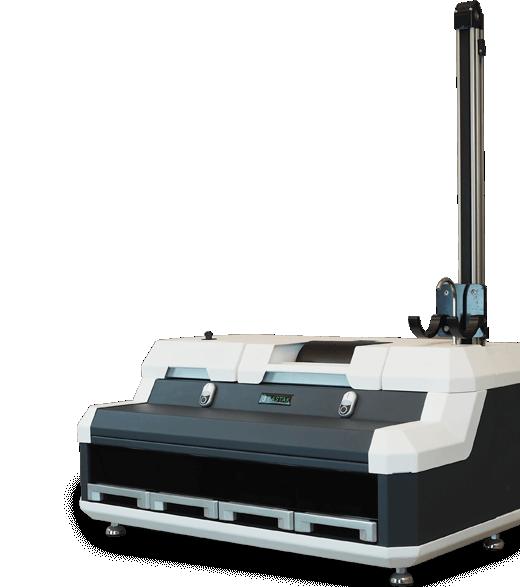 by Rabia Tiryaki, Bastak Instruments, Turkey
Food products with wheat as the raw material are obtained by baking the dough, which is formed with water, wheat flour, and other ingredients and additives depending on the type of product, in accordance with the technique. The rheological properties of the dough formed from wheat by certain processes change during the processing time and constitute the key to cereal chemistry by directly affecting the quality of bakery products.
The protein content of wheat flour, mainly gluten, is responsible for gas retention, structure formation, and dough strength. The protein content is the most widely used criterion for determining the wheat quality and the relationship between protein content and water absorption varies depending on protein quality. The amount of water added to flour during dough making has a great effect on the rheological properties of the dough.
The important steps of dough production in food processes are kneading, shaping, and fermentation and physical and chemical changes are observed in the dough with the effect of mechanical force applied during kneading. The kneading process, which mainly affects the final product quality, is a very important parameter in the evaluation of dough quality.

52 | March 2023 - Milling and Grain F
properties, especially in non-Newtonian and shear stress materials, is of great importance in the bakery.
The concept of dough rheology, which is more often defined in doughs with 35-65 percent water content, includes properties such as extensibility, elasticity, resistance, maximum resistance, energy, water absorption, development time, degree of softening and stability, allowing the producer to determine the type of wheat to be processed. In addition, rheological data plays a critical role in the selection and development of new cultivars, quality control of milling and baking products, determination of the effects of ingredients added in the production process, and process adaptation.
The rheological properties required for different wheat products are different from each other. The optimum extensibility desired in the production of wheat products also varies according to each product; in the bread industry, it is desired to have a high value during the final fermentation period and in the first rows of the baking process. While the dough's extensibility and resistance are expected to be high in bread, in biscuits it is desirable to have a high extensibility value and a low resistance value.
Flours desired in the bread industry should have high water absorption properties


www.ottevanger.com
Micro Dosing Unit IN AUTOMATIC DOSING Milling and Grain - March 2023 | 53 F
REDEFINE PRECISION
and kneading times should not be long. Long kneading time increases the cost due to energy and time requirements, which is not desired by the producer. If the kneading time is too short, the bread quality decreases. The amount and quality of the core of the flour is also related to the rise of the core. The dough development time depends on the amount of protein in the flour, and as the number of protein increases, the dough development time increases. Bread volume will decrease as the development time decreases.
If the stability value, which is an indicator of the durability of the dough in the processing process, is not long, it is an indication of the low processing ability of the dough and the short fermentation period.


In bread production, the resistance value must be high in order to prevent the collapse of the gas cells in the dough weight. In biscuit production, low resistance value and high extensibility value are desired to prevent the collapse of dough pieces after the dough structure is stabilized by baking.
Bastak’s solution


With Bastak Brand Absograph 500 and Resistograph 500 devices, the rheological properties of the dough and the rheological behavior of the dough, which is one of the critical parameters for revealing the bakery value of flour, can be determined in international standards with high repeatability, high accuracy, ease of use, remote software update features and can be determined directly with its effect on the final product quality. Based on the principle of measuring the force on the blades of the device depending on the fluidity of the dough and transferring this effect to the touch screen as graphics and data, the water absorption, stabilisation, softening value, and
development time of the flour analysed with Bastak Brand Absograph 500 Device are determined in accordance with world standards and its suitability for bread and other products is determined and transferred to the graph. It offers a unique analysis experience to the user with easy operation thanks to its ergonomic design and touch screen, remote software support, saving test results as PDF, saving and outputting results to Flash Disk via USB, no need for additional computer and screen, easy cleaning features designed considering the laborious cleaning phase during the test.
The dough obtained in accordance with international standards with the Absograph 500 device is first formed into dough balls in the dough rolling unit on the Bastak Brand Resistograph 500 device, then cylindrically shaped in the dough cylinder unit and kept in fermentation chambers at international standard temperatures. In order to work with more than one sample at the same time, there is an additional fermentation room. Four fermentation chambers save time. At 45, 90, and 135 minutes, which are long enough test times to understand the rheological properties of the dough, the negative effects of gravity are eliminated by using a special rail dough stretching mechanism moving from bottom to top with R&D studies. The applied force is recorded, and a graph is obtained. In order to obtain bakery products with ideal properties, the elasticity, resistance, and energy of the dough are determined in accordance with international standards and converted into graphs. Touch screen PC-controlled heating system, Parallel test possibility, the Touch screen of Absograph 500 and manual time control, It also offers the features of working in harmony with the Absograph device without the need for a computer and screen and tracking and recording data with the same touch screen.
5 continents 30+ years of evolution 300+ projects delivered The technology that pushes the limits of storage Vibrafloor Z.A. 27 rue de la Tuilerie 71640 Dracy-le-Fort Tél: +33 (0)3 85 44 06 78 vibrafloor@vibrafloor.com www.vibrafloor.com UNIVERSAL RECLAIM SYSTEM Together, let’s prepare your future projects! 54 | March 2023 - Milling and Grain F


Milling and Grain - March 2023 | 55 F
Grain quality assessment in the new age
GRAMS-M10
mobile app for accurate grain analysis
by Dr. Punita Agarwal, Co-founder of Inweon, India
We are in the age of artificial intelligence, the internet of things, and cloud computing. Yet until a few years ago, all trade decisions of a farmer was dependent on manual analysis (done by supposedly skilled
and trustworthy personnel). Let it be selling their grain produce of certain quality to a trader, government agency, food company or a grain warehouse monitoring grain quality at regular intervals, input and output or an agri commodity trader price negotiation based on quality – took half an hour, was error-prone, with no visibility or accountability into the whole process.
The grain agri-trade is driven by two factors; Commodity exchanges, that govern market conditions of supply and demand and the next is Quality grade and variety of the grain, governed by physical and chemical testing. In this article, we will talk more about the process of physical testing of grains and how new technologies like machine learning and cloud computing are disrupting it.
There have been recent investments in the agriculture space (called agritech). Most start-ups aim to connect to farmers through the web and help them with farm inputs procurement, information, and advisory. These start-ups also claim to get the farmer's produce sold at a better price. The vision of digitizing the agri supply chain needs automated and digital grain quality assessment.
Enter 2022, a five-year-old agritech start-up in India, INWEON, has launched a new product called GRAMS-M10, a scanner and
delayed. GRAMS solves this problem by providing accurate, repeatable, consistent, reliable grain quality assessment results on the field in a matter of seconds.
GRAMSTM combines the 'Sense of People' and the 'Science of Labs' into a mathematical model with a scientific approach.
GRAMS-M10 supports physical quality refractions for multiple commodities, including rice, wheat, soybean, corn, all types of pulses, etc. The process of operating and measuring quality is straightforward and can be done in three easy steps:
Random sampling to make a 20 to 100 grams sample
Spread the sample on a flatbed scanner
Open the GRAMS-M10 mobile app and click 'Scan.'
How does the system work?
The system comprises of three components:
GRAMS-M10 flatbed A4 size colour scanner
GRAMS-M10 custom-built smart IOT device with WIFI and Bluetooth connectivity support
GRAMS-M10 mobile android app
The first step in measuring is to make a sample of 20 to 100 grams using the random sampling process and spread it evenly across the flatbed scanner glass.
Second step, the 'GRAMS-M10 mobile app' connects and communicates with the 'GRAM-M10 IOT device', and enters sample details like batch number, variety, etc.
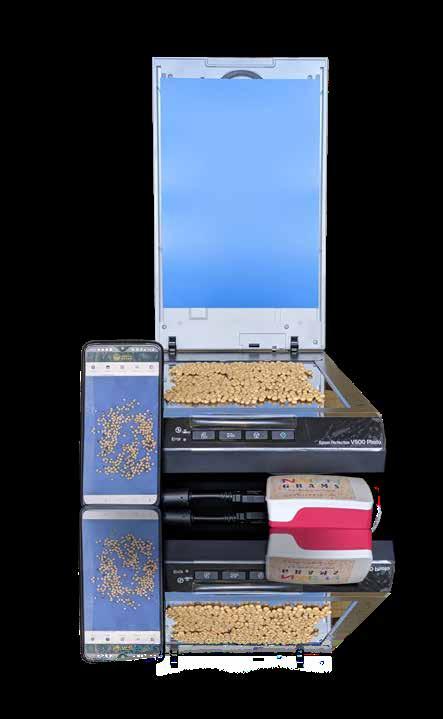
56 | March 2023 - Milling and Grain F
Third step, the user clicks the 'Scan' button to scan from the GRAMS-M10 scanner.
After the scan, the image is automatically uploaded to the cloud by the GRAMS-M10 IoT device. The cutting-edge AI algorithm on the cloud processes the image to calculate all physical quality parameters of every grain in the sample. It generates a quality grade and metric for each grain particle.
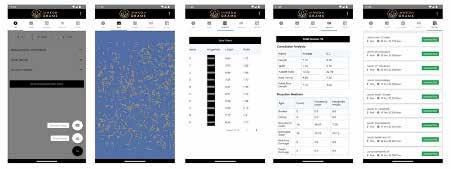
The results are sent in the fourth step and displayed on the mobile app to make instant buy, sell, or other decisions. The whole process takes up to 2 minutes.
All the results are saved on a cloud database and available to the user through an online dashboard accessible from anywhere around the world.
The whole process is non-intrusive, easy to operate, and superfast. It mitigates any chances of quality manipulation or error, provides visibility, and enables real-time decision-making. The data on the cloud makes it audit-friendly and possible for future analysis.
The GRAMS-M10 is also available in another variant called GRAMS-W10. The GRAMS-W10 enables the same GRAMSTM application to be run on a PC or a laptop without needing the GRAMSTM IoT device and mobile app. The GRAMS-W10 enables better visualization of the analysis on a bigger screen.
Who is it aimed for?
The target customers for the GRAMS products are farmers,
extended filling time through for open-mouth bags: woven PP, PE or paper bags F
Fully automatic high-performance BAGGING CAROUSEL for flour and powdery products


1200 up to bags per hour
www.statec-binder.com

6 filling spouts Milling and Grain - March 2023 | 57
grain storage, grain processors, grain traders, exporter, or importer. The GRAMSTM technology should be used at every instance of grain transaction, including:
• A farmer selling to a trader or a food processor
• A grain trader purchasing or selling grains
• A food processor who buys grain of certain quality to achieve a certain quality of finished goods
• A grain storage warehouse to ensure grain quality at entry and exit of grain stock
• Government agencies purchasing for national schemes and emergency storage
GRAMSTM can also be used by industry disruptors and agritech start-ups trying to help farmers sell their produce at better prices. Fast and genuine grain trade can be facilitated if the quality is assessed in real-time using an automated and digital method like that of GRAMSTM.
A prominent use case of GRAMSTM is to enable end-to-end mapping of quality in the food supply chain for supermarket corporations. It can be used to ensure consistency of quality from farmer to grain mill to packaging centre to the reseller to the warehouse to the supermarket and tracking the same for every grain batch or lot. Multiple people performing different analyses at every node will never ensure consistency and will be an operational nightmare with no clear insights for the decisionmakers.
The applications and uses of this technology are many and beyond the scope of this article.


What analysis does the system provide?
Many types of analysis and instruments determine the quality grade of grain. Moisture is measured using a moisture meter. Chemical analysis like oil and fat or protein content is determined either through chemical reactions in a lab or non-intrusive manner using NIR or far infrared spectrophotometers. The physical analysis is done using visual checks manually. Across the world, physical analysis is the critical analysis of quality grade for first level buying or selling.
The GRAMSTM platform measures the physical and morphological parameters of the grains and is the only engineering alternative to the visual analysis or checks to determine grain quality grade.
Physical analysis can be further divided into two types:
• Dimensional properties of grain: These include the measurement of the size and shape of a grain particle using parameters like count, length, width, aspect ratio, surface area, etc.
• Colour or morphological properties of grain: These properties govern if a grain is safe and fit for human consumption and segregates good grain from bad grain particles.
The good grain percentage is calculated after removing all damaged and broken grains. There are various types of damage classes that are characteristic for each grain commodity like heat damage, fungus damage, karnal bunt damage, weevilled grain, immature or shrivelled grain, etc. More detailed information on the damage types of various grains is also available at the product website - www.inweongrams.com.
The GRAMSTM platform measures these parameters for various grains with high accuracy.
GRAMSTM unique segmentation algorithms separate each grain particle from the image and calculate all dimensional parameters with an accuracy of 99 percent for each grain particle.
GRAMSTM classification algorithms can detect all damage types of all supported commodities using unique pixel processing filters with an accuracy of 95 percent. More detailed information on the various
Is the system calibrated and reflects similar results for similar grains from various locations?

The GRAMSTM platform works in a controlled ambient environment and a specific image sensor quality to capture the image with minimum deviation across the installations. The hardware is tested and pre-calibrated for colour and histogram variance.
Moreover, the GRAMSTM algorithms are inherently designed to filter noise and minor colour deviations that may come across the scanners during manufacturing. This has been ensured through rigorous multi-hardware, multi-sample testing done in-house.
Way Forward
There is tremendous potential and scope for more innovation and application of the latest technologies in the agriculture domain. One big area in quality analysis that needs disruption is a cost effective and handheld instrument for non-intrusive chemical analysis on the field. Team Inweon is in constant pursuit of finding pain points for the stakeholders in the agri supply chain and investing to come out with new innovative products and services. The immediate goal is to include more food grains into the gamut of GRAMS platform. We are open for suggestions and feedback and tailoring or customizing the product for specific needs.
VIV ASIA 2023 BANGKOK, THAILAND 8-10 MARCH IMPACT THE COMPLETE FEED TO FOOD GLOBAL TRADE SHOW IN ASIA Scan to register Co-located with Guided Tours onsite Shuttle Bus service to and from the venue! Register now for FREE! F 58 | March 2023 - Milling and Grain

The future of flour. Share your thoughts: contact@worldflourday.com What is your vision?
good reasons to include soy in diet formulation for young animals 4
by Nicolas Anglade, Category Manager Ruminant, Hamlet Protein, Denmark
Soy protein is unquestionably the number one source of protein used by the feed industry. Its great market availability and its high level of concentration makes soy and its derivatives a must for feed formulators around the globe. Despite the many benefits of soy, there are still some obstacles, especially when it comes to feeding very young animals or when looking at its potential carbon footprint.
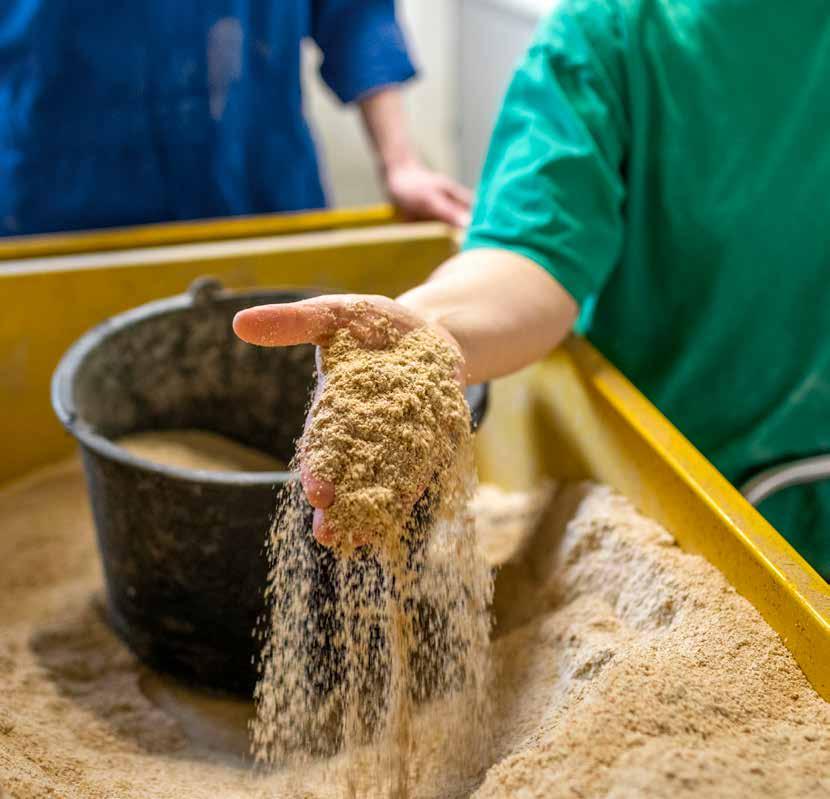
With a focus on sustainability, here are the top four reasons to incorporate Hamlet Protein’s specialty soy-based specialty ingredients into feed formulations for young pigs, calves, and young birds.
1. Sustainable Sourcing
Choosing soy as a source of protein is a responsible and sustainable choice. Favouring a protein of plant origin in animal
feed has many advantages: less land requirements to produce the equivalent amount of animal protein while emitting fewer greenhouse gases and allowing proteins of animal origin (dairy, fish…) to be reserved for human health and consumption. When talking about soy protein specifically, soy has one of the highest protein contents and all essential amino acids that are required by young animals. On top of this, soybeans are part of the legume family and through their unique root system can absorb nitrogen gas (N2), meaning that the plants can utilise atmospheric nitrogen to make proteins. The ability of soy to fix nitrogen provides additional benefits to sustainability as there is less need for nitrogen fertilisers and a reduced risk of excess nutrients leaching into soil and water.
Based on these advantages, soy has a particularly low carbon footprint when it is produced responsibly without deforestation. Soy production that includes deforestation or unsuitable land use results in a carbon footprint that is tremendously increased. Hamlet Protein is a member of the Roundtable on Responsible
60 | March 2023 - Milling and Grain F
Soy (RTRS) which promotes the growth of sustainable soy and includes zero deforestation as a requirement for certification. It also includes good practices to reach consensus on the key economic, social, and environmental impacts of soy including production, trade and use. At Hamlet Protein, we provide an option for products made from genetically modified (GM) soybeans to be RTRS-certified, guaranteeing responsible production without deforestation. On the other hand, non-GM products can be ProTerra certified, promising non-GM products that are both traceable and deforestation-free.

2. Patented Production Process Leads to Superior Product


Antinutritional factors (ANFs) naturally found in soy-based feed ingredients can pose a challenge for nutritionist when formulating diets containing soy for young animals. While soy contains ANFs, it also contains all the essential amino acids required to support health and performance in young livestock. At Hamlet Protein, our patented production process removes ANFs, leaving behind soy-based feed ingredients that are rich in protein or high-quality fiber, supporting the initial growth phase in young animals.
Alongside the improvements to feed ingredient efficiency when investing in Hamlet Protein products, our use of innovative production technologies further contributes to sustainability initiatives. The technologies used in our patented bioconversion process allow the potential for less water and energy inputs while also minimizing residual waste through use of nearly all raw materials. Our Denmark production plant for example includes a heat pumping facility which harnesses excess heat that is produced during soybean processing and uses it to warm more
than 3,000 local homes, helping to reduce the equivalent energy and corresponding carbon footprint.


3. Improved Gut Health for better young animal welfare


Choosing Hamlet Protein’s soy-based ingredients in young animal diets can enhance life-long animal health and performance. The removal of ANFs via our patented production process leads to the establishment of a healthy gut in young animals, right from the start. Removal of ANFs leads to decreased risk of digestive upset and can contribute to optimal nutrient absorption. Contribution to a healthy gut can lead to improvements in overall animal status, lessening the amount of energy from feed going towards an immune response rather than into growth. The benefits of improved gut health support the idea that feeding with high quality ingredients contributes to animal welfare, a fundamental pillar of any sustainable production.
4. Doing more with less


Sustainability is a complex and multifactorial subject when applied to a particular activity, and among them animal nutrition. However, a simple formula sums up sustainability well: “doing more with less”. This is what soy does, a plant of the legume family, which synthesizes its own proteins by being able to grow without nitrogen fertilization. Doing more with less also means encouraging good soybean production practices by favouring its sourcing in historically dedicated regions and without resorting to new areas reclaimed from natural areas. Doing more with less means finally adopting precision feed for farm animals that provides the right dose of nutrients in the right form and in the right place. Hamlet Protein products have been developed to both

World Leaders in Microwave Moisture Measurement Oil Animal Feed Coffee Rice Grain Hydro-Probe XT Hoppers, chutes, belt conveyors Hydro-Mix XT Mixers, conveyors, Ducting System Hydro-Mix XT-EX Certified for use in ATEX, IECEx and NEC/CSA Hazardous Locations (Dust) Hydro-Mix HT Mixers, conveyors, Ducting System, High Temperature enquiries@hydronix.com www.hydronix.com Contact us for more details Hydronix-Milling and Grain-Advert Jan 2022 215x140mm.indd 1 15/12/2021 12:53 Milling and Grain - March 2023 | 61 F
provide the essential ingredients for initial growth but also to contribute to gut health and more generally to the well-being of young animals. By providing more digestible proteins with a reduced ANF content, we are bringing our humble contribution to driving the diet of young animals more sustainable.
Hamlet Protein and sustainable sourcing
For many, the primary concern about soy relates to its cultivation. Stories about rainforest, cleared to make way for soybean plantations, are disturbing to say the least. To address this, the Roundtable on Responsible Soy (RTRS) was founded

in 2006 – a non-profit, multi-stakeholder organization that promotes the production, trade and use of responsible soy.
As a member of RTRS, Hamlet Protein offers RTRScertification on our genetically modified products. This secures that the soy is produced environmentally correct, socially appropriate and economically viable which means without deforestation or conversion of natural habitats. For those who seek a non-genetically modified alternative, Hamlet Protein draws on raw materials certified under the ProTerra standard for soy from a fully traceable, non-GMO source.
THE REVOLUTION IN PELLETING TECHNOLOGY

Progress MonoRoll HE
Guaranteed 20% energy savings
10-15% higher throughput
Optimum pellet quality
Please contact us for the possibilities within your company info@ptn.nl - www.ptn.nl Scan de QR-Code for more information 62 | March 2023 - Milling and Grain F


SEFAR NYTAL ® . The name you can trust. Since 1830, Sefar is the single-source supplier to millers for all products for sieving, grading, and dust filtration as well as connector sleeves, sieve cleaners and tensioning equipment. FOOD SAFETY FDA COMPLIANT Headquarters Sefar AG Hinterbissaustrasse 12 9410 Heiden – Switzerland Phone +41 898 57 00 filtration@sefar.com www.sefar.com As your trusted supplier of precision woven fabrics, Sefar is proud to introduce our newest complimentary innovation: SEFAR NYTAL® Sieve Cleaners
AUTOMATIC DRUM EMPTIER
A unique technology for toxic/explosive powdery products
by Dinnissen Process Technology, The Netherlands
ith personal protection and a safer workplace in mind, in mid-2015 an existing customer requested Dinnissen to think along about a solution for the automatic emptying of 200 dm³ drums containing toxic/ explosive powdery products

The reason for this was that although the drums were already being emptied mechanically at the existing customer’s premises, the employees had to wear gas masks during the emptying of these drums, which is undesirable, especially for long periods of time.
In the course of 2016, Dinnissen's specialists set to work and, in conjunction and regular consultation with the client, they developed a fully 3D-animated pre-engineering in order to present the first draft designs.
Enthusiastic!
The first draft designs were received with so much enthusiasm that by the end of 2016, Dinnissen was awarded the contract. This was the beginning of an exciting process of adaptations, improvements, unique innovations and frequent consultation with the client.
In early 2018, after more than a year of development, testing and improvement, the worldwide first of this truly unique automatic drum-emptier was a fact. The process starts with the supply of the closed drums, which are placed on the
Wroller conveyor via the operator. After the 'release signal' and confirmation that the installation is ready, the drum is transported towards the first cabin.
Opening of the drum: first part
During the first operation, the lid is removed from the drum fully automatically with a special head piece, after which the lid remains clamped in this head piece. The drum is transported to the second cabin through an airlock. In the meantime, the clamped lid is pushed out of the head piece and placed on another conveyor belt. The lid that has just been removed is then transported to a separate cabin and cleaned with a neutral liquid, so after cleaning, it can be removed from the installation without any risk.
Inliner: second part
From the first cabin, and after removal of the lid, the drum now arrives in the second cabin. Because in some cases the drums are provided with a separate 'inliner' (a - usually - plastic lining on the inside of the drum) a provision had to be made to allow the operator to easily remove it. For this reason, the second cabin is provided with a special hatch that allows access not only to remove the inliner, but also to easily remove any powder residue. To further optimise accessibility and workability, the drum is positioned on a specially developed turntable, so the operator can work quickly and efficiently.
Emptying the drum
After the previous operation, the still filled drum is transported to the third cabin via another roller conveyor. Here the drum is
STORAGE
F 64 | March 2023 - Milling and Grain
fixed by a gripper arm, which rotates and empties the drum. At the express request of the client, this gripper arm is infinitely operable by the operator by means of a two-hand operation. This is a major advantage. After all, it allows the operator to look into the rotating drum and assess whether the use of a specially positioned 'beater' is necessary to knock any powder residues from the drum. In the meantime, possible powder chunks are reduced in size by a self-developed breaking knife.
Both the inliner, if there is one, and the removed powder continue their way via the roller conveyor, with the inliner being automatically transported to the shredder and shredded. Because these flakes may still be contaminated with the toxic/explosive residual product, they are stored in a special container that is eventually filled with a cleaning liquid. After a certain time, this liquid is drained and the flakes can be repacked and safely disposed of.


AZ_GRANIFRIGOR_EN_190x132_RZ.indd 1 11.02.21 14:56 F Milling and Grain - March 2023 | 65
Product Spotlight - The Holmen

NHP100 Portable Pellet Durability Tester
The Holmen NHP100 is Tekpro Limited’s entry level pellet durability tester used for calculating the Pellet Durability Index, also known as the PDI, of feed pellets by simulating pellet transportation environment from mill to trough.


The complete Holmen range of Pellet Testers represent the culmination of over 20 years involvement within the pellet manufacturing industry The range consists of four models including the ever popular Holmen NHP100, which is supplied complete with a 2.5mm diameter mesh hopper as standard, although other mesh sizes are also available to suit aqua, poultry and larger cattle feed types.
Versatile Pellet Test Machine

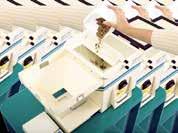


The Holmen NHP100 portable pellet durability tester is a truly versatile entry level machine. Being portable it can be easily transported between different testing locations, requiring only to be placed on a flat stable surface to provide basic results for the operator It works by loading a pre-sieved sample of pellets into the test chamber which cascades them in an air stream causing the pellets to collide with each other and the perforated hard surfaces within the test chamber When testing is complete the pellets are removed for manual weighing. The 'pellet durability index' (PDI) is the difference between pellet weight before and after the test recorded as a percentage. The tester provides the ability to manually calculate test results with limited repeatable accuracy The operation is totally manual with a basic timer function only, unlike the manufacturers more advanced Holmen NHP200 where test length is adjusted according to pellet diameter
Holmen Testers Increasing In Demand Globally
The basic NHP100 is a popular machine for smaller companies, but quality focused feed mills typically now prefer the NHP200, this is due to its ease of use and the repeatable accuracy of the test process. For larger companies who manufacture pellets in bulk, Tekpro can also provide the Holmen NHP300, together with inline samplers to test directly after the press, before too much product has been produced, this can significantly help reduce the need for rework, and optimise production efficiency.
The NHP100 has always been a very popular machine since it’s original launch, but as feed mills further strive for greater levels of automation and consistent repeatability of processes, both the Holmen NHP200 semi automatic and NHP300 inline pellet durability testers from Tekpro have significantly increased in demand from all around the globe.
To access further free information on the entire range of Holmen Pellet Durability Testers, exclusively Made in Britain by Tekpro, or to find out how you could join the growing number of pellet manufacturers already using Holmen to check their PDI, scan the following QR code:
Made in Britain, Trusted Worldwide. We are
Airflow
Mesh pellet hopper
Pellets
Last step: cleaning the drum
After emptying, the drum is returned to the starting position with the same two-handed operation and transported to the cleaning cabin via the roller conveyor. Here the drum is fully automatically clamped, lifted, turned over, brought into the desired cleaning position and rinsed out with a large amount of liquid, then blown dry with compressed air and placed back on the roller conveyor, after which the clean drum is fully automatically released via a secured hatch.
Additional safety
For the sake of additional safety, each cabin is regarded as an isolated space, which can be locked securely by its own
automatic doors or shutters. If required, the operator can inject nitrogen into any cabin containing potentially explosive products, eliminating the chance of a possible explosion. The installation is also equipped with a built-in air dryer, including filters that prevent vapours from spreading through the installation. Another equally innovative measure is the constant negative pressure, which ensures no toxic/explosive vapours can escape when the drums are introduced or released.
Naturally, the complete electronic control and monitoring, including visualisations, have been developed and implemented by Dinnissen. All in all, this is a technical tour de force which will be highly regarded worldwide.


and use the Promo Code HNY2023 This offer entitles you to a 12 month digital subscription to Milling and Grain magazine on our app and desktop versions. This offer is on a first come first served basis and will run until 01/09/2022 Would you like a complimentary digital subscription to Milling and Grain magazine? Simply visit: https://store.magstand.com/millingandgrain F Milling and Grain - March 2023 | 67


Focus turning to 2023 crops


 by John Buckley
After a fraught year most will be glad to see the back of, market attention is turning to prospects for 2023 grain and feed raw materials supply. The forward futures markets suggest hopes persist that costs may continue to trickle down for some feed commodities – notably maize (perhaps by 12 percent) and soya meal (14 percent) - if the promise is fulfilled of bigger crops in the Americas, North and South. However, bread wheat remains a harder call. Despite – or perhaps because of – its sources being more numerous and widespread geographically, the mixed wheat picture we saw in 2022 could be repeated again in 2023. Partly for that reason, the forward futures picture for this grain is about 5 percent firmer than current values, on the US markets at least. However, it’s early days to rule out a more balanced supply picture and the forward EU futures market is currently flagging a wheat price drop of about 3 percent for latter 2023, widening out to nearer 20 percent by latter 2024.


Calmer markets in recent months also reflect talk of potential slowing down in global demand growth, especially in covid-plagued, top consumer, China. But hopes that the Ukraine conflict would be less disruptive than earlier thought to supply chains have continued to swing both ways, almost daily at times. And while prices of cereals and oil meals have finished 2022 well down on their record spring peaks (some as much as halving from those levels) many remain almost double their long term average.
There has been some support for the view that an upward price adjustment was long overdue to keep pace with rising costs of production. But while technical innovations might have helped contain these, the lid has come off in the past year with rocketing costs of fertiliser and fuel –already starting to influence farmers’ crop choices.
In the US itself, surveys suggest wheat may at least benefit, planted acreage-wise, from the jump in input costs, typically needing less nitrogen than maize. Accordingly, US farmers are expected to raise winter wheat area by about 5 percent. Along with higher spring wheat acres too, some analysts see the crop rebounding from the historical lows of the past two seasons (around 45m tonnes) to as much as 52m with trend-line yields. But there is a significant caveat. Drought remains extensive over the US wheat belt and a big freeze in December may have damaged some crops. With current ratings well below last year’s at this time, yields might let the crop down.

Despite the eye-watering rise in fertiliser costs, some surveys suggest the US will still expand corn acreage by just over 2 percent. With trend yields, that could enable a 370m tonne crop – a lot better than last year’s 349m but well under the bumper 2021 figure of 383m.
US soya area is meanwhile seen rising by about 1.6 percent to around 89m acres, with trend yields suggesting a crop approaching a record 125m tonnes (last year 116.4m).


Turning back to wheat, Russia is believed to have cut planted acreage for 2023 so, while winter-sown crops are said to be in good condition, a repeat of the past year’s record harvest looks highly unlikely. One recent analysis suggested only 80/85m tonnes. Then again, we must count just how much larger than the official figures the 2022 harvest might have been. In its January update, the USDA was still carrying 91m tonnes versus the previous year’s 75.2m. Some local analysts think the 2022 crop was nearer 102m tonnes – maybe even more (which, if
70 | March 2023 - Milling and Grain
"Calmer markets in recent months also reflect talk of potential slowing down in global demand growth, especially in covid-plagued, top consumer, China. But hopes that the Ukraine conflict would be less disruptive than earlier thought to supply chains have continued to swing both ways, almost daily at times"
correct, could actually put the world wheat crop more than 10m tonnes bigger, rather than roughly level with, the 2021 result!) Could that huge total include some Ukrainian wheat grown on contested land? Perhaps more importantly, it implies Russia may have produced 25-27m tonnes more wheat this year than last - yet is forecast to export only 10-12m more. That would mean it starts 2023/24 season with much larger carryover stocks than the market (including USDA) expects. These could play a large part in Russia’s 2023/24 export role, even if it does have a smaller crop this year. However, the market must remain aware of potential for Russia to play the market, as it has in the past year, through imposition of quotas and duties if world wheat prices (over which it wields huge influence) start to move too low. So far Russia has been an aggressive old-crop seller, undercutting all other major suppliers on price and making up for lost Ukrainian supplies (latter’s exports down perhaps 5m to some 13m tonnes by season’s end?)
The first major harvest of the new season will be from the world’s third largest wheat producer, India (around spring time). With much better weather than last year and greater use of higher yielding varieties, it is expected by some local analysts to produce as much as 122m toinnes – a new record high compared with last year’s official 103m estimate (which some say was far too high) and the range of 100/107m over the previous three years. If the crop lives up to expectations, India could play a more active role in wheat export markets in 2023/24, albeit limited initially by


its low starting stocks and the need to tame its recently volatile domestic market.
Early signals for the EU’s next crop meanwhile suggest the main soft wheat component could rise by approaching 2 percent to around 143m tonnes, expected gains in France and Germany


71 | March 2023 - Milling and Grain
outweighing declines in Rumania. EU wheat prices (basis the Paris market) finished 2022 around €310 per tonne, 11 percent higher than they started but some relief for consumers looking at a potential record €440 (60 percent increase) in the first half of last year after the Russian invasion of Ukraine upset world supply assumptions. Also, EU prices appear to be still falling, last recorded at €289/tonne.
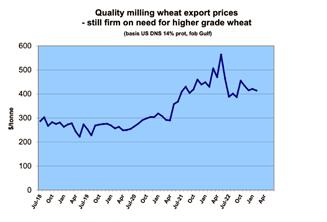
Canada may plant another big crop, having last year rebounded from 2021’s drought-ravaged 22m to almost 34m tonnes in 2022. As the new year opened, it held far larger stocks than at this time last year so is expected to remain an export front runner in first half 2023.
Sitting halfway between old and new seasons, the two big southern hemisphere wheat exporters could not have had more contrasting fortunes. Australia has been bringing in its third huge crop in a row, which could finish at 40m, some say even 42m tonnes versus last year’s 36m. The normal best level of recent years has been in the mid-20m tonnes. There have been some questions over quality after rainy harvest weather in some regions but generally, Australia’s influence looks likely to be bearish for wheat prices.
Argentina, on the other hand, has continued to see its 2022/23 crop estimate shrink under drought and heatwaves. Recent forecasts have been under 12m tonnes compared with 20m expected at the start of the growing season. Exports may drop by over 10m to as little as 7m tonnes.
Bigger corn & soya supplies on the way
Maize/corn production should jump in 2023. Second-largest supplier Brazil has a record 125m-tonne-plus crop on the way and is expected to step up export competition with the traditional top source, the USA. Brazil is already helping to erode US market share, after producing a 116m tonne harvest last year, up from just 87m in 2020/21. On the above planted area estimates, the US itself could have 20m tonnes more to dispose of in 2023/24, assuming normal weather this summer.

On the downside, Argentina – earlier expecting 55m tonnes – has been hit by drought and may now be lucky to reach 50m –some analysts are as low as 48.5m. Ukraine is also expected to produce far less this year after its crop fell by almost 36 percent last summer under the Russian invasion.
Corn consumption has been flagging since prices exceeded $8 a bushel in first half 2022. The US (CBOT futures) market fell to the mid-$5’s during the summer months, anticipating a bigger US crop, but rebounded as that fell short along with the smaller Ukrainian and European crops, prices finishing 2022 plus 14 percent, in the $6.80’s. Futures markets suggest US and European corn prices could get cheaper in the coming year, some US pundits, comparing the supply outlook with that of a decade ago.

In the US, feed consumption of maize has dropped by almost 8 percent while ethanol use, despite the high cost of fossil fuels, has eroded by about 1 percent. Chinese consumption has remained fairly strong, rising slightly this season, while EU use is down by about 8 percent. However, EU import needs have increased more sharply after the bloc’s short domestic crop and are currently running far ahead of last year, led by Brazilian and Argentine supplies.
Soya is expected to expand its 2022/23 season production by a
hefty 30m tonnes or about 8 percent to reach a new record 388m. The biggest increase is expected in Brazil, where much larger sown area has had mainly favourable weather, boosting the crop forecast by some 23/24m to an all-time record 153/154m tonnes. That not only compensates for last year’s smaller than expected US crop (down 5m, to 116m tonnes) but will eclipse an expected crop decline in third largest supplier Argentina, where drought has cut the harvest forecast from an earlier expected 51m to around 42/45m – a few pessimists leaningh as low as 36/38m tonnes. Better news from Paraguay where the crop is expected to jump from last year’s drought-ridden 4.2m to around 10m tonnes. As mentioned above, the US is also expected to sow a larger crop for 2023.
Still absorbing the Argentine crop setback, which appears to be rapidly diminishing the leading soya meal exporter’s product exports, the CBOT soybean futures market has been fairly firm recently.
One restraining factor on price has been concern that China’s covid-led economic problems might brake its recovery in meal demand (from last year’s swine fever challenges) reducing its soybean import needs. Global soybean crush is already expected to expand more slowly than soybean crops, so carryover stocks
72 | March 2023 - Milling and Grain




are seen rising, currently to a four year high, which could also help keep soya costs under control


Adequate canola/sun meal supplies too?


Rapeseed, tightest of the major oilseeds in recent years, has enjoyed a marked increase in production this season, from 74m to 85m tonnes. The main factor has been Canada’s crop recovery from a 2021 drought/heatwave, its latest crop estimate (for 2022) at 19m tonnes versus last year’s unusually low 13.75m. Other major producers including the EU and Australia have harvested larger areas and improving yields. The EU jumped from 2021’s 17.2m to 19.5m, Australia from 6.82m to a new record 7.3m tonnes. Europe, which sows mainly in autumn for the following year, has probably already planted more for harvest 2023. Spring-sown Canada could be tempted to raise acreage in coming months to meet rising demand although it will face keen competition for land from currently still-expensive wheat.
Undcer wartime conditions, Ukraine – a key supplier to Western Europe, did well to slightly raise its crop from 3m to 3.3m tonnes while Russian output jumped from 2.8m to 3.9m tonnes. Some local reports suggest the Black Sea region is keen to aim for larger crops in 2023 but under the conflict conditions nothing can be counted on until things settle down.
Even in a year of weak Ukrainian crops, global sun meal production may see a marginal 4 percent (900,000 tonnes) rise in
supply as stocks of the oilseed that got bottled up by the conflict in late 2021/22 season, finally get crushed and into the market. Largest producer Russia had a bigger sunseed harvest in 2022 and is filling some of the gaps created by Ukraine’s 2022 crop losses and a lower than expected crop in Europe, another victim of last summer’s droughts and heatwaves
Early EU crop pointers for 2023
Respected French consultancy Strategie Grains this month raised its EU soft wheat crop forecast for 2023, citing good weather. Strategie now expects 129.7m tonnes – about 1m more than at the end of last year and 3%+ gain on the 2022 result, despite some recent dryness in France & Spain. Total EU soift wheat supplies for 2023/24 could rise more as this season’s exports fail to shift all the available grain, leaving large 2022/3 ending stocks. The current EU export forecast is just over 30.1m tonnes amid fierce competition from Russia & Australia and supplies of wheat and maize still arriving in Europe from Ukraine. Strategie has trimmed its EU maize crop forecast for 2023/4 from 63.8 to 63.4m tonnes, expecting yields to recover from last year’s drought but planted area to stay relatively low. However, the next EU barley crop could increase by around 2 percent at a forecast 52.3m tonnes. Globally, recent USDA analysis suggests, barley supplies will more or less match demand during 2022/23.
75 | March 2023 - Milling and Grain
The Heart of the System CABLE & DISCS Dry Cleaning Brush Box +1(641) 673-8451 info@cablevey.com Experts in Cable & Disc Conveying Solutions Gentle Clean Reliable Conveying Cablevey® Conveyors is a registered trademark of Intraco, Inc. 07/2022 • Leader in Tubular Drag Conveying • Gentle on your materials! • Starts & Stops Under Load • Dust-Free Enclosed System • Clean-in-Place Options • Low Maintenance • Energy-efficient System Capacity: • 8” (203.2mm) tube diameter • Moves up to 2,000 Ft³ (56.6 M³)/hr • Moves up to 80,000 lbs/hr (36,287 Kgs/hour) (depending on bulk density of materials) 8” Systems
Yemmak
As one of Turkey’s largest manufacturers since 1965, Yemmak produces machines tailored to your needs and build turnkey factories, leveraging its strength as the first feed machine manufacturer in the Turkish private sector.

Yemmak primarily focuses on the following industries: Feed (Poultry, Ruminant, Pet Food, Aquatic, Flake), Biomass, Premix and Concentrate, Organic Fertilizer Processing, Rendering, Soybean Processing, By-Product Pelleting, Chemical, Handling and Storage. It provides services in project consulting and engineering, special purpose projects, automation, modernisation, steel construction and after-sales support with a 300-strong staff led by specialist engineers. As one of Europe’s largest manufacturers of feed machines with 55 years of process engineering experience, Yemmak exports more than 70 percent of its production to four continents. In addition to being an industry-leader in Turkey and a major player in Europe, it is one of the few companies in the world that can handle machine manufacturing, process engineering, and turnkey projects from a single headquarter.
Today, Yemmak is in a leading position not only with its knowledge and experience, but also with its global reach. Yemmak is ready to be your global solution partner with their worldwide representatives and technical service network. Yemmak knows that its customers rely on its expertise, high quality products and exclusively designed smart solutions, and develops its projects with the satisfaction in mind.
See Yemmak's profile on the market place for more information, news, product information and video content

PROFILE: mymag.info/e/668
More than 300 Turnkey Projects Around the World Yemmak provides a wide range of top quality design, production, and assembly services to boost your efficiency and lower your energy costs. Yemmak sees each project as a complete system and identifies for its customers the optimal and most reliable solutions. Yemmak strives to transform factories to help them maximise their marginal benefit through pioneering projects.
Yemmak develops projects to meet your needs for a world that is changing faster than ever before. Yemmak’s R&D centre, the largest one in the industry, creates tailor made design concepts ensuring that you get the maximum benefit for the lowest cost.
Yemmak is among the few producers in Turkey and Europe that can manage machinery, process and turnkey projects from a single centre. Yemmak recognises the key role of advanced technology in improving Turkey’s prospects and believes R&D investments are crucial in this regard.
Yemmak’s vision is to protect nature for the future of our planet and to be the pioneer of innovative production with sustainable technologies, with goals to adapt to changing global dynamics and to take forward-looking actions, to carry out pioneering projects, to help maximise the marginal benefits of factories with advanced and user-friendly technologies, to develop high-quality and economic solutions that will increase productivity and reduce production costs.
Interview with Selcuk Erdem, Yemmak, Turkey: mymag.info/e/1740
Industry Profile 76 | March 2023 - Milling and Grain
Pioneering with 300 plus Turnkey projects around the globe
With sales and technical support offices in North America, Europe, Asia, Africa, Australia and China along with a worldwide network of distributors, 4B can provide practical solutions for any application no matter the location.





Engineering Solutions













Since 1888


Elevator
Elevator Bolts Belting & Splices Conveyor Chain 4B Designs and Manufactures Components for Bucket Elevators and Conveyors
Belt Misalignment Sensors Bearing Temperature Sensors Speed
Plug Switches www.go4b.com/milling
Buckets
Hazard Monitoring Systems
Switches
Case Study
A plant solution for 400TPD Dairy feed plant

The goal: To design and implement a state-of-the-art animal feed plant with a capacity of 400 tonnes per day to supply the second largest dairy co-operative in the country - the Karnataka Milk Federation (KMF).
When Managing Director Mr. Nandan Goli set out to build his next-generation feed plant, he could not have anticipated the challenges that lie just around the corner. Just months into the partnership with ANDRITZ, in March of 2020, the Covid-19 pandemic hit the country, followed by a period of three and half months of consistent heavy rains. This led to a period of seven months in total where work all but ground to a halt.
“ANDRITZ was very supportive, and fully understood us and the challenges we were facing,” said Mr. Goli.
“Covid-19 and the inclement weather were not accounted for in our plans of course. The delay was out of our hands, but ANDRITZ maintained a family like relationship, especially with me. It was very smooth – and their flexibility and understanding meant we were able to continue to move forward when the time was right. Essentially, what should have been a 15-month project period was extended to 24 months.”
Never look back
The plant was designed, commissioned and installed as soon as restrictions allowed – going into production in February of 2022. Following a short period of stabilisation, throughout which ANDRITZ were present at all times to ensure complete optimization, the plant was soon running at 300-tons per day capacity as specified by KMF.

“We have experienced no issues at all,” said Mr. Goli. “The machinery is perfect, the product is perfect, and our customer is very happy. KMF has five feed plants in-house, and the feedback we are receiving is that the feed we are able to deliver is of a better quality. Of course, we are using state-of-the-art systems and technology, as opposed to the comparatively older plants they have, but this feedback is very pleasing to us.”
Why ANDRITZ?
Mr. Goli had considered a number of potential partners, and before finalising his decision to select ANDRITZ he visited a selection of ANDRITZ plants to get some first-hand insight. His peers in the industry had also recommended the company as a partner not only in terms of solutions but also
78 | March 2023 - Milling and Grain CS
In 2020, Sunanda Feeds Pvt Ltd, a new producer of animal feed products based in the state of Karnataka in south India, came to ANDRITZ in search of a plant solutions partner to drive its new venture forward.


The Packaging Group GmbH Gerberstraße 50 · 51789 Lindlar, Germany · www.the-packaging-group.com If you can think it we can pack it The Packaging Group (TPG) Visit our NEW YouTube channel and find your perfect flour packaging solution WOLF VPC FAWEMA FA 217 FAWEMA FA 8000
in terms of relationship and aftersales service, which was an important factor in the decision-making process.


“The ANDRITZ service was one thing that we were really looking at, and they delivered,” said Mr. Goli. “The second most important thing is the power efficiency they can deliver per ton of feed. Their plant solutions are more energy efficient than competitors we considered. The process of working with the team has been very smooth. They gave us a complete 10-month timeline, broken down by day in terms of what we can expect, and they stuck to this entirely. Expectations were clear from the outset and managed so well and their support and understanding were superb. They are more of a partner than a supplier to us.”

Exceeding expectations


With the initial capacity requirement being 300 tons per day, the recommendation was to plan for a 400 ton per day plant solution with a 20 ton per hour capability. As the company runs just a single formula as per KMF specifications, optimisation was a smooth process that has led to significant positive benefits.

“Andritz has exceeded our expectations,” said Mr. Goli. “It’s a 20 tonne per hour capacity plant that is actually able to deliver 22 tons per hour. That’s a full ten percent increase on the installed capacity we outlined at the beginning of the process. As a result of this capacity increase, we have more time for scheduled maintenance, and sometimes we do not need to run a shift so we can give our staff extra time off. The additional 100-140 tons we are able to produce has opened the

door for other opportunities and we hope to be able to sell this to another customer in the near future.”
Planning for the future
Sunanda already has plans to move forward, building in space for additional capacity at the outset of the project in order to allow for future increases. There is space to increase to an extra 10 tons per hour, and the line is already built – requiring only additional equipment.
Mr. Goli concluded: “ANDRITZ has its due diligence process on every customer, and once you enter into a partnership you become a part of the ANDRITZ family. We have experienced this approach from day one and are very happy to be a part of this. Given the success of this enterprise I can see that our business will expand in the future as a result of this collaboration. We are looking forward to our next project.”
Milling and Grain - March 2023 | 81 F Case Study
7
7th Annual Aqua Feed Extrusion conference

Bangkok, Thailand
https://aquafeed.co.uk/events/7th-annualaquafeed-extrusion-conference
The 7th Annual Aquafeed Extrusion conference has returned for another year partnering with VIV and Texas University. Mark the calendars for the 7th of March at VIV Asia as the one-day conference will be held the day before the event begins in the IMPACT Arena. This rendition of the conference will specialise in extrusion and the related equipment for aquatic feeds. The oneday conference will feature a variety of industry expert speakers delivering innovative presentations on how users can make the best use of their extrusion machinery and aqua feed systems. It is an excellent educational opportunity so take advantage and register here- https://aqfeed.info/e/1713
7 Aquatic Asia
Bangkok, Thailand
https://aquafeed.co.uk/events/aquaticasia-2023/
7-9
AFIA Purchasing and Ingredient Suppliers Conference 2023
Orlando, Florida, USA
https://www.afia.org

8-10
VIV Asia 2023
Bangkok, Thailand
https://vivasia.nl
10
Build My Feedmill Conference

Bangkok, Thailand
mymag.info/e/1326
Join us in the Jupiter 5 room at Impact in Bangkok, starting from 10am on Friday March 10th, 2023, in Bangkok to hear about the latest feed industry innovations and how they can improve the operation of a feedmill
The Build my Feedmill conference is based on a flow chart of a typical feedmill, and will cover many aspects of feedmill operations. It provides an excellent opportunity for companies that supply feed manufacturers with advanced equipment and other services, to explain their most technically-advanced innovations and why they offer advantages in the feed production line.
During the Build my Feed Mill Conference, 10-12 companies are given the chance to present 10-minute presentations about how their solutions assist feed mills in their everyday processes and practices. Taking attendees through every process within a feed mill, Build my Feed Mill enables attendees to discover the latest innovations that help make your feed mill truly innovative, efficient and profitable. Topics being discussed include grinding, feed formulation, extrusion, pelleting, dosing and more. https://mymag.info/e/1505
29-30
SOLIDS Dortmund 2023
Dortmund, Germany
https://www.solids-dortmund.de

2023 May
1-5
Agrishow 2023
São Paulo, Brazil
www.agrishow.com.br

2-6
127th Annual IAOM Conference and Expo

Richmond, Virginia, USA
https://www.iaom.org/event/126th-annualiaom-conference-expo/
21-25
Alltech ONE conference Lexington, Kentucky, USA https://one.alltech.com

2023
June
5-7
ISF World Seed Conference

Cape Town, South Africa

https://worldseed.org

2023
13-14
Cereals 2023


Thoresby Estate, Nottinghamshire, UK www.cerealsevent.co.uk
July
6-8
VIV Turkey Instabul, Turkey www.vivturkey.com
2023 October
3-5
VICTAM LATAM São Paulo, Brazil https://victamlatam.com


4-5
Expo
Salon International des Industries Céréalières http://expo.grainmillingexpo.ma


2023 March
Milling
Grain &
INDUSTRY
82 | March 2023 - Milling and Grain ☑ = Meet the Milling and Grain team at this event Welcome to the all new
website for the International Milling Directory has been totallly redeveloped for a faster and more accurate user experience, with new and improved features available for all of our members! internationalmilling.com internationalmilling.com For where ever you are! The print edition Take the International Milling Directory with you Even when you are offline! the trusted information source for the industry Our 30th edition is OUT NOW! Try the App for FREE using promo code HNY2023
EVENTS
The





INDUSTRY EVENTS Milling and Grain - March 2023 | 83
Starting the year off BIG
The annual return of IPPE continues for another year with overwhelming numbers for guests and exhibitors.


The incredibly successful show ran for a three-day period from the 24 –26 January this year at the Georgia World Congress Centre in Atlanta, Georgia, USA.
Currently as of writing this, the approximation of attendees is at 28,000 people with over 1,180plus exhibitors in a 533,000 square footage area of exhibit space. They plan to release the accurate number of attendees soon, but with this approximation of attendees we can already see an increase in visitors by over 6000 people in comparison to last year. The exhibition also spanned across two exhibition halls with one being themed towards feed and ingredients and the other for machinery in processing and packaging.
There were also 80 hours’ worth of engaging and educational conferences throughout the B2B event, one of which we got to attend- AFIA’s annual Petfood Conference. Other conferences were Feed Mill of the Future, Animal Agriculture Summit, and Women in the Meat Industry Panel Discussion.
These sessions covered everything from industry management and the current industry issues, to animal agriculture, animal welfare, and sustainability, providing something for every sector, with more than 80 hours of education sessions.
The American Feed industry association (AFIA) held an educational program, in which they maintained the vital importance of biosecurity plans in feed facilities.
With recent pandemic years impacting the access and opportunities for companies to interact in person, the industry has undoubtedly benefitted from the world’s largest poultry, egg, and animal food industry event, which thrived this year. Events like these provide an invaluable opportunity to showcase products from production and processing to packaging and nutrition, among many more.
84 | March 2023 - Milling and Grain
AFIA Petfood Conference

A range of topics were covered in the conference hosted by the American Feed Industry Association (AFIA) that focused on a range of issues in the current industry regarding the health of our pets and how to help keep them both healthy and satisfied.


Featured in the conference were a mix of both experienced professionals and recent graduates who all presented their research and findings in the various subjects that they focused
in and to name a few there were; Dr Nancy Rawson presenting ‘The Flavour World of Companion Animals’, Scott Hawks presenting ‘Approaches to Aflatoxin Sampling’, and Vanessa de la Guarida-Hidrogo presenting ‘The role of dried brewer’s yeast in gastrointestinal health and immune function of dogs’. The conference also showcased the Friend of Petfood Award, which is used to recognise the individuals who have made significant contributions to support the growth of the pet food industry. This year’s winner is Steve Thomas, the former vice

president of Darling Ingredients. “It’s a testament to a man who has dedicated more than 40 years to this industry” says Michael Mann, the Vice President of Protein Sales for Darling Industries. Presenting the award was Eric Altom, technical nutritionist for Balchem Animal Nutrition and Health.
A Successful Show
With its increase of 6000 estimated registered attendees this year, the exhibition proved to be fruitful, gathering many people together within these connecting industries and helping to grow the connections between both the companies and the customers. It helped to build and create or reinforce the bonds between everyone, giving the ability to share ongoing developments and
progress in the feed and food sectors.
As part of the show’s success, IPPE raised US$30,000 for the Atlanta Community Food Bank through it’s ‘Giving Back to Atlanta’ campaign, in partnership with Hawkins Inc., WATT Global Media, EXPO Auctions, and individual contributions.

Milling and Grain magazine had the pleasure of visiting many companies, seeing familiar faces, and making new connections. Among them were companies such as AGI, Alltech, ADM, Lallemand, ICC, Adare Biome, and many others. The event provided many networking opportunities, with companies hosting their own social events, of which Milling and Grain magazine attended.
We also had the pleasure of filming several interviews, including one with Glycon Santos, CEO of ICC, who told us all about the benefits of yeast additives. We visited the booth of AGI, and spoke with Giuseppe Bigliani, International Account Executive at AGI, who discussed the opportunity to attend the Online Milling School. Also at AGI, was Noam Silberstein, Senior Vice President of Global Feed, who told us all about AGI’s developments in the feed sector.
We also spoke to Aidan Connolly, President of Agritech Capital, who discussed the sectors prospects, speaking about his new book, ‘The Future of Agriculture’, and Emilie Fontaine, Vice President of Brand & Products at JEFO, reported on JEFO’s exciting new developments.
All these interviews will be available to see on our MAGTV YouTube channel, across our socials, and featured on our website.
Until next time…
IPPE 2024 have set their dates for January 30 – February 1, 2024, with the event taking place in its usual location- Georgia World Congress Centre, Atlanta, USA.


Milling and Grain magazine plan to attend next year so we hope to see you all there!


IAOM MEA Regional Forum 2023

The IAOM MEA Regional Forum 2023 took place from 6-8 February in the historical city of Jeddah in Saudi Arabia. It enjoyed a record participation of 165 participants from 61 entities and 18 countries and was a huge success.


The program covered three main topics. On the first day, the topic was focused on “Wheat Handling & Safe grain storage”. The presentations highlighted the essentials in grain storage as well as the solution for how to conserve grain in good quality. The experts in grain storage underlined that grain is a living organism and as such undergoes a bio-chemical process during storage. The main challenges are heat generation, condensation and pest control. A proper pre-cleaning but more to that, the know-how of appropriate aeration and storage management is key for safe storage.
The second day was covering the subject “Milling Technology & good Milling Practice”. Understanding the design of a mill flow is a prerequisite to operate a milling plant. The presentation on Key Milling Equipment and Operation gave valuable inputs on the best milling practice to achieve ultimate efficiency. A common practice to keep the milling process at all times in the best balance
is the break release as well as the sample table. Valuable insights about taking care for the sieves and the grinding rolls rounded up this topic.
The third day was dedicated to the topic of “Finished Product Handling & Quality Control”. Safety elements such as a control sifter, magnet and impact machines are a must in a modern flour handling plant. But more to that, the blending or mixing plant assures the consistency of the flour. The analysis of the quality, in particular the starch gelatinisation, and enzymatic activity but as well as the gluten quantity and quality was well explained. An insight was given into the possibilities of flour correction with the different additives in particular enzymes.
The presentations were on a high professional level with vibrant interaction between the speakers and the participants. We can summarise: “Experts talked to Experts”.

All participants are very ecstatic about the upcoming 33rd IAOM MEA Conference & Expo 2023, scheduled to take place in mid-November in Cairo, Egypt. The exact dates and venue will be announced in the first week of March.

INDUSTRY EVENTS
88 | March 2023 - Milling and Grain

INDUSTRY EVENTS
New LAMMA features draw in the crowds for 2023

New features at LAMMA proved a big hit with visitors with nearly 34,000 people through the doors of the NEC, Birmingham on the 10th - 11th of January. Exhibitors were also delighted with the well-attended event with more than 65 percent of the nearly 600 stands already confirming their return in 2024.

As well the latest innovations on show and opportunities to earn BASIS and NRoSO CPD points, LAMMA organisers unveiled several show features for the first time, including the Demo Arena, LAMMA Torques speaker schedule, NAAC Contractors Lounge and Health & Wellbeing Zone.

The Innovation Awards also returned for the first time in three years to recognise excellence amongst exhibiting businesses, in addition to the Young Engineer Award after a successful debut in 2022.
Strongest show yet
Exhibitors reported that LAMMA 2023 was particularly busy with lots of interest and leads. Peter Smyth, UK Sales Director at Manitou, said: “I've done 30 LAMMA shows in my career, and this has been the strongest show yet. It's had the biggest buzz of any agricultural show that I’ve been to in a long, long time. The customers have come out in droves and our sales team have been on fire. We've taken more than 100 inquiries and served over 1000 cups of coffee at LAMMA, and we will be back next year!”
Telescopic handler specialists Merlo celebrated their 30th anniversary at the show and used the occasion to promote their eWorker, a fully electric, battery-powered telehandler. Merlo’s James Knight said: “LAMMA remains the biggest machinery show in the UK, providing the opportunity to meet customers face to face as well as showcasing our new kit and speaking to new and existing customers.”
Demo Arena
Five exhibitors provided live demonstrations in the new Demo Arena, including the V6 760 fully automatic variable chamber baler from McHale. Eoin Clarke said: “We were very pleased to be able to take part and would definitely like to come back bigger and better in 2024.”
The Krone Easy Wrap 150 also drew the crowds. “We had hundreds of people watching our bale-wrapping demo,” said David Riches, workshop manager for Krone UK. “People really like to see machines moving rather than just a static display. It’s been really good and something I’m sure will grow further next year.”
Seth Bradford from Valtra agreed. “We did a walk around of the new Valtra Q305, talking through the different features of the tractor and inviting people to visit our stand if they wanted to know more. It was really busy, and we would definitely be keen to do it again.”
Eco Charger demonstrated its fully electric Pioneer 4WD quad bike. Jon Hourihan, market and dealer development director for Eco Charger said: “Driving it around the arena meant people could appreciate how quiet it is. It also gave us the opportunity to introduce the business, share some background and field questions and answers from the audience.”
Jyoti Rawat from Solis said the company was glad to have the opportunity to show its 60 Shuttle XL Stage V tractor. “The Demo Arena worked really well for us. We were also able to tell people about the company and our presence in the UK.”
LAMMA Torques
Biodiversity net gain schemes do not lead to land abandonment, stressed Environment Bank’s Kerriann McLackland. Speaking
90 | March 2023 - Milling and Grain


INDUSTRY EVENTS Experts in Smart Industry Solutions for Feed Production Fully automated process control from order to product High quality product output with less operator actions Interaction with ERP, Formulation and warehouse software Track & Trace and Contamination module included Reporting services & KPI Dashboarding Turnkey projects including MCC cabinets, IT equipment and Fieldinstallation 24/7 remote support keeps your feedmill up & running Scan the QR-Code for more information www.inteqnion.com Milling and Grain - March 2023 | 91


COMING SOON! internationalmilling.com
INDUSTRY EVENTS


in a LAMMA Torques seminar she explained that food production became a secondary, but still important, role for land under such schemes. “The land’s primary purpose becomes nature conservation.” They are more flexible than environmental schemes she explained. “It requires creating habitat and maintaining it to a certain condition, but how you best achieve that is up to you.”
In the session on carbon farming, Thomas Gent from Agreena encouraged all farmers to engage with carbon measuring. “We have the opportunity to harvest carbon credits, which can be traded if you wish. Even if you don’t want to go into trading you should start to get an understanding of it because it will become increasingly important.” Reducing carbon emissions and input costs went hand in hand, he said.
Berkshire farmer Rob Waterston agreed: “All farmers are trying to reduce nitrogen inputs and their resilience on fungicides. You can get some carbon credits through some small tweaks and the rewards will only improve.”
Machinery costs have increased by up to 300 percent over the past 30 years, with the cost of running a mid-range tractor doubling from £10/hour to £20/hour, said Chris Sheldon, Agri Business Consultant with Brown & Co. Productivity had increased by 63 percent over the same time. Accurate costing – with less guess work of capacity – as well as benchmarking against industry standard was needed, he said. Kubota’s Mick Hancock shared his tips for maintaining machinery to ensure long service and reliability.


Technology is offering new opportunities for livestock producers to cut feed costs and improve sustainability, said Bob Kendal of Alltech. Reducing waste and making best use of existing feed through improving rumen efficiency led to potential savings of an average £261/cow/year. The company’s Navigate system gave farmers data to aid decision making, he said. “It creates an action driven report which quantifies improvements in efficiency based on the farmer’s own feed and milk prices. It helps direct their investment of time and money.

“It is beneficial to the farmer in financial terms and fits well with our vision of a planet of plenty, feeding 9 billion people in a sustainable way.”
The challenges for making high quality silage – including climate change, soil health,


Milling and Grain - March 2023 | 93
sulphur deficiency and machinery choice – were covered in a session launching the Campaign for Better Silage.
Representatives from Volac, Krone, Yara and LG Forage discussed their specialisms and how they contributed to quality and quantity production. Attention to detail across all areas of production from regular reseeding, soil health, input use and the processes of production and storage, including use of additives, were all amongst the experts’ recommendations.
“Grass is the cheapest feed and probably the only one you are in control of, so making the most of what is on the farm is essential,” concluded John Spence of LG Forage.
Contractors Lounge
Staffing and input costs were key points of discussion at the NAAC Contractors Lounge. “But we had questions and conversations on almost everything you can imagine,” said NAAC chief executive Jill Hewitt.
The Lounge, which was sponsored by Fendt, offered a warm welcome, hot drinks and a chance to talk, network and ask questions. Non-members also took the opportunity to find out more about the Association, said Jill. “It’s provided a great networking opportunity with contractors meeting others from around the country they are not in competition with.
“A lot of work is being done by contractors and they work so hard. Now they finally have a special place that is all about them.”
Health & Well-being Zone

As well as offering signposting and information, the Health & Wellbeing Zone hosted two panel discussions aiming to debunk myths around the farming industry and discuss wellbeing in the
agricultural workplace.

“This year the Farming Help charities focused on taking a positive and proactive approach, reminding attendees of the many reasons why agriculture in the UK is world-leading,” said Alex Phillimore from Farming Community Network. “The two sessions we chaired were well attended and feedback has been really encouraging. We want people to know that our charities are here to help, and that the sooner people get in touch the sooner we can support.”
Future Farming Trail

The Future Farming Trail (formerly named Farming 4.0) gave visitors a route through the show’s 10 halls of the NEC, highlighting a curated list of 13 exhibitors. Sponsored by Merlo, it highlighted new and emerging technology as well as more established favourites.
James Knight from the firm said: “We are passionate about meeting the needs of the future operator. Future farming technology moves us towards reducing carbon emissions and is the first step on our Gen Zero targets for 2025 utilising renewable energy to fit the needs of the future operator.”
Nichola Bell, Head of Events for Agriconnect which organises LAMMA, said the organising team was delighted with the success of the event, especially the new features. “We are pleased and proud that it was such a successful show for our visitors, exhibitors and supporters. It was great to see the halls absolutely buzzing with farmers engaging with each other and exhibitors. It was particularly exciting to see the popularity of the new features, and we are keen to build on that success. LAMMA 2024 is booked for 17th - 18th January, and we look forward to seeing everyone again then.”

INDUSTRY EVENTS FILIP GmbH • Müllereibürsten • Anemonenweg 4 • D-33335 Gütersloh Telephone: +49 (0)5241 29330 • Telefax: +49 (0)5241 20321 E-mail: info@filip-gmbh.com • www.filip-gmbh.com SIEVE CLEANERS …
Efficient.
PCE PELLETING CONSUMABLES EUROPE YOUR PARTNER FOR TOP QUALITY RING DIES available for all major pellet press brands WWW.PCE.EU Scan the QR-Code to find your die! 94 | March 2023 - Milling and Grain
because that’s what we do, too. On every single FILIP cleaner, we monitor every detail throughout the entire manufacturing process. We know that our proven quality will guarantee effective sieve cleaning within your plansifters. And that, in turn, will ensure a high yield from your passages.
Quality. Cleaning.
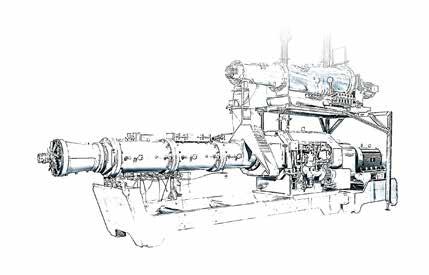


March 7th, 2023 Part of VIV Asia, Bangkok 7th Annual Aqua Feed Extrusion Conference IMPACT arena, Jupiter 5 CONFERENCE7 March 10th, 2023 Bangkok, Thailand Room: Jupiter 5 The feed machinery technologies and feed mill process conference more info: mymag.info/e/1326 Storage Solutions Dosing Drying and Cooling Grinding Pelleting Engineering Projects YOUR GLOBAL PARTNER INDUSTRY EVENTS Milling and Grain - March 2023 | 95
Latin America’s largest dedicated event for the animal feed and grain handling & processing industries
With Victam LatAm, Victam also has its Latin American platform, where the focus will be on the opportunities in Brazil and its surrounding countries Argentina, Colombia, Peru etc. As in other parts of the world, Victam will be launched in parallel to Grapas, the event for grain, rice, soy and flour handling & processing and association GEAPS. Together the three events are the place to be for feed and grain handling & processing.

The exhibition is a ‘one-stop’ show where the latest innovations in the field of animal feed and grain and soy handling & processing will be showcased. With the opportunity to connect with (key) players and enjoy the sights and sounds of São Paolo, this event offers top tier networking and conferences with key topics in your industry.
First time in Latin America!
Let’s kick-off with some interesting facts about Latin American compound feed production:
1. Latin America forms 16 percent of the total world compound feed production
2. Two of top global compound feed manufacturing countries (Brazil #3, Mexico #5) are located in Latin America.
3. In 2020, Brazil continued to top the list of countries with the highest levels of certified soy production, at approximately 3.7 million tonnes. Other relevant countries in the sector are Paraguay, Argentina and Uruguay in Latin America, with a total of 248,000 hectares and 774,000 tonnes (RTRS, 2021). It is expected that the current soybean production in Brazil, will be increased by 36 percent by 2035 without deforestation and with a notable reduction in greenhouse gas emissions (Source: Nature Sustainability, 2022). Then the question remains, where do you organise an event in Latin America, is it in Brazil or a Spanish-speaking country?
In 2021, Latin America experienced moderate growth of 0.5 percent, and Brazil remained the leader in feed production for the region and ranked third overall globally (Source: World-Grain, SOSLAND Publishing 2021). The Brazilian animal feed sector saw good results the past years despite limited state support and consequences of the pandemic. Most feed producers are ready for further investments as local farmers are increasing spending on high-quality animal feed.
The increased demand creates conditions for market consolidation and growth where innovative manufacturing technologies and product solutions are introduced (Source: Feed Strategy, 2022).

With a population of 230 million people, Brazil's population is as large as all other countries in South America together. It also stands head and shoulders above the other countries in terms of animal feed companies and grain, corn and soy production, which was the deciding factor for us to organise the event in Brazil.
In short, Latin America is a market with a lot of potential and is currently becoming an increasingly important market for our parties. The Victam Platform could be a great help in entering or expanding in the market. Our main aim is to be an international event for the entire continent, so the purpose is to attract important visitors from surrounding countries such as Argentina, Colombia and Peru. To be able to realise this, São Paulo; the economic capital of Latin America, is the place to be because of the allure and the central location (flying options).
Who is this event particularly interesting for?
Victam focuses on the niche of animal feed industry. With this we specialise on a selective yet diverse group and offer the maximum. For exhibitors, we actually have everything that is necessary within the factories and at farms to produce animal feed, machines, ingredients and all related services. The visitors are mostly producers of animal feed. This applies also for the LatAm event, although the market is organised with a special twist. For example, large farmers and cooperatives are also important visitor groups in Latin America and government agencies play a more important role in the chain than here in Western Europe.
In addition to Victam, we also organize GRAPAS, our title for the flour processing industry, and this industry is especially important in Latin America. This is also the reason why we have partnered with GEAPS and RTRS for instance, because these are associations that have their roots in grain handling and sustainable soy industry. This makes the event broader, deeper and more accessible. The foregoing implies that we cover both niches without losing focus as the two complement one another; the ingredients themselves and the entire procession.
insights
Industry-based conferences and seminars during the LatAm event

Wageningen University, together with the Victam Foundation, seizes the opportunity of this event to organize a local edition of the international feed technology conference (IFTC). Speakers from various universities in institutions in South America have already confirmed their presence. Through this conference, we at Victam are once again making the link between knowledge and practice. Our partner RTRS organizes a two-day round table session on sustainable soy and GEAPS organizes various seminars and workshops for grain handling. As for sustainability, this is an actual and crucial subject where the market in Latin America is already a bit further along. Both on the short- and long run, this theme is something that we certainly want further to expand, starting today!
There will be also conferences in partnership with our key media partner Perendale. There will be an extrusion conference on pet and aqua feed. Another conference will be about feed mills maximised. For this conference, we will invite speakers from important feed mills in Latin America. These specialists will illustrate the current situation and elaborate on future visions ending with a table session with suppliers in the industry.
We have also joined an online milling school, where we want to
Words from Patrons – Wenger
“Our Wenger, one of our highly valued founding companies, is participating at events for aquatic and pet food organised by Victam. With this event in Latin America, it is a great opportunity for Wenger to expand their presence within this area and establish lasting relations.
Wenger is a global, family-owned business committed to groundbreaking innovation, shaping the industry’s future at engineering, manufacturing, research and administrative facilities in Kansas, Brazil, Turkey, Belgium, India, Taiwan and Beijing.
For this edition, we are delighted to give the floor to Dennis Funk, Vice President of Wenger Manufacturing, to tell us more about their company and success factors. This interview contains information based on the pet food sector.
What makes participating to this upcoming event in LatAm different than the other markets/events?
Wenger works with many clients in Latin America and this is an excellent opportunity to meet with them to discuss their needs and how Wenger can work with them.
What are your expectations of Victam LatAm?
Wenger’s process expertise in extrusion cooking is world-class, so anytime we can meet with industry professionals, buyers, business owners, etc. to talk about extrusion, it will be a success.
How do you see this partnership evolving in the future?
Our participation in exhibitions is driven largely by the involvement of our clients. As long as they find value in this event, we will likely continue to support it.


What is Wenger’s vision on sustainability?
Extrusion cooking and subsequent drying processes can require significant amounts of energy. Wenger offers a variety of process, technology, and automate controls solutions aimed to reduce energy usage and to accommodate alternative energy sources per our customers’ specifications. Sustainability is very important to Wenger and we are constantly looking at innovative ways to achieve this.
bring the technical employees from Brazilian feed mills to the fair for the last session of the course and graduation ceremony. Interesting for the students and of course the exhibitors. Apart from that, we have a full program of shorter sessions on a variety of industry topics. Stay tuned and check our website www.victamlatam.com regularly for updates and detailed program information!
What are today’s trends within the industry and how do you keep up with these?
The inclusion of fresh meat is quickly becoming a must-have in the product portfolio of most pet food manufacturers. This is no longer a niche market. However, it can be a challenge to manufacture if you don’t have the right type of equipment or process knowledge. For example, an older-style extrusion system will likely be inefficient – and ineffective - to process fresh meat inclusion. Older style systems tend to clog up quickly and/or produce kibble that is too fragile to withstand further processing. Fortunately Wenger has a system – The Thermal Twin – that can produce kibble with very high inclusions of fresh meat. In fact, this is the only extruder on the market with proven performance for this type of food and treats.
What is the biggest challenge within the industry that you are currently facing?
Globally, Wenger’s pet food clients are facing challenges in sourcing ingredients and in the inflationary costs of these ingredients. Wenger continues to work with our clients to maximize their ingredient costs and usage by way of our extremely flexible and efficient systems. Our long-time focus on efficiencies and flexibility have helped our clients navigate fluctuating ingredient supplies and have limited unnecessary waste and rework.
What is Wenger’s greatest accomplishment that you are the most proud of?
Often times, clients initially choose Wenger when they have a challenging project or business needs. Once they employ our systems, they usually become repeat clients. Since every client is different, our greatest achievements happen almost daily as we meet each of our clients’ specifications and help them push the boundaries for nutrition, quality, and uniqueness in pet foods.
What’s the main message you have for the readers?
There is a reason Wegner is one of the tops in extrusion for pet food. When you work with Wenger, you gain the process expertise and innovative equipment solutions needed to improve the products – and profitability – of the nutritional products you make and distribute to pets around the world.

VICTAM insights - March 2023 | 97
What is The Market Place
The Market Place is a collaboration between Milling and Grain magazine and our sister titles, The International Milling Directory and The Global Miller.
The Market Place aims to connect the print and the digital world, bringing more content that will be of interest, as well as direct links to the content that you want to see.
Throughout this edition of the magazine you will find QR codes and myMAG links that can link to various content from all three publications.
MAG TV MAG TV is Milling and Grain magazine’s video channel. Featuring content about new products, interviews with industry professionals, industry event content and much more


Amino acids
Evonik Operations GmbH
+49 6181 59 12437
www.evonik.com/animal-nutrition
PROFILE: mymag.info/e/598
Bagging systems
Bühler AG
+41 71 955 11 11
www.buhlergroup.com
PROFILE: mymag.info/e/588
FAWEMA
+49 2263 716-0
www.fawema.com

PROFILE: mymag.info/e/1577
Maxtex Trading Group Co. Ltd.


+66 29488281
www.maxtex.net

PROFILE: mymag.info/e/1173
Statec Binder
+43 3112 38 5800
www.statec-binder.com

PROFILE: mymag.info/e/791
Golden Grain Group +86 371 68631308

www.g-grain.com
PROFILE: mymag.info/e/1031
Bakery improvers
Bastak
+90 312 395 67 87
www.bastak.com.tr

PROFILE: mymag.info/e/582
ERKAYA +90 312 395 2986
www.erkayagida.com.tr
PROFILE: mymag.info/e/596
Bulk storage
AGI
www.aggrowth.com
PROFILE: mymag.info/e/575
Behlen
+1 402 564 3111
www.behlengrainsystems.com

PROFILE: mymag.info/e/583
myMAG links myMAG links are shortened hyperlinks that will take you directly to content when typed into a browser
Behn + Bates +49 251 9796 252
www.behnbates.com
PROFILE: mymag.info/e/1143
Founded in Krefeld/Germany in 1933 rapidly became known for robust and high quality bag filling machines. In the early stages the focus was on all industries filling their products into bags. However, since being taken over by HAVER & BOECKER, Oelde/Germany, one of the leading packing machine manufacturers, BEHN + BATES have specialised in the food industries from the end of the 90s.
Today BEHN + BATES is an independently working company with more than 65 highly motivated employees in the world-wide active HAVER® Group and can offer you the advantages of high flexibility as well as the inventiveness and the experience of an international company.

With customers in more than 60 countries around the globe BEHN + BATES have developed a variety of packaging solutions. They have designed, built and supplied the required packaging technology and successfully put it into operation in close cooperation with the end users.
Leading groups of food companies trust in their technology, as do small factories. BEHN + BATES have the bagging solution for each product, for each type of bag and for manual or fully automatic operations. See full profile at: mymag.info/e/1143
Brock
+1 866 658 4191
www.brockgrain.com

PROFILE: mymag.info/e/587
Bühler AG
+41 71 955 11 11
www.buhlergroup.com
PROFILE: mymag.info/e/588
Ozpolat Makina Gida
+90 342 337 1217
www.ozpolatmakina.com.tr

PROFILE: mymag.info/e/635
Silo Construction & Engineering
+32 51723128
www.sce.be

PROFILE: mymag.info/e/1085
Bruks Siwertell AB
+46 4285880
www.bruks-siwertell.com
PROFILE: mymag.info/e/931
Symaga
+34 926640475
www.symaga.com

PROFILE: mymag.info/e/654
Sukup
+1 641 892 4222
www.sukup.com

PROFILE: mymag.info/e/652
The Essmueller
+1 800 325 7175
www.essmueller.com
PROFILE: mymag.info/e/597
TSC Silos
+31 543 473979
www.tsc-silos.com

PROFILE: mymag.info/e/656
Van Aarsen International +31 475 579 444
www.aarsen.com
PROFILE: mymag.info/e/662
Cereal and pulse conditioning
Bühler AG +41 71 955 11 11
www.buhlergroup.com
PROFILE: mymag.info/e/588
Vibrafloor
+33 3 85 44 06 78
www.vibrafloor.com
PROFILE: mymag.info/e/664
vibronet-Gräf GmbH & Co.KG +49 6441 62031

www.vibronet.com
PROFILE: mymag.info/e/663
Colour sorters
Bühler A G +41 71 955 11 11
www.buhlergroup.com
PROFILE: mymag.info/e/588
mymag.info/e/37
Cimbria Srl

+39 0542 361423
www.cimbria.com
PROFILE: mymag.info/e/592
Maxtex Trading Group Co. Ltd.


+66 29488281
www.maxtex.net

PROFILE: mymag.info/e/1173
Satake
+81 82 420 8560
www.satake-group.com

PROFILE: mymag.info/e/645
Computer software
Inteqnion
+31 543 49 44 66
www.inteqnion.com


PROFILE: mymag.info/e/615
Van Aarsen International
+31 475 579 444
www.aarsen.com
PROFILE: mymag.info/e/662
Coolers & driers
Bühler AG
+41 71 955 11 11
www.buhlergroup.com
PROFILE: mymag.info/e/588
Consergra s.l
+34 938 772207
www.consergra.com
PROFILE: mymag.info/e/1343
FrigorTec GmbH
+49 7520 91482-0
www.frigortec.com
PROFILE: mymag.info/e/604
FAMSUN
+86 85828888
www.famsungroup.com
PROFILE: mymag.info/e/600
Sukup
+1 641 892 4222
www.sukup.com
PROFILE: mymag.info/e/652
Wenger Manufacturing
+1 785-284-2133
www.wenger.com
PROFILE: mymag.info/e/666
Van Aarsen International
+31 475 579 444
www.aarsen.com
PROFILE: mymag.info/e/662
Yemmak
+90 266 7338363
www.yemmak.com
PROFILE: mymag.info/e/668
Yemtar Feed Mill Machines
+90 266 733 8550
www.yemtar.com
PROFILE: mymag.info/e/669
Dosing
Bühler AG
+41 71 955 11 11
www.buhlergroup.com
PROFILE: mymag.info/e/588
Van Aarsen International
+31 475 579 444
www.aarsen.com
PROFILE: mymag.info/e/662
Elevator buckets
4B Braime
+44 113 246 1800
www.go4b.com
PROFILE: mymag.info/e/418
Tapco Inc
+1 314 739 9191
www.tapcoinc.com
PROFILE: mymag.info/e/658
Yemtar Feed Mill Machines
+90 266 733 8550
www.yemtar.com
PROFILE: mymag.info/e/669
Elevator & conveyor components
4B Braime
+44 113 246 1800
www.go4b.com
PROFILE: mymag.info/e/418
Bühler AG
+41 71 955 11 11
www.buhlergroup.com
PROFILE: mymag.info/e/588
Henry Simon
+44 0161 804 2800
www.henrysimonmilling.com
PROFILE: mymag.info/e/608
Tapco Inc

+1 314 739 9191
www.tapcoinc.com
PROFILE: mymag.info/e/658
Yemtar Feed Mill Machines
+90 266 733 8550 www.yemtar.com
PROFILE: mymag.info/e/669
Van Aarsen International
+31 475 579 444 www.aarsen.com
PROFILE: mymag.info/e/662
Enzymes
Bastak +90 312 395 67 87 www.bastak.com.tr
PROFILE: mymag.info/e/582
ERKAYA +90 312 395 2986 www.erkayagida.com.tr
PROFILE: mymag.info/e/596
PLP
+39 05 23 89 16 29 www.plp-systems.com
PROFILE: mymag.info/e/700
Extruders
Almex

+31 575 572666 www.almex.nl
PROFILE: mymag.info/e/570
Almex specialises in single screw extrusion equipment, from the extrusion unit to complete installations. They are a family owned, independent company.
Almex extruders and Contivar Expanders are in use worldwide at fishfeed, oil extraction, petfood, animal feed plants, the food industry and the processing and chemical industries.
Almex started early 1970's with repair and installation of extruders. For use in Europe these units needed much modifications, so they decided to design and built in the Netherlands a complete range of extruders for 500 to 15.000kg/hour capacity. These extruders did find their way to clients worldwide. Today the largest extruder has a diameter of 400mm, a barrel length of 4800mm and a drive of 500kW.
See full profile at: mymag.info/e/570
Andritz
+45 72 160300
www.andritz.com
PROFILE: mymag.info/e/574
Bühler AG
+41 71 955 11 11
www.buhlergroup.com
PROFILE: mymag.info/e/588
Wenger Manufacturing
+1 785-284-2133
www.wenger.com

PROFILE: mymag.info/e/666
Yemmak +90 266 7338363
www.yemmak.com
PROFILE: mymag.info/e/668
Yemtar Feed Mill Machines
+90 266 733 8550
www.yemtar.com
PROFILE: mymag.info/e/669
Feed nutrition
Adisseo
+ 33 1 46 74 70 00
www.adisseo.com
PROFILE: mymag.info/e/1583
Anpario +44 1909 537 380
www.anpario.com

PROFILE: mymag.info/e/1097
DSM
+44 1452 306129
www.dsm.com

PROFILE: mymag.info/e/1584
Evonik Operations GmbH +49 6181 59 12437

www.evonik.com/animal-nutrition
PROFILE: mymag.info/e/598
Romer Labs Division Holding GmbH


+43 2782 803 0
www.romerlabs.com
PROFILE: mymag.info/e/1098
The Anderson Inc +1 419-897-6758
www.andersonsgrain.com

PROFILE: mymag.info/e/1144
Feed milling
Bühler AG +41 71 955 11 11

www.buhlergroup.com
PROFILE: mymag.info/e/588
milltech
+90 332 5021300
www.milltech.com.tr

PROFILE: mymag.info/e/1585
Dinnissen BV
+31 77 467 3555
www.dinnissen.nl
PROFILE: mymag.info/e/595
FAMSUN
+86 85828888
www.famsungroup.com
PROFILE: mymag.info/e/600
Ottevanger Milling Engineers

+31 79 593 22 21
www.ottevanger.com
PROFILE: mymag.info/e/737
PLP
+39 05 23 89 16 29
www.plp-systems.com
PROFILE: mymag.info/e/700
Sangati Berga +55 11 2663 9990
www.sangatiberga.com.br
PROFILE: mymag.info/e/1145
Van Aarsen International
+31 475 579 444
www.aarsen.com
PROFILE: mymag.info/e/662
VAV Conveyor Components & Solutions

+31 7140 23701
www.vav-nl.com
PROFILE: mymag.info/e/1042
vibronet-Gräf GmbH & Co.KG
+49 6441 62031
www.vibronet.com
PROFILE: mymag.info/e/663
99 | March 2023 - Milling and Grain
Yemmak
+90 266 7338363
www.yemmak.com
PROFILE: mymag.info/e/668
Zheng Chang
+86 2164184200
www.zhengchang.com

PROFILE: mymag.info/e/672
Golden Grain Group
+86 371 68631308
www.g-grain.com
PROFILE: mymag.info/e/1031
Feed Mill Automation
Bühler AG
+41 71 955 11 11
www.buhlergroup.com
PROFILE: mymag.info/e/588
Van Aarsen International
+31 475 579 444
www.aarsen.com
PROFILE: mymag.info/e/662
Flour Improvers
Bastak
+90 312 395 67 87
www.bastak.com.tr
PROFILE: mymag.info/e/582
Flour milling
Maxtex Trading Group Co. Ltd.


+66 29488281
www.maxtex.net

PROFILE: mymag.info/e/1173
milltech
+90 332 5021300
www.milltech.com.tr
PROFILE: mymag.info/e/1585
Grain handling systems
Behlen
+1 402 564 3111
www.behlengrainsystems.com
PROFILE: mymag.info/e/583
Brock
+1 866 658 4191
www.brockgrain.com
PROFILE: mymag.info/e/587
Bühler AG
+41 71 955 11 11
www.buhlergroup.com
PROFILE: mymag.info/e/588
Cimbria A/S
+45 96 17 90 00
www.cimbria.com
PROFILE: mymag.info/e/592
Ozpolat Makina Gida
+90 342 337 1217
www.ozpolatmakina.com.tr
PROFILE: mymag.info/e/635
Sangati Berga
+55 11 2663 9990
www.sangatiberga.com.br
PROFILE: mymag.info/e/1145
Sukup Europe


+45 75685311
www.sukup-eu.com
PROFILE: mymag.info/e/652
Symaga
+34 91 726 43 04
www.symaga.com

PROFILE: mymag.info/e/654
Tapco Inc

+1 314 739 9191
www.tapcoinc.com
PROFILE: mymag.info/e/658
The Essmueller
+1 800 325 7175
www.essmueller.com
PROFILE: mymag.info/e/597
Yemtar Feed Mill Machines
+90 266 733 8550
www.yemtar.com
PROFILE: mymag.info/e/669
Zaccaria
+55 19 3404 5700
www.zaccaria.com.br
PROFILE: mymag.info/e/671
Result of a continuous work throughout its history, Zaccaria has become the leader in the Brazilian milling market, reaching 70 percent of a market of 12,000,000 tons / year. The Zaccaria products line also includes equipment for processing beans, maize and other cereals.
Together with agents locate throughout Brazil and the world, Zaccaria supplies a complete line of original and spare parts, rolls and rubber brakes.

Within the competitive market for cereal processing and the growing of globalization, Zaccaria make all efforts to offer to its customers not only products with excellent quality and technology, but also personalized projects for specific purposes according to customers’ requirements, as well as technical assistance, commercial and technical support through highly qualified agricultural / mechanics engineers, who are able to offer proper orientation regarding to the products for each customer, according to their needs. The Zaccaria has the “CE “certification in the milling cereals business, which enables us to market our products and services worldwide.
Zaccaria are market leaders in Latin America, being that about 50 percent of paddy production is processed by Zaccaria machinery
Nowadays, Zaccaria is located in an area of 54 thousand square meters, 34 thousand covered by built area. It has a team on average 350 highly qualified and trained staff. Zaccaria have the honour of being a Brazilian company with national and international recognition by their achievements and the continuous improvement of its products and services offered to their customers. See full profile at: mymag.info/e/671
Golden Grain Group +86 371 68631308

www.g-grain.com
PROFILE: mymag.info/e/1031
Hammermills
Alapala +90 212 465 60 40
www.alapala.com
PROFILE: mymag.info/e/568
Bühler AG +41 71 955 11 11
www.buhlergroup.com
PROFILE: mymag.info/e/588
Dinnissen BV +31 77 467 3555
www.dinnissen.nl
PROFILE: mymag.info/e/595
Ottevanger Milling Engineers +31 79 593 22 21
www.ottevanger.com
PROFILE: mymag.info/e/737
Selis +90 222 236 12 33
www.selis.com.tr

PROFILE: mymag.info/e/649
Van Aarsen International
+31 475 579 444
www.aarsen.com
PROFILE: mymag.info/e/662
Yemmak
+90 266 7338363
www.yemmak.com
PROFILE: mymag.info/e/668
Yemtar Feed Mill Machines
+90 266 733 8550
www.yemtar.com
PROFILE: mymag.info/e/669
Zheng Chang
+86 2164184200
www.zhengchang.com/eng
PROFILE: mymag.info/e/672
Laboratory equipment
Bastak
+90 312 395 67 87
www.bastak.com.tr
PROFILE: mymag.info/e/582
Bühler AG
+41 71 955 11 11
www.buhlergroup.com
PROFILE: mymag.info/e/588
ERKAYA
+90 312 395 2986
www.erkayagida.com.tr
PROFILE: mymag.info/e/596
Tekpro
+44 1692 403403
www.tekpro.com
PROFILE: mymag.info/e/660
Zaccaria +55 19 3404 5700
www.zaccaria.com.br
PROFILE: mymag.info/e/671
Loading/un-loading equipment
Bühler AG +41 71 955 11 11
www.buhlergroup.com
PROFILE: mymag.info/e/588
Dinnissen BV +31 77 467 3555
www.dinnissen.nl
PROFILE: mymag.info/e/595
Neuero Industrietechnik
+49 5422 95030
www.neuero.de
PROFILE: mymag.info/e/627
Van Aarsen International +31 475 579 444
www.aarsen.com
PROFILE: mymag.info/e/662
Vigan Engineering
+32 67 89 50 41
www.vigan.com
PROFILE: mymag.info/e/665
Mill design & installation
Alapala
+90 212 465 60 40
www.alapala.com
PROFILE: mymag.info/e/568
Bühler AG
+41 71 955 11 11
www.buhlergroup.com
PROFILE: mymag.info/e/588
Henry Simon +44 0161 804 2800
www.henrysimonmilling.com
PROFILE: mymag.info/e/608
IMAS - Milleral +90 332 2390141
www.milleral.com
PROFILE: mymag.info/e/613
Ocrim +39 0372 4011
www.ocrim.com
PROFILE: mymag.info/e/632
Ottevanger Milling Engineers
+31 79 593 22 21
www.ottevanger.com
PROFILE: mymag.info/e/737
100 | March 2023 - Milling and Grain
Sangati Berga
+55 11 2663 9990
www.sangatiberga.com.br
PROFILE: mymag.info/e/1145
Satake
+81 82 420 8560
www.satake-group.com
PROFILE: mymag.info/e/645
Selis
+90 222 236 12 33
www.selis.com.tr
PROFILE: mymag.info/e/649
Silo Construction & Engineering
+32 51723128
www.sce.be
PROFILE: mymag.info/e/1085
Van Aarsen International
+31 475 579 444
www.aarsen.com
PROFILE: mymag.info/e/662
Yemtar Feed Mill Machines
+90 266 733 8550
www.yemtar.com
PROFILE: mymag.info/e/669
Hydronix
+44 1483 468900
www.hydronix.com
PROFILE: mymag.info/e/332
Zaccaria
+55 19 3404 5700
www.zaccaria.com.br
PROFILE: mymag.info/e/671
Golden Grain Group
+86 371 68631308
www.g-grain.com
PROFILE: mymag.info/e/1031
Moisture measurement
Bastak
+90 312 395 67 87
www.bastak.com.tr
PROFILE: mymag.info/e/582
Bühler AG
+41 71 955 11 11
www.buhlergroup.com
PROFILE: mymag.info/e/588
Hydronix
+44 1483 468900
www.hydronix.com
PROFILE: mymag.info/e/332
Vibrafloor
+33 3 85 44 06 78
www.vibrafloor.com
PROFILE: mymag.info/e/664
vibronet-Gräf GmbH & Co.KG
+49 6441 62031
www.vibronet.com
PROFILE: mymag.info/e/663
Mycotoxin management
Adisseo
+ 33 1 46 74 70 00
www.adisseo.com
PROFILE: mymag.info/e/1583
Packaging
Bühler AG
+41 71 955 11 11
www.buhlergroup.com
PROFILE: mymag.info/e/588
Dinnissen BV
+31 77 467 3555
www.dinnissen.nl
PROFILE: mymag.info/e/595
FAWEMA
+49 22 63 716 0
www.fawema.com
PROFILE: mymag.info/e/1577
Maxtex Trading Group Co. Ltd.


+66 29488281
www.maxtex.net
PROFILE: mymag.info/e/1173
Statec Binder
+43 3112 38 5800
www.statec-binder.com
PROFILE: mymag.info/e/791
Yemmak
+90 266 7338363
www.yemmak.com
PROFILE: mymag.info/e/668
Yemtar Feed Mill Machines
+90 266 733 8550
www.yemtar.com
PROFILE: mymag.info/e/669
Paddle mixer
IDAH
+866 39 902701
www.idah.com
PROFILE: mymag.info/e/1568
Palletisers
Bühler AG
+41 71 955 11 11 www.buhlergroup.com
PROFILE: mymag.info/e/588
Statec Binder
+43 3112 38 5800 www.statec-binder.com
PROFILE: mymag.info/e/791
Golden Grain Group
+86 371 68631308
www.g-grain.com
PROFILE: mymag.info/e/1031
Pellet press
Bühler AG +41 71 955 11 11
www.buhlergroup.com
PROFILE: mymag.info/e/588
IDAH
+866 39 902701 www.idah.com
PROFILE: mymag.info/e/1568
Pelleting Technology Netherlands
(PTN)
+3 73 54 984 72 www.ptn.nl
PROFILE: mymag.info/e/639
Van Aarsen International
+31 475 579 444
www.aarsen.com
PROFILE: mymag.info/e/662
Yemtar Feed Mill Machines
+90 266 733 8550
www.yemtar.com
PROFILE: mymag.info/e/669
Yemmak +90 266 7338363
www.yemmak.com
PROFILE: mymag.info/e/668
Plant
Bühler AG +41 71 955 11 11
www.buhlergroup.com
PROFILE: mymag.info/e/588
Sangati Berga
+55 11 2663 9990
www.sangatiberga.com.br
PROFILE: mymag.info/e/1145
Yemtar Feed Mill Machines
+90 266 733 8550
www.yemtar.com
PROFILE: mymag.info/e/669
Zheng Chang +86 2164184200
www.zhengchang.com/eng
PROFILE: mymag.info/e/672
Process control
Bühler AG +41 71 955 11 11
www.buhlergroup.com
PROFILE: mymag.info/e/588
Inteqnion +31 543 49 44 66
www.inteqnion.com
PROFILE: mymag.info/e/615
Ottevanger Milling Engineers
+31 79 593 22 21
www.ottevanger.com
PROFILE: mymag.info/e/737
Van Aarsen International +31 475 579 444
www.aarsen.com
PROFILE: mymag.info/e/662
Yemmak +90 266 7338363
www.yemmak.com
PROFILE: mymag.info/e/668
Pulverisers
IDAH +866 39 902701
www.idah.com

PROFILE: mymag.info/e/1568
Rolls
Bühler AG
+41 71 955 11 11
www.buhlergroup.com
PROFILE: mymag.info/e/588
Fundiciones Balaguer, S.A. +34 965564075
www.balaguer-rolls.com

PROFILE: mymag.info/e/605
Statec Binder +43 3112 38 5800
www.statec-binder.com
PROFILE: mymag.info/e/791
Yenar +90 332 2391073 www.yenar.com.tr
PROFILE: mymag.info/e/670
Roller mills
Alapala +90 212 465 60 40 www.alapala.com
PROFILE: mymag.info/e/568
Bühler AG +41 71 955 11 11 www.buhlergroup.com
PROFILE: mymag.info/e/588
milltech +90 332 5021300 www.milltech.com.tr
PROFILE: mymag.info/e/1585
IMAS - Milleral +90 332 2390141
www.milleral.com
PROFILE: mymag.info/e/754
Henry Simon +44 0161 804 2800
www.henrysimonmilling.com
PROFILE: mymag.info/e/608
Ocrim +39 0372 4011 www.ocrim.com
PROFILE: mymag.info/e/632
Pelleting Technology Netherlands (PTN) +3 73 54 984 72 www.ptn.nl

PROFILE: mymag.info/e/639
Roll fluting
Pingle +86 311 88268111
www.plflourmill.com
PROFILE: mymag.info/e/642
Sangati Berga
+55 11 2663 9990
www.sangatiberga.com.br
PROFILE: mymag.info/e/1145
Selis +90 222 236 12 33
www.selis.com.tr
PROFILE: mymag.info/e/649
Yemtar Feed Mill Machines
+90 266 733 8550
www.yemtar.com
PROFILE: mymag.info/e/669
Golden Grain Group
+86 371 68631308
www.g-grain.com
PROFILE: mymag.info/e/1031
Bühler AG
+41 71 955 11 11
www.buhlergroup.com
PROFILE: mymag.info/e/588
Fundiciones Balaguer, S.A.
+34 965564075
www.balaguer-rolls.com
PROFILE: mymag.info/e/605
Yenar +90 332 2391073
www.yenar.com.tr
PROFILE: mymag.info/e/670
Reclaim system
Vibrafloor +33 3 85 44 06 78
www.vibrafloor.com
PROFILE: mymag.info/e/664
Scalling
Bühler AG +41 71 955 11 11
www.buhlergroup.com
PROFILE: mymag.info/e/588
Sifters
Brock +1 866 658 4191
www.brockgrain.com
PROFILE: mymag.info/e/587
Bühler AG
+41 71 955 11 11
www.buhlergroup.com
PROFILE: mymag.info/e/588
Dinnissen BV
+31 77 467 3555
www.dinnissen.nl
PROFILE: mymag.info/e/595
Filip GmbH
+49 5241 29330
www.filip-gmbh.com
PROFILE: mymag.info/e/1588
Gazel
+90 364 2549630
www.gazelmakina.com

PROFILE: mymag.info/e/607
Sefar AG
+41 898 57 00
www.sefar.com

PROFILE: mymag.info/e/648
Selis
+90 222 236 12 33
www.selis.com.tr
PROFILE: mymag.info/e/649
Silos
Zaccaria
+1 5519 34045715
www.zaccaria.com.br

PROFILE: mymag.info/e/671
Golden Grain Group
+86 371 68631308
www.g-grain.com
PROFILE: mymag.info/e/1031
AGI www.aggrowth.com
PROFILE: mymag.info/e/575
Altinbiliek +90 222 236 13 99 www.abms.com.tr
PROFILE: mymag.info/e/571
Behlen
+1 402 564 3111 www.behlengrainsystems.com
PROFILE: mymag.info/e/583
Bühler AG +41 71 955 11 11 www.buhlergroup.com
PROFILE: mymag.info/e/588
A/S Cimbria +45 9617 9000 www.cimbria.com

PROFILE: mymag.info/e/592
CSI
+90 322 394 54 60 www.cukurovasilo.com
PROFILE: mymag.info/e/590
The Essmueller +1 800 325 7175 www.essmueller.com
PROFILE: mymag.info/e/597
MySilo

+90 382 266 22 45 www.mysilo.com
PROFILE: mymag.info/e/622
Obial
+90 382 2662120 www.obial.com.tr
PROFILE: mymag.info/e/631
Ozpolat Makina Gida
+90 342 337 1217 www.ozpolatmakina.com.tr
PROFILE: mymag.info/e/635
Silo Construction & Engineering
+32 51723128 www.sce.be

PROFILE: mymag.info/e/1085
Sukup
+1 641 892 4222
www.sukup.com
PROFILE: mymag.info/e/652
Symaga
+34 91 726 43 04 www.symaga.com
PROFILE: mymag.info/e/654
Top Silo Constructions (TSC)
+31 543 473 979 www.tsc-silos.com
PROFILE: mymag.info/e/656
Van Aarsen International +31 475 579 444 www.aarsen.com
PROFILE: mymag.info/e/662
Temperature monitoring
Bühler AG
+41 71 955 11 11
www.buhlergroup.com
PROFILE: mymag.info/e/588
Inteqnion
+31 543 49 44 66
www.inteqnion.com

PROFILE: mymag.info/e/615
Training
vibronet-Gräf GmbH & Co.KG
+49 6441 62031
www.vibronet.com
PROFILE: mymag.info/e/663
Bühler AG
+41 71 955 11 11
www.buhlergroup.com
PROFILE: mymag.info/e/588
IAOM
+1 913 338 3377
www.iaom.info

IFF +495307 92220
www.iff-braunschweig.de
Kansas State University
+1 785 532 6161
www.grains.k-state.edu

OMS +441242 267700
www.onlinemillingschool.com
PROFILE: mymag.info/e/1589
Ocrim
+39 0372 4011
www.ocrim.com
PROFILE: mymag.info/e/632
UK Flour Millers

+44 2074 932521
www.ukflourmillers.org
PROFILE: mymag.info/e/1590
Vibrators
Vibrafloor
+33 3 85 44 06 78
www.vibrafloor.com
PROFILE: mymag.info/e/664
Weighing equipment
Bühler AG +41 71 955 11 11
www.buhlergroup.com
PROFILE: mymag.info/e/588
PLP +39 05 23 89 16 29
www.plp-systems.com

PROFILE: mymag.info/e/700
Van Aarsen International
+31 475 579 444
www.aarsen.com
PROFILE: mymag.info/e/662
Vibrafloor +33 3 85 44 06 78
www.vibrafloor.com

PROFILE: mymag.info/e/664
vibronet-Gräf GmbH & Co.KG +49 6441 62031
www.vibronet.com
PROFILE: mymag.info/e/663
Yeast products
Leiber GmbH +49 5461 93030

www.leibergmbh.de
PROFILE: mymag.info/e/618
To see online profiles, videos, news and product reviews for companies in the market place please visit:
https://millingandgrain.com/web/companies
To get your company included in the market place, please contact the Milling and Grain team on +44 1242 267700
102 | March 2023 - Milling and Grain
LATIN AMERICA’S LARGEST DEDICATED EVENT FOR THE ANIMAL FEED AND GRAIN PROCESSING INDUSTRIES


• Animal Feed
• Agua Feed
• Pet food
• Poultry feed
• Flour milling
• Grain processing, handling & storage


3-5 OCTOBER 2023
MORE INFORMATION
NEW! SÃO PAULO BRAZIL
MORE INFORMATION � NICKMOUTHAAN@VICTAM.COM � +31 6 2126 4398 � WWW.VICTAMLATAM.COM
QR
or visit victamlatam.com
Scan the
code
FOUNDING COMPANIES
Thomas Kaeser, born in 1953, in Coburg, Bavaria, Germany.General qualification for university entrance at Ernestinum Gymnasium in Coburg. Following an industrial engineering course of studies at the Technical University Karlsruhe in Germany and trainee residencies in France and the US, he joined the parental company in 1979 and became Managing Partner of KAESER KOMPRESSOREN GmbH in Coburg in 1985. Since February 2012, he is the Chairman of the Board of kaeser kompressoren se. He is also on the Board of the VDMA (Verband Deutscher Maschinen- und Anlagenbau - German Engineering Federation), the advisory board of the exhibitors of the Hanover Fair, the PNEUROP Council and the Association of the German Trade Fair Industry (AUMA). He has been awarded the State Medal for outstanding services to the Bavarian industry (in November 2012).
When you first took over as a managing partner of Kaeser compressors in 1985, what were the hurdles you had to face?
There were no hurdles to face but a lot of challenges: to understand all the demands of different customers, to foster the relationships with our suppliers, to continuously find and develop new markets e.g. aquaculture, to push innovation and new product development, to canalize financial resources efficiently and properly, to develop a worldwide supply chain and to organise efficient and flexible production. To understand all this, to network and to communicate all these departments lead to the result of a successfully growing company.
In recent years what are the most critical technological developments that you have witnessed in the sector?
Of course it is important, necessary and inevitable that all products and services need continuous development for improvement with the main goal of energy efficiency and reliability. But even in those days I have seen the necessity for computer devices inside and outside machines and activity for the digitalisation of machines (digital twins) and processes.
In 2012 you were awarded the State Medal for Outstanding Services to the Bavarian Economy. What contributions have you made to the profession that is most meaningful to you?
For more that 100 years Kaeser Kompressoren has been a continuously positively developing company engaging every year additional competent and motived people who have been offered interesting and challenging tasks and an extremely safe working place. Even in very difficult times like the finance crisis in 2009 and the COVID
crisis in 2022/2021, we did not give notice of any of our staff. Additionally, for nearly 20 years we have a programme to engage more than double as many apprentices as we needed to engage in the beginning, as to give to young people a chance of receiving good education and a precious possibility for a long-term job in the future.
Last but not least, the strategy of Kaeser Kompressoren has always been to offer to our customers a solution to save energy and money which is good for the company and good for the environment.
What are Opportunities for solution innovations that support sustainable goals in current manufacturing industry?
Digitalisation is a vital goal and development of Kaeser Kompressoren and all other companies as well to remain competitive and successful and to save as much energy and resources as possible.
Kaeser compressor celebrated 100 years a few years back. How would you describe the companies journey from a small workshop in 1919?
You can imagine that a journey of more than 100 years has many bright and also some dark moments. But the trust and confidence in our own strength and in a possible good future combined with the loyalty and solidarity to and of our employees, customers and suppliers has made it possible to overcome all the difficult challenges which appeared in our history.
Where do you think the industry will be by 2050?
Well, I cannot predict what future brings but we will work hard, goal-focused and with the best possible communication to employees and stakeholders. This ensures our success in the future.
the interview
104 | March 2023 - Milling and Grain
Thomas Kaesar, Chairman of the Board, kaeser kompressoren, Germany

Milling and Grain - March 2023 | 105
PEOPLE THE INDUSTRY FACES

Dr Roy Brister joins Alltech as Strategic Poultry Advisor


Alltech is pleased to announce that Dr Roy Brister has joined the team as a Strategic Poultry Advisor. With nearly four decades of experience in the poultry industry, he will focus on supporting sales and technical teams, bridging the gap between suppliers and poultry integrators, and driving new research. He is also passionate about creating actionable steps that help the poultry industry meet its sustainability goals.
Dr Brister began his career as a technical nutritionist at Nutrius Inc./Diamond Shamrock and later Spring Valley Farms, the latter of which was acquired by Tyson just months after he joined. His 37 years at Tyson Foods included roles as director of nutrition and feed milling. He specialises in nutrition and feed milling management and is particularly interested in growth modelling as an innovative technology that can help producers achieve increased efficiency and sustainability. He is also interested in alternative ingredients that support circular nutrition and in utilising data to guide critical decisions.
NARA announces Vice President of Communications, Anna Wilkinson

The North American Renderers Association (NARA) is pleased to announce that Anna Wilkinson has been named the association's Vice President of Communications. Ms Wilkinson will also serve as Vice President of Communications for the Fats and Proteins Research Foundation (FPRF), the rendering industry's research organisation.
For the past four years Ms Wilkinson has been the Director of Communications for NARA and FPRF where she has managed all internal and public NARA communications, public relations, and marketing for the association, and also served as Communications Director for the Fats and Proteins Research Foundation (FPRF). In the position of Communications Vice President, she will expand on this role, overseeing all of NARA and FPRF's communications.
During her tenure as Director of Communications Ms Wilkinson spearheaded numerous programs and broke new ground for the association. In her first year she implemented and oversaw the organisation's sustainability focused rebrand and name change from the National Renderers Association (NRA) to the North American Renderers Association (NARA). She also launched NARA's rendering podcast, The Invisible Industry, which she directs and moderates. More recently, Ms Wilkinson petitioned for the rendering industry to be recognised with a National Day.
Einar Einarsson appointed as President of Marlen
Marlen International, Inc. ['Marlen'], a member of the Duravant family of operating companies, announces the appointment of Einar Einarsson to President where he will be responsible for leading strategies that bring Marlen's high-performance food processing equipment and world class service to food processors around the world.
Mr Einarsson brings over 20 years of leadership experience in the food processing industry including leading the North America division of a global provider of food processing solutions serving the Poultry, Meat, Fish and Prepared Foods industries and as a Managing Director for a manufacturer of high-quality cast aluminium cookware.
Mr Einarsson holds a Bachelor of Science degree in Mechanical Engineering from the University of Iceland and a post-graduate degree in Mechanical Engineering from Karlsruhe Institute of Technology in Germany.
BDC Systems Ltd appoints of Tom Bane as Regional Sales Manager
To continue to provide its renowned first-class service and support for both existing and potential customers, BDC Systems Ltd has appointed Tom Bane as Regional Sales Manager for the East of England.

“The East of England is an important area for us so it is imperative that we extend our reach by making sure that BDC Systems' extensive range of grain handling equipment is available to farming enterprises of all sizes, as well as commercial operators, across the region,” says Andrew Head, Sales Director, BDC Systems Ltd.
Mr Bane brings a wealth of experience within the grain handling marketplace to the BDC Systems' sales team and importantly already has existing relationships with farmers, dealers and commercial operators across the Eastern region.
106 | March 2023 - Milling and Grain
Bühler and Premier Tech Accelerating Impact Together
Collaboration
We are strongly engaged to working together in making a difference in the milling industry by offering the latest processing and packaging solutions.


Synergy
We are family businesses sharing common values and we believe our cohesive cooperation will help deliver gains and values to our customers.


Client Success
We are doing our work with passion. The end goal of this partnership is to help our customers and stakeholders to succeed.
Innovations for a better world.
Packaging Processing Raw material
