F
How to eliminate anti-nutritional factors in piglet feed
A
by Zheng Chang, China lmost all feed materials contain anti-nutritional factors, especially plant-based materials. Feed with high levels of anti-nutritional factors may have adverse effects on the production performance and health of livestock and poultry. Although soybean-based products are the most abundant source of protein within feed at present, they contain a variety of anti-nutritional factors, which leads to allergic diarrhea and even, in rare cases, mortalities.
72 | June 2020 - Milling and Grain
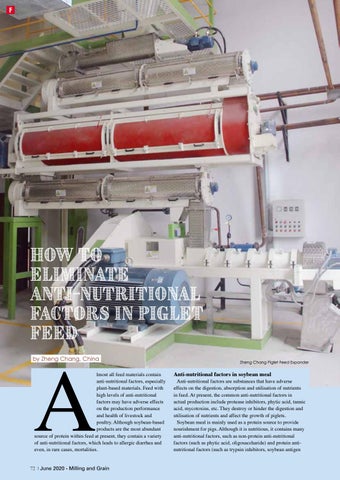
Zheng Chang Piglet Feed Expander
Anti-nutritional factors in soybean meal
Anti-nutritional factors are substances that have adverse effects on the digestion, absorption and utilisation of nutrients in feed. At present, the common anti-nutritional factors in actual production include protease inhibitors, phytic acid, tannic acid, mycotoxins, etc. They destroy or hinder the digestion and utilisation of nutrients and affect the growth of piglets. Soybean meal is mainly used as a protein source to provide nourishment for pigs. Although it is nutritious, it contains many anti-nutritional factors, such as non-protein anti-nutritional factors (such as phytic acid, oligosaccharide) and protein antinutritional factors (such as trypsin inhibitors, soybean antigen