F
COVID 19 UPDATES: MILLING ASSOCIATIONS
COVID-19: UK MILLERS WORKING 24/7 TO MEET FLOUR DEMAND
N
by Vaughn Entwistle, Managing Editor, Milling and Grain
ow that we are all in lockdown, the effects of COVID-19 have reached nearly every aspect of daily life. A common experience has been panic-buying and hoarding, leading to empty supermarket shelves. This has even impacted the availability of plain white flour on supermarket shelves in the UK and many other countries. Unlike many other food stuffs, the UK is self-sufficient in flour, producing about 90,000 tonnes every week. Yet, many people are experiencing shortages in supermarkets and shops. In the UK, challenges brought by the COVID-19 pandemic are being answered by the selfless dedication of many disciplines— including the millers who produce the flour to keep us fed. Every day, the UK bakes up roughly 12 million loaves of bread, two million pizzas, and ten million cakes and biscuits. Approximately one third of all food and drink products sold in a typical UK supermarket contain flour. When all are combined, this requires a daily production of 14,000 tonnes of flour. This, in turn relies upon an infrastructure of millers, engineers and drivers, not to mention adequate supplies of fuel and electricity.
Panic buying upsets the supermarket trolley
Since the first ominous premonitions of the advent of the coronavirus, many UK consumers responded with a wave of panic buying that emptied supermarket aisles of toilet paper. Panic buying then migrated to aisles stocking pasta and pasta 40 | May 2020 - Milling and Grain
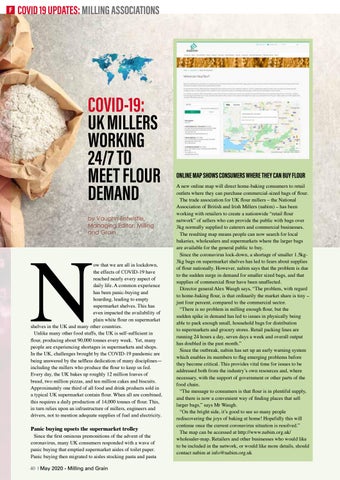
ONLINE MAP SHOWS CONSUMERS WHERE THEY CAN BUY FLOUR A new online map will direct home-baking consumers to retail outlets where they can purchase commercial-sized bags of flour. The trade association for UK flour millers – the National Association of British and Irish Millers (nabim) – has been working with retailers to create a nationwide “retail flour network” of sellers who can provide the public with bags over 3kg normally supplied to caterers and commercial businesses. The resulting map means people can now search for local bakeries, wholesalers and supermarkets where the larger bags are available for the general public to buy. Since the coronavirus lock-down, a shortage of smaller 1.5kg3kg bags on supermarket shelves has led to fears about supplies of flour nationally. However, nabim says that the problem is due to the sudden surge in demand for smaller sized bags, and that supplies of commercial flour have been unaffected. Director general Alex Waugh says, “The problem, with regard to home-baking flour, is that ordinarily the market share is tiny – just four percent, compared to the commercial sector. “There is no problem in milling enough flour, but the sudden spike in demand has led to issues in physically being able to pack enough small, household bags for distribution to supermarkets and grocery stores. Retail packing lines are running 24 hours a day, seven days a week and overall output has doubled in the past month.” Since the outbreak, nabim has set up an early warning system which enables its members to flag emerging problems before they become critical. This provides vital time for issues to be addressed both from the industry’s own resources and, where necessary, with the support of government or other parts of the food chain. “The message to consumers is that flour is in plentiful supply, and there is now a convenient way of finding places that sell larger bags,” says Mr Waugh. “On the bright side, it’s good to see so many people rediscovering the joys of baking at home! Hopefully this will continue once the current coronavirus situation is resolved.” The map can be accessed at http://www.nabim.org.uk/ wholesaler-map. Retailers and other businesses who would like to be included in the network, or would like more details, should contact nabim at info@nabim.org.uk