F
From grain to groats with the Drum Groat Cutter TGS
D
by Thorsten Lucht, F. H. SCHULE MĂźhlenbau
rum groat cutters are used worldwide for crushing grain kernels. Unlike in other crushing solutions such as roller mills, each grain is cut across the longitudinal axis in a defined way (See Figure 1). This ensures a narrow particle size spectrum, a very low percentage of flour as well as a predominantly two-sided exposure of the starch structure of the grain kernels. The drum groat cutter is used in those fields of milling in which wheat, oats, rye, spelt, barley, triticale, rice, einkorn wheat, emmer, and kamut are processed.
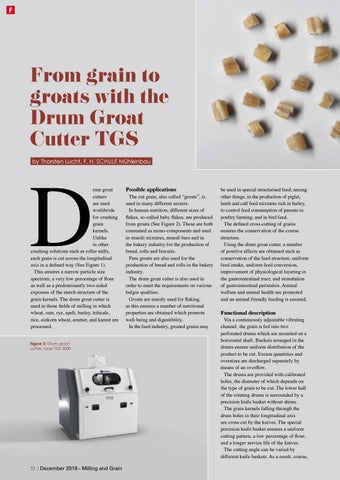
Figure 3: Drum groat cutter, type TGS 3000
52 | December 2019 - Milling and Grain
Possible applications
The cut grain, also called “groats�, is used in many different sectors. In human nutrition, different sizes of flakes, so-called baby flakes, are produced from groats (See Figure 2). These are both consumed as mono-components and used in muesli mixtures, muesli bars and in the bakery industry for the production of bread, rolls and biscuits. Pure groats are also used for the production of bread and rolls in the bakery industry. The drum groat cutter is also used in order to meet the requirements on various bulgur qualities. Groats are mainly used for flaking, as this ensures a number of nutritional properties are obtained which promote well-being and digestibility. In the feed industry, groated grains may
be used in special structurised feed; among other things, in the production of piglet, lamb and calf feed mixtures rich in barley, to control feed consumption of parents in poultry farming, and in bird feed. The defined cross-cutting of grains ensures the conservation of the coarse structure. Using the drum groat cutter, a number of positive effects are obtained such as conservation of the feed structure, uniform feed intake, uniform feed conversion, improvement of physiological layering in the gastrointestinal tract, and stimulation of gastrointestinal peristalsis. Animal welfare and animal health are promoted and an animal friendly feeding is ensured.
Functional description
Via a continuously adjustable vibrating channel, the grain is fed into two perforated drums which are mounted on a horizontal shaft. Buckets arranged in the drums ensure uniform distribution of the product to be cut. Excess quantities and oversizes are discharged separately by means of an overflow. The drums are provided with calibrated holes, the diameter of which depends on the type of grain to be cut. The lower half of the rotating drums is surrounded by a precision knife basket without shims. The grain kernels falling through the drum holes in their longitudinal axis are cross-cut by the knives. The special precision knife basket ensures a uniform cutting pattern, a low percentage of flour, and a longer service life of the knives. The cutting angle can be varied by different knife baskets. As a result, coarse,