F
The benefits of using Phytobiotic HygenPro® in poultry and swine diets
I
by Ing. Ewa Sujka, DVM Ignacio Lopez, DVM Sonia Tellez.Lípidos Toledo S.A. n this article, we would like to review the efficacy of phytobiotics used in the different stages of poultry and swine production. We would like to present the mode of action and performance under conditions of intensive production. In the scope of this study will be considered the unique combination of essential oils and organic acids available on the market under the brand HygenPro®. The usage of antibiotic growth promoters (AGP) in poultry and livestock production was very common along years, however nowadays presents many problems of legal, technical and sanitary nature. From a technical point of view, the main disadvantage is that AGP are not selective over the intestine microbiota, so they affect both pathogen and saprophyte bacteria. Eventually, once the AGP has been excluded from the diet, a delay can be observed in a growing rate and increased incidence of enteric diseases. It is due to the lack of adaptation of intestine immune system toward bacteria’s that are potential harmful and due to the elimination of beneficial microflora which may counteract this negative impact. Together with AGP is commonly used zinc oxide, especially in swine production for control of enteric bacteria, however the legal frame for its used become very strict recently, because of environmental contamination. In the long run zinc oxide presents also technical inconvenience based on the detriment of lactic acid bacteria’s and consequently reduction of feed intake, negative impact on intestine structure and overall on farm performance of the animal. A described scenario of legal and technical arguments makes the eubiotic feed additives, to gain in popularity and suppose an efficient alternative for antibiotics and zinc oxide used as growth promoters. In this group of ingredients prebiotics, organic acids, enzymes, probiotics and essential oils should be mentioned.
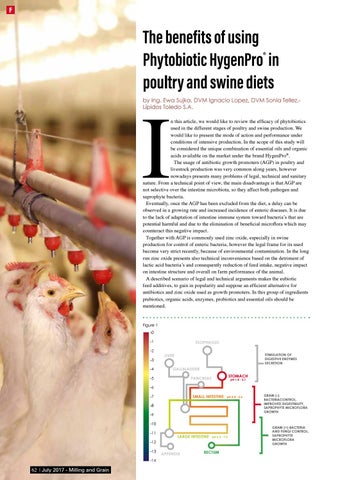
Figure 1 -0 -1 -2 -3 -4
ESOPHAGUS STIMULATION OF DIGESTIVE ENZYMES SECRETION
LIVER GALLBLADDER
-5
STOMACH
PANCREAS
pH 1.4 - 2.1
-6 SMALL INTESTINE
-7
pH 4.4 - 6.6
-8 -9 -10 -11
LARGE INTESTINE
pH 6.5 - 7.4
-12 -13 -14
62 | July 2017 - Milling and Grain
APPENDIX
RECTUM
GRAM (-) BACTERIACONTROL, IMPROVED DIGESTIBILITY, SAPROPHYTE MICROFLORA GROWTH
GRAM (+) BACTERIA AND FUNGI CONTROL, SAPROPHYTE MICROFLORA GROWTH