F
KEEPING YOUR COMPETITIVE EDGE IN AN EVER CHANGING ENVIRONMENT
W
by James White, JWI
hether you are farming grain or milling it, each crop and each year brings different challenges to achieving a consistently good quality product with minimum waste and maximum profitability. An ever-increasing population means there’s more demand from the outset of the food chain to reduce waste through efficient production and the use of energy efficient machinery. Add to this the many variables out of your control such as the weather and the changing environment, and it’s evident that looking at how you adapt the processing and milling of your grain to rise to these challenges and achieve the best product is crucial. Investing in reliable, high quality and easily maintained grain drying and processing machinery can help you gain and keep your competitive advantage. Finding the right equipment for your needs, however, can be a daunting task. JWI have more than 30 years experience working with a variety of trusted manufacturers, and offer unbiased advice to deliver competitively priced, high quality seed and grain conditioning solutions. JWI Director, Charles White comments, “We only work
72 | March 2017 - Milling and Grain
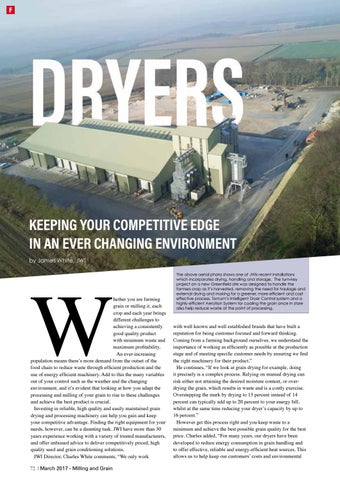
The above aerial photo shows one of JWIs recent installations which incorporates drying, handling and storage. The turn-key project on a new Greenfield site was designed to handle the farmers crop as it’s harvested, removing the need for haulage and external drying and making for a greener, more efficient and cost effective process. Tornum’s Intelligent Dryer Control system and a highly efficient Aeration System for cooling the grain once in store also help reduce waste at the point of processing.
with well known and well established brands that have built a reputation for being customer focused and forward thinking. Coming from a farming background ourselves, we understand the importance of working as efficiently as possible at the production stage and of meeting specific customer needs by ensuring we find the right machinery for their product.” He continues, “If we look at grain drying for example, doing it precisely is a complex process. Relying on manual drying can risk either not attaining the desired moisture content, or overdrying the grain, which results in waste and is a costly exercise. Overstepping the mark by drying to 13 percent instead of 14 percent can typically add up to 20 percent to your energy bill, whilst at the same time reducing your dryer’s capacity by up to 16 percent.” However get this process right and you keep waste to a minimum and achieve the best possible grain quality for the best price. Charles added, “For many years, our dryers have been developed to reduce energy consumption in grain handling and to offer effective, reliable and energy-efficient heat sources. This allows us to help keep our customers’ costs and environmental