MIYAJIMA
MUST SEE PEACE MEMORIAL PARK AND MUSEUM Most visitors to Hiroshima are here, first and foremost, to learn about the A-bombing and its aftermath, and the Peace Memorial Park and Museum is the place to do that. By no stretch of the imagination can the museum be described as fun, but you should set aside an adequate amount of time (at least an hour) to make your way through the two wings, as well as time to process the experience. You will find hope as well as tragedy here. Hiroshima endured the unendurable and has rebounded. The museum serves, not only to document and preserve the memory of the event and those it affected, but also to promote its appeal for the abolition of nuclear weapons. Hiroshima’s commitment to spreading that message is evident in the nominal ¥50 admission charge.
Go Deeper
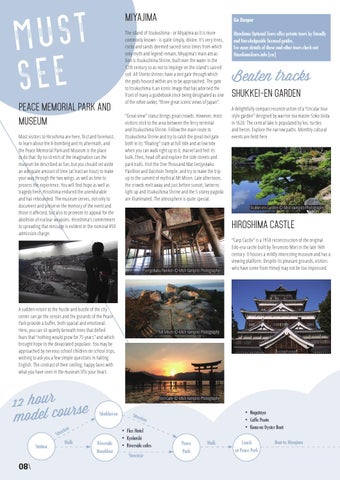
The island of Itsukushima - or Miyajima as it is more commonly known - is quite simply, divine. It’s very trees, rocks and sands deemed sacred since times from which only myth and legend remain, Miyajima’s main attraction is Itsukushima Shrine, built over the water in the 12th century so as not to impinge on the island’s sacred soil. All Shinto shrines have a torii gate through which the gods housed within are to be approached. The gate to Itsukushima is an iconic image that has adorned the front of many a guidebook since being designated as one of the nihon sankei, “three great scenic views of Japan”. “Great view” status brings great crowds. However, most visitors stick to the area between the ferry terminal and Itsukushima Shrine. Follow the main route to Itsukushima Shrine and try to catch the great torii gate both in its “floating” state at full tide and at low tide when you can walk right up to it, marvel and feel its bulk. Then, head off and explore the side streets and park trails. Visit the One Thousand Mat Senjyokaku Pavillion and Daishoin Temple, and try to make the trip up to the summit of mythical Mt Misen. Late afternoon, the crowds melt away and just before sunset, lanterns light up and Itsukushima Shrine and the 5 storey pagoda are illuminated. The atmosphere is quite special.
Shukkei-en
tcar
08\
A delightfully compact reconstruction of a “circular tour style garden” designed by warrior tea master Soko Ueda in 1620. The central lake is populated by koi, turtles and heron. Explore the narrow paths. Monthly cultural events are held here.
“Carp Castle” is a 1958 reconstruction of the original Edo-era castle built by Terumoto Mori in the late 16th century. It houses a mildly interesting museum and has a viewing platform. Despite its pleasant grounds, visitors who have come from Himeji may not be too impressed.
Mt Misen © Mish Vampiro Photography
Torii Gate © Mish Vampiro Photography
e Stre
Walk
SHUKKEI-EN GARDEN
HIROSHIMA CASTLE
A sudden return to the hustle and bustle of the city center can jar the senses and the grounds of the Peace Park provide a buffer, both spacial and emotional. Here, you can sit quietly beneath trees that defied fears that “nothing would grow for 75 years” and which brought hope to the devastated populace. You may be approached by nervous school children on school trips, wishing to ask you a few simple questions in halting English. The contrast of their smiling, happy faces with what you have seen in the museum lifts your heart.
Station
Beaten tracks
Shukkei-en Garden © Mish Vampiro Photography
Senjyokaku Pavilion © Mish Vampiro Photography
12 hour se r u o c l e d o m
Hiroshima Optional Tours offer private tours by friendly and knowledgeable licensed guides. For more details of these and other tours check out HiroshimaTours.info [en]
Riverside Breakfast
• Nagataya • Caffe Ponte • Kanawa Oyster Boat
Stree t
car
• Flex Hotel • Kyobashi • Riverside cafes Streetcar
Peace Park
Walk
Lunch at Peace Park
Boat to Miyajima