12, 2024
APRIL

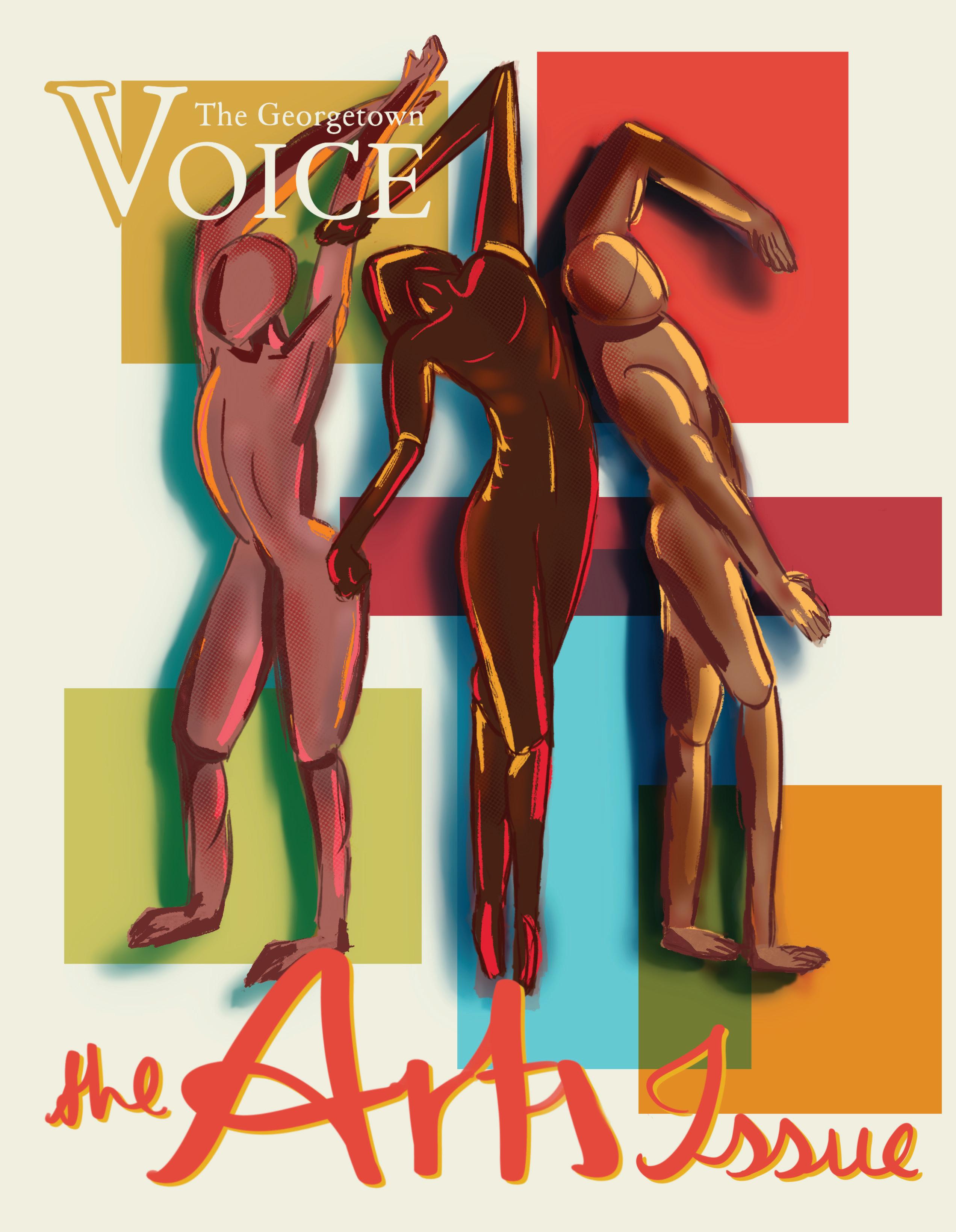
you if you didn't know where to begin. In this special issue, the Voice spotlights artists and performances across campus that students should be sure to see, experience, and support.

Performing Arts’s Hurricane Diane
hailey wharram
Mask & Bauble and Nomadic’s Pippin
eileen miller
Figure Drawing with the Arts Department
tina solki
GU Pride and QPOC’s Mx. Georgetown
connor martin & izzy wagener
The African Society’s ABISSA
zach warren
Mosaic’s Diamanté
eileen chen & amber xie
A reflection on writing and community
barrett ahn

The Saxatones and Superfood’s Spring Sing
margaret hartigan
GREEN’s Trashion Show
rhea banerjee
An ode to the Maker Hub
maya kominsky





2 April 12, 2024 Volume 56 | Issue 13
The opinions expressed in The Georgetown Voice do not necessarily represent the views of the administration, faculty, or students of Georgetown University, unless specifically stated. Columns, advertisements, cartoons, and opinion pieces do not necessarily reflect the views of the Editorial Board or the General Board of The Georgetown Voice. The university subscribes to the principle of responsible freedom of expression of its student editors. All materials copyright The Georgetown Voice, unless otherwise indicated. Editor-In-Chief ..... Graham Krewinghaus Managing Editor ..... Ajani Jones internal resources: Executive Editor for Resources, Diversity, and Inclusion ...... Lukas Soloman Asst. Editor for Resources, Diversity, and Inclusion ...... Aminah Malik Editor for Sexual Violence Advocacy and Coverage ...... Alison Karki Service Chair ...... Margaret Hartigan Social Chairs ...... Bradshaw Cate, Jo Stephens Archivist ...... Megan O’Malley news : Executive Editor ...... Amber Xie Features Editor ...... Eddy Binford-Ross News Editor ...... Franziska Wild Asst. News Editors ...... Sydney Carroll, Katie Doran, Aashna Nadarajah opinion : Executive Editor ...... Barrett Ahn Voices Editor ...... Olivia Pozen Asst. Voices Editors ...... Ali Chaudhry, Alison Karki, Eileen Miller Editorial Board Chair ...... Sabrina Shaffer Editorial Board ...... Andrea Ho, Jupiter Huang, Lou Jacquin, Connor Martin, Olivia Pozen, Nora Scully, Lukas Soloman, Dane Tedder, Brandon Wu leisure : Executive Editor ...... Zach Warren Leisure Editor ...... Hailey Wharram Asst. Leisure Editors ...... Rhea Banerjee, Nikki Farnham, Sofia Kemeny Halftime Editor ...... Eileen Chen Asst. Halftime Editors ...... Gabriel Mendoza, Sagun Shrestha, Francesca Theofilou sports : Executive Editor ...... Jo Stephens Sports Editor ...... Henry Skarecky Asst. Sports Editors ...... Ben Jakabcsin, Langston Lee, Andrew Swank Halftime Editor ...... Bradshaw Cate Asst. Halftime Editors ...... Andrew Arnold, Anna Cordova, Sam Lynch design : Executive Editor ...... Grace Nuri Design Editor ...... Tina Solki Spread Editors ...... Olivia Li, Pia Cruz Cover Editor ...... Bahar Hassantash Asst. Design Editors ...... Elin Choe, Madeline Jones, Rachel Zhang copy: Copy Chief ...... Cole Kindiger Asst. Copy Editors ...... Maanasi Chintamani, Rania Khan, Isabel Shepherd multimedia : Multimedia Executive ...... Connor Martin Podcast Executive Producer ...... Romy Abu-Fadel Podcast Editor ...... Lucy Collins Photo Editor ...... Izzy Wagener online : Online Executive ...... Tyler Salensky Website Editor ...... Mj Morales Social Media Editor ...... Kristy Li Asst. Social Media Editor ...... Mark Manaois business : General Manager ...... Rovi Yu Asst. Manager of Accounts and Sales ...... Mini Xue Asst. Manager of Alumni and Outreach ...... Ninabella Arlis support : Contributing Editors ...... Adora Adeyemi, Angelena Bougiamas, Lou Jacquin, Lucie Peyrebrune, Nora Scully Associate Editor ...... Jack Kealey Staff Contributors ...... Meriam Ahmad, Carolina Bomeny, Mia Boykin, Elyza Bruce, Emma Cameron, Elspeth Campbell, Romita Chattaraj, Leon Cheung, Yihan Deng, Ryan Goodwin, Paul Kang, Julia Kelly, Ashley Kulberg, Imani Liburd, Nicholas Romero, Carlos Rueda, Isabella Stratta, Kami Steffenauer, Amelia Wanamaker, Nadine Zakheim

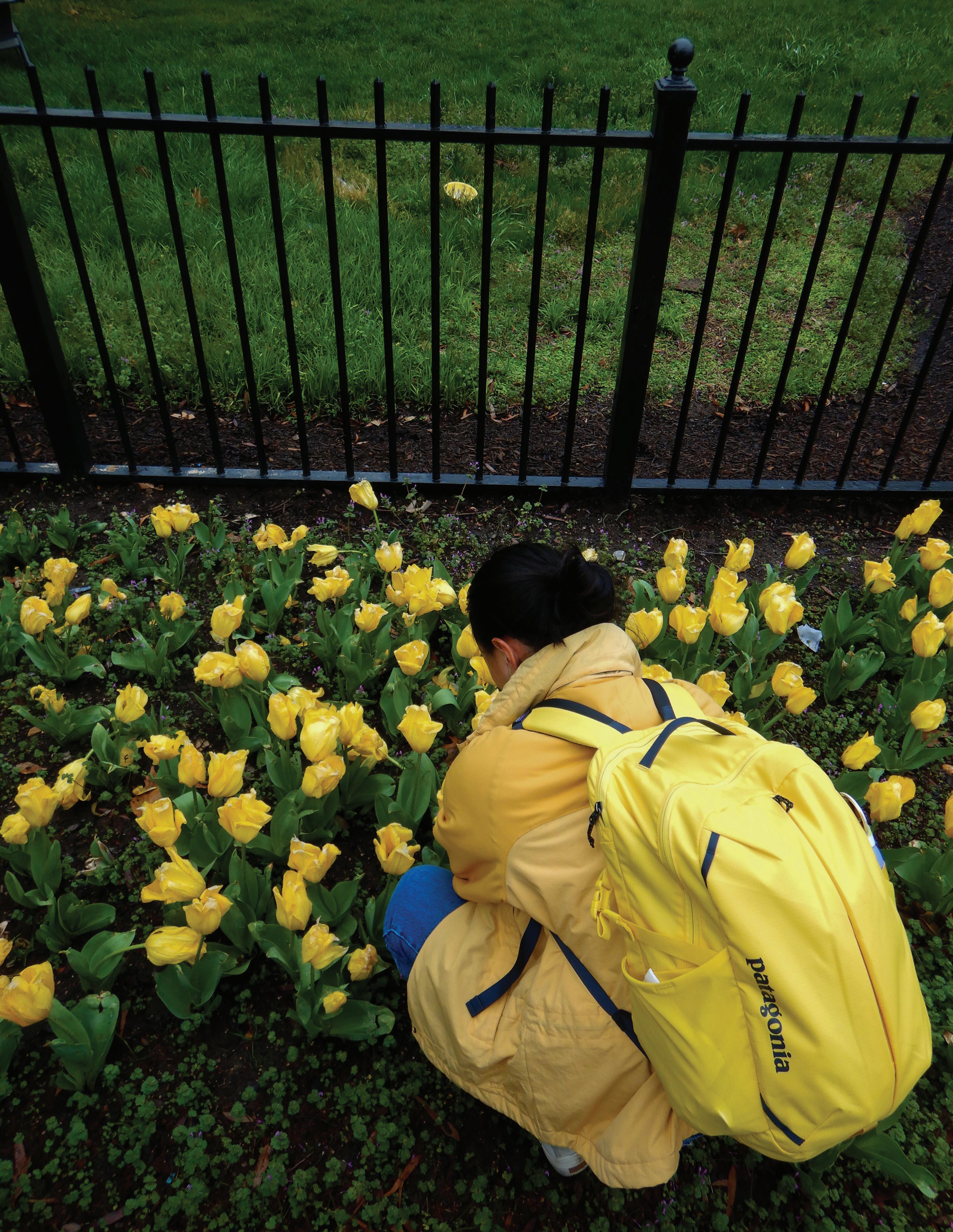
"Campus life in full bloom"

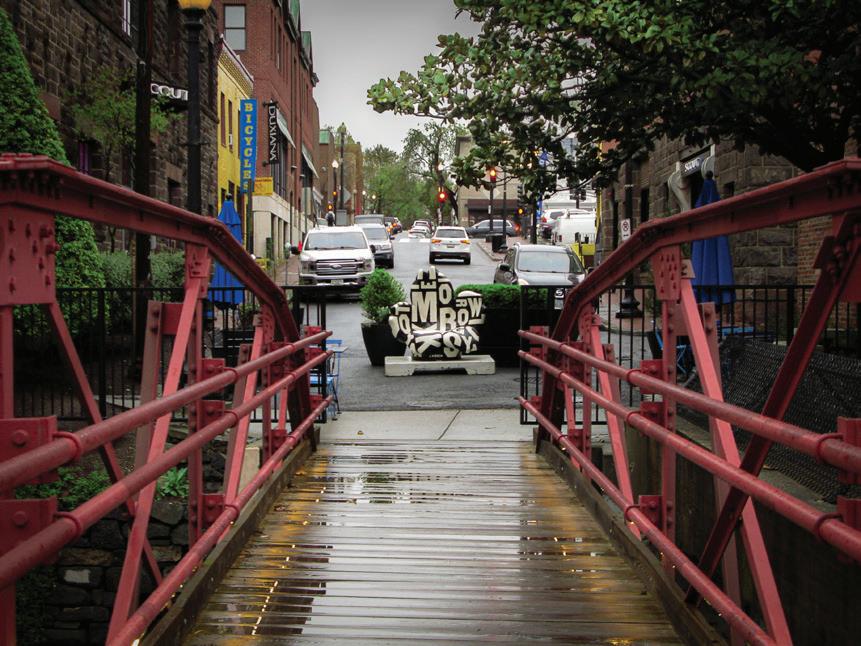
Bridge to Tomorrow
Aiden McCormack (CAS ’24)
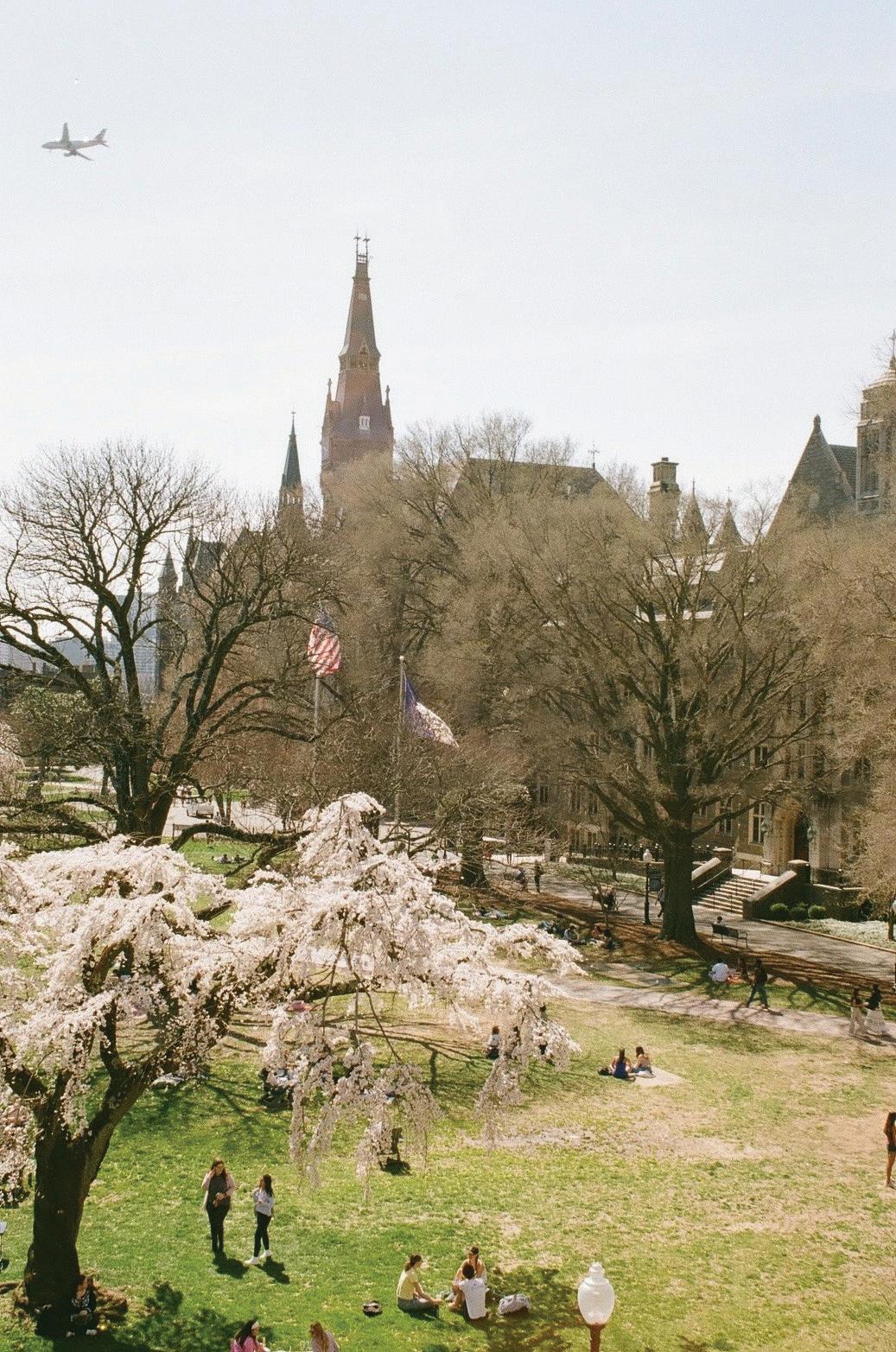
Untitled
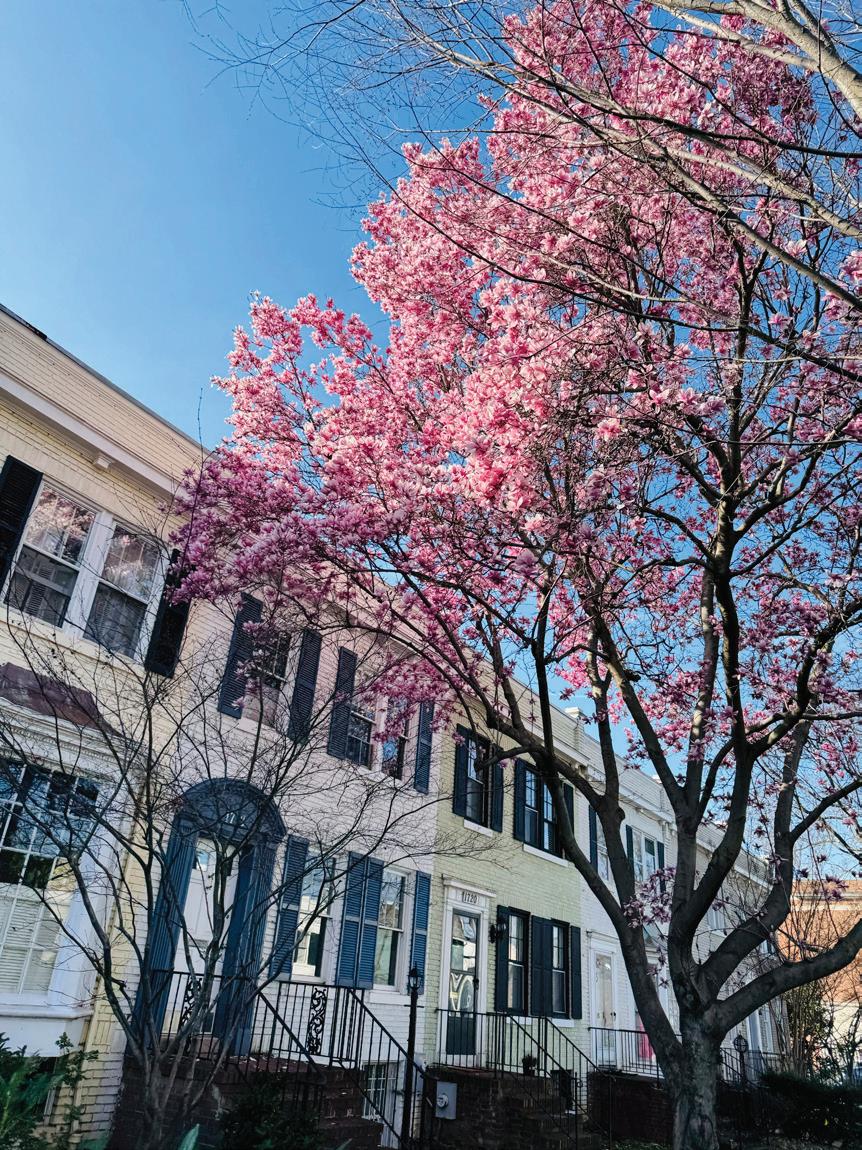
On the back cover: 1st
The Color of Happiness
Elizabeth Mao (CAS ’24)
Alone Voli
Donhee Cui (MSB ’27)
Sophie Mayle (CAS ’27) 2nd 3rd 4th 5th
Elijah Ward (CAS ’26)
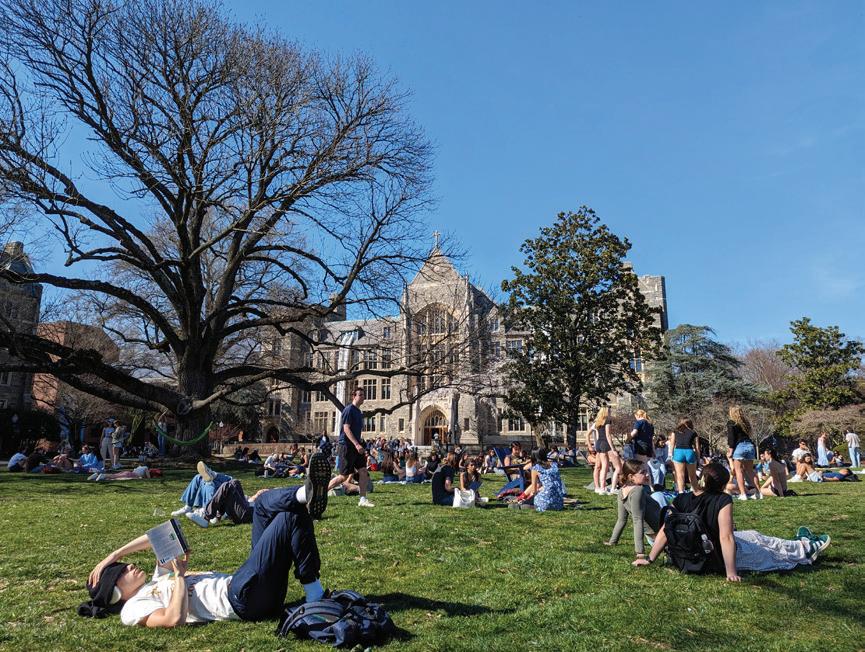
Sunbathe
APRIL 12, 2024
by
3
stamps
voice design; layout by tina solki

To label Hurricane Diane “complex” would be a cataclysmic understatement.
A modern retelling of Euripides’s classical play The Bacchae with a queer, comedic, and environmentalist twist, Hurricane Diane—which will be coming to Georgetown from April 12-20—weaves a myriad of seemingly disparate strings together to create a mesmerizing, interdisciplinary tapestry.
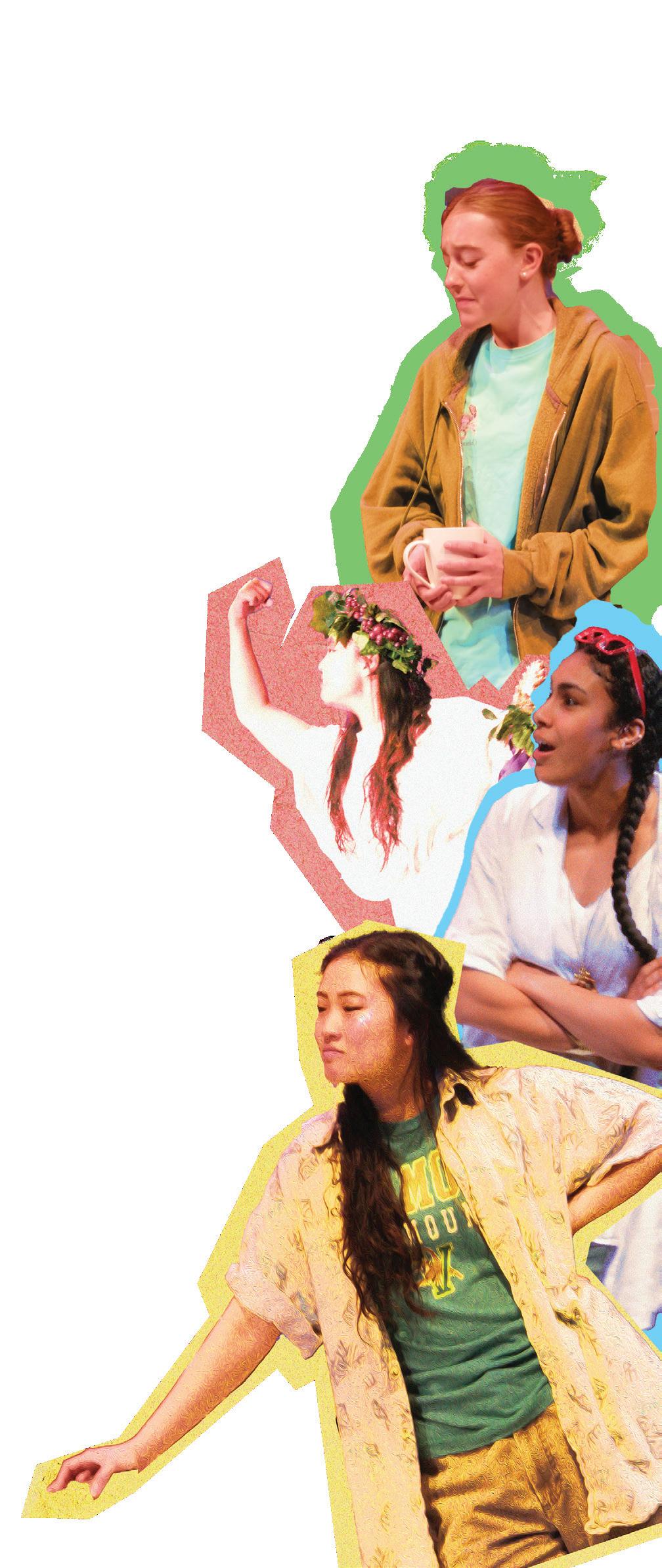
In the play, eponymous protagonist Diane (Jane Cai, SFS ’24) is a butch lesbian gardener living in the upscale suburbs of New Jersey while concealing her divine identity: Dionysus, the Greek god of wine, festivity, vegetation, pleasure, and, fittingly, theater. Distraught by the uniform, manicured lawns pervading cul-de-sacs across the neighborhood—a physical representation of modern humanity’s impulse to domesticate—Diane is eager to bring about a new world order in which self-sustaining permacultures reign supreme. As to how she might achieve this lofty goal, there’s just one not-so-simple solution: she must convert four housewives—Pam (Amelia Scott, CAS ’26), Renee (Jazmyn Harmon, CAS ’24), Beth (Lucia McLaughlin, CAS ’25), and Carol (Claire Cable, CAS ’27)—into eco-acolytes through the art of seduction.
Winner of the Obie Award for Playwriting in 2019, Hurricane Diane is the idiosyncratic brainchild of Pulitzer Prize finalist Madeleine George. The show first premiered in 2017 at Two River Theater in Red Bank, New Jersey—the same town in which the play is set—after the theater commissioned George to write the show during the early days of her eightyear tenure as their playwright in residence.
In collaboration with Georgetown’s Theater and Performance Studies and Classics Departments and the LGBTQ Resource Center, Hurricane Diane is set to take audiences by storm at the Davis Performing Arts Center’s Devine Theatre this spring. Over the course of 90 minutes without intermission, theatergoers can experience an evening balancing hysterical bacchanalian hijinks with topical social commentary. Moreover, at 4 p.m. on April 12, the Devine Theater will also host Madeleine George for a Community Conversation on queerness and environmentalism.
Michael T. Williams, a Georgetown theater professor best known for teaching Performing LGBTQ+ Histories alongside LGBTQ Resource Center founder Sivagami “Shiva” Subbaraman, is Hurricane Diane’s passionate director. In an interview with the Voice, Williams said he found himself particularly drawn to the project due to the source material’s unconventional yet ingenious approach to discussions of the ongoing climate crisis.
“There is a lot of storytelling about climate change, but there isn’t a lot of comedy,” Williams
said. “When you laugh, you open something different inside of you than when you’re feeling shamed by the awfulness of everything. Comedy opens a space for us to question our relationship to the environment in a meaningful way.”
As a classics major already familiar with The Bacchae, McLaughlin was initially enthusiastic about the show because of the ample connections between the script and her coursework. However, the play’s candid ecocentrism has similarly compelled her.
“The play incorporates themes of environmental sustainability by showing us we are focused on the wrong things,” McLaughlin said. “We live in a society built on prioritizing what’s most convenient, and this play breaks down all of that by focusing on what actually leaves us most fulfilled.”
One character fixated on these “wrong things” is Carol. When Diane divulges her impassioned permaculture pitch to Carol, talks of planting pawpaw trees give her pause. While Pam, Renee, and Beth are easily swayed by Diane’s call to the wild (as reflected in their wardrobes with Pam’s leopard prints, Renee’s breezy tunics, and Beth’s flowery dresses), Carol hesitates, fearful that succumbing to an unrestrained lawn will jeopardize her fragile heterosexuality. Despite Carol’s antagonistic resistance within the story’s structure, Cable embeds considerable sympathy into her character’s anxious demeanor.
Jessica Trementozzi handles the intricate, multidimensional set design with a similar care. The set is foregrounded by a pristine, upper-crust kitchen, but a peek through the sliding-glass door reveals a luscious, verdant paradise. Likewise, a semicircle of columns serves as the set’s backbone—a physical reflection of the play’s Athenian origins.
Hurricane Diane’s ecocentric subject matter inspired the cast and crew to conduct further research into the history of the land that the theater occupies. Assistant Director Ollie Henry (CAS ’24) led a land acknowledgment project for the Davis Performing Arts Center in conjunction with the show, resulting in a fruitful collaboration with Monnie, an Indigenous artist from a D.C.-based, Indigenous, Two-Spirit-led BIPOC theater group called the Angel Rose Artist Collective.
“Monnie has created a beautiful digital art piece that will be on permanent display in front of the entrance to the Devine Theater, a piece that solidifies the department’s commitment to investing in Indigenous art, impact, and wisdom,” Henry said.
Alongside a strong environmental emphasis, the show is also a celebration of the lesbian community, much to the delight of Cai, who plays the titular celestial Casanova herself.
“It is very beautiful to see a play which features so much queer love on stage, especially
at a Jesuit university like Georgetown,” Cai said. “Georgetown is associated with a lot of liberalism today, but that liberalism still looks very white and straight in a lot of different ways. That’s what I’ve loved so much about Hurricane Diane—it’s a refreshing show with important messages at its center.”
With all five of Hurricane Diane’s roles written
4 THE GEORGETOWN VOICE THE GEORGETOWN VOICE
photos by sydney carroll; graphic by rory myers; layout by olivia li




s life theatrical?”


This is the question Georgetown’s theater community promises to interrogate later this month with Mask and Bauble Dramatic Society and Nomadic Theatre’s co-production

The musical, which will run from April 11-20 in Poulton Hall, follows the story of Pippin, the fictional son of King Charlemagne, as he pursues various paths in his quest to live an
simpler parts of life, Pippin’s team promises that the show itself will be a spectacle to behold. The creative direction is intended to follow in the footsteps of other productions, which have historically featured grand performances while also thematically highlighting the contrast
adequately reward their immense dedication to stunning the audience.
“I wanted to show how actors put on this beautiful, glamorous performance in front of people, but underneath all of that they're severely underpaid and not treated well by the industry,” Lent said.
With a checkerboard floor and canvases hanging on the walls, Lent wants to make Poulton Hall reminiscent of a dingy bar. By juxtaposing the glitz and glamor of the red velvet curtains with the dusty checkerboard floor, Lent wants to make Poulton Hall reminiscent of a dingy bar, reminding the audience of the difficult conditions actors must work in.
As a collaboration between Mask and Bauble and Nomadic Theatre, the show bridges their unique ethoses and the broader Georgetown theater community. With its place in the theater canon and its hefty list of elaborate theatrical elements—from complicated choreography to stunning sets— Pippin combines Mask and Bauble’s devotion to theater classics with Nomadic’s mission to push the boundaries of what theater can offer.
“It's a celebration of Georgetown theater as a unit, and not just two distinct, separate theater clubs,” Lent explained.
Set to premiere in the final few weeks of the semester, Pippin is sure to provide a dazzling end to this school year, while also leaving its audiences with the question of whether the grand future they envision for themselves—built on by a summer crammed with internships and extra classes—is the life that will truly fulfill them. Life can be theatrical, Pippin suggests, but behind all the glitz and glamor, will its substance be enough to satisfy us? G
Pippin will take place April 11-20 at 8 p.m. in Poulton Hall. Tickets are available for purchase on CampusGroups. The cost is $5 for students and $10 for general admission.
Disclaimer: Eileen Miller is an assistant Voices editor for the Voice and formerly served as a costume assistant for Mask and Bauble Dramatic Society. Caroline Samoluk previously served as a Halftime Leisure assistant editor for the Voice.
5 UPDATE PUB DATE VOICES APRIL 12, 2024
photos by izzy wagener; graphic by rory myers; layout by olivia li

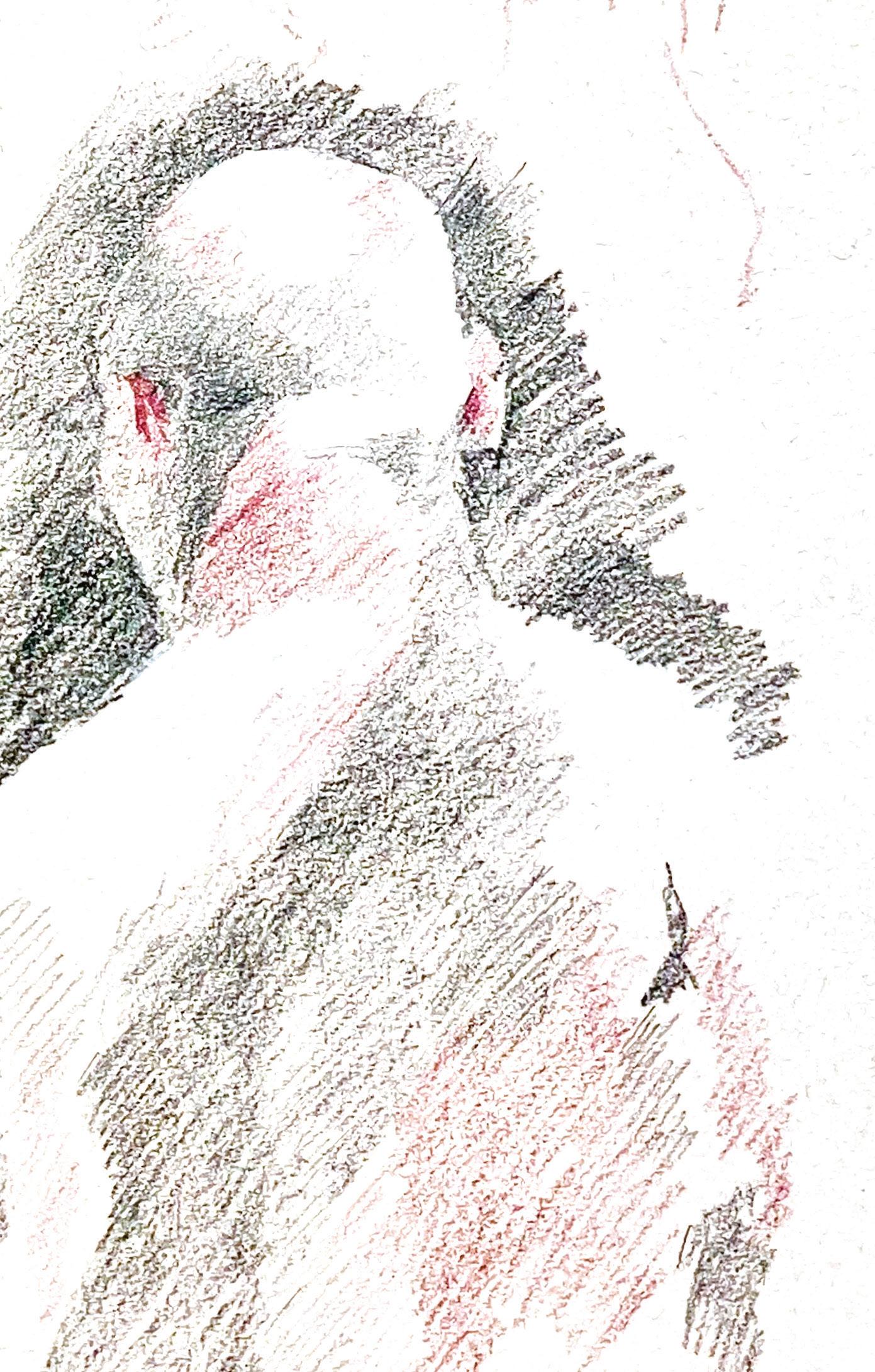
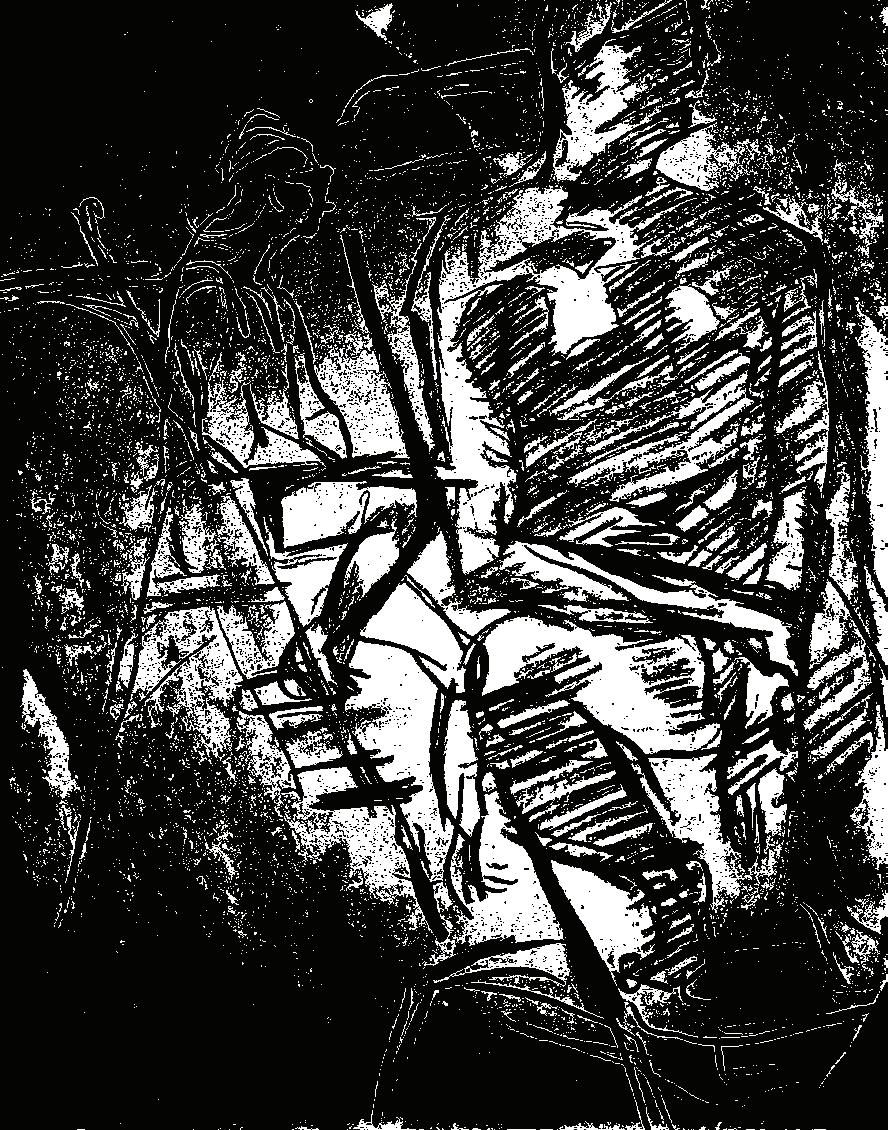

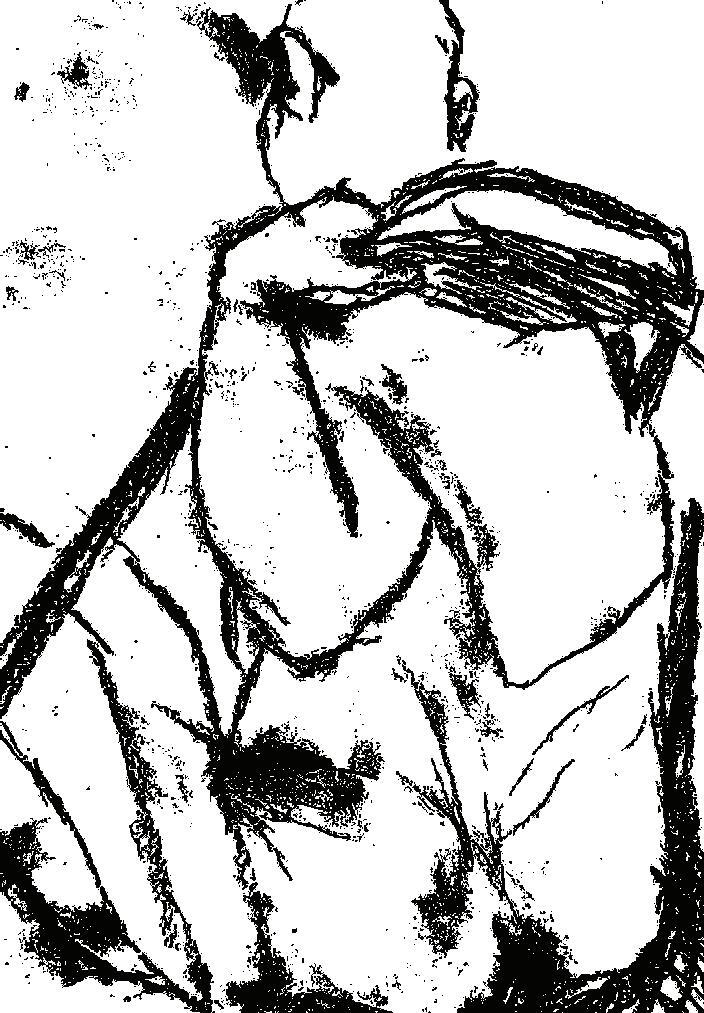
Each week, a moment of calm and connection in figure drawing sessions
Soft scrapes echo through the slowly filling room. Drafting desks are rolled around, adjusted, hung flat, or hitched high, accompanied by quiet chatter in various corners. The desks settle in a ring around a center platform where the model—Babs New, a regular—idles, still enrobed, waiting for the session to begin.
Most Fridays, from 2 p.m. to 5 p.m., Georgetown’s Department of Art and Art History hosts free, open-access figure drawing sessions. The only thing a prospective artist needs to bring is themself and the willingness to get their hands a little dirty. Charcoal tends to get everywhere when you’re engrossed in the work.

Figure drawing is the practice of sketching the human form from real-time observation. A model, typically nude, shifts between poses intermittently, while artists are tasked with drawing what they see. It’s easier said than done— while figure drawing is uncomplicated to practice, it is understatedly difficult to master. However, the goal of these sessions is not to master the art form; it’s to learn.
The sessions flow in 20-minute intervals, with poses that gradually increase in duration as the afternoon proceeds. We begin with 30-second warm-ups with little to no warning between switches in pose. Smooth Brazilian jazz fills the space as the artists quiet and Babs disrobes, taking their place in the room’s center and assuming a languid, splayed-leg stance. Their back is to me, and I squint at its contours briefly before bearing down on my page.
BY TINA SOLKI
The first pose is always the roughest. My first sketch, vine charcoal on gray newsprint, is stiff, disproportionate, and more significantly, headless. Focused on the angles of their legs, I barely make it to Babs’s neck before the timer rings out, and they take to the floor in an articulated squat.
The urgency of the 30-second poses forces artists to work in looser, more expressive strokes and to see the figure as one larger form rather than its individual elements.
To sketch in these conditions is to abandon any preoccupation with style or detail. It’s a paradoxical practice: by loosening the reins on their process, artists enter a headspace where control comes more easily, without the whiteknuckle tension it typically implies.
As Andrew Kim (CAS ’25), an art minor, put it, “After the first couple times, you just kind of turn your brain off and it’s like, ‘Okay, there’s an arm. There’s a leg. There’s this muscle and that muscle.’”
You learn to accept that you can’t agonize, micromanage, or mete out a course of action moment-by-moment. It’s a very Georgetown kind of lesson to learn, and it’s part of what makes the space so distinct for art students and non-artists alike.
Seated across from me is Marisa Stratton, who runs the sessions. An adjunct professor in the Department of Art and Art History, Stratton is young and easygoing—you’d be forgiven for mistaking her for a student, as her
energetic demeanor conceals the practiced grace with which she guides the sessions forward.
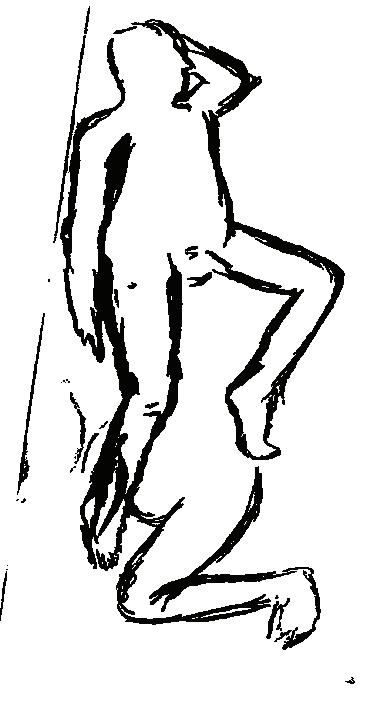
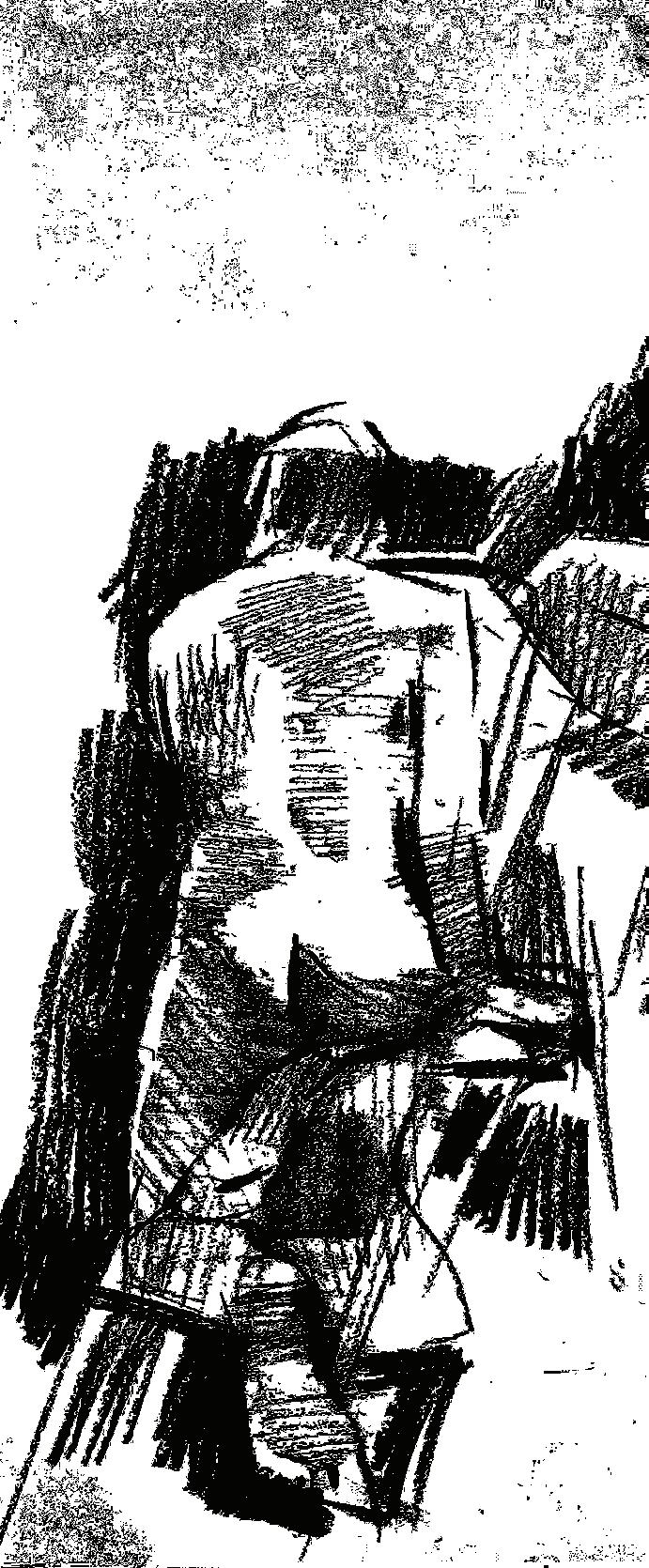
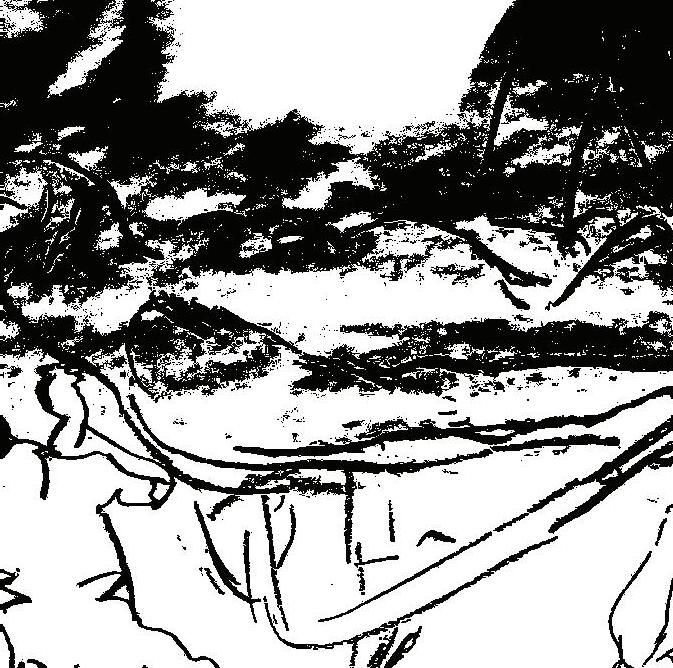
In the years before COVID-19, figure drawing sessions had existed on and off at Georgetown, but they had disappeared completely by Stratton’s first semester here in spring 2023. It had been her initiative to revive them, convinced of the value they’d bring to the campus’s relatively small and underserved community of artists. “I knew that in order to build community you need a space outside of the classroom,” Stratton said. “It really just requires one faculty to have the extra time to host the sessions.”
When she first restarted the sessions, they had much lower attendance, mostly art majors and minors. That core group has remained consistent, but the sessions have, largely through word of mouth, grown immensely in attendee count and diversity. Stratton said the Department of Art and Art History has been excited to facilitate such a range of student engagement with the arts.
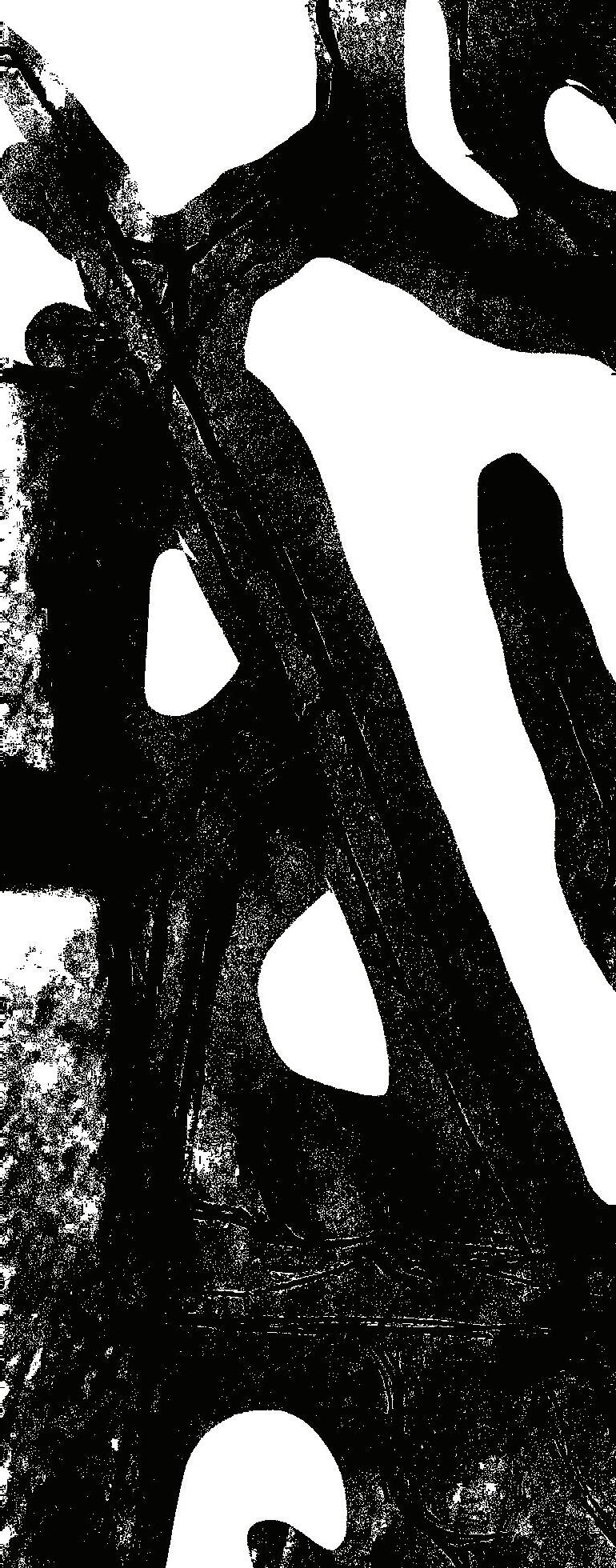
APRIL 12, 2024 THE GEORGETOWN VOICE



If the size of the sessions has changed, the ethos behind them has not. The first rule of figure drawing is to be considerate of one another and the model’s privacy. Between breaks, while the model is unrobed, the door is shut tight. The second rule: there are no other rules. There is very little in the way of active instruction over the threehour session: artists are free to come and go as they please. It’s a startling level of autonomy for students used to operating under strict schedules and dizzying deadlines.
“It gives me something to focus on that isn’t life and all of its problems. When I’m doing the drawings, I’m very focused on it and it’s harder to be distracted by other things that might be on my mind,” Sofia Doroshenko (SFS ’24), a repeat attendee, said. “Which is rare, I think, compared to the rest of Georgetown, which is overstimulating in my opinion.”
The relaxed, free-flowing nature of the sessions is by design. “I feel like figure drawing is such a great space because there aren’t any expectations, there aren’t any limitations,” Stratton said. “I’m not enforcing anything, people can move at their own pace, they can leave if they want, and I think it creates a really great environment where everyone wants to be there.”
Stratton’s creation of a space largely driven by students’ curiosity and determination to create provides a unique, strings-free experience and an environment in which drawing is valued just for the sake of doing it. On top of the limitations created by an underfunded department, extracurricular opportunities for visual arts on campus exist largely in pre-professional contexts, to a demoralizing degree.
In most club and internship environments, those with experience in the arts are pigeonholed into

marketing, advertising, or social media management roles. Art is associated with increasing profits rather than personal enrichment. It is created under expectation, detached from its nature as a form of self-expression and selfinquiry, and ran through filters of marketability.“I think a lot of people who come to figure drawing are really hungry to keep art in their lives,” Stratton said, acknowledging the difficulty of maintaining an artistic connection in the whirlwind of student life. “Even if they can’t fit in a minor, or can’t declare a major, or anything like that, you can still see that people really need this space.”
Brigid O’Connor (CAS ’26) is one of many students who have found a home in the space. “I feel like that has been one of the niche places where I have been able to find a community of artists on campus here,” O’Connor said. “There are not really that many free art opportunities on campus. It’s really hard to get into the art classes if you’re not a major or minor, because they’re so small and because the department’s so small.”
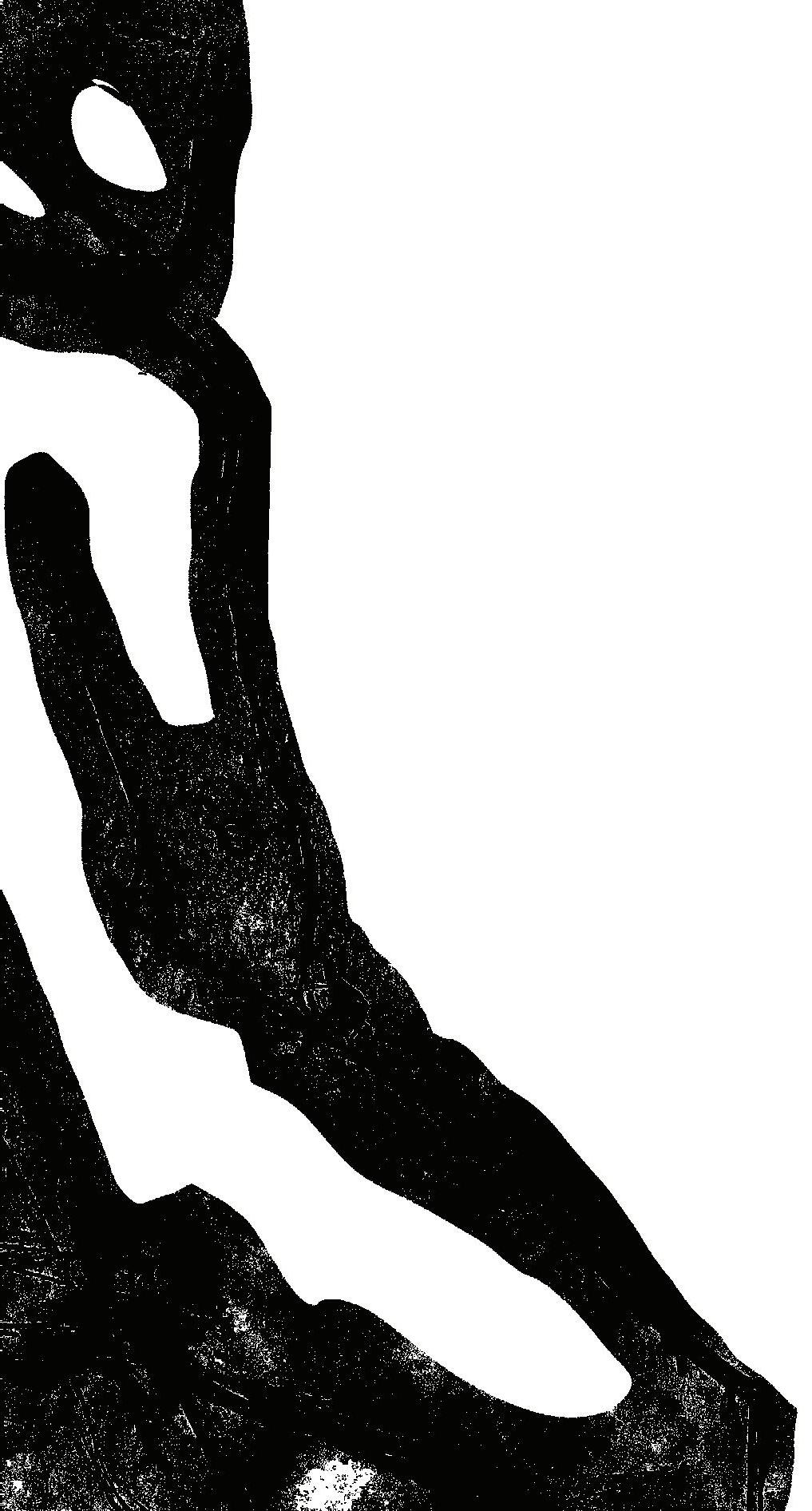
The limitations of the department’s size are felt by all members of the campus community. Graduate and continuing students, for instance, are explicitly not permitted to take or audit—or even TA—undergraduate art courses, despite overwhelming interest.
These restrictions explicitly informed Stratton’s efforts to create a universally inclusive space for the arts. “Creating a space outside the classroom where there’s no limitations or requirements was really important for growing the [arts in the] broader Georgetown community,” Stratton said. “Faculty can come to figure drawing, and faculty have come to figure drawing. So you have grad students, faculty, and staff at Georgetown, too.”
Fabiola Diaz Ruiz (G ’27), a third-year physics doctoral candidate, found her way to the sessions while seeking a reprieve from academia. “Since I’m in physics, all that I do most of the week is very technical work,” she said. “But, you know, I also have a very creative side that I think needs a good outlet. For me, coming here, even if it’s just a few hours a week, is really a nice time to do something entirely different.”
Diaz Ruiz recounted an old art teacher’s sentiment about the people-centered aspect of figure drawing that has always stuck with her: “He told me that there’s just something about drawing people that really helps you draw because you have this connection that you maybe wouldn't have with, like, a pencil or a table.”
To Stratton, too, people lie indelibly at the heart of her creative journey. She has always found community in her pursuit of artistry, and it’s reflected both in the praxis of her classroom and in the environment she’s created through the figure drawing sessions.
“I think I always knew teaching would be a part of my life, even when I hadn’t started yet. I think it’s because teaching is social, and a lot of my painting is very social as well—I work in portraiture, so people are essential to my personal practice,” Stratton said. “And, for me, social engagement is very wrapped up in art making.”
It’s the undemanding social environment that makes it so easy for newcomers to engage meaningfully with the making of art, even if they only attend one or two sessions. Week after week, the room features a revolving door of attendees. Many see the space as a unique way to spend a Friday afternoon or otherwise get convinced to go by a friend: there are just as many one-timers as regulars.


Doroshenko, who roped her roommate into coming to a session last month, believes they have something to offer everyone. “It’s just a different way of thinking and it’s just so different, and I think that even people who are maybe not so used to drawing, maybe they’re just starting out, I still think it’s a good experience,” she said. The sessions’ high turnover rate is not an indictment of their worth; it speaks, instead, to the value they bring to parts of the community that would otherwise have had no exposure to them.
To this, Kim agreed wholeheartedly. “I think everybody should try it. Like, everybody.” G
The Department of Art and Art History’s open figure drawing sessions are hosted Fridays from 2 p.m. to 5 p.m. in Walsh 395, running until April 26.
Special thanks to Emily Higgins, Sammi Huebner, Marisa Stratton, Fabiola Diaz Ruiz, Sophia Frank, Andrew Kim, Elli Ahn for contributing their sketches.



layout by tina solki
7

Mx. Georgetown: Meet the contestants of Georgetown’s first-ever student drag competition
BY CONNOR MARTIN AND IZZY WAGENER
As any backward-walking tour guide will tell you, Georgetown’s hosted its fair share of royalty. But for the first time in 235 years, six drag queens and kings will grace the ICC Auditorium with their presence Friday night, competing for the inaugural Mx. Georgetown crown.
A collaboration between Georgetown’s Queer People of Color (QPOC) and GU Pride, the event is a play on the campus mainstay Mr. Georgetown, featuring a runway walk, an interview segment, an individual talent portion, a group performance, and a lip-sync bracket to conclude the night. But the
similarities largely stop at the name, the competition itself taking cues from RuPaul’s Drag Race, The Rocky Horror Picture Show (1975), and Cornyation. Students behind the event are hoping to make it a pillar of Georgetown’s queer performance spaces.
“Not to make this grandiose or overly pompous, but I think Mx. Georgetown can hopefully become a sort of historical monument to the queer community on campus,” said Jack Dougherty (CAS ’26), a GU Pride member. Dougherty and Kevin Moreno (CAS ’24), president of QPOC, hope to make the

competition a yearly event, creating a lasting space for queer students on campus.
“I think it’ll help unite the queer community at Georgetown, because I feel like we’re kind of distant at some points,” Moreno said. “It feels not as communityoriented as some other groups on campus might feel.”
In preparation for the ICC’s spectacular, raucous transformation, we interviewed all six kings and queens. The students interviewed are referred to only by their drag alter egos.
These interviews have been edited for length and clarity.
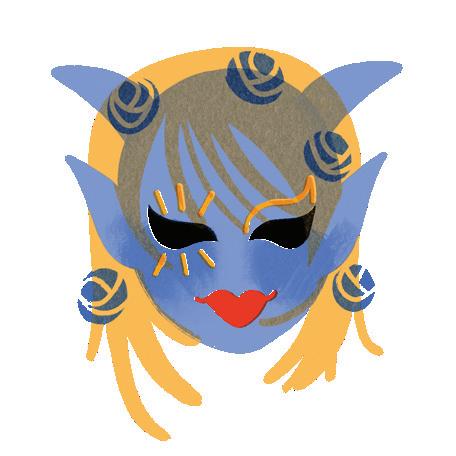
dream girl. She’s got that blonde mullet wig. I like to think of it more as a wolf cut, but I haven’t gotten the wig yet, so we'll see. She’s giving kind of a renaissance, but not like ‘I'm going to ren faire’ renaissance. It’s giving floral corset. It’s giving body.
Who do you draw inspiration from?
Sasha Velour is a big inspiration of mine, as well as Yvie Oddly. Both of them do very untraditional drag looks, not just, ‘I'm in a corset and I'm really sexy,’ but also like, ‘I'm a character. I'm embodying something.’ I tried to take that and was like, okay, I want to be a creature. I want to give elf. I want to give horns. I don't want to be a person. I want to be something you wouldn't see every day.
What does Mx. Georgetown mean to you?
Sometimes the queer community at Georgetown can feel very isolating. Especially in my freshman year, I struggled to find queer community and people that I resonated with. Doing stuff like this and making queer stories, and my queer story, visible to a lot of people, I think is really cool.

shirt, big gold chain. Greasy glam with semi-Catholic-core influences might be the most concise way to say what's going on in my head.
Who do you draw inspiration from?
People don’t really know the names of drag kings off the top of their head like they do with drag queens. So I think one of my first introductions to what drag king makeup and fashion looks like was Dorian Electra. They are a trans woman, also big in the hyperpop sphere. They’re gender fluid and a lot of their looks pull from these ideas of parody of different forms of machismo and masculinity.
What are you most excited about in the show?
I’m pretty sure a lot of us are first time doing drag. I’m curious to see what other people are putting forward as their first foray into it.
We have an established cultural notion that so much of femininity is already this very done-up, very performative, very visual kind of thing, where a lot of ideas of masculinity are downplayed. It’s not fancy. It’s not frilly, it doesn’t try to be out there and flashy. So what happens when you try to take our ideas of what a man looks like and put it into that realm of, like, it’s flashy, it’s over the top, it’s performative, it’s sexy, it’s all of these things. I’m very curious to see where that goes.
design by pia cruz
THE GEORGETOWN VOICE
-inspired. I thrifted this denim jacket—I’m gonna crop that and then I got these jeans that have these little slits on the side and they are chained together. I have cowboy boots. And I’m gonna have this cowboy hat. The vibe is gonna be heartbroken cowboy.
Do you have previous experience with drag?
No. It’s gonna be my first time. I’m not even, like, a performer at all. Some moments I’m like, ‘Oh my God, is this going to go horribly?’ But then I’m like, ‘You know what? All my friends want to be there,’ so I feel no matter what, it’s going to be fine.
What does Mx. Georgetown mean to you?

Can you walk us through your planned look and performance? Who or what do you draw inspiration from?

My persona is named Lexi Con because I’m a linguistics major. Her look is [what] I think a lot of Georgetown students come to Georgetown with, which is, at first, straight-A student. That is all your life has ever been. That’s all your life may ever be. Who knows, maybe that’s what you want. Who eventually realizes that is not mutually exclusive with being a whore. That is who she is. So she dresses more conservatively, because, again, these aren’t mutually exclusive. She is still the academic weapon, but she also wants everybody to know that she is a sex symbol.
What are you most excited about in the show?

From my freshman year to now, I have been seeing a lot more queer expression in the performing arts here. I think that's so important. And something that's so needed within the broader society as well. We see drag being demonized, being criminalized in certain areas of the U.S., and I feel it's so important to show that drag is an extremely valid form of expression. It's a performing art, just like anything else.

Can you walk us through your planned look and performance? Who or what do you draw inspiration from?
My drag king persona, as of right now, is Justin Beaver. He’s your average boy band heartthrob. Think in peak 2010s—like “One Less Lonely Girl,” where he brings up a girl to the stage and makes you feel special, blah blah blah. So, you know, super gentleman but also teen pop star.
Can you talk about the meaning of performing drag at Georgetown, either personally or broadly?
I think that because of Georgetown’s history with queer people, which a lot of people don’t know about—how there was just general unacceptance at Georgetown, but also a string of hate crimes. And a lot of protests that had a lot of pushback from the administration against queer students; queer students had to rally real hard to get an LGBT center and get real actions passed that would make them feel safer at Georgetown. Because of that history, and because of the current history we’re living in right now, of drag being a banned act and being seen as overtly sexual and not appropriate, I think that drag is completely a political act.
Who is your favorite drag artist?
My favorite drag king, for sure, I believe his name is King Molasses. He’s a D.C. local drag king, and the first time I saw him, I just thought he was so sexy. I could not stop talking about it for, like, the next month. And he puts on a big beard, and he has abs and is a little country, and that is just pure sex and I love it.

In drag, there’s so much audience interaction. There is so much give and take, there’s so much having to just be a jack of all trades—be funny, be hot, talented with an asterisk, doing all of that. So I’m really excited to see how not only the people on the stage bring something to that, but also what people in the audience want to get out of it. I feel like, if we do it right, Mx. Georgetown will be something that everybody in the auditorium creates together.
What is your previous experience with drag? Why did you decide to enter Mx. Georgetown?
Previous experience has basically just been performing in Rocky Horror, whether that is in silver underwear or just wearing big sexy boots and directing. So I've never done any, like, drag

Can you walk us through your planned look and performance? Who or what do you draw inspiration from?

I just kind of wanted to have a really sleazy masc look as a drag king. So my name is Jack the Bulldyke, which, I don’t know if you know what a bulldyke is, but it’s, like, really masc lesbian. So I’m going to try to wear some leather if I can.
What is your previous experience with drag? Why did you decide to enter Mx. Georgetown?
I have no experience other than Rocky Horror, which I did in the fall. I hadn’t seen any drag kings anywhere. I’d seen a few drag queens on campus but nothing really like that. So I was like, would have been nice to just try something new and so other people can see that. And it’s the first year we’re doing it, so it doesn’t have to be a whole lot of pressure. But hopefully people who do it in the future, we’re kind of helping set it up for them, is my hope.
Can you talk about the meaning of performing drag at Georgetown, either personally or broadly?
It’s wonderful to go out into the city and support people, but it’s also really good to see people your own age doing drag. And for me, when I had seen people, like when I went to watch Rocky Horror, that was really just cool and exciting to see people performing that. Just performing in general, but also in such a queer way. G
Mx. Georgetown will take place on April 12 at 8 p.m. in the ICC Auditorium.
Tickets can be reserved on CampusGroups for free.

APRIL 12, 2024

ABISSA 2024 brings the radiance of African art to Georgetown
BY ZACH WARREN
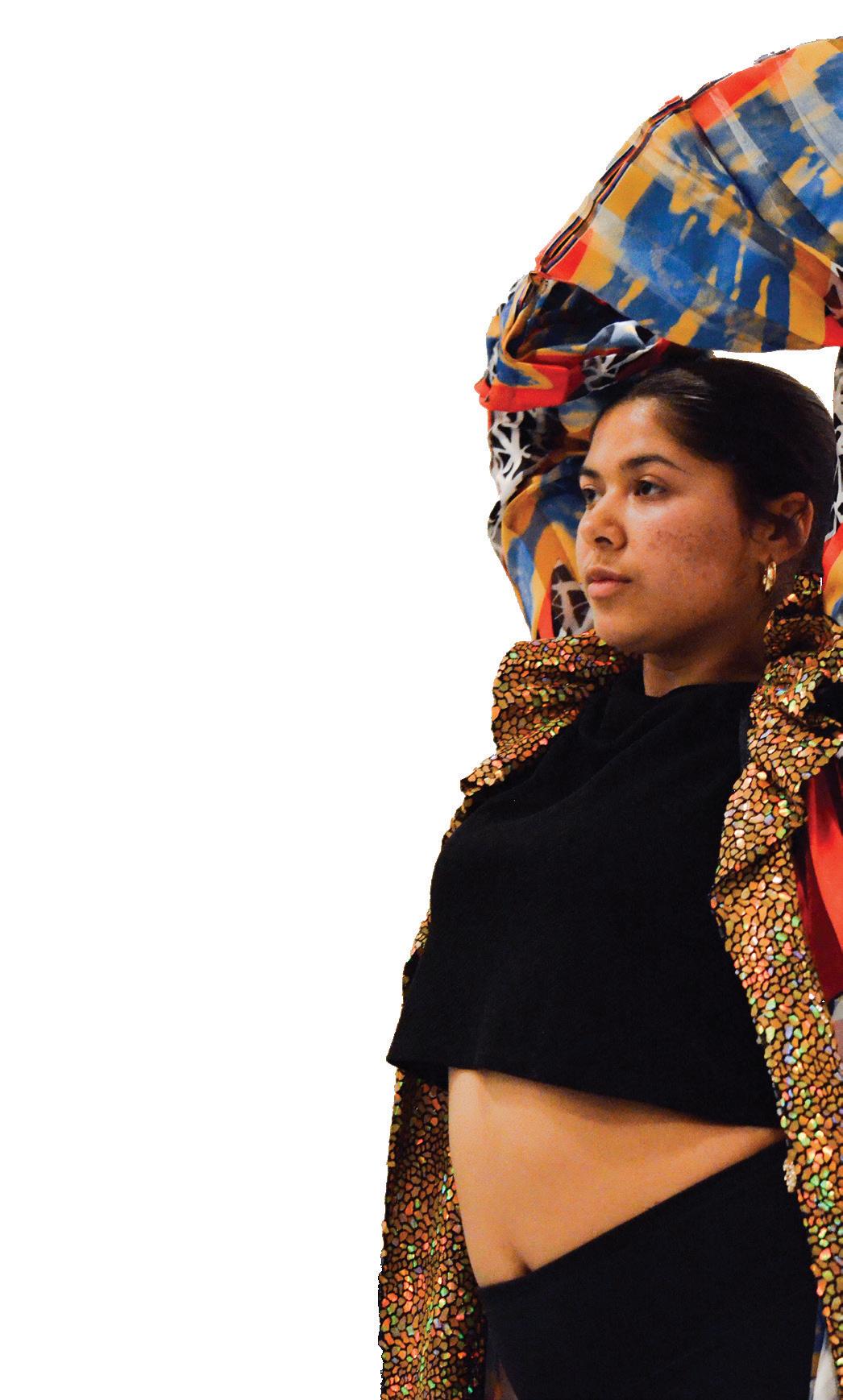
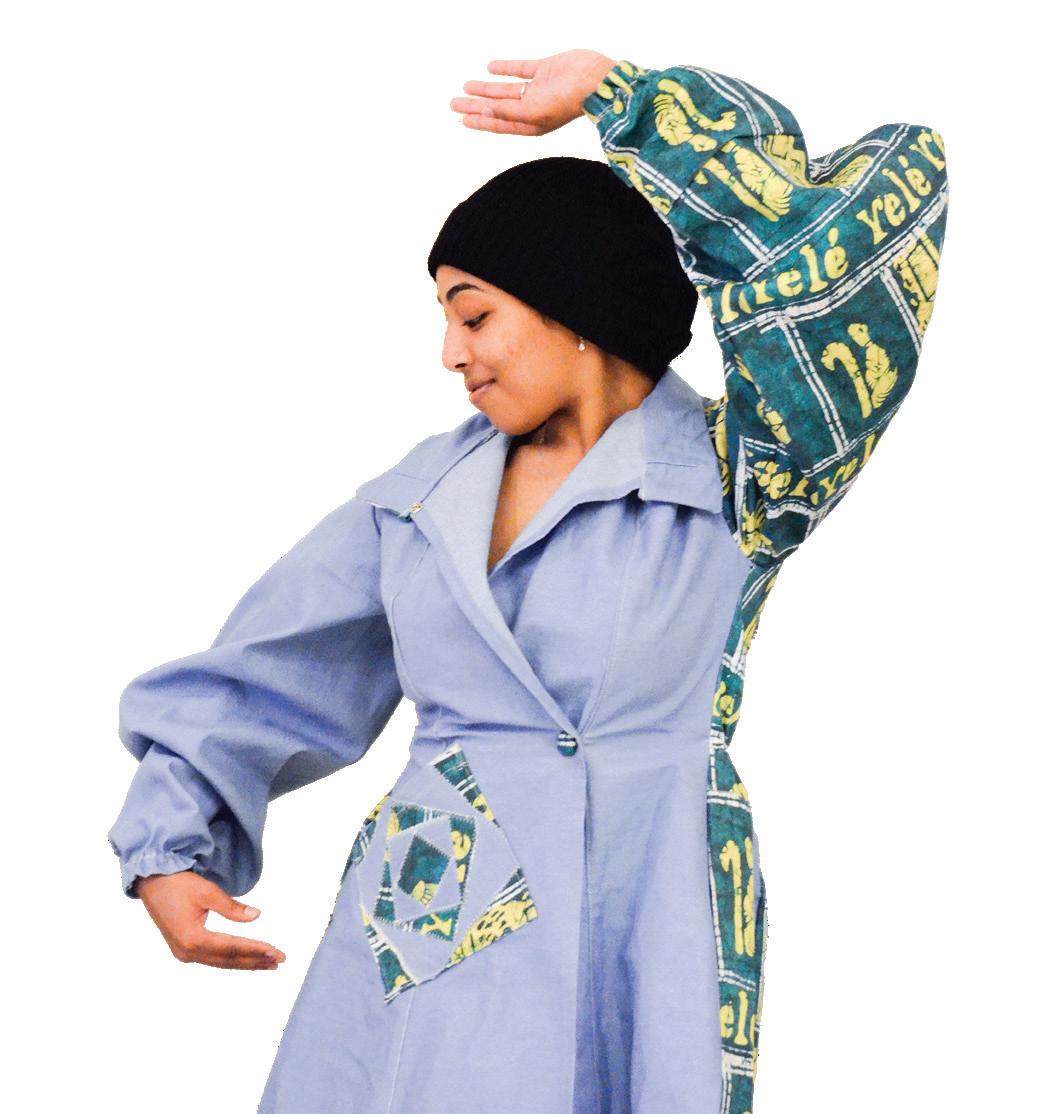
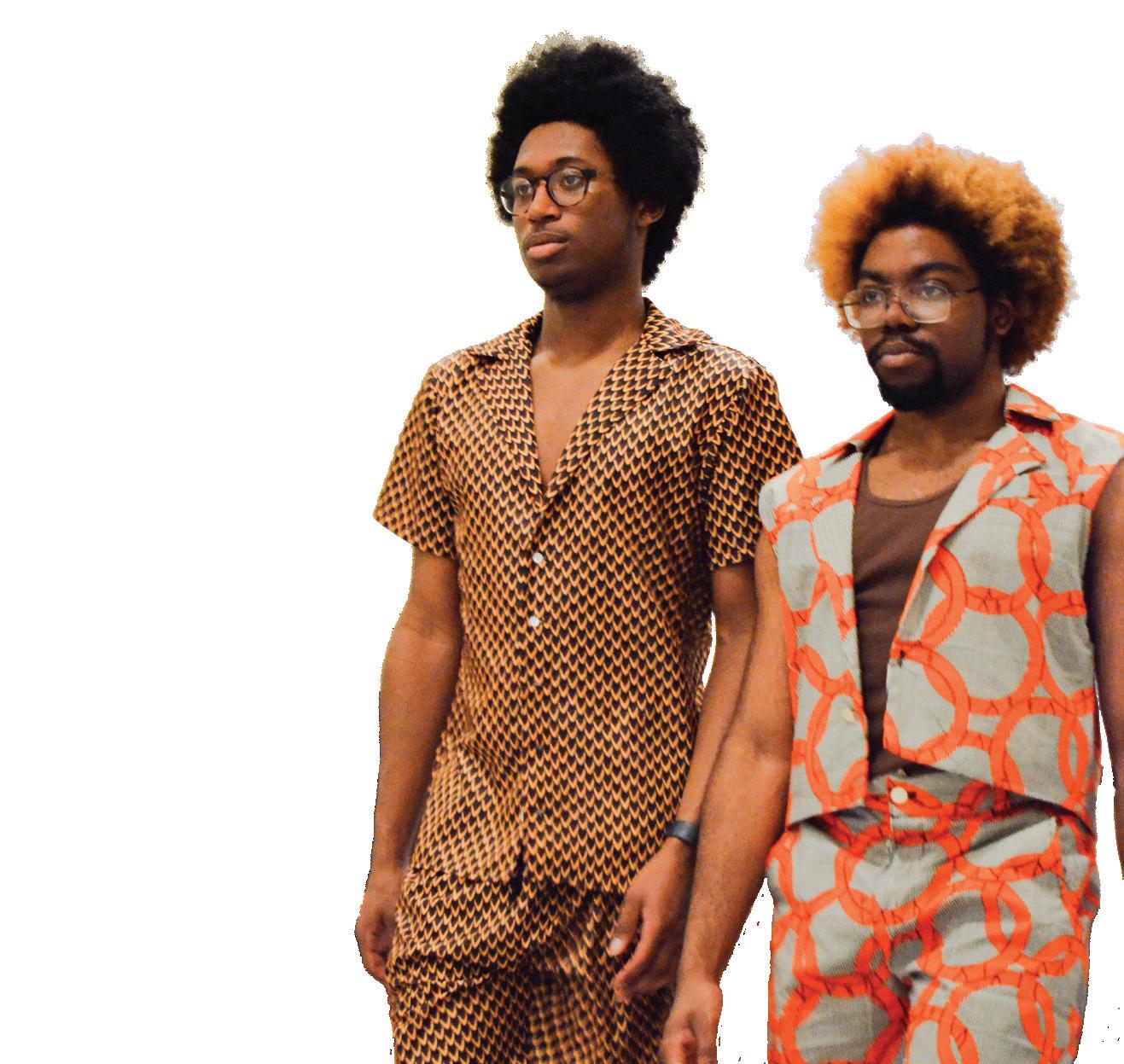
After classes end for the day, the dingy rooms in the bowels of the Davis Performing Arts Center typically remain empty and darkened, often overlooked and underutilized by students searching for a quiet corner to study in. For the past two weeks, however, those same spaces have instead been revived by rhythmic Afrobeats, African high fashion, and jovial cheers as the ABISSA 2024 performers rehearse for their April 13 show.
Hosted by the African Society of Georgetown (ASG), ABISSA is the university’s premier African cultural showcase, where students from the African diaspora highlight the richness of cultures from the continent through fashion, dance, and performance. The show will serve as the final flourish of Africa Week, a series of events hosted by ASG over five days dedicated to centering African cultures and issues.
“It’s a beautiful struggle,” Mamadou “Momo” Diabate (SFS ’26), a member of the ABISSA committee, said. “Especially since I’m acting and modeling, it’s definitely more responsibility because you have a lot more on your hands to do.”
What makes ABISSA stand out as a cultural showcase is the unique blend of performance mediums the show incorporates. Like past shows, the ABISSA committee is weaving together traditional fashion walks with a theatrical play, this year choosing to tell a strife-filled story of an African bride and groom-to-be.
“With African weddings, there’s a lot of drama, and the atmosphere is crazy,” Diabate, who plays the groom, said. “After reading the play, I love the idea already. There’s a lot of drama, a lot of funny moments.”
Just as crucial to ABISSA’s success is the excellence of the African couture featured in the show. Students from Georgetown and other schools in the DMV will be modeling outfits curated by different African designers along the East Coast. But with a continent as diverse and culturally rich as Africa, the challenge has been collecting fits that represent the whole continent instead of just one region.
“With the clothes, we’ve been trying to get as many different cultural clothing as possible from different parts of the continent,” Iman Fadlalla (SFS ’26), the social chair for ASG, said. “I think hopefully we’re doing a good job with that but that is something we’ve really been trying to improve upon this year.”
At a predominantly white institution like Georgetown, ASG strives to cultivate a strong affinity space for all students part of the African diaspora, and ABISSA plays a fundamental role in this mission. All three ASG members I spoke to emphasized how significant the show is to Georgetown’s African students and its Black community as a whole.
“I think it’s important we host this event every year so we don’t forget our culture at Georgetown. It’s very easy to forget where you come from, coming here,” Toluwani “Tolu” Baoku (CAS ’27), head of modeling for the show, said. “[Georgetown] is a white-dominated space. [It’s important] to be able to create that space for ourselves and to be able to play around with our culture, where we came from, and our history.”
Diabate discussed the potential for ABISSA to bring newer students into the African community at Georgetown. “Maybe there might be some students who are African that we may not have seen before on campus […] I feel like [ABISSA] allows students to come out of their shell and get involved with the campus community,” he said.
Even though ABISSA is of great importance to students of the African diaspora in particular, organizers also emphasized that all members of the Georgetown community should attend since it is one of the best ways to experience and learn about all the continent has to offer.
“I think ABISSA is a really great opportunity for people to just come and learn more about the different African cultures and traditions,” Fadlalla said. “I think people generalize Africa as having one culture and language—so the whole point of this is just to show how diverse Africa truly is.”
Baoku felt similarly: “You’re going to be exposed to some cultures and traditions you’ve never been exposed to before. I guess you can really appreciate African culture as a whole after watching it.”
As much as ABISSA presents a chance for nonAfrican students to learn about an oft-ignored region of the world, it also provides a night for the crowd to enjoy themselves while cheering on the incredibly talented performers. While some shows on campus prefer quiet from the audience, Fadlalla emphasized that attendees should feel free to interact with the show throughout the night: “You don’t need to stay silent and watch. You can be like, ‘oh my god!’ and ‘wow!’” In other words, leave those introverted tendencies at the door, and let the performers know when they’re killing it.
At ABISSA rehearsals, a reverent tone diffuses throughout any room the performers are practicing in. As models strut down a makeshift runway and strike a razor-sharp pose, their peers vocalize their approval. As actors recite their lines, observers mimic audience reactions to evoke the feeling of being on stage. Even though most will be backstage for the real show, it’s clear that the people behind ABISSA wants Lohrfink to feel spirited and joyous during the performance, in which the audience is invited to play a huge role.

There are a plethora of reasons why you should consider attending ABISSA 2024 this year. If you’re



THE GEORGETOWN VOICE
photos by sabrina shaffer; layout by rachel zhang
10 THE GEORGETOWN VOICE
Diamanté is an ever-changing mosaic of collective and diverse joy
BY EILEEN CHEN AND AMBER XIE
All of Georgetown’s campus is a runway for Akil Cole (CAS ’24). “I find myself practicing my walk on my way to school. I’ll have my book bag, people might see me locked in with my face, and I’m doing my model walk,” he said.
Cole is a two-time model for Georgetown’s annual Diamanté Fashion Show, and cites his tendency to sashay to class as a welcome side effect of practicing for the after-hours role.
Every Sunday evening, models prance down the labyrinthine hallways of Gonda Theatre, the show's clandestine rehearsal ground. Despite facing in opposite directions and walking to different beats, they manage to strut in perfect sync, never colliding with each other. The crew’s remarkable coordination mirrors an orchestra playing in a click-clacking of stilettos and a chorus of cheers and snaps that echo through the halls.
Founded in 2018, Diamanté is Georgetown’s first and only Black-run, student-led fashion show. This year, the show will take place at the McDonough Arena on April 20. Diamanté features collections curated by designers all along the East Coast and has grown to include participants from other D.C. universities, including Howard, George Washington, and American University, an expansion reflective of the dynamic network Diamanté has tirelessly built up over time.
Beyond their adornment in designer pieces and addictive, strut-worthy soundtracks, Diamanté’s supportive community is essential to helping models build their confidence. Members foster a powerful energy in rehearsals by hyping each other up and bringing out each other’s inner confidence.
“I think the main thing about Diamanté is confidence in yourself and confidence in the group,” model Kayla Balabanis (CAS ’24) said. “Everybody in Diamanté is so talented and that confidence is contagious. So when you’re watching people do their thing and express themselves, [you] kind of feed off of that and are able to do it yourself.”
Several models, like Balabanis, come to Diamanté with no prior modeling experience. Under the hot lights and imposing cameras, hitting the runway can be an intimidating experience. However, the community fostered within Diamanté works to calm these nerves and uplift students— especially those younger or newer to the stage—to embrace their own confidence.
“[Diamanté was] really nerve-wracking at first,” Balabanis said. “But the more you go, the more you realize that everyone’s just so supportive no matter what. I think it just takes practice. It takes exposure. It takes looking at yourself in the mirror and becoming comfortable in what you see in the reflection. And after enough times, you kind of take yourself less seriously and you let yourself do more.”
For others, breaking past their comfort zone is one of the most fulfilling parts of the journey. “If I feel a little bit uncomfortable, I might be doing something right, because I’m learning something,” model Cole said. A sense of collective growth and encouragement accompanies the process of pushing boundaries.
Cole, for instance, is trying his hand at styles typically reserved for female models. “[I’m] trying to learn a lot from the women who have much more complex choreography, generally, than the men do,” Cole said. “Role modeling is huge in modeling.”
The Diamanté community is as diverse as it is supportive. “Diamanté is far more inclusive than typical runway modeling. You know, not everyone there is thin, white, and like six feet tall, which is cool,” Cole continued.
Diamanté isn’t just a diverse runway, though— it’s also a necessary safe haven for creatives of marginalized backgrounds, and that commitment to diversity has been at the heart and soul of Diamanté from its inception.
“Diamanté started off as a queer, Black fashion show,” Rams-Lyne Thomas (CAS ’25), the show’s modeling director, said. “Everyone that does come, they see themselves and they envision themselves to be so much bigger than they are in the mirror and on the runway.”
“In the future, I see Diamanté being bigger, being queer, being Black, and just emphasizing the love of fashion and passion,” she added.
Diamanté has already grown to be something much greater than a fashion show. Thomas said this year’s executive team has put extensive effort into lowering the barrier of entry to professional modeling and bringing Black culture to campus by hosting panels with industry professionals, pioneering a voguing series, and promoting DMVarea modeling auditions.
Industry grandeur aside, however, Diamanté allows Georgetown students to step away from their deadlines, classes, and internships and escape into a creative space for a few hours. According to creative director Lily Tom (CAS ’24), Georgetown doesn’t foster enough opportunities for students to be imaginative and let external stressors temporarily melt away.
“When you come here, yes, we’re working on a deadline, but most of the time it’s like, okay, let’s create,” she said. “It’s where you’re coming to really have fun and just create and let everything loose.”
Diamanté isn’t just any artistic community— it’s a unique and valuable incubator on Georgetown’s campus for creatives of color, one that simply didn’t exist prior.
“There’s very few [opportunities for] access, especially for minorities, for safe space to create. I feel like, as a minority, certain spaces that you’re in, you’re automatically on edge. So when you walk into a room with people that look like you, people that you know, people that you’ve seen in your affinity spaces, it’s like, 'Okay, I’m amongst people that already accept me, or I’m amongst people who are in the same boat as me,’” Tom said.
A happy consequence of nurturing a community of creative minds, Diamanté is inherently shaped by its constantly evolving and visionary team of talents. Acutely aware of this free-flowing adaptability, the executive board is dedicated to building the necessary technical and logistical foundations that will allow students to fashion the show how they see fit. The hope is that future productions will continue to break boundaries, both in theory and in practice.
“It changes every year according to the people who make it, and that's the fluidity of it all. It's really up to the people who are making it,” Tom said. “The ideas and possibilities are endless. The world is yours for real.” G
Diamanté will take place on April 20 at 7 p.m. in McDonough Arena. Tickets can be purchased on CampusGroups beginning at $20.

APRIL 12, 2024 design by tina solki
11
 BY BARRETT AHN
When I was little, I hopped from dream job to dream job: fashion designer, golden retriever breeder, stablehand. As I grew up, these professions changed to doctor, human rights lawyer, and writer. I used to feel some embarrassment when I admitted that last aspiration to others, but also to myself. It seemed too lofty, pretentious, and unrealistic, especially surrounded by Georgetown’s future big-dog consultants and state representatives. But the idea of being a writer still lingers at the back of my mind. What has helped me embrace it—rather than shut it out—is Georgetown’s flourishing writing community.
Paul Elie’s Ignatius Seminar, The Search, marked my introduction to English classes at Georgetown. Part seminar and part workshop with a nonfiction lens, Professor Elie encouraged us to reflect on our own personal narratives, which enhanced our creativity and individual style; it was the first time I shared my work with people who were just as excited about words as I was.


Through The Search, I met Angelina Georgacopoulos (CAS ’26) and Savannah Sarafoglu (CAS ’26), who have both gone on to major in English. Since our first-year seminar, they’ve taken a wide range of creative and analytical writing courses. “A lot of the creative writing classes here are about developing you as an artist and storyteller,” Georgacopoulos said.
“The creative writing classes I’ve had are the ones I look forward to the most,” Sarafoglu added. Close-knit seminars and workshops help students overcome self-consciousness and anxieties about exploring the creative world. Not only do these classes force us to write outside of a purely academic mindset (because sometimes the econ quiz, IR paper, and Lau 2 fumes just aren’t conducive to storytelling), but they also carve out time for us to focus on honing our craft and narrative voice. Disparate students joined together through writing have grown into a veritable literary community at Georgetown.
Yet, classes are just the beginning.
On-campus literary publications play a central role in bringing student writers together, creating spaces dedicated to sharing ideas and giving constructive

with the goal of uplifting writers on campus, especially new writers.”
Georgetown hosts more than 15 other student organizations dedicated to writing in all its forms. Interested in intersectional feminism, uplifting marginalized gender identities, and empowerment? Check out Bossier. Thinking of delving into international news? I would point you toward The Caravel and The Georgetown Journal of International Affairs (GJIA). Want to try your hand at sharp reviews and witty arts commentary? Flock to The Georgetown Independent (INDY). There truly is something for everyone.
The first club I joined at Georgetown was the Voice. Not only has the organization helped me grow as a writer and editor, but it has exposed me to the views of so many others. Their perspectives help foster my own, and in this collaborative environment, we are constantly building friendships and learning how to be better purveyors of “self-sponsored” writing.
According to Phil Sandick, associate teaching professor and director of the creative writing minor, campus publications specialize in “self-sponsored” writing since we produce expressive writing for ourselves and for our community—for pure joy. “That’s part of the fun of this—knowing that it’s not necessarily one short story that’s going to change the shape of the world. It’s knowing that these small creative acts of sharing a story with somebody else or writing toward a particular community does have a social effect. You can move people. You can inform and instruct, and have someone think differently,” Sandick said.
Established in 2016, the creative writing minor is a fairly new program within Georgetown’s
Lannan Literary Festival, a three-day event featuring critically acclaimed writers and student performances. This year spotlighted “The Writer in the World” with authors including Tania James, Viet Thanh Nguyen, and Reginald Dwayne Betts. Rabih Alameddine, one of the key speakers and Georgetown’s current visiting chair, believes that “the role of the writer is to engage the world to the best of her ability.”
“The writer’s main purpose is as a witness— to see. We need writers who are strange and weird and see the world differently. And we need a lot of them,” said Professor Alameddine, under the light filtered through Gaston Hall’s stained glass windows.
Georgetown is brimming with witnesses and lenses. Student writers and publications are at the heart of what makes Georgetown the variegated, vibrant hub of literature and culture that it is. Writing—whether creative, academic, journalistic, or scientific—should be celebrated at Georgetown, and so should the spaces that make it possible.
I still don’t have a clear vision of my future, but should I choose the creative path, I have the curriculum and the support system to spur me along. If you’re doubting your writing capabilities, I urge you to put pen to paper (or fingertips to keyboard) and submit to the array of publications we have on campus. You might just end up becoming a writer yourself. G



THE GEORGETOWN VOICE design by elin choe 12

Hear Georgetown a cappella in full bloom during annual Spring Sing showcase
BY MARGARET HARTIGAN
On April 13, Georgetown’s six a cappella groups will come together for their final performance of the year, Spring Sing. The event, co-hosted by The Saxatones and Superfood, will also feature sets from The Capitol G’s, The GraceNotes, The Chimes, and The Phantoms. The annual showcase closes out the Georgetown a cappella season, following The Chimes’ Cherry Tree Massacre in February and The GraceNotes’ D.C. A Cappella Festival (DCAF) in November.
“It’s like that last hurrah, a big concert with all the six a cappella groups to show off those last songs that we’ve been arranging and working on,” Saxatones president Ava MacLaughlin (CAS ’25) said. “It’s just like a joyful celebration of spring with fun, upbeat songs.”
To understand the inner workings of Georgetown’s a cappella community and preview what’s in store for this year’s Spring Sing, I infiltrated (politely asked to attend) the Saxatones’ and Superfood’s rehearsals and talked to the student leaders of both groups.
The first group I visited was Superfood, Georgetown’s only competitive a cappella group. While most Georgetown groups focus solely on oncampus performances like Spring Sing, Superfood travels to the International Championship of Collegiate A Cappella every other year. Late one Tuesday, I found myself in the Old North basement, a hidden enclave of Georgetown musical talent, listening to choruses of “zoom-zoom-zoom-zoomde-zoom-de-zoom-zoom” from a dozen or so undergrads in a circle. I later learned that they were rehearsing the background vocals for “Zombie” by The Cranberries—the group’s “alumni song.”
It was one of the first songs performed by the group after they were founded in 1995, and has been kept in Superfood’s repertoire ever since. “The idea is that if alumni come to their performance, they can come on stage [and sing with us],” Superfood co-president Yana Gitelman (SFS ’25) said. They then pivoted to practice of “July,” a slow, mournful ballad by Noah Cyrus. For one of the most devastating verses— “’Cause you remind me every day / I’m not enough but I still
stay”—the chorus of voices grew increasingly loud, then quieted down as it shifted to a solo by alto Kate Vermylen (MSB ’25) on the final words. The verse dramatically filled the room, and the shift in volume had a heart-wrenching effect.
The decidedly gloomy “Zombie” and “July” are not the only songs featured in Superfood’s repertoire, however. According to the group’s copresidents, Superfood’s Spring Sing performance will include renditions of the funky ’70s hit “In the Stone” by Earth, Wind & Fire and a medley of dream-themed songs.
Dubbed the “dreams medley,” this portion of the performance uses its titular theme to explore a wide range of genres, opening with “Mr. Sandman” by The Chordettes before shifting into “Sweet Dreams” by Eurythmics, “Dreams” by Fleetwood Mac, “California Dreamin’” by The Mamas & the Papas, and “Sweet Dreams” by Beyoncé. The medley features performances by Kate Vermylen and Walden Capen (MSB/CAS ’26), and it also spotlights Superfood’s seniors in a number of solo and trio portions.
“It’s every senior in every group’s last performance, so I feel like it kind of brings that out sentimentally,” Superfood co-president Margaret Tracey (CAS ’25) said. “It is every group’s last concert, so there’s that added element. Everyone gets emotional.”
The Saxatones, Georgetown’s community service-oriented a cappella group, is also hard at work preparing for the event. When I strolled into their rehearsal in a small Reynolds practice room, I found 10 members of the group practicing their arrangement of the One Direction hit “Night Changes.”
They were crafting a harmony behind the closing lyrics, “It will never change / it will never change, baby / it will never change / me and you,” with Terry Kyei (CAS ’25) and Sam Morris-Kliment (CAS ’26) singing the lyrics and the rest of the group on background vocals. Basses and tenors sang “ooo-oOO,” going from a low note to a higher one, while altos and sopranos at the same time sang “OOO-OOo-ooo” going lower, then higher, then lower again. While the component parts may have seemed nonsensical, their arrangement, once assembled, added lush depth to the boy band classic.
Both Superfood and the Saxatones typically practice for six hours per week, their presidents said—a significant time commitment that has led to a sense of camaraderie and community in both groups.
“You wouldn’t expect that I have so mucpassion for these songs, but when we’re coming together in a group, and we’re picking fun of each other, or we’re sending silly [memes in the group chat], it really makes all that hard work worthwhile,” MacLaughlin said.
Like their Spring Sing co-hosts, the Saxatones also have a lineup of hits in store for the showcase, including “Yoü and I” by Lady Gaga and “Closer to You” by Sammy Rae & the Friends, as well as a soulthemed senior medley incorporating songs by The Jackson 5 and Etta James.
“It’s a long process and it takes a lot of focus, which sometimes we don’t always have,” MacLaughlin joked. “But we’re coming on really strong and I’m so excited.”
Among Saxatones’ soloists are Khaki Sawyer (CAS ’26) and Sofi Schlesinger (CAS ’24), the lead singer of Georgetown’s student band Rosewater. The group’s four seniors will also perform solos.
When asked why she believed Georgetown students should go to Spring Sing, Gitelman pointed out the time and dedication that the groups’ members have put into their craft, as well as how integral a cappella is to the Georgetown community.
“I just think it’s special to see your peers perform, and it’s something that’s definitely a unique type of performance,” she said. “There’s something kind of silly about a cappella to a lot of people, but I think it’s just such a creative type of art, and every part of the arrangement and the performance takes so much effort.”
“And,” she added. “It’s really fun to listen to.” G
Spring Sing will take place on April 13 at 6:30 p.m. in Gaston Hall. Tickets can be purchased at CampusGroups for $5. All proceeds will be donated to D.C. Central Kitchen.
More: Read Superfood member Alex Lalli's column reflecting on her time in the group at the QR code below!

13 APRIL 12, 2024
design by maggie zhang
GREEN’s Trashion Show brings a new perspective to the fashion rage on campus
BY RHEA BANERJEE
Would you dumpster dive for $200?
That’s the cash prize up for grabs at Georgetown’s first Trashion Show, premiering on April 21 at 6 p.m. Organized by GREEN’s Zero Waste Team, the show aims to promote sustainability on campus by creating outfits from trash and encouraging students to think more critically about how they can reuse materials.
“I just feel like people are used to a disposable culture of one-time use and then [are] like, ‘I’m gonna throw it away.’ I wanted people to rethink about how they’re using objects, and that maybe you can use it in more than one way,” team lead Makenna Dovel (CAS ’27) said.
As someone with a love for thrifting, Dovel was inspired by MIT’s 2018 take on a trashbased fashion show to combine her enthusiasm for the arts with her passion for sustainability. “It’s not to say fashion and sustainability are separate,” she said. But people in the arts world can be hyper-focused on their practice, rather than the additional social impact. “[The Trashion Show is] like meshing two worlds together to get people that aren’t usually into the environment,” Dovel concluded.
opportunity for students to explore the boundaries of fashion. Another organizer, Grace McManus (CAS ’26), learned to rethink fashion through YouTube channels like bestdressed and hopes this experience will do the same for fellow students.
climate narratives such as the Doomsday Clock and apocalyptic news delivery, the Trashion Show is not
intended to be a scare tactic. The team planned to present a solutions-focused perspective, rather than highlight the doom and gloom of humanity’s unsustainable choices. “It’s to make them be a little more conscious about it, and curious,” Dovel said. “It’s not an event to make you sad. It’s an event to make you hopeful for the future.”
The runway is meant to evoke two streams of thought. “One aspect is the fashion, think about your clothing, about what you’re buying. And then the other aspect is think about how much waste you’re generating,” Katie Merrill (CAS ’27), another organizer, added.
process has been the push she’s received to reevaluate what she considers trash in her own life. “I think that everyone who comes to the Trashion Show will have a similar experience, and consider what we throw away and what trash can be,” she said. “[The show] is a way to confront these issues in a way that is uplifting and constructive.”
Various student groups, such as Georgetown REUSE, will be tabling in Copley Formal Lounge—the event venue—to share sustainable waste management solutions like purchasing secondhand clothing. Slow Food Georgetown will be providing refreshments, but with a twist: the club will place a clear bowl with all the trash that was the side product of the foodmaking process—i.e. the plastic packaging on produce—next to the dishes to draw the audience’s
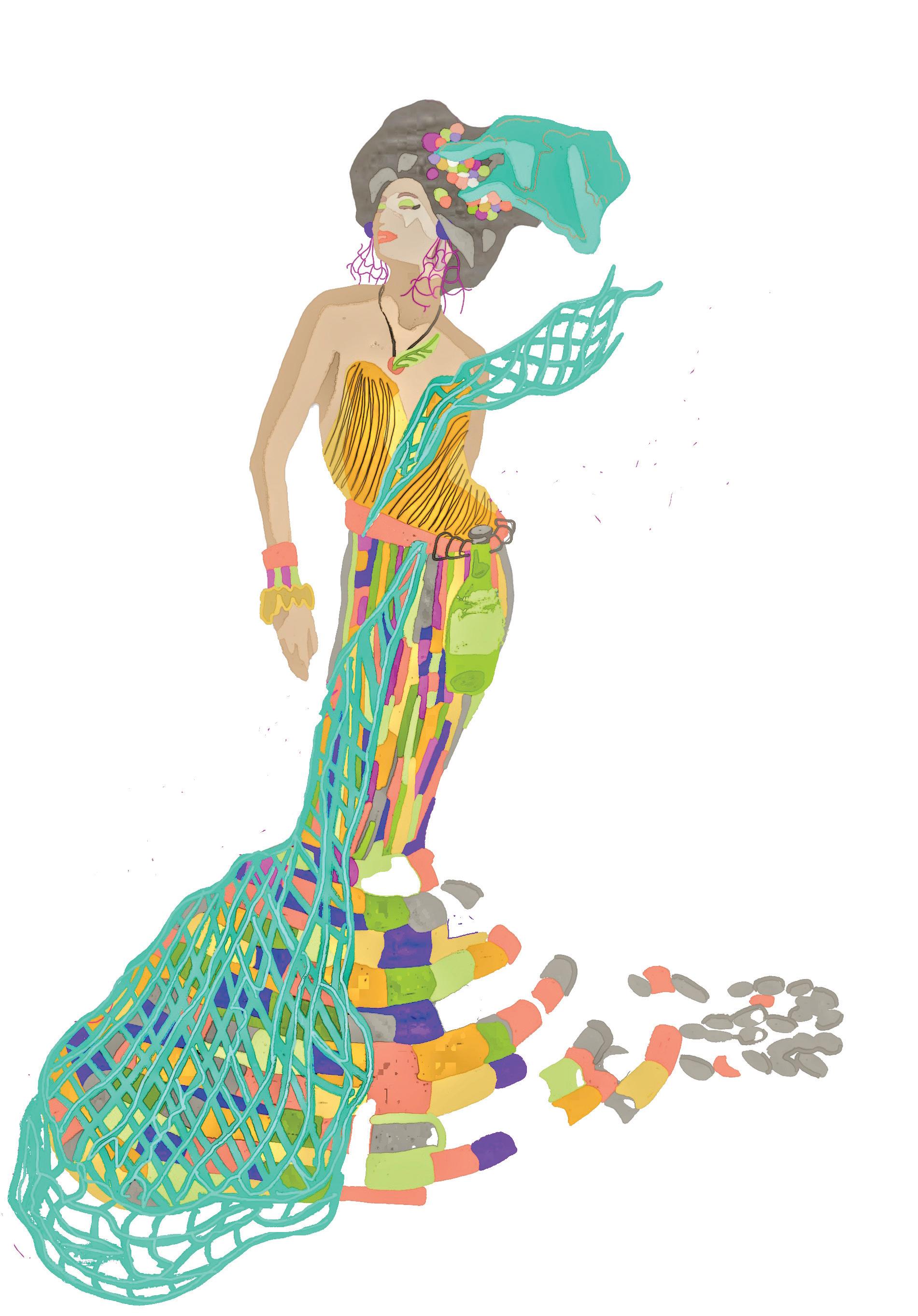
Copley Formal will also be decorated with donated artwork. “The sculpture class is going to donate their recycled seats they made,” Dovel said. The centerpiece, on loan from the GW Innovation Center, will be an enormous dress made of recycled plastic bottles created by Miami-based
The myriad of collaborations, however, only complement the runway, which will showcase entirely student-made designs borne in the Maker Hub from pieces of trash collected around campus.
One designer, Katherine Wijenaike-Bogle (CAS ’25), is exploring the intersection of beauty, trash, and nature in her work. “I was looking at a piece of waste that I produce every day, which is disposable contact lenses,” she said. “One, I looked at it and thought it was actually a beautiful piece of plastic. And then I was also inspired by biophilic design, or design that is inspired by nature. When you manipulate [the lenses] a little bit, you can cut them into a scale design so that
Genevieve Jobson (CAS ’26), along with organizing and modeling, is designing an ’80s-themed prom dress out of coffee sleeves, most of which were amassed via collection boxes at Corp locations.
For Jobson, her dress exemplifies how we use things we do not always need. “Sometimes you do need the coffee sleeve to protect your hand because it’s hot, but other times it is kind of unnecessary,” she said. She hopes to motivate action: “People will throw out the whole cup in the trash, when it is really easy to take off the sleeve and put it in the recycling next to it.”
Affordability in sustainability is the underlying question of this show made by and for college students. It is a common misconception that sustainability is prohibitively expensive. “Many people are used to going to SHEIN and buying five tops that they are going to wear twice,” Dovel said, citing their low quality and price. “They don’t really think about where their clothing is coming from, where it goes.” Ultimately, the goal of the event is to inspire attendees to be more conscious of their purchasing choices.
As a teaser, the team is bringing Ledón to campus on April 20 at 4:30 p.m. in White Gravenor 208, where the artist will discuss her creative experiences and create a piece from discarded materials live. Designers and organizers alike will exhibit reusability. “I think that the Trashion Show is going to do just that and show a ton of people how you can use different clothing items—like a skirt can be a top, trash can be art, can be fashion,” McManus said. Trash can most definitely be fashion—as long as one fashions it so.
The GU Trashion Show will take place on April 21 at 6 p.m. in Copley Formal Lounge. Tickets can be purchased on CampusGroups for $5.


THE GEORGETOWN VOICE 14


Crafting community:
 BY MAYA KOMINSKY
t my high school, like many others, seniors have a tradition of decorating their graduation caps with college logos, inspirational quotes, or family photos. When I got into Georgetown in March 2020, I immediately workshopped ideas to make mine stand out. It was one week into COVID-19 lockdown and there was no guarantee that we’d even have a commencement ceremony; but mourning my senior spring and encumbered by never-ending days, I didn’t have much to lose. I spent painstaking all-nighters using tweezers to stick navy and silver rhinestones onto a six-by-sixinch letter “G,” finishing off the cap with fabric flowers and a blue border. By the end, my back hurt, my hands cramped, and my fingertips were hardened with superglue—but it was one of the best parts of my time in quarantine.
scant free time to share knowledge with our visitors and one another.
Anyone with a NetID can come in during open hours and use our materials free of charge, as we encourage students and faculty to create with no stakes; but people often find us out of necessity rather than curiosity. While unfortunate, it’s understandable—the Georgetown ecosystem is fast-paced and stressful, so hobbies can fall by the wayside. But you might realize that the Maker Hub will push you in unexpected ways. It’s taught me how to approach challenges with imagination and

I’ve always enjoyed spending hours crouched on my bedroom floor, materials scattered about while I plot my next masterpiece. When we went into quarantine, weeks of isolation became months, and I started college exactly where I had been for the past 18 years: New Jersey. All there was to do, besides go to Zoom classes and aimlessly walk outside, was beautify the walls and objects I stared at day in and day out. Arriving at Georgetown my sophomore year, I worried that the constraints of dorm life would force me to give up my creative endeavors; there was barely enough room for myself and my suitcase in Kennedy, let alone a hot glue gun.
Then I found the Maker Hub—a place that could fill the hole left by my craft supply closet. Incidentally, I needed a work-study job, and they happened to be hiring staff and volunteers to assist visitors with their projects and maintain the space and tools. This sounded like the perfect gig for a social butterfly with an extensive arts background, so as a person who fit neither description, I feared I’d be in over my head. Still, I applied, wanting to pick up new skills and step outside my comfort zone. I had no idea being hired would launch the most formative experience of my three years on campus.
At the time, my only perception of the Maker Hub was that it was a glorified Michaels. In the years since, I’ve learned that it’s first and foremost about inspiring Hoyas—not artistic ability, engineering prowess, or any of its fancy tools. It also has its own vibrant community of student volunteers with incredibly expansive skill sets who donate their
undergraduate and graduate programs; it gave me the guts to pursue leadership at the Voice, to be a tour guide, to willingly enter unknown circumstances, and to welcome new opportunities.
As a second-semester senior, it’s hard to resist sappy reflection, but I find it nearly impossible when I think about how grateful I am to David Strout, the Maker Hub manager who hired me and has been my boss since. My first semester on campus was his first at Georgetown, and with the rest of the staff, we had to revive and operate unfamiliar machines that had been defunct for two years during the pandemic. While working with people who were passionate and determined— about both their own projects and improving the collective space—I became more invested in fostering a welcoming environment for others, wanting to pay forward the kinship and creativity it cultivated for me.
When conceptualizing this piece about the Maker Hub, I decided to take on another unprecedented challenge: creating the accompanying graphics. I’ve picked up digital design skills in my time there, but never tackled something this daunting, and knew I would need guidance. Sure enough, my coworkers-turned-friends eagerly lent their expertise as I played around with colors and illustrations; they even sat by my side for hours while I tried to figure out how to make shadows. This serendipitous full-circle moment only reaffirmed my gratitude for the space—one that encourages students to try new things without judgment, extending support whenever they need it.
Even after three years, I still love seeing the wonderment on a person’s face when they walk through the door for the first time, and sympathize with disappointed seniors who wish they had found it sooner. I never tire of watching someone surprise themselves with their own skills and ingenuity. I haven’t gotten sick of descending into the furnace that is Lau 1, of hearing the Taco Bell “ding!” when someone rings our doorbell, or of threatening people with the Crocs of Shame when they forget to wear closed-toe shoes (we have saws in there, guys!). It’s warm and lively and goofy; it’s everything I could ask for from a campus community.
As my next commencement draws nearer, I’ve thought a lot about the pieces of this campus I’ll take with me. All of the clothing I’ve helped repair, the 3D prints I’ve run during finals week, and the countless times I’ve asked “how can I help you?” have imparted invaluable lessons about persistence and teamwork. But spending my days in the Maker Hub as a student, not a staff member, is what I’ve found most affecting. Immersing myself in an environment so welcoming and fun, full of people

graphic by maya kominsky; layout by madeline
jones
APRIL 12, 2024