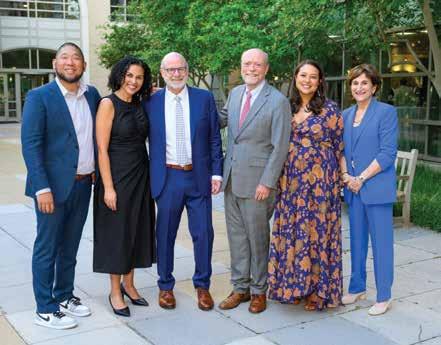
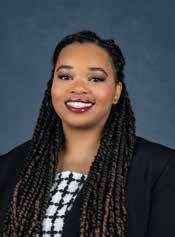
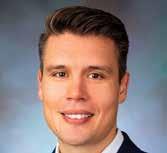
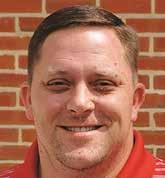
Sarah Adler, Jaclyn Diaz, Cliff Djajapranata, Rosemary Lane, Merrie Leininger, Eliza McGraw
Eliza McGraw is an author based in Washington, D.C. She has written five books, most recently Here Comes Exterminator! about the 1918 Kentucky Derby winner. Her work has appeared in many publications, including the New York Times, Smithsonian. com, Atlas Obscura and the Washington Post.
PHOTOGRAPHY
MATTHEW F. CALISE
Assistant Vice President of Alumni Engagement
GENE FINN
Assistant Dean of Development and Alumni Affairs
JUNE SHIH
Associate Vice President for Strategic Communications
JOSHUA C. TEITELBAUM
Interim Dean of the Law Center and Interim
Executive Vice President of Georgetown University; David Belding Professor of Law; Professor of Economics (by courtesy)
Back cover photo: Brent Futrell
Contact:
Magazine Editor Georgetown Law 600 New Jersey Avenue, N.W. Washington, D.C. 20001 editor@law.georgetown.edu
Address changes/additions/deletions: 202-687-1994 or e-mail addup@georgetown.edu
Georgetown Law magazine is on the Law Center’s website at www.law.georgetown.edu
Rhoda Baer, Elman Studio, Brent Futrell, Ines Hilde, Sam Hollenshead, iStock, Derek Lamar Studios, Sam Levitan, Han Miller, Melissa Ryan.
THOUGHTS FROM THE DEAN
Greetings from McDonough Hall!
As you may have heard, Eduardo Peñalver, the current president of Seattle University and a former dean of Cornell Law School, will serve as the 49th president of Georgetown University starting this summer. I am delighted — as I hope you are, too — that he comes from the world of legal academia and will join the Law Center as a tenured member of the faculty. I very much look forward to working with him and welcoming him to Georgetown Law.
This is a period of transition not only for the University but also for the Law Center, where we, too, hope to welcome a new dean in the coming months. As interim dean, I am reminded every day of what makes our law school special and so resilient even in times of change: our people. Nothing reinforced this more than when I had the privilege of meeting so many of you at reunion weekend in October. I’ll admit that even though I’ve been a member of the faculty since 2009, I’ve never before attended an entire reunion weekend. It was truly a treat to spend time with generations of Hoya Lawyas and to share in your memories and genuine enthusiasm for our school.
In these pages you will see evidence of change and continuity at Georgetown Law. Our cover story features our newest legal clinic, the Civil Justice Clinic, which in its first 18 months has enabled students to win judgments in the hundreds of thousands of dollars for clients who were victims of wage theft. That this newest clinic was able to hit the ground running is due to our school’s long and pioneering experience in clinical education — our criminal justice clinic was one of the first in the nation and our clinical programs are universally considered the nation’s best.
So even as we face a time of certain change, I am confident that, with your support, we will continue to nurture the bonds that have kept the Georgetown Law community so strong.
Best,
Joshua Teitelbaum
Interim Dean of the Law Center and Interim Executive Vice President of Georgetown University; David Belding Professor of Law; Professor of Economics (by courtesy)
Alfred Moses, J.D.’56, H’13, Makes Historic Gift
to Support Public Interest Students
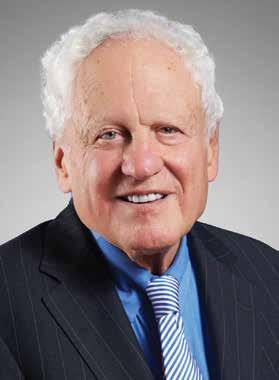
In June, Ambassador Alfred Moses, J.D.’56, H’13, an attorney, philanthropist and former U.S. Ambassador to Romania, made a $10 million gift to Georgetown Law to fund scholarships and other support for students committed to pursuing careers in public service. Moses’ gift is the largest ever received by the Law Center to support scholarships.
“There is a great need for public service in our country,” Moses said. “The private sector is very financially attractive to law graduates, but public service is so important for the future of our country.”
A 1956 graduate of the Law Center, Moses served as a partner for 60 years at the law firm Covington & Burling LLP. He also held many roles in the U.S. government, serving as a special advisor and special counsel to President Jimmy Carter, U.S. Ambassador to Romania from 1994 to 1997, and Presidential Emissary for the Cyprus Conflict from 1999 to 2001. He served as National President of the American Jewish Committee from 1991 to 1994, and he received honorary doctorates from Yeshiva University and Georgetown University.
“Georgetown Law is proud to have trained so many of our country’s most accomplished and dedicated public interest lawyers and public servants,” said Dean Emeritus William M. Treanor. “Ambassador Moses’ gift will do so much to help us advance Georgetown’s mission of educating people ‘in the service of others.’”
Moses’ gift will serve as the cornerstone for a newly established Public Interest Scholars Program Endowed Fund. Through the fund, the Law Center hopes to offer scholarships and other support to students who have demonstrated a strong commitment to public interest work.
“We hope we can build a fund of $50 million so that over time, we can have many hundreds of graduates committed to public service as a career – anything from a firefighter to the president of the United States,” said Moses.
“That
rule of law governs is the basic proposition”
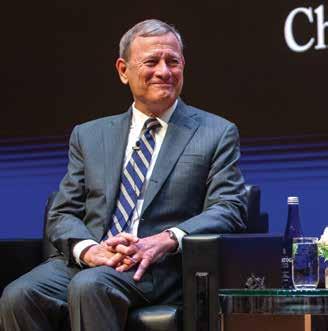
On May 12, Chief Justice of the United States John G. Roberts, Jr. visited Georgetown Law to deliver the Lecture to the Graduating Class. In a Q&A with Dean William M. Treanor, Roberts answered questions about the role of an independent federal judiciary in upholding the rule of law. “The notion that rule of law governs is the basic proposition,” Roberts said. He underscored the significance of civics education, urging the audience to volunteer to educate younger generations. “One area where [the rule of law] is most endangered is young people,” he said. “We’re developing a situation where a whole group of young people is growing up having no real sense about how our system of justice works.”
Offering advice to students on the brink of launching their legal careers, Roberts spoke of the importance of listening and humility in approaching legal problems, a skill he likened to the work of a physician making an informed diagnosis. “You don’t want to give a diagnosis right away; you want to figure out what the symptoms are,” he said. “People you are dealing with will be impressed by the fact that you seem to understand that you don’t know everything already.”
Roberts noted that the challenges facing young lawyers today – and the competencies needed to incorporate emergent technologies such as AI into legal practice – have transformed significantly since the start of his own legal career and will continue to change over time.
“The skills to be a good lawyer, they evolve,” he said.
Chief Justice Roberts: Georgetown Offers Tuition Discounts to Affected Federal Lawyers
As part of a universitywide effort to provide educational and career counseling resources to civil servants whose jobs had been affected by recent cuts in government agencies and programs, Georgetown Law announced in April that affected federal attorneys would be eligible for a 50 percent reduction in tuition for select LL.M. degrees. Georgetown Law Lifelong Learning also offered reduced enrollment fees for some of its executive and continuing legal education opportunities.
As of this issue’s publication time, at least 25 incoming LL.M. students had qualified for the tuition discount, and nearly all of the enrollees in Lifelong Learning’s fall Legal Foundations of Nonprofit Organizations online program, many of them former USAID employees, were able to take advantage of a 40% discount. For more information on discounts offered for future such programs, contact lifelonglearning@georgetown.edu.
Meet Interim Dean Joshua C. Teitelbaum
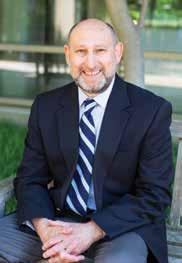
On July 1, Professor Joshua C. Teitelbaum became the Interim Dean of Georgetown Law. Teitelbaum, who holds a Ph.D. in economics from Cornell University as well as a J.D. from Harvard Law School, came to the Law Center in 2009 to take his first full-time job teaching law, and has been here ever since. The David Belding Professor of Law and a Professor of Economics (by courtesy) at Georgetown University, he’s a prolific researcher and collaborator whose scholarship focuses on the intersection of decision theory and law and regulation. We spoke to him recently about his path into academia, his passion for his scholarship and his hopes for his time as dean.
How did you become both a lawyer and an economist?
Doing my undergraduate honors thesis in economics was a transformative experience. I had never considered doing a Ph.D., but that experience was so enjoyable. I decided to go to law school first, and ended up as a research assistant and a teaching assistant for Professor Steven Shavell, one of the founding fathers of the law and economics field. My relationship with him continues to this day and has been hugely influential.
After law school, I did a judicial clerkship and worked in a law firm in New York. I liked practicing law, but had fixed in my mind to go back for my economics Ph.D. Cornell was a winwin for me and my wife: I did my Ph.D. and started teaching law as a visiting assistant professor, and her auditing firm
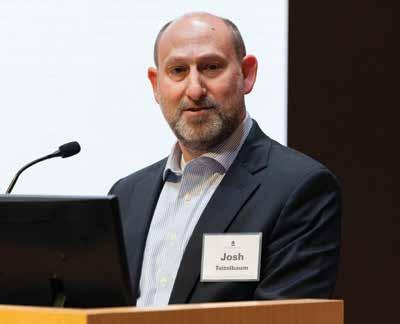
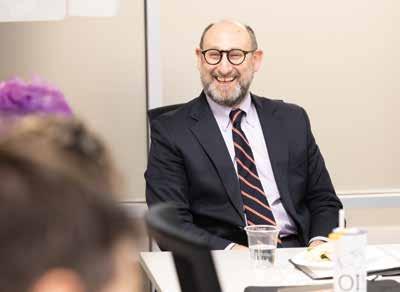
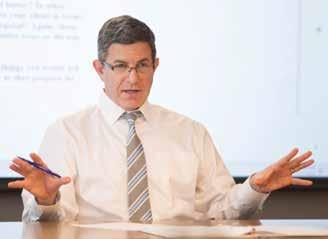
As Interim Dean, Teitelbaum hold a prominent role in many campus events, from introducing guest speakers (above) to meeting with student leaders (below).
had a major client nearby, so she was able to fill a senior role there. Ithaca was great. We bought this tiny little house, both our kids were born there, that was a really nice time.
How have the two disciplines complemented each other in your teaching and scholarship?
The application of economics to legal questions is my prism on the law. In my first year of law school, I felt like I was reading a bunch of opinions and it was all ad hoc. Economics gave me a way to create a logic. And that spills over in my teaching. When you take Torts with me, you’re going to get a certain perspective that you wouldn’t necessarily get in another classroom.
In my pure economics work, I study how individuals make decisions in environments of risk and uncertainty. And then my law and economics work is still decision theory-oriented, in the sense that I’m studying legal actors. That could
just be you and me, as we’re being influenced by what the legal rules are, but it could be judges or others. Studying their decisionmaking behavior and how the law influences that. So liability regimes, tort law, contract law – I’ve written papers about maritime law. I love my maritime stuff because nobody else in my field writes about it, it’s just kind of fun.
What attracted you to join the Georgetown Law faculty – and what’s kept you here so long?
I wanted to go to a school that had a really rich intellectual life. A faculty seminar here can be really far afield from what I’m doing. And that’s the whole reason you become a professor – you don’t want to stop learning.
I’ve loved it here. I’m not Catholic, but the Jesuit values resonate with my own: the importance of education, of educating the whole person. And my family’s been happy
in Washington, so there’s been no reason to move. Don’t try to make a happy baby happier – that never works.
What are your hopes for the Law Center during your tenure as interim dean?
We are transitioning at the presidential level at the university and at the decanal level in the law school – both after long periods of stability. That’s exciting – and a little scary. And then there are external forces on all universities right now, there’s uncertainty about student loans, about international students’ access to come to the United States.
My message would just be: Let’s be kind to each other. This is a special place. So I hope in this time of transition, we cut each other a break and have a great year.
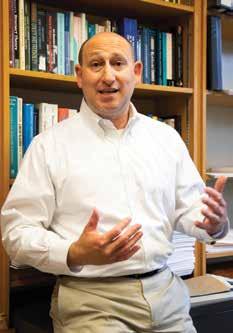
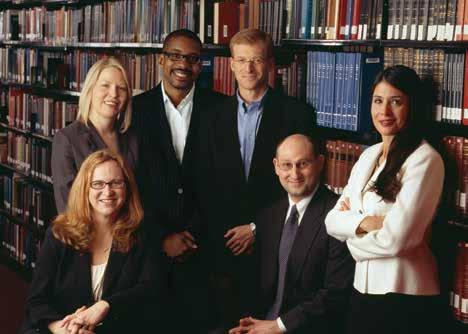
Above: Teitelbaum in his faculty office; below: the 2009 new faculty class photo (L-R: Professors Laura Donohue, Melissa Henke, Christopher Brummer, Howard Shelanski, Joshua Teitelbaum and Philomila Tsoukala)
Seen on Campus
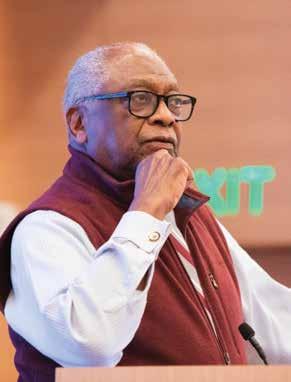
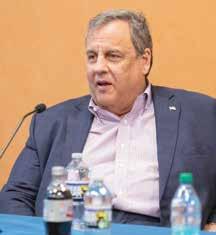
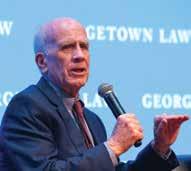
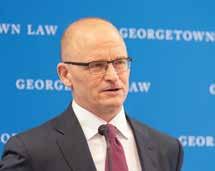
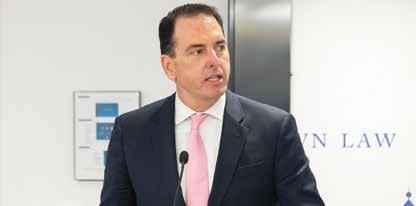
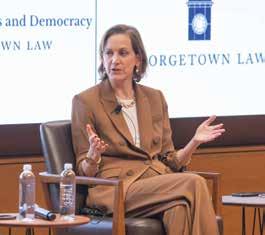
1. Rep. James Clyburn (D-S.C.) reflected on his career in public service in February at the invitation of the Office of Experiential Learning. 2. Sen. Peter Welch (D-Vt.) spoke in April on a panel convened by The Georgetown Law Journal on “Executive Power and the Rule of Law.” 3. Greg Garre, former Solicitor General of the United States and current partner at Latham & Watkins, was honored at the Supreme Court Institute’s annual end-of-term reception. 4. Michael Faulkender, at the time the U.S. Deputy Treasury Secretary and Acting IRS Commissioner, delivered the keynote address at the annual conference co-hosted by Georgetown Law’s Institute of International Economic Law and the International Tax Policy Forum, held in June. 5. In April, the Georgetown Law Federalist Society hosted former New Jersey Governor and twotime Republican presidential candidate Chris Christie. 6. Author Anne Applebaum was one of the speakers at a February symposium, “Democracy and the Rule of Law Under Pressure,” co-sponsored by the Law Center and the McCourt School of Public Policy. 7. Michael Barr, a member of the Federal Reserve Board of Governors, spoke on “Risks and Challenges for Bank Regulation and Supervision” in February, shortly before stepping down as the Federal Reserve’s Vice Chair for Supervision.
DC Affordable Law Firm Celebrates 10 Years
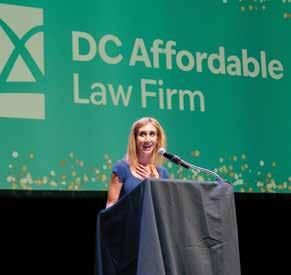
DC Affordable Law Firm (DCALF), the innovative nonprofit law firm that operates through a partnership with Georgetown Law and the University of the District of Columbia, celebrated its 10th anniversary in June at a gala event at the Woolly Mammoth Theatre.
Staffed by recent law graduates who also earn an LL.M. in Advocacy from Georgetown Law, DCALF has represented thousands of clients who do not qualify for free legal aid, but nevertheless cannot afford full-priced legal assistance in civil matters ranging from family law to estate planning and probate to immigration. “Our Fellows learn how to be civil justice lawyers while also practicing law. It is a wonderful marriage of education and practice,” said Faculty Director Professor A. Rachel Camp. Dean Emeritus William M. Treanor was presented with a Champion for Accessible Justice Award in appreciation for his role in launching the firm a decade ago. Treanor said that DCALF’s success was one of the highlights of his deanship. “I am so proud that we have educated and trained people who in the years ahead will fight for justice,” he said.
ICAP Birthright Citizenship Suit Goes to Supreme Court
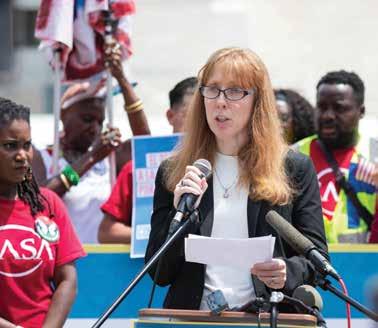
On January 21, Georgetown Law’s Institute for Constitutional Advocacy and Protection (ICAP) filed suit on behalf of five pregnant mothers and two immigrant-rights organizations challenging President Trump’s Executive Order denying birthright citizenship to U.S.-born babies of parents who are not citizens or lawful permanent residents. After the federal district granted the plaintiffs a universal preliminary injunction against the Executive Order, the government asked the Supreme Court to narrow the injunction to apply only to the plaintiffs, without reaching the constitutionality of the Executive Order. In May, ICAP’s Supreme Court Director, Kelsi Brown Corkran, presented the oral argument, marking her third appearance before the Court in the last two terms. Six weeks later, the Supreme Court granted a partial stay of the injunction, but left open the possibility that the plaintiffs could obtain universal relief through a class action. Within two hours of the Court’s decision, ICAP filed an amended class-action complaint seeking an immediate preliminary injunction for all babies born or who will be born in the United States to whom the Executive Order would otherwise apply. On August 7, the district court certified the nationwide class and granted the requested relief, thereby wholly enjoining the Order from going into effect. ICAP continues to litigate the case as it moves toward final resolution of the Executive Order’s constitutionality.
DCALF Executive Director Gabrielle Mulnick Majewski
Corkran outside the Supreme Court following the Trump v. CASA arguments
Students Bring Korematsu Arguments to Life
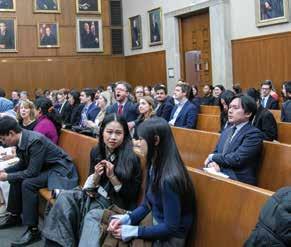
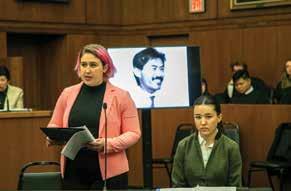
Last spring, the Asian Pacific American Law Students Association and the Gilbert and Sullivan Society partnered on a staged reenactment of Korematsu v. United States, the World War II-era case that upheld the forced removal and detention of Japanese Americans. Judge Denny Chin of the United States Court of Appeals for the Second Circuit hosted the event at the E. Barrett Prettyman United States Courthouse.
The words of Fred Korematsu, a U.S. citizen who refused to relocate to an internment camp and appealed his conviction all the way to the Supreme Court, were read by Alison Rosenblum, J.D.’26. Rosenblum said the case was extremely personal to her, because her own grandmother had spent time in one of those camps. “Playing Fred allowed me to feel the pain this decision caused across generations of Japanese Americans,” she said.
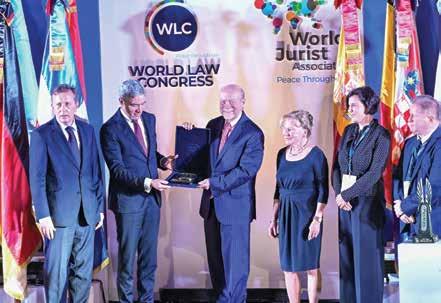
World Jurist Association Honors Georgetown Law and Dean Treanor
On May 6, the World Jurist Association (WJA) honored both Georgetown Law and Dean William M. Treanor at its 29th World Law Congress in Santo Domingo, Dominican Republic. The WJA, founded in 1963, is an international nongovernmental organization with the mission of promoting “a world ruled by law, not force.” Georgetown Law received the inaugural Rainer Arnold Prize for Upholding and Strengthening the Rule of Law, while Treanor received the WJA Medal of Honor for Academic Merit.
In his remarks, Treanor said, “We are in a time in which the rule of law and democracy are under attack in the United States and around the world. It is a privilege for me and for the Law Center to defend that principle, and it is for us at Georgetown a moral imperative.”
While in Santo Domingo, Treanor also met with more than 30 Georgetown Law alumni at a reception hosted by Leon Patiño, LL.M.’14, managing partner of the law firm Patiño Cáceres and a member of the Georgetown Law Latin American Law Alumni Advisory Board.
Georgetown Experts’ Linguistics-Based Amicus Brief Cited by Supreme Court
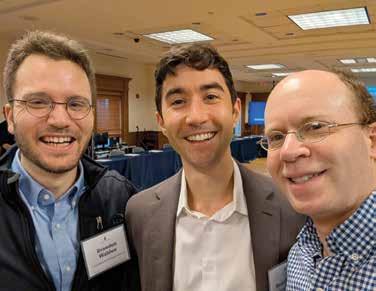
An amicus brief written by Georgetown Law Professor Kevin Tobia and two colleagues in the College of Arts & Sciences, Nathan Schneider, associate professor of linguistics and computer science and Brandon Waldon, a postdoctoral fellow with the Fritz Family Fellowship in Tech & Society, was cited in a 7-to-2 majority opinion issued by the Supreme Court in March. The case, Bondi v. VanDerStok, was brought by gun manufacturers in response to a Biden-era regulation concerning gun parts kits that can be assembled into what are commonly known as “ghost guns” because the weapons are untraceable. The justices confronted – and ultimately affirmed – the question of whether the kits should be regulated under the scope of the Gun Control Act of 1968.
The brief centered around the linguistic concept of “artifact nouns,” objects that are human-made or are used for specific human purposes. The team argued that “firearm” is an artifact noun, which allows it to be interpreted broadly in terms of not just a firearm’s physical form but also its intended use. In other words, the co-authors argued that a gun parts kit intended to be assembled into a functioning firearm is already a firearm.
Supreme Court amicus briefs more commonly draw on fields such as history, Tobia said. He and his linguistics colleagues are trying to change that, not only in this case but in several other recent amicus briefs and law review articles.
“If the courts are approaching these interpretive questions as textualist questions that are fundamentally questions of linguistics, it’s useful to have some linguistic expertise presented to the court,” said Tobia.
L-R: Amicus brief co-authors Waldon, Tobia and Schneider
MAKING THEM WHOLE:
GEORGETOWN LAW’S
NEWEST CLINIC REPRESENTS WORKERS
By Eliza McGraw
For five years, “John” worked at a trade association, and all seemed to be fine with his bosses. But in the fall of 2024, he was fired. This came after he’d had trouble renewing his access badge for a building with enhanced security measures. Something had fallen through with the paperwork he needed from the police. As he tried to resolve matters, the complications snowballed until he was let go. Then his application for unemployment benefits was denied because his employer cited “gross misconduct” as the reason for his firing, which John didn’t think was fair.
John sought help appealing the denial of benefits and eventually found the Civil Justice Clinic at Georgetown Law. Anna Rose Aubrey, J.D.’25, and Jimmy Starke, J.D.‘25, both 3Ls and students in the clinic, got to work, conducting multiple interviews, tracking down documents, researching and writing their arguments, all under the supervision of a clinical fellow. Soon, the clinic team and John sat in the clinic’s offices in McDonough Hall for the phone-in trial before an administrative judge. Aubrey and her partner presented their opening statement, took testimony from their witnesses, cross-examined the opposing side, and made their closing arguments.
“It was such an adrenaline rush. We were passing notes to each other and to our clients, calling up facts and rebuttals in real time,” Aubrey recalls. “The responsibility is on you and your team. These are very high stakes. These are real people. It was a very different feeling for me from anything else that I’ve experienced in law school.”
A Proud Tradition
The Civil Justice Clinic is Georgetown Law’s newest clinic, joining a movement that began in the early 1970s, when the Law Center became one of the nation’s first schools to create opportunities for students to gain practical experience representing real clients. Several early clinics, such as the Juvenile Justice Clinic, founded in 1973, are as active as ever, and over the years, the clinical program has grown. This academic year, there are 17 clinics, tackling a broad spectrum of legal fields: environmental law, appellate litigation, nonprofit and corporate law, criminal cases and more. Georgetown Law regularly tops various clinical program rankings, a point of pride for Hoya Lawyas everywhere.
More than 300 students are enrolled in clinics every year, each earning 10-12 credits. For many students, the hours required are equivalent to a full-time job, and most minimize their other classroom and activity commitments while in a clinic. Students practice under the D.C. Court of Appeals’ Rule 48, which permits students to practice law under faculty supervision.
Launched by Professor Llezlie Green in the spring of 2024 with six students and a graduate fellow, the Civil Justice Clinic quickly grew to 12 students per semester and two fellows who hit the ground running. Green ran a similar clinic at American University Law School for 13 years, and brought a blueprint that had already been pressure-tested and honed by students across town at another school with top-rated clinics. “I was already licensed to practice in the courts here, and
(continued on page 14)
had relationships with potential client referral sources – that part wasn’t quite as challenging as it might be if you were basically building something completely from scratch,” she says. The biggest difference she’s found in her new academic home is the amount of time her students are able to devote to their clinic work, given the high credit load. “Georgetown students, as a general matter, work very hard and have a strong work ethic. It’s lovely to see that translate into representation of their clients,” she says.
The clinic’s clients are typically lowwage earners such as domestic workers, construction workers, restaurant employees and home health aides who have experienced what Green calls “workplace indignities,” usually wage theft, or an employer’s failure to pay wages or benefits to which a worker is legally entitled. This is a problem affecting millions of workers nationwide every year: A recent report by the Economic Policy Institute found that between 2021 and 2023, federal, state and local efforts to combat wage theft recovered more than $1.5 billion. The clinic also represents workers like John who have been denied unemployment benefits and have the right to appeal.
Most students work on both kinds of cases during their time in the clinic, in large part because of the differing timelines for each. A typical wage theft case can take a year or more to complete because of the intense documentation required, the vagaries of court schedules and other factors. So the clinic’s wage theft cases are usually passed along between semesters, with each student pair advancing it as far as they can. On the other hand, resolving an unemployment benefits appeal can be done within weeks, so students are able to handle those from start to finish during their semester.
For those students who do get to see a wage theft client prevail, the results can be quite exciting, since Washington, D.C. awards plaintiffs four times their lost income, plus lawyers’ fees. The clinic’s biggest win to date involved a client who worked as a driver and whose employer treated him as a contractor, paying him “under the table” in cash. However, given his hours and the other conditions he worked under, the driver legally should have been classified as an employee, had missed out on years of overtime pay and other benefits and had not even been paid the minimum wage. After more than a year of student-led effort, he was awarded a six-figure judgment. (Efforts to get all that money in the client’s bank account are still ongoing – but that’s another story, and another important lesson for students to learn about real-life lawyering.)
The Civil Justice Clinic’s arrival at Georgetown strengthens the clinical program’s efforts to serve and make a real difference for its neighbors. Other clinics that provide legal services to individual Washingtonians include the Domestic Violence Clinic, the Social Enterprise & Nonprofit Law Clinic and the Health Justice Alliance. “We are here in the nation’s capital, where you can engage with policymakers and Congress is two blocks away,” says
(continued on page 17)
“WE TALK ABOUT CREATING ‘BRAVE SPACES’ INSTEAD OF ‘SAFE SPACES.’ SAFE SPACES TEND TO REINFORCE THE IDEA THAT YOU SHOULD NEVER BE UNCOMFORTABLE, BUT MORE LEARNING HAPPENS WHEN WE LEAN INTO A BIT OF DISCOMFORT.”
Llezlie Green Director of the Civil Justice Clinic; Professor of Law; Anne Fleming Research Professor
Federal Legislation Clinic
Protecting Civil Servants
Before coming to Georgetown Law, Zach Rosenfeld, J.D.’25, interned for a U.S. Senator and got a peek at how lawmaking and legal practice overlap on Capitol Hill. During his second year of law school, Rosenfeld participated in the Federal Legislation Clinic, in which students work with nonprofit clients to advance their legislative priorities in Congress. Here, he reflects on his clinic experience.
“I wanted to expand my knowledge of the legal and political intricacies of passing legislation on Capitol Hill. I worked on behalf of the Project on Government Oversight (POGO), a nonprofit devoted to promoting good government. My assignment was to research the potential implications of the first Trump administration’s proposed Schedule F program on the intelligence community. That executive order, since repealed by the Biden administration, would have reclassified thousands of federal employees and stripped them of certain civil service job protections.
“My research partner, Anna Kitsmarishvili, J.D.’24, and I scoured the original executive order, relevant court cases, the U.S. Code and any and all interpretations of the proposal. We were surprised to discover that members of the intelligence community were already vulnerable due to preexisting national security exceptions to federal employment protections.
“We drafted a final memo that summarized the threat of overly broad statutory language with the potential to undermine workplace protections for intelligence personnel. We also proposed legislative solutions. Later, we got the news that, thanks in part to work by POGO in collaboration with Senate legislative staff, some of the changes we suggested were incorporated in a draft of the Intelligence Authorization Act for Fiscal Year 2025.
“Taking part in the clinic gave me the opportunity to work in an area of the law that I have always been interested in and affirm that I want to pursue it.”
Above: Zach Rosenfeld, J.D.’25. Below: Professor Dave Rapallo, LL.M.’97, LL.M.’99, Director of the Federal Legislation Clinic and a former fellow in that same clinic.
Wage theft is a problem affecting millions of workers nationwide every year: Between 2021 and 2023, federal, state and local efforts to combat wage theft recovered more than $1.5 billion.
(continued from page 14)
Assistant Dean for Clinical Programs Patrick Griffith. “But D.C. is also a community, and we’re super committed to being a part of not only the national conversation, but the local conversation. Llezlie’s clinic is especially embedded in that local community in a way that I think is really exciting for students and for us as a program.”
While this particular clinic’s students will master the intricacies of the District’s wage and hour statutes and unemployment benefits law, Green ensures that students are also gaining the same skills that students across all Georgetown clinics are taught and that can be broadly applied to many fields of legal practice: the ability to interview and counsel a client, to develop a theory of a case, investigate, negotiate settlements and litigate before a judge or tribunal. The clinic includes a four-hour weekly seminar, where
students learn about interviewing, narrative theory, case theory, fact investigation, counseling and negotiations. In case rounds each week, they present their cases and challenges to their classmates, crowdsourcing solutions and learning to collaborate as a larger group. “Law school tends to be a place where students don’t want to admit not knowing something,” Green says. “In clinic, it’s critically important that they’re honest about that so that we can work through this in the representation of their clients. We talk about creating ‘brave spaces’ instead of ‘safe spaces.’ Safe spaces tend to reinforce the idea that you should never be uncomfortable, but more learning happens when we lean into a bit of discomfort.”
Bennett Cho-Smith, J.D.’24, and his clinic partner represented a bartender who didn’t receive all the tips he had earned. When he complained, the bar fired him. Describing how he and his classmates approached each case, Cho-Smith says, “We would meet with the client to try to understand their story and ask follow-up questions that would enable us to do some discovery on our end. We are trying to figure out: Who are these businesses that the client alleges has harmed them? Has the business been involved in litigation before?” Students develop rapport with their assigned clients, building toward sending demand letters to potential defendants. Some clients had had negative experiences with the judicial system, says Cho-Smith, and felt that they couldn’t trust it. “They had gone to people in positions of power and legal authority who wouldn’t give them the time of day,” he says.
Even when the process does not turn out well, crucial lessons are learned, says Bryce Kelety, J.D.’24. “One case we worked on involved a genuinely inspirational, kind and hardworking client who had kept good
(continued on page 18)
records of their owed wages, but whom we were not able to help because the employer simply would not respond to our communications. … Being unable to help despite our effort hurt.” (This client is now working with another set of clinic students –an example of how wage theft cases can take more than a semester or two to resolve.)
Green agrees that students appreciate the gravity of their roles. “What is critically important and transformational about students’ clinic experiences is taking on the weight of what it means to be counsel,” says Green. “The students are the primary attorneys. They’re the ones that are ultimately guiding the clients through making decisions. And there is a certain weight that comes with that, particularly when you’re representing indigent clients or exploited workers.”
In the clinic, students are not only considering what kind of law to practice, but what kind of lawyer to be, says Green. They are thinking about whether they’re more comfortable in adversarial or more collaborative spaces. They also imagine their professional identity and an attorney’s obligation to think about justice. If they’re not already planning a career in public interest law, they might weigh engaging in pro bono work in the future. “I’m always in favor of the things that we do that position students to be happier lawyers. And it’s a privilege to guide them through making choices now that help them to find more fulfillment, satisfaction and joy in their work in the future,” says Green.
Beyond the technicalities of employment law, the Civil Justice Clinic’s students also gain a greater understanding of the challenges facing low wage workers and employment
justice. “How are relationships between workers and employers affected by the absence of safety nets? What do workplaces actually look like when people are being paid under the table in cash?” says Green. “Most of us don’t take a lot of time to think about the bigger picture and what’s actually happening, the pervasiveness of wage theft in our communities.”
Green knows there will be a steady need for the program. “As vulnerable populations continue to experience challenges in society, we’ll see more opportunities or more interest from students in becoming more engaged with that individual representation,” she says. “There really is dignity and value associated with what we do. Putting in a hard day’s work and being compensated for that work properly — when that doesn’t occur it is more than just an economic harm. These aren’t just broken contracts,” she says.
Takeaways for Students and Their Clients
Aubrey, who is now an antitrust associate at a law firm in Washington, D.C., appreciates the experience she gained from representing John in his unemployment appeal. “That was the experience that I was really looking for, because it’s very hard to get that in law school. Being able to say, ‘I have actually cross-examined a witness, and I have done a closing statement,’ speaks to your experience in being able to respond to dynamic situations. Being able to think on your feet — especially if you’re doing litigation— is one of the most important skills that you can develop.”
(continued on page 21)
Clinic Spotlight: Health Justice Alliance Law Clinic Fighting for Safe and Healthy Housing
Kayla Weston, J.D.’25, originally considered a career in medicine. As a law student, the overlap between health equity and legal advocacy remained top of mind for her. She participated in the Health Justice Alliance (HJA) Law Clinic, in which law and medical students collaborate to help local families and children address the legal barriers that negatively affect their health and well-being. Here, Weston reflects on her clinic experience.
“My clinic partner, Aaron Frazee, J.D.’24, and I worked with a family facing serious respiratory health issues due to mold in their home. The two young children struggled to attend school because of frequent emergency room and doctor’s appointments; the parents were also missing work and suffering health effects.
“By the time we started working with them, the family had repeatedly asked the landlord for help without success. We made multiple home visits and sent demand letters to the landlord. We hired a mold specialist to verify that mold was present. We also worked with Georgetown medical students, who provided research on the mold found in the home, and the family’s pediatrician, who drafted a letter of medical opinion.
“Eventually, the landlord agreed to hire a professional mold remediator. We also ensured that the landlord paid for the family’s hotel accommodations during the cleaning process and that an industrial hygienist performed post-cleaning air sampling.
“It was so impactful to look my client in the eye and say, ‘Your home is going to be clean for good this time,’ and to receive the warmest hug in return. The family later shared that everyone was healthy, the emergency room visits had stopped and the parents were no longer missing work. Knowing that makes the experience all the more rewarding.”
Above: Kayla Weston, J.D.’25. Below, right: Professor Yael Zakai Cannon, Director of the HJA Law Clinic.
Clinic Spotlight: Intellectual Property and Information Policy Clinic
Promoting Ethical AI for Lawyers
During her 2L year, Sophia Ceniza, J.D.’25, took part in the Intellectual Property and Information Policy Clinic (iPIP), in which students work on sociotechnical legal issues for artists, nonprofits and coalitions. “I felt really strongly that the clinic could be a place where I found my intellectual and professional home in law school,” she says. Here, Ceniza reflects on her clinic experience.
“I was assigned to work on behalf of Georgetown Law’s clinical programs with my clinic partner, Olivia Luongo, J.D.’24. There’s an AI frenzy in the legal field, where law schools, firms and students are tackling how, if at all, to use AI in their work. Georgetown asked: Is there a meaningful way that we should be integrating AI into our clinical pedagogy?
“We decided to conduct a survey among clinical faculty, fellows and students to try to understand their relationship to AI – and technology more broadly – and get a sense of their needs. We also asked about ethical concerns that are part of clinical practice, such as maintaining confidentiality and considering political, social and economic factors when counseling clients. Our goal was to understand how the clinics felt about these concerns and how existing AI technology potentially interacts with different ethical priorities.
“Based on our findings, Olivia and I created an AI best practices guide that we presented to clinical faculty. We also presented a publicly available version of our survey methodology and suggestions for developing a best practices guide at the Legal Innovation and Technology Conference at Suffolk University in Boston, which was an amazing experience.
“In a way, the project became a postgraduate job for me: I took a legal fellowship with EqualAI, a nonprofit dedicated to finding justice-minded ways to integrate AI into legal practice and society.”
Above: Sophia Ceniza, J.D.’25. Below: Professor Amanda Levendowski Tepski, Founding Director of the iPIP Clinic.
(continued from page 18)
Additionally, students cite the human connection created in the clinic space. “In the U.S., work can feel like your identity. To the clients, it feels so personal and so big,” says Aubrey. “The folks who came to our clinic were so appreciative,” says Cho-Smith. “Even if we haven’t yet been able to accomplish any concrete objectives for them, the exercise of reinforcing their faith in the system was powerful. That will always stick with me.”
Cho-Smith currently works in securities fraud litigation, a practice where direct client interaction is less common. But he says he’s looking for future pro bono opportunities, so that he can continue to have the one-on-one client interaction he experienced. “That really helped me understand the power of legal education, helping people have their stories heard and trying to get them some kind of legal recourse in a way that they absolutely deserve,” he says.
Kelety now works at the Office of the Attorney General for the District of Columbia in the Workers’ Rights and Antifraud Section, a job that “involves handling the same kind of wage theft cases I worked on at the Civil Justice Clinic, just on behalf of more workers and with more tools at our disposal to get workers relief and employers in compliance,” he says. “While I miss building the individual connections we had with our clients, each time I interview workers here I use the skills in interviewing and trust-building that I developed working for the clinic.”
“The exercise of reinforcing clients’ faith in the system was powerful. That will always stick with me.”
Even though Kelety and his clinic partner weren’t able to resolve one client’s unemployment claim, they prevailed in another. “Our case ended up before an administrative law judge. We sat, nervously, waiting for the opposing party’s attorneys to appear. When the judge announced that they had not appeared, we walked the judge through a carefully crafted oral argument and our client answered the judge’s factual questions. A few days later, we received a judgment in our favor — our client would receive the benefits they needed to get back on their feet and find their next job.”
Not long after that stressful conference call hearing, Aubrey found out that “John” had his unemployment benefits reinstated. “That was the best winter break gift I could have gotten. It was a great turnaround,” she says. “You put all this work in, and it worked.”
For the bartender, Cho-Smith and his partner conducted the initial investigation and drafted a demand letter. Later, students filed a complaint that is currently pending in D.C. Superior Court. But even without a clear win, he left the clinic with a greater understanding. As he says, “There’s nothing more central than getting paid for the work that you do.”
Georgetown Law Faculty Honored at University Convocation
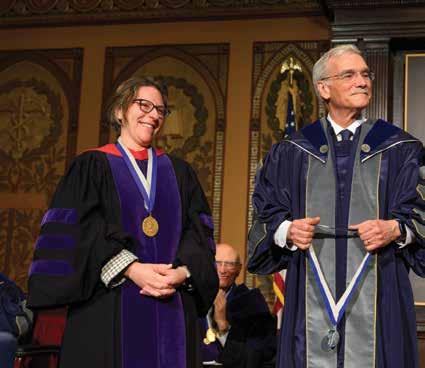
At Georgetown’s spring faculty convocation, Professor Eloise Pasachoff received the 2025 President’s Award for Distinguished Scholar-Teachers. Pasachoff, the Agnes Williams Sesquicentennial Professor of Law and Anne Fleming Research Professor, is a leading expert on federal government spending. She translates her research into helping law students better understand the framework of the government, such as in her 1L course on the Administrative Procedure Act of 1946. “I hope that what we study together can help them make sense of the news every day, and, as things unfold, that they have a deep understanding of both what makes sense and how to critique what’s going on from a variety of different perspectives,” she said.
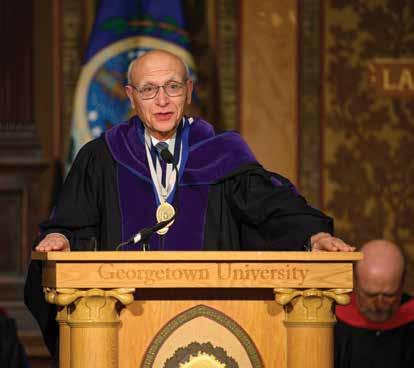
The ceremony’s annual Life of Learning Address was delivered by David Luban, Distinguished University Professor. Luban, one of only two members of the Law Center faculty without a law degree (“You are looking at 45 years of imposter syndrome,” he quipped), traced how his scholarly training in philosophy led to a career teaching professional ethics to lawyers. “Today, the Life of Learning is under the most serious attack I’ve witnessed,” Luban said. “At this convocation, I would ask you to look around this hall at your colleagues from many disciplines, with a wide range of viewpoints, and pledge that we’ll support each other as best we can. Without second-guessing or self-censoring. Without turning aside in our pursuit of truth in our various disciplines.”
Left: Prof. Eloise Pasachoff and Interim Georgetown University President Robert Groves; Right: Prof. David Luban
STAFF BY DAY, STUDENTS BY NIGHT
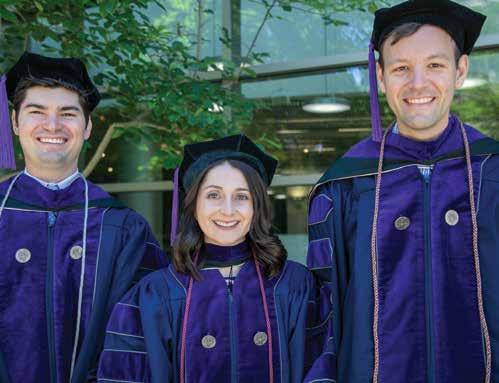
Georgetown Law’s J.D. Class of 2025 included three Evening Program students whose day jobs were right on the Law Center campus. Before commencement, they reflected on the balancing acts that brought them to that point.
KELSEY LEVIN-EPSTEIN, J.D.’25, ASSISTANT DIRECTOR OF DEAN’S OFFICE AFFAIRS
Levin-Epstein started thinking about law school while serving on a jury in 2019. “Seeing the legal system up close was the coolest thing,” she recalls.
She joined the Georgetown Law Dean’s Office staff the following year. In 2022, she started her J.D. — six months after giving birth to her daughter, Amelia. “I’m a full-time worker, full-time mom and full-time wife,” she says. “The Evening Program is made for people like me.”
This fall, Levin-Epstein joined the Hogan Lovells New York office. A highlight of her graduation experience was the chance to celebrate with Amelia, now 3. “When she gets older and realizes what I did, I hope it will inspire her to know that anything is possible,” she says.
NICK OPINSKY, J.D.’25, ASSISTANT DIRECTOR, CORPORATE AND FOUNDATION RELATIONS
During the COVID-19 pandemic, Opinsky realized that a law degree could help him better navigate his work in corporate foundation fundraising. He completed his first year of law school at the City University of New York before transferring to Georgetown Law.
The following year, he joined the Law Center staff as assistant director of corporate and foundation relations. “It has been the most amazing experience to contribute to this community through my day job,” Opinsky says.
After graduation, Opinsky stayed in D.C. as an associate at Venable LLP. “Being an evening student is the best preparation you can have for the intensity of legal practice,” he says.
TREY WOLF, J.D.’25, ASSISTANT DIRECTOR OF STEWARDSHIP
Wolf was hired as special assistant to then-Georgetown University President
John J. DeGioia in 2019. That role, he says, opened his eyes to the breadth and depth of Georgetown’s academic offerings. In 2021, shortly after starting law school, Wolf joined Georgetown Law’s development team as assistant director of stewardship. He left the full-time position during his final year as a student, but stayed on as a student worker.
After graduation, he remained in D.C. as a finance practice associate on the energy deals team at Foley & Lardner LLP. “Georgetown believed in me before I believed fully in myself,” he says. “The university gave me the tools to be able to find my calling and my path to make a difference in the world.”
Above: (L-R) Wolf, Levin-Epstein and Opinsky in their graduation regalia; below: Levin-Epstein, Opinsky and Wolf in their campus work spaces.
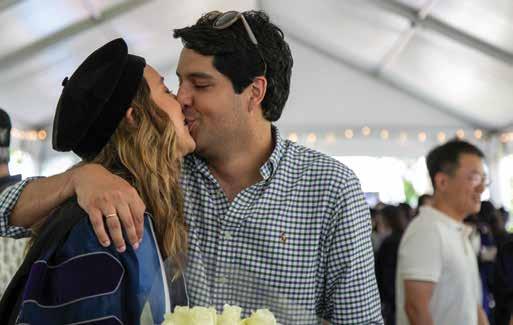
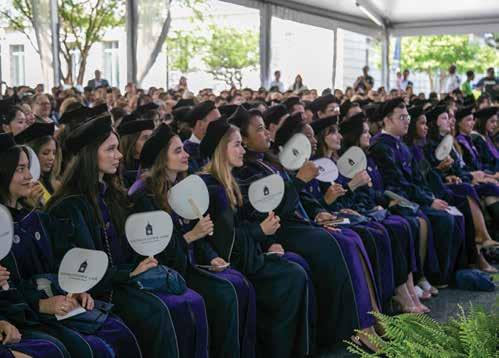
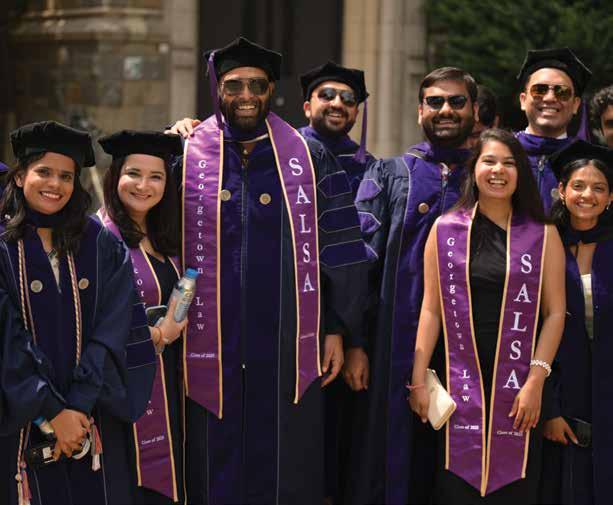
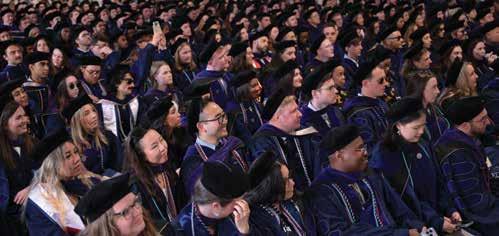
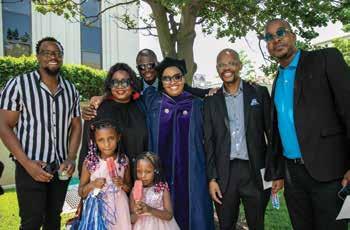
More than 1,100 members of the Georgetown Law Class of 2025 — some 649 J.D., 463 LL.M. and 8 S.J.D. candidates — gathered on the Hilltop campus to celebrate commencement on Sunday, May 18.
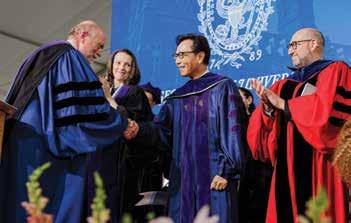
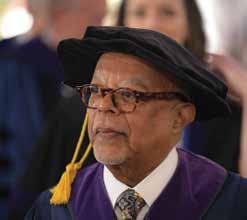
The ceremony’s two honorary degree recipients, journalist and academic Henry Louis Gates, Jr., H’25, and businessman Daniel Tsai, LL.M.’79, H’25, both urged the graduates to lead in the fight for justice and the rule of law. “Law isn’t just a job. Law is a calling that, at its best, can help stitch a fractured world together,” said Gates, the Alphonse Fletcher University Professor at Harvard University and the host of PBS’s Finding Your Roots “Remember that the world is vast and interconnected, and your actions have the power to shape it for the better,”
COMMENCEMENT FROM GEORGETOWN TO THE WORLD
said Fubon Group Chairman Tsai, as he reminisced about his formative year as an international LL.M. student at the Law Center.
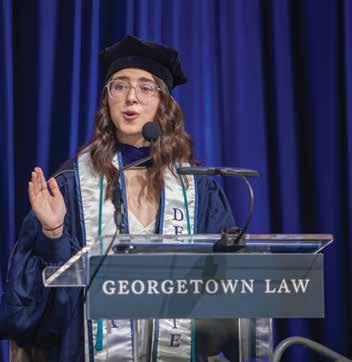
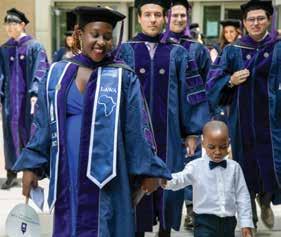
Before Commencement Day, the Law Center campus hosted a series of Celebration Days ceremonies, smaller section-based gatherings featuring faculty and student speakers. LL.M. graduate Bwalya Chisanga, LL.M.’25, the first Zambian fellow in the Leadership and Advocacy for Women in Africa program, borrowed a phrase from her home country, “Zambia Ku Chalo,” or “Zambia to the world,” in her remarks. Of the excellence and leadership she’d witnessed at Georgetown, she said, “We’ve seen what extraordinary looks like. And because we have seen, we too, get to be extraordinary, as we go out — Ku Chalo — to the world!”
Left: Dean William M. Treanor congratulates Daniel Tsai, LL.M.’79, H’25; right: Henry Louis Gates, Jr., H’25
TEACHING AWARDS HONOREES
/ Frank F. Flegal Excellence in Teaching Award: Deborah Epstein, Agnes Williams Sesquicentennial Professor of Gender, Violence, and the Law
Director of the Law Center’s Domestic Violence Clinic since 1993, Deborah Epstein created more than 100 experiential courses and developed curricular principles during her tenure as associate dean for experiential learning from 2005 to 2012. “Deborah taught future clinical teachers everything there is to know about the nature of legal scholarship,” wrote Professor Robin L. West in a tribute read at the award ceremony. Epstein expressed gratitude for the collaboration of her colleagues and teaching partners. “Only at Georgetown could I have developed into the kind of teacher that I am today,” she said.
/ Steven Goldberg Faculty Service Award: J. Peter Byrne, John Hampton Baumgartner, Jr. Professor of Real Property Law
Since joining the faculty in 1985, Peter Byrne instructed innumerable students in courses on property, land use, constitutional law and higher education law and policy. Byrne’s leadership roles included serving as faculty director for the Georgetown Climate Center and the Environmental Law and Policy Program and as associate dean for the J.D. program. “[Georgetown Law is] a spectacularly large, diverse and active community, but we also have the capacity for intimacy with one another. That is a strength that can help us persevere in challenging times,” said Byrne, who retired at the end of the school year.
/ Steven Goldberg Faculty Service Award: Wallace J. Mlyniec, J.D.’70, Lupo-Ricci Professor of Clinical Legal Studies
“Wally” Mlyniec, a Law Center alumnus, joined the faculty in 1973 as the founding director of the Juvenile Justice Clinic (JJC), a role he held until 2015. Mlyniec, who retired this year, also served as the JJC’s senior counsel, as associate dean for clinical programs and public interest programs and as academic co-director for the Center for Transnational Legal Studies in London. In accepting the award, he recalled his student activism and Georgetown Law’s commitment to Jesuit values of contemplation in action and serving as people for others. “Georgetown has offered me more than I could ever repay,” he said.
/ Adjunct Professor of the Year, J.D. Program: Arjun S. Sethi, F’03
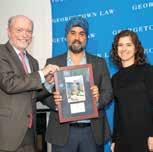
Arjun Sethi, a community activist, author and civil rights lawyer who serves as co-chair of the ABA’s National Committee on Homeland Security, Terrorism and Treatment of Enemy Combatants, teaches “Policing in the 21st Century: Law Enforcement, Technology and Surveillance.” His students said they appreciate his collegial learning approach, with one praising his ability to facilitate “fraught conversations on highly emotional topics.” In accepting the award, Sethi called upon the next generation of legal professionals to safeguard democratic norms and the rule of law. “I teach law students with the hope that they will speak out,” he said.
/ Adjunct Professor of the Year, Graduate Program: John T. Dundon
Following a career in private practice, John Dundon joined Georgetown Law as an instructor in legal English. He is also pursuing a doctorate in sociolinguistics. Students praised Dundon’s perspective on the legal profession — said one, “He provides useful advice beyond the class curriculum, including insights into real-life working experiences in the United States and the U.S. work culture.” Dundon accepted the award on behalf of his international LL.M. students and his legal English colleagues, saying, “One kind of diversity that I think we should all stick up for is the value of having brilliant international lawyers among us every day.”
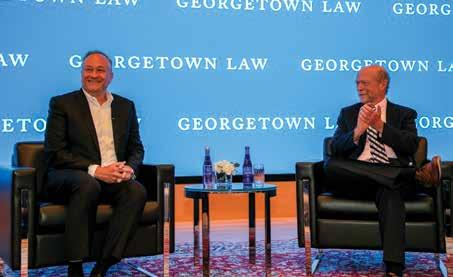
Douglas Emhoff, who served as the nation’s first Second Gentleman and was a Distinguished Visitor from Practice on the Georgetown Law faculty during the Biden-Harris administration, joined Dean William M. Treanor on April 1 to discuss pressing issues facing lawyers and law students today.
“Democracy is under attack,” said Emhoff, now a partner at Willkie Farr & Gallagher LLP and distinguished fellow of Georgetown Law’s Institute for Technology Law and Policy, about current challenges to the rule of law. “All of us lawyers need to do what we can to push back.”
Emhoff taught courses on entertainment disputes,
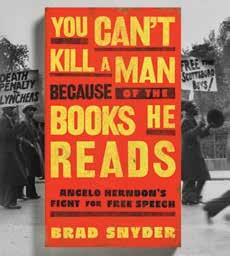
PROF. BRAD SNYDER ILLUMINATES LANDMARK CIVIL LIBERTIES CASE
Professor Brad Snyder’s latest book, You Can’t Kill a Man Because of the Books He Reads, focuses on Angelo Herndon, a Black Communist Party organizer who was convicted of attempting to incite insurrection because of his role leading a demonstration in 1932. Five years later, the landmark Supreme Court decision in Herndon v. Lowry not only freed Herndon from prison but upheld
Former Second Gentleman Doug Emhoff on Law, Politics and Teaching at Georgetown
as well as an introductory course on alternative dispute resolution. “As lawyers we’re taught to orate,” he said, “but you’ve got to listen and actually hear what [others] are saying.”
Emhoff advised the law students in the audience to say yes to challenging opportunities and to overcome the fear of making mistakes.
“That’s how you’re really going to shine, by taking those chances,” he advised, noting that with the rise of technology such as artificial intelligence, young lawyers have an added mandate to prove themselves as strategic thinkers and client advocates. “Push yourself — don’t put yourself in this imaginary box.”
the right to protest. “It’s important to remember that the rights to free speech and peaceable assembly are no accident: They were hard-won and fought for. Lawyers
today need to remember that we can’t just sit back if we want to enforce our rights to free speech and assembly,” said Snyder.
IN MEMORIAM
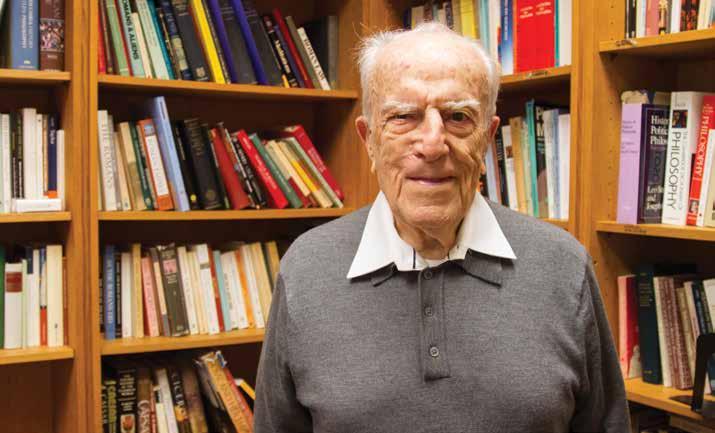
VISITING PROFESSOR REV. LADISLAS ORSY, S.J.
On April 3, the Rev. Ladislas Orsy, S.J., a longtime visiting professor at Georgetown Law, died at the age of 103. Orsy, a canonical theologian, grew up in Hungary, entered the Society of Jesus in 1943, and was ordained to the priesthood in Louvain, Belgium in 1951. He held an M.A. in Law from Oxford University and a doctorate in canon law at Gregorian University in Rome, and taught at Gregorian University, Fordham University, the University of Fribourg, Switzerland and the Catholic University of America before coming to the Law Center.
In addition to his prolific scholarship — he was the author of more than 200 articles and nine books — Orsy served as a bishops’ expert adviser at the Second Vatican Council and worked on the preparation of the new Code of Canon Law, adopted in 1983. He began at Georgetown Law in 1994 after retiring from Catholic University, and continued until the age of 99. His courses included Roman Law, Great Philosophers on the Law and Canon Law.
Said Dean Emeritus William M. Treanor, “At every event where he spoke or gave the benediction, he reminded his col-
leagues what a blessing it is to have the opportunity to teach. He also had a wonderful sense of humor. At his 100th birthday party, he told me that his doctor had recently asked him to count from 1 to 100 backwards. ‘Certainly,’ Father Orsy responded. ‘In what language?’”
Professor Greg Klass recalled attending a Georgetown Law event at the Library of Congress some years ago, at which he and Orsy spotted a 15th century illustrated manuscript. “Les exclaimed, ‘I wrote my dissertation on this!’ As a young man he attended the Second Vatican Council and said the experience remained with him the rest of his life. What a privilege to have been his colleague.”
In a 2018 interview, in response to a question about his favorite thing about teaching law students, Orsy responded, “The shaping of the minds — much more than conveying the knowledge. Which is necessary, but one day you leave this place. What kinds of minds do they carry with them? Is it an open mind? Is it a creative mind? With myself, I go through [my syllabus]. The handouts keep changing always. The gist of it remains the same.”
JOURNALISTS AND SCHOLARS ANALYZE 2024—2025 SUPREME COURT TERM
In what has become a new Georgetown Law tradition, on July 2 the O’Neill Institute for National and Global Health Law convened the second annual “Supreme Court Term in Review,” an event that included two panels of academics and commentators discussing the most consequential and controversial decisions of the just-concluded Supreme Court term.
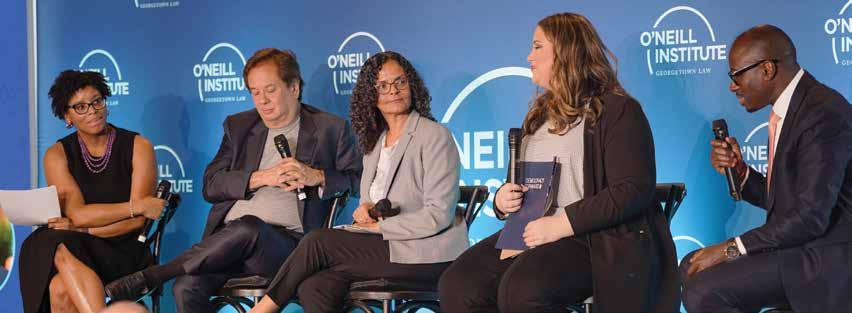
Lincoln Project Co-Founder George Conway, Pregnancy Justice President Lourdes A. Rivera, Democracy Forward President and CEO Skye Perryman, J.D.’07, and O’Neill Institute Center for Health Policy and the Law Director Andrew Twinamatsiko shared their insights in the panel “Litigating in the Trump Era: Protecting and Preserving the Rule of Law,” which was moderated by Regina Mahone of The Nation. The day’s second panel, “Supreme Court Term in Review,”included Dean Erwin Chem-
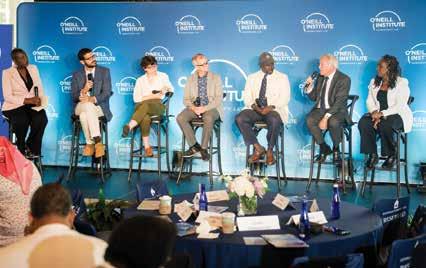
erinsky of UC Berkeley School of Law, Professor Sherrilyn Ifill of Howard University School of Law, Mark Joseph Stern, C’13, J.D.’16, of Slate, Moira Donegan of The Guardian, Jamelle Bouie of The New York Times and Chris Geidner of Law Dork, and was moderated by O’Neill Institute Co-Faculty Director Professor Michele Bratcher Goodwin. Over the course of the day, the speakers covered issues ranging from immigrant deportations to nationwide injunctions to transgender rights to Supreme Court jurisprudence.
“At a time when protecting and preserving the rule of law is top of mind for many, the chance to gather hundreds of advocates, scholars, reporters and students for such a convening is an important — and urgent — undertaking,” said Goodwin.
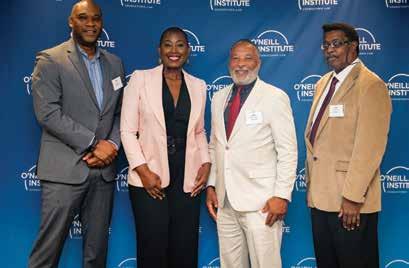
Top, L-R: Regina Mahone, George Conway, Lourdes A. Rivera, Skye Perryman, J.D.’07 and Andrew Twinamatsiko. Middle, L_R: Patrick Smith, Professor Michele Bratcher Goodwin, Alfred Lacks-Carter Jr., David Sanders. Bottom: L-R: Professor Michele Bratcher Goodwin, Mark Joseph Stern, C’13, J.D.’16, Moira Donegan, Chris Geidner, Jamelle Bouie, Dean Erwin Chemerinsky and Professor Sherrilyn Ifill. Photo credit: Derek Lamar Studios.
CAMPUS HIGHLIGHTS SPRING 2025
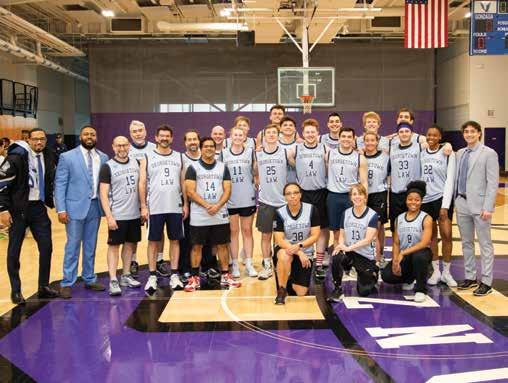
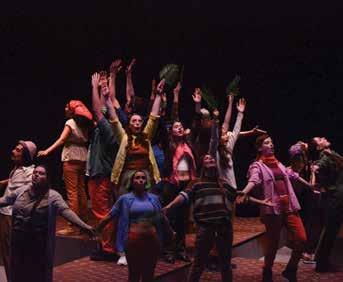
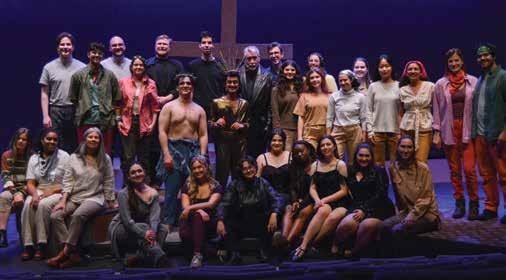
1. At the annual Home Court benefit, the “Hoya Lawyas” defeated the George Washington University Law School “Rowdy Revs” 70-44, and raised $798,489 for the Washington Legal Clinic for the Homeless. 2. A new campus organization, the Student Animal Legal Defense Fund, aka the “Paw Center,” launched last spring with an event featuring puppies and a presentation by Adjunct Professor Ralph Henry of Humane World for Animals. 3. & 4. In March, the Georgetown Gilbert and Sullivan Society performed the rock opera Jesus Christ Superstar.
1 2 3 4
DASH
CONFERENCE SPOTLIGHTS HAITIAN REPARATIONS CAUSE
The 2025 Human Rights Institute (HRI) Samuel Dash Conference on Human Rights was held April 8 on the theme “Truth, Solidarity, and Repair: Haiti and the Global Movement for Reparations.”
Coinciding with the 200th anniversary of the multimillion-dollar “Independence Debt” imposed on Haiti by France at the nation’s founding, the day-long conference featured a series of panels on the history and present-day impact of the debt, the nation’s legal claim to restitution and its role in the global reparations movement. Featured speakers included former First Lady of Haiti and American lawyer Madame Mildred Trouillot-Aristide, who delivered a virtual keynote address, and remarks
SOLID
by Ambassador Myrtha Désulmé, Haiti’s permanent representative to the Organization of American States.
The 2024-25 HRI Human Rights Advocacy in Action Practicum students also focused on this topic, partnering with the Institute for Justice and Democracy in Haiti on research to advance the case for reparations.
In her remarks, Désulmé called on the students and advocates in the audience to continue to support the cause. “Haiti needs allies,” she said. “It gives me hope that, even in an era which seeks to suppress history, you will become the legal luminaries who will finally help to give back to Haiti the price of her blood.”
Symposium Unites Lawyers, Linguists, Philosophers and Computer Scientists
In March, Georgetown Law hosted “SOLID,” a first-of-itskind Symposium on Legal Interpretation and Data, uniting scholars in law, linguistics, philosophy and computer science to explore urgent questions in this emerging field, including the rise of artificial intelligence in law, how differences in languages and cultures affect understanding of legal texts — and what this all means for the “textualist” approach to judicial interpretation. “For legal interpretation, at least here in the United States, we are all textualists now,” said organizer Professor Kevin Tobia, echoing a 2015 comment by Supreme Court Justice Elena Kagan.
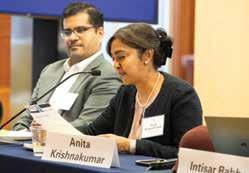
Speakers included Law Center Professors Tobia, Victoria Nourse, Anita Krishnakumar and Neel Sukhatme; co-organizers Georgetown Computer Science and Linguistics Professor Nathan Schneider and Fritz Fellow Brandon Waldon; and experts from Harvard, Yale, Stanford, University of Granada, Jagiellonian University and Max Planck Institute..
Above: Professors Neel Sukhatme and Anita Krishnakumar; below: Professor Victoria Nourse
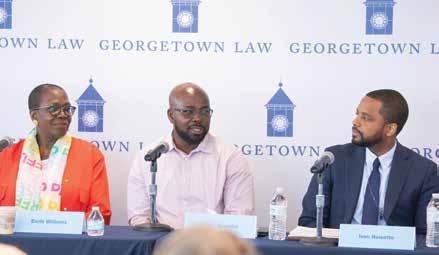
Left to right: Reparations Finance Lab Founder and Executive Director Enith Williams; human rights activist Nixon Boumba, a member of the Kolektif Jistis Min nan Ayiti (Haiti Mining Justice Collective); and U.S. House of Representatives Legislative Director Ivan Noisette, J.D.‘18
WOMEN’S FORUM
CELEBRATES ALUMNAE ACCOMPLISHMENTS IN LAW AND BEYOND
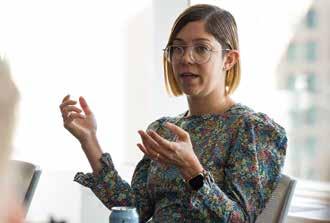
In February, more than 150 alumni and guests gathered on campus for the Georgetown Law Women’s Forum, spending the day in conversation on topics ranging from professional development and mentorship to legal ethics and AI.
Three graduates received Alumnae Awards: Katy Motiey, C’89, J.D.’92, chief legal, administrative and sustainability officer at Extreme Networks and author of the novel Imperfect; Jenifer Rogers, F’85, J.D.’88, general counsel of Asia for Asurion; and Sumara M. Thompson-King, J.D.’84, former general counsel of NASA.
The 2026 Georgetown Women’s Forum, which celebrates alumnae from across the university, will be held March 19-21 in Washington, D.C. Visit womensforum.georgetown.edu for more information.
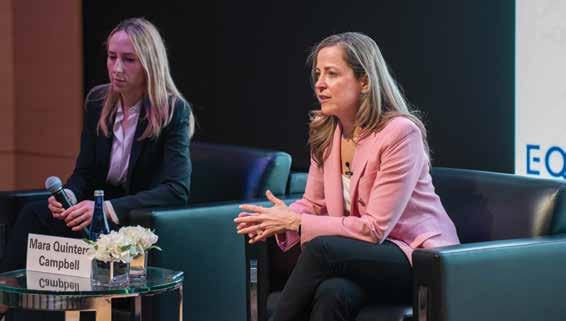
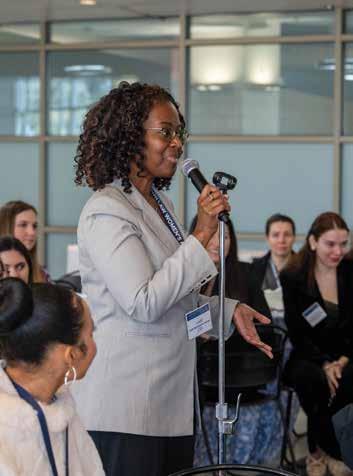
Above left: Equal AI COO Mara Quintero Campbell and President and CEO Miriam Vogel, J.D.’01; Above right: Prof. Alicia Plerhoples; Left: Audience Q&A during the opening plenary
11ALUMNI SERVING IN 119TH CONGRESS
Four U.S. Senators and seven members of the House of Representatives share a common alma mater: Georgetown Law.
The newest Law Center graduate sworn into Congress is Rep. April McClain Delaney, J.D.’89, a Democrat who last November was elected to represent Maryland’s 6th Congressional District – a seat held by her husband, fellow alumnus John Delaney, J.D.’88, from 2013 to 2019. The Delaneys are the founders of The Delaney Post-Graduate Residence Program, which provides mentoring, skills development and networking opportunities to a cohort of Georgetown Law alumni beginning their careers in public interest law.
Delaney joins Representatives Chris Deluzio, J.D.’13 (D-Pa.), Lois Frankel, J.D.’73 (D-Fla.), Steny Hoyer, J.D.’66 (D-Md.), Ted Lieu, J.D.’94 (D-Calif.), Derek Schmidt, J.D.’96 (R-Kan.) and Rebecca “Mikie” Sherrill, J.D.’07 (D-N.J.), all of whom were reelected to the seats they held in the last Congress.
In the upper chamber, Sen. Mazie Hirono, J.D.’78 (D-Hawaii) was reelected for a third term in the Senate, and Senators Chris Van Hollen, J.D.’90 (D-Md.), Dick Durbin, F’66, J.D.’69 (D-Ill.) and Dan Sullivan, J.D.’93, MSFS’93 (R-Alaska) continue to serve.
Rep. April McClain Delaney, J.D.’89
An additional member of the Georgetown Law community serves in Congress: Professor Emerita Eleanor Holmes Norton, H’77, H’18, who was first elected as the District of Columbia delegate to the U.S. House of Representatives in 1990.
Clark, Asselbaye, Treanor, Flippin and Ronny Lancaster, J.D.’84
The Law Center’s annual Scholarship Reception and Hogan Dinner honor the generosity of alumni donors — and occasionally, bring benefactors and beneficiaries together. For example, a group of alumni established an Opportunity Scholarship in honor of former Dean of Admissions David Wilmot, J.D.’73, and this March several of those donors were on campus to congratulate scholarship recipient Reed Asselbaye, J.D.’25, as he prepared to graduate and move to New York City to launch his career.
Asselbaye said he had taken full advantage of having had multiple scholarship sponsors throughout his time as a student.
DONORS & BENEFICIARIES MEET AT SCHOLARSHIP RECEPTION & HOGAN DINNER
“They’ve been really awesome folks to come to for career advice,” he said. “I love their stories about the legacy here.”
Angela Clark, J.D.’91, who’s had a long career in the federal government, said, “For all the advantages I received from my own Georgetown education, it’s important to help future generations to attend.” Maurita Coley Flippin, J.D.’81, a consultant and past law partner and media executive, said, “This is my favorite event of the year!”
For more information on supporting scholarships or joining the Frank Hogan Society, write to lawdonorrelations@georgetown.edu.
PLAY BALL!
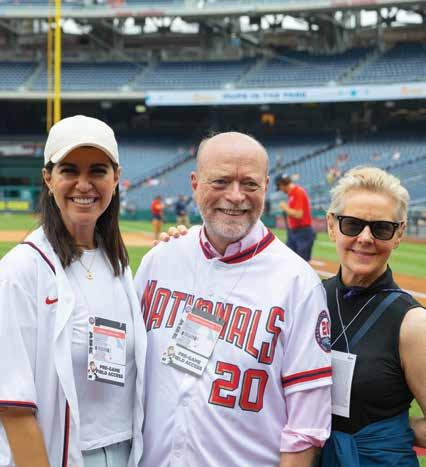
Brooke Pinto, J.D.’17, who represents Washington, D.C.’s Second Ward on the Council of the District of Columbia, hosted Dean Emeritus William M. Treanor at Washington Nationals Park on June 14 to celebrate his 15 years of leadership at Georgetown Law. “It was a bucket list moment,” said Treanor of stepping onto the field at a Major League Baseball park for a pre-game ceremony and meeting the team mascot, Screech the Bald Eagle.
D.C. CIRCUIT JUDGE
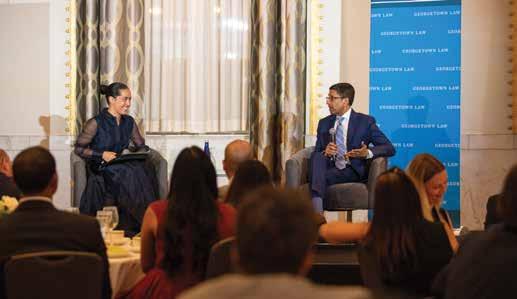
SRINIVASAN REFECTS ON CAREER AT GEORGETOWN LAW JOURNAL BANQUET
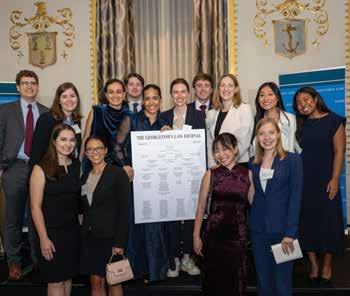
Current and former editors representing 24 volumes of The Georgetown Law Journal gathered in May for their 12th annual alumni banquet.
Chief Judge Sri Srinivasan of the United States Court of Appeals for the District of Columbia Circuit was the evening’s speaker, in conversation with outgoing Editor-in-Chief Yasmeen Rose, J.D.’25, who was about to begin a clerkship with the judge.
“It’s not the case that great advocates are born,” Srinivasan said in reflecting on his judicial career and the advice he would offer to the next generation of legal professionals. “Really great advocates are made.”
“We have the duty to elevate scholarship that confronts legal failures and helps imagine a better legal future,” said Rose of her priorities during her editorship.
Incoming Editor-in-Chief Amritha Ramalingam, F’23, J.D.’26, spoke about the year ahead for Georgetown Law’s flagship student journal, including plans to build up its Supreme Court Coverage Program, a firstof-its-kind partnership with the Supreme Court Press Office through which students attend oral arguments and write about them for GLJ Online, the Journal’s online publication.
Among the some 150 attendees at the historic Mayflower Hotel were Timothy Choppin, J.D.’94, and Fernando Laguarda, J.D.’94, who said that working together on the Journal — including running the Write On Competition for first-year students — provided the foundation for a decades-long friendship.
“We worked very hard, we practically lived at the Journal,” said Laguarda, who served as notes and comments editor. “We made really good friendships that we have to this day.”
Catherine McNally, N’17, J.D.’20, who worked on the American Criminal Law Review, most enjoyed the opportunity to interact with current students. “It’s always amazing to see what students are doing with respect to the journals,” she said. “The quality of work that they produce is really commendable.”
Above: Rose and Srinivasan; below: editors of Volume 113 of The Georgetown Law Journal
TECH INDUSTRY LEADER GARY SHAPIRO:
“PIVOT OR DIE”
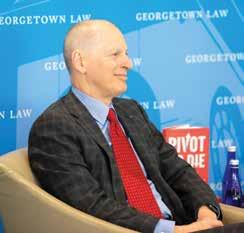
Gary Shapiro, J.D.’80, longtime CEO of the Consumer Technology Association, visited campus on March 12 to discuss his latest book, Pivot or Die: How Leaders Thrive When Everything Changes. Having spent more than three decades on the front lines of the tech industry, he’s seen for himself how
some startups have become disruptive juggernauts while others have fizzled out. In conversation with Gigi Sohn, Distinguished Fellow at the Georgetown Law Institute for Technology Law and Policy, Shapiro shared some of the wisdom he’s gleaned along the way about law, policy and innovation.
HOYA LAWYA FACULTY
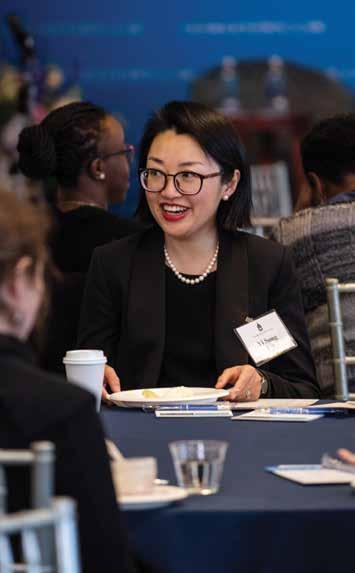
Yi Song, LL.M.’10, on the Benefits of Being a Multicultural Lawyer
Beijing native Yi Song, LL.M.’10, first came to the Georgetown Hilltop as a college exchange student, returned to the Law campus to earn an LL.M., then found her way back as an instructor and administrator. Today, she’s the executive director of Graduate and International Programs and teaches incoming students in the LL.M. Summer Experience. She also hosts the Masters of Laws Interviews Project, an online video series that features multilingual and internationally trained lawyers talking about their career paths.
On finding her way to law: Law was the practical choice. My initial intention was to major in journalism — storytelling runs in my family. But as it turned out, in legal practice, there are so many stories. Nobody calls a lawyer when everybody’s happy. We are only in the room when there’s a problem. Each character enters the stage with their own tension and drama. So I kind of found what I was looking for initially.
What she hopes international students learn from her “Masters of Laws” series: I want people to listen to these accomplished international lawyers — BigLaw partners, senior counsels for multinational corporations, law professors – who speak English with a charming accent. I want to send a message to students: Don’t feel like your background is a deficit. Maybe this is something that the employers need, a special skill set that you have. If these lawyers did it, you can, too!
THE PRETTYMAN FELLOWSHIP:
65 YEARS PREPARING LAWYERS TO DEFEND THE UNDERREPRESENTED
In 1960, Georgetown Law founded the E. Barrett Prettyman Program, which was — and still is — an innovative fellowship that trains recent law school graduates to become criminal defense attorneys. On May 31, dozens of Prettyman alumni, along with other friends and supporters, gathered on campus to celebrate the program’s 65th anniversary and to congratulate one of its longtime leaders, Professor John Copacino, LL.M.’83, on his retirement.
Fellows in the Prettyman Program, named for a prominent Washington, D.C. judge who was a Law Center alumnus (LL.B. 1915) and faculty member, earn LL.M. degrees in legal advocacy, represent clients in criminal cases and help supervise J.D. student attorneys in the Criminal Defense & Prisoner Advocacy Clinic, Criminal Justice Clinic and Juvenile Justice Clinic. It has become a prestigious postgraduate fellowship, each year admitting three recent graduates out of nearly 100 applicants from leading law schools for an intensive experience that launches most of them into careers in public defense, legal education, pro bono advocacy and other areas of public interest law.
The collective effect the 299 Prettyman fellows and the students they have trained have had on the nation’s criminal judicial systems over the past six decades is incalculable. More than half became public defenders (at least for a time), 13 currently teach in law school clinics and 10 have gone on to serve as judges.
Returning fellows embraced former colleagues, students and teachers, reminisced about old cases and enjoyed being among kindred spirits. “All the best people in the world are here!’ said Andrew Guthrie Ferguson, LL.M.’03, who worked as a public defender in Washington, D.C. after his Prettyman fellowship and has just joined the faculty at George Washington University Law School.
After effusive tributes and toasts from a series of colleagues and former students, Copacino, a Prettyman alumnus himself, took the podium. “Every single day on this job has been a joy in one way or another. I don’t think many people who retire after 38 years get to say that,” he said. “I’m forever grateful for the opportunity to have this job, for the opportunity to work with you, for what we did for our clients and for what you are doing out in the world.”
Above left: Clinic leaders Visiting Professor Pierce Suen, Professor Vida Johnson, Professor John Copacino, Dean William M. Treanor, Visiting Professor Amanda Rogers, Professor Abbe Smith. Johnson, Copacino and Rogers are all past Prettyman fellows. Above right: Professor Kristin Henning, center, catching up with attendees.
BOARD SPOTLIGHT
ASIA ALUMNI ADVISORY BOARD
Motonori “Moto” Araki, J.D.’91, a Tokyo-based partner at Morgan Lewis, completed his formal service on the Asia Alumni Advisory Board last year and he remains engaged as an emeritus member. “I visited various Asian countries as a board member and learned the importance of fostering a true global community,” he says. “Georgetown trained me to think about issues from various perspectives – not only legal solutions, but also practical solutions. Also, I have kept good relationships with my classmates from Georgetown Law, which has been invaluable to my life.” This November 21-23, he’s looking forward to connecting with fellow Hoyas at Georgetown’s International Alumni Summit in Tokyo.
There are four Georgetown Law International Alumni Advisory Boards, in Europe, Asia, Latin America and the Middle East. Board members serve as “ambassadors” for the Law Center, hosting networking events for fellow alumni and prospective students, sharing information on local legal practice and education trends with campus administrators in Washington, seeking employment and internship opportunities for students and graduates and more. For more information on the Board in your region, contact Chris Payne, the Law Center’s Assistant Vice President International Development & Alumni Engagement, at chris.payne@georgetown.edu.
A 30th birthday celebration for our Office of Public Interest & Community Service (OPICS) Saturday, February 28, 2026 Georgetown Law Campus 600 New Jersey Ave. NW, Washington, DC
Get ready for a night of heartfelt stories, reconnection, and a few surprises. Let’s celebrate the work that changes lives — and our incredible public interest community that makes it happen at our #PublicInterestProm!
Share your public interest reflections at bit.ly/opics30stories.
Formal invites will follow. For more information, contact ris6@georgetown.edu.
EVENING PROGRAM ALUMNA KATE HARDIMAN RHODES, J.D.’22, BEGINS SUPREME COURT CLERKSHIP
During the October 2025 term, Kate Hardiman Rhodes, J.D.’22, is clerking for Supreme Court Justice Amy Coney Barrett. Rhodes, an Evening Program student, worked as a research assistant at the litigation firm Cooper & Kirk while in law school. Georgetown Law evening students have an impressive track record in securing Supreme Court clerkships: four of the five most recent clerks were Section 7 graduates. They are Claire Cahill, J.D.’19, who recently completed a clerkship with Justice Brett Kavanaugh, Betsy Henthorne, J.D.’14, a 2016 clerk for Justice Elena Kagan and Tiffany Wright, J.D.’13, a 2016 clerk for Justice Sonia Sotomayor.
“It is a great honor to clerk for Justice Barrett, and I am excited to learn from her and all of the other clerks,” said Rhodes, who previously clerked for Judge Trevor McFadden of the U.S. District Court for the District of Columbia and Judge Gregory Katsas of the U.S. Court of Appeals for the D.C. Circuit. “I don’t think this opportunity would have been possible if I had pursued law school in a traditional manner.”
Former Evening Program Director and Visiting Professor Jeffrey Shulman, J.D.’05, said that its graduates’ success in the clerkship market came as no surprise to him. “These students – with their support for one another, with their camaraderie and collegiality, with their dedication to their cohort – embody the success for which Georgetown Law stands.”
CLASS NOTES
1956
TRIBUTE
Jennifer P. Hughes, C’90, sent in news of the death of her father, double-Hoya James Hughes, C’54, LL.B.56. She wrote, “Jim used his Georgetown degrees and Jesuit training to serve others through the law: first in the United States Air Force JAG program before he returned to Utica, N.Y. as a sole practitioner lawyer. He helped countless community members with wills, adoptions, personal injuries, real estate and business matters. Jim served as Clinton Village Judge and finished out his career as a Hearing Examiner for the Family Courts of Oneida County and Herkimer County.”
1967
Richard N. Friedman (LL.M.) has released his fourth album, “From Broadway with Love,” featuring classic songs from 13 Broadway musicals. His legal
work is primarily as a mediator and arbitrator, and his entertainment work includes singing the national anthem at more than 30 sporting and special events in Florida (four times for the Miami Dolphins).
1975
Scott Fein, senior counsel at Whiteman Osterman & Hanna, reports, “The N.Y.U. Journal of Legislation & Public Policy published ‘New York’s Constitutional Guarantee of Environmental Rights,’ an article I co-authored that is intended to help courts and practitioners understand the
implications of New York State’s recent constitutional amendment intended to safeguard clean air and water.”
1978
Joshua Javits is now president of The National Academy of Arbitrators (NAA), the official North American organization of labor and employment arbitrators. He has sat on more than 50 neutral arbitration panels and has arbitrated over 2000 cases. He previously taught as an adjunct professor in the Georgetown Law LL.M. program.
1982
James Conway (LL.M.) wrote to share that as he winds down his career in arbitration and mediation services for the railroad, airline and sports industries, he was pleased to receive an Albert Nelson Marquis Lifetime Achievement Award from Marquis Who’s Who. “A million thanks for all the pleasure I’ve gotten from Georgetown Law Magazine over the years,” he added.
1984
In February, the U.S. Department of Labor announced the appointment of Randel Johnson (LL.M.) as chair of the Administrative Review Board. Johnson previously served as an ARB judge from 2020-2022.
Thomas Kahn, a Distinguished Fellow at the Center for Congressional and Presidential Studies at American University, was appointed in January by President Joe Biden to the United
States Commission for the Preservation of America’s Heritage Abroad. Kahn had a long career on Capitol Hill, including two decades as staff director of the House Budget Committee.
1985
Renee Cardwell Hughes joined the board of directors of the American Cancer Society. Currently the CEO of the consulting firm The Hughes Group, she previously served as a trial judge in the Philadelphia Court of Common Pleas, as CEO of The American Red Cross of Eastern Pennsylvania and as president and CEO of Opportunities Industrialization Center, Philadelphia.
1987
David Laufman has reopened his solo law practice in Washington, D.C. and represents companies and individuals in government investigations, compliance with the Foreign Agents Registration Act and national security matters.
1991
This November, Todd Stottlemyer, CEO of Acentra Health, a global healthcare technology solutions and services company headquartered in McLean, Va., will be inducted into the Washington Business Hall of Fame by Junior Achievement of Greater Washington.
1992
John Arrascada, a defense attorney with his own firm in Reno,
NV, was elected to the Board of Directors of the National Association of Criminal Defense Lawyers (NACDL). Before founding his firm, he served as the Washoe County Public Defender.
Brent Babcock, MBA’92, joined Sterlington PLLC as a partner. His practice focuses on patent litigation and he is based in California.
Allison Garrett (LL.M.), after senior roles in higher education and business, is now Of Counsel in Spencer Fane’s Oklahoma City office and with its Litigation and Dispute Resolution practice group. Most recently chancellor for the Oklahoma State Regents for Higher Education, she is also the former president of Emporia State University (Kansas) and previously was an executive at Walmart.
Jennifer A. Manner (LL.M.) is now Senior Vice President, Regulatory Affairs and International Strategy for AST SpaceMobile.
1996
Julia Guzman, owner of Guzman Immigration, Inc., in Centennial,
Colorado, was named chair of the American Immigration Lawyers
Association of Colorado in May. Guzman has made several television appearances to discuss the changing landscape of immigration law. In her spare time, she and her high school sweetheart spouse, Jason Henderson, host a horror movie podcast, Castle of Horror
1997
Chris Huber writes, ”After 16 years at the U.S. Attorney’s office in Atlanta and over a quarter century as a lawyer, I am opening my own firm, the Huber Law Firm. I will focus on federal white-collar defense and False Claims Act cases. I look forward to joining the ranks of the esteemed defense bar.”
1998
Jodi Daniel joined Wilson, Sonsini, Goodrich & Rosati as a
AWARD
Robert J. Cottrol, J.D.’84, (above, left) is the Harold Paul Green Research Professor of Law at George Washington University Law School. His book To Trust the People with Arms: The Supreme Court and the Second Amendment (co-authored with Brannon P. Denning) was awarded the Thomas M. Cooley Book Prize by the Georgetown Center for the Constitution.
ALUMNA AUTHOR
Audrey Ingram, J.D.’07’s third novel, The Summer We Ran (Zibby Media), was published in June. The story “weaves together lost love, devastating secrets, shocking sabotage and the painstaking decision two people must make in order to fulfill the futures they each desire.”
partner in the firm’s Regulatory department. Based in Washington, D.C., she brings both public and private sector experience, having founded the Digital Health practice at Crowell & Moring and worked for 15 years at the U.S. Department of Health and Human Services.
1999
Nathan J. Oleson, a shareholder at Littler, has been elected a fellow of the College of Labor & Employment Lawyers. He is based in Washington, D.C. and his practice focuses on complex employment litigation and counseling.
2000
Tara LaClair (LL.M.), a financial institution and securities litigator, joined Bressler, Amery & Ross, P.C. as a principal. She is manager of the firm’s new Oklahoma City office.
2001
Mitchell A. Newmark (LL.M.) has been elevated to co-practice group leader in Tax, Benefits &
Private Client at Blank Rome LLP, where he works out of New York City and Princeton, N.J.
2002
Erin Connell, co-chair of Orrick’s Equal Employment Opportunity Compliance Group and Pay Equity Task Force, joined the firm’s Management Committee. She is based in San Francisco. Littler has elected Jeanine Conley Daves to its 2025 board of directors. Based in the firm’s New York City office, she navigates clients through all areas of employment law.
2003
Evan C. Zoldan, professor of law at the University of Toledo College of Law, was named the John W. Stoepler Professor of Law & Values. He also was appointed Associate Dean of Academic Affairs and serves as director of the Legal Institute of the Great Lakes. His teaching and scholarship focus on administrative law, statutory interpretation and state and local government.
LAUNCH
Isvari Maranwe, J.D.’17, is launching Yuvoice, a new social media platform designed to connect activists and changemakers through a “Superhero Town Square” where they can find inspiration and engage in projects with real-world impact. “I credit a lot of my successes to my education at Georgetown Law and wouldn’t be here without it,” she says.
2004
Nathan Headrick, a banking executive who sits on the board of directors of Apollo Global Management, Inc., competed in the June special primary for the Republican nomination for Virginia’s 11th congressional district. Headrick was president of the Student Bar Association while at the Law Center.
2006
Kim D. (Chanbonpin) Ricardo (LL.M.) was invested as the inaugural Lucy Sprague Professor in Public Interest at the University of Illinois Chicago School of Law, where she is also associate dean of experiential education and director of the Lawyering Skills Program. “When students ask, ‘How can I use my law degree?,’ I want them to consider how their individual aspirations cohere with the forging of a more robust public good, because the legal profession, after all, is a service profession,” she said.
Olga Vieira was promoted to co-managing partner of Quinn Emanuel’s Miami office. She is a trial lawyer handling bet-thecompany disputes for top global clients.
2007
Michael Saliba has joined Gibson Dunn’s New York office as a partner in the Capital Markets practice group. He advises clients on a range of complex capital markets transactions.
2008
Danny Mills was promoted to Assistant General Counsel at Cox Enterprises in Atlanta, Georgia.
International trade law attorney Jennifer M. Smith-Veluz joined Butzel as a shareholder in the firm’s Washington, D.C. office. In 2019-23, she adjudicated trade remedy disputes as a member of the US NAFTA Chapter 19 Roster of Panelists. She also serves on the Law Center’s International Trade Update Advisory Board.
2009
Oregon Governor Tina Kotek appointed Kirk Maag to a fouryear term on the Oregon State Board of Agriculture. Maag is a partner at Stoel Rives LLP, where he represents clients in the agriculture and forest products industries.
2010
Matthew Korn, an employment lawyer at Fisher Phillips in Columbia, S.C., has launched the website Dad, Esq., which he describes as “a space for Lawyer Dads to connect, share experiences and encourage one another in balancing the dual and demanding roles of being a dad and practicing law.”
Nicolas Stebinger co-founded the plaintiff-side antitrust firm Simonsen Sussman LLP, which seeks to help businesses, workers and state and local governments who have been harmed by violations of antitrust laws. Before leaving to start the firm, he served as Senior Trial Counsel and Deputy Chief of the Criminal Liaison Unit for the Federal Trade Commission’s Bureau of Competition.
2012
William M. Klimon (LL.M.) joined Holtzman Vogel as a partner, based in Washington, D.C. He has expertise in nonprofit mergers, acquisitions, reorganizations and collaborations and has advised hundreds of nonprofit organizations.
Derek Young (LL.M. ‘13) joined
Bracewell LLP’s tax department as a partner in the New York office. He advises clients on all major state and local tax (SALT) implications of changes in business activities and corporate transactions, including mergers and acquisitions, financings, sales and restructurings.
2013
Conrad Bolston rejoined Vinson & Elkins as a Washington, D.C.based counsel in the firm’s Environmental practice after a stint as a senior environmental counsel at the Federal Energy Regulatory Commission (FERC).
FELLOWSHIPS
Simone Obadia J.D.’25 and Adia Robinson, J.D.’25, were both awarded Equal Justice Works Fellowships to support the launch of their careers in public interest law. Obadia is working at Manhattan Legal Services, representing low-income victims of intimate partner violence in spousal and child support proceedings, and developing a training curriculum to empower survivors to share information on resources and remedies available to others affected by this type of abuse. Robinson is still at the Law Center, creating a screening tool to help medical provider partners of the Georgetown Health Justice Alliance Perinatal Legal Assistance & Wellbeing Project identify their patients’ family law issues. She will also advise and represent patients in resolving such matters.
Robert E. Montejo II was pro-
moted to a partnership at Duane Morris LLP. He practices real estate law and is based in Washington, D.C.
2015
Utsav Gupta is co-founder and CEO of Filarion, a Silicon Valley firm that has developed spatial-computing interfaces and AI tools aimed at lowering litigation costs. He is also a member of the Law Center’s Board of Visitors and its AI working group, which has met with administrators and faculty members to discuss how AI is being integrated into the curriculum and has looked into other law schools’ AI policies. “Georgetown seems to be a leader in this space, both in breadth and depth,” he says.
2016
Adam R. Young (LL.M.) joined Fox Rothschild as a partner. He is in the firm’s Taxation and Wealth Planning department and is based in Exton, Pennsylvania.
2017
Gabrielle Fromer joined Rivkin Radler as an associate in the firm’s Commercial Litigation, Construction and Real Estate Practice Groups. She is based in New York City.
2018
Corey L. Moomaw (LL.M.) was elected a partner at the Kansas-based firm Foulston Siefkin LLP. He is a tax attorney and primarily practices in the area of trusts and estates.
LAUNCH
Kilian Liptrot, J.D.’23, and Anne Klok, J.D.’24, recently launched Blinding Visuals Press, a publishing house intended to challenge the traditional publishing model and make art more accessible. Its first book, Y(our) National Parks: Through a Different Lens, features Liptrot’s photography of some 70 parks, forests and seashores across the United States along with written reflections on access, identity and belonging in America’s natural heritage.
Last fall, Ricardo Aponte Parsi (LL.M.) became an associate general counsel for the Office of the General Counsel – United States Air Force Installations, Energy and Environmental Law Division (SAF/GCN) at Lackland Air Force Base in San Antonio, Texas.
Chantal C. Renta (LL.M.) joined Fox Rothchild as a partner. She is in the firm’s Taxation and Wealth Planning department and is based in Los Angeles.
Carissa Townsend joined the Chicago office of Ogletree Deakins as an associate. Her practice focuses on employment law.
2019
Michael March is an attorney at Whiteford Tax Defense, under the parent company Whiteford Taylor and Preston. His offices are based out of Baltimore, Md. and Richmond, Va.
2021
Margaret C. Brown joined Greenberg Traurig as an associate in the firm’s Boston office, focusing her practice on white-collar defense and internal investigations and providing a range of services to clients in high-stakes litigation and government investigations involving federal agencies and state attorneys general.
2022
Luke Bunting has joined the White House Counsel’s office as Associate Counsel to the President.
2023
Ismail Amin (LL.M.), a multi-jurisdictional practitioner in business, banking and biotech law, is currently CEO at TALG, LTD with offices located in Irvine, Calif., Las Vegas, N.V., Dallas, Tex., Scottsdale, Ariz., Raleigh, N.C. and New York, N.Y.
Luizio Felipe Rocha (LL.M.) is the inaugural executive director of STRIMA, a new Brazilian association founded by a coalition of domestic and international streaming services to present a unified industry voice on key legislative and regulatory issues.
SSidney Silver, LL.B.’62
idney “Sid” Silver, a longtime leader in Washington, D.C.’s legal and business community, died in July at the age of 91. After serving in the U.S. Army and earning undergraduate and M.B.A. degrees from Lehigh University, Silver and his wife, Peggy, moved to Washington, where he worked for the General Accounting Office, attended Georgetown Law as an evening student and eventually established the law firm Silver, Freedman, Taff & Tiernan. His clients included such iconic Washington businesses as Clyde’s Restaurant Group and Britches of Georgetown. He was also a generous philanthropist, serving on multiple boards, including the Georgetown University Board of Governors, and helping launch the Capital Jewish Museum. His son and fellow alumnus, David Silver, J.D.’88, said that establishing a Georgetown Law scholarship was a proud part of his legacy. “It was important to him to give back.”
TTim Strachan, J.D.’04
im Strachan, who died of cancer in July at the age of 49, is remembered not only for his post-law school career at the Senate Committee on the Judiciary and the Federal Communications Commission, but also for the way he lived his life after suffering a devastating spinal cord injury as a teenager. Then a star football player at Maryland’s DeMatha Catholic High School, he went on to graduate from the University of Maryland, work as a broadcast commentator for the Terps football team, marry and raise three children. “He was the most inspiring and courageous man I’ve ever known,” said Bob Muse, J.D.’72, a longtime friend and mentor.
IN MEMORIAM
Ginger S. Ansell, J.D.’80
Edward P. Archer, LL.B.’62, LL.M’64
Jonathan Bangs, J.D.’68
Victor F. Battaglia, LL.B.’58, LL.M.’59
Thomas James Beers, J.D.’81
Timothy J. Bork , J.D.’71
Kerrie M. Brophy, C’07, J.D.’10
Andrew J. Broughel, LL.B.’63
Peter N. Clare, J.D.’88
Lawrence Connell, LL.B.’66
Gary E. Edwards, J.D.’85
William J. Emanuel, LL.B.’63
Frank J. Ferry, LL.B’56
John E. Flaherty Jr., J.D.’73
William J. Franklin, J.D.’77
Michael R. Gardner, C’64, J.D.’77
Lisa Anne Gaston, J.D.’82, MSFS’83
The Hon. Dewie J. Gaul, LL.B.’55
Neill C. Gorman, J.D.’08
Stacy K. Grant, J.D.’14
John D. Hagner, J.D.’73
Justice Mark McCormick, LL.B.’61
James A. Hughes, C’54, LL.B.’56
The Hon. Thomas J. Hynes Jr., LL.B.’66
Charles W. Jirauch, J.D.’70
Susan Cunningham Jonas, J.D.’86
John M. Kacani Jr., LL.B.’64
Joseph C. Kammer, LL.B.’55
David Craddock Kane, J.D.’73
Daniel F. Kelleher, LL.B.’61
The Hon. Raymond Collins Kilgore, LL.M.’78
Joel B. Kleinman, J.D.’74
Edward V. Lahey Jr., LL.B.’64
Thomas D. Lohrentz, J.D.’70
Charles J. Muller III, J.D.’72
Joseph A. Norris Jr., C’46, LL.B.’49
James T. O’Hara, LL.M.’66
Austin M. O’Toole, LL.B.’63
Stephen B. Paige, J.D.’72
David Radlauer, J.D.’78
Harry H. Rhodes III, LL.M.’81
John F. Schmutz, LL.B.’58
Michael W. Scott, J.D.’82
The Hon. Furmin D. Sessoms, J.D.’89
Terrence C. Sheehy, LL.B.’62
Michael J. Stewart, C’56, LL.B.’62
Joseph L. Stonaker, LL.B.’59
E. T. Hunt Talmage III, J.D.’71
Edward P. Taptich, C’60, LL.B.’63
Larry Leo Turner, J.D.’84
Stephen J. Waller, LL.M.’80
Richard Douglas Wright, J.D.’78
TREASURES FROM THE LIBRARY
Scrapbook of B. Frank Davis, LL.B. 1913
This issue’s guest picker is Interim Dean Joshua C. Teitelbaum, who as a lifelong baseball fan sought out a library treasure related to America’s Pastime. Hannah Miller-Kim, Head of Special Collections at the Edward Bennett Williams Law Library, came up with a scrapbook kept by alumnus Benjamin Franklin “Frank” Davis, LL.B. 1913, who captained the baseball and track teams while a student (this was before a law degree was a separate postundergraduate endeavor). After graduating, he entered the Foreign Service and attended the post-World War I 1919 Paris Peace Conference as a State Department aide. Davis later went into financial services, and at the time of his death in 1955 was a partner in the brokerage firm Fahnestock & Co.
Inspired by Davis’ mementoes of college baseball, law coursework and foreign service adventures, Teitelbaum wrote: “As a lawyer, I love the subtle intricacy of the rules of baseball, and also the fact that you generally learn the rules by watching game after game after game. It is reminiscent of how law students learn the common law. And as an economist, I love the deep connection between baseball and statistics. I’m not sure about the connection between baseball and diplomacy, other than the fact that baseball is a worldwide sport, and that the love of sport has a way of bridging cultural and political divides.”