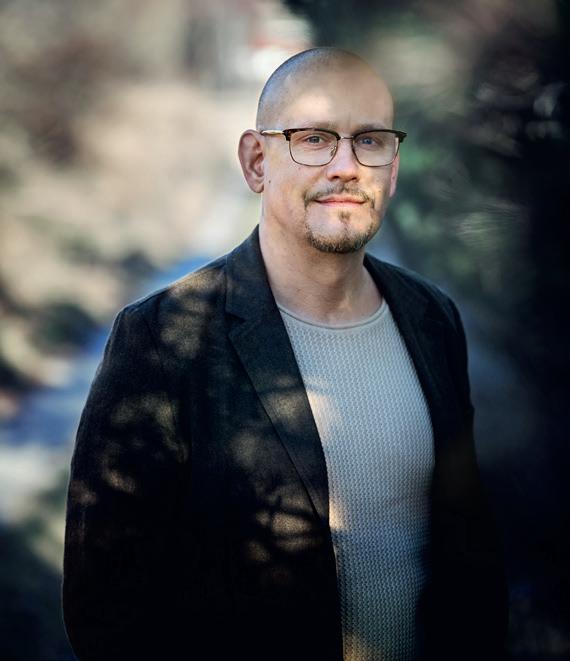
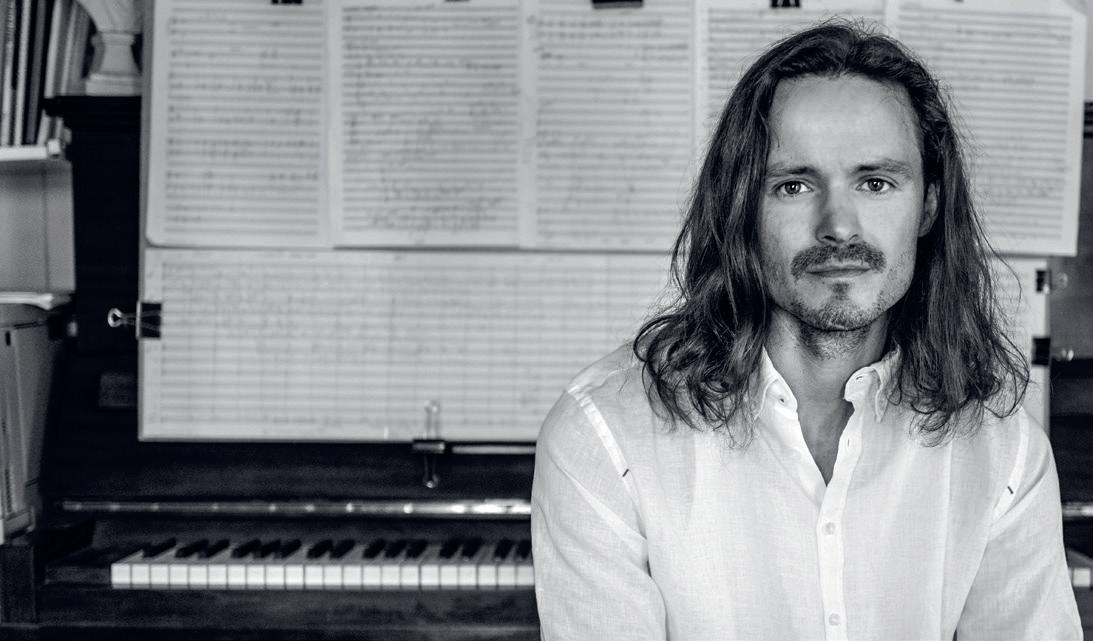
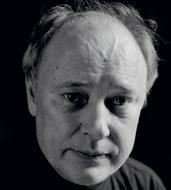
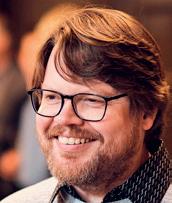
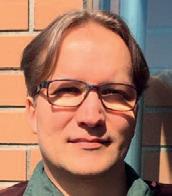
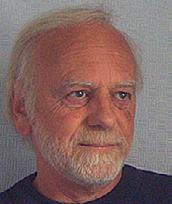
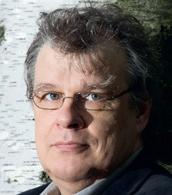
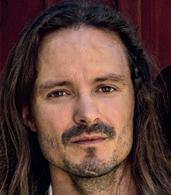
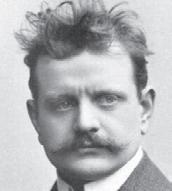
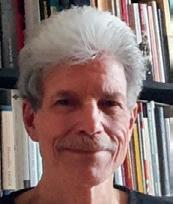
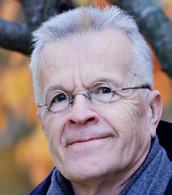
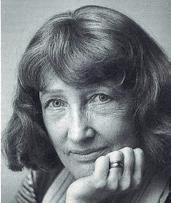
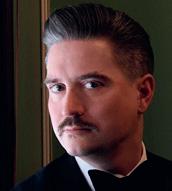
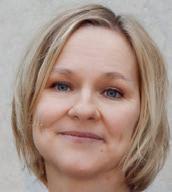
The Seinäjoki City Orchestra is putting on a concert of music by Pasi Lyytikäinen on 23 October. True to his own, interactive style, he will also be writing a new piece at local cafés allowing people to be involved in the creation process. The premiere of a new piano concerto is scheduled on 2. October.
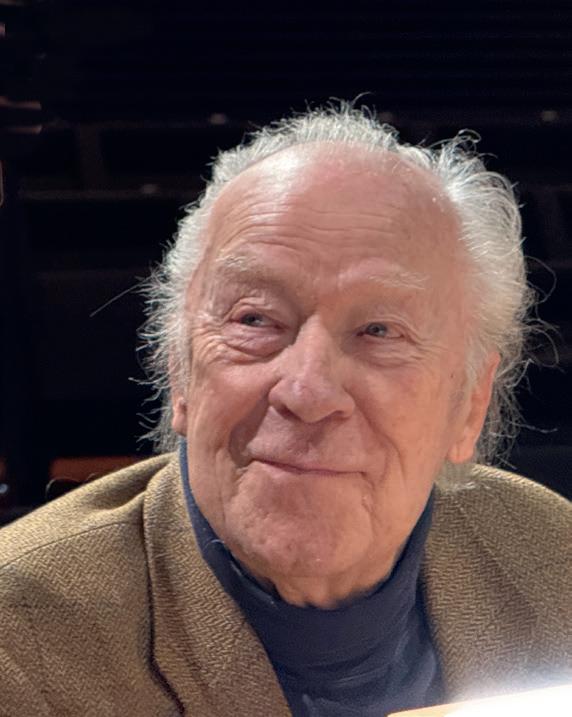
Olli Koskelin’s 70th birthday will be celebrated at the Helsinki Music Centre on 29 November with a program presenting six chamber works, five of them premieres. The concert will trace a single, intensive span with no longer pauses between the works.
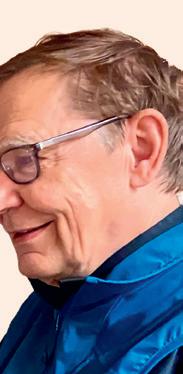
The spotlight at a concert on 2 December will be on Jyrki Linjama, covering solo works and song cycles composed by him over four decades. The event will take the form of evensong at Tapiola Church in Espoo.
Focus on Antti Auvinen
Antti Auvinen has been commissioned to write a Percussion Concerto for the Kuopio City Orchestra. Jukka Untamala will conduct the world premiere on 25 November, and the soloist will be Mika Kallio, whose magical, richly-varied world of gongs will occupy pride of place. The jubilee concert celebrates the 250th anniversary of the City of Kuopio. Auvinen has written a new suite for orchestra, actors and video aimed at schoolchildren. Titled Ämminkäiset (Awelings), it is based on the children’s book by Tuomas Kärkkäinen. The first concert on 31 January 2026 is directed by Cécile Orblin.
Award for Lara Poe
Editors: Henna Salmela, Kristina Fryklöf
Translations: Susan Sinisalo, Robert Carroll
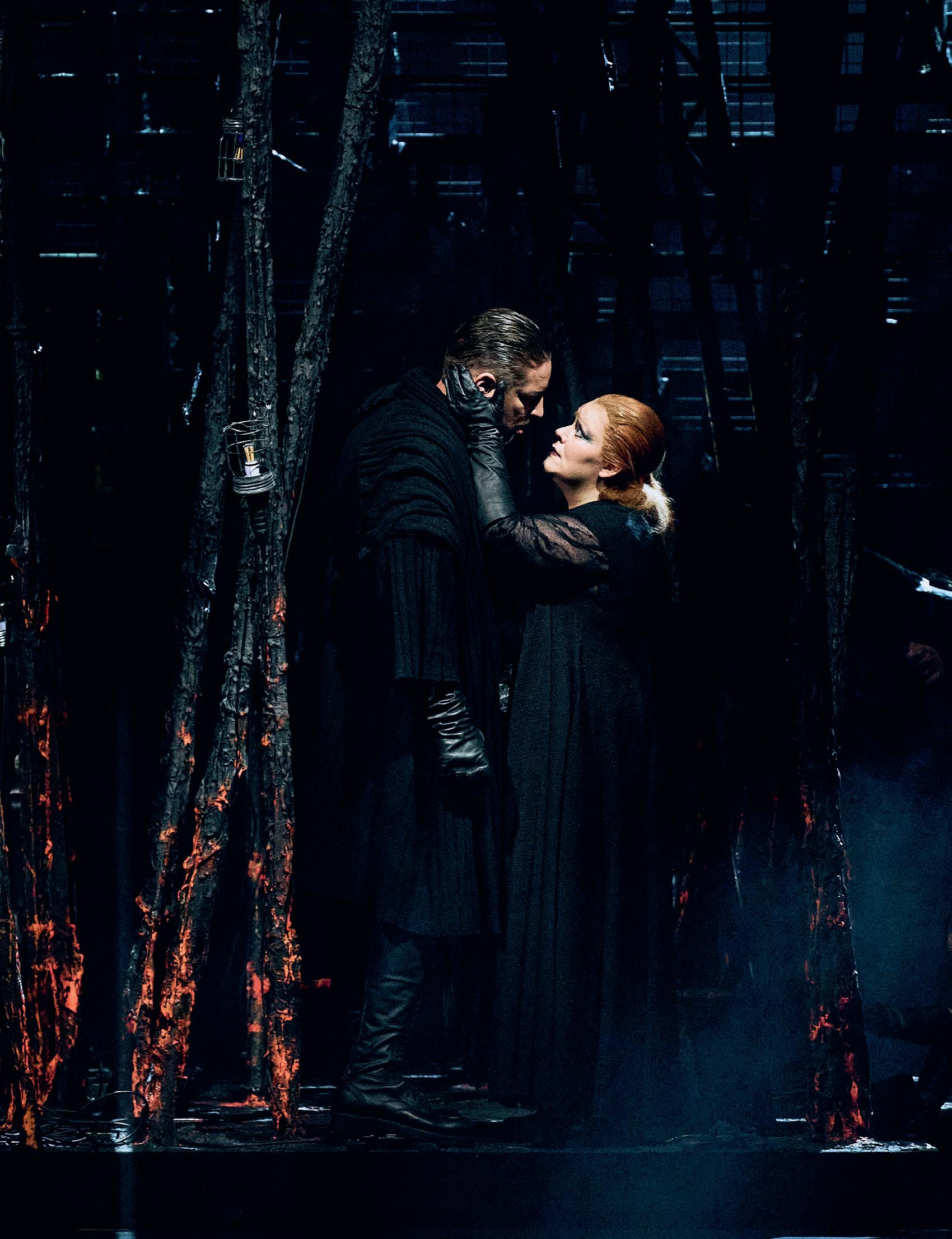
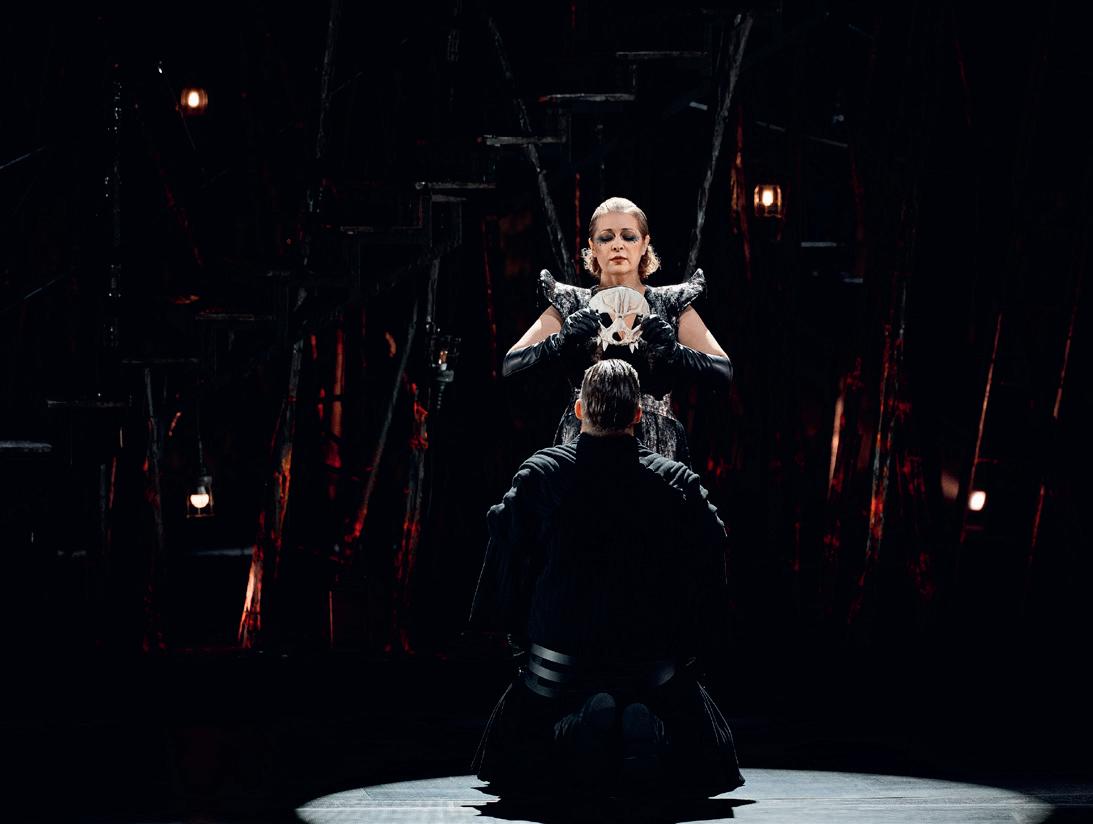
Cover photo: Mika Kares and Miina-Liisa Värelä in The Horseman by Aulis Sallinen (Ilkka Saastamoinen/ Finnish National Opera)
Design: Tenhelp Oy
Click the links, sound and video symbols
2000-2750 (Online)
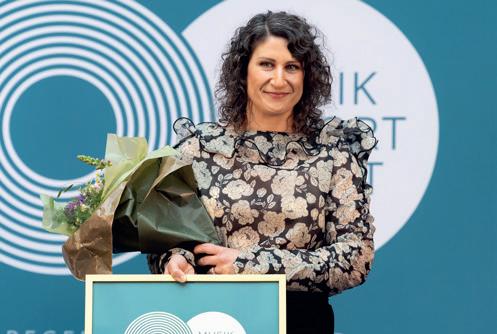
Lara Poe received the The Breakthrough of the Year award handed by the The Finnish Music Publishers in its annual award gala on 3. September. Poe’s international career is growing rapidly. Over the past year, she has received significant commissions and collaborative projects with, among others, the BBC and the Finnish Radio Symphony Orchestra. New commissions for orchestral and stage works are on their way for next year.
Veljo Tormis 95
The recent Tormis 95 Singing Contest attracted an impressive number of participants from around the world. The entrants submitted a video featuring Veljo Tormis’s music. The aim of the contest was to celebrate the 95th anniversary of Tormis’s birth, and it was organized by the Veljo Tormis Virtual Centre in cooperation with the Estonian Choral Association and cultural attachés. Awards went to the Junger Kammerchor Basel (for Curse Upon Iron) , Taiwan Chamber Choir Müller (for Litany to Thunder) and Mikrokosmos. Alongside the awards ceremony in August there were concerts by the Estonian Philharmonic Chamber Choir and the Tallinn Chamber Orchestra.
Lotta Wennäkoski premieres
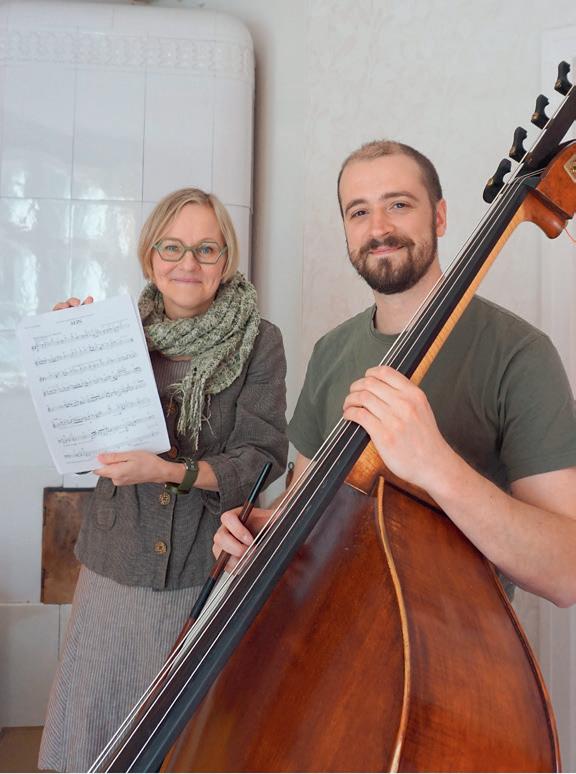
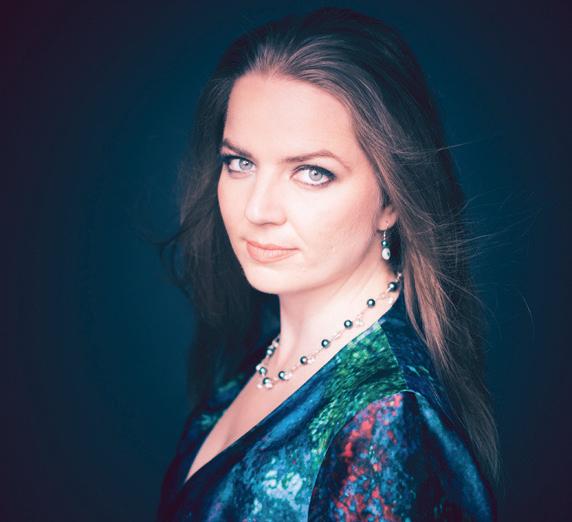
Several new works by Lotta Wennäkoski will soon see the light of day. The Concertgebouw Orchestra and the Finnish RSO have jointly commissioned a recorder concerto Vents et lyres, to be premiered in Amsterdam on 15 October. Lucie Horsch the soloist will have the exciting job of singing as well as playing. Wennäkoski has also written a new work for cello and organ (Signes) to be performed at an Hommage à Kaija Saariaho concert in Helsinki. Alin for double bass and ensemble was a commission from the Helsinki Philharmonic Orchestra. And last but not least: the London Philharmonic Orchestra will premiere a new orchestral work Zelo in March 2026. The commission was initiated by Robin Ticciati, who will conduct the premiere.
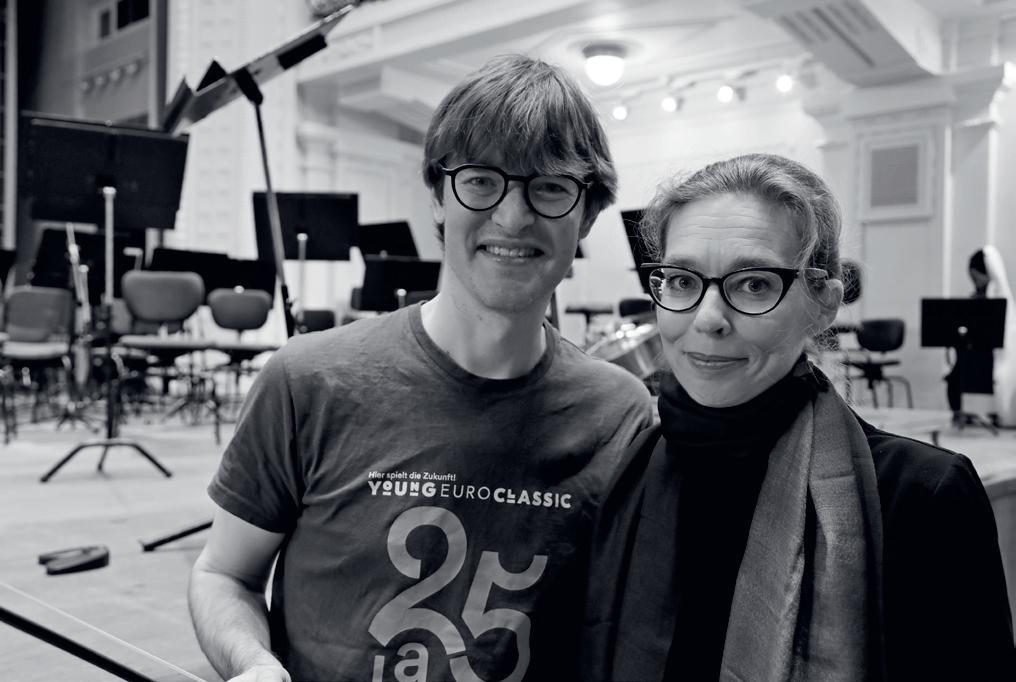
Lotta Wennäkoski and Adrian Rigopulos
Photo: Mimi McPartlan
Photo: Esko Jämsä
Photo: Miika Kainu
Photo: Eija Tervo
New works by Tobias Broström
At the initiative of conductor Santtu-Matias Rouvali, the Gothenburg Symphony Orchestra has commissioned a Second Symphony by Tobias Broström, to be premiered on 27-28 May next year. The orchestra previously commissioned his Symphony No. 1 – Albedo, premiered in 2022 also under Rouvali’s direction. Moreover, Broström will be rounding off the Jönköping Sinfonietta’s season on 31 May with a new 30-minute work for chamber orchestra under the baton of Johannes Gustavsson.
New York premiere for Steampunk Blizzard
Daniel Nelson’s Steampunk Blizzard will be performed at three concerts on 18-20 February 2026 with the New York Philharmonic under the direction of Santtu-Matias Rouvali. Steampunk Blizzard was originally commissioned by Orchestre Nationale d’ile de France and has come to be Nelson’s most frequently performed orchestral piece. He describes the work himself as “a steam engine ballet in a snowstorm.”
Matthew Peterson’s The Wanderers
As part of his residency with Dalasinfoniettan Matthew Peterson has composed Symphony No. 2 – The Wanderers, a 50-minute work for choir and orchestra. In the symphony he weaves together texts about the challenges of life with fragments of poems by Dan Andersson, Gustaf Fröding and Erik Axel Karlfeldt, in his own English translations. It is a winding journey through a changing musical landscape. The work will be premiered by the Swedish Radio Choir and Dalasinfoniettan on 21 March at Berwaldhallen in Stockholm under the direction of Claire Levacher.
Mikko Heiniö news
Mikko Heiniö has written a new Trio for soprano, guitar and accordion entitled Shedding My Skin. The poems by Eira Stenberg have been translated into English by Jaakko Mäntyjärvi. The world premiere is scheduled for 26 November at the Turku Guitar Festival with Kaisa Kraft, soprano, Patrik Kleemola, guitar, and Mikko Luoma, accordion. The next premiere will be at the Katedraali Soi festival in February 2026, when the festival celebrates its 30th anniversary: Domklang for wind orchestra and organ will be performed by Markku Hietaharju and the Navy Band, conducted by Jarkko Aaltonen. Next in the pipeline for Heiniö is a concerto for oboe, clarinet and chamber choir.
Gehrmans Musikförlag honored
On 17 June the Swedish Government’s Music Export Prize was awarded, with a special honorable mention given to Gehrmans Musikförlag. “With over 130 years of experience and a steadfast faith in contemporary music, Gehrmans is not only a historical name – but a living export motor for Swedish art music in our time”, wrote the jury. “It is a great honour to receive the citation”, says Gehrmans’ CEO Filiz Erat Edhlund. “Over the last few years, we have intensified the work of promoting our composers’ music internationally, and it is therefore especially gratifying to receive proof that our efforts are making an impact. Swedish music has a good reputation, and we are proud to contribute to its reaching new listeners and musicians the world over”.
Damström’s exciting spring
Cecilia Damström is looking forward to an exciting spring. In addition to the premiere of her Sámi opera Ovllà at the Oulu City Theatre in January, her orchestral work ICE will receive its London premiere at the Barbican with the BBC Symphony Orchestra under Sakari Oramo on 30 January. ICE will also be performed for the first time in Sweden by the Uppsala Chamber Orchestra conducted by Paul Mägi in May. Furthermore, her Violin Concerto Earth Songs will have its Canadian premiere in April with the Hamilton Philharmonic and conductor James Kahane, featuring Linda Suolahti as soloist.
Halvor Haug in memoriam
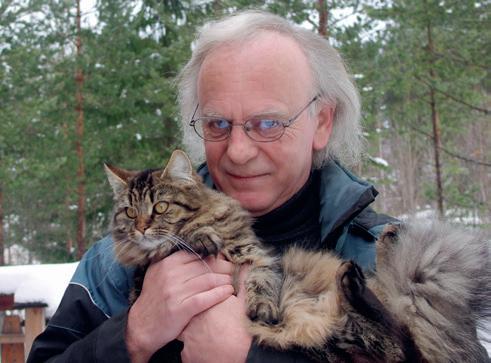
The Norwegian composer Halvor Haug passed away on 3 June, at the age of 73. With his five symphonies, symphonic pictures and chamber works he was a central figure in Norwegian contemporary music. Haug described himself as a “modern romanticist”. His roots were in the Nordic symphonic tradition, but he created his own expression characterized by strong emotions, drama, intellect and mystique. Nature was important to him, which was also reflected in his music. Insignia was inspired by the dramatic scenery of Lofoten; one can hear the lament of the pine trees in Song of the Pines (Furuenes Sang), and in Symphony No. 3 – The Inscrutable Life (Det uutgrunnelige livet) the focus is on a prerecorded nightingale as a symbol for the mystery of life. Halvor Haug bequeaths a rich and deeply personal musical legacy.
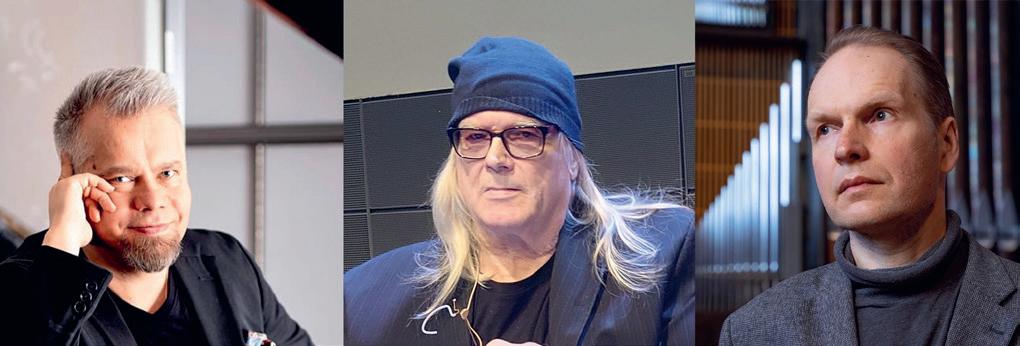
Halvor Haug
Filiz Erat Edhlund
Photo: Ville Juurikkala
Cecilia Damström
Tobias Broström
Photo: Johan Bergmark
Photo:
Albert Schnelzer: “A will to tell a story”
Albert Schnelzer’s music is rhythmically striking, but also replete with lyrical and beautiful features. There are expressive outbursts as well as sensitive intimacy, and a palpable dramatic intensity. He is today one of Sweden’s most frequently performed composers, and commissions from orchestras and ensembles continue to pour in.
– I am indeed thankful that my music resonates with many people and that I can in this way share my sound cosmos with others. I write the music that I myself want to hear. It’s not more complicated than that. When I listen to something I have composed and get a strong, positive gut feeling, then I trust in it. That the music has a sort of intrinsic quality.
Schnelzer has often described his entry into music as “a will to tell a story”, and it is just this narrative character that makes his works often captivating for audiences as well as musicians. His recently premiered work Tales of Darkness and Sorrow is no exception. He derived inspiration from the somewhat darker parts of many of our best-known fairy tales, such as H.C. Andersen’s Big Claus and Little Claus, where murder and other horrors succeed one another until Little Claus finally entices Big Claus to drown himself in a stream. – It is written in one single long movement, but with a number of tableaux that create a balance between the bizarre and the emotional. I have found my models in famous ballet suites, such as Ravel’s Mother Goose and Stravinsky’s Petrushka. It is hard to match Ravel and Stravinsky, but I can still find the seeds to a celestial, shimmering Ravelian atmosphere. In Tales of Darkness and Sorrow there is also, just as in Petrushka, a challenging and virtuoso piano part that requires a very able pianist.
The work was premiered by the Helsingborg Symphony Orchestra, which was in fact the first professional orchestra to play Schnelzer’s music. That was almost 30 years ago. Now some 100 orchestras the world over have performed his works. Among them, the Gothenburg Symphony Orchestra, that for the celebration of the city of Gothenburg’s 400th anniversary, commissioned a large oratorio for soprano, baritone, mixed choir and symphony orchestra, which was given the sea-scented title of SALT. – It was to be something big and appropriate for the celebration. What I decided on was the
connection to the sea and travel. Gothenburg has always been a gateway to overseas, and it has a special history with the America emigrants in the 19th century. It was here most of them left for their journey across the Atlantic. The sea is central, vast and awesome. You get the scent of salt in the air. The soprano symbolizes the sea and the baritone is man, the migrant.
Schnelzer’s international stature is borne out by prestigious commissions, among them a work for the 40th anniversary of the reopening of the Alte Oper in Frankfurt. The result was the orchestral piece Through the Eye of the Pegasus premiered at the anniversary concert in 2021 by the Frankfurt RSO under the direction of their new principal conductor Alain Altinoglu. – The commission came in the middle of the
pandemic. At first I didn’t understand how it happened. As it turned out, Altinoglu had premiered my concerto for orchestra, Brain Damage, in Gothenburg. He suggested to Alte Oper that I could write a new piece for the reopening. It was such an honour! The opera house has a fantastic history, a great many iconic works have had premieres there.
The music depicts the history of the opera house through the eyes of Pegasus. For at the highest point on the gable of Alte Oper there is a statue in copper that portrays the mythical figure. The music pulsates with rhythmic energy, but there are moments when time seems to stand still. – I have derived the main theme from Mahler’s Eighth. It stands for divine creative power and in this way the music is linked up with history. It is
Albert Schnelzer
Photo: Hans Lindén
structured organically on several different levels, which somehow live their own lives, but nonetheless merge into each other. There are more levels to discover the more you listen. The piece is multi-layered – like a good book!
Swedish folk music is the main source of inspiration for the new soprano saxophone concerto written for Anders Paulsson, due to be premiered by the Dalasinfoniettan this coming spring. – All of a sudden I wanted to write a piece that would express my love of Swedish nature. The Nordic sound. The Swedish melancholy. The Swedish landscape. If you look at our own music history there is a tradition to get involved in. We have grown up with Alfvén’s Midsummer Vigil, A God in Disguise by Lars-Erik Larsson and other masterpieces. This music, claims Schnelzer, is in our DNA.
– How would I capture this Swedish-ness? The first movement is a triplet polska. But it is folk music on my terms – and I take enormous liberties! The second movement is a depiction of the Arctic Starflower, the province flower of Värmland, where I was born. The last movement is a declaration of love to Swedish folk music, where I have tried to capture the feeling of running through pools of water, which we have all done as children. Also, the solo instrument gives me strong associations to the Nordic soundscape. The introduction to one of the best-known Swedish orchestral works, Alfvén’s Dala Rhapsody, is played on the soprano saxophone.
Another notable work is Apollonian Dances , originally composed for violin and piano. – Violinist and conductor Hugo Ticciati asked me to make a version for chamber orchestra and percussion for the O/modernt Festival with Evelyn Glennie as soloist. Since then it has become one of my most frequently performed orchestral works. This autumn Evelyn will appear in performances at both the George Enescu Festival in Bucharest and Bridgewater Hall in Manchester.
Other works enjoying international success include the Balkan-inspired Aksak & Ciphers, the Clara Schumann homage Burn my Letters –Remembering Clara , and the second violin concerto Nocturnal Songs written for Ilya Gringolts. – I get to meet so many fantastic people and musicians. One day I’m at home in the studio, the next day I’m in Bologna, Berlin or Los Angeles. Every such occasion is a vitamin injection, Albert Schnelzer concludes.
Göran Persson
PREMIERES
PASI LYYTIKÄINEN
Piano Concerto
Kuopio CO/Christian Karlsen, sol. Risto-Matti Marin 2.10. Kuopio, Finland
MATTHEW PETERSON
Agnus Dei
Swedish Radio Choir/Kaspars Putninš 4.10. Stockholm, Sweden
JUHA T. KOSKINEN
Katoaminen
Helsinki Chamber Choir/Dani Juris 9.10. Helsinki, Finland
ALVIN VIKMAN
Svinborstnatt
Stockholms Musikgymnasium Chamber Choir/Sofia Ågren 10.10. Stockholm, Sweden
LOTTA WENNÄKOSKI
Recorder Concerto ’Vents et lyres´
Royal Concertgebouw Orchestra/Maxim Emelyanychev, sol. Lucie Horsch
15.10. Amsterdam, Netherlands
Alin for double bass and ensemble
Adrian Rigopulos & Helsinki PO ensemble 6.11. Helsinki, Finland
Signes for cello and organ
Anssi Karttunen, Oliver Latry 10.11. Helsinki, Finland (Hommage à Kaija Saariaho)
TIINA MYLLÄRINEN
String Quartet
NeoQuartet 26.10. Gdansk, Poland
OLLI KORTEKANGAS
Snow (Organ Sonata No.4)
Jan Lehtola
Vähän ennen yötä (choral version)
October–December 2025
LARS KARLSSON
String Quartet No.1 (revised version)
Tempera Quartet 26.10. Helsinki, Finland
JENNAH VAINIO
For the Departed Krysostomos Choir/Mikko Sidoroff 2.11. Kaustinen, Finland
MATTHEW WHITTALL
The World Tree
Helsinki Chamber Choir/Nils Schweckendiek 18.11. Helsinki Finland
TIMOJUHANI KYLLÖNEN
Eino Leino Suite Tapiola Chamber Choir/Hannu Norjanen
Sonata for violin and piano Linda Hedlund, vl, Eeva Rysä, pf 22.11. Espoo, Finland
ANTTI AUVINEN
Percussion Concerto
Kuopio City Orchestra/Jukka Untamala, sol. Mika Kallio 25.11. Kuopio, Finland
MIKKO HEINIÖ
Shedding my Skin (Trio for soprano, guitar and accordion)
Kaisa Kraft, sopr, Patrik Kleemola, gtr, Mikko Luoma, acc 26.11. Turku, Finland
KALEVI AHO
Concerto for Erhu and Chamber Orchestra Lapland CO/ Simon Rivard, sol. Kanae Nozawa 29.11. Rovaniemi, Finland
Turku Cathedral Oratorio Choir/Anu Åberg, sol. Ville Rusanen, barit. 26.10. Helsinki, Finland
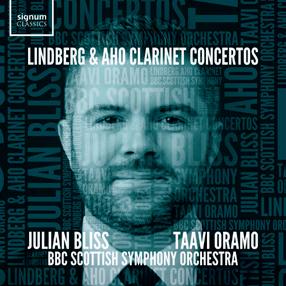
BBC Scottish Symphony/Taavi Oramo, sol. Julian Bliss
Signum Classics SIGCD898
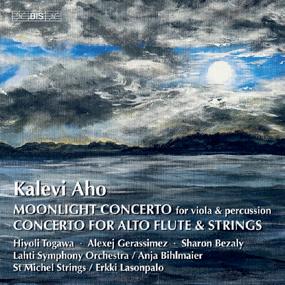
Moonlight Concerto for viola and percussion, Concerto for alto flute and strings
Lahti SO/Anja Bihlmaier, St. Michel Strings/ Erkki Lasonpalo, sol. Hiyoli Togawa, vla, Alexej Gerassimez, perc, Sharon Bezaly, fl. BIS-2626
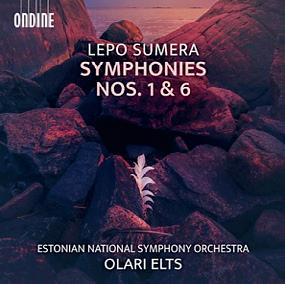
LEPO SUMERA
Symphonies 1 & 6
Estonian National SO/Olari Elts Ondine 1449-2
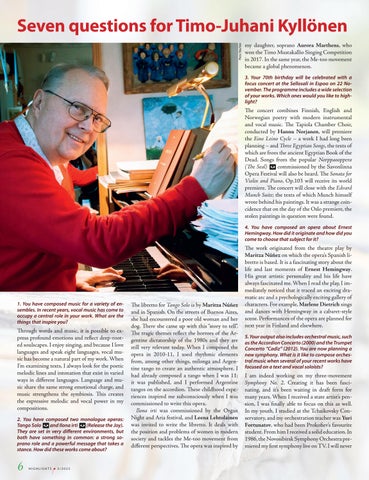
Seven questions for Timo-Juhani Kyllönen
1. You have composed music for a variety of ensembles. In recent years, vocal music has come to occupy a central role in your work. What are the things that inspire you?
Through words and music, it is possible to express profound emotions and reflect deep-rooted soulscapes. I enjoy singing, and because I love languages and speak eight languages, vocal music has become a natural part of my work. When I’m examining texts, I always look for the poetic melodic lines and intonation that exist in varied ways in different languages. Language and music share the same strong emotional charge, and music strengthens the symbiosis. This creates the expressive melodic and vocal power in my compositions.
2. You have composed two monologue operas: Tango Solo and Ilona irti (Release the Joy). They are set in very different environments, but both have something in common: a strong soprano role and a powerful message that takes a stance. How did these works come about?
The libretto for Tango Solo is by Maritza Núñez and in Spanish. On the streets of Buenos Aires, she had encountered a poor old woman and her dog. There she came up with this “story to tell”. The tragic themes reflect the horrors of the Argentine dictatorship of the 1980s and they are still very relevant today. When I composed the opera in 2010-11, I used rhythmic elements from, among other things, milonga and Argentine tango to create an authentic atmosphere. I had already composed a tango when I was 11; it was published, and I performed Argentine tangos on the accordion. These childhood experiences inspired me subconsciously when I was commissioned to write this opera.
Ilona irti was commissioned by the Organ Night and Aria festival, and Leena Lehtolainen was invited to write the libretto. It deals with the position and problems of women in modern society and tackles the Me-too movement from different perspectives. The opera was inspired by
my daughter, soprano Aurora Marthens, who won the Timo Mustakallio Singing Competition in 2017. In the same year, the Me-too movement became a global phenomenon.
3. Your 70th birthday will be celebrated with a focus concert at the Sellosali in Espoo on 22 November. The programme includes a wide selection of your works. Which ones would you like to highlight?
The concert combines Finnish, English and Norwegian poetry with modern instrumental and vocal music. The Tapiola Chamber Choir, conducted by Hannu Norjanen, will premiere the Eino Leino Cycle – a work I had long been planning – and Three Egyptian Songs, the texts of which are from the ancient Egyptian Book of the Dead. Songs from the popular Norppaooppera (The Seal) commissioned by the Savonlinna Opera Festival will also be heard. The Sonata for Violin and Piano, Op.103 will receive its world premiere. The concert will close with the Edvard Munch Suite; the texts of which Munch himself wrote behind his paintings. It was a strange coincidence that on the day of the Oslo premiere, the stolen paintings in question were found.
4. You have composed an opera about Ernest Hemingway. How did it originate and how did you come to choose that subject for it?
The work originated from the theatre play by Maritza Núñez on which the opera’s Spanish libretto is based. It is a fascinating story about the life and last moments of Ernest Hemingway. His great artistic personality and his life have always fascinated me. When I read the play, I immediately noticed that it traced an exciting dramatic arc and a psychologically exciting gallery of characters. For example, Marlene Dietrich sings and dances with Hemingway in a cabaret-style scene. Performances of the opera are planned for next year in Finland and elsewhere.
5. Your output also includes orchestral music, such as the Accordion Concerto (2000) and the Trumpet Concerto “Cadiz” (2012). You are now planning a new symphony. What is it like to compose orchestral music when several of your recent works have focused on a text and vocal soloists?
I am indeed working on my three-movement Symphony No. 2. Creating it has been fascinating, and it’s been waiting in draft form for many years. When I received a state artist’s pension, I was finally able to focus on this as well. In my youth, I studied at the Tchaikovsky Conservatory, and my orchestration teacher was Yuri Fortunatov, who had been Prokofiev’s favourite student. From him I received a solid education. In 1986, the Novosibirsk Symphony Orchestra premiered my first symphony live on TV. I will never
Photo: Tiina Palm
forget the overwhelming feeling of happiness when I heard it played by this large orchestra! My love of vocal music is also reflected in the new symphony; the second movement features a soprano vocalise. The work is also a statement. Climate change, the suffering of nature and animals, and the extinction of species – all are caused by human greed, arrogance, and indifference. However, I believe that everything that is good and true holds the world together and that a higher spiritual essence within us will fight the evil.
6. Throughout your career, you have also composed chamber and instrumental music. A recent work is the Trio No. 5 for violin, flute, and piano, which the Ensemble Cameo premiered in Tokyo last year. How did this collaboration begin – and what other works would you like to highlight?
The Japanese pianist Kyoko Fukushi contacted me last spring and told me about the Trio’s upcoming performance in Japan. They had discovered the work published by Fennica Gehrman and were excited about it. I was invited to the Tokyo premiere, and I plan to continue working with the ensemble in the coming years.
My second string quartet, commissioned by the Kuhmo Chamber Music Festival, is another major work. I have arranged both my quartets for string orchestra and conducted them in Sweden when I was spotlight composer of the Bergslagens Chamber Orchestra in 2015. I would also highlight my symphonic poem Lichtenthal . The German premiere by the Jenaer Philharmonie in 2010 was initiated when the French conductor Fabrice Bollon heard its recording. Ciclo para coro mixto was performed and recorded by the winner of the Kanagawa International Choir Festival in 1990. The Mississippi Choir later won a choral competition in Italy with the same piece. It is a pleasure to see that people around the world are interested in my works.
7. What is the source of your inexhaustible energy and positivity?
I feel that as a composer and musician I am a mediator. I am happiest when I get to create something that can touch my fellow human beings and transmit positive energy. I believe in compassion and kindness. Love, faith and hope give strength, and as the Bible says, love is the greatest of all. I am deeply grateful to my family, who has always supported me in my creative work.
Henna Salmela
REPERTOIRE TIPS
ANDERS ELIASSON
Fogliame (1990) Dur: 19’ for piano quartet
Fogliame means foliage and refers to the continually shifting and unpredictable shimmer of light in the shadows of the trees. The piano quartet is written in a single movement but contains numerous contrasting sections where intensity and allegro alternate with soothing calm; an often-repeated indication is dolcissimo. The music develops freely, like when the winds randomly stir the luminous flux among the leaves.
ALEX FREEMAN
Wildwood (2022-24) Dur: 30’
Concerto for piano and chamber ensemble 1010-0110-str(10111)
A three-movement, virtuosic concerto inspired by the ecological reflections of Roger Deakin in a book of essays of the same name. The work begins with a glittering soundscape and challenges the soloist and orchestra to a burst of rhythmic fireworks. The slower middle movement is more introverted and quietly contemplative. This piece restores faith in the classical ideal of beauty.
TEEMU HALMKRONA
Ikimetsän lumous (The Charm of the Deep Forest) (2020-21) Dur: 10’
Six Pieces for Piano
Each piece in this collection has its own atmosphere and story to tell: musical fun and games, dramatic tension, chromatics and sparkling dissonances. Drawing on a wide range of techniques, the bagatelles were originally composed for amateur pianists, but they are equally suitable as e.g. teaching material for more advanced players.
HALVOR HAUG
Song of the Pines (Furuenes sang) (1987) Dur: 12’ for string orchestra
This deeply expressive work reflects the grief Haug experienced when the pine forest outside his studio was cut down. And one cannot help but be affected by the music that conveys both sorrow and indignation. “Mankind lacks respect for and knowledge about the forest’s existential importance for life on earth, said Haug. It is the pine trees ‘on their last legs’ that make up the idea behind the work.”
MIKKO HEINIÖ
The Voice of the Tree (Puun ääni) (2006) Dur: 17’ for piano quartet
This exciting quartet was inspired by the poems of Eira Stenberg about trees: their voices, movement, spaces and light. Hitting, tapping and rubbing endow the music with the soulful sound of wood and trees as well as captivating physicality. There are also hints of West African pentatonics and rhythms.
OLLI KORTEKANGAS
Works inspired by trees, woods and forests
simple vocalizing choir parts persistently move upward, eventually merging into complex and dense harmonies. Like an image of the tree’s trunk and branches, which stretch upward and outward into the magnificent crown of the tree.
KAI NIEMINEN
Woodlands of the Birds (2002) Dur: 17’ for orchestra: 2222-2000-11-cel-str
The Northern nature, birds and forests are often sources of inspiration for the music of Kai Nieminen. Woodlands of the Birds leads the listener to forests alive with birdsong. The music reflects Nieminen’s lyrical-impressionistic, at times even neo-romantic style, but not to the exclusion of some darker, mysterious shades.
MATTHEW PETERSON
And all the trees of the fields will clap their hands (2013) Dur: 11’ for orchestra: 2222-2200-11-str
Inspired by Isaiah 55:12, this composition portrays a scene of joy and peace, where nature seems to celebrate alongside us. Peterson here shows his ability to blend lyrical beauty and innovative musical techniques. He depicts a wild, untamed nature, brimming with life and power. The result is an engaging, evocative and shimmering piece, rich in texture. Winner of the Uppsala Composition Competition 2013.
JEAN SIBELIUS
The Trees (Puusarja) – Suite Op. 75 (1914-19) Dur: 11’
Arr. Kalevi Aho (2024): 1111-1000-01(=vibr)-str
Arr. Ernst Pingoud (1942): 2122-4230-01-hp(/ pf)-str
These are orchestral arrangements of Cinq Morceaux Op. 75, a piano suite which is one of the best loved by Sibelius. The fifth piece, The Spruce, is well known to almost all piano-playing Finns. The suite echoes Sibelius’s love for nature and each of the five trees has its own special character (When the Mountain Ash Is Blooming, The Solitary Fir Tree, The Aspen, The Birch and The Spruce).
JONAS VALFRIDSSON
The Way to the Woods (2007) Dur: 8’ for mixed choir
Text: Wendell Berry (Eng)
“How long does it take to make the woods? As long as it takes to make the world.” Thus begins the setting of a poem by Wendell Berry, a wellknown US writer and environmental activist committed to finding peace and sustenance in nature. The skilled treatment of profound and wide-ranging themes is typical of Kortekangas, and this sonorous commission from the Syracuse Vocal Ensemble is proof of that.
CARIN MALMLÖF FORSSLING
Albero (1994) Dur: 7’30’ for mixed choir a cappella
“I can go out into nature and joyfully spend time with a tree,” Carin Malmlöf-Forssling once said. In that single phrase, she captured the essence of the Italian words Albero (tree), Allegria (joy), and Amico (dear friend) used in this piece. The
A Fragmented Memory: My Overgrown Little Tree House (2013) Dur: 19’ for orchestra: 2222-2211-pf/cel-str Valfridsson’s work is a musical wandering through the composer’s childhood forests, and the memory of a tree house on the shore of Lake Vättern. The forest appears as both idyllic and somewhat threatening – a doubleness that is reflected in the music. It is a work, rich in timbre, characterised by both mystique and a continual underlying feeling of uneasiness.
LOTTA WENNÄKOSKI
Foliage (2017) Dur: 9’ for cello and orchestra: 2222-2100-01-str or for cello and piano
A work inspired by a view from the composer’s workroom window: the foliage of large trees and the silent, fascinating movement of the leaves – at times whole branches swaying, at times single leaves moving polyrhythmically. The work is also an homage to cello’s versatility. The solo part contains fragile, ethereal colours as well as more solid tones, and both poetic and playful gestures.
LARSJOHAN WERLE
Trees (1982) Dur: 10’ for baritone solo, double quartet and mixed choir
Text: 4 poems by e.e.cummings (Eng)
Here Werle shapes a dynamic interplay of contrasting vocal expressions. According to him “the poems don’t sing – they breathe. They are ambiguous, playful, at times playful in a serious way, and invite to be set to music”. The work opens with long sustained tones, whisperings and fragmentary phrases in the solo voices. Gradually the music expands into an ever fuller choral sound, with a particular sweetness in melody and harmony, before giving way to the rhythmic and lively ‘Sitting in a tree...’
A marvellous Finnish premiere
Focusing on detailed expressivity, the soloist and ensemble delivered a captivating musical narrative, unveiled at an absorbing pace under Slobodeniouk. Once set afloat, the musical processes of EKAGGATA transpired according to their inner logic, to wondrous effect. jarijuhanikallio.wordpress.com 15.3.
Žibuoklė Martinaitytė: EKAGGATA for violin and strings
Finnish premiere: Ostrobothnian CO/Dima Slobodeniouk, sol. Hugo Ticciati, 7.3.2025 Kokkola, Finland
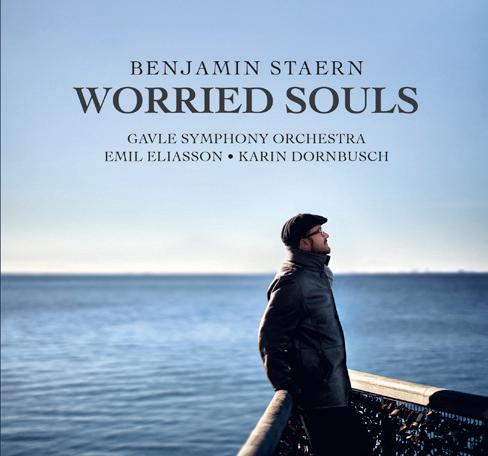
Impressionistic and expressive Staern
The synesthetic impulse is vividly apparent in the orchestral scores presented here…The musicians interpret Staern’s sometimes eclectic, but always gripping and, above all, wonderfully vivid music in a manner that is as colorfully impressionistic as it is “screamingly” expressive. A true cinematic experience for the ears! FonoForum 8/2025
Benjamin Staern: Threat of War, Worried Souls, Symphony No. 1 – Polar Vortex
CD: Gävle SO/Emil Eliasson, sol. Karin Dornbusch, cl. (Swedish Society SCD 1190, ‘Worried Souls’)
Lara Poe’s adventure in Baroqueland
Poe’s snappy Baroque dances were fleeting adventures in lands of pungent modernist rhythms and contemporary spectral harmonies before arriving safely home on the final chords. Turun Sanomat 14.7.
Lara Poe: Petite Suite d’après Couperin(s) World premiere: Finnish Baroque Orchestra/Anthony Marini,13.7.2025 Kemiö, Finland
Dramatic Shaka from Sallinen
Shaka is passionate, dramatic music reflecting the story of the warrior chief. In addition to the ensemble and reciter, it brings in voices from the past… These fragments create an intoxicating sense of distance amid the immediacy of live music. Helsingin Sanomat 9.6.
Aulis Sallinen: Shaka – Melodrama for reciter and ensemble
World premiere: Festival ensemble/Jan Söderblom, sol. Matti Leino, 5.6.2025 Naantali, Finland
Lara Poe
Photo: A. Baltenas
Hugo Ticciati and Žibuoklė Martinaitytė
Aulis Sallinen
Photo: Artturi Winstén
Standing ovation for The Horseman
Haavikko’s magnificent opera libretto is packed with powerful, often paradoxical crystallisations and a myriad possible meanings. Sallinen’s music is likewise dominated by dark shades and often sparing vocal lines. The broad stylistic scale ranges from takes on archaic chants and bells to minor-key hues and dense modernistic harmonies. In the third Act, especially, the music erupts in a vehement bout of emotion. The orchestra gave a spirited rendition of the compelling score and the choir bestowed the climatic moments with an intoxicating intensity. Suomen Kuvalehti 12.5.
Aulis Sallinen, Paavo Haavikko: Ratsumies (The Horseman)
Finnish National Opera Orchestra/Hannu Lintu, sol. Mika Kares, Miina-Liisa Värelä etc., 9.5.2025 Helsinki, Finland
Wennäkoski’s shimmering world of sound
Lotta Wennäkoski is basically a sensitive lyricist, but her musical idiom has, over the years, acquired an increasingly forceful edge and the dramatic characters have become ever more marked. Gringolts was the optimal interpreter of this music and the tonal nuances he coaxed from his Stradivarius seemed almost endless… At times brutally barren, at others seductively shimmering but always an effectively construed world of sound. Hufvudstadsbladet 9.5.
Lotta Wennäkoski: Prosoidia (Violin Concerto)
Finnish premiere: Lahti SO/Hannu Lintu, sol. Ilya Gringolts, 8.5.2025 Lahti, Finland
Extremely expressive Aho quartet
Enchanting musical texture
Enchanting music, descriptive at many levels and where necessary not steering clear of romanticism. This requires basic operatic virtues of the soloist: sensitivity and the ability to fully live the part. The closing aria fades away into a moving hum.
Keskisuomalainen 22.7.
Olli Kortekangas: Alkyone (Suite from the opera Isfåglarna)
World premiere: Helsinki CO/Henriikka Teerikangas, sol. Minna-Leena Lahti, sopr, 20.7.2025 Konnevesi, Finland
Aho’s fifth string quartet to the memory of a dear friend struck a personal, arresting note... Overall, it sounded extremely expressive but the intensity was mostly subdued. A deeply elegiac tone pervades the large four-movement form, in which introverted passages alternate with feather-light, virtuosic textures. Hufvudstadsbladet 13.6.
Kalevi Aho: String Quartet No. 5
World premiere: Kamus Quartet 12.6.2025 Helsinki, Finland
Impressive and wonderfully approachable
Bliss is virtuosic in these two technically demanding but approachable concertos (by Aho and Lindberg). In some respects, they are strikingly similar; both make enormous demands on the soloist, which include multiphonics, passage-work that requires fearsomely accurate articulation, and sustained passages in the highest, most treacherous register of their instruments. The Guardian 29.8.
Kalevi Aho: Clarinet Concerto
CD: BBC Scottish Symphony/Taavi Oramo, sol. Julian Bliss (Signum SIGCD898)
Sandström’s ingenious Sonnets
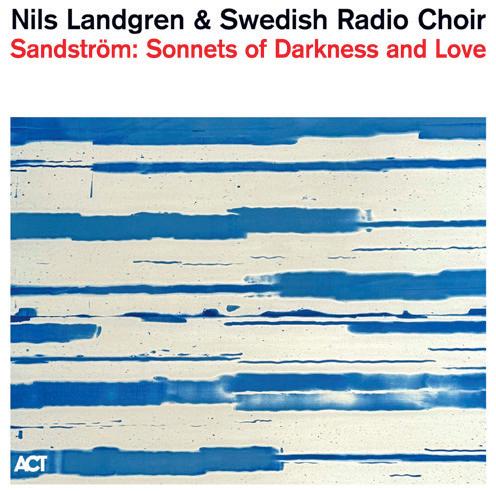
I listen again and again, trying to put my finger on why I think this feels so peculiar, so naked. Beauty alternating with points of pain … When you least expect it Sandström pulls the mat out from under you and exhibits his acuity of sound and ingenious craft of composition. It is brilliance that balances over an abyss of velvety, heavy darkness where you would like to linger on. Svenska Dagbladet 30.5.
Sven-David Sandström: Sonnets of Darkness and Love
CD: Swedish Radio Choir/Kaspars Putninš, sol. Nils Landgren voc/tbn (ACT8005)
Schnelzer’s Tales of Darkness and Sorrow
Schnelzer’s quality lies in his ability to create a dense atmosphere. He brings out the dark sides of the tales but adds a dash of humour. With his eye on the master, he comes up with a shimmering orchestration that is varied by powerfully bobbing sections bordering on the bizarre – a bit like a combination of Ravel’s “La valse” and film director Terry Gilliam’s pictorial world… The balancing act between humour and seriousness gives the work in the end a safe landing. Helsingborgs Dagblad 21.8.
Albert Schnelzer: Tales of Darkness and Sorrow
World premiere: Helsingborg SO/Magnus Larsson, 20.8.2025 Helsingborg, Sweden (Helsingborg Piano Festival)
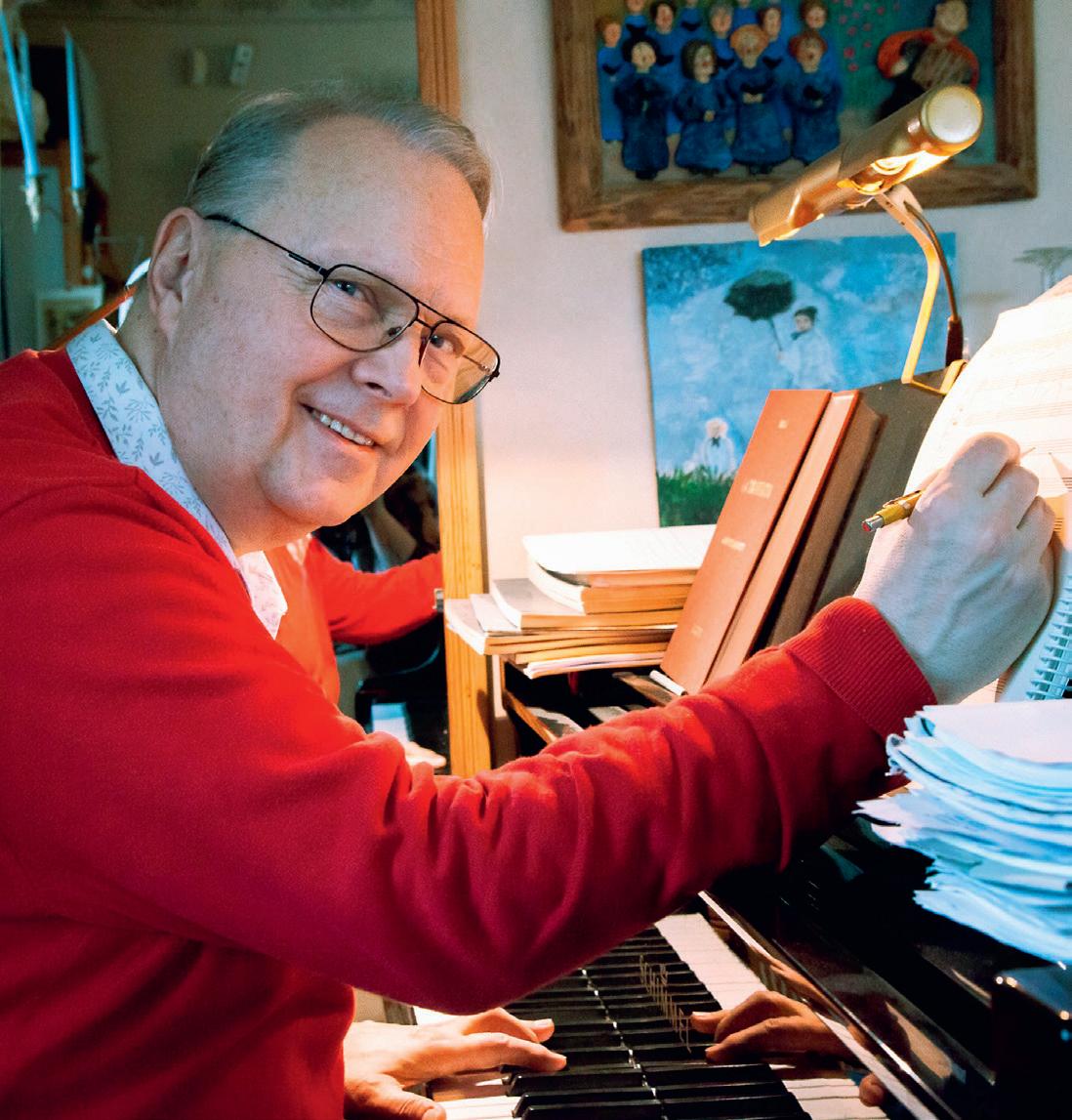
Kalevi Aho
Photo: Anna Grundström
Photo: Hans Lindén
Albert Schnelzer
Photo: Ilkka Saastamoinen/Finnish National Opera
NEW PUBLICATIONS
VOCAL
LINDA ALEXANDERSSON
Gratias agimus tibi for mixed choir
Text: Book of Revelation 11:17 (Lat) GE 14894
ANTON LEANDERSSONANDRÉAS, CECILIA BILLKVIST, PETER THILANDER
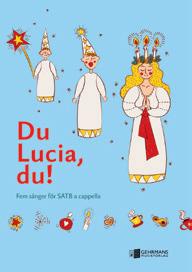
Du Lucia, du Five Lucia songs for mixed choir
Texts in Swedish GE 14928
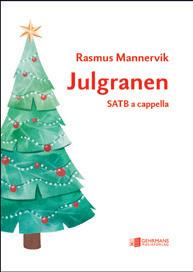
RASMUS MANNERVIK
Julgranen (The Christmas Tree) for mixed choir
Text: Anna-Maria Roos (Swe) GE 14800
P G PETERSSON
Grant Us Peace for female choir
Text: from Gates of Prayer, The New Union Prayer Book (Eng) GE 14896
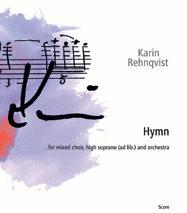
KARIN REHNQVIST
Hymn for mixed choir, high soprano (ad. lib) and orchestra
CHAMBER & INSTRUMENTAL
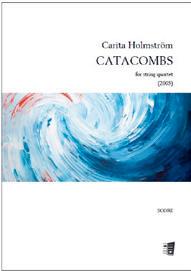
CARITA HOLMSTRÖM
Catacombs for string quartet
FG 9790550180062 (score & parts)
Text: Psalms 57:9-12, Song of Songs 8:6 (Eng)
GE 14869 (score), GE 14871 (choral score), GE 14872 (vocal score)
Version with small ensemble (fl, ob, cl, pf)
GE 14873 (score) GE 14874 (parts)
Take the Milky Way for mixed choir, baroque orchestra (or chamber orchestra) and audience ad. lib
Text: Kerstin Perski (Eng)
GE 14809 (score), GE 14811 (study score) GE 14812 (choral score)
DAVID SAULESCO
Det finns en väg till himmelen (There is a Path to Heaven) arr. for mixed choir
Melody: Sköldingevisan (Swedish folk tune)
Text: Bo Setterlind (Swe) GE 14817
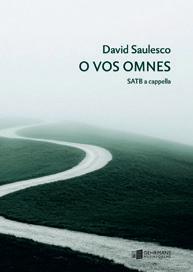
O vos omnes
Motet for mixed choir
Text: from The Book of Lamentations (Lat)
GE 14818
TAPIO TUOMELA
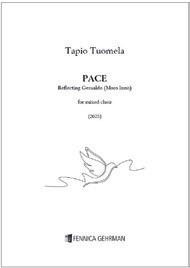
Pace (Peace) for mixed choir
Text: A fragment of the Gospel of John recited in the local language of the performance (“Peace I leave with you. My peace I give to you...”).
FG 9790550119895
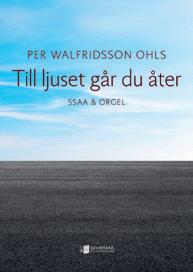
PER WALFRIDSSON OHLS
Till ljuset går du åter
Text: Atle Burman, Bo Setterlind, Svein Ellingsen, Ragnwei Axellie, Britt G. Hallqvist (Swe)
GE 14868
IAN WHITEFORD
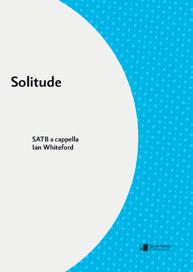
Solitude for mixed choir
Text: Lord Byron (Eng) GE 14771
Piano Trio for piano, violin and cello FG 979055018005 (score & parts)
TOMMI HYYTINEN
Turn for solo horn FG 9790550119949
PETRI KESKITALO
Tubhonium Sketches for euphonium and tuba
Eight duos which are also available separately as pdfs.
FG 9790550119932 (playing score)
EMMY LINDSTRÖM
LOTTA WENNÄKOSKI
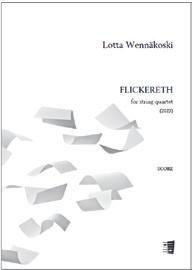
Flickereth for string quartet
FG 9790550119925 (score & parts)
Song about Em for clarinet and and string quartet/ quintet/orchestra
Originally written for clarinet and strings. Can be performed with A or Bb clarinet, accompanied by string quartet, string quintet or string orchestra. The piece can also be played on any C instrument and/or with piano accompaniment instead of strings.
accompanied by string quartet, string quintet
GE 14930 (score), GE 14931 (string parts), GE 14932 (solo parts in A/Bb/C), GE 14933 (piano)
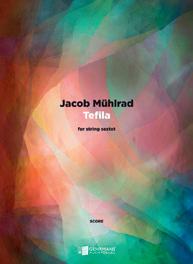
JACOB MÜHLRAD
Tefila for string sextet
GE 13934 (score), GE13935 (parts)
Glimt, skymt for four flutes
FG 9790550180079 (score & parts)
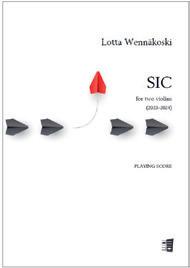
Sic for two violins FG 9790550119956 (playing score)
ORCHESTRA
MIKKO HEINIÖ
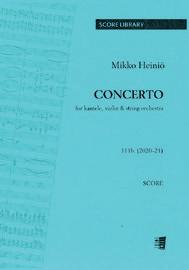
Concerto for kantele, violin and string orchestra FG 9790550180093 (study score)
ROBERT KAJANUS
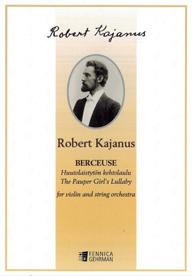
Berceuse – The Pauper Girl’s Lullaby (Huutolaistytön kehtolaulu) for violin and string orchestra FG 9790550119918 (score & parts)
EPUBS NOW AVAILABLE
TOMMI HYYTINEN
Six songs for female choir and organ
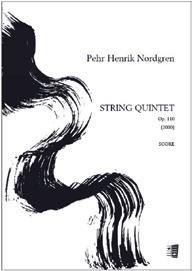
PEHR HENRIK NORDGREN
String Quintet Op. 110
FG 9790550119871 (score & parts)
KARIN REHNQVIST
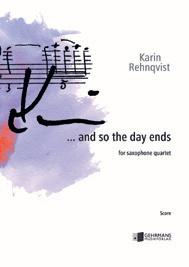
... and so the day ends for saxophone quartet
GE 14897 (score), GE 14898 (parts)
MARIE SAMUELSSON
Alive for solo violin
GE 12055
GE 14958 (score), GE 14959 (parts)
Your Wild Shadow for solo oboe
GE 14847
JENNAH VAINIO
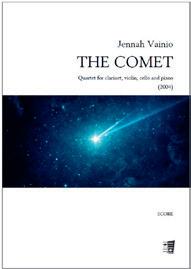
The Comet Quartet for clarinet, violin, cello and piano
FG 9790550119970 (score & parts)
Movements of Seashells and Plastic for cl, vln, perc, pf
Playing from the Core A New Method for French Horn FG 9789525489453
PIRKKO SIMOJOKI, GÉZA SZILVAY
Colourstrings Viola ABC: Book D FG 9789525489798
GÉZA SZILVAY
Violin Scales for Children 1-2 FG 9789525489804, 9789525489811
Violin Scales and Arpeggios FG 9789525489828
BOOKS & COLLECTIONS
IIRO RANTALA TIMO PARVELA
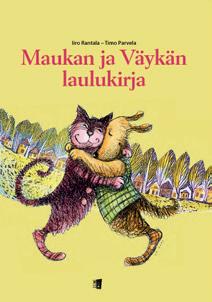
Maukan ja Väykän laulukirja
A charming, colourful book which includes 23 familiar songs from the popular TV programs for children. QR-link to videos included. FG 9789525489781