New Partnership with the University of Lapland
Fulbright Leading to Major Research Grants
Exchanges Foster City Diplomacy
Researching the Arctic
New Partnership with the University of Lapland
Fulbright Leading to Major Research Grants
Exchanges Foster City Diplomacy
Researching the Arctic
The value of academic and professional exchanges across all sectors of our society is stronger, clearer, and more concrete than ever.
In this issue, Finland’s Consul General in New York, Ambassador Jarmo Sareva, highlights how Fulbright Finland exchanges contribute to areas of strategic importance for both Finland and the United States, including artificial intelligence, quantum technologies, advanced connectivity, space science, and energy (p. 3).
Grantees build lasting collaboration and drive progress across disciplines and at every level, from international networks to state institutions, to cities and local communities. Kristen Edgreen Kaufman and her Finnish Fulbright host, Laura Uuttu-Deschryvere, write about their work in city diplomacy (p. 11). Russia specialist Veera Laine discusses her contributions to decision-making and policy advising at the Finnish Ministry for Foreign Affairs (pp. 18–19). Fulbright Arctic Initiative Scholars reflect on their collaborative work in pursuit of policy-relevant recommendations in pressing
6 Yhteistyötä
Fulbright Suomi -säätiön ja Teknologiateollisuuden 100-vuotissäätiön yhteinen stipendiohjelma tukee suomalaisten teknologiaosaajien kansainvälistymistä ja tutkimusyhteistyötä Yhdysvalloissa.
Arctic research questions (pp. 8-9). And Paul Berger shares how his Fulbright experience in Finland grew into major international research projects advancing new technology solutions (p. 10).
Our work is made possible through long-term, trusted partnerships, such as our 20-year collaboration with the Technology Industries of Finland Centennial Foundation (p. 6), and our decades-long partnerships with the University of Turku (p. 13) and the University of Helsinki (p. 5). We are very pleased to announce our newest partnership with the University of Lapland (pp. 4–5). Increasingly, exchanges are also supported by our growing community of donors (pp. 20–21).
The above are just some examples of the articles in this issue, but their message is clear: Exchanges turn academic and professional excellence into lasting impact.
Terhi Mölsä Chief Executive Officer
Fulbright Finland Foundation
U.S. alumni
Russia specialist Veera Laine is one of the Foundation’s alumni working at Finland’s Foreign Ministry. She talks about her Fulbright journey and her belief in the power of understanding history – and international exchange –to broaden perspectives.
From cutting-edge laboratories to bustling campuses, the United States stands as one of Finland’s most important partners in driving research, innovation, and higher education forward. As Finland strengthens its role as a trusted ally and security provider in critical and emerging technologies, the need for deeper academic and scientific exchange between our countries continues to grow.
Finnish universities and research institutions bring world-class expertise in advanced connectivity (5G/6G), artificial intelligence, quantum technologies, space science, clean energy, critical minerals, and Arctic research. Many Finnish companies and research teams already operate extensively in the United States, collaborating with American partners to pioneer new solutions. The opening of Finland’s new Consulate General in Houston reflects our commitment to supporting cooperation in science, technology, and innovation across major U.S. research hubs.
A KEY CONTRIBUTOR TO THIS EXCHANGE is the Fulbright Finland Foundation, whose work is highly valued and supported by the Ministry for Foreign Affairs of Finland and our diplomatic missions in the United States. For more than 75 years, the program has fostered people-to-people connections that translate scientific and academic excellence into lasting impact. By enabling Finnish scholars, researchers, and students to engage in U.S.-based projects – and by hosting U.S. experts in Finland – Fulbright Finland has strengthened the networks that underpin transatlantic collaboration. Its emphasis on mutual learning, academic freedom, and interdisciplinary exploration makes it uniquely suited to support joint initiatives in AI, quantum technologies, clean energy, Arctic studies, and beyond.
The U.S. Northeast – from Pennsylvania through New England – is home to more than 50 of America’s top universities, making it one of the most dynamic regions for research and innovation globally. For the Finnish Consulate General in New York, this presents endless opportunities to foster collaboration between Finnish and U.S. ecosystems of higher education, research, and development. By connecting Finnish researchers, startups, and students with these institutions, the Consulate is ready to help build partnerships that accelerate scientific discovery, stimulate innovation, and deepen transatlantic ties.
Europe – and Finland in particular –contributes strengths to the global research landscape that are often underestimated. In advanced materials, quantum science, climate and environmental research, and basic life sciences, European universities and research institutions rival or even surpass their U.S. counterparts. By combining these capabilities with America’s unparalleled scientific ecosystem, transatlantic partnerships can accelerate innovation and maintain a competitive edge in areas crucial for societal resilience, security, and technological leadership.
Today, the strategic importance of science and technology extends far beyond prosperity, human well-being, and societal resilience. It is central to national security and the ability of democracies to uphold a stable and rules-based international order. We are witnessing a global competition in emerging technologies – AI, quantum, space, advanced energy systems – where non-democratic states are investing heavily to challenge Western scientific leadership. In this environment, open, collaborative, high-trust research communities are a defining asset.
Since the end of the Second World War, the United States has been the world’s
leading engine of scientific discovery. Its universities, laboratories, companies, and federal research agencies have produced breakthroughs that transformed global health, communications, transportation, and security. This unmatched scientific capacity, often underpinned by generous federal funding, has benefited not only the American people but also its allies and partners, including Finland, by strengthening the technological foundations of the transatlantic partnership.
Today, the strategic importance of science and technology extends far beyond prosperity, human well-being, and societal resilience.
For Finland, it is unquestionably in our interest that the U.S. – together with Europe and like-minded partners – continues to drive forward the next generation of scientific advances. Our societies thrive and our economies grow when research and innovation are anchored in openness, academic freedom, and democratic values. By combining our strengths in connectivity, AI, quantum, clean energy, and Arctic science with America’s scientific ecosystem – and by leveraging Fulbright Finland to nurture the human connections behind these initiatives – we are not only advancing science and innovation – we are building the people, networks, and trust that will secure a resilient and prosperous future for our democracies.
Jarmo Sareva
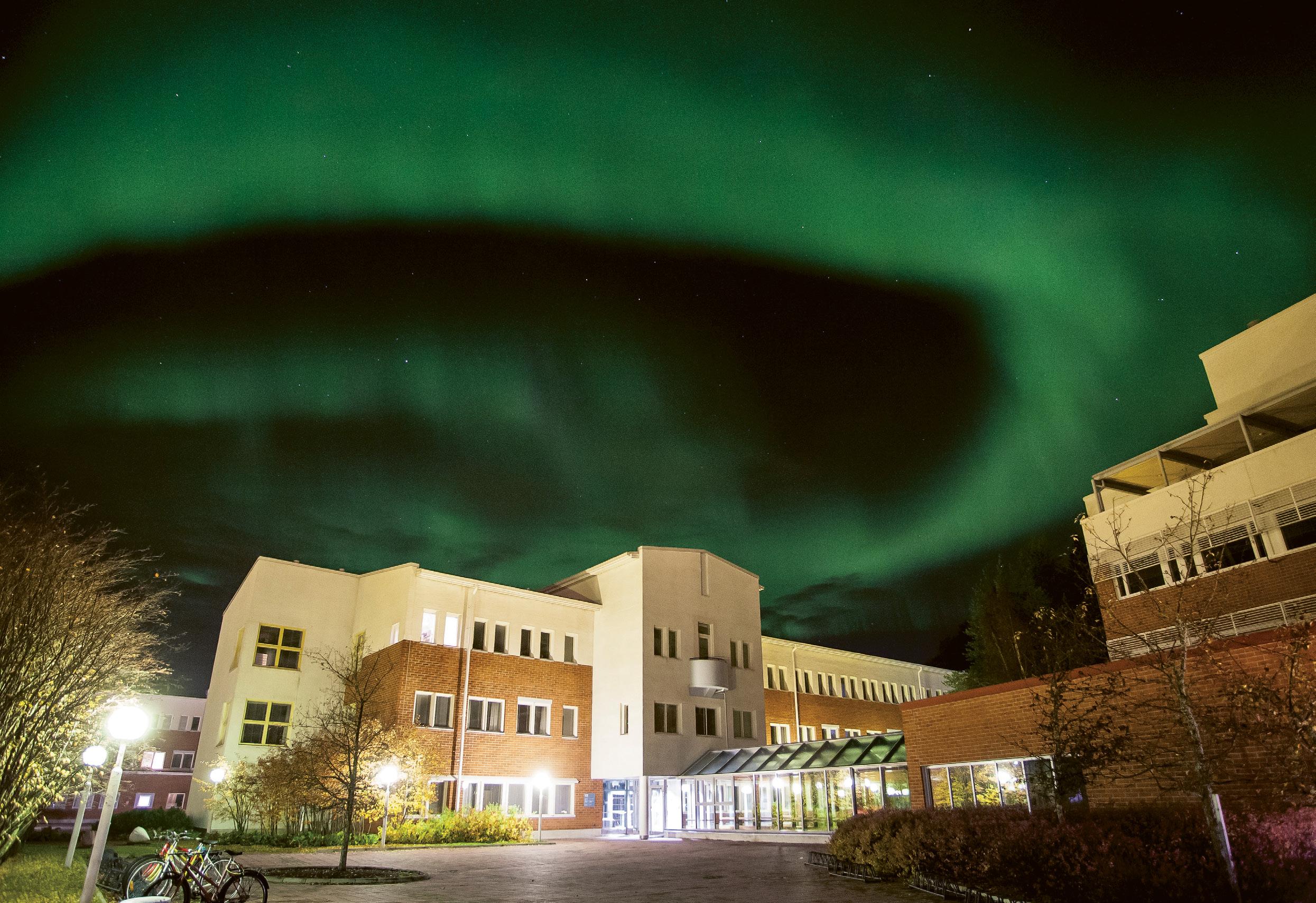
The Fulbright Finland Foundation and the University of Lapland have signed a cooperation agreement to establish a shared U.S. scholar award. The initiative enables U.S. scholars to conduct research and teach at the University of Lapland, strengthening academic collaboration between Finland and the United States. This is the Foundation’s first joint award with the University of Lapland.
Through this program, U.S. scholars will have the opportunity to engage with all four faculties at the University of Lapland – Education, Law, Art and Design, and Social Sciences – as well as the university’s internationally renowned Arctic Center, which focuses on multidisciplinary Arctic research. The award enhances the University of Lapland’s international networking and brings fresh perspectives to Arctic research and teaching. At the same time, it offers U.S. researchers the opportunity to delve deeper into northern issues and actively participate in the Finnish university community.
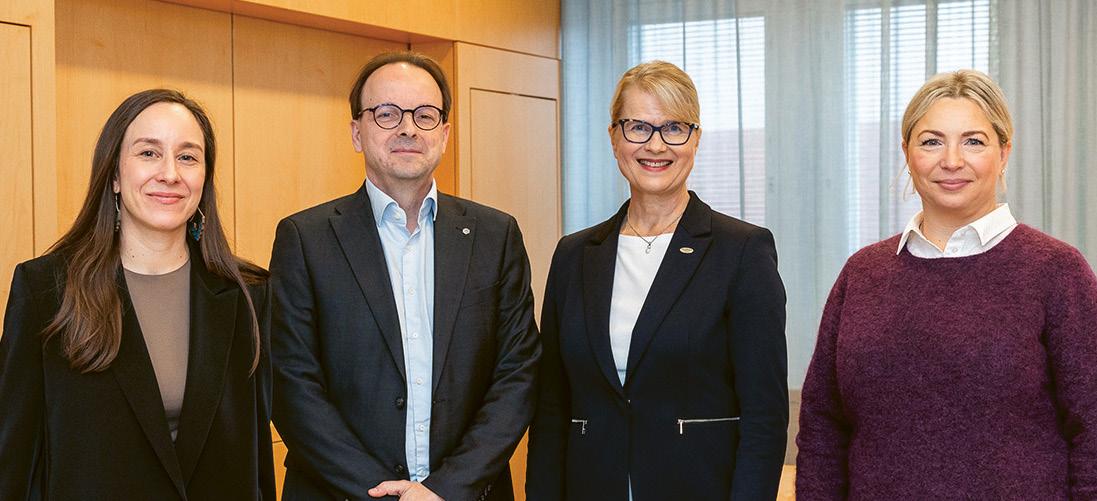
“The United States is one of the leading countries in research and education, so it is natural and justified to deepen the opportunities for academic cooperation between the University of Lapland’s experts in research and the arts and their American partners,” notes Rector Antti Syväjärvi
Arriving scholars and their accompanying family members receive support throughout their grant term through shared funding and services
Senior Program Manager Karoliina Kokko from the Fulbright Finland Foundation.
that facilitate relocation and integration into the local community. The Foundation also organizes an arrival orientation for U.S. grantees, a multiday training in Helsinki that introduces new awardees to Finnish culture and society, while offering practical guidance. This orientation fosters connections among grantees, alumni, and with local networks, helping to ensure a smooth transition and a successful research experience in Finland.
The University of Lapland has long participated in the Foundation’s grant programs. Currently, two of its scholars are part of the Fulbright Arctic Initiative, which promotes international research cooperation on Arctic issues. This fall, the program also welcomed a U.S. expert to the university’s Arctic Center.
“This new award is the first Fulbright award specifically designated for the University of Lapland. We are very pleased to deepen our long-standing relationship with the university,” says the Foundation’s CEO Terhi Mölsä
“The joint award established through this agreement will further strengthen Finnish-U.S. research cooperation and enhance the University of Lapland’s visibility within the U.S. scientific community.”
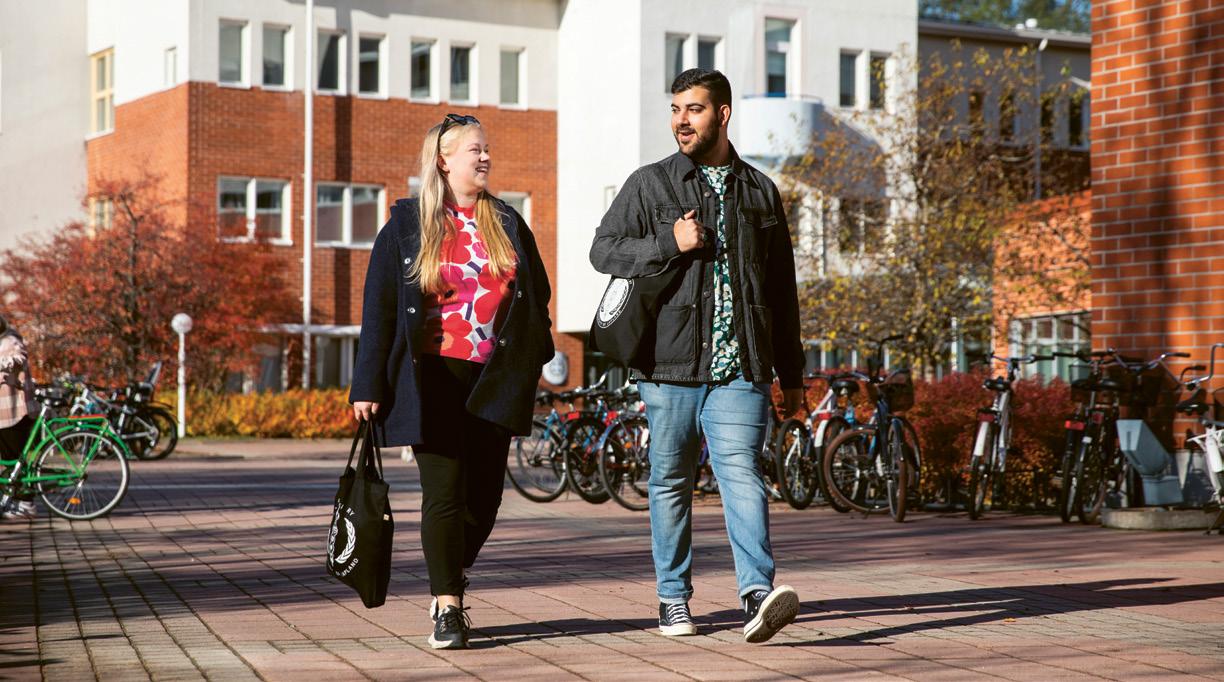
Located in Rovaniemi, the capital of Finnish Lapland, the University of Lapland blends scientific inquiry with artistic expression in a truly Arctic setting.
Its academic strengths span education, law, art and design, social sciences, and northern and Arctic studies. With a research focus rooted in Arctic life and global relevance, the university fosters knowledge and expertise to support sustainable futures in the North and beyond.
The first application round will open in February 2026 for research visits during the academic year 2027-28. www.fulbright.fi/fulbright-university-lapland-scholar-award
The University of Helsinki and the Fulbright Finland Foundation have renewed the agreement on the Fulbright Bicentennial Chair in North American Studies at the University of Helsinki. Established in 1976, this prestigious program is the world’s oldest Fulbright Distinguished Chair and it celebrates its 50th anniversary in 2026.
The Chair strengthens the university’s teaching and research in disciplines such as history, politics, and cultural studies by bringing top U.S. scholars to collaborate with faculty and students, at the University’s Department of Cultures, while also serving as a catalyst for long-term research partnerships with distinguished U.S. experts.
“It provides a tremendous opportunity to exchange perspectives with colleagues at the University of Helsinki, where there is significant expertise on labor relations, migration, and the historical development of relations between settlers and indigenous populations, especially in the American West,” says the current Fulbright Bicentennial Chair, Keith Brown from Arizona State Uni-
versity. “As an anthropologist who has spent my career collaborating with colleagues in different disciplines, it’s been very exciting to see how students here are drawn to cross-cutting questions or problems rather than siloed theories or methodologies,” notes Professor Brown.
Brown finds it humbling to be the latest representative of a fifty-year tradition. “Even though I’m a relative newcomer to the field of North American Studies, I learned about the Chair several years ago. The incredible viewpoint diversity of previous Chairs, representing a wide range of topics, disciplines, and subject positions, was a big part of my decision to apply. It signaled to me that the program’s leadership was open-minded, intellectually curious, and inclusive. It’s been a pleasure to have that impression confirmed.”
The renewal of the agreement underscores the enduring value of transatlantic cooperation in higher education and research, and reaffirms both institutions’ commitment to advancing North American studies in Finland.
Text: Karoliina Kokko
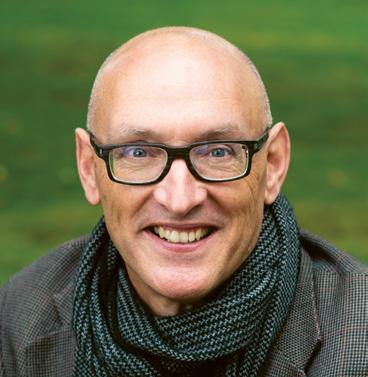
Keith Brown 2025-26 Fulbright Bicentennial Chair in North American Studies, University of Helsinki Professor, Arizona State University Director, Melikian Center: Russian, Eurasian and East European Studies
www.fulbright.fi/ bicentennial-chair
Yhteistyötä suomalaisen teknologiaosaamisen hyväksi jo 20 vuotta


Fulbright Suomi -säätiön ja Teknologiateollisuuden 100-vuotissäätiön yhteistyössä toteuttama stipendiohjelma on jo 20 vuoden ajan tukenut suomalaisten teknologiaosaajien kansainvälistymistä ja tutkimusyhteistyötä Yhdysvalloissa.
Ohjelma on vuosien varrella mahdollistanut kymmenille tutkijoille pääsyn huipputason tutkimusympäristöihin Yhdysvaltoihin tarjoten samalla mahdollisuuden kansainväliseen tiedeyhteisöön kiinnittymiseen, verkostoitumiseen ja uuden osaamisen tuomiseen takaisin Suomeen.
Stipendiohjelman tavoitteena on kehittää suomalaisten tutkijoiden monialaista osaamista ja kykyä soveltaa huipputason, tarveperusteista teknologiaa eri sektoreilla. Ohjelma tukee pysyvien verkostojen syntymistä ja vahvistaa Suomen ja Yhdysvaltojen yhteistyötä tieteen, koulutuksen ja teollisuuden aloilla. Tuloksena syntyy suomalaisia huippuasiantuntijoita, professoreja ja uusia yrityksiäkin.
”On ollut todella inspiroivaa nähdä, kuinka merkittävä vaikutus Fulbright-stipendeillä on ollut stipendiaattien urapolkuihin ja henkilökohtaiseen kasvuun. Lisäksi alumnitoiminta, jatkuva yhteistyö eri tieteenalojen asiantuntijoiden kanssa sekä yhteiset tapahtumat auttavat luomaan pysyviä yhteyksiä ja edistämään korkeatasoista tutkimusta ja koulutusta molemmin puolin Atlanttia. Tällainen syvä ja monipuolinen vaikuttavuus on erinomainen esimerkki siitä, millaista lisäarvoa kansainvälinen yhteistyö voi parhaimmillaan tuottaa”, toteaa Teknologiateollisuuden 100-vuotissäätiön johtaja Antti Aarnio
Yksi esimerkki ohjelman kauaskantoisista vaikutuksista on Timo Dönsberg, joka työskentelee nykyään suomalaisessa avaruustekniikka-alan
Fulbright-stipendiohjelman ansiosta pääsin tekemään huipputason tutkimusta Yhdysvalloissa tavalla, joka ei olisi muuten ollut mahdollista.
– Timo Dönsberg
yritys ICEYE:ssa. Hän vietti tutkimusvierailunsa
The National Institute of Standards and Technology (NIST) -virastossa Coloradossa lukuvuonna 2021–22.
”Fulbright-stipendiohjelman ansiosta pääsin tekemään huipputason tutkimusta Yhdysvalloissa tavalla, joka ei olisi muuten ollut mahdollista. Opin ainutlaatuisia ja arvokkaita taitoja, joita voin hyödyntää tulevassa työssäni, ja samalla loin paljon ammatillisia kontakteja yhdysvaltalaisten alan asiantuntijoiden kanssa sekä sain uusia ystäviä.”
Timo Dönsbergin kokemus kiteyttää sen, mitä Fulbright-ohjelma parhaimmillaan tarjoaa: mahdollisuuden kasvaa, oppia ja rakentaa siltoja, jotka kantavat pitkälle tulevaisuuteen sekä vahvistavat suomalaisen teknologia-alan kehitystä.
Text: Karoliina Kokko
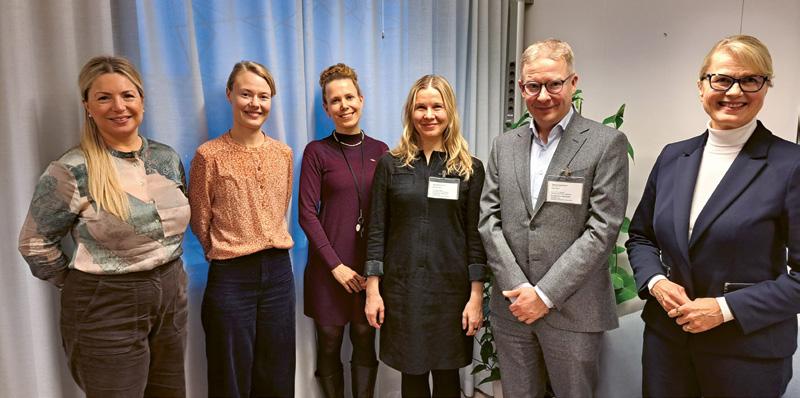
Kuvassa (v-o): Karoliina Kokko, Emmi Jelekäinen, Mirka McIntire Fulbright Suomi -säätiöstä, Marianna Jokila ja Antti Aarnio Teknologiateollisuuden 100-vuotissäätiöstä ja Terhi Mölsä Fulbright Suomi -säätiöstä.
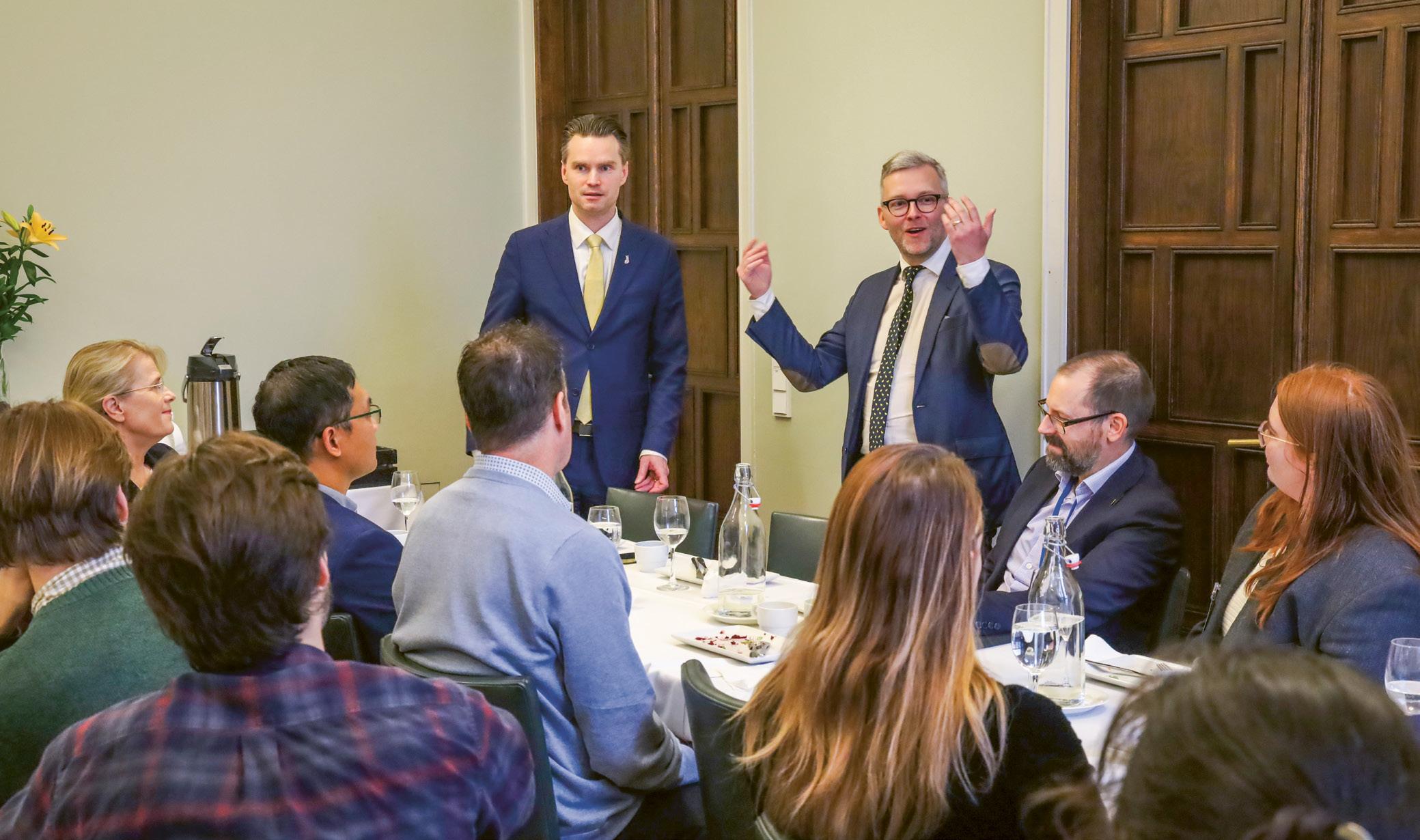
The Parliament of Finland annually hosts the U.S. Fulbright grantees for a discussion over lunch and tour of the Parliament House.
On this year’s visit, Heikki Autto, Chair of the Defence Committee, and Mats Löfström, Chair of the Intelligence Oversight Committee, provided an overview of the current themes on the Finnish Parliament’s agenda. This was followed by an insightful discussion on comprehensive security, EU and NATO, trade and economics, and the impact of Fulbright exchanges on Finnish-U.S. relations.
In a discussion with Member of Parliament Antti Lindtman, the grantees had an opportunity to learn
more about the political landscape and current trends in voting patterns in Finland and abroad.
Understanding Finland’s political system and the Finnish Parliament is important for the U.S. Fulbright grantees in their role as citizen diplomats.
“There were so many profound takeaways but one particularly brought it home for me - there are many ways we can foster bilateral relationship, and as MP Mats Löfström put it, efforts like the Parliamentary Friendship Groups ultimately come down to nurturing an important asset - our shared human connection,” Fulbright-Tampere University Scholar Anjali Rameshbabu reflected.
All Fulbright Finland grantees go through a comprehensive orientation program. Before arrival, grantees receive essential information through blended learning modules with pre-assignments, web-based guides, and online meetings. This is followed by an in-person orientation seminar week in Helsinki. It is organized twice every year and it connects the grantees directly with the Foundation’s key partners and leaders in education and society. Throughout the seminar week, the grantees engage with representatives from ministries, universities, and research and cultural institutions, learning about Finnish society, institutions, language, and culture.
In the photo, Senior Adviser Marko Mäntylä (left) from the Ministry for Foreign Affairs briefs this year’s grantees on Finland’s foreign policy and the current transatlantic and global security environment.
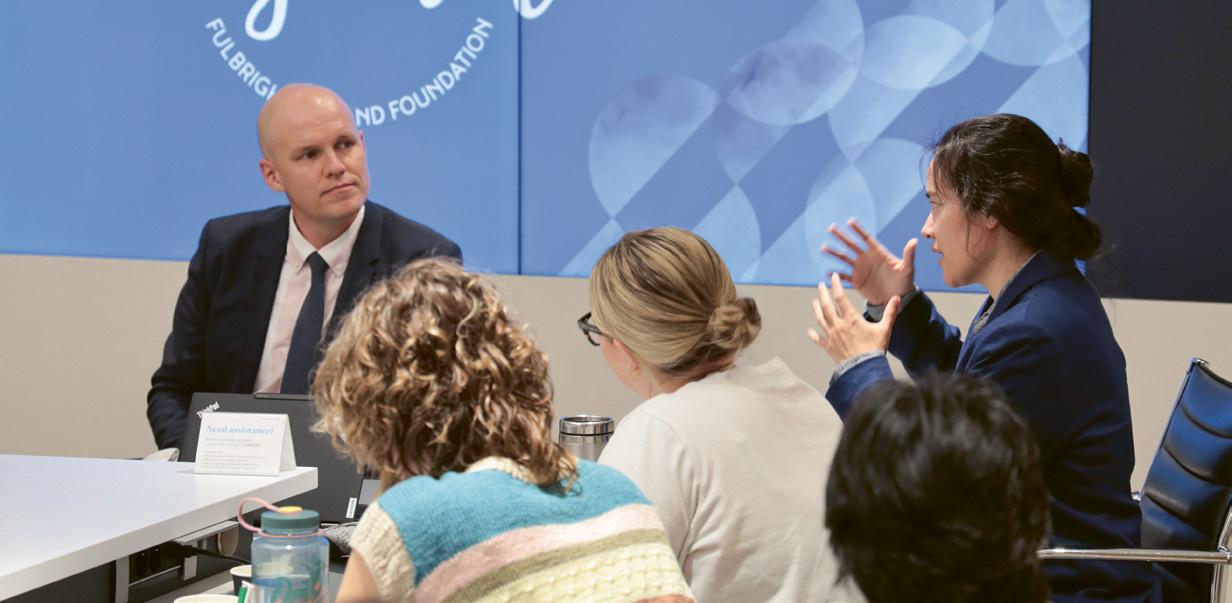
Throughout the grantees’ stay in Finland, the Foundation organizes additional events, helping them continue building connections instrumental for their research, studies, and their role as citizen diplomats. Text: Maija Kettunen
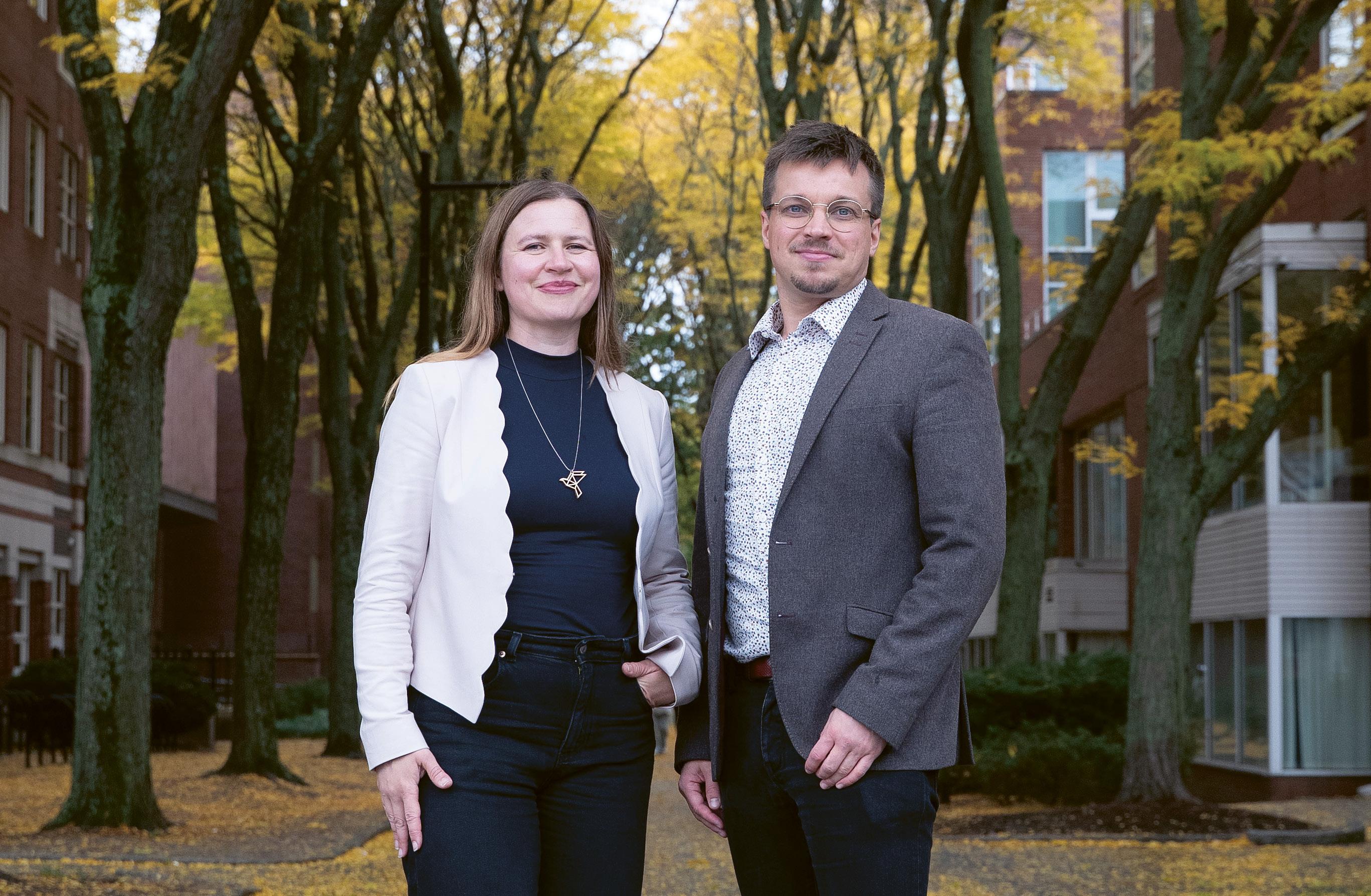
The Fulbright Arctic Initiative brings together professionals, practitioners, and researchers from Arctic Council member countries to address key research and policy related questions through a diverse, collaborative framework with webinars, thematic group collaboration, in-person meetings, and an individual exchange experience. Its current fourth cohort includes three Finnish researchers – Tanja Joona, Juho Kähkönen, and Alexandra Middleton –and U.S. scholar Heather Gordon, who recently completed her exchange in Finland. This fall, three of them were on their individual exchanges and now reflect on their experiences.
Alexandra Middleton
My six-week stay in Boston began in October 2025, when Finland was already experiencing freezing temperatures. Amidst the intense heat of 30°C, Boston welcomed me with its vibrant international atmosphere and sense of easygoing freedom. I am residing at the Harvard Belfer Center’s Arctic Initiative, pursuing my project,
which has been in development for over a year. My research, which focuses on Arctic socio-economic development, aligns perfectly with the Fulbright Arctic Initiative’s goals of promoting science diplomacy and advancing Arctic knowledge.
On the second day after my arrival, I participated in an Arctic security workshop with visitors from Norway, focusing on the Arctic security domain. Later, I spoke at the seminar “On Thin Ice: Stories of Trust (and Mistrust) in Arctic Research and Policy.” My fellow panelists and I explored how researchers can best build trust in Arctic communities, which have often been exploited and colonized.
Reflecting on the seminar, trust emerged as a key takeaway from my visit. The media often shapes the narrative of the U.S. focusing on difficulty and political instability, and from across the Atlantic, it is not always easy to grasp reality here. However, my time at Harvard has been incredibly welcoming, offering a different view that has nothing to do with the negativity, hostility, and hatred that one might encounter in mass media.
Is it a Harvard bubble that creates this effect? I believe that both the people and values of the insti-
The Fulbright Arctic Initiative is a program of the U.S. Department of State’s Bureau of Educational and Cultural Affairs. In Finland, the program is managed by the Fulbright Finland Foundation.
Alexandra Middleton Fulbright Arctic Initiative IV Scholar
Harvard University, Kennedy School of Government
Postdoctoral Researcher, University of Oulu
Harvard Kennedy School.
tution create it. This stems from the burning desire of people to learn, question, and engage in dialogue.
However, it is the institution that provides a safe space where students and faculty are open to constructive engagement and treated equally. We all contribute through our diverse backgrounds, personal stories, and understanding of peace and justice. I experienced this unity in the values of the people and the institution at every seminar and event I attended.
But this openness was not confined to campus; when I experienced human connection in everyday life, sharing conversations on the street, and in coffee shops, I found that these small interactions were all part of my unique immersion into the U.S. and building trust with the place and its people. The most important lesson is to take a leap of trust and test it for yourself, rather than being guided by external force.
Juho Kähkönen
What is it like to conduct climate research at Harvard these days? The briefest answer was given by Alan Garber, the president of Harvard University, in the opening speech of the university’s annual Climate Action Week. Referring to Kermit the Frog, Garber emphasised how “it’s not easy being green.”
The tension in U.S. politics is palpable, with research institutions and departments nationwide closing down. Research in climate and environmental studies is under unprecedented pressure. Grants are being terminated. Amidst all that is happening elsewhere, it feels surreal to be at Harvard and to carry out well-supported research on changes in the Arctic.
Conducting research at Harvard has been enriching as the university continues its dedicated work. At the Belfer Center’s Arctic Initiative, our team comprises a fabulous group of international colleagues. Together, some of the world’s most pressing issues are addressed.
Many of us have Fulbright grants. Including myself, four of us possess the Fulbright Arctic Initiative IV grant.
Fulbright has done remarkable work to enhance Arctic research, and there is more to come.
I am enthusiastic about the latest Fulbright Finland Foundation’s grant program, which will enable U.S. academics to visit and conduct research at my Alma Mater, the University of Lapland. It is an excellent addition to the strong linkages between the United States and the northernmost university in the EU, formalised through the unique American Arctic Connection agreement in 2021. Similarly,
scholars at Harvard recognise the importance of conducting research there, where the action truly takes place.
I rarely have coffee breaks at the Belfer Center without being asked about the ongoing transitions in the Arctic. People are aware that the region is warming faster than any other part of the world.
The first ice-free days in the Arctic Ocean could happen before 2030. Changes will become irreversible. My research explores what all of this signifies for logistics occurring on Indigenous peoples’ lands.
The question is vast. Humanity is entering an unprecedented period in which several tipping points will be reached, with severe impacts on ecosystems and human societies.
Universities in the Arctic now stand at the forefront of global debates. Flexible institutions are fundamental to solving wicked problems. Through bold collaboration, tackling risks becomes achievable.
Heather Gordon
Heather Gordon from the American University is a scholar of Indigenous studies and works with Indigenous Nations and communities on research, evaluation, and technical assistance in support of human rights and environmental justice.
During her exchange visit to Finland, she visited the Arctic Center of the University of Lapland and traveled across Sápmi and conducted research on policies that can inform U.S. federal policy around land and water management through Indigenous governance.
“One of the most important lessons I am bringing back to my Alaska Native community from my Indigenous relatives in Sápmi is this: While land and ocean subsistence harvesting management in Alaska is undeniably complex (requiring engagement with at least seven different agencies) this complexity can distract us from the more urgent and critical questions of land and ocean use and development.
Extractive industries, mining, constructing roads, and oil and gas drilling, directly impact our environments and communities. Colonial bureaucracies seek to channel our energies into defending our right to harvest, while obscuring development and use decisions that determine whether harvesting remains possible at all.
Using our sovereignty to bring our relational Knowledges and Sciences into use decisions is critical, as unchecked extraction may ultimately destroy the very environments that sustain fishing and other forms of harvesting.”
Juho Kähkönen Fulbright Arctic Initiative IV Scholar Harvard University, Kennedy School of Government, and Dartmouth College Researcher, University of Lapland
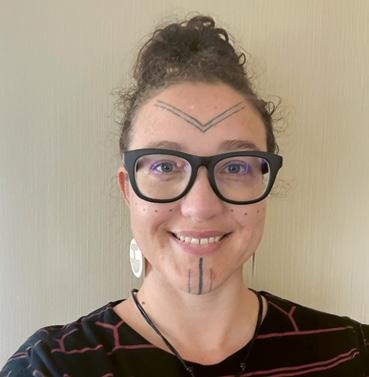
Heather Gordon Fulbright Arctic Initiative IV Scholar University of Lapland Assistant Research Professor, American University Founder and Principal Consultant, Sauyaq Solutions Consulting
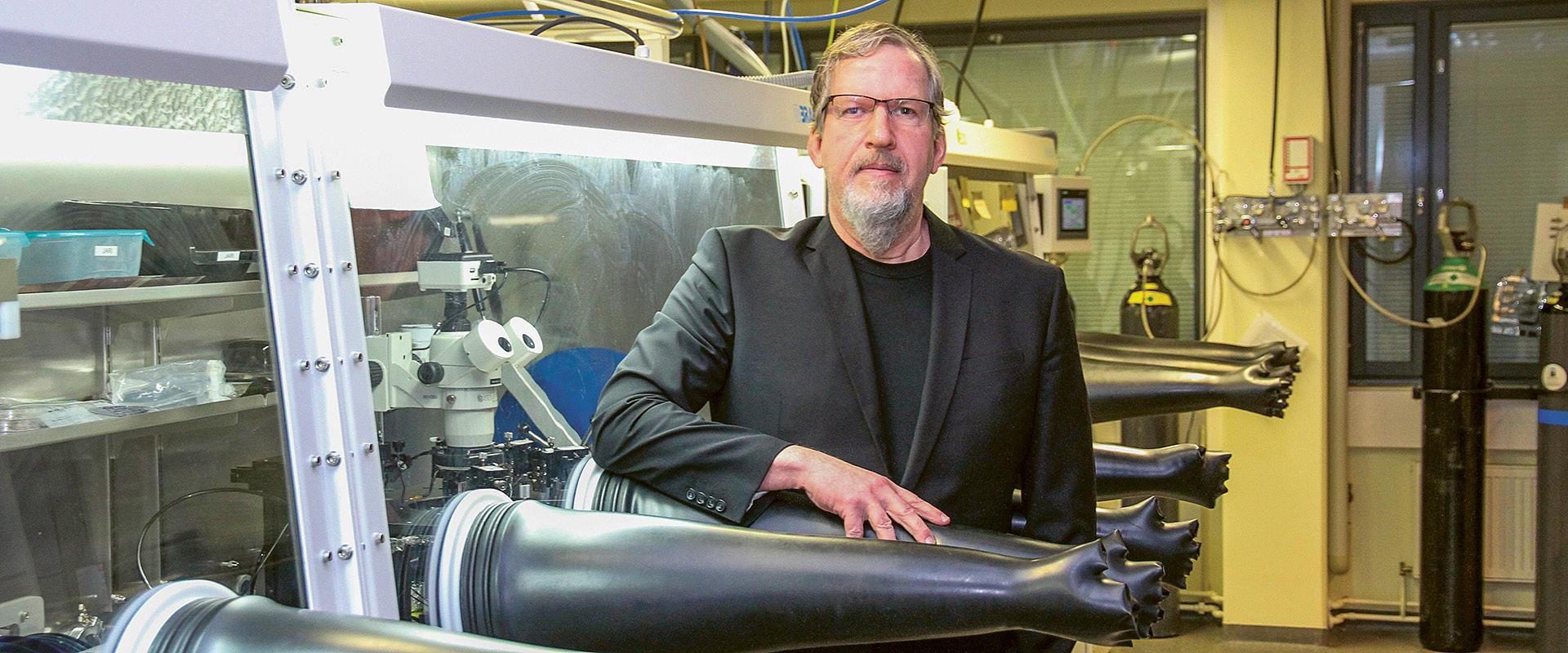
Finns are some of the most tenacious people that I have had the pleasure of meeting. Never underestimate a Finn and never count them out. The Finns have a word that describes this trait, called Sisu. In a series of Finnish emojis the one for Sisu illustrates a girl punching through a boulder. This embodies the Finnish spirit.
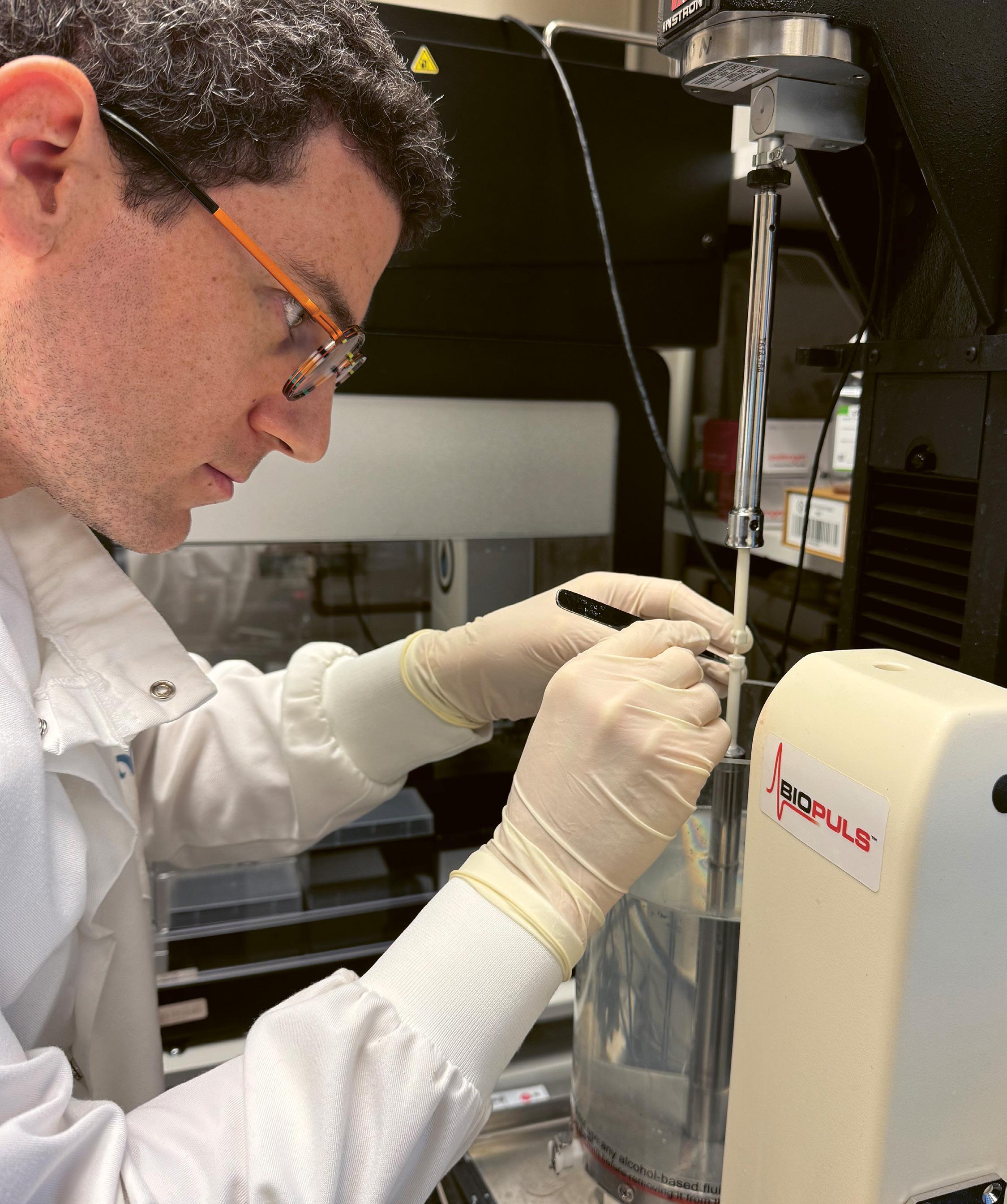
My 2020-22 Fulbright-Nokia Distinguished Chair award was a key pivotal moment, following an earlier Finland Distinguished Professor, known as a FiDiPro (2014-19), leading to a semi-permanent presence at Tampere University as a Docent for “Flexible, Thin-Film, Low-Power Circuitry”. But, having exhausted all available distinguished visiting professor funding programs, it became imperative in 2021 that I needed to garner external grant funding to continue my presence there.
However, grant applications to the Research Council of Finland (RcF), would return rejection after rejection, mostly focusing upon my limited presence in Finland to effectively lead a scientific program remotely.
My affiliation with Finland began in 2009, when Professor Donald Lupo, an old colleague of mine from the Max-Planck Institute for Polymer Research in 1999, became a professor at the then named, Tampere Institute of Technology. Lupo founded the Laboratory for Future Electronics (LFE) in 2009, and we co-wrote Lupo’s first academic proposal that got funded, beginning my legacy in Finland since 2010, when the project initiated.
From 2010 to 2020, I received six grant rejections, meaning that my relationship with Finland would become a relationship on paper only following the conclusion of my Fulbright.
During my Fulbright in Finland I was able to coordinate with VTT Technical Research Centre of Finland to co-write a grant application on advanced
printed flexible electronics, pushing the boundary limits of what Mother Nature demands regarding temperature and time of crystal growth that would burn up fragile flexible substrates otherwise.
On this seventh application, I was able to successfully secure a €1.32 million grant from the RcF with VTT, demonstrating my own Finnish Sisu. In that grant’s reviews, they again stated there is a potential disconnect with my being based in the U.S., but they indicated I had demonstrated a nice track record in Finland. I persevered.
This project involves pushing the limits of atomic layer deposition (ALD) for flexible, printed transistors using some novel sintering techniques with ALD that I proposed. This successful grant became the first domino to fall, leading to additional successful grant applications.
A second grant from RcF on sustainable and biodegradable flexible electronics (€1.1M) was also with VTT.
The third grant is on powering flexible electronics through enhanced supercapacitors, where I act as Work Package 3 Leader. Funded by the European Commission under Horizon 2020, the “Atomic Layer-coated Graphene Electrode-based Micro-flexible and Structural Supercapacitors (ARMS)” (€4.5M) has 10 consortium partner institutions in Sweden, Denmark, France, Spain, and Latvia.
Altogether, I am overseeing about €7M in funding in Tampere, directing a team of postdocs and graduate students with my colleague Matti Mäntysalo
This transcends the traditional Fulbright exchange, where lasting long-term relationships can be cultivated. Ironically, a recent DNA hereditary test indicated that I am 5.2% Finnish, unbeknownst to me all these years. So, you could say that I had Finnish Sisu written into my DNA all along!
Paul Berger 2020-22 FulbrightNokia Distinguished Chair in Information and Communications Technologies, Tampere University Professor, The Ohio State University www.fulbright.fi/nokiadistinguished-chair
Watch an interview with Paul Berger on Youtube https://bit.ly/4rJqmaL
Text KRISTEN EDGREEN KAUFMAN, LAURA UUTTU-DESCHRYVERE
When the world is roiled by complex geopolitics, what can cities do to maintain and strengthen international cooperation?
Arecent Fulbright Specialist exchange between Helsinki and New York demonstrates how cityto-city diplomacy can create meaningful cross-border partnerships that benefit citizens on both sides of the Atlantic.
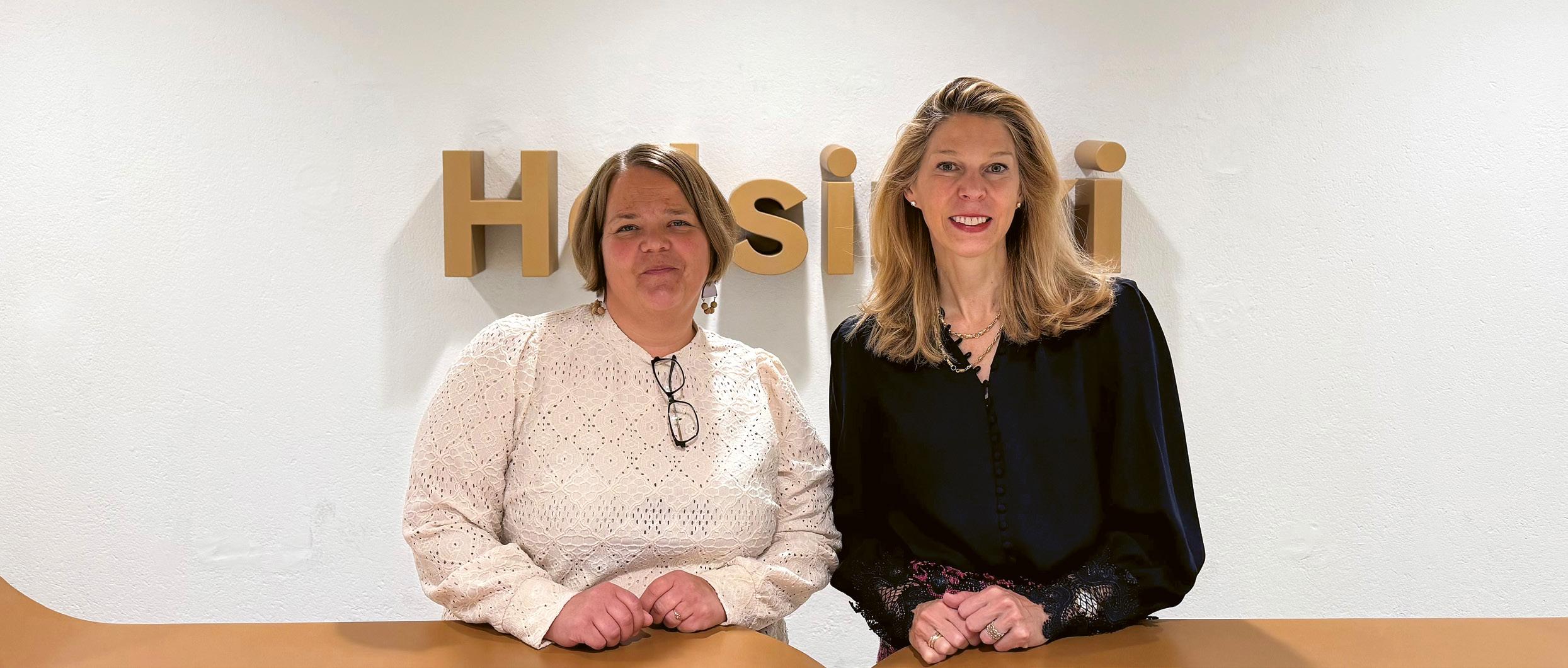
Kristen Edgreen Kaufman (photo right), Senior Vice President of Global Impact Initiatives at the U.S. Council for International Business and former Deputy Commissioner in NYC’s Mayor’s Office for International Affairs, completed a Fulbright Specialist exchange with the City of Helsinki earlier this fall.
Hosted by Laura Uuttu-Deschryvere, Head of International Affairs, this collaboration exemplifies how the Fulbright Specialist program can serve as a powerful tool for establishing meaningful partnerships between Finnish and U.S. cities.
The exchange, building on a professional relationship that began three years ago, focused on strategic areas where Helsinki and American cities can learn from each other. Kaufman consulted with Helsinki officials on various initiatives and their strategy for engaging with U.S. cities and in international public-private partnerships, while also facilitating concrete connections with U.S. think tanks,
nonprofits dealing with city diplomacy, and other entities. Her expertise proved particularly valuable as she worked with Helsinki’s economic development arm to discuss best practices for attracting foreign direct investment and building out different economic ecosystems.
The City of Helsinki is actively engaged in international collaboration. In fact, its City Strategy 2025–2029 identifies international affairs as one of the cornerstones of the city’s operations. As part of that vision, Helsinki actively seeks to build impactful international partnerships to support its strategic goals in areas such as sustainable development and economic policy. This exchange laid a strong foundation for future cooperation between Helsinki and U.S. cities, and demonstrated how international co-operation enables cities to learn from global peers and apply international best practices at the local level – benefiting both Americans and Finns alike.
Over the past decade, city-to-city diplomacy has taken on new importance. As global geopolitics grow more fragmented and the state-based international order is being challenged, cities are stepping into the void, creating substantive cross-border partnerships to solve practi-
cal problems for their citizens. City-to-city diplomacy was once primarily associated with sister-city initiatives and cultural exchanges but today’s municipal leaders are building new pathways for practical cooperation to tackle shared challenges. By fostering collaboration, such partnerships can benefit both communities while strengthening transatlantic ties.
The collaborative potential of cities across the globe is being harnessed by organizations worldwide. The Fulbright Specialist program provides a unique mechanism for American expertise to contribute to these efforts while bringing international best practices back to U.S. cities.
With the UN projecting that nearly two out of every three people will reside in urban centers by 2050, the influence of cities will only continue to grow. Cities are increasingly recognized as key actors in addressing global challenges and contributing to global governance.
At a crucial moment when strong partnerships matter more than ever, such exchanges show how investing in cityto-city relationships can create lasting bonds with allies, boost economic growth, and strengthen democratic values across borders.
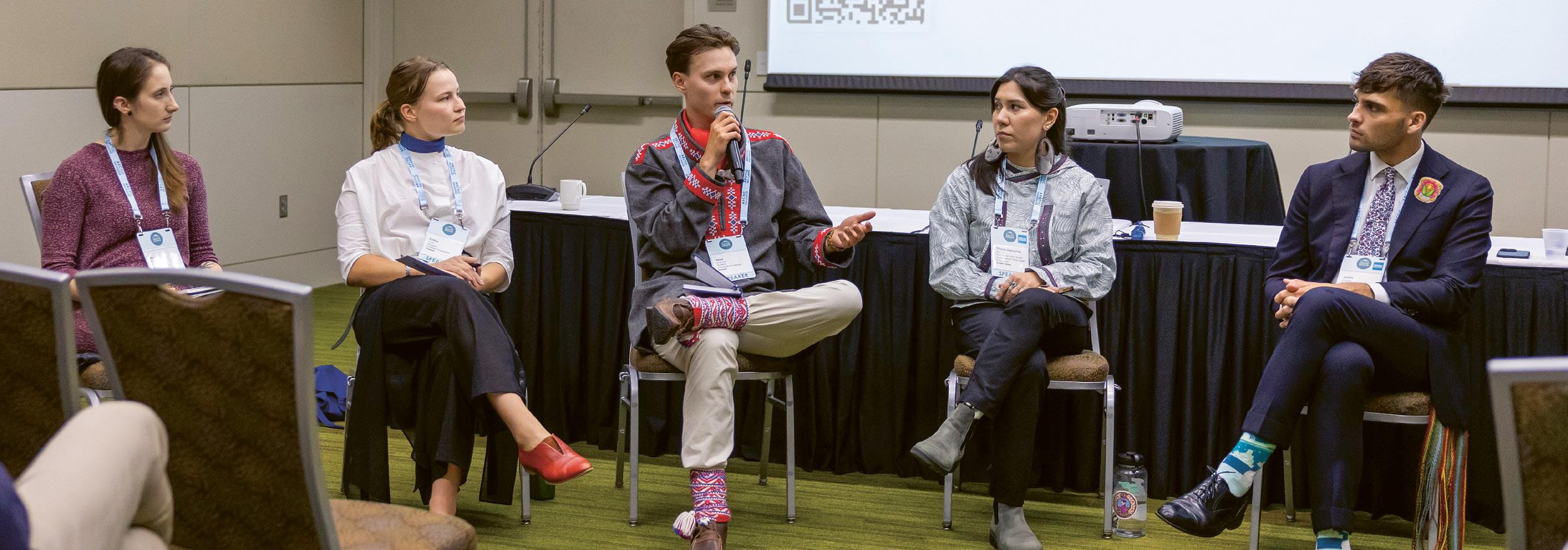
Emilia Luiro and Vesa Orassalo were part of a multidisciplinary group of 12 young Nordic changemakers selected to participate in the first Arctic Encounter Symposium Youth Grant program in Alaska.
United by their passion for Arctic issues and ready to make a difference in the society, the group consisted of students, for example, of Economics, Education, Chemistry, Political Science, and Architecture.
Emilia Luiro, Finnish participant born in Kemijärvi, wants to make an impact at the political level. “I am committed to working towards more sustainable social foundations so that nature in its full diversity can thrive, be resilient, and keep giving the prerequisites for life.”
To achieve this objective, Emilia has chosen to study Economics and Politics at the University of Helsinki and wants to also combine studies of Forest Sciences in the mix. “I have faith in institutions and in change that can be navigated by scientific research and political will,” Emilia shares.
Vesa Orassalo, Skolt Sámi himself, is an advocate against the harmful use of Arctic waters and land areas and brought to the Nordic youth delegation his expertise and traditional knowledge of hunting and fishing.
In addition to doing grassroot level work on the removal and disposal of pink salmon from the Arctic rivers, Vesa has presented on multiple forums and shared, how everybody can help protect the wild salmon in Arctic waters. Currently, Vesa is finishing his Education studies at the University of Lapland in Rovaniemi: “As a teacher, I will share more information of Arctic areas and cultures for the children, hopefully raising them to be mindful and active protectors of our nature.”
In addition to attending various expert panel discussions and events at the Arctic Encounter Symposium, the largest annual Arctic policy and business event in the U.S., both Vesa and Emilia had the opportunity to share their stories on empowerment, youth leadership, and ways to participate in making a change in their local communities in a session with the Nordic youth delegates.
The program received 108 applications from undergraduate students from all around Finland demonstrating a need for short-term exchanges for undergraduate students, and the impact is even greater when a group of students get to collaborate on pertinent issues.
“In the core of the experience were people –grantees from the other Fulbright commissions as well as the connections we made in the summit from high level meetings to the ones we had with our peers from different parts of the Arctic. The learning happened on multiple levels from seminar rooms to dinner tables and shared stories. Now I have a broader network but also a fuller heart,” Emilia summarized.
According to Vesa, the grant program was a once in the lifetime opportunity, giving him a chance to connect with, and get to know leaders of today and the future in Arctic politics. “I can confidently say that I am now in a better position to speak for the youth and have better impact on regional issues, all because of this opportunity,” Vesa concludes.
Text: Mirka McIntire
Fulbright Finland Foundation grantees
Emilia Luiro (2nd from the left) and Vesa Orassalo (speaking) presenting with the Nordic Delegation at the Arctic Encounter Symposium.
With special funding from the U.S. Embassy in Copenhagen and the Nordic Fulbright Commissions, the Nordic collaboration enabled a delegation of 12 representatives of Nordic youth, including two Finns, to attend the 2025 Arctic Encounter Symposium in Anchorage in July.
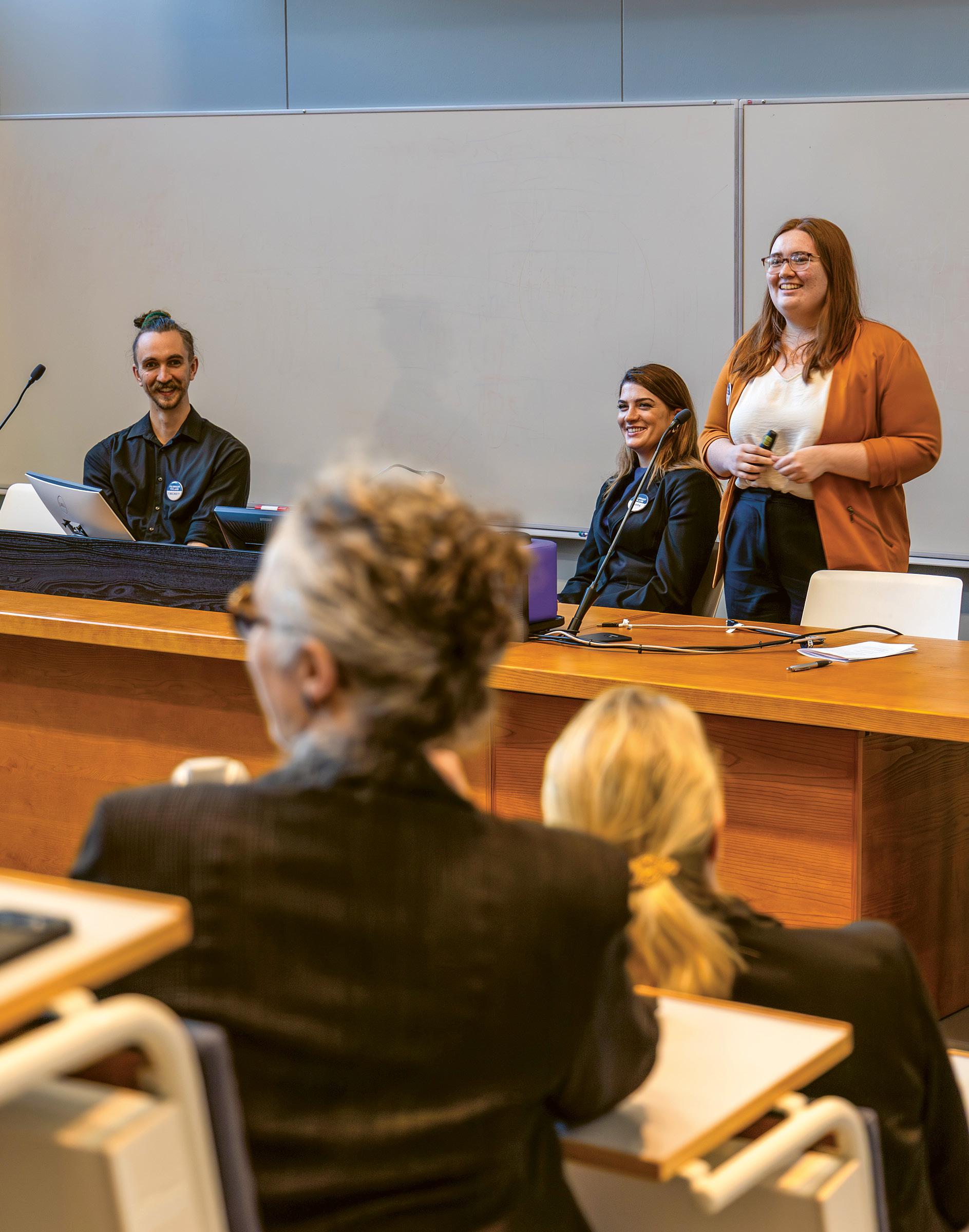
Every October students at the University of Turku make their way to the American Voices Seminar to learn about the various aspects of U.S. society and culture.
The American Voices Seminar is the public highlight of the collaboration between the Fulbright Finland Foundation and the University of Turku,” says Janne Korkka, Senior lecturer and organizing partner at the Department of English at the University of Turku. The two-day event offers a space in which current U.S. Fulbright Finland grantees share their insights on a vast variety of aspects concerning the United States to students in the North American Studies program and the interested public.
Each year, the grantees bring a dynamic mix of presentations to the American Voices seminar. While some presentations focus on more lighthearted topics, such as the cultural impact of Trader Joe’s or different Fall festivities, others dive into timely and thought-provoking issues, including American science and health politics and different perspectives on the American workplace.
Organized jointly by the Fulbright Finland Foundation and the Department of English, the seminar is a compulsory part of the curriculum for North American Studies students, who receive credits for attending and writing a report on the presentations. Some students even return to the seminar year after year. Janne Korkka has a theory about why that is.
“I see many students coming back for a third or fourth year. I believe this reflects both the varied topics and the friendly atmosphere at the seminar,” Janne says. He also highlights the opportunity for students to engage directly with the U.S. grantees, not just by listening to their presentations but
through meaningful interaction. “I think this combination gives students an ideal setting to reflect on their own learning and engage with new ideas that they may want to explore further on other courses and their thesis work,” Janne concludes.
Text: Maximilian Fleischer
What happens when U.S. grantees step outside their usual research fields?
Explore the full story about the XXXII American Voices seminar online: www.fulbright.fi/about-us/ blog/american-voicesvalued-tradition
Valmistautuminen stipendikauteen alkaa Turusta
American Voices -seminaari on olennainen osa suomalaisten maisterija tohtoriopiskelijoiden orientaatiokoulutusta. Opiskelijastipendiaatit valitaan stipendiohjelmiin vuotta ennen kauden alkua Yhdysvalloissa, ja syksyllä he aloittavat sopivien yliopistojen kartoittamisen. Seminaarin aikana opiskelijat tapaavat yhdysvaltalaiset Fulbrightstipendiaatit ja voivat kysyä heiltä neuvoja ja vinkkejä hakuprosessiin. Viikonlopun aikana uudet stipendiaatit myös liittyvät konkreettisesti osaksi laajempaa Fulbright Suomi -säätiön yhteisöä.
2026-27 Fulbright-KAUTE Foundation Award -stipendiaatti Milla Tarpola oli tyytyväinen seminaarikokemukseensa. “Tutustuminen muihin stipendiaatteihin ja amerikkalaisiin Fulbrightereihin oli todella antoisaa ja kiinnostavaa. Työssäni vietän aikaa vain oman alan tutkijoiden kanssa, joten tilaisuudet joissa pääsee jakamaan ajatuksia muiden alojen osaajien kanssa tuovat aivan erityistä iloa”, Milla kertoo.
“Opin paljon uutta sekä Fulbright-ohjelmasta että amerikkalaisesta kulttuurista. Sain myös uusia ajatuksia tutkimukseen liittyen, ja löysin jopa yhden haastateltavan tutkimusta varten osallistujien joukosta”, hän jatkaa.
Text LOUISA GAIRN
When Patrik Haverinen first set his sights on studying in the United States, he couldn’t have imagined the opportunities that decision would open up. Four years on, after earning a degree in Global Affairs at Yale University and as a Fulbright Finland Undergraduate Program grantee and a Renewal Grant recipient, he finds himself once again preparing to return across the Atlantic – this time as a diplomat trainee as part of the EU delegation in Washington, D.C.
“Fulbright Finland gave me more than an opportunity to study,” he says. “It gave me a network, a community, and a way of thinking about the world –as something to explore, understand, and connect.”
What attracted him to study in the U.S. in the first place? Patrik recalls exploring his options while completing military service after high school, and being struck by the opportunities offered by the U.S.
liberal arts model, a system that allows students to explore multiple fields before specializing. “I realized that the liberal arts approach doesn’t really exist in Finland or Europe,” he recalls. “I wanted the chance to study across disciplines and learn in a more open academic environment.”
However, applying to U.S. universities quickly raised practical questions about funding. While Yale ultimately offered him virtually a full scholarship, Patrik says the Fulbright Finland Undergraduate Program was invaluable, providing him not only with additional financial support for his studies, but connecting him with a network that could help him find his place in the U.S. as someone with no previous ties there.
The Fulbright Finland Foundation, he notes, envisages participating Finnish students as “citizen diplomats,” encouraged to share Finnish
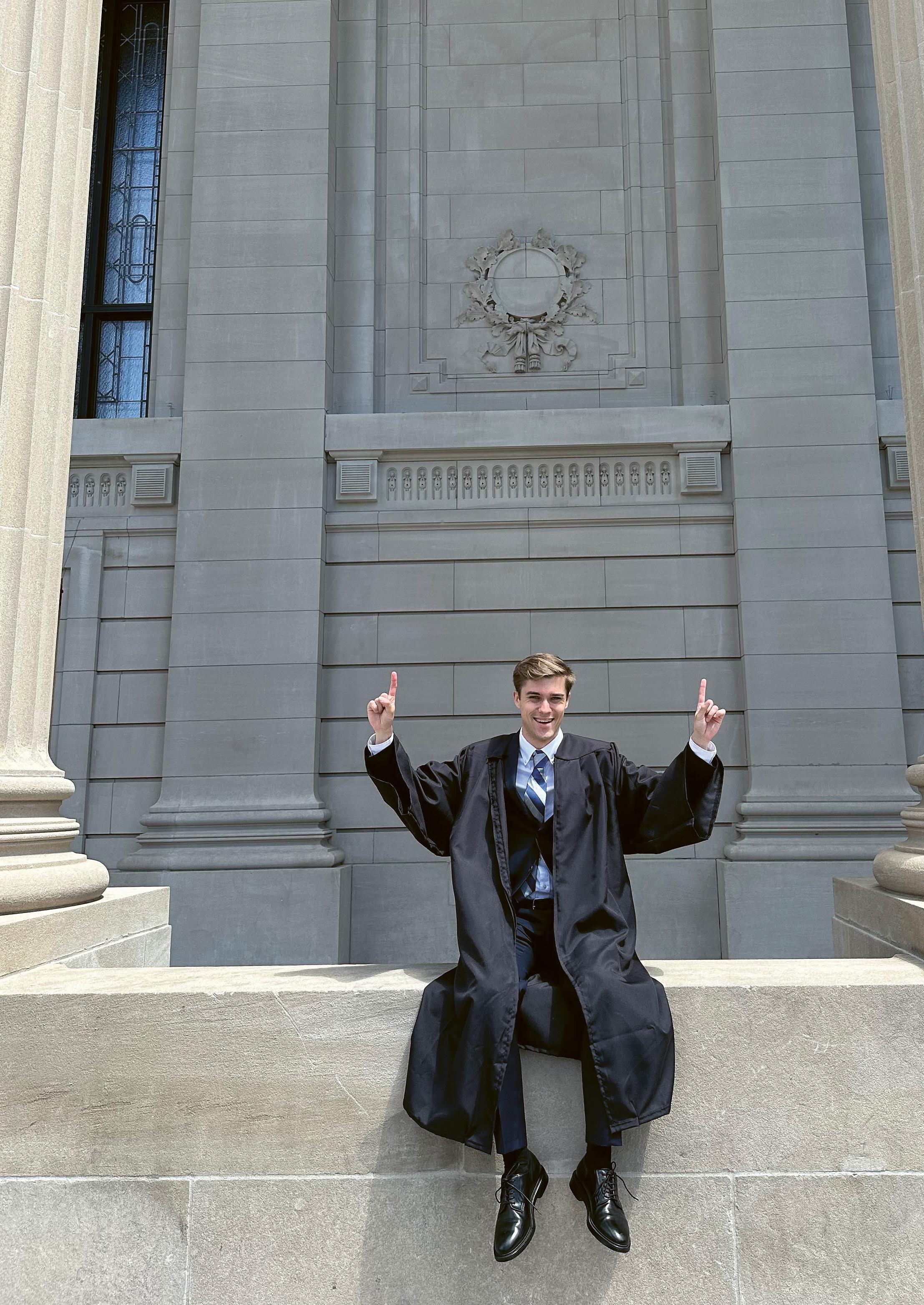
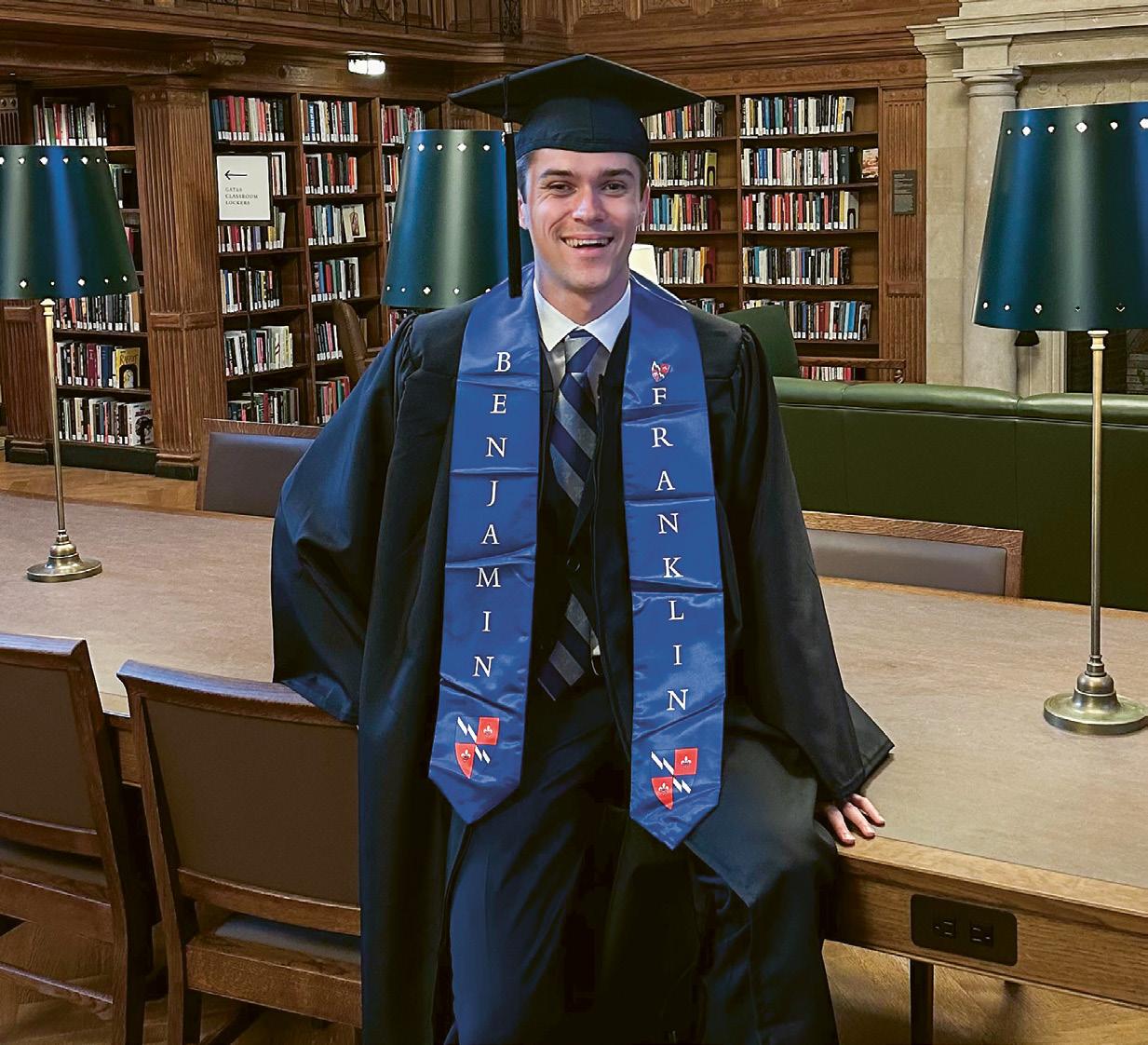
Global Affairs graduate, journalist, and “citizen diplomat” Patrik Haverinen shares how his Fulbright Finland Undergraduate experience at Yale – and his outreach to future students – helped prepare him for a new diplomatic role in Washington, D.C.
Patrik Haverinen
2021-22 Fulbright Finland Undergraduate Program 2022-25 Fulbright Finland Renewal Grant Yale University
www.fulbright.fi/ undergraduate
www.fulbright.fi/grantprograms-to-us/fulbrightfinland-renewal-grant
culture and act as ambassadors for their country, at the same time as learning from others. The emphasis on curiosity, leadership, and a commitment to connecting across cultures were all aspects which immediately struck a chord, Patrik explains.
At Yale, Patrik majored in Global Affairs, earned a certificate in French, and participated in the university’s journalism program. His time there coincided with a critical period in transatlantic relations, he recalls. “When Russia invaded Ukraine, suddenly everyone wanted to know how Finland saw the security situation,” he recalls.
“I remember walking through Times Square and seeing the news that Finland was applying to join NATO. That’s when I thought, I couldn’t be here at a better time – hopefully in my own, very small way, to help people understand our history, where we come from, and how massive of a shift in foreign policy this was.”
“I actually adored the ‘citizen diplomat’ part of the role. I think it’s so incredibly important, especially in this time of history, to have people who not only know their home country really well and have the resources and the networks there, but also are brave enough to take another step and go somewhere else and share that wisdom with those people and also learn from them.”
However, “it’s definitely a two-way street,” he stresses. “I was there to learn from Americans and from the international community. That really enriched my experience.”
“I think the whole idea of Fulbright is to get that kind of exchange – it’s about informal relationships. It’s not just about big events where people say the same things they’ve said a million times before. It’s about forming meaningful relationships where you can ask difficult questions as well.”
And beyond the academic sphere, Patrik’s time in the U.S. left him with some valuable cultural insights – which he says continue to influence him back on home ground. “I think one main thing I learned is definitely about communication – being able to say what you mean in a very concrete, easy-to-understand way,” he says. “In Finland, the more complex you are in your words, the more respect you get sometimes. In the U.S., it’s the opposite. It’s a really great trait to be able to talk to people in terms they understand, and that’s something I took away.”
The sense of community was also central to his experience, he explains. “In the U.S., people make an effort to include you – they’ll invite you to their homes, to Thanksgiving dinners, even if they’ve just met you,” he says. “That kind of welcoming community left a big impression on me, and it’s something I want to bring back to Finland as well.”
Throughout his studies, he remained closely connected with the Fulbright Finland Foundation.
“The staff were always kind and supportive,” he says. “Even if I didn’t need concrete help, it was reassuring to know that someone was there to reach out to if things got complicated.” Regular checkins, online meetings, and alumni events also helped him build networks that extended beyond Yale – and continued back in Finland with alumni gatherings, including most recently the U.S. Embassy’s annual Fourth of July celebration in Helsinki.
Fulbright Finland gave me more than an opportunity to study. It gave me a network, a community, and a way of thinking about the world – as something to explore, understand, and connect.
“It’s not just a scholarship – it’s a support system and a community,” he notes. “When you meet another Fulbright Finland alum, you immediately have common ground. Everybody’s always so excited to talk about their Fulbright experience. They always use such big words. They’re always really smiling. They’re always happy to tell you how these connections shaped the kind of person they’ve become.”
Patrik’s commitment to sharing his experience led him to receive the Fulbright Finland Renewal Grant for three consecutive years, recognizing his continued outreach work. He has participated in a variety of articles and media coverage on his experience, including an interview published on the Yale University website. His enthusiasm about Fulbright comes naturally, he explains: “I was very happy to take part in these experiences - everything’s been really great.”
His outreach work continues through Project Access Finland, a non-profit organization that mentors high-school students applying to universities abroad, where he helps young Finns navigate international admissions and scholarship opportunities.
“At our summer bootcamp, I spoke about studying in the U.S. and about Fulbright Finland Foundation’s programs,” he says. “It’s rewarding to see how excited students are about the idea of studying overseas.”
His advice to Finnish students considering studying abroad is straightforward. “I just tell them to go for it. I think the really great thing about the U.S. is that it fosters this really curious intellectual community in most of its universities. And I think that’s what a lot of us are craving here in Finland… Embrace change, embrace challenges that might lie ahead. Choose something that works now – you can always pivot later.”
After graduating, Patrik drew on his journalism studies at Yale, spending the summer working as a journalist for Uusi Juttu, a new Finnish digital media start-up, having previously worked for Helsingin Sanomat, the country’s largest newspaper. Journalism, he says, strengthened his ability to analyze and communicate clearly. “It teaches you to listen, to ask good questions, and to think about how information connects people,” he notes. He is also expanding his knowledge of political science and international relations, by embarking on a master’s degree in World Politics at the University of Helsinki.
This fall sees him returning to the U.S., this time to Washington, D.C., in a role which will draw on his previous transatlantic experience, as well as his communication and diplomatic skills, with a five-month posting within the Delegation of the European Union to the United States. Here, as part of a team representing the EU at this crucial time in international relations, he will be working in the political section on issues ranging from foreign policy to domestic affairs.
It’s an exciting step – but it also feels like a natural continuation, he explains.
“The delegation acts as a sort of bridge between the European Union and the U.S., which is exactly what I’ve been doing on a much, much smaller scale before through Fulbright Finland. So I’m really happy to continue this kind of path, and I think it matches not only my interests and passions, but
also luckily the kind of role that I’ve been able to serve before as well.”
“This is exactly the kind of moment where not only citizen diplomacy but actual diplomacy is very much needed. We need to increase mutual understanding, because there’s been a lot of misunderstandings between Europeans and Americans in many different areas. I’d be happy to help in my small way to bring those together.”
In their blog posts, grantees and alumni share their stories and reflections, highlighting the impact of their Fulbright Finland experiences.
Sylvia Gale reflects on her experiences as a Mid-Career Professional Development grantee at D-stations in Helsinki, where she explored professional practices that foster civic action. Her continuing collaboration with Deaconess Foundation led to a publication documenting five strategies for inclusive community-building and democratic engagement.
Fulbright Teacher Ann Bartkowski’s blog post takes us inside Finnish schools as she explores educational policies and practices for educating new immigrant students in Finland and shares how she learned firsthand how much a welcoming climate and a sense of belonging matters.
Travel Grantee Kristina Leppälä spot-
lights fellow alumna Hanna Lehtimäki, a leading expert on circular economy. Hanna’s research focuses on the current phenomenon of sustainable businesses and society, and studies how linear economic models can be modified through circular ones to meet the growing needs for a sustainable planet.
Emma Marjakangas writes how the Study of the U.S. Institute program sparked fresh ideas to enrich secondary school curricula back home.
Jill Prado shares how the Friends of Fulbright Finland (FoFF) Alumni Enrichment Award allowed her to reconnect with partners she met during her Fulbright Teachers for Global Classrooms study tour in Finland in 2022.
Explore these and many other blog posts by grantees and alumni: www.fulbright.fi/about-us/blog
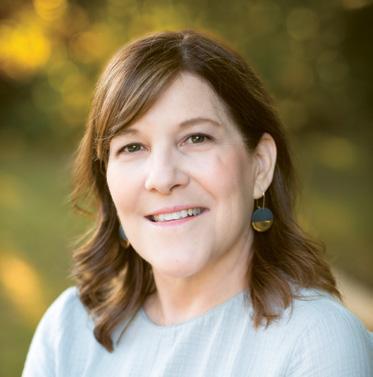
I’m honored to have received the Friends of Fulbright Finland Alumni Enrichment Award and grateful to the alumni donors who made it possible!
I’m thrilled to have the opportunity to reconnect with educators and students I met during my first visit to Finland with the 2022 Fulbright Teachers for Global Classrooms teacher exchange. This renewed collaboration allows us to share ideas and strengthen cross-border relationships, expanding opportunities for more teachers and students to engage in meaningful global learning.
Jill Prado
Global Leadership Program Director, Greenbridge Vermont, 2025 Friends of Fulbright Finland Alumni Enrichment Award
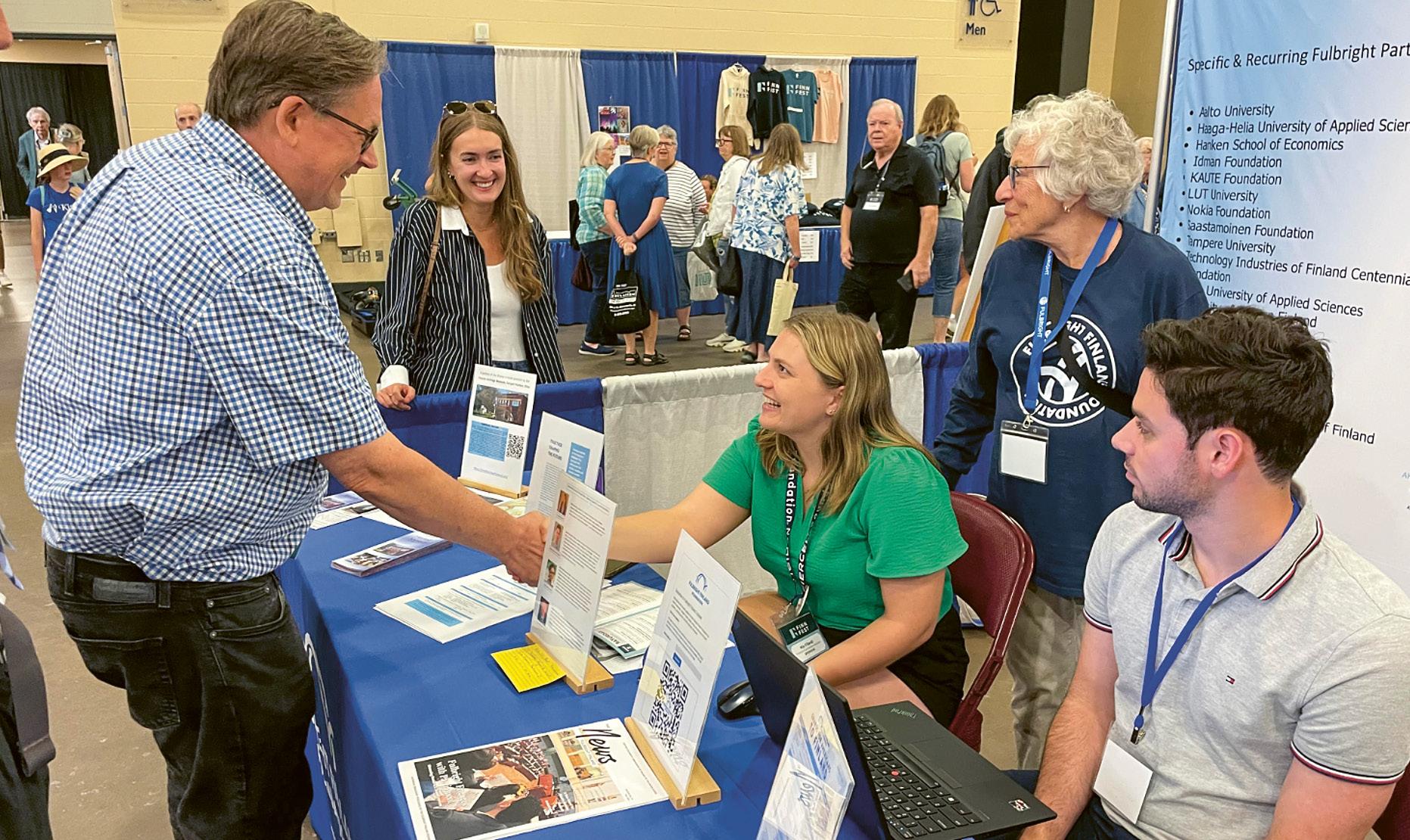
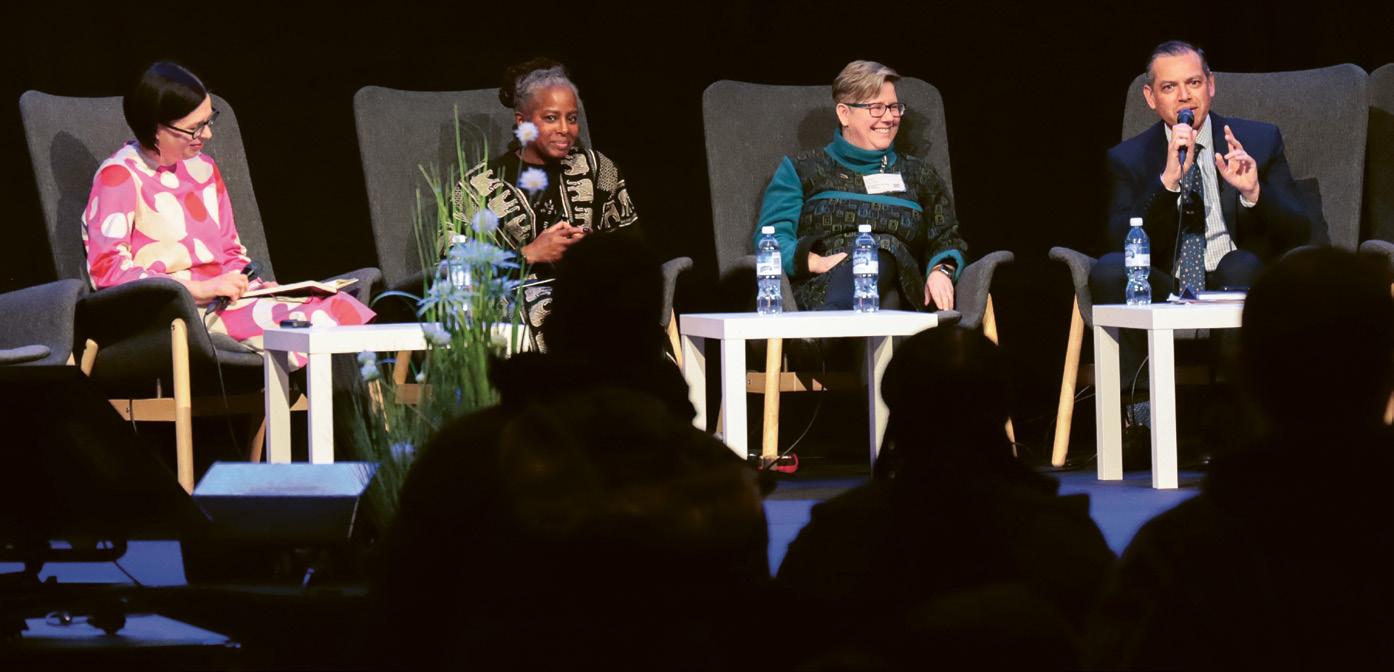
FinnFest is the largest annual festival in the United States celebrating Finland, Finnish America, and Finnish culture. The 2025 festival took place in Duluth, Minnesota, where Fulbright Finland Foundation alumni were prominently featured throughout the program and events. Their presence also honored the 75th anniversary of the first Finnish ASLA cohort to the U.S. (Amerikan Suomen Lainan Apurahat, “Grants from the American Loan to Finland”).
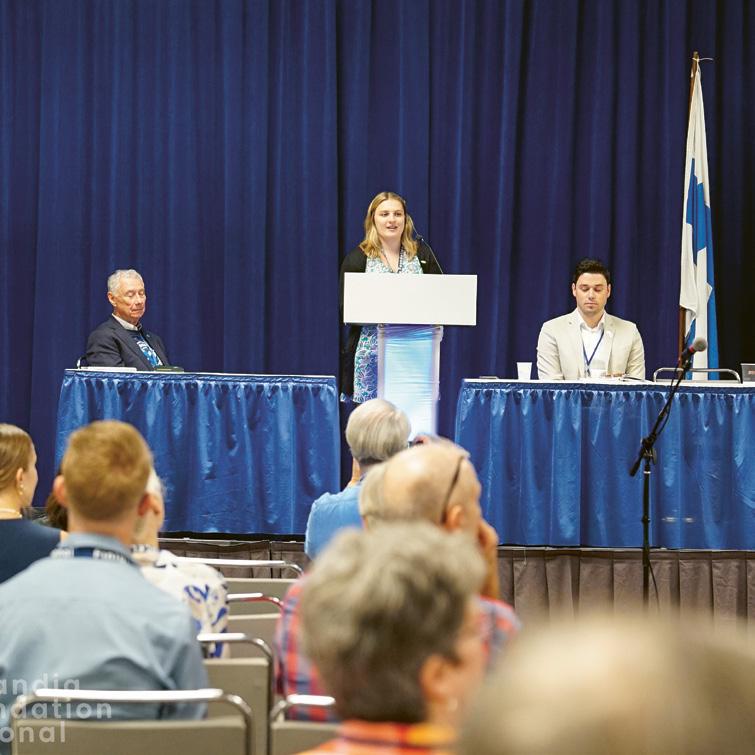
The alumni panel, “Collaborative Curiosity & Fulbright Finland: Diplomacy, Leadership, Innovation, and Wellbeing,” opened with remarks by Ambassador of Finland to the United States, Leena-Kaisa Mikkola. Panelists included Fulbright U.S. Scholars Edward Sivak (2015–16) and Bethany McGowan (2023–24), together with Fulbright U.S. Graduate Student alumni Joe Zinno (2022–23) and Mia Filardi (2023–24).
“Attending FinnFest reminded me how my Fulbright year was not only about research and teaching, but about joining a lifelong network of colleagues and friends,” said Bethany McGowan, the Foundation’s Seeking Solutions for Global Challenges awardee to Tampere University in 2023–24.
Conversation flowed across generations, and one of the most memorable moments came from audience member Estjer Carlson, in her 90s, who
recalled her cousin Erkki Aaltio’s experience as one of Finland’s first Fulbrighters in the 1950s.
The Fulbright Finland booth in the Tori exhibition area was bustling throughout the three-day festival, with visitors eager to learn about study, teaching, and research opportunities in Finland.
The Foundation’s participation at FinnFest was spearheaded by the Foundation’s U.S. Alumni Council member Edward Sivak, planned and organized by alumni volunteers, and made possible by an alumni donation together with financial support from the Foundation’s key partner in the United States, the Finlandia Foundation National.
See more photos photos from FinnFest: www.fulbright.fi/foff-events-starting-2024
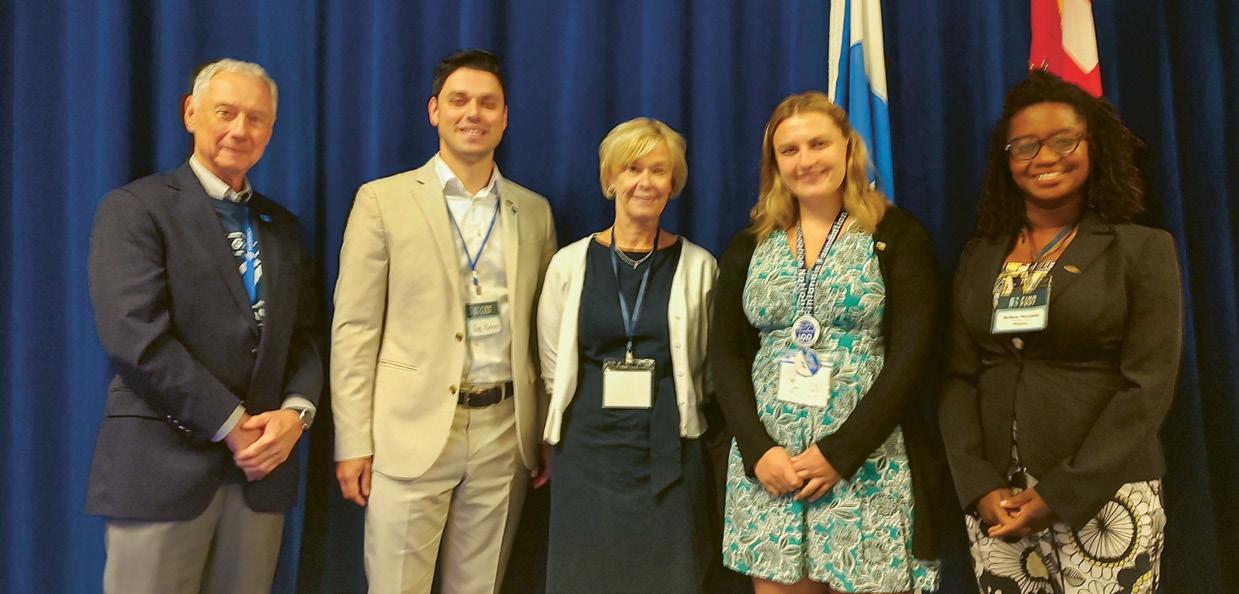
Panel discussion featured four Fulbright Finland alumni: Edward Sivak, Joe Zinno, Mia Filardi, and Bethany McGowan
In the photo, the panelists with the Ambassador of Finland to the United States Leena-Kaisa Mikkola (middle).
Veera Laine, Senior Researcher at Finland’s Ministry of Foreign Affairs, talks about her Fulbright journey from Helsinki to New York City, and her belief in the power of understanding history – and international exchange – to broaden perspectives.
“The Fulbright experience was… I might even say transformative,” says Finnish Ministry of Foreign Affairs senior researcher and Russia specialist, Veera Laine. “I still think about that period of time at least on a weekly basis.”
Today Veera works in the Ministry for Foreign Affairs’ Strategy Unit, helping to support Finland’s foreign and security policy with research-based analysis. Like many Fulbright Finland Foundation alumni who now serve in Finnish diplomacy and foreign policy roles worldwide, she brings both deep subject expertise and an international mindset shaped by study and research abroad.
But long before she joined the Ministry, her interest in Russia – its politics, its history, and the narratives shaping its identity – set her on a path that would eventually lead her from Helsinki to New York City as an ASLA–Fulbright Pre-Doctoral Research Fellow.
Veera’s academic journey began at the University of Helsinki, where she combined Russian translation and area studies with political history. Her early research work at the Finnish Institute of International Affairs (FIIA) solidified her interest in Russia’s internal political dynamics, she explains – and, encouraged by colleagues, she began doctoral research that would eventually take her across the Atlantic.
In 2018–19, Veera was awarded the ASLA–Fulbright Pre-Doctoral Research Fellow Grant. Her project, titled at the time “The Power of Definition – Conceptual History of Nationalism in the Russian Political Discourse,” examined how political actors in Russia explain and understand “Russianness”, and how those definitions shape political practice.
“I think one of the inspirations was that I wanted to broaden my perspective, to know what kinds of perspectives the U.S. community and scholars there would have on the topic that I was working on,” Veera explains. “And of course, the possibility to work for a while in the U.S., that was something I really wanted to try. It was a tremendous opportunity.”
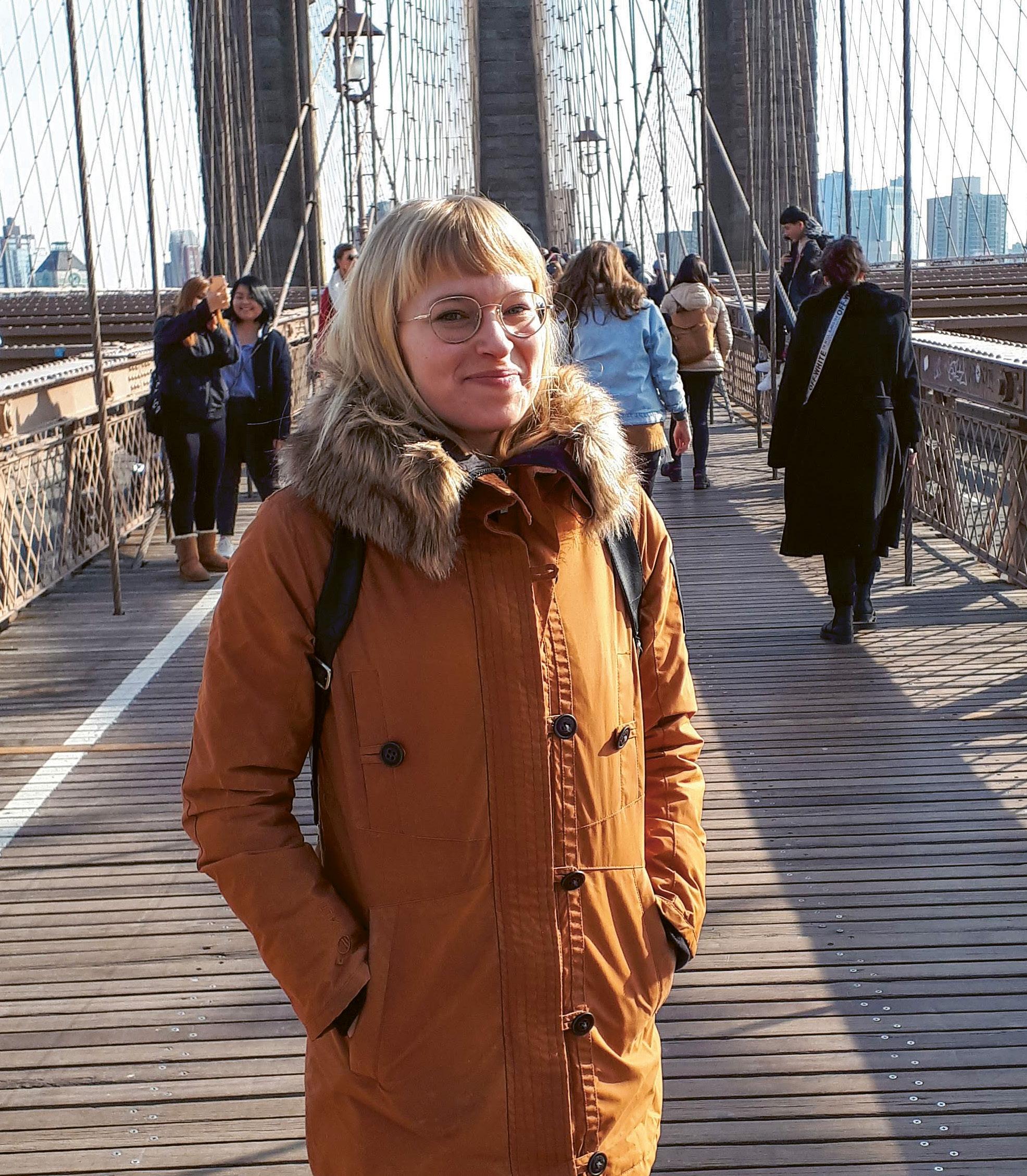
Columbia University’s Harriman Institute, one of the leading centers for Russian and Eurasian studies in the United States, was a natural academic home. But for Veera, the value of the Fulbright experience extended far beyond scholarly exchange.
Living in Harlem with a local host family, participating in seminars at Columbia, and engaging in Fulbright-organized enrichment activities exposed her to a spectrum of social and cultural experiences. She recalls, for example, giving a talk on gender equality in Finland at a Catholic girls’ school in Manhattan, an opportunity that came through Fulbright’s programming. Another highlight was an enrichment seminar in Kentucky on the opioid crisis, which brought together Fulbright grantees from around the world to examine a major social and political issue from multiple perspectives.
“These issues were not related to my research, but it was really inspiring to take part in those discussions about topics that are so important for U.S. politics and also for broader society,” she reflects.
“I think some of the most important lessons from my stay I actually got from my landlady. And from meeting all sorts of different people. It was very meaningful for me personally to get to know such a diversity of people and at the same time recognise that this was only a glimpse of the diversity of the city, and of the country, to also learn about the inequalities within U.S. society, and to hear the personal histories of people I met. I learned a lot.”
The Fulbright connection also revealed an unexpected family link: just before her departure, Veera
Many Finnish alumni of the Fulbright Fulbright Foundation currently work at Finland’s Foreign Ministry. Among them is Veera Laine, a Russia specialist who conducted research at Columbia University, NY in 2019 on an ASLA-Fulbright PreDoctoral Research Fellows Award.
www.fulbright.fi/ pre-doctoral
discovered that her grandfather had also received an ASLA–Fulbright grant in the 1960s as part of a Finnish Social Democratic Party delegation. “It seems that it was rather commonplace at the time for different kinds of professionals to receive this Fulbright grant. It was only after searching through family archives that we found the newspaper photo,” she recalls. “I hadn’t known about that at all.”
After returning to Finland, Veera continued her research at FIIA and completed her doctoral dissertation. In 2022, she joined the Ministry for Foreign Affairs’ Strategy Unit.
Veera explains that the unit’s mandate is wide, providing analytical support, conducting foresight work, and aiming to provide a comprehensive view of global developments. “Our unit is not devoted to any specific geographical area - we aim to cover 360 degrees, so it’s a really broad scope.” For Veera, the role draws on her academic training while requiring adaptation to the time-sensitive and policyoriented environment of government.”
“With my background, I am not a diplomat,” she notes. “I work as a researcher inside the ministry, and in that sense I operate in a kind of liminal space, between state administration and academia.” This allows her to draw on her background in historical analysis - as well as specialist knowledge of Russian history and culture - to inform policy discussions, she explains, stressing that a historical perspective is particularly important at a time when global events can seem so unpredictable, not to mention unprecedented.
“I think historians can often remind us that what we see now may not be entirely new or unique - and so what lessons can be drawn from history?” she explains. “Having a background in history studies, I don’t necessarily have knowledge on every aspect of history, but it’s more like an attitude. There have been unprecedented times before, and every period of time feels unique for those living in and through it.”
Experience of other countries and cultures through exchanges such as Fulbright also plays a crucial role, Veera argues.
“What happens when you change a perspective? It develops a sense of proportion. I think that history does the same – when you learn about past experiences, it puts the present into context. In a similar way, if you live abroad and talk with people who have a very different background than you, that helps to broaden your perspective. You realize that your own perspective is not the only one – it might even be rather marginal.”
What happens when you change a perspective? It develops a sense of proportion. I think that history does the same – when you learn about past experiences, it puts the present into context.
Veera describes the experience of international exchange as “a great luxury and a privilege,” but also argues that such programs play a crucial role in supporting academic freedom, in an age where this seems increasingly under threat. “I think we should be discussing this a lot more. How do we protect academic freedom and independent thinking? Of course, exchange programs inevitably have a political, ‘soft power’ side as well, creating international connections, in this case, Finnish-U.S. connections. But in the end, they are so valuable because they do enable critical thinking, they enable the scholars to build their own future connections.”
“It’s one of the great aspects of the Fulbright program that you don’t only grow familiar with the U.S. host institution, but also with the other Fulbright scholars coming from all over the world.”
Ireceived a Fulbright Finland Travel Grant for Research Collaboration to visit the Functional Molecular Biology (FMB) Lab of Prof. Keith Baar at the University of California, Davis. During my time at UC Davis, I learned cell culture and tissue engineering methods pioneered by the FMB lab to grow tendons and ligaments from human cells.
The engineered human tendon/ligament model is a powerful method for studying the mechanical and biological influences on tissue development. By manipulating the loading environment and/or signalling pathways as these tissues grow, we can uncover key regulators necessary for strong and healthy tissues. These findings can potentially be translated into exercise interventions and rehabili-
tation practices to ensure healthy tendons and ligaments across the lifespan.
A major benefit of this technique is being able to test specific effects without the need for animal models. Coming from a sports medicine and movement sciences background, the new skills developed during this visit are fundamental towards developing my skillset for future scientific discoveries. Currently, no one in Finland is using this, or a similar, engineered human tendon/ligament model. Therefore, this method will help me not only in my work but also provides opportunities for others domestically who have similar interests. The funding provided by the Fulbright Finland Foundation was instrumental for this experience.
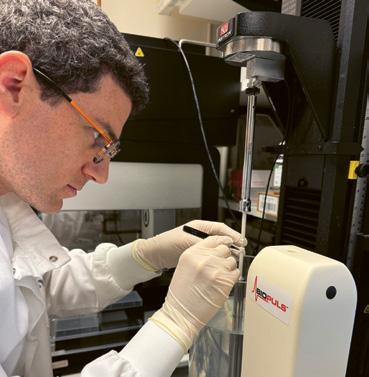
Adam Kositsky 2025-26 Fulbright Finland Travel Grant for Research Collaboration, Ambassadors’ Circle Scholarship Postdoctoral Researcher, University of Eastern Finland, Kuopio
www.fulbright.fi/ travel-grant-research
Text TERHI MÖLSÄ
The role of donors is critical. They help us bring together the best scientists, academics, artists, educators, future leaders, and change-makers. Today, an increasing share of our scholarships are funded directly by our Finnish and U.S. community of donors.
Whether donating directly to scholarships or to dedicated endowments, establishing a new scholarship, providing a real estate gift, or making a legacy gift by adding the Foundation to one’s will, all gifts send a clear message that the Fulbright Finland experience is transformational and like no other.
The Foundation’s dedicated funds have grown from gifts of every size from 5 euros to over 50,000 dollars. Their strength lies in the shared commitment: every contribution, no matter its size, is valued, recognized, and part of a permanent legacy we build together. Making a gift is a simple yet powerful way to shape the future.
Donations can go directly to grants or be added to endowments that fund grants from their annual returns. Donations made to the Foundation’s 75th Anniversary Fund directly fund grants for Finnish and U.S. students, scholars, and professionals. The Fulbright Finland Centennial Fund, on the other hand, is an endowment and meant to last into perpetuity, and its annual yields are used to fund grants. It was launched in 2016 to honor the 100th anniversary of Finland’s independence.
Donations can be directed to new grants in general, or donors can choose to support a specific cause within Finnish-U.S. exchanges that is close to their heart.
The Friends of Fulbright Finland Alumni Enrichment Fund is a special endowment supporting grants for U.S. alumni to return to Finland to continue and expand their original Fulbright projects and collaboration. Like the Centennial
Fund, the Alumni Enrichment Fund is an endowment that uses its annual yields to fund grants. A major share of this endowment came from the legacy gift by the Foundation’s alumna and volunteer team member, Suzanne Louis, who passed away in 2020.
A generous gift to the Foundation by Dr. Bruce Fowler created the Bruce A. Fowler Fund for Fulbrighters with Disabilities. It provides extra funding support for grantees with disabilities whether related to mobility, vision, hearing, or any other type, in order to help them get the most from their Fulbright experience.
The Fulbright Finland Centennial Travel Grants in Architecture, Design, and the Visual Arts are special awards made possible by a donation from the Foundation’s alum, Peter B. MacKeith. The fund supports Finnish or U.S. Fulbright graduate students in these fields to help cover their Fulbright project-related travel expenses.
A long-term donor agreement with Dr. E. Michael Loovis created the Fulbright Finland Foundation E. Michael Loovis Scholastic Award for Finns for study or research at Cleveland State University.
Founded in 2024, the Ambassadors’ Circle honors the 75th Anniversary of the Fulbright Finland Foundation. Through this fund, private philanthropists together with Finnish and U.S. companies jointly support research and study in the U.S. for Finnish scholars, students, and experts in fields critical for the development of science, economy, and innovation in Finland.
Read more on the different ways to support and make a lasting difference in Finnish-U.S. exchanges: www.fulbright.fi/ work-with-us/donate

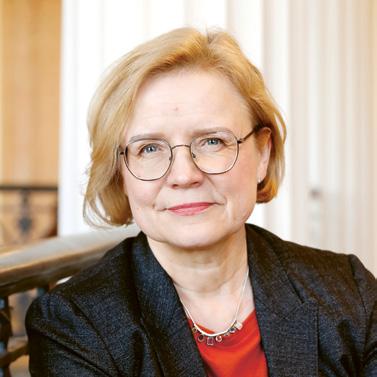
Donor spotlight
“I have seen the importance of international research and educational collaboration as a Fulbright Board member, LUT University Vice-Rector for internationalization, and a visiting scholar to the U.S. The Fulbright Finland Foundation has a unique role in the Finnish society. It has been invaluable and extremely successful in advancing the academic relationships with U.S. higher education.”
Kirsimarja Blomqvist
Professor of Knowledge Management, LUT University
Member of the Board of Directors, Fulbright Finland Foundation
Ambassador
Charles C. Adams, Jr.
Ambassador
Barbara Barrett and Craig Barrett
Ambassador
Douglas T. Hickey
Ambassador Rockwell Schnabel
Anonymous donors Bluefors
Excelerate Energy
Fortum
Nokia Foundation
MAJOR GIFTS
Bruce Fowler
E. Michael Loovis
Suzanne Louis
Carol Tenopir and Gerald Lundeen
5 000–9 999 EUR/USD
Ambassador
Charles C. Adams, Jr.
Kenneth Kolson
Peter B. MacKeith
Edward and Barbara Sivak
David Yoken
2 000-4 999 EUR/USD
David Dorman
James E. Freeman
Charitable Trust – In honor of Peter B. MacKeith II
Jay Gillette and BJ Deering
Frances Karttunen and Alfred Crosby
Geoffrey McGovern
Sharon Sandeen
1 000–1 999 EUR/USD
ASLA-Fulbright Alumni Association
Kay Kohl
Kirsi Komi
Ruth McDermott-Levy
Patrick Miller
Keith Olson
Bhaskar Dharanipragada Rao
roQab Oy
James Stock
Juhani Talvia
William Woityra
Gifts from EUR 1 000 through Major Gifts are cumulative.
To date, altogether 192 individuals, companies, associations or trusts have donated to the Fulbright Finland Foundation. A special thank you to all who donate annually, leaving a permanent imprint in Finnish-U.S. exchanges.
GIFTS IN THE LAST YEAR
ASLA-Fulbright Alumni Association
Quang Ngoc Bui
John W. Cwikiel - In honor of Terhi Mölsä
Kirby Deater-Deckard
Patricia Donahue
David Dorman
William Eaton
Ursula Gibson
Marc Howlett
Charles Kamm
Frances Karttunen
E. Michael Loovis
Cecelia Lynch
Cristi Marchetti
Maureen Mascha
Peter Matthews
Ruth McDermott-Levy
Mark Miller
Terhi Mölsä - In memory of Suzanne Louis
Dario D. Salvucci
Sharon Kay Sandeen
Guje Sevon
Edward and Barbara Sivak
Carol Tenopir and Gerald Lundeen
Leasa Weimer
Michael West
David Yoken - In memory of Joan and Richard Yoken
Joseph Zinno

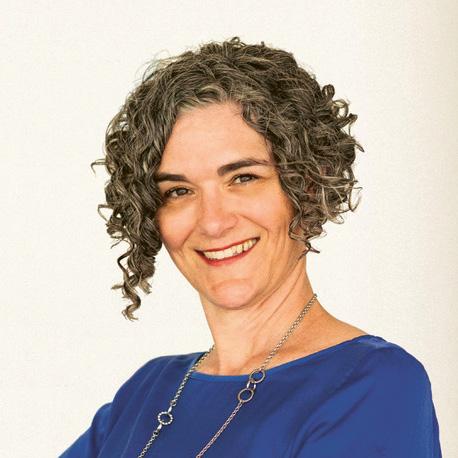
Donor spotlight “I give to the Fulbright Finland Foundation because my Fulbright grant was the launching pad for an extraordinary journey – what began as a 9-month grant turned into 11 unforgettable years living and working in Finland.
Fulbright Finland didn’t just open doors – it profoundly shaped my personal and professional journey in ways I never imagined.”
Leasa Weimer Director for Strategic Partnerships, University of Denver 2011-12 FulbrightEDUFI Fellow

Your financial gift helps empower the next generation of
www.fulbright.fi/work-with-us/donate
Most U.S. Fulbright students in Finland complete a full two-year Master’s degree. Each fall, the Foundation hosts a job search session where U.S. student alumni, who now live and work in Finland, share their career experiences with the first-year U.S. students. This helps the current students with their academic journey and finding pathways to professional opportunities through internships, summer jobs, and thesis collaborations.
This fall, five alumni – Head of AI, Biology Postdoctoral Scholar, Digital Analytics Specialist, Supply Chain Research Scientist, and Mechanical Engineering Research Scientist – shared how they found their current roles and the strategies that helped them succeed in Finland. The session offered the new grantees encouragement, inspiration as well as concrete practical guidance on the specifics of navigating the Finnish job market.
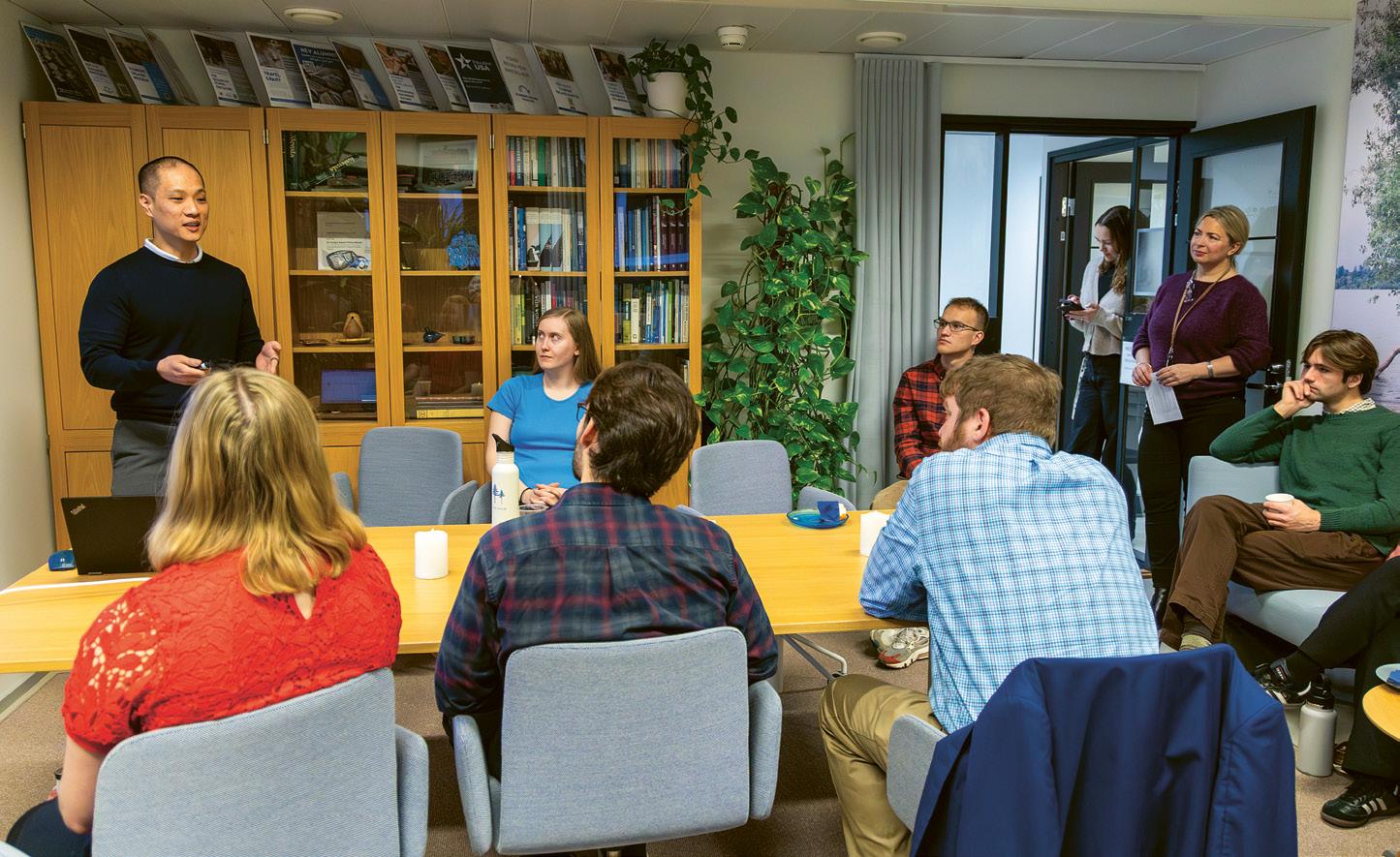
A recurring theme was the importance of networks: employers often recruit through personal contacts and recommendations, and career success depends not only on qualifications but equally on cultivating relationships and leveraging the strength of networks. The alumni experts urged the grantees to be proactive, attend events, reach out to employers, and leverage the Fulbright Finland alumni connections. They also offered their own support by connecting the new students with contacts in their networks.
Text: Karoliina Kokko
The Foundation is pleased to announce that Danielle Harms, Counselor for Public Affairs at the U.S. Embassy, Helsinki has been appointed to the Fulbright Finland Foundation Board of Directors, succeeding Susan Bridenstine, who recently completed her term.
The Foundation conveys a sincere thank you to Susan Bridenstine for her dedicated service to the
Foundation and a warm welcome to Danielle Harms. The Board of Directors of the Fulbright Finland Foundation is comprised of 6-8 members: up to four Finns and up to four Americans. The Finnish board members are appointed by the Finnish Ministry of Education and Culture, and the Chief of the U.S. Diplomatic Mission to Finland appoints the American members.
2015-16 Fulbright-University of Helsinki Graduate Awardee Edward Kim, currently Head of AI at ConfidentialMind, emphasized the importance of professional and social networks in finding employment in Finland.
grantees, 43 Finnish and 54 U.S. grantees
1,8
euros awarded as grants
throughout Finland, U.S., and online
www.fulbright.fi/about-us/year-focus
EDITOR-IN-CHIEF Terhi Mölsä EDITORS Maija Kettunen (Managing Editor), Bill Eaton DESIGN AND LAYOUT Tanja Mitchell, Grafee EDITING OFFICE Fulbright Finland Foundation, Arkadiankatu 7, FI-00100 Helsinki, FINLAND E-MAIL office@fulbright.fi ISSN 2489-2149 (print) ISSN 2489-2157 (online) PAPER Scandia White 150 g/m² and 115 g/m² PRINT CIRCULATION 250 PRINTED BY PunaMusta Oy ONLINE www.fulbright.fi/fulbright-finland-news-magazine
Fulbright Finland News on Fulbright Suomi -säätiön lehti säätiön toiminnan rahoittajille ja kumppaneille. Se ilmestyy kaksi kertaa vuodessa painettuna ja verkkoversiona. Artikkeleissa ilmaistut mielipiteet ovat kirjoittajien omia. Aineisto vapaasti lainattavissa, lähde mainittava. // Fulbright Finland News is a biannual magazine published in print and online by the Fulbright Finland Foundation for its stakeholders. Opinions expressed by authors are their own and do not necessarily reflect those of the Foundation. Reproduction allowed, source must be cited. // While every effort is made to ensure the accuracy of the material in this publication, the Fulbright Finland Foundation does not accept liability for any errors or omissions.
EDITORIAL COUNCIL
Minna Haka-Risku, Manager of International Affairs, Tampere University; Anu Härkönen, Head of International Affairs, Turku University of Applied Sciences; Bradley Turner, PhD Candidate, Massachusetts Institute of Technology; Petri Koikkalainen, Counselor for Education and Science, Embassy of Finland, D.C.; Mila Seppälä, Doctoral Candidate, University of Turku; Sari Tojkander, Counselor for Science and Education, Consulate General of Finland, Los Angeles.
FULBRIGHT FINLAND FOUNDATION
THE FULBRIGHT FINLAND FOUNDATION is an independent not-for-profit organization based in Helsinki, Finland.
Its purpose is to promote a wider exchange of knowledge and professional talents through educational contacts between Finland and the United States.
The Foundation collaborates with a range of government, foundation, university, and corporate partners on both sides of the Atlantic to design and manage study and research scholarships, leadership development programs, and internationalization services.
Finland-America Educational Trust Fund
The Fulbright Finland Foundation is financially supported by the Finland-America Educational Trust Fund.
Board of Directors
Finnish Members:
Mikko Koivumaa
Director General of Communications, Department for Communications and Culture, Ministry for Foreign Affairs Chair
Jaana Palojärvi
Head of International Relations Finnish Ministry of Education and Culture
American Members:
Christopher Karber
Deputy Chief of Mission U.S. Embassy Vice-Chair
Danielle Harms
Counselor for Public Diplomacy U.S. Embassy
Director General / Säätiön asiamies (ex-officio):
Terhi Mölsä
Chief Executive Officer
Fulbright Finland Foundation
Finnish Members:
Kirsimarja Blomqvist Professor for Knowledge Management, School of Business and Management, Lappeenranta-Lahti University of Technology LUT
Kaarle Hämeri Chancellor University of Helsinki
Timo Korkeamäki Dean, School of Business, Aalto University
Sten Olsson Partner
White & Case LLP Vice-Chair
American Members:
Gabriela Arias Villela Deputy Public Affairs Officer U.S. Embassy
Danielle Harms
Counselor for Public Diplomacy U.S. Embassy
Erika Holt Customer Account Lead Nuclear Energy Sector, VTT Technical Research Centre of Finland Ltd.
Nelson Totah
Associate Professor HiLIFE Helsinki Institute of Life Science University of Helsinki Chair
Ex-officio:
Terhi Mölsä
Chief Executive Officer Fulbright Finland Foundation
Honorary Chair:
Ambassador of the United States to Finland H.E. Howard W. Brodie
E-mails: firstname.lastname@fulbright.fi
b Pia Arola Johdon assistentti Executive Assistant 044 5535 278
b Emmi Jelekäinen Ohjelmapäällikkö, tutkijaohjelmat
Program Manager, Scholar Programs 044 5535 275
b Maija Kettunen Viestintäpäällikkö Communications Manager 044 5535 277
b Karoliina Kokko Vastaava ohjelmapäällikkö
Senior Program Manager 044 5535 268
b Saara Martikainen Ohjelmakoordinaattori Program Coordinator (part-time) 044 4914 747
b Mirka McIntire Ohjelmapäällikkö, Opettajavaihto- ja koulutusohjelmat Manager, Teacher Exchange and Education Programs 044 5535 269
b Terhi Mölsä Toimitusjohtaja Chief Executive Officer 050 5705 498
b Heidi Tiainen Ohjelma- ja tapahtumakoordinaattori Program and Events Coordinator 044 7153 023
b Mihkel Vaim Koordinaattori Coordinator 044 4939 266
Currently on leave: Emilia Holopainen
FULBRIGHT FINLAND FOUNDATION
Fulbright Finland Foundation Arkadiankatu 7 FI-00100 HELSINKI FINLAND
11.12. Trust Fund Board Meeting
18.12. Fulbright Finland Foundation Board Meeting
18.12.
Summer 2026 Application Deadline: Study of the U.S. Institutes for Secondary School Educators and Administrators Program
22.12.2025–6.1.2026 Foundation Office Closed
January
18.–29.1.
Fulbright Leaders for Global Schools Study Tour to Finland
20.–22.1. Arrival Orientation for U.S. Fulbright Finland Grantees
27.1.
2026–27 Application Deadline: Fulbright Finland Travel Grants
February Trust Fund Annual General Meeting
6.2.
22nd North American Studies Roundtable
9.2. Fulbright Finland Foundation Board of Directors Annual Meeting
16.3.
2027–28 Application Deadline: Fulbright Distinguished Awards in Teaching Program
18.3. Virtual Fulbright Forum on Education
26.–27.3. Mid-Term Meeting for the U.S. Fulbrighters
26.3. Workshop on Leadership
2026–27 Application Deadline: Fulbright Finland Undergraduate Program
12.–17.4. Fulbright Arctic Initiative IV Final Plenary Meeting, Anchorage
2027–28 Application Deadline: Fulbright Graduate Grants for Finns
12.5.
Pre-Departure Orientation for Fulbright Finland Foundation Awardees to the U.S. and Fulbright Finland Awards Ceremony
19.5. Homecoming Alumni Event, Helsinki
Fulbright Finland Foundation Board Meeting
2026–27 Application Deadlines: Fulbright Finland Renewal Grants Fulbright U.S. Student Program Renewal Grants