The Sound Advocate
A Champion for All Gaited Horses
Volume 3, Issue 3, 2020

A Champion for All Gaited Horses
Volume 3, Issue 3, 2020
Friends of Sound Horses, Inc. 6614 Clayton Rd. #105 St. Louis, MO 63117
800-651-7993 * info@fosh.info * www.fosh.info
President - Teresa Bippen Missouri Tbippen1957@yahoo.com
Secretary/Treasurer-Alece Ellis
Director at Large-Bill Coon VP IJA Program-Dianne Little Tennessee Utah Alberta, Canada treasurer@fosh.info wbotis@gmail.com ddlittle@telus.net
VP Programs/Gaited Sport Horse
Director at Large-Anita Dunham VP HIO/DQP-Lisa Harris Dianne Little Missouri Tennessee Alberta, Canada dunhamanita@gmail.com ddlittle@telus.net
Keith Dane Kirsten Kuzmanic Maggie MacAllister Hawaii Arizona Virginia kirstenk38@gmail.com breezewood@mgwnet.com
Patti Potts
Pauline Stotsenberg Missouri California pottspa@gmail.com ps@yesteryearfarms.net
Editor
Stephanie J. Ruff Florida editor@fosh.info
FOSH Mission Statement
To promote all “sound,” naturally gaited horses, with a specific emphasis on Tennessee Walking Horses. (In this context, sound means not “sored”.)
Importance is placed on education in regards to the humane care for the emotional, mental and physical wellbeing, training, and treatment of all gaited horses.
FOSH will only support flat shod or barefoot horses and will never endorse any event that uses stacks and/or chains as action devices, or any mechanical, chemical, or artificial means to modify the natural gaits of the horse.
To these ends, FOSH focuses on three areas for gaited horses:
1) educating people about sound horse training principles; 2) supporting sound shows, events and activities; 3) working to end soring.
FOSH is a 501(c) (3) non-profit organization. All donations are tax deductible to the extent permitted by law. Your donation to support the FOSH mission is needed to advance the goals set forth by FOSH in conjunction with its formal mission statement.
The Sound Advocate is a digital magazine published quarterly by Friends of Sound Horses, Inc. Reproduction of any article is prohibited without the express written permission of FOSH.
FOSH accepts unsolicited submissions, but reserves the right to edit any and all submissions for content, style and space constraints. FOSH further reserves the right to refuse advertising for any reason.
At no time shall the publisher’s liability exceed the total cost of the revenue from advertising in the issue involved in any dispute.
All show suspensions and show results are printed as they are received from the reporting agencies. FOSH does not guarantee their accuracy.
FOSH does not endorse the content of any advertisement in this publication, nor does it warrant the accuracy of any advertisement.
Readers are urged and cautioned to use due diligence and to thoroughly research, including asking for references, before following through with any transaction.
FOSH does not endorse any trainer, educator, clinician, style of natural training, tack, or horse equipment to the exclusion or preference of any other. Each horse is an individual and may respond differently to particular methods.
Articles published by FOSH reflect the views and opinions of the writers and do not reflect, necessarily, those of FOSH.
Subscribers: The Sound Advocate is a benefit of membership. To ensure that you receive your issues, be sure that your e-mail address is current. To change an e-mail address, contact dunhamanita@gmail.com.
Submission of Articles, Calendar Dates, News and Photos: Send to tbippen1957@yahoo.com. Photos may not be embedded in text and must be submitted as jpeg format, minimum of 300 dpi. The deadline for each issue is the 15th of the preceding month when the issue is to be released. Submissions will not be accepted after the deadline, but may be carried over to another issue. Submissions will not be returned to the submitter.
Back Cover $300
Inside Front Cover $275
Inside Back Cover $275
Full page $125
Half page $75
Quarter page $60
Business Card $25
Directory $25
Discounts for Multiple Issues
2 issues - 10% off total fee
4 issues - 20% off total fee
6 issues - 30% off total fee
Ads will be accepted in pdf, tif or jpeg formats. Text and photos must be e-mailed separately by the 10th of the month when the issue is released. Photos must be 300 dpi. Camera-ready ads are emailed at 300 dpi. Materials should be emailed to editor@ fosh.info.
All advertisements must be paid in advance by check, money order, or credit card. Payments should be made out to FOSH and mailed to:
6614 Clayton Rd. #105
St. Louis, MO 63117
More FOSH information can be found online. Find us at www.fosh.info.
Like us on Facebook and follow us on Twitter.


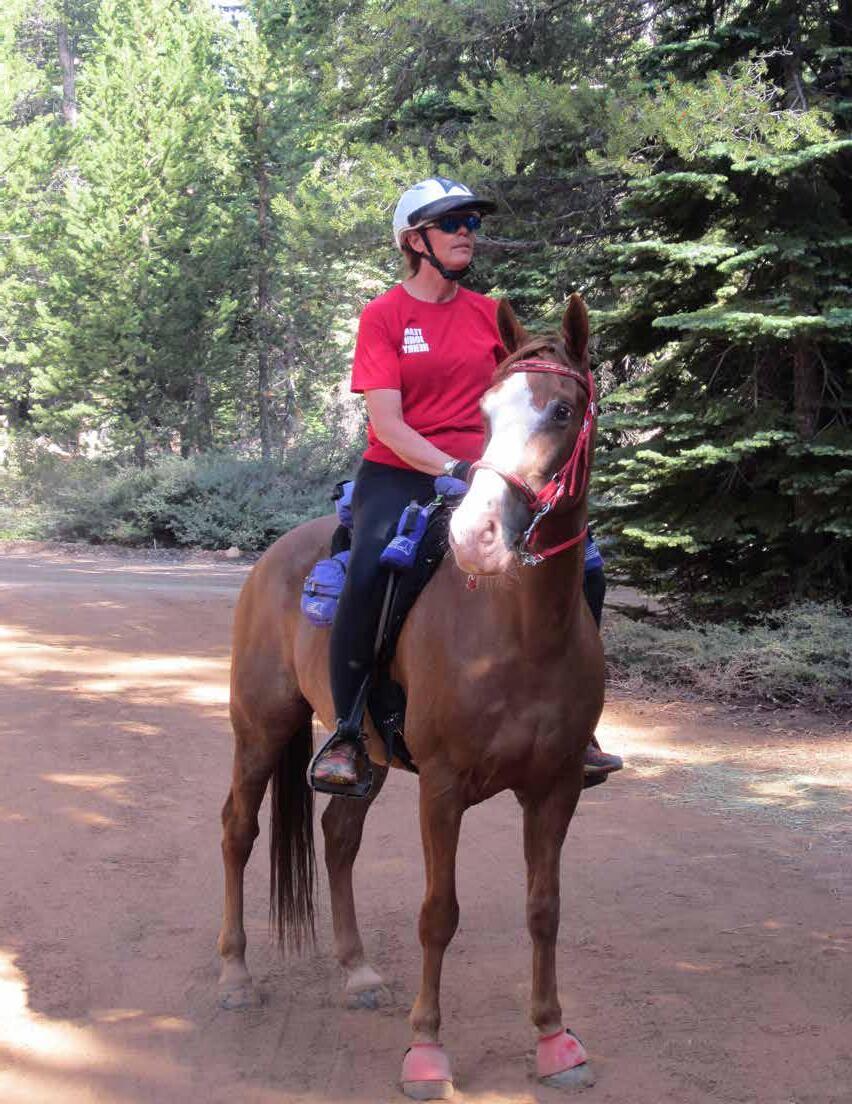
On the cover: The incredible gaited endurance horse John Henry with owner Susan Garlinghouse aboard at the 2013 Tevis Cup.
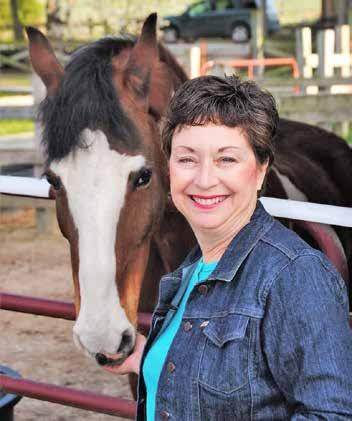
Dear FOSH Supporters,
What an atypical August. By now, I normally would have enjoyed the Missouri State Fair Society Horse Show and visited with many sound horse exhibitors, both old and new friends. I missed catching up in person with Board and EAC members, Lucy Rangel, the Vehiges, the Dunhams and many more Missouri Tennessee Walking Horse riders. My fingers are crossed that next year’s show will be as lovely and fun as in the year’s past.
With so many long-time favorite shows unable to be held this year, it may serve as a tiny push to try virtual dressage and especially with the annual FOSH Gaits Wide Open National Competition during the entire month of October. With that long window of opportunity, you have plenty of time to practice your tests and if there’s a rainy (or windy) day, you can try again when conditions are better. Our entries have grown every year for
the FOSH National Gaited Horse Championships so we would be honored if you would add to those numbers this year.
With no need to haul your horse or be concerned about Covid-19 prevention in your own backyard, it’s a stress-free adventure you may enjoy. Even better, you don’t need a fancy dressage ring at all—this is for anyone who wants to try dressage! I use my pasture and mark the letters with cones; however, any inexpensive marker will do. A fancy video camera is not required—just your smart phone and a friend to video and sit tight in the judge’s spot for a few minutes.
My two favorite parts are (1) FOSH has created tests for ALL gaited horses—both short and long-strided and (2) seeing your final scorecard filled with the judge’s comments. How many times have you shown and wished you knew what was in the judge’s mind? This time you will know.
Are you the creative type? Ride to your favorite music and design a freestyle ride. For some of you, I would guess this is something you have always wanted to try. We also have an incentive to register early and cash prizes sponsored by North American Western Dressage. You can read all about it on pages 8 and 9. I hope you join FOSH members across the U.S. and compete all together.
In closing, please stay safe and enjoy many happy hours during this loveliest of trail riding seasons.
For the Horse, Teresa
Teresa Bippen FOSH President Tbippen1957@yahoo.com
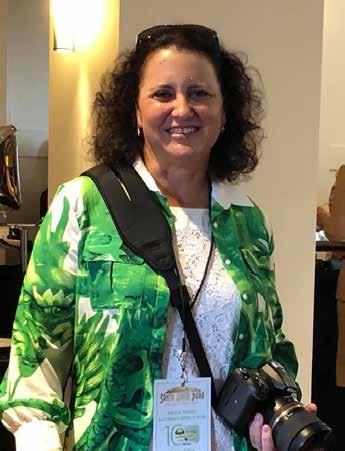
I don’t know about you, but I thought things would be much more back to normal by now. It seems we are in the classic “two steps forward, one step back.” Events we thought would go on, or that were moved from the spring, are in jeopardy or being canceled. More events are going online, but some competitions are being held under strict guidelines. It’s hard to know what the right answer is. I won’t even begin to try.
One positive out of all of this is the expansion of online events. Being able to enter shows, or even endur-
ance rides, remotely has opened them up to a whole new group of riders.
There are many people out there who don’t have a trailer, or a way to get to a show. They don’t have the finances to spend on a full day of showing, or their horse does not do well away from home. Remote showing allows these people to get a competition experience without the competition stress.
This issue talks about the partnership between FOSH and North American Western Dressage for the Gaits Wide Open Virtual Gaited Championship Show. Even if you have never tried Dressage or Western Dressage, here’s your chance!
Soon we will be heading into fall, when so many of us hit the trails enjoying the cooler weather. Trail riding is a great way to get some fresh air, exercise and stress relief. It’s also easy to social distance. I know I’m looking forward to it. Until then, stay well and stay safe.
Regards,
Stephanie
Stephanie J. Ruff Editor, editor@fosh.info

The House Appropriations Committee approved the fiscal year 2021 Agriculture, Rural Development, Food and Drug Administration, and Related Agencies bill by voice vote. The legislation funds agencies and programs within the Department of Agriculture, the Farm Credit Administration, the Commodity Futures Trading Commission, and the Food and Drug Administration. Total discretionary funding in the legislation is $23.98 billion, an increase of $487 million above the FY 2020 enacted level. In total, the bill allows for $153 billion in both discretionary and mandatory funding, an increase of $331 million above the FY 2020 enacted level.
The Committee provided an increase of $2,300,000 for the Equine, Cervid, and Small Ruminant Health Program with APHIS-USDA. The package includes $3 million in funding for the Pet and Women Safety (PAWS) Act that American Horse Council provided significant input on in the 2018 Farm Bill, and $2 million in funding for enforcement of the Horse Protection Act (HPA) of 1970. The HPA amount represents a doubling in funding for enforcement of the law against horse soring. The FY2021 bill also maintains the current ban on horse slaughter in the
United States by defunding the inspection of horse slaughter plants on U.S. soil–a provision that’s been regularly maintained by the Congress since the last U.S. based plants were shuttered in 2007.
Also included in the final House Bill was a statement concerning the HPA-”The Secretary is strongly urged to reinstate and publish the final rule, Horse Protection; Licensing of Designated Qualified Persons and Other Amendments (Docket No. APHIS–2011–0009), as it was finalized and displayed in advance public notice in the Federal Register on January 19, 2017, with effective dates adjusted to reflect the delay in implementation.”
As well as the following reminders to Sec. Perdue-”The Committee provides $2,000,000 for enforcement of the Horse Protection Act of 1970 and reminds the Secretary that Congress granted the agency primary responsibility to enforce this law.” and,” The Committee also encourages the OIG to audit and investigate USDA enforcement of the Animal Welfare Act, the Horse Protection Act, and the Humane Methods of Slaughter Act to help improve compliance with these important laws. “
Online horse shows from North American Western Dressage (NAWD) offer the chance to compete and receive valuable feedback from the comfort of home.
FOSH (Friends of Sound Horses) has partnered with NAWD to offer gaited horses the opportunity to compete in the 3rd annual Gaits Wide Open (GWO) Championship Show.
Thanks to a generous sponsorship from FOSH, participants can submit two FREE tests in selected tests from Dressage and/or Western Dressage. This show runs from October 1-31, 2020. NAWD will be giving out $1000 in prizes sponsored by FOSH and the first 50 people to sign up to ride in this show will receive two tests for FREE!
averaged for placings.
Please enter only ONE horse/rider combination per registration. There is a limit of two free tests per rider (for the first 50 entrants), but you may enter more and add tests throughout the show duration for $27 each. Dressage on a Dime through NAWD also gives you the opportunity to ride more tests anytime during the year for $27 to receive feedback to continue your journey of improvement with your horse.
1. Sign up for your two free tests. You may add additional tests for $27 each or double enter your scores in the NAWD Championship Show.
2. Set up your dressage court. All you need is a flat level space to ride and letters
3. Make sure you review the rules from NAWD and IJA/FOSH.
This year’s show will be judged by two NAWD Judges. In addition to their NAWD Judging Licenses, one of this year’s judges also holds a USDF L with Distinction license and the other is also a Senior IJA Gaited Horse dressage judge. You will receive test results from both judges. Scores will be
4. Video your rides, upload to your own channel on YouTube, and send a link to shows@northamericanwesterndressage.org.
5. Watch for an email from show management that contains a link to your own private vault where your score sheets will be kept.
This virtual show offers tests from the Independent Judges Association (IJA), which are specially designed for gaited horses:
IJA INTRO 1
IJA INTRO 4
IJA 2-GAIT B
IJA 2-GAIT D
IJA TRAINING 1
IJA TRAINING 3
IJA 1ST LEVEL TEST 1
IJA 1ST LEVEL TEST 3
NAWD and FOSH honor classical principles and believe that dressage is a way of training that applies to all breeds. Dressage is a system of training that can help your horse live a healthy and happy life. Any breed of horse can benefit, and we honor the basic principles found in the training scale - rhythm, relaxation, suppleness, straightness, connection and finally collection.
Check out all of the NAWD shows offered during the year. Opportunities to showcase your gaited partner abound. In addition to dressage shows, you may find one of the following interests you: Ranch Horse, 6-Feet On The Ground, Long-Reining, NAWD Trail, and more.
See www.northamericanwesterndressage.com for more details. Look under Programs for Gaits Wide Open (a link to IJA Tests can be found here) and the Calendar section for more information.
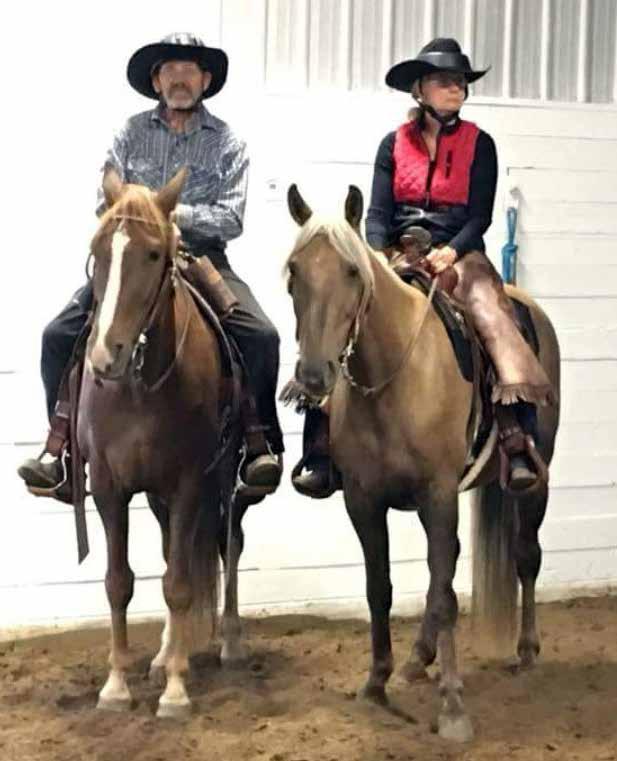
Lori and Blair Dyberg are retired farmers from Wetaskiwin, Alberta, Canada. While they are very different people, they do have some similarities. Horses are a common interest and something they can do together or separately. Lori believes riding is one of the few sports where men and women are equals and compete on a level playing field. Blair believes if it wasn’t for horses, they would not be married.
Both grew up on farms. Blair rode trotting horses until he was 15. Lori always wanted a horse, but her father said no. Not discouraged, she rode the neighbor’s horse until her father relented.
Lori always had a bad back. When she and Blair decided to return to horses, Lori remembered her mother talking about a Kentucky Whip, obviously a gaited horse. They saw an ad for a TWH relatively close to home and purchased the horse in the fall. Throughout the winter, Lori diligently worked with Stormy to establish a relationship.
The following spring, Lori and Blair decided to explore the sport of distance riding. At the first competition, they met the man who sold them Stormy. He was shocked that Lori could handle him. Apparently Stormy had been sold three times previously and returned to the seller the following spring. This was an old trick – sell a difficult horse in the fall, not have to feed for the winter and get it back in the spring.
From that first experience with TWH, the Dyberg’s have participated and been successful in distance riding (competitive trail), the show ring, Cowboy Challenge and now dressage. In between, they have participated in show jumping, cattle penning, and cutting.
Lori and Blair are experienced with gaited horses. They do not care if gaited horses are well received or expected to participate in any equine activity. If they are interested or intrigued by the activity, they explore and then participate. They reached a point where they had done as much as they could and looked for opportunities to grow their horsemanship. Dressage is the newest adventure!
In 2012, Lori reserved a colt by Uphill Heir Trigger. When they went to pick up the weanling, breeder Jack Gurnett suggested they take a filly home as a pasture buddy for the youngster. She would be returned the following year. It didn’t take long for Dyberg’s to instead purchase the filly. Dodge (Northfork Cheerful Chipper) the gelding became Blair’s horse, and the filly Dusty (Northfork Cotton Trim) became Lori’s horse. Both are registered with the Canadian Registry of the Tennessee Walking Horse and participate in The Canadian Triple Challenge.
Although they share the same sire, Dusty and Dodge are different in temperament and style. Dusty is about 15 hands, palomino and stocky. Dodge is 16.1 hands,
By Dianne Little
sorrel and built more like a thoroughbred.
They chose dressage because it provides a program that is established, recognizes each horse as an individual and is designed to develop the horse. The dressage pyramid provides guidance and almost permission to go back if things are not working. They remember a clinician saying “that person didn’t build on anything we worked with previously.” Lori and Blair want to build on previous knowledge and experience – they want to grow. Dressage provides the level playing field they desire – the horse, the horse and the judge.
Western Dressage was appealing because there are no cookie cutter horses, any style or type, even gaited, is acceptable. Although people don’t say anything before the ride, they do stare a lot. After the ride, they receive comments on the horses’ temperaments. One comment in particular stood out: “I know people who would die for that walk!”
The horses have not been received negatively if they are ridden at a level they are suited to and can accomplish. That may
change as they progress through the levels. There may be people who do not want to compete against a gaited horse or potentially have a gaited horse score higher.
When considering the characteristics of a dressage horse, Lori and Blair agree that a willing horse is of utmost importance. Although by the same sire and living in the same environment, Dusty and Dodge are very different emotionally, mentally and physically. Both were lightly started late in their third year. At age four, both participated in Cowboy Challenge. Lori says that Dusty needs a captain of the ship while Blair says Dodge’s attitude is “this is too much work, so I will stop.” The most important lesson Blair has learned is you must adapt and work with the horse.
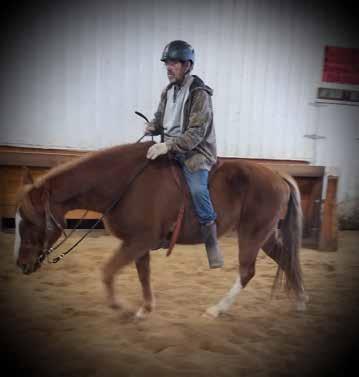
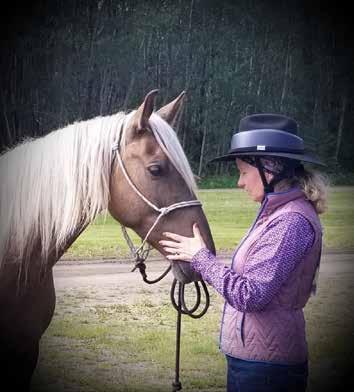
When considering equipment, their advice is “listen to the horse.” The horse will tell you what is comfortable. Of course it must fit the horse. Lori rides in a Harmony Western Dressage saddle with a double jointed snaffle bit. Blair rides in a Tucker saddle and uses a bozel.
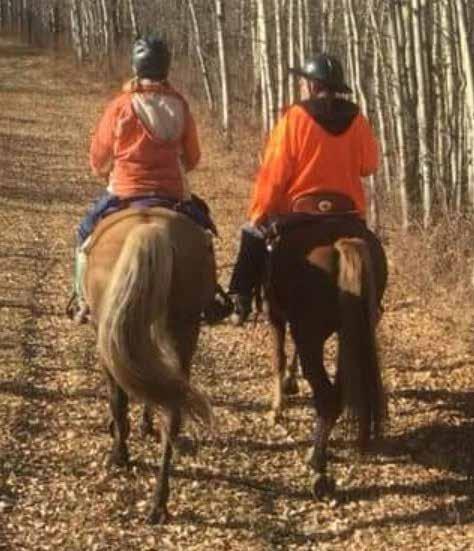
They believe in cross training and incorporate what they have learned from other disciplines. Their horses are exposed to a variety of experiences in multiple locations. They use the trail and obstacles to develop the athlete. Trail riding is like summer camp; an opportunity to work on shoulder-in, haunches-in flying changes, free walk, flat walk, running walk, or walk on a loose rein while enjoying nature. When working in an arena, they warm up and practice specific maneuvers, but do not get fixated on a test.
The Dybergs encourage others to try dressage. “If there is a competition in your area, go and watch and talk with others to get a sense of the group. Talk to other competitors and when possible talk with judges.” If you are so inclined, start at the lowest level, which is Intro Level. When you compete at a level where you are comfortable and confident, there is no pressure. Consider trying several shows because it usually takes more than one try to decide if this is for you. Stay away from negative people and look for positive individuals who are realistic and encouraging.
If you decide to pursue dressage, a coach may be in your future. In dressage, the horse and rider are a team, one that is built on the emotional, mental and physical skills of both horse and rider. Search for a coach that is willing to work with you; understands and modifies when things do not work; is willing to discuss and share; is willing to adjust to older riders; is willing to adjust to gaited horses; and is flexible and can think outside the box. Lori likes to be pushed past her comfort zone, but not to the point of feeling overwhelmed or resentful. When not able “to get the feel,” Lori finds it helpful to ride a different and more experienced horse.
The couple differ when it comes to looking at tests. Blair tends to look at the positive comments as he already knows where he messed up. Lori looks at the negative comments so she knows where she must improve. Generally, they have found the judges to be “awesome, encouraging and show no favoritism. Some recognize gaits and some do not.” More importantly, both know how they feel about the ride. There are some tests they do not like, but willingly admit they are often ones that find more difficult. “If I do not do well, I must up my game.”
In 2019, they each rode 16 tests in front of a judge. Unfortunately, the 2020 season has been unpredictable, and neither have participated in virtual shows yet. No matter what happens this year, the Dybergs are not part-time equestrians and will continue on their journey.
If you are wondering who was Champion, the answer is “I would love to beat the bride, but ………….”
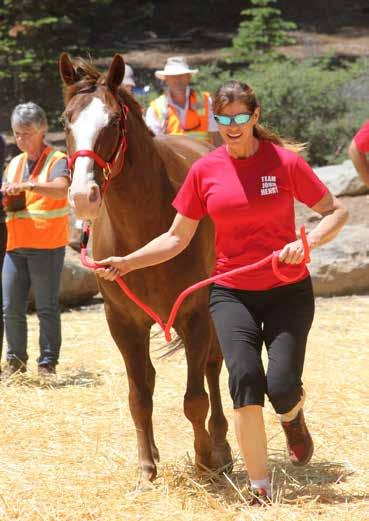
The first thing you might notice about the gaited endurance horse
John Henry is that he doesn’t look at all like an endurance horse.
“He’s built like a good, solid trail horse,” says his current owner Susan Garlinghouse, DVM, “but honestly, he has absolutely no business being as good an endurance horse as he is. He’s more heavily muscled than most. I think, with him, he’s really good at it because he wants to be good at it. He just likes his job.”
The second thing you might notice about John, if you spend any time around him, is his rather extraordinary personality.
“He’s very much like a person,” says Bruce Weary, of Prescott, Ariz., John’s first endurance rider. “He knows how to solve problems. He knows how to take things apart. He sneaks into Susan’s house.”
“He’s almost more like a big dog than he is a horse,” adds Susan. “He doesn’t act like a prey species. He’s totally curious. He totally wants to be wherever you are. It sounds so anthropomorphic to say he’s more like a person than a horse, but he reasons a lot more than we expect
horses to. I don’t know if it’s just his personality, or he’s just experienced, or he’s just got the hang of all this…I don’t know exactly what it is.”
John Henry’s endurance career began in 2008 with Bruce. He was looking for another gaited horse to ride in the sport, and Fred Mau, a broker in New Mexico, took Weary out for a test ride on an 8-year-old dark chestnut gelding. “I noticed just how easy John Henry was to ride,”
Text and photos by Merri Melde
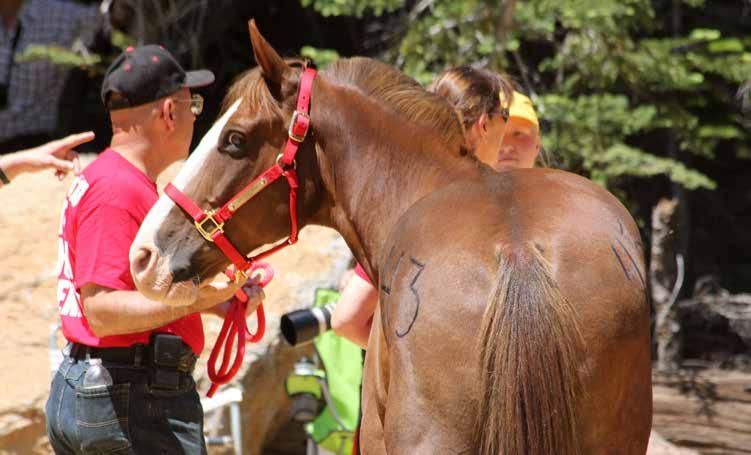
Bruce recalls, “and he was pretty smooth. I got off him after a 15-mile ride and checked his pulse, and it was something like 30.
“I tied him to the hitching rail and started to walk away from him, and he turned his head around completely, looked at me and called to me. I’ve never had a horse do that, almost like, ‘You’re taking me home, aren’t you?’ I usually don’t anthropomorphize, but I’ll never forget that look on his face.”
Bruce took John Henry home as a fun project, aiming to turn a “kind of portly” horse into an endurance horse. John had been used for trail riding, carrying kids, and hauling weight up and down mountains by packing elk, so he already had a good foundation of fitness. And in just a few short weeks, the pair completed their first 50-mile ride together, coming in 12th place out of 38 riders. It felt so easy, that right after that first ride, the Big “T” was forming as an idea in the back of Bruce’s mind.
The 100-mile Tevis Cup is the Holy Grail for most endurance riders. It’s one of the toughest 100-mile endurance rides in the world, and one Bruce had yet to finish in five attempts.
Nine months and another ten 50-milers later, and with help and coaching from veterinarian and endurance rider Michelle Roush, Bruce and John Henry earned their first coveted Tevis buckle, finishing in 63rd place, in a ride time of 21 hours and 41 minutes. John carried 250 pounds.
“I’ll never forget,” Bruce says. “After midnight, he just became a runaway. After Francisco’s [vet check at 85 miles], I chose to ride him in an S-hackamore, and he just decides we’re going to run all the way to the river crossing. And I had no stopping power! I had my feet planted in the stirrups; I had both reins wrapped around my hands; I was pulling as hard as I could; I was swearing at him; and he just went running through the night. He never missed a step.”
Not long after Tevis, Weary invited Susan Garlinghouse to come ride John in a 50-mile ride. Susan says, “I had a couple horses that were going, but they were big trotters with big motors, and I was starting to have problems with my knees. I was trying to figure out what I was going to do about that when Bruce invited me to come ride John one day, just to see what riding a gaited horse was like.”
And there, John Henry cast his spell on Susan. “We had so much stinkin’ fun.”
A year later, Bruce decided to sell John, as he’d accomplished his goals with the horse. Susan was the first person he contacted.
“I said, ‘Are you kidding? Yes! Yes! I’ll come get him right now!’” Susan says. And thus began John Henry and Susan’s partnership, in which over nine seasons so far, they have
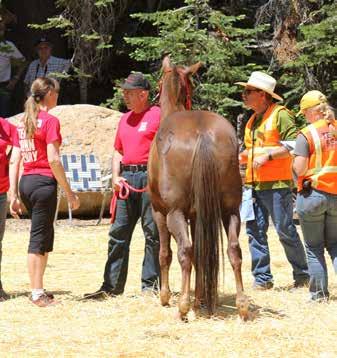
completed 3,330 miles together, including three consecutive Tevis Cups. John also has a fifth Tevis Cup completion with Lisa Schneider, tying him with the most Tevis completions for a gaited horse. John’s total AERC (American Endurance Ride Conference) record is 4,150 miles over 19 seasons, with 92 completions in 97 starts.
While John Henry has no papers, most people are convinced he is at least part Tennessee Walker. He moves like one, and if you put his
picture next to Ebony Mountain Man, the 1980 World Grand Champion Tennessee Walker, they look remarkably alike, from their color to their build, though any relation is just speculation.
While John has the normal Tennessee Walker gaits of flat foot walk, running walk and canter, he’s also got a few more in his arsenal. “I say he’s got about 20 different gaits, 20 different gears that he uses. I can’t even come up with a name for at least half of them,” Susan says. “I joke and say that all four legs are going back and forth but in no particular order.”
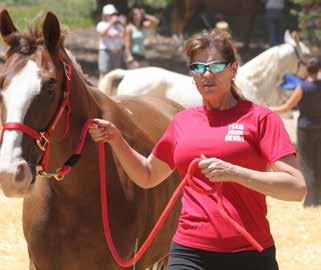
Susan believes it’s part of what makes John so successful, since because he’s using different muscle groups so often, it’s a lot more effective. “I don’t care what he’s doing as long as they’re efficient. They’re all comfortable, and he changes gaits probably every hundred yards all day long. And our agreement is, I more or less choose the speed, and he chooses the gait that he wants to do it at.”
Likely another major factor in what makes John Henry so successful in
his endurance career is the former partnership and training he had with Bruce and his current relationship with Susan.
John sustained a severe leg injury in his pasture in September (he has never revealed what happened); after more than six months of healing he is currently in rehab and just starting back exercising with walking an hour a day in hand or under saddle. If all goes well - and he will be carefully monitored as to soundness and desire - a sixth Tevis cup in 2021 is a goal.
“He seems to really like endurance, and he’s a remarkably honest horse,” Susan says. “If he’s not sound enough, obviously I’m not even going to ask him to start. If he says he doesn’t want to do it anymore, I’m not going to ask him. All we can do is get him as prepared for it as we can and hope for the best.
“If it doesn’t happen, then fine, he’s earned a place in my pasture for life.
“He’s absolutely been my lifetime horse.”
Editor’s Note: This update from Susan was recently posted on Facebook: “John is doing 16 mile workouts without trouble, and we are going to go try a solid 20-23 mile ride in the next week or two on Tevis trails at a brisk, completion speed or better clip. If that works, I still want to see him do a simulated fifty somewhere around the one year anniversary of his injury on September 26th. And then let’s see what we’ve got.”
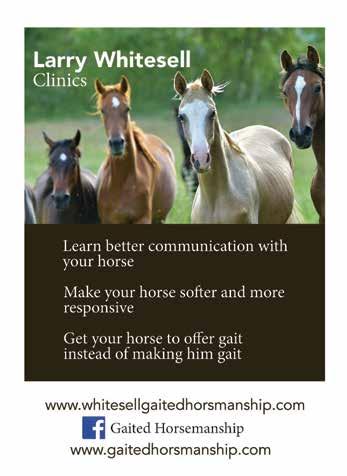
By Larry Whitesell
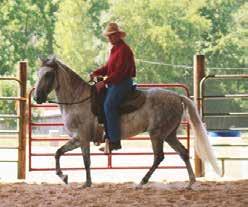
Rhythm is key for relaxation in a horse. The rhythm of footfalls relates to the horse’s mental state. An even, cadenced gait, whether it’s gait, trot, canter, or walk, can give you insight into the horse’s mental well-being.
Evenness of cadence is only part of rhythm. Do the front feet and hind feet sound the same when hitting the ground, or do the front feet hit harder than the back? Is the horse symmetrical? Many show horses are taught to lift the front feet higher by raising the neck or altering the feet. This would have a negative effect on the horse emotionally.
If you ask your horse to go, and he keeps escalating instead of staying at the speed you asked for, this is a loss of rhythm. If you ask for gait, and the horse keeps falling back to walk, this is also a loss of rhythm. Some would call this horse lazy, but dullness is a negative emotion. Teaching the horse to get a rhythm and maintain it while matching the rider’s energy is being a leader. Dull horses are always out of balance
and much more likely to spook or be buddy sour. Balance and forward are necessary for relaxation. Flexion and softness cannot be obtained without forward energy.
Rhythm is most often disturbed by the rider’s hands. Hands that are quick, abrupt or demanding create mental tension. Mental tension leads to physical braces, and physical tension leads to emotional anxiety. Nothing can really be taught without relaxation. Without relaxation, the body and mind are not receptive to learning. A common question asked at my clinics is what to do when the horse becomes energized and anxious out on the trail. The answer is “ride it.” Anything you can do to solve your problem had to be taught when the horse was calm, and the same goes for the rider.
Rhythm is affected by the rider’s balance, or lack thereof. Our riding seat is so important to the horse’s balance and rhythm. When we tip our heads or drop our shoulders, we affect rhythm.
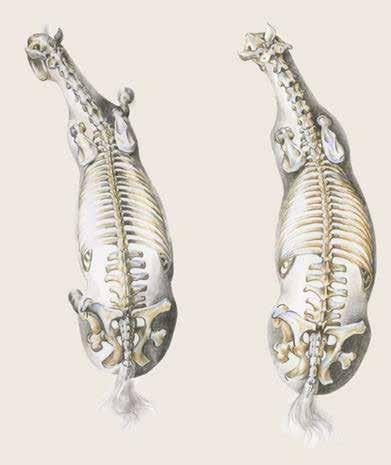
Bend is a physical posture that ensures the horse’s well-being. Correct posture allows the horse to carry out the rider’s requests in a comfortable and efficient manner. Correct bend is critical to relaxation. Without correct bend, balance is not possible. If the rider has to hold the horse in a posture, then everything is done in tension. Bend is not just the head and neck, but the entire spine from ear to tail, which I think is often misunderstood in the horse world. Most riders bend the neck but not the entire spine, which takes the horse out of balance. If the rider holds the horse in a bend or posture, then there is no self-carriage.
All horses are light by nature. Lightness begins to disappear as riders pull horses down to their level. When riders raise their level, lightness is already present. I get on horses every weekend that are heavy in the bridle, and if I can ride them 20 minutes, I can make them much lighter, which means I need to teach the rider as much as the horse. When the rider explains how her aids communicate to the feet and the horse understands this, then it is only a matter of how clear the rider can be.
We often approach the horse with how we want them to change, or act. Instead, we should not push our goals or expectations on the horse. Tom Dorrance said “first you go with the horse; then the horse goes with you; then you go together.” Lightness, or control, will never happen
if the horse doesn’t have a desire to share time and space with us. When we approach the horse expecting something from him, it’s too much for the horse. The stronger our desire to change the horse or “make it happen,” the more elusive our power to do it. “Put him in a position where he can relax, where he can feel comfortable, allow him to feel some contentment, some happiness, some well-being.” (Dominique Barbier)
Horses lose relaxation because we are not present for them. The horse is in the moment. We live in the future or the past. We focus on our goals, our agenda and our expectations. We think of what he has done in the past and fear what he might do. We are not proactive riders and
riding in the “right now.” We teach them not to spook or go with their buddies instead of riding the next steps like a leader. Much of our training is to prevent the horse from doing things that will scare us. So we are training with fear, which the horse can detect. You cannot teach any animal a negative concept. Instead of teaching the horse not to spook, teach him to obey the aids so you can control him in any situation. He can relax and do his job.
The movements you teach don’t earn trust. How you teach the movements earn trust. Do the movements relax the horse and make him more comfortable in his body, or do they just try to control him? If you don’t get the mind, you will never control the body. The horse has to want to be with you. When teaching movements, if the horse or rider has fear, anxiety, or tension, it is a waste of time.
When horses do things that scare us, we should accept that the horse is telling us he feels threatened and uncomfortable with a situation. Instead of trying to change him, we should accept he is in trouble and try to help him so he can learn to be a problem solver and think through things instead of just reacting. Quit treating the symptom and cure the disease so the horse can relax. When relaxation comes, both rider and horse believe they are safe, and riding is fun.
www.whitesellgaitedhorsemanship.com
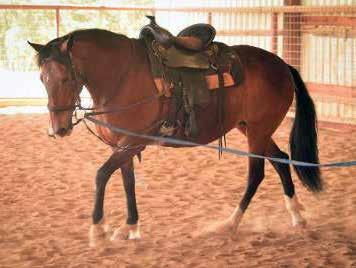
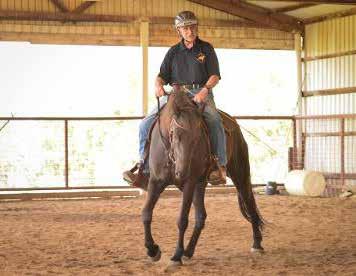
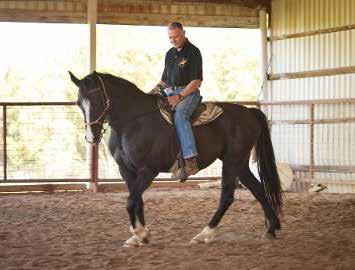
Text and photos courtesy of Ashley Frones.
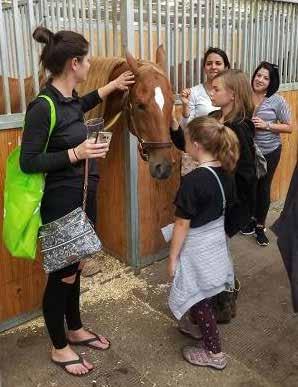
Many of us have expressed our sheer disappointment of missing the Minnesota State Fair. For many, it is a great end to summer. I will miss the food, showing my horses, and connecting with friends I only see once a year. But what I will miss THE MOST is giving people their first ever opportunity to touch and meet a real horse. To many of my friends, this doesn’t mean much, either they have horses, or they have been able to meet mine. Those of us who own these wonderful animals sometimes take our contact with them for granted, and at times we even feel it is a burden.
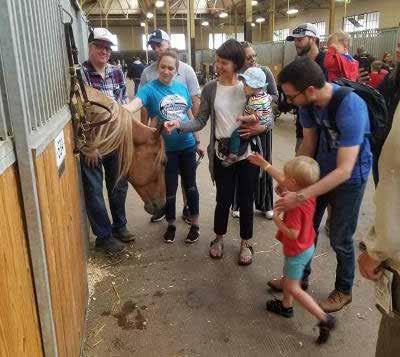
The 48 hours we are at the State Fair is usually a whirlwind of craziness, total chaos and often focuses on how much food we can stuff in our faces. That I can live without.... Watching those who get to visit with these amazing animals for the first time is something you can never replace. Neither is seeing someone interact with your horse, who is remembering days gone by, with horses of their past.
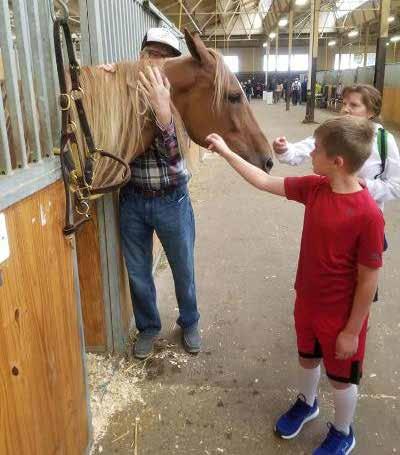
As you watch people approach the stalls, you watch their body language. Some need you there to let them know it’s ok to pet them; others are drawn in so quickly that you know they will get the peace they need; when the simple touch of the horse’s muzzle brings tears to their eyes. That is what I will truly miss.
Susan Libby, susan@uckele.com
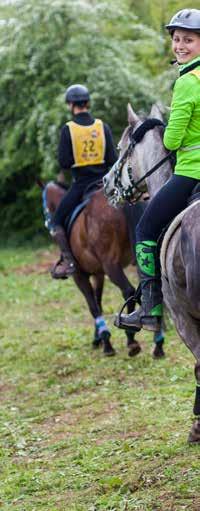
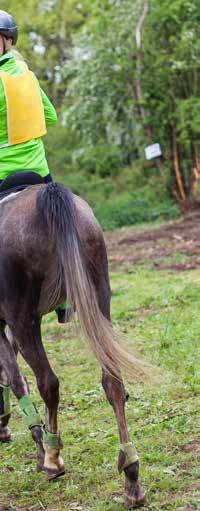
Electrolyte problems in the heat are directly proportional to sweat loss, so it makes perfect sense that horses working long periods are at greatest risk. This puts the spotlight on endurance horses.
Equine sweat is a concentrated electrolyte solution. Chloride is the most abundant electrolyte in sweat, followed by sodium, then potassium, with much smaller amounts of calcium and magnesium. The daily requirement for sodium can double with just one hour of low level sweating.
Even at low rates of sweating the horse will lose over a gallon of fluid per hour - and up to 4 gallons per hour with heavy sweating. That’s a lot of fluid! The first consequence of this is dehydration. Since sodium lost in the sweat is needed to hold water in the body tissues, drinking water alone is not enough to correct the dehydration. Even mild dehydration has a major impact on the ability to perform.
Electrolyte losses triggered by exercise and sweating can produce a variety of temporary signs which respond to hydration and electrolyte replacement. Normal levels are required for regular heart rhythm, intestinal motility, coordinated movements of involuntary muscles like the
diaphragm, skeletal muscle contraction and relaxation and the regulation of nerve firing.
Endurance horses show some typical changes in their blood electrolyte profiles. Low chloride is common. As above, chloride is very high in sweat. They do not have good stores of chloride in the tissues to replace what is lost in sweat. Low potassium is more common than low sodium. This is because horses can pull sodium from the tissues surrounding the body’s cells to keep blood levels up. The kidney also conserves sodium by reducing sodium in the urine and replacing it with potassium.
Low potassium interferes with normal contraction of intestinal muscles, skeletal muscles and the heart. The loss of chloride also worsens these changes. In the body, negatively charged chloride and bicarbonate normally balance out positive charges. When chloride becomes too low, more bicarbonate is produced. The bicarbonate then binds up “free”/charged calcium and magnesium ions which in
turn disrupts muscle and nerve activity.
The bottom line of course is that successful endurance activity requires careful attention to electrolyte intake. Hay/grass is an excellent source of potassium but chloride levels vary and sodium is extremely low. Plain salt (sodium chloride) is the first consideration, feeding 2 oz/ day along with generous forage.
If the horse is on a ride or working more than 1 to 2 hours/day, add a balanced electrolyte replacement with roughly a 4:2:1 ratio of chloride:sodium:potassium. In other words, twice as much sodium as potassium and four times as much chloride as potassium.
support, a different formula could be beneficial in targeting the existing situation first. Look for salt (sodium chloride) to be about double the level of potassium with magnesium about 1.5% and calcium 3%.
Correctly supplementing to provide optimal electrolyte support takes a little effort, but is well worth it.
Uckele Health & Nutrition, maker of CocoSoya®, offers formulas that provide Electrolyte support.
Once you find a balanced product, calculate a dose that provides 10 to 12 grams of sodium. You need one such dose for every hour worked over the 1 to 2 hour mark.
The above program is designed to prevent significant electrolyte losses. If the horse has already been working heavily without electrolyte
Pro Lyte pellets provide highly concentrated, low sugar electrolyte for everyday use. Add to feed or water for fast results to maintain the balance and flow of vital body fluids and the healthy function of the muscles and circulatory system. Palatable apple-flavored source of Sodium, Chloride, Potassium, and Magnesium for use pre- and post-event.
Lyte Now is a convenient, full spectrum electrolyte paste designed to help replenish major electrolytes and trace minerals lost in sweat for horses under stress from summer heat, hard work, training, and physical activity. Supports proper mineral balance to maintain the circulation of vital body fluids and the transmission of nerve impulses pre- or post-event to promote an optimal competitive edge.
By Wendy Murdoch
Reprinted with permission.
www.murdochmethod.com
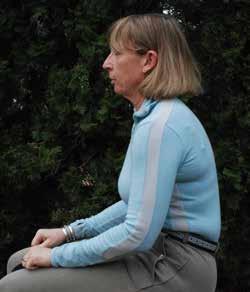
Do you ride with your palms facing down toward the ground? Do you round your upper back and shoulders? Or do you tend to look down at your horse’s neck? These positions cause your horse to go on the forehand making him heavy and difficult to turn. Also in this position you will not be able to follow your horse’s mouth over a fence, instead relying on a crest release for balance. Here’s an exercise to help you sit up straight, open your shoulders make turning easier and continue to develop an automatic release over fences.
Next time you ride notice what you do with your hands. Do one or both palms turn down (palm towards the ground) more than the other? Do you elbows wander away from your sides? Do you have difficulty “giving” to the horse? Do you retract your hands towards your stomach when you halt? Do you tense your shoulders when jumping?
Rolling your palms down or retracting your arms for halts and turns is
hard on the horse’s mouth and balance. When your palms are down your weight will tip forward putting your horse on the forehand making it difficult for him to balance or push from his hindquarters. Therefore it is important to carry your hands in a position that allows you to sit up, open your chest and follow the horse’s mouth over a fence.
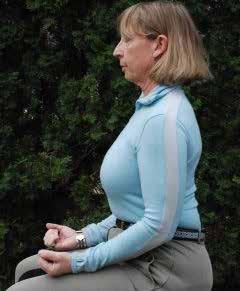
To improve your hand position start off the horse with the following exercise. Sit on a flat bench or chair. Close your hands into soft fists and rest them on your thighs. With your eyes closed slowly begin to roll one hand so that the palm faces the ceiling. What happens in your shoulder?
Roll your hand in the opposite direction so that the palm faces your thigh. What happens in your shoulder now? Continue to roll your fist slowly one way and then the other. Observe your breathing, chest, head and neck as you do this.
Roll the other fist and discover the differences on the two sides. Is it harder to run one fist upward? Then roll both fists simultaneously in the same direction, palm down
then palm up. What happens in your chest, neck and shoulders?
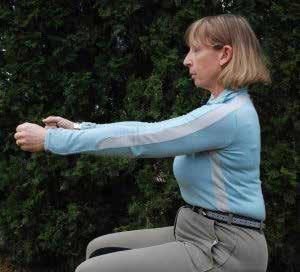
When your palms are down your chest drops and shoulders close together. When you roll the palms up the chest lifts and the shoulders move apart and backwards. Find the middle between these two positions. With the palms facing each other (thumbs towards the ceiling, eyes still closed) begin to extend your arms. The hands may come away from your thighs at this point. How easy is this movement? Roll the palms down or up and repeat. In what position is it easiest to extend your arms?
Repeat this exercise on the horse at a walk and find out how your horse reacts to the contact with your hands in different positions. You will find that your arms extend the easiest when the palms are facing each other. The hands may be slightly angled but definitely not palms down or up.
Use this Murdoch Minute to find the best palm position to follow the horse’s mouth both on the flat and over fences. In order to allow the horse to lengthen his neck the shoulders, arms and hands need to be in a position where they can follow the horse’s mouth forward. And always remember to – enjoy the ride!
As a Professional Saddler, I have spent quite a bit of time fitting saddles specifically to the Arabian horse. In doing so, I have noticed that Saddleseat horses have not received the same attention to saddle fit as horses in other English disciplines. A good fitting saddle in any equine-related activity is imperative for the health and performance of the horse. But first we have to understand the parts of the saddle and how they impact the horse.
The English saddle is basically comprised of two sections; the top and the panel. The top of the saddle contains the tree, seat, skirts, stirrup bars, leather flaps and billets. This is the part that supports the rider. The panel is the portion of the saddle that is closest to the horse. It is made up of the sweat flap and the padding that protects the horse’s back and disperses the rider’s weight from the tree.
Padding in an English saddle is most commonly comprised of either wool flocking or latex rubber. Flocking
is actual wool that is sheared from sheep, cleaned and then stuffed or flocked into a calfskin tube that runs under the top of the saddle along the horse’s back. The latex rubber panels are covered in calfskin and attached to the underside of the saddle. Traditionally, cutback panels are constructed with a felt base, a second layer of latex rubber and then coverage of the entire saddle in calfskin.
While both wool flocking and latex rubber padding have their own advantages and dis-advantages, I believe wool flocking is a superior option. Wool is malleable and can be adjusted to fit your horse’s back. As long as the tree is wide enough, the underside of a wool flocked panel can be adjusted in a variety of ways. It has quite a bit more padding than the latex rubber panels so it provides extra comfort for your horse. I know that when I am in my tennis shoes, I can walk and run much better than I can in my penny loafers. This is a principle I apply to saddle fitting. As we ask our horses to engage their hindquarters, they are lift-
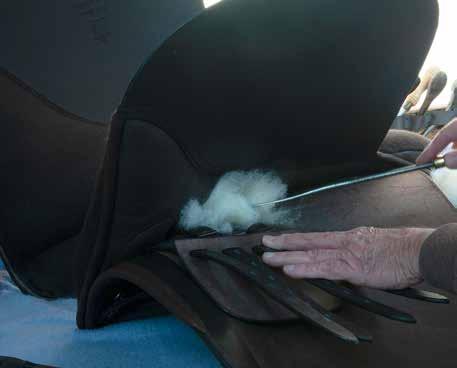
Here wool is being added to the underside of the flap using a flocking iron. The saddle is turned over and flocking ports are accessed between the flap and the panel. For leather covered panels, this is only way fit can be adjusted unless the panels are unlaced and dropped.
ing their backs and pressing up into the tree. A comfortable panel will allow them to engage and move forward more readily. In time, as the wool compresses, more can be added for a perfect fit. Sometimes old flocking needs to be completely removed and new wool added. With this adjustment, the saddle functions like brand new.
allows for a much better fit for your horse.
The underside of most saddles today is calfskin. Why does that matter? Occasionally you might see a saddle with fabric on the underside. This fabric is actually 1/8 inch thick wool serge. Serge is woven wool fabric and the precursor to calfskin. In my opinion, serge panels are far superior to calfskin for several reasons. The first is that it is much softer and stays more supple than calfskin. It goes onto their back “warm,” which means it is softer from the moment you begin to saddle your horse. It is much easier to regulate the fit of the saddle as you can be more precise in where you adjust the flocking. A round awl tool can reach anywhere on the panel as opposed to being limited to only where your flocking irons can reach with calfskin. This
Typically, Saddleseat saddles are 19 to 23 inches long on the horse’s back, which corresponds with the seat size. Due to the length, these saddles can often sit high on the withers, or on the loin area of the horse. Most horses’ backs are not flat. When the saddle has contact in the front and the back, but little to no contact under where the rider is sitting, that is called “bridging.” This can cause problems because the purpose of the saddle is to evenly distribute the rider’s weight along the entire length of the saddle. If the saddle is only making contact in a few spots, these areas bear more weight and can eventually cause soreness and irritation. A good indication of a poorly fitting saddle is when a horse is grumpy upon tacking.
Having wool flocked panels allows you to add wool in areas that are
not in contact with the horse’s back and remove wool in areas that need more room. You can adjust the underside of the saddle to distribute all of the rider’s weight. By doing this, the horse will not have painful pressure points and can move forward more comfortably and evenly. An analogy of this is if you are wearing a backpack, and one of the straps is uneven or the weight is uneven. You can feel more pressure on one side of the strap. Your movement will become uneven, and your muscles will develop differently to compensate for the imbalance. You may also develop some soreness as the pack is heavier on one side. The same is true for a rider in a saddle that does not sit evenly on the horse’s back.
Wool flocking also allows for adjustment of the saddle’s balance point, or the flat place in the saddle where the rider sits. The rider is balanced on their pubic and seat bones. If this spot is unbalanced, you might feel perched forward like you are riding uphill or shifted back like you are behind the horse’s motion. With wool flocked saddles, you can alter this position to provide a better balance combination for the rider and the horse.
As horses grow and develop, they can have imbalanced conformation. A horse can end up croup high, have prominent withers or have some type of unique conformation. Riders are all built differently as well. Being in balance may be somewhat different for each person, but it is also the foundation of good equitation. Therefore, when fitted with a properly balanced saddle, the horse is better able to move to its fullest potential.
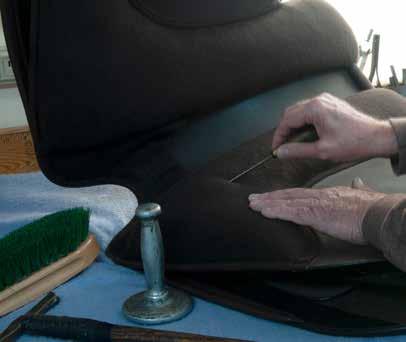
Flocking is being adjusted on the underside of the panel. Wool would be added as seen in the previous photo and then moved around using a regulating awl. The awl is inserted directly into the panel through the serge, and then the tip is moved inside the panel to move the wool. You can be very precise in fit because anywhere on the panel can be easily accessed.
While this all may seem complicated, the basic principle is to find a saddle that comfortably fits you and your horse. If it is a wool flocked saddle, adjustments can be made to benefit both the horse and rider. In time, obtaining this equilibrium will improve overall performance and therefore result in a happy, healthy and pain free horse.
Text and photos courtesy of Adrienne Hendricks. Visit www.EnglishSaddle.com for more information.
There are many important questions pertaining to equine conditioning and fitness as we all look forward to returning to work. Dr. Hilary Clayton recently shared some cautions and considerations in a Skype interview with Equine Guelph. Dr. Clayton is a veterinarian, researcher and horsewoman. For the past 40 years she has been conducting amazing research in the areas of equine biomechanics and conditioning programs for equine athletes. Dr. Clayton has also been a guest speaker in Equine Guelph’s online course offerings.
1. What are the differences between conditioning and training?
• Training is the technical preparation of the athlete (learning the skills and movements they will need to perform in competition.)
• Conditioning strengthens the horse, progressively making them fit and able.
• The goal of conditioning is to maintain soundness while maximizing performance.
2. Considerations for horses that go from full work to just pasture turn-out?
• A gradual decrease from full work to less days a week, lessening intensity is ideal.
• Also, ideal that they stay in light work a day or two a week, however horses are resilient.
• When workload decreases, diet decreases.
• Do not change things suddenly.
3. How long before a horse begins to lose muscle mass and fitness? What about bones/connective tissues?
• Horses maintain their muscle and cardiovascular ability longer than humans.
• A month before horses start to lose cardiovascular capacity and muscular strength.
• Bone and tissue adapt in accordance with the work they are doing.
• With no work bones become weaker, muscles smaller and endurance decreases.
• Good news is the strength of bone & muscle will increase again when work resumes.
• Ligaments, tendons, cartilage of horse mature by two years of age and are a bit more of an unknown.
• Resilience is the ability to stand up to the performances.
4. When getting back to work, where do you start and how do you know how to move forward?
• First address condition of feet, saddle fit, and plan for increasing nutrition requirements.
• Start very gradually with walking for the first two to four weeks.
• Start with 10 min under saddle, working just three to four days in the first week.
• Increase amount of walking by 10 min/week.
• By three weeks = 30 min walk/day, start introducing 20 seconds of trot then slowly introduce short canters.
• Performing lots of transitions between gaits is great for improving fitness.
5. What are the signs of “too fast, too long and too soon!” and how do we avoid this?
• Back pain, limb pain, inflammation.
• Monitor any changes carefully.
• Horses will fool you with their cardiovascular fitness improving before their strength.
• To avoid injury, don’t let an energetic horse dictate how much work you will do.
6. What are some of the similarities and differences in training programs for different disciplines?
• Initial phase of conditioning is similar, building aerobic capacity and strengthening muscles.
• First two to three months can be dedicated to general conditioning.
• Then start specializing depending on the intensity and endurance required for your sport.
7. What advice do you have for horse owners that are worried that leaving the horse alone is detrimental to its well-being?
• Plenty of horses living outside 24/7 with little exercise that are doing just fine.
• Horses are far from their natural lifestyle.
• Maximizing turnout and forage are ways to benefit our horses welfare.
• They need water, food, shelter and an attentive care-taker.
By Jackie Bellamy-Zions.
For further information, visit www.equineguelph.ca.
https://thehorseportal.ca/2020/05/7-tips-on-equine-conditioning-with-biomechanics-expert-dr-hilary-clayton/
You tube video: https://www.youtube.com/watch?v=oqZzJ_2OhzI&feature=youtu.be
By Sarah E. Coleman
The COVID-19 pandemic changed the world in unprecedented ways, disrupting commerce, shuttering businesses and rendering most in-person activities obsolete. For those riders who were lucky enough to continue to ride throughout the pandemic, the landscape of competition was bleak.
However, riders are nothing if not innovative, finding and creating ways to stay involved with horses and advancing their riding despite the lack of faceto-face interactions with instructors or judges. While many equine organizations were forced to rethink the way the offered services to their clients, one organization was lightyears ahead of the competition: North American Western Dressage (NAWD).
Founded in 2010 by Jen Johnson and her sister Gretta Liubakka, the membership-based organization has focused on encouraging participation and offering quality feedback to its members since its inception. For the last
The lockdowns associated with the COVID-19 pandemic brought in-person horse shows to an immediate halt, giving virtual horse shows a chance to shine.
eight years, the association has offered virtual horse shows, understanding that in-person events are not for everyone.
Jen has been a western rider all her life, but she began to dabble in dressage, taking lessons and learning the basics of the discipline about 15 years ago. As she learned more about the true principles of dressage, she began to wonder why she couldn’t learn the art of dressage while riding in her western saddle. The idea for NAWD was born.
The formation of NAWD has mirrored the creation of a dressage horse: it’s a journey. The NAWD mission is simple: The organization seeks to provide resources to members to help them learn how
classical dressage principles can be applied to all horses no matter the type of saddle or breed you have, promoting long-term equine health and soundness.
The core principle that reverberates through every initiative NAWD launches is simple: Inclusion. The organization welcomes every horse and rider, no matter their breed, age, talent, prior discipline or financial status. Though this may seem a pipe dream to those who have ridden classical dressage in the past, NAWD is accomplishing inclusivity in astounding ways; the first of which is the ability for everyone to have the ability to compete in online competitions.
The competitions NAWD offers begin with their Six Feet on the Ground skill test that focuses on groundwork, and branches out to include Long-Reining, Ranch Hose, Trail, Classical Dressage and Freestyle.
Always focused on creating a positive environment for their members, this year the organization released their Preparation (Walking) tests, where the entire dressage test is ridden at a walk. “Riding is hard!” Jen says with a smile. “These tests allow riders to cement [in their minds] what a circle is—going faster just gives you more to think about!”
Even advanced riders find the walk tests great ways to slow things down and allow them to work on perfecting
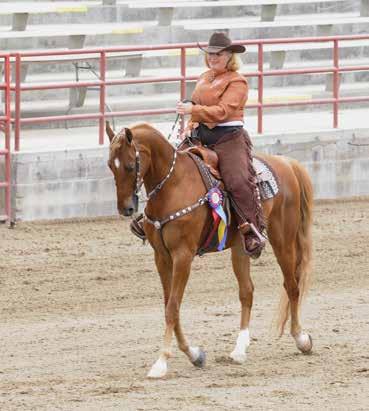
their aids and rider biomechanics.
Though Jen had to contemplate the addition of walk tests, she was ultimately persuaded to give it a try with encouragement from two Friends of Sound Horses (FOSH)
members: Dianne Little, FOSH vice-president and Alece Ellis, IJA Senior Dressage Judge.
“I had used IJA [Independent Judges Association] tests in the past, but it wasn’t until the championship Gaits Wide Open year-end show that I looked closer at the test I had to type for the judge,” Jen said. “FOSH inspired me to add the walk test [to NAWD] with their Introductory Level tests” after seeing how well it was received.
IJA is an organization dedicated to sound, natural and ethical judging
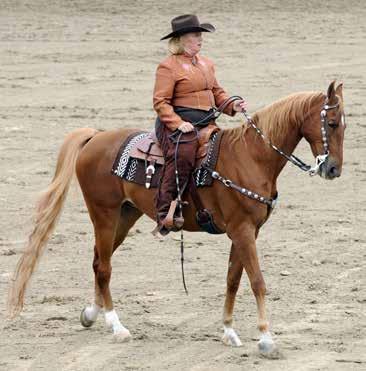
of all gaited breeds—a core value that lines up well with the mission of NAWD. “I don’t have a gaited horse,” Jen explained, “but I could definitely see the value that these tests would have for all riders.
Though the term “virtual horse show” may have been unfamiliar to riders before the COVID-19 pandemic, now one would be hard-pressed to find someone who doesn’t know the phrase. Just like in traditional breed and discipline horse shows, there are nuances that set online horse shows apart from one another.
NAWD shows focus heavily on providing participants with quality feedback from knowledgeable judges. To do this, NAWD offers some of the only shows where judges are not only allowed, but are encouraged to stop, rewind and review test movements.
A NAWD judge typically spends between 30 and 40 minutes on each test. This ensures riders get plenty of comments on each movement so they can work on improving, Jen explains. This can be tricky, she notes, because some scores may be lower than expected since the judge has the opportunity to review a maneuver multiple times.
“Recognized shows are run as similarly to an in-person horse show as they can be,” Jen explains. This can be tricky, she notes, as some scores may be lower than expected since the judge has the opportunity to review a maneuver multiple times.
Recognized shows are run as similarly to an in-person show as possible. As soon as riders enter the ring, judges score the tests before them. They talk to a scribe or record comments, and an organizer transcribes the notes.
In addition to their own shows, NAWD provides their virtual show management services to other organizations and host shows recognized by the Western Dressage Association of America (WDAA).
While many clubs are starting to host virtual shows, they use manual scribes and handwritten tests which can cause results to take up to a month to be published. NAWD’s electronic system allows riders to receive test scores and comments within a day or two, and shows are usually wrapped up withing a week after
closing date.
One of the biggest challenges Jen has faced is finding judges who understand both the Western horse and classical dressage. “We have our own judging certification in place,” Jen explains. The certification is designed to be difficult to eliminate people who rely solely on the rules to create the order the class is pinned. Our test is 150 questions with lots of multiple choice and essays. About 50% of the people who take it fail.”
While the test isn’t easy, it is affordable. Unlike traditional certifications from governing bodies that require potential judges to travel, sit with multiple judges and watch videos and seminars, NAWD seeks to create and support judges who understand that western dressage isn’t simply throwing western tack on a stereotypical dressage horse. “A Quarter Horse that is butt-high who is showing the characteristics we’re looking for [like engagement] to his level of ability should score as well as a Warmblood who is tracking up from day one,” Jen explains.
NAWD saw an increase in membership when the COVID-19 lockdowns began and in-person shows were canceled. “Some people use [NAWD] as a steppingstone to live shows,” Jen says. Others primarily do online shows and that’s all they ever plan on doing, she explains. This may be for a variety of reasons, the least of
which is that virtual shows don’t eat up an entire weekend and can help keep associated costs down. “People use them for different purposes,” she explains. And NAWD is there to support them all.
While many people are now familiar with virtual horse shows, Jen doesn’t feel that her work is done. “The biggest challenge I see is getting people to step outside of their box and realize that dressage applies to every horse in a different way. ‘Modern dressage’ doesn’t always honor the horse, but true, ‘classical’ dressage is healthy, and helps the horse move effectively and stay sounder longer. It’s not the competition you see at the Olympics!” she says.
For NAWD, just like for FOSH, the focus has always been—and always will be—on the creation and celebration of a healthy riding partner. Accessibility and positivity are icing on the already-sweet cake.
The following Senators have not committed to the PAST Act. If you reside in one of these states, please consider contacting him/her.
ALABAMA
Shelby, Richard C. [RAL]
ALASKA
Murkowski, Lisa [R-AK]
Sullivan, Dan [R-AK]
ARKANSAS
Boozman, John [R-AR]
Cotton, Tom [R-AR]
COLORADO
Gardner, Cory [R-CO]
FLORIDA
Rubio, Marco [R-FL]
Scott, Rick [R-FL]
GEORGIA
Isakson, Johnny [R-GA]
Perdue, David [R-GA]
IDAHO
Risch, James E. [R-ID]
INDIANA
Braun, Mike [R-IN]
Young, Todd [R-IN]
IOWA
Ernst, Joni [R-IA]
Grassley, Chuck [R-IA]
KANSAS
Roberts, Pat [R-KS]
McConnell, Mitch [R-KY]
Paul, Rand [R-KY]
Cassidy, Bill [R-LA]
MISSISSIPPI
Hyde-Smith, Cindy [RMS]
Wicker, Roger [R-MS]
MISSOURI
Blunt, Roy [R-MO]
Hawley, Josh [R-MO]
MONTANA
Tester, Jon [D-MT]
Fischer, Deb [R-NE]
Sasse, Ben [R-NE]
Burr, Richard [R-NC]
Tillis, Thom [R-NC]
Cramer, Kevin [R-ND]
Hoeven, John [R-ND]
OHIO
Portman, Rob [R-OH]
OKLAHOMA
Inhofe, James M. [ROK]
Lankford, James [R-OK]
SOUTH DAKOTA
Rounds, Mike [R-SD]
Thune, John [R-SD}
TENNESSEE
Alexander, Lamar [RTN]
Blackburn, Marsha [RTN]
TEXAS
Cornyn, John [R-TX]
Cruz, Ted [R-TX]
UTAH
Lee, Mike [R-UT]
Romney, Mitt [R-UT]
WEST VIRGINIA
Capito, Shelley Moore [R-WV]
Manchin, Joe, [D-WV]
Johnson, Ron [R-WI]
WYOMING
Barrasso, John [R-WY]
Enzi, Michael B. [R-WY]
SOUTH CAROLINA
Graham, Lindsey [R-SC]
Scott, Tim [R-SC]


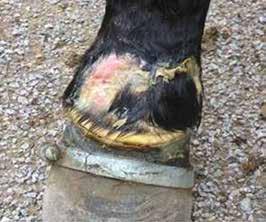
“Soring” is the use of painful training techniques to create a flashy unnatural gait in horses. Tactics include applying caustic agents (diesel fuel, hand cleaner, etc.) to the front legs and then wrapping the legs overnight. The flesh is sore when the wraps come off, chains are used to bang on this area during training. Also injections of irritants above the hoof, tacks under the band huge weighted (”stacked” or “padded”) shoe in place, and the hoof into the quick and/or green nailing.
These training methods cause the horse to attempt to avoid the pain by picking up his front feet faster and higher and shifting his weight back onto his hind legs in a crouching stance. This grotesque gait is called the Big Lick.


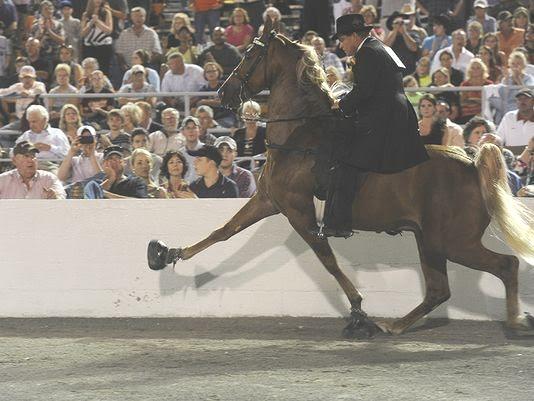
Soring was made illegal in 1970 by the Horse Protection Act, but the shoes and chains are not illegal—YET. Soring itself still goes on Penalties are nearly non-existent, and enforcement is so lax that it persists in about 200 trainers impacting over 10,000 horses. Inspectors are directly employed by show managers, creating a clear conflict of interest. Dye and short-acting topical anesthetic creams are used to mask pain and scarring during inspections. The overwhelming majority of sored horses are Tennessee Walkin g Horses, but two other breeds, the Racking Horse and the Spotted Saddle Horse, are also impacted.
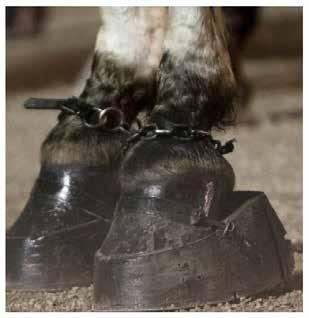

Shoes, stacks, bands and chains on a Big Lick Tennessee
Walking Horse. The horse’s hair has been dyed to try to hide the scars from soring chemicals
After years of education and lobbying by animal welfare groups, the bipartisan Prevent All Soring Tactics (PAST) legislation was passed in July 2019 with an overwhelming majority in the U.S. House of Representatives. The PAST Act would finally eradicate soring by eliminating the use of large stacked shoes and ankle chains in the show ring and by eliminating the industry’s self-policing scheme, replacing it with licensed USDA inspectors. It would also increase penalties for those who break the law. U.S. Senate leadership refuses to bring it to the floor for a vote, despite half of the Senate having signed on as cosponsors. With many other senators (including previous cosponsors) expected to support the bill, there are clearly enough votes for passage. But the bill cannot progress unless Sen. Mitch McConnell (RKY) brings it to the Senate floor for a vote.
The PAST Act would close loopholes in the Horse Protection Act. Because the U.S. Department of Agriculture has allowed the industry to police itself, those who hurt horses face minimal repercussions, get deferred disqualifications, and are typically allowed to continue carrying out the abuses that got them disqualified in the first place. PAST would replace the self-policing system with third party, independent inspectors who are trained, licensed and assigned by the USDA. The bill would also ban the devices integral to soring (the stacks and chains) and would strengthen penalties for soring.
Sen McConnell is a long-time supporter of the Big Lick industry. He and Sen. Rand Paul (R-KY) are co-sponsoring competing legislation introduced by Sen. Lamar Alexander (R-TN) and supported by those engaged in horse soring, which would allow the industry to continue policing itself with no accountability. This sham alternative bill would actually make the problem worse by further weakening the USDA’s already limited authority and handing off more power to the perpetrators. It would do nothing to end the use of chains, heavy stacked shoes and other soring devices, or to establish meaningful penalties. Sen McConnell has not yet realized that supporting the Big Lick is bad politics.

Every major veterinary, equine, animal welfare and law enforcement organization in the U.S. has endorsed this bill (AVMA, AAEP, American Horse Council, ASPCA, USEF, National Sheriffs Association, Humane Society Legislative Fund, Association of Prosecuting Attorneys, and over 100 more ) The PAST Act is the right answer.
Absolutely not. There are many owners and trainers that never use soring to enhance the performance of their horses. Known as “flat shod” horses, these animals have natural movement and are enjoyed by tens of thousands of riders across the country. In fact, the majority of Walking Horses are flat shod. It is only a small minority of trainers who resort to the shameful practice of soring and stacked shoes—they sometimes call them “padded” shoes to try to make them sound more like a therapeutic shoe than a torture device. The entire Tennessee Walking Horse community is brought down by the actions of a few bad actors.
The latest USDA statement, as reported in the Walking Horse Report published May 21, 2018, said that “the vast majority of Horse Industry Organizations (HIOs) that inspect padded horses did not detect any HPA noncompliance when USDA was not present at a show.” USDA went on to say: “It is highly unlikely that exhibitors only present noncompliant horses for inspection when USDA is present at a horse show….USDA remain(s) very concerned about HIOs, especially those inspecting padded horses, whose rate of noncompliance is zero when USDA is not present…” Latest statistics for October 2017 to March 2018, reported in the same article, are: When USDA is not present, 3.48% fail inspection. When USDA is present, 8.17% fail, and many are not even presented for inspection (withdrawn from the show before being inspected). The reported numbers are also skewed because the totals include flat shod Tennessee Walking Horses, who are not sored but are inspected. This makes the percentage of sored horses look smaller than it is.
Last published statistics when USDA itself did inspections at the 2015 championships (“the Celebration”): an appalling 40.28% of “padded” horses were disqualified.
If you live in Kentucky, contact Sens. McConnell and Paul and tell them their alternative bill is not what you want. You want the PAST Act, S. 1007. If you live anywhere else in the United States, look up your senators and urge them to cosponsor and work to pass the PAST Act. Let’s make this the year soring ends, as Congress intended nearly a half century ago.
FOSH is a nonprofit 501(c)(3) organization that welcomes owners of all gaited horses. We support the gaited horse in all equine disciplines, including dressage, distance competitions, English and Western pleasure, and many other styles of riding. FOSH offers judges training and licensing and sponsors numerous shows. FOSH is a national leader in promoting, supporting and protecting gaited horses. To that end, FOSH is known for its work to end soring of Tennessee Walking Horses through its activism, outreach, and 60 years archive of soring articles, www.stopsoring.com.
Principle #1
All FOSH events adhere to the requirements of the Horse Protection Act.
Principle #2
Horses are to be treated with dignity, respect, and compassion.
Principle #3
Horses must be presented as sound in both body and mind.
Principle #4
The preferred way of going is natural, correct, and without exaggeration.
Principle #5
Shoeing is intended only for the protection of the foot and its structure. Where practical, barefoot horses are both welcomed and encouraged.
Principle #6
Handlers and riders are expected to use training techniques and equipment that conform to the highest humane standards as recognized by the general equestrian community.
Principle #7
Exhibitors have a duty to conduct themselves in an orderly, responsible, and sportsmanlike manner.
FOSH is a national leader in the promotion of natural, sound gaited horses and in the fight against abuse and soring of Tennessee Walking Horses. For more information about FOSH or to become a member, please visit www. fosh.info or call 1-800-651-7993.
Southern Comfort promotes activities highlighting the smooth ride and versatility of all gaited breeds. Pursuits include trail riding, competitions, shows, exhibitions, clinics and many other equine activities. The club promotes horse safety and friendship for all that are interested in horses. Owning a horse is not a requirement. SCGHC is based in southwestern Idaho and is a flat shod exclusive club with members contributing and supporting various interests using sound, natural horses. www.gaitedhorseclub.com
The Chesapeake Club is celebrating over 25 years of promoting the versatile, naturally gaited, horse. As a member of the Maryland Horse Council, we have been the voice of the gaited community and through demonstrations, clinics and guest speakers, a resource for other disciplines to learn about the gaited breeds in our region. Members enjoy monthly trail rides, newsletters, parades, clinics, social gatherings, and friendly help. We welcome all breeds, riding styles, and experience levels from beginners to professionals. Cpwhclub. wordpress.com or jacquiecowan@comcast.net
Plan for your next lifetime partner! Come breed with us! Offering frozen semen (12 stallions in 2020) or reservations for Future Foals “do Summerwind” The Marchador is Brazil’s national horse, harking from Iberia, but bred there for 200 years. Expect to be impressed! http:// futurefoal.net or call Lynn @ 602-999-3915
Easy gaited in color. Rare gaited Morgans located in the Heart of America near beautiful Lake of the Ozarks; for photos, videos and available horses. Talk to Jim or Vali Suddarth at 417-286-4720 or gaitedmorgans@missourimorgans.com
The information is current as of this writing. However, COVID-19 continues to cause event postponements and cancellations. To get the most updated information, please contact the person listed for the event.
AUGUST
Larry Whitesell 5-Day Clinic
August 4 - 8
Augusta, ME
Contact: Teresa 207-557-0476 teresa@whisperingwoodsstables.com
Larry Whitesell 3-Day Clinic
August 14 - 16
St Croix Falls, WI
Contact: Patti 715-483-9292 patti@rnrranchandtack.com
Equine Functional Anatomy and Dynamic Posture-Understanding Anatomy in Action
August 14 - 18
Jillian Kreinbring, MS, Lecturer Periwinkle Farm Weare, NH www.jilliankreinbringinspired.com
Larry Whitesell 3-Day Clinic
August 31 - September 2 New Columbia, PA
Contact: Brenda 570-809-1553 brendap@FeatherHillStables.com
Chesapeake Plantation Walking Horse Club, Inc.
Fair Hill Labor Day Getaway
September 3 - 7
Contact: Jacquie 410-923-6157 jacquiecowan@comcast.net
Larry Whitesell 5-Day Clinic
September 7 - 12
Baxter, TN
Contact: Jennifer 931-267-6723
info@gaitedhorsemanship.com
The Harvest Youth & Gaited Horse Show 2 judges and 2 shows on 1 day September 12, 2020
Due West Ranch 13400 Donahoo Rd, Kansas City Double pointed - Pony Express and MHSA
Contact: Lucy 816-674-7475 fgslr@usa.net
Chesapeake Plantation Walking Horse Club, Inc
Saddlin’ Up for Breast Cancer Trail Ride & Silent Auction
September 19
Contact: Jacquie 410-923-6157
jacquiecowan@comcast.net
Larry Whitesell 5-Day Clinic
September 21 - 25
Baxter, TN
Contact: Jennifer 410-923-6157 jacquiecowan@comcast.net
OCTOBER
Larry Whitesell 3-Day Clinic
October 2 - 4
Finchville, KY
Contact: Kathy 505-550-2175 grizzlegate@gmail.com
Chesapeake Plantation Walking Horse Club, Inc.
Celebration of the Horse October 3
Tuckahoe Equestrian Center
Contact: Jacquie 410-923-6157 jacquiecowan@comcast.net
Larry Whitesell 3-Day Clinic October 16 - 18
Sunbury, NC
Contact: Cheryl 252-465-4184 ceason@embarqmail.com
EQUINE FUNCTIONAL ANATOMY AND DYNAMIC POSTURE - UNDERSTANDING ANATOMY IN ACTION
October 30 - November 2
Jillian Kreinbring and Susan Harris, Lecturers Waring, TX
www.jilliankreinbringinspired.com
This Course is “Approved by USDF for 2.5 CE Credits!”
Chesapeake Plantation Walking Horse Club, Inc.
Tuckahoe Berkey Memorial Weekend and Fall Auction
camping, trail riding, social time, 4 homecooked meal, Saturday night live auction November 6 - 8
Contact: Jacquie 410-923-6157 jacquiecowan@comcast.net
Larry Whitesell 3-Day Clinic November 7 - 9 Crowley, LA
Contact: Eddie 337-303-5759
Coacho45@hotmail.com
Larry Whitesell 3-Day Clinic
December 4 - December 6 Scottsdale, AZ
Contact: Lynne 602-300-6177
lbombinski@cox.net
Lifetime Members
Jo Anne Behling, Wauwatosa, WI
Esther L. Bell, TN
Pamela Brand, Carlisle, PA
Sarah Bushong-Weeks, Denver. CO
Julie Church, Pagosa Springs, CO
Mary & William Church, Pagosa
Springs, CO
Luella DeBono, Eden Prairie, MN
Beverly Foster, St. Augustine, FL
Nancy Gillespie, Pullman, WA
Cristine Holt, Dubuque, IA
Jane Howlett, Pocatello, ID
Marty Irby, Semmes, AL
Marjorie Lacy & Walking Horse News, Edson, Alberta
Sue De Laurentis, Dripping Springs, TX
Bobbie Jo Lieberman
Dianne Little, Calgary, Alberta
Debbie Locke, Mack, CO
Ann Loveless, Ashtabula, OH
Patricia Mayer, East Aurora, NY
Maggie MacAllister, Staunton, VA
Janelle T. McCoy, Prague, OK
Frank Neal, Nashville, TN
Lori Northrup, Ellicottville, NY
Anne Northrup, Ellicottville, NY
Shellie Pacovsky, Bainville, MT
Denise Parsons
Anita Rau, Catlett, VA
Debbie Rash, Chino, CA
Southern Comfort Gaited Horse Club, ID
Bucky & Nancy Sparks, Cortez, CO
Marcy Wadington, Canon City, CO
Leslie Weiler, Pagosa Springs, CO
Laura Wyant, Chesire, OR
An Anonymous Donor
Yankee Walkers of New England
Please consider adding FOSH to your list of worthy causes in making a taxfree charitable deduction or help us to promote legislation, education, and training that protects and helps gaited horses, simply by renewing your own membership or giving a gift membership to a kindred spirit.
We know you have many choices when it comes to giving. Thank you for considering FOSH.
All annual memberships include a digital, bi-monthly issue of the Sound Advocate & educational packets. Mail to: FOSH 6614 Clayton Rd. #105, St. Louis, MO 63117
Type of Membership (check one)
Annual: Single ___$30 Annual Family ___$50 Annual Youth <18 ___$20 Lifetime__$600 Organization Membership (for your gaited horse club or association) ___ $50
Please print neatly.
Name: _______________________________________________________________________
Enclosed: $____________________
How did you hear about FOSH?