
Meet Josh Teigen Best Pieces of Advice in 2022 Top 10 AllTime Academic Insights PG.54 PG.102 PG.82 DECEMBER 2022


THRIVING COMMUNITIES. THRIVING CLIENTS.
THRIVING EMPLOYEE-OWNERS.
From one office in Grand Forks to 10 across the country; from two founders to 190 employee-owners; from year one to year 33 — we thrive, not because we’ve done it all, because we still have more to do. Thank you for supporting our passion to redefine workplace well-being, reignite rural Main Street, and transform all communities into thriving communities.
Building Design+Construction, Architecture Giant CSI Firmwide Environmental Stewardship Award Great Place to Work-Certified™ | 100% Employee-Owned ESOP jlgarchitects.com






Sponsored Content: How SBA Lending Can Take Your Business from Surviving to Thriving Photo Flashback Best Pieces of Advice 2022 Awesome Foundation Grant Award Winner 2022 Features Women You Should Know 2022 Features 10 Questions with John Machacek 2022 Features Up and Coming Entrepreneur Meet Josh Teigen Why are Gen-Y and Gen-Z so worked Up About Labor Unions? 10 Questions with John Machacek: generAI Sales Intelligence: 5 Problems That Marketing And Sales Alignment Can Solve Women You Should Know: Cassie Kasowski Academic Insight: The Best of Academic Insight Awesome Foundation Grant Award Winner: Without a Blemish Awesome Foundation Grant Award Winner: Mental Health First Aid 15 22 54 60 66 68 70 82 84 88 94 98 102 108 110 // DECEMBER 2022 70 82 22 102 FEATURES 8 DECEMBER 2022




FARGOINC.COM CHECK OUT All our stories in one place Business events calendar Read all the past issues Extra video content
A Look Back A



Editor’s note
business, however, that's not what we do around here. We look to help the customer and each other and that is awesome.
On a more personal note, I'm extremely grateful for my loved ones. Hopefully, you all know who you are, you make me feel like the luckiest person in the world. I want to be clear that those feelings are not disconnected from my place of work. I have so much fun every single day working with our
editorial team, our design team and everyone else in our company. Hopefully, your work life is the same.
Let's look back on 2022 and let's look forward to an amazing 2023!
Drake Fargo INC! Editor

fargoinc@spotlightmediafargo.com
Brady Drake, Fargo INC! Editor
Brady
EDITORIAL BOARD
KRISTINA HEIN-LANDIN Lead Content & Public Relations Strategist United Way of Class-Clay

Perfection is the enemy of progress.
When you think about solving really complex problems it is easy to feel overwhelmed by finding the perfect solution –and delay implementing a solution for fear of imperfection. Why are people homeless and how can we help them? Why do kids come to school hungry? Doesn’t matter the nature of the problem – it’s human nature to not want to start solving it until you can say all questions have been answered and every detail is perfect.
Throughout this past year at United Way we have focused on finding solutions to help students be successful. We know that 1 out of 7 kids in our community is living in poverty and 20% of people who were homeless last year locally were children. Instead of asking “how do we give kids access to services?” we instead asked, “what if we brought the services to the kids right at their school”? The solution was to invest in School Case Managers to get kids connected to mental health services, food to eat, clothes to wear all without ever having to leave the walls of their school.
Was the solution perfect and did we know all the answers when we started? No. But have school Case Managers provided immediate help to thousands of kids who didn’t have it before? You bet they have. Have we changed the lives of kids? Absolutely. Do we continue to learn, evolve, and become more effective every day? Yes!
I have had the chance to get to know Maddie Hawes, a School Case Manager who works with kids at Carl Ben Eielson Middle School in Fargo – she openly talks about when she first began working with kids there was a lot of learning of how this new solution would work. But had United Way waited for the solution to be perfect before investing and supporting it she never would have been able to help kids who desperately needed our help now. Those kids would have gone on struggling, fell deeper into depression and spent more nights without a bed to sleep in. Today we have data and stories of success of how kids’ lives have been changed so we can focus on rallying the community to help us get more School Case Managers in our school so we can help more kids. I have learned that we can’t wait for perfect before you start. Start now, imperfectly.
ERIC WILKIE CEO FM Area Foundation

This year has been one best defined as “uncertain”. I think uncertainty is probably the most problematic state of mind for industry leaders. In the world of charitable work and philathropy, uncertainty can result in stagnation. Historically, nonprofit support can be strong in times of crisis, even our latest pandemic taught us that support for charitable work was positive in 2021. We also know that times of prominence in our economy and stock market results in consumer confidence that translates into greater charitable support, the last few years of record stock gains has illustrated the generosity of our local leaders. Uncertainty though, makes us freeze, makes us wait, and causes inaction.
So, what is an industry leader to to do? Stay the course, remain committed to your mission and services that you do best. Times of uncertainty will pass and when they do, those customers, consumers, and donors who were with you before, will be back. Those who saw you stay true to your principles and mission will become new supporters. Remember, this too shall pass!
If you are looking to support one of our wonderful nonprofits this holiday season, visit the FM Area Foundation’s Caring Catalog to find out which charities we are presenting to the community. The 25 charities chosen represent great local work that we have invested in and would welcome your partnership in supporting their impact on our community. Visit areafoundation.org and click on the Caring Catalog to learn more!
Happy Holidays!
12 DECEMBER 2022
LESSON YOU LEARNED IN 2022?
SHANNON FULL President and CEO FMWF Chamber of Commerce
Over the past year, it became very clear to me how it is not only powerful, but crucial, that we work together as a community to build our future. I had this thought when watching business leaders, community members and elected officials from across our region break ground in Argusville for the FM Diversion Project; when reading 78 letters of support and watching our community partners speak onstage during The Chamber Foundation's EDA grant award; when listening to Richard Solberg address the audience during his Legacy Leader Award acceptance speech, and all of the individuals and groups who have worked alongside him; when experiencing Giving Hearts Day; when witnessing innovative education models and career academies come to life, and so much more.
All of this work and our accomplishments are bigger than any one person or organization. These iconic moments are only possible due to iconic partnerships and efforts. When we come together and have the courageous will to seek opportunities and think big, we will make a lasting impact.
That was the lesson that hit home hard for me in 2022. We are in this together.
JENNY SHEETS Manager Founders Programs


When we are busy building, it can be easy to develop tunnel vision. Working with entrepreneurs daily, I hear similar concerns: If I don’t launch, someone will steal my idea; only I can accomplish my goals; I’m not moving fast enough. At Emerging Prairie we’re also building, similar to entrepreneurs. We’re establishing new programs for software developers, organizing events for founders, and breaking ground on a new AgTech innovation facility. It can be overwhelming! But one thing we have found, and try to live by constantly, is that it is better to be a “go-giver” than a “go-getter.” What does this mean? Ask how you can serve others before yourself. Give away your secrets. Be willing to receive help. I see this demonstrated by entrepreneurs throughout our community all the time. The business owners who have figured out that it takes a village, and that they benefit more by sharing than hoarding, will see the greatest success. It’s a mindset shift — and it’s not necessarily easy — but it’s so rewarding when practiced. Thank you to the entrepreneurs, artists, and makers who have shown us what it means to be a “go-giver” in our community. Cheers to a great year and many more to come!
Read more about being a “go-giver” in The Go-Giver by Bob Burg and John David Mann.
WHAT IS AN IMPORTANT
FARGOINC.COM 13

How SBA Lending Can Take Your Business from Surviving to Thriving
AAfter two years of improvisation and unexpected challenges, many businesses are ready to look forward. Whether applying lessons learned or seizing new opportunities, owners are seeking capital to help them start their next chapters. For many small businesses, a loan from the U.S. Small Business Administration (SBA) may help them make the shift from “surviving” to “thriving.”
As you consider ways you can improve and grow your business, be sure to connect early with a preferred SBA lender. They know the particulars of SBA lending and have experience working with businesses like yours. Here are five questions to ask yourself and your SBA lender:

Is an SBA loan right for my business?
The SBA managed emergency loans and grants during the COVID pandemic, but its bread and butter is lending programs designed to level the playing field for small businesses. They often don’t have major physical assets for collateral, so SBA loans focus more on cash flow when evaluating a loan application. And they often have longer repayment terms compared to commercial loans, so more cash stays in the business month-to-month to support operations.
Can I add automation to help endure the tight labor market?
What investments will help your business thrive? For many businesses, attracting and retaining labor is both a challenge and a significant cost. It can be the bottleneck that holds back growth. An investment in automation may help your business do more with fewer employees, so you can focus on retaining your best workers and still have capacity to serve and grow. Automation can range from manufacturing machines to online payment processing capabilities.
Does my business model need retooling postCOVID?
Some organizations had to go lean to survive the pandemic, while others saw business reach new heights. In both cases there may be
opportunities to rethink business from the ground up. Do you want to shift from sit-down dining to food trucks or delivery? Has demand for a product skyrocketed, requiring a new or shifted factory line? Now could be the time to get ahead of future demand. SBA term loans can help finance these kinds of capital investments.
Can I change my inventory approach to beat logistics crunches?
Another mind shift following the pandemic is that businesses need to balance the efficiency of a just-in-time supply chain with the certainty of on-hand inventory. SBA lines of credit can help small businesses build up and maintain a larger inventory of necessary goods and materials, which will require adjusting what normal cash flow and balance sheets will look like.
Have I accounted for all the expenses of my improvements?
Never forget to think around every corner when investing in your business. New equipment, new employees, and new products also have associated costs, some short term and some ongoing. Make sure you factor in things like training workers on new equipment, bringing on new salespeople, leasing storage for more inventory, or other related costs. An experienced SBA lender has seen it all and can help you think through this.
Thriving as a small business takes more than just capital. It takes a good plan and excellent execution, and that means having a reliable, experienced team on your side. Alerus is an SBA preferred lender with a dedicated SBA team that can both guide you through the loan process and help you think through your strategy, drawing on other Alerus resources to fill the gaps. Contact us today and get ready for what’s next.
The information contained herein is general in nature, is provided for informational purposes only, and should not be construed as legal or tax advice. Alerus does not provide legal or tax advice. Always consult an attorney or tax professional regarding your specific legal or tax situation. Alerus Financial, N.A. is Member FDIC.
SPONSORED CONTENT
FARGOINC.COM 15
























 MIKE
BRADY
KIM
LEVI
TY
GENEVA
GRANT
BEN JOSIAH
JENNY
AL DEVAN TORI
KACEY
HAILEY
JESSICA
MIRANDA
TOMMY KELLEN
MIKE
BRADY
KIM
LEVI
TY
GENEVA
GRANT
BEN JOSIAH
JENNY
AL DEVAN TORI
KACEY
HAILEY
JESSICA
MIRANDA
TOMMY KELLEN
Learn more about us at spotlightmediafargo.com
The
16 DECEMBER 2022
KELLAN JONATHAN
Meet
Team JOHN



Fargo INC! is published by Spotlight LLC, Copyright 2022 Fargo INC! & FargoInc.com. All rights reserved. No parts of this magazine may be reproduced or distributed without written permission of Fargo INC!, and Spotlight LLC, is not responsible for, and expressly disclaims all liability for, damages of any kind arising out of use, reference to or reliance on such information. Spotlight LLC, accepts no liability for the accuracy of statements made by the advertisers. Spotlight, LLC 4609 33rd Ave S Suite #304 Fargo, ND 58104 or info@spotlightmediafargo.com ADVERTISING: 701-478-SPOT (7768) Graphic Designer Web Designer ADVERTISING VP of Business Development Sales Representatives Sales & Marketing Advisor Marketing Associate Client Relations Client Relations Manager Marketing Coordinator Operations Assistant DISTRIBUTION Delivery Ben Buchanan Kellan Benson Paul Hoefer Paul@SpotlightMediaFargo.com Al Anderson Al@SpotlightMediaFargo.com Devan Maki Devan@SpotlightMediaFargo.com Tori Helland Tori@SpotlightMediaFargo.com Kacey Mongeon Kacey@SpotlightMediaFargo.com Hailey Bebler Hailey@SpotlightMediaFargo.com ClientRelations@SpotlightMediaFargo.com Jenny Johnson Jessica Mullen Miranda Knudson John Stuber Fargo INC! is published 12 times a year and is available at area businesses and online at FargoInc.com. Publisher EDITORIAL Editorial Team Lead Editors Art Director Editorial Graphic Designers Creative Strategist Contributors INTERACTIVE Business Development Manager Business Development Associate Videographer Director of Digital Advertising Results Mike Dragosavich Brady Drake Brady@SpotlightMediaFargo.com Geneva Nodland, Grant Ayers Kim Cowles Levi Dinh, Ty Betts Josiah Kopp Shontarius D. Aikens, John Machacek, Ladyboss Lifestyle, Fredrikson & Byron Nick Schommer Kellen Feeney Tommy Uhlir Jonathan Chicka DECEMBER 2022 Volume 7 Issue 12

CHECK OUT
SPOTLIGHT MEDIA'S OTHER PUBLICATIONS
At Design & Living Magazine, we love to share all of the fantastic local art, architecture, home decor, interior design and landscaping in the FMWF area with our readers.


designandlivingmagazine.com facebook.com/ designandlivingmagazine Instagram: designandlivingmagazine
Bison Illustrated is your number one source for all of the behind-the-scenes action inside the North Dakota State University Athletic Department.
bisonillustrated.com facebook.com/bisonillustrated Twitter: @bisonmag Instagram: bisonillustrated
Fargo Monthly is an award-winning publication dedicated to highlighting Fargo-Moorhead and what makes it a truly enjoyable place to live.


fargomonthly.com facebook.com/fargomonthly Twitter: @fargomonthly Instagram: fargomonthly
Future Farmer is our farming publication which brings great tech-focused content to readers across North Dakota and Minnesota.

futurefarmermag.com facebook.com/FutureFarmerMag
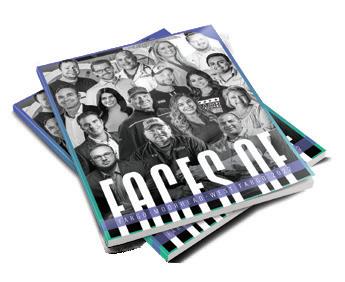
You may already be familiar with our Faces of Fargo-Moorhead-West Fargo publication which we publish once per year in order to highlight the faces behind all of the great businesses in the community.

Are you overwhelmed trying to plan for your big day? You're not alone. We've done our best to provide all types of local resources, expert guidance, de-stressing tips and everything in between. Your wedding day is one of the mos important days of your life. Hopefully, this issue will help you prepare for that day so it's all about you.

20 DECEMBER 2022
 By Brady Drake

Photo Flashback
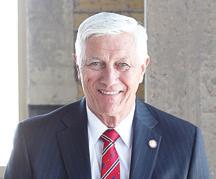
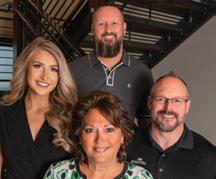
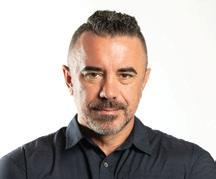
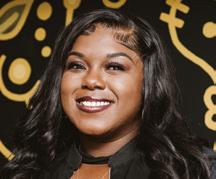
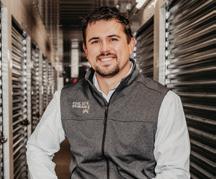
Every year, we have an opportunity to highlight so many amazing members of our business community. Take a tour with us through a handful of the awesome people whose photos were featured in the magazine this year.
22 DECEMBER 2022



















FARGOINC.COM 23


JanuaryJanuary
Jim Alexander, President & CEO, Nodak Insurance Company
Photo provided by Nodak Insurance Company
Jim Roers, CEO, Roers
Photo provided by Roers
Photo by Nicole Midwest
Photo BY JOSIAH KOPP
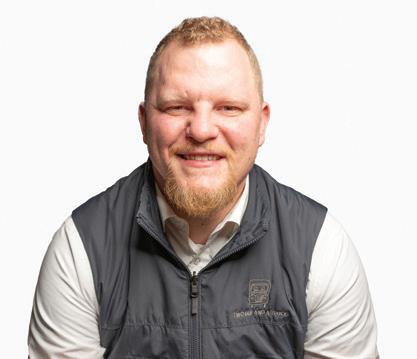
Josh Hutchins, Franchise Owner, Two Men and a Truck
24 DECEMBER 2022
Patrick Kirby, Founder, Do Good Better Consulting
Scan to read the issue

Last year, your business went through an acquisition. What advice do you have for other founders out there going through the same thing?

Keep your focus on your team. If the acquisition is one that benefits everyone, it will lead to a smooth and successful transition. Our team helped us build this business. Our culture is one that stresses a focus on a work/life blend that promotes opportunity professionally and flexibility personally. We have always felt that this contributes to our client-centric business model. Why not expect the exact same thing for your team when going through an acquisition? We kept this at the forefront and continue to do so today regardless of the logo at the entrance.

 BY JOSIAH KOPP
January
Photo by Josiah Kopp
Photo BY JOSIAH KOPP
Photo
Tate Hovland, President, Office Sign Company
Keith Peltier, President, Proseed
Nick Killoran, Founder, Great North Insurance Services
FARGOINC.COM 25
Supply chain issues were crazy. At one point it was looking like the entire nation was going to be completely out of chicken breasts—which when running a chicken restaurant is not a good issue to have! We were contacting all of our suppliers to figure out who could get them in stock the quickest. The price fluctuation was insane. Paper goods were another tricky thing, all of a sudden everyone was out of paper bags and a few other items. There were also random things like Mayo and Thai Chili Sauce we were outed on. And Booze, random things or imported items, an aluminum shortage. It’s all been crazy! It all came down to checking with multiple suppliers, and brokers, or contacting the source directly and in worst case making some modifications to recipes. We still aren’t back to where we were pre-covid—we have brought on new software to help us track price fluctuations better and we are just prepared to be adaptable to change! Our team has been amazing through it all too and have been really good about modifying and substituting as needed!
 BY JOSIAH KOPP

February February
Photo
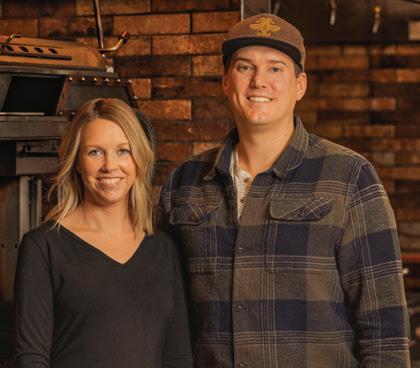
Britt and Alex Belquist, Co-Owners, Brew Restaurants
Bree Langemo, Director of the Entrepreneurship Center, Concordia College
Photo Provided BY Bree Langemo
Onnolee Nordstrom, Ozbun Chair of Entrepreneurship, NDSU
Photo provided by Onnolee Nordstrom
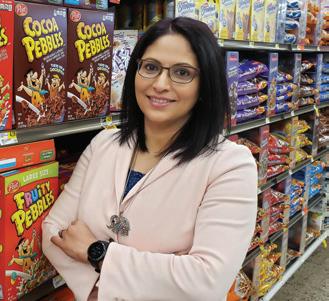
Rajani Ganesh Pilai, Executive Director, NDSU Center for Professional Selling and Sales Technology
Photo Provided BY Raiani Ganesh
The restaurant industry, like most industries, faced some unique hurdles with supply chain issues in 2022. What are some things you did to address those issues?
26 DECEMBER 2022

Scan to read the issue

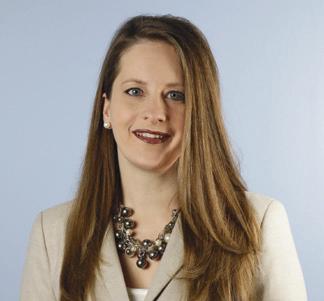
Tana Erbes,

February February
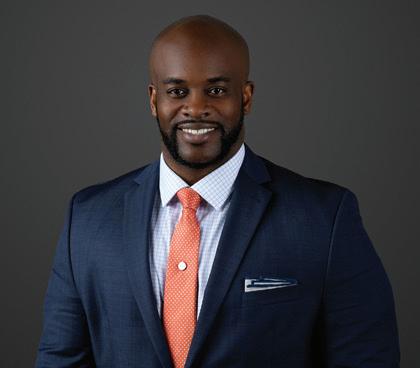
Dr. John Maduko, Former Vice President of Academic and Student Affairs, Minnesota State Community and Technical College Moorhead
Photo provided by Dr. John Maduko
Program Outreach Specialist, NDSCS
Photo Provided BY Tana Erbes
Bethany Mauch, ATOD Specialist, NDSCS
Photo provided by Bethany Mauch
Shawn Dobberstein, Executive Director, Hector International Airport
28 DECEMBER 2022
Photo BY Josiah Kopp



833 24th Avenue E. West Fargo • 701-561-0800 jerseymikes.com 5050 Timber Pkwy. South Fargo • 701-929-6550 1970 South Columbia Rd. Grand Forks • 701-732-3200 a sub above
Isley,
What challenges did you see becoming more prevalent for the community in 2022?
At United Way, we have a unique, community-wide perspective of all the challenges our neighbors in poverty face. By connecting our community's leaders and experts and utilizing various types of data, we find and focus on the solutions that will have the biggest, long-term impact.
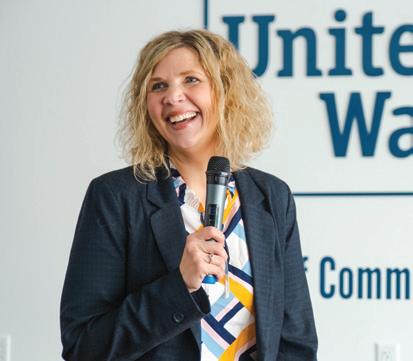
One challenge we anticipate becoming more prevalent in 2023 is an increase in the number of families and children experiencing poverty. Poverty is more common than many of us realize. Right now, locally, one in nine people live in poverty. Children have an even higher rate of poverty at 1 in every seven—that's around three or four kids in a classroom. We know that statistic will increase in the coming year as economic challenges increase, budgets tighten and we continue to work through workforce gaps.
Families who were barely making ends meet before are now making even harder choices like whether to pay rent or buy groceries for their family, pay their utility bill or get medication for their children. However, there is a positive side to this. At United Way, we see time and time again our generous and caring community step forward to help our neighbors overcome challenges. Poverty impacts all of us and when we work together, we can make sure families living in poverty have the resources and tools they need to break the cycle of poverty—which leads to a better tomorrow for all of us.
March
March
Photo by Geneva Nodland
Photo BY Geneva Nodland
Annie Wood, Associate Director for Student Life, Minnesota State University Moorhead
Chris Thompson, Founder/Owner, Chris Thompson Coaching LLC
Photo BY Geneva Nodland
30 DECEMBER 2022
Karla
President & CEO, United Way of Cass Clay
Scan to read the issue



March
Katie Ehlis, Founder/Owner, The Vanity Bar
Photo BY GENEVA NODLAND
Kara Jorvig, Founder/CEO, Allegro Group
Photo Provided BY KARA JORVIG
Collette Campbell, Chief Talent Acquisition and Diversity Officer, Bremer Bank
Photo provided by BREMER BANK
Eric Piela, Senior Brand Manager, WEX and Certified Crucial Conversation Trainer
FARGOINC.COM 31
Photo BY GENEVA NODLAND

April
April
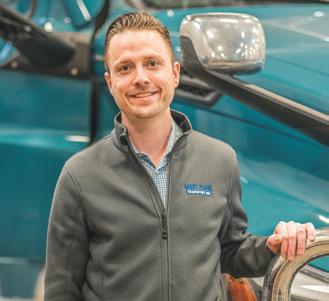
Tyler Holland, Director of Recruiting and Retention, Great Plains Transport
Kayla Linn, Vice President of People and Culture, Eventide
Dan Conrad, President and CEO, Blue Cross Blue Shield of North Dakota
Kelsey Roth, VP of Human Resources, Blue Cross Blue Shield of North Dakota
Photo BY Hillary Ehlen
Photo BY Josiah Kopp
Photo BY Josiah Kopp
Photo BY Josiah Kopp
Photo BY Josiah Kopp
Luis Flores, Owner, Northside Concrete
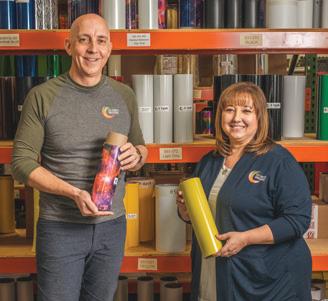
Kirk Anton & Tricia Huson Barse, Co-Owners, Heat Transfer Warehouse
32 DECEMBER 2022
Photo BY Josiah Kopp
Scan to read the issue
 Bock,
Bock,
What has been your favorite memory at work in 2022?
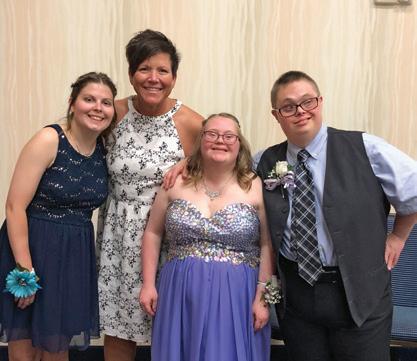
My favorite memories at CCRI are always related to the big life moments I get to be a part of with the folks we support. In 2022, that looked a little different. It involved supporting Lane, a gentleman who called CCRI his home for 42 years, to live out his last days at CCRI. His health declined significantly in a short period of time which led to a terminal diagnosis. Thanks to the a fully accessible home the community built for Lane and “the guys”, along with the incredible support of his CCRI team and Hospice, he was able to spend his last days at his home at CCRI surrounded by everyone he considered family. Lane lived a beautiful, meaningful life full of joy that he shared with others so it was very fitting he finished his last days surrounded by the love he so selflessly gave.
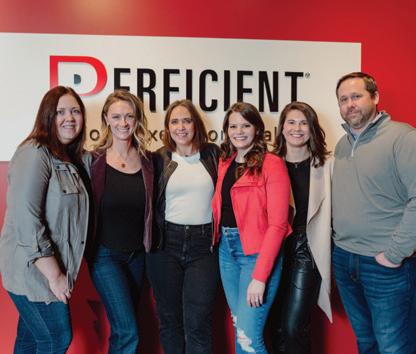
The Perficient Team

April
Photo Provided by CCRI
Shannon
Executive Director, CCRI with CCRI clients.
Photo by Geneva Nodland
Photo BY Geneva Nodland
(Front and Center) Bethan Berkely, Former Dale Carnegie Training of ND and Northwest MN Owner and YWCA 2022 Women of the Year award winner with the Dale Carnegie team.
FARGOINC.COM 33
You have multiple business ventures, a modcast (modified podcast) and are a husband with five kids. What tips do you have for time management?



I have a lot of irons in the fire. When it comes to time management, I don’t think I have any real secret. I like to prioritize my workload into five critical tasks that need to get done each day. This is a tool I learned from several mentors over the last few years.
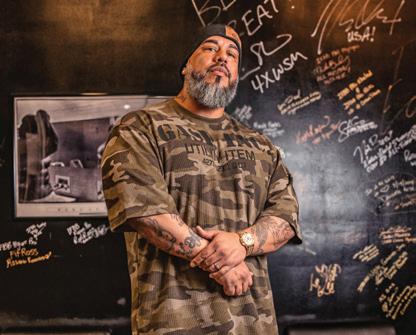
Essentially, these five tasks are must-do items that will move me forward brick by brick and are crucial tasks that must be critical to business, growth or advancement. Once I accomplish these tasks each day, the rest of the day consists of a non-urgent workload that I try not to allow to stress me. It’s like having open time to do whatever or sometimes nothing at all.
In short, that’s one of my best and favorite tools to utilize when it comes to managing time and workloads. Rome wasn’t built in a day, so I try not to pretend I have a whole host of tasks that need to be completed in one day either. Instead, I take a brick-by-brick, one-day-at-a-time approach. When I have a very heavy workload, as I tend to have from time to time with all the different hats I wear, It is really easy to find myself not getting anything done at all due to being overwhelmed and stressed. When I’m able to break things down into a handful of tasks that are completed at a time, I seem to make more consistent progress on a daily basis.
MAY
MAY
Stephanie Schroeder, Chief Customer & Marketing Officer, Forum Communications Co.
Photo provided by Denise Warren
Photo BY Josiah Kopp
Photo BY Geneva Nodland
Photo By Josiah Kopp
Leah Dalton, Operations Manager, Patterson Dental (left) and Vernae Hasbargen, Former Sr. Policy Analyst, MN Rural Education Association (right)
Denise Warren, CEO & Founder, Netlyst LLC
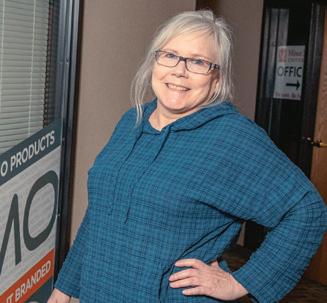
John Ostos, Owner of Metroflex Gym-Fargo & H&I Nutrition
34 DECEMBER 2022
Scan to read the issue




MAY
Photo by J. Alan Paul Photography
Photo J. Alan Paul Photography
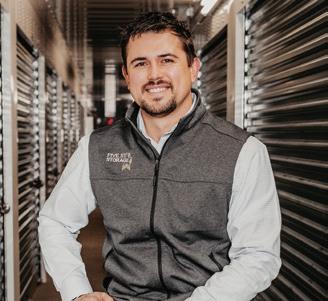
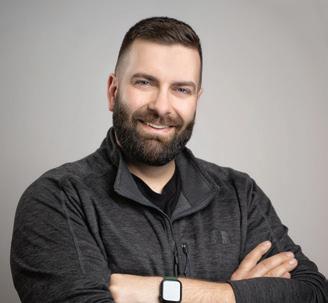
Ben Hendricks, COO, Five Star Storage
Photo BY Josiah Kopp
Photo BY Geneva Nodland
Justin Walsh, Co-Founder, CoSchedule
Garrett Moon, Co-Founder, CoSchedule
Ashley Wooledge, Account Manager, Go Promo
Photo by Ben Weisbeck
Jane Halverson, Sales Executive, Go Promo
Photo by Ben Weisbeck
FARGOINC.COM 35
Casey Glandt, General Manager & Partner, Go Promo
The Greenhouse Team

What excites you most about our entrepreneurial community heading into 2023?

The FM startup community is starting to gain serious traction and I can’t wait to see what 2023 has in store. There is more investor activity than we’ve ever seen; universities are investing resources into entrepreneurial training; accelerators like gener8tor, ILT Studios, and Builders and Backers are established in the region; and the community is supporting startups and founders by attending events like StartupBREW, Prairie Capital Summit, and TEDx in droves! It’s an exciting time to start, invest in and champion a business in the greater Fargo metro. Cheers to our thriving community in 2023!
June JUNE
Jenny Sheets, Entrepreneur Programs Manager, Emerging Prairie
Photo provided by Jenny Sheets
Photo BY Geneva Nodland
(left to right) Patrick Metzger, Cariss Metzger, Preston Braathen, Allison Weckman
36 DECEMBER 2022
Stevens
Scan to read the issue

What did you change within your business in 2022?
What did I change within my business in 2022? Almost everything!
When it comes to business one of my mentors, Donald Miller, says, "Pour gasoline on what's already burning."
I'm a Mental Fitness and Business Coach. What was "burning" for me in 2022 was the mental fitness aspect of my coaching services. Whenever I talked about mental fitness people would lean in to listen and wanted to know more.
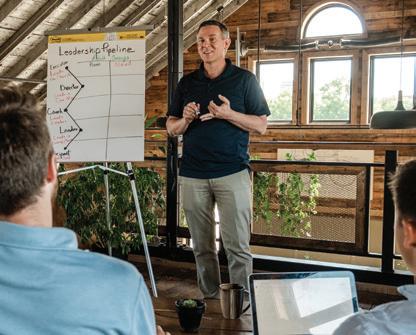
That prompted a major pivot for my business. I filed a new trade name with the state of North Dakota. I now do business as The Mental Fitness Guy.
I reworked my customer journey to meet my customers where they were leaning in. Most importantly, I created a new subscription service, the world's first Online Mental Fitness Gym for Small Business Leaders. This new brand has made a huge difference for the better for my startup. I can't wait to see what 2023 has in store for The Mental Fitness Guy. It is really starting to take off.

June
Glen
Jr., Pastor, Business Coach and Mental Fitness Guy
Photo provided by Glen Stevens Jr.
Photo BY Geneva Nodland
FARGOINC.COM 37
Jonathan Holth, Community & Client Development Manger, JLG Architects; Co-Owner, The Toasted Frog; Co-Owner, The Urban Stampede
Your business moved into the Fargo Market this year. What advice do you have for other businesses entering the market?
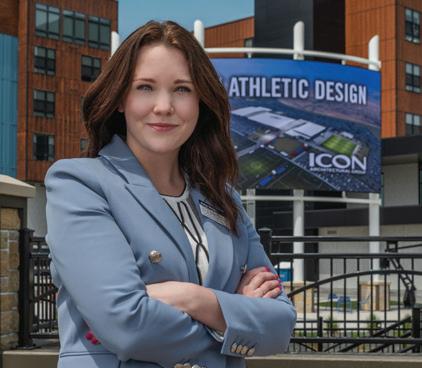
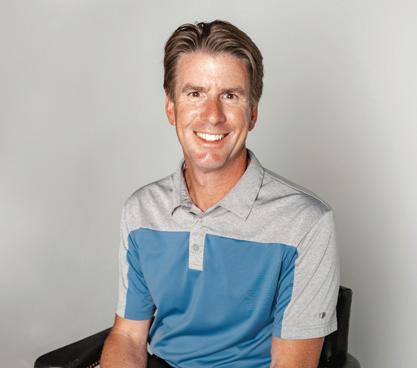
My best advice from my learning experience in the FM area marketplace is to do your homework on all of the media options available. Everyone will come to you claiming to be the best in their particular platforms, promising results, but we have found that there are definitely companies that do things better than their competitors. Really study your customer demographics and pick the best advertising companies that dominate their field and your target audience!
What is a valuable business lesson you learned in 2022?
In 2022 I added Health Insurance as an additional benefit to my full-time employees and was able to keep some key employees happy. My lesson was to keep investing in your employees and surround yourself with good people. If my employees are happy, I will be happy as well.
July
July
Photo by Nicole Midwest
Photo BY Geneva Nodland
Jason Orloske, Founder, Bridge the Gap Consulting
Amy Hass, CEO, EPIC Companies
Photo by Geneva Nodland
38 DECEMBER 2022
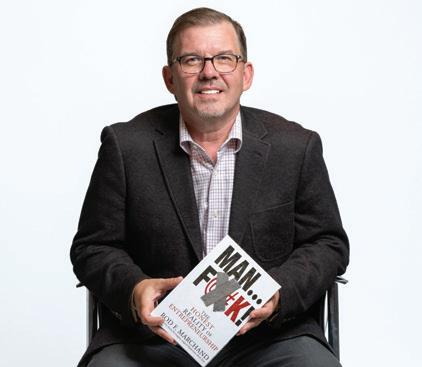
Rod Marchand, Owner, Marchand Retail Group
prepare for the now and the next.
Year-end can be a confusing time, but the right team can help you stay organized and get ahead of the game. From W-2 reporting to estate planning—and everything in between—we can help as you wrap up 2022 and look ahead to 2023 and beyond.

eidebailly.com/year-end
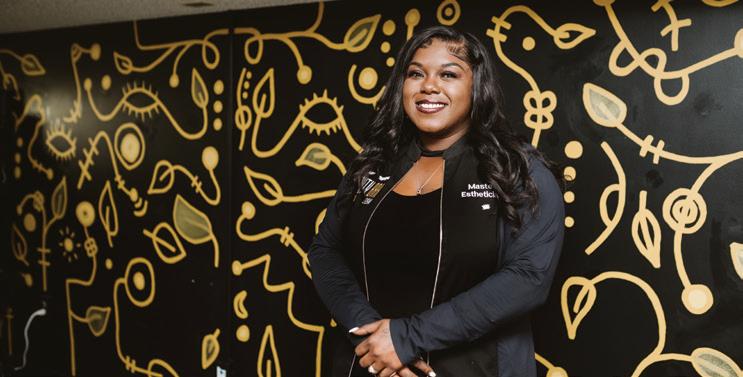
Whitney Walker, Owner, Beauty Bar

Scan to read the issue

July
July
Photo BY Josiah Kopp
Photo By Geneva Nodland
Photo By Geneva Nodland
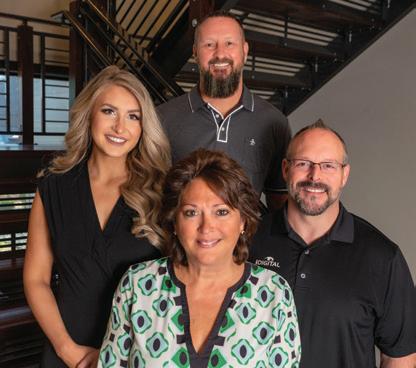
Andy Solheim (back), Taylor Danielson (middle left), Josh Gilleland (middle right) and Julie Halverson (bottom)
40 DECEMBER 2022
Xavier Bonner, Founder, Buzi Bus


August
August
Photo Provided BY Amanda Heyman
Photo By Geneva Nodland
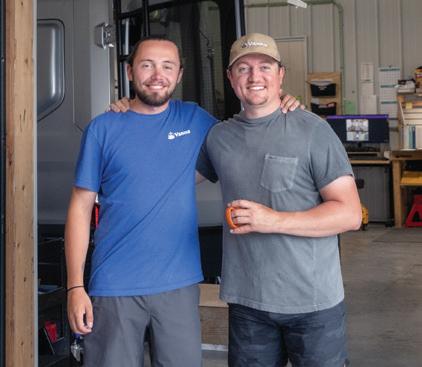
Jason Gilbraith (left) & Ben Gleanson (right), Co-Founders, Adventure Vanna Vans
Amanda Heyman, Managing Partner, Tundra Ventures
Tim Weelborg, Co-Founder and Managing Partner, Homegrown Capital
Photo provided by Tim Weelborg
Kodee Furst, Director, 50 South Capital
42 DECEMBER 2022
Photo provided by Kodee Furst
Scan to read the issue

Ryan Kill,

August
State Farm Agent
Photo provided by Ryan Kill
Photo provided by Flint Group
Jodi Duncan, President, Flint Group
Dr. Joshua M. Riedy, Founder/CEO, Airtonomy
Photo provided by Dr. Joshua M. Riedy
Adam Choe, Managing Partner, Tundra Ventures
Photo provided by Adam Choe
Haley Kaspari, Senior Interior Designer, and Michael Betlock, Founder, NEO Interior Design Studio
FARGOINC.COM 43
Photo provided by NEO Interior Design Studio


SeptemberSeptember
Photo provided Jennifer McClure
Photo BY Josiah Kopp
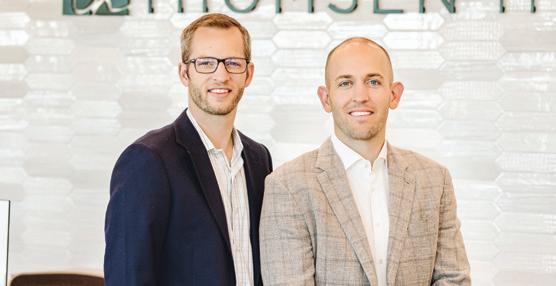
Niels Thomsen, President, Thomsen Homes; Chris Thomsen, CEO & Founder, Thomsen Homes
Ethan Ostrowski, NDSU Student
Photo provided by Ethan Ostrowski
Karli Moch, Director of Mission Development, BIO Girls
Photo provided by Karli Moch
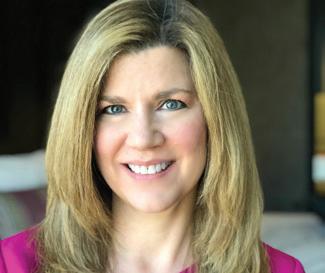
Jennifer McClure, Founder, DisruptHR
John Andrick, Assistant Dean of Student & Director for Student Success, Concordia College
Photo by Josiah Kopp
Patrick Swinnea, Owner, Puzzlefox Inc.
Photo provided by Patrick Swinnea
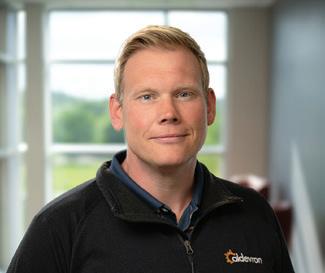
Matthew Skoy, Learning & Development Manager, Aldevron
44 DECEMBER 2022
Photo provided by Matthew Skoy
Scan to read the issue

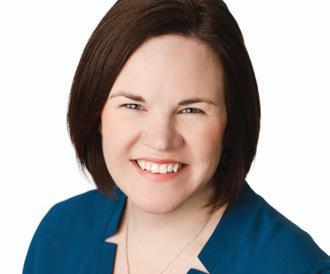
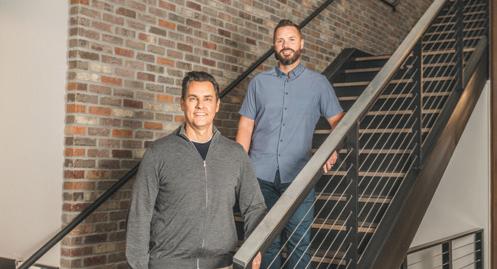
PRx has moved so many times in its existence, how does it feel to finally have a beautiful facility that will, hopefully, be home for some time now?
Hopefully is right! After moving seven times in a little over nine years, it really does feel incredible. Being in a fun-filled facility that truly fits our culture and has room to grow is a true blessing. Something we certainly could not have accomplished without

September
Ashley Simmons, Customer Engagement Strategist, Gate City Bank
Jill Christopher, Executive Director, Ronald McDonald House Charities of the Red River Valley
Photo provided by Jill Christopher
Photo by Josiah Kopp
the hard work and dedication of our amazing team.
Brian Brasch (left) and Erik Hopperstad (right) Co-Founders, PRx Performance
Photo by Josiah Kopp
Photo by Josiah Kopp
Photo by Josiah Kopp
Cassie Kasowski, Mental Health and Addiction Practitioner, Be This Place
Photo provided by Cassie Kasowskia
Than Baardson, CEO & Co-Founder, Unseen
Nick Waverek, Co-Founder, Lykkly
Photo provided by Nick Waverek
FARGOINC.COM 45
Teressia Crandall, CEO & Co-Founder, FiftyTwo50 Media
We have a great business community in Fargo, but what are some things you think we can improve on in 2023?
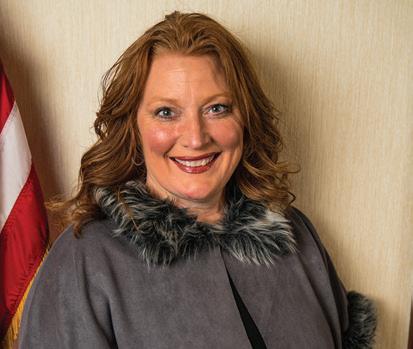
When businesses make decisions to expand/locate to a market, they want to be in places where foundational business risks are removed or significantly reduced. Some of the risks are in the areas of transportation infrastructure, water security, flood mitigation, workforce pipeline and utility services. One of our biggest current risks is the water supply for the region and Red River Valley. Getting funding and full construction of the Red River Valley Water Supply project is a critical area we are working to improve.
For those who live and/or have visited our region, they understand what a great place this is for business and to live. But, we know that is not the case with so many people who we connect with outside our market. The only way to improve on that is to be very proactive in our messaging and telling authentic stories about our market and getting the word out about what we have to offer. That is and should be an ongoing effort and a team effort between major organizations, such as the CVB, EDC, Chamber, Folkways and others and providing our citizens the information to make them great ambassadors for the region.
What excites you about the business community for 2023?
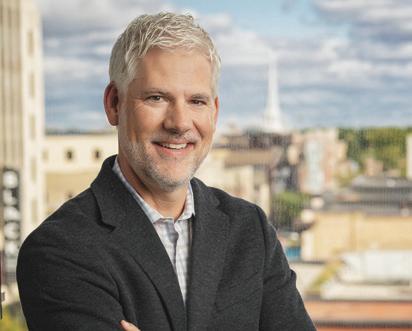
Our business community's competitive drive and hunger to succeed make me very excited for our future. During challenging times or uncertain moments, our community rallies together to create opportunities, solutions and partnerships to ensure the success of our region.
2023 will present many defining moments and critical decisions, and I am excited to see how our community will continue to innovate and work together. I am also looking forward to the continued growth and traction of major regional workforce initiatives. Our efforts today, and over the next year, will set up our region for the future. Let's keep making big things happen, building solutions, thinking innovatively, partnering intentionally and creating a lasting impact.
OctoberOctober
Photo provided by J. Alan Paul Photography
Photo by Nolan Schmidt
Joe Raso, President & CEO, Greater Fargo Moorhead Economic Development Corporation
46 DECEMBER 2022
Shannon Full, President & CEO, Fargo Moorhead West Fargo Chamber of Commerce
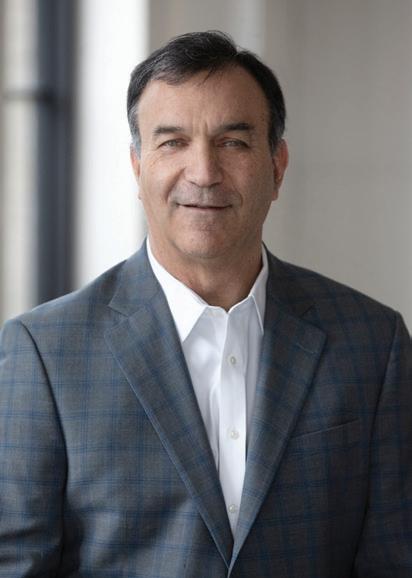
We’re wrapping up a pretty exciting year, having opened three brand-new mixeduse infill projects in downtown Fargo. These new projects have allowed us to welcome hundreds of new residents and some great new businesses to the neighborhood. As our region’s walkable urban center, downtown Fargo continues to build off its momentum, and it’s an exciting place to be.
Looking into 2023, I am most excited about our two new projects kicking off through our Great Plains Opportunity Zone Fund II. RiverHouse is a multifamily project on 4th Avenue North along the Red River. Construction is just getting underway, and the finished project will include 115 living units of different sizes, some with gorgeous views of the river. We designed RiverHouse with access to outdoor recreation in mind and are very excited for the City’s plans to revitalize the riverfront.
Our second project is a mixed-use infill on the surface parking lot between Renaissance Hall and Old Broadway on NP Avenue. We are grateful to be partnering with the City of Fargo, Global Development, and Fargo Moorhead Community Theatre! Our community recently experienced the loss of FMCT’s Island Park home, and we are thrilled to be partnering with them to build a brand-new theater in the heart of downtown. The project includes a city-owned district parking garage, which will likely catalyze redevelopment at the southern end of Broadway. Our part of the project is approximately 145 apartments with ground-floor retail that would surround the garage, much like we did with the Roberts and Mercantile garages.
I’m excited about the professional expertise and personal passion we have on the Kilbourne Group team going into 2023. We have a great team of people who love downtown Fargo and are passionate about building great places people love to spend time in. I have the privilege of sharing the track record we’ve built with potential investors looking to invest in a vibrant, growing urban neighborhood. It makes me excited every day to be part of this team doing the work we do.

October
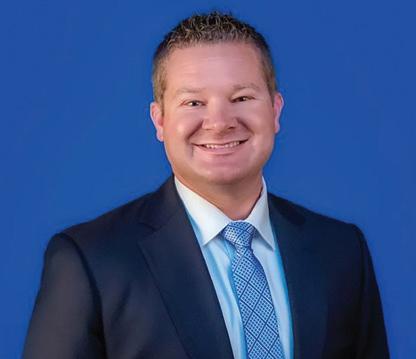
What are you most excited about within your company in 2023?
Meagan Johnson, Human Resources Director, PRO Resources
Photo provided by PRO Resources
Photo submitted by Kilbourne Group
Peter Stenehjem, President, First International Bank & Trust
Photo provided by Peter Stenehjem
FARGOINC.COM 47
Bill Rothman, Chief Financial Officer, Kilbourne Group
OCTOBEROctober

Scan to read the issue
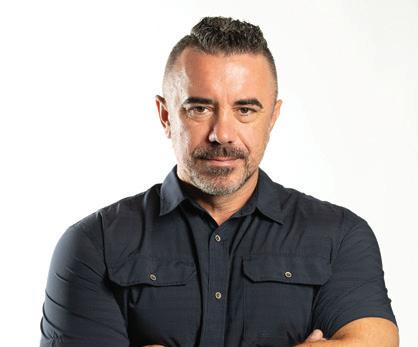
 Ashley Petersen, Director of Operations, Ronald McDonald House Fargo
Submitted by Ashley Petersen
Tom Stadum, CEO and Co-Founder, Lykkly
Photo provided by Lykkly
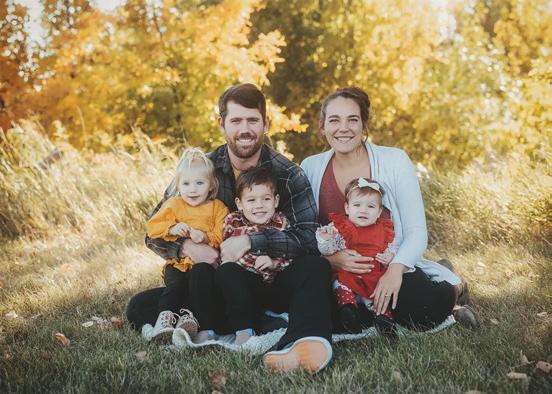
Taylor Schnitzler, Community Engagement Manager, United Way
Submitted by Taylor Schnitzler
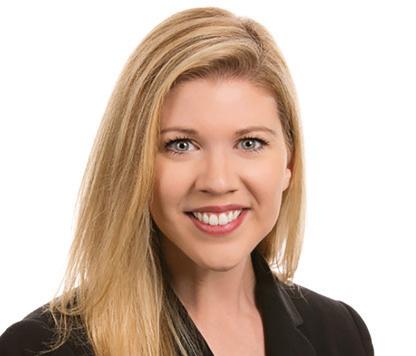
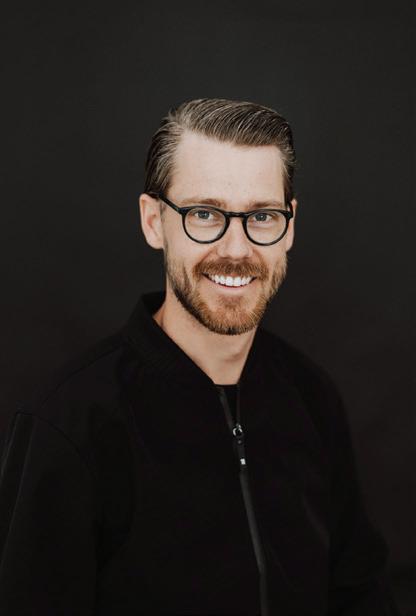
Ned Halilovic, Owner, Ambassador Cleaning and Rainbow International Restoration of Fargo
Ashley Petersen, Director of Operations, Ronald McDonald House Fargo
Submitted by Ashley Petersen
Tom Stadum, CEO and Co-Founder, Lykkly
Photo provided by Lykkly
Taylor Schnitzler, Community Engagement Manager, United Way
Submitted by Taylor Schnitzler
Ned Halilovic, Owner, Ambassador Cleaning and Rainbow International Restoration of Fargo
48 DECEMBER 2022
Photo by Josiah Kopp

NovemberNovember
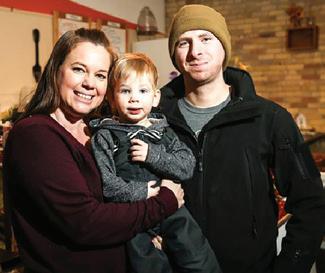
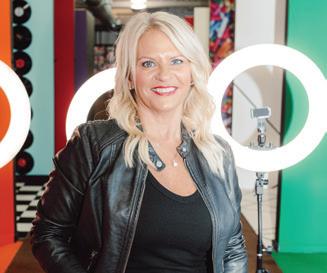
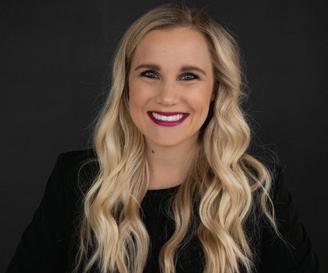
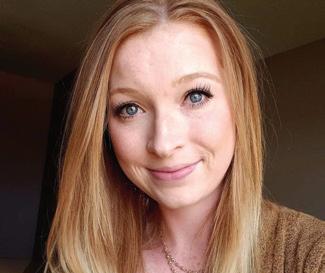
Kim Collins, Co-Owner, Selfie WRLD Fargo
Photo by Josiah Kopp
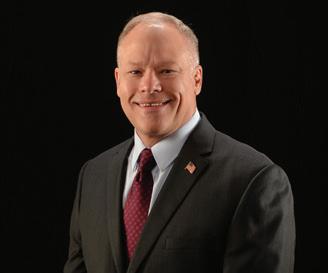
Greg Bowen, President/Founder, Apex Solutions LLC
Photo provided by Greg Bowen
Paul Provost, Co-Owner, The Hillsboro Cafe
Photo provided by Paul Provost
Cassandra Mosbrucker, Owner, Ginger Leaf Garden
Photo provided by Cassandra Mosbrucker
Brianna Nistler, Talent Acquisition, Marvin
Photo by Emmah Violet Films
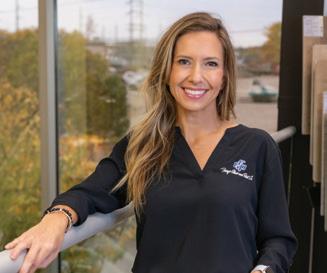
Bridget Gilbertson, Business Development Representative, Fargo Glass & Paint Company
Photo by Geneva Nodland
Hunter Haisten, Owner, Haisten Wood Working
50 DECEMBER 2022
Photo provided by Hunter Haisten
What can you do as a business community to help support our veterans?
That is a fully loaded-question! I wish I could write an entire magazine on this because it is so important and there are so many ways one could do such a thing! So, here are just a few ideas to get you thinking about supporting our veterans! First, support our veterans by acknowledgment! If you see someone walking into a store wearing a USMC hat, thank them for their service. If you have the opportunity to attend a veteran’s community event, do so!
Second, find ways to support them throughout the entire year, not just the holidays. You can think big and host different drives such as a food drive or thank-you veteran card drives, but you can always thank a veteran in smaller ways that can have a big impact as well! One idea would be to thank all the veterans and their family members at the end of your presentation. Chances are, someone in the room is a veteran or they know someone who was. This may seem simple, but it can have a lasting impact that shows you care!
And finally, spread the word about the nationwide VBOC program, Veterans Business Outreach Center. We serve those that have served our country! I am honored to have a hard-working team that has hearts of gold, crazy work ethics and amazing abilities to help our clients be successful! Our small but mighty team of three works hard to give back to our veterans by offering business advice. We offer no-cost one-on-one client advising where clients can take their idea from chicken scratch to a full-blown business plan that is lender ready. We offer many training workshops both in-person and online. Not only does my team support veterans through business advising we also serve our veterans in their communities. From being a hub for different drive donations to attending veteran’s events, team VBOC is there to support our community.
So, what can the business community do to support our veterans? Get involved! Start small! Even if it’s just telling one veteran thank you for their service or being a hub for donations, it can make a difference. Often, the small things add up to bigger things, which will help our community continue to do an excellent job supporting our veterans.
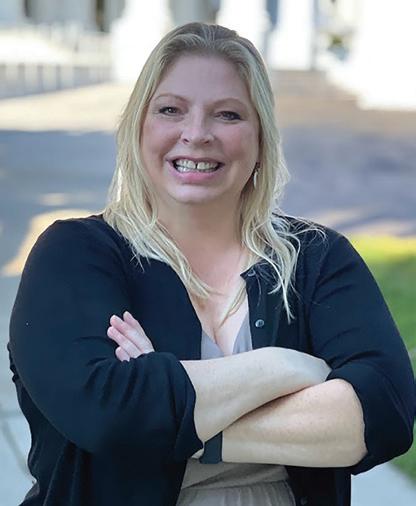
November
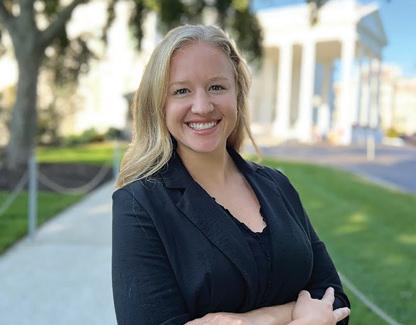
Wendy Klug, VBOC Program Manager, Center for Business Engagement and Development at the University of North Dakota
Photo provided by Wendy Klug
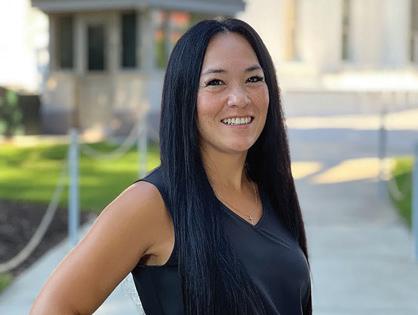
Julie Hinker, Veterans Business Specialist, Center for Business Engagement and Development at the University of North Dakota
Photo provided by Wendy Klug
Photo provided by Wendy Klug FARGOINC.COM 51
Liza Clough, Outreach Specialist, Center for Business Engagement and Development at the University of North Dakota
Scan to read the issue


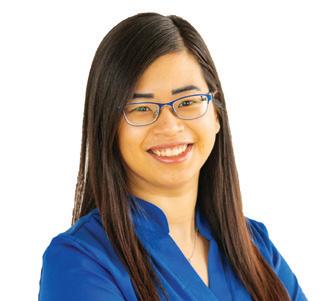

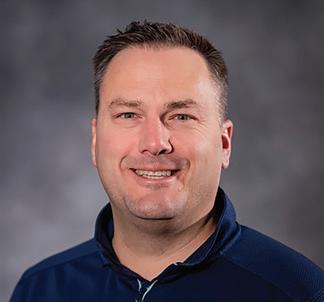
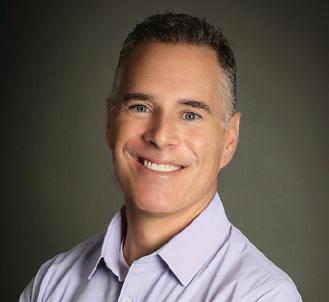
NovemberNovember
Photo Provided by Joe Currier
Photo Provided by Carlie Nelson
Joe Currier, President and CEO, Dakota Fence Company
Charlie Nelson, CEO, KLN Family Brands
Chase Rasmussen, President, KLN Family Brands
Anthony Molzahn, CEO, Project Phoenix and Devvii.io
Photo provided by Anthony Molzahn
Maddie Craig, Founder, Blue Cypher Bookkeeping
Photo provided by Maddie Craig
Jacob Radke, Capital Market Analyst, Fjell Capital
Photo provided by Jacob Radke
52 DECEMBER 2022
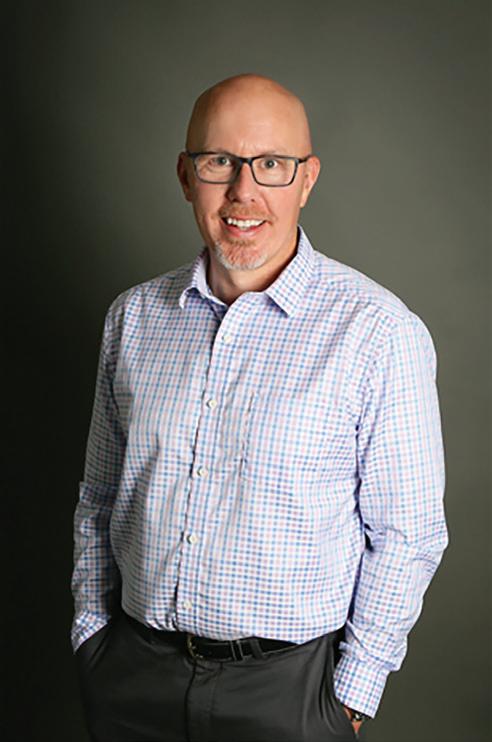
Meagher, Founder and CEO, Sagency
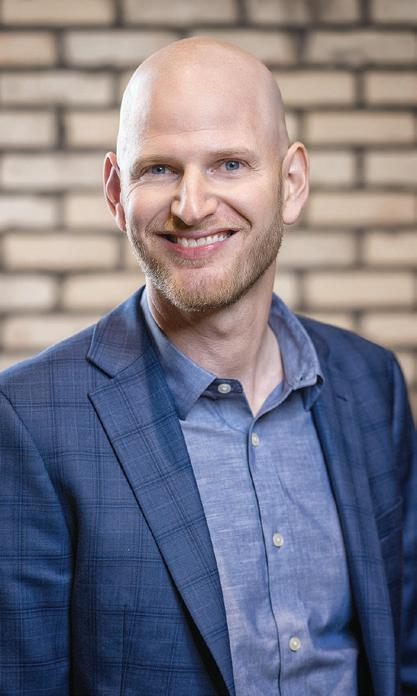
You have a unique perspective in that you help businesses with their executive searches. What are some common mistakes you see people make in this realm?
The most common mistakes we see organizations make when hiring a top leader are a result of not having enough role clarity at the front-end of a search.
Before a board or hiring manager considers the first candidate, there’s a good bit of work that needs to be done. First, they need to define what “success” for the role would look like. And not just in general, but specifically.
In our work with search committees, we’ve found that most executive roles involve about eight key areas of accountability. A person must deliver measurable results in these areas to be successful and for the job to fulfill its purpose within the organization. A person’s greatness will only lie in about three of those eight. They need to have sufficient capability in all eight but will likely only have mastery in three.
Decide which three accountability areas are inextricable from the success of the job. Out of the eight, which can you settle for “good” on and which three must be “great”?
After the top accountabilities are prioritized, make a short list of the qualities, characteristics, and experience a candidate must possess to accomplish those goals. Notice I said shortlist. That means editing the fluff and clarifying what matters most.
What I see holding most searches hostage is the hunt for the “perfect” candidate. There is no such thing as a purple unicorn in hiring. There will be certain, strategic concessions that must be made. But it is critical to not compromise in the areas that lead to the ultimate goals for the role.
Practically speaking, people are humans. As such, they’re going to have strengths and weaknesses. Avoid using the last person in the role as the benchmark for the desirable or undesirable traits. And avoid hiring someone just because you like them.
Always start with role clarity before considering who may be the right person. What business problem will this role need to solve? What are the must-haves from a candidate to solve those problems? Understand that there will be some trade-offs. With each candidate, identify their areas of greatness and determine whether they are sufficient in the remaining areas to predict success in the role.
November
Mike
Photo provided by Mike Meagher
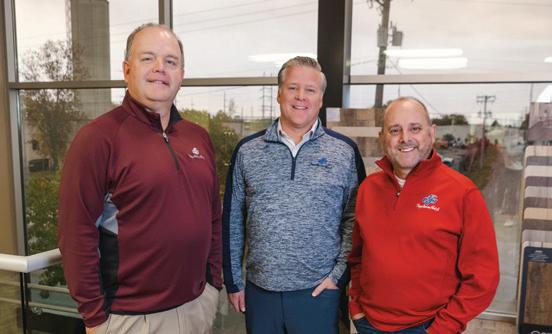
(Left to Right) Dan Martinson, CEO; Andy Nelson, President; Jeff Ficek, Vice President, Fargo Glass & Paint Company
FARGOINC.COM 53
Photo by Geneva Nodland
Best Pieces of Advice 2022
Good advice is like good music, you should listen to it. We here at Fargo INC! have been forunate enough to be on the receiving end of a lot of good advice from some of the best minds in our business community. There is rarely an interview where we don't ask 'what advice do you have for other business owners?' In celebration of this, here is some of the best business advice we received in 2022.
By Brady Drake
54 DECEMBER 2022
"If the only time you contact your customers is to ask them to buy something, they're going to stop picking up the phone and quit opening their emails. If you are a nonprofit, you have to be genuinely interested in why a person donates to you, as your ability to customize the message and match a supporter's passion with a program is critical. Similarly, forprofits should be genuinely interested in why a customer is a customer."
Patrick Kirby Founder, Do Good Better Consulting


Alan Paul P h o t o g r a p yh
FARGOINC.COM 55
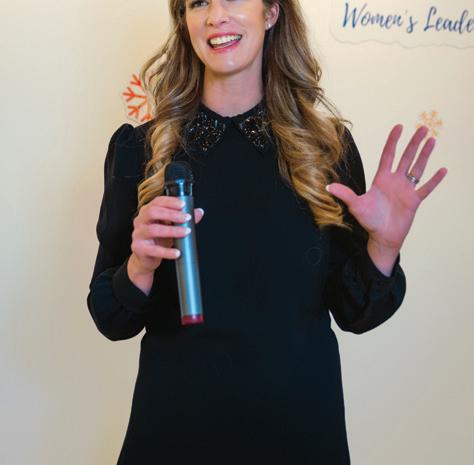
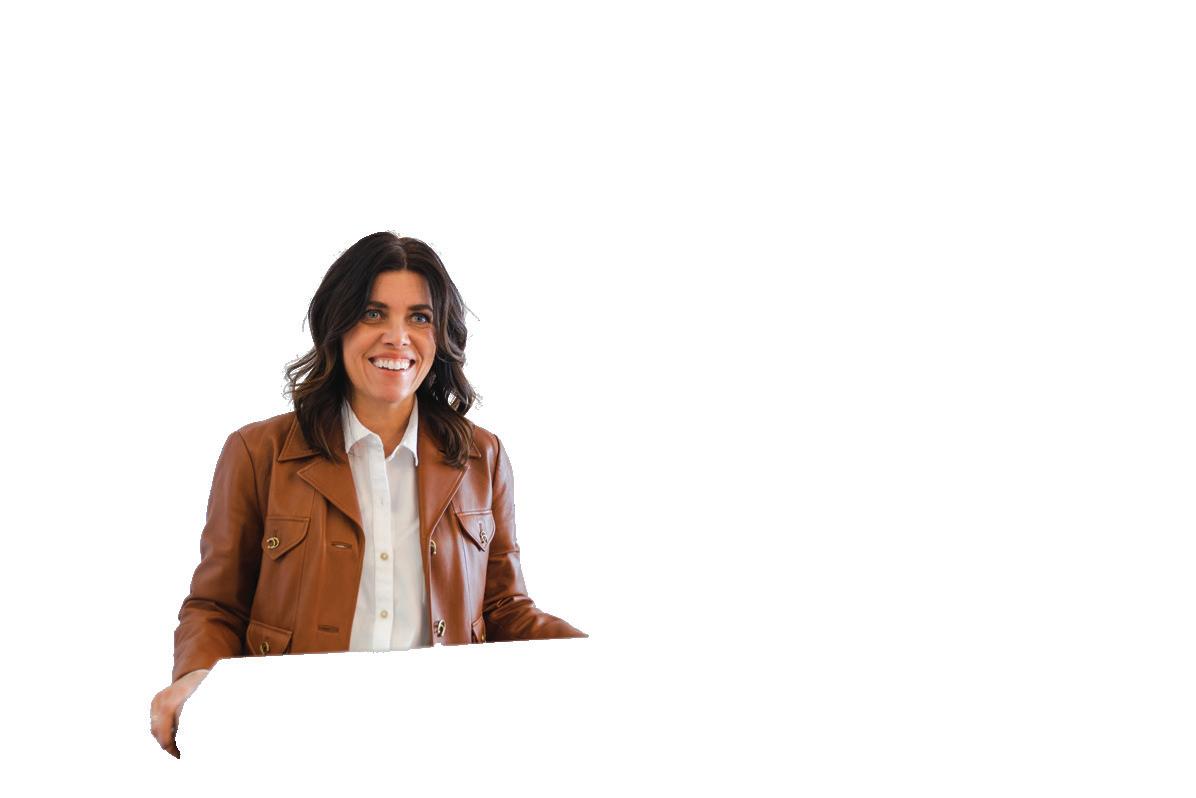
"Show up smart—we're not talking about books smarts, we're talking about emotional intelligence. By having self-awareness and being able to read and recognize other's emotions in the room, as well as recognizing your own self-worth, builds on how we can give and receive mutual respect."

56 DECEMBER 2022
Katie Ehlis

"We really embraces failure around here. We encourage new employees that are a couple of months in to start trying new things. We want them to take risks, make mistakes and understand that we are giving them a lot of latitude to fail."
Garrett Moon Co-Founder, CoSchedule

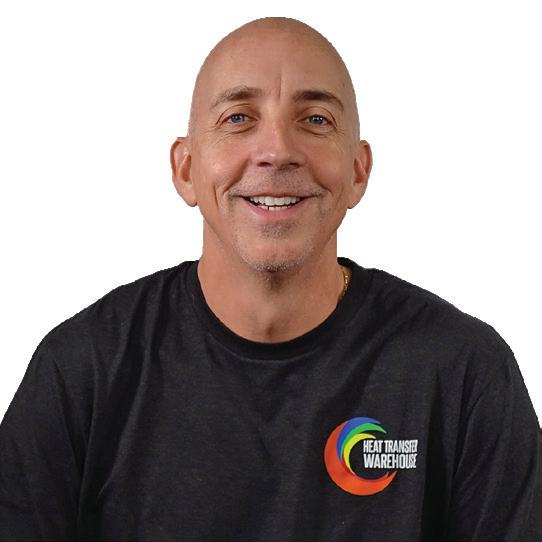
"We realy like to analyze our employees and make sure we're putting them in the 'right seats on the bus.' I think that's one way we've kept employees here is by putting them in the roles they're supposed to be in and allowing them to grow and flourish in their roles. If they're not succeeding, it's kind of my fault. It means I haven't given them the right tools or put them in the right spot."
Kirk Anton Founder, Heat Transfer Warehouse
 Paul Ph ot o g r a p h y
58 DECEMBER 2022
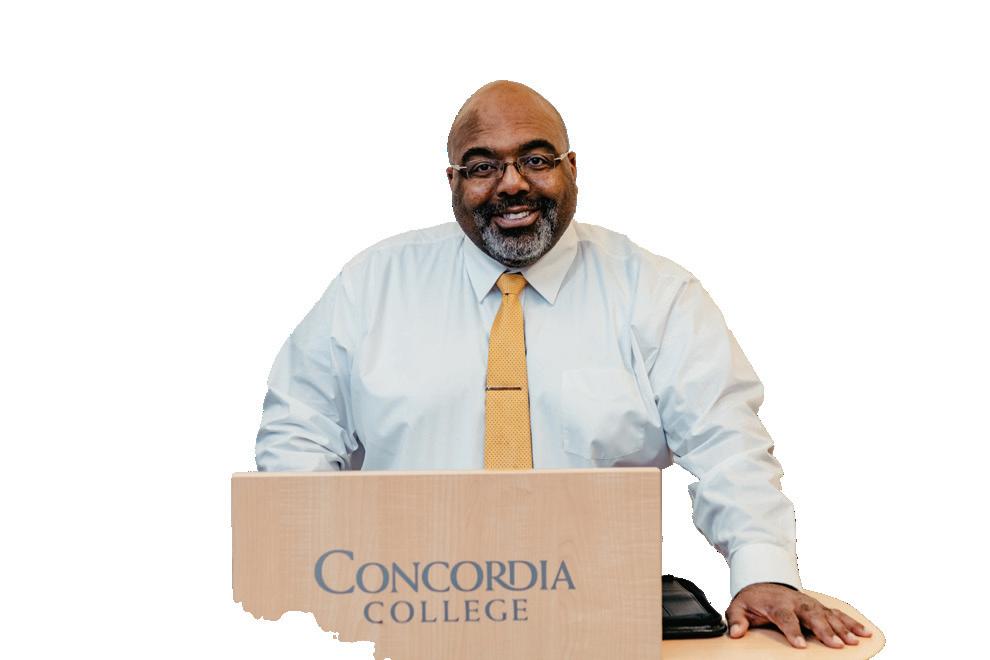
"Focus on continuous improvement. Think about the first time you did an activity (eg. riding a bicycle, playing an instrument, etc.) Chances are that you weren't as good the first time, but after multiple attempts, you improved. Becoming a good manager can feel like a trial-and-error period that includes lots of ups and downs. The advice here is to strive to become better each day. This would include reading books, attending workshops or finding a coach/mentor to help one to improve their managerial skills."
 Aikens,
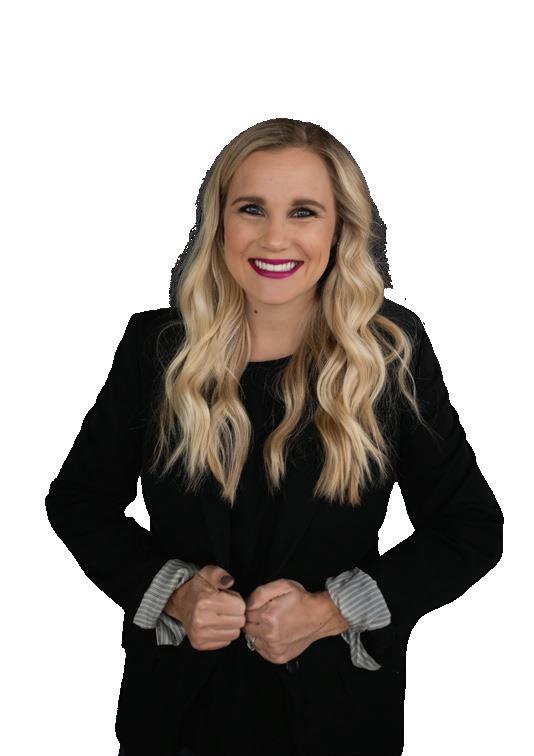
"There are many advantages to hiring early talent, and I think sometimes it's easy to miss the mark with this. 'Early talent' consists of individuals starting out in their careers, with professional experience that could range from 0-3 years. Being proactive and connecting with our future workforce is a key element to building a pipeline and your brand. Build strong partnerships within your community, colleges and universities by speaking to classes, attending career fairs and hosting events. Marvin provides hands-on training for people who are new to manufacturing and are interesting in pursuing a career within the industry."
Brianna Nistler Talent Acquisition, Marvin
 Shontarius D.
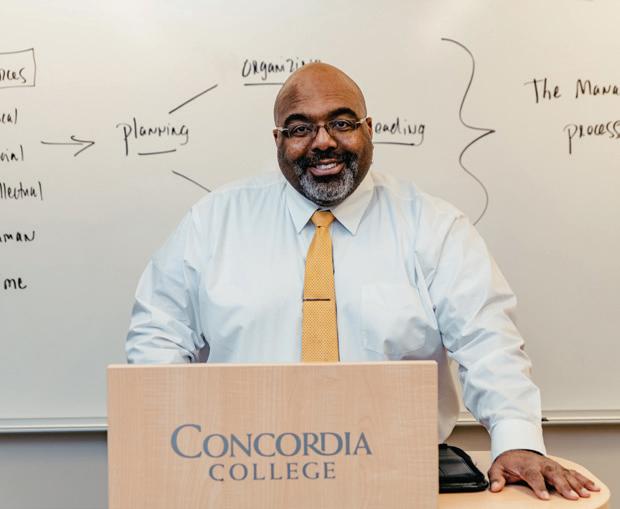
Ph.D. Associate Professor of Management at Offutt School of Business at Concordia College
Shontarius D.
Ph.D. Associate Professor of Management at Offutt School of Business at Concordia College
FARGOINC.COM 59
Awesome Foundation Grant Award Winner Features
Every month, in this magazine, we feature 1-2 Awesome Foundation Cass Clay grant award winners, each of whom has won their award for their outstanding contributions to the community.
The Awesome Foundation supports them and so can you!
January FEBRUARY
Cani Adan is helping the community through the AADA's English Language Learning Program.
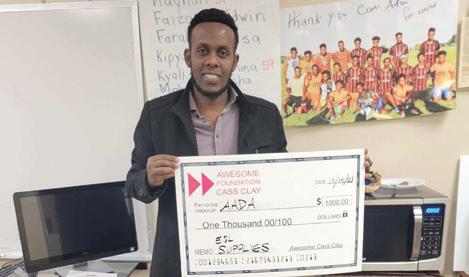
aadevassoc.org
Facebook: /aadafm
Instagram: aadassociation
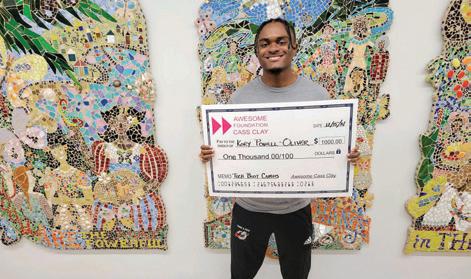
Kory Powell-Oliver is an MSUM student going above and beyond with his Moorhead Digital Design Boot Camp.
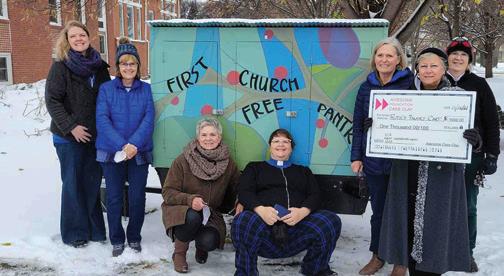
Ruth's Pantry Cart
What started as a garden planted at the First Congregational United Church of Christ to offer free vegetables has evolved into Ruth's Pantry Cart, a full-blown neighborhood food pantry.
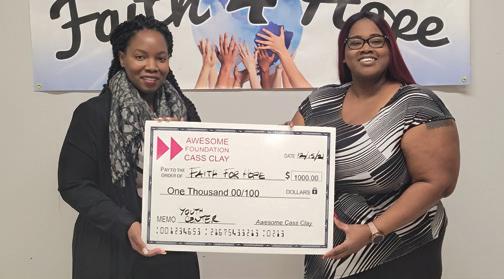
Faith4Hope Co-Founders C. Hope Shield (left) and Faith Dixon (right)
Faith4Hope Scholarship Fund is a 501c3 non-profit organization looking to help provide necessities for families in need. They have a food pantry, give back to the community through a multitude of programs and are in the process of developing the After-School Matters Community Center.
faith4hope.com
Facebook: @Faith4HopeFund Twitter: faith4hopefund
Cani Adan, Afro American Development Association
Kory Powell-Oliver, Moorhead Digital Design Boot Camp
2022
60 DECEMBER 2022
The Recovery Engaged Communities (REC) team.
REC is a team dedicated to promoting recovery from substance use with a focus on building connections and community.
Employees of Jasmin Childcare and Preschool
Jasmin Childcare and Preschool "was originally created to help New American children and families deal with the challenges they face as they integrate into American society. In the seven years they have been operating, the multicultural center has remained committed to the goals of embracing diversity and helping create access to low-income families."
*March's Awesome Foundation Grant Award Winner was featured in our sister magazine, Fargo Monthly.
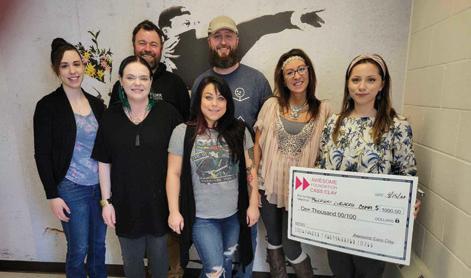
jasminchildcare.org Facebook: /jasminchildcare Instagram: jasminchildcareandpreschool
Cassie Wiste (left) and Brandi Malarkey (second from left) from the Awesome Foundation CassClay present a check to the Lakes and Prairies Community Action Partnership (CAPLP) team.
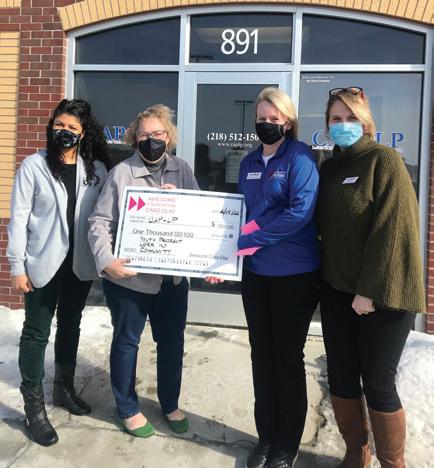

CAPLP has been running the Group Workcamp Home Repair project every other year since 2003. In 2022, they were able to perfrom repair projects for an estimated 20-25 homes.
caplp.org Facebook: /CAPLPLakesAndPrairies
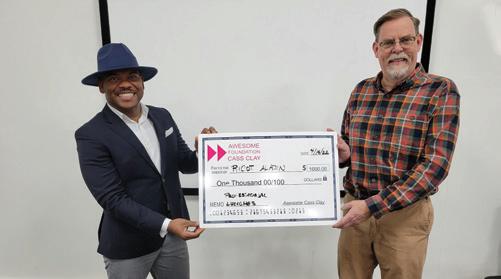
Ricot Aladin (left), Founder of Professional Lunch
Professional Lunch is a lunch conversation that invites guests to talk about their profession, how they got into it and more!
Photos provided by Brandi Malarkey
FARGOINC.COM 61
March April May
JUNE
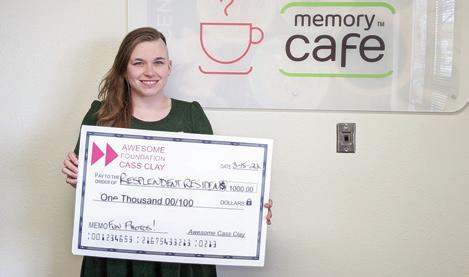
Resplendent Residents aims to help elderly and disabled people realize they're beautiful through interactive modeling shoots.
Facebook:/REC56560
JULY
AUGUST
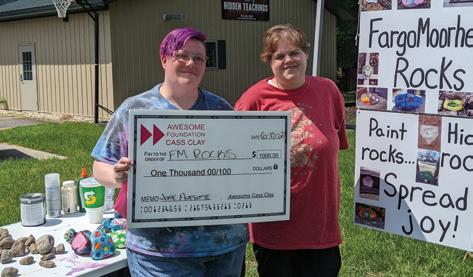
The FargoMoorhead Rocks team
FargoMoorhead Rocks is an offshoot of The Kindness Rocks Project "which supports connection through the painting and placing of rocks with cheerful designs or inspirational messages throughout the community for people to find and enjoy.
Facebook: search FargoMooread Rocks
The Casual for a Cause Closet team
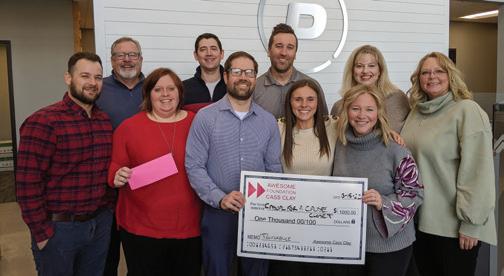
The Casual for a Cause Closet is a product of the Preference Employment Solutions staff who donates to help those in need secure employment by providing necessary resources such as gas money, grocery gift cards, steel toed boots, safety goggles and more.
The Fargo Moorhead Humans of Color team
The Fargo Moorhead Humans of Color Facebook group serves to help connect BIPOC individuals within the community.

Facebook: search "Fargo-Moorhead Humans of Color"
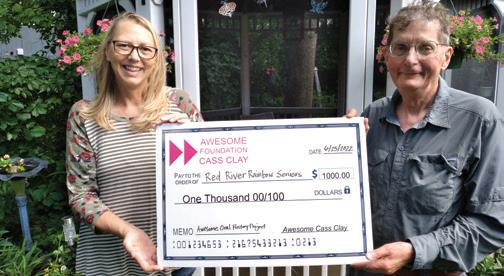
The Red River Rainbow Seniors team
Red River Rainbow Seniors "was created by local activists with the support of North Dakota AARP to provide support, education and social activities for older LGBTQ individuals in the Fargo area. In addition, the group has proved to be the key to creating a permanent record for future generations about the experiences growing up in and/or living as LGBTQ people in the area from the 1930s to the present.
Facebook: @RRRainbowSeniors
Brittany Johnson, Photographer and Founder of Resplendent Residents
Photos provided by Brandi Malarkey
62 DECEMBER 2022

SEPTEMBER OCTOBER
(Left to Right) Heather Nesemeier (Awesome Foundation Trustee), John Hjalmquist (Occupational Therapist and Camp Lead) and LaDonna Bannach (Executive Director of House of Everyday Learning)
The House of Everyday Learning is a non-profit organization that aims to provide opportunities for kids that are not covered by insurance as individual therapy services are.

houseofeverdaylearning.com
Facebook: @HOEL3001
Instagram: houseofeverdaylearning
The Pencils Plus team
Pencils Plus is the Richland-Wilkin School Supply Drive which is run by the Three Rivers Crisis Center an entity that provides services for survivors of domestic violence, sexual violence and child sexual abuse.

Facebook: /PencilsPlus
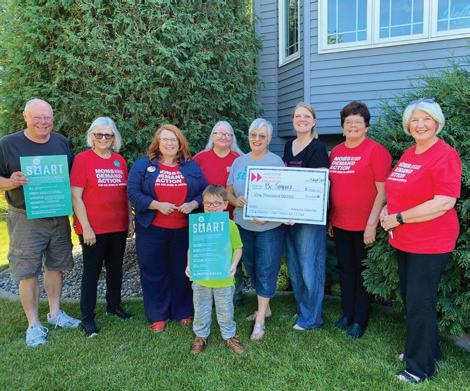
The local Be SMART team
Be SMART is a local organization started to spread awareness about proper gun storage and safety.
NOVEMBER
64 DECEMBER 2022
Photos provided by Brandi Malarkey

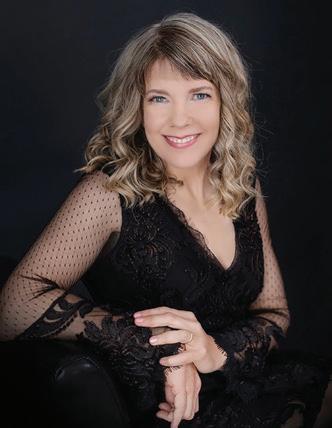
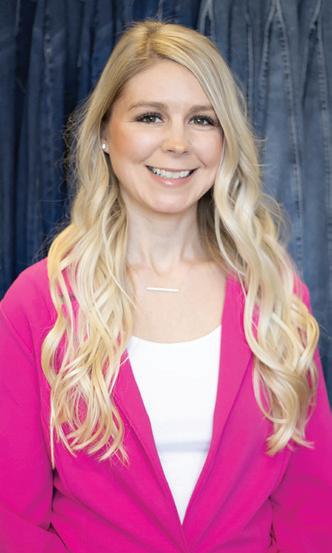

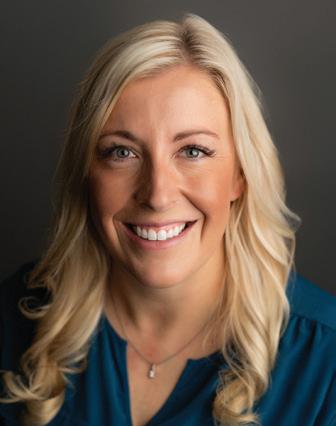

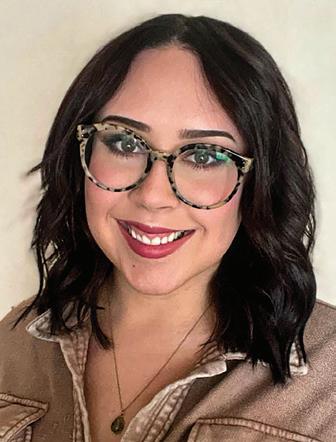
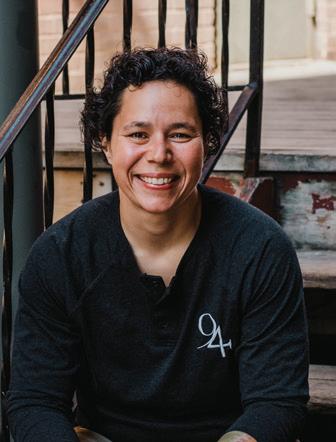
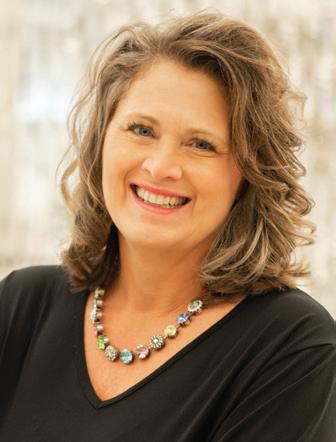
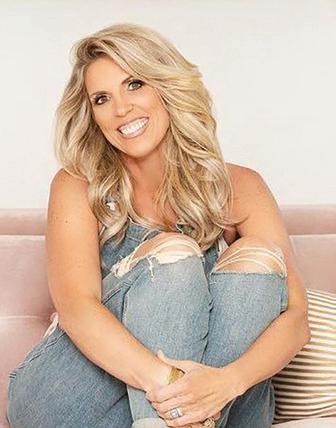
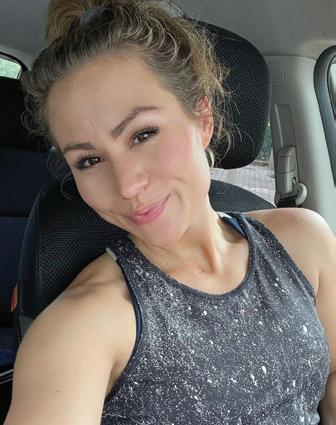
EVERY MONTH, LADYBOSS LIFESTYLE SUBMITS A COLUMN TO US, FEATURING AN AWESOME FEMALE PROFESSIONAL IN THE COMMUNITY. LET'S TAKE A LOOK BACK AT THOSE WE FEATURED THIS YEAR! January June July February Taylor Budge SPORTSCASTER, WDAY Erica Hilde OWNER, ABSOLUTE STYLE BOUTIQUE brightfuturesfargo.com absolutestyleboutique.com Features WOMEN YOU SHOULD KNOW: 2022 Annie Hough PLAYWRIGHT Chelsey Steinlicht OWNER, BRIGHT FUTURES LEARNING CENTER 66 DECEMBER 2022
Char Gust
October November
May
March April
OWNER, STYLE WITH CHAR STUDIO
FOUNDER, NINE-FOUR COACHING
Sarah Skedsvold
OWNER, F45 STUDIO
Emily Buckingham
Melanie Iverson EXECUTIVE
DIRECTOR, LOTUS MIDWEST
OWNER, INDIGO BLOOM YOGA AND WELLNESS stylewithchar.com nine4coaching.com f45training.com/westfargond/home lotusmidwest.com indigobloomyoga.com
Jessieca Bledsoe
provided by Ladyboss Lifestyle FARGOINC.COM 67
Photos
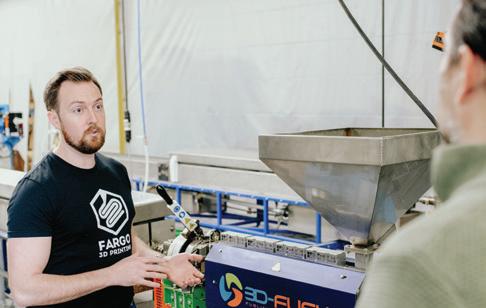
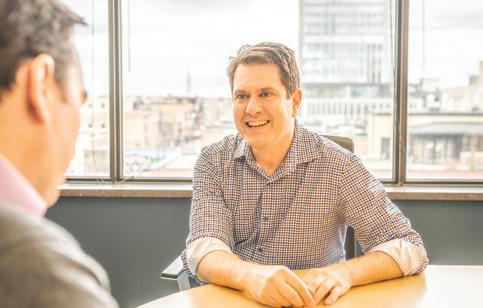
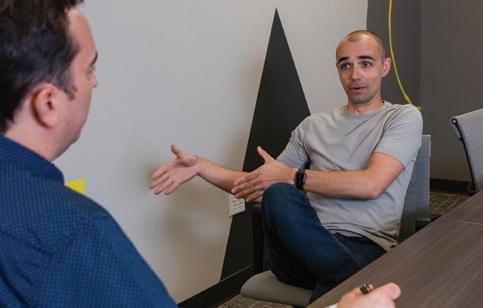
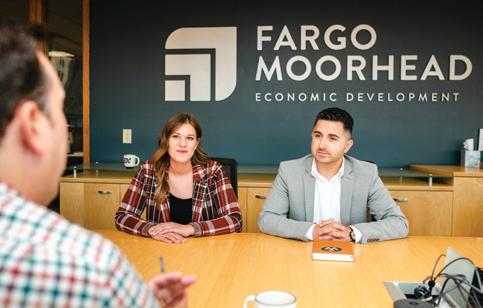
month, John Machacek, the Greater Fargo Moorhead Economic Development Corporation's Chief Innovation Officer John Machacek asks 10 questions to a startup organization in the area like only he can. Let's look back at who has been featured this year.


Features Questions 10
E 01 03 02 Co-Founders of Thunder Coffee, John Dutton, Skyler Dutton and Nicole Dutton January Jon Walters, Founder, Nature of the North April Co-Founders of c2renew, Chad Ulven and Corey Kratcha February Kent Kolstad, Founder, Livewire July Patrick Mineer, CEO & Founder, Golden Path Solutions May John Schneider, Co-Founder, 3D-Fuel and Fargo 3D Printing March Aaron Juhnkie, Founder, Junkyard Brewing August Windsor Waffles, Co-Founders, Iby and Michael Nemati October Sara Lien, Founder, Paisley & Dash September Wild Terra Cider Co., Founder, Breezee Hennings November Austin Foss, Jenna Radtke and Jake Sells of Pops & Bejou Games June
2022
very
Photo by Josiah Kopp
Photo by Josiah Kopp
01 02 03 04 05 06 07 08 09 10 11 68 DECEMBER 2022
Photo by Josiah Kopp


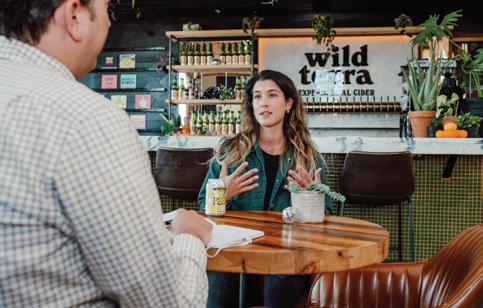
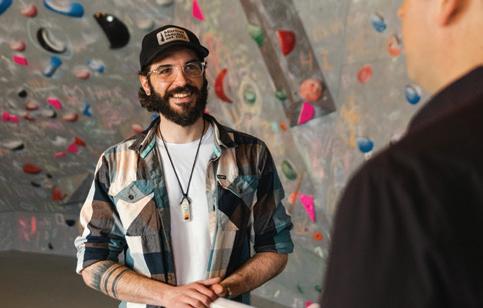
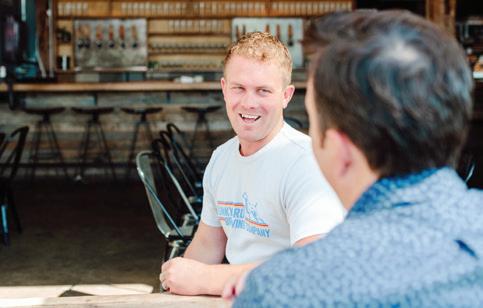
05 09 07 06 10 11 04 08
Photo by Josiah Kopp
Photo by Josiah Kopp
Photo by Josiah Kopp
Photo by Josiah Kopp
Photo by Josiah Kopp
Photo by Geneva Nodland
Photo by Geneva Nodland
FARGOINC.COM 69
Photo by Josiah Kopp
By Grant Ayers Photos Courtesy of Chase Evert
Up & Coming Entrepreneur
When people embark on a new entrepreneurial adventure, no two paths are the same. Each trailblazer goes at their own pace with different circumstances and obstacles to overcome. We talked to a variety of upand-coming entrepreneurs, each with their own unique story to tell.

Chase Evert is a rising photographer with his personal brand, Chase Chapters. In our discussion, Evert took time to dive into what roped him into the world of photography, some of his biggest inspirations and mentors over the years and much more!

70 DECEMBER 2022
Evert first became interested in photography when he started taking photos on a flip phone as a child. “I started taking photos as a kid with a Motorola Razor flip phone. My mom was a real estate agent, and I can remember laying on the floor during slow open houses, snapping photos of the ceiling and the kitchen decals. Photos were just something I did to pass the time. For years they only ever lived on my phone,” Evert said.
“It wasn’t until my junior year, when my high school offered a digital photography course that I enrolled in to share my work. Our teacher showed us the basics of editing software and allowed us to rent these banged-up Canon Rebels for a full semester. I remember the rush of panic seeing Photoshop for the first time. This was a tool I imagined only Hollywood professionals used for celebrities for magazine and movie posters.”
After the course introduction, Evert couldn’t get enough of his passion project. Soon after, he purchased his own Canon Rebel and carried it with him everywhere he went. He photographed pets, family holidays, downtown Fargo and anything else that caught his attention. Evert would then post content to Instagram, Tumblr, VSCO and other social media platforms for others to see and follow.
Over summer break in 2019, Evert concluded that his future educational and career path wasn’t in line with his passions. “During college, I landed a part-time position in a back-end processing department of a financial institution. After a year of having my mornings filled with client work and my evenings eaten up by this job, they offered me a full-time position. I realized taking this position, for me, would be planning the rest of my life,” Evert said.
“I’d get comfortable. But I liked having this flexibility and the option to work on my own goals instead of just meeting deadlines for a manager. A month before, I had my most successful month in my photography business, making more after taxes than I did in my current position, so knowing I might not get the opportunity again, I decided to turn down the offer and jump head first into photography.”
“I decided to open a print store that would dropship my work across the globe. Every couple of weeks, a check, however small, dropped into my bank account. I moved back to Moorhead in the winter of 2021 and entered the photo from my first print sale into an Art Syndicate show. Through that, I found the burgeoning art community here in town. I started selling face-to-face at markets, expanding my collection and entering competitions. I made it into a few physical magazines and even won the cover slot for one,” Evert said.
“I learned, much to my parent's dismay, I could make this work. I went the reverse route for most photographers. I sold physical prints first and then expanded into client shoots. I went back to my roots and shot real estate as the market opened back up, now equipped with a professional-grade camera, and found a
great group of clients who trust me with their photos. Now, in 2022, a year after deciding this was my path, I’ve worked with agents, builders, cabinet makers and interior designers. I’ve expanded my lens collection, bought a drone and even opened my very own limited-edition print store where I get to add my signature to each print before it goes out.”
Evert’s next steps include expanding his physical work into stores, generating more passive-income streams and growing his list of architecture-focused clients. While he has many more obstacles to overcome and goals to achieve, Evert has already collected a wealth of knowledge along his path. Here are some of his biggest tips for readers interested in pursuing their passion as well.

72 DECEMBER 2022
Some of Chase Evert’s work

Just start.
It’s tried and true advice. In any field, creative or corporate, if you want it, you’ve got to start. You’ll think that nothing you’re doing is right. That’s alright, and frankly, entirely natural. Failure is a bigger part of the process than success. It’s like the iceberg metaphor, what the world sees is only the product of hours of practice, failed attempts and setbacks. I’ve sold out of certain photo print drops and also failed to sell even one from others. You’ll be stuck without the answer to “What If…” until you try. And if that “What If” ends in failure, cross it off the list and try something new.
Grow better together.
Being an entrepreneur feels incredibly isolating. You’re pulling things into the real world from ideas that live only in your head. When you explain lofty goals to people in your life, you're often met with blank stares or worry. Finding the people who you can ask questions to and who can guide you through rough waters are important to fight burnout. When I first started, I was holding all of my ideas in my head, trying to make sense of what I wanted from my business. It wasn’t until I found the FM art community that I learned how powerful sharing ideas is. Having a support network gives you a foundation in a business where the goalpost is always shifting.
COVID showed us that entire markets can shut down. Having multiple income streams not only stabilizes your profits, but it guarantees some form of revenue even in the face of a total market shutdown. It’s not about finding as many income streams as possible, it’s about finding the ones that work best for you and the path you see for your future.
For example, as I expand my client list, I have turned away from seniors, family photos and weddings because I want my future in architectural builds. Expanding from real estate into cabinet makers, interior designers and product shoots furthered me down the commercial path. Alternatively, as I move forward with new products as a form of passive income, I’m not just looking at what sells, I’m tracking the amount of time it takes to produce each piece, store margins and which pieces fit best in each store. This ensures my physical work is as passive as possible so I can still focus my attention on my clients. Don’t diversify for the sake of another check, diversify to fit the future you want for yourself.
This is especially important for those just starting out. Creative or otherwise, funds keep your business going. But the goal isn’t just to keep the business afloat, it’s to make your business profitable. After taxes, make sure to set aside a percentage of each check to pay yourself with. During slow seasons, when all I can think about is what I haven’t done, having a bank account of my income for the quarter is a great way to remind myself that yes, I have made money and I am profitable.

74 DECEMBER 2022
Diversify with intention. Profit matters.
Don’t be afraid to evaluate.
If things aren’t going well, you’ve tried everything, crossed things off the list and still aren’t seeing the returns you want, it’s okay to step back and hit pause. Momentum is very important to an entrepreneur, but taking yourself out of the equation for a while can help you identify the problem before it worsens. When I first began, I was spending money on every print that I thought would sell at markets. Focusing on getting into markets over selling my work which landed me in a position with very little income and a ton of expenses.
It wasn’t until I skipped a market and really dug into the pieces and themes that sold best that I realized I was spending money on things that didn’t sell just for the sake of having a full table. Reevaluating is a great way to shore up holes in your business that you might not notice otherwise.


FARGOINC.COM 75
Some of Chase Evert’s work
A: Artists are perceived differently than most businesses. People expect you to be shrouded in mysticism somewhere in a New York loft, pumping out work from the depths of your soul. People are keen on telling you what you should do, and mostly that you shouldn’t be an artist. One of the first struggles every artist faces is finding out what they like to create and what sells. If you’re a creative getting your feet wet in the business world, don’t start by making what sells, start with what you love to create and see what works best. We’re in this business because we want to do what we love, don’t lose that spark by making strictly for the market. That’s a surefire recipe for burnout.

Deciding on a price list is another hard one. When I started with clients, it was hard to gauge where I fell on the list of other creative entrepreneurs. What if I start too high and can’t get clients? What if I’m too low and can’t make a profit? Plus, because I was so unsure of myself, it was easy to get flustered if a client asked why my prices were where they were. Look at the time spent on each project, ask people in your network what they charge and why and when your list is set, be firm. I have a list of reasons why my prices are the way they are and every year I re-evaluate to see what’s working and what isn’t. Eventually, people will stop asking why because you’ve proven yourself to be an expert in the field.
Q: What are some of the most impactful challenges you’ve had to overcome?
76 DECEMBER 2022
Q: How did you go about overcoming those challenges?
A: Trial and error. I stopped being scared of asking for advice and found it to be the fastest way to get to where I was confident in myself and my work. This is why having a community of like-minded individuals is a must. They can help bounce ideas when it feels like nothing is going well. My friend Hannah has been my biggest supporter in these pursuits. Knowing someone else navigated the same pitfalls of business ownership and helping each other succeed in the ways we knew best is one of the most rewarding feelings in the world.
I learned confidence from my gallery experiences. When I was starting out, there was always a part of me worrying, “What if you’re just not good enough?” and seeing my work recognized in the professional art world made me sure-footed going forward. I also learned the importance of working within a community. I wouldn’t have gotten the opportunity for these events without people in my network first knowing I was a photographer, and second asking me to be a part of them.
The same goes for my print shop. When I first started selling prints, my quality was spotty. I was putting out subpar work in an attempt to make money and I paid for that in unsold prints. I learned how important quality is, and this year, I've spent countless hours studying other photographers' prints, asking people for advice and working closely with Su from Legatt Print & Photo on nailing my print quality.
Q: Who are your biggest mentors?
A: My friend Hannah of Designed by Hannah and Scribble Lady Co.
Hannah is by far my biggest mentor. She is truly a renaissance woman. Her ability to pair her creative work with the business world is remarkable and one of the best sources of information for this line of work. If I have an idea framed out, she has three more to help fill in the gaps. We have been each other's accountability partners since we both started, meeting a few times a month to brainstorm, talk shop and vent about the trials of running a business. Without her, I don’t think I would have made it this far or been as confident in my abilities.
Paul Weaver and The Freelance Photography Course. Paul Weaver is a photographer and business owner. I took his Freelance Photography course during quarantine and I still reference it to this day. He taught me the importance of finding a niche and diversifying within it as a way to position yourself as an expert. His course was the first time someone told me not only can you make a career out of your creative passion, but you don’t have to scrape by as you do it.
Lastly, the art community in Fargo-Moorhead is a miracle in and of itself.
Organizations like the Art Syndicate and Folkways, as well as businesses like Carmine and Hayworth Vintage, have seen the importance of art and helped grow the community to what it is today. The downtown community as a whole is the way it is from people loving art and I wouldn’t be where I am without the support of the people there.
FARGOINC.COM 77
This year, Evert opened his own print shop selling exclusively limited editions. He worked with a local printer in town, Legatt Print & Photo, to carefully select everything down to the paper and ink quality. Within an hour of launching, Evert sold out of multiple editions of his work and saw overwhelming success.


Evert has an array of plans up his sleeve, including another drop in the coming months. While the photographer has come a long way since his time photographing on his flip phone, he admits that he’s always learning and becoming more knowledgeable of the business landscape surrounding him, as well as picking up useful tips of advice for other hopeful entrepreneurs. Follow @ChaseEvert for creative prints and @ChaseChapters for architectural and design photography.
Web: chasechapters.com Email: chasechapters@gmail.com Instagram: @chasechapters Twitter: @cforchase TikTok: @cforchase Some of Chase Evert’s work 78 DECEMBER 2022

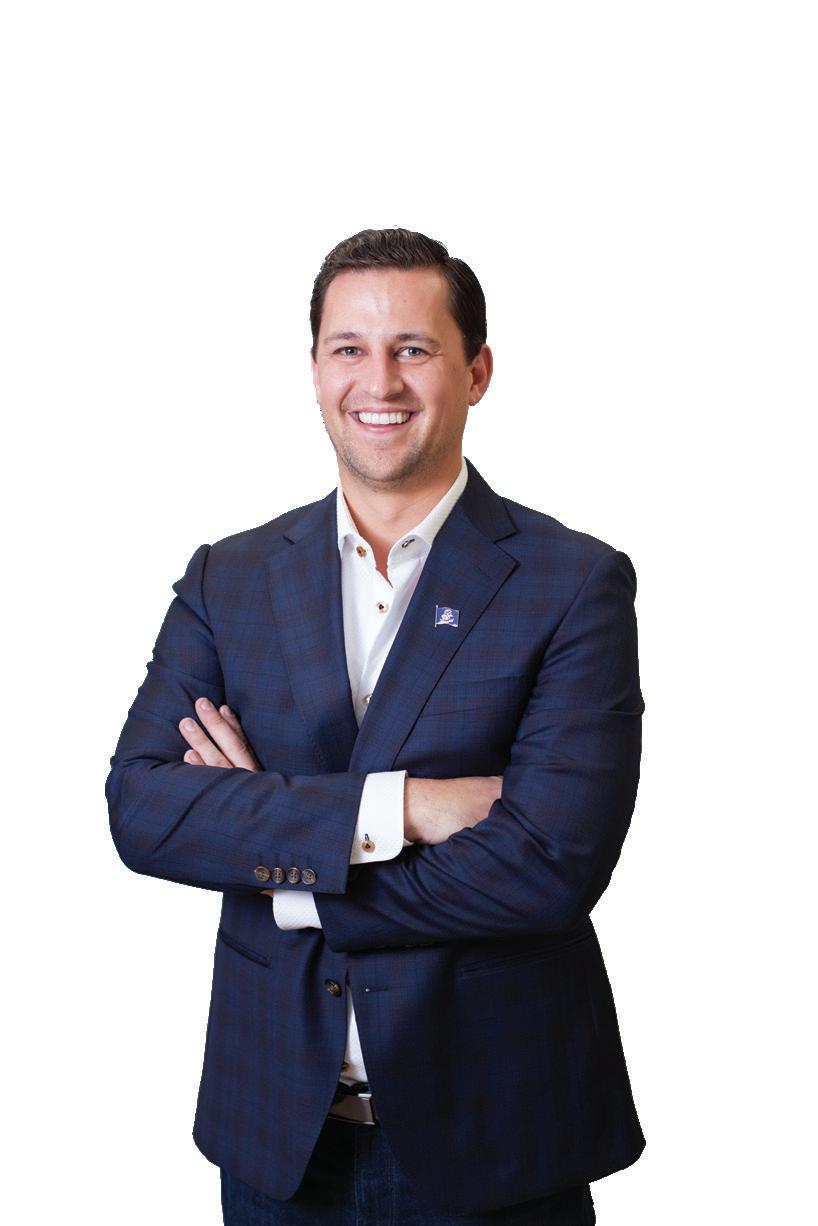
ne of my greatest envies in life is when people say they were born and raised in North Dakota. I was born next door in Minnesota and spent the first two years of life in Florida but, I have called North Dakota home for the past 28 years. I was raised in North Dakota and that alone has shaped my life dramatically, even if I don’t get to claim the born portion of that equation.
Instead, we say, “yep, it gets pretty cold here.” Is that really the best we can do? We all need to do much better when giving North Dakota the recognition it deserves. North Dakota is the greatest place in the world to live, work, start a business and raise a family. I truly believe that, and I’m guessing most of you reading agree or you wouldn’t be here. So why are we so apprehensive to tell people why we love it here?
I have a deep sense of pride for my state, but it wasn’t until recently I learned that feeling isn’t shared by everyone across the U.S. Sure, there are other states where you see this as commonplace. People from Texas wear their state pride on their sleeve and won’t get through the first sentence of introducing themselves without letting you know that they are from Texas and how great it is there. North Dakotans have a similar pride for where we call home, but instead of wearing it on our sleeves, we bottle it up and keep it to ourselves like it would be too flamboyantly arrogant to say something good about our great state.
North Dakota has so much more to offer than the default response of being cold for a few months out of the year. Why are we so reluctant to say something positive? We have an ever-booming economy that has us positioned to have the highest GDP per capita in the nation in just a few short years. We have 30 times more job openings than we have people on unemployment, one of the highest standards of living in the entire world, great education, beautiful scenery, a resilient housing market that 2008 could barely cool and, most importantly, some of the best people this world has to offer.
The talent of our entrepreneurs in the state is well documented, and for good reason. Household names like Doug Burgum, Michael Chambers, Barry Batchelor and Howard Dahl are well known for how they
82 DECEMBER 2022
have helped mold North Dakota’s economy into what it is today. However, there is another set of incredible people that may not be household names to most, but they should be. These are our elected officials, state employees, our legislators, our county and city commission leaders, mayors and local leaders and many more who operate in the background to make North Dakota the best place on the planet.
Up until three years ago, I was a hardcharging private sector entrepreneur and investor who believed that the only people who worked in state government were those who couldn’t make it in the private sector. That was a belief I am now incredibly ashamed of ever possessing.
I was ecstatic when Doug Burgum decided to run for Governor. One of the hardest working, most intelligent and innovative thinkers I have ever met in my life decided that he was going to apply his gifts not for personal wealth, but to make the state he loves the best it could be. This was something that I had admired from a distance, but it never crossed my mind that it could be a path that I one day would take as well.
Fast forward to 2019 and the Commerce Commissioner at the time, Michelle Kommer, asked if I would be interested in a new position leading how Commerce approached investing capital for economic benefit in the state. My first reaction was that there was no chance I would be interested in being in state government, that would be admitting defeat that I couldn’t cut it in the private sector and had to resort to state government as a backup. Thankfully, as time went on and I thought more about the work and the scale and impact that it could have for the state I love, I decided to take Michelle up on her offer.
What transpired over the next three years was unlike anything I could have predicted. Instead of finding a bunch of people who were only there because they couldn’t make
it in the private sector, I found a group of amazing individuals with incredible talents that showed up everyday not for recognition or wealth, but because they also love the state of North Dakota, and their efforts went to make it a better place. Not just state employees, but legislators, community leaders, elected officials and even volunteer board members. There was an entire world behind the scenes working tirelessly each day, making hard decisions to improve the lives of everyone who get to call North Dakota home.
Instead of wearing their Texas pride on their cowboy hat each day, North Dakotans show up for their state behind the scenes and humbly work to support their fellow neighbors. This work largely goes unnoticed, but it is what has brought us here to present day, which is perhaps the brightest future the state has ever faced.
North Dakota is steadily on track to continue being a solid model of resiliency as the global economy turns towards what could be a winter tragically marked in history as one where people in developed nations may not be able to heat their homes, people in underdeveloped nations could starve and the global economy could be crippled by rising inflation, economic uncertainty and Putin’s quest to expand his empire at the expense of humanity’s betterment.
Faced with such a somber outlook as the leaves turn and we head into a realm of uncertainty, people in North Dakota should wake up each day with immense gratitude that our state insulates us from the global tribulations that others face. We have ample and diverse energy sources and crops, rainy day funds stockpiled with small fortunes that even some countries would envy, a state-owned bank and mill and even a sovereign wealth fund that is nearing $10 billion of assets under management. There is no better place in the world to be right now than North Dakota. Sure, our winters may be cold, but our state protects us from economic winters that other parts
of the country and world will face. I’ll take that trade off any day. Not only do we take care of our people, but we also help feed and fuel the world. North Dakota is part of the solution to solve the global challenges for food and energy security that we face globally. We are perfectly positioned to step up and play at the global stage to change the world for the better. The people who show up to work every day here take that up on their shoulders with pride and advance the mission.
"We should all wear on our sleeves that humble little North Dakota is where the world is going to look to when the most challenging tribulations emerge. We step up and solve the hardest problems when no one else can or don’t have the courage to try. We need to be proud of that."
As citizens of the greatest place on earth, we should feel immense gratitude for what we have, and for all the future holds for our state and its people. As the next Commerce Commissioner, it is a tremendous honor to play a role in crafting the future of our state alongside the Governor, and everyone else who contributes to making our state, country, and world a better place. I look forward to sharing stories with you about why we should be grateful and proud to claim North Dakota as home. It is with gratitude that I get to show up to work everyday and help continue the legacy of those who went before me to further cement our state’s place in history as the greatest place on earth to live.
FARGOINC.COM 83
Photo provided by the North Dakota Department of Commerce
By Beverley Adams
Attorney Beverley Adams at Fredrikson & Byron represents employers and executives in the full range of employmentrelated matters, providing guidance on such issues as employment investigations, disciplinary matters, employment contracts and union labor negotiations. She litigates in federal and state trial courts in North Dakota and Minnesota. You can reach her at badams@fredlaw.com
WHY ARE GEN-Y AND GEN-Z SO WORKED UP ABOUT LABOR UNIONS?
Many of us believe that labor unions are relics of the 1930s, representing employees forced to work long hours, doing hard labor and in dangerous uncleanly conditions. Some believe employees today don’t need unions, since market factors and employment regulations naturally provide an environment where employees can do just fine by advocating for themselves without an “outside third-party,” such as a union, representing them.
As we have seen over the last year, particularly with younger workers, many people disagree with these premises. Young workers are more enthusiastic about unions now than they have been for decades. In the past year alone, employees at some the nation’s best-known companies—including Starbucks, Amazon, Trader Joe’s, Apple, REI and Chipotle—have organized unions for the first time.
The surge in unionization covers multiple types of industries, including museum workers, digital journalists, graduate students, nurses, adjunct professors, cannabis workers and those committed to political campaigns and non-profit organizations. Student workers are also part of the latest wave of unionization, flocking to labor’s banner to improve pay and the working conditions that come with it.
The striking disconnect here is corporate leadership has the perception that employees do not want unions, and they correctly point out that only 10.3 percent of America’s workers (33.9 percent public
employees and 6.1 percent in the private sector) are in unions, which is down from 35 percent at the labor unions’ peak in the 1950s and 20 percent in the 1980s. However, the surge of unionization efforts by young workers tells a much different story. If unions are relics, younger employees did not get the memo.
The general public’s perception of unions has also warmed up. On Aug. 30, a Gallup poll showed 71 percent of Americans approve of unions, which is the highest level since 1965 and a sharp increase from 48 percent in 2009. There has also been an increase in non-union workers who said they would vote to join a union.
WHAT IS DRIVING UNION SUPPORT?
What is powering this surge in union support, and is it enough to counter the decades-long downward trend? The recent popularity in unions may be tied to three relevant factors.
1. THE COVID-19 PANDEMIC
Most experts are saying the biggest factor was COVID. The pandemic created a catalyst that focused on two primary perspectives:
1. How we work and live.
2. The relationship between employers and workers.
Photo provided by Fredrikson & Byron
84 DECEMBER 2022
The pandemic forced low-paid employees to the front lines of managing COVID protocols, while putting them at great risk for COVID exposure. Retail workers had to enforce mask-wearing and check vaccination status, while manufacturing and delivery workers feared they did not have the right COVID protective gear. Nursing employees were regularly required to interact with COVIDpositive patients who were seriously ill or dying, and some were paid less than traveling nurses even though they worked side-byside doing the same type of work.
All of this resulted in a tidal wave of activism during the first months of the pandemic. The distance and disparities between leadership and rank-and-file employees widened, as leadership were able to work in environments where they could safely distance from others, while the rank-and-file employees were required to work in environments with greater exposure to COVID. During that same time, many executive salaries increased while employees’ wages stayed the same.
2. INFLATION, STAGNANT WAGES AND DIFFICULT WORKING CONDITIONS
Employees are now under more stress. High costs of fuel have resulted in every product subject to transport increasing in price, including food. Living expenses and healthcare costs continue to increase and working conditions can be grueling, especially in healthcare, factory and manufacturing jobs.
Employees were required to work additional hours and were short-staffed when their co-workers got COVID or were forced to quarantine. Employees endured these additional pressures after years of past wage increases which did not keep up with increases in the general costs of living. Simply put, employees are living and working in
environments that have much more pressure from every direction.
3. SOCIAL JUSTICE + WORKER JUSTICE FANNED THE FLAMES
Social and mainstream media attention on organizing employees was powerful even if not ultimately successful. The empowerment of employees, intertwining social justice with worker justice, resonated with the younger and idealistic workforce.
The Gallup data from 2021 shows that young adults ages 18-34 approve of unions at a rate of 77 percent. The younger workforce sees each other’s victories as inspiration for their own. Also, media coverage of corporate leadership failures stirred a sleeping giant to revolt against the type of workplace culture that was not working for younger employees. Images from demonstrations showing employees shouting out about injustices or holding up banners in front of a facility had a very powerful effect on them.
Employees began to see unionization as a powerful tool to get a fair share of the economic pie.
HOW CAN COMPANIES STOP OR PREVENT UNIONS?
The answer may be legally complicated, while operationally it requires creating working environments where employees never feel they must resort to a third-party to have good working conditions and to protect their rights. Organizations that value being union-free continually engage in deliberate efforts to ensure they are not susceptible to unionization.
Some tips for implementing practices that prevent a union from organizing include:
1. IT IS ALL ABOUT THE RELATIONSHIPS
Be thoughtful and strategic about who you place in leadership roles at all levels in your organization. Often middle-level supervisors are the ones with more daily interaction than executive leadership and may hold power over your workforce. They may be loyal to the C-Suite but can create chaos among your workforce by exercising their power in a punitive or an indifferent manner.
Employees also want clear direction. The goal is to create a friendly and positive work environment, along with a shared sense of purpose. This results in increased engagement, more positive morale and higher levels of productivity. Since your workforce understands how important they are to organizational goals, it is important for leadership to connect with employees on a deeper level.
2. DO NOT AMBUSH EMPLOYEES WITH SIGNIFICANT CHANGES
Considerable advance notice and training should occur for staff on any new policies or procedures that are implemented, so they have time to understand and embrace them. Staff will feel ambushed if new policies or pay methodologies are applied without prior notice and even input. Employers should never implement significant changes to policies during union campaigns, as this could be a violation of the National Labor Relations Act.
FARGOINC.COM 85
3. LEADERSHIP MUST ADDRESS CONCERNS BEFORE THEY BLOW
UP
Disputes must be resolved early and in accordance with your company policies and protocols. Conflict resolution is a learned leadership skill, and it’s not always intuitive to everyone who is in a management role. It is important for companies to invest and train individuals in leadership roles so they know how to handle conflicts in a fair and timely manner. Follow-up also is very important to ensure adequate resolution.
4. THE IMPORTANCE OF AN OPEN-DOOR POLICY
Maintaining an open-door policy can cut off animosity that may feed union organizations. In cases where direct supervisors are part of the concern or unable to address a certain scenario, employers should have protocols to escalate issues to higher offices that are made known to employees. If employees have assurances that you will listen and provide feedback, they will have less desire to join a union.
Just one ignored employee can become a lightning rod for union activities within your organization. Open communication channels create stronger workplace connections, deepen trust and create a positive workplace culture. If employees cannot raise injustices internally, they will go externally. You want them to come to you first.
5. ENGAGE STAFF IN SOLVING PROBLEMS
Supportive channels for employee communication, like suggestion boxes,
compliance hotline options and frequent team meetings, can be effective. It is important to seek employee feedback but even more important to review it and listen. Failure to consider employee feedback is a sure-fire way to encourage employees to seek out a union that they believe is more than willing to listen to their concerns.
6. EDUCATE
EMPLOYEES
ABOUT THE DOWNSIDES TO BEING ASSOCIATED WITH A UNION
Unfortunately, most employees are not self-informed about unions. Unions often make promises that they are unable to keep, or they may fail to educate employees on all the consequences of joining a union. It is important for a company to educate employees on the company’s professional position on unions. Many employees are unaware that they must pay union dues, and/ or do not always understand union literature that is provided to them.
7. REWARD YOUR STAFF FOR TEAMWORK AND EXTRA EFFORT
Companies should celebrate hard work, company growth, accomplishments and teamwork. Each employee’s contribution to the bigger vision matters and should be celebrated. Rewards can include things like cash, extra time off, lunch, flexible working hours, promotions, educational opportunities or training. Always consider recognizing your employees for their contributions publicly in front of their co-workers or your community. You can even ask employees to share their favorite ways to be recognized. Personalizing recognition for certain employees can make
a huge difference in how well they feel appreciated.
The National Labor Relations Act (NLRA) is the federal law that governs the process for employees to unionize and controls what employers can do during an organizing campaign. There are very severe consequences for employers threatening, intimidating or making promises to or conducting surveillance of employees engaging in union activities.
Even if you are not currently unionized, there are also certain “concerted and protected activities" which non-union employees can engage in, which are protected under the NLRA. Therefore, it is very important to have a union legal advisor who understands state and federal regulations and can guide you through this process.
86 DECEMBER 2022

10 Questions
Questions 10
ohn Machacek, Chief Innovation Officer for the Greater Fargo Moorhead Economic Development Corporation, has worked with countless startups throughout our community over the past nine years. He knows their ups, and their downs, but most of all, he knows the questions to ask them. Here are John Machacek’s 10 questions for CoFounder/CEO of generAI Jimmy Slagle
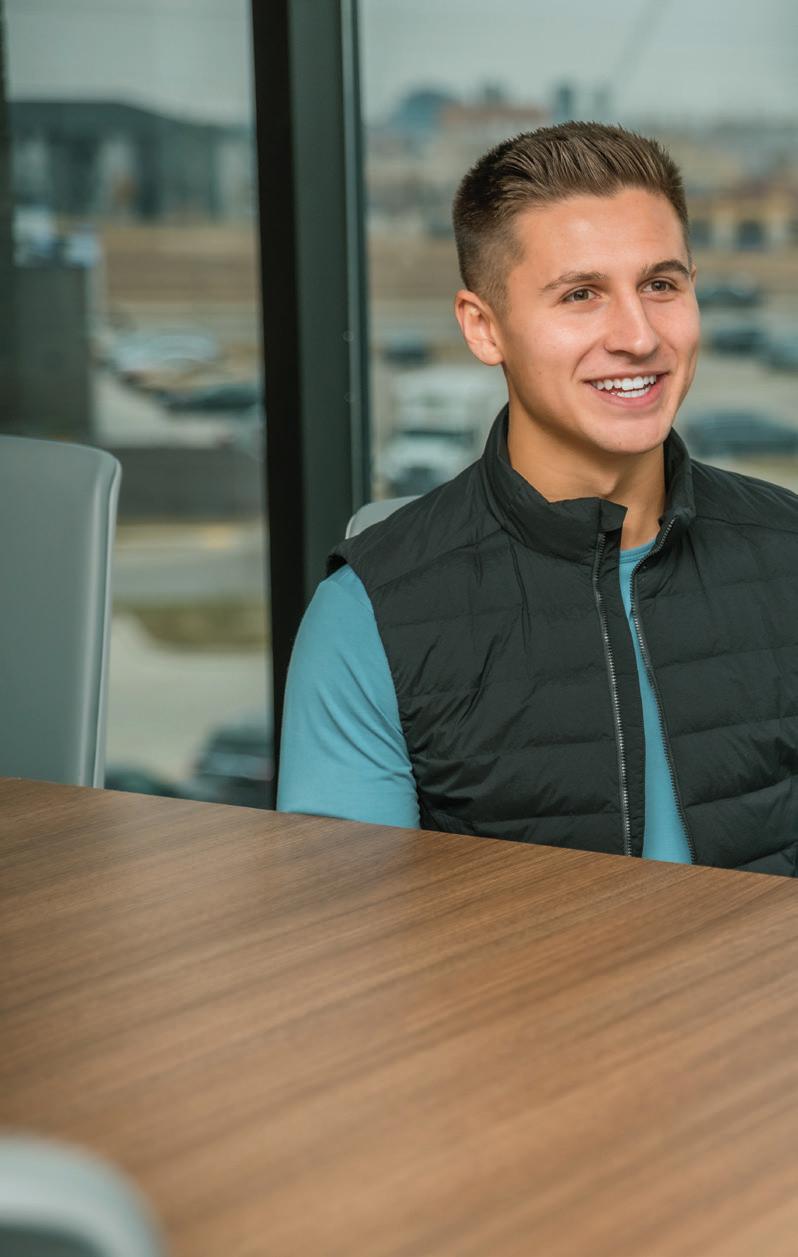 By John Machacek
Photo by Josiah Kopp
By John Machacek
Photo by Josiah Kopp
88 DECEMBER 2022

FARGOINC.COM 89
01
We are building a model that uses AI to generate realistic and effective video ad content.
02
Of course! I’ll keep it as simple as possible: you type in a description of your product or service and add the link to your website, and an original video would be generated in minutes. Let’s say you’re Dot’s Pretzels and you want a video ad for Facebook. You would come to our website, type in the description of the pretzels, link the website and you would have a video ad that looks so good you could not tell if it was created by humans or AI.
TikTok really changed the marketing landscape. UGC, aka user-generated content, such as TikTok-style videos, are so popular and brands need a lot of content. The average brand purchases or creates 750 UGC videos every year.
It’s really expensive to outsource that but it’s even harder to create it all inhouse. So, we created a tool that allows brands to never have to worry about managing influencers, shooting videos, editing, or any of that. It’s going to be revolutionary for startups and small businesses.
1. seo.ai - Nothing is more important for local businesses than SEO, but SEO is really expensive. This is a great tool for you to automate a lot of the work.
2. jasper.ai - If you ever experience writer’s block, whether it be on email, advertising headlines, website copy or anything else, jasper.ai is a great tool to use.
3. othersideai.com - This is more on the email or blog writing side of things, but this platform actually learns specifically how you write based on your emails and then auto-suggests what you should say next. This is a new level of hyper-personalization.
4. photoroom.com/backgrounds - If you have physical products, this allows you to generate professional product images instantly and edit what sort of background you want. This could save you thousands of dollars on photography.
5. durable.co/ai-website-builderThis tool allows you to build a website in 30 seconds. Is it great? No, but a lot of local companies just need some sort of website—and this is the fastest and cheapest way to do it.
6. beautiful.ai - If you ever need a presentation and don’t want to use a standard template from Google, let AI generate the presentation design for you!
Those are just some of my favoritesmany more cool ones to come.
This is something that really gets me excited. AI is not here to take away jobs.
It's here to make everyone’s job more efficient. If you’re a small business, these are some tools that you should definitely be aware of!
10
Questions
03
With that, what is the problem you are solving?
04
I have been hearing more about the anticipated growth of AI. What kind of ways or AI tools are relevant to a small business?
Will you please tell us your generAI elevator pitch?
Can you please walk me through how that actually works?
90 DECEMBER 2022
I started Advest Marketing when I was 19 years old with my best friend, and we learned so much from that opportunity. But where we really struggled is we didn’t clearly have a unique advantage—we were competing with large and established agencies, offering very similar services. It is just really hard to grow when you don’t stand out. In 2019, I got my hands on TikTok for the first time and knew this was going to be the next big social media platform.
Everything about it was incredibly addicting and entertaining. It unlocked a new level of viralness that brands would be interested in. At the time, TikTok was a “young person” platform, and so we knew that was going to be our unique advantage. We became a TikTok marketing agency and really started to grow and work with a lot of cool brands. But, we quickly realized our capacity was hitting its max. After a lot of brainstorming, we realized that our services could be even better if we just found creators to make this content for brands, instead of us trying
to. We raised a pre-seed round off that idea, and we hired a CTO who has a lot of experience with AI. He first showed us how powerful AI is becoming, and explained to us that soon, UGC content is going to be created using AI. No more shooting, editing, revisions and all that. My favorite thing about our journey is our mission has really stayed the same. We have always been obsessed with helping brands get really cool and effective video content. The means by which we create the content has been the only thing that has changed.
Looking back, the biggest thing I learned is that pivoting is entrepreneurship. You have to continue to iterate until you truly find something that works. Rarely is it your first, or even second, try.
nothing would change the bottom line. It would be a cool story to tell friends, but that’s it. Now, I think it’s more important than SEO.
40% of Gen Z prefers to use TikTok or Instagram as their search tool instead of Google. For example, people are now going to TikTok to search “Best restaurants in Fargo” or “Best chiropractors in Fargo”. That means if you want to be relevant over the next 3-5 years, focus your efforts on what I call your “TikTok SEO”. This is where TikTok will be so powerful for local businesses.
For the longest time, like until this summer, I strongly advocated that local brands should not use TikTok. I thought it was a waste of time because if they went viral, people from all over the world would watch their video but
A lot of my relative success has stemmed from LinkedIn. I owe that platform a lot. I would say 75% of our business comes from people on LinkedIn. I met two of our three investors because of LinkedIn and have formed many friendships, mentor relationships and connections that are impossible to find locally. I am a big Gary Vee fan, and my strategy to grow on those platforms really comes
06
With your marketing experience, especially in the world of TikTok, what are some misconceptions businesses may have about using this as a marketing tool?
07
In being connected with you, I can see that with your own personal marketing and relationship building, you’ve been very active on LinkedIn. What’s your strategy or process when using platforms like this?
05
You started your first business in college and then you’ve had some pivots and rebrands to where you are now. How did you get from there to here, and what have you learned?
FARGOINC.COM 91
down to this: give away all your secrets with no expectation of anything in return. Just look to help people. The more you help people, the more they will start to trust you and want to use your services. And, of course, you have to show up daily. I post almost daily on LinkedIn and have for about two years. Even if you don’t see results right away, there are a lot of followers that linger in the background. Then, out of the blue, they will reach out to you and want to buy or help you in some way. The other thing to note—you have to be smart about where your audience is. For example, since we pivoted to focus more on AI, I have pivoted to focus more on Twitter where a lot of tech conversations happen. Make sure you are on the platform where your target audience is.
I would say stop following the path that everyone else is doing. It’s crazy how many of our decisions are dictated by the fear of judgment from others. To be an entrepreneur, you have to embrace being different. Being different should be your unique advantage! Staying true to yourself is when you really start to find success. Plus, your startup or business just becomes a lot more enjoyable.
About John
I cannot express this enough, but you need a network of champions to raise money. Who you know is the most important thing that we have learned. Warm intros to investors make the process go 10x easier and faster. There is a saying, “it’s not what you know, but it’s who you know.” I would disagree. You need to be an expert in your space AND you need to have an amazing network of friends.
Also—read the books “Venture Deals” by Brad Feld and Jason Mendelson and “Fundraising” by Ryan Breslow. I wish I would have read these much sooner.
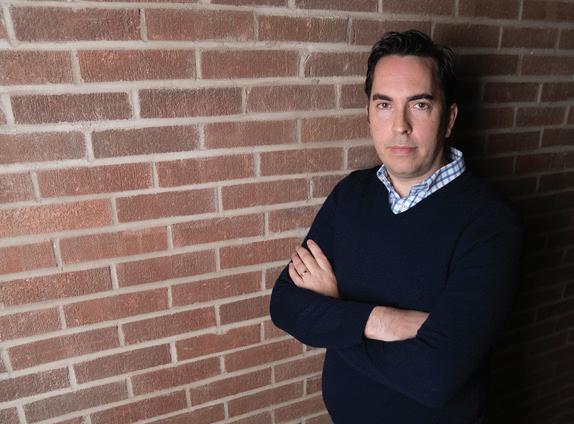
We are currently raising our seed round, so if there’s anyone you know in the investing space, we would love to get connected! We are also always looking for talented software developers. Hiring tech talent locally is really difficult. It takes a community to find the best talent available. So please, let them know about us and have them reach out to me personally!
generai.io
08
As a startup relatively new to raising funds, what has the process of fundraising taught you, and is likely still teaching you?
09
If you could go back in time to Jimmy from several years ago, what hindsight advice would you give yourself?
10
What can we do as a community to help generAI succeed?
92 DECEMBER 2022

hat does marketing and sales alignment really mean for you and your organization? Achieving alignment means that both teams are working together towards the same goal and that they are using the same strategy and tactics. This can be difficult to achieve because the two teams often have different goals and objectives.
The goal of the sales team is to close deals and earn revenue for the company. The marketing team’s goal is to generate leads and create awareness for the company’s products or services. These two goals are not always aligned because the sales team may be more focused on short-term results, while the marketing team is more focused on long-term brand building. The sales process can be compartmentalized into different
stages, from prospecting to closing. Meanwhile, marketing has its own distinct strategies for creating awareness, generating leads and nurturing relationships. If these two departments are not in sync, it can lead to confusion and inefficiency. For example, if marketing is generating a lot of high-quality leads but sales isn’t following up, those leads will eventually go cold. Similarly, if sales is closing deals but marketing isn’t generating enough new leads, the pipeline will eventually run dry.
To achieve alignment, the two teams need to come together and agree on a common goal. Once they have done that, they can develop a joint plan of action that will help them achieve that goal.
It is easier to achieve alignment between the sales and marketing teams when they are using the same tools and systems. This
includes everything from customer relationship management (CRM) software to marketing automation platforms. If both teams are using the same tools, they will be able to work more efficiently and effectively towards their shared goal. Additionally, it will be easier for them to track their progress and measure their success.
Alignment between the sales and marketing teams requires open communication. This means that both teams should meet regularly to discuss their progress, share ideas and give feedback. Additionally, it’s important to have a clear line of communication between the two teams so that any issues can be quickly resolved. By communicating openly and frequently, the sales and marketing teams can work together more effectively toward their shared goal. When sales and marketing are working together harmoniously,
94 DECEMBER 2022
Shawn Peterson is the CEO of Quantum Business Solutions. He comes with a decade of experience in the technology services industry as an executive. Shawn is a visionary focused on high growth and performance through sales, marketing and client experience.
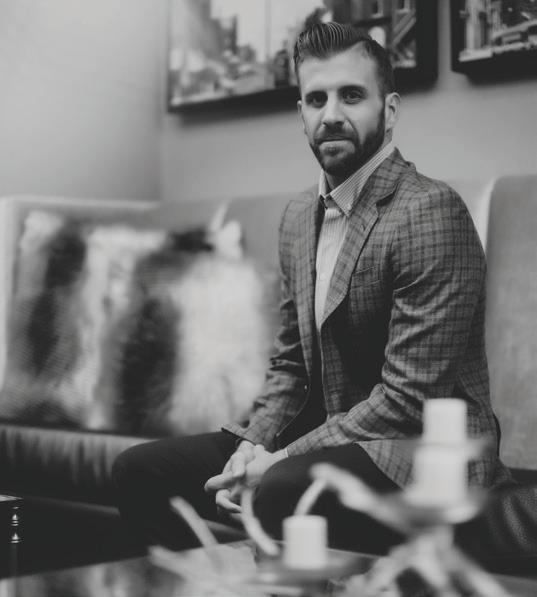
it's a thing of beauty. Each team understands the other's goals and works cohesively to improve results. No longer is there the finger-pointing and blame game when things go wrong. Instead, each team supports the other to find the best solution possible.
Here are five ways that aligning your sales and marketing efforts can solve problems and improve your business.
Problem: Your sales team lacks direction on whom to target and when.
Solved: Working together, sales and marketing can develop pipeline metrics that provide insights into
when prospects are engaging with your content, social media and website. This generates a list of warm leads for your sales team, saving time and effort. By understanding when prospects are most active, you can tailor your content and messages to better engage them at key points in their buyer's journey. Additionally, you can use this data to score leads and prioritize follow-up by your sales team. By aligning sales and marketing efforts around pipeline metrics, you can create a more efficient process for generating and converting leads into customers.
leading to confusion and leaving a poor first impression of your brand.
Problem: Your sales and marketing teams send mixed messaging to your prospects and customers
Solved: By working together on a regular basis, sales and marketing can make sure that the same message is being communicated across channels to prospects and customers. When both teams understand the customer's needs, they can work together to provide a better overall experience. There is no longer the risk of one team dropping the ball and leaving the customer frustrated. Instead, both teams are focused on meeting the customer's needs and exceeding their expectations. This alignment will lead to a more cohesive customer journey and ultimately result in more conversions.
FARGOINC.COM 95
96 DECEMBER 2022







THETAVERNGRILL.COM The Tavern Gri Restaurant+bar GIVE THE GIFT OF TAVERN *Promotional gift card value valid December 26th, 2022 through March 15th, 2023. IN-STORE OR ONLINE NOW THROUGH DECEMBER 24TH Available PURCHASE A $25 GIFT CARD RECEIVE A $5 GIFT CARD* PURCHASE A $50 GIFT CARD RECEIVE A $10 GIFT CARD* PURCHASE A $100 GIFT CARD RECEIVE A $25 GIFT CARD* The Tavern Gri Restaurant+bar ARDEN HILLS, MN | APPLE VALLEY, MN | BLAINE, MN EDINA, MN | FARGO, ND | MINNETONKA, MN | WOODBURY, MN OPENING DECEMBER 6, 2022 IN BISMARCK, ND! HOME OF THE BUILD-YOUR-OWN Burgers, PIZZAS, & SALADS
By Ladyboss Lifestyle

FOUNDER, BETH'S PLACE RECOVERY Cassie Kasowski WOMEN YOU SHOULD KNOW:
98 DECEMBER 2022
Q. What made you determine you were going to found Beth’s Place in the Fargo-Moorhead community?
A. There were an array of different reasons I wanted to open, but the primary reason was my mother. My mother lost her life to alcoholism in 2017. I spent extensive time in and out of treatment facilities and was impressed by the teamwork and environment of healing specifically at the Hazelden addiction treatment center. I wanted to recreate an environment of healing that I felt was missing from the FM community. The second you enter Beth’s Place, you’re hit with the aroma of a candle we have chosen for the season, followed by a smiling face assisting you right away. The décor is calming and inviting and filled with Kate Baldock’s art. This was strategic. Mental health is scary. So incredibly scary. I knew if we could create an environment of healing, we would thrive.
Q. There’s often shame around substance abuse among women. What do you think we can do as a community to support women with this issue?
A. As we know, Fargo is one of the biggest binge drinking cities in the United States. Mommy happy hours are now the normal. I always try and normalize not drinking. I love an array of non-alcoholic drinks and keep them stalked in my home. My favorite is De Soi. I’m also very strategic when hosting to change the language around drinking. Instead of saying can I get you a drink, I ask, how can I make you comfortable?' and I start with carbonated beverages first before I offer alcohol. It is
imperative to the health of our community to normalize sobriety. We’re now seeing a lot of pop ups for “mocktail” hours, this is amazing! Women and, quite honestly, the human form, desire connection, and we don’t need alcohol to achieve that connection.
Q. You have substantially grown your business since you were founded. How have you strategized to create the team you have today?
A. I have done a LOT wrong. A LOT. By this I don’t mean wrong team members. Those that have come and gone were a strategic part to our growth both personally and professionally. I had to come to terms with control and what growing a team healthily looked like. I had to adjust my “right way” and listen to what the team was saying. When you build anything from the ground up, it’s deeply personal and the connection to my business is family. So, I built originally on fear: fear of losing it, fear of perception, fear of not being enough. I have dug into that in the past two years and now treat it as the business that it is. I have created a team of leaders. Those leaders have strategically grown and carried and built Beth’s Place to what it is today.
Q. Women historically have left the workforce in droves since the pandemic and most of your therapists are women. What have you done to invest in your team to help alleviate this mass exodus from your industry?
A. My entire team is female, half of who are mothers or are currently expecting their first born. Flexibility with clear cut
boundaries and expectations is the way that we have built. We're closed Fridays which allows my team to have a nonpatient day and reset. They are set up to either be in-person therapists or online or a hybrid model. I have found that seasons of life and open communication is key. Some of my older therapists want to be in person and enjoy leaving the house. The newly graduated counselors are comfortable with online therapy and only want that option. Communication is key to ensure that the counselors know they can come to me and communicate the needs of their family at this time. I have learned this is ever changing and a core value of mine is, and will remain, family. So, if we have to switch the platform for the clinician, we switch the platform with clear and open communication.
Q. How do you set boundaries for yourself and your family as a business owner?
A. I have had a lifetime of hurt. So many of us have. I’ve also had a lifetime of beautiful moments. I have and will continue to sit in the hurt moments and learn and grow from them. I’m big on self-awareness and moving your feet. For example, my response to everything is to work harder. If I stay longer, if I buy something for them, if I show up, if I show them it can be done, they will do the right thing. This led to a lot of burn out, resentment and my own mental health suffering. I now have clear cut boundaries and expectations within my home and my business. In my opinion, I don’t care who you are within my life, my boundaries look the same for all people including the expectations I have for myself.
Ladyboss Lifestyle FARGOINC.COM 99
Photo
provided by
Cassie Kasowski
Q. According to multiple sources (Huff Post, The Guardian, Forbes) nearly 45% of women with children spend more than five hours each week supervising or caring for their kiddos—more than a third spending over 20 hours a week of unpaid work on the household. As a mother of three and wife, how do you navigate those types of challenges as opportunities to tend to your family, while scaling and expanding at the rate you have?
A. My mother told me when I became a mom to take my children every place I went. So, I have. At the time of building Beth’s place, I invested my entire life savings because I couldn’t get a bank loan. We couldn’t afford daycare or a nanny, so they came with me wherever I went. My children have been in bank meetings, building inspections and have slept on the floor of the clinic–many times. My daughter began running payroll at the age of ten, she knows about profit and loss, employee taxes and the cost and time sacrifice it takes to run a business. I don’t believe in balance. I believe in finding your middle. Some weeks, I rock as a boss, but feel like I’m failing as a mom and vice versa. I’ve found that laundry can wait and supper might be pizza again, but if I have face to face contact with the most important people in my life, nothing else matters. I’ve also backed out of a lot of deals and opportunities. This took me a long time to learn as well. What will people say? I could make more money if I did this or that. But I always ask myself, 'to what end?' I cannot and will not look at my three children and say that I was off saving the world and they came last. My non-negotiables are
to have only one night away from them every six months, and to be home by supper if not after school. Every woman cannot and is not granted this fortitude, but I also believe we commit to nothing, and have grown comfortable breaking promises to ourselves. I’m committed to Beth’s Place, but my ultimate commitment is my children.
Q. You’ve spoken publicly about patient-centered care that focuses on offering dignity to your patients. How can a lay person do this in their work and personal life?
A. How many times have we gotten off the phone only to call another friend and share the mess that is the other person’s life. We spend so much time having opinions about others’ lives and take no time to better our own life. But the issue is, we believe that we do. So, we do more and more and find ourselves out of alignment, and we are hardwired to feel. If our feelings become too much, it seems great to sit in someone else’s mess—then, look inward. Life is hard. It’s hard for everyone and harder for some. The people that I’m attracted to at this stage of my life don’t speak ill of others. They’re focused on their own personal and professional growth. They place their family and health first and you almost feel invited to be part of their life.
Q. What do you do to create a vision for your future professionally without abandoning your personal duties in life?
A. You will abandon your personal duties at times. Don’t get stuck there. Pick
up, re-route and try again. Our biggest competition is ourselves, nobody else. I’m the idea person. I have 77 projects going at one time and will probably announce 80 and complete 1.5. I’m an enthusiastic sharer who loves the Beth’s Place community and always wants to share what we’re working on. I had to be ok with random hateful messages, side talk and failure. I’m proud of what we’ve done in our community. I’m even prouder that I went to war with myself to become a better human.
bethsplacerecovery.com Facebook: @bethsplacerecovery Instagram: @bethsplacerecovery
WOMEN YOU SHOULD KNOW: 100 DECEMBER 2022


Academic Insight
The Best of Academic Insight
In December 2019, the first article in my Academic Insight column was published in Fargo, INC!. My dream and mission of bridging the gap between academia and business practitioners had begun. And, over these last three years, my goal has been to provide readers with quality content and perspectives that would help them improve the quality of their work and personal lives. But, as I write this article, I’m reminded of the words proclaimed by The Oracle in the movie The Matrix Revolutions: “Everything that has a beginning has an end.”
So, for my final Academic Insight article in Fargo, INC!, I wanted to do something special. I went back and reread all of the articles I wrote to identify what I would consider to be the best and most informative articles over the past three years. For each highlighted article, I have provided the title, the month in which the article appeared and a brief summary of the article’s key points and takeaways. In the spirit of The Late Show with David Letterman, I will present my Top 10 article list in reverse numerical order.
By Shontarius D. Aikens, Ph.D., Associate Professor of Management at Offutt School of Business at Concordia College
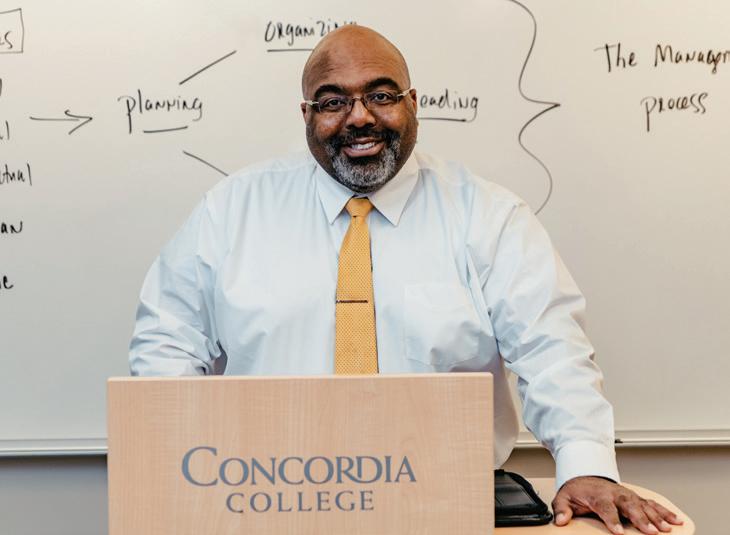
Every organization has different types of resources (physical, financial, human, intellectual) under their control that can be used to help them achieve organizational goals. In a lot of cases, these resources go unnoticed or are completely overlooked. This article provided steps an organization could take to conduct an inventory of their key resources to determine if any resources are being underutilized, and to determine if the organization’s resources or capabilities could lead to a sustainable competitive advantage.
#9: “Power and Influence: Guidelines
for New
Managerial Leaders” (May 2022)
New managers in organizations may or may not be aware of the types of power and the amount of influence they have within their organization. The purpose of this article was to provide an overview of the different types of power that exist in organizations. In addition, this article went further in helping managerial leaders (specifically new managerial leaders) to understand the types of power they have and to reflect on how those types of power have been and/or should be used.
#10: “Do you really know what you have? Revisiting your key resources” (August 2020)
GARY USSERY
102 DECEMBER 2022
#8:
“Understanding the Value of Failure: Two Key Tools”
(September 2020)
Every individual (and organization) has failed at something. However, the question is this: Has the individual (and organization) learned from that failure? Lessons learned from previous failure experiences can set the stage for future success. In this article, I shared two tools that can be used by individuals (or organizations) to maximize the learning that comes as a result of failure: The Failure Resume (developed by Tina Seelig) and The Failure Spectrum (developed by Amy C. Edmondson). Utilizing both tools can help to cultivate a culture of learning and development.
that resulted in a more thorough performance review of employees, reduced the chances of employees receiving unexpected negative feedback, or “surprises,” and encouraged the supervisee to take more initiative in the performance evaluation process.
#6: “6 Questions Guiding the Basics of Organizational
Structure” (November 2021)
#7:
“A Collaborative Approach for Conducting Performance Evaluations”
(July 2021)
Performance evaluations are essential in providing important feedback to employees. However, the process can be more rewarding and beneficial and less mundane. If you are looking for a better way to administer performance evaluations, this is the article for you. In this article, I shared a step-by-step performance evaluation process
The structure of an organization should be designed to help the organization achieve its goals. In this article, I provided managers with a basic framework to understand the essential concepts of organizational structure. The framework is in the form of six questions to help managers assess their organization’s structure to determine if any changes need to be made.
#5: “Hidden Gems in the Organization” (March 2021)
Too often, organizations have employees in their organization who are unrecognized, underutilized and unappreciated. In fact, companies don’t recognize these people as industry superstars until after they have left their company to work for a competitor. These types of employees are referred to as "Hidden Gems," and in this article, I laid out some guidelines on how to identify them within your organization.

Dr. Aikens can be reached at: saikens@cord.edu
#4: “Four reasons why you should focus on followership”
(November 2020)
The process of leadership requires two types of individuals: leaders (those who are willing to lead) and followers (those who are willing to follow and to accept the influence of the leader). Traditionally, there has been so much talk about the importance of being a leader that there was less emphasis on teaching people how to be good followers. In this article, I presented four reasons why managers and organizations should emphasize the development of follower-ship skills in addition to leadership skills.
Framework:
In this article, I presented an overview of the Six Sentence Argument (6SA) framework created by Julian Kolbel and Erik Jentges. By using this tool, a manager can learn to argue and defend their position logically in a succinct manner of 120 words or less. The article provided an example of a completed 6SA along with insights on how managers could adapt or modify the framework for different purposes.
#1: “The Importance of Empathy and Grace in the Workplace”
(April 2021)
(April 2020)
Recruiting talented employees is one thing; retaining them is another. The ability to develop high-quality relationships enables a manager to do both well. In this article, I provided an overview of the Leader-Member Exchange Theory (LMX) which examines the quality of the relationship between the leader and the follower. In addition, I also provided the four dimensions of relationship quality along with a simple step-by-step process that managers can use to examine the quality of supervisee relationships in their organization.
In this article, I shared some very personal experiences and reasons why it is important to extend empathy and grace to individuals in today’s world. I have received more inquiries and positive feedback from this article than any of the other articles I have written over the past three years. Since there is so much to be said about this topic, instead of providing a short summary, I would simply encourage each person to read this article in its entirety.
Final Thoughts
In closing, I want to say that I have thoroughly enjoyed writing articles for Fargo, INC!, and I hope that each reader has found something useful (e.g., a new tool, perspective, etc.) that has helped them in their line of work and perhaps in their personal life. A special thank you to Andrew Jason and Brady Drake for giving me the opportunity to contribute to this wonderful magazine.
All of these articles can be found online at fargoinc.com
#3: “The 6SA
Crafting an Argument in 120 words or less.” (March 2022)
#2: “How LMX can help businesses recruit and retain employees”
104 DECEMBER 2022

Without a Blemish
kitchen hand-mixer isn’t usually associated with quality skin care, yet Amna Millewa’s home experiments have led to the November launch of her new business, Without a Blemish.
“Shea butter is solid. It’s like butter, but harder. Imagine trying to make eight, eight-ounce bottles of whipped shea butter using a cake mixer with only one beater!” Amna said.
Frustrated when the skin care products for acne, dark spots and dry skin available in local stores either bleached or dried out her skin, Amna started looking for alternatives. When she failed to find anything that worked for her, she started to create her own.
“I was constantly on the lookout to find ways to take care of my skin. It’s taken me a long time because I am not a scientist. I didn’t know about the different chemicals, butters, and oils. So, I had to do a lot of research and there was a lot of trial and error, but I really loved it,” Amna said. “I loved the whole process of product making and then seeing
the results. Using oils and butters with vitamins that help fight inflammation and renew my skin without bleaching it like the products I buy from the market do. I’ve been on a mission ever since.”
As Amna experimented and posted photos to Snapchat, people noticed the positive difference in her dark spots, dry skin and acne. After sharing her creations with family and close friends, she began to sell her products to a slowly growing community of loyal clients—trying to make products for herself had turned into a small business.
“I have a Bachelor of Science in psychology, but that didn’t give me any business knowledge. So, I contacted the North Dakota Women's Business Center to help me with the whole business process. I wanted to do things the right way. They really opened my eyes as to what’s involved. There were so many things I needed to figure out—finances, pricing and shipping. They’ve been so supportive, and I just love to learn, so much that I am changing my major to business,” Amna, who is in the process of applying for spring semester at Minnesota State University of Moorhead, said.
Armed with a plan to scale up the production of her skin care products Amna next needed a business name and startup funds.
“I really struggled to find a good name for my business. None of the names I wanted were available. I even Googled my own name and there was a company with it already. Even my last name is a county in Australia!” Amna said. “Then, one day when I was reading the Bible, I came across the verse, ‘You are altogether beautiful, my darling, and there is no blemish on you.’ I just fell in love with that verse. It was perfect.”
Things continued to fall into place when she was subsequently notified by the Cass Clay chapter of the Awesome Foundation that Amna was declared the September 2022 grantee. The gift provided by the group helped her with initial business costs, like purchasing equipment for batch production. After years of experimentation, she was ready to take her small business to the next level.
November’s launch of Without a Blemish organic and natural skin care will release
BY Brandi Malarkey
AWESOME FOUNDATION GRANT AWARD WINNER
108 DECEMBER 2022
Amna’s whipped shea butter, which she claims helps moisturize the skin, fade dark spots and improve acne on both face and body. While Amna has plans for selling other products she has been working with, she wants to start simple.
“I am so excited. I want to really do this and go bigger if I can—get a location and hire people. But I want to do it right and go slow. One person can have a plan, and then the future comes and shows you even better plans, so I definitely want to be open to that. I’m still learning.”
The Cass Clay chapter of the Awesome Foundation awards a $1,000 gift each month for awesome ideas of all sorts. Grant recipients do not need to be associated with a non-profit. Applications can be made at awesomefoundation.org/en/chapters/ cassclay.

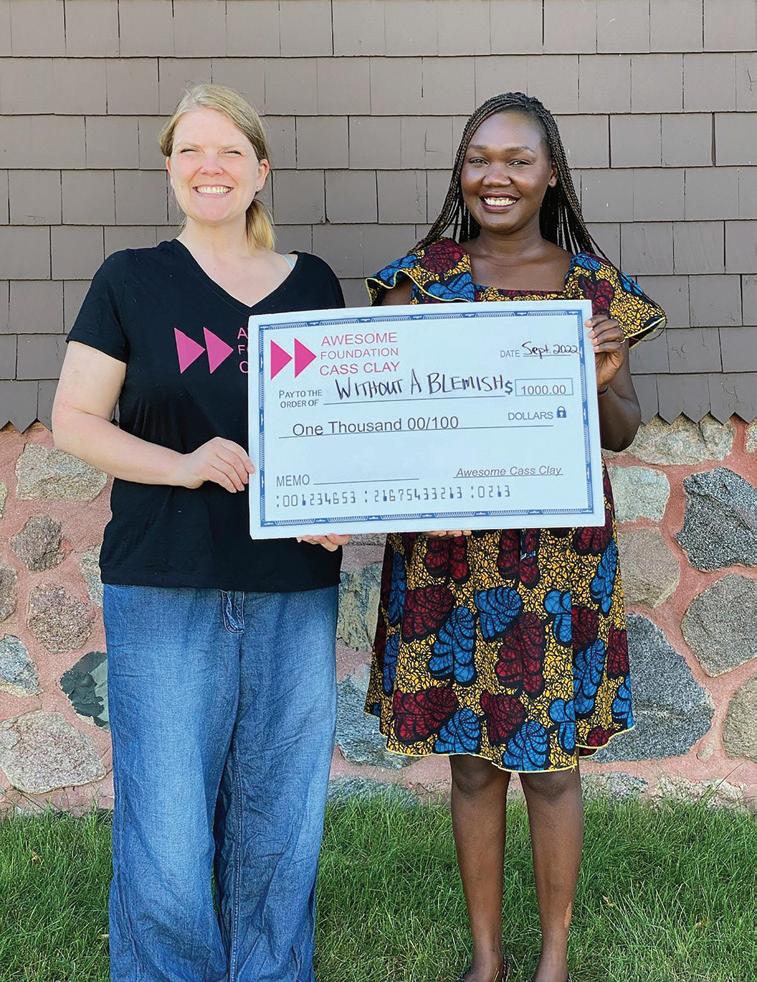 Photo provided by Awesome Foundation Cass Clay
Mental Health First Aid
oes it hurt? Are you okay?
Should we get you to a doctor?
These phrases are almost automatic when someone stumbles, falls or otherwise suffers a physical injury. Most people don’t hesitate to reach out, offer assistance or ask how you are doing. Yet when someone is struggling mentally or emotionally, a majority of Americans pause—it feels uncomfortable to inquire or offer support. Brenda Koneczny, licensed professional counselor, assistant professor of psychology at MSUM and Nationally Certified Mental Health First Aid trainer, is one of many who are working to change that.
“Most people don’t have problems talking about medical issues. We ask about people’s broken arms or legs, cold and flu symptoms or eye infections. People share what is happening and what they are doing to treat it. For the most part, people are comfortable having those conversations,” Brenda said. “However, if someone seems sad more often than usual, withdrawn, experienced a loss or negative life event such as job loss, they may experience feelings of worthlessness, lack of motivation or lack of concentration. They may have a change in appearance and affect, or maybe have had thoughts about suicide.
A lot of people don’t know what to say. When one in five adults in the United States is likely to experience a mental, emotional or behavioral disruption in their lives it means these things are normal and common. We should be talking about this, too. A lot of people want to be helpful, but just don’t feel equipped. The goal is to help provide tools to the everyday person to help start conversations through Mental First Aid training.”
Though Brenda is a professional counselor herself, she says the goal of the evidence-based training isn’t to help anyone become a counselor or provide treatment, but rather provide individuals with the ability to start conversations with the people in their lives.
“Understanding some common signs of mental, emotional or behavioral distress is a place to start. If you notice someone not keeping up their hygiene as well as they typically do, or not being as social or acting more quiet than is usual, being able to ask what you can do for them, being able to understand what resources are available in your community and being able to share those resources with that person is huge,” Brenda said. “I think it's quite common for people to say, ‘Things happen for a reason. It’s not worth worrying about. You’ll get through this.’ Those statements help us feel optimistic and maybe even lighten
the mood, but don’t benefit the person feeling down, anxious or overwhelmed who may not be sure they will get through it or even believe that support is there.”
“Really trying to acknowledge the signs and the symptoms, validating how a person is feeling is key. It’s offering validation that it's OK to be feeling how you are, but that it's also OK to get support from friends, family, community members, tribal leaders and whoever is important within your personal life and communities,” Brenda said. “But then it’s also OK to seek professional care as well. The goal is to provide hope with factual information, resources or ideas for resources, and normalize these conversations so that people feel comfortable helping a loved one, an acquaintance or a coworker.”
Last year, the MSUM Psychology Club and Psi Chi organization coordinated a free Mental Health First Aid Certification Training for up to 25 members with a trainer who was willing to offset the fees. Over 34 students signed up to become certified with more asking to be notified of future opportunities. Over the summer, Brenda and others on campus were given an opportunity to become Mental Health First Aid Trainers. With her co-trainers, Brenda will be able to help provide free MHFA training to MSUM students through 2023 through a grant
AWESOME FOUNDATION GRANT AWARD WINNER
110 DECEMBER 2022
BY Brandi Malarkey
provided from the MinnState system as well as a grant from Psi Chi, the International Honor Society in Psychology.
With the success of the trainings on campus, Brenda was inspired to take the trainings out into the community. With the aid of a grant from the Cass Clay chapter of the Awesome Foundation, who named her their October 2022 grantee, she will soon be offering free trainings to community volunteers.
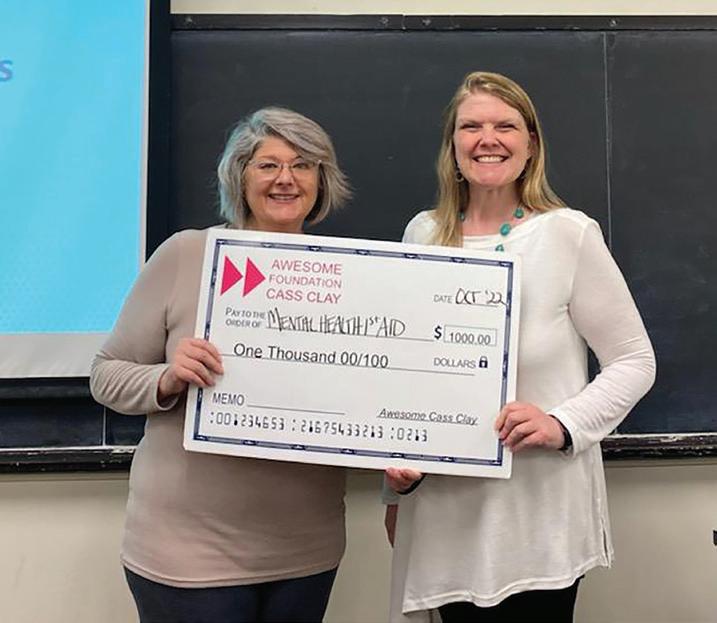
“Before the pandemic, I volunteered with the Heart-n-Soul Community Café (the September 2016 Awesome Foundation grantee),” Brenda said. “I admire their work, and that of organizations like the Community Culinary Corps Project. They are providing an essential service—food with dignity, no strings attached. When I volunteered, I noticed a pattern of regular participants that would
look forward to the cafe being open because it might be that one time where they get to socialize. The volunteers start to recognize their regulars and developing different types of relationships with them. I started thinking this is a great opportunity to notice if someone seems to be having an emotional or a mental disturbance, or if something’s changed in their behavior. It’s another opportunity to say, ‘I notice this is happening, is there anything I can do to help you?’”
The cost of MHFA training is typically valued at around $170 per person. With mental health issues on the rise, Brenda is thankful that she has been able to play a part in creating lower cost opportunities for the people in the metro area.
“It’s really working out well. I'm really happy that a lot of different organizations are backing the
Brenda Koneczny (right) is a licensed professional counselor, assistant professor of psychology at MSUM and a Nationally Certified Mental Health First Aid trainer.
idea that Mental Health First Aid is important,” Brenda said. “The goal is to make this training just as common as getting CPR and First Aid training.”
Learn more about the Mental Health First Aid training at mentalhealthfirstaid.org
The Cass Clay chapter of the Awesome Foundation awards a $1,000 gift each month for awesome ideas of all sorts. Grant recipients do not need to be associated with a non-profit. Applications can be made at awesomefoundation.org/en/ chapters/cassclay.
Photo provided by Brandi Malarkey
FARGOINC.COM 111

There’s no one-sizefits-all solution here.
Small and local. Big and global. No matter the size and scope of your business, Midco® provides the quality services and personalized support to keep you connected and in control.
Internet. Phone. TV. Advertising.
Midco.com/Business
