








Meet The AcceleratorTechnologyCanadian InterestedCohort in ND Agtech Agriculture! International



CONTENTS COVER STORY FEATURING EMERGING PRAIRIE LIKE OUR CONTENT? Check out our website at futurefarmermag.com 10 69 22 FUELING THE FUTURE OF FARMING, GLOBALLY AND MORE... GRAND FARM BREAKS GROUND ON FUTURE AGRICULTURE TECHNOLOGY INNOVATION FACILITY IN NORTH DAKOTA 66 72 THREAD TO RECEIVE MORE THAN $15 MILLION IN SERIES A FUNDING 78 CLEAN INGREDIENTS WITHOUT COMPROMISING 69 BOSON MOTORS NORTH DAKOTA LAUNCH SPONSORED CONTENT: BRINGIN' THE THUNDER WITH INDUSTRY LEADING TECHNOLOGY 10 16 SPONSORED CONTENT: PUTTING THE AG IN YAGGIE 46 FACES OF FARMING 2022 4 NOV/DEC 2022

Future Farmer is published 6 times a year and is direct mailed to farmers throughout North Dakota and Minnesota. Find us online at Futurefarmermag.com. Future Farmer is published by Spotlight LLC, Copyright 2022 Future Farmer. All rights reserved. No parts of this magazine may be reproduced or distributed without written permission of Future Farmer, and Spotlight LLC, is not responsible for, and expressly disclaims all liability for, damages of any kind arising out of use, reference to or reliance on such information. Spotlight LLC, accepts no liability for the accuracy of statements made by the advertisers. November/December 2022 Volume 3 Issue 6 Spotlight LLC 4609 33rd Ave S Suite #304 Fargo, ND 58104 Info@SpotlightMediaFargo.com ADVERTISING: 701-478-SPOT (7768) Publisher EDITORIAL Editorial Team Lead Editors Art Director Editorial Graphic Designers Creative Strategist Contributors INTERACTIVE Business Development Manager Business Development Associate Videographers Director of Digital Advertising Results Graphic Designer Web Designer ADVERTISING VP of Business Development Sales Representatives Sales & Marketing Advisor Marketing Associate Client Relations Client Relations Manager Marketing Coordinator ADMINISTRATION Operations Assistant DISTRIBUTION Delivery Mike Dragosavich Brady Drake FargoInc@SpotlightMediaFargo.com Geneva Nodland, Grant Ayers Kim Cowles Levi Dinh, Ty Betts Josiah Kopp Emerging Prairie Nick Schommer Kellen Feeney Tommy Uhlir Jonathan Chicka Ben Buchanan Kellan Benson Paul Hoefer Paul@SpotlightMediaFargo.com Al Anderson Al@SpotlightMediaFargo.com Devan Maki Devan@SpotlightMediaFargo.com Tori Helland Tori@SpotlightMediaFargo.com Kacey Mongeon Kacey@SpotlightMediaFargo.com Hailey Bebler Hailey@SpotlightMediaFargo.com ClientRelations@SpotlightMediaFargo.com Jenny Johnson Jessica Mullen Miranda Knudson John Stuber Future Farmer
















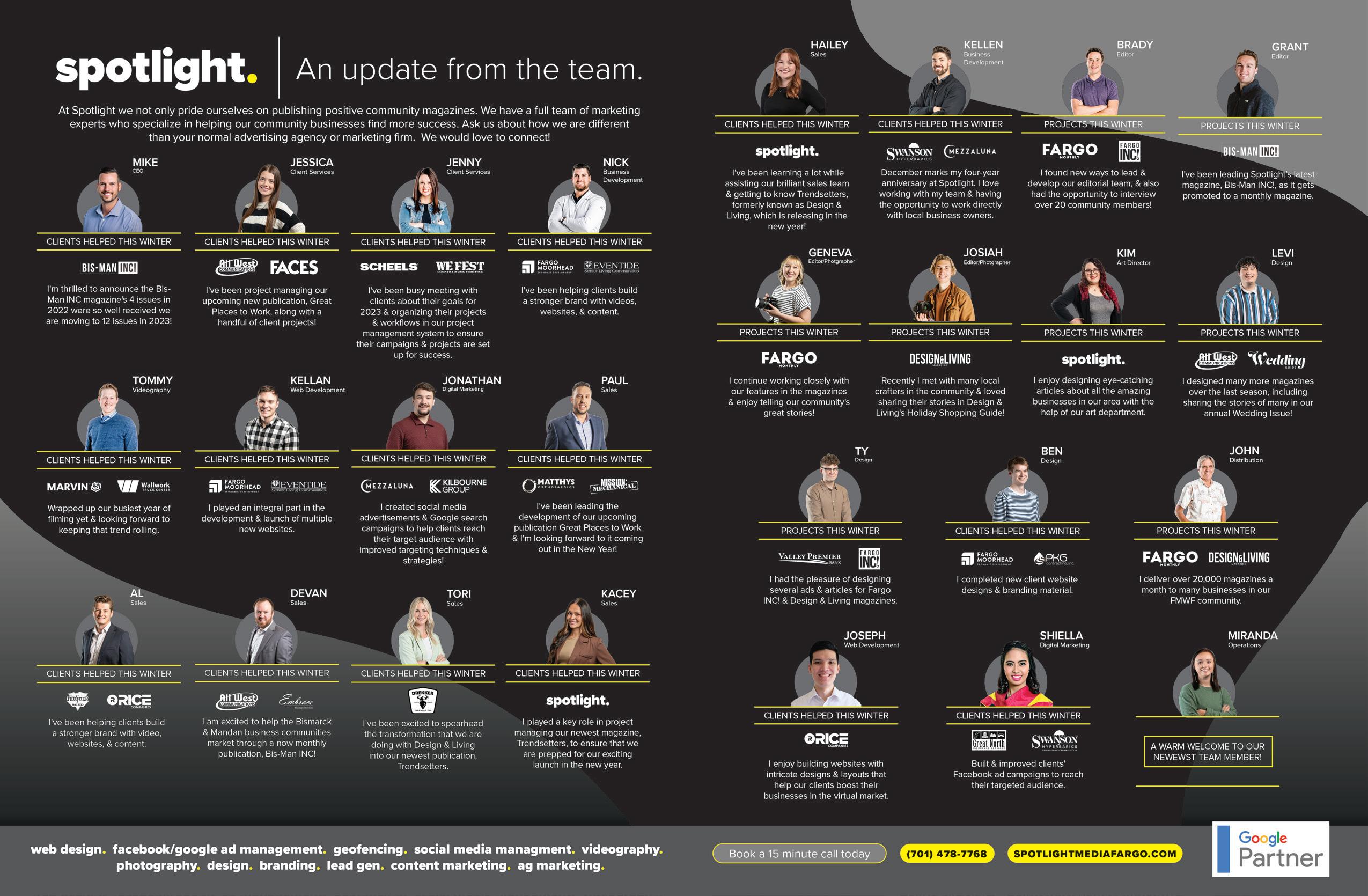
 MIKE
BRADY
KIM
LEVI
TY
GENEVA
GRANT
BEN JOSIAH
JENNY NICK DEVAN TORI
KACEY
HAILEY
JESSICA
MIRANDA
TOMMY KELLEN
MIKE
BRADY
KIM
LEVI
TY
GENEVA
GRANT
BEN JOSIAH
JENNY NICK DEVAN TORI
KACEY
HAILEY
JESSICA
MIRANDA
TOMMY KELLEN
Learn more about us at spotlightmediafargo.com
The
8 NOV/DEC 2022
KELLAN JONATHAN JOHN
Meet
Team

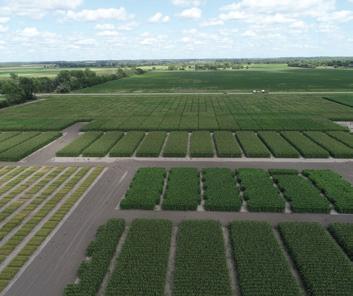
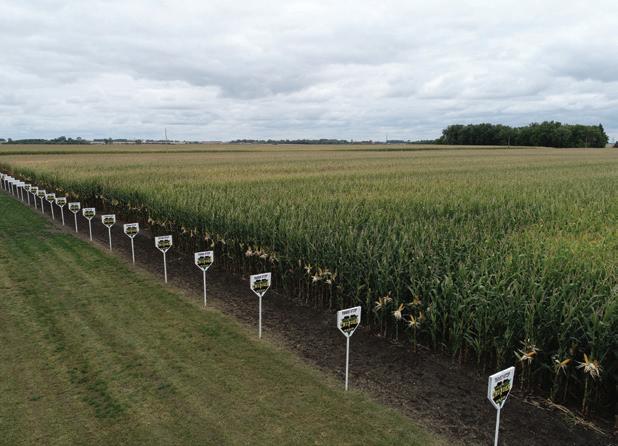
Mike in a breeder research plot evaluating potentially new corn hybrids for Thunder Seed. This particular plot in the photo was a hybrid that he selected for Thunder Seed's lineup.
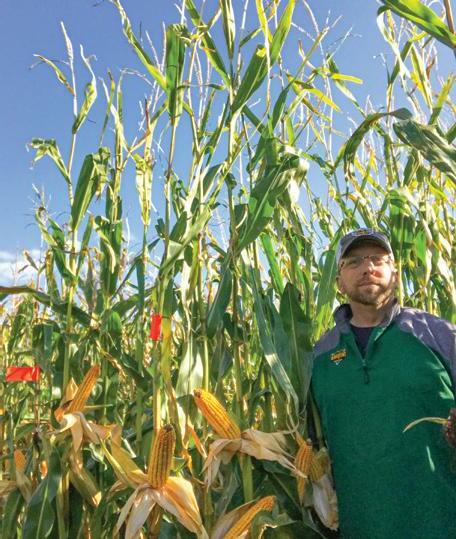
When it comes to giving insight into industryleading research and development on seed and

seed breeding, there is no one more qualified than Mike Dietrich of Thunder Seed. Dietrich has been in agriculture for as long as he can remember, starting with growing up on a family farm in Pembina County, ND. He continued his love for agriculture at NDSU with a B.S. degree in Ag Economics and M.S. degree in Plant Sciences.
Dietrich's professional career now spans over 25 years, having lived in Iowa, North Dakota and Minnesota while traveling across the Corn Belt, Midwest and western Canada. Many of those years were spent working with corn and soybean breeders evaluating genetics, testing variety performance and assessing variety responses to environmental pressures.
GET AN INSIDE-LOOK WITH AT HOW THUNDER SEED IS LEADING THE WAY IN RESEARCH & DEVELOPMENT
10 NOV/DEC 2022
This experience led to Dietrich working with one of the leading seed and biotechnology companies in the world, which filled his arsenal with unmatched experience and insight. It also provided him the opportunity to see the extent of genetic diversity that’s available to farmers today.

This also gave Dietrich an understanding of the biotechnology methods used to transfer beneficial genes to a plant, which in turn allows new opportunities for improving crops with greater efficiency. This process is called genetic modification and the result is a genetically modified seed (GM seed). Thunder Seed offers farmers many different corn and soybean varieties today that have added beneficial traits from this process such as herbicide tolerance, insect resistance and drought tolerance, just to name a few.
FUTUREFARMERMAG.COM 11
Each year provides new and different environmental challenges for growers. Those challenges will have an impact on research data conducted in the fields of that area. One thing that Dietrich makes sure of when evaluating potential new products is the accuracy of the data. For example, in a wet year with lots of white mold in soybeans, the varieties with better white mold tolerances will generally perform better. That’s valuable information to know, however, the white mold pressure may not allow a proper evaluation of the genetic potential of all varieties. So, the key is to take those environmental challenges into account when evaluating.

Traditionally, plant breeding was more time-consuming, and required a lot of resources. The typical process of developing a new variety started with observing favorable characteristics in two parent varieties. Those were crosspollinated to create a new variety which the breeder hoped would retain the positive characteristics of the parents. However, it required growing that new seed into a fully developed plant before knowing if the results were favorable.
Innovations in plant sciences, knowledge of the genetic makeup of plants and computer technology advancements are all important components of today’s breeding process. Breeders are now using computer algorithms and predictive modeling to analyze billions of data points to predict how millions of seeds will perform in fields before they’re ever planted. Identifying characteristics at the genetic level allows for the highest probability of success in the field. You can rest assured that once new varieties are identified, they are still thoroughly tested in the field across the growing area and its environments to confirm they have the performance necessary to help farming customers’ productivity in growing their crops.
Thunder Seed is an independent seed company owned by four individuals in our area of Minnesota and North Dakota. Each of the owners have decades worth of experience in the seed industry. One of the best features of being an independent company is that they can get products from more than one breeding program. In fact, Thunder Seed has business agreements and strong working relationships with all the major breeding programs and all the major biotech companies in the industry.
12 NOV/DEC 2022
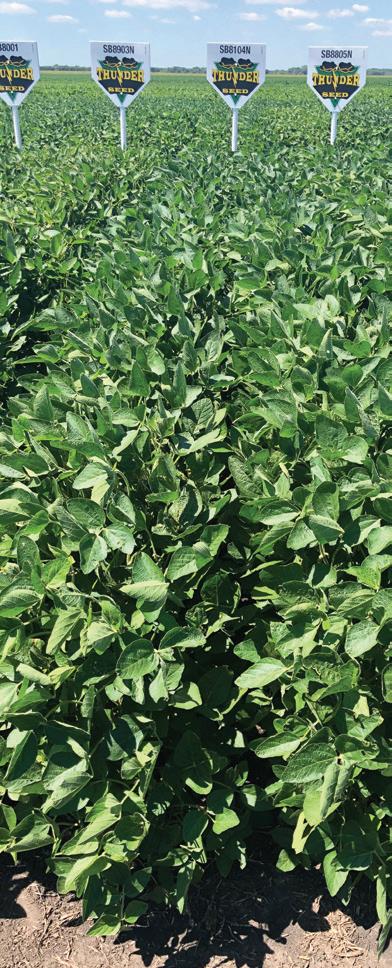
This gives Thunder Seed the benefit of selecting the very best products for their farmers' fields from many different sources—not just one. That same benefit also translates into another benefit for farmers, which is offering a wide selection of traits that come with the soybean varieties and corn hybrids. There are many examples in the lineup that have the same genetic hybrid offered with multiple trait versions. One example is T6181 VT2P, which is an 81-

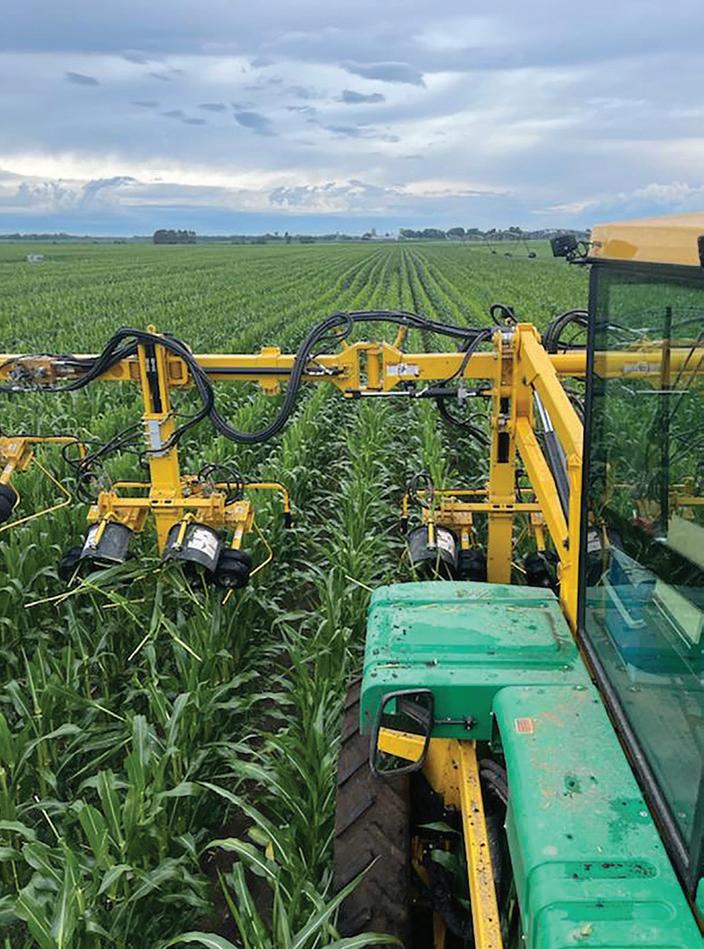
Pulling tassles is part of the process in seed production of corn. In order to produce a corn hybrid, the seed production fields are planted in a 4:1 pattern: four rows of female parent and one row of male parent. Detasseling is done on the female parent rows and is necessary to prevent self-pollination so every kernel in the field is a cross between the two parents.
day corn hybrid with VT DoublePro trait which provides herbicide resistance and above-ground insect protection. That same hybrid is also available as T4181 RR, which has just herbicide resistance, and it's available as T2181 CONV, which is a conventional hybrid. If you check out Thunder Seed’s corn or soybean lineups online at thunderseed.com you’ll see lots of diversity in the represented traits.
FUTUREFARMERMAG.COM 13
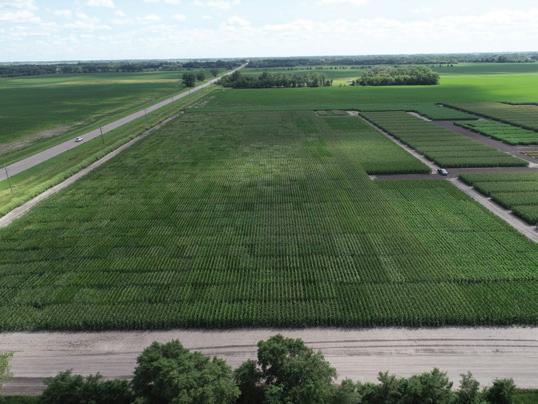
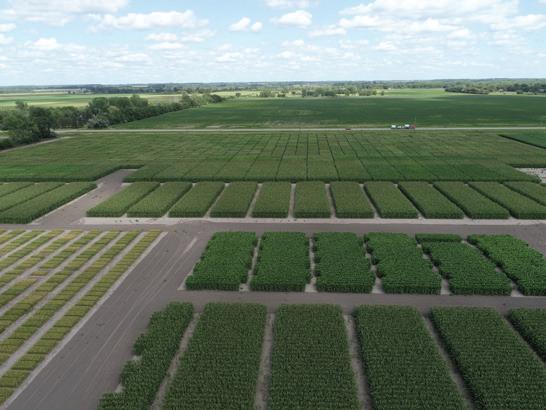
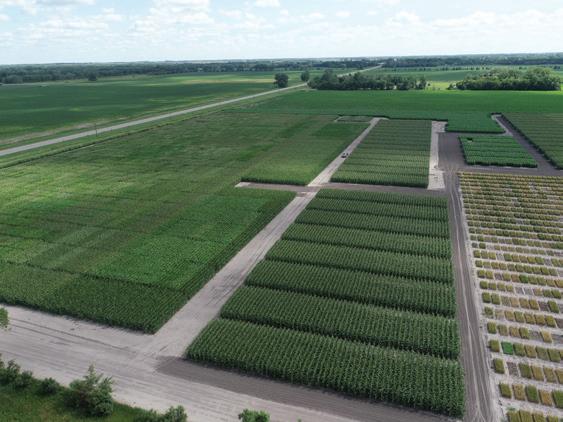
Product evaluation at Thunder Seed starts with Dietrich walking hundreds of plots each year. In addition to Thunder Seed's research trials, he also walks breeder research trials with experimental products. "Getting that visual assessment is an extremely important part of the process," he said.
Besides the observations in the field, there are a lot of tools available for Dietrich to use as he evaluates each potential candidate, products are thoroughly tested for many years from the time each seed was first crossed by the breeder until the time it gets into a Thunder bag. All the data from those years of testing is used by Dietrich to develop a complete picture of performance. He looks at data by state, region, growing environment, maturity zone, previous crop field history, population and much more. Once the lineup is determined, the testing doesn’t stop. Thunder Seed continues testing all its products across multiple replications, locations and years.
cleaning facilities themselves are set for the best seed care as well.
Thunder Seed is also partnered with a corn production company that cares a lot about seed quality and has stateof-the-art equipment to accomplish the task. Just one example of the high-tech devices utilized in their facility are multiple optical sorting machines. Through these machines, quite literally every single kernel is evaluated. The people at the production company really work hard for Thunder Seed to deliver the best seed possible that ends up in the farmer-customers’ hands. It’s not only about having and utilizing the most advanced equipment but also the personal attention to detail that really makes a difference.
Seed quality is very important to Thunder Seed. All their soybean seed production partners take extra care when harvesting, handling, cleaning, packaging and transporting. They all keep in mind that poorly handled seed can damage the seed and consequently hurt the germination rates and seedling vigor in the spring. Each production partner cares for seed quality by moving it (or handling it) the least number of times necessary. When they do handle the seed, they do it as gently as possible. Belt conveyors are used, not augers. Bean ladders are used in bins, which reduces the risk of damaging the seed since it slows the flow of the seed; it doesn’t drop too far too fast. The
The quality is confirmed with their partnering seed lab testing above and beyond what’s standard in the industry to make sure their seed measures up beyond the standard expectation. The standard test for corn seed is simply a “warm germ” which is testing the germination rate at room temperature. However, field conditions in the spring are not always ideal with nice warm soil temperatures. That’s why Thunder Seed also has their seed lab test their seed corn at 50 F for a “cold germ” which is often closer to the real soil temp in the spring when it's planted. Although they don’t stop at that test either. This year they are also adding an additional test to see how the corn germinates at a frigid 40 F. This is really challenging the seed’s germination and vigor. Thunder wants to be sure the seed will perform well for their customers before it goes to the customer.
Farmers look for consistency in their crop production operation, improved profit potential from each acre, and sustainability for many years to come. Growing Thunder products can help them achieve those objectives and they can have confidence that the Thunder Seed team is working hard every day to provide the best performing and best quality seed possible.

For more info, visit thunderseed.com or call 218.422.9011
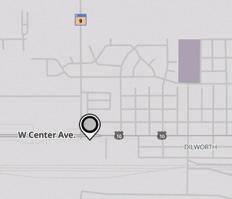
806 Center Ave W, Dilworth, MN 56529
Facebook: @ThunderSeedInc
Instagram: @thunder_seed
Twitter: @thunder_seed

14 NOV/DEC 2022
Putting the Ag in Yaggie
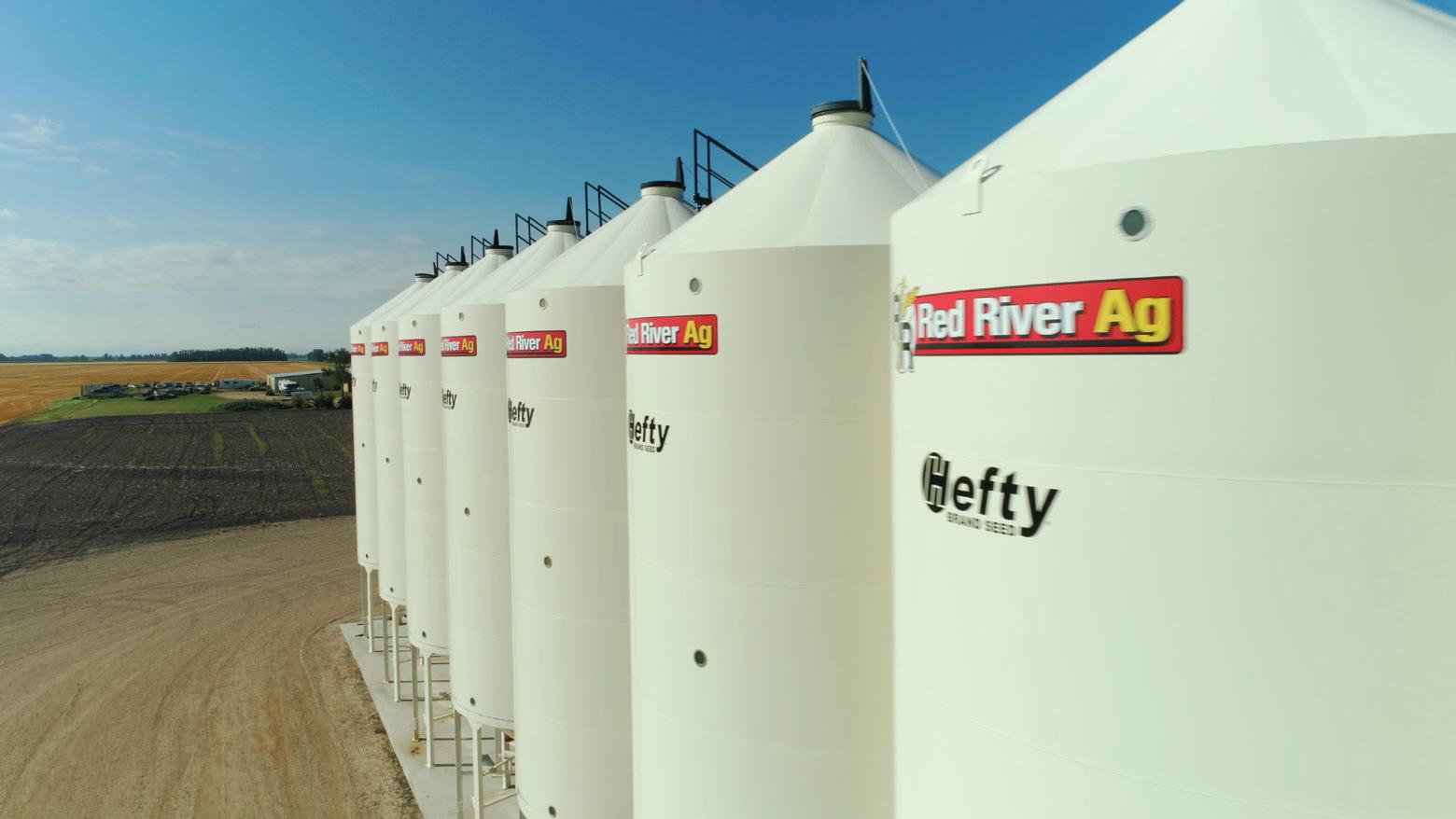
The story of Red River Ag doesn't begin with Aaron and Alex Yaggie, but rather leads into their story today. Red River Ag is generations of their family working together and of supporting the community through hard work and having a vision for future farmers. But to get to where they are now, we need to understand where they came from.
The family legacy first begins with the boys' great-great-grandfather Otto, who homesteaded land in Yankton, SD. From that their great-grandfather Leo moved to Breckenridge in the late 1930s to initially clean up a section of land and then move back. He realized how great and fertile the Red River Valley land was and decided to stay and continue farming it. He was a visionary that really laid the groundwork for the Yaggie's continued family success.
Leo went on to co-found Minn-Dak Beet Growers. He bought the seventh Steiger tractor ever produced because he saw the value in innovation. In the 1970s, Leo saw a great opportunity to expand into Northern Minnesota. Leo’s sons Don and Richard jumped on board with the idea. Don’s son, Kevin, was the oldest grandson in the family so he was entrusted to oversee the northern operation at the age of 19. Eventually rooting down in Brooks, MN, he grew the farm with his brothers, eventually leading to his sons returning home over the last decade to continue what Leo’s vision had started.
For the Yaggies, the core of their foundation as a family has always been working together. While there are more Yaggie farms today actively farming with three generations, they all still work together on multiple levels, which leads us to Aaron and Alex's story.
16 NOV/DEC 2022
Although Alex and Aaron were pursuing other directions in life after obtaining degrees at NDSU, with the oil boom in full swing and the family farm losing key hired hands, Aaron and Alex ultimately chose to return home and support the family legacy—which proved to be far more fruitful than they could've anticipated.
"When we first came home, my dad had us do everything," Aaron said. "He thought it was really important [for us] to learn every facet of the operation, which has been incredibly valuable to understanding farming." Over time, both Aaron and Alex have grown into very different roles; Aaron is focused on running Red River Ag and Alex is focused on running the farm. The boys are best friends and extremely close with their siblings (Andrew and Brooke) and their strong dedication to each other helps produce the results of a successful and thriving family farming operation.
Red River Ag has worked with over 300 farmer customers in the last year. A lot of smaller farms have felt overlooked and not getting the support they need, and we really strive to provide high-quality service no matter the size of the farm. Whether someone is stopping in to get help with their deer plots or it's a 10,000-acre farmer, we are here to support you.
"We are here to support you"
FUTUREFARMERMAG.COM 17
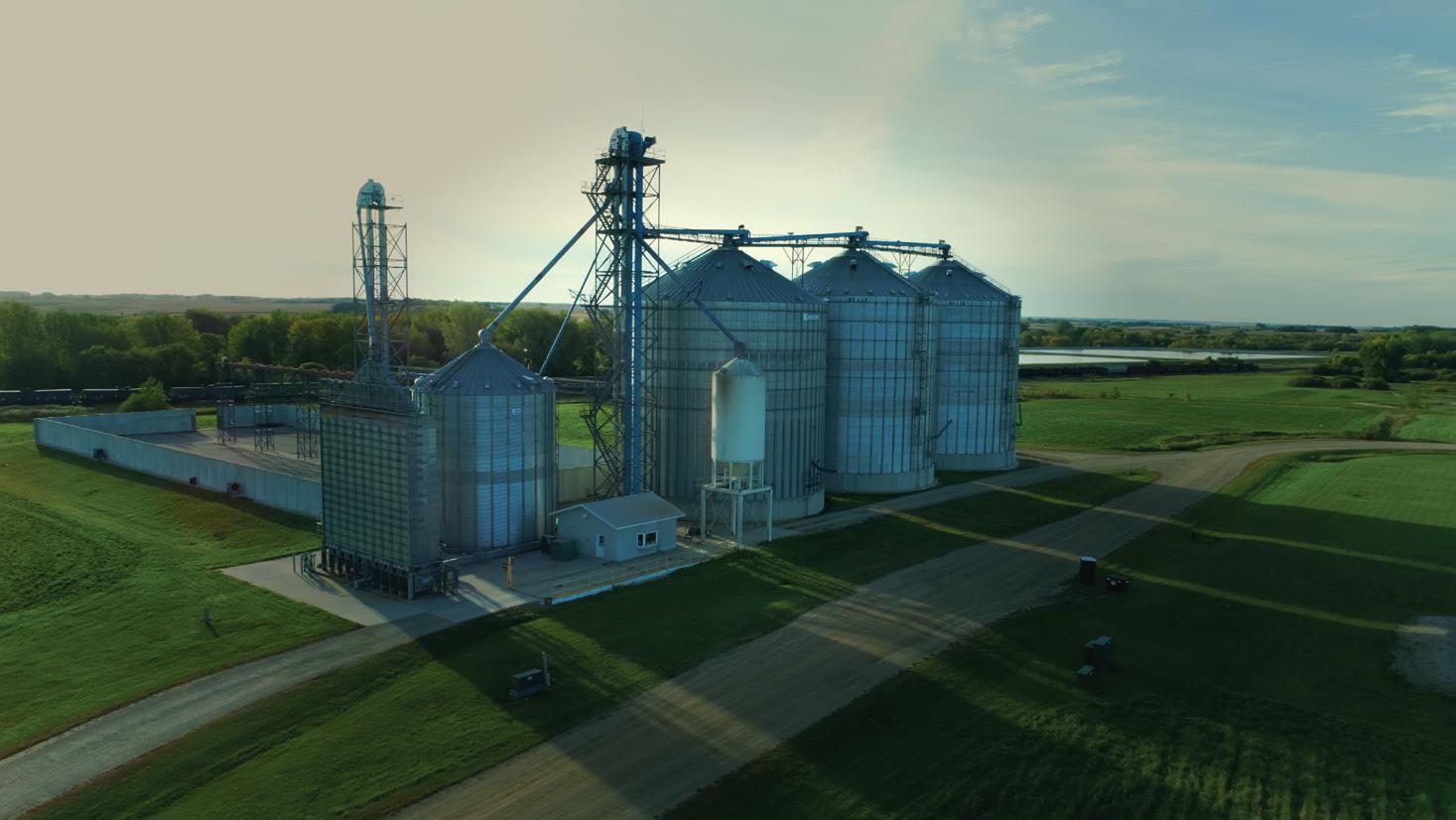
The business was purely run as a local elevator, developed by Kevin and his uncle, Richard Yaggie, since the early 1980’s. Since 2017, Red River Ag has expanded to three locations, acquired 2 area co-ops and is continually rising to the top in the agronomy sector. Multiple factors have led to the success, including the unique dynamic(s) of having a young ownership group which consists of their older brother Andrew and cousins (Jordan, Jamer, Connor, Carson) and young employees looking to aggressively learn and grow in the ever-changing agribusiness landscape. Because of this, one of Red River Ag's biggest advantages is their mobility to try different products and implement various ways to achieve optimal solutions. They first try things on their own personal farms on a small scale. Only when something proves to be beneficial do they promote its value to customers. By implementing this tried-and-true approach, Red River Ag is creating a culture of transparency and building value as a trusted input provider in the communities they serve.
"We just try to find the best formula by seeing what works for us and other farmers, and apply it to our farm on a small scale," Aaron said. "If something works, we share the data with other growers and help them replicate the results on their farm as well."
Red River Ag's culture is all about teamwork—a lot of teamwork. They're all striving for the same number-one goal, which is to help the farmer, whether it's through sales, service or helping in agronomy-related tasks. All of the family business members and employees have different backgrounds that complement the business core principals. "I always like to look at how we are diversified as a team of agronomists and owners and all the different daily tasks we can accomplish together. From soil analysis and crop input recommendations, to grain merchandising and logistics," Alex said. "It's kind of like a football team; all the pieces come together as a whole and we work really well together."
18 NOV/DEC 2022
"Our vision is to embrace change and adapt to the future, while never forgetting where we've come from or compromising on the traits of hard work, ethics and taking care of our customers like we would our own farm."
AARON YAGGIE president

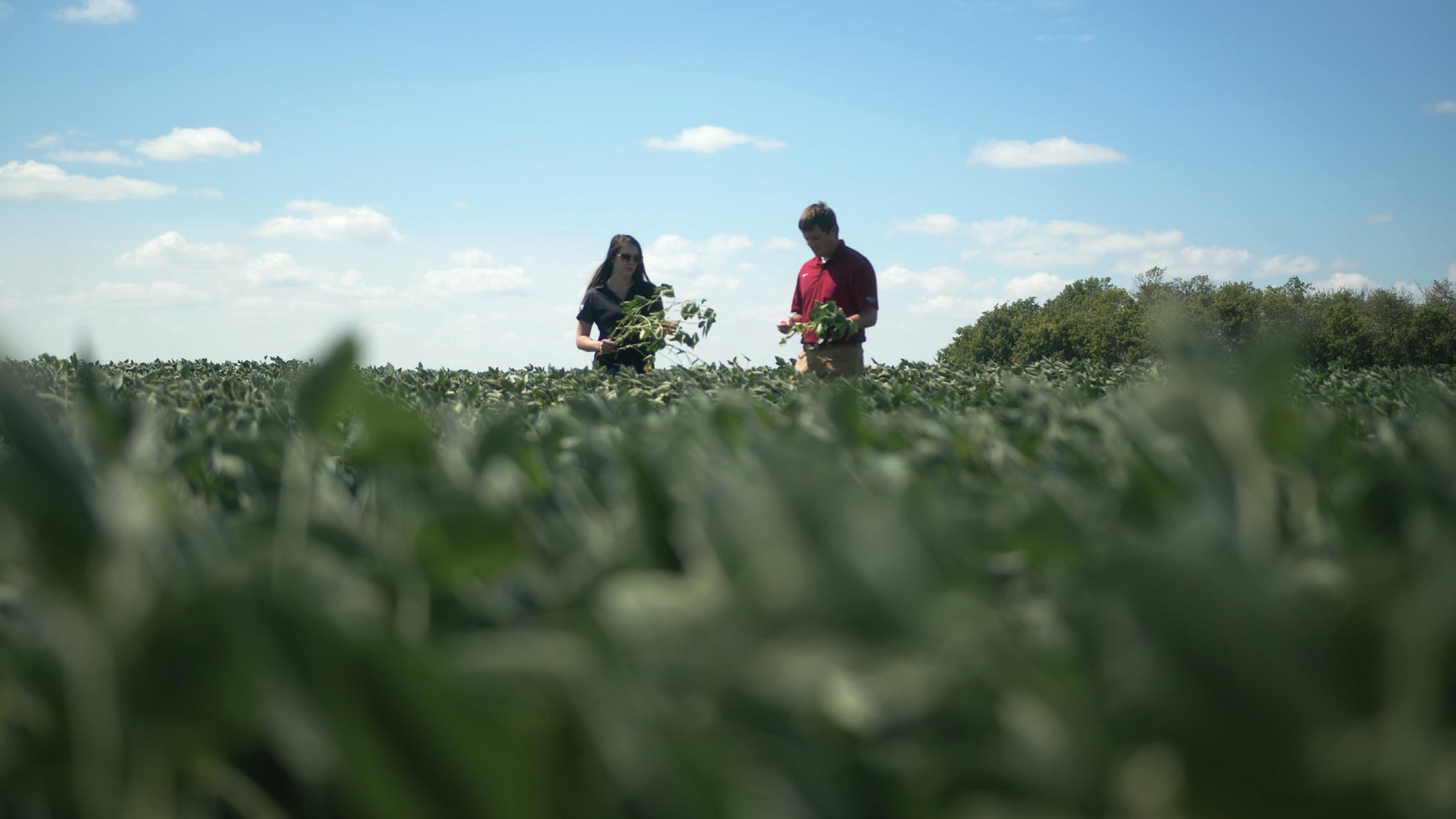
When it comes to supplying farmers’ needs, Red River Ag's ability to be involved with the Hefty Seed Company organization has been extremely key to their overall success and equips them to better serve the farming community. One of the ways they set themselves apart is through the data tools and technology that Hefty Seed Company provides. "They [Hefty] genuinely care about us and our customers and will always make time to help us be more successful," Aaron said. "We've learned so much from all the education and tools they have available and strive to get that information to producers to make informed decisions.”
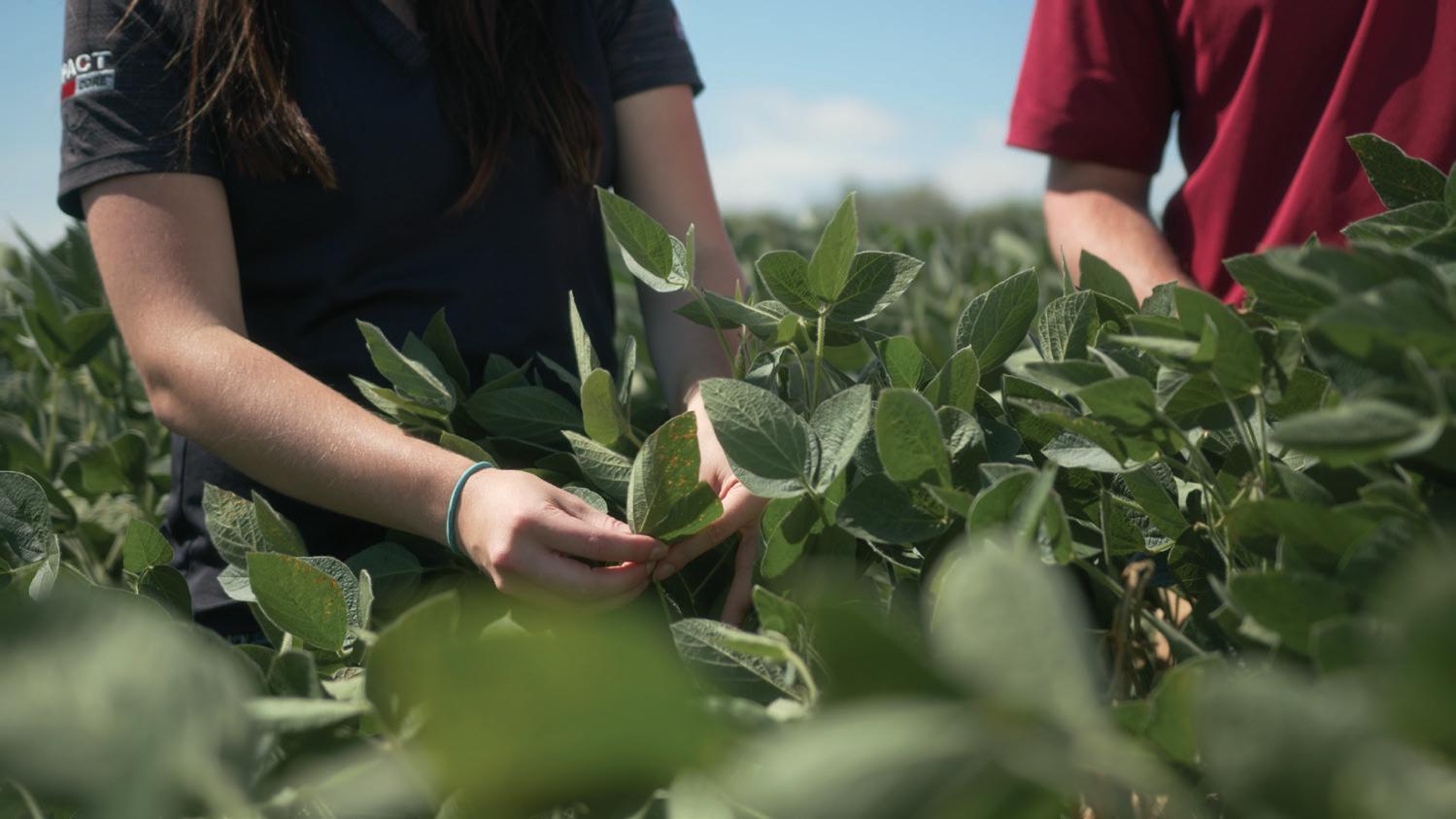
Seeing real, measurable data is how Red River Ag chooses to lead their clients in the right direction. That's what makes these guys the rising stock of the local ag industry. They dig deep into the fine details; they do the heavy lifting so you as the farmer don't have to. By going the extra mile and providing farmers with transparent data, Red River Ag isn't just setting the trend, they're raising the bar in the agribusiness industry.
Tell them what your goals are and they will help make them happen. They help you find the best path to success—and together, they will grow with you. Some call it reverse engineering—they just call it standard practice. And they aren't just equipped with the tools, they have the resources and efficiencies in place to serve a wider area without breaking a sweat. "We can encompass your entire farming operation," Alex said. With a team of 13 across their multiple locations, Red River Ag strives to offer the same stream-lined solutions regardless of location or area.
Farmer customers can also be confident in the relationship they build with Red River Ag, who pride themselves in confidentiality and trust. They respect the privacy of their customers and don't sell or share data or information to other farmers. Red River Ag sets the standard here, and their customer retention rate shows it. As customers develop a taste of the genuine service and care of Red River Ag’s agronomy team, the relationship with the farmer has grown naturally.
FUTUREFARMERMAG.COM 19
Red River Ag has had incredible growth in all areas of business, from seed, chemical, fertilizer and grain. Their largest advancement has come from the fertilizer market. They are constantly tracking the markets and trying to keep their farmers in tune with what's going on with all the volatility.
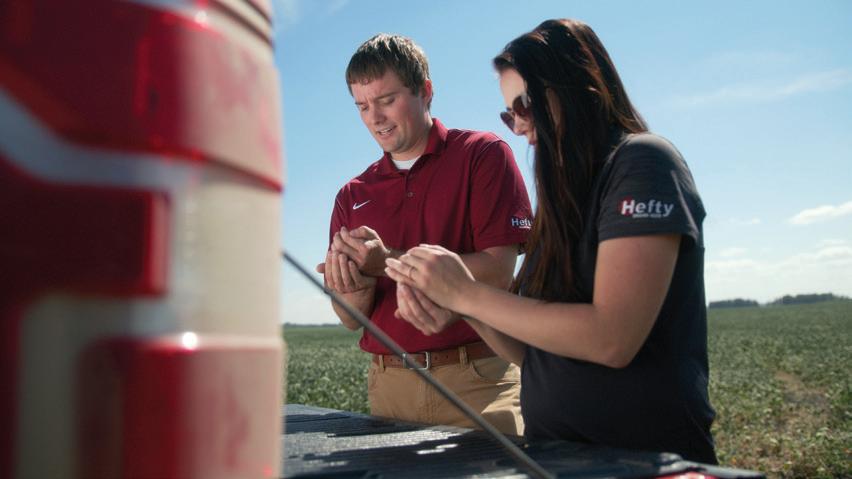
Crop protection products have been an extremely beneficial component for Red River Ag as they've helped position farmers in getting the best possible prices and procure products early. Embracing technology has also made it possible to get anything delivered directly to a farmer's door with minimal notice.
Their vision is to embrace change and adapt to the future while never forgetting where they came from or compromising on the traits of hard work, ethics and taking care of their customers like they would their own farm. "We've grown so much faster than we thought we would and that's been thanks to our great customers for giving us an opportunity to serve their needs," Aaron said. "We also have great people who genuinely care and work extremely hard to serve the customers' needs."
Looking ahead, Red River Ag is investing even more heavily in technical research. Being a leader in technical research is a great advantage for their customers. They're dedicated to investing more time and resources to implement solutions for producers to meet their goals. They're also working on new processes to ensure that as they continue to grow rapidly, that each new client they bring on has a defined process for success. "Our focus has been on economic growth so that we can continue to build higher efficiencies, drive our costs down and save you more money," Aaron said. "At the end of the day, we are family and farmers first. Our community of farmers is the backbone of who we are, and it is our continual mission to provide loyalty to our customers."
218.483.9090 400 Elevator St Hawley, MN 56549 218.465.4275 360 US Hwy 59 Plummer, MN 56748 218.683.6930 16980 120th Ave NE Thief River Falls, MN 56701 redriveragllc.com 20 NOV/DEC 2022



Fueling the Future of
Fueling the Future of


About the Canadian AgTech CTA Program
22 NOV/DEC 2022
Farming, globally
Farming, globally
Canadian AgTech Class of 2022
North Dakota, the Midwest and America as a whole help fuel the innovation of not just what farming is today, but also what farming will be tomorrow across the globe. Yet it's not just about what we are doing on American soil that matters— that's why Canada has
kickstarted a program called the Canadian Technology Accelerator to bring Canadian research, development and technology into the US market to partner with agtech companies, investors and growers all across the country.
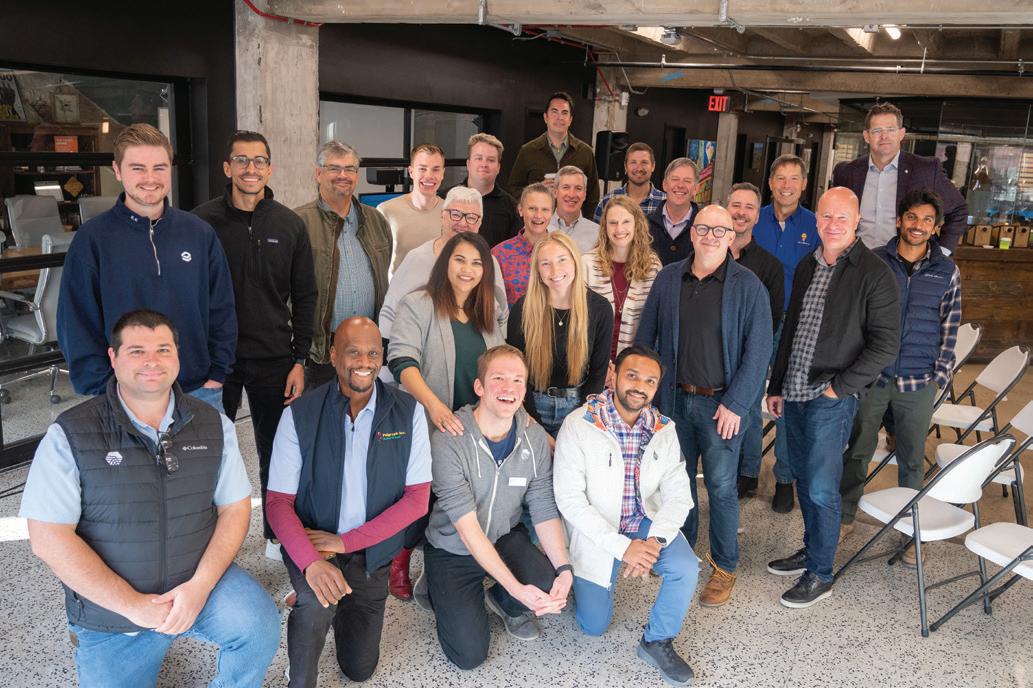
In this section, you will get to meet the "class of 2022" faces behind 10 unique Canadian
AgTech businesses that are bringing game-changing technology, robotics and research to the US market. Earlier this fall, Grand Farm and Emerging Prairie invited these business owners to Fargo as part of the CTA program to not only come and share their pitches, but also to connect them with potential partners here in the US.
FUTUREFARMERMAG.COM 23
By Josiah Kopp
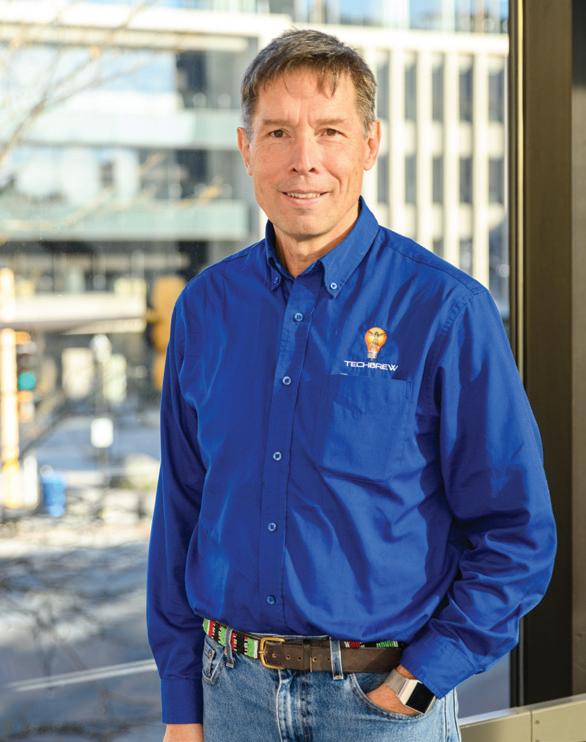
Techbrew robotics techbrew robotics
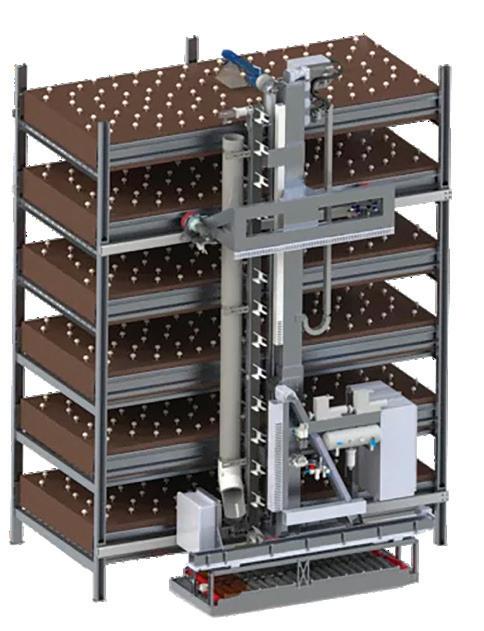
Taking the 30-year pain out of mushroom harvesting.
lower yield and quality than what is possible if picked around the clock. Robotic harvesting solves both of these problems and opens the door for additional productivity improvements using Artificial Intelligence and inline process controls.
The top three problems in fresh market mushroom production worldwide are labor, labor and labor. Harvesting labor accounts for half of the cost of production of button and cremini mushrooms. These mushrooms double in size every 24 hours and need to be picked when they are the largest they can get without opening their veils. The undesirable harvesting job (stinky, cold, damp, painful) is typically done twice a day, resulting in 10-20%
How did you get the idea to start your company?
Looking for tomato producers interested in robotic automation, our bored salesman went into a mushroom farm and asked if they needed robots.
What are your plans for the US market? Do you think you'll have a presence in the midwest?
Half the mushrooms grown in the US are produced in Pennsylvania, with the remainder sprinkled about the country. We are actively selling our systems in Canada and the US and eventually, we will establish a presence where the most synergy can be achieved, potentially in the midwest.
If
This will revolutionize the mushroom industry, driving innovation and probably resulting in dramatic

What is the elevator pitch you use for your startup?
What pain points are you trying to solve in agriculture?
your product/service was already being used by everyone, globally, what impact would that have?
24 NOV/DEC 2022
Boudreau President/CEO
consolidation. The robots and robotenabled upstream and downstream automation using Artificial Intelligence can potentially double the productivity of farms, resulting in a significant reduction in the environmental footprint per pound of mushrooms produced. People do not want to do the job of harvesting mushrooms around the world and most jurisdictions import temporary foreign workers to do the job—not a sustainable model.

How are you incorporating growers into your business plan?
We have three early adopter growers engaged with us in our pilot
testing program who collectively can consume over 1,000 robots. Our pilot testing is meeting its objectives and we look forward to orders in the near future. Industry gurus and our customers tell us that we have at least a two-year lead on the competition so we hope to ramp quickly and become the de facto industry standard in robotic mushroom harvesting. Where
An industry standard in optimized mushroom production worldwide. This magazine reaches 16,000+ farmers. In one sentence, what would you like to tell them? Watch our robots work on Youtube and then tell all of your friends about how cool you think they are. Connect with us if you want to invest info@techbrew.com 250.833.5647 2960 Okanagan Ave E Salmon Arm, BC V1E 1E6, Canada
do you see your company in 10 years?
Photo by Josiah Kopp
FUTUREFARMERMAG.COM 25
Mike
By Josiah Kopp
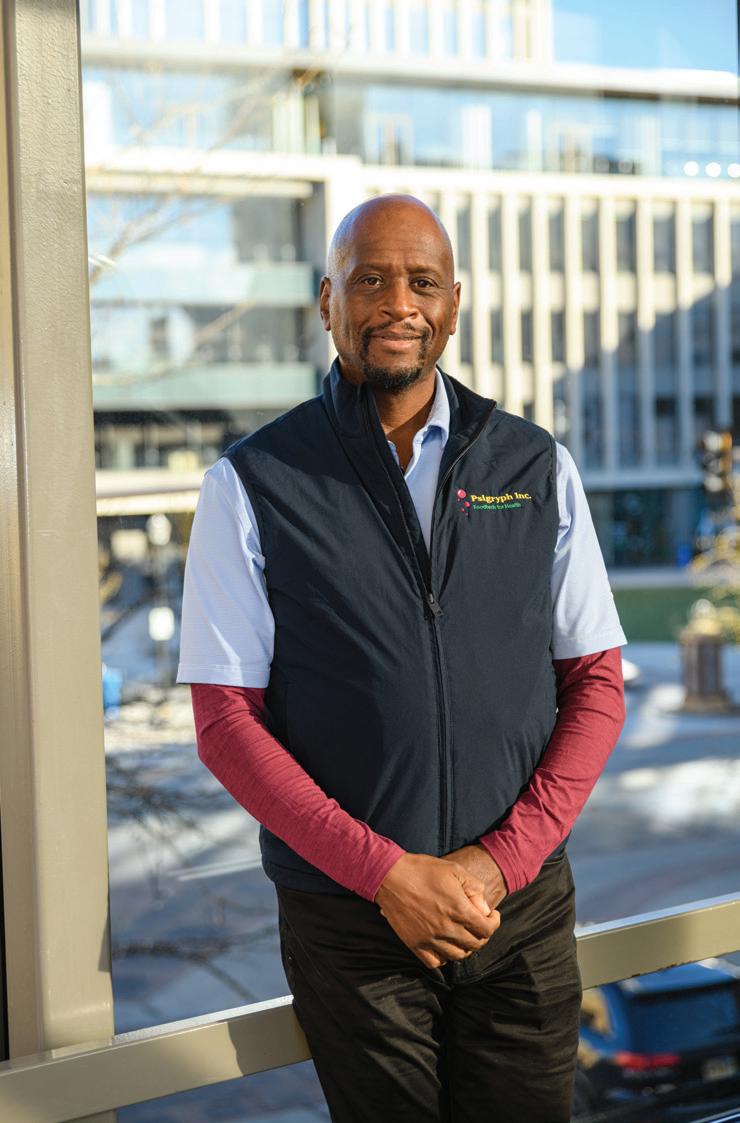
psigryph inc. psigryph inc.
it causes the generation of potent greenhouse gasses.
Psigryph owns Nanopect, a biodegradable, non-toxic delivery system for living cells. It is being deployed to solve problems in agriculture, food and pharma with our first product being launched in 2023.
How did you get the idea to start your company?
I'm a serial entrepreneur who was looking for an academic technology that I could turn into a company. I was introduced to the opportunity by a lawyer I knew previously.
to test products in the markets in which we plan to sell.
Our starting material is the Montmorency Sour Cherry. The upper peninsula of Michigan is a world leader in the production of that crop. So yes, we see some sort of presence in the Midwest in the near future. We are very interested to partner with companies and other groups in the US that have detailed local market knowledge. We think this will be key to our success.
We are solving the problem of soil nitrification. Cows, pigs, chickens and plants are fed nitrogen-containing compounds to increase protein content. The inefficiency of current non-protein nitrogen supplements and fertilizers results in most of the product ending up in the soil where
We need to conduct field trials of our novel animal feed and biopesticides for regulatory approval. Grand Farm appears to be an ideal location for some of that work. Many of our products will be pesticides that are regionally important. So, we will need
If your product/service was already being used by everyone, globally, what impact would that have?
We could remove tonnes of nitrous oxide from the atmosphere through the use of our products. This would have a huge, positive impact on climate change.
What is the elevator pitch you use for your startup?
What pain points are you trying to solve in agriculture?
What are your plans for the US market? Do you think you'll have a presence in the midwest?
26 NOV/DEC 2022
will need field testing locations for many of our products.
agriculture. I expect to have operations in the US and Europe to complement our head office in Canada.
I see us as a large, innovative company marketing products directly and through partnerships that dramatically improve the environmental footprint of agriculture. I expect to have operations in the US and Europe

This magazine reaches 16,000+ farmers. In one sentence, what would you like to tell them?
My grandfather in Barbados was a farmer so I have a heartfelt desire to make life easier and more profitable for farmers.
Where do you see your company in 10 years?
150 Research Lane, Suite 107 Guelph,
4T2
psigryph.com
ON N1G
Sean Thompson CEO/Co-Founder
"My grandfather in Barbados was a farmer so I have a heartfelt desire to make life easier and more profitable for farmers."
FUTUREFARMERMAG.COM 27
Photo by Josiah Kopp
By Josiah Kopp
bioform bioform
What is the elevator pitch you use for your startup?
Bioform produces a 100% bio-based and fully home-compostable alternative to single-use plastic comprised of kelp, wood fiber and water.
What pain points are you trying to solve in agriculture?
Plastic mulch provides notable improvements in crop yield by managing soil temperature and moisture and by suppressing weeds. However, at the end of the season, plastic mulch must be removed from the field and disposed of which is labor-intensive, costly and detrimental to the environment.
As a fully natural material that degrades quickly in soil, Bioform's mulch can be easily plowed back into the soil, eliminating both the removal and disposal costs.
Bioform's material can also be formed into punnets and clamshell containers providing a sustainable alternative to plastic products traditionally used to protect fruits and vegetables on their journey to the grocery store shelf.
How did you get the idea to start your company?
Bioform was built out of work that our two co-founders were doing on a fundamental problem in fluid dynamics around how to layer two fast-moving fluids without mixing.
What are your plans to work with the Grand Farm?
Nothing concrete yet but we are starting discussions with a few of the Grand Farm grower partners to see if there are some potential trials that would make sense.
What are your plans for the US market? Do you think you'll have a presence in the midwest?
The US is a huge potential market for both our mulch and packaging solutions.
If your product/service was already being used by everyone, globally, what impact would that have?
Worldwide, over 2.5 million tons of agricultural mulch alone are used and then either burned or sent to the landfill every year.
How are you incorporating growers into your business plan?
We are looking to partner with growers as lead customers through the 2023 season in anticipation of widespread product availability in 2024/25.
"Bioform's mulch is a costcompetitive alternative to traditional plastic that eliminates the need for removal and disposal after use."
28 NOV/DEC 2022

Where do you see your company in 10 years?
We see producers worldwide using local regenerative materials to produce products that enhance everyone's lives. This magazine reaches 16,000+ farmers. In one sentence, what would you like to tell them?
Bioform's mulch is a cost-competitive alternative to traditional plastic that eliminates the need for removal and disposal bioform.tech 604.862.3487
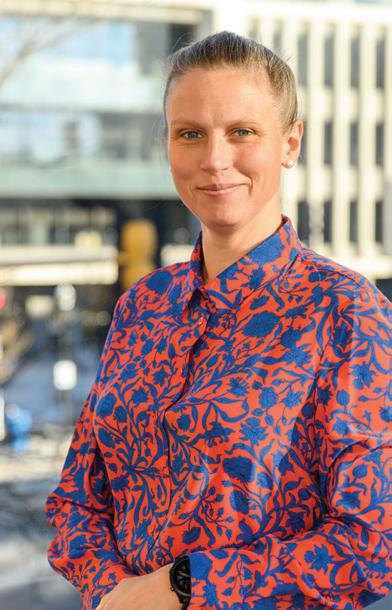
Miranda Alldritt Chief Business Officer
Photo by Josiah Kopp
By Josiah Kopp
farmlink / grainfox farmlink / grainfox
concise and personalized sales recommendations for their specific farm business.
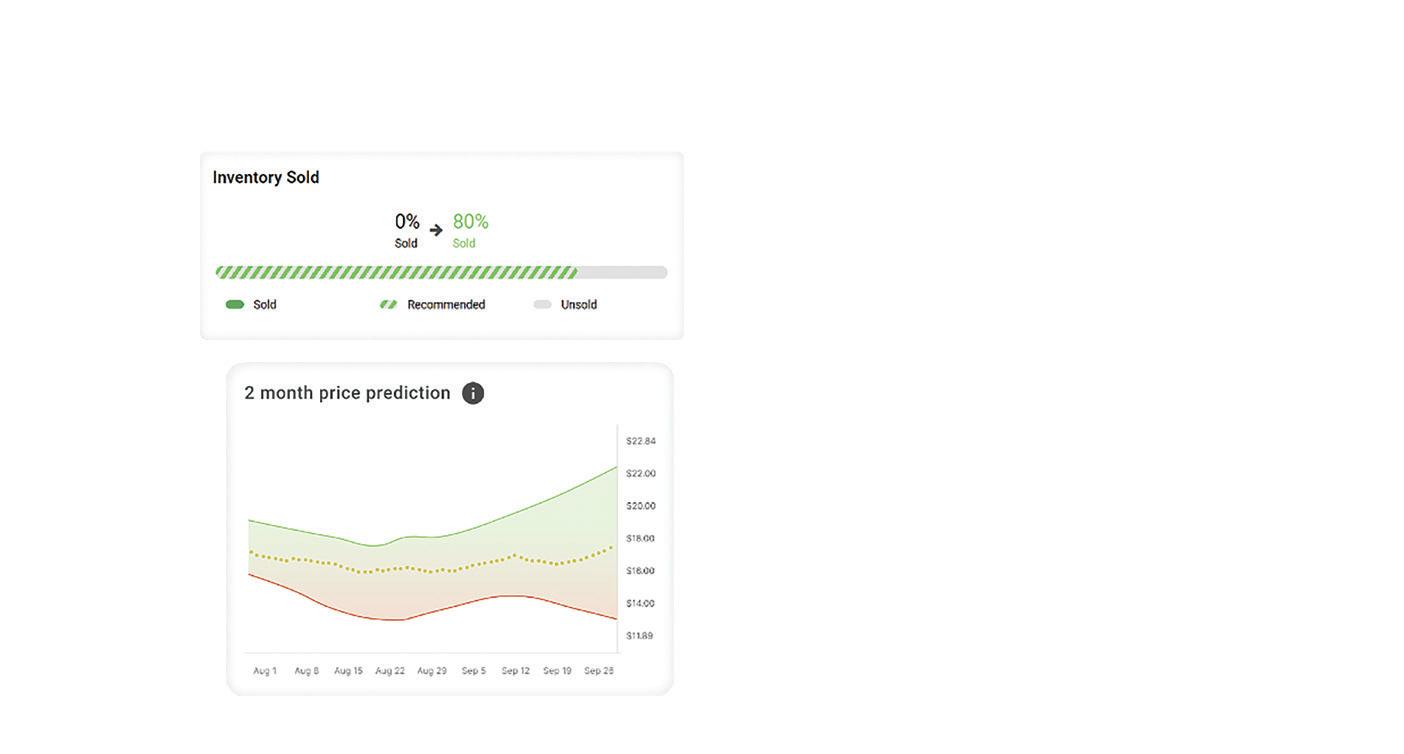
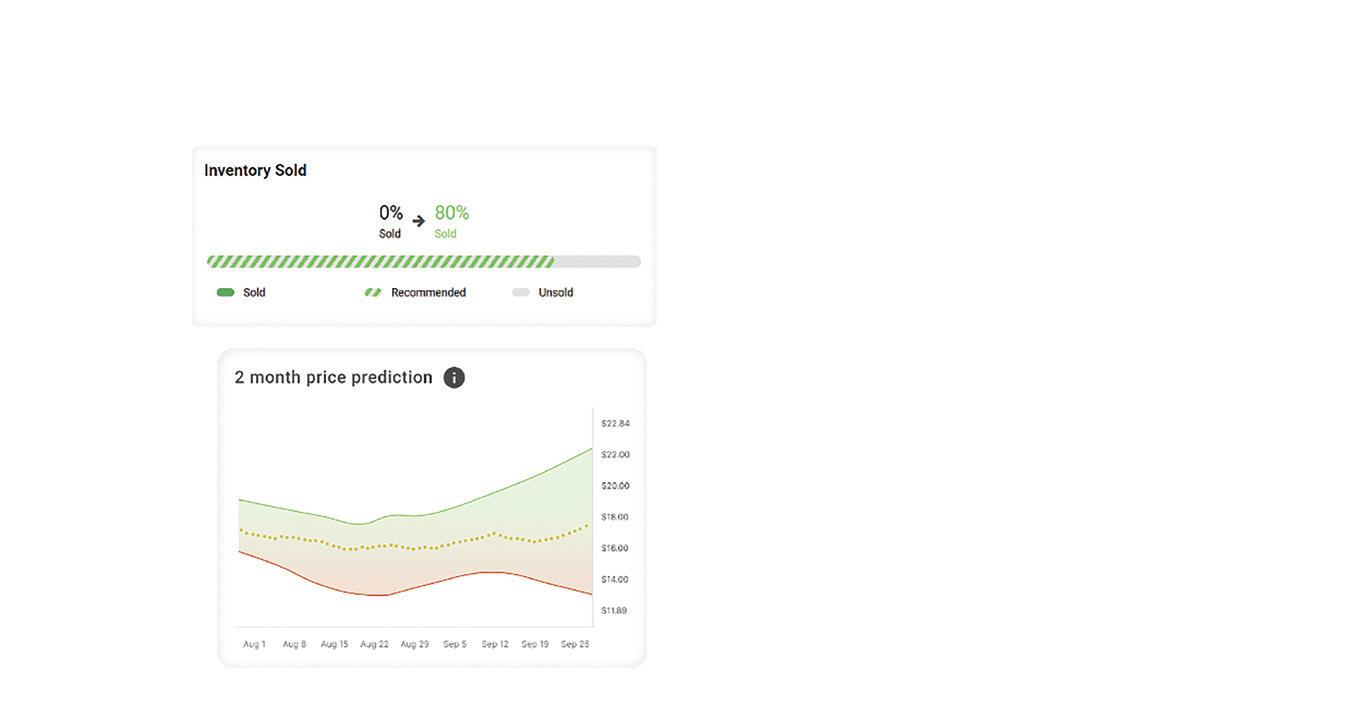
GrainFox is a bin-to-bank farm wealth solution. Powered by data and technology, GrainFox provides producers with unbiased, clear and concise personalized sales recommendations specific to their farm business.
What pain points are you trying to solve in agriculture?
Over two million producers in North America are flooded with too much generic market information every day with no correlation to their specific needs and unique circumstances.
GrainFox uses machine learning and artificial intelligence to synthesize market data, producer data and 20 years of statistical and historical data to deliver unbiased, clear,
How did you get the idea to start your company?
GrainFox has over 20 years of statistical and historical data. Our advisors have years of experience working with producers one-onone and understand that each farm business is unique. However, through market research, we learned that many producers who do not use advisory services choose not to for one of two reasons: they prefer to do things on their own, or the cost of one-on-one advisory services is too high. We also uncovered that smaller farms tend to be under-serviced in the ag industry. With the market research to back it up, 20 years of historical data at our fingertips and our experience working with producers, we saw an opportunity to provide producers with an affordable,
digital, self-serve bin-to-bank farm wealth solution. This solution also allows our company to scale the business and reach producers on a global level.
What are your plans to work with the Grand Farm?
We see an opportunity to collaborate and partner with Grand Farm and its industry partners. We want to be a part of creating a global network of ag tech innovators and connect with and learn from like-minded companies focused on providing producers with technology to help them advance their farm businesses. Through these connections is an opportunity for potential partnerships and opportunities.
What is the elevator pitch you use for your startup?
30 NOV/DEC 2022
If your product/service was already being used by everyone, globally, what impact would that have?
Producers with farm businesses of all sizes will feel empowered to make grain marketing decisions that will impact their long-term goals, creating a legacy for the next
with producers. Ongoing user feedback helps us improve and enhance the GrainFox platform.
Where do you see your company in 10 years?
In the next 10 years, GrainFox will be the leading bin-to-bank farm


877.376.5465 farmlinksolutions.ca 110 - 93 Lombard Ave. Winnipeg, Manitoba, Canada R3B 3B1
FUTUREFARMERMAG.COM 31
Photo by Josiah Kopp
 By Josiah Kopp
susterre susterre
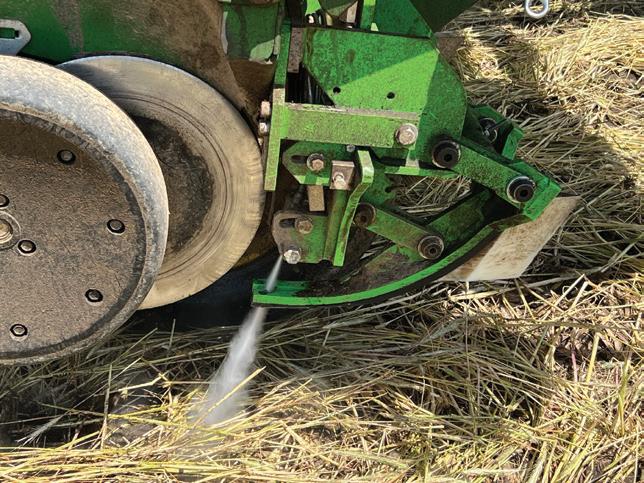
Susterre is pioneering the use of ultrahigh-pressure water jets in row crop applications. Our technology facilitates the use of regenerative practices like no-till farming and cover crops by easily cutting through heavy crop residue with no downforce, and by injecting inputs into the soil where they don't wash away.
What pain points are you trying to solve in agriculture?
No-till farming is not fulfilling its promise since farmers currently have difficulty managing heavy crop residue as it builds up over several seasons. Today's technology does not cut through the residue, but pins it into the soil. When the seeds are deposited, they no longer contact soil, but contact crop residue. This hinders seed germination and crop emergence. Farmers end up tilling their soil after a few seasons, which negates the benefits of no-till farming.
How did you get the idea to start your company?
I was approached by a venture capital firm to see if I'd be interested in forming
a new company to commercialize this technology. After due diligence, I was really excited about the potential for this technology to revolutionize the planting of crops around the world.
What are your plans to work with the Grand Farm?
I would definitely like to conduct further in-field validation of our technology at Grand Farm. In addition, Grand Farm would provide an excellent opportunity to demonstrate our technology to potential
customers and distribution partners. I would also consider a product launch event at Grand Farm.
What are your plans for the US market? Do you think you'll have a presence in the midwest?
Absolutely—I would like to establish several local offices in the Midwest, each with sales staff and product support staff. The Fargo area would be an ideal location for my first office.
What is the elevator pitch you use for your startup?
FUTUREFARMERMAG.COM 33
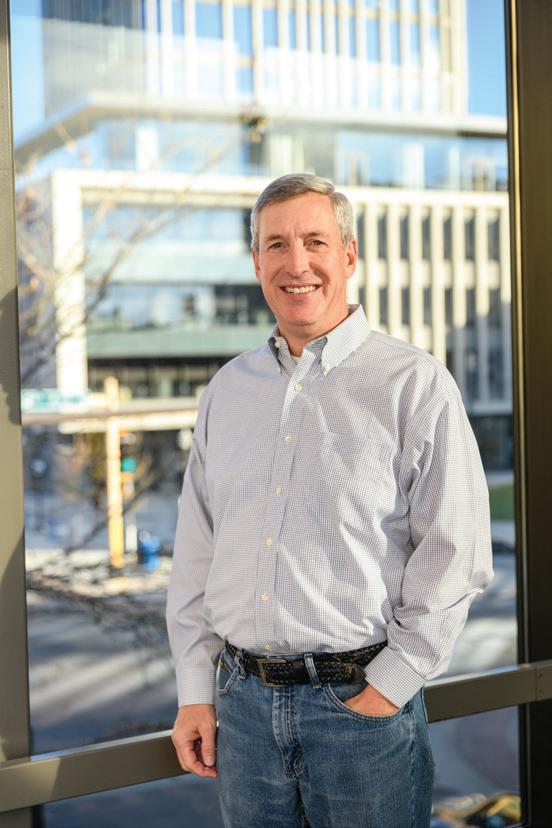
Cully CEO/Founder
If your product/service was already being used by everyone, globally, what impact would that have?
We would see increased crop yields without having to increase the amount of land under cultivation. Farms would be more profitable through increased revenue and reduced usage of expensive crop inputs. The number of harmful algae blooms around the world would greatly decrease, since agricultural chemicals would be injected into the soil, instead of being applied on top of the soil. This would reduce runoff into waterways.
How are you incorporating growers into your business plan?
We have conducted four rounds of prototyping and a full season of field validation on farmers' fields across three states and in Ontario, Canada. We are actively soliciting feedback from these farmers to further refine our designs and to identify additional products that we can offer in the marketplace. I also have two separate farmers' groups who have invested in my company.
Where do you see your company in 10 years?
Susterre's technology will be the gold standard for regenerative planting applications.
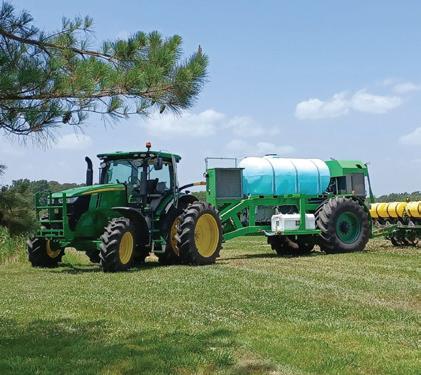
This magazine reaches 16,000+ farmers. In one sentence, what would you like to tell them? We can increase their yield, reduce their costs and help regenerate their soil—all at a payback that is three times faster than other investments they can make in their farms.

404.889.3482 susterre.com
"Susterre's technology will be the gold standard for regenerative planting applications."
Michael
34 NOV/DEC 2022
Photo by Josiah Kopp
 By Josiah Kopp
edgecom energy edgecom energy
What is the elevator pitch you use for your startup?
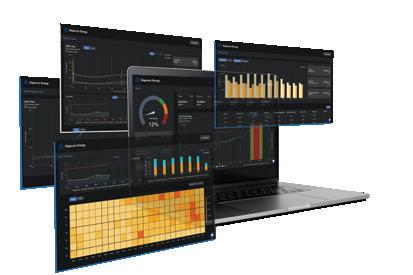
Edgecom Energy reduces energy costs and emissions for midsize facilities like greenhouses, manufacturing plants and malls using custom Iot metering and realtime grid analytics.
What pain points are you trying to solve in agriculture?
Agricultural facilities, food processors and manufacturers spend large amounts of money each month on electricity, water and natural gas, yet they don't know what exactly they are paying for and which equipment is consuming (or wasting) the most.
Edgecom Energy provides these facilities with improved visibility into their operations with the end goal of reducing both their costs and emissions. Our scalable, plug-andplay solutions give our customers real-time granular information on how their processes consume electricity, water and natural gas
which enables them to understand, improve and control their operations like never before.
How did you get the idea to start your company?
Our founder, Behdad Bahrami, was an energy manager for six years at one of Ontario's largest plastic manufacturers where he experienced firsthand the lack of scalable energy management and monitoring solutions available for large energy consumers. On the residential side, you could easily and relatively cheaply get a smart thermostat and various smart appliances that allow you to view and control your energy consumption in real-time, but the industrial version of these solutions were incredibly complex, expensive and not scalable. With this problem in mind, Behdad set out to create a truly scalable energy monitoring and management platform that would allow facilities of all sizes to better manage their consumption and energy spending.
What are your plans to work with the Grand Farm?
We hope to collaborate with Grand Farm and tap into their network of partners to help Edgecom Energy find customers and develop partnerships of our own. In the future, we also plan to have a local office and hope Grand Farm will be able to help us source local talent to start up this new location. There is also significant potential to collaborate on various innovation and research projects as we continue to diversify our offerings for new markets.
What are your plans for the US market? Do you think you'll have a presence in the midwest?
We are currently in the market exploration and identification phase of our expansion into the states and are focusing our efforts on picking which regions should be our first targets. We have currently shortlisted California, Texas, New York and the
36 NOV/DEC 2022
Manager, Funding & Expansion
Midwest as our top priorities in the US and we fully expect to expand into these regions over the next two years. The Midwest especially presents as a perfect expansion candidate due to its concentration of ideal customers and energy pricing structures.
If your product/service was already being used by everyone, globally, what impact would that have?
If our product was used by everyone globally, the largest impacts would be widespread savings, emissions reductions and optimized demand-side energy management. Management of the grid as a whole would be perfected to the point where blackouts and energy price spikes would be unheard of. Our product deployed on such a scale would allow facilities of all scales to seamlessly integrate and optimize their own operations in tune with those of the grid, enabling a perfectly balanced supply and demand for generators and consumers.
We would also have significant impacts on the education
side, allowing customers to be better informed on the cost and environmental impacts of their consumption and the time-sensitivity of their usage. In this world, human errors would be entirely removed from the energy management equation and our software would be in charge of organizing and dispatching massive energy loads with the end result being the smoothing of demand curves and reduced energy prices for all, while both increasing the reliability of the overall energy system and reducing the need for capital expenditures.
How are you incorporating growers into your business plan?
We plan to incorporate growers into our business plan as we expand and adapt our products for applications both up and down the supply chain. Indoor growers like greenhouses especially will play a crucial role in testing and helping us validate our solutions and business models as we expand into new markets and segments.
Where do you see your company in 10 years?
In 10 years, we see Edgecom Energy being the industry standard for energy management and monitoring. In 10 years' time, we also expect to have sales and local teams in all major markets across the globe following a successful IPO.
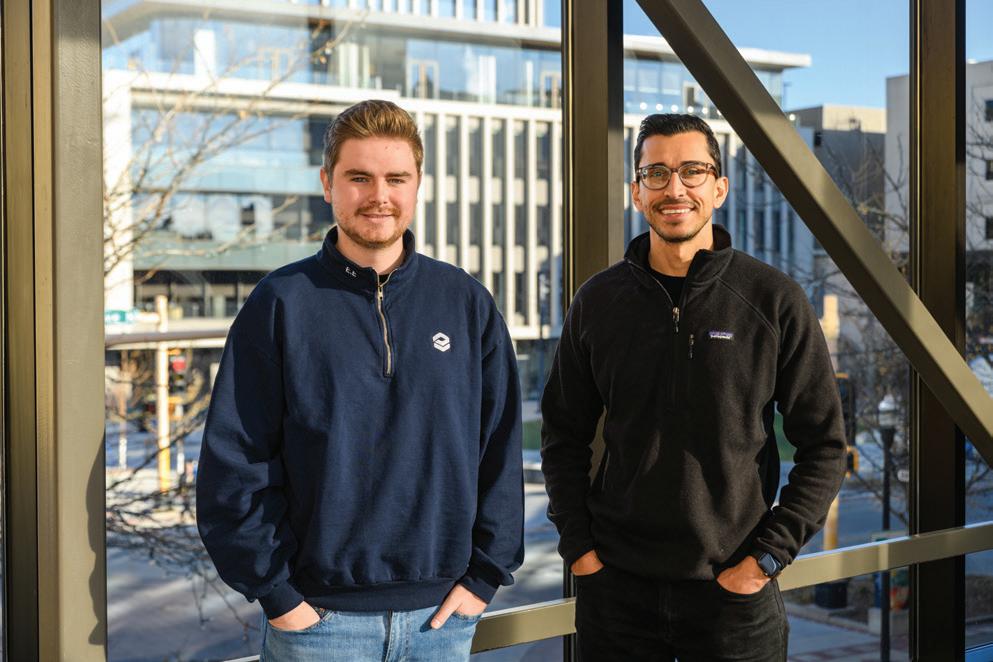
This magazine reaches 16,000+ farmers. In one sentence, what would you like to tell them?
If you need help managing and monitoring your electricity, water or natural gas consumption with a scalable, cost-effective, plug-andplay solution, Edgecom Energy is here and ready to help! 416.640.2401 edgecomenergy.ca Unit 1 - 90C Centurian Dr., Markham, ON, L3R 8C5, Canada
 Tanner Behrend
Behdad Bahrami President/Founder
Tanner Behrend
Behdad Bahrami President/Founder
FUTUREFARMERMAG.COM 37
Photo by Josiah Kopp
By Josiah Kopp
stratuscent stratuscent
Stratuscent is the global leader in digital smell detection. Using technology built on a foundation of NASA-patented innovations deployed on the International Space Station, we have created the world’s first and only digital nose that can detect, identify and interpret odors in everyday environments with incredible accuracy. This creates groundbreaking opportunities across the agriculture market, where digital olfaction has highvalue applications ranging from proactive treatment of damaged produce, reduced wastage, faster and more cost-effective inspection and enabling healthy grains, crops and animals.
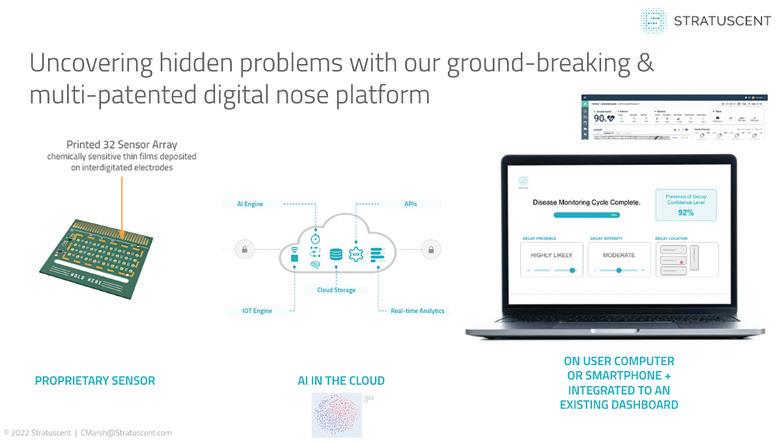
including the billions of tonnes of food produced globally that is lost before it even leaves the farm. Delivering a far more efficient and proactive AI service that enables the proactive treatment of damaged produce and the faster and more cost-effective inspection and monitoring of healthy grains, crops, produce and animals.
How did you get the idea to start your company?
What are your plans to work with the Grand Farm?
We would love to be a valuable contributor and partner to Grand Farm's promotion of innovative agriculture technology in the upper midwest, and globally, to support the farming community. Furthermore, we are eager to take part in experimental projects with our digital nose platform to deliver soil, seed, plant, produce and animal health monitoring.
Reducing the staggering volume of food wastage (a multi-billion dollar problem),
Based on our CTO and founder's (Ashok Masilamani) love of space, he researched SpaceX and how it builds rockets (e.g. Falcon 9) that are tremendously reliable, low cost and highly efficient. With the opportunity to digitize our sense of smell, we wanted to make a groundbreaking difference on contributing to a healthier planet from reduced food wastage, improved air quality and healthcare perspective, with a low-cost and robust solution.
What are your plans for the US market? Do you think you'll have a presence in the midwest?
Our company and market expansion plans include a presence in the US and the midwest is definitely on our radar! We have a US legal entity.
What is the elevator pitch you use for your startup?
What pain points are you trying to solve in agriculture?
38 NOV/DEC 2022
farmers with an affordable, portable and easy-to-use digital nose device.

If your product/service was already being used by everyone, globally, what impact would that have?
We would be having a positive impact on enabling a healthier planet, with the reduction of food wastage and emission of greenhouse gasses, improved air quality in farmhouses and maximizing the production and delivery of healthy produce.
Having our digital device in the hands of every farmer.
This magazine reaches 16,000+ farmers. In one sentence, what would you like to tell them?
Reduce wastage and maximize production with Stratuscent's digital nose platform, which will ultimately deliver healthy farming and a healthier planet.
noze.ca

As well as working with key technology partnerships (e.g. companies currently delivering precision farming services), we are focusing on how we can empower
7171 Rue Frederick Banting Saint-Laurent QC, Canada H4S 1Z9
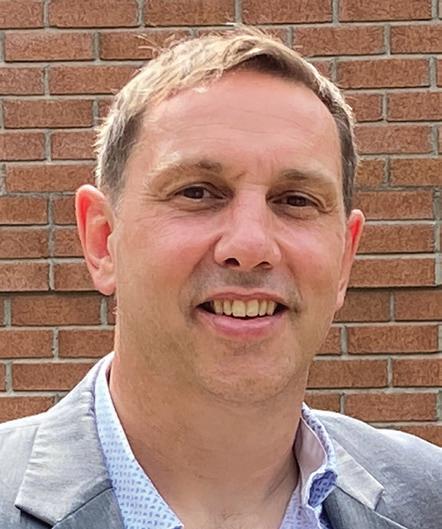
How are you incorporating growers into your business plan?
Where do you see your company in 10 years?
Charles Marsh VP Of Business Development
Photo submitted by Stratuscent
By Josiah Kopp
livestock water recycling
What is the elevator pitch you use for your startup?
With skyrocketing fertilizer prices, a booming renewable natural gas sector and consumer trends towards transparency and ESG reporting, manure is one of the most exciting and significant opportunities in agriculture. High-tech manure processing and nutrient separation enable producers to engage in an exciting revenue dynamic as carbonnegative energy producers and fertilizer providers who are adding more net-zero food to the supply chain.
We are excited to be building out the most transformative hub and spoke revenue model that the dairy industry has ever seen. Manure processing can be innovative, and it will make the industry more economically and environmentally robust.
What pain points are you trying to solve in agriculture?
In response to the conscious consumer demand to move towards a low-carbon future, Livestock Water Recycling's (LWR’s) solution re-imagines manure handling to create regenerative, restorative and sustainable food production in
such a way that it can also be more profitable for the producer. We are able to manage the high volume of manure associated with livestock operations while separating and optimizing the nutrient content, specifically phosphorus and nitrogen. The solid our system produces also captures the volatiles necessary for producing renewable natural gas.
Specifically, the management of manure in storage lagoons is one of the most difficult, expensive and potentially limiting problems facing the agricultural industry today. This problem is particularly prevalent among large livestock operations, including dairy and swine. It is also an area of tremendous opportunity as the costs associated with manure management is high, and there is inherent fertilizer value in manure. The recovery of this value is impeded by the dilute nature of the liquids and the co-mingling of the fertilizers.
Manure is typically stored in earthen ponds or lagoons. Enclosed storage and treatment facilities for odor control, such as those used at municipal treatment plants, are too expensive to be practical for an agricultural operation. Therefore, hog and dairy operations are forced to rely on the lagoon system. The material in the lagoons is too diluted for significant anaerobic digestion and does not result in adequately treated waste.
Areas of concern for livestock producers are the constant supply of clean water, the costs associated with land and land spreading, the costs of lagoons and nuisance odor complaints. In addition, legislation continues to tighten air and water discharge levels of pollutants such as ammonia, phosphorus and methane. Most producers recognize the fertilizer value of the manure but do not have an optimum system for recovering that value or managing the nutrients in the manure. LWR makes recovering that value a reality for the farm.
LWR’s PLANT system provides protein producers the ability to increase production by providing them with a cost-effective solution to manage increases in waste in a sustainable and value-producing manner.
How did you get the idea to start your company?
LWR's founding team has worked together for 20+ years in previous commercialization in the oil and gas water treatment market. Over a decade ago, IWR Technologies Ltd. was approached by an Alberta hog farmer who was struggling with his manure storage lagoon. This led the company to begin examining the environmental and economic
livestock water recycling 40 NOV/DEC 2022
impacts of manure management and agricultural wastewater treatment. The result of this extensive work is LWR, a division of IWR Technologies Ltd. that is focused on water treatment for animal agriculture, protein producers and the biogas market.
Grand Farm?
We would welcome the opportunity to conduct crop growth trials to determine the difference between using manure-based fertilizers and biogas digestate from our manure processing systems when compared to using conventional commercial fertilizers. We have seen great results on individual farms given the highvalue nutrients and micronutrients, but would like to further validate that.
manure after analyzing thousands of data points. LWR’s equipment is targeted to livestock producers and biogas project developers. One of our installations is being verified as a generator of carbon credits, which is very exciting.
If your product/service was already being used by everyone, globally, what impact would that have?
LWR’s climate-smart technology platform converts manure, paunch, digestate and/or food processing waste into high-value products that can be sold into the circular economy. These include fertilizers, biogas feedstock and recycled clean water. 100% of waste liquids are transformed, including up to 75% recycled back into clean water. Feed crop yields are typically increased between 30-50%, and producers can reduce greenhouse gas emissions by up to 82%. In fact, LWR estimates that 300,000 tons of CO2e were mitigated by their customers in 2021.
farms to begin taking advantage of that opportunity. If we could put our systems across the globe, the impact would be substantial.
How are you incorporating growers into your business plan?
Growers are potential clients for processed manure fertilizers, which can be spread as a solid or put through irrigation.
Where do you see your company in 10 years?
LWR PLANTS operating in the market already have the potential to treat over one billion gallons of manure annually, and can recover over half a billion gallons of clean, reusable water: the equivalent consumption of 15,000 Americans! Our goal is to transform one trillion gallons of manure and food waste bioliquids into recycled clean water by 2030, directly impacting 10 of the UN’s Sustainable Development goals.
magazine
16,000+
LWR’s value proposition has been validated by multiple US farms with systems in continuous operation for over five years. LWR has sold 32 systems in over 12 American states with an installation in Northern Ireland and on the largest dairy farm in Lebanon. LWR is the first company in the world to digitize
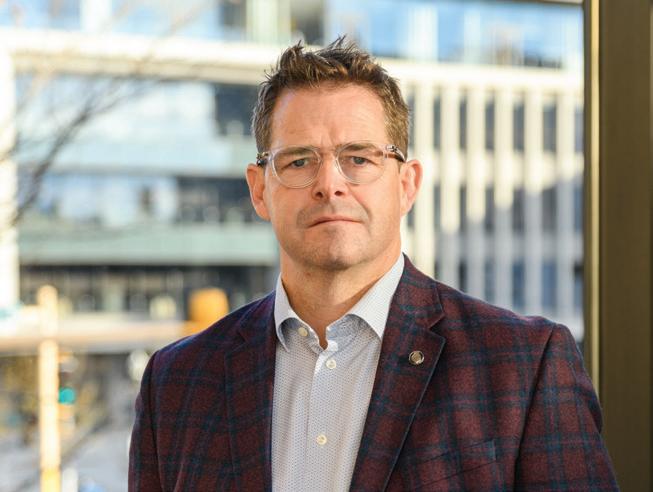
To put that into perspective, that’s comparable to the carbon sequestered by 285,463 acres of forest (that’s over 4.2 million tennis courts worth of forest)! An LWR customer in Washington state is currently becoming Carbon Credit Verified to receive carbon credits for his installation, and we expect more
LWR creates a waste-to-worth value proposition for dairy and meat producers by reducing the expense and environmental impact of waste liquids. A patented manure processing system transforms manure and bioliquids into high-value products, including fertilizer, biogas feedstock and clean water, that can be reused on the farm or sold into the circular economy. 403.203.4972 livestockwaterrecycling.com 7920 56th Street SE Calgary, Alberta Canada T2C 4S9

What are your plans to work with the
What are your plans for the US market? Do you think you'll have a presence in the midwest?
This
reaches
farmers. In one sentence, what would you like to tell them?
Doug Laird COO
FUTUREFARMERMAG.COM 41
Photo by Josiah Kopp
By Josiah Kopp
nexus robotics nexus robotics
What is the elevator pitch you use for your startup?
Nexus designs robotic solutions for vegetable crops. Nexus specializes in using robotics arms to precisely remove weeds near the crop. In the near future, the robot will be used to do many other tasks on the farm such as disease and pest detection as well as harvesting.
What pain points are you trying to solve in agriculture?
The main pain point we are trying to solve is the cost and availability of labor.
How did you get the idea to start your company?
I started a small vegetable farm in Lunenburg, Nova Scotia after leaving engineering school. Through that experience, I got the opportunity to talk to larger growers about their issues, and spending lots of resources on repetitive tasks was a very common issue. I wanted to design a robot that could automate some of these tasks.
What are your plans for the US market? Do you think you'll have a presence in the midwest?
We are hoping to be present everywhere that grows a substantial amount of vegetables within the decade.
If your product/service was already being used by everyone, globally, what impact would that have?
No one would have to spend their days bending over pulling weeds in a hot field. Farmers would have more profitable operations and consumers would have cheaper, healthy food.
How are you incorporating growers into your business plan?
Growers are the central part of our business plan. We need feedback from the farmers to continue to improve and innovate. We also plan on giving preferred pricing to the growers who have helped us reach commercialization.
"Agricultural robots will become commonplace within a couple of decades. Nexus hopes to be a major player in this transition."
42 NOV/DEC 2022
Greenan Founder/COO

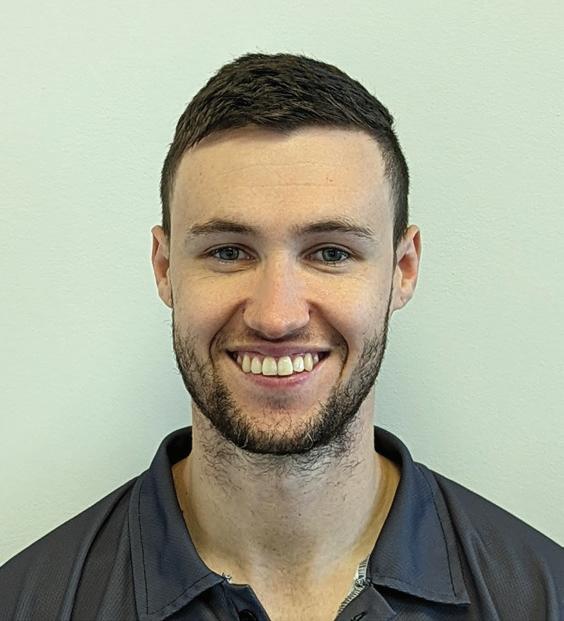

Agricultural robots will become commonplace within a couple of decades. Nexus hopes to be a major player in this transition. Having robots in every province and state that grows a substantial amount of vegetables seems achievable.
Thank you very much for producing food for everyone. We are working hard to support you the best that we can.
Photo submitted by Nexus Robotics
you
your
Where do
see
company in 10 years?
This magazine reaches 16,000+ farmers. In one sentence, what would you like to tell them?
info@techbrew.com 250.833.5647 2960 Okanagan Ave E Salmon Arm, BC V1E 1E6 Canada
Teric
By Josiah Kopp
neupeak robotics neupeak robotics
What is the elevator pitch you use for your startup?
Neupeak helps farmers struggling with chronic labor shortages by offering strawberry harvesting as a service, using its fleet of fully autonomous robotic soft fruit harvesters.
We offer fruit harvesting as a service, thus allowing farmers to access our fleet of robots without any upfront investment needed. Our robots can pick at night, allowing farmers to use our service without any changes in their day-to-day operations.
What pain points are you trying to solve in agriculture?
Even with rising minimum wages, over 70% of farmers struggle to find enough people to work on their farms. Over 1 in 4 jobs on the field will go unfilled by 2030. A typical berry grower today spends >50% of their total revenue on labor alone. We want to solve this chronic labor shortage with our fleet of fully autonomous robots that will offer fruit picking as a service. Strawberries are our first beachhead, but the
robot and the intelligence we are developing have a wide variety of applications, and we plan to automate all manual labor in fields.
How did you get the idea to start your company?
Neupeak was started with the vision to make a general-purpose labor automation platform.
What are your plans to work with the Grand Farm?
We are looking forward to working with Grand Farm to recognize potential growers in the region we can work with. Grand Farms opens up new opportunities to grow our presence in ND, and we are excited to get access to excellent research potential at NDSU to explore new markets for our versatile fleet of robots.
What are your
95% of all strawberries grown in North America come from the US,
and it is a similar story for a lot of other specialty crops like cucumbers and peppers. We already work with some of the largest berry growers on the west coast (BC, California) and east coast (Ontario, New York) and have conducted over 6 pilots and trials in these regions.
We see strong growth of indoor greenhouses in the Midwest, particularly in Minnesota and North Dakota to account for short growing seasons. With effects from climate change bringing uncertainty in seasons, we expect excellent energy infrastructure and strong research institutions in ND would make it one of the hotbeds of controlled environment agriculture in the near future. We are particularly excited about new, innovative greenhouse projects under development with support from the ND government, such as NG2 and Spiritwood.
If
We will have helped the world fix one of the biggest challenges facing agriculture today: labor shortage. Even with rising minimum wages, over 70% of farmers cannot find
plans for the US market? Do you think you'll have a presence in the midwest?
your product/service was already being used by everyone... globally... what impact would that have?
44 NOV/DEC 2022
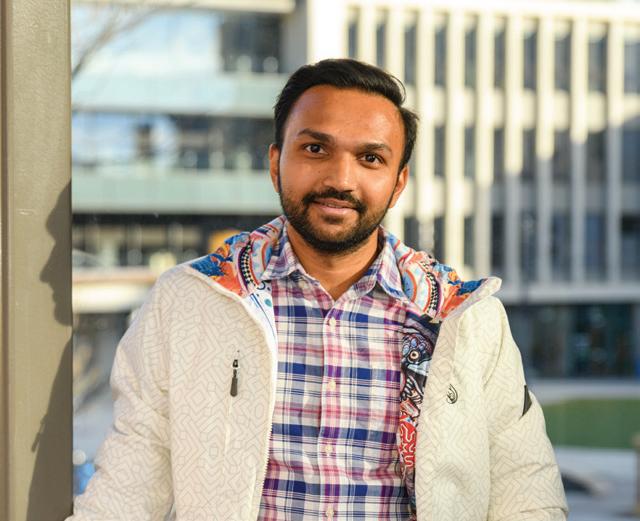
Porwal CEO/Co-Founder
enough workers in North America. Adjusted for inflation, the market price for specialty crops like strawberries has stayed relatively stable for the past 30 years, while the cost of labor and production has gone up by more than 300%. This trend has put excessive pressure on growers and will make our domestic industry unviable in the next 15 years when competing with other countries like Mexico and Chile that have access to a much cheaper labor pool.
Our fleet of robots will make US agriculture competitive with the rest of the world, and allow farmers to focus their resources on growing their operations and not on hiring and training. We need this evolution in precision agriculture to ensure the world is capable of feeding the 11 billion people it will have by 2040.
How are you incorporating growers into your business plan?
Over the past 4 years, we have developed our precision harvester robots in close collaboration with growers, getting their feedback during the whole development and testing process. Through this journey, we realized that It is often small to medium-sized growers that struggle

the most with incorporating robotic harvesting into their workflow due to excessively high upfront capital costs. In addition to this, maintaining and operating a complex harvesting machine can be expensive and timeconsuming.
We remove these hurdles by offering fruit picking as a service; we charge a fixed price for every pound of strawberries picked by our fleet. We do not require the farmer to pay any upfront capital costs to bring the robots onto their field. This allows growers of all shapes and sizes to benefit from our technology. We also maintain and operate the robots on the field, providing farmers with a complete turn-key solution to harvest automation, without having to worry about HR.
Where do you see your company in 10 years?
Strawberry harvesting is our first stepping stone, but we want to follow that up soon with additional services like:
- UV Disinfection service, that will allow farmers to reduce chemical fungicide usage - Harvesting other crops like
cucumbers (2024), tomatoes (2026) and raspberries
- Automating other manual labor tasks, such as pruning and weeding
This magazine reaches 16,000+ farmers. In one sentence, what would you like to tell them?
Neupeak offers 24/7 on-demand harvest labor so the growers can focus on growing.

778.323.4517 neupeak.com 3430 Brighton Ave Unit 101A, Burnaby, BC V5A 3H4, Canada
Anshul
FUTUREFARMERMAG.COM 45
Photo by Josiah Kopp
arming aces of 2022
 AICHELE
 PHOTO PROVIDED BY BUSHEL
DAVID
VICE PRESIDENT OF ENGINEERING, BUSHEL
MICHAEL SHAROV CHIEF GROWTH OFFICER, BUSHEL
PHOTO PROVIDED BY BUSHEL
NATHAN JENNINGS CHIEF REVENUE OFFICER, BUSHEL
DON MORGAN CEO, STARION BANK
PHOTO PROVIDED BY BUSHEL
PHOTO PROVIDED BY BUSHEL
DAVID
VICE PRESIDENT OF ENGINEERING, BUSHEL
MICHAEL SHAROV CHIEF GROWTH OFFICER, BUSHEL
PHOTO PROVIDED BY BUSHEL
NATHAN JENNINGS CHIEF REVENUE OFFICER, BUSHEL
DON MORGAN CEO, STARION BANK
46 NOV/DEC 2022
PHOTO PROVIDED BY STARION BANK
Jan//feb
JAN//FEB
ANDREOLA
CHAS POTTER
PHOTO PROVIDED BY GENESIS FEED TECHNOLOGIES
JENNY MELOM (LEFT), FORMER DATA ANALYST AND CUSTOMER SUCCESS INTERN AND PETER SCHOTT (RIGHT), FOUNDER, GENESIS FEED TECHNOLOGIES
PHOTO PROVIDED BY EMERGING PRAIRIE
PHOTO PROVIDED BY EMERGING PRAIRIE
JOSHUA DUKART, TARA DUKART AND THEIR FAMILY
PHOTOS BY KIMBERLIE FREDERICKS PHOTOGRAPHY
SOFIA
PH.D., CHIEF TECHNOLOGY OFFICER, CHONEX
FARMER IN LEXINGTON, VIRGINIA
FUTUREFARMERMAG.COM 47
FACES OF FARMING 2022

NOREEN THOMAS
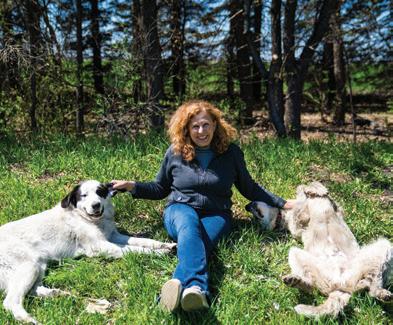 PHOTO BY NOLAN SCHMIDT
DOUBTING THOMAS FARMS
PHOTO PROVIDED BY SENSEGRASS
LALIT GAUTAM CEO, SENSEGRASS
PHOTO PROVIDED BY ACHIPELAGO TECHNOLOGY
PHOTO BY NOLAN SCHMIDT
DOUBTING THOMAS FARMS
PHOTO PROVIDED BY SENSEGRASS
LALIT GAUTAM CEO, SENSEGRASS
PHOTO PROVIDED BY ACHIPELAGO TECHNOLOGY
48 NOV/DEC 2022
GUY NEWCOMBE, CEO (SECOND FROM LEFT) WITH THE ARCHIPELAGO TECHNOLOGY TEAM
MAR//APR
MAR//APR

RAYMOND
 PHOTO BY GENEVA NODLAND
MEGAN MYRDAL CO-FOUNDER, FOOD OF THE NORTH, THE LITTLE FREE GARDEN PROJECT AND CO-AUTHOR OF "MIDWEST MEDITERRANEAN: FINDING HEALTH & FLAVOR WITH THE FOODS OF THE NORTH
PHOTO PROVIDED BY EMERGING PRAIRIE
PHOTO PROVIDED BY EMERGING PRAIRIE
PHOTO SUBMITTED BY PETER BARTLETT
PATRICK REVIER
OWNER AND PRESIDENT, REVIER FAMILY FARMS
JEFF
CHIEF OPERATIONS AND TECHNOLOGY OFFICER, EDEN GROW SYSTEMS
PETER BARTLETT BARTLETT FARMS
PHOTO BY GENEVA NODLAND
MEGAN MYRDAL CO-FOUNDER, FOOD OF THE NORTH, THE LITTLE FREE GARDEN PROJECT AND CO-AUTHOR OF "MIDWEST MEDITERRANEAN: FINDING HEALTH & FLAVOR WITH THE FOODS OF THE NORTH
PHOTO PROVIDED BY EMERGING PRAIRIE
PHOTO PROVIDED BY EMERGING PRAIRIE
PHOTO SUBMITTED BY PETER BARTLETT
PATRICK REVIER
OWNER AND PRESIDENT, REVIER FAMILY FARMS
JEFF
CHIEF OPERATIONS AND TECHNOLOGY OFFICER, EDEN GROW SYSTEMS
PETER BARTLETT BARTLETT FARMS
FUTUREFARMERMAG.COM 49


 PHOTO PROVIDED BY EMERGING PRAIRIE
PHOTO PROVIDED BY EMERGING PRAIRE
PHOTO BY J. ALAN PAUL PHOTOGRAPHY
PHOTO PROVIDED BY EMERGING PRAIRE
PHOTO PROVIDED BY EMERGING PRAIRIE
PHOTO PROVIDED BY EMERGING PRAIRE
PHOTO BY J. ALAN PAUL PHOTOGRAPHY
PHOTO PROVIDED BY EMERGING PRAIRE
PHOTO PROVIDED BY EMERGING
PHOTO PROVIDED BY EMERGING PRAIRE
PRAIRE
ANDREW JASON
ECOSYSTEMS DIRECTOR, EMERGING PRAIRIE
CONTI
DIRECTOR PMO, GRAND FARM GENEVIÈVE ARSENAULT-LABRECQUE PH.D., CO-FOUNDER & CEO, AYOS PHIL BAX CO-FOUNDER/AGRONOMY SCIENCE LEAD, SMART AGRI LABS FACES OF FARMING 2022 50 NOV/DEC 2022
CHRIS ABBOT
CO-HEAD,
VENTURES NORTH DAKOTA GOVERNOR DOUG BURGUM DR. WILLIAM ADEROLDT
DUANE BERNHARDSON

WADE BOESHANS
PHOTO PROVIDED BY EMERGING PRAIRIE
PHOTO PROVIDED BY EMERGING PRAIRE
PHOTO PROVIDED BY EMERGING PRAIRIE
PHOTO PROVIDED BY EMERGING PRAIRE
PHOTO PROVIDED BY EMERGING PRAIRE
BUSINESS DEVELOPMENT
MANAGER, KWS
EXECUTIVE VICE PRESIDENT, SUMMIT CARBON SOLUTIONS
SUPPLY
REBEKAH CARLSON
AGRICULTURE
LEAD, NORI
JÉRÔME BOISSONNEAULT-LAROCHE CO-FOUNDER & FINANCE AND COMMERCIAL DIRECTOR, AYOS
JASON
GOUX, SR. INNOVATION STRATEGY CONSULTANT, COMPEER FINANCIAL
FUTUREFARMERMAG.COM 51
MAy//june may//june
 PHOTO PROVIDED BY EMERGING PRAIRIE
PHOTO PROVIDED BY EMERGING PRAIRE
PHOTO PROVIDED BY EMERGING PRAIRE PHOTO PROVIDED BY EMERGING PRAIRE
PHOTO PROVIDED BY EMERGING PRAIRIE
PHOTO PROVIDED BY EMERGING PRAIRIE
PHOTO PROVIDED BY EMERGING PRAIRE
PHOTO PROVIDED BY EMERGING PRAIRE PHOTO PROVIDED BY EMERGING PRAIRE
CHIEF STRATEGY
AGCOUNTRY FARM CREDIT SERVICES
GORDON HANSON
OFFICER,
ADAM HERGES MOSAIC
CEO, VERIGRAIN
KEN JACKSON
& PRESIDENT, BWR INNOVATIONS
JOEL JORGENSON
CEO
NAFB FARM BROADCASTER/HOST OF FARM TALK, AG NEWS 890
MICK KJAR
52 NOV/DEC 2022
FACES OF FARMING 2022
may//june
MAy//june
LEE


 PHOTO PROVIDED BY EMERGING PRAIRIE
PHOTO PROVIDED BY EMERGING PRAIRE
PHOTO PROVIDED BY EMERGING PRAIRE
PHOTO PROVIDED BY EMERGING PRAIRIE
PHOTO PROVIDED BY EMERGING PRAIRE
PHOTO PROVIDED BY EMERGING PRAIRE
ERIC KRESIN GENERAL MANAGER MARKET DEVELOPMENT, CGB ENTERPRISES
GREG LARDY VP, AGRICULTURAL AFFAIRS, NORTH DAKOTA STATE UNIVERSITY
LAURA
DIRECTOR OF BUSINESS DEVELOPMENT & PARTNERSHIPS, COMBYNE AG
ERIC NEWELL CEO, STONERIDGE SOFTWARE
MICHAEL LYNCH CO-FOUNDER & CEO, CHONEX
GARRETT MAURER DIRECTOR OF PRODUCT, INTELLIGENT AG
PHOTO PROVIDED BY EMERGING PRAIRIE
PHOTO PROVIDED BY EMERGING PRAIRE
PHOTO PROVIDED BY EMERGING PRAIRE
PHOTO PROVIDED BY EMERGING PRAIRIE
PHOTO PROVIDED BY EMERGING PRAIRE
PHOTO PROVIDED BY EMERGING PRAIRE
ERIC KRESIN GENERAL MANAGER MARKET DEVELOPMENT, CGB ENTERPRISES
GREG LARDY VP, AGRICULTURAL AFFAIRS, NORTH DAKOTA STATE UNIVERSITY
LAURA
DIRECTOR OF BUSINESS DEVELOPMENT & PARTNERSHIPS, COMBYNE AG
ERIC NEWELL CEO, STONERIDGE SOFTWARE
MICHAEL LYNCH CO-FOUNDER & CEO, CHONEX
GARRETT MAURER DIRECTOR OF PRODUCT, INTELLIGENT AG
FUTUREFARMERMAG.COM 53
FACES OF FARMING 2022
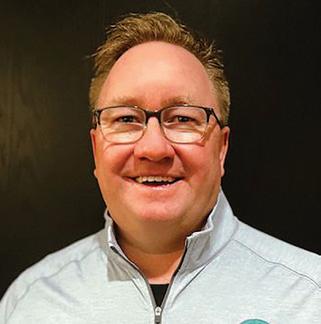
LARRY PAGE
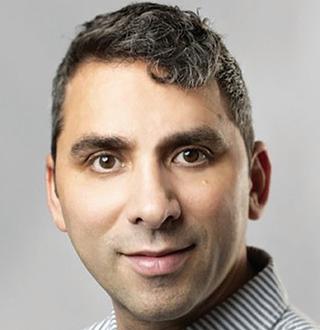
SCOTT SINNER

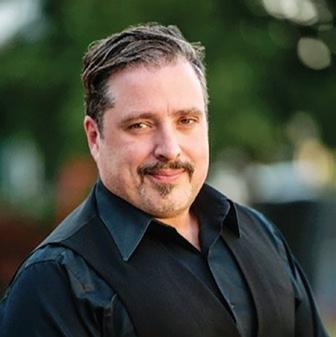
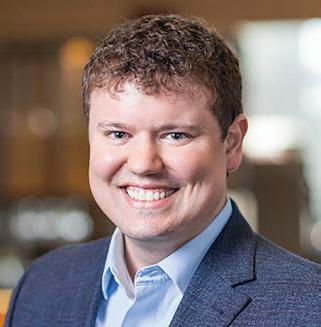
JOSH TEIGEN
 PHOTO PROVIDED BY EMERGING PRAIRIE
PHOTO PROVIDED BY EMERGING PRAIRE
PHOTO BY J. ALAN PAUL PHOTOGRAPHY
PHOTO PROVIDED BY EMERGING PRAIRE
PHOTO PROVIDED BY EMERGING PRAIRE
PHOTO PROVIDED BY EMERGING PRAIRE
PHOTO PROVIDED BY EMERGING PRAIRIE
PHOTO PROVIDED BY EMERGING PRAIRE
PHOTO BY J. ALAN PAUL PHOTOGRAPHY
PHOTO PROVIDED BY EMERGING PRAIRE
PHOTO PROVIDED BY EMERGING PRAIRE
PHOTO PROVIDED BY EMERGING PRAIRE
MANAGING DIRECTOR, LEWIS AND CLARK AGRIFOOD
PARTNER | SUPPLY, SB&B
COMMISSIONER OF COMMERCE, NORTH DAKOTA DEPARTMENT OF
COMMERCE
DUSTIN WILLIAMS FIELD CTO, GOOGLE
BART WOMACK CEO, EDEN GROW SYSTEMS
PROJECT
JOSEPH ZIMOWSKI
MANAGER, SAPPHIRE GAS SOLUTIONS
54 NOV/DEC 2022
may//june
MAy//june
BRIAN SOLUM
BJORN SOLBERG

 PHOTO BY GENEVA NODLAND
PHOTO PROVIDED BY EMERGING PRAIRE
PHOTO BY J. ALAN PAUL PHOTOGRAPHY
PHOTO PROVIDED BY EMERGING PRAIRE
PHOTO PROVIDED BY EMERGING PRAIRE
PRESIDENT AND FOUNDER, THE OUTDOOR ADVENTURE FOUNDATION
DIRECTOR OF WHOLESALE OPERATIONS, RED RIVER HARVEST COOPERATIVE
MATT FAUL CO-FOUNDER, RED E LLC
KEVIN CRAMER U.S. SENATOR
PHOTO BY GENEVA NODLAND
PHOTO PROVIDED BY EMERGING PRAIRE
PHOTO BY J. ALAN PAUL PHOTOGRAPHY
PHOTO PROVIDED BY EMERGING PRAIRE
PHOTO PROVIDED BY EMERGING PRAIRE
PRESIDENT AND FOUNDER, THE OUTDOOR ADVENTURE FOUNDATION
DIRECTOR OF WHOLESALE OPERATIONS, RED RIVER HARVEST COOPERATIVE
MATT FAUL CO-FOUNDER, RED E LLC
KEVIN CRAMER U.S. SENATOR
FUTUREFARMERMAG.COM 55
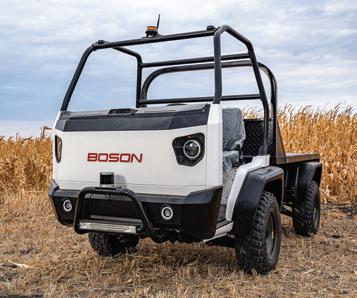
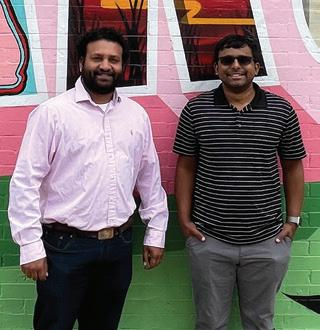
ARUN SEELAM AND NAVEEN THOMAS, BOSON MOTORS
FACES OF FARMING 2022
QUINN RENFANDT


 PHOTO BY JOSIAH KOPP
HOWARD DAHL CEO, AMITY TECHNOLOGY
BILL PANOS DIRECTOR, NORTH DAKOTA DEPARTMENT OF TRANSPORTATION
GRAY BYERS BUSINESS DEVELOPMENT, AIRTONOMY
BETTY'S ACRES AND PRESIDENT OF THE RED RIVER HARVEST COOPERATIVE
SEN. JOHN HOEVEN UNITED STATES SENATOR, NORTH DAKOTA
WILLIAM CROMARTY DIRECTOR OF BUSINESS DEVELOPMENT, AIRIAL ROBOTICS
DR. MARK ASKELSON EXECUTIVE DIRECTOR, RESEARCH INSTITUTE FOR AUTONOMOUS SYSTEMS (RIAS)
GENE AVAKYAN
CEO AND CO-FOUNDER, EDISON AEROSPACE
GINNY CROWSON DIRECTOR, CONNECTED AND AUTOMATED VEHICLES MINNESOTA DEPARTMENT OF TRANSPORTATION
PHOTO BY JOSIAH KOPP
PHOTO BY JOSIAH KOPP
HOWARD DAHL CEO, AMITY TECHNOLOGY
BILL PANOS DIRECTOR, NORTH DAKOTA DEPARTMENT OF TRANSPORTATION
GRAY BYERS BUSINESS DEVELOPMENT, AIRTONOMY
BETTY'S ACRES AND PRESIDENT OF THE RED RIVER HARVEST COOPERATIVE
SEN. JOHN HOEVEN UNITED STATES SENATOR, NORTH DAKOTA
WILLIAM CROMARTY DIRECTOR OF BUSINESS DEVELOPMENT, AIRIAL ROBOTICS
DR. MARK ASKELSON EXECUTIVE DIRECTOR, RESEARCH INSTITUTE FOR AUTONOMOUS SYSTEMS (RIAS)
GENE AVAKYAN
CEO AND CO-FOUNDER, EDISON AEROSPACE
GINNY CROWSON DIRECTOR, CONNECTED AND AUTOMATED VEHICLES MINNESOTA DEPARTMENT OF TRANSPORTATION
56 NOV/DEC 2022
july//aug
july//aug
 JEFF DECOUX CHAIRMAN, AUTONOMY INSTITUTE
DR. PAULO FLORES ASSISTANT PROFESSOR, DEPARTMENT OF AGRICULTURAL AND BIOSYSTEMS ENGINEERING,
JEFF DECOUX CHAIRMAN, AUTONOMY INSTITUTE
DR. PAULO FLORES ASSISTANT PROFESSOR, DEPARTMENT OF AGRICULTURAL AND BIOSYSTEMS ENGINEERING,
 NORTH DAKOTA STATE UNIVERSITY
SARAH LOVAS GROWER, NORTH DAKOTA
NORTH DAKOTA STATE UNIVERSITY
SARAH LOVAS GROWER, NORTH DAKOTA
FACES OF FARMING 2022

TREVOR WOODS
 EXECUTIVE DIRECTOR, NORTHERN PLAINS UAS TEST SITE
JOSH RIEDY FOUNDER AND CEO, AIRTONOMY
MATT SATHER GENERAL MANAGER, BOTLINK
EXECUTIVE DIRECTOR, NORTHERN PLAINS UAS TEST SITE
JOSH RIEDY FOUNDER AND CEO, AIRTONOMY
MATT SATHER GENERAL MANAGER, BOTLINK
58 NOV/DEC 2022
ZACH PETERSON DIRECTOR OF BUSINESS DEVELOPMENT, VIGILANT AEROSPACE SYSTEMS
july//aug july//aug
VANESSA KUMMER GROWER, NORTH DAKOTA
GRAND FARM
GRAND FARM GROWER ADVISORY BOARD
ASSISTANT
AND BIOSYSTEMS
NORTH
STATE UNIVERSITY
KYLE COURTNEY
GROWER ADVISORY BOARD DAVID GORDER
DR. XIN (REX) SUN
PROFESSOR, DEPARTMENT OF AGRICULTURAL
ENGINEERING,
DAKOTA
GRAND FARM GROWER ADVISORY
SHELBY LYONS
BOARD
SEED
SPORE ADAM
GRAND FARM GROWER ADVISORY BOARD KATHI LUTHER GRAND FARM GROWER ADVISORY BOARD MAYNARD FACTOR VICE PRESIDENT, BUSINESS DEVELOPMENT, KRATOS DEFENSE AND SECURITY SOLUTIONS PHOTO PROVIDED BY EMERGING PRAIRIE PHOTO PROVIDED BY EMERGING PRAIRIE PHOTO PROVIDED BY EMERGING PRAIRIE
PROVIDED BY EMERGING PRAIRIE
JARED WINMILL CO-FOUNDER,
&
SPELHAUG
PHOTO PROVIDED BY EMERGING PRAIRIE PHOTO
PROVIDED
EMERGING
FUTUREFARMERMAG.COM 59
PHOTO PROVIDED BY EMERGING PRAIRIE PHOTO
BY
PRAIRIE


sept//oct sept//oct

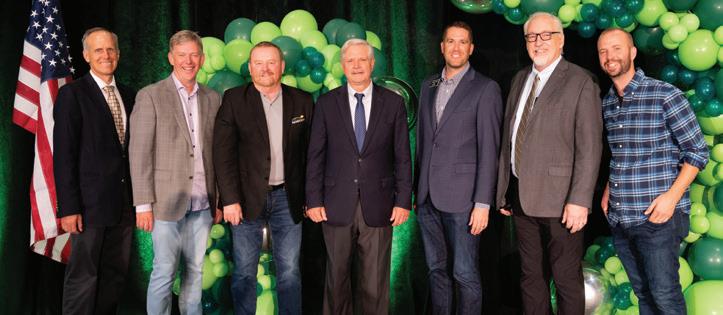
 DR. GREG LARDY, VICE PRESIDENT FOR AGRICULTURAL AFFAIRS, BRIAN CARROLL, DIRECTOR OF GRAND FARM, MARK WATNE, SEN. JOHN HOEVEN, N.D. HOUSE REPRESENTATIVE MICHAEL HOWE, USDA ARS DEPUTY ADMINISTRATOR MARLEN EVE
PHOTO PROVIDED BY EMERGING PRAIRIE
AARON HALIK FOUNDER/CEO, TRIMYXS
JÖRG SCHAMUHN CO-FOUNDER/CEO, AIRIAL ROBOTICS
VERNA KRAGNES
PRAIRIE ROSE FARM
DR. JOSHUA RIEDY FOUNDER AND CEO, THREAD
NIC DE CASTRO FOUNDER/CEO, LANDTRUST
PHOTO PROVIDED BY EMERGING PRAIRIE
PHOTO PROVIDED BY EMERGING PRAIRIE
PHOTO BY GENEVA NODLAND
PHOTO PROVIDED BY EMERGING PRAIRIE
PHOTO PROVIDED BY EMERGING PRAIRIE
PHOTO PROVIDED BY EMERGING PRAIRIE
DR. GREG LARDY, VICE PRESIDENT FOR AGRICULTURAL AFFAIRS, BRIAN CARROLL, DIRECTOR OF GRAND FARM, MARK WATNE, SEN. JOHN HOEVEN, N.D. HOUSE REPRESENTATIVE MICHAEL HOWE, USDA ARS DEPUTY ADMINISTRATOR MARLEN EVE
PHOTO PROVIDED BY EMERGING PRAIRIE
AARON HALIK FOUNDER/CEO, TRIMYXS
JÖRG SCHAMUHN CO-FOUNDER/CEO, AIRIAL ROBOTICS
VERNA KRAGNES
PRAIRIE ROSE FARM
DR. JOSHUA RIEDY FOUNDER AND CEO, THREAD
NIC DE CASTRO FOUNDER/CEO, LANDTRUST
PHOTO PROVIDED BY EMERGING PRAIRIE
PHOTO PROVIDED BY EMERGING PRAIRIE
PHOTO BY GENEVA NODLAND
PHOTO PROVIDED BY EMERGING PRAIRIE
PHOTO PROVIDED BY EMERGING PRAIRIE
PHOTO PROVIDED BY EMERGING PRAIRIE
FUTUREFARMERMAG.COM 61
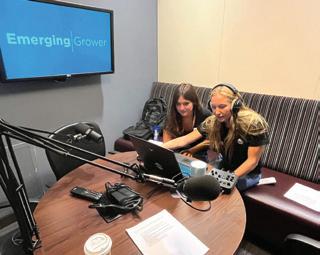
TERESA WICKENHEISER (LEFT) AND BELLE MCLEAN (RIGHT) OF THE EMERGING GROWER PODCAST

As 2022 comes to a close, there are plenty of exciting things in the works at Grand Farm. In each issue of Future Farmer, Emerging offers up insight into what's new and notable at the cross-section of start-ups and agriculture. This month, we learn more about the groundbreaking of the Technology Innovation Facility, Boson Motors North Dakota launch and more! 64 NOV/DEC 2022
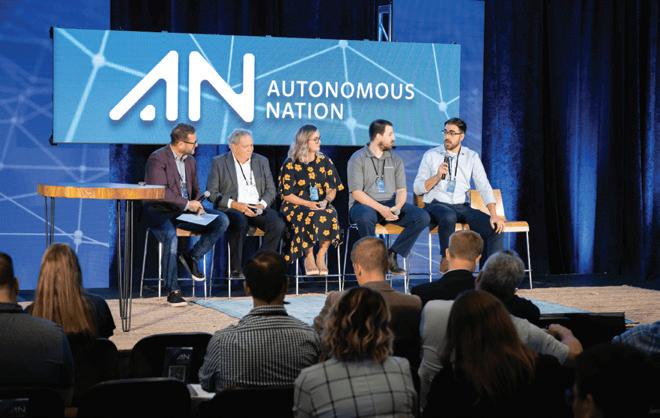
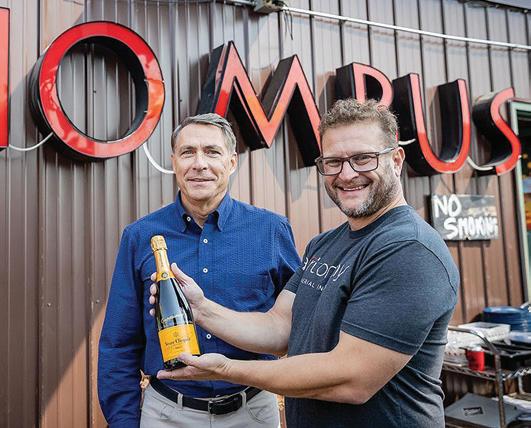
66 Grand Farm Breaks Ground on Future Agriculture Technology Innovation Facility in North Dakota 70 Autonomous Nation – Autonomous Demonstrations Recap 69 Boson Motors North Dakota Launch 72 Thread To Receive More Than $15 Million In Series A Funding 74 Reducing Barriers for Upcoming Land Stewards 78 Clean Ingredients Without Compromising 76 A Letter from Samantha Burchill, Central Cass FFA Member CONTENTS 70 72 66 80 Don’t Let Air Seeder Blockages Ruin Your Farm’s Profit Potential FUTUREFARMERMAG.COM 65
Grand Farm Breaks Ground
on Future Agriculture Technology Innovation Facility in North Dakota
 By Matt Wendel
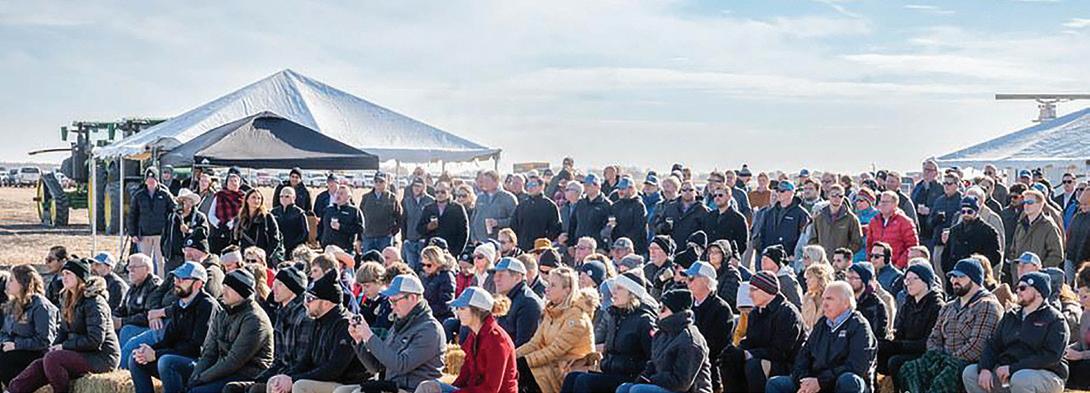
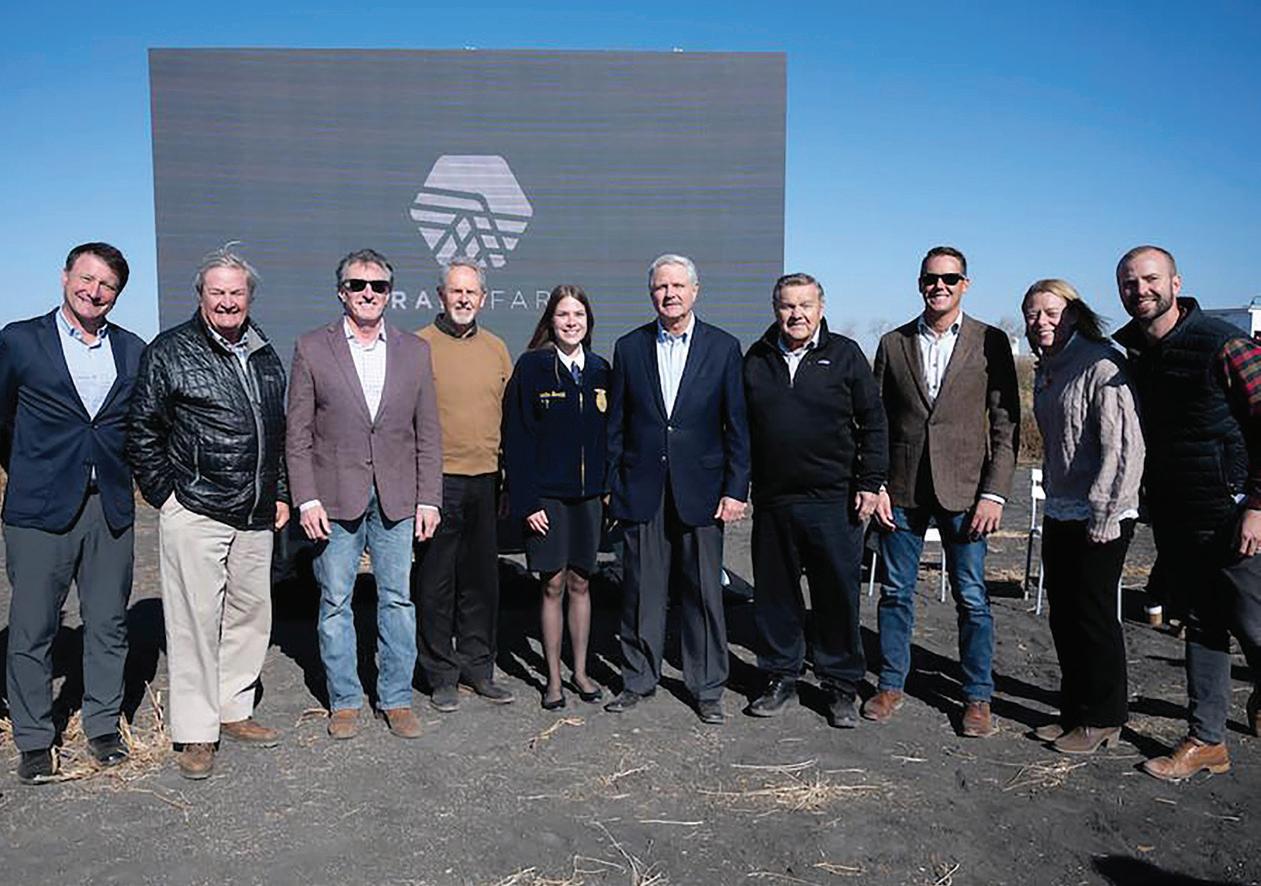
Leaders and community members were on hand 20 miles west of Fargo near Casselton, North Dakota, on October 19th as ground was officially broken on the 140-acre site of Grand Farm’s Innovation Facility.
Grand Farm, an organization that facilitates agriculture technology innovation and research, will utilize the new facility to bring together researchers, growers, industry, startups and government to ideate and execute on innovations to solve some of the world’s largest challenges in agriculture. The facility will provide expanded acreage for the deployment of agriculture technology projects, rapid prototyping capabilities and increased research and educational capacity.
“Today’s groundbreaking is the culmination of five years of hard work that began with a vision to continue the Fargo-Moorhead region’s strong history in agriculture
innovation,” Brian Carroll, Director of Grand Farm said. “We couldn’t be more excited to get underway as we turn our vision into reality near Casselton.”
In 2019, U.S. Secretary of Agriculture Sonny Perdue helped cut the ribbon on Grand Farm’s current test site just south of Fargo, ND, and Microsoft pledged $1.5 Million as the first partner. Since then, Grand Farm has deployed over 350 agriculture technology projects and has worked with over 55 partners and organizations including Doosan Bobcat, Land O’Lakes and American Crystal Sugar Company. And earlier this year, U.S. Sen. John Hoeven announced a $1 Million federal appropriation to develop a partnership between Grand Farm, North Dakota State University, and the U.S. Department of Agriculture’s Agricultural Research Service.
“Grand Farm is bringing together leading organizations and institutions in our state
66 NOV/DEC 2022
Speakers from left to right:
and around the country to develop and implement the next generation of precision agriculture,” Senator Hoeven said. “That’s why we put together and funded the cooperative agreement between Emerging Prairie, NDSU and ARS to enhance precision ag research at Grand Farm. By building upon the intersection of agriculture and technology, North Dakota will be positioned to realize new opportunities for investment and job growth for years to come.”
In February of 2022, Grand Farm was awarded a $10 Million matching grant by the North Dakota Legislature and North Dakota Department of Commerce to be used towards the building of the Innovation Facility. North Dakota Governor Doug Burgum, who included the funding as a piece of his Accelerate ND plan, helped break ground earlier today.
“North Dakota continues to be an
innovative leader in ag technology. Today’s groundbreaking marks a milestone for Grand Farm’s private-public partnership, which will have a significant impact on our region and the acceleration of innovation in autonomous agriculture,” Burgum said. “Every major step in proving the Grand Farm concept and commercializing this technology keeps North Dakota on the cutting edge of autonomous agriculture and increases the potential for this technology to improve productivity for farmers and help address our state’s workforce challenge through automation. We’re grateful for all of the private and public partners who continue to drive this important initiative.”
“Legislators from around North Dakota believe this initiative will benefit the entire state and region, and that it will ensure we stay at the forefront of agriculture innovation,” state Rep. Don Vigesaa (R-Cooperstown) said.
“The Red River Valley corridor has a unique opportunity to continue being a leader, not only in unmanned aviation but also by driving autonomous innovation with the farm of the future at Grand Farm,” state Sen. Scott Meyer (R-Grand Forks) said. “Grand Sky and Grand Farm will help diversify our state’s economy with the next generation of innovators and entrepreneurs who develop, test, demonstrate and commercialize technologies of the future. The North Dakota legislature has a good history of investing in infrastructure and emerging ventures that keep North Dakota as an industry leader.”
Today marks the beginning of infrastructure construction on the site with further structural work expected to continue in the spring. Agriculture technology projects will begin deploying onsite in spring 2023.
Boson Motors Co-founder and CEO Arun Seelam, Microsoft TechSpark Director Mike Egan, former North Dakota Governor Jack Dalrymple, North Dakota Governor Jack Dalrymple, North Dakota State Representative Don Vigesaa, Central Cass FFA student Samantha Burchill, U.S. Senator John Hoeven, entrepreneur Gary Tharaldson, North Dakota State Senator Scott Meyer, Grand Farm Board Member Sarah Lovas, Emerging Prairie CEO and Grand Farm Co-founder Greg Tehven
FUTUREFARMERMAG.COM 67
The groundbreaking was done with the use of a remote-operated skid-steer and showcased several types of autonomous and semi-autonomous technologies that will be present and tested at the facility. Speakers included Governor Doug Burgum, U.S. Senator John Hoeven, former U.S. Secretary of Agriculture Ed Schafer, former Governor Jack Dalrymple, State Senator Scott Meyer, State Representative Don Vigesaa, Microsoft TechSpark Director Mike Egan, entrepreneur Gary Tharaldson, Grand Farm Board Member Sarah Lovas, Central Cass FFA student Samantha Burchill, and Boson Motors Cofounder and CEO Arun Seelam.
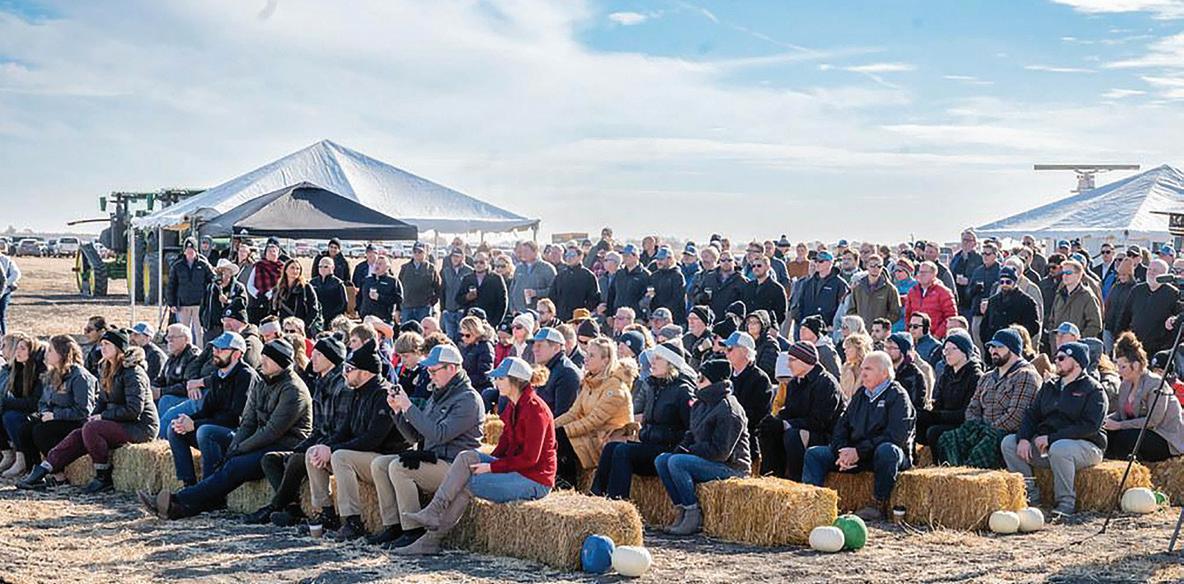
skid-steer.
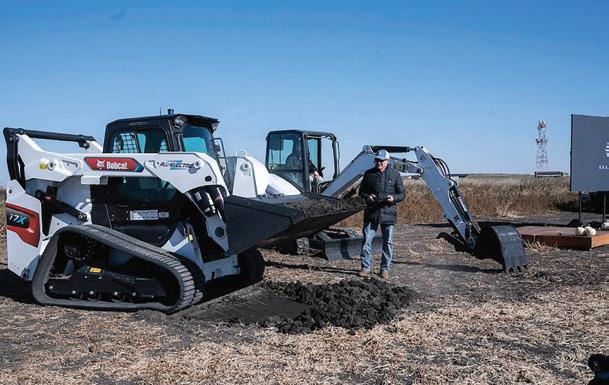

LulzBot provided commemorative 3D-printed golden shovel keychains made with North Dakota corn. Central Cass students assisted with the 3D printing.
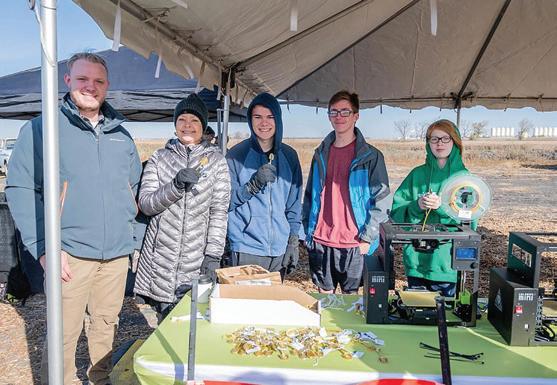 Crowd at groundbreaking North Dakota Governor Doug Burgum and Grand Farm Director Brian Carroll perform the groundbreaking utilizing a remote-operated
1: 1: 2: 2: 3: 3: 68 NOV/DEC 2022
Boson Motors North Dakota Launch
The night of Tuesday, October 18th, 2022 in downtown Fargo marked the first public reveal of the Boson Motors half-cabin vehicle. After much anticipation during the summer, everybody was excited to finally see the product live in front of their eyes. The next morning was StartupBREW Fargo, where Arun Seelam shared a founder story and the vision for Boson going forward. These events would only be a small fraction of what was to come in the official launch of Boson’s new electric light utility vehicle.
Later that Wednesday, Boson Motors brought the truck to Casselton, where Grand Farm held a groundbreaking of their new innovation facility and test ground, one that Boson would

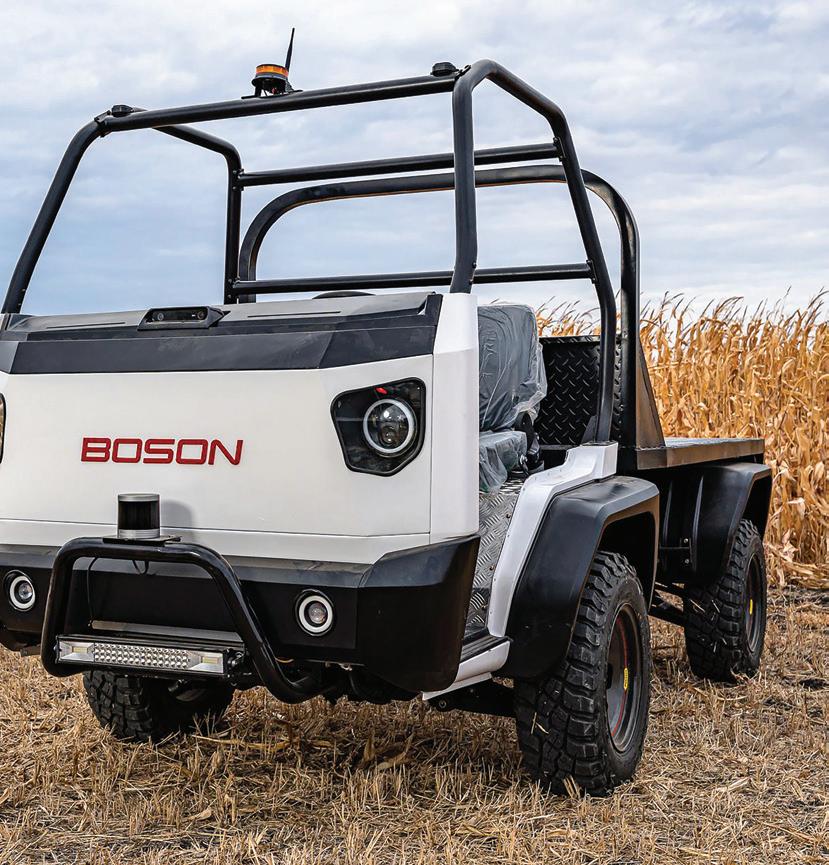

use to showcase the innovation four years in the making. Specifically, the aspect that drew the most attention from the crowd was the autonomous driving capability. Individuals who stopped by for this demonstration were thoroughly impressed with the ability for the truck to repeat the same path every single time and even trusted the technology enough to take rides on the back of the truck while no driver was present. People responded positively to the product, noting the competitive price point, the autonomous software, and the ability to attach accessories like snow plows and sprayers as major aspects that will set Boson apart in the upper Midwest and across the country.

FUTUREFARMERMAG.COM 69
Autonomous NationAutonomous Demonstrations Recap
By Madi Simpson
On August 30th, Grand Farm held its second annual Autonomous Nation conference. This conference brought together policymakers from the local, state and national levels with industry entrepreneurs and innovators to help make our region the most autonomous-friendly area in the country.
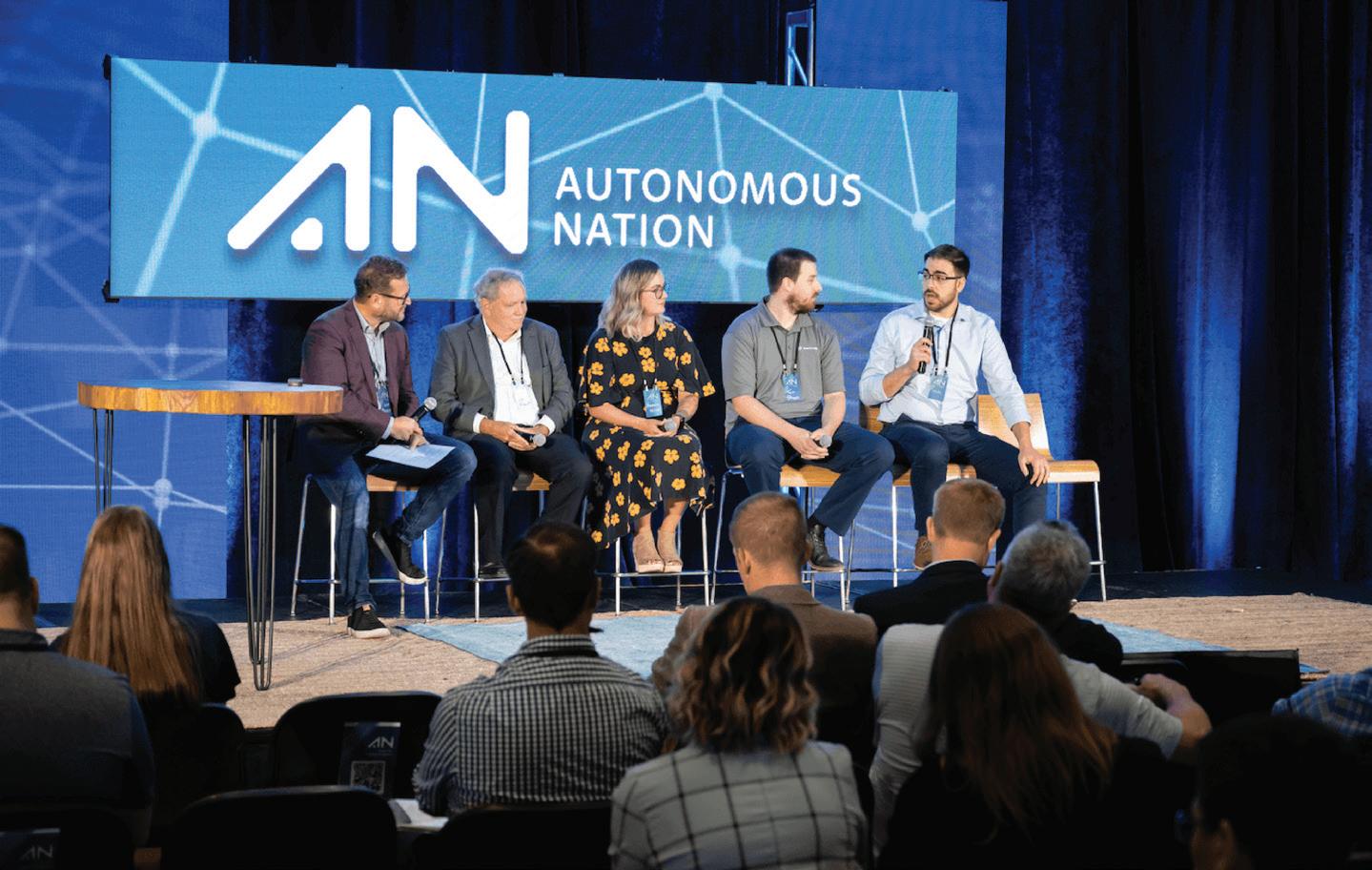
The morning conference portion was informative and inspirational with presentations from industry leaders and state lawmakers like U.S. Senator John Hoeven. However, my favorite part came after the conference… AKA the autonomous demonstrations. Here are some of the coolest (and cutest) autonomous tools used on North Dakota
Drone – Isight Drone Services
Isight Drone Services drones can provide precision agriculture services like farm mapping, livestock counting, ranch land inspections, severe weather inspections and more. When watching this demonstration, you could really see the precision and capabilities of this drone! It even stopped midair for a photo op.
Learn more at isightdrones.com
The Weedbot – NDSU
“The robotic platform’s first stage of use is to collect weed imagery sensor data, and then use Artificial Intelligence to identify weeds in the field to reduce the use of herbicides. That lowers farming input costs and gives consumers healthier food products.”
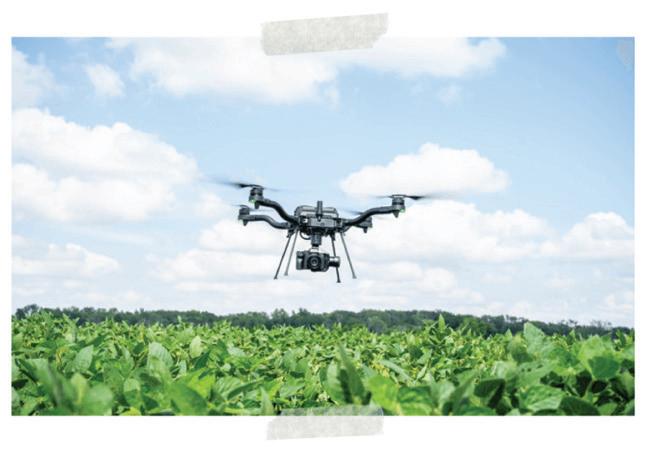
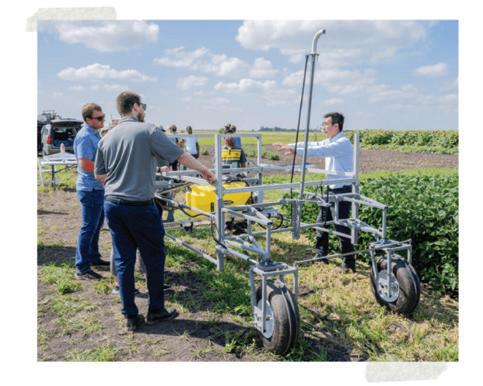
Read more about the Weedbot at ndsu.edu/news/view/detail/58923/

70 NOV/DEC 2022
Drones!
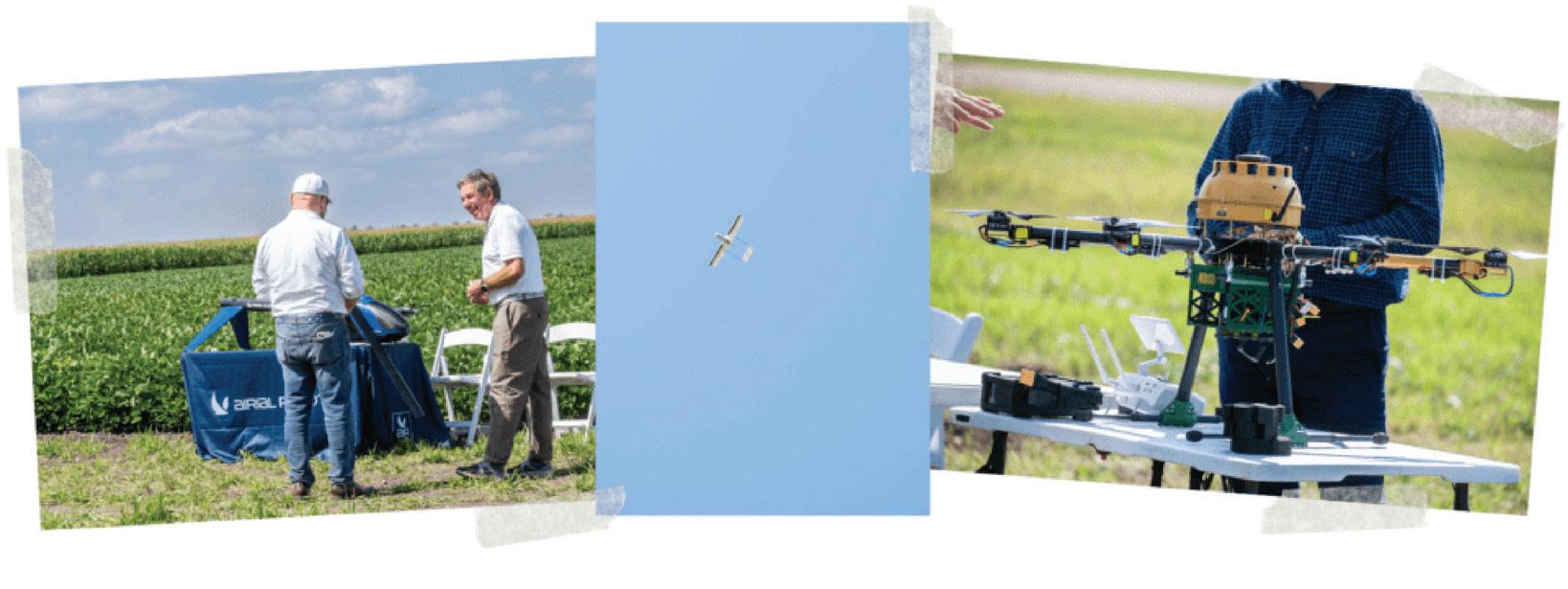
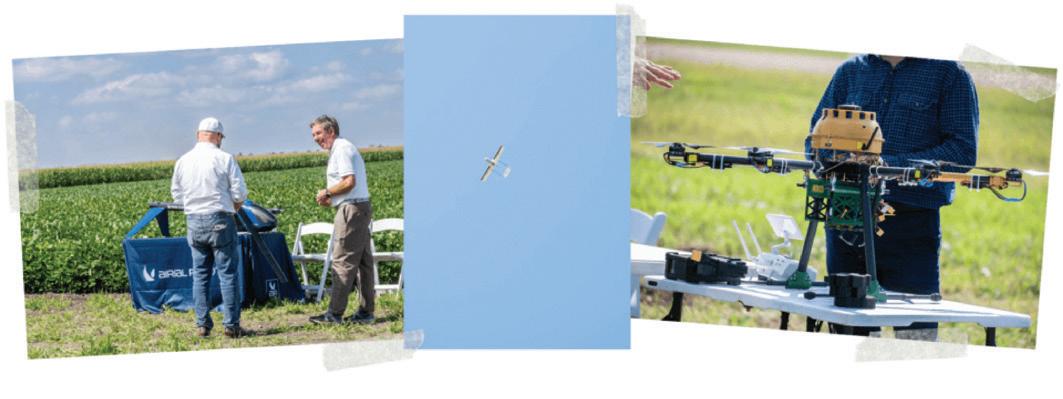
Autonomous Impact Protection Vehicle – North Dakota Department of Transportation
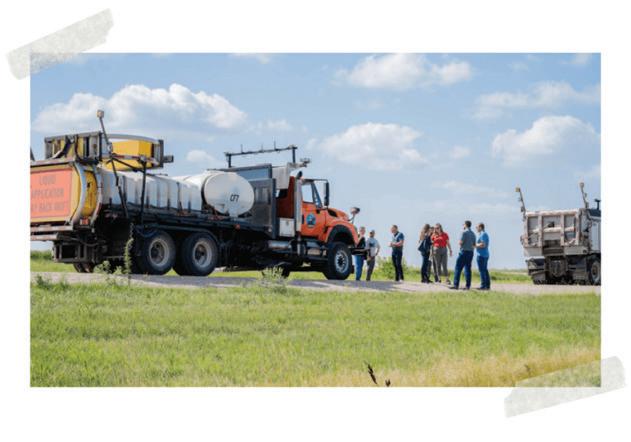
“The autonomous vehicle will be monitored and controlled by a human operated lead vehicle and will automatically follow behind construction equipment without putting a driver in danger.”
Learn more at dot.nd.gov/dotnet/news/Public/View/8835

TerraSentia Robot – EarthSense
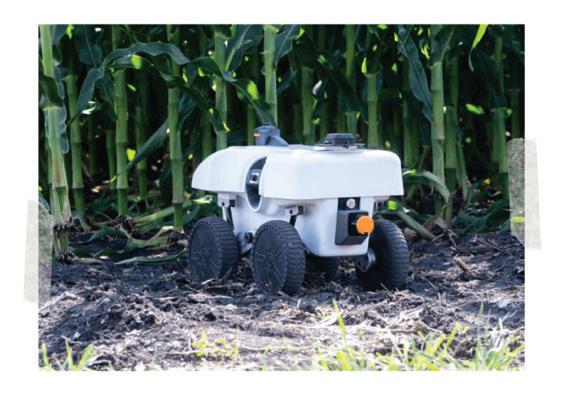
Did my introduction have you questioning, “how can an autonomous tool be cute”? This robot had us in awe and saying “aw” throughout the entire demonstration. Tiny but mighty, this vehicle automates in-field plant trait collection where drones cannot reach. “Using computer vision and machine learning, the autonomous robot is currently being taught to measure early vigor, corn ear height, soybean pods, plant biomass, and to detect and identify diseases abiotic stresses.” (Research Park).
Learn more at earthsense.co
Pictured above: Various drones from Aerial Robotics, the University of North Dakota Research Institute for Autonomous Systems and North Dakota State University
FUTUREFARMERMAG.COM 71
Panel featuring Josh Riedy, Founder and CEO, Thread, Amanda Nelson, Senior Change Management Consultant, Xcel Energy, Tom Stegge, UAS Program Manager, Xcel Energy, Joseph Verbout, Electrical Engineer, Xcel Energy, Nick Zaccardi, CTO, Thread

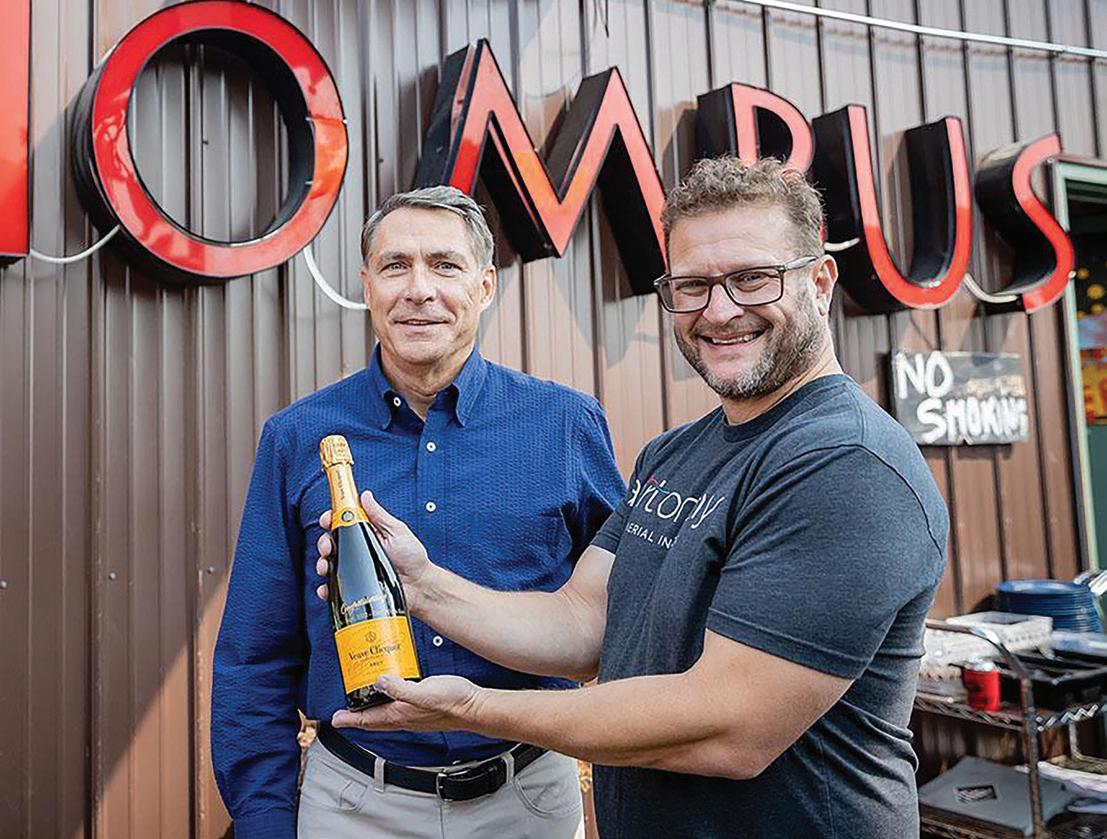
Thread To Receive More Than $15 Million In Series A Funding 72 NOV/DEC 2022
TThread, formerly Airtonomy, announced the first installment of what will be more than $15 million in Series A funding. Thread’s software enables customers to inspect critical infrastructure and deliver accurate analytics rapidly through a robust data and asset management platform.
The Series A funding round is led by Badlands Capital and Partner Blaine Crissman, who commented, “We are tremendously excited to lead one of the largest Series A funding rounds in North Dakota history. Thread is poised for continued explosive growth and we look forward to contributing to their success.”
Thread is revolutionizing how companies manage asset lifecycles in the renewable energy, oil and gas and utility sectors, among other industries. Thread is helping companies like Xcel Energy, a top five utility and arguably the industry leader in unmanned aerial systems innovation, enable more efficient, accurate and scalable delivery of asset inspections across their portfolio of renewable generation such as wind turbines, solar and transmission.
North Dakota-based startup leverages initial funding to accelerate growth.
Companies today are overwhelmed by how time-consuming and costly it can be to perform traditional inspections. Thread’s software allows customers to compare critical inspection data, analyze trends and assess overall asset health and performance across multiple disciplines in one single digital asset catalog for the first time ever.
Thread’s platform delivers timely and accurate data to customers, helping to identify when and where inspections are required while eliminating the need for external service provider scheduling and costs. This collection of attributes is saving customers like Xcel Energy thousands of hours in asset data organization and analysis.
Initial funding support was provided by the Microsoft TechSpark program, giving rise to Thread with a first-of-its-kind investment. Since then, many partners including Xcel Energy, Otter Tail Power and Minnkota Power, who is also among Thread’s largest investors, have bolstered Thread’s progress, providing tremendous customer, partner, and public support.
Thread continues to expand its workforce to more than 50 industry experts, including a leadership team wielding market-proven expertise and critical technologies required to deliver Thread’s powerful solution. Thread will use the Series A funds to expand its technology into other market sectors, continuing to expand the breadth of digitization of critical infrastructure assets through push-button robotic inspections.
About Thread:

Thread, formerly Airtonomy, is the leading data solution for enterprises looking to streamline and transform critical infrastructure lifecycle management. Leveraging its proprietary, data-driven, and robust platform technology, Thread embeds unmanned aerial systems and robotics with a suite of applications to automate Enterprise inspection workflows and to create the first inspection based digital asset catalog. Digital asset information becomes far more valuable to many stakeholders within the enterprise while also being easier and more efficient to maintain up-to-date information.

FUTUREFARMERMAG.COM 73
Reducing Barriers for Upcoming Land Stewards
By Madi Simpson
About Emily
Emily Reno is the founder of Mezclada, an online learning platform dedicated to reducing the barriers to land and capital for the next generation of land stewards. Emily grew up in Lawrence, Kansas, and currently resides in Vergas, Minnesota. She moved to West Central Minnesota through farmer connections she made while working as a graduate research assistant, which is what brought her up to Minnesota in the first place.

“After the analysis paralysis of having so many places I could live and different types of jobs I could pursue, I decided to stay planted and instead just commit to a place, trusting that things would fall into place. I’d say that they have!”

74 NOV/DEC 2022
About Mezclada
Emily is fiercely committed to sowing fertile grounds for social equity and environmental justice by stitching together a social fabric that values complex identity and builds meaning through belonging, transcendence, purpose, and storytelling. Mezclada does just that: their program “Aligned Farm Design” was created to serve farmers and future farmers struggling with time management, work-life balance, scaling with intent, and more. I had the chance to learn about Emily and her passion for land steward empowerment – keep reading to learn more about her values!
Tell us about Mezclada and your mission.
“Mezclada is all about creating a culture of care, courage, support, and compassion for underserved farmers struggling to access land and capital to launch their farm dreams in a big way. They’ve likely had experience working on other farms and possess a lot of practical agricultural knowledge, but they may have little if any experience in the realm of personal growth and development, which is where I come in. Mezclada’s mission is to inspire and empower the next generation of land stewards through storytelling, personal growth education, and applied research.”

Our food system lacks more of the mid-sized farms, and helping folks design businesses that fill this need is going to help diversify our supply chains, creating more resiliency in our economies, especially small towns. My background in regional planning and economic development has definitely fostered within me this lens of the way I work – I see renewed wealthbuilding opportunities within the agricultural sector as one of the keys to the vitality of rural places and people.
What have been the highest and lowest points of your entrepreneurial journey?
“One of the low points of my entrepreneurial journey was figuring out how to transition from a salaried position to pulling in my income through consulting, and understanding how to manage my own personal budget when I get paid once every 6 weeks instead of every two. It’s a steep learning curve, and I’m incredibly grateful for having built up my FU fund for this moment. I don’t think that without the cushion I would still be doing this.”
One of the highest points of my entrepreneurial journey is definitely when I completed the first ten weeks of ILT Academy, as I felt like I had so much more clarity about what my business could be and how to monetize my knowledge and skills in a meaningful way, supporting my vision for financial freedom. ILT has such a supportive community that it’s hard not to feel energized after class, even though it’s four hours in the evenings. I still lean on this community for inspiration and am grateful to the ILT team for all the love they pour into their courses. Their teaching style and methodology is one-ofa-kind and feels like you’re playing a game, which of course makes the hard work of working on your business more enjoyable.
How can our community support you in your next stage of growth?
“There are a few ways that folks can be supportive in Mezclada’s next stage of growth. Please send anyone who you believe is interested in this work our way to take our Aligned Farm Design course (we’ll do it in Spanish next year!) or explore partnership opportunities. I’m working on developing a certificate and potentially thinking about accreditation to integrate this work into existing technical college curriculum. If there are folks that want to support a local farmer in their area, we have sponsorship opportunities, as well as a scholarship program they could contribute to. We’re also looking for farm host sites for our farmer retreats for course alumni! ”

Readers can learn more about Emily and Mezclada by visiting:
mezclada.co Facebook: /mezclada.co Instagram: mezclada.co
FUTUREFARMERMAG.COM 75
By Samantha Burchill, student at Central Cass High School and Casselton FFA chapter member
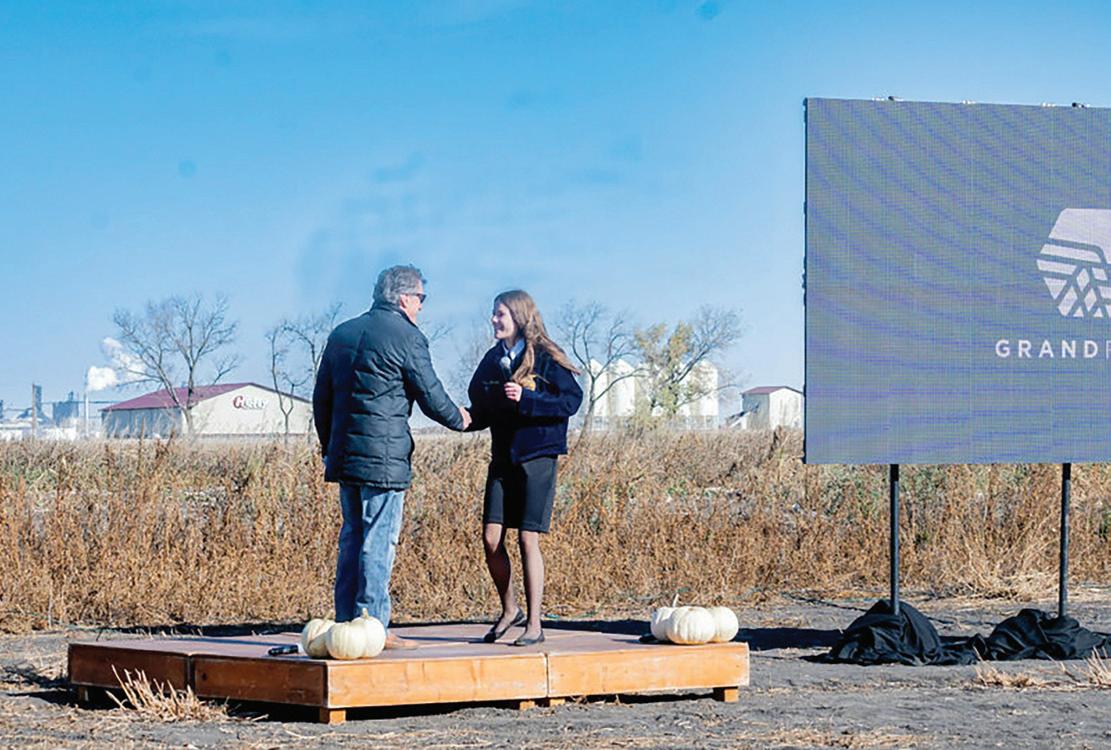

Letter from Samantha
A
Burchill
Central Cass FFA Member
76 NOV/DEC 2022
Samantha Burchill shakes hands with Governor Doug Burgum
As a Future Farmers of America member, being part of the organization presents the opportunity to be part of something bigger than yourself. Although my involvement with Grand Farm had been limited, FFA presented me another opportunity at the Grand Farm groundbreaking ceremony: to be part of one of the most monumental days in the future of agriculture.
My involvement with Grand Farm began in August when another FFA member from my chapter, Claire Christianson and I were asked to sit in on a meeting to brainstorm how we hoped to get students involved with Grand Farm in the future. At the meeting we were invited to the Autonomous Nation conference, which, ironically, was being held the next day—my first day of school. Without hesitation, Claire and I quickly changed our first day of school plans so we could attend the conference.
Within a little over 24 hours, I had fully submerged myself into the world of Grand Farm and Emerging Prairie. To say I was slightly overwhelmed would be an understatement. Going into the conference I knew Grand Farm hoped to make advancements in farming technology but creating global partnerships with startup companies and government officials? That idea was all new to me, and it opened a whole new level of realization.

Then a couple of months later, I heard the news about the groundbreaking ceremony that would be happening, and I was fortunate to be asked by Greg Tehven to speak at the event. Now, here I stand today, able to say I was able to speak at the groundbreaking ceremony on behalf of my FFA chapter and the younger generation. Speaking next to dignitaries such as Governor Burgum or Senator Hoeven was never something I thought I would get to do; nevertheless, I’m forever grateful I did.
It was truly incredible to see how many people came to the event. It left me in awe of how many people Grand Farm has brought together—all in the hope of a better future. It was great to see so much of our community and local agriculture represented in the event, with the Central Cass robotics team, plow demonstrations, and drone demonstrations. I have no doubt that everyone who attended the event left more inspired and hopeful in the future of agriculture than they did before the event. It was truly an opportunity I will never forget, and I couldn’t be more thankful to have been part of such a monumental day for Grand Farm.
FUTUREFARMERMAG.COM 77
CLEAN INGREDIENTS WITHOUT COMPROMISING
By Madi Simpson
When you think of North Dakota and our strengths, agriculture is probably one of the first advantages that comes to the forefront of your mind. But what about pasta? I had the opportunity to speak to Three Farm Daughters cofounder Mollie Ficocello about her journey as a niche North Dakota entrepreneur. Keep reading to learn more!
What is the Three Farm Daughters brand all about? What’s your mission?

We like to say we created Three Farm Daughters to be your friend in the food business. We are just everyday people— farmers, mothers, sisters, consumers, homemakers and so on. In prior years before children and work, we had the luxury of strolling the grocery aisles and taking our time to flip over food packages and read ingredient legends to see if they fit our needs, however now days with kids in the cart and tight schedules, that luxury has gone away like most.
We want our consumers to know that when picking Three Farm Daughters, they can feel confident in what they are feeding themselves and their families. They can be confident they are getting the best nutrition with clean labels while not having to compromise on the taste and texture of their favorite meals.

78 NOV/DEC 2022
Through starting a new business as many can probably attest and relate to, there are many highs and many lows, and a lot of highs and lows you didn’t foresee. In reflection, I think some of our best highs come from consumer and retailer feedback. Whether that be feedback from a buyer that they are going to bring us into their stores or consumers who engage on our social platforms and send notes about how they use our products in their homes and how it is directly impacting their families and lives. Some of our biggest challenges have come from just being a new start-up company in an industry we had little to no prior experience in.


Prior to launching Three Farm Daughters, my sisters and I really had no CPG experience. So everything we have done this far, we have had to learn along the way. That can make for some frustrating and tough times, however when reflecting on it, it is very fun to see the journey and hard work that has gone into it.
“Continuing to do just exactly what you are doing — Trying our products, giving us feedback, sharing them with your friends and family, and help us know how we can better serve you as our consumers. What product or shape do you want to see next?”
Readers can learn more about Mollie and Three Farm Daughters by visiting:
threefarmdaughters.com Facebook: /threefarmdaughters Instagram: threefarmdaughters
About Mollie
Mollie Ficocello is the co-founder of Three Farm Daughters, a family-owned clean-ingredient pasta company. Mollie was born and raised in Grand Forks, North Dakota and moved to Minneapolis to pursue an undergraduate degree at Bethel University in 2010. Upon completion, she moved back to her hometown to attend Law School at the University of North Dakota. Since then, Mollie has joined her family’s agriculture businesses based in Grand Forks.
What have been the highest and lowest points of your entrepreneurial journey?
How can our community support you in your next stage of growth?
FUTUREFARMERMAG.COM 79
Don’t Let Air Seeder Blockages Ruin Your Farm’s Profit Potential
By Intelligent Ag Solutions
TJ Wanken had just seeded his first 100 acres of yellow peas with his air drill when he discovered he had a problem.
“When I went to fill up, I realized I had one full primary run blocked through the whole 100 acres,” says the Shelby, Mont., grower. “This was essentially about a $5,000 error.”
Every farmer with an air seeder has to deal with blockages. Unfortunately, there’s only so much a grower can do to prevent them from happening. Blockages can be caused by things like animals, objects that fall out of a farmer’s pocket, like a pen, chunks of fertilizer, seed treatments, even barometric pressure.
The consequences of these blockages can be costly. “Anywhere a farmer has a blockage, they are going to have yield loss,” says Dan Gustafson, Product Manager for Intelligent Ag™. “Because they either are not getting seeds, fertilizer, or both in the ground.” Air seeder blockages also reduce crop uniformity and increase the chance for weeds. If it’s severe enough, a farmer may have to reseed a field,
which is an additional cost in fuel, seed, equipment, time and labor.
That’s what Wanken ended up doing. He bought more certified yellow pea seed, which cost around $45 an acre, and reseeded those 100 acres. That’s when he realized a blockage monitoring system could pay for itself in just a season or two.
Why Acoustic Sensing is the Most Accurate


Since prevention isn’t really an option, the best solution is to catch blockages as soon as possible. But it’s important to pick a system that a farmer can rely on to detect blockages quickly and accurately.
One option are optical sensors that detect product flow visually. The problem with them is they’re susceptible to notifying growers of false blockages when the sensors get dirty, which can be caused by impregnated fertilizer or even just dust from the seed.
Another blockage monitor is piezoelectric systems, which use vibrations to sense fertilizer and seed. But the challenge with these is that often the entire piece of equipment is vibrating, so it can be
difficult for the sensors to tell where a vibration is coming from. It also requires a lot of wires to power the sensors and collect data from them.
Then there is an acousticsensing system. “If you think of a stethoscope that a doctor uses, it’s identical to that,” Gustafson says. “We use a hollow tube coming from the sensor. As product contacts the membrane, a sound wave is produced that travels through the tube to an ECU. Based on the frequency signals, we can determine not only if you have product flowing, but also if you have reduced product flow, so we can catch blockages much earlier.”
Intelligent Ag’s Recon Blockage Plus™ is the only acoustic-sensing blockage monitor available on the market.
80 NOV/DEC 2022
Don’t Trade Up, Tech Up
Growers don’t need to invest in a whole new air seeder to adopt a blockage-sensing monitor, or even a different monitor. By retrofitting their current air seeder with a new blockage monitor system, they can have the technology of today for a tenth of the price. And with supply chain issues still keeping some OEMs from fulfilling inventory needs, now is a great time for farmers to look at retrofitting their old equipment.
“Many farmers are happy with their air seeders, but they need new technology,” Gustafson says. “The technology you get by retrofitting your 20-year-old air seeder is the same you would find on a brandnew air seeder. You’re not losing anything.”
And retrofitting doesn’t have to be too technical or complicated. Years ago, Hillsboro, N.D. farmer Tim Kozojed installed a Recon Blockage system on his farm, and he was pretty impressed with its simplicity.
“Now with the Recon Blockage Plus system, it’s even more simple,” he says. “In the install, some of the bracketry is more universal. We found that it was even easier to put in.”
Recon Blockage Plus runs on iPads
and still works in the background while other apps are in use.
Peace of Mind and Fast ROI
In times when farmers are operating on razor-thin margins, they can’t afford to miss out on any yield and profit potential because of a blockage. Which is why most farmers who install Intelligent Ag’s Recon Blockage Plus system find they make their money back in as little as 1-3 years.
“If you’ve ever had one blockage that destroyed a field because it happened for 50 acres and you didn’t know it, you would have made your money back on a blockage monitor system in that season,” says Gustafson.
For many growers who have adopted a blockage monitor, they wouldn’t use their air seeder without it. Gary Wagner, who farms in partnership with Jason Bailey in Crookston, M.N., compares it to autosteer.
“Autosteer was not really meant to pay for itself, but I would never be in the tractor without autosteer,” he says. “You get equipment with run monitors on it, I would never have a machine without them.”
Most importantly, it gives farmers peace of mind that they can seed and fertilize with confidence, knowing that if a blockage or any problem with product flow occurs, they’ll be alerted to it right away.
“It’s hard to monitor things under the surface,” Kozojed says. “All the mistakes get buried under the surface, we don’t see any of them. So getting some insight down into that path, into the furrow, is really important.”
To learn more about Intelligent Ag Solutions and Recon Blockage Plus, visit: https://intelligentag.com/ recon-blockage-plus/

FUTUREFARMERMAG.COM 81