Turn to pages 34–35


August 2023 ISSUE 58 THE MAGAZINE FOR FIRE PREVENTION, FIREFIGHTING & RESCUE CAR PARKS DATA CENTRES FIREFIGHTING FOAM COMPLIANCE AUTONOMOUS SHIPPING
3 – 5 OCTOBER: PREVIEW

Turn to pages 34–35
It’s the 21st Century, it’s about time flow testing equipment got with the times. Smart Monster has done exactly that. The first fully digital flow testing equipment allows you to test remotely, showing you your readings in real time on your personal device, and saving all your results on the cloud. To put it another way: it’s flow testing smarter, not harder.

FOAM
18 Setting suppression standards
As the industry transitions towards Fluorine Free Foams, John Olav Ottesen, examines the deficiencies in recognised design and testing standards.

SFPE
20 Wildland-Urban interface fires
every week, it seems that the news media reports a devastating wildland-urban interface fire somewhere in the world. Chris Jelenewicz asks what can our profession do?
26 Effective fire protection
A recently published White Paper prepared by Siemens outlines how best to protect parking facilities and their occupants after safety measures have failed.
32 Corrosion inhibition using nitrogen
A study conducted by Potter Electric Signal analysed the corrosion-inhibiting effects of 98% nitrogen gas when applied to both carbon steel and galvanised steel, in an environment simulating a dry pipe fire sprinkler system.
FIRE PUMP SYSTEMS
51 A new era of fire safety
Containerised fire pump systems offer a safe, reliable, and cost-effective solution writes Steven Baird.
54 Foam is not the voodoo science of firefighting
Stuart Phythian delves into the primary issues faced by the industry, shedding light on their complexities and implications and confirming that using foam as an extinguishing medium need not be regarded as the voodoo science of firefighting.
Data Centres
12 A digital golden thread of information

In order to ensure that data, property and lives are protected from fire, there are requirements that must be met within the fire safety strategy write Adalla Omar Baaboud and Abhilash Viswamani.
Autonomous shipping
22 Removing the human factor
The idea of an unmanned cargo ship, offering numerous advantages in terms of efficiency and safety, however, as FME reveals, firefighting on these vessels presents unique challenges, both at sea and in port.
IFSM

28 Hiding in the shadows: Dyslexia
Compliance: Individual challenges
30 The challenges of regulatory roles
In this, his most recent article, Len Swantek, describes the factors that regulatory representatives face in their daily efforts to secure and maintain agency certifications across multiple markets and industries.
IFE
45 Illuminating the safest city in the world
Compliance: Passive fire protection
46 Implementing compliance...
Paints & coatings
Continuing the series about ‘implementation’ of passive fire protection, Abhishek Chhabra, takes a deep dive into interior finishing and structural fire protection as two different applications of passive fire protection, but with some common pitfalls.

Global Fire Equipment
Email: info@globalfire-equipment.com
Web: www.globalfire-equipment.com

editor
Wendy Otway +44 (0)1795 530111 editor@firemiddleeast.co.uk

advertising sales worldwide
commercial director
Mike Dingle +44 (0) 1752 267 330 mike@firemiddleeast.co.uk
sales
Ryan Bickerton + 44(0)1752 265 802 ryan@firemiddleeast.co.uk
Gareth Driscoll +44 (0) 1752 260 603 gareth@firemiddleeast.co.uk
Rahul Vara +44 (0) 1752 604 352 rahul@firemiddleeast.co.uk
Kyle Kennedy +44 (0)7867 641 955 kyle@firemiddleeast.co.uk
production team
Freya Tucker freya@firemiddleeast.co.uk
marketing manager
Paul Riglar +44 (0)7496 377 603 paul@firemiddleeast.co.uk
designed by
Paul Buckley paul@riasca.co
This publication may not be reproduced or transmitted in any form in whole or in part without the written consent of the publishers.
© MDC Middle East Ltd. 2023
The Publisher and Editor do not necessarily agree with the content and opinions in editorial contained in Fire Middle East magazine.
For subscriptions and advertising enquires, or for further information on the magazine visit our website: firemiddleeastmag.com
Follow us @firemiddleast
fire middle east magazine
is published by
WITH THOUSANDS OF tourists fleeing for their lives ahead of the wildfires raging around the Mediterranean, the news that three firefighters have died in a helicopter crash whilst battling wildfires in America and now the deaths of at least 90 people on the island of Maui, I wonder what society needs to do keep themselves, firefighters and the environment safe. On p20, in its regular column, the SFPE ask the same question of its members.
Elsewhere much work is being undertaken to create efficient and environmentally friendly foams for both external and building fires, articles in this issue on pages 18 and 52 will bring you, the reader, up to speed on the subject. Aligned to this, on page 32, is a piece considering the efficacy of nitrogen in the prevention of corrosion in fire suppression systems.
A White Paper, published as we went to press, highlights the challenges and, importantly, potential solutions, in protecting garages containing electric vehicles from the threat of fire… A summary of this vital publication can be found on page 28.
The growth of the data centre market post covid-19, reliance on data and digital services has increased dramatically with the revolution in work, education, and entertainment and as a consequence we all need to keep pace with the systems available to protect this essential aspect of our lives. These are explored on page 12.

Continuing FME’s commitment to exploring standards and compliance, in this issue we take a very close look at interior finishing and structural fire protection as two different applications of passive fire protection. In his most recent article, Len Swantek, describes the factors that regulatory representatives face in their daily efforts to secure and maintain agency certifications across multiple markets and industries.
Several members of the FME team will be at Intersec Saudi Arabia from 3rd to 5th October and they hope to see you there.
Meanwhile I hope you find this issue informative and inspiring.
MDC Middle East Ltd

Unit 4, Creative Court, Central Park Avenue, Plymouth, PL4 6NW
Mike Dingle +44 (0)1752
Mike@firemiddleeast.co.uk
Wendy Otway editor@firemiddleeast.co.uk @firemiddleast firemiddleeastmag.comThe CDAA in Oman has issued a warning to residents after a number of people were hospitalised during several house fires. The most common reasons for these fires is people not closing the gas cylinder after cooking, or when leaving the house, children playing with matches, cigarette butts being discarded carelessly and using flammable building materials for interior decorations. They have advised that ensuring the safety and maintenance of electrical connections and gas installations, avoiding the use of grills and charcoal tools indoors, can help reduce the risk of fire in homes.
His Highness Sheikh Dr. Sultan Bin Muhammad Al Qasimi, Supreme Council Member and Ruler of Sharjah has allocated 100 million dirhams for a project to reduce the risk of fires in towers and buildings in the city. The first phase of the project will cover 40 high-risk residential towers

over seven floors high. The project aims to replace aluminium facades with safer materials to reduce the risk of fire and protect residents, properties, and the environment, aligning with the government’s priority to ensure building safety in Sharjah.

Residents of Tower 2 in the Ajman One complex in Ajman, UAE stayed in hotels after a fire swept up the skyscraper. The fire broke out at around midnight, and although crews worked swiftly to put the fire out, it damaged 64 apartments and 10 cars, but it was contained to only one side of the building. The Director General of Police Operations Department at Ajman Police, said that the force sent a mobile emergency management service, in co-ordination with the Emergency Operations Section, to talk to the building’s residents about damages. Other response crews are also working to ensure the safety of the site.
TURKEY An operating room fire broke out in the Sultan Abdulhamid Han Training and Research hospital in Uskudar district. According to the Istanbul Governor’s Office, 109 patients were transferred to nearby clinics, including 15 patients in intensive care. One of the patients died in the hospital as a result of the fire. Emergency responders were quickly dispatched to the scene, working to extinguish the blaze and contain the fire. The swift evacuation of patients was a critical aspect of the emergency response.
A perfume factory in Umm Al Quwain has been destroyed in the Umm Al Thuoob industrial area. The building and surrounding area were evacuated, including 400 factory workers.Firefighters from four Emirates joined forces to battle the flames. Sheikh Rashid bin Saud bin Rashid Al Mu’alla, Crown Prince of Umm Al Quwain, has hailed the efforts made by the emirate’s civil defence teams and the rapid response of civil defence departments in Ras Al Khaimah, Ajman and Sharjah.
The three British tourists, missing after a scuba diving boat they were on caught fire off Egypt’s Red Sea coastline, are presumed dead after an extensive search of the area.
In a short statement, Egypt’s Red Sea Governorate said 14 crew members and 12 British tourists were rescued when a medium-sized scuba diving boat went up in flames near resort town Marsa Alam.
People at the secene said the flames engulfed the boat in a “matter of minutes”. Following an initial examination of the vessel, Egyptian authorities said an “electrical short circuit in the boat’s engine room sparked the blaze”.
Twenty six people have died, and more than 4300 have been injured during Iran’s traditional “Festival of Fire”. Most of the deaths and injuries were reported in the capital Tehran, local health officials said. The annual festival dates back 2,500 years and has its roots in pre-Islamic Persia when Zoroastrianism was the dominant religion in the region. Preparations for the festival begin weeks ahead and include the manufacture of homemade firecrackers and explosives. On the night of the festival people take to the streets, set off firecrackers and explosives and dance around and jump over bonfires. This year showed a 22% increase in injury. As per official statistics, 79% of victims were men and 21% were women while 44% of victims were aged between 6 and 18, many of them admitted to hospitals. This year several ambulances were damaged, and police confiscated a larger quantity dangerous explosives.
 ABU DHABI
The Abu Dhabi Police and the Abu Dhabi Civil Defence Authority have warned of the danger of crowding at fire and accident sites. Crowds can slow the arrival of ambulance and emergency vehicles, traffic patrols and civil defence delaying assistance to the injured and saving lives. As a deterrent, a fine of Dhs1,000 could potentially be imposed on those who crowd in accident sites.
Ten people died after a fire broke out in a workshop in the Al Hofuf industrial city in Al Ahsa, the largest governorate in Saudi Arabia’s Eastern Province. Initial reports point to an electrical short circuit being the cause of the fire.
In the southern port city of Bandar Abbas, eight firefighters have been injured trying to contain a fire huge fire which erupted after explosions in two petroleum reservoirs of the Aftab Oil Refining Company’s refinery in Iran’s. There were concerns of the flames spreading and other
An apartment fire in Amman has left four people dead. The fire broke out in an apartment in the al-Nuzha area of Amman leaving the victims with serious burns. The civil defence crew transferred them to the Prince Hamzah Government Hospital, but they succumbed to their injuries. An investigation has been launched to determine the cause of the fire.
Elswewhere in Amman, two people have died when several warehouses containing polystyrene foam caught fire. Five other people were injured during the blaze, but did not need hospitalisation. The 2000m2 warehouses in the Al-Juwayyidah area, southeast of Amman. Dozens of operational civil defence vehicles and relevant agencies participated in extinguishing the fire and an investigation was initiated to find out the cause.
nearby reservoirs exploding. Footage of a large column of black smoke billowing from an industrial compound. The injured firefighters were treated on the scene before heading back to extinguish the fire, the cause of which is unknown.
DUBAI
“A lack of compliance with building and safety requirements” has caused the death of 16 people in a massive fire which ripped through a residential building in the Al Murar area of Dubai. People nearby tried to enter the building to assist trapped residents after hearing a loud bang, but the smoke was too thick.
Fire engines and police attended the scene and used a crane to rescue people from higher floors of the building. The fire broke out on the fourth floor of the building, but spread quickly upwards through the building’s aluminium composite cladding.
There have also been reports of ad-hoc partitions being present in the to create privacy for the multiple individuals who shared apartments in the building, which could have caused the residents safe egress from the building to be become blocked.

In July, whilst wildfires on mainland Greece continue to burn around Athens, on the island of Rhodes more than 80 wildfires forced over 30,000 of locals and tourists to flee with officials reporting it’s the “largest evacuation” ever in the country. Within days, over 2,500 were evacuated from Corfu on a single night.
Whilst in the south-west of the Mediterranean, Algeria and Tunisia are battling fatal wildfires. Some 8,000 personnel are firefighting in Algeria, where 10 soldiers were killed during an evacuation.
A fire at the Changfeng Hospital in Beijing has killed 29 people. Twelve people, including the Director and Deputy Director of the hospital have been detained, as well as the head of the firm overseeing renovation works. A drone was used to communicate to trapped patients that help was on the way, and to stay calm and wait
PAKISTAN
to be rescued. Approximately 70 people were evacuated by firefighters, who put the fire out within an hour.
It is reported that the fire was started by sparks generated by internal renovation works igniting flammable paint being used in the inpatient department of the hospital.
A fire at two adjacent factories in the port of Karachi, Pakistan has claimed the lives of four firefighters. Firefighters and rescue workers rushed to contain the fire, which lead to the buildings collapsing, killing the four firefighters, and injuring more than a dozen others. The cause of the blaze is still unknown, but it is thought that spread of the fire was due to that amount of goods stored inside being over
the capacity of the building. A lack of fire doors and firefighting equipment in the building has also been reported. The fire comes shortly after the Pakistan Accord – a legally binding agreement between global union federations and garment brands and retailers, which looks to build on widespread safety improvements in factories - has been signed by more than 45 parties.
Environmental concerns are being raised in the aftermath of a fire on an oil rig in dry dock on the Mobile River in Alabama. More than 55 firefighters responded to the incident at the rig, which contained diesel, hydraulic fluid, oil and other potentially hazardous substances.
Whilst in Florida a fire claimed the lives of almost all the animals at a Florida Gulf Coast wildlife centre. The fire at the Alligator and Wildlife Discovery Centre which was home to more than 250 animals was under control within an hour but almost all were killed.

Five big markets, containing thousands of shops have been destroyed in Bangladesh, leaving at least eight people injured. Around 48 units of Fire Service and Civil Defense along with rescue teams from the army, police, Rapid Action Battalion (RAB), Detective Branch (DB), and air force took part in the operation to contain the blaze. According to the fire service, two members of the force were among the injured who have been admitted to Dhaka Medical College Hospital. The fire took six hours to extinguish, during which time it’s thought that billions of dollars of goods have been lost, along with many families’ livelihoods.
More than 100 fires appear to have been started intentionally in the Asturias region, and another 38 wild fires in the neighbouring Cantabria region. Authorities have labelled those who started the fires as “Environmental Terrorists” and are calling for the penalties for criminals who start fires to be increased.
The government is being called on to subsidise safe e-bikes after a number of fires caused by a faulty battery, including one which claimed the lives of a family of four in London. Industry experts are pushing for better controls around the import of batteries from countries with less stringent regulations. Young people, who work in the UK’s “gig economy” as delivery couriers are thought to be more at risk, as they are more likely to buy lower end goods, and live in houses of multiple occupancy, with no external storage for the bikes.
A 15 year old girl in the South American country of Guyana is facing charges of arson and murder as a school dormitory fire claimed 20 young lives. More than 24 students were also injured, including a 13 year old who has been flown for specialist treatment at the Northwell Burn Centre at the University Hospital in Staten Island, New York. All of the doors in the facility had been locked, to prevent the students sneaking out at night, this inevitably stopped the children escaping from the fire. The school’s alarm systems and fire preparedness efforts are also being investigated.
32 fire engines responded to a fire at a restaurant on the second floor of a building in the Shimbashi area of Tokyo, Japan. The blaze started following an explosion, which is believed to have been caused by a gas leak. Four people have been reported to be injured, and while the fire did not spread to surrounding buildings, debris from the explosion was thrown across the street causing superficial damage to cars. A person involved with the restaurant has told police the explosion occurred after he lit a cigarette.

25,000 people have been evacuated after a fire broke out in in a control room of Germany’s biggest theme park, EuropaPark, near the French border.

More than 450 emergency personnel rushed to the park to assist with evacuation
as well as firefighting. The cause of the fire is still under investigation, and although the area directly around the scene of the incident remains closed while the investigation is on-going, the rest of the park has reopened.
Firefighter Instructors, who train firefighter staff across the UK and typically face up to five to ten times the number of live fires compared to regular firefighters, have been found to have chronic inflammation leaving them at greater risk of cardiovascular diseases, infection and illness, according to new research by the University of Roehampton London.
Led by Dr Emily Watkins, Lecturer in Environmental and Exercise Physiology at the University of Roehampton London, the study measured blood samples, blood pressure and psychological data from 136 UK Fire and Rescue Service personnel, including from Breather Apparatus Instructors (BAI), over six months. High BAIs, who are exposed to over 20 fires per month, showed clear signs of systemic inflammation, which occurs when the immune system is constantly defending the body, making them more susceptible to infections and illness.
This is the first study to indicate that these symptoms are consistently shown amongst high BAIs over time. The research also found that high BAIs, who are exposed to a greater number of physically demanding tasks, encapsulating personal protective equipment and extreme heat environment, exhibit elevated levels of numerous biomarkers that puts them in “high risk” categories for cardiac events, such as a heart attack.
The research demonstrates the importance for fire services to ensure training fire workloads are safely and effectively managed and that exposure limits, particularly for Firefighter Instructors, are applied. The research recommends that 10-15 fire exposures per month are a reasonable maximum workload, with a greater number of exposures per month elevating the likelihood of systemic inflammation.
The research follows new findings by the World Health Organisation’s International Agency for Research on Cancer (IARC) in 2022, which has now classified occupational exposure to fires as carcinogenic to humans, with sufficient evidence of mesothelioma and bladder cancer in firefighters.
A copy of the research paper ‘Inflammatory and psychological consequences of chronic high exposure firefighting” is available to download here https://tinyurl.com/325c5djb

UK-based manufacturer of short duration breathing apparatus, Semmco Life Protection Systems (LPS), announces a new as been awarded a £10m contract with the UK’s HM Prison and Probation Service (HMPPS) to provide its Head RPE/CSRE (Cell Snatch Rescue Equipment) escape breathing sets to prisons across England and Wales. The contract will see Semmco LPS provide a complete service to HMPPS, with 4,500 sets deployed across its prison estate, supported by comprehensive
Since 2016, the International Water Mist Association (IWMA) scientific council has evaluated submissions from scientists applying for the IWMA Young Talent Award. To ensure that the prize goes to theses on different levels, it alternately goes to the best master or Ph.D. thesis. In 2023, the winner is Martin Thielens who graduated from Ghent University in October 2022.
The title of his Ph.D. thesis is: “Advanced Computational Fluid Dynamics Modelling of Water Sprays in Fire-Driven Flows”. The award will be handed over in Copenhagen, Denmark, on 12th October during the 22nd International Water Mist Conference.
user training, the supply of user manuals, technical support and a fully managed refurb and maintenance programme. When an incident occurs, there is a requirement for Respiratory Protective Equipment (RPE) to enable the safe resolution of the cell fire, ensuring the protection of those involved from harmful smoke and fumes. Since 2009, HMPPS has deployed over 3,000 RPE sets across the prison estate, with an average of two sets used per cell fire event.
Peli Products GMBH has announced plans to expand the production capacity of the manufacturing facility it acquired in Crottendorf in July 2022.
The industrial plan has been designed with a focus to maximise sustainability resulting in several projects such as recycling close to 100% of the wasted polypropene in-house and other materials. The manufacturing site has been upgraded with photovoltaic panels and a system to re-use the heat generated by machines to warm up the manufacturing halls in winter.
WATERFALL PUMPS MANUFACTURING is an innovative and technology based centrifugal fire protection pump manufacturer committed to protection of lives and properties by offering wide range of highquality centrifugal fire pumps and packages according to the market needs.
We manufacture fire pumps with utmost precision and quality to meet the extreme requirements in case of fire.

Intensive research and development ensure that our products are continuously improved to meet the latest technical demands. Instant availability of spare parts, together with first class service, assures customer that they have selected the right partner.
Horizontal Split Case:
Flow ranges from 300 GPM up to 5000 GPM

Pressure ratings from 81 psi up to 345 psi
Electric (50Hz/60Hz) and Diesel driven.
Horizontal End Suction:
Flow ranges from 50 GPM up to 1000 GPM
Pressure ratings from 80 psi up to 309 psi
Electric (50Hz/60Hz) and Diesel driven.
Vertical Turbine:
Flow ranges from 150 GPM up to 2000 GPM
Pressure ratings from 49 psi up to 402 psi
Electric (50Hz/60Hz) and Diesel driven.
WF-Fire Pump House:
Pre-packaged fire pump system

All our fire pumps are manufactured in a fully equipped ISO 9001, ISO 14001, ISO 45001 certified factory environment backed with a highly skilled, trained, and experienced team. Our fully automated and advanced fire pump test facility is equipped with high accuracy & precisely calibrated equipment to ensure that the pumps tested meets or exceeds the requirements of the most demanding performance, quality standards and industry specifications such as UL, FM and NFPA 20. Our fire pumps are listed by Underwriters Laboratories (UL) and approved by Factory Mutual (FM). Other major approvals include CE, SETSCO and SASO-SABER.
Designed according to the site or client’s references while complying with standard requirements.
“Where Quality Comes First”
P.O. Box: 446054 Dubai
Tel: +971 4 2633325
Fax: +971 4 2345335
Email: info@wfpumps.com

Web: www.wfpumps.com

Location:
Al Khawaneej 2, Al Ttay area, Dubai-UAE
The ever growing event, VdS FireSafety, will again be held in Cologne 6th and 7th December 2023.

The conference “Fire Extinguishing Systems” will have German-English simultaneous translation and cover both days of the event with current case studies and solutions from Germany and abroad will be discussed. There will also be two VdS-FireSafetyTalk panel discussions which all trade fair visitors will again be able to listen free of charge as experts discuss important industry trends.
LGM Products has attained ActivFire approval for their renowned Signaline FTEN Linear Heat Detection cables.
ActivFire is a respected certification scheme administered by the Fire Protection Association Australia (FPA Australia), an industry body dedicated to supporting and promoting the fire protection industry in the country. and obtaining ActivFire approval is a significant milestone for LGM Products as it guarantees users, regulators, and stakeholders that Signaline FT-EN has undergone rigorous testing and adheres to the necessary standards, ensuring its reliability and effectiveness in mitigating fire risks.
Signaline FT-EN is the first product to be approved to the European standard EN54 part 28:2016 and listed by ActivFire.
The booming number of electric vehicles on the roads may be considered good for the environment, but it is causing concern among firefighters. Although electric vehicles are statistically less likely to catch fire than an internal combustion engine car, incidents involving a lithium-ion battery can be far more serious and difficult to extinguish –especially if in an enclosed space such as an underground or multi-storey car park which large fire engines cannot access.
Once a battery pack has been compromised by an accident or external fire, it can be difficult to tackle the resulting blaze as the energy contained with the cells is released, causing a ‘thermal runaway’. Previous ways of preventing this or fighting the fire involve extreme measures such as immersing the entire car in water for days in large bags or shipping containers.
A new, more practical way of tackling these incidents has been developed along with a new rapid intervention vehicle, the British-built HILOAD, engineered by Prospeed Motorsport in York,which can deliver the crew and equipment to locations where height may be limited, such as car park structures. At just 1,850mm - less than some large SUVs and low enough to allow access to the majority of parking structures. It also results in a lower centre of gravity and better stability in high-speed manoeuvres.
The Swedish Civil Contingencies Agency (MSB) has published a new report titled “Demonstration of Extinguishing Method of Lithium-Ion batteries”. The report is based on the results of a series of tests carried out in a collaborative project involving several stakeholders, including Cold Cut Systems.

The tests were designed to examine whether injecting water into a Li-ion battery that had gone into thermal runaway could effectively suppress and extinguish that fire. The project’s goal was to provide guidance on how to put out propagating lithium-ion batteries and increase knowledge and understanding of electric vehicles. The full report is only available in Swedish so far, but there is a summary in English on the Cold Cut Systems website.
Detection Technology Plc has completed the acquisition of Haobo Imaging. Detection Technology acquired 90% of the shares in Haobo Imaging for EUR 12 million. With the acquisition, Detection Technology’s product range covers all digital X-ray imaging detector technologies.
UAE firm FFBOTS has announced the Middle East’s first firefighting robot. The robot, dubbed “Wabel” is hoped to become an addition to firefighting departments, the manufacturer believes it will be especially useful for use in critically hard to reach places. The robots are being built locally, but the company hopes that they can take on the global market especially where extra assistance is needed in fires in factories, warehouse and tall residential buildings.
Stay connected to your crew on and off scene with the LUNAR™ Connected Device, part of the MSA Connected Firefighter Platform.

Watch a video demo of LUNAR to learn more:
MSAsafety.com/connected-firefighter/lunar
The growth of the data centre market post covid-19, reliance on data and digital services has increased dramatically with the revolution in work, education, and entertainment. As a result, write ADALLA OMAR BAABOUD and ABHILASH VISWAMANI of Hydrock, countries are highly invested in network solutions to keep pace with this rapid development and the data centre’s share of global electricity consumption is predicted to increase from 3% to 4% by 2030.
The size of the data centre services market was estimated to be worth $220 billion in 2021, whereas it speculated that by 2030 this figure will increase to an estimated $344 billion. The GCC data centre market alone is expected to reach a value of $5.5 billion by 2028 from $3.44 billion in 2022, growing at a CAGR of 8.14% as regional governments adopt policies for implementing cloud services.
Some may see that this development conflicts with sustainability and climate change, for example, the Kingdom of Saudi Arabia currently relies on fossil fuels to generate its electricity. However, in line with the Saudi Vision 2030, the kingdom takes into account both the environment and sustainability seriously and has introduced the Saudi and Middle East Green Initiatives.
The kingdom is expected to generate over 50% of its renewable energy by 2030. Comparing this to 2017, the kingdom was relying on up to 0.02% of renewable energy in accordance with the International Energy Association (IEA). The country is also committed to becoming Net Zero by 2060. This would be one of the main factors for data centres to be more environmentally friendly and energy efficient.
THE RISK OF FIRE AND IMPORTANCE OF FIRE ENGINEERING
Naturally, as data centres are concerned with high power availability and efficiency, fire damage often goes unreported to limit reputational damage. Today’s data centres and server network rooms are expected to maintain seamless operations with built-in redundancy providing a tier of resilience for a host of potential incidents/threats. It is imperative that all businesses
prepare themselves for unseen disasters, particularly the risks associated with fire. To maintain and achieve the desired level of safety, the implementation of an appropriate fire engineering management plan is an effective solution to mitigate the risks due to fire. The key considerations should include but not be limited to, the design, construction, operation, management, specification of fire protection and activation systems, testing, maintenance, inspection, integration and associated documentation.
The leading cause of data centre loss is due to power failures from IT issues. The leading non-IT related cause of outage is due to fire events. There were 13 instances related to fire outbreak reported between 2016 and 2020 in accordance with Uptime Institute. Due to this outage, an operator can lose between $5,0007,000USD per minute.
An example of a major fire outbreak happened in March 2021 destroying an OVH (Online Virtual Hosting) cloud data centre in Strasbourg, costing the French cloud operator more than €105 million ($122m), according to documents filed with a French financial authority. The Strasbourg fire was a major catastrophe affecting some 65,000 customers, many of whom lost data and business. The company’s reputation was affected and suffered further losses in the stock market. The resulting fire produced toxic fumes from lead batteries which exacerbated the destructiveness of the fire. France’s BEA-RI’s report suggested that a water leak on an inverter could have been a possible cause of the fire. The BasRhin fire service’s report highlighted issues such as the lack of an automatic fire extinguisher system in the building, and delay in electrical cut-off which made it more challenging for firefighters to tackle the fire burning in the power room.
For most data centre and server room operators, potential fires are not the main issue. The key concern is to avoid, at all costs, having to cut the power to equipment and thus interrupting IT processes. This often relates to contractual agreements with their customers regarding continuous availability of computing capacity and stored data, which also involves liability risks. Customers are dependent on digitally stored information, so no data centre can afford downtime. As such, data centre safety and fire protection measures are focused on preventing any type of operational downtime, especially cutting power to the data centre—even in the event of a fire. At the same time, it is important that security and fire protection systems be as efficient as possible, to keep operating costs down.

In order to ensure the protection of life, property and data from fires, there are requirements that should be met. These can be from national fire safety standards as well as industry experts. In Saudi Arabia, the Saudi Building Code (SBC) is the national guideline for building compliance. However, consideration to fire safety goals and objectives from industry standards such as the National Fire Protection Association (NFPA) required by the client or insurance companies need to be discussed with the authority having jurisdiction (AHJ).
The NFPA is one of the most recognised international organisations in the world. The NFPA provides recommendations under their own standards for areas such as data centres, fire detection and suppression can be considered along with other international standards, including British Standards (BS).
However, when developing the fire strategy for a data centre, any parameters that could affect the fire safety design should be considered in a Qualitative Design Review (QDR) through the application of the process outlined in BS 7974-0 “Application of Fire Safety Engineering Principles to the Design of Buildings
- Part 0: Guide to Design Framework and Fire Safety Engineering Procedures“ as a recognised method to engage stakeholders in communication to mitigate risk. The standard identifies the following steps:
a. review of architectural design and occupant characteristics
b. establish fire safety objectives
c. identify fire hazards and possible consequences
d. establish trial fire safety designs
e. identify acceptance criteria and methods of analysis
f. establish fire scenarios for analysis
The QDR team should be led by a fire engineer and should include the client, architect, civil defence, AHJ, contractor, and other engineers working on the project. A fire risk assessment and fire safety management plan should also be completed prior to the occupation phase of the building. However the failure to manage fire safety adequately could result in a fire occurring with the potential to impact millions of customers using the cloud resulting in business failure.
The management of fire safety should be purely based on a policy of avoiding a fire occurring in the workplace regardless of the organisation or building requirements. The policy should be clear in order to establish effective organisational control. There are a number of safety management systems available to assist organisations with this; the most well-known being the International Organisation for Standardisation “ISO 9001” which is accredited by a third-party body.
In order to understand the safety goals and requirements of the organisation to be managed, a risk assessment should be carried out. This assessment will assist the responsible person to identify the preventive and protective measures required to comply with the law and Authority Having Jurisdiction (AHJ) as well as ensuring the safety of the occupants, the building and those who could be affected by their activities.
There are five steps that are often considered when a risk assessment is undertaken, and these are:
1. identify fire hazards
2. identify people at risk
3. evaluate, remove or reduce, and protect from risk
4. record, plan, inform, instruct and train
5. review assessment.
The assessment can be either qualitative, quantitative, or semiquantitative depending on the complexity of the risk and the building. Applying the above methods along with a control strategy is the key to effective safety management.
As the demand for data management has increased, the complexity of data centre operations has also increased, giving rise to more potential fire risks. The main causes of fire are:
Data storage equipment is highly sensitive to temperature changes. A slight increase in the temperature because of fire may create serious problems for servers and other equipment/hardware. Standby power generation equipment can also be a source of fire in large data centres. Backup generator rooms that contain hydrocarbon fuels such as diesel, which has a flashpoint of 60 degrees Celsius, can be subject to intense fires.
Faulty electrical cables could initiate a fire that spreads throughout the system. The use of raised floors and suspended ceilings also present a hazard as the enclosed nature of these spaces mean that cables are more likely to overheat and be difficult to identify due to the lack of visibility.
As data centre power capacities grow, so too do the HVAC systems required to maintain them. In large data centres, the use of fire suppression systems is quite challenging because of the high airflow and increased power density of the servers. If HVAC equipment is not efficient in reducing heat dissipation of the power infrastructure, there is an increased fire risk. Additionally, as HVAC equipment is comprised of electrical components and gas refrigerants, it can also present a fire hazard if it is not properly maintained.
External hazards can take the form of accidental or intentional fires, such as wildfires for example, and can be difficult to mitigate. By installing fire-rated power distribution, along with alarm and suppression systems, the integrity of the data centre infrastructure can be maintained until emergency response is deployed to extinguish the fire.
These account for 1 in 20 outages. These events come about due to a malfunction in the fire system or incorrect maintenance procedures which have either set the fire extinguishing system off or commanded an emergency shutdown of the power.
In the UK, following Grenfell Tower Fire, Dame Judith Hackitt stated in her report, “There needs to be a golden thread for all complex and high-risk building projects so that the original design intent is preserved and recorded, and any changes go through a formal review process involving people who are competent and who understand the key features of the design.” Following this report, the Digital Golden Thread of Information concept starts to take shape with a simple goal which is to hold digitally the fire and
structural safety building information to specific standards. This will ensure that those responsible for the building have the required information to manage building safety throughout the lifecycle of the building.
Personal safety is generally regulated by laws and official requirements, while the protection of material assets is mainly determined by the guidelines and directives drawn up by insurance companies. To guarantee adequate fire safety standards, national and regional directives have been established in the majority of countries.
As businesses become more aware of climate change, data centres need to integrate sustainability into their strategies. The demand for data storage is certainly not going to slow down, but data centres will be expanding and improving their use of data compression, deduplication, and other efficiency-enhancing methods to become more environmentally friendly.
As more enterprises focus on energy efficiency to cut data centre costs, more are looking to providers with a solid sustainability strategy who can offer cost-effective, ‘green’ data centre options. By achieving this the effective reduction in carbon dioxide emissions will drastically reduce. An example of a green data centre in San Francisco, a 21,089m2, 8.6MW facility, reduced carbon dioxide emissions by 11,000 tonnes a year, which is equivalent to the power used by 1,600 homes.
While constructing the data centre itself, certain certification programs such as LEED (Leadership in Energy and Environmental Design) and BREEAM (Building Research Establishment Environmental Assessment Methodology) would provide a certain level of assurance for environmental sustainability.
There are four key areas that the design team should be aware of when discussing the fire protection systems which are the Fire Triangle fire load
the classes of fire stages of combustion
By studying these factors and stakeholder requirements identified during the QDR it will assist in determining the optimum type of fire protection systems to suit the needs of a modern complex data centre. The overall protection program needs to be based on the level of acceptable risk for the data centre and meet the rigors of reliability and business continuity goals. A comprehensive protection program should be developed to address expected fire risks, rather than the approach of just meeting the local codes and regulations which provides a robust approach to meet these goals. Holistic designs that consider fire ignition scenarios and design for these scenarios, address these objectives. Such designs integrate systems into comprehensive fire protection programs and incorporate requirements for building construction, fire and smoke rated walls and ceilings to protect the data centre, interior finish limitations, egress provisions, and fire detection and suppression systems.
Having analysed the numerous fire hazards associated with data centres, fire protection measures should be assessed to cover 3 key and different levels namely the whole building, the individual room level, and finally the rack level.
The primary level is the building fire protection. It focuses on keeping the building, and its occupants safe. There are various methods used to achieve the building level fire protection including fire sprinkler systems, portable extinguishing equipment and passive fire protection which relates to the construction type of the building, including the installation of fire compartmentation throughout to delay the spread of fire.
The secondary level is the most critical level, which is the room fire protection. This level of data centre fire protection is where the national fire codes and innovative fire protection measures apply.
The two most common approaches to fire protection include the application of a clean agent system where gaseous agents are used to quickly extinguish fires before breakout; and the other is the water mist system which discharges a fine mist to extinguish and prevent fire growth.
Clean agent systems, such as FM200, are commonly used. FM200 is widely accepted as one of the most reliable sources of extinguishing, however, as of January 2022 there is a phase down of gases meaning there will be a reduction of production and consumption of FM200 (HFCs-227EA) to help reduce global warming. The plan is to reduce HFC gases to 15% by the end of 2036. While looking for options, high-pressure water-spray systems come as a cost effective, space saving, fast and environmentallyfriendly alternative. There are innovative water mist systems being developed by different manufacturers which use up to 90% less water than traditional sprinkler systems, and up to 30% less power.
The third level of fire protection focuses on protecting equipment at the rack-level. In data centres, fire detection in the early stages can be difficult, as many electrical components are enclosed. This means a fire can go undetected until it’s become a larger hazard. By implementing rack-level fire protection, data centres can detect and extinguish fires at their earliest stages, minimising the potential for a larger fire to spread. Common fire protection methods at the rack level include pre-engineered and automatic fire suppression systems which are installed within the equipment, where they can detect, provide an early warning and suppress fires before they are sensed by the larger room or building level fire suppression system. This ultimately helps to minimise the potential for any damage sustained to sensitive equipment. An example of an early smoke detection warning system is VESDA (Very Early Smoke Detection System), which works by continually drawing air into the pipe network via a high efficiency aspirator.
There isn’t a single fire protection solution for an entire data centre. There are different fire hazards in different areas, and each fire protection technology has its advantages. While a fire protection system may save a data centre from the effects of fire, it could still be a risk to the data it stores. It’s important to understand what is being protected in each area to make the best decisions about fire protection. Ensuring an acceptable level of fire protection within data centres to satisfy life safety code requirements along with building and business continuity objectives can be challenging. Engaging a competent fire engineer to coordinate all factors within the design and stakeholder requirements is a key factor both within the selection of appropriate and effective fire protection systems and on-going operations of the facility. From assessing the three levels of fire protection to choosing a fire suppression system that protects all assets is a lot to consider, and should be fully recorded within a fire strategy for the relevant building/project.
Data centres are intrinsically linked with enormous power demands that must be maintained at all costs, requiring highly secure and protected spaces with an uninterruptable power supply.
Since 2017, Hydrock’s fire team has been providing optimal fire safety solutions during preconstruction and on completed and existing buildings, specialising in fire safety strategy, design, and multi-site fire risk assessments. However, our expertise goes beyond developing a fire-safe design for data centres. We’re helping developers and operators to be more energy efficient, and through the recovery of waste heat become an enabler for low-carbon energy networks.
Hydrock is an integrated engineering design, energy and sustainability consultancy. Our expertise includes environmental management; civil and structural engineering; mechanical, electrical and public health; infrastructure; geotechnics and land quality; transportation and mobility analytics; smart energy and sustainability; acoustics; and air quality.




Fluorine-Free Foam (FFF) technology is not new for BIOEX. For over 20 years, BIOEX has been committed to offering a safe alternative to PFAS-containing foams for firefighters to help them extinguish fires, save lives, limit fire damage and losses. In 2002, BIOEX launched ECOPOL: the first, class A/B efficient fluorine-free foam on the market.
MOVING AWAY FROM PFAS
A global concern over the increasing health effects from the exposure to Perand Polyfluoroalkyl Substances (PFAS). As a result, regulations are becoming increasingly restrictive regarding the application of PFAS-containing foams (such as AFFF and AR-AFFF). The fire industry must be prepared to move away from PFAS-based foams and turn to more environmentally friendly technologies, such as fluorine-free foams.

Since 2002, BIOEX has built strong expertise of industrial fire risks and has experience in fluorine-free foam research and production.
BIOEX environmentally friendly solutions are biodegradable. They do not contain fluorinated surfactants (PFAS) or any hazardous substances. Additionally, they have no impact on the environment and human health. Some products have also obtained GreenScreen certification; the first independent ecolabel for PFASfree firefighting foams.
The company offers a wide range of fluorine-free foams efficient against class A and class B fires, including hydrocarbon and polar solvent fires. They are certified under international standards (such as EN1568, UL162, IMO, ICAO, LASTFIRE…). These foams can apply in the same way as traditional foams and are mostly compatible with foam mixing and discharge equipment. FFF forms a thick and stable foam blanket, which spreads rapidly above the fuel surface. This foam blanket suppresses oxygen supply, resulting in quick fire suppression and has a cooling effect.
BIOEX was able to decisively persuade many customers (fire departments, oil companies, chemical industries…) with thousands of fire tests on multiple fuels, with different application methods and equipment; proving that fluorine-free foams can achieve similar or better results than fluorinated foams.
BIOEX recently stretched its expertise by launching 2 additional fluorine-free concentrates in 2023:
• ECOPOL 3N: a fluorine-free alternative to traditional Aqueous Film-Forming Foam (AFFF) 3% certified EN1568-3 v2018.
ECOPOL 3N is efficient on class B hydrocarbon fires. Its viscosity is liquid, typical of AFFF 3%, inducing no change on foam proportioner equipment and settings. It makes the transition to Fluorine-Free Foams easier.
The firefighting foam is applicable on direct and indirect applications, avoiding foam blanket contamination by the fuel fire. ECOPOL 3N robust foam blanket offers a long drain time to stay durably to ensure that any residual fuel does not re-ignite.
• ECOPOL 3 Premium UL Synthetic Alcohol-Resistant Fluorine-Free Foam (AR-FFF) is applicable at 3% on hydrocarbon fire, and 3% polar solvent fires, as well as class A fires. This multipurpose foam is efficient on most flammable liquids and is UL 162 listed. This pseudoplastic foam has low viscosity, giving a significant advantage to make it easy to mix with most of foam equipment.
The transition must be considered a global project with crucial phases in the process. Fire services must check fluorine-free foam properties and ensure that they meet the latest standard requirements. Then, it is
necessary to check its compatibility with their foam equipment, especially with proportioning and discharge devices.
BIOEX also recommends thoroughly cleaning the foam tanks before refilling. The old foam and any rinsing water must be disposed of properly. Afterward, firefighters can assess their whole installation to check that it is working properly, and train with the new foam to master application techniques and firefighting tactics.
BIOEX adapts transition protocols to each customer’s case, installations and local regulations. BIOEX has supported numerous successful transitions to FFF throughout the world.
In a fire industry that has been increasingly turning to fluorine-free foams, BIOEX remains committed to providing green solutions. The company maintains its own laboratory and continues to bring new efficient fluorine-free foam formulations to the fire-industry market. The performance of every foam that BIOEX offers are always verified at small-scale and large-scale burning test facilities, including all testing performed for certifications.
In 2020, BIOEX relocated into brandnew facilities in France with extended capacities. This expansion was essential to meet increasing worldwide customer demand. The company opted for the construction of two separate production lines for fluorinated and non-fluorinated foam concentrates to avoid any contamination of the line with fluorine compounds.
NEW FLUORINE-FREE FOAM TECHNOLOGY
CHOOSE 3N !
3N
NEW 3% CLASS B FLUORINE-FREE FOAM (FFF)
• Liquid foam, easy to mix, without viscosity issue
• Highly performant to extinguish hydrocarbon fires at 3% and long burnback resistance with a stable foam blanket

• Direct and gentle application

• EN1568-3 certified
• PFAS-free, siloxane-free and biodegradable
• Compatible with fresh and salt water
HAS 20+ YEARS EXPERIENCE IN EFFICIENT
FLUORINE-FREE FOAM DESIGN AND MANUFACTURING

As the industry transitions towards Fluorine Free Foams, john olav ottesen , Managing Director and Founder of Dafo Fomtec AB, examines the deficiencies in recognised design and testing standards.
when the serious discussions started around 2010 about high performance Fluorine Free Foams (long before we had added the acronyms of SFFF, PFF, FFF or even NFF) one of the common lines we heard from the industry was that foams without fluorochemicals were “nothing new”. As a statement, this was entirely correct as pure protein foam was around before the invention of AFFF, and then when synthetic chemicals started to be used we introduced dedicated Class A foams and multi-purpose (detergent) synthetic foams that could be deployed as low expansion foams even if they were developed primarily as medium or high expansion foams.
Since the 1960’s firefighting foams have been manufactured based on PFAS containing fluorochemicals, and by 2000 these PFAS containing foams would make up greater than 90% of foam sales globally. Two characteristics of the fluorochemicals made them particularly attractive to the foam manufacturers.
Firstly these chemicals were oleophobic which basically meant that they did not want to “mix” with the hydrocarbon chemicals in the fuels, and tended to resist or repel the fuel from the outer wall
of the bubbles. In firefighting terms this meant that the bubbles did not pick up the fuel when the foam was directed onto a burning fuel surface.

Secondly the fluorosurfactants in the foams impacted what is known as the interfacial tension at the fuel / foam interface and this lead to the creation of an aqueous layer being created between the fuel and the foam bubbles. Foams that were able to create this layer became known as “Film Forming Foams”.
With many years of development and a limited number of foam manufacturers manufacturing foam products following a similar formulation, it is understandable that the fire performance standards and associated design standards were based on the PFAS containing foams.
When you consider what could be called geographically based standards from UL and FM, over EN, then EN 1568 adopted a rating system and EN 13565-2 (the foam system design standard) applied correction factors on the minimum application rates depending on the fire performance rating achieved in the EN 1568 fire test. UL and FM adopted a pass/fail approach but tied the fire performance test into foam qualities (expansion ratio and 25% drain time) achieved with real world discharge devices. UL and FM also had specific test criteria for foam sprinklers whereas EN just stated that foam agents needed IA, IB or IC rating to be used in non-aspirated sprinklers.
Industry standards and associated performance test standards already existed for Marine (IMO), ARFF (ICAO), DOD
(US MIL SPEC) and some quality assurance test standards such as developed by the LASTFIRE Programme or GESIP also existed for PFAS containing foams.
Foam manufacturers, end users and the standards bodies however had some 50 years of experience and the knowledge that manufacturers were basically following the same basic recipe when formulating their foams. PFAS containing foams were regarded as forgiving and with good tolerances for different fuels and different discharge devices.
Where strict adherence to a “UL or FM System” was not required it was fairly commonplace to see suppliers and consultants accepting hardware and foam that was not necessarily tested and approved together. Of course under EN 13565-2 this was not a necessary requirement as the standard was based on the assumption that one foam with a top side performance rating would perform the same as another foam with the same top side performance rating.
THE TRANSITION TO FLUORINE FREE Industry is beginning to understand that we are dealing with new technologies in the foam formulation. Unlike PFAS containing foams manufacturers are not following (at the moment) the same basic recipe. Current commercialised SFFFs are based on each manufacturer’s formulations of chemicals, have different physiochemical properties, and exhibit very different performance across different fuels and with different application techniques. Rightly, or wrongly, as SFFFs started to be marketed there was a lot of “negative marketing” that went beyond questioning the difference in performance to actually questioning whether or not SFFFs “actually worked”.
This has led to end users, specifiers and consultants questioning the ability of the foam for their application. At Fomtec we welcome these questions as this allows us to discuss the holistic approach to the transition away from PFA containing foams, whereby the foam concentrate is “part of the solution” and needs to have been tested and approved with the foam proportioning and discharge devices. We are well aware that current SFFFs are reliant on the foam blanket, and within this the stability of the bubbles, to suppress a fire, and our testing is focussed on determining the limits of performance with all the discharge devices we test with, on the different fuels.
We have never tried to claim that litre for litre that our Enviro SFFFs are equivalent drop-in replacements for a good quality AFFF or AR-AFFF. Like the transition from Halon 1301 Fomtec, and our competitors, are striving to make the best performing alternative firefighting foam that meets the environmental legislative requirements as well as the firefighting performance standards.
Whether a new requirement or planning the transition away from PFAS containing foams, the end user is looking for answers on what foam to purchase/specify based on specification, suitability for their mission and of course price and availability. When they study most manufacturers’ data they will be looking for statements on the approvals that the product holds.
As stated earlier in this article the test standards are mostly written around the knowledge of the performance of PFAS containing foams. Although in their infancy, we see that SFFFs currently do, in general, exhibit more sensitivity to different fuels; to the type of water used to create the foam solution; to the foam qualities generated by the discharge devices (and hence the performance of the discharge devices across their flow range / inlet pressures); and to the type of discharge device (forceful – type III, or gentle – type II).
We see that end users and consultants are now asking whether the approvals on the foam they are now being offered are relevant for their real world applications and believe that the tolerances with SFFFs are currently smaller than we saw with PFAS containing
foams and this is part of the reason that the Enviro Programme includes more than 1500 fire performance tests (so far).
Sometimes the end user is not going to be given a choice because of the legal or insurance requirements of the location or the mission/application. For example if they are a municipal fire brigade in Belgium they might have a requirement to use an EN 1568 -3 and -4 approved foam, or if they are the Fire & Rescue Service at an airport in the UK that requirement maybe to use the minimum of an ICAO Level B foam.
In general the ideal situation is to apply, and request, the test standard that most closely mimics the real world application of the end user. It is completely impractical to expect all applications to be covered but we can look at some areas that are covered in some of the common test standards:
Most standards currently work on a grouping system or have a set fuel that is used in the fire testing. When we look at hydrocarbons this is most commonly heptane, although under ICAO it is Jet A-1 or kerosene, and currently for Mil Spec it is gasoline (Under the proposals for a new fluorine free Mil Spec for land based facilities two fire tests will be carried out on gasoline and Jet A-1).
When water miscible fuels are considered the usual fuels used to represent the fuel groups are IPA (for alcohols) and acetone (for ketones), although under UL and FM it is quite common to see additional fuels being added by different manufacturers.
For a topside device such as hoselines, monitors, foam makers water immiscible (hydrocarbons) always start their test programmes with a direct (forceful) Type III application, whereas for water miscible (polar solvents) the programmes use an indirect (gentle) Type II application.
For EN 1568-3, ICAO and IMO the nozzle is fixed for the duration of the application, whereas for UL and FM once 90% control is achieved an operator is allowed to pick up the nozzle and to move around 2 sides of the test pan. For the DOD Mil Spec the operator manual fights the fire immediately and is allowed to move all the way around the circular test pan. For the water miscible fuel fires under all the fire performance test standards the application uses a fixed nozzle and the foam is directed at a backboard on the test pan and allowed to slide down the board onto the fuel surface.
Standard (non aspirated) and foam/water sprinklers (aspirated) test protocols such as UL 162, FM 5130 and VdS require that a grid is arranged over the test pan and the test protocols define nozzle spacing, elevations and flow rates per nozzle.
Performance on different fuels with SFFFs is a major issue as even on hydrocarbons the question of just allowing heptane as a representative fuel is being asked by the standard bodies. The latest FM 5130 standard (May 2021) already states under 4.2.2.3: When testing SFFF concentrate, Heptane is considered representative of hydrocarbon liquids with the following characteristics:
flash point equal to, or greater than, heptane, vapour pressure equal to, or less than, heptane, pure liquids (i.e. not blended such as gasoline/alcohol combinations)
Data from the testing at Fomtec would indicate that grouping of the polar solvents and working with the reference fuels of IPA, for alcohols, and acetone, for ketones is just as problematic.
Finished foam qualities of expansion ratio and 25% drain time are extremely important with SFFFs but many of the test protocols use a set nozzle and pressure as part of their approval that variations in foam qualities are not taken into consideration.
Every week, it seems that the news media reports a devastating wildland-urban interface fire somewhere in the world. These fires have killed numerous people and animals and destroyed our forests, homes, and other properties.

CHRIS JELENEWICZ , SFPE Chief Engineer and Interim Chief Executive Officer, asks what can our profession do?
HISTORICALLY, NOT MANY practitioners in the fire protection engineering profession have been involved in mitigating the effects of WUI fires. However, this is changing. For example, we are seeing more interest in WUI fire research in the fire protection engineering community, and our academic institutions are having discussions in their fire protection engineering classrooms. As such, it is exciting to see how Fire Protection Engineering magazine has dedicated an entire issue to this emerging topic.
Without a doubt, a fire protection engineer’s knowledge, skills, and abilities can help us better understand problems related to WUI fires. Although these fires involve complex interactions of topography, weather, vegetation, and structures, the fire protection engineer’s broad understanding of combustion, fire dynamics, and fire models can help estimate how these deadly fires spread and impact our communities. Even more exciting, we now see the aspects of human behaviour in fire theory used to help assess how communities evacuate.
As the fire protection engineer has become more involved in WUI fires, so has SFPE. Over the last few years, the SFPE Foundation’s WUI Working Group Initiative has been developing a model to engage our community of researchers and practitioners in developing and implementing engineering solutions. All of these

are guided by answering the question: “What can fire engineering contribute to addressing the problem of fire and related hazards in the WUI?”
Although these fires involve complex interactions of topography, weather, vegetation, and structures, the fire protection engineer’s broad understanding of combustion, fire dynamics, and fire models can help estimate how these deadly fires spread and impact our communities.
Divided into three module teams: (1) Individual Asset Protection, (2) Community Notification & Evacuation, and (3) Community Wildland Fire Protection, this group has identified a range of areas where fire engineering can contribute practical knowledge, tools, and methods globally. This has led to the development of a virtual handbook of engineering-based resource materials to support fire department WUI property fire risk assessments and recommended mitigation strategies for use in the field1
At the same time, the SFPE Roadmap: Identifying Research Needs for the Fire Safety Engineering Profession identifies the future research needs for the fire safety engineering profession. This roadmap is intended to be a living document and has a long-term focus central to defining the future of SFPE’s technical initiatives. The Roadmap has a separate section on WUI fires.
Additionally, the upcoming 6th edition of the SFPE Handbook of Fire Protection Engineering will have an entire section dedicated to WUI fires. In this section, there will be chapters on the following topics:
Overview of Wildland-Urban Interface (WUI) Fires
Evacuation and Emergency Management in WUI Fires
Environmental and Health Issues from Wildland Fires and Wildland-Urban Interface (WUI) Fires
Exposure Threats to Structures in the WUI
Structure Ignition Vulnerabilities of Structures in Wildland-Urban Interface (WUI) Fires
Modelling of Wildland Fires and WUI Fires
Urban and Land Use Planning
Moving forward, SFPE will continue to work with the fire safety community by getting more involved in this important area of fire safety.
1. Home - WUIHandbook (sfpe.org/wuihandbook/home)
The beginning was rather provisional and informal. In the early days of the International Water Mist Association (IWMA) there was neither an office, nor any employees – let alone major activities. “However, there was a target which was to promote the water mist technology, to bundle what was happening on an international level and to communicate matters of common interest”, says Bettina McDowell, IWMA’s General Manager.
She adds: “The first two years were a phase of initiation during which the few members merely worked together on joint research projects. The task of the first working group was to collect existing guidelines for standardization worldwide.”


Then, in 2001, the 1st International Water Mist Conference took place in Vienna, Austria. This was the first step into the public eye. Many things have happened since then. In 2023, IWMA can look back at crucial developments, learning curves, turning points and the odd moment of glory.

In the early days, when the first water mist companies were founded, water mist was only applied offshore. However, the list of applications has grown substantially over the last three decades and now includes many land-based applications. Many manufacturers of sprinkler systems have added water mist to their portfolios. And at Fire Sprinkler International (an event of EFSN, the European Fire Sprinkler Network) one of the many sessions is dedicated to water mist.


The first standards were released over 25 years ago. FM 5560 and IMO Resolution A.800 in 1995 and NFPA 750 in 1996. In December 2020, the first part of the European Standard EN 14972 was published. Its Title: “Fixed firefighting systems - Water mist systems - Part 1: Design, Installation, Inspection and Maintenance”. The other 16 parts (all fire test protocols) have either been published or are in the pipeline.

IWMA members have taken the approach to base all applications on real-scale fire test. This has been particularly successful when it comes to convincing authorities having jurisdiction that the systems are safe.


Among the various fire protection technologies, water mist is the eco-friendliest. The systems are easy to install, save space and materials, and it is no big issues to retro-fit and extend systems. The mist reduces heat and oxygen and does not harm humans.
Since 2016, IWMA bestows the IWMA Young Talent Award. In 2023, it will go to the author of the best Ph.D. thesis. In 2024, the best master thesis will win the prize.
IWMA co-operates with the International Maritime Organization (IMO), the Expert Group on Marine Safety of the European Commission, the NFPA technical committees 25 and 750 and of course CEN, the European Committee on Standardization. IWMA is also involved in updating the water mist chapters of the SFPE and NFPA handbooks. And an IWMA task group has developed The Matrix: a chart showcasing all current water mist applications and associated fire test protocols that have been published by certification/test agencies.
IWMA was the first and still is the only organization dedicated to water mist and is looking forward to continuing to promote the technology.

The idea of an unmanned cargo ship, offering numerous advantages in terms of efficiency and safety, must be tantalising to many shipping companies. If in the future this were to happen, it would mean the removal of the human factor which causes a large number of incidents. However, firefighting on these vessels presents unique challenges, both at sea and in port.
the international maritime organisation (IMO) created the International Convention for the Safety of Life at Sea, otherwise known as SOLAS, which makes many provisions to ensure the safety of those working and travelling on the world’s oceans. Under SOLAS the IMO has a set of international treaties called the International Code for Fire Safety Systems (FSS), these are both regularly updated, especially when there are updates to technology, or lessons learnt from incidents. For example, in 2006, a balcony fire caused by a stray cigarette aboard the cruise ship Star Princess, lead to the death of a passenger and consequently, amendments in SOLAS meaning that all passenger ships shall

have sprinkler systems on balconies, as well as numerous changes regarding containment, detection, alarm and avoidable sources of ignition. The fire itself, as with all fires at sea, was attended by the onboard ship’s company, the majority of whom are trained in fighting fires, and are the only group of people available to call on in an emergency – even if the fires are extinguished by sprinklers or the injection of chemicals.
Automated shipping has been talked of in the seafaring community for a number of years, and while the technology behind completely unmanned, self-driving ships is still being developed, vessel control systems and digital technology are close to making it a reality. Currently smaller vessels can be deployed from a mother ship, such as small AUV (Autonomous Underwater Vehicles) and ROV (Remote Operated Vehicles) can be operated autonomously or remotely from a Remote Control Centre (RCC), often far out at sea with a connection to a mother ship. While a fire onboard these small vessels pose little risk to life, their loss by any means has a financial impact for the owners, and an environmental impact too. But what happens when the technology evolves to the point where it can be applied to large cargo ships, or even passenger vessels? How do we protect lives and assets from fire at sea and in port if a large vessel is unmanned?
Vessels which operate without a constant human presence, make timely fire detection and response a critical concern. Traditional firefighting methods rely on crew members’ observation and immediate response to extinguish fires. In the absence of crew, delays in fire detection and response can lead to increased fire spread and potentially catastrophic consequences.
Addressing the lack of available human intervention can take numerous forms. The availability of CCTV systems which can detect motion is helpful here, they can also be used to identify fire and used in addition to traditional heat and smoke detectors onboard. These images can then be relayed to an RCC ashore or on a mother ship, where operators can make appropriate decisions regarding fire suppression in the area in real time. Remote monitoring and intervention, facilitated by satellite links or dedicated communication networks, can enable prompt assessment of the situation and coordination of firefighting efforts.
As previously mentioned, all fires onboard a ship are normally attended by the onboard team, but if there is no team onboard, other methods of suppression will need to be relied upon. We’ve seen the effectiveness of sprinklers in buildings on land, and sprinklers systems are already compulsory at sea and SOLAS set out very comprehensive guidelines regarding how these should be set up. It also makes other forms of fixed suppression such as CO2 injection into engine rooms compulsory. A large part of the problem when fighting fires in spaces such as engine rooms and incinerator rooms is that there are people working in them. Once the human factor is removed, things could potentially become much simpler. First of all, there is nobody aboard to make a mistake which starts a fire, so the causes are reduced to a component failure, or a flaw with the design of the system or similar. If a fire does occur, there is no longer a wait to clear the area before it is injected with CO2 or foam to extinguish the fire. This means that even if the decision is made remotely to operate the fire suppression system, there is a much quicker response time, so the fire should be smaller and easier to suppress.
All ships have fire compartments, the doors of which automatically shut when the system detects a fire, making containment and suppression much easier; on unmanned ships once these have been closed there is nobody there to open them and risk increasing fire spread; once again making it easier to smother the fire with a combination of ventilation shut off and either automatic sprinklers or chemical injection.
There are some areas and types of fire where this technique isn’t applicable though. In 2023 the car carrying cargo ship Felicity Ace sank in the Atlantic Ocean following a fire which burned for two weeks. The crew could not tackle it and had to abandon ship, and while the cause of the fire will never be known for sure, there is speculation that a fault in the lithium ion battery of one of the electric vehicles could be to blame.
Firefighting techniques for such cargo as lithium ion batteries –in cars or otherwise – are still being developed. They take a lot more water to put out than other fires, and there is high risk of re-ignition too. They also burn at a very intense heat, meaning the fire spreads quickly to other fuel sources including other lithium ion batteries in the area starting the cycle of thermal runaway again.
Generally, and especially with cars, the best idea is to smother the fire, this can be done with a specialist fire blanket, but water is the preferred method of extinguishing these fires, due to its cooling effect, but with it taking so much water to put out these fires, this could cause problems with the ship’s stability if the run off cannot escape effectively.
As with all fires, prevention is better than cure, and best practice standards, such as ensuring cars have a low battery charge before being stowed on board, and good housekeeping regarding what these batteries are stored near are being constantly revised. As the car industry’s global expansion of electric vehicles continues, it could be that developments in firefighting this relatively new risk could go hand in hand with how to automate firefighting on ships, especially as some shipping lines refuse to carry them, even with crew onboard to respond to an incident.
Other new technologies and further development in automation could also help in the suppression of fires on unmanned vessels. The effectiveness of using drones in fire prevention and firefighting is already proven, and while flying in a confined space onboard a moving ship while carrying a payload to extinguish a fire is unrealistic and unnecessary with other fixed firefighting equipment available, it’s possible that the technology for controlling it could be used to control a system which could be extended into hard to reach spaces on container decks, where sprinklers and injection systems aren’t suitable. There are already specialist systems for fighting fires in shipping containers, such as Hydro-pen, which in the future could be further developed to be controlled remotely to reach the location of a fire and attach itself to the affected container, rather than needing a person present to operate it.
There is another situation to consider regarding fire on ships, which is a fire in port. Regardless of whether a ship is lean manned or unmanned, when coming into port, pilots will be needed on board to bring the ship into port. The IMO again have regulations pertaining to minimum safe manning in port, meaning that all ships in port must have enough crew onboard to ensure the ship’s safety. In port there are added risks, such as refuelling and the loading of cargo to take into consideration, and it could be that while ships are left unmanned and automated or under the control of an RCC while at sea, a minimum complement of crew is sent to join the ship for pilotage into port and to stay onboard until after it’s departure, not just to respond to incidents, but to ensure the loading of the ship took place safely. If a fire were to happen in port, it’s not a given that the local fire brigade would go onboard the ship and fight the fire, but as with large buildings, all ships have fire plans at every gangway available in the event that assistance is needed from ashore.
The future of automated shipping is still being developed and decided on, clearly there are risks which are different to those presented by manned ships. Whatever the future holds for it, there is clearly room for significant development with regards to firefighting procedures onboard, some of which could be applied to conventional shipping to help protect not just cargo, but lives at sea.

With customers in the Middle East using both EN and UL fire safety solutions, Advanced provides great flexibility by offering both. Options range from complex networked fire systems to simpler solutions for smaller sites, including wired, wireless and hybrid applications.
Hossam Badwy, Business Development Manager, Middle East and Africa, at Advanced, explains more about the importance of versatility.

The Middle East is an exciting unique market where both EN and UL fire safety solutions are used. Not all companies can fulfil both requirements but at Advanced we are able to help customers to meet either standard in our Axis EN and Axis AX product ranges respectively.
For customers that have large complex applications, like the Wafi Hotel and Mall in Dubai, our Axis EN system is ideal in providing powerful networking capacity. A network of 19 EN54-approved Axis EN fire panels, including an integrated fire telephone system and 7,500 devices, has been installed across the US$750million Wafi Hotel and Mall development project.
Installed at the hotel, which boasts 501 luxury guestrooms and 86 suites, a ballroom, numerous conference and hospitality facilities as well as a temperature-controlled pool deck, are 14 4-loop, 2-loop and 1-loop Axis EN fire panels and 5,500 devices. Meanwhile, included in the active fire protection measures for the Wafi Mall, cinema and car park are a further five Axis EN fire panels of 4-loop and 2-loop variants, alongside an additional 2,000 devices.
Axis EN is ideal for complex, large-scale installations as it can be used to create robust networks of up to 200 panels per network, or further expanded by combining networks. Whether networking high-risk sites with complicated cause and effect, remotely monitoring networked sites, or integrating with building management systems (BMS), intuitive software and panel navigation make setup straightforward. Axis EN is also effective in minimising unwanted alarms thanks to its built-in AlarmCalm false alarm management and reduction software.
Meanwhile, the UL 864-approved Axis AX fire system is not only robust and versatile,
but also easy to use – from installation and commissioning to servicing, maintenance and day-to-day operation. This is particularly useful in complex applications such as airports that rely on several specialised systems to facilitate specific processes, such as aeronautical navigation and surveillance, ground handling and the processing of passengers and baggage. Here the systems integrated may include a PA system, heating, ventilation, and air conditioning (HVAC), elevator control, the airport information system and other security systems such as access control and video surveillance.
For example, Abu Dhabi International Airport is the second largest airport in the UAE, serving over 12 million passengers each year. Here the fire system protecting its fuel depot comprises a fault-tolerant network of five Axis AX panels, BACnet BMS integration and over 300 individual components and devices.
The UL 864-approved Axis AX fire system makes light work of integrating smoke control and audio or voice options too which are frequently required for fire systems in the Middle East. The flexible Axis AX offers integrated audio for automatic (and manual) fire alarm signalling and live voice paging during emergencies. The system also provides access to DynamixSmoke, a revolutionary approach to smoke control that radically reduces the time and associated costs of configuring fans and dampers.

One of the current trends in the Middle East is that most high-rise
buildings require the addition of voice evacuation, but issues can arise if the audio doesn’t sync, and people are able to hear multiple messages at once. To solve this our Axis AX range features PerfectSync which ensures audio synchronisation across the entire network to avoid the confusion of mixed messages. This includes large networks where we can deliver the message from the first panel to the 200th with highly synchronised fast messaging to help people evacuate more effectively in case of fire.
At Advanced we not only offer fire systems for complex buildings, but also solutions for small applications such as retail and the housing sectors. For example, our new-generation AxisGo single-loop fire panel can be used in applications such as villas and smaller commercial sites.
This versatile panel is packed with premium features, offering a powerful option for protecting smaller sites. It provides cost-effective access to Axis EN range performance, quality, and ease of use, in a simpler, non-networkable format.
AxisGo is available as a wired, wireless or hybrid system, bringing additional versatility. So, no matter how complex or straightforward the project, at Advanced we have the flexibility to offer our customers the right solution – approved to the right standard – for complete fire protection peace of mind.
Designed

Offering cost-effective access to popular premium features from our Axis EN range in a simpler, nonnetworkable format, AxisGo provides powerful protection for a wide range of smaller sites.
Packed with future-proof technology and flexible features – including false alarm management, built-in zonal LEDs and a handy service tool –AxisGo’s ready to become your Go-to!


Creating a safer future

A recently published White Paper prepared by Siemens outlines how best to protect parking facilities and their occupants after safety measures have failed. It specifically focusses on early smoke detection and fire suppression. Due to the special characteristics of electric vehicle (EV) battery fires, fire safety norms and standards are in development or revision. This valuable White Paper “Fire Safety in Parking Garages with Electric Vehicles”, produced in collaboration with Danfoss Fire Safety and DBI Fire & Security, describes the key elements of effective fire safety solutions for EVs and their charging infrastructure, as well as a proposal for fire protection targets and protection concepts.

various factors contribute to multi-vehicle fires: parking spaces are becoming smaller and the cars larger (more SUVs), facilitating the spread of fire from vehicle to vehicle in a chain reaction. Furthermore, the combustible plastic content of vehicles is now roughly 50% of the vehicle by volume1 and, together with the tyres, forms most of the fire load. Multi-vehicle fires result in very high temperatures that can lead to failure of reinforced concrete, steel supports, or other structural elements, potentially leading to building collapse.
In general, there are three types of garage: conventional garages, built without consideration of EVs; new-build garages, planned for cars with internal combustion engine (ICEs) and EVs; and future garages, including smart charging infrastructure, and integrating renewable energy and intelligent interaction with the electricity supply grid. As the proportion of EVs increases, the approach to fire safety in existing garages will be revisited.
What form this fire protection should take, for existing as well as new garages, is a concern for fire safety consultants, civic authorities, fire services, facility managers, and insurance companies.
The most used battery in EVs is lithium-ion that present special fire safety hazards. Aging or damaged batteries can lead to an internal short circuit, causing an uncontrolled temperature increase known as thermal runaway which, once started, cannot be stopped and can lead to electrolyte vapour explosions and intense fires. EV fires are comparable to ICE vehicle fires regarding fire load, fire intensity and smoke production. However, some characteristics of battery fires are different: They are difficult to extinguish and can unexpectedly reignite, hours, or days after all visible signs of fire are gone. This means that EV fires typically take longer to extinguish. EV charging infrastructure is also a potential cause of fire, given the ever-increasing power needed for faster charging.
Thus, there is an urgent need for technical advice regarding fire safety solutions that can, as a minimum, prevent multi-vehicles fires and avoid severe damage to the associated buildings. The early detection of fire in EVs and their charging infrastructure is technically straightforward, given a suitably designed fire safety system with fast detection and resistance to false alarms. Conversely, the question of which fire suppression technology to use has been more challenging.
Battery fires release heavy metals as fine dust, including cobalt, manganese, nickel, and lithium, threatening serious human health damage if inhaled. These heavy metals and the electrolyte chemicals combine with extinguishing water making a highly toxic mixture which could pollute local groundwater. Consequently, it is important to manage the extinguishing wastewater to avoid environmental damage. Note: wastewater from extinguishing ICE vehicle fires is also highly toxic.
When a battery goes into thermal runaway it is no longer possible to stop the fire – it can only be controlled until the fire service arrives. Standard water sprinklers are not ideal, as they require large volumes of water and have a minimal direct cooling effect on the battery. Consequently, Siemens and Danfoss, supported by the Danish Institute of Fire and Security Technology (DBI), conducted a series of tests to verify the effectiveness of early detection, combined with high pressure water mist for fire suppression.
The main objective of the investigation was to show the feasibility of using high pressure water mist, triggered by early detection, as an effective EV fire suppressant, allowing enough time for the fire service to arrive. The paper draws on a test which simulated a garage space constructed from steel shipping containers in which EVs were centrally positioned. Siemens point detectors and a high pressure water mist deluge system with open water mist nozzles were employed to respond to the fire. The test resulted in intense fires and verified that, under these test
conditions, detection with point detection “…is fast and reliable.” Also the high pressure water mist “…performs well, allowing sufficient time for the fire service to arrive, preventing multivehicle fires and avoiding the high temperatures that might lead to structural damage.”
SMOKE DETECTION TESTS ON EV CHARGING STATIONS
EV charging station fires are uncommon; however, this may change in the mid to long term. Firstly, the power of charging stations is increasing due the need for fast charging and, secondly, the risk of fire may increase as charging infrastructure ages. Siemens made tests on a typical charging station, to verify the feasibility of very early detection of incipient fires with Siemens ASA technology detectors and aspirating smoke detectors (ASD).
The test results showed that both the ASD and the ASA point detectors detected the fire very early, within 1 - 3 minutes of the activation of the simulated incipient fire but the ASD detector was circa 1 minute faster.
These results indicate that either detector would be effective.
Early detection (with ASD or an ASA point detector) allows the facility manager to be alerted to an incipient charging station fire, enabling intervention such as shutting off the power to the charging station(s), manually or automatically, and extinguishing the fire with a portable fire extinguisher. An advantage of an ASA point detector over ASD is that the charging station which is the source of the fire can be automatically identified by the fire safety system and communicated immediately to the facility manager.
Due to the significant fire load of the parked cars, an undetected and/or unsuppressed fire can easily become very difficult to manage and may even threaten the building structure. The fire protection system must guarantee rapid and reliable fire detection, activate the alarm devices and the relevant fire control installations, such as a high pressure water mist system, and support a timely evacuation.
In garages, exhaust emissions and air pollution can easily cause false alarms, leading to unnecessary evacuation and operational disruption. Consequently, it is necessary to install fire detectors which were developed especially for such harsh environments, and which respond robustly to deceptive phenomena.
Recommendations Siemens recommends smoke detectors with ASAtechnology (e.g., Siemens point detectors FDOOTC241 or OOHC740) in garages with vehicles of all types. These detectors are especially designed to avoid false alarms by distinguishing between smoke and deceptive phenomena, such as dust and air pollution. The detection parameters can be adjusted to take account of the dirty, polluted air found in a typical garage, and instead only detect real fires from EVs or conventional ICE vehicles.
High pressure water mist
For centuries, water has been used to fight fires. Research and development resulted in the use of water as a firefighting medium for cooling the fire. As the fire increases the temperature of the water, energy is absorbed from the fire, resulting in a cooling effect. The breakthrough that high pressure water mist represents is to use the same method as traditional sprinklers, but to add the effect of converting the water into a mist (or fog).
In summary, the advantages of high pressure water mist over traditional water sprinklers are as follows:
1. The combined cooling and oxygen displacement provide a cooling capacity up to 7 times greater than sprinklers.
2. The water consumption is reduced by up to 80% compared with traditional sprinklers.
Battery Fire suppression with piercing nozzle
The initial fire suppression with high pressure water mist or sprinklers, as described above, gives the fire service sufficient time to arrive and begin the process of longer-term suppression. For the EV batteries, one option is to direct a fire hose under the vehicle for an extended time. More recently, some fire services are using a pneumatically driven metal spike, sometimes referred to as a piercing nozzle, to punch a hole in the battery compartment. Water is then injected directly via a hose connected to the piercing nozzle. According to some estimates, this type of equipment could reduce the amount of extinguishing water needed to suppress a battery compartment fire by a factor 100.
It is essential to alert all persons present in the vicinity, that a fire alarm has been activated. Sounder beacons can be positioned on the ceiling above the centreline of the access lanes. The number and spacing of the devices determined by project-specific considerations (audibility and visibility), together with local codes of practice.
If local codes of practice require that a voice alarm system be installed, the underground garage will also be equipped with appropriately positioned and dimensioned loudspeakers. Such systems have the advantage of delivering clear voice messages even in acoustically challenging environments. People react more quickly and reliably to spoken messages than to audible or visual signals.
Additionally, the following applies to underground garages:
• The garage must be fire-separated from the rest of the building.
• A large garage could be separated into fire compartments.
• It is recommended that it be equipped with the following: - a mechanical ventilation system for smoke extraction
- a CO warning system.
Please refer to country-specific regulations, in accordance with local codes of practice.
The following applies to all enclosed parking garages:
• There must be at least two well sign-posted escape routes.
• The garage must have emergency lighting.
• Portable fire extinguishers must be provided.
• No flammable materials such as gasoline, oil, gas bottles, chemicals, wood, cardboard boxes, etc. may be stored there.
It is very important that ICE exhaust gases or other air pollution do not cause false alarms resulting in unnecessary extinguishing, evacuations, or call-out of the fire service.
This document covers recent investigations by Siemens and Danfoss, supported by the Danish Institute of Fire and Security Technology (DBI). These investigations indicate that high pressure water mist with open nozzles is highly effective: the water mist cools the surrounding environment, while thermal runaway and battery electrolyte off-gassing continue. Fire suppression should be triggered by fast detection using false alarm-free point detectors (Siemens ASAtechnology). Based on this knowledge, we propose approaches to risk mitigation for EV fires and for the associated charging infrastructure, including product suggestions.
This article is a mere snapshot and FME recognises the value of this White Paper to designers, architects, fire engineers, AHJs, facilities managers, building owners and insurance companies and would recommend downloading the entire document here https:// siemens.com/firesafety-electric-vehicles
 Sukhvinder Soor MIFSM Council Member & Accreditation Chair of IFSM
This is dedicated to a very close friend of mine, whom for this article I shall not be naming. It goes back many years in the world of compliance, fire, health and safety.
Living myself with dyslexia, I didn’t realise how much it could affect a single person in the workplace; I hope this light reading brings some awareness of dyslexia and how we may spot the signs and give support.
For the reason of this article, I will name my friend Steve. Steve had just been promoted to Compliance Manager in fire, health, and safety in the early part of 2017 within the transportation industry. The key duties of his role were to deliver and manage fire safety policies, construct key strategy documents, and deliver training and presentations.
I started noticing that Steve would make excuses not to attend meetings, at times in the meeting room I could clearly see him feeling uncomfortable when he had to present something. He would provide excuses; “my laptop is not working”, “can someone present or take notes for me, as I’m not too good with computers”.
At first, I remembered no one really questioned his methods of working or presentation skills, I believe one of the key indicators was that Steve would only write in shorthand.
I noticed Steve was always strong and willing to overachieve and he would always jump in to do any work, never afraid of hands-on tasks.
One late evening I had an open conversation with Steve, I can truly say that I have the upmost respect that he allowed me to share his journey and gave me a little glimpse into his world. I still recall our conversation to this day as it has changed the way I work with my colleagues.
I asked Steve, “Tell me about dyslexia, what can I do to support?” He replied, “I’m unsure how to answer, but I feel that my brain is wired in a different way. I feel that I process information and read information differently, sometimes I have to go over certain sections of a written text multiple times, each time reading something different. As you can understand, this can
be rather difficult. Does this stop me from being who I am? Not really. Do I feel brave? I’m not sure. Am I strong? Yes, I’ve proved it many times”.
I asked if he’d spoken to anyone about it? He hadn’t; he explained that he felt people wouldn’t understand, or he’d be pushed aside, maybe not even get the promotion he felt he deserved!
I believe one of the hardest questions for me to acknowledge was when I asked Steve, whether he felt there was help and support out there for him. His answer was just a pause in silence, he couldn’t provide me with a response, just looked at me and I could tell that it was a no.
So, what is he doing now? Sadly, Steve had to leave this role of employment,
I personally think his workplace became sour for him and the organisation failed to support him.
Steve went onto a passenger services role; I see him occasionally and I’m pleased to report that he is now in a position where he is truly happy, and he is now also an ambassador for dyslexia!
What has this got to do with the world of fire and health and safety? Well, everything really! Do we really know our colleagues? Do we know how to support them? Do we feel with our organisations we have the educational support and tools?
Dyslexia is not a negative thing. You’re not stupid or lazy, it just means you have a different way of processing information. Don’t we all?

+ Real-time cylinder weight monitoring
+ 100-gram resolution

+ 230 kg max load capacity
+ Alarm indicating low agent weight can be sent directly to the fire control panel
+ Up to 20 weighing units can be connected in series and individually addressed to one central weight control panel

While there are unique challenges in any profession and position, for those individuals who work in a regulatory or other similar compliance role, there are common struggles, that over time, can impact focus, productivity and cause mental fatigue; eventually leading to other ill-effects if left unchecked. In his most recent article, LEN SWANTEK , Director – Global Regulatory Compliance, Victaulic, describes the factors that regulatory representatives face in their daily efforts to secure and maintain agency certifications across multiple markets and industries.

For many agencies that provide testing and certification services, the process is quite similar. The manufacturer’s regulatory
representative provides either a formal letter of request to open a new test program or they may be required to complete a series of application forms. In either case, the regulatory representative has a clearly defined set of requirements that must be completed with accuracy. Along with this initial communication, the agency requires complete design drawings, technical specifications, installation instructions, conformity declarations and additional details of how the product will function in its final application. When the agency has completed its review of this information, they provide an outline of the required tests and the number of samples needed for each, as well as a cost quotation for the services to be provided - or at least this is the expectation. There can be any number of delays at this early stage in the process due to the agency’s workload, available staff and resources and the level of knowledge and expertise present in the organisation.
In the meantime, the manufacturer’s regulatory representative is tasked with answering internal questions regarding programme timing, schedules for testing and technical inquiries; all with a sense of urgency from their sales organisation and senior leadership. Not having agency responses and the desired information in a timely manner is a common source of anxiety.
Basic communication at this stage is critical to setting the tone for how the programme will be managed over the course of many weeks and months. When the communication and collaboration begin to diminish early in the process, this leads to doubt and uncertainty. The regulatory representative managing this work on behalf of the manufacturer may need to begin communicating upward with the agency management for additional support.
When the agency issues the test programme and cost quotation, the regulatory representative works closely with their technical staff to ensure the timely construction of test samples and related equipment to be sent to the agency’s laboratory facility. In recent years where the affects of the Covid-19 Pandemic have impacted the supply of various materials and components, there is additional uncertainty and delays that impede the regulatory representative’s progress from within their own organisation. The term “no-win situation” has real meaning here as it leaves the individual seemingly left with no options. Now, consider a similar scenario playing out over 30 or more active programmes and it becomes clear why the people in these roles are often strained both physically and mentally.
It’s important to note, that most people are well-intentioned and want to produce the best possible result for their employer. When they cannot produce the desired outcome, a natural reaction is a feeling of failure, and this factor alone can lead to stress, anxiety, and depression along with a loss of interest in the job and the role.
As managers overseeing these individuals, it is critically important to recognise the signs of work-related stress. Open communication with employees is vitally important to understanding the situations that cause them to feel uneasy. When those factors are known, the management team must separate the technical and non-technical aspects of the problem and deal with each individually. This may include elevating the sense of urgency and commitment from the project engineers within the agency, working with internal teams to improve delivery of critical components and assemblies required for agency testing and having a voice in the scheduling process, where market expectations and product launch dates may need to be adjusted.
We have all heard this expression in one form or another; however, in today’s workplace, this demand can be particularly concerning for everyone involved in the testing and certification process. In the daily activities of the regulatory representative, nothing is more disappointing and defeating than receiving news from the certifying agency that a test was unsuccessful, despite weeks of advanced planning and preparation. While the burden of responsibility may rest on the entire technical team, the regulatory representative managing the agency work often deals with negative perceptions both internally and from the agency side.
In parallel, the technical and commercial impact poses a new problem for the internal design teams in trying to identify the root cause and initiate corrective actions as quickly as possible. Keeping the programme advancing on schedule is of top priority and urgency, as any further delays will certainly cause the project to fall out of sequence in the agency’s testing queue.
Equally concerning are new or revised agency test requirements that the manufacturer had not foreseen during the initial design reviews. The certifying agencies typically have a process by which their test standards are revised and updated periodically as needed to ensure specific installation and operational scenarios can be addressed during the testing process. New requirements may be needed urgently to ensure the protection of lives and property.
However, there can also be changes in test procedures that seem unusual or unnecessary and may be perceived as an undue burden on the manufacturers. This becomes another source of anxiety for the design team and the regulatory representative in trying to determine their best course of action.
In such situations, it is critically important that the manufacturers work closely with the agency to understand the purpose for the new requirement and be willing to alter or possibly re-design their product to comply. Even small changes such as an agency marking, can result in costly tooling modifications for the manufacturer. In such cases, the certifying agency will typically establish a phase-in period to allow the manufacturers ample time to adjust markings, re-assess their designs and conduct additional testing to maintain compliance and valid certifications.
This element of the regulatory process has undergone many changes since 2020. On the positive side, audits may be conducted via remote video across global territories. This enables regional factories to be audited on a routine schedule with no disruption to the active status of the product certification. Improvements in video technology have made factory surveillance auditing the next best thing to being present on-site.
It’s in our DNA that we all have our own style, perspective, opinions, likes and dislikes; all of which play into how an audit may be conducted. There may be cultural differences in how a process is viewed, which can be contentious at times, resulting in strained communications during these meetings. Additionally, some auditors have specific and unique training and skills in a particular manufacturing technology, while lacking experience in other areas. If the agency is resource-strained, they may have no other choice but to deploy an auditor to a client location where the manufacturing process becomes a first-time experience for that individual. Where a previous auditor had accepted a particular manufacturing procedure, attribute, or measurement, now the new auditor may question or reject the same process or its use. This is just another source of angst for the regulatory representative and their QA colleagues. Resolving differences of opinion is far more challenging than resolving a technical issue.
For the regulatory compliance representative, it is of paramount importance that they practice patience and self-control in these difficult situations. The management teams must equip their staff with the tools and systems that help them manage their work efficiently and effectively. Additionally, helping the regulatory teams manage stressful situations requires focus and a calm and diplomatic approach. Allowing the people in these roles the freedom and flexibility in how they manage their work is a key step toward building their confidence and resilience. Each has their own process and strategies for accomplishing their objectives and by allowing them this flexibility creates a more relaxed environment for the entire team.
We also seek ways to make our work enjoyable and inspire an atmosphere of comradery by celebrating achievements. At a higher level, the organisation inspires healthy living and holds various events throughout the year focussed on employee fitness, diet, exercise, and ways to manage stress and anxiety.
For the individuals managing the regulatory process, professional perseverance continues to be the most important element in achieving mutually positive outcomes. Open communication where the source of debate is clearly identified enables both parties to come together to achieve consensus. Understanding the basis for the agency’s requirement, while cross-educating them on the impact of their rules creates a foundation for developing mutually agreeable solutions.

Nitrogen, acting as a supervisory gas in piping, is a well-documented inhibitor of corrosion and has been implemented in industries such as gas and oil, pharmaceutical and the marine transit industry. Historically, dry and pre-action fire suppression systems have used compressed air as the supervisory gas to pressurise piping, however, it contains both oxygen and moisture causing the system piping to corrode leading to failures resulting in property damage, production downtime, and increased maintenance costs. Additionally, corrosion impacts system hydraulics and reduces the efficiency of fire sprinkler system designs.
A study conducted by Potter Electric Signal1 analysed the corrosion-inhibiting effects of 98% nitrogen gas when applied to both carbon steel and galvanised steel, in an environment simulating a dry pipe fire sprinkler system. The weight loss methodology is utilised to examine the effects.
dry and pre-action systems are the world’s second most common type of fire suppression system. With increasingly widespread use of these systems, attention has turned to the issue of corrosion.
Initially, galvanised pipe was preferred for use in dry or pre-action systems with the expectation that galvanised pipe would experience less corrosion. When pipe is galvanised, its walls are coated with zinc to reduce the detrimental effects of corrosion on steel as it acts as a sacrificial material by first reacting with corrosion-forming components, thus creating a protective layer of scale build-up and protecting the steel. Widescale adoption of galvanised piping in dry and pre-action systems, along with multiple decades of use, has resulted in unfavourable performance. In fact, case studies have shown that due to oxygen cell corrosion, pinhole leaks begin developing within two years after installation of a galvanised dry system, while ruptures have occurred within four years.
A survey evaluating the internal conditions of dry sprinkler systems for two decades was performed by the notified body, VdS. It indicates that more than 70% of the current dry pipe systems have to be treated for corrosion within 12½ years, of which some 20% of the systems will have to be almost fully replaced (EFSN 2009). In NFPA 13 – 2013, the performance of galvanised pipe was recognised to be no better than that of black steel pipe. The need for corrosion protection in dry and pre-action sprinkler systems became evident and one such corrosion prevention technique is replacing the supervisory air with nitrogen gas.
One key attribute of nitrogen gas is its general inability to react with metals… To comprehend why nitrogen, unlike oxygen, does not cause corrosion to propagate, it is important to understand the corrosion mechanism. Generalised corrosion reaction is caused by production of electrons which are produced and then consumed in the cathodic reaction by dissolved oxygen. This process causes uniform corrosion, but can be inhibited by limiting one of the reactants, such as oxygen.
The specific issue with dry and pre-action systems, when compared to typical wet systems, is the abundance of oxygen supplied by the air compressor. The Potter study was specifically designed to see the relative difference between using nitrogen gas over air and its effect on corrosion rates. Corrosion testing of black steel sample strips and galvanised sample strips under simulated dry and preaction conditions was conducted to evaluate corrosion inhibiting benefits of 98% purity nitrogen gas compared to compressed air in systems half filled with water and systems which contained no significant quantity of water. The systems half filled with water were used to create a trapped water condition often found in dry and pre-action fire suppression systems due to inadequate draining, which results from system design layout limitations.
The purpose was to compare the relative differences between using 98% nitrogen and compressed air in a variety of different applications.
In every environmental condition, 98% nitrogen resulted in a lower metal loss when compared directly to compressed air. This was also visibly apparent when the corrosion sample strips were removed from the testing manifold. The most noticeable differences were observed when comparing 98% nitrogen to compressed air for the galvanised sample strips. The corrosion sample strips exposed to 98% nitrogen had more uniform corrosion deposits than those exposed to compressed air. This was evident for pipes half filled with water as well as drained pipe setups.
Inhibition effectiveness is measured as the percent reduction in metal loss when using 98% nitrogen as compared to the same conditions using compressed air. Depending on the environmental conditions, using 98% nitrogen in lieu of compressed air decreased metal loss from 45.4% to 91.8% with an average of 69.4%.
The largest improvement was noticed in a dry galvanised system which resulted in a 91.8% corrosion reduction.
Percentage protection was used to calculate how much longer a system would last, on average, under supervisory nitrogen compared to compressed air… For example, assume a steel system half filled with water has a life expectancy of 15 years when using supervisory air. If the system used supervisory nitrogen, the expected life of the system would increase from 15 to 70 years (15 years X 4.7 = 70.5).
The metal losses under every condition were lower when using black steel when compared to galvanised steel. Visual inspection of the galvanised sample strips indicated the sacrificial zinc layer was compromised, exposing the steel to accelerated corrosion. At the exposed steel surface, a defined pitting mechanism was observed. Conversely, the black steel sample strips corroded more uniformly.
This study concluded that
1. The use of 98% nitrogen in lieu of compressed air as a supervisory gas reduces corrosion in both galvanised and black steel systems regardless of whether or not trapped water is present.




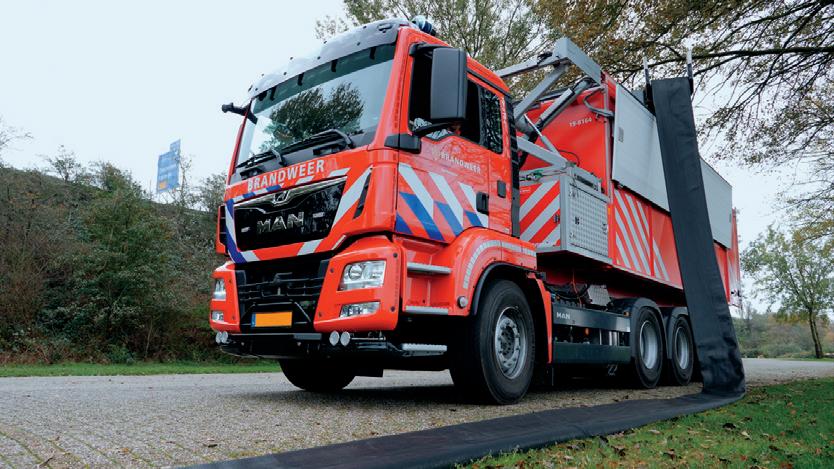
2. The corrosion reduction potential ranges from 48% to 91% when compared to compressed air.

3. Using 98% nitrogen gas in lieu of compressed air increases the life expectancy of a dry or pre-action system on an average of 5.3 times.
4. The use of galvanised steel instead of black steel results in higher metal loss rates when compared in equivalent environments.
5. The use of 98% nitrogen gas in a relatively dry, black steel environment has the lowest corrosion rate overall.
Complete solution for mobile water transport

Portables line
Charging rate: 100 l/min / 3.5 cfm
Max pressure: 330 bar / 4.800 psi
Motor power: 2,2 to 3 kW / 3 to 4 Hp
Efficient line
Charging rate: 210 to 315 l/min / 7.4 to 11.1 cfm
Max pressure: 420 bar / 6.100 psi
Motor power: 4 to 5,5 kW / 5.5 to 7.5 Hp


Prime line
Charging rate: 210 to 380 l/min / 7.4 to 13.4 cfm
Max pressure: 420 bar / 6.100 psi
Motor power: 4 to 7,5 kW / 5.5 to 10 Hp

Heavy Duty line

Charging rate: 450 to 750 l/min / 15.9 to 26.5 cfm
Max pressure: 420 bar / 6.100 psi
Motor power: 7,5 to 15 kW / 10 to 20 Hp

So, who is Paul Dutton?
My personal experience has been gained over 34 years as a leader within the UK military and Police Service where until January 2023 I was Director of Multi Agency Gold Incident Command training for the UK, College of Policing. I have held command positions at Strategic, Tactical and Operational level within the Police Service. I have worked on numerous overseas humanitarian operations for the United Nations, NATO and the Foreign and Commonwealth Development office and I led the UK, International Police Response Cadre for seven years delivering disaster management response and training across the world.
What inspired you to found GSB Command Training?
In less than 100 days in 2017 more than 100 innocent members of the public lost their lives in the United Kingdom as victims of multiple, devastating incidents: building fires, terror attacks and natural disasters.
The Grenfell Tower Fire, Manchester Arena Bombing, Westminster Bridge terrorist attack, flooding and wildfires were all declared Major Incidents, defined in the UK as; “An event or situation with a range of serious consequences which requires special arrangements to be implemented by one or more emergency responder agency”.
In the ensuing six years, I questioned whether we were better prepared to respond at pace, to save lives and reduce harm.
Over the last 3 years I have trained, tested and exercised over 1000 strategic and tactical commanders from the Fire, Ambulance and Police Service. My
Are YOU ready? Is your organisation ready?
experience is that all commanders arrive for their multi agency command course well trained and highly skilled in their own organisations systems and processes. As individual organisations we all have a 24/7 ‘on call’ system which works well during our day-to-day business. What we do very well is train regularly for single agency response incidents which happen frequently, as a consequence we and in particular the Fire Service is excellent at single agency emergency response. What we fail to do so well is plan and train for those low frequency, high risk major incidents which may only happen to us once in our career, if we are lucky.
Experiences of the multi-agency emergency services preparedness for high impact, low frequency events with paul dutton , Director of GSB Command Training.

Can you expand on your concerns?
During the first hours of the response to the Manchester Arena Bombing on 22nd May 2017, the whole of the on-call command team for Greater Manchester Fire and Rescue Service convened at their single agency command suite, no one attended the Multi Agency Silver or Multi Agency Gold groups. The failure to implement the primary JESIP1 principle of Co-locate caused a 90-minute delay for the Fire and Rescue service to arrive at the scene of the attack, this failure has been heavily criticised throughout the Manchester Arena Attack Inquiry.
At the Grenfell Tower Fire the executive leaders for London Fire Brigade responded quickly with the Commissioner attending the scene and entering the building while it was ablaze. These actions were considered heroic by many in the service and beyond however these actions were later brought into question during the inquiry. London Fire Brigade has subsequently changed its policy, the Commissioner and Deputy Commissioners no longer attend the scene of incidents. This change is designed to distance the most senior leaders from the scene of and provide the protection, which was not available to the Commissioner during the Grenfell Inquiry. After a challenging time at the inquiry the Commissioner retired from service earlier than planned.
So why does this happen? With years and years of training why do you think commanders of the emergency services still make mistakes when responding to Major Incidents?
I believe the answer lies in a failure to personally prepare.
We fail to personally prepare ourselves for the day the ‘big job’ comes in. We take being ‘on call’ for granted, it is just another part of our job, it comes with promotion. We are so busy with our day to day business we often don’t give being on call a second thought until we are leaving the office and need to grab our additional ‘on call’ kit and equipment. We have local plans and major incident plans but do we all really know what our role is within those plans?
Imagine, it is 0300, you are in bed, fast asleep, you are the on-call Gold or Silver Commander for your organisation. The phone rings, you answer it, half asleep, to be told by a wide awake and nervous control room operator that an aircraft has crashed or there has been a gas explosion in a busy night club. The incident is 15 minutes old and it is already believed that fatalities are in double figures with over 50 injured at the scene. How are you going to respond? how are you going to take up a command role which adds value to this
response, saves lives and prevents the incident from getting worse?
Those commanders who have trained for this will instinctively recall their training and start to put into place their personal response plan. In the last few months, I have received 2 emails from commanders who told me their recent command training and personal response plan gave them the knowledge and confidence to respond quickly and effectively when they were faced with a mass casualty major incident.
Can you tell us more about major incident scenarios?
There are 2 types of major incident.
A Rising Tide, Covid 19 is probably the best example of this, a major incident (Pandemic) which is heading towards us, and we have time to prepare. The second and most problematic is a ‘No Notice’, sudden onset incident.
How does the training you offer make a difference?
A ‘No Notice’ incident requires commanders to react quickly, with no time to prepare. Throughout our careers as Sector or Incident Commanders we are trained to get to a scene as quickly as possible to tackle the incident. As strategic commanders our response must be different. When the shock of a major incidents hits us and the adrenaline is pumping around our bodies we need to ‘keep our heads’ while those around us are losing theirs. Coordinated Strategic and Tactical Command in an emergency is crucial, it allows for the coordination of resources and response effort to maximise efficiency and effectiveness. With the correct training I believe 50% of a strategic commanders’ immediate response work can be pre planned, prepared and tested during peace time. Truth is, many of the core roles for commanders in the event of a major incident are already set within our plans or government documents. The problem is, we have so many plans and documents many of them are sat on the shelf unread.
As seen in the Manchester Arena attack when strategic command fails during an emergency it can lead to a disorganised and inefficient response. Valuable resources may be misallocated or not utilised effectively causing delays and potentially exacerbating the situation. In extreme cases failure of strategic command can result in loss of life, damage to property, and longer-term consequences for affected communities.
But surely, emergency preparedness, response and recovery is not one size fits all? Drawing upon my personal command experience and the experiences shared

with me by commanders from across the globe I lead GSB Command Training with a single focus, to provide bespoke, world class training which will prepare commanders to optimise their ability to respond quickly, save lives and reduce harm.
Within my small team of subject matter experts, I have a former Chief Fire Officer and a barrister who specialises in training commanders to understand their legal duties and prepare for an inquiry.
The EN54-25 compliant WES solution has been specified within several projects at the eight million sq ft waterfront venture, Sobha Hartland, in a bid to maximise construction site safety.
The first site to benefit was a 36-storey tower, Waves Grande, where one connect unit, 22 call points, and two link units, enabled the site to deliver automatic fire and medical alerts throughout each development phase, with completion expected early next year.
Tim Young, sales director at Liberty Fire and Safety, said: “With such vast sites, there is simply no room for error, particularly when it comes to ensuring workers are protected and project timelines remain on track and on budget. What we’ve provided is a way for Sobha Hartland to move with the times, delivering modern fire safety solutions that ensures sites are protected, even out
of hours or overnight, when accidents or fire emergencies are most likely to happen.
“As a portable solution, WES can easily be scaled up or scaled down, depending on project need, which fits well with the requirements for Waves Grande – a residential tower that when complete, will be a fantastic new addition to the luxury living offering in Dubai.”
The next project to benefit from the installation of the WES system is Creek Vista Heights, expected to complete in 2026, which will have views of the Burj Khalifa and will offer one, two and three bed apartments.

Both Waves Grande and Creek Vista Heights form part of the wider Sobha Hartland project in the Mohammed Bin Rashid Al Maktoum City, with 5,000 apartments and 353 villas being constructed by more than 3000 workers.
Nelson George, senior manager for health, safety, security and environmental at Sobha Construction, said: “The growth of Dubai and its residential offering is hugely exciting, but it cannot happen without a coordinated response plan, should the worst happen on site. As we move from project to project, the technology will be an invaluable tool in keeping our sites safe, secure and above all protected at all times.”
RAMTECH
www.ramtechglobal.com
Biruni university, in Istanbul’s city centre, is a private institution founded by the World Education Foundation, which supports education, health and cultural projects in Istanbul. 6,000 students are enrolled at Biruni University, including over 400 overseas students.

The faculties include medicine, dentistry, pharmacy, health sciences, education, engineering and natural sciences over a vast campus which spans an open area of 70,000 m2 The FDAS covers 20,000 m2 of buildings on the campus, including a 153-bed hospital, a dental healthcare facility, hi-tech labs, computer rooms and a campus library… On a typical day, 800 people will be onsite across the campus.
Given the size of the campus and the buildings that had to be protected, an
addressable system with high-capacity loop panels was recommended as it would provide the optimal fire detection for the university’s buildings, students, staff and visitors. The chosen system comprises more than 1,100 GFE devices, including 1,000 ZEOS addressable smoke detectors, 20 ZEOS addressable heat detectors, 150 addressable manual call points and two addressable gas detectors, all of which all controlled through two of GFE’s addressable fire alarm control panels.
When designing the system, GFE Turkey had to proactively manage a number of challenges, including elevators, pressurising fans, dampers and photocell doors. Also, as the project progressed, it became necessary to increase the number of zones covered
…
development in Dubai.
… Global Fire Equipment (GFE) Turkey, was chosen to design, supply, commission and install the fire detection and alarm system (FDAS) for Biruni University



Emirates Safety Laboratory (ESL) is a new facility for undertaking products/systems fire testing and conformity assessment body (CAB) certification. We now learn more about ESL from Major General, Expert, Ali Hassan Almutawa – Director General Assistant for Fire and Rescue.
Located
accredited
for testing approximately 100 plus standards and product certification to more than 600 standards. Additionally, ESL supports government, academia and manufacturers for research and development and has an ambition to be a leading testing, inspection, and certification (TIC) provider, making Dubai and the UAE a global hub for TIC services.
ESL collaborates with European entities, like UL EU, to offer regional-based manufacturers access to CE and UKCA marking for market entry into the European Union’s single market. We also undertake to provide testing to satisfy the United Arab Emirates (UAE) Fire and Life Safety Code of Practice, the North American Standards (ANSI, ASTM, NFPA, UL, ULC, etc.), the International Standard Organisation (ISO), European Standards (EN), British Standards (BS), and various other globally recognised international standards. Our testing laboratory operates following the ISO/IEC 17025 standard requirements, with the conformity assessment body (certification) operating under the provisions of the ISO/IEC 17065 standard.
The testing laboratory houses cutting-edge technology that tests the products and materials to the applicable standards with high-quality efficiency while mitigating and reducing risks of environmental pollution.
We have one of the most extensive facilities for undertaking products and fire safety systems testing and conformity assessment certification. We assist manufacturers, project owners, developers, construction contractors, designers, consultants, fabricators, installers/applicators, and inspectors with advice in achieving product compliance and certification.
The laboratory now employs more than fifty technical specialists and experts who originate from the TIC, manufacturing, consulting, construction, and government sectors and contribute a wealth of knowledge and fire & life safety experience to our customer’s experience.
ESL focuses not only on local UAE standards but also the various international and regional codes and standards to support a diverse cross-section of fire protection manufacturers, including and not limited to below products/systems:
 in Al Warsan 3, Dubai ESL is the first-ever government-controlled facility for fire testing and safety product certification services in the Middle East, North Africa, and Indian Sub-continent regions. It is
by IAS, EIAC, GAC and ENAS
in Al Warsan 3, Dubai ESL is the first-ever government-controlled facility for fire testing and safety product certification services in the Middle East, North Africa, and Indian Sub-continent regions. It is
by IAS, EIAC, GAC and ENAS
• Fire Pumps
• Fire Extinguishing Systems (Wet/Dry, Foam, CO2, Deluge, Etc.)
• Inert/Chemical Gas Clean Agent Systems
• Foam Concentrates and Equipment
• Sprinklers, Hose, Pipes, Fittings, Valves, Monitors & Nozzles
• Aerosol Extinguishing System (Fixed and Portable)
• Water Mist Systems
• Seismic Sway Brace/Pipe Hanger Equipment
• Bus Fire Suppression System
• Fire Detection and Alarm System [Wired, Wireless, Interconnected, and Hybrid types]

• Aspiration Smoke Detection
• Voice Evacuation System
• Emergency Lighting and Exit light [Central battery type and SelfContained type]
• LPG Equipment and Components
• Atmospheric Tanks for Flammable and Combustible Liquids
• Portable Fire Extinguishers and Fire Blankets
• Photovoltaic Panels / Systems
• Structural Resistance to Fire for Walls, Columns, Beams, etc.
• Fire Rated Doors, Windows, Shutters, Rollers, Access Panels, Linen, And Garbage Shoots
• Fire Rated Partitions and Glazing
• Fire Rated Ceilings and Flooring Systems
• Carpets and Flooring Materials Reaction to Fire Testing
• Fire Rated Cables
• Fire Rated Ductwork and Kitchen Extraction Systems
• Fire/Smoke Dampers
• Roofing Materials and Systems
• Facades and Cladding Systems
• Cavity Barriers
• Firestop Systems – Through Penetration and Linear Joints
• Interior Finishing Materials and Decorations
We break down traditional barriers encountered by customers in the region, avoiding the global copy/paste blueprint approach experienced by providing a tailored solution customised for these fast-paced and dynamic business geographies. ESL’s emphasis is not limited to product testing and certification; we support our clients through the complexities of product registration and facilitate by offering Market Entry services where they play a vital role in assisting the submission and handling of UAE CD product registration for bringing products into the UAE market.
ESL is proud to cooperate with educational institutions like the American University of Sharjah (AUS) and UAE University to assist with developing
engineering and science students and undertake research projects to support the students learning. This cooperation includes opportunities for students to undertake internships and graduate placements. We will also support the future AUS and Civil Defence safety and fire engineering programmes to enable local Emirati students to graduate and enter fire sciences and fire protection engineering careers.
ESL this year became an associate member of the European Group of Organisations for Fire Testing, Inspection and Certification (EGOLF). This has resulted in ESL being part of a network of experts so that clients can appreciate a higher quality of service that accredited member organisations offer, which organisations collectively strive for excellence and devote time and effort toward accepting test results across national borders. EGOLF membership also has provided ESL access to harmonised training courses on the various European test methods. It ensures ESL remains informed about new standards, guidelines and other documents issued by the European Commission and related organisations and access to EGOLF Agreements and Recommendations on technical issues supporting harmonised testing and acceptance of test results. ESL has facilitated and participated in numerous round-robin harmonisation testing amongst some of the best testing laboratories across the European Union, where the facility and personnel have demonstrated their skills to be on par with their European counterparts. This cooperation and participation ensure that testing with ESL is equivalent to European facilities, and this represents an excellent opportunity for skills development and experience working on such harmonisation projects.
The UAE is a magnet for innovation and is rapidly becoming the go-to place for manufacturers to establish new production facilities for exporting to the greater region and around the globe. ESL has actively supported these manufacturers of new innovative
products in developing new test and product standards. One such project is devising a product standard for masking or coating media intended to be applied to the surface of photovoltaic panels to inhibit its function during a fire event.
ESL has also recently achieved accreditation for providing testing to the recently published UAE standard (UAE.S 5041: 2020: Fire suppression systems intended for engine compartments of buses and coaches) and completed registration with the Ministry of Innovation and Advance Technology to provide notification to bus engine compartment suppression system manufacturers who will be fitting the systems to all buses across the UAE. Another area of innovation we are supporting is the wireless mesh detection systems for private and commercial villa projects. ESL provides product certification to manufacturers supplying these wireless smoke and heat detectors with their control panel systems for the 10,000 homes of lowincome families. This initiative ensures safety for the entire community.
Influenced by innovation and change, the soon-to-be-released updated UAE Fire and Life Safety Code Manual of Practice is currently being drafted, and ESL is supporting the DCD in preparing the changes to the body of the new code, which includes new standards and rationalising of the use or application of some older, less relevant standards and considerations for areas and technologies where advances have been realised in recent years, and the current code is silent on.
ESL is striving towards becoming a significant fire and life safety testing and certification facility, with the ambition of making the UAE a global hub for conformity assessment services and towards Dubai being one of the safest cities in the world. The facility offers extensive TIC services to manufacturers and the construction industry ensuring compliance with national, international, and regional standards and codes to ensure a safer and more sustainable future.

When performing lifetime extension services on composite boats of the Swedish Coast Guard, the Ö-varvet shipyard in Gothenburg is replacing the metallic cable and pipe penetration frames with Roxtec frames and sleeves in the same material as the hull. The shipyard workers have been using Roxtec bolted cable and pipe transits for many years and when the company came up with frames and sleeves in glassreinforced polyester for lamination into fiberglass and composite hulls Ö-varvet needs for lighter solutions and avoiding bolting in the very small space available onboard were met.

Ö-varvet has specified Roxtec SRC GRP multi-cable transits with rounded corners for the Madera ribs of the Swedish Coast Guard. The seals are used to ensure fire-rated and watertight bulkhead penetrations for power cables running between the battery package, the engine room, and the technical room. The rounded corners reduce stress concentration and the risk of cracks.
In addition, Ö-varvet is using Roxtec SL GRP sleeves with Roxtec RS seals for single signal cables and radar and antenna cables from the steering cabin and up to the roof and out on deck.
ROXTEC roxtec.com
Advanced’s Axis EN range with voice evacuation, fire telephone, and smoke management has been installed at MIRACLZ, covering the entire building. Located next to Miracle Garden, the 37-storey building houses 591 fully furnished one-bedroom, two-bedroom and studio apartments; shopping and leisure experiences; a swimming pool and sauna; gym; party hall; and kids’ play area.
Providing powerful networking capacity, the Axis EN system supports robust networks of up to 200 panels per network. Networks can also be combined to create very large fire systems making the Axis EN ideal for complex, large-scale installations. Whether networking highrisk sites with complicated cause and effect, remotely monitoring networked
sites, or integrating with building management systems, intuitive software and panel navigation make setup straightforward.
The main fire panel with voice command centre is located in the ground floor fire command centre room and is networked with multiple 1, 4 and 8-loop panels to form a distributed system. The installation also included an Advanced remote repeater panel and a dedicated voice evacuation amplifier on each of the building’s floors.
EDMAC Consulting specified the fire system and it was supplied, installed and commissioned by Advanced distribution partners, Cignetix Systems. Fully integrated with BACNET BMS, the system incorporates over three thousand addressable devices including
interfacing units for monitoring or controlling of water flow switches, staircase pressurisation fans, lifts, air handling units and fire dampers. The system complies with various European, American and UAE Civil Defence codes.
Advanced’s fire telephone solution is ideal for high and low-rise apartment buildings, hotels, universities, government and military sites where local fire departments and emergency personnel need access to fire/emergency communications. The fire telephone system can be configured as either a standalone, independent system or completely integrated into the Axis EN fire system.
…


Attract new delegates and enhance your brand
If you or your organisation provides training, you could apply for IFE recognition status. Our Recognitions Team benchmark courses, providers and educational programmes to the highest standard, ensuring a competent workforce across the fire industry.
Prospective students can be more confident that an IFE recognised course, provider or educational programme ticks all the boxes for their learning and future careers in the fire sector.

With an expanding presence across the UAE, IFE Regional President for GCC UAE branch, Terry Johnson, highlights the IFE’s mission to assist Dubai Civil Defence (DCD) in making Dubai the safest city in the world.
dubai isn’t just known for its awe-inspiring architecture, innovative infrastructure, and thriving economy, enhanced levels of safety for both tourists and the local community have always been evident. In recent years, the Emirate has been proactive in its pursuit of advancing fire safety practices to safeguard its residents, visitors, and iconic structures. With a growing skyline and an increasing population, Dubai’s commitment to staying at the forefront of fire safety is commendable.
UAE Authorities have made significant efforts to continually improve and strengthen building codes and regulations, ensuring compliance with the highest standards of fire safety. Following the recent announcement, the Sharjah administration plan to make preparations to remove hazardous cladding and materials that pose a fire risk from 203 high-rise residential and commercial structures. This “global first” will involve residential and business towers with more than seven stories. Dubai government has committed $27 million to pay for the first phase of remediation work, which will cover 40 of the highestrisk buildings, with a heigh ranging from eight to fifty floors.1
The Dubai Civil Defence (DCD) continues to implement rigorous guidelines and standards, focusing on fire-resistant building materials, advanced fire suppression systems, and the efficient evacuation of occupants during emergencies.
Highlighted at an iftar banquet held during Ramadan with strategic partners of authority, Brigadier General Ali Hassan Al Mutawa, Assistant Director-General for Fire and Rescue Affairs was quoted, “Dubai Civil Defence aspires, through the implementation and the application of the new requirements, to enhance and raise the level of safety in the emirate of Dubai, in addition to continuing to provide competitive prices to manufacturers and project owners in order to ensure the provision of the best international quality services in the field of building and construction,”2.
Dubai places great emphasis on regular inspections and certifications to ensure compliance with fire safety regulations. The DCD conducts thorough inspections of buildings, scrutinizing fire protection systems, emergency exits, and adherence to safety protocols. Additionally, professional certifications and training programs are mandatory for individuals working in fire safety-related fields, including firefighting, and building management. These measures promote a culture of accountability and expertise in fire safety practices throughout Dubai.
The IFE GCC UAE branch was formally inaugurated on 28 November 2016, and presence of the institution within the UAE has grown extensively this year, following our continued efforts to develop formal recognition across the region. In May, our CEO, Steve Hamm, took part in the signing of a Memorandum of Understanding (MOU), in partnership with the Assistant Director General for Fire and Rescue Affairs at Dubai Civil Defence (DCD), at the IFSJ Leaders in Fire & Safety Conference in Dubai.
We’re pleased to formalise our working relationship with DCD, the UAE has progressed fire safety practices significantly over the last few years. With a stellar focus on preventing fires through stringent building codes and safety inspections, the institution is working to recognise the high standards of fire safety skill within Dubai and more widely, the UAE.
The IFE is dedicated to working alongside other sectors to evolve fire safety knowledge. If you work within the built environment and would like further details on joining the IFE, please visit www.ife.org.uk/Membership.
1. UAE government commits to high-rise remediation work | Fire Protection Association (thefpa.co.uk)
2. Dubai announces new fire safety standards | Uae – Gulf News

There has been an increased awareness regarding the impacts for fires, both in the finance industry as well as within governments. This is leading to newer regulations and evolving conformity regimes. Developers are now asking contractors about evidence of fire safety. With changing supply chains due to realignments of global relationships, specific queries are being fielded by manufacturers and traders of building materials about traceability of materials. Continuing the series about ‘implementation’ of passive fire protection, ABHISHEK CHHABRA , Business Development Manager, Thomas BellWright Consultants, takes a deep dive into interior finishing and structural fire protection as two different applications of passive fire protection, but with some common pitfalls.
Recently the General Command of Civil Defense in the UAE issued a memo urging industry partners to adhere to the “UAE Fire and Life Safety Code of Practice” and to adhere to the requirements of the circular issued in June 2023 which brings about some amends to how fire-stopping is to be implemented and inspected. These were further to workshops discussing improvement of internal firestopping in buildings undertaken in the last 12 months in the UAE. This is a clear sign of how government bodies are getting more involved in, and having a closer watch on, ensuring fire safety regulatory frameworks.
These are omnipresent whenever there is anything being built. Everywhere from manufacturing locations to construction sites, and our offices and homes too. Drums or powders with mixers are often a result of a lot of precise research and development to create optimum performance as well as look and feel. Often the manufacturing locations producing these chemicals operate under strict health and safety conditions as the simple looking experiments in beakers, petri dishes and test-tubes potentially become high hazard processes when the volumes of these ingredients become huge. What looks like a tiny hiss in a beaker is potentially a large explosion inside a factory.
While there is a massive spread of performance and behaviour of paints and coatings; there are a couple of similarities among all of them. While they could be used to control the reaction to fire behaviour on one side or to enhance the fire resistance capability of structural elements and other systems; their production and the form in which they are available and transported are often very similar. But there is a key aspect related to using these which is often insufficiently understood. And this has to do with how these paints and coating actually do their jobs.
If you consider the image below, you can probably grasp that application methodology and the processes by which the chemicals create a hold on the surface can vary a lot. These are complex actions, requiring a lot of precision and control in terms of the environment where the coating is applied as well as, of course, how it is done. This leads to a key variable which is the state and type of substrate on to which the paints and coatings are applied. And, of course, the knowledge and precision expected of the applicators.

To add more context here is a list of properties which actually help bring about the function which provides for the passive fire protection (often related to fire resistance).

An indicator of the volumes of imports which helps us understand how much of this product is moving in the world.


The changing supply chains, transport as well as storage have a direct impact on the assurance of promised performance. A relatable example is comparing the effort required to bring about repeatability between cooking a dish of any cuisine versus fixing together and modular furniture piece. Getting the repeatability in taste of a dish requires a slightly more rigorous process.
The post-pandemic world and changed geo-political environment has left the manufacturing industry working hard to adapt. There is a dire need to look for new raw material suppliers as well as train new staff members who undertake roles which were undertaken by others or scenarios where technology is forcing adaptation. For businesses to maintain repeatability of supply of materials requires effort and sometimes more money. In instances where no one is watching or assuring the repeatability of production, it is easier to let things slide till something drastic happens.
The buyer of a paint or a coating material is often a subcontractor who will deliver something in between what he has been contracted to do and what is being checked by a competent
authority. If the contract is not a high stake project it may not lay emphasis on who is taking the liabilities in case of nonperformance and what those liabilities could be.
The assurance of performance of a paint or a coating lies in ensuring the repeatability of manufacturing and following the application process which is proven to bring out the marketed results. Whether they are used to control the reaction to fire behaviour of finishing materials indoors or outdoors, or used to enhance the fire resistance capability of structural elements and other systems; the application rigour needed, requires supervision of some sort. Let’s take a look at specific stakeholders to understand where does the control lie and where can more care be taken to ensure there are no slippages.
Whatever the type of construction; it will involve a structure to be protected by fire and it will have interior and exterior finishing done. In certain instances, the extent could be minimal but a mechanism of assurance needs to be in place. Correct implementation starts with the ‘owner’ realising that a risk of fire exists, special attention is required to ensure it does not spread
in the interior/exterior and that the structure needs a protection measure. The owner may not always be fully aware as the potentially affected entity due to a fire could be the ‘Insurer’ or ‘Occupier’. This is not a desirable situation, but is very prevalent.
Owners should keep in mind that the probabilities of fires are higher than what they used to be. Combined with the changing landscape of materials and manpower, there needs to exist a more robust framework to check and assure these two aspects bring about increased assurance. Relying on the minimum regulations set by the local government or jurisdiction (which might not be updated) may not be sufficient. The fulfillment in case of an incidence from the local jurisdiction would have limitations. This is less likely to cover the liability on reputation and commercial losses for the property owner. Hence it is recommended to use best known practices as compared with minimum local requirements. Knowing there are more combustible materials indoors, the total fire load inside buildings is higher than what it used to be a decade or two ago and this is a matter of concern, and must be factored in.
The reputation of a business is directly linked with increasing their clients as well as liability. A wrong decision or overlooking a matter that is critical to a contract (Promise of Deliverables) will eventually lead to an instance which will lead to reputation loss and eventually loss of business. Whether the matter is related to understanding the newer methods of creating a buildings structure (structural consultant) or understanding the interiors, compartmentations and the fire risks and potential routes of spread of fire; a specialism is needed. Depending on the scale of the project/building getting this competence has been becoming more and more critical. Here are some suggestions:
If the project is large, make sure the structural consultant is contracted to design and build in correct structural fire protection. What is in contracts is implementable and is either backed by a law or a commercial clause.
Ensure an updated understanding within the architect/designer or fit-out specialist about the reaction to fire properties and fire load calculation of interiors.
Contracts: Define, limit and link your liability using assurance mechanisms of certification and listing and appropriate standards and codes.
The scope of a specialist consultant could be both maker and checker. If so, make sure the teams are equipped with the (as sometimes needed) accreditation or at least training.
In some jurisdictions/codes like the UAE Fire & Life Safety Code and Saudi Building Code have some scope calling for third party accreditation to authorise auditing.
The contractor does what the contract says. And if the contract does not say much then a lot of things could fall into default options. Hence it is important to define important aspects in the contract. Below are some points to note:
Be careful, aware and keep track, of local minimum requirements that could be handed over as per a legal requirement in the jurisdiction where work is being performed. As an example, Decree 213 in UAE empowers the UAE Fire & Life Safety Code of Practice. This code has a chapter (18) on responsibilities of stakeholder.
In case a contractor is not being allowed to fulfill their obligations technically or commercially, then they need to back out of the contractual document and pass it on to someone else.

Key considerations for Fire Safety
Often, though not always, the contractor gets an approved drawing which needs to be built. Changing anything here or initiating any change brings the ownership of the efficacy of the design back to the changer/contractor. In case these are not documented, these can become liability.
A key worry for contractors is to maintain the workmanship. This should be addressed using regular training and audits. To safeguard the interests, third party independent Inspection bodies are used. Sometimes, these are contracted by the main contractors or consultants. But in case such inspection bodies are reporting back to the sub-contractor themselves then there is conflict of interest.
Care must be taken to choose a qualified inspection body. (See above for the ISO series)
Sometimes the supplier ends up taking on more liability than needed. Often tempted by the order (Value). This is dangerous as there are limits to what the material supplier has visibility of. Specifically, on how the material could be used. Below are some of the key points of note for sellers and buyers of paints and coatings: A manufacturer or seller of material can only provide assurance of the fire performance of the material alone with a defined substrate and application methodology. This should be correctly documented and contracted.
As an example, a flame retardant which provides a Class A (as per American methods) or Class A2 (as per European norms) would be on a given substrate (even types of wood are defined) and give number of coats. This should be defined and declared correctly to minimise taking on blanket liabilities.
In a fast-paced trade environment, keeping the raw material suppliers and manufacturing processes the same is not that easy. This is a challenge for manufacturers, but buyers have accurate knowledge as well.
The need to use trained applicators is often recognised, but seldom contracted in. Defining their expected qualifications or liabilities helps.
Compliance: passive fire protection
To safeguard the interests, third party independent conformity assessment bodies are used. They independently audit the processes and supply chain control mechanisms along with regularly assessing samples of the products to check for their performance.
Above is a graphical representation of the key considerations for implementation fire safety for coatings & paints. This adds references of international standards which can be used by regulators as well as contracts to bring about parity of performance of third-party assurance providers.

The main risk when it comes to paints and coatings is a mismatch of two key aspects:
1. What is expected to be supplied to the site and what actually reaches it: The solution is correct use of Testing + Certification & Listing.
2. How the coating was done for the test whose results are being relied upon and how the coating is being done at site: The solution is attaching liability to this assessment and using third party inspection to define and divide this liability.
To deliver a coating system correctly will always have several stakeholders. In order for the solution to perform as committed, specifically on the fire safety side, it is imperative that there is an alignment of expectation of performance and clearly contracted responsibilities. Correctly worded and referenced standards provide the tools to complete assurance and quantifying liability. The aim is to deter actions that are (now) known to create (fire) risky situations which needed to be avoided.
Understand the limitations of test reports. Test reports only prove capability of someone being able to produce a sample for a test. Test reports alone are not proof of what will be supplied.
Understand the tools of certification and listing that provide traceability check on materials. Use this knowledge in specifications and decisions: Pre-tender & Post tender.


now have a profound opportunity to improve safety and reduce costs with just one decision.
These ‘plug and play’ packages protect lives and property against fire by supplying an adequate water supply to automatic sprinklers and standpipe systems. But before discussing the ins and outs of how containerised solutions can transform a building’s fire safety system, let’s first discuss exactly how they work.
just like any other ecosystem, the buildings we occupy are carefully constructed from many components, all of which must work cohesively to deliver safety, comfort and value for occupants. The fire safety system within is a key component of this ecosystem, directly responsible for safeguarding human health and safety.
And yet, according to the UAE Civil Defence Authority, an alarming number of sprinkler systems in residential and commercial buildings have not been commissioned correctly, or are not maintained to internationally recognised standards. Without having experienced a real fire emergency themselves, some building owners struggle to justify the cost and upkeep of these systems.
Fortunately however, over the years, fire safety systems have continued to evolve and improve through enhanced technology and meticulous engineering. One of the more recent developments that has changed the game completely, is the introduction of containerised fire solutions. With this option, building developers
Essentially, a containerised fire solution is a complete fire pump package, pre-assembled in a factory. Each system is built into a standard 20ft or 40ft shipping container as a single finished unit, making it ideal for international delivery. These units reduce installation time by up to 95% by eliminating the need for on-site assembly. All that’s required on site is for the pump house to be moved into position and connected to the rest of the sprinkler system. In fact, installation can be so simple as to only involve two pipes and two power connections.

Their modular, fully contained design makes them easily portable, but also easy to maintain, lowering costs along the entire supply chain. If needed, they can even be easily removed, transported to a new location and reinstalled, ultimately providing increased flexibility to serve future requirements.
Traditional ‘stick-built’ fire pump systems on the other hand, are typically composed of many different elements, all of which require sourcing from various suppliers and assembling on site.
For installing contractors, purchasing, handling and coordinating all required materials to build a complete fire pump system on-
site is inefficient, with its own set of challenges; often pieces get lost or go missing, leading to construction delays. It must also be guaranteed that the specified components work both individually and holistically.
This is by no means an easy task - one which designers and architects are often ill-equipped to handle due to lacking the technical knowledge that helps to determine the best solution for the project. The expertise of mechanical engineering consultants is therefore often called upon working in collaboration with specialist sprinkler contractors to meet the required standard for safety, sustainability, performance, and quality. These specialists are tasked with ensuring all loose components required are sized correctly and that all equipment supplied meets their specification.
Clearly, there are many elements in play when it comes to creating traditional sprinkler systems. It’s also crucial for highly skilled labour to be used to install the traditional fire systems on site, in order to ensure proper assembly. This however, is often overlooked in the Middle East region due to cost saving efforts and a shortage of skilled labour. But for something as crucial as fire safety, quality and performance are, of course, of the highest priority, with no room for compromise.
In my experience, containerised pre-assembled systems offer the perfect solution, addressing key challenges through the aforementioned ‘plug and play’ strategy. This bespoke alternative uses detailed drawings that show the exact dimensions and connection locations, significantly lowering the margin of human error. Stick-built systems constructed on site are not built to a predetermined design, meaning that consistency cannot be guaranteed in the configuration of one installation to the next. A factory-built, containerised system on the other hand, eliminates any uncertainty around system performance as a result of rigorous testing prior to delivery.
The advantages of containerised fire pump systems discussed thus far all centre on cutting costs in a safe way, without compromising on quality. This helps to maintain the same level of occupant safety, while improving the return on investment for building owners. But in operation, containerised solutions do more than simply retain levels of quality. They even go as far as to improve performance and durability in comparison with traditional systems.
Armstrong Fluid Technology uses smart software to enhance the operation of its products and allow for predictive maintenance to ensure performance levels remain high. Our containerised systems offer peace of mind for building owners and occupants by adhering to relevant industry standards. The latest 3D modelling tools are used to ensure design integrity prior to construction, which ultimately enhances efficiency. What’s more, our patented Design Envelope pumps, which are integrated into the containerised system, are establishing a new precedent for performance management technology, providing real time diagnostics on the system’s condition to alert when maintenance or service is required. The smart technology incorporated into the pumps also offers a level of transparency not seen before, through flow data, diagnostics and suction pressure analysis, among other things which can be beneficial for both owners and contractors.
It’s important to recognise that maintenance of fire equipment is just as essential as choosing the right systems to begin with. All fire equipment requires scheduled maintenance and inspection to reaffirm that it remains in full working condition. Without this regular maintenance, failures or malfunctions may only become apparent once the systems are put to the test in an emergency situation - by which point it is often too late. Active performance management software, such as Armstrong’s Pump Manager, makes monitoring and updating the system much easier, providing the ability to control operations from a remote location.
A high degree of customisation through choice of components and materials is essenital so that engineered-to-order systems can be aligned with the needs of each building. Their performance
tailored to comply with the exact specification of the building, creating more opportunities for improved occupant safety and system optimisation.
Ideally, containerised fire pump systems are designed with easy access in mind to encourage regular servicing and performance checks, further enhancing the safety and well-being of the building’s occupants. What’s more, fans and ventilation systems fitted within the container make for a comfortable working environment. And should issues arise, containerised solutions offer the added advantage of all system components having been manufactured and assembled by the one company. This gives building operators a single point of contact in order to solve such problems following installation.
When compared with the traditional stick-built alternatives, containerised, pre-engineered fire pump systems offer an all-in-one solution that provide cost savings, without compromising on quality or putting the safety of building occupants at risk. Ultimately, their easy installation, effective functionality and compliance mean they are well-positioned to transform the fire protection industry in the Middle East and Africa.





All foam concentrates behave di erently. Proportioning at the correct ratio can be a challenge. FireDos have been working for over 30 years with end-users, contractors and OEMs to overcome their foam proportioning issues. You want the peace of mind & knowledge your system will operate whatever the circumstances. Rely
foam proportioning system GEN III from FireDos

Foam firefighting systems are indispensable tools in combating a wide range of fires, including those involving flammable liquids, chemical spills, and industrial incidents, also known as Class B fires. However, the foam firefighting market faces challenges that demand attention from end users, firefighters, contractors and equipment manufacturers. In this article, STUART PHYTHIAN , Oil & Gas Industry Manager at FireDos, delves into the primary issues faced by the industry, shedding light on their complexities and implications and and confirming that using foam as an extinguishing medium need not be regarded as the voodoo science of firefighting. By understanding these challenges in-depth, lay readers can start their research into some areas, enhancing their knowledge.
One of the foremost concerns in the foam firefighting market revolves around the environmental impact of foam agents. Traditional fluorinated foam formulations, such as Aqueous filmforming foam (AFFF), contain persistent chemicals detectable in organisms, including humans, such as perfluoroalkyl substances (PFAS), typically in the form of perfluorinated acids and salt PFOA and PFOS (perfluorooctanoic acid, perfluorooctane sulfonate), which bio-accumulate in the environment and pose severe health risks. The development and widespread adoption of fluorine-free foam agents (per NFPA: Synthetic Fluorine Free Foam (SFFF)) and effective disposal methods represented crucial focus areas to mitigate these environmental concerns.
The method by which any firefighting foam operates is harmful to the environment. Foam is designed to de-oxygenate a fire. Hence, when any runoff meets natural water sources and shorelines, even when an environmentally safe foam is used, due to its ability for de-oxygenation, the short-term risk to plant and aquatic life is still severe.
A common criticism of the move to fluorine-free foam was the hazards to health and the environment associated with any oil, chemical or industrial fire. Any class B fire hazard was better attacked with a proven, albeit persistently toxic, foam as an extinguishing medium. This solution outweighed earlier attempts of using less effective fluorine-free foam. A second-order effect of fluorinated foam usage becomes the better choice when fire extinguishment, regardless of the foam type, is preferable to a prolonged fire releasing toxic gases and chemicals into the environment.
However, the more significant impact of firefighter and enduser training with foam solution represented a hazard to the environment, even when a fire does not exist.
The foam industry has developed and testing by various independent organisations and manufacturers, and in-house tests have proven the improved efficacy of new fluorine-free formulations. The debate has settled on replacing a persistent and harmful compound with a less persistent foam concentrate. Synthetic Fluorine Free Foam (SFFF) has been developed by manufacturers that can replace fluorine-based foam concentrates.
The worldwide adoption of foam concentrate alternatives is ongoing. It has been addressed legislatively by governments, organisations, and end users with the widespread adoption of fluorine-free foam being less damaging to the environment.
The short-term challenge for many organisations is also of high inventories and the cost. When foam concentrate stocks are purchased and depreciated over a typical three to five years, removing extensive stocks is a significant write-down, impacting company profitability and a concern for organisations.
In addition to the write-down cost of legacy foam concentrates, is the cost of disposal and equipment remediation, with very few cost-effective methods available on the market to dispose of PFAS foam or to reduce the cost of converting a fire truck or system contaminated with long-term exposure to PFAS foam. Washing equipment with hot water does not simply wash away many years of persistent use of PFAS-containing foam.
Replacement costs mean the newer formulations are more expensive than the legacy foam types, and the regulatory compliance costs in reporting, tracking and future potential fines for non-compliance.
Notwithstanding the environmental considerations, a significant consideration is foam performance. Fluorine-free foam is not a drop-in replacement, meaning equipment and foam performance has to be considered. The main foam properties to be considered when using a foam solution are:
expansion ratio
drainage time
burnback or heat resistance
fuel compatibility or resistance
application method
storage and shelf life
equipment compatibility
training and familiarity
regulatory compliance
cost-effectiveness
stability, retaining performance over time
Replacement foams are not a drop-in replacement to AFFF, and the replacement SFFF will differ in some of these from the legacy foam in use.
Due to new chemical formulations, many foam concentrates are significantly more viscous, pseudoplastic, and non-Newtonian. This non-Newtonian pseudoplasticity property means viscosity reduces as the shear rate increases. This high-viscosity rules out induction methods of proportioning, using a bladder tank system or foam pump skids where a wide range proportioner or eductor is used to mix the foam as the pressure balancing is either limited to a particular and narrow flow rate range or does not meet the required nominal proportioning rate.
At FireDos, as foam proportioner manufacturers, the primary design and installation error we encounter, regardless of foam type, is the design and sizing of the foam concentrate suction line. This is regardless of the proportioning type, such as wide range proportioner, pumped foam skid, stab pipe eductor and water driven foam proportioners. The increased viscosity exacerbates the design and effectiveness of the foam suction line. That is, proper design becomes more critical to the smooth running of the system.
Due to the effect of equipment design, pipe surface friction and pipe bend or elbows, higher viscous foam agents have a significantly higher pressure loss when flowing than low viscosity agents. This means only specific positive displacement pumps can be used for pumping. A high-pressure loss system translates to a very low flow at the discharge device, making the foam firefighting system ineffective. Our water-driven foam pumps are designed to pump all types of firefighting foam. The testament of this design is the FM5130 certification, ensuring proper proportioning with different foam viscosities and varying flow rates and system pressures.
As a service to its clients, we automatically calculate the suitability of an existing suction piping design and can assist with the design and sizing of a new installation. This service makes choosing a water-driven foam proportioner easy, as pressure balancing calculations are unnecessary. Installation and commissioning are easy and remove a significant headache for designers and contractors, ensuring the fire protection system operates effectively.

Effectively utilising foam firefighting systems necessitates specialised knowledge and training. Firefighters, fire protection engineers, and consultants must know the latest techniques and strategies for handling foam agents. Access to comprehensive training programmes in such a specialised area may be limited, particularly for smaller fire departments or personnel in remote areas. Expanding the availability and accessibility of training resources, including online courses, workshops, and simulations, can significantly contribute to the effectiveness of the industry.
To address the ongoing training efforts of a new foam firefighting system, we have a suite of training programmes, webinars and a virtual training area for customers to understand the effect of using different foam types and viscosities on a system.
When managed effectively, the costs of a properly managed foam solution migration to an environmentally friendly alternative can be seamless within everyday business operations. FireDos, as equipment manufacturers, are here to assist with equipment considerations regardless of the foam type chosen.
More details can be found at https://www.firedos.com/newsoverview/news

TLX Fire & Security’s Suspended WeightMonitoring System and Platform WeightMonitoring System monitor cylinder weighs in real time and is accurate within 100 grams. If the weight falls below a designated threshold, an alarm can be sent directly to the fire control panel. Up to 20 weighing units can be connected in series and individually addressed to one central weight control panel, which can display individual cylinder weight and alarm condition.
The Suspended Weight-Monitoring System has a maximum load capacity of 230 kg per weighing unit, and the Platform Weight-Monitoring System has a maximum load capacity of 500 kg per weighing unit. It also features mechanical lockouts on the weighing platform to prevent load cell damage during cylinder loading.
TLX FIRE & SECURITY tlxfire.com


Patol’s range of transit sensors continue to prove a popular option in detecting fires in a wide range of conveyor applications. Many goods carried on conveyor systems are highly combustible with the power to ignite. If they do ignite and the conveyor has no fire protection measures in place, then the fire can quickly spread to holding hoppers, blending, crushing or other processing areas of the plant to become a potentially major incident.
The 5000 series features the infrared transit heat sensor and the high temperature transit flame sensor. The heat sensor offers an early warning system designed to trigger an alarm if the material being monitored exceeds a temperature of 100°C, (with the option to adjust the sensitivities to be set above this threshold). Importantly, the sensor triggers at temperatures below the point of flaming, including both embers and buried hot spots, thereby providing the potential for intervention before flaming occurs. The sensors can operate on conveyors running at speeds of 0.5 to 6 metres per second, analysing materials as they pass through its field of view. It would also be sensible to include linear heat detection cable for static heat or fire conditions.
The flame sensors trigger an alarm at a much higher temperature of 240°C,
although as with the heat sensor, sensitivities can be set above this threshold depending on the nature of the application. The same conveyor speed of 0.5 to 6 metres can be accommodated, with the sensor triggering if a material reaches an ember or flame condition. Enhanced false alarm immunity is ensured through the sensor being ‘solar blind’ meaning the ‘background’ and ‘transient’ infra-red spectra are discriminated.
Several models are available in the 5000 series including specialist sensors with ATEX certification for hazardous or dusty environments, which is also useful for mechanical protection in non-hazardous areas, plus glass-free, stainless-steel sensors designed specifically for food processing applications.
PATOL patol.co.ukThe Portascanner® WATERTIGHT PLUS from Coltraco Ultrasonics offers cutting-edge ultrasonic testing equipment which is fully ABS Type-Approved and complies with IACS and SOLAS II-1 regulatory requirements. It utilises ultrasonic technology to provide highly accurate and efficient inspections ensuring watertight integrity suitable for testing hatch covers, watertight doors and MCTs, making it a comprehensive solution for multiple applications.
The Portascanner® WATERTIGHT PLUS eliminates the need for time-consuming and expensive training courses. With free training provided, any operator can use the ultrasonic hatch cover tester with minimal
instruction. Its handheld design enables easy deployment by the crew on-site, ensuring regular inspections and timely maintenance of the vessel’s hatch covers. The Portascanner® WATERTIGHT PLUS offers unparalleled accuracy, detecting holes as small as 0.06 mm during ultrasonic tests.
In the quest for watertight integrity in marine structures, conventional methods such as the Hose Test and Chalk Test are being surpassed by this advanced ultrasound technology which ensures watertight integrity and enhances the safety and efficiency of marine operations.
COLTRACO coltraco.co.uk


THE COUNTDOWN HAS begun for the much-anticipated Intersec Saudi Arabia 2023, the Kingdom’s flagship trade fair that unites the worlds of fire protection, safety and security under one roof. The event will feature toptier exhibitors presenting the latest in cutting-edge technologies and solutions at the Riyadh International Convention and Exhibition Centre (RICEC) from 3rd – 5th October, 2023.


Intersec Saudi Arabia, now in its fifth edition, has evolved into a powerhouse exhibition that unites the Kingdom’s commitment to safety, emergency services, fire protection, policing, and cybersecurity. In 2022 Intersec made a triumphant return to Saudi Arabia for the first time since 2019 with more than 150 exhibitors from 22 countries welcomed 9,836 visitors from 48 countries.
It is clear that the event is the ideal platform to do business and remain at the forefront of the burgeoning market in the Kingdom and across the region and this year’s event is poised to be the biggest yet, with an incredible 100% increase in exhibition space, spanning an impressive 16,000 gross square metres. The event is divided into four distinct halls, with two halls dedicated to the Fire, Health, and Safety sectors and two focusing on Commercial, Perimeter, Homeland, and Cybersecurity. A new addition awaits visitors this year – the outdoor exhibition area, which serves as a vibrant new area. This innovative space offers an immersive experience that extends the reach of the event beyond the confines of traditional exhibition halls. As attendees explore this open-air arena, they will encounter an array of cutting-
edge solutions, enhancing the overall interactive experience.
Reflecting the immense growth and recognition
Intersec Saudi Arabia has garnered over the years, the 2023 event is witnessing a phenomenal 70% increase in exhibitor participation compared to the previous year, boasting a total of over 220 exhibitors. With representation from more than 25 countries, including France, Germany, and Egypt, the international flavor of the event is undeniable. Notable country pavilions, including the UK and China, will further enhance the global dimension of the exhibition.

Intersec Saudi Arabia 2023 is held in association with the Saudi Ministry of Interior and Civil Defense, the Kingdom’s leading authorities in the safety and security sectors, underscoring the exhibition’s value and significance to the region. Fire Founding Sponsor NAFFCO, Fire Strategic Partner Saudi Sicli, alongside Platinum Sponsors Dahua Technology and HIKVISION, are solidifying their positions as industry leaders and pioneers in the advancement of security, fire safety and protection.
3rd – 4th October 2023
Saudi Arabia is progressing rapidly towards building a technologically advanced nation. Keeping the Vision 2030 in mind, the importance of fire safety for the prevention and protection of the people is of utmost importance to the government. The new complex projects underway are adapting to a more advanced and strategic plan, helping them achieve greater protection and enhanced safety. Against this backdrop, the Fire Safety & Technology Summit will gather the most prominent fire and emergency service leaders from across the region to talk about the key challenges, opportunities, standards & policies and technology. This conference aims to create synergy and strengthen the collaboration between the authorities and the industries, making it a definitive networking platform, where new projects and partnerships are initiated and visionary objectives are implemented.
Central themes:
• Updates on systems, regulations and techniques
• Technology and AI to manage emergency situations
• EV fires and ways to combat them
• Planning, control and crowd management for disaster response
• The role of education and its relationship to safety
• Preparedness and emergency response (in mega projects)
• Safety and sustainability
Alex Nicholl, Show Director, emphasised the growing potential of the Saudi market, stating, “Saudi Arabia is undeniably a booming market for the security, fire, rescue, and safety sectors. The recent surge in remarkable projects underscores the Kingdom’s commitment to safeguarding its citizens and infrastructure. Initiatives such as the implementation of advanced fire prevention systems in iconic structures and the integration of state-of-the-art emergency response solutions in key metropolitan areas exemplify Saudi Arabia’s determination to create a safer and more secure environment.”
As the Kingdom propels forward with its ambitious Giga projects, the fire safety sector is primed for exceptional growth. Projections from 6W Research indicate a 5.5% CAGR by 2025, culminating in a cumulative value of USD 402 million. The global fire protection systems market is also on an upward trajectory, expected to reach a remarkable USD 84.6 billion by 2026, registering a CAGR of 6.4%. Intersec Saudi Arabia 2023 thus emerges as a strategic platform for industry players to capitalize on the expanding opportunities and forge valuable partnerships. Among the impressive lineup of exhibitors in the Fire & Rescue sectors are names such as Saudi Sicli (Fire Strategic Partner), NAFFCO (Fire Founding Partner), Eaton, Saudi Factory for Fire Equipment Co. (SFFECO), LIFECO, Arif Al Nahdi, Al Kurdi, Weflo, and Viking plus many others. Their participation highlights the event’s significance as a convergence point for innovation and expertise in the fire safety arena.
As Intersec Saudi Arabia 2023 approaches, anticipation is soaring for an event that promises to transcend boundaries, spark innovation, and redefine the trajectory of the fire protection, safety and security sectors. With a robust agenda of seminars, workshops, interactive sessions, and live demonstrations, the event is set to foster a dynamic environment that ignites ideas and propels the industry toward a future defined by enhanced safety and security.
Intersec Saudi Arabia is organised by 1st Arabia Tradeshows & Conferences and is licensed by Messe Frankfurt Exhibition GmbH.
7 September 2023
Firecon Conference 2023
Dubai cogentsolutions.ae
3 – 5
October 2023
15 – 16
November 2023
London Build 2023
London, UK londonbuildexpo.com
Kingdom of Saudi Arabia intersec-ksa.ae.messefrankfurt.com/ksa/en.html
11 – 12
October 2023
Natural Disasters Expo
Germany disasterexpoeurope.com
More events and updates at: @firemiddleast firemiddleeastmag.com
11 – 12
October 2023
Chicago Build Expo
USA
chicagobuildexpo.com
19 – 21
September 2023
Secura North Africa
Algiers securanorthafrica.com/en/
11 – 12
October 2023
International Water Mist Conference 2023
Denmark iwma.net/iwmc
14 – 17
November 2023
Milipol Paris
France en.milipol.com
19 – 21
October 2023
EDRR Indonesia 2023
Indonesia edrri.com
9 – 10
October 2023
OFSEC
Sultanate of Oman ofsecevent.com
29 – 31
October 2023
FIREX Egypt 2023
Egypt ifsecandfirexegypt.com/en/ home.html

Designed to make installation and commissioning quicker and easier, REACH Wireless is Apollo’s latest hybrid-wireless solution.


Scan the QR Code to explore how REACH Wireless can make installing a new fire detection system easier than ever.

“REACH Wireless has been designed to make extending an Apollo wired loop effortless. With an easy-to-use survey kit - REACH Wireless is FLEXIBLE + RELIABLE + PRACTICAL”
FOR MORE INFORMATION VISIT: APOLLO-FIRE.CO.UK/REACH
apollo-fire.co.uk


