Sea lice – Science
BY IAN BRICKNELL
This year’s
model
Reflections from the recent international conference in Ireland
S
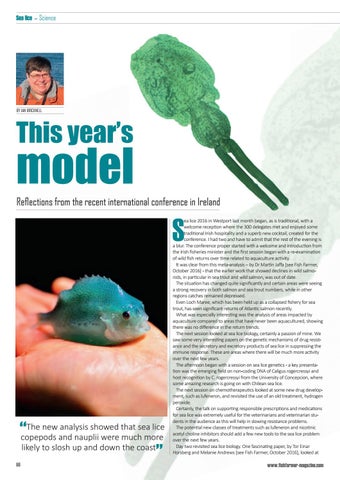
The new analysis showed that sea lice “copepods and nauplii were much more likely to slosh up and down the coast ”
66
Sea Lice - Ian Bricknell.indd 66
ea lice 2016 in Westport last month began, as is traditional, with a welcome reception where the 300 delegates met and enjoyed some traditional Irish hospitality and a superb new cocktail, created for the conference. I had two and have to admit that the rest of the evening is a blur. The conference proper started with a welcome and introduction from the Irish fisheries minister and the first session began with a re-examination of wild fish returns over time related to aquaculture activity. It was clear from this meta-analysis – by Dr Martin Jaffa [see Fish Farmer, October 2016] - that the earlier work that showed declines in wild salmonids, in particular in sea trout and wild salmon, was out of date. The situation has changed quite significantly and certain areas were seeing a strong recovery in both salmon and sea trout numbers, while in other regions catches remained depressed. Even Loch Maree, which has been held up as a collapsed fishery for sea trout, has seen significant returns of Atlantic salmon recently. What was especially interesting was the analysis of areas impacted by aquaculture compared to areas that have never been aquacultured, showing there was no difference in the return trends. The next session looked at sea lice biology, certainly a passion of mine. We saw some very interesting papers on the genetic mechanisms of drug resistance and the secretory and excretory products of sea lice in suppressing the immune response. These are areas where there will be much more activity over the next few years. The afternoon began with a session on sea lice genetics - a key presentation was the emerging field on non-coding DNA of Caligus rogercressyi and host recognition by C. rogercressyi from the University of Concepcion, where some amazing research is going on with Chilean sea lice. The next session on chemotherapeutics looked at some new drug development, such as lufeneron, and revisited the use of an old treatment, hydrogen peroxide. Certainly, the talk on supporting responsible prescriptions and medications for sea lice was extremely useful for the veterinarians and veterinarian students in the audience as this will help in slowing resistance problems. The potential new classes of treatments such as lufeneron and nicotinic acetyl choline inhibitors should add a few new tools to the sea lice problem over the next few years. Day two revisited sea lice biology. One fascinating paper, by Tor Einar Horsberg and Melanie Andrews [see Fish Farmer, October 2016], looked at
www.fishfarmer-magazine.com
07/11/2016 15:06:53