ADVANCING FINANCIAL INCLUSION: BRIDGING THE GAP WITH TECHNOLOGY AND INNOVATION
David Gummer, Chief Product Officer, Redgate
Miranda McLean, Chief Marketing Officer, Ecommpay
THE VIEW FROM (AND INTO) THE MIDDLE KINGDOM WHO WILL FINANCE
– AND SETTLE
– ALL THE IMPORTS AND EXPORTS
Sibos 2024 – the theme of which is ‘connecting the future of finance’ – takes place at the China National Convention Centre (CNCC) in Beijing on 21-24 October, or about a fortnight before the US Presidential Election.
Put another way, the year’s most important conference in international banking is taking place in the city ‘that houses the largest number of Fortune Global 500 companies in the world, as well as the world’s four biggest financial institutions’ AND at around the same time as 2024’s most important geopolitical event.
Andrew Hutchings, Editor-In-Chief, Financial IT
This is not a normal Sibos. Leaving aside the two occasions that the conference was held in Greater China (in Hong Kong in 2009 and 1991), Sibos has never taken place in what is today the world’s secondlargest economy and (just) the secondmost populous nation.
As of mid-September 2024, the Sibos website identifies over 125 exhibitors, almost all of which come from one of five constituencies – major Chinese banks, large foreign banks, large technology companies, Chinese providers of financial infrastructure and foreign infrastructure providers. As ever, the website identifies a vast range of topics that will be discussed. What is perhaps more important is what is NOT mentioned in the website. Remembering my personal experience as a visitor to the Expo 2010 Shanghai China, Sibos 2024 will be an illuminating experience for foreigners. Attendees – and especially those who have spent little time in the country – will get the chance to see the world from both sides of a metaphorical two-way mirror. What are the important messages that the hosts want to deliver? When you look outwards from the Middle Kingdom, what does the globe look like?
The view outwards will provide a key geopolitical insight: China is emphatically not like Russia, Iran or North Korea. It is a critically important trading nation that plays a key role in global supply chains. A paper written by Mary E. Lovely and Jing Yan, two researchers at the Peterson
Institute for International Economics (PIIE) in late August provides useful highlights:
‘All three of the world’s largest trading regions (the United States, the European Union and China) are pursuing policies to
diversify the sources of their imports, both as a hedge agains natural supply disruptions and to reduce vulnerability to economic coercion.’
‘Over the last decade, the United States and China have diversified their import sources, while the EU has become increasingly more reliant on China.’
‘China and the EU are more reliant on each other for manufactured goods as the United States increases imports from Mexico and the EU.’
‘Despite a push for decoupling since 2018, the EU increased reliance on China for technology-intensive goods as the United States diversified its sourcing.’
Since 2013, China has increased its imports from ‘other’ suppliers in the AsiaPacific region and elsewhere.
The picture is clear. Trade patterns may be changing, but trade is still huge and thriving. The 2020s are not the 1930s. Trading blocs are still importing and exporting at scale –regardless of geopolitical noise. The imports and exports need to be financed. When they arrive at their destinations, transactions will need to be settled. The identities of the financiers and the providers of crossborder B2B payments infrastructure matter enormously. Sibos 2024 in Beijing’s CNCC will provide crucial insights into who are those organisations and how they operate.
Sibos 2024 at Beijing’s CNCC is an extraordinary event. We wish everyone who is involved a most successful conference.
Andrew Hutchings, Editor-in-Chief, Financial IT
Although Financial IT has made every effort to ensure the accuracy of this publication, neither it nor any contributor can accept any legal responsibility whatsoever for consequences that may arise from errors or omissions or any opinions or advice given. This publication is not a substitute for professional advice on a specific transaction.
No part of this publication may be reproduced, in whole or in part, without written permission from the publisher. Entire contents copyrighted. Financial IT is a Finnet Limited publication. ISSN 2050-9855
It’s that time, my favorite event of the year, Sibos (Swift International Banking Operations Seminar). I have often called Sibos, my SUPERBOWL. Over the years I have been fortunate to attend 18 Sibos’s with this year making my nineteenth. No matter what, I will attend next year. It is not possible for me to stop at 19 and not get to 20. There have been 45 Sibos’s since 1978 and after Beijing, next will be Frankfurt, Germany. Come and meet me this year and next!
Sibos is the premier event that has been the SWIFT conference for all banks, vendors and participants involved in international banking. This major event draws about 10,000 attends each year. The largest Sibos to date was London in 2019. This year is a bit more special as it
will be in Beijing, the first time Sibos has ever been held in China. I am expecting that Beijing Sibos will be the most widely attended Sibos ever.
Reflecting on the many Sibos events I have attended brings me to question what has happened to the traditions of Sibos that no longer exist. So, Sibos, what happened?
There no longer is the exciting mystery surrounding the big closing event of Sibos, the Thursday night party. In the past this party was shrouded in secrecy. The whole week long the biggest questions is where, and what the party would be. The SWIFT staff at Sibos really worked hard to keep this a secret and this resulting in the building of excitement. No one knew and those that might have known were not
by Chris Principe, Publisher, Financial IT
talking. This has not been the case since 2008. Also, missing is the tradition of fabulous Friday buffets.
No longer is there the same scale of party and no longer is there any secrecy around the closing party. This is a loss to the legacy of Sibos. Let me give you a view into past Sibos parties.
1999, in Munich was set in a fabulous Beer Garden during Oktoberfest, amazing. San Francisco the next year really one of the best. We were bused to Candlestick baseball stadium where everyone thought the party would be, but it wasn’t. They took us through the field and out the back to boats. The boats then went across the bay to the Aircraft carrier, USS Hornet, where the party was on the fight deck and below, incredible. Singapore 2003 at the Singapore Turf Club featured real horse races. 2006 in Sydney the party was on the set where the original Star Wars movie was shot. The last great party was Vienna 2008 at the famous and luxurious Hofburg Palace. There you felt like you were attending a Royal festive evening complete with eye masks.
Sibos, you really have to bring back the mystery and excitement of the old parties including the secrecy that made it the talk of the whole week. Sibos, make it happen!
Chris Principe, Publisher, Financial IT.
2
Andrew Hutchings, Editor-In-Chief, Financial IT
8 ENHANCING MERCHANT ACCESSIBILITY TO DRIVE GROWTH
Miranda McLean, Chief Marketing Officer, Ecommpay
John Trapani, Industry Lead, Financial Services, Appian
22 THE PAYMENT MODERNISATION CONUNDRUM: FRONT TO BACK, OR BACK TO FRONT?
Bethan Cowper, Vice President, Business & Market Development, Compass Plus Technologies
24 WHY PAYMENT MUST BE AT THE HEART OF A CROSSBORDER STRATEGY FOR ONLINE MERCHANTS
Philip Plambeck, Managing Director UK, Computop
26 BREAKING BARRIERS: HOW BUSINESSES CAN BUILD THRIVING INTERNATIONAL GROWTH PLANS
Thanim Islam, Head of FX analysis, Equals
28 WHY DIGITAL ID VERIFICATION IS THE FUTURE OF FAIR FINANCIAL ACCESS
Chris Lewis, Head of Solutions, Synectics
30 HOW IDENTITY VERIFICATION TECHNOLOGY AND INNOVATION ADVANCES FINANCIAL INCLUSION
Grigory Yusupov, Regional Director UK & RoW, IDnow
FEATURED STORY
32 CHALLENGING THE NORM: HOW NEOBANKS ARE RAISING THE BAR FOR CUSTOMER EXPERIENCE
Andrew Stevens, Industry Principal, Banking and Financial Services, Quadient
34 THE (FINANCIAL) TRUTH WILL SET YOU FREE: THE POWER OF SMART DATA TO ENABLE SMARTER DECISIONMAKING
Andrew Bonsall, COO, AperiData.
36 FROM COMPLEXITY TO EFFICIENCY: THE FUTURE OF CROSS-BORDER PAYMENTS
Cedric Bru, CEO, Taulia
38 FINANCIAL INCLUSIVITY AND DIGITAL IDENTITY: BRIDGING THE GAP FOR MARGINALIZED GROUPS
Daniel Flowe, Head of Digital Identity, LSEG Risk Intelligence
40 ISO 20022; IS THERE A BETTER WAY TO DO CROSS-BORDER PAYMENTS?
Sean Devaney, VP, Strategy for Banking and Financial Markets, CGI
42 FINTECH PARTNERSHIPS ARE KEY TO DRIVING INCLUSIVE SME LENDING GROWTH
Luuk Visschedijk, Global Head of Partnerships, YouLend
44 DORA: THE CLOCK IS TICKING, BUT ARE YOU READY?
Maria Siano, General Manager, Broadridge
46 NAVIGATING CHANGE: THE FUTURE OF CROSS-BORDER PAYMENTS
Nick Botha, Payments Lead, AutoRek
David Gummer, Chief Product Officer,
Miranda McLean, Chief Marketing Officer, Ecommpay
ENHANCING MERCHANT ACCESSIBILITY TO DRIVE GROWTH
Improving website accessibility is essential for all businesses. Miranda McLean, Chief Marketing Officer at Ecommpay explains how the payment provider is helping merchants get it right first time.
As awareness of accessibility requirements steadily grows, businesses, including the inclusive global payments platform Ecommpay, are shifting focus to ensure they deliver their services in a way that is easy for everyone to access. Most websites were not originally designed to cater to those with visual, hearing, movement or mental impairments, leaving many people excluded from using these websites and accessing the service they provide. Yet the wider market for people with disabilities is estimated to be worth £274bn in the UK alone, and $1.9trn globally. And research has found that making a website more accessible can drive 23-24% more traffic.
To turn the tide and deliver a truly accessible website, businesses need to understand and implement a range of best practices and clear guidelines. Of course, it is not as simple as creating a new accessible website and sitting back to admire the work. This is an ongoing task requiring continual reviews, updates and improvements to utilise the latest insights and technology available.
As part of our focus on accessibility, inclusivity and sustainability, and our mission to achieve ultimate financial inclusivity, Ecommpay has committed to an ongoing inclusivity programme, Ecommpay for Good. The programme focuses on Ecommpay’s own inclusivity as well as providing businesses with critical support to improve accessibility of their own website, products and services.
Where to start?
With the launch of our new website and brand identity in September, Ecommpay has made a significant commitment to the accessibility of our website. The new colours, fonts and layouts of the brand identity have been carefully selected to ensure accessibility for those with visual and hearing impairment and cognitive and physical disabilities.
We are also empowering merchants to improve their digital presence with free access to a Guide to Digital Accessibility, which outlines the actions needed to meet the WC3 (World Wide Web Consortium)
Web Content Accessibility Guidelines (WCAG) 2.2 AA standard for accessibility. These guidelines are an internationally recognised set of recommendations for improving web accessibility and are a great place for businesses to get an idea of what they can do to help those who are less able to use their websites. The guidelines define how to make websites, web and mobile applications more accessible to everyone, including people with impairments to their:
• hearing – people who are deaf or hard of hearing,
• mobility – those who find it difficult to use a mouse or keyboard,
• thinking and understanding – people with dyslexia, autism or learning difficulties.
The WCAG 2.2 guidelines detail three levels of compliance, from Level A features that address the most urgent accessibility barriers, to Level AA, with features tackling the biggest and most common barriers for disabled users, and Level AAA, which offers the highest and most complex level of web accessibility. Services should meet Level AA of the WCAG 2.2 as a minimum.
The WCAG principles
Organised around four key principles, Perceivable, Operable, Understandable, and Robust, the WCAG 2.2 guidelines are further supported by thirteen guidelines, each broken down into clear success criteria. When making decisions around the new branding and website, Ecommpay followed WCAG 2.2 guidelines and considered how people engage with content. For example, a user might:
• Navigate with a keyboard instead of a mouse,
• Change their browser settings to make content easier to read,
• Use a screen reader to read the content on a webpage,
• Use a screen magnifier,
• Use voice commands to navigate a website.
Every part of the website should be compatible with these modified ways of engaging. Ecommpay found that when businesses make this fundamental change
to the priorities for their website and content, developers, designers, content authors and others may need training to ensure they produce accessible content.
To ensure our newly designed site meets its aim, accessibility was made the top priority at every stage of development, not added as an afterthought. The website was tested from an early stage, to catch and rectify issues early on, with a more formal independent accessibility audit being carried out at the appropriate stage.
While automated testing tools make testing quick and help identify common issues, they lack the ability to understand context, often generate false results and are not accurate measures of the usability of a website for people with disabilities. As such, WCAG 2.2 guidelines suggest that automated testing be complemented with manual testing and include user testing with people with disabilities to ensure a truly accessible experience. Once the website is live, regularly gathering feedback from users with disabilities will help ensure any further challenges are addressed quickly.
Ecommpay for Good
Ecommpay is working towards our ambition of ultimate financial inclusivity, and that begins with how the business engages with every customer and potential customer from the first point of contact. Ecommpay for Good is a dedicated ongoing programme focused on inclusivity and providing merchants with critical support to improve their own accessibility to benefit customers and the merchants simultaneously.
The latest Payments Association data suggests that just 5% of payments businesses see ESG as a priority in the next 12 months. We see this as a significant missed opportunity, as inclusivity and accessibility have been shown to drive revenue.
To find out more about Ecommpay and how we can help you grow, visit ecommpay.com
ISO 20022: A CATALYST TO UPGRADE YOUR PAYMENTS LIFECYCLE PROCESSES
The International Organization for Standardization, is looking to replace legacy standards and support new business needs for financial services organizations with the ISO 20022 standard. The standard for information exchange is set to be fully enabled by November 2025.
That seems like a long time from now, but as financial institutions consider their plans for adoption they should consider the opportunity to realize substantial additional benefits beyond simply complying with the new standards. (SWIFT estimates that ISO 20022 implementation will boost efficiency, reducing false positives by 25-35%.) One of the biggest
opportunities that comes with this change is the ability to modernize and refresh technology.
The strategic imperative for legacy modernization
Existing payment messaging types are disjointed and often leave financial institutions doing heavy legwork reconciling information, leading to errors, delays, and other complications when it comes to payment investigations and customer queries. The new ISO 20022 standard will help improve such issues by streamlining cross-border payments,
John Trapani, Industry Lead, Financial Services, Appian
John Trapani is a Global Industry Leader at Appian Corporation, working with leaders in Financial Services to help drive growth and create opportunities for digital transformation using the Appian automation platform. In this role he works to ensure Appian delivers applications that help organizations grow, manage risk, and increase the efficiency and effectiveness of their business processes.
improving regulatory compliance, and giving institutions better data and insights into transactions and customers.
How
ISO 20022 will change payments messaging
The new message format being implemented with ISO 20022 includes richer data that will make interoperability easier for financial institutions. For example, they will be able to send more detailed information with additional fields that can help distinguish the difference between a street name, a city, and a country. This is an excellent opportunity to not only learn more about customers but also speed up the process to create happier customers.
The challenges the new messaging will create
While those are positive changes, institutions that aren’t prepared may struggle to adopt the new standards if their legacy systems can’t receive and send this additional data properly. In fact, we would argue that most organisations aren’t structured appropriately to gain insights from the data. For some banks this could mean hundreds of different systems are impacted. Legacy systems are often inflexible and require workarounds that lead to operational inefficiencies, slower turnaround times, and an even worse customer experience.
Make the most of the opportunity with a layered approach
The opportunities and challenges make the implementation of ISO 20022 an excellent opportunity to modernize systems. It may seem daunting but it also doesn’t need to require a full migration to new technology, which can be time consuming, expensive, and lack customization capabilities. The right technology can help financial services organizations meet compliance requirements and prepare them for future challenges by layering over legacy systems. Using a data fabric, a tool set that connects data across disparate systems, with this layered approach means you can access data at the right time at the right place and there’s no need to rip and replace legacy systems. It offers easy customization that adapts to changing needs, thereby reducing the cost of total ownership. Enhancing existing systems in this way ensures current compliance,
prepares organizations for future challenges, enhances agility, and boosts competitiveness.
How AI-driven automation can be leveraged with ISO 20022 implementation
The implementation of ISO 20022 also offers financial services organizations an ideal opportunity to create further efficiencies by implementing artificial intelligence and automation. Payment investigations, failed payments, and customer queries can all take time, especially when utilizing legacy solutions that can’t accommodate changing business needs.
The right technology should integrate into existing systems and can introduce features like AI skills, automation, and case management framework to help resolve complex cases without intervention. AI skills reduce the number of cases that need to be investigated in the first place by using better data that’s more complete to determine which need further investigation, cutting down on false positives.
Automation cuts down on the amount of legwork needed for payment investigations by minimizing the steps that employees need to take while investigating a case. A flexible case management framework helps ensure payment investigations have a complete audit trail with full visibility, making the process easier for employees to investigate and better for compliance.
Technology equipped with private AI helps ensure an organization’s data remains secure. Private AI is exclusively trained on an organization’s data, ensuring that the resulting intelligence remains confined to that enterprise. It protects customers and prevents competitors from gaining information from your data-driven insights.
An example of how process automation can enhance payment investigations
Let’s review a real life scenario of how a modern technology approach can meet market needs and reduce the total cost of ownership.
A regulations technology organization that focuses on financial transaction screening wanted to improve the ability of financial institutions to accurately screen transactions for sanctions—a complex regulatory obligation and a costly barrier to
moving to instant cross-border payments.
The organization found that 99.6% of the alerts generated on stopped payments were false positives. This was not only frustrating for their teams, but for customers who then had a negative experience. They sought out technology to help support the investigation of matches and provide an outcome to sanction checks where autodisposition wasn’t possible.
They launched a new alert management tool with the help of an automation platform that overlaid their existing systems to streamline workflows. This provided them with a fully integrated, configurable user experience for managing and working with alerts across multiple teams and levels of investigation through to a standardized outcome.
The new alert tool helped enhance the user experience and minimize steps to improve investigation productivity, and store and retrieve evidence in line with agreed standards to eliminate having to rework investigations and improve audit trails. Among other benefits, it also provided them with the flexibility to more easily implement new regulations, ensuring they’re ready for the future.
ISO 20022 as a catalyst for legacy modernization without the pain Legacy modernization can have a positive impact on financial services organizations that can provide both internal and external benefits. It helps future proof organizations so they can be more flexible and innovative, more easily adapt to changing and new regulations, and it improves the customer experience.
Not every solution has to include a painful and costly migration to a new technology though. There are options for platforms that layer over existing technology to prolong the life of legacy payment platforms without the need to rip and replace and help institutions deploy digital applications across the payments lifecycle. This offers financial institutions the opportunity to innovate and stay ahead of the curve while controlling costs and better make use of emerging technologies like generative AI.
With one year left until ISO 20022 compliance is required, consider how you can make best use of the technology you have and the opportunities that lie ahead. With the right planning and technology investments, you can make sure your organization is future-ready for ISO 20022 and beyond.
MODERNIZING PAYMENTS: KEY TRENDS AND STRATEGIC PRIORITIES
A conversation with Radha Suvarna, Chief Product Officer, Payments at Finastra ahead of Sibos 2024
Radha
Every financial institution needs to modernize its payment handling. Finastra aims to offer a wide range of solutions for financial institutions of all sizes. Today, we are joined by Radha Suvarna, Chief Product Officer for Payments at Finastra, to discuss how the company facilitates this transformation.
Financial IT: What payment trends are impacting the space, and why should banks care and adopt a more modernized payment architecture?
Radha Suvarna: In the payment sector there are two sets of trends that heavily impact the space; payment specific trends and macro banking trends.
The key trends I see within payments are as follows:
• The first is customer focused. Customers consistently need increasing payment speed and transparency, especially for cross-border where it can sometimes take days.
• The second is that many regulators in various markets have started to deploy and introduce real time payment capabilities. We currently have over 25 markets with real time payments.
• Third, is the introduction of new real time payments on ISO 20022, a modern and flexible payments standard.
• The fourth trend concerns banks. They need a single vendor who is capable of processing multiple payment types, centralizing their payment infrastructure.
• The next trend involves regulators implementing stricter requirements. Because of the availability of instantaneous payments in many markets, regulators enforce the need to have high availability and high resiliency, as these systems underpin the global economy.
• And finally, the sixth is the emergence of alternate payment rails like Central Bank Digital Currency (CBDC) or Visa Direct.
I’ll note three trends that are part of macro banking:
• The first is the move to the cloud to offer scalability to banks.
• The second is the need for banks to reduce the total cost of ownership around technology.
• The last trend is AI and how it can be an enabler for these organisations.
But why should banks care? It’s essential for banks to respond to these trends and deliver better client propositions. They must be methodical in modernization to stay competitive in this evolving marketplace.
Banks must fulfill their responsibility of providing a compliant and resilient infrastructure since payments underpin the global economy. They need to compete in the marketplace with challenger banks and fintechs that offer arguably stronger value propositions. Banks also need to drive internal efficiencies and manage costs associated with upgrades and legacy infrastructure as part of their modernization journey.
Financial IT: What are the key priorities institutions should focus on when planning their payment infrastructure modernization?
Radha Suvarna: It’s going to be a long journey but let’s think about those three points from before. Providing a compliant service, being able to compete in today’s market and optimizing to create efficiencies.
Banks have to think about all three and prioritize based on their needs. They must be addressed concurrently as opposed to sequentially. There needs to be a strengthening of their payment platforms to be scalable on demand with increased response time requirements and active for disaster recovery.
We must deconstruct the technology stack into modular and reusable components to stay competitive and scalable. The financial institution benefits from this modularity.
Another consideration is using open-source technologies which offer significant value.
Financial IT: How does Finastra facilitate payments modernization transformation?
Radha Suvarna: We enable banks on their journeys to modernization through our comprehensive Global Payments Framework which comes in layers:
• The top layer is client facing providing ‘reusable’ services such as routing or support for new payment rails.
• Below that layer we’ve created modular technical services. These are the building blocks for technological
services, like risk management and fraud detection systems.
• In the third layer we’ve built a microservices chassis. These are granular components that take care of data flows. It’s how our clients gather telemetry to improve the experience.
• The bottom layer is based on opensource technologies. We have begun offering clients the ability to use opensource technologies as alternatives.
We’ve deconstructed our product into modular layers and we’ve put this framework into practice.
We’re currently developing our Finastra Smart Routing Module for one of the top three banks in the world. It’s applying it for payments that Finastra processes, but it is also agnostic. The bank benefits from being able to tap into just this module, rather than buying whole new systems.
For Visa Direct we’re the first distribution partner that Visa certified. Soon, we’ll also complete a modernized Automated Clearing House (ACH), which is a mass payments framework in the US for one of the mid-sized banks.
Financial IT: Lastly, what is next for Finastra?
Radha Suvarna: We’ll continue to invest in our customers on this journey. One focus is to approach challenges by co-creating with our clients.
Finastra believes in Open Finance. We build open solutions for better, secure and inclusive payment services. Our open payment and financial messaging solutions empower institutions to keep pace with evolving customer and compliance needs and join a more inclusive, efficient and global financial ecosystem.
A truly open payments ecosystem can democratize payments around the world through making cross border payments more accessible, helping organisations stay on track with regulations and accelerating innovation and growth.
Meet Finastra at Sibos 2024 (21-24 October) on stand G30.
ADVANCING FINANCIAL INCLUSION: BRIDGING THE GAP WITH TECHNOLOGY AND INNOVATION
Most people don’t think about databases unless something has gone wrong. Yet databases are key to the functioning of most software we use each day. And if we look at how the database landscape is evolving over time, we can see how emerging trends in database management have the potential to create brand new opportunities for those in Financial Services. To track these trends, it is worth examining Redgate’s 2024 State of the Database Landscape Report and gaining some insight into how the Financial Services industry is using databases, and where the industry is struggling.
A relatively new consideration for companies is Database DevOps. An extension of DevOps (a set of practices and tools that integrates and automates the work of software development and IT operations), Database DevOps optimizes productivity, agility, and performance across the whole database lifecycle. In the past, developer, operations and other IT departments in financial organizations have worked in isolation, using separate systems to manage data. Working in this way has often resulted in silos, inconsistencies, and higher time and resource costs.
The Redgate survey shows that today 58% of Financial Services businesses have now adopted Database DevOps for at least some of their projects. Database DevOps is an increasingly important part of any efficient data management strategy which is why a further 20% of Financial Services businesses are planning to adopt it. It’s worth noting that even other sectors have a 48% DevOps adoption rate compared to Financial Services.
Thanks to robust Database DevOps practices, the frequency of database deployments has become much faster. This is especially important in Financial Services since deployment frequency can impact everything from customer experience to security. Now, 65% of Financial Services deploy database changes
in one week or less compared to 53% for other sectors. The gap is smaller for companies that deploy changes in one business day or less, with 36% for Financial Services and 31% for other sectors. Speed of deployment is set to increase across all sectors as more and more businesses compete to offer services to market faster and deliver against increasing business need – and a key way to deliver this speed is to adopt automated database deployment solutions.
The ways in which organizations are interfacing with database platforms is also changing. Two of the datapoints which demonstrate this are the usage of multiple database platforms and cloud hosting. While 42% of organizations in all sectors use four or more database platforms, such as Microsoft SQL Server, Oracle, PostgreSQL or MySQL, Financial Services is slower to integrate multiple database types, with 72% using only up to three. The sector also falls behind in cloud adoption, with 29% of Financial Services hosting databases mostly or all in the cloud compared to 36% of all organizations. 42% of Financial Services organizations are planning to adopt a hybrid approach, while 15% are sticking solely to on-premises infrastructures.
This slower pace in the uptake of more complex database estates not only implies there still might be work to do to raise awareness about how different platforms might better suit different business needs, or how a hybrid or cloud-based approach could benefit efficiency, but also signals a need for future security considerations for both multi-platform estates and cloudbased solutions.
No report about the future of databases would be complete without at least some consideration of artificial intelligence and how it has the potential to transform everything from management to DevOps. Despite it being early days for AI, there is quite a lot of consensuses from companies in Financial Services and all other sectors.
55% of all organizations are currently exploring AI integrations in every area of database development and management. There are multiple use cases for AI but the reoccurring goals which emerged from the report were to streamline tasks, introduce automation, and enhance database security. It remains to be seen how AI implementations will work for various sectors and which future technology will allow deeper AI integration for database development.
Finally, and unsurprisingly, it is worth acknowledging that the majority of all organizations surveyed are deeply concerned about security, especially in an era where institutions are responsible for incredible amounts of sensitive data. 83% of Financial Services businesses have security measures in place to protect sensitive data by masking it or using synthetic data. This compares to 60% of organizations in other sectors who use similar methods. However, 17% of organizations, or one in six, have no security measures in place. It is also vital to note that data security and access controls are less prevalent in development and testing phases compared to the production phase, which has more integrated data security measures.
Overall, the data gathered in the Redgate 2024 State of the Database Landscape Report provides an interesting and introspective array of information to both act upon and speculate about the future with. Despite the clear gap between the growing complexity of the database landscape and the evolution of organizations to respond and keep up with the progressing environment, it is clear the Financial Services sector is working hard to bridge that gap using technology and innovation to better serve clients globally.
David Gummer, Chief Product Officer, Redgate
As CPO, David leads product development at Redgate to drive innovation, improve customer outcomes, and accelerate business growth. An entrepreneurial leader with 25+ years of cross-functional experience in the technology sector, David has worked in a variety of global and business unit executive leadership positions and has extensive product management experience. Along with a track record of driving rapid growth in new and existing markets, he has proven capabilities in creating, building and developing talented teams.
ACCEPTING PAYMENTS INTERNATIONALLY IN 2024: CHALLENGES AND INNOVATION
Merchants need to be able to easily accept payments from across the globe. Digital commerce will exceed $6.3 trillion in 2024, and is growing 8-9% per year globally. The ability to accept payments in multiple countries has become a cornerstone of global commerce. Yet, the landscape of international payments is fraught with challenges, from complex regulatory environments to high transaction fees. In response to this, innovations in payment orchestration software are paving the way for a more connected and streamlined global payment ecosystem.
Challenges Accepting Payments Internationally
Every merchant planning international growth will be limited by how effectively they can accept payments internationally. Here’s why:
1. Regulatory Complexity: Each country has its own set of regulations governing payments, creating a complex and often confusing landscape to navigate.
2. Interoperability Issues: Ensuring that different payment systems and networks can work together seamlessly is a significant challenge, especially as new technologies and payment methods continue to emerge.
3. Security Concerns: Implementing robust fraud prevention measures is a priority
for many merchants and becomes both more essential and more complex with international payments.
Innovation in Payments Through Global Connectivity
The key to overcoming today's challenges accepting international payments lies in developing a more efficient, cost-effective, and secure global payment ecosystem.
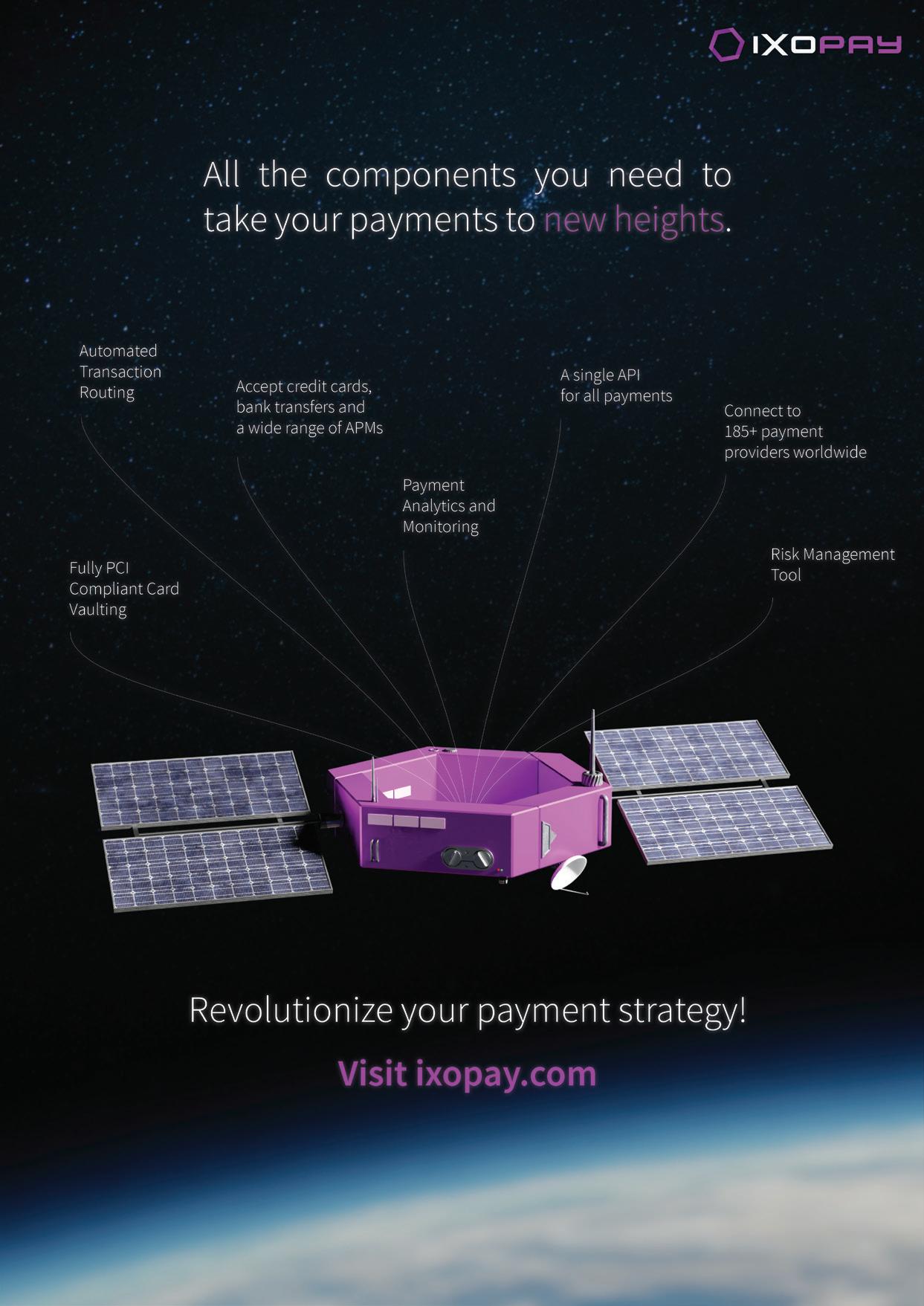
Payments orchestration software is emerging as a game-changer in the world of international payments. By offering a connection – via a single API – to a platform that connects various payment gateways, local and global acquirers, and alternative payment methods, it simplifies the complexity of international transactions.
Advantages of Payment Orchestration Software
1. Optimized Payment Routing: Payments orchestration software intelligently routes transactions through the most efficient and cost-effective channels. This reduces the likelihood of transaction failures and ensures that payments are processed quickly, regardless of the destination.
2. Cost Efficiency: By leveraging multiple payment providers, businesses can reduce the costs associated with international
payments. Payments orchestration platforms enable businesses to choose the most competitive rates, thereby lowering fees and increasing profitability.
3. Enhanced Security and Compliance: Cross-border payments are subject to stringent regulatory requirements. Payments orchestration platforms, like those offered by IXOPAY, come with built-in compliance features that help businesses navigate complex regulatory environments and ensure that transactions are secure and compliant with local laws.
4. Scalability and Flexibility: As businesses grow and enter new markets, payments orchestration software provides the scalability needed to handle increased transaction volumes. It also offers the flexibility to adapt to different payment preferences and regulatory requirements in various regions.
5. Improved Customer Experience: With payments orchestration, businesses can offer a seamless payment experience to their customers, regardless of their location. This includes supporting local payment methods, currencies, and languages, which is crucial for building trust and driving conversions in international markets.
Brady Harris, Chief Executive Officer, IXOPAY
Brady Harris, a visionary FinTech Executive, has over two decades of experience leading high-growth financial technology and SaaS companies. As the CEO appointed following the merger of IXOPAY with TokenEx, he is dedicated to advancing global payment solutions. Harris employs a hands-on leadership style, focusing on operational excellence and strategic growth initiatives. During his tenure at Dwolla and Payscape he oversaw significant increases in payment volumes and user engagement, and fostering cultures that prioritize agility, high performance, and alignment with core values. Additionally, his expertise in mergers, acquisitions, and scaling companies to successful exits is key as IXOPAY positions itself to become the one-stop payment industry solution. Harris's commitment is to not only enhance enterprise value but also to empower his teams and clients in the evolving digital payments landscape.
Bethan Cowper, Vice President, Business & Market Development, Compass Plus Technologies
THE PAYMENT MODERNISATION CONUNDRUM: FRONT TO BACK, OR BACK TO FRONT?
Customer centricity is key for any modern-day payments business. Customers are, after all, the end user. The days when product design was driven solely by what the FI wanted to offer are long gone, and what the customer wants is now at the epicentre of all business product decisioning. This is by no means a bad thing, but there are always consequences whenever there is a significant shift in strategy. Any focal change tends to be magnified over time, and as such, we find ourselves in an era of hyper fixation on UX/CX.
Fixation on one area of the business is, without exception, detrimental to the business as a whole. Depending on size and scope, a fundamental tug of war begins on where investments are spent, whether in terms of money or resources, and how success is measured. Front-end fixation, for example, leans heavily towards success metrics such as how many customers do I currently have, and how many new customers have we onboarded in the past month, rather than efficiency of service. The irony is that the payments industry desperately tries to eradicate its history of siloed systems and processes, by jumping into a new version of the same siloed environment whereby areas of the business are overlooked in order to achieve quick results that impress board members and stock markets.
The system architecture and payments ecosystem on which an FIs business is built is at the heart of everything and this cannot be brushed aside. Any outdated technology leads to outdated and often manual approaches, integration issues and complexity. And most importantly, any major inefficiency in the back-end automatically affects the frontend, whether in terms of operations, service stability, or allocation of resources.
Payments experts and consultants herald that the best payments process is one the customer doesn’t notice, the so-called “invisible payment” experience and this is what we should all aspire to, therefore we must all agree that this is only possible by having a
well-oiled engine. When it comes down to it, if your competition moves faster, scales easier and adapts quicker, it’s about more than just their glamourous frontend capabilities.
Let’s take a look at Fintechs. For Fintechs, their front-end is existential: it encapsulates their USPs and differentiators against the established players in their entirety. However, Fintechs have their own challenges associated with frontend fixation: namely the struggle to scale their backend to meet the requirements of an increasingly engaging, adaptive and successful frontend. As such, once launched, Fintechs tend to find themselves in the reverse situation; hyper focusing their resources on their backends due to unanticipated complexities. The initial product that stimulated their growth expands to encompass whole new product ranges, whole new regions and whole new regulatory and technological unknowns. The immediate focus then urgently shifts from business to operational, namely integration, in order to bolster the technological capability to successfully underpin further growth. The quickest route tends to be partnerships with backend vendors to help ensure that the Fintech’s reputation for quick time-to-market products and services that are both innovative and reliable remains unblemished.
Traditional players are intimidated by Fintechs and are immersed in overcompensating by spending the lion’s share of time, money and resources on CX/UX in order to remain relevant. But FIs looking to truly compete with newer payment giants are still on the back foot. Their architecture wasn’t built with today’s payment landscape in mind and instead, grew organically, with a new acquisition here, a new region there, and so on and so forth. This payment ecosystem quickly becomes cumbersome and challenging to manage. The cost of managing a multi-payment integration environment that has expanded over time can weigh the FI down financially and operationally. Losses in productivity mean that staff are diverted
from mission and business critical tasks, onto maintenance and fire-fighting. According to Gocardless, every year businesses stand to lose more than $2 million in uncollected revenue due to system failures.
For an FI to maintain control of its technology and innovation strategy, it needs a future-proof core built across a select number of mission-critical systems. This way, it can embrace change from a position of strength, rather than being constantly swayed by the technical limitations of its existing systems and their suppliers. Outsourcing core or strategically important elements of the business to one vendor or orchestrator makes the risk of lock-in very real, essentially handing all the power to a third-party and being at the mercy of taking a backseat to their roadmap, development cycles and strategies.
Whether an FI or Fintech is top heavy or bottom heavy, there is a clear need for balance and stability. A successful payments business with legs to stay the distance has a clean, useable, and intuitive front-end, driven by a reliable, scalable, and technology-first backend, with resources, both monetary and operational, spread evenly and a focus on evolving the business rather than just staying afloat. This may sound implausible, but we are no longer in an era of rip and replace, big bang migrations and acquisitions. The right technology partners, strategic consultants, software solutions and outsourced services are out there. Each step taken to create a more coherent payments environment is a step in the right direction. Don’t get turned around and overwhelmed. Get back to front of mind, front of wallet and back to business.
Philip Plambeck, Managing Director UK, Computop
Philip Plambeck is the Managing Director of Computop Ltd and Senior Vice President of non-EU business, where he oversees the company’s customers, partners and new business in the UK, US, LATAM and APAC regions. The team both enables global brands to be able to seamlessly take and manage payments outside of their home markets, as well as support businesses in our home regions.
Philip joined Computop in 2022 having previously spent a number of years with a large US acquirer in London
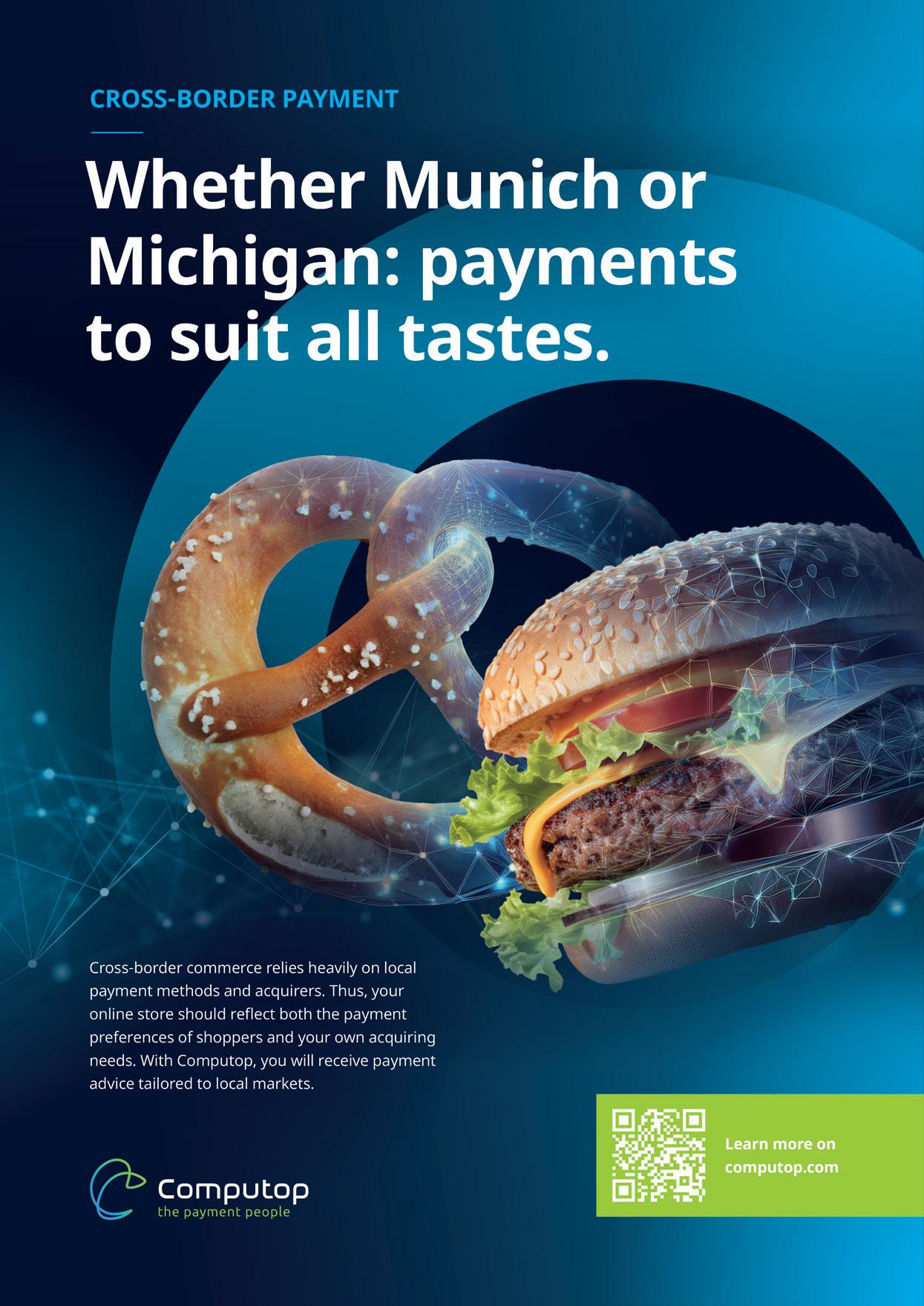
WHY PAYMENT MUST BE AT THE HEART OF A CROSS-BORDER STRATEGY FOR ONLINE MERCHANTS
As e-commerce continues to expand globally, more retailers are looking to tap into international markets to broaden their customer base. However, selling cross-border is not without its challenges. Among the most critical factors are the complexities and cultural nuances of payment methods in different territories, currency exchanges, fraud prevention, and compliance with international regulations. Get these wrong and there will be a significant impact on customer experience, operational efficiency and profitability.
Diverse payment preferences
One of the first hurdles for retailers is the need to accommodate diverse payment preferences, which can vary significantly across different countries and regions, influenced by cultural norms, banking infrastructure, and technological adoption.
While in the U.S. and Europe credit and debit cards are commonly used, in China, payment platforms like Alipay and WeChat Pay dominate the market. Quickly gaining in popularity across all three territories, however, are digital wallets, which are set to be used by more than 5.3 billion users worldwide by 2026. Despite there being digital wallets that act as de-facto payment methods, and genuine wallets, this method offers a convenient and secure way for consumers to pay online.
In regions like Europe, particularly in Spain and Poland, bank transfers are favoured, supported by systems like SEPA (Single Euro Payments Area) in the EU. These particularly work for larger transactions, or for customers who prefer not to share their card details online. Wero in the EU will potentially streamline these transactions to enable easier day-to-day spending.
When it comes to cash, in some parts of Latin America and Southeast Asia, it is still king. Cash-based payment methods including cash-on-delivery (COD) or cashbased vouchers like OXXO in Mexico, are still prevalent, while in Brazil technology made a leap from cash-based Boleto to account-toaccount real-time payments via Pix within only a few years and Automatic Pix, via PISP, Pix
Roaming and Pix International will accelerate A2A payments across all Latin America.
Currency conversion and exchange rates
Dealing with multiple currencies is another significant challenge in cross-border e-commerce. Generally, retailers should price products in the local currency to generate customer trust and satisfaction, eliminating any misunderstandings over the final cost. However, managing multiple currencies means accounting for fluctuating exchange rates, which can impact profit margins.
A sensible approach is to use a payment gateway, such as that offered by Computop, which offers dynamic currency conversion (DCC) and allows customers to see prices and pay in their preferred currency.
Fraud prevention and security
One of the main concerns for retailers is how they might be exposed to payment fraud risk. A study from Juniper Research last year found that merchant losses from online payment fraud would exceed $362 billion globally between 2023 and 2028. Being aware of the countries with higher instances of fraud and where robust fraud prevention measures need to be implemented is essential.
Implementing advanced fraud detection tools that use machine learning and AI can help retailers identify suspicious transactions. Working with a payment service provider that offers fraud prevention tools including analysis of transaction patterns or device fingerprinting is crucial for minimising fraud. Computop has an AI Fraud Score, which is determined by merchants’ chargeback and fraud histories, for example.
Employing 3D Secure (3DS), which adds an extra layer of authentication for card payments, can reduce chargebacks and fraud, but in countries where it is only partially implemented it can lead to erroneous declines.
It’s also important to be fully PCI DSS compliant to cut the risk of data breaches.
Regulatory compliance and taxation
Each country has its own set of regulations and tax laws governing e-commerce transactions. Retailers must comply with local VAT (Value Added Tax), GST (Goods and Services Tax), or other tax requirements if they want to avoid legal issues and potential fines. Use of automated tax management tools can be helpful.
Regulations like GDPR in the EU (and supported in the UK) impose strict requirements on how retailers collect, store, and use customer data. While the U.S. does not have an equivalent, it does protect specific data sets with federal laws, and retailers selling into the U.S. must ensure their payment systems and overall e-commerce operations comply. In some countries, retailers may need to obtain specific payment licenses to operate legally, which can be helped by partnering with local payment processors or using established payment gateways.
Retailer support
Given that payment-related issues can be a common cause of customer dissatisfaction, it’s important for retailers to have access to a single point of contact from their payment service provider to solve any problems.
Entering the cross-border e-commerce market presents significant opportunities for growth, but also requires consideration of payment-related challenges. Working with a payment services provider with cross-border expertise, with local acquirers integrated into its payment platform, will enhance transaction approval rates, reduce processing costs and boost customer trust. Taking a strategic approach that ensures hurdles are overcome before launch will ensure the long-term sustainability of cross-border operations
BREAKING BARRIERS: HOW BUSINESSES CAN BUILD THRIVING INTERNATIONAL GROWTH PLANS
Expanding a business internationally is one of the most promising paths to growth, allowing companies to access new markets, diversify their customer base, and seize fresh opportunities. However, as any seasoned leader can attest, this journey is not without its challenges. At Equals Money, our research has identified key barriers that businesses must overcome to successfully expand their operations across borders. From navigating geopolitical shifts to managing complex payment infrastructures, the road to international growth is fraught with obstacles. Yet, with the right strategies and partnerships, these challenges can be transformed into opportunities for success.
Embracing stability amid global uncertainty
Recent years have been a period of upheaval for UK businesses, with political and economic instability leading to uncertainty in domestic and international markets. However, the outcome of the recent UK election has provided a muchneeded sense of stability, which is crucial for businesses planning their next moves. While we are still awaiting the full implementation of Labour policies, the party’s manifesto has already offered a reassuring outlook for the future. This new era of stability presents an ideal moment for UK businesses to lay the groundwork for international expansion.
That said, while the UK may be enjoying a period of relative calm, the global landscape remains unpredictable. The unexpected election results in France, ongoing volatility in the US due to upcoming elections, and geopolitical tensions in the Middle East all contribute to an uncertain international environment. Our research, that surveyed 400 financial decision makers at UK businesses, found that 61% of businesses view economic stability as the most important factor when deciding which markets to enter, with 40% also emphasizing the importance of the regulatory environment.
There is certainly more for businesses to consider than ever before, but it will not stop them from expanding. These challenges are simply another jigsaw piece to fit into the puzzle, however careful planning will be key. I provide a daily currency news report covering the worldwide currency movements, which can act as a starting resource on staying updated.
To navigate these complexities, business leaders must adopt a well-prepared and flexible approach. Understanding the nuances of target markets, being equipped with the right resources, and maintaining an open mindset are essential for success in today’s global economy.
Understanding your target market
One of the most significant hurdles in international expansion is understanding
the cultural, economic, and legal landscape of new markets. Nearly a third (31%) of businesses surveyed by Equals Money cited existing competition as a major challenge, while 27% pointed to a lack of brand awareness in foreign markets. This highlights the importance of indepth market research and a strong local presence.
Successful international expansion requires more than just exporting a domestic product overseas. Businesses must invest time and resources into understanding the unique needs and preferences of their target customers. This often means putting "boots on the ground"—having local representatives who can provide insights into market regulations and consumer behaviour. Having a local perspective is invaluable. It allows businesses to tailor their offerings to better suit the new market and build a local sales force that can drive growth. However, this process demands dedication and a willingness to adapt.
Overcoming currency hurdles
Payments are another critical, yet often underestimated, aspect of international expansion. Many businesses rely on banks and in-country providers, leading to the use of multiple systems to manually build their international payments infrastructure. This is not the most efficient process, but it is
often the default due to a lack of awareness of alternative solutions.
Relying on multiple partners, particularly large banks dealing with a variety of products, can cause friction for businesses needing to make quick payments across several currencies.
Unexpected fees, foreign exchange rate fluctuations, and changes in local banking regulations add to the complexity and cost of international transactions.
Our research shows that payment issues are a recurring theme for businesses expanding internationally, with one in three citing the costs associated with foreign currency as their biggest challenge, and 27% naming slow crossborder payments as a significant hurdle. To overcome these barriers, businesses should seek agile partners with a deep understanding of foreign exchange and access to local knowledge. These partners can guide businesses in real-time, helping them navigate the complexities of international payments.
The importance of trusted partnerships
Working with a trusted partner is crucial for businesses looking to expand internationally. More than half of the business leaders we surveyed agree that a reliable partner is the most important factor in feeling confident about their
Thanim Islam, Head of FX analysis, Equals
With over 10 years of experience in FX, Thanim provides knowledge to clients on price action in markets. Whilst monitoring daily changes in the currency exchange market, he is able to provide clients with trading strategies and payment solutions that will enable them the maximise profits with little risk.
As part of the Equals Group PLC, which is a leading challenger in the financial services sector, Equals Money is a global payments and expenses solution with expertise in FX.
Areas of expertise:
• Can advise on live market trends and offer expert opinions to best maximise client profits, and protect against negative market movements.
• Can provide Spot and Forward pricing for wholesale, retail and commercial customers globally – insight into how this can benefit SMEs
• Expertise in developing strong knowledge of macro economics and technical analysis through research and discussion of market movements
• Tips for SMEs and businesses looking for advise on company growth via cross selling
international growth plans. This is followed by the need for guidance on international compliance and a costeffective FX provider.
At Equals Money, our platform and multi-currency accounts allow businesses to receive payments in up to 38 currencies in one place. This not only simplifies the payments process but also provides businesses with the local expertise they need to navigate international markets. Expanding internationally is an exciting time, but it’s important not to be bogged down by payment complexities. With the right partner, businesses can focus on other aspects of their expansion journey, knowing that their payments are in safe hands.
Looking ahead
With the UK entering a period of domestic stability, now is the time for business leaders to reconsider their international expansion strategies. By addressing the barriers of competition, brand awareness, and payment complexities, and by working with trusted partners, businesses can turn challenges into opportunities and achieve sustainable growth in new markets.
Find out more about how Equals Money can help simplify your finance processes and support your international expansion efforts in equalsmoney.com/.
Chris Lewis, Head of Solutions, Synectics
WHY DIGITAL ID VERIFICATION IS
THE FUTURE OF FAIR FINANCIAL ACCESS
A recent report shows 28% of the population feel “locked out” of the financial system. A key reason being that standard ID verification processes, narrow in scope and heavily reliant on credit score ratings, unfairly penalise a growing segment of UK adults due to seismic societal shifts.
The lives we live. The forms of ID we hold. The credit history many of us now have. It’s all changed. And unless ID verification processes change too, the risk is that even more people will be cut off from essential financial services.
Digital ID verification is not the only answer. But, by offering Financial Service Providers (FSPs)a way of validating IDs and assessing risk that’s more congruent with modern life, it will enable a fairer financial future for many. Not to mention wider benefits for FSPs. To understand why this is, it’s first useful to understand why current verification methods used are so problematic.
The changing face of financial exclusion.
Traditional 2+2 verification processes are based on checking two pieces of information like name and date of birth against two recognised sources, typically a credit agency and utility company. Therein lies the problem.
An estimated 5.9 million people living in the UK are ID challenged and likely to fail such a process. And this figure is increasing.
Recent stats suggest 14% of UK adults don’t have a passport. Amazingly, just 2.97 million people aged under 25 hold a full driving license. And for the growing number of adult children returning home to live with mum and dad, proof of address checks dependent on a utility bill are a clear challenge.
Young adults living at home longer or unable to get their foot on the property ladder will also suffer when it comes to their credit score. As will retirees who have long since paid off their mortgage – a not insignificant demographic given our aging population.
Problems are compounded by the costof-living crisis and ongoing repercussions from the pandemic. Loan defaults and mortgages in arrears are all on the rise. Yet many individuals who have missed some repayments in recent times are not necessarily ‘high risk’ customers and actually have good long-term prospects. Nonetheless,
many with fail narrow 2+2 verification criteria.
The critical difference digital ID verification offers.
Digital IDs, created and accessed via online platforms and apps, remove the need for physical documentation and in-person checks. But they also make a fresh approach to verification possible. This is because digital ID verification moves from a binary rulesbased system towards a flexible ‘profile-based’ methodology.
In line with DIATF and GPG45 process requirements, evidence from a wider pool of authoritative public, private, and syndicated fraud data sources, can now be used to validate and risk score ID attributes.
Such checks, which can be completed in seconds (important from a customer experience perspective) essentially avoid inadvertently penalising the ID challenged or those with thin/poor credit files, by enabling Identity Profiles and Levels of Confidence (LOCs) to be built in different ways.
Including syndicated fraud insights in the ‘data source mix’ also ensures victims of ID fraud aren’t unfairly excluded. Indeed, it also means FSPs are better equipped to help victims of ID fraud on their ‘identity repair journey’ – something emphasised in the most recent updates to the DIATF. Worth noting is the fact that FSPs are now advised to follow the Action Fraud checklist for offering consistent advice to ID fraud victims.
Benefits beyond inclusivity.
Digital ID verification isn’t just good news for individuals who would otherwise be excluded. Being able to confidently say ‘yes’ to more customers has broader benefits for FSPs.
For example, our own digital ID verification solution, SynID, shows it is possible to deliver a pass rate of 80% compared to an industry average for traditional methods of 50%. That is a great deal more customers onboarded, which translates to potential revenue generation. Potentially form new target markets.
Crucially, these pass rates are not at the expense of weakened fraud defences. In fact, defences are improved.
Faking traditional ID documentation is easy, especially with AI. Digital ID verification is not reliant on these documents. Plus, risk scoring individuals based on the frequency, recency, and quality of their digital interactions with numerous organisations, doesn’t just prove an ID is valid. It helps show an ID has existed over time, mitigating risk of synthetic ID fraud.
Finally, there are important implications for regulatory compliance. Robust ID verification is vital to Know your Customer (KYC) and Anti-Money Laundering (AML) regulations. Digital ID verification, using attribute validation based on a wider range of authoritative sources, enables banks to meet these obligations more efficiently, fairly, and more thoroughly.
This is no passing fad. Digital IDs are the future.
By the end of 2024, the banking sector will have carried out over 37 billion digital ID checks. And while ‘digital native’ challenger banks may be driving the charge, there’s nothing niche about the trend. Last year’s launch of Lloyds Bank Smart ID proved that. So in fact, digital ID verification isn’t just the future of fairer financial access. It’s the future of financial service access full stop. Wider adoption is inevitable. It’s the pace with which we’ll get there that’s questionable. But signs are good.
The proposed Digital Information and Smart Data (DISD) Bill, picks up where the Data Protection and Digital Information (DPDI) Bill left off, the latter failing to get passed before the summer election. If the new Bill is passed, its implementation will certainly help establish the building blocks essential to making digital ID verification as the industry norm.
Given the clear ‘win/win’ this could deliver for both the financially excluded and for FSPs, I for one will be watching with interest.
Grigory Yusupov, Regional Director UK & RoW, IDnow
Grigory Yusupov serves as the Regional Director for the UK and Rest of World (RoW) at IDnow, where he spearheads the company’s ambitious growth initiatives in the UK and beyond.
Based in London, Grigory brings a wealth of experience to IDnow, having spent nearly a decade in the Know-your-Customer (KYC) industry. Prior to joining IDnow in 2024, he held senior roles at prominenat firms, such as LexisNexis Risk Solutions and Mitek Systems. Throughout his career, Grigory has demonstrated his expertise in technology across various sectors, including financial services, government, e-commerce, and telecommunications.
Grigory holds a Master’s degree in International Business and Affairs from the Higher School of Economics (HSE), providing him with a solid academic foundation alongside his extensive professional experience.
HOW IDENTITY VERIFICATION TECHNOLOGY AND INNOVATION ADVANCES FINANCIAL INCLUSION
Earlier in 2024, a cross-party report by the Women and Equalities Committee called for accessible product design by default, not as an “afterthought”.
The findings cautioned that many private sector websites continue to fall short of what is required to make them accessible to disabled consumers – when the use of online services is increasing.
Bridging inclusivity gaps in financial products requires inclusive design, technological adaptation, and policies that directly address accessibility and inclusivity needs.
It’s no secret that the banking sector regularly relies on fully automated identity verification checks during Know-YourCustomer (KYC) processes to ensure that bank customers are who they say they are.
Onboarding, the point at which the identity of the user is established and verified, is one of the most vulnerable stages for fraud. This is why banks have established onboarding processes that are meant to be both secure and seamless.
Unfortunately, these processes can highlight a social imbalance: they can be difficult to navigate for people with additional needs, which can include individuals with a disability, neurodiversity or the elderly, who might not be digitally savvy.
While speedy, seamless customer journeys are incredibly important, especially in the digital world, 75% of the UK population is willing to go through lengthier online onboarding processes for accounts connected to larger sums or investments, if it made it safer.
Rather than relying on fully automated processes, banks should take on a combined human-machine approach to identity verification. In short, innovation in terms of financial inclusion is not merely limited to technological advancement.
A blend of automated technology – often driven by advancements in AI – and personled services can help to create a more inclusive environment for neurodiverse, disabled or ageing UK banking customers.
For example, for someone with a visual impairment, the necessary steps they must go through to prove their identity can raise several hurdles that need to be overcome – in what should be a simple process.
Banking customers are often asked to manoeuvre their identity documents in a certain way so AI systems can check for potentially fraudulent, deepfake activity. The position and angle of the identity document must be exact for the technology to work. Someone with a visual impairment might find this difficult to do without direct assistance –which isn’t always available.
Adding a human touch at this point can be the remedy to this issue. Fraud and identity specialists can be specially trained to respond to user limitations in a flexible way. They can determine whether a customer with additional needs requires assistance and make vital adjustments to a pre-defined technological process.
Small, intuitive tweaks, such as varying their speaking speed, rephrasing instructions or guiding people with visual impairments through the process rather than having them do it alone, can all make identity verification –this crucial first step in the customer journey – more inclusive.
Tackling AI bias
As the use of AI in the financial industry’s KYC processes continues to rise, so does the likelihood of unwarranted bias – another barrier to financial inclusion.
To think and draw conclusions like a human, AI is trained using data sets in a process called machine learning. If AI is provided poor or historical data, it may be wrongly trained to reflect human biases –creating a so-called AI bias.
AI and machine learning algorithms are invisible to an end-user, but their effect is not. The technology can be used in numerous ways during the KYC journey, including detecting security features in identity documents and performing live biometric facial comparisons.
When done right, as it is in many cases, AI offers improved accuracy and speed of customer onboarding. However, many regulators have expressed concern over the technology’s vulnerability to bias.
In identity verification, AI bias can occur when AI cannot be sure of an identity, often during automated facial recognition. When this happens, these cases must be flagged for human review.
Such biases are not intentional and can be hard to identify. Ways to avoid AI bias include preparing truly representative data sets, considering outputs rationally, and reviewing AI results against real data.
AI can only do so much in identity verification: to mitigate AI bias, when AI cannot confidently verify an identity, human intervention is imperative.
In a bid to break down the barriers of bias in AI-powered facial verification, the MAMMOth project is bringing together 12 European partners, including academic institutions, associations, and private companies like IDnow.
Funded by the European Research Executive Agency, the three-year project is studying biases in AI algorithms with the aim to mitigate them, particularly in areas such as assessment of loan applications and face verification applied to identity verification.
The initiative is a welcome step for understanding AI bias and its impact on financial inclusion. It underscores a societywide commitment to ensuring fair and reliable algorithms.
For our industry, it is a leap forward for promoting inclusivity, and addressing concerns of under-represented groups affected by biases in identity verification processes.
CHALLENGING THE NORM: HOW NEOBANKS ARE RAISING THE BAR FOR CUSTOMER EXPERIENCE
The rise of neobanks, also known as challenger banks, has profoundly reshaped the financial services sector, particularly in the way customer experience is delivered and how industry standards are set. As digitally native entities, neobanks have used technology to redefine what it means to engage with customers, prioritising agility and innovation. Unlike their traditional counterparts, neobanks are built on modern, data-driven infrastructures that allow them to launch new products quickly, respond swiftly to customer demands, and adapt seamlessly to market changes.
This shift has compelled traditional banks to rethink their approach to customer service, product development, and overall responsiveness. Meanwhile, regulatory frameworks like Consumer Duty have reinforced the need for banks – whether established institutions or new entrants – to put customer needs at the centre of their operations. Both types of banks are now navigating a landscape where customer expectations have evolved, with an increasing demand for personalised services and genuine support, particularly during times of financial uncertainty.
A new competitive landscape
Neobanks' ability to harness customer data and rapidly deploy products has set new benchmarks for customer experience,
leaving traditional banks under pressure to adapt. However, traditional banks still hold a unique advantage: their vast reservoirs of customer data accumulated over decades. While neobanks are agile and quick to market, they lack the long-term customer loyalty that many traditional institutions enjoy. In a landscape where switching banks has never been easier, loyalty is harder to cultivate for challengers.
Traditional banks, with their rich troves of historical data, have a chance to capitalise on insights that could deepen customer relationships and personalise experiences in ways that neobanks cannot. The challenge lies in unlocking the potential of this data. Historically, legacy systems have hindered traditional banks from fully utilising this asset. But as neobanks raise the bar for customer experience, traditional institutions are being forced to modernise and adopt new technologies. In doing so, they must balance innovation with their regulatory responsibilities, especially under frameworks like Consumer Duty, which calls for financial institutions to put the needs of customers first and provide clear, transparent, and fair services.
The evolving definition of customer experience
The cost-of-living crisis has fundamentally shifted customer expectations, making
it more crucial than ever for financial institutions to show genuine empathy and support. The role of banks has evolved beyond providing mere financial products; customers now expect their bank to be a partner that understands their unique challenges. This shift is largely driven by the digital experience that neobanks have cultivated – an experience built on accessibility, personalisation, and instant support.
Under Consumer Duty, customer experience has taken on a new definition, one that emphasises customer outcomes and prioritises inclusivity. In practice, this means that both traditional and neobanks must ensure they offer value to all segments of their customer base. From the tech-savvy millennial to the older generation who may be less familiar with digital banking, financial institutions need to demonstrate they can serve all demographics effectively. This is especially critical in times of financial hardship, where personalised services such as financial health tools or flexible payment options can help customers feel supported, rather than exploited.
Understanding the customer
To succeed in this new environment, both neobanks and traditional banks must better segment their customer base and
Andrew Stevens, Industry Principal, Banking and Financial Services, Quadient
With nearly 2 decades of experience at one of the worlds largest banks, Andrew is ideally placed to ensure that Quadient’s product suite continues to evolve to meet the needs of today’s financial institutions. His resume covers all aspects of banking operations and technology with respect to customer communications management and customerexperience, and he has built a reputation as someone that can successfully execute complex international transformational projects in these fields. He earned his law degree at Sheffield Hallam University.
provide more tailored services. However, traditional banks and neobanks need to approach segmentation differently as they face unique challenges.
For traditional banks, segmenting customers enables them to understand all of the existing types of customers they have and provide an experience that works for each group. Whether it's providing more flexible lending options for those facing financial challenges or offering financial planning tools to those looking to invest. Traditional banks have all customer segments, but they need to use their wealth of historical data to identify what product works best for who.
Whereas neobanks have been able to grow by acquiring predominately digitally native customers. Their challenge therefore is to attract non-digital natives with offerings and experiences that they need and don’t fear. For example, many neobanks have some version of a “split the bill” feature, which is ideal for younger digital natives that may be less affluent. Retirees are less likely to need this, but may be more interested in investment opportunities that can be accessed easily. For neobanks, segmentation means building towards the needs of different groups.
Segmentation allows banks to provide the right products and services to the right people, ensuring that they meet
the varying expectations of different demographics. Rather than relying on broad, catch-all services, banks can tailor offerings to specific needs.
A new banking reality
The customer experience landscape in the financial sector has been irrevocably altered by the emergence of neobanks. These digital-first institutions have set new standards by being agile, data-driven, and responsive, raising the bar for what customers expect from their financial services providers. While traditional banks may possess the advantage of historical data and customer loyalty, they must modernise quickly to keep pace.
Both neobanks and traditional institutions are now bound by evolving regulatory requirements like Consumer Duty, which mandates customer-centric approaches across the board. The focus has shifted from short-term transactions to long-term relationships, with a strong emphasis on trust, personalisation, and inclusivity. Ultimately, the winners in this new financial landscape will be those institutions that can blend technological innovation with human understanding, providing an experience that is both personalised and empathetic to the needs of all their customers.
Andrew Bonsall, COO at AperiData.
Andy’s a credit risk entrepreneur with 25 years of global experience in the banking and software industry. He has vast experience working for Tier 1 banks and global software, scoring and data providers worldwide with a particular focus on Europe, the Middle East and Africa.
Andy and Steve Ashworth (CEO of AperiData) have worked at a lot of places together and celebrate a long history of success. They know what works and what needs to change in the industry. Together they formed a special team at AperiData doing world changing things. Prior to AperiData, Andrew co-founded 10x Consulting Ltd in 2013 while also completing a variety of Credit & Risk positions across leading brands, Lloyds Banking Group, FICO, GE Money and Bank of America.
THE (FINANCIAL) TRUTH WILL SET YOU FREE: THE POWER OF SMART DATA TO ENABLE SMARTER
DECISION-MAKING
The adage that ‘data is the new oil’ rings truer than ever as, just as oil was both a valuable commodity and a way to empower industry in the 20th century, data is the valuable force-multiplier in the 21st. Like its counterpart, data needs to be found, refined and made accessible before its power is unleashed.
At the same time, customers want greater choice and better services when it comes to managing their finances, yet legacy processes and systems have limited capabilities, and are prone to overlooking key information.
There is a better way for financial institutions, lenders and advisory services by harnessing Open Banking which has changed the way financial data is shared and accessed. At the heart of this is Smart Data, which empowers businesses and individuals to make better informed decisions, optimise their resources, and, ultimately, take charge of their financial futures.
Opening the door to Open Banking
Under Open Banking, financial information is shared electronically and securely, allowing third-party providers to access a bank’s data with the customer's consent, enabling them to offer hyper-personalised financial services. The impact of this model has been profound for customers; three quarters (77%) found it easier to keep track of their spending, and 76% benefited from better saving opportunities. For businesses the potential is huge, they can leverage data in ways that drive
innovation, optimise operations, and enhance customer experiences, and this is where Smart Data comes into play.
How Data Can Be Used
Smart Data refers to the process of refining large volumes of raw data into meaningful, actionable insights. For financial services, this means using data to make more informed decisions, like approving loans that might otherwise be denied.
Traditional credit scoring often fails to capture the full financial picture of an individual, leading to rejections based on incomplete or outdated information. By harnessing alternative data sources, lenders can gain a more holistic view of a person’s financial behaviour, considering factors like spending habits, income patterns, or individual transactions.
This increases the chances of loan approval and allows lenders to assess risk more accurately, leading to better outcomes for both parties. Importantly, it enables a more inclusive financial system, where access to credit is determined by a fuller understanding of a person’s financial health.
Optimisation Using AI
Artificial Intelligence (AI) plays a crucial role in the optimisation of financial services, and it is here that the combination of AI and Smart Data can shine. Algorithms fed by machine learning models to determine creditworthiness can analyse vast amounts of financial data at speeds and accuracies far beyond
human capability, it can identify patterns, predict future behaviours, and recommend personalised solutions.
Paired with Smart Data, this can reduce the noise often associated with large datasets, enabling businesses to focus on the most relevant and actionable insights.
All financial products are highly regulated, so there is an evolving set of rules and controls to ensure the responsible use of AI. As regulations are refined, the applications of the technology will advance. This field is relatively new, so we will see the interplay between changing technology and the regulation required to keep consumers safe.
A new era of data driven decisions
Open Banking and Smart Data have set the stage for a new era in financial services that prioritises customer needs with a system that is more inclusive, efficient, and responsive to the needs of all stakeholders.
In this new landscape, the power of data is undeniable. It has the potential to set us free from the limitations of outdated systems, make better decisions, and shape our financial futures with confidence and clarity. Financial truth, once obscured by complexity and inaccessibility, is now within reach, thanks to the power of Smart Data.
FROM COMPLEXITY TO EFFICIENCY: THE FUTURE OF CROSS-BORDER PAYMENTS
An Interview with Cedric Bru, CEO, Taulia
Financial IT: What are the most significant innovations currently shaping the future of cross-border payments?
Cedric Bru: Today, cross-border payments are a huge pain point for companies. According to a recent report by Oliver Wyman and JP Morgan, “it costs $120 billion and an average of 2-3 days in settlement to move $23.5trillion across borders”. The complex network of correspondent banks is a major source for these inefficiencies, driving up costs and settlement times. The ability to utilize digital or tokenized money, together with digital ledger technologies, has the potential to cut costs by 80% while at the same time allowing for near-instant settlements.
Consequently, innovation is primarily taking place in two areas – firstly, the digitization of money. Central banks, commercial banks and new players are all aiming to digitize money. While central banks plan to digitize money through so-called Central Bank Digital Currencies (CBDC), which act as legal tender, banks are tokenizing their deposits in the form of deposit tokens. Last but not least, new players are issuing stablecoins where they collateralize FIAT money with cash holdings and short-term government securities. For each dollar you give to a stablecoin issuer, you receive one token that you can redeem 1:1.
The other area where innovation is taking place is in distributed ledger technology, either in the form of a private permissioned or a public blockchain.
Financial IT: How are technologies like blockchain and artificial intelligence impacting cross-border transactions?
Cedric Bru: Blockchains as a distributed ledger will enable enterprises to move digital currencies securely and instantly between two parties, at any time of day and to any location. They are the new technical infrastructure for making cross-border payments efficient. Utilizing the blockchain for a payment transaction is conceptually easy. You need to have a wallet. This wallet allows you to manage your account on a blockchain and holds the private key to sign a transaction like you would sign a cheque. If you now want to send money from one party to another, you simply sign a blockchain transaction and send it to the blockchain for validation. Depending on the blockchain, it takes seconds to minutes for the transaction being final.
While conceptually it’s easy to move to the blockchain and digital currencies for cross-border payments, it’s vitally important to remain compliant with all regulations. This is where AI comes into the mix, helping to identify fraudulent wallet addresses and support the reconciliation of incoming payments.
Financial IT: What are the primary challenges businesses face with cross-border payments today?
Cedric Bru: Put simply, there are myriad issues you need to consider when paying and getting paid by partners that operate in different geographies. These include speed
of payment, cost of payment, transparency, security, and integration into the financial processes for forms of payment with digital money.
I’ve already talked about how digital currencies and blockchains reduce the costs and time of settlement, so now let’s dive deeper into the topic of integration and security.
Integration into financial processes
Not all of your suppliers will accept these new forms of payment today, so there needs to be a co-existence between existing payment rails and new payment rails. Treasurers do not want to run two distinct processes depending on the payment rail. Payments via the new blockchain-based payment rail should be initiated in a similar way as that of current payment methods. Only once such a setup is possible will we see mass adoption of modern blockchain-based payment technology.
A second important topic is the proper accounting of digital currencies to ensure you stay compliant irrespective which payment rail you choose. Depending on the legislation, you also may need to consider tax implications.
Last but not least, you need to integrate digital currencies into your treasury and cash management application to have full visibility of your cash position, irrespective of whether it is a FIAT or a digital currency.
Whenever you want to get started on your journey to payments with digital currencies consider a solution that comes
with best practices addressing the challenges mentioned above.
Security
Last year, we held a roundtable with several senior treasurers globally. All of them cited increasing cybercrime as one of their key concerns for the immediate future. The longer and more complex supply chains become, the higher the risk of a cybercrime issue occurring somewhere in the chain.
A comprehensive and globally connected real-time payment solution can help tackle this challenge by integrating processes across regions, reducing manual errors and ‘weak links’. New features such as multi-signature wallets, multi-party computation (where multiple parties need to jointly compute a function over their inputs) as well as AI and blockchain analytical solutions are all also helping to protect transactions.
Financial IT: How do regulatory and compliance issues affect cross-border payments, and what are the best practices for addressing them?
Cedric Bru: Businesses often underestimate just how different legislation around payments can be across geographies, causing friction and, in some cases, unnecessary fines. As an example of just how technical this can get, take the construction market in Canada. Each of Canada’s different provinces has different rules around payment terms, leading to potential challenges for those both internationally, and domestically, involved in that sector.
Cedric Bru, CEO, Taulia
As Chief Executive Officer, Cedric drives worldwide growth, increasing market penetration and identifying new business opportunities. Since joining Taulia in 2013, Cedric, who previously served as the company’s Chief Sales Officer, has helped Taulia triple its revenue for two consecutive years, built strategic international partnerships, and helped guide the company to a 100 percent customer retention rate. Before Taulia, Cedric served as Global Head of Sales, Marketing, and Business Development at Syncada from Visa. Cedric has over two decades of experience in financial services and software industries, including positions at Visa and Hewlett-Packard.
For those operating across markets, obtaining reliable master data, especially with data privacy policies like GDPR, is also a time-consuming and tedious core problem.
The key to navigating local regulation and legislation issues is twofold. Firstly, a partner that truly understands the local market is critical – there is simply no ‘one-size-fitsall’ approach here. Secondly, is a globally connected real-time payment solution that can remove some of the more manual and complex barriers relating to complying with legislation.
Financial IT: What role does global connectivity play in the efficiency of crossborder payments?
Cedric Bru: Global connectivity plays a significant role when it comes to cross-border payments. Distributed ledger technology is removing global barriers, both literally and physically. What’s important now is how we move far beyond the well-trodden financial networks and ties between larger and more advanced geographies, and truly start looking more globally.
With stablecoins as means of exchange and public blockchains as infrastructure, instant and low-cost cross-border payments will be possible globally. These will be the payment fabric of the future.
Financial IT: What trends do you foresee in cross-border payments over the next 5-10 years?
Cedric Bru: While digital currencies and blockchain technology will fundamentally
change the way we pay across borders, this shift won’t happen overnight. It will begin with established players such as Visa and PayPal using stablecoins like USDC and PYUSD for facilitating cross-border payments or Mastercard establishing an alias system for crypto addresses. As a next step, we will see enterprises adopting digital currencies for cross-border settlement still relying on established financial services providers for taking custody of their digital currencies and interacting with them similarly to a bank.
In the long run, the technology has the potential of disintermediating existing providers for payments as enterprises begin to take custody of their digital assets themselves using software-based selfcustodial wallets. As a consequence, new ecosystems will evolve, and incumbents will need to provide new, value-added services. One example of such a service is escrow payments, where an order of digital money gets locked as a kind of advanced payment in a smart contract and automatically released upon delivery. If the buyer and supplier are in dispute, the escrow needs to resolve the dispute.
Thinking optimistically, I believe that 10 years from now payments will be fully possible without boundaries. Through new software payments can be instant, 24/7, secure, truly global and with low fees.
Daniel Flowe, Head of Digital Identity, LSEG Risk Intelligence
GROUPS
In today’s rapidly evolving digital economy, financial inclusivity remains a critical challenge, particularly for marginalized groups. The recently published study (September 2024), “A large-scale study of performance and equity of Remote Identity Verification (RIdV) solutions” by the US General Services Administration, sheds light on the implicit biases embedded in some digital identity verification systems, which can significantly hinder the participation of these groups in the global digital economy.
The Role of Digital Identity in Financial Inclusivity
Digital identity verification is a cornerstone of modern financial systems. It enables individuals to access banking services, apply for loans, and engage in online transactions securely. However, the effectiveness of these systems is not uniform across all demographic groups. The study evaluated five commercial biometric identity verification systems and found significant disparities in their performance based on age, gender, race/ethnicity, and skin tone. These disparities highlight a critical issue: the implicit biases in these systems disproportionately affect marginalized groups, limiting their access to essential financial services.
Implicit Bias and Its Impact
Implicit bias in commercial biometric identity verification systems arises from several factors, including biased training data and algorithmic design. When these systems are trained predominantly on data from certain demographic groups, they tend to perform poorly for those not well-represented in the training data. For instance, the study found higher error rates for individuals with darker skin tones and those from certain ethnic backgrounds. This bias not only undermines the reliability of digital identity verification but also perpetuates financial exclusion.
Marginalized groups, already facing socio-economic challenges, are further disadvantaged by these biased systems. They encounter higher rejection rates when trying to verify their identities, leading to difficulties in opening bank accounts,
securing loans, or even participating in e-commerce. This exclusion from the digital economy exacerbates existing inequalities and prevents these groups from benefiting from economic opportunities.
The Promise of Electronic IDs
To address these challenges, electronic IDs like India’s Aadhaar system offer a promising solution. Aadhaar, a unique biometric identification system, has been instrumental in enhancing financial inclusivity in India. By providing a reliable and universally accepted form of digital identity, Aadhaar has enabled millions of previously unbanked individuals to access financial services.
Aadhaar’s success lies in its comprehensive approach to identity verification. It uses a combination of biometric data (fingerprints and iris scans) and demographic information to create a unique identity for each individual. This robust system minimizes the risk of identity fraud and ensures that even those without traditional forms of identification can participate in the financial system.
Moreover, Aadhaar’s integration with various financial services has streamlined processes such as opening bank accounts, applying for loans, and receiving government benefits. This integration has significantly reduced the barriers to financial inclusion for marginalized groups, enabling them to participate more fully in the digital economy.
Moving Forward: Ensuring Equity in Digital Identity Systems
While electronic IDs like Aadhaar represent a significant step forward, it is crucial to address the underlying biases in digital identity verification systems globally. This requires a multifaceted approach:
1. Diverse Training Data: Ensuring that commercial biometric identity systems are trained on diverse datasets that accurately represent all demographic groups is essential. This will help reduce the error rates for marginalized groups and improve the overall reliability of these systems.
2. Algorithmic Fairness: Developing algorithms that are robust to biases and can perform equitably across different
demographic groups is critical. This involves continuous monitoring and updating of algorithms to address any emerging biases.
3. Policy and Regulation: Governments and regulatory bodies must establish guidelines and standards for digital identity verification systems to ensure fairness and inclusivity. This includes mandating regular audits and assessments of these systems to identify and rectify biases.
4. Public Awareness and Education: Raising awareness about the importance of equitable digital identity systems and educating the public on their rights can empower individuals to advocate for fair treatment and access to financial services.
Conclusion
Financial inclusivity is a fundamental aspect of a just and equitable society. As the digital economy continues to grow, ensuring that all individuals, regardless of their demographic background, can participate fully is imperative. The study on commercial biometric identity systems highlights the urgent need to address implicit biases in digital identity verification. By leveraging solutions like electronic IDs and adopting a comprehensive approach to equity, we can bridge the gap and create a more inclusive global digital economy.
Sean Devaney, VP, Strategy for Banking and Financial Markets, CGI
Sean is Vice President of Strategy for Banking and Financial Markets at CGI, specialising in the Payments domain with significant exposure to regulatory change, payments strategy and the outsourcing industry. He has 20 years of experience in the Financial Services industry, ranging from the design of outsourced cheque processing operations for iPSL to a lead role in the development of the UK’s Faster Payments Service and Current Account Switching Service as well as having responsibility for development of CGI’s Banking and Financial Markets strategy across digitisation, payments, bank operations and risk and regulation.
ISO 20022; IS THERE A BETTER WAY TO DO CROSS-BORDER PAYMENTS?
ISO 20022 is over 15 years old and technology has moved on a lot in that time, so there must be a better way to enable cross-border payments, right? There are blockchain initiatives, CBDCs, stablecoins, bi-lateral payment corridors, to name but a few. Well, the answer to that is yes and no; yes, because some of these initiatives present novel ways of ensuring data integrity and or compatibility, but also, no, provided you view ISO 20022 purely as a way of defining the data set and don’t mix it up with payment schemes, etc. that are built around it. The ISO 20022 framework provides a rich data set that can enable better fraud detection, easier pattern matching and smarter reconciliation, but that has little to do with its local implementation, i.e. the SEPA implementation of ISO 20022 can be different from the Bank of England’s CHAPS implementation. What this means in practice is that many of these novel mechanisms can and should exist in parallel with rich data sets defined using the common language of ISO 20022.
The key element here is the definition of the data elements and the ability to easily identify them rather than the messaging standard or transport mechanism employed, and that’s a really useful thing. Governments, banks and corporates all over the world have spent many hundreds of millions on their national payments infrastructures to meet the specific needs of their citizens and customers and that often means that they are not directly compatible with each other. Increasingly though these domestic schemes are trending towards using ISO 20022 as their basis, which means that much of the data definition is common.
So
why is that joined up thinking important?
One of the challenges with cross-border payments, especially when it comes to remittances, is that traditionally many of these payments have been immediately converted to cash in the destination country, which means no sticky deposits in the receiving bank.
Leveraging fast, cheap and secure cross-border payments with efficient and ubiquitous domestic schemes can result in significant benefits across both the sending and receiving economies. Take for example India, which has seen a tenfold increase in digital payments over the last 10 years and is predicted to grow at approximately 35% per year over the next five (Source: 2023 McKinsey Global Payments Report), this results in a significant drop in the cost of cash handling and creates an increase in deposits as the funds are not immediately converted into cash. However, India’s UPI utilises a proprietary message format, which differs from ISO 20022.
In order to create a true real time, crossborder payments environment it is essential that the way we identify and define the data being used is transparent across all the systems involved. There are plenty of tools to do the translation, but to quote the linguist, George Borrow, “translation is at best an echo”.
It's what’s inside that counts
Utilising the initiatives from SWIFT, BIS, IXB and even SEPA for one leg out transactions, payment schemes and their regulators are driving a real resurgence in the conversation around making crossborder payments cheaper, faster and safer. Each of these schemes is based on the ISO 20022 data framework but leverage differing
implementations. CGI worked with the Bank for International Settlements Innovation Hub to develop the Technical Architecture for its Nexus programme, utilising the ISO 20022 framework as an enabler for cross-border payments, without requiring the domestic payment schemes to be re-engineered.
In order to achieve truly efficient, globally useable, cross-border payments we need a common language to describe the information that is being exchanged and after more than 15 years ISO 20022 is finally getting to the point where its wide-spread use gives us the opportunity to develop that language. Working across multiple domestic payment schemes as well as helping to design the next generation of cross-border payments systems, CGI is in a unique position to help our clients to navigate the myriad of standards that enable payments, both at home and abroad. With ISO 20022 reaching the point of ubiquity it’s time to start looking at how to leverage those common data definitions to support better fraud and anti-money laundering checks. Using common data definitions allows the multiple participants in a cross-border payment chain to better analyse, check and successfully route payments, whilst flagging those transactions that need to have further checks performed. Doing this in realtime, using tools like CGI Hotscan360, is much more achievable when the data definition is common across all parties.
Luuk Visschedijk, Global Head of Partnerships, YouLend
FINTECH PARTNERSHIPS ARE KEY TO DRIVING INCLUSIVE SME LENDING GROWTH
In recent years, confidence among small and medium-sized enterprises (SMEs) when securing financing has dropped drastically. This comes as no surprise as a recent UK Parliamentary report highlights just how sharply approval rates for credit have declined. Historically, traditional banks have also been slow in granting SMEs access to capital, further fuelling the disillusionment of small businesses.
But that doesn’t mean SMEs have stopped needing capital. In fact, demand is surging and they’re now increasingly seeking lifelines from faster, more flexible forms of finance. This is where embedded finance comes into play. The question is, how exactly can fintech partnerships bring access to capital to those who need it most?
The complex landscape
There are several factors contributing to the complexity of SME lending, many due to the inherent risks and challenges associated with smaller businesses.
For example, the cost of underwriting a loan for an SME can be similar to that of a large corporate loan but with smaller amounts, meaning the profit margins are narrower. If you combine this with the high overhead costs of assessing their applications, the process can result in unprofitable lending for banks. As a result, traditional banks can often be reluctant to lend to SMEs, and instead opt to prioritise lending to larger corporations where the risk is lower, and the potential returns are higher – leaving small businesses in the midst of a significant funding gap.
This issue is further compounded by factors such as financial literacy, gender inequality, and lack of documentation, which deepens the exclusion of individuals
and communities from vital financing.
The challenging environment small businesses have to navigate at the moment restricts them from investing in their growth and in some cases, might even force them to shut down. As a result, many SMEs are forced to rely on informal financial systems or solutions that offer little financial security.
The silver lining
The good news is that fintech platforms are changing the way we bring financing to the world.
They’re outperforming traditional banks by underwriting SMEs in an automated manner and without reliance on traditional lagging data points such as statutory account filings, which are hard to process at scale and are often poor indicators of affordability when underwriting businesses. Embedded finance is bringing alternative data points, such as transaction data or payment history, to the forefront and is empowering SMEs without strong credit histories to access much-needed financing.
Additionally, advanced algorithms and AI-driven decision-making models are reducing the time and complexity of loan approvals.
But the most vital element of this transformation change is that embedded financing providers are now partnering with non-financial platforms in the e-commerce and tech space to bring such services to their underfinanced customer base. Recent partnerships include our collaboration with Amazon, eBay and Just Eat Takeaway.com, which provides instant working capital to address cash flow needs through effortless revenue-based repayments. This dynamic repayment system helps SMEs avoid cash flow
constraints during low-revenue periods.
But there’s more – fintechs also excel at developing solutions tailored to underserved populations. In fact, data from YouLend and Experian’s "Widening Access to Capital" report indicates that embedded finance platforms attract 12% more financing applications from femaleled businesses and are twice as likely to approve funding for these enterprises compared to the UK average, thanks to their unbiased decision-making processes.
Final thoughts
Bottom line – the small businesses segment is large and resilient, yet remains deeply underserved.
Small businesses make up 99% of all EU businesses, yet 1 in 4 struggle to access financing. Ongoing macroeconomic challenges, regulatory pressures on banks, and outdated lending practices further add to this struggle. According to EY, 48% of SMEs said they want quicker access to credit. Despite this, lending to SMEs is at an all-time low.
Fortunately, the merits of embedded lending partnerships are clear. It allows platforms to offer loans seamlessly within their existing ecosystem. The result? SMEs gain easier access to the funding they need to grow, while platforms unlock new opportunities to serve their clients more effectively and drive business growth.
Ultimately, embedded finance provides SMEs with more accessible, affordable, and tailored financial services, helping them bridge the funding gap that often hinders growth – creating a true win-win scenario for all.
Across the world we are seeing an increasing push by regulators for improved operational resilience — and it is certainly needed in the financial services sector.
According to the Boston Consulting Group, cybercriminals are 300 times more likely to target financial services firms than those in any other industry. Unfortunately, a lot of these attacks are successful, with the International Monetary Fund (IMF) reporting more than 20,000 attacks in the sector over the past 20 years, resulting in $12 billion in losses.
Beyond cyber attacks, firms need to protect themselves from the technology outages that have been hitting the headlines far more frequently in recent years. The growing interconnectedness of global financial systems means that these outages are having a far more damaging impact than they would have had a decade ago.
Maria Siano, General Manager, Broadridge
DORA: THE CLOCK IS TICKING, BUT ARE YOU READY?
As a result, the regulators are closing in and there is one particular regulation that is fast approaching — the EU’s Digital Operational Resilience Act (DORA).
What is DORA?
DORA is widely considered to be the most in-depth regulatory framework on operational resilience to date, aimed at strengthening cybersecurity amongst financial institutions. In-scope firms including banks and investment firms must be compliant from January 17, 2025.
As outlined in the graphic below, DORA is structured around five pillars which cover governance, resiliency, incident management and reporting. The central theme is the protection of data as it flows through a financial institution and its surrounding ecosystem, including vendors.
Are firms ready?
One of the greatest DORA-related challenges is a lack of awareness across the C-suite executive community on the importance of meeting these new requirements. As a result, many firms are not prepared for the January 2025 deadline. This is supported by findings referenced in Broadridge’s latest whitepaper, Building Resilience Across Borders. Over a third of network managers in a market survey (34%) believed the effectiveness of their operational resilience testing to have been ineffective, and the majority (64%) believed it to be only moderately effective.
Large European banks, insurers and asset managers may have a better understanding of these obligations due to their visibility in the region, but we suspect that many smaller firms, and those
headquartered outside of the jurisdiction, have some catching up to do.
What’s holding organisations back?
The challenges typically vary depending on the size of the organisation. For example, larger firms may find it more difficult to locate the risks. They often have hundreds of internal applications and platforms that need to be analysed to understand the interdependencies and identify the critical paths that hold the data. They will also need to ascertain the risks across their vendor community.
For smaller firms, the challenge lies in having sufficient internal resources to carry out the compliance process and deliver it on time. They will also need to effectively ensure their continued, ongoing regulatory compliance, which can be costly.
How to prepare
With less than three months to go until the deadline, the time to act is now.
At a minimum, a firm’s DORA action plan, in advance of January 2025, should include a detailed health check to assess the criticality of their systems and services, and to review how closely their existing ICT risk governance frameworks align with DORA’s requirements.
This impact assessment should include:
• Identifying important business services that, if disrupted, could cause harm at a client or market level
• Setting impact tolerances for each important business service, and taking actions to remain within them
• Identifying and mapping the people,
processes, technology, facilities and information (including those of suppliers) that support important business services
• Taking actions to be able to remain within their impact tolerances through a range of severe (but plausible) disruption scenarios, including the development of a testing plan
• Developing internal and external communications plans in the event of disruption
• Maintaining an updated selfassessment document detailing how the firm has assessed its compliance with the regulatory requirements.
In the long term, successful compliance with DORA can be supported through:
• Conducting regular reviews on the resilience of all technology and services
• Installing multiple layers of data protection, including cyber vaults
• Establishing multiple lines of defence for ICT risk management and governance
• Investing further in attack detection capabilities
• Focusing on quick recovery and resolution
• Supporting continuous evaluation and monitoring
Does DORA only apply to EU firms?
Despite being an EU regulation, DORA requires firms operating within EU countries to report on their technology dependencies and resilience plans — irrespective of where their headquarters or
providers are located.
In addition to DORA, several similar regulations have been introduced, or are in the process of being rolled out, across the world.
In Japan, the government introduced the Economic Security Promotion Act in May 2022 to reduce the country’s dependence on third party providers outside of its direct jurisdiction.
Meanwhile, the Australian Prudential Regulation Authority (APRA) has published a new Prudential Standard (CPS 230 Operational Risk Management) that will direct how regulated entities manage operational risks, resilience, and business continuity. In July 2023, the US Securities and Exchange Commission (SEC) adopted new rules requiring registrants to disclose material cybersecurity incidents.
For this reason, all firms should be taking a fresh look at their operational resilience strategies.
Time is running out
There is now less than three months until the January 2025 deadline. If you have not started already, now is the time to prepare to meet these new obligations.
Firms that do not have the resource or expertise internally to conduct their DORA resilience projects should seek support from specialist third party service providers. These providers can help achieve the highest level of protection through detailed and well-informed assessments of ICT frameworks, validation of risk controls and by providing recommendations on how to rectify any areas of vulnerability.
What happens if you miss the deadline?
Firms who are not compliant by the deadline may not only face financial penalties, but run the risk of huge reputational damage should they be victim of a cyber incident. Given the industry’s heightened focus on trust, security and customer protection, it is critical that firms protect their reputation as a secure, resilient financial institution at all costs.
NAVIGATING CHANGE: THE FUTURE OF CROSS-BORDER PAYMENTS
The future of cross-border payments is poised for significant transformation, driven by technological advancements and evolving customer expectations. As the digital economy continues to expand, the demand for more efficient, secure, and inclusive payment systems becomes crucial. The shift from traditional T+2 and T+1 settlement periods to real-time payments has already reshaped domestic transactions, setting the stage for a similar revolution in cross-border payments.
However, achieving real-time cross-border payments involves complexities beyond technology alone. Regulatory challenges are a significant hurdle as different geographies have distinct rules around payments, fraud detection, and compliance. For example, the stringent regulations of the UK’s Financial Conduct Authority (FCA) contrast with the relatively flexible approach of the US Federal Reserve. Harmonising these regulations will be crucial for creating a seamless global payment network.
In addition to this, blockchain and cryptocurrencies are often cited as potential game changers in cross-border payments due to their ability to enable instant, transparent transactions. However, issues related to regulatory acceptance, volatility, and trust in crypto assets still limit their broader adoption. While technologies such as Ripple are pioneering new approaches, their future role will depend heavily on regulatory outcomes and market acceptance.
In this evolving landscape, financial solutions can play a pivotal role by providing the data management and
reconciliation capabilities needed to handle the complexities of cross-border payments. By automating data processing and ensuring operational efficiency, financial solutions can enhance the accuracy and speed of cross-border transactions. Ultimately, the future of cross-border payments will be shaped by the convergence of regulatory cooperation, technological innovation, and market demand. Although significant hurdles remain, the industry is on the cusp of a revolution which will transform the payments industry globally.
Nick Botha is the Global Payments Sales Manager for AutoRek. He looks after the banking and payments sectors globally. Working alongside a variety of teams within his organization, he ensures a smooth and professional sales process is followed to provide clients with the best service from lead generation to the go-live of project implementation. AutoRek is an awardwinning global platform for financial controls and regulatory data management. Implemented in many of the world's largest organizations, their range of deployments varies from high-volume data migrations, elimination of manual processes and spreadsheets, regulatory reporting, and reduction in fast close processes, to mitigation of operational and regulatory risk. Nick Botha's goal for his organization is to win new business; however, making sure clients receive the best quality service and the best available product to meet their business requirements is paramount.