Sogyal Rinpoche Words and picture by David Thurston
Tl-re j<>:riaI Tit>eta-n Buddhist teacl-rer Sog¡zal Rinpockre a-ddressed a- packed rrra-in dining roon-r f<>r a. club luncl-reon. His first rzisit to the FCC tra-d been irr L993 qzhen his book TVte 7-ibetatz ,Book o1f Liuirzg cttzcl l)jsirzg h.ad a-chrierzed unlikely fa.rrte b¡z knocking Jackie Collins off tl-re t>est-seller list. neof thegreatlivingmastersof Good Afternoon, you say Remember is so much hope and fear. And this and Dying. Because ifyou remember dying hope and fear makes us weak. (I don't certainly its most eloquent of teachers, youmightrememberwhatlifeandliving mean the big Hope, I'm not talking seemed to be wearied by four years on is. The prophet Mohammed, when about that). I'm talking about Tibetan Buddhist thought,
the road. He was on his way to Tai'wan, where there was an enthusiastic welcome eadierthis yearfrom all
askedhowhepurifiedtheheartandthe expectations
and the f ear of
disappointment, these are the two teats the ego grasps. So, let
walks of life, when the Dalai Lama paid a controversial visit. At the FCC this time, Rinpoche's boyish good humour was mutecl. After
go of the hope and fear, and
some initial teasing of the audience as to whether they would prefer him to talk about
which when I fist'heard it was a tremendous revelation because
life or about death, he chose to
practice of meditation, revealing the inner nature of mind: Just as
quietly let things settle.
"There's a f,amous saying from a great master of the past
,
water,
become clear, that's the nature
said. "Besides, I would think the notion of impermanence would be right for Hong Kong," he giggled.
of the water. In the same manner, the nature of mind is such that if
journalists in reporting suffering to the
value of hallucinatory drugs in achieving enlightenment. The answers
always seemed to return to the favourite conundrum: if you haven't died, you haven't really lived. Or put
in an unaltered state then it wiil find it's tnre nature. "There was another Zen master who said that the way to control a cow or a sheep is to give it a big field to graze
in. Then, also, if you're trying to
seen as an oppofiunity, for in many ways death is like a mirror in which the true meaning of life is reflected. There
miscommunication going on), what is a pracfical method in that moment to
resolve that situation
to
He wants not to suffer. Once you start to
was a very interesting habit among the Christian contempiatives who, although they had a vow of silence,had a sofi of
eliminate the frustration?" Rinpoche replied: "I think first you stop, andyou let go of trying. Quietly breathe and bring your mind home. Release the grasp onto all that effort. " Sometimes the trouble with us is there
feel ofthe other person as anotberyou,
successful death is whatlife is all about.^ "rùØhat is very important is that death should not be presented as atragedy or a bitter end, but rather death should be
greeting
to one another:
'Memento
mori', or 'Remembel dying'. It's like instead of saying Good Molning or THD G0RRXSPOilDDNT June 1997
on fbeÍront couer.
contrive or fabricate but leave it
communicate, it's so important to try to understand the other person, rather than your own point of view. It's very helpful in the resolution of conflicts. The Tibetans have a saying which translates as: "I (or selfl, other, same". Instead of consideringthe otherperson as another person you consider them as very much like you. Just like you, he's gotfeelings andwants to behappy.
another way, prepatation fof
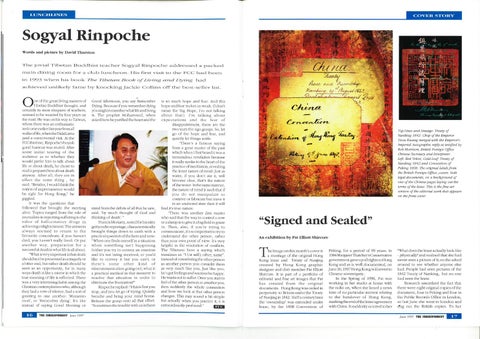
legal d.ocurnents, on a background. of one of tbe Cbinese þages laying out tbe terrns of tbe lease. Tltis is tbefine art uersion of the editorial work tbat etpþea.rs
you do not manipulate or mind from the debris of all that he saw, said: 'by much thought of God and thinking of death'." Francis Moriarty, noted for his nitty gritry radio re pofiage, characteristically brought things down to earth with a
practicalquestioh of the here andnow: "NØhen one finds oneself in a situation
when something isn't happening (either you try to convey an emotion and it's not being received, or you'd like to convey it but you can't, or
there's some other kind of in order
then suddenly the whole connection and how we look at that other person changes. This may sound a bit simple but actually when you practice it, it is
extraordinarilyprofound." @
of
Nønking 1842 and Conuention of Peking 1898. Tbe original løbelsfrom tbe British Foreign Office ,couers botb
if you don't stir it, will
he
It was the questions that followed that brought the meeting alive. Topics ranged from the role of
Left: Red Veluet, Gold leøf: Treøty
it really spoke to the heart of the
rcadaprepared text about death After all, they are in
^nry'ày. effect the same thing
Toþ:Iines and Iineage: Treaty of Nønking 1842. Cbop of tbe Em1>eror Taou Kuang merged witb tbe Emperorts Imþerial Autograpbic reply as testffied by Rob Moryison, Britßb Foreign Office Cbinese Secretary and Interpreter.
"signed aîd Sealed" An exhibition by Pat Elliott Shircore
'Tn" image on this month's cover is I a montage of the original Hong
Kong lease and Treaty of Nanjing created by Hong Kong graphic designer and club member Pat Elliott Shircore. It is part of a portfolio of editorial and fine art images that Pat has created from the original documents. HongKongwas cededin perpetuity to Britain under the Treaty
Peking, for a period of 99 years. In 19 84
Mar gar et Thatcher's
C
ons
ervative
government gave up all rights to Hong Kong and as is well documented, on June 30, L997 HongKongwill revert to Chinese sovereignty.
In the Spring of 7996, Pat was working in her studio at home with the radio on, when she heard a news
item of no particular interest relating
of Nanjing in 1.842. }Iaff a century later the 'ownership'was extended under
to the handover of Hong Kong,
by the 1898 Convention of
with China. It suddenly ocurred to her
lease,
marking the end of the lease agreement
"'W'hatdoes the lease actually look like physicalþ)'and realised that she had never seen a picture of it; so she asked around to see whether anyone else -
had. People had seen pictures of the 1842 Treaty of Nanking, but no one had seen the lease. Research unearthed the fact that there were eight original copies of the document, four in Peking and four in the Public Records Office in London, so last June she went to London and
dfug out the British copies. June7997 Tf,E C0RnDSP0lfDHlT
To her