BRITISH COLUMBIA’S MAGAZINE FOR WRITERS

2023 Volume 1


wordworks | 2023 Volume 1 cov2 bcwriters.ca/benefits
writer or seasoned pro, you are welcome here
First-time



2023 Volume 1 | wordworks 1 Cover illustration:
DYK we pay $100 for art chosen for the cover? Email us at wordworks@bcwriters.ca for upcoming issue themes. Letter from the editor 3 Letter from the executive director 4 Telling a compelling story in your grant application 5 Get rich slow: Go to therapy 6 You’re richer when you think 8 Diversifying writing to make a living: Spinning yarn with Eileen Cook 10 Writers and tax: Taming the taxation dragon 12 Waiting 15 How to survive the feast and famine cycle as a freelance writer 16 Keeping your head above water: The financial challenges of self-publishing 18 What I learned from my paperclip budget 20 Steamy, supernatural, & scandalous (how to put your big foot in your mouth) 22 Member milestones 23 Launched! 24 The last word — with the Darling Axe 28
Soft pastel on toned sketch paper, by Diana Skrepnyk (staff design director).
WordWorks is published by THE FEDERATION OF BC WRITERS
PO Box 3503, Courtenay, BC V9N 6Z8 www.bcwriters.ca hello@bcwriters.ca | wordworks@bcwriters.ca
Copyrights remain with the copyright holders. All other work © 2023 The Federation of BC Writers. All Rights Reserved.
ISSN: 0843-1329
WordWorks is provided four times per year to FBCW members and to selected markets. It is available on our website at bcwriters.ca and in libraries and schools across BC and Yukon.
FBCW Annual Membership Rates: Regular: $80 | Senior: $45 Youth/Students: $25 | Accessibility: $45
FBCW BOARD OF DIRECTORS:
Greg Blanchette, Katherine Wagner, Cameron Roe, Barb Drozdowich, Peggi Peacock, Kamal Parmar, Suzanne Venuta, Wiley Wei-Chiun Ho, Craig Copland
FBCW STAFF:
Bryan Mortensen, Executive Director
Cadence Mandybura, WordWorks Managing Editor
Diana Skrepnyk, Design Director
Megan Cole, Programming & Events Coordinator
Meaghan Hackinen, Fund Development & Outreach Associate
Susan McLachlin, Writing Circle Coordinator
Rachel Muller, Community Engagement Associate
Emma Turner, Executive Assistant
FBCW AMBASSADOR:
Joseph Dandurand
EDITORIAL STAFF:
Cadence Mandybura, Managing Editor
Sheila Cameron, Meaghan Hackinen, & Rachel Muller, Copy Editors
Diana Skrepnyk, Graphic Designer
WRITE FOR WORDWORKS: Visit our submissions page at bcwriters.ca/submit
ADVERTISING:
WordWorks advertises services and products of interest to writers. Contact meaghan@bcwriters.ca
ACKNOWLEDGEMENTS:
The Federation of British Columbia Writers functions on the unceded and ancestral territories of many Indigenous Peoples and cultures. As champions of language, we cherish the oral and written traditions of the Indigenous Peoples of this land. We commit to uplift the voices and stories of marginalized peoples and communities wherever we work.
We celebrate submissions from underrepresented communities and are actively seeking contributions from writers of all races, genders, sexualities, abilities, neurodiversities, religions, socioeconomic statuses, or immigration statuses. We encourage submissions from both published and emerging writers. We believe our strength as a community is in the breadth of our stories.
The FBCW gratefully acknowledges the support of the Province of BC, the BC Arts Council, the Canada Council for the Arts, the Government of Canada, and the Magazine Association of BC.


2 wordworks | 2023 Volume 1
Letter from the editor
The financial realities of being a writer can be sobering. Beyond the dollars and cents of making a living are deeper questions about how we value our work and ourselves. This issue covers not only practical aspects of making and managing money, but also the emotional dimensions of how we think about finances in the first place.
If you’re angling for a grant, don’t miss Sierra Skye Gemma’s advice on telling a compelling story in your application. Self-publishing?
George Mercer gives you the goods on how he managed his $10,000 budget for editing, design, printing, and distribution of his book. And if you’re looking for insight on filing taxes as a writer, check out Margaret Adam Florczak’s piece on taming the taxation dragon. Sky Regina provides ideas on how to diversify your writing to make a living, and Katharine Chan has tips for freelancers trying to survive the feast and famine cycle. Lori Lee shows you how to make the best use of your resources by applying corporate skills to your writing life, and the Darling Axe offers their thoughts on what a side hustle can mean for writers.
On the more emotional side, Laura Fukumoto delves into how therapy can help our relationship with money, and Crystal Williamson shares the unexpected value she discovered through using a “paperclip” budget. For a little humour, read about Heckel Quill’s £50 adventure in ghostwriting, and for a poetic pause, enjoy some carnations with Meighan Klippenstein.
Avid WordWorks readers may notice that this issue is shorter than normal. For 2023, we are moving from three to four issues per year, with a slightly reduced page count. This new approach allows the Federation to offer our members more content over the course of the year, and I hope you’ll agree that there’s still plenty of insight between these covers.
I’m inspired by how thoughtfully our contributors have engaged with the tricky topic of money. Read with care and an open heart. I hope you are all able to find the value in your writing, financial and otherwise.
Cadence Mandybura Managing Editor

3 2023 Volume 1 | wordworks
I’m
inspired by how thoughtfully our contributors have engaged with the tricky topic of money.
Letter from the executive director
guidance can look different for people depending on their genres, goals, temperaments, and stages of their careers. In this issue, you’ll find a range of insight about money—making it, managing it, and persevering without it—and we hope you come away with tools and inspiration, wherever you might be on your writing path.
case of this issue, we are talking about financials. At the Summit, we are looking at moving forward with the tools and steps you can take to be successful or more successful.

2023 is well underway, and this issue of WordWorks tackles one of the themes of inquiries we get most often at the Federation of BC Writers: earning a living as a writer. As we all know, writing spans a vast spectrum of meaning, so providing

Our aim is for WordWorks to connect with and complement the many other ways we support our members and the broader writing community through our programming, events, and services. This issue is coming out in spring 2023, right around the time of our BC Writers Summit (May 8th to 13th) and we are glad to make some big themes intersect and expand on each other. In the
The theme for the Summit is Next Steps. No matter what you are working on and where you are in your journey, there will always be a next step, a next project, a next idea, a next hurdle. We hope you will join us for our weeklong digital summit to help untangle that journey.
Members of the Federation, as always, get a member rate, but if you have not renewed yet or have not joined our organization, we are still excited to have you attend. You can also tack on a membership to your purchase to get the lower rate all in one transaction.
Hope to see you there!
Bryan Mortensen Executive Director
4 wordworks | 2023 Volume 1
...there will always be a next step, a next project, a next idea, a next hurdle.
Telling a compelling story in your grant application
 BY SIERRA SKYE GEMMA
If there is one thing that can be found in nearly all forms of creative writing, from poetry to nonfiction, it is a compelling story. But faced with pages of instructions, many literary writers forget the importance of story as they begin their grant applications.
Grant applications should provide an engaging story that immediately grips the jury and helps the applicant stand out. If you can’t tell a compelling story about why you should receive funding, why should a juror trust that you can tell a compelling story at all? And if you can’t tell a compelling story, what makes you deserving of funding? By leaving a lasting impression on those judging your work, you will motivate jurors to advocate on behalf of your application.
Deciding on a project
Before you start filling out a grant application, you need an idea for a project. Grant juries are looking for a unique story that hasn’t been told before. Or a story that has been told before, but not from your unusual perspective. Or a story that has been told before, but never in this way or format or style.
When considering project ideas, ask yourself:
• How is my story different from all the other applications the jury will be reading?
• Is it possible this topic will be oversaturated this year? What am I doing that is new?
• Am I writing someone else’s story? Does any aspect of my story infringe upon the cultural and/or intellectual property of another person or group?
The project description
All grant applications will ask you to describe your project. Think of this as your opportunity to tell the story of how your project idea came to be. Weave the details of your project—what you’ll do, when you’ll do it, and how you’ll do it—into a story that has some excitement or suspense or heartbreak or human connection.
Your application sets the tone for the type of work you wish to accomplish with the funding you seek. So, if your project is a dark comedy, include humour in your application. If your project is a mystery novel, bring some suspense to the story you tell in your application.
Artistic development
Most grant applications will also ask you how the project will contribute to your development as a writer. You are the Hero here. Your juror readers want to know what trials you, the Hero, had to overcome to get to this point in your journey and what challenges you’ll experience during your project.
Every writer is facing a unique set of barriers to producing and publishing their work. What are your struggles? What are your solutions? Share them honestly, while keeping in mind that the central story of this section of the application is why you should be awarded this money.
A unique project idea and a compelling story about how the project came to be and how you—and only you—can bring this project to vibrant life will present the granting jury with an application that is hard to forget and, more importantly, hard to reject.
Sierra Skye Gemma is a writer and journalist who has received numerous grants to support her creative work. Additionally, Sierra has years of experience as a successful grant writer for literary and educational nonprofit organizations. You can find her online at sierraskyegemma.com and @sierraskyegemma
5 2023 Volume 1 | wordworks
Get rich slow: Go to therapy
 BY LAURA FUKUMOTO
I’m in Caffe La Tana on Commercial Drive, where I’m hemming the kitchen curtain by hand. An easy odd-job. Jessie, who will be an accountant soon, brings me espresso and biscotti. To me, she is part of a secret illuminati and has learned the language of the capitalist gods. But I also know we speak a similar language of experience, because her parents are first generation. They’ve worked hard running a restaurant every day of their Canadian lives.
“Could you give me some financial advice?”
I ask, and she is flustered. She feels underqualified to be giving advice about investments. I wave my hand at the mention of investing. “No. Like … I just wanna pay my bills.”
Jessie says simply, “Go to therapy.”
❉
“Go to therapy to pay your bills” seems like poor advice, especially for those without extended health benefits. But Jessie knew the invisible stresses of intergenerational money trauma—the family pressure to succeed, make practical career choices, and invest in a house. Other artist friends had asked her the same question before, leading Jessie to examine her relationship to money. On my own journey, having gone into debt to obtain a BFA, I knew the impracticalities of choosing the artist’s path. Comments from friends and family about my education solidified the feeling of having made a grave financial error. This derision has sounded like, “Why don’t you go to teacher’s college?”, “Do you actually get paid for that?”, and once, in a job interview,
“Why are you abandoning your theatre dreams?”
It is impossible to dream in a world of scarcity. When a roommate brought up their RESP, I had to interrupt to ask, “Sorry, what is an RESP?”
“Didn’t your parents put anything away for your education?”
For most families, there is nothing to put away. In today’s economy, it takes generations of stability (read: passive wealth accumulation) to build the financial security required for investments like home ownership, education, and children. For families who have experienced historic disenfranchisement, such as residential schools and internments committed by the Canadian government under the War Measures Act, the ability to build intergenerational wealth becomes impossible.
For me, being an artist means working a full-time “joe” job on top of contracts. This means bringing personal creations to fruition only when I can afford it. The first year I freelanced, I sat crying on the floor, surrounded by a year of pay stubs. I didn’t know how to deal with the dozen or more T4s and T4As I had scattered around me. I didn’t understand the process of filing my taxes. Unsure of what business expenses I could claim, and afraid of being audited, I claimed nothing. Not knowing how expensive accountants were, I didn’t reach out for help. I was not raised with the language of money, only the explosive body-memory that there was never enough.
6 wordworks | 2023 Volume 1
❉
At a party I asked, “What actually is the ‘middle class’?” and a good friend responded, “If we’re talking about a family of four, that would be, what, $200K?” My jaw dropped. He looked uncomfortable, as if he had said something about his own finances. We have been taught to speak in generalities about money. We are afraid to speak plainly because we cannot help but compare our experiences of inequity. Miles Corak, the economist in residence for Canada’s First Poverty Reduction Strategy, says, “There are 50 poverty lines across the country … [with a range of] $41,000 in parts of Alberta, and … $33,000 in parts of Quebec.”* A person living alone is considered low-income at half that amount. There was no official poverty line before this strategy was unveiled in 2018. Middle class is somewhere between 75% and 200% of those lowincome measures, or $57,000 to $125,000 for the gross earnings of two adults and two children. Critics agree, it is purposefully nebulous. According to Statistics Canada, self-employed females aged 35–44 earned an average of $19,000 in 2020 (if only because of CERB). The living wage in Vancouver is $24 per hour. According to our best data, our self-employed artists, thinkers, writers—those working to record the soul of our experiences—are struggling to access basic necessities. When we speak with specificity about our experiences with money, we reveal the systemic and structural inequities that plague us. Here are some of my own facts: I have spent twelve years freelancing in the arts, and am in my thirties. I am a working woman of colour, living with the legacy of one of Canada’s many cultural genocide programs. When negotiating contracts, I tend to minimize my needs, because of all the times I’ve been called negative or aggressive. I feel greedy for wanting stability as an artist, and dishonest about my experience of poverty; I am an unreliable narrator to the reality of my financial health.
When Jessie told me to go to therapy to get a handle on my bills, I had only considered the idea of therapy before, but had never gone through with it. In finally connecting with a counsellor, six years after first looking into it, I had space to untangle my ideas about money, relationships, and need. Therapy gave me language to discuss my trauma response to money talk with my spouse. Finance can be a love language. There is love in the specificity of the spreadsheet kingdom, an arithmetic imagining of a possible future. There is a vulnerability in choosing to be an artist. But choosing this path is not a moral failing. Therapy has helped me articulate needs, which are sometimes financial. There is accountability necessary in both love and money. Whether in business, with intimate relationships, or housemates, learn how to speak this language together. Learn to make decisions without shame or fear, because no one does this alone.
CounsellingBC.com has a list of counsellors and their credentials, searchable by city. Many offer particular areas of expertise, and the possibility of a sliding payment scale.

* “Canada’s official poverty line: what is it? how could it be better?” by Miles Corak. milescorak. com/2018/08/21/canadas-official-povertyline-what-is-it-how-could-it-be-better/
Laura Fukumoto is a poet and likes to talk a lot. She writes about Japanese Canadian heritage, queer joy, and mycology. She loves her grandma. Laura holds a BFA in theatre production from UBC and is a graduate of The Writer’s Studio, SFU.

7 2023 Volume 1 | wordworks
❉
You’re richer when you think
BY LORI LEE
When I was a banker, I was known for my ability to make numbers tell a story. I left my secure senior banking role and followed my writing aspirations, only to realize there was more to it than just writing. I approached being an author like a corporate job, with departments such as human resources, accounting, and marketing. I inventoried my soft assets and found ways to use my corporate tools for my creative venture. If you’re considering a similar change, or if you’re a writer who hasn’t thought about this perspective, here are some ways you can do the same.
Start by prioritizing, automating, and delegating your tasks.
Prioritize: Review your various responsibilities and rank them in order of preference. Spend 80% of your time on your favourite tasks and automate or delegate the rest. This keeps the
focus on generating work, especially since writing is usually an author’s favourite task.
Automate: Identify areas where you lose time, and schedule less desirable tasks intentionally. For example, I can easily lose a writing day down an editing rabbit hole. When I schedule my edits on Fridays, I can write freely throughout the week and stay focused on generating work. When you batch and schedule tasks, you are primed to tackle them more efficiently. Delegate: Look for themes among the tasks you’ve chosen to delegate such as “projects” or part of a broader “department” to outsource altogether, like using a bookkeeper for accounting or a trusted friend to suggest marketing. Since our least favourite tasks can stifle us unconsciously, remove them from your creative space and learn how others have resolved similar barriers. For example, as a pantser, I wanted an outline that I would actually use, and finding a likeminded hive helped direct me to specific resources.

8 wordworks | 2023 Volume 1
You can apply the automation technique and set aside time to research how to effectively do these tasks; there just might be an easy button out there. Despite this exercise, there will still be times that your energy will dictate your output. When you don’t complete a task or produce much, it’s helpful to reflect on what you’ve already accomplished. Did you schedule time for writing? That’s a win. Did you have an idea while walking your dog? That’s also a win. Broadening your perspective can alter the scope of achievement, and changing from a productivity mindset to a creativity mindset is critical for good work.

Being a writer doesn’t have to be isolating. It’s important to maintain social hygiene and self care. Include your own Health and Safety Committee that encourages reasonable breaks, activity, and time for fellowship. Your brain works differently now, especially if you’re exploring emotional topics.
By applying my soft assets, I was more prepared than I thought, and could produce quality, focused writing consistently. I encourage you to take a strategic approach using these soft assets, and see the results for yourself. You’re richer when you think, and your writing will be too.

Lori Lee is a new author whose writing draws on her varied life experiences as an orphan, airline worker, corporate finance professional, and late discovery adoptee. Lori hopes her writing inspires readers to embrace their unique journey and find worthiness in themselves.

9 2023 Volume 1 | wordworks
Diversifying writing to make a living: Spinning yarn with Eileen Cook
BY SKY REGINA
“There are tons of upsides to being a writer: you get to work in your PJs, make stuff up for a living, and play with your imaginary friends all day. But the downside is that you work in an industry driven by other people’s desires and trends. And you’re going to be at the mercy of that.”
–Eileen Cook
Iwas taught that writing isn’t a viable career option, despite feeling a pull toward it from a young age. Writing was framed as a nice hobby, or a therapeutic mechanism to express my adolescent turmoil, but pursuing it as a job? Oh no, dear child— that would be both impractical and a waste of time. When I took a career test in high school, it recommended clown school (yes, this is a true story) over being a writer because, according to this highly reliable test, writers only earn an average of $25,000 per year (as of 2005). And that simply wouldn’t cut it for my lofty teenage ambitions of somehow being a homeowner and a globetrotting philanthropist. Fast forward through an aimless art history degree and a twelve-year stint in childcare—a clown-adjacent job if there ever was one—and I’m finally making steady money as a contracted writer/editor with Writer’s Block Solutions. When I set out to become a writer, it began with novelist aspirations, but when that failed to pay the bills I pivoted to copywriting and book editing while scribbling fantastical fiction in my spare time.
With remote work at our fingertips and more companies leaning on writers and editors to flesh out their websites and social pages, paid opportunities have become quite accessible. However, with Canada’s soaring cost of living and a saturated pool of fellow writers, it’s also incredibly challenging to make a decent income, especially if you don’t know how or where to start.
Eileen Cook, Vancouver-based multi-published author, creative writing teacher, and dynamo entrepreneur, grew up thinking that wanting to be a writer is synonymous with wanting to be a princess; it’s a lovely fantasy, but not something you do for a living unless you’re Stephen King or the reincarnation of Charles Dickens. But Cook’s writerly dreams never dissolved, not even through a successful first career as a counsellor.
“I had a day job for a long time,” says Cook, “but it was always my dream to be a writer and to have that be my primary source of income—I just didn’t know how to get there.”
When Cook sold her first piece to a CBC radio program, it ignited the addictive spark that comes with monetizing a creative hobby—ambitions ablaze, she set forth. Because she was raised by practical parents, she gradually transitioned from full-time counsellor who wrote books in her free time, to part-time counsellor who sold a few books, and finally to rolling the dice as a full-time writer with a major book deal and a paid-off mortgage. And she never looked back.
“Writing is work; it’s showing up, sitting at your desk, and turning in pages,” she explains. “You have to take a business approach around how much money you need to support yourself, and understand the difference between the craft and business aspects of writing. It’s usually not just selling books because that doesn’t offer guaranteed income. Most writers have to find adjacent work as well, and for me that started with teaching at Simon Fraser University.”
Cook is the Speculative/YA Fiction mentor for SFU’s The Writing Studio, a part-time creative writing program where we met in 2019. Through this tenmonth program and the community she helped build at the Creative Academy for Writers—a paywhat-you-can online membership that offers writers
10 wordworks | 2023 Volume 1
resources, feedback, and peer support— she’s expanded her income streams to include book editing and coaching, selfpublishing non-fiction books, school and library visits, custom workshops, and more. Writing full-time can be a constant balancing act of diversifying your skill set—creating synergy between a laundry list of possibilities that lead to a creatively focused career. But it isn’t for everyone. “It’s important to understand that while you can make a career as a writer, you don’t need it to be your financial focus if life circumstances make it too difficult,” adds Cook. “We’re writers by the act of creation, not the act of selling. Some folks find it easier to work a noncreative day job and save energy for writing. Others enjoy the variation that comes from living as a full-time creator. That’s what it is to be a writer: always building on opportunities and seeing how they fit together as income sources—it’s all about being able to pivot.” Freelance writers have to persistently hustle, but one invaluable resource that makes life easier, especially for those starting out, is Sonia Weiser’s Opportunities of the Week newsletter, a roundup of pitch calls across the web. You can also grab bravery by the horns by submitting stories to publications, querying literary agents and editors, and offering copywriting and editing services to other businesses. This can all be overwhelming, which is why the one thing Cook stresses to every writer is the importance of a supportive community.
“Writing is not a competitive sport,” she says. “Building a community and network is so valuable because you help each other out. If you think you’ve got to keep every opportunity for yourself, you’ll miss out on one of the best ways to grow your business. Supporting other writers moulds a kind of creative tornado that can only lead you forward.”
I can attest to the truth of Cook’s words. With the support of my writing community, I’ve forged ahead through the agonies of querying, found a sounding board for constructive feedback, and taken inspiration from their success. As writers, our diverse skill
set is more adaptable than we realize, and believing in a writing career shouldn’t remain a pipe dream.
Sky Regina is a writer/ editor for Writer’s Block Solutions and a 2020 graduate of The Writer’s Studio at Simon Fraser University. In her spare time, you can find her reading—and writing!— campy horror novels and devising clever but believable ways to worm her way out of social commitments.

11 2023 Volume 1 | wordworks
Writers and tax: Taming the taxation dragon
BY MARGARET ADAM FLORCZAK
Income tax can be a crucial issue for writers. As a writer who also works as a tax specialist, I’ve always taken great pleasure in answering client questions and clarifying their taxation issues. While this subject is complex, I want to share an overview of how you can prepare for your taxes as a writer, along with examples from some of my authorial clients.
Many writers find—to their chagrin—that publication doesn’t come with a guaranteed income. The Writers’ Union of Canada (TWUC) estimates the average Canadian writer’s annual income at $10,000, while an annual income of $200,000 is required to qualify for a Canadian mortgage! This lack of writing income is an issue in the eyes of the Canada Revenue Agency (CRA) when determining if you are a professional writer, or if your writing is just a hobby.
Income Tax Folio S4-F14-C1, Artists and Writers describes the CRA criteria for claiming writing as a business. The determining terminology is “pursuit of profit.” We all want to make money selling what we write, but to be a writer in the CRA’s terms, the active pursuit of writing income is required. Do you regularly pitch to publishers, magazines, and anthologies? Maintain a website? Belong to professional writing associations? Engage in educational pursuits related to your writing? How much time do you regularly spend writing? Have you invested money in editing, illustrating, or researching? Once you’ve established your status as a writer, preparing your income tax return is like taking a journey. Having a map of the path you will take, and
understanding how your information is compiled will help you navigate the system whether you’re consulting a tax preparer or using CRA-certified tax software.
Essentially, the tax return has five main components:
1. The information section includes identifying details like your name, address, and social insurance number.
2. The 10000 series of lines is where all sources of personal income are reported, including your gross and net writing income from the T2125, Statement of Business or Professional Activities.
3. The 20000 series includes all deductions, other than business expenses, which are netted out on the T2125.
4. The 30000 series reports all your personal non-refundable tax credits such as the basic personal and age exemptions, the disability tax credit, and medical and tuition expenses.
5. The 40000 series is where tax owed is calculated and refundable tax credits are applied. When we understand the basic layout of the return, and how information is organized, it is easier to check where the information on our T-slips will land.
How best to keep financial records? In keeping records of income and expense, be aware that your self-employment income, reported on the T2125, will be reduced by expenses entered in one of four categories. These are:
• General Expenses (e.g., meals and entertainment, office supplies, memberships and subscriptions, legal and accounting fees, advertising, shipping, and postage)
12 wordworks | 2023 Volume 1
We all want to make money selling what we write, but to be a writer in the CRA’s terms, the active pursuit of writing income is required.
• Motor Vehicle Expenses (e.g., annual expense for fuel, repairs and maintenance, insurance, annual leasing costs, or interest paid on a vehicle loan)
• Home Office Expenses (e.g., heat, electricity, utilities, or mortgage interest)

• Capital Cost Allowance, which is based upon your current and previously reported capital expenditures (e.g., cell phone, computer, camera, or printer)
Be aware—under expenses on the T2125 form, motor vehicle, home office, and capital cost allowance expenses are each followed by one short line. Clicking on this line alerts the software to take you to forms where you enter your applicable expenses. The software will then total and prorate these and transfer the result to that one short line.
My authorial clients use a variety of income and expense tracking methods. One writer keeps a ledger, categorizing her expenses under headings that reflect CRA’s allowable deductions. She reports her total annual mileage and all expenditures for fuel, car insurance, auto repairs, and maintenance. Also, the percentage of the mileage pertaining to her writing: for research, to pick up supplies, attend writing meetings, or meet with another writer for lunch to discuss writing and marketing strategies. This forms the basis for prorating her automobile expenses.
In her ledger, each receipt is itemized, and each column is totalled at year end, allowing me to check the validity of each item and her totals. Previously she’s given me the square footage of her home and the square footage of her home office, creating the prorated factor for her home office expenses. These include property tax, mortgage interest or rent, heat, hydro, tenant or homeowner’s insurance, internet, and utilities. Preparing her return requires only a check of her totals and a transfer of the numbers to her tax return, making it a speedy and relatively inexpensive process. Another of my clients, a bestselling, award-winning Canadian author, is constantly in demand for writing events both here and abroad. In addition, he’s writing his next book, dealing with contract negotiations and foreign distribution, and is actively involved in other artistic business endeavours that have become co-mingled with his writing. Keeping a ledger is—understandably—the least of his concerns!
Instead, this client scans and sends me copies of his credit card and bank statements along with the dates and locales of his
various literary engagements. This means that in addition to bookkeeping, I also have to consult with him to clarify his records so that we don’t miss expenses that could have been deducted. Writers who have many scheduled events with various methods of travel, some paid for by a funding agency or sponsor and some out of pocket, may find it difficult to remember the circumstances of a particular expense and whether it was reimbursed. Jot down a few notes directly after your travel so that you don’t have to spend too much time (and money) sorting through it with your bookkeeper.
A third client was previously audited three years in a row before seeking professional help with her tax preparation. As is essential when you engage an accountant, she brought me her notices of assessment, prior year tax returns, and the related correspondence for all three audited years. In one year she had travelled to a vacation destination to do research for an article. Although she had the
13 2023 Volume 1 | wordworks
article published, her travel expense was denied. This is because her research took scant time and money. Both arts funding agencies and CRA expect that, when claiming for research travel, the predominant time and costs will relate directly to the research.

Another client received a sizeable arts grant in the same year that her other artistic endeavour—a corporate venture—earned a substantial profit. She was also briefly an employee, and thus had dividend and employment income as well as income from the project grant.
“I wish I had asked them (the funding agency) to pay out the grant over two years,” she said ruefully. The Canada Council for the Arts states that they are happy to do this. To defer taxes is not the only reason behind such a strategy. It may take two years to finish a project, with expenses incurred in both years.
For writers who bring artistic talents to their writing, capital cost allowance can be a consideration. For example, for a writer using their own photography to promote their writing, the cost of cameras, cell phones, computers, printers, photo software, and other equipment is capitalized. This means that the cost is divided between personal and business use, and a percentage of the costs allocated to business use is claimed against income. If there is already a loss and no further deductions are needed, the purchase can be entered without claiming depreciation, leaving the full amortization amount available for deduction in more profitable years.
Spreadsheets are an easy way to track expenses. Writers can enter expenses either when expenses are incurred or when their monthly statements come in. A quick review of bank and credit card statements can serve as a reminder of regularly billed fees and monthly charges for services such as internet, cell phone airtime, utilities, and rent. Spreadsheets efficiently categorize expenditures, allowing checks for accuracy and easy transposition of figures to the tax return. Some clients still like to create handwritten lists, showing only the totals for their writing-related expenses. However you choose to keep your records, bear in mind that you must save your original receipts, noting the event or reason for the purchase. If audited, the CRA will want to see them.
Taming the taxation dragon can be as simple as being prepared. Collecting your tax information and formatting it in a way that not only makes sense to you, but will be easily understood by your tax preparer, will save some of your hard-earned writing income. And time, which you can spend writing, after a reflective springtime walk in the park.
Curiouser and curiouser
Strangely, while the Canada Revenue Agency has established a June 15th deadline for filing your selfemployment return, payment of any amount owing is due by April 30th.
Only 50% of all meal costs can be claimed, including those purchased when travelling alone. Another of the CRA’s idiosyncrasies.
Further reading
A helpful booklet about writers and tax, Everything You Never Wanted to Know About Taxes by Joel Fishbane, is free to TWUC members and can be purchased by non-members online at writersunion.ca/writers-how-to-series
A writer published in several genres, Margaret Adam Florczak was previously employed by the CRA. She currently works as a tax specialist, preparing returns for writers from those working on a first manuscript to award-winning authors. Recent online performances of her poetry, prose, and memoir have been sponsored by TWUC.
14 wordworks | 2023 Volume 1
Waiting
BY MEIGHAN KLIPPENSTEIN

I was always waiting for someone to bring me flowers it took me a long time and a lot of heartache to understand
I was waiting for myself all along so now I buy myself pink carnations just because, they light me up and once they start to wilt I hang them in the window to dry like relics to remind me

I was waiting for myself all along
A deep feeler and seer of the world, Meighan has been writing poems since she was a little girl as a way to make sense of the ebbs and flows of life.

15 2023 Volume 1 | wordworks
How to survive the feast and famine cycle as a freelance writer
BY KATHARINE CHAN
Most freelancers grapple with the vicious cycle of tackling a seemingly endless workload but then struggling to stay afloat. Here are four tips to survive the feast and famine cycle that commonly plagues a writer’s life.
FEAST
You’re writing like there’s no tomorrow and life is good. You’re no starving writer. However, this is not the time to sit back and relax while gorging on the fruits of your labour.
Manage your cash flow
Cash flow is the money coming into and going out of your business. If you’re not already keeping track of your revenue, start now. It’s simple to do; a spreadsheet works just fine. Be sure to include work that has been commissioned but not yet completed so you have an idea of what you will be making in the next few months.
For your expenses, record your business expenditures and also do a thorough audit of your personal expenses. This includes your groceries, internet, phone, mortgage or rent, gas, electricity, subscriptions, insurance, and
anything else that you pay for. When you are crystal clear about your monthly cash flow, you’ll be more mindful of your spending and be more inclined to save some leftovers of that feast for the famine.
Continually find new leads

Don’t take your clients for granted. At any moment, they could have budget cuts, hire someone else, or go in a completely different direction. Keep those pitching skills sharp. Set a goal for the number of new pitches you send out each month. Make it realistic and attainable. Create a list of potential clients and carve out time in your busy work schedule to reach out regularly. It’s worth it. Stay connected in your writing community. Sign up for newsletters that keep you informed about writing opportunities—and remember to open and read them, too. A company that you’ve always wanted to write for might just have an opening. Don’t miss out.
FAMINE
When your plate is empty, it can be stressful. But that doesn’t mean you should sit still
16 wordworks | 2023 Volume 1
and suffer while your stomach growls. Ease those hunger pangs by being proactive.

Update your social media platforms
Social media is a way for writers to showcase their work and connect with others. Use the downtime to refresh your platforms.

LinkedIn is an important platform that you should update consistently. Post highlights of your achievements and tag your current and past clients. This will help keep you at the top of their minds and notify their connections, giving you greater exposure. Someone might just see your post, click on your profile, and send you a message about an opportunity. It happens more often than you think.
Ask for more work or referrals
Your clients are the best people to vet you because they’ve directly experienced your work ethic, skills, abilities, personality, and talent. Therefore, don’t be afraid to ask if they have other work they need help with. They may have a project percolating in the background but haven’t thought about who to assign it to. When you ask, you’re right
there for the picking. And if they say no, always follow up by asking if they know anyone who needs your services. If you don’t ask, you will never know. Ultimately, the feast and famine cycle doesn’t have to be so polarized if you put these practices into place. There may still be fluctuations throughout the year; however, if you manage your cash flow, stay connected and be proactive, you can keep your belly satisfied without worrying about when the next meal will come.
Katharine Chan, MSc, BSc, PMP is the author of three books. She’s appeared as a guest on CBC News Radio and Fairchild TV News, and contributed to HuffPost Canada and Scary Mommy. She covers a variety of topics including parenting, relationships, personal development, culture, health, and wellness.

17 2023 Volume 1 | wordworks
Keeping your head above water: The financial challenges of self-publishing
BY GEORGE MERCER
Self-publishing can be a rewarding way to get your work into the hands of readers, providing a degree of autonomy and control you may not have with traditional publishers. But as a self-published author, you also need to exercise discretion and make sound financial decisions if you want to succeed.
I began my self-publishing journey a little over eight years ago, starting with a selfimposed budget of $10,000 and a commitment to myself that that was it—sink or swim.
I settled on the amount after roughing out the costs of producing my first book, including hiring an editor ($1,800), layout person ($1,000), and cover designer ($2,200), for a total of $5,000. Of course, that didn’t include any of my writing time, which amounted to a little over a year to develop the first draft, deal with editorial feedback, and finalize my manuscript.
Printing costs can be variable depending on the volume and whether you’re printing in Canada or overseas. I went with Friesens at a cost of $5,000 or $5/book for my first run of 1,000 copies, putting me at my $10,000 spending limit. There is a financial benefit to larger print runs, reducing costs to $3.50/book or less, but only if you think you can sell them! In between writing, revising, and finalizing my manuscript and the book cover, I kept busy marketing my book, emailing more than one hundred independent bookstores across Canada with a short description and cover image, and following up in many cases with a phone call. After settling on a suggested retail price of $19.99, I found that most bookstores were willing to give my book a try.
I also tackled Indigo/Chapters and Coles bookstores, speaking to individual consignment managers,
eventually getting my books into more than thirty of their stores, which ultimately led to getting a vendor’s account and national distribution.
I can’t say enough about those folks who own or work for independent bookstores as well as the staff at Indigo-owned stores. I very quickly learned that book people are good people. My book launch timing also allowed me to take advantage of Christmas markets, which—along with bookstore sales—allowed me to sell out the first print run in a little over eight weeks, reaping the benefits of the network of friends I’d made from coast to coast to coast while working for national parks.
From a financial perspective, I was slightly ahead but ploughed most of that return on investment ($12,000) into a second printing, this time opting for a print run of 2,000 books that cost me $7,000, reducing the per book cost as mentioned and increasing the per book profit margin.
The remainder of the proceeds ($5,000) went to preparing the manuscript and cover for my next book, which was well underway.
Next to book production, market registration fees are my second largest expense. But markets—especially Christmas markets—are where I make the most headway financially, since I pocket between 75–100% of my book price depending on whether it’s a single book sale at $20 or multiple books, which get a 25% discount. After expenses, which include registration fees and travel costs, I usually come away with at least 100% profit. For example, in 2022 I attended three major Christmas markets, paid almost $6,000 in fees and travelrelated costs, but sold 700 books, earning more than $12,000 in just twelve days, recouping my investment and adding $6,000 to my bank account.
18 wordworks | 2023 Volume 1
Apart from writing, the bulk of my free time is spent filling orders and continuing marketing, trying to expand my reach.
By comparison, I receive 60% of my suggested book price from independent bookstores, minus shipping costs, which I usually pay for. I receive 45% if bookstores order from my distributor, but my distributor covers shipping, so it evens out. Indigo pays 50% minus shipping, and Amazon is similar. Depending on the number of books shipped, my take is reduced to 35–40%, barely covering production costs but getting my books into more readers’ hands. Apart from writing, the bulk of my free time is spent filling orders and continuing marketing, trying to expand my reach. Filling orders means shipping books. While I often use Canada Post for small orders, I take advantage of Friesens’ fulfillment system for larger ones, shipping from their warehouse and paying associated fulfillment and shipping fees. These are usually less than Canada Post since Friesens has a better rate with their preferred courier, FedEx. Either way, shipping costs are my third largest expense after book production and market registration fees, often amounting to $2,000/year or roughly 10% of my average annual book revenue of $20,000. I haven’t figured out a cheaper way to do it, but if your book is small enough to be considered regular mail with Canada Post, you will save 50–75% when shipping individual books compared to using their parcel rate. In summary, if you include shipping costs, you’ll receive roughly $9 on a $20 book from an independent bookstore (if you can drop them off at a local store yourself, you’ll get $12), you’ll receive $7–8 from Indigo, and a similar amount from Amazon. Larger orders generally mean a lower per book shipping cost.
If you hit a home run and have a bestseller, you probably won’t need to worry about any of this. But if you’re like me and trying to financially support this crazy addiction we have called writing, you have to
make some money, including taking advantage of programs meant to support your efforts. Programs such as the Public Lending Rights and Access Copyright reimburse authors for their works, which helps the bottom line. Also, at tax time, it’s important to take advantage of any benefits such as home business expenses and GST rebates to help bump up your tax return. Every dollar helps.
If you want to keep your writing passion afloat, you have to make enough money to at least cover costs. I’m no further ahead financially, but I now have five books in print and almost eleven thousand more books in the hands of my readers than I did eight years ago. Certainly, there are cheaper ways to get your book out— buying a package deal from a publishing services company or printing offshore, for example—but I wanted to learn the ropes of owning a small business and controlling the process, selecting people I felt I could work with, and as much as possible keeping the work in Canada. So, it is achievable, and strangely, it’s worth it! I wish you the best.

George Mercer is a former national park warden, now author of Dyed In The Green, the first fiction series about Canada’s national parks. Originally from Newfoundland and Labrador, he and his family now live on Vancouver Island. If you have other questions about self-publishing, George can be reached at georgemercer.com
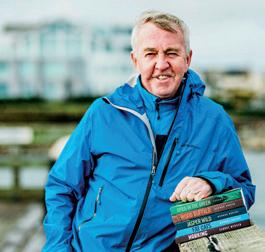
19 2023 Volume 1 | wordworks
What I learned from my paperclip budget
BY CRYSTAL WILLIAMSON
My tummy was grumbling loudly, and I had to find something to eat. I opened every cupboard and drawer, the fridge, and the freezer. I found nothing but one potato to boil. At least that would stave off the hunger. Resignation set in as I faced the reality that I would have to go to a food bank.

I kept reminding myself that being on a disability pension was temporary. I had faith I would somehow find a way out of poverty; I had registered for college and knew I was headed in the right direction. My paperclip budget helped me for years as I completed my education, graduating at forty years old with a bachelor’s degree in communications while nurturing my dream of being a writer. Thinking back on it now, I’m not sure things would be as good as they are today if I hadn’t recognized what I truly valued back when I was broke. There is nothing as depressing as walking into a grocery store, a cornucopia of food, knowing
there’s no point going down some of the aisles because you can’t afford any of it. Going to the food bank was humiliating, but necessary at the time. Despite being full of self-doubt, I knew that I would have to make friends with my money … and that’s how my paperclip budget began.
Looking around my living room at the bare plywood floors and drafty single-pane windows, I sat at the kitchen table with pen, paper, and calculator trying to figure out what I had to budget for after paying the rent and utility bills. Next, I took a stack of envelopes and labelled each one with a bill to be paid: groceries, car insurance, gas for my car, house insurance, BC Hydro, and miscellaneous.
I went through my budget line by line, counting out my money in $20 bills. (My paperclip budget was essentially a cash-only budget.) I paperclipped each amount together and put it in its designated envelope, and checked items off my monthly budget after I’d set aside money. The miscellaneous envelope
20 wordworks | 2023 Volume 1
was always last because whatever was left over would go there, and it often wasn’t very much. Since my fixed income was paid monthly, I had to plan my bill payments accordingly. I arranged to put as many of my bills as I could on an equal payment plan, for example BC Hydro and car insurance. You would be surprised how many bills you can do this for. I learned what type of accounts I had at the bank and what banking fees I was paying, noting the interest rate and tracking every bill’s due date. Making my paperclip budget helped me feel like I had some control over the situation. With my grocery budget set, I took inventory of what groceries I had and what I might get from the food bank. Next, I checked the flyers for deals. Finally, I made a meal plan for the week. Grocery shopping could be depressing, but I knew I wouldn’t be broke forever. Cooking and baking provided me a sense of normalcy, like I still had something to offer. My meal plans focused on inexpensive ingredients that would make me feel full, like pasta and potatoes. I became adept at turning leftovers into a new meal, such as turning leftover spaghetti and meatballs into hamburger vegetable soup with homemade biscuits. I knew there would be times when I would be too tired to cook, so I prepared food as soon as I brought the groceries home. For example, I would make a tossed salad and tuna salad for sandwiches. The food bank was helpful, but I didn’t get much as a single person, so I didn’t feel like I could count on that long-term. With these strategies, I would still manage to make dinner for family or friends. Making dinner for them made me feel like I still had something generous to give them. My paperclip budget helped me afford the basics, but the rest was up to me with a little love and creativity.
Food was love. When I hosted dinners, no one left hungry. Everyone was gracious and thoroughly enjoyed the conversation. Old stories were re-told, the past week’s events were narrated, and new memories created. I never had enough kitchen chairs, so I used my office chair and several rusty lawn chairs with pillows for padding the seats. Everyone would slowly make their way home and the clean-up would begin.
Looking around the room, I saw my creativity on display everywhere. Homemade curtains from old tablecloths, a quilt from scraps, embroidered artwork (on thrift store white sheets) on the walls, handpainted furniture, and flowers from my garden. All the furniture had a story. A bookshelf from grandpa’s camper, a dresser rescued from the dump, and my hand-embroidered tablecloth. Even if I had more money … what would I really change?
I always knew life would get better. I wasn’t sure how at first, but did I really need to know all the details in advance anyway? I just kept going day by day, trying to find the joy in small things and to always have hope. Now that I am working full-time and writing in my spare time, I no longer follow my paperclip budget. But I still list my bills and am not afraid of the bank. My paperclip budget was vital in helping me get through a tough transition in my life and reminded me no matter how broke I was, I still had something to offer. I have a new appreciation for the smell of fresh baked biscuits, the comfort of a homemade quilt on a cold night, the smell of fresh-cut roses and a hug from a friend. The rest is just window dressing. I don’t feel anxiety anymore when grocery shopping, but I still don’t shop on an empty stomach. Common sense after all.
Crystal Williamson was diagnosed with fibromyalgia at twentyfive, and lived on a disability pension for twelve years until 2006 when she graduated from Simon Fraser University with a degree in communications. She works for the federal government where she promotes making their programs and services accessible for people with disabilities.

21 2023 Volume 1 | wordworks
Despite being full of selfdoubt, I knew that I would have to make friends with my money … and that’s how my paperclip budget began.
Steamy, supernatural, & scandalous (how to put your big foot in your mouth)
 BY HECKEL QUILL
ll never forget my first paid story commission. Some context is required. Like most nineteen-year-olds, I didn’t have much sexual experience, but I still considered myself a worldly expert on the subject. I had just blown my last coin on a thirty-two-hour bus ride from Barcelona to London with my so-called lover, a thirty-year-old unemployed poet who was grossed out by my period. I was flat-broke and working on a song-writing contest submission to win a chance to meet a musician I admired. As it was, I subsisted on “coffee teabags,” a foul British invention of coffee grounds in a mesh bag steeped in a mug of hot water. I really needed money. The convergence of these bad decisions circumstances led me to a freelancing website, where I applied for an assignment titled “Seeking Ghostwriter for 2 Steamy Supernatural Stories.” The pay was £50 for both stories. The client specified that one of the Steamy Supernatural Stories had to be about Bigfoot, and the other could feature any other supernatural being of the ghostwriter’s choosing. (Apparently, Bigfoot erotica is in high demand. I will let the reader come to their own conclusions about why that may be.)
Freelance competition wasn’t stiff back then. I was awarded the assignment immediately. Imagine my elation (I had my first story commission!) followed by horror (I needed to write about sexy Bigfoot!).
I must have spent forty hours composing the Bigfoot story. Of these, at least thirty-seven were spent chewing my nails, sipping foul coffee-bag brew, emitting the odd shriek, and laying my forehead against the table. I felt trapped in that dream—the one where you suddenly realize you are naked in front of all your classmates. The shame was torturous. There could be no escape until I made Bigfoot do the deed.

Finally, facing the deadline and conjuring some emergency resolve, I typed like the wind. I wrote about Bigfoot, his infatuation with a backcountry camper, and the (ahem) events that followed. When my characters had finally wrapped up, I opted not to subject myself to a re-read. I submitted the stories in all of their natural, unedited glory. The client was pleased. She asked me if I wanted to ghostwrite any more Bigfoot stories. I did not. Unbeknownst to me, greater embarrassment was yet to come. To make a long story short, I won a chance to meet the musician I admired and told him about my recent money-making venture. To his credit, he was perfectly kind and understanding. Not thinking, I wrote about this exchange on my personal, low-traffic blog. To my horror, a journalist covering the contest found my blog entry and published it in the local paper. The musician would now read the coverage and find me annoying and creepy. Reader, I thought I would perish. Ultimately, I never saw a dime from the Steamy Supernatural Stories. Payments on the freelance platform had to be transferred via credit card, which I didn’t have. I didn’t want to ask a friend lest I be forced to reveal the stories. The platform charged a £10 monthly fee for unclaimed funds, so after five months of putting the problem off, my money was entirely reabsorbed. That said, it did provide a free ego-check—and, upon occasion, an entertaining way to shock polite company.
Heckel Quill is a tired twentysomething. When not battling mosquitoes in the field or staring in abject blankness into the void of an Excel spreadsheet, she enjoys drinking coffee in the shower (so you can feel warm inside AND outside), making music with other awesome Yukoners, and scribbling in a mud-streaked notebook.
22 wordworks | 2023 Volume 1
Member milestones
At ninety-one, Naomi Beth Wakan has written a very special book, Time Together, combining her tanka with her husband’s photography. It celebrates their forty-five-year marriage and the island of Gabriola, which supported their creative efforts so well.
Suzanne Moreau’s debut drama Blood Buddies won several film festival awards: Best Short Screenplay (New Jersey), Best Screenplay (Milan, Italy), and Best Original Story (Los Angeles). She wrote, directed, and produced it in 2022.
Alline Cormier published twenty-four articles about women in film in five feminist publications across Canada, the U.S., and India this year.
Susan Braley’s poem “He Thinks It’s His First Book” was chosen for inclusion in Best Canadian Poetry 2023, edited by John Barton and Anita Lahey, and her poetry collection, Tilling the Darkness, was published by Caitlin Press.
Strange Ways to Snag a Date is the free novella Agnes Stevens will use to launch her romcom series.
Cynthia Sharp was presented with the Writers International Network (WIN) Vancouver Poet Laureate Award on December 17th, 2022, for her outstanding contributions to community service and literature in British Columbia.
Val White completed her first NaNoWriMo challenge in November 2022, writing 55,000 words for the first draft of the first book of her proposed trilogy: My Imagined Ancestry.

Cynthia Woodman Kerkham is the 2022 winner of the John Lent Poetry Prose Chapbook Award. Her chapbook with feathers will be published by Kalamalka Press in May 2023.
Michelle Poirier Brown’s chapbook of fourteen poems and seven photos, entitled Intimacies, was published in October 2022 by Jack Pine Press.
Betty Annand, age ninety-six, launched her fifth novel The Gooey Duck Fountain in April 2023.
23 2023 Volume 1 | wordworks
Launched! New titles from FBCW members
The Price of Silence

Ulla Håkanson | 2022 | 978-1-77374-097-3 | $21.99 CAD, $17.99 USD
A young woman struggles to ensure her safety when her ex-fiancé steals her life’s savings and disappears—forcing the killers he’s fleeing to come after her.
Not So Pretty Haiku
Isabella Mori | Tigerpetal Press, 2022 | 978-0-9958639-6-5 | $13
Creatively inspired by the clash of the particularly lovely spring of 2020 with the beginning of COVID, Not So Pretty Haiku combines beautiful flower photography with haiku poetry of a sombre nature.

The Secret Journals of Nell Clarke

Lynda Earley | Tellwell, 2022 | 978-0-2288-8435-4 (paperback) | $21
The Secret Journals of Nell Clarke is a book about love, pain, and memory. Nell’s journal paints a portrait of a marriage against the backdrop of the history of farm life on the Canadian prairie.
What I’d Say To Einstein If I Met Him On The Dance Floor

Frank Talaber | 2022 | 978-1-7775269-9-3 (print), 978-1-7775269-8-6 (epub) | $20
More craziness and oddball stories from the muse-inspired pencil of Canada’s foremost off-the-wall author.
Secret Destinations

Diana Mohrsen | FriesenPress, 2022 | 9781039136892 | $30
In her first travelogue, Diana Mohrsen brings the reader along on the four-thousand-kilometre journey through her photographs, animals, and scenery, and by reflecting on the beauty and spirituality of the world around her.
Dance, Place, and Poetics: Site-specific Performance as a Portal to Knowing

Celeste Nazeli Snowber | December 2022 |
978-3-031-09715-7 | $49.99 USD
This book explores the relationship between the body, ecology, place and site-specific performance.
24 wordworks | 2023 Volume 1
The Clothes Make the Man

Finnian Burnett | October 2022 | 978-1-915247-18-6 | $16.54
Arthur, a sensitive soul, navigates his life in academia with wit and insight that belie his own self-doubt. His search for acceptance means overcoming internalized hatred of his own fat, female body.
Down the Tiger’s Throat
Terry Groves | April 2022 | 9780973407808 | $25
I dare you to look down this tiger’s throat. Inside these 27 stories, you will meet a man struggling to grasp the information highway, witness construction sites locked in combat, and ride with a man as he becomes one with his car.

Battlegrounds
Stephen A. Carter | Sept 2022 | 13-978-1-7367218-4-1 | $19.99 USD

Battlegrounds is a literary blockbuster, the first of four fully illustrated action/ adventure novels in the acclaimed Matari series dealing with Black Americans and their struggles before, during, and after the US Civil War.
The Girl from Twisted Butte
Albert Brecht | November 2022 | 979-8362779009 | $25.79

Mariella is all alone in the world. She has a baby at seventeen that she cannot keep. Arrested for shoplifting, she is confronted with bigotry towards her Mexican heritage in the small town of Twisted Butte.
What Remains of Elsie Jane
Chelsea Wakelyn | January 2023 | 9781459750845 | $24.99
Examining the ceaseless labour of motherhood, the stigma of death by drug poisoning, and the allure of magical thinking in the wake of tragedy, What Remains of Elsie Jane is a heart-splitting reminder that grief is borne from the depths of love.

Larder

Rhona McAdam | May 2022 | 1773860836 | $20
What underlies the poems in Larder is an urgent political argument, with care for every aspect of the earth and its connected structures. The foundation of the collection comes from recognizing the value of everything in nature: yes, even the tick.
Can You Never Believe
Dorothy Collins | August 2022 | 978-1-9991691-8-3 | $16.83 (print), $3.86 (e-book)
Suzanne Somers was disturbed by something falling from the sky and landing at her feet. Her life changes to a life of danger and mayhem. A police officer, Cole Granton, tries to help her with great difficulty.

25 2023 Volume 1 | wordworks
Bature!
Bature!: West African Haikai
Richard Stevenson | December 2022 | 978-177415-079-5 | $20.95
This book is a poetic travel journal comprised of haiku, various Japanese forms, and imagist sequences. It records a journey from northeastern Nigeria down to Lagos and through Benin and Togo.

Miracle Man

Ken Stark | November 2022 | 9798366725330 | $7.98
Milton Fisk was a good man, once. Then came the day when he discovered his gift. He can heal with a touch. He can resurrect the dead. Once he tears down the old gods, he will take their place on the throne.
A Yukon Mosaic
Eleanor Millard | July 2022 | 978-0-9782817-5-5 | $25
A unique collaboration of five unpublished Yukon photographers, writer Eleanor Millard, and graphic designer Sibell Hackney, this collection of prose, poetry and photographs mimics the patterns found in the art of mosaic.


Being Different

Ada Glustein | November 2022 | 978-1-7387843-1-8 | $19.99
Stories of growing up in a Jewish immigrant family, experiences from the author’s school days, and memories that impact her as a teacher with children who also experience themselves as “different.”
Patrick and Elizabeth Long: A Pioneer Family in the Long Point Settlement

Mae Long Pagdin | October 2022 | 978-1-03-913680-9 | $18.99
Mae Long Pagdin tells the gripping story of her ancestors, Patrick and Elizabeth Long, confronting their challenges with courage and fortitude to establish a foothold in the New World.
Hypatia’s Wake

Susan Andrews Grace | October 2022 | 9781771339094 | $18.95 (print); $8.99 (epub)
This compelling poetry collection presents Hypatia of Alexandria (355–415 CE), the Egyptian Neoplatonic philosopher, astronomer, and mathematician.
Under a Freshly Washed Sun
Kate Braid | December 2022 | 978-1-927971-49-9 | $10
In this chapbook you are invited to join a city person, born and bred, as she stumbles into the country all unsuspecting, and finds a new world to open up her aging eyes.
Bernini’s Elephant
Jane Callen | May 2023 | 978-1-77183-784-2 | $25
“Callen draws us deep into the vivid art world, conjuring the life and legacy of a young Italian painter and his muse, an older lover with a poisoned past.” —Susan Doherty, author of A Secret Music

26 wordworks | 2023 Volume 1
RICHARD STEVENSON West African Haikai poems Bature! West African Haikai RICHARD STEVENSON ISBN: 978-1-77415-079-5 $20.95 poetic travel journal comprised of haiku, senryu, and various Japanese imagist sequences. It records by the author and his family in Volkswagen, 1980, Nigeria down to Lagos in the southwest and up the Africa through Benin and Togo. With characteristic wit neocolonial realities of so-called third world cultures: the peoples, their wicked humour and resourcefulness. It’s West Africa before the violence of Boko Haram and young girls from Maiduguri, city Richard Stevenson as a CIDA volunteer. Flashes: Maiduguri Haiku, Senryu, and Tanka serious undertones at times, the comic poems details and brief dialogues really make the collection mind. Stevenson shows himself to be a virtuoso of the shows how in globalized culture Canadian poet can Japanese forms to illuminate African realities.” Graham Good, Canadian Literature Learning To Breathe Stevenson’s poetry lies in reliance on the particularities experience, and in a forceful combination of narrative and successfully portray the several seasons of being male.” Matthew Manera, The Canadian Forum
Apartheid
Una Delores Bruhns | January 2023 |
9781039 147768 | $20.49
A powerful memoir of Una’s personal and political struggles growing up in Johannesburg, South Africa. Her poems bring raw vulnerability and frustration to the forefront.

Don’t Tell: Family Secrets

Edited by Donna McCart Sharkey and Arleen Paré | January 2023 | 9781772584240 | $44.95
Sixty-one writers tell their stories, in prose and poetry, of their own family secrets. FBCW contributors: Susan Braley, Michelle Poirier Brown, Pat Buckna, Wendy Donawa, Judy LeBlanc, David Pimm, Caroline Purchase, Helen Gowan, Cornelia Hoogland, Nancy Issenman, Jane Munro, Cynthia Sowrdman Kerkham, Patricia Preston, Claire Sicherman, Ingrid Rose, Christine Smart, Elizabeth Templeman, Kathleen Vance, and Betsy Warland.
Tea at the Empress
Edeana Malcolm | September 2022 | 9781988915401 | $25
In the 1920s, suffragist Edith strives to be a modern woman in a Victorian town. And then her secret past confronts her. Shared Conversations— Glimpses Into Alzheimer’s
Jule Briese | February 2023 |
978-0-9950805-5-3 | $25
Recorded conversations between the author and her husband during the last year of his Alzheimer’s journey offer glimpses into a life challenged by Alzheimer’s and invite discussion of end-of-life choice.

The Sky and the Patio: An Ecology of Home

Don Gayton | November 2022 | 9781554201945 | $18
This engaging collection of 25 Okanagan-based essays links our domestic life to the ecology around us, ranging from sockeye to sagebrush, turtles to tree rings, and winemaking to book collecting.
Ordinary Light
Cynthia Sharp | February 2023 | 978-1-77403-253-4 | $23.95

Ordinary Light approaches the climate crisis with grace, celebrating and normalizing simplicity. A journey through west coast poetry with reverence for forests and wildlife.

A Legacy of Ghosts

Rosemary Rigsby | December 2022 | 978-0-9939361-4-2 | $22.95
A mystery/coming-of-age novel for adults or young adults, this novel explores how the wrong choice at a pivot point in your life can affect all that follows, including your legacy after you are gone.

27 2023 Volume 1 | wordworks
The side hustle
BY DAVID BROWN AND MICHELLE BARKER
Most novelists dream of supporting themselves solely by writing. They imagine a life-changing payday when someone finally discovers them and their book becomes the Next Big Thing. Counting on that windfall, however, is a lot like counting on winning the lottery. Which leaves us with the question: is it possible to make a living as a novelist?
Indeed.com suggests the average Canadian novelist earns $70,000 per year. We can’t help but wonder who they consider to be the average Canadian novelist. It’s quite possible they plucked this number from the air. But it’s also true that creative writing is difficult to quantify as a career in large part because of the unpaid years writers must spend learning the craft.
In our Book Broker interview series, agents frequently mention how there is less and less money to go around. Publishing advances, especially for a debut novel, are quite low. The unfortunate reality is that if a novelist in Canada wants to pay their bills, they’ll need to wear more than one hat.

So, which hat to choose?
Many authors (even the award-winning and bestselling ones) supplement their royalties by editing, teaching the craft, or embarking on a career in journalism. These side hustles can make up a significant chunk of an author’s income. For others (maybe we should call them the realists), writing is the side hustle, and they have day jobs or even full careers in completely unrelated fields. There are pros and cons to choosing a writingrelated gig. Some authors find that working as an editor, teacher, or journalist drains their creativity to such an extent that by the time they sit down to tackle their own work, they’ve got nothing left.
On the other hand, our experience as editors has revealed an unexpected bonus: because we spend so much time thinking about and teaching the craft, we inevitably find ourselves applying our advice to our own projects. Many MFA programs are based on the principle that the more you critique other people’s work, the sharper your own skills become. Writing is a lifelong learning experience, and both teaching and editing are great ways to keep that learning going. What does it mean to be a full-time novelist, anyway? Writing eight hours a day might be possible for some authors, but many find four hours is the maximum they can put into creativity. Other related tasks occupy their day—research, promotion, editing—and many do stints as writers in residence or workshop leaders. Turns out the Hollywood version of fulltime writing (like pretty much every profession Hollywood portrays) is not an accurate reflection of reality.
Maybe there’s no such thing as an average Canadian novelist. Or maybe we need to adjust our expectations of what that term means. Given the long apprenticeship and lack of guaranteed success, perhaps it’s better to think of creative writing as a lifestyle rather than a career. If it pays the bills, that’s a bonus.

Michelle Barker and David Brown are award-winning writers and senior editors at the Darling Axe, which offers narrative development, editing, and coaching. Learn more at darlingaxe.com.

The
last word WITH THE DARLING AXE
28 wordworks | 2023 Volume 1


cov3 2023 Volume 1 | wordworks FEATURED SPEAKERS bcwriters.ca/ summit
MONIQUE GRAY SMITH
CAITLIN JANS
SUSAN OLDING THEA LIM WANDA TAYLOR
CHELENE KNIGHT
JOANNA LILLEY PAUL BAE
ANGELA ACKERMAN
& MORE! MAY 8TH - MAY 13TH • online • 2023 | Next Steps Plus Blue Pencil Sessions with the editing team at the Darling Axe!
ANDREA WARNER BRIONY PENN

cov4 wordworks | 2023 Volume 1
