A review of 250 of the world's largest fashion brands and retailers ranked according to their level of public disclosure on human rights and environmental policies, practices and impacts.
2022 EDITION
INDETRANSPARENCYFASHIONX

EXECUTIVE SUMMARY
METHODOLOGY & SCOPE OF THE RESEARCH
KEY FINDINGS
Thank DisclaimerReferencesYou
no way
views
AWeightingHowLimitationsMethodologymethodologyadvisorycommitteeoftheresearchwecalculatethefindingsofthescoresguidetothefinalscoring
FINAL THOUGHTS AND RECOMMENDATIONS
The role of transparency in achieving change
be copied or adapted without written permission from Fashion
Viewpoint: Maria van der Heide, ShareAction
Our role within and outside of the industry Policy change, Cultural change, Industry change
The final scores
What does brand participation mean?
Quick overall findings
FULL RESULTS & DETAILED ANALYSIS
The changes we want to see
How brands and retailers are selected
The scope or our research
02 03 04 05 06 14 18 19 20 21 22 23 24 26 27 28 29 30 31 32 33 34 35 36
Take action on transparency
CIC. CONTENTS 37 38 39 40 41 50 56 57 67 68 75 76 84 91 93 100 101 102 106 111 112 113 115 116 121 FASHION REVOLUTION | FASHION TRANSPARENCY INDEX 2022 01CONTENTS
All rights reserved. This document
About the research process
3. Supply Chain Traceability Viewpoint: Jewher Ilham, Worker Rights Consortium
any of
A-Z of brands
The role & aims of the Fashion Transparency Index
About the Fashion Transparency Index
Average scores across the sections
2. Governance
Viewpoint:FoundationSarah Krasley & Ashley Nichols, Shimmy Viewpoint:TechnologiesViola Wohlgemuth, Greenpeace Germany Viewpoint: Pauline Op De Beeck, The Carbon Trust
How the Fashion Transparency Index drives change
The content of this publication can in be taken to reflect the of the funders of Fashion Revolution. Fashion Revolution CIC 2022. is not to Revolution
©
Viewpoint: Nasreen Sheikh, Empowerment Collective Viewpoint: Han Dongfang, China Labour Bulletin Viewpoint: Aditi Mayer, Photojournalist & Activist Viewpoint: María Beatriz O'Brien, Fashion Revolution Chile Viewpoint: George Harding-Rolls, Changing Markets
4. Know, Show, Fix Viewpoint: Hidden Homeworkers Project
1. Policies & Commitments
About the
About Fashion Revolution
Case Studies: Transparency in Action
HowIntroductiontheIndex has changed this year
5. Spotlight Issues
KEY ABOUTRESULTSTHISINDEX
FASHION REVOLUTION | FASHION TRANSPARENCY INDEX 2022 02
EXECUTIVE SUMMARY

The Fashion Transparency Index reviews brands’ public disclosure on human rights and environmental issues across 246 indicators in 5 key areas:
The issues in the fashion industry never fall on any single person, brand, or company. That’s why we focus on using our voices to transform the entire system. With systemic and structural change, the fashion industry can lift millions of people out of poverty and provide them with decent and dignified livelihoods. It can conserve and restore our living planet. It can bring people together and be a great source of joy, creativity and expression for individuals and communities.
2. Governance
We focus on the biggest and most profitable brands and retailers because they have the biggest negative impacts on workers and the environment and therefore have the greatest responsibility to Transparencychange. is foundational to achieving systemic change in the global fashion industry, which is why we have been campaigning for it since 2014 and why we created this tool. Transparency underpins transformative change but unfortunately, much of the fashion value chain remains opaque while exploitation thrives with impunity. Transparency is a first step; it is not radical, but it is necessary. Transparency is not to be confused with sustainability. However, without transparency, achieving a sustainable, accountable and fair fashion industry will be impossible.
FASHION REVOLUTION | FASHION TRANSPARENCY INDEX 2022 EXECUTIVE SUMMARY 03
ABOUT THE TRANSPARENCYFASHIONINDEXABOUT REVOLUTIONFASHION
5. Spotlight Issues, which this year are:
The Fashion Transparency Index is an annual review of 250 of the world's largest fashion brands and retailers ranked according to their level of public disclosure on human rights and environmental policies, practices and impacts in their own operations and in their supply chains.
3. Supply Chain Traceability
• Decent work, covering forced labour, living wages, purchasing practices, unionisation and collective bargaining
Fashion Revolution works towards a vision of a fashion industry that conserves and restores the environment and values people over growth and profit. The Rana Plaza disaster in Bangladesh instigated the creation of Fashion Revolution and spurred millions to join our call for greater transparency and accountability in the fashion industry. Fashion Revolution has become the world’s largest fashion activism movement, mobilising citizens, industry and policymakers through research, education and advocacy work.

• Gender and racial equality
• Sustainable sourcing and materials
1. Policies & Commitments
• Waste and circularity
• Overconsumption and business models
For a deeper dive into how this Index works, why transparency matters and the methodology, please see pages 21-23 and 27-36.
• Water and chemicals
• Climate change and biodiversity
4. Know, Show & Fix
The moment for transparency is now: we are in a climate crisis that has sweeping human rights and environmental implications, and we don’t have time to waste determining chains of responsibility.
A little more than seven years: that’s the time we have left to avert climate catastrophe. We have already breached six of the nine planetary boundaries. Yet, there is still much fashion industry denial and paralysis about the impending climate crisis. Commitments contradict the fact the industry shows little sign of slowing down its levels of production and that so few brands are transparent about their climate impacts. The vast majority of brands fail to admit their clothing waste ends up in places like Ghana and Chile where local communities are managing mountains of waste. Industry injustice however, is not an isolated incident – it is pervasive. Waste dumped in one place can make its way around the world and have global implications. Microplastics are being found for the first time in freshly fallen snow in the Antarctic and in human blood. Rivers are being declared biologically ‘dead’. By now, the ‘enough is enough’ threshold has been crossed dozens of times.
Yet again, the Fashion Transparency Index demonstrates that the industry discloses their policies and commitments but less so their outcomes and impacts. The tendency of some brands to share targets
decades into the future, like “achieve net zero emissions by no later than 2050” is frighteningly inadequate when humanity has been given a code red warning.
INTRODUCTION
AT COP26 FASHION REVOLUTION | FASHION TRANSPARENCY INDEX 2022 EXECUTIVE SUMMARY 04
2022 has also seen the devastating invasion of Ukraine by Russia. Alongside tremendous loss of human life has come an influx of refugees across Europe amid other on-going refugee crises, increasing food scarcity and disrupted supply chains. This has stoked the fires of the global cost of living crisis as inflation soars. What this means for the fashion industry and workers is increased vulnerability. In the UK, popular fashion brand Missguided, fell into administration, owing suppliers millions. Garment workers are now rising up to protest against the wage theft they are facing. This serves as yet another example of brands’ harmful purchasing practices impacting suppliers’ and workers’ wellbeing.
To this end, our Good Clothes, Fair Pay campaign will launch on 19th July 2022 to demand groundbreaking living wage legislation across the garment, textile and footwear sector.
We must enlist the lived expertise of the people who make our clothes (from the farmers, to the processors, to the sewers) to ensure we design a just transition to circularity. And we must expand this to the people who manage our clothing waste and the communities who are impacted by our clothing consumption, too.
If we are to truly address the dual crises of climate and inequality, it will require a reorientation of what society values – we must value people and the conservation and restoration of the environment over growth and profit.
A welcome development is that policymakers are increasingly acknowledging the need for regulation of multinational companies’ actions in global supply chains. We have seen legislation proposed and passed to hold companies accountable across the United States, the EU and several European countries and in Japan, as well as the landmark passing of the Garment Worker Protection Act in California.
LIV, CIARA AND DELPHINE FROM FASHION REVOLUTION AT THE FRIDAYS FOR FUTURE MARCH GLASGOW

right and transformative for workers, their families and communities. It could also prove instrumental in fighting the climate crisis. Our research shows brands have not made progress on disclosing information on this issue in the past three years.
For many, the cost of living crisis feels like a reversion to the devastating global recession of 2008. However, most garment workers have never transitioned out of hand-to-mouth living in the first place. They are still not guaranteed a living wage, even though it is a fundamental human
IN
FASHION REVOLUTION | FASHION TRANSPARENCY INDEX 2022 EXECUTIVE SUMMARY 05
HOW THE INDEX HAS THISCHANGEDYEAR
We recognise that the Index is not perfect and can always be improved. We welcome any feedback or questions on the Index to Infashionrevolution.orgtransparency@anefforttofurthercontextualise our
We have also carried over the changes made last year such as halving the weighting of the scores in Section 1: Policies and Commitments and giving more weight to indicators which focus on implementation and outcomes on issues such as supplier audits, living wages, purchasing practices, gender and racial equality and climate and water data in the supply chain. These changes have allowed us to prioritise public disclosure on actions that help to manage human rights and environmental impacts.
research and address concerns over how our research is used, we have updated our Q&A section to answer relevant questions, see this link. Finally, we strengthened Communications Guidelines for the brands and retailers reviewed to avoid this Index being misused by brands for greenwashing purposes or misunderstood as a measure of ethics or sustainability, which you can read here. We are committed to calling out any brands that use their involvement in the Index to greenwash and will correct any misleading communications that we discover, as we have done in previous years where this has happened. If you see anything of concern being shared by brands about the Index, please let us know.
The Fashion Transparency Index is licensed under a Creative thiscommercialisetotransparency@fashionrevolution.orgYouconsultancypartintranslateyoucreatingyouanytheYouonlycompiledtoweForlinkFreeInternationalAttribution-NonCommercialCommons4.0(CCBY-NC4.0).ItisnotaCultureLicence.Pleaseseethisformoreinformation.theRawDataFilewemakeavailablearenotgrantinganylicenceforyouusetheRawData,whichwehavetoproducethisIndex.YouarepermittedtoviewtheRawDataFile.arefreetocopyandredistributeFashionTransparencyIndexinmediumorformatprovidedthatgiveFashionRevolutioncreditforit.Thislicencedoesnotgivetherighttoalter,remix,transform,orotherwisemodifythecontentanyway.Thisincludesprovidingitasofapaidservice,noraspartofaorotherserviceoffering.mustcontactFashionRevolutionatobtainalicenceifyouwanttothewholeoranypartofIndex.
Over the past few years, we have continued to listen to our passionate community. We conducted a detailed review of the Index through stakeholder interviews and media review and have taken a range of steps to strengthen the methodology and push brands and retailers to go beyond policies and commitments towards public disclosure on impacts and outcomes. We understand that policies do not always accurately reflect how a business is run and, in an effort to push for more stringent disclosure, we have strengthened our guidance for all indicators included in the Index, with a particular focus on Section 1: Policies and Commitments and Section 5: Spotlight Issues. For example, for Policies and Commitments subsection 1.2, when evaluating if brands have a policy on Overtime Pay, just stating ‘overtime is paid at a premium’ is not sufficient. We are looking for disclosure of the percentage above minimum wage. Further, within Section 1.2 we have not accepted points where brands’ policies “encourage” or “suggest” that a supplier does something, it must be a requirement. Language, when ambiguous, can be used as a way to deflect responsibility and our aim was to more closely scrutinise language used.
Given the prevalence of forced labour issues in the fashion industry, we have reinstated three indicators looking at what information major brands disclose on their recruitment process, including their approach to recruitment fees as well as the prevalence of modern slavery risks, covering risks factors such as excessive and forced overtime, restricted freedom of movement and retention of workers’ passport to name a few. See pages 81-83 for the detailed analysis.
LICENSES
FEEDBACKYOURWELCOMING
In light of the climate crisis, we have added five new indicators on how brands and retailers identify, manage, mitigate and prevent environmental risks in their supply chain. See pages 72-74 for the detailed analysis.
More brands than ever (48%) are disclosing their first tier suppliers, however, half still disclose nothing.
For another year, we have seen major brands and retailers publicly disclose the most information about their policies, commitments and processes on human rights and environmental topics and significantly less about the results, outcomes and impacts of their efforts. The average score for the Policies’ section is 51%, which is less than last year's average of 53%. The average has decreased from last year as we have reassessed the scoring criteria and drilled down on the wording in policies. However, it remains the section in which brands achieve the highest average score. Even the highest scoring brands are lacking disclosure on issues such as social auditing, living wages, purchasing practices, unionisation, gender and racial equity, production and waste volumes, circularity, chemical use, deforestation and carbon emissions in the supply chain. There needs to be greater transparency on these issues if brands are serious in their commitment to tackling global inequality and the climate crisis.
their supplier lists in a machine readable format and now 31% of 250 do so, showing increased convergence and alignment with best practice disclosure.
A recent joint call to action among more than 30 civil society groups, including Fashion Revolution, called on brands to map and publicly disclose their supply chains in an open-data standard, such as uploading to the Open Apparel Registry (OAR). Our data reveals that while 48% of major brands publish their first tier factory lists, only 17% of big brands contribute these lists to the OAR and actively manage their data. Increasingly, we are seeing demands from policymakers, as well as investors and consumers for companies to map and disclose their supply chains. It is also likely that brands are disclosing more information in response to proposed legislation mandating greater public disclosure. See case studies on pages 24-25 to understand how civil society and trade unions are using transparent disclosure to address human rights and environmental abuses and hold brands to account.
KEY FINDINGS
These positive developments are due in large part to momentum from initiatives such as Fashion Revolution’s #WhoMadeMyClothes campaign, as well as from our allies at the Transparency Pledge.
FASHION REVOLUTION | FASHION TRANSPARENCY INDEX 2022 EXECUTIVE SUMMARY 06
Progress on transparency in the global fashion industry is still too slow among 250 of the world’s largest fashion brands and retailers, with brands achieving an overall average score of just 24%, up 1% from last year.
Once again, we are explicitly looking for machine readable lists in alignment with the Open Data Standard for the Apparel Sector to drive convergence on how data is shared. This is critical in helping remediate issues more quickly. In 2020, just 10% out of 250 brands disclosed
Italian brand OVS scored highest again this year with 78%, tied with Kmart Australia and Target Australia. Whilst OVS’ score did not change from 2021, Kmart and Target Australia are among the top movers this year who increased their scores by 22 percentage points. The biggest movers this year, however, are Calzedonia Group brands Calzedonia, Intimissimi and Tezenis who increased their score by 43 percentage points bringing their overall score to 54%, a significant improvement compared to last year’s 11%.
More major brands than ever, 48%, now publish a list of their first-tier manufacturers, where the final stage of production occurs, e.g. cutting, sewing, finishing products and packing them for shipment. Ten brands that were reviewed in last year’s Index have since disclosed their first-tier manufacturers for the first time, including Bally, Calzedonia Group (Calzedonia, Intimissimi, Tezenis brands), Chloé, GUESS, Paris, Oliver and Woolworths South Africa. It is encouraging to see progress across different market segments including luxury, sportswear, footwear and accessories and across different geographies. Jack Wolfskin, a new brand included in the Index this year, is disclosing this information, meaning 11 new brands in 2022 are disclosing their first tier manufacturers. In the early years of the Fashion Transparency Index, there was considerable resistance from brands to disclose their supplier lists, so it is positive that now, nearly half of the major brands in this Index publish such a list, covering at least a core selection of their manufacturing facilities.
Meanwhile, 17 major brands score a 0% rating including: Jil Sander, Fashion Nova, New Yorker, Max Mara, Semir, Tom Ford, Helian Home, Belle, Big Bazaar, Elie Tahari, Justfab, K-Way, KOOVs, Metersbonwe, Mexx, Splash and Youngor. All in all, 81/250 brands score in the 0-10% range -- that’s almost a third of the world’s largest brands and retailers.
Furthermore, while we have observed positive progress in disclosure of first tier manufacturing, we feel the urgent need for greater disclosure beyond Tier 1. We are still seeing slow progress on the disclosure of production facilities, where millions of people around the world are working to produce and process the fibres and fabrics we wear. Although we have seen 15 more brands disclose some of their processing facilities this year, still only 32% of brands overall disclose this information. Even less, 12%, disclose some raw material suppliers, up 1% from last year. We would have hoped to see more progress from brands since publishing our updated Out of Sight report last year in tandem with our #WhoMadeMyFabric? campaign. It begs the question, what’s being hidden?
And yet, while most environmental impacts occur at the processing and raw material level, only 34% of brands publish their carbon footprint at processing level compared to 26% last year and 22% at raw material level, compared to 17% in 2021. Meanwhile, 65% of major brands and retailers publish their carbon footprint for their own operations and facilities compared to 62% last year. Collaboration between stakeholders across the entire supply chain is the only way to meaningfully reduce environmental impacts and this cannot be achieved without accurate, publicly available data.
Liz Ricketts, Co-founder Director,
annual production volumes despite mounting evidence of overproduction and clothing waste.
Despite the urgency of the climate crisis, less than a third of major brands disclose a decarbonisation target covering their entire supply chain which is verified by the ScienceBased Targets Initiative.
Most (85%) major brands still do not disclose their
Thousands of tonnes of clothing waste are found globally: in the depths of the ocean, on the shores of polluted beaches from the USA to Ghana, tangled and twisted among other waste, collecting in gutters (increasing the risks of cholera and malaria) and piling up in deserts. For too long, the fashion industry has hidden and ignored the truth of overproduction and overconsumption. Rather than taking responsibility for downstream impacts, they have disclosed more information about the circular solutions they are developing (28%) than on the actual volumes of pre- (10%) and post-production waste (8%) they produce. Brands have sat by as waste-importing countries foot the bill, resulting in serious human rights and environmental implications.
"Most retailer take-back programmes simply divert clothing from local communities and ship it off to secondhand markets in the Global South, where we know much of the clothing ends up in landfills, burnt or swept out to sea."
Many brands and retailers rely heavily on garment producing countries that are particularly vulnerable to the impacts of the climate crisis, and which are already bearing the brunt of governmental and corporate failure to align with the Paris Agreement. Yet, our research shows that only 31% of major brands and retailers publish a decarbonisation target covering their operations and supply chain which is verified by the Science Based Targets Initiative.
Collecting accurate data on greenhouse gas (GHG) emissions is crucial for brands and retailers to reduce emissions and meet their decarbonisation targets.
and
We welcome the progress that has been made on supply chain traceability and we urge more brands to disclose their supplier lists. For those that already do, we encourage them to accelerate their progress towards a deeper level of traceability and more comprehensive disclosure.
OR Foundation FASHION REVOLUTION | FASHION TRANSPARENCY INDEX 2022 EXECUTIVE SUMMARY 07
However, in spite of demonstrable progress, our data also shows that half of major brands still disclose nothing125/250 brands score in the 0-1% range in this section. As a first step, brands and retailers need to understand and disclose their own supply chain – this means greater traceability and transparency is necessary. The reticence on behalf of the same cohort of brands year-on-year to disclose the fundamentals of their supply chain makes the clear case for why legislation on this front is sorely needed.
Only 11% of brands publish their wastewater test results, and only 25% of brands disclose the process of conducting water-related risk assessments in their supply chain. Transparency on wastewater test results is key to ensuring that brands are held accountable for their potentially devastating impacts on local biodiversity, garment workers and their communities.
Water stress within fashion supply chains is defined as the ability, or lack thereof, to meet human and ecological demand for fresh water; it includes water quality, availability and accessibility. Given the importance of addressing water stress, it is also concerning to note that the further you look down supply chains, where most impacts occur through wet processing or growing fibres like cotton and linen, the less disclosure there is from brands and retailers on their water footprint.
Only 11% of brands publish their supplier wastewater test results, despite the textile industry being a leading contributor to water pollution.
As new and proposed legislation focuses on greenwashing claims, almost half of major brands (46%) publish targets on sustainable materials yet only 37% provide information on what constitutes a sustainable material.
of brands publish their wastewater test results.
11%
FASHION REVOLUTION | FASHION TRANSPARENCY INDEX 2022 EXECUTIVE SUMMARY 08
For instance, while 32% of brands publish their water footprint within their own operations (compared to 31% last year), only 15% publish the water footprint at manufacturing level and even less at fibre and raw material level (4%). The tradeoff is clear: communities’ right to water is deprioritised to make clothes that are likely worn a handful of times.
Currently, many brands make a wide range of claims on the fibres they use without providing proof on their environmental credentials. Brands may also claim their fibres are ‘sustainable’ via on-product labelling despite only focusing on one environmental aspect, meaning the claim made is actually only applicable to one component of an end product.
While the greatest environmental impacts of the industry come from energyintensive raw material production, preparation and processing, there is a lack of data on the actual environmental impacts of each material, which also varies depending on how and where these materials are made. 46% of brands publish a target on sustainable materials, yet only 37% disclose what constitutes a sustainable material.
The pandemic provided an opportunity for a cultural reset where major brands and retailers (many included in the Index) banded together to sign the Forum Letter, which stipulated cooperation to increase sustainability by making less unnecessary products to reduce waste. However, the fact that no signatory has admitted their clothing waste ends up in places like Ghana and Chile, where local communities are managing mountains of waste, indicates that their commitments ring hollow. The second-hand clothing market is valued at USD$36 billion as of 2021, but how much of the benefit is seen by the communities managing the industry's waste?
It is encouraging that proposed EU Strategy for Sustainable Textiles legislation covers Extended Producer Responsibility for products beyond the point of purchase, all the way to end of life. The proposed legislation empowers consumers to make better choices as brands will be required to make more information publicly available about products’ composition and impacts. However, overall, major brands and retailers are disclosing more information about circular solutions and investment into new business models to slow down consumption, whilst continuing to overproduce and conceal their production volumes. This signals a greater commitment to profiting from the problem than addressing it.
The fashion industry is a major contributor to water pollution and one of the most water intensive industries on the planet. More than 20% of the world’s GDP is produced in water-scarce regions, yet many fashion brands do not disclose where or how their fibres are grown. Brands may even choose their sourcing countries based on the lack of enforcement on water management legislation.
FASHION REVOLUTION | FASHION TRANSPARENCY INDEX 2022 EXECUTIVE SUMMARY 09
Greater transparency on how brands interact with their suppliers is the first step towards eliminating harmful purchasing practices and promoting fair purchasing practices. However, this year’s Index findings demonstrate how that first step is still elusive. For example, timely payments are a crucial issue for suppliers who stress that payment terms should not exceed
Transparency on sustainable materials is particularly important given the lack of standardisation in tools to assess environmental claims and the pervasiveness of false marketing claims on ‘sustainable fibres’. We hope these new policy developments, along with the EU Textile Strategy, will provide an adequate basis to combat greenwashing and false claims.
Just 12% of brands publish a purchasing code of conduct indicating that most are still reluctant to disclose how their purchasing practices could be affecting suppliers and workers.
24%
Legislative proposals to address greenwashing and ensure the reliability of sustainability claims are at various stages of development in the EU as well in the UK, the Netherlands and the United States.
Whenever we wear, wash and dispose of our clothes, we shed microfibres. While a microfibre is a textile fibre made from any
Recently, we have seen greater focus on brands’ purchasing practices and associated harmful consequences on suppliers and workers. Brands’ cancelled orders at the outset of the Covid-19 pandemic resulted in unprecedented levels of wage theft, wage disruption and wage suppression affecting workers in production countries. The subsequent #PayUp and #PayYourWorkers campaigns contributed to increased visibility on and greater understanding of the power brands wield over their suppliers as well as calls for systemic change.
of brands disclose how they minimise the impacts of microfibres.
Fashion brands are also using fibres derived from natural materials. However,
publish their Manufacturing Restricted Substance Lists, which inform suppliers what substances are prohibited in their raw material and product manufacturing processes. Publicly disclosing an MRSL signals brands’ commitment to restricting the usage of toxic chemicals, irrespective of whether the end product is made with natural or synthetic fibres, or whether those chemicals end up in the final garment. Either way, they still end up somewhere.
these fibres may go through intensive manufacturing processes involving toxic chemicals, meaning that whilst the fibre itself may be ‘natural’, the processes are not, and the fibres may end up with a cell structure not found in nature. This means that the fibre will take a long time (sometimes decades, centuries even) to decompose, if at all. As part of the manufacturing process, both natural and synthetic fibres go through chemical treatments such as bleaching, dyeing, and the application of repellents, flame retardants, softeners, and antimicrobials. All of this means even microfibres from natural fibres do not simply disappear into the waterways and oceans. In fact, natural fibres account for over 70%, and in some cases over 80%, of the total fibres found in samples collected from freshwater, marine waters, animals and the Onlyatmosphere.32%ofbrands
Recent data from the European Commission shows that many fashion brands and retailers are guilty of greenwashing and exaggerating their sustainability credentials without disclosing supporting evidence.
material, a microplastic fibre is a textile fibre made from a plastic polymer. In fact, synthetic textiles such as polyester and acrylic are estimated to be the largest source of primary and secondary microplastics (tiny plastic pieces that are <5 mm in length) in the ocean, accounting for 34.8% of the global total. The amount of clothes made from synthetic fibres continues to grow at an alarming rate, with nearly 75% of clothing projected to be made from them by 2030. Microplastic fibres can be ingested by marine animals, which can have catastrophic effects on species and the entire marine ecosystem. Microplastic fibres can also absorb chemicals present in the water or in sewage sludge, and may already contain chemicals added during the manufacturing phase of the materials.
Only 24% of brands disclose how they minimise the impacts of microfibres despite textiles being the largest source of microplastics in the ocean.
FASHIONsupplydiscloseof94%brandsdonotthenumberofworkersintheirchainspayingrecruitmentfees.REVOLUTION | FASHION TRANSPARENCY INDEX 2022 EXECUTIVE SUMMARY 10
Major brands continue to source much of their garment production from countries where it is impossible, difficult and/or unsafe for workers to form trade unions and bargain for greater rights. However, in spite of the disconnect from their sourcing practices, most brands are avid in communicating their commitment towards upholding these enabling rights. The vast majority (84%) of brands publish a policy outlining their commitment to freedom of association, the right to organise and collective bargaining at supply chain level.
Even when laid off or dismissed from work, many garment workers are still expected to pay back recruitment fees, which may have put them into debt bondage as they worked for jobs paying poverty wages. With wages low and debts high, workers become vulnerable to forced labour and further debt as they try to overcome shortfalls in wages. This is why transparency on the number of workers impacted by recruitment fees is vital. And yet, 94% of brands do not disclose this information. According to the ILO, checking for recruitment fees is necessary to screen for risks of forced labour. However, the majority of brands appear to be either tracking this information and choosing not to disclose it. Or, it may be their due diligence approaches are not robust enough to surface this.
Only 13% of brands disclose how many of their supplier
The poor performance on transparency in purchasing practices is a missed opportunity for brands to demonstrate they are serious about addressing the root causes of harmful working conditions, including instances where brands themselves are a key driver.
Importantly, indebted workers are far less likely to bargain for better pay or working conditions to assert their rights, which perpetuates exploitation. Even
The Employer Pays Principle requires that no worker pays for a job and the costs of recruitment are covered by the employer. Brands back-paying workers for recruitment fees is crucial to eradicating debt bondage. Therefore, the costs of meeting this must be incorporated into brands’ payments to suppliers (e.g. visa costs, medical checks, travel expenses).
The vast majority of major brands and retailers (94%) do not disclose the number of workers in their supply chains paying recruitment fees. This paints an unclear picture of the risks of forced labour.
in long-term, meaningful relationships is needed to ensure better working conditions. Finally, investors and banks should leverage relationships with buyers and suppliers to incentivise and support ethical recruitment practices and require mandatory progress reporting on implementation.
when workers challenge the repayment of recruitment fees, it is difficult to prove as they mostly pay fees in cash and therefore do not have receipts. Justice could take years—if it ever comes— leading to increased risk of debt bondage as workers attempt to cover shortfalls in earnings.
Major brands and retailers should also require worker-representative and workerled structures in their sourcing facilities to enable workplace improvements and implement higher standards of ethical Relatedly,recruitment.investment
Levels of commitment fall short when it comes to disclosing the impact on the ground with just 40% of brands sharing how they are putting these policies into action and only 13% of brands disclosing the number or percentage of their supplier facilities that have independent, democratically elected trade unions. This is further evidenced by the fact that a mere three brands out of 250 (1%) disclose the number of collective bargaining agreements that provide wages higher than required by local law for workers in their supply chain.
60 days. Our data shows that only 12% of brands disclose a policy to meet this. Further, only 4% of brands are transparent about the feedback they receive from suppliers and only two brands (1%) disclose how they are addressing key issues in purchasing practices such as whether they pay suppliers upfront for orders. This is particularly striking because it is common practice for consumers to be wearing new clothes before the suppliers who made them are paid.
facilities have trade unions. Brands’ commitments to freedom of association and collective bargaining must go beyond lip service.
Organising and bargaining are vital tools for workers. In fact, they are the primary and often the only means for workers to gain improved conditions and wages. Against a backdrop of the pandemic which has been used as a smoke-screen for increased union-busting and cracking down on workers organising in many production contexts, it is timely for brands to step up and ensure that their commitments to collective bargaining go beyond lip service.
Women not having their views considered and their absence in decision-making roles have significant consequences in an industry that is fuelled by millions of them across the globe. At production level, the fact that men are far more prominent in senior roles means that it is mostly male managers and factory owners who set the workplace environment for female workers.
While much is made of the fact that women comprise the vast majority of workers in fashion supply chains globally, the lion’s share of industry power and profits remain out of their reach. In fact, the greater the concentration of industry power and wealth, the fewer women there are. At the top of the supply chain, this is evidenced by the fact that the number of incoming female CEOs in fashion is on a downward trajectory and just one of the fifteen richest people in the fashion industry is female.
For example, India, Bangladesh, Pakistan, Nepal, Sri Lanka are all garment production countries affected by complex caste and ethnicity-based discrimination. The issues become more grave deeper in the supply chain. For example, in India, home-based garment workers consist almost entirely of women and girls from historically oppressed ethnic communities experiencing high volumes of exploitation and Dalit workers or those who belong to a lower caste community are targeted by recruiters for migrant garment workers. Underlying this issue is the fashion industry’s significant legacy of European imperialism and ongoing legacy of colonialism by maintaining low costs through reliance on undervalued labour, mostly by women of colour.
abuses."humanchaintoeffortofcornerstoneneeds"Transparencytobetheanyseriousbybrandsbuildasupplyfreefromrights
Aruna Kashyap, Associate Director
Brands may wish to distance themselves from the industry’s associations by lending support to equality issues as a valuable public relations tool. However, this support must translate to accountable action on addressing discrimination and inequality in their own operations and supply chains.
The industry’s reliance on low-wage female labour continues yet most brands
(94%) neglect to disclose the key issue of how prevalent gender-based labour violations are.
HumanJusticeAccountability),(CorporateEconomicandRightsDivision,RightsWatch FASHION REVOLUTION | FASHION TRANSPARENCY INDEX 2022 EXECUTIVE SUMMARY 11
Major fashion brands are increasingly visible in their public support of equality, including positioning themselves in solidarity with movements like Black Lives Matter and Stop Asian Hate on social media. Yet, we have found that only 3% of brands voluntarily disclose the annual ethnicity pay gap in their own operations, and just 8% publish their actions on racial and ethnic equality in their supply chains. This is particularly striking given that huge volumes of production occur in regions
where migrant, caste and ethnicity issues facilitate labour abuse and exploitation.
Major brands need to go beyond talking about social justice and disclose the actions taken to address racial and ethnic inequality in their operations and supply chains.
Our findings demonstrate that disclosure from major brands on key gender issues within their supply chains is disappointing overall. Only 8% of brands publish sexdisaggregated data on distribution of job roles in supplier facilities. And while a gender lens should be deeply-embedded and applied to every stage of a meaningful due diligence process, just 12% of brands (up from 10% in 2020) currently disclose that they consult women (including women’s organisations and gender experts) in their human rights due diligence process.
Only 36% of major brands and retailers publish a tax strategy yet a significant proportion of disqualified directors in Leicester, the UK's garment hub, have been linked to the fashion industry.
industry is key. Ensuring that major brands and retailers contribute to the local economies within which they operate is crucial to ensuring economic growth in garment producing countries.
Just 27% of brands disclose their approach to achieving living wages for supply chain workers – unchanged for the past two years.
While 24% of brands disclose whether executive pay is tied to human rights and environmental targets, only 11% of brands and retailers disclose the percentage of executive bonus or pay tied to these targets. This information is key as sustainability targets tend to represent a tiny fraction of executive bonuses which leads to the question, how are executives truly incentivised to reach these targets when their base pay is already staggering?
As the fashion industry’s profits continue to grow, and the wealth gap increases globally, the role of taxation within the
FASHION REVOLUTION | FASHION TRANSPARENCY INDEX 2022 EXECUTIVE SUMMARY 12
Higher taxation can incentivise businesses to move to jurisdictions with lower tax rates, in order to artificially drive down their tax obligations and pay little to no tax on the profits they shift into tax havens. Therefore, it is crucial for brands to commit to and publish their responsible tax strategy so that they can be held accountable. Additionally, the fashion industry is guilty of numerous abuses linked to taxes, from tax evasion to phoenixing, when a company goes bust owing significant sums in tax, only to reopen under a different name soon afterwards. In fact, 40% of disqualified directors who have their companies listed as headquartered in Leicester, United Kingdom are linked to the garment industry. Since only 36% of brands publish their responsible tax strategy, it is crucial for governments to implement a tax system that addresses the growing inequalities between and within countries.
Garment workers go into debt to make clothes, shoppers go into debt to buy clothes and CEO pay is skyrocketing. Some of the richest individuals on the planet are fashion CEOs, therefore it is essential for brands and retailers to be transparent on executive pay.
However, in spite of the gravity of this issue, insufficient progress is being made by most brands towards ensuring that the workers in their supply chain are paid enough to cover their basic needs and put aside some discretionary income.
A lack of commitment to transparency on living wages persists. Most major brands and retailers (96%) do not publish the number of workers in their supply chain paid a living wage, nor do they disclose if they isolate labour costs in their pricing.
Major brands and retailers must be held to account for their contribution to the widening global wealth gap. Unfortunately, incoming legislative efforts such as the EU’s proposed Corporate Sustainability Due Diligence Directive (CSDD) do not include any obligation to link directors’ pay to sustainability criteria and there are no strict sustainability expertise requirements for corporate boards. We must demand greater transparency and accountability from fashion CEOs and executives who are at the helm of the corporations driving human rights and environmental issues globally.
As the wealth gap between fashion CEOs and garment workers increases, few major brands and retailers disclose how executive pay is linked to environmental and social targets.
This male-female power imbalance also drives some of the industry’s most harmful impacts. Gender-based violence and its link to bullying, abuse, and harassment to speed up the work process is a long-standing issue in many production contexts.
Despite this, our findings are that only 6% of brands publish data on the prevalence of gender-based labour violations in supplier facilities. This is particularly notable given trade unions and civil society groups have repeatedly raised concerns about the lack of action taken on gender-based violence within the sector. A spotlight has been shone on this issue since the pandemic, with several reports documenting increased violence and sexual harassment on production lines in factories. Devastating economic insecurity has led female workers to tolerate, and often refrain from reporting, abusive behaviour.
The vast majority of workers are not paid enough to fulfil their basic needs while large fashion brands, including brands captured in this Index, continue to profit from their hard work.
Almostwage.nobrand
of brands do not publish the number of workers in their supply chain paid a living wage.
"If parents are not theirlivingreceivingwages,children are going to remain in modern day slavery." EmpowermentSheikh,Collective
Furthermore, 94% of brands do not publish their annual progress towards a living wage and 96% do not publish the number of workers in their supply chain paid a living
In response to the need for the industry to be held accountable on living wages, we have joined forces with citizens, allies across civil society and others to launch a European Citizens’ Initiative called ‘Good Clothes, Fair Pay’.

(4%) is disclosing methods for isolating labour costs; an important indication of how brands are factoring labour costs into their price Thenegotiations.levelofopacity around actions towards making living wages a reality indicates a lack of commitment to transparency on this issue. It crystallises the fact that voluntary measures alone are failing to drive progress.
Nasreen
FASHION REVOLUTION | FASHION TRANSPARENCY INDEX 2022 EXECUTIVE SUMMARY 13
VISIT GOODCLOTHESFAIRPAY.EU 96%
Launching on 19th July 2022 and running until July 2023, Good Clothes, Fair Pay demands groundbreaking living wage legislation across the garment, textile and footwear sector. We need one million signatures from EU citizens (EU passport holders) so head to goodclothefairpay.eu to sign your name. If you’re not an EU citizen, help us spread the word by sending to a friend who is, and by sharing our posts on social media. Follow @goodclothesfairpay on Instagram and subscribe to our newsletter for updates!
LOWEST SCORING BRANDS IN 2022 (%)
5129 KEY RESULTS
Gildan Gucci Esprit
62 C&A,
2021
Up point since
54 Belle 0 Big Bazaar - ffb 0 Elie Tahari 0 Justfab 0 K-Way 0 KOOVS 0 Metersbonwe 0 Mexx 0 Splash 0 Youngor 0 Heilan Home 0 Max Mara 0 Semir 0 Tom Ford 0 Fashion Nova 0 New Yorker 0 Jil Sander 0 31%28%27%27%
overall average score across the 139 brands reviewed since 2018
overall
56
57
overall average score across the 239 brands reviewed since 2020
Up points since
SECTION GOVERNANCE34%
2017 34%
2018
average score across the 250 brands reviewed in 2022
TOP 10 SCORES IN 2022 (%)
Up points since
H&M, The North Face, Timberland
78
59 Puma 58 Dressmann,
AVERAGE SCORE IN EACH
overall average score across the 188 brands reviewed since 2019
overall average score across the 246 brands reviewed since 2021
2017 FASHION REVOLUTION | FASHION TRANSPARENCY INDEX 2022 EXECUTIVE SUMMARY 14
POLICIES COMMITMENTS&
13
2051% 20 KNOW, SHOW & 19%FIXTRACEABILITY21% 18 SPOTLIGHTISSUES18% 24%
Up 1 point since 2020
Calvin Klein, Tommy Hilfiger, Ugg, Zeeman
7
1
Up 4 points since 2019
overall average score across the 92 brands reviewed since
Calzedonia, Intimissimi, Tezenis (Calzedonia Group)
63
66 Vans 65
United Colors of Benetton
OVS, Kmart Australia, Target Australia (Wesfarmers)
Dr. Martens +15 Columbia Sportswear +12 Bally, Chloé +11
Champion, Hanes, Patagonia -12
Clarks, Helly Hansen, Speedo, Lindex -8
14%18%19%24%27%
Nordstrom, Asda -11
Pimkie, Dick's Sporting Goods, Reebok, Truworths -7 Hermès, Target, C&A, Carolina Herrera, Jil Sander, Hudson's Bay, CAROLL -6
Ross Dress for Less -1
1
SINCENON-MOVERS2017(%)
Reebok -1 Chico's 0 Heilan Home Express
Kohl's 1
HIGHEST INCREASE IN SCORES SINCE 2021 (%)
Calzedonia, Intimissimi, Tezenis +43
Jack & Jones, Wrangler +10 (2502022brands)
48% 32% 12% FASHION REVOLUTION | FASHION TRANSPARENCY INDEX 2022 EXECUTIVE SUMMARY 15
Van Heusen -58
Zeeman +19
HIGHEST DECREASE IN SCORES SINCE 2021 (%)
Percentage of brands supplierspublishinglists (2502020brands)(2502021brands) (2002019brands) (1502018brands) (1002017brands) First-tier manufacturers 40% 47% 32%35%37% Raw material suppliers 5%7%11% 0%1%
Processing facilities
Kmart Australia and Target Australia +22
s.Oliver, Tesco, Hugo Boss +16
GUESS, Mango +18
0
Ralph Lauren +20
Splash, Tchibo -9
35%WORK
DECENT
6% 24
of brands publish actions focusing on the promotion of racial and ethnic equality in supplier facilities WAGES
of brands publish approach to living wages for supply chain workers of brands disclose % above the legal minimum wage that supply chain workers are paid
2% FASHION REVOLUTION | FASHION TRANSPARENCY INDEX 2022 EXECUTIVE SUMMARY 16
of brands disclose the number of workers in the supply chain affected by the payment of recruitment fees or related costs
brands disclose the number of orders where labour costs were ring-fenced
6
24%
4%
of brands disclose gender pay gap in their own operations
of brands disclose ethnicity pay gap data in their own operations
34
27 427% 4% 2
35
PURCHASING PRACTICES
of brands disclose their approach to recruitment fees in the supply chain
RACE & GENDER
brands disclose a method for ringfencing labour costs in price negotiations
of brands disclose data on the prevalence of modern slavery related violations and risk factors
4
34% 3 83% 8% LIVING
SPOTLIGHT ISSUES
31 22%65 15%
65%
WATER & CHEMICALS
OVERCONSUMPTION & BUSINESS MODELS
of brands publish annual water footprint at raw material level
of brands disclose a commitment to eliminate use of hazardous chemicals
of brands publish a decarbonisation target verified by ScienceBased Targets Initiative
46
2215
of brands publish a time-bound,commitmentmeasurabletozerodeforestation
of brands disclose data on the quantity of productsannuallymade
2015% 2120% 21%
SUSTAINABLE MATERIALS
31%
3746% 37% FASHION REVOLUTION | FASHION TRANSPARENCY INDEX 2022 EXECUTIVE SUMMARY 17
CLIMATE IMPACTS
offer new business models supporting clothing longevity such as renting and reselling
4 27
of brands offer product repairs
27%
SPOTLIGHT ISSUES (CONTD.)
of brands disclose annual carbon footprint at a raw material level
of brands disclose annual carbon footprint in their own operations (i.e., head office, retail stores, etc.)
15
4%
of brands describe how they define what they consider a 'sustainable' material
of brands disclose a measurabletime-bound,sustainablematerialsstrategy
ABOUT THIS INDEX
FASHION REVOLUTION | FASHION TRANSPARENCY INDEX 2022 18
Working ‘within’ the system means engaging in a system that is deeply unsustainable, extractive and unjust. Engaging within a system we disagree with is not to condone it. In fact, it is the very opposite - an attempt to fundamentally disrupt and dismantle the structures that uphold injustice and exploitation. This includes opaque supply chains that allow hidden human rights and environmental abuses and obscure who has the responsibility to redress them.
Broadly speaking, we see industry change as work ‘within’ the system, and cultural and policy change as work ‘outside’ the system.
We engage within an unjust system because doing so is effective in driving change, although that change can be frustratingly slow and incremental. We are working for industry-wide transparency and accountability that becomes deeply embedded across the value chain. This can only be achieved by involving the biggest players in the industry, such as the brands and retailers reviewed in this
We are working towards an industry-wide culture of transparency and accountability across the value chain; a global fashion industry where brands take responsibility for their social and environmental impacts and where there is no time wasted trying to ‘prove’ responsibility and chains of custody. The Fashion Transparency Index is one tool in achieving this vision, and feeds into our manifesto point #8:
OUR ROLE WITHIN AND OUTSIDE THE INDUSTRY
FASHION REVOLUTION | FASHION TRANSPARENCY INDEX 2022 ABOUT THIS INDEX 19
Index, precisely because they have the biggest negative impacts and greatest responsibility to address and change the problems they have caused and continue to perpetuate. To read more about how we select brands and retailers to review in this Index and why we don’t review smaller brands, please read our Q&As here.
At Fashion Revolution, we campaign for a global fashion industry that conserves and restores the environment and values people over growth and profit.
Fashion Revolution is uniquely positioned both ‘within’ and ‘outside’ the fashion industry. We work to achieve change in three main ways: policy change, cultural change and industry change.
Fashion Revolution simultaneously works ‘outside’ of the system, to educate and mobilise citizens as well as advocate for policy changes in government and legislation.

THE CHANGES WE WANT TO SEE
A systemic overhaul of the global fashion industry
Forginginitiativerelationships
Bringing people together around the world to take collective action
Running Small but Perfectly Formed across Europe as a collaborative project that will accelerate fashion SMEs to transition to work within circular and sustainable business models
Raising public awareness and educating people about the social and environmental challenges facing the global fashion industry
Althoughbehind-the-scenes.ourpolicywork may be less visible than our cultural and industry work, it is a vital part of our remit.
Policy change is a long game and requires strategic lobbying and campaigning over time. It takes many years of tireless, persistent work
POLICY CHANGE
Work ‘inside’ the fashion system
Running free online courses exploring fashion’s social and environmental impacts, such as Fashion’s Future and Sustainable Development Goals available on FutureLearn
Influencing brands and retailers to change through consumer Conductingpressureresearch
Participating in a coalition with allies to demand stringent human rights and environmental legislation on the EU Sustainable Textile Strategy
with fashion investors to support them to drive more brand disclosure including becoming a ‘friend’ of the Platform
Work ‘outside’ the fashion system
Industry change engages with the current unjust system to transform it. Through the Fashion Transparency Index, we engage directly with some of the largest fashion brands in the world – those who have the biggest responsibility and furthest to go - to demand faster progress. We also champion smaller, more responsible brands through Fashion Open Studio.
Living Wage Financials – an alliance of 18 financial institutions
FOR EXAMPLE
and organising citizens’ science workshops to evaluate microfibre pollution in riverscapes through our Restorying Riverscapes project with Keele University
FOR EXAMPLE
Leading the Good Clothes Fair Pay campaign in coalition with allies to demand groundbreaking EU legislation that helps achieve living wages for textile and garment workers around the world
Advocating and campaigning for policy changes and influencing governments to play a more active role in enforcing laws and regulating the industry
You can read more about how we work here.
Producing the Fashion Transparency Index and the Out of Sight reports to incentivise transparency and promote accountability across the supply chain
Work ‘outside’ the fashion system

Showcasing and championing smaller, innovative brands and designers through our Fashion Open Studio
FOR EXAMPLE
Conducting research that shines a light on the social and environmental impacts of the global fashion industry and leverages brands’ competitive tendencies to drive faster change
Creating campaigns like #WhoMadeMyClothes #WhoMadeMyFabric #WhatsInMyClothes? to drive a global conversation about the impacts of our clothes
Highlighting where the industry is moving too slowly and push for faster change
CULTURAL CHANGE INDUSTRY CHANGE
Cultural change, by its very nature, is more visible. It is work that engages and mobilises citizens to take collective action. The aim is to remove barriers between consumers and producers and inspire people to consume less, value quality, take better care of their clothes and use their voices to bring about change.
Creating tools, like our email-a-brand tool, for people to use their voice, make individual changes and collectively mobilise for change
Supporting the creation of a Policy Dialogue Toolkit focusing on SMEs and delivering policy dialogues across Asia, Europe and Africa with relevant stakeholders and our Global Network
FASHION REVOLUTION | FASHION TRANSPARENCY INDEX 2022 ABOUT THIS INDEX 20
“The time for full supply chain transparency is now. As civil society organisations, we call upon all clothing brands and retailers to disclose all the facilities in their supply chain. We welcome the steps taken by those companies who are already disclosing part of their supply chain and encourage them to accelerate their progress towards full transparency. We ask regulators to provide for a level playing field, by setting harmonised legislation for such public disclosure and to ensure every clothing brand commits to the same level of transparency.”
FASHION REVOLUTION | FASHION TRANSPARENCY INDEX 2022 ABOUT THIS INDEX 21
The public disclosure of credible, comprehensive and comparable information about fashion’s supply chains, business practices and impacts on workers, communities and the environment is crucial to driving systemic change. Transparency enables investors, lawmakers, journalists, NGOs, trade unions, workers and their representatives to hold brands and retailers to account by:
• Collaborating to cease, mitigate, prevent and remedy environmental and human rights abuses
Transparency is fundamental to achieving all the changes that Fashion Revolution is working towards - in policy, in culture and in the industry.
Transparency is a tool for change, not the end goal. Transparency is a baseline, without which we cannot meaningfully move towards accountability and positive impact in the global fashion industry.
• Holding brands and retailers accountable for their policies and practices, which is especially important when things go wrong, like they did when Rana Plaza collapsed
Transparency is not a silver bullet that will solve all of the complex and deeply systemic problems in the global fashion industry. However, transparency provides a window into the places and conditions in which our clothes are being made and allows us to address them more quickly and collaboratively. Hear from affected stakeholders and experts on the role of transparency to enable action on pages 56, 67, 75, 84, 91-93, 100-102, 106 and 111.
Transparency is not to be confused with sustainability, but without transparency, achieving a sustainable, accountable and fair fashion industry will be impossible.
accountabilitytransparencyscrutinychange
• Collaborating to share strategies and best practice on these issues
• Scrutinising what companies say they are doing to address human rights and protect the environment
THE ROLE TRANSPARENCYOF IN ACHIEVING CHANGE
We are not alone in calling for transparency. We are one voice of many across civil society, including NGOs and trade unions representing supply chain workers. Please read this letter published in April 2021 and signed by 33 NGOs, including Fashion Revolution, calling for full supply chain transparency in the clothing sector:
• Shape our ongoing efforts to raise public awareness and educate people about the social and environmental challenges facing the global fashion industry, using this research to inform people’s activism and collectively mobilise
THE ROLE & AIMS OF THE FASHION TRANSPARENCY INDEX is not just about bombarding the public with information, but it is about presenting this information in such way that be easily found
and understood, and if necessary, challenged… Pages filled with rhetoric and empty words hide a lack of accessibility to scrutiny and the necessary level of detail.” Changing Markets Foundation FASHION REVOLUTION | FASHION TRANSPARENCY INDEX 2022 ABOUT THIS INDEX 22
• Create a tool that helps a wide set of stakeholders to better understand what data and information is being disclosed by the world’s largest brands and use the findings to take further action
The Fashion Transparency Index was created to:
• Incentivise major brands and retailers to disclose a greater level of detailed and comparable data and information year-on-year by leveraging their competitive tendencies
For the time being, while so much of the global fashion industry remains opaque and abuses go unseen, driving transparency is absolutely necessary, and we believe the Fashion Transparency Index has a pivotal role to play. We hope that in the near future, campaigning for transparency will no longer be needed as the industry moves beyond transparency to other crucial actions.
The aim of the Fashion Transparency Index is not transparency in and of itself. The aim is to incentivise disclosure of information to be used by individuals, activists, experts, worker representatives, environmental groups, policymakers, investors and even brands themselves to scrutinise what the big players are doing, hold them to account, showcase good practice and work to make change a reality.
information can
• Analyse trends and compare the level of transparency on human rights and environmental issues among the world’s largest and most influential fashion brands and retailers
“Transparency
a
We have heard from many people in our community who feel frustrated by the speed of change in the fashion industry. Given the climate emergency and persistence of human rights abuses in the industry, many people
are crying out for urgent and systemic transformation now. We hear you, and we share your frustrations. This is why we made some notable changes to the methodology in the 2021 Fashion Transparency Index, which have been carried forward to this edition too. These changes include moving focus from policies and commitments to implementation and outcomes, see page 5 to read more.
The Fashion Transparency Index has driven change by incentivising the world’s largest brands and retailers to publicly disclose their social and environmental efforts and by normalising transparency within the industry. Many brands that have been reviewed year-on-year since 2017 evidence progressive increases in their scores. When we first started this research back in 2016, very few brands published a factory list (5 out of 40 brands, 12.5%), and now 121 out of 250 (48%) of the world’s largest brands disclose supplier lists at the first tier of manufacturing. We have made this important industry shift happen by pushing hard for increased transparency in tandem with like-minded allies such as the Transparency Pledge coalition and the Open Apparel Registry, among many
“In 2016, only 5 out of 40 major brands (12.5%) disclosed their suppliers. Seven years later, 121 out of 250 major brands (48%) disclose their suppliers. This clearly demonstrates how the Index incentivises transparency but it also shows that brands really are listening to the millions of people around the world who keep asking them #WhoMadeMyClothes? Our power is in our persistence.”
Weothers.have
also forged partnerships with allies to enable the Index methodology and research to be used more widely, putting the findings into tangible action. For example, our partnership with
WikiRate enables the data we collect about brands to be freely accessible, easily comparable, machine readable, and crucially, actionable. This is valuable to investors and civil society organisations, including trade unions that represent garment workers, that make use of transparency data. Explore our case studies on pages 24-25 on how NGOs and trade unions have been using transparency data to address abuses and hold brands to account.
The Index findings have been integrated into the Business & Human Rights Resource Centre’s brand dashboards and company pension platform Matter, both used by investors who are increasingly incorporating FTI data into their ESG scoring of investee companies. Parts of the methodology and research have been integrated into the Good On You app used by ethically-minded consumers and Clean Clothes workers’brands’FashionChecker.orgCampaign's,whichcomparesclaimsaboutlivingwagestowageslips.
“It is frustrating to see brands’ continued lack of transparency on critical issues like their waste volumes, carbon and water footprints and workers being paid a living wage. When there is a lack of transparency on the issue itself, we cannot reasonably understand if what is being done is robust enough to drive the impact we so urgently need. Transparency empowers civil society and workers’ representatives and until brands publicly disclose all the information necessary to hold them accountable for their impacts, being un-transparent feels like a deliberate strategy to reinforce the status quo.”
HOW THE DRIVESTRANSPARENCYFASHIONINDEXCHANGE
FASHION REVOLUTION | FASHION TRANSPARENCY INDEX 2022 ABOUT THIS INDEX 23
Carry Somers, Co-founder, Fashion Revolution
Liv Simpliciano, Policy & Research Manager, Fashion Revolution
Based on this research, the factories’ map overlaid with data from Climate Central revealed 80% of exporting garment sector factories are located on land five metres or more above sea level, which is good as it means these areas are less prone to flooding. However, 20% are below the five metre mark and run the risk of regular flooding by 2030 and beyond.
Garment Worker Diaries leverage open source data to map factories, workers and flood risks


What's more, garment workers live in close proximity to their workplaces, so this map exposes their vulnerability to the climate crisis, which they are well aware of. One garment worker commented, “As our houses are near the river, there is always the fear that someday the storm will end it all.”
Transparency enables visibility on what brands are sourcing from where, which helps inform responses to the climate crisis. For example, Bangladesh is the third largest exporting country of textiles and garments by volume globally. Most of Bangladesh lies in the delta of three of the largest rivers in the world, the Brahmaputra, the Ganges and the Meghna. The topography is low and flat whereby two-thirds of the country is less than five metres above sea level, making it susceptible to river and rainwater flooding.
GWD carried out a study to assess the garment sector’s vulnerability to climate change using two open-source datasets. One list of factories extracted was compiled by Mapped in Bangladesh and hosted on the
Major brands and retailers benefit from outsourcing their environmental and economic impacts onto the communities they source their clothing from. Systemically, garment work’s low base pay means the sector often embraces higher production volumes because it results in more work hours and higher earnings. Workers do not earn enough to secure a decent standard of living and the wages they earn during a
The free and open source data provided by Mapped in Bangladesh (and hosted on the Open Apparel Registry) and Climate Central empowers organisations like GWD to pressurise major brands, who ultimately have the most power, responsibility and resources to address issues among the communities they source from by bringing attention to the human rights and environmental issues happening there. With this information, brands sourcing from 20% of the facilities below the five metre mark now have the opportunity to implement actions to mitigate the risk of regular flooding by 2030 and beyond and to facilitate the earning of a living wage, which is a fundamental human right.
regular 48-hour workweek are not enough to subsist on. Therefore, they are reliant on overtime and excessive hours to make ends meet. One worker stated, “Our general duty is always eight hours long. It is never enough for us to earn. It would be better if we talked about raising our overtime.” Shortfalls in earnings compound workers’ economic needs, whereby workers face greater short-term and mediumterm impacts of climate change on their homes, neighbourhoods and workplaces.
Factory flooding puts workers at risk and leads to production stopping, meaning a loss of substantial capital investments. Brands often seek the lowest prices and overheads but in doing so, they expose their supply chains to climate change risks by not investing enough in workers and the communities they source from. All in all, the absence of living wages and the lack of infrastructure investment means adaptation has been favoured over mitigation, which leads to workers absorbing the pressures of climate change without support.
Open Apparel Registry, the other, a dataset provided by Climate Central accurately measuring land elevations above sea-level.
IMAG OPPORTUNITIESMICROFINANCEDIARIES,WORKERGARMENTOFCOURTESYE FASHION REVOLUTION | FASHION TRANSPARENCY INDEX 2022 TRANSPARENCY CASE STUDIES 24

Bangladesh is vulnerable to flooding threats, including rising sea levels. The Garment Worker Diaries (GWD) a project of Microfinance Opportunities, collects data on workers through weekly surveys to ensure a wide range of stakeholders (including trade unions and NGOs on the ground) have access to critical data reflective of workers’ context, experiences and opinions.
CASE STUDIES: TRANSPARENCY IN ACTION
FASHION REVOLUTION | FASHION TRANSPARENCY INDEX 2022 TRANSPARENCY CASE STUDIES 25
CASE STUDIES: TRANSPARENCY IN ACTION
After the military seized control of Myanmar in February 2021 and the subsequent crackdowns on protests and demonstrations, many trade union leaders in the garment sector were forced into hiding for their safety. However, factories continued to operate, and where they were unable to sort problems out directly with management, workers were forced to turn to other supportive labour organisations to help them with complaints about factory conditions. The workers and labour organisations were sometimes able to identify the brands sourcing from the factory concerned, but they lacked contact with them. They asked the Myanmar Centre for Responsible Business (MCRB) for help.
When everyone working in global supply chains enjoys equal access to quality, openlicensed data, it leads to more sustainable and equitable outcomes for the most vulnerable communities affected by the apparel sector.
Our data reveals that 48% of big brands publish their tier one factory lists, but only 17% of big brands contribute these lists to the OAR and actively manage their data.
Asfactories.thesebrands were already concerned about the situation in Myanmar, MCRB was able to quickly connect them to labour organisations who could give them another pair of eyes to share specific factory conditions and the wider situation on the ground for workers, which helped brands both investigate specific complaints and better support their ongoing heightened due diligence in the region.
Using a combination of Open Apparel Registry (OAR) data, MCRB contacts and additional desk research, MCRB was able to alert affiliated brands to issues in their supplier

Myanmar Centre for Responsible Business (MCRB) and local organisations harness traceability data for enhanced due diligence

abuses they have prioritised, and their recommendations for remedy. Checking on the OAR helped us to identify an initial list of brands to contact, but we know - including from sleuthing through the labels in the garments for sale in the factory outlets of Yangon - that there are other companies sourcing from Myanmar, including from Asian markets. If we can get a fuller and more up to date list, we will be able to promote a more comprehensive and valuable dialogue.”
While publishing data is an important step, doing so in one common registry is what can actually unlock stories like this one. Without a common registry, organisations doing vital due diligence work in supply chains are forced to spend precious time scrolling through website after website, trying to find the data they need. If everyone in the apparel sector is sharing data in the same place, then everyone, in turn, knows where to go to get data about apparel facilities and who is connected to them, thus driving improvements in human rights and environmental conditions across fashion supply chains.
When brands and other stakeholders from across the apparel sector share supplier data in a way that is open and standardised, cross-sector collaborations like this one are enabled. This is why the OAR exists. For the first time this year, the Index has specifically measured whether brands contribute their supplier lists to OAR, and actively manage and update their data on the platform.
Transparency of which brands are sourcing from which factories increases the leverage of workers and their representatives to resolving issues. As Vicky Bowman, Director of MCRB explains: “The OAR continues to be really useful as we seek to build a more structured dialogue between brands sourcing from Myanmar and some trade unions and labour rights organisations on the lack of labour law compliance rights
BELOW: INDUSTRIALL – MYANMAR – WORKERS IN SOLIDARITY IN FRONT OF THE FACTORY

METHODOLOGY & SCOPE OF THE RESEARCH
FASHION REVOLUTION | FASHION TRANSPARENCY INDEX 2022 26
HOW BRANDS AND RETAILERS ARE SELECTED
We treat every brand the same regardless of whether they choose to participate or not. However, by engaging with our methodology, brands that participate typically receive higher scores because they may be able to to identify relevant disclosure that our researchers may have missed or they disclose additional information in the review period in order to improve their
• To represent a spread of market segments including high street, luxury, sportswear, accessories, footwear and denim from across Europe, North America, South America, Asia and Africa
PVH and others, their scores reflect all brands in the controlling group regardless of whether they appear in this Index (unless disclosure varies at different brands within the same group).
IMAGEscores.COURTESY OF THE NEW DENIM PROJECT FASHION REVOLUTION | FASHION TRANSPARENCY INDEX 2022 METHODOLOGY & SCOPE OF THE RESEARCH 27
• Annual turnover over USD $400 million
• When companies are privately held, estimations are made based on publicly available information related to the brand that may give indication of investment interests or media attention
The Fashion Transparency Index reviews and ranks 250 of the world’s largest and most influential fashion brands and retailers. Brands have been selected on the following basis:
As the biggest and most powerful consumer brands in the apparel industry, the brands reviewed in this Index have the most significant negative human rights and environmental impacts and an outsized responsibility to make transformative change. These brands are very large and profitable. With some of the world’s wealthiest owners and CEOs at their helm, these brands have both the resources and moral imperative to take meaningful action, not just on transparency, but on improving the human rights and environmental impacts at the very heart of their business models.
We have chosen to list brand names in this report rather than parent company or controlling group names because the public will be most familiar with the brands. However, please note that for some of the brands that are part of a bigger group, such as H&M Group, Inditex,
This year 62% of the brands and retailers reviewed participated by returning a completed questionnaire, up from 55% last year. We include brands in the Index regardless of whether they participate or not.

HOW MANY PARTICIPATEDBRANDSTHIS YEAR?62% of completedbrands questionnairea 37% did not respond 1% declined participateopportunitytheto FASHION REVOLUTION | FASHION TRANSPARENCY INDEX 2022 METHODOLOGY & SCOPE OF THE RESEARCH 28

Superdry
Jordan (Nike, Inc.)
TomTomTod'sFordTailor
Prisma (S Group)
C&A
DSW (Designer Brands)
Billabong (Boardriders)
JoeJockeyFresh (Loblaw Companies Limited)
Tesco
Hanes (HanesBrands Inc.)
KiabiKaufland
Hugo Boss
KateK-WaySpade (Tapestry, Inc.)
Puma
Sports Direct (Frasers Group) Steve StradivariusMadden(Inditex)
HollisterHermès Co. (Abercrombie & Fitch)
Disney (The Walt Disney Company)
Dick's Sporting Goods Diesel (OTB Group)
Kmart (Sear Holdings)
Bally (JAB Holding Company)
LL LouisLongchampBeanVuitton
Saks Fifth Avenue (Hudson's Bay Company)
Vero Moda (BESTSELLER)
Carhartt
Cole ColumbiaHaan Sportswear
Aritzia
MujiMRP (Ryohin Keikaku Co.)
Fila
Miu Miu (Prada Group)
Bloomingdale's (Macy's Inc.)
Asda (George.) (TDR Capital)
Clarks
RelianceREI Trends (Reliance Retail)
Nordstrom
BottegaBosidengVeneta (Kering)
Big Bazaar - ffb (Future Group)
American Eagle
Lululemon
Romwe (Shenzen Globalegrow E-Commerce Co., Ltd.)
ShimamuraSHEIN (Shimamura Co., Ltd.)
TJ Maxx (TJX)
boohoo (boohoo group plc)
Fashion Nova
CELINE (LVMH)
Fjällräven (Fenix Outdoor)
Foot FoschiniLocker(TFG)
JD Sports
New Look
OVS
TOPVALU COLLECTION (AEON)
ALDI Nord (ALDI Einkauf GmbH & Co. oHG)
Quiksilver (Boardriders)
Heilan Home
Championcelio (HanesBrands Inc.)
Jack & Jones (BESTSELLER)
Marc Jacobs (LVMH)
Old Navy (Gap Inc.)
Brands)
United Arrows
ZalandoYoungor
adidas (Adidas AG)
Jil Sander (Onward Holdings)
(Galeries Lafayette Group)
Lands' End
VanValentinoHeusen
to Reebok as adidas and Reebok share common suppliers. **Van
Massimo Dutti (Inditex)
Vans (VF Corporation)
Fruit of the Loom (Fruit of the Loom)
Kathmandu
Ted Baker
Burlington
KiK
of Authentic
Marks & Spencer
BurberryBuckle
Eddie Bauer (Authentic Brands Group LLC)
New Yorker
Mammut (Telemos Capital Limited) Mango
Tory UGGTruworthsTriumphBurch(Deckers
Prada (Prada Group)
G-StarFurla RAW
Wrangler (Kontoor)
Big W (Woolworths Group)
Pull&Bear (Inditex)
ASICS
CAROLL Carrefour(Vivarte)
DesigualDeichmann
GUESS
Zegna Esprit
SAINT LAURENT (Kering)
= participated in brand questionarire
*Reebok is no longer part 2022 and is now part Brands Group. KPIs Financial Report do not apply to chain data applies Heusen is longer part Group,
Reebok. Supply
PrettyLittleThing (boohoo group plc)
Aeropostale (Authentic Brands Group LLC)
H&M (H&M Group)
Intimissimi (Calzedonia Group)
Matalan
Cortefiel (Tendam)
Roxy (Boardriders)
Splash (Landmark Group)
of PVH
Sandro (SMCP)
Helly Hansen (Canadian Tire Corporation)
Lindex (Stockmann Group)
Paris (Cencosud)
MonoprixMoncler (Groupe Casino)
Carolina Herrera (Puig)
Carter's (Carter's Inc)
AJIO (Reliance Retail)
Lacoste (Maus Frères)
Calzedonia (Calzedonia Group) Canada Goose
New Balance
Balenciaga (Kering)
Primark (Associated British Foods plc)
Ralph Lauren
Reserved (LPP)
DKNY (G-III Apparel Group)
Salvatore Ferragamo
The TimberlandWarehouse(VFCorporation)
Tommy Hilfiger (PVH)
Versace (Capri Holdings)
LC LeviWaikikiStrauss & Co
Sainsbury's (Tu Clothing)
Under Armour
Woolworths South Africa (Woolworths Holdings Limited)
Ross Dress for Less
Very (The Very Group)
Zeeman
Otto (Otto Group)
Urban Outfitters (URBN)
John Lewis
Fendi (LVMH)
Pepe PimkieJeans
Tezenis (Calzedonia Group)
Target Australia (Westfarmers)
Kmart Australia (Westfarmers)
Semir (Semir Group)
ALDO (The Aldo Group Inc.)
COACH (Tapestry, Inc.)
The Children's Place
Uniqlo (Fast Retailing)
Amazon (Amazon.com, Inc.)
Dressmann (VARNER)
Marni (OTB Group)
Max (Landmark Group)
Tommy Bahama (Oxford Industries, Inc.)
Converse (Nike, Inc.)
Justfab (TechStyle Fashion Group)
Max MerrellMara(Wolverine World Wide, Inc.)
ChloéChico'sChanel(Richemont)
Mizuno
Beanpole (Samsung C&T)
Hudson's Bay (Hudson's Bay Company)
Nine West (Authentic Brands Group LLC)
Patagonia
Armani (Giorgio Armani S.p.A)
Reebok * (Authentic Brands Group LLC)
BershkaBelle (Inditex)
Michael Kors (Capri Holdings)
Jack Wolfskin (Calloway Golf Company)
Gap (Gap Inc.)
Gerry GildanWeber
ASOS
(LVMH)
SpeedoSkechers(Pentland Group)
Tchibo
Zara (Inditex)
of adidas as of
Brunello Cucinelli
Dr. Martens (Permira)
Elie ErmenegildoTahari
Dolce & Gabbana
Free People (URBN)
BCBGMAXAZRIA (Marquee Brands)
Morrisons (Nutmeg)
Next
ALDI SOUTH (ALDI Einkauf GmbH & Co. oHG)
Fanatics (Kynetic)
Nike (Nike, Inc.)
The North Face (VF Corporation)
Decathlon (Association Familiale Mulliez)
Victoria's Secret (L Brands)
as of June 2021 and is now part of Authentic Brands Group. FASHION REVOLUTION | FASHION TRANSPARENCY INDEX 2022 METHODOLOGY & SCOPE OF THE RESEARCH 29
Abercrombie & Fitch (Ambercrombie & Fitch)
El Corte Inglés
Calvin Klein (PVH)
United Colors of Benetton
MexxMetersbonwe
RiverREVOLVEIsland
A-Z OF BRANDS
Gucci (Kering)
DiorDillard's(LVMH)
LaKOOVSKohl'sRedoute
Macy's (Macy's Inc.)
AnthropologieANTA (URBN)
TargetTakko
HEMA
GU (Fast Retailing)
** (Authentic Brands Group LLC)
Bonprix (Otto Group)
Russell Athletic (Fruit of the Loom) s.Oliver
Walmart (Walmart Inc.)
Quantitative
included in adidas’ 2021 Annual
no
Banana Republic (Gap Inc.)
Ito-Yokado (Seven & i Holdings Co)
FamousFalabellaExpressFootwear (Caleres)
LidlLi-Ning
On (Cotton On Group)
CottonCostco
Fossil (Fossil Group, Inc.)
Brooks Sports (Berkshire Hathaway)
In any other documents which are publicly available and can be downloaded freely from the brands' or parent company’s websites; or
THE SCOPE OF OUR RESEARCH
Smartphone apps
We award points only for information/data that has been publicly disclosed on the brand or parent company's own website (or directly linked to it, see below).
The Fashion Transparency Index measures what brands know and publicly share about their human rights and environmental impacts across their value chains.
We have deliberately chosen to focus on transparency by means of public disclosure. If information and data disclosed by brands is publicly available, detailed and specific enough, it can be used by multiple stakeholders – including worker representatives, environmental groups, investors, consumers and brands themselves – to drive positive change on human rights and environmental issues. This is what we are looking for and what the Index incentivises major brands to do.
In-store or at other physical locations
Limited and inward-facing disclosure limits the scope for transformative impact. Public disclosure drives public accountability. For this reason, the Index purposely excludes everything that brands and retailers claim to be doing internally and behind-the-scenes across their companies and supply chains. This is also why we are looking for public disclosure not only on brands’ policies, procedures and governance, which are less risky to share, but also meaningful disclosure of results, progress, outcomes and impacts across the business and its value chain.
What it does measure What it does not measure
Via external, third party websites but only when there is a direct web link from the brand or parent company's website to the third-party website (e.g. Bangladesh Accord, Better Work, CDP, FLA, ETI, BSCI/Amfori websites) where specific disclosures can be found.
Social media channels
Sustainability/CR microsites, provided there is a direct web link to it from the main brand or parent company website;
In annual reports or annual sustainability reports (only counted if dated January 2019 or later) published on the brand or parent company website;
Clothing labels and hang tags on products
We do not count the following information sources:
Verification of claims made by brands and retailers is beyond the scope of this research, but we encourage stakeholders to use our research to hold brands to account on their claims.
A third party website or document where there is no weblink from the brand’s own website, including press articles
On the brand or parent company’s website;
FASHION REVOLUTION | FASHION TRANSPARENCY INDEX 2022 METHODOLOGY & SCOPE OF THE RESEARCH 30
Credit is only awarded to publicly disclosed information/data on major brands' policies, procedures, performance and progress on human rights and environmental issues across the value chain.
The Fashion Transparency Index does not measure impacts; it measures public disclosure.
Downloadable documents where the weblink cannot be found on the brand’s website
The Fashion Transparency Index does not measure ethics or sustainability. We do not endorse any brand in the Index or suggest that consumers shop at specific brands based on their ranking. This is not a shopping guide.
Information/data must be publicly available from one the following places:
Late March 2022 Brands return completed questionnaires: Participating brands return their completed questionnaires. Our research team reviews responses and awards additional points where sufficient disclosure has been made.
FASHION REVOLUTION | FASHION TRANSPARENCY INDEX 2022 METHODOLOGY & SCOPE OF THE RESEARCH 31
December 2021 – January 2022
February 2022
participate.Early
Late March to late April 2022 Questionnaire responses reviewed and quality assurance check: The research team conducts several rounds of peer review quality assurance checks before finalising each questionnaire and the scoring.
Research the selected brands and retailers: Our research team reviews each brand and pre-populates their questionnaire with evidence of relevant public disclosure, awarding them preliminary points. At this time, brands are notified of their inclusion in this year’s Index and invited to
Methodology updates: Industry research and stakeholder consultation informs how we select new Spotlight Issues, devise new indicators and adjust any others. The brand questionnaire is prepared. During this time, we also research and select the additional four brands and retailers to be reviewed, replacing the brands whose annual revenues fell below our threshold or went bankrupt in 2020/21.
Data quality assurance check: Each indicator is peer-reviewed by at least two different lead researchers for accuracy and consistency across all 250 brand questionnaires.
Early May to late June 2022 Data is compiled, analysis completed, and report prepared: Data from each brand questionnaire is collated into one large complete dataset, which is used to analyse final results, determine year-on-year trends and progress, as well as pull-out interesting findings. Brands are notified of their final scores and progress shortly before publication.
Late February 2022 Brands receive questionnaires to complete: Brands are given approximately one month to fill in the gaps on their brand questionnaires, alerting us to information our researchers may not have found.
ABOUT RESEARCHTHEPROCESS
August – November 2021
The Fashion Transparency Index reviews and benchmarks brands’ public disclosure on human rights and environmental issues across five key areas:
• Decent work, covering: forced labour, living wages, purchasing practices, unionisation & collective bargaining
• Overconsumption and business models
templateQuestionnaireBrand
• Gender and racial equality
1. Policies & Commitments 2. Governance 3. Supply Chain Traceability 4. Know, Show & Fix 5. Spotlight
Mostafiz Uddin, Owner and Managing Director, Denim Expert Ltd. and Founder, Bangladesh Denim Expo
The 2022 Index covers 246 individual indicators across 250 brands comprising 62,250 data points. Visit this link to view the 2022 Brand Questionnaire template. Issues
''I transparencythink is the future because it has the power to establish trust among people in the supply chain which is essential for the existence of all of us on this planet.''
Which this year covers:
• Water and chemicals
• Climate change and biodiversity
ABOUT METHODOLOGYTHE
• Sustainable sourcing and materials
• Waste and circularity
FASHION REVOLUTION | FASHION TRANSPARENCY INDEX 2022 METHODOLOGY & SCOPE OF THE RESEARCH 32
Urksa Trunk, Campaign advisor at Changing Markets
Gary Cook, Global Climate Campaigns Director at Stand.earth
Kate Larsen, Business & Human Rights Consultant
Laura Balmond, Lead at Make Fashion Circular, Ellen Macarthur Foundation
Francois Souchet, Make Fashion Circular Lead at Ellen MacArthur Foundation
We have strived to align the methodology, so far as possible, with existing international standards and frameworks such as GRI, Open Data Standard, UN Guiding Principles, SDGs, OECD Due Diligence Guidelines and the relevant ILO conventions, as well as other benchmarks and initiatives including ACT, CHRB, Know The Chain, Transparency Pledge and several others. We also collaborate to share research with other benchmarks through our partnership with the open research platform Wikirate.
Dr Mark Anner, Associate Professor & Director of the Center for Global Workers’ Rights at Penn State University
Olivia Windham Stewart, Business and Human Rights Specialist
Maddy Cobbing, Detox My Fashion Campaign at Greenpeace
Ben Vanpeperstraete, Supply Chain Consultant
Aruna Kashyap, Associate Director (Corporate Accountability), Economic Justice and Rights Division, Human Rights Watch
Christina Hajagos-Clausen, Textile and Garment Industry Director at IndustriALL Global Union
Pauline Op De Beeck, Head of Sales, Europe – Apparel Sector Lead
The methodology was designed in 2017 through a four-month consultative process with a variety of industry experts and stakeholders from academia, the trade union movement, civil society organisations, socially responsible investment, business consulting and journalism. This year we have made significant updates to the methodology in consultation with our pro-bono advisory committee, which included more than 20 experts and organisations such as:
ADVISORYMETHODOLOGYCOMMITTEE
Frank Michel, Executive Director at ZDHC
Katie Shaw, Chief Programme Officer at Open Apparel Registry
Holly Syrett, Global Fashion Agenda
This year, we added an additional 24 indicators compared to last year. We have also updated the wording in some indicators for clarity and to align with best practice. If you download our questionnaire template, those changes are in red text. Where an indicator is entirely in red text, that signals an entirely new indicator. The weighting of the scores is designed to incentivise detailed, granular public disclosure. The intention is to put the greatest emphasis on results, outcomes, impacts and the most actionable data that can be used by external stakeholders to hold brands to account.
Emily MacIntosh, Policy Officer for Textiles at European Environmental Bureau
Maya Rommwatt, Fashion Climate Campaigner at Stand.earth
Joe Sutcliffe, Senior Advisor, Dignified Work at CARE International
Chloe Rollscane, Researcher, Canopy Global
Klaas Nuttbohm, Implementation Director at ZDHC
Subindu Garkhel, Cotton and Textiles Lead at The Fairtrade Foundation
Kristian Hardiman, Head of Ratings at Good On You
FASHION REVOLUTION | FASHION TRANSPARENCY INDEX 2022 METHODOLOGY & SCOPE OF THE RESEARCH 33
Anna Bryher, Director of Advocacy, Labour Behind the Label
Fiona Gooch, Senior Private Sector Policy Advisor at Traidcraft Exchange
Eloisa Artuso, Lead of Fashion Transparency Index Brazil
Neil Brown, Head of Equities at GIB Asset Management
Hester Le Roux, Senior Economic Advisor, Policy & Advocacy at CARE International
For instance, if a brand scored 30% in one year and 45% in the next, we are usually reporting that the brand increased by 15 percentage points (45-30=15) rather than saying the brand increased by a 50% rate of change
o Section 2 is worth 11/250
• Changes to the methodology in 2022 may affect year-on-year comparability of the results. Please make annual comparisons with that in mind
• Verification of brands’ claims are beyond the scope of this research, only on-the-ground rights holders and experts can hold brands to account when their practices and impacts do not stand up to their claims
HOW WE CALCULATE THE FINDINGS
o Section 1 is worth 33/250
LIMITATIONS OF THE RESEARCH
o Section 4 is worth 50/250
o Section 3 is worth 73/250
The overall average score across all 250 brands is calculated by taking the average of all brands’ individual final scores. Year-on-year differences in scores are described as the change in percentage points rather than the rate of percentage change. This is true unless explicitly stated otherwise.
FASHION REVOLUTION | FASHION TRANSPARENCY INDEX 2022 METHODOLOGY & SCOPE OF THE RESEARCH 34
Where(45/30=1.5).ascore may have been rounded to the nearest percentage point in previous editions, we are calculating the year-on-year difference according to the rounded figures rather than to the exact decimal points. For example, where the average score in a particular section is 17.74% we have rounded this up to 18%. If in a previous year’s report the average score in that section was 12.41% we rounded it down to 12% in the report. Therefore, the yearon-year difference is technically 5.33 percentage points, but if we go by the nearest rounded figures it is 6 percentage points.
• Desk-based research relies upon people and that means human errors are possible
o Section 5 is worth 83/250
We are confident that the methodology is comprehensive and robust when it comes to the public disclosure of actionable information by major brands. Our research team has tried our best to be as thorough, meticulous, objective and consistent as possible across all 250 brands. However, we acknowledge that it can always be improved and welcome your concerns or feedback. You can email us transparency@fashionrevolution.orgat.
To calculate the total score for each brand, we add the score awarded to the brand for the 5 different sections. Each section has a different weight as some sections are worth more points than others:
All scores have been calculated to two decimal places (in the complete data set) and then rounded to the nearest whole percentage point for this report.
• Data is as current as of 30th April 2022. Brands may have disclosed or retracted information or links to evidence may have moved or stopped working after this date
In Know, Show & Fix we review what brands disclose about their human rights and environmental due diligence processes, how they assess suppliers against their policies, what are the results of these audits and assessments, what brands do when problems are found, how workers can file complaints and how these are addressed. This year, for the first time, we have separated human rights and environmental due diligence into different subsections in order to illuminate potential gaps in environmental due diligence disclosure. Based on previous Indices, disclosure often focused on human rights due diligence.
4.
GOVERNANCE
In 2021, we increased the weighting of Spotlight Issues significantly compared to previous editions (up from 19.6% in 2020). This is part of our efforts to push harder for disclosure on the most urgent and difficult problems facing the industry. For 2022, no change has been made in the weighting of this section. In this section, we look at what brands disclose on a number of issues, including: forced labour, living wages, purchasing practices, unionisation, racial and gender equality, overproduction, waste and circularity, sustainable materials, water and chemicals, climate and deforestation.
20% 33.2% FASHION REVOLUTION | FASHION TRANSPARENCY INDEX 2022 METHODOLOGY & SCOPE OF THE RESEARCH 35 35METHODOLOGY & SCOPE OF THE RESEARCH
29.2%
TRACEABILITY
3.
Here, we look at who on the executive board has responsibility for social and environmental performance, how this is implemented, how social and environmental improvements are linked to employee, CEO and supplier performance,whether the relevant department can be easily contacted by the public and whether there is worker representation on the board. This year, we also looked to see if the brands are publishing a responsible tax strategy and whether there is worker representation on the executive board.
WEIGHTING OF THE SCORES
WEIGHTING (%) 13.2% 4.4%
5.
1.
POLICIES & COMMITMENTS
This section explores brands’ social and environmental policies for both their own employees and workers in the supply chain, how these policies are implemented, if it has relevant goals and targets it has in place and if brands are reporting annual progress against these targets. In 2021, available points in this section were halved to place more emphasis on outcomes and impacts. This year, whilst no indicators changed, we developed more stringent guidance on what disclosure is acceptable which may be the reason why some brands score lower in comparison to last year. For example, when evaluating if brands have a supplier policy on Overtime Pay, just stating ‘overtime is paid at a premium’ is not sufficient. We are looking for disclosure of the percentage above minimum wage. Further, within Section 1.2 we have not accepted points where brands’ policies “encourage” or “suggest” that a supplier does something, it must be a requirement. Language, when ambiguous, can be used as a way to deflect responsibility and our aim was to more closely scrutinise language used.
SPOTLIGHT ISSUES
KNOW, SHOW & FIX
2.
In this section we expect brands to publish supplier lists at three levels: manufacturing, processing facilities and mills, and raw materials. We also look for extra details such as supplier address, number of workers, gender breakdown, number of migrant workers, union representation and when the list was last updated. New for this year, we looked to see if brands’ lists are publicly available and in alignment with the Open Data Standard for the Apparel Sector in order to make information easy to use for trade unions and NGOs. We also checked whether or not brands are active contributors to the Open Apparel Registry to enable collaboration and efficient access of data for impacted stakeholders.
Brands scoring between 0-5% are disclosing nothing at all or a very limited number of policies, which tend to be related to the brand’s hiring practices or local community engagement activities. Where there are very low levels of disclosure, the information that is published is often that required by law (for example, a modern slavery statement or gender pay gap report).
Brands scoring between 21-30% are likely to be publishing much more detailed information about their mayalldisclosingbrandsgrievancesupplierthesharingbrandsnamecontainingmanufacturerspublishingTheseremediationassessmentgoalssocialprocedures,policies,governance,andenvironmentalandsupplierandprocesses.brandsmaybeabasiclistofonlythefactoryandaddress.Theseareunlikelytobeinformationaboutoutcomesoftheirassessmentsorchannels.ThesewillnotbeinformationonSpotlightIssuesbuttouchuponafew.
Brands scoring 61-70% are disclosing all of the information already described in the other ranges and will be publishing detailed supplier lists, which include andpractices;regeneration;deforestationlabour;asinSpotlightaddressingbrandswoolmaterialssomeprocessingmanufacturers,facilitiesandsuppliersofrawsuchascotton,orviscose.ThesewillalsobemostoftheIssuesexplainedpreviousrangesaswellracialequality;forcedoverconsumption;andpurchasingunionisationcollectivebargaining.
Brands scoring 51-60% are disclosing all of the information already described in the other ranges and will likely be publishing detailed supplier lists. These brands will be disclosing most human rights and environmental policies, procedures, social and environmental goals and information about their governance and due diligence processes. They will likely be publishing some detailed information about the findings of their supplier assessments. These brands will be addressing many of the Spotlight Issues such as such as carbon emissions; gender sustainableequality;sourcing and materials; energy use, waste and decarbonisation;circularity;water and chemicals; living wages; waste and circularity.
Brands scoring 71-80% are disclosing all of the information already described in the other ranges and will be publishing detailed supplier lists processingmanufacturers,forfacilities and suppliers of raw materials such as cotton, wool or viscose. These brands will be publishing detailed information about their due diligence processes and outcomes, supplier assessments and remediation findings. These brands will be sharing comparatively more comprehensive and detailed information and data than other brands in the Index on the Spotlight Issues but still missing significant disclosures on outcomes and impacts.
FASHION REVOLUTION | FASHION TRANSPARENCY INDEX 2022 36METHODOLOGY & SCOPE OF THE RESEARCH
No brands score above 80% but if they did these brands would be disclosing all of the information already described as well as publishing detailed information about supplier assessment and remediation findings for specific facilities. They would also be sharing detailed supplier lists for at least 95% of all suppliers from manufacturing right down to raw materials. These brands would be mapping social and environmental impacts into their financial business model and disclosing comprehensive data on their use of sustainable materials. They would provide the gender breakdown of job roles within their own operations and in the supply chain. We would be able to find detailed information about the company’s purchasing practices, the company’s approach and progress towards living wages for workers in their supply chain. These brands would be disclosing their carbon emissions, use of renewable energy and water footprint from their own operations and across their supply chains - right down to raw material level. For more information on what a score of 100% means, see question 11 in our Q&As here
A GUIDE TO THE FINAL SCORING
There are 250 total possible points. Final scores have been converted into percentages and rounded to the nearest whole number. Please focus on the range in which brands score rather than their individual scores as this gives you a truer reflection of the level of transparency across these large global brands.
Brands scoring 41-50% are likely to be publishing more detailed supplier lists, many will be publishing processing facilities as well as manufacturers, in addition to anddecarbonisation;wastematerials;sustainableemissions;Issues,addressingmoreTheseassessmentandremediationsuppliergoals,socialpolicies,informationdetailedabouttheirprocedures,andenvironmentalgovernance,assessments,processessomesupplierfindings.brandsarealsolikelytobesomeSpotlightsuchascarbongenderequality;sourcingandenergyuse,andcircularity;waterchemicals.
Legislation which mandates transparency can be an effective tool at moving brands that would otherwise not disclose information voluntarily.
Brands scoring between 11-20% are likely to be publishing many policies for both employees and suppliers, proceduressomeand some information about their supplier assessment and remediation processes. These brands will most likely not be publishing supplier lists and won’t be sharing much information, if anything, about our Spotlight Issues: Decent work & practices;purchasinggender& racial equality; sustainable sourcing & changechemicals&overconsumption,materials;wastecircularity;water&andclimate&biodiversity.
Brands scoring between 6-10% are likely to be publishing some policies for both their employees and suppliers. Those closer to 10% are more likely to be publishing a basic supplier code of conduct, informationsomeabout their procedures and limited information about their supplier assessment process.
Brands scoring between 31-40% are typically disclosing their first-tier manufacturers as well as detailed information about their materialssustainablegenderastheinformationdisclosingmoreTheseremediationassessmentgovernance,environmentalprocedures,policies,socialandgoals,supplierandprocesses.brandsarealsolikelytobepartialonafewofSpotlightIssuessuchcarbonemissions,equality,sourcingandandenergyuse.
0—5% 6—10% 11—20% 21—30% 31—40% 41—50% 51—60% 61—70% 71—80% 81—90% 91— TRANSPARENCY100%
To access the complete data set click here. View all the underlying data for all 250 brands on Wikirate.org
FULL RESULTS & DETAILED ANALYSIS
FASHION REVOLUTION | FASHION TRANSPARENCY INDEX 2022 37
YoungorSplashMexxMetersbonweKOOVSK-WayJustfabElieBigBelleHeilanTomSemirMaxNewFashionJilTorycelioNineVanDKNYBCBGMAXAZRIADolceRomweSHEINJockeyPepeDeichmannAeropostaleREVOLVELongchampMaxLCShimamuraTommyTruworthsDillard'sTriumphColeExpressValentinoMerrellMarniGerryBuckleANTAWeberHaanBahamaWaikikiJeans&GabbanaHeusenWestBurchSanderNovaYorkerMaraFordHomeBazaar-ffbTahari
THE FINAL SCORES * Brands ranked in numerical order by score out of 250, but shown as rounded-up percentage. Where brands have the same percentage score, they are listed in alphabetical order.
0-5% 6-10% 11-20% 21-30% 31-40% 41-50% 51-60% 61-70% 71-80% 81-90% 91-100%
Eddie Bauer
HermèsAmazonALDIJohnPrimarkVeroBonprixTargetModaLewisNord
NewTomLindexZaraStradivariusPull&BearMassimoBershkaMarksMangoPatagoniaOldGapBananaZalandoG-StarASICSWranglerSainsbury'sTchiboSpeedoBottegaSAINTBalenciagaReebokRalphHugoUniqloTescoBossLaurenLAURENTVenetaRAWRepublicNavy&SpencerDuttiTailorBalance
KmartOVS Australia Target Australia
Zegna Jack & Jones
Macy'sBloomingdale'sSportsFurlaBosidengSkechersKmartRossDieselChico'sRoxyQuiksilverBillabongDSWRelianceCAROLLAJIOBeanpoleHudson'sFootSandroLockerBayTrendsDressforLessDirect
ASOSadidasLululemonFendiNikeJordanConverseTezenisIntimissimiCalzedoniaUGGTommyEspritCalvinZeemanDressmannPumaGucciC&AKleinHilfiger
TheLi-NingCarharttUnitedTod'sLLCostcoBeanArrowsChildren's Place
Famous Footwear Carolina Herrera
ALDI DecathlonVeryPimkieCottonUnderKathmanduJDTedSalvatoreWalmartDick'sMatalanCarrefourKateBallyTheElMammutSouthWoolworthsClarksCOACHs.OliverRiverPrismaMorrisonsChampionBrooksHanesAsdaPrettyLittleThingMarcboohooHellyDiorCELINELouisLidlFjällrävenGUESSDr.ChloéSOUTHMartensVuittonHansenJacobsSportIslandAfricaCorteInglésWarehouseSpadeSportingGoodsFerragamoBakerSportsArmourOn
LaKiKFilaTJBurlingtonFalabellaMRPLands'VersaceMichaelIto-YokadoFossilUrbanFreeAnthropologieALDOSteveFanaticsKohl'sBrunelloChanelReservedKauflandCortefielREIDisneyDesigualTOPVALUNordstromMonclerPradaMiuJoeVictoria'sOttoCarter'sFoschiniAmericanJackMonoprixCo.WolfskinEagleSecretFreshMiuCOLLECTIONCucinelliMaddenPeopleOutfittersKorsEndMaxxRedoute
Canada Goose SaksTakkoFifth Avenue
LeviGU Strauss & Co
New FruitLacosteBigBurberrySuperdryLookWofthe Loom Russell Athletic ErmenegildoSportswearColumbiaNext
AbercrombieMizunoAritziaKiabiParisMujiHEMA & Fitch HollisterArmani
TheH&MNorth GildanofUnitedVansTimberlandFaceColorsBenetton444444555555555533332222211111100000000000000000 3838383840404037373736363636353431313120202020202019191919181818181818181818171717171717171616151414141414141414141313131313131313121211 58595957575656565654545453535353525151101010999999888888777777777777666666 48494949494949464646454545454444444444444444444343434343424241 787878282828282929293030303030302727272727272727272626262625252525252424242423232222222221 666666656362 FASHION REVOLUTION | FASHION TRANSPARENCY INDEX 2022 38FULL RESULTS & DETAILED ANALYSIS
Not a single brandabovescores80%
BRANDSOFNO. 0-5 41-506-10 51-6021-30 71-80 91-10011-20 61-7031-40 81-90 40607020305010 FINAL SCORE (%) FASHION REVOLUTION | FASHION TRANSPARENCY INDEX 2022 FULL RESULTS & DETAILED ANALYSIS 39
QUICK OVERALL FINDINGS
17 brands (7%) score 0% this year
TRANSPARENCY
Average score is 24%
Only 3 brands scorethanhigher70%
GOVERNANCE TRACEABILITY KNOW, SHOW & FIX SPOTLIGHT ISSUES 51% 34% 21% 19% 18%
1. 2. 3. 4. 5.
This year, Gucci is the highest scoring brand in this section with 69%, up from 66% last year. Notably, no brand is scoring in the 70% range this year. OVS is second highest at 67%, with Kmart Australia and Target Australia coming in next at 63%. Results shows that 235 brands (94%) score less than 50% in the Spotlight Issues section, meaning there is a widespread lack of transparency among the majority of major brands across a range of critically important and increasingly urgent issues such as: decent work, purchasing practices, living wages, unionisation, gender and racial equality, use of sustainable materials, waste and circularity, water and chemicals, climate change and deforestation.
AVERAGE SCORES ACROSS THE SECTIONS
Meanwhile, 111 brands (44%) score in the 0-10% range, meaning they are disclosing nothing or very little about supply chain due diligence, and their efforts to fix issues in factories when discovered or reported by workers themselves. Overall, 96% of brands are still receiving fewer than 50% of available points in this section.
POLICIES COMMITMENTS&
Major brands are once again most transparent about their policies & commitments. Puma scores highest in this section at 94%. 21/250 brands score in the 90% range, 24/250 in the 80% range and 25/250 in the 70% range. This means they are publishing all or most of the social and environmental policies reviewed in their own operations and suppliers, as well as generally disclosing how policies put into action and goals or targets on human rights and environmental impacts for the future. 27/250 brands score in the 0-10% range, meaning they are disclosing very few relevant policies. On a methodological note, we halved the available points in this section to shift the overall weighting towards results, outcomes and impacts.
This section reflects how brands assess whether their policies (those from section 1) are upheld in their supply chains. It also looks at what evidence they disclose to verify that their codes of conducts are being upheld, and resulting in improved working conditions and responsible environmental practices. Notably, the highest scoring brand in this section this year is Kmart Australia and Target Australia with 80%, whereas the highest scoring brand last year was OVS (55%).
More brands than ever (48%) are disclosing their first-tier manufacturers. Nine brands score above 90% in this section, with OVS scoring highest this year (100%) followed by Calzedonia Group (Calzedonia, Intimissimi, Tezenis) (97%) , Gildan (96%) and UGG (93%). These brands publish detailed first-tier factory lists as well as some of their processing facilities and raw materials suppliers further down the chain. Notably, half of major brands (125/250) score in the 0-1% range which means they’re not disclosing any suppliers. By 2022, we had hoped to see 50% of brands publishing at least their firsttier manufacturers, so we’ll continue to push for beyond 50% next year.
40FULL RESULTS & DETAILED ANALYSISFASHION REVOLUTION | FASHION TRANSPARENCY INDEX 2022
Balenciaga, Bottega Venetta, Gucci and Saint Laurent along with Puma, Hugo Boss and adidas score highest in this section at 100%. The majority of brands disclose contact details for their sustainability departments and publish information about board accountability for human rights and environmental issues. Very few brands disclose that employees are represented on the board of directors or publish details about their financial investments into sustainability efforts. Notably, 44/250 brands score 0%, meaning they are disclosing no information about their governance.
FASHION REVOLUTION | FASHION TRANSPARENCY INDEX 2022 41
POLICIES COMMITMENTS&
FASHION REVOLUTION | FASHION TRANSPARENCY INDEX 2022 POLICIES & COMMITMENTS 42
• Child Labour
• Freedom of Association, Right to Organise & Collective Bargaining
• Mental Health & Wellbeing
• Annual leave & Public Holidays
• Energy & Greenhouse Gas Emissions
We looked at the following issues:
• Overtime Pay
We looked to see whether brands are publishing their goals or a strategic roadmap for improving social and environmental impacts across the value chain. We only counted these goals if they were time-bound, measurable and set for 2022 or later. We also awarded points if brands report on annual progress towards achieving these goals. This year, we updated the progress data indicators, strictly not allowing brands to receive progress points if no clear, time-bound and measurable target is defined.
• Discrimination
• Health & Safety
• Waste & Recycling (Product/ Textiles)
In this section we reviewed what policies and procedures brands disclose both at company level (as related to the company’s own operations in head offices, stores, warehouses, and owned production facilities) and at supplier level (Code of Conduct or supplier guidance document for their supply chain).
• Manufacturing Restricted Substances List (MRSL)
• Restricted Substances List (RSL)
This year, we updated the guidance for many of the above indicators to highlight best practice. Guidance notes provide contextual information to brands filling out the questionnaire, which help them understand what information we will and will not accept. We collaborated with TrusTrace on the TrusTrace Traceability Playbook, which showcases examples of transparent disclosure.
• Harassment & Violence
• Homeworking
• Foreign & Migrant Labour
existence of homeworkers in supply chains, and only credited policies that go beyond a ban on homeworking.
What human rights and environmental policies and procedures do major brands and retailers publicly disclose?
• Biodiversity & Conservation
• Community Engagement
• Forced & Bonded Labour
POLICIES & COMMITMENTS APPROACH
• Living Conditions / Dormitories
• Contracts & Terms of Employment
• Waste & Recycling (Packaging/ Office/Retail)
• Subcontracting
• Equal Pay
• Wages & Benefits (including social security, insurance, pension, bonus)
1.
• Water Effluents & Treatment
• Water Consumption
Social and environmental priorities and measurable, long-term goals
• Working Hours & Rest Breaks
• Animal Welfare
• Maternity Rights / Parental Leave
• Diversity & Inclusion
• Anti-bribery, Corruption & Presentation of False Information
And finally, we checked to see if brands’ annual sustainability report (or relevant data within the annual report) was audited by an independent third party.
We updated our disclosure requirements for multiple indicators - including annual leave & public holidays; diversity & inclusion; greenhouse gas emissions; homeworking; maternity rights & parental leave. For example, our homeworking indicator, we specified that we are looking for policies that recognise the
Ito-YokadoGUESSClarksCarter'sMonoprixKateCOACHJohnDick'sAritziaTOPVALULacosteChampionUGGMizunoKathmanduHanesCarrefourMujiHermèsColumbiaElArmaniDecathlonLindexNewBonprixRussellPrismaFruitVeroNextJackZalandoTomPatagoniaSainsbury'sJacobsTailor&JonesModaoftheLoomAthleticLookCorteInglésSportswearCOLLECTIONSportingGoodsLewisSpade
ValentinoLCSportsBuckleExpressLLCAROLLBosidengGerryBeanpoleJackMerrellFurlaKauflandCarharttWolfskinWeberBeanDirectWaikiki
Abercrombie & Fitch
TchiboMangoTargetRalphDressmannWranglerEspritTargetReebokKmartHugoAmazonOldGapBananaTommyLululemonH&MCalvinBurberryGildanadidasTescoZaraStradivariusPull&BearDuttiKleinHilfigerRepublicNavyBossAustraliaAustraliaLauren
Cole JockeyRomweLongchampShimamuraSHEINAeropostaleMaxDillard'sDeichmannANTARossEddieTriumphTommyHaanBahamaBauerDressforLess
1. POLICIES & COMMITMENTS RESULTS
ofUnitedSuperdryVansTimberlandTheSAINTOVSNikeLeviJordanGucciConverseBottegaBalenciagaPumaVenetaStrauss&CoLAURENTNorthFaceColorsBenetton
Dr. TJTheTezenisIntimissimiCalzedoniaVersaceMichaelKiKTedSteves.OliverDesigualReservedFjällrävenVeryNordstromFossilCortefielParisKohl'sPrettyLittleThingboohooBallyLands'OttoBrooksAmericanVictoria'sHollisterMartensCo.SecretEagleSportEndMaddenBakerKorsChildren'sPlaceMaxx
TakkoKmartDSWRelianceChico'sAJIOUrbanFreeFamousAnthropologieSkechersSaksHudson'sFootMacy'sFanaticsBloomingdale'sSandroMarniTod'sRoxyQuiksilverKiabiBillabongJDPimkieLaDieselCanadaBurlingtonMRPHEMADisneyCostcoGooseRedouteSportsLockerBayFifthAvenueFootwearPeopleOutfittersTrends
MarcDior
* Brands ranked in numerical order by score out of 250, but shown as rounded-up percentage. Where brands have the same score, they are listed in alphabetical order.
MassimoC&ABershka
DolceDKNYREVOLVEPepeTruworthsJeans&Gabbana
0-5% 6-10% 11-20% 21-30% 31-40% 41-50% 51-60% 61-70% 71-80% 81-90% 91-100% Van YoungorSplashMexxMetersbonweKOOVSK-WayJustfabElieBigBelleHeilanTomSemirMaxNewFashionJilTorycelioBCBGMAXAZRIANineHeusenWestBurchSanderNovaYorkerMaraFordHomeBazaar-ffbTahari
G-StarASOS WalmartSpeedoLidlCELINEALDIRiverLouisTheChloéMarksZeemanSouthWoolworthsSalvatoreFendiBigASICSUniqloNewGUALDIPrimarkRAWNordBalanceWFerragamoAfrica&SpencerWarehouseVuittonIslandSOUTH
4445532222210000000000 38383940404040373736363636363635353434343333333333333333323232313131202020202019191817141414131211 54545454566060606057575755555555555353525252525252525151515151 8888899090909090908787878787868686868685858583838282828181109987 484848505050504545444343434343424242424241 807979777777777777777676767574747373737272717128293030302727272626262424232222 686868696969707070707070676767666565646464646464646463636362626261616161616161 949292929292929292929292929191 FASHION REVOLUTION | FASHION TRANSPARENCY INDEX 2022 43POLICIES & COMMITMENTS
Brunello Cucinelli
CarolinaChanelUnitedREIMammutALDOPradaMiuLi-NingFalabellaErmenegildoCottonUnderMatalanMorrisonsMonclerHellyJoeFoschiniFilaAsdaFreshHansenArmourOnZegnaMiuArrowsHerrera
147 142 197 Animal Welfare Annual Leave & Public Holidays Anti-bribery, Corruption & Presentation of False Information Biodiversity & ConservationChildLabour Community Engagement Contracts & Terms of Employments (inc. notice period, dismissal & disciplinary DiversityDiscriminationaction)&Inclusion Energy & Greenhouse Gas EmissionsEqualPay Forced & Bonded Labour Foreign & Migrant Labour Freedom of Association, Right to Organise & Collective Bargaining Harassment & Violence Health & HomeworkingSafety Living Conditions/Dormitories Manufacturing Restricted Substances List (MRSL) Maternity Rights & Parental Leave Mental Health & OvertimeWellbeingPay Restricted Substance List Subcontracting(RSL) Wages & Financial Benefits (bonuses, insurance, social security, pensions) Waste & Recycling (Packaging/Office/Retail) Waste & Recycling (Product/Textiles) Water Effluents & Treatment Water Consumption Working Hours & Rest Breaks 133 9293 194 213 167 204 139 203 172 7981 164 69 219 209209 127 216 157 212 142 223 92 101 12012195 176179 117122 179 169 127 176 188177 194197 139 194 1. POLICIES & COMMITMENTS FINDINGS 144140 150 18016513590 105 210195 225 240 2503015 6045 75 1200 HOW MANY BRANDS OUT OF 250 PUBLISH RELEVANT POLICIES? Company policies Supplier Procedurespolicies186 50 111 64 144 72 130135 59 120 44 123 53 154 80 96 99 117 170 19 49 59 39 114114 85 74 121117 105 FASHION REVOLUTION | FASHION TRANSPARENCY INDEX 2022 44POLICIES & COMMITMENTS
1. POLICIES & COMMITMENTS FINDINGS publishpolicycompany 89 publishpoliciessupplier publishpoliciessupplier publishpoliciessupplier publishpoliciessupplier disclose how policies are implemented disclose how policies are implemented disclose how policies are implemented disclose how policies are implemented disclose how policies are implemented IMPLEMENTATION OF POLICIES WORKING HOURS & REST BREAKS HOMEWORKING LIVING CONDITIONS & DORMITORIES publishpoliciessupplier 86 disclose how policies are implemented 86%89% CHILD LABOUR EQUAL PAY FORCED AND BONDED LABOUR 48 3248% 82 32% 34 34%82% 28 28% 866 66% 62 8% 16 62%16%51 51% FASHION REVOLUTION | FASHION TRANSPARENCY INDEX 2022 POLICIES & COMMITMENTS 45
1. POLICIES & COMMITMENTS FINDINGS publishpoliciescompany publishSubstancesRestrictedList publishpoliciescompany publishpoliciessupplier publishpoliciescompany publishpoliciessupplier publishSubstancesRestrictedManufacturingList publishpoliciessupplier disclose how policies are implemented publishpoliciessupplier IMPLEMENTATION OF POLICIES RSL VS. MRSL WATER EFFLUENTS AND TREATMENT PRODUCT / TEXTILE WASTE publishpoliciescompany disclose how policies are implemented 4848 48%48% ANIMAL WELFARE BIODIVERSITY & CONSERVATION 56 WATER CONSUMPTION 56% 5644 56% 32 44% 32%47 47% 56 3856% 38%46 2446% 24% 58 58% FASHION REVOLUTION | FASHION TRANSPARENCY INDEX 2022 POLICIES & COMMITMENTS 46
1. POLICIES & COMMITMENTS FINDINGS 74+70 50+51 20+24 44+47 WAGESEMPLOYEE&BENEFITS FOREIGN & MIGRANT LABOUR TEXTILE WASTE & RECYCLING HARASSMENT & VIOLENCE 69+72 INTERNATIONALSTANDARDS 202270202174% that publish employee policies on wages and benefits % that publish supplier policies based on crediblestandardsinternational % that harassmentprocedurespublishon&violence% that publish supplier policies on foreign and migrant labour % that publish supplier policies on waste & recycling for products and textiles ANNUAL PROGRESS 2022202150 51 20 24 72 69 4744 20222021 20222021 20222021 FASHION REVOLUTION | FASHION TRANSPARENCY INDEX 2022 POLICIES & COMMITMENTS 47
We observe the least transparency on the following company policies: annual leave & public holidays (20%), maternity rights & parental leave (30%), waste & recycling
This data demonstrates the opacity of brands’ approaches towards addressing the areas of their supply chain with the most potential for harm. For example, just 28% of brands disclose policies on homeworking in their supply chain. Homeworkers are an indispensable part of global fashion supply chains, in luxury and fast fashion alike, but their labour is too often hidden, precarious and undervalued. This year we only credited brand policies that go beyond a ban on homeworking and this has resulted in fewer brands maintaining the points. As a result, the number of brands receiving points for disclosing their supply chain homeworking policies and procedures (28% and 7% respectively) has declined since last year (37% and 10% respectively).
This year, indicators across Section 1, Policies & Commitments, have been updated. As a result, the overall average score for Section 1 (51%) is marginally lower than last year (53%). Despite these changes, and maintained methodology changes from last year, section 1 remains the highest scoring section of the Index. Brands are more transparent about their policies and commitments compared to governance information, supply chain traceability and outcome and impact data. For example, the majority of brands (84%) publish a policy outlining their
of products and textiles (38%). Updated guidance on the awarding of points for annual leave and maternity leave policies have contributed to these scores being lower than last year. In the supply chain, the least transparency is on policies of: waste & recycling of products and textiles (24%) and community engagement (26%).
1. POLICIES & COMMITMENTS ANALYSIS
Major brands continue to be more transparent about their policies and commitments than their results and impact.
disclosing
Percentage of brands company policies
commitment to freedom of association, the right to organise and collective bargaining at supply chain level but just 40% of brands share how they are putting these policies into action. Transparency of policies and commitments is foundational - but it is vital that brands embrace meaningful transparency about their impacts and outcomes.
2022 2021 2020 Annual leave & public holidays Anti-bribery and corruption Maternity rights & parental leave Waste & Recycling (Products/Textiles) 20% 78% 29% 71%78%26%30%36%43%38%46%44% FASHION REVOLUTION | FASHION TRANSPARENCY INDEX 2022 POLICIES & COMMITMENTS 48
The majority of big brands disclose company policies – those that apply to their own employees – on the following topics: community engagement (79%), anti-bribery and corruption (78%) and discrimination (78%). In terms of their supply chains, most brands publish their policies on child labour (89%), health and safety (88%) and forced and bonded labour (86%). The majority of brands state that their supply chain policies are based on credible international standards (72%) and that these policies are part of purchase agreements with suppliers (70%). Just over one third of brands (36%) publish translations of the supplier policies in local languages of production countries.
Percentage of brands disclosing supplier policies 2022 2021 2020 Maternity rights & parental leave Contracts & terms of employment Equal Foreignpayand migrant labour Living conditions and dormitories 24%29%29% 42%50%51%55%57%63%66%62%63%61%58%61%
While less brands disclosing their progress is a likely reflection of our updated requirements, this is an area in need of attention. Why are brands publishing goals but not telling stakeholders whether they are on track towards achieving them? Disclosure of targets and progress towards them underpin accountability, particularly in instances where brands fall short of achieving targets.
Less than one third of major brands disclose thirdparty verification for their sustainability claims.
In a parallel example, we found that 89% of brands disclose their child labour supplier policy, but only 48% disclose how that policy is implemented. Similarly, 66% of brands disclose their supplier policy on living conditions and dormitories, but only 16% disclose how that policy is implemented and upheld. We measured less disparity in forced and bonded labour, with 86% of brands publishing a supplier policy and 62% disclosing how the policy is implemented. It stands to reason that we see the greatest level of disclosure on topics which are required to be addressed by law (such as the UK and Australian Modern Slavery Acts and the California Transparency in Supply Chains Act).
"Awareness is key. In the absence of information, none of us know what is happening and what could be jeopardizing our health, our water supply, and our planet."
Less than one third of brands (31%) disclose that their sustainability information, for example their carbon emissions, are audited or verified by an independent third party. For the remaining 69% of brands, it is unclear whether their sustainability claims go unchecked as they do not disclose whether or not they have not been verified, meaning misleading claims may go unchallenged.
Erin Brockovich
FASHION REVOLUTION | FASHION TRANSPARENCY INDEX 2022 POLICIES & COMMITMENTS 49
This year, 43% of brands publish measurable, time-bound and longterm targets towards improving human rights and 68% do so for environmental impacts. Despite this marginal increase in brands disclosing their human rights and environmental targets, the number of brands disclosing progress against those targets has decreased compared to last year. Just 35% of brands disclose annual, up-to-date progress towards achieving the company's human rights targets, and 52% do so for environmental targets.
Homeworkers experience some of the most serious rights violations in the fashion supply chain. However their conditions are not only overlooked by major brands but also in the development of policy instruments such as the EU’s proposed Corporate Sustainable Due Diligence Directive (CSDD). In support of the aims of Homeworkers Worldwide, we are advocating for brands to urgently recognise and take responsibility for homeworkers in their supply chains, including consulting with homeworkers and their representatives to improve their rights at work. Hear directly from Hidden Homeworkers (a consortium of NGOs supporting homeworkers) on page 75.
More brands environmentaldisclosetargets than human rights targets.
FASHION REVOLUTION | FASHION TRANSPARENCY INDEX 2022 50
GOVERNANCE
FASHION REVOLUTION | FASHION TRANSPARENCY INDEX 2022 51
We looked to see if brands are disclosing how their employees, beyond the sustainability team, (e.g. designers, buyers, sourcing managers and so on) are incentivised (via performance reviews or bonuses) to achieve improvements on social and environmental impacts. We looked for the same information to be shared linking CEO and executive-level pay and incentives to social and environmental
also looked to see if suppliers’ incentives are linked to improvements in human rights impacts and environmental management. The types of incentives we were looking for included brands committing to long-term contracts, increased order size, price premiums and reducing the number of audits.
ENVIRONMENTALTRANSPARENCYACLEAN,SAFEANDFAIRFASHIONINDUSTRYFAIRTRADEWELL-BEINGLIVINGWAGESEMPOWERMENTGENDEREQUALITYBUSINESSACCOUNTABILITYSUSTAINABLELIVELIHOODSGOODWORKINGCONDITIONSSUSTAINABILITY GOVERNANCE
2. GOVERNANCE APPROACH
Who in the company is responsible for social and environmental impacts?

• The percentage of executive pay linked to environmental and social targets
We also looked for the name or contact details of a board member who is responsible for social and environmental issues and how this oversight is implemented. Last year, we also added an indicator on worker (employee) representation on the corporate board of directors. This year we have added two new indicators looking at disclosure on:
• The publication of a responsible tax strategy
In this section, we try to understand who in the company is accountable for social and environmental performance and impacts. First, we looked to see if brands publish direct contact details for a relevant department, such as the sustainability or corporate responsibility team.
Finally,impacts.we
TheSuperdryOVSNorth WranglerVansTimberlandFace
ZalandoTargetSainsbury'sReebokKmartCarrefourC&ABonprixAustraliaAustralia
ValentinoUnitedCOLLECTIONTOPVALUTommyTheTedSportsShimamuraSHEINRoxyRossRomweQuiksilverMammutMacy'sLongchampKauflandHEMAHellyFurlaFossilFamousDSWDillard'sDecathlonColeCarharttCanadaBuckleBrooksBloomingdale'sBillabongArmaniANTASportGooseHaanFootwearHansenDressforLessDirectBakerChildren'sPlaceBahamaArrowsYoungorVanTriumphToryTomTakkoSplashSemirSaksPepeNineNewMexxMetersbonweMerrellMaxMaxMarniLLLCKOOVSK-WayJustfabJockeyJilHudson'sHeilanHanesGerryFashionFanaticsElieEddieDKNYDieselDesigualDeichmannChampioncelioCAROLLBigBelleBCBGMAXAZRIAAeropostaleBazaar-ffbBauerTahariNovaWeberHomeBaySanderWaikikiBeanMaraYorkerWestJeansFifthAvenueFordBurchHeusen
82828282828282828282828282737373737373737364646464646464646464646464555555555555555555555555555555555555554545454545454545454545454545454545454545454545454545363636363636363636363636363636363636363627272727272727272727272727272727272727272727272727272727272727181818181818181818181818181818181818181818181818181818999999999999999999999999999999999900000000000000000000000000000000000000000000 52GOVERNANCEFASHION REVOLUTION | FASHION TRANSPARENCY INDEX 2022
0-5% 6-10% 11-20% 21-30% 31-40% 41-50% 51-60% 61-70% 71-80% 81-90%
Dick's Sporting Goods
TezenisNikeMarksMarcLouisJordanJohnIntimissimiDressmannDiorConverseCELINECalzedoniaLewisVuittonJacobs&Spencer
WalmartofUnitedTJTheTargetREVOLVEReliancePradaParisOttoNordstromMujiMorrisonsMizunoMiuKmartKiKKathmanduJoeG-StarFootFjällrävenLockerRAWFreshMiuTrendsWarehouseMaxxColorsBenetton
ErmenegildoDisneyCostcoClarksBurlingtonBeanpoleBallyAmazonAJIO
Victoria'sVeryTruworthsTod'sSteveSkechersSandroREIMRPMatalanLi-NingLaKohl'sIto-YokadoGUESSFilaExpressDolceCottonCortefielChico'sChanelCarter'sCarolinaBosidengAsdaALDOHerreraOn&GabbanaRedouteMaddenSecret
ALDI Nord ALDI
SouthWoolworthsTommyRussellRalphPrimarkPrettyLittleThingNewMonoprixMonclerMangoLululemonLacosteJDFruitFoschiniCalvinboohooASOSAritziaKleinoftheLoomSportsLookLaurenAthleticHilfigerAfrica
Abercrombie & Fitch Big BrunelloW Cucinelli
El Corte
VersaceVeroTomSalvatores.OliverReservedPimkiePatagoniaNextNewMichaelLindexJackHollisterFalabellaInglésCo.&JonesKorsBalanceFerragamoTailorModa
ZaraTescoStradivariusPull&BearMassimoHermèsGildanBershkaSAINTPumaHugoGucciBottegaBalenciagaadidas91-100%VenetaBossLAURENTDutti 1001001001001001001009191919191919191
LeviKateH&MFendiDr.COACHBurberryMartensSpadeStrauss & Co
ZeemanUrbanUniqloUnderUGGTchiboSpeedoRiverPrismaOldLidlLands'KiabiJackGUGapFreeEspritSportswearColumbiaChloéBananaASICSAnthropologieAmericanSOUTHEagleRepublicPeopleWolfskinEndNavyIslandArmourOutfitters
2. GOVERNANCE RESULTS * Brands ranked in numerical order by score out of 250, but shown as rounded-up percentage. Where brands have the same score, they are listed in alphabetical order.
Zegna
2. GOVERNANCE FINDINGS publish a responsible tax strategy disclose environmentalincentivesemployeelinkedtohumanrightsandimpacts disclose environmentaltopay/bonusesexecutivelinkedhumanrightsandimpacts disclose % of executive bonus or pay linked to andenvironmentalsocialtargets 24 24% 11 11% HOW EASY IS IT TO CONTACT A BRAND ON SUSTAINABILITY HOWISSUES?DO THEY MANAGE THEIR TAXES? BOARD LEVEL ACCOUNTABILITY: ARE INCENTIVES TIED TO ENVIRONMENTAL AND HUMAN RIGHTS PROGRESS? publish direct contact details for sustainability department publish how board accountability is implemented publish board member responsible for human rights and environmental issues 71 worker corporaterepresentation(employeed)ontheboardofdirectors 5371% 61 1053% 61% 36 10% 36% 18 18% 34 disclose workingincentivessuppliers’linkedtoconditionsandenvironmentalimpacts34% FASHION REVOLUTION | FASHION TRANSPARENCY INDEX 2022 GOVERNANCE 53
A growing number of brands and retailers are disclosing information about how their board is accountable for sustainability impacts, yet there is little disclosure on employee incentives to improve companies’ human rights and environmental practices.
Major brands and retailers must be held to account for their contribution to the widening global wealth gap. Unfortunately, incoming legislative efforts such as the EU’s proposed Corporate Sustainability Due Diligence (CSDD) Directive do not include any obligation to link directors’ pay to sustainability criteria and there are no strict sustainability expertise requirements
For instance, 53% of brands disclose the name or contact details of a board member responsible for human rights and environmental issues. 61% describe
It is encouraging to see an increase in disclosure across the entire Governance section, as stakeholders, including investors, trade unions and consumers, are demanding greater transparency on how brands are held accountable at board level for their human rights and environmental impacts.
Garment workers go into debt to make clothes, shoppers go into debt to buy clothes and CEO pay is skyrocketing. Some of the richest individuals on the planet are fashion CEOs. Therefore it is essential for brands and retailers to be transparent on executive pay.
Employee-level incentives, including financial incentives, are key to ensuring that the company’s overarching human rights and environmental targets are being taken seriously. However, our findings demonstrate many brands hold their suppliers to higher standards on this front than they do their own operations. While 34% of brands disclose how suppliers’ incentives – such as longterm commitments to purchase, longer contracts or fewer audits – are tied to improvements in working conditions and environmental impacts, only 18% of major brands disclose they have employee incentives aimed at improving company performance on the same issues. The heavier focus on supplier incentives may indicate that brands are ‘passing the buck’ to suppliers on key issues while their own internal accountability systems remain weak and opaque.
for corporate boards. However, this may change in the future as investors and regulators are among stakeholders increasingly keen to see company ESG targets linked to pay.
2. GOVERNANCE ANALYSIS
As the wealth gap between fashion CEOs and garment workers increases, few major brands and retailers disclose how executive pay is linked to environmental and social targets.
It is encouraging to see that this year, 71% of major brands and retailers are disclosing the direct contact details of their sustainability teams compared to 68% last year.
how the responsible board member is held accountable within the company, compared to 53% in 2021. This increase is encouraging as it is vital for executive boards to bring sustainability issues at the forefront of their organisational commitments and ensure human rights and environmental issues are addressed at the highest decision-making level in the company.
FASHION REVOLUTION | FASHION TRANSPARENCY INDEX 2022 GOVERNANCE 54
While 24% of brands disclose if executive pay is tied to human rights and environmental targets, only 11% of brands disclose the percentage of executive bonus or pay tied to these targets. This information is key as sustainability targets tend to represent a tiny fraction of executive bonuses which begs the question: howare executivestruly incentivisedto reachthesetargetswhen theirbase payis alreadystaggering?
FASHION REVOLUTION | FASHION TRANSPARENCY INDEX 2022 GOVERNANCE 55
Higher taxation can incentivise businesses to move to jurisdictions with lower tax rates, in order to artificially drive down their tax obligations. This enables them to pay little to no tax on the profits they shift into tax havens. Therefore, it is crucial for brands to commit to and publish their responsible tax strategy so that they can be held to account. The fashion industry is guilty of numerous abuses linked to taxes - from tax evasion to phoenixing - when a company goes bust owing significant sums in tax, only to reopen under a different name soon afterwards.
Only 36% of major brands and retailers publish a tax strategy yet a significant proportion of disqualified directors in Leicester, the UK's garment hub, have been linked to the fashion industry.
In parallel, our findings reveal that only 10% of major brands disclose that they have employee representation on the corporate boards of directors. This may represent a missed opportunity for major brands to capture and act on employee voice at board level, which is crucial to ensure that an organisation’s employees are listened to at all levels of the company.
While the fashion industry’s profits continue to grow, and inequality continues to widen globally, examining the role of taxation within the industry is key. Ensuring that major brands and retailers contribute to the local economies in which they operate is crucial to ensuring economic growth in garment-producing countries.
A study by American Compass has shown that worker councils and boardlevel employee representation “not only increase trust and cooperation, but also enhance productivity, capital formation, market value and resilience.”
In fact, directors of clothing manufacturers in Leicester, the UK’s largest garment industry hub, have been struck off for a combined total of more than 400 years in cases costing millions. In addition, 40% of disqualified directors of companies headquartered in Leicester are linked to the garment industry. Of the sample reviewed by the Guardian, 21 out of 28 cases were related to tax and accounting fraud. While only 36% of brands publish their responsible tax strategy, it is crucial for governments to implement a tax system where the wealth of fashion billionaires and multinational companies are taxed to address the growing inequalities between and within countries.
"Ensuring all of the world's largest fashion brands do not dodge tax, and pay their fair share is essential. We applaud those brands who have published their responsible tax strategy as a critical first step. We call on all brands that have not done so, to do so rapidly. Civil society is keenly aware of the problem of companies dodging tax. It means no money for their communities, including schools and hospitals, so it is vital they know that the brands they use are paying tax, not dodging it."
Max Lawson, Head of Inequality Policy, Oxfam International
SA: Long-term responsible investors are increasingly interested in how companies are managing environmental and human rights risks. Not only how they are likely to affect the business through reputational risk, but also how companies’ activities are likely to impact rights-holders. Investors will build these issues into their decisions whether to invest in companies, but also in their on-going stewardship of companies which they own through shareholdings (and other forms of investment). Investors now employ engagement teams who regularly meet with companies to discuss their performance on Environment, Social, Governance issues. If they are unhappy, they can vote against Directors at the Annual General Meeting or file shareholder resolutions requiring the company to change their policies and business practices. Investor coalitions such as ShareAction’s Good Work coalition, the Platform for Living Wage
these targets. Alongside evaluating the competencies of the board this will be a strong indicator that companies are equipped to manage these issues.
FR: What is the role of the EU taxonomy in shaping investment within the fashion industry? What are the regulation’s shortcomings?
FR: We look at whether CEOs/executive incentives (e.g. pay and bonuses) are tied to human rights and environmental performance, how might this be useful to investors?
MARIA VAN DER HEIDE, HEAD OF EU POLICY AND MARTIN BUTTLE , HEAD OF GOOD WORK, SHAREACTION
supply chain. Brand purchasing practices including forecasting; price negotiations; order-placement; and aligning commercial priorities with human rights and environmental priorities can support or undermine suppliers’ abilities to uphold brands codes of conducts and human and environmental expectations. If the board strategy does not support responsible purchasing practices, then we are more likely to see failures to uphold labour rights in the supply chain.
VIEWPOINT: Q&A WITH MARIA VAN DER HEIDE AND MARTIN BUTTLE, SHAREACTION


SA: If the CEOs and executives are incentivised to improve or maintain high standards in relation to human rights and the environment, this is a clear indicator that these issues are built into the governance of the company, that they will be regularly discussed at the board level and company policies will be implemented. Yet only 24% of major brands and retailers disclose if CEO and executive pay is tied to human rights and environmental performance and even fewer (11%) disclose the percentage of executive pay linked to achieving
Financials and the Investor Alliance for Human Rights are working collaboratively to drive up investor expectations of the companies they invest in. By working collaboratively, they can build pressure and leverage on the companies they are engaging with.
SA: The taxonomy, one of the cornerstones of the EU sustainable finance strategy, classifies which economic activities can be considered sustainable, including in the fashion industry. This classification allows investors to steer their investments towards sustainable businesses. The taxonomy currently only looks at sustainability from an environmental perspective. A social taxonomy will guide investors by defining what social sustainability looks like and will function as a tool to fight ‘social washing.’ It is important that the European Commission develops a social taxonomy swiftly to facilitate investments for a fair, inclusive transition to a net zero economy, prioritising the needs of workers, consumers and communities.
FASHION REVOLUTION | FASHION TRANSPARENCY INDEX 2022 VIEWPOINTS 56
FR: How do investors factor social and environmental issues and governance issues in their investment strategies?
FR: Looking at fashion brands' boardlevel accountability for human rights and environmental performance - why is it important and powerful?
SA: The Board are the ultimate decisionmakers, they set the strategy, and balance competing priorities. The Fashion Transparency Index finds that 53% of major brands and retailers disclose the contact details or name of board members responsible for human rights and environmental issues in the business and 61% of brands disclose how board level accountability is implemented.If the Board is not accountable for human rights and environmental performance these issues will be deemed secondary to commercial considerations. Managers of these challenges will find themselves over-ruled. We know that in the fashion industry human rights and environmental performance cannot simply be treated as a compliance issue or an issue for the
SUPPLY TRACEABILITYCHAIN
FASHION REVOLUTION | FASHION TRANSPARENCY INDEX 2022 57
Disclosing processingfactories,facilities and raw material suppliers
Are major brands and retailers disclosing their supply chains and how detailed is this information?
• If the list is in machine-readable format (csv, json, xls)
• If the list includes at least 95% of its supply chain
• Gender breakdown of workers
• Products/services
OAR noticed an increase in the number of brands disclosing their supplier lists on the platform in line with the deadline for brands to return their questionnaires to us for this Index , suggesting our methodology is helping drive disclosure on the OAR. Importantly, brands can only receive points for this indicator if they are an active contributor to the OAR (meaning that they manage the list themselves rather than OAR uploading public lists) and if the brand discloses a link to the OAR from their website.
We are also looking to see if the brands’ supplier list is provided to the Open
We also checked whether brands disclose information about tracing at least one raw material supply chain such as viscose, cotton, wool or leather.
• Address of the facility
• % of migrant or contract workers
• If the facility has a trade union
• If the list was updated within the past six months
What level of detail is provided? Are brands sharing information such as:
This year, we included two new indicators to see if brands are disclosing the volume of clothing these suppliers produce and what percentage of that volume is covered by their supplier list. We looked for this information at Tier 1 level and beyond Tier 1 (i.e. processing facility level).
2. Are brands disclosing processing facilities further down the supply chain — knitting, weaving and spinning mills, wet processing, embroidery, printing and finishing, dye-houses, tanneries and laundries?
• If the facility has an independent worker committee
Apparel Registry (OAR) a neutral and freely available tool which assigns a unique identification number to garment facilities around the world to standardise facility names and addresses. Think of it this way: there are likely thousands of people with the name John Smith in the world, but a social security number or national insurance number helps the government differentiate between them.
3. Are brands disclosing their suppliers of raw materials — primary materials such as fibres, hides, rubber, chemical and metals?
We looked for supplier lists at three different levels:
• Certifications the facility holds, if any
1. Are brands disclosing the factories where their clothes are made, often referred to as the first-tier or tier 1 manufacturers — in other words, the facilities with which brands have a direct relationship and typically do the cutting, sewing and final trims of products?
3. TRACEABILITY APPROACH
We also updated the wording for the indicators which asks whether brands disclose their data in csv, json or Excel format to explicitly state that we are looking for alignment with the Open Data Standard for the Apparel Sector (applicable for both Tier 1 and beyond Tier 1), which again helps information be more useable and actionable.
IMAGE COURTESY OF @AUSCOTTON FASHION REVOLUTION | FASHION TRANSPARENCY INDEX 2022 SUPPLY CHAIN TRACEABILITY 58
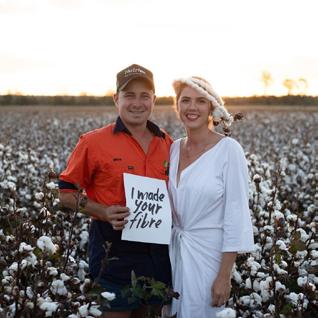
• Name of parent company
• Approximate number of workers
This section focuses on whether brands are publishing supplier lists from manufacturing facilities to raw material level, and what level of detail brands are disclosing about these suppliers.
AmericanALDO YoungorWalmartVanValentinoUnitedTruworthsTriumphToryCOLLECTIONTOPVALUTommyTomTod'sTJTheSteveSportsSplashSkechersShimamuraSHEINSemirSandroSaksRoxyRossRomweREVOLVERelianceQuiksilverPepeNordstromNineNewMujiMonoprixMexxMetersbonweMaxMaxMarniMacy'sLi-NingKOOVSKmartK-WayJustfabJockeyJilHudson'sHeilanFoschiniFootFashionFalabellaExpressElieDSWDolceDKNYDillard'sDieselDeichmannCortefielChico'scelioCarolinaCanadaBurlingtonBuckleBrunelloBosidengBloomingdale'sBillabongBigBelleBCBGMAXAZRIAArmaniANTAAJIOAeropostaleZaraVersaceUrbanTakkoSuperdryStradivariusFerragamoSalvatoreReservedPull&BearMRPMonclerMichaelMerrellMassimoMarcLouisLongchampLCLands'LaKohl'sKiKKateIto-YokadoGerryFurlaFreeFilaFamousEddieDiorDecathlonCostcoColeCOACHChanelCELINECarter'sCAROLLBurberryBershkaBeanpoleAritziaAnthropologieEagleHaanBauerFootwearPeopleWeberSpadeRedouteEndWaikikiVuittonJacobsDuttiKorsOutfittersBazaar-ffbCucinelliGooseHerrera&GabbanaTahariNovaLockerHomeBaySanderMaraYorkerWestJeansTrendsDressforLessFifthAvenueDirectMaddenChildren'sPlaceMaxxFordBahamaBurchArrowsHeusen
AbercrombieJoeCarrefourFresh & Fitch Hollister Co. Otto
3. TRACEABILITY RESULTS * Brands ranked in numerical order by score out of 250, but shown as rounded-up percentage. Where brands have the same score, they are listed in alphabetical order. 0-5% 6-10% 11-20% 21-30% 31-40% 41-50% 51-60% 61-70% 71-80% 81-90% ofUnitedKmartUGGGildanTezenisIntimissimiCalzedoniaOVS91-100%AustraliaColorsBenetton 10097979796939292Target VansTimberlandTheH&MEspritErmenegildoDressmannAustraliaZegnaNorthFaceTommyFendiCalvinZeemanKleinHilfigerTomC&A Tailor G-Star RAW
Brooks Sport
& Co PatagoniaSportswearColumbiaASICSLululemonLindexLacosteSainsbury'sReebok Big FruitWof the Loom New Balance New
LeviASOSadidasSpeedoNikeJordanConverseTescoStrauss
HEMAClarksMangoTchiboWranglerHugoHellyPumaAsdaZalandoRussellRalphLookLaurenAthleticHansenBosss.OliverDick'sMatalanChloéOldNextGucciGapBananaBallyHanesChampionVeroUniqloMarksJackGUBonprix&Jones&SpencerModaRepublicNavySportingGoodsREIPimkieAmazonFjällrävenRiverKauflandJDHermèsCottonVeryUnderMorrisonsJohnFanaticsDr.ALDIKathmanduJackTheTargetTedMammutGUESSBakerWarehouseWolfskinNordMartensLewisArmourOnSportsIsland
SAINTCarharttBottegaBalenciagaPradaMiuLidlFossilElSouthWoolworthsPrismaKiabiLLDesigualDisneyPrimarkMizunoALDIVictoria'sPrettyLittleThingParisboohooSecretSOUTHBeanAfricaCorteInglésMiuVenetaLAURENT
8690828282828282797171716262565656565959555555555553535352515148484949494949494947474745424141343436363636363640404040404037373333262629292930272725252525252525232323232322212121181818191919191615151414141212121212111111111010888311111111111111111111111111111111111111111111100000000000000000000000000000000000000000000000000000000000000000000000000000000 FASHION REVOLUTION FASHION TRANSPARENCY INDEX 2022 SUPPLY CHAIN TRACEABILITY 59
3. TRACEABILITY FINDINGS DISCLOSING FIRST-TIER MANUFACTURER DETAILS publish a list of their manufacturersfirst-tier include the gender breakdown of workers include the address 11 disclose a publicly available list in alignment with the Open Data Standard for the Apparel Sector 48 theinclude11%whetherfactoryhasatradeunion46 2648% 3146% 26% 31% 17 disclose their supplier lists on the Open Apparel Registry 2817% disclose aggregate volume of business that is captured by the disclosure and the percentage of total supplier factories28%published 31 publish at least 95% of their manufacturers31% 10 publish certificationswhatthefacilityholds10% FASHION REVOLUTION | FASHION TRANSPARENCY INDEX 2022 SUPPLY CHAIN TRACEABILITY 60
one
facilitiesprocessingbeyondthefirsttier publish
publish selected raw material suppliers specific raw material fibre, products or whether the company is tracing or more specific
raw materials 230%32 6% 12932% 12% 589% 58% 3. TRACEABILITY FINDINGS FASHION REVOLUTION | FASHION TRANSPARENCY INDEX 2022 SUPPLY CHAIN TRACEABILITY 61
RAW MATERIAL SUPPLIERS
includeaddressthe disclose
services publish certificationswhatthefacilityholds 30 disclose
PROCESSING FACILITIES
Publicly disclosed supplier lists are useful to labour and environmental activists, trade unions and worker representatives as they provide evidence of where responsibility lies when human rights and environmental abuses are discovered within the supply chains of major brands and retailers. See case studies on pages 24-25 for examples of how groups are using transparent information in this way.
publish the name of the factory’s parent company and 39% disclose the types of products or services provided. 40% of brands disclose the approximate number of workers at each site, up from 36% last year. These pieces of information are useful because they help stakeholders to better understand the supply chain in question and prioritise the best course of action to address labour, human rights and environmental risks where required.
Publishing the factory address is important because suppliers will often have similar company names or there may be multiple supplier companies operating in the same facility, which leads to confusion and incomplete or inaccurate supplier 29%information.ofbrands
of21%2022250brands FASHION REVOLUTION | FASHION TRANSPARENCY INDEX 2022 SUPPLY CHAIN TRACEABILITY 62
As Jenny Holdcroft, the former Assistant General Secretary of IndustriALL Global Union, explained for a previous edition of this report: “Knowing the names of major buyers from factories gives workers and their unions a stronger leverage, crucial for a timely solution when resolving conflicts, whether it be refusal to recognise the union, or unlawful sackings for demanding their rights. It also provides the possibility to create a link from the worker back to the customer and possibly media to bring attention to their issues.”
Traceability: Overall average score year-on-year progress 8%11%12%16%19%of100brandsof150brandsof200brandsof250brandsof250brands
3. TRACEABILITY ANALYSIS
2019 20212020 20182017
By first-tier manufacturers, we mean the suppliers that do the cutting, sewing and finishing of garments in the final stage of production. These are the suppliers that will then ship products to warehouses ready for shop floors and our wardrobes.
Disclosing manufacturersfirst-tier
Publishing supplier lists also brings significant benefits to brands. Supply chain transparency enables brands to receive timely and credible information from worker representatives and environmental groups which can help mitigate labour, human rights and environmental risks, such as unauthorised subcontracting. Supply chain transparency also enables collaboration with other companies sourcing in the same facilities to work together to solve problems. It can also enhance investor and consumer trust in a brand, showing stakeholders that brands are willing to be open about where their products are being made and to be held to account for what happens in their supply chains.
By 2022, Fashion Revolution hoped that at least half of brands would be disclosing their first tier manufacturing lists. Yet, this year, brands’ disclosure is once again below 50% with 48% of brands disclosing their first-tier manufacturers and 46% also publishing factory addresses (up from 44% last year).
In 2019, just 10% of 250 brands disclosed their supplier lists in a machine readable format, in line with the Open Data Standard for the Apparel Sector which is fundamental to the methodology of the Open Apparel Registry. Now 31% of 250 do, showing increasing convergence with best practice. Our data also reveals that although 48% of major brands publish their tier one factory lists, only 17% of big brands contribute these lists to the OAR and actively manage their data. After reviewing hundreds of brands’ disclosure, it is encouraging to see more brands than ever disclosing their supplier lists in alignment with our methodology, which is based on the Transparency Pledge, the common minimum standard for supply chain disclosure. See case studies on pages 24-25 to see examples of how stakeholders use supplier details from the OAR in their work.
First-tier manufacturers
Name of the processing facility’s parent company
Approximate no. of workers at each site
20212022 47% 44% 28% 46%48% 29% 39% 11% 35% 31% FASHION REVOLUTION | FASHION TRANSPARENCY INDEX 2022 SUPPLY CHAIN TRACEABILITY 63
10% of brands disclose whether or not the facility has a trade union, up from 7% last year, and 10% disclose if the facility has an independent worker committee. Although most brands are new to disclosing this type of information, it cannot be understated how important worker committees and trade unions are, as they are the main channel available for workers to achieve better working conditions. Public disclosure of this information helps worker representatives and brands themselves to identify how best to engage with a supplier when concerns arise.
10%11% 26% 40% 31%33% 5%7% 21% 7% 36%37%
Gender breakdown of workers
Types of products or services produced on site
No. of migrant workers or contract workers
If the list has been updated in the last 6 months
Certifications facility holds
women workers in a facility allows for gender-responsive due diligence based on the realities and needs of women workers, e.g. enabling women to practice good menstrual hygiene and permitting toilet and rest breaks during their periods.
If the facility has a trade union
Last year, we published a new indicator asking brands what certifications facilities have. In 2021, only 5% of brands disclosed this information but this year, 10% are disclosing this information. Publicly disclosing certifications at facility level helps unions and civil society to
Supplier name Facility address
List available as a csv, json or excel file
Transparency here also helps trade unions understand where they can prioritise their organising efforts.
understand the nature and robustness of due diligence at that facility. An increase in disclosure can be partly attributed to the prospect of proposed and incoming legislation. For example, the Corporate Sustainability Reporting Directive (CSRD) is incoming EU legislation requiring all large companies to publish regular reports on their environmental and social impacts.
26% of brands disclose the gender breakdown of workers at each site and 11%, disclose the number of migrant or contract workers, up from 7% last year. Visibility decreases further down the supply chain so it is discouraging that at the first tier there is already such low disclosure on key information concerning the people who make our clothes. For example, knowing the percentage of
findings show slight increases in the level of detail disclosed by brands about their supplier facilities. See table on the next page.
It is encouraging to see progress across different market segments including luxury, sportswear, footwear and accessories and across different geographies. Jack Wolfskin, a new brand included in the Index this year, is also disclosing this information, meaning that all in all, 11 additional brands are disclosing their first-tier manufacturers this year.
Additionally,hidden?our
Ten out of 250 brands that were reviewed in last year’s Index have since disclosed their first-tier manufacturers for the first time: Chloé, Bally, Calzedonia Group (Calzedonia, Intimissimi, Tezenis brands), GUESS, Paris, s.Oliver and Woolworths South Africa.
31% of brands disclose at least 95% of the first-tier factories in their supply chains (down from 32% last year) with 35% of brands disclosing if their supplier list has been updated in the past six months. Major brands often start and stop working with suppliers on a frequent basis, which means their supplier lists become outof-date quickly and ongoing supply chain visibility can be lost. This is why regular updates, at least twice a year, are essential to ensure stakeholders have access to the most current information needed to access remediation and justice.
“Brands around the world are preparing for a host of new ESG reporting requirements, with organisations from across the sector, in turn, preparing to provide, process, and work with that data. The volume of information will be enormous. It is therefore absolutely critical that reporting is built on a reliable and collaborative foundation in order to bring about the supply chain improvements we desperately need. That foundation cannot exist if data is siloed or inconsistent. Open, standardised, and transparent supply chain data is essential.”
Natalie Grillon, Executive Director, Open Apparel Registry
Disclosing processing facilities
FASHION REVOLUTION | FASHION TRANSPARENCY INDEX 2022 SUPPLY CHAIN TRACEABILITY 64
Processing facilities is a category capturing a wide range of activities, such as ginning, spinning yarn, knitting and weaving fabrics, dyeing and wet processing, leather tanneries, embroidering and embellishing, fabric finishing, dyeing and printing and laundering. This year, 32% of brands publish the names of some of their processing facilities, marking a welcome increase of 6 percentage points. In 2021 only 26% of major brands and retailers were publishing some of their processing facilities, up only slightly from 24% in 2020. However, we continue to push for more progress from brands, including through publishing our updated Out of Sight report last year in tandem with our #WhoMadeMyFabric? campaign in April 2021. Persistent reluctance to publish this information begs the question, what’s being
24%26% 6% 23%24% 30%32% 17% 26%27%
Certifications facility holds
Types of products or services produced on site
If the list has been updated in the last 6 months
Supplier name Facility address
20212022 19% 26% 2% 6% 14% 6% ABOVE: PROCESSING FACILITY, COURTESY OF FAIR WEAR FOUNDATION FASHION REVOLUTION | FASHION TRANSPARENCY INDEX 2022 SUPPLY CHAIN TRACEABILITY 65

18% 21% 6% 11% 4% 20%
Raw material suppliers are those that provide brands and their manufacturers with materials such as fibres (cotton, wool, viscose, polyester, nylon and more), hides, rubber, dyes, chemicals, metals and so on. The raw material level of the supply chain is where brands typically have the least visibility and hence where many human rights and environmental abuses often thrive, yet go unseen.
We would like to highlight that 15 major brands reviewed in last year’s Index have since disclosed some of their processing facilities for the first time, including: Aldi Nord, Bally, Big W, Calzedonia Group (Calzedonia, Intimissimi, Tezenis brands), Columbia Sportswear, GUESS, Hugo Boss, Jack & Jones, Mango, Matalan, Ralph Lauren, REI and Vero Moda. Jack Wolfskin, a new brand included in the Index this year, is also disclosing this information.
Approximate no. of workers at each site
Processing facilities
List available as a csv, json or excel file
If the facility has a trade union
Supply chain traceability is more important than ever considering the toll the pandemic has had on supply chain workers across the world, the global ongoing issues of forced labour, including the well documented cases within the Chinese cotton and Tamil Nadu textile sectors, as well as the intensifying climate crisis. See case studies on pages 24-25 as to why greater transparency is needed in order to tackle the climate crisis and its impact on local communities. Moreover, as governments and civil society prepare for COP27, we are at yet another critical moment in the climate crisis. Recent research shows deforestation continues to be linked to the production of several raw materials used in our clothes and shoes, damaging vital sources of carbon sequestration.
Gender breakdown of workers
No. of migrant workers or contract workers
Disclosing raw material suppliers
Name of the processing facility’s parent company
Name of specific farm orAddressfacility
Although it has been encouraging to see supply chain traceability steadily
While it is encouraging that 12% of 250 of the brands included in this Index disclose at least a small selection of their raw material suppliers, this increased by only 1% since 2021. Moreover, only 6% of brands publish the percentage of raw materials suppliers they are disclosing (up one percentage point from last year). In other words, the vast majority of brands do not disclose their raw material suppliers, suggesting there is very little visibility of raw material supply chains among major brands. This is further evidenced by the fact that just 9% of brands disclose the name of a specific facility or farm where the raw material is produced and just 5% disclose whether the list covers more than one material type. For 2022, we updated the wording slightly for brands’ disclosure on the type of raw material, products or services to “disclose specific raw material fibre” and 9% do, the same as last year.
11 out of 250 major brands that were reviewed in last year’s Index have
In more positive news, the majority of brands (58%) are now disclosing evidence of tracing the supply chain of at least one specific raw material, such as cotton or leather, up from 50% in 2020. Tools that major brands use to do this tracing and mapping may include certification systems (excluding those that use a mass balance system such as Better Cotton Initiative), blockchain, DNA tracing and other similar technologies.
Discloses what percentage of raw materials suppliers is published
8% 57% 7% 11%
In 2022, several new regulations and directives have been proposed and introduced, predominantly in the EU, to define parameters around marketing and
If the list has been updated in the last 6 months
Discloses whether the company is tracing the source/ supplier of one or more specific raw materials
3%5%6%
Discloses specific raw material fibre, products or services
9% 202120222% 9%9%10% 3%5%7%6% 11% 58% 12% FASHION REVOLUTION | FASHION TRANSPARENCY INDEX 2022 SUPPLY CHAIN TRACEABILITY 66
Raw material suppliers
List available as a csv, json or excel file
Approximate no. of workers at each site
8% 5%
No. of migrant workers or contract workers
labelling, due diligence and traceability, as well as sustainability reporting. Brands are now facing increasing pressure to comply with a range of overlapping laws in different regions. Thankfully, these legislative proposals require more robust traceability. We hope that by 2023, more than 50% of brands will be disclosing their first tier manufacturing lists. We are in a climate crisis that has sweeping human rights and environmental implications, and we cannot afford to spend time determining chains of responsibility. 9%
improving among the major brands and retailers reviewed in this Index, progress is still too slow. This makes a strong case for government regulation that requires companies to map and publicly disclose their supply chains. This will benefit workers and their representatives, investors, regulators, consumers, as well as the brands themselves.
Gender breakdown of workers
disclosed some of their raw materials suppliers for the first time: Asda, Calzedonia Group (Calzedonia, Intimissimi, Tezenis brands), Chloé, Dressman, Gucci, Kmart Australia, Levi Strauss & Co., Target Australia and Zeeman. However, there are some brands that did not receive points this year because they are either no longer disclosing their raw material suppliers or the list they shared was more than six months out of date.
Supplier name
As a daughter of an Uyghur intellectual, I grew up in a household with bugging devices in my own living room. I was followed to school and shopping malls. I experienced multiple house arrests along with my father. This was the intensive surveillance that we had to endure over 10 years ago in Beijing. Now, the level of surveillance and control over Uyghurs is far worse.

FASHION REVOLUTION | FASHION TRANSPARENCY INDEX 2022 SUPPLY CHAIN TRACEABILITY 67
calling on brands to apply the UFLPA standard throughout their global operations, to ensure other markets, like the EU, Japan, and Australia, do not become dumping grounds for goods made with forced labor. The opacity of supply chains could allow brands to hide such dumping, and it will therefore be vital to expose any major brand that continues to source cotton or other inputs from the Uyghur Region and sell them to consumers anywhere.
the Fashion Transparency Index 2022, just 12% of 250 of the world’s largest brands and retailers disclose their raw material
VIEWPOINT: TRANSPARENCY OF RAW MATERIAL SOURCES VITAL TO ERADICATING UYGHUR FORCED LABOUR
Now that the coalition’s Call to Action has essentially been enshrined into US law as part of the Uyghur Forced Labor Prevention Act (UFLPA), which went into effect on June 21, 2022, transparency will be of paramount importance in the law’s enforcement. Most products coming into the US with content from the Uyghur Region come from third countries. To meet the law’s goal of ending the importation of goods made with Uyghur forced labor, we expect U.S. Customs and Border Protection (CBP) to enforce not only against shipments directly from the region, but also, for example, from some of the largest garment producing countries like Bangladesh, Vietnam, and Indonesia – all major destinations for yarn and fabric containing Uyghur Region cotton. This will require CBP to seek far more disclosure from apparel brands about their sources of fabric, yarn, and cotton since, according to
Wesuppliers.arealso
JEWHER ILHAM FORCED LABOUR PROJECT COORDINATOR, WORKER RIGHTS CONSORTIUM AND SPOKESPERSON OF THE COALITION TO END FORCED LABOUR IN THE UYGHUR REGION
The Coalition to End Forced Labour in the Uyghur Region launched a Call to Action in July 2020 to demand that brands extricate themselves from the region. Since then, we have engaged with numerous brands and have seen many commit to exit the region (though, notably, companies have been hesitant to speak publicly about their actions for fear of losing their stores and partnerships in China).
By cruel contrast, until 2019, apparel brands profited from their heavy use of cotton from the Uyghur Region without any scrutiny at all. That is why the work of advocates and journalists over the last three years to expose the apparel industry’s complicity in Uyghur forced labor has been so important. The success of those efforts brought substantial and growing pressure on brands to end their complicity in Uyghur forced labour.
KNOW, SHOW & FIX
FASHION REVOLUTION | FASHION TRANSPARENCY INDEX 2022 68
• The process for taking on new suppliers
4.
• The process for exiting a supplier
KNOW, SHOW & FIX APPROACH
We looked at whether brands disclose the findings of their facility-level assessments, either as a summary of issues found in factories or at a more granular level (e.g. disclosing findings by individual factories, processing facilities and farms).
• Findings from its facility-level assessments (e.g. at factories, processing facilities, and farms)
What do major brands and retailers communicate about their human rights and environmental due diligence?
FASHION REVOLUTION | FASHION TRANSPARENCY INDEX 2022 KNOW, SHOW & FIX 69
• How the brand works to identify and address both human rights and environmental risks, impacts and violations in its supply chain
This year we separated due diligence processes for human rights risks from that of environmental risks.
This doubled the amount of points available – incentivising robust human rights and environmental due diligence processes. We measured disclosure on human rights and environmental due diligence to understand what steps brands are taking to identify human rights and environmental risks, impacts and violations in their supply chains. We also looked for information on how affected stakeholders (such as workers, trade unions and women’s rights organisations) are involved in the brand’s due diligence process.
This section also captures disclosure on the criteria for taking on new facilities before production commences. For the first time this year, we added an indicator measuring the scope, process and accreditation of environmental audits - looking for disclosure on how brands assess whether suppliers are meeting their environmental standards.
• If supplier assessments involve trade union representatives and include off-site worker interviews
KNOW
FIX
• How suppliers are assessed against the brand’s policies
• Whether brands conduct supplier assessments beyond the first tier, and if so, whether this is disclosed by named facility
SHOW
We looked at what brands publish about how they remediate human rights and environmental violations occurring within their supply chain. We also measured whether brands publish a confidential grievance mechanism for both direct employees and workers in the supply chain, including how the company responds to reported violations and grievances, how workers are informed of the grievance mechanism and whether brands disclose outcome data on reported violations.
• How affected stakeholders (including workers, unions and women’s rights organisations) are involved in the due diligence process
In the Know, Show & Fix section, we awarded points if brands disclose information such as:
Our methodology aligns to the UN Guiding Principle 17 on Business and Human Rights, which calls for companies to identify, prevent, mitigate and remedy their actual and potential adverse impacts. We only accept disclosure that goes beyond social auditing, as auditing alone does not represent a robust human rights due diligence process.
UnitedTedSandroRoxyQuiksilverPepeLi-NingKmartKauflandGerryFurlaFossilDSWCarharttBillabongANTAValentinoUrbanTriumphRussellRossLaJackFruitFreeFanaticsFalabellaDillard'sCostcoCarolinaBuckleBosidengBallyAsdaAnthropologieAmericanVersaceTod'sTJTakkoSaksParisMizunoMichaelKohl'sIto-YokadoBayKorsFifthAvenueMaxxEagleHerreraPeopleoftheLoomWolfskinRedouteDressforLessAthleticOutfittersWeberJeansBakerArrowsYoungorVanToryTommyTomSplashShimamuraSHEINSemirRomweNineNewMexxMetersbonweMaxLongchampLLKOOVSK-WayJustfabJilHeilanFashionElieDolceDKNYDeichmanncelioBigBelleBeanpoleTruworthsSportsREVOLVEMerrellMarniMacy'sLCFootEddieDieselCanadaBloomingdale'sTheSkechersReservedRelianceREIPradaMiuMaxJockeyFamousExpressDesigualColeChloéChico'sBCBGMAXAZRIAAJIOAeropostaleHaanFootwearMiuTrendsChildren'sPlaceGooseBauerLockerWaikikiDirectBazaar-ffb&GabbanaTahariNovaHomeSanderBeanMaraYorkerWestFordBahamaBurchHeusen
4. KNOW, SHOW & FIX RESULTS
G-StarASICS RAW MarksGildanTesco& Spencer New Balance ALDI WalmartSuperdrySpeedoRalphPrimarkNikeNewJordanH&MDr.ConverseCarrefourLululemonLidlHugoBonprixSOUTHBossMartensLookLauren
Brunelloboohoo
* Brands ranked in numerical order by score out of 250, but shown as rounded-up percentage. Where brands have the same score, they are listed in alphabetical order.
ALDI Nord Big LeviFendiWStrauss & Co ElDiorCOACHCELINEs.OliverLindexCorte Inglés John Lewis Kate UnderUGGMonoprixLacosteGUESSDecathlonSportswearColumbiaAritziaAmazonALDOTomTargetFerragamoSalvatoreMatalanHermèsCottonCortefielArmaniZalandoOttoMorrisonsWranglerPrismaNextMarcLouisSpadeVuittonJacobsOnTailorArmour
Ermenegildo Zegna Hudson'sHEMA
585452525252524848485050504646464646464646444444444444444444424242423838384040403636363636323232323232323232323232282828282828282828282830303030303026262624242424242424242222222222222222222220202020202020202020202018181818181818181816161616161614141414141414141212121212121212101010101010101010101010108888888888888888888866666666666666664444444444444444442222222222220000000000000000000000000000000 70KNOW, SHOW & FIXFASHION REVOLUTION | FASHION TRANSPARENCY INDEX 2022
Kmart Australia Target Australia 8080
0-5% 6-10% 11-20% 21-30% 31-40% 41-50% 51-60% 61-70% 71-80% 81-90% 91-100%
ThePumaOVSC&ANorth
ZeemanVansTimberlandFace
Calvin TchiboMangoEspritDressmannZaraStradivariusReebokPull&BearPatagoniaMassimoBurberryBershkaadidasSAINTOldGucciGapBottegaBananaBalenciagaASOSofUnitedUniqloGUTommyFjällrävenKleinHilfigerColorsBenettonRepublicVenetaNavyLAURENTDutti
Victoria'sTezenisSteveLands'KathmanduIntimissimiCAROLLCalzedoniaThePimkieNordstromFilaGoodsDick'sClarksChanelCarter'sSouthWoolworthsRiverMRPKiKHollisterAbercrombieVeryTOPVALUSainsbury'sMujiMonclerKiabiFoschiniDisneyBrooksVeroPrettyLittleThingMammutJoeJDJackHellyHanesChampionBurlingtonCucinelliHansen&JonesSportsFreshModaSportCOLLECTION&FitchCo.IslandAfricaSportingWarehouseEndMaddenSecret
and accreditation for environmental audits disclose how many audits included a trade union representative 338% 3%
disclose how affected stakeholders are involved
disclose how affected stakeholders are involved
KNOW:
outcomes
KNOW:
HUMAN RIGHTS DUE DILIGENCE
4. KNOW, SHOW & FIX FINDINGS
to
steps taken to address violations 2661% 26% 15 3918 18%1615% 39% 16% KNOW: SUPPLIER ASSESSMENTS 38 describe the
describe environmentaltheirduediligenceprocess
disclose the outcomes of steps taken address the of scope, process
ENVIRONMENTAL DUE DILIGENCE
violations 61 disclose
SHOW:
PUBLISHING FACILITY ASSESSMENT FINDINGS disclose a summary assessmentoffindingsatthefirsttier disclose a summary findingsassessmentofatrawmateriallevel 44 44% 5 5% FIX: REMEDIATING ISSUES publish a confidential grievance mechanism for supplyworkerschain 56 56% publish data about the number of grievances filed, addressed and resolved in the supply chain 25 25% FASHION REVOLUTION | FASHION TRANSPARENCY INDEX 2022 KNOW, SHOW & FIX 71
describe their human rights due diligence process
human rights and environmental due diligence indicators for the first time this year has shone a spotlight on how these efforts compare to one another. With the exception of outcomes, transparency of human rights due diligence is stronger than environmental due diligence.
Environmental rights due diligence
Salient human rights risks, impacts and violationsStepsidentifiedtakento
Human rights due diligence
39% 16% 18%23%26% FASHION REVOLUTION | FASHION TRANSPARENCY INDEX 2022 KNOW, SHOW & FIX 72
on page
4.
15% 34% 42% 26%
How affected stakeholders are involved in due diligence
Outcomes of steps taken to address identified risks
Across both environmental and human rights due diligence, brands remain far stronger at describing their process and identified risks than they are at disclosing the outcomes and impacts of their due Separatingdiligence.
KNOW, SHOW & FIX ANALYSIS
KNOW
38% of brands disclose their scope, process and accreditation for environmental audits. It is important that this information is publicly disclosed for scrutiny, especially given how varied the quality of sustainability auditing can be and its relationship to marketing claims. Read more about ongoing policy developments to counter unsubstantiated environmental claims also known as "greenwashing'' 61%95.
(e.g. workers / producer / farmer representatives, trade unions)
Environmental and human rights risks are intrinsically linked. If brands’ operations increase the risk of flooding, for example, failing to cease, prevent and mitigate this environmental risk will compromise the human rights of workers and their communities. It is therefore vital that brands conduct robust due diligence for both human rights and environmental risks.
address identified risks
While a gender lens should be deeplyembedded and applied to every stage of a meaningful due diligence process, just 12% of brands (up from 10% in 2021) currently disclose that they consult women (including women’s organisations and gender experts) in their human rights due diligence process. Human rights violations are not gender blind; so due diligence should not be gender-blind either.
Approach to conducting due diligence
With just 15% of brands disclosing the outcomes of their human rights due diligence, and 18% doing so for environmental due diligence, we reinforce our message from last year for brands to improve their disclosure from output data to worker-centred impact data of tangible improvements for workers and the environment.
of brands disclose the outcomes of their human rights
As the table below shows, 44% of major brands share summarised assessment findings without naming individual facilities. Many brands cite health and safety non-compliances, which social audits are well-placed to detect. These ratings do not always paint the full picture as other pressing and endemic issues (like those related to freedom of association and gender-based violence) are harder to detect in traditional social audits.
In general, there remains a widespread lack of transparency on the working conditions beyond the first tier of the supply chain – where workers tend to be less visible, in more precarious and informal employment and at higher risk of exploitation. Disclosure of assessment findings decrease significantly when you look beyond the first tier, where brands have less visibility and are less likely to be conducting facility assessments like social audits.
15%
SHOW
The majority of brands (62% in 2022: down from 66% in 2021) describe the remediation process that is put in place when issues are found in their supplier facilities. This usually includes corrective action plans or stopwork notices.
FIX
due diligence
Major brand disclosure of facility-level assessments results Summary of audit findings –without naming facility Facility-level rating by named facility Selected audit findings by named facility Full audit reports by named facility At tier 1 level Beyond tier 1 (processing facilities and textiles mills) Raw material level 44% 23% 1%1%4% 0%1% 17% 12% 5% 1%1%
Summarised findings that are not linked to a specific facility are less actionable for affected stakeholders (like trade unions who represent garment workers), making it harder for them to use the information to hold brands to account.
FASHION REVOLUTION | FASHION TRANSPARENCY INDEX 2022 KNOW, SHOW & FIX 73
Identifying social and environmental risks is only valuable if brands then take tangible action to cease, prevent and mitigate these risks, in line with UN Guiding Principle 17. Just 15% of brands disclose the outcomes of their human rights due diligence, yet 61% describe their human rights due diligence process. Similarly, just 18% of brands disclose the outcomes of their environmental due diligence, in contrast with the 39% describing their process.
See our living wages section on page 89 for more information on shortcomings of the CSDD legislation - and our response.
As mentioned previously, Fashion Revolution welcomes the proposed Corporate Sustainability Due Diligence Directive (CSDD) by the European Commission which would legally require major brands to conduct due diligence. However, the CSDD proposal falls short of the ambition Fashion Revolution hoped it would achieve. The draft legislation is currently structured in a way that raises real concerns that large fashion brands, like those captured in this Index, could easily pass responsibility down the chain to suppliers. In limiting its scope to “established business relationships”,
However, just 21% of brands disclose how affected stakeholders (like workers/ producers/farmers, trade unions etc) are involved in the remediation process. This is too low. Consulting affected stakeholders is always relevant in remediation; workers are uniquely placed with valuable lived experience which would enrich and improve remediation.
Fashionimpacts.Revolution
“At the heart of this ineffectual risk assessment is a focus on business risk – with some companies wanting to retain the comfort blanket of pointing to activity, rather than effective action, in the event of reputational damage.”
Independent, confidential grievance mechanisms are designed to enable workers to speak up with less fear of retaliation than if they raised grievances directly with their supervisors - who may be part of the problem. 64% of brands publish confidential grievance mechanisms for their employees, and 56% do so for workers in the supply chain (up from 62% and 52% respectively last year). Over a quarter of brands (26%) describe how workers are informed about the grievance mechanism, and one third (33%) publish how to access their grievance mechanism in their supplier code of conduct.
Disclosing outcomes of grievances can provide valuable learning for the sector as a whole, yet only one quarter of brands (25%) disclose data about worker grievances filed, addressed and resolved. This aligns to the general trend we find across the Index that brands are more guarded about their outcome and impact data.
Francis West, Shift
the draft legislation facilitates ‘cut and run’ tactics, in cases of unauthorised subcontracting, including homeworkers. Just 19% of brands disclose their exit strategy when leaving a supplier. We only credit policies that ensure brands do not ‘cut-and-run’ when facing issues in the supply chain. This includes giving reasonable notice of intent to terminate the relationship to suppliers, and conducting assessments on potential adverse human rights
believes brands have a moral responsibility to stay and remediate problems, rather than walk away, in line with established industry best practice. We extend these responsibilities to shortterm and informal partners, including informal and semi-formal workers (like homeworkers and workers in unauthorised subcontracted sites). These workers are among the most vulnerable in the supply chain yet they would not be protected by the CSDD proposal in its current form.
FASHION REVOLUTION | FASHION TRANSPARENCY INDEX 2022 74
Even brands with homeworker policies are not prioritising the issue with their suppliers. Overall, it is clear that brands need to invest in sensitising their supply chain around homeworking. And if a buying house is present, they also play a key role in improving transparency along the chain.
Homeworkers need to be well managed like other workers in the supply chain. But where there is no recognition of homeworkers, there can be no proper system to manage them. Only 7% of brands have disclosed ways in which they are working to improve conditions for homeworkers. So work is coming to homebased workers but they are not being paid equally for it. They are exploited because of their invisibility. If brands do not have a nuanced understanding of homeworking, they should go via an NGO or homeworker organisation. But all brands need to have a policy that recognises homeworkers as workers. Our Hidden Homeworkers toolkit includes a model policy, as well as other useful resources for brands and suppliers.
working for a brand with a homeworker policy they would demand better wages. Homeworkers cannot usually access a complaint mechanism and are rarely included within HRDD processes. Only 26% of brands involve worker representatives in their HRDD, and only 12% involve women workers. But homeworkers are also starting to understand their role in global supply chains and seeking ways to work together to improve their situation. In Tiruppur, homeworkers have formed their own trade union, Anukatham, a union for unorganised workers. They are collecting evidence of the retail prices of clothes that they recognise having worked on and are comparing these to the often very low piece rates they receive. So soon there may be a push for transparency from the workers' side too.
FASHION REVOLUTION | FASHION TRANSPARENCY INDEX 2022 VIEWPOINTS 75
A. VIYAKULA MARY , EXECUTIVE DIRECTOR, SAVE TIRUPPUR (TAMIL NADU, INDIA); UME LAILA AZHAR , EXECUTIVE DIRECTOR, HOMENET PAKISTAN ; MAHEEN ARIF , PROJECT COORDINATOR, HOMENET PAKISTAN (LEFT TO RIGHT)
This viewpoint comes from three civil society actors who work with homeworkers: women workers paid on a piece rate to carry out key tasks in clothing manufacturing, who labour in their homes rather than in factories or workshops. The most recent International Labour Organization (ILO) report on homeworking found that 11% of all women workers work from home. This year’s Fashion Transparency Index shows that only 28% of brands have a homeworker policy. Many brands fear homeworking.
They think that it's something they cannot handle. This is a problem, as without a homeworker policy, suppliers will not disclose that they use homeworkers. If the brands do not know that homeworkers are involved, how can they conduct effective human rights due diligence (HRDD) processes within the supply chain? For example, in Pakistan, local suppliers have told us that they never mention homeworkers in conversations with buyers. And if a buying house is involved, there may be other communication gaps. Is the brand communicating to the buying house, and is the buying house communicating to the supplier?
Transparency for homeworkers is very important too. In Pakistan, information is sometimes kept from homeworkers because if they knew that they were


VIEWPOINT: MORE TRANSPARENCY IS NEEDED ON HOMEWORKING AND FOR HOMEWORKERS TOO

SPOTLIGHT ISSUES
FASHION REVOLUTION | FASHION TRANSPARENCY INDEX 2022 76
• Carbon footprint in owned facilities and in the supply chain
Climate change & biodiversity
• targetsDecarbonisation
• Commitments and progress towards zero deforestation
• Forced labour, a shift from Covid-19 indicators last year, to see how brands are responding to the pandemic and increased risks for forced labour
Water & chemicals
• Unionisation and collective bargaining
What are major brands and retailers doing to combat the climate crisis and mitigate their environmental impacts?
Gender & racial equality
What are major brands and retailers doing to improve conditions for workers within the company and their supply chains?
• Brands’ practicespurchasing
• Absolute reductionenergy
• Renewable energy use in owned facilities and in the supply chain
•••wetheirchemicalshazardousandminimisewaterfootprint?Herelookedat:StrategiesandprogressonreducingtheuseofhazardouschemicalsWaterfootprintindirectionoperationsandinthesupplychainWaterriskassessments
• Strategies and progress on consumerandpre-consumerreducingwasterecyclingpost-waste
Sustainable sourcing & materials
• How much textile waste is generated and how much was destroyed or recycled
What are major brands and retailers doing about gender and racial equality?
• Gender pay gap
What are major brands and retailers doing to reduce the use of
Specifically, we looked at:
• How many items were produced in the reporting period
• Racial equality data and what brands are doing to address it
Every year, we select Spotlight Issue topics and formulate the indicators in consultation with industry experts and stakeholders.
We looked at:
• What the brand is doing to minimise the impact of microfibres
• Strategies and progress on the reduction of the use of virgin plastics
• Strategies for takeback schemes and clothes longevity
• Living wages and wage data in the supply chain
FASHION REVOLUTION | FASHION TRANSPARENCY INDEX 2022 SPOTLIGHT ISSUES 77
• Tools and processes to define materials‘sustainable’
• Investments in textileto-textile circular recycling
5. SPOTLIGHT ISSUES: APPROACH
Decent work & purchasing practices
What are major brands and retailers doing to address overproduction, minimise waste and move towards circularity? Here we looked specifically at:
wasteOverconsumption,&circularity
What are major brands and retailers doing to increase the use of sustainable materials and reduce the use of virgin plastics and microfibre shedding? We looked at:
• Strategies and progress on the switch to more materialssustainable
Here we looked at whether brands publish:
• Science Based Targets
Each year, we explore some key pressing issues in deeper detail. For 2022, our focus covers six strategic areas to align with and support the Sustainable Development Goals (SDGs), an urgent call for action to build a better world for people and our planet by 2030.
• Gender inequality in the company and supply chain
5. SPOTLIGHT ISSUES: RESULTS * Brands ranked in numerical order by score out of 250, but shown as rounded-up percentage. Where brands have the same score, they are listed in alphabetical order.
0-5% 6-10% 11-20% 21-30% 31-40% 41-50% 51-60% 61-70% 71-80% 81-90% 91-100% Australia Target Australia H&M 6464696761
Joe UnitedTod'sTakkoSportsSaksRossLLIto-YokadoEddieDisneyDick'sBeanpoleVersaceUnderMichaelFamousClarksBurlingtonALDOVeryTJs.OliverMizunoCanadaTheMRPMatalanKathmanduFreshWarehouseGooseMaxxFootwearKorsArmourSportingGoodsBauerBeanDressforLessFifthAvenueDirectArrows
TheNikeJordanConverseUniqloGUNorth ofUnitedUGGTezenisIntimissimiCalzedoniaVansC&ARalphLululemonBurberryTimberlandFaceLaurenColorsBenetton
5454545454535352525248484747474747464646434341414141413434363939373735353535353333333333333331313131313131313131282930303030272727272725252524242423232222222222222220202020202020201919191919191818181817171717171717161616161614141414141313131212121212121212121211111111111111111010101010888887777777666666666666444444444555555222222221111111111111100000000000000000000000000000000000000000 FASHION REVOLUTION FASHION TRANSPARENCY INDEX 2022 78SPOTLIGHT ISSUES
HugoFendi Boss LeviCalvinZalandoSainsbury'sASOSKleinStrauss & Co Marks & Spencer Tommy TchiboRussellNextLouisLindexJohnFruitDiorCELINEadidasWranglerSpeedoPrimarkOldGapEspritBananaTargetGildanZeemanHilfigerRepublicNavyoftheLoomLewisVuittonAthleticWalmartSalvatoreLidlKateDecathlonColumbiaChloéNewLacosteNewMammutAmazonTescoReebokGUESSTomPrettyLittleThingCOACHboohooASICSPatagoniaMangoVeroMarcJackDressmann&JonesJacobsModaTailorLookBalanceSportswearSpadeFerragamo
American Eagle Brooks Sport G-Star REIMonoprixLaKauflandJackHollisterCottonAbercrombieSteveParisKohl'sHellyHanesFalabellaErmenegildoCortefielChampionCarrefourMonclerBallyAsdaTOPVALUDesigualBrunelloBonprixAritziaRiverJDFjällrävenDr.ChanelUrbanKiabiFreeFoschiniArmaniAnthropologieALDIReservedNordstromCarter'sBigPrismaPradaPimkieMiuElALDISouthWoolworthsTedMujiMorrisonsHermèsRAWBakerAfricaSOUTHCorteInglésMiuWNordPeopleOutfittersMartensSportsIslandCucinelliCOLLECTIONZegnaHansenMadden&FitchOnCo.WolfskinRedoute
KmartOVSGucci
YoungorVanValentinoToryTomSplashSHEINSemirRomweREVOLVEPepeNineNewMexxMetersbonweMaxMarniLCKOOVSKmartKiKK-WayJustfabJockeyJilHeilanGerryFurlaFashionExpressElieDolceDKNYDillard'sDeichmanncelioBuckleBigBelleBCBGMAXAZRIAAeropostaleTriumphSkechersRoxyQuiksilverMerrellMaxMacy'sHEMAColeCarolinaCarharttBosidengBloomingdale'sBillabongTommyTheRelianceLongchampLands'FanaticsChico'sAJIOVictoria'sLi-NingHudson'sFossilFilaDSWDieselCAROLLANTATruworthsShimamuraSandroOttoFootCostcoLockerBaySecretEndTrendsChildren'sPlaceBahamaHerreraHaanBazaar-ffb&GabbanaTahariNovaWeberHomeSanderWaikikiMaraYorkerWestJeansFordBurchHeusen
MassimoBershka SuperdryPumaBottegaSAINTBalenciagaZaraStradivariusPull&BearDuttiLAURENTVeneta
35 FORCED LABOUR 246 todisclose35%anapproachrecruitmentfeesinthesupplychain disclose the number of workers in the supply chain affected by the payment of recruitment fees 6% publish data on the prevalence of modern slavery related violations and risk factors 24% PURCHASING PRACTICES publish policy to pay suppliers within 60 days 11 11% disclose method for isolating labour costs in price negotiations 4 publish suppliersnumberaverageofdaysarepaidafterdeliveringorders 4% 12 5. SPOTLIGHT ISSUES FINDINGS - DECENT WORK & PURCHASING PRACTICES publish a purchasingresponsiblecodeofconduct12% 6 publish annual progress towards paying living wages 6% LIVING WAGES 4 publish number of workers being paid a living wage 4%27 disclose approach to achieving living wages for supply chain27%workers 7 7% 99.6 publish a typicaldue-diligencestandard,alignedsupplieragreementtemplate,settingoutorderandpaymenttermsandconditions>1% FASHION REVOLUTION | FASHION TRANSPARENCY INDEX 2022 SPOTLIGHT ISSUES 79
race equality 5. SPOTLIGHT ISSUES FINDINGS - DECENT WORK & PURCHASING PRACTICES 1013% 110% 83 29 1% 3%8% disclose actions
of supplier facilities that have trade unions
disclose number of collective bargaining agreements that provide supply chain workers with wages higher than legal minimum number of workers covered by collectiveagreementsbargaining
publish ethnicitycompany’sthepaygap 13 publish actions focusing
in supplier facilities 29% FASHION REVOLUTION | FASHION TRANSPARENCY INDEX 2022 SPOTLIGHT ISSUES 80
publish
RACIAL EQUALITY on promoting focusing on the promotion of gender equality
GENDER EQUALITY 6 publish data on genderbased violations in supplier facilities 59 6%34 publish rolesbreakdowngenderofjobinthecompany59% publish the company’s gender pay gap 34% UNIONISATIONpublishnumber
It is striking that little more than one third (35%) of brands disclose their approach to recruitment fees and that the vast majority (94%) do not disclose the number of workers in their supply chain affected by the payment of these fees. This is key in screening for risks of forced labour, such as debt bondage; a term for when workers are forced to work until they payoff debt incurred. In short, more brands disclose information on their approaches to recruitment fees than on the number of workers actually impacted by them.
This spotlight issue was new for 2020 but we removed it in 2021 to focus on Covid-19 indicators. Although the pandemic is ongoing, we have shifted focus back to forced labour, recognising Covid-19 exacerbates workers’ existing vulnerabilities to forced labour and other forms of modern slavery.
To understand how this happens, thirdparty recruitment agencies help suppliers of major brands and retailers meet recruitment needs across their global supply chains. These recruitment agencies often operate in the informal economy, without providing workers legally enforceable contracts or agreements
ANALYSIS - DECENT WORK & PURCHASING PRACTICES
This year, 86% of brands disclose a forced labour policy and 62% disclose procedures to identify and eliminate forced labour. This performance is worse than in 2020, when 92% of brands disclosed a policy on forced labour and 66% published information about partnerships or programmes to identify and eliminate forced and bonded labour; in other words, the procedural information which may be included in the UK Modern Slavery Act or California Transparency in Supply Chains Act statement.
Little transparency on recruitment fees: an unclear picture of the risks of forced labour
5. SPOTLIGHT ISSUES
MODERN SLAVERY
standard across their entire global supply chain, for all retail markets, consistent with the requirements of the UFLPA. You can access the coalition's open letter here. They are asking global brands and retailers to refrain from re-exporting detained goods to sell into other markets. This is to prevent against the risk of bifurcated supply chains (where brands would divide their supply chains into two, and use other markets as dumping grounds for goods made with Uyghur forced labour). Greater transparency and traceability are key to enable robust due diligence processes to surface risks of forced labour and brands’ supply chains must be able to stand up to public scrutiny.
FASHION REVOLUTION | FASHION TRANSPARENCY INDEX 2022 SPOTLIGHT ISSUES 81
In June 2022, the Uyghur Forced Labor Prevention Act (UFLPA) came into force in the United States, banning all goods from the Xinjiang Uyghur Autonomous Region (XUAR), also known as East Turkestan. The law comes in response to China’s systemic oppression of over a million Uyghur people who are being forcibly detained and found to be producing for global brands and retailers. 20% of the world’s cotton comes from XUAR -- meaning that one in five products made from cotton contain XUAR cotton. The UFLPA is a positive move forward to prevent goods made under conditions of forced labour from entering US markets. Brands will be required to provide evidence of end-to-end due diligence and assurance that their goods do not contain any element that may have been made under conditions of forced labour. The End Uyghur Forced Labour Coalition is also calling for a single global cotton
regarding wages, benefits and provisions of work. Recruitment fees can be imposed covertly, like hiding exploitative clauses within contracts written in languages unfamiliar to workers, which may require them to pay recruitment fees, trapping them in debt-bondage. Although this practice is illegal in many countries, workers are forced to repay their debts by those exploiting them, which often takes a very long time, sometimes decades, as garment workers’ wages are low and debts high. In 2021, Transparentem revealed that 45 migrant workers from Bangladesh, Nepal and Indonesia had paid as much as $5,294 each in fees to gain employment in a Malaysian garment factory. That is the equivalent of 20 months of minimum wage pay in Importantly,Malaysia.indebted workers are far less likely to bargain for better pay or working conditions to assert their rights, which perpetuates exploitation. Even when workers challenge the repayment of recruitment fees, it is difficult to prove as they mostly pay fees in cash and therefore do not have receipts. Justice
screen for risks of forced labour but the majority of brands appear to be tracking this information and choosing not to disclose it. Or, it may be their due diligence approaches are not robust enough to surface this.
Millions of workers have been reimbursed through efforts of the #PayUp campaign since the pandemic marked record numbers of workers dismissed and left unpaid. However, the initial lack of visibility on the scope of workers impacted by the non-payment of wages was compounded by the fact that even when laid off or dismissed from work, many garment workers are still expected to pay back crippling recruitment fees. With wages low and debts high, workers become vulnerable to forced labour and further debt as they try to overcome shortfalls in wages. This is why transparency on the number of workers impacted by recruitment fees is important. And yet, 94% of brands do not disclose this. According to the International Labour Organization (ILO), checking for recruitment fees is necessary to
could take years—if it ever comes— leading to increased risk of debt bondage as workers attempt to cover shortfalls in earnings. However, there have been some successes like in Thailand where migrant workers from Myanmar won their case.
Prevalence of modern slavery risk factors
FASHION REVOLUTION | FASHION TRANSPARENCY INDEX 2022 SPOTLIGHT ISSUES 82
Our research shows that just 24% of brands disclose the prevalence of modern slavery related violations and risk factors in their supply chains (e.g. excessive and forced overtime, unrestricted freedom of movement, retaining workers’ passports and so on.) Importantly, each of these indicators of forced labour should be monitored separately and not lumped together. So, whilst nearly a quarter of brands disclose the prevalence of modern slavery violations, it is unclear which violations are reported more frequently and which may go undetected, unreported and unaddressed.
24%
of brands disclose the prevalence of modern slavery related violations and risk factors
Best practice disclosure is when a brand discloses that they follow the Employer Pays Principle, which requires that no worker pays for a job and the costs of recruitment are covered by the employer. Meeting the costs must be incorporated into supplier payments (e.g. visa costs, medical checks, travel expenses). Brands’ back-paying workers for recruitment fees is crucial to eradicating debt bondage. Major brands and retailers should also ensure freedom of association and worker organising in their sourcing facilities to enable workplace improvements and implement higher standards of ethical recruitment. Relatedly, investment in long-term, meaningful supplier relationships is needed to ensure better working conditions. Finally, power brokers e.g. investors and banks, should leverage relationships with buyers and suppliers to incentivise and support ethical recruitment practices and require mandatory progress reporting on implementation.
A company’s typical approach is to set a policy where no fees or related costs are paid by workers in the supply chain as part of their recruitment process. However, according to Transparentem, the proliferation of “no fees” supply chain policies among the world’s largest brands and retailers has created an incentive for recruitment agencies and employers to conceal cases when workers have illegally paid fees to gain employment.
FASHION REVOLUTION | FASHION TRANSPARENCY INDEX 2022 SPOTLIGHT ISSUES 83
BELOW: MATHEW CHATTLE / BARCROFT MEDIA VIA GETTY IMAGES
Mary FormerCreagh,Chair of the Environmental Audit Select Committee on the UK Modern Slavery Act in 2019
The increasing recruitment of migrant garment workers cannot be separated from a more general trend in the industry, namely a concentrated shift from the use of permanent, regular employment to temporary, contract and seasonal labour. As brands and retailers continue to develop buying policies based on lower prices, shorter lead times and those generally more favourable to the brand themselves, their relationships with suppliers are becoming increasingly unstable and temporary. This translates into an increase in job insecurity and worsening working conditions.
“What we can’t have is a consequence-free world where people who turn a blind eye to abuses in their supply chain get away scot free."
Brands’ payments to suppliers should cover the costs of the Employer Pays Principle

NS: 8% only is very, very shocking. And further that's where the most of the modern day slavery injustices are happening. And the companies know their lowest stages of their supply chain are completely broken. Underserved communities are desperate. So we say to companies and leaders of these organisations - you need to see these workers and acknowledge them.
VIEWPOINT: CEOS STEAL WOMEN'S LIVES WHEN THEY PAY THEM POVERTY WAGES
“We were literally fed like animals and forced to work like machines.”
FR: Our research reveals that there is less transparency the further down the supply chain we look. 48% of brands published the name of the factories where their clothes are made, but only 8% named the farms, where their raw materials like cotton come from. In your experience, as a former worker in a hidden stage of the supply chain,
FASHION REVOLUTION | FASHION TRANSPARENCY INDEX 2022 VIEWPOINTS 84
NASREEN SHEIKH FOUNDER, EMPOWERMENT COLLECTIVE

I was about ten years old. And I was hidden in a low tier of the supply chain. I found myself in a 10 x 10 room with six other people working 12 to 15 hours a day, to complete piles and piles of garments. I would work from morning to evening, and only then I would receive less than $2 a day. And if we did not finish those
FR: Nasreen, can you tell us a bit about yourself and your experiences in the garment industry?

why do you think it's important to trace their entire supply chain and take responsibility for all their workers?
Big fashion brands have the responsibility to see these workers and to acknowledge them, and help them to attain basic human rights. But it is really shocking that only 8% are transparent about where their raw materials are from. So is that how broken our system is?
piles of clothes, we would receive nothing. We ate, we slept, and we worked in that sweatshop. The room itself literally looked like a prison cell. And I had to often pick sewing threads out of my mouth before I could swallow my food. We were given outdated food that was riddled with bugs and maggots. And if we were so lucky, and we did all the work on time, they would give us rotten grapes. So I tell people that we were literally fed like animals and forced to work like machines.
NS: My name is Nasreen Sheikh, and I come from an undocumented, very rural village. When I was very young, I witnessed a lot of atrocities against women and children. When I saw my 12 year old sister being forced into marriage, I knew I would be next. So I decided to find my freedom. I ended up in Nepal’s capital city of Kathmandu as a sweatshop labourer.
FR: Only 8% of large fashion brands published targets to achieve a living wage for workers across our supply chain. And even fewer, just 4% disclose a number of workers are actually being paid a living wage rate. What does this say about how large fashion brands operate?
money has been made by child workers in the supply chain that do the work. CEOs steal women's lives when they pay them poverty wages, to fulfil their own ego. And this is very immoral work.
NS: These numbers are shocking. But the reason these figures are so low is very simple. It is simply because garment workers are not being paid a living wage. That's why these companies choose not to disclose this information - and it is not good enough.
IMAGES COURTESY OF EMPOWERMENT COLLECTIVE
So now is the time for these companies to open their hearts and provide a living wage. And I know you can still make millions. You don't need to make billions. I want to tell these CEOs and brands that I am here and today and I'm speaking, but tomorrow, there will be hundreds of other survivors who will join.
I know that companies love challenges. So this could be a challenge for all of the companies to trace their supply chains back to the communities where their raw materials are grown and really learn what their working conditions are like, and improve them. I know as a grassroots organiser, when I help one woman, she becomes a leader and she helps other villages and the magic happens, systems transform once people are empowered.
What is very transparent to us all, is that a lot of the CEOs who make millions have, in very simple words, stolen. Truly, it's not that the CEOs made this money, the
"Big fashion brands have the responsibility to see these workers and to acknowledge them"

FASHION REVOLUTION | FASHION TRANSPARENCY INDEX 2022 VIEWPOINTS 85
A lot of companies need to give up on the way that they're working. There is no time to wait - the climate is pushing us, this is urgent for our survival on this planet. In producing countries, we already can't grow food, our crops are being damaged by climate change. So we are starving.
Exploitative working conditions could thrive in hidden facilities, where workers may be left with little recourse to access remediation or compensation as difficult to establish links to lead firm
Abusive, humiliating verbal abuse and forcing workers to work more Restrictquickly toilet, water and meal Outsource/subcontractbreaks to smaller, low-cost units
PLANNING AND FORECASTING
Workers could receive piece-rate wages
Stress, anxiety, hunger, taking on debt to afford basic needs like food, housing, education medical care and so on
Delays in providing order specifications or approvals; last minute changes
Brands’ purchasing practices that may impact working conditions
Negotiate lower prices or ask for discounts
FASHION REVOLUTION | FASHION TRANSPARENCY INDEX 2022 SPOTLIGHT ISSUES 86
PAYMENT & TERMS
Fatigue and other health issues; gendered impact for women workers who need additional rest breaks during menstruation
Negotiate lower prices or ask for UnwarrantedOrderdiscountscancellationpenalties
BRANDS’ PRACTICESPURCHASING
brand customers. And this contributes to a substantial knock-on effect on workers. Purchasing practices which include order placement, payment terms, planning, forecasting and costing are proven to impact vital areas such as workers’ wages and safety conditions. See below.
issued to suppliers to cut costs (i.e. asking for discounts)
The depth of unequal power relations between major fashion brands and their suppliers is such that brands dictating terms and pricing in their favour to the detriment of suppliers and workers is all too common a practice. Suppliers are accustomed to absorbing uncertain circumstances questioning whether they will be paid on time and as agreed by their

Unsafe working conditions making them vulnerable to injuries and even death
MANAGING THE PURCHASING PROCESS
Short lead times
Unable to pay workers’ wages, having already fronted production costs like raw materials and labour
Suppliers unable to invest in fire and building safety improvements due to price pressures
IMAG FOUNDATIONWEARFAIROFCOURTESYE
Sudden changes in order volumes
The below table is compiled with reference to data from Better Buying and Human Rights Watch
Suppliers’ ability to plan regular and overtime work for its workers
COST & COST NEGOTIATION
STAGE OF PRODUCTION CYCLE BRAND PURCHASING PRACTICES SUPPLIER RESPONSE IMPACTS ON WORKERS
Excessive overtime, reduction in productivity, potential to make more mistakes that lead to accidents and injury; disruption of family life; isolation and increased vulnerability to Stress,illnessanxiety, productivity reduction
These require suppliers to adhere to rights-respecting practices. While it is vital to hold suppliers accountable for working conditions, there remains a contradiction between what brands demand of suppliers and the standard they set for themselves. We introduced new indicators for the 2022 Index to capture the disclosure of brands’ policies connected to purchasing practices. We found that just 12% of brands publish a responsible purchasing code of conduct and only one out of 250 brands, Zeeman’s, publishes a standard, due-diligence aligned supplier agreement template, setting out typical order and payment terms and conditions. Zeeman’s commitments to their suppliers span responsible purchasing practices, supporting suppliers with human rights due-diligence, responsible exit, and more. There is a clear need for more brands to commit to and publicly disclose their responsible purchasing practices
This persisting power imbalance is reinforced by the absence of transparency around buyer and supplier relations and what actions, if any, brands are taking to stabilise their commercial relationships. Our data finds that few brands (just 4%) are transparent about the feedback they receive from suppliers. Disclosure on some of the most pressing areas linked to purchasing practices is even more elusive. Just 2% of brands share the number of orders that have retrospective changes to their previously agreed payment terms and just two brands in total (0.8%) disclose a policy on what percentage of the purchase order the brand typically pays to the supplier up front before production begins. The
FASHION REVOLUTION | FASHION TRANSPARENCY INDEX 2022 SPOTLIGHT ISSUES 87
Theagreements.startingpoint
for unfair trading practices to be banned have grown louder and we have seen more scrutiny towards brand behaviours generally, including from suppliers, who have come together to make recommendations. However, our findings demonstrate that brands still have a long way to go. As shared in our Know, Show & Fix section, 61% of brands disclose policies on human rights due diligence in their supply chain.
latter is particularly concerning as it is common for suppliers to be expected to ‘front’ the costs of production by purchasing the raw materials, fabrics and inputs needed on credit.
The precarity that suppliers operate within, particularly around lengthy waits for payments after delivery, was given a new spotlight throughout the pandemic and the #PayUp and #PayYourWorkers campaigns. However, brand progress on this front still appears glacial. Just 7% of brands disclose the average number of days in which purchase orders are paid in full to suppliers after delivery. While suppliers advocate that payment terms should not exceed 60 days, our data shows just 11% of brands disclose a policy to meet this. This has increased slightly from a mere 6% of brands disclosing this information in Post-pandemic2020.calls
for addressing the impacts of harmful purchasing practices is acknowledging the reality of their root causes. Brands must become more transparent about how their own behaviours could be incentivising suppliers to violate the very policies they themselves set.
The Covid-19 pandemic crystallised the challenges illustrated above like never before, when, as outlined in the 2021 Index, brands cancelled more than $40 billion in orders without payment, leading to devastating consequences. However, in the absence of bargaining power, it is difficult for suppliers to challenge terms that might be unfair to them or their workforce, often referred to as unfair trading practices. They are all too aware of how easily one brand could transfer their business to a competitor supplier and legal remedies are rarely an affordable or viable option.
SUPPLIER REFLECTIONS ON BRANDS' PURCHASING PRACTICES
FASHION REVOLUTION | FASHION TRANSPARENCY INDEX 2022 SPOTLIGHT ISSUES 88
“The garment industry cannot continue on a wing and prayer like this. We surely need to have some say in our own destiny; our survival cannot be in the lap of gods. This means getting a grip on the issue of purchasing practices once and for all. It means working together, collaboratively, as an industry to ensure we are singing from the same hymn sheet as regards pricing and contract negotiations.”
EXCERPTS FROM BANGLADESH STORIES BY MOSTAFIZ UDDIN , OWNER AND MANAGING DIRECTOR OF DENIM EXPERT LTD AND FOUNDER OF THE BANGLADESH DENIM EXPO
“If apparel retailers and brands do not practise transparent pricing and purchasing, an enabling environment for transparency across the supply chain cannot be created. In the global supply chain, transparency cannot be a stand-alone responsibility for the manufacturers and suppliers only. For ensuring transparency throughout the entire supply chain, a trusted and predictable relationship between all the stakeholders is key.”

From researching and working on living wages for years, Fashion Revolution is under no illusion that for individual brands to achieve living wages across their supply chain is simple. It is complex, challenging and requires systemic change and collaboration spanning brands, civil society and governments. However, it is not unachievable. Leadership from small brands in our Fashion Open Studio programme show big brands that it can be done. In fact, the complexity of the issue makes the case for legislation even stronger. Legislation that requires action among all companies, not just those that are reputation-sensitive or values-driven, would level the playing field.
Asia Floor Wage Alliance @GOODCLOTHESFAIRPAY FASHION REVOLUTION | FASHION TRANSPARENCY INDEX 2022 SPOTLIGHT ISSUES 89
Our proposal requires brands to identify, prevent and mitigate adverse impacts on living wage, freedom of association and collective bargaining rights. It prohibits unfair trading practices and mandates transparency of time-bound and target-bound plans to close the gap between actual and living wages. This ground-breaking legislation would be the first living wage legislation at the EU level for garment workers worldwide. Our proposed legal act directly responds to shortcomings in the Corporate Sustainable Due Diligence Directive (CSDD). In contrast to the limited CSDD scope to “established business relationships”, our legal act puts particular emphasis on surfacing at-risk groups, such as homeworkers, who are hidden through unauthorised subcontracting. You can read more about why paying a living wage to garment workers starts with transparency, and other FAQs here.
The vast majority of workers are not paid enough to fulfil their basic needs while large fashion brands, including brands captured in this Index, continue to profit from their hard work.
However, in spite of the gravity of this issue, insufficient progress is being made by most brands towards ensuring that the workers in their supply chain are paid enough to cover their basic needs and put aside some discretionary income. Just 27% of brands disclose their approach to achieving living wages for supply chain workers – unchanged for the past two years. Furthermore, 94% of brands do not publish their annual progress towards a living wage and 96% do not publish the number of workers in their supply chain paid a living wage. Almost no brand is disclosing a method for isolating labour costs; an indication of how brands are factoring labour into the prices they pay.
We need one million signatures from EU citizens (EU passport holders) so head to goodclothefairpay.eu to sign your name. If you’re not an EU citizen, help us spread the word by sending to a friend who is, and by sharing our posts on social media. Until the 19th, follow @goodclothesfairpay on Instagram and subscribe to our newsletter for updates! Ginting,
''The theexploitationthroughsuperaccumulateforandunregulated,issupplyglobalchainbroken;itisitallowsbrandstoprofitthegreatofworkers.'' Wiranta
The level of opacity around making living wages a reality indicates a lack of commitment to transparency on this issue. It crystallises the fact that voluntary measures alone are failing to drive progress.
LIVING WAGES
In response to the need for the industry to be held accountable on living wages, we have joined forces with citizens, allies across civil society and others to launch a European Citizens’ Initiative called ‘Good Clothes, Fair Pay’. Launching on 19th July 2022, it demands groundbreaking living wage legislation across the garment, textile and footwear sector.

the role of major brands in ensuring an enabling environment for true worker representation is more passive than it should be. This is evidenced by
The pandemic has also coincided with and facilitated a wider crackdown and suppression of democracy and genuine worker representation in some production contexts. Notably, in Myanmar, where there was a military coup in February 2021, state-sponsored repression at garment factories, particularly of union leaders, continues to be rife.
Workers are their own best advocates and joining together to speak out and negotiate with their employers remains the main channel available to them if they are to achieve better working conditions. Independent trade unions can address the issues that concern workers most, such as pay, social security benefits, overtime hours, maternity rights, discrimination at work and are even associated with less accidents in the workplace. There is an absence of data on unionisation rates in the fashion sector globally, but indications are that it remains low with estimates from Bangladesh that just 3.5 - 4% of garment factories in the country have a union
Atpresence.themoment,
Against this backdrop, collective bargaining agreements that result in greater conditions and pay for fashion sector workers than what is established by national labour laws are increasingly rare and difficult to achieve. Once again, a distinction between brand commitment on collective bargaining and disclosure of actual outcomes is evident. Just 10% of brands disclose the number of workers in their supply chain that are covered by collective bargaining agreements and only 1% of brands (just three out of 250 brands) disclose the number of collective bargaining agreements that provide wages that are higher than required by local law for workers in their supply chain. There is evidence that supplier factories engage in symbolic rather than substantive compliance to satisfy the basics of brands’ codes of conduct while actually undercutting the ability of workers to organise and bargain.
Increased transparency on the number of workers covered by collective bargaining agreements is a key starting point for workers to better access their core enabling rights and ensure brands are accountable including for the locations in which they choose to source. As Jason Judd and Sarosh C. Kuruvilla from Cornell University’s New Conversations Project have stated: “How many sourcing strategies include a filter for, or assign significant value to, independent unions and meaningful collective bargaining? Very, very few. Without this, there will be no change and violations of core labour standards will continue.”
UNIONISATION & COLLECTIVE BARGAINING
This is particularly relevant because many big brands cite supporting garment workers’ efforts to collectively bargain as the only tool for achieving living wages.

Freedom of association, including the right of everyone to form and join trade unions for the protection of his or her interests is a cornerstone of democracy enshrined in a number of international agreements and national laws.
IMAGE COURTESY OF AWAJ FOUNDATION FASHION REVOLUTION | FASHION TRANSPARENCY INDEX 2022 SPOTLIGHT ISSUES 90
the distinction between publicly-stated brand policies and disclosure of actual actions taken and outcomes at workerlevel. While 84% of major brands publish a policy outlining their commitment to freedom of association, the right to organise and collective bargaining at supply chain level, just 40% of brands disclose how they are putting these policies into action. Furthermore, just 13% of brands disclose the number or percentage of their supplier facilities that have independent, democratically elected trade unions. Connected to brands opting to source high volumes of their garment production from some of the worst countries in the world for freedom of association, obstacles to workers taking collective action have persisted throughout the history of the sector. However, union busting, which includes the firing of and violence against union and striking workers, has become increasingly pervasive since the start of the pandemic. Covid-19 has been used as the standard reason for dismissing organising workers in many garment-producing countries and union leaders say that the pandemic has made negotiating with employers and recruiting new members more difficult.
FASHION REVOLUTION | FASHION TRANSPARENCY INDEX 2022 VIEWPOINTS 91
also told workers that brands would withdraw orders because of the union. KOOGU proposed that the employer put this on the bargaining table as a violation of the right to freedom of association. “After understanding and analysing the given situation, it is informed that there is no need for any discussion on this issue or to meet on the same agenda”, the employer replied. KOOGU followed up with brands, one responded, “[O]ur investigation did not verify the allegations.” No worker representatives nor union members were interviewed.
In the first factory, in 2021, KOOGU proposed bargaining for wage increases stagnated since 2019. Management plainly stated that they had very narrow margins due to the brands’ low purchasing prices. KOOGU wrote to brands, inviting them to discuss purchasing price adjustments to help bring workers’ wages closer to a living wage. Three responded: one replied that it made payments “according to local laws,” another one argued it had not cancelled or delayed any orders, a third one said it would ensure steady cash flow and business continuity for suppliers.
VIEWPOINT: GLOBAL BRANDS MUST TAKE PART IN COLLECTIVE BARGAINING; THE ULTIMATE WAY TO IMPROVE WORKERS’ RIGHTS
By 2019, two suppliers for global brands signed MoUs with the Karnataka Garment Workers Union (KOOGU) in Bangalore, India, recognising the union’s role in collective bargaining.
This shocking picture well illustrates the reality; brands and suppliers continue to pay lip service instead of practicing collective bargaining as the ultimate solution to fix workplace issues at the root.
No global brand recognises that purchasing prices ultimately set workers’ wages.
The 2022 FTI shows that 209 brands out of 250, or 84%, published policies on freedom of association, right to organise and collective bargaining, but only 13% of brands disclosed which suppliers had worker-led unions at the factories, while only 10% disclosed the percentage of workers in their supply chain covered by collective bargaining agreements, among them only 1% were provided wages higher than the legal minimum.
HAN DONGFANG EXECUTIVE DIRECTOR, CHINA LABOUR BULLETIN

Despite management continuously alienating worker representatives at both factories, KOOGUs’ members are holding their ground and persistently push for collective bargaining.
In a second factory, in 2022, the most outspoken worker representative presented her resignation after several male managers spread rumours sexually stigmatising her integrity. Managers
The good news is that the EU and other countries such as the United States and Japan are leading efforts to support a legally binding instrument on business and human rights.
If more unions in the Global South push for collective bargaining like KOOGU, and more stakeholders support these workplace efforts, only then would brands be more willing to act on their promises, and step by step, a living wage and respectful workplace would be achieved.
Findings from the FTI 2022 indicate that just 4% of brands, a decrease from 9% in 2021, disclose their method for isolating labour costs in price negotiations. Starting from here, if more brands created a separate sheet showing the total for workers’ salaries in each supplier factory, and publicly disclosed this information, union and employer collective bargaining for wages would be greatly facilitated.
* in our sample of 250 of the world's largest fashion brands and retailers globally, not just the UK. For more information about our sample, see our FAQ: 'how are brands and retailers selected?' here IMAGE
GENDER AND RACIAL EQUALITY
Women not having their views considered and their absence in decision-making roles has significant consequences in an industry that is fuelled by tens of millions of them across multiple regions. At production level, the fact that men are far more prominent in senior roles means that it is mostly male managers and factory owners who set the workplace terms for female workers and determine issues that affect them such as maternity rights and pay.
Major fashion brands are increasingly visible in their public support of racial equality, including positioning themselves in solidarity with movements like Black Lives Matter and Stop Asian Hate on social media. Yet, we have found that only 3% of brands voluntarily disclose the annual ethnicity pay gap in their own operations, and just 8% publish their actions on racial and ethnic equality in their supply chains. This is particularly striking given that huge volumes of production occur in regions where migrant, caste and ethnicity issues facilitate labour abuse and exploitation.
Major brands are significantly more transparent on gender equality issues than on racial issues. 29% of brands disclose actions focusing on the promotion of gender equality in supplier facilities; 8% do so for racial and ethnic equality. Pay gap reporting at company level tells a similar story. For UK companies employing more than 250 people, gender pay gap reporting is a legal requirement. Ethnicity pay gap reporting is not a legal requirement. 34% of brands* publish their gender pay gap, but only 3% of brands publish their ethnicity pay gap. This makes a compelling case, firstly, for the value of legislation in increasing transparency on key social issues, and secondly, the need for racial equality to be prioritised alongside gender equality in legislation in the UK and beyond.
This male-female power imbalance also drives some of the industry’s most harmful impacts. Gender-based violence and its link to bullying, abuse,

Laws in France prohibit French companies, including several of the brands reviewed in the Index, from collecting data based on race, ethnicity or religion. Therefore, it was not possible for French brands to receive these points. A lack of ethnicity and racial data will hold back France, and other countries with similar legislation, from achieving racial and ethnic equality. If you cannot measure racial inequality, you cannot improve it.
OF AWAJ FOUNDATION FASHION REVOLUTION | FASHION TRANSPARENCY INDEX 2022 SPOTLIGHT ISSUES 92
Much is made of the fact that women comprise the vast majority of workers in fashion supply chains globally yet our findings demonstrate that disclosure from major brands on key gender issues is disappointing overall. Only 8% of brands publish sex-disaggregated distribution of job roles in supplier facilities. And while a gender lens should be deeplyembedded and applied to every stage of a meaningful due diligence process, just 12% of brands (up from 10% in 2020) currently disclose that they consult women (including women’s organisations and gender experts) in their human rights due diligence process.
For example, India, Bangladesh, Pakistan, Nepal, Sri Lanka are all garment production countries affected by complex caste and ethnicity-based discrimination. The issues become more grave deeper in the supply chain. For example, in India, home-based garment workers consist almost entirely of women and girls from historically oppressed ethnic communities experiencing high volumes of exploitation and Dalit workers or those who belong to a lower caste community are targeted by recruiters for migrant garment workers.
and harassment to speed up the work process is a long-standing issue in many production contexts. Despite this, our findings are that only 6% of brands publish data on the prevalence of gender-based labour violations in supplier facilities. This is particularly notable given trade unions and civil society groups have repeatedly raised concerns about the lack of action taken on gender-based violence within the sector. This issue has been given even more of a spotlight since the pandemic when several reports emerged documenting increased violence and sexual harassment on production lines in factories and the devastating economic insecurity leading female workers to tolerate or refrain from reporting abusive behaviours. COURTESY
only 3% of companies publish annual ethnicity pay gaps, including by distribution of job roles (e.g. executive level, managers/supervisors, employees) within the company (head office, retail stories, owned and operated facilities).
In other words, diversity is not just a cosmetic tool to be politically correct. We need to expand the modalities in which diversity can exist, so as to not limit it to a marketing tactic, but a channel to unlock systemic equality.
These are a few of the examples that illustrate why although diversity and inclusion efforts are important (71% of brands evidence of specific programmes that fosters diversity and inclusion; 53% of brands have programmes that seek to prevent, mitigate, or remedy discrimination), diversity isn’t enough without a systemic
FASHION REVOLUTION | FASHION TRANSPARENCY INDEX 2022 SPOTLIGHT ISSUES 93
This has contributed to a dynamic in which marginalised communities are targeted to create a docile workforce; one in which their marginalised status can be weaponized.
Diversity– it has become one of the key buzzwords that has framed the fashion industry in recent years, borne out of fashion’s historic exclusion. For an industry whose outward image has been rooted in exclusion (think fashion’s long standing diversity problem from a marketing perspective), and an internal production engine which has been fuelled by very same communities it has sought to exclude (and exploit).
Transparency of this data is critical in order to understand the power dynamics that create the conditions of have and have nots in the fashion industry, which has operated under a colonial capacity of white, male CEOs who are among the world’s richest individuals, to BIWOC garment workers that are largely left destitute.
VIEWPOINT: DIVERSITY ISN’T JUST A COSMETIC TOOL. IT’S A CHANNEL TO UNDERSTAND, AND UNLOCK, SYSTEMIC EQUALITY.
SUSTAINABLE FASHION CONTENT CREATOR, PHOTOJOURNALIST, LABOUR RIGHTS ACTIVIST, AND ENVIRONMENTAL JUSTICE SPEAKER

Much has been done to address the outward diversity and inclusion of the industry; while the data shows a positive trend in the representation of models and runways, less has been done to name, and address, issues of diversity and racial equality from a holistic perspective– especially that of the fashion supply chain. Things are incrementally changing, however; this year, 22% of brands published race and ethnicity breakdowns by distribution of job roles within the company, up from 16% in 2021.
Why is this important? We know the dominant fashion model has largely operated under the ‘Global Race To The Bottom’ pretence, in which brands are often looking to produce as much as they can, as cheap as they can, as fast as they can. And that has meant the emergence of ‘sacrifice zones’ across the world– places around the world whose populations have undergone resource extraction for the sake of continued economic prosperity for the select few (read: the Global North).
Take, for instance, the large presence of undocumented immigrants in Downtown Los Angeles’ cut and sew garment industry, who cite that employers had often threated to call ICE (immigration and customs enforcement) when they would speak of wage theft and labor exploitation. In India, where the caste system is rampant, Dalit workers or those who belong to a lower caste community are targeted by recruiters for migrant garment workers.
Currentlyhierarchy.
ADITI MAYER
lens to understand why and how certain identity groups are specifically vulnerable, and are targeted to create an exploitative power
disclose data on the types of fibres sourced annually explain how they define'sustainable'so-calledmaterials
33% 15%
WASTE AND RECYCLING
45 4
offer unwantedschemestake-backforclothing
10 10%
4%recycling FASHION REVOLUTION | FASHION TRANSPARENCY INDEX 2022 SPOTLIGHT ISSUES 94
offer new business models that
disclose % of products designed to enable closed loop or textile to textile
explain what the brand is doing to minimise the shedding microfibresof
offer repair services to increase
BUSINESS MODEL AND CONSUMPTION
publish a timebound, materialssustainablemeasurablestrategy
SUSTAINABLE MATERIAL USE
publish targets to reduce the use of packaging deriving from virgin plastics
2115
37 2746% 37% 28 27%
publish the amount of pre-production textile waste generated in the annual reporting period
explain how they’re working to recyclingtextile-to-textiledevelopsolutions28%
PLASTICS
31 45% 24 24%
FINDINGS - MATERIAL USE, OVERCONSUMPTION & WASTE
consumptionslow 2021%
longevityclothing20%
31% 5. SPOTLIGHT
33
publish targets to reduce the use of textiles deriving from virgin fossil fuels ISSUES
46
disclose the overall quantity of products made annually
5. SPOTLIGHT ISSUES
ANALYSIS - MATERIAL USE, OVERCONSUMPTION & WASTE
The initiative ‘Empowering Consumers for the Green Transition’ will require companies to ‘substantiate claims they make about the environmental footprint of their products and services by using standard methods for quantifying them’
Currently, many brands are making a wide range of claims on the fibres they use without providing further proof on their environmental credentials. Brands may
Nevertheless, it is encouraging to see an increase in disclosure on the breakdown of fibres sourced annually, from 21% last year to 27% this year, as this provides insight on trends regarding the types of fibres used within the industry.
Recent data from the European Commission shows that many fashion brands and retailers are guilty of greenwashing and exaggerating their sustainability credentials without supporting evidence. To address this, the EU is currently working on two new legislative initiatives to avoid greenwashing and ensure the reliability of sustainability claims.
FASHION REVOLUTION | FASHION TRANSPARENCY INDEX 2022 SPOTLIGHT ISSUES 95
thus making claims reliable, comparable and verifiable across the EU. Meanwhile ‘Substantiating Green Claim’ will support investors in making more sustainable decisions, inform consumers on the environmental claims of a product and protect them from false impressions.
Last year, UK regulator, the Competition and Markets Authority (CMA) analysed 500 websites (spanning fashion, cosmetics and food) and found that around 40% of sustainability claims could be misleading consumers and potentially in breach of consumer law. What followed was the CMA publishing the Green Claims Code guidance for businesses making environmental claims in the UK. Similarly, the Norwegian Consumer Authority (NCA) has recently issued warnings of economic sanctions to clothing retailers that break the law over “misleading” environmental claims', referring to a specific case the NCA ruled unlawful when a brand used The Higg Materials Sustainability Index (Higg MSI) as a tool to support their on-product environmental claims. See response from Sustainable Apparel Coalition (SAC) here. We hope this case, in conjunction with initiatives like Empowering Consumers for the Green Transition, Substantiating Green Claims and the EU Textile Strategy will provide an adequate basis to combat greenwashing and false sustainability claims.
Synthetic fibres and fossil fuels are intimately linked as the ‘production of cheap synthetic fibres not only enables low-quality, throwaway fashion – it also makes the fashion industry highly dependent on continued fossil-fuel extraction.’ According to various sources, synthetic fibres have overtaken cotton as the most used fibre, with estimates stating they represented approximately 62 to 69% of the global fibre market in 2020. Consumer awareness is growing on the link between the climate crisis, fossil fuels and the fibres derived from them. Therefore, it is encouraging to see that there is an overall increase in disclosure related to virgin fossil fuel based textiles and plastic packaging. For instance, 31% of brands publish time-bound, measurable targets on reducing the use of textiles deriving from virgin fossil fuels compared to 25% last year and 25% of brands publish progress against their targets. When it comes to packaging, more brands seem to have targets in place – 45% brands publish time-bound, measurable targets on reducing the use of virgin plastics and 36% disclose progress against targets.
SUSTAINABLE SOURCING & AlmostMATERIALShalf of major brands (46%) publish targets on sustainable materials yet only 37% provide information on what constitutes a sustainable material.
also claim their fibres are ‘sustainable’ via on-product labelling despite only focusing on one environmental aspect, meaning the claim made is actually only applicable to one component part of an end product.
While the greatest environmental impacts of the industry come from energyintensive raw material production, preparation and processing, there is a lack of data on the actual environmental impacts of each material, which also varies depending on how and where these materials are made. 46% of brands publish a target on sustainable materials, yet only 37% disclose what constitutes a sustainable material.
Awareness of the heavy use of fossil fuels in fashion production is growing, yet less than half of major brands and retailers disclose their target to cut ties with it.
One third of major brands and retailers are now disclosing that they have takeback schemes, up from 33% last year. However, we continue to see less brands disclose what actually happens to the clothes received, with just 26% of brands disclosing this information, up from 22% last year. Collected clothing is often sent to second hand markets in the Global South, with the biggest importers being Ghana ($181M in value imported), Ukraine ($154M), Nigeria ($123M), Kenya ($122M) and Tanzania ($102M). According to Liz Ricketts, founder of The OR Foundation, “the oversupply of secondhand goods undermines Indigenous sustainability logic and teaches citizens that clothing is disposable.” Some countries in the Global
OVERCONSUMPTION, WASTE & CIRCULARITY
FASHION REVOLUTION | FASHION TRANSPARENCY INDEX 2022 SPOTLIGHT ISSUES 96
Only 24% of brands disclose how they minimise the impacts of microfibres despite textiles being the largest source of microplastics in the ocean.
projecting a 2.7% increase in volumes annually, despite the fact that just 1% of clothes are recycled into new clothes each year and that in the UK alone, of the 300k tonnes of clothing donated to charity annually, 80% is incinerated.
Brands disclose more information on their takeback schemes than where the clothes actually end up, obscuring who is responsible for clothing waste.
Fashion brands are also using fibres derived from natural materials. However, these fibres may also go through intensive manufacturing processes involving toxic chemicals, meaning that whilst the fibre itself may be ‘natural’, the processes are not, and the fibres may end up with a cell
Overproduction, overconsumption and waste continues to be a growing challenge caused by the global fashion industry’s linear ‘take, make, dispose’ model where mostly non-renewable materials are extracted, made into products, and ultimately either sent to landfill or incinerated when no longer used. Whereas in the 1950s shopping was an occasional event where garments were selected for their durability, the number of garments produced annually has more than doubled since 2000 and exceeded 100 billion for the first time in 2014. Fashion continues to be produced in staggering volumes, with estimates
Whenever we wear, wash and dispose of our clothes, we shed microfibres. While a microfibre is a textile fibre made from any material, a microplastic fibre is a textile fibre made from a plastic polymer. In fact, synthetic textiles such as polyester and acrylic are estimated to be the largest source of primary and secondary microplastics (tiny plastic pieces that are <5 mm in length) in the ocean, accounting for 34.8% of the global total. The amount of clothes made from synthetic fibres continues to grow at an alarming rate, with nearly 75% of clothing projected to be made from them by 2030. Microplastic fibres can be ingested by marine animals, which can have catastrophic effects on the species and the entire marine ecosystem. Microplastic fibres can also absorb chemicals present in the water or in sewage sludge, and may already contain chemicals added during the manufacturing phase of the materials.
structure not found in nature. As part of the manufacturing process, both natural and synthetic fibres go through chemical treatments such as bleaching, dyeing, and the application of repellents, flame retardants, softeners, and antimicrobials. All of this means even microfibres from natural fibres do not simply disappear into the waterways and oceans. In fact, natural fibres account for over 70%, and in some cases over 80%, of the total fibres found in samples collected from freshwater, marine waters, animals and the atmosphere.
The amount of clothes made from synthetic fibres is growing at an alarming rate, as they are expected to reach nearly three-quarters of total textile production by 2030. Many brands focus their sustainable material strategy on recycled polyester as a silver bullet to respond to the fashion industry’s waste crisis - promoting the belief that we can continue to consume disposable plastic goods because they can be recycled into more products. In addition to the issues linked to recycled polyester listed by Changing Markets, recycled polyester does not restrict the shedding of microplastics.
South have banned the importation of second-hand clothes from the West, such as The Philippines, for this very reason. Moving clothes from one place to another does not equate to circularity.
Brand
Fendi 2,800,000 products
*tonnes of garments placed on the market; in 2020’s report Inditex disclosed that 1.6 billion items had been made in the annual reporting period but for 2021 and 2022, disclosure is in tonnes. It is interesting to see this change, considering that it is more difficult to conceptualise tonnes than the disclosure of items.
Calzedonia Group (Calzedonia, Tezenis and Intimissimi) 328,574,161 Specifically,garmentsCalzedonia produced 40.5%, Intimissimi 23%, Tezenis 36% and Falconeri 0.5%
OVS 624,373,698 items
BELOW: Clothing waste in the landfills of Iquique, Chile. Photo by Desierto Vestido

For too long, the fashion industry has hidden and ignored the truth of overproduction and overconsumption. Rather than taking responsibility for downstream impacts, they have sat by as importing countries foot the bill, resulting in serious human rights and environmental implications.
The pandemic provided a moment for cultural reset where major brands and retailers banded together to sign the Forum Letter, which stipulated cooperation to increase sustainability by making less unnecessary products to reduce waste. However, no signatory has admitted their clothing waste ends up in places like Ghana and Chile where local communities are managing mountains of waste.
FASHION REVOLUTION | FASHION TRANSPARENCY INDEX 2022 SPOTLIGHT ISSUES 97
Inditex (Zara, Bershka, Massimo Dutti, Stradivarius) 450,146 tonnes of garments *
URBN (Free People, Anthropologie, Urban Outfitters) 44 million products
Annual product volume in the reporting period
Most (85%) major brands do not disclose their annual production volumes despite mounting evidence of overproduction and clothing waste.
Thousands of tonnes of clothing waste are found globally; in the depths of the ocean, on the shores of polluted beaches from the USA to Ghana, tangled and twisted among other waste, collecting in gutters increasing the risks of cholera and malaria and piling up in deserts.
Target Australia 84 million units of clothing
Sainsbury’s (Tu Clothing) 107,000,000 products
Marks and Spencer 3 billion items
It is encouraging that some major brands and retailers are taking accountability for their waste and following the principles of Extended Producer Responsibility
This is what happens when overproduction meets the climate crisis; one makes the other worse, mutually reinforcing the dangerous impacts of inaction. It is important that the most vulnerable to and impacted by the industry’s overproduction and overconsumption issues are the least responsible for shouldering the burden. Any interventions designed to reduce and manage waste must be made in consultation with, and provide support to, impacted communities.
A growing number of major brands explain how they’re developing circular solutions that enable textile-to-textile recycling – 28% of brands in 2022, up from 18% in 2020. However, only 4% of brands publish the percentage of their products designed to enable circularity – which allows for the raw materials in disused clothes to be transformed into raw materials for new clothes.
Similarly, during COP26 in November last year, the UNFCCC Fashion Charter for Climate Action proposed renewed commitments to achieve net-zero emissions. However, missing from the conversation was the question of growth, both in terms of profits and production volumes. We cannot have a meaningful discussion on carbon reduction without addressing overproduction and overconsumption as a vital part of reducing climate impact. We live on a finite planet with limited resources and the fashion industry is expanding; global consumption is projected to increase by 63% by 2030. Whilst it is encouraging to see that from 2020 to 2022, 15 more brands are disclosing their annual production volumes, progress is too slow. Brands must be held financially responsible for the cost of cleaning up the environment and the poor health outcomes they contribute to. Brands’ transparency on their actions to address clothing waste should not be reserved for when they are held legally accountable.
12% of major brands disclose the quantity of items destroyed annually (up from 6% last year). Items may be destroyed by luxury brands as a way to retain exclusivity and value or simply because they have too many unsold goods, production samples they cannot sell or goods that don’t meet safety standards.
(EPR). However, continuing to churn out staggering volumes of clothing does little to reduce clothing waste. The OR Foundation recently shared how “waste weaponised the rain” in Kantomato Market in Accra, Ghana where drought, followed by flash flooding, pushed clothing waste, covered in human excrement, into people’s homes causing increased risk of illness. Clothing waste also made its way out to sea, impacting locals’ ability to fish, which is integral to their livelihoods. According to the Environmental Justice Foundation, Ghana’s fisheries are a significant contributor to the Ghanaian economy and coastal communities and are the main source of income for millions of people.
To read more about this issue, see the viewpoint on page 100 from María Beatriz O'Brien, the country coordinator for Fashion Revolution Chile, and Desierto Vestido, an activist organisation operating in the city of Iquique where thousands of tonnes of clothing arrive each year at the Alto Hospicio free zone in northern Chile.
Very low transparency on the incineration of unsold goods.
FASHION REVOLUTION | FASHION TRANSPARENCY INDEX 2022 SPOTLIGHT ISSUES 98
Major brands and retailers disclose more information on the circular solutions they are developing than the actual volumes of waste they produce.
Another crucial way to tackle textile and clothing waste is by investing in efforts to slow consumption and increase clothing longevity, which would have a significant positive impact on the environment. We found that 21% of major brands describe the implementation of new business models, such as renting and reselling (up from 14% in 2021) and 20% offer repair services, which would enable their customers to keep clothes in use for longer.
New legislation in France, and proposed legislation in the EU, both prohibit the destruction of unsold goods and imposes a transparency obligation. Next year, we hope to see more transparency on the incineration of unsold goods in response to these new and incoming legislations.
Of the 10 out of 250 brands disclosing such data, half – Balenciaga, Bottega Veneta, Gucci and Saint Laurent – use the Kering Material Circularity Index, suggesting that the publicly available information on this topic among the world’s largest brands and retailers is lacking diversity.
BELOW: Cast-off woolen clothing is sorted again in large warehouses in Panipat, Tim Mitchell
that in May 2022, France introduced a new decree (as part of the Anti-Waste for a Circular Economy (AGEC) law) focusing on consumer information about the environmental qualities and characteristics of waste-generating products. It also mandates distributors, importers, and producers to disclose more detailed information about their products, including data on recyclability, material contents, and any presence of harmful substances in their products. This will help inform consumers on how to better prevent waste but the ultimate responsibility of waste should be on the producer – not the consumer.
Just 10% of brands disclose the amount of pre-production waste generated annually (offcuts, scraps, end-of-roll fabrics), while 8% disclose the amount of postproduction waste generated annually (deadstock, overstock, unsold goods, samples) – up from 6% and 2% last year, Itrespectively.isencouraging

It is encouraging that there will be proposed legislation, the EU Sustainable Textiles Strategy, which covers Extended Producer Responsibility for products beyond the point of purchase, all the way to end of life. The proposed legislation empowers consumers to make better choices as brands will be required to make more information publicly available about products’ composition and impacts. However, overall, major brands and retailers are disclosing more information about circular solutions and investment into new business models to slow down consumption, whilst continuing to overproduce and be un-transparent about their production volumes. This signals a greater commitment to profiting from the problem than addressing it.
A more sustainable fashion future may be where brands become providers of services to care for and repair clothing. The industry has an opportunity to preserve the planet for future generations. It must take it.
FASHION REVOLUTION | FASHION TRANSPARENCY INDEX 2022 SPOTLIGHT ISSUES 99
VIEWPOINT: YOUR WASTE, OUR PROBLEM: GLOBAL LANDFILLS WITH LOCAL CONSEQUENCES
A world away, the global textile industry based on a fast fashion system continues to accelerate overproduction and overconsumption. Clothing is also massively underutilised and socially devalued in a race for cheap garments and ever changing trends.
The 1980s marked a new economic model for Chile. Once a strong and proud manufacturing country, the eruption of free market policies made it impossible for the national textile industry to compete with low-cost imports. It encouraged the sale and import of second-hand clothing. Free trade agreements in the 1990s deepened and cemented the model.
The Atacama Desert is the second largest textile landfill in the world. Iquique is the capital of the region and a tax-free port, a point of entry for Chile and neighbouring countries, especially Bolivia. Most bales come in unsorted and the regional government has banned throwing textiles in the local trash. Every year, thousands of tonnes of imported clothes must end up Outsomewhere.ofsightis out of mind. Rich countries can export their waste to low-income countries; wealthy neighbourhoods can do the same inside their own territories.
*Some information included in this viewpoint was provided by Desierto Vestido, a civil society organisation in Iquique raising awareness on the impact on the Atacama Landfill.
MARÍA BEATRIZ O’BRIEN COUNTRY COORDINATOR, FASHION REVOLUTION CHILE

Alto Hospicio is a poor community of land seizures and self-built houses. Around
The Atacama Desert landfill shows the scale of the global waste problem of the fashion industry. For the region, this is an environmental and social disaster. Current national import legislation is lax and has made it impossible for the local industry to resuscitate, suffocated by thousands of tonnes of unwanted clothing from the rest of the world. The region has the right to determine its own textile sovereignty and develop a local economy based on ancestral knowledge and creative design practices, such as the local strong upcycling movement and sustainable independent designers trying to shape a new national industry.
According to the Fashion Transparency Index 2022, only 15% (38/250 brands) of brands surveyed disclose the quantity of products produced during the annual reporting period. In 2021, the data corresponds to 14% (34/250 brands). Very little progress has been made. Without knowing how much is produced, it’s hard to control and hold brands accountable for the items dumped in landfills worldwide.
50 landfills are dispersed throughout the area, with little chance of clothing recovery. Picture a scenery of silence; a place where time seems to stand still. Open land where people and nature fade away--a perfect spot to dump and forget.
In 2022, 24% (59/250 brands) disclose this information, up from 18% (46/250 brands) last year.
FASHION REVOLUTION | FASHION TRANSPARENCY INDEX 2022 VIEWPOINTS 100
The Atacama Region offers a landscape of unique beauty in earthy and soft colours. The Altiplano Plateau near the Andes Mountains is home to an ancestral and rich textile culture of camelid wool and local iconography.
In Alto Hospicio, clothes leak chemicals into the ground and synthetic microfibers scatter through the air and into the ocean. Water and air are highly polluted, especially because incineration is a common practice. The Index shows very small efforts being made in publishing annual progress on the reduction of synthetic materials deriving from fossil fuels.
In 2022, regulators around the world are circling the fashion industry like sharks. Still one of the most lightly regulated global industries, there are promising signs that the exploitative, takemake-waste model of fashion will face a strong regulatory squeeze. A closer look at the data from brands this year shows how far the industry needs to go before the reality aligns with this vision.
Starting with circularity, there’s an intriguing disparity between the 28% of brands saying they are developing circular solutions that enable textile-totextile recycling, and the 4% that disclose the percentage of products designed to enable closed loop recycling at end of life. For reuse and fibre-to-fibre uptake to work, we need both the technology AND eco-design of products. The fact that this proportion has increased by only 2% since 2020, suggests we shouldn't hold our breath for this gap to be filled voluntarily. Brands are possibly in for a nasty surprise when they’re found wanting with regards to regulation and upcoming Extended Producer Responsibility (EPR) proposals in the EU and US.
catastrophe. It seems the industry is still much more about telling with targets and commitments than showing with action and evidence, particularly as only 35% (down from 37% in 2021) update us on annual progress towards their goals. The plastic elephant in the room – synthetic fibres – is also thrown into focus by the 115/250 brands committing to reducing virgin plastic packaging, but only 78/250 committing to reducing virgin plastic fibres. This emphasis on virgin plastic fibres is crucial, as it allows brands to replace synthetics like polyester with recycled polyester. 99% of recycled polyester comes from plastic bottles, which is a false solution as it removes them from a circular system and downcycles them into a linear one, destined for landfill or incineration. It also does nothing to reduce the risk of microplastic shedding.
A key area of regulation being pursued by policy-makers in the UK and the EU, is clamping down on rampant greenwashing which misleads consumers and acts as a smokescreen for unsustainable practices
GEORGE HARDING-ROLLS CAMPAIGN MANAGER, CHANGING MARKETS FOUNDATION

FASHION REVOLUTION | FASHION TRANSPARENCY INDEX 2022 VIEWPOINTS 101
Recently, Norway’s Consumer Protection Authority ruled that the use of the Higg Index Sustainability Profiles to substantiate green claims, as Norwegian brand Norrøna was doing, will be henceforth illegal. This has big implications for the use of such certification for brands in the EU, as it is likely to also be breaking the law in other member states. At Changing Markets we have been highly critical of the SAC and The Higg Index. The latest rulings are just the tip of the iceberg for cracking down on weak certification and it is clear that stamping out greenwashing in all its forms must be a two pronged approach; disincentivise making false claims and establish a benchmark for sustainable practices. As the slow train of regulation chugs into motion, it will still be several painstaking years before sustainable practices are more than toothless rhetoric.
VIEWPOINT: WHY WE NEED REGULATION TO STAMP OUT GREENWASHING AND INCREASE TRANSPARENCY
Less than a third of brands disclose even their fibre mix. This is disappointing as this basic transparency is vital to see the reliance of the industry on different fibre types, in particular reliance on fossil-fuel derived synthetics, which must be curtailed to rein in fast fashion and avoid climate
to proliferate. Action has been taken on companies from Everlane to adidas for making unsupported claims.
climate crisis. Can you explain why upskilling is important?
FASHION REVOLUTION | FASHION TRANSPARENCY INDEX 2022 VIEWPOINTS 102
FR: Can you tell me a little about Shimmy Upskill?
Workers in flood-prone garment producing countries are forced to migrate. This reality must be addressed.The FTI finds just 38% of major brands disclose evidence of due diligence, partnerships or programmes that work to support migrant workers within their supply chain and these are generally not inclusive of upskilling support, and this extends to all workers not just migrants. Employers and governments have a responsibility to think strategically about how the worsening climate crisis impacts workers everywhere and how to update their policies in response. We are a globalised and interconnected society. Any approach taken on the climate crisis must have a global lens and consider impacts for all stakeholders, workers especially, and not just focus on individual country’s obligations to limit waste and protect environments. Labour policies are
SK: Shimmy Upskill is an AI-powered appbased training designed to upskill and reskill garment manufacturing workers anywhere— supporting efficiency, spikes in demand, and “Industry 4.0” -- the empowered collaboration between human and machine. We drive better learner engagement and retention through gamification, leveraging social media, like TikTok videos, to help trainees remember what they learned. We hope Shimmy Upskill helps lessen the social impact of automation on workers.
SK: It is vital women workers are taught soft skills like leadership in tandem with their technical skills training. Many women workers in higher positions will be the first ones to achieve a particular job in their space and as such, will require leadership training, like how to navigate unconscious bias and harassment. Brands must focus on and invest in this and according to the FTI, just 29% of brands disclose information on actions focused on gender equality in supplier facilities and initiatives to promote women workers in leadership positions. We recently completed a project to do just this, alongside CARE, called the Gender Norms Pilot in the Future of Work project which was funded by H&M Foundation. Alongside suppliers’ purchase of automated equipment, which major brands and retailers should subsidise, a re-skilling rebate should be included which could be funded in part by local governments.
You can read more about Shimmy’s other pilot projects here.
FR: The reality of the transition to a circular economy is that it will occur alongside heightened precarity and economic inequality throughout the global fashion system, agitated by the impacts of the

too often an afterthought in circularity plans. Upskilling and reskilling are powerful tools to ensure adaptable workforces.
2025, resulting in an 80 percent reduction in the labour force, leaving little time to transition tens of millions of mostly women workers to new ways of making a living. Business and Social Responsibility’s (BSR) report, Keeping Workers in the Loop finds major brands and retailers’ current skilling efforts insufficient, with significant gaps across a broad spectrum of skills. Sarah Krasley and Ashley Nichols are trying to fill that gap with their worker upskilling technology.
VIEWPOINT: CLIMATE, AUTOMATION AND CIRCULARITY

AN: As the climate crisis makes certain areas unsafe to live, upskilling provides mobility for displaced workers to find job opportunities in other regions. Diversifying workers’ skills alongside awarding them digital badges and micro credentials, gives migrating workers more ways to clearly communicate their skills to new employers and gives them agency to find work anywhere.
IN CONVERSATION WITH SARAH KRASLEY , FOUNDER AND CEO AND ASHLEY NICHOLS , SPECIAL PROJECTS MANAGER, SHIMMY TECHNOLOGIES (LEFT TO RIGHT)
The overwhelming link between human dignity and the climate emergency means there has never been a greater need for an accelerated and systemic shift toward a circular economy which promises to enable a restorative and regenerative industry. A shift would mean taking the existing opaque, complex and fragmented global fashion value chain and expanding it to include new activities and segments to account for new sources of raw materials from waste streams that will need to be collected, sorted and recycled into textile inputs. It would require brands to be responsible for their downstream supply chains, i.e. recovery of post-consumer textiles and support for partners involved in recovery and waste management; it is a complex and multi-layered process. A 2018 McKinsey report projected that simple garment production will be fully automated by
FR: Alongside technical upskilling programmes for workers, what more should major brands and retailers do?
2719
65% 22%
29%
DEFORESTATION AND REGENERATION
324 publish
commitmentpublish to zero deforestation
1514 654572922 52
publish commitments to decarbonise across their supply chain
52%emissions
disclose what is included in the company’s scopes 1, 2 and 3
publishUSEannual
publish annual water footprint at raw material level
32% 4% 27%
disclose process for water-relatedconductingriskassessments19% ISSUES CLIMATE
RENEWABLE ENERGY
7%
5. SPOTLIGHT
WATER
HAZARDOUS CHEMICALS
provide evidence of regenerative farming practices for one or more raw materials 14%
disclose annual carbon footprint in company’s own facilities disclose footprintcarbonatrawmateriallevel
15%
FINDINGS - WATER, CHEMICALS &
FASHION REVOLUTION | FASHION TRANSPARENCY INDEX 2022 SPOTLIGHT ISSUES 103
CARBON FOOTPRINT
water footprint in company’s own facilities eliminatecommitmenttime-boundtohazardouschemicals
publish data on renewable energy use in the company’s own45%facilities
publish data on renewable energy use in the supply chain
years ago, Greenpeace issued a wake-up call to the fashion industry with its “Detox My Fashion” campaign. It revealed the disastrous impact the manufacturing of clothes and shoes has on the environment. Following this campaign, a coalition of leading fashion brands pledged to eliminate hazardous chemicals from their supply chains and stop polluting waterways by 2020. This was the start of the “zero discharge of hazardous chemicals” movement, known today as ZDHC. ZDHC created a ‘Roadmap to Zero’ programme which provides clear guidance for companies on how to move away from using certain hazardous chemicals in their manufacturing and replace them with safer alternatives. The programme analyses wastewater tests from thousands of factories around the world from hundreds of brands to see how they are progressing on their commitment to zero discharge of hazardous chemicals (ZDHC).
FASHION REVOLUTION | FASHION TRANSPARENCY INDEX 2022 SPOTLIGHT ISSUES 104
Water stress in garment producing countries
ANALYSIS - WATER, CHEMICALS & CLIMATE
Many brands do not disclose where or how their fibres are grown and may even choose their sourcing countries based on the lack of enforcement on water management legislation. Yet only 25% of brands disclose the process of conducting water-related risk assessments in their supply chain.The fashion industry’s extractivist tendencies mean that brands externalise their environmental impacts to garment producing countries and vital resources like water are taken from these areas. It is communities in these production countries, who are already experiencing the impacts of the climate crisis, who will or already face water shortages. The trade off is clear: their human right to water is deprioritised to make clothes that are likely worn only a handful of times.
TheBluesign®bluesign®
This year, we have strengthened our methodology to only allow points for brands with commitments to eliminate the use of hazardous chemicals in line with Bluesign and ZDHC’s Roadmap to Zero standards.
Water pollution, hazardous chemicals and the ramifications on people and planet
The fashion industry is a major contributor to water pollution and one of the most water intensive industries on the planet. Given the importance of addressing water stress within fashion supply chains (defined as the ability, or lack thereof, to meet human and ecological demand for fresh water; it includes water quality, availability and accessibility), it is concerning to see that the further you look down supply chains, where impacts occur through wet processing or simply to grow fibres like cotton and linen, the less brands and retailers disclose information on their water footprint. For instance, while 32% of brands publish their water footprint within their own operations (compared to 31% last year), only 15% publish the water footprint at manufacturing level and even less at fibre and raw material level (4%). According to researchers at Growing Blue, more than 20% of the world’s GDP
5. SPOTLIGHT ISSUES
ElevenZDHC
SYSTEM is a comprehensive solution for chemical suppliers, textile and trim manufacturers and brands. This support mechanism applies for the entirety of a supply chain and provides the necessary tools for the promotion, adoption, and implementation of safe chemicals usage and responsible practices within factories and mills.
is produced in water-scarce areas of the globe. That includes the clothes and shoes we wear, which are increasingly being made in countries like China, India, Bangladesh and Pakistan.
Restorying Riverscapes
FASHION REVOLUTION | FASHION TRANSPARENCY INDEX 2022 SPOTLIGHT ISSUES 105
Equipment (PPE). The textile industry’s use of hazardous chemicals across the entire supply chain has contributed to rivers being declared biologically “dead” due to the untreated effluent entering into them. In addition, while both men and women are impacted by health issues linked to toxic chemical exposure, some are gender-specific, including breast cancer, spontaneously aborted pregnancies and hypertensive disorders during pregnancy. These health issues impact garment workers as well, who are daily exposed to chemicals that can threaten their lives, sometimes leading to occupational cancer. A lack of transparency and flow of information along the supply chain compounds the problems. Brands must trace their entire supply chain to address long-lasting social and environmental impacts of water pollution on garment workers, local communities and the surrounding natural environments.
IMAGE COURTESY OF VIOLA WOHLGEMUTH
While we previously aligned our hazardous chemicals indicators to REACH (Regulation on Registration, Evaluation, Authorisation and Restriction of Chemicals), the EU’s key legislation on chemicals management, we removed this guidance given the revision of the Regulation in 2022. This revision will provide an update on the restricted hazardous substances used in textiles.
This may explain this year’s decrease in brands disclosing a time-bound commitment to eliminating the use of hazardous chemicals—27% compared to 30% last year. Meanwhile, even fewer brands disclose their progress against these targets (19%). Many garment producing countries are not implementing wastewater treatment legislation to ensure the safe treatment of textile wastewater, while many garment workers are forced to work with toxic chemicals without adequate Personal Protective

To learn more about Fashion Revolution's Restorying Riverscapes campaign, see this link.


The fact that more brands report their use of Manufacturing Restricted Substances Lists (MRSLs) and Restricted Substances List (RSLs) in the 2022 Fashion Revolution Transparency Index shows progress and that on the whole, the momentum begun by the Greenpeace campaign is not only being maintained but is slowly spreading. Industry stakeholders such as ZDHC, which provides tools and support for companies to implement Detox, have played a major role so far, and maintain an ongoing programme for the elimination of hazardous chemicals open to the entire
FASHION REVOLUTION | FASHION TRANSPARENCY INDEX 2022 SPOTLIGHT ISSUES 106
Commitments to reduce fossil fuel based synthetic fibres and reporting on progress need to be on a much bigger scale; about 70% of the throwaway clothes made by fast fashion brands are mostly plastic, which depend on toxic extraction and create an impossible waste problem. These plastic clothes release millions of microplastic fibres into our rivers and oceans with every wash. But the fact that even brand new clothes that can’t be sold are piling up as waste reveals the sickness at the heart of the linear business models of fashion.
textile sector. Nevertheless, there is a concerning decline in the publication of wastewater test results from suppliers – the cornerstone of a company’s Detox Commitment which reveals progress on hazardous chemicals as well as giving local people and civil society the right to know about water pollution.
Photo copyright: Jiri Rezac/Greenpeace
In 2011, Greenpeace’s Detox My Fashion campaign set out to eliminate the discharge of hazardous chemicals into waterways by global supply chains by 2020. The 29 brands and 50+ suppliers that committed to Detox have collectively implemented this objective. This has reached a critical point where there’s no going back, demonstrating the significance and feasibility of the paradigm shift advocated by the campaign, as detailed in two of our reports – Destination Zero (2018) and Fashion Fairytale (2021), where we made an unannounced check on recent progress.
VIOLA WOHLGEMUTH CONSUMPTION AND TOXICS CAMPAIGNER, GREENPEACE GERMANY

VIEWPOINT: DETOX CONTINUES TO PROGRESS, BUT CLOTHES WASTE EXPORTS SHOW URGENCY OF CHANGING THE FASHION BUSINESS MODEL
But there is also more that companies and institutions can do to expand this success story to the remaining 85% of the clothing market that has not committed to Detox, and an overwhelming need for regulators to apply the model of corporate supply chain responsibility demonstrated by the Detox-committed brands to the entire fashion sector.
While fashion brands promote circularity as the ‘answer’, many of these claims are greenwashing; recycling is only at 3% with less than 1% of clothes actually made from recycled textiles: the rest is recycled polyester from waste polyethylene terephthalate (PET) bottles from the food industry. There is little evidence of an aim or intention to be circular, beyond the commercial spin – and few attempts to reduce the flow of fashion, a precondition for any meaningful attempt at circularity. In contrast, I have seen the consequences of this flood of disposable fast fashion in Tanzania and Kenya, where I recently stood by a river on a pile of textile waste looking at the river banks which were also made up of layers of textiles, watching old clothes floating downstream - this is what their circularity looks like, and no amount of recycling bottles or microplastic fibre filters will stop this flood of clothes waste.
down to raw material level, they cannot accurately measure their climate impacts. Furthermore, without it, brands cannot easily be held accountable for reducing emissions.
We see a similar pattern on renewable energy use, with 45% of brands disclosing renewable energy use data in their direct operations, but only 7% disclosing renewable energy use data in their supply chain. This year, we updated our methodology on absolute energy reduction across the entire supply chain and no brand received the point for this indicator. As brands do not disclose or account for energy use (note this is different to carbon footprint) at processing and raw material levels, it is impossible for any brand to make a claim on their absolute energy reduction. This may be due to the difficulty of capturing carbon and energy data down the supply chain, where brands need to rely more heavily on estimates as suppliers work simultaneously with multiple brands and may not have the infrastructure to collect data for individual brands.
As a globalised industry, many brands and retailers rely heavily on garment producing countries vulnerable to the impacts of the climate crisis, who are already bearing the brunt of governmental and corporate failure to align with the Paris Agreement.
Social justice and climate justice are inextricably linked. For instance, while gender-based violence and harassment in the garment industry exists independently of climate change, a study by the International Labour Organization (ILO) finds that heat stress and extreme weather events will impact productivity and intensity levels – which can in turn lead to increased gender-based violence
FASHION REVOLUTION | FASHION TRANSPARENCY INDEX 2022 SPOTLIGHT ISSUES 107
Meanwhile 65% of major brands and retailers publish their carbon footprint for their own operations and facilities compared to 62% last year. This overall increase in disclosure on GHG emissions may be due to increased pressure from stakeholders such as investors and governments to capture this data in order to mitigate brands’ environmental impacts. If major brands do not track carbon emissions in the supply chain
Carbon and energy footprint across supply chains
Collecting accurate data on greenhouse gas emissions (GHG) is crucial in order for brands and retailers to reduce emissions and meet their decarbonisation targets. While most environmental impacts occur at the processing and raw material level, it is encouraging to see that 34% of brands publish their carbon footprint at processing level compared to 26% last year and 22% at raw material level, compared to 17% in 2021.
CLIMATE AND BIODIVERSITY
and harassment. Many factories are not equipped with appropriate ventilation systems, which may lead to a decrease in productivity and increased absenteeism, specifically for women who are already more likely to be absent because of their care duties. They will not only bear the impacts of heat-related safety risks but may also be pressured to work harder and faster. The Hot Trends report highlights how both rural and urban areas in Cambodia are impacted by the climate crisis as flooding and droughts may impact garment workers’ families who rely on their income. We suggest looking at the infographic on pg. 6 of the report, which illustrates how the global garment industry shapes climate change vulnerability in Cambodia. If garment workers are unable to work in factories due to flooding or heat exhaustion, they may not be able to support their families in rural areas. This report highlights how the lack of environmental mitigation and resilience in supply chains is impacting the health and income of garment workers and their families while inadequate infrastructures continue to pollute the environment further.
The global fashion industry is environmentally damaging on many levels – from the way materials are produced, to how they are manufactured into clothing, to how they are shipped around the world, and finally, to how we buy, care and dispose of the clothes we wear.
To achieve carbon neutrality, an organisation must purchase carbon offsets that either result in carbon reductions, efficiencies or sinks.
Carbon neutrality is defined by an internationally recognised standard, PAS 2060, which sets out requirements for the quantification, reduction and offsetting of greenhouse gas emissions, whereas net-zero carbon is achieved by reducing greenhouse gas emissions in line with the Paris Agreement of a 1.5°C pathway and balancing any remaining greenhouse gas emissions with carbon removal (e.g. carbon capture and storage).
To be net-zero, an organisation must be reducing its emissions along a 1.5°C trajectory across Scopes 1, 2 and 3.
Aim
A commitment to net-zero carbon means reducing greenhouse gas emissions with the goal of balancing the emissions produced and emissions removed from the earth’s atmosphere.
FASHION REVOLUTION | FASHION TRANSPARENCY INDEX 2022 SPOTLIGHT ISSUES 108
Less than a third of major brands have a decarbonisation target covering their entire supply chain
No requirement for a company to reduce its emissions on a certain trajectory in order to be carbon neutral.
To achieve carbon neutrality, an organisation must purchase carbon offsets that either result in carbon reductions, efficiencies or sinks.
Carbon Neutrality Net-zero carbon
There are key differences between carbon neutrality and net-zero carbon set out below and based on the Science Based Targets Initiative definition:
Carbon neutrality has a minimum requirement of covering Scope 1 & 2 emissions with Scope 3 encouraged.
Level ambitionof
Boundary
To achieve net-zero carbon, the company would need to reduce and also invest in projects that remove carbon emissions from the atmosphere.
Scope
A net-zero claim can only be achieved if an organisation’s entire value chain is accounted for.
As a growing number of major brands establish targets on decarbonisation, it is important to differentiate between carbon neutrality and net-zero carbon as these terms are often used interchangeably, causing a great deal of confusion.
The boundary of net-zero includes global Scope 1, 2 and 3 emissions of the organisation.
Under the 2015 Paris Agreement, national governments have committed to limiting global temperature increase to well below 2°C and pursuing efforts to limit temperature increase to 1.5°C. Companies play a key role in meeting these commitments. Science Based Targets provide companies with a clearly defined pathway to reduce greenhouse gas (GHG) emissions in line with the Paris Agreement.
Science Based Targets can cover scopes 1 and 2 (a company’s own operations) or scopes 1, 2 and 3 (own operations and supply chain). Our research shows that 29% of brands publish a decarbonisation target covering their operations and supply chain and verified by the Science Based Targets initiative (scopes 1, 2 and 3). Meanwhile, 31% of brands have a verified Science Based Target which can cover only their own operations or their operations and supply chain.

According to the GHG protocol, scope 3 is split into various categories. Purchased goods and services account for all the emissions that come from producing raw materials to processing fibres and making the clothes we wear. This year, we have included a new indicator on whether brands explain what is included in the company’s scope 1, 2 and 3. Over half (52%) of brands disclose this information, which allows scrutiny of their claims on decarbonisation, specifically in the cases where only scope 1 and 2 are included or where purchased goods and services are not included, which would ultimately fail to account for their greatest environmental impacts. Additionally, major brands and retailers should focus on reducing their GHG emissions in absolute terms rather than based on intensity reduction. This means reducing their overall GHG emissions rather than their emissions per revenue. Brands only pursuing intensitybased emissions reductions can increase their overall emissions (as long as their emissions increase less than their revenue increases each year).
ABOVE: 'What is fashion's carbon footprint?' explainer post
by Fashion Revolution, 2021 FASHION REVOLUTION | FASHION TRANSPARENCY INDEX 2022 SPOTLIGHT ISSUES 109
The fashion industry should implement verified carbon net zero strategies across their own operations and supply chain rather than only focusing on their own operations. This would ensure major brands and retailers avoid making misleading claims as the majority of the environmental impacts occur in supply chains.
Forests are home to 80% of the world’s terrestrial biodiversity and are critical habitats that support the livelihoods and cultures of Indigenous communities while providing important ecosystem services such as clean water, carbon sequestration and pollination, among others. Materials such as leather and viscose, modal and lyocell, made from wood-pulp and used widely in clothing, have been linked to the destruction of ancient and endangered forests, cutting down trees that are vital tools in fighting the climate crisis and devastating the homes and livelihoods of indigenous communities. While over half of activists killed in 2021 worked on defending land, environmental and Indigenous peoples’ rights, research from Canopy estimates that more than 200 million trees are logged every year and turned into cellulosic fabric (e.g. viscose, rayon, modal and lyocell), leaving fewer than 20% of the world’s ancient forests intact. In addition, the use of man-
of regenerative agriculture is becoming increasingly popular among sustainability advocates in the global fashion industry. Regenerative agriculture can be defined as ‘a system of farming principles and practices that increases biodiversity, enriches soils, improves watersheds, and enhances ecosystem services.’ Most fashion brands depend on agriculture to source raw materials, yet we found that only 14% of major brands disclose evidence of implementing regenerative farming practices for at least one raw material source. While it is positive to see an increase in disclosure on regenerative practices compared to last year (9%), the conversation should shift to support farmers in supply chains, rethink how the climate crisis may impact the cost of raw material production and the livelihood of communities in these supply chains.
made cellulosic fibre is set to increase by 34.6% by 2027 from a 2020 baseline. Despite these alarming facts, our research has found that only 15% of brands publish time-bound and measurable commitments to zero deforestation, with a slight increase from last year (10%) and even fewer (6%) publish progress against these
FASHION REVOLUTION | FASHION TRANSPARENCY INDEX 2022 SPOTLIGHT ISSUES 110
Finally,targets.thetopic
Evaluating environmental impacts and risks against financial costs provides a tangible incentive for businesses and investors to mitigate environmental impacts across the supply chain and allocate the appropriate financial resources to do so. For instance, Kering Group’s (Balenciaga, Bottega Veneta, Gucci and Saint Laurent) Environmental Profit & Loss accounting tool, measures environmental footprint data across its operations and supply chain and translates this data into monetary value. This year, we aligned ourselves with existing methodologies such as CDP’s climate change questionnaire - an independent body that awards grades for environmental performance based on disclosure of environmental risks and their potential financial impacts. This may explain why 13% of brands disclosed this information compared to 4% last year.
Few major brands and retailers have committed to zero deforestation despite accelerating biodiversity loss
While we see a lot of action to reduce brands’ own emissions through improvements in energy efficiency and increased renewable energy procurement,
It is encouraging to see that many brands are pursuing energy efficiency and the procurement of renewable energy in their own operations. Here we see a mixture of absolute and intensity targets. Absolute reduction refers to a decrease in emissions regardless of business growth. Intensity targets represent a reduction per unit of output. This means that businesses may continue to grow their operations, but do so in an increasingly energy efficient manner.
As we get closer to a major milestone on the journey to net zero, the year 2030, accurate reporting, target-setting in line with science, and transparency on implementation plans around carbon are becoming increasingly important for the apparel sector.
doing so. This suggests that many brands are either not aware of their full carbon impact or are not being transparent about it. A lack of awareness and transparency here prevents companies from clearly communicating their reduction efforts.
FASHION REVOLUTION | FASHION TRANSPARENCY INDEX 2022 VIEWPOINTS 111
Crucial to progressing on this journey to net zero is accurate accounting for scope 1 & 2, and most importantly scope 3 emissions. Scope 1 & 2 refer to emissions relating to a company’s own emissions within its direct control i.e. stores, offices and warehouses. While these emissions are within direct control, they typically represent less than 10% of a company’s overall impact, as scope 3 emissions, those in the value chain, account for the majority of the environmental impact a brand has. Scope 3 is split into a variety of categories, the most important of which is category 1a, purchased goods and services – all of the upstream emissions associated with the production of garments from raw material to product assembly. If a company is not reporting on all scope 3 emissions, it is not communicating its true impact. From this year’s analysis we see only a third of the biggest brands are
most of the sector is not aligning in the same way to reduce its scope 3 emissions where they have the most impact on climate change. Targets are only meaningful if they cover scope 1, 2 & 3 emissions and they must be science aligned in their reduction trajectory. That we only see 31% of the sector with science based scope 1, 2 & 3 targets is alarming given that we only have 8 more years to stay within 1.5C levels of global warming according to the IPCC.
PAULINE OP DE BEECK EU BUSINESS DEVELOPMENT MANAGER AND SUSTAINABLE FASHION LEAD, THE CARBON TRUST VIEWPOINT: TRANSPARENCY OF AND CREDIBLE DATA ON DECARBONISATION TARGETS URGENTLY NEEDED TO AVOID GREENWASHING
In next year’s report we need to see an increase in brands reporting on their scope 3 emissions as well as setting scope 1, 2 & 3 science based targets. Reporting and target setting are just the first two steps. Transparency and robustness of implementation plans are crucial to demonstrating a true commitment to decarbonisation, and avoiding greenwashing.

FASHION REVOLUTION | FASHION TRANSPARENCY INDEX 2022 112
FINAL THOUGHTS & RECOMMENDATIONS
We want to see an industry where transparency and accountability are so deeply embedded across the entire value chain that the Fashion Transparency Index is no longer needed. However, until that time, greater transparency is an essential first step towards making change in the global fashion
So, our call to you is this – do not use this Index to inform your shopping choices but rather use these findings to inform your activism. Scrutinise the major brands and hold them to account on their claims.
Policymakers to create legislation that holds big brands accountable for human rights and environmental impacts the length of the value Shareholderschain
Anyone anywhere should be able to find out how, where, by whom and at what social and environmental costs their clothes are made. This requires greater transparency across fashion’s global value chain.
WHAT NEEDS TO HAPPEN NEXT?
For citizens, this means calling on:
European policymakers to legislate on living wages. Our Good Clothes, Fair Pay campaign needs one million signatures from EU citizens (EU passport holders) so head to goodclothefairpay.eu to sign your name. If you’re not an EU citizen, help us spread the word by sending to a friend who is, and by sharing our posts on social media. Follow @goodclothesfairpay on Instagram and subscribe to our newsletter for updates.
Major brands and retailers to be more transparent on all the issues included in the Fashion Transparency Index - get in touch with brands and ask them #WhoMadeMyClothes? #WhoMadeMyFabric? and #WhatsInMyClothes?
and investors to use their power to influence big brands to be more transparent and do better for the planet and the people who make our clothes, including making investment decisions on the basis of how transparent companies are or are not
TAKE ACTION ON TRANSPARENCY
Civil society, such as trade unions and NGOs, to ensure that brands’ policies and practices translate into positive outcomes in the places where clothes are made
FASHION REVOLUTION | FASHION TRANSPARENCY INDEX 2022 FINAL THOUGHTS & RECOMMENDATIONS 113
By working together, as one collective voice, we must demand that companies become more transparent and that governments require transparency from the brands we buy.
Ultimately,industry.transparency will help us to create a global fashion industry that conserves and restores the environment and values people over growth and profits.
Implement robust due diligence on human rights and environmental risks and publicly evidence the outcomes and impacts of your efforts
Call for mandatory transparency and corporate accountability legislation on environmental and human rights issues in the global fashion industry
Read and listen to the viewpoints of workers, communities and experts – on pages 56, 67, 75, 84, 91-93, 100-102, 106 and 111 – to inform your policymaking activities
the board has expertise on the complexities and nuance of human rights and environmental issues
Ask major fashion brands and retailers for clear governance and accountability on human rights and environmental issues
FASHION REVOLUTION | FASHION TRANSPARENCY INDEX 2022 FINAL THOUGHTS & RECOMMENDATIONS 114
Be completely transparent on all the topics covered in the Fashion Transparency Index, continuously updating public disclosure in response to evolving risks
Work collaboratively on due diligence with your peers, especially when they operate in the same facilities, and with rights holders, especially women workers and trade unions, and then share these efforts publicly
Ask for board level accountability on human rights and environmental issues and demand that executive pay is tied to improved impacts on these Demandissuesthat
Support better enforcement of existing laws, including sanctions, on social and environmental issues that relate to the global fashion industry
Stand together in calling for mandatory transparency and corporate accountability legislation on environmental and human rights issues in the global fashion industry
Use this data to collaborate with other stakeholders and brands themselves to address issues found in supply chains and prevent them in the future
For investors and shareholders, this means:
Support legislation that requires greater transparency and corporate accountability on environmental and human rights issues in the global fashion industry
Prioritise meaningful and credible environmental, social and governance (ESG) factors into your investment strategies
Raiseaccountthe
For policymakers, this means:
flag when brands make public claims that do not reflect the reality on the ground
For major brands and retailers, this means:
Publish your supply chain right down to raw material level as soon as possible, doing so in alignment with the open data standard, and upload the list to the Open Apparel Registry
For civil society, journalists and academics this means:
Use this data and our findings, available in this report and on Wikirate.org, to scrutinise and verify the public claims made by brands and hold them to
Support better regulations, laws and government policies that require transparency and corporate accountability on environmental and human rights issues in the global fashion industry
Be more proactive at responding to ‘red flags’ and risk factors associated with labour exploitation and environmental damage in the global fashion industry
Liv Simpliciano, Ciara Barry, Delphine Williot, Grace Doyle, Ysabl Marie D. Dobles, Lian Sing, Isabella Luglio, Michelle Ying-Chi Lai, Sara Marty.
Thanks also to the entire Fashion Revolution CIC team, especially to Carry Somers, Ruth MacGilp and Roxy Houshmand-Howell for their support on the communications, and we would also like to thank Melanie Hughes for her incredible support.
115
we can keep calling on brands to be more transparent as an essential first step towards a better and fairer industry, while advocating for a more dignified quality of life for the people who make our clothes.
Thank you to our partners Laureen van Breen and Aileen Robinson at Wikirate,to the team at Good On You, the team at Clean Clothes Campaign and Alysha Khambay at Business & Human Rights Resource Centre. Finally, thank you to our collaborators, the Open Apparel Registry, for their incredible efforts to make fashion’s supply chain more transparent; an invaluable contribution to the industry.
Thanks to all of the representatives from the brands and retailers who participated in the Fashion Transparency Index this year. We know that brands receive frequent requests for information from civil society and NGOs, and it’s difficult to respond to them all and still get work done. Your participation is both vital and appreciated.
FASHION REVOLUTION | FASHION TRANSPARENCY INDEX 2022
Fashion Revolution CIC: Registered Company No. 08988812.
Registered Company in England & Wales No. 10494997.
A very heartfelt thanks to the experts who contributed their additional analysis and viewpoints for the report this year – the Open Apparel Registry, Myanmar Centre for Responsible Business, Garment Worker Diaries, Pauline Op de Beeck, Nasreen Sheikh, Sarah Krasley, Ashley Nicholls, Hidden Homeworkers Project, Han Dongfang, Nasreen Sheikh, Aditi Mayer, George Harding-Rolls, María Beatriz O’Brien, Desierto Vestido, Jewher Ilham, and Viola Wohlgemuth.
THANK YOU!
The Fashion Transparency Index 2022 was written by Liv Simpliciano, Maeve Galvin, Ciara Barry and Delphine Williot in June 2022. The report was designed by Holly Temple. The research was carried out between November 2021 and April 2022 by:
Fashion Revolution’s Fashion Transparency Index has led the way in increasing transparency across fashion brands' supply chains, while pushing the industry to be more Withaccountable.yoursupport
Please support us to continue to carry out this crucial work in creating a fashion industry that is more transparent and accountable by becoming a regular supporter or making a one-off donation here.
Fashion Revolution Foundation: Registered Charity in England & Wales No. 1173421;

We extend the utmost gratitude to our pro-bono consultation committee, who have been instrumental in guiding our team through this project – Dr. Mark Anner, Neil Brown, Maddy Cobbing, Gary Cook, Subindu Garkhel, Fiona Gooch, Christina Hajagos-Clausen, Kristian Hardiman, Aruna Kashyap, Kate Larsen, Hester Le Roux, Emily MacIntosh, Maya Rommwatt, Francois Souchet, Joe Sutcliffe, Urksa Trunk, Ben Vanpeperstraete, Frank Michel, Klaas Nuttbohm, Olivia Windham Stewart, Katie Shaw, Pauline Op De Beeck, Laura Balmond, Lead, Anna Bryher, Chloe Rollscane, Holly Syrett and Alessandra Mezzadri. And an enormous thank you to all the others who provided informal feedback on the methodology — you know who you are!
A very big thanks to our team of freelance researchers who worked diligently to produce the research underpinning this report, with special thanks to Grace Doyle, Ysabl Marie D. Dobles for working with us to conduct data quality assurance. We would like to give special thanks to our former Global Policy and Campaigns Director, Sarah Ditty who created the Fashion Transparency Index. Thank you for paving the way. We are honoured to carry on your legacy and demand greater transparency and accountability in the fashion industry.
Registered Address: 70 Derby Street, Leek, Staffordshire ST13 5AJ, UK
The Fashion Transparency Index is funded by the Laudes Foundation and we thank them for their ongoing support.
Carbon Trust (2020). Briefing: Net zero for corporates. [online] Available at: you-cant-pay-laterpolicy-research/buy-now-pay-later-what-happens-if-policy/policy-research-topics/debt-and-money-https://www.citizensadvice.org.uk/about-us/our-work/happensCitizensLICENCE-TO-GREENWASH-FULL-REPORT.pdfchangingmarkets.org/wp-content/uploads/2022/03/toChangingFinalWeb.pdfwp-content/uploads/2021/07/SyntheticsAnonymous_[online]AnonymousChangingcompressed.pdfwp-content/uploads/2021/01/FOSSIL-FASHION_Web-[online]Changingactually-meanorg/posts/water-scarcity-water-stress-water-risk-Mean?Scarcity’,CEOf5f9-4b4d-8b5d-a70e96981f28AvailableinCass,first-timemar/24/microplastics-found-in-human-blood-for-at:bloodCarrington,resources/briefing-net-zero-for-corporateshttps://www.carbontrust.com/D.(2022).Microplasticsfoundinhumanforfirsttime.[online]TheGuardian.Availablehttps://www.theguardian.com/environment/2022/O.(2022).WhytheUSrightwantstoputworkerstheboardroom.FinancialTimes.[online]31Jan.at:https://www.ft.com/content/050e37b9-WaterMandateSecretariat(2017).WhatDo‘Water‘WaterStress’,and‘WaterRisk’Actually[online]Availableat:https://ceowatermandate.MarketsFoundation(2021a).FossilFashion.Availableat:http://changingmarkets.org/MarketsFoundation(2021b).SyntheticsFashionbrands’addictiontofossilfuels.Availableat:http://changingmarkets.org/MarketsFoundation(2022).LicenceGreenwash.[online]Availableat:http://AdviceBureau.(2021).Buynow,paylater:whatifyoucan’tpaylater?[online]Availableat:
#PayYourWorkers coalition (n.d.). PAY YOUR WORKERS, RESPECT LABOUR RIGHTS. [online] #PayYourWorkers. Available at: @GoodClothesFairPayhttps://www.payyourworkers.org(n.d.).GoodClothes,Fair Pay Instagram. [online] Available at: wcms_792246.pdfpublic/---asia/---ro-bangkok/documents/publication/(ILO).sector.gender-basedExploringPatumtaewapibal,Andersondesert-dumping-ground-for-fast-fashion-leftovershttps://www.aljazeera.com/gallery/2021/11/8/chiles-groundAlchallengeglobal/advisory/tackling-ghanas-textile-waste-WasteAhiable,fashion-pollution-is-slowly-creeping-onto-our-shoresat:isAguirre,environmental-claimshm-group-norrona-under-fire-in-norway-over-Style.NorwayAbdulla,CeZibbEtiCQ[online]@theorispresentcom/goodclothesfairpay/?hl=en-gbhttps://www.instagram.(n.d.).ORFoundationInstagram.Availableat:https://www.instagram.com/p/H.(2022).H&MGroup,Norrønaunderfireinoverenvironmentalclaims.[online]JustAvailableat:https://www.just-style.com/news/L.andPavlinskaya,A.(2022).Fashionpollution‘slowlycreepingontoourshores’.[online]Availablehttps://www.local10.com/news/local/2022/02/23/K.andTriki,C.(2021).TacklingGhana’sTextile-Challenge.[online]Availableat:https://institute.JazeeraMediaNetwork(2021).Chile’sdesertdumpingforfastfashionleftovers.[online]Availableat:Hoffner,L.,Simpson,J.,Martinez,C.andA.(2021).Turninguptheheat:potentiallinksbetweenclimatechangeandviolenceandharassmentinthegarment[online]InternationalLabourOrganizationAvailableat:https://www.ilo.org/wcmsp5/groups/
REFERENCES
Anon, (n.d.). Open Letter to the Fashion Industry. [online] Available at: https://forumletter.org
Anti-Slavery International (2018). What is bonded labour? [online] Anti-Slavery International. Available at: [online]Wadud,KimberlywithJenkins:Applelabourhttps://www.antislavery.org/slavery-today/bonded-Podcasts.(n.d.).ConsciousChatterwithKestrelTHEROOT|Episode4|TheFutureOfFashionDominiqueDrakeford,AditiMayer,TerumiMurao,Jenkins,WhitneyMcGuire,AkilahStewart,IbadaIfyIkeandAyeshaBarenblatonApplePodcasts.Availableat:https://podcasts.apple.com/us/podcast/root-episode-4-future-fashion-dominique-drakeford-aditi/id1085913209?i=1000492065726AsiaFloorWageAlliance(2021).ASTITCHINTIMESAVEDNONE:HowFashionBrandsFueledViolenceintheFactoryandBeyond.[online]Availableat:https://asia.floorwage.org/wp-content/uploads/2022/02/A-Stich-in-Time-Saved-None_compressed.pdfBBC(n.d.).Thefutureofwork:aiminghighinthegarmentfactoriesofDhaka.[online]Availableat:https://www.bbc.co.uk/mediaaction/where-we-work/asia/bangladesh/future-of-work-hmBBCNews(2022).Thefastfashiongraveyardinadesert.[online]6Feb.Availableat:https://www.bbc.co.uk/news/av/world-60249712BetterBuying.(n.d.).AboutPurchasingPractices-BetterBuying.[online]Availableat:https://betterbuying.org/about-purchasing-practicesBland,A.(2020).Leicestergarmentfactorybossesbannedfromrunningbusinessesformorethan400years.[online]TheGuardian.Availableat:https://www.theguardian.com/uk-news/2020/sep/03/dozens-of-disqualified-directors-linked-to-leicester-textiles-trade#:~:text=They%20represent%20about%2040%25%20of
FASHION TRANSPARENCY INDEX 2022
bluesign technologies (n.d.). CRITERIA. [online] Available at: https://canopyplanet.org/campaigns/canopystyleCanopytaxjustice.net/reports/the-state-of-tax-justice-2021[online]Byanyima,administratorsmay/30/online-fashion-retailer-missguided-calls-in-at:callsButler,humanrights.org/en/companiesCompanies.Businesss10531-017-1453-2Availableservices.ecosystemderMeurisse,D.I.,Brockerhoff,comes-into-forcejun/21/us-ban-on-cotton-from-forced-uyghur-labour-AvailablelabourBritten,com/en-GB/PAS-2060-Carbon-NeutralityNeutrality.Britishfiles/documents/2017-002-En.pdfAvailableinBoucher,https://www.bluesign.com/en/business/criteriaJ.andFriot,D.(2017).PrimaryMicroplasticstheOcean:aGlobalEvaluationofSources.[online]at:https://portals.iucn.org/library/sites/library/StandardsInstitution(BSI)(n.d.).PAS2060Carbon[online]Availableat:https://www.bsigroup.F.(2022).USbanoncottonfromforcedUyghurcomesintoforce.[online]TheGuardian.at:https://www.theguardian.com/world/2022/E.G.,Barbaro,L.,Castagneyrol,B.,Forrester,Gardiner,B.,González-Olabarria,J.R.,Lyver,P.O’B.,N.,Oxbrough,A.,Taki,H.,Thompson,I.D.,vanPlas,F.andJactel,H.(2017).Forestbiodiversity,functioningandtheprovisionofecosystemBiodiversityandConservation,[online]26(13).at:https://link.springer.com/article/10.1007/&HumanRightsResourceCentre.(n.d.).[online]Availableat:https://www.business-S.(2022).OnlinefashionretailerMissguidedinadministrators.[online]TheGuardian.Availablehttps://www.theguardian.com/business/2022/W.(2021).TheStateofTaxJustice2021.TaxJusticeNetwork.Availableat:https://Planet(n.d.).CanopyStyle.[online]Availableat:
FASHION REVOLUTION | FASHION TRANSPARENCY INDEX 2022 116
Civil society call for supply chain transparency (2021). A global call for full supply chain transparency in the clothing sector. [online] Medium. Available at: emissions?CMP=Share_iOSApp_Otherfashion-brands-can-continue-to-increase-environment/2022/apr/09/why-eco-conscious-Guardian.canDonald,approachfashion%2C%20at,by%20taking%20a%20futures%20in-the-loop#:~:text=How%20will%20circular%20report-view/circular-fashion-keeping-workers-AvailableLoopConlon,says-yeshelp-solve-fashions-climate-crisis-new-research-sites/elizabethlcline/2022/01/17/could-living-wages-[online]Fashion’sCline,[online]ClimateAvailableClimateClock.World.[online]communicatingClimateAvailableCleanAvailableCleanAvailableCleansector-33535011c1edfor-full-supply-chain-transparency-in-the-clothing-call-for-transparency.medium.com/a-global-call-https://ClothesCampaign(n.d.).Povertywages.[online]at:https://cleanclothes.org/poverty-wagesClothesCampaign.(n.d.).#PayUp.[online]at:https://cleanclothes.org/campaigns/payupClothesCampaign.(n.d.).Badcontracts.[online]at:https://cleanclothes.org/bad-contractsCentral(2019).Researchingandclimatechangeimpactsandsolutions.Availableat:https://www.climatecentral.org(n.d.).TheClimateClock.[online]at:https://climateclock.worldDisclosureProject(CDP)(2018).Climatechange.Availableat:https://www.cdp.net/en/climateE.L.(2022).CouldLivingWagesHelpSolveClimateCrisis?NewResearchSaysYes.Forbes.Availableat:https://www.forbes.com/C.andMacias,L.(2021).KeepingWorkersinthe.BusinessforSocialResponsibility(BSR).[online]at:https://www.bsr.org/en/our-insights/R.(2022).Why‘eco-conscious’fashionbrandscontinuetoincreaseemissions.[online]TheAvailableat:https://www.theguardian.com/
End Uyghur Forced Labour coalition (2021a). An Open Letter to Businesses. [online] Coalition to End Forced Labour in the Uyghur Region. Available at: [online]ConsumersEuropeansustainable-textiles_enhave-your-say/initiatives/12822-EU-strategy-for-at:sustainableEuropeancorporate-sustainability-reporting_encompany-reporting-and-auditing/company-reporting/at:Reporting.Europeanillegal-unsustainable-fishing-ghana-hen-mpoano-ejfAvailableunsustainableandEnvironmentalcm201719/cmselect/cmenvaud/1952/full-report.htmlUK.Environmentalfashion:Environmentalgoods-in-non-us-marketson-companies-not-to-dump-forced-labour-made-coalition-statements-releases/global-coalition-calls-AvailableCoalitionLabour-MadeCoalitionEndreleases/an-open-letter-to-businessesenduyghurforcedlabour.org/coalition-statements-https://UyghurForcedLabourcoalition(2021b).GlobalCallsonCompaniesNottoDumpForcedGoodsinNon-USMarkets.[online]toEndForcedLabourintheUyghurRegion.at:https://enduyghurforcedlabour.org/AuditCommittee(2019).Fixingclothingconsumptionandsustainability-AuditCommittee.[online]ParliamentAvailableat:https://publications.parliament.uk/pa/JusticeFoundation(EJF)(2017).EJFHenMpoanolaunchprojecttoaddressillegalandpracticesinGhana’sfisheries[online]at:https://ejfoundation.org/news-media/Commission(2021a).CorporateSustainability[online]EuropeanCommission.Availablehttps://ec.europa.eu/info/business-economy-euro/Commission(2021b).EUstrategyfortextiles-haveyoursay.[online]Availablehttps://ec.europa.eu/info/law/better-regulation/Commission(2022a).EmpoweringfortheGreenTransition-factsheet.Availableat:https://ec.europa.eu/commission/presscorner/detail/en/FS_22_2099EuropeanCommission(n.d.).EUstrategyforsustainabletextiles.[online]Availableat:https://ec.europa.eu/info/law/better-regulation/have-your-say/initiatives/12822-EU-strategy-for-sustainable-textiles_en
European Commission (2022b). EUR-Lex - 52022PC0071 - EN - EUR-Lex. [online] Europa.eu. Available at: fashiontransparencyindex_2021Available2021Fashionfashionrevolution.org/about[online]FashiondesignersAvailableFashionorgfashionchecker.organdFashionspecific-focus-on-women-workers.pdfthe-Covid-pandemic-on-garment-workers-with-a-org/wp-content/uploads/2021/07/The-impact-of-BANGLADESH.IMPACTFairinitiatives/details/2022/000004_enAvailableEuropeanEuropeangrowth/industry/sustainability/strategy-textiles_en[online]Europeanpresscorner/detail/en/ip_21_269AvailableEuropeansmgp/initiative_on_green_claims.htmAvailablegreenEuropeanTXT/?uri=CELEX%3A52022PC0071https://eur-lex.europa.eu/legal-content/EN/Commission(n.d.).Initiativeonsubstantiatingclaims-Environment.[online]ec.europa.eu.at:https://ec.europa.eu/environment/eussd/Commission(2021c).Presscorner.[online]at:https://ec.europa.eu/commission/Commission(n.d.).Strategyfortextiles.ec.europa.eu.Availableat:https://ec.europa.eu/Union(2022).GoodClothes,FairPay|Citizens’Initiative.[online]europa.euat:https://europa.eu/citizens-initiative/WearFoundationandKarmojibiNari(2021).THEOFCOVIDPANDEMICONTHEGARMENTWORKERSIN[online]Availableat:https://api.fairwear.Checker(2020).FashionChecker:wagestransparencyinthegarmentindustry.[online]Availableat:https://fashionchecker.OpenStudio(n.d.).MeetTheDesigners.[online]at:https://www.fashionopenstudio.com/Revolution(2018).ABOUT-FashionRevolution.FashionRevolution.Availableat:https://www.Revolution(2021a).FashionTransparencyIndexbyFashionRevolution-Issuu.[online]issuu.com.at:https://issuu.com/fashionrevolution/docs/
FASHION REVOLUTION | FASHION TRANSPARENCY INDEX 2022 117
Fashion Revolution (2021b). The Fashion Transparency Index 2021. [online] Fashion Revolution. Available overshootday.org[online]Globaldocuments/publication/wcms_760374.pdfpublic/---asia/---ro-bangkok/---sro-bangkok/Available(2020).GenderedAvailableGarmentthe-un-sustainable-development-goals-www.futurelearn.com/courses/fashion-s-future-and-OnlineFutureLearnanalysis_-_final.pdffrontlinedefenders.org/sites/default/files/2021_global_GLOBALFrontlineimpact-on-logistics-and-textiles-apparel-industrycom/industry-article/9361/russia-ukraine-conflict-Fibre2fashion.onFibre2fashionwhomademyfabric[online]Fashionrestorying-riverscapes[online]Fashionapr2019fashionrevolution/docs/policy-paper-1_philippines_[online]ImportationFashionhttps://www.fashionrevolution.org/about/transparencyat:RevolutionPhilippines(2019).TheImpactoftheofSecond-HandClothinginthePhilippines.Issuu.Availableat:https://issuu.com/Revolution.(n.d.).RestoryingRiverscapes.Availableat:https://www.fashionrevolution.org/Revolution.(n.d.).WhoMadeMyFabric?Availableat:https://www.fashionrevolution.org/(2022).Russia-UkraineConflict:ImpactLogisticsandTextiles-ApparelIndustry.[online]Availableat:https://www.fibre2fashion.Defenders(2021).FRONTLINEDEFENDERSANALYSIS2021.[online]Availableat:https://www.(n.d.).Fashion’sFutureandSustainability-Course.[online]FutureLearn.Availableat:https://WorkerDiaries.(n.d.).OurPurpose.[online]at:https://workerdiaries.org/our-purposeimpactsofCOVID-19onthegarmentsector.[online]InternationalLabourOrganization.at:https://www.ilo.org/wcmsp5/groups/FootprintNetwork(n.d.).EarthOvershootDay.EarthOvershootDay.Availableat:https://www.
Know the Chain (2021). MIND THE GAP: MIGRANT WORKERS NEED RESPECT FOR RIGHTS, NOT COMMITMENTS ON PAPER. [online] Available at: AvailableMatter:https://apparelinsider.com/adidas-greenwashingisMathews,[online]Mappedchain-greedflation.htmlnytimes.com/2022/06/14/briefing/inflation-supply-YorkLopez,3da1a0c0cddccom/library/detail.aspx?g=ecbee04e-d99a-46a8-b93f-[online]Focus(2022).Loeb,practices-driveand-expecting-fly/how-apparel-brand-purchasing-www.hrw.org/report/2019/04/23/paying-bus-ticket-Fly’.Li,https://www.laudesfoundation.org/?locale=enRedefiningLaudesfreedom-of-association-better-work-fair-labor-347428com/topics/labor/cornell-new-conversations-project-Sourcingof(2022).Kuruvilla,wto.org/english/res_e/reser_e/launch_wtr_2021_e.htmWorldKoopman,Briefing.pdfcontent/uploads/2021-KnowTheChain-Recruitment-https://knowthechain.org/wp-R.(2021).Reviewers:WorldTradeReview2021.TradeReview.[online]Availableat:https://www.J.J.,SaroshC.,Judd,J.andKuruvilla,S.C.DoGarmentWorkersReallyHaveFreedomAssociation?Here’sWhattheDataSays.[online]Journal.Availableat:https://sourcingjournal.Foundation(n.d.).LaudesFoundation-valueforthegoodofall.[online]Availableat:M.(2019).‘PayingforaBusTicketandExpectingto[online]HumanRightsWatch.Availableat:https://Mallen,L.L.-D.G.,Howard,M.J.andBorich,E.M.FashionIndustrySustainabilityClaimsAreofRegulationEnforcementintheUSandAbroad.Lexology.Availableat:https://www.lexology.G.(2022).InflationandPriceGouging.TheNewTimes.[online]14Jun.Availableat:https://www.inBangladesh.(n.d.).MappedinBangladesh.Availableat:https://mappedinbangladesh.orgB.(2021).FrenchadvertisingbodysaysAdidasgreenwashing.[online]ApparelInsider.Availableat:CapitalWorthMore.(n.d.).pension-uk.[online]at:https://matterpension.com
Hepworth, N., Narte, R., Samuel, E. and Neumand, S. (2021). How fair is fashion’s water footprint? Tackling the global fashion industry’s destructive impacts on Africa’s water and workforce health. [online] Water Witness International. Available at: pays-principlehttps://www.ihrb.org/employerpays/the-employer-TheInstituteRecruitment_Fees.pdforg/uploads/briefings/2016-05%2C_IHRB_Briefing%2C_recruitmentInstitutemyanmars-factoryunion-busting-and-deteriorating-working-conditions-www.industriall-union.org/between-military-violence-MyanmarIndustriALLwww.homeworkersww.org.uk/south-indiaTamilHomeworkersuk/pakistan[online]Homeworkershomeworkersww.org.uk/who-we-areWorldwide.Homeworkershomeworkersww.org.uk/about-hidden-homeworkersHomeworkers.Homeworkerstoolkit#org.uk/resources/hidden-homeworkers-Worldwide.practicalHomeworkerscollections/modern-slavery-billGOV.UKHomefootprintnews-events/2021/7/12/how-fair-is-fashions-water-https://waterwitness.org/Office(2014).ModernSlaveryAct2015.[online]Availableat:https://www.gov.uk/government/Worldwide&CividepIndia(2021).Atoolkitforbrands.[online]HomeworkersAvailableat:https://www.homeworkersww.:~:text=This%20is%20a%20toolkit%20toWorldwide.(n.d.).AboutHidden[online]Availableat:https://www.Worldwide.(n.d.).Homeworkers[online]Availableat:https://www.Worldwide.(n.d.).Pakistan,,Karachi.Availableat:https://www.homeworkersww.org.Worldwide.(n.d.).SouthIndia:Ambur,NaduCividepIndia.[online]Availableat:https://GlobalUnion(2022).Tradeunionactivistsinpayaheftyprice.[online]Availableat:https://forHumanRightsandBusiness(2016).Whatarefees?[online]Availableat:https://www.ihrb.forHumanRightsandBusiness(IHRB).(n.d.).EmployerPaysPrinciple.[online]Availableat:
International Labour Organization (n.d.). Convention C087 - Freedom of Association and Protection of the Right to Organise Convention, 1948 (No. 87). [online] www.ilo.org. Available at: uploads/2019/01/Tainted-Garments-1.pdfat:Kara,annex_endirective-corporate-sustainable-due-diligence-and-at:andforJusticeIndex.-Exec-Summ-EN.pdffiles.mutualcdn.com/ituc/files/2022-ITUC-Rights-ITUCInternational-en/index.htmbooks/forthcoming-publications/WCMS_765806/lang-AvailablefromInternational[online]theBangladesh:Internationaldeclaration/documents/publication/wcms_554809.pdfilo.org/wcmsp5/groups/public/---ed_norm/---ACONDITIONSInternationalCODE:C087normlex/en/f?p=NORMLEXPUBhttps://www.ilo.org/dyn/:12100:0::NO::P12100_ILO_LabourOrganization(2017).WORKINGOFMIGRANTGARMENTWORKERSININDIA:literaturereview.[online]Availableat:https://www.LabourOrganization(2018).TradeUnionsinPromotingSafeandHealthyWorkplacesinReadyMadeGarment(RMG)Sector(English).Ilo.org.doi:BGD/14/05/DANLabourOrganization(2021).Workinghome:Frominvisibilitytodecentwork.[online].at:https://www.ilo.org/global/publications/TradeUnionConfederation(2022).2022GlobalRightsIndex.[online]Availableat:https://andConsumersDepartment(2022).ProposalaDirectiveoncorporatesustainabilityduediligenceannex.[online]EuropeanCommission.Availablehttps://ec.europa.eu/info/publications/proposal-S.(2019).TAINTEDGARMENTS.[online]Availablehttps://blumcenter.berkeley.edu/wp-content/Kering(n.d.).EP&L:ameasurementtoolforsustainableLuxury.[online]Availableat:https://www.kering.com/en/sustainability/measuring-our-impact/our-ep-l/KeringGroup(n.d.).Circularityambition.[online]Availableat:https://www.kering.com/en/sustainability/innovating-for-tomorrow/circularity-ambition
FASHION REVOLUTION | FASHION TRANSPARENCY INDEX 2022 118
Global Industry Analysts, Inc (2021). Global Cellulosic Man-Made Fibers Market to Reach 8.6 Million Tons by 2027. [online] Available at: _5adb704f7f8b9a591a8b45f1.htmlgirls-produce-garments-in-india-for-european-https://kipdf.com/captured-by-cotton-exploited-dalit-USgirlsHeath,https://www.growingblue.com/water-in-2050RequiresGrowingpdf#content/uploads/2021/09/Griswold_Worker-Voice_Final.[online]Griswold,AvailableGood[online]Goodhttps://www.goodclothesfairpay.eu/faqsGoodadministrators.htmlretail-news/protesters-target-missguided-and-https://www.ecotextile.com/2022061029460/fashion-administrators.Glover,news/norrona-defends-illegal-use-of-higg-data.htmlecotextile.com/2022061729492/labels-legislation-data.Glover,tm_exec=chdo54prdeveloped+Regions+Remains+Sluggish+yet+Positive&uMade+Fibers+Market+Report+2021+-+Momentum+in+Dcampaign=1581744+-+Global+Cellulosic+Man-medium=PressRelease&utm_code=vdt7hx&utm_global_market?utm_source=GNOM&utm_reports/1946780/cellulosic_manmade_fibers_https://www.researchandmarkets.com/S.(2022a).Norrønadefends‘illegal’useofHigg[online]EcotextileNews.Availableat:https://www.S.(2022b).ProtesterstargetMissguidedand[online]EcotextileNews.Availableat:Clothes,FairPay.(2022a).FAQ.[online]Availableat:Clothes,FairPay.(2022b).GoodClothes,FairPay.Availableat:https://www.goodclothesfairpay.euonYou(2019).GoodOnYou.[online]GoodOnYou.at:https://goodonyou.ecoC.(2021).WorkerVoiceandRepresentation.Availableat:https://americancompass.org/wp-Blue(n.d.).Waterin2050–TheFutureofWateraSustainable,BluePath.[online]Availableat:J.(2011).CapturedbyCotton.ExploitedDalitproducegarmentsinIndiaforEuropeanandmarketsSOMO.[online]kipdf.com.Availableat:
OECD (2018). OECD Due Diligence Guidance for Responsible Supply Chains in the Garment and Footwear Sector. OECD. [online] Available at: fashionrevolution.org/dead-white-mans-clothesFashionRicketts,formulainsights/style-thats-sustainable-a-new-fast-fashion-mckinsey.com/business-functions/sustainability/our-McKinseythat’sRemy,AvailablePlatformPlatformAvailabletoPayUpfiles/45045019/Hot_Trends_Report.pdfAvailableclimateHotParsons,have%20found%20microplastics%E2%80%94smallantarctic-snow-180980264/#news/in-a-first-microplastics-are-found-in-fresh-AvailableFreshOsborne,at:DataOpen[online]Openextendedproducerresponsibility.htmAvailableOECDchains-textile-garment-sector.htmwww.oecd.org/industry/inv/mne/responsible-supply-https://(2019).Extendedproducerresponsibility.[online]at:https://www.oecd.org/env/tools-evaluation/ApparelRegistry.(n.d.).OpenApparelRegistry.Availableat:https://info.openapparel.orgDataStandardfortheApparelSector.(n.d.).OpenStandardfortheApparelSector.[online]Availablehttps://odsas.orgM.(2022).InaFirst,MicroplasticsAreFoundinAntarcticSnow.[online]SmithsonianMagazine.at:https://www.smithsonianmag.com/smart-:~:text=Scientists%20L.,Lawreniuk,S.,Sok,S.andBuckley,J.(2022).trends:HowtheglobalgarmentindustryshapeschangevulnerabilityinCambodia.[online]at:https://pure.royalholloway.ac.uk/portal/Fashion,Remake.(n.d.).PayUpFashionpetitionputworkersfirst#PayUp#PayUpFashion.[online]at:https://payupfashion.comLivingWageFinancials.(n.d.).AboutUs:LivingWageFinancials–(PLWF).[online]at:https://www.livingwage.nlN.,Speelman,E.andSwartz,S.(2016).Stylesustainable:Anewfast-fashionformula.[online]&Company.Availableat:https://www.L.(2019).DeadWhiteMan’sClothes.[online]Revolution.Availableat:https://www.
FASHION REVOLUTION | FASHION TRANSPARENCY INDEX 2022 119
Stand.earth. (2021). Nowhere to Hide: How the Fashion Industry is Linked to Amazon Rainforest Destruction. [online] Available at: Stateprotection/amazon-leather-supply-chainpublication/forest-conservation/amazon-forest-https://www.stand.earth/ofCalifornia:DepartmentofJustice-Office of the Attorney General. (2015). SB 657 Home Page. [online] Available at: https://oag.ca.gov/SB657
Mayer, A. (2020). Inside the Fight to End Labor Exploitation in L.A. Garment Factories. [online] Fashionista. Available at: pdftake-on-tomorrow/download/Linking-exec-pay-ESG.www.pwc.com/gx/en/issues/reinventing-the-future/executiveO’Connor,org/articles/10.3389/fsufs.2020.577723/full#B52Systems,ProcessesReviewJohns,Newton,report-2021-web-def.pdf/viewcleanclothes.org/file-repository/ccc-still-underpaid-[online]Neale,responsiblebusiness.org(MCRB).(n.d.).Myanmarbrands-are-todays-colonial-mastersremake.world/stories/news/colonialism-in-fashion-Today’sMorse,microfinanceopportunities.orgOpportunities.Microfinancew25982/w25982.pdfat:inandMenzel,destitute-and-starvingmissguided-collapse-pakistani-garment-workers-left-theguardian.com/global-development/2022/jun/12/[online]leftMeerworkers-ethical-fashion-manufacturing-sweatshopshttps://fashionista.com/2020/10/la-garment-Baloch,S.(2022).PakistanigarmentworkersdestituteandstarvingafterMissguidedcollapse.TheGuardian.Availableat:https://www.A.andWoodruff,C.(2021).Genderwagegapsworkermobility:EvidencefromthegarmentsectorBangladesh.[online].LabourEconomics.Availablehttps://www.nber.org/system/files/working_papers/Opportunities.(n.d.).Microfinance[online]Availableat:https://www.A.(2020).ColonialisminFashion:BrandsAreColonialMasters.[online]Availableat:https://CentreforResponsibleBusiness(MCRB).MyanmarCentreforResponsibleBusiness[online]Availableat:https://www.myanmar-M.andBienias,A.(2021).StillUn(der)paid.CleanClothesCampaign.Availableat:https://P.,Civita,N.,Frankel-Goldwater,L.,Bartel,K.andC.(2020).WhatIsRegenerativeAgriculture?AofScholarandPractitionerDefinitionsBasedonandOutcomes.FrontiersinSustainableFood[online]4.Availableat:https://www.frontiersin.P.,Harris,L.andGosling,T.(2021).LinkingpaytoESGgoals.[online]Availableat:https://
Šajn, N. (2022). Textiles and the environment. [online] European Commission. Available at: waste/2022060963510help-communities-suffering-from-textile-uk/news/business/shein-launches-fund-to-FashioncommunitiesSpötter,manufacturing-are-exposed-health-risks-they-do-noteu/en/article/many-workers-textile-and-garments-CoordinationtheygarmentsSperanskaya,publication/wcms_203832.pdfgroups/public/---ed_norm/---declaration/documents/[online]Special(SAP-FL)Specialmicrofibres-heres-what-we-can-doat:whatSomers,0128-3med.biomedcentral.com/articles/10.1186/s12995-016-andoccupationalSingh,GenShimmyro-bangkok/documents/publication/wcms_802429.pdfhttps://www.ilo.org/wcmsp5/groups/public/---asia/---GarmentandgarmentEnvironmentalSharpe,EPRS_BRI(2022)729405_EN.pdfeuroparl.europa.eu/RegData/etudes/BRIE/2022/729405/https://www.S.andRetamal,M.(2021).Effectiveregulations?impactassessmentinthetextileandsectorinBangladesh,Cambodia,IndonesiaVietNamILOAsia-PacificreportDecentWorkinSupplyChainsAsia.[online]Availableat:Technologies(n.d.).InnovativeTrainingforNext-Talent.[online]Availableat:https://shimmy.ioZ.andChadha,P.(2016).Textileindustryandcancer.JournalofOccupationalMedicineToxicology,[online]11(1).Availableat:https://occup-S.(2020).Ourclothesshedmicrofibres-here’swecando...[online]FashionRevolution.Availablehttps://www.fashionrevolution.org/our-clothes-shed-ActionProgrammetocombatForcedLabour(n.d.).ILOINDICATORSOFFORCEDLABOURActionProgrammetoCombatForcedLabour.Availableat:https://www.ilo.org/wcmsp5/O.(2022).Manyworkersintextileandmanufacturingareexposedtohealthrisksdonotunderstand.[online]Development+(D+C).Availableat:https://www.dandc.O.(2022).Sheinlaunchesfundtohelpsufferingfromtextilewaste.[online]United.Availableat:https://fashionunited.
State of California: Department of Industrial Relations (2022). Garment Worker Protection Act Frequently Asked Questions. [online] Available at: https://www.dir.ca.gov/ Stuart,DLSE/GarmentFAQsG.,Karami,C.
and Di Lisio, G. (2022). Living Wage, Living Planet: Part One. [online] Garment Worker Diaries. Available at: cost-living-inflation-uk-globalhttps://www.washingtonpost.com/world/2022/05/20/of-livingTaylor,org/Uploads/File/2021/09/20/u61483c2b2b946.pdfCompliance.PaperSustainableenvironmental-claimsregarding-the-norwegian-consumer-authority-and-https://apparelcoalition.org/statement-from-the-sac-andtheSustainableproduct-tools[online]Sustainablewww.science.org/doi/10.1126/sciadv.aay8493ScienceinBornman,Suaria,living-planet-part-onehttps://workerdiaries.org/living-wage-G.,Achtypi,A.,Perold,V.,Lee,J.R.,Pierucci,A.,T.G.,Aliani,S.andRyan,P.G.(2020).Microfibersoceanicsurfacewaters:Aglobalcharacterization.Advances,[online]6(23).Availableat:https://ApparelCoalition(2018).HiggProductTools.Availableat:https://apparelcoalition.org/higg-ApparelCoalition(2022).StatementfromSACRegardingtheNorwegianConsumerAuthorityEnvironmentalClaims.[online]Availableat:TermsofTradeInitiative(2021).WhiteontheDefinitionandApplicationofCommercial[online]Availableat:http://www.asiatex.A.(2022).5problemsbehindtheglobalcost-crisis.[online]WashingtonPost.Availableat:
Textile Exchange (2021). Preferred Fiber and Materials Market Report 2021. [online] Available at: gov/32335392[online]study.industry(2020).Tounsadi,https://www.thredup.com/resale/2021/#resale-industrythredUPhttps://theor.org/teamTheprofile/hs/used-clothingEconomicUsedTheedu/new-conversations-projectwww.ilr.cornell.edu|Thefiles/Document_LoiAntiGaspillage%20_2020.pdfAvailableDEScirculaireofThefashion/2021/the-state-of-fashion-2021-vf.pdfindustries/retail/our%20insights/state%20of%20at:(2021).Thestate-of-fashion-2018-final.pdfoptimism%20for%20the%20fashion%20industry/the-industries/retail/our%20insights/renewed%20at:(2018).Themarket-reporttextileexchange.org/preferred-fiber-and-materials-https://BusinessofFashion(BoF)andMcKinsey&CompanyTheStateofFashion2018.[online]Availablehttps://www.mckinsey.com/~/media/mckinsey/BusinessofFashion(BoF)andMcKinsey&CompanyTheStateofFashion2021.[online]Availablehttps://www.mckinsey.com/~/media/mckinsey/MinistryofEcologicalTransition,GovernmentFrance.(2021).PlangouvernementaléconomieLALOIANTI-GASPILLAGEDANSLEQUOTIDIENFRANÇAIS:CONCRETEMENTÇADONNEQUOI?[online]at:https://www.ecologie.gouv.fr/sites/default/NewConversationsProject(NCP),CornellUniversityILRSchool(2022).NewConversationsProject.[online].Availableat:https://www.ilr.cornell.ObservatoryofEconomicComplexity(OEC)(n.d.).Clothing.[online]OEC-TheObservatoryofComplexity.Availableat:https://oec.world/en/ORFoundation(n.d.).Team.[online]Availableat:(2021).2021ResaleReport.[online]Availableat:H.,Metarfi,Y.,Taleb,M.,ElRhazi,K.andRais,Z.Impactofchemicalsubstancesusedintextileontheemployee’shealth:EpidemiologicalEcotoxicologyandEnvironmentalSafety,197.Availableat:https://pubmed.ncbi.nlm.nih.
US Aid (2021). Bangladesh Climate Change Country Profile. [online] www.climatelinks.org. Available report-202AvailableImpactZDHCwaste-raised-from-ocean-floor-near-greek-islandwww.wptv.com/news/protecting-paradise/25-tons-of-floorWPTV-TVinitiatives/forests[online]Worldagriculture/brief/food-security-updateAvailableWorldarticle/us-thailand-workers-payment-idUSKBN21L0GT[online]compensatesWongsamuth,wikirate.orgWikiRate.88-billion-15in-the-world-2017-9?r=US&IR=T#1-bernard-arnault-the-richest-fashion-designers-and-brand-moguls-Insider.inWarren,experienced-ceoswww.drapersonline.com/news/fashion-opts-for-male’Wadham,climate-change-country-profilehttps://www.climatelinks.org/resources/bangladesh-at:C.(2022).FashionCEOhires‘predominantlyin2021.[online]Drapers.Availableat:https://K.andHadden,J.(2020).The15richestpeoplethefashionindustry,ranked.[online]BusinessAvailableat:https://www.businessinsider.com/(n.d.).Home.[online]Availableat:https://N.(2020).Thaiclothingfactoryexploitedmigrantworkers.Reuters.3Apr.Availableat:https://www.reuters.com/Bank.(2022).Foodsecurityupdate.[online]at:https://www.worldbank.org/en/topic/WildlifeFund(WWF)(n.d.).Forests|Initiatives.Availableat:https://www.worldwildlife.org/(2022).25tonsofwasteraisedfromoceannearGreekisland.[online]Availableat:https://Foundation(2021).ImpactReport2021:OurThirdReport.[online]www.roadmaptozero.com.at:https://www.roadmaptozero.com/impact-
UK Government (GOV UK) (2021). Green claims code: making environmental claims. [online] GOV.UK Available at: business-and-human-rights.pdfcontentuploads/2018/08/un-guiding-principles-on-[online]NationsandCommissionerUnitedhttps://www.unhcr.org/uk/figures-at-a-glance.html(UNHCR)Unitedsteps-up-climate-ambition-with-renewed-charterAvailableClimateChangeUnitedresource/20_REP_UN%20FIC%20Playbook_V7.pdfAvailablePlaybookINDUSTRYChangeUnitedfashion-industry-charter-for-climate-actioncharter-for-climate-action/participants-in-the-global-climate-action-in-fashion/fashion-industry-https://unfccc.int/climate-action/sectoral-engagement/IndustryChangeUnitedthe-paris-agreement/the-paris-agreementAvailableChangeUnitedhttps://www.un.org/press/en/2021/sgsm20847.doc.htmCoverage‘Irrefutable’IPCCUnitedclaims-code-making-environmental-claimshttps://www.gov.uk/government/publications/green-Nations(2021).Secretary-GeneralCallsLatestClimateReport‘CodeRedforHumanity’,StressingEvidenceofHumanInfluence|MeetingsandPressReleases.[online]Availableat:NationsFrameworkConventiononClimate(UNFCCC)(2015).TheParisAgreement.[online]at:https://unfccc.int/process-and-meetings/NationsFrameworkConventiononClimate(UNFCCC)(2019).ParticipantsintheFashionCharterforClimateAction.[online]Availableat:NationsFrameworkConventiononClimate(UNFCCC)(2020).GlobalClimateActionFASHIONCHARTERFORCLIMATEACTIONClimateActionPhotoby:CatwalkPhotos/Shutterstock.[online]at:https://unfccc.int/sites/default/files/NationsFrameworkConventiononClimate(UNFCCC)(2022).FashionIndustryStepsUpAmbitionwithRenewedCharter.[online]at:https://unfccc.int/news/fashion-industry-NationsHighCommissionerforRefugees(n.d.).FiguresataGlance.[online]Availableat:NationsHumanRights:OfficeoftheHigh(2012).GuidingPrinciplesonBusinessHumanRights:ImplementingtheUnited‘Protect,RespectandRemedy’Framework.Availableat:https://globalnaps.org/wp-
Trade Union Congress (2016). The Union Effect: How unions make a difference on health and safety. [online] Available at: environmental-claimsat:environmentalUKtrustrace.comchainsoftware.TrusTraceat:software.TrusTraceCase-for-Reform.pdfDeception-in-Apparel-Supply-Chains-and-the-Urgent-org/wp-content/uploads/2021/09/Hidden-Harm-Audit-Reform.inTransparentemtransparentem.org/project/hidden-harmReform.inTransparentemAvailableTransparency[online]TransparencypdfDraft%20Leveraging%20UTP%20transposition_20210927.upload/2021/9/637684400585561764_210106%20news.industriall-europe.eu/documents/GarmentUnfairTradeTraidcraftreports/union-effecthttps://www.tuc.org.uk/research-analysis/Exchange,IndustriALLEuropeandFairAdvocacyOffice(2021).LeveragingtheTradingPracticesDirectivetobenefittheSector.[online]Availableat:https://Pledge.(n.d.).TransparencyPledge.Availableat:https://transparencypledge.orgPledge.(n.d.).Who’sAligned?[online]at:https://transparencypledge.org/aligned(2021a).HiddenHarm:AuditDeceptionApparelSupplyChainsandtheUrgentCasefor[online]Transparentem.Availableat:https://(2021b).HiddenHarm:AuditDeceptionApparelSupplyChainsandtheUrgentCasefor[online]Availableat:https://transparentem.–Leadingfashionsupplychaintraceability(2022).TraceabilityPlaybook.[online]Availablehttps://trustrace.com/traceability-playbook–Leadingfashionsupplychaintraceability(n.d.).TrusTrace–Leadingfashionsupplytraceabilitysoftware.[online]Availableat:https://Government(GOVUK)(2020).Misleadingclaims.[online]GOV.UKAvailablehttps://www.gov.uk/cma-cases/misleading-
FASHION REVOLUTION | FASHION TRANSPARENCY INDEX 2022 120
The Laudes Foundation funded Fashion Revolution CIC to carry out the research for this Index. Laudes Foundation is an independent foundation and part of the Brenninkmeijer family enterprise, alongside COFRA Group businesses, and the family’s other private philanthropic activities, including Porticus, Good Energies Foundation and Argidius Foundation. The Foundation is independent from the Group and works to influence all of the garment industry, including the COFRA group businesses which includes C&A.
The Fashion Transparency Index is licensed under a Creative Commons Attribution-NonCommercial 4.0 International (CC BY-NC 4.0). It is not a Free Culture Licence. Please see the link for more Published©wholetoRevolutionorpartthealter,creatingprovidedTransparencyYouarewhichgrantingFornd/4.0/https://creativecommons.org/licenses/by-nc-information:theRawDataFilewemakeavailablewearenotanylicenceforyoutousetheRawData,wehavecompiledtoproducethisIndex.YouonlypermittedtoviewtheRawDataFile.arefreetocopyandredistributetheFashionIndexinanymediumorformatthatyougiveFashionRevolutioncreditforit.Thislicencedoesnotgiveyoutherighttoremix,transform,translateorotherwisemodifycontentinanyway.Thisincludesprovidingitasofapaidservice,noraspartofaconsultancyotherserviceoffering.YoumustcontactFashionattransparency@fashionrevolution.orgobtainalicenceifyouwanttocommercialisetheoranypartofthisIndex.FashionRevolutionCIC2022July2022
Licences – Creative Commons
Disclaimer
Reference herein to any specific brand, commercial product, process, or service by trade name, trademark, manufacturer, or otherwise, does not constitute or imply its endorsement, recommendation, favouring, boycotting, abusing, defaming by Fashion Revolution CIC nor any of its agents, representatives, advisers, affiliates, directors, officers and employees.
The assessment of fashion brands has been carried out solely according to the new Fashion Transparency Index methodology and no other assessment models used by any of the project partners or our analyst team. Any statements, opinions, conclusions or recommendations contained in this Index are honestly and reasonably held or made at the time of publication. Any opinions expressed are our current opinions based on detailed research as of the date of the publication of this Index only and may change without notice. Any views expressed in this Index only represent the views of Fashion Revolution CIC, unless otherwise expressly noted. The content of this publication can in no way be taken to reflect the views of any of the funders of Fashion Revolution CIC or the Fashion Transparency Index.
The Fashion Transparency Index is made available on the express request that it will be used only
This work is owned by Fashion Revolution CIC (Company number: 8988812) and has been written by Liv Simpliciano, Policy and Research Manager and Maeve Galvin, Ciara Barry, and Delphine Williot on the Policy & Research team at Fashion Revolution CIC.
We would like to highlight our fair treatment of fact and our unbiased approach to assessing C&A in the Fashion Transparency Index. We have mitigated any risk of a conflict of interest by the following three methods: viewing and treating C&A and the Laudes Foundation as separate entities; treating C&A like any other of the 250 brands we analysed and not giving C&A any preferential treatment in this or additional assessments of C&A by our technical partner in Brasil ABC Associados.
To the maximum extent permitted by law any responsibility or liability for this Index or any related material is expressly disclaimed provided that nothing in this disclaimer shall exclude any liability for, or any remedy in respect of, fraud or fraudulent misrepresentation. Any disputes, claims or proceedings in connection with or arising in relation to this Index will be governed by and construed in accordance with English law and submitted to the exclusive jurisdiction of the courts of England and Wales.
Attribution
for general information purposes. Readers are encouraged to form their own views and opinions on each of the brands mentioned in this Index. All content in the Fashion Transparency Index is not to be construed as connected to or relating to any form of legal, governance, regulatory, research or investment advice nor any other specific or general advice on buying, selling or dealing in any way with the brands mentioned in this Index. This Index has not been prepared to any specific or general investment objectives. Before acting on anything inspired by anything contained in this Index, you must consider whether it is suitable to your circumstances and, if necessary, seek professional advice. No representation or warranty is given that the material in this Index is accurate, complete or up-to-date.
While the material contained in this Index has been prepared in good faith, neither Fashion Revolution CIC nor any of its partners, agents, representatives, advisers, affiliates, directors, officers or employees accept any responsibility for or make any representations or warranties (either express or implied) as to the accuracy, completeness, reliability, or truth, of the information contained in this Index or any other information made available in connection with this Index, and disclaims all liability for loss of any kind suffered by any party as a result of the use of this Fashion Transparency Index. Neither Fashion Revolution CIC nor any of its agents, representatives, advisers, affiliates, directors, officers and employees undertake any obligation to provide the users of this Index with additional information or to update the information contained therein or to correct any inaccuracies which may become apparent.
FASHION REVOLUTION | FASHION TRANSPARENCY INDEX 2022 121
The material in this Index is based on information that we have found in the public domain and reasonably considered correct at time of publication. Fashion Revolution has not verified, validated or audited the data used to prepare this Index.
The research is led by Fashion Revolution’s Policy and Research Manager, Liv Simpliciano and others from the Policy & Research team at Fashion Revolution CIC, including Ciara Barry, Delphine Williot – with support from Fashion Revolution’s co-founder and Global Operations Director, Carry Somers. Additional research was carried out by Grace Doyle, Ysabl Marie D. Dobles, Isabella Luglio, Michelle Ying-Chi Lai, Sara Marty, and Lian Sing between November 2021 and May 2022. It has been designed by Holly Temple.
Fashion Revolution has a global network of close to 90 countries. Your donation will also help us to expand our diverse and informed movement, mobilising communities and bringing people and organisations together around the world to take collective action to address the systemic challenges facing the global fashion industry.

DONATE
Thank you so much for your support!
facebook.com/fashionrevolution.orgfash_rev@fash_revwww.fashionrevolution.org
Please consider making a regular donation to Fashion Revolution, or a one-off donation, to help us continue our critical work.
If you’re in the UK, text FASHION5 to 70085 to donate £5, FASHION10 to donate £10, FASHION20 to donate £20, plus your usual message rate.

Change takes time, persistence, and lots of effort and resources to achieve. Your support will help us continue to research, raiseawareness, activate and amplify to hold the largest power brokers in the fashion industry to account for their role in the climate and equality crisis. It will also help us to continue the important ongoing work of lobbying policymakers to take action and helping to create gamechanging new legislation for fashion and textiles.
To donate, click here