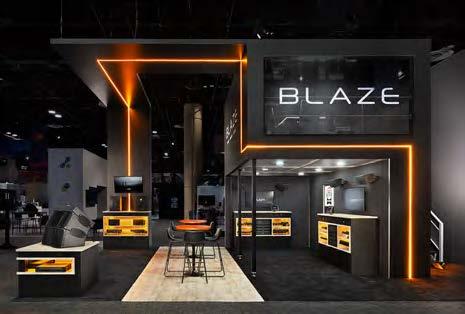
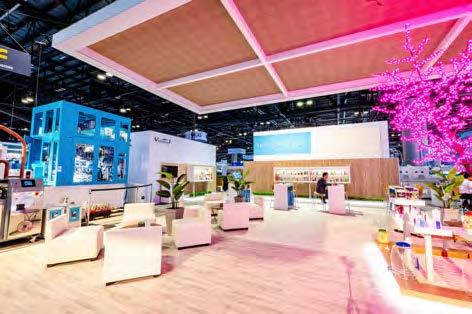
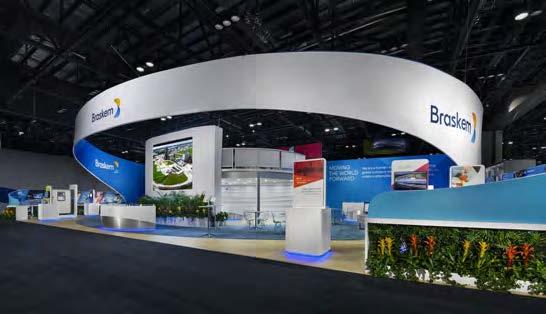
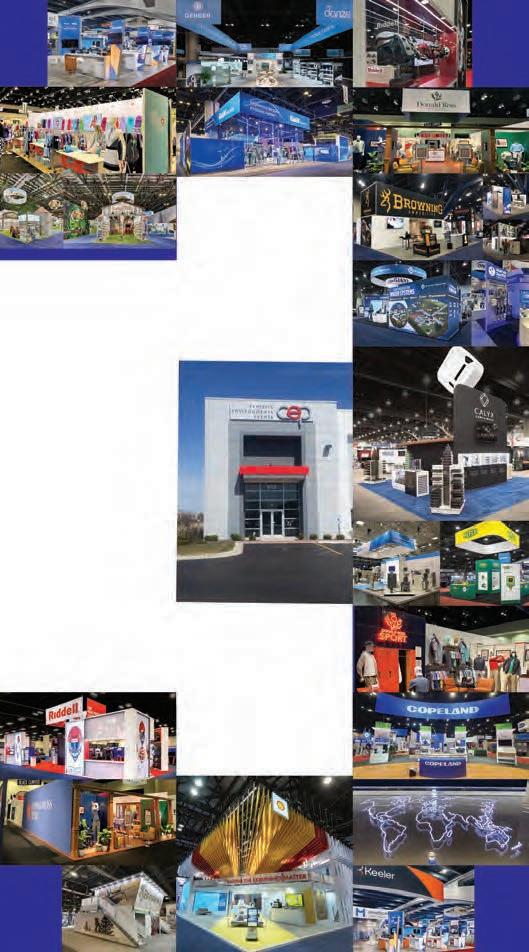
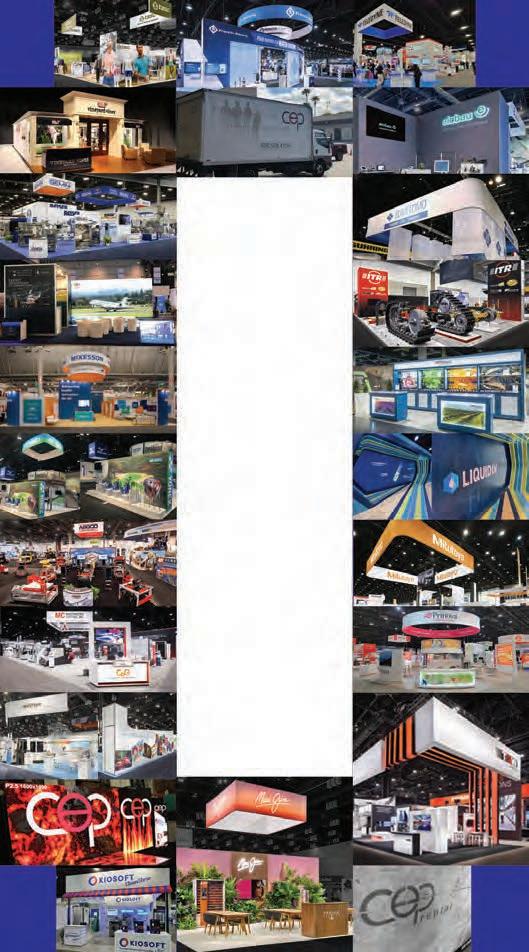
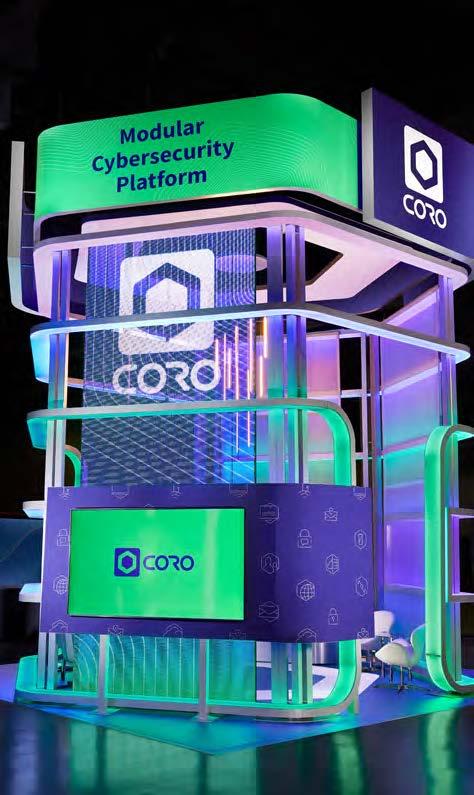
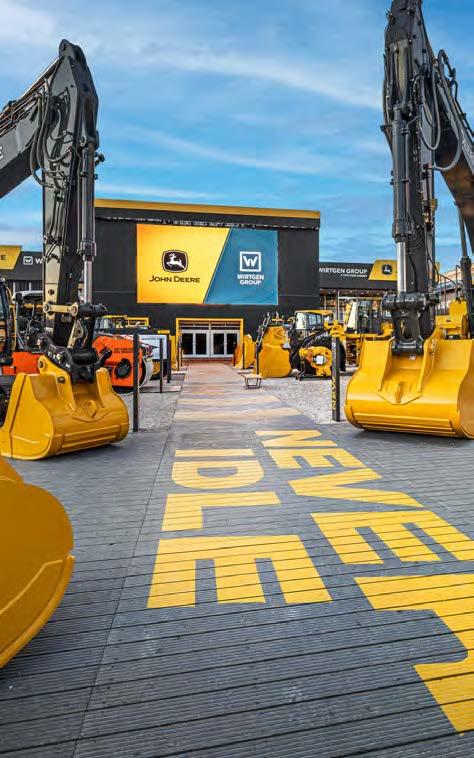
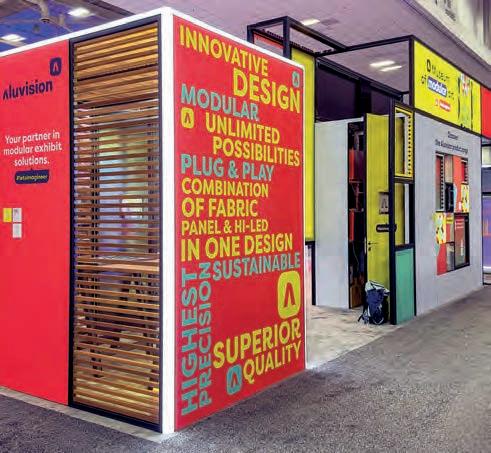
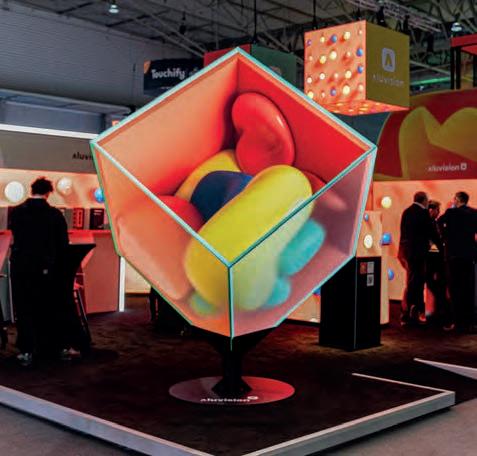
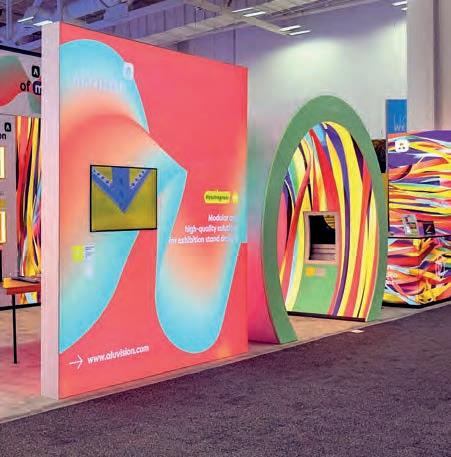
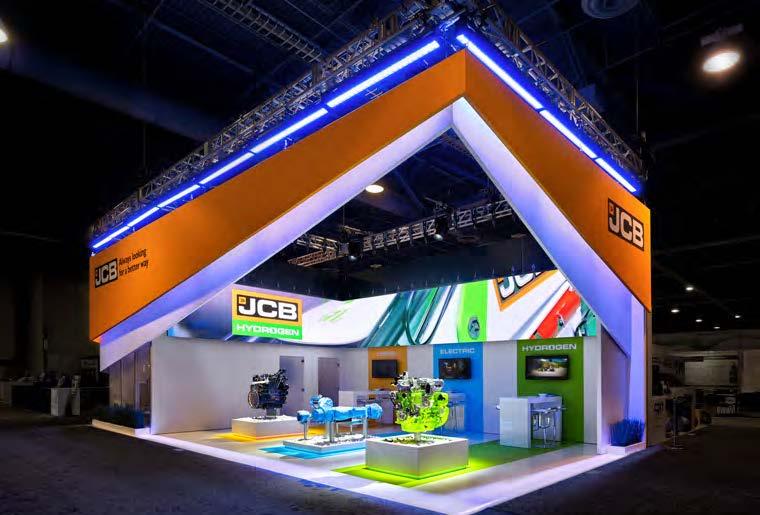
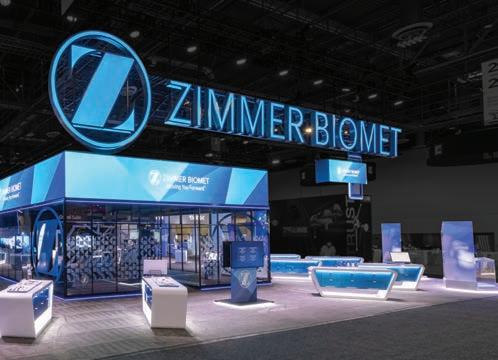
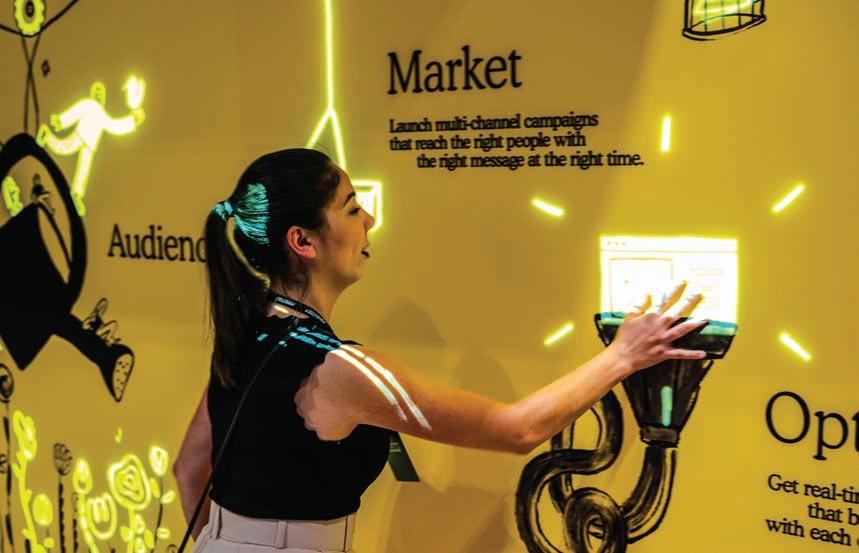
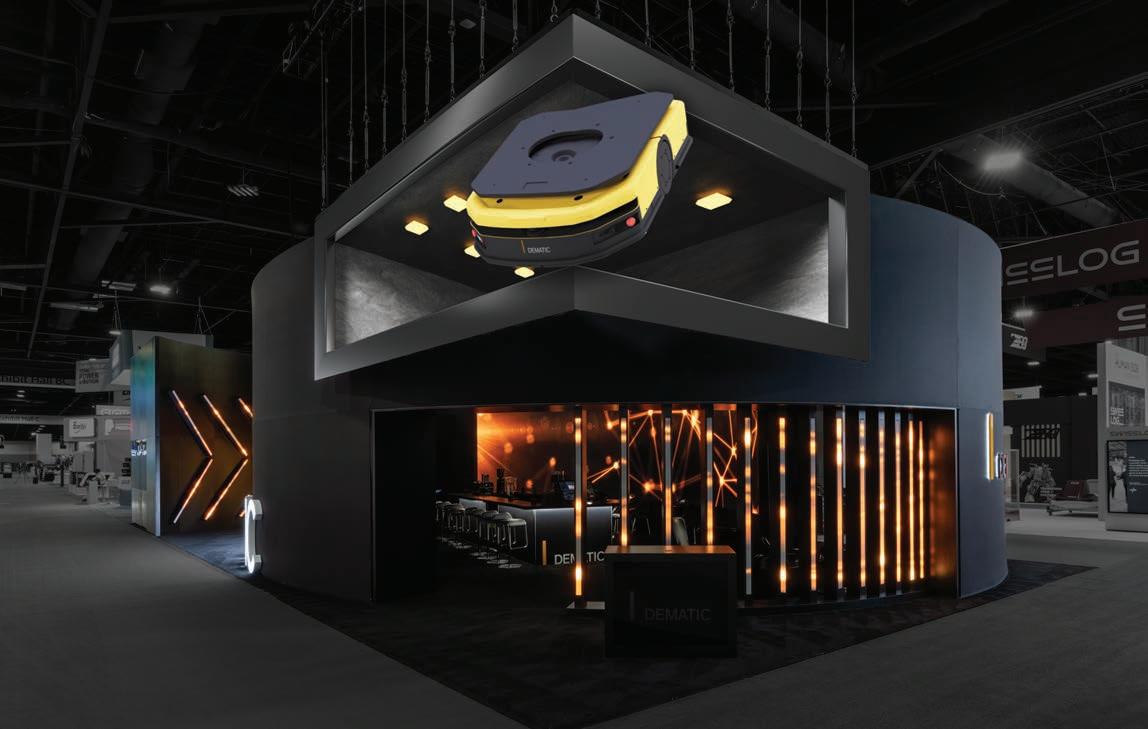
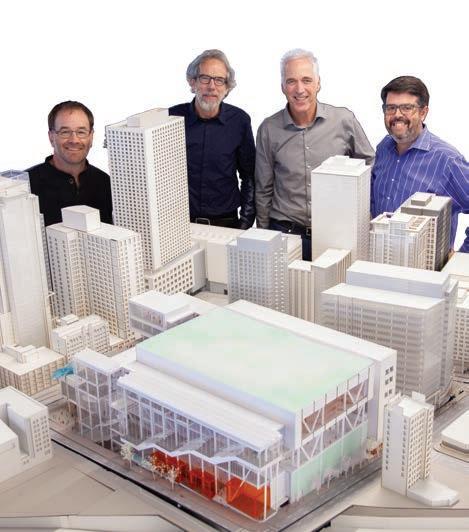
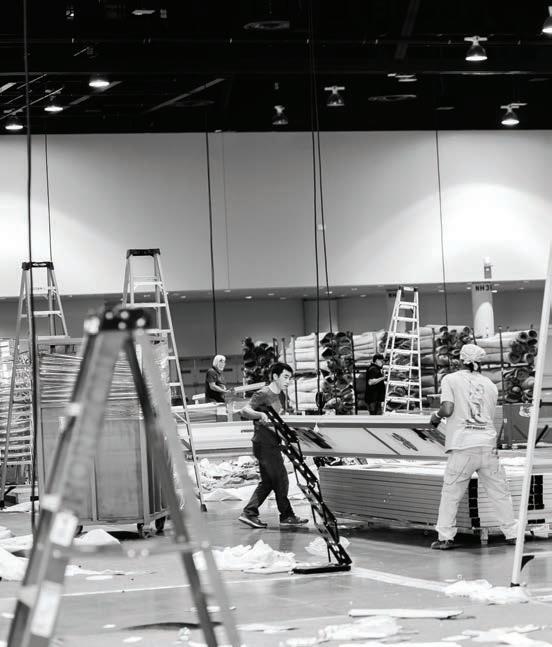
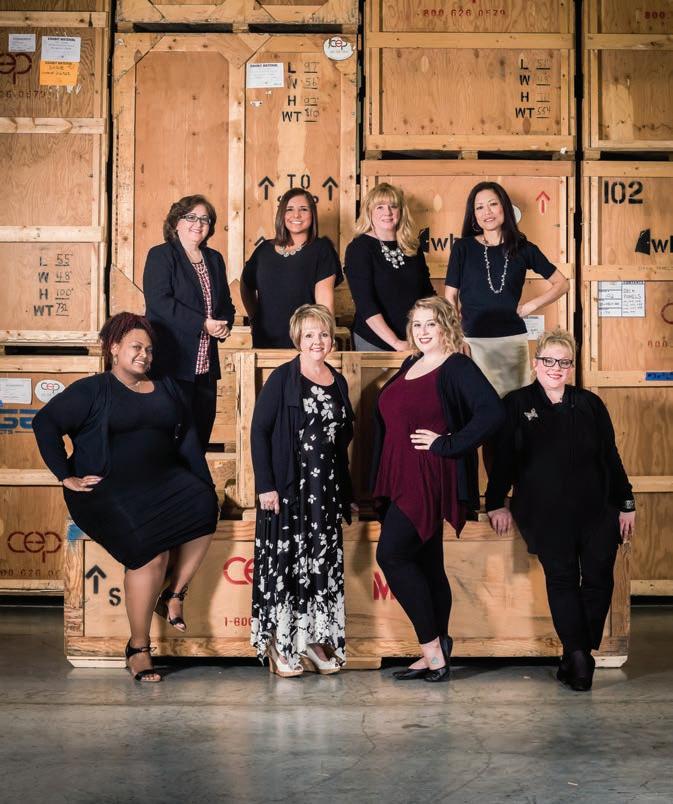
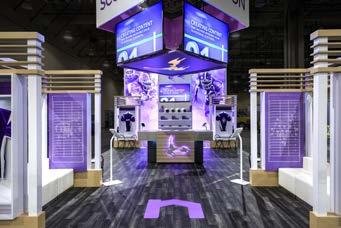
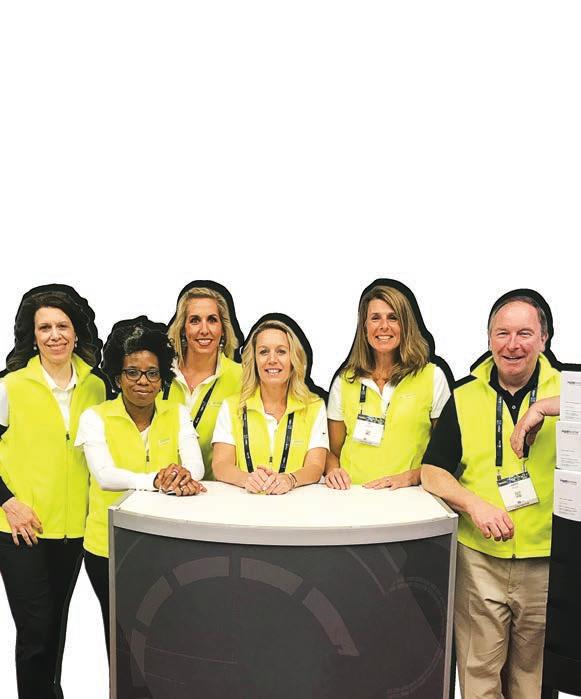
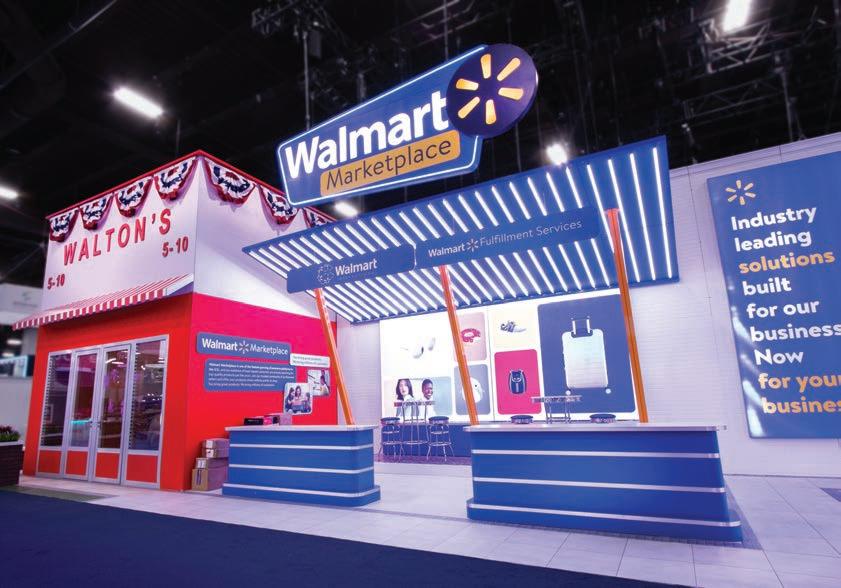
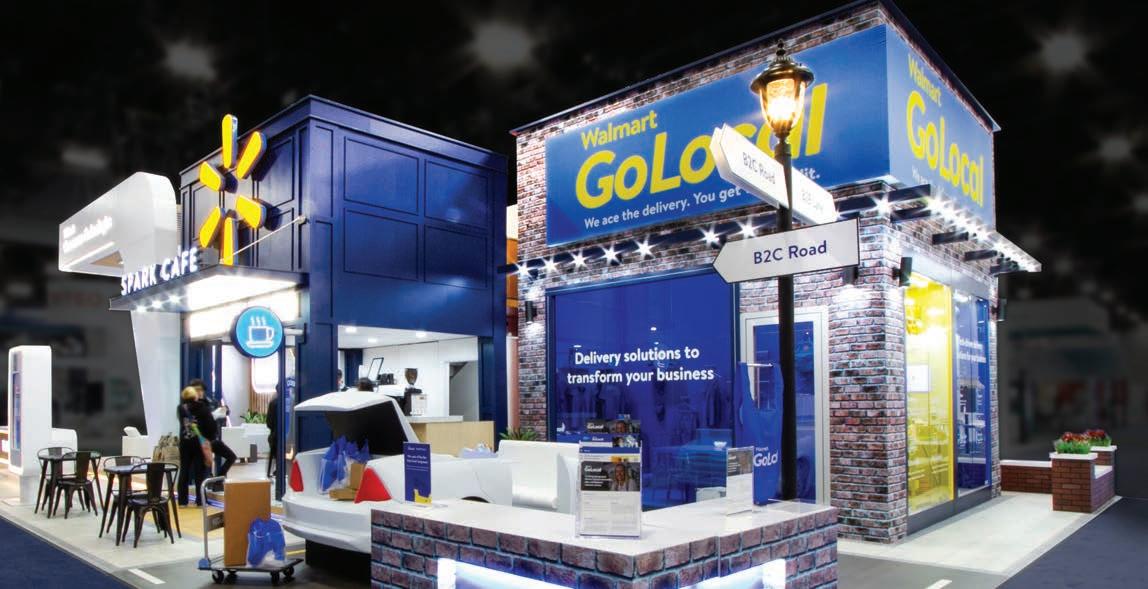
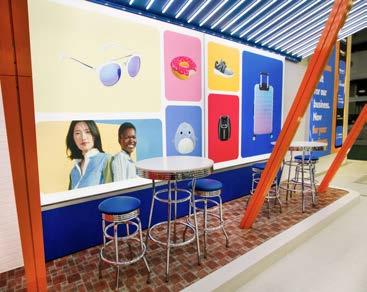
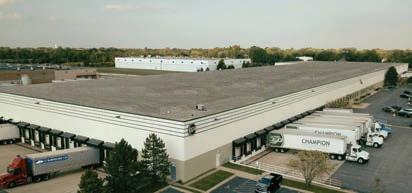
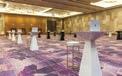
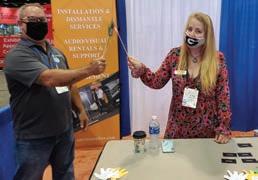
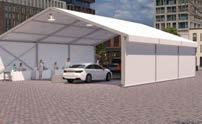
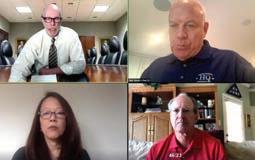
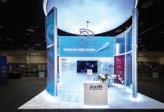
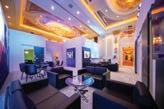
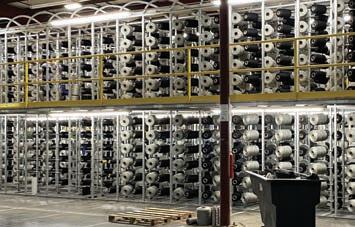
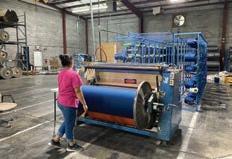
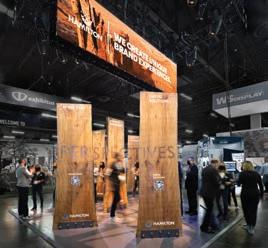
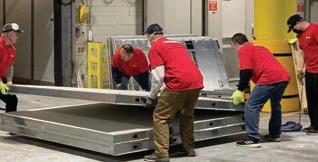
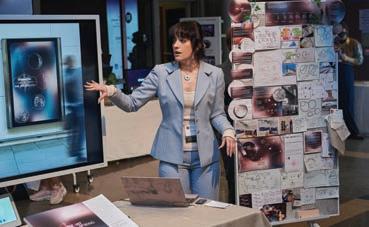
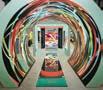
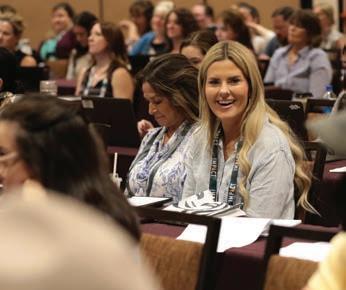
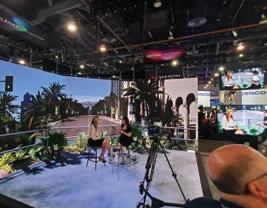
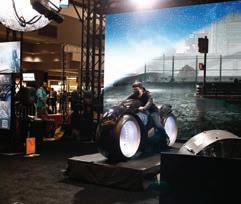
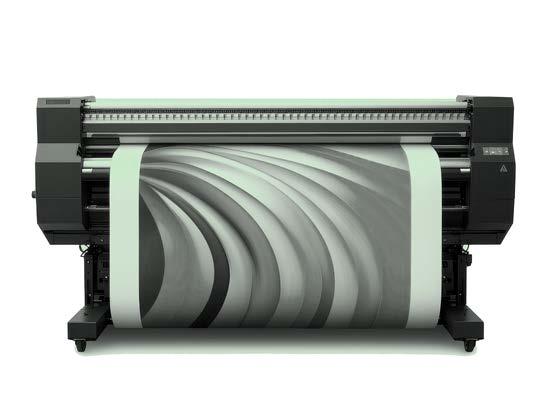
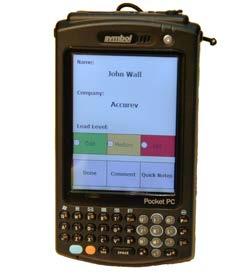
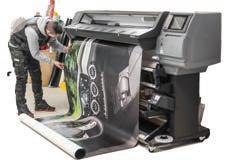
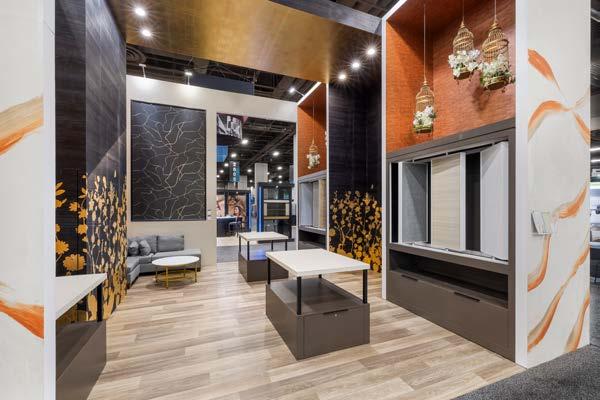
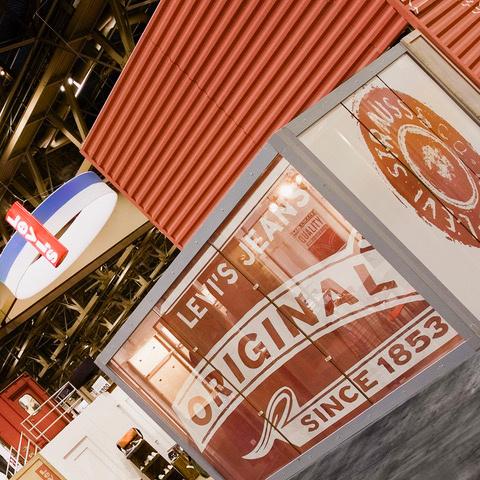
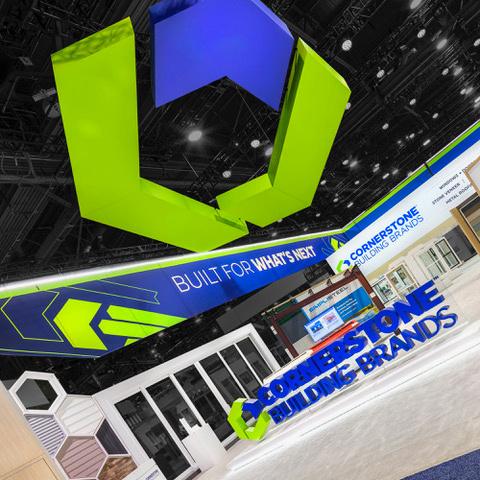
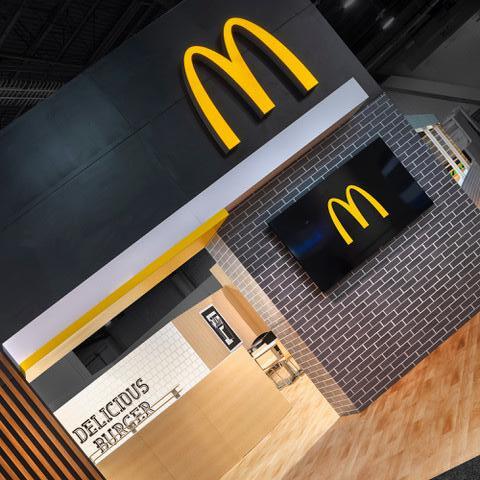
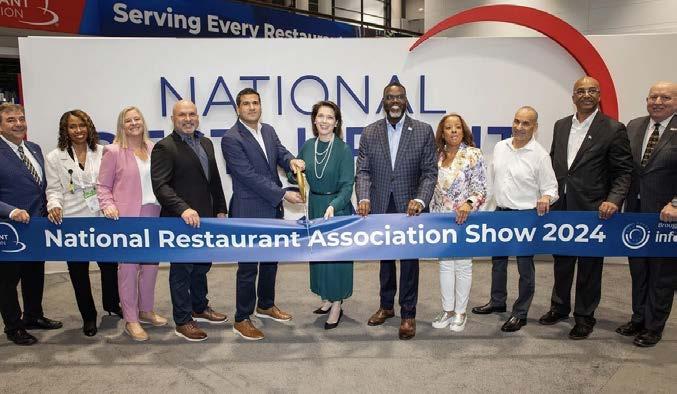
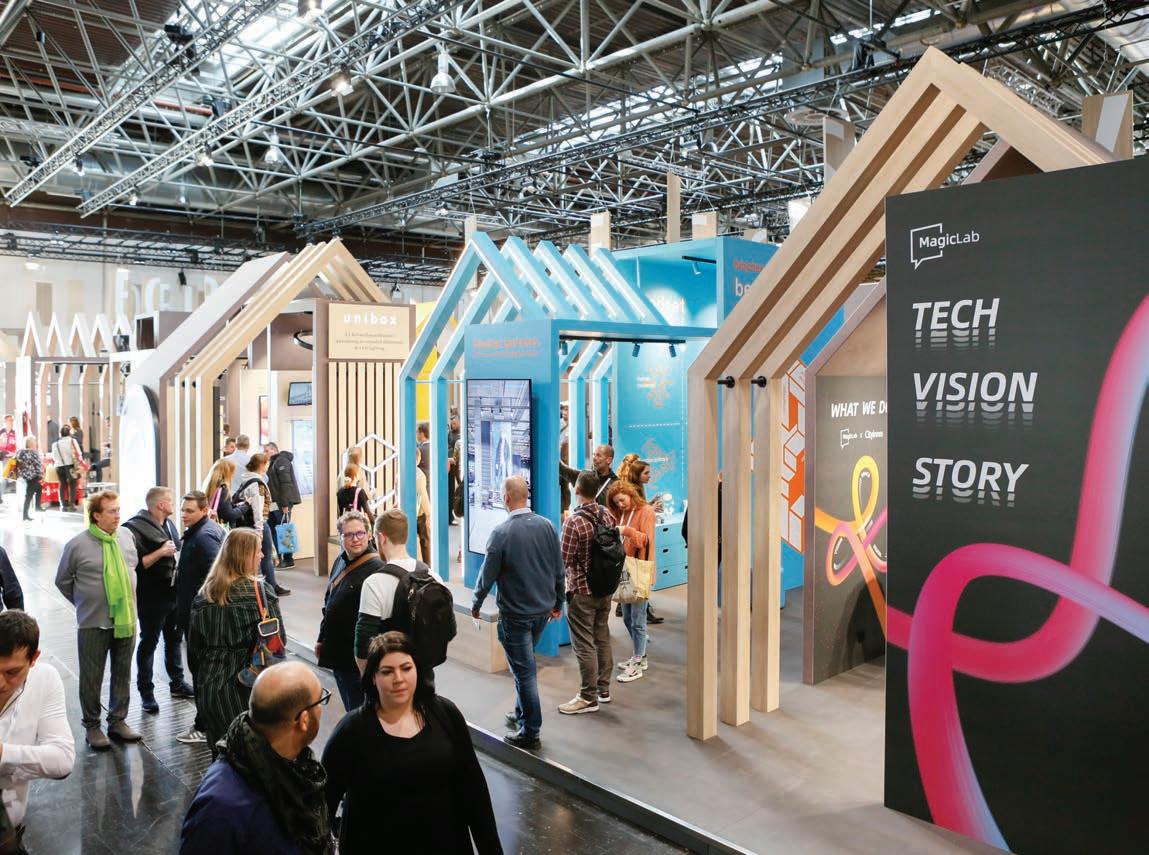
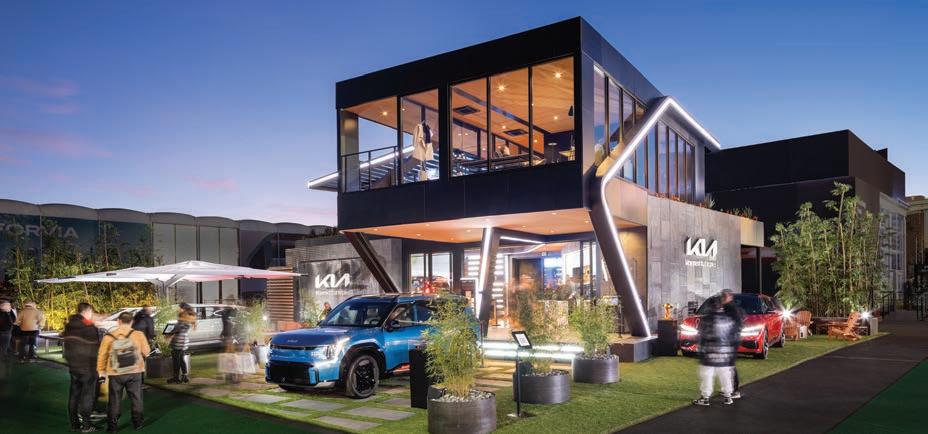
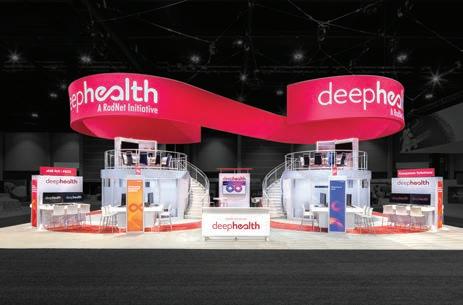
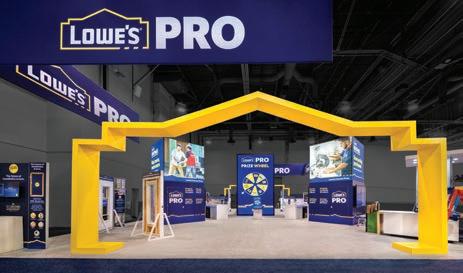
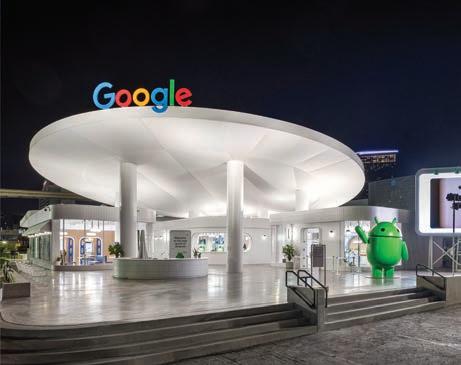
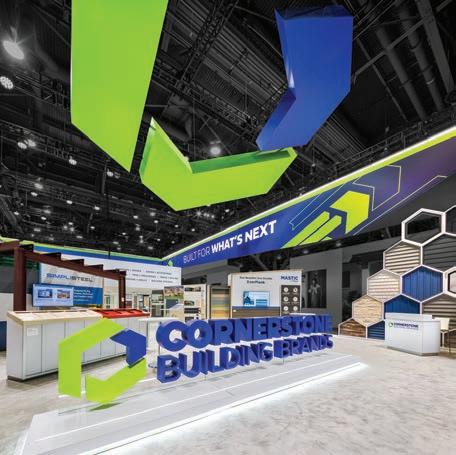
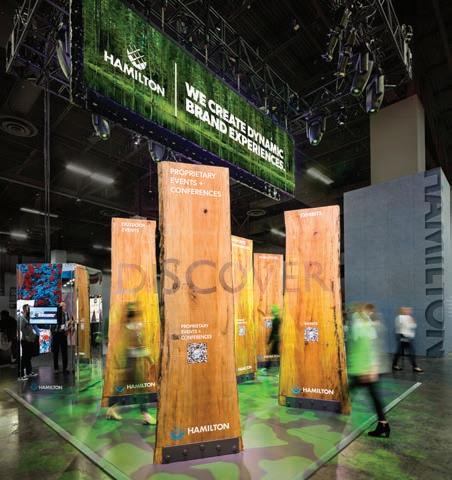
As part of the NEXT PLAY HOLDINGS family of companies, PLUS STUDIOS is proud to partner exponentially with DIGITAL & GRAPHIC SOLUTIONS, to provide the latest in graphic production capabilities and an endless variety of products to make your event a success.
Empowering Creativity Through Innovation
• Large Scale Exhibits and Environments
• Award Winning Creative Solutions
• Cutting-Edge Fabrication
• Extensive Custom Rental Inventory
• Full-Service Marketing and Design
• Full-Color Direct-to-Substrate
• Vinyl Printing and Wraps
• Printed Collateral & Promotional Materials
• Apparel, Bags & Backpacks
• Gifts & Giveaways... and much more!
plus-studios.com
dgpromosolution.com
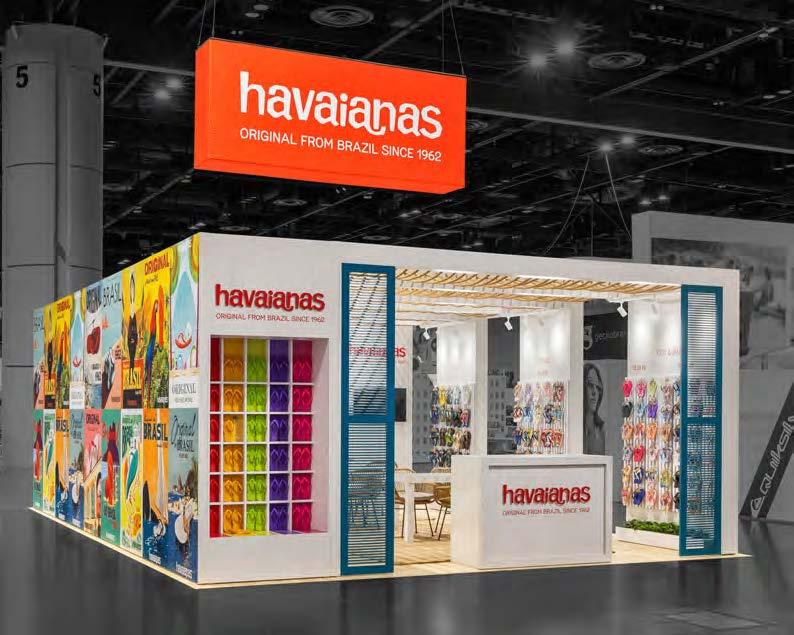
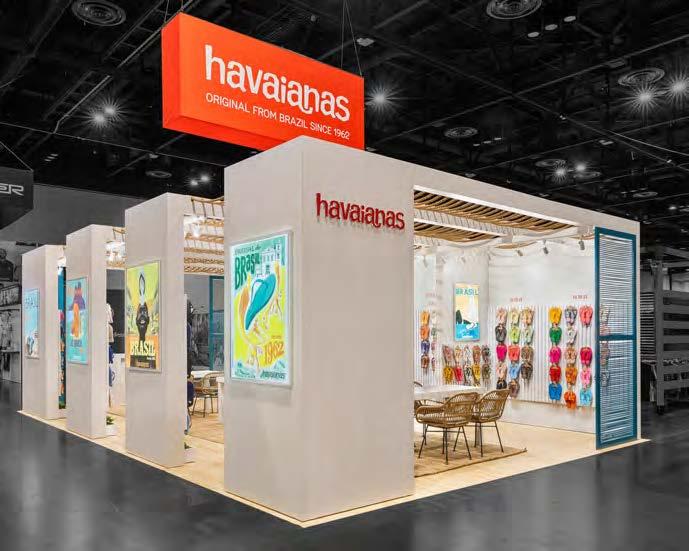
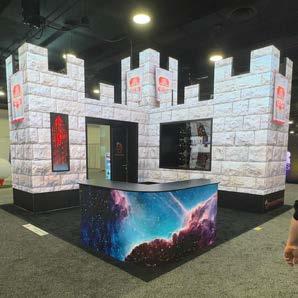
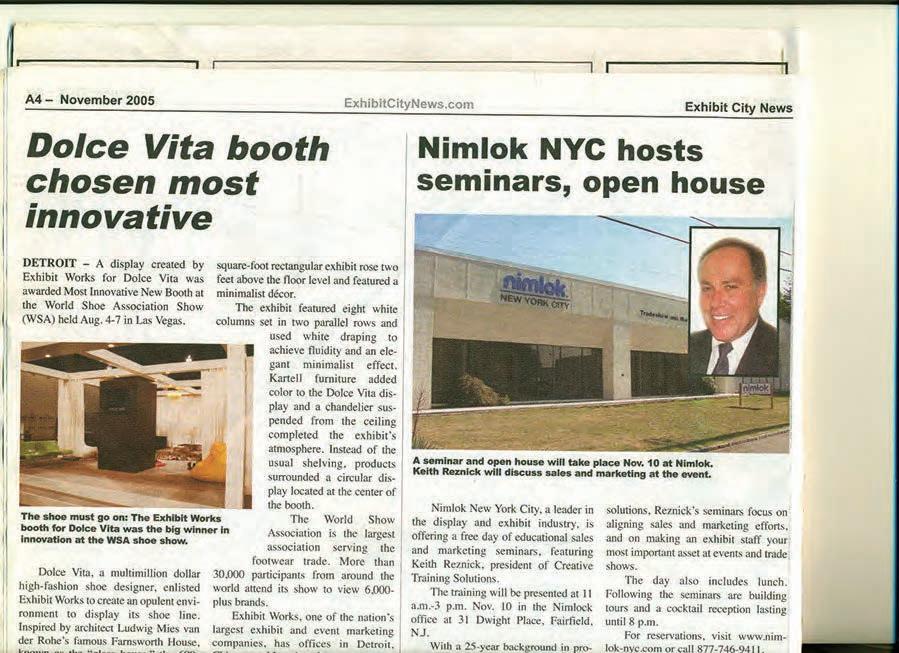
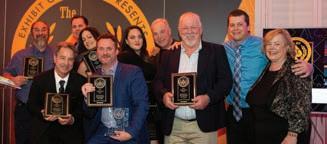
Havaianas was Chosen as a Top Themed Booth Desig
WORDS
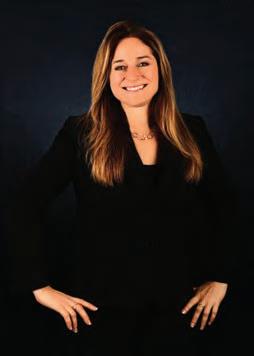
On behalf of everyone at beMatrix, we want to congratulate Exhibit City News on reaching this incredible milestone! Your dedication to informing and inspiring our industry has been invaluable to our customers, our company, and the growth of the Exhibits and Events industry. Congratulations on three decades of excellence with many more to come.”
Tara Ericson CEO, beMatrix USA
Exhibit City News Team, Congrats on 30 wonderful years of providing critical news to, and related to, this great industry we all call home. I began my career in this crazy industry the same year ECN was frst published. It has been, and always will be, my “go-to” for information relevant to our people, our advocacy, our workforce and the trends that are driving the world of Tradeshows and Live Events. You have helped build meaningful bridges between multiple stakeholders throughout our industry over the past 30 years…especially during the Covid shutdowns and the restart of Mid-2021. Tank you especially for the time, care and energy you spend each issue on the PEOPLE (present and past) that help shape the Tradeshow Industry. Keep up with your well rounded approach to reporting what matters to those that rely on this industry to put food on our tables. Continued Success!!
Kevin Carty Executive Vice President, Classic Exhibits
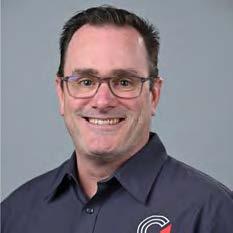
Champion Logistics would like to congratulate Exhibit City News on your 30-year anniversary! Your dedication to excellence and commitment to the exhibition and events industry have set an extremely high standard. Here’s to celebrating your incredible journey and looking forward to many more years of success and innovation.
C.J. Berg Director of Sales and Marketing, Champion Logistics Group
Congratulations to Don and the Exhibit City News team for another important milestone! You’ve all done an amazing job with both the ECN print and digital presentations – very comprehensive, dynamic, contemporary, and a pleasure to read. Yours is the only industry publication that I read cover to cover. Thank you for being such an integral part of our industry.”
A huge congratulations from all of us with Color Re fections Las Vegas, to Don and the Exhibit City News group on reaching a milestone 30 years in Las Vegas! For three decades, you’ve been a shining beacon for the trade show and exhibit industry, keeping everyone informed and connected in this dynamic city.
Your journey from a humble newsletter to a multi-media powerhouse is a testament to your dedication to the industry. Tank you for providing such a valuable resource for exhibit designers, producers, and everyone who helps bring trade shows to life in Las Vegas.
Here’s to many more years of success! Let’s raise a glass to Exhibit City News – here’s to 30 and counting!
Joe Castellano President/CEO, Color Reflections Las Vegas
Trough a commitment to providing interesting and topical pieces, Don and the ECN team have made it 30 years! Tis fantastic accomplishment is a testament to ECN’s passion for the tradeshow community at large. We are proud to partner with ECN and their publication has led to new relationships professionally and continued growth in our more broad understanding of our clients needs. We look forward to your continued growth and towards the insightful reporting that you bring to our industry!
Joe Martillaro Managing Director, Superior Logistics
Dan Cantor CEO Hamilton Exhibits
SECTION 2
SECTION 4 TRAINING & EDUCATION
Editor’s
Showfloor
Intl.
SECTION 5 IN MEMORIAM
Transforming Spaces.
WHERE INNOVATION MEETS ACTIVATION.
We are the architects of unforgettable moments that power meaningful connections between brands and their audiences using AV and LED technology. With a focus on innovation, we seamlessly blend cutting-edge equipment, heartfelt storytelling, and a touch of production magic to elevate your vision and leave a lasting impression. Let's craft extraordinary experiences together!
EDITOR CORNER
Hello. Welcome to Exhibit City News. We are celebrating our 30th year in business next year and we want to make a mark that matters.
While, these may not have been the exact words spoken, I learned quickly my frst week at Exhibit City News that this was the intent.
Don and the staf at Exhibit City News did not simply want to create a 30th Anniversary book that is forgotten and left to collect dust. Tey wanted something that tradeshow professionals could pick up or hand out and say, “this is what it means to be in tradeshows.” It helped that the 25th year anniversary book was how I familiarized myself with the industry.
Over my year at Exhibit City News, I heard from many on the show foor that when they hire new staf, they hand their employee a stack of the Exhibit City News magazine and say “read these. You’ll learn what you need to about the industry.” From names to tradeshows, jargon to etiquette, Exhibit City News teaches about the show foor.
“We are True to the Trade.” “ Te people matter.” “We can’t lose our recipes.” “ Tis industry is a family.”
How do you create a book that combines the history with a look to the future? A book that teaches and is useful, while also ofering a fun and engaging read? How do you create something that matters?
Within these pages you will fnd the history of Exhibit City News, as our history is the industry’s history. We’ve covered your triumphs and changes. We have evolved with you and faced the challenges on a united front.
You will fnd testimonials not only from the associations who support us, but the writers who provide the industry with their insights. You will be left with information that you can pass on. Our extensive training section is not meant to be a tool by which anyone can be wholly trained, but a series of content that can bridge the gap between the new generation of trades professionals and the Old Guard who wish to pass on their love for this industry. Everything that I found useful when I frst started, designed to make the life of a trades professional easier. Is this the end of all training? Of course not, but like every good design, and every good construction, it is a blueprint by which we can fll in the gaps.
In an industry where you can meet someone once and they say they’ll help you succeed. In an industry where relationships matter and the people with the recipes love to teach. In an industry where the people matter, and memories change lives. How do you create something that matters?
You try. And you adapt. And you change. And you try again.
For it’s the efort that ultimately matters and the work that is recognized and rewarded. Tis is my love letter to you, the industry that welcomed me with arms wide open. Tis is our love letter to the industry that so many of us love. Tis is my love letter to you, dear reader, who have just started on your journey, wide eyed and terrifed by the fast-paced world. If you worry whether there is a place for you here, I hope this may help you fnd you confdence. Tere’s a whole world waiting for you out there— where your story matters.
– Marlena Sullivan, Exhibit City News
PUBLISHER
Donald V. Svehla Jr. (702) 272-0182 ext. 102 DonS@exhibitcitynews.com
Pat Alacqua, Calani Atia, Paco Collazo, Jane Gentry, Liz Lathan, Bob McGlincy, Jim Obermeyer
CONTRIBUTING WRITERS (FIX)
Candy Adams, Sven Bossu, Danelle Dodds, Thea Engst, Tommy Goodwin, Pat Friedlander, Debbie Hall, Chris Kappes, Bob McGlincy, Leslie Mujica, Ray Hubble Smith
STAFF WRITERS
Mark Hebert, Kerstan Szczepanski
PROOFREADERS
Lisa Abrams, Thea Engst, Mark Hebert, Kerstan Szczepanski
MARKING 30 YEARS
T e Tradeshow Industry’s Journey T rough Our Pages
Thirty years ago, if you’d told me where we’d be today, I might have laughed. What a ride it has been— full of surprises, challenges, and moments that have brought me immense pride. Refecting on these decades, from our frst year to our 25th anniversary and now the big three-oh, I feel a profound gratitude for everyone who’s come along for the journey. Tis milestone isn’t just about Exhibit City News; it’s about the collective heartbeat of our tradeshow industry and the people who power it.
A Family Legacy:
The Influence of Don Sr.
Some of you may remember my early days—back when a 15-year-old kid from Cicero, Illinois, spent his nights pre-tripping exhibits for the Housewares show, working with McCormick Display. But long before that, my introduction to this industry came through my father, Don Sr. My dad was a visionary, someone who could spot an opportunity a mile away. When McCormick Display was on the verge of shutting down, it was Don Sr. who saw the chance, stepping in as a partner and transforming it into something bigger than a business—it became a family legacy. For years, we worked side by side,
unloading trucks, setting up booths, and learning together. My dad taught me the power of grit, commitment, and the value of hard work—all lessons that formed the bedrock of my career and the eventual founding of Exhibit City News or ECN for short. Today, as we celebrate 30 years, I know none of it would have been possible without him.
The Early Days and the Birth of ECN
When ECN frst launched, it was built on a vision to provide show foor professionals with essential information, from labor tips to show dates, to who’s hiring, and insights on navigating the ever-changing tradeshow landscape. Back then, I never imagined ECN would someday be the go-to resource for industry veterans and newcomers alike, celebrating the grit and passion that defnes our world. From the start, ECN has been dedicated to you— the show foor heroes, organizers, builders, and all the dedicated folks who make each show possible.
Since ECN’s 25th
Te years since our 25th anniversary have brought unparalleled challenges and transformations to the tradeshow industry.
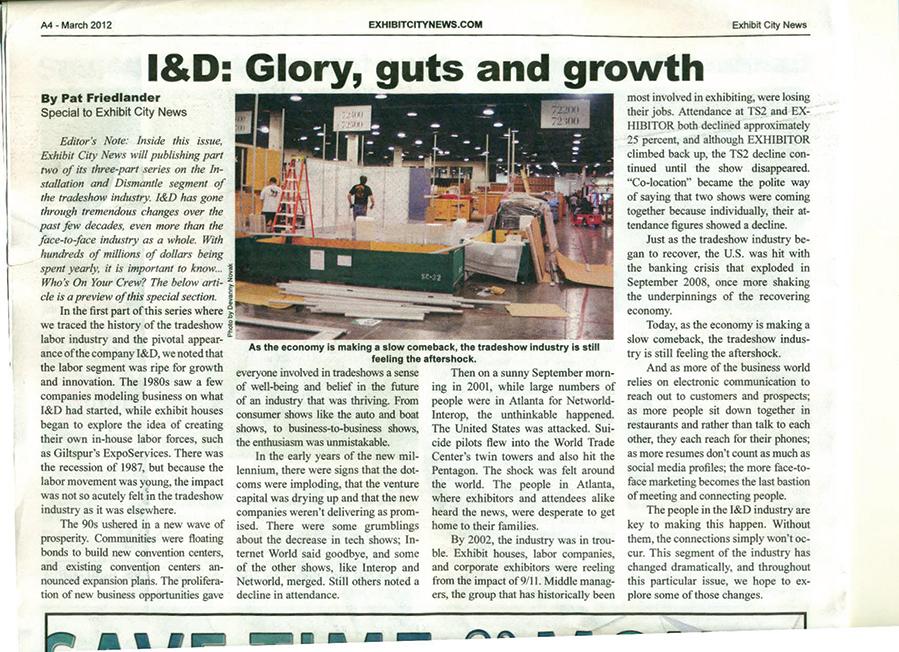
Just as we were celebrating a quarter-century milestone, the world changed overnight. COVID-19 swept through, halting the vibrant energy of show foors and forcing hard choices across the industry. Many businesses found creative ways to survive—some teams turned to seasonal work like holiday lighting, others ventured into home renovations, and many relied on innovation, grit, and even government assistance to stay afoat.
Today, the tradeshow industry is steadily rebuilding. Tose who endured did so with unwavering determination, proving the resilience that defnes the tradeshow world. Tis era has also driven innovation in technology, which is reshaping how we operate. From AI-driven booth designs to digital engagement tools, companies are fnding new ways to streamline logistics, reduce costs, and enhance the overall experience. Yet, even as virtual solutions grow, faceto-face connections remain irreplaceable and serve as the heart of what makes our industry thrive.
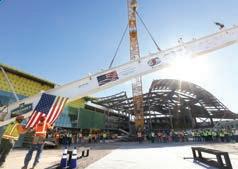
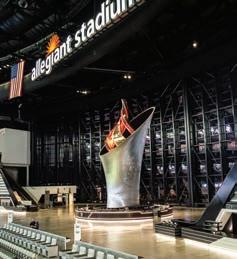
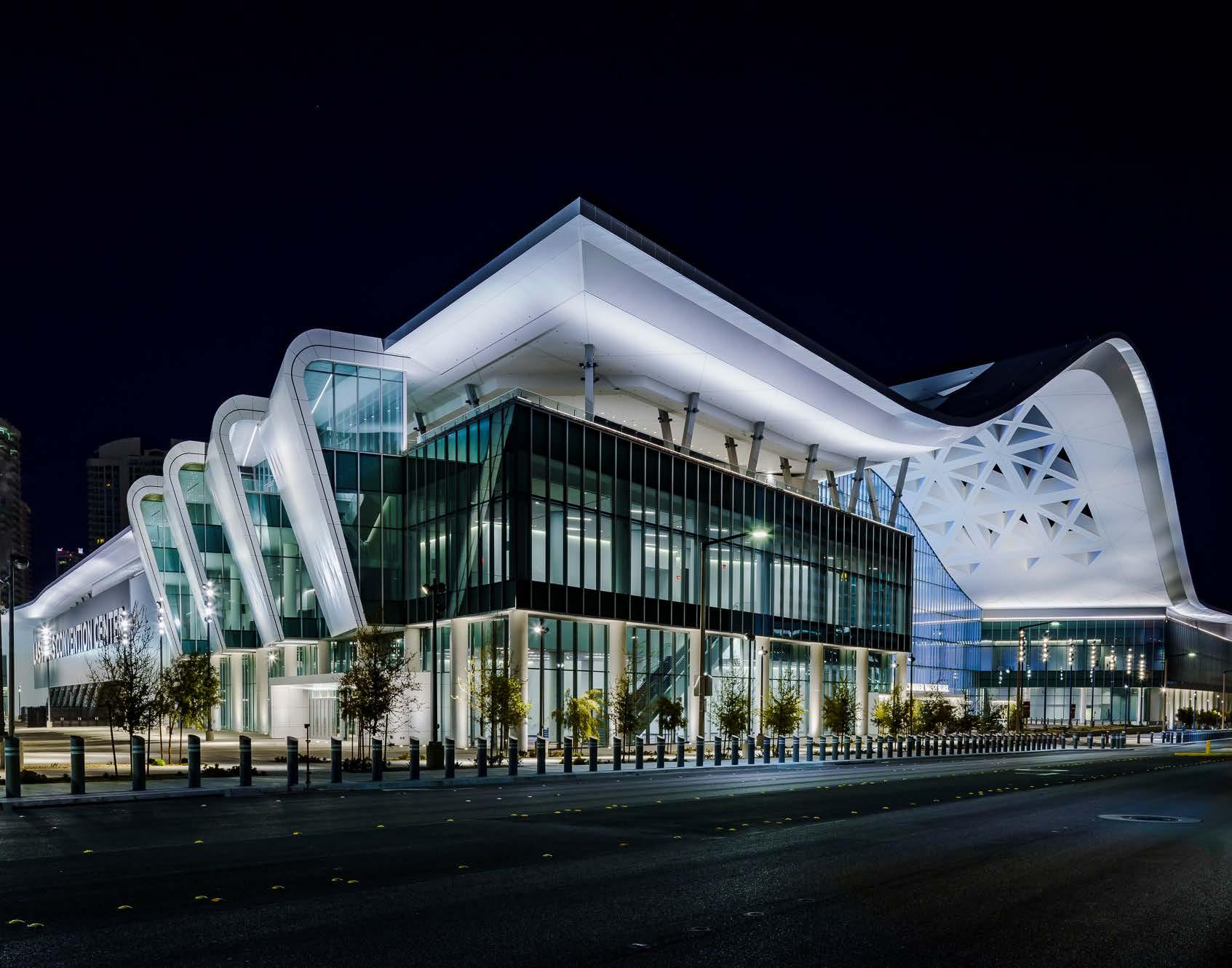
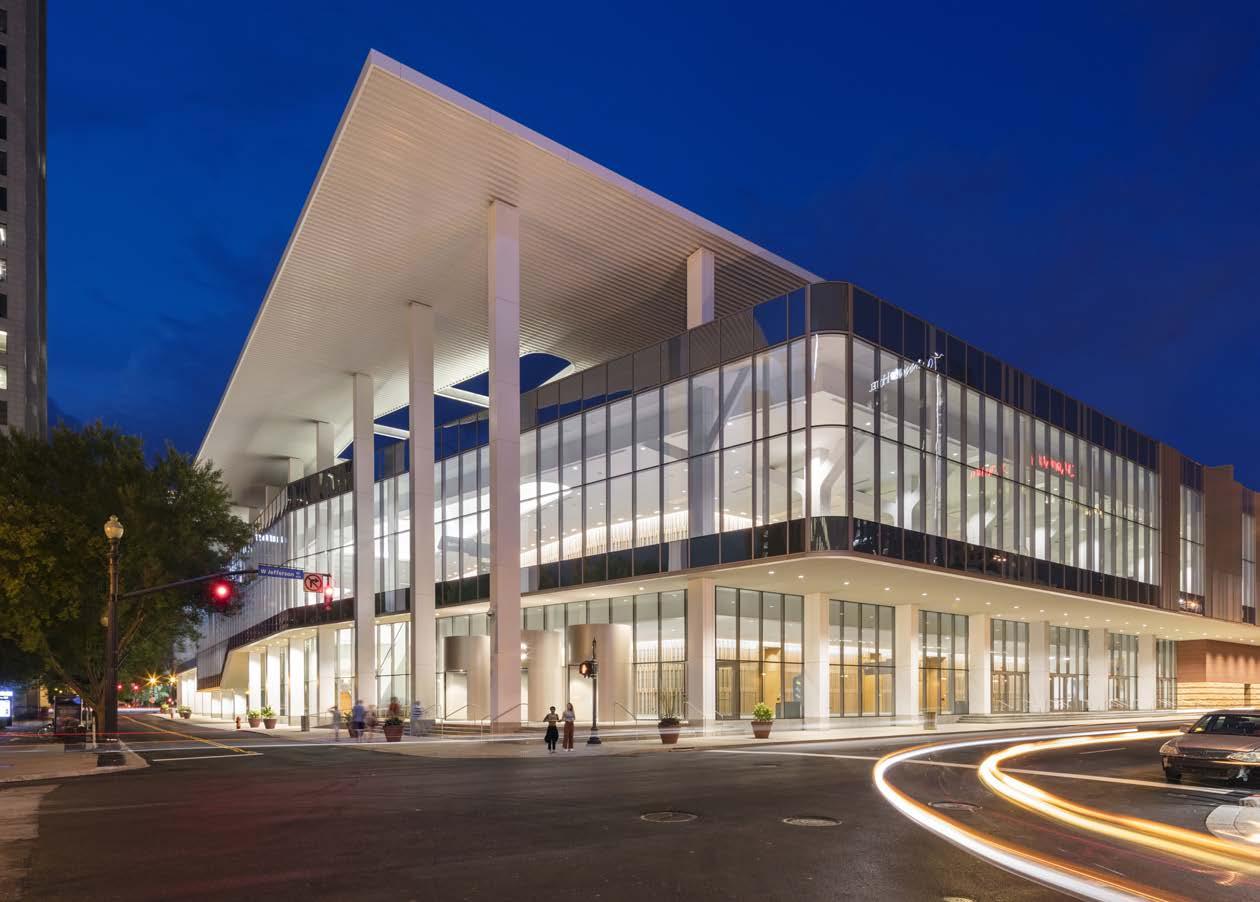
Las Vegas continues to shine as the tradeshow capital of the world, with unmatched accessibility, luxury, and versatility. Recent expansions, like the state-of-the-art West Hall at the Las Vegas Convention Center, have cemented its status as the most technologically advanced venue in
North America. Meanwhile, the call for sustainability is reshaping how we think about tradeshows. From reusable exhibit components to reducing shipping emissions through frameworks like beMatrix, our industry is taking meaningful steps to lessen its environmental impact.
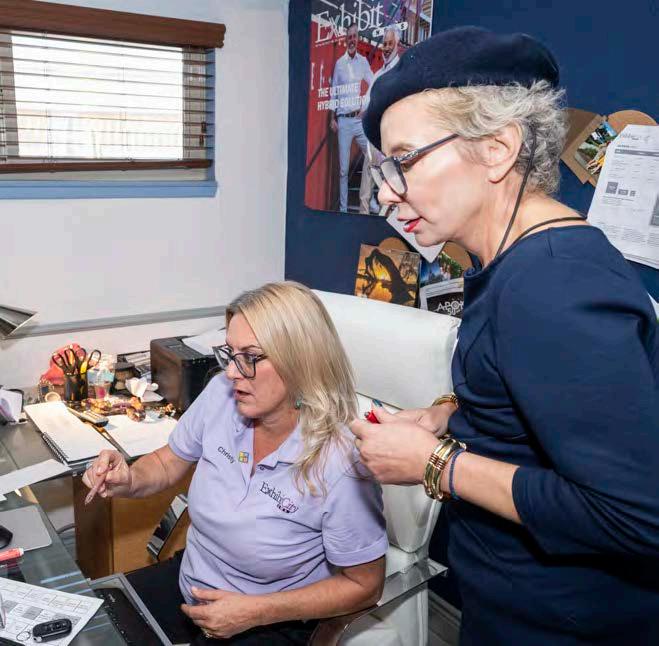
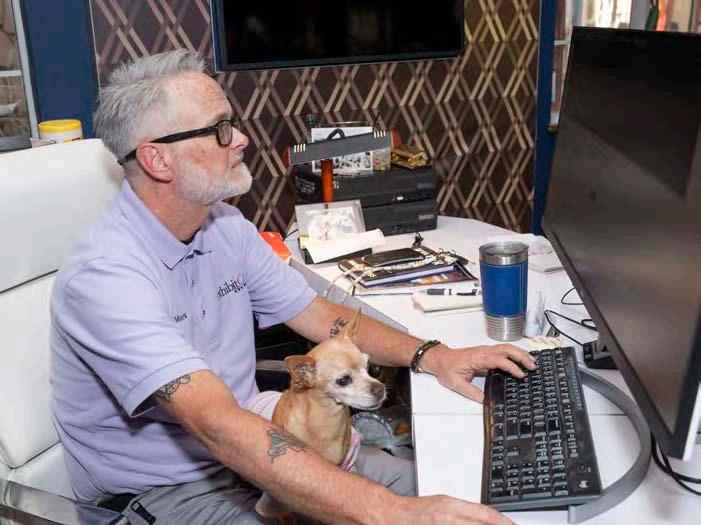
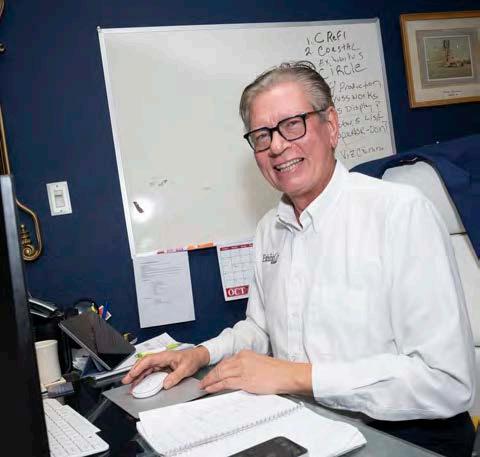
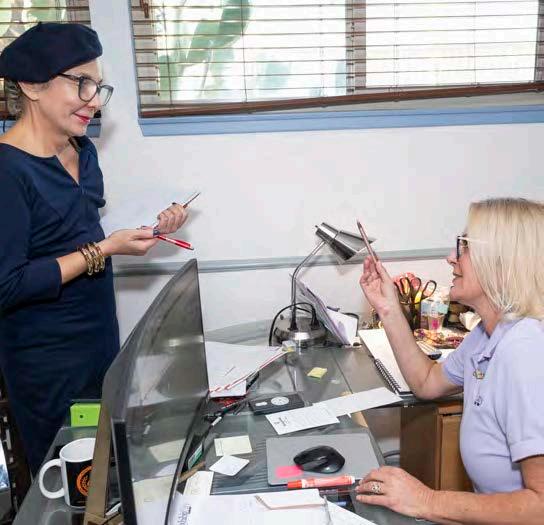
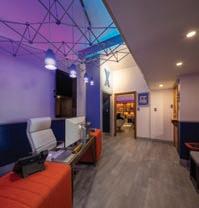
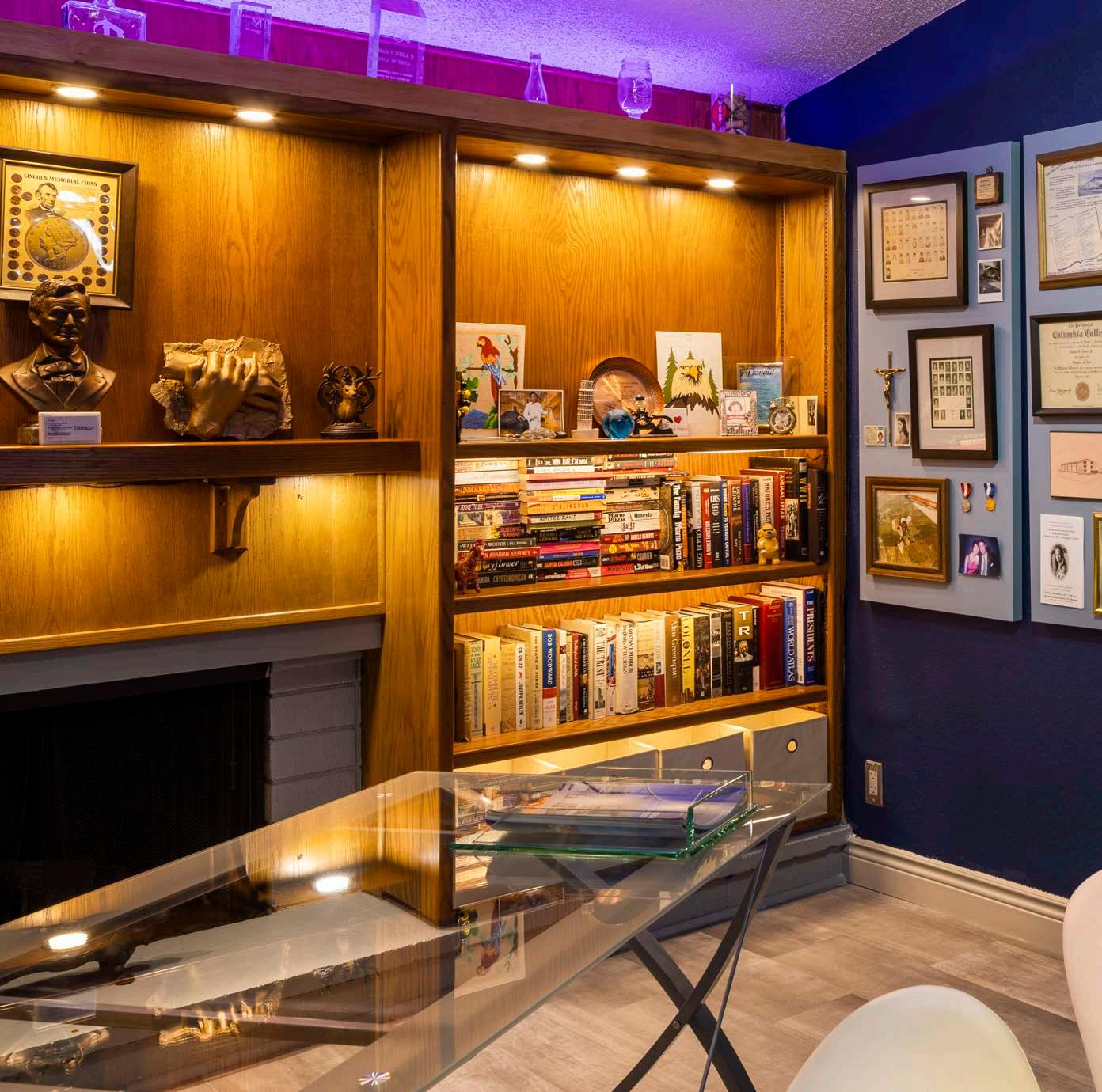
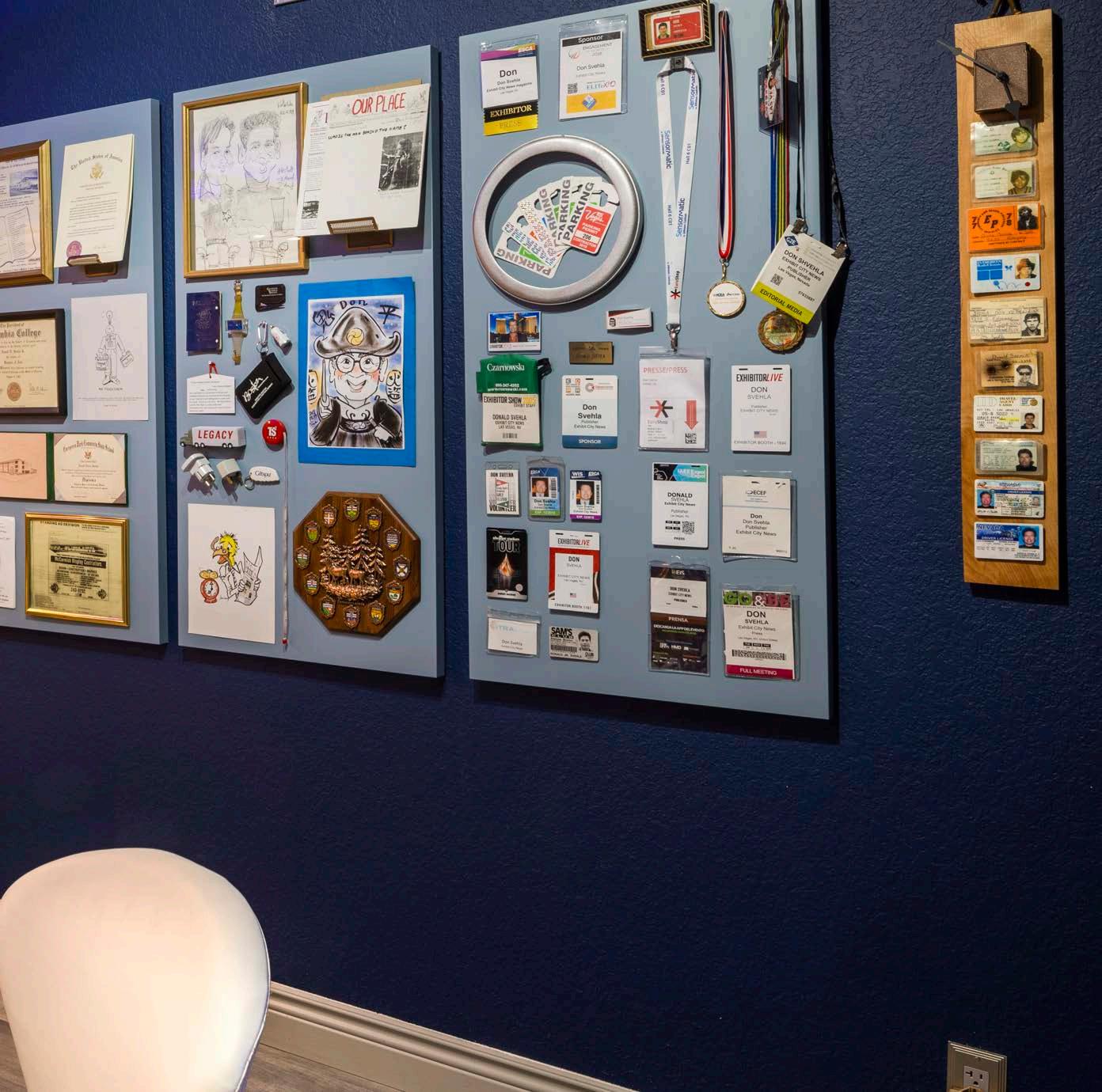
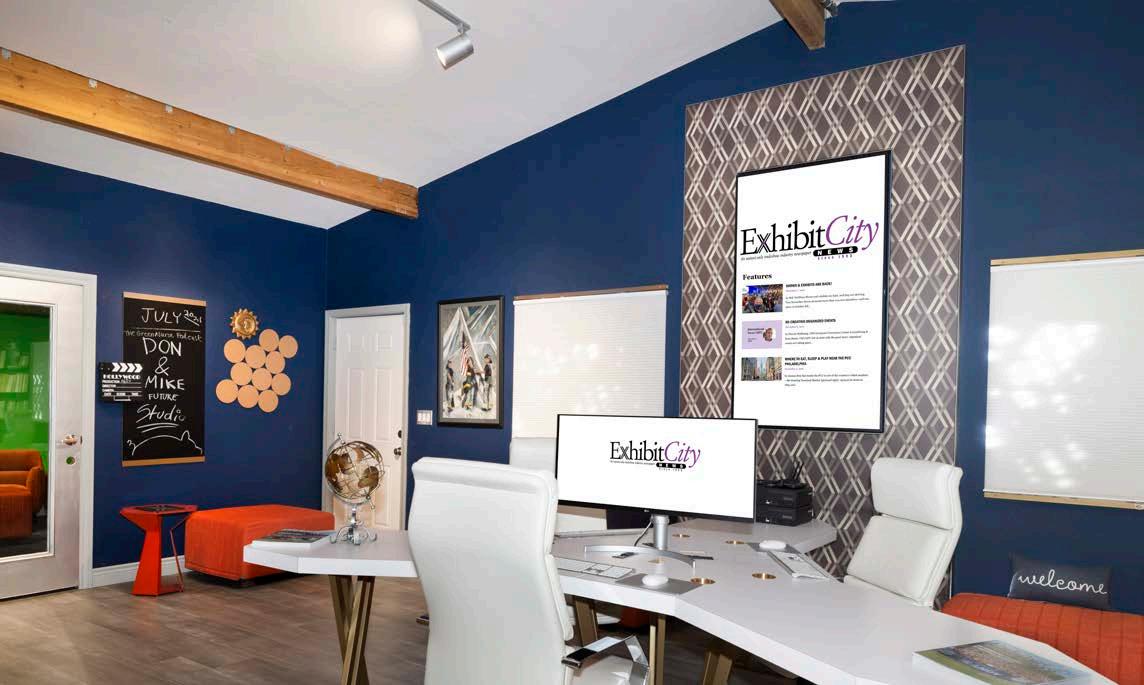
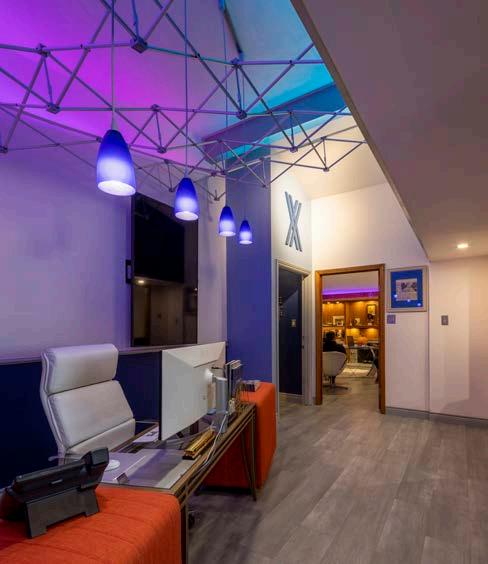
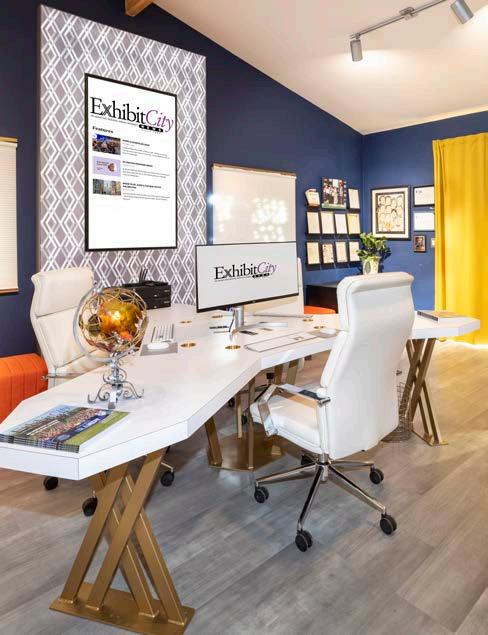
Amid all this change, ECN has continued to evolve. We’ve embraced the digital age, shifting from traditional readership to cultivating a community of followers across platforms. Our podcast, Te Don and Mike Show, launched during the pandemic, connected and informed the tradeshow community during critical times. Tanks to the support of our long-standing partners, we’ve also modernized our ofces to refect the cutting-edge design and innovation that defne our industry.
As we refect on the challenges and triumphs of these past fve years, one thing is clear: the tradeshow industry’s strength lies in its people—the builders, organizers, and visionaries who refuse to back down, no matter the odds. Looking forward, ECN remains committed to telling our stories, celebrating our successes, and growing alongside the industry we’ve proudly served for three decades.
The Road Ahead: Opportunities for Growth
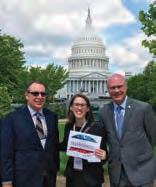
As we look to the future, the tradeshow industry faces both challenges and opportunities. Rising costs continue to be a concern for businesses across the board, and economic shifts test our ability to adapt. Advocacy e f orts on Capitol Hill in Washington, D.C., are working to protect the industry’s interests and ensure that we remain a vital driver of commerce and connection.
One of the industry’s greatest strengths is its ability to diversify and innovate. Companies are expanding into related sectors like museums, corporate installations, and experiential marketing to complement their core oferings and create new revenue streams. Tis adaptability will be key to driving growth and opening new opportunities in the years ahead.
Te tradeshow industry’s resilience and creativity have been proven time and again. I’m confdent that the people who power this feld will continue to fuel its growth, building fulflling careers and ensuring that tradeshows remain at the heart of global business for decades to come.
Thank You to Our Community
As I close this note, I want to extend a heartfelt thank you to all our advertisers, partners, and contributors who have supported ECN. From the companies who helped transform our ofce to the exhibitors and industry professionals who have stood by us—this journey has been one we’ve taken together. To the lifers, colleagues, friends, and readers—thank you for sticking with us through thick and thin. Whether you’ve been with us from the days when ECN was a fedgling publication or joined us somewhere along the way, our story has always been your story too.
Here’s to the next chapter, to the next generation, and to the spirit of the tradeshow industry that keeps us all moving forward. These truly are the good old days.
– Don Svehla, Publisher/Founder
May 9, 2024
Exhibit City News 1675 East Desert Inn Road Las Vegas, NV 89109
Dear Exhibit City News Team,
On behalf of the Exhibition Services & Contractors Association (ESCA), I am delighted to extend our warmest congratulations to Exhibit City News on reaching an impressive milestone your 30th anniversary.
For three decades, Exhibit City News has been at the forefront of reporting and shaping the exhibition industry's narrative. Your dedication to providing insightful coverage, industry trends, and valuable resources has made a significant impact on our community, fostering growth and innovation across the sector.
At ESCA, we deeply appreciate your commitment to excellence and your role in highlighting the vibrant tapestry of events and people that define our industry. Your work not only informs but also inspires all of us who are deeply embedded in the world of exhibitions and conferences. As we reflect on your contributions over the years, it's clear that your efforts have not only chronicled our industry's evolution but have also been integral in driving it forward.
As we look to the future, ESCA is excited to continue collaborating with Exhibit City News to further our shared goals of advocating for and advancing the exhibition industry. Here's to many more years of success and partnership.
Once again, congratulations on this landmark anniversary. We wish you continued success and influence in the decades to come.
Warmest regards,
Exhibition Services & Contractors Association julie@esca.org 773.418.1955
esca.org 972.777.9282 hello@esca.org 8501 W. 191st Street, Unit 1 Mokena, IL 60448
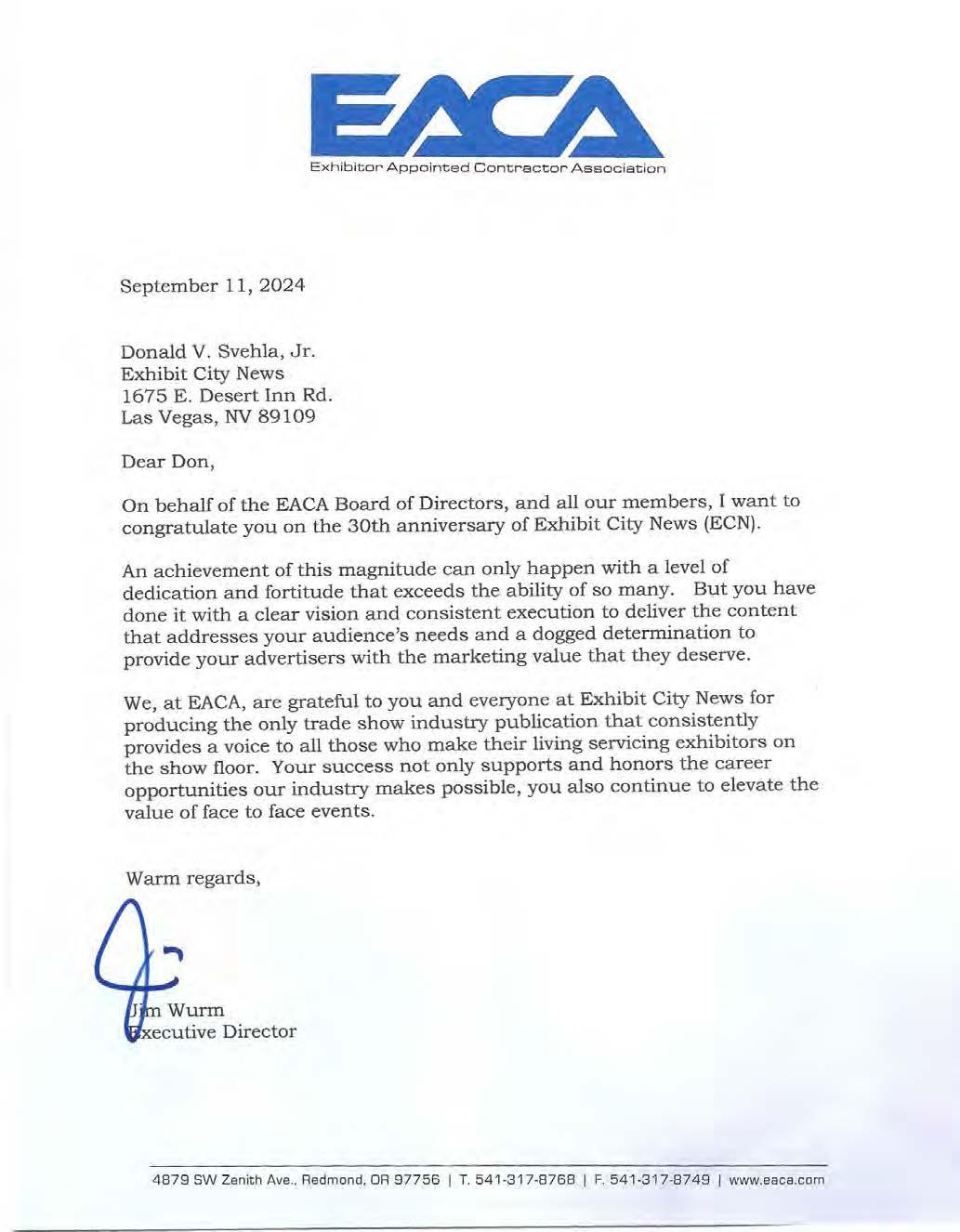
18 September 2024
Mr. Don Svehla Publisher
Exhibit City News
1675 E. Desert Inn Road Las Vegas, NV 89169
Dear Don,
On behalf of the Board of Directors and members of the International Association of Exhibitions and Events® (IAEE), I would like to extend our sincere congratulations to Exhibit City News on your 30th anniversary of publication.
Throughout these three decades, Exhibit City News has consistently delivered reliable industry news and insights. We at IAEE are grateful for your steadfast support of our mission to globally promote the unique value of exhibitions and events. Your commitment to advancing our industry is truly commendable and we look forward to your continued success in the coming decades.
Warm regards,
Marsha Flanagan, M.Ed. President & CEO
International Association of Exhibitions and Events® (IAEE)
4 June 2024
Mr. Don Svhela
Publisher
Exhibit City News
1675 E. Desert Inn Road
Las Vegas, NV
Dear Don,
How quickly five years have passed since Exhibit City News celebrated its 25th year anniversary. I am so pleased to congratulate you on 30 years of success. The insightful information and timely coverage of the exhibition industry is highly valued, especially during the pandemic.
CEIR understands the importance of reliable information, as our mission is to provide insights and intelligence for the exhibitions and events industry. CEIR is committed to producing objective, rigorous, credible, unbiased and statistically accurate research. In summary, the research provides better insights for making better decisions to produce better events.
As such, CEIR appreciates dependable news outlets such as Exhibit City News which supports the growth of the exhibition industry. Thank you for 30 years of service to the industry!
Sincerely,
Cathy Breden, CMP-F, CAE, CEM Chief Executive Officer Center for Exhibition Industry Research (CEIR)
Mr. Don Svehla Publisher Exhibit City News
1675 E. Desert Inn Rd. Las Vegas, NV 89169
Dear Don,
The Board of Directors and the O cers of the Society of Independent Show Organizers send sincere congratulations to the team at Exhibit City News for your 30th Anniversary.
It’s a testimony to the quality of your work that you’ve thrived for 30 years. Excited to see what the next 30 years brings.
I know our membership values Exhibit City News.
We wish you continued success.
Sincerely,
Vincent Polito CEO Society of Independent Show Organizers
May 15, 2024
Mr. Don Svehla
Publisher
Exhibit City News
1675 East Desert Inn Road
Las Vegas, NV 89169
Dear Don,
The Exhibitions & Conferences Alliance (ECA) is thrilled to congratulate you and the entire Exhibit City News team on your 30th anniversary of publication and service to the industry!
During a recent conversation, a respected industry leader told me, “Once you are part of the industry for three years or so, you are part of it for good ” If ECA, which just celebrated its third anniversary, earns the privilege of being part of the industry for 30 years or longer like Exhibit City News, it will be due in no small part to the willingness of your publication to lend its platform to supporting ECA and the advocacy mission of our industry from the beginning.
In print, online, and via podcasts, Exhibit City News has kept its audience up to date with the latest ECA news from Washington, DC and city halls and state houses from coast to coast Because of that, the industry has been able to raise its collective voice on the issues that truly matter and get results, from coming back from the pandemic to supporting our workforce.
Moreover, Exhibit City News has given voice to the hard-working men and women who are the backbone of this great industry. That’s what it means to be “true to the trade,” and it’s one of the reasons why so many in the industry come together to celebrate this important milestone.
On behalf of ECA, congratulations on this wonderful achievement Here’s to the next 30 years!
Best regards,
Thomas F. (Tommy) Goodwin, FASAE, CAE, PMP, CMP Vice President
Exhibit City News
Wherever you are, Wherever you meet the industry
Brussels May 2024
Dear Don,
The 5 years that have passed since the celebration of your 25th Anniversary have certainly been a very challenging time for all of us involved in the Trade Fair industry, but we are heartened to see the industry flourishing once again and, of course, extremely pleased to have Exhibit City News as a strong partner and supporter of our industry. In the face of these unprecedented challenges, your steadfast commitment to delivering reliable information has been instrumental in guiding industry professionals through turbulent times.
As the International Federation of Exhibition and Event Services (IFES) reaches our own 40 Years of Collaboration milestone in 2024, we are delighted to extend our warmest congratulations to Exhibit City News on celebrating of 30 years of excellent coverage and unwavering commitment to the exhibition and trade fair industry.
As we continue to navigate the changing landscape of our industry, we value your support in inspiring growth, shining a spotlight on remarkable contributions, and celebrating the achievements of event professionals. We share a passion for Live Marketing first and foremost, but also a mission to gather industry professionals together so that they can benefit from the shared experience to facilitate business.
May the next decade see Exhibit City News consistently setting the standard for in-depth coverage and insightful features.
We look forward to continuing our partnership and witnessing the continued success and impact of Exhibit City News for many years to come.
Our very best wishes to the Exhibit City Team, From the IFES Board and Management
global collaboration network
Paris, 1 June 2024
Dear Exhibit City News Team,
On behalf of all of us at UFI, I am delighted to congratulate you on the remarkable milestone of your 30-year anniversary.
For three decades, Exhibit City News has been an invaluable source of information and insights, playing an essential role in the exhibition industry’s landscape. This milestone stands as a testament to your unwavering passion, dedication, and, above all, commitment to excellence.
As the global trade association for the exhibition industry, we applaud your commitment to fostering an informed and connected global community , something we see as essential to the continued success and advancement of our industry as a whole.
Congratulations on 30 years of excellence! Here’s to continued success and many more milestones ahead.
Yours,
Geoff Dickinson
Kai Hattendorf UFI President UFI CEO
Mr. Don Svehla
Publisher
Exhibit City News
1675 East Desert Inn Road
Las Vegas, NV 89109
Dear Don and the Exhibit City News Team,
On behalf of the Women In Experiential Board of Directors, I want to congratulate you on reaching an incredible milestone 30 years of success! Over the decades, Exhibit City News has consistently kept its finger on the pulse of our industry, providing invaluable support to organizations like ours and amplifying voices across the event and experiential community.
As a trusted source of knowledge and advocacy, Exhibit City News has set the standard in covering the dynamic shifts and opportunities within our industry. Thank you for empowering us to make a diference and for your ongoing commitment to supporting organizations dedicated to progress and inclusion.
We look forward to many more years of collaboration and wish you continued success and growth in the future.
Congratulations!
Ellen Kaminski Board President, Women In Experiential
STAFF & COLUMNISTS
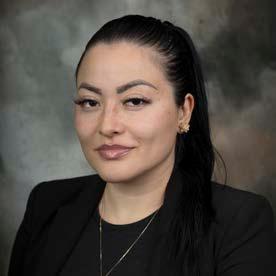
MARLENA SULLIVAN Editor
LISA ABRAMS Chief Financial Oficer
KERSTAN SZCZEPANSKI Staf Writer
ASHLEY SOU Social Media Executive RAY
DON SVEHLA Publisher
MARK HEBERT Senior Writer
TAUNYA MITCHELL Business Development
CHRISTY DIGIAMBATTISTA Sr. Busienss Development Manager
PUBLISHER & FOUNDER
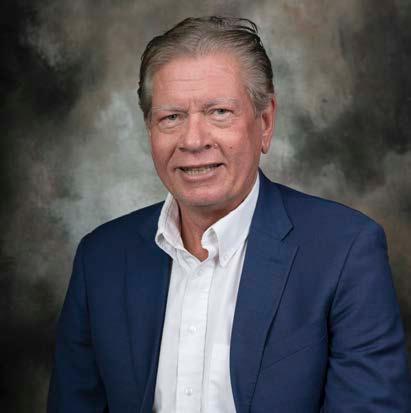
Don Svehla
DonS@ExhibitCityNews.com
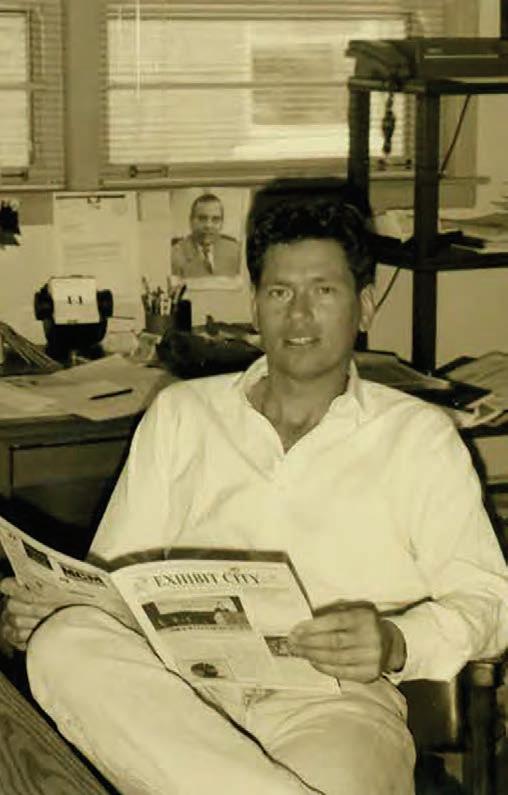
Don Svehla has been in the tradeshow industry his entire life (since age 15 and his frst CES), entering the industry at the same time with his father, from the freight industry. He did his internship with McCormick Display, where he spent 10 years. He worked at Giltspur for just under 10 years. Coming from the show foors of Chicago, Don realized the need for an industry news source in 1993. With the support of industry friends, he began putting his nearly 20 years of tradeshow experience into Exhibit City News, which launched in June 1994 as a small eight-page newsletter for Chicago’s tradeshow community. By 1996, the newspaper had grown into a 32-page national newspaper bearing the tagline “Uniting Te Nation’s Tradeshow Community.” Over the past 30 years, ECN has become an indispensable resource for industry news and info—both online and in a glossy magazine.
MEET THE STAFF OF 2024
EDITOR
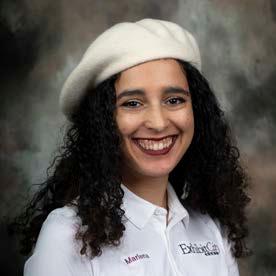
Marlena Sullivan
DigitalEditor@ExhibitCityNews.com
Marlena Sullivan is the editor of Exhibit City News, born and raised in Las Vegas. She holds a BSBA in Operations Management and a BA in Teater and Film from Te Ohio State University, along with an MLitt in Creative Writing from the University of Glasgow. Marlena has been published in several zines and has a passion for fashion, theater, the arts, and writing. She has worked in community events since 2017 and as a production assistance on a variety of shows and events in Las Vegas, Nevada.
ART DIRECTOR
CHIEF FINANCIAL OFFICER
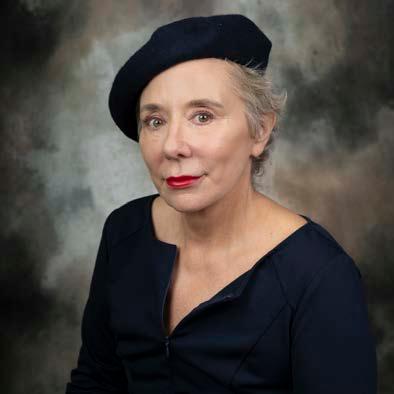
Lisa-Corinne Abrams
LisaA@ExhibitCityNews.com
Lisa-Corinne Abrams, chief fnancial ofcer at Exhibit City News and executive director of marketing and sales at Exposures Ltd., has been a respected presence in the tradeshow industry for nearly 20 years. Her career began in international law and business, leading her from Paris to Wall Street before landing in Las Vegas. A fxture on Las Vegas show foors, she brings unmatched expertise and compassion to her role at ECN
Tomas Speak
TomS@ExhibitCityNews.com
Tom Speak is a UNLV graduate, where he earned his BFA with honors. He started his design career at FREEMAN Las Vegas as an exhibit designer, worked at Vegas Seven magazine and for the past 10 years has lead Speak Design, an award-winning print and web design studio. He enjoys traveling, live music, and snowboarding.
BUSINESS DEVELOPMENT MANAGER
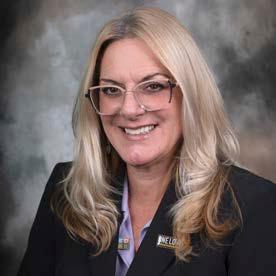
Christy Digiambattista
ChristyD@ExhibitCityNews.com
Christy Digiambattista is the Business Development Manager for Exhibit City News, Co-Founder of Te Tradeshow Job Board, and an International Sommelier. Christy is an active member of Le Donna Del Vino, and the regional Italian Consortium. Christy the creator of “Happy Tails”; a white labeled Italian wine whose proceeds go directly to Te Michael Vick-Best Friends Rescue Foundation and ASPCA. She is also a member of the EDPA, ESCA, LVCVA, EACA and IAEE. Christy brings more than 25 years of experience in tradeshows, from creating events, branding, stafng B2B shows, to wine and food paring education conferences and sales.
BUSINESS DEVELOPMENT
Taunya Mitchell
TaunyaM@ExhibitCityNews.com
Taunya Mitchell is a Business Development professional at Exhibit City News and the owner of Travel with Taunya. With over a decade of experience in national sales and marketing, she has a deep understanding of the publishing industry, previously serving as a Senior Advertising Representative at Exhibitor Magazine Group for nearly nine years. Taunya is skilled in event management, international business, negotiation, and operations management.
BUSINESS DEVELOPMENT
Melissa Skipworth
MelissaS@ExhibitCityNews.com
Melissa Skipworth brings over 20 years of experience in tradeshow and corporate event production. She began her career in 2002 at Exhibit Fair International in Las Vegas before transitioning into event technology role in 2015. She is now a Strategic Advisor and Journalist for Exhibit City News.
SALES ASSOCIATE
Ahnee Moradian
FrontDesk@ExhibitCityNews.com
Ahnee Moradian was born and raised in Las Vegas and is currently attending UNLV where she is working toward a degree in Business Management. Exhibit City News is her f rst job in the tradeshow industry and “I love it,” she said. “ T is is a great place to work and there is so much to learn and absorb.”
SENIOR WRITER/PROOFREADER
Mark Hebert
MarkH@ExhibitCityNews.com
Mark Hebert is an award-winning reporter and designer who graduated from the University of Montana with a BA in print journalism. He worked as a reporter and publisher of three newspapers in Montana, senior reporter at the Dallas Express and Courthouse News in Las Vegas before joining Exhibit City News in the spring of 2024. While not working, Mark enjoys nachos and naps.
STAFF REPORTER/WRITER
Ray Smith
RayS@ExhibitCityNews.com
An award-winning journalism graduate of San Diego State University, Ray Smith worked more than 35 years as a newspaper reporter, writer, and editor, including 20 years with the Las Vegas Review-Journal He resides in Las Vegas where he partakes in nearly all of the city’s vices.
STAFF WRITER
Kerstan Szczepanski
KerstanS@ExhibitCityNews.com
A New York native who lived in Kuwait during his teen years, Kerstan Szczepanski studied theatre at Northwestern University and moved to Vegas in 1993. He worked at MGM Grand as the Cowardly Lion, a Gatekeeper at Ka, at Touro University’s clinical simulation program, and at the Hilton’s Star Trek: Te Experience. Currently, he freelances as a copy editor, social media evaluator, and writer. He loves writing, cinema, history, his cat, and Dungeons & Dragons.
SOCIAL MEDIA EXECUTIVE
Ashley Sou
AshleyS@ExhibitCityNews.com
Born in Mexico City and raised in Las Vegas, Ashley Sou has managed events and marketing campaigns for companies like ASTOUND Group and Exhibit City News. She’s worked behind the scenes in the tradeshow industry for years but now loves seeing the fnal product and the joy it brings to people. Working with a fun team at ECN makes it all even better!
MEET OUR COLUMNISTS
As Te Saws Turn
Jim Obermeyer has been in the tradeshow industry 35 years, both as a corporate tradeshow manager and exhibit house owner. He can be reached at jobermeyer903@gmail.com.
Don & Mike Show
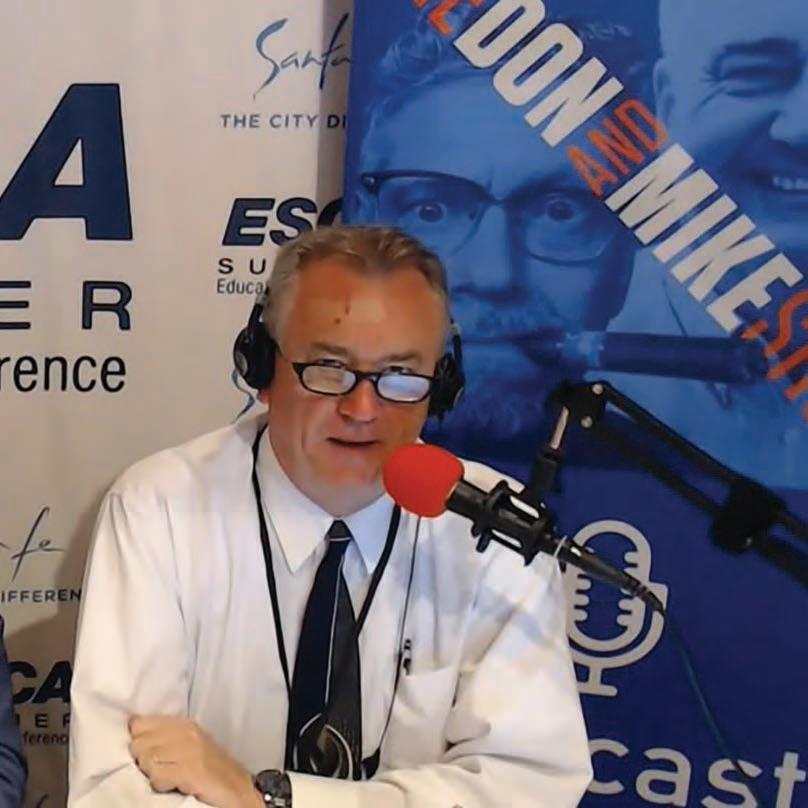
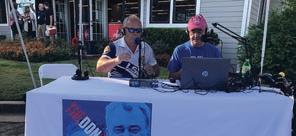
Mike Morrison, the vice president of sales for WS Displays, has partnered with Exhibit City News publisher and founder Don Svehla to interview leading industry people in the weekly Te Don and Mike Show podcast, now in its third year. Te podcast, Brought to You by SMT Expo, focuses on tradeshows, events, and experiential marketing issues and can be heard at ExhibitCityNews.com, TeDonAndMikeShow. net, iTunes, Google Play, Spotify, Stitcher, Podcast Addict, and more.
Ask An Expert
Calanit Atia is an award-winning event planner, exhibit management expert, the founder and president of A to Z Events and Trade Show Talent, a Las Vegas destination expert, Air Force veteran, and speaker. Contact her at Info@AtoZevents.com.
Te International Focus
Tis column is written by various writers from the International Association of Convention Centers (AIPC) including, but not limited to: Sven Bossu current CEO at AIPC. He can be reached at sven.bossu@aipc.org.
Te Tradeshow Times
Bob McGlincy brings nearly fve decades of experience in the tradeshow industry to Exhibit City News (ECN). Bob shares his wealth of knowledge as a columnist for ECN, where his passion for live events, the history of the industry, and industry advocacy shines through.
311: Event Support
Liz Lathan , CMP, is a dynamic force in the world of corporate event strategy, bringing more than two decades of experience to her role as a columnist for Exhibit City News . T rough her column, 311: Event Support , Liz shares her expertise on how event professionals can better engage their audiences and drive meaningful results.
Business Beacon
Pat Alacqua is a renowned business growth strategist, particularly known for his transformative work in the labor management sector of the tradeshow industry. His insights in the Business Beacon Series offer actionable steps for business owners to build lasting wealth and prepare for a successful exit when the time is right.
Jane Gentry has had a distinguished 30-year career as a CEO, business consultant, executive coach, and keynote speaker. As one of the leading voices in leadership and sales, Jane’s contributions to the Business Beacon Series provide valuable guidance for fostering growth, sustainability, and preparing businesses for future transitions.
Te Global View
Paco Collazo is the owner and CEO of Happy Projects, an Atlanta-based company that collaborates with top stand builders, event production companies, agencies, and brands to deliver seamless face-to-face marketing solutions. Paco shares his passion for creativity, travel, and the events industry, ofering insights from his extensive international experience.
MEET THE WRITERS
Pat Friedlander
Pat Friedlander began her career in publishing, moving into the tradeshow industry through Giltspur, where she marveled at the complexities of show foor interactions. Over the last 22 years, she has focused on writing, training, and marketing in the healthcare space. Pat remains active in industry associations and enjoys her work with second-generation leaders. With a blended family and a passion for her career, she shows no interest in retiring anytime soon.
BOOK REVIEWS
Leslie L. Mujica, MPA
Leslie L. Mujica is the Executive Director of IBEW/NECA Powering Nevada and an expert in strategic relations, government affairs, and business development within the architectural, engineering, and construction sectors. As a writer for Exhibit City News , Leslie shares her insights on fostering industry relationships and navigating public and government sectors to help businesses succeed.
Travis Stanton
Travis Stanton brings nearly two decades of experience in the exhibit and event-marketing industry to his role as a columnist for Exhibit City News. Currently the Director of Strategy at Storylink Creative, he works with clients to defne brand stories, optimize marketing investments, and exceed corporate objectives. Prior to joining Storylink, Travis spent 18 years at Exhibitor Magazine, where he rose to the position of Editor in Chief. During his tenure, he helped the magazine earn multiple awards, including the prestigious ASBPE Magazine of the Year award.
Tea Engst
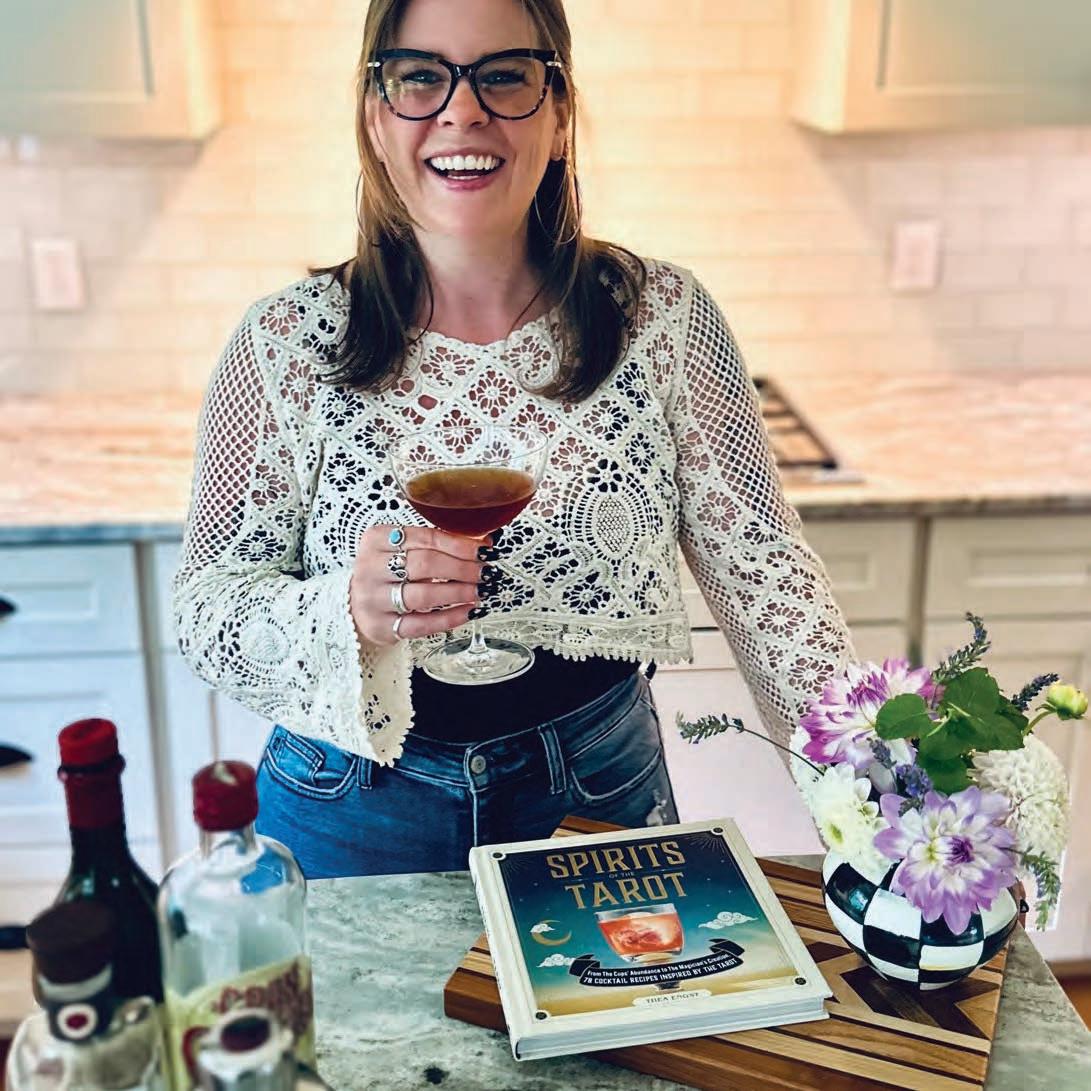
Tea Engst has worked as a bartender for thirteen years. Slinging drinks at various bars and restaurants, she learned about more than mixing a proper cocktail. Tea learned how much she enjoyed connecting with people — from her coworkers to her regulars to the tourists she met briefy. Today, Tea still loves hearing people’s stories and is lucky enough to write them down for you to enjoy, too.
Danelle Dodds
Danelle Dodds is a dynamic storyteller raised on a steady infuence of adventure and live music during her childhood in Africa. Before her career as an editorial, travel, and content writer, Danelle was an award-winning Las Vegas corporate event planner for over two decades. Her continued passion for the hospitality and tradeshow world fnds its way into every piece she writes, and her skill in blending industry insights with a unique voice brings a personality to all her articles.
Debbie Hall
Debbie Hall is a writer, editor, content provider, and broadcaster who has called Southern Nevada home since 1978. She currently writes about the convention industry for the Las Vegas Business Press and writes about nonproft organizations for Chic Compass Magazine. An alumnus of the University of Nevada, Las Vegas, she has been honored to tell the story of Southern Nevada, especially its thriving convention and hospitality industry.
BEHIND THE SHOW FLOOR
AS THE SAWS TURN
JIM OBERMEYER
When and how did you get into the trade show industry and how did you end up where you are now?
In February of 1981, after I graduated college, I went to work for McDonnell Douglas Corporation in St. Louis. MDC was a large defense contractor and commercial airline manufacturer. I was hired to work in guest relations in their massive new computer complex.
While my role was to give tours of that facility, along with the fnal assembly building for the military aircraft, I was part of a large marketing department. In that department there were a couple guys who seemed to be gone a lot. I asked one of them what they did. “Tradeshows,” was the answer. My response: “What’s a tradeshow?” (Yes, I had a journalism and marketing degree, but had never heard of a tradeshow.)
Te more I talked with them about what they did, the more I wanted to do it. Travel the world or give tours of a computer building? It wasn’t a tough decision. Getting them to take me on their team was a little more of a challenge.
Eventually though, I was added to their team and in October of 1981, I worked frst tradeshow: Computer-Aided Manufacturing International (CAM-I) in Fort Worth, Texas. Within the frst year I had been to San Francisco, Houston, Washington DC, Amsterdam, Hanover, and Gothenburg. I crossed over to the supplier side in
1993 when my company was phasing out tradeshows—I wanted to keep doing them. Since then, I have been in sales and sales management. I had a stint as an owner of an exhibit company for 15 years and currently work in sales and business development. And it hasn’t gotten boring yet…
What’s the biggest change you’ve seen in the industry over the last 30 or more years?
Te more things change, the more they stay the same. In the 1990’s the dot-com boom had companies spending millions on shows. Ten came the dot-com bust, where the tradeshow world was supposed to end. Te economy and tradeshows recovered, and with the expanding internet tradeshows were supposed to become virtual. Te real ones were supposed to die. But it didn’t happen; in fact, they grew. Ten the Great Recession hit. Did it bring the end of marketing spends and tradeshows? Not quite.
Te COVID pandemic tried to shut us down, but we persevered. Now, the growing demand and desire for remote work is predicted to kill of tradeshows. Sorry, I don’t believe it.
What is changing, however, is what a tradeshow is. Not only is the tradeshow becoming more about the experience in the space rather than the look of the space, that space is also taking on new forms—from private events to corporate engagements and product activations in a wide variety of
places. Face-to-face is not going away, but the way we communicate may change.
What’s the biggest change you wish had happened in the industry over the last 30 or more years?
I think some show owners focus so much on the attendee and their own profts that they forget the exhibitor is their client as well. Increases in costs across the board— from show venue to show owner to show contractor—all seem to fall on the exhibitor. As those costs increase, exhibitors are forced to reduce their spend at the show or, sadly, eliminate participation altogether.
Unfortunately, what needs to happen, and rarely does, is for the exhibitors to join together and go to show management and demand a fair system for exhibiting. Were they to do that, it could have a big impact on the show owner and the show costs.
Do you have a favorite tradeshow?
Starting in this business in the aerospace industry, I developed a real fascination with aircraft and fight. I have been working the National Business Aircraft Association (NBAA) show for more than 25 years, and it is still a favorite.
Two additional shows I love are the National Restaurant Association (NRA) and the National Association of Convenience Stores (NACS).
How did you get connected with Exhibit City News and begin writing your As Te Saws Turn column?
I ran into Don Svehla at a reception at the TS2 show in Washington, DC in the summer of 2000. He asked me if I would be interested in doing some writing for his tradeshow industry newspaper. We talked about me doing a monthly opinion column.
Over the last 24 years, the column has gone in a lot of diferent directions, but always I tried to link it to our industry. Sometimes it was quite a stretch to make the connection, but I have enjoyed the challenge of trying to come up with something worthwhile to write about each time.
I’ve written columns at home, at work, in hotels, in airports, in airplanes, wherever and whenever the idea for a column struck me. Sometimes I’d have an idea and write the column well before the deadline. Other times I’d be staring at my monitor desperately trying to come up with a kernel of a thought to write about. But never once have I bailed on writing a column—it’s just something I enjoy doing and it keeps me connected with the people in this family we call the exhibitions industry.
CALANIT ATIA
As I sit down to reflect on my 30-year journey with Exhibit City News (ECN) , I’m filled with a profound sense of gratitude and nostalgia. It’s hard to believe that over 20 years have passed since I started writing for this incredible publication.
When I frst stepped into the world of ECN, I was a newcomer to the tradeshow industry. I was drawn to the vibrant energy of exhibitions, where creativity and commerce collide. In 2001, I opened A to Z Events Las Vegas, an event planning company ofering event planning services, entertainment and tradeshow hostess booking, as well as games and props rental services. Over the years, I’ve had the privilege of connecting with countless professionals, from exhibitors, show organizers, vendors, hotels, and venue executives. Each interaction has enriched my understanding of the complexities and nuances of our feld. Furthermore, my role at ECN,
as a columnist, has allowed me to explore stories and share them with our readers, celebrating the successes and challenges that defne our community.
I have fond memories of the countless late nights spent researching, interviewing, and writing. Each article was an opportunity to dive deep into a subject, unravel complex narratives, and shine a light on the innovators and trailblazers in our feld. It’s been an honor to amplify voices that might otherwise go unheard, giving readers a glimpse into the passion and dedication that drive our industry forward.
As I refect on my journey, I also think about the sense of community that ECN has fostered. Tis publication has served as a bridge, connecting professionals from diverse backgrounds and experiences. Trough our events and networking opportunities, I’ve witnessed frsthand the power of collaboration. Relationships forged through these connections have often led
to partnerships and initiatives that have had a lasting impact on the industry.
In closing, I want to express my heartfelt appreciation for the journey I’ve shared with ECN over these 25 years. It’s been a remarkable experience flled with growth, learning, and meaningful connections. As we celebrate this 30-year milestone, I look forward to continuing to contribute to this incredible publication, sharing stories that inspire and inform, and championing the vibrant community that makes our industry so special. Here’s to the next chapter and to many more years of exploring the dynamic world of exhibitions together!
I invite you to reach out with your ideas, experiences, and insights.
CalanitAtia,anaward-winningeventplanner andentrepreneur,isanAirForceVeteran and the Founder and President ofAto Z Events,aLasVegasDMC,Entertainment, andBoothActivityAgency.Shecanbecontactedat702-212-2500orviaemailatInfo@ AtoZevents.com. Connect with her on www. twiter.com/CalanitAtia,www.linkedin.com/ in/calanit,www.instagram.com/calanitatia
ASK AN EXPERT
THE TRADESHOW TIMES
BOB MCGLINCY
Tradeshows are vibrant marketplaces where industries come alive, creating opportunities that extend far beyond the exhibit foor. Here’s how:
• T ey are business malls displaying new products.
• Tey are mini universities providing educational opportunities.
• Tey are conventions promoting networking encounters.
• Tey are exhibit foors staging branded environments.
• Tey are sales foors closing business and fnding new leads.
• Tey are events highlighting the present, showcasing companies in a specifc industry.
• Tey illuminate the future by exhibiting new technologies.
• Tey produce jobs and generate tax revenues.
• Most of all, they craft memorable experiences.
Tradeshows come in all shapes and sizes and serve a vast array of industry sectors. Tey may host a few hundred exhibitors, or a few thousand; they may attract 1500 attendees or more than 150,000. Tey may open with a lot of pomp and circumstance, or more quietly with little fanfare. Businesses and individuals that choose tradeshows do so for one very simple reason: tradeshows work — and they work well. Tradeshows make dollars, and they make sense.
Two things most people attending shows don’t realize, or appreciate, are:
• Te sheer size of the industry, which supported 2.5 million U.S. jobs in 2023.
• Te time, energy, and efort that goes into producing a single tradeshow.
A typical tradeshow starts with empty foor space—and that’s true whether it is a hotel ballroom with 25,000 square feet of space, or a major convention center with over a million square feet of exhibit space. In both cases, the show has to be produced, installed, and removed. Tat does not happen overnight, and it certainly does not happen by magic.
In a sense, tradeshows are like Hollywood movies or Broadway productions— there is much happening behind the scenes that ticket holders or event attendees never see. Exhibit City News started by recognizing and appreciating the value of show foor people. In that sense, it was and is a unique publication. Te show foor is a place where workers can have fun and make money. In some cities, the work can be a part-time job where people can make a full-time living.
Exhibit City News celebrates the unsung heroes—the carpenters, stagehands, decorators, teamsters, the electricians, AV techs, forists, caterers, drivers, the show producers, the show contractors, their staf s, convention center personnel, security, the display houses across the country, and the pre-show staf s of all the companies that choose to exhibit.
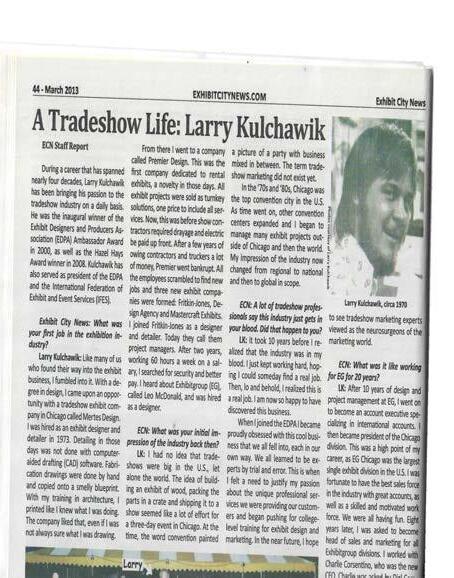
Don and I both began our careers on the show f oor. We have shared some parallel experiences, in di f erent places, and at di f erent times. I started in the mid-seventies, Don in the late seventies. I was a stagehand in Atlanta, Don a carpenter in Chicago. I was a few years out of college, Don was still in high school.
We were both leadmen, travelling supervisors, and assistant city managers. I f rst became aware of Don when I moved from I&D to Giltspur in the late eighties. A few years after Don founded Exhibit City News , I wrote some articles for him on labor, and on the size of the industry. Don and I share a passion for the show f oor, and the love of the industry—we both appreciate its history. During the pandemic, I started a column for the magazine, The Tradeshow Times , writing about the past, the present, and occasionally the future of this great profession.
I am an event fanatic and industry veteran with f ve decades of tradeshow experience. I began my career as a stagehand in Atlanta, building movie sets, and installing exhibits nationwide. I progressed from leadman, City Manager, and Regional Manager at one company, onto National Operations Manager, Vice President, General Manager, Managing Partner, and Director at other companies. I am a graduate of Cornell University and attended the Katz School of Business.
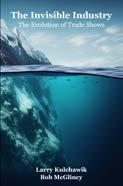
I have served on several Boards of Directors, both inside and outside the tradeshow industry. I am the co-author, along with Larry Kulchawik, of an upcoming book, titled, The Invisible Industry – The Evolution of Trade Shows. Congratulations to Exhibit City News and to Don Svehla for 30 years of excellence, and for this milestone anniversary issue. What a remarkable achievement and service to our industry this is! I am happy to be a part of it and looking forward to what the next ten years will bring.
DANELLE DODDS
When you talk to industry veterans, you’ll fnd that many of their journeys into the event world began similarly. Serendipity somehow circled their ankles, leading them onto the golden road of tradeshows and live events. Tey started with curious steps down the primrose path to fnd themselves decades down the bend in a poppy feld of wonder. It’s a story I recognize when I look back at my journey because it was the same for me. I didn’t start out choosing the event industry—the event industry chose me.
I began my career in Las Vegas in 1998, taking an entry-level position at a Destination Management Company. In my naivete, I had no idea what world awaited and how those frst steps would be the start of a multi-decade vocation. Like Dorothy in Oz stepping from sepia into color, my eyes were forever changed.
For 25 years, I was immersed in the kaleidoscope of the brilliant, impactful, and often challenging world of live events and tradeshows. It was an atmosphere of wild creativity, immersive experienc-
es, and incredible accomplishments. I proudly built an award-winning career in one of the most exciting destinations alongside gloriously talented coworkers, loyal suppliers, and clients who became friends. Highlights of my journey included creating one of the largest single-user events that featured over 20,000 attendees and Lenny Kravitz as a headliner, leading a team through the turbulent post-Route 91 Harvest world, and mentoring numerous budding planners who went on to build trailblazing careers of their own. It changed my life and perspective on the nuances of business and how the smallest of details can make all the diference.
Te intersection of writing and event planning was inevitable. Writing was my frst love and was prominently featured in my profession. You need to be a storyteller to paint a picture for a client. So, for 25 years, I wrote about the dazzling city of Las Vegas, crafting each tale to ft a client’s dream. When the moment came to switch paths during the COVID shakeup, serendipity again snaked my ankles. I
found myself content writing for industries that were rebuilding. Tat blossomed into travel writing for tourism bureaus. When a former industry connection and friend who worked at Exhibit City News shared that Don was looking for contributing writers, I jumped at the chance to add editorial writing to my resume. Having the opportunity to write about the world I still so deeply loved felt like returning home. I’ve been fortunate to contribute to the magazine for the last two years and am grateful to share insight from this side of the lens as a seasoned pro who once walked alongside some of these subjects.
Congratulations on 30 years of editorial success, Don! I’m proud to be part of a profession highlighting the importance of the businesses and individuals fueling a billion-dollar industry. Our contributions— every one of them—make a diference. Tank you for allowing me to be a narrator on your storytelling team. And thank you to the millions of hard-working men and women who contribute to this trade. I’m honored to tell your stories.
BEHIND THE SHOWFLOOR/DAY IN THE LIFE
THEA ENGST
My career started in hospitality, mainly bartending and cocktail recipe development. Over the years I also started writing cocktail recipe books and contributing monthly recipes to local newspapers. Tat’s when I met a former editor of Exhibit City News, who was leaving a local paper for the tradeshow magazine. When she settled into her new home at ECN, she asked me if I’d be interested in writing some articles.
I said yes thinking it was a great way to make extra money. What I didn’t expect was how much I’d love learning about the tradeshow industry. After a few pieces, I kept asking for more work. I loved speaking to all the people who help make tradeshows not only happen but succeed. From foor and lighting experts to truck drivers and people who provide everything from chairs to mannequins—there are no dull
stories coming out of this industry. In fact, the pacing, high-demand, and people all remind me a lot of the hospitality industry. Maybe that’s why I was so drawn to it! Since I adored speaking to all the various people who create tradeshows and large events day after day, I asked the powers that be at ECN if I could hone my focus on human interest pieces. Today, I do exactly that. I love talking to professionals about how they got to where they are and where they see the industry they love so much headed. I really feel like I’m back behind the bar, listening to the life story of a customer. It’s one of the things I’ve always loved about bartending, and now it’s something I love about writing.
I’m so proud to be a part of the 30th anniversary book for ECN and I’m excited to see what this amazing magazine goes on to produce. Happy 30th, Exhibit City News!
LIZ LATHAN
Happy 30th birthday to Exhibit City News ! You don’t look a day over 26. Which is about how old I was when I was trusted to run my very f rst tradeshow booth all by myself for a Fortune 50 tech company.
Te crazy thing is that I have been working tradeshows since I was 12 years old when my mother had a booth at the Atlanta Merchandise Mart. I still remember helping her set up the booth and even working customer service, taking orders in the booth. Tis is where I learned the true meaning of “sweat, shower, SMILE!”
After graduating college, I spent more than 20 years in associations and corporations leading global event portfolios that included proprietary conferences, feld marketing events, third party events, and customer advocacy and community programs. I learned words and acronyms that I’m sure didn’t exist before—like drayage and I&D. Along the way, I’ve been revising my own events and advising others on how to make event experiences more engaging for attendees. In 2022, Nicole Osibodu and I
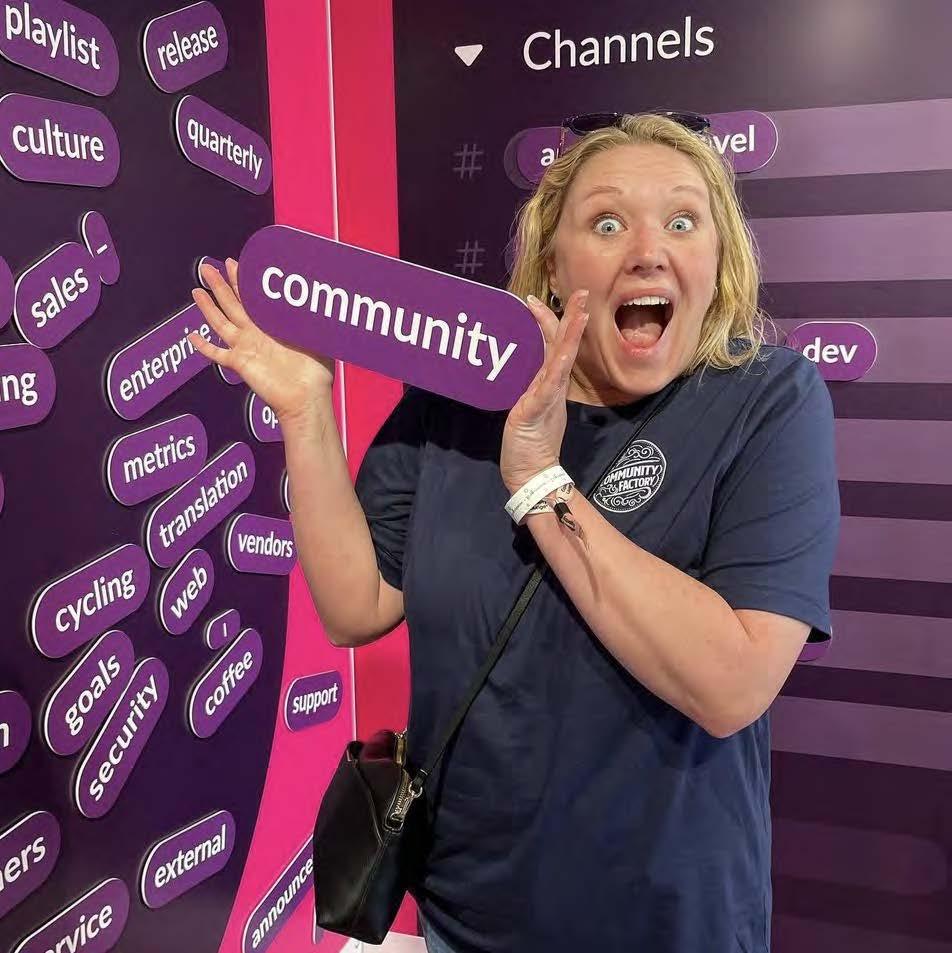
launched Te Community Factory to help organizations build community at their events and keep them going all year long with Community as a Service (fractional community management support).
I’m honored and grateful that Chris Kappes and Marlena Sullivan invited me to write a column about attendee engagement for ECN. After spending two decades designing the box that people step into when they go to events, I now love focusing my attention more on what the people do once they are inside the box.
I know that most of our readers here don’t have “attendee advocate” in their job description. Te funny thing is, no one does. We have to voluntarily take that role on ourselves and afect change in our events (sometimes by force).
T e landscape of events has changed as companies embrace event-led growth and double down on showing up in-person. Meanwhile, attendees are overwhelmed with event choices and limited time and travel budget. If we don’t take this time to truly re-evaluate our event programs
with an audience- f rst mentality, we’re going to see dwindling registrations and disappearing sponsors.
Tat’s why we launched Club Ichi, our community for B2B event marketers. We love experimenting and sharing event engagement ideas with our members and helping to inspire them to try new things and keep their attendees top of mind when they plan their events. From monthly online problem-solving sounding boards, to members teaching each other in our Ichi Academy, to a thriving Slack channel for real-time needs and leads, to in-person gatherings at industry events in amazing places (like our chartered yacht trip in Croatia this year!). No matter the preferred platform, our members have plenty of opportunities to connect, learn, share, and support each other.
If you haven’t had a chance to jump into the community yet, we’d love to have you! Explore the fun at www.weareichi.com and join more than 5,000 other B2B event marketers and the ecosystem of suppliers who support them!
LESLIE MUJICA
Imet Don Svehla in 2018 while buying an ad in his colorful magazine. As a representative of the Union Electrical Construction and Tradeshow Industries, I wanted to showcase our three tradeshow companies. I found the layout of the magazine wonderfully put together and the content engaging. When Don asked me if I would consider being a contributor and industry analyst, I felt honored and intrigued. Finally, I could put my journalism degree to work rather than just having it framed and gathering dust on the wall.
I have enjoyed writing about issues impacting the industry as well as creating special pieces wherein experts in the electrical industry provided their wisdom. Since I have a pretty demanding post representing my union, I can only write when I have the time. It’s a blessing to write for Exhibit City News, where understanding editors can aford me the opportunity to write at my leisure. I’ve also had the opportunity to work on fun projects like book reviews!
During the pandemic, ECN brought everyone in the tradeshow industry together. Don, along with other industry leadership help put together events to try to help our hurting workforce. I was blessed not only to be present at those events but also with the opportunity to document it in one of our articles: Las Vegas Tradeshow & Events Industry Food Drive A Success (2/19/2021). I will never forget this kindness and it continues to inspire me to do more for the community. I admire our Southern Nevada
community and workforce which is why I continue to write —through thick and thin. I recently spoke to a few attendees at one of our conferences. I was so excited to hear how much they were enjoying their visit to Las Vegas. One attendee even referred to us as “down to earth fascinating people.” He shared that even though he is not a gambler, drinker, or exhibits person, he found our city interesting and the locals welcoming. I love writing about that— those connections, and the ways that we as a community continue to grow.
Despite our economic woes nationwide, our community has persevered and has remained resilient. Our skyline is as bright as ever and will continue to get brighter because of our great community leaders and passionate companies such as this one.
I’m proud to be part of the ECN team. I wish ECN much more success in the years to come. Congratulations on your 30th anniversary!
Leslie Mujica is the executive director of LasVegas Power Professionals, a non-profit that strives to create and inspire a collaborative and impartial environment in which labor and management identify challenges and resolve conflicts in a fair manner. LVPP also endeavors to elevate and promote its members and electrical industry in the interest of higher stander of citizenship. For more info, visit htps://lvpowerpro.org/
IDEBBIE HALL
have lived in Las Vegas since 1978, and during that time, I’ve witnessed many changes in the city. I have also had the privilege of writing about Las Vegas, focusing on tradeshows, conventions, and expos, including behind-the-scenes experiences. One highlight was attending Comdex, the original high-tech computer convention, from 1979 to 2003.
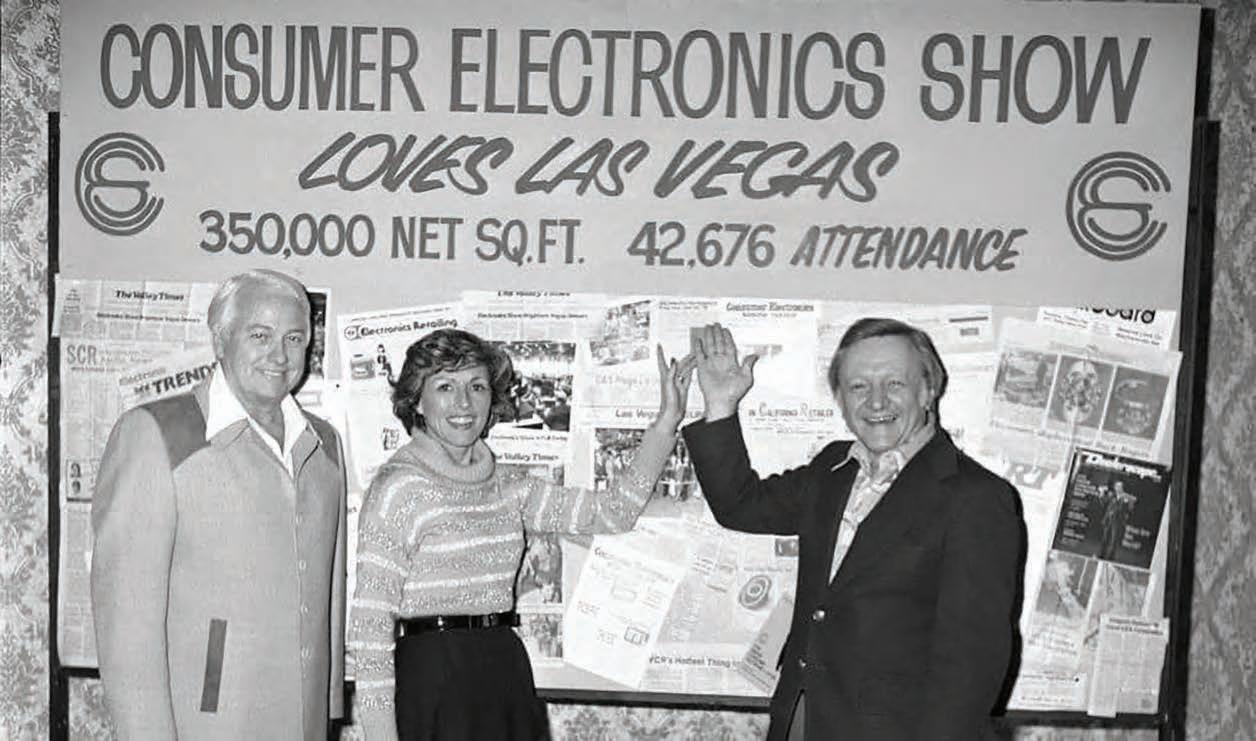
Te Consumer Electronics Show (CES) frst debuted in 1976 in New York City. From 1978 to 1994, CES was held twice a year: the Winter Consumer Electronics Show (WCES) in January, which took place in Las Vegas, and the Summer Consumer Electronics Show (SCES) in June. In 1998, the show was reorganized to occur once a year, continuing to be held in Las Vegas. In 1998, the show changed to a once-a-year tradeshow held in Las Vegas.
I attended the University of Nevada, Las Vegas, during the glory years (in my opinion) when the men’s basketball team won the 1990 NCAA Division I championship game. We all spilled into the streets, and classes were canceled, experiencing that moment that will stay with me forever.
When Las Vegas exploded with new resorts, including new convention centers as part of the property, I was honored to attend the opening of many of these daz-
zling properties. I was there when the frst building of the Las Vegas design market debuted. I was part of the celebration when the Smith Center for the Performing Arts opened. I attended many shows and conventions, including SEMA, NAB, and Las Vegas Market.
I was part of the community when the riots of 1993, 9/11, One October, and the pandemic when the future of attending tradeshows and expos were in question.
I was a broadcaster for many years, but I studied print journalism. I had always written articles along with my broadcasting and was hired by the Las Vegas Review-Journal in 2008. I worked as a reporter in the real estate market until 2011 and continued in the print and digital media. Along with several other publications, I was brought back to the Las Vegas Review-Journal, and I cover tradeshows and conventions for the Las Vegas Business Press. I have written about many tradeshows and conventions covering diferent aspects, expanding my knowledge as well as those of the readers.
I have attended parties hosted by Exhibit City News and have been a reader for years. I am thrilled to be part of this informative media platform, which includes publication, digital content, and outreach in the community. Happy 30th Anniversary.
I’ve known Don since we both worked at Giltspur circa early 90s, when he was just starting to publish Mr. Tradeshow. He was putting it together in his parents’ basement on the South Side of Chicago. (I am also from the South Side of Chicago—we’re homies.) Don was sort of pesty at frst, he wanted my opinion on publishing, which is my background—Mr. Tradeshow was his baby. I started writing for the publication which eventually became Exhibit City News. Don took the publication from mimeo to newsprint. It would be very hard to tell the full extent of my writing involvement, not to mention my feedback about everything from editorial to Don’s human resource issues. It’s been a long, strange trip. 30 years later, I’m still writing for ECN. It’s all good. Don’s heart is in his publication, and he has my support.
TRAVIS STANTON has more than 20 years of experience in the faceto-face marketing industry, frst as a Brand Ambassador for organizations such as Target, White Wave, and the LPGA. After serving as Managing Editor of Minneapolis-based Lavender magazine, Travis began a nearly 18-year tenure at Exhibitor Magazine, where he served as Managing Editor, Editor, and Editor in Chief.
During his time at Exhibitor, Travis is proud to have earned three Magazine of the Year awards, as well as the American Society of Business Publication Editors’ Young Leader award and countless honors for his work as a writer and editor. Additionally, Travis was proud to receive the 2010 Innovator Award and the 2019 Greg Carey Leadership Award from the Minnesota Media and Publishing Association. With a passion for experiential design—and all of the disparate elements that comprise efective faceto-face marketing campaigns—Travis launched a number of successful recognition programs designed to spotlight exceptional work in the tradeshow and event industries, including the World Expo Awards, Portable/Modular Awards, Find It – Top 40, Centers of Excellence, EuroShop Awards, Best of CES, and Integrated Systems Europe’s Stand Design Awards competition.
Now, as Director of Strategy for Storylink Creative, Travis focuses on providing clients with the tools, data, insights, and strategies to optimize their experiential marketing campaigns, utilizing hard data to drive continuous improvement and accomplish corporate objectives. Informed by 20 years of traveling the world, attending everything from small tabletop shows to major international events (such as the 2012 Summer Olympics and IFES World Summits in India and South Africa, as well as the last fve World Expos in China, South Korea, Italy, Kazakhstan, and the United Arab Emirates), Travis is a sought-after speaker, trend watcher, writer, editor, and strategist with a deep love of the tradeshow industry.
In addition to his role at Storylink, Travis also works as an Associate Producer for the annual Miss Universe telecast, having worked on production teams in the United States, El Salvador, Tailand, Israel, and the Philippines.
TRAVIS STANTON
Contrary to what some may believe, I can admit when I’m wrong. In fact, I relish the opportunity to fess up and foster an atmosphere where mistakes beget learning opportunities, and misperceptions become bona fde changes of heart. As such, it’s only fair to confess I was wrong about Exhibit City News (ENC). Having spent nearly 18 years at the helm of Exhibitor Magazine, most recently as the publication’s Editor in Chief, I’ve watched ECN grow from what I once thought of as “an industry rag” back in its newsprint days to a full-fedged print and digital magazine with a burgeoning online and social presence. I’ve witnessed the editorial coverage shift from what I once viewed as a myopic focus on the supply side of our industry into an outlet dedicated to education, news, and insights that serve all facets of the tradeshow ecosystem.
Today, working as the Director of Strategy for Storylink Creative, I’ve had the opportunity to look in the rearview mirror and fully appreciate how ECN’s bootstrap crew of contributors evolved into a family of publishing professionals with a deep love of this industry and respect for all involved. And it’s that respect, perhaps, that most surprised me, standing in stark contrast to what I had come to expect. In all my years knowing Don Svehla and engaging with his team, I have never heard a bad word about anyone, or an ugly rumor being spread. Tey’ve expressed nothing but respect for competitors, who they view as colleagues working toward a common goal of collectively elevating exhibit rookies and pros alike. And if you’re not jaded after
three decades in the sometimes-roughand-tumble tradeshow world—not to mention the constantly evolving publishing industry—it’s a solid indication that your motivations are sound, your passions are pure, and your commitment is unwavering.
For that reason, it is with great pride that I announce my partnership with ECN, which I hope will play a small role in ushering the publication into its next 30 years, expanding its coverage of the experiential design aspect of our industry, and elevating the awareness of the publication’s contributions both domestically and internationally. Later this year, ECN and I will be making an exciting announcement at the Experiential Designers and Producer’s Association’s annual Access event in California. Stay tuned for more details.
Finally, I’d like to congratulate Don and the entire ECN team on three decades of remarkable evolution and service to our beloved industry. Nobody would have blamed him or his team for throwing in the towel during COVID, shuttering the doors during times of limited ad dollars, or eschewing print altogether in an era of infated publishing costs. Instead, he battened down the hatches, rode out the storm, and remains a trusted resource for our community of passionate professionals. Hindsight is 20/20, and while I’ve always admired Don for his infectious optimism, curious nature, and ability to forge longstanding friendships, I applaud how putting people over profts, integrity over egos, and relationships over transactions has brought ECN to this milestone. Here’s to the next 30 years of serving the industry we couldn’t kick if we tried, Don!
CBUSINESS BEACON
PAT ALACQUA
ongratulations to Don Svehla and the Exhibit City News (ECN) team on 30 incredible years of dedication to the tradeshow industry. For three decades, ECN has been “true to the trade,” evolving from a small newsletter to a trusted platform highlighting event professionals’ remarkable contributions. Your dedication has benefted the industry. I’m honored to join in celebrating this milestone.
My connection to the tradeshow world began right out of high school as a lead person installing exhibits for Convention Service Inc. It continued when I co-founded Installation and Dismantle (I&D Inc), which we later named I&D Group and ultimately repositioned as Nth Degree before we sold the company. Our talented and committed team helped build a global event marketing and management company. It was a unique time of innovation, growth, and learning from the school of hard knocks for me as we pioneered new approaches for services. We developed industry-frst management systems and navigated many challenges along the way.
I’m proud of Nth Degree’s ongoing success. Many who helped build Nth in our early days remain part of its success. Others have achieved entrepreneurial success or become infuential leaders within the industry’s service providers.
As I think about my journey, I’ve seen how ECN has inspired and guided countless others. ECN has been a valuable source of information supporting the spirit of collaboration in the tradeshow world.
Much like life in general, the tradeshow industry has been built on relationships and shared knowledge. I’ve had the good fortune of learning from others who generously shared their insight, tips and experiences during my career. Te tradeshow community of people has shaped my professional journey. ECN has played a role in keeping that spirit of collaboration alive, helping us stay connected to the latest developments and each other.
After selling Nth Degree, I pursued my passion for business building through ventures I either started or bought and sold. I now work with other leaders in various
industries on their own business-building journeys, helping them overcome challenges to grow their careers and companies.
Although I’ve stepped away from dayto-day operations in the tradeshow world, my passion for this industry, the people, and the culture of “whatever it takes” remains. Today, I continue to look for ways to collaborate, ofer consulting services to companies within the industry along with Jane Gentry, another industry veteran. She and I are collaborating to help others navigate the ever-evolving landscape. We believe giving back to the industry that gave us so much is an obligation and a privilege. Trough speaking engagements, writing, and consulting, we hope to help others grow and succeed.
It’s clear that the future holds more opportunities for growth and innovation. As we celebrate this ECN 30-year milestone, I look forward to seeing how ECN will continue to lead, inspire, and shape the future of the industry for years to come. Here’s to many more decades of success, growth, and being “true to the trade.”
JANE GENTRY
As Exhibit City News (ECN) celebrates 30 years, I can’t help but refect on my own journey, which began in the tradeshow industry around the same time, in 1990. My introduction was anything but smooth—I was pickpocketed at my very frst tradeshow at McCormick Place! Despite that inauspicious start, I got my frst break with Te Design Agency in Chicago. Bill Colwell, who also had a theatre background, took a chance on me and of ered a salary for my frst year to help me get my footing in the industry. I remember negotiating with him to bump the salary from $25,000 to $26,000, and after that small win, I knew I had a passion for sales.
I eventually made my way to Atlanta and joined I&D Group (now Nth Degree) in their Programs group. It was there that I met Jack MacEntee, who to this day remains the most infuential mentor of my career. During my time in Atlanta, I helped launch ofces for two exhibit houses and eventually became VP of Sales before deciding to leave the industry in 1999.
Tat same year, I started my own consulting practice, initially focused on coaching companies in the tradeshow industry. As my clients began recommending me to their customers, my business expanded, and within 10 years, I found myself working with Fortune 500 companies like Coca-Cola, Home Depot, and Philips. My work spanned growth, proftability, client
retention, culture, change management, employee retention, and leadership capabilities. I’ve had the opportunity to work with nearly every functional team within these organizations. About a third of my business also became focused on keynoting at conferences.
My practice took a major turn when I was recruited to run two private equity-owned companies in the experiential marketing space. Tis role introduced me to the passionate entrepreneurs who had built these businesses but hadn’t necessarily been exposed to the best practices of world-class companies. After seeing their challenges frsthand, I decided to refocus my consulting practice on serving CEOs and owners of mid-market organizations.
Shifting my business after more than 20 years of referrals was a leap of faith, especially knowing that these leaders are often so immersed in their own businesses that they aren’t out networking. But today, with my partners, I’m helping these CEOs navigate growth challenges, growing pains, and exit preparedness.
Although much of my work now lies outside the tradeshow industry, I’ve never fully left it. Pat Alacqua and I have partnered to ofer consulting services to an industry we both love. I also continue to speak at industry events and write for ECN. I see it as a privilege to give back to the tradeshow world, which gave me my start and shaped my career.
BUSINESS BEACON
PACO COLLAZO
When and how did you get into the tradeshow industry and how did you end up where you are now?
I was born into it. My grandfather started the business 45 years ago, this adventure has taken us into many, many satisfactions, personal growth and challenges that we always welcome as producers. We love this life.
What’s the biggest change you’ve seen in the industry over the last 30 or more years?
Te biggest change I would like to say is globalization. Exhibitors and brands are joining the worldwide stage and taking their products and services into other markets. It is a must now.
What’s the biggest change you WISH had happened in the industry over the last 30 or more years?
A quicker way to show the clients that sustainable booths is the way to go. We need to continue pushing and educating our customers and partners about the correct ways of producing.
Do you have a favorite tradeshow? IPPE. My frst US show.
How did you get connected with Exhibit City News and begin writing?
I am friends with the one and only Don Svehla for many years through my dad and he invited me to join Exhibit City News after my predecessor in the global column, the great Larry Kulchwaik retired.
THE GLOBAL VIEW
MIKE MORRISON
Wow… what can happen after fve years! In the 25th edition celebration of Exhibit City News, I outlined where I started and how the Don and Mike show podcast started. So, the $64,000 question is, “What has happened since that time?”
Well, that answer can be somewhat complicated. Five years ago, was 2019 and things were just glorious at that time. Business was great, we were steadily producing podcasts, and suddenly 2020 hit! And the game suddenly changed.
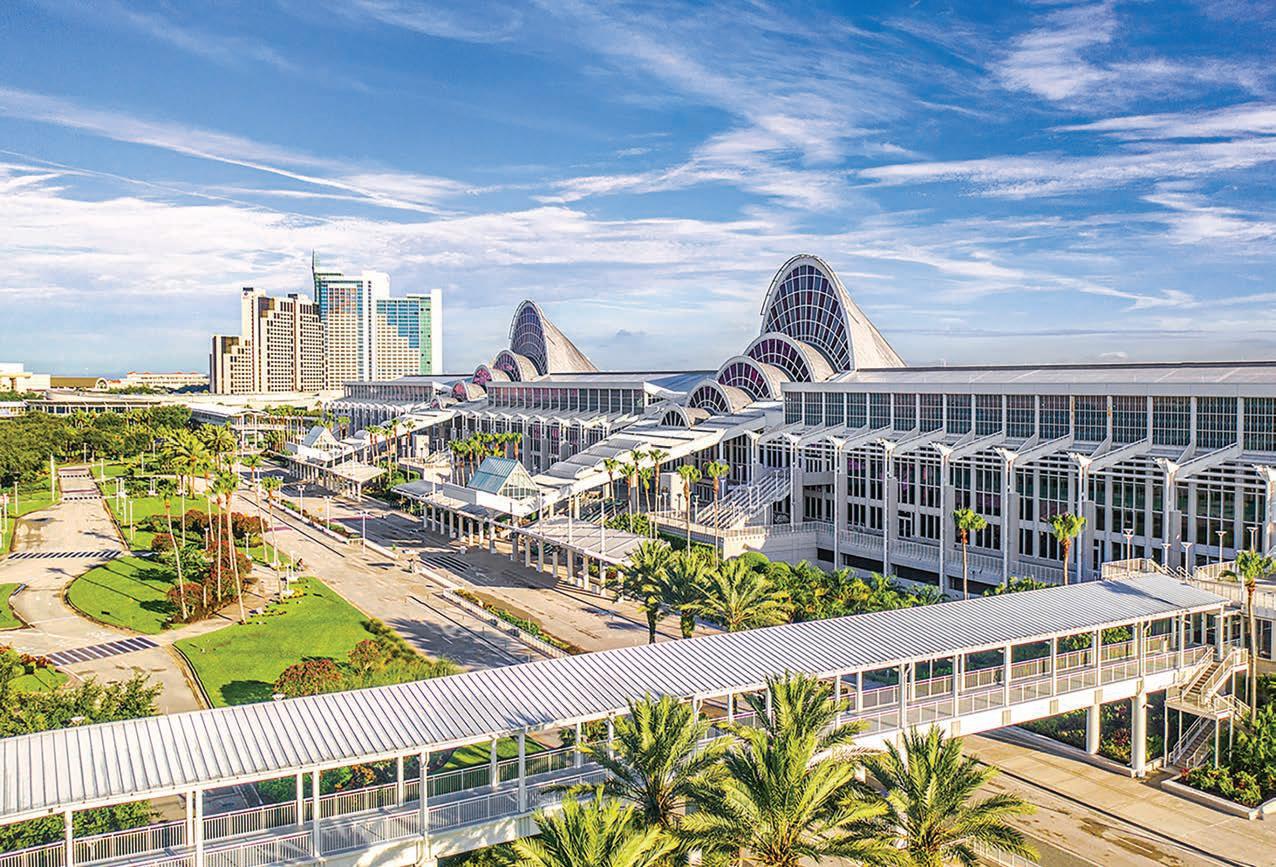
Te industries of trade shows. live events. and experiential marketing were crippled by COVID-19. If you were in the industry at that time, you will remember the devastation that we all felt after a period of time because I believe initially, we all thought this might blow over and would be just a blip on the chart of our industry. As we know that was not the case. We even went as far as to create a trade show in Orlando, Florida at the Orange County Convention Center known as the Together Again Expo. Many within this industry were determined to show government offcials and the public that trade shows and live events could continue in a safe and effective manner. But as we remember it was more struggling and fghting to get noticed as an industry that greatly needed to get back to work and get back to work quickly.
Te Don and Mike Show were neck deep in that cause and that fght to stay alive and to get back to work. It did not happen quickly, but I feel our show played an integral part in keeping listeners together in the cause of showing how important it was to get back on the show foor.
During 2020, the Don and Mike show produced two shows a week to keep listeners within our industry on top of the information about where we stood in the fght to go back to work during COVID-19 chaos. I was still employed during that time and I’m very fortunate to have been a part of our company where we, of course, pivoted and changed our product oferings to produce graphics and signage that helped resellers during the fght of COVID-19. Te comeback was slow, but in 2021 we started seeing shows come back. Tere was not an exponential increase of show activity, but it did give everyone in our network hope that we would get back to traveling and seeing each other in cities across America.
I do truly feel that the Don and Mike show played a pivotal role as a voice in communicating to everyone the news within the industry and then coming back after such a crucial time in society and in our trade show world.
Ten at the end of 2022, I thought it was time to make a change.
I will not go into all the details behind the change but as many people remember I decided to partner with Te Exhibitor Group and create Te Exhibitor Now podcast as well as Te Advocacy and Association Podcast. We did the shows for a year and a half and in May of 2024 I decided it was time to leave the organization and go in a diferent direction. But I did have a conversation with Show Box Exhibits Owner Todd Nall who created the Facebook Group “You Know You Work in Trade Shows When” and we decided to give a new podcast a try named “Trade Shows Unhinged,” which is still alive to date.
A conversation happened after that with Don and now here we are with Te Don and Mike Show Reunion Podcast!
One thing is for sure: the microphones are hot in 2024 and moving into 2025! I look forward to working with Exhibit City News as we produce the next generation of podcasts for the industry.
Mike Morrison, Vice President of Sales forWS Displays, has partnered with ECN Publisher Don Svehla for The Don and Mike Show Reunion Podcast. Shows can be seen either on ExhibitCityNews.com or onYouTube when published as well as major Social Media platforms and at DonAndMikeReunion.com
THE DON AND MIKE SHOW
OUR FORMER COLUMNISTS
Over the last 30 years, Exhibit City News has worked with a variety of writers across all walks of life with a myriad of experiences. Te following is a list of those individuals.
Andy’s Apps
F. Andrew Taylor is an award-winning journalist, artist, photographer, cartoonist, and illustrator. He also works in flm production, does local historical research, and has been an amateur stunt driver and rodeo participant. Contact him at fandrewt@exhibitcitynews.com.
Te International Man
Larry Kulchawik is the head of Larry Kulchawik Consulting and author of Trade Shows from One Country to the Next. For more info, visit www.larrykulchawik.com.
Social Media Strategies
Amadeus Finlay is a writer, strategic growth marketer, and communications and public relations consultant who resides in Rhode Island. He’s a graduate of the University of Edinburgh and has lived in the U.S. since 2014. Contact him at AmadeusF@ExhibitCityNews.com.
Te Rigging World
Andrew Fulton, member of IATSE Local 720, is the lead production rigger at UNLV’s Tomas & Mack Center and was lead rigger for PRG at the Sands Expo, Venetian, and Palazzo Hotels from 2012-15. He co-founded RIG FOR SUCCESS with Jason Sellman and is also one of three owners of RIGGING INTERNATIONAL GROUP (R.I.G). Contact him at andrew@rigforsuccess.com.
International Focus
Cynthya Porter has been a freelance writer for Exhibit City News since 2011, covering the exhibition industry and earning over 70 awards for her writing and photography. With a background in investigative journalism, she enjoys stories with complex parts and divergent opinions. Outside of her work, Cynthya is an avid traveler, having visited over 30 countries, and shares her journeys with 20,000 Instagram followers.
View from the Show Floor
David Cizmar grew up in Chicago’s Beverly Hills and Morgan Park area and entered the tradeshow industry in 1976, working for 37 years before retiring. He wrote a monthly column for Exhibit City News for half of its existence, beginning in 1994, sharing his insights from his time as a tradeshow decorator. David refects on the evolving nature of the industry and celebrates the unsung heroes who perform the hard work behind the scenes. Now retired, he continues to appreciate the tradeshow industry for the opportunities it provided.
Te Green Piece
Haley (H.K.) Wilson grew up in the Southwest, inspired by its open spaces and national parks, which fueled her passion for nature and adventure. Before becoming a writer, Haley worked in the legal and real estate sectors and as an experiential event designer. With over 1,500 published articles on business, social, and environmental topics, her column, Te Green Piece, has highlighted sustainability in the tradeshow industry for nearly a decade. She currently resides in Southern California and continues to enjoy writing and the natural world.
Te Power People
Julie Pazina is the national director of sales at Edlen Electrical Exhibition Services and began writing for Exhibit City News in 2007. Her column, Te Power People, highlights the stories of exhibition industry veterans. With a career that started in 2006, Julie oversees sales in the Las Vegas market and beyond. She has held leadership roles in the Las Vegas Hospitality Association, Junior League of Las Vegas, and multiple industry organizations. Julie was recognized as the 2011 Young Professional of the Year and 2019 Woman of Achievement. In 2019, she was appointed to Nevada’s Commission on Tourism.
Where in the World
Kelli Steckbauer began her career in the industry in 2002 and worked her way up to Executive VP, Operational Development for 3D Exhibits. She wrote the Where in the World column for Exhibit City News from 2011-2015, focusing on global business culture and travel tips. With a passion for travel and experience in global exhibit work, Kelli encourages others to embrace the global market and seek efciency in operations.
Te Digital Experience
Lesley Martin joined Exhibit City News in 2015 to work on a special project about I&D and Event Labor, which inspired the Shop to Showfoor section. In 2018, she launched Te Digital Experience column, covering innovations like chatbots, AI, and VR in marketing. Lesley is currently a project manager at Original Shift in the San Francisco Bay area.
From the Corner O fce
Christopher (Chris) Kappes brings over three decades of executive-level experience in the live event and marketing industries to his role as a columnist for Exhibit City News Known for his sharp insights and strategic perspective, Chris explored topics ranging from omnichannel marketing to brand development and event innovation. His writing refected his deep knowledge of both digital and face-to-face engagement, ofering valuable guidance to professionals navigating the ever-changing landscape of live events.
Premiere digital and print magazine serving 1,000,000 professionals in the tradeshow and events industry.
Hundreds of advertisers across tradeshow ecosystem.
Reporters with 100+ years of combined experience in the tradeshow industry.
FOUR print magazines a year
45K impressions
15K readers of the quarterly print publication 35% email-blast open rate 6.5% email-blast click rate
Online Since Oct. 29, 2009
15,482 Stories posted
3,229 People on the Move 4,423 World/International 2,617 Features 1,048 Columns 7,032 News
U.S. tradeshows today are a $100 billion dollar industry that attracts over 80 million attendees a year. Tradeshows promote brands, sell products, and generate tax revenues. Tradeshows create millions of jobs and transform empty convention centers into magical marketing extravaganzas.
Tis “invisible industry” is truly amazing! But did you ever stop and wonder, how are the shows produced? Where did the companies come from? Who does the actual work?
A Brief History of Trade Show Companies in the U.S.
Prior to World War I, mega-exhibits and tradeshows were principally a part of world’s fairs. Smaller exhibits were found at farm shows, state fairs, museums, hotels, and in department store windows. Installation labor was provided by the show organizers, the contractors constructing the convention halls, the venues, or sometimes by the companies building the exhibits—cabinet makers, window dressers, decorators, sign makers, fag
makers, the retail display builders, or the companies themselves.
Hotels held small events in meeting rooms and banquet halls. Larger arenas at the time, like Madison Square Garden and the Chicago Coliseum, primarily hosted sporting, entertainment, and political events. As the number of associations, tradeshows, and venues, increased, so did the demand for companies and people to produce live events. Tis trend expanded dramatically during the 20th century, starting with a few early pioneers.
Photo courtesy of FREEMAN
FREEMAN logo on a plane, 1921
Brede, Fern, Shepard, Freeman, and GES
1898Possibly the frst General Service Contractor in the country, Brede started in Massachusetts in 1898. Te founder’s son, Bill, opened a rental furniture business in the ‘20s, and is credited with inventing “pipe and drape” on the show foor. Brede purchased Exhibit Aids in the ‘70s, partnered with Allied Convention Services in the ‘80s, and was acquired by Te Expo Group in 2020.
1901“George E. Fern Decorator” is frst listed in the Cincinnati Business Directory in 1909, but an earlier decorating company, under his father’s name, dates to 1901. Fern produced the Ohio Valley Exposition in 1910 and is credited with the frst use of a standard rental booth. In 1919, they provided showfoor electrical services; and in 1927, at the Home Beautiful Exposition, they built an indoor two-story structure, along with other exhibits. During the ‘20s and ‘30s, they produced shows in all regions of the country. In 1962 they were purchased by
Budig Trucking, and then sold in 1985 in order to focus strictly on events. Freeman purchased Fern in 2011, then the employees re-acquired the company one year later. C.E.O. Aaron Bludworth led the company from 2008 until June 2023. In July 2023, Fern was acquired by MSouth Equity Partners (the parent company of nth Degree).
1905Shepard Decorating was started by Virgle Shepard in Atlanta in 1905. Teir initial projects included parade foats, Christmas decorations, and department store window displays. In 1939, Shepard created the Gone with the Wind premiere celebration. During the ‘60s, they became the frst U.S. contractor to manage conventions in China, and in 1976, they produced the frst trade show at the Georgia World Congress Center. Originally a family run business, Sherman Wade and Carl Mitchell took the reins in 1982. Te company became an ESOP in 2012. Today, Shepard produces shows nationwide with warehouses and ofces spread across the country; Carl Mitchell is the Executive Chairman.
1927Donald
“Buck” Freeman started his career in college, planning fraternity parties and parades. He founded the New Idea Service Company in Iowa City, and then established Freman Decorating in Des Moines in 1927. World War II in the coming decade necessitated changes. In 1950 he opened the Dallas ofce to provide services for the Texas State Fair. Tat ofce soon became the corporate headquarters. Te company purchased Sullivan Transfer in the early ’60s, and by 1963 it was doing a million dollars in revenue (equivalent to over ten million dollars today). Don Freeman Jr. became President in 1972, expanded the company regionally, and then acquired six East Coast GES ofces in 1981. Acquisitions of Fern, Champion, and Immersa Marketing came in 2011, and Sparks in 2023. Over the decades, Freeman has evolved from a local decorating company to a national general contractor to a worldwide live event agency. Te company has 30 domestic locations and, according to a Forbes article, employs 39,000 people.
George E. Fern (secretary-manager)
The committe that engineered Cincinnati's big midsummer electrical show.
Ihillectur,
“George E. Fern Decorator” is first listed in
GES’ roots stem from Manncraft—a business that started as a sign and window company in Kansas City in 1939. Tey began selling exhibits in the Southeast in the ‘50s. Greyhound Corporation purchased them in 1969 and changed the name to Greyhound Exposition Services. When GES sold of ofces in 1981, Freeman focused on the Eastern U.S., and GES produced shows in the west. In 1993, GES purchased United Expo and Andrews Bartlett (including their labor division, ECC) and then expanded back east. GES owns ExhibitGroup/
Giltspur, is part of Viad, and is second only to Freeman in terms of revenue and numbers of employees.
Post war expansion
A few exhibit builders originated prior to 1940 (for example, George P. Johnson, Ohio Display, Taylor, and Jack Morton) but it was the post-war economic boom that fueled the growth of shows, and the need for larger venues, more builders, and more contractors.
After World War II, businesses retooled from military to commercial production. Consumer spending ignited
the economy and propelled a marketing boom. Brands became more prevalent. Tradeshows sprang up in hotels. Show foor labor was typically supplied by the general contractor, supported by local unions. Large, single purpose trade show centers weren’t built until the late ‘50s. LVCC opened in 1959, and McCormick Place in 1960. Tese centers spurred the growth of larger in-person events, which led to more centers being built in more cities. Te industry took of in the early ‘70s, propelling an economic frenzy for display houses, contractors, and labor companies, across the country.
Ford pavilion at New York World’s Fair 1939.
A booth that was exciting to bring people in, but [not] gimmicky
THE WOW! BOOTH
Blue Sky for Sakrete at World of Concrete
Originally Published in 2020
PROJECT CREDITS
Designed and built by Blue Sky Exhibits: Tim Kelley, Owner/COO
Kim Cramer, Senior Account Manager
Lead Designer: Diego Fernandez
Support Design:Janet
Bartczak (interior demo pods)
Production Manager: Roger Reyelts
Client Team: Gretchen Turner, Dave Jackson
Account/Project
Management: Roger Reyelts, Holly Robbins, Kim Cramer
Production/Engineering: Derek Sheffield
Exhibit Construction:
Paul Watson, Robert Scott, Steve Pitts
Graphics Production: Nicholas Peterson
Photography: Exposures Ltd.,
Debonair Films
Exhibit I&D: Roger Reyelts, Robert Scott, Mark Mleczko, Richard Wiencek
Sustainable systems for exhibits and events
As a leading sustainable modular system for exhibits and events, Aluvision ofers limitless possibilities. With more than 20 years of experience and 30 years of entrepreneurship from founders Ann and Dirk, choosing Aluvision means investing in a high return on investment and a system designed for the future. Our innovative R&D team develops new, highquality products and accessories that are reusable, precise, flexible, and versatile, ensuring your designs are always ahead of the curve.
Our passion for innovation fosters strong relationships, enabling us to provide you with fast delivery and outstanding customer service through our dedicated team and worldwide network. Partnering with Aluvision means you can rely on us to help you create stunning, impactful exhibits that resonate with your audience.
Create your next masterpiece with Aluvision.
WELCOME TO THE NEW PLUS STUDIOS
Rede fning Full-Service Solutions for Exhibitors, National Events and Brand Experiences
While you may recognize the name Plus Studios as a veteran of the tradeshow and events industry, its recent acquisition by Next Play Holdings (which also owns the printing powerhouse Digital & Graphic Solutions) has transformed the company into a premier integrated marketing solutions provider.
In addition to designing and fabricating dynamic exhibits, events and environments for hospitality and retail—which has been its core business since 2013, Plus Studios has expanded and diversifed its oferings to include large-format printing, promotional products, apparel, printed collateral, warehousing, fulfllment, custom packaging, and on-line digital solutions. Tis range of new capabilities allows Plus Studios to cater to an even broader range of client needs, asserting its position as a leader in the industry.
“Corporate marketing teams are shrinking, and partnering with an ‘all-in-one’ agency that provides integrated services saves clients both time and money,” says Sherif Saad, CEO of Next Play Holdings. “For us, the merger of Plus Studios and Digital & Graphic Solutions creates synergistic opportunities that are driving both innovation and growth, as well as allowing us to handle everything from focused marketing campaigns to large, full-scale national events and brand experiences for some of the world’s most renowned brands.”
“I couldn’t be more excited about these changes and the new opportunities they present to us,” says Matt Naert, CEO and original founding member of Plus Studios. “We think we have a winning combination of capabilities that diferentiates us from everyone else in the industry.”
Despite all the changes that Plus Studios has experienced in recent months, Naert emphasizes that Plus Studios is still committed to its core belief that “a great fnal product and even better customer service” is what ultimately makes the company successful.
“When you’re one of our clients, it’s like being a part of our family,” says Steve Schaf,
VP of Business Development. With over 30 years of experience in the tradeshow and events production industry, Steve has seen scores of companies come and go and knows that taking a client-centric approach is the only way to be successful. “It really comes down to forming solid relationships and earning the clients’ trust by being responsive and reliable on every project,” he adds.
And while roughly half of Plus Studios’ current book of business is based on direct-to-client relationships, the other half is generated through its white-labeled fabrication programs. Plus Studios is more than happy to fabricate pre-designed projects for clients who might otherwise be considered our competition.
“We really pride ourselves in coming through on some of these intricate builds on tight timelines with fantastic results,” Schaf continues.
And if design is what you need, Plus Studios has got you covered! John Santangelo, VP of Creative and head designer for the company, leads the charge, bringing his wealth of award-winning design experience to the table.
“Tere’s something really special about the collaborative nature of the Plus Studios team and everyone’s willingness to problem-solve and test out new ideas. It’s reassuring to know that the team will always fnd a way to make the vision a reality and do so really well.”
Santangelo also spearheads many of the technology and innovation eforts at Plus Studios. In addition to building an internal software platform that helps to track projects, shipping and rental assets, he has refned a process for utilizing virtual reality for clients to preview exhibit and event designs as well as facilitating “live design” sessions via video calls that allows clients to participate in the design development and revision process in real time.
As Plus Studios continues to evolve, they remain dedicated to their founding principles while adapting to meet the ever-changing demands of the marketplace. “We’re more than confdent about the future of the company,” says Naert.
“With the backing of Next Play Holdings and Digital & Graphic Solutions and the support of our talented and dedicated team, Plus Studios is poised to tackle new challenges and continue to grow and expand!”
1994 FROM THE ARCHIVE
MEET THE TRADESHOW WORKFORCE!
The goal of publisher Don Svehla, aka Mr. Tradeshow, was to represent all facets of labor that keep the show floor running smoothly.
Don, along with the help of Associate Editor Dan Greene and Photographic Consultant Tom Fox, produced a bulletin called Exhibit City to report for and about the tradeshow and exhibition industry.
DECORATORS
FORKLIFT
1995 FROM THE ARCHIVE
1996
FROM THE ARCHIVE
1997 FROM THE ARCHIVE
1998 FROM THE ARCHIVE
1999 FROM THE ARCHIVE
Originally published in 2024
THE EVOLUTION OF EXHIBITING AT TRADESHOWS
by Larry Kulchawik
When the industry came to a screeching halt due to COVID-19, the world of business created ways to communicate. Zoom and other digital means became the new tool to exchange ideas face-to-face. Te convention industry experimented with virtual events with minimal success. One thing that was learned: there is no substitute for human contact. Face-to-face contact unleashes emotion in a way that digitalization does not. Tis being said, the industry learned to embrace some new digital alternatives that created a few new tactics to reach people beyond the tradeshow foor.
Over the past 50 years, world circumstances, technology, and new building materials have pushed the exhibit industry to change
its ways of doing things. While all were face-to-face, each decade developed diferent ways of exhibiting, for efciency and cost.
Starting with the street vendors in Persia to the World Fairs, the concept of tradeshows evolved. Unlike a World Fair, tradeshows evolved to be industry specifc. Tey became an efective way to introduce a new product to a knowing audience within a given trade industry.
Many tradeshows started with an industry association who selected a city facility to organize an event and had companies acquire an exhibit space to introduce their products. Te organizer would hire a show contractor to prepare the show foor, manage the event, and assist exhibitors with their displays.
Over time, exhibitors wanted more than the basic exhibit choices ofered by the
show contractor, so exhibitors began to hire outside exhibit designers to build their stands. Many would ship in lumber, build a stand on site, paint, and apply hand drawn graphics. In time, decorator companies were formed in the cities where the frst tradeshows were held. Cities like New York, Chicago, Detroit, San Francisco, and others transformed their hotels and old buildings to conduct tradeshow events. Exhibit design companies began to form to help exhibitors improve their image. Exhibit houses were usually owned by carpenters, sign painters, or decorators with an entrepreneurial spirit. Many exhibit houses then began to open outside of the major cities where the shows were held. Teir customers were major corporations who exhibited at shows and built a custom exhibit to ship to the show. Viola!
Te exhibit houses were born.
Tere were many tradeshows organized in the early 1900s. Ten events came to a screeching halt with World War II. Te concept of industry tradeshows picked up strong after the war and rapidly grew from there. Each time there was world confict or economic downturn the exhibiting methods changed. Technology played a key role in the fabrication methods for tradeshow exhibits each decade. Te exhibit created an image for a company and a way to show their products. In time, the exhibit needed to do more for the exhibitors.
In the early 60’s, there were many exhibit companies in business. Te EDPA association for exhibit design frms was formed to share exhibiting and business knowledge nationwide. EDPA was formed in 1956 with Norm Hadley from Hadley Display in Bufalo, NY serving as the frst president. Good ideas were copied and modifed.
Industry Expansions with Trade Fairs
1960-1970 During this period most tradeshows were held in a colosseum or in hotels. Exhibit houses were beginning to grow and most exhibits were fabricated from wood and crated for shipment. Weight was not a factor. Most were a 20’ to 30’ x 8’ high in-line designs and used back lighted transparencies for graphics. Lighted with ball lights. Te foor was covered in vinyl tiles. Wood paneling, slat walls, and painted box frame panels were a popular backwall. Te exhibitors were mainly men and all attendees dressed in suits and there were few women who attended, except at the nurses show in Washington DC. Te major attraction was to introduce new products and to make personal contacts. Large shows were attracted to the New York Coliseum, the original McCormick Place, and Cobo Hall in Detroit. Both opened in 1960 to jump start the auto shows. Other popular tradeshow cities in the 60’s were New York Madison Square Garden, Public Auditorium in Cleveland, LA Convention Center, and the Atlantic City Hall in NJ.
Industry
Convention Parties
1970-1980Tradeshows were picking up steam in popularity and were looked at by many as an industry party. Te Housewares Show, the Hardware Show, and CES
were the place to be to make contacts, hire reps, and show your products. McCormick Place was a leading location.
During the shows, everyone dressed in suits, smoked, and drank more than usual. Te exhibits continued to be fabricated from wood. Graphics were produced with silk screening and colored flms. Prefabricated light boxes and ball lights were the main reason to order electric, until slide projectors and TV’s began to be incorporated in the exhibit design. Aluminum exhibit systems were also creeping their way in as a frame to support a wall panel. Many complained that systems were too fimsy and would never be accepted in the USA. Technology was unfolding: frst digital camera in 1975, Kodak; Walkman 1979, Sony; Floppy Disc 1971, IBM; frst cell phone 1973, Motorola; Betamax 1975, Sony; Mac computer 1984, Apple. Tis all infuenced how businesses operated.
The Go-Go Years!
1980-1990
Venues in all major U.S. cities were being built exclusively for tradeshows. City governments were willing to invest to build a center and attract business to their cities. McCormick expansion, Las Vegas, San Francisco, Atlanta, Dallas, New York, New Orleans, Los Angeles and a number of other convention centers were built to compete with other venue locations. Te Orange County Convention Center in Orlando was built in 1983 and was just getting popular. Many new shows began to unfold. Nat’l Computer Conference/NY, Semicon/ SF, Comdex/LV, SCTE Cable Expo, ICSC/ LV. New shows were created as an extension of many shows getting too diverse. Te “Casual Friday’ dress code at many corporations infuenced exhibitors to wear golf shirts with a logo as their uniforms. Vis-
itors also stopped wearing a suit to a show. With so many shows, exhibit houses were managing their customers exhibit program, and not just a single show. Many houses specialized in particular industries. New materials to design an exhibit created a wide variety of creative solutions for exhibit design. Materials like tambour, sintra, aluminum systems, fabric, vinyl graphics, and paint applications like Zolatone gave exhibit designers a new palette to design from. Exhibit houses no longer provided all things in house. So many components were purchased on the outside creating an explosion of new companies who specialized in providing a single exhibit service. Companies were formed to exclusively provide carpet, graphics, furniture, shipping, lighting, fabric, AV, light boxes, double deckers, and I&D services.
Exhibit builders were no longer carpenters, but assemblers of components. For each installation, exhibit houses would send an exclusive supervisor for the set up using an independent I&D labor company or the show contractor labor. Arranging exhibit services was a time consuming task for the exhibitors. Exhibit houses provided this added service. Loyal partnerships were created between the exhibit manager and exhibit company team.
The Age of Technology
1990-2000New shows and venues continued to grow. During this period, tradeshow marketing was looked to be a valuable investment in the marketing mix for most companies. With the rising number of shows and a strong business belief in tradeshow marketing came the rising costs to exhibit. Te cost to rent space on the show foor, and cost to build a classy exhibit began to rise. Te on-site cost to handle materials shipped to the site, and
the cost for labor to install were two major cost drivers. Te word ‘drayage’ and ‘labor unions’ were becoming dirty words.
Reducing costs for drayage and labor at shows was the challenge. “Doing more with less” was the battle cry from exhibitors. As a result, exhibit designers pushed to create solutions to make exhibits lighter, and to reduce the labor cost to install.
From this driving desire came portable exhibits, aluminum system exhibits, fabric exhibits, light weight monitors, and independent exhibit installation companies. All exhibit houses employed these new components into their exhibit designs. Tis period was the start of using hanging fabric signs.
During this very time period came the stronger use of computers and cell phones. All exhibit companies discarded their T-squares, magic markers, and table saws and converted to using CAD design, construction drawings, and CNC for wood cutting. Tis new technology was not quickly embraced by builders due to cost but was eventually embraced due to the time saved.
CAD technicians began to replace carpenters skills. Assembly of parts was the skill needed.
Tradeshows Mean Business!
2000-2010While the power of tradeshows remained strong, 9/11 and economic downturns realigned CFO priorities to begin working with their sales and marketing managers. Te purchasing agent started working with the exhibits manager. Tere were more shows for companies to consider and budgeting to get the greatest return became decisions beyond the purview of marketing manager. Companies wanted to increase sales through shows without spending a fortune. Shows got bigger and tradeshow investment did not get cheaper. Exhibitors at smaller shows used portables and set them up themselves. For the larger shows, exhibit materials were lighter, but now incorporated overhead lighting trusses, fabric signs, and monitors for a stronger image.
Te labor costs shifted to using exhibit walls, monitors, live presentations, fabric graphics, and overhead truss for lighting. Tis was the start of the visitor experience approach to exhibit design, and the start of measuring the value of each prospect. CFO’s wanted justifcation for their tradeshow investments. Most all exhibit supplier companies provided tools for exhibit measurement,
cost control, and engagement tactics to their clients. Las Vegas and Orlando became the top venue locations for shows. Tey matched foor space availability, saved on costs, and were located in appealing locations for a stronger emotional experience. “Tradeshows mean business” was the battle cry.
Experiential Technology International
2010-2020Exhibit design and builder companies now became agencies for three dimensional marketing. Exhibit design needed to create an image and to deliver an experience for visitors to remember. Design may include multiple attractions from live presentations, visitor engagement tactics, smartphones, and high quality video stimulation. New companies with dedicated specialties (lead management, live presentations, exhibitor engagement) were formed and partnered with exhibit companies. Exhibit companies began to merge with other exhibit companies to expand their oferings. At this stage, the show contractor companies also began to expand their services, now ofering exclusive AV and Lighting services, lead measurement tools, marketing services and exhibit design and build. Since many exhibitor companies were now expanding their reach globally, the exhibit companies began to provide global services. Exhibit houses ofered rentals, portables, systems, fabric, and international exhibit services. Industry suppliers established international partners and quickly learned the diferent ways of designing and participating in shows abroad.
Rediscovering the Human Element
2020-2024Te COVID years forced all companies to uncover new ways of communicating. Te exhibitors and the exhibit companies who survived those years experimented with many diferent digital ways to assist their customers. Te virtual tradeshow concept was one way that created an opportunity for attendees to participate throughout the world at any given show. But what it lacked was the power of
the human element, it lacked emotion. People buy from people they trust. Te decision to purchase becomes emotional, especially when buying big ticket items. Tradeshows are not like shopping on the internet from a cell phone. Face-to-face marketing creates human interaction that serves to enhance a decision to buy. Aside from introducing and selling products, trade events provide the added benefts of educational sessions and networking with industry peers. Tis is not achieved as efectively with digital methods.
As a result of experimenting for two years, all companies uncovered many new digital methods of communicating for business. Te power of tradeshows has made an amazing comeback from 2020. People want to get out and see real people again. Tradeshow design today incorporates the new digital methods that blend with the stationary methods of the past.
We all have acquired a new friendly attitude towards technology. Exhibitors incorporate digital ways to visit with a customer who is not physically there. Tis hybrid thinking about communication has changed traditional design for exhibits at tradeshows. Attracting attendees to visit your booth space can now be achieved through both in person engagement as well as digital engagement. Both work, but one is more powerful than the other. Some may difer here, but the worst case would be no communication. All businesses rely on efective communication between buyers and sellers.
Is it no wonder why the top two convention cities in the USA are in attractive locations? Te power of tradeshow and events is created with face-to-face marketing where emotion plays a role. Tradeshows do mean business, but don’t underestimate the power of the events location to encourage attendees to experience their personal desires as well as their business desires.
Attending a tradeshow should not be viewed as a job, but as a positive experience that makes you want to grin.
New tradeshow methods continue to unfold to support the power of in-person engagement. Te investments made to do so will continue to be watched closely until a stronger alternative surfaces. For now, the
We wanted attendees to be participants in the space rather than passengers.
THE WOW! BOOTH
BlueHive Exhibits for LogMeIn at Channel Partners
Originally Published in 2022
PROJECT CREDITS
Designer: Finn Yonkers
Builder: BlueHive Exhibits
Production Manager: Chris Littlefield
Client Team: Kelsey Campbell
Account/Project Management: Amanda Porcaro
Production/Engineering: Sean Hopwood
Exhibit Construction: BlueHive Exhibits
Graphics Production: BlueHive Exhibits
Photography: Exposures Ltd.
Exhibit I&D: Lime I&D
(div. of BlueHive)
A/V & Lighting Design: AVFX/ Kevin Reilly
HAMILTON: CRAFTING IMMERSIVE BRAND EXPERIENCES FOR 75 YEARS
Inspired by tradition. Driven by innovation.
by Chris Kappes
There’s a saying in the tradeshow community that once you get a taste of the business, you don’t leave until the next generation comes in. Te next generation is here, in force, and helping propel many companies into the new millennia.
This certainly is the case with Hamilton, a full-service event marketing agency with a 75-year legacy creating immersive brand experiences for companies throughout North America and around the world. Exhibit City News (ECN) sat down with Hamilton’s Chief Marketing Officer, Courtney Soice, daughter of Ham -
ilton’s owner and chairman, Dan Cantor, to discuss the evolution of Hamilton.
Q: How would you describe Hamilton 75-year legacy?
Over the past 75 years, we’ve had revolutionary accomplishments, conquered tremendous challenges, and remained focused on building better brand experiences. We’re proud of Hamilton’s evolution and how we’ve innovated over the years while staying committed to our values. Hamilton values curiosity, integrity, creativity, reliability, and agility. Our roots as a family business are refected in our close-knit and
unique culture, as well as our focus on client service and going above and beyond. We have a Midwest company culture at our core—we are humble and meet our clients where they are. We aim to be focused and intentional about the work we do and the experiences we create.
Q: What is Hamilton’s scope of services and work?
We design, produce, and execute integrated experiences—exhibits, events, environments, and digital solutions—that drive meaningful connections between brands and audiences. We have full in-house planning and management, production, and on-site execution capabilities. In addition, we ofer full creative, strategic, and performance services through StudioH, our creative experiential studio.
Q: Why has Hamilton added StudioH to its service portfolio?
StudioH is the boutique creative agency that our clients desire. In the past, building beautiful structures sufced, but today, “build it, and they will come” is no longer enough. Brands now demand deeper, more comprehensive creative solutions, while attendees seek to engage, experience, learn, and connect in new, personalized ways. While we have ofered these services in-house for years, we have now integrated them to ensure greater utilization and maximum impact for our clients and their brands. Additionally, we have enhanced our performance oferings with in-depth analytic and measurement tools to help clients capture actionable insights and evaluate their programs more efectively.
Q: What is Hamilton’s “secret” sauce?
We’re big enough to execute incredible experiences but small enough to deliver dedicated customer service and be nimble.
Q: Who are some of your clients?
ADT, Cummins, Zimmer Biomet, Baxter, Wabash, Cornerstone Building Brands… to name a few.
Q: What industry trends are you seeing?
• Sustainability and accessibility—not a trend but being more intentional when it comes to building brand experiences.
• Toughtful marketing beyond the point-in-time event.
• AI, of course, as a way to brainstorm, research, and increase efciency.
Hamilton’s rich history and forward-thinking approach have positioned it as a leader in the event marketing industry. As they look to the future, Hamilton is poised to remain at the forefront of the industry, shaping the way brands engage with their audiences for years to come.
2000 FROM THE ARCHIVE
MAJOR EVENTS
• Contempo becomes latest Los Angeles powerhouse
• EACA to facilitate the formation of labor commtee
• Trade Group and Nomadic/Dallas merge
• Contempo, Powerhouse merge
• GES and Penton sign long-term agreement
• Folio unifies ofices with new identity at ExhibitorShow 2000
• CEIR to provide comprehensive census of exhibition industry
2000
IAEM issues revision of ‘guidelines for display
Jack Morton acquires part of Cairibier Decorators Local No. 17 president Mike
endance down but quality high at Convention Liaison council renamed to Carpeting supplier Brumark under new management
• First GES vendors fair meets in Las Vegas
sburgh’s new -
corporate high performance green features Western Exhibit Productions of CEP opens doors in Las Vegas
• ConvEXX launched in Las Vegas
• COMDEX surpasses one million net square feet-Fall 2000
• Unique option LLC furniture rental opens in Florida
• Ten Show goes to Chicago
MAJOR EVENTS
• Regency Exposition Services made oficial contractor at Navy Pier
• Freeman acquires Stage Rigging, Inc.
• GES sells division, Anderson will lead Exhibitgroup/Giltspur
• Nth Degree acquires FAIRTEAM
• TSEA will move to Chicago
• New drayange program debuts at the Super Show
• Obermeyer & Chapin form new exhibit marketing firm Reveal
2001 2001 FROM THE ARCHIVE
• Exhibit Dynamics moves to new facility in Ohio
• After the fall…Flower show blooms after floor collapse at Navy Pier
• Heritage Exhibits expands Dallas facility
• Mandalay Bay to build 1.9 million-sq.-ft. center
• Sparks Exhibits shufles southeast operations
• Exhibit Dynamics launches slogan, website
• Philly union dispute disrupts show set-up
• Klose acquires Sundance Communications
• Flat Cord at Chicago’s McCormick Place approved
• Mandalay Bay breaks ground
• Merger formed between Freeman, TELAV
• Nimlok Company teams up with Sho-link Incorporated
• Freeman acquires Hofend Xposition
• ICON joins Sho-Link venture
• First Kulchawik open benefits UNLV
• TSEA opens ofices in Chicago
• Czarnowski moves to new Las Vegas facility
• European Union bans non-treated exhibit crates
• LVCVA raises exhibit space rates
• Brian Cree Buys Southwest Displays & Events
2002 FROM THE ARCHIVE
2002
EDPA announces new charity foundation
Kim Fracalossi appointed CEO at Exhibitgroup/Giltspur
RND Exhibits join Octanorm family
MICE North America acquires Marketcraft and opens design ofice in LA
Exhibit Works gets ISO 9001 certification
Consolidated Freightways Bankruptcy
MICE North America adds I&D firm Delta management group
CyClonix veteran Nate Sublet launches
Benchmark Exhibit Inc.
Freeman acquires Canadian subsidiary Kerry Technical Services Ltd.
CEA boss reaches the Pinnacle: Gary Shapiro wins the awards
MAJOR EVENTS
• Orange County CC Riggers’ union push turns nasty
• Rossi Ralenkoter promoted to executive VP at LVCVA
• Exhibitgroup/Giltspur to centralize manufacturing centers
• Politics are the latest snag in Philly labor woes
• MICE DisplayWorks expands with ofice, GM in Silicon Valley
• Lynch Industries gets new name, acquisitions
• MICE celebrates one-year anniversary in N. America
• Richard Simon named Chicago CTB chairman of the board
• Lynch Exhibits makes ofer for Sparks’ parent
• Expo Group patent for ‘ Single Source’ process
2003 2003 FROM THE ARCHIVE
• PMMI creates exhibitor servicer company
• CompuSystems introduces wireless solutions for show organizers
• Pinnacle Exhibits opens third location; new facility in Irvine, Calif.
• Joe Popolo Jr. named Freeman pres.& CEO
• Freeman Companies named premier vendor for Microsoft events and programs
• Sullivan Transfer and Freeman Decorating to consolidate, combine resources
• EVA rejects call for one association of UK exhibition industry
• Telesis Design Group closes doors
• Yellow acquires Roadway Corp.for $966M
• Sparks Exhibits & Environments acquires Exhibit Crafts Inc.
• Exhibit Group opens new Chicago Studio
• TEN debuts in N.J. Conv. & Expo Center
• Omaha’s Qwest Center to open
• Exhibitgroup/Giltspur inaugurates leasing, financing program with Wells Fargo
• Pitsburgh ‘Powers Up’ with new ‘green’ convention center
• Gift Show exhibitors left in the dark at Javits
• IAEM opens European ofice
• Agile Trade Show Furnishings ‘going national’
• Gold LEED certification for Pitsburgh center
MAJOR EVENTS
• Yellow Roadway names leadership team
• Nth Degree names John Yohe as president
• Access TCA consolidates eastern operations
• 2004 Hazel Hays Award goes to Gary Stewart
• Spoon breaks ground on new global headquarters
• Scot Rudel named VP of operations at Sho-Link
• Sho-Link names Alan Scaccia new CEO
• Reed Exhibitions announces new president Chet Burchet, North America
• Exhibit Dynamics files for Chapter 11
• Rex Walker joins ECN staf
• Square Mile Studio a new adventure for industry vets
• Exhibit Resources becomes Octanorm OSPI
2004 2004 FROM THE ARCHIVE
• Gaylord opens ‘total destination resort’ near Dallas-Fort Worth
• Matrex Exhibits expanding to larger Chicago facility
• Showtime Enterprises opens sales, support ofice in Phoenix
• MC2 names Gary Benson CEO, announces other promotions, appointments
• Kim Wilkins joins ExpoPros labor team
• GES I&D services redesigned to operate independently
• CEP adds LaborNet to service ofering
• Plan View opens Northern California Facility
• Opening of MICE Dallas
• Oscar Associates and Einzig join forces
• MICE North America opens Atlanta ofice
• Exhibitgroup/Giltspur opens new home in Pitsburgh’s north shore
• Industry addresses homeland security issues at ESCA Summer Educational Conference
• Chicago’s Riggers Union re-elects Fred Schreier
• XHIBITTRADER.COM is launched by Ex-COO of Exhibit Dynamics Ray Rogowicz
• PRG and VLPS Lighting Services International complete merger
• VIAD spins of moneygram
• Canada’s Stronco Group acquires CE3
• a17: Hurricanes force postponment of Restaurant Row
• ZigZibit Exhibit Design moves HQ to Raleigh, N.C.
• The Rogers Co. opens in Orlando
THE WOW! BOOTH
Studio Displays for KURZ at CES
Originally Published in 2022
PROJECT CREDITS
Designer: Claudio Theim at Theim Germany
Builder: Studio Displays
Support Design: Dave Earp, Studio Displays
Production Manager: Chris Dagley, Studio Displays
Client Team: Allan Quimby from KURZ USA, Katrin Riethus, Iris Brackemeier, Anja Sander from KURZ
Account/Project
Management: Dave Earp, Studio Displays
Exhibit Construction: Studio Displays
Graphics Production: Studio Displays
Photography: Exposures Ltd.
Exhibit I&D: Tru Service Group
When the mirrors were fnally revealed, it was very awe-inspiring.
Photos by Exposures Ltd.
STILL IN THE GAME
10 Years of Connecting Joy and the Industry
by Danelle Dodds
If you’ve spent any time in the Las Vegas hospitality industry over the last three decades, you know the name Gary Bordman, CSEP. With the tagline of “Just call Gary,” his reputation for having a solution or answer to your Las Vegas event needs is the foundation of his wild and colorful legacy.
Stefanny Avera, Bordman’s chief operating ofcer and daughter-in-law, reminisces, “ Te moment I realized Gary was a big deal in the Las Vegas events’ world, it was when someone reached out to us and asked if we knew anyone who had a sloth.” Bordman didn’t miss a beat. “Oh yeah, I know someone!” And while Bordman doesn’t deal with live animals, having his fnger on the pulse of entertainment enhancements for live events has made him an industry leader since the early 1990s. As CEO and owner of Amusement, Exhibit & Event Services (AE&ES), Bordman supplies entertainment and engagement to corporate and private groups. His business is the epicenter of interactive and immersive experiences, arcade game rentals, event enhancements, customized oversized décor letters, photo opportunities, and even some items you haven’t dreamt up yet. “I like to say that we create experiences,” Bordman muses. “We are the portable version of Dave & Busters.”
“Just Call Gary!”
Crafting enjoyable moments started at a young age. Bordman’s award-winning interactive event journey began as a teen when he and his father traveled with carnivals during the summer. As he shared on his 2023 BizBash 15 Over 50 recognition, they operated various midway games under the hot sun with a motley crew, and he got his frst taste of the amusement business. Te seasonal gig foreshadowed his future path, which would
take several more years to actualize. Bordman’s event destiny took of when he landed in Las Vegas. With three kids, a wife, and an honorable discharge from the Air Force, he rolled the dice on a new business. Boasting a set of air-flled wrestling suits that he rented out to corporations, Bordman saw the potential for event enhancements. He started amassing more infatable games, formed a strategic partnership, and immersed himself deeper in corporate events. Bordman’s reputation for service, responsiveness, and innovation-based solutions earned him considerable attention and respect during those critical early years. He served as president of the International Live Events Association (then International Special Events Society) and became active in every signifcant industry association in the city. In 2014, Bordman started AE&ES and began building his brand on the backbone of his reputation. “Just call Gary!” was a mantra that kept the phone ringing. And while their business is jollity, the high expectation level of corporate events requires a keen eye for detail and project management.
A Right Hand at the Right Time
Tat keen eye is where his right hand, Avera, steps in. Avera joined AE&ES in 2019. Her extensive experience in stafng and event management was the perfect support needed for the volume of business the company was producing. Her wheelhouse included experience in marketing, a calm disposition, and a nuanced understanding of how Bordman runs the show. “I like to say she is the female version of me,” Bordman explains. Since joining the team, Avera has taken centerstage, liberating Bordman from the minutia. “I love being on event site,” he said, “But now I can focus on continuing to grow the business while Stefanny runs the
company to the ‘Gary-standard.’” Teir cohesive efciency has served them well. Shortly after Avera’s launch, the pandemic rocked the world. As the rest of the industry sat dormant, AE&ES saw a light of opportunity that became a beacon for the darkened event landscape. “We were down for less than a month,” Avera remembers. Bordman, not one to sit still, pivoted his company into a digital, social-distancing connection hub. Gutted ofces turned into green screen studios. Tactile team building went virtual. Tey developed a specialized interactive platform for cyber team building. Te team pushed themselves to unearth new ways of creating technological touchpoints to unite a fragmented industry. No longer fettered by proximity, events would occur at 4 a.m. in Asia and 2 p.m. in Las Vegas. Tey worked around the clock and produced over 100 virtual shows during the wasteland of the shutdown. When the industry reopened, it was a seamless move back to re-establishing human connection through interactive games. Tey recount those stories with the tempered amazement that any event professional does when refecting on the industry’s survival. Teir achievements since those socially distanced days have exceeded their expectations.
A Decade Down;
A Lifetime to Go Te company is now celebrating a decade of service to the industry. Over the last 10 years, AE&ES positioned themselves as merriment makers in the corporate sphere. Teir interactive event enhancements infuse that fnal layer of engagement into otherwise stufy environments. With an inventory of almost 1,000 games and a warehouse of 15,000 square feet, their daily docket is peppered with events across the Las Vegas Strip, the nation, and even internationally. Tey were proudly one of the frst suppliers for one of the frst events in the world-famous Allegiant Stadium. Tey’ve tackled engagements for Shaq’s Funhouse, Sports Illustrated, and Ferrari, as well as huge launches for the Super Bowl. Teir award-winning recognition continues with acknowledgments that include the BizBash Most-Know and Most Infuential Event Pros, NFL’s Business Connect, and the Service-Disabled Veteran Owned Small Business (SDVOSB) designation.
Watching the team in action, one can see why they’ve remained at the top of their game. “We bring people together, bring back their childhood, and create emotional moments,” Bordman says with a smile. Avera thinks the key to their success is something else entirely. “He values the connections, whether they are his industry connections or his team. Gary truly values his relationships.”
Steven A. Schuldenfrei selected TSEA president
• Rosemont packages services, atracts clients
• Coverings 2005 donates tile to Habitat for Humanity
• Zenith LaborNet, A-Plus join forces
• CME program modified to include essays
2005 2005 FROM THE ARCHIVE
• Dazzling Connecticut Convention Center opens for business
• Nomadic Displays appear on American Idol
• Showtime unsecured creditor funds to emerge from escrow
• Czarnowski moves San Francisco unit to larger East Bay location
• Canadian group Global Convention Services Ltd. buys Freeman’s Halifax unit
• Kellen Co. promotes Rachel Barlow, Pete Dicks as VPs
• Raleigh Convention Center staf members aid train wreck victims
• McCormick Place reaches out to exhibitors, contractors in wide efort to lower costs
• Golden Arches GOLDEN ANNIVERARY: Exhibitgroup/Giltspur helps McDonald’s celebrate 50 years with innovative Chicago restaurant design
• Gaylord Entertainment breaks ground on Gaylord Texan Resort and Convention Center
• Revitalization eforts underway at Morial Convention Center in New Orleans
• New Carpenters Union contract lowers ex hibitor costs at McCormick Place
• LVCVA sponsors Exhibition and Convention Executive Forum
2008 Construction Week ‘Project of the Year’: A milestone for future exhibition centers
• Oscar & Associates Inc. announces the acquisition of EventGallery LLC
MAJOR EVENTS
• Reno-Sparks Convention Center Atlantis Skybridge project completed
• GES expands in Phoenix and New Orleans
• EDPA South Central Chapter has voted to change its name (The Lone Star Chapter)
• ASAE successfully resolved suit to stop unauthorized solicitation of meeting atendees
• Phoenix opens new convention center light rail
• Hotels continue to invest in new convention space
• Tradeshow giant Freeman acquires event firm AVT
• Nimlok Chicago named top Nimlok distributor
2009 2009 FROM THE ARCHIVE
• Boston bowling event Rally at the Alley boosts tradeshow industry, supports RSMGC
• Matrex Exhibits announces new president Christopher Kappes and other hires
• ClassicMODUL opens extrusion facility in Cheshire, Conn.
• Stylemark Acquires Interlock Structures
• Nimlok Grand Rapids completes acquisition of Exhibits Now
• LMG wins contract for Orange County Convention Center
• Las Vegas hosted the most Tradeshow Week 200 shows in 2008
• Spectrum Show Services opens new ofice in Las Vegas
• Moss introduces the easy fabric wall system
• Tradeshow industry revolutionized through social media networking
• 3D Exhibits taps veteran talent to establish Northern California ofice
• Delphi and ICON launch Group Delphi
• Orbus launches full custom division
• Judy Venn and Associates opens corporate ofices in Las Vegas
• Coastal International Celebrates 25 Years in Business
THE EVOLUTION OF TRADESHOW LABOR: SERVING EXHIBITORS
by Bob McGlincy
During the frst half of the 20th century, labor for installing tradeshows and events was typically supplied by the show organizer, their contractor, the venue, or a third-party supplier. Early general contractors included: Brede, Hale, Shepard, and Fern, all of which started before World War I. Freeman and GES were both founded between the World Wars, while Hargrove came to fruition after World War II.
Post War Expansion
After World War II, businesses nationwide retooled from military manufacturing to commercial production. Consumer spending ignited the economy and detonated a marketing explosion. Brands became more prevalent, and tradeshows began increasing in number and size during the ensuing decades. Show foor labor was typically supplied by the general contractor, supported by local unions. Display houses began populating the country. Exhibitors had a choice in builders, and in the complexity of the design. As exhibitors spent more money on displays, the exhibits became more intricate and challenging to build on the show foor, which produced a need for talented and trained installers.
The Evolution of Exhibitor Appointed Contractors
Excluding general contractors (discussed in a previous article), perhaps the frst four businesses ofering installation services in multiple cities were Sho-Aids, CB, Professional, and CSI.
Sho-Aids was established in 1953 by Louis Barry, a designer in New York City. Tat is where Andy Codamo got his start—installing retail window displays. Codamo purchased the company, moved it
to Philadelphia in 1965, and incorporated it in 1973. Sho-Aids serviced the medical and pharmaceutical industry and developed the concept of dedicated teams traveling to diferent cities with the client’s exhibit. It’s likely that Sho-Aids was the frst national, independent contractor ofering exhibitors a choice in labor and service. Sho-Aids was also the industry’s frst developmental “tree” with employees branching out starting their own companies—in turn developing new branches, and even new trees.
Ann and Carl Birsa started CB Displays in Chicago in 1969. In 1976, Dennis Birsa, their son, left Chicago to open the Las Vegas ofce, with the help of Paul Willet. CB was the frst independent labor contractor in Vegas. Tey added General Contracting to their product oferings, became an Octanorm Service Partners member, and changed their name to CB Displays International. In the fall of 2021, after 52 years in the industry, and nearly fve decades in Las Vegas, Dennis Birsa elected to close CB’s doors. He decided to, as he put it, “look forward to enjoying time on my yacht.”
Howard Oshman got his start with ShoAids in 1968, installing displays in New York City. In 1972, Howard and Marilyn Oshman opened Professional Exhibitors’ Services in Connecticut, providing show foor help in the northeast. Mike McGuckin worked for them in New York and in Atlantic City, moved to Preferred, then started ACES in 2000.
Les Bunge opened the Chicago ofce for Professional in 1979, then opened ofces in Washington D.C. and California (1986). Les founded Laser Exhibitor Services in 1991. LES has a diferent business model—one with licensing agreements for local owner-operators. Tey currently have seventeen locations in the U.S. and Canada. Professional moved their headquarters
to Florida in the early 80s and closed their doors in 2012.
Convention Services Inc. (CSI) was founded in 1972 by Danny Molinaro and Steve Cahill. Tey both worked for Sho-Aids in the 1960s and located their new company in a suburb of Philadelphia. Several people who frst worked at CSI moved on to found other companies. Pat Alacqua, Tony Amodeo, and Jack McEntee left in 1979 to start I&D, Joe Nuzzi left in 1984 to start EIS, and Bert Taglianetti left the same year to start Preferred. CSI provides both I&D and General Contracting services, has ofces in 17 states, and is now known as CSI Worldwide.
Jack McEntee was a coach and teacher before joining CSI in 1974. Five years later he, Pat Alaqua, and Tony Amodeo left CSI and founded I&D Tey picked Atlanta as a base of operations in 1979 because of the upcoming tradeshow schedule.
Te Georgia World Congress Center (GWCC) opened in 1976, and rapidly attracted business in the southeast. I&D’s frst ofce was a small storefront operation in a strip mall in Clarkston, GA. Tey concentrated on training and personalized service. Tey ofered the exhibitor a choice—not just in personnel, but also in consistency and accountability.
I&D grew through training, service, and aggressive sales. In the late 80s and early 90s, more than two dozen former I&D employees started their own businesses—including: Eagle (Joe and Steve Matanga, 1987), Renaissance (Steve Johnson,1989), Momentum (Randy Bott, 1991), Spectrum (Ron Mestichelli, Sam Miserendino, 1992), and Zenith (Mike Metzger, John Zimmerman, 1994)—in addition to others. I&D’s name changed to nth Degree in 1996, and the company was acquired by Lake Capital in 2001. nth
acquired Zenith in 2017 and Renaissance in 2021. Teir current parent company is MSouth Equity Partners.
In 1983, I&D fled an antitrust suit over the Ofshore Technology Conference (OTC) in Houston being a closed show— the focus being that one company should not hold a monopoly on labor. Te outcome was that exhibitors should have a right to choose their installation company. Up until this time, companies other than the general contractor were called “independent contractors.” Te title “Exhibitor Appointed Contractor” didn’t originate until meeting in Dallas, Texas in January 1984, from discussions between Don Stacy, Don Walter, Paul Willet, Jim Wurm, and others.
Te same year that I&D fled a lawsuit, Bill Nixon began providing labor on the show foor in Boston. In 1987, he founded Willwork to ofer exhibitors and contractors a choice and a better service experience. Nixon added hands-on training to McEntee’s classroom instruction. His company grew quickly, responding to customers’ needs and wants, and by providing superior customer service. However, it wasn’t sufcient simply to recruit talent, talented people must be retained. Te company expanded product lines into retail installations, general contracting, and private corporate events. Willwork has ser-
viced clients in all 50 states, and numerous locations worldwide.
Bruce Green and Louis Genzano founded Coastal International in 1984. Initially on the west coast, they expanded to 12 ofces nationwide. Tom Cassell founded CAS in Chicago in 1985; it merged with Momentum almost 20 years later. Joe DiBello opened Elite Trade Show Services in Chicago in 1996. Patrick Lancaster saw a need for a regional contractor in the mid-west; he opened his company in Indianapolis in 2000, and now has operations in 20 locations. Nu-Vista opened in Dallas in 2000. Chris Grifn started with Skyline in 1989 and opened Crew XP in 2001.
Numerous display houses ofer show foor services as well. Te Nagles purchased Czarnowski in 1967. Te company initially opened in 1947, focusing on transportation and signage. Tey later provided display services and show foor labor in Chicago, then opened a construction facility in Atlanta in the early 80s. Czarnowski has 15 domestic and three international locations. ExhibitGroup and Giltspur, started with display houses (in Pittsburgh in 1950 for Giltspur; and in New York in 1955 for ExhibitGroup). Tey each began ofering labor services in the late 70s, and both had national labor operations in the 80s. Te two companies merged in 1996 with
Giltspur’s Exposervices division managing the labor throughout the country. Tey later merged into GES in 2010.
Impact started On Location in 1991 and now have ofces nationwide. In 1993, a consortium of independent exhibit designers and producers launched Sho-Link Incorporated to service the show foor exhibitors of their partner display houses. Bob Firks, formerly of Giltspur Chicago, was the founder of Sho-Link. Scott Rudel is the current President and has been with the company for 24 years. MC2 formed in 1999 and has 14 US locations. All of these companies ofer (or ofered) EAC services. Additionally, many general contractors, both large and not so large work as EACs on shows when other companies are the ofcial general contractor.
Into the Future
Tradeshows today owe a debt to the visionaries, entrepreneurs, and companies of the past. As shows have increased in size and complexity, contractors have changed in tandem. Te future will undoubtedly bring change—new mergers, acquisitions, startups, automation, and AI. Two things will remain constant: the business’s need for the face-to-face interaction of tradeshows, and the need for companies and people to produce such shows.
CELEBRATE 30 YEARS!
Exhibit City News and Highmark TechSystems
Highmark TechSystems and Exhibit City News share a 30th birthday— and have been partners for that long. Known as pioneering forces in the parallel universes of keeping the industry informed and developing the frst American modular wall and deck systems, both companies set the gold standard for the industry.
Highmark has become synonymous with creativity, efciency, and adaptability, ofering solutions that elevate brand presence and enhance attendee experiences at live events. Like Exhibit City News, Highmark is always listening to the marketplace and anticipating what it might need next.
Highmark’s roots are deeply embedded in a commitment to innovation. Te company continues to develop advanced, lightweight, and sustainable structural solutions, crediting industry designers and installers with informing its design innovation. By prioritizing sustainability in the very DNA of its products, Highmark has always aligned with global environmental goals and provided clients with solutions that refect their commitment to corporate social responsibility.
Highmark’s impact extends beyond its innovative products to its exceptional customer service. Much like Exhibit City News, Highmark is immensely proud of building lasting relationships, addressing specifc needs and challenges, and ensuring seamless and stress-free experiences for exhibit and event partners. Tis approach has solidifed their reputations as trusted partners in the industry—Highmark trusted for its innovative event structures, and Exhibit City News trusted to inform and educate the industry.
Evolution Through the Decades
Founded in Ft. Wayne, IN, in the 1990s by industry visionary Mick Parrott, Highmark began revolutionizing modular systems, exploring solutions that set a new standard for design, efciency, and sustainability. Exhibit City News launched to fll a gap in tradeshow communications. Don
Svehla, who worked at Giltspur in Chicago, produced “Mr. Tradeshow,” the frst incarnation of Exhibit City News, in his parents’ basement on the south side of Chicago.
Highmark’s early years were marked with the introduction of proprietary products like ExpoDeck double deck and ExZact wall which quickly became staples in the industry due to their versatility and sleek designs. Highmark’s commitment to creating modular systems that were both functional and visually striking positioned it as a leader in the market.
Embracing & Leveraging Technology Advances
As technology progressed and client demands grew more sophisticated, Highmark expanded its product portfolio, incorporating advanced materials and structural innovations, introducing extremely customizable double-deck systems for purchase or rent and ofering clients the ability to maximize space and create dynamic, multi-level environments. Tis opened incredible options for event marketers of all sizes and budgets to achieve greater impact for their brands at events. Even lesser-known brands could look signifcant and unique without blowing their budgets, thanks to Highmark’s custom rental option.
Meanwhile, Exhibit City News left Don’s parents’ basement in Chicago and moved its operations to Las Vegas, always keeping its fnger on the pulse of the industry. As printing technology evolved and became more afordable, the publication grew from a folded tabloid-sized newsprint publication to an impressive four-color industry magazine.
Industry Demand Leads to Expanded Market Reach
Just as Exhibit City News responded to the industry’s desire for expanded content in print and online, Highmark answered the industry’s request to take its deck
outdoors by designing an entirely new set of structural solutions engineered for high performance in outdoor settings. In 2017, Highmark launched the outdoor EventMAX deck and its accompanying WeatherMax wall system, as well as an entire outdoor line—from pop-up kiosks to mobile road show solutions to pavilions to temporary multi-level buildings. Tese products rocketed Highmark into a world of live events that stretched well beyond indoor tradeshows to outdoor festivals, sporting events, and road shows—where changing weather, grounds, and locations present a whole new set of challenges and where Highmark’s technical sophistication and versatility deliver and impress.
Thriving Now & Into the Future
Highmark’s ability to thrive for more than thirty years is a testament to the importance of adaptability, innovation, and customer-centricity, as well as leadership, vision, and dedication. During that time, Exhibit City News has helped us show the industry what’s new and possible—and taught everyone not to be afraid of heights!
Exhibit City News and Highmark remain trailblazers, poised to lead the next era of innovation. Mick’s daughter Debbie, who purchased Highmark in 2016 and spearheaded its expansion into the outdoor market, has been at the company’s helm for the last ten years driving its recent innovation and growth. With deep respect for the foundational success and ingenuity of Highmark’s founder, her father Mick Parrott, the commitment of her strategic leaders, Matt Andrews, Brian Baker and Kurt Moore, and the unwavering editorial and advertorial support of Exhibit City News, Debbie looks with delight to the future of live events and the bright possibilities for Highmark.
Tis 30th birthday duo—Exhibit City News and Highmark—are now proudly legacy industry companies, partners, and leaders. Happy birthday and here’s to 30 more!
2010 FROM THE ARCHIVE
2010
MAJOR EVENTS
• Employco launches Employco USA
• Access TCA acquires M2 Creative
• Employco USA acquires FirstSourceHR
• Derse expands agency reach with New Jersey ofice, staf
• Pico closes Atlanta branch ofice
• Hargrove to support Global Nuclear Security Summit
• Orbus Exhibit and Display Group achieves green status
• Rossi Ralenkoter picked to lead U.S. Travel and Tourism Board
• Tradeshow Week ceases publication
• Derse donates $10K to aid disaster, hunger relief
• Echelon Design wins two awards at Winter NAMM 2010
• Cees Smit expanding in U.S., France
• IAEE launches sales academy
• Tradeshows are becoming ‘app happy’
• Mexico ranked 14 worldwide in atendees
• Social media explosion reaches exhibition industry
2011
FROM THE ARCHIVE
2011
• ClassicMODUL opens extrusion facility in Birmingham, Ala.
• GLM to be acquired by Providence Equity Partners
• Group Delphi and GGE merge
• CorpEvents becomes general contractor for Boston convention centers
• Teamsters Local 631 announces reinstatement of dental benefits
• Derse land donation preserves ancient tropical reef
• Anaheim Convention Center undergoes $20M expansion
• Las Vegas Convention Center expansion planning underway
• Pennsylvania Convention Center dramatically reduces electrical usage.
• Caesars Entertainment selects Freeman as preferred vendor
• Rise in medical show atendance
• Southwest Displays & Events Celebrates 25 Years in Business
MAJOR EVENTS
• Norm Friedrich named EDPA Ambassador
• Boycot over ban on assault rifles postpones sports and outdoor show
• AFR buys AGILE Tradeshow & Event Furnishings
• Fifty years of success and new facility keep Dimensional Communications moving forward
• Las Vegas remains the No. 1 tradeshow destination
• McCormick Place achieves sustainability cert.
• NexxtShow to become an indep. part of Fern
2013 2013 FROM THE ARCHIVE
• LVCVA partners with U.S. Dept. of Commerce to drive international tourism
• San Diego Tourism Authority gets funding
• Onex finalizes acquisition of Nielsen Expositions
• CEIR Pres./CEO Doug Ducate steps down
• LVCVA narrowly approves five-year contract with SEIU Local 1107
• EDE Corp. starts construction of new facility
• Meetings industry survives Detroit’s Chapter 9 bankruptcy filing
• Freeman wins federal discrimination lawsuit regarding hiring practices
• LVCVA solidifies agreement with Cox Communications amid RFP debates
• Urban Expositions acquires several food shows
• SISO makes $100k commitment to CEIR research
• Dealer Expo leaves Indianapolis for Chicago’s McCormick Place
• RES company president David Houston celebrates 30-year anniversary
• CORT announces grand opening of a new contemporary showroom
• PACK EXPO and the Shop.org Annual Summit drive economic progress despite
• government shutdown
• Tradeshow industry veteran Mat Naert purchases Elements Exhibits
2014 FROM THE ARCHIVE
2014
MAJOR EVENTS
• Industry veterans unite forming Circle TPR
• Aluvision sets up operations in Atlanta
• Assessing the EDPA RFP Certification Program
• Freeman opens regional EMEA headquarters in England
• Miami Beach revokes $1B convention center project
• Boston atendees sufer credit card breach
• Emerald Expositions acquires GLM
• E2MA welcomes Afinity Program Partner
• Access TCA acquires majority stake in Nuvista
• Xtreme Exhibits becomes Nimlok St. Louis
• IAEE launches inaugural Exhibitions Day in Capitol Hill
• San Diego Convention Center expansion faces legal woes; associations disapprove SDCC ruling
• Freeman enhances virtual planning with PLANTOUR drone technology
• MPI acquires health care certification program
• Prime EES and Absolute open ofice inside McCormick Place
• SMG acquires Premier Food Services
• SISO Executive Director Lew Shomer stepping down in 2015
• Freeman expands AV operation
• GES acquires event housing service providers onPeak and Travel Planners
• GES A/V services expand globally with acquisition of Blitz Communications
• Circle TPR Works With MGM on IHeartRadio Music Festival Daytime Village, Wine Amplified & Route 91
THE WOW! BOOTH
Exhibitus for Duravit North America at KBIS
Originally Published in 2023
PROJECT CREDITS
AE: Stacie BeVille, Senior Account Manager
Designer: Exhibitus Builder: Exhibitus
Lead Designer: Daniela Toro Castillo, Designer
Project Mgr: Matt Pearson, Senior Project Manager
Production Mgr: Jeff Moran, Production Manager
Client Team: Chad Shaw, Account Director; Caroline Daves, Account Manager
Production/Engineering: Johnny Johnson, Detailer
Graphics Production: Exhibitus, Parallax
Photography: Gary Prochorchick – Exposures LTD
Exhibit I&D: Nth Degree
by
Photos
Exposures Ltd.
FROM THE ARCHIVE MAJOR
• IAEE launches afiliate education program at
• Downing Displays joins Sho-Link Cooperative
• Duke Energy Convention Center amps its look with interior/exterior LED lighting
• 253INC debuts patented truss system
• FIT Graduate Exhibition Design program celebrates 10 years of student education
• Karen Chupka wins IAEE Woman of Achievement Award
• David Audrain appointed executive director of SISO
• Sunset Transportation expands to a five-acre, 11,000-sq.ft. facility in North Las Vegas
• CorpEvents Celebrates 30 years as New England’s oldest independent contractor
• Aluvision announces opening of first U.S. manufacturing facility
Kristan Obeng
is used in both the TK6 and TK8 systems. “TK6 and TK8 modular trusses sections connect with each other in less than eight seconds,” Calleja explained “There is no other truss system that comes close to that assembly time. Everything has to do with speed, ease of assembly and strength. The TKtruss knob and pin connectors have a sheer strength tested up to 2,800 pounds.” In operation since 1983, 253INC is based in a 40,000 square-foot facility in San Francisco where Calleja leads the
MAJOR EVENTS
• UFI and IAEE elevate industry connection with launch of Global Exhibition Day
• IAEE’s names Julia Smith Board of Directors Chairwoman
• Canada’s economic slump creates opportunity for foreign exhibitors
• Sho-Link establishes annual endowment to EDPA Foundation
• Jef Provost launches PRO Management, LLC to take over management of EDPA
• Debbie Parrot Purchases Highmark TechSystems From Mick Parrot
• Dreamforce inspires more than 170,000 attendees at first ever sold out event
• IFES World Summit in Istanbul, Turkey connects professionals from 31 countries
• Czarnowski crowns 22nd annual Randy Smith Memorial Golf Classic with presentation of check for $20,000+
• Family-run Stevens Exhibits Celebrates its 50th Year in Business
FROM THE ARCHIVE
TRADE SHOW IMAGES
Photographer John Staley Captures the
MAJOR EVENTS
• Heilmaier Messe Design achieves 70-year milestone in an internationally recognized family business
• EDPA’s Pat Friedlander is keynote speaker at FIT Capstone Event honoring all-women class
• CONCEPTCOM celebrates its Silver Jubilee at EuroShop in Dusseldorf
• 48 new exhibitors atend EXHIBITORLIVE and celebrate the 25th anniversary of CTSM
A1 AIs!
Industry Officials Speak Out on Las Vegas 1 October Tragedy BY
WONDER WOMEN
• AI business applications enter the tradeshow space
• After 50 years as a leading exhibit marketing strategist, MG Design rebrands to “mg”
• Aluvision launches World of Wonder campaign at EXHIBITORLIVE and wins People’s Choice Award and Best Fabric Exhibit Award
• MPI launches new certificate program, Women in Leadership: Executive Leadership Skills
• Exhibitor community stands united in the face of October 1 shooting in Las Vegas
• Hamilton Exhibits Celebrates the 70th Anniversary of its Founding
• Highmark TechSystems Introduces Highmark Outdoor For Outdoor Events
2018 FROM THE ARCHIVE
MAJOR EVENTS
• UNLV’s Harrah College of Hospitality opens state-of-the-art Hospitality Hall
• EDPA honors Bill Haney, CEO of Derse Exhibits, with Hazel Hays Award
• EXHIBITORLIVE 2018 introduces new slogan, “Connect With Your Species”
• Southern Nevada Teamsters 631 opens new Convention & Construction Training facility in Las Vegas
• Third annual Global Exhibition Day unites members of 41 partner associations from around the globe
• The Don & Mike Show celebrates a year of weekly podcasts
• Suntec Singapore Convention and Exhibition Center wins UFI’s Digital Innovation Award
• Amador Convention Center announces December opening in Panama City
• Shenzhen World Exhibition & Convention Center announces plans for world’s largest convention center
• “Built to Last” begins filming sixth season in Chicago
Derse Announces CEO Transition as Bre
Haney Steps
• Melbourne announces world-class event center to open in
• Hibino Corporation acquires TLS Productions • EDPA Foundation approaches its $1 million fundraising goal
• Randy Smith Memorial Golf Classic celebrates 25 years of giving
• NAB Show Cares initiatives test cost controls benefiting exhibitors
• Dubai prepares to host World’s Fair in 2020
• EDPA’s Hazel Hays Award goes to Nuvista President Amanda Helgemoe
• ECN honors the industry’s young leaders with first annual 40 Under 40
• Derse Hits 500 Employees & Has Highest Revenue Ever in 2019
• Detroit’s Cobo Center becomes TCF Center via biggest naming rights deal in history
• AIPC uses UN Sustainable Development Goals to document industry benefits
• Display Supply & Lighting Celebrates its 40th Year in Business
• Renaissance Management Celebrates 30 Year Anniversary
Originally published in 2020
COVID-19’S CATASTROPHIC IMPACT
by Cynthya Porter
The word “catastrophic” hardly begins to describe the impact that COVID-19 is having on the faceto-face marketing industry as events around the globe are canceled or postponed by the tens of thousands. It is an economic freefall that few could have anticipated and that no one has seen in their lifetime, and to call the situation dire for tradeshows, meetings and events would be a monstrous understatement. However, leaders from across the industry are banding together to light a
torch that they believe will lead face-to-face marketing through the dark time, working along the way to improve the industry so that it emerges smarter and stronger than it was before the coronavirus crisis began.
Any such collaboration is an act of extreme expediency in a situation that completely blindsided industry leaders. To wit, in March, organizations such as the International Association of Exhibitions and Events (IAEE), the Center for Exhibition Industry Research (CEIR) and UFI, the Global Association of the Exhibition Industry, were trying to keep a running list of shows that were canceled or postponed. By the end of the month, they all gave up because the trickle of notices became a tidal wave. At a certain point, says David DuBois, president and CEO of IAEE, they realized it was just impossible to keep track and it would be easier to count the events that hadn’t canceled than those that had.
Still, optimism has been abundant, with numerous shows rescheduling for late summer and fall and economists predicting the exhibition and event industry would fully rebound by 2021. Tat was weeks ago, however, and based on how quickly the situation between mid-March and mid-April deteriorated, there is no way to anticipate right now what the coming months will hold.
It started as a relatively small blip on organizers’ radar and one that was expected to be confned in its impact. As of March 15, CEIR had received just 50 cancellation notices from business-to-business (B2B) events, many of them signifcantly sized. It was a working fgure, though researchers noted it was likely not representative of many smaller events canceled that had not been brought to the organization’s attention. But calculating the loss to the economy from only those 50 shows provided a bleak outlook as analysts said that, taking all exhibitor and attendee spending into account, the overall loss to the economy was approximately $1.8 billion.
Of the 9,400 or so B2B annual exhibitions that CEIR tracks, around 2,500 of them take place between March 1 and May 15, CEIR says. It postulated that up to 80 percent of those shows might cancel, bringing the economic impact to $22 billion. But with the national stay-at-home initiative put forth on March 17, it became increasingly unlikely that even 20 percent of those events were able to take place, and that is to say nothing of the thousands more scheduled in the near future. Te reality is that even the most skilled analysts are paralyzed by uncertainty because it is the whim of the
virus and little else that will control when the economy can begin to rebound.
Allan Shaw, Ph.D., chief economist for Global Economic Consulting Associates Inc. and an analyst for CEIR, says that a recession is a certainty at this time, but the speed at which the country will recover is difcult to predict until the spread of COVID-19 is under control. On the bright side, Shaw believes that more than half of the current recession will be resolved simply with the reopening of the nation’s economy. “Even though economic indicators are as bad if not worse than those of the Great Depression, the underlying economic fundamentals and causes are diferent,” Shaw says. “ Te recession we are experiencing now is caused by a supply shock. By comparison, it was a shock in demand that triggered the Great Depression in the 1930s and the Great Recession of 2008. Supply shocks today include the economic lockdown due to stay-at-home orders, supply-chain disruptions, lower productivity of working staf and mortality.”
If monetary and fscal policies are in place and injecting money in the system, thereby pushing up demand for goods and services, Shaw predicts a V-shape recovery, meaning one that recovers as quickly as it declined.
In the meantime, a study conducted by CEIR fnds that many frms are fastening their proverbial seatbelts and trying to sustain themselves through these challenging months. Of the 164 executives who responded, 16 percent say they have cut pay in their organization, though the number is much higher (29 percent) when just factoring independent show organizers, while 16 percent of independent organizers have furloughed staf compared to 8 percent among respondents on the whole. Te average pay cut, CEIR says, is 25 percent. To weather a downturn in income, 86 percent say they are working aggressively to revise their budgets. Of those planning events, 41 percent say they postponed them, with the majority of them scheduled to be held between August and November of 2020. Of the postponed events, 34 percent were pushed of to 2021.
“Many hard lessons have been learned from this health crisis that has blindsided the world,” CEIR said in a statement. “It is motivating executives to consider options to pivot to alternative event content or models if a physical event is unable to take place in the future due to an unexpected calamity.” Virtual events are gaining new life, the research found, as organizers begin experimenting with virtual options that may fully or partly replace a face-to-face event if necessary.
But the real goal, says DuBois, is to help the exhibition and event industry back to its feet just as soon as possible. “While 69 percent of show organizers say they are doing some level of virtual, we need to keep doing some version of face-to-face marketing,” DuBois says.
If there can even be such a thing, Dubois says, one positive ofshoot of the pandemic is the way in which it has brought players from all corners of the industry together to collaborate on initiatives aimed at supporting the survival and improvement of face-to-face marketing.
Chief among those activities is a grassroots consortium recently unveiled called Go Live Together (golivetogether.com), an efort already backed by 500 companies the frst week it launched. “It has a robust focus on four or fve areas where there are very positive initiatives and programs going on,” DuBois says. In addition to the hundreds of companies adding their weight to the cause, so too has every major association serving exhibitions and events, DuBois says, and the collaboration is championing a multipronged approach to advocating for the industry.
According to an inaugural Go Live Together press release, the group was pulled together by industry titan Freeman, which formed a coalition of 80 founding partners to begin building the framework for the initiative. “While our concern is frst and foremost supporting the suppression and mitigation eforts around COVID-19, live events will be an integral part of accelerating the U.S. and global economic recovery,” says Bob Priest-Heck, CEO of Freeman. “A fundamental aspect of the industry is that tradeshows and events enable companies to grow, educate and innovate. Protecting the industry means protecting key economic and social drivers that not only impact jobs today, but also the development of the next generation of businesses.”
On its website, Go Live Together provides access to an enormous array of resources for anyone working in the industry, from research to sanitization protocols to legislative advocacy. It has helpful guides for those planning to pivot from a live event to a virtual event, it has press release templates and crisis communication plans, and it has infographics that will help partners share the staggering impact that live events have on the fnancial health of the United States.
Te website says that live events contribute nearly $1 trillion to the U.S. economy each year via every sector that makes up the gross domestic product. Tey directly or in-
While 69 percent of show organizers say they are doing virtual, we need to keep doing some version of F2F marketing...
directly impact 6.6 million jobs and pump $117 billion into federal, state and local taxes. And more than 80 percent of the companies serving the live events industry are small businesses.
“It’s indisputable that live events have signifcant, quantifable economic impact,” says Priest-Heck. “But they also provide the intangible. Tese events allow brands to connect directly with their audiences in a meaningful way and the experiences leave a lasting impression that cannot be replicated.”
In order to add volume to the voice it brings to the table, Go Live Together is asking industry partners of every kind to provide feedback detailing the impact that the pandemic is having on them. Tat data will arm the organization when it comes time to fght for support for the industry— support which in part is already outlined in a draft Trade Show & Event Recovery Act put forth by Trade Show Executive. Tat piece of proposed legislation includes provisions such as:
Provide tax credit assistance to exhibitors and attendees for costs associated with their involvement in tradeshows Eliminate restrictions for travel and entertainment deductions
Create a way for tradeshow organizers to recover any extraordinary expenses related to sanitation and disease prevention at their events
Ensure tax incentives will stay in place for four years to help recovery and stability
Te cohort at Go Live Together is drafting additional legislative components as well, including an ask for funds that ofset the cost to host an exhibition and incentivize people to attend them post-pandemic. Te fnal legislative proposal will be posted to the website when it is completed, leaders say.
Another major initiative underway, says DuBois, is the creation of a LEED-style certifcation system for sanitization, something that—OSHA’s generic cleanliness rules aside—has never specifcally existed before now. Te initiative is the brainchild of the Global Bio-Risk Advisory Council (GBAC), a subsidiary of the International Sanitation and Supply Association (ISSA). Tat organization has formed a task force with leaders from the exhibition and event industry to devise guidelines for the best
practices, standard operating procedures and standards for the sanitation and safety in convention centers. GBAC is simultaneously working with airports, airlines, and hotels on similar protocols, says DuBois, because the world is going to need a new way forward when it comes to sanitization. According to DuBois, GBAC scientists are plumbing the knowledge of exhibition professionals to understand the movements and methods of a show foor, from the loading docks to food service to shuttle buses, in order to draft a best-practices system for sanitization. Te group of 25 people is working at a feverish pace, says DuBois, because there is a sense of urgency to have something in place before venues start reopening, and they expect to unveil the complete certifcation system in the coming weeks.
Tough details are still being ironed out, essentially the program will include an online course that venue staf can take followed by some form of verifcation that standards are being implemented. Once staf members take the course, the venue will need to complete a thorough process in order to achieve certifcation status and receive a certifcation seal they can place on their promotional materials. “What it means is when you get invited to a show or conference and you see on the convention center’s website that they have a seal, it tells you that it’s a place that is going to be safer than others,” DuBois says. “Wouldn’t it be great if people could take a two and a half hour class and make me safer? People want to be able to leave their houses again.”
But even though he would like nothing more than to see the exhibition and event industry reopen and fourish, DuBois believes now is too soon. One show braved the elements and continued as planned in mid-April, he says, which caused an even deeper government shut down in that area. Bucking science to get back to the show foor will only hurt the industry more in the long run, DuBois believes. “We need to listen to scientists,” he says. “It’s ridiculous the speed at which they are trying to reopen some places. My advice as a non-medical business man is listen to the professionals. We want to be able to say the tradeshow industry is safe and open, and that will be when the scientists say it can be.”
THE WOW! BOOTH
Nationwide 360 for Walmart at Shoptalk
Originally Published in 2024
PROJECT CREDITS
Client Team / Event
Conceptualization: Maria Buzzell, Sr. Product Marketing Manager, Walmart Commerce Technologies; Madison Pate, Sr. Event Marketing Program Lead, Walmart GoLocal; Maddie Spigaqo, Events Manager, Walmart Marketplace; Joel Santana, Events Marketing Manager, Walmart Commerce Technologies
Design & Fabrication:
Nationwide 360
Lead Designer: Joseph Christiana, Nationwide 360
Project Manager: Frank Vesce, Nationwide 360
Account Manager: Victoria Diaz, Nationwide 360
Production Manager: Anthony Calvaruso, Nationwide 360
What walking into a dream might feel like if the dream suddenly appeared in reality
At CORT Events, we believe exhibits can be more than just transactional experiences. We go beyond expectations to transform your space into an immersive place of discovery. With modern, stylish furnishings and essential design tools, we help enhance your aesthetics to bring your vision to life.
Image courtesy of Classic Exhibits
IMMERSIVE SPACES
T
ey Just Feel Better
by Kerstan Szczepanski
Exhibit City News sat down with Kevin Dana, Executive Director of Marketing for CORT Events (CORT) to discuss the company’s impact on the tradeshow industry.
Dana joined CORT in June of 2001 and has never looked back. “I was working in technology and wanted a career that was more dynamic and creative,” says Dana. Starting as CORT’s District General Manager for San Francisco and Seattle, within four years he had moved into sales, and then Director of Marketing and Product Development.
Ten two years ago he moved to his current position focusing on marketing and merchandising. In an industry where the workforce can be so fuid, Dana’s 20 plus years at CORT is remarkable. “I love CORT because it is a company that is stable and innovative.” Te ever-changing nature of the industry itself is something that interests Dana. “Another thing that keeps me at CORT is the challenge of the industry as it grows and changes.”
CORT itself has undergone changes, frst as a residential furnishing rental company, then started commercial furnishings as well. Tis eventually led to tradeshows and events as CORT was the frst company to ofer furnishings curated for trade shows in the late ‘90s and then introduced a collection suitable for meetings and events in the early 2000’s. “We used to buy products directly of the shelf,” Dana comments. But CORT found that of the shelf wasn’t built for tradeshows and events. “For residential, people buy it, it stays somewhere, it doesn’t move. Same thing in an ofce setting. Tat’s not designed for this in-
dustry where furniture moves in, then moves out, several times a year. We learned that in order to have furniture that provides the quality for our customers that they expect, we have to develop it ourselves.”
And that’s a lot of development. “We don’t just do tradeshows, we do corporate events, large product promotions, meetings. Our customers are so varied, we have to have furnishings that address the trends of the marketplace,” Dana points out. “With a client base so diverse, we need a varied product collection that can address the many diferent needs, themes, and objectives of our customers.”
For CORT, the only constant is change. “It’s a dynamic industry; trends in furnishings in general there’s always something new, and trends can cycle as well. Mid-century Modern was very big about 10 years ago, and while it continues to be big, Art Deco has come along. But there’s always some classics, and we try to keep those even as we address the evolving trends as they happen.”
One trend that CORT follows has been comfort. CORT’s
furnishings create welcoming, comfortable spaces that feel like home, whether it’s a show management lounge, a breakout area, or even the exhibit foor. Adding soft textures and natural elements, such as greenery, become a staple in fostering well-being and encouraging attendees to linger longer. “As we come out of the pandemic, furniture trends have defnitely gone residential –you’ll see the term resimercial –residential furnishings that are residential in style, but defnitely for commercial use.”
Comfortable attendees will linger, something exhibitors want. “What event producers and show producers are looking to create is an immersive environment where attendees want to stay, network and engage with others. Furniture becomes an integral part of that experience,” Dana observes. Ten add to comfort a personal touch. “ Te next generation of event planners are much more receptive to color, texture, and fabrics that are diferent because they’re trying to set themselves apart.”
Booths are just the beginning of the continued experience,
according to Dana. “ Te selling conversations don’t just happen in the booth any longer, they happen in the large communal show management or corporate event spaces. While booth’s will stay important for very focused conversations, it has expanded, people network and learn in lounges, networking areas, any place where communal tables are set up. People can have more casual conversations in those areas. And part of that is the furnishings themselves, the ancillary items, greenery to bring the outdoors inside; all to create immersive spaces that just feels better to be in.”
Tese communal spaces are becoming essential as attendees increasingly seek areas to recharge, refocus, and connect. “Business happens when you’re attending a conference or a show or event, so we create spaces that allow people to sit down in a semi-private space and check their mobile devices and catch up. Te last thing you want is an attendee to go to a show and then think ‘oh, I’ve got all this work I need to do and I’ve got to go back to my hotel room!’ Ten they leave the event, leave the conference. And if they leave that show, that event, that convention center, the chances of them coming back are pretty low.”
CORT sees more growth in the industry. “People want to connect,” Dana says. “People want to go to shows, meetings, and conferences and learn and connect. If there’s one thing the pandemic taught us it’s that humans need connections. After the pandemic, people appreciate getting together more. Even with AI and other disruptive technology, people still want connection, and when they gather, good things happen.”
2020 FROM THE ARCHIVE
MAJOR
EVENTS
• Caesars Forum reaches $390 million in pre-opening sales
• Champion Logistics moved over 25,000 tradeshow shipments in 2019
• “The Don & Mike Show” celebrates 50,000 listens with industry interviews and live event coverage
• Anaheim’s top atraction is Disneyland’s Star Wars: Galaxy’s Edge
• Circle TPR delivers innovative guest experiences for major brands like
By Cynthya Porter
• Google Lens helps identify locations in photos, aiding exhibition projects
• U.S. trade with Hong Kong is at risk due to escalating China-Hong Kong tensions
Graphic Production: In-house and Moss Incorporated
Photography: Exposures LTD
Exhibit I & D: Sho-Link Inc. From a distance, the imposing corporate identify, illuminated with dynamic animated lighting, captivated audiences, and beckoned visitors.
THEN & NOW
150
Photo by Gary Prochorchik / Exposures LTD
Originally published in 2022
NEW YEAR, NEW DIGS
T e international headquarters of Exhibit City News has been transformed into a state-of-the-art workspace with a mission
by Emily Olson, Photography by Gary Prochorchik / Exposures LTD
Exhibit City News (ECN) publisher Don Svehla has known Clemente Guillen for nearly three decades. Tere’s years of friendship and trust between the two of them, so when ECN needed someone to design and oversee its ofce renovation, Svehla didn’t hesitate.
Guillen, who started Clementine Creative Services in 2018, immediately had a vision—the ofce had to be representative of Svehla and his spirit. “Anybody who’s met Don knows what a character he is,” Guillen explains. “He’s businesslike, but he’s anything but boring. So I didn’t want to make an ofce that sucks your soul. It had to be a show ofce because Don’s a showman.”
From those two words—show ofce—an entire concept sprang up. What if the ECN ofce became an opportunity for tradeshow suppliers and service companies to prove that their products, design and ingenuity could fnd a home of the tradeshow foor?
With that idea in mind, Guillen contacted ten of the best, most exacting vendor companies in the business and asked them to be partners in the renovation. And the results were astounding. “ Te products used in the renovation are commercial grade,” Guillen explains. “ Te lighting from DS&L is retail lighting. It’s tradeshow friendly, but also used in restaurants and airports. Te network infrastructure that’s running the ofce is robust enough to handle a small tradeshow. Te fooring Brumark supplied and installed is on par with the turnkey fooring solutions they have provided for projects like Samsung at CES.”
All these partner suppliers came together to make the renovation a success, much like they come together to make a tradeshow a success. But it’s not only the ofce’s physical structure that represents the workhorse companies behind the tradeshow industry. Te ofce embodies the spirit of
tradeshows as well and almost acts as a museum. “Don had 30 years of memorabilia packed away in the ofce,” Guillen says. “I pulled those badges and knick-knacks out of storage and displayed them on the walls of Don’s ofce.”
When Guillen talks about his vision for the ofce redesign, his passion for the industry is evident, particularly when he talks about the details. “I calculated every angle on the desks to be ergonomic,” he explains. “ Te legs on the sales desk form the Exhibit City News logo. I refurbished and repurposed elements of tradeshow builds to make fxtures.” Even the paint color he chose for the outside of the building is representative of the industry. “ Te grey echoes the aluminum that makes up the skeletons of the exhibits we build,” he says. And as a result of the work of Guillen and the contributing partner companies, the premier magazine that represents the
tradeshow industry is born from an ofce literally built by the tradeshow industry. It’s poetic in a way, and serves as a constant source of inspiration to the ECN team.
Hopefully it also will serve as an inspiration to road warriors in Las Vegas for a show. “My hope for the ofce was that it would be not only be a great place for the ECN team to work, but would also be a place for entertainment and a lounge space for industry professionals who need a quiet spot to work,” says Guillen.
Consider this your ofcial invitation!
We spoke with the partner companies about their contributions to the ofce renovation, and this was what they had to say:
“Our customers are exhibit companies and general contractors that have a design team in place, but send us their overfows. My partner and I have several seasoned exhibit, event and A/V content designers on our team, like beMatrix and CORT, that are armed with libraries of industry-proven products. We are a white label design service provider that allows companies to fex up and down their design pipeline and alleviate bottlenecks that delay sales or production. We approach exhibit companies and ask them to consider us their in-house designers because we understand all the moving parts from fabrication to logistics. Companies can hire a designer, but exhibit design is a whole diferent animal and designers without tradeshow experience don’t know about the challenges you have at a show site.
“For this renovation project, I pulled in companies our team has worked with before. And basically, I not only designed the renovation, but project managed it, supervised the vendors and did a lot of the purchasing. I wrangled everybody and made sure they were in communication and basically made sure they weren’t tripping over
“DS&L has been delivering innovative, quality lighting and supply products along with a frst-class customer experience and lighting design services for 42 years. Te ECN renovation project exemplifed these DS&L core principles. From day one of being called in on this project, we worked with Don and Clemente to understand the new vision they had for the ECN ofce. Working alongside both of them we were able to bring their ideas to life by brightening up their workspace throughout the building, adding colored accent lighting, and adding some fair to the Don & Mike studio room. All of this was accomplished while incorporating tradeshow lighting elements that they had envisioned. It was our pleasure to partner with ECN on this project and we’re grateful for that opportunity.” —Mike Sunseri, Display Supply & Lighting, lighting
“Brumark welcomed the opportunity to work with our partner Exhibit City News and help them refurbish their headquarters with new and improved fooring. To help us understand their goals and objectives for their upgraded ofces, the team partnered with Clemente Guillen to choose the best solution that would meet and exceed their needs. We focused on designs and styles that would complement their upgraded space visually and provide value, through durability and cost-efectiveness. We utilized our fooring knowledge and extensive catalog to fnd styles and materials that would match their desired look at a great price.” —Matt Kelly, Brumark, fooring
“We were honored with the opportunity to fabricate a custom lightbox and graphics for the Exhibit City News worldwide headquarters. As a permanent installation we used our patented ADA-compliant, single-sided lightbox frame + UL high output LED lighting. What made this fabrication so custom was perfectly in-setting an LED monitor fush inside the box. Custom cutout backlit prints were ftted for a seamless look. We also matched the LED lighting temperature to the LED monitor so it would be hard to tell the diference between the screen and the backlit print. Te fnished piece was a seamless backlit+LED monitor. Tank you ECN for truly being a partner over the years. Your contribution in keeping the exhibit and decorating world informed is second to none. —Josh & Stefanie Bevans, SEG Warehouse, backlit SEG frame and Design to Print, graphics
“When Don called and asked if we would be interested in providing some “state-ofthe- art” equipment to be a part of the newly-renovated ECN ofces, we gladly joined the outstanding list of industry experts in making the ECN ofce a showroom for the industry. 4 Productions provided some new 4k monitors and computers to display some elaborate content in the ECN space. Te monitors were delivered to DTP to incorporate into their custom light boxes. Te fnal product is quite impactful and ties the whole space together. It was an absolute pleasure to work with the Exhibit City News team to help create this space. ECN provides a voice for our industry and we feel privileged to have been a part of this project. —Dave McCormick, 4 Productions, digital signage displays & computers
“Edlen is always delighted to ‘Light the World’ in so many unique and diferent ways. It was our pleasure to assist Exhibit City News with their recent ofce renovation project. Two of our IBEW electricians redirected electricity and installed special lighting to rooms and ofces, which provided a needed and a desired working atmosphere. From convention centers and stadiums across the country, to ofce ‘nooks and crannies,’ Edlen, Te Power People, is always available to service a customer and help a friend!”—Jim Ness, Edlen, electrical “Preferred Network Provider/We Are Conventions assisted ECN with WiFi and hardline network, running new cables and setting up computers/monitors for the building.” —Johnny Fecchino, Preferred Network Provider, network infrastructure
each other.” —Clemente Guillen, Clementine Creative Services, design/project lead
About the T en & Now Content Series
The following pages written by Kerstan Szczepanski are a collection of aspects of the show floor that have changed over the last 30 years. Each page looks at a specific aspect from the list of: technology, swag, exhibit design, rentals, fabric, graphics, flooring, pipe & drape, registration, and regulation. The pages cover an overview of the last 30 years and are not intended to be an insight into every change, but a broad overview. Many things have changed over the last 30 years and will continue to change.
THE TECH REVOLUTION IN TRADESHOWS
Remember when a fashy PowerPoint presentation was the cutting edge of tradeshow tech? Fast forward to today, and you’re more likely to fnd yourself touring a virtual product in a VR headset. Te world of tradeshows has come a long way, driven by rapid technological advancements. Let’s take a walk through the last three decades and see how tech has reshaped the tradeshow scene.
The ‘90s: Baby Steps into the Digital Age
It’s 1994. You’re at a tradeshow, surrounded by the hum of slide projectors and the static of VHS tapes. Booths are decked out with poster boards and physical product displays—state-of-the-art at the time. As the decade progressed, personal computers started appearing on the show foor. Exhibitors proudly showcased their clunky monitors, running simple presentations or collecting data on spreadsheets. Te internet was in its early days, but a few forward-thinking companies were already showing of their frst websites. However, the dial-up connections were painfully slow and unreliable.
The 2000s: Screens, Screens Everywhere
Te 2000s ushered in sleeker, more dynamic displays. Out went bulky CRT monitors, replaced by fat screens that
transformed booth designs and made for more engaging visuals. But the real game-changer? Interactivity.
Touchscreens and self-service kiosks popped up, inviting attendees to engage with products in a whole new way. No more just looking—visitors could interact with the displays, providing exhibitors with valuable data on what grabbed their attention.
The 2010s: In Your Pocket and In the Cloud
Te 2010s took things to a new level, putting the show foor in your pocket. Mobile event apps became essential, ofering interactive maps, personalized schedules, and more. QR codes sprouted everywhere, linking physical displays to a wealth of online content.
Social media took center stage, turning tradeshows into globally connected events. A conversation at a booth in Las Vegas could spark discussions on Twitter or Facebook halfway around the world.
Behind the scenes, data analytics tools crunched numbers like never before. Exhibitors tracked everything from how long attendees spent at booths to their social media engagement. Tis transformed follow-ups into highly targeted, precision marketing.
By the end of the decade, virtual and augmented reality started making waves. Virtual factory tours, AR overlays bringing
products to life, and more, began blurring the lines between the physical and the digital world.
2020 and Beyond: AI, Sustainability, and the Hybrid Revolution
Ten came 2020, and everything changed. Te pandemic forced the rapid adoption of virtual and hybrid events. Booths gained digital twins, allowing remote attendees to explore and engage from anywhere.
AI and chatbots stepped up, ofering personalized experiences with tailored recommendations and instant support. IoT sensors turned event spaces into data goldmines, optimizing everything from crowd fow to energy use in real time.
Sustainability became a top priority. Digital signage, paperless registration, and smart building tech are helping tradeshows shrink their environmental footprint. And as we look ahead, blockchain is stepping in to enhance data security and privacy, critical in an age where information is king.
Despite all the tech, the core of tradeshows remains the same: bringing people together to share ideas, make connections, and drive business. Te diference? “Together” no longer always means “in the same room.”
THE SAGA OF SWAG
Ah, tradeshow swag: the little freebies we all secretly love to collect. Have you ever wondered how these giveaways have changed over the years? From simple pens to high-tech gadgets, tradeshow swag has come a long way. Let’s take a trip through time and see how these branded goodies have evolved from 1994 to today, refecting shifts in consumer preferences, tech advancements, and a growing focus on sustainability.
The 1990s: When Quantity Was King
Picture a tradeshow in the mid-90s: attendees walk out with bags full of pens, notepads, keychains, and, of course, stress balls. It was all about mass production— the more swag, the better.
Companies were laser-focused on getting their brand into as many hands as possible. Customization was limited to slapping a logo on a generic item. Te goal was simple: food the foor with branded stuf, whether or not it ever got used again.
The 2000s: Practicality Takes Over
As the 2000s arrived, attendees started asking, “What can I do with this?” Companies responded, and as a result, swag got practical. Stuf people could actually use, such as USB drives, reusable water bottles, and phone accessories, became the new norm.
Customization also got a big boost. Tanks to better printing and manufacturing, companies could create more intricate designs, full-color logos, and even custom-shaped items. With the tech boom in full swing, branded USB drives, power
Names to Recognize
banks, and smartphone accessories became must-have swag, mirroring the growing reliance on tech.
The 2010s: It’s All About the Experience
By the 2010s, the game had changed again. It wasn’t just about the freebies anymore; it was about creating an experience. Companies started ofering experiential swag, free trials, exclusive digital content, or discounts on services to make a lasting impression long after the show was over.
Sustainability was another signifcant shift. As eco-consciousness grew, so did the demand for eco-friendly swag. Reusable shopping bags, bamboo utensils, and solar-powered chargers became popular, refecting the push for greener options.
Quality also took center stage. Instead of a bag full of cheap trinkets, attendees started walking away with fewer but higher-quality items, think branded apparel, high-end drinkware, or sleek notebooks. It was all about sending a message: quality over quantity.
The 2020s: The Age of Personalization
Fast-forward to today, and swag has entered the age of personalization. Tanks to data collected during registration or at the event, companies can ofer swag tailored to individual preferences. Imagine receiving a custom-engraved item or a curated gift box based on your interests—that’s the level of personalization we’ve reached.
Tech-enhanced swag is also taking of Smart badges, Bluetooth trackers, wireless chargers, and even VR headsets are pop-
Throughout this section is a collection of company names active within the industry. This list is not intended to be a reflection of ALL the names in the industry. For a more comprehensive list please visit ExhibitCityNews.com.
ping up, serving as both useful tools and statements of a brand’s tech-savvy image.
Sustainability continues to be front and center, with even more emphasis on eco-friendly swag. Products with low carbon footprints, items tied to environmental causes (plant-able seed cards, anyone?), and a focus on reusable, long-lasting options became popular.
And with the rise of virtual and hybrid events, swag has gone digital too. Downloadable content, e-gift cards, and access to exclusive online experiences are becoming the norm for virtual attendees, while physical swag gets shipped directly to their homes for hybrid events.
Here’s what’s been pushing the evolution of swag:
1. Consumer preferences: As attendees expect more useful and personalized items, swag has adapted to meet those needs.
2. Technological advancements: As tech becomes a bigger part of our lives, swag has followed suit with more tech-focused products.
3. Sustainability: With rising environmental awareness, there’s more demand for eco-friendly swag that aligns with corporate social responsibility goals.
4. Experience-driven marketing: Te focus has shifted toward creating memorable brand experiences, with swag playing a key role.
One thing’s for sure: tradeshow swag will keep evolving. From simple pens to personalized, tech-driven, sustainable giveaways, swag refects more than just marketing—it mirrors our changing world.
What is listed is a collection of companies that the newbie tradeshow professional needs to be able to recognize. Included are their websites so that you may take the chance to dig deeper into the company themselves.
THE EVOLUTION OF TRADESHOW EXHIBIT DESIGN
Remember when having the biggest logo and a stack of brochures was the key to a successful tradeshow booth? Oh, how times have changed! Let’s see how exhibit design has gone from basic product showcases to immersive brand experiences that may have made even Walt Disney jealous.
The 1990s: Function Over Fashion
The 2010s:
Step Right
Up and Experience the Brand!
The Future is Virtually Here
Looking ahead, the line between physical and digital experiences blurs faster than your vision after a long tradeshow day. Hybrid events are taking the excitement of in-person exhibits and bringing them to global audiences with virtual elements that are anything but an afterthought.
In the 1990s, exhibit design was primarily focused on functionality. Booths were often simple and modular, with standard confgurations that were easy to set up and break down. Te emphasis was on maximizing the use of space within the constraints of the tradeshow foor.
Booths were cookie-cutter setups—metal frames, vinyl banners, and layouts that felt standardized. Branding was important, but options were limited. You slapped your logo on a banner, set out your products, and hoped for the best. Interactive displays? Tat usually meant a fshbowl for business cards or candy.
The 2000s: Brand is the New Black
When we hit the new millennium, exhibitors realized that maybe standing out from the crowd wasn’t such a bad idea after all. Custom-built booths started popping up everywhere. Suddenly, your exhibit could be as unique as your company’s “synergistic solutions.”
Technology made its big entrance. Screens the size of small apartments and interactive kiosks made everything feel futuristic. It wasn’t just about showing up anymore—it was about showing of Te buzzword of the decade? Brand-centric design. Everything, from the color of your booth to the shape of your displays, had to scream, “ Tis is us!” Tink of it as the MySpace of tradeshow booths but with less ranking friendships and more ROI.
If the 2000s were all about looking diferent, the 2010s were about feeling different. Welcome to the age of experiential marketing, where just seeing a product was so last decade.
Booths morphed into immersive brand worlds, part architecture, part tech wizardry, and part Disney Imagineering. Test drive a car without leaving the show foor?
Sure thing. Take a virtual tour of a product that doesn’t even exist yet?
No problem.
Open layouts became the norm, inviting attendees to wander in, stay awhile, and maybe even talk business. Slowly, sustainability became more than a buzzword, too. Eco-friendly materials and energy-efcient designs were as important as the post-show cocktails.
The 2020s: Welcome to the Matrix (But Make It Eco-Friendly)
Just when we thought exhibit design couldn’t get any more high-tech, the 2020s arrived. Today’s booths are tech marvels— holographic displays, AI-driven personalization, and multisensory experiences—that turn exhibits into something between a TED Talk and a theme park ride. You’re not just seeing the product anymore, you’re hearing, smelling, and sometimes even tasting it.
Te real magic? Data. Tat fancy lighting display? It’s probably adjusting based on foot trafc. Te content on that huge screen? Changing in real time depending on who’s standing in front of it.
And sustainability? It’s not just a trend, it’s a way of life. Booths are built with materials so eco-friendly you could practically plant them and expect a tree to grow.
Exhibit design today refects a world that’s more connected, more conscious, and more focused on creating meaningful experiences. From simple product displays to full-on brand experiences, we’ve come a long way since the days of folding tables and handshake deals.
Names to Recognize EXHIBIT/EVENT SUPPLIERS
THE FUTURE OF FABRICS
In the fast-paced world of tradeshows, the materials shaping the visual experience have dramatically evolved over the last 30 years. From the rugged, durable fabrics of the 1990s to today’s eco-friendly, high-tech textiles, the changes refect not only aesthetic shifts but also advancements in technology and a growing focus on sustainability.
The 1990s: Built to Last
Back in the 1990s, the tradeshow foor was all about tough, durable fabrics. Exhibitors leaned heavily on vinyl, canvas, and rugged polyester blends to handle the wear and tear of constant use. While these materials were built to last, they didn’t ofer much in the way of customization. Te color options were limited, with these fabrics mainly serving functional roles as backdrops and booth dividers.
The 2000s: Lightweight and Versatile
Te new millennium brought a shift towards lighter, more versatile fabrics. Stretch and tension fabrics became a game-changer, making transportation and setup easier for exhibitors. Customization also took of during this time, thanks to advances in digital printing. Dye-sublimation printing allowed for bright, vivid prints that didn’t crack or peel, opening up endless design possibilities for tradeshow displays.
The 2010s: Going Green
Sustainability took center stage in the 2010s. Recycled polyester, organic cotton, and biodegradable fabrics started to dominate, appealing to brands looking to showcase their environmental responsibility. Tis decade also saw the rise of interactive fabrics—think LED lights, touch-sensitive surfaces, and even embedded sensors— turning static displays into dynamic, engaging experiences.
The 2020s: High-Performance and Smart
More recently, the focus has shifted to high-performance fabrics that do more than just look good. Fire resistance, UV protection, and antimicrobial properties have become standard, meeting the health and safety needs of modern public spaces. Te sustainability movement continues to grow, with some events featuring fabrics made from recycled ocean plastics, pushing the boundaries of eco-conscious design.
Technology has continued to evolve as well, with smart textiles capable of displaying digital content, changing color, or even responding to environmental conditions. Tese innovations allow exhibitors to create immersive, interactive experiences that engage attendees.
A few key factors are behind this ongoing fabric evolution:
1. Technology: Advances in printing, fabric production, and smart textiles have expanded what’s possible for customization and interactivity.
2. Sustainability: Te push for eco-friendly, recyclable materials has reshaped the industry.
3. Branding: Te constant demand for standout branding has driven the development of fabrics that support complex designs and high-defnition printing.
As technology and sustainability continue to infuence the industry, these materials will keep pushing boundaries, blending innovation with creative expression, and shaping the future of tradeshow design.
Names to Recognize
Exhibit Producers, Rentals, and Designers
2020 Exhibits
3D Exhibits
3DL Design
Acer Exhibits & Events
ADEX
Altitude Exhibits
Apogee Exhibits and Environments
ASV
BlueHive Exhibits
Bowman Design Group
Camelback Displays, Inc.
Catalyst Exhibits
Czarnowski
CDI World
CEP - Chicago Exhibit Productions
Circle TPR
Classic Exhibits
ColorCraft
Communication Exhibits, Inc. (CEI)
Creatacore, Inc.
THE EVOLUTION OF TRADESHOW RENTALS
Over the last 30 years, how companies show up at tradeshows has completely transformed. Te story of tradeshow rentals from 1994 to today is a journey through innovation, economic shifts, and the unstoppable infuence of technology. Let’s take a trip through time to see how exhibitors’ needs, design trends, and tech advancements have reshaped the tradeshow scene.
The 1990s: When One Size Fit All
Tink back to a tradeshow foor in the mid-90s: rows of uniform booths with folding chairs and basic tables. It was all about practicality back then. Rental options were standard but got the job done. For small companies or those exhibiting less often, these cost-efective setups worked, even if they didn’t “wow” anyone. Functionality ruled, and standing out wasn’t the priority.
The 2000s:
Customization Takes Over
With the new millennium came a desire for more. Exhibitors were done with cookie-cutter booths, and customization became key. Modular systems hit the scene, letting brands inject personality into their rental spaces with custom graphics, colors, and layouts. But technology was the real game-changer. Flat-screen monitors, interactive kiosks, and audio-visual gear became standard rental options, ofering dynamic presentations without massive costs.
The 2010s:
Enter the Turnkey Solution
By the 2010s, the tradeshow rental world was shifting again. “Turnkey” became the buzzword, with companies ofering complete booth packages featuring design, graphics, and on-site support. Exhibitors loved the convenience, reducing the logistical headaches that came with putting together a show.
It wasn’t just about ease. Te demand for high-quality, premium rental options surged. Custom-designed booths with
sleek fnishes and built-in tech made it easier for brands to look polished and professional without spending a fortune.
As sustainability climbed the agenda, rental providers stepped up with eco-friendly materials, energy-efcient lighting, and reusable components. Te tradeshow foor was going green, booth by booth.
The 2020s: Smart, Sustainable, and Adaptable
Jump to today, and the tradeshow rental landscape looks nothing like it did in the ’90s. Adaptability is the key. Modular systems can be reconfgured for any space, including hybrid events—a must in our post-pandemic world.
But the most exciting shift? Creating immersive experiences. Rentals now include virtual reality setups, augmented reality displays, and interactive touchscreens, all designed to engage and captivate attendees.
Sustainability isn’t going anywhere either. More and more booths are made from eco-friendly materials, and energy-efcient tech is becoming the norm. Plus, “smart” booths equipped with IoT devices, real-time analytics, and digital engagement tools are letting exhibitors track valuable data and enhance their show presence.
A few key factors driving the evolution:
1. Economic shifts: During tough economic times, rentals are a cost-efective alternative to permanent booths.
2. Tech advancements: New technologies have expanded what rentals can ofer, making exhibits more dynamic and interactive.
3. Sustainability: Te push for greener practices has led to more sustainable rental options.
4. Changing needs: As brands focus more on engagement and experience, rentals have evolved to meet those expectations.
From basic booths to smart spaces, this journey mirrors broader trends in how businesses connect with their audiences.
Names to Recognize LABOR
General Contractors
Expo Services & Products, Inc.
Convention Contractors
Freeman Fern GES
Grit Expositions
Shepard
Stetson Convention Services Viper Vista I&D
Coastal International Czarnowski nth Degree On Location Sho-Link Teamwork
IGRAPHICS FROM SIMPLE TO SPECTACULAR
n the world of tradeshows, frst impressions are everything. Over the past 30 years, the graphics that grab attention and deliver a brand’s message have transformed dramatically. From basic logos to immersive digital displays, the evolution of tradeshow graphics is a story of tech innovation, shifting design trends, and the increasing demand for strong brand impact. Let’s take a visual trip through time and see how tradeshow graphics have evolved from 1994 to today.
The 1990s: When Less Was More
Imagine a tradeshow foor in the mid90s: a sea of booths with simple logos and straightforward text. Tis was the era of traditional screen and ofset printing, which was labor-intensive, limited in color, but reliable. Back then, design was all about simplicity. Big, bold company names and clear product information dominated. Tere were no fashy visuals—just communication. Graphics were printed on heavy vinyl, fabric, or laminated paper, making them durable but not exactly easy to carry around (or good for the planet).
The 2000s: Digital Printing Sparks Creativity
As the 2000s rolled in, digital printing changed the game. Suddenly, high-res, full-color graphics weren’t just possible— they were afordable. Tis opened the door for creativity, allowing exhibitors to push boundaries with detailed, eye-catching designs that had been out of reach. With digital printing came a shift in materials, too. Lightweight fabrics, PVC, and foam board became popular, making setups easier and less of a hassle. Booths evolved from functional spaces to branded showcases, featuring complex imagery, subtle gradients, and large, impactful visuals.
The 2010s: Stepping Into 3D
By the 2010s, tradeshow graphics were stepping into the third dimension. 3D
designs, textured materials, and layered visuals made booths pop and pulled attendees into a brand’s world.
But the real game-changer? Interactivity. Touchscreens, motion sensors, and augmented reality features turned static displays into dynamic experiences. Attendees could now interact with graphics, creating personalized and unforgettable brand moments.
Meanwhile, the push for sustainability was gaining steam. Eco-friendly inks, recyclable materials, and modular graphics that could be reused show after show became the norm. Spectacular didn’t have to mean wasteful.
The 2020s: The Digital, DataDriven Future
Today, tradeshow foors look radically diferent. Digital displays and LED screens take center stage, featuring animated content, videos, and real-time data. Te fexibility is unmatched—exhibitors can update content on the fy to keep things fresh and relevant.
But the real magic happens behind the scenes. Graphics are often personalized in real-time, using data analytics and AI to tailor content to the audience interacting with the display. It’s personalization like never before.
Sustainability is still front and center. More graphics are printed on biodegradable or recycled materials, while digital displays help reduce printing (although they come with their environmental footprint). Design-wise, less is more once again — but with a modern twist. Minimalist styles, bold typography, and sharp brand colors are key to cutting through the visual noise of a crowded tradeshow environment.
Here’s what’s been behind the graphics revolution:
1. Technology: From digital printing to interactive displays, new tech has constantly expanded what’s possible with tradeshow graphics.
2. Sustainability: Growing eco-consciousness has pushed the industry towards greener materials and methods.
3. Branding and Engagement: Te need to create memorable brand experiences has driven the move toward more dynamic, impactful visuals.
4. Customization: Personalized marketing has led to more adaptive, audience-tailored graphic solutions.
From basic logos to spectacular digital experiences, the graphics journey highlights not just changes in technology but in how brands connect with their audiences.
Names to Recognize
FLOORING INTO FOCUS
The evolution of tradeshow fooring since 1994 refects broader industry trends, including technological advancement, sustainability, and enhanced visitor experience. Flooring, once an afterthought, has become a key element in creating immersive and branded environments for attendees.
The ‘90s: Basic and Functional
In the mid-1990s, tradeshow fooring was predominantly functional, with carpet tiles and rolled carpets as the standard. Tese options provided exhibitors with a uniform look, were relatively easy to install, and ofered some comfort underfoot—a simple yet efective solution for booth design.
Tradeshow carpets typically featured solid colors or simple patterns, with exhibitors sometimes opting for custom hues or logos to reinforce brand identity. Flooring choices were straightforward, but they were instrumental in conveying a brand’s aesthetic with basic color and logo customizations.
The 2000s: Innovation and Customization
Te early 2000s saw the rise of interlocking foor systems made from materials such as wood, vinyl, plastic, and rubber. Tese modular foors were durable, portable, and allowed exhibitors to experiment with new colors, textures, and patterns. Te ease of assembly and disassembly made them a favorite among exhibitors, who could create unique booth designs quickly and efciently. With advances in printing technology, custom designs became increasingly popular, enabling detailed graphics directly on fooring. Branding options expanded, and booths could feature highly customized themes that supported the overall visual experience for attendees.
Modular carpeting gained popularity in this era, allowing exhibitors to mix and match tiles to create distinctive, brandaligned patterns. Te modularity provided fexibility, enabling diferent confgurations across multiple events.
The 2010s: Sustainability and Comfort
Growing awareness around sustainability infuenced fooring choices, with recycled
and biodegradable options becoming more common. Materials like recycled PET bottles were repurposed into carpets, and low-VOC fooring options became popular to minimize environmental impact.
Exhibitors began incorporating ergonomic features into fooring to improve comfort for attendees and staf. Anti-fatigue mats and cushioned underlays helped alleviate discomfort from long hours of standing, a welcomed feature in bustling tradeshow environments.
A new trend emerged with the integration of technology directly into fooring. LED foor tiles and interactive foor panels added dynamic elements to booths, enabling exhibitors to captivate attendees with light displays or interactive surfaces that responded to movement.
2020s: Versatility and Enhanced Experiences
Te COVID-19 pandemic led to a shift toward virtual and hybrid events. Flooring adapted to create studio-like settings for live streaming, with a focus on professional aesthetics for virtual audiences. Flooring became a key part of designing visually appealing and versatile spaces for both in-person and virtual interactions.
Flooring continued to evolve with materials allowing for detailed customization—textured surfaces, metallic finishes, and high-definition printed graphics created memorable, immersive experiences. Flooring choices increasingly aligned with the visual storytelling of the booth, drawing attendees into the brand experience.
Sustainability remains a major trend, with a preference for reusable, recyclable, and low-VOC fooring options. Many exhibitors now choose fooring they can reuse across multiple events, minimizing waste and reducing environmental impact.
Te latest innovations include interactive fooring that responds to foot trafc and sensory elements that heighten the tactile experience, like fooring designed to mimic walking on water or clouds. Such efects engage visitors without overshadowing the product display, adding an exciting, memorable dimension to the booth experience.
Future Trends
Te future of tradeshow fooring is likely to see smart technology integration, such as sensors that collect data on foot trafc and engagement. Tese insights can help exhibitors understand visitor fow, allowing for better booth design and enhanced attendee experiences.
Advancements in material science are expected to produce even lighter, more portable fooring options, making transport and setup easier than ever.
Te evolution of tradeshow fooring demonstrates the industry’s shift from utilitarian surfaces to branded, immersive environments that enhance attendee experiences. Flooring now plays a signifcant role in booth design, driven by advancements in technology, sustainability, and the need for engaging, memorable experiences.
Names to Recognize
Exhibit Producers, Rentals, and Designers
Deckel &
Moneypenny Exhibits
Derse
Divinitas, Inc.
Downing Displays
E&E Exhibit Solutions
EEI Global (Bankrupt)
EWI Worldwide
Exhibit Concepts, Inc.
Exhibitus
GPJ
Hamilton
Highmark
Highway 85 Creative
Hill & Partners, Inc.
Impact XM
Ion Exhibits
kubik
Lighthouse Exhibits, Inc.
Matrex
MC2
Nationwide 360
THE EVOLUTION OF PIPE AND DRAPE
When you think of tradeshow innovation, your mind probably jumps to fashy digital displays or VR demos. But there’s an unsung hero in the world of exhibition design that’s been quietly transforming how we build spaces: the humble pipe and drape system. Let’s pull back the curtain and see how these versatile setups have evolved from basic space dividers to critical players in creating immersive brand experiences.
The ‘90s: Function Over Form
T ink back to a tradeshow in the early ’90s. Amid the buzz of fax machines and the glow of CRT monitors, you’d f nd row after row of identical booths, separated by simple metal pipes and drapes. Pipe and drape systems were the workhorses of the exhibition world: sturdy, reliable, and about as exciting as a beige f ling cabinet.
It was all about function. Aluminum pipes held everything together, and polyester or velour drapes in a few basic colors gave exhibitors the bare minimum of customization. But setting these simple-looking systems up was no small feat, it took muscle and patience, with crews wrangling heavy materials into place.
The 2000s: Lighten the Load
As the 2000s rolled in, exhibitors breathed a sigh of relief. Innovation hit the pipe and drape scene, and suddenly, things got lighter—literally.
Aluminum frames slimmed down without losing strength, making setup less of a workout. Adjustable systems became more common, allowing exhibitors to shape their booths without a hassle. Te fabric options exploded. A company could now choose from a rainbow of colors and textures, with fame-retardant materials becoming the standard to keep things safe.
The 2010s: Modular Marvels
Te 2010s took pipe and drape to a whole new level of creativity. Modular systems hit the scene, and exhibitors could now think beyond straight walls. Curved setups, angled corners, and multi-level displays gave booth designs a modern edge.
Quick-connect and tool-free assembly systems were game-changers. What once took hours could now be done in minutes, no wrenches required. T is shift opened up high-impact booth design to smaller companies without breaking the bank—or their backs.
As branding became more central to marketing strategies, pipe and drape rose to the occasion. High-quality fabrics and custom printing transformed backdrops into immersive brand experiences. Tese systems weren’t just dividing space anymore, they were helping tell a company’s story.
2020s: Smart, Sustainable, and Stylish
Just when we thought pipe and drape couldn’t get any better, the 2020s arrived. Sustainability took center stage, with recycled aluminum frames and eco-friendly fabrics leading the charge. Green innovations are everywhere, and tradeshow setups are no exception.
But the real leap forward? Tech integration. Today’s pipe and drape systems support integrated lighting, massive LED screens, and all kinds of high-tech gadgetry. These once-basic structures are now the backbone of cutting-edge booth designs.
Customization is at an all-time high. Whether it’s a towering 20-foot wall curving around your booth or a setup that can shift from a private meeting space to an open product showcase in minutes, the possibilities are endless—limited only by imagination (and budget).
Te evolution of pipe and drape mirrors the changing face of tradeshows. Flexibility, sustainability, and seamless tech integration are key. What started as a utilitarian solution has become an essential tool for creating memorable, adaptable spaces. Sometimes, innovation isn’t about reinventing the wheel, it’s about refning and adapting what works to meet new challenges.
Behind every stunning display and interactive demo, there’s probably a pipe and drape system working its magic. Who knew curtains could be so cool?
Names to Recognize EXHIBIT/EVENT SUPPLIERS
Other Suppliers
Captello (Lead Retrieval)
Cloud Touch
Employco (payroll)
Exponents INSTA USA Inc (Exhibit Components)
Exposures LTD (Photography)
Gyford Standof Systems (Exhibit Components)
Live Marketing (Marketing) Screen Kiosks (Kiosks)
VersaTop (Pipe & Drape)
Modular Exhibit Systems Agam Aluvision beMatrix
Expand International of America, Inc. OCTANORM
THE REVOLUTION OF TRADESHOW REGISTRATION
Remember the days of long lines, paper forms, and handwritten badges at tradeshows? If you’ve been around the industry long enough, you might recall those scenes with nostalgia mixed with relief that they’re over. Troughout the last 30 years, tradeshow registration has completely transformed, thanks to leaps in technology, changing security needs, and a growing focus on data and the attendee experience. Let’s look at the transition from the days of pen and paper to today’s world of facial recognition and AI-driven systems.
The 1990s: The Paper Trail
You arrive at a major tradeshow, only to face a crowd clutching paper forms, and waiting in long lines. Welcome to tradeshow registration in the ‘90s.
In this era, everything was manual. Most attendees registered on-site, painstakingly flling out paper forms. Pre-registration existed for the well-prepared, but it meant mailing or faxing forms and waiting weeks for confrmation by mail.
Behind the scenes, data entry clerks worked around the clock, manually entering attendee info into databases—errors and slowdowns were common. Badges? Often printed on-site, adding even more time to the process.
The 2000s:
The Digital Age Arrives
Te new millennium brought a big shift: online registration. Suddenly, attendees could register in advance through event websites, entering their information directly into digital forms. Tis development marked the beginning of the end for those long registration lines.
E-tickets and pre-printed badges sped up registration. Attendees could now show up with a printed e-ticket, swap it for a pre-printed badge, and be ready to go in minutes.
Yet, the real change was happening behind the scenes. Online registration allowed organizers to track attendee numbers, demographics, and preferences, giving them valuable insights for planning and marketing.
The 2010s: Going Mobile
As smartphones became a part of daily life, tradeshow registration went mobile. Attendees could now register, receive confrmations, and even check in using their phones. QR codes and mobile tickets became the norm, making check-ins lightning fast.
Self-service kiosks started popping up at venues, too, where attendees could scan their mobile tickets or enter their info to print badges on the spot. Long registration lines were becoming a thing of the past.
Security also got an upgrade. Photo IDs and smart badges with RFID technology became common, allowing better control of access and tracking attendee movement within events, leading to more personalized experiences.
The 2020s: Contactless and Beyond
Ten came the 2020s, and just when we thought registration couldn’t get any smoother, the pandemic pushed us into a new era of contactless solutions. Today’s registration process looks nothing like the paper-based systems of the ’90s.
Facial recognition and NFC-enabled devices have made check-ins as simple as a glance or a tap. In many cases, digital badges are replacing physical ones, eliminating the need for printing altogether.
Te biggest shift, though, has been the rise of virtual and hybrid events. Registration systems now easily handle both in-person and remote attendees, with built-in tools for managing virtual access and content.
AI and data analytics drive all of this, creating personalized attendee experiences by recommending sessions, exhibitors, and networking opportunities based on individual interests.
And event apps have become indispensable. Tese digital all-in-one tools handle everything from registration to agenda planning, networking, and real-time updates, making the whole experience more seamless.
A few key factors have been behind this registration revolution:
1. Technology: From online platforms to AI, advancements have completely reshaped the registration process.
2. Health and safety: Te push for contactless solutions, especially post-pandemic, has accelerated digital and touchless registration.
3. Data and personalization: Te demand for data has led to more sophisticated systems that provide insights and tailored experiences.
4. Convenience and speed: Te constant drive to reduce wait times and make things easier has fueled innovation.
Looking ahead, it’s clear the days of paper forms and long registration lines are behind us. Today’s registration systems are all about speed, convenience, and personalization.
Names to Recognize
Exhibit Producers, Rentals, and Designers
Pinnacle
Plus Studios
ProExhibits
Rogers Company, The Sacks Exhibits
Showdown Displays
SoftSpace
Sparks
Spiro
Star
Stevens Exhibit/Displays, Inc.
Storylink Creative
Structure Exhibits
SWX Global
Taylor
Trade Group, The Xibeo
THE REGULATORY JOURNEY OF TRADESHOWS
When you step into a modern tradeshow, you’re surrounded by cutting-edge displays, sleek technology, and smooth organization. Behind the scenes, there’s a complex network of regulations ensuring everything runs safely, sustainably, and efciently. Over the past 30 years, these regulations have evolved dramatically, shaping the industry as we know it. Let’s take a trip through time to see how tradeshow regulations have gone from basic safety guidelines to the comprehensive standards we have today.
The 1990s: Safety First, Keep It Simple
Picture a tradeshow foor in the mid90s. Te regulatory landscape was simple, mainly focused on basic safety. Fire codes, electrical safety, and structurally sound booths were the big concerns, usually enforced by local authorities.
Rigging, which we now rely on for dramatic overhead displays, was just getting started. Back then, the focus was ensuring lighting and signage were secure, meeting basic load-bearing requirements. Tere were no industry-wide standards, so it was often left up to the experience of individual riggers.
The 2000s: Standardization Takes Over
With the new millennium came a push for more uniform standards across the industry. Organizations like the Entertainment Services and Technology Association (ESTA) stepped in, creating detailed guidelines for rigging. Tis meant consistent rules for weight limits, attachment methods, and inspections. Health and safety regulations also stepped up. As tradeshows grew larger and more complex, more focus was placed on emergency exits, crowd management, and using non-toxic materials in booth construction. In the U.S., OSHA guidelines became a major part of event planning.
International events also began to align their regulations with global standards like those from the International Organization for Standardization (ISO), making it easier for exhibitors to navigate tradeshows around the world.
The 2010s: The Green Revolution
In the 2010s, sustainability became a central focus. Safety was still key, but environmental concerns started driving new regulations. Exhibitors were encouraged, sometimes required, to cut waste, use eco-friendly materials, and minimize their environmental impact.
Venues began adopting green certifcations like LEED (Leadership in Energy and Environmental Design), setting new sustainability benchmarks. Waste management regulations became stricter, with zero-waste initiatives becoming more common. Te days of single-use booth materials were on the way out.
Energy efciency was another big shift. LED lighting, energy-efcient appliances, and reduced power usage became not just best practices but often regulatory requirements. Some venues even ofered incentives for eco-friendly exhibitors, turning sustainability into a competitive edge.
The 2020s: Safety 2.0, Sustainability, and the Digital Shift
Fast forward to today, and tradeshow regulations are more complex than ever. Rigging regulations now cover massive LED screens and interactive displays, with certifed riggers ensuring everything is installed safely.
Sustainability has moved from optional to mandatory. Many places now require recyclable or biodegradable materials, limit single-use plastics, and regulate carbon emissions from events. Failure to comply can mean penalties, making these green initiatives serious business.
Te COVID-19 pandemic brought new health and safety regulations. Sanitation, social distancing, and air quality standards are now part of the norm, with many events continuing these practices into the future.
One of the biggest regulatory shifts, though, has been the rise of digital and hybrid events. Data privacy laws like GDPR in Europe have introduced new rules, and accessibility standards for virtual platforms are now a must. Event platforms need to be
accessible to all attendees, including those with disabilities, and must handle data in compliance with international privacy laws.
Several factors have driven this regulatory evolution:
1. Safety and liability: As tradeshow setups have become more complex, tighter safety regulations have been needed to prevent accidents and reduce liability risks.
2. Environmental concerns: Te global shift towards sustainability has led to stricter rules enforcing eco-friendly practices within the industry.
3. Health and safety: Te pandemic accelerated the adoption of health-focused regulations that are still shaping event planning today.
4. Globalization and standardization: With so many international tradeshows, standardized regulations across countries have become essential.
From basic safety to comprehensive standards for sustainability, health, and digital integration, these rules refect a changing world and the industry’s commitment to safe, sustainable, and innovative event experiences.
Names to Recognize
About the Icons & Milestones Series by
Mark Hebert
Te following is a list of 30 Icons & Milestones from across the tradeshow industry. Tis is by no means a comprehensive list, but rather a small selection of some of the most important people and moments in the industry’s history. As we give honor in our Icons & Milestones series, we celebrate their revolutionary approaches to all aspects of the tradeshow industry. Tank you to Bob McGlincy and Larry Kulchawick for their assistance with this section.
Sheldon Adelson
Transforming the Landscape Electronics Tradeshows
Sheldon Adelson’s contributions to the tradeshow industry are monumental, particularly in the realm of electronics and computer technology. His vision and entrepreneurial spirit signifcantly reshaped how these industries engage in tradeshows.
Creating COMDEX
Enduring Infuence
Sheldon Adelson’s eforts not only transformed the tradeshow industry but also signifcantly infuenced the economic landscape of Las Vegas. His vision for COMDEX and subsequent developments helped shape the city into a global convention and exhibition hub. Adelson’s legacy in the tradeshow industry remains a testament to his innovative spirit and business acumen.
Hans Bruder
Pioneering Global Exhibit Systems
In 1979, Sheldon Adelson co-founded COMDEX (Computer Dealers’ Exhibition), which quickly became one of the largest and most infuential computer tradeshows globally. Held annually in Las Vegas, COMDEX was instrumental in showcasing the latest advancements in computer technology and providing a platform for industry leaders to network and exchange ideas.
Ingrid Boyd
Champion
Expanding Las Vegas as a Tradeshow Hub
Adelson’s infuence extended beyond COMDEX. He purchased the Sands Hotel and Casino in 1989 and built the Sands Expo and Convention Center, the only privately owned convention center in the U.S. at the time. Tis development played a key role in establishing Las Vegas as a premier destination for major conventions and tradeshows.
Selling COMDEX
In 1995, Adelson and his partners sold COMDEX to SoftBank Group for $862 million, marking one of the most signifcant transactions in tradeshow history. Tis sale underscored the immense value and impact of the tradeshow on the global tech industry.
of International Exhibiting Ingrid Boyd played a pioneering role in integrating international exhibiting practices into the U.S. tradeshow industry. As a key fgure in the Exhibit Designers & Producers Association (EDPA), Boyd was instrumental in introducing global standards and methodologies, facilitating smoother transitions for U.S. companies entering international markets. Her work laid the groundwork for broader cross-border collaboration, helping U.S. exhibitors navigate the complexities of international tradeshows. Boyd’s eforts signifcantly expanded the scope and reach of the American tradeshow industry, promoting global connectivity and standardization.
Legacy and Impact
Boyd’s contributions have left an enduring impact on the tradeshow industry, particularly in promoting international collaboration and understanding. Her advocacy for international exhibiting has not only benefted U.S. companies but also enriched the global exhibition landscape, fostering a more interconnected industry.
Hans Bruder has been a signifcant fgure in the exhibition industry, particularly known for his leadership at Octanorm, a company renowned for its innovative aluminum systems used in tradeshow exhibits. Since joining Octanorm in 1978, Bruder played a crucial role in the development and international success of the company. Under his leadership, Octanorm became a leader in creating modular and reusable exhibition systems, which revolutionized the tradeshow landscape by ofering fexible, durable, and easy-to-assemble solutions.
Introducing OSPI and Global Integration
One of Bruder’s notable achievements was the development of the Octanorm Service Partner International (OSPI) network. Tis initiative created a global network of exhibit builders who utilized Octanorm systems, enabling companies to have a consistent and reliable presence at international tradeshows. Te OSPI network emphasized the “Design Here, Build Tere” concept, allowing exhibitors to design their stands in one country and have them built to the same specifcations in another, ensuring a uniform brand presentation worldwide.
Legacy and Impact
Hans Bruder’s contributions have not only advanced the technical aspects of exhibit construction but also promoted international collaboration and standardization in the industry. His work with Octanorm and the OSPI network has facilitated seamless global tradeshow participation, making it easier for companies to expand their international presence. Bruder’s retirement in 2021 marked the end of an era, but his legacy continues to infuence the industry through the ongoing success and innovation of Octanorm systems.
Mary Carey
Pioneering Fabric Solutions in Exhibit Design
Mary Carey, principal of 3D Launch!, has left a lasting mark on the tradeshow industry through her pioneering work with fabric as a versatile material in exhibit design. Hired by Moss Inc. to assist with displays for the 1984 Olympics, Carey spent over a decade transforming fabric from simple banners and backdrops into immersive exhibit structures. Her eforts helped establish fabric as a prominent material in exhibit design, appreciated for its fexibility, cost efciency, and aesthetic appeal.
Elaine Cohen Revolutionizing Live Marketing
Elaine Cohen’s innovative approach to live marketing has set her apart as a trailblazer in the tradeshow industry. Her unique methods have brought storytelling and engagement to the forefront of exhibit design.
Starting Live Marketing
A Legacy in Fabric and Exhibit Innovation
At Moss Inc., Carey’s vision reshaped the industry. Originally tasked with tent displays, Carey and the Moss team expanded the use of fabric to create lightweight structures that became popular alternatives to traditional materials. Her work revolutionized tradeshow spaces, signifcantly reducing shipping costs and setup times, while ofering a creative, modern approach to exhibit design.
Leadership in Product Development
In 2010, Carey founded 3D Launch!, a consultancy focused on product development and new market expansion for designers and manufacturers. Trough 3D Launch!, she continues her work helping clients adapt their products to new applications and markets. Her strategic approach guides clients through reimagining their oferings to align with evolving demands in design and technology.
Recognition and Industry Impact
Carey’s infuence on the exhibit industry was honored in 2004 with the Hazel Hays Award, recognizing her contributions to advancing fabric use and her dedication to industry innovation. Known for her collaborative spirit and commitment to sustainable growth, Carey remains a respected leader in exhibit design, product development, and market strategy.
Carey’s legacy as a “fabric evangelist” (coined by Pat Friedlander) continues to inspire, setting a standard for creativity and adaptability in the ever-evolving tradeshow landscape.
Elaine Cohen founded Live Marketing in 1973, the frst company dedicated exclusively to live marketing at tradeshows. Tis pioneering venture introduced a new way of engaging audiences through dynamic presentations and performances. By focusing on creating memorable experiences, Cohen transformed how brands interact with attendees.
Creating Show Stoppers
Cohen is renowned for her “show stoppers,” which feature exhibit stage sets with actors and singers scripted to share a brand story about their exhibitor client. Tese performances captivate audiences, making the brand message memorable and impactful. Tis innovative approach has set a new standard for live marketing and continues to infuence the industry.
Leading in Live and Digital Productions
Live Marketing remains a leader in both live and digital productions, continually innovating to enhance audience engagement. Cohen’s emphasis on storytelling and immersive experiences has become a standard in the industry. Te company’s ability to adapt to digital environments while maintaining the essence of live interactions showcases its versatility and forward-thinking approach.
Enduring Infuence
Cohen’s contributions have transformed how brands commu nicate their messages at tradeshows. By emphasizing live mar keting and interactive experiences, she has helped companies connect with their audiences in meaningful ways. Her pioneering work has had a lasting impact on the tradeshow industry, infuencing how live marketing is integrated into modern exhibit strategies.
Rob Cohen
Innovator in Exhibit Lighting and Safety Standards
Rob Cohen is a distinguished fgure in the tradeshow industry, particularly known for his contributions to exhibit lighting and safety standards. As the Vice President of Display Supply & Lighting, Inc. (DS&L), Cohen has been instrumental in advancing the use of specialized lighting for tradeshows, exhibits, and special events. He has played a key role in promoting the use of UL standards for safety in exhibit lighting and electrical components, although there is no specifc mention of his involvement in the development of the UL 2305 standard in the sources available.
Enhancing Exhibit Lighting and Safety
Cohen’s work has been pivotal in ensuring that exhibit lighting not only enhances the visual appeal of booths but also adheres to strict safety standards. Te UL standards cover various aspects of exhibition displays, including the safe use of electrical systems, the prevention of fre hazards, and the protection of exhibit personnel and visitors. By advocating for and helping to establish these standards, Cohen has signifcantly improved the safety and reliability of exhibit lighting systems.
Legacy and Impact
Cohen’s contributions extend beyond technical innovations, he has also been a prominent advocate for industry-wide safety and quality standards. His work with DS&L has set a benchmark for safety in the industry, ensuring that exhibit displays are both visually striking and safe. Cohen’s eforts have been recognized within the industry, highlighting his commitment to excellence and innovation in exhibit lighting.
Digital Badge Scanning
Revolutionizing Tradeshow Engagement
Te introduction of digital badge scanning in the 1990s marked a sigcant innovation in the tradeshow industry, transforming how exhibitors and attendees interacted. With scannable badges, exhibitors were able to quickly gather attendee information during events, enabling
real-time lead tracking and post-event follow-up. Tis technology streamlined the data collection process, which had previously been manual and time-consuming. As a result, exhibitors could better target their outreach and personalize engagement with potential clients, making their tradeshow eforts more efcient and efective. Te rise of digital badge scanning not only enhanced the attendee experience but also set new standards for event efciency and data-driven marketing strategies within the industry.
Digital Print Graphics
Transforming Visual
Branding in Tradeshows
Te advent of digital print graphics revolutionized the tradeshow industry by transforming how exhibitors approached visual branding. Digital printing technology allowed for the creation of high-quality, vibrant graphics that could be customized to ft any booth design, providing a sharp contrast to traditional screen-printing methods, which were both time-consuming and limited in detail. Tis technology enabled exhibitors to produce large-scale, detailed visuals that could be easily updated or replaced, making it ideal for the fast-paced tradeshow environment. Te rise of digital print graphics set a new standard for booth presentations, where the quality of graphics became as important as the physical structure of the booth itself. Tis innovation not only enhanced the aesthetic appeal of exhibits but also allowed for greater fexibility and creativity in marketing strategies.
Jack Downing
Innovator in Portable Display Systems
Jack Downing revolutionized the tradeshow industry with the invention of the Folding Panel portable display in 1959. is innovative design allowed exhibitors to easily set up and dismantle their displays, signifcantly reducing the logistical challenges and costs associated with traditional exhibits. Te Folding Panel system was a breakthrough in the industry, ofering a lightweight, modular solution that could be transported and assembled by a single person, making it ideal for small and medium-sized businesses.
Customizing Portable Display Solutions
Downing’s work laid the foundation for the development of a range of portable display solutions. While not involved in custom exhibits as they are defned today, he led the way in customizing portable solutions for his customers, tailoring designs to meet the unique needs of each client. His innovative approach set new standards for functionality and personalization in the portable display market.
Legacy and Impact
Downing’s contributions extended beyond the Folding Panel display. Te company he founded, Downing Displays, became the frst portable exhibit company in the U.S., pioneering an industry that emphasized convenience, versatility, and quality. Today, Downing Displays has evolved into a full-service custom exhibit house, but its roots in portable display solutions remain a testament to Jack Downing’s lasting infuence.
Marc Goldberg
Expert in Tradeshow Marketing and Performance Measurement
Marc Goldberg is a highly respected fgure in the tradeshow industry, known for his expertise in marketing and performance measurement. He founded Marketech 360, a company specializing in exhibitor staf training and measuring results at tradeshows and events. Goldberg’s work emphasizes the importance of using data-driven strategies to enhance the efectiveness of tradeshow participation, ensuring that exhibitors can maximize their return on investment and return on objectives.
Contributions to Education and Industry Standards
Goldberg has been a prominent educator and speaker at EXHIBITORLIVE and other industry events. He has authored several infuential books, including “Strategic Trade Show Success,” which provides comprehensive strategies for achieving success in the tradeshow environment. His teachings cover a wide range of topics, from pre-show planning to post-show follow-up, and include practical advice on engaging attendees and converting leads. Goldberg and his wife, Mim Goldberg, have been honored with the EXHIBITOR Legends Lifetime Achievement Award for their signifcant contributions to the industry.
Legacy and Impact
Goldberg’s emphasis on professional development and his innovative approach to tradeshow marketing have set new standards in the industry. His methodologies have helped countless companies improve their tradeshow performance, making Marketech 360 a trusted partner for many organizations. Te company’s focus on training, measurement, and continuous improvement refects Goldberg’s commitment to excellence and his lasting impact on the feld.
Pat Friedlander
A Voice for Innovation and Inclusion in Exhibits
Pat Friedlander, owner of WordUp! and long-time contributor to Exhibit City News, has spent over 25 years shaping the tradeshow industry. Known for her expertise in tradeshow and convention strategy with a focus on the healthcare market, Friedlander has championed a more dynamic and versatile approach to marketing and exhibit services.
Trailblazing in Exhibit Design and Marketing
Friedlander’s career includes roles in educational publishing and marketing before she became Director of Marketing at Exhibitgroup/Giltspur, where she developed exhibit strategies for Fortune 500 clients, especially in the healthcare industry. In 1998, she founded Word-Up!, a consultancy specializing in strategic tradeshow issues, allowing her to continue her work in exhibit and convention strategy for clients nationwide.
Championing Innovation in Exhibits
As a writer, Friedlander has shared her insights on evolving exhibit standards, including her experiences with modular systems and design trends in the industry. She has been an advocate for rethinking traditional exhibit approaches and has contributed articles and guest posts on these topics for Exhibit City News and other industry publications.
Recognition and Legacy
Friedlander’s contributions to the industry were honored in 2015 when she received the EDPA Hazel Hays Award, celebrating her dedication to advancing the exhibit feld. Known for her candid insights and dedication to her work, Friedlander remains an infuential voice in tradeshow marketing and design.
Hazel Hays
Trailblazing Advocate in Tradeshow Services
Hazel Hays was a pioneering female leader in the tradeshow industry, remembered for her work as a principal at Southwestern Decorators in Houston and her later contributions at Freeman. A key fgure in the Exhibit Designers and Producers Association (EDPA), Hays became known for her dedication to service and her advocacy for inclusivity in a male-dominated feld. Her eforts helped lay the groundwork for future female professionals in tradeshow design, production, and services.
Championing Community and Inclusion
In the early days of the EDPA, industry events were largely exclusive gatherings of male business owners. Hays worked to make these events more inclusive, especially for the spouses who attended. She organized social activities for the wives of EDPA members, creating a welcoming atmosphere and fostering a sense of community. Her actions helped soften the “good ol’ boys” culture that pervaded the industry, gradually opening doors for broader female involvement.
Legacy and Recognition
Te EDPA honors Hays’ contributions through the Hazel Hays Award, one of the association’s highest accolades, which is given to professionals who demonstrate outstanding dedication and service. Trough her quiet resilience and dedication to community, Hays helped shift the tradeshow industry toward greater inclusivity, leaving a legacy that has inspired generations of professionals.
Introduction of Smartphones
Revolutionizing
Tradeshow Engagement
Te widespread adoption of smartphones in the late 2000s and early 2010s marked a signifcant shift in the tradeshow industry, fundamentally changing how exhibitors
and attendees interacted during events. Smartphones provided instant access to information, enabling real-time communication, navigation, and networking at tradeshows. With event-specifc apps, attendees could easily access schedules, maps, and exhibitor information, while exhibitors could engage with visitors through interactive features and instant updates. Tis technology also allowed for the integration of social media, extending the reach of tradeshow events beyond the physical venue. Te use of smartphones enhanced the overall experience for both exhibitors and attendees, making tradeshows more dynamic, efcient, and interactive. As smartphones became ubiquitous, they transformed the industry, setting new expectations for connectivity and engagement at live events.
George P. Johnson
Pioneer of Experiential Marketing
George P. Johnson founded the George P. Johnson Company in 1914, starting as a fag-making and sail-repair shop in Detroit, Michigan. Te company quickly transitioned into producing exhibits for the burgeoning auto industry, including the frst International Auto Show in New York in 1956. Tis work set the stage for GPJ’s evolution into a leader in experiential marketing and event management.
Innovations
Europe, Asia, and Australia. Te company secured major clients like IBM, managing over 1,000 events annually, and contributed to signifcant events such as the 2008 Beijing Olympics and the 2010 Shanghai World Expo. Tese projects showcased GPJ’s ability to create experiences that bridged cultural and linguistic gaps, using interactive exhibits and storytelling.
Legacy and Impact
Today, GPJ is recognized as a global leader in experiential marketing, known for its innovative approach to creating brand experiences that engage and captivate audiences. Te company’s legacy continues to shape the industry, infuencing how brands interact with consumers through live events and digital experiences.
Fred Kitzing
Te Father of Tradeshow Marketing
Fred Kitzing was a pioneering fgure in the tradeshow industry, widely recognized as the “Father of Tradeshow Mar keting.” He established KITZING Inc., one of the most infuential exhibit design and building frms in Chicago, which operated from 1950 to 1993. Kitzing’s innovative approach to tradeshows transformed them from static displays into dynamic marketing tools designed to drive sales and engage audiences.
Revolutionizing Tradeshow Marketing
in Exhibit and Event Design
Johnson’s innovations include the introduction of the frst vehicle display turntable in 1961, now a staple at auto shows worldwide. Under the leadership of Johnson and later his grandson, Robert Vallee Jr., the company expanded its services and geographical reach, opening ofces in major U.S. cities and internationally. GPJ became known for creating immersive and engaging displays that utilized cutting-edge technology, such as simulated motion and virtual reality, particularly for major auto shows.
Global Expansion and Notable Projects
In the late 20th and early 21st centuries, GPJ expanded globally, opening ofces in
Kitzing was among the frst to view tradeshow exhibits as “machines for selling,” focusing on creating strategies that attracted and closed customers. He emphasized preshow and at-show promotion, proper training for exhibit staf, and the use of engaging presentations to draw in attendees. Tis approach included utilizing live performances, such as magicians and skaters, to illustrate product benefts in memorable ways.
Kitzing’s contributions extended beyond just exhibit design. He was instrumental in founding key industry organizations, including the Exhibit Designers & Producers Association (EDPA) and the Trade Show Bureau, now known as the Center for Exhibition Industry Research (CEIR). His infuence helped establish the modern practices of tradeshow marketing, making it an essential component of the marketing mix for many businesses.
Legacy and Impact
Fred Kitzing’s impact on the tradeshow industry is profound. He not only transformed the way exhibits were conceived and executed but also mentored many future leaders in the feld. His innovative ideas and dedication to professional excellence earned him numerous accolades, including the Hazel Hays Award from the EDPA and the International Exhibitors Association Distinguished Service Award.
Kitzing’s legacy continues to inspire industry professionals, emphasizing the importance of creativity, strategic planning, and customer engagement in successful tradeshow marketing.
Lee Knight
Shaping the Tradeshow Industry through Education and Innovation
Lee Knight is a prominent fgure in the tradeshow industry, best known for founding Exhibitor Magazine and the Certifed Trade Show Mar keter (CTSM) program. Established in 1982, Exhibitor Magazine has become a leading resource for tradeshow and corporate event marketing education. Te magazine provides in-depth articles, case studies, and best practices to help exhibitors improve their performance and achieve measurable results. Knight’s vision extended beyond print media, he also founded EXHIBITORLIVE, an annual conference dedicated to educating professionals in the tradeshow and event marketing industry.
Legacy and Impact
Over his career, Knight’s contributions have signifcantly shaped the tradeshow and event marketing industry. His emphasis on education and innovation has fostered a culture of continuous improvement and excellence. Knight’s work has been recognized with numerous awards, including the Exhibitor Legends Lifetime Achievement Award. Even after stepping down from his leadership role, Knight continues to infuence the industry through his advisory positions and ongoing initiatives.
Robert Laarhoven
Innovator in Modular Exhibit Systems
Robert Laarhoven has been a signifcant fgure in the tradeshow industry, primarily known for his leadership at beMatrix USA. Laarhoven played a crucial role in introducing the beMatrix system, a versatile aluminum frame system, to the U.S. market. Te system, known for its lightweight and modular construction, has transformed the way exhibits are designed and assembled, ofering fexibility and effciency. Tis system allows for quick setup and teardown, reducing labor costs and enabling more creative designs.
for long-term reuse and recyclability. Laarhoven’s legacy continues to infuence the industry, with beMatrix maintaining a strong position as a leader in modular exhibit solutions.
Jack McEntee
Pioneering Independent Exhibit Installation and Disman tle Services
Jack McEntee, along with Tony Amodeo and Pat Alacqua, founded I&D Inc. in 1979, revolutionizing the tradeshow industry by establishing one of the frst independent exhibit installation and dismantle (I&D) companies. Tis innovation provided exhibitors with an alternative to the general contractors (GCs) who previously monopolized the tradeshow labor market. McEntee’s approach included contracting directly with labor unions, which ofered more competitive pricing and consistency in the workforce, a signifcant improvement over the inconsistent crews often provided by GCs.
Innovative Practices and Legal Challenges
Achievements and Industry Impact
Pioneering CTSM Certifcation
Knight was instrumental in creating the CTSM program, the industry’s only university-afliated professional certifcation. Tis program has set a high standard for education in the feld, with thousands of candidates currently enrolled. Te CTSM certifcation covers a comprehensive range of skills necessary for successful tradeshow marketing, including measurement and analytics, planning and execution, and global exhibit marketing. Te program has been pivotal in elevating the professionalism of the industry, providing a structured path for career advancement.
Laarhoven’s contributions include the development of the LEDskin technology, which integrates LED panels into the beMatrix frames, enabling seamless digital displays. This innovation has been particularly popular for creating immersive and dynamic exhibit environments. Under Laarhoven’s leadership, beMatrix grew significantly, serving numerous partners in North America and operating in multiple countries worldwide. In recognition of his contributions, Laarhoven received the Hazel Hays Award, the highest honor from the Experiential Designers and Producers Association (EDPA).
Legacy and Future Directions
Laarhoven’s work has set a high standard for sustainability and innovation in the tradeshow industry. Te beMatrix system is not only versatile but also environmentally sustainable, with components designed
I&D introduced several industry-standard practices, such as using the same “lead man” for both installation and dismantle to ensure continuity and quality. Tis idea, later known as “same man up and same man down,” became widely adopted. I&D also faced signifcant challenges, including a landmark antitrust lawsuit against Freeman, a major general contractor, which highlighted the monopolistic practices in the tradeshow industry. Although I&D did not win the case, the lawsuit brought attention to the need for more competition and transparency in tradeshow services.
Legacy
and Evolution
Under McEntee’s leadership, I&D grew signifcantly, eventually rebranding to Nth Degree in 1996 to refect its expanded services and global reach. Te company’s emphasis on customer service, innovation, and quality set new standards in the industry and reshaped the expectations for tradeshow labor services. Nth Degree continues to be a major player in the industry, building on the foundation laid by McEntee and his team.
William Mee
Architect of Tradeshow Research
William Mee is a prominent fgure in the history of tradeshow research and development. He founded the Trade Show Bureau (TSB), which later evolved into the Center for Exhibition Industry Research (CEIR). Te organization’s primary mission was to promote the importance of the exhibitions industry within the U.S. economy. Under Mee’s leadership, the TSB played a critical role in establishing standards for data collection and analysis, providing invaluable insights into the performance of the tradeshow industry.
Pioneering Tradeshow Analytics
Mee’s work with TSB laid the groundwork for what would become the CEIR Index, a comprehensive annual report that tracks the performance of the U.S. B2B exhibition industry. Te Index measures key metrics such as net square feet of exhibit space sold, professional attendance, the number of exhibiting companies, and gross revenue. Tese metrics help stakeholders understand industry trends and make informed decisions. Mee’s vision for a data-driven approach to understanding the exhibition industry’s impact has been vital in validating the role of tradeshows as a crucial marketing and business development tool.
Legacy and Infuence
Mee’s contributions have signifcantly shaped the modern exhibition landscape. His pioneering eforts in establishing standardized research methodologies have enabled better strategic planning and resource allocation within the industry. Te CEIR continues to be a leading authority on exhibition research, providing critical data and insights that support the industry’s growth and adaptation to new challenges.
William F. Nixon Sr.
A Legacy of Leadership at Willwork
William F. Nixon Sr. was a respected leader in the tradeshow industry, known for his contributions to Willwork and his commitment to building a positive, service-focused company culture. Joining the company his son founded, Nixon Sr. played an instrumental role in shaping Willwork’s growth and success within the tradeshow feld.
Te Willwork Years
Willwork was founded in 1987 by Bill Nixon Jr., who began recruiting tradeshow workers in Boston and named the company “Willwork” in honor of his father and the dedicated employees known as “Willie’s Workers.” In 1989, Nixon Sr. joined the company as President, bringing with him a wealth of experience and a charismatic approach to leadership. He managed ofce operations, oversaw accounts receivable and payable, and took time to meet with employees, often distributing mail and paychecks personally to foster camaraderie. He remained active in the company until his retirement in 2014, continuing to visit the ofce daily until the pandemic.
Recognition and Community Impact
In 2016, Nixon Sr. received the Presidential Lifetime Achievement Award, honoring his decades of service and commitment to both the industry and his community. Under his leadership, Willwork became known for its charitable involvement, supporting local organizations like the David Jon Louison Center and School on Wheels of Massachusetts, and working with initiatives such as the Arthur C. Luf Children’s Burn Camp. Nixon’s dedication to service helped establish Willwork’s values of professionalism, integrity, and community support.
An Enduring Infuence
Survived by his family and the many individuals he inspired, William F. Nixon Sr.’s legacy lives on through Willwork’s continued success and his lasting infuence in the tradeshow industry. His leadership remains a model of commitment, service, and integrity, inspiring future generations of tradeshow professionals.
Jamie Padgett Innovator in Exhibit Photography
Jamie Padgett has been a transformative fgure in exhibit photography, recognized for elevating the craft beyond mere documentation to creating artistic and promotional photography for tradeshow exhibits. He founded Padgett and Company, which specializes in capturing the intricate details of architectural spaces, retail environments, and, notably, tradeshow exhibits. Padgett’s work emphasizes the storytelling aspect of photography, aiming to highlight not just the physical setup but also the experience and interaction at tradeshows.
Elevating Tradeshow Photography
Padgett introduced the use of professional photography to enhance exhibitors’ marketing and branding eforts. His work includes not only standard booth shots but also dynamic images that capture the energy and engagement of the tradeshow environment. Tis approach has helped companies better showcase their presence and impact at events, providing valuable content for marketing, social media, and internal reports.
Legacy and Impact
Jamie Padgett’s contributions have signifcantly elevated the standards of exhibit photography. His emphasis on high-quality, professional images has set a new benchmark in the industry, making it an essential component of successful tradeshow participation. Padgett and Company’s work continues to infuence how companies approach their visual representation at events, ensuring that their exhibits are presented in the best possible light.
www.edlen.com
Bonnie Nelson Schwartz
A Visionary Producer Bridging Arts and Social Impact
Bonnie Nelson Schwartz is a Tony and Emmy-nominated producer whose extensive career spans Broadway, television, concerts, and multimedia exhibitions. With over 100 productions to her credit across Washington, DC, New York, London, and South Africa, Schwartz has contributed signifcantly to theater and social advocacy through the arts. Her Broadway co-productions include Ian McKellen: Acting Shakespeare, Pack of Lies, Jerome Kern Goes to Hollywood, Rodgers and Hammerstein’s State Fair, and Dylan Tomas: Return Journey, directed by Anthony Hopkins.
Pioneering Productions and Advocacy
Beyond the stage, Schwartz founded Washington, DC’s Helen Hayes Awards. Her role as a producer for NBC’s Closing Ceremonies at the Barcelona Olympic Games and the multimedia exhibition Te Olympic Woman for the Atlanta Games led to the establishment of the International Olympic Committee’s Commission on Women, underscoring her commitment to promoting equity through art.
A Commitment to Social Causes
Troughout her 25-year career in concert production, Schwartz has delivered iconic performances, such as Give My Regards to Broadway at Carnegie Hall, the Martin Luther King Birthday Celebration, and Legacy & Life: A Tribute to John F. Kennedy at the Kennedy Center. Most recently, Schwartz served as the executive producer for Traveling While Black, an Emmy-nominated flm and exhibition, and organized the Global Climate Uprising Festival featured at the COP26 Climate Summit in Glasgow.
Honoring a Visionary’s Legacy
Schwartz’s distinguished career is marked by her ability to use the arts as a platform for change, from co-directing the national 2020 One Woman One Vote festival to producing tributes such as the Concert Against Hate. A Woman of Vision honoree and Fellow of the American Teatre, Bonnie Nelson Schwartz remains a visionary producer whose work continues to inspire and elevate conversations on social justice and cultural awareness.
South Building of McCormick Place
Transforming the Tradeshow Landscape Te opening of the South Building at McCormick Place in Chicago in 1996 was a pivotal moment for the tradeshow industry. Tis expansion added 2.9 million gross square feet to the McCormick Place complex, including 840,000 square feet of exhibition space, signifcantly increasing the venue’s capacity. Tis development allowed Chicago to host some of the world’s largest conventions and tradeshows, solidifying the city’s position as a key player in the global tradeshow market. Te South Building’s state-of-the-art facilities, featuring advanced loading docks and fexible space confgurations, set new standards for modern convention centers. Tis expansion not only boosted Chicago’s economy but also infuenced the design and operation of future venues worldwide.
Gary Stewart
Gary Stewart has made significant contributions to the tradeshow industry by championing education and setting high standards for exhibit design. His ef orts have helped elevate the profession and ensure the continued growth and innovation of the industry.
Promoting Education for Exhibit Design
Gary Stewart has been involved in promoting educational programs for exhibit design. With a degree from Auburn University in Industrial Design, Stewart also serves on the I&D Design Advisory Board.
Advocating for No-Spec Design
Stewart is known for his support of the no-spec design movement, which emphasizes fair compensation for design work and the value of creative ideas. Tis advocacy has contributed to shifting industry practices towards better recognition and payment for designers’ contributions.
Encouraging Professional Development
Stewart has been instrumental in encouraging professional development within the exhibit design community. Auburn University hosts various symposiums and events that provide platforms for industry professionals to share knowledge and collaborate.
Lasting Impact
Stewart’s contributions to education and professional standards have had a lasting impact on the tradeshow industry. By fostering a culture of learning and innovation, he has helped ensure the continued growth and success of exhibit design as a profession.
As we honor Gary Stewart in our Icons & Milestones series, we celebrate his dedication to education and his enduring infuence on the tradeshow industry.
McCormick
photo courtesy of McCormick Place, Chicago
Don Svehla
Pioneering Tradeshow Media
Don Svehla has played a crucial role in shaping the tradeshow media landscape. As the founder of Exhibit City News, the frst trade-centric news publication for the tradeshow industry, he has provided a dedicated platform for vendors and producers across North America. Under his leadership, Exhibit City News has grown to reach 45,000 digital readers monthly and 15,000 quarterly print readers, ofering comprehensive coverage of the tradeshow, event, convention, and meeting industry.
Expanding the Tradeshow Community
Svehla’s vision extended beyond just reporting news; he aimed to create a community where industry professionals could connect, share insights, and stay informed about the latest trends and developments. His work has been instrumental in unifying the tradeshow industry, making Exhibit City News a vital resource for industry insiders.
Legacy and Impact
With over three decades of experience, Svehla has established Exhibit City News as a leading voice in the industry. His dedication to quality journalism and community engagement has made a lasting impact, providing valuable information and insights to a diverse audience of tradeshow professionals.
Richard Swandby
Pioneer of Exhibition Research and
Measurement
Richard Swandby is widely recognized as a foundational fgure in the exhibition industry, known for establishing Exhibit Surveys, Inc. in 1963. Tis company was among the frst to specialize in data-driven research and measurement for tradeshows and exhibitions. Swandby’s work was crucial in introducing standard performance metrics such as net buying infuences, audience interest factors, trafc density, exhibit efciency, and cost-per-visitor reached. Tese metrics provided exhibitors and organizers with essential tools to assess the efectiveness of their tradeshow participation and strategies.
Innovations in Tradeshow Measurement
Swandby’s introduction of systematic research methodologies marked a signifcant advancement in how the industry evaluated tradeshow success. Before his innovations, there were few standardized methods for measuring the impact of exhibitions, making it challenging for businesses to quantify their returns on investment. His work, particularly in the felds of computer, medical, and engineering shows, helped companies make data-driven decisions, thereby optimizing their exhibition strategies and improving the industry’s overall efectiveness.
Legacy and Impact
Richard Swandby’s contributions have left an indelible mark on the exhibition industry. He was the frst inductee into the Exhibitor Magazine Legends Hall of Fame, an acknowledgment of his pioneering role in the feld. Te principles and methodologies he developed continue to be integral to exhibition research and measurement, infuencing how events are evaluated worldwide. Exhibit Surveys, Inc., now part of Freeman, remains a leading provider of research and consulting services, demonstrating the enduring relevance of Swandby’s innovations.
Dave Walens Innovating Exhibit and Experiential Services
Dave Walens has been a transformative fgure in the tradeshow and experiential marketing industries. As the founder and CEO of Exploring, Inc., established in 1999, Walens pioneered the concept of bundling diferent exhibit and experiential service companies under one umbrella. Tis innovative approach provided clients with a comprehensive suite of services, streamlining the process of creating immersive environments and experiences.
Launching Exploring Digital
In response to the growing importance of digital experiences, Walens expanded into the digital realm with the launch of Exploring Digital. Tis division focuses on developing cutting-edge VR, AR, and mixed reality applications, further pushing the boundaries of experiential marketing. Under Walens’ leadership, Exploring, Inc. has been at the forefront of integrating technology with physical exhibits, ofering unique and engaging experiences for a wide range of industries.
Legacy and Impact
Walens’ work has signifcantly infuenced how exhibits and events are designed and executed, setting new standards in the industry. His company’s innovative solutions continue to be a benchmark for excellence in exhibit design and experiential services.
Online Archive
Do you have an Icon or Milestone you’d like to nominate? Contact us at newsdesk@exhibitcitynews. com to be added to the digital archive. Scan this QR Code to view the digital archive on our website.
Western Expansion of Las Vegas Convention Center
A New Era for Events
The Western Expansion of the Las Vegas Convention Center, completed in 2001, was a monumental development in the tradeshow industry. This expansion added nearly 1.3 million square feet of space, including a massive new exhibit hall, meeting rooms, and a grand concourse, allowing the facility to host even larger and more complex events. The expansion was part of a broader strategy to position Las Vegas as the premier destination for conventions and tradeshows, capitalizing on the city’s existing infrastructure and entertainment options. This project not only boosted the local economy by attracting millions of additional visitors annually but also set a new benchmark for convention center design. The expanded center offered unparalleled flexibility and capacity, accommodating the growing demands of the global tradeshow industry. This milestone solidified Las Vegas’s reputation as a leader in the event industry, influencing how other cities developed their own convention facilities.
Clark Williams
Pioneering Tradeshow Registration and Lead Management
Te tradeshow industry is flled with innovators who have reshaped the landscape with their vision and determination. Clark Williams is a true pioneer in both event registration and lead management.
Founding Compusystems: A Game Changer
In 1976, Clark Williams founded Compusystems, the frst company dedicated to event registration and lead management. Tis revolutionary step transformed how tradeshows were organized and managed. With Compusystems, Williams introduced a number of groundbreaking frsts in tradeshow registration, data analytics, and lead retrieval systems. His innovations helped streamline processes, making it easier for exhibitors and attendees to connect and engage.
Transforming the Industry
Under Williams’s leadership, Compusystems has served approximately one-third of the industry’s top 100 shows. Te company’s advancements in data analytics and lead retrieval have provided invaluable insights, allowing exhibitors to better understand
and target their audiences. Tis data-driven approach has become a cornerstone of successful tradeshow planning and execution.
Legacy and Impact
Williams’s contributions extend beyond the technical innovations he introduced. By establishing Compusystems, he set a standard for excellence and reliability in the tradeshow industry. His work has laid the foundation for the modern tradeshow experience, emphasizing the importance of data and technology in creating impactful events.
Teodore “Ted” Zeigler
Revolutionizing Tradeshow Displays
Teodore “Ted” Zeigler is celebrated for his groundbreaking work in the tradeshow industry, particularly through his invention of the Instand self-locking pop-up display in 1975. Zeigler, inspired by the geodesic dome designs of R. Buckminster Fuller, developed the Instand display to offer a lightweight, portable, and easy-to-assemble solution for exhibitors. Tis innovation allowed businesses of all sizes to participate in tradeshows without the need for complex and costly setup procedures, thus democratizing the tradeshow space.
Pioneering Portable Exhibits
Te Instand system combined an aluminum frame with custom-printed graphics, providing a professional and polished presentation that could be assembled in minutes without tools. Tis system not only reduced the logistical burden on exhibitors but also eliminated the need for union labor, a signifcant cost-saving advantage. Te design’s versatility allowed it to be adapted for various confgurations, making it suitable for diferent booth sizes and layouts.
Legacy and Continued Innovation
Zeigler’s contributions did not stop with the Instand display. He founded Nomadic Display, which grew to become a leader in portable and modular exhibit solutions. Te company introduced a “No Questions Asked” Lifetime Warranty, a testament to the durability and quality of its products. Zeigler’s work earned him the Hazel Hays Award, the highest honor from the Exhibit Designers & Producers Association (EDPA), and his inventions continue to set the standard in the industry.
FAMILY LEGACIES IN THE TRADESHOW INDUSTRY
How Stetson Convention Services and Steelhead Productions T rive T rough Generational Leadership and a Commitment to Sustainability
By Mark Hebert
Family businesses in the tradeshow industry carry unique legacies, combining tradition, dedication, and innovation to meet evolving event marketing demands. Here’s how two multigenerational companies, Stetson Convention Services and Steelhead Productions, thrive as new generations bring fresh energy to their family legacies.
Stetson Convention Services: A Legacy of Service and Sustainability
Founded in 1964 by Bill Stetson in Pittsburgh, Pennsylvania, Stetson Convention Services grew from a small, local tradeshow service provider to a national player. After Bill Stetson’s passing in 1994, the company underwent ownership transitions. Today, it’s operated by Bill Sandherr, his wife Kristina, her sister Patricia “Pat” Liprando, and their children: Haley, Will, and Ray. Together, they are elevating Stetson while staying true to its core values: sustainability, creativity, and customer-centered service.
A Grassroots Beginning
Sandherr recalls how he, Kris, and Pat started with “just three people marching around downtown Pittsburgh talking to clients.” Te team’s defning moment came when Pittsburgh’s David L. Lawrence Convention Center closed for renovations. To survive, Stetson expanded nationally, taking on accounts beyond Pittsburgh to serve clients from coast to coast.
“We went national out of necessity,” Bill explains. “But in doing so, we showed clients that we could handle their needs across the country just as well as we could in Pittsburgh.”
Growing Trough Relationships
Stetson prides itself on its close-knit, personalized service. “We bid low at frst to prove we could handle national events with a small
team,” Bill says. Today, nearly 60 percent of Stetson’s business comes from outside Pittsburgh, yet they’ve kept their core values. Relationships are at the heart of Stetson’s business, with some clients staying for decades. “We’ve moved from being just a service provider to becoming a true partner,” Bill notes.
Next Generation: Haley, Will, and Ray Te Sandherr children each bring distinct talents. Haley, known for her organizational and leadership skills, manages accounts like USA Gymnastics, a client for over 26 years. When a delayed trailer carrying crucial materials threatened a recent event, Haley and her team worked tirelessly to ensure the show’s success. Will oversees freight, shipping, and logistics, while Ray focuses on sales. Teir combined eforts continue to propel Stetson forward.
Meeting Challenges Head-On
Like many, Stetson faced setbacks during the COVID-19 pandemic. With events on hold, Kris’ strategic fnancial planning was critical to keeping the company afoat. Post-pandemic, they brought the children into full-time roles to support
recovery. “Bringing the kids on board injected new energy that helped us through a tough time,” says Bill.
Stetson also confronted the question of growth during their national expansion. Inspired by Bo Burlingham’s Small Giants, they committed to balancing growth with sustainability. “We chose to put people, the planet, and profts in alignment,” Bill said about the philosophy that shapes their approach.
A Focus on Sustainability
Stetson’s commitment to sustainable practices began in 1999, when they helped design the frst green convention center in the U.S. Tis dedication extends to their own operations, where they strive to reduce waste and use energy-efcient materials. “We created a leadership role for ourselves in environmentally responsible practices,” Bill said.
With the Sandherr children involved, Stetson is poised for continued growth.
“Our employees and our service are our greatest assets,” says Kristina, emphasizing that Stetson’s values set them apart. Te Sandherr family is confdent Stetson will continue to thrive for generations to come.
Steelhead Productions:
A Vision for Sustainable, Custom Exhibit Rentals
Steelhead Productions, based in Las Vegas, has been redefning tradeshow exhibits since Jim Andersen founded the company in the early 1980s. Built on a custom-quality rental model, Steelhead provides clients with the look and feel of a custom exhibit without the high cost of ownership. Jim’s daughter, Rhiannon Andersen, now serves as Chief Marketing Ofcer and Co-owner, working alongside her father to drive Steelhead’s success and advance their sustainability goals.
Building a Business to Fill a Need
Jim Andersen’s career in tradeshow marketing began as a marketing manager for an electrical utility frm. “We needed custom exhibits, but ownership was prohibitively expensive,” Jim recalls. He saw an opportunity to ofer high-quality custom rentals without the upfront investment, leading to the creation of Steelhead Productions.
Today, Steelhead’s rental options have become indispensable to clients who frequently exhibit but want to avoid ownership’s high costs. “Many clients now rent from us for all their trade shows,” Jim says. Steelhead’s model aligns well with its sustainability goals, ofering a less wasteful alternative to traditional custom exhibits.
A Critical Moment and
a
Rising Leader
Te events of September 11, 2001, nearly ended Steelhead. Te sudden downturn devastated the company’s calendar, with 48 shows canceled immediately. But Rhiannon,
then just starting out, stepped up. She created a client outreach program, maintaining communication with clients and helping them plan for the return of tradeshow marketing.
Her eforts strengthened client relationships and set Steelhead on the path to recovery. Today, Rhiannon continues to shape the company’s future, leveraging her marketing expertise to expand Steelhead’s reach.
Commitment to Continuous Improvement and Critical Tinking
Jim taught Rhiannon the essential lesson to “question, interpret, evaluate.” Tese are three skills that Rhiannon has honed over her career. She’s now known for her fair-minded approach, Rhiannon exemplifes these principles in her interactions with clients and colleagues.
Rhiannon brings her own brand-building creativity to the company, too. “We’ve built a brand that people interact with and remember,” she says, emphasizing that every experience with Steelhead leaves a positive impression.
Sustainability as an Ongoing Commitment
Steelhead’s commitment to sustainability goes beyond company policy, it’s built into their business model. As a Certifed B Corporation, Steelhead upholds rigorous standards for social and environmental responsibility across all operations. “Sustainability isn’t a one-and-done project,” says Rhiannon. To keep improving, the company has formed a dedicated sustainability committee and works with third-party advisors to enhance their eco-friendly initiatives.
“Our rental model is naturally more sustainable,” Rhiannon adds, explaining that their business strategy aligns with eco-conscious values. Steelhead continues to evolve its practices to reduce waste and improve resource efciency.
Creating a Legacy Beyond Family Ties
Rhiannon initially pursued a career in social work, and the skills she developed— particularly in empathy and communication—have been invaluable at Steelhead, where she champions community involvement and a heart-centered approach.
As Jim steps back, he’s confdent that Steelhead is in capable hands. “Rhiannon’s leadership has allowed the company to stand on its own two feet,” he says proudly. Her commitment to continuous improvement and her fresh perspective has helped Steelhead grow while staying true to its founding principles.
A Shared Vision for the Future
Te Sandherrs and Andersens exemplify the strength of family-run businesses in the tradeshow industry, where generational collaboration fuels innovation and resilience. Both Stetson Convention Services and Steelhead Productions face the future with a commitment to sustainability, relationship-building, and quality that keeps clients coming back.
As these companies grow, the next generation’s leadership sets new standards for family-owned tradeshow businesses, proving that with the right values and a forward-thinking approach, family legacies can endure for decades to come.
TRAINING & EDUCATION
Te Editor’s Bookshelf
Whether you’re on the road, resting in a hotel room, or stuck in a line, a good book is always ready to help elevate your tradeshow knowledge. Te Editor’s bookshelf is not a complete list but a collection of industry related books, podcasts, and guides that can help whether you are just starting of with a career in tradeshows or have been here for decades.
Books
Trade Shows Don’t Cost… They Pay by Richard Erschik
In Erschik’s book, learn about the exhibit manager’s role to elevate ROI. Tis book ofers a step-by-step guide to trade show success, focusing on Pre, During, and Postshow excellence. It includes strategies for lead follow-up, ROI, and practical tips for exhibit managers.
ISBN: 979-8863353111 Year: 2023
Reinventing
Live: The Always On Future by Denzil Rankine and Marco Giberti
In this book discover the tradeshow industry and its transformation. Rankine and Giberti present principals, recommendations, and lessons they have learned in the industry as well as how a changing world has afected shows.
ISBN: 978-1785276927 Year: 2020
The
Invisible Industry: The Evolution of Trade Shows by Larry Kulchawik and Bob McGlincy
In this book, discover the economic impact of the global trade show industry, tracing its history from street vendors in Persia to brand activations and convention center expansions in the U.S. Kulchawik and McGlincy explore the people, products, and behindthe-scenes heroes who transformed the trade show industry.
ISBN: 979-8300940355 Year: 2024
It’s Showtime! Our Lives Behind the Scenes on Las Vegas Showroom Stages by Craig L. Hayes and Kelli Draper Wolf
It’s Showtime! Our Lives Behind the Scenes on Las Vegas Showroom Stages by Craig L. Hayes and Kelli Draper Wolf ofers a rare glimpse into the lives of stagehands powering the magic of Las Vegas entertainment. With over 40 years of experience, Hayes recounts his family’s legacy and the real-world challenges of showbiz, providing an insider’s perspective on the city’s iconic productions.
ISBN: 978-0578913032 Year: 2021
Reinventing Organizations: A Guide to Creating Organizations Inspired by the Next Stage in Human Consciousness byFredericLaloux(Author), KenWilber(Foreword)
Organizations across industries are becoming outdated, with most employees feeling disengaged. Teachers, doctors, and nurses are leaving their felds due to bureaucracy and disillusionment, and even government agencies and nonprofts struggle with ineffciency and power imbalances. Te result is widespread frustration, driven by endless meetings, infghting, and constant changes.
ISBN: 978-2960133509 Year: 2014
Trade Show 411: The Essential Guide to Exhibiting Like a Pro by Lisa Masiello
Tis comprehensive guide ofers practical tips and strategies for trade show success, covering everything from pre-show preparation to post-show follow-ups.
ISBN: 979-8730579224 Year: 2021
Experiential Marketing: Secrets, Strategies and Success
Stories with the World’s Greatest Brands by Kerry Smith, Dan Hanover
Tis book covers a whole host of topics for the Experiential Marketer. Inside one will fnd the importance of a brand, experiences, face-to-face engagements, and how to build an audience. Tis book goes over not only history by psychology of a brand, measuring impact, and marketing strategy.
ISBN: 978-1119145875 Year: 2016
Brand
Experiences: Building Connections in a Digitally Clut ered World by Steve Randazzo
Tis guide goes over the importance of a brand, and more importantly, how to develop a successful and memorable brand. Randazzo reviews how to lasting impact and insights to some of the most impactful brands.
ISBN: 978-1733874502 Year: 2019
The Trade Show Chronicles: Exhibition Booth Management, from A to Z by Julien Rio
Tis book outlines best practices for managing tradeshow booths, providing actionable insights for both beginners and experienced exhibitors.
ISBN: 979-8645432067 Year: 2020
Powerful Exhibit Marketing: The Complete Guide to Successful Tradeshows by Barry
Suskind
Tis book ofers a comprehensive guide to achieving success at tradeshows. It includes strategies and practical tips for exhibit managers, focusing on the importance of planning, execution, and post-show follow-up to maximize ROI.
ISBN: 978-1234567890 Year: 2021
Podcasts
The Don & Mike Show
Hosts: Don Svehla and Mike Morrison
Years: 2017-present
Available on: Apple Podcasts, Spotify, and ExhibitCityNews.com
Description: Tis podcast discusses key trends, news, and events in the trade show, events, and experiential marketing industries, featuring guest interviews and expert insights.
The Experience Builders
Hosts: CrewXP and Chris Grifn
Years: 2023-present
Available on: YouTube, LinkedIn, CrewXP.com
Description: Te Experience Builders podcast brings together top event professionals to discuss the future of events and experiential marketing, focusing on innovative strategies for creating unforgettable experiences.
Trade Show Insights
Host: Marlys Arnold Years: 2006-present
Available on: Apple Podcasts, Spotify, and ExhibitMarketersCafé.com
Description: Hosted by trade show expert Marlys Arnold, this podcast ofers tips, interviews, and strategies to improve exhibit marketing and event participation. It’s a must-listen for exhibitors looking to boost their results
GreenTech Podcast
Hosts: Various Years: 2024-present Available on: Apple Podcasts, Podtail, and Spotify
Description: Focuses on horticulture trade shows in Amsterdam and Mexico.
The Global Exhibitor Podcast
Host: Jef Hannah Years: 2019-Present
Available on: Apple Podcasts, Spotify, and major podcast platforms.
Description: Tis podcast explores global trends in horticulture, covering everything from greenhouse technology to sustainable practices. It coincides with the GreenTech trade shows in Amsterdam and Mexico.
Event Experience
Hosts: Various event leaders Years: 2019-present
Available on: Apple Podcasts, Spotify, YouTube, and LinkedIn.
Description: A podcast that brings together event experienced professionals to discuss the latest trends, technologies, and success stories in the event planning industry.
EventUp
Host: Amanda Ma Years: 2019-present
Available on: Spotify, iHeartRadio, and Apple Podcasts.
Description: Hosted by event expert Amanda Ma, EventUp covers all things related to corporate events, from virtual meetings to large-scale conferences, with a focus on the latest trends and best practices.
Event Industry News Podcast
Hosts: Various industry guests
Years: 2021-present
Available on: Event Industry News, Apple Podcasts, and other major platforms.
Description: Tis podcast covers a wide range of event management topics, with insights from industry experts on current trends, challenges, and innovations.
Associations NOW
Presents by ASAE
Host: ASAE
Years: 2024
Available on: Spotify, iHeartRadio, Apple Podcasts, and other major platforms
Description: Focused on the association industry, this podcast provides updates, insights, and trends relevant to association leaders and professionals.
Trade Show University
Host: Jim Cermak Years: 2024-Present
Available on: YouTube and on their website
Description: Tis podcast ofers strategies, expert interviews, and tips to help exhibitors and event professionals succeed at trade shows and virtual events.
Guides & Tools
Te following are a list of guides and tools that tradeshow professionals may fnd useful to review and check over.
EACA Membership Directory
Tis directory provides contact information for the EACA Membership community.
EDPA, ESCA, and EIC Sustainability Guidance for Exhibition Stand
Construction
Tis updated sustainability guide highlights the key regulations for events and stand construction.
Guidelines for Display Rules and Regulations by IAEE
Tis guide is the list of display regulations mandated by IAEE.
The Art of the Show Textbook by IAEE
Tis text book is an overview of the Tradeshow and Events world.
Trade Show Essentials: The All-Inclusive Checklist for Exhibitors
Tis is a checklist for Event Marketers.
Trade Show Planning Guide: Timeline & Checklist
Tis is a checklist for Event Marketers.
Build a Bet er Trade Show Image
Tis is a guide for Event Marketers about successful exhibiting.
Exhibit Design That Works
Tis is guide for Exhibit Designers about successful designs.
The Pre-show Checklist by Metro Exhibits
Tis is a checklist for Event Marketers.
The Post-Show Cheat Sheet by Metro Exhibits
Tis is a checklist for Event Marketers.
Scan this QR code for the digital list & links for Te Editor’s Bookshelf. If you are not on the list or would like to suggest an addition to the list, please contact newsdesk@exhibitcitynews.com to be added to the digital list.
UNIVERSITIES & COLLEGES
Universities
Bemidji State University (Bemidji, Minnesota) – Ofers a Bachelor of Science (BS) in Design with an Exhibit Design emphasis, preparing students for careers in exhibit design, including tradeshow booths and branded experiences.
Cornell University (School of Hotel Administration) – Cornell ofers Hospitality Management programs, covering large-scale event planning and logistics, crucial for tradeshows.
Fashion Institute of Technology (FIT), New York – FIT’s Visual Presentation and Exhibition Design courses are highly relevant to exhibit design and tradeshow visual merchandising. FIT is ofers students industry networking at their capstone event.
Florida International University (Chaplin School of Hospitality & Tourism Management) – FIU ofers degrees in Hospitality Management that include coursework in event management and large-scale event logistics.
Michigan State University (Broad College of Business) – Ofers programs in Supply Chain Management, applicable to the logistical aspects of tradeshows.
New York University (Tisch Center for Hospitality, Tourism, and Sports Management) – Te Tisch Center ofers a program in Hospitality and Tourism Management, which includes coursework relevant to event management.
Northwestern University (Medill School of Journalism, Media, Integrated Marketing Communications) – Tis program focuses on Integrated Marketing Communications, which is relevant to marketing and promotion strategies used in tradeshows.
Penn State University (Smeal College of Business) – Penn State’s Smeal College includes operations and supply chain management tracks relevant to tradeshow logistics.
to Know
Purdue University (School of Hospitality and Tourism Management) – Ofers programs in Hospitality and Tourism Management, focusing on event and exhibition logistics.
San Diego State University (L. Robert Payne School of Hospitality and Tourism Management) – Ofers degree programs that include event planning and hospitality management, preparing students for careers in exhibitions and tradeshows.
Savannah College of Art and Design (SCAD) – SCAD ofers courses in Exhibit Design, which are relevant to tradeshow booth design.
University of Central Florida (Rosen College of Hospitality Management) –Ofers a Bachelor of Science in Event Management, which prepares students for roles in event planning, tradeshows, and other large-scale events.
University of Texas at Austin (McCombs School of Business) – Te McCombs School of ers business management programs with a strong marketing focus that includes experiential marketing relevant to tradeshows.
University of Southern California (Marshall School of Business) – USC’s Marshall School has a strong program in marketing, including coursework that is relevant to experiential and tradeshow marketing.
Trade Schools and Community Colleges
Central New Mexico Community College – Ofers an Associate of Arts (AA) in Event Planning, including training in conventions and tradeshows.
City College of San Francisco – O f ers an Associate of Science (AS) in Hospitality Management, with a focus on convention services.
College of Southern Nevada –Provides an AA in Meetings and Event Management, focusing on Las Vegas’ tradeshow industry.
Fashion Institute of Design & Merchandising (FIDM) – Ofers an AA in Visual Communications with a focus on exhibit and tradeshow design.
Gateway Technical College (Wisconsin) – Provides an AS in Event Marketing, combining marketing and event strategies for tradeshows.
Hillsborough Community College (Tampa, Florida) – Ofers an AS in Hospitality and Tourism Management, with coursework on convention planning.
Ivy Tech Community College – Provides an AS in Hospitality Administration with event management specializations relevant to tradeshows.
Johnson & Wales University (College of Hospitality Management) – Ofers an associate degree in Event Management, covering tradeshow logistics.
Los Angeles Trade-Technical College –Ofers an AS in Visual Communications, with courses on tradeshow displays and visual merchandising.
Valencia College (Orlando, Florida) –Ofers an AS in Hospitality and Tourism Management, with electives in event planning related to tradeshows.
Scan this QR code for the digital list & links for Universities & Colleges.
If you are not on the list or would like to suggest an addition to the list, please contact newsdesk@exhibitcitynews.com to be added to the digital list.
Exhibit City News Launch Parties
Every quarter, after the successful release of a quarterly print issue, the Exhibit City News (ECN) team hosts a launch party, inviting the industry to celebrate with them. The photos on this page are from the most recent party, held on November 8, 2024. The next party will take place on February 18, 2025. For more information about sponsorship opportunities or to be added to the invite list, contact the ECN team at newsdesk@exhibitcitynews.com.
TRAINING PROGRAMS
to Know
“Academies”
Unions, employers, and industry associations ofen partner for joint training initiatives. Check with local unions or with tradeshow industry associations to get the most up-to-date information on available programs in your area.
Associations
EDPA
Te Experiential Designers and Producvers Association (EDPA) Future Workforce Initiative works to develop academic partnerships with colleges and universities, alumni associations, veteran’s associations, as well as high school and trade school students. While not training directly, EDPA fosters connections for recruitment and guidance on education on all levels for the tradeshow industry.
ESCA
Few training resources equal the programs from the Exhibition Services and Contractor’s Association (ESCA). Teir mission statement states a commitment “to advancing the exhibition, meeting, and special event industries.” ESCA ofers online training, training videos, the Employco USA Training and Safety Certifcation Program, the ESCA Summer Education Presentations, ESCA Behind Te Scenes Training, and much more.
IAEE
Te International Association of Exhibitions and Events ofers the CEM (Certifcation in Exhibition Management) learning program taught by practicing professionals. It was created to promote high standards in practical knowledge as well as the latest thinking in the industry.
ICCA
Te International Congress and Convention Association’s ICCAUni Foundations also fosters contact and collaboration with academia. Trough education and mentorship as well as internship placement, ICCAUni seeks to shape future leaders of the industry.
CTSM
Afliated with Northern Illinois University, the Certifed Tradeshow Marketer program has classroom conferences and online tools that provide a structured route for certifcation for event marketers. Exhibitor Media Group operates the program, with the online tool eTrak and live classroom sessions at Exhibitor Live events.
Global Exhibitor
Trade Show Basics is an in-person training series launching in Atlanta in November 2024 and touring other U.S. cities, providing new industry professionals with foundational knowledge, certifcation, and insights into trade show roles, logistics, and production essentials.
The Trade Show Academy
Te Trade Show Academy provides specialized online courses focusing on enhancing tradeshow staf performance and aligning marketing and sales strategies with event goals.
Companies
beMatrix
Te company based training programs, beMatrix Academy and beUniversity, provide online tools for learning to install the beMatrix system as well as use of their beCAD webtool.
Freeman
Freeman’s resource page provides various online guides for frst time exhibitors. Not exhaustive, the guides help prospective clients form questions they may have for consultations, and is desgined to help get people new to the industry started.
Willwork
Willwork the company has Willwork University which focuses on classes of 1-3 days with faculty composed of both Willwork
professionals and guest lecturers who visit various cities to provide activeboth handson and classroom training. Tis covers the spectrum of tradeshow I&D including fooring, electrical, AV, and more.
Unions
IATSE
IATSE (International Alliance of Teatrical Stage Employees) which represents many workers in the tradeshow industry, ofers various training programs for its members through its Training Trust. Tese include OSHA safety training, technical skills, and professional development.
IBEW
IBEW (International Brotherhood of Electrical Workers) represents electrical workers in many industries, including tradeshows. Tey ofer apprenticeship programs and continuing education for journeymen.
IUPAT
IUPAT (International Union of Painters and Allied Trades) has the IUPAT Finishing Trades Institute. Te union, which represents many scenic and display workers, ofers training programs that can be applicable to tradeshow work.
Teamsters
Te International Brotherhood of Teamsters represents workers in various industries, including tradeshows through the Convention, Tradeshow, and Casino Division. Tey ofer training programs specifc to the industry.
UBC
Te UBC (United Brotherhood of Carpenters and Joiners of America), which includes many tradeshow carpenters, ofers training through the Carpenters International Training Fund. Importantly, the union has programs specifc to exhibition and tradeshow work.
Scan this QR code for the digital list & links for Training Programs. If you are not on the list or would like to suggest an addition to the list, please contact newsdesk@exhibitcitynews.com to be added to the digital list.
FIT CAPSTONE, LIVE AND IN PERSON!
by Pat Friedlander
FIT’s Master of Arts in Exhibition and Experience Design is a full-time, hands-on, three-semester 39-credit program completed in 16 months. Encouraging design experiences not only for exhibitions, but also for spaces such as museums, corporate venues and retail environments, the program is comprehensive, and most coursework is a blend of feld and studio work. Te curriculum focuses on designing narrative environments rooted in human psychology. Students explore every type of designed experience, including museums, pop-ups and interactive digital spaces, and develop skills in concept development, environmental design, graphics, lighting and model making. Projects are conducted with support from many sources, with students learning to plan and build three-dimensional models, apply typographic solutions to brand identity issues, and incorporate graphic, lighting, interactive and audiovisual elements into small- and large-scale designs.
Te coursework includes exhibition and experience design planning, presentations, concept development, audience research, theory, evaluation methods, experiential graphic design, lighting and model making for museums, retail, corporate, nonproft, and public interior and exterior venues.
What Is the Capstone Event?
Te culmination of their studies is a twopart research-based requirement. Students
conceive and prove in writing an original, theory-based argument. Te development of an independent thesis project and the Capstone Event, where students demonstrate their design, research, writing and critical-thinking skills in a fnal exhibition design and academic paper, presented to program faculty and an international panel of experts. Experiential design industry professionals, including creative directors, CEOs, exhibit developers, audience specialists, museum curators, writers, researchers, content experts, design educators, recruiters, journalists, events marketers and project managers, participate in a day-long adjudication of fnal student work. Industry leaders travel to FIT to review theses and provide feedback to the graduates.
And this Capstone Event on Friday, December 9, is what brought industry professionals to 28th and 7th—to New York and the FIT conference center. After lunch, Professor Christina Lyons, Chair of the FIT Graduate Exhibition & Experience Design program, gave the guests guidance, including a scoring rubric. Before the event, attendees were sent descriptions of each student’s projects and their rationales for their creative solutions. Ten, beginning at 1 p.m., attendees had 30-minute increments to visit their preselected student projects. Te projects ranged from the emotional well-being of Millennials and Gen Z post-pandemic, climate change and
battling waste in exhibitions, the power of sound, and the impact of digital and the multiverse. But, of course, a theme that permeated many of the presentations was the COVID pandemic, which will be a defning moment for these students. And Capstone was wonderfully live this year, after two years of virtual presentations. Not every visitor could listen to every presentation, but catch-up is possible on the Capstone website.
And Then, We Celebrated with Music, Wine and Awards
A program followed the viewing of the student work; there were awards and a keynote speaker, Joy Bailey Bryant, president of Lord Cultural Resources US. Her address was about inclusion in our experiential spaces, which she broke down into the elements of planning a party, a party where everyone feels welcome and represented.
EDPA’s Role in the FIT program
Signifcant support for FIT’s program comes from the Experiential Designers and Producers Association (EDPA) in the form of scholarships to help defray education costs, lecturers who share their specialties with the students in classroom settings, and developers of the curriculum in partnership with the FIT experiential design faculty. Since 2004, EDPA’s Foundation has championed the program through its university afliation team. As of this writing, several students have already received job ofers from frms attending the event.
An EDPA Star
A Star Award went to Katina Rigall Zipay, M.A., a graduate of the program. Katina has been the creative director at Classic Exhibits for almost seven years, and in 2020, she was named the EDPA designer of the year. Currently, Katina is a member of the EDPA board and a facilitator of the Women in Exhibitions group. In commenting on Katina’s Star Award, Kevin Carty, EVP at Classic Exhibits, wrote, “Tell me something I don’t already know! Katina Rigall Zipay, MA, is a star. [I’m] beyond proud of you for your service-driven heart for the #FITNYC program, among the many other ways you give your time and skills to our great industry.”
Happy to be in person once again and able to network with industry friends, this year’s Capstone Event demonstrated the strength of the industry and the relationships we build.
ASSOCIATIONS
to Know
ASAE
American Society of Association Executives
ASAE serves association professionals and industry partners by providing leadership, education, and advocacy. It supports associations through resources, networking, and professional development to enhance their efectiveness. For more information visit: https://www.asaecenter.org/
AIPC
International Association of Convention Centers
AIPC represents convention center professionals worldwide, ofering networking, education, and research to improve venue management, enhance operational performance, and ensure excellence in the events industry. For more information visit: https:// aipc.org/
CEIR
Center for Exhibition Industry Research
CEIR provides research, data, and insights on the global exhibition industry, supporting industry professionals with trends, benchmarks, and studies to help grow and improve the exhibition business. For more information visit: https://www.ceir.org/
CEMA
Corporate Event Marketing Association
CEMA supports corporate event marketers through education, networking, and professional development, focusing on advancing the strategic role of event marketing in driving brand engagement and business success. For more information visit: https://cemaonline.com/
CSA-LV
Convention Services Association of Las Vegas CSA-LV supports Las Vegas convention service professionals, providing networking, resources, and education to enhance the quality and delivery of convention and tradeshow services. For more information visit: https://csavegas.com/
Exhibit Appointed Contractor Association
EACA represents exhibit appointed contractors, providing resources and advocacy to promote professionalism and best practices in exhibition contracting, focusing on exhibitor services and labor management. For more information visit: https://eaca.com/
ECA
Exhibitions & Conferences Alliance
ECA advocates for the exhibitions and conferences industry in government, providing a unifed voice on issues impacting the industry and promoting its value to the economy. For more information visit: https://www.exhibitionsconferencesalliance.org/
EDPA
Experiential Designers and Producers Association
EDPA advances the experiential design industry by fostering collaboration, education, and advocacy for designers, producers, and suppliers, promoting creative and strategic exhibit and event experiences. For more information visit: https://www.edpa.com/
EIC
Events Industry Council
EIC provides global leadership in the events industry through advocacy, research, and standards. It promotes professional certifcation CMP and sustainability initiatives for meetings and events professionals. For more information visit: https://eventscouncil. org/
ESCA
Exhibit Services Contractors Association
ESCA represents exhibit service contractors, promoting best practices, education, and safety within the tradeshow industry. ESCA members support the logistics and construction of exhibit spaces. For more information visit: https://www.esca.org/
ESPA
Event Service Professionals Association
ESPA provides education, networking, and resources for event service professionals, enhancing the delivery and management of events through collaboration and professional growth in venue and event service roles. For more information visit: https://espaonline.org/
ESSA
Event Supplier Services Association
ESSA supports event suppliers in the UK by promoting best practices, professional development, and collaboration among event service providers, enhancing the quality and standards of event delivery. For more information visit: https://www.essa.uk.com/
GBTA
Global Business Travel Association
GBTA is the world’s largest business travel association, ofering education, research, advocacy, and networking to support business travel professionals and promote industry standards. For more information visit: https://www.gbta.org/
HCEA
Healthcare Exhibitor Association
HCEA represents healthcare exhibitors, providing education and advocacy focused on the unique needs of healthcare conventions and medical meetings, fostering professionalism and compliance in the industry. For more information visit: https://www.hcea. org/
IAAPA
International Association of Amusement Parks and Atractions
IAAPA represents the global attractions industry, ofering education, networking, and advocacy for professionals in amusement parks, attractions, and entertainment, fostering innovation and safety in the industry. For more information visit: https://www.iaapa.org/
IAEE
International Association of Exhibitions and Events
IAEE supports the exhibitions and events industry through advocacy, research, and education, representing organizers and suppliers, and promoting best practices and professional development. For more information visit: https://www.iaee.com/
IAVM
International Association of Venue Managers
IAVM serves venue professionals worldwide, ofering education, networking, and advocacy to improve venue management for arenas, convention centers, stadiums, and theaters. For more information visit: https://iavm.org/
ICCA
International Congress and Convention Association
Te ICCA supports the international meetings industry, providing education, networking, and resources to enhance event management and business development across the world. https://www.iccaworld.org/
IELA
International Exhibition Logistics Association
IELA represents exhibition logistics companies, promoting standards, best practices, and collaboration among logistics providers to ensure the smooth transport and handling of exhibition materials worldwide. For more information visit: https://www.iela.org/
IFEA
International Festivals and Events Association
IFEA supports festivals and event professionals, providing education, networking, and resources to enhance the planning and execution of festivals and live events globally. For more information visit: https://www.ifea.com/
IFES
International Federation of Exhibition Services
IFES connects exhibition service providers globally, promoting collaboration and professional development to improve service delivery and innovation in the exhibition industry. For more information visit: https://www.ifesnet.com/
ILEA
International Live Events Association
ILEA represents event professionals involved in live experiences, providing networking, education, and certifcation to advance creativity and execution in live events globally. For more information visit: https://www.ileahub.com/
IMEX
Incentive Travel, Meetings, and Events Industry
IMEX hosts global tradeshows for the meetings, incentives, conventions, and exhibitions industry, ofering networking, education, and business opportunities for event professionals. For more information visit: https://imexamerica.com/
JMIC
Joint Industry Meetings Council
JMIC is a coalition of international meetings industry associations, promoting the value of meetings, conventions, and exhibitions through collaboration and advocacy on a global scale. For more information visit: https://www.themeetingsindustry.org/
MPI
Meeting Professionals International
MPI is a global organization for meeting and event professionals, ofering education, certifcation, and networking to enhance skills and advance careers in the meetings industry. For more information visit: https://www.mpi.org/
NAME
National Association for Museum Exhibition
NAME supports museum exhibit professionals through education, networking, and professional development, fostering collaboration and innovation in museum exhibition design and execution. For more information visit: https://www.aam-us.org/
PCMA
Professional Convention Management Association
PCMA is a leading association for event and meeting professionals, providing education, research, and networking to enhance the strategic planning and execution of conventions. For more information visit: https://www.pcma.org/
30 Years | True to
SISO
Society of Independent Show Organizers
SISO supports independent tradeshow organizers, ofering advocacy, networking, and education to help members grow their events and businesses. For more information visit: https://www.siso.org/
SITE
Society for Incentive Travel Excellence
SITE supports professionals in incentive travel, providing education, networking, and certifcation to enhance the impact of incentive travel programs on business performance. For more information visit: https://siteglobal.com/
SOLE
International Society of Logistics
SOLE supports logistics professionals by ofering education, certifcation, and networking to advance logistics management practices and global supply chain innovation. For more information visit: http://www.sole.org/
Te Exhibitor Advocate
Tis organization supports exhibitors by advocating for fair practices and better working conditions at tradeshows, ofering resources and guidance to improve exhibitor experiences. For more information visit: https://exhibitoradvocacy.com/
UFI
Global Association of the Exhibition Industry
UFI represents exhibition organizers, venues, and service providers, ofering research, advocacy, and networking to promote the growth and success of the global exhibition industry. For more information visit: https://www.uf.org/
WIE
Women in Experiential
WIE supports women in the experiential marketing and events industry by of ering networking, mentorship, and resources to promote gender equity and professional development. For more information visit: https://www.linkedin.com/company/women-in-experiential
Scan this QR code for the digital list & links for Associations.
If you are not on the list or would like to suggest an addition to the list, please contact newsdesk@ exhibitcitynews.com to be added to the digital list.
Exhibits Inc.
Originally published in 2021
THE POWER OF ADVOCACY
An Industry Worth Fighting For – T e EDPA Leads the Charge for Advocacy
by H.K. Wilson
Chris Grifn (pictured right) is an advocacy warrior, and as a member of the EDPA executive board, he is spearheading the organization’s advocacy initiative. Grifn is also an industry entrepreneur who has made a lifetime investment in tradeshows.
As owner of Crew XP, Grifn maintains exhibit fabrication facilities in Orlando and Las Vegas, as well as builder sites in 10 more key convention cities across the country. Tat is, until the industry was, in his words, “vaporized last March.” He recently shuttered his Las Vegas facility and moved equipment and supplies into storage in hope of better days to come.
Once an employer of more than 100 people, he maintains a skeleton crew with the help of Paycheck Protection Program funds while giving 60-plus hours a week of his own time to championing the cause of the meetings and exhibitions industry.
Advocacy is a new word in tradeshow parlance. Never before has there been a cooperative efort to craft a universal message and (gasp!), hire professionals to lobby for the industry’s interests—until now.
“ Te idea of industry advocacy took on a whole new meaning in 2020,” Grifn says. “When business stopped, we threw ourselves into government afairs and advocacy with the other associations in our ecosystem. Te silver lining is how well all
the associations are working together right now to save our industry.”
Last year, a coalition of industry partners organized the Go LIVE Together campaign to begin getting the message to Capitol Hill that tradeshows are crucial to American business and deserving of government support. Go LIVE has now evolved into a formal entity, the Exhibitions and Conferences Alliance. Grifn emphasized that the ECA
is not another association, rather, it is a coalition of associations—SISO, IAEE, CEIR, EACA, ESCA, IAVM and Destinations International—all working together in the common cause of industry advocacy. Although each segment of the industry has its own agenda, Grifn says the magic is that for the frst time, they’re “all rowing in the same direction.”
It hasn’t been all smooth sailing, however. Along the way, it became apparent that the industry was not skilled in statecraft. Tere was no unifed message, advocacy eforts were scattershot and some opportunities to bend the ears of elected ofcials were bungled.
“For the frst time, the EDPA decided to hire professionals,” Griffn says. “ Te EDPA Foundation has built an endowment that we normally use to help families. It is now contributing to our advocacy cause to help employees get those jobs back.”
EDPA engaged Cassidy & Associates, a leading bipartisan government relations frm based in Washington, D.C. Grifn explains, “ Tere’s an expression in the service side of the industry, ‘When you work on a show, it’s not what you know or who you know, but what you know about who you know.’ In the case of Cassidy, some people had worked with them before and had personal experience with the frm. Te advocacy efort for us was really started by Tim Hefernan and
Advocacy in action on Exhibitions Day 2019—going into a meeting with the U.S. Dept. of Labor, clockwise L-R: Chris Griffin, EDPA VP and CREW XP CEO; Dave Flory, formerly Cort Furnishings and then-president of EDPA; David Dubois, IAEE president/CEO and ECA co-chair; Marsha Flanagan, IAEE VP Learning Experiences; and Chris Lake, former director of manufacturing BeMatrix USA and EDPA board member.
T3 Expo. He worked in government afairs before, and T3 was funding the advocacy efort by themselves. We moved in as the contract holder, and through private donations and our association, we were able to carry the cost of that.”
The Mission
Te EDPA has clearly defned its advocacy mission: To create an ongoing advocacy culture within the EDPA community, members and afliates supporting the experiential, exhibit and event industry. Te broader Exhibitions & Conferences Alliance will do this by delivering consistent and compelling messages about the industry’s positive impact on the U.S. and global economies.
Te advocacy focus in 2021 will focus on four key areas: Industry Government Afairs, Association Alignment & Relations, Workforce Development and Exhibitor Advocacy. By creating a structure for ongoing advocacy, the ECA will seek to move away from temporary, stop-gap federal programs to help the industry create a more permanent infrastructure with a reliable funding source. It will continue to assess the legislative proposals of the new administration and House and Senate majorities; identify legislative and administrative measures that provide assistance to the events industry; guide members in advocating directly for assistance; assess the impact of advocacy eforts; and share intelligence and updates with members.
Kevin Binger is senior vice president at Cassidy & Associates and a key representative for the EDPA. During an advocacy webinar hosted by EDPA Texas on April 15, he pointed out that a crisis is not the ideal time to start a government relationship. “Our view is if organizations are going to be successful, it’s good to have some of those relationships ahead of time with people who know and understand you.”
He and his frm, however, have jumped in mid-crisis to begin relationship building and educating ofcials about the tradeshow industry. “As we have talked to multiple House and Senate ofces across several states, it has become clear that Congress isn’t very familiar with our industry. Before we started, Congressional aides had no idea there was this large network of small businesses that make industry events possible. Tanks to the eforts of a lot of people delivering the same message, Congress is learning that this industry employs more than 2 million people, and it is still feeling a lot of pain. Nothing is quite as efective
for a Congressional ofce as hearing directly from a small business person in their home district, and that’s the power of this advocacy efort.”
Tere are many issues competing for attention in Washington—immigration, China policy and a $15 minimum wage, to name a few. Tere are also many industries competing for pandemic relief funds, many of which have been well-represented in Washington for decades. Te industry has some catching up to do in terms of educating elected ofcials about its $101 billion annual contribution to the U.S. GDP through the production of 9,500 events per year.
“About 95 percent of participants are small businesses,” Grifn says. “Many go to one event a year and write the lion’s share of their business there. Every tradeshow is its own small business incubator. And for every dollar spent on a tradeshow exhibit, there is another spent on fights, hotels, food and other items. Tis industry collects money and distributes it throughout the economy. I don’t know of another that amplifes the overall economy like ours does.”
Te EDPA and its partners will continue to advocate for a legislative or regulatory proposal that will help small businesses in the tradeshow/industry-conference sector bridge the gap between the end of the PPP’s second-draw loans and the easing of government restrictions that will allow industry events to resume. Possible avenues include:
• Small business programs identifed in the Biden-Harris $1.9 trillion American Rescue Plan
• Congressional proposals drafted in response to the Biden-Harris plan
• An expansion of the Shuttered Venue Operator Grant Program (Save our Stages)
• An updated version of the Restart Act
• A longer-term “Recovery Sector Business” loan program, as outlined in the 2020 Rubio-Collins bill
• Administrative actions through the Agriculture Department, Treasury Department or other federal agency
“I believe we have the potential to be a group that helps write policy in the future and not have to be reactionary for our future causes,” says Matthew Little, president of the EDPA Texas chapter.
Your Mission If You Choose to Accept It
According to Rob Cohen, vice president of Display Supply & Lighting, Inc., the industry must maintain an ongoing and unifed message. “Continuity is a critical aspect to advocacy. An industry’s voice must sing the same song to get heard loud and clear. Tis includes continuity in content and messaging as well as being a continuous voice. Advocacy is not an activity that our industry can aford to jump in and out of. We are an important part of the economy and must be a recognized voice at all times going forward.”
EDPA Executive Director Dasher Lowe adds, “As we move forward, we must continue our unifed work and not let the foot of the gas. We have all learned that we can no longer be the quiet giant. We need to continue our eforts to bring the awareness and recognition the industry needs and deserves. We need the world to understand how meetings, events and exhibits drive the global economy. If our industry is strong, we can provide a critical piece to the success of the global economy.”
While leaving frontline engagement to the professionals, what can advocacy warriors at home do? Grifn outlines a few simple action items: “Support your associations and re-up your membership. It’s never been more important. Reach out to your local press and tell them about the industry. Tell the story of family-owned businesses and how they’re struggling or what they’ve pivoted to. Blog about it. And stay in touch with your local elected ofcials. When you see them doing something right, tell them. Tat’s an important part of building relationships.”
Te tradeshow industry has seen three signifcant disruptions in the last 20 years: 9/11, Te Great Recession and what Grifn is calling “ Te Great Disruption of 2020.” Tis time around, he says, we don’t know how long the runway to recovery will be. “It took four years to recover from 9/11 and 10 years to recover from the recession. Tradeshows have been denied federal recovery dollars. Tis is the year we’ve decided to stop being invisible. We need to be recognized for who we are and our value to the U.S. economy.”
Te human condition is such that people want to meet face-to-face. Companies are beginning to measure lost sales of the past year and truly quantify the value in-person tradeshows bring to their businesses.
Grifn sums it up well when he says, “ Tis is absolutely an industry worth fghting for.”
ACE Awards
Exhibit City News’ own ACE awards highlight outstanding leadership, innovation, and professional excellence in the tradeshow and exhibition industry. These include Rookie of the Year and ECN’s William F. Nixon, Sr. Lifetime Achievement Award.
AEO (Association of Event Organizers) Excellence Awards
AEO recognizes the achievements of event organizers, service suppliers, and venues in delivering exceptional tradeshow experiences. Te categories include Outstanding Contribution to the Industry and various Marketing Campaigns of the Year awards.
Event Marketer’s Experience Design Awards
Te Experience Design Awards (formerly the Experience Design & Technology Awards) focuses on innovation in experiential marketing and design, recognizing excellence in brand activations, event technology, and tradeshow displays. Categories include Best Build, Special Award, and more. Event Marketer’s also presents the Ex Awards, one of the oldest awards for experiential marketing in the industry.
Eventex Awards
Eventex recognizes creativity, innovation and efectiveness in the event and experiential marketing industry. Te awards cover too many categories to list here; this not only includes Conferences, Meetings, and Expos, but also Sports and Tournaments, Art and Entertainment and even Private Events (e.g. parties or weddings).
AWARDS to Know
Te Event Technology Awards (ETA)
Celebrates technology innovation within the event industry, covering the use of VR, AR, event apps, attendee engagement tools, and more. Starting 10 years ago in the UK, the ETA has expanded in 2024 with ETA US and Canada.
Exhibitor Media Group’s Portable/ Modular Awards
Exhibitor Magazine presents the Portable Modular Awards celebrating design excellence in Portable, Modular, and System Exhibits. Categories include Best Conceptual Design and Best Use of Technology. Tis is just one of the many awards Exhibitor Magazine gives. Others include but are not limited to: Exhibit Design Awards, the Sizzle Awards, and Best of Show.
Hazel Hayes Award
Presented by EDPA, this prestigious award honors individuals for their distinguished service to the exhibitions and events industry. Named after Hazel Hayes, a leader and pioneer in the feld, it recognizes signifcant contributions to the advancement of the industry. While the most prestigious, this is not the only award EDPA presents. Tese include the Future Leaders Award and Designer of the Year.
Te Humanitarian Award
Honors individuals at Te Randy who have shown exceptional compassion and service to colleagues in need or to their communities, refecting the charitable mission of the Randy Smith Memorial Golf Classic.
IAEE Awards
Honors individuals and organizations for excellence in exhibitions and events, with categories including the Bob Dallmeyer Educator of the Year and the IAEE Humanitarian Award.
PCMA Awards
Given by the PCMA Foundation, the Visionary Awards Include categories for event innovations, sustainability eforts, and community impact within the meetings and events industry. Specifc awards include Impact Award for new teams, groups, or individuals and various Lifetime Achievement Awards.
TSNN (Trade Show News Network) Awards
Recognizes the top trade shows based on growth metrics, attendee engagement, and exhibitor success, with awards like Outstanding Show Pro and the Innovation Awards (including Show of the Year).
Te Randy Award
Presented to individuals at Te Randy Memorial Golf Classic who exemplify extraordinary service, dedication, and professionalism within the exhibition industry, particularly those who have made a positive impact on others through their contributions and service.
UFI Awards
UFI recognizes best practices across the exhibition industry globally, with categories such as Digital Innovation, Industry Partners, Sustainable Development and more.
Scan this QR code for the digital list & links for Awards. If you are not on the list or would like to suggest an addition to the list, please contact newsdesk@exhibitcitynews.com to be added to the digital list.
THE EDPA FOUNDATION HELPS THOSE IN NEED
Founded in the spring of 2001, the Experiential Designers & Producers Association Foundation is led by executives from all segments of the industry who have a common goal: the heartfelt desire to help peers in their time of need.
In less than 20 years, the EDPA Foundation has garnered 64 Foundation Grantors,
THE GRANTORS
Access TCA
Acer Exhibits & Events
AFR Furniture Rental
Agam
Aluvision
Art Guild
Apogee Exhibits
AV Dimensions
BannerBug
beMatrix
Bowman Design Group
Brumark
Champion Logistics Group
Classic Exhibits
Coastal International
CORT
CREW XP
Deckel and Moneypenny
Derse
Diper Exhibitions
Display Supply & Lighting
awarded more than 135 scholarships to students, provided fnancial and emotional support for industry families, partnered with two schools to support their exhibit design programs, the Fashion Institute of Technology and Bemidji State University and reached a million dollars in the EDPA Foundation Endowment.
T e Randy Smith Memorial Golf
Classic is the oldest continuous charitable bene f t in our industry. T e event raises funds to aid industry members and their families su f ering emotional and f nancial hardships.
Together, We Are Making a Difference. www.edpa.com/edpafoundation
Downing Displays
Eagle Management Group
EEI Global
Elevation3D
EWI Worldwide
Excalibur Exhibits
Exhibit Concepts
Exhibit Fair International
Exhibitree
Exhibitus
Expon Exhibits
Featherlite Exhibits
Freeman Co.
Genesis Exhibits
Group Delphi
Hamilton Exhibits
Highmark TechSystems
Hill & Partners, Inc
Kubik, Inc
MC2
Moss
MSM
Nationwide Displays
Nimlok
Nth Degree
Nuvista Event Services
Octanorm USA
OnSite Exhibitor Service
Poretta & Orr
PRG
Renaissance Management
Reveal
Robert Laarhoven
Sho-Link
SMT Expo
Spectrum Show Services
Star Exhibits & Environments
StevensE3
SWX Global Design & Production
Taylor Visual Impressions
The Inside Track
Vector5
L-R: Jennifer Smith holding daughter Emmy with husband Justin Smith and his brother Austin (Randy’s sons).
EDPA HAZEL HAYS AWARD WINNERS
• 1981 Donald Vaughn
• 1983 Fred Kitzing
• 1984 Robert Dickman
• 1985 Robert Konikow
• 1986 Donald Fairweather
• 1987 Donald Stacy
• 1988 Daniel Hartwig
• 1989 William Mee
• 1990 Lee Knight
• 1991 M.A. “Moe” Bell
• 1992 Molly Seeger
EDPA AMBASSADOR OF THE YEAR AWARD WINNERS
• 2000 Larry Kulchawik
• 2001 Eugene Winther
• 2002 Paul Willet
• 2003 Robbie Blumenfeld
• 2004 Robert Laarhoven
• 2005 Susan Brauer
• 2006 John McGregor
• 2007 Dave Walens
• 2008 Mark Brauer
• 2009 Adam Becke t
• 2010 Don Svehla
• 2011 Alan Cordial
• 2012 Norm Friedrich
• 2013 Derek Gentile
• 2014 Dan Cantor
• 2015 Dan Greene
• 2016 Rob Cohen
• 2017 Jay Burke t e
• 1993 Richard K. Swandby
• 1994 Clay Wilkening
• 1995 Thomas Knot
• 1996 Leo McDonald
• 1997 Jan M. Spieczny
• 1998 Ingrid Boyd
• 1999 Theodore R. Zeigler
• 2000 Ron Malliet
• 2001 Stephen Barry, Jr.
• 2002 Tom Cassell
• 2003 Gary Stewart
• 2004 Mary Carey
• 2005 Elaine Cohen
• 2007 Douglas Ducate
• 2008 Larry Kulchawik
• 2009 Hans Bruder
• 2010 Jack McEntee
• 2011 Charles Corsentino
• 2012 Gene Winther
• 2013 Paul Willet
• 2014 Benedict Soh
• 2015 Pat Friedlander
• 2016 Mick Parrot
• 2017 Bill Haney
• 2018 Amanda Helgemoe
• 2019 Robert Laarhoven
• 2020 Dan Cantor
• 2021 Mark Nagle
• 2022 Chris Grifin
• 2023 Rob Cohen
• 2024 Alex Hill
• 2018 Rich Johnson (Foundation)
• 2018 Rick Pierson
• 2019 Michael Boone
• 2020 Chris Gri f in
• 2021 Ma t hew Li t le
• 2022 Michael McMahon
• 2023 Sandra Braun
• 2024 James Zacharias
SCHOLARSHIPS AND FUNDINGto Know
ASAE Research Foundation 2024
ASAE-USAE Travel Scholarships
Developed to support professionals in the association management industry, this scholarship provides funding to attend key events and conferences that foster growth, networking, and innovation in the f eld.
ASAE Research Foundation Future Leaders Professional Development Scholarship
Launched to encourage workforce development, this scholarship supports young professionals as they advance their careers in association management. It includes opportunities for mentorship and industry engagement.
Bob Dallmeyer Education Fund
Tis scholarship promotes professional development and education in the exhibition and event industry. It is especially targeted at young professionals and those new to the feld, helping them gain valuable skills and industry knowledge.
ColorCraft Event Management Scholarship
In celebration of its 25th anniversary, ColorCraft, a leading Orlando-based trade show exhibit design company, created this scholarship to support students pursuing careers in event management and related felds.
CTA Foundation Scholarships
Connected with the Consumer Technology Association (CTA) and CES (Consumer Electronics Show), this scholarship empowers students entering careers in consumer technology, with a special emphasis on diversity, inclusion, and innovation.
Dennis Hale Memorial Scholarship, Te
Te Dennis Hale Memorial Scholarship refects this dedication, supporting the development of future leaders while honoring integrity, professionalism, and industry leadership. Trough this scholarship, ESCA underscores its mission to foster knowledge sharing, encourage innovation, and invest in the next generation of industry professionals.
DI 30 Under 30 Scholarship
Te Destinations International (DI) Foundation established the Anne Daly Heller USAE 30 Under 30 Scholars Fund to provide exceptional educational opportunities for young professionals recognized in the “30 Under 30” program. Recipients beneft from workshops and conferences tailored to their development.
EDPA ACCESS Scholarships
Te Exhibit Designers and Producers Association (EDPA) ofers
$1,000 scholarships to help industry professionals and students attend the ACCESS conference. Tis funding covers conference registration, most meals, and accommodations, ofering valuable networking and learning opportunities.
EDPA Foundation Scholarship
Awarded annually, this scholarship supports industry members and their families pursuing higher education. Te EDPA Foundation has consistently provided assistance to multiple recipients each year.
EDPA LV Scholarship Golf Classic
Organized by the Las Vegas Chapter of the EDPA, this annual golf tournament raises funds to support scholarships for students and professionals in experiential design and production.
ESCA Scholarship Program
Te Exhibition Services & Contractors Association (ESCA) Scholarship Program awards academic and need-based scholarships to industry members and their families. It supports university studies in felds connected to the exhibition industry.
Helen Brett Scholarship
Ofered by the International Association of Exhibitions and Events (IAEE), the Helen Brett Scholarship is for students pursuing a degree in exhibition and event management. It is named after Helen Brett, a trailblazer in the tradeshow industry, and aims to foster the next generation of leaders.
IAEE Scholarships
Te IAEE supports students interested in the exhibitions and events industry. Recipients may also gain opportunities to attend major events like Expo! Expo! to enhance their learning and networking experience.
IMEX-MPI-MCI Future Leaders Forum Scholarship
Designed for students in event management, this scholarship is ofered in conjunction with IMEX (Incentives, Meetings, and Events), Meeting Professionals International (MPI), and MCI Group. It provides fnancial support and professional development opportunities through global forums.
Lee Knight Exhibit Design Scholarship
Ofered by EDPA, this scholarship is for students focusing on exhibit and experience design. It recognizes and supports creativity and innovation in the feld.
Manufacturing and Trade Career Expo Scholarships
Students who attend the expo and pursue careers in related industries may qualify for $2,000 scholarships. Tese funds aim to support practical career development.
Michael Grivas Sr. Exhibit Design Excellence Scholarship
Awarded by mg Exhibits, this scholarship is for students from programs like those at the Fashion Institute of Technology (FIT) and Bemidji State University. It honors exceptional talent in exhibit design and fosters excellence in the feld.
NAB Education Foundation Scholarships
Ofered by the National Association of Broadcasters (NAB), these scholarships support students pursuing careers in broadcasting and journalism. Tey often align with the NAB Show and related events.
PCMA Foundation Scholarships
Te Professional Convention Management Association (PCMA) ofers scholarships for students and emerging professionals in convention and event management. Tese scholarships include opportunities to attend PCMA’s Convening Leaders event for career and professional growth.
PRINTING United Alliance Scholarships
Te PRINTING United Alliance provides scholarships for students pursuing careers in the printing and graphic arts industries. Tese awards support education in these highly specialized felds.
San Antonio Livestock Exposition (SALE) Tour Scholarships
The Society for Experiential Graphic Design (SEGD) offers scholarships to students in exhibit design, wayfinding, and experiential graphic design. These awards support innovative careers in trade show design.
SEGD Scholarships
Te Society for Experiential Graphic Design (SEGD) ofers scholarships to students in exhibit design, wayfnding, and experiential graphic design. Tese awards support innovative careers in trade show design.
SEMA Scholarship
Tis scholarship, provided by the Specialty Equipment Market Association (SEMA), supports students in the automotive and performance parts industries. Applications open at the beginning of the year.
SISO Scholarships
Te Society of Independent Show Organizers (SISO) ofers scholarships for students interested in independent show organization careers. Tese awards often connect recipients to key industry events.
Temple University and Destinations International Scholarship
In collaboration with Temple University’s School of Sport, Tourism, and Hospitality Management (STHM), this scholarship supports careers in tourism and hospitality through educational funding.
TradeShowDisplayPros Scholarship Program
TradeShowDisplayPros ofers $500 scholarships to students pursuing careers in marketing or design, encouraging creativity and innovation in these felds.
UFI Scholarships
T e Global Association of the Exhibition Industry (UFI) provides scholarships to students and professionals in the exhibition industry, with a focus on supporting individuals from developing regions.
Scan this QR code for the digital list & links for Scholarships and Funding. If you are not on the list or would like to suggest an addition to the list, please contact newsdesk@exhibitcitynews.com to be added to the digital list.
CHARITIES to Know
Te Randy Smith Memorial Golf Classic (RSMGC)
Te RSMGC provides fnancial support to tradeshow industry professionals and their families who are facing tragedies or crisis situations. Te charity is closely tied to the annual golf tournament and is well-known within the industry for its commitment to helping those in need.
Exhibitor Media Group’s Scholarship Program
Exhibitor Online provides fnancial aid and scholarships to industry professionals looking to advance their education or to students seeking careers in the tradeshow and event marketing industry.
Exhibition and Event Industry Education Foundation (EEIEF)
EEIEF provides scholarships and fnancial assistance through the Bob Dallmeyer Educational Fund for students and professionals looking to advance their education and careers in the exhibition and events industry.
Te Meetings Industry Fund (MIF)
Tis organization helps meetings, events, and tradeshow professionals in crisis by providing fnancial assistance to those experiencing serious hardships. Te MIF supports individuals facing life-changing circumstances like medical emergencies or natural disasters.
Search Foundation
Te Search Foundation ofers fnancial help to meetings, events, and catering professionals in crisis due to illness, accident, or natural disasters. It was created to assist event industry colleagues when unexpected hardships occur, often providing emergency grants. .
Events Industry Council (EIC)
As there are many more scholarships here is a link to EIC’s Scholarship page, which lists many more opportunities for education in the tradeshow industry.
Other
Many tradeshow companies support charities, too many to list on this page.
Scan this QR code for the digital list & links for Charities in the Industry. If you are not on the list or would like to suggest an addition to the list, please contact newsdesk@exhibitcitynews.com to be added to the digital list.
CONGRATULATIONS
ECN on 30 Years of Being “True to the Trade!”
And thank you for your unwavering dedication to delivering reliable information, inspiring growth, and shining the spotlight on remarkable contributions and achievements of event professionals in our industry.
From your friends at
that ignite emotions, stimulate thought, and drive engagement. Our environments are designed to educate audiences and inspire innovation. Above all, we are committed to ensuring your brand approaches events with a well-planned budget and a go-to-market strategy. We are here to build brand engagement with you and for you.
THE 30TH ‘RAINDY’
By Jim Obermeyer
Who would have predicted that when the Randy Smith Memorial Golf Classic’s ( Te Randy) board of directors selected the date for the 30th anniversary gathering in Atlanta that it would coincide with the timing of one of the largest hurricanes to hit the Southeast? But that is exactly what happened. Hurricane Helene hit the Florida panhandle and made its way up through Georgia and the Carolina’s just as Te Randy was set to play.
Tis year was the 30th year for the exhibit and events industry’s Randy Smith Memorial Golf Classic, held September 26th at Chateau Elan Golf Resort in Brazelton, Georgia.
Multiple and varied weather forecasts kept the team guessing on whether or not to carry on with the event, but in the end, it was decided to proceed — rain or shine. And what happened? Over 30 more golfers showed up for this event than attended last year. What did they do? Played golf in the rain!
Tat’s right, a larger gathering of our industry members than last year committed to playing in a steady rain. A larger number of sponsors committed to supporting the recipients of this year’s event. A number of recipients—also larger than last year—were honored at the evening banquet.
Rich Johnson, one of the founders of Te Randy, and several industry speakers, including Alex Hill, Executive Director of the EDPA Foundation, took time to talk about the impact of Te Randy on our industry. Recipients were honored and several recipients (or their surviving family members) took some time to tell their stories and thank the audience for their commitment.
It just goes to show you how committed this industry and its amazing members are to supporting this family when they are in need. Let a little (or a lot) of rain dampen their spirits? Not a chance!
Te objective of Te Randy is to help families in the exhibition and events indus-
try who have sufered severe tragedies or face insurmountable medical expenses. Te commitment is to provide fnancial and emotional support to all past and present recipients and their families.
A little history: Randy Smith was a project manager for an Atlanta based exhibit house, IDEAS, Inc. He died tragically in an automobile accident on his way home after working long hours at the Super Show in January of 1995. Randy left behind a wife Jenny, and two small children, Austin and Justin.
Two of Randy’s coworkers at IDEAS, Ted Peterson and Rich Johnson, started the Randy Smith Memorial Golf Classic (RSMGC) in August of 1995 in hopes of helping the emotional and fnancial burden Randy’s death caused his family.
The first event was held at Hidden Hills Country Club in Stone Mountain, Georgia. The event was held at Hidden Hills the first four years and since then has been hosted at a variety of locations across Georgia, including Berkeley Hills Country Club in Duluth, St. Ives Country Club in Johns Creek, The Standard Club, also located in Johns Creek, Stone Mountain Golf Course in Stone Moun -
tain, and Chateau Elan in Braselton.
Te frst two years the event focused solely on providing support for the Smith family. In 1997, the decision was made to open up the event to other families in the tradeshow industry who had sufered a similar tragedy or faced hardships. Te frst additional recipient was Nicole Sheldon, daughter of long-time shipping industry veteran
Chris Sheldon in Wheaton, IL. Nicole was eight years old at the time and had recently undergone a heart and liver transplant. She was said to be the “sickest child ever to leave a Chicagoland hospital alive.”
Since its inception in 1995, the Randy Smith Memorial Golf Classics and its ofcially sanctioned ancillary events have assisted over 250 families with over two
Randy Smith Memorial Golf Classic (RSMGC), often referred to simply as The Randy, includes awards presented as part of its charity golf event. The event, which originated in 1995 to support industry professionals and their families in times of need, honors individuals who have made significant contributions to the tradeshow industry or have demonstrated outstanding community service.
million dollars in fnancial support, not to mention the emotional support. A full list of these previous recipients can be found on the Randy website: www.rsmgc.org.
Each year, the RSMGC Board of Directors reviews and decides on who will become the benefciaries of the events funds. In its history they have accepted over 95 percent of ofcially received assistance requests. For 2024, there were 17 fnancial recipients and four honorary recipients. You can view recipient information on the Randy website: https://rsmgc.org/about/recipients/.
One of the cool things about the event is that absolutely everyone is welcome, regardless of your prowess with a golf club. Te Randy blankets all segments of the exhibition and events industry from exhibitors to show managers to general contractors and all down the tradeshow supply chain. One of the many things the founders and the governing board are most proud of is how they’ve been able to bring everyone together for this day of fellowship and good will. Many competing companies in their respective felds have known the Randy as the day they “lay down their swords” for the good of the overall cause. Probably the biggest proponent and
cheerleader and one of the hardest workers on the event is Rich Johnson. Every time I see him at an industry gathering, I can sense the energy he has for this cause. You can’t hang around him long and not want to be a part of it.
It is amazing to me that the same guys that started this thing in 1995 are still at it, still part of the core team that puts this event on every year. Still spending hours and hours and days and days of their own time creating this event. Tere are some deeply passionate folks on this team.
Johnson probably says it best: “If you are a frst-time participant, we welcome you with open arms. We encourage you to freely experience what our returning sponsors, participants and volunteers already know. Te Randy is an opportunity to be part of a loving, caring, supportive community of family and friends that have proven to always be there for those in need.”
Or, as Randy board member Mike Boone says, “Once you go, then you’ll know!” So just go.
JimObermeyer has been in the exhibits and events industry for over 40 years, both as a corporate tradeshow manager and exhibit house owner. He can be reached at jobermeyer903@gmail.com
TRAINING & EDUCATION
RECIPIENTS
2024 Recipients
• Bill Redman, Sho-Link
• Buddy Lucero, Condit Exhibits
• Darrin May, Star Exhibits
• Ivan Vazquez, Willwork
• Jennifer Anderton, On Location
• Joe Poreta, Jr., son of Joe Poreta of Poreta & Orr
• Lisa Abrams, Exposures, Ltd.
• Lisa Deluca, NMR
• Mike Drobick, Crossroad Exhibits & Events
• Steve Bierbreyer, Sho-Link
• Casey Murphy, son of Jim Murphy, YLM
• Gene Winther, Expon Exhibits
• Jim Knox, Nth Degree
• Mathew Chevannes, Exhibitus
2023 Recipients
• Dana Esposito, Blue Hive Exhibits
• Kevin Kirbey, Nomadic Displays
• Mark Whitley, Momentum Management
• Anthony Weeks, Coastal Int’l
• Mark Kiely, Exhibit Exchange
• Scot Latham, Coastal International
• Dalton Jenkins, Omnigroup
• Sharon Lhotak, wife of Frank Lhotak, CSI Worldwide
• Mark Wathen, PRG
• Simon Perutz, Nimlok
• Kealani Friedman, daughter of Ben Friedman, Nth Degree
• Michael Holzer, Classic Exhibits
2022 Recipients
• John Magness – Pinnacle Exhibits
• Jon Abbot – Tradeshow Multimedia
• Tyrell Davis – son of Terrence Davis, Nth Degree
• Nathan Youmans – Laser Orlando
• Carolann Bartolino, Art Guild
• Lance Munger, Eagle Management
• Kenneth Boggs, Premier Displays
• Larry Montagne, Czarnowski
• Tim McGlone, Brown Bag Graphics
• Tom Munz, Pulse Studio LLC
• Tracie Warren, Elevation3D, LLC
2021 Recipients
• John Fafita, Teamster Journeyman
• Jan Miller, Lancaster Management
• Sheila Anderson, Airways
• Tony Blacksher, Coastal Int’l
• Kenny Merrill, Laser Exhibitor Service
• Joe Conway, ArtGuild, Inc.
• John Edmonds, Design South
• Larry Crumlish, Exhibit Store
• Bob Moser, Optima Graphics
2020 Recipients
• Willie Medina, Independent Trade Show Carpenter
• Jose Corrilo, Exhibitus
• Ralph Werner, CenterPoint Marketing
• Bill Medve, COO, MC2
• Jef Houghtaling, fiancé of Cyndi Castro, Featherlite
• Kraig Shetler, EES Boothtrafic
• Rich Rebecky, Coastal Int’l
• Bruce Cantwell, Almighty Solutions
• Gordon “Grizz” Cartwright – Truck Driver
• Shane Hall, husband of Julie Hall, Myndshare
• Don Bendickson, Dimensional Display
• Greg Thomas, Nth Degree
• Mike Olmstead, Jack Morton Worldwide
2019 Recipients
• Drew Camier, TWI Group, Inc.
• Tom McDowell, husband of Shari McDowell, Display Supply & Lighting
• Mat Stark, Art Guild, Inc.
• Randy Haas, Czarnowski
• Robyn Barclay, wife of Ben Barclay, Exhibitor
• Josephine Poe, daughter of Benjamin Poe, e4 Design
• Mary Ann Furnish, Art & Display
• Aimee Welch, Laser Exhibitor Service –New Orleans
• Brandon Meeks, son of Anthony Meeks, id3 Group, inc.
• Scot Gray, VCPTV
• Ricky Conway, Pinnacle Exhibits
2018 Recipients
• Tammy Rood, EliteXPO
• Rolando Garcia, son of Fabian Garcia, Display Supply & Lighting
• Joel Spuck, son of Gavin Spuck at Mirror Show Management
• Nga Tran, wife of Sang Le, Czarnowski
• Ron McEntee, ArtGuild
• Anthony Lucafo, TERM Group, EWI
• Alex Flores, CSI
• Phil Jordan, McCormick Place
• Rhonda Cook, Nth Degree
• Kurt Walker, Momentum Management
• January Lashane Smith, Legacy Exhibitors Service
• Jill Dalton, ACES
• Cynthia Gribble, wife of Duane Gribble, CEI
• Steve Barry, TWI Group
• Kinley King, daughter of Brian King, Lancaster Management
2017 Recipients
• DeAngelo Griggs, son of Irish Bender, MC2
• Walter Raymond, PRG Scenic Technology
• Osker Gamboa, son of Edward Blas, Exhibit Fair Int’l
• Roy Kunz, Echelon Design
• Maria Lombardo, Nth Degree
• Arthur Bloberger, Exhibit City News
• Sergio Rosati, Exhibit Masters
• John Abernathy, CSI
• Paul McNamara, Splash
• Gwynn ‘Beau’ Lockwood, Exhibitus
• Frank Fabian, Fab Creative LLC
• Richard Letell, ShowBox Exhibits
• Georgia Spear, Nth Degree
• Pete Nelson, Clearr Corp.
• Greg Pfrommer, PRG
• Mike Bollin, husband of Michelle Bollin, Angles on Design
2016 Recipients
• Bonnie Bruha, Alpha Omega Exhibits
• Kim DiStefano, Classic Exhibits
• Sarah Grifin, wife of Dan Grifin, Czarnowski
• John Hopper, Nth Degree
• Bryce Latham, grandson of Scot Latham, Coastal Int’l
• Logan Leone, son of Bret Leone, Renaissance Mgmt.
• Michele Lewis, Apple Rock Displays
• Sig Lutyk, Skyline SE
2015 Recipients
• Gena Brooks, Exhibitus
• Mackenzie Hall, Myndshare
• Jack Jasper, Derse
• Tammie Kotara, Laser Exhibitor Service
• Ronnie Kotara, Laser Exhibitor Service
• Steve Larson, Trade Show Exhibit Marketing Group
• Logan Martin, Renaissance Management
• Marieta Schoenherz, Viewsonic
• George Wurm, EACA
2014 Recipients
• Ray Banak, Freeman
• John Brant, Display Technologies
• Kathy Carney, Vector5 Collaborative
• Michael Darby, Blue Sky Exhibits Technologies
• Kathryn & Hoyt Hagens, Promission Projects
• Michael Johnson, Skyline Genesis Event Marketing
• Scot Lively, 1220 Exhibits
• Pam Millburn, Echelon Design
• Wendy Murray, Printronix
• Monica Park, EWI Worldwide
• Johan Van Die, Exhibit Resources
• Rik Williams, Coastal International
2013 Recipients
• Christina Arnold, Laser Exhibitor Service
• Kurt Johnson, Momentum Management
• Kim Hally, Blue-Hive
• Kim Hayes, Nth Degree
• Gina McLane, Expo Systems
• Vince Rodriguez, Czarnowski
• Greg Berger, Display Works
• Rick Janin, Spoon Exhibits
• John Cantu, The Expo Group
2012 Recipients
• Judy Kackley, Exhibit City News
• Sierra Luby, Nth Degree
• Olivia and Elena Tate, Freeman
• The Family of the late Mark Daves, The Expo Group
• Frank Feliz, Exhibit Fair International
• Wallace Prough, Renaissance Management
• The Family of the late Bob Oswalt, Czarnowski
2011 Recipients
• The Family of the late Tim Provo, Elements Exhibits
• Sandi Todd, ExhibitGroup, Czarnowski
• The Family of the late Smithesh Kamar, Taylor Group
• The Family of the late Steve Hutinnet, American Academy of Family Physicians
• Tom Wolf, Czarnowski
• Mike Swartout, Classic Exhibits
• The Family of the late Bill Radtke, Hamilton Exhibits
• The Family of the late Carli Rogers, Czarnowski
• The Family of the late Larry Przybyla, Freeman
• Kathy Bartol, The TERM Group
2010 Recipients
• The Family of the late Jim Clark, Exhibit Concepts
• Julia Bunge, Laser Exhibitor Service
• The Family of the late Will Cotrell, Czarnowski
• The Family of the late Melih Kutsal, Shepard Exposition
• The Family of the late Daniel Earls, GES
• Mel Stelmack, Renaissance Management
• Joe Williams, Freeman
2009 Recipients
• Chris Baty, Pictura Graphics
• Lee Jacobia, Hamilton Displays
• The Family of the late Mark Linser, Downing Displays
• Vicki Sams, Phoenix FORMations
• Chris Kolesnik, Champion Logistics
• Becky Ellithorpe, Coastal International
2008 Recipients
• The Family of the late Richard Coronet, Zenith LaborNet
• Bonnie Distasio, Champion Logistics
• The Family of the late Jim Dock, Heritage Communications/MN
• The Family of the late Jef Gates, PRG/Hi-Tech
• The Family of the late Keri Lee Ann Mincy, The Design Agency
• Jane Perchinske, Andrews-Bartlet
• The Family of the late Mike (Milenko) Skutor, The TERM Group
• The Family of the late Jim Vrzal, GES
• The Family of the late James Wetherington, Optima Graphics
2007 Recipients
• The Family of the late Jack Bourne, Avalon Exhibits
• Karin Brennan, Folio Boston
• Don Kendrick, Coastal International
• Kelly Privete, Zenith LaborNet
• Craig Rodgers, Stetson Convention Services
• Cleo Spoon, Freeman
• Charlie Stewart, MC2
• Chris Lindroth, Coastal International
• The Family of the late Wayne Veal, Nth Degree
• Jef Yero, Moose Exhibits
2006 Recipients
• The Family of the late Ryne Adam Brock, 3D Exhibits
• Gail Flannery, 1220 Exhibits
• The Family of the late Douglas McArthur Jr., Jack Morton Worldwide
• The Family of the late Joe Murphy, Elevation Exhibits
• The Family of the late Lewis Rogers, Mainstream
• The Family of the late Greg Rupp, Eagle Management
• The Family of the late Randall Watkins, Sho-Aids
2005 Recipients
• The Family of the Late Mike Adams, HB Stubbs
• Al Gniadek, MC2
• Don Drew, UAV
• The Family of the Late Frank Palminteri, Asics
• Brian Nikrasch, The TERM Group
• The Family of the Late Art Kiple, Freeman
• The Family of the Late Carol Lane, Freeman
• Autism Society – Georgia Chapter, KSwiss
2004 Recipients
• The Family of the Late Carol Larson, Renaissance Management
• The Family of the Late Paul Olavarieta, Jr., Czarnowski
• The Family of the Late Nelson Ortiz, MC2
• The Family of the Late Daniel Sexton
• EWI Worldwide
2003 Recipients
• The Family of the Late Trevor Burton, Pinnacle Exhibits
• The Family of the Late Bruce Carl, Champion Logistics
• The Family of the Late Dave Herrendeen, Derse
• The Family of the Late Mike Hiller, ExhibitGroup
• The Family of the Late Steve Pomper, Expotechnik
• Dalene & Jef Threeton, GES
2002 Recipients
• The Arbor Foundation, Display Arts
• The Family of the Late Alexandria Koshoshek, UAV
• The Family of the Late Michael Porter, Omnigroup
• The Family of the Late Sherry Reynolds, Nth Degree
• The Family of the Late Mark Wit, HB Stubbs
2001 Recipients
• Michelle Dekker, Renaissance Management
• The Family of the Late Steve Roberts, Design South
• Danielle and Conner Smith, Exhibitree
2000 Recipients
• Ashley Daly, IDEAS
• The Family of the Late Gary DeCinque, Display Arts
• The Family of the Late Stanley Keenan, Zenith LaborNet
• Scot Lambert, CDA South
• The Family of the Late Kevin O’Dowd, Renaissance Management
1999 Recipients
• The Family of the Late Dan Carlo, Sparks
• The Family of the Late Mike Clohessey, IDEAS
• The Family of the Late Alan Crandy, Renaissance Management
• The Family of the Late Frank Pozza, Nth Degree
1998 Recipients
• Jonathon D. Hollingsworth Foundation, Nortel
1997 Recipients
• Nicole Sheldon, Bekins
1995-96
Recipients
• The Family of the Late Randy Smith, IDEAS
The Randy 2017
The Randy 2017
The Randy 2018
The Randy 2019
The Randy 2019
HOW DECISIONS ARE MADE ON THE INSIDE
by Liz Lathan
As a 20-year veteran of corporate event management at Fortune 50 companies, at one point responsible for a more than $20 million third-party event sponsorship budget, I can tell you that the inputs required to make business a decision are varied and matrixed. Sometimes, a CMO wants to go to a show and the money magically appears. Sometimes, the sales rep has some discretionary budget and can make the call. But how are decisions really made?
The Small Regional Trade Show
How the sale happens: Often, sales and marketing teams are able to support current clients by participating in their small trade show programs. Tese are the sub-$5000 sponsorships with a pop-up booth from the storage unit or the sales rep’s garage. Many times, these events are selected when a customer contacts their sales rep directly and asks for their support. Timelines for these requests are generally 45-60 days pre-event.
Expected ROI: Te sales rep is usually the person manning the booth. Tey are often exhibiting for one of two reasons: to make the company’s employees more aware of the of erings or as a token of appreciation to the company. Getting a few meetings with the vice presidents of various companies is generally enough ROI to make this experience worthwhile for the sales rep. Great conversations and account expansion opportunities are ideal.
The Mid-Sized Industry Association Show
How the sale happens: If the company is looking to expand into new markets or gain market share in an existing vertical, these events are essential to add into the mix. A marketing manager may do research to fnd these events, but most of the time they are discovered through outbound sales by the industry association or through word of mouth. Ideally, we’re planning to participate a year in advance, but sometimes these come in two quarters in advance, and we can still budget for them.
Expected ROI: We’re looking for leads here. We call it “new logos,” and that’s what we’re after. Tis is a demand generation play and we absolutely, positively want to know if we can get a speaking opportunity. Our plan here is to get people interested in the session and drive them to the booth for conversation and demos. If your industry event is a keynote, breakout, and expo formula with no opportunity for engagement, we’re not interested. We want into the parties. We want to take people out to dinner. We want you to drive trafc into the expo. If your show has put the expo hours up against the speaking sessions, we are wary of your plan as standing in a booth for seven hours a day with a trickle of people coming and going is a less than ideal experience.
The Large-Sized Industry Association Show
How the sale happens: Tese are well-known industry events, and we plan a year out for this. We may have even booked our
The Washington Auto Show
booth while we were at the show last year. More often than not, this is a cross-company event, so we’re negotiating internally for the budget with other business units. I’m thinking of events like NAB, Mobile World Congress, and HIMSS. Our internal struggle here is managing the “pay to play” budget scenarios across multiple BUs. Perhaps the corporate team can pay for the sponsorship, but the booth build will be dependent upon three diferent product teams pitching in their talent, and the regional team footing the bill for the dinners and parties. Tese are slower to plan due to the internal tin-cupping that has to happen. Many diferent things within the booth need to be agreed upon across multiple people.
Expected ROI: From a corporate perspective, we want to see a roll-up of pipeline from this booth experience. Since we’ve tin-cupped the budget, each business unit wants each badge scan qualified so it can be routed appropriately, internally for follow-up and tracking. We want speaking sessions, but since this is across the company, we need a clear understanding of the speaking tracks to see if we can get multiple opportunities. We’re spending a lot of money at this event, and we need major exposure.
The Third Party (Proprietary) Events for Other Companies
How the sale happens: When we go to events like Dreamforce or Oracle Open World or VMWorld or SAP Sapphire, we treat these like large-sized industry events. We’re there because you have the right target demographic for us and because we need to be seen as equal to or better than our competitors. We’re either at your event because we have a sales relationship to you, or because your expo salesperson reached out and showed the value of your attendees. Tese are often over-priced shows compared to the other ones we participate in, so we are manically focused on our pipeline, but we also know we have to look good here.
Expected ROI: While I want to tell you that this one is all about new logos, leads, and ultimately pipeline, this is often also our chance to try and compete visually with our competitors. We want to be your favorite. We want to be your attendees’ favorite. If you can give us special access to things like VIP experiences for our executives, opportunities to be with your attendees in smaller, more intimate environments than the show foor, we will pay you more. We always make room in the budget to do something else at your event, so if you have fun ideas two weeks before the show, don’t be afraid to reach out and let us know what the ofer is.
When I was at Dell, we organized our trade show program into three tiers. Te tiers were:
Tier 1 events: Te global and corporate-level events where sponsorship and basic booth build came from the corporate budget. Te space was generally a 20×20 or larger booth. Our corporate team managed the project and the high-level messaging. We got additional budget buy-in from the business units relevant to the audience.
Tier 2 events: The business unit-specific events that got corporate event team support but were budgets in the Bus— like a healthcare show (RSNA, for example), or a Fed show (Supercomputing).
Tier 3 events: Events that were created with an “event in a box” approach, where the sales rep or region paid for the event and the corporate team supplied the assets for use.
Here are a few key questions to ask to understand how complex the project will be for your client:
• Do you using an internal tiering system for categorizing your events? If so, what tier is this event for you?
• Where is the budget coming from for this event? How many internal groups are pitching their expertise into it?
• How many internal stakeholders are you beholden to for approvals?
• Which group internally is leading the messaging strategy?
• Who owns the leads from the show, or are they being split up among the BUs?
• Is your full budget going to the exhibit, or do you have additional funding for ancillary events?
• What do you need to see from this show to know if you want to participate again next year?
If you’re working with a corporate team to sell them exhibit space or to drive a project forward, hopefully this glimpse inside the process will help provide a little clarity.
Being the new kid on the block can be challenging, especially when that block is over a million square feet of exhibition space. According to the Center for Exhibition Industry Research (CEIR), more than 14,000 tradeshows and conventions are held annually in the United States. Even with all the training, everyone experiences awkward, fedgling lessons their frst few times on the job. To survive—and thrive—you need the inside scoop from generations of those who have been there and done that.
We spoke to the experts and consolidated their advice into a quick reference overview. We have organized tips into easy-to-follow categories that tackle the various things you may encounter in the early days of your career. With our handy guide and your skills, you might go from mentee to master in no time.
Our Experts:
Alyson Lyden, CEM/Order Defned Julie Kagy, Exhibition Services and Contractors Association (ESCA)
Meghan Shott, CMP, DES Candy Adams, CTSM, CEM, CMP, CMM, VEMM. Afectionately known as Te Booth Mom®
Robert Smith, Executive Director and Chief Administration Ofcer for the Eastern Atlantic States Carpenters Technical Centers
Load-in and Load-out Survival Guide
Te Event Manager’s Challenge
Pre-Game
• First things frst: read your Exhibit Kit. It’s your go-to guide for everything you need to know, from key dates and load-in schedules to where you’ll store your empties. Every city, venue, and show has its own set of rules, so make sure you’re familiar with whether you’re dealing with union or non-union labor, exclusive electrical requirements, or other mandates.
• Te advance warehouse is your secret weapon. If you send your freight directly to the show site, you could end up waiting—your truck might arrive early, but your freight could still take hours to be unloaded. Ship it to the advance warehouse instead, and your materials will usually get unloaded frst, saving you precious time.
• For hanging signs, don’t forget the safety checks. Some signs need extra approvals before they can be hung, so make sure you know the safety and engineering requirements ahead of time.
• Pack a toolbox like a pro. You’ll need tape, bandages, zip ties, wire cutters, and a bunch of other essentials. Don’t leave anything behind—you never know when a small tool will save the day.
• Budget for your labor with real numbers. Don’t plan for the best-case scenario. Base your labor estimates on what’s realistic, because billing is based on the actual hours worked, not what you were hoping for.
• Tink green when you pack. Reduce, reuse, recycle, and repair whenever possible. Te more eco-friendly your packing is, the better for everyone—and the planet.
Booth Set-up and Logistics
• Lay it all out. Make sure you’ve got detailed booth diagrams and production schedules ready to go. Tis will help keep everything moving smoothly and ensure there’s no confusion during set-up.
• Know your space inside and out. You should have a clear plan for where everything goes in your booth, including power outlets and equipment. Make the most of your space to maximize visibility and keep things accessible.
• Stay organized with schedules. Creating a solid production schedule, complete with move-in and move-out times, will keep everyone on the same page and help avoid last-minute chaos.
• Keep the communication fowing. Clear, ongoing communication with all parties involved is key to making sure the process runs smoothly from start to fnish.
• Don’t forget the paperwork. All organizations working on the show foor need to submit a Certifcate of Insurance (COI). Check your exhibit kit for the minimum requirements and make sure you’re covered.
• Be ready for downtime. Even in the rush of load-in and load-out, there will be waiting periods. Use this time wisely—catch up on work, emails, or those last-minute details. And for longer shows, plan something fun for the team, like a dinner or drinks, to unwind after a busy day.
Shipping
• Get weighed: When shipping your freight, have your carrier weigh it on a certifed scale before shipping and include both light and heavy-weight tickets. Without the tickets, you may have to get weighed in the marshaling yard, which could delay your shipment’s arrival at your booth. Contact the General Services Provider (GSP) to confrm the marshaling yard requirements for certifed weight tickets. Each show is diferent.
• Double-check your BOL: On the show’s last day, you are responsible for turning in your Bill of Lading (BOL) to exhibitor services so they know what will happen with your freight at the show’s end. Ensure you have your outgoing BOL prepared and with your shipment. Double-check the carrier’s name and destination details noted. If your BOL does not match your carrier’s information when the carriers show up, the General Service Provider (GSP) may have to reroute it to their warehouse. You may incur additional costs for transferring and storing your items while rectifying the miscommunication.
• Keep it clear: Items strewn outside your booth lines can block forklifts or cause tripping hazards.
• Do not be a blockhead: Avoid blocking emergency exits, f re extinguishers, and other life-saving devices with crates or tools.
• Just because it’s there doesn’t mean you should stand on it. Never use furniture or f xtures for unintended purposes. Little mistakes like this can often cause unnecessary injuries.
• Keep it freight-free: Certain aisles are marked “No Freight.” T ese aisles are needed for moving around the show f oor, allowing forklift access, and in case of emergencies. Respect designated aisles marked as “No Freight” and ensure they remain clear.
Safety and Compliance
• Face the crowd. Always stand facing the aisle and avoid sitting down. Position yourself in front of tables or open areas to make it easier for attendees to approach you.
• Be friendly and approachable. A smile and welcoming attitude go a long way in attracting visitors to your booth.
• Plan your breaks. Coordinate with your team to make sure there’s always someone at the booth. Te best time to plan lunches and breaks is before the show foor opens.
• No snacks in the booth. Unless you’re hosting a reception, keep food out of the booth to maintain a professional appearance.
• Do your homework. Impress clients by knowing the lay of the land. Pre-scout important locations like the nearest restroom, lunch spot, or their next appointment, so you can guide them quickly if needed.
Te Blueprint for Labor
Clear Communication
• Measure twice, cut once. Even the best plans can go of course if you don’t fully understand the project requirements. Avoid costly mistakes by practicing active listening—ask clarifying questions and take detailed notes to make sure you’re on the right track.
• Communicate clearly. Miscommunication can cause a project to falter. Be clear and precise in how you convey your thoughts or address issues. Good communication keeps everything on solid ground.
• Don’t hesitate to ask for help. In the fast-paced environment of a tradeshow, some people might feel uncomfortable asking for guidance. But asking for advice isn’t a weakness—it’s a smart way to reinforce your work and avoid mistakes.
• Make sure nothing gets lost in translation. Misunderstanding a client’s needs can lead to costly errors. T oroughly review client briefs with your lead or foreman to ensure you have a clear picture of what needs to be done. Keeping the lines of communication open will help you meet your client’s expectations.
• Clarify when in doubt. Not seeking clarifcation when you’re unsure about a task can throw the entire project of balance. Make it a habit to ask questions and confrm details to keep everything running smoothly.
Industry Knowledge
Understanding the nuances of trade is crucial. Here’s how to shore up your industry knowledge and avoid costly mistakes:
• Get comfortable with the tools of the trade. Hands-on experience with diferent tools and materials is vital. Take part in training sessions to make sure you’re familiar with the equipment you’ll be using. Te more you know, the more precise and efcient you’ll be.
• Stay on top of safety codes. Ignoring safety protocols isn’t just risky—it’s unsustainable in the long run. Stay informed by participating in safety training programs, following updates on industry standards, and attending daily safety meetings on-site.
• Keep your knowledge sharp. Just like you’d sharpen your tools, you need to keep your design knowledge up to date. Regularly attending tradeshows and staying aware of the latest design trends will ensure your work stays relevant, solid, and stylish.
Project Management Essentials
• Handle materials with care. Just like careful budgeting keeps you on track, proper material handling and efcient cutting techniques prevent waste. Plan wisely and be mindful of materials to avoid costly mistakes.
• Keep costs in check. Managing your budget is like laying a solid foundation—if you get it right, everything else falls into place. Stay on top of expenses by carefully choosing materials and tracking your budget daily with your team lead or foreman.
• Prioritize quality. Quality control is key to your reputation. Regular checks and attention to detail go a long way. Don’t overlook small mistakes—they can undermine the entire project if left unchecked.
• Stay organized. Tink of organization as the scafolding that supports your work. Keep your workspace tidy, provide enough storage on-site, and make sure everyone has the right tools to avoid delays and mistakes.
The Foundation of Every Project
• Safety is the foundation of every project. It’s not just an afterthought— it’s what everything else is built on. Make sure you attend OSHA safety training, stick to regular inspections, and follow all safety protocols to keep your team and your project secure.
Mastering Customer Service: Laying the Varnish
A project isn’t complete until the customer is satisfed. Technical skills alone won’t cut it; attention to detail and a customer-frst mindset are equally important.
• Customer satisfaction is key. A project isn’t truly fnished until the customer is happy. Technical skills are important, but paying attention to details and keeping a customer-frst mindset are just as crucial.
• Don’t let time slip away. In the world of tradeshows, time is your most valuable asset. Missing deadlines or causing delays can hurt your reputation. Use smart time management techniques and set realistic deadlines to keep everything on track.
• Polish your reputation. How you behave and present yourself speaks
TRAINING & EDUCATION
volumes—just like the fnal coat of varnish on a well-made piece of furniture. Professional etiquette and appropriate attire set the tone and help manage client expectations.
• Prioritize customer care. Ignoring client concerns can lead to friction. Practice empathy and active listening to make sure you’re always aligned with their needs, keeping satisfaction at the forefront.
• Level up by solving problems. Challenges are inevitable. What sets you apart is your ability to solve problems on the fy. Sharpen your problem-solving skills through experience, creative thinking, and guidance from your team lead.
Building Strong Habits
• Carve out your own path. Don’t wait for someone else to take the lead—step up and carve your way forward. Encourage self-motivation, delegate tasks when needed, and recognize initiative to keep progress moving.
• Collaboration is key. Working well with others is essential for project success. Participate in team-building exercises and focus on creating a positive, cooperative work environment.
• Stay fexible. Even the best plans can change. Onsite revisions are common, and how you adapt to these changes will show your professionalism. Practice fexibility and embrace new challenges as they come.
• Focus on the details. Paying attention to the little things gives your work its character. Always aim for precision and continually refne your skills to keep your standards high.
• Know the full scope. When you’re starting out, it’s easy to underestimate
the workload. Plan realistically and keep a close eye on progress to make sure everything stays on track.
• Stay sharp with your tools. Improper tool use can lead to damage or accidents. Keep your skills sharp by participating in tool safety training and regular demonstrations.
• Build a strong foundation. Just like a structure needs a solid base, your body needs strength and stamina for physically demanding work. Stay ft and healthy to support your performance on the job.
• Follow the codes. Code compliance and understanding building regulations are crucial. Stay updated through regular training sessions and collaborate with venue staf to ensure everything aligns.
• Balance confdence with humility. Confdence is important, but too much of it can create cracks in your progress. Keep learning, stay humble, and listen to the professionals around you to improve your skills.
• Watch your words. Saying the wrong thing to the wrong person can create unnecessary issues. If you’re unsure, consult your foreman or lead before talking to a customer.
• Be reliable. Punctuality and a strong work ethic never go out of style. Stick to deadlines and keep a positive attitude to maintain your reputation.
• Handle accidents quickly and responsibly. Mistakes happen, but how you handle them matters. Report damage to your lead or foreman as soon as it occurs so that it can be f xed before the show opens. Ignoring it can lead to bigger problems and unhappy clients.
Show Days Survival Guide
Te Key to a Great Show at Your Booth
Prep the Pep in Your Step
• Download the convention app. It’s like having the entire exhibit in your pocket—perfect for staying organized and up-to-date.
• Study up before you go. Te exhibit portal is your ClifsNotes for the convention. Use it to scope out client, competitor, and layout information. Plus, take advantage of the appointment scheduling feature to set up meetings with key clients in advance.
• Pack your survival kit. Don’t leave home without essentials like breath mints, hand sanitizer, pain relievers, antacids, and Band-Aids. You’ll also want scissors, tape, and a stapler. Bring a refllable water bottle and a few snacks to keep you going when breaks are hard to come by. And don’t forget a sweater or light jacket—the venue temperature can be unpredictable. Lastly, make sure you’ve got extra business cards, pens, and a small notebook for jotting down important details. Space is limited in most booths, so pack smart!
Healthy Hustle
• Get your beauty sleep. A good night’s rest isn’t just about feeling refreshed—it reduces stress, boosts your mood, and sharpens your focus. You’ll need all the energy you can get!
• Stay healthy. Keep your immune system in check by taking your vitamins and washing your hands regularly. It’s easy to get run down during a busy event.
• Hydrate, hydrate, hydrate. Make sure you’re drinking plenty of water throughout the day. It’s the easiest way to keep yourself feeling good and focused.
Be On Your Best Booth Behavior
• Stand where you can be seen. Always face the aisle and try to stay on your feet instead of sitting down. Stand in front of tables or in open areas so attendees can easily approach you.
• Keep it friendly. A smile and a welcoming attitude will help attract more visitors to your booth.
• Plan your breaks ahead. Work with your team to schedule lunch and break times so someone is always at the booth. Te best time to plan these is before the show foor opens.
• No eating in the booth. Unless you’re hosting an in-booth reception, it’s best to keep food out to maintain a polished, professional appearance.
• Know the lay of the land. Impress clients by knowing where key locations are, like the nearest restroom, food options, or their next meeting. Tis small detail can make a big diference.
Dress for Success
• Choose your shoes wisely. Exhibit foors mean miles of walking and hours of standing, so leave the new shoes at home. Go for a professional pair that’s comfortable and can handle the long hours.
• Dress for action. On the show foor, you’ll fnd yourself standing, sitting, crouching, and hustling around. Make sure your clothing is professional but also fexible enough to keep you comfortable through all the movement.
Other Advice
• Take notes that work best for you. Whether it’s using the lead retrieval system, the Notes app on your phone, a small notebook, or even the back of a business card, fnd a system that fts your style. Don’t rely on your memory alone—make sure you’re writing things down as you go.
• Networking doesn’t just happen at your booth. Te chance to connect starts as soon as you step out of your hotel room. Whether you’re standing in line at Starbucks or chatting in the elevator, every moment ofers the potential for meaningful interaction. Some of the best conversations happen in unexpected, casual settings, like the Welcome Reception.
• Make the most of every opportunity to engage. Try to attend as many events as possible—networking receptions, client dinners, continuing education workshops. Tese events are hubs for making important connections, so dive in and experience as much as you can.
• Remember, it’s a marathon, not a sprint. Not every handshake will turn into a sale, but building relationships is key in any industry. Each interaction is a steppingstone, and ROI can come in
many forms, not just immediate business. Count your success by the quality of the connections you make, not just the deals closed.
• And finally, the follow-up is crucial. After the event, don’t let those connections go cold. Reach out while the memory is fresh. Set up a drip campaign to stay in touch, but don’t go overboard—no one likes to feel bombarded. Be thoughtful and keep the relationship warm without being overwhelmed.
Show Attendee’s Recipe for Success
Over 50% of tradeshow attendees are frst-timers. For those seasoned in the art of conventions, it’s easy to forget the jitters of that inaugural dip into this world of business and networking. If you’re one of the thousands attending your frst show, the imposter syndrome can stir up doubts.
Prepping for the Total Experience
• Establishing Your Purpose: Understand why you’re attending the tradeshow. Are you there to learn, network, or scope out the competition? Defne your “why” to shape your strategy.
• Planning Your Goals: Create a written list of goals. Highlight the key contacts you want to connect with, the sessions you can’t miss, and the moments you want to savor. Pro tip: Te show’s frst day is usually the busiest, so plan accordingly.
• Start with an App: Download the show’s app beforehand. With foor maps, exhibitor lists, and event details at your fngertips, you’ll navigate the show foor like a pro.
• Packing Your Survival Kit: Pack hand sanitizer, breath mints, backup phone batteries, and a stack of business cards. Even if the show has a badge scanning system, a physical business card is still your best side dish. Bring more than you think you’ll need.
Join the Show’s Simmering Energy
• Dress to impress. Step up your attire from the usual—you never know who you’ll bump into. And don’t underestimate your shoes. Comfortable and presentable footwear is key; they’ll carry you through miles of walking on the show foor.
• Avoid “Suitcasing” and “Outboarding.” Tese tradeshow terms refer to soliciting business on or of the show foor without exhibiting. It’s frowned upon and can lead to serious consequences, like a lifetime ban from the convention. Instead, plan ahead—set up cofee or lunch meetings with clients, and attend sessions and events to network properly.
• Attend sessions whenever possible. If your schedule allows, go to as many sessions as you can. Tese are prime spots to catch up on the latest trends and meet new contacts.
• Be the face of your brand. Remember, you’re representing your company, so keep your behavior professional at all times, whether at the booth or beyond.
• Protect your identity. While your badge might be your golden ticket at the show, wearing it outside the venue can make you vulnerable. Remove it when you’re out and about.
• Moderation is key. Whether it’s at an open bar or with free swag, keep things in check. Overindulgence can harm your professional reputation.
• Follow up after the event. The days after the show are just as important. Complete your post-show report and send follow-ups to new contacts within three days to keep the momentum going.
Conclusion
By refning your skills and approaches, you’ll excel on the tradeshow foor and build a career with a solid and enduring foundation. Embrace each challenge as an opportunity to grow, and you’ll construct a future as strong and reliable as the projects you help create.
Tis series originally ran as four parts. For the completed, extended version of this article Scan the QR Code Do you have additional advice to add? Share your insight here to keep building the conversation! linkedin.com/company/exhibitcitynews/
Top 100 US TRADESHOWS
by Mark Hebert
Compiling the Data
We began our analysis by acquiring data from tradeshowcalendar, which listed a total of 1,505 trade shows in the United States. Out of these, 771 had comprehensive data on both exhibitors and attendees. Te data was imported into an Excel spreadsheet for detailed analysis.
Scoring Methodology
City Scores: Tese scores refect the overall attractiveness of the city hosting the tradeshow. Te scores are based on several
factors, including accessibility, amenities, convention facilities, entertainment, climate, and cost. Key cities have predefned scores (e.g., New York: 9.5, Chicago: 8.8), while other cities default to a score of 6.0 due to a lack of specifc data.
Impact Scores: These scores are calculated based on the tradeshow’s economic impact on the host city, considering visitor spending, business transactions, job creation, local tax revenue, and venue income. Each factor is normalized
and weighted to assess the overall economic impact.
Influencing Factors
Shows may rank lower due to factors like attendance, exhibitor numbers, or being held in cities with lower default scores. Missing data can also impact rankings.
Based on the fnal total scores derived from normalized attendance, exhibitor numbers, city scores, and impact scores, here are the top 100 tradeshows.
Photo
L’Oréal CEO Nicolas Hieronimus Speaking at CES L’Oréal keynote
Top 100 US TRADESHOWS
American Convention Exhibitor Service (ACES) would like to congratulate an industry legend, Exhibit City News on 30 memorable years of industry insight and key contributions to the tradeshow world.
Founded in January of 2000, ACES is proud to mark its 25th anniversary of excellence in serving the exhibition and construction community. ACES is committed and proud installers of Trade Show Exhibits, Museums, Retail Environments, Corporate Facilities, Hospitality Events, Gaming Establishments, and Sporting Facilities.
Our mission is to provide the most meticulous and highly skilled craftsmen, lead personnel, and experienced project managers. ACES delivers results that far exceeds our clients’ expectations while being upfront, honest, executing with integrity, and taking accountability.
Our ACES Management Team will do whatever it takes to create a successful experience for you and your clients.
When you need to stack your deck, stack your deck with ACES!
Chicago MCCORMICK PLACE
Not only is McCormick Place the largest convention center in the U.S. in terms of size and number of visitors, but with 2.6 million sq. ft. of meeting and exhibit space, it is also the largest tradeshow foor in the entire Western Hemisphere. It opened as a modest 320,000 square foot center in 1960; today McCormick Place boasts 173 meeting rooms (a total of 600,000 sq. ft. alone), four ballrooms, assembly seating for 18,000 people, the 10,000 seat Wintrust Arena, the 4,188 seat Arie Crown theater, and three smaller theaters with 300 seats each. All in all, 2.6 million sq. ft. of exhibit halls, with 1.2 million sq. ft. on one level.
McCormick Place is also the largest green-certifed convention center in North America, ofsetting 100 percent of its electricity usage with wind energy. Te LEED-certifed West Building features the Midwest’s largest farm-to-table rooftop garden.
And it’s popular. McCormick hosts hundreds of tradeshows, meetings, and conventions throughout the year, many of which are monsters. Tree of the largest are the Chicago Auto Show, drawing over a quarter of a million attendees; Te Inspired Home Show (formerly the International Home and Housewares Show), with nearly 30,000 attendees from 125 countries making the trip in 2024; and the National Restaurant Association Annual Show, the largest annual gathering of foodservice industry professionals in the Western hemisphere, attracting more than 54,000 registrants in 2024.
Orlando
ORANGE COUNTY CONVENTION CENTER
One of the nation’s most colorful event and meeting spaces, the award-winning Orange County Convention Center sees more than 1.4 million attendees cross its threshold each year. It utilizes 2 million sq. ft., including 74 meeting rooms, 226 breakout spaces, a 2,643-seat theater, eight food courts, and 2,000 sq. ft. of aeroponic gardens spread across two buildings in downtown Orlando. Not bad for a convention center that began life with just 325,000 sq. ft.
All this makes it a draw for some of the country’s mightiest tradeshows. Each January and September, Surf Expo sees more than 8,500 industry professionals make the trip to central Florida, while the PGA Merchandise Show (the golf industry’s leading convention) saw 31,000 attendees in 2024. And then there is HIMSS (Healthcare Information and Management Systems Society). Typically rotating between Orlando, Las Vegas, and Chicago, the planet’s premier health information and technology conference drew more than 30,000 attendees in 2024.
Las Vegas
LAS VEGAS CONVENTION CENTER
Arguably the heartbeat of the nation’s tradeshow and convention industry, the Las Vegas Convention Center (LVCC) has supported the world’s biggest and most popular events. It began life in 1959 as a 90,000 sq. ft. meeting hall, and that number continues to grow, with the most recent expansion (the West Hall) bringing the center’s total space to 4.6 million square feet. And now the twin-tunnel Vegas Loop, an underground electric car transport system that connects the West Hall to the North/ South/Central halls, has opened.
LVCC hosts the biggest consumer electronics show in the world, the Consumer Electronics Show (CES), which takes place the second week of January, attracting over 138,000 attendees in 2024. As one of Las Vegas’ biggest shows, CES is right behind the Specialty Equipment Market Association (SEMA), which attracts 160,000 people in the automotive, truck and SUV, powersports, and RV markets. ConExpo-ConAgg, North America’s largest construction tradeshow, is so big that they hold it only every three years; in 2023 attendance was nearly 140,000.
“Smaller” shows include the NAB (National Association of Broadcasters), which takes place in early to mid-April, with 61,000+ attendees from the media, entertainment, and technology industries. ASD (Affordable Shopping Destination) Market Week hosts 45,000 people. The Olympia Fitness and Performance Weekend 2024 will have an estimated 35,000 attendees. More than 13,000 hospitality professionals will attend The Bar & Restaurant Expo in 2025.
Photo courtesy of Las Vegas Convention and Visitors Authority
Atlanta
GEORGIA WORLD CONGRESS CENTER
Atlanta is one of the world’s busiest international crossroads, and its tradeshow and convention industry re f ects that global clout. Situated in the heart of downtown Atlanta, Georgia World Congress Center is the world’s largest LEED certi f ed convention center, and it’s easy to see why. In terms of physical footprint, GWCC is the country’s largest space, enclosing 3.9 million sq.ft., of which 1.5 million sq. ft. is set aside for tradeshows and conventions. More than a million visitors come through the center’s doors post-pandemic, combining to make GWCC the fourth largest facility in the country. Shows include the International Production & Processing Expo (IPPE), attracting over 31,000 attendees, and the International Woodworking Fair (IWF), with over 25,000 visitors.
Las Vegas THE VENETIAN EXPO
Bringing the focus back to Sin City, the Venetian Expo (formerly the Sands Expo & Convention Center) is another huge player in the international tradeshow community. With 2.25 million sq. ft. of space, the Venetian Expo supports its tradeshow oferings with a 1,890-seat theater, banquet seating for more than 2,000 people, and direct connections to the Venetian and Palazzo hotels. When the Sands Expo opened in 1990, it weighed in at a mere 936,600 sq. ft.; and it just keeps growing. Te expo has hosted the SHOT (Shooting, Hunting, and Outdoor Trade) Show with 52,000 attendees, AAPEX (the Automotive Aftermarket Products Expo), the Global Gaming Expo, and ISC West (the International Security Conference & Exposition).
New OrleansERNEST N. MORIAL CONVENTION CENTER
One of the busiest centers in the country, construction on the New Orleans Ernest N. Morial Convention Center (NOENMCC) began in 1984 as part of the Louisiana World Exposition. Today, NOENMCC boasts 1.1 million
sq. ft. of exhibit space covering almost 11 city blocks as part of a larger footprint that sprawls 3 million sq. ft. NOENMCC is also dedicated to civic responsibility, whether spending $9 million on waterfront enhancements to improve access to the Mississippi River, or investing more than $52 million in police, crime monitoring, and homeless services in the French Quarter.
Unsurprisingly, a signifcant number of shows come to NOENMCC. Tese include, but are by no means limited to, WEFTEC, the Water Environment Federation’s Technical Exhibition and Conference, the largest annual water quality exhibition in North America; Te National Funeral Directors Association (NFDA) International Convention and Expo; NOLA ChristmasFest, the National Association of Auto Dealers NADA Show and more.
Dallas
KAY BAILEY HUTCHISON CONVENTION CENTER
Famous for constantly reinventing itself to keep its of erings fresh and innovative, the Kay Bailey Hutchinson Convention Center (KBHCCD) in Dallas, Texas currently sprawls over 2 million square feet, of which exactly half is dedicated to tradeshow foors. But the most impressive data comes in the shape of the center’s addons. Alongside a 9,816-seat arena, the KBHCCD also boasts two colossal ballrooms, a 1,740-seat theater, and 105 meeting rooms. Te world’s largest heliport and vertiport is located on the center’s roof, while in 2011, a 1,000-room hotel was added, making the KBHCCD one of the most well-equipped convention centers on the planet.
With all those attractive features, KBHCCD is a popular spot for large tradeshows and conventions. Over the years, the center has hosted the NRA (National Rife Association) annual meeting and its (in 2024) 70,000 attendees, the Great American Trucking Show, and the Ace Hardware Spring Convention.
Las VegasMANDALAY BAY CONVENTION CENTER
The resplendent Mandalay Bay Convention Center (MBCC) in Las Vegas boasts a 2.1 million sq. ft. facility, complete with an 181,000 sq. ft. tradeshow foor. Attractions include a 1,675 sq. ft. meeting space immediately adjacent to, and with views of, the Shark Reef Aquarium, a 175-sq.ft. outdoor patio and lounge, an extensive food court, and an entire foor of meeting and learning spaces. With more than 3,200 guest rooms in the adjoining Mandalay Bay Hotel, MBCC is one of the country’s most self-contained convention spaces.
MBCC hosts Cosmoprof with 26,000 attendees and 1,200 exhibitors; PPAI Expo (the Promotional Products Association International) sees more than 16,000 attendees turn up to browse the latest in the promotional product industry, the information security conference, Black Hat USA, and the International Surface Event (TISE West), the largest North American tradeshow for foor covering, stone and tile industry.
New York City JAVITS CENTER
Taking a signifcant bite out of the Big Apple’s limited real estate, the Javits Center in Manhattan is the pick of the crop in the country’s northeast corner. Te center added 1.2 million square feet with a major expansion completed in 2021; this included 500,000 sq. ft. of contiguous event space. Now, Javits has a total interior area of 3.3 million sq. ft. Te facility’s nearly seven-acre green roof is astonishing as a home to 29 bird species, fve
bat species, and thousands of honeybees, all right in the heart of one of the world’s busiest cities.
Te Javits Center boasts an impressive show list as well. Highlights include the North American International Toy Fair, the largest toy show in the Western Hemisphere; the New York ComicCon; and the world’s largest retail show, NRF (National Retail Federation), which boasts more than 35,000 attendees.
LouisvilleKENTUCKY INTERNATIONAL CONVENTION CENTER
Once known as the Commonwealth Convention Center, the Kentucky International Convention Center (KICC) of Louisville is the leading meetings and events facility in the upper southeast. It has 300,000 sq. ft. available to exhibitors and conference planners, 200,000 sq. ft. of contiguous space, a 40,000 square foot column-free ballroom with color-changing LED walls, and 52 private meeting rooms. All this has allowed the KICC to host some sizeable shows, including the Mid-America Trucking Show, the largest trucking show in North America, and Equip Expo, formerly GIE+EXPO.
30 ‘HOLE-IN-THE-WALL’ RESTAURANTS
All Near Major Tradeshow Venues in the U.S
by Mark Hebert
Discover the hidden gems of America’s top tradeshow cities with our guide to must-visit “hole-in-thewall” restaurants. Tese unassuming spots serve up authentic favors and unforgettable dining experiences, just steps from major convention centers.
Las Vegas, NV
Tacos El Gordo (3041 Las Vegas Blvd): Near the Las Vegas Convention Center, famous for authentic Tijuana-style tacos, especially the can’t-miss adobada (spiced pork) tacos.
Lotus of Siam (620 E. Flamingo Rd): Close to the Sahara Convention Center, this Tai restaurant is known for exceptional Northern Tai dishes like isaan sausage, softshell crab, and khao soi.
Cornish Pasty Co. (10 E. Charleston Blvd): Of the Strip, this British-style pub ofers savory pasties like “ Te Oggie” with steak and chicken tikka masala, plus plenty of vegetarian options.
Orlando, FL
Bad As’s Sandwich (207 N. Primrose Dr): Located near the Orange County Convention Center, this bold spot is known for its gourmet sandwiches like the Ninja with crispy pork belly and the Porkalypse with adobo pork, bacon, and tamarind BBQ sauce. Teir menu ofers a creative mix of favors, making it a must-try for sandwich lovers visiting the area.
Te Meatball Stoppe (7325 Lake Underhill Rd): A cozy family-owned restaurant near the Orange County Convention Center, known for its handcrafted meatballs like Nonna’s Traditional Italian and Chicken Bufalo Bleu. Vegan and gluten-free options are available.
Se7en Bites (211 N. Primrose Dr): In the Milk District, this bakery and restaurant serves Southern comfort food, including their famous biscuits and gravy and their Se7enth Heaven SmashBurger.
Chicago, IL
Fontano’s Subs (332 S. Michigan Ave): A Chicago staple near McCormick Place, Fontano’s is famous for its Italian-style subs like the Blockbuster—packed with ham, salami, capocollo, and provolone on fresh Italian bread. Perfect for a quick, hearty meal.
Te Purple Pig (444 N. Michigan Ave): Close to the Magnifcent Mile, this Mediterranean eatery ofers creative small plates like salt-roasted beets and Spanish octopus, with an emphasis on bold favors.
Dove’s Luncheonette (1545 N. Damen Ave): In Wicker Park, this cozy spot adds a Tex-Mex twist to diner fare, with dishes like burnt-ends hash and chicken fried chicken, perfect for breakfast or brunch.
New York, NY
Sunny & Annie’s Deli (94 Ave B): In the East Village, this bodega is known for inventive sandwiches like the P.H.O. Real, combining Vietnamese pho favors, and the Biden with chicken cutlet and avocado.
Tavola Hell’s Kitchen (488 9th Ave): Near the Javits Center, this cozy Italian spot ofers wood-fred Neapolitan pizzas and classic dishes like lasagna della casa and spaghetti alle vongole.
Porchlight (271 11th Ave): In Chelsea, this Southern-inspired bar serves creative cocktails like the jalapeño diablo and dishes like bison burgers and po’ boy sandwiches, ideal for unwinding after a tradeshow.
Atlanta, GA
Home Grown (968 Memorial Dr, SE): Near downtown, this cozy diner is famous for its comfy chicken biscuit and hearty Southern breakfast options like chicken and wafes and fried green tomatoes.
Sunny & Annie’s Deli
Te Busy Bee Café (810 Martin Luther King, Jr. Dr, SW): A short drive from the Georgia World Congress Center, this soul food institution has served classic Southern dishes like fried chicken and oxtails since 1947.
Fox Bros. Bar-B-Q (1238 Dekalb Ave NE): Near Poncey-Highland, this Atlanta staple ofers mouth-watering barbecue like pulled pork, beef brisket, and jalapeño cheddar sausage in a laid-back setting.
Dallas, TX
Jimmy’s Food Store (4901 Bryan St): A Dallas institution known for its Italian sandwiches like Italian beef and meatball. Popular options include the mufuletta and Philly roast pork.
Cattleack Barbeque (13628 Gamma Rd): Just north of downtown, this legendary spot o f ers smoked brisket, beef ribs, and turkey, with standout sides like hatch chili mac and cheese and the famous “crack cake.”
Te Henry (2301 N. Akard St): Downtown, this popular restaurant blends classic American cuisine with modern twists, ofering dishes like flet mignon, Scottish salmon, and the all-American burger.
San Diego, CA
Las Cuatro Milpas (1857 Logan Ave): In Barrio Logan, this legendary spot ofers authentic Mexican comfort food like menudo, tamales, and burritos, with a no-frills, homemade favor.
Te Friendly (2632 University Ave): A popular spot with locations in Convoy, Kearny Mesa, and Pacifc Beach, known
for creative New York-style pizzas, burgers, and sandwiches like the salt and fried chicken sandwich.
Super Cocina (3627 University Ave):
Renowned for home-style Mexican cuisine, this casual eatery serves a variety of regional dishes made by local housewives, ofering an authentic and favorful experience.
Anaheim, CA
Mi Casa Mexicana (630 W. Orangewood Ave): Near the Anaheim Convention Center, this cozy spot ofers authentic Mexican dishes like sizzling fajitas and street tacos, perfect for unwinding with a margarita.
Marri’s Pizza & Pasta (1194 W. Katella Ave): Just a short walk from the Anaheim Convention Center, this family-owned gem ofers hearty Italian comfort food. Te cozy atmosphere and freshly made dishes, like their signature Marri’s Special pizza with sausage, pepperoni, and mushrooms, have made it a local favorite for over 60 years. It’s the perfect spot for a relaxed meal after a long day at the convention.
Cortina’s Italian Market & Pizzeria (2175 W. Orange Ave): Family-owned since 1963, this spot ofers Italian dishes like pizzas, pastas, and sandwiches in a casual setting, ideal for a relaxed meal.
Denver, CO
Stout Street Social (1400 Stout St): Steps from the convention center, this
spot o f ers a diverse menu from fresh seafood to hearty burgers, in a modern, relaxed atmosphere with an extensive cocktail list.
Te Nickel (1100 14th St): Located in Hotel Teatro, this American bistro features a seasonal menu and lively bar scene, with charming leather seating perfect for solo diners or groups.
Corinne Restaurant (1455 California St): In the Le Meridien hotel, this upscale yet relaxed eatery ofers dishes like trufed pasta and chile-glazed chicken, providing a sophisticated dining experience near the convention center.
Detroit, MI
Te Apparatus Room (250 W. Larned St): In the historic Detroit Foundation Hotel, this chic spot ofers New American cuisine with Midwestern ingredients, complemented by crafted cocktails and a well-curated wine list.
San Morello (1400 Woodward Ave): Located in the Shinola Hotel, this urban Italian restaurant features wood-fred dishes and house-made pastas, bringing Southern Italian favors to downtown Detroit.
Savannah Blue (1431 Times Sq): T is stylish downtown spot blends Southern f avors with a modern twist, o f ering contemporary Northern soul cuisine in an urban setting.
Scan this QR code for the full list and links to the Restaurants listed. If you would like to suggest an addition to the list, please contact newsdesk@exhibitcitynews.com
The Friendly San Morello
The Nickle
ALLEVIATING THE NIGHTMARE OF DRAYAGE CHARGES
by Cynthya Porter
It sounds simple enough: Ship a box of 300 buttons directly to a tradeshow venue rather than the ofce. It only weighs 10 pounds and can be set to arrive from the manufacturer on the frst day of setup. Sounds perfect. At this point, every well-seasoned tradeshow manager reading this is shaking their head, but for the less experienced, an extra $270 invoice from the general services contractor (GSC) in order to hand over the box is a stunning and costly surprise.
But given that the vast majority of tradeshow exhibitors in the U.S. are small outfts with small budgets and limited show experience, coupled with the fact that the industry is flled with new professionals just learning the ropes, it is a scenario being played out every day across the country in the name of a much-hated practice: drayage. And for many, $270 would be getting of cheap once all the material handling fees and penalties roll in for items that must pass through the net of GSCs to reach the show foor.
In the case of the $270 box of buttons, the exhibitor was informed that they had done “everything wrong,” causing a heap of charges upon charges for the small package. So what, then, is the right way to avoid being caught in that same expensive web down the road? Below is a primer for the new folks and the little guys.
1Te fact that the page in the exhibitor kit inviting shipments to the venue doesn’t mention there will be material handling charges no matter how small the item is immaterial, at least to the GSC. Somewhere buried elsewhere in the show services manual is a material handling outline that says there is a minimum drayage charge of 200 pounds (300 at some shows) for items handled by them. It’s not their problem if you thought that form was pertaining to shipments like exhibit properties. It would apply to an envelope.
2Packages that come from specialty carriers like UPS and FedEx can incur fees 30 percent higher or more for drayage
because they require special handling compared to whole pallets of freight that can be moved with a forklift. Tey also don’t arrive with a traditional bill of lading that comes with a tradeshow shipment, so paperwork needs to be generated. Te universal answer for small shipments like the box of buttons is to send it to the hotel or have it held at a local freight store (such as a UPS ofce).
3If you must ship boxes to a show, which makes material handling by the GSC unavoidable, ship them together as one crate or pallet. If they arrive as separate boxes, each one will be treated just like the box of buttons and charged the minimum charge of hundreds of pounds. With fees often ranging from $80-$160 per hundred pounds for drayage multiplied by whatever is the minimum number of pounds, a collection of unbundled boxes can get mighty expensive in a hurry.
4 Familiarize yourself with the hand-carry rules for a venue, but don’t bother looking in the show services manual for that information because it likely isn’t in there or isn’t elaborated on. If exhibitor kits described in detail how to avoid paying material handling fees, well, GSCs wouldn’t make money of of them. Tere are a number of internet resources for determining exhibitor rights at convention centers around the country, including what the hand-carry rules are at a venue. When in doubt, call the GSC and ask the question directly: May I bring in my own things and what sort of rules are there for carts or hand carrying? Te unfortunate reality is that the rules are diferent from one city to the next and even one venue to the next in the same city, but understanding them can same hundreds or thousands of dollars.
5 Check your invoice thoroughly and challenge charges that are not clearly articulated in the show services manual. Te case of the $270 buttons ended with the exhibitor paying no additional fee, but it was a fght to the top of the food chain before that was decided. Sometimes fees are calcu-
lated incorrectly—making it important for an exhibitor to know what their materials weigh—and sometimes things are on an invoice that don’t belong there at all. It is imperative to have those conversations about the invoice before leaving the show foor, however, because trying to go backwards for it will likely be an exercise in futility.
Te reality is that drayage—a uniquely U.S. practice for the most part—is under attack from within the industry itself, and many believe that it will go the way of the dinosaur eventually. Machinations are underway from exhibitor advocates to streamline material handling costs in a way that is predictable, able to be budgeted for and contains no “gotcha” surprises when the fnal bill arrives.
Case in point, the National Association of Broadcasters (NAB) show converted last year to a model called NAB Show Cares that has a fat fee for material handling regardless of weight. PACK Expo has done so for years, and other shows are increasingly announcing that they are following suit. In an industry where one report found that installation and dismantle costs increased by 21 percent over a 16-year period while material handling increased by 257 percent, the shift is lauded by many as bringing a note of sanity to a practice that was driving many exhibit managers insane.
Under a revamped, fat-fee model, small exhibitors might pay a little more for their exhibit experience, but large exhibitors are able to bring the big, fashy displays that attendees love because it doesn’t break the bank to do so, and that helps everyone on the show foor. And folks in the middle are able to go bigger, and no one is sufering any stunning shocks when the fnal invoice arrives. It is a model, proponents say, that is better for the industry as a whole, though it will take a chorus of exhibitors demanding it for the shift away from exorbitant drayage to become the new normal on the show foor. Originally
Originally published in 2023
REDEFINING MODULAR
by Pat Friedlander
You might think that outdoor modular structures are the new kids on the block, but you would be missing out on the historical context. One of the quintessential examples of a modular—indoors and out—structure is the Contemporary, one of the frst two resort hotels at Disney World, which opened in October 1971. Te Contemporary was built on an A-frame with Its outer walls sloping inwards an inner atrium.
Te design was a collaboration between Disney, the United States Steel Corporation, and Los Angeles architect Welton Becket. To construct the building, steel frames were erected on-site. Modular pre-constructed rooms, designed by California architect Donald Wexler, the father of mid-century modern, were lifted into place by crane. After that, most of Disney’s Polynesian Resort and the Court of Flags Resort were built the same way, using modular principles, except that the rooms were stacked instead of slid in.
Wexler’s values were rooted in adaptability, fexibility, and his concept of space, systems, and materials. Tis approach made him a pioneer in exploring modularity and using light steel framing for construction. One of his frst steel-framed systems consisted of a light-gauge structural steel frame, steel roof decking, and wall panels. Tese elements comprised the basic structural modules, and since they were lightweight and structurally independent, they could be relocated. Te wall panels were designed in 8-foot modules, allowing fexibility and the feasibility of expanding the size of the structure.
Modularity And Its Impact On The Exhibit Industry
Tis approach was the birth of a concept that forms the basis for modular exhibits: light-gauge structural steel frame, steel roof decking, and wall panels. Wexler turned to steel because timber was scarce; today, aluminum is the material of choice. Modular structures provide a green approach to exhibiting by avoiding using wood, repurposing the modules, and providing less environmental impact when shipping. “Modular” is defned as “designed with standardized units or dimensions for easy assembly and repair or fexible arrangement and use: constructed with standardized units or dimensions for fexibility and variety. Te beauty of modular architecture is that you can replace or add any component (module) without afecting the rest of the system.”
What constitutes modular exhibitry?
Debbie Parrott, President and CEO of Highmark TechSystems, explains. “Modular components work on a grid system, and because of this, they are easy to put together. Because many modular systems, such as ours, are aluminum, they are lightweight, economical, and very fexible. Tey are considered modular in that they allow you to customize the shape and scale of your design, and they blend well with custom elements in a hybrid exhibit. Still, it’s smartly designed extrusion systems that enable all of this. Part of a smart design is not having too many parts and pieces – minimal pieces make for optimal design in the modular extrusion system world. Having fewer parts
and pieces reduces set-up and dismantling complexity and time, which in turn helps curb costs. Tis becomes especially appealing when incorporating a multi-level deck system into an exhibit to take advantage of vertical space and add dimension, scale, utility, and impact to one’s exhibiting presence.”
The Future Is Bright For Modular Systems
What does Parrott see for the future of modular systems? “As exhibitors direct their spending to customer-facing initiatives, they will ask for economical solutions on the backend. Tey want to use their exhibit budgets in ways that help them connect with their customers. Tey don’t want to spend the lion’s share of their dollars on getting the exhibit on and of the trucks, onto the foor, and set up. Aluminum modular exhibits give them that freedom. And in addition to their versatility, they are reusable and recyclable. Today many corporations have taken a stand for sustainability; modular exhibits enhance that position and are consequently good for those brands. Further, post-pandemic more exhibitors want design-, usage- and fnancial fexibility, so the availability of modular extrusion systems that can either be purchased or rented, used in one confguration today and in an entirely diferent confguration next month, and deployed quickly is becoming a growing preference.”
In partnering with exhibit builders and designers to redefne the use of modular exhibits, says Parrott, there is a return to Wexler’s values: adaptability, fexibility, lightweight, structural independence, and reusability. “We’ve built our company around the theory and virtues of modular thinking. Our mission is to help our customers understand the value and benefts of using modular structures in a wide range of events indoors and outdoors, whether they do so as a purchase with a new exhibit or as a custom rental for a specifc event. With modularity in our DNA and our customers’ needs always changing, we don’t see modularity at its core changing, but we see the application of modularity being redefned every day. Its future is bright!”
Upstate, NY
Portland, ME
Burlington, VT
Montpelier, VT
Concord, NH
Springfield, MA
Hartford, CT
Worcester, MA
Boston, MA
Providence, RI
Originally published in 2023
PULLING BACK THE CURTAIN
What an Exhibit Builder Wants You to Know About Exhibit Costs
by Liese Peterson
Iam always delighted when TV networks re-broadcast Te Wizard of Oz. I always connect it with the season between Tanksgiving and Christmas, when together with my brother and our parents, we would settle in with a big bowl of buttered popcorn, made by my bother on the stovetop, to watch it together.
In the big scene where Dorothy and her friends enter the Emerald City and are about to meet the great Wizard, one of my favorite lines from the movie is uttered: “Pay no attention to that man behind the curtain.” I can remember being a teenager when my dad would say, “You know, this is a circumstance where you really should pay attention to the man behind the curtain,” whenever he was talking about the need to see what was propelling one thing or another.
The lesson that smoke and mirrors often cloud the reality of something is one I’ve always enjoyed. After more than 20 years in the exhibit building industry, I often see the smoke and mirrors because it’s part of the business theater. Branding, marketing and showmanship are some of the more enjoyable aspects of marketing and positioning, but with exhibit building, as with anything else, it helps to know some inside tips so you can decide whether you want to “pay no attention to that (wo)man behind the curtain,” or whether you want to quiz them on whether their ideas, fees and practices are sound.
Several years ago, my colleagues and I had the chance to produce a workshop at EXHIBITORLive! called “Pulling Back the Curtain on Exhibit Costs.” Much
has changed in even the few years since we produced it, but here are three quick lessons that can still help you keep exhibit costs contained:
1. Remember that the exhibit designer is trained in all manner of things, not just aesthetics.
When we present ideas and designs to our clients, we strive to mention our designers’ credentials and training in detail. We do this not because we welcome the opportunity to boast, but because we want people to know that their exhibit design is so much more than “a random pretty picture.” You undoubtedly know that the people who are trained to do three-dimensional design have some
preparation you might not have, but looking only at the exhibit aesthetics means you may not appreciate that the designer has considered:
• Trafc fow into the exhibit and out of it, from the perspective of the show and the exhibit’s orientation
• Te process of a client or prospect from one spot to another in the exhibit
• Te height, size and impression of key communication points inside the booth, so that your exhibit delivers the results you want
• Te lighting and how it afects all the above items
• Your brand’s impact overall
• How the people stafng the booth will deal with the signage, the technology and more
No big surprises there, but invariably we see people focusing on the look of the exhibit. Yet your designer has thought about how the exhibit both will look and work when the hall is jam packed with people (as well as when it’s the last hour of exhibiting on the last day). Factor in conference rooms, demonstration areas, audio visual and technology enhancements, and you quickly realize that this should be done by someone trained to do it.
Now, how does this a f ect your costs? Well, if you evaluate the design on the basis of how attractive it is, chances are you may opt to change things that will diminish rather than enhance your impact. Meanwhile, the cost of your exhibit goes up because you’re asking for (sometimes self-defeating) design changes while lessening the oomph of your exhibit.
A simple example makes this especially thought-provoking. Recently, a client asked us to modify a design by putting a long, narrow table at the broad entry to an exhibit. Of course we were able to ofer that, but by doing so, it blocked easy access to the demonstration areas and product displays. Tis was followed by a suggestion that we put a half-wall behind the table and put a large monitor on it. “Keep adding stuf,” and you’ll have a barrier between yourselves and the people you want to meet. How to do better? Ask the designer better questions.
• Can you tell me about the trafc fow in the booth? How will we encounter customers and how will we lead them through our story?
• How are the graphics and branding designed so that someone who doesn’t know us and our company will be attracted to stop and talk?
• What specifc features of the exhibit are you especially confdent with and proud of? How can we make the most of what you’ve created?
2. Remember the “Shrine of John Smith.”
When I was new to the exhibit industry, one of the salespeople in our organization who was very experienced took me aside and told me it was time I heard the story of the “Shrine of John Smith.” Tis particular John Smith was the tradeshow manager for one of the world’s foremost auto makers. His brand is known around the globe, and you would recognize the logo immediately.
Te account executive in this case showed me the renderings of the initial design, and they were slick. Te designers’ concept was so enticing that even the renderings made you want to get up front and personal with the vehicles in their exhibit. It was a perfectly designed Toyland for the tradeshow’s visitors and in terms of aesthetics, it was hot.
Ten the salesperson said, “Now, let me show you what was actually built.” He rummaged in his briefcase and pulled out a separate fle.
What I saw was a veritable forest of extremely high towers, about two feet wide, and 20 feet tall. From top to bottom, they were covered with repetitive logos, so that one was compelled to walk through a logo maze to arrive at the high point of the exhibit, where a car was displayed on a very high base, much like an altar, underneath a hanging sign the size of North Dakota, with spotlights trained on the car.
It was like a shrine to the car, but the abundance of logos on the surrounding maze of towers made it seem like it was a shrine to the marketing manager who had insisted on it. It was cold, impersonal, way overdone and impractical. And man, was it expensive! Te budget was more than twice the client’s goal.
Te marketing manager was overheard by several people during the tradeshow that he felt confdent he would go down in the company’s history as the person who had really put the brand on the map. Tat the brand was already known worldwide and had a lot of brand equity was apparently not as important as his ego.
Te moral of the story: It’s not just about branding. It’s about face-to-face marketing.
3. Your shopping has a cost.
One of the things I try to remember to ask clients who’ve sent out an RFP is, “How many other frms are competing against us for your project?” I’m embarrassed to tell you that in the past, I’ve heard clients proudly reply, “Eight.” Or, “Five.” How on earth is this afecting your personal design costs?
Te time and work to prepare a response to a request for a proposal is considerable, especially when the program is large, complex and international, or if it is fundamental to the launch a new product. New product launches make up a considerable part of the new business available to exhibit builders, and as a result, these groundfoor opportunities are hugely attractive.
I remember when a company where I worked was responding to an RFP to obtain an initial project worth about $750,000. We had a team of fve or six people on two continents doing research, drafting designs, crafting messaging and traveling to international meetings. I don’t know the specifc fnal totals, but my guess is that considering the labor of the people who crafted the RFP response and their travel, it was at least a third to half the value of the frst project.
I had the chance to see the work of two of our competitors after we were awarded the project. Teir proposals were stunning, and obviously they had outspent us in a couple of ways.
Who pays for that? Te client does. When I hear that a frm is asking more than two or three companies to provide input, I start making a case that this practice increases everyone’s costs. Te cost of your proposal response will ultimately be paid for by someone, and it might very well be you who are paying for the indulgent egos of people who want to see more than three proposals for their budget.
Respect your industry and respect your vendors. Please don’t indulge in frivolous pursuits, even if you can. It doesn’t generate mutual respect, and it drives up everyone’s costs. Just as importantly, it’s more likely to hurt the smaller, newest entries into our industry, on whose success our future lies.
Have you got some great tips for keeping exhibit building costs low? Drop a line to ECN at newsdesk@exhibitcitynews.com and share your best ones!
Originally published in 2025
LEADING THE WAY IN BUILDING A MODERN WORKFORCE
by Mark Hebert
The United Brotherhood of Carpenters (UBC) International Training Center in Las Vegas is a shining example of the union’s mission to craft a skilled, competitive workforce equipped for the evolving construction and tradeshow industries. Serving over a half-million members across North America, the UBC is dedicated to creating professionals who excel not only in technical expertise but also in leadership, communication, and safety.
“ Te training center embodies our commitment to excellence,” says Robert Smith, Executive Director and Chief Administrative Ofcer of the Eastern Atlantic States Carpenters Technical Centers. “Our programs are designed to ensure that every carpenter—from apprentice to journeyman—has the tools they need to succeed in today’s complex job market.”
A Training Center That Embodies UBC’s Vision
Te Las Vegas facility serves as more than just a school; it’s a fully integrated environment where UBC members hone both technical and leadership skills. Te campus is designed to prepare carpenters for roles beyond the worksite, including foremen, project managers, and supervisors.
“Our philosophy is to create the ‘total professional,’” Smith adds. “It’s not enough to be skilled with tools; we want our members to excel as leaders who can guide teams and deliver exceptional results on any project.”
Programs like the 3rd Year Apprentice Program emphasize professionalism, productivity, and attitude, while advanced programs such as the Journey-Level Program and the 212 Leadership Program
focus on mentoring and team building. Tese initiatives equip carpenters to lead crews, manage job sites, and inspire the next generation of union members.
Innovative and Practical Hands-On Training
Te training center’s state-of-the-art facilities simulate real-world conditions, enabling carpenters to work on mock-ups of residential and industrial structures. “ Te hands-on approach is critical,” Smith explains. “When our members leave here, they’re prepared to handle the complexities of any job site.”
A highlight of the training center is its mass timber program, which teaches carpenters how to assemble prefabricated wooden structures—a growing trend in sustainable construction. Te center also ofers specialized training in Infection Control Risk Assessment (ICRA), preparing members to work safely in healthcare environments, and renewable energy installation, ensuring the workforce is ready to meet the demands of green technologies.
A Commitment to Safety and Leadership
Safety remains a cornerstone of UBC’s mission. During the COVID-19 pandemic, the training center adapted quickly, creating programs like enhanced ICRA training to ensure members could work safely in essential sectors.
“Leadership and safety go hand in hand,” says Smith. “A leader who understands safety not only protects their team but also sets the tone for a productive work environment.”
Te Jobsite Supervisor Program, an 18-month intensive course, is one exam-
ple of UBC’s investment in leadership development. It teaches self-awareness, relationship management, and team leadership, all essential skills for managing high-stakes projects.
Te UBC is committed to inclusivity through initiatives like Sisters in the Brotherhood, which supports women in carpentry, and outreach programs for veterans and underserved communities. Partnerships with organizations like Job Corps provide pre-apprenticeship training, creating pathways to stable, family-sustaining careers.
“Our goal is to bring people from all walks of life into the trade,” Smith notes. “Diversity strengthens our union and ensures we’re building a workforce that refects the communities we serve.”
A Fully Integrated Campus
Te training center’s immersive environment fosters focus and collaboration. Onsite amenities, including a hotel, cafeteria, and gym, eliminate distractions and allow members to fully engage in their training.
“Whether it’s a week-long seminar or a months-long apprenticeship, we provide everything members need to concentrate on their development,” Smith says.
Te United Brotherhood of Carpenters International Training Center is more than a facility—it’s the foundation for the future of the construction industry. Trough cutting-edge training, leadership development, and a commitment to diversity, UBC ensures its members are the best in the feld.
“We’re not just building careers,” Smith concludes. “We’re building a legacy of excellence that will shape the industry for years to come.”
(Left to right): Brumark’s Antonio Vazquez Cruz, Jesus (JR) Rodriguez and Louis Wantraba setting up the outdoor Gencor booth at the LVCC for ConExpo in Las Vegas.
Originally published in 2023
FLOORING INSTALLERS
SHARE THE TRICKS AND TOOLS OF THEIR TRADE
by Jeanne Brei
When asked about their favorite tools, fooring installers tend to have similar answers. From cushion backs to power stretchers (also known as “the crab” because it pulls seams together) to the Bradley (also known as the “shark” or the “plow”), knives, Kline cutters, loop pile, staple guns and knee pads, to Keen steel-toed sneakers, forklifts and cell phones—fooring installers have a lot of tools and tricks in their toolbox.
Some of the Best Flooring Installers
Exhibit City News headed out to talk to some of the best fooring installers in the business who were all hard at work at press time—in Austin, Texas, McNabb’s Paul Jensen, Benny Horne and Wes Gallegos were setting up SXSW 2023. In Las Vegas, ConExpo/ConAg had several companies busy, including Brumark’s ECN ACE Jesus Rodriguez and his team that included Louis Wantraba and Antonio Vazquez Cruz setting up the Gencor booth outside at the LVCC as well as a Brumark Chicago contingent that included Tim Mescall (currently based in Orlando), Joel Aderman and his son Joel R. and his brother Johnny Aderman, who had fown in for ConExpo and were setting up the Volvo booth at the Las Vegas Festival Grounds. Las Vegan Kelly Lewin’s World Class Services, Inc. (which began as a woman-owned business owned by Lewin’s wife Peggy), installed fooring for 35 booths at this year’s ConExpo, and was also at the festival grounds setting up the Honda booth with his son, Kelly Lewin Jr., Michael Gum, Melvin Kyle, Ethan Webb and Michael Rogers. We also spoke
It is great to be back working and seeing the tradeshows...”
with GES’ carpet foremen Eric Jepson and Gina Harmon, along with GES’ senior operations manager for carpet, Daniel Lloyd, as they were preparing to lay the carpet for the AWCI (Association for Wall & Ceiling Industry) show at the Paris Hotel & Casino. Meanwhile, back in Chicago, Art Corona’s team had just fnished tear down of the International Home & Housewares Show and were getting ready to install fooring for the upcoming Promat Expo at McCormick Place.
The Tools of the Trade
Te tools of the trade have come a long way from when the installers would need to sew up the seams by hand prior to the Bradley, which was invented by a Local 631 fooring installer in Las Vegas, and allows for the installation of two-sided tape to pull together two carpet sections into one seam. Other recent developments include adding six-inch Big Red tape to the usual array of one- and three-inch tapes so that the carpet doesn’t shift when people walk it. As GES’ Lloyd explains, “ Te six-inch. low-tack Big Red tape is needed when it’s carpet being laid on top of carpet—so that it doesn’t shift and it doesn’t leave a residue on the ballroom carpet when it’s being pulled up.”
Work Boots Are Important
GES’ Jepson, who’s been doing fooring for more than 20 years, recommends Keen steel-toed sneakers or work boots because, he explains, “A 10×91-footer of carpet is around 330 pounds and you go through a lot of shoes when you’re kicking it if you’re not wearing Keen steel-toed or thick rubber-tipped shoes.” Jepson had been in training for a decorator foreman position when they were short-handed in carpet and asked him to help out, and he just decided to stay on doing fooring. Fellow GES carpet foreman Gina Harmon had also done an apprenticeship for everything I&D, including a lot of carpet, and decided to specialize doing carpet for the last 15 years because she says, “I like doing the inlays and special designs.”
Most Show Organizers Request Carpet
Flooring isn’t only carpet, however, it can also include vinyl or turf, but that’s usually at the request of an exhibitor. According to Lloyd, “Most show organizers request carpet, it’s the individual exhibitor who might ask for vinyl or turf for their booth.” Several installers said their least favorite f ooring to install is a needle punch carpet that feels like felt. As for what would make their job easier, it was nearly unanimous that if exhibitors could get their orders in early for electrical and everything they need, it would mean never having to roll the carpet back up and having to lay it over again because the exhibitor had forgotten to order something. T ey also all agree that it is great to be back working and seeing the tradeshows back at pre-lockdown attendance numbers and growing.
Originally published in 2023
TAKE THE TENSION OUT OF YOUR BOTTOM LINE
By Danelle Dodds
Signage and branding go hand in hand on the show foor. Visual impact is just as crucial as booth layout. When weight and sustainability infuence your bottom line, thoughtful signage must be more than simply colorful.
Tension fabric has been solving the signage conundrum for years. Te stretchy, slim material has become a preferred branding material for exhibitors across the globe. But even with the availability and accessibility of the format, not everyone recognizes the budgetary beneft it ofers.
What is Tension Fabric?
For those in the know, this may seem like a silly question. But recognizing that almost every major show has “First Time Exhibitor” checklists, you can infer that there is a significant percentage of newbies in the audience.
“Tension fabric” refers to fabric that is stretched over a solid frame. Te taut surface becomes a printable canvas, while the structure acts as a stand. With many materials and extrusion systems, tension fabric printing has expanded branding opportunities for exhibitors. And the fact that it’s so lightweight and reusable makes it a preferred resource.
Why Are Tension Fabrics
Bet er for Your Bot om Line?
At frst glance, the initial printing cost between traditional signage and tension fabric isn’t comparable. First-time dealings with traditional signage can seem less expensive. But looks can be deceiving.
You’ll see how tension fabric wins once you delve below the surface on signage. “Tension fabric graphics are extremely lightweight versus traditional signage in the land of cost vs. traditional signage,” shared Natalie Whitehouse, BID lead of Tension Fabric at Orbus Display Group®. “But in the long run, tension fabric saves exhibitors in the long term due to reduced shipping/drayage as well as it provides better overall value and less impact on the budget.” Te expert insight as North America’s largest producer and manufacturer of visual communications solutions for tradeshows and events.
When you consider the logistics of traditional vs. tension fabric printing, it makes perfect sense. In most cases, traditional signage is a single-use solution. Installing, dismantling, shipping, and handling can dent or crease your foam board or vinyl. In addition, traditional signage is considerably heavier than fabric pieces. If you’re in the exhibit business, you recognize that weight equals costs in the land of drayage. Because the fabric and extrusion materials weigh less, they contribute to a lower bottom line regarding shipping and set-up.
What Can Tension Fabrics Do that Traditional Printing Can’t?
When you print on fabric instead of traditional foam-core or Sintra®, your printing ability is expanded considerably, especially during application. As we mentioned, there are multiple materials that you can print on with tension fabric. Everything from
sheers to light-blocking options exists on the market today. Te fexibility of fabrics available means that exhibitors no longer need to worry about refections or sheen on their brand messaging or images.
Te malleability of fabric compared to traditional surfaces opens a whole new world of possibilities when applied to booth design. Gone is the need for sharp corners and rigid edges. Tension fabric can bend and twist without sacrifcing quality.
It can also take on the characteristics of any surface you’d like to replicate. Exhibitors can achieve brilliant and colorful results using dye sublimation or direct printing. A recent design by Orbus® created for Nimlok Cincinnati and their client Trilliant looked like a booth made entirely from wood. Had it been constructed that way, it would have cost the client tens of thousands of dollars in construction, shipping, and drayage. Instead, they printed a sophisticated design on tension fabric that looks like the fnest wood.
Yanique DaCosta, owner, founder, and creative director of YKMD Visual Communications, would agree. “Tension fabric makes up about 35% of our production runs,” she states. “ Tis innovative medium allows for unique, eye-catching designs and is an excellent option for many of our clients.”
When you take in the big picture, it’s not a stretch to see why more and more exhibitors use tension fabric for their booth displays. As a lightweight display printing medium with hundreds of applications, it is the new sign of the times.
ExhibitorParty Celebrates 20th Anniversary in 2020!
ExhibitorLIVE 2020 , hailed as the “networking party of the year,” brought together event management professionals to explore workshops, seminars, and services tailored for success in the event industry.
Originally published in 2023
UNDERSTANDING FREIGHT FEES
by Candy Adams, a.k.a., “ Te Booth Mom,” CTSM, CEM, CMP, CMM, VEMM
There’s a simple question exhibit managers ask when planning their tradeshow budget: “How much will it cost to ship my exhibit freight to a show?”
Te problem is there’s not one simple answer. Te fnal cost of your shipment is afected by many variables:
What geographic locations are you shipping from and to? Tere are diferent tarifs–or rates–depending on if you are shipping locally, across state lines, and in commonly used freight lanes or to more remote areas.
How fragile is your freight? Equipment and exhibit properties also ship on diferent tarifs, based on their fragility.
Where are you delivering to? Tere are diferent rates if your truck will be dropping of at a warehouse (ie, advance warehouse or exhibit house) or waiting in line–sometimes overnight–at a marshaling yard waiting to
What’s the timeframe between pick-up and delivery? Te quicker your freight needs to move, the more expensive it’s likely to be–from next-fight-out, to next day, two to three day, or a week-plus for cross-country shipments.
How is your shipment packaged? Will it be palletized, crated, in rolling cases, D-containers, cardboard cartons or oddshaped pad-wrap?
What type of carrier are you using? Common carriers, van lines, expedited freight and airfreight carriers, and door-todoor carriers (eg, UPS, FedEx or DHL) all have their quirks on what they’ll move and what they charge. And some door-to-door carriers can deliver to–but cannot pick-up from–convention facilities.
What does each piece of your freight weigh, and what are the dimensions (height, length and width)? Costs are gen-
weight–a calculation of weight plus total cubic dimensions.
What’s the current cost of fuel? Tere may be surcharges calculated based on the current cost of fuel to move the freight.
Are you adding valuation to the very minimal coverage per pound you automatically receive? Make sure that if your freight were lost or damaged, you have coverage to replace it.
What special equipment and services will you require (eg, a liftgate truck if there aren’t docks, pallet jack, wait time in the show’s marshaling yard dropping of or picking up freight, additional valuation, etc.)? Ask your carrier what “ancillary charges” you may incur when requesting a pre-shipment quote.
Working closely with your shipping agent will help you compute your estimated costs and make sure you’ve covered all your bases for an on-budget shipment!
Timeline for Successful Trade Show Exhibits.
New build: Production needs to start 10-12 weeks prior to show open date.
Existing property: Production needs to start 6-8 weeks prior to show open date.
18 weeks out: Initial discovery call with your trade show partner.
• The sooner you approve your conceptual exhibit design for the structure, the better.
13 weeks out: Final exhibit design pricing.
• Client sign-of. (exhibit structure, not graphics)
13 weeks out: Client deposit.
12 weeks out: Launch to CAD engineering.
10 weeks out: Launch to Production/Fabrication.
7 weeks out: Client artwork due to your exhibit partner.
6 weeks out: Artwork approval due from client. (for graphics)
2 weeks out: Exhibit Preview. (in-person or with photos/video)
2 weeks out: Balance due.
2 weeks out: Ship date.
3 days out: Exhibit set-up on show site.
0: Show open!
5 Questions and Tips to Prepare your Exhibit Freight for Shipping
by Candy Adams, a.k.a.,
“ Te
Booth Mom,” CTSM, CEM, CMP, CMM, VEMM
Planning the shipment of your exhibit properties and supplies doesn’t have to be painful if you follow these fve steps:
Manifest: Make a spreadsheet listing what you’ll be shipping, each piece’s dimensions and weight, and the origin of the freight. Tip: Note, too, which ones will be returned after the show.
Packaging: Will your freight be shipped as loose, individual cartons; palletized (i.e., cartons banded and or stretch-wrapped on a pallet); in a D-container (palletized box); in rolling cases; wood crates; or pad wrapped?
Tip: Check your exhibitor services manual as material handling costs may be afected by how your freight is packaged and the type of carrier it arrives on.
Freight Origin: Where will the freight be picked up: at your exhibit house, promotional item vendor, corporate ofce, or graphics agency, etc.? Tip: Ask your exhibit house if they’ll consolidate your marketing collateral and exhibit supplies with your exhibit shipment.
Destination: Where will you be shipping your freight: the show’s general contractor’s advance warehouse or direct to show site? Check the deadlines in the exhibitor services manual for the dates when the advance warehouse accepts freight and if there is a freight target map for your show that shows when you’ll be allowed to unload freight onsite. Tip: You can always ask for a variance on your freight target if the one assigned doesn’t work with your setup schedule, but this, too, will have a deadline.
Timing: When will your freight be ready to ship? Share your manifest with your carrier and ask them how much lead time they need to get your freight to your chosen destination. Be sure to get your shipping order in earlier than you’re used to pre-COVID, as there’s now less capacity for moving freight. Tip: Always place your return shipping order at the same time as your shipping order to the show. Planning ahead and working closely with your carrier will make sure all your freight is moved on time and on budget – because the worst show is a no-show!
CandyAdams is a multi-certified, veteran exhibit project manager, consultant, industry writer and exhibit staf trainer with over 30 years’ experience managing exhibits, specializing in guiding exhibitors flawlessly through the tradeshow maze. Contact her candyadams@boothmom.com.
Top 100 INTERNATIONAL TRADESHOWS
Compiling the Data
We conducted an extensive analysis of international tradeshows by gathering data from various sources. Te data covered details such as the number of attendees, exhibitors, city scores, impact scores, and fnal scores for these events. Te goal was to identify and rank the top 100 international trade shows based on a comprehensive evaluation.
Scoring Methodology
City Scores: Tese scores refect the overall attractiveness of the city hosting the trade show. Factors include accessibility, amenities, convention facilities, entertainment, climate, and cost.
by Mark Hebert
Impact Scores: Tese scores are based on the trade show’s economic impact on the host city, considering visitor spending, business transactions, job creation, local tax revenue, and venue income.
Influencing Factors
Shows with higher attendance, more exhibitors, and events held in cities with higher scores rank better.
Based on the f nal total scores derived from normalized attendance, exhibitor numbers, city scores, and impact scores, here are the top 100 international tradeshows.
TRAINING & EDUCATION
Top 100 INTERNATIONAL TRADESHOWS
Top 100 INTERNATIONAL TRADESHOWS
Someone, you can ENTRUST with your trade fair customers, Someone, who LOVES TO WORK for you with awarded designs.
has PRODUCTION, graphics & printing, has interior DESIGNERS and architects, offers MEDIA TECHNOLOGY, has his own I&D TEAMS in-house, STORES your goods and MANAGES your European program.
Top 20 INTERNATIONAL CONVENTION CENTERS
Originally
THE SIX MOST SURPRISING INTERNATIONAL RULES OF ETIQUETTE
By Larry Kulchawik
With a halt on tradeshow activities worldwide for the past fve months, some countries are returning back to hosting shows quicker than others. In many countries, a “new normal” will be established regarding health precautions and new ways to replace the handshake to greet guests at the exhibit stand. In preparation to travel internationally again, here are some interesting international rules of etiquette to keep in mind.
In Russia, Never Shake Someone’s Hand in a Doorway
Every country has its own legends and superstitions, and Russia is no exception. Here, it is considered a faux pas to kiss, hug, or shake someone’s hand while standing in a doorway. Tis rule has its origin in the stories of the Russian “house spirit,” which is supposed to live in the threshold of every home. Because of this, it is viewed as incredibly unlucky to bridge the gap between outdoors and indoors by shaking hands across a threshold. To avoid this bad luck, you should fully enter the house before greeting its occupants—or the occupants of the house should step outside before greeting you.
Don’t Give a Thumbs Up in These Countries
If you aren’t fuent in the language of the country you’re visiting, it’s easy to rely on body language and hand gestures to get your message across. But be careful when you do this. While you may think a certain gesture is universal, it often isn’t—in fact, you might be communicating the opposite of what you meant. Take the thumbs up—a sign in many places of approval, happiness, or satisfaction. In certain areas of Russia,
Australia, the Middle East, West Africa or Greece, avoid this gesture at all costs. It’s the equivalent of the middle fnger and defnitely won’t make you any friends.
In India, Text—Don’t Call—To See if a Business is Open
If you are one of the many people who feel anxious making phone calls, this etiquette rule will probably come as a welcome relief. Although many western businesses rely heavily on phone calls for any kind of professional communication, this is not the case in India. Here, many businesses avoid the phone call entirely and instead have switched entirely to text or cell phones. Tis switch means that, for example, calling a business to see if it is open or to make an order, you would simply text them instead. Business owners may even react with surprise and confusion if you try to call them.
Never Drink Milk After Noon in Italy
Tey take their cofee seriously in Italy— and if you want to ft in, it’s important to learn the local customs around this beverage. One thing that will instantly make you stand out as a tourist is ordering the wrong drink at the wrong time. In Italy, it is incredibly rare for anyone to order a cappuccino after noon, and many think this has to do with the cafeine content, that isn’t the case—rather, it has to do with the milk content of the drink. In Italy, many people put a great deal of emphasis on nutrition and digestion; milk is thought to ruin digestion and is never consumed after a meal (exception for breakfast). If you want to blend in (and avoid any raised eyebrows from your barista) avoid any milk-based drinks in the afternoon.
Eye Contact Isn’t Always a Sign of Politeness
Although many western cultures view eye contact as a sign that you are listening, engaged and polite, this is not true around the world. While avoiding eye contact—or making minimal eye contact—may seem rude to someone who grew up in North America or Europe, certain cultures in Asia and Africa have the opposite opinion. In many Asian cultures, extended eye contact is seen as a rude challenge to authority. In China or Japan, it would be normal for children to make eye contact with adults, or for younger people not to make eye contact with their elders. Rather than being seen as submissive, this indicates respect.
Never Put a Fork in Your Mouth in Thailand
Although forks are used during meals in Thailand, the rules around them are different than what many westerners may be used to. In Thailand, food is held in your left hand, and the fork is held in your right hand. While eating any sort of rice-based meal, you should use your fork to push food onto your spoon, which is the primary utensil. The only time it is acceptable to put a fork in your mouth is when you’re eating food that isn’t served with rice—for example, slices of fruit. However, it’s best to err on the side of caution to make sure you don’t commit a faux pas; follow the lead of your fellow diners.
Larry Kulchawik is the head of Larry Kulchawik Consulting and author ofTrade Shows fromOne Country to the Next. For more info, visit larrykulchawik.com.
Originally published in 2024
THE SUSTAINABILITY MANDATE
by Pat Friedlander
The convention and tradeshow industry is among the largest waste producers, second only to the construction industry, generating 600,000 tons of garbage annually. It adds up quickly, all those unread brochures and useless plastic swag destined for a landfll. Each of the 60,000,000 million worldwide attending a consumer or industry tradeshow produces, on average, 20 pounds of garbage, totaling more than 1 billion pounds annually.
Under the weight of all the garbage, things are beginning to change. As sustainability issues become a core value for more companies, the convention industry that serves them follows suit.
Paper and plastic ephemera is the most obvious frst line of attack on reducing that yearly billion-pound mountain of waste. White sheets and brochures for exhibitors’ products and services are increasingly ofered electronically while participants navigate their tradeshow experience with a mobile app built for the show – design and build one app or hand out 10,000 maps. Te advantage is clear. Even the displays are potentially greener, with companies ofering eco-friendly booths made from recycled material for purchase or rent.
— Event Industry Council
An Event Industry Task Force found three areas most concerning for advocates of sustainability:
• Carbon: Te largest environmental impact comes from greenhouse gas (GHG) emissions from participant transport, venue energy, and general service contractor (GSC) warehouse-to-venue logistics.
• Next is waste , primarily from venues (including show f oor waste, catering, and other waste generated during shows) and GSC warehouses supplying and building many materials and booths at events. Plastic waste and food waste were investigated as well.
• Finally, booth construction is the most difcult to measure; given the fragmentation of the supply chain and the disruptions of the pandemic, there is a signifcant environmental impact, as choices here not only contribute to waste but also have an impact on climate change, natural resources, and labor. Although there is signifcant recycling of many materials, some currently only have limited potential for re-use. Tat includes carpet, which represents the largest proportion of waste material.
Where do we start?
Maybe with Nicole Klein, now principal at Exhibit Expressions, who was part of the early awareness of the need for sustain-
ability but found price resistance. “I started to tune into using the most sustainable materials possible while building a display for one of our clients at the Greenbuild Expo in 2008. We were asked to create unique elements using materials containing at least 70% recycled and recyclable content and provide a sustainability statement. Unfortunately, the crash happened soon after, and the sustainability momentum was lost.”
“When my father invented Highmark TechSystems,” says Debbie Parrott, president of Highmark, “he wanted the structures to be infinitely reusable, but he also wanted them manufactured in the US to reduce greenhouse gas involved in transportation since most of the more sophisticated systems were manufactured in Europe.”
Al Mercuro of Genesis Exhibits, who has been searching for sustainable exhibit solutions, was excited about DS&L’s VELCRO® Brand LOGISTRAP®, which is reusable and can replace shrink wrap. When I spoke to Rob Cohen of DS&L, he explained LOGISTRAP® can be used in warehouses or in transporting palletized goods to secure loads. T e product is available in various lengths and has been tested to be reused a minimum of 1,000 times. On the lighting side, Rob points out that DS&L continues to stay at the forefront of the LED world to deliver sustainable lighting solutions. T is means pushing LED technology to deliver the most light output possible best while drawing the least amount of energy.
TRAINING & EDUCATION
“We are proud to pioneer a solution that not only diverts carpet waste from landflls but also contributes to creating sustainable fuel alternatives.”
– James Zacharias, Division President at Brumark
What to do about CARPET?
“Our new initiative represents a bold commitment to environmental stewardship and innovation,” said James Zacharias, Division President at Brumark. “We are proud to pioneer a solution that not only diverts carpet waste from land f lls but also contributes to creating sustainable fuel alternatives.” Brumark is reducing the environmental footprint of carpet disposal by converting carpet into fuel. Alternative fuels are renewable and environmentally friendly sources that o f er a sustainable alternative to coal and other traditional fuels. Using alternative fuels helps mitigate carbon emissions, contributing to e f orts to combat climate change and promote a cleaner, greener future.
Alex Hill Vice President, Vice President, Experiential Solutions Taylor Visual Impressions (formerly Optima), shared his company’s Preserving Earth x Taylor (PExT), a series of programs, technologies, and business practices ofering their customers sustainable products, operations, design, and packaging. Tey provide a more environmentally conscious way to use signage, embracing recycled fabrics as a standard ofering for signs and graphics products. Taylor ofers a closed-loop recycling program for fabric and rigid graphics.
Glenda Brungardt, now an industry consultant after 46 years managing HP’s exhibit program, has put together her list of pros and cons for carpeting:
PROS:
• Carpet and fooring provide a comfortable and safe surface for attendees to walk on, reducing fatigue and the risk of slips and falls .
• Well-designed carpet and fooring can enhance the overall look and feel of a booth and the event space.
• Noise Reduction: Carpeting can help absorb sound, reducing noise levels within the event space.
• Some carpet and fooring options are designed for multiple uses, allowing for reusability across diferent events and reducing overall material consumption and waste.
• Choose carpets and fooring made from recyclable or recycled materials to support sustainable practices.
• Carpet traps airborne pollutants and keeps four times more pollutants out of the breathing zone.
• Carpets vacuumed daily remove more airborne pollutants than hard surface.
• Carpets can also be safely vacuumed with attendees present; however, hard surfaces present a challenge when being cleaned with attendees present.
• Carpets hide the crappy concrete foors in the convention center.
CONS:
• Waste Generation: Flooring and carpets can contribute to waste generation, especially if they are single-use and not recyclable.
• Some carpet materials may not be biodegradable, contributing to environmental challenges if not disposed of properly.
• To understand its environmental impact, we MUST consider the overall lifecycle of the fooring material, from production to disposal.
• Reuse and Recycling: Opt for materials that can be reused across multiple events or recycled at the end of their life cycle.
• Consider overall costs from installation to transporting to storage to labor costs.
• Hard surfaces, when being cleaned properly, can create a slipping hazard — why do you think all those bathroom foor signs are placed when cleaning?
• Carpet left behind by the exhibitor is what generates waste — one and done is not a good approach, just like “build and burn” of a booth property is not a good approach.
Te bottom line is that aisle carpet and booth fooring provide benefts, but we need to fgure out how to be more sustainable in our choices.
Photo courtesy of CES
Flooring Alternatives
“Currently, the most sustainable fooring options in the industry are EZ Down Planks and EZ Down Stone Tiles,” says Dave Sterne of the Inside Track. “Some exhibit houses have had them in their rental inventory for more than eight years, which is a lot of shows! In addition to being reusable, they’re free from BPA, phthalates, and formaldehyde, making them an environmentally friendly option. Tis product is a long-term fooring solution for commercial and residential applications, so it can be used in various environments after they’re retired from trade show use. Since fooring needs to function properly in our trade show world, one or two layers of quarter inch eco padding are used underneath for channeling electricity. Tis product does not take longer to install than rollable vinyl.”
Dave explains, “Since our industry embraces the word ‘experiential,’ fooring will continue to fulfll the needs of creativity and marketing in both the trade show and event spaces. We can see this from several diferent perspectives. Nothing reinforces a tagline of ‘driving into the future’ like a custom-printed road in an exhibit or at an event. He also suggested visiting https://carpetrecovery.org for more options.
Toward a More Sustainable Industry
Reducing carbon emissions requires an all-out oversight of best practices, such as enforcing a no-idling policy for vehicles, not leaving vehicle engines running. Additionally, it is necessary to improve collaboration and information sharing between organizers, venues, and logistics operators to reduce inefciencies for unloading and reloading, as well as mounting and dismantling processes. Transportation is a major challenge — transporting properties and the travel associated with trade shows.
“Doing business sustainably means we consider the environment when making supply chain and manufacturing decisions,” said Jason Popp, CEO, Moss. “We actively reduce, recycle, reuse, and take action to improve the quality of the environment. We know we are not perfect, but we remain committed to leading on issues within our control. We are dedicated to ongoing sustainability.”
Moss purchases renewable energy for its ongoing electricity needs, provides sustainable and subsidized healthy food for its staf, and gives employees grants and free charging for electric vehicles. Te production operations in both Europe and the US are certifed carbon neutral through Moss’ carbon reduction actions and of sets purchased.
When the event industry frst embraced fabric, the selling point was that it was lighter, cutting down the impact of transit. But there is more. “A product is sustainable only if it is produced in a sustainable facility,” says Popp, who cites, among other changes, the company’s sustainable fabrics created from recycled materials. “Our gaskets for our SEG fabrics are PVC-free, and the SEG fabrics are shipped in bags made of 100% recycled materials.”
As we move forward, we need to phase out and ban problematic materials such as wood-based products with high formaldehyde emissions, acrylic paint derived from petrol, sealants, coatings, and adhesives, and high volatile organic compounds (VOC) — to name a few.
Changing Industry Culture
To accomplish all this and to make the necessary changes to our industry, the culture of our entire industry needs to be on board — from eliminating single-use plastics to fnding transportation that diminishes carbon emissions.
Glenda has some profound thoughts: “Changing company culture around sustainability is not a one-and-done, and is more than focusing on the planet, even though that is easy.” Tere are two other pillars we need to look at:
• People: How are we incorporating diversity, equality, and inclusion (DE&I) — or not incorporating — at our events? Events bring together diverse crowds from diferent ethnicities, backgrounds, and abilities, and every one of them must be welcomed. Support the use of pronouns — on badges and your registration sites. Long before COVID-19, people have been dissatisfed with manels — or male-only panels — for this exact reason. Speakers are the most visible representation of diversity at your event, so it’s important to be mindful of that. Food is another place where event organizers must be inclusive. Include vegan, halal, and kosher options in your menu. A lack of diversity at events leads to segregation and social exclusion.
• Community Element: What are we doing to bring awareness or help those communities where we hold events? Events have impact. We want positive results and can add positive impact to our events through thoughtful actions to reduce negative impact on the environment and the community we hold them in.
Changing the culture also requires us to understand what contributes to our event carbon footprint:
• Travel to and from the event (car, train, air, etc.)
• Venues (energy from guest rooms, meeting rooms, etc.)
We need a plan and process to understand and identify areas where we can lower our event carbon footprint.
The Future is Net Zero Carbon
Te most exciting initiative for the global events industry is Net Zero Carbon Events, which aims to address climate change and connect the events industry globally to the rapidly growing movement towards net zero by 2050. As an industry, the goal is to communicate our commitment to tackling climate change and driving towards net zero by 2050 and develop common methodologies for measuring the industry’s direct, indirect, and supply chain greenhouse gas emissions. Net Zero Carbon Events seeks to construct an industry-wide roadmap towards net zero by 2050 and emissions reductions by 2030 per the Paris Agreement.
Thanks to all my crazy/busy industry friends who found time to contribute to this article.They’re the best! (They can help you, too.)
Originally published in 2024
FUTURE-PROOFING
10 Ways to Build Your Business to Sell Without Selling Out
by Pat Alacqua and Jane Gentry, Business Beacon
Building a business is an adventure flled with challenges and victories. A powerful yet often overlooked strategy seasoned entrepreneurs and business operators use is ‘Building to Sell’, which enhances value, scalability, and sustainability.
Why is adopting this mindset a game-changer, even if you have no plans to sell? Because it shifts the focus to creating an intrinsically valuable business.
Why Build to Sell?
Building to sell is counterintuitive if you’re deeply invested in your business. Yet, it’s about crafting a company attractive to you and potential buyers—ensuring sustainability, scalability, and value.
Value Drivers: The Core of Your Business
Value drivers are the components that substantially increase your company’s worth. Tey are the elements that, when managed well, bolster the business’s fnancial performance, growth potential, and sustainability. Tey’re what buyers scrutinize and can vary based on industry and market position.
Tese are ten common key value drivers:
1. Recurring Revenue: Reliable and predictable income streams that assure future cash fows.
2. Customer Diversity: A broad customer base mitigates the risk of losing any single client.
3. Market Position: A robust and defensible position in the market.
4. Brand Equity: Te value of the company’s brand and customer reputation.
5. Scalable Business Model: Te ability of a business to grow without being hampered by its structure, systems, or available resources.
6. Operational Efciency: Streamlined and cost-efective operations that maximize profts.
7. Innovative Capabilities: Te ability to develop new products or services that meet evolving customer needs.
8. Strategic Partnerships: Alliances and partnerships that provide leverage in the market.
9. Intellectual Property: Patents, trademarks, and copyrights that protect products, services, and ideas from competition.
10. Strong Management Team: Leadership that can drive the company forward and manage operations efectively.
Refect on these. Which do you excel at, and what unique drivers does your business have?
Optimizing these drivers is part of preparing your business for any transition, be it a sale or succession to a family member or management team.
A business that optimizes its value drivers will likely thrive and command a higher market price. Here are some additional thoughts that take your business beyond income generation to real wealth creation:
Building Systems for Independence
Can your business run without you?
Systems and processes that allow your company to operate independently of any one person, including the owner, increase its value and ofer personal freedom to pursue other ventures.
Sustainability and Scalability
A business designed for succession or to sell is resilient and adaptable, not overly dependent on single clients or trends. It’s built to withstand market fuctuations and is poised for continuous growth.
Financial Health: Beyond Sales
Building with a sale in mind emphasizes not just sales but proft margins and efcient cash fow management, resulting in a stable and proftable operation.
Photo courtesy of CES
Quantifying Value Driver Improvements
Understanding the impact of your eforts means measuring key aspects:
• Recurring Revenue: Track annual growth in recurring revenue.
• Customer Diversity: Ensure no single client dominates your revenue streams.
• Operational Efciency: Monitor operating margins and cost per unit for improvements.
Risk Management: Securing The Future of Your Business
A key aspect of building to sell is minimizing risks. It’s not solely about safeguarding the day-to-day operations; it’s about future-proofng your business to make it appealing and ready for whatever transition lies ahead, be it a sale or a succession transition. Tis includes maintaining a solid cash reserve, diversifying income, and ensuring your business isn’t overly reliant on any individual.
At racting Investment
A business built to sell demonstrates growth potential and a clear exit strategy, making it more appealing to investors seeking proftable, long-term growth ventures.
Personal Freedom
Building to sell grants you the freedom to live on your terms with a business that thrives independently of your daily involvement.
The Transformative Power of Building to Sell
Building to sell is a strategy that transcends the act of selling itself. It’s about setting a foundation for growth, sustainability, and freedom in your business endeavors. By integrating this mindset into your business planning and operations, you create a more appealing venture to potential buyers: more robust, resilient, and capable of fourishing long into the future.
Even if you never sell, the principles of building to sell can lead to a more fulflling and successful business-building journey.
Consider the build-to-sell strategy as a guiding principle from the day you open the doors when you’re in the early stages of your startup, looking to scale, or have experienced solid growth and are considering next-level plans. It could transform your business and life in ways you never imagined.
As we wrap up our journey through the build-to-sell strategy, consider this an invitation to action. Evaluate your business, bolster your value drivers, and start building not just for today but for a prosperous tomorrow
As featured contributors to the ECN Business Beacon Series, Pat Alacqua and Jane Gentry share their ‘Building to Sell’ strategy and tips that are a blueprint for fostering growth, sustainability, and self-reliance in your business. By adopting this approach, you evolve from merely generating income to building lasting wealth. Embark on a journey toward a prosperous legacy, with or without the intention to sell.
Visit OptimumValueBlueprint.com now and take the frst step towards achieving peak business value.
Originally published in 2023
DO YOU DISCUSS MENTAL HEALTH WITH YOUR COLLEAGUES?
By Paco Collazo
Irecently had the honor of speaking at a conference about the future of the events industry. Amidst the engaging discussions we had with the enthusiastic audience—a lively mix of agency and event production company C-Suite executives— one topic I brought up seemed to really strike a chord: Why talk and ofer to pay for mental health support for your employees?
I was shocked; despite the growing importance of this topic everywhere, there was palpable resistance in the room. I was approached during my entire talk with comments like: “Is it legal to give them therapy sessions?”, “Are you allowed to ofer that?”, “Don’t they get ofended?” and my favorite, “I don’t see the value in that.”
Maybe it was the generational gap, or maybe 20 years ago, this was more of a stigma; raising your hand and reaching out was not seen in a good light. Nonetheless, I think our idea to ofer paid therapy is a resounding success. And yes, I have the bills to prove it—everyone on the team uses their allocated four monthly sessions!
In some places and for some people, access to professional mental health support can be a luxury. By ofering this beneft, our company’s leadership not only shows how much we care but also emphasizes our commitment to the happiness and well-being of our incredible team.
In this crazy industry, fnding moments to completely disconnect from responsibilities is a rare commodity. However, I’ve established a philosophy that mandates these health breaks for employees when necessary—and I must exemplify this practice too. Tat is why I am following in the footsteps of my good friend Nicolle Weichsel, and in the upcoming weeks, I am taking a vacation. During this time, I’ll be disconnecting from my email, putting my trust in
my team, and focusing on recharging and refreshing myself. Tis will undoubtedly make me a better leader and coworker, ready to tackle new challenges with a fresh perspective and renewed energy.
Challenges in the Events Industry
Event professionals are confronted with overstimulating environments every day. We spend at least a month preparing for the event, orchestrating it, managing numerous vendors, and working long hours to meet tight deadlines. While many event professionals thrive on extroversion and the rush of adrenaline, it comes at a big toll on the body and the mind.
Tis decrease in stability is unsurprising given all the busy days of socializing, networking even after work, time away from family and friends, and the pile of other projects still waiting for attention—event burnout is totally real!
What is Event Burnout?
Te term “burnout” is now widely used in the medical feld to describe extreme fatigue—physical, mental, or emotional— resulting from prolonged periods of work without adequate rest. With its year-round global shows, disrupted sleep patterns, and limited personal time due to regular traveling, the events industry operates in a unique way.
You’d be amazed at how often workplaces miss the mark on setting up regular check-ins with their teams and providing comfortable environments for open discussions about problems that might af ect productivity. But why does this happen?
Dealing with post-event emotions is often overlooked. As a result, advocating for restorative breaks following any event is
I’ve found that basic human needs transcend geographical boundaries.
critical for resetting and balancing energy levels. In my global business experience, I’ve found that basic human needs transcend geographical boundaries. I cherish the connections and meaningful conversations with colleagues-turned-friends.
Navigating mental health in the events industry demands a collective efort to remove stigma and prioritize well-being. Embracing open conversations and cultivating a supportive workplace culture can help reshape the landscape by increasing mental health awareness and resilience.
By incorporating strategies such as peer support networks and post-event recovery periods, professionals can fnd solace in a community that understands and supports their journey.
Let’s continue to break down barriers, cultivate understanding, and champion mental well-being, ensuring that the events industry thrives not only creatively and professionally but holistically for the beneft of all its dedicated professionals.
Is Your Company Taking Action on Tis?
EDPA East Reigns Supreme Again
In 2024, EDPA East dominated the Hockey Extravaganza, hosted by EDPA Las Vegas at City National Arena. With an 8-2 victory over the West and record at endance, the event continues to grow.
Originally published in 2022
DIVERSITY, EQUITY AND INCLUSION IN THE TRADESHOW INDUSTRY
Are we who we say we are?
By Amadeus Finlay
By its very nature, the tradeshow, convention and exhibit industry is international and cutting-edge. It’s led to the forefront by the clients it serves and by the purpose to show the world what’s coming next. To remain efective and truly representative of its global infuence, therefore, the industry also needs to support, and be supported by, diverse ideas formed from broad cultural and demographic spectra.
In short, it needs to be itself … in order to be itself.
But with that comes a longstanding history of a white-dominated workforce, a demographic which today still accounts for 65.4% of all tradeshow industry personnel. Of the rest, 16.4% are Latinx, 9.4% are Black and just 0.3 % are Indigenous. While females outnumber their male counterparts at a signifcant 62.8% of the workforce, their presence at the top is limited at best. And if you are a non-white woman, that margin becomes even slimmer.
Rhiannon Andersen
Rhiannon Andersen is the owner and CMO of Steelhead Productions in Las Vegas, Nevada. Andersen celebrates a rich multicultural heritage, coming from a Puerto Rican, Black and European family. But that diverse set of valuable perspectives sometimes faces a challenge to be heard.
“Any environment where you don’t see yourself refected, poses insecurity,” explains Andersen. “I think that transcends from the professional and can be refected in one’s personal life. Certainly, I am seen as an anomaly among my peers doing what I do as a female and a minority. I am diferent from the stereotypical tradeshow company owner.”
“I truly never felt discrimination intentionally,” Andersen continues, “but when people see me, they might not be used to how I look. At our industry conference, a gentleman came into the environment and asked me if he could speak with the owner. When I told him he was speaking with the owner, the gentleman
seemed unable to process this. And it’s not being looked down upon, it’s being diferent—and that has been a transition for some to get used to, especially when we are in C-Suite.”
But for Andersen, the good more than certainly outweighs the bad, and with the development of focus groups and networking opportunities for minority players in the industry, Andersen points to a strong foundation that will lead to an even stronger future.
“In particular, Women in Exhibitions has put an emphasis on women who want the support of other women in working to evolve the tradeshow industry. Tey do some incredible work,” she explains Women in Exhibitions is no stranger to the international tradeshow and convention scene. Launched in the Netherlands in 2018, this professional development and mentoring network has since spread to Germany, the UK and Dubai, to name but a few, bringing a diverse international perspective into one central thinktank.
Photo courtesy of CES
Stephanie Selesnick
Stephanie Selesnick is the secretary and international liaison for the North America chapter of Women in Exhibitions. A second-generation daughter of the tradeshow industry, the younger Selesnick followed in the trailblazing footsteps of her mother, Denyse, and today is an industry heavyweight in her own right. She runs operations as president of International Trade Information, Inc. in Las Vegas.
“ Te reason we started the North American chapter,” explains Selesnick, “was to uplift and empower women. We are now at 115 members, including four corporates, but we are doing a major drive over the next couple of months.”
“ Tis year marks the frst time that the board of the Society of Independent Show Organizers is made up of a majority of women,” she continues, “and that’s certainly encouraging. It’s an industry in transition, and I think it also is due to change in the world.”
Te data is with Selesnick. Informa, the largest tradeshow company on the planet, has women at the highest levels, and two of their largest divisions are female-operated: Asia, by Margaret Ma-Connolly, and North America, by Nancy Walsh.
Melvin Alston
Women are in the representative ascendancy, and they are increasingly occupying positions of power. But what of non-white males and their journey to the top? Melvin Alston is the Las Vegas Market City Manager at Nth Degree, and is one of the few out there who fts the description. A family-man body builder, this larger-than-life character has
become one of the legends of the national circuit. However, Alston’s rise to the top was not as smooth and equitable as it could have been.
“I am patently aware that I am a Black man,” Alston explains. “It is always in my mind in everything I do. Not that I want to have to think that way, but it is the truth.”
“ Te industry has largely been supportive of me,” he continues, “but I am also one of maybe only a few Black people in a management position in the business.”
“ Tere was one occasion when I was working a job, over a couple of days, when on the second day the manager took me aside and said he was taking me of it. Not that I had done a bad job, but because the client had used the N-word and it was thought best to take me out of the picture.”
“Has it changed?” echoes Alston to the question posed. “Certainly the industry has, representation in management aside, but living in this country is another thing. It is much worse now than it was in the ‘70s, ’80s, ‘90s. I have grown Black children, I have Black friends, I have a Black family. Te misconceptions and prejudices that are being stoked make me fearful for their safety.”
As Alston pointedly highlights, society bleeds into industry, and the impact of the outside is often refected within. With that in mind, analysis of representation, in any context, must also go to the roots of the subject to present a truly accurate picture.
In North America, Indigenous peoples gather for their own social and political conferences all across Turtle Island, the name Indigenous people use for North America, but their presence is also felt in the Western event and tradeshow industry.
Danielle Her Many Horses, Oglala Lakota, is the deputy executive director of the National Indian Gaming Association. Among her responsibilities is direction of
the Indian Gaming Tradeshow & Convention, an annual gathering of Indigenous gaming owners and associated non-tribal partners, which is entering its 35th year.
Given its uniqueness in the industry, the Indian Gaming Tradeshow & Convention has established itself not only as the premier event for the Indian gaming industry but, in the words of Her Many Horses, “as the fgurative heartbeat of Native American success.”
“It is the largest gathering of tribal leaders and casino executives in the country,” continues Her Many Horses, “and the Indian Gaming Tradeshow & Convention is both the meeting place where the community gathers to learn, network and exchange industry-specifc ideas and a cultural celebration of success, strength and self-reliance.”
“We anticipate over 8,000 attendees this year. Attendance has steadily grown in both attendees and vendors. Tis tradeshow is unique in that it is specifcally geared toward the tribal gaming industry as both buyers and sellers in the market. Te growth of Indian gaming as an industry and market increased Indigenous representation in the world of tradeshows, as well.”
Te industry may be slightly in the shadows of where it needs to be, but with individuals such as Andersen, Alston, Her Many Horses, and Selesnick leading the way and showing the potential for the next generation, there is every chance that we will see our mission truly refected in the work that we perform.
As Andersen so beautifully put it:
“Own your authenticity. I have been on both sides of the fence, trying to mold the status quo. But as I grew professionally, I began showing up as myself, and it was then that my career trajectory really began to shift. Embrace that you are actually bringing something to the table.”
IN MEMORIAM
IN LOVING MEMORY OF:
L-R Top row: Michael Altobelli, Kurt Walker, Kathy D’Adamo, Bob Lessin, Ron Maillet, Stanley Hymes, Richard Rebecky & Carl Fawce t Middle row: Thomas McKernin, Jim McKernin, Bob Betzel, Tommy Calamia, Patsy & Hank Garrity, Gene Rogowicz, Lynn Strocchia, Larry Ciccot i, Ron McEntee, Dennis-Oliva & Kathy Anaya. Bot om row: Arthur Bloberger, Brenda Turvey, Anthony Lucafo, Alfonso Morales, Jill DeWit , Pat i Shock, Ed Mato, Mary Ann Furnish and J. Stephen Barry
JUDY KACKLEY
November 24th, 1951 – December 6th, 2023
Judy Marie Kackley, born in 1951, passed away December 6th in her home in Boulder City. She was 72 and in hospice care when she peacefully died of lung cancer.
Exhibit City News (ECN) had a connection with Kackley. Publisher Don Svehla relates, “Judy was special to ECN… she enjoyed being my right hand for nine years. She even put ‘publisher’s right hand’ on her business card!”
“Judy was like family to me those many years we worked together,” Svehla continues. “I knew her whole family. Her daughter, Dee, even worked with us at the ofce part-time for a few of those years. Judy’s husband Monte fxed things around the ofce and even made a couple pieces of the furnishings still in use. Back in those years we started at 7:00 a.m. and Judy was always there at least 20 minutes early. Me with my cofee and her with her soft drinks and cigarettes!”
Kackley had a heart attack once before while working at ECN, died, and was resuscitated. Svehla remembers, “Judy died right outside my ofce door while I was on a sales trip to Southern California. She was brought back by fre and rescue. She spent three weeks in surgical intensive care. Naturally, she retired.”
From then on, Kackley was not afraid of dying. She felt her
“bonus life” as she called it, was to make people smile. In Boulder City she was known for participating in western couples and square dancing.
Says Svehla, “She was able to enjoy another 10 years of life. Tat included time with her grandchildren.”
Kackley had an efect on the people around her. She cared and wanted people to be happy. She was joyous and succeed in her goal of making people smile.
“Judy was quite special, and certainly one of a kind,” Svehla says. “Looking back on those years, the adventures we shared from over a decade ago come back in vivid detail. Judy, your memory is cherished in the archives of the archiver to the tradeshow and event industry. Tere’s a reason why your business cards actually said ‘publisher’s right hand’ on them. You certainly were a heavy lifter for me and the organization, while you worked here. Your memory lives on in the history of our 30 year old publication.”
Te last line in her obituary from the Boulder City Review sums Kackley up well. “She asked that if someone wants to honor her memory, then they could make someone smile.”
RIP, Judy Kackley.
Originally published in 2024
EUGENE “GENE” WINTHER
1941 – April 16th, 2024
Eugene “Gene” Winther, former owner and founder of Expon Exhibits, president and board of directors member of EDPA, pilot, race car driver, Navy mechanic, and beloved member and mentor of the tradeshow community, passed away on April 16th, 2024.
Born in South Bend, Indiana in 1941, Winther traveled the country as part of a military family. When he joined the Navy, he became an aircraft mechanic working on fight control systems and hydraulics. But it was as a salesman in Sacramento, California that Winther met his wife of 56 years Linda, and entered the world of cars and tradeshows. He raced and judged cars at the Sacramento Autorama, founded and owned by Linda’s father.
Looking to rustle up money for racing, Winther started doing holiday display lighting for shopping and strip malls. Tis piqued his interest in the business of marketing displays and led to the creation of Display Services. Winther developed custom displays for counties in the annual California State Fair. It wasn’t long before he was looking at the tradeshow industry, and by 1985, Display had become Tree-Sixty Designers, a full service exhibit company. In 1989 Winther acquired the Expon Modular System and in 1999 Tree-Sixty became Expon Exhibits.
For over 50 years and three names, Winther’s company designed, built, and shipped tradeshow booths, hospitality suites, and temporary ofce spaces. Teir clients included the US Military, Lockheed-Martin, Chevron, Firestone, Yokohama and many other companies and organizations, both national and international.
Winther was not just a businessman; he was a people-person. He was a member of the Exhibit Producer & Designer Association (EDPA), its President in 2000, and Chairman of the Board of the EDPA Foundation in 2003-2004. A tireless promoter of the tradeshow industry, and supporter of the community, Winther was a board member of the Tradeshow Exhibitors Association (TSEA) as well as Chairman of TS2, the association’s own annual tradeshow. Winther was also part of the International Association of Exhibit Managers (IAEM), the HealthCare Exhibitors Association (HCEA), and a member of the Center for Exhibit Industry Research (CEIR).
He has spoken before the IEA, IAEM, and the American Mar-
keting Association. Winther has written for and been interviewed by, Exhibitor Times, Tradeshow Week, Trade Show & Exhibit Manager, Continental Airlines Profle’s magazine, Te Sacramento Bee, and Comstock’s Magazine. He never ceased advocating for the industry or the people within it.
“When he was President of EDPA, he traveled everywhere to get new members, so that they could learn and see the passion of the people in this industry, and help it grow,” said Linda Winther, in an Exhibit City News interview covering her husband receiving EDPA’s Hazel Hayes Award in 2012. “I can’t tell you how many times our employees would ask me where Gene was, and all I could say is ‘he’s of to get new members for EDPA.’”
In the same interview, Rob Cohen, former president, EDPA, said, “Gene Winther largely was responsible for making sure that EDPA was no longer known as the old-boys’ club, and I can say from personal experience that he took newer members by the hand and introduced them to others he thought they could beneft from knowing. He truly has infuenced the exhibit industry and helped drive it to where it is today.”
As a past commander of Sacramento Sherif ’s Department’s AERO Squadron, and a member of the Optimist Club and River City’s and Sacramento’s respective Chambers of Commerce, Winther’s enthusiasm for people and the tradeshow industry always shone. When congratulating Winther on his Hazel Hayes honor, Benedict Soh, Executive Chairman at Kingsmen Creatives, Ltd said, “Over the years, Gene has shown exemplary behavior through his dedication to the greater good of the exhibit industry by taking up leadership roles. He is a most generous person and is committed to the success of both business and charitable causes.”
Perhaps Winther’s own words from that long-ago interview sum him and his life up the best. “I never felt that there was a day that I actually worked hard for a real living,” he said. “I mean, I worked, and it was sometimes hard, but I always loved this business. When I got into the business, I realized that there was more to it than just building exhibits. I love meeting new people. I love marketing. And I love face-to-face, so it was always fun.”
LIESE
PETERSON
OMANUEL A. CHICO
December 1 1964, April 28, 2024
The tradeshow and events industry mourns the loss of Manuel A. Chico, a cherished colleague and friend who passed away unexpectedly at home on April 28, 2024. Born on December 1, 1964, in Orland Park, Illinois, Manny spent most of his life in Chicago and was a proud teamster who embodied the values of hard work, reliability, and community.
Manny’s career took him to Las Vegas as needed, where he made a lasting impression on colleagues and friends alike. Among his many roles and responsibilities, he served as the circulation manager at Exhibit City News, where his dedication ensured the publication’s reach and success.
“He was the most selfess, helpful person I’ve ever met,” said friend and coworker Christy DiGiambattista. “Manny always put others frst, never hesitating to lend a hand wherever it was needed. His quiet strength and unwavering generosity were a testament to his character.”
“Manny was really one of a kind, co-worker and friend Lisa Abrams said. “He brought levity and sometimes comic-relief when he worked from ECN headquarters. We will miss his visits.”
Manny was preceded in death by his mother, Rosa Chico; his siblings, Rafael Chico Jr. and Maria Wilma Chico; and his nephew Armando. He is survived by his father, Rafael Chico Sr.; his siblings, Rosa Chico, Carmen Chico (James), and Rodolfo Chico (Chris); as well as his beloved nieces and nephews: Shannon, Cary, Oliver, Ava, Naomi, and many other extended family members.
A celebration of Manny’s life was held on July 26, 2024, at Beggar’s Pizza in Blue Island, Illinois.
n December 30th, 2023, the tradeshow and live events community lost a great leader when Liese Peterson, CEO of von Hagen North America, passed away. Peterson was a graduate of Northwestern’s Kellogg School of Management. She worked at companies such as Nine Elms ED LLC, and Czarnowski, before starting as a Senior Vice President in November of 2012 and spent over 11 years with von Hagen. Profcient in German and Italian, and capable in Russian, her multilingual expertise helped to create cross-cultural, trans-Atlantic business connections throughout her career.
Fellow Exhibit City News Columnist Chris Kappes has this to say, “Legacy is what others say about you. I met Liese at Contempo Design where we both led sales and marketing teams. A big personality... Liese was quick on her feet and smart as a whip. Able to speak multiple languages, she was articulate in speech and written word. She was worldly, a fun travel companion, and warmed every room she walked into. I like to think that she’s not gone but on another global trip.” Originally
Manny will be remembered for his selfessness, kindness, and the deep bonds he formed with those who knew him. He leaves behind a legacy of service, generosity, and love that will not be forgotten.
Originally published in 2024
WILLIAM F. NIXON SR.
A Lifetime of Service
1941 – April 16th, 2024
by Bob McGlincy
Son. Husband. Father. Student. Athlete. Veteran. Teacher. Dancer. Coach. Historian. Businessman. Oliver Ames High School, 1954 – 1994 Multiple Halls of Fame inductee: 1991, 2001, 2004 President. Willwork. June 15, 1989 – December 31, 2014 Presidential Lifetime Achievement Award recipient, 2016
Mr. Nixon” to some, “Bill,” “Willie,” or “Coach” to others, he was a man who performed common roles uncommonly well. He lettered in three sports in high school and later in college. He was a track champion and a middleweight boxing champion. At the age of 17, he enlisted in the Army and served in Germany. He would return home, go to school on the GI Bill, get married, start a family, and serve his town as a teacher, coach and community leader. His varsity basketball teams won 11 championships in 24 seasons, and at one point posted 38 consecutive wins. He believed in excellence and instilled that belief in others, impacting the lives of thousands.
A life lived, a life shared
Bill was born in Brockton, Massachusetts. At the time, the city was one of several “shoe capitals” in New England with over 100 manufacturing facilities. His parents, Francis and Mary, worked in those factories, where they became shop stewards. Brockton later would be called the “City of Champions” because of Rocky Marciano and Marvin Hagler, and because of the quality of its high school sports programs and the local legends it produced.
Bill was an only child, and excelled in both team and individual sports. At Brockton High, he lettered in football, basketball, and track—all sports he would later coach. He was a halfback on the undefeated football team; he was guard on the basketball team that made it to the Massachusetts Class A post-season semifnals, and in track, he set a record running the 440-Dash. Upon gradu-
ating in 1946, he enlisted in the Army, along with 19 friends and classmates. He served in Germany as part of the post-war reconstruction and enrolled in Stonehill College in the fall of 1949. He graduated in four years with a B.A. in Liberal Arts and would earn a Master’s in Education from Bridgewater State College in 1958. While at Stonehill, in addition to being a star athlete in multiple sports, he played semi-pro football for three years, served as class president for two, and in 1953, he was the intercollegiate middleweight boxing champion.
In 1953, Bill married his long-time love, Helen Nichols. Tey moved to Easton, Massachusetts that year, and went on to raise eight children: Bill, Jim, Deborah, Linda, Susan, Mary, Paula, and Tara. A devout Catholic, Bill and his family attended church regularly, followed by a traditional Sunday supper. He and Helen were married for 55 years, until Helen’s untimely death in 2007.
In 1954 Bill commenced his career at Oliver Ames High School. For the next 40 years he would teach history and coach four diferent sports, starting with freshman football and J.V. basketball. During his tenure, his basketball teams won 599 games, 11 championships, and had a winning percentage of .742. He coached football for 28 seasons, track for six, and baseball for three seasons (including one league championship). More important than winning, Nixon believed in instilling character and values in the athletes and students in his charge. He started one of the frst girls’ basketball camps in the country, Summers at Stonehill College, and recruited professional NBA players like Calvin Murphy and Sam Jones to help teach teamwork and other fundamental skills.
He was President of the Easton Teachers Association as well as Chairman of their negotiating committee and active in community afairs, youth athletics, and regularly attended town meetings.
Halls of Fame and other honors
Bill Nixon was inducted into the Massachusetts Basketball Hall of Fame in 2001. He was inducted into the Oliver Ames High School Hall of Fame in 2004.
Prior to that, he entered the Stonehill College Hall of Fame in 1991. Tat same year he received the Easton Educators Association Award for Outstanding Service. He was the recipient of the Easton Lions Club Special Appreciation Award in 1995 and received the Easton School Committee Paul Revere Bowl.
In 2008, the new Oliver Ames High School Gymnasium was named in his honor.
In 2016, President Barack Obama presented him with the Presidential Lifetime Achievement Award.
The Willwork years
Bill Nixon Jr. began recruiting tradeshow workers in Boston in 1983. He founded his frst company in 1987 and named it “Willwork” for two reasons: the individuals were chosen because they were willing to work—and because many of them had worked for his father and were known as “Willie’s Workers.”
His father, Bill Nixon Sr., ascended to the corner ofce as President of the company in June of 1989. He brought his optimism, charisma, wit and charm with him, and he helped to establish an enjoyable, energetic culture. He oversaw the ofce, managed profitability, reviewed A.R., A.P., and collections, met with employees, distributed the mail, and handed out paychecks. He retired at the end of 2014 but would continue to come into the ofce on a daily basis (when not playing golf) until the pandemic hit. In 2019, Ex-
hibit City News instituted the ACE Award for exceptional showfoor individuals with 30-plus years in the industry and named it the “William F. Nixon Sr. Lifetime Achievement ACE Award.” Willwork creates labor and technology solutions for experiential marketing applications, including tradeshow exhibits, corporate events, brand activations and themed retail environments. Training is one of the foundations of the company.
Bill Nixon Sr. was a frm believer in giving back to the community. In addition to providing jobs and creating opportunities for individuals, Willwork helps local charities including organizations that support people experiencing homelessness. Survived by his children, grandchildren, a great grandchild, and the thousands whose lives he greatly impacted, Bill Nixon Sr. will be missed, but not forgotten.
Remebrances
Jimmy Nixon: “My father was a coach, a teacher, and a mentor. He didn’t drink, smoke, or swear because he was gentleman and a man’s man. He was an extremely tough guy with the big soft heart of a lion. Everything my dad did was with passion and commitment. My mother also embodied these same qualities and together they raised eight children on a teacher’s salary through grit and hard work—and they instilled loyalty, fairness, and integrity in each one of us.”
Fran Hill: “All the accolades will never be enough to describe a life so well lived. Te corner ofce will never be the same.”
Drew Powers: “A great infuence on my life and many others. An amazing array of accomplishments and an amazing legacy that changed our industry.”
Nancy Stango: “Mr. Nixon was a mentor and dad to everyone he worked with. He will be truly missed by so many—a tribute to him! His memory will live on in all of our hearts.”
Russ Muscato: “A standout human being who did a tremendous amount for me throughout my life.”
GONE BUT NOT FORGOTTEN
As Exhibit City News celebrates its 30th anniversary, we’re reminded of the unique connections forged during the bustling tradeshow season. Every year, these events bring together people from all walks of life, whether it’s a brief encounter or the start of a lifelong friendship that turns colleagues into extended family. Tose who shaped not just the shows, but the entire industry, those who gave their all supporting customers, guiding others, and leaving a legacy. Regardless of how long they were with us, their infuence endures, kept alive by the peers who cherish their memory.
1990
Carl Birsa
1995
Randy Smith
Jack Beckman
1996
Michael Bruton
1997
Judy A. Lomanto
Ernest J. Gibas Jr.
Al Zimmermann
Wayne Waterhouse
Leona C. Birkrem
Jack Dodson
Jim McKernin
Joseph Edward Hogan
Charles “Chuck” Wilson
Annual tradeshows, much like family reunions, ofer a chance to refect on and honor those we’ve lost. But at Exhibit City News, we strive to do even more. We are committed to keeping the spirit of our loved ones alive, ensuring they live on in the pages of our publication for years to come. As we look forward to the next gathering, let’s continue to celebrate the remarkable individuals who are no longer with us but will never be forgotten. If anyone from our community has not been honored here, please send their information to newsdesk@ exhibitcitynews.com.
1998
Bob Denicker
Jerry A. Smolka
Joe Stockwell
Oto J. Stegemann
Bobby Carl
1999
Milan Dean “Turk” Ursin
Diana Lynn Pickles
Frank Pozza
Ronnie “Buddy” Shirt
Ed Porter
Fred Van Soest
2000
Robert T. ‘Hawk’ Gonzales
Norbert Przybyla
Allen Crandy
Jefrey Maggerine
Kevin O’Dowd
Roseann Skala
Al Stevenson
Jerry Fontana
George “Jabo” Gore
2001
Donald Svehla Sr.
Brad Knox
Patrick J. Naujokas
Bernadete Guadagno
Stanley Keenan
Kenneth McAvoy Sr.
Joseph D. Adlesick
Danny Taylor
2002
James P. Howe
James Handrahan
Sherry Elliot Reynolds
Henry Ranftl
Paul Gentile
Douglas Ward
Neil Grossman
Phillip Mogle
Wayne Eaton
Herb W. Mertes Jr.
Dick Phebus
Mark Wit
Patricia Streicher
2003
Paul & Helen Bagely
John Rodgers
George Kirkland
Ann C. Fisher
Trevor Burton
Paul Olavarrieta Jr.
Barbara Cucino
Ray LaBelle
Steve Pomper
2004
Tyler Rudel
Cheryl Stendel
Earl J. Oliver
Jefrey C. Socha
Tofek ‘Sal’ Saleeba
Kathleen C. Tamasi
Terry O’Flynn
Edward R. ‘Juno’ Tyda
Dan Sexton
Mike Adams
2005
Howard Walode
Donna M. Urbanowicz
Gerald van Dijk
Jerry Kalov
Earl L. Neal
Bill Mueller
John Chevalier
William J. Zeilenga Sr.
Ronald G. Miller
Randy Yeargin
Karl Hetzel
Ron Chan
Mark Brosnahan
Ken Rudman
Daniel J. Vander Sanden
Art Kiple
2006
John Koziol
Dianne Nelson Binger
Ronald G. Miller
Joseph “Joe” Murphy
Roy Evars
Thomas E. Knot Jr.
Cindy Gray Cannon
Allen Konopacki
John Patrick Valek
Clay Wilkening
Jerry Paul Lesniak
Manny Cortez
Mitchell E. Hodge
Florence Beckman
William C. Casey
Greg Rupp
Kay Gile
Nicholas Cirkosz
Bobby Keen
Gail Flannery
2007
Bob Krakof
Bob Francisco
Edward Knauerhaze
Joe Ercole
Moe Bell
Jack Wogelius
Jim McCrady
Wayne Veal
Ann Birsa
Edward A. Chapman
Donald E. Stephens
Shelton Adell
James Pruit
Franc Duton
Leon Litleton
Roger Parris
William Russo
Charlie Ellithorpe
Hans Staeger
Harry and Joan Lee
Robert Rainey Sr.
Joseph Bagnall
Timothy Lysgaard
Roy Hornsby
Larry Klein
2008
Jim Vrzal
Ron Fritkin
Barbara Jean McAfee
Rick Goldammer Sr.
‘Chicago Joe’ Shroyer
Michael DeFilippis
Cindy Rae Snow
2009
Francis “Bud” Rebedeau
TJ Stephens
Steven McMahon
John Hampton Haines
Harvey Junior Newman
Marilyn Oshman
Hank Garrity
Edmund “Ed” Wiley Taylor II
Colleen Pienta
Jim Clark
Eugene L. Strathman
2010
Michael Grivas Sr. Bence Kadar
Thomas Alan Johnson
Ryan Iverson
Linda Coton
James P. Low
Dorian Yolanda Limon
2011
John Teets
Richard Bialczak
Ken Broadbent
Ray Liuzza
Sal Cacciato
Lawrence “Larry” Przybyla
Julia Bunge
Bruce Robert Korver
Shaun A. L. Gavagan
2012
Norman Glicksberg
Kurtis “Kurt” Johnson
Gilbert Ballen
Leo McDonald
Gregory A. O’Dell
2013
Carol Bialczak
Lee Kleidon
Joseph “Joe” G. Bonino
Dale Van Ort
Bob Firks
Gerald (Gerry) S. Howard
2014
Robert A. “Bob” Wilson
Alex Shtylman
Timothy Dembski
Jack Wayman
A.J. Janosko
Michael Hardy
Erik “Rik” Williams
Kay Hollander
Stephen F. Cahill
Ron “Ronnie” Lusk
Robert “Bob” Dallmeyer
Jennifer Elliot
Peter Holman
Ilse Almanza
Roger A. Smith
2015
Gerald Perutz
Dino Fiorentino
George Wurm
Michele McDonald
Jerry Roper
2016
Julian Schoicket
2017
Walter “Cactus Jack”
Clemmons
Ken Ranucci
Thomas Patrick McKernin
Arthur Bloberger
John Hasbrouck
Joseph Onorato
Kathy Anaya
Stanley Hyams
2018
Larry Ciccoti
Philip H. Kemper, Jr.
Mathew Campbell
Stephen J. Barry
Thomas J. Calamia Jr. Alfonso Morales
Ron McEntee
Kurt Walker
Dennis James Oliva
Lynn Strocchia
Anthony Lucafo, Brenda Turvey
Carl Rex Fawcet
David Jeka
Jill Dewit
Michael Altobelli
2019
Mary Ann Furnish
Gene Rogowicz
Patricia (Patsy) Garrity
Ron Malliet
Bob Lessin
Pati Shock
Terence Reece Donnelly
Robert “Bob” Daniel Betzel
2020
Kathy D’Adamo
John Graham
Richard Rebecky
Kraig Shetler
Bruce Cantwell
Don Bendickson
2021
David B. Nau
Brian E. Phebus
David G. Mata
Don Annable
Marvin Bawden
Debra D’Anna
Ron Dye
Franc Giesce
Willete Hill
Marcus Koch
Michael Leveston
Tom Merrell
Troy Pagliocca
Adrian Regalado
Terry Schumach
Walter “Walt”
Edwin Baker Jr.
Thomas Ather Fisher
Thomas L. Miller
Scot Frederick Clemons
Kenny Merill
Michelle Sanford
Michael Heart
Michael Eulin
Jerry Boecher
Tanu Mamea
James Cowan Nicoll
Charlie Musick
Mathew Harlow
Burdete Gordon Brekken
Ed Holda
William L. Nicholson
Martin Frederick Usher
David Frank Trammell
Bradley Charles Gardner
Mark A. Serpas
Terry Ivan Lennon
Heriberto Delgado
Christopher Wehking
Judy Pulizzano
Carol L. Tinney
Gary Dennis Mauger Sr.
Stanley Einzig
Thomas Joseph Jaggers
James Bracken
Don Vaughn
Amanda Kate (Arentsen)
Peters
Wallace Youmans
Tracey Ward
Robert Talley
Frank Lasley Jr.
Kurt Jaeger
Donald Schulte Sr.
John Bruno
Jimmy Whitley Jr.
Karl S. Hay
Keith Montonini
Scot Anderson
2022
Ronald Biggs
Rodney Henke
2023
Dr. Dan Cormany
Susan N. Segura
Ted Zeigler
Peter Nathan
Linda Winningham
Dalton Kee Jenkins
Fredd Cabb
David Lage
Stephen Luther Wilson
Kim Gulczynski
Del Demaree Jr.
Duane Tabinski
Kevin Shawn Brant
Lorenzo Cagnoni
Neil Russell Holder
Liese Peterson
Judy Kackley
Michael Holzer
Cynthis Davis
2024
Eugene “Gene” Winther
Robert Vallee Sr.
Ronald “Buddy” Lucero
Roselyn Sacks
Alexander Christian Enskat
Gergory Richard Wilmont
Kelly Coton
James “Jim” Perry Davis
Neil Russell Holder
Liese Peterson
Judy Kackley
James John Croneberger
Anthony D. Harris
James Perry Davis
Kelly Coton
William F. Nixon Sr.
Richard Diess
Gregory Wilmot
Scan this QR code for the archive of obituaries.
If you would like to share your memories of a recently passed loved from the tradeshow industry, please contact newsdesk@exhibitcitynews.com.
Exhibit City News wants to thank Gary Prochorchik and the Exposures team for their continued support of the magazine over the years. Visit exposuresltd.com to book your session today!
Designed for Your Standards
A dynamic duo with over three decades of experience servicing the exhibits and events industry, Ann Vancoillie and Dirk Deleu are committed to providing their partners with the most sustainable and modular systems across the globe.
Their passion for innovation translates into highly versatile and efcient event solutions for designers to transcend boundaries and build with limitless creativity. And their standard for customer service is next to none.
Like Exhibit City News, Aluvision is celebrated for our integrity, vision, and strength.