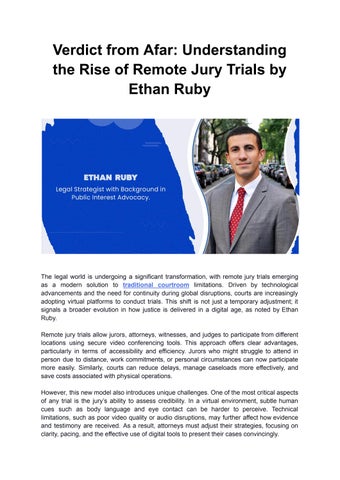
Verdict from Afar: Understanding the Rise of Remote Jury Trials by Ethan Ruby

The legal world is undergoing a significant transformation, with remote jury trials emerging as a modern solution to traditional courtroom limitations Driven by technological advancements and the need for continuity during global disruptions, courts are increasingly adopting virtual platforms to conduct trials. This shift is not just a temporary adjustment; it signals a broader evolution in how justice is delivered in a digital age, as noted by Ethan Ruby
Remote jury trials allow jurors, attorneys, witnesses, and judges to participate from different locations using secure video conferencing tools This approach offers clear advantages, particularly in terms of accessibility and efficiency Jurors who might struggle to attend in person due to distance, work commitments, or personal circumstances can now participate more easily. Similarly, courts can reduce delays, manage caseloads more effectively, and save costs associated with physical operations
However, this new model also introduces unique challenges. One of the most critical aspects of any trial is the jury’s ability to assess credibility In a virtual environment, subtle human cues such as body language and eye contact can be harder to perceive Technical limitations, such as poor video quality or audio disruptions, may further affect how evidence and testimony are received. As a result, attorneys must adjust their strategies, focusing on clarity, pacing, and the effective use of digital tools to present their cases convincingly
Another concern is maintaining fairness and impartiality. In a traditional courtroom, the environment is controlled, minimizing external influences on jurors. Remote settings, however, raise questions about distractions, privacy, and potential outside interference Courts must implement strict guidelines and monitoring systems to ensure that jurors remain attentive and unbiased throughout the proceedings.
Security is also a key consideration Protecting sensitive information and preventing unauthorized access or recordings are essential for preserving the integrity of the trial Reliable platforms, clear protocols, and ongoing technological support are necessary to build trust in remote legal processes
Despite these challenges, remote jury trials offer a glimpse into the future of litigation. They demonstrate how the legal system can adapt to changing circumstances while maintaining its core principles As technology continues to evolve, hybrid models combining in-person and virtual elements may become the norm
Remote jury trials represent more than a shift in format; they reflect a broader commitment to innovation and accessibility in the pursuit of justice