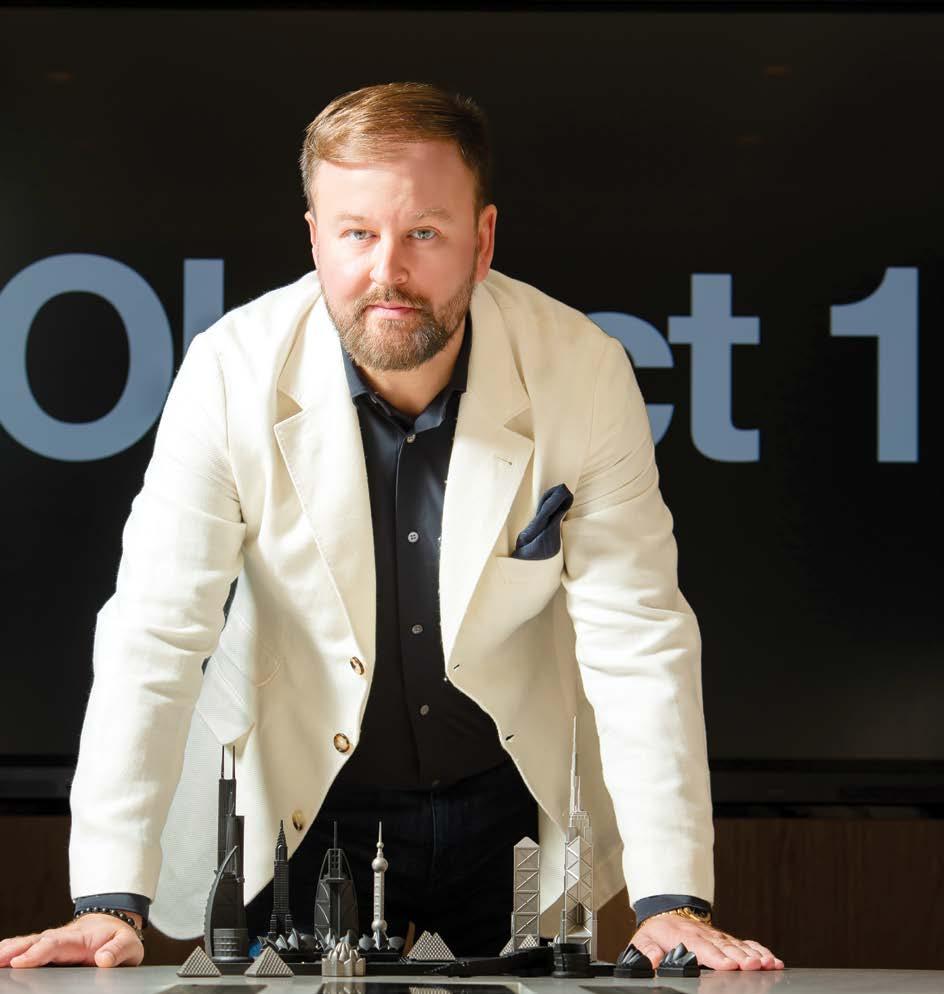


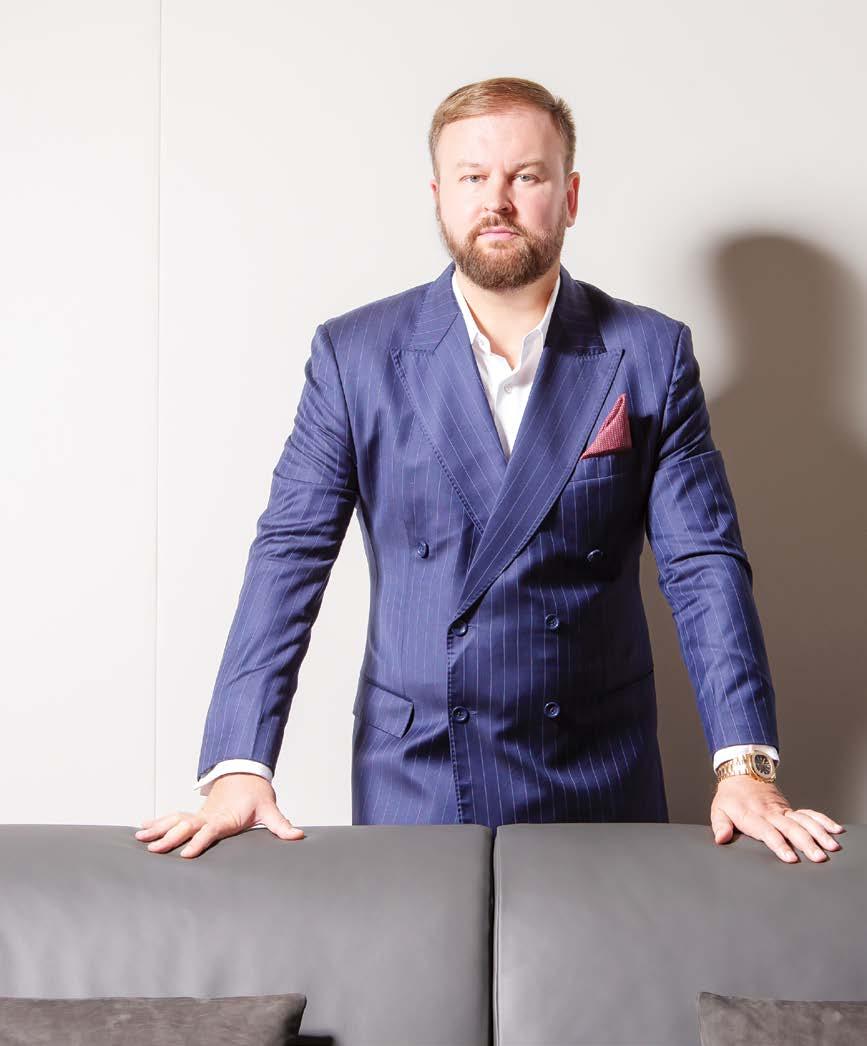
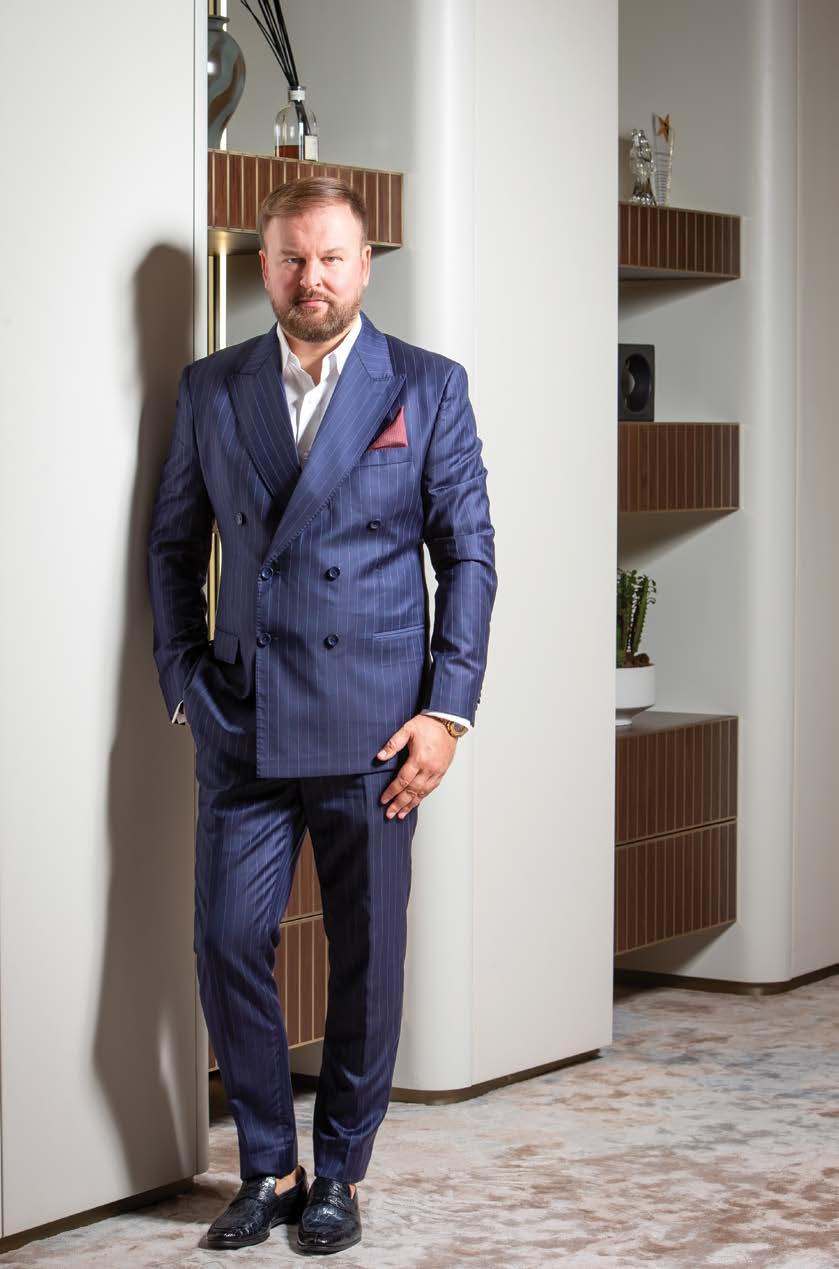
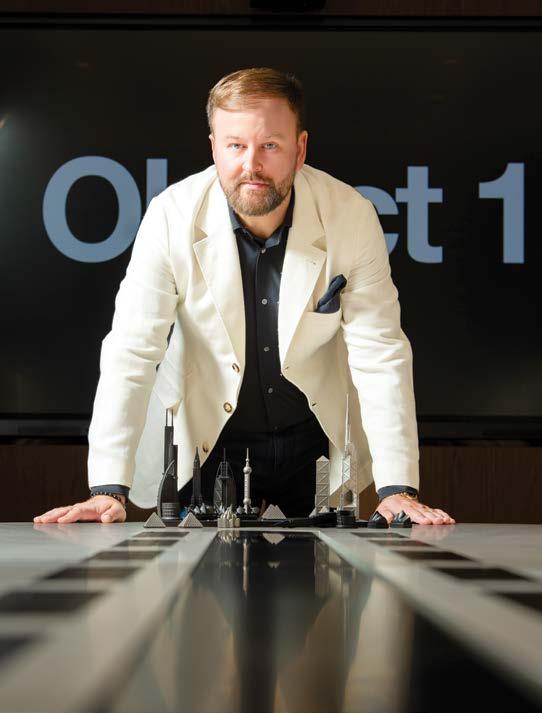
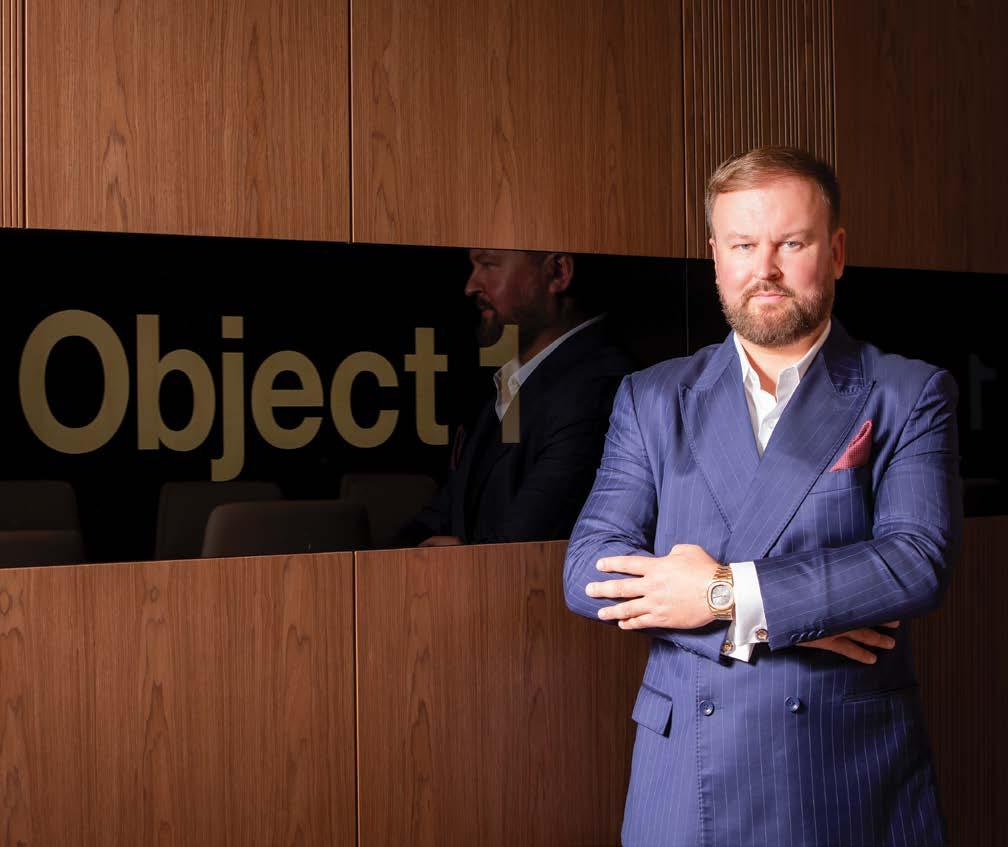
→ Egor Maslennikov is the founder and Chairman of Object 1.



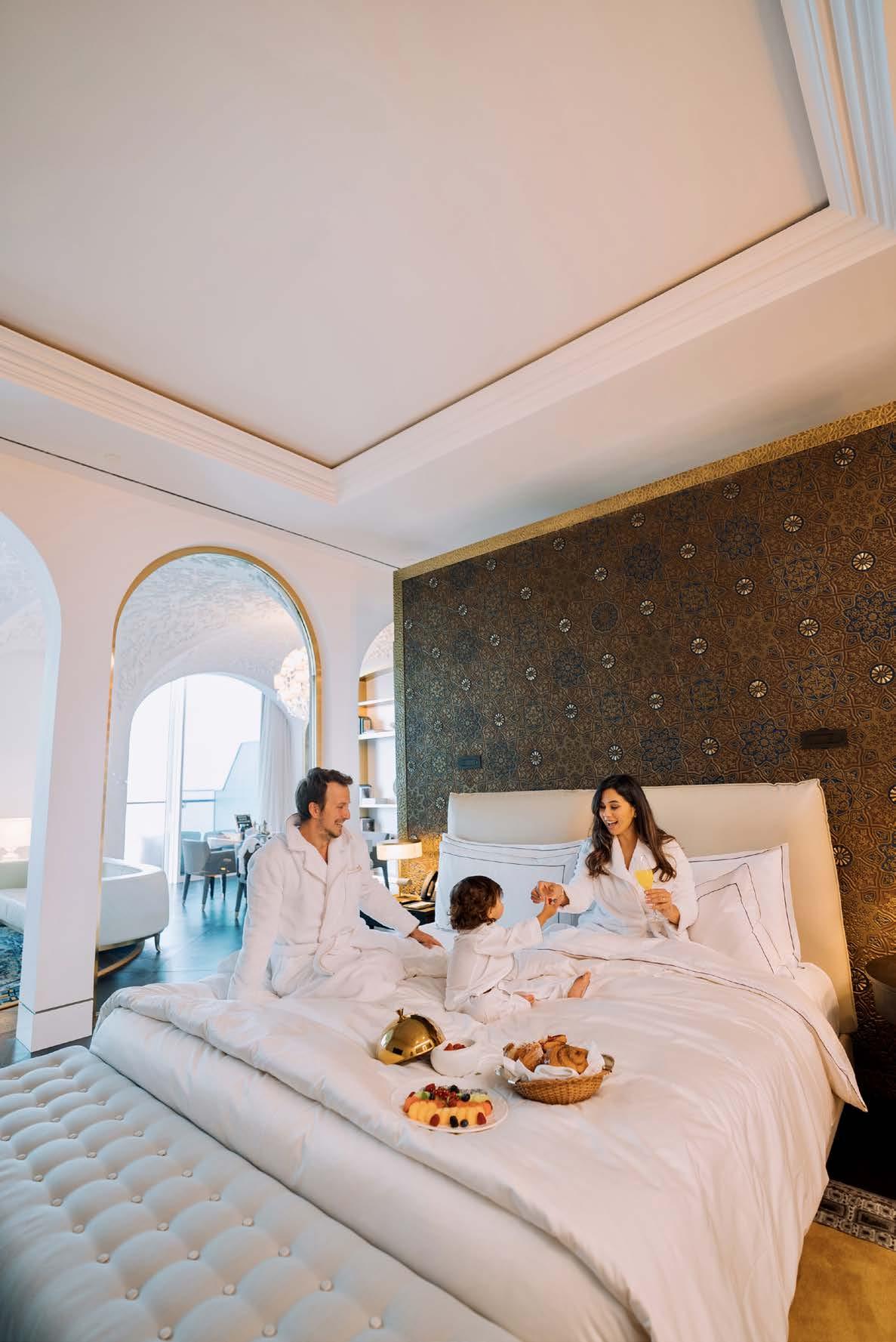
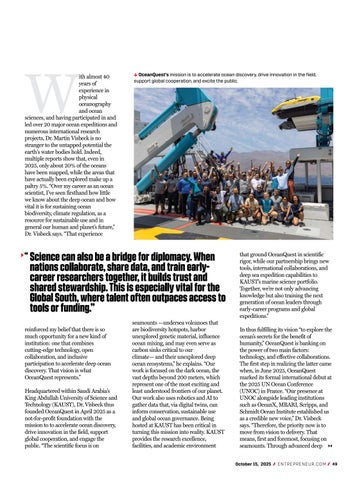
Step into a world of opulence when you book a Suite at Raffles Doha.
Experience the added luxury of QAR 750 credit to spend on dining in the hotel, and QAR 500 towards any Spa treatment.
Children aged 12 and below are welcome to indulge in the enchantment of complimentary dining.
Rates starting from QAR 3,500 per night
For reservations, please call +974 4030 7100 or email reservations.doha@raffles.com

CEO Wissam Younane wissam@bncpublishing.net
MANAGING DIRECTOR Rabih Najm rabih@bncpublishing.net
ART DIRECTOR Simona El Khoury
EDITOR IN CHIEF Anil Bhoyrul anil@bncpublishing.net
MANAGING EDITOR Tamara Pupic tamara@bncpublishing.net
FEATURES EDITOR Aalia Mehreen Ahmed aalia@bncpublishing.net
DIRECTOR OF INNOVATION
Sarah Saddouk sarah@bncpublishing.net
GROUP SALES DIRECTOR – B2B GROUP Joaquim D’Costa jo@bncpublishing.net
HEAD OF PARTNERSHIPS Samir Glor Samir@bncpublishing.net
COMMERCIAL LEAD Anna Chipala anna@bncpublishing.net
COLUMNIST Tamara Clarke
CONTRIBUTING WRITERS Abbes Seqqat and Fida Chaaban
SUBSCRIBE
Contact subscriptions@bncpublishing.net to receive Entrepreneur Middle East every issue
COMMERCIAL ENQUIRIES sales@bncpublishing.net
ENTREPRENEUR.COM
Access fresh content daily on our website



How Dubai’s latest reform proves once again that it’s thinking ahead — and setting the stage for the next wave of business growth
Dubai has long been known for turning bold ideas into policy — and the latest decision to allow free-zone companies to operate on the mainland is a perfect example of that forward-thinking spirit. This is not just a legal adjustment; it’s a strategic signal that Dubai intends to keep its economy fluid, open, and globally competitive.
Under the new rule, free-zone businesses can now apply for a permit that allows them to operate on the mainland for up to six months, renewable at a modest cost. For many entrepreneurs, this removes one of the most persistent barriers to growth — the divide between the free zones and the mainland. It means that a tech startup based in Dubai Internet City or a design studio in Dubai Media City can now directly serve onshore clients, take
part in government projects, and expand their customer base without restructuring their entire business.
What makes this move so significant is that it fits perfectly into Dubai’s long-term vision to double the size of its economy by 2033. It’s another step in aligning the city’s business ecosystem with the global economy’s needs — fast, flexible, and interconnected. By creating a bridge between the free zones and the mainland, Dubai is enabling innovation to circulate more freely. The expected rise in cross-jurisdiction trade — estimated at 15 to 20 percent in the first year — could inject billions into the local economy.
But beyond the numbers, this reform sends a message about mindset. It shows that Dubai doesn’t wait for problems to arise before finding solutions. Instead, it anticipates what entrepreneurs and investors need — simplicity, clarity, and opportunity — and acts ahead of time. This readiness to adapt makes the city uniquely attractive to ambitious founders and multinational companies alike.
For entrepreneurs, the new permit is more than a document; it’s an invitation. It allows them to think bigger, move faster, and tap into the full scale of Dubai’s market. And for investors, it reinforces what many already believe — that Dubai is not just open for business, but continually re-engineering itself to make doing business easier.
In a world where agility defines success, I suspect that Dubai has once again proven that it’s not just keeping up — it’s leading the way.
Anil Bhoyrul Editor-in-Chief



Enlighten Your Eternal Beauty, Inside and Out!
@muarjewels www.muarjewels.com
info@muarjewels.com
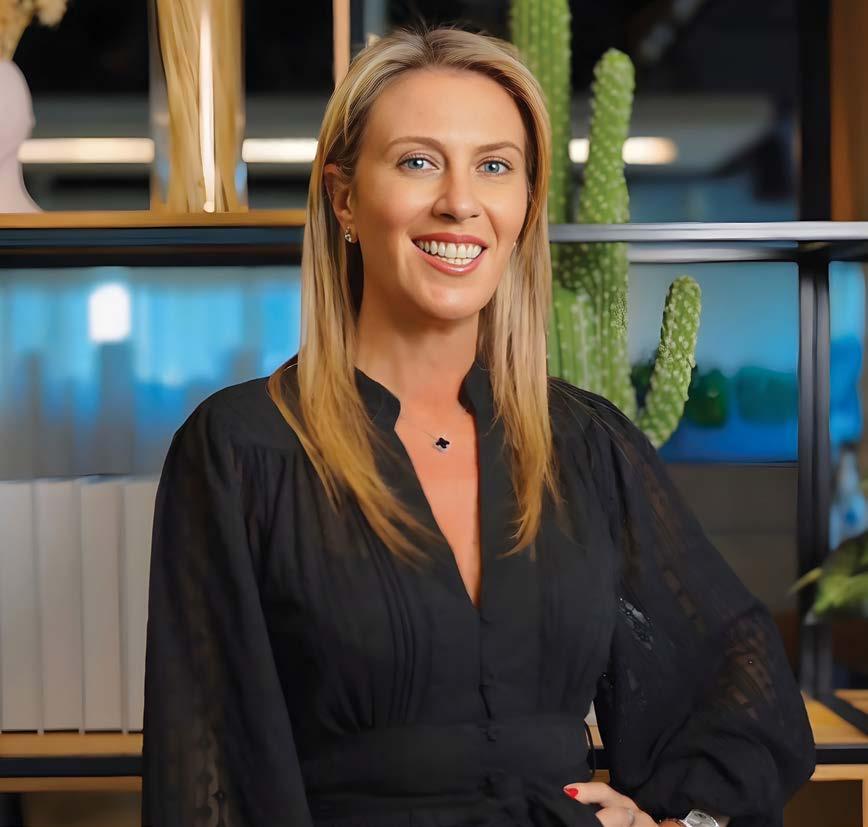
As the ENTERTAINER marks its 25th anniversary, founder Donna Benton reflects on the lessons behind one of the region’s most successful business stories.
by TAMARA PUPIC
Back in 2001, I thought if I could one day sell this company for a million dirhams, that would be amazing,” says Donna Benton, founder of the UAE’s homegrown lifestyle savings app, the ENTERTAINER, reflecting on its humble beginnings 25 years ago. Grounded, passionate, and driven, Benton has far exceeded those early dreams—growing her startup idea into a data-driven technology company now on track toward a US$300 million valuation.
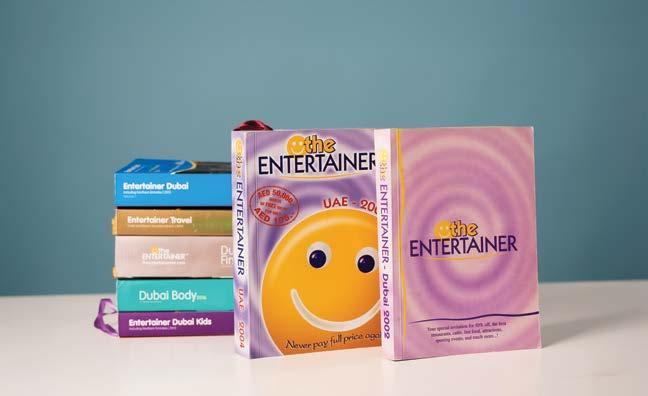
The ENTERTAINER book of 2-for-1 vouchers quickly gained traction, expanding beyond the UAE with launches in Qatar and Bahrain (2008), Oman (2010), Kuwait and Saudi Arabia (2012), and Singapore (2013). Yet, Benton still remembers her first breakthrough vividly—signing her very first merchant: five fine-dining and three casual restaurants at the JW Marriott in Deira. "If I could bottle the feeling I had when I signed the Marriott, and feel like that forever, it would be amazing,” Benton says. "It was more money than I came here [to the UAE] with.”
The backstory to this achievement is that Benton—then a 26-year-old newcomer to Dubai from Melbourne, with only US$3,000 in her pocket—personally managed every facet of the business in its early days, including conducting door-todoor sales. "I think that's the biggest thing for entrepreneurs, when you have an idea, work hard, and you are still at the embryonic stages, and then someone else believes in you and proves that it's actually working,” Benton explains.
Benton’s next defining milestone came in 2013, when she led the ENTERTAINER’s bold
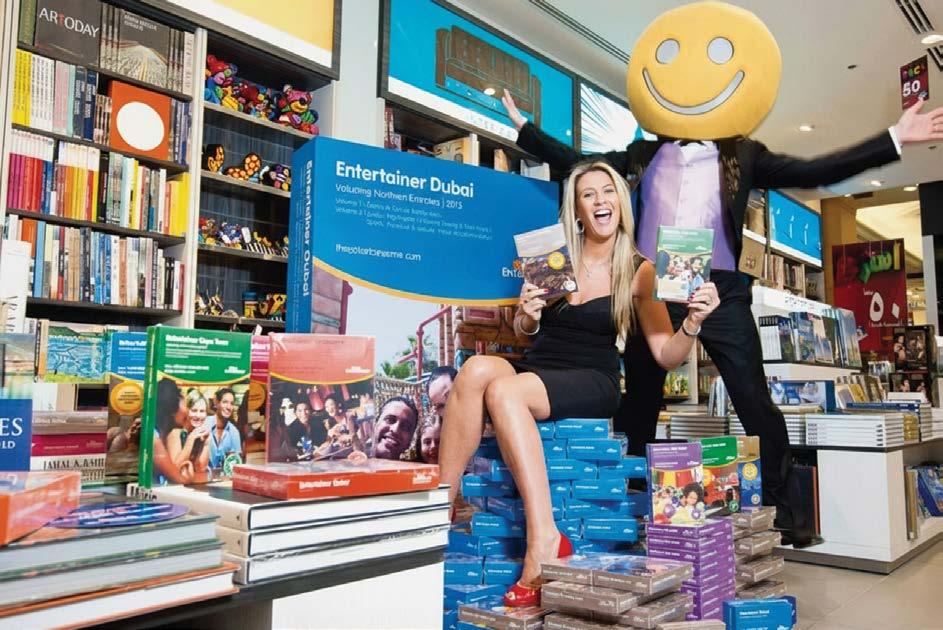
transformation from a print publication to a fully fledged mobile app, marking the company’s evolution into the digital age. Being among the first to embrace such technology was a risk that paid off – but not without its teething problems. "We went digital on January 2, 2014, and our app got hacked into, so it wasn't working while everyone was actually trying to use it,” Benton recalls. "Since we still had the voucher books, we decided to send our staff out to hand people physical vouchers wherever they were, so they could use them. Everyone was running around.”
Among other most defining chapters of Benton's entrepreneurial
WHEN I STARTED THE ENTERTAINER AND WE BEGAN TAKING DIVIDENDS, I NEVER BOUGHT LOUIS VUITTON BAGS OR TRAVELLED BUSINESS CLASS. INSTEAD, I’D PUT A DEPOSIT ON A HOUSE, AN APARTMENT, OR ANOTHER PROPERTY — AND THEN RENT IT OUT."
IF I COULD BOTTLE THE FEELING I HAD IN 2001 WHEN I SIGNED THE FIRST MERCHANT, THE MARRIOTT, AND FEEL LIKE THAT FOREVER, IT WOULD BE AMAZING.”
journey were two pivotal transactions—the partial sales of her company
that marked both growth and transformation. In 2012, she sold 50% of the ENTERTAINER to
an investment group with an aim to fast-track the company’s growth and expansion beyond the region. Then, in 2018, Benton took another leap, selling 85% of her remaining stake to GFH Financial Group, a Bahrain-based financial institution. "The first time was great, but it was part of our evolution- we achieved in three years what would normally have taken eight,” she says. "To be honest, I just needed a change. At the time, we were on a peak trajectory, but for me personally, it was the right timing. I was a single mom then, and I wanted more security
and stability for my family.”
Before moving on to our next topic, Benton shares a never-beforetold anecdote from her exit negotiations in 2018. “It was 17 men and me, and pretty much all were negotiating with each other,” she says.
"Everyone was just all over the place. I was the single biggest shareholder, and I actually wrote the figure down on a napkin next to the Chairman and I said, 'This is what I'll sell for. I really need to go to the bathroom and I'm hungry. If I come back and you've agreed, great. If not, I'm going for lunch.’ The rest, as they say, is history.
Plus, Benton insists on sharing a piece of advice for fellow entrepreneurs.
“If you’re selling your company—unless it’s a hugely distressed sale—don’t sell it. If you’re not getting what you want, ask yourself why. Build it up, do the math, and you might be able to sell it for more later. It’s about knowing your worth and waiting for the right timing.”
Soon after, she launched CAHA CAPO, a Dubai-based international swimwear label that operates under The Benton Group (TBG). She has also become a
IF YOU’RE SELLING YOUR COMPANY—UNLESS IT’S A HUGELY DISTRESS SALE—DON’T SELL IT. IF YOU’RE NOT GETTING WHAT YOU WANT, ASK YOURSELF WHY. BUILD IT UP, DO THE MATH, AND YOU MIGHT BE ABLE TO SELL IT FOR MORE LATER.”
key shareholder and board member of Sunset Hospitality Group, a Dubai-headquartered hospitality investment and management firm.
"If I'm being honest, it took probably a year or two to really come down from the ENTERTAINER. It wasn't my commercial baby anymore, but I still had my heart in it,” Benton says. “But then I got quite happy doing what I was doing,” Benton recalls. "I had started the Benton Group, CAHA CAPO. I joined Sunset Hospitality and I invest in property in the UAE, Thailand and Australia.
She adds, "When I started the ENTERTAINER and we began taking dividends, I never bought Louis Vuitton bags or
travelled business class. Instead, I’d put a deposit on a house, an apartment, or another property — and then rent it out."
In 2020, Benton announced her full exit from the ENTERTAINER, following the sale of her remaining 15% stake. It was meant to be the full
stop to a remarkable chapter in her life and career — but instead, it turned out to be just a comma.
"In 2023, our Chairman messaged me and said he wanted to have a chat about whether I would be open to coming back. It wasn't immediate that I

said yes because I had a lot to consider,” Benton says. "But my heart has obviously always been at the ENTERTAINER because I love making the unaffordable affordable for people.”
In September 2023, Benton came back to the ENTERTAINER as a shareholder and CEO, restructured the company, and brought back her old team. “It had to go back to being a buy one, get one free concept that is uniform seven days a week, annually from January to December, and not what I call sort of a gym membership way. It's all about merchant relationships that you have, and we signed 1,700 merchants in the first year alone."
She adds, ”I've been here two years now, and we basically got back to pretty much where we were when I sold, and we put an extra US$50 to US$60 million on the valuation in two years. That's something I’m proud of."
Today, the ENTERTAINER offers seven locationspecific products for the UAE, Qatar, Oman, Bahrain, KSA, Kuwait, Singapore, and a regional product for the GCCmaking every experience more rewarding.
Benton aims to harness data insights and improve user engagement to
reinvigorate the platform for a new generation of consumers, building on the enduring appeal of its savings-driven model. "I don't think a lot of people realize how much money people actually have saved. And at the same time, how much footfall and revenue we've put through our app,” she says. "Each year, we put US$1.3 billion into the economy. That's a savings of around US$350 million a year for people. Today, I still have people come up to me, like a month ago, a woman came up to me and said she was able to put a deposit on a house because of the savings that she had in the ENTERTAINER. It's changing lives. And I just love that it works for everybody."
She describes her management style as “fair, fun, but firm”—the three F’s, as she calls them. "In the business, I would never ask someone to do anything that

I wouldn't do, but then I also expect results. I don't like laziness. I don't like clock watchers. What you put in is what you get out. I've never changed that and I never will. I think I'm still the same person I was 25 years ago. I'm extremely appreciative of what I have.”
Looking ahead, Benton says her focus is on going deeper and wider across markets, doubling down on merchants -whom she
considers the backbone of the business- and driving innovation through technology.
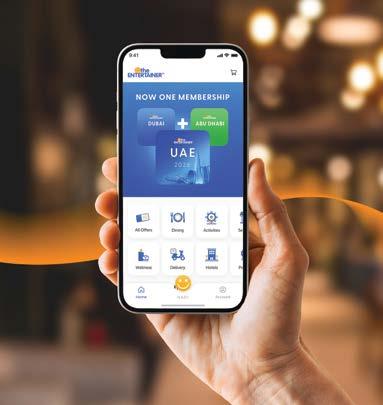
The 2026 Entertainer app promises to elevate the user experience with an expanded network of merchants, a refreshed UX/ UI design, and integrated AI capabilities through its proprietary H.A.P.I™ system—delivering personalized recommendations and real-time
“A woman came up to me and said she was able to put a deposit on a house because of the savings that she had in the ENTERTAINER. It's changing lives. And I just love that it works for everybody.”
responses. "We always try to keep evolving, but we have to do it at the right time. I find people sometimes move too fast in tech and then it falls down. Sometimes, you have to let others do it and then see what's working and adapt.”
As she reflects on her journey—past milestones, new ventures, and everything in between—Benton acknowledges that ambition never really fades, it simply evolves. “I still have goals and dreams, professionally and personally, so it’s a balance,” she says.
EGOR MASLENNIKOV, founder and Chairman of Object 1, charts the company’s path from a Dubai leader to regional powerhouse. by
TAMARA PUPIC

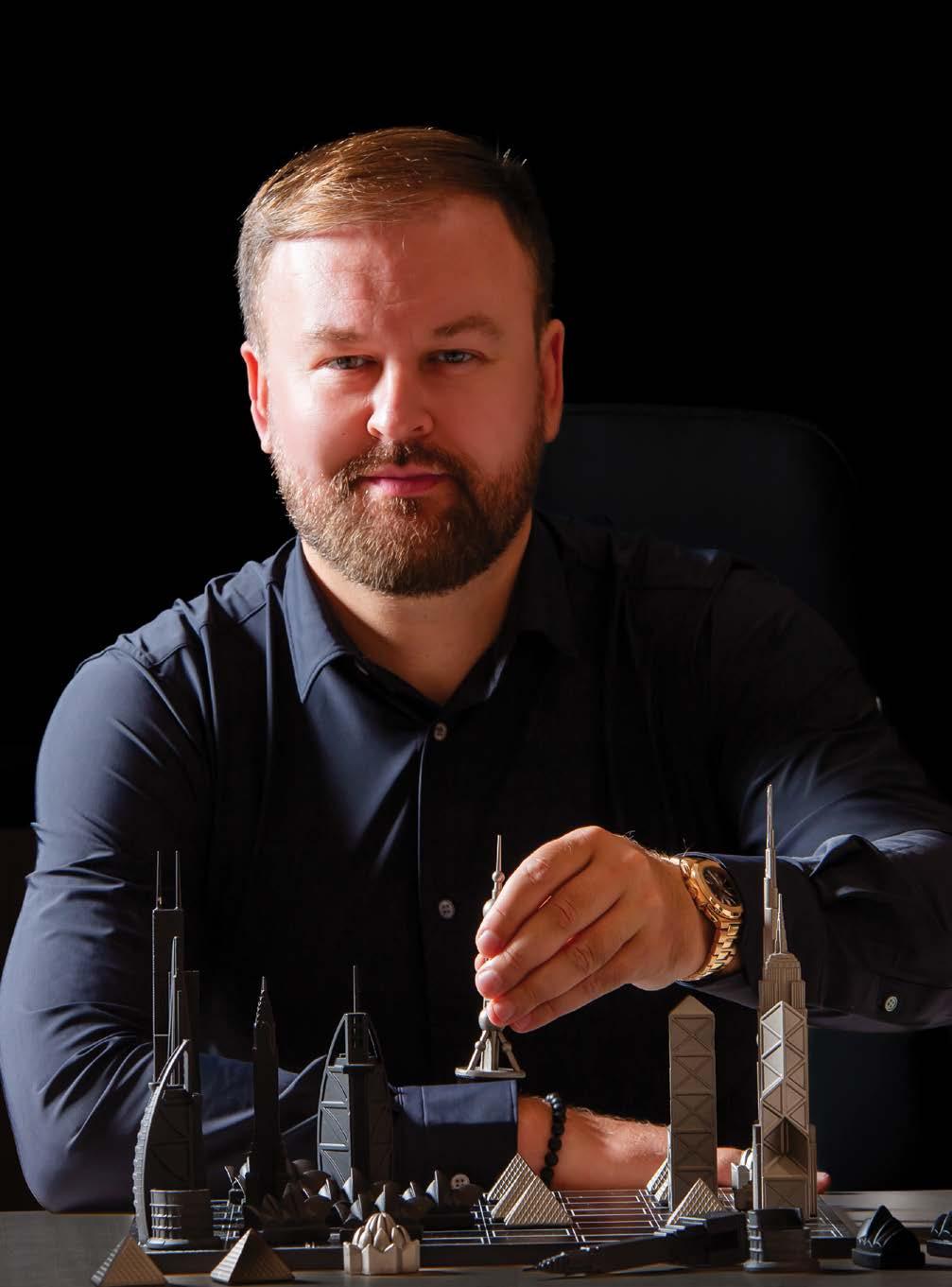
With its reputation as one of the world’s most innovative and dynamic real estate markets, Dubai —and the wider UAE— has long been a catalyst for bold ambitions. It was against this backdrop that Egor Maslennikov launched Object 1 in 2019, driven by a vision to redefine the landscape with projects that blend innovation, community, and long-term value. “I envisioned a developer brand dedicated to creating exclusive, architectural landmarks,” says Maslennikov. "Our goal has always been to contribute to the growth of Dubai and the Emirates by delivering distinctive projects, from master developments to residential communities.”
The Object 1 projects have their roots in Maslennikov’s extensive expertise in the real estate sector. His professional journey began at 23, directly after university, with a role in banking centered on real estate assessment and portfolio development. By 2008, he transitioned into direct involvement in development, offering valuable hands-on experience in building projects rather than solely evaluating them.
With a foundation of Maslennikov’s decades-long experience, the Object 1 brand launched its UAE presence in 2022, setting its sights on sustainable, long-term development from day one. "By focusing on delivering premium housing that meets the needs of today’s buyers while anticipating lifestyle shifts for future generations, we positioned ourselves to grow rapidly,” says Maslennikov. "This commitment, aligned with Dubai’s broader vision for sustainable urban growth under the Dubai 2040 Urban Master Plan, is why in just three years we have become one of the top 10 developers in Dubai and earned recognition from the Arabian Property Awards and the UAE Realty Awards.”
Today, Object 1’s diverse pipeline underscores both its expanding presence in Dubai and its confidence in

OUR GOAL HAS ALWAYS BEEN TO CONTRIBUTE TO THE GROWTH OF DUBAI AND THE EMIRATES BY DELIVERING DISTINCTIVE PROJECTS, FROM MASTER DEVELOPMENTS TO RESIDENTIAL COMMUNITIES.” “
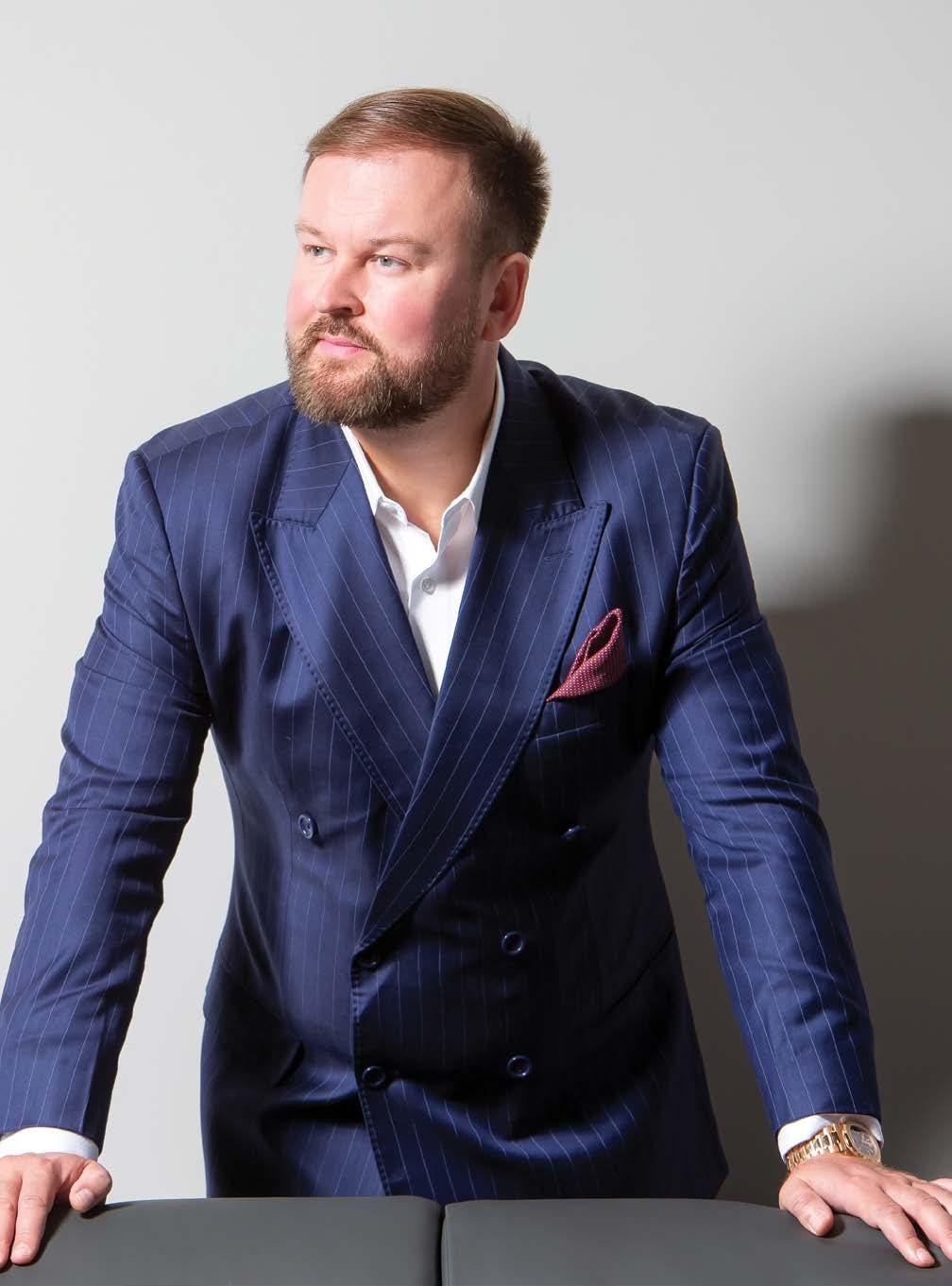
→ Egor Maslennikov is the founder and Chairman of Object 1.
the UAE market’s future potential. Its strong presence in Dubai’s Jumeirah Village Circle (JVC) area balances family living and design flair. The V1TER project focuses on functional layouts with premium finishing at an accessible price point. Also, 1WOOD Residence is inspired by nature, using wood-textured finishes to create warmth and a sense
“
SUCCESS IN OUR SECTOR USED TO BE MEASURED BY SELLING OUT A TOWER. TODAY, IT’S ABOUT SHAPING DISTRICTS AND INFLUENCING HOW PEOPLE
CITY LIFE.”
Object 1 Founder and Chairman EGOR MASLENNIKOV’S Advice for Real Estate Developers
}First, understand that real estate development in the UAE is not a side venture. It requires full commitment and presence in the market. You need to live here, be immersed in the ecosystem, and have significant prior experience.
}Second, be clear about your financial capabilities and think beyond a single project. It’s important to have at least a five-year vision for how you want to grow the company, not just delivering one project.
}And third, focus on strategic planning and financial discipline. The UAE market rewards long-term thinking and solid execution, so previous development experience combined with a disciplined approach is essential.
of belonging, while Ozone1 integrates dedicated yoga spaces, aromatherapy, and advanced air purification systems, responding directly to growing wellness demand. Other examples are ALTA V1EW, one of the tallest towers in JVC, offering skyhomes with panoramic views and cutting-edge smart features, and THE F1FTH which celebrates family living with creative play zones and entertainment areas.
In Jumeirah Village Triangle (JVT), Object 1 has emphasized the integration of wellness and technology across its developments. W1NNER was conceived with lifestyle efficiency at its core, catering to the needs of both young professionals and families. LUM1NAR Towers highlight advanced automation, enabling residents to manage lighting, climate, and security through smart home systems. V1VID Residence stands out as a bold architectural statement, distinguished by its curved, futuristic detailing. ESSENL1FE extends the focus on wellness, offering infinity pools, meditation areas, and spa-inspired
amenities designed to foster a sense of tranquility within an urban environment.
Jumeirah Garden City hosts Object 1’s flagship sustainability initiative, EVERGR1N House, a biophilic design-led development that achieved a complete sell-out within a month of its launch. The project incorporates green lounges, wellness zones, and eco-conscious materials, appealing to both investors and digital nomads in search of rental-ready residences. Following its resounding success, the company introduced a second phase with the launch of EVERGR1N House 2.
In Al Furjan, V1STARA House reflects a focus on growth and community integration, with layouts specifically designed to cultivate a neighborhood atmosphere. Within the Dubai Land Residential Complex, VERDAN1A highlights Object 1’s commitment to sustainable design principles. Meanwhile, in Sports City, the company has introduced AUREL1A, alongside several additional upcoming projects aimed at active, younger buyers,
combining affordability with a strong emphasis on community-oriented amenities.
All these developments reflect Maslennikov’s deep understanding of the city’s real estate market.
"Projects are large-scale and require a systematic, long-term approach. The level of investment needed here is higher than in many other countries, and competition is exceptionally strong,” he explains.
"For Object 1, these specifics became guiding principles. We embraced the scale by focusing on ambitious, distinctive developments, committed the necessary resources to deliver lasting quality, and built strong relationships to navigate such a competitive landscape.”
Reflecting this perspective, Maslennikov’s vision for Object 1 has progressed significantly since its early days. "Success in our sector used to be measured by selling out a tower. Today, it’s about shaping districts and influencing how people experience city life,” he says.
"While our original vision was to fill a clear market gap, that vision has expanded from delivering premium mid-market
homes to reimagining urban living in the Gulf."
While Dubai will remains a key market for Object 1, which is evident through its activities in nine districts of the city’s districts and the plans to launch several new projects in the luxury segment, including developments in Meydan Horizon and along Sheikh Zayed Road, Maslennikov has his sights set on Abu Dhabi as well. "We are focused on expanding further into Abu Dhabi, which we see as one of the most promising directions for growth, with an aim to extend our
model of design-led, sustainable living into the capital,” he says. "We plan to open our new sales gallery there this year, and we already have several upcoming projects on Reem Island, supported by a dedicated team. This marks the beginning of a new chapter for Object 1.”
To achieve these objectives, Maslennikov underscores that the balance between vision and execution starts with people. He prioritizes employee retention and team development, which enables him to dedicate greater attention to the company’s most strategic
“
MY LONG-STANDING TEAM ALLOWS ME TO FOCUS ON THE BIG PICTURE, KNOWING THAT DAY-TO-DAY EXECUTION IS IN CAPABLE HANDS, WHILE STILL BEING PRESENT AS A MENTOR AND PARTNER. IT’S THIS BALANCE OF VISION, LOYALTY, AND TEAMWORK THAT DRIVES OBJECT 1 FORWARD.”
priorities. "That approach allows me to focus on the big picture, knowing that day-to-day execution is in capable hands, while still being present as a mentor and partner. It’s this balance of vision, loyalty, and teamwork that drives Object 1 forward,” he says.
The strong Object 1 team empowers Maslennikov to stay fully engaged with the UAE real estate market and its fast-changing dynamics. "Consumer expectations, pricing trends, and regulatory updates can shift
quickly, and we monitor them around the clock to remain competitive,” he says. "We’ve built strong internal capabilities to respond effectively: an analytics team that tracks market data in real time, an investment team that evaluates opportunities, and continuous feedback loops from our sales department. This allows us to understand buyer profiles, anticipate demand, and focus on regions with the greatest potential for our customers.”
In the broader context of the real estate industry, Maslennikov is proud of Object 1’s unique positioning in the premium mass market- it combines accessibility with excellence, offering projects at attainable price points while upholding the quality, design sophistication. "This combination creates a powerful value proposition: buyers receive more than they expect, and investors secure assets with strong long-term growth potential,” he says. "We sustain this edge by constantly raising the bar - every project is designed with a distinctive architectural identity, thoughtfully curated
amenities, and a high standard of finishing. Our goal is not simply to meet expectations, but to exceed them, establishing a new benchmark of quality within our category.”
As Dubai and the UAE continue to stand as a pivotal force in shaping the global real estate landscape -just in the first half of 2025 alone, Dubai registered AED431 billion in real estate transactions, marking a 25% year-on-year increase- Maslennikov is confident that Object 1 will seize the vast opportunities to contribute to this growing market. "We aim to make Object 1 a pan-regional developer with a diversified footprint across the UAE and the wider Gulf. Our expansion in Abu Dhabi is only the beginning; we aim to enter new markets where demand for design-led, wellness-driven communities is growing.”
He concludes, "The goal is to move from being one of Dubai’s top ten developers to becoming one of the most influential real estate players in the region."
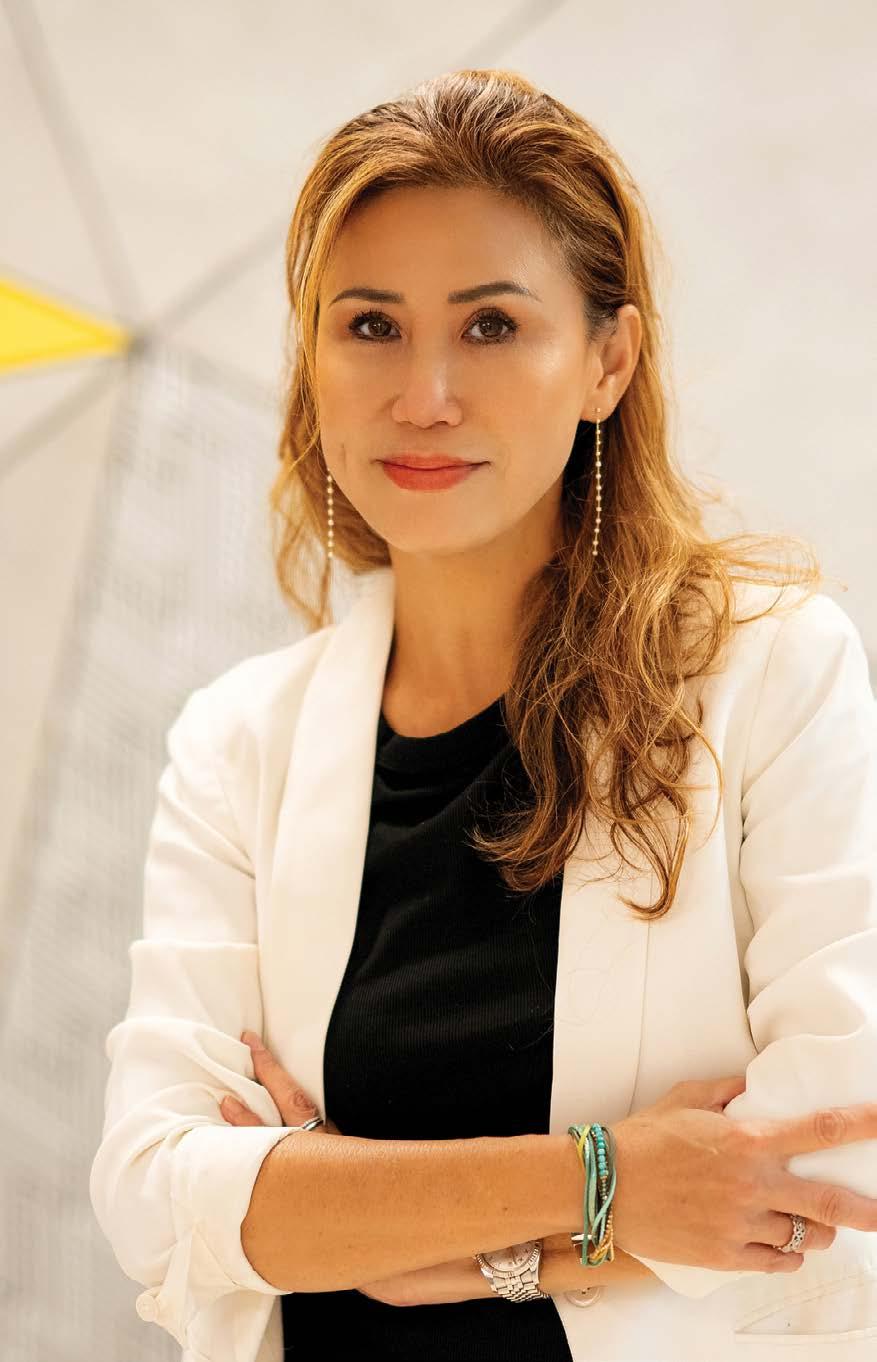
→ Trixie LohMirmand is the Executive Vice President at Dubai World Trade Centre (DWTC).
At the helm of Dubai World Trade Centre’s expanding portfolio, Trixie LohMirmand has turned GITEX Global into a symbol of the UAE’s ambition. As the 45th edition opens, she marks 20 years of powering Dubai’s rise as a world capital for innovation. by TAMARA PUPIC
Kevin As GITEX
Global by by Dubai World Trade Centre
(DWTC) opens its doors today to its 45th edition, it once again positions Dubai at the forefront of global innovation. Behind its evolution and the broader transformation of DWTC’s event portfolio is Trixie LohMirmand, Executive Vice President, DWTC, who in 2025 marks 20 years of driving the UAE’s most powerful platforms for technology, sustainability,
and the future economy.
"GITEX is a large-scale mega convention with seismic impact by merit of the stakeholders it convenes across continents and sectors,” LohMirmand says.
"It equips governments and companies to internalize innovation, scale across borders, and sharpen digital capacity-building.”
LohMirmand has led the expansion of DWTC’s events portfolio, which in turn has driven the growth of the Dubai Exhibition Centre at Expo City Dubai — a US$2.7 billion development set to become the world’s largest purpose-built indoor venue
upon completion. More importantly, she has championed DWTC’s pivotal role in advancing Dubai’s business tourism and trade sectors.
The organization’s self-managed events generated AED7.22 billion (US$1.9 billion) in economic output and AED4.15 billion (US$1.1 billion) in gross value added (GVA) in 2024- a remarkable 53% increase over 2022.
"My vision is to see our platforms act as powerful channels of foreign direct investment and policy alignment - where governments, businesses, startups, and investors unite on one front,” she says.
THE VISION, BOLDNESS, AND AUDACITY OF DUBAI AND THE UAE NATION INSPIRED ME TO EVOLVE EVENTS INTO TRANSFORMATIVE PLATFORMS OF SCALE AND INFLUENCE.”
LohMirmand’s career began in Singapore’s creative advertising industry before she joined Reed Exhibitions — then the world’s largest event organizer — a move that took her from Singapore to London. She faced professional isolation as a young woman of color shaped her leadership with resilience and conviction. "During my early career in Europe in the late nineties, I faced challenges and biases that tested me both personally and professionally,” she says. "Those experiences became formative. They compelled me to develop resilience, deepen my sense of self-reliance, and an unwavering conviction to stand by my decisions, even when they challenged popular opinion."
Her outstanding performance at Reed earned her global recognition, but it was an offer in Dubai in 2005 that would set her on a path that changed everything. "The inflection point for me came when I realized that in Dubai and the UAE, outsized ambition is reserved for the extraordinary,” LohMirmand says. "The vision, boldness, and audacity of this emirate and nation inspired me to evolve events into transformative platforms of scale and influence."
"My mission became to harness the power of
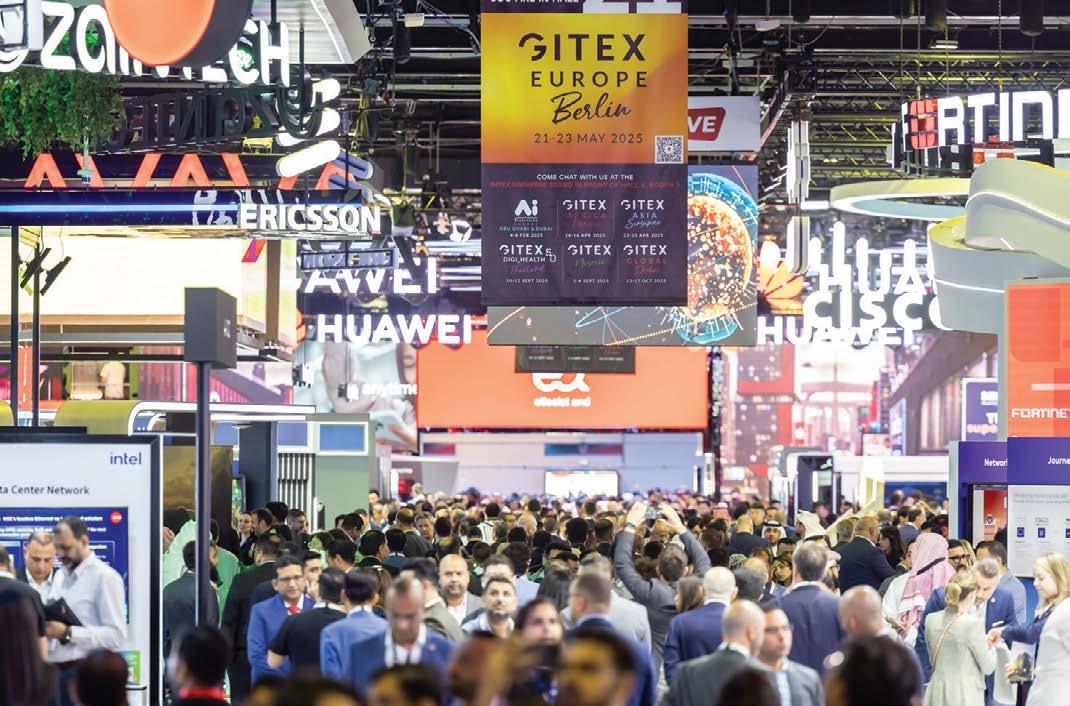
↓ GITEX Global 2025 takes place at the Dubai World Trade Centre from October 13–17, 2025.
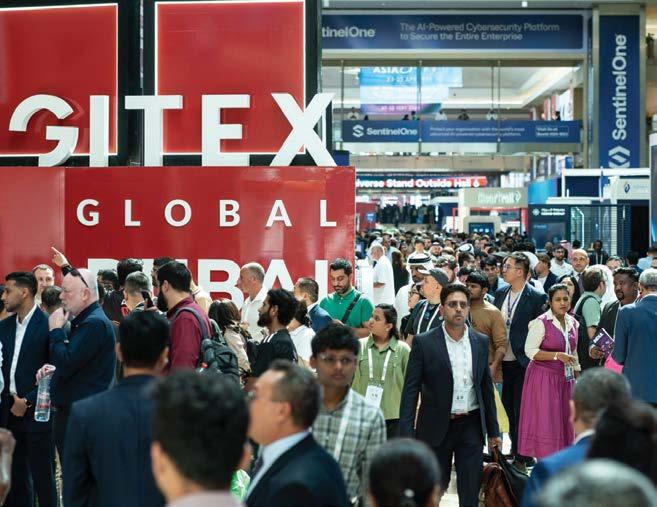
business events and tourism to drive economic growth, create jobs, nurture human capital, and position cities and countries as influential global powers. More than that, I wanted events to compel people and industries to reflect on their greater purpose, their responsibilities to society, and the lasting impact they can create.”
The 45th edition of GITEX Global is expected to draw more than 200,000 visitors, 6,000 exhibitors and thousands of startups from more than 100 countries. Notably, this year’s event
will have record-breaking participation of over 40 unicorns that have made headlines worldwide with their breakthroughsfrom Nobel winning gene-editing AI with the potential to cure genetic diseases to builders of the world’s largest decarbonized AI supercomputer. Reflecting on nearly two decades at Dubai World Trade Centre, LohMirmand points to several defining milestones that have shaped both her career and the organization’s evolution. “One is the revival of live, in-person events during one of the most difficult
periods in modern history, the pandemic,” she says. "In 2020, while much of the world remained in lockdown, we pressed forward with conviction to deliver two of our largest events, Gulfood and GITEX. By completely redesigning our formats under rigorous health and safety protocols, we demonstrated resilience and boldness at a time when the industry was at a standstill. That decisive move not only reinforced Dubai’s leadership in the global restart of largescale events, but also laid the foundation for Gulfood and GITEX to
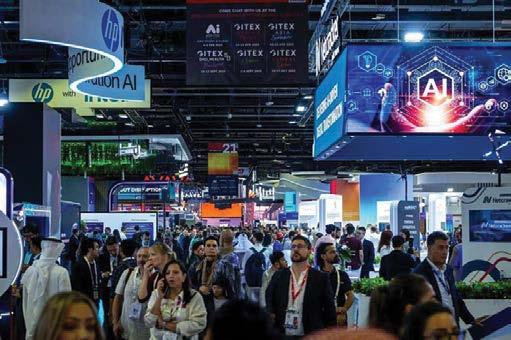
grow into what they are today — the world’s largest food and technology events respectively. To date, these remarkable events remain the only large-scale events in the world that ran uninterrupted throughout the COVID-19 pandemic.”
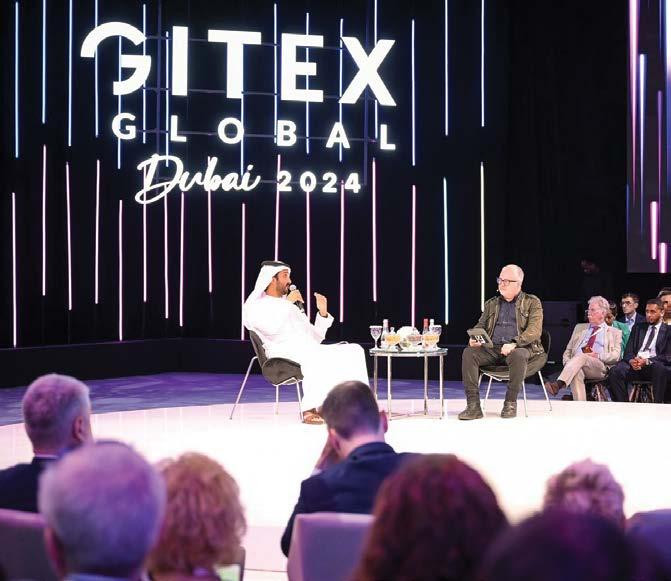
LohMirmand is also proud of the international growth of the GITEX brand as the event today spans seven countries across four regions, including Germany, Morocco, Nigeria, Singapore, Thailand, the UAE, and Vietnam. “It is one of the fastest international expansion timelines the industry has seen,” she says. "When we launched GITEX Africa in Morocco in 2023, we had more skeptics than fans. Yet, in just a mere three years, GITEX has established a presence in 14 cities and countries, creating powerful platforms that deliver education, investment, and business opportunities. Through this, we are enabling both established and frontier nations to accelerate their place in the global digital knowledge economy.”
In an industry defined by rapid technological change, LohMirmand believes relevance is earned through agility — by anticipating shifts before they happen, collaborating with visionary partners, and creating platforms that reflect the future rather than follow it. "Openness and humility are at the core of our business ethos. We constantly assess the dynamic winds of change in the markets and by engaging with our network of
global stakeholders. Their feedback and insights help us shape our narratives,” she says. "The key thing is to pivot and adapt early, to sense those shifts before they fully unfold, so that we remain agile and relevant. At GITEX, I constantly remind us we don’t build to remain. We build to rise.”
The most important pivot, LohMirmand continues, was to position GITEX as more than an event, but as a platform to connect and grow tech ecosystems worldwide. "We create new trusted corridors of collaboration between advanced economies and the global south, giving emerging countries a seat at the global digital decisionmaking table and access to knowledge and resources previously reserved for the privileged economies,” she says. "This shift positioned GITEX as an instrument of soft power and global influence.”
As AI has become a decisive factor for global competitiveness and geopolitical narratives, DWTC has also pivoted its event strategies to introduce new brands like “Ai Everything”. “It is positioned as the next catalyst for the future digital economies, by bringing together influential public and private leaders to address critical inflection points around investment, regulation, interoperability, and national AI missions,” says LohMirmand.
The 2025 edition of GITEX GLOBAL marks the finale year at Dubai World Trade Centre, as the event will move to Expo City Dubai in 2026, reuniting with Expand North Star. Set for December 7-11, 2026, the event will aim to amplify
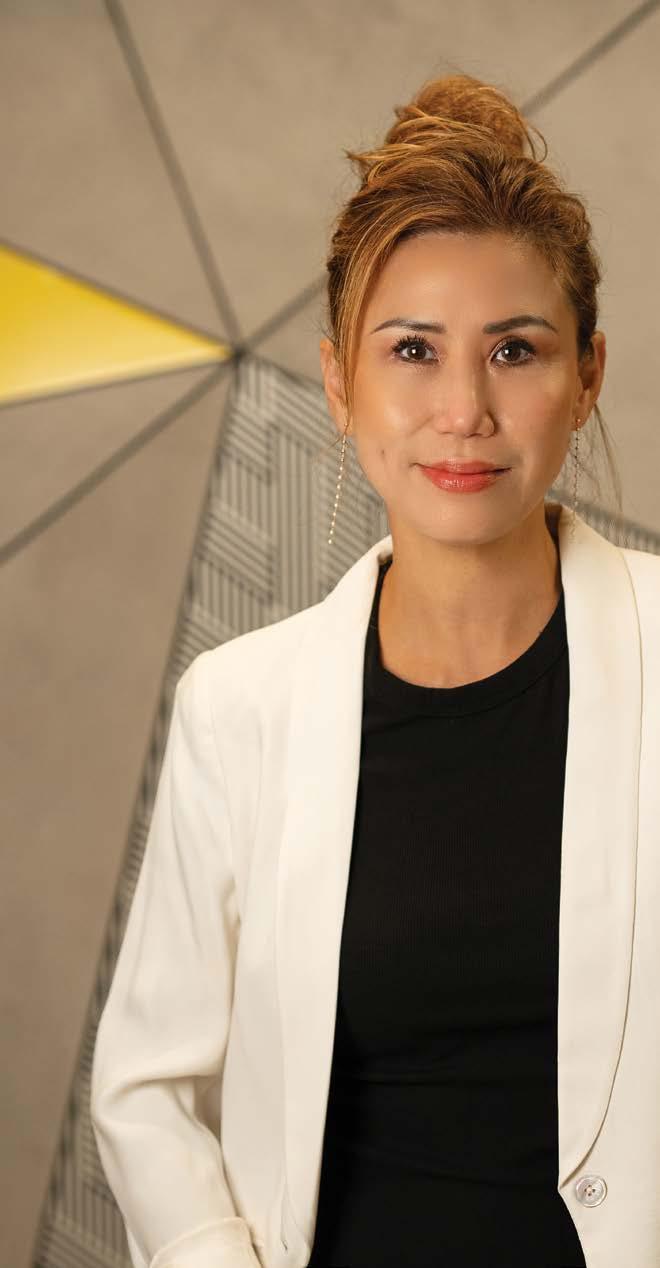
→ Trixie LohMirmand explains that the mission of DWTC is to evolve GITEX into a trusted catalyst of empowerment, competitiveness, and prosperity in the digital age.

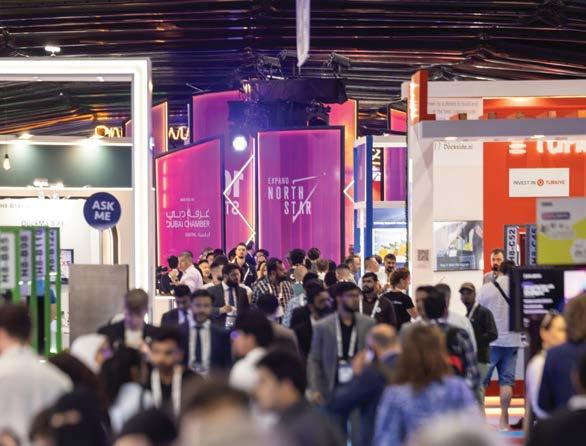
} My management style is grounded in agility over bureaucracy and speed over inertia. I’m on the ground with my team, from ground zero to apex, building the plane while flying it the same time, everyone on board including myself.” “
Dubai's role as a global innovation hub by combining conference programming, city-wide activations, cultural experiences, and lifestyle offerings.
Ultimately, the driving force behind this momentum is LohMirmand’s distinctive leadership approach. At the helm of a diverse team of more than 350 professionals from over 50 countries in DWTC's events organizing division with 15 direct reports across various functions. "My management style is grounded in agility over bureaucracy and speed over inertia. I’m on the ground with my team, from ground zero to apex, building the plane while flying it the same time, everyone on board including myself,” she says. "Gold standards are never a matter of chance. They are earned through discipline, rigor, and consistency over time. I am relentless about driving processes that focus on real value creation and measurable outcomes for our customers."
/Strategy
With the launch of two new lines of HPE ProLiant servers, the tech giant has expanded its pioneering ‘Saudi-Made’ portfolio. Beyond just servers, however, here’s how the initiative is setting the stage for a whole new high-tech industry in Saudi Arabia. by
AALIA MEHREEN AHMED
In 2023, during Saudi Arabia’s premier annual tech conference LEAP, Hewlett Packard Enterprise (HPE) and Saudibased alfanar company entered into a partnership with a sole vision: to bring enterprise tech manufacturing to the Kingdom and boost its ecosystem. The first step in bringing that goal to life came exactly
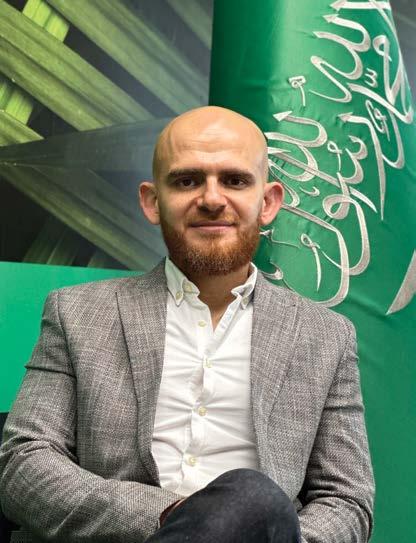
a year later, at LEAP 2024, when both entities announced that a new facility in Riyadh was all set to begin the manufacturing of HPE’s “Saudi-Made” ProLiant Gen11 portfolio. To kick this off, the HPE ProLiant DL360 and DL380 Gen11 servers were the first to be launched. Now, while one might expect a certain level of resistance to or qualms about locally made tech products in the region, what Samer Salah, GTM Strategic Programs Director for the Middle East at HPE, reveals is quite the opposite. “When we first planned this project, we expected most of our customers to be government or semigovernment organizations, since our product is on their mandatory procurement list–but to our surprise, the very first big order actually came from a private enterprise company,” Salah says. “I mean, the passion that we see in top executive C-Level decision makers to support the local manufacturing and Saudi talents is amazing. So, what we noticed was that it was not a negative perception turned into a positive– from day one it has been a positive reaction that has only grown with the launch of these servers.”
THE KSA
DIGITAL ECONOMY IS A $130BN MARKET. THIS CAN’T BE ADDRESSED IN A HIT-AND-RUN APPROACH. WE ARE BUILDING A SUSTAINABLE BUSINESS; AND TO ACHIEVE SUSTAINABILITY, WE MUST BE AGILE AND RESPOND TO CUSTOMER NEEDS WITH FLEXIBLE OFFERINGS THAT TRULY SERVE THEM.”
The project which primarily supports the goals of the Saudi Vision 2030 initiative, has received backing and participation from the Saudi Ministry of Communications and Information Technology, the Ministry of Investment, Saudi Exports Development Authority and the Communications, Space & Technology Commission. But so positive was the general reception (and demand) for the first two models –which have also received the National Product Certificate– that in August this year, HPE announced the expansion of its ‘Saudi Made’ server portfolio with two new HPE ProLiant servers, namely DL365 and DL385 Gen11,
featuring leading global chip maker Advanced Micro Devices’ (AMD) 4th and 5th Gen EPYC™ processors. “We are very agile and flexible in responding to customer and market demands,” Salah says. “For example, the previous two models and the two new models each serve different use cases — whether for efficiency or other requirements. These are available in our global SKUs, and we also provide them here in Saudi Arabia to meet local customer needs. It is important here for me to set the context of the “Saudi-Made” approach: we are building a sustainable business. And to achieve sustainability, you must be agile and respond to customer needs with
flexible offerings that truly serve them.”
Underscoring HPE’s underlying aim is to support the development of the Kingdom’s $130Bn digital economy and meet ICT market demand has been a concerted effort to go beyond surface level innovations. “With current production capacity of 3000 servers per month, many people think we are just building servers. This is not the case – we are creating momentum in the Kingdom to build an entire supply chain ecosystem,” Salah emphasizes. “What does this mean? We are not running a hit-and-run business; We are building a sustainable manufacturing
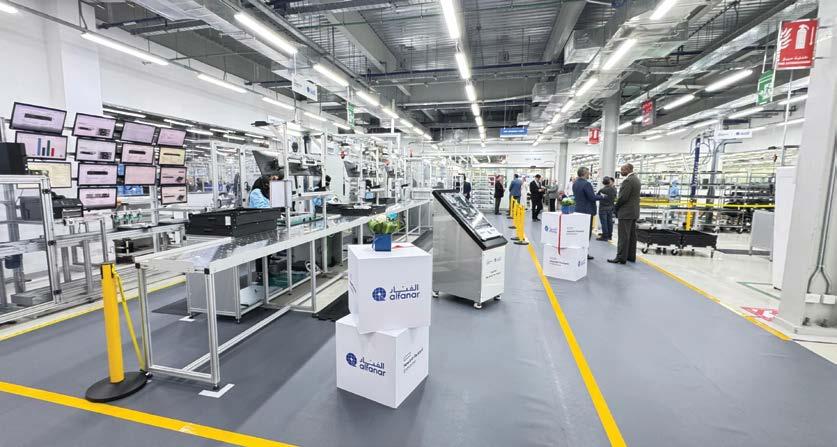
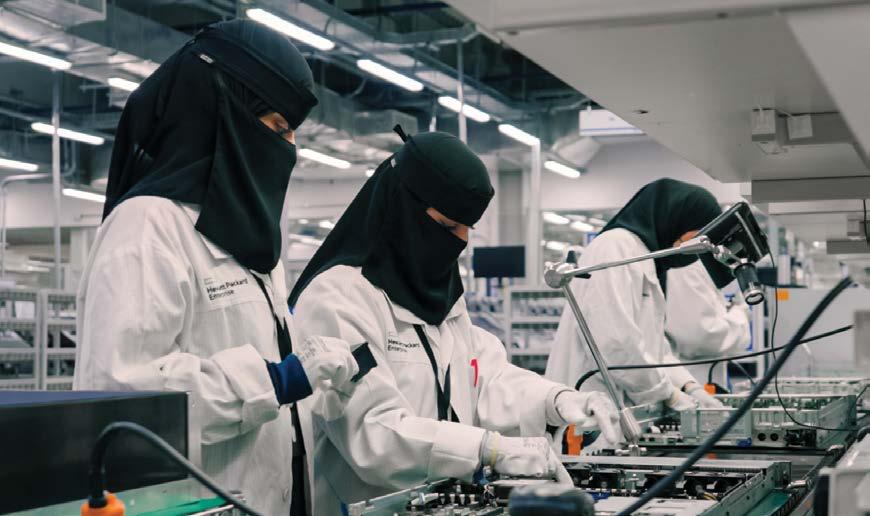
Current production capacity is 3000 servers monthly. Nevertheless, the impact goes far beyond just servers. It strengthens the whole supply chain, attracts major global players to invest, and trains Saudi talent — creating a sustainable, growing tech ecosystem in the Kingdom.”
business focusing on three aspects: the hardware, the product, and the solution. First, the hardware – the server itself. It’s a precisionengineered metal chassis housing key components such as the motherboard, CPU, GPU, chipsets, memory modules, and storage drives. These are sourced through our trusted supply chain partners.
Leveraging HPE’s proprietary IP design, which enables superior power efficiency and performance tuning – especially for AI-centric workloads. Next, the product. From edge to cloud, HPE powers digital transformation with an end-to-end portfolio of intelligent offerings across compute, networking, storage, and HPC. Third, the solution. Whether it's
accelerating AI adoption, modernizing infrastructure, or supporting national digital transformation goals, our solutions are built to deliver impact.
Since the initiative started in 2023, it has had a very positive impact on the ecosystem. For example, at the hardware level, we work with the leading chipset providers, now also including AMD processors. HPE's commitment attracts international partners, encourages investment in the Kingdom, and trains Saudi talent on advanced technologies.
At the product level, we started with compute products and are planning to expand into networking as announced at LEAP25. Other product lines are on our radar.
“
Regarding trends and future growth, as I mentioned before, we are expanding into other product lines, with the Kingdom’s target of 6.6 GW data centers by 2034 driving concrete business demand for more products to be localized.”
At the solution level, we are working closely with solution providers. During LEAP this year, for example, we announced a collaboration with Cohesity, providing their software on our platform and we received many requests for further integration and joint go-to-market engagements.
“In short, the impact goes far beyond just servers or boxes,” Salah reiterates. “It strengthens the whole supply chain, attracts major global players to invest, and trains Saudi talent — creating a sustainable, growing tech ecosystem in the Kingdom.”
With the expanded ‘Saudi-Made’ compute portfolio –comprising the aforementioned HPE ProLiant DL365 and DL385 Gen11 servers– the company aims to offer advanced security and performance, providing flexibility and speed to boost data analytics capabilities and generate real-time data insights.
The HPE ProLiant servers carry the ‘Saudi Tech’ logo and are available in Saudi Arabia as well as Jordan, Egypt, and other Gulf nations.
“Driving HPE’s continued investment of Saudi-based manufacturing of these servers, of course, is a mission to accelerate the Kingdom’s ambition to become a global leader in data-driven economies and to reach key goals outlined in Saudi’s Vision 2030. “I usually prefer to link what we are doing here to the Kingdom Digital Growth Strategy,” Salah elaborates. “What we have done in Saudi Arabia supports many objectives of this strategy, but I want to focus on two: the digital economy and digital infrastructure. Why these two? Because when you build a resilient supply chain in Saudi Arabia, you avoid geopolitical issues affecting the supply chain; and can provide better delivery times. Consequently, you can support the digital economy by serving multiple sectors like telecom, oil and gas, smart cities, and giga/mega projects. By having this capability in the Kingdom, you support these sectors serving the digital economy and the
broader Digital Growth Strategy. For digital infrastructure, the Kingdom aimed to upscale data center capacity to 6.6 GW by 2034 with a near-term milestone of 1.2 gigawatts in the coming years. All these data centers will need to be equipped with servers, and here Saudi Made competitive edge can be realized”
As part of the expansion, HPE and AMD will provide new training programs to further advance the skills of the Saudi workforce, while fostering innovation capabilities and accelerating the development of the Kingdom’s technology ecosystem. “Innovation goes beyond invention,” Salah says. “It’s about solving real customer challenges in ways that create measurable impact. We view innovation through two lenses: closing gaps and creating new value.
To close a gap, imagine a customer facing soaring electricity costs or struggling with underutilized infrastructure. By delivering energy-efficient and cost-optimized systems, we help them reduce overhead while increasing performance. In the same way, if a customer is overwhelmed by massive volumes of unstructured data, we provide AI-ready infrastructure that makes it possible to manage, analyze, and extract insights at scale.
To create new value, we think about how customers can turn their infrastructure into a driver of growth. That might mean enabling AI-powered services, unlocking faster time-to-market for digital products, or helping government organizations and enterprises leverage their data securely in ways that strengthen the economy.
This is how we define innovation at HPE: addressing immediate customer pain points, unlocking the potential of emerging technologies like AI, and building solutions that convert challenges into opportunities for both our clients and the broader economy
Such an approach could also create a positive ripple effect among the smaller tech players within the Kingdom, Salah hopes. “Remember when I talked about the supply chain, the hardware, the product, and the solution? We started by bundling our platform with international solution providers like Cohesity,” he says. “However, any small business or entrepreneur with their own application or software is more than welcome to partner with us, integrate their solution with our platform, and together we can jointly go to market as one bundled solution if they are willing to go the mile: building capabilities, transferring knowledge and empowering the broader ecosystem.”
With the launch of the two new “Saudi-Made” servers for now, however, Salah says HPE’s focus is on meeting the “huge domestic demand” and serving the surrounding region. “This is our main focus at the moment,” he reiterates. “Regarding trends and future growth, as I mentioned before, we are expanding into networking products, we are taking a step-by-step approach to build the entire supply chain. This isn’t something we can build all at once — it requires collaboration with our international and local partners and suppliers. We are growing this ecosystem gradually, step by step.”


A look at how Radisson Hotel Group continues to redefine hospitality, ensuring every guest experience feels both globally consistent and locally meaningful. by AALIA
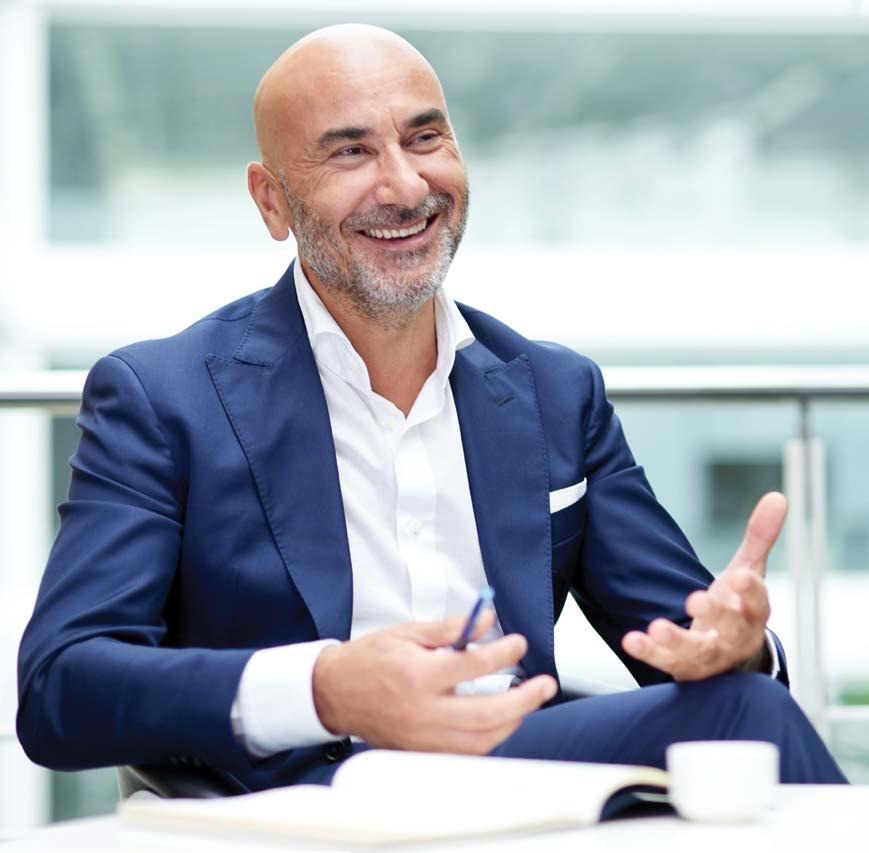
When a brand operates across 100 nations, offering consistent quality undoubtedly becomes paramount. That sentiment perhaps becomes doubly significant –and complex– when it applies to a hospitality brand. Yet the Radisson Hotel Group has unlocked a seemingly straightforward approach to championing such large scale operations. "Operating in more than 100 countries means we must simply, consistently, deliver our “Every Moment Matters” guest promise—everywhere, but with a local slant,” says Chema Basterrechea, Global President and COO at Radisson Hotel Group. "The Group’s 10-brand architecture ensures consistency, while our flexible standards empower hotels in Riyadh, Dubai, or Doha to reflect regional culture through F&B concepts, design, and service rituals. This “glocal” approach combines global systems and service ethos with local adaptation. For example, our Guan
Xin program caters specifically to Chinese travelers, while in the Middle East, we tailor meeting solutions and food offerings to align with cultural and business practices. This balance strengthens guest loyalty and ensures relevance across diverse markets."
Indeed, it is through this approach that the Radisson brand, one of the world’s largest hotel groups has managed to operate a diverse portfolio of brands across luxury, upscale, midscale, and economy segments. With more than 1,00+ hotels in over 100 countries, Radisson Hotel Group has a strong footprint in Europe, the Middle East, Africa, and Asia-Pacific, with growing expansion in the Americas and China. Globally, Basterrechea reveals, the company has delivered 41.5% Gross Operating Profit margins, supported by The Club—the brand's revenue management hub that covers a whopping 335 hotels—and advanced distribution systems that have maintained a consistent Revenue Generation Index [a metric used in the hotel industry to compare a hotel's revenue performance against the
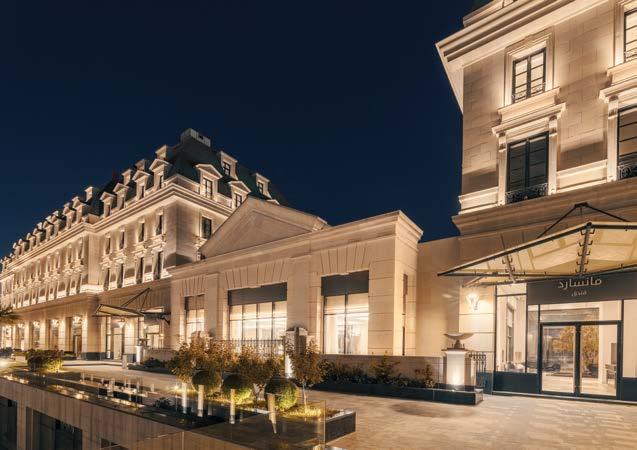
market average] of above 100 for 30 consecutive weeks.
At the heart of such expansive operations lies the knack of adopting efficient strategies, Basterrechea notes. "In MENA, we’ve achieved cost savings and improved sustainability by centralizing procurement and upgrading energy efficiency," he says. "A standout example is the Radisson Blu Dubai Deira Creek, which features an award-winning thermodynamic solar system for hot water, significantly reducing operating costs. Additionally, in today’s always-on, connected world where brands can go viral, trend, and lose relevance within days if not hours, visibility, trust, and relevance are also extremely important.”
It is this combination of efficiency and building trust that has stood Radisson Hotel Group in good stead for over 75 years across the globe. "The Radisson Hotel Group portfolio spans more than 1,580 hotels in operation and under development," Basterrechea continues. "Of this, Radisson Blu remains the largest upper-upscale brand in Europe for 13 years while Radisson has become the fastest-growing upscale brand globally, excluding China. We build awareness through our digital platforms, specifically our website and app, which is the fifth most-downloaded hotel app in the world, with content in 34 languages, and through experiential projects such as Radisson+, which offers online check-in and check-out and instant messaging, and our AI-powered Radisson Meetings Dream Machine, which allows event professionals to create visual representations of event spaces. This dual strategy allows Radisson Hotel Group to stand out in mature markets while gaining first-mover advantage in emerging markets like Saudi Arabia and North Africa."
Such levels of innovation have, of course, been made possible through a rigorous permeation of tech-driven tools. Radisson Hotel Group’s endeavors in this regard have received multiple accolades, the most recent of which was
→ Known for its “Every Moment Matters” guest promise, Radisson Hotel Group combines global standards with local adaptation thereby championing a true “glocal” approach.
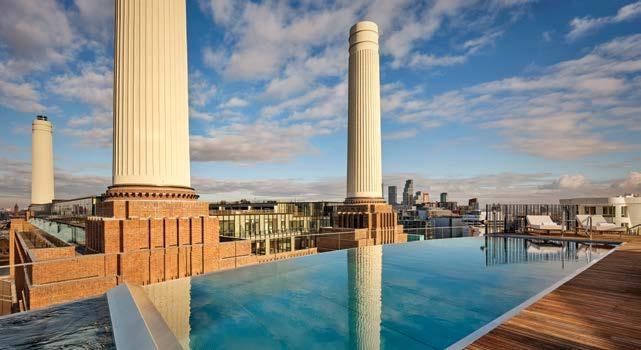
winning the "Best Digital Transformation, Leading Hotel Group" at the Leaders in Hospitality Awards 2025 by Hotel & Catering [a publication under BNC Publishing, the media house behind Entrepreneur Middle East]. "Technology is transforming every touchpoint of the guest journey, which is why that particular recognition was an extremely proud moment," Basterrechea says. "Some of the key innovations that have brought us this title include the aforementioned Radisson+, which offers online check-in and check-out, instant messaging, and digital concierge; our interactive content, where guests can virtually enter hotels, rooms, and meeting spaces from their laptops, mobile phones, or VR headsets, before booking; and AI-powered Radisson Meetings Dream Machine, which enables event planners to design immersive events using generative AI. We also introduced a more
personalized Radisson Rewards program, which now boasts over 24 million members and has a dynamic redemption model that allows guests to access their benefits immediately and advance to the highest tier twice as fast."
A combination of all of the above operational approaches have allowed Radisson Hotel Group to continue with its geographical expansion plans as well. "In 2025, our expansion has focused on high-growth geographies, including Saudi Arabia, the UAE, and India, amongst others," Basterrechea elaborates. "In the Middle East, Vision 2030 investments in Saudi Arabia are a catalyst for hospitality growth, and Radisson has already signed multiple new projects in Riyadh. This does not mean we will not continue to focus on other regions, such as Africa, where we delivered the most hotel openings in 2024, with 50% net operating growth over the last five years."
Strengthened by the brand’s success so far, and a stringent sustainability policy, Basterrechea now looks forward to what the future holds for the brand. "Hospitality is moving towards digital-first journeys, sustainable operations, and experiential travel- by 2030, hotels will serve as multi-use lifestyle hubs that blend work, leisure, and community," Basterrechea observes. "In addition to our advances in technological innovation to provide a greater guest experience, Radisson Hotel Group is committed to Net Zero by 2050, with published approved Science Based Targets. We’ve also opened our first two Verified Net Zero Hotels in Manchester and Oslo this year. Parallel to this, our Hotel Sustainability Basics (HSB) is set to be fully rolled out by the end of 2025, with 100% of our hotels meeting sustainability criteria. In the Middle East, where sustainability is now
Chema Basterrechea, Global President and COO at Radisson Hotel Group, shares advice for other hospitality executives
}THINK “GLOCAL” Deliver global standards with local relevance.”
}INVEST IN PEOPLE “At Radisson Hotel Group, talent is our biggest asset, which is why we’ve invested in programs like Radisson Academy that provides training modules to our employees worldwide, and assists them in fast-tracking their careers.”
}BALANCE GROWTH WITH RESPONSIBILITY BY EMPHASIZING SUSTAINABILITY ALONGSIDE PROFITS “Since 2019, Radisson Hotel Group has cut our carbon footprint by 33% per sqm in leased and managed hotels, while our carbon-compensated meetings have offset 115,000 tons of CO2e, which is equivalent to removing 26,800 petrol-driven cars from the road.”
}BE AGILE “Our culture is built on speed and our Yes I Can! mindset, which allows us to respond quickly to opportunities and challenges”
}KEEP UP WITH AND LEVERAGE TECHNOLOGY “AI, personalization, immersive content, and the like are the new baseline for guest engagement”
part of national visions, Radisson Hotel Group is positioned to be a trusted partner for governments, investors, and guests."
Why GCC healthcare cannot afford data delays when lives are on the line. by ABBES

Imagine a young mother who has been rushed into the ER after a serious car accident. She's unconscious, in critical condition, and every second counts.
The situation is dire, and the hospital staff needs to act fast, but there's a problem. Her medical history is scattered across multiple clinics and systems. Essential information – like allergies, past
surgeries, and current medications – is not immediately accessible. In the absence of this information, doctors are forced to make life-ordeath decisions while the risks escalate.
Although this scenario may sound dramatic, it is a common reality in many parts of the world. And this is where health information exchanges (HIEs) make a difference.
HIEs are digital platforms that connect disparate electronic health record systems across providers (both public and private), enabling clinicians to instantly access a patient's full history regardless of where they previously received care. In the GCC, where patients often move between multiple systems, this connectivity – and the quality of the data within the system – is critical for safe and timely treatment.
Despite tech advancements, many healthcare systems remain stuck at the early stages of digital health maturity with regard to electronic medical records (EMRs). Even systems that hit
can move securely and seamlessly with the patient across all points of care (especially in a region like the GCC, amidst its multitude of systems), clinicians are empowered to make faster and safer
timely, and standardized health data, even the most powerful algorithms struggle to offer accurate decision support, risk prediction, or care recommendations.
Saudi Arabia's Vision
between private and public providers. Continuity of care depends on systems that can talk to each other.
This is because, when designed with strategic
Stage 3 on HIMSS EMRAM (full EMR adoption) lack the cross-network interoperability that actually saves lives. Real transformation requires health systems to break down silos and ensure that data flows not just within institutions, but across the entire healthcare ecosystem.
As the World Bank's Digital-in-Health report observes, these tools may improve internal efficiency – but if they don't communicate, are they truly improving patient care?
Solving Healthcare's Biggest Challenge
It starts with interoperability, or in layman's terms: the ability of different systems, devices, or organizations to work together and exchange information seamlessly – regardless of the underlying technology.
Because healthcare demands more than digitization. When data
decisions, irrespective of where a patient walks in for care.
Countries across the region are working towards true interoperability as a strategic asset that drives policy, innovation, and outcomes. It also lays the foundation for responsible AI. Without complete,
2030 and the UAE's National Strategy for Wellbeing 2031 both call for resilient, patientcentred systems that can handle chronic-disease growth. Reaching this level of care depends on how effectively digital records are integrated, especially in the UAE and wider GCC, where patients often cross

care, EMRs don't just store information; they support it so that every entry (whether it be a lab result, an allergy alert, a referral note, or other) is captured in a consistent and shareable way.
Imagine if the young mother's full medical history (including a recent heart condition and current medications) had been available at the moment she arrived at the hospital. Instead of hesitating, making assumptions, or initiating redundant lab tests, her care team could have moved decisively, avoiding dangerous drug interactions and delivering targeted treatment.
Well-structured EMRs, with interoperability at the core of their design, are the foundation of strong HIEs. Without clean, consistent, and shareable records captured at the point of care, even the bestconnected HIE cannot perform to its full potential.
The strength of any national data network, or even a single clinic, depends on the quality of the data it receives.
The UAE offers a strong example of progress. The country now operates a multi-tiered HIE framework with Malaffi in Abu Dhabi, NABIDH in Dubai, and the federal Riayati system. As of March 2025, Malaffi connects 3,018 healthcare facilities, supports 92 unique EMR systems, and covers 100% of patient episodes in Abu Dhabi, with 56,281 end-users (clinicians, nurses, care teams) granted access.
These platforms are powerful, but they rely on their endpoints. With nearly 100 different EMRs in use in the country, not all are capturing data in formats that are friendly to standardization and sharing across providers, which places a greater burden on HIEs. As we've seen working across multiple countries to roll out ambulatory cloud EMRs, interoperability-first solutions undeniably make a difference.
These systems are more than a filing system; they're tools that evolve with the patient and the many places that the patient receives care. They must be designed to balance robust capability with light, cloud-based architecture, enabling smaller clinics to access sophisticated capabilities without demanding expensive infrastructure.
Across the MEA region, in countries far less developed than the UAE in their healthcare infrastructure, this opens the door to equity. Allowing quality care to reach patients in remote or underserved areas, these solutions are scalable, accessible, interoperable, and most importantly, built to work with national HIEs while ensuring that data captured continues to serve a larger purpose.
The young mother's story reminds us that in emergencies, healthcare professionals can't waste time piecing together scattered information. They need answers, not guesswork.
Fragmented data can mean the difference between fast, effective intervention and dangerous delays. A U.S. study of 3,000+ hospitals found that a single interoperability feature prevented 5.8 million duplicate imaging exams in one year, saving between $310 million – $2.6 billion in avoided cost. In the GCC, where healthcare costs are rising and chronic diseases are increasing, it is vital to avoid these same types of unnecessary tests, which add cost and delay care. Interoperable EMRs help close the gap by ensuring that no matter where a patient seeks care, their medical history travels with them.
For the region, this isn't just a matter of convenience. It's a national imperative.
As the Gulf pushes forward on its healthcare ambitions (be it through medical tourism, innovation, or better outcomes for its people), the systems behind the scenes must keep pace.
In the era of AI-assisted diagnostics and personalized care, fragmented data doesn't just delay treatment; it undermines the effectiveness of the very tools designed to improve it. Investing in smart, connected platforms isn't just about better data. It's a clinical imperative for building healthcare systems that are ready to respond wherever, whenever, and for whoever walks through the door.
Well-structured EMRs, with interoperability at the core of their design, are the foundation of strong HIEs. Without clean, consistent, and shareable records captured at the point of care, even the best-connected HIE cannot perform to its full potential.

Abbes Seqqat is the CEO at Rain Stella Technologies (RST). He previously served as CEO of Rain Technology, the pioneering voice AI company behind Orva, the first-ever operating theatre voice assistant. With a rich background in driving innovation and business growth, Abbes is an established visionary in the intersection of technology and healthcare. Prior to his current role, Abbes held leadership positions at Sensetime, where he spearheaded business and growth initiatives across the Middle East and Africa (MEA) region. Before his tenure at Sensetime, Abbes served as a trusted advisor on digital transformation and disruption to leading conglomerates in the region during his tenure at Oracle, IBM Watson Health and Accenture. His expertise in leveraging cutting-edge technologies has enabled organizations to revolutionize their operations and enhance patient care delivery. rainstellatech.com
17-20 NOVEMBER 2025
Riyadh Exhibition & Convention Centre (Malham), Saudi Arabia
MOST ATTENDED REAL ESTATE EVENT

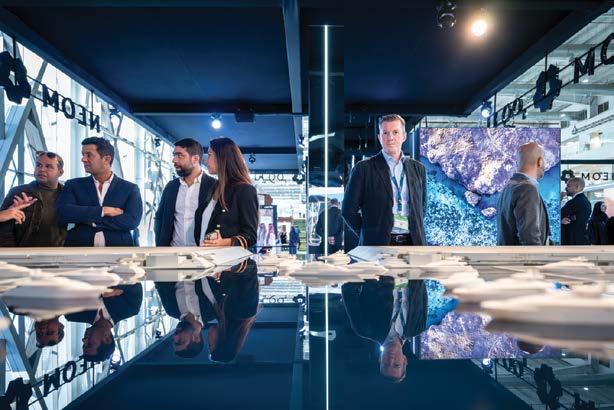
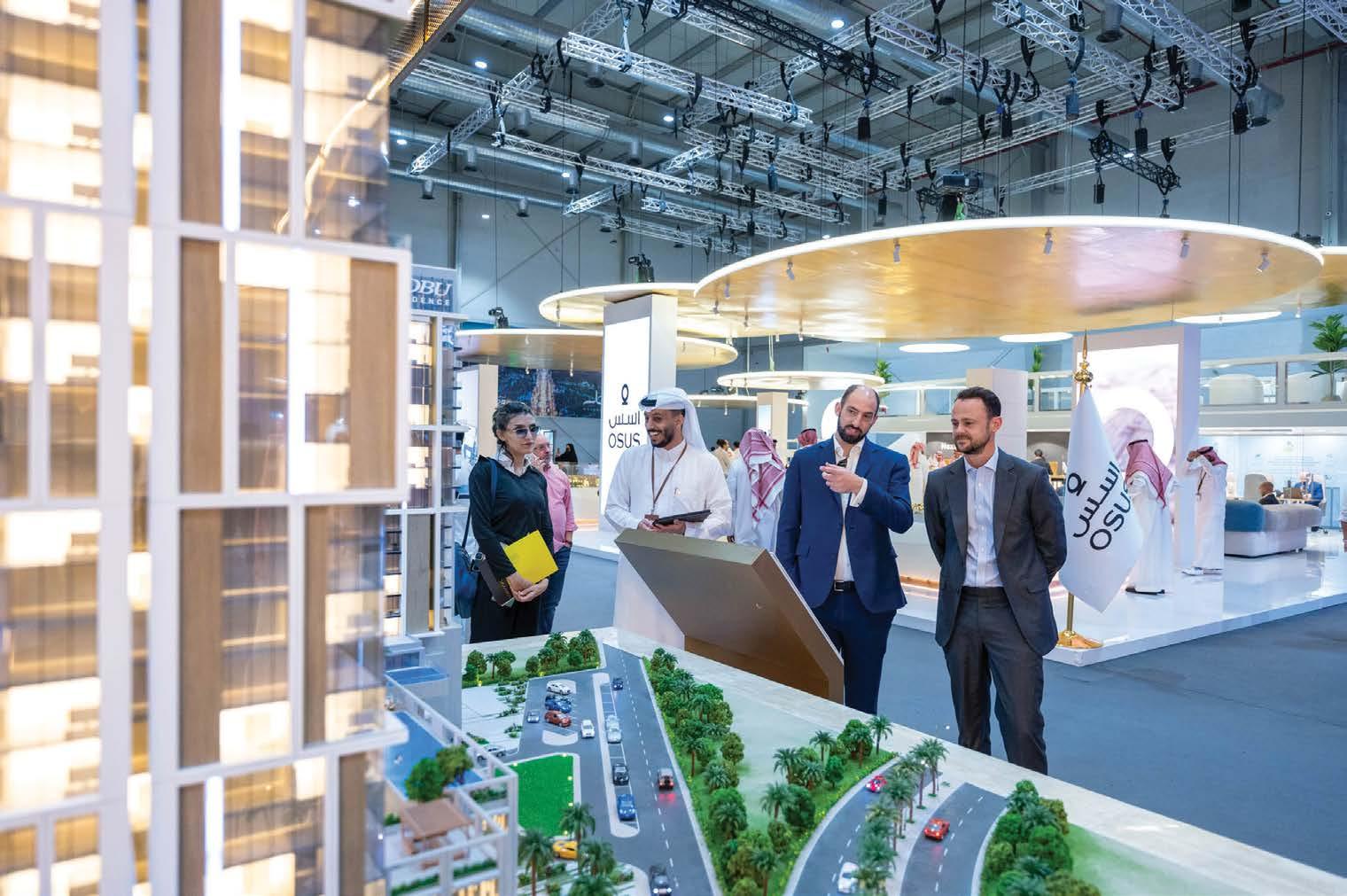
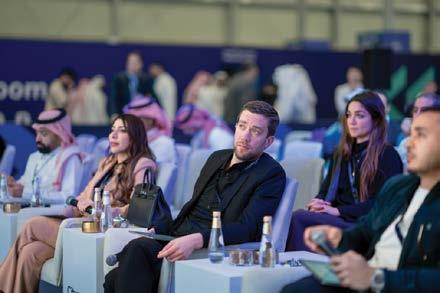
40 Countries Exhibiting
460+ Exhibitors
10 Country Pavilions
450+ Speakers
4 Stages

From better goods to better wardrobe bests, every issue, we choose a few items that make the approved executive selection list. In this edition, our picks are from BOSS, Roxie Nafousi, Waitrose UAE, and NUAIMI
THE BOSS PARADOX →
Contrast creates cohesion across spring/summer 2026 collection
For Spring/Summer 26, BOSS unveiled a collection where functionality, simplicity, and precision are redefined through innovative, bold statements of contemporary design. Presented under the captivating theme of The BOSS Paradox, the runway looks for men and women reveal the versatility behind the brand and celebrate the diverse influences, such as tailoring and sportswear, that inspire and shape the BOSS identity. Seemingly opposing narratives craft an inspiring and meaningful story of extremes—and balance each other out in a visual dialogue of order and disorder.
The BOSS design team found inspiration in the simplicity and order in architecture, and in German industrial design from the 1960s. Its minimalism, clarity, and precision can be seen in the geometric silhouettes and tailoring of the collection. Twentieth-century contemporary dance, and the freedom found in contemporary art provided inspiration for the elements of chaos and disorder, offering a twist to otherwise clean, sophisticated looks. These influences—the systematic geometric aspect, and the wilder, flowing chaos—allow the two worlds of order and disorder to merge smoothly in the collection.

→
Bestselling author, transformational speaker, and globally renowned selfdevelopment expert Roxie Nafousi introduces ALIA, a new luxury fragrance house designed to transform the way we wear scent: not just as a beauty ritual, but as an act of self-expression, selfcelebration, and identity. Designed to meet you at the edge of who you are and who you’re becoming, ALIA is a celebration of all that you are and all that you can be. Rooted in the Arabic word ‘Alia’, meaning higher, the brand invites women to step into their power and unlock their fullest potential. Each scent is a character, a feeling, an energy brought to life - made to move with you and speak for you.

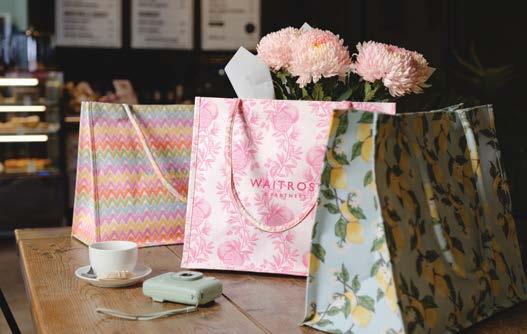

Waitrose & Partners UAE has unveiled the fourth chapter of its collaboration with renowned print designer Huda Al Nuaimi: a new exclusively curated tote collection that celebrates personal expression, style and conscious living. Created to add flair and function to life’s everyday moments, the new Waitrose x NUAIMI collection introduces three uniquely beautiful designs - Capri, Granada and Riviera. Each tote showcases Al Nuaimi’s signature creativity and now features thoughtful details such as a handy inner pocket and secure button closure, making it as functional as it is fashionable. From shopping trips and office commutes to workouts or weekends at the beach, these totes bring colour, charm and individuality to every occasion.
←
How Saudi Arabia-based OceanQuest is leveraging advanced technologies and global expert collaborations to foray deeper into the most uncharted territories of our planet: the oceans. by
AALIA MEHREEN AHMED
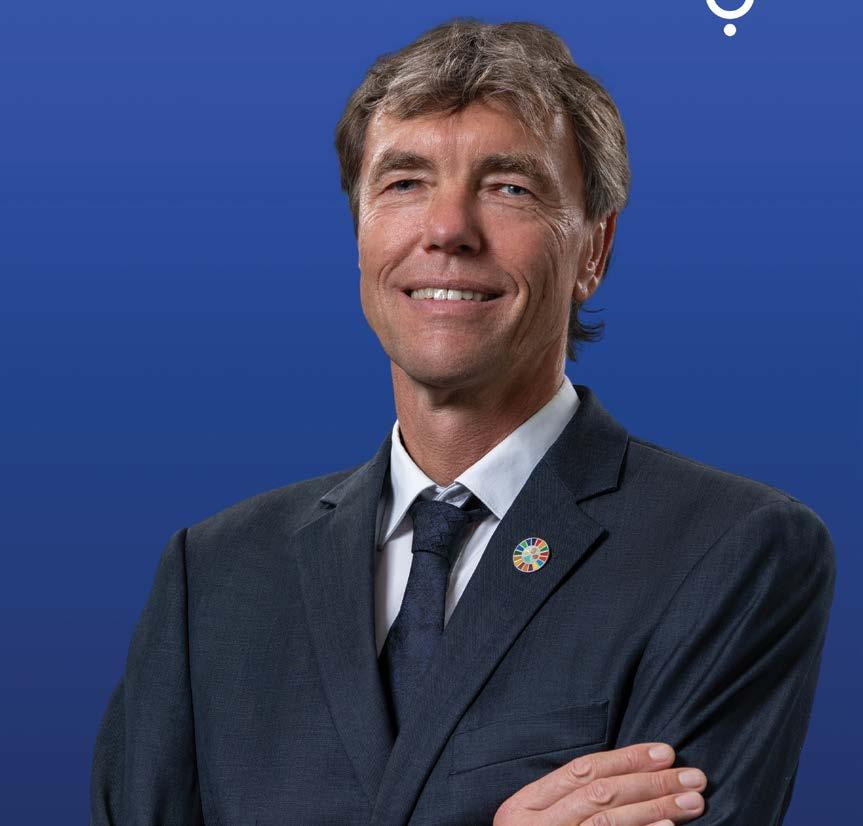
With almost 40 years of experience in physical oceanography and ocean sciences, and having participated in and led over 20 major ocean expeditions and numerous international research projects, Dr. Martin Visbeck is no stranger to the untapped potential the earth's water bodies hold. Indeed, multiple reports show that, even in 2025, only about 20% of the oceans have been mapped, while the areas that have actually been explored make up a paltry 5%. “Over my career as an ocean scientist, I’ve seen firsthand how little we know about the deep ocean and how vital it is for sustaining ocean biodiversity, climate regulation, as a resource for sustainable use and in general our human and planet’s future,” Dr. Visbeck says. “That experience
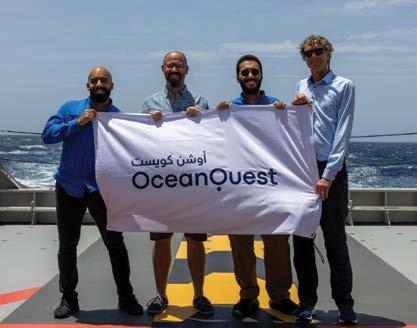
↓ OceanQuest’s mission is to accelerate ocean discovery, drive innovation in the field, support global cooperation, and excite the public.
Science can also be a bridge for diplomacy. When nations collaborate, share data, and train earlycareer researchers together, it builds trust and shared stewardship. This is especially vital for the Global South, where talent often outpaces access to tools or funding.” “
reinforced my belief that there is so much opportunity for a new kind of institution: one that combines cutting-edge technology, open collaboration, and inclusive participation to accelerate deep ocean discovery. That vision is what OceanQuest represents.”
Headquartered within Saudi Arabia’s King Abdullah University of Science and Technology (KAUST), Dr. Visbeck thus founded OceanQuest in April 2025 as a not-for-profit foundation with the mission to to accelerate ocean discovery, drive innovation in the field, support global cooperation, and engage the public. “The scientific focus is on
seamounts —undersea volcanoes that are biodiversity hotspots, harbor unexplored genetic material, influence ocean mixing, and may even serve as carbon sinks critical to our climate— and their unexplored deep ocean ecosystems,” he explains. “Our work is focused on the dark ocean, the vast depths beyond 200 meters, which represent one of the most exciting and least understood frontiers of our planet. Our work also uses robotics and AI to gather data that, via digital twins, can inform conservation, sustainable use and global ocean governance. Being hosted at KAUST has been critical in turning this mission into reality. KAUST provides the research excellence, facilities, and academic environment
that ground OceanQuest in scientific rigor, while our partnership brings new tools, international collaborations, and deep sea expedition capabilities to KAUST’s marine science portfolio. Together, we’re not only advancing knowledge but also training the next generation of ocean leaders through early-career programs and global expeditions.”
In thus fulfilling its vision “to explore the ocean’s secrets for the benefit of humanity,” OceanQuest is banking on the power of two main factors: technology, and effective collaborations. The first step in realizing the latter came when, in June 2025, OceanQuest marked its formal international debut at the 2025 UN Ocean Conference (UNOC) in France. “Our presence at UNOC alongside leading institutions such as OceanX, MBARI, Scripps, and Schmidt Ocean Institute established us as a credible new voice,” Dr. Visbeck says. “Therefore, the priority now is to move from vision to delivery. That means, first and foremost, focusing on seamounts. Through advanced deep
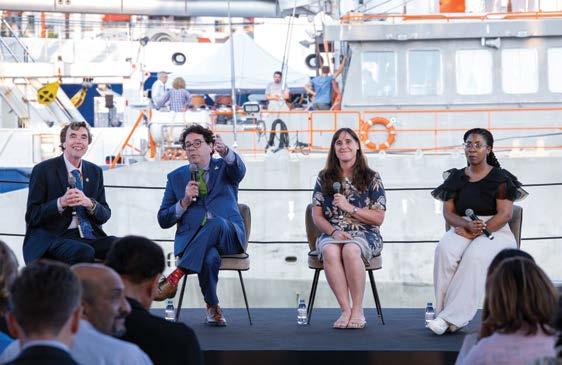
ocean exploration using robotics, data innovation, digital twins and equitable partnerships, OceanQuest aims to shine a light on the deep ocean so we can better understand its role in the Earth system. At the same time, we are committed to empowering early-career ocean professionals (ECOPs) and building a diverse global community of next-generation leaders. This dual focus—on advancing science and inspiring people—reflects both our mission and our conviction that understanding the deep ocean is essential to the future of humanity and the planet. To put it simply, OceanQuest’s vision is to redefine how the world engages with the deep ocean making exploration more inclusive, collaborative, and impactful.”
To bring these goals to life, Dr. Visbeck believes that the Kingdom has been a perfect launchpad. “Saudi Arabia is uniquely placed to lead in deep-ocean discovery, with the Red Sea serving as a natural laboratory of global importance,” he notes. “OceanQuest contributes directly to the Kingdom’s Vision 2030 by advancing marine science, AI, robotics, and sustainability, while also supporting broader national goals around economic diversification, job creation, and STEM education. As a Saudi not-for-profit, we are committed to building global partnerships and aligning with the Kingdom’s research, development, and innovation (RDI)
targets contributing to ambitions such as providing SAR3 billion in R&D funding by 2050 and supporting over 150 scientists annually.”
In supporting such expansive knowledge sharing ambitions, OceanQuest also hopes to inspire the next generation of Saudi scientists and innovators, reveals Dr. Visbeck. “Through expeditions, training, and hands-on opportunities for students and ECOPs, we aim to spark curiosity in the deep ocean and encourage more young people to pursue STEM careers,” he says. “This educational and aspirational focus helps strengthen Saudi Arabia’s position as a leader in ocean innovation, while ensuring its sustainability agenda resonates with future generations.”
But Dr. Visbeck is also, concurrently, aware that multiple challenges persist when it comes to enabling greater awareness about the deep seas and oceans; not just among those within the field but even the general public. “The biggest hurdle is that the deep ocean is dark and hard to access, out of sight, and too often out of mind,” he laments. “Yet it underpins life on Earth by regulating climate, harboring yet to be fully discovered biodiversity, and an essential part of planetary health. The challenge is translating new discoveries and complex science into stories people can see, feel, and connect with. At
“
Being hosted at KAUST has been critical in turning this mission into reality. KAUST provides the research excellence, facilities, and academic environment that ground OceanQuest in scientific rigor, while our partnership brings new tools, international collaborations, and deep sea expedition capabilities to KAUST’s marine science portfolio.”
OceanQuest, public engagement is built into our mission. From building credibility by participating at relevant events to giving young scientists a voice on expeditions, engaging school programs and through public exhibitions we work to make the deep ocean more visible and relatable. Science can also be a bridge for diplomacy. When nations collaborate, share data, and train early-career researchers together, it builds trust and shared stewardship. This is especially vital for the Global South, where talent often outpaces access to tools or funding. Through partnerships in places like Brazil, South Africa, and Cape Verde, we’re showing that inclusive science isn’t just possible, it’s the future of ocean governance.”
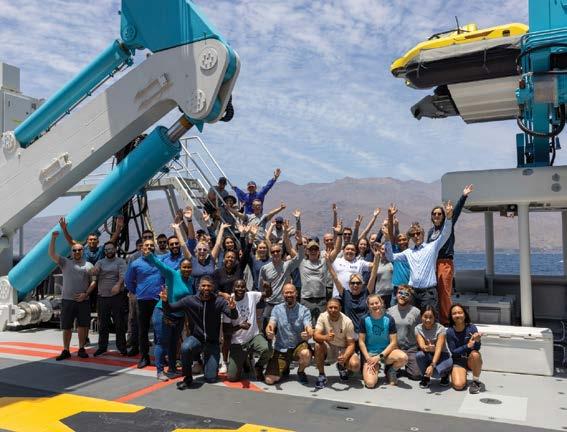
Since its inception, perhaps the most visceral reflection of these sentiments has been the Around Africa Expedition– a four-month expedition

spearheaded by OceanQuest and US-based nonprofit ocean exploration initiative OceanX. “We used this as an opportunity to engage with scientists, policymakers, and early-career professionals across the continent,” Dr. Visbeck shares. “As such, there were three major takeaways from this experience. The first was regards to scientific leadership from the Global South. Now, although unfortunately not the norm, African scientists led these deep-sea missions as chief scientists aboard a major research vessel. This shift in ownership was a key success factor in representation and capacity building. The second was about realizing collaborative impact– the teams from across the continent gelled quickly, producing high-quality research and showcasing the depth of regional talent. We explored seamounts near Madagascar, South Africa, and Cape Verde — some showing signs of overfishing, others revealing extraordinary underwater structures and potentially undocumented coral species and unexpected underwater life. The third and final takeaway was with regards to capacity building. You see, two “floating university legs’’ trained over 30 ECOPs in deep-ocean science methods. The overwhelming interest, with over 150 applicants, signals a huge demand for inclusive, hands-on deep
For Dr. Visbeck, the Around Africa Expedition, and all of OceanQuest’s progress so far, have been a culmination of a lifelong passion. “Since my early
empowering local experts and fostering long-term collaborations, a blueprint we plan to scale across the Global South. By lowering barriers to deep-ocean knowledge and fostering partnerships across science,
childhood the ocean and sailing fascinated me, and over time, my work has focused on advancing the understanding of the ocean, ocean observing systems, high-impact ocean–climate research and fostering global collaboration,” he says. “This combination of discovery and cooperation has shaped my journey and continues to guide my vision for making deep-ocean science both globally collaborative and locally relevant. While scientific analysis is still ongoing, early findings and video data suggest exciting discoveries ahead. For us at OceanQuest, the Around Africa Expedition expedition has already validated our model of
industry, and government, we thus hope to spark a wave of innovation, from marine biotech to sustainable ocean monitoring, powered by local talent and global collaboration.”
Encouraged by the results so far, Dr. Visbeck now has his sights firmly set on what the future holds for OceanQuest. “Our vision now rests on three long-term goals,” he says. “The first is to build a world-class foundationone that is transparent, well-resourced, and open, capable of delivering meaningful impact. The second is to be a trusted global partner- one that is recognized not for
competing, but for enabling collaboration across science, governments, and the private sector to tackle the shared challenges of deep-ocean exploration. The third is to empower the next generation by giving
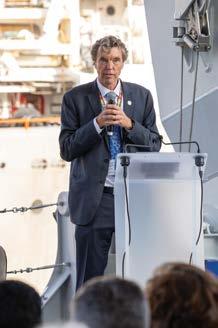
early-career ocean professionals access to expeditions, training, and opportunities that spark discoveries and careers once thought impossible.!
“Personally, however, I’m excited to see OceanQuest grow into a platform that inspires a new wave of ocean leaders from Saudi Arabia and beyond, while also contributing to the Kingdom’s Ocean literacy, STEM education, and blue economy goals,” Dr. Visbeck declares. “Through innovation in robotics, sensors, and digital tools, our ambition is simple: to open doors for young scientists, for international cooperation, and for a more sustainable ocean future!”
For Editorial Opportunities
Vibha Mehta +971 58 631 4145 vibha@bncpublishing.net
Roma Arora roma@bncpublishing.net

Joaquim D’Costa +971 50 440 2706 jo@bncpublishing.net
Andrea Mocay +971 54 502 7927 andrea@bncpublishing.net
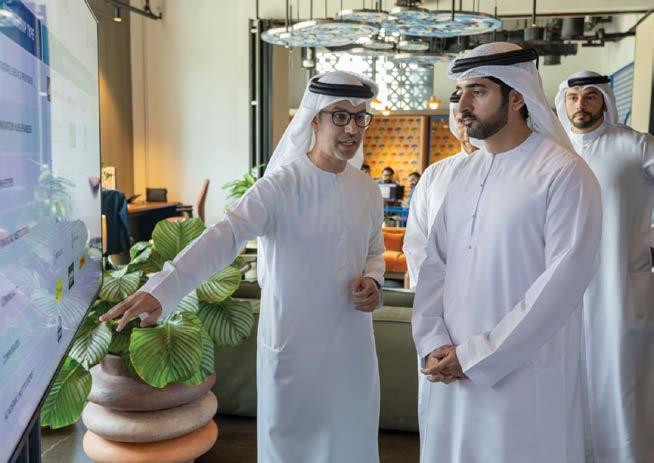
H.H. Sheikh Hamdan Al Maktoum, Crown Prince of Dubai, Deputy Prime Minister and Minister of Defence of the UAE, and Chairman of The Executive Council of Dubai, has launched Dubai Founders HQ, a flagship initiative that aims to consolidate and strengthen Dubai's startup and small and medium enterprise (SME) ecosystem.
A joint initiative by the Dubai Department of Economy and Tourism (DET) and the Dubai Chamber of Digital Economy, Dubai Founders HQ is the first-of-its-kind 'phygital' platform — combining a dynamic physical campus with a comprehensive digital ecosystem.
Empowering founders with unparalleled resources to launch, scale and thrive, Dubai Founders HQ is a landmark initiative