the third-, fourth-, fifth- and sixth-ranked traditional brands would be positioned, followed by the top two private brands in the third tier. In the last tier, the eighth- and ninth-ranked national brands would sit with other challenger brands. The new layout, according to research from Alliance Bernstein, sees the same brands leading the top tier but on that second level the top-ranked private brand and the second-leading challenger brand have moved up while the fourth-, fifth- and sixth-ranked traditional brands move down. Say goodbye to any traditional brand after that and welcome in another store brand and two more additional challenger brands, Dibadj added. He also said that all of this brand movement is adding to too much proliferation, comparing a time when Walmart carried 120,000 SKUs in-store to now managing 75 million SKUs on Walmart.com. But it’s Walmart’s control of that e-commerce channel that gives retailer’s tremendous power to control the “stream space,” Dibadj added. Retailers know that shoppers typically purchase products that appear on that first page online; brands (including private brands) that fall beyond the fifth page are dead, according to a Bernstein consumer survey. “The future of food retail is advertising,” he said, adding that the new slotting fee is the top space in the e-commerce stream. An added bonus for retailers working with brands to get onto their e-commerce sites
28
is they collect further consumer insights from how shoppers are shopping brands and the category online. Dibadj said an even bigger fear among traditional, national brands is the more consumers buy online from a retailer’s site, the more they lose a spot on the shopper’s shopping list. He said to consider a shopper using a retailer’s mobile app or a smart fridge connected to a retailer app that simply reorders products automatically without a tie to a brand. Dibadj noted where branded CPGs are fighting back against store brands and retailers is online, with Amazon being a key player as it drives 80% of online growth for CPG brands. On its own terms, Amazon could cause trouble by pushing its own brands, following its acquisition of Whole Foods Markets’ store brands. He pointed to a study the firm did that looked at private brand market share on Amazon and a category like trash bags had 0% share in 2018 but jumped to 14% last year. The overall volume of that share is very small to the business being done offline, but it’s a notable number, as the company does have more power to give more space to its own brands, Dibadj said, going back to the importance of being a brand that registers on that first page of the search.
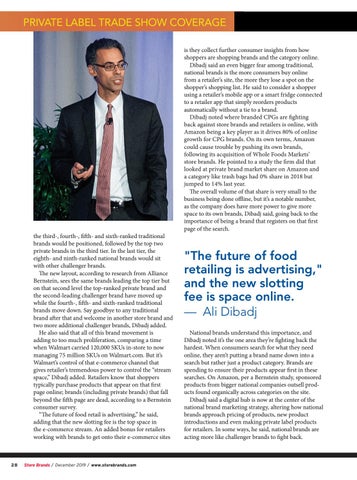
"The future of food retailing is advertising," and the new slotting fee is space online. — Ali Dibadj
P “ T
The is p pro
National brands understand this importance, and Dibadj noted it’s the one area they’re fighting back the hardest. When consumers search for what they need online, they aren’t putting a brand name down into a search but rather just a product category. Brands are spending to ensure their products appear first in these searches. On Amazon, per a Bernstein study, sponsored products from bigger national companies outsell products found organically across categories on the site. Dibadj said a digital hub is now at the center of the national brand marketing strategy, altering how national brands approach pricing of products, new product introductions and even making private label products for retailers. In some ways, he said, national brands are acting more like challenger brands to fight back.
The bri Am U.S int “Th of Co
Bri for
Store Brands / December 2019 / www.storebrands.com
SB_PLMA_1219.DOLA.indd 28
12/6/19 5:39 PM