Wet Cat Food Refreshes the Category Q&A Q &A with Joee Toscano, Vice President, P dent, Trade and Industry Development, Purina
Progressive Grocer: Is wet cat food experiencing a sort of “resurgence” today? If so, to what do you attribute its current popularity? Joe Toscano: Yes, our sales data and research indicate that wet cat food is on the rise. In fact, 62 percent of the 45 million cat food buyers have added wet cat food to their regular shopping lists. We attribute this increase in popularity to two key factors. First off, parents are learning about the health benefits of feeding cats wet food, as it ensures the cat is well hydrated and also provides highquality protein to support lean muscles. Second, cats naturally crave a range of flavors and textures, many of which are closer to how their ancestors ate in nature. In order to share all the benefits of feeding wet cat food, we recently launched
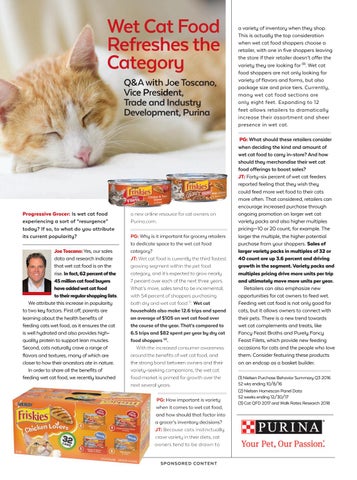
a new online resource for cat owners on Purina.com. PG: Why is it important for grocery retailers to dedicate space to the wet cat food category? JT: Wet cat food is currently the third fastest growing segment within the pet food category, and it’s expected to grow nearly 7 percent over each of the next three years. What’s more, sales tend to be incremental, with 54 percent of shoppers purchasing both dry and wet cat food (1). Wet cat households also make 12.6 trips and spend an average of $105 on wet cat food over the course of the year. That’s compared to 6.5 trips and $82 spent per year by dry cat food shoppers (2). With the increased consumer awareness around the benefits of wet cat food, and the strong bond between owners and their variety-seeking companions, the wet cat food market is primed for growth over the next several years. PG: How important is variety when it comes to wet cat food, and how should that factor into a grocer’s inventory decisions? JT: Because cats instinctually crave variety in their diets, cat owners tend to be drawn to S P O N S O R E D CO N TE N T
a variety of inventory when they shop. This is actually the top consideration when wet cat food shoppers choose a retailer, with one in five shoppers leaving the store if their retailer doesn’t offer the variety they are looking for (3). Wet cat food shoppers are not only looking for variety of flavors and forms, but also package size and price tiers. Currently, many wet cat food sections are only eight feet. Expanding to 12 feet allows retailers to dramatically increase their assortment and sheer presence in wet cat. PG: What should these retailers consider when deciding the kind and amount of wet cat food to carry in-store? And how should they merchandise their wet cat food offerings to boost sales? JT: Forty-six percent of wet cat feeders reported feeling that they wish they could feed more wet food to their cats more often. That considered, retailers can encourage increased purchase through ongoing promotion on larger wet cat variety packs and also higher multiples pricing—10 or 20 count, for example. The larger the multiple, the higher potential purchase from your shoppers. Sales of larger variety packs in multiples of 32 or 40 count are up 3.6 percent and driving growth in the segment. Variety packs and multiples pricing drive more units per trip and ultimately move more units per year. Retailers can also emphasize new opportunities for cat owners to feed wet. Feeding wet cat food is not only good for cats, but it allows owners to connect with their pets. There is a new trend towards wet cat complements and treats, like Fancy Feast Broths and Purely Fancy Feast Filets, which provide new feeding occasions for cats and the people who love them. Consider featuring these products on an endcap as a basket builder. (1) Nielsen Purchase Behavior Summary Q3 2016 52 wks ending 10/8/16 (2) Nielsen Homescan Panel Data 52 weeks ending 12/30/17 (3) Cat QFD 2017 and Walk Rates Research 2018