Ozempic and other GLP-1 receptor agonist medications are wildly popular, but do the economics add up for pharmacies?
62 INSIDE BEAUTY | MEN’S GROOMING
Men’s grooming is growing beyond traditional categories, with skincare a major focus
68 INSIDE BEAUTY | BEAUTY TALK
Beautycon executive Sophia Dennis discusses the importance of community and what the future holds for the event
72 INSIDE BEAUTY | COSMETICS TRENDS
Facing a cosmetics slowdown, retailers hope to pump up sales with female sport stars
78 INSIDE BEAUTY | MULTICULTURAL PRODUCTS
Mass market retailers spotlight brands for America’s diverse population
84 NACDS TSE | PRODUCT SHOWCASE
Here’s a sampling of products and services you’ll see at Total Store Expo 2024
94 HEALTH | FIRST AID REPORT
Consumers seek first aid remedies with natural ingredients and multi-tasking capabilities
TO P Q U A L I T Y
T R U S T E D B R A N D
I N F L AT I O N - F I G H T I N G
S H O P P E R P R I C I N G
LO W E S T B R A N D E D
P R I C E - P E R - O U N C E
S U B S TA N T I A L U N I A
R E TA I L E R M A R G I N S
Big 5-0
Who are the most influential people in retail health?
“ WE RECEIVED INPUT FROM INDUSTRY OBSERVERS, CONSULTANTS AND OTHER RETAIL EXECUTIVES. THEN WE LOOKED AT THE INFLUENCE THE POTENTIAL HONOREE’S POSITION (AND ORGANIZATION) HAS ON RETAIL PHARMACY AND HEALTH CARE ”
I love lists. It’s very likely that you do as well.
Whether they rank the best school districts, most unhealthy cities, the top 100 movies ever made or the most crime-ridden state in America, lists give readers a snapshot of things that are sometimes based on data (objective) and other times based on opinion or feeling (subjective).
For our cover story this month (page 38), we assembled our own list (in no particular order)—the 50 most influential people in retail health. It consists of the individuals who have helped propel retail pharmacy into the national healthcare conversation over the last 20 years and who are leading it into the future.
We are aware that lists can be tricky. They sometimes seem exclusionary, elitist even. That is not our intention here. We stopped at 50, so obviously we don’t have enough space for everyone who is influential in retail health. But there are many more important people we could have added.
Still, we tried our best. We received input from industry observers, consultants and other retail executives. Then we looked at the influence the potential honoree’s position (and organization) has on retail pharmacy and health care. For example, the chief pharmacy officer for a national or regional pharmacy chain is influential because the position affects so many consumers, but an organization that speaks for an entire industry also wields considerable influence and should be recognized.
Technically, our list has 51 people. We made a special pick for one honoree whose organization has an influence on the future of education and staffing, which everyone agrees is in crisis mode. So keep an open mind, give our list a read and let us know what you think.
Managing
Art
Production
When you’re not spending your day counting by fives, it frees up time for new revenue streams—like immunizations and screenings.
WALGREENS DEBUTS NICE! FOR YOU
Walgreens has unveiled Nice! For You, a new tier of its owned grocery brand, Nice!, to help customers find food choices that help support their journey to a healthier lifestyle. Nice! launched in 2011 and offers a range of everyday food and beverage products .
Nice! For You products do not contain artificial flavors, sweeteners, synthetic dyes or high-fructose corn syrup. Many Nice! For You options are also organic and gluten-free.
“According to recent research from Statista, nearly half of all Americans are trying to make better food choices,” said Tracey Brown, president of retail products and chief customer officer. “The evolution of our Nice! brand is designed to offer an efficient, highly relevant customer experience that meets their changing needs and preferences, while maintaining our
commitment to deliver high quality products that taste great at an incredible value.”
The Nice! For You! portfolio contains more than 150 products, including jerky, oatmeal, trail mix, dried fruit, coffee, frozen food products, beverages and dozens of grocery, pantry and baking staples.
LEADING PHARMACEUTICAL DISTRIBUTOR
WALMART UNVEILS NEXT STEPS IN GROCERY NETWORK TRANSFORMATION
What is the future of Walmart’s grocery network? Dave Guggina, executive vice president, supply chain operations at Walmart U.S., shared an update about the retailer’s grocery transformation in a post on the company website.
Guggina emphasized that as customers change the way they shop, Walmart is taking steps to build even more trust with them, ensuring the things they want and need are on shelves faster than ever before. To do this, Walmart has been investing in data, increasingly intelligent software and automation to transform its business and create a more connected supply chain.
“In the same way we added technology across our ambient and fulfillment networks, I’m excited to share more about the future of our grocery network, Guggina said, providing the following approaches to its grocery transformation:
New builds. We’re building five brand new high-tech perishable distribution centers. Our first high-tech DC in Shafter, Calif. has been operational since 2021. The second, located in Lancaster, Texas, is ramping operations and will be followed by Wellford, S.C.; Belvidere, Ill.; and Pilesgrove, N. J. Collectively, these facilities bring around 2,000 new jobs into these communities and our supply chain network.
Expansions. We’re expanding four traditional perishable DCs by adding over 500,000 sq.-ft. of automation per site to increase
capacity for fresh product. We will expand facilities in Mankato, Minn.; Mebane, N.C.; Garrett, Ind.; and Shelbyville, Tenn.
Retrofits. Our Winter Haven, Fla. perishable distribution center is getting upgraded, as we integrate the newest technology into the space. Our goal is to learn more about the feasibility and requirements of retrofitting an existing grocery building with automation technology—similar to how we have approached our ambient distribution center in Brooksville, Fla.
“Our business is growing,” Guggina added. “Walmart is the largest grocery retailer in the U.S., with our grocery network supporting over 4,600 stores with a massive pickup and delivery business that continues to grow as customers seek the convenience and value we offer. That’s why we’re adding stateof-the-art tech to our facilities: to enable greater speed and capacity that allows us to serve customers even more reliably.”
“We’re excited about what this technology will do for our business, but more than that, we’re excited about the opportunities it will create for associates,” Guggina said, adding, “Technology is evolving physically demanding jobs into roles where associates are operating and maintaining high-tech systems, leading to an improved quality of life.”
CVS HEALTH FOUNDATION AWARDS WOMEN & INFANTS HOSPITAL $1M
CVS Health and its foundation has given a $1 million grant to support the Women & Infants Hospital’s ongoing work to increase access to maternal health services, including programming to expand its workforce and launch a new postpartum mobile unit.
“Our commitment to women’s health includes improving access to the services needed for a healthy pregnancy, birth and postpartum care,” said Sheryl Burke, senior vice president of corporate social responsibility and chief sustainability officer at CVS Health. “By supporting the Women & Infants Hospital, we hope to strengthen their incredible work to ensure our neighbors receive consistent and high-quality care where and when they need it most.”
As part of the Women & Infants Hospital’s WIH ECHO programming umbrella, the CVS Health Foundation grant will help hire additional staff to support its Postpartum Hypertension Equity Program, which started in 2022. The program provides blood pressure cuffs and training to all eligible patients before discharge to better understand when to seek medical attention in the comfort of their own homes.
“This grant from CVS Health allows the Women & Infants Hospital to continue successful programs like our Postpartum Hypertension Equity Program and build upon that progress to
expand reach into the community,” said Methodius G. Tuuli, chief of obstetrics and gynecology at Women & Infants Hospital. “This initial investment in WIH ECHO will benefit Rhode Islanders for years to come.”
Knowing 80% of the Rhode Island community delivers at the Women & Infants Hospital, the grant will also support the facility’s new mobile van, which will help remove transportation as a barrier to receiving postpartum care. The mobile van will offer various services, including hypertension management, contraceptive counseling, mental health screening and breastfeeding support.
CVS Health granted $3.8 million last year to support organizations in Rhode Island working to expand access to health services and provide individuals with supportive services like workforce training, education and healthy food. In addition to the grants, the company offers free health screenings to the Rhode Island community through its Project Health program throughout the year. Participants often refer to the program as “a lifesaver” and an opportunity to take control of their health, CVS Health noted.
In 2023, CVS Health hosted 45 Project Health events in Rhode Island and screened 1,701 participants, which resulted in 5,954 screenings. The retailer said 70% of participants had at least one screening result that was out of range.
COSTCO HIKES ANNUAL MEMBERSHIP FEES
Costco announced that, effective Sept. 1, it will increase annual membership fees by $5 for U.S. and Canada Gold Star (individual), Business and Business add-on members.
With this increase, all U.S. and Canada Gold Star, Business and Business add-on members will pay an annual fee of $65. Also effective Sept. 1, annual fees for Executive Memberships in the U.S. and Canada will increase from $120 to $130 (Primary membership of $65, plus the Executive upgrade of $65), and the maximum annual 2% Reward associated with the Executive Membership will increase from $1,000 to $1,250. The fee increases will impact around 52 million memberships.
Costco also reported net sales of $24.48 billion for the retail month of June, the five weeks ended July 7, an increase of 7.4% from $22.78 billion last year.
Net sales for the first 44 weeks were $210.55 billion, an increase of 6.9% from $196.93 billion last year.
Costco currently operates 882 warehouses, including 609 in the United States and Puerto Rico, 108 in Canada, 40 in Mexico, 33 in Japan, 29 in the United Kingdom, 18 in Korea, 15 in Australia, 14 in Taiwan, seven in China, four in Spain, two in France, and one each in Iceland, New Zealand and Sweden. Costco also operates e-commerce sites in the U.S., Canada, the U.K., Mexico, Korea, Taiwan, Japan and Australia.
IHERB PARTNERS WITH THE VITAMIN SHOPPE
iHerb, an e-commerce retailer for vitamins, minerals, supplements and other health and wellness products, announced a partnership with The Vitamin Shoppe to bring the U.S.-based retailer’s portfolio of brands to new consumers worldwide.
The company ships more than 50,000 products from 1,800+ brands to more than 180 countries. With this partnership, health and wellness consumers can now access The Vitamin Shoppe’s range of brands, including The Vitamin Shoppe, Vthrive The Vitamin Shoppe, BodyTech and BodyTech Elite on iHerb’s platform.
“At The Vitamin Shoppe, we believe everyone is deserving of good health, so we’re especially pleased to now offer our high-quality supplements and advanced sports nutrition
formulas to millions of new consumers in markets around the world, via the global reach of iHerb,” said Muriel Gonzalez, president of The Vitamin Shoppe. “Our collection of exclusive brands and products are consistently top sellers across our U.S. business, due to their trusted quality, innovation and value. We look forward to bringing those industry-leading standards to our partnership with iHerb and its extensive international customer base.”
iHerb now offers more than 250 products from The Vitamin Shoppe, with hundreds more slated for release.
STOP & SHOP TO CLOSE 32 UNDERPERFORMING STORES
Stop & Shop recently announced the next steps in its plans to position the company for growth. In addition to continued investments in price and the customer experience, the company will close 32 underperforming stores by year-end.
Following the closures, Stop & Shop will continue to have a strong presence across its five-state footprint with more than 350 stores. Associates at impacted locations will be offered other opportunities within the company.
“Stop & Shop is proud of the deep roots and community ties we have developed as a neighborhood grocer of more than 100 years, and we remain committed to nourishing our associates, customers and communities,” said Gordon Reid, president of Stop & Shop. “As we announced in May, Stop & Shop has evaluated its overall store portfolio and made the difficult decision to close underperforming stores to create a healthy base for the future growth of our brand.”
The 32 store locations are anticipated to close on or before Nov. 2.
The company said it will communicate specific store closing dates to local customers well in advance of any store closures. It also said it remains committed to serving its communities through other store locations, online shopping and home delivery services.
“Stop & Shop is focused on growing through large, multi-year price investments and a stronger customer value proposition, both in-store and online. This means we’ll be focused on delivering lower everyday prices, as well as even more savings for our customers through strong promotions,” Reid said. “Since 2018, we have completed more than 190 store remodels, with
the customer shopping experience in mind. These stores are outperforming other Stop & Shop stores that haven’t been remodeled. We’re taking these learnings and implementing them at other stores as we build upon our strong foundation, similar to our new Boston flagship location, opened last month in the Allston Yards development. We look forward to continuing to serve and care for our communities and to grow Stop & Shop as a local brand for many years to come.”
After the store closures are complete, Stop & Shop will operate more than 350 stores spanning five states, including 81 stores in Connecticut, 115 in Massachusetts, 47 in New Jersey, 91 in New York and 25 in Rhode Island.
HY-VEE TO HOST EVENT FOR SMALL BUSINESS OWNERS, ENTREPRENEURS IN KANSAS CITY
Hy-Vee is hosting an opportunity to support local small businesses through a networking and showcase opportunity in Kansas City in September.
The Hy-Vee OpportUNITY Inclusive Business Summit provides small business owners learning opportunities and resources from Hy-Vee and other local business leaders to help grow their businesses. The summit, which is free and open to the public, will be held Thursday, Sept. 12, at GEHA Field at Arrowhead Stadium in Kansas City.
A spotlight of the summit is a live pitch competition that is open to minority- and women-owned businesses.
Fifteen finalists will be selected to compete for cash prizes to use for their business. Hy-Vee will award up to $50,000 in cash investments.
The competition will feature celebrity judge Paul Wahlberg, executive chef and co-owner of Wahlburgers and Alma Nove. Wahlberg is the fourth of nine children in the Wahlberg family, including his younger brothers Mark and Donnie, and has been instrumental in growing the family’s restaurant business. In addition to Alma Nove, an Italian/Mediterranean restaurant in Hingham, Mass., he owns more than 50 Wahlburgers locations across North America and Europe. dsn
ALIVE & WELL TV: DRIVING BRAND GROWTH AT RETAIL
ALIVE & WELL is an award-winning national TV series that inspires viewers with all the latest lifestyle and wellness trends.
Hosted by wellness lifestyle expert Michelle Harris, Alive & Well airs nationwide on TV and also streams daily on USA TODAY.
We cover topics like health, nutrition, fitness, beauty, personal care and more.
Alive & Well is 100% retail driven! We don’t air infomercials or DTC ads. Our campaigns drive consumers to major retailers nationwide.
Our Annual Sponsor Package provides nonstop media coverage year round.
For information, media kits and case studies contact us at info@aliveandwell.tv or call 800.790.4788
If your brand isn’t being promoted simultaneously on national TV, streaming on USA TODAY, with celebrity endorsements, news coverage, social media videos and red carpet live events, ask your doctor if Alive & Well might be right for you.
New and Noteworthy
HRG’s five notable products from July
4 1 3
2
Product introductions dipped again in July, reverting to an old see-saw pattern that has been happening for at least a year.
In July, suppliers introduced 163 products, a number that is 80 fewer items than the 243 new items they introduced in June. Waukesha, Wis.-based HRG reviewed 46 products in the health category, 49 items in the wellness sector and 68 in the beauty aisle to see which ones stood out as Products to Watch.
Here are the top five:
1. Blink NutriTears Dry Eyes Supplement Soft Gels
Bausch Health said Blink NutriTears Dry Eyes Supplement promotes healthy tear production, targets the key root causes of dry eyes and hydrates from within for long-lasting relief. The manufacturer also said that adding the soft gels to a dry eye regimen will provide a noticeable difference in just four weeks. A pack contains 50 gel tablets.
2. Hibiclens Antiseptic Skin Cleanser
The Hibiclens Antiseptic Skin Cleanser formula from Molnycke has been updated to a foam delivered in a pump. Molnycke said foam is the preferred consumer form, providing peace of mind as it is easier to see on the skin. The higher viscosity is designed to allow the cleanser to stay in place and increase ease of use. It comes in an 8-oz. bottle.
3. Mucinex Children’s Mighty Chews
5
Reckitt said Mucinex Children’s Mighty Chews tablets are formulated to provide cough relief for up to four hours with less fuss than a liquid for children ages 6+. The company claimed that it is the first-ever OTC children’s cough medicine available in a chewable tablet form. A pack contains 16 chewable tablets.
4. Tylenol Extra Strength Easy to Swallow Caplet
Tylenol Extra Strength Easy to Swallow Caplet from Kenvue is designed to allow consumers with gastrointestinal conditions to find pain relief more easily with Gentleglide coating technology and a rounded pill shape to enhance swallowability. Kenvue said the hydrophilic coating is wateractivated and the sucralose coating activates with saliva to ease swallowing for a more pleasant experience. A pack contains 24 caplets.
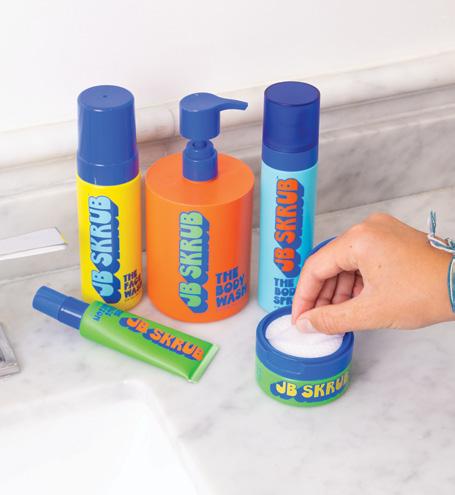
5. Batiste Sweat Activated Dry Shampoo
Church & Dwight’s Batiste Sweat Activated Dry Shampoo is designed to prevent odor and sweat buildup to keep hair looking and smelling fresh for up to 24 hours, the company said. Formulated to be highly absorbent, the product continues to reactivate when sweating occurs. The shampoo comes in a 3.81-oz. bottle. dsn
Expanding pharmacy care
Several factors may be at play in creating pharmacy deserts
By David Pope
“According to a recent report, 2,177 rural towns with populations between 500 and 5,000 people did not have access to a pharmacy within 10 miles.”
Pharmacies are providing more health services than ever. From prescribing treatment following a point-of-care test to prescribing hormonal contraceptives, pharmacists are standing in the gap to address healthcare disparities and improve patient health. From a public health perspective, this advancement brings hope that pharmacy footprints will continue to expand to improve access to care.
Today, pharmacists are the most accessible healthcare providers, with approximately 186,230 retail pharmacists available at 60,000 locations across the country. Patients trust pharmacists to meet their care needs, visiting their community pharmacist roughly twice as frequently as they visit primary care physicians. In rural areas where patients may have just one doctor or fewer for every 1,500 people, frequency of visits is even higher and arguably more critical.
However, a new phenomenon—pharmacy deserts—puts these numbers in sharp focus. According to a recent report, 2,177 rural towns with populations between 500 and 5,000 people did not have access to a pharmacy within 10 miles. While rural areas are especially hit hard by pharmacy closures, urban and suburban areas aren’t immune either.
Several factors may be at play in creating pharmacy deserts. Decreasing reimbursement rates for pharmacy services have led to store closures, while a shortage of trained pharmacists poses another challenge. Pharmacists are leaving the field even
as fewer people are graduating with a pharmacy degree. The American Association of Colleges of Pharmacy reported that 136 pharmacy schools graduated 13,323 new pharmacists in 2022, down from 14,223 in 2021. And for 2023 fewer than 10,000 students were accepted through the Pharmacy College Application Service, indicating a continuing decline.
With the support of better-aligned reimbursement policy and other incentives, pharmacies can establish a location in these areas to address underserved communities. Pharmacies offering a hybrid approach of prescription dispensing and clinical services can better serve the community, while opening more diversified revenue streams. Then by employing new technology to ensure operational efficiency and care delivery, they can free up pharmacists to deliver care and get reimbursed for it.
Thankfully, pharmacists are uniquely equipped to deliver clinical services. A pharmacist’s education includes rigorous training about diseases, assessing the health status of patients, providing education and helping patients manage diseases–all this over a minimum of six years of education, as well as national and state licensure and continuing education classes to keep their skills and knowledge up to date.
Pharmacists chose this career to improve patient health in the communities where they live. Now they have the chance to go into hard-to-reach places, practice at the top of their license, and work on a greater mission to improve our nation’s health. dsn
David Pope, Pharm.D., CDE, is Chief Pharmacy Officer at XiFin Inc.
How Heat Waves Threaten the Pharma Cold Chain
The stakes are high as the percentage of medications requiring cold chain logistics grows
By Brent Wilhelm
Recently, distributors braced for additional complications that extreme heat inevitably brings to delivering medications to the people who need them.
Pharmaceutical cold supply chains—systems that safely transport temperature-sensitive drugs and medical products—are critical to patient safety and care delivery. Temperature-sensitive logistics encompass both “cold chains”—which involve maintaining a constant, specific low temperature for sensitive goods from production to use—and more general “temperature control,” which refers to situations in which temperature thresholds are maintained in transit.
These complex processes require flawless execution in the best of circumstances. When temperatures reach the upper 90s, more pressure is exerted on the existing infrastructure, increasing the risk of temperature excursions—situations during which medications are exposed to temperatures outside the recommended storage range, resulting in costly drug wastage.
The stakes are high as the percentage of medications requiring cold chain logistics grows. As of 2021, 58% of the 50 top-selling drugs in the United States required cold chain storage. Many of these medications are extremely expensive to produce, so any fluctuation in temperature maintenance resulting in wastage means huge financial losses for everyone involved.
For global distributors like Cencora, proactive planning, inventory management and a commitment to advancing cutting-edge innovations while working closely with partners and customers are key steps to ensuring cold chain success during times of extreme weather.
In the past decade, distributors innovated in refrigeration and packaging solutions, supporting the advent of many temperature-sensitive medications and vaccines. This, in turn, opened the door to newer capabilities, such as enhanced temperature control management and expedited shipping processes. Yet distributors do not manage cold chains alone. Success depends on seamless coordination with many other stakeholders, from manufacturers, logistics providers, shipping companies and pharmacies.
It also requires choosing the best packaging for the specific conditions. A sub-optimal packaging selection can compromise the medication and result in further delays, additional costs and potentially serious health complications. To get this right at Cencora, researchers in our Climate Optimization Research and Engineering Labs help evaluate, validate and select the right climate-controlled shipping packaging to meet our clients’
Brent Wilhelm is SVP of supply chain planning and optimization at Cencora
specific needs. Cocoon, a pallet-sized passive solution developed by our CORE Labs, is a prime example. It maintains temperature up to 40% longer while weighing up to 30% less than other standard market offerings.
Medications that require climate-controlled packaging cannot be left unsupervised, so heat waves bring added threats. Smart monitoring technology meets this need by tracking temperature-controlled packaging constantly.
Last year brought more heat waves than any year since 1936, and this summer is shaping up to meet forecasters’ predictions for a long, hot season. It’s clear distributors and stakeholders across the pharmaceutical supply chain will need to continue to work together to ensure the latest medications can reliably make it to the patients who need them. dsn
BETTER CARE WHEN WE SHARE
Addressing the Decline in Graduating Pharmacists
Pharmacist burnout requires strategies that embrace innovative solutions like AI-driven automation
By Joy Liu
The healthcare sector is bracing for the repercussions of a significant decline in the number of graduating pharmacists, raising concerns about the future.
Recent data indicates a reduction by nearly 10%--in the graduation rates of pharmacy students across the United States. Additionally, the American Association of Colleges of Pharmacy found that pharmacy school applicants have declined by nearly 60% within the last decade.
The decline in pharmacy students is attributed to various factors, including changes in career preferences among prospective students, the prevalent perception of pharmacists experiencing burnout and financial constraints linked to pursuing pharmacy education. But no matter the cause, the trend has become a notable concern within the healthcare sector. And addressing it requires more than just boosting enrollment numbers. We need to tackle the issue at its core.
Burnout is a significant deterrent for many potential graduates. It necessitates comprehensive strategies that embrace innovative solutions like AI-driven automation. By automating the tedious administrative work that often leads to burnout and detracts from patient care, these solutions address the prevalent manual and administrative tasks. This, in turn, makes the job more appealing by allowing pharmacy teams to concentrate more on patient care.
Consider the variety of non-clinical, labor-intensive tasks, such as document data entry. These workflows are pervasive and often complex. Artificial intelligence offers a solution by streamlining complex decision-making and disparate data processes, allowing it to effectively act on these intricate workflows.
By leveraging technologies like AI, pharmacy teams can streamline workflows, enhance efficiency and alleviate the burden on pharmacy teams. This improves the attractiveness of the profession and immediately helps alleviate the burnout.
Beyond addressing labor shortages, these technologies inevitably end up redefining the patient journey for the better. Given AI’s capacity to replicate sophisticated decision-making processes, envision a scenario where AI extracts information from handwritten notes containing vital patient medication data, a task that, prior to innovations in optical character recognition and natural language processing, needed to be completed by a human. Machine learning is then employed to analyze this collected data across currently disjointed data sources, proactively predicting potential issues and preventing human errors.
AI automation in pharmacy operations also could include inventory optimization and planning, 340B auditing and financial reporting and missed claims qualification identification. At Plenful, we recognize that administrative tasks like these can be most successfully executed by leveraging
AI. We’ve been fortunate to witness how pharmacy operations teams across healthcare have prioritized AI innovation, leading to more efficient and effective workflows.
As pharmacy teams assess AI software solutions for their workflows, they should identify automations that help alleviate strain. They should prioritize purpose-built pharmacy operations automation solutions, as generic tools will likely not address pharmacy’s unique complexities. They also should collaborate closely with vendors that have backgrounds in pharmacy operations and tailored solutions to specific pharmacy requirements. Continuous monitoring and feedback gathering are also essential for successful onboarding
The decline in graduating pharmacists presents a significant challenge, but within this challenge lies an opportunity for innovation. By embracing AI-driven automation, we can mitigate labor shortages, enhance efficiency and elevate patient care to unprecedented heights. dsn
Joy Liu is the CEO and founder of Plenful, an AI-powered workflow automation tool
Pioneering AI
Lori Schafer, CEO of Digital Wave Technology, shares how generative AI can equip retailers and suppliers to succeed as technology evolves
By Julianne Mobilian
The topic of artificial intelligence hit the broader mainstream in November 2022 when OpenAI launched its ChatGPT function. AI is still a new concept, but it will undoubtedly shape the retail sector for years to come. DSN caught up with Lori Schafer, CEO of Digital Wave Technology, to discuss how generative AI can break into operations channels. She also discusses how women can succeed in technical roles within retail.
Drug Store News: How has Digital Wave Technology adapted its solutions to meet the evolving needs of retailers?
Lori Schafer: Digital Wave Technology has leveraged its extensive expertise in retail, consumer brands and retail technology to adapt to the evolving needs of retailers. The company’s core strength lies in product data intelligence, addressing the complexities of ensuring the right product, content, placements, pricing, promotions, and inventory across all customer touchpoints. Digital Wave has built a platform that integrates master data across retail applications, from Product Information Management to merchandising, marketing and fulfillment solutions.
This platform incorporates the latest cloud architecture including an analytical, highly scalable database and secure AI and generative AI capabilities native within the platform, enabling rapid development and adaptability of all retail applications. By providing a consistent and reliable data foundation, Digital Wave ensures one version of the truth and accuracy across channels, delivering actionable insights and equips retailers to enhance operations, improve customer experiences, and prepares retailers for an ever-changing future.
DSN: In your experience, what are the key challenges female leaders face in the retail technology sector, and how can these be overcome?
LS: I want to flip this question on its head and instead ask: how can female leaders use their position in the retail technology sector as a competitive advantage? The industry has made great strides in advancing women into executive roles. Women often bring nurturing and empathetic qualities, excel at reading people, and strive to understand subjects deeply before speaking. These traits enhance credibility and authenticity. Understanding the domain and how technology adds business value is crucial in retail technology. Additionally, women’s strengths in customer satisfaction and mentoring further bolster their effectiveness.
DSN: Could you share a recent success story where Digital Wave Technology improved the retail operations of a client?
LS: Digital Wave Technology recently helped a multi-billion-dollar retailer by deploying PIM with Generative AI and AI Price Optimization. This resulted in a 50% increase in drop-shipped SKUs in 120 days and reallocated 25% of
product enrichment and web operations staff through automation. Manual product content creation was reduced by 90%, speeding up the process to under one day per product. Inventory visibility improved, reducing items with inventory but not available online by 80%, boosting sales and customer satisfaction. Conversions increased by 25%, cart abandonment decreased by 25%, revenue grew by 1.39%, gross margin by 4.54%, gross margin percentage increased by 1 point, and EBITDA rose 1.3%, resulting in a profit improvement of over 40% across the company.
DSN: With the rise of e-commerce, how do you see the future of brick-and-mortar retail evolving, and what role does technology play in this evolution?
LS: The future of brick-and-mortar retail will integrate smoothly with e-commerce, supporting the customer journey across all channels. While digital shopping surged during the COVID crisis, physical stores remain essential, especially for entertainment, fashion, and quick purchases like groceries. Stores serve as destinations for experiencing products firsthand while some categories suit digital purchases, with stores acting as showrooms for inspiration. Technology plays a vital role in merging these experiences, ensuring retailers have a strong and complementary digital and physical presence tailored to the customer journey.
DSN: What advice would you give to women looking to pursue a career in technology within the retail industry?
For women pursuing a career in retail technology, here’s my advice:
Practical Experience: Gain hands-on experience through internships or project-based work while in school.
Industry-Specific Knowledge: Understand retail operations, including data management, supply chain, inventory control, and customer experience. Retail technology success relies on experts who know both the business and the technology.
Technology Proficiency: Learn about retail-specific technologies, including AI, GenAI, blockchain, and business process tools.
Data Focus: Concentrate on actionable insights to drive business agility and growth.
Networking: Attend industry conferences, tech meetups, and networking events to connect with professionals and stay updated on trends.
Continuous Learning: Stay informed about technological advancements through online courses, webinars, and workshops.
Productivity Tools: Use project management and collaboration platforms to enhance efficiency.
Openness to Innovation: Embrace new technologies and innovations that can advance the retail industry, like aligning product and customer data for a better experience.
A career in retail technology is dynamic and rewarding for those who thrive in fast-paced environments, enjoy continuous learning, and are passionate about transforming the shopping experience.
DSN: As the CEO of Digital Wave Technology, what do you consider your proudest achievement in advancing retail technology solutions?
LS: As the CEO of Digital Wave Technology, my proudest achievement is leading the launch of our innovative Digital Wave One platform. Traditional retail solutions often operate in silos, lacking integration and requiring redundant data storage. Additionally, analytical technology has been limited to specific use cases, resulting in inefficiencies and reliance on spreadsheets. Our AI-native, rapid development platform integrates data across various enterprise solutions—MDM, PIM, merchandising, marketing, pricing, content management and fulfillment. This ensures clean data and a single version of the truth, streamlining workflows and enhancing efficiency across the entire enterprise.
DSN: Looking ahead, what innovations or trends do you foresee shaping the future of retail technology, and how is Digital Wave Technology preparing for them?
LS: The future of retail technology is being shaped by omnichannel retailing, AI, AR/VR, IoT, and blockchain. Digital Wave Technology is preparing for these by leveraging big data for customer insights and predictive analytics, optimizing digital and store performance, and enhancing operational efficiency. Digital Wave’s ONE platform is built for omnichannel retailing, fully integrating AI and GenAI technologies to adapt to evolving algorithms and large language models. This ensures retailers can offer personalized shopping experiences, improve inventory management and enhance customer engagement, staying ahead in the dynamic retail landscape. dsn
Digital Wave Technology recently helped a multi-billion-dollar retailer by deploying PIM with Generative AI and AI Price Optimization”
- Lori Schafer
Creating Private Brands
DSN recently sat down with Deborah Levy-Abreu, CEO of Navajo Manufacturing, Inc., a multicategory manufacturer and distributor. Levy-Abreu provides her perspective on the growing opportunities for retailers in the private label sector. Check out the conversation below.
Drug Store News: Can you describe your Private Label program and how it benefits customers?
Deborah Levy-Abreu: Absolutely. When a retailer or distributor wants to create and market products with their own brand name, they reach out to us to source the products and bring that brand vision to life. They have requirements that need to be met for product quality, packaging, and industry standards, and using a company like ours that already manages the manufacturing process provides retailers both a shorter timeline and a more secure avenue of procurement than building the product line by themselves. That way retailers and distributors can offer specific, unique products that enhance customer loyalty and provide higher profit margins.
DSN: Do a lot of retailers want Private Label programs? Is this a trend you’re seeing?
DL: Very much. We’re seeing most major retailers expand their private label brands among their higher turning categories, from food to electronics. And it’s likely not a trend as much as it is a new evolution in bringing products to the shelf. It’s another way that retailers are communicating and interacting with their customers. But you want to make sure that the products are constructed well, otherwise you’re communicating the wrong message. That’s why it’s important to vet and verify your products and manufacturers, and make sure they’re putting out the best for your customers.
Deborah Levy-Abreu CEO of Navajo Manufacturing, Inc
DSN: So how do you develop products for Private Labels?
DL: We usually start with market research to identify the opportunities in their current offerings and to understand their consumer’s perspective. Once the products are identified, we start sourcing and prototyping. Then we go through testing and performance evaluations based on industry standards like UL or ETL. While that’s occurring, we develop the package design and branding with the retailer to create a cohesive visual message. After the product and packaging is finalized, then we can start producing and shipping to our warehouses or direct to the retailer.
DSN: Is there any Private Label product line you’ve done recently that’s made you excited?
DL: There was one with travel kits. Our Handy Solutions line has hundreds of trial and travel brands that we package in travel kits for retailers. But their customers might prefer one brand over another, and they see that in their sales—so they decide to create their own customized kit with their own private label branding. It’s a fast flexibility we don’t see in other products because it’s so easy to build and iterate.
DSN: What do you see in the future of Private Labels for retailers?
DL: More growth, definitely. Higher profit margins mean better deals for the customers, and that drives better perception. Not only that, shopping is more interactive than it’s ever been. The more impressions you can make on your consumers, not just from marketing but from the products made and recommended by your brand, the more they’ll trust and return to the brand. So when retailers are ready, we’re here—ready to help them bring that interaction to life.
Dissecting the Complexity of Medical Billing for Clinical Services
David Pope PharmD, CDE, Chief Pharmacy Officer XiFin Inc.
Good news! Pharmacists are billing for clinical services, including patient evaluation and management. Agreements for pharmacist-led services are now more prevalent, marking a pivotal moment in pharmacy practice. However, this brings new billing complexities, requiring detailed processing, rigorous reconciliation, and a focus on patient out-of-pocket expenses, necessitating robust claims processing solutions.
Multiple Services, One Claim
With the expanding role of pharmacists comes the opportunity to deliver an “office visit,” which may include several services like consultation, tests, and prescribing. However, these encounters present specific medical billing challenges. Payors require pharmacies to consolidate office visit services into a single claim, with line-item details for each service.
In turn, this creates unique technical challenges when using existing pharmacy management systems. Claim consolidation is standard in other healthcare environments, making it essential for pharmacies to adapt their technology and processes to be future-ready.
Reconciliation and Denial Management by Service Line
With the consolidated claims, Explanation of Benefits (EOBs) from payors are returned with detailed line items for each service. To manage this effectively, pharmacies need the ability to: reconcile payments at the service level, track payor payment/denial trends by service line, identify and address common denial reasons to improve the process, and stay up to date with changing payor requirements to ensure compliance.
Effective denial and appeals management and streamlined reconciliation are crucial to maintaining accurate financial records and optimizing revenue cycles.
Increase in the Patient’s Out-Of-Pocket Expenses
As the amounts billed for services increase, payors are shifting a larger portion of the financial responsibility to patients. This trend necessitates that pharmacies provide an accurate estimate of a patient’s out-of-pocket expenses based on yearto-date deductibles, co-pays, and coinsurance. Pharmacies also need to collect point-of-sale payment, issue patient statements, facilitate payments digitally and traditionally, track and reconcile payments, etc.
Managing patient payments effectively is essential to maintaining financial stability while ensuring a predictable and frictionless patient experience.
Claim Processing and Medical Billing Now Require a Financially-based Solution
The complexity of medical billing requires comprehensive financial solutions. A future-ready Revenue Cycle Management (RCM) system with specialized services is essential. The ideal RCM solution should comply with GAAP/SOX standards and healthcare regulations, providing end-ofmonth financials, quarterly reports, expected reimbursement reconciliation, error processing summaries, a ledger-ready closing package, and thorough bank reconciliations.
Putting a Revenue Cycle Management Strategy into Place
Payor requirements have created an increasingly intricate medical billing landscape. A greater emphasis on detailed claims processing and patient financial responsibilities requires pharmacies to adopt a comprehensive financial system that helps them navigate the complexities of modern medical billing more effectively to ensure compliance, accuracy, and fiscal health.
Download the Executive’s Guide to Maximizing Pharmacy Revenue via Medical Billing now at XiFin.com/MedicalBillingGuide.
RETAIL HEALTH
According to the Business Intelligence and Consulting Group (citing Credence Research), the value of U.S. retail clinics in 2023—in retail stores, pharmacies and supermarkets—was $569.79 billion and is projected to grow to $948.80 billion by 2032. That’s an impressive clip, but that growth would not be possible without the people (the decision makers) driving that train.
WHO ARE THE MOST INFLUENTIAL PEOPLE IN
There are many people who deserve credit for this, of course, but let’s face it—we don’t have enough space to list them all here. But we do have enough pages to list 50, with one extra thrown in. So after you ask yourself “Why am I not on this list,” you might be asking, how we came up with it?
Short answer? It was a team effort, which included the entire staff of the magazine. But we also receive input from industry observers, consultants and other retail executives. Then we looked at the influence (and the reach) the potential honoree’s position (and organization) has on retail pharmacy and health care. In one case, we looked at the honoree’s influence on the future of education and staffing, which everyone agrees is in crisis mode. And before you ask, there is no beauty or personal care entry on the list. Stay tuned for a separate list that will be published in a short while. So with that, here are the 50 most influential people in retail healthcare.
Karen Lynch
President,
CEO, CVS Health
At one point one of three women to head America’s top retail pharmacy chains, Karen Lynch now stands alone at CVS. Since joining the company, she spearheaded two major acquisitions: Signify Health and Oak Street Health.
Musab Balbale
Chief Merchandising Officer, CVS Health
Balbale has more than 20 years of experience in strategy, investing and operating roles with merchandising and P&L responsibility in the consumer retail and services sector. He joined CVS Health in 2022 after serving in executive leadership roles with Walmart.
Emily Pefanis
VP, Specialty Pharmacy Operations, CVS Health
Pefanis is a clinical and operational executive leader with 15 years of experience. A passionate clinician focused on delivering exceptional patient care, she has experience in multiple pharmacy disciplines, including Medicare Part D.
Tim Wentworth
CEO, Walgreens
Hoping to be a change agent that rights the ship, Tim Wentworth joined Walgreens Boots Alliance as CEO in October 2023. Wentworth is already making an impact, as the retailer is closing U.S. stores and making changes at the remainder of the stores to boost performance.
Rick Gates
Chief Pharmacy Officer, Walgreens
Gates brings over 25 years of experience as a pharmacist to Walgreens’ efforts to evolve the future of pharmacy. Previously, he served as senior vice president of pharmacy and healthcare, where he was responsible for commercial development and sales across health plans and biopharmaceutical partnerships, among other roles.
Long-Term Care Pharmacy Accreditation.
For more than 15 years, The Compliance Team’s (TCT) leadership and expertise in the LTC Pharmacy industry has guided providers in best-of-care practices with our LTC Pharmacy Accreditation program, quality standards, and knowledgeable LTC industry advisors.
Our accreditation program focuses your pharmacy on continuous quality improvements — helping to ensure your operations and services meet and/or exceed industry quality standards of care for your patients in LTC facilities, at home, community settings, or wherever the patient calls home™
Exemplary Provider® accreditation from TCT, a nationally recognized, CMS-approved accreditor, assures patients, employees, referrals, and payers you’ve achieved the highest level of healthcare delivery in the industry.
Heather Hughes
Group VP, General Merchandise, Healthcare, CPG and Seasonal, Walgreens
After spending a year with CVS, Heather Hughes joined Walgreens in 2000, moving up from pharmacy manager to VP of general merchandise and health care. Among her skills are sales, revenue and profit growth and merchandising.
Mary Langowski
EVP, U.S. Healthcare, Walgreens Boots Alliance
Mary Langowski leads WBA’s U.S. healthcare business segment as the company expands its role in health care. Langowski has a successful track record of building and driving commercially successful initiatives, businesses and partnerships that improve patient outcomes.
Rina Shah
SVP of Pharmacy of the Future and Transformation, Walgreens
Shah started her career at Walgreens in 1998 and is now senior vice president of Pharmacy of the Future and Transformation. Shah brings 25 years of experience with community-based care that seeks to broaden pharmacist capabilities.
Rick Dreiling
Chairman, CEO, Dollar Tree and Family Dollar
Dreiling ascended to CEO of Dollar Tree in 2023, after joining as chairman in 2022. Previously, he headed Dollar General from 2008 to 2016. Over that time, the company increased its store count by more than 40% and sales increased more than 80%.
Ramita Tandon
Chief Clinical Trials Officer, Walgreens
Tandon, who leads the Clinical Trials business at Walgreens, has spent more than 25 years in the healthcare and life sciences industry. She has been continuously seeking innovative ways to partner with bio-pharmaceutical companies to operate trials more effectively.
Todd Vasos
CEO, Dollar General
Todd Vasos became CEO in May 2015, having held key positions at three drug chains as well as Dollar General. His talents filled a long list, including front-end marketing, merchandising and supply chain. During his time, he made meaningful changes to products and merchandising.
Product Knowledge
Advocate for You Responsiveness
Likeable and Trusting
Jeffrey S. Stein
CEO, Chief Restructuring Officer, Rite Aid
Amid its challenges, Rite Aid Corporation appointed Stein as CEO, chief restructuring officer and a member of the Board of Directors in January 2023. Stein is leading the retailer through its restructuring plan to bring the company out of bankruptcy
Karen Staniforth
Chief Pharmacy Officer, Rite Aid
Staniforth excels at implementing innovative pharmacy solutions and customer-centric strategies at Rite Aid. Her leadership in transforming pharmacy operations has enhanced the retailer’s market position and satisfaction amongst consumers. She is a board member of the National Association of Chain Drug Stores.
Doug McMillon
President, CEO, Walmart
Starting his career as an hourly associate unloading trailers, McMillon made it all the way to the big chair. Under his leadership as president and CEO, Walmart is investing heavily in wages, benefits and education—including a debt-free college program and an expanded parental leave policy.
John Furner
President, CEO, Walmart U.S.
John Furner serves as president and chief executive officer of Walmart U.S., where he leads more than 1.5 million associates and is responsible for the strategic direction and performance of Walmart’s 4,700 stores, website, app and supply chain.
Latriece Watkins
EVP, Chief Merchandising Officer, Walmart U.S.
First joining the company as an intern in real estate, Watkins has served in a variety of key leadership roles within Sam’s Club, human resources and U.S. store operations. She has led several important portfolio and strategic initiatives across the company.
Kevin Host
SVP, Pharmacy, Walmart
Prior to joining Walmart, Host was the president and COO of Avita, where he led the roll-up and integration of multiple acquired companies focused on providing 340B pharmacy services to patients and providers in the HIV community. He has a strong background in specialty benefit management, product development and pharmacy operations.
Part D Pen Needle Block?
Unifine® SafeControl® has you
Unifine® SafeControl® gives you and your patients a choice when faced with a Part D Pen Needle Block. ffered at a great price, with upgraded features for improved grip and enhanced comfort, Unifine® SafeControl® is the pen needle that benefits both your patients and your bottom line.
Make Unifine® SafeControl® your 1st Choice for your Medicare Part D Patients.
Chris Nicholas
President, CEO, Sam’s Club
Prior to ascending to his current roles at Sam’s Club in September 2023, Nicholas served as EVP and COO for Walmart U.S. As COO, he was responsible for all aspects of Walmart’s U.S. Store Operations and Supply Chain— including strategy, innovation, automation, store operations, distribution center and fulfillment center operations, last mile delivery capability and real estate.
Sean Jackson
SVP, Consumables and OTC, Sam’s Club
Jackson joined Sam’s Club in 2009, and contains a strong background in merchandising, product development and cross functional team management, and was appointed to his current role in 2018. Previously, he helmed the company’s home division.
Ron Vachris
President, CEO, Costco
Vachris was elected president and CEO on Jan. 1, 2024. He previously served as executive vice president of merchandising, senior vice president of real estate development and senior vice president, general manager of the Northwest Region.
Colleen Lindholz
President, Kroger Health
Lindholz oversees all of Kroger Health’s pharmacy, clinical and nutrition operations and services, including all healthcare-related digital solutions and telehealth platforms. She’s also the architect of the company’s “Food as Medicine” strategy.
Dr. Marc Watkins
Chief Medical Officer, Kroger Health
Dr. Watkins assumed the role of chief medical officer of Kroger Health in August 2018. Prior, he served as chief medical officer of The Little Clinic, where he was responsible for developing the clinical program initiatives for more than 215 clinics and 800 clinicians.
Rodney McMullen
CEO, Kroger
McMullen has been a champion of integrating pharmacy, health and wellness with its grocery offerings and of expanding the retailer’s digital shopping experience. During his tenure as CFO, he oversaw the integration of the largest acquisition in Kroger’s history: the $13 billion merger with Fred Meyer Inc.
Brian Cornell
CEO, Chair, Target
Cornell has served Target since August 2014. He took the reins at a challenging time, when Target had been hobbled by a poorly executed foray into the Canadian market and a data breach that compromised the personal information of millions of consumers. Cornell took decisive action then and has continued to do so ever since.
From Research & Development, to Key Starting Materials, to Active Pharmaceutical Ingredients, to
Rick Keyes
President, CEO, Meijer
Keyes has been with Meijer, Inc., the family-owned and privately-held retailer for more than 30 years. Joining the company as a pharmacy team member in Columbus, Ohio, he was named president and CEO in 2015. Among his priorities is a strong focus on enhancing the customer experience and driving team member engagement.
Vivek Sankaran
CEO, Albertsons Companies
Sankaran is CEO of Albertsons, one of the largest food and drug retailers in the U.S. For over 13 years, he has been immersed in the food and grocery space, leading PepsiCo Foods North America before joining Albertsons Companies in 2019. One of his priorities is leading the company’s digital transformation.
Omer Gajial
EVP, Chief Merchandising & Digital Officer, Albertsons Companies
Gajial oversees merchandising, marketing, data, pricing, Own Brands, health, business ventures and the Albertsons Media Collective. He joined Albertsons in 2020 as the Company’s executive vice president, where he accelerated growth in the retailer’s digital and pharmacy businesses.
Aaron Wiese
President, Hy-Vee
Wiese was named senior vice president, health, wellness, chief strategy officer, Hy-Vee, Inc., and president, Amber Specialty Pharmacy, in 2020. He was elected president in 2022. A leader in the health care and retail industry, he has a long relationship with the Iowa Healthcare Collaborative and Iowa Healthiest State Initiative.
Jeremy Gosch
CEO, Vice Chairman, Hy-Vee
Gosch started his Hy-Vee career in 1996 as a part-time clerk at the Coralville, Iowa, store and was named store director at Eldora, Iowa, in 2002. He held store leadership positions in several communities before joining Hy-Vee’s executive leadership team in 2012, eventually becoming CEO and vice chairman of the company’s board of directors.
Charles Butt
CEO, H-E-B
Butt became chairman, president and chief executive officer in 1971 and, under his leadership, the company has continued to grow. Today, there are more than 400 stores in Texas and Mexico, with 120,000-plus employees, making the company the largest private employer in Texas.
Mike Stigers
President, Wakefern Food/ShopRite
Stigers took the reins as president of Wakefern on June 1, 2023. The company is the nation’s largest retailer-owned cooperative with member companies that own and operate supermarkets under the ShopRite, Price Rite Marketplace, The Fresh Grocer, Gourmet Garage and Fairway Market banners. He brings five decades of industry experience and a distinguished track record in retail.
Diane Lawatsch
Director of Pharmacy Operations, Wegmans
Lawatsch has made notable contributions at Wegmans, particularly in logistics and supply chain management. She streamlined operations, enhanced efficiency and ensured product availability. Lawatsch’s leadership has significantly contributed to Wegmans’ reputation for reliability and customer service.
Dain Rusk
VP of Pharmacy, Publix Pharmacy
Dain Rusk became vice president of pharmacy at employee-owned grocery chain Publix in 2018 after stints at Albertsons and Giant Food. He oversees pharmacy retail operations as well as the pharmacy retail business unit that includes central fill, specialty pharmacy, managed care programs and collaboration efforts with hospitals and healthcare centers.
Andy Jassy
President, CEO, Amazon.com
Jassy founded and led Amazon Web Services from its inception and served as its CEO from April 2016 until July 2021. He joined Amazon in 1997 and, prior to founding AWS, held various leadership roles across the company, including both business-to-business and business-to-consumer. He currently sits on the board of directors.
Jason Hollar
CEO, Cardinal Health
Jason Hollar is the CEO of Cardinal Health, a $205 billion Dublin, Ohio-based distributor of pharmaceuticals, a global manufacturer and distributor of medical and laboratory products, and a provider of performance and data solutions for healthcare facilities. Prior to his current role, he served as Cardinal Health chief financial officer.
Mark Griffin
President, CEO, Lewis Drug
In 1986, Griffin followed in the footsteps of his father and became the president and CEO of Lewis Drug. His tenure to date has been distinguished by a combination of tradition and continued innovation, as well as steady expansion. When he became CEO, the company had five stores; today 60 locations are open or under construction.
Michael Wysong
CEO, Care Pharmacies Cooperative
Wysong is CEO of Care Pharmacies Cooperative. During his tenure, CARE has experienced record growth and has been named a “Hot 100” retailer multiple times by the National Retail Federation. Wysong has been honored as one of the top executive leaders impacting specialty pharmacy.
Steve Anderson
President, CEO, National Association of Chain Drug Stores
Anderson assumed the position of president and CEO of the National Association of Chain Drug Stores in 2007. serving as the chief spokesman for an industry that has annual sales of more than $1 trillion and employs more than 3.2 million individuals.
Jim Whitman
SVP, Member Programs & Services, National Association of Chain Drug Stores
Whitman has served the National Association of Chain Drug Stores since 1977, and has long been a pillar of strength for the organization. He has helped events such as the NACDS Annual Meeting, TSE and others become hugely successful and widely attended by retailers and suppliers alike.
Doug Hoey
CEO, National Community Pharmacists Association
Hoey is the CEO of the National Community Pharmacists Association, which represents the owners of nearly 19,400 small pharmacies. Hoey is a licensed pharmacist in Oklahoma, Virginia and Texas and practiced in a variety of community pharmacy settings including his own family’s pharmacy before coming to NCPA.
Jennifer Zilka
President, Good Neighbor Pharmacy
Zilka leads an extensive team of experienced professionals committed to helping independent community pharmacies simplify their business operations, amplify their brand and protect their independence. She leverages more than 20 years of pharmacy experience as she oversees an extensive roster of programs and services to enhance members’ in-store experience, marketing and business performance.
Brian Nightengale
EVP of Healthcare, Inmar Intelligence
Nightengale has successfully developed and grown businesses ranging from start-ups to multibillion-dollar profit and loss statements. Throughout his career, he has received numerous accolades for his contributions to the pharmaceutical industry.
Crystal Lennartz
President, Health Mart and Health Mart Atlas
Lennartz is president of HealthMart, an independent pharmacy franchise, and Health Mart Atlas, a pharmacy services administrative organization. She is a highly accomplished pharmacist, healthcare leader and advocate with more than 20 years of experience in managed care, clinical services, pharmacy operations and more.
Justin Heiser
President, CEO, Thrifty White Pharmacy
Heiser assumed the role of president and CEO at Thrifty White Pharmacy in January 2024. Since joining the 100-store employee-owned pharmacy chain in 2007, Heiser has held several roles with a focus on strategy, technology and business development.
By Joe Toscano, Vice President, Trade & Industry Development at Purina
d o m e s ti c a b u s e s u r v i v o r s , n ea r l y h a l f o f
T h a t ’s r i g h t J u s t o n e i n fi v e d o m e s ti c
s o u r c e o f c o m p a n i o n s h i p, u n c o n d i ti o n a l
q
T h e Pu r p l e L ea s h Pr o j e c t, a n i n i ti a ti v e
l e d b y Pu r i n a a n d o u r n o n p r o fi t p a r t n e r,
Re d Ro v e r, w a s c r ea t e d t o a d d r e s s t h i s
h ea r t b r ea k i n g d i s p a r i t y, t o h e l p m o r e
d o m e s ti c v i o l e n c e s h e l t e r s b e c o m e p e t-
I n j u s t fi v e yea r s s i n c e t h e Pu r p l e L ea s h
Pr o j e c t ’s i n c e p ti o n , t h e p e r c e n t a ge o f
p e t- f r i e n d l y s h e l t e r s a c r o s s t h e c o u n t r y
p e r c e n t t o n ea r l y 20 p e r c e n t t o d ay), a n d
p e t- f r i e n d l y B y t h e e n d o f 202 5, we
p e r c e n t o f d o m e s ti c v i o l e n c e s h e l t e r s
o ff e r p e t- f r i e n d l y s e r v i c e s . B u t o u r l o n g -
l a n d s c a p e o f d o m e s ti c v i o l e n c e s e r v i c e s
f o r s u r v i v o r s w i t h p e t s , s o n o s u r v i v o r
a n d t h e s a f e t y o f t h e i r p e t, i s f a r f r o m
To p i c s l i ke d o m e s ti c v i o l e n c e a r e o ft e n
w h i s p e r e d b e h i n d c l o s e d d o o r s , t h e i r
d i ffi c u l t f o r s u r v i v o r s t o s p ea k u p a n d
Pr o j e c t w a s b o r n , we s o u g h t t o n o t o n l y
l i g h t w h e r e t h e r e i s o ft e n d a r k n e s s .
T h a t ’s w hy, ea r l i e r t h i s yea r, we
c o n n e c t e d w i t h a c t r e s s , p r o d u c e r,
H ea r t F o u n d a ti o n , M a r i s k a H a r g i t ay t o
u nv e i l “C o u r a ge o u s To ge t h e r,” a n e w
s t a t u e b y r e n o w n e d “ F ea r l e s s G i r l ” a r ti s t K r i s t e n V i s b a l d e p i c ti n g a wo m a n
a n d h e r d o g , c o n n e c t e d b y a p u r p l e
l ea s h a n d t a k i n g a c o u r a ge o u s fi r s t s t e p
f o r w a r d, t o ge t h e r, a s s u r v i v o r s l eav i n g
“C o u r a ge o u s To ge t h e r ” c o m p e l s
o f d o m e s ti c v i o l e n c e a n d t h e u n i q u e
S i n c e d e b u ti n g i n T i m e s S q u a r e i n M ay,
t h e c o u n t r y, i t s p o i g n a n t m e s s a ge a n d
a r o l e i n h e l p i n g i t c o n ti n u e o n s o
w i t h i n f o r m a ti o n o n s p e c i a l l y m a r ke d
Purina produc t s, donations, round - up
e x p l o r e i f d o m e s ti c v i o l e n c e s h e l t e r s
i n y o u r c o m m u n i t y a r e p e t- f r i e n d l y a t
D o m e s ti c S h e l t e r s .o r g . We h av e s e e n
e m b r a c e t h e Pu r p l e L ea s h Pr o j e c t, f o r
w h i c h we a r e d e e p l y a p p r e c i a ti v e
t o d ay b y l ea r n i n g m o r e Yo u c a n fi n d
a d d i ti o n a l i n f o r m a ti o n a b o u t t h e Pu r p l e
t o s u p p o r ti n g s u r v i v o r s o f d o m e s ti c
v i o l e n c e, a s we l l a s m a ke a d o n a ti o n t o
t h e c a u s e, a t Pu r i n a . c o m / To ge t h e r.
é é N é their respective owners. M a k a ’ k
John Marraffa
President, Kinney Drugs
Marraffa was named president of Kinney Drugs in September 2021. Marraffa joined KPH Healthcare Services, Kinney Drugs’ parent company, in 2019 as vice president of government affairs and healthcare services integration. Since then, he launched a new division, “Kinnect,” a transformational onsite pharmacy for specialized healthcare facilities. Marraffa also expanded Kinney’s innovative “Delivery at Discharge” program, introduced a Patient Safety Organization and led Kinney’s extensive corporate COVID-19 vaccination and testing response.
Lynne Fruth
President, Fruth Pharmacy
Fruth has served the drug chain as president since 2010 and currently serves on the board of the National Association of Chain Drug Stores. Fruth was awarded the Herald Dispatch Business Innovator of the Year Award in 2015 and was inducted into the Marshall University College of Business Hall of Fame in 2012.
Scott Emerson
President, Founder, The Emerson Group
The Emerson Group was founded in 1994 with the vision of providing emerging and small to mid-size brands strategic support. Currently, Emerson spearheads strategic initiatives in digital transformation and customer experience. His leadership focuses on leveraging technology to enhance operational efficiency and drive sales growth.
Lisa Paley
President, North America, Haleon
Paley has led Haleon North America since 2021 and she has held numerous executive appointments at companies such as Pfizer Consumer Healthcare, Johnson & Johnson and Deloitte. Paley is a board member of the CHPA Executive Committee, the NACDS Retail Advisory Board and the WE Board.
Nimesh Jhaveri
EVP, Chief Impact Officer, McKesson Corporation
Jhaveri oversees efforts in Inclusion and Belonging, Environmental Responsibility, Impact Strategy and Operations, the McKesson Foundation and Impact Innovation. Jhaveri, a licensed pharmacist, joined McKesson in 2018 as SVP, Health Mart. Most recently, Jhaveri was president of Community Pharmacy and Health, which includes field sales and operations, the Health Mart Franchise, Health Mart Atlas and Consumer Packaged Goods.
Special Editor’s Pick
Lee C. Vermeulen
EVP, CEO, American Association of Colleges of Pharmacy
Lee C. Vermeulen, M.S., FCCP, FFIP, was named the seventh executive vice president and CEO of AACP in 2022. Prior to his role, Vermeulen served as chief efficiency officer for UK HealthCare, the University of Kentucky health system, and also was a professor of medicine and pharmacy. His academic work focused on the development and implementation of evidence-based clinical practice guidelines and clinical decision support tools that drive the efficient delivery of high-quality health care.
You are bountiful.
It’s in your nature.
Nature’s Bounty is driving awareness to achieve category growth with a new disruptive campaign
Holy Grail or Pandora’s Box?
Ozempic and other GLP-1 receptor agonist medications are wildly popular, but do the economics add up for pharmacies?
By Taffel Sturgeon
The Ozempic effect is real. The market cap of Danish drug maker Novo Nordisk, which introduced the brand name of semaglutides, Ozempic and Wegovy, to the U.S. market in 2022, is now as large as the entire rest of Denmark’s economy.
But has that massive wealth creation trickled down to U.S. drugstores? It’s complicated.
For the uninitiated, semaglutide GLP-1 receptor agonist medications treat obesity as well as diabetes (collectively now known as “diabesity”) by mimicking the action of GLP-1, a hormone the body naturally releases upon consuming food. The net effect is to trigger insulin release that limits blood-sugar levels after a meal, and also slows down digestion, thus reducing appetite so people feel full longer.
“These are really revolutionary medications,” said Kristin Kirkpatrick, RD, a dietician at the Cleveland Clinic’s
Department of Wellness and Preventive Medicine, who helps Ozempic patients with everything from injection techniques to dietary counseling that complement the effects of semaglutides.
“Cardiologists used to say to put Lipitor in the water. Will we be saying that about these drugs?”
There’s certainly a ready market for them. About a third of Americans are overweight and another 42% have obesity, according to 2017-18 NHANES data. (Fryar, 2020) Already, one in eight adults in the United States have taken Ozempic or another GLP-1 drug, according to a KFF survey conducted in April 2024.
In May, Novo Nordisk said at least 25,000 people in the United States are beginning a protocol with Wegovy each week—an incredible statistic on its own and even more so considering that number was only 5,000 a week in December 2023.
The drugs sell for $1,000 a dose. But that doesn’t mean pharmacies are sharing in those riches. Not by a country mile.
Support at every stage
Members can minimize complexities of starting a pharmacy-based immunizations program with:
Access to an exclusive online portal to easily place vaccine orders and find all of the resources needed to create, support and grow your immunization business
Marketing tools to educate your community and promote your program, including targeted campaigns
Exclusive access, for Vaccine Alliance members, to vaccine discounts and other marketing benefits from partner manufacturers
Physician-signed, immunization-specific protocols for your pharmacy
Even so, stores are finding ways to capitalize on this paradigm shift in how Americans deal with obesity and diabetes. Some places are doing quite well—and they’re not even selling the medications. But they do offer insights to how drug store managers can position products to support the health of patients and to stores’ own bottom lines.
Holy grail or Pandora’s box?
The healthcare of Ozempic is robust indeed. More than 350 trials are underway on semaglutides, but they are also being studied for Alzheimer’s, alcoholism and sleep apnea. And while business is booming for the pharmaceutical manufacturers, by the time the boom trickles down to pharmacies, it is indeed a trickle—at best.
“These drugs are literally toxic for retail pharmacies,” said Drew Massey, director of pharmacy at Fruth Pharmacy, which has 24 locations in West Virginia, Ohio and Kentucky. “The general perception is they are helping pharmacies make up lost revenue. The truth is much more of a Pandora’s box where a tragedy is disguised in the form of a gift. They will lead to increases in pharmacy closures and widening pharmacy deserts.”
Massey cited cash flow issues around stockpiling because of supply-chain issues including some insurance companies requiring a three-month supply, leading to refrigeration expenses.
“While revenue is up, margin is often negative,” said Massey. “Many pharmacies have considered not carrying the product line at all.”
The financial strain is real. Pharmacy retail giant Walgreens announced in June that it will close as many as 25% of its 8,700 stores nationwide in the next three years amid a “challenging U.S. retail environment and recent pharmacy industry trends” that have eroded pharmacy margins, CEO Tim Wentworth said in a June 27 investment update.
The Walgreens update cited “reimbursement pressure” as leading to the financial woes of the chain.
“The reality for pretty much all retail chains is there are high top-line revenues,” said Onisis Stefas, CEO of Vivo Health Pharmacy, which runs 10 pharmacies in Manhattan and Long Island, N.Y., “but at the end of the day you could have negative margins.”
The problem is the current economics of dispensing drugs, especially when considering direct and indirect reimbursement rates, the three-month time lag between patients presenting coupons and pharmacies getting their return and insurance providers and pharmacy benefit managers getting their cut. The day-to-day energy and expense of a facility, labeling and effort to fill prescriptions are also concerns.
“GLP-1s for the most part you’re losing money,” said Stefas. “A lot of times pharmacies make up the delta on generics.” And there’s the rub. Generics provide the real value to pharmacies.
“Many pharmacies are struggling with losing money on brand medications, and GLP-1s are not an exception to that,” said Jeremy Faulks, vice president of pharmacy operations at Thrifty White Pharmacy, a chain of 88 stores serving the upper Midwest from Minnesota to Montana. “I hear about
The Trees Will Thank You. Your Patients
Medication info sheets… without the sheets.
EnlivenHealth’s Digital Medication Information Delivery (DMID) electronically sends medication information to your patients. No stapling necessary.
Try it out. Scan here to text GOGREEN to 55325
SEMAGLUTIDE SCIENCE
The safety and efficacy of semaglutides were studied in four recent 68-week trials. Three were randomized, double-blind, placebo-controlled trials (including 16 weeks of dose increases to curtail side effects) and one a DBPC withdrawal trial in which patients either continued with the treatment or switched to a placebo.
One was published in the New England Journal of Medicine. (Wilding, 2021) Another in The Lancet (Davies, 2021). Another in JAMA. (Rubino, 2022). Top-shelf journals, all.
More than 2,600 patients received Wegovy for up to 68 weeks in these four studies and another 1,500 patients received placebo. The largest placebo-controlled trial enrolled adults without diabetes. The average body weight was 231 pounds and average BMI was 38. Individuals who received Wegovy lost an average of 12.4% of their initial body weight compared to individuals who received placebo.
The Lancet trial enrolled adults with Type 2 diabetes. The average body weight was 220 pounds and average BMI was 27. The trial used two dosages—2.4 mg, which is used for obesity, and 1.0 mg, the diabetes-approved dose.
Individuals on 2.4 mg Wegovy lost 9.6% of their initial body weight, while the 1.0 mg dose group lost 3.4% body weight compared to the placebo group.
The medications appear to cut out “food noise” that tells peoples’ brains to nosh on food. For this reason, semaglutides are also now being studied on alcohol use. (Chuong, 2023)
Side effects were mostly of the gastrointestinal type—nausea, diarrhea, vomiting, constipation, indigestion, flatulence and GERD.
independents and even small chains that no longer stock many brand meds.”
Every pharmacy manager we contacted agreed that the current business model for brand-name drugs does not support pharmacies actively growing in this space. But necessity is the mother of invention, and pharmacies are looking at other ways to stay alive.
“You have to look at the whole patient,” said Stefas. “They’re not just getting that one branded drug, but there are other medications, too. That’s where you can turn a profit and stay in business.”
Other strategies besides generics also exist.
Although all-too-frazzled pharmacists don’t always find time to recommend supplements, well-placed protein and fiber products near the pharmacy counter help patients facing dietary choices. QR codes and store apps are simple ways to provide information to consumers without taking time away from pharmacist staff.
Kirkpatrick said drugstores have an opportunity. She explained that education could be around basic guidelines with the semaglutides like gastrointestinal upset remediation or recommending eating frequent small meals.
Protein, along with fiber, is the foundation for every meal replacement product. That’s because fiber also nips hunger pangs.
“Any time you lose weight you’re going to lose a little bit of fat and a little bit of muscle,” said Kirkpatrick. “We want to change the balance scale to lose more fat and maintain the muscle. So optimizing protein is critical.”
The dietician’s recommendations are a hit at retail. Look no further than The Vitamin Shoppe, which is reporting a surge in sales in its 700 retail outlets nationwide. Protein drinks were up 10% in 2023, meal replacements up 15%, blood-sugar supplements up 40% led by berberine (“nature’s Ozempic,” according to TikTok posters), which jumped 50%. Unflavored protein powders are up 12% in the first four months of 2024.
“Pharmacists definitely are in a good position to provide guidance and counseling on supportive therapies,” said Faulks. “Our teams provide a good deal of information to patients around available supplements, vitamins and other options that may provide benefit.” dsn
“ Cardiologists used to say to put Lipitor in the water. Will we be saying that about these drugs?”
– Kristin Kirkpatrick, RD, dietician, Cleveland Clinic’s Department of Wellness and Preventive Medicine
Less Complexity. More Time.
Transform pharmacy by automating virtually every aspect of prescription filling and pickup.
Beyond Showering & Shaving
Men’s grooming is growing well beyond traditional categories, with skincare a major focus
By Debby Garbato
For years, men’s grooming revolved largely around shaving, showering and a hint of cologne. That was before TikTok’s 2016 U.S. launch. In the ensuing years, the social media site has put significant emphasis on male celebrities and fashion, bringing men’s interest in skincare and other areas of grooming to new heights, particularly among young adults.
Today, men are embracing skin, hair and beard care like never before—with some color cosmetics thrown in. Sick of the same old products, millennials in particular are demanding newness and items free of harsh, skin-damaging chemicals. According to Grandview Research, the size of the U.S. men’s grooming market was estimated at $46.54 billion in 2023. From 2024 to 2030, it is expected to grow at a CAGR of 8.3%.
“Over the past two years in particular, the entire men’s personal care segment has seen very strong growth,” said Pranav Chandan, head of Unilever’s U.S. deodorant business. “Men are expanding grooming needs, trying new products and are more engaged in improving appearances. The number of categories they consume has expanded.”
He noted that 70% of men prefer products “designed specifically for them” when it comes to packaging, fragrances and active ingredients. He added, “even the fonts we use and placement on shelves are key factors.”
As for TikTok, Statista called it the “fastest growing social media app in the U.S.,” particularly among younger digital users. In 2023, the site had 102 million U.S. users, said Statista. This number is expected to grow by more than 5%year-overyear, reaching 107.8 million in 2024. The site offers many “get ready with me” videos and “how-to’s” demonstrating how to achieve the latest looks. And celebrities sport their favorite items. According to the trade publication Cosmetics Business, the #mensgrooming has received 1.9 billion views on TikTok. On Instagram, it has been used on some 3.2 million posts.
“As Gen Z and millennials come into their buying power, we’re seeing celebrities change the face of masculinity,” said Lauren Winkler, Kantar’s head of category insights. “A big portion of TikTok targets male ‘beauty’ routines.” Among young men, key TikTok influencers include rappers Lil Nas X and Kid Cudi,
Never. S top. Smiling.
At Edgewell, we strive to add joy to the everyday by infusing the per fect blend of pa ssion, innovation and individualit y into all of our personal care brands. We’re committed making extraordinary products that are not only fun to use, but also better for both our customers and our planet .
We make useful thing s joyful.
along with British singer Harry Styles, she added. Nas X and Cudi indulge in bright hair dye and cosmetics.
Juan Morillo, office manager at Xtreme Beauty, called these celebrities “role models.” If a man sees another man using a lotion, he has ‘permission’ to use it,” he added. “They’re showing their lives, their hair. Men want to look like that.”
Leading Segments
Skincare is experiencing tremendous growth. Kantar’s ShopperScape monthly tracking survey found that the percentage of men purchasing skincare climbed from 18% in 2019 to 30% in 2024. And according to Cosmetics Business, there has been a 389% year-on-year increase in TikTok video views around male skincare search terms like #menskincare (462 million) and #mensskincareroutine (28 million).
“The category has grown tremendously,” said Deborah Dixon, owner of indie skincare brand Precious Mineralz LLC. “Men are much more open to new products. They’re interested in things like exfoliant scrubs, masks and facials. I even see men in nail salons getting pedicures.”
Precious Mineralz answers men’s needs for clean, natural ingredients with its unisex Out of Mountains brand. The seven SKUs are made with Halloysite, a form of nanotubular kaolin clay
“If a man sees another man using a lotion, he has ‘permission’ to use it. They’re showing their lives, their hair. Men want to look like that.”
— Juan Morillo, office manager at Xtreme Beauty
that is a carrier for key ingredients that improve skin health and appearance. Other important ingredients include aloe and jojoba oil as well as essential oils like lavender, peppermint and orange. Products are lightly scented and include renewing face cream, under eye correction cream, eyelash booster, lip balm, restorative hand and body cream and cuticle balm. Precious Mineralz is also developing a mask and skin cleanser.
Luscious Locks
Hair and beards are a growing focus, with many men looking to do more than wash and comb their tresses. According to Kantar, men’s purchasing of haircare products grew from 22% to 34%. And for the first time in decades, more men are sporting facial hair than not. According to YouGov, 54% say they currently have a beard or mustache, up from 42% in 2016 and 37% in 2011.
“It’s okay for men to care about their appearance,” said Morillo. “Before, caring about hair was an embarrassment. But in this era of social media, you want to present yourself a certain way.”
Xtreme Beauty offers products for men with curly or wavy hair, including conditioner, curl spray, shampoo, pomade, creams and jellies and hair growth oil. The company also does well with men’s soaps and beard care.
Men’s hygiene is also changing, moving beyond basic soap and deodorant and into categories like natural, scented soap and full body deodorants.
Some men, however, just want a head of hair. BosleyMD is targeting them with hair growth products that are drug-free alternatives to minoxidil. Revive Plus, introduced in January, contains Y100, a botanical compound that intensifies the antigen phase of the hair growth cycle, said Jonathan Mendez, director of chain store retail. It yields results in 45 days, which is “twice as fast as minoxidil,” he said. Available in men’s and women’s versions, the men’s product also contains saw palmetto and pumpkin seed extract. It is priced “in line” with minoxidil, he added.
BosleyMD also offers shampoos and conditioners that combat hair loss by blocking dihydrotestosterone, the main hormone that shrivels hair follicles, said Mendez.
Recently, it partnered with TikTok influencers Zach Hicks, an MMA fighter, Canadian hip
MONIQUE BENOIT Ulta Beauty JERRIT DAVIS Walmart RICHELIEU DENNIS Sundial Group of Companies
SOPHIA DENNIS Beautycon BEA DIXON The Honey Pot LEIGHA DUNBAR Walgreens
LARISSA JENSEN Circana MICHELLE LEBLANC CVS Health SADÉ MUHAMMAD TIME EMILY OSTER ParentData
VINIMA SHEKHAR Walmart ALLISON TEPLEY Reddit MARY VAN PRAAG Milani Cosmetics
hop artist Tory Langz and Shark Tank personality Alpha M. “They already have a following among men, he added. Mendez expects Alpha M to attract boomers, Langz to appeal to younger men and Hicks to have a strong influence among men in the “middle.”
Clean & Fresh
Men’s hygiene is also changing, moving beyond basic soap and deodorant and into categories like scented soap and full body deodorants. According to Kantar, the percentage of men buying hygiene items climbed from 39% to 51%.
Dr. Bronner’s specializes in all natural castile soaps, shaving soaps, toothpaste and other personal care products. While merchandise is not gender specific, items are often featured in articles and posts on men’s grooming. “Products are embraced across genders,” said Marc De Rosa, director of sales. “Yet we frequently see our soaps and other body care products in a range of scents from almond to eucalyptus on ‘best of’ lists in features about men’s grooming.”
Full body deodorants are also trending. They address sweat and odor in multiple places, which 88%of men experience, said Chandan. “Deodorants and antiperspirants are one of the largest segments in men’s grooming,” he added. “We saw men taking existing deodorants and using them on other body parts. But typical deodorants are not designed for areas other than under arms, particularly when it comes to sensitive areas.”
Unilever introduced new collections of men’s products under its Dove, Axe and Shea Moisture labels, using new ingredients, Chandan added. Other ingredients enable deodorants to serve multiple functions, such as glycerin and vitamin D to help maintain skin’s moisture and arrow root to absorb moisture. Whether or not they go so far as to embrace color cosmetics and nail polish, men will continue to spend more time—and money—on preening, particularly those who came of age in the digital world. And social media and celebrities will have a major impact on what they buy. “I think the numbers will only continue growing,” said Winkler. dsn
THE BOY’S ROOM
Teen and adolescent boys have long been associated with sweaty T-shirts and stinky socks. Some companies are trying to change that, with skincare and other products that specifically target boys’ grooming needs. Efforts are buoyed by social media.
Today, more than two in five boys ages 12 to 17 use skincare products, said Mintel. But boy-specific products have not always been available—although there were plenty of strawberry-scented girls’ choices. While boys do not want girls’ products, they have specific needs.
“We weren’t finding options for our sons,” said Jill Biren, co-founder of JB Skrub and a former Conde Nast beauty expert. “My older son was starting to get blackheads and white miliea. We wanted something that’s safe and age appropriate. But brands weren’t speaking to me or my son.”
In January 2023, Biren and Julie Bowen of “Modern Family” fame launched JB Skrub. Appealing to parents via social media, Bowen is the face of the brand, with two million TikTok followers and a strong Pinterest presence.
Products are intended for boys ages 10 to 15. “It’s right before they enter puberty, which is when they need a face wash,” said Bowen. “It’s not a 10-step skincare routine. Parents are pleased [that] sons are washing their faces for the first time.”
Merchandise includes face wash, face lotion, body wash, deodorizing body spray and oil control face wipe pads. There is also a line of travel-sized products called Juniors. Products use simple language, sustainable ingredients and user-friendly packaging. Face lotion, for example, comes in a pump tube instead of a jar, facilitating use. Full size items are $16 to $20.
Another brand, Stryke Club, launched in 2020. It offers face wash, body wash, moisturizer and topical acne treatment, all priced under $25. Aimed at boys ages seven to young adulthood, its gentle ingredients will not damage young skin, the company said. Target and Walmart are among retailers offering products.
BRING YOUR “A” GAME FOR SUCCESS
PITCH YOUR PRODUCTS IN ONE-ON-ONE MEETINGS WITH BUYERS ACROSS ALL RETAIL CHANNELS
30 YEARS OF EXCELLENCE: MAKING CONNECTIONS THAT MATTER
Community Builder: A Conversation with Sophia Dennis
The Beautycon executive talks about the importance of community and what the future holds for the event
By Nigel Maynard
For the launch of our new Community Builders series, we sat down for a conversation with Sophia Dennis, head of programming and brand strategy at Beautycon. Dennis—daughter of beauty executive, financier and entrepreneur Richelieu Dennis who founded Sundial Brands—is a rising star in the beauty industry and is particularly interested in exploring the intersection of consumerism and media. She also is keenly intrigued by the idea of community building and its importance in the beauty space.
In the conversation, Dennis talks about how she defines a community builder, it’s importance in the beauty business and how the future of “community” will change in the face of Amazon’s growth in the beauty industry.
Drug Store News: What role has beauty played in your life?
Sophia Dennis: Oh, I would say a lot. I think for me it’s kind of been a way of life. I grew up in an environment where my whole family worked in a family business that was centered around beauty. And so I saw it as something that could be an economic potential for different groups of people, whether that be immigrant groups, women or whoever. I think in addition to that, also seeing it as something that is deeply cultural and something that is a product of so many different cultures interacting and engaging with one another.
DSN: In your role at Beautycon, how are you going to bring some of that into what you’re doing for the organization?
SD: When you’re at a Beautycon event and you’re watching the programming moments on stage and you’re listening to what we’re saying and what we’re talking about, you’re consuming that information, right? And so inherently, when you’re sitting down and you’re listening to our ‘state of beauty’ panel, which talks about sociopolitical issues through the lens of the beauty industry, such as sustainability, et cetera, you’re listening to those conversations and you’re now able to think ‘Oh wait, beauty is so much more complex than I thought.’ It was like, now I can think about beauty from an aspect of innovation. Now I can think about beauty from an aspect of globalization, et cetera. So kind of creating these moments within our events and within our content and with the people that we work with and all the different ways that we engage with our community that really challenge the status quo
that tries to box beauty into be this superficial thing is really how we want to try to intellectualize beauty and how we do intellectualized beauty.
DSN: Amazon is projected to be the largest beauty retailer by 2025. What implications does that have for communities and community building?
SD: I think there’s a few things to point out. There’s the increase in affiliate links, which has to do with communities. So influencers are able to build and curate communities and then direct them to Amazon to purchase beauty products, et cetera, via affiliate links and then make some sort of commission because of those links. And so that’s an aspect that really drives sales for Amazon, and that is due to the community that these individual influencers are able to create. And I think that it’s really often that the creators are able to earn some sort of trackable amount of money based on the amount of people that they are encouraging to go out and purchase a product based on their recommendation. Now the problem is that sometimes the product sold on Amazon can be inauthentic. So if you’re being led to an Amazon link, you might not necessarily be getting your product from the source you think you’re getting it from, and it may not be the authentic version of your product.
I’ve seen it a lot as I’ve gone down the rabbit hole of, for example, sunscreen. That’ll be like the most important thing because that’s a product that has to go through testing in order to get an SPF clearance. You have to go through different regulating bodies, so if you’re buying a counterfeit sunscreen it’s significantly worse than buying a counterfeit body wash. A body wash is just supposed to clean you. A sunscreen is supposed to give you a level of protection and make you more secure from sun cancer or whatever the case may be.
So that is an issue sometimes with larger retailers where there are less regulations on the actual products being listed on the platform and whether or not they’re coming from the actual retailer that you think they’re coming from. That can have a negative impact on the communities that are looking for those products.
DSN: What role, if any, can [Beautycon] play in supporting regional and local retailers?
SD: For us, events are our bread and butter. And so I would love to partner with brick and mortar stores and to do events there. I think that is definitely a way Beautycon can support smaller stores via content, social media, takeovers and different types of partnerships. There are so many different ways for us to support stores.
We are definitely a brand and a company that is interested in promoting small businesses and discussing how the landscape has changed for small businesses, especially post-COVID.
DSN: What does the future hold for Beautycon and how do you plan to expand?
SD: We plan to expand in every way, shape and form. We actually just launched our Beauty Confidentials program. And we’ve had an overwhelming amount of support for that so far. I’m very excited about that. It’s basically a brand ambassador program where we partner with micro influencers that we’ve sourced through our social media and larger brands to produce content. So I’m super excited about that and super excited to build that out to actually be a very substantial leg of this business. I feel like it would be pretty unexpected and pretty unique. I’m a big ideas girl, so I’m constantly innovating and coming up with new ways to make the business what it needs to be in order to support the community that it has to grow and reach new communities and new audiences. So I think the future is limitless. I’m super excited that we’ve got so many things that we’re working on and so many things that we’re reshaping.
dsn
“So influencers
are
able to
build and curate communities and then direct them to Amazon to purchase beauty products”
— Sophia Dennis, head of programming and brand strategy at Beautycon
PROTECT HYDRATE AND RESTORE THE SKIN BARRIER
CeraVe Hydrating Sheer Sunscreen’s hybrid formula provides the protective benefits of a mineral sunscreen with the cosmetic elegance of a chemical sunscreen.
• Mineral and chemical sun filters help reflect and absorb harmful UVA and UVB rays
• Suitable for sensitive skin
• Ceramides 1, 3, & 6-II help restore and maintain the skin’s natural protective barrier
Facing a cosmetics slowdown, retailers hope to pump up sales with female sport stars
By the time you are reading this, athletes Simone Biles and Sha’Carri Richardson will have represented beauty brands during the Paris Olympics (July 26-Aug. 11).
Sephora brought beauty to the streets. As the official partner of the Olympics, the beauty powerhouse set up pop-up stores in some Olympic torch relay cities and organized in-store events. It isn’t just the Olympics that are spurring excitement for female athletes. The beauty industry also is leveraging women’s visibility in sports to spike sales, especially in the face of sales slowdown predictions.
Linking beauty and female sports stars is a pairing long overdue, industry experts said. Male athletes have long been associated with brand sponsorships, but women are finally getting their starting spot.
Leslie Ann Hall, founder of Iced Media, thinks putting female athletes in the spotlight is savvy. The beauty industry has been dominated by influencers and celebs who might be approaching saturation, she suggested. “Looking outside that core can be beneficial,” Hall said.
There has been backlash from some influencers who aren’t always experts to recommend products, said industry expert Allan Mottus. Sports figures, he added, are viewed as more accessible. “They often make store appearances and get tremendous exposure during televised events. They are a good match for popular-priced products.”
The mass beauty industry could use the jolt. After three years of mid-to-high-digit growth, U.S. mass sales gains were held to 2% for the first quarter of 2024, according to Circana. Makeup was the hardest hit, declining more than 4%.
Famous sports figures showing off dazzling nails, hard-working setting sprays and sweat-free foundations could bring in gold for the mass landscape.
The fast-growing Milani brand just inked its first athletic sponsorship. Make It Last Setting Spray is the star of a campaign called “Face Set. Mind Set.”
“The campaign features four top female athletes who are competing at the highest level and highlights the connection between the product’s endurance and the unprecedented
cultural momentum that women’s sports are seeing globally,” Jeremy Lowenstein, Milani’s chief marketing officer, said.
The four athletes are Team USA silver medalwinning artistic gymnast Jordan Chiles, WNBA pro Sabrina Ionescu, Team USA volleyball gold medalist Chiaka Ogbogu and weightlifting champion Mattie Rogers.
The athletes are perfect matches for the product. “Make It Last provides the staying power that helps makeup last through anything, whether that’s a regular workday and night out or hours of endurance training, a game in 90-degree heat, or a killer floor routine,” Lowenstein said.
The “Face Set. Mind Set.” campaign is featured across all of Milani’s channels and the athletes’ platforms on social media under the #SetWithMilani hashtag.
Procter & Gamble, a long-time supporter of the Olympics, used the summer games to launch its new Cleansing Melts water-activated skincleaning products. The product is the Official Facial Cleanser of Team USA. Olay enlisted athletes Sha’Carri Richardson, Athing Mu, Rose Lavelle, Natalia Grossman and Laurie Hernandez to promote the product.
This is the first time that Olay has been a brand partner of the event. “With a new product hitting the shelves, this year seemed like the perfect opportunity, said Lindsey Morahan, communications director, North America Skincare at Olay. The campaign will continue through September.
Long nails might seem detrimental to flipping and landing on a balance beam, but Olympic gold medalist Suni Lee believes her talons are part of her persona. She’s teamed up with Kiss to promote the brand’s Salon X-tend Starter Kit, an at-home curing system. It includes an LED lamp, a soft-gel adhesive and a set of 30 nails. This is also Kiss’ first athlete as an ambassador.
Track phenom Sydney McLaughlin-Levrone was named the newest face of Neutrogena last year. She frequently mentions her voyages to CVS, where she first discovered Neutrogena’s Pink Grapefruit acne scrub. It was the first skincare product she owned, she said.
Simone Biles, the most decorated gymnast of all time, signed a two-year ambassadorship with K18, the fast-growing hair care brand.
Sydney McLaughlin-Levrone Newest face of Neutrogena
“Athletes have always inspired us, but specifically backing female athletes is a commitment to inspiring the next generation of young girls.”
— Nathalie Gerschtein, president of L’Oréal North America
Biles has also sparked sales of mass market cosmetics brands, such as Nyx, which she has frequently mentioned as her go-to lip products.
Rugby star and Olympian Ilana Maher appears in a social media paid sponsorship for L’Oréal’s Infallible Setting Mist. She sprays the mist, squirts herself with water and flops onto white sheets to show that her makeup stays on. “It’s a 10 out of 10,” she proclaimed in the post. She’s also appeared with content queen Mikayla Nogueria Hawken to promote L’Oréal beauty products.
Nathalie Gerschtein, president of L’Oréal North America, is a big supporter of women’s sports tie-ins. “Athletes have always inspired us, but specifically backing female athletes is a commitment to inspiring the next generation of young girls,” she said.
L’Oréal also partners with young athletes as an avenue to expose new customers to legacy brands. That’s one factor that appealed to Carol’s Daughter when it signed 20-year-old tennis star
Coco Gauff earlier this year. Gerschtein said the company ties the sponsorships with in-store marketing. “We want to translate the excitement into stores because that’s the moment of truth.” The 20-year-old Gauff also helps introduce the legacy brand Carol’s Daughter to a new generation.
Tennis’ biggest name, Serena Williams, volleyed her way into Ulta Beauty this year with her makeup brand called WYNBeauty.
Williams is more than just the face of the 10 makeup products that span 91 shades. She played a crucial role in developing the brand after years of frustration with what was available on the market.
“Throughout my career, I was always searching for makeup that looked good after hours on the court, mixing products myself and creating my own formulas while traveling the world,” Williams said at the April launch “As I evolved and remained active both on and off the court, I needed products I could apply at 7:00 AM before a full day of meetings, spending time with my kids, making time for the things I love and still look good at the end of the day. I needed makeup that could truly move with me. That’s the intention behind WYN Beauty – for people to live in it every single day of their lives and enhance the beauty they already have.”
Williams also made a personal appearance at her Ulta Beauty in West Palm Beach, where she helped customers find proper shades and products.
Mielle has Angel Reese, now a star on the WNBA’s Chicago Sky. Monique Rodriguez, who founded Mielle Organics in 2014, said Reese is a perfect fit for Mielle. “Angel is a rising star with bold beauty, confidence, strength and must-have edges who uses and genuinely loves Mielle products,” said Rodriguez.
The collaborations aren’t just with female athletes. Sally Hansen partnered with Jared McCain, a first-round pick by the NBA’s Philadelphia 76ers. McCain is known for painting his nails and showing off his styles using Sally Hansen’s Insta-Dri nail polish. “I know a lot of people disagree, a lot of people don’t like it, but I’m just going to be myself and do what I think looks nice,” McCain said.
Beyond the deals with sports stars, beauty companies are advertising at sporting events. While the Super Bowl is a vivid example, brands like E.l.f., Nyx Professional Makeup and La Roche-Posay partner with many athletic events.
The latter, in fact, is taking advantage of America’s obsession with pickleball. La Roche-Posay signed on last November as the official sponsor of the National Pickleball Tournament. dsn
Famous sports figures showing off dazzling nails, hard-working setting sprays and sweat-free foundations could bring in gold for the mass landscape.
AMulticultural Moment
Mass market retailers spotlight brands for America’s diverse population
merica is getting more diverse, and the beauty industry is paying attention.
A cadre of famous people of color recently introduced their own brands accompanied by splashy launches. There’s a pipeline of new items from BIPOC founders curated with ingredients to address the needs of textured tresses. And retailers are looking for better ways to present multicultural items on shelves.
There is much at stake in reaching an emerging audience that over-indexes spending on beauty. The 2020 U.S. Census reported a 276% increase in people identifying as multi-race since 2010.
Black consumers spent $9.4 billion on beauty products in 2023, up $1.3 billion, according to NielsenIQ. Spending on beauty products by Black consumers comprises 12.5% of total U.S. dollars.
Statista reported that U.S. Hispanics spend an average of more than $840 on beauty and personal care per year and that
number is on a growth trajectory. Asian Americans represent spending power that’s expected to top $1.6 trillion in 2024, according to NIQ.
Multicultural shoppers are willing to pay more for ingredients and brands they feel produce results. According to NIQ, dollars spent on multicultural personal care rose 5.8%, while units
MULTICULTURAL SHOPPERS ARE WILLING TO PAY MORE FOR INGREDIENTS AND BRANDS THEY FEEL PRODUCE RESULTS.
were down 1.1%, suggesting customers are trading up in price, especially for trusted ingredients.
“Everybody is embracing their beautiful natural hair,” said Janell Stephens, founder of Camille Rose Naturals. She added that sales of products for textured hair are driving overall category growth. Her focus on ingredient stories—the food-grade ingredients such as rosemary, macadamia nuts and almond milk that she uses—helped push the brand from 10th to sixth place in sales ranking in less than a year, based on NIQ data.
Walmart’s New Unified Set
Last month, Walmart revealed one of the biggest developments in merchandising haircare in decades. Instead of domiciling brands once classified as “ethnic” in separate areas from general market brands, Walmart presented a “unified” set.
Walmart did not immediately respond to requests for specifics, but brands that are familiar with the new approach said they’ve already seen a boost in tests. Based on success, the chain is reported to have moved up the rollout time frame to complete most stores by the end of 2024.
Consumers like the idea, too. “That is going to be a game changer for me,” said Brittany Rolland, who never knew where to find products for her mixed-race daughter’s curly locks. “My go-to products for my straight hair don’t work for her, but I’ve discovered all these brands I never knew; with ingredients we love.”
The unified set exposes shoppers to more brands, many from BIPOC founders. Many of the creators spent years experimenting with natural ingredients to find what works best. Founders said that getting more shoppers helps these nascent brands get on even footing with industry giants.
The centralized approach also mirrors retailers’ efforts to streamline the shopping experience. The dizzying array of SKUs can be confusing at a time when shoppers have limited time to survey the selection.
“I think everyone is simplifying the journey,” said Psyche Terry, cofounder of Urban Hydration, a brand that has had success in reaching a wide audience. “Without all of the searching, hair is hair, skin is skin.”
Multicultural Celebs Embrace Beauty
Some of the biggest stars in sports and Hollywood are getting into beauty. Dwayne “The Rock” Johnson’s Papatui is off to a powerful start at Target and online, those familiar with the brand said. The name Papatui pays homage to Johnson’s heritage. “My Samoan grandfather, the High Chief Peter Maivia, was the first man who taught me what men’s care was all about,” Johnson said during the launch tour. His mother is Samoan, and his dad is Black.
“People have asked me about my skincare for years, and people know that I’m a big advocate for all men to take care of themselves, inside and out,” Johnson said in a release. “Men’s wellness will always be very important to me, and I’ve been lucky enough to have access to some of the best resources and minds when developing Papatui.” Those familiar with the brand’s face, body, hair and tattoo care products said Johnson is very involved in creating and supporting the brand.
LeBron James is in the grooming game, too. Walmart just rolled out The Shop, a line of men’s grooming skin, hair and beard items from The SpringHill Company, founded by James and business partner Maverick Carter.
“Walmart is committed to broadening its product range and introducing new brands to captivate customers,” said Creighton Kiper, who was the vice president of merchandising and beauty
Camille Rose Rosemary Water
Kiss Scalp Fixer Serum
Join us for the sixth annual Top Women Awards as we celebrate the exceptional women who are shaping and changing this industry.
The DSN Top Women in Health, Wellness & B eauty program applauds and recognizes women for their exceptional contributions to both their companies and communities. S ave the date and celebrate these extraordinar y health, wellness, and beauty industr y.
at Walmart U.S. before recently moving to a position in the home category
Beyoncé Knowles-Carter recently announced Cécred, a haircare brand priced from $30 to $52. Her resume supports her haircare expertise, as she worked in her mom’s salon and has personal experience with leading stylists. She joins Tracee Ellis-Ross and Taraji P. Henson as celebrities with lineups for textured hair.
Serena Williams is the latest celebrity to try her hand at cosmetics. Her Wyn brand is a collection of 10 products that includes tubing mascara and soft-matte concealer. Wyn is sold on its own website and at Ulta Beauty.
Carol’s Daughter recently signed on another tennis star, Coco Gauff, to represent the brand. “We like the idea of seamless partnerships like Coco and partnering with movies like The Little Mermaid and The Color Purple,” said Nathalie Gerschtein, president of L’Oréal Consumer Products Division.
What’s New on Shelves?
There is a lot of newness greeting shoppers on the shelves. Keeping ingredients at the forefront, Camille Rose has a new collection of products for braids. The lineup includes the Mint Condition Braid and Scalp Spray, Style and Set Foam and Nourishing Braiding Gel.
Target recently added Dermasuri, an exfoliating mitt inspired by its founders’ Middle Eastern and Japanese heritage. The brand, according to co-founder Melody Akhavan, fits Target’s efforts to broaden its assortment of brands to meet diverse customer needs. Target also just added Black-owned CurlyChic Haircare, which includes items for kids.
Urban Hydration just introduced a 10-oz. Aloe Vera , an addition to its skincare range that harnesses the power of aloe vera with micellar technology.
Sky Organics has five new hair care products at Walmart that offer tailored solutions for textured tresses.
“At Sky Organics, we are committed to making certified organic beauty accessible to everyone and educating consumers that living a natural, sustainable lifestyle can be easy with the right clean essentials,” said co-founder and chief sustainability officer Dean Neiger.
Support for Emerging Brands
Retailers and brands are working to level the playing field for BIPOC founders. According to Crunchbase, Black-founded startups received less than 0.5% of the $140.4 billion in venture funding all U.S.-based startups received last year.
Ulta Beauty’s MUSE accelerator program has helped brands learn more about navigating the retail landscape. Pound Cake, a Black-founded lipstick brand, graduated from the program and launched last year with its Cake Batter lips shades for all skin tones.
Kazmaleje was a Shea Moisture’s Next Black Millionaires Fund awardee and secured Target distribution. The brand features a comb designed for textured hair.
Target and Walmart also have their own accelerators to help upstart BIPOC-founded brands get the tools they need to flourish.
Kiss Colors & Care is investing in future trailblazers. The brand recently announced its 2024 Next Generation Leaders Scholarship program, which will award up to $15,000 to deserving students to help with post-secondary education. dsn
Jennifer Aniston Co-founder of LolaVie
Curology broadens retail distribution to CVS Pharmacy
The skincare brand Curology has broadened its retail distribution to include CVS Pharmacy shelves. The non-prescription products are rolling out to 3,800 of the retailer’s shelves beginning in August but can be found now on its e-commerce platform.
“We’re thrilled to make our debut in the retail pharmacy space,” said Heather Wallace, CEO of Curology. “With Curology products now available at CVS Pharmacy stores, we can offer a convenient option for our existing customers to grab their favorite products on the go—and expand access to high-quality dermatologist-approved products to even more shoppers.”
LolaVie rolls out to Ulta Beauty at Target locations
LolaVie, the hair care brand co-founded by actress Jennifer Aniston, is broadening its retail footprint.
The brand will become accessible to Ulta Beauty at Target shoppers, bringing its plant-based assortment to a wider range of consumers.
In May 2023, Ulta Beauty became LolaVie’s first brick-and-mortar retail partner, launching at all 1,350 of its locations across the nation.
“Ulta was the first retail partner for LolaVie, a decision that was very intentional as we wanted to select a retail partner that met the same values as LolaVie: high-performing products with high-quality ingredients,” Aniston said. “I’m excited to continue our partnership and grow with Ulta Beauty at Target, ultimately bringing LolaVie to even more consumers in an accessible way.”
Available products will include the Restorative Shampoo, Restorative Conditioner, Glossing Detangler and Perfecting Leave-In, in both full and travel sizes.
CVS will carry the brand’s Emergency Spot Patch, Gentle Cleanser, Cream Moisturizer and Everyday Sunscreen, as well as the Clear Skin Essentials set.
“We know consumers take a personalized approach to their skin care routine,” said Michelle LeBlanc, vice president of merchandising, beauty and personal care, at CVS Health.
“In adding Curology’s non-prescription skincare to our assortment at select CVS Pharmacy stores and online at CVS.com, we’re excited to provide consumers access to even more high-quality options that address a wide range of skin health needs.” dsn
Show Stoppers
Here’s a sampling of products and services you’ll see at Total Store Expo 2024
By Julianne Mobilian
This year’s National Association of Chain Drug Stores’ annual Total Store Expo, which takes place Aug. 17-19 in Boston, will feature a packed show floor. Check out some of the latest offerings you can expect to find at the show.
Anda, Inc.
Booth #1131
Anda is a pharmaceutical distributor with nationwide shipping that is committed to providing the reliable product access and services customers need to support their business—and, most importantly, the needs of patients. Visit AndaNet.com or call 1-800-331-2632.
Bausch + Lomb
Booth #351
Bausch + Lomb has added another product to its dry eye portfolio—Blink NutriTears. This over-the-counter nutritional supplement is clinically proven and targets the key root causes of dry eyes, promotes healthy tear production and provides noticeable relief of dry eye symptoms in as little as two to four weeks, the company said.
Providing Quality Medicines Since 1932
For almost a century, Boiron has provided families with the purest medicines made from the earth’s best resources. From our renowned Arnicare® line, to trusted Oscillococcinum® and Camilia® brands, our expanding range meets the diverse needs of your customers.
*CLAIMS BASED ON TRADITIONAL HOMEOPATHIC PRACTICE, NOT ACCEPTED MEDICAL EVIDENCE. NOT FDA EVALUATED.
Camber Pharmaceuticals
Booth #1231
Camber Pharmaceuticals has announced the addition of diatrizoate meglumine and diatrizoate sodium solution. DMDS is indicated for radiographic examination of segments of the gastrointestinal tract. It is available in packages of 24 30 mL single-dose bottles and 12 120 mL single-dose bottles.
Haleon
Booth #625
Advil Targeted Relief is a combination of four pain-fighting ingredients that starts working on contact and offers up to eight hours of relief at the source. It provides fast relief for various types of pain, including arthritis, joint pain, back and body aches, sprains, strains and sore muscles and is available without a prescription.
Inmar Intelligence
Booth #1525
Optimize the healthcare value chain to improve patient safety, access and affordability and manage the complex challenges in the business of healthcare. Inmar’s Healthcare Supply Chain solutions now include OneRecall Pharmacy Workflow and DSCSA Connector eliminating recall “alert-fatigue” so the right actions can be taken quickly.
Nature’s Truth
Booth #1345
Nature’s Truth recently launched two new magnesium formulas. Ionic Magnesium Liquid delivers a concentrated source of magnesium, plus electrolytes and trace minerals, while the Magnesium Glycinate powder mixes easily and offers a lemon flavor.
Mars Wrigley
Booth #2758
New M&M’S Peanut Butter Minis deliver a peanut-buttery taste and crunchy candy shell in every bite. These candies are perfect for sharing a moment of sweetness or for bakers who have long-loved including M&M’S Minis in baked goods, the brand said.
Nestlé Health Science
Booth #822
The new Boost Max Nutritional Shake is a nutrient-packed protein shake that meets the demanding protein and nutritional needs of active adults, the brand said. Each ready-to-drink serving contains 30g of protein, 160 calories, 1 g of sugar and 26 vitamins and minerals.
OmniSYS
Booth #1916
OmniSYS, now XiFin Pharmacy Solutions, offers robust revenue cycle management—available via technology or as an outsourced billing service—that enables pharmacies to manage eligibility and benefits verification, front-end edits and the end-to-end accounts receivable process for medical billing within the pharmacy workflow.
Okay Pure Naturals
Booth #851
The Okay 3-Step Foot Care System comes with a Special Softening Foot Serum, Exfoliating Salt Foot Scrub and Hydrating Foot Cream. The product line is infused with salicylic acid 2%, collagen, eucalyptus, peppermint, hyaluronic acid and aloe vera. The company said this system occupies minimal space in planograms while satisfying a majority of foot care aisle consumers.
Pharmavite
Booth #1724
Pharmavite is a manufacturer in the vitamin, mineral and supplement space, offering brands like Nature Made, MegaFood, Equelle, Uqora and Bonafide. Nature Made’s recent innovation includes Zero Sugar Gummies, a new product line formulated to deliver the support of current Nature Made Gummies without the sugar. The line includes sugar free Vitamin D3, Vitamin C, Vitamin B12, Melatonin and Multivitamin Gummies.
SPONSOR OF THE SLEEP DIVORCE STUDY
PLAN B ONE-STEP
The #1 best-selling emergency contraception brand
BREATHE RIGHT NASAL STRIPS
The #1 nasal strip brand in the world
CHILDREN’S DIMETAPP
The #1 most repurchased children’s medicine brand
BRANDS THAT MAKE A DIFFERENCE
A team of industry experts, entrepreneurs and innovators passionate about delivering trusted, safe and effective OTC products—both classic and new— to empower consumer self-care.
STChealth
Booth #2221
STChealth’s Data Enrichment for Optimizing Patient Care offers enriched data from public health, providers and insurance payors to create a comprehensive immunization profile delivered at the point-of-care, allowing for the highest quality patient experience.
The Relief Products
Booth #2712
The Relief Products’ announces the release of its Dual Relief delivery system for eye health: Natural Eyes Fast Dissolving Tablets and Gentle Eyes lubricating eye drops. This holistic approach relieves eye symptoms and promotes overall wellness. The Fast Dissolving Tablets offer improved absorption and ease of use, while Gentle Eyes drops provide relief from dryness and irritation, per the brand.
TruLabs
Booth #751
TruLabs Hydrate is a sugar-free electrolyte drink mix sweetened with monk fruit extract and sugarcane reb M. Each serving contains 1,422 mg of electrolytes and 19 vitamins and minerals, including six B vitamins.
Higher Expectations
Today’s consumers want first aid remedies that are effective and convenient, but with natural ingredients and multi-tasking capabilities
By Kathie Canning
Burns and bruises. Scrapes and strains. These and other types of common injuries translate into big business for marketers of first aid products. How big? The global first aid market was worth $4.64 billion globally in 2023, according to San Francisco-based Grand View Research.
And that business is expected to grow in the half decade or so to come. In a November 2023 press release, Grand View Research projects that the global first aid market will reach $6.34 billion by 2030, expanding at a compound annual growth rate of 4.57%. The market research firm credits an increasing number of work-related and other accidents and injuries for the expected jump in product demand.
A Natural Inclination
Drugstores that want to capture their share of the growing first aid market will want to tap into consumer-driven trends. One such trend is consumers’ desire for natural alternatives to traditional first aid remedies.
“People are becoming more aware of supplements and healthy alternatives so are making choices based on this,” said Heather Sloan, co-founder of Heali Medical, Concord, Ontario.
The “green movement” also is spurring much of the growth
in the natural first aid market, noted Kurt Schmidt, senior marketing manager for Northfield, Ill.-based Medline. And it is younger consumers who are more likely to lean toward natural and plant-based alternatives.
“Seventy-seven percent of millennial and Gen Z buyers view a natural and healthy lifestyle as being very important,” he said. “Concerns about side effects, long-term impact and safety also affect the choices people are making when it comes to treating their medical concerns; therefore, people are increasingly turning to more natural tried-and-true ingredients.”
Natural Newbies
Sloan pointed to magnesium as one potential natural component in first aid remedies. A multi-tasker, it can help hasten recovery, improve flexibility and do much more, she noted. It makes sense, therefore, that magnesium is a key ingredient in Heali Medical’s first product that hit the market: a natural kinesiology tape. Infused with both magnesium and menthol, the tape aims to support pain relief and faster recovery.
More recently, the company launched a kinesiology tape for pregnancy and post-partum needs, Sloan added. Infused with
magnesium, jojoba oil and vitamin E, it is designed for support, moisture, hydration, pain management and more.
Medline’s Curad bandage brand also had the natural trend in mind with the 2023 launch of two Curad Naturals products. According to Schmidt, the products feature all-natural healing ingredients designed to “treat and protect wounds gently and effectively.”
Curad Naturals Infused with Aloe Vera + Vitamin E has aloe vera, which is commonly used to treat scrapes, cuts and burns, as well as vitamin E, an antioxidant that soothes and moisturizes skin. Individually wrapped, each bandage is made of breathable, lightweight fabric and features a four-sided seal to keep out dirt and germs, Schmidt explained.
Curad Naturals with Arm & Hammer Baking Soda, meanwhile, brings “soothing relief” for minor scrapes, cuts and more while helping to neutralize and minimize wound-related odor, too.
“Adhesive pads are made with pillow-soft material to cover, cushion and protect,” Schmidt noted, “with an extra layer of cellulose to help absorb excess drainage and a four-sided seal to keep dirt and germs out.”
Seeking True Innovation
In addition to natural alternatives, today’s consumers want first aid remedies that not only are effective, but also convenient.
That reality is sparking innovation that goes beyond traditional first aid products — in the form of new formats, easier-toapply products and smaller, more portable packages, said Ann Halstead, director of marketing for Port Washington, Wis.-based Kleen Test Products.
“Traditional remedies are valued for their effectiveness, but they are often messy and unpleasant to use,” Halstead noted. “And with today’s on-the-go lifestyles and the multitude of kids’ activities, parents are looking for first aid products that are also very portable so they can be brought to all the activities. After all, scrapes and cuts don’t just happen at home!”
On the innovation front, consumers also are looking for first aid products that simply do more in terms of treatment. As Geolyn Gonzalez, chief sales and marketing officer for Walnut, Calif.based Total Resources International, explained, traditional first aid wound treatment “has evolved into modern wound care” that addresses the phases of healing, as well as changes in the wound environment during those phases.
“Now there are robust wound dressings that prevent infection and promote moisture balance to heal faster,” she said. “It is a modern system that combines products with science.”
Up to the Task
A number of companies have been hard at work developing first aid products that mesh with consumers’ higher expectations. One
such company is Kleen Test Products’ The Pharma-C Company. As Halstead explained, The Pharma-C Company offers a lineup of first aid wipes that include traditional antiseptics in a convenient, portable format.
“Our 70% isopropyl alcohol and 3% hydrogen peroxide wipes have become staples for easy first aid care,” she said. “We also have a witch hazel wipe, which serves as an astringent and skin toner.”
And the latest from the company are 70% isopropyl alcohol pads designed for portability. “The pads are large enough to handle most typical skinned knees and scraped elbows,” Halstead noted.
For its part, Total Resources International offers Silvex Burn Gel. Gonzalez said the gel is powered by Nano Silver Technology, which inhibits the growth of bacteria, including antibiotic-resistant bacteria like MRSA, staphylococcus aureus and fungi. The technology also promotes the optimal moist environment for wound healing.
“Infused with Nano Silver for superior protection, [Silvex Burn Gel] not only accelerates the skin’s natural healing process, but also comes in convenient on-the-go sachets, each containing five grams of product,” she noted. “Free from artificial ingredients, preservatives or additives, Silvex Burn Gel offers relief for firstand second-degree burns, including sunburns, scalds, kitchen burns and radiation burns.”
The latest product launch from the Dermoplast brand of Bridgewater, N.J.-based Advantice Health also aims to improve upon traditional first aid treatments. Dermoplast 3-in-1 Medicated First Aid Cloths feature a “sting-free formula with first aid benefits” for cleaning wounds, preventing infections and relieving pain. The individually wrapped cloths kill 99% of germs and are designed to be a convenient, on-the-go solution, the company said.
“Wound care requires multiple steps to properly clean, treat and soothe unpredictable cuts and scrapes,” said Carly Baron, chief marketing officer for Advantice Health. “Seventy-five percent of consumers are seeking first aid solutions with added pain-relief benefits. Our new 3-in-1 Medicated First Aid Cloths provides consumers a safe and easy solution for the whole family ages 2+.” dsn
Traditional remedies are valued for their effectiveness, but they are often messy and unpleasant to use.”
– Ann Halstead, director of marketing, Kleen Test Products
TAKE THE PAIN OUT OF THE PURCHASE
Consumers shopping for first aid products are likely already dealing with aches and pains. They don’t want to run into challenges buying first aid products. But that is often the reality.
“With a variety of products in multiple shapes, forms and sizes and the relatively high turn rate for many of the items, this section often gets mixed up and messy very quickly,” Ann Halstead, director of marketing for Port Washington, Wis.-based Kleen Test Products, said “And since many stores are understaffed, it is difficult for [them] to keep up with shelf cleanup and restocking.”
Drugstores could help win their loyalty by making the first aid shopping experience as painless as possible.
Halstead pointed to improvement opportunities via shelf space alignment with individual product movement. By doing so, drugstores ensure there is enough back-stock on the shelf for higher-turn items to avoid out-of-stock situations.
And by organizing products according to usage, drugstores could speed up the shopper’s browsing experience, said Geolyn Gonzalez, chief sales and marketing officer for Walnut, Calif.-based Total Resources International.“Shelf talkers with infographics, especially for new products, can help customers educate themselves,” she added. “The use of technology such as augmented reality in packaging, which features product education and how-to-videos, is also good.”
Drugstores potentially could win, too, by narrowing the current assortment while also adding key on-trend solutions and identifying them as such.
“There is an incremental opportunity for drugstores to attract new consumers by offering natural first aid solutions,” said Kurt Schmidt, senior marketing manager for Northfield, Ill.based Medline. “Most first aid consumers face the challenge of identifying which products are right for them, with 63% believing that there are too many options to choose from when buying first aid products. However, by providing the consumers with truly differentiated solutions that are aligned with current and emerging trends, the shopping experience can be improved at local drugstores.”
Technology in Modern Healthcare
Addressing pharmacist burnout and using technology help streamline workflows is crucial
By Jason Gasper
As the landscape of healthcare continues to evolve, one notable transformation is the increasing reliance on retail pharmacies. Traditionally seen as dispensers of medication, retail pharmacists are expanding their role to provide a spectrum of health services. Seven out of 10 people prefer pharmacies for their health care needs because of the convenience. This shift emphasizes the growing demand for accessible and alternative healthcare options.
As retail pharmacies become central hubs for healthcare services, pharmacists are facing mounting pressures and challenges. The surge in demand, coupled with staffing shortages and changing regulations, has led to heavier workloads and an alarming rise in burnout among pharmacy staff. Addressing these issues and turning to technology to help streamline workflows is crucial. Pharmacies must find a way to provide patients with the care they need, while supporting frontline pharmacists.
Retail pharmacies embrace technology
In response to these challenges, pharmacy chains are embracing innovative solutions to streamline workflows and optimize efficiency. They’re going beyond automation that removes administrative tasks and leaning into more sophisticated, endto-end pharmacy technology solutions. AI and machine learning-powered platforms with predictive analytics are playing a pivotal role in transforming pharmacy operations. These expert systems offer a comprehensive suite of tools to enhance operational efficiencies and navigate key issues like forecasting and ordering. They are designed to empower pharmacy staff to control what matters most and optimize their resources intelligently. Today’s solutions use
advanced algorithms and analytics to capture crucial inventory data, dispensing patterns and compliance metrics, equipping pharmacists with valuable insights to make decisions.
Beyond addressing immediate operational challenges, technology also has the potential to drive longterm improvements in patient care. By automating routine and repetitive tasks and administrative processes, pharmacists can free up time to focus on more personalized clinical interventions.
Pharmacists
as trusted partners
Another key advantage of using an intelligent pharmacy solution is the ability to monitor and re-balance prescription drug inventory. In a landscape marked by drug shortages and fluctuating demand patterns, this capability is invaluable for ensuring that pharmacies have the necessary prescription drugs available. Right now, drug shortages are at a record high in the United States,
Jason Gasper is SVP and chief commercial officer of OrderInsite
according to the American Society of Health-System Pharmacists and the University of Utah Drug Information Service. These shortages can cause major problems for patients. Utilizing AI-based predictive analytics, pharmacy inventory solutions can help pharmacists anticipate future demand trends and optimize their purchases and returns intelligently to avoid shortages.
The transformation of retail pharmacies into comprehensive healthcare destinations represents a paradigm shift in the way healthcare services are accessed and delivered. However, this shift also brings unique challenges, including increased workloads and staffing shortages. With continued innovation and collaboration, retail pharmacies can navigate challenges to fully become a technology-enabled pharmacy practice empowering pharmacists to spend time where it counts and focus on what matters most—providing high-quality care to patients. dsn
BD N noTM 2n Gen Pen Nee les
hel en s el ver he r nsul n orre
BD NanoTM 2nd Gen Pen Needles have a unique ontoured ase to help compensate for too much injection force, a common challenge for patients injecting insulin.1*
zone)
REFERENCES
BD NanoTM 2nd Gen Pen Needles are estimated to educe nt muscul nject n sk y 8x vs 4mm posted base pen needles.2†
Intramuscular injections have been shown to lead to nc e sed p n nd e te sk yp lycem . 3
*N=230 patients with diabetes across Canada. Participants answered a survey as part of the cross-sectional observational behavioral study. BD helped fund this study. † The study used in-silico probability model of needle penetration depth for posted-hub 4mm pen needles and average human tissue thickness measurements across a range of injection forces and recommended sites, pooled across gender and BMI.