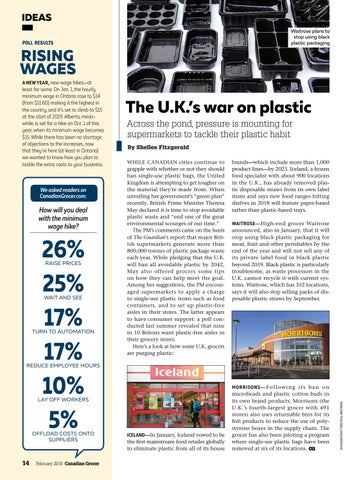
IDEAS Waitrose plans to stop using black plastic packaging
POLL RESULTS
RISING WAGES A NEW YEAR, new wage hikes—at least for some. On Jan. 1, the hourly minimum wage in Ontario rose to $14 (from $11.60) making it the highest in the country, and it’s set to climb to $15 at the start of 2019. Alberta, meanwhile, is set for a hike on Oct. 1 of this year, when its minimum wage becomes $15. While there has been no shortage of objections to the increases, now that they’re here (at least in Ontario) we wanted to know how you plan to tackle the extra costs to your business.
We asked readers on CanadianGrocer.com:
How will you deal with the minimum wage hike?
26% 25% 17% 17% 10% 5% RAISE PRICES
WAIT AND SEE
TURN TO AUTOMATION
The U.K.’s war on plastic Across the pond, pressure is mounting for supermarkets to tackle their plastic habit By Shellee Fitzgerald WHILE CANADIAN cities continue to grapple with whether or not they should ban single-use plastic bags, the United Kingdom is attempting to get tougher on the material they're made from. When unveiling her government’s “green plan” recently, British Prime Minister Theresa May declared it is time to stop avoidable plastic waste and “end one of the great environmental scourges of our time.” The PM’s comments came on the heels of The Guardian’s report that major British supermarkets generate more than 800,000 tonnes of plastic package waste each year. While pledging that the U.K. will ban all avoidable plastic by 2042, May also offered grocers some tips on how they can help meet the goal. Among her suggestions, the PM encouraged supermarkets to apply a charge to single-use plastic items such as food containers, and to set up plastic-free aisles in their stores. The latter appears to have consumer support: a poll conducted last summer revealed that nine in 10 Britons want plastic-free aisles in their grocery stores. Here’s a look at how some U.K. grocers are purging plastic:
brands—which include more than 1,000 product lines—by 2023. Iceland, a frozen food specialist with about 900 locations in the U.K., has already removed plastic disposable straws from its own label items and says new food ranges hitting shelves in 2018 will feature paper-based rather than plastic-based trays. WAITROSE —High-end grocer Waitrose announced, also in January, that it will stop using black plastic packaging for meat, fruit and other perishables by the end of the year and will not sell any of its private label food in black plastic beyond 2019. Black plastic is particularly troublesome, as waste processors in the U.K. cannot recycle it with current systems. Waitrose, which has 352 locations, says it will also stop selling packs of disposable plastic straws by September.
LAY OFF WORKERS
OFFLOAD COSTS ONTO SUPPLIERS
14
February 2018 Canadian Grocer
ICELAND—In January, Iceland vowed to be the first mainstream food retailer globally to eliminate plastic from all of its house
MORRISONS — F o l l o w i n g i t s b a n o n microbeads and plastic cotton buds in its own brand products, Morrisons (the U.K.’s fourth-largest grocer with 491 stores) also uses returnable bins for its fish products to reduce the use of polystyrene boxes in the supply chain. The grocer has also been piloting a program where single-use plastic bags have been removed at six of its locations. CG
JAX10289/SHUTTERSTOCK, WAITROSE
REDUCE EMPLOYEE HOURS