
2023
Council elections call for candidates inside
2023
Council elections call for candidates inside



We profile two Indigenous-owned and -run engineering firms to explore the importance of an Indigenous presence in engineering.
By Adam Sidsworth
To improve accessibility to the profession for Indigenous Peoples, engineering schools are implementing access programs to ensure this talent pool doesn’t go untapped.
By Marika Bigongiari
33 2023 Council elections call for candidates, voting procedures and election publicity procedures
8 News: PEO introduces online P.Eng. application; Licensing process changes to be presented to Council; Media campaign promotes upcoming mandatory CPD; PEO holds its annual meeting with ESSCO; P.Eng. creates McMaster Indigenous scholarship
25 Bulletin Board
31 Profile: Two Waterloo alumni work for greater 2SLGBTQ+ visibility in engineering
14 Professional Practice: Are practice reviews mandatory in Ontario?

PUBLICATIONS STAFF
Editor
Nicole Axworthy
editor@peo.on.ca
Associate editor
Marika Bigongiari
Associate editor
Adam Sidsworth
Graphic designer
Cindy Reichle
CONNECT WITH US
Manager, communications
Duff McCutcheon
Digital communications coordinator Michelle Yiu

ADVERTISING SALES
Senior account executives
Leesa Nacht lnacht@dvtail.com
Vince Naccarato vnaccarato@dvtail.com
Engineering Dimensions (ISSN 0227-5147) is published bimonthly by Professional Engineers Ontario and is distributed to all PEO licensed professional engineers.
Engineering Dimensions publishes articles on regulatory business and professional topics of interest to the professional engineer. The magazine’s content does not necessarily reflect the opinion or policy of PEO Council, nor does PEO assume any responsibility for unsolicited manuscripts and art. All material is copyright. Permission to reprint editorial copy or graphics should be requested from the editor.
Engineering Dimensions is a member of Canadian Business Press.
Indexed by the Canadian Business Index and available online in the Canadian Business and Current Affairs Database.
Approximately $5.00 from each membership fee is allocated to Engineering Dimensions and is non-deductible.
EXECUTIVE STAFF
CEO/registrar
Johnny Zuccon, P.Eng., FEC
Vice president, regulatory operations/deputy registrar
Linda Latham, P.Eng.
Vice president, policy and governance
Dan Abrahams, LLB
Vice president, organizational effectiveness
Liz Maier
PEO COUNCIL Officers
President Nick Colucci, MBA, P.Eng., FEC president@peo.on.ca
Past president
Christian Bellini, P.Eng., FEC
President-elect
Roydon Fraser, PhD, P.Eng., FEC
Vice president (elected) Greg Wowchuk, P.Eng.
Vice president (appointed) Lorne Cutler, MBA, P.Eng.
Executive Member
Scott Schelske, P.Eng., FEC
Councillors
Councillors-at-large
Vajahat Banday, P.Eng., PE (Michigan), FEC
Chantal Chiddle, P.Eng., FEC
Leila Notash, PhD, P.Eng., FEC
Eastern Region councillors Tim Kirkby, P.Eng., FEC
Randy Walker, P.Eng., FEC
East Central Region councillors Christopher Chahine, P.Eng.
David Kiguel, P.Eng., FEC
Northern Region councillors Dana Montgomery, P.Eng.
Luc Roberge, P.Eng., FEC
Western Region councillors Vicki Hilborn, P.Eng.
Susan MacFarlane, MSc, PhD, P.Eng.
West Central Region councillors James J. Chisholm, P.Eng., FEC
Pappur Shankar, P.Eng., FEC
Lieutenant governor-in-council appointees
Arjan Arenja, MBA, P.Eng.
Robert Brunet, P.Eng.
Lorne Cutler, MBA, P.Eng.
Andy Dryland, C.E.T.
Paul Mandel, MBA, CPA, CA
George Nikolov, P.Eng.
Scott Schelske, P.Eng., FEC
Sherlock Sung
Engineers Canada Directors
Arjan Arenja, MBA, P.Eng.
Christian Bellini, P.Eng., FEC
Danny Chui, P.Eng., FEC
Nancy Hill, P.Eng., LLB, FEC, FCAE
Marisa Sterling, P.Eng., FEC
By Nicole Axworthy

Indigenous. This statistic is particularly low compared to other STEM occupations and the rest of the labour force and is not even close to reflecting Canada’s demographics. And yet representation is a necessary component of the engineering profession’s ability to help solve society’s complex problems. For the profession to be truly representative, it needs an additional 5620 Indigenous engineers—that’s more than three times the current count—according to a 2021 report by Engineers Canada.
To welcome more Indigenous engineers, Engineers Canada says that increasing the enrolment of Indigenous students in engineering is critical, especially in light of the Truth and Reconciliation Commission’s findings and recommendations—namely the need to eliminate education and employment gaps between Indigenous and non-Indigenous people. In this issue of Engineering Dimensions, we explore engineering schools that have implemented Indigenous access programs to help break down the barriers many Indigenous Peoples face when it comes to accessing the higher-level education required to become a professional engineer. In “Building Indigenous pathways to engineering” (p. 26), Associate Editor Marika Bigongiari discusses how these programs support youth by giving them the necessary tools to succeed.
Equally important is the need to build capacity for intercultural understanding and develop best practices for incorporating Indigenous knowledge and perspectives into engineering. Indigenizing engineering is already a popular theme on university campuses, but what about the profession at large? In “Engineering Ontario: A First Nations perspective” (p. 16), Associate Editor Adam Sidsworth speaks with two Indigenous P.Engs, both of whom own and run their own engineering firms, about bringing a much-needed Indigenous perspective into the profession and their ability to address the unique needs of diverse communities.
While you’re here, be sure to take in the latest PEO news, including the regulator’s licensing process changes (p. 8 and 9) and more details on the rollout of the mandatory continuing professional development program for licence holders (p. 10).
And as we look ahead to PEO’s 2023 Council elections in January, the call for candidates and procedures for candidate publicity and voting for next year’s governing board can be found starting on page 33. Be sure to make note of the important deadlines if you want to get involved. e
To protect the public, PEO investigates all complaints about unlicensed individuals or companies, and unprofessional, inadequate or incompetent engineers. If you have concerns about the work of an engineer, fill out a Complaint Form found on PEO’s website and email it to complaints@peo.on.ca If you suspect a person or company is practising engineering without a licence, contact PEO’s enforcement hotline at 800-339-3716, ext. 1444, or by email at enforcement@peo.on.ca

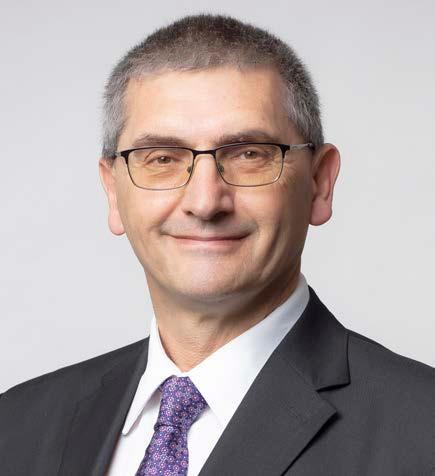
By Nick Colucci, MBA, P.Eng., FEC
I recently travelled to Paris, France; Halifax, NS; and Ottawa, ON. These cities have a common theme: they are investing significant capital dollars in building safer pedestrian and cycling networks. It seems that many cities in Ontario have fallen behind in this area. With 60 per cent of Ontario’s population living in eight cities, it’s a missed opportunity to fight climate change by increasing the safe pedestrian and cycling networks. Each five-kilometre trip we can shift from driving a vehicle to riding a bike can save 1.25 kilograms of CO2. Over the course of a year, this could save about 625 kilograms of CO2. Imagine the savings if thousands of Ontarians moved from driving to riding.
With the implementation of the Council-approved mandatory continuing professional development program for PEO licence holders on January 1, 2023, I urge every engineer to use some of their training efforts to become familiar with climate adaptation and the design of safe cycling and pedestrian infrastructure.
At our June meeting, Council set a new direction for the regulator by accepting a 2023–2025 Strategic Plan to guide us over the next three years. Our new mission statement will be to “Regulate the practice of professional engineering in Ontario to safeguard life, health, property, economic interests, the public welfare and the environment.”
The strategic plan was created over a two-day workshop in May, where Council met to develop and vote on the plan’s goals and priorities. Our work was informed by
feedback gathered from stakeholder consultations, a public focus group, an internal PEO capacity analysis and a regulatory environmental scan to identify our capacity, gaps and opportunities.
The feedback also included results from a licence holder survey, and I thank those who participated and provided their views on PEO and its regulatory performance. The priorities that survey participants identified as most important included modernizing licensing, meeting government requirements, Council operations and operational excellence. I believe our new strategic plan goals will help meet these priorities. Here’s how we will work to achieve them:
PEO will enhance the licence application process to ensure it’s fair, transparent, accessible and efficient; maintains competency; and complies with recent amendments to the Fair Access to Regulated Professions and Compulsory Trades Act by July 1, 2023. We will also review and modernize our licensing business processes to improve efficiency without sacrificing public safety or information security.
2. Organizational performance
To improve PEO’s performance, we will work to update and develop new standards and practice guidelines, ensure we have adequate IT infrastructure and capacity to collect and manage data and improve communication and businesses processes.
3. Governance improvement
PEO will work to build a continuous governance improvement program by improving orientation for councillors and PEO’s executive leadership team, ensuring Council and committees have adequate information and evidence to support quality decision-making and creating governance performance metrics including annual reviews.
4. Refreshing PEO’s vision
And to refresh PEO’s vision to ensure all stakeholders see our value and relevance, we will facilitate meaningful dialogue with members and other stakeholders, undertake research and develop a vision for consultation. Our previous strategic plan’s vision statement was: “PEO’s vision is to be the trusted leader in professional self-regulation.” I would be interested in hearing your opinion on this and your ideas for a new vision for PEO. Please email me at president@peo.on.ca.
We will also ensure all work towards these goals reflect values of equity, diversity and inclusion.
The new plan builds on our 2020–2022 Strategic Plan, which summarized PEO’s enterprise-wide transformation project with an aim for PEO to become a professional, modern regulator that delivers on its statutory mandate and is supported by a governance culture that consistently makes decisions that serves and protects the public interest. More detailed information on the current and prior strategic plans can be found on our website. e
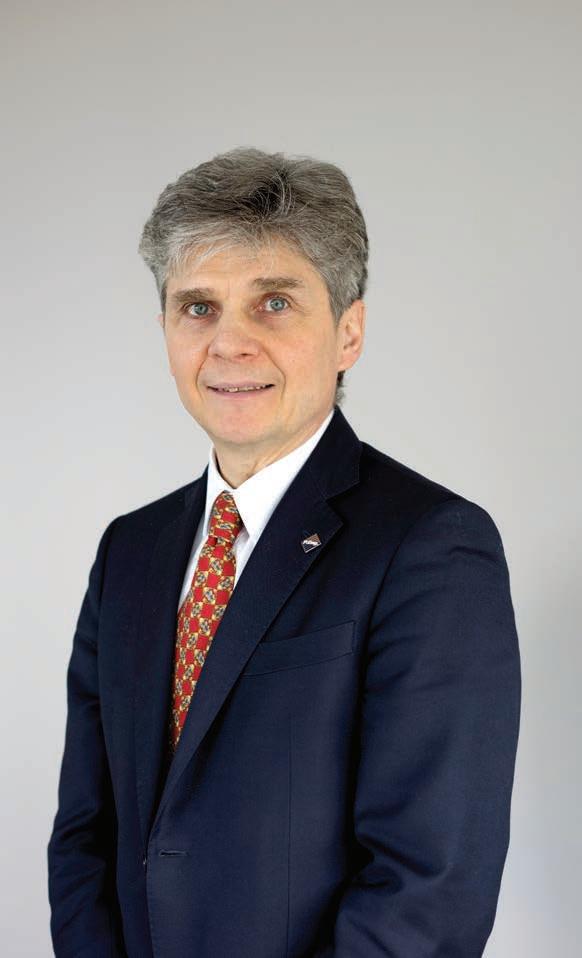
By Johnny Zuccon, P.Eng., FEC
mitment of our licence holders to continually improve their engineering practice. It will also serve to reassure the public and various professional and governmental stakeholders that Ontario’s engineers maintain their professional knowledge, stay current with their engineering skills and are aware of their ethical and legal responsibilities. These are critical requirements for members of any self-regulating profession.
The new mandatory program is designed to satisfy the regulatory expectations of the Attorney General of Ontario, who is the minister with responsibility for PEO and the Professional Engineers Act. Implementation of the mandatory CPD requirement follows approval of Ontario Regulation 353/22 under the Professional Engineers Act by PEO Council on April 8, 2022, and by the Ontario Cabinet on April 19.
Practitioners who have participated in the voluntary PEAK program during its piloting over the past five years will easily recognize the core elements of the new mandatory program. Notably, this includes the flexibility for licence holders to engage in the CPD activities they feel are most relevant to their practice. Engagement with stakeholders is now underway to communicate the obligations and expectations of licence holders under the new program and to seek feedback to allow for continuous improvement of the program. Being responsive to such input will allow us to meet the needs of licence holders while serving the public interest through the program beyond the January 2023 implementation. I encourage you to share your thoughts on this important initiative by contacting us at engagement@peo.on.ca.
PEO has been actively pursuing various opportunities to simplify and speed up our licensing system. Our aim overall is to create a more efficient, transparent and objective system that is both fair to applicants and consistent with a legislative scheme focused on public protection. Most pressingly, we have a short timeframe for complying with requirements imposed by the provincial government through amendments to the Fair Access to Regulated Professions and Compulsory Trades Act (FARPACTA).
For example, from July 1, 2023, PEO must make a registration decision on 90 per cent of applications for licensure within 180 days, following a 10-day window during which all licence applicants must receive confirmation of a completed application. Further, potential changes to our current experience requirements will be considered this fall to comply with additional FARPACTA requirements that come into effect in December 2023. For example, under FARPACTA, a regulated profession cannot require as a qualification for registration that a person’s experience be Canadian experience unless an exemption from the prohibition is granted by the minister for the purposes of public health and safety.
Although the Ontario government has become more actively involved in licensing issues of late, it also continues to respect the expertise of regulators in setting and assessing credentials. The government also relies on the regulator to adhere to principles of transparency, objectivity and impartiality to deliver timely, credible registration decisions. Council’s Regulatory Policy and Legislation Committee—the governance committee charged with overseeing policy development—will be developing various policy recommendations over the next several months for Council’s consideration.
Ultimately, PEO is committed to a licensing system that ensures all qualified applicants are licensed fairly and quickly so that they can actively work in their chosen profession. And the ensuing work over the next few months will help guide PEO along the necessary path so my successor can lead PEO’s continued pursuit of becoming a more effective and efficient regulator. e
PEO introduced a fully online application for licensure to modernize and speed up the process.
By Adam Sidsworth
In a bid to modernize its licensing process and recordkeeping, PEO introduced a fully online application for licensure that will allow for a quicker application process and more secure recordkeeping.
PEO introduced its online P.Eng. application system on July 11. About two weeks prior to the launch, the regulator paused its fillable PDF application process to allow for a smooth transition. The previous system had applicants fill out a PDF of the application form, download it, and then email the completed form and supporting documentation to PEO. The PDF application process was introduced in early 2020 to replace the traditional paperbased process, which required applicants to mail in a paper application form. The paper application process became impossible for PEO to process during the early days of the COVID-19 pandemic, when PEO staff were not allowed to enter PEO’s head office in Toronto, ON (see “Adapting to our remote environment,” Engineering Dimensions, July/August 2020, p. 8).
Through the online PEO Portal, there is a five-step application process that includes:
1. Account creation: New applicants are asked to create a new account that will allow them to start the application process (previous applicants who already have a portal account can use that account even if they are applying again);
2. Draft application: At this stage, applicants have 60 days to complete an application before the system deletes the application. However, the system will send automated email reminders to the applicant before the incomplete application is deleted;
3. Documentation: The applicant needs to email all relevant documentation, such as proof of identity and age and undergraduate transcripts, to PEO. This is a temporary step during which time PEO staff will manually attach all required documentation to an applicant’s application. Applicants receive an automated email every 30 days prompting them to submit the specific outstanding documentation;
4. Fee: Once all documentation is received, applicants receive an automated email prompting them to pay the application fee; and
5. Completed: Once the applicant pays the application fee, their application status is automatically shifted to a completed status. Applicants are sent an email letting them know their application is being reviewed. They will receive an update on their status within eight weeks.
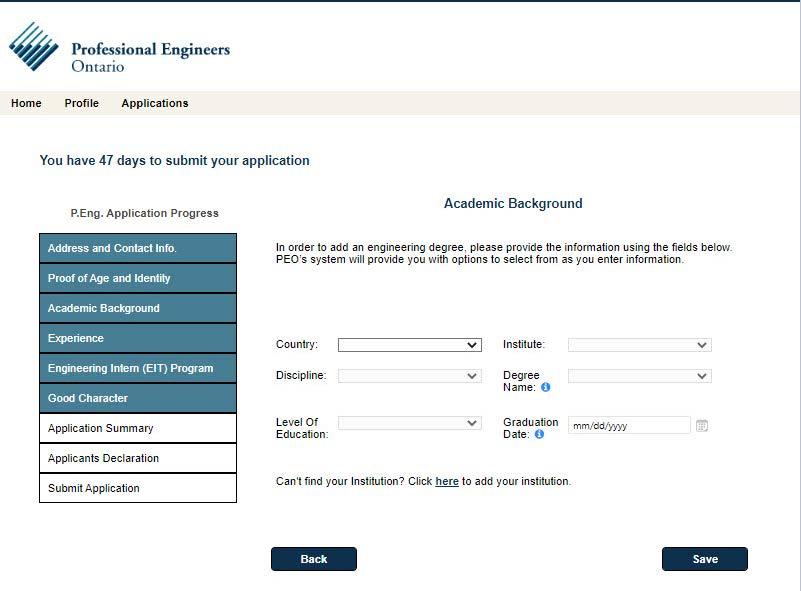
The new system has much of the same content as the previous fillable PDF application form and paper-based application process, including:
• Asking for government-issued proof of age and identity (such as a Canadian birth certificate or citizenship card);
• Requiring academic transcripts of the applicant’s undergraduate degree (graduates of programs not accredited by the Canadian Engineering Accreditation Board potentially have to submit additional documentation);
• An option to join PEO’s Engineering Intern (EIT) program; and
• A questionnaire about the applicant’s good character.
Because PEO wanted to expedite the creation of the online P.Eng. application system, the system currently requires applicants to separately email all supporting documentation to PEO. However, the online application system will eventually include a tab that will allow applicants to upload all required documentation, thus eliminating the need to separately email required documentation. Once this is implemented, the online P.Eng. application process will be an entirely frontload application system. This is significant because it will free PEO staff from manual data entry, saving time during the application process.
The new online system is important given PEO’s upcoming responsibilities under the Working for Workers Act, 2021 and Working for Workers Act, 2022, which amended the Fair Access to Regulated Professions and Compulsory Trades Act (see p. 9). Under the amendments, PEO will be required by July 2023 to make a decision on 90 per cent of new applications within six months of receiving a complete application, along with being able to ensure that applications for licensure can be processed in the event of emergencies much like the COVID-19 lockdowns.
PEO’s adoption of an online P.Eng. application is just the latest in PEO’s efforts to move away from its old paper-based processes. It follows PEO’s Information Discovery and Digitization Capability Project, which is seeing PEO staff digitize 21,000 active licence application files. When complete, it will allow for a quickened application process, since it allows PEO staff to perform parallel activities (see “PEO undergoes digital transformation of licence application files,” Engineering Dimensions, November/December 2021, p. 8).
Notably, the new online P.Eng. application process—which received over 1000 applications during its first two weeks—is the latest move towards an entirely digital licensing process. It follows
PEO’s 2020 adoption of the online National Professional Practice Exam (NPPE) as part of PEO’s licensing process (see “PEO adopts national professional practice exam,” Engineering Dimensions, July/August 2020, p. 13). The NPPE is a flexibly written, psychometrically balanced exam that replaces the old paper-based Professional Practice Exam.
For more information on PEO’s online P.Eng. application system, visit PEO’s website.
PEO Council will consider proposed changes to the licensing process that address FARPACTA requirements and are in line with PEO’s modernization efforts.
By Adam Sidsworth
Over the next few months, Council will consider reports from the Regulatory Policy and Legislation Committee (RPLC) on changes to PEO’s licensing process to ensure it is compliant with recent amendments to the Fair Access to Regulated Professions and Compulsory Trades Act (FARPACTA) introduced in the Working for Workers Act, 2021 and Working for Workers Act, 2022 by July 2023. This month’s Council meeting will likely focus on the academic requirements component of PEO’s licensing process. Soon, the RPLC and Council will also consider possible changes to the experience requirement for licensure, particularly regarding the Canadian experience component.
With the FARPACTA amendments, PEO will be implementing several changes to licensing, such as a requirement for a fully completed application at the front end, new decision-making timelines and protocols for making decisions on applications in the event of an emergency. And, as with other regulators, PEO will be subject to enhanced protocols for reporting to the Office of the Fairness Commissioner. Ultimately, the FARPACTA amendments aim to remove any potential licensure barriers to regulated professions faced by internationally trained professionals, but improved timelines and clearer licensing expectations will also benefit those applicants who acquired their credentials wholly or partly in Canada.
PEO staff are in the process of identifying various options for improvement within the current legislative requirements. However, the challenge is that PEO must manage its current caseload for applications for licensure while developing strategies to deal with prescribed licensing timeline requirements for all new applications received after July 2023. To address the challenge, the licensing team was enhanced in April by the appointment of three full-time employees—including two managers and a director of program
management, who is tasked with managing the delivery of PEO’s overall FARPACTA compliance project.
Additionally, PEO has staff working groups focused on various administrative and operational elements of the licensing process. The groups are considering how to facilitate continued processing of existing applicants alongside new ones once the changes are implemented, while ensuring any new processes incorporate principles of equity and inclusivity. The groups are also analyzing historic Academic Requirements Committee data with the expectation that it will provide insights into possible improvements to the academic assessment component of the licensure application process. This analysis will inform future recommendations to the RPLC and Council.
The work being done to assure PEO’s compliance with the FARPACTA amendments build upon an existing Council commitment to licensure renewal as a major component of PEO’s ongoing, multi-year modernization efforts. In 2019, PEO undertook an external audit of its regulatory performance. The audit report’s 15 recommendations, adopted by Council in principle and reinforced with a high-level action plan, included a recommendation for PEO to simplify and speed up its application process within the scope of the existing legislative requirements. Additionally, PEO has been committed to working with the Office of the Fairness Commissioner to ensure registration practices are transparent, objective, impartial and fair.
As part of its licensure renewal, in July PEO launched an online P.Eng. application process that, in addition to being easier for applicants, will free PEO staff from performing labour-intensive data
entry, quicken the application process and ensure PEO is able to accept and process applications for licensure in the event of another COVID-19-style lockdown (see p. 8).
Additionally, PEO has been working to digitize all old paperbased applications for licensure (see “PEO undergoes digital transformation of licence application files,” Engineering Dimensions, November/December 2021, p. 8) and adopted the psychometrically balanced, flexibly written digital National Professional Practice Examination (see “PEO adopts National Professional Practice Exam,” Engineering Dimensions, July/August 2020, p. 13). PEO staff will continue working to implement licensure improvements and meet the FARPACTA requirements throughout the fall and new year.
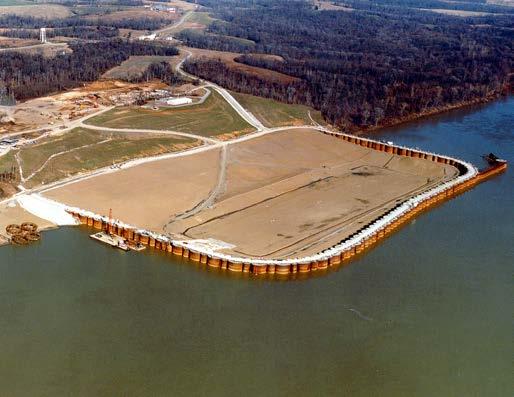
Cofferdams are watertight enclosures from which water is pumped to expose the bed of a body of water to permit construction, such as a pier or bridge. They are constructed by driving sheet piling, typically steel, into the waterbed to form a watertight barrier and must be built to withstand significant horizontal forces from the surrounding body of water while the water within is pumped out, as well as the stress of being struck by the dredging bucket. Ancient Roman engineers built several cofferdams to facilitate the building of stone-arch bridges and aqueducts.
PEO has begun a multimedia campaign to promote the January 2023 launch of its mandatory continuing professional development program.
By Adam Sidsworth
In a bid to prepare licence holders for the new mandatory continuing professional development (CPD) program, PEO has initiated a multimedia campaign as the program nears its January 1, 2023, launch date.
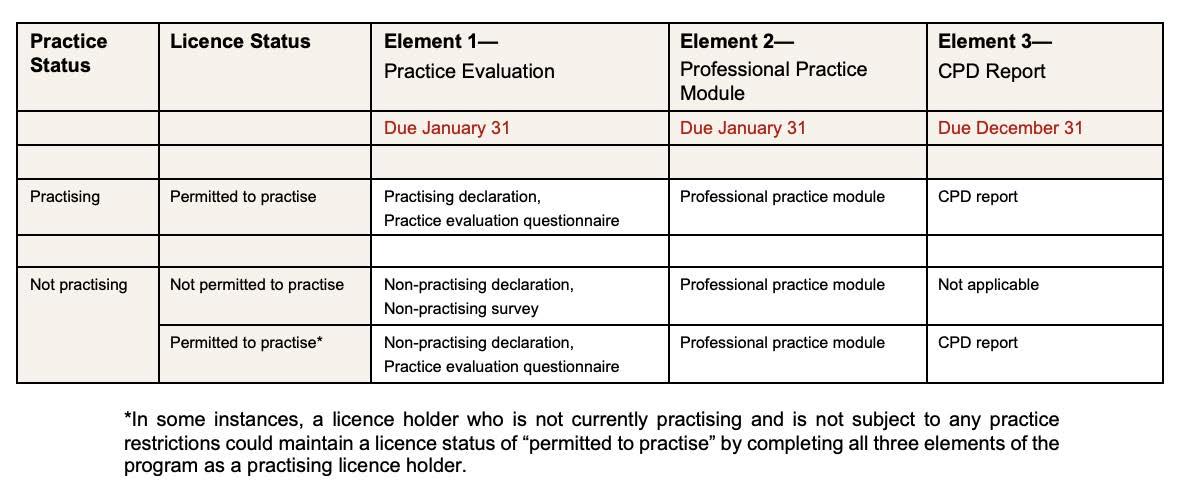
The campaign includes social media posts; communication packages sent to media, chapters and external stakeholders; and a dedicated webpage on PEO’s website, which will soon include a detailed CPD user guide and marketing video to introduce the program to licence holders. The webpage’s “Program Elements” section describes the mandatory CPD program’s basic components, which include:
• A practice evaluation, composed of a practice self-declaration and either a questionnaire about practice activities—which will assign up to 30 CPD hours that licence holders must pursue throughout the calendar year and report to PEO—or a survey about non-practising circumstances;
• A professional practice module, which is self-paced and covers topics such as professional practice, engineering ethics and regulatory processes and an opportunity to update practitioner skills and knowledge in other areas, such as equity, diversity and inclusion and the role of engineers in safeguarding the public and environment; and
• A CPD report for licence holders who received a CPD target from the practice evaluation element.
The webpage also includes a tab on steps and deadlines: All licence holders must complete the practice evaluation and professional practice module for January 31 of each year, and those who are practising must complete and report their CPD hours for December 31 of every year.
There are further tabs on how to access the program and report CPD hours, what is admissible as counting towards CPD activity
hours, and audits and sanctions for licence holders who fail to complete any or all segments of the program.
PEO’s current voluntary Practice Evaluation and Knowledge (PEAK) program, which has existed since 2017, serves as a model for the mandatory program for all P.Eng. and limited licence holders. (Provisional and temporary licence holders and engineering interns are exempt.) Any licence holders who would like to keep records of their past PEAK participation must print their PEAK records by December 31, 2022, as PEAK’s records will not be carried over.
Beginning in 2024, there will be potential administrative licence suspensions for P.Eng. and limited licence holders for any overdue element, affecting the licence holder’s ability to practise. Also beginning in 2024, any submission in the program could be audited by PEO for compliance.
With the inclusion of section 51.2 of Regulation 941 by the Ontario cabinet on April 19, PEO can, as of January 2023, effectively administer mandatory CPD. Consequently, PEO has been actively engaging with licence holders as information becomes available and has sought practitioner feedback throughout the process.
Earlier this year, PEO conducted a survey to get feedback from licence holders and other stakeholders on mandatory CPD’s six guiding principles. Specifically, the six guiding principles state that the program:
• Be necessary to improve the regulation of professional engineering;
• Have the requirements relevant for the practice of professional engineering;
• Be pragmatic;
• Recognize the diversity of licence holders’ needs and resources;
• Be scalable and proportional to the risk to the public; and
• Be effective.
There were almost 8800 survey respondents, of whom 92 per cent identified as PEO licence holders. Respondents were able to provide feedback on several topics. Notably, 76 per cent of respondents said that CPD should be tailored to each practitioner’s practice risk to the public, and 81 per cent felt that those not practising should be assigned less CPD hours than practising licence holders (see “PEO releases results of mandatory CPD public survey,” Engineering Dimensions, July/August 2022, p. 14). As the program is being designed and rolled out, PEO will continue to engage with all stakeholders, including licence holders.
ESSCO’s 2022–2023 board of directors updated PEO on its three-year strategic plan and upcoming annual student conference.
By Adam Sidsworth

The new board of directors for the Engineering Student Societies’ Council of Ontario (ESSCO) held its annual check-in with staff members of PEO’s external relations department last month. The 2022–2023 team are facing challenges of returning to in-person events after the two-year COVID-19 pandemic caused the suspension of many ESSCO events or transitioned them to a virtual environment.
“A lot of our team is brand new to ESSCO, and with the process of going in-person for the first time, it’s been a little bit of an experience,” reported ESSCO’s president, Anjaliya Sonnilal, a systems science engineering graduate student at the University of Ottawa. “Our current team has been working to try to see where we stand as an organization and where we’d like to go.”
Sonnilal was joined at the meeting by other members of ESSCO’s board of directors, including Vice President of Finance and Administration Anita Yang, a third-year management engineering student at the University of Waterloo; Vice President of Communications Eesha Sharma, a second-year chemical and artificial intelligence systems engineering student at Western University; Ontario Ambassador Kayla Phillipps, a fourthyear biomedical mechanical engineering student at the University of Ottawa; Vice President of Services Marcus Tuen Muk, a third-year software engineering student at Western; and PEO-SC co-host Andres Manrique, a third-year aerospace engineering student at Carleton University. Representing PEO were Tracey Caruana, P.Eng., manager, engineering intern programs; Sami Lamrad, P.Eng., EIT/student programs coordinator; and David Smith, director, external relations.
ESSCO is a coalition of engineering student societies from 16 Ontario universities and colleges that represents engineering students’ interests to the province and provincial stakeholders, including PEO. Its many advocacy-related working groups include those focused on academic teaching quality and equity, diversity and inclusion and anti-Black racism. It also holds annual
conferences, notably the Professional Engineers of Ontario Student Conference (PEO-SC) for engineering students in their final year of undergraduate studies. Funding for the PEO-SC is provided in part by PEO.
At the meeting, Manrique noted that planning for this year’s PEO-SC is well underway. The conference, to be hosted by Carleton University over the weekend of October 14 to 16, will have the theme of “Sparking change in the future,” with delegates learning about the opportunities that lay after graduation.
“We’ve already secured the keynote speaker, as well as a few other sessions,” noted Manrique. “Overall, it’s going to be just over 80 students. We chose to go with a hotel that’s right downtown Ottawa, by the [ByWard] Market. This will give students an opportunity to see Ottawa, Parliament and the market. On Saturday, the entire day session will be Carleton University itself, so we’re going to bus everybody over and have breakfast in the café. And we have one building reserved [at Carleton] to have all the sessions.”
ESSCO is developing its 2023–2026 strategic plan, with Sonnilal noting that ESSCO is exploring six main topics, including differences in engineering schools’ tuition costs and students’ financial difficulties in being able to afford tuition. “We also have advocacy reports on being more inclusive to different people from different backgrounds [who want to] study engineering,” added Sonnilial, who suspects that the strategic plan will place more emphasis on ESSCO’s advocacy activities.
ESSCO has also been actively increasing its communication efforts with the individual student societies and students, with Sharma further developing a manual for first-year engineering students that focuses on how to live the life of an engineering student and ESSCO’s role. “We want to reach the students who don’t know who we are,” said Sharma. “This is something that’s going to be given to all first-year students in our member schools. As many first-years as we can get will be able to read about ESSCO and look at our website and follow our Instagram account, and I’m looking for more ways to update our Instagram with interesting content.”
A McMaster University engineering alumnus founded an $8,000 scholarship to encourage Indigenous youth to enter engineering.
By Adam Sidsworth
A PEO-licensed retired engineer and graduate of McMaster University’s faculty of engineering has started an $8,000 scholarship designed to encourage upper-year undergraduate Indigenous students to complete their engineering degrees.
The William Barry Hill Scholarship was announced by its founder, Barry Hill, P.Eng., following a convocation ceremony for McMaster’s faculty of engineering on June 17. Hill, who in 1966 received his undergraduate degree in mechanical engineering from McMaster, where he subsequently received his master’s degree in mechanical engineering, was at the convocation to receive an honourary doctorate degree.
The William Barry Scholarship will be given annually to an Indigenous undergraduate engineering student who is in at least their third year of studies. “I was targeting the later years because that’s when funding is harder to obtain, and people wonder if they’ll ever get done,” explains Hill. “Having something out there targeting later years goes after the people who are serious. We have entrance programs, but [students are] liable to switch to another faculty. By third year you start seeing how things relate to each other. You’re more specialized in your discipline.”
Hill had a 26-year engineering career at Ontario Hydro, where he led multiple teams that designed computerized control systems for many of Ontario’s coal and nuclear power plants, including the Darlington Nuclear Generating Station in Clarington, ON; the Lakeview Generating Station in Mississauga, ON; and the Nanticoke Generating Station near Port Dover, ON. Hill subsequently became a manager of strategic planning, during which time he advised Ontario Hydro’s leadership team on fossil programs, information technology and research.
After retiring from Ontario Hydro, Hill relocated to Ohsweken, located on the Six Nations of the Grand River, near Brant County, with his wife, Cheryle, where he took over his father’s farm and eventually developed it into Hillsfield Farms, a 2500-acre grain and oilseeds farm that grows corn, soybeans, wheat and other crops.
In addition to the new McMaster scholarship, Hill also co-founded, with the University of Guelph (U of G), the $10,000 Soil Health Graduate Scholarship for graduate students focused on soil health and soil quality research; and the Barry and Cheryle Hill Scholarship, a $2,000 scholarship for a U of G agriculture student.
Barry Hill, P.Eng., founded an $8,000 scholarship at McMaster University to encourage Indigenous youth to pursue engineering.
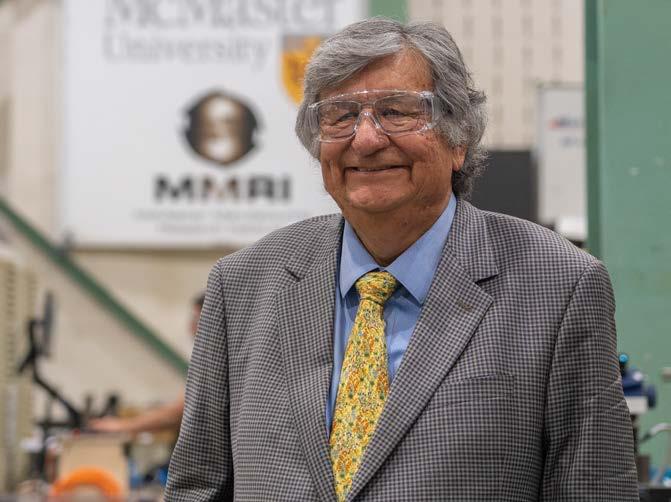
Less than 1 per cent of engineers across Canada identify as Indigenous, which is why Hill is adamant that more Indigenous Peoples should enter the engineering profession. “We’re not getting the active participation and input into critical decision making from First Nations engineers in wide-ranging issues [such as] water and other infrastructure issues,” notes Hill.
Yet Hill is cognizant that Indigenous Peoples need more engineering role models. Hill didn’t have any engineers in his family or know any engineers while growing up, but he cites some notable childhood experiences that drew him into engineering. Growing up on Six Nations during the Second World War, Hill would often see fighter planes fly to and from nearby training bases. Hill’s paternal grandfather built farms and houses. And as a child, Hill witnessed his community finally get much-needed infrastructure.
“We didn’t have lights until I was eight,” explains Hill. “We didn’t have hydro lines then [although] there was hydro all around us. We didn’t have running water, so my father and I designed a running system to come in from the pumps.” Hill also cites his grandmother, who recognized Hill’s childhood fascination with building and inventing things, as the one who encouraged him to become an engineer.
Hill notes the importance of an increased Indigenous presence in the profession so that more Indigenous Peoples are inspired to enter engineering. “If you want influence, you have to be inside the tent, not outside,” notes Hill. “It’s nice to be operating the bulldozers, but, really, it’s more important to be in the room where the decisions are being made.”
A practice review of an engineering workplace assesses if the policies and procedures in place are consistent with the profession’s standards.
By Sherin Khalil, MEng, P.Eng., PMP
Consider this scenario: Mariam is a mechanical engineer hired by Engineering Firm ABC. Mariam notices that there are no fundamental policies and procedures in place for how the practice of engineering is conducted and to ensure the public and clients receive highly professional service. Mariam explains to the employer that documented policies are essential to clearly communicate to staff and clients, as appropriate.
Mariam suggests conducting a practice review of the workplace to identify, review and assess whether the processes and procedures for carrying out professional engineering activities are in place and, if so, if they are consistent with the profession’s standards.
Mariam clarifies with the employer that practice reviews are not intended to determine if all staff are following the procedures but rather to determine that all staff are aware of the procedures, and steps are being taken to ensure procedures are followed. The intent is that reviewees exhibit good operating and management practices in providing their services to their clients.
The employer questions whether the practice review is mandatory in Ontario. Unlike other provincial engineering regulators, PEO does not require a practice review in Ontario; it is a voluntary initiative to ensure the acceptable manner of operating and managing a professional engineering practice.
The employer is concerned that the practice review might negatively impact the company’s reputation. Mariam explains that reviewers sometimes need to report negatively on aspects of the policies and practices in place by another professional engineer—that is their role. However, reviewers should ensure that the way negative assessments are reported is consistent with the sections in the Code of Ethics under Regulation 941 describing an engineer’s duties to other engineers. These duties are outlined in section 77.7, which states:
“A practitioner [engineer] shall, i. act towards other practitioners with courtesy and good faith,… iii. not maliciously injure the reputation or business of another practitioner.”
Furthermore, according to section 77.1.i of the Code of Ethics, engineers have a duty “to act at all times with fairness” to their associates, including other members of
the profession. Reviewers must not make statements or allow publication of all or any part of their summary review reports in a manner that might be considered detrimental to the reputation, professional status or financial interests of reviewees for malicious reasons. Reviewers must not participate in any such activity unless the publication of a report is required by freedom of information or other legislation.
Furthermore, reviewers may need to communicate with various parties while undertaking reviews. A reviewer must always adhere to the requirements of confidentiality (section 77.3 of O. Reg. 941). The reviewer must obtain approval from the reviewee, preferably in writing, to communicate with others. Any information received from the reviewee, especially such proprietary information as trade secrets, must be treated as confidential disclosures.
The employer questions Mariam about the topics that would be reviewed in the workplace. Mariam explains that the extent of a practice review is subject to a reviewer’s reasonable discretion and dependent on judgments about how best to undertake the assignment adequately.
Reviewers should forward the agenda of the practice review and the practice review checklist to reviewees at least two months before the review meeting so reviewees can appropriately prepare for the meeting. This includes the gathering of policies, procedures and other files to show how the items in the practice review checklist are addressed and implemented. A practice review will undertake to determine that a reviewee has the following documents, policies and processes in place:
1. Proposals/contracts
All such documents must clearly stipulate the work that will be provided to the client by the reviewee and the fees that will be charged for such work. Additionally, the documents must clearly state the involvement of any third parties in the work and the scope and degree to which they will be involved.
2. Subconsultants/subcontractors
If any subcontractors or subconsultants have been engaged, reviewees should confirm that they are capable of providing the services for which they have been retained. A written contract should be in place with subconsultants and contractors, which clearly identifies responsibilities.
3. Document management and project-related correspondence
Document management is an integral part of providing engineering services. Retrieving and reproducing documents is important to meeting client needs. Documents would include, but not be limited to, drawings, supporting calculations, specifications, field notes and figures. Reviewers should ensure documents are maintained in a retrievable manner. Reviewees must demonstrate that project-related correspondence with clients is professional and precise.

4. Project management
A practice review will determine that a reviewee has project management processes and procedures in place to ensure the public and clients receive highly professional service. Project management should commence at the beginning of a project and continue until project closeout. Some focus areas for tracking include scope, cost control, schedule, staffing, risk management, communication plans and procurement management.
5. Use of up-to-date information, programs, equipment
Access to and use of appropriate information, including guidelines, codes, standards, programs and equipment, is imperative. If outdated codes are referenced or uncalibrated equipment is used, the results can have serious consequences. Proper and up-to-date information should be available and used.
6. Health and safety
The review of health and safety procedures will need to be adjusted to suit the size of the company being reviewed. Reviewers and reviewees should be aware of the applicable provincial, federal and municipal health and safety requirements that could impact their work.
7. Employment relations
The review of employment relations is to be adjusted to suit the size of the company being reviewed. Though not directly related to engineering, it does relate to areas of practice that should be considered. Employment relations includes things like complaints resolution, claims investigation procedures, discrimination policies, hiring and promotion policies, harassment policies and education programs for staff.
8. Quality control and quality assurance
Formal or informal quality assurance programs are essential to all practising engineers. The absence of these programs could impact public safety due to improper design or calculations. Establishing, implementing and monitoring a quality assurance program or plan would typically be a strong indicator of the commitment to providing good quality services.
9. Competency maintenance
The review of how competence is maintained should be adjusted to suit the company’s size. The procedures for a company with one to 10 staff will differ from a company with a staff of 100. Maintaining and continuing qualifications and competence is critical for engineers because it constitutes professional misconduct for engineers to undertake work for which they are not competent to perform by virtue of their training and experience. Having a system in place that demonstrates that a company monitors staff competence would be an indication of dedication to maintaining competence.
After a review is completed, a reviewee would receive a summary review report. The report may identify deficiencies or problems in practices that need to be corrected and should state the conclusions of the review as follows:
a. No further action required;
b. Areas for improvement are minor in nature; or
c. Areas for improvement are significant.
Decisions to make changes to their practices must be left to reviewees. Reviewers cannot compel reviewees to make changes to their practices they are not willing to accept. If a reviewee agrees to make changes suggested by a reviewer, it should be noted in writing in the summary review report or addendum.
If, during the practice review, the reviewer finds work of such unprofessional quality that the reviewer believes the reviewee is practising professional engineering in a manner that is not conducive to the public interest, reviewers have ethical obligations under the Professional Engineers Act, such as the duty to report. Engineers have a duty to report or correct a situation that may endanger the public’s safety or welfare.
For more information on practice reviews, practitioners may refer to PEO’s Conducting a Practice Review guideline.
PEO’s practice advisory team is available by email at practice-standards@peo.on.ca for practitioners seeking information on their obligations. For legal issues, practitioners should consult their lawyers. e
Sherin Khalil, MEng, P.Eng., PMP, is PEO’s practice advisor.

Ontario is home to the largest number of Indigenous engineers in Canada. Engineering Dimensions profiles two Indigenous-owned and -run engineering firms to explore the importance of an Indigenous presence in the engineering profession and taking part in addressing the unique needs of diverse communities.
BY ADAM SIDSWORTH

engineers who identify as Indigenous represent a fraction of the overall profession—approximately 0.65 per cent, in fact—even though Indigenous Peoples represent 2.35 per cent of the province’s overall workforce. The Indigenous barriers to entry into engineering are complex (see p. 26), yet Indigenous Peoples’ perspectives in the engineering profession are important. “Indigenous design and ethics demonstrate integration and historical examples of problem-solving using a reciprocity and virtue-based mindset,” Matthew Dunn, P.Eng. (Saskatchewan), and John Desjarlais, P.Eng. (Saskatchewan), co-presidents of the Saskatchewan professional chapter of the Canadian Indigenous Science and Engineering Society, told the University of Toronto. (Desjarlais is also the current president of Saskatchewan’s engineering and geoscience regulator.) Indeed, Indigenous Peoples can have a prolonged and lasting impact on the communities they serve.
“Including Indigenous People’s perspectives in both post-secondary engineering education and the engineering profession is vital to achieving advances in engineering and applied sciences,” writes Engineers Canada in its Indigenous People’s Access to Post-Secondary Education report, written in part in response to the Calls to Action made by Truth and Reconciliation Commission of Canada. “Including diverse peoples and perspectives in post-secondary engineering education, as well as the profession, fosters the capacity to solve problems, to be creative, to think critically and to embrace cognitive complexity.” The report adds that Indigenous engineers may be more appropriately situated to embrace engineering technology with traditional Indigenous knowledge that could have more permanent solutions for Indigenous communities.
If an increased Indigenous presence in engineering can help incorporate a sensitivity for Indigenous communities’ unique infrastructure and cultural needs, consider that Ontario’s Indigenous Peoples are heterogenous. For example, Ontario’s Indigenous Peoples:
• Represent 24 per cent of Canada’s Indigenous Peoples, with a population in 2016 of at least 375,000 (eight First Nations were not included in the 2016 census);
• Are almost 3 per cent of Ontario’s population;
• Consist mostly of First Nations, although a significant minority are Métis, and 1 per cent are Inuit;
• Consist of 133 First Nations representing at least seven major cultural and linguistic groups;
• Inhabit some of the province’s most remote communities, with a quarter of First Nations communities accessible year-round only by air or part of the year by ice roads;
• Live in some of Ontario’s biggest urban centres, from Toronto to Thunder Bay, with the latter city having nearly 13 per cent of its population identifying as Indigenous; and
• Mostly live off reserve, with just 23 per cent of First Nations peoples living on reserve.
If Ontario’s Indigenous population is diverse, what can an Indigenous-owned engineering firm contribute to Ontario’s Indigenous communities? Is it significant that a principally Indigenous-owned engineering firm market itself as Indigenous owned?
“It’s not just proclaiming that we’re Indigenous owned,” says Cory Jones, P.Eng., president of Neegan Burnside Ltd., a majority Indigenous-owned civil engineering firm with headquarters in Orangeville, ON; and Winnipeg, MB. “It’s showing that there are opportunities for Indigenous Peoples out there, that Indigenous Peoples are able to take part in solutions and not just be the people receiving the solution.” Jones notes that during his time at Neegan Burnside, more than 20 Indigenous staff have been employed there, many of them in technical positions—including as engineers and engineering technologists. “Many have gone back to work for their communities,” Jones notes. “Some have gone to work for the government.”
Neegan Burnside was spun off from RJ Burnside & Associates Ltd., an engineering and environmental consulting firm founded in 1970 by Robert Burnside, P.Eng., with 10 offices across Canada. According to Jones, Burnside began working with First Nations communities from the firm’s inception, principally because Robert Burnside had a classmate who worked at what was then called the Department of Indian Affairs and Northern Development (now Indigenous Services Canada). The idea was struck to split off its First Nations work into a separate, majority Indigenous-owned entity in 1999; however, Jones notes that Neegan Burnside—which has a staff of 25—still shares many resources with the much larger Burnside.
Neegan Burnside’s current primary focus is providing water and wastewater management for First Nations communities, with Jones noting that the government of Canada is committed to investing over $605 million over four years starting in 2020 to improve First Nations’ water
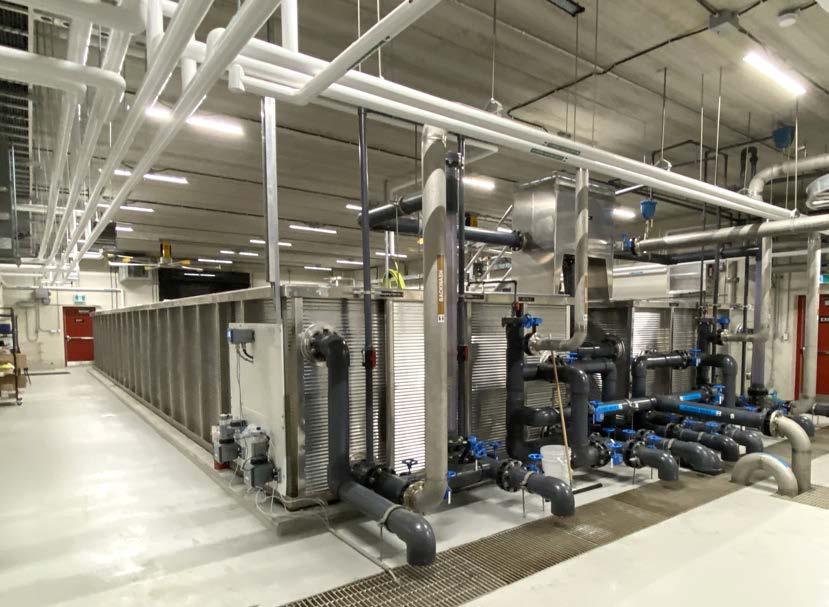
Neegan Burnside completed the engineering design, contract administration and inspection of a water treatment plant at the Kiashke Zaaging Anishinaabek–Gull Bay First Nation, located on the Ojibway nation on the shores of Lake Nipigon, approximately 200 km north of Thunder Bay, ON.
Photo: Neegan Burnside
and wastewater infrastructure, along with an additional $616 million over six years for the support of such infrastructure. According to Jones, the wastewater infrastructure and water issues are solvable, albeit challenging. “There are only a certain number of companies that are qualified to do it or have the experience doing the design piece of it,” notes Jones. “There are logistical challenges accessing some of these communities. If you’re talking remote northern Ontario, you can’t get anything in there from a construction standpoint until the next winter road season. It’s not like tomorrow we’re going to go in and fix this. And COVID hasn’t helped these projects.”
Jones notes that the lack of adequate housing, leading to overcrowding in many First Nations communities, with six to 10 or more people living in two- or three-bedroom houses, an airborne disease could theoretically spread quickly. It is a chicken-and-egg problem, since the lack of appropriate water, wastewater and other infrastructure limits additional housing.
But beyond the logistical challenges of some of the more remote communities, Jones notes that it can be a challenge to attract experienced contractors to want to go up to some of the more remote First Nations communities. “Being able to visit a remote place, like Attawapiskat, up on the James Bay coast, you have to fly from Toronto to Timmins to Moosonee to Fort Albany to Kashechewan,” Jones says. “You get a feel for how vast northern Ontario is. And all that land is called the Hudson Bay Lowlands for a reason: It’s muskeg; it’s swamp; it’s forest; it’s rivers. For miles and miles in between these small communities, every hour or so, there’s nothing else.”
Jones was hesitant to place any one of his First Nations projects on a pedestal because, big or small, they all have an impact. “All the water projects we do, whether they’re small or large, are important because it’s the first step in the community development,” Jones says. “And in a lot of cases, our work is allowing communities to remove long-term drinking water advisories. It’s pretty meaningful work to my staff when they’re able to say that we not only did a good engineering job, but people can go to their tap and drink out of it. [For] you and me, that’s a luxury we take for granted.”
But for Jones, it has an additional meaning. Jones, who grew up in the Chippewas of Nawash Unceded First Nation, on Georgian Bay, wanted to be able to give back to his community. “Unfortunately, for an engineering grad, there wasn’t a good landing spot to work for my community,” Jones says. “But
now that I’ve had 25 years [of engineering experience], I get to work with First Nations communities throughout Canada and help them, and my home community is one of our clients. So, while I couldn’t work there full time, I get to help improve the community I grew up in.”
Todd Bruyere, P.Eng., also wanted to give back to his First Nations community. Bruyere, the senior project engineer and principal of Saulteaux Consulting & Engineering, located in Fort Frances, ON, near the Minnesota border, was founded in large part to serve the bureaucratic needs of Ontario First Nations communities with Indigenous Services Canada. “We originally started the company to deal with the asset condition reports, and that’s where everything started from because when my business partner and I were part of the local tribal council here in Fort Frances, that’s what we did as extra work. We did the tribal council business, but we found that we were so efficient at it, doing if for almost 20 years, we started doing this other work that normally goes to consulting firms.”
Subsequently renamed the Extended Asset Condition Reporting System Program (E-ACRS), the E-ACRS inspects infrastructure funded by Indigenous Service Canada every three years on First Nations communities. The reports provide ongoing and periodic lifecycle needs of infrastructure and information to First Nations communities to allow them to plan and manage the life expectancy for all assets. Both the First Nation and Indigenous Service Canada receive a report of the findings. Indeed, when Engineering Dimensions first contacted Bruyere, he was preparing to begin inspections on remote northern Ontario First Nations communities after a two-year pause due to COVID-19 restrictions.
“For the first five years, it was the bulk of our business,” reports Bruyere, who, from 2020 until this April, also served on PEO Council as a lieutenant governor appointee. “But you have to remember that the inspections are being made and occur all summer, and the reports are due in October, so, really, that’s not a whole year’s worth of work. So, we had to come up with other jobs to do. And we did.” Bruyere found that working for his First Nation as a tribal engineer limited his influence over a project in his community. Bruyere’s
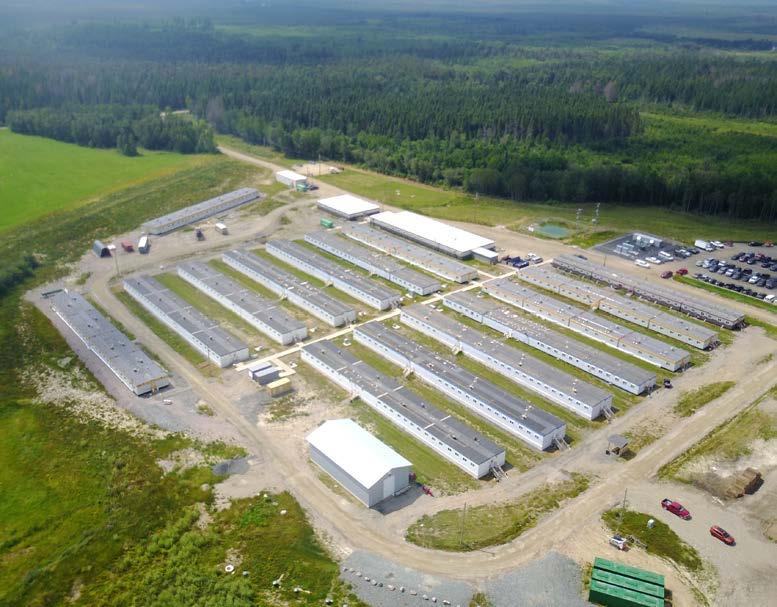
Left: Saulteaux Consulting & Engineering oversaw the construction of the camp for the Rainy River Mine, located 65 km northwest of Fort Frances, ON. The gold mine is owned by New Gold. Photo: Saulteaux Consulting & Engineering
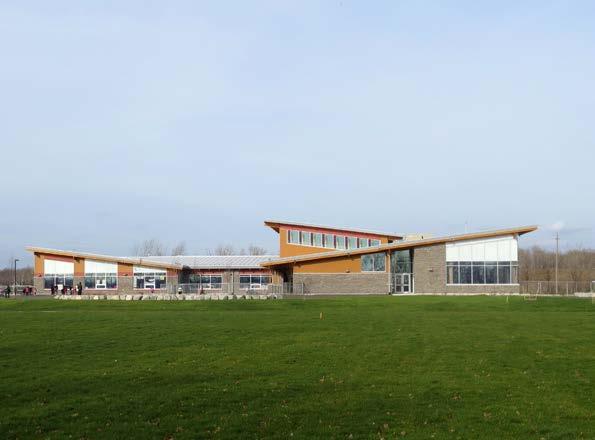
Below: In 2014, Neegan Burnside was the construction project manager of the Chippewas of Nawash Unceded First Nation elementary school. The project was full circle for Neegan Burnside’s president, Cory Jones, P.Eng., who grew up in the community.
Photo: Neegan Burnside
role was acrimonious to that of a municipal engineer, with Bruyere inspecting designs but not necessarily designing the solutions.
With the founding of Saulteaux, Bruyere took on the design and construction himself. “At the tribal council, I was a technical advisor,” observes Bruyere. “When you’re an engineer with the tribal council, you’re basically a town engineer for First Nations communities. Although I would stay on site while the construction was going on, I wasn’t actually designing them. You’re assisting consultants. When you have your own company, you actually do the work.”
Saulteaux has also fostered partnerships with the First Nations communities it services, assisting them in dealings with external business interests that otherwise would have lain beyond the control of the First Nations. Take the case of when a mining operation opened near Fort Frances. “Two of the First Nations who were most

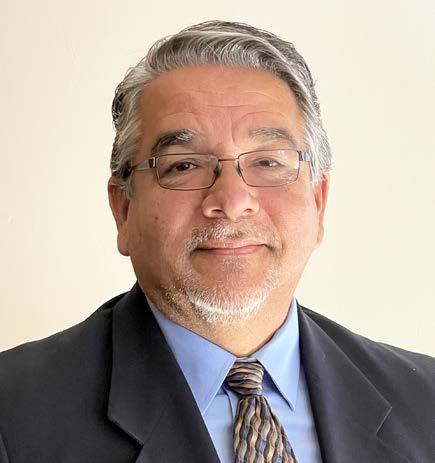
Todd Bruyere, P.Eng., is the senior project engineer and principal of Saulteaux Consulting & Engineering, located in Fort Frances in northwestern Ontario. Bruyere aims to increase the visibility of Indigenous Peoples in engineering and served on PEO Council from 2020 to 2022.
Photo: Todd Bruyere, P.Eng.
Cory Jones, P.Eng., president of Neegan Burnside & Associates Ltd., is committed to providing engineering services to First Nations communities to improve their infrastructure. Photo: Cory Jones/ LinkedIn
affected by the mine had agreements with the companies saying that they would allow them to bid on this stuff and give them first rights to offer different services,” reports Bruyere. Saulteaux formalized the partnership with the local First Nations—creating Ozaanamanan Engineering, Onikaajigan Construction LP and, most recently, Anokiigamig Construction LP—to further develop environmental and mining opportunities in northwestern Ontario. “We partnered with two First Nations communities to work with outside mining contractors. As a result, there were First Nations people hired to work for these companies, training programs developed and profit sharing directly with the communities,” says Bruyere.
Saulteaux also facilitated the design and oversaw the construction of a 500-person camp, along with the accompanying water and wastewater structure. “A lot of these camps go into areas where there are no building officials,” reports Bruyere. “Building officials have to inspect these things and give permits, and we did a lot of that work for the communities. We had to certify that everything is done and properly installed.”
Beyond the local First Nations communities, Saulteaux also works with local non-Indigenous clients, including the Rainy River Social Services Administration Board. “We’re working with them on a shelter in an old church, and there are four phrases to it because the funding has been split up over a year,” reports Bruyere. “We’re presently in the third phase, converting the church into a homeless shelter, and there are recovery beds, and the last phase is going to be an office for the staff. It’s a really interesting project, and they’re also looking to convert an old school into a seniors’ home.”
Yet despite servicing the remote Indigenous and non-Indigenous communities of northwestern Ontario, Saulteaux is successfully navigating the pathway of an engineering firm. “Other than sponsoring different things like the high-school hockey tournaments, we’ve never advertised,” reports Bruyere. “We don’t put an ad in the paper, because if we did, we would be swamped. If we told people that we did house designs, we wouldn’t be able to do them, because we don’t have enough staff.” Nevertheless, Saulteaux has enough work to keep a small engineering firm busy and successful.
But Bruyere is adamant that Indigenous Peoples be represented in engineering—both in the field and at PEO. Reminiscing upon his two-year term on PEO Council, Bruyere recollects that despite the virtual meetings of Council, he was glad to bring a First Nations voice to the table. “I think that there should be a First Nation representative on Council. Council consists of 25 members, and at least 1/25 of engineers are Indigenous and definitely 1/25 of Canada’s populations. When I was there, I thought there was a good representation of the whole province.”
And when it comes to engineering in Ontario, Indigenous-owned firms like Saulteaux and Neegan Burnside are leading the way by introducing a much-needed Indigenous perspective. As Jones notes: “By saying we’re Indigenous owned, and when we can find Indigenous staff, it gives [us] a feeling of belonging to something community based and Indigenous based.” e
In the matter of a hearing under the Professional Engineers Act, R.S.O. 1990, c. P.28, and in the matter of a complaint regarding the conduct of SAAD AL-DABBAGH, P.ENG., a member of the Association of Professional Engineers of Ontario, and A & A ENVIRONMENTAL CONSULTANTS INC., a holder of a certificate of authorization.
The hearing took place electronically on March 1, 2022. The parties introduced an Agreed Statement of Facts (ASF).
The panel was satisfied that the Member’s and Holder’s admissions were voluntary, informed and unequivocal. The ASF provides as follows:
1. Saad Al-Dabbagh, P.Eng. (Al-Dabbagh), graduated from the University of Baghdad in 1980 with a bachelor of science in civil engineering. He has been licensed with PEO since 2014.
2. A & A Environmental Consultants Inc. (A & A) has been the holder of a certificate of authorization (C of A) since November 22, 2010. At the material times, AlDabbagh was an employee of A & A and was listed as a responsible engineer under its C of A for the purposes of section 17 of the Professional Engineers Act.
3. On January 3, 2017, A & A was engaged by Landmark Capital Ltd. (the Developer) to conduct, among other things, a geotechnical investigation for a proposed development at 416 Dundas Street East, Whitby, Ontario (Site).
4. In February of 2017, A & A arranged for the drilling of four boreholes at the Site using a stainless-steel hollow stemmed auger for the purposes of the geotechnical investigation.
5. In or about March 2017, A & A delivered a report entitled Geotechnical Engineering Report Proposed Stacked Townhouses and Underground Parking, 416 Dundas St East, Whitby, dated March 20, 2017 (Geotechnical Report #1). This report was signed and sealed by Al-Dabbagh, and was also signed by Thomas Demers, environmental consultant.
6. The proposed development at this time was a threestorey townhouse block with 19 units, a basement and one underground parking level. Geotechnical Report #1 indicated that it appears that the load of the proposed development will be transferred to a very loose silty clay layer, which is extended to a depth lower than the end of sand layer level and will cause an excessive settlement in the foundation. The text of Geotechnical Report #1 erro-
neously stated that boreholes were advanced using solid stem augers when, in fact, as indicated in the borehole logs, hollow stem augers were used.
7. The Developer subsequently revised the proposed development to a seven-storey residential building with three underground parking levels.
8. As a result of the change in the proposed development, A & A prepared a second Geotechnical Report entitled Geotechnical Engineering Report Proposed Residential Building and Underground Parking, 416 Dundas St East, Whitby (Geotechnical Report #2). This report was also dated March 20, 2017. It was signed and sealed by Al-Dabbagh. The date shown on the signature page is March 25, 2017. However, Geotechnical Report #2 was actually prepared on June 12, 2018. Attached as Schedule “A” is a copy of Geotechnical Report #2.
9. The text of Geotechnical Report #2 maintained the error that boreholes were advanced using solid stem augers when, in fact, as indicated in the borehole logs, hollow stem augers were used.
10. Geotechnical Report #2 was submitted by the Developer to the Town of Whitby (Town). The Town retained Golder Associates Ltd. (Golder) to review Geotechnical Report #2.
11. Golder prepared 58 comments concerning the Geotechnical Report #2, which were sent to the Developer under cover of a letter dated July 30, 2018 (Comment Letter #1), from the Town to the Developer’s planner. This letter was conveyed to A & A for response. Attached as Schedule “B” is Comment Letter #1.
12. In response, A & A delivered, among other things, the following, dated October 10, 2018: a. A letter enclosing a response to Comment Letter #1 (Response Letter #1), signed and sealed by AlDabbagh on October 11, 2018, a copy of which is attached as Schedule “C”;
b. An updated Geotechnical Engineering Report entitled Proposed Residential Building and Underground Parking, 416 Dundas St. East, Whitby, ON dated October 10, 2018 (Geotechnical Report #3), signed by Thomas Demers and signed and sealed by Al-Dabbagh, a copy of which is attached as Schedule “D.”
13. Geotechnical Report #3 maintained the error that the boreholes were advanced using solid stem augers.
14. Golder reviewed and provided comments on Response Letter #1 and on Geotechnical Report #3. These were provided to the Developer under cover of a letter dated November 13, 2018, from the Town to the Developer’s planner (Comment Letter #2), a copy of which is attached as Schedule “E.” Golder identified that A & A had not resolved approximately 30 of the 58 comments in Comment Letter #1. Golder determined that approximately 22 of its comments were “moot” (in that their resolution was preferable but not necessary).
15. Golder noted deficiencies in the drilling and sampling methods in the Geotechnical Reports, which remained unresolved, as further detailed in Comment Letter #2. Golder also noted that:
a. A & A used both WSD (working stress design) and LSD (limit state design) foundation design standards, which was confusing and could have significant implications on the recommendations (including but not limited to Comments #9, 12 and 18);
b. A & A omitted relevant information in its Report that was not resolved in Geotechnical Report #2 and/or could result in design or construction implications (including but not limited to Comments #2, 3, 23, 25, 27, 30, 31, 32, 33, 35, 36, 37, 38, 40, 42 and 45);
c. A & A’s Geotechnical Reports contained other deficiencies, including describing groundwater levels to a precision of 1mm, inconsistent with industry practice (Comment #8), and referencing unconfined compressive strength tests being carried out without providing any UCS test data, and instead relying on the N value of the standard penetration test (Comment #33); and
d. A & A’s Geotechnical Reports contain internal inconsistencies and/or inconsistent or conflicting statements between the Geotechnical Report #1
and A & A’s response, and other confusing or unnecessary information or descriptions (including but not limited to Comments #5, 6, 11, 19, 21, 22, 24, 29, 34, 44 and 50–58).
16. A & A prepared a further updated Geotechnical Engineering Report Proposed Residential Building and Underground Parking 416 Dundas Street East, Whitby, ON dated November 23, 2018 (Geotechnical Report #4) and provided it to the Developer. Geotechnical Report #4 was now for a proposed development consisting of a fivestorey residential building with 1.5 underground parking levels and corrected the reference from solid stem to hollow stem augers in the text and addressed various of Golder’s comments. Attached as Schedule “F” is a copy of Geotechnical Report #4.
17. By email dated November 29, 2018, the Developer advised A & A that it had reviewed Geotechnical Report #4 and contacted the Town. The Developer advised that the Town “re-confirmed that due to the nature of the attention to detail and responses in the report, they will not allow [the Developer] to use A & A on this file.” The Developer retained a different consultant who prepared a fresh report.
18. On January 25, 2019, Dave Martino, on behalf of the Developer, filed a complaint to PEO.
19. PEO retained Sarafinchin Associates Ltd. as independent experts to review the work done by Al-Dabbagh and A & A. Murray Sarafinchin, P.Eng., provided an expert report dated December 31, 2019 (the Expert Report), a copy of which is attached as Schedule “G.” The Expert Report included a chart that commented on Comment Letter #1 and A & A’s responses thereto.
20. Sarafinchin concluded that Al-Dabbagh and A & A failed to observe the requirements of the ASTM 1586 and the Canadian Foundation Engineering Manual, 4th ed, 2006 (CFEM), in respect of the manner in which the SPT procedure was conducted, including by using solid stem augers, obtaining results that indicated a failure to ensure a clean borehole for sampling, obtaining results that indicated a failure to supervise the field drilling, taking and reporting an improper number of sample intervals and providing inadequate information and confusing explanations for the necessary geotechnical bearing resistance and settlement values in their reports.
21. Sarafinchin concluded that A & A and Al-Dabbagh failed to meet the standard of care expected of a reasonably prudent geotechnical engineer practitioner in the circumstances by:
a. Failing to be aware of certain significant site investigation problems (i.e., certain loose wet sand and silt deposits to be anticipated in this Whitby area) as expected of a reasonable and prudent practitioner in the specialist geotechnical engineer role;
b. Failing to carry out representative in situ drilling and sampling of native undisturbed soil (without likely problematic cave or blowback conditions in wet sands below the water table caused during the auger drilling of open boreholes and/or within hollow stem augers, which Sarafinchin concluded had occurred), by using cased and water-filled augers to prevent yielding repetitive SPT N=0 of very loose sand compactness results, in the manner set out in the CFEM 2006, section 4.5.2, and the ASTM D1586;
c. Failing to select and carefully manage geotechnical field drilling and sampling equipment methods to carry out representative soil sampling of native undisturbed soils and procedural standards of a reasonable and prudent practitioner in the geotechnical engineer’s role and the given circumstances, including complying with ASTM D1586-99, sections 5.1, 6.2, 6.3 and 6.4 that the geotechnical drilling equipment supervised by the geotechnical engineer must provide a clean borehole before sampling and testing using hollow stem augers or casing with balanced drilling fluid levels to ensure that the SPT test is required to be performed on native undisturbed soil; and
d. Failing to use the separate WSD (working stress design) and LSD (limit state design) foundation design standards (as opposed to using both WSD and LSD at various places in the reports), which did not meet the standards expected of a reasonable and prudent practitioner in the circumstances.
22 Sarafinchin further opined that Al-Dabbagh and A & A’s errors, omissions and deficiencies in the Geotechnical Reports caused inconsistent information and confusion in a manner that would not be expected of a reasonably prudent geotechnical engineer practitioner in the circumstances and that Al-Dabbagh failed to meet the standard of care expected of a reasonably prudent geotechnical engineer practitioner in the circumstances.
23. For the purposes of this proceeding, Al-Dabbagh and A & A accept the correctness of the findings, opinions and conclusions in the Expert Report. Al-Dabbagh and A & A admit that they failed to maintain the standards that a reasonable and prudent practitioner would maintain in the circumstances, and that they failed to make responsible provision for complying with applicable standards and codes.
24. By reason of the aforesaid, the parties agree that AlDabbagh and A & A are guilty of professional misconduct as follows:
a) They were negligent, amounting to professional misconduct under section 72(2)(a) of Regulation 941, by failing to maintain the standards that a reasonable and prudent practitioner would maintain in the circumstances, including by:
i. Failing to carry out representative in situ drilling and sampling of native undisturbed soil (without likely problematic cave or blowback conditions in wet sands below the water table caused during the auger drilling of open boreholes and/or within hollow stem augers, which had occurred), by using cased and water-filled augers to prevent yielding repetitive SPT N=0 of very loose sand compactness results, in the manner set out in the CFEM 2006, section 4.5.2, and the ASTM D1586, as expected of a reasonable and prudent practitioner in the specialist geotechnical engineer role. Instead, based on SPT N=0, it was recommended that this layer be replaced with engineered fill material.
ii. Failing to use the separate WSD (working stress design) and LSD (limit state design) foundation design standards (as opposed to using both WSD and LSD at various places in the reports), which did not meet the standards expected of a reasonable and prudent practitioner in the circumstances; and
iii. Preparing Geotechnical Reports #1, #2 and #3 that contained confusing information related to N=0 in a manner that would not be expected of a reasonably prudent geotechnical engineer practitioner in the circumstances.
b) They failed to make responsible provision for complying with applicable statutes, regulations, standards, codes, bylaws and rules in connection with work being undertaken by or under the responsibility of the practitioner,
amounting to professional misconduct under section 72(2)(d) of Regulation 941, including by:
i Providing inadequate information and confusing explanations for the necessary geotechnical bearing resistance and settlement values, contrary to CFEM 2006 Section 4.5.2 and Tables 4.1 and 4.2, and ASTM D158699 Section 4.1, 4.2, 5.1, 6.2, 6.3 and 6.4 which was not corrected until Geotechnical Report #4.
c) They engaged in conduct or an act relevant to the practice of professional engineering that, having regard to all the circumstances, would reasonably be regarded by the engineering profession as unprofessional, amounting to professional misconduct under section 72(2)(j) of Regulation 941, including by:
i. Failing to make responsible provision for complying with the CFEM and ASTM 1586 including by providing inadequate information and confusing explanations for the necessary geotechnical bearing resistance and settlement values, contrary to CFEM 2006 Section 4.5.2 and Tables 4.1 and 4.2, and ASTM D1586-99 Section 4.1, 4.2, 5.1, 6.2, 6.3 and 6.4 which was not corrected until Geotechnical Report #4.
ii. Failing to use the separate WSD (working stress design) and LSD (limit state design) foundation design standards (as opposed to using both WSD and LSD at various places in the reports), which did not meet the standards expected of a reasonable and prudent practitioner in the circumstances; and
iii. Preparing Geotechnical Reports #1, #2 and #3 that contained confusing information related to N=0 in a manner that would not be expected of a reasonably prudent geotechnical engineer practitioner in the circumstances.
The panel found the Member and Holder guilty of professional misconduct under section 28(2)(b) of the Professional Engineers Act and s. 72(2)(a), (d) and (j) of Regulation 941 under that act.
The panel accepted a Joint Submission on Penalty (JSP) and ordered:
a) Pursuant to s. 28(4)(f) of the Professional Engineers Act, Al-Dabbagh and A & A shall be reprimanded, and the fact of the reprimand shall be recorded on the Register permanently;
b) The finding and order of the Discipline Committee shall be published in summary form under s. 28(4)(i) of the Professional Engineers Act, together with the names of the Member and Holder;
c) Pursuant to s. 28(4)(d) of the Professional Engineers Act, there shall be a term and condition on AlDabbagh’s licence requiring him to successfully complete the 16-Civ-B3 – Geotechnical Design examination administered by PEO (the Examination), within 14 months from the date of pronouncement of the decision of the Discipline Committee (the Date);
d) Pursuant to s. 28(4)(e) and (k) of the Professional Engineers Act, a restriction shall be imposed upon Al-Dabbagh’s licence prohibiting him from practising professional engineering except under the direct supervision of another professional engineer who shall take professional responsibility for the work by affixing his or her signature and seal on every final drawing, report or other document prepared by AlDabbagh, which restriction shall be suspended for a period of 14 months from the Date. If Al-Dabbagh successfully completes the Examination at any time before or after the 14-month period referred to above, this restriction shall be suspended indefinitely; and
e) Pursuant to s. 28(4)(j) of the Professional Engineers Act, there shall be an order requiring payment of costs to PEO in the amount of $5,000, within 12 months of the Date. Al-Dabbagh and A & A shall be jointly and severally liable to pay this amount to PEO.
At the conclusion of the hearing, a reprimand was given. After the pronouncement of the penalty, the Member and Holder waived their rights to appeal. Thus, the effective date of the Decision is March 1, 2022.
Weaving Two Worlds: Economic Reconciliation Between Indigenous Peoples and the Resource Sector, by Christy Smith and Michael McPhie, 2022: A practical roadmap to a future where Indigenous rights are fully acknowledged, both in law and in practice, and a look at how the insights, knowledge and guidance of Indigenous communities for large-scale proposed development projects is critical
Design Justice: Community-Led Practices to Build the Worlds We Need, by Sasha Costanza-Chock, PhD, 2020: What is the relationship between design, power and social justice?
Design Justice explores how design can be led by marginalized communities, dismantle structural inequality and advance collective liberation and ecological survival.

An Elegant Puzzle: Systems of Engineering Management, by Will Larson, 2019:
A tool for considering the balance of structured principles and human-centric thinking to help leaders create more effective and rewarding organizations for engineers to thrive in and how management is a key part of an organization’s success
The following events may have an in-person and/or online component. See individual websites for details.
SEPTEMBER 20–21
International Conference on Advanced Earthquake and Impact Engineering, Toronto, ON
SEPTEMBER 20–21
International Conference on Women in Science, Engineering and Technology, Toronto, ON
SEPTEMBER 22–23
International Conference on Advances in Artificial Organ and Tissue Engineering, Vancouver, BC
OCTOBER 2
International Conference on Communication, Electronics and Electrical Engineering, Ottawa, ON
OCTOBER 2
International Conference on Mechanical, Manufacturing, Industrial and Civil Engineering, Ottawa, ON
OCTOBER 12–13
Engineers and Geoscientists BC Annual Conference, Burnaby, BC
OCTOBER 23–26
Canadian Chemical Engineering Conference, Vancouver, BC
OCTOBER 26
International Conference on Electrical and Control Engineering, Toronto, ON
NOVEMBER 3
OSPE Engineering Conference, Ottawa, ON
In Machines We Trust
An examination of the far-reaching impact of artificial intelligence on our daily lives
Engineering Heroes

Interviews with engineers who discuss their professional lives and challenges
Engineering IRL
Finding parallels between engineering solutions and the tools to improve careers and life with expert problemsolving skills
Create the Future Podcast
An exploration of engineering and how engineers impact our lives every day
The Importance of Indigenous Perspectives in STEM
Indigenous perspectives in STEM, including Indigenous science, Anishinaabe plant-based medicine and its relationship with western knowledge systems

Indigenous Women in STEM: Resilience for the Future
A roundtable discussion on Indigenous Women in STEM and the unique perspective they offer
The case to recognize Indigenous knowledge as science
A TED talk calling for better recognition of Indigenous knowledge as science by the scientific community

Diversity is a critical driver of innovation in engineering. To improve accessibility to the engineering profession for Canada’s Indigenous Peoples, engineering schools are implementing access programs to ensure this talent pool doesn’t go untapped.
BY MARIKA BIGONGIARI

“Our education system is failing Indigenous Peoples,” says Randy Herrmann, P.Eng. (Manitoba), FEC. “Both our primary and secondary education system are wholeheartedly, widely failing them.” As the director of the Engineering Access Program (ENGAP) at the University of Manitoba, Herrmann has a front-row seat to the barriers many Indigenous students face to careers in engineering. The barriers are due to several factors, but the net result is low Indigenous representation among licensed engineers—so low, in fact, that Engineers Canada has identified increasing Indigenous representation in engineering as a priority. Engineering schools are also playing a key role in addressing the problem by using access programs to help reduce barriers and set Indigenous engineering students up for success.
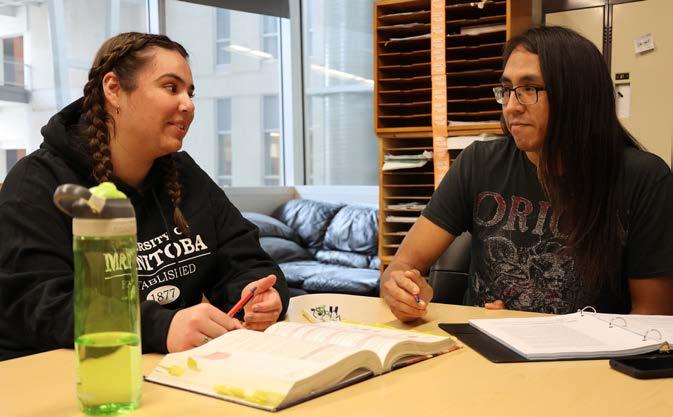
Students of the University of Manitoba’s Engineering Access Program (ENGAP) confer in the student lounge of the ENGAP office. Having dedicated spaces and the sense of community and camaraderie fostered by Indigenous engineering access programs contributes to their success.
ENGINEERS CANADA SPOTLIGHTS INDIGENOUS UNDERREPRESENTATION
“Engineers and engineering work intersect with Indigenous Peoples and Indigenous communities—First Nation, Métis and Inuit—in many ways,” explains Gerard McDonald, MBA, P.Eng., chief executive officer at Engineers Canada and former registrar at PEO. “As a starting point, it is important to acknowledge the often-negative impact engineering has on Indigenous Peoples and communities, from coast to coast to coast—whether in the context of resource development, infrastructure creation and maintenance on and off reserves, technological applications of engineering design and beyond.” McDonald argues that the engineering profession must value and incorporate Indigenous ways of knowing, being and creation and that these can only add to the utility of the profession. “For engineering to be effective for society and successful in society, engineering needs to reflect society,” says McDonald.
But the first step to becoming an engineer is becoming an engineering student, and this is a closed door for many Indigenous youth who seek entry to the profession. “By understanding the challenges facing Indigenous students, we can move forward and find ways to address them,” says Herrmann. Herrmann is a member of Engineers Canada’s Indigenous Advisory Committee, which undertook several reports exploring issues related to Indigenous underrepresentation in engineering in Canada and collected data on Indigenous engineering students and professionals as part of Engineers Canada’s commitment to equity, diversity and inclusion.
“Much of the journey to becoming an engineer is dependent on the ability to access education and training—something easier to achieve with more financial and economic means,” explains Jeanette M. Southwood, LLD, P.Eng., FEC, IntPE, Engineers Canada’s vice president, corporate affairs and strategic partnerships. “Through the colonization of Canada and the racialized nature of poverty, more Indigenous Peoples are pushed to the economic margins; financial support is a small step that can begin to address this problem.”
A 2022 Engineers Canada report on Indigenous inclusion in engineering explored the experiences and barriers faced by Indigenous engineers, from their formative years and early education through to their professional experiences. “Although Indigenous Peoples make up more than 4.9 per cent of the total Canadian population, they account for only 0.6 per cent of engineering undergraduate enrolment,” says McDonald. Engineers Canada estimates that national Indigenous representation in the engineering profession is at only 0.73 per cent. The report recommends improving supports and reducing bar-
riers to Indigenous engineers in their formative years and post-secondary education; ensuring mentorship and networking opportunities are widely available and accessible; and providing programming that offers financial, tutoring and other supports to Indigenous students.
The report included a survey of the membership of Engineers Geoscientists Manitoba, Engineers and Geoscientists BC and the Association of Professional Engineers and Geoscientists of Saskatchewan to get a clearer picture of the representation of Indigenous engineers in the Canadian workforce. An analysis of the survey, which looked at Indigenous engineers’ postsecondary education experience, found that the most common challenges facing Indigenous engineers as students were financial, indicating a need for monetary support. According to Statistics Canada, low-income rates are higher for all Indigenous identity groups across Canada, with the highest low-income rates found for First Nations living on reserve. As of 2016, 48 per cent of Status First Nations people living on reserve lived in a low-income situation, compared with 31 per cent of those living off reserve and 14 per cent of the nonIndigenous population.
Indeed, Indigenous survey respondents often cited the financial burden of becoming an engineer meant they had to work throughout school, preventing them from participating in extracurriculars, social groups and mentoring or networking programs. “This increases isolation and loneliness, prevents community-building and can ultimately impact a person’s success in engineering,” says Southwood.
When Herrmann—who was licensed to practise engineering in Ontario, where he worked for a consulting engineering firm and as a project manager for Rama First Nation before moving back to his home province of Manitoba—was directing construction on community buildings, he didn’t meet many fellow Indigenous engineers. A strong advocate for education, Herrmann took the job as director of the ENGAP program to help change that and jokes that he went from engineering buildings to building engineers. Founded in 1985, ENGAP is the largest program of its kind in Canada, with the highest number of graduating Indigenous engineering students. (The program boasts more than 140 graduates.) The program provides many important resources to students and graduates, including counselling services, financial support that includes numerous bursaries and scholarships, tutoring, study spaces, peer support and social activities. Most importantly, it offers marginalized students a pathway to an engineering degree.
But Herrmann notes a discrepancy in the level of educational attainment between Indigenous and nonIndigenous people that must be considered when crafting solutions to the problem. It’s an issue in which he has firsthand experience. Herrmann—whose mother’s family comes from a small Métis community and whose father emigrated from Germany after the Second World War—is
a first-generation university student. Despite barriers associated with severe economic hardship Herrmann experienced growing up, he recognizes the privilege he had compared to his cousins—none of whom went to university. “Despite everything, I was raised mainly in Winnipeg, so I was able to get a top-notch education at a public school. None of my cousins had that,” says Herrmann.
Although the rate of high-school completion among young adults shows an increasing trend, significant gaps remain—particularly for those living on reserve, where the percentage of youth with a high-school diploma was 41 per cent in 2016. Comparatively, the percentage of non-Indigenous youth with a high-school diploma was 88 per cent. Programs like ENGAP play a pivotal role in promoting success by creating a support network for students. In fact, Engineers Canada’s report notes that Indigenous engineers who participated in engineering access programs as students found they had a profoundly positive impact. “Indigenous engineering access programs are important because they create pathways into engineering education and the engineering profession for traditionally underrepresented groups,” observes Southwood. “They help Indigenous students find mentors and role models and create space for Indigenous students to show up as their whole and authentic selves.”
Such programs build a community on campus for Indigenous students that lessens the impact of assimilation while providing advocates who understand the systemic barriers faced by Indigenous Peoples and who celebrate and support resilience. “They also help combat a challenge for many Indigenous engineering students— loneliness—by fostering a sense of belonging with people who understand their perspective and stories,” notes Southwood. Loneliness and isolation are poignant
roadblocks for Indigenous students. Often the first person in their community or family to go to university, Indigenous youth face more transitional issues compared to other, typically non-Indigenous, people. “The students are young, living on their own for the first time,” says Herrmann. “It’s especially difficult for those who lived in their community, where the culture is very different than that of the city. They have difficulty adapting.”
According to Statistics Canada, in 2016, 40 per cent of Status First Nations people in Canada lived on reserve. Although 24 per cent of Canada’s First Nations population lives in Ontario, over half live in the western provinces. Of note, Ontario has the largest Métis population at 80 per cent; of the three Indigenous groups, Métis were the most likely to live in a city, with nearly 63 per cent living in a metropolitan area of at least 30,000 people. This suggests challenges related to remote and community living may be more prevalent outside of Ontario. “When you’re coming from a city, you’re used to the things that city life brings. But when you’re coming from a community where you don’t have that, it’s much more difficult,” explains Herrmann. “Students have come to Winnipeg from remote communities with no idea of what the bus system was for, how to work the bus system or even if they were allowed on the bus. You don’t think of that if you come from an urban area.”
Although Herrmann’s personal experience wasn’t as severe as his cousins’, the barriers he witnessed were sufficient to recognize the problems Indigenous students face. In addition to socio-economic challenges and the intergenerational impact of residential schools, there is also the lack of access to engineering prerequisites and awareness of the option of engineering. Students’ first hurdle to gaining entry to a university engineering program is having certain high-school credits—specifically, advanced mathematics, sciences, chemistry and physics. “If you think of someone coming from somewhere north of Kenora, BC, to a university like the University of Toronto, that’s a huge issue,” notes Herrmann. This is because not all secondary schools offer the necessary courses, particularly those in remote regions, where there is
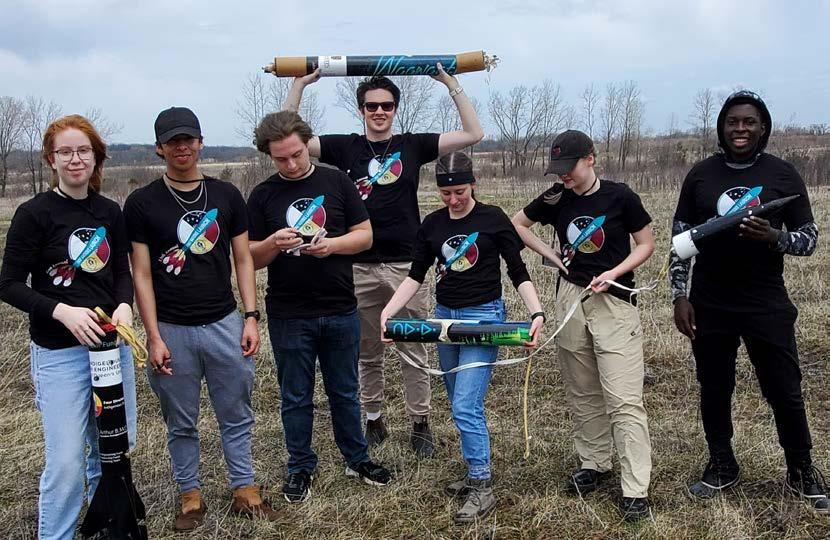
The Queen’s University First Nations Launch Team participates annually in the NASA-sponsored First Nations Launch competition, where last year it placed second overall. The team was founded by a member of Queen’s Indigenous Futures in Engineering (InEng) program and aims to introduce undergraduate Indigenous and Black engineering students to competitive rocketry. Photo: Queen’s University
more difficulty recruiting and retaining teachers in specific disciplines like pre-calculus mathematics and physics.
Additionally, Herrmann observes that Indigenous students affected by poverty may be forced to leave school to work. “If you dropped out of school in Grade 10, you’re not going to have those courses, and that’s also happening,” explains Herrmann. “When you combine those things, you end up with a very low number of Indigenous people in university faculties of engineering, because many of them do not have the prerequisites or do not have marks high enough in those prerequisites to get into engineering.”
Consequently, ENGAP offers students academic supports, including upgrading courses in core subjects, as well as tutoring in any engineering course a student needs help in. “One of the strongest supports we offer to our students is an upgrading course in pre-calculus math, two more in physics, one in computer science and one in chemistry,” says Herrmann. Upgrading courses are offered so students who have not had the opportunity take them, or who didn’t have a sufficiently high grade when they took those courses, can take them with ENGAP and be better prepared to go into engineering. A student admitted to ENGAP typically adds an extra year to the beginning of their degree studies before joining the regular engineering stream.
Academic supports combined with the intimate community ENGAP provides within the larger faculty of engineering increase the likelihood of positive outcomes for Indigenous students. And the range of students—about 80, from final-year students to those just starting out—results in informal mentorship, something Herrmann’s graduating students have made clear made a positive difference. Subsequently, programs like ENGAP translate into more Indigenous engineers through increased retention. Herrmann sees engineering students who were struggling outside of ENGAP, and would otherwise have had a negative trajectory, come into the program and turn their grades around.
If a student is struggling, academic supports like tutoring can make the difference. Haven Moses, EIT, has no doubt the Indigenous Futures in Engineering (InEng; formerly Aboriginal Access to Engineering) program at Queen’s University made a positive difference when he was earning his civil engineering degree. “It would have been much different had the program not been there,” notes Moses, an engineering assistant at Neegan Burnside Ltd. (see p. 16). The InEng program was founded 12 years ago with a mission to increase the number of qualified Indigenous engineers in Canada and support future Indigenous engineers from elementary school through university.
Queen’s access program differs from ENGAP in that it offers resources to students who are already enrolled in the faculty of engineering and places a large emphasis

on outreach. The effectiveness of the program’s methodology was confirmed by Engineers Canada’s survey respondents, who noted that STEM outreach programs, like InEng’s, would have made it easier for them to pursue engineering, as would having a positive role model, such as a mentor or teacher who encouraged them to pursue engineering.
InEng provides a broad range of academic and social support for Queen’s engineering students, from tutoring and dedicated study spaces to social events and opportunities to participate in national and international conferences. If there was a class Moses was struggling in, for example, InEng had the funding for tutoring. Moses also benefitted from the sense of community fostered by the program—a cornerstone of InEng—and the dedicated study space was not just a quiet and convenient place for Moses to focus, it was a space for camaraderie, too. “The fellas that I studied with in that room are still some of my best friends to this day,” Moses notes.
Moses highlights the informal mentorship that naturally evolves between students in the InEng environment, echoing Herrmann’s observations at ENGAP. In fact, Moses worked part-time at Queen’s in the year following graduation to continue mentoring InEng students and assist with the program’s outreach efforts in primary and secondary schools, where they organized engineering activities with younger students to encourage the Indigenous base with an engineering mindset.
If education is the doorway to a career in the engineering profession, and that door is closed to some, it may be as simple as giving students the tools they need to succeed. Moses, a firm advocate of using the resources that are available, encourages Indigenous students to do the same. “[InEng] reached out to me and let me know this is a program they had. The benefits were obvious. Get out there and use those resources—because, if you’re not, they’re just sitting there,” says Moses. “It’s a waste of potential.” e
Michelle Liu, P.Eng., and Allie Kennington, EIT, are on a journey to increase equity and inclusion in the engineering profession—including founding Canada’s first scholarship for engineering students who contribute to the 2SLGBTQ+ community.
By Adam Sidsworth
Allie Kennington, EIT, was sitting in an engineering lecture hall at the University of Waterloo (U of W) when they first saw Michelle Liu, P.Eng. “I was in my first year at Waterloo, and Michelle was a member of the Civil, Environmental, Architectural and Geological Engineering Society,” explains Kennington. “Michelle came and visited my classroom…to announce that [the society] was conducting elections and looking for representatives.” It was towards the end of the academic year, and Kennington thought that attending the student society’s meeting would be a good way to get involved during their second year. “It was great because I really got to know Michelle and a couple of other motivated student leaders,” says Kennington, “and I felt that this smaller community allowed me to facilitate change or at least organize meaningful events.”
Although Kennington and Liu interacted throughout their undergraduate years, they did not immediately feel safe to speak up about the challenges they face in their fields. “It wasn’t until we were both involved in the graduate school society, that we started discussing our queer experiences and how it affected our co-ops, academic life and subsequent work experience,” acknowledges Kennington, who got their undergraduate degree in geological engineering in 2019. “When we were in undergrad—and I think it’s pretty similar for Michelle— we were both out, but we still didn’t really talk about our experience of being marginalized or being outsiders in the construction field.”
“There was no real community for 2SLGBTQ folks other than EngiQueers,” says Liu, who got her undergraduate degree in civil engineering in 2018. EngiQueers is the undergraduate society co-founded in 2013 by Vanessa Raponi, P.Eng. (see “She’s a diversity warrior, engineering champion and voice for change,” Engineering Dimensions, January/February 2019, p. 25) and Alexander Dow, P.Eng. (see “Defining Diversity: 5 Ontario engineers tell their story,” Engineering Dimensions, March/April 2021, p. 30) and other engineering students and is currently represented by engineering student groups in 30 engineering faculties across Canada. Nevertheless, as undergraduate students Liu and Kennington felt that there weren’t
enough resources or mentors to support them. “Having mentors who align with your various marginalized identities is important,” Liu asserts. “We really felt like we didn’t have that.”
Now that Kennington and Liu have worked in the construction sector, they’ve learned that with every new group of people they work with, they need to assess if it is safe to divulge their queerness or gender identity. For Kennington, it’s a particular challenge, since their current position as an environmental engineering specialist with a large engineering firm requires them to often be alone with contractors whom they have only just met.
“I identify as non-binary,” says Kennington. “I use they/their pronouns, and to be frank, I’m not out at work, although my online profiles—my LinkedIn, my Twitter, various articles about me—all show that this is my identity. At work, I use ‘she’ because I worry about what the acceptance will be. Probably 50 to 70 per cent of my work is field work, where I’m travelling around southern Ontario, rural areas, northern Ontario, working alone, sometimes with lessthan-accepting individuals. I recognize that I’m white, I’m 6'2", so I can be pretty intimidating at times. The fact that I’m still uncomfortable makes me reflect that there are other students and young professionals who could be in worse situations.”
Liu, who has over four years of experience in construction and design and is a LEED Green Associate, also worked with contractors and subcontractors and her intersecting identities as a woman-identifying, East Asian and queer person often proved challenging: “The little things add up over time. When you can’t be your whole self, [your work] isn’t something you want to get up and go do,” Liu explains. “On Monday morning, everybody’s talking about what they did with their families or spouses on the weekend, and I have to decide in that moment facing contractors and subcontractors—and they’re always different people—if it’s safe for me to say, ‘my partner’ and reveal their pronouns.”
Also complicating the situation was that Liu was often in a supervisory position in the field, and there was the added dimension of if she would be able to command respect from the 25 to 100 men on site if people were aware of her queer identity. “I went into civil engineering with the interest of being outdoors, and in the construction environment,” Liu adds. “I wanted a muddy stomping ground as my office. That was my dream.”
It is because of Liu’s and Kennington’s desire for a wider acceptance of being able to be open about sexual orientation and gender expression in the engineering and construction sectors that the couple founded the Liu-Kennington Award for the 2SLGBTQ+ Engineering Community at U of W, an annual $1,000 prize for a full-time undergraduate student who has completed at least their first year of studies in any U of W engineering program. The award’s recipient must have demonstrated “positive contributions to the 2SLGBTQ+ community

through extracurricular or volunteer involvement” and academic achievement. The first award was offered last year.
“There are 279 accredited engineering programs across 44 post-secondary schools in Canada. This 2SLGBTQ+ scholarship is the very first that centres 2SLGBTQ+ engineering students anywhere in Canada,” Liu asserts. “Just to be able to see somebody who embodies one of the same identities as you and succeed in that space [matters]. Similarly, we are starting to talk more about focused efforts to engage Black and Indigenous students in engineering. These are all important conversations to have to change the landscape in engineering,” Liu adds, noting the numerous scholarships and outreach programs that many Canadian universities have for Black and Indigenous students and youth.
One of the goals of the scholarship is to facilitate mentorship. Earlier this year, Liu and Kennington were invited to speak about the founding of their scholarship at the Queering Engineering conference, co-sponsored by Western and the Hydro One Women in Engineering Consortium, a two-day virtual event that allowed high school and post-secondary students, educators and industry members to talk about the queer experience in education. Liu says that she and Kennington relished the opportunity to speak publicly about the need for queer and gender diverse mentorship in engineering.
Kennington and Liu’s immediate future includes more education. Kennington is in the final stages of completing their master’s degree in civil engineering from U of W, where they are focusing on assessing the risks of contamination of groundwater sources by pathogens post-wildfire in varying hydrogeological settings. They are completing the degree part time while working full time in the field. Liu, meanwhile, is concurrently pursuing a PhD in civil engineering and a law degree from the University of Ottawa.
Allie Kennington, EIT (left), and Michelle Liu, P.Eng. (right), founded the Liu-Kennington Award for the 2SLGBTQ+ Engineering Community, which is awarded annually to a University of Waterloo student who works to increase the visibility of queerness and gender diversity in the engineering community.
Photo: Allie Kennington, EIT, and Michelle Liu, P.Eng.
Interestingly, Liu’s engineering PhD thesis, for which she was awarded the Pierre Elliott Trudeau Foundation Scholarship and a Natural Science and Engineering Research Council of Canada Scholarship, is examining the opportunities and challenges facing the engineering profession in improving equity, diversity and inclusion, both within professional norms and culture of engineering as well as engineering standards and building codes. “I’m interested in knowing when the building code mentions users and their needs. Who is that user? It’s like in law, court decisions talk about a reasonable person. Who is this reasonable person? Well, who is this user in the building code? Is this model user representative of our diverse population in Canada today or 50 to 100 years ago?” Ultimately, Liu is eyeing a career in academia at the intersection of law and engineering, where she hopes to continue her work on equity and inclusion in engineering. e
All PEO licence holders are invited to become candidates for the positions of president-elect, vice president, councillor-at-large and regional councillor (one for each of PEO’s five regions) on PEO Council.
1. Any licence holder may be nominated for election to Council as president-elect, vice president or councillor-at-large, by at least 15 other licence holders. The nomination must include at least one licence holder resident in each region. [Regulation 941/90, s. 14(1)]
(a) The position of president-elect is for a one-year term, after which the incumbent will serve a one-year term as president and a one-year term as past president.
(b) The position of vice president is for a one-year term.
(c) The councillor-at-large position is for a two-year term. Two councillors-at-large are to be elected in 2023.
2. Any licence holder residing in a region may be nominated for election to Council as a regional councillor for that region by at least 15 other licence holders who reside in the region.
[Regulation 941/90, s. 14(2) and s. 15.1(2)]
(a) The position of regional councillor is for a two-year term.
A licence holder nominated for election to Council must complete a nomination acceptance form that they are a Canadian citizen or have the status of a permanent resident of Canada and are a resident in Ontario [section 3(3) of the Professional Engineers Act] and consents to the nomination [Regulation 941/90, s. 15]. Nomination petitions for collection of nominators’ signatures and nomination acceptance forms may be obtained from the PEO website at www.peo.on.ca or Ralph Martin, PEO, 40 Sheppard Avenue West, Suite 101, Toronto ON M2N 6K9. Email: rmartin@peo.on.ca; Tel: 416-840-1115; 800-339-3716, ext. 1115.
Completed nomination petitions and nomination acceptance forms are to be sent only electronically and only to the chief elections officer at elections@peo.on.ca, by 4 p.m., November 25, 2022. No personal delivery of forms will be accepted. For further information on becoming a candidate, please refer to the 2023 Council Elections Guide posted on PEO’s website.
The 2023 voting and election publicity procedures were approved by the Council of PEO on June 24, 2022. Candidates are responsible for familiarizing themselves with these procedures. Any deviation could result in a nomination being considered invalid. Candidates are urged to submit nominations and election material well in advance of published deadlines so that any irregularities may be corrected before the established deadlines. Nominees’ names are made available on PEO’s website as received; all other election material is considered confidential until published by PEO.
1. The schedule for the elections to the 2023–2024 Council is as follows:
Date nominations open October 17, 2022
Date nominations close 4 p.m., November 25, 2022
Date PEO’s licence holder roster will be closed for the purposes of licence holders eligible to automatically receive election material1 January 6, 2023
Date a list of candidates and voting instructions will be sent to licence holders no later than January 9, 2023
Date voting will commenceon the date that the voting packages are sent to licence holders, no later than January 13, 2023
Date voting closes 4 p.m., February 17, 2023
All times noted in these procedures are Eastern Time. 1Licence holders licensed after this date may call in and request that election information be mailed to them by regular mail or, upon prior written consent by the licence holder for use of their email address, via email or via telephone.
2. Candidates’ names will be listed in alphabetical sequence by position on the list of candidates sent to licence holders and on PEO’s website. However, the order of their names will be randomized when voters sign into the voting site to vote.
3. A person may be nominated for only one position.
4. A nomination, once withdrawn, may not be re-instated.
5. Nomination papers are to be submitted only by email (elections@peo.on.ca) for tracking purposes. Forms will not be accepted by any other format (e.g., personal delivery, courier, fax). If you have a need for accommodation because of a disability that limits your ability to access electronic communications tools, please contact elections@peo.on.ca.
6. Only nomination acceptance and nomination petition forms completed in all respects, without amendment in any way whatsoever, will be accepted.
7. Signatures on nomination forms may be hand-signed or electronic.
8. Signatures on nomination petition forms do not serve as confirmation that a licence holder is formally endorsing a candidate.
9. In the event a candidate changes their mind on a position and decides to run for a different position after submitting nomination forms, a newly completed nomination petition form, in addition to a new nomination acceptance form, will be required.
10. Candidates should allow sufficient time for their emails to go through the system to ensure that the completed papers are, in fact, received by the chief elections officer by 4 p.m. on November 25, 2022. In the event of a dispute as to when the forms were sent vs received, a candidate can provide the chief elections officer with a copy of their email to PEO that would indicate the time the nomination forms were sent from their computer.
11. Council has appointed a Central Election and Search Committee to:
• Encourage licence holders to seek nomination for election to the Council as president-elect, vice president or a councillor-at-large;
• Assist the chief elections officer as may be required;
• Receive and respond to complaints regarding the procedures for nominating, electing and voting for licence holders to the Council; and
• Conduct an annual review of the elections process and report to the June 2023 Council meeting.
12. Candidates will be advised when a member of the Central Election and Search Committee has declared a conflict of interest should an issue arise that requires the consideration of the committee.
13. Council has appointed a Regional Election and Search Committee for each region to encourage licence holders residing in each region to seek nomination for election to the Council as a regional councillor.
14. Council has appointed an independent chief elections officer to oversee the election process and to ensure that the nomination, election and voting are conducted in accordance with the procedures approved by Council.
15. The chief elections officer will be available to answer questions and complaints regarding the procedures for nominating, electing and voting for licence holders to the Council. Any such complaints or matters that the chief elections officer cannot resolve will be forwarded by the chief elections officer to the Central Election and Search Committee for final resolution. Staff is explicitly prohibited from handling and resolving
complaints and questions, other than for administrative purposes (e.g., forwarding a received complaint or question to the chief elections officer).
16. Voting will be by electronic means only (internet and telephone). Voting by electronic means will be open at the same time the electronic election packages are sent out.
17. An independent agency has been appointed by Council to receive, control, process and report on all cast ballots. This “official elections agent” will be identified to licence holders with the voting material.
18. If a candidate withdraws their nomination for election to PEO Council prior to the preparation of the voting site, the chief elections officer shall not place the candidate’s name on the voting site of the official elections agent or on the list of candidates sent to licence holders and shall communicate to licence holders that the candidate has withdrawn from the election. If the candidate withdraws from the election after the electronic voting site has been prepared, the chief elections officer will instruct the official elections agent to adjust the voting site to reflect the candidate’s withdrawal.
19. All voting instructions, a list of candidates and their election publicity material will be sent to licence holders by the official elections agent. All voters will be provided with detailed voting instructions on how to vote electronically. Control numbers or other access control systems will be sent to licence holders by email after the election package has been sent out. The official elections agent will send out an eblast with the control numbers (PINs) every Monday during the election period.
20. Election material sent to licence holders electronically will contain information related to the All Candidates Meetings.
21. If the official elections agent is notified that an elector has not received a complete election information package, the official elections agent shall verify the identity of the elector and may either provide a complete duplicate election information package to the elector, which is to be marked “duplicate,” by email or provide the voter’s unique control number to the voter and offer assistance via telephone. To receive such information via email, the elector must provide prior written consent to the use of their email address for this purpose.
22. Elections staff shall respond to any requests for new packages as usual—i.e., if the licence holder advises that they have moved and have not received a package, the licence holder is to be directed to the appropriate section on the PEO website where the licence holder may update their information with Document Management Centre (DMC).
23. DMC staff shall advise elections staff when the licence holder information has been updated; only then shall the elections staff request the official elections agent to issue a replacement package with the same control number.
24. Verification of eligibility, validity or entitlement of all votes received will be required by the official elections agent. Verification by the official elections agent will be by unique control number to be provided to voters with detailed instructions on how to vote by internet and by telephone.
25. Voters need not vote in each category to make the vote valid.
26. PEO will post total votes cast in the election on the PEO website on each Friday of the voting period and will post final vote totals by candidate after voting has closed. No other information related to vote totals will be made available.
27. The official elections agent shall not disclose individual voter preferences.
28. The official elections agent shall keep a running total of the electronic ballot count and shall report the unofficial results to the chief elections officer, who will provide the candidates with the unofficial results as soon as practically possible.
29. There shall be an automatic recount of the ballots for a given candidate category for election to Council or bylaw confirmation where the vote total on any candidate category for election to Council between the candidate receiving the highest number of votes cast and the candidate receiving the next highest number of votes cast is 25 votes or less for that candidate category or where the votes cast between confirming the bylaw and rejecting the bylaw is 25 votes or less.
30. Certification of all data will be done by the official elections agent.
31. On or before the close of nominations on November 25, 2022, the president will appoint three licence holders or councillors who are not running in the election as returning officers to:
• Approve the final count of ballots; and
• Make any investigation and inquiry as they consider necessary or desirable for the purpose of ensuring the integrity of the counting of the vote and report the results of the vote to the registrar not later than March 10, 2023.
32. Returning officers shall receive a per diem of $250, plus reasonable expenses to exercise the duties outlined above.
33. Reporting of the final vote counts, including ballots cast for candidates that may have withdrawn their candidacy after the opening of voting to PEO, will be done by the returning officers to the registrar, who will advise the candidates and Council in writing at the earliest opportunity.
34. Upon the direction of the Council following receipt of the election results, the official elections agent will be instructed to remove the electronic voting sites from its records.
35. In the event a chapter holds an All Candidates Meeting, the chapter must invite to the meeting all candidates for whom voters in that region are eligible to vote.
36. Candidates for PEO Council may submit expense claims. The travel allowance to enable candidates to travel to chapter events during the period from the close of nominations to the close of voting will be based on the distance between chapters and the number of chapters in each region. Such travel expenses are reimbursed only in accordance with PEO’s expense policy.
37. These procedures may only be amended if approved by the current Council.
38. All questions from, and replies to, candidates are to be addressed to the chief elections officer by email: elections@peo.on.ca
The Election Publicity Procedures form part of these Voting Procedures.
IMPORTANT DATES TO REMEMBER
Deadline for receipt of publicity materials for publication in Engineering Dimensions and on the PEO website, including URLs to candidates’ own websites
Deadline for submission of candidate material to eblast to licence holders
Dates of eblasts to licence holders
4 p.m., December 9, 2022
1. January 9, 2023—1st eblast
2. January 23, 2023—2nd eblast
3. February 6, 2023—3rd eblast
1. January 16, 2023
2. January 30, 2023
3. February 13, 2023
Date of posting period January 13, 2023 to February 17, 2023
Dates of voting period 12 p.m., January 13, 2023 to 4 p.m., February 17, 2023
Dates of All Candidates Meetings The week of January 2, 2023
Note: All times indicated in these procedures are Eastern Time.
1. Names of nominated candidates will be published on PEO’s website as soon as their nomination is verified.
2. Names of all nominated candidates will be forwarded to members of Council, chapter chairs and committee chairs and published on PEO’s website by November 28, 2022.
3. Should a candidate wish to withdraw from the election, their name will remain on the website and the word “withdrawn” will appear beside their name on the PEO website.
4. Candidates will have complete control over the content of all their campaign material, including material for publication in Engineering Dimensions, on their additional material on PEO’s website and on their own websites.
5. Candidate material is readily available to the public and should always be in keeping with the dignity of the profession. Material will be published with a disclaimer. The chief elections officer may seek a legal opinion prior to publishing/posting of any material if the chief elections officer believes campaign material could be deemed libelous. The chief elections officer has the authority to reject the campaign material if so advised by legal counsel.
6. Candidate material may contain personal endorsements provided there is a clear disclaimer indicating that the
endorsements are personal and do not reflect or represent the endorsement of PEO Council, a PEO chapter or committee or any organization with which an individual providing an endorsement is affiliated.
7. Candidate material for publication in Engineering Dimensions and any additional material they wish to publish on the website must be forwarded to the chief elections officer via email at elections@peo.on.ca no later than 4 p.m. on December 9, 2022, and must be in accordance with these procedures and Schedule A attached.
8. Candidates have the option of using one of two templates to present their election material in Engineering Dimensions. Both templates are included in Schedule A of these procedures. The size of both templates is the equivalent of one-half page, including border, in Engineering Dimensions.
a. Option 1: Candidates using the blank template will have discretion over the presentation of their material, including but not limited to font style, size and effects. Candidates using the blank template will be permitted to include their portrait within the template.
b. Option 2: Candidates using the fillable template must provide responses to the questions provided in the allotted space. The presentation of the fillable template is fixed, and no modifications will be permitted. Candidates using the fillable template must submit their portrait separately for insertion into the designated location by PEO staff.
9. Candidates shall not use the PEO logo in their election material.
10. Candidates may include links to PEO publications but not a URL link to a third party in their material on PEO’s website. Links to PEO publications are not considered to be a third party. For clarity, besides links to PEO publications, the only URL link that may be included in a candidate’s material on PEO’s website is a URL link to the candidate’s own website.
URL links to other websites are not permitted.
11. Fundraising requests are not permitted in a candidate’s material.
12. If campaign material is submitted by a candidate without identifying information, PEO staff are authorized to contact the candidate and ask if they wish to resubmit material. If campaign material is received by the chief elections officer and returned to the candidate for amendment to comply with the Election Publicity Procedures, and the amended material is not returned within the prescribed time, staff will publish the material with a notation explaining any necessary amendments by staff.
13. The chief elections officer is responsible for ensuring that all candidate material (whether for Engineering Dimensions, PEO’s website or eblasts) complies with these procedures. Where it is deemed the material does not satisfy these procedures, the chief elections officer will, within three full business days from receipt of the material by the chief elections officer, notify the

candidate, who is expected to be available during this period by telephone or email. The candidate will have a further two full business days to advise the chief elections officer of the amendment. Candidates are responsible for meeting this deadline. Should a candidate fail to re-submit material within the two-business-day period, the candidate’s material will be published with a notation explaining any necessary amendments by staff.
14. Candidate publicity material will be published as a separate insert in the Winter 2023 issue of Engineering Dimensions and to PEO’s website in January 2023. Links to candidate material on PEO’s website will be included in any electronic mailing to eligible voters.
15. Candidate material will be considered confidential and will be restricted to staff members required to arrange for publication until published on PEO’s website. All candidates’ material will be published to PEO’s website at the same time.
16. Candidates may submit updates to their material on PEO’s website once during the posting period. Any amendments to a candidate’s name/designations are to be considered part of the one-time update permitted to their material during the posting period.
17. Candidates may post more comprehensive material on their own websites, which will be linked from PEO’s website during the posting period. Candidates may include active links to their social media accounts (Facebook, Twitter, LinkedIn, etc.) in material appearing in Engineering Dimensions, published on PEO’s election site (i.e., the 1000-word additional information candidates may submit), or included in an eblast of candidate material. Active links to social media accounts other than the candidate’s is not permitted.
18. PEO will provide three group email distributions to licence holders of candidate publicity material beyond the material published in Engineering Dimensions. Material to be included
in an eblast must be submitted to the chief elections officer at elections@peo.on.ca in accordance with Schedule A. In the event of a dispute as to when the material was sent vs received, the material will be accepted only if a candidate can provide the chief elections officer with a copy of their email to PEO sent from their computer indicating a sent time before the deadline.
19. All material for the eblast messages must be submitted in a Word document only and must not be included as part of the message in the transmission email. Where the email message is received in a font size or style that is different from the specifications, but otherwise meets all the requirements, the chief elections officer may authorize staff to change only the size and font of the material so it conforms to specifications. Staff are prohibited from amending material in any way except with the written permission of the candidate.
20. Candidates are responsible for responding to replies or questions generated by their email message.
21. PEO will provide candidates the opportunity to participate in All Candidates Meetings, which will be held at PEO offices during the week of January 2, 2023. Candidates are encouraged to participate. The All Candidates Meetings will be video recorded for posting on PEO’s website. On the day of the first All Candidates Meeting, an eblast will be sent to licence holders announcing that these video recordings will be posted on the PEO website within two business days.
22. Candidate materials from previous elections will remain on PEO’s database as part of the record of the election.
23. Caution is to be exercised in determining the content of issues of PEO publications published during the voting period, including chapter newsletters. Editors are to ensure that no candidate is given additional publicity or opportunities to express viewpoints in issues of PEO publications distributed during the voting period from January 13, 2023, until the close of voting on February 17, 2023, beyond their candidate material published in the Winter issue of Engineering Dimensions, and on the PEO website. This includes photos (with or without captions), references to, or quotes or commentary by, candidates in articles, letters to the editor and opinion pieces. PEO’s communications vehicles should be, and should be seen to be, non-partisan. The above does not prevent a PEO publication from including photos of candidates taken during normal PEO activities (e.g. licensing ceremonies, school activities, GLP events, etc.) provided there is no expression of viewpoints. For greater clarity, no electionspecific or election-related articles, including Letters to the Editor and President’s Message, are to be included in Engineering Dimensions during the voting period. Engineering Dimensions or other PEO publications may contain articles on why voting is important.
24. Chapters may not endorse candidates, or expressly not endorse candidates, in print, on their websites or through their list servers, or at their meetings or activities during the voting period. Where published material does not comply with these procedures, the chief elections officer will cause the offending material to be removed if agreement cannot be reached with the chapter within the time available.
25. Councillors may use their positions to encourage candidates to stand for PEO office and licence holders to participate in the election process but may not endorse candidates for PEO election.
26. Candidates may attend chapter annual general meetings and network during the informal portion of the meeting. Candidates are permitted to attend chapter functions in their current official capacity but are prohibited from campaigning while operating in their official capacity.
27. The Central Election and Search Committee is authorized to interpret the voting and election publicity guidelines and procedures and to rule on candidates’ questions and concerns relating to them.
These Election Publicity Procedures form part of the Voting Procedures.
SPECIFICATIONS FOR CANDIDATE MATERIALS
All submissions will be published with a border. If submissions are received without a border, one will be added as shown on the templates. If submissions do not fit within the chosen template, they will be mechanically reduced to fit.
Candidates using the blank template to present their material for publication in Engineering Dimensions must ensure the content fits in the bordered template provided at the end of these specifications. The template dimensions are 6.531 inches wide and 4.125 inches in height.
All material for publication must be submitted as a PDF document, with images in place for reference, and in Word format only, showing where images are to be placed. No other formats will be accepted.
Portraits must also be submitted as specified in the next section.
The publications staff needs both a PDF file and Word file of candidate material so they will know how candidates intend their material to look. If there are no difficulties with the material, the PDF file will be used. The Word file is required in case something isn’t correct with the submission (just a bit off on measurement, for example), as it will enable publications staff to fix the problem, if possible. A hard and/or digital copy of a candidate’s portrait is required for the same reason and for use on the PEO election website.
Candidates using the fillable template must provide responses to the questions provided in the allotted space. The completed template must be submitted as a PDF document.
Portraits must be submitted separately, as specified in the portraits section below, and will be added to the template by PEO staff.
The presentation of the fillable template is fixed, and no modifications will be permitted.
The profile template will be available on PEO’s elections website, www.peovote.ca
A hard and/or digital copy of a candidate’s portrait is also required for use on the PEO elections website.
Photographs must be at least 5" x 7" in size if submitted in hard copy form so that they are suitable for scanning (“snapshots” or passport photographs are not suitable).
Only pictures taken in the last five years will be accepted.
If submitted in digital form, photographs must be JPEG-format files of at least 300 KB but no more than 2MB.
Candidates can submit a digital photo at the specifications noted, or hard copy as noted, and preferably both. In case the digital file is corrupted or not saved at a sufficiently high resolution, publications staff can rescan the photo (hard copy) to ensure it prints correctly, as indicated on the PDF.
Candidates may publish additional information on PEO’s website by submitting a Word or Word-compatible file of no more than 1000 words, and no more than three nonanimated graphics in JPEG or GIF format. Graphics may not contain embedded material.
Candidates may post additional material on their own websites. No link will be provided to candidates’ own websites. URLs for candidates’ websites must be active by December 9, 2022.
Candidates may include links to PEO publications but not a URL link to a third party in their material that is to be posted on PEO’s website. Links to PEO publications are not considered to be to a third party. For clarity, the only URL link that may be included in a candidate’s material on PEO’s website is the URL to the candidate’s own website. Candidates may include active links to their social media accounts (Facebook, Twitter, LinkedIn, etc.)
Candidates are permitted a maximum of 300 words for email messages. Messages are to be provided in 11 pt. Arial font; graphics are not permitted. For clarity, a “graphic” is an image that is either drawn or captured by a camera.
Candidates should contact the chief elections officer (elections@peo.on.ca) if they have questions about requirements for publicity materials.
Option 1: Blank template
Option 2: Fillable template
Candidate statement: Name:
Employer and position:
Degree(s), school(s) attended, year(s) of graduation:
Employment history:
Participation on PEO Council, committee/task forces, chapters:
Other professional affiliations and community service:
Years of registration in Ontario:

We can help you protect your reputation. James Lane has acted for numerous engineers in defending negligence claims and professional conduct charges.
416-982-3807 www.tbll.ca jlane@tbll.ca
Building/House Design engineeringdimensions.ca
Accused of Professional Misconduct? We can help you protect your reputation. James Lane has acted for numerous engineers in defending negligence claims and professional conduct charges.

Engineered control valve technologies for all control requirements Globe Control Valves
Plug Valves
Ball Valves
High Performance Butterfly Valves
Triple Offset Butterfly Valves
Hygienic and Aseptic Diaphragm Valves
Hygienic and Aseptic Control and Ball Valves
SMART IN FLOW CONTROL 1 800-7SAMSON | samson.ca@samsongroupna.com

Over 15 years of experience in building design and construction management in Ontario.
Accused of Professional Misconduct?
Architectural, Engineering Design and Building Permit: Commercial, Residential, Industrial and Farm Buildings

416-668-9810 | info@fdldesign.com www.fdldesign.com
905-826-4546 answers@hgcengineering.com www.hgcengineering.com
We can help you protect your reputation. James Lane has acted for numerous engineers in defending negligence claims and professional conduct charges. 416-982-3807 www.lexcanada.com jlane@lexcanada.com
Experts in Measurement, Analysis & Control
905-826-4546 answers@hgcengineering.com www.hgcengineering.com
Enbridge
www.samsongroup.com
subsurface investigations, foundations, tunnels, erosion, slope
studies, Phase
&
studies, ground water availability, hydrogeology, septic tile bed design, pavements, soil, asphalt, concrete, steel, roofing, shoring design, retaining wall design
SAMSON Controls Inc.
Engineered control valve technologies for all control requirements
Globe Control Valves Rotary Plug Valves
Segmented Ball Valves
High Performance Butterfly Valves
Triple Offset Butterfly Valves
Hygienic and Aseptic Diaphragm Valves Hygienic and Aseptic Control and Ball Valves
Steam Conditioning Valves Forged Ball Valves Ceramic Lined Piping PTFA and PFA Lined Valves Industrial and Sanitary Regulators Smart Positioners and BUS I/O Severe Service
SMART IN FLOW CONTROL 1 800-7SAMSON | samson.ca@samsongroupna.com www.samsongroup.com
9 enbridgesmartsavings.com/business Manulife Bank
manulifeone.ca/engineerscanada
Group
samsongroup.com
Brampton Barrie Sudbury Stoney Creek (905) 796-2650 (705) 739-8355 (705) 670-0460 (905) 643-7560 www.terraprobe.ca AD
bkukkonen@dvtail.com
Deadline for March/April is January 23, 2020. Deadline for May/June is March 25, 2020.
Charlene Woron
cworon@dvtail.com
905-707-3509
Leesa Nacht lnacht@dvtail.com 905-707-3521
since 1977 Consulting Geotechnical & Environmental Engineering Construction Materials Inspection & Testing subsurface investigations, foundations, tunnels, erosion, slope stability studies, Phase 1 & 2 environmental site assessments, contamination studies, ground water availability, hydrogeology, septic tile bed design, pavements, soil, asphalt, concrete, steel, roofing, shoring design, retaining wall design Brampton Barrie Sudbury Stoney Creek (905) 796-2650 (705) 739-8355 (705) 670-0460 (905) 643-7560 www.terraprobe.ca
Vince Naccarato vnaccarato@dvtail.com 905-707-3509
Leesa Nacht lnacht@dvtail.com 905-707-3521
Structural Design for Houses -Site Reviews & Consultations -Expert Reports for Litigation -Architectural Design, Permits
Enbridge p. 9 enbridgesmartsavings.com/business
AD INQUIRIES Your business card here will reach 86,000 professional engineers. Contact: Dovetail Communications, Leesa Nacht, 905-707-3521, lnacht@dvtail.com; or Vince Naccarato, 905-707-3509, vnaccarato@dvtail.com.
Manulife Bank p. 59 manulifeone.ca/engineerscanada
Deadline for November/December 2022 is October 13, 2022. Deadline for Winter 2023 is December 9, 2022.
SAMSON Group p. 60 samsongroup.com
YOU MAY BE A CANDIDATE FOR THE G. GORDON M. STERLING ENGINEERING INTERN AWARD.
Introduced in 2010, this award:
• Was created to promote, encourage and celebrate the professional leadership of engineering graduates registered in PEO’s EIT program;
• Is named for G. Gordon M. Sterling, P.Eng., PEO president (2001–2002), who believed strongly in the value of leadership development among P.Engs as a means to enhance their careers, and contribute to society and the governance of the profession; and
• Provides up to $3,500 to offset expenses associated with leadership development pursuits.
To apply :
• Fill out the application on PEO’s website.
• Deadline: Friday, October 7, 2022, at 4 p.m.
For more information: email sterlingaward@peo.on.ca, call 416-224-1100 or 800-339-3716

Effective April 30, PEO is now communicating to licence holders only by email. If you have already provided us with a valid email address, please ensure it is the one you wish to use to receive essential information from PEO. It is important to choose an email address that you check on a regular basis, do not share with other people and will not have to change often.
You can update your email address through PEO’s online portal

PEO’s current voluntary PEAK program is transitioning to a mandatory program that will begin in January 2023. The program is designed to help licence holders maintain their professional knowledge, skills and competence as engineers and is in keeping with PEO’s regulatory, public protection mandate as set out in the Professional Engineers Act.
As of January 2023, all licence holders (both practising and non-practising) must comply with the program. More information can be found at www.peopeak.ca .
There’s no better time to join PEO Council and help shape the regulator’s future as it undergoes its most significant transformation since its creation in 1922. If you’ve never thought of running for Council before, consider the impact you can make by influencing regulatory initiatives and critical policy issues at the profession’s highest level.
PEO is seeking candidates for positions on the 2023–2024 Council who reflect the diversity of the profession, can provide a problemsolving attitude to all discussions and are knowledgeable about board governance.
Find the 2023 Council Elections Call for Candidates on page 33 of this issue. Nominations open on October 17. But hurry—you only have until November 25 to nominate yourself or a fellow engineer.