Education: Hope for newcomers in Europe
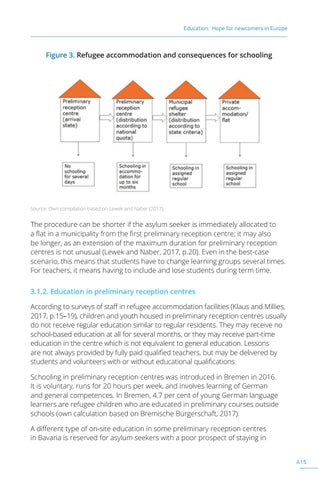
Figure 3. Refugee accommodation and consequences for schooling
Source: Own compilation based on Lewek and Naber (2017).
The procedure can be shorter if the asylum seeker is immediately allocated to a flat in a municipality from the first preliminary reception centre; it may also be longer, as an extension of the maximum duration for preliminary reception centres is not unusual (Lewek and Naber, 2017, p.20). Even in the best-case scenario, this means that students have to change learning groups several times. For teachers, it means having to include and lose students during term time. 3.1.2. Education in preliminary reception centres According to surveys of staff in refugee accommodation facilities (Klaus and Millies, 2017, p.15–19), children and youth housed in preliminary reception centres usually do not receive regular education similar to regular residents. They may receive no school-based education at all for several months, or they may receive part-time education in the centre which is not equivalent to general education. Lessons are not always provided by fully paid qualified teachers, but may be delivered by students and volunteers with or without educational qualifications. Schooling in preliminary reception centres was introduced in Bremen in 2016. It is voluntary, runs for 20 hours per week, and involves learning of German and general competences. In Bremen, 4.7 per cent of young German language learners are refugee children who are educated in preliminary courses outside schools (own calculation based on Bremische Bßrgerschaft, 2017). A different type of on-site education in some preliminary reception centres in Bavaria is reserved for asylum seekers with a poor prospect of staying in A 15