? m e t s y s e h t s l o r t n o c o wh The globalized, industrial food system is dominated by transnational corporations (TNCs). It is based on unsustainable methods that lead to inequitable power distribution. Farmers can’t choose what they produce, what they earn, or what they consume.
Subsidies As a result of foreign recommendations and pressure (such as IMF structural adjustment programs), many developing countries implement neoliberal policies. Markets are opened up, creating more competition and causing prices to drop, meaning farmers earn less for their crops. Government spending is cut, so there are less subsidies for their farmers, meaning their final prices will be higher. While developing countries’ governments cut spending on agriculture, developed countries (in particular the US) heavily subsidise their agricultural sector. This means mean that on the global scale, agricultural products from developing countries are more expensive and cannot compete on the international market.
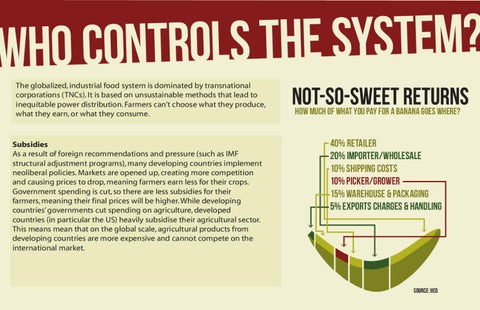
how much of what you pay for a banana goes where?
40% Retailer 20% Importer/Wholesale 10% Shipping Costs 10% Picker/Grower 15% Warehouse & Packaging 5% Exports charges & Handling
Source: IIEd