

The EARCOS Triannual JOURNAL
A Link to Educational Excellence in East Asia SPRING 2025

Featured in this Issue
Leadership
Cover Article: When Good Intentions Divide: Rethinking Leadership in a Fragmented World
Governance
Growing and Sustaining a Highly Effective Board
Gamification
Levelling Up Learning: The Power of Gamification
Art
Abstract Thinking and Beneficence Revealed: Tales from the Visual Arts Studio
THE EARCOS JOURNAL
The ET Journal is a triannual publication of the East Asia Regional Council of Schools (EARCOS), a nonprofit 501(C)3, incorporated in the state of Delaware, USA, with a regional office in Manila, Philippines. Membership in EARCOS is open to elementary and secondary schools in East Asia which offer an educational program using English as the primary language of instruction, and to other organizations, institutions, and individuals.
OBJECTIVES AND PURPOSES
* To promote intercultural understanding and international friendship through the activities of member schools.
* To broaden the dimensions of education of all schools involved in the Council in the interest of a total program of education.
* To advance the professional growth and welfare of individuals belonging to the educational staff of member schools.
* To facilitate communication and cooperative action between and among all associated schools.
* To cooperate with other organizations and individuals pursuing the same objectives as the Council.
EARCOS BOARD OF TRUSTEES
Catriona Moran (Saigon South International School), President
James Dalziel (NIST International School), Vice President
Jim Gerhard (Seoul International School), Secretary
Rami Madani (International School of Kuala Lumpur), Treasurer
Gregory Hedger (The International School Yangon), WASC Representative
Karrie Dietz (Australian International School Singapore)
Matthew Parr (Nagoya International School)
Marta Medved Krajnovic (Western Academy of Beijing)
Maya Nelson (Jakarta Intercultural School)
Kevin Baker (American International School Guangzhou), Past President
Margaret Alvarez (WASC), Ex-Officio
Andrew Hoover (Office of Overseas Schools, REO, East Asia Pacific)
EARCOS STAFF
Edward E. Greene, Executive Director
Bill Oldread, Assistant Director
Kristine De Castro, Assistant to the Executive Director
Maica Cruz, Events Coordinator
Porntip (Joom) Rattanapetch, Administrative Assistant (Bangkok Office)
Ver Castro, Membership & I.T. Coordinator
Edzel Drilo, Professional Learning Weekend, Sponsorship & Advertising Coordinator, Webmaster
RJ Macalalad, Accounting Staff
Rod Catubig Jr., Office Staff
East Asia Regional Council of Schools (EARCOS)
Brentville Subdivision, Barangay Mamplasan, Binan, Laguna, 4024 Philippines
Phone: +63 (02) 8779-5147 Mobile: +63 917 127 6460
In this Issue
Gianfranco Conti’s
Use of AI in Scaffolding in Promoting Student Learning By Meesha Arora
Onboarding an LMS for Learning, Professional Development, and Student Showcases at True North International School By Khoi Mai
Curriculum
The ELLSA Effect: From Conversation to Collective Action By Iryna Zhurenko & Dr. Ying Chu
52 Press Release
Moonlight: Looking for a Life-Changing Educational Adventure for Your Students? 54 Green & Sustainable
Ecovengers: A Student-led Initiative with the Goal of Promoting Environmental Sustainability By Zaya Inanc and Amy Gallagher
56 Art
Abstract Thinking and Beneficence Revealed: Tales from the Visual Arts Studio By Nick Stonehouse, Juanita McGarrigle, Anqi Yang, Valentina Kranjec Rosenzweig, Susan Kim and Clyde Gaw
59
Exploring the Art of Shadow Puppet Theatre: Fostering Holistic Development in Students By Agnieszka Sulek and Carla St Louis
60 Layers of Shadow in the Classroom: A Lesson on Wayang Kulit By Illya Sumanto
62 Exploring Nontraditional Art Supplies: A Handsa-On Experience By Kelli Cody
64 High School Art Gallery
- Concordia International School Hanoi
- Beijing City International School
- Tsukuba International School
- True North International School
- Seoul International School
- International School Ulaanbaatar

Executive Director’s Message

Welcome to the final issue of the EARCOS Journal for the 2024-2025 school year. No doubt this issue will land in your inbox and find you as busy as one can possibly be. I hope you will find time in the coming days and weeks to enjoy the rich collection of articles in this issue. Once again, the breadth of topics and the quality of the articles themselves is proof positive (as if any were needed) that this region is blessed with bright, dedicated and deeply committed educators.
The one thing that strikes me each time we assemble a journal is just how many critical issues educators are being asked to face. As we are often reminded, ‘the only constant is change.’ It may bring some small sense of relief to know that that quote did not originate with a contemporary thinker, but is attributed (perhaps inaccurately) to Heraclitus, some 2,500 years ago. Still, despite the constancy of change across history, there can be no doubt that, today, the pace of change has accelerated.
As one Head of School commented in a recent conversation, in the past few years we have had to deal with a pandemic, increasing challenges related to child safeguarding, the issues (and disappointments) of on-line learning, social media’s impact on young people’s lives (and on the well-being of our school communities), DEI, AI, and the pressures of changing student demographics. Yes. Change is our constant companion.
In this light, I want to encourage our readers to reflect on our cover article by Rami Madani, Head of the International School of Kuala Lumpur. Based on his recent research in the EARCOS region, as well as years of leadership study and personal leadership in several international schools, Mr. Madani’s article provides fresh insights into what it means to be a school leader in an age of deep contextual change. Whether you lead a N-12 school of 3,500 students, a small elementary school, a grade level, a subject area department, an admissions and marketing office, a PD center, an operations and business office, an athletic department or, perhaps most importantly of all, a classroom, our changing world compels us all to re-think, re-consider and re-imagine international education. This issue’s cover article provides an excellent platform from which to launch those conversations.
It is my hope that this issue, with its remarkable assortment of articles from educators across the region, will help each of us as we move together into a future fraught with so many uncertainties—other than, of course, the one certainty mentioned earlier—change. Thank you to all who have contributed to the important conversations that have taken place in the pages of this journal this year. I look forward to continuing our collaboration.
Best wishes,

Edward E. Greene, Ph.D. Executive Director
1For more on this, see Nicholas Carr’s (2025) Superbloom: How Technologies of Connection Tear Us Apart.


www.earcos.org/elc2025/ October

Dates & Deadlines


GLOBAL CITIZENSHIP AWARD
APPLICATION DEADLINE: MAY 15, 2025
This award is presented to a student who embraces the qualities of a global citizen. This student is a proud representative of his/her nation while respectful of the diversity of other nations, has an open mind, is well informed, aware and empathetic, concerned and caring for others encouraging a sense of community and strongly committed to engagement and action to make the world a better place. Finally, this student is able to interact and communicate effectively with people from all walks of life while having a sense of collective responsibility for all who inhabit the globe.
GLOBAL CITIZENSHIP COMMUNITY SERVICE GRANT
APPLICATION DEADLINE: JULY 15, 2025
Students designated by their schools as a Global Citizen are eligible to apply for one of six $500 Community Service Grants. These grants are awarded to Global Citizens who are actively involved in a service project benefiting either children, adults, or the environment. The grant is intended to enhance and support the student’s continued efforts with the project during the final year of high school. Interested students are asked to work with their high school principal or designated faculty advisor to complete the application which is found below.
THE RICHARD T. KRAJCZAR HUMANITARIAN AWARD
APPLICATION DEADLINE: JUNE 1, 2025
The EARCOS Board of Trustees has established the Richard T. Krajczar Humanitarian Award to recognize, each year, the work of one not-for-profit organization with a proven record of philanthropy in the East Asia/Pacific Region. For more information please visit the earcos.org website.
ELM MENTORSHIP
Those interested in joining the program as mentors or mentees are invited to complete the registration and preference ELM questionnaire. Registration for the program is ongoing at https://tinyurl.com/tae2jqz

Institute on International Admission and Guidance 2025
September 19-210 2025
Shangri-La Hotel, Bangkok, Thailand
The strength of this institute is due to the vibrant partnership among the region’s counselors and university representatives as they collaborate on topical issues and together offer solutions to challenges faced in the region.
Call for session proposals
We invite you to submit a session proposal that will spark dialogue on international admissions and guidance as it relates to schools and students in Asia.
Submit Proposal | Registration


•
•
•
•
•
•


Leadership When Good Intentions Divide: Rethinking Leadership in a Fragmented World
By Rami Madani


This article is presented in two parts: Part 1 introduces the ContextBased Leadership Framework, and Part 2 provides a practical example of its application in a school setting.
The Context-Based Leadership Framework, along with the related diagrams (including the Core–Neutral–Unaccepted Zones model and the dual identity concept), were developed by the author, Rami Madani, drawing on over two decades of leadership experience in international schools, as well as his work as a presenter and trainer with school leaders across diverse educational contexts. These tools are designed to help school leaders navigate complexity with clarity, adaptability, and values-driven decision-making. Educators are welcome to reference or adapt the framework with appropriate attribution.
Part 1: Context-Based Leadership
1- Introduction
In an era of rapid change, school leaders must navigate shifting priorities, complex global conversations, and emerging technologies. The ContextBased Leadership Framework equips leaders with adaptable strategies to align their leadership with their school’s evolving reality.
There is already a wealth of literature and many frameworks that outline key leadership qualities and skills. Leadership theory has indeed evolved over time, with different approaches gaining prominence in response to changing organizational needs and societal contexts (Benmira & Agboola, 2021). While much of this literature helps leaders reflect on and strengthen their individual habits and capabilities, or personal traits, this framework goes beyond personal traits. It is about understanding and responding to context, and about navigating complexity with ongoing agility as situations evolve. In sports terms, it’s more like playing a game where the rules and nature of play are constantly shifting. It requires leaders to engage in an iterative process, constantly reassessing their environment and approach, an idea that will be explored further in the following sections.
This framework is also distinct from Situational Leadership, developed by Hersey and Blanchard (1969), which focuses on adjusting leadership
style according to the performance readiness of an individual or team. In contrast, Context-Based Leadership centers on the evolving environment itself. It helps leaders make sense of complex dynamics, align their actions with institutional values, and respond thoughtfully and responsibly to the broader context, not just the individual.
Before explaining the Context-Based Leadership Framework, it would help to address the three foundational viewpoints to the development of the framework:
Context over Leadership Traits
This framework prioritizes the context leaders navigate rather than focusing solely on generic leadership attributes. Leadership articles often highlight traits like communication, visibility, vision, approachability, and strategic thinking. While these qualities matter, experience shows that a leader may excel in one area but struggle in another, depending on the school’s goals, stage of development, culture, and people.
Who we are as leaders is essential, but leadership isn’t about us. It’s about the impact we can have on the ever-evolving context of the school, its direction, and its aspirations for the students it serves. The framework will also explore how a leader’s strengths and areas for growth interact with their unique context, ensuring the school remains relevant, forwardthinking, and responsive to the students it serves.
Clarity of Thought
In a world filled with polarized debates and oversimplified narratives, leaders must cut through the noise with clarity. Too often, we observe fuzzy thinking—simplistic statements or a rush to declare allegiance to what appears noble, yet fails to address the true complexities of leadership. This framework invites leaders to think deeply and precisely about the multiple forces influencing their schools and to reflect on the challenge of discerning what the ‘right’ position truly is.
It is a call for self-reflection and strategic clarity. Sound reasoning and critical thinking must remain at the heart of our leadership practice. This emphasis on thoughtful and principled leadership is echoed in Sergiovanni’s (2007) call for leaders to lead with moral authority, not just bureaucratic or technical expertise. It also aligns with historical per-
spectives on the art of leadership throughout the 20th century that emphasized the interplay of intellectual discipline and contextual sensitivity (Haider, 2023).
Shaping Mental Narratives
Our mental narrative shapes our reality. Leading is often about understanding the mental narratives held by employees and stakeholders and, when necessary, offering a more compelling, productive, and relatable perspective that unblocks their thinking and restores a sense of control and agency. A core element of leadership is the ability to distill complexity into clear, concise insights that support others in moving toward the school’s Guiding Statements.
Employees and stakeholders have limited time for lengthy explanations. To influence mental narratives, leaders must provide concise, transformative statements that reshape how people perceive themselves, their reality, and their direction. Like in martial arts, effective leadership isn’t about forcefully opposing resistance but about skillfully redirecting energy toward desired outcomes and shared goals.
2- The Framework
The Context-Based Leadership Framework consists of four interconnected phases as indicated in the diagram below. While I introduce them separately, they continuously inform each other, adapting in real-time to the evolving needs of the school and its stakeholders.
Using the Context-Based Leadership Framework leaders can explore how to align their leadership approach with their school’s core values while addressing contemporary challenges such as the pushback on diversity, equity, and inclusion (DEI), and other complex issues such as social-emotional learning (SEL), artificial intelligence (AI), school culture, and global polarization. By examining leadership through the lens of context, this framework encourages leaders to move beyond static skill sets and embrace agile, responsive strategies that are both practical and forward-thinking.

1. Identify Your Position: The term ‘position’ refers to the value-based stance leaders need to take on complex issues. This is the first phase in navigating complex issues with wisdom and clarity. Before engaging with others, leaders must first ground themselves in their own perspective, not just by identifying where they stand and what they value, but by critically examining the foundations of their thinking. This process requires deep reflection, fact-finding, questioning assumptions, and recognizing the influences, values, experiences, biases, and external pressures that shape one’s position. Complexity can be overwhelming and leaders who take the time to identify and examine their own position gain clarity and inner stability - foundations that allow them to engage challenges with adaptability, wisdom and confidence. This reflective process is consistent with adaptive leadership practices, which emphasize the importance of observing oneself, making meaning of complexity, and regulating one’s presence in order to respond effectively (Heifetz, Grashow, & Linsky, 2009). Part 2 of this paper provides an example of how to approach this complex phase.
2. Understand Your Context: Complex issues are perceived differently by various stakeholders within a school community and these differing perspectives are often felt by each stakeholder as fully valid and true. A parent may see a disciplinary action as harsh or unfair, while the school may view the parent's response as overly protective, depriving the student of opportunities to develop self-management skills. An administrator might interpret an employee’s actions as disengagement, whereas
the employee may see them as essential for their well-being. These perspectives shape interactions and influence the school’s culture in ways that must be understood.
This phase is about respectfully and actively gaining insight into these varied perspectives with the intent to understand them, especially the voices that are often unheard but significantly affected. Schools are filled with complex and sensitive topics that fall into this category, where the impact on individuals may not always be visible but is no less real. When these perspectives are overlooked or dismissed, division, mistrust, or even crisis can quietly escalate beneath the surface . A rush to declare the school’s position on an issue may distract from giving this phase the attention and merit it deserves. Many traditional approaches focus on leader traits or behaviors without adequately addressing the evolving complexity and cultural dynamics of schools today (Northouse, 2021). Garmston and Wellman (2016) highlight how collaborative structures can help schools listen to and act on diverse perspectives.
One might ask: if this understanding is so fundamental, why isn’t it the first phase in the context-based framework instead of finding and examining your position? The reason lies in the cyclical and iterative nature of leadership—our values as leaders and as a school must shape and ground our approach, incorporating broader considerations rather than merely reacting to stakeholder voices. Leadership must be anchored in core principles while continuously adapting to evolving perspectives.
3. Understand Your Strengths: Our strengths and areas for growth as leaders shape how we perceive, process, and respond to the context. Leaders set the tone for their teams, influencing priorities, expectations, and workplace culture. In families, children intuitively pick up on their parents’ emotional state, resilience, and reactions to adversity – cues that inform their own choices and behaviour. Similarly, within a school, a leader’s inner tendencies often ripple outward, influencing how others engage with both challenges and opportunities.
These personal attributes of the leader are not about right or wrong, nor about which traits are superior. Instead, leadership effectiveness lies in knowing how to leverage strengths while mitigating areas for growth that may hinder an organization’s ability to thrive. For instance, leaders with high empathy may be valued for their emotional intelligence and connection with others. However, that same strength could become a challenge if it leads to over-identifying with others' struggles, excessive people-pleasing, or decision paralysis. Similarly, a leader’s ability to tolerate stress might shape their assertiveness and impact how that leader handles difficult conversations with parents, employees, or other stakeholders. There are many valuable tools available to understand one‘s profile as a leader, and examples include EQ-i , DiSC, and Clifton Strengths Assessment.
By understanding how our tendencies affect the way we interpret and respond to our context, we can take intentional steps to proactively address potential blind spots. This might include partnering with a colleague whose strengths complement our growth areas, rethinking processes to reduce emotional strain, or seeking external support when necessary. Leadership is not about perfection, it is about self-awareness, adaptability, and ensuring that our attributes serve the needs of our organization in the best way possible.
4. Plan Strategy: Leadership does not exist in isolation, it is a shared endeavor that requires engagement, alignment, and action. After identifying a clear position, understanding the context and evaluating personal leadership strengths, the next phase is to develop a strategic way forward that incorporates stakeholder perspectives while remaining aligned with the school’s core values and mission.
• Clarify the Purpose and Direction: A leader must translate insights from the previous phases into a purposeful direction that is both ambitious and achievable. This involves articulating the ‘why’ behind decisions, ensuring alignment with the broader vision of the school—what Sinek (2009) describes as the foundation of inspired and sustainable leadership.
• Engage Stakeholders Effectively: Leadership is not about imposing a vision but about inspiring others to co-create it. Engaging with stakeholders, whether employees, parents, students, or board members, ensures that the path forward is informed by diverse
perspectives while maintaining strategic coherence. This emphasis on inspiring others to contribute to the vision resonates with transformational leadership, which highlights the importance of motivation through vision and inspiration to achieve collective goals (Bass, B.M., & Riggio, R.E., 2006).
• Balance Adaptability with Commitment: A well-planned strategy provides direction, but it must also remain flexible. Leadership requires the ability to refine, iterate, and adjust based on real-world complexities and emerging insights without losing sight of foundational values. This ability to hold steady to core values while adapting strategy to evolving conditions is a core principle of adaptive leadership, which encourages leaders to mobilize others, embrace disequilibrium, and foster progress in uncertain environments (Heifetz & Laurie, 1998).
• Implement with Intention and Measure Impact: Moving from strategy to action requires setting clear steps, ensuring accountability, and regularly assessing progress. This includes identifying key milestones, gathering feedback, and making course corrections as needed.
Context-Based Leadership is about creating momentum toward a better future. By aligning strategy with evolving context and maintaining a deep awareness of both stakeholder needs and core driving values, leaders can navigate complexity with confidence and purpose.
Part 2: Leading Thoughtfully: Rethinking What Feels Right
This part provides an example of how the above framework can be applied to navigating differences. To enhance clarity, the article flows naturally, with the distinct phases of the framework indicated in square brackets [ ] at the end of each section to illustrate their connection.
Leadership is the capacity to see what matters, and the capacity to communicate it in an inspiring way to turn complexity and chaos into order. In times of pressure to take a moral stand, seeing what matters requires the hard and patient work of both brain and heart. It is a kind of quiet and loving restraint; the willingness to pause, reflect, and question even what feels unquestionably right.
Introduction
Part of being human is to be diverse in our identities and, often, divergent in our ideologies. This fundamental reality shapes the dynamics within our schools and the world. For decades our schools rightly acknowledged and celebrated the importance of diversity in our community, and showed pride in the number of nationalities, various cultural traditions, languages, and richness that comes with it. In recent years, however, we have encountered a deeper and more complex dimension: ideological diversity. At times, this diversity surfaces in ways that are difficult to manage, revealing tensions and polarities we struggle to consolidate. [2.Understand Your Context].
While educators have often focused on building shared understanding and alignment, we may not have invested enough in developing the skills required to understand and constructively engage enduring ideological differences and polarities. [1. IdentifyYour Position]
One example is how DEI efforts, though well-intentioned and rooted in inclusion, have sometimes created subtle or overt divisions, casting individuals into roles of villains, victims, or heroes (see the Drama Triangle, Stephen B. Karpman in 1968). This framing can lead to a rush to declare allegiance for or against a particular ideology or group, often at the expense of the critical thinking and nuanced dialogue that school communities need in order to grow. [3. Understand Your Strength]
In working with diverse educators over recent years, I have occasionally heard statements implying: “If you don’t share our position and views on [insert a polarizing topic], you don’t belong in our school community.” While intended to uphold inclusion, such sentiments can unintentionally exclude others, particularly those from religious or cultural backgrounds whose perspectives may not align with dominant narratives. In several cases, the rush to demonstrate solidarity resulted in unnecessary polarization, or even a different form of exclusion. [1. Identify Your Position] & [2.Understand Your Context].
In this article I offer a way to approach such challenges with greater nuance. Rather than adopting binary, all-in/all-out positions on culture, politics, gender, race, or belief systems, I invite educators to reflect on key questions: Where should we expect ideological alignment in a school committed to cultivating thoughtful, responsible individuals? Where should we allow for ideological differences? Which differences are acceptable within a school community, and which are not? How do we navigate these differences with clarity? [1. Identify Your Position] & [2.Understand Your Context].
Understandably, the answers to these questions may differ from school to school. The intent here is not to prescribe, but to offer a framework rooted in values, context, and thoughtful reasoning – an approach that acknowledges complexity and honors the shared human needs at the center of school life. At the same time, a leader’s position is never formed in a vacuum. It is shaped by their assumptions, biases, capacity for critical thinking, and awareness of common fallacies. These internal filters inevitably influence how they interpret issues, direct the school, and engage with difference. [1. IdentifyYour Position]
Examining the School’s and Leader’s Position on Complex Topics
The assumptions implied in this article are that differences are part of being human and that the school’s role is not to eliminate all differences – even on sensitive topics – but to create an environment that helps students and adults understand which differences are accepted, which are not, and how to navigate those differences thoughtfully and respectfully. This is especially true for leaders and employees who guide students. Another assumption is that we acknowledge our fallibility as human beings including our inherent bias to different ideologies. [3. Understand Your Strength] & [4. Plan Strategy]
The diagram below represents a high level view on how a school can clarify its position on a range of complex and potentially polarizing topics such as cultural norms, political views, race, etc. [1. IdentifyYour Position]

*The values listed in the center circle of the above diagram reflect the Values of the International School of Kuala Lumpur (ISKL). The use of yellow and blue represents ISKL’s brand colors. Schools are encouraged to connect the core zone to their own identity.
Note: As we navigate this work, it’s essential to recognize that it may be influenced by aWestern perspective, particularly in its emphasis on selfdetermination. This principle prioritizes individual choice and autonomy, which can differ from worldviews centered on cultural, familial, or religious guidance.Acknowledging these differences invites us to approach this work with humility, openness, and respect for the diverse ways individuals and communities define and navigate their identities and values.
The content below may include limitations or errors, as it reflects our current and inherently limited understanding. Let it serve as a reminder of the ongoing journey to learn, unlearn, and refine our approach as we strive toward a deeper understanding of our shared human needs and responsibilities. [3. Understand Your Strength]
The table below suggests a way for a school to clarify its position on a range of complex topics. [1. Identify Your Position]. The intent is not to publish such a list to the entire school community, but for leaders to navigate differences thoughtfully.
Core zone (Essential Commonalities & Expectations by the School)
Definition: Essential commonalities that support the growth of students and adults, rooted in everyday life and closely tied to the school’s Guiding Statements. These are actively supported and protected by the school community.
Cultural Norms Aspects of cultural identity that support selfawareness, personal growth, and well-being, and that align with the school’s Guiding Statements. E.g., mother tongue, cultural heritage, and the role of traditions and values in development.
Political Views Aspects of political awareness that support global citizenship and civic responsibility in line with the school’s Guiding Statements. E.g., teaching about political systems, civic duties and rights, and ethical leadership.
Gender Ideology The rights of everyone are respected, and interactions align with the school’s values, fostering acceptance, support, and inclusion for all, regardless of personal identity or gender.
Faiths, Belief Systems, and Worldviews
The importance and role of diverse belief systems and worldviews, including aspects of monotheistic, polytheistic, atheistic, and agnostic perspectives, align with the school’s Guiding Statements by promoting understanding, mutual respect, and shared humanity. Recognizing families’ rights to hold and practice their own belief systems is essential to fostering human development and a compassionate, inclusive community.
Race The right of all races and ethnicities, including their intersections, to feel respected, valued, and nurtured.
Neutral zone (Contextual Differences Acknowledged by the school)
Definition: Differences acknowledged by the school, though not actively promoted individually. These aspects reflect the diversity within the school community and do not contradict the school’s Guiding Statements or purpose.
Cultural differences that are not contrary to the school’s Guiding Statements. E.g., various ways of showing respect (eye contact, gestures, body language), emotional expression, or deeper norms around conflict, hierarchy, and feedback—provided they do not lead to harm or discrimination.
Differences in political stances when shared constructively: E.g., personal views expressed in a constructive manner, including support for different political systems wherever they lie on the political spectrum
The differing personal choices and views about gender and sexuality that align with individual beliefs, faith, and cultural norms, as long as interactions respect the school’s values.
The diverse practices of faith, beliefs, and worldviews that are not contrary to the school’s Guiding Statements. These may include prayers, meditation, dietary choices, dress codes, or other personal expressions of belief. The school maintains a neutral stance on these practices, fostering an inclusive environment that respects individual choices without endorsing any specific practice.
The various practices related to racial identity that reflect individual experiences, culture, and choices: E.g., skin or hair treatment, clothing, tattoos, accents, dialects, and code-switching.
Unaccepted zone (Not Tolerated Differences by the School)
Definition: Behaviors, positions, or differences that conflict with the school’s Guiding Statements and purpose. The school and its members are committed to addressing and challenging these behaviors.
Cultural practices that are harmful or discriminatory. E.g., corporal punishment, social shaming, exclusion based on rank or caste, or stereotypes that lead to exclusion or division.
Promotion of extremist views or engaging in actions that incite conflict or harm. E.g., dehumanizing language, political violence, or threats toward those with different views.
Coercing one's own views on gender onto others with differing perspectives, or any discriminatory or harmful behavior towards individuals based on gender.
Discrimination, exclusion, or imposition of one’s religion, beliefs, or worldview on others. This includes any behavior, language, actions, or worldview that marginalizes or demeans individuals or groups based on their faith, religious practices, or personal worldviews.
Discriminating against or excluding others based on racial differences, perpetuating racial stereotypes, or engaging in any form of racism or racial harassment.
Acknowledgement: The ISKL’s Leadership Team contributed to the content of the above table.
The Zones of Difference (Core–Neutral–Unacceptable Zones) table is not intended as a prescriptive list, but as a reflective approach to help school leaders make sense of complex issues in alignment with their school’s values. By clarifying where a school stands, what it accepts, and what it must challenge, leaders are better positioned to respond with clarity, alignment, and coherence—especially when engaging with employees, students, and families. These distinctions also help educators model how to hold space for ideological differences without abandoning core commitments.
Implications for Schools
In the following sections, we explore how this framework can inform leadership decisions and teaching practices, guiding both adult conversations and student learning in ways that are respectful, principled, and developmentally appropriate.
Leadership Application: Supporting Employees in Complex Conversations
From a leadership perspective, it is important to help employees recognize their dual role: they are both individuals and representatives of the school. Their interactions with students and parents extend beyond personal beliefs; they also reflect the school’s values and mission. In professional settings, employees are expected to model the school’s Guiding Statements.
Dual Identities
Self
Who do you represent Yourself
Values & beliefs
Personal choices
Employee of the school
The school
Aligned with the school's Values & Guiding Statements
Actions Based on personal preferences Reflect the school's professional standards and policies
Implications of our actions On self On the school
The school’s values serve as the foundation for guiding professional interactions. These values ensure alignment with the mission (Core Zone) while allowing for individual beliefs (Neutral Zone) and offering a framework to address behaviors or ideologies that conflict with community standards (Unacceptable Zone).
When navigating complex workplace discussions, on topics such as politics, gender, race, or faith, employees can benefit from a few key principles:
• Engage with mutual consent: Ensure both parties are open to dialogue and willing to listen.
• Prioritize understanding over persuasion: Seek to expand perspectives rather than win an argument.
• Ground discussions in facts and evidence: Discuss ideas and implications, not personalities or affiliations.
• Encourage critical thinking: Approach conversations with structure, curiosity, and intellectual rigor.
• Know when to pause: Recognize when dialogue is no longer productive and step away with grace.
Another leadership application is ensuring that school policies and guidelines support shared values without expecting uniformity in personal beliefs. They should support the Core Zone while respecting the diversity reflected in the Neutral Zone.
Classroom Application: Cultivating Dialogue Skills in Students
The most effective strategies for navigating complex topics in the classroom are those integrated into daily practices, long before a sensitive issue arises. Normalizing respectful discourse, fostering critical thinking, and emphasizing evidence-based reasoning prepares both students and educators to approach challenging conversations with confidence and openness.
• Promote respect and safety: Create a learning environment grounded in mutual respect, where participants feel valued and safe. The goal is not to suppress views, but to encourage thoughtful communication that builds trust. For example, discussing a controversial policy in a way that acknowledges concerns while reinforcing shared values helps prevent division from escalating into unnecessary polarization.
• Encourage structured internal and external dialogue: Support internal reflection before transitioning to open discussion. Socratic questioning, for instance, allows individuals to explore their own reasoning. Structured protocols, such as timed speaking turns or focused prompts, ensure balanced participation and reduce the risk of dominant voices overshadowing others.
• Foster critical thinking and reasoning: Encourage students to analyze perspectives, question assumptions, and draw conclusions based on evidence. Grounding arguments in credible sources and logical reasoning strengthens clarity and prevents emotionally driven, unproductive debates.
• Facilitate thoughtful outcomes: Guide conversations toward insight and action. Whether helping students arrive at clarity around a shared belief (Core Zone), openness to differing views (Neutral Zone), or away from harmful or untenable positions (Unacceptable Zone), the goal is always deeper understanding and meaningful growth.
Final Thoughts
While initiatives and movements in recent years, such as DEI or SEL have brought much-needed attention to important areas of growth, they should not exist in isolation. When separated from a school’s core purpose and Guiding Statements, Such efforts can risk becoming unbalanced, driven more by allegiance or activism than by thoughtful integration. Over time, even well-intentioned communities of support can unintentionally lose sight of broader goals like high expectations, collaboration, and a shared commitment to both individual and collective growth.
Leaders who model and promote this kind of reflective engagement create the conditions for others to do the same. By demonstrating how to approach complex conversations with curiosity, sound reasoning, awareness of common fallacies and biases, and care, they foster a culture where open dialogue strengthens trust rather than deepens division.
This approach reflects the core principles of the Context-Based Leadership Framework. It begins with clarity of position, grounded in the school’s values. It then moves into a deep understanding of the surrounding context—identifying diverse perspectives and navigating ten-
sions. From there, leaders examine how their own dispositions, personal traits, and patterns may shape their responses. The zones and strategies that follow are not separate from this process; they are tools for living it out in real time, helping schools respond to complexity with coherence, reflection, and care.
Leadership is not about having all the answers; it is about guiding conversations and the school with clarity, humility, and a commitment to the school’s clearly defined purpose and published values. These values, ideally evidence-informed and safeguarded against misuse or moral overreach, should be visible, intentional, and lived, evident in the way people relate to one another. They must never be left to assumption, nor stretched so wide that they become confined to differing ideologies or cultural perspectives. Thoughtfully articulated values provide a framework that makes space for a healthy range of perspectives to be expressed, so long as their expression and impact remain aligned with the school’s foundational commitments.
By acknowledging uncertainty, embracing diverse viewpoints, and staying anchored in principle, leaders cultivate environments where intellectual honesty and adaptability thrive, qualities essential for resilient and thoughtful school communities.
This is the quiet, enduring work of principled leadership: rooted in values, responsive to context, and always in service of the school’s mission and community.
References
Bass, B. M., & Riggio, R. E. (2006). Transformational leadership: A comprehensive review of theory and research (2nd ed.). Lawrence Erlbaum Associates Publishers.
Benmira, S., & Agboola, M. (2021). Evolution of leadership theory. BMJ Leader, 5(1), 3–5. https://doi.org/10.1136/leader-2020-000296
Garmston, R. J., & Wellman, B. M. (2016). The adaptive school: A sourcebook for developing collaborative groups. Rowman & Littlefield. Haider, S. (2023). Historical insights from the 20th century on the art of leadership. International Journal for Multidisciplinary Research, 5(5), Article 7633. https://doi.org/10.36948/ijfmr.2023.v05i05.7633
Heifetz, R. A., Grashow, A., & Linsky, M. (2009). The practice of adaptive leadership: Tools and tactics for changing your organization and the world. Harvard Business Press.
Hersey, P., & Blanchard, K. H. (1969). Management of organizational behavior: Utilizing human resources. Prentice Hall.
Karpman, S. B. (1968). Fairy tales and script drama analysis. Transactional Analysis Bulletin, 7(26)
Northouse, P. G. (2021). Leadership: Theory and practice (9th ed.). Sage Publications.
Sergiovanni, T. J. (2007). Rethinking leadership: A collection of articles (2nd ed.). Corwin Press.
Sinek, S. (2009). Start with why: How great leaders inspire everyone to take action. Penguin Publishing Group.
About the Author
Rami Madani is the Head of the International School of Kuala Lumpur, Malaysia. Prior to that, he worked in schools in Yemen, UK, Zambia, and India, serving students and faculty at all school levels. He has taught subjects ranging from Mathematics to Music to Theory of Knowledge. He has served in various leadership capacities, including Director of Learning. Rami has designed a variety of professional development and training programs. He is passionate about aligning a school's systems with its mission, and ensuring that teaching and learning are the focus of what schools do. Rami presents at conferences and works with schools on areas related to strategic planning, leadership, growth & evaluation, curriculum, assessment, and instruction. His primary focus is on nurturing minds, empowering everyone, and refining systems and tools to support student and adult holistic growth.

Peer Learning for School Wide Impact
FREE WEBINAR
Discover PeerSphere The Power of Peer Learning


Rethinking PD? PeerSphere makes it scalable, staff-driven, and affordable.
Join our 30-minute webinar to see how PeerSphere helps school leaders deliver high-impact, cost-effective professional development for teaching staff—without adding to your workload.


Choose a Date to attend:
May 14 (Wed) 5PM
May 15 (Thu) 9AM
May 28 (Wed) 9AM
May 27 (Tue) 4PM
June 4 (Wed) 9AM
June 5 (Thu) 4PM All 30-min in GMT+8
This is your chance to see how it all works and why so many school leaders are joining the movement.


The 20th EARCOS Teachers’ Conference 2025
“Empowered
to Explore and Express”
Echoes of Gratitude: A Conference to Remember
In the days following our recent Teachers' Conference, we have been overwhelmed by the outpouring of appreciation and positive feedback from our community. The heartfelt messages we received reflect not only the success of the event but also the spirit of connection, collaboration, and professional growth that defined our time together.
From the inspiring workshops to the incredible hospitality of The International School of Kuala Lumpur and the unwavering dedication of the EARCOS team, every element came together to create a truly memorable experience.
Below, we share just a few of the many messages of thanks—each one a reminder of the impact that thoughtful planning, passionate educators, and a shared vision for learning can have.
- Thank you once again to everyone who made this conference such a success. We look forward to building on this momentum and gathering again in the future!
- Thank you so much for organizing this event. It was an amazing time of learning with great educators!
- A great conference. The quality of the workshops is really high. I want to attend next year too!
- Special thanks to the ISKL community for hosting this conference! It’s my first EARCOS conference, and everyone has been joyful and supportive. Thank you!
- Thanks for such an engaging workshop, lots of great new ideas
- Thank you EARCOS Team for all the hard work and attention to detail you have put in to making this event so enriching and inspiring!
- I want to thank the organization team. It was a huge event with many logistics and hit a success! Bravo!
- It was a fantastic conference and the hard-work of the EARCOS team has once again been very apparent and appreciated.
- I want to express my gratitude for the incredible conference experience. The EARCOS team truly delivered an outstanding event. The attention to detail was exceptional, the quality of the sessions was top-notch, and the venue was a perfect choice. I feel honored and humbled to have been part of such a remarkable gathering.
- We would like to thank you for your support and organization during this year's truly awesome conference. This unique experience of learning with like-minded collaborative teachers in our subject area was extremely rewarding and fruitful for us and we are so grateful to have been included. A particular big thank you to the support staff at ISKL who helped us coordinate items, tech, and room changes for our presentations.
- We had so much fun learning from different people and so well-fed too! Thank you SO MUCH for this well-organized, memorable experience. I know how much time, energy, and sweat (sometimes tears?) go into planning and executing this big event. THANK YOU!
- Thank you for another amazing ETC. It was well-organized and the sessions were helpful and well-conducted. Congratulations and well done to the team!
- I had a wonderful time in Kuala Lumpur, the school is incredible.
Thank You so much for making my conference experience so wonderful and memorable! The EARCOS Team is truly amazing! Wishing everyone all the best!
Everything was impeccably run, attendees seemed really pleased with the sessions, and your hospitality was truly lovely. Thank you so much for your dedicated service to teachers and international schools in the region and beyond.


Governance
Three-Part Series (Part 3)
Growing and Sustaining a Highly Effective Board
By Kristi Williams

As we move into the final article in our series on effective governance at international schools, it’s essential to focus on the composition and sustainability of the board itself. While governance structures and roles provide a foundation for decisionmaking, the true strength of a board lies in its composition, diversity, and capacity for continuous improvement. In this article, we’ll explore how to build and sustain a highly effective board by evaluating its structure, ensuring diversity, implementing strong succession planning, and fostering a culture of accountability and professional development. These elements are critical for the board to lead the school towards long-term success.
BOARD COMPOSITION AND STRUCTURE
Boards of international schools have existed as long as schools have been established. And sometimes the composition and diversity of the board is still based on the inception of the school, many decades in the past.
Evaluating the composition and structure of the board is crucial to ensuring it effectively and relevantly serves the needs of the school. The composition of the board directly impacts its ability to govern effectively, make strategic decisions, and represent the diverse interests of the school community.
Key considerations for board composition include size, community representation, and skills and experience. Additionally, understanding the different types of board structures—All-Parent Elected Boards, Self-Perpetuating Boards, and Hybrid Boards— can help in designing a governance model that balances representation and expertise.
Key questions boards should be asking include:
• Is our overall composition and size contributing to an effective and efficient board?
• Does our structure promote stability and innovation?
• Do our member terms ensure longevity without promoting stagnation?
• Does our board represent the community it serves?
• Are we getting the right people on the board?
Assessing Appropriate Size
The size of a board can significantly influence its effectiveness. A board that is too large may struggle with decision-making and efficiency, while a board that is too small may lack the diversity of perspectives and expertise needed to address complex issues. There is no one-size-fits-all answer to the ideal board size.
Boards with a wide range of responsibilities, such as overseeing multiple campuses, may benefit from a larger size to ensure that all areas are adequately covered. Smaller boards can often make decisions more quickly and efficiently due to fewer people needing to reach consensus. However, they may also face challenges with workload distribution and lack of diverse viewpoints.
Types of Board Structures
Understanding the different types of board structures can also help in designing a governance model that balances representation and expertise. Each structure has its own advantages and challenges, which need to be carefully considered to ensure effective governance.
All-Parent Elected Board
An All-Parent/Association Elected Board is comprised of association members who are parents. This model ensures direct representation and engagement from the parent community but may lack the necessary expertise in certain areas.
Self-Perpetuating Board
A Self-Perpetuating Board allows for the Board to appoint new members, allowing for a more strategic selection of individuals with needed skills and expertise. This model can ensure a high level of expertise but may lack broader representation. This model can also help ensure longevity and stability among the board by selecting professionals and members outside of the school community, who may have stronger ties to the host country.
Hybrid Board
A Hybrid Board combines elected and appointed members to balance representation and expertise. This model seeks to leverage the advantages of both All-Parent Elected and Self-Perpetuating Boards. This model also helps to ensure longevity and stability among the board by selecting professionals and members outside of the school community, who may have stronger ties to the host country.
An All-Parent Elected Board fosters direct representation and engagement but may lack specialized expertise. A Self-Perpetuating Board ensures high levels of expertise and continuity but may not fully represent the broader school community. A Hybrid Board aims to balance representation and expertise, though it requires careful management to avoid conflicts and ensure effective governance.
Choosing the right board structure depends on the specific needs and context of the international school. By carefully considering the pros and cons of each model, schools can design a governance structure that best supports their mission, vision, and strategic objectives, ensures effective representation and decision-making and supports sustainability and longevity of board knowledge and expertise.
Member Term Limits
Board member term limits are essential for promoting fresh perspectives, preventing stagnation, facilitating leadership development, enhancing accountability, and aligning with governance best practices.
Term limits create opportunities for new leaders to emerge, promoting leadership development within the board. Term limits support stability of the board and long-term knowledge transfer. Boards are able to create comprehensive succession plans, onboarding schedules, and strategic recruiting.
International schools run into the problem of high turnover due to typical expat postings being 2-3 years. The structure of your board, such as a self-perpetuating or hybrid board, can help with longer terms if board members do not necessarily need to be in the host country.
An effective term limit range for board members is generally 2 to 4 years per term, with the possibility of serving 2 to 3 consecutive terms. When structuring your board and determining term limits, keep in mind that board members do not all need to be on the same term cycle and that boards can stagger terms and to ensure there are no more than 1or 2 open positions at one time.
BOARD DIVERSITY
Board Members’ role is to research, discuss, debate, bring their own perspectives and make recommendations that will serve the school’s longevity and sustainability. Board member diversity is crucial and boards should reflect the diversity of the school community, including cultural, ethnic, socioeconomic, and pro-
fessional diversity. This representation ensures that the board’s decisions are informed by a broad range of perspectives and experiences.
To help make informed decisions, boards should represent the community it serves and consider a balance of the following:
1. Experiential Diversity: Beyond professional and demographic diversity, it is also valuable to consider experiential diversity. This includes having board members with different life experiences who bring unique perspectives to the board.
2. Cultural and Ethnic Representation: International schools often serve a diverse student body. Ensuring that the board includes members from various cultural and ethnic backgrounds helps in understanding and addressing the unique needs of the community it serves.
3. Gender & Age Representation: Gender and age diversity is important for balanced decision-making. A board that includes a mix of genders and age groups is more likely to consider a wider range of perspectives and experiences.

BOARD SUCCESSION PLANNING
Board succession planning is essential for maintaining an effective and dynamic board that represents the community and possesses the necessary skills and experience. By focusing on diversity, continuously assessing and addressing skill gaps, and strategically recruiting new members, the board can ensure its long-term effectiveness and sustainability.
Succession planning is not merely about filling vacancies as they arise but about creating a strategic and forward-thinking process that ensures the board remains dynamic, capable, and reflective of the community it serves.
There are two key elements in succession planning: 1) Skills, Experience, Diversity Audit and 2) Strategic Recruiting
1. Skills, Experience and Diversity Audit
A well-rounded board should have a mix of skills, expertise and perspectives to address the complex and varied challenges that international schools face. Conducting an audit involves evaluating the current board members’ skills, experiences and perspectives and identifying gaps.
Identify needed skills and experiences
Board’s should think about immediate needed skills and those needed in the future to reach strategic targets and to fulfill the mission. This process should be comprehensive and include an
assessment of both hard skills (e.g., financial management, legal expertise) and soft skills (e.g., leadership, communication, strategic thinking).
Skills Matrix
Board’s can develop a skills matrix that helps visualize the board’s strengths and gaps. The matrix should list the skills and expertise required for effective governance and indicate which board members possess each skill. Then identify which skills and experiences are needed but are missing from the board currently and for the next 3-5 years.
2. Strategic Recruitment
Now that you have an understanding of the skills and experiences needed, the board can proactively recruit board members who might have the identified skills and experiences.
Effective recruitment involves developing a Recruitment Plan that outlines the process and timing for identifying, selecting and recruiting new board members to run for election or apply for an appointment, and outreach and networking which proactively seeks out potential board members through leverages board member networks and community outreach to recommend individuals who possess the necessary skills and commitment.
BOARD ACCOUNTABILITY
Holding boards and members accountable is important to ensure that boards are steering the school in the right direction and that members are fulfilling their responsibilities.
• When boards hold itself and its members accountable, members are more likely to participate in and act as fiduciaries.
• When boards hold members accountable, members understand what’s expected of them and are less likely to make excuses when they don’t meet expectations.
Accountability Tools
1. Board Job Description
A clear job description that outlines i) the role and responsibilities of the board and board members, ii) the time commitment, and iii) expectations provides transparency, sets clear expectations, and ensures that board members are well-prepared to fulfill their roles effectively. Having clear expectations can also help assess board member contributions.
2. Board Member Contracts
Implementing board member contracts is essential for maintaining accountability and protecting the integrity of the board. These contracts set clear expectations for board members’ behavior and provide a framework for addressing potential issues. Board Member contracts include but are not limited to, NonDisclosure Agreements (NDAs), Conflict of Interest Statement, Code of Conduct and a Commitment to Participate
3. Essential Agreements
Essential agreements are mutually agreed-upon norms, values, and behaviors that guide how board members interact with each other, conduct their work, and make decisions. They are different from board responsibilities which focus more on the specific duties and tasks assigned to board members individually or collectively.
Essential Agreements are what individual members expect from others and what each member promises to bring to the team. Developing and adhering to essential agreements is vital for fostering a cohesive and effective board. It is important for boards
to develop and agree to essential agreements at the beginning of each year.
4. Board Assessments
Regularly evaluating the performance of the board and individual members against established criteria is essential for maintaining accountability and fostering continuous improvement. Assessments help the board understand how it is performing in fulfilling its role and responsibilities, as a board and can help identify your board’s strengths and areas in need of improvement.
However, the key to a useful and effective self-assessment is tying it to Key Performance Indicators / KPIs. KPIs can be related to:
• Board annual goals
• Board role & responsibilities
• Strategic targets
5. Board Member Assessments
Individual board member assessments complement the overall board assessment by focusing on the contributions, engagement, and effectiveness of each board member. Individual assessments can be based on adherence to the board contracts and essential agreements and progress towards fulfilling committee goals.
Member assessments:
• Provides an opportunity for board members to reflect on their individual responsibilities, contributions, and areas for improvement.
• Helps identify personal areas where training or development may be needed.
• Identifies potential problems (e.g., disengagement or underperformance) before they become larger issues.
• Builds a culture of openness, where feedback is normalized, and members are clear on their strengths and areas for growth.
Onboarding and Continuous Learning
Effective board members commit to continuous learning and professional development. They participate in governance training, attend educational workshops, and stay informed about best practices in school governance.
There are 3 parts to continuous learning that effective boards engage in. This includes.
1. Board Member Onboarding: Onboarding is the process of integrating new board members onto the board and equipping them with the necessary knowledge, skills, and information to effectively fulfill their roles and responsibilities. Onboarding should not be a one-time event but on-going education and training for new members. Onboarding is a structured process to familiarize new members with the school’s mission, vision, governance structure, strategic goals, policies, and culture as well as the role and responsibilities of the board.
2. Mentorship: Assign a board mentor to new board members. Select experienced and knowledgeable board members who exhibit strong leadership and communication skills. Mentorship
• helps new board members acclimate quickly, understand their roles, and navigate the board’s culture and processes effectively
• provides personalized guidance, supports faster integration, and enhances the overall effectiveness of the board.
3. Professional Development: Providing ongoing training and
development opportunities for board members is crucial for maintaining a high level of expertise. This might include workshops, seminars, and conferences on topics such as governance best practices, financial oversight, and strategic planning.
To conclude, sustaining an effective board is an ongoing process that requires careful attention to its composition, diversity, and continuous learning. By ensuring the right mix of skills, experiences, and perspectives, and by creating clear pathways for leadership succession, boards can foster an environment of long-term stability and innovation. A dynamic board is one that is constantly evolving, ensuring that the governance structure remains relevant, responsive, and aligned with the school’s mission and vision. As the educational landscape continues to change, boards must remain committed to fostering a culture of accountability and development, ensuring that they are always prepared to lead the school toward future success.
About the Author
Kristi Williams is a recognized leader in partnering with international and independent schools and non-profit organizations to empower boards, leaders, and teams.
Kristi specializes in empowering boards to optimize governance, shape policy, and develop board members’ capacities to make an impact. Her experience in strategic planning ensures boards and schools are equipped for success and stability in today’s dynamic environment. Kristi is a Board Governance Trainer authorized by the US State Department Office of Overseas Schools and a CIS Affiliated Consultant
Email: Williams.kristi@gmail.com LinkedIn

Action Research
Dr. Gianfranco Conti’s Extensive Processing Input Method & Vocabulary Acquisition
By Leandro Venier
The International School of Kuala Lumpur
Some years ago, after a long day at school in which my frustration as a teacher grew due to receiving endless yet much repeated questions about vocab from one of my IB Spanish B classes, I asked Chat GPT the following question: What is the bestwaythat is scientifically-proventobemosteffectivetoteachandlearnvocabularyforaforeignlanguagesuchasIBSpanishBatahighschool context?
The answer provided by Chat GPT included several suggestions that were “research-based strategies for teaching and learning Spanish vocabulary”1 . Out of the list of a total of 9 strategies, 4 of them caught my attention: these were spaced repetition, retrieval practice, contextual learning and interleaved and cumulative practice. In other words, vocabulary that is best learned through frequent “recycling” (hence retrieval and repetition) within a particular thematic option and practiced often in different scenarios to be “recycled” again further down the line.
While there is probably nothing new to the seasoned second language teacher in that list of suggestions for vocabulary teaching and learning, it is interesting to see how those four strategies that caught my attention are crucial pillars of a particular method that our world languages department at ISKL has been implementing in the past couple of years: Dr. Gianfranco Conti’s Extensive Processing Input2 (EPI for short).
According to this method, the processing of language involves both input and output. Input refers to the information that learners receive, while output refers to the language that they produce. In EPI, extensive processing involves providing learners with large amounts of meaningful input that they can process at a comfortable pace. This input is typically in the form of reading or listening materials that are slightly above the learners’ current level of proficiency.
EPI also emphasizes the importance of focusing on meaning rather than form. This means that learners should be encouraged to process language in context and to focus on the meaning of the language rather than on the rules of grammar and syntax. As such, this method encourages the use of activities that prompt learners to process language in meaningful ways, such as by summarizing texts or engaging in discussions about topics related to the language being learned.
Overall, EPI is an approach to language teaching and learning that emphasizes the importance of extensive processing and meaningful engagement with language in order to support effective language acquisition but how is this done specifically in relation to vocabulary acquisition?
Key Aspects of Vocabulary Acquisition in EPI
Dr. Conti identifies several factors3 influencing vocabulary acquisition, including depth of knowledge, receptive versus productive use, speed of recognition, and chunking. Three of these aspects—time and recycling opportunities, chunking, and word awareness—are particularly influential in relation to vocabulary acquisition:
• Time & Recycling Opportunities: Vocabulary must be encountered at least 5-8 times through deep processing tasks. Teachers need structured resources to ensure repeated exposure across lessons.
• Chunking: Memorization of word groups enhances retention and usability, as the brain processes language in meaningful units rather than isolated words.
• Word Awareness: Recognizing patterns in morphology and syntax reduces cognitive load and enables efficient vocabulary acquisition. Automatizing these patterns enhances language fluency.
Action Plan Design
An experimental study was conducted in two IB Spanish B Standard Level classes (Grade 11, ~14 students per section). Both classes were given the same vocabulary list (50 words related to the unit of technology). However, Class B received additional “sentence builders,” embedding vocabulary in ready-made phrases. Both groups engaged in identical oral, writing, listening, and reading activities over 2.5 weeks (approximately 8 full lessons), culminating in a formal assessment.
The assessment included:
Vocabulary recall (multiple choice)
Vocabulary recognition (fill-in-the-blank)
Sentence completion with contextualized vocabulary use
A short writing task
A 3-minute oral response session
Measuring Outcomes
Class B, which used sentence builders, outperformed Class A, with an average score of 5.9/7 compared to 5.2/7. Statistical analysis confirmed the significance of this difference (p < 0.05). Additionally, Class B exhibited superior fluency in the oral assessment, demonstrating the effectiveness of contextualized vocabulary learning. The study highlights the importance of integrating vocabulary into meaningful chunks rather than isolated word lists.
The Key Element: Purposeful Planning and Delivery
Vocabulary retention requires intentional planning. Two essential tools for effective implementation of EPI include:
• Sentence Builders4 : These allow students to internalize vocabulary within a broader linguistic structure, facilitating ease of use across contexts.
• The Dr. Conti Matrix5 : A planning tool that ensures vocabulary is introduced and recycled systematically across units, preventing rapid forgetting.
Conclusion
MFL teacher Ines Macedo highlights key takeaways from an EPI workshop: “What stood out the most was the emphasis on recycling vocabulary in meaningful contexts, the critical role of listening as a model for students, and the fascinating insight that memory is mediated by sound. I learned that for students to retain vocabulary effectively, they must first be able to pronounce the word in their heads. Additionally, the course underscored the importance of fostering students’ self-efficacy and highlighted that 70% of success in modern foreign language is vocabularybased and thus the importance of streamlining grammar at the early stages of language learning.”6
Reconsidering our own practices before planning our next units and how we can intentionally plan what to teach, when to teach it and how to recycle it across units is something that will give a rate of return much higher than traditional practices of teaching vocabulary in a second language classroom. As such, teaching endless lists of vocabulary for short-term memorization is a practice that shouldn’t be taking place in the classroom.
Read full version here
1. “Effective Vocabulary Acquisition Strategies for High School Spanish Learners.” OpenAI Assistant, 5 Dec. 2022.
2. See Conti, Gianfranco. (2020, January 9). My approach: Extensive Processing Instruction (E.P.I.) An important clarification in response to many queries. Retrieved from https://gianfrancoconti.com/2020/01/09/my-approach-extensive-processing-instruction-e-p-i-an-important-clarification-in-response-to-many-queries/
3. Same as above.
4. Sentence Builders - GCSE Revision - Technology & media, Social issues - Unit 4. Pros and cons of new technologies. Available at www.language-gym.com
5. Conti, Gianfranco. “My Approach: Extensive Processing Instruction (E.P.I.) – An Important Clarification in Response to Many Queries.” TheLanguageGym , 9 Jan. 2020, gianfrancoconti.com/2020/01/09/my-approach-extensive-processing-instruction-e-p-i-an-important-clarification-in-response-to-many-queries/.
6. “Ines Macedo” Facebook , uploaded by Dr. Gianfranco Conti, December 3, 2024, www.facebook.com/photo.php?fbid=10160422812941744&__n=K&_rdr.
IB Curriculum Integration
IB Learner Profile Art Integration in the Early Years: A Journey of Empowerment and Collective Growth
By Jessica Hertz Canadian International School

“Ms. Jess, look! I’m a principled spider! I tidied up straight away,” proudly announced Madelyn, age 4, as she showed off her new sticker. “Principled” isn’t a word you’d typically hear from a four-year-old, but at the Canadian International School’s Early Years campus, it’s a common occurrence. Here, our students are empowered to take ownership of their learning, growing holistically into confident, positive contributors to their community.
At the core of the IB Early Learner framework are four essential features: relationships, learning spaces, play, and symbolic exploration and expression. This year, we delved deeply into these elements and realized that to fully bring them to life, we needed to collectively empower our students using the IB Learner Profile attributes as our foundation.
What Are the IB Learner Profile Attributes and Why Are They Important?
“The IB Learner Profile represents 10 attributes valued by IB World Schools. These attributes, and others like them, can help individuals and groups become responsible members of local, national, and global communities.”
The 10 attributes are: thinker, principled, caring, reflective, balanced, risk-taker, communicator, knowledgeable, inquirer, and open-minded. At an IB World School, these attributes are explicitly taught and integrated into units of inquiry. Students are encouraged to practice, reflect on, and demonstrate how they embody these attributes in their learning and growth. This holistic approach ensures students don’t merely absorb information but feel empowered to own their learning and achieve remarkable outcomes.
You may wonder: How do you teach such complex concepts to multilingual three- to seven-year-olds and expect them to demonstrate these attributes?
Birth of the Learner Profile Bugs - Symbolic Representation
The journey began with our students’ incredible imaginations. As part of the creative process for last year’s kindergarten musical, they developed unique characters, many inspired by the diverse insects they observed in our Outdoor Discovery Centre or the beautiful books in our Early Years Library. Their enthusiasm for bugs was so contagious that our entire stairwell became a gallery of insect drawings spanning four flights! Each drawing showcased our school’s remarkable diversity.
We saw an opportunity to align these imaginative creations symbolically representing the IB Learner Profile attributes: principled, caring, risk-taker, balanced, communicator, reflective, thinker, knowledgeable, open-minded, and inquirer.
Making the Connection
To deepen their understanding, we guided students to connect the behaviors of their bug characters with the Learner Profile attributes. For example, a dragonfly embodied the balanced attribute, while a clever firefly demonstrated communication skills. A thoughtful, disco-ball-like millipede naturally represented reflectiveness. These connections allowed students to see how the attributes applied in the real world through their own creations. Empowered, they even justified their ideas: “Dragonfly is balanced because she has two wings on each side. She flies high in the sky and then low on the water,” explained Xuan Phuc, age 5.

Teaching the Attributes Explicitly
To ensure a deeper understanding, teachers documented instances of students demonstrating the Learner Profile attributes in their day-to-day activities. Whether it was a student helping a friend to the nurse (caring) or solving how to fit all the tricycles into a small parking space (thinker), we captured these moments. By showcasing these examples, the abstract concepts became tangible, helping students recognize these attributes in themselves and their peers.
Bringing the Mascots to Life Building on the students’ excitement, we created a song and animated cartoons for each Learner Profile attribute. These engaging resources were introduced during weekly assemblies, making the attributes more accessible and memorable. To honor our school’s multicultural fabric, our music and art teachers collaborated to compose a tri-lingual song in English, French, and Man-

darin. This song reinforced the Learner Profile vocabulary while celebrating our diverse community.
Adding Sign Language for Accessibility
To ensure inclusivity, our Move-to-Learn teacher worked with the music and art teams to incorporate sign language into the performance. The carefully designed movements matched the lyrics of the Learner Profile song, providing an additional layer of engagement and accessibility. This collaboration enriched the learning experience, making the attributes truly accessible to all learners.
Positive Reinforcement Through Stickers
What four-year-old doesn’t love a sticker? To provide immediate positive feedback, we transformed the student-created characters into stickers. Each sticker represented one of the Learner Profile attributes, allowing teachers to praise students on the spot for demonstrating these behaviors. These personalized stickers served as visual reminders, fostering a culture of positive reinforcement and continuous growth.
A Lasting Impact

This process has profoundly impacted our school community. By valuing and transforming student creations into learning tools, we established a lasting connection between their imaginations and the values we aim to instill. The bugs, animations, songs, and sign language continue to remind students that the qualities they see in their characters are the same attributes they can develop within themselves.
Through immediate positive reinforcement, a tri-lingual song uniting our community, and the inclusion of sign language, we are nurturing young learners who are principled, caring, thoughtful, communicative, risk-taking, balanced, inquiring, knowledgeable, reflective, and open-minded—all with the help of a few delightful bugs! Imagine how we will all grow collectively if we all demonstrate these attributes?
About the Author
Jessica Hertz is the PK - Grade 1 Integrated Arts Teacher at Canadian International School- Lakeside Campus and Primary New Staff Coordinator.

Curriculum
Building Thinking ClassroomsOne Third Grade Classroom's Transformative Experience
By Haley Osbourne American International School of Guangzhou
Have you ever seen a student give up on a math challenge before even trying? As an elementary educator passionate about fostering a growth mindset and the belief that everyone is capable of tackling challenging tasks, I have found it disheartening to witness this repeated behaviour over the years. When teaching a math concept in my classroom, some students would eagerly share the answer before others even had a chance to figure out what they needed to get started. I am not alone in my experience. Recent findings by Murphy (2024) have found that student engagement in Mathematics decreases in early elementary school, as their mathematical identity begins to form. Furthermore, Ching (2017) found a close link between the complexity of math tasks assigned and the level of anxiety and avoidance.
In 2021, Dr. Peter Liljedahl published Building Thinking Classrooms in Mathematics. Dr. Liljedahl observed that students in traditional math classes with an “I do - we do - you do” model were often not thinking, and therefore not learning. Dr. Liljedahl outlines 14 teaching practices designed to enhance learning by promoting deeper engagement, encouraging critical thinking, and fostering a growth mindset in students. In this article, I will highlight four of the fourteen teaching practices used during the 2024-2025 school year in my grade 3 classroom that have positively impacted our learning community.
Using “Thinking Tasks” to Begin Lessons
Liljedahl (2021) shares that students should be challenged with a good problem-solving task, or a “thinking task, " allowing students to draw upon prior knowledge and experiment. Our grade 3 class started the school year with a variety of low-floor, highceiling tasks adapted from the Building Thinking Classrooms website, https://www.buildingthinkingclassrooms.com/btctasks. By starting the year with non-curricular tasks, students were able to explore mathematical concepts freely, without the constraints of specific expectations. This allowed them to take risks, develop creative problem-solving strategies, and build a stronger foundation for tackling more complex challenges later in the year.

A screenshot of a non-curricular task adapted from https://www.buildingthinkingclassrooms.com/btc-tasks
Forming Visibly Random Groups
I have used various methods when creating random grouping for students, including drawing names on popsicle sticks, numbering students off verbally, and using digital tools. However, all of these prior methods have still been teacher-led. Liljedahl (2021) promotes visibly random groups by having students select from a deck of playing cards to form groups of two in students kindergarten through second grade, and to form groups of three in
third grade and up. Liljedahl (2021) discovered that this impact on student perception of how groups were being formed had a powerful impact on student engagement and thinking. In our grade 3 classroom, we use numbered cards to form visibly random groups. The third-grade students in our classroom continue to get excited and engaged when paired in random grouping before a thinking task. One student shared how different groups of students helped him learn how to approach math in different ways:
“One thing I like about these groups are that everytime you communicate with different friends and then you can even learn new things like new strategies.”
Another student was eager to share how every day she enjoyed learning with different friends from our classroom:
“What I like about it is that if the teacher gives us a card and it has a number and we find a person that has the same number on the card we can work with different friends every time.”

Jo Boaler (2016) describes math as a social subject that is best learned through collaboration and communication. However, how many of us educators grew up learning math through textbooks and worksheets? How many of us were taught not to look at the work of others or ask our peers questions? Liljedahl (2021) measured student engagement when given a task across a variety of surfaces, including notebooks, horizontal paper, vertical paper, horizontal whiteboards, and vertical whiteboards. By using vertical whiteboards, students engaged with thinking tasks for longer, showed higher levels of persistence, and increased their knowledge mobility amongst peers. In our third-grade classroom, we follow further “micro-moves” and only allow one whiteboard marker per group, ensuring all students have a chance to write on the whiteboard, and the person who wants to share an idea must have someone else write their thoughts down. By doing so, all students in the classroom are engaged in higher-order thinking activities daily and have opportunities to learn and observe from each other, not just their teachers. Thirdgrade students noted:
“I like doing these things because we get to practice working together and we get to tell each other our thoughts.”
“I think this is fun because we can talk on our team and solve the problem with our team.”
Using vertical, non-permanent surfaces

Students working together in random groups on a rich math task.
Answering only keep-thinking questions
Did you know the average teacher answers between 200 and 400 questions a day? (Liljedahl, 2021). Many of these questions can be described as “proximity questions” or “stop-thinking questions”, both of which inhibit student thinking. Instead, Liljedahl offers various sentence stems to encourage students to justify, reconsider, and deepen their thinking, called “keep-thinking questions”. Some commonly used sentence stems in our grade three classroom include:
• Can you show me how you_______?
• Can you show me another way how to_________?
• How do you know this is true?
• Why do you think this is?
By integrating Building Thinking Classroom strategies as part of my daily practice, I have seen a significant shift in the confi-
dence, communication, and engagement of my students. As I continue to implement these strategies, I look forward to refining my approach, exploring new ways to foster mathematical thinking, and observing how these changes impact student learning over time. Seeing students take risks, collaborate with peers, and persist through challenges has reinforced the value of creating a thinking-centered classroom. I hope that sharing my experiences has inspired others to explore their own Building Thinking Classroom shifts, creating learning environments where students feel empowered to think, collaborate, and engage deeply in mathematics.
References
Boaler, J. (2016). Mathematical mindsets: Unleashing students' potential through creative math, inspiring messages, and innovative teaching. Jossey-Bass.
Ching, B. H.-H. (2017). Mathematics anxiety and working memory: Longitudinal associations with mathematical performance in Chinese children. Contemporary Educational Psychology, 49, 52–62. https://doi.org/10.1016/j.cedpsych.2017.01.003
Liljedahl, P. (2020). Building thinking classrooms in mathematics: 14 teaching practices for enhancing learning. Corwin.
Murphy, S. (2024, February 19). Engagement can significantly impact student math scores, study finds. Phys.org. https://phys. org/news/2024-02-engagement-student-math-scores.html
About the Author
Haley Osbourne is a Grade 3 teacher at the American International School of Guangzhou. She has been teaching internationally since 2014, and this is her first year in China. Haley is passionate about making math accessible, meaningful, and fun for all elementary students. She can be reached at hosbourne@aisgz. org.


Curriculum
Nurturing Artistic Behavior Through Music in Elementary
By Dr. Gonca Ece Geniş Balıkçı Mont’Kiara International School
What if the most essential job of education is not to help children learn but to help them express themselves artistically?
Introduction
Every individual has a unique artistic identity and journey, much like fingerprints. This identity is authentic and distinct to each person. In elementary education, fostering this identity means going beyond teaching musical skills—it involves nurturing a mindset and set of behaviors that empower students to express themselves creatively and meaningfully.
My artistic journey began when my parents bought me a toy keyboard to play with for fun and explore spontaneously. I remember my father catching me trying to play commercial jingles simultaneously, driven purely by curiosity. At six, my parents gifted me a mid-size keyboard. I played the national anthem every Friday at school assemblies in middle school. I made a mistake while performing one day, and the entire school heard it. I felt both embarrassed and sad when my teachers expressed their disappointment, which made things worse for me. I still wonder:
Would their reactions have been different if they understood the pedagogy behind artistic behavior? These experiences shaped my teaching philosophy and deepened my passion for supporting students' creative journeys.
Artistic behavior is not just a way of doing—it is a way of perceiving, interpreting, and relating to the world.

Theoretical Framework
Artistic behavior refers to the dispositions and mindsets that artists adopt while creating, reflecting, and expressing themselves. The "Studio Habits of Mind" framework developed by Project Zero at Harvard outlines key behaviors, including observing, envisioning, expressing, engaging and persisting, and reflecting. These habits offer a comprehensive lens to understand and support students' artistic development.
The Cambridge Dictionary defines an artist as “a person who paints, draws, or makes sculptures,” and also “an actor, musician, dancer, or other performer.” In the context of this article, the term artist aligns with the second definition—one who engages in performing arts. This broader understanding reinforces the idea that music education is not just about developing skills but supporting young learners as expressive, interpretive performers in their own right.
This approach is rooted in constructivist learning theory (Vygotsky, 1978; Dewey, 1938), which emphasizes learner agency, meaning-making, and social interaction. In music education, the work of scholars such as David Elliott (1995) and Lucy Green (2008) challenges traditional performance-driven paradigms, encouraging a broader understanding of musicality that includes improvisation, collaboration, and everyday creativity.
The concept of the “whole child” aligns closely with nurturing artistic behavior. It calls for recognizing children's emotional, cognitive, and social dimensions. When students are encouraged to explore their inner worlds through music, they develop technical ability, emotional intelligence, and a sense of identity.
Art is not a skill—it is a way of being.
Artistic Behavior in Practice
To foster artistic behavior, teachers should create environments that encourage curiosity, independence, and exploration. This requires a transition from perceiving the classroom merely as
a place for instruction to recognizing it as a collaborative studio space.
Vignette 1: Artistic Choice and Intuition
Children stopped asking which instruments to play. Based on their progress and understanding, they naturally gravitated toward those that resonated with them. This showed intuitive decision-making and growing musical agency. They began to see themselves as capable of making aesthetic choices—a core aspect of artistic identity.
Vignette 2: Embracing the Process
When faced with difficulty, students no longer said, "This is too hard." Instead, they began to say, "I haven’t practiced enough," or "It’s not for me." This shift demonstrates the mindset of persistence and self-awareness—behaviors aligned with the Studio Habits of Mind like engaging, persisting, and reflecting.
Vignette 3: Collaboration and Compassion
Students began supporting each other, offering feedback, and helping peers with parts of a piece. They even noticed when the sound was unbalanced and sought to improve it together. Such behavior illustrates the development of artistic listening and empathy within a collaborative space.
These studio moments illustrate how artistic behaviors are not just taught—they are lived, shared, and celebrated.
“What if the music room wasn’t a place to perfect but a place to become?”
The Classroom as a “Music Studio”
The shift to nurturing artistic behavior isn’t a one-time decision— it’s a mindset. It asks us to slow down, observe, trust children as capable, and value process over product. It means designing a music room that feels more like a studio, full of curiosity, experimentation, collaboration, and joy.
Educators have immense power over how we frame the learning experience. When we see children as artists, they also begin to see themselves that way. In doing so, we give them the tools to make music and the courage to make meaning.
Inspired by Sherwin’s 10 Building Blocks of Studio Culture, I began to see that a studio is more than a space—it’s a culture. For young children, the soft blocks like community, ownership, and recognition align beautifully with how they learn: through connection, autonomy, and being seen. The hard blocks—space, tools, and types of work—give their creativity something solid to grow from. In music, this shift offered my students not just room to play, but room to become.
One day, a first grader told me, “I want to be both an artist and a rock star!” That’s when I remembered what artistic behavior truly means.
Role of the Educator
Educators play a critical role in modeling artistic behavior. Rather than acting as sole experts, they can become facilitators, cocreators, and reflective practitioners. Modeling curiosity, playfulness, and acceptance of mistakes create a safe and vibrant space for learning.
Planning with intention is key. Questions like "What habits of mind am I nurturing today?" or "How am I encouraging students to
share their thoughts and enhance their independence?” Transform the educator's role from task-giver to identity-builder. This reflective approach aligns with Donald Schön’s (1983) model of the reflective practitioner, emphasizing ongoing inquiry and responsiveness to student needs.
Every child is born with an innate artist, just like we were yesterday; as educators, our duty is to awaken and cultivate that artist. Implications for Practice
Nurturing artistic behavior encourages educators to value process over product. This shift has several implications:
• Mistakes and experimentation become valuable parts of the learning process.
• Student agency is prioritized through choice and voice.
• Emotional and creative expression are seen as essential aspects of learning.
• Teachers design for exploration rather than compliance.
These principles can be adapted to any music education context and are especially powerful in early and elementary years when identity and self-expression are rapidly forming.
“A shared language for artistic growth emerges when students shape the culture with you.”
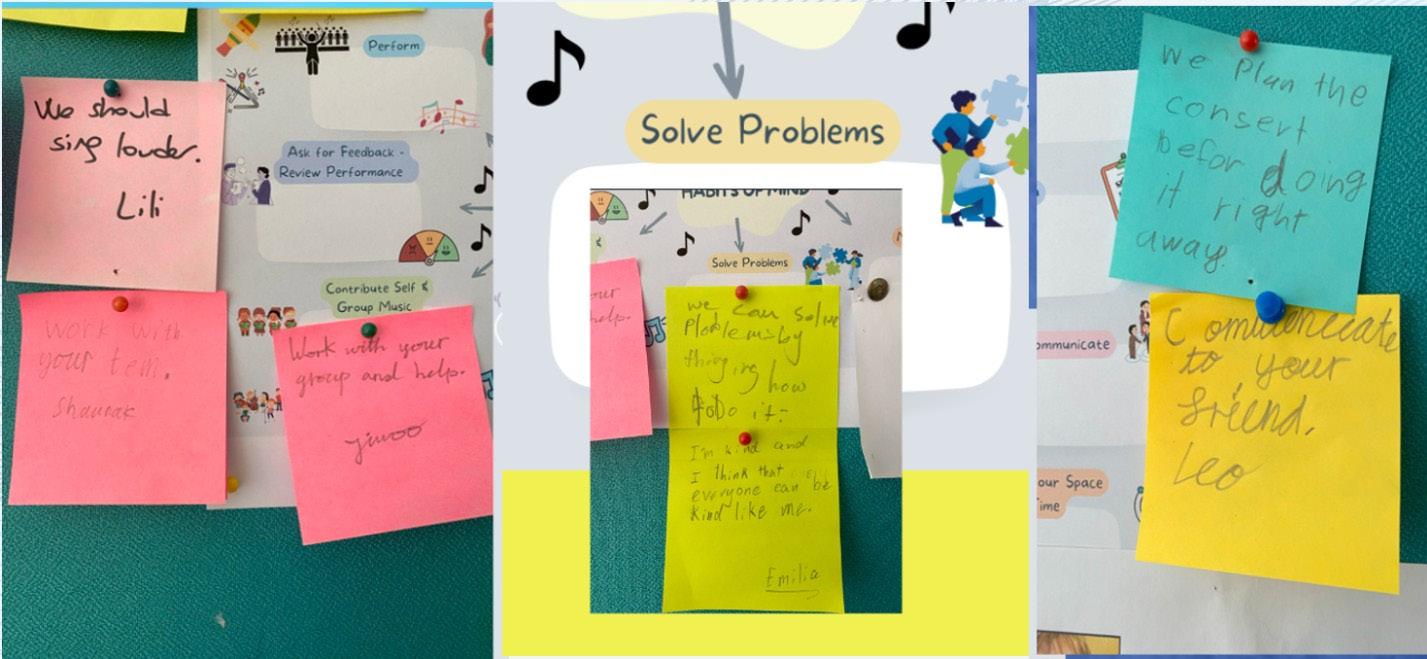
MKIS Lower Music Studio Habits of Mind
In our search for artistic identity, sometimes the most profound frameworks don’t come from textbooks—but from children's voices.
At MKIS Lower Elementary, our music studio habits of mind evolved organically through co-construction with students. Rather than imposing a pre-set framework, we observed and named how learners naturally approached artistic work. The result was a student-centered visual language that supports our collective identity as musicians, collaborators, and creators.
The “Music Studio Habits of Mind” include:
• Observe: We listen deeply and observe, whether studying a peer’s performance or exploring a new sound.
• Plan: Before diving into creation, we imagine, sketch, or rehearse ideas to guide our next steps.
• Communicate: Music is our voice—we share feelings, stories, and ideas through sound and movement.
• Manage Your Space & Time: Studio time is precious; we learn to move purposefully and use materials with care.
• Solve Problems: When something doesn’t work, we try another way or ask for help—there is no “failure,” only feedback.
• Contribute Self & Group Music: We bring our unique voice to the ensemble and value the harmony of the whole group.
• Ask for Feedback & Review Performance: Reflection and revision are core to our growth. We welcome suggestions and celebrate improvement.
• Perform: We share our work with courage, knowing that expression is a powerful act of connection.
This framework grounds our daily routines and creative risks. Students refer to these habits in discussions, self-assessment, and peer collaboration. Over time, they become more than posters on a wall—they become internalized ways of thinking, doing, and being in the music studio.
Conclusion
Nurturing artistic behavior in music education invites us to rethink our roles and goals. It encourages us to create space for creativity, embrace mistakes as part of growth, and recognize every child as an artist in their own right.
Let us continue to empower students to explore their artistic identities with joy, courage, and authenticity. Because when we do, we nurture not only future musicians or performers but thoughtful, expressive, and resilient human beings.
References
Cambridge Dictionary (n.d.). Artist. In Cambridge Dictionary. Retrieved April 14, 2025, from https://dictionary.cambridge.org/ dictionary/english/artist
Cambridge Dictionary. (n.d.). Classroom. In Cambridge Dictionary. Retrieved April 13, 2025, from https://dictionary.cambridge. org/dictionary/english/classroom
Sherwin, D. (n.d.). The 10 Building Blocks of Design Studio Culture. Retrieved January 11, 2025, from https://www.davidsherwin. com/blog/the-10-building-blocks-of-design-studio-culture
The Arts and Education. (2023). Artistic Behaviors for Living Purposefully. Retrieved January 4, 2025, from https://theartsandeducation.com/2023/03/23/artistic-behaviors-for-living-purposefully
Art of South B. (n.d.). What's an Artistic Behavior Unit? Retrieved January 4, 2025, from https://artofsouthb.weebly.com/blog/ whats-an-artistic-behavior-unit
Winner, E., Goldstein, T. R., & Vincent-Lancrin, S. (2013). Art for Art's Sake? The Impact of Arts Education. OECD Publishing. Hetland, L., Winner, E., Veenema, S., & Sheridan, K. M. (2013). Studio Thinking 2: The Real Benefits ofVisualArts Education. Teachers College Press.
About the Author
In 2016, she embarked on her international journey as an IB PYP Music Teacher in Iraq. This path led her to thrive as a Musical Director in India and take on the role of IB PYP Coordinator in Turkey. Embracing her commitment to education, she became an IB Programme and Evaluation Leader, an IB Workshop Leader, and a NEASC accreditation visitor. Today, she inspires young minds as a lower primary music teacher at Mont Kiara International School. With a passion for snorkeling, scuba diving, sports, reading, and creating educational content, she empowers teachers to fully explore the IB PYP.


Curriculum
Empowering NEXTeachers: A Model for Igniting Innovation in the Classroom
By Sandra Chow, Kivi Liang, Jenny Zhang, and Hodi Haydarov Keystone Academy of Beijing
Keystone Academy, located in Beijing, China, opened in 2014 and integrates Eastern, Western, and global educational traditions. During its first WASC self-study, the school identified key areas for improvement, including advancing educational technology to support learning and innovation. To address this, the school hired additional personnel, established a Digital & Innovative Learning department, and acquired essential resources to build a strong foundation for its technology program. As Keystone matured, it continued to enhance its approach, focusing not only on maintaining robust resources but also on equipping students with the critical skills needed to thrive as global citizens in an increasingly digital world.
DEVELOPING A STRATEGY
In developing a strategy to achieve these goals, the Digital & Innovative Learning department identified four main priorities (see Figure 1). To address the priority of developing knowledgeable and skilled teachers, the department focused on cultivating a coaching culture.
The department considered the Diffusion of Innovation Theory, developed by E.M. Rogers in 1962 (LaMorte, 2022). This theory categorizes the adoption of new technologies and ideas into specific groups:
Innovators, Early Adopters, Early Majority, Late Majority, and Laggards. Through conversations with teachers and observations of their practices, the department concluded that while the school already had some Innovators, there was a need to develop the Early Adopters and Early Majority groups among the faculty to build capacity for using digital technologies in classrooms. These groups acknowledge the necessity for growth and change but may remain hesitant and unsure about how to apply these tools. This realization led to the creation of the NEXTeacher Program, designed to cultivate teachers who may not yet be skilled but are willing to learn and understand more. The NEXTeacher Program leverages coaching to assist these groups in confidently using new digital tools, ensuring students acquire future-ready skills.

THE NEXTEACHER PROGRAM
At the heart of the NEXTeacher program was a two- year structure designed to guide participants through a transformative process. In the first year, the focus was on exploration and skillbuilding. NEXTeachers were each appointed a dedicated coach who they worked closely with, learning about new applications, resources, technologies, and pedagogical approaches that could enhance their practice. This collaborative learning process allowed teachers to expand their toolkits and cultivate a mindset of innovation. The second year was about diving deeper into a particular area of digital and innovative learning through an inquiry process towards competency, confidence and leadership.
Later, the NEXTeacher program underwent a strategic redesign, transitioning from a fixed 2-year model to a flexible, milestonebased structure shown in Figure 2. The new framework consists of five interconnected milestones that allow educators to navigate their professional development journey at a pace suited for their individual needs and contexts.
In the first milestone, NEXTeachers work towards obtaining a Digital Certification, equipping them with essential technological skills and a growth mindset. The second milestone focuses on the NEXTeachers' participation in professional learning sessions organised by the digital and innovative learning team, where teachers engage in collaborative learning, sharing best practices, and exploring new pedagogical approaches. The third milestone, Leadership, focuses on developing the NEXTeachers’ leadership skills to empower them to drive change in their professional communities. The fourth milestone, Completion of at least 3 Coaching Cycles, underscores the continued importance of the dedicated coaching support that is central to the program. Finally, the completion of an inquiry journey, challenges NEXTeachers to engage in an in-depth exploration of a specific area of their classroom practice, delving deeper into the challenges and opportunities inherent in that domain. This inquiry-based journey enables teachers to become leaders in their own right, driving continuous improvement in teaching and learning.

PERSPECTIVES FROM NEXTEACHERS
The NEXTeacher program has enhanced teacher confidence and provided practical experience in using innovative technologies for teaching and learning. Throughout the entire learning journey, they realize that the best way to learn a skill is through practice. This aligns with the principle of "learning by design" from Yeh et al. (2021) and has solidified the idea that "learning through application" is essential for mastering new tools and methodologies.
A primary teacher and NEXTeacher recounts her journey in the program: "Becoming a NEXTeacher has transformed my approach to teaching. The one-on-one coaching and access to innovative resources have been invaluable.
"Having a coach means receiving targeted professional development sessions where teachers have thought partners in the classroom supporting their own learning goals. The NEXTeacher program cultivates a lifelong learning mindset where teachers learn to embrace changes and adapt to an ever-changing educational landscape." Another teacher comments,
“When reflecting on the NEXTeacher program, I realize how much it has empowered me to become a braver educator. For
Figure 1. Innovation and Digital Learning Priorities
Figure 2. NEXTeacher Program Milestones
instance, I now comfortably bring AI to my classroom, whereas before, I was completely intimidated by it. "
The process of one-on-one coaching, creates a safe space for support through a continuous cycle of identifying goals, exploring new strategies (see Figure 3), encountering successes and challenges, and reflecting on their experiences.

PERSPECTIVES FROM COACHES
Coaching is recognized as a developmental process grounded in personalized relationships that fosters continuous improvement in teaching and learning practices. At Keystone, the coaching team cultivates a strong coaching culture through various practices. Weekly stand-up meetings provide a quick and efficient platform for coaches to share their successes and challenges, promoting a supportive environment for peer feedback and collaborative problem-solving. These are supplemented by more extensive weekly coaching meetings, where in-depth reflections on coaching cycles are conducted, and strategic planning for future actions is undertaken. For coaches, particularly those new to the role, grasping and applying the coaching cycle is crucial. It provides a systematic framework that guides coaching from the initial goal setting through to the final reflection, ensuring both consistency and efficacy in their approach. To support new coaches, a Coaches' Toolkit inspired by the Google Certified Coach Curriculum (Google for Education, 2020) helped to streamline planning, execution, and assessment of coaching sessions. It includes tools like the Gripe Board for prioritizing issues with NEXTeachers, and a documentation template for tracking the coaching cycle's stages (See Figure 4). Aiming for 2 - 3 cycles with each NEXTeacher also helps to ensure a thorough coaching process tailored to teacher instructional goals. These resources support a structured and reflective approach to coaching, maximizing its impact on teaching and learning.
Another key strategy is to increase the visibility of coaching within the school. By highlighting success stories (See Figure 5), the coaching team strengthens its presence and fosters collaboration with the larger school community. The school-wide hub serves as a space for showcasing the innovative work of NEXTeacher participants. By amplifying the voices and experiences of these dedicated educators through storytelling, this platform shines a spotlight on the transformative impact of coachingdriven professional development, celebrating the achievements of NEXTeachers and motivating others to embark on their own journeys of growth and leadership. These collective practices are instrumental in nurturing a robust, supportive, and dynamic coaching culture within our school.
The NEXTeacher program has been thoroughly successful but
has also had its challenges. Building a coaching culture requires administrative support to foster trust and openness among staff, which is essential for the program's success, which can be challenging amidst the leadership team's busy schedule and competing priorities. Next, it is essential to clarify the distinction between coaching—a collaborative and reflective process—and consulting, which is more directive.
Shifting teacher mindsets from merely learning how to use a particular digital tool to prioritizing instructional needs and then selecting the appropriate tool to enhance the learning was also a challenge. Coaches need to skillfully customize their approach to the unique needs of each teacher and their context, which requires time for observations, careful consideration and an already demanding schedule for both teachers and coaches. Finally, the reality of faculty turnovers in an international school setting disrupts consistency in relationships as teachers and coaches depart or transition to new roles. While these challenges existed, they were carefully managed, ensuring the program not only preserved its integrity and effectiveness but also continued to thrive and inspire growth.


NEXT STEPS
As the NEXTeacher program continues to evolve, the school is committed to expanding the program’s reach and impact. The program is poised to transition into a dynamic platform for sharing innovative practices, tools, and methods beyond the NEXTeacher program community.
Currently, the NEXTeacher graduation celebration, where graduates share their inquiry journey, is a whole-school event. The event is open to the entire Keystone community for sharing innovative practices and classrooms. This sharing of ideas and best practices allows teachers both within and outside of the NEX-
Figure 3. Ideas board for learning and exploration
Figure 4.The Coaching Cycle inspired byGoogle Certified Coach curriculum (Google for Education, 2020)
Figure 5. NeXTeacher success stories
Teacher program to learn from one another, inspiring new approaches and driving continuous improvement in teaching and learning.
Moving forward, the school-wide hub is envisioned as a space for showcasing the innovative work of NEXTeacher participants. By amplifying the voices and experiences of these dedicated educators, the digital and innovative learning team hopes to expand the storytelling and broaden the reach and impact of the program. This platform shines a spotlight on the transformative impact of coaching-driven professional development, celebrating the achievements of NEXTeachers and motivating others to embark on their own journeys of growth and leadership. Additionally, the team has been sharing the achievements of the NEXTeacher program beyond the school walls at conferences as a success story, and other schools have already started considering how to implement a similar program in their own institutions.
As the NEXTeacher program continues to evolve, its role as a catalyst for educational change will become increasingly evident. By empowering teachers, fostering collaborative learning,
and cultivating a culture of continuous improvement, the program is poised to make a lasting impact on the lives of students and the future of the teaching profession.
References
Google for Education. (2020). Certified coach curriculum. Google. https://skillshop.exceedlms.com/student/path/37078
LaMorte, W. W. (2022). Diffusion of innovation theory. Bumc. bu.edu.
https://sphweb.bumc.bu.edu/otlt/mph-modules/sb/behavioralchangetheories/behavioralchangetheories4.html
Yeh, Y.-F., Chan, K. K. H., & Hsu, Y.-S. (2021). Toward a framework that connects individual TPACK and collective TPACK: A systematic review of TPACK studies investigating teacher collaborative discourse in the learning by design process. Computers and Education, 171, 104238-. https://doi.org/10.1016/j.compedu.2021.104238


Levelling Up Learning: The Power of Gamification at the 2025 EARCOS
Teachers’ Conference
By Megan Lockett NIST International School
Gamification
The concept of gamification has gained attention in educational environments as more educators seek creative ways to enhance student engagement and relevant learning outcomes. With roots in the gaming industry, gamification involves incorporating game-design elements such as layers, levels, and choices into non-game contexts, such as education. The practical session "The Power of Gamification!" was run for over ninety attendees at the 2025 EARCOS Teachers’ Conference. The session centred on physical education, where attendees participated in activities such as Fitness Scrabble, Disco Uno, Dice Throwing & Catching Challenges, and Spin the Wheel. They were then given time to discuss how these games could be adapted for teaching across different subjects, fostering a transdisciplinary approach. This article examines some of the literature that supported the session, highlighting the strengths, challenges, and practical applications of gamification in education.
Strengths of Gamification in Education
1. Increased Engagement and Motivation
One of the key strengths of gamification is its ability to engage and motivate students. By integrating fun and interactive elements into lessons, gamification transforms “traditional” learning experiences into activities students are eager to participate in. Research shows that gamified learning can enhance engagement, making lessons more enjoyable and dynamic (Anderson & Rainie, 2014). This engagement creates an environment where students are excited to learn, leading to increased participation and better retention of key concepts. This has been evident at NIST International School, where the Mario-Themed Fitness Fiesta brings the Year Four community together (students, parents and homeroom teachers) to participate in various games linked to three types of fitness—cardiovascular, strength, and flexibility—and explore levels of exertion. Students remain highly engaged throughout the unit, reflected in their reflections and evaluations.
2. Encouragement of Active Participation
Gamification creates opportunities for students to take an active role in their learning. Students involved in game-like activities tend to be more enthusiastic and motivated to engage with the content. By designing tasks that require students to participate actively—whether through individual efforts or in teams—educators can create an environment where learning is shared and dynamic (Hamari, Koivisto, & Sarsa, 2014). This active involvement helps maintain student interest and keeps them engaged throughout the learning process.

3. Promotes Collaboration and Interpersonal Skills
Another advantage of gamification is its ability to foster collaboration. Many gamified activities involve teamwork, encouraging students to work together toward a shared goal. This aligns with the cooperative learning model, as outlined by Dyson and Casey (2016), where students collaborate, communicate, and support one another to achieve success. By integrating this model, gamified learning encourages social interaction, improves communication skills, and boosts teamwork, which are vital in educational settings. The collaborative nature of gamified activities builds peer relationships and creates a stronger sense of community among students (Vasalou et al., 2008).
4. Visual Support
Gamification provides immediate feedback via tokens, levels, and challenges, allowing students to adjust their learning strategies actively. Integrating visual aids like GIFs, videos, and images further enhances this approach, catering to a visual society. At NIST, GIFs have significantly reduced movement-related questions, providing explicit visual references that promote independent problem-solving.
5. Personalised Learning
Gamified activities can be tailored to cater to different learners. This personalisation ensures that students can progress at a pace that suits their needs, making learning more accessible and practical. Whether offering different difficulty levels or allowing students to choose specific tasks, gamification enables learners to take ownership of their learning experience, leading to greater autonomy and a more inclusive learning environment (Zhao & Kauffman, 2002).
6. Building Resilience and Persistence
Just as games often frame failure as a learning opportunity, gamified education encourages students to view setbacks as stepping stones. By incorporating student options, skips, and structured progressions, students learn to embrace challenges and understand that mistakes are part of the process. This fosters a positive attitude towards learning and promotes a growth mindset where continuous improvement is valued. (Deterding et al., 2011)
8. Encourages Critical Thinking
Gamified learning encourages students to tackle complex problems that often require transdisciplinary thinking. By engaging in strategic analysis and puzzle-solving, as seen in games like Scrabble, students learn to synthesise information from various domains. This cultivates critical thinking, creativity, and innovation, preparing them to address real-world challenges that transcend traditional disciplinary boundaries.
Challenges of Gamification in Education
While gamification offers numerous advantages, it is not without its challenges. The session also highlighted several obstacles educators face when implementing gamified learning strategies.
1. Risk of Overemphasis on Rewards
One of the most frequently cited concerns with gamification is the risk of overemphasising rewards. Students may become more focused on counting points, badges, or prizes rather than engaging with the content and learning for its own sake. When this occurs, students may neglect the intrinsic value of the learning process, which can hinder deeper understanding. Teachers should be mindful of balancing the game elements and the educational learning intentions to prevent this issue (Kapp, 2012). At


NIST, we encourage a shift from individual point accumulation to collaborative achievement, coupled with reflective questioning, to nurture more shared learning.
2. Potential for Distraction
Although gamification can enhance enjoyment, the potential for distraction is a concern. Students may prioritise game elements over learning outcomes. Educators can balance game mechanics with educational goals to avoid this, ensuring they enhance, rather than replace, learning. It’s essential to prevent gamification from becoming a tool for keeping students 'busy, happy, good' (Placek, 1983) and instead focus on purposeful educational outcomes (Anderson & Rainie, 2012).
3. Unequal Motivation
Not all students are motivated by the same factors. While some thrive in game-like environments, others may feel disengaged. This variation in motivation presents challenges when striving to create an environment where every student feels involved and valued. Recognising these differences allows teachers to adjust game elements to meet student needs, fostering a learning space where students feel connected and invested.
4. Implementation Complexity
Creating and implementing practical gamified lessons requires considerable time and resources. Designing context-specific, engaging and educational games involves planning and creativity. Additionally, managing the logistical aspects of a gamified classroom, such as layered progressions, can be challenging.
Educators should weigh the benefits of gamification against the initial setup time and the ongoing demands on resources. For instance, as a plastic-free school, laminating game components for reuse over the years allows for frequent use in both indoor and outdoor settings, helping minimise paper waste and reduce long-term printing costs—illustrating a resource-conscious approach (Caponetto, 2020). Investing more time in preparation and student setup for gamified activities can empower teachers to step back and gain a clearer view of student learning. This also creates opportunities to repeat games, effectively reinforcing learning outcomes.
5. Keeping Engagement Alive
Maintaining novelty and engagement in gamified lessons over the long term can be a challenge. While gamification may initially captivate students, the novelty can wear off over time, decreasing engagement. Teachers can continuously introduce new layers, elements, and challenges to keep students invested and maintain interest. Ensuring that gamification remains fresh and relevant requires ongoing creativity and innovation.
6. Risk of Superficial Learning
Focusing too heavily on “winning" can sometimes lead to superficial learning. In gamified environments, students may prioritise achieving rewards or completing tasks over understanding the material deeply. This can result in students developing surfacelevel knowledge instead of a comprehensive understanding of the subject matter (Zichermann & Cunningham, 2011). Teachers should ensure that game mechanics support critical thinking and deeper engagement with the content rather than rewarding superficial achievements.
7. Technical Barriers
Many gamified lessons rely on technology, which may not be accessible to all schools/students. Some schools/students may lack access to devices or internet connections, creating inequities in participation. Educators can also find ways to incorporate gamification strategies that do not rely solely on technology or ensure that all students have the resources they need (Caponetto, 2020).
8. Difficulty Balancing
Gamifying lessons also requires balancing the levels of difficulty. If the tasks are too easy, students may become bored, while students may feel discouraged if they are too complex. Striking a balance is key to keeping students motivated and ensuring the gamified experience is both challenging and rewarding (Wulan et al., 2024).
Conclusion
The transformative potential of gamification in education is undeniable, as evidenced by the enthusiastic response from over ninety educators during the EARCOS session. The foundation of its strength lies in its ability to boost student engagement and active participation, naturally fostering effective collaboration and essential interpersonal skills. This collaborative environment, enhanced by visual support and personalised learning, ensures inclusivity and caters to diverse learners. By reframing failure as a learning opportunity, gamification builds resilience and encourages critical thinking, cultivating a growth mindset. These interconnected strengths culminate in developing transferable skills, preparing students for success beyond the classroom. However, realising this potential requires a balanced approach. Educators must thoughtfully address challenges like reward overemphasis, distraction, and equity/sustainability to ensure that gamifica-
tion, when implemented carefully considering learners and context, truly becomes a powerful tool for creating a more dynamic and inclusive approach to educational experiences.
References
Anderson, J. & Rainie, L. (2012). The Role of Gamification in Education: A Literature Review. Pew Research Center.
Anderson, J. & Rainie, L. (2014). The Role of Gamification in Education: A Literature Review. Pew Research Center.
Caponetto, I. (2020). Gamification in Education: A Review of the Benefits and Challenges. Journal of Educational Technology, 14 (3), pp. 45-58.
Deterding, S. Dixon, D, Khaled, R & Nacke, L. (2011) From Game Design Elements to Gamefulness: Defining “Gamification”.
Dyson, B. & Casey, A. (2016). Cooperative learning in physical education and physical activity: A practical introduction. Routledge.
Hamari, J. Koivisto, J. & Sarsa, H. (2014). Does Gamification Work? A Literature Review of Empirical Studies on Gamification.
Kapp, K. M. (2012). The Gamification of Learning and Instruction: Game-Based Methods and Strategies for Training and Education. Wiley.
Placek, J. H. (1983). Conceptions of success in children's sport and physical education. Research Quarterly for Exercise and
Sport, 54(3), 247-255.
Vasalou, A., Joinson, A. N., & Pitt, J. (2008). Motivation and engagement in collaborative virtual environments: Applying sociotechnical systems theory. Behaviour & Information Technology, 27 (1), pp. 71-83.
Wulan, D.R. et al. (2024) Exploring the Benefits and Challenges of Gamification in Enhancing Student Learning Outcomes, Global International Journal of Innovative Research, 2 (7), pp. 1657–1674.
Zhao, Y. (2020). The Effectiveness of Gamification in Education: A Meta-Analysis. Journal of Educational Research and Practice, 10 (2), pp.189-204.
Zichermann, G., & Cunningham, C. (2011). Gamification by Design: Implementing Game Mechanics in Web and Mobile Apps. O'Reilly Media.
About the Author
Having taught in various schools across Asia, I have shaped curricula to meet the specific needs of student learning. My dedication to continuous professional development stems from the belief that enhancing educators' knowledge and teaching practices leads to more meaningful student experiences. Collaborating with an exceptional team, I have helped transform the curriculum into a conceptual PE program, moving beyond content as the primary focus. I am currently in my fourth year of an EdD program at the University of Stirling.

Saturday May 24, 2025
Board Member
Onboarding
Free for EARCOS Members visit https://sites.google.com/earcos.org/kristi-williams/home
An effective board starts with an intentional beginning. In this 60-minute webinar, we’ll explore proven strategies for onboarding new trustees to ensure clarity, continuity, and cohesion. Designed for Board Chairs, and Members, this session offers practical tools and examples to help your board build a structured and supportive onboarding process. Together, we’ll examine how orientation, relationship-building, and role clarity can set new members—and the entire board—up for success from day one.
Mindfulness
The Power of Mindfulness in School Education
By Qing Xiao Shekou International School, Shenzhen, China

Introduction
Mindfulness has emerged as a transformative practice in education, fostering mental health and wellbeing among students and educators alike. Grounded in scientific evidence and rooted in centuries-old traditions, mindfulness offers tools for stress management, emotional regulation, and enhanced focus—skills that are increasingly critical in today’s fast-paced world.
What is Mindfulness?
Mindfulness is the practice of bringing one’s attention to the present moment in a non-judgmental manner. It involves awareness of thoughts, emotions, and physical sensations. Defined by Dr. Jon Kabat-Zinn as “awareness that arises through paying attention, on purpose, in the present moment, non-judgmentally,” mindfulness is accessible to individuals regardless of age, religion, or background. Studies show that adults spend nearly half their waking hours thinking about something other than their immediate surroundings, contributing to stress and dissatisfaction (Killingsworth & Gilbert, 2010).
Why Do Students Need Mindfulness? Mental health challenges among students are on the rise. The 2023 Blue Book of China’s Mental Health reported alarming rates of sleep problems (25.2%), depression (14.6%), and anxiety (12.3%) among school-aged children.


The COVID-19 pandemic has further exacerbated these issues, with global increases in anxiety and depression. According to the World Health Organization (WHO), depression is one of the leading causes of illness and disability among adolescents worldwide, and suicide is the fourth leading cause of death in 15-29-year-olds. Mindfulness can address these challenges by helping students develop the “5Cs”: creativity, compassion, calm, clarity, and concentration.

The Benefits of Mindfulness in Education
Research underscores the profound impact of mindfulness on students' physical, cognitive, and emotional well-being:
• Improved Focus and Academic Performance: Mindfulness enhances attention and working memory, crucial for learning and problem-solving.
• Emotional Regulation: Students practicing mindfulness report reduced anxiety and improved mood.
• Social Skills: Mindfulness fosters empathy and better interpersonal relationships.
• Physical Health: Regular practice improves heart health, immune function, and sleep quality.
How to Introduce Mindfulness in Schools
Implementing mindfulness in education requires a structured and empathetic approach:
1. Create a Mindful Environment: Set up mindfulness corners with tools like glitter jars and breathing balls. Decorate classrooms with calming visuals and include mindfulness resources.
2. Start with Simple Practices: Introduce activities like the “Raisin Exercise,” where students use all five senses to explore a raisin, or “Five-Finger Breathing,” a tactile breathing exercise.
3. Embed Mindfulness in Daily Routines: Begin and end the school day with short mindfulness sessions. Use transitions between activities as opportunities for mindfulness moments.
4. Leverage Stories and Real-Life Examples: Share stories like the Thai soccer coach who used meditation to keep his team calm during their cave ordeal or mindfulness’ role in the resilience of athletes like Novak Djokovic.
Precautions and Best Practices
While mindfulness offers immense benefits, educators must ensure its proper application:
• Avoid Using Mindfulness as Punishment: Present it as a supportive tool rather than a disciplinary measure.
• Tailor Practices for Students with Severe Mental Health Issues: Ensure these students have medical guidance.
• Encourage Consistency: Promote regular and achievable mindfulness exercises.
• Provide Proper Training for Educators: Teachers should undergo professional mindfulness training to effectively guide students.
Conclusion
Mindfulness in school education is more than a relaxation technique; it’s a way to equip students with lifelong skills for resilience, focus, and emotional well-being. By planting the seeds of mindfulness in young minds, educators can help students navigate challenges with grace and grow into compassionate, balanced individuals. As a mindfulness instructor with over a decade of experience, I’ve witnessed its transformative power in classrooms. Integrating mindfulness into education is not merely an initiative but a necessity in nurturing holistic development.

References
Killingsworth, M. A., & Gilbert, D. T. (2010). A Wandering Mind Is an Unhappy Mind. Science, 330(6006), 932.
Weare, K. (2018). The Evidence for Mindfulness in Schools for Children and Young People. Mindfulness Initiative.
Zhou, X., et al. (2020). Effects of Mindfulness-Based Stress Reduction on Anxiety Symptoms in Young People: A Systematic Review and Meta-Analysis. Psychiatry Research, 289.
O’Hare, A. J., & Gemelli, Z. T. (2023). Academic performance differs by compassion and mindfulness training.
Dunning, D., Tudor, K., & Radley, L. et al. (2022). Do mindfulnessbased programmes improve the cognitive skills, behaviour and mental health of children and adolescents? Evidence Based Mental Health.
Blundo, R., & Savage, T. E. (2020). Neuroscience-Based Mindfulness Social Work Practice in Schools.
Semple, R. J., & Burke, C. A. (2019). State of the Research: Physical and Mental Health Benefits of Mindfulness-Based Interventions for Children and Adolescents. OBM Integrative and Complementary Medicine.
Weare, K. (2019). Mindfulness and contemplative approaches in education. Science Direct.

Artificial Intelligence
How UNIS Hanoi Scaled Multilingual Engagement with AI
By Aisling O’Brien Director of Advancement at UNIS Hanoi
As international school leaders in Asia, we take pride in fostering belonging for our multi-national communities and making sure every student and family feels welcomed. At UNIS Hanoi, with over 65 nationalities represented on our campus, multilingual parent engagement is a necessity. This year, through the generosity of our philanthropic community, we implemented AI translation for over 40 key events, enhancing how we partner with families and deepening our commitment to parent-school partnership.
A Breakthrough in Parent Engagement
Parental involvement has been shown to positively impact academic performance, social-emotional development, and attitudes toward learning (Jensen & Minke, 2017; Sharma 2024). Yet for most international schools, language barriers prevent full participation by parents in the life of their child’s school community. Non-English-speaking parents can often feel sidelined, despite their strong desire to support their child's education.
To address this, many schools turn to asynchronous presentations and translation support from local staff. While valuable, this approach can lead to fragmented communication, duplicated effort, and uneven access to key messages. When leadership speaks directly to some parents but not others, it can unintentionally undermine efforts toward partnership, cohesion, and belonging.
Why AI?
In a community as diverse as ours, traditional interpreting services were limited in availability and costly to scale, and therefore not a sustainable option. Our context in Hanoi means freelance interpreters are typically available only in Vietnamese, and infrastructure-heavy solutions like translation booths are costly and cumbersome. AI-powered translation offered a flexible, accessible, and cost-effective way to ensure all families could engage with the school in real time, in their preferred language.
How We Rolled It Out
The rollout of Wordly AI at UNIS Hanoi was guided by a crossfunctional Multilingual Community Engagement Committee, formed to ensure thoughtful planning, equitable access, and alignment with our community values. We began by allocating translation hours across priority events and building internal systems for requesting and approving usage. Staff received handson training and real-time technical support from our IT and Advancement teams, ensuring smooth implementation from day one. A shared glossary of UNIS-specific terminology was developed and refined throughout the year to improve translation quality. Each event included a feedback loop via a post-event survey, allowing us to track impact and iterate quickly. This structured, community-centered approach made it possible to scale effectively and responsively.
The New Normal
Since launching Wordly AI at UNIS Hanoi earlier this year, we have used it at more than 40 events: from orientations to community meetings, workshops, and parent coffees. The impact of this solution has been extraordinary.
Parent participation has surged. One event that previously drew 15 attendees welcomed over 150 this year. Our largest-ever optional parent workshop saw more than 200 parents. Post-event


feedback has been overwhelmingly positive, with a Net Promoter Score (NPS) of 90 (which is well above the threshold for satisfaction) and 75% of participants reported the tool is very clear and easy to use.
Parents have proactively asked for the tool to be used more widely, and many have reported increased confidence and engagement. One Korean parent shared, “I never heard this information before. Please make this tool available all the time.” A Vietnamese parent added, “I think I will be able to actively participate because it is easy to communicate with.”
Data, Data Privacy and Responsible Use
Our top user groups include Korean (500+ users), Vietnamese (400+), and Japanese (200+), reflecting the diversity of our school. Wordly AI provides translation through text and audio, and families have embraced the ease of using QR codes to access translations during live events. And families can engage with this tool in full confidence that their data is protected. UNIS Hanoi selected Wordly AI because it is compliant with GDPR, COPPA, and the SOC 2 Framework, aligning with both Vietnamese privacy laws and international standards for data security.
Sharing and Scaling Our Success
We are proud to be the first school in the world to implement Wordly AI for multilingual community engagement. Our experience was featured at the EARCOS Leadership Conference and the ISS Edu Expo, where we shared insights with school leaders across Asia. Several schools have since adopted this technology, amplifying its impact across the region. Our next phase focuses on refinement and expansion. We are:
• Growing our custom glossary to improve translation of educational terms.
• Encouraging headset use for optimal audio experience.
• Training staff to use the platform effectively in different settings.
• Exploring additional AI tools to reach even more families.

Powered by Community Support
This initiative was made possible by philanthropic support from our community, including a group gift from the Korean parent community. One of the strengths of this initiative is its adaptability. As AI technology continues to evolve rapidly, we have the agility to explore tools and platforms as new solutions become available, without being locked into proprietary systems or costly


infrastructure. This flexibility makes AI-powered translation an ideal advancement project: it is high-impact, donor-visible, and aligned with strategic goals around inclusion, engagement, and innovation. It also demonstrates to our community that their philanthropic support powers cutting-edge solutions with immediate and measurable benefits for families.
At UNIS Hanoi, we believe that inclusive communication strengthens school-family relationships, and AI translation has proven to be a vital bridge to that end. As schools in our region continue to explore ways to build stronger, more inclusive communities, our experience with AI-powered multilingual engagement offers a practical, scalable, and high-impact model.
References
Dotterer, A. M., & Wehrspann, E. (2016). Parental involvement and academic outcomes. Journal of Education Research, 109(2), 123135.
Jensen, A. L., & Minke, K. M. (2017). Engaging families in schools: A multilevel framework. School Psychology Review, 46(1), 45-59.
Jones, L., & Palikara, O. (2023). Have Teachers’ Perceptions of Parental Engagement Changed Following COVID-19?
Evidence from a Mixed-Methods Longitudinal Case Study. Education Sciences, 13(7), 750.
Ricker, J., & Belenky, D. (2021). Technology and parental involvement: Impacts on student achievement. International
Journal of Educational Technology, 38(3), 211-225.
Sharma, R. (2024). Parent-school partnerships in international education. Global Education Review, 11(1), 34-49.

EIW Architects Perth & Adelaide eiwarch.com.au hello@eiwarch.com.au +61 8 9484 4700

Use of AI in Scaffolding in Promoting Student Learning
By Meesha Arora
The British School, New Delhi
The initiation of Artificial Intelligence lends itself to new frontiers of scaffolding strategies that can be designed to provide timely and tailored support to students enabling educators to cater to the varying student requirements more efficiently than ever. Scaffolding has been described by educational psychologist Barak Rosenshine as “a method of instruction that unlocks new tasks for learners, guides them through the task with increasing confidence, and slowly removes itself when learners are able to complete the task independently and proficiently”.
As an Economics IBDP educator I have found AI tools like SciSpace, Claude artifact and Google Language Model (LM) highly useful in creating an effective scaffolding process for my students of different requirements. This article highlights how these tools enabled me to enhance the quality of support provided through the teaching learning process.
Sci Space: AI research tool.
Sci Space is an AI tool primarily used for research under which a prompt pertaining to the topic will provide tabular representation of possible research papers with headings like summarised abstract, literature survey, conclusions etc allowing students to apply relevant filters and percolating down to the research studies most relevant to their field of inquiry. SciSpace can be immensely useful especially for IBDP students working on their Extended Essays (EEs). In my demo of the tool to the students, I guided them about how they could benefit from SciSpace in terms of identifying reliable research papers and peer reviewed journals based on their research question. This ensures students access only high-quality resources. Further the tool enables them to annotate, dig deeper by chatting with uploaded research papers and highlighting key points in their research allowing them to apply critical thinking skills, retaining notes and applying them later where they feel fit.
The feedback from students has been positive with them reporting enhanced convenience in finding relevant research content showcasing improved learner agency and possibly better research skills in the long run.

Figure 1. Use of Scispace for filtering relevant research papers based on prompts
Claude Artifact – Creating interactive theme-based quizzes for revision Revision plays a critical role in the progress towards deep learning however students often struggle with finding user friendly revision tools that provide them with a clear understanding of their gap areas. For this purpose, AI based Claude artifact allows creation of interesting quizzes tailored to student needs. The quizzes can be based on themes like BTS, Taylor Swift, Avengers, Fortnight and so on. These can be displayed in class for everyone to answer questions. On the contrary, sharable links can be provided to the students so that learning can be selfpaced, making it an effective differentiation tool. For my classes, I prompted the tool to create quizzes such that every correct answer led to questions with incremental difficulty, making the quiz customised to every student’s capability. An added source of excitement was collecting BTS lamps for every correct answer.
The use of such quizzes has helped promote student understanding by reinforcing key concepts, enabling retention and providing instant feedback.

Google LM – Simplification of topics through podcast and study guides
Several topics in Economics can be complex for students and hence Google LM is a great tool to break them down into smaller chunks that are easy to digest. I have been amazed by the tool’s ability to not just simplify a topic through an uploaded PDF into easy-to-understand study guides but also by its instantly gener-
ated podcasts on the topic under the ‘audio overview’ option. As I uploaded the Examiner Report (2023-24) for IGCSE Economics exams, Google LM took just a few minutes to generate a podcast with two friendly voices – that of a male and a female, discussing the report and its various elements in an easy to grasp manner with a dash of humour here and there. On its own, the report can be a boring and a heavy read but as a podcast playing in class, I could halt it in parts to have students reflect on the various mistakes being pointed out that are commonly made in exam responses and ways to avoid them.
Here is a sample of the student reflection post listening of the podcast -

Figure3- Student reflection based on a Google LM generated podcast
I plan to use Google LM to generate podcasts on other complex or clunky topics that can help provide simplified explanations especially through podcasts and study guides. Overall, most students found the use of podcasts to deliver content of the examiner report engaging and relatable.
Use of AI tools for improved scaffolding
To conclude, SciSpace, Claude artifact and Google LM are some of the popular AI tools that showcase the immense potential of artificial intelligence in supporting educators in designing engaging and powerful scaffolding strategies to promote independent learning. While they require patient hit and trials to suit the needs of the class, by effective planning, they can over time be made to align well to the scaffolding principles outlined by education experts, which can help promote high quality teaching and learning.
Bibliography
Davies, D. (2022, October 11). An in-depth look at Rosenshine’s principle of scaffolding, the effectiveness of scaffolding and how to apply it in your classroom. Bedrock Learning. https:// bedrocklearning.org/literacy-blogs/rosenshine-principle-ofscaffolding/
Figure2- Use of Claude Artifact for BTS themed revision quizzes
Technology
Onboarding an LMS for Learning, Professional Development, and Student Showcases at True North International School
By Khoi Mai True North International School

Introduction
Since its establishment in 2022, True North International School (TNIS) in Hanoi, Vietnam, has grown from 80 to nearly 300 students, representing eight nationalities. Its diverse faculty spans eight countries, with 30% holding advanced degrees. In the 2024–2025 academic year, TNIS attained WASC accreditation, joined EARCOS, and expanded its AP offerings from five to eighteen courses in just three years.
In today’s rapidly evolving educational landscape, learning extends beyond the classroom. Digital literacy is essential, and technology must support both student learning and school management. Recognizing this, TNIS adopted Canvas LMS in 2024–2025 to facilitate teaching, document learning, and provide data-driven insights. Our first year brought challenges, lessons, and successes, and we hope our experience will benefit other schools considering a similar transition.
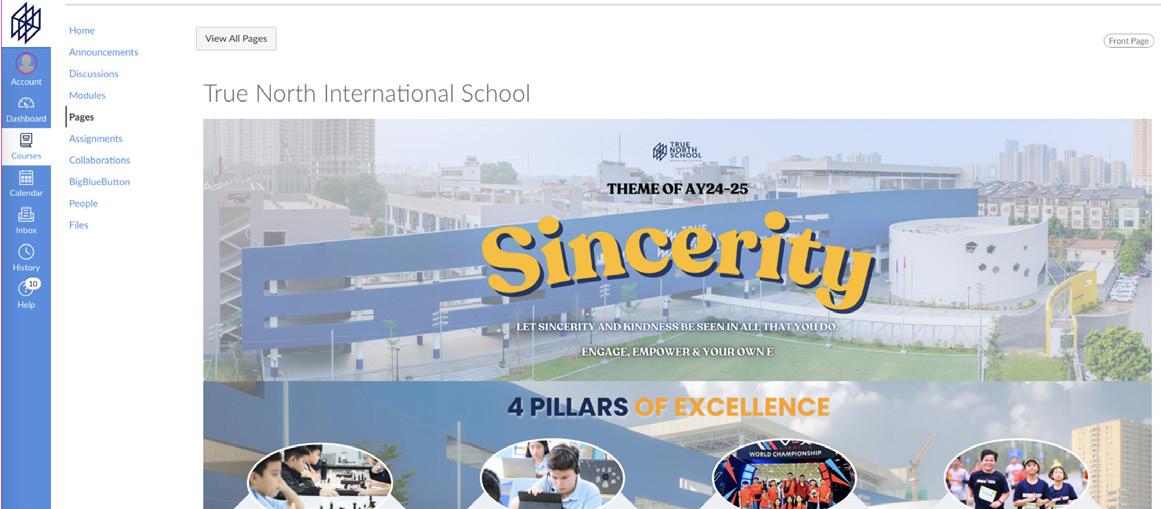
All-Hands Course On Canvas
Implementing Canvas: A Three-Year Plan
TNIS designed a three-year onboarding plan to transition from basic Canvas adoption to fully blended learning. The first year focused on foundational usage, ensuring all teachers used Canvas for course materials, homework, and assessments. While Grades 4–12 adapted well, younger students faced challenges due to screen time limitations, making Canvas less effective for Grades 1–3. Elementary parents played a more active role, requiring training to support their children in submitting assignments and tracking progress. While academic subjects integrated Canvas smoothly, PE, Arts, and Music required alternative approaches to showcase student learning. By the end of the year, over 80% of students and parents were actively using Canvas, establishing it as the school’s central learning hub.
In the second year, TNIS will introduce blended learning modules, allowing teachers to experiment with hybrid course designs. The school will focus on increasing engagement in non-academic subjects while refining best practices based on student performance and feedback. The third year will focus on blended course development, with teachers designing fully integrated blended courses. Expanded training and data-driven improvements will ensure Canvas becomes an essential part of the curriculum. This structured approach ensures a smooth transition while maximizing Canvas’s potential in creating a flexible, student-centered learning environment.
Leveraging Canvas for Professional Development
Beyond student learning, Canvas serves as a powerful tool for faculty collaboration and professional growth. The school created an "All Hands" Canvas course as a centralized hub for policies, internal documents, and faculty discussions. Teachers are grouped by division—Bilingual and International tracks, Elementary and MSHS—allowing for meaningful collaboration within their specific contexts. Every Friday, faculty members contribute to a showcase, sharing student learning experiences and innovative teaching strategies. This practice fosters cross-divisional collaboration and encourages educators to adopt new approaches.

Quintessential Vietnamese Course On Canvas
Canvas also supports structured professional development. The Quintessential Vietnamese course helps expat teachers understand Vietnam’s culture and education system, offering insights from both local and international faculty to enhance inclusivity in the classroom. Another initiative, Tune In, Teach Out, curates a weekly selection of educational podcasts, providing teachers with bitesized learning opportunities to refresh their teaching mindset. By embedding professional development into Canvas, TNIS ensures faculty growth remains continuous, collaborative, and impactful.

Showcase Student Learning Outcomes On Canvas
Lessons Learned: Strategies for a Successful LMS Onboarding Successfully implementing Canvas required careful planning, ongoing support, and adaptability. Scaffolded training was a key factor, with sessions embedded into TeachU Orientation, professional development days in September and February, and continuous school-based training throughout the year. The R&D team and Registrar provided hands-on weekly support, ensuring teachers had the guidance they needed to integrate Canvas effectively.
Engaging stakeholders early was crucial, particularly elementary school parents, who needed additional training to support their children's learning. Regular feedback loops helped shape training programs and improve adoption. Instead of aiming for fullscale implementation immediately, TNIS took an iterative rollout approach with clear, attainable goals, focusing on foundational use before expanding into blended learning. Integrating Canvas with the school’s SIS, grading, and communication platforms ensured a seamless transition, streamlining workflows and reducing redundancies.
Data-driven decision-making was another key lesson. Setting up Canvas correctly at the start of the school year is critical for quality assurance. Organizing sub-accounts by school division, subject groups, courses, and terms (Semester 1, Semester 2) allows for effective use of admin analytics. This structure enables the school to monitor LMS adoption, track student engagement, and assess course effectiveness. Without proper setup, gathering meaningful data becomes difficult, limiting the ability to make informed instructional and administrative decisions.
Technology Enhances Learning, but Relationships Drive It Canvas has helped TNIS track student progress, improve instruction, and extend learning beyond the classroom. Students can access lessons, review materials, and engage with content at home, making learning more flexible and personalized. However, while an LMS can enhance education, it cannot replace the essential human connection between teachers and students. Effective teaching goes beyond digital platforms—it is built on trust, mentorship, and meaningful interactions.
As we continue refining our approach, we remain committed to ensuring that technology serves as a tool for deeper learning rather than a substitute for authentic engagement. By balancing digital innovation with the irreplaceable human element of education, we strive to create an environment where students not only gain knowledge but also feel supported, challenged, and inspired.
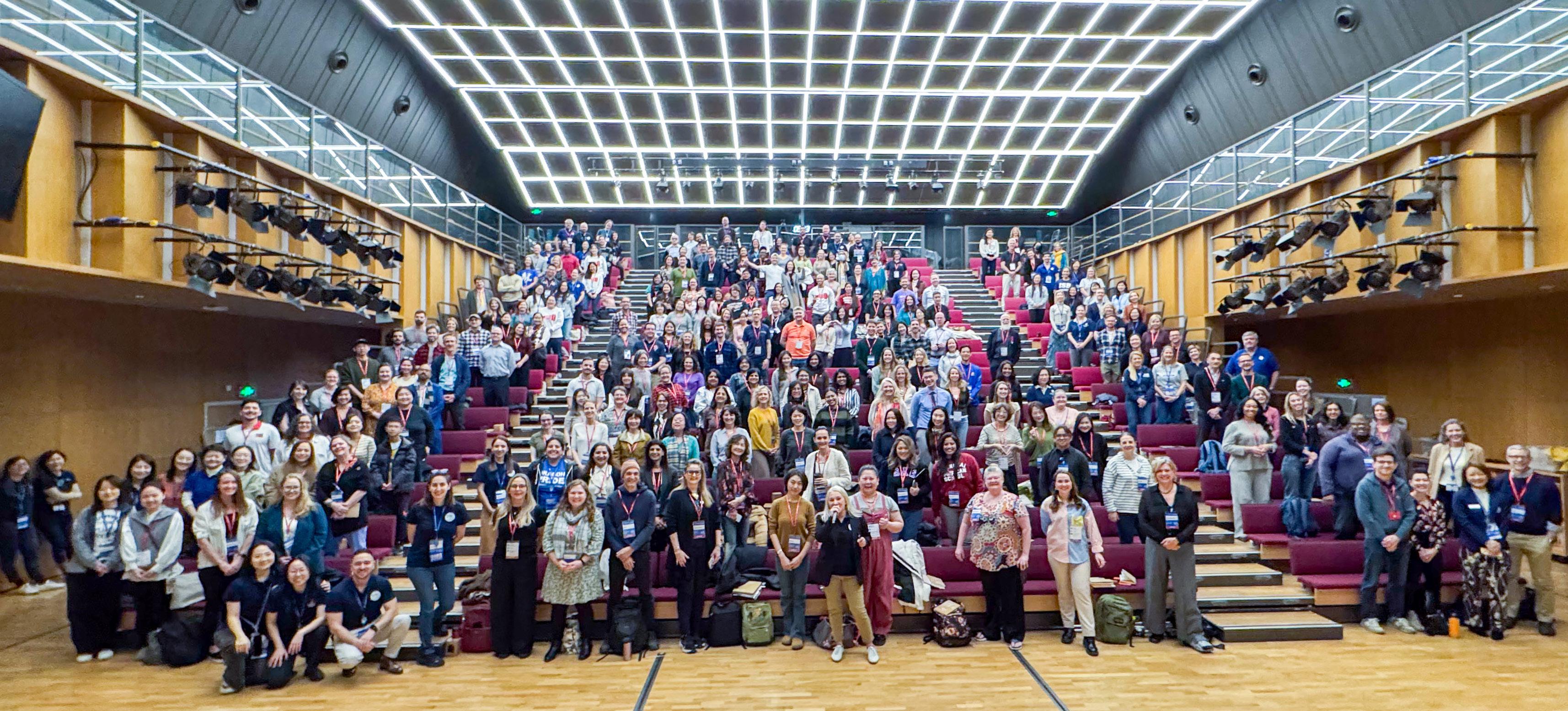
Curriculum
The ELLSA Effect: From Conversation to Collective Action
By Iryna Zhurenko & Dr. Ying Chu International School of Beijing
In 2013, a small group of educators at NIST Bangkok came together for a conversation about best practice in teaching multilingual learners. What started as an informal exchange of ideas soon grew into something bigger - the English Language Learning Specialists in Asia (ELLSA) network. Today ELLSA spans 25 chapters across Asia and connects educators who are committed to improving teaching and learning for multilingual students. A little over a decade later that same conversation continues, and it is growing in reach and impact.
This year, it took a new turn as the ELLSA 2025 conference hosted at the International School of Beijing came to China for the first time. More than 250 educators from 70 international schools gathered around a central theme - Empowering Multilingual Classrooms. Through three key strands - leveraging translanguaging pedagogies, collaborating in teaching and learning, and activating thinking and academic language - participants explored how to strengthen both MLL students’ learning and teacher practice.
Keynote speaker Dr. Kate Seltzer, co-author of The Translanguaging Classroom, delivered a powerful message on the transformative potential of translanguaging. In her keynote, Toward Empowered Multilingual Classrooms: Pedagogical & Transformative Purposes of Translanguaging, Dr. Seltzer spoke to how teachers can empower multilingual students by developing an integrated translanguaging pedagogy grounded in three strands: translanguaging stance, translanguaging design, and translanguaging shifts. Translanguaging practices in a multilingual classroom empower students to do more than they could in


one named language or another. Dr. Seltzer highlighted the many gifts that emerge when we intentionally leverage students’ full linguistic repertoires: “students’ engagement, their sophisticated metalinguistic awareness, the fun and curiosity that comes from linguistic sharing, and the meaningful connections and insights that they bring when they apply bilingual lived experiences to the content we teach them.” But this shift also comes with challenges. “Rough waters are INEVITABLE with translanguaging,” Dr. Seltzer shared, “because translanguaging necessitates a disruption of the status quo - of how we teach language, of how we think about multilingual students, of how we see ourselves as educators.” She invited educators not to wait for smooth sailing but to invest in strong, research-informed practices that empower both students and educators to navigate this complexity with confidence.
The theme of empowerment continued with a focus on elevating teachers as researchers to solve their unique problems of practice. Jon Nordmeyer, representing the Multilingual Learning Research Center (MLRC), and Dr. Ying Chu, Head of Dual Language Program at ISB, spoke on the power of action-oriented disciplined inquiry led by teachers and for teachers. In their presentation, they challenged educators to take a teacher-asresearcher stance to close any research gaps in serving multilingual learners in international schools. Dr. Chu shared how the 20 ISB’s dual-language teachers embraced participatory action research to explore leveraging translanguaging practices to maximize instructional time and students’ bilingual ability to learn. Their evidence was clear: when teachers see themselves as research practitioners, they are empowered to solve their unique problems of practice and strengthen their collective efficacy as a team with increased collective capability, collective accountability, and collective agency. Empowering multilingual classrooms means supporting teachers as active agents of change. Educators need both access to research and opportunities to engage in research themselves. When research and data are
used as part of high-quality ongoing professional development, they make a positive difference in terms of teacher, school and student performance. (Mincu, 2013)
Throughout the weekend, conference participants modeled this spirit of empowerment by sharing their work with one another. In 44 peer-led sessions, teachers from across Asia shared strategies from their practice. This peer-to-peer learning was the true highlight of the conference. One participant summed it up best: “I really enjoyed connecting with other ELL teachers. I learned a lot and a lot of what I learned I will implement right away.”
ELLSA 2025 may have ended, but the conversation has not. As the ELLSA community looks ahead to its tenth conference at Saigon South International School next year, the work of improving teaching and learning for multilingual learners continues.
So, where does the conversation go next? How can we continue to challenge assumptions, bridge research and practice, and build a community of practice to support each other in our classrooms? Stay tuned, and let’s keep the conversation going.
References
García, O., Johnson, S. I., & Seltzer, K. (2017). The translanguaging classroom: Leveraging student bilingualism for learning. Caslon.
Mincu, M. E. (2013). Teacher quality and school improvement: What is the role of research? BERA Inquiry Paper 6. British Educational Research Association
About the Authors
Iryna Zhurenko is the Head of English as an Additional Language (EAL) at I.S. Beijing and serves as the Conference Chair for ELLSA 2025. Dr. Ying Chu is the Head of the Dual Language Program at the International School of Beijing and will serve as a Keynote Co-Presenter at the ELLSA 2025 Conference.
Moonlight
Looking for a Life-Changing Educational Adventure for Your Students?

Discover Nepal with Moonlight Nepal Trekking: Cultural Immersion, Service Learning, and Outdoor Exploration Await
Moonlight Nepal Trekking & Adventure provides international schools with a unique and impactful platform to immerse students in experiential learning that combines outdoor adventure, cultural immersion, and purposeful service. These thoughtfully curated programs go far beyond sightseeing—they nurture personal growth, foster empathy, and build global awareness.
A journey with Moonlight is more than just an educational trip; it’s a transformative experience rooted in self-discovery, meaningful connections, and lasting social impact. With an unwavering focus on safety, sustainability, and student development, Moonlight empowers young students to become thoughtful, compassionate, and responsible global citizens.
For international schools seeking a safe, unforgettable, and deeply enriching educational experience—Nepal is the classroom and Moonlight is the trusted guide.
A Unique Educational Journey in the Himalayas
Moonlight Nepal Trekking & Adventure offers international schools customized journeys that blend trekking, cultural immersion, and service learning. Each program is tailored to a school’s curriculum and students’ abilities, ensuring a safe, supportive, and challenging experience.
Moonlight programs focus on:
• Experiential learning that fosters resilience, confidence, and independence
• Cross-cultural engagement built on mutual respect
• Sustainable travel and strong local partnerships
• Uncompromising safety, with certified guides and a licensed doctor
In Nepal, students explore breathtaking landscapes and vibrant communities, developing leadership, empathy, and a deeper understanding of global issues. These transformative journeys
promote personal growth and lasting connections, creating a truly global educational experience.
A Lasting Social Impact
While Moonlight Nepal Trekking & Adventure offers transformative journeys for international students, its mission goes far deeper—driving meaningful social change in Nepal.
Through an innovative and impactful model, 60% of all post-expense profits are reinvested into Moonlight Foundation Nepal School, a nonprofit that provides free, high-quality education to children from underserved communities in Nepal. https://www. moonlight.org.np/
This powerful approach creates a full-circle impact: students from around the world engage in purposeful learning experiences, while their participation directly supports expanded educational opportunities for local children. It’s a compelling example of global citizenship in action—where travel becomes a force for equity, empowerment, and lasting change.
Program Overview
Experience an immersive and enriching school trip with Moonlight Nepal Trekking & Adventure—designed exclusively for international schools. This fully customizable program combines adventure, community service, and cultural immersion, delivering a unique educational journey.
Key features include:
• Duration: Typically 6–7 days
• Trekking: 4–5 days, tailored to accommodate students’ fitness levels and interests
• Community Service: 1–2 days at Moonlight School, supporting local education
• Cultural Immersion: Visits to UNESCO World Heritage Sites in the Kathmandu region
Whether you have a specific plan in mind, wish to add extra activities, or need adjustments, Moonlight will customize the itinerary to seamlessly align with your school's schedule, interests, and goals—ensuring a truly unique and meaningful experience.


Moonlight Foundation Nepal School: Transforming Lives Through Education
Established in 2009, Moonlight Foundation Nepal School has provided access to education for more than 1,500 children— many of whom would otherwise be unable to attend school. Today, the school supports over 200 actively enrolled students, offering not only academic instruction but also, school uniforms, and comprehensive care to ensure their well-being and success.
What’s truly inspiring is that many of the older Moonlight students are now mentoring others, supporting children from similar backgrounds, and continuing the Moonlight Foundation Nepal School's mission of equity, empowerment, and ensuring that every child has the right to education.
“Moonlight isn’t just a school or a trek—it’s a bridge between worlds,” says Santosh Koirala, founder and director. “Our students and visitors learn from each other, grow together, and build a future rooted in mutual respect.”
Trusted by EARCOS Member Schools and Global Partners
Moonlight Nepal Trekking & Adventure proudly collaborates with leading international schools, including:
1. International School Bangkok (Thailand)
2. American International School Hong Kong
3. NIST International School Bangkok
4. Canadian International School Hong Kong
5. Seoul Foreign School (Korea)
6. Keystone Academy Beijing (China)
7. Seoul International School (Korea)
8. Alice Smith School (Malaysia)
9. Korea International School
10. German Swiss International School Hong Kong
11. Wellington College International Bangkok
12. Cairo American College (Egypt)
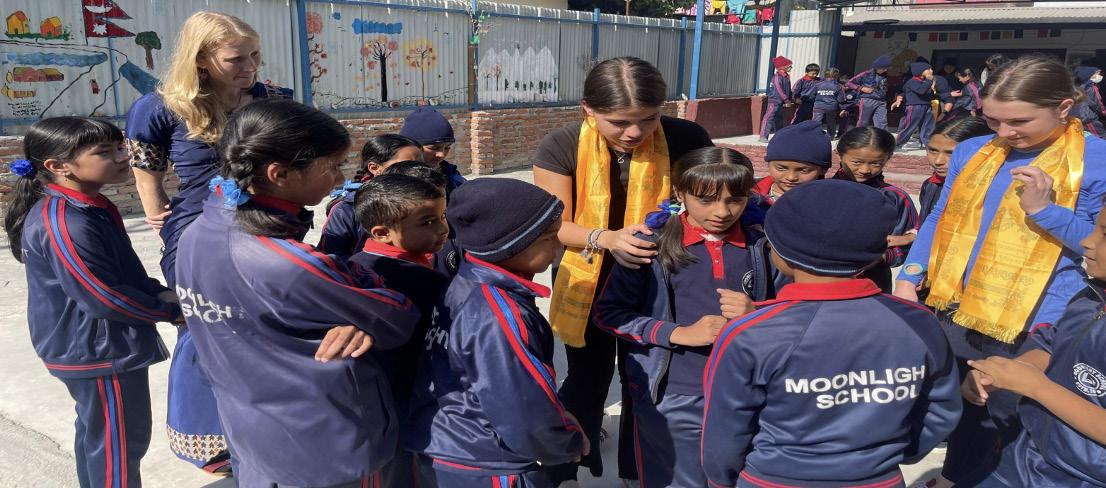
Many of these schools return year after year, recognizing the profound impact these programs have on their students’ personal growth and development. As their network of international schools continues to expand globally, a vibrant community of learners and educators is formed—one that is dedicated to nurturing the leaders of tomorrow.


Learn More or Get Involved
For more information about how your school can partner with Moonlight Nepal Trekking & Adventure, please visit:
Phone Number: +977 9841698855
Email: info@moonlighttreks.com, santoshkoirala333@gmail.com
LinkedIn: http://linkedin.com/in/santosh-koirala-438463145
Facebook: https://www.facebook.com/moonlighttreks/ WhatsApp (for quick communication): +977 9841698855


Green & Sustainable Ecovengers: A Student-led Initiative with the Goal of Promoting Environmental Sustainability
By Zaya Inanc and Amy Gallagher
International School of Ulaanbaatar
“Our vision is to actively engage all members of the ISU community to develop practices that act purposefully towards the well-being of the community and our sustainable future.”
Mongolia’s extreme climate, with harsh winters and hot summers, leads to environmental challenges like floods and pollution, creating the necessity for a club aimed at environmental sustainability. Ecovengers, a student-led club aimed at creating a culture of environmental sustainability and promoting it throughout ISU, enforcing its core values of environmentalism within the student-body and school community. The club started as a single seedling and flourished into a mighty tree, transforming the school into a greener, more sustainable community.
Ecovengers began as an extracurricular activity run by teachers for primary students a few years ago. More recently the club has been established at the secondary level by a recent alumni, Bilguunzaya, resulting in the creation of a 'secondary Ecovengers space' that has allowed students to share their ideas and initiate individual environmental projects. Ideas from students were


incorporated and a variety of recycled and repurposed items were used to create it. The space became a multipurpose area, with classes and Ecovengers meetings being held there.
Throughout that school year, members of Ecovengers also launched a variety of projects that aimed to cultivate a culture of sustainability at ISU. Some of these projects included the construction of a hydroponic vertical garden, a plastic recycling campaign, greenhouse organisation and the propagation of plants to be sold for fundraising, the designing and formation of an Ecovengers website that advocated for environmental sustainability, and working with primary to teach them about growing and looking after plants.
Ecovengers 2024 is currently run and led by 12th grade students; Zaya and Amy, who share a collective passion for eco-friendly work and maintain the objective to engage the school community in their efforts for a greener future. They are supervised by Ms. Anuja, who has seen the progression of Ecovengers throughout its years. The years’ club focus is to encourage and help students to initiate projects that promote sustainability within ISU and its community.
By the end of the first semester, their efforts culminated in a growing team and a wave of impactful projects. Under their leadership, Ecovengers launched plastic and paper recycling campaigns, initiating action towards the student-body to participate in environmental sustainability, providing a context for impactful advocacy. They engineered the hydroponic vertical garden constructed the year prior, maintained and organised the greenhouse space for plant propagation, and began to plan initiatives to fundraise for future projects.
Though challenges were faced in the duration of this semester, students worked hard to persevere and overcome them. In the case of the vertical garden, obstacles arose this semester that had to be overcome. The hydroponic vertical garden was built last year with the purpose of improving air quality inside the school and growing plants and herbs that could be sold to the ISU community. It includes a water pump that allows water to circulate through the garden. Though the vertical garden is ready for plants to be potted, a challenge arose as it began to leak when the water pump was on.
However, a solution to this problem was found, which allowed work on the vertical garden to continue. Challenges with the advocacy project, which aimed to launch campaigns in efforts to raise awareness and expand knowledge about environmentalism, were also faced. These included a lack of interest and participation, however these were skilfully overcome through initiatives such as social media posts and active discussion. Overcoming challenges such as these provides an example of how Ecovengers aims to not only promote environmental sustainability, but also encourage students to initiate projects and problem solve along the way.
In the future, Ecovengers hopes to continue and support a legacy of environmental sustainability for years to come at ISU through student initiatives that aim to address environmental issues of significance in Mongolia and the world, protect the environment, inform others of the importance of doing so, and encourage the school community to take action.
A tree (in background) was constructed using a variety of materials such as recycled newspapers to convey the eco purpose of the space.
Some of the features of the secondary Ecovengers space include a hydroponic vertical garden (in background), a greenhouse area, and lots of plants!
Some of
many plants in the secondary Ecovengers space.

Abstract Thinking and Beneficence Revealed: Tales from the Visual Arts Studio
Art
By Nick Stonehouse, Juanita McGarrigle, Anqi Yang, Valentina Kranjec Rosenzweig, Susan Kim and Clyde Gaw

EARCOS member schools have an abundance of art programs where children express themselves through self-generated art ideas. Within the aegis of art classrooms specially designed for student autonomy, creative and intellectual growth opportunities abound. Because organic heterogeneity is a feature of any classroom group, choice-making with subject-content, materials and art techniques is a strategy teachers may use to energize student learning. Teacher observations of student learning reveal important features about the quality of the child’s curriculum experience. Because the teacher has insight into the child’s aptitude for learning, curriculum activity can be mediated as needed. Teachers bare witness to student’s discoveries about their psychogenic power. Developing the capability to express ideas in two, three or four dimensions is an important educational achievement. Nick Stonehouse explains:

Agency in art is a great vehicle for students to help foster creativity and enable a deeper understanding of themselves and engagement with the world around them.
At SSIS the elementary specialist teachers integrate with each other, and the homeroom learning. Through this we can still provide huge opportunities for student agency.
One student who receives regular learning support stands out as someone who embraced the freedom to have voice and choice, set his own sails, and cast off with independence. A recent integration unit had the students choose a South East Asian animal of their interest in the homeroom and research into it. In the art studio they were given one constraint ‘Create a Mask of Your Chosen Animal’. The students could create the masks in anyway theywanted, with no limit of size, form, materials orvisual perspective. Through short open-ended skill building activities the class were introduced to a range of different art techniques from acrylic painting, cardboard construction, clay modelling, drawing skills, and paper mache.
His chosen animal, the Wolf Spider, is a complicated little fellow to make into a mask, but by being enabled to take ownership of his learning, through having acquired creative tools and given freedom, he produced something spectacular. It not only showed ingenuity in construction, understanding of ergonomics, selective choice of materials and joining techniques, but also a deep understanding of form, depth, texture and artistic flair. It also showcased the interest he had for this spider and the depth at which he had researched not only into its life and habit, but into its appearance.
When I showed his parents the mask they were delighted with his success at this amazing finished artwork. It was only until I told them about the process - the journey that he had gone on that they could see that it was through him being an active participant in his learning that this was possible. He had the tools, and steered his own ship. He showed excellent planning, had vision, embraced trial and error, made mistakes, demonstrated persistence, problem solving skills, self reflection and had the desire to finish and succeed. He was confident and proud in what he was doing - because this creation was his. These are many of the things we value in life.
Nick Stonehouse, ES Art, Saigon South International School, HCMC, Vietnam
In Nick’s example we observe the provision of choice-making to catalyze artmaking through personal interests. Nick’s student demonstrates the power of emotional drive in the completion of his project.
Opportunities for choice-making within an emergent curriculum can energize intuition, however artmaking can also begin with careful study, planning and revisions. Juanita McGarrigle shares the story of Hudson:

Hudson, a dedicated fifthgrade student, embarked on an exciting artistic adventure to create a dragon sculpture. With a passion for art and a keen interest in mythical creatures, he meticulously researched various dragon designs, focusing on the elements he wanted to incorporate into his project, such as scales, wings, a fierce beard, and sharp claws. Hudson understood the importance of preparation for his project and spent time practicing the appropriate skills on other designs during his planning stages. This independent learning approach allowed him to refine his techniques before applying them to the sculpture, setting a strong foundation for his work. Once he had a solid plan, Hudson turned his attention to constructing a strong armature, the skeleton thatwould support his dragon sculpture. He learned that a sturdy base was essential for ensuring his dragon could stand. After completing the armature, he moved on to the paper mâché technique, carefully layering strips of paper to create the dragon's body. Throughout this process, Hudson paid close attention to detail, adding wings, scales, and other structures using popsicle sticks. When he faced challenges, he tried, revised, and adapted his project, showing resilience and awillingness to learn. After finishing the structure, he added more details with paper mâché, folding the paper to create ridges that enhanced the texture of his dragon.
Hudson’s commitment to self-improvement was evident as he practiced his painting skillswith acrylic paints, focusing on achieving clean lines and intricate details. He added vibrant paint details using metallic colors, blues, and reds, bringing his dragon to life. Hudson spent many hours during art studio lunch break perfecting his creation, actively seeking feedback from peers and teachers to refine his work. When the project was completed, Hudson felt an immense sense of pride in his final sculpture, and his hard work, creativity, and determination. His art project resulted in a great piece of art but also highlighted his resilience and pride when facing challenges and being able to overcome them.
Juanita McGarrigle, Head of Department ES Arts, Western Academy of Beijing, Beijing, China.
Hudson sought assistance from fellow classmates to make judgements about his work. He understood there is power in feedback from members of his community. Students reaffirm ideas when they can interact with collaborators. Open art studios can be nurturing spaces. Through collaboration and meaningful learning experience, positive associations to the school are made. We observe this feature of creative experience in Anqi’s classroom:
Hugo, a spirited fourth-graderartist, has flourished in ourTeaching for Artistic Behavior (TAB), choice-based art program from the very beginning of the school year. With the freedom to choose his materials, mediums, and creative direction, he’s discovered a strong personal voice—one that vividly connects to his passion for flight. His early collages not only showcased an emerging mastery of shapes, colors, and layers but also strengthened his fine motor skills, boosted his confidence, and nurtured his sense of ownership over the creative process.
Building on this foundation, Hugo ventured into paper engineering and 3D conceptual art. He meticulously cut, folded, and layered paper to construct a large-scale airplane—an experience that sharp-

ened his problem-solving abilities and perseverance. When he realized his “heavy paper plane” couldn’t fly, he adapted by exploring lighter materials, illustrating the resilience and resourcefulness fostered by a learner-centered classroom.
Hugo’s inventive spirit soared further when he proclaimed, “I worked on my Airbus A410 prototype. It is an Emirates passenger aircraft that will have seven engines and levels and will carry over 600 passengers. It is also a cargo plane because it can hold so much!” This bold vision reveals not just his creative thinking but also his growing sense of self-efficacy and excitement for collaboration— he frequently shares ideas with peers, learning from their insights and offering help in return.
Ultimately, Hugo’s journeyis a testament to howaTAB, choice-based, student-driven approach promotes intellectual curiosity, hones critical thinking and problem-solving, encourages social-emotional growth through confidence and collaboration, and develops physical dexterity in the art-making process. From carefully folded wings to inventive attachment methods ensuring balance and stability, each component of his design emerged through thoughtful trial and error, reflecting how Hugo embraced every challenge as an opportunity to explore solutions, refine his ideas, and ultimately bring his vision to life. By empowering each child to pursue personal interests and experiment freely, TAB transforms the art room into a vibrant space where students thrive on every level.
Anqi Yang, ES Art, Western Academy of Beijing, Beijing, China


We can observe other forms of beneficent learning experience inside Valentina’s classroom including the development of collaboration skills:
As Art Educators, we have a unique opportunity to create learning experiences that empower young creators. These experiences honor each student's identity while building essential skills for an ever-changing, innovative world.
One such experience was a Grade 3 Art for Community Engagement unit, where children explored how art can enrich the lives of others through designs for fun and learning. When asked how they could use art to engage their community, the studio came alive with a creative buzz. Artists eagerly brainstormed ideas for games, models, and books, quickly making “shopping lists”: “We’llneed skewers and cardboard!” and anticipating challenges: “We have to figure out how to make it move…”
Teachers, as guiding partners, introduced reflective prompts—statements about artmaking—that helped students consider how those ideas applied to them. This process encouraged self-awareness and
supported students in making purposeful studio choices in their personal “stretch zone.”
Based on the brainstorm and self-assessments, teachers set up centers and mini-lessons that supported each student’s journey. The artists found their flow. A “Guess the Bearcat” game emerged from a portrait artist teamed with a tinkerer. A marble run took shape under the hands of young scientists unafraid of trial and error. Storytellers built a puppet theatre. And more.
Lisa, a thoughtful artist with the mind of an architect and a love for International School Manila, chose to design a 3D model of the campus. She began by mapping familiar spaces. When Rafael, a new student, joined the class, he asked, “May I join her? I’m getting lost—maybe this can help.” Together they explored the hallways with sketchpads in hand. “I get it now,” Rafael said. “This side curves and connects to the main building…” Their collaboration turned into a shared journey of discovery: “How can we make cardboard curve?”
They shared their work by hosting a Fun Fair for the community, witnessing firsthand the power of art to spark joy—not only for its creators, but for those who experience it.
Valentina Kranjec
Rosenzweig, Elementary Art Teacher and Program Leader, International School Manila
Susan Kim’s students develop their envisioning skills but more importantly are developing a sense of creative self-confidence.
In my Teaching for Artistic Behavior (TAB) classroom, I witness students flourish as creators and thinkers every day. The format of each art class is simple. After a short skill builder or introduction on artists like Alma Thomas or Yayoi Kusama, our early years students eagerly move to the "Choice Chart."They find their names, select a color-coded sticker, and decide which art center to explore—red for drawing, green for painting, and so on. Watching them navigate the room with purpose, some choosing centers they love, others venturing into new ones or joining friends, is a joy. I move around the art studio observing, sometimes asking questions, sometimes modeling proper techniques or lying on the floor to create castles with the young artists.
However, midyear, a new student joined the class and sat, bewildered. Overwhelmed by the freedom to choose, they hesitated, unsure what to do. It’s a moment I’ve seen before—some students are uncertain by the choices available, while others beam with excitement, ready to make their own ideas come alive. One kindergartener stood out. She gravitated to the collage center and, with meticulous care, constructed an intricate piece using patterned paper, recycled plastic, and beads. I marveled at her work and said, “What a beautiful sculpture!” She corrected me with a sparkle in her eyes: “It’s not a sculpture—it’s a shopping mall in Hong Kong!”
That moment left me in awe. It reminded me of the immense potential of the TAB classroom to nurture not just artists, but architects, designers, and visionaries. It’s a space where students’ imaginations soar, and I’m endlessly grateful to be part of their creative journey.
Susan C. Kim, PYP Visual Arts Educator, Shekou International School, China
Going beyond the given information means students can take their cognitive skills to higher levels. The refinement of abstract thinking means learners reflect on experience and advance ideas based on changes from those reflections.
The value of studio experience is embodied, active learner engagement. Layered within artistic experience is the development of resilience, identity formation, problem posing, problem solving and technical skill development. Artmaking from self-generated personal ideas or choice-making involves autobiographical study. Within this phenomenological state, the subjective realm intertwines with new knowledge and skill, deepening experience so learning becomes vital and relevant to the student.
Art Exploring the Art of Shadow Puppet Theatre: Fostering Holistic Development in Students
By Agnieszka Sulek and Carla St Louis International School of Ulaanbaatar
At the recent EARCOS Teachers’ Conference in Kuala Lumpur, our team from the International School of Ulaanbaatar, Mongolia, had the pleasure of presenting our workshop on the captivating art of shadow puppet theatre. Our workshop drew over 50 enthusiastic educators, including single-subject and homeroom teachers, eager to explore how this ancient form of storytelling can enrich modern educational practices, innovate methods for student engagement, and community connection.
Shadow puppet theatre is a mesmerizing blend of art, performance, and education. It stimulates creativity, encourages collaboration, and promotes critical thinking among students - skills essential for 21st-century learners. The flickering silhouettes on a screen transform simple stories into powerful narratives, allowing students to tap into their creativity and explore complex themes. As educators, we recognize the importance of nurturing the holistic development of our students – emotionally, socially, and intellectually. This workshop illustrated how shadow puppet theatre serves as an innovative tool to achieve these goals.
One of the key features of the workshop involved teaching participants how to create their shadow puppets using simple materials and demystifying the process. This hands-on experience not only engaged their imaginations but also illustrated how easily shadow puppetry can be integrated into various subjects, whether it's storytelling in language arts, historical reenactments in social studies, or even science explorations of light and shadow. By engaging in such creative activities, teachers can help students develop their cognitive abilities while simultaneously fostering emotional and social skills through collaborative storytelling.
Throughout our session, we emphasized the importance of storytelling as a vehicle for self-expression. Many attendees resonated with the idea that shadow puppetry allows students to convey their thoughts, feelings, and cultural backgrounds in a unique way. By integrating this art form into their curriculums, teachers can cultivate a climate of inclusivity and respect among students, empowering them to express themselves and appreciate others.


One of the workshop’s highlights was our discussion on the role of shadow puppetry in building and strengthening community connections. As we observed the collaboration among attendees, it became evident that creating and performing shadow puppetry can enhance teamwork, communication, and relationship-building among students and teachers. These skills are vital not just in the classroom but also within the larger community context. When performances involve families, they transform into meaningful events that showcase students’ creativity and hard work. This active participation cultivates a deeper sense of belonging and pride among families as they witness their children’s achievements.
Feedback from attendees has already been overwhelmingly positive. Several teachers have reported implementing shadow puppetry into their teaching soon after the workshop, seeing great results. Some have created projects that encompass language arts, visual arts, and performing arts, while others have used puppetry to promote storytelling in early literacy. Witnessing their enthusiasm and innovative approaches to incorporating this art form has been immensely gratifying.
Reflecting on our experience in Kuala Lumpur, we are proud to have ignited a spark of creativity among teachers at the EARCOS conference. Shadow puppet theatre serves as a valuable hands on pedagogical tool, allowing educators to explore and express the holistic development of their students through the arts. As we continue to receive updates on the successful application of these techniques in classrooms, we are reminded of the powerful impact that innovative practices can have on student learning and community connection.

Participants get creative in telling their stories.
Workshop participants create their shadow puppets using simple materials.

Layers of Shadow in the Classroom:
A Lesson on Wayang Kulit
By Illya Sumanto Panyaden International School
Illya performing Wayang Kulit. Photograph by Yugo Hattori. Personal collection.
Have you ever seen kids discover a projector and suddenly turn into shadow puppeteers?
Children have always been fascinated with shadows. The way they follow, shift, and stretch- it is magical. In early years and primary classrooms, this playful curiosity often sparks creativity and engagement. But something changes as children grow older.

Figure 2 - Children devising stories in Illya’s class at Panyaden International School, Chiang Mai. [Photograph by Napat Chimpraset]. Personal collection.
By adolescence, the shadow is often forgotten. Play fades as pressure, technology, and social media take over. What was once a playful source of curiosity becomes a symbol of the emotions teens do not feel safe to show, like fear and insecurity. Many experience anxiety, isolation, and emotional disconnection but struggle to express them (Bear et al., 2025). What if we could reawaken their fascination with the shadow, not just for play, but for healing?
During the pandemic, I began teaching Wayang Kulit, the traditional Southeast Asian art of shadow puppetry, to IB Diploma Programme students online as part of the World Theatre unit. These virtual workshops were more than cultural exposure; they became spaces for self-expression and emotional reflection.
Wayang Kulit is an ancient performance tradition from Indonesia and Malaysia that uses intricately carved leather puppets to cast shadows on a screen. Traditionally, stories are drawn from mythology, folklore, and local history. But with my students, the stories became personal.
Figure 3
Sita from the Malaysian Kelantanese Wayang Kulit tradition. [Photograph by Yugo Hattori]. Personal collection.

Teaching online, first at the American International School of Doha, then at the United Nations International School of Hanoi, we connected across layers of screens: my laptop and shadow screen, their laptops and DIY puppet screen made by hanging a white cloth and shining a light behind them. Within this dance of light and darkness, something unexpected happened. The shadows didn’t just reflect the puppets -- they reflected the students themselves.
Drawing on Carl Jung’s idea of the “shadow self” (Jung, 1969; Tinsley et al., 2024), students were invited to externalize a hidden emotion such as fear, anger, or loneliness. They then turned it into a puppet. They gave their feelings a face, limbs, and movement. Try it in your classroom!
The process is simple but powerful:
• Prompt: choose one emotion caused by something that has been bothering you lately.
• Sketch and create a puppet to represent it.
• Shine a light on it.
• Pair students up so their puppets can interact with each other. Encourage them to keep their eyes on the puppet and its shadow as they speak, rather than the person they are speaking to.
The shadows will begin to speak to each other, channeling parts of ourselves we often keep silent. This method helps teens express what they can’t always put into words. At first, it may feel exposing, even awkward. But like all meaningful journeys, it takes time.
Since the pandemic, I have continued to teach Wayang Kulit online and offline because this work is urgent. The Malaysian Kelantanese Wayang Kulit, the tradition I am advocating for, is rapidly disappearing. In the 1960s, over 300 dalangs (master puppeteers) performed in Kelantan, a state in Peninsular Malaysia. By 1999, that number had dropped to 11 and it continues to decline (Jufry, 2022). Today’s teens may have never even heard of the Malaysian Wayang Kulit, which is more often associated with neighboring Indonesia. But by inviting them to experience it not as a relic, but as a living art, we have a chance to keep it alive.
References
Bear, H., Fazel, M., the OxWell Study Team, & Skripkauskaite, S. (2025). Isolation despite hyper-connectivity? The association between adolescents’ mental health and online behaviours in a large study of school-aged students. Current Psychology: A Journal for Diverse Perspectives on Diverse Psychological Issues, 1–14. https://doi.org/10.1007/s12144-025-07643-z
Jufry, F. D. M., Ariffin, M. N. T., & Husain, N. M. (2024). Wayang Edu: digital application For Wayang Kulit Kelantan. International Journal of Evaluation and Research in Education, 13(3), 1655–1665. https://doi.org/10.11591/ijere.v13i3.26355
Jung, C. G. (1969). Aion : researches into the phenomenology of the self (Second edition. Fifth printing, with corrections, 1978). Princeton University Press.
Tinsley, C. H., Kathawalla, R. R., & Cronin, M. A. (2024). Integrating the Shadow Within “Us” to Strengthen Our Field. Academy of Management Review, 49(3), 662–682. https://doi.org/10.5465/ amr.2021.0095
About the Author
Illya Sumanto is a Malaysian puppeteer, educator, and theatre producer based in Thailand. She currently teaches performing arts at Panyaden International School in Chiang Mai and serves as the Wayang Kulit specialist for the International Schools Theatre Association (ISTA), introducing the traditional art form to young people around the world, both online and in person.
As the producer of Wayang Women, an all-female, multinational Wayang Kulit troupe, Illya is actively studying under renowned Kelantanese master puppeteer Pak Dain. She is also pursuing a doctoral thesis focused on the shared experiences of female puppeteers in Malaysia and Indonesia. In 2023, she presented her work at the EARCOS conference.

Exploring Nontraditional Art Supplies: A Handsa-On Experience
By Kelli Cody
MYP/DP Art Visual Arts Teacher
Mont’Kiara International School

Engaging with local artists provides students with invaluable handson experiences, allowing them to deepen their understanding and appreciation of artistic materials and techniques. Learning directly from practicing artists not only introduces new methods but also offers insight into their creative processes, cultural influences, and personal artistic journeys.
One such experience came through a visit from Malaysian artist Jailani Abu Hassan, who introduced students to an unconventional art medium—bitumen. Jailani demonstrated how bitumen, commonly used in construction, can be transformed into a powerful artistic tool. By mixing it with thinner and water, students discovered how to create dynamic textures on their surfaces. They were then encouraged to experiment further, using charcoal and pastel to bring out the unexpected forms and patterns emerging from their work.


Another inspiring session was led by Kika Goldstein, a Brazilian artist living and working in Malaysia. Goldstein introduced students to a wax and turpentine mixture that, when combined with oil paint, creates a rich matte texture. With a strong focus on color and surface, she encouraged students to experiment with this traditional material in innovative ways. Through her guidance, students explored how layering and blending could produce unique visual effects, pushing them to think beyond conventional painting techniques.
These immersive experiences not only expanded students’ creative approaches but also highlighted the importance of exploring nontraditional materials in art. By stepping beyond conventional supplies, they learned to embrace spontaneity and uncover new possibilities within their artistic expression. Additionally, working with local artists fosters a deeper connection between students and their artistic community, inspiring them to think creatively and appreciate the diverse ways art can be made and interpreted.
Jailani Abu Hassan presentation.
Kika Goldstein presenting techniques.
High School Art Gallery


Concordia International School
(Left)
Minh Ta, Grade 11
Charcoal
(Right)
Khanh Le, Grade 11
Pencil Value


Beijing City International School
Lucy Luo, Grade 10
Watercolor on paper


"Out of place, yet still complete"
Beijing City International School
Iona Douglas
Oil paints on canvas, newspaper collage 3D elements 40x60cm


Tsukuba International School
(Left)
Emma Mayers, Grade 11
(Right)
Rinne Umehara, Grade 11
"Snacks"
Hanoi
High School Art Gallery


True North International School
(Left)
"Roses"
Bui Ha An, Grade 9A
Acrylic on canvas
(Right)
Multiplicity of Being Shin Hyejin, Grade: 11
Acrylic on canvas


International School Ulaanbaatar
(Left)
Anir Bayar, Grade 7
Oil pastels on paper
(Right)
"My Friend ilkin"
Badmaarag Erdene Baatarsuren, Grade 7
Oil pastels on paper
Seoul International School Dyne Kim, Grade 11
Seoul International School Jimin Park, Grade 12
