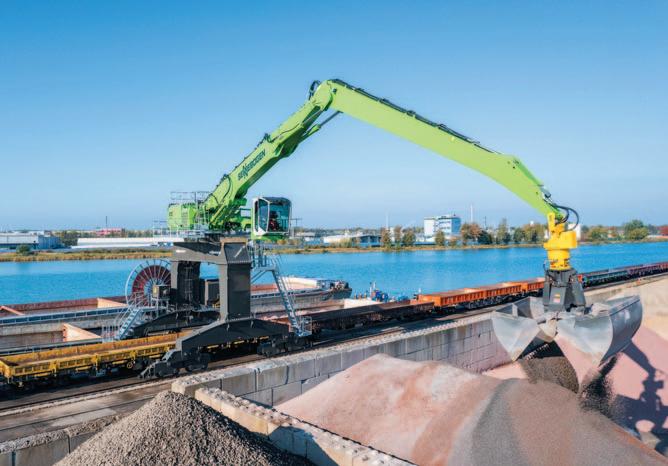
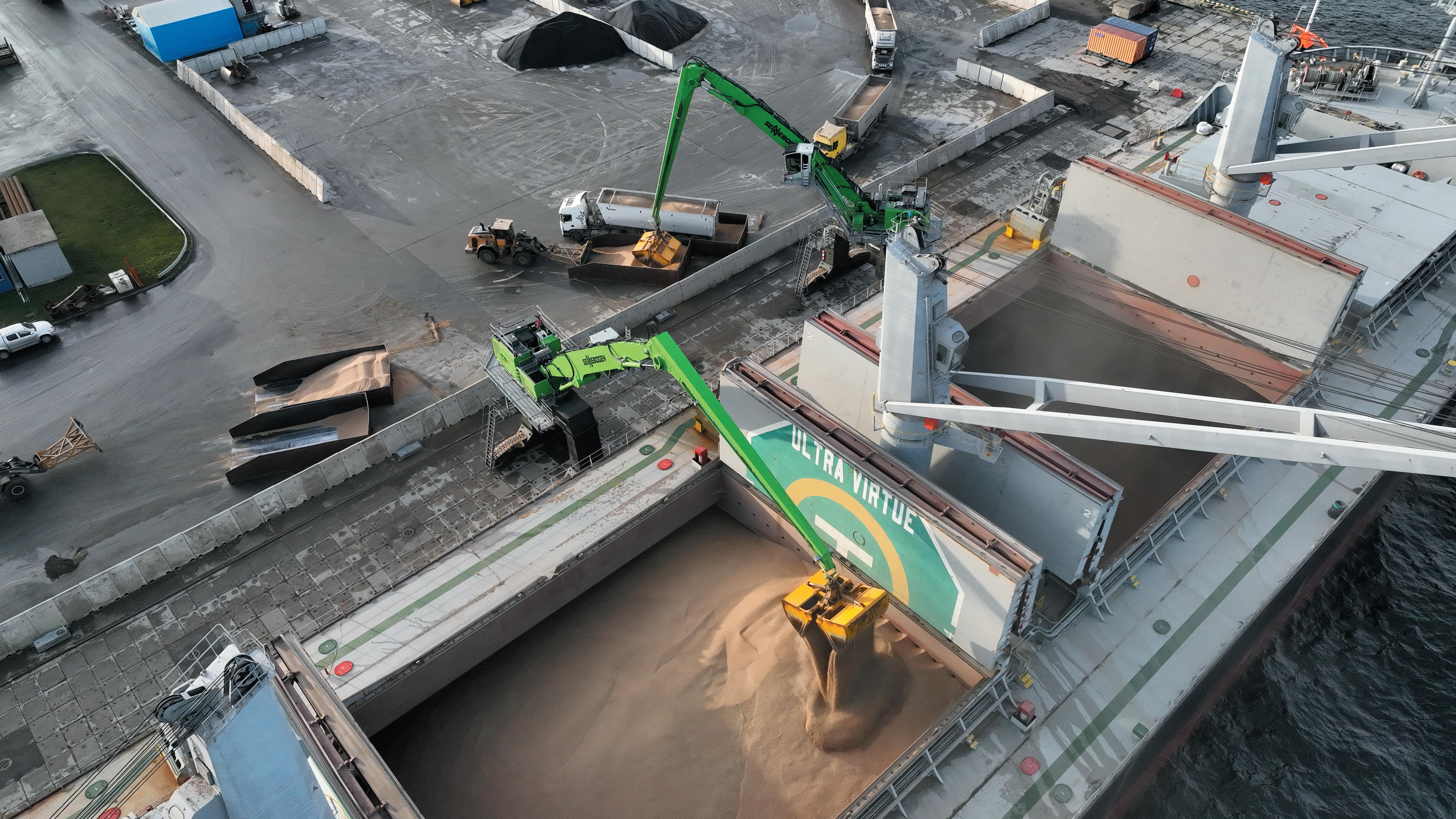
At
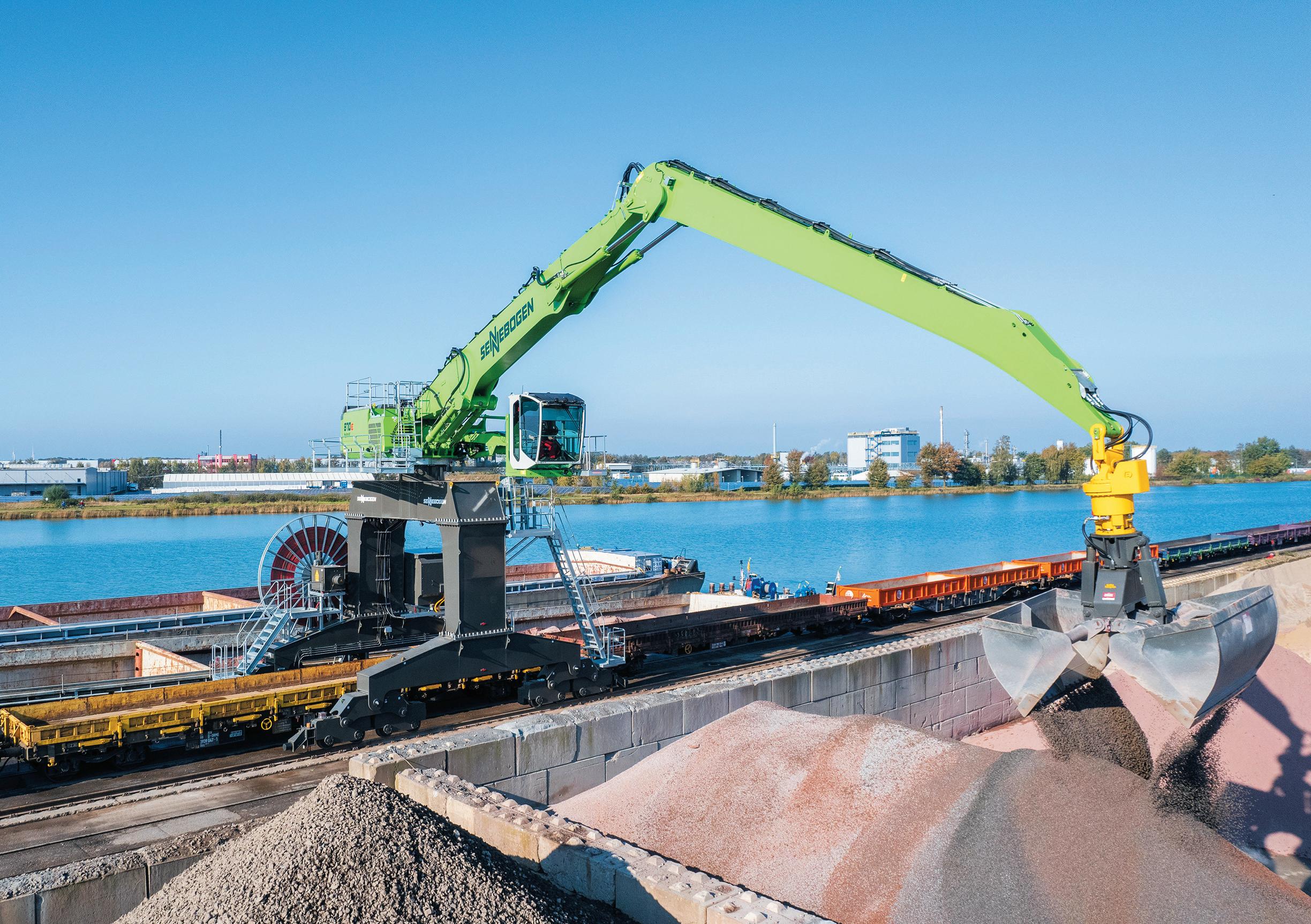
in Ibbenbüren-Uffeln
and freight train.
SENNEBOGEN Maschinenfabrik GmbH
Sennebogenstraße 10 D-94315 Straubing, Germany
T: +49 9421 540-0
E: info@sennebogen.com
W: www.sennebogen.com
PUBLISHERS
Jason Chinnock jason@dc-int.com
Andrew Hucker-Brown andrew@dc-int.com
EDITORIAL
Louise Dodds-Ely Editor louise@dc-int.com
Jay Venter Deputy Editor editorial@dc-int.com
Samantha Smith Directories directories@dc-int.com
Bernice van Wyk Office Manager accounts@dc-int.com
SALES
Matthew Currin Senior Sales sales2@dc-int.com Executive
Zack Venter Advertisement Sales sales@dc-int.com Executive
CORRESPONDENTS
India Kunal Bose
Europe Barry Cross
UK Maria Cappuccio
UK Michael King UK Richard Scott
ADMINISTRATIVE OFFICE
Business Publishing International Corporate Park, 11 Sinembe Crescent La Lucia Ridge, South Africa, 4051
Tel: +27 31 583 4360
Fax: +27 31 566 4502
Email: info@dc-int.com
Twitter: twitter.com/drycargomag
HEAD OFFICE
Trade Publishing International Limited Clover House, 24 Drury Road, Colchester, Essex CO2 7UX, UK
Tel: +44 (0)1206 562552
Email: info@dc-int.com
Website: www.drycargomag.com Twitter: twitter.com/drycargomag ISSN 1466-3643
Insta: www.instagram.com/drycargointernational
Trade Publishing International Ltd does not guarantee the information contained in Dry Cargo International, nor does it accept responsibility for errors or omissions or their consequences. Opinions expressed herein are not necessarily those of Trade Publishing International Ltd

Some slightly more positive commodity import signs have been seen in a number of countries recently. But adverse influences are also at the forefront, restraining world seaborne dry bulk trade which looks set to see little or no volume increase during 2025 as a whole and into next year.
Economic growth in the main countries having an impact on dry bulk commodity import demand is providing limited support. The latest authoritative forecasts for China, Japan, South Korea and the European Union show gross domestic product 2025 growth rates similar to or slightly below last year’s restrained performances.
Currently, expectations for an improving trend further ahead are not very optimistic, against a background of ongoing international trade tensions.
By contrast, a distinctly brighter outlook is evident in the grain and soya trade segment. Although prospects for imports into the principal importing areas are mixed, tentative forecasts point to a world recovery in the new 2025/26 marketing year now beginning. If achieved, an upturn will reverse the downturn experienced in the preceding twelve months.
Estimates for the main importing regions shown in table 1 combine US Department of Agriculture calculations for wheat (July to June year) with those for coarse grains (October to September
year). In 2025/26 the total volume is predicted at 442.1mt (million tonnes), 20mt or just under 5% higher compared with the 421.7mt estimated 2024/25 quantity. More than half of the increase could be contributed by larger imports into East Asia (including China), rising by 17% to 79.1mt.
The main negative element of dry bulk trade is coal, a foreseeable change in the trend apparently now beginning. It seems likely that both steam coal and coking coal global seaborne movements will be substantially lower this year and the downwards pattern may continue through 2026 as well.
Much of the weakness currently is concentrated in China and India, two countries which together comprise about half of the world imports total. China’s import volume (including land movements but mostly seaborne) in the first seven months of 2025 was 39mt (13%) below the same period of last year, at 257.3mt. Conversely, a rising trend in Vietnam’s steam coal purchases could raise this year’s volume by about 8% to over 65mt, amid strongly expanding electricity usage.
Recent indications suggest that world seaborne iron ore trade during 2025 may not continue the upwards trajectory observed over the past two years, and a reduction is foreseen by some analysts. A
source: Clarksons Research (historical data) & BSA 2025 estimate *forecast
prominent influence is the negative performance of the steel industry in raw materials importing countries, reflecting subdued usage of steel in consuming sectors.
Data compiled by the World Steel Association emphasizes the weak pattern. In the first seven months of this year, compared with last year’s same period, crude steel production was 3–5% lower in numerous countries. China’s output saw a 3% decline to 595mt. South Korea’s output also decreased, by 3% to 36mt. In the European Union a 4% fall to 76mt was seen, while Japan’s production fell by 5% to 48mt.
Within the huge and diversified minor bulks segment, comprising about two-fifths of world dry bulk commodity trade, some elements are difficult to track. Among the more visible components, several may support a sustained expansionary trend this year, including growth in cement and especially bauxite trade.
Enlargement of cargo-carrying capacity in the world fleet of bulk carriers is expected to be similar to last year’s addition in 2025. As shown in table 2, by the end of this year capacity could be about 3% above the figure seen twelve months earlier, at 1066 million deadweight tonnes, a 3% rise. Both newbuilding deliveries and scrapping totals may increase.

ABUNDANT FEED SUPPLIES, LOW PRICES TO SPUR DEMAND IN 2025/26
The International Monetary Fund (IMF) forecast global economic growth at 3% in 2025 and 3.1% in 2026. Global headline inflation is expected to fall to 4.2% in 2025 and 3.6% in 2026. This masks notable cross-country differences, with forecasts predicting inflation to remain above target in the US and to be more subdued in other large economies. This reflects front-loading ahead of tariffs, lower effective tariff rates,
better financial conditions, and fiscal expansion in some major jurisdictions. Global inflation expected to fall, US inflation is predicted to stay above target. Downside risks from potentially higher tariffs, elevated uncertainty and geopolitical
Source: FAO, USDA, IGC
tensions intensified. Restoring confidence, predictability and sustainability remains a key policy priority.
Global wheat and coarse grains are on track for a record harvest of 2.39bn/t in 2025/26, reflecting mainly a sharp rise for coarse grains. Lower international prices expected to lead to a significant uptake in
consumption to 2.39bn/t with the strongest growth in feed use followed by food/industrial use. Trade in wheat and coarse grains seen rising to 457mt (million tonnes) with stocks marginally lower at 574mt. For oilseeds a modest increase to 690mt, robust feed consumption to rise to 390mt, with a small increase in trade
Source: FAO, USDA, IGC trade-totals may not add due to rounding.
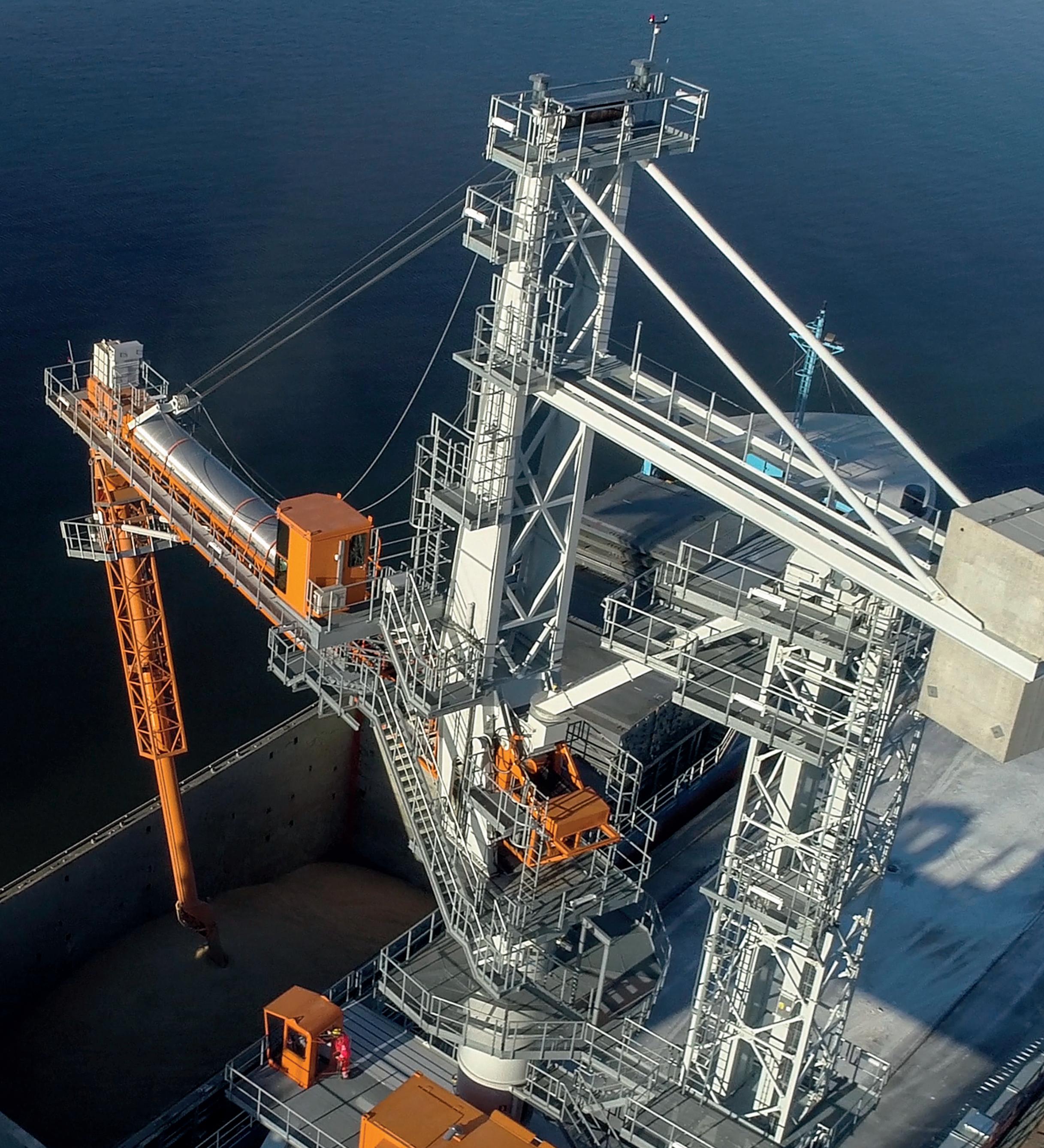
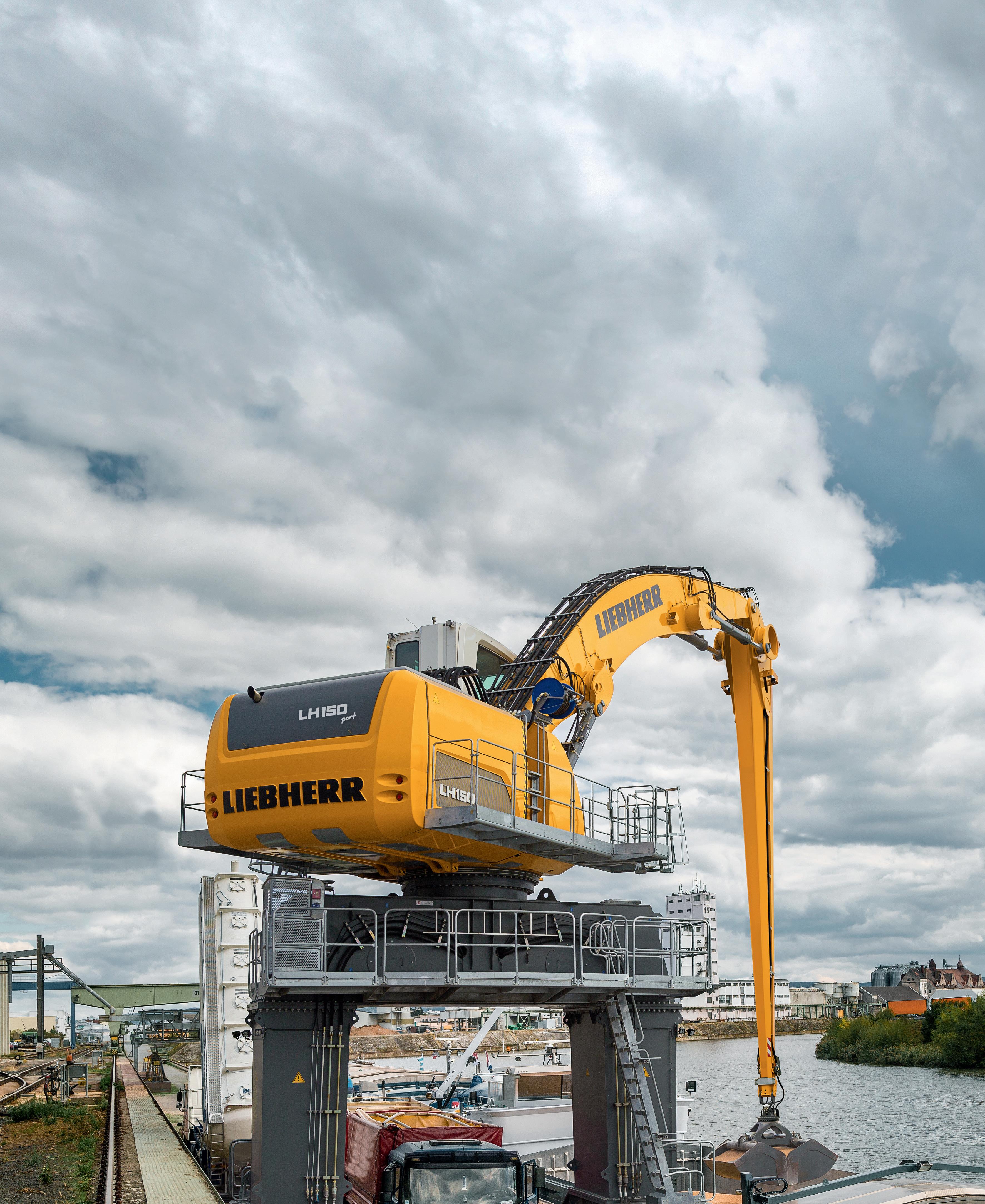
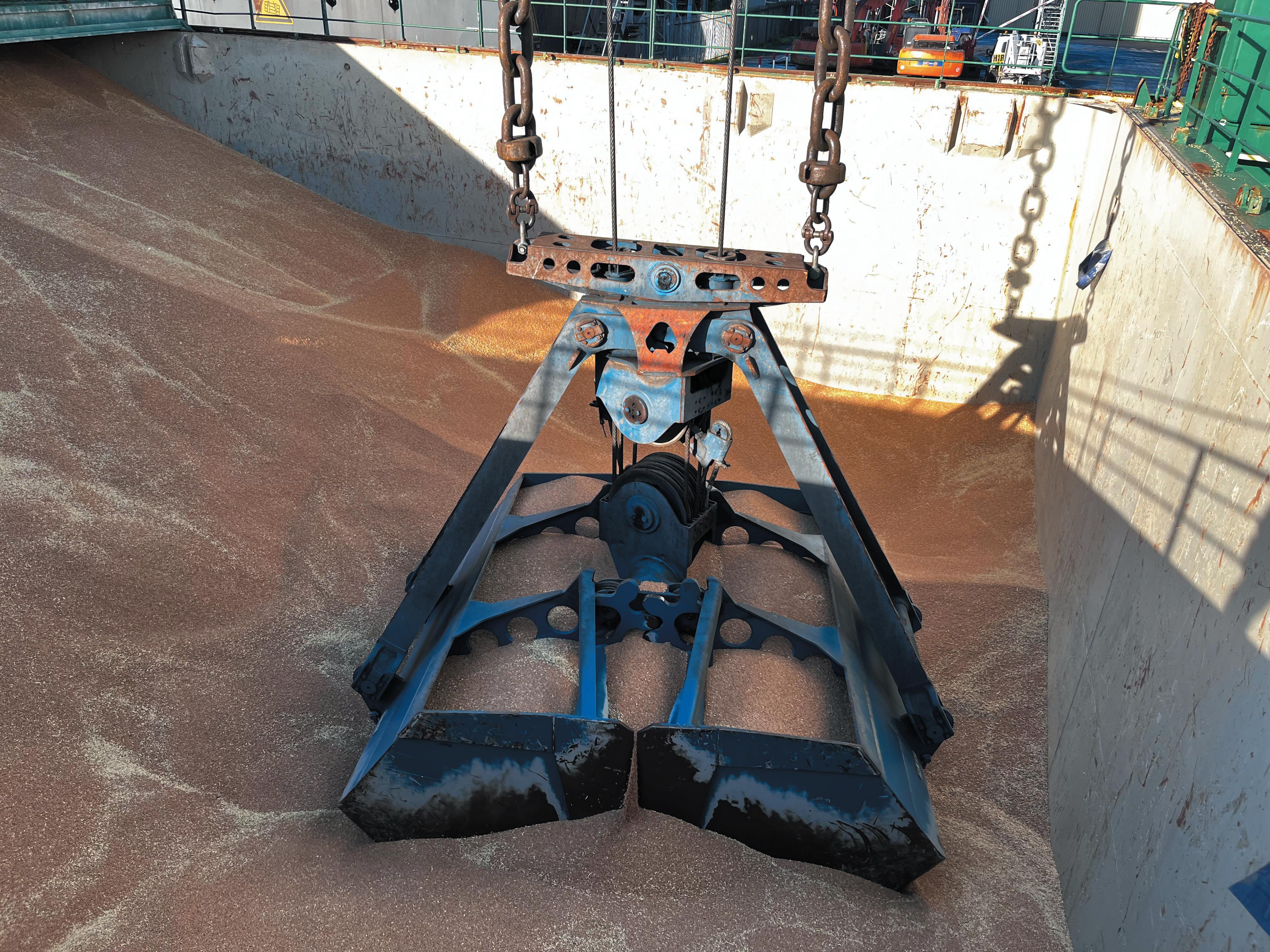
material handlers.
214mt, with stocks similar to last year.
RECORD WHEAT HARVESTS FORECAST FOR GRAINS AND OILSEED IN 2025/26
Global wheat harvest is set to be a record 816mt, with output in key countries like the EU, Russia, Argentina, Australia, offsetting lower output in China, Ukraine, Kazakhstan and the US.
COARSE GRAINS SUPPLY TO REACH A RECORD 1.57BN/T IN 2025/26
This includes a rise in the US sown area for corn, favourable weather conditions and better yields, a bumper US corn crop is expected together with good prospects for South American corn crops. Increased barley production in the EU and Australia, to more than offset lower barley production in Turkey and Ukraine.
GLOBAL OILSEED CROPS MARGINALLY HIGHER AT 690MT IN 2025/26
In 2025/26, rapeseed and sunflower seed responsible for increased output. Large soybean crops in the major producing countries, US, Brazil and Argentina to be similar to the previous year.
IMPROVING OUTLOOK FOR ARGENTINA , AUSTRALIA’S WHEAT CROPS IN 2025/26
After some difficult growing seasons, the Argentine wheat crop is forecast to rise to 19.5mt. Abares forecast the Australian crop at 33.8mt (USDA 34.5mt), following favourable rainfall, particularly in Western Australia where good crop conditions saw significant improvements in yields and for


















With decad











omvastopen the handling








Fr we m of dry bulks, oven exper nstoragetofullyequippe es of pr ehouses ove the edwar tise in Ot
om vast open















mporters and exporters w eliability mak , and r ability n storage to fully equippe








om multi-modal co fr operator owning 21 s leadi s eWe’r the UK’





Port of H
Shed 23
87,500 SQ FT



ibltd nnectivity ports ing port of choice for im our scale, capa

Str
eequir who r e us the operator , ed war Waarehouse ategic W
Ide







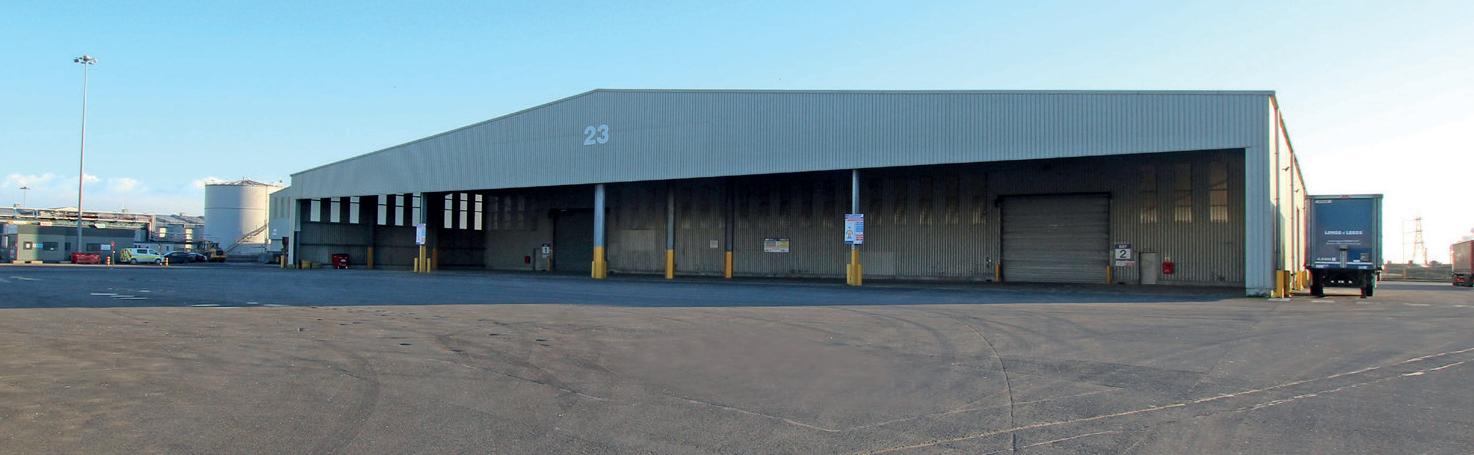

(8,128.8 SQ M) T Hull al for All Dry Bulk Uses

handling machinery water vessels and a e acces Our ports ar Units e equipped ar sible to deep











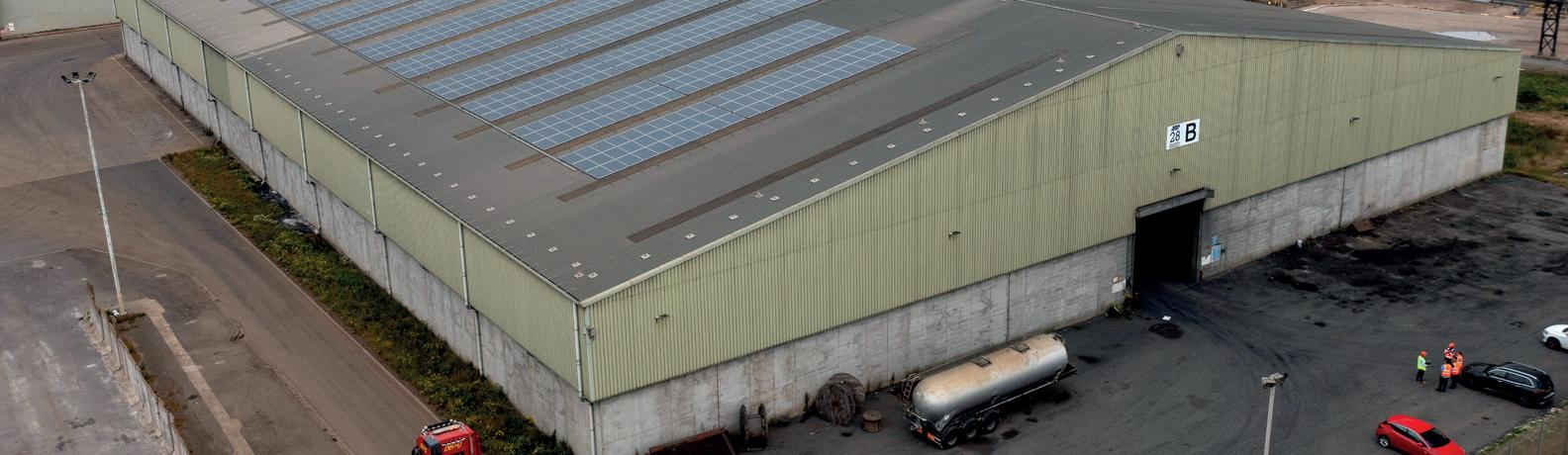
SQ
east coast crops, leading to higher forecasts for output with harvest due to begin in November/December 2025.
USERS SWITCH TO OTHER GRAINS AND BYPRODUCTS
Global wheat consumption forecast to rise to a record high 815mt in 2025/26. This reflects an increase of over 3mt to 657mt for the food/seed/industry sector, with growth in low to middle-income countries in Asia and Africa responsible for the uptick in use. Growth in feed use rising by 2mt to158mt in 2025/26, due to increased substitution for competitively priced corn and corn byproducts.
GLOBAL WHEAT TRADE REVISED -UP BY 11MT TO 215MT IN 2025/26
Exports forecast for the EU 32.5mt, US 24.5mt, Canada 27mt, Australia 25.5mt, Ukraine 15mt, Argentina 13mt, Kazakhstan 8mt and Russia 45mt (Sovecon 43.7mt). A recent tax increase on Russian wheat exports $6/t took effect from 17–23 September 2025.
With US tariffs impacting trade flows, flour millers in Asia have ramped up imports of US wheat in recent weeks, driven by competitive prices from US suppliers and delays in shipments from the Black Sea. The additional demand for US wheat in Asia, adds to purchases by traditional buyers such as Thailand, Philippines and Taiwan. Citing a recent deal, Asian traders confirmed flour millers in Southeast Asia bought US Soft White Wheat $270mt c&f and Hard Red Winter variety at $275/t c&f.
AMPLE SUPPLIES PRESSURE WHEAT
Improving wheat output in the EU and Russia and good weather in Australia and Argentina are keeping prices at multi-year lows, prompting hand-to-mouth purchasing, funds persistently short and farm margins
Source: IGC/USDA * US, Argentina, Brazil, Russia, Ukraine, EU, Australia, Canada GLOBAL
Source: IGC/USDA * Argentina, Brazil, Ukraine, US
squeezed-as markets await bullish news to spark a rally. Futures markets CBOT December contract Soft Red Winter Wheat (SRW) closed $5.236/bu $192.39/bu (09/09/25); Hard Red Winter (HRW) December contract closed at $5.144/bu $188.99 (09/09/25). In export markets, Argentine wheat Grade 2 Up River $227/t FOB, EU France Grade 1 (Rouen) $226/t FOB, US SRW $228/t FOB, US HRW $235/t FOB (11/09/25).
RISE IN GLOBAL WHEAT STOCKS IN 2025/26
Modest 2mt rise to 264mt for wheat stocks (world 139mt, China 125mt), with major exporter stocks at c.63mt in 2025/26.
RECORD OUTPUT FOR COARSE GRAINS IN 2025/26
Output seen rising to 1.57bn/t boosted by large crops in the US 442mt, EU 136mt,
Ukraine 38mt, with large crops anticipated for Brazil 137mt and Argentina 61mt.
COARSE GRAIN FEED USE TO INCREASE TO 971MT
Global demand for feed/food/industry to rise to 1.576 bn/t, with feed use rising by 25mt to 971mt and seed/food/industrial use to increase by 7mt to 605mt.
TRADE BOOSTED BY LOW PRICES
Global coarse grain exports are seen rising by 11mt to 242mt in 2025/26, due to corn imports into China rising from 3mt to 10mt, EU imports rising to 23mt, Egypt 10mt, with increased imports into Iran, Colombia, Saudi Arabia, Canada, Philippines and in some other countries.
GLOBAL COARSE GRAIN STOCKS FALL IN 2025/26
Global coarse grain stocks are lower at 310mt (world 132mt, China 178mt).

LOSS OF CHINA’S MARKET IMPACTS US CROP FARMERS
While low prices for feed and food boost trade and are attractive to users, US farmers are experiencing a cost-price squeeze due to the impact of rising tariffs on input costs for machinery, equipment, fuel, fertilizers, seeds, crop protection products, amid declining market prices for corn and soybeans. The loss of market access to China, makes it difficult for US crop farmers to cover production and storage costs leading to growing debt and financial instability.
US FARM ECONOMY IN CRISIS OR ON THE BRINK OF ONE
A majority of corn growers across the US, say the nation’s farm economy is already in crisis or on the brink of one, according to a survey released by the National Corn Growers Association, who are pressing the US administration for a compensation package for crop farmers. USDA forecast the 2025/26 season average prices for corn $3.90/bu, soybeans $10.10/bu. Both estimates fall well below the estimated break-even level for US crop farmers. US agricultural secretary Brooke Rollins told the Financial Times in an interview on 17 September, “There may be circumstances under which we will be very seriously looking to and announcing a package soon.”
Despite weather and other challenges global corn output is forecast at 1.28bn/t, boosted by a record US crop c.427mt, EU 53mt, Ukraine 32mt, China 295mt, with potential estimates for the growing crops in Brazil 131mt and Argentina 55mt.
Advanced rapidly (18 September) in the country’s main agricultural areas. Buenos Aires Grain Exchange (BAGE) anticipate a significant increase in the corn planted area of 7.8m/ha, supported by favourable moisture levels and low export taxes. The Rosario Grain Exchange forecast a crop of 61mt, assuming normal rainfall during the growth cycle.
Corn growers started planting the first of three corn crops grown every season. While last year’s corn harvest is a record c.137mt (USDA 131mt). Brazil’s corn growers say new crop production is facing profitability concerns. Due to prices that have steadily declined since April ’25, following a large harvest, and not helped by a strong Real (BRL) against the US dollar, rising production costs and shrinking returns-with costs rising by more than 9%
in 2025/26. While seeds and pesticides are lower, other inputs including fertilizers, utilities, machinery and working capital cost more than 50%, when compared to the previous season. Also, Brazil’s domestic market requires increased corn use for ethanol production, as refiners switch from sugarcane to corn for their ethanol feedstock — with 25 ethanol plants in production, ten plants to start construction and 20 more in the planning stage.
Global corn consumption is forecast at 1.289bn/t, with feed use to rise to 810.5mt, with lower food/industry 478.9mt in 2025/26.
Corn trade is expected to rise by 9mt to 200mt as feed, food/industry and bioethanol users take advantage of low prices. Corn futures bounced back rising in early trade on 16 September ’25 on hopes for some easing in the US China trade war that has effectively shut-down corn and other feed grain exports to China, when President Trump and China’s President Xi Jinping speak by telephone on 19 September to finalize the sale of TikTok to US buyers. CBOT December corn contract closed $423.6 ($166.76) 16 09 ’25

T: +44 (0) 151 525 1488
E:
Source: USDA/*Meals cons/trade-excl. fishmeal **Argentina, Brazil, US
GLOBAL CORN STOCKS LOWER IN 2025/26
By the end of the season corn stocks are expected to fall to 281mt (world 104mt, China 177mt)
FOR
Despite a cut in the barley area to 45.1/ha, global barley production is forecast to rise to 147mt, with increased output in the EU 53.2mt, Australia 15mt and Russia 17.5mt more than offset lower output in other countries. In feed use, there is a marginal increase to 101mt, food/industry 46mt. Greater uptake for barley seen in the EU, Russia, Canada, Australia and several other countries.
TRADE IN BARLEY MARGINALLY LOWER AT 29.5MT
Increased imports into Saudi Arabia, Iran, Turkey, Jordan with China’s imports 10mt, offset by a number of countries with lower import requirements. Argentina Feed (Up River) FOB $221/t (12 Sept ’25); France (Rouen) FOB $223/t (12 Sept ’25 ).
SORGHUM OUTPUT LOWER AT 62.6MT IN 2025/26
Increased output in the US 10.2mt, Nigeria 6.9mt offset by lower output in Brazil and India. In the US sorghum is used for feed with one-third of the crop for ethanol use which has increased by 5m/bu last year. Recent US EIA data indicate stronger-use of sorghum for ethanol in the final months of last season, expected to continue in 2025/26. Global sorghum exports are forecast at 9.7mt. China is the largest market with imports at 7.6mt for the feed industry-pig, poultry and for baijiu (a national spirit beverage) made by fermenting cooked sorghum. Major sorghum exporters include the US 5.4mt, Argentina 1.4mt and Australia 2.6mt. Sorghum values, like other coarse grains
are lower-Texas FOB $195.95 (11 September ’25)
Global meat production is forecast to increase, albeit at a slower pace in 2025/26. Primarily driven by an expansion in poultry meat output (146mt) given its affordability; pig (125mt) and sheep meat (19.1mt) likely to register marginal increases with beef meat (78mt) output forecast to decline. Ongoing trade negotiations continue to fuel instability in global pork markets, particularly between the US and China. Although China has scaled back imports from the US in recent years — largely due to increased local production, though it remains a significant importer of US pork
variety meats. The outcome of current negotiations between the two countries could have far-reaching implications for global trade. Meanwhile, Brazil’s rapid export growth and a modest uptick in EU shipments in 2025, intensifies competition for new markets.
Brazil will become the first country to announce an investment in the Tropical Forests Forever Facility (TFFF), a multilateral funding mechanism it has proposed to support conservation of endangered forests around the world, according to Reuters. President Luiz Inacio Lula da Silva plans to announce the investment on Tuesday 23rd September at the UN in New York, in a bid to unlock more contributions from both wealthy and developing economies, to help with the funding of global climate policy. The Brazilian government sees potential for the TFFF to be its main deliverable at the UN climate summit known as COP30, that it will host in the Amazonian city of Belem in November.
EXPECTED TO SLOW, IN 2025/26
Safras & Mercado projects 48.21mn/ha will be sown in 2025/26 — 1.2% growth compared to 2024/25 (CONAB 49.08mn/ha). Despite limited area growth,

productivity trends point to a robust output of 175mt in 2025/26.
GLOBAL OILSEEDS CROPS FORECAST AT 690MT IN 2025/26
The impact of tariffs and ongoing trade negotiations continue to fuel instability in those oilseed markets caught-up in a realignment.
This year a modest 8mt increase in global oilseed output is expected rising to 690mt.
RISING OUTPUT FOR RAPESEED, SUNFLOWER SEED IN 2025/26
USDA forecast the production of major oilseeds to rise to 690mt in 2025/26. The increase in output driven by a rise in rapeseed 91mt and sunflower seed 55mt, soybeans 426mt, palm kernel 21.6mt and copra 5.8mt, with reduced crops for cottonseed 40.8mt, and groundnut 51.7mt
SOYBEANS OUTPUT MARGINALLY HIGHER AT 426MT IN 2025/26
A small increase in global soybean output over last year in key exporting countries: US 117mt, CONAB estimates Brazil’s soybean crop at 177.67mt (USDA 175mt), Argentina 48.5mt, Paraguay 11mt in 2025/26. Demand for oilseeds partly driven in the US by the Environmental Protection Agency’s proposed Renewable Volume Obligations is expected to support prices in 2025/26. On 17 September, the Australian government said it would invest A$1.1 Bn ($735 million) in the development of a low-carbon fuels industry, a move welcomed by farm groups, who hope it will boost demand for biofuel feedstocks like canola, sugarcane, sorghum and tallow.
DEMAND FOR OIL AND MEALS RISES IN 2025/26
Global oilseed crush forecast to rise by 17mt to 580mt, with meals for feed use increased by 15mt to 390mt. Global stocks at 144mt unchanged in 2025/26.
DEMAND FROM CHINA AND BRAZIL’S DOMESTIC MARKET
Brazil’s soybean prices supported by strong demand from China and from Brazil’s domestic market to support feed, food and industry. The decision to increase biodiesel blending to 15% from the beginning of August ’25, expected to strengthen Brazil’s
domestic soybean crushing activities.
Canola meal is a desirable feed for the aquaculture industry as its amino acid profile is well suited for fish diets in
preference to fish meal — a costlier alternative. Since March ’25 China applied duties on Canadian canola meal and oil and in August imposed preliminary antidumping duties on canola seed imports from Canada. Subsequently, Canadian canola exports are being bought by Vietnamese feed manufacturers.
With large harvests anticipated oilseed stocks to rise to 145mt at the end of in 2025/26 With the exception of Brazil, low prices of soybeans — are seen in, Argentina (Up River) $416/t FOB, US 2Y Gulf $407/t fob (18 Sept). CBOT Futures contract Soybeans closed $10.365 (18 September ’25) Brazil (Paranagua) soybean price $447/t FOB
The dry bulk sector stands at a pivotal moment. With the global fleet ageing and regulatory milestones fast approaching, owners are under pressure to make investment decisions that will shape the industry for decades, writes Marc Pauchet, Bulk Carrier Market Leader, Bureau Veritas Marine & Offshore. Current newbuilding capacity is constrained, with shipyards prioritizing other vessel types in the context of regulatory uncertainty and significant geopolitical tension, combined with high prices and prolonged delivery times. However, the average age of bulk carriers continues to climb. At the same time, the International Maritime Organization’s (IMO) decarbonization targets, along with regional measures such as the EU Emissions Trading System (ETS) and FuelEU Maritime, are reshaping operating conditions and compliance costs.
Yet, despite this urgency, many owners find themselves caught in a ‘wait-and-see’ cycle. Committing to new tonnage today means gambling on fuels and technologies that lack clarity, while extending the life of older ships may incur escalating exposure to regulation and financial loss. The balance between short-term market opportunities and long-term transition planning has rarely been so precarious, making the choices of the 2020s decisive for the future of dry bulk shipping.
The challenge the industry currently faces is both comprehensive and complex. If shipping is to meet the net-zero GHG target by 2050, systemic transformation is required in terms of how we finance, fuel and operate the global fleet. As a leading classification society, Bureau Veritas Marine & Offshore (BV), is at the forefront of this industry transition, guiding owners and operators as they adapt to a future netzero environment.
The global dry bulk fleet is steadily aging, with a growing proportion of vessels approaching the end of their economic and technical lifecycles. This presents mounting replacement pressures at a time when shipyard capacity is already constrained. For many owners, securing a newbuilding slot before 2028–2029 has become increasingly difficult, as shipyards give priority to high-value segments such as
Marc Pauchet, Bulk Carrier Market Leader, Bureau Veritas Marine & Offshore.

Even for those prepared to commit capital, the timeline for delivery is stretching further into the decade, leaving limited near-term options.
Faced with this reality, owners are weighing difficult choices. Extending the trading life of older tonnage can deliver short-term earnings but exposes vessels to tightening regulatory and financial risks. Ordering new ships, meanwhile, requires confidence in fuel pathways and technology standards that are far from settled. As a result, the second-hand market has gained renewed attention, offering a way to bridge the gap in capacity — though often at elevated prices that reflect both scarcity and uncertainty.
The regulatory environment for dry bulk shipping is tightening, but clarity remains elusive. At the global level, the IMO has adopted a strategy for achieving net-zero emissions by 2050, with interim checkpoints in 2030 and 2040, and is likely to introduce a new Net Zero Framework in October, following initial approval during MEPC 83 in April 2025. This provides a direction of travel but leaves many questions unanswered on the pace and shape of future requirements.
Meanwhile, regional measures are already reshaping the economics of dry bulk operations. In 2024, the EU ETS was extended to shipping, adding a new layer of compliance costs, while FuelEU Maritime — introduced in January 2025 and might be replaced by GFI — seeks to accelerate the integration of low-carbon fuels in the years ahead. Enhanced monitoring, from drones
to satellite-based reporting, is making enforcement more rigorous. Owners and operators therefore face a difficult dilemma: committing to costly new tonnage without assurance on future fuel pathways or continuing with older vessels at the risk of regulatory and financial penalties.
Compared with other shipping segments, dry bulk has been slower to adopt alternative fuel technologies. The sector’s fragmented ownership structure and reliance on spot trading make large-scale investments more challenging.
As a result, engaging in retrofitting fleets with emerging clean technologies has become a key bridge strategy. Windassisted propulsion can be installed even on vessels over 15 years old, with reported payback periods of around five years, and regulatory provisions such as FuelEU Maritime’s wind reward factor incentivizing its use. Furthermore, carbon capture systems and energy-saving devices offer additional efficiency gains, though their economics are more favourable for larger or younger ships. Shaft power retrofits or fuel conversions are typically viable only for modern tonnage, limiting their scope of application.
In parallel, the industry continues to develop future fuel viability for technologies such as methanol, ammonia, hydrogen, and LNG. Yet only a handful of dry bulk orders feature dual-fuel capability, reflecting owners’ reluctance to commit until technology standards and fuel supply chains mature. This has created a disparity within the market as larger players, often supported by charterer partnerships, are better placed to experiment, while smaller owners face tighter capital and risk constraints.
The result is an uneven adoption across the segment. Nonetheless, incremental retrofits and pilot fuel projects are creating a foundation for wider change, positioning the sector to accelerate as regulatory clarity improves and commercial incentives strengthen.
Access to finance is emerging as one of the defining enablers of fleet renewal in dry bulk shipping. Initiatives such as the
Poseidon Principles and the rise of green financing frameworks send a clear signal to the market, aligning lending decisions with decarbonization goals.
In spite of these principles, many owners hesitate to commit to new-builds or advanced retrofits without assurance that finance will remain available on acceptable terms. As underlined in BV’s latest book, Towards a Sustainable Blue Economy, finance must act as an enabler, not a bottleneck. The challenge is ensuring that capital flows into projects that deliver both environmental progress and commercial resilience, so that dry bulk owners — particularly smaller operators — can make confident, long-term decisions.
Dry bulk freight markets have shown signs of resilience, with Capesize earnings rebounding and other segments maintaining steady returns. For many owners, the profitability of older vessels in the current market provides an incentive to delay renewal decisions, especially when daily rates remain supportive. This shortterm strength has allowed operators to extract value from ageing tonnage, even as efficiency lags the newer designs.
The challenge lies in ensuring operational resilience as regulatory compliance becomes increasingly onerous. Carbon costs, stricter chartering requirements, and mounting reputational pressures are expected to sharpen in the medium term, gradually eroding the competitiveness of older ships. While the near-term outlook remains positive, these structural pressures highlight the risk of relying too heavily on today’s market buoyancy. The sector therefore faces a two-speed dynamic: strong present returns on existing capacity, set against growing imperatives for renewal and investment in more sustainable assets.
Amid this uncertainty, classification societies are redefining their role. While traditional functions of safety, certification, and compliance remain central, class is increasingly acting as a collaborative partner to support owners through the transition. BV, for example, is leveraging its expertise through initiatives such as the Future Shipping Team (FST), a global, crossfunctional network of subject-matter experts. By facilitating knowledge sharing, training, and collaborative forums, the FST
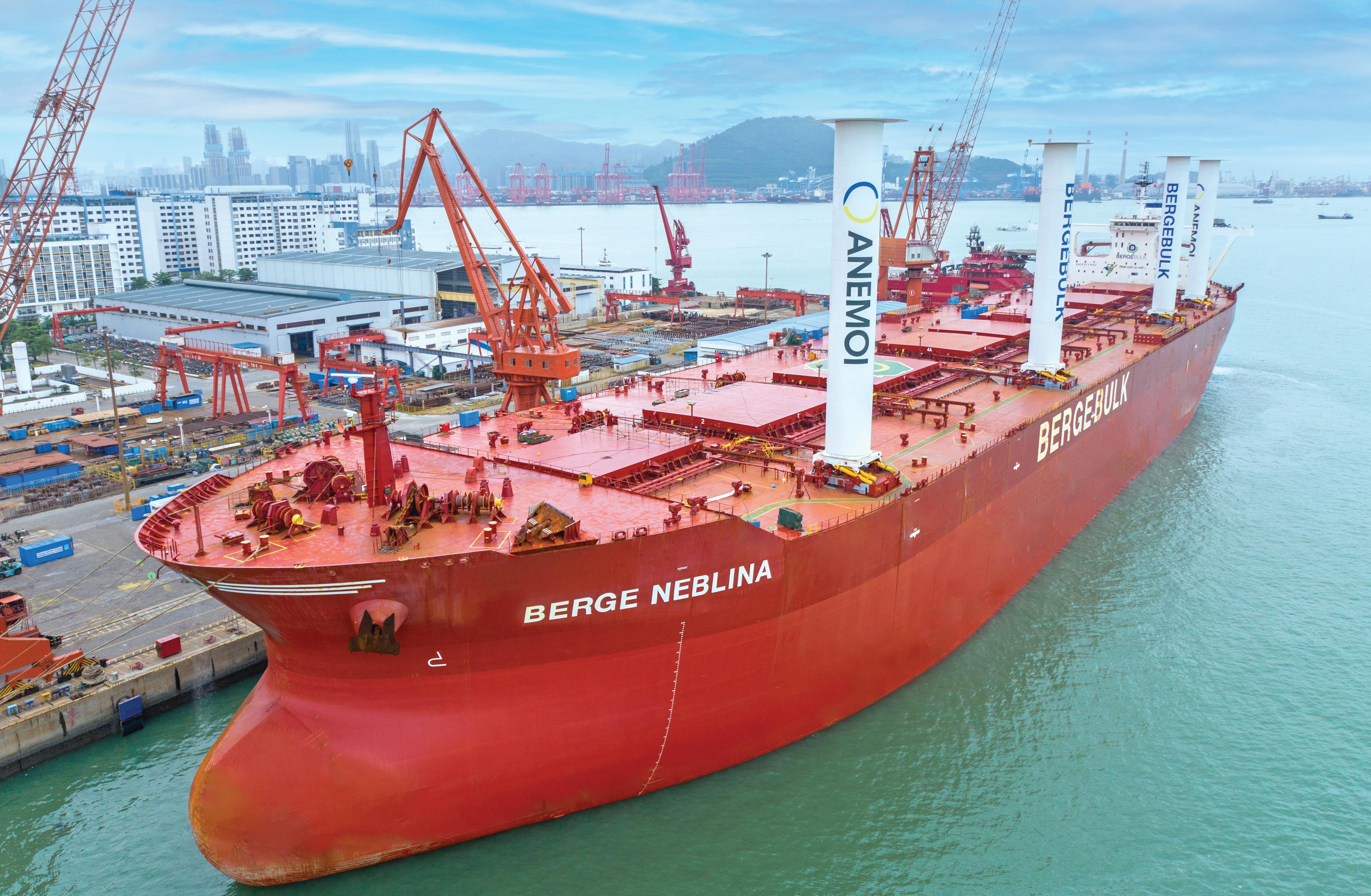
The Berge Neblina, built in 2013, was retrofitted last year with four Rotor Sails from Anemoi. (photo: Berge Bulk and Anemoi Marine Technologies.)

enables the transfer of insights and solutions across the maritime value chain. This cross-sector collaboration is critical to driving systemic change and ensuring that both BV and its clients remain aligned with the latest technological and sustainability developments.
By engaging in technology partnerships, advising on regulatory pathways, and facilitating access to green finance, class can help owners navigate the risks of both retrofits and newbuildings. For dry bulk operators, many of whom lack the scale or in-house technical expertise of larger shipping companies, and this support can be particularly valuable. The evolving role of classification societies therefore reflects the wider industry transition: moving from compliancefocused service providers to strategic enablers of long-term resilience and competitiveness.
Dry bulk shipping is entering a period of accelerated transition, where market realities, regulatory expectations, and financial frameworks are converging. Owners face difficult choices between extending the life of existing tonnage, investing in retrofits, or committing to newbuilds designed for future fuels. Each pathway carries cost, uncertainty, and risk, yet the direction of travel is clear: the sector cannot rely
indefinitely on older, less efficient assets.
The challenge is not technological alone, but systemic. Financing models, chartering requirements, and crossindustry collaboration will be as decisive as engineering breakthroughs in shaping outcomes. Incremental steps, from windassisted propulsion retrofits to green finance frameworks, are laying the groundwork for wider adoption, even if progress remains uneven today. The coming years will therefore test the sector’s ability to align short-term profitability with long-term resilience, ensuring that dry bulk shipping can continue to meet global demand while positioning itself for a lower-carbon future.




Floating bulk handling cranes
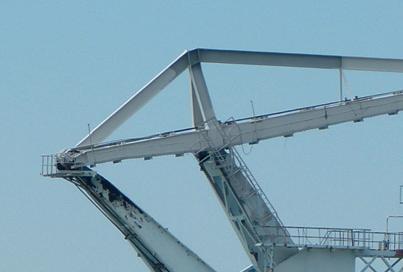
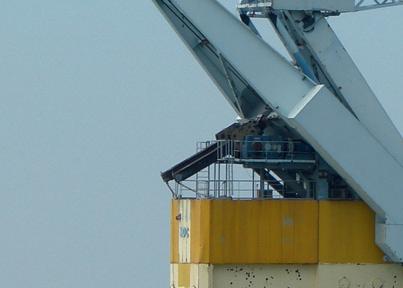

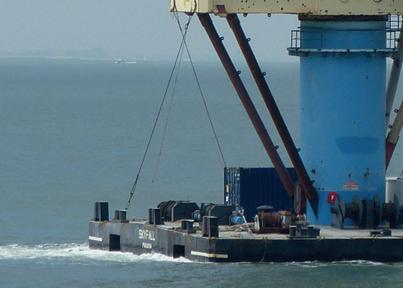


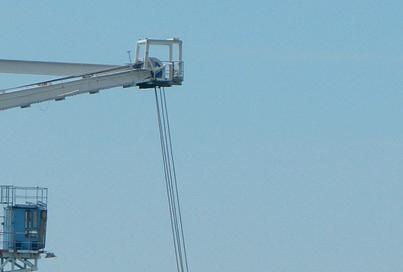
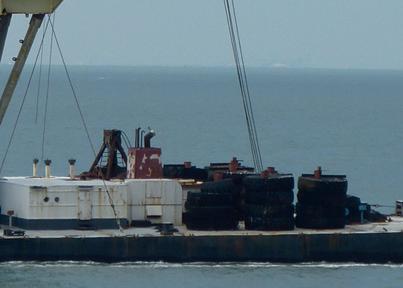
•floating bulk handling cranes •new floating lemniscate cranes



Lemniscate cranes for bulk transshipments new and used. High output at low costs, built for proven long lifecycle and 24/7/365 operations.

Jotun, a global expert in marine and protective coatings, today announced the launch of Hardtop XP II, the next generation of its most sold product. Building on the legacy of Hardtop XP, which has sold over 300 million litres since its launch in 2006, Hardtop XP II takes durability, efficiency, and aesthetics to the next level.
With a legacy dating back to 1926, Jotun has consistently delivered innovative solutions to protect assets across industries including energy, shipping, and infrastructure. The Hardtop brand itself has been trusted since 1978 to safeguard steel structures worldwide in all of these industries.
The Hardtop brand is recognized and well-known in the industry, and Hardtop XP has been the company’s bestselling product — not only in this category but for all Jotun products. Now, with Hardtop XP II we aim to push the commercial and innovative boundaries yet again.
With Hardtop XP II Jotun is ready to deliver an even stronger product to meet the evolving demands in the industries: Increased application efficiency with v faster curing times reducing downtime and doubled initial hardness to limit surface damage during handling from day one, ensuring consistent results. Enhanced steel protection against UV v radiation, chemicals, water exposure and physical damage over time, reducing maintenance cost and preventing corrosion. Lasting aesthetics with excellent v colour and gloss retention with
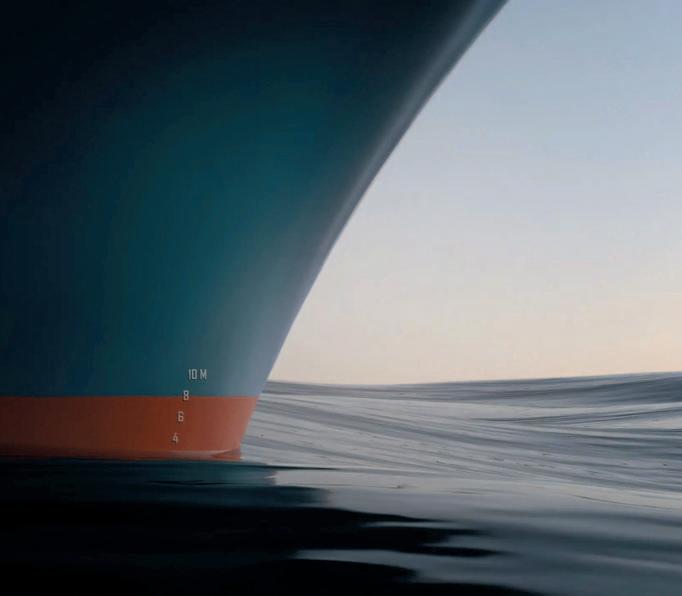
enhanced dirt pick-up, ensuring that the project’s design withstands the time.
“We have rigorously tested Hardtop XP II across various climates and scenarios. Feedback from customers and applicators have confirmed the product’s consistent performance regardless of environmental conditions or application methods. The result is a topcoat that truly performs everywhere,” said Dmitry Arzhanov, Global Category Manager for Topcoats in Jotun.
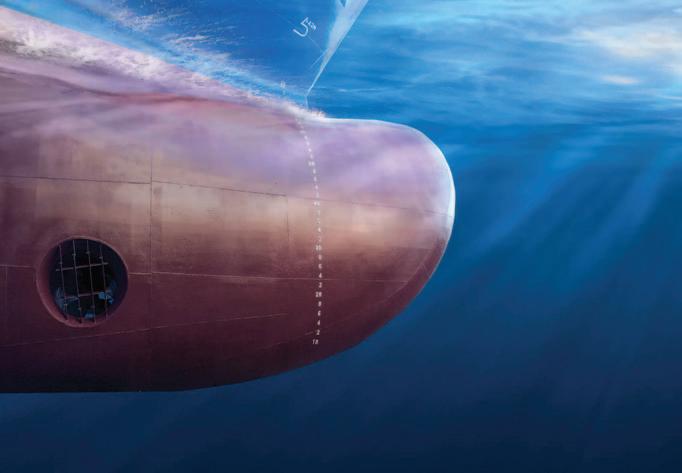
With corrosion costing the global economy over USD 2.5 trillion annually and steel production contributing up to 8–10% of global CO2 emissions, Hardtop XP II plays a vital role in reducing environmental impact by extending the lifespan of steel structures.
“By 2030 it is estimated that up to 9.1% of global CO2 emissions will originate from steel production only to replace corroded steel, if the ongoing trend continues. Making sure steel can be used for a longer time is the core of what we do. Hardtop XP II is the right product at the right time to face this industry challenge, and it is also designed to comply with current and upcoming environmental regulations,” said Arzhanov.
Hardtop XP II is now available globally, offering superb versatility for projects across shipping, infrastructure, energy, and beyond.
“To be able to offer this fantastic product to the industry is a milestone for us in Jotun. Hardtop XP has been our bestselling product — and with good reason. But we have for almost 100 years been focused on continuous innovation and development, and that is why we have developed Hardtop XP II. It is truly a product that deliver on our core promise — to protect property,” said Morten Fon, President and CEO of Jotun.
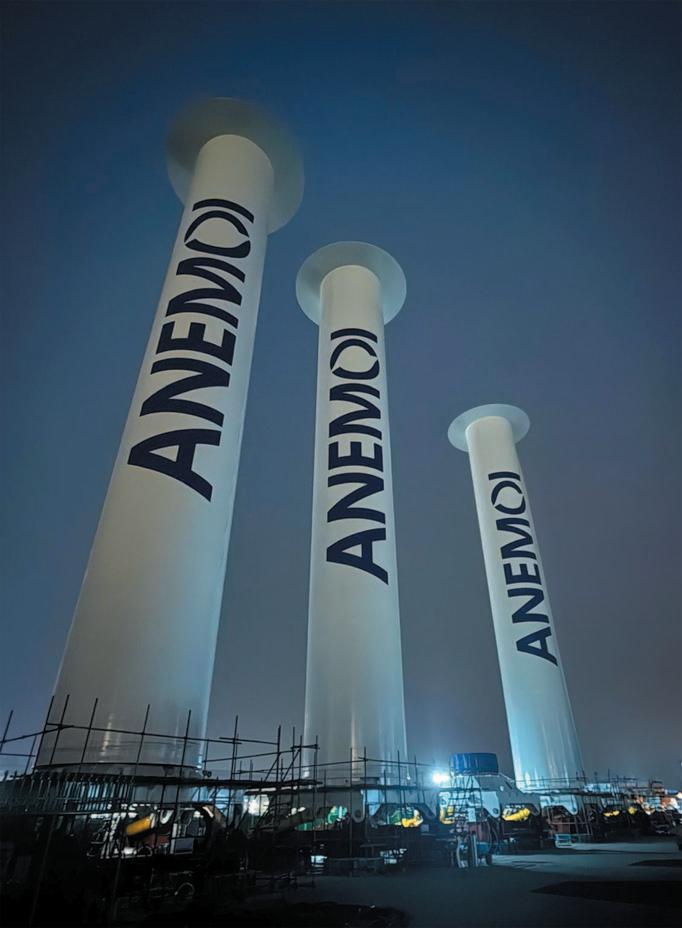
Anemoi Marine Technologies, the prominent UK developer of wind-assisted ship propulsion systems, has won funding under the sixth round of the Clean Maritime Demonstration Competition. The £1.2 million project will include the development of a next-generation folding sail system tailored to Kamsarmax and Panamax bulk carriers, as well as aerodynamic design enhancements that will significantly increase fuel savings.
The UK Clean Maritime Demonstration Competition has so far directed £136 million in government funding to engineering innovators developing cuttingedge maritime decarbonization solutions, with the aim of driving growth for coastal communities and cementing UK’s position as a clean energy leader. The CMDC funding gives Anemoi the opportunity to further strengthen its technology leadership in the rapidly growing windassisted propulsion sector.
Clare Urmston, CEO of Anemoi, said: “This funding will support Anemoi in
advancing the next generation of Rotor Sail technology. While our Rotor Sails are already efficient and high-performing, ongoing innovation is essential to unlock further efficiency gains, adapt to evolving vessel designs, and meet increasingly ambitious environmental targets. This investment underscores Anemoi’s potential to support the UK in sustainable shipping as the maritime industry works to cut emissions.”
Under the seven-month project, Anemoi will design, build and test a prototype of a new folding system for its 3.5m Rotor Sail. The result will be an industry-first for Rotor Sails of this size, as folding systems have previously only been used on larger 5m sails. By allowing sails to be lowered during port operations, the design will significantly reduce operational obstacles to the uptake of wind-assisted propulsion. Operational seamlessness is a core element of Anemoi’s offering, as the company also offers a unique rail deployment system, which allows the
Rotor Sails to move along the deck of the ship.
In addition to the folding system development, the project will cover additional design optimizations, which are expected to improve the aerodynamic performance of wind-assisted vessels, delivering increased fuel savings and emissions reductions compared to Anemoi’s current state-of-the-art Rotor Sails.
The test rig will be manufactured by UK company Pressure Design Hydraulics Engineers, with aerodynamic enhancements developed in partnership with Cape Horn Engineering, supported by Stehr Consulting. Victoria Steamship, a UK-based shipbroker, will contribute insights based on its fleet of nine vessels operating globally in the bulk carrier segment, a primary market for folding Rotor Sails. The UK innovation accelerator Connected Places Catapult will conduct market research and a port and vessel integration study.
The agreement enables Hadley Shipping’s fleet under Anglo-Eastern’s technical management to upgrade to Inmarsat NexusWave.
Inmarsat Maritime, a Viasat company, announced on 20 August 2025 that AngloEastern will upgrade Hadley Shipping Group’s fleet to Inmarsat’s fully managed bonded connectivity solution, NexusWave.
Hadley Shipping Group is a longstanding Inmarsat Maritime user. Its transition to NexusWave represents a significant step forward in adopting a unified, bonded multi-orbit solution that will deliver enhanced performance, enterprise-grade cybersecurity, and a scalable platform for future operational needs and crew welfare.
Anglo-Eastern, a leader in technical ship management and a strong advocate of digital innovation at sea, began implementing its multi-orbit connectivity strategy in 2023. With NexusWave now being installed across a range of vessels under its management, Anglo-Eastern reinforces its mission to accelerate digital transformation, boost cyber-resilience, and provide seafarers with a reliable, home-like internet.
“With NexusWave, we’re able to leverage secure, high-performance connectivity through a truly integrated multi-network approach,” said Torbjorn Dimblad, Chief Information Officer, AngloEastern. “This solution aligns with our vision of a digitally advanced fleet, and we’re looking forward to the results of the ongoing trials as we continue to roll out NexusWave across our managed vessels.”
Sunit Das, Director of Operations, Hadley Shipping Group, said: “Unlimited data is a key benefit of Inmarsat’s
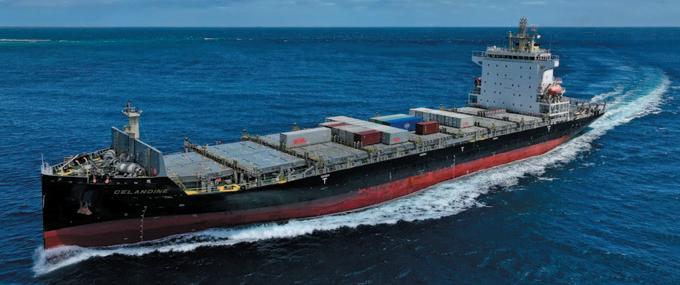
Hadley Shipping’s Celandine will benefit from NexusWave’s ability to future-proof the fleet as maritime data and connectivity demands evolve.
NexusWave, but our decision to invest goes beyond just bandwidth. This upgrade supports our long-term goals for operational efficiency and crew wellbeing. With the built-in cybersecurity and our confidence in Inmarsat’s capabilities, NexusWave enables us to future-proof our fleet as maritime data and connectivity demands evolve.”
NexusWave combines high-speed connectivity, resilient bonded networks, and seamless global coverage to meet the growing requirements of modern shipping. Designed for scalability, it supports everything from smart vessel operations to enhanced crew welfare programmes.
Gert Jan Panken, Global Vice President, Inmarsat Maritime, said: “This collaboration with Anglo-Eastern and Hadley Shipping Group reflects our shared commitment to building smarter, safer, and more connected operations at sea. NexusWave is engineered to meet the complex challenges of modern maritime operations, and we’re proud to support our customers as they embrace the future of connectivity.”
Inmarsat Maritime is a Viasat company and
continues to power the digitalization of the maritime industry. With over 40 years of experience, Inmarsat Maritime offers reliable and innovative solutions that enable ship owners and operators to stay connected, navigate safely, enhance operational efficiency, and ensure crew welfare.
Viasat is a global communications company that believes everyone and everything in the world can be connected. With offices in 24 countries around the world, our mission shapes how consumers, businesses, governments and militaries around the world communicate and connect. Viasat is developing the ultimate global communications network to power high-quality, reliable, secure, affordable, fast connections to positively impact people’s lives anywhere they are — on the ground, in the air or at sea, while building a sustainable future in space. In May 2023, Viasat completed its acquisition of Inmarsat, combining the teams, technologies and resources of the two companies to create a new global communications partner.
Inmarsat Maritime is based in Viasat’s global international business headquarters in London, United Kingdom.
The innovative design incorporates innovations in energy efficiency, smart navigation, and alternative fuel readiness.
Lloyd’s Register (LR) has awarded Approval in Principle (AiP) to HD Korea Shipbuilding & Offshore Engineering (KSOE) for its next-generation 210,000dwt Newcastlemax bulk carrier design. The innovative design features flexibility for multiple fuel types, including conventional fuels, LNG, ammonia, and methanol, enabling shipowners to adapt to current and emerging environmental regulations and future fuel availability.
The vessel design incorporates advanced smart navigation systems and optimized hull form to enhance fuel efficiency and operational safety while reducing CO2 emissions.
Nikos Kakalis, Global Bulk Carrier Segment Director, LR, commented: “This collaboration demonstrates Lloyd’s Register’s strategic approach to supporting innovation in the maritime industry. The AiP represents a new milestone in the development of next-generation bulk carrier technology, positioning both LR and KSOE as leaders in the industry’s transition
towards sustainable and technologically advanced maritime solutions.”
Bong-geo Kim, Head of Global Shipyard Technical Sales Team, KSOE, said: “Our partnership with Lloyd’s Register enables us to use our combined expertise in developing bulk carrier designs that meet the industry’s evolving requirements. This collaboration provides enhanced understanding of Newcastlemax bulk carrier applications for future shipbuilding projects while maximizing commercial potential in this advancing field of technology.”
There are persuasive reasons - WHY - several major international shipowners continue to use the SP-PUR-SYSTEMS for highly stressed ship floors and holds, preferring it to conventional epoxy systems.
It is the superior protection of ZINC that convinces them and postpones further maintenance work long term. This is a significant cost saving.
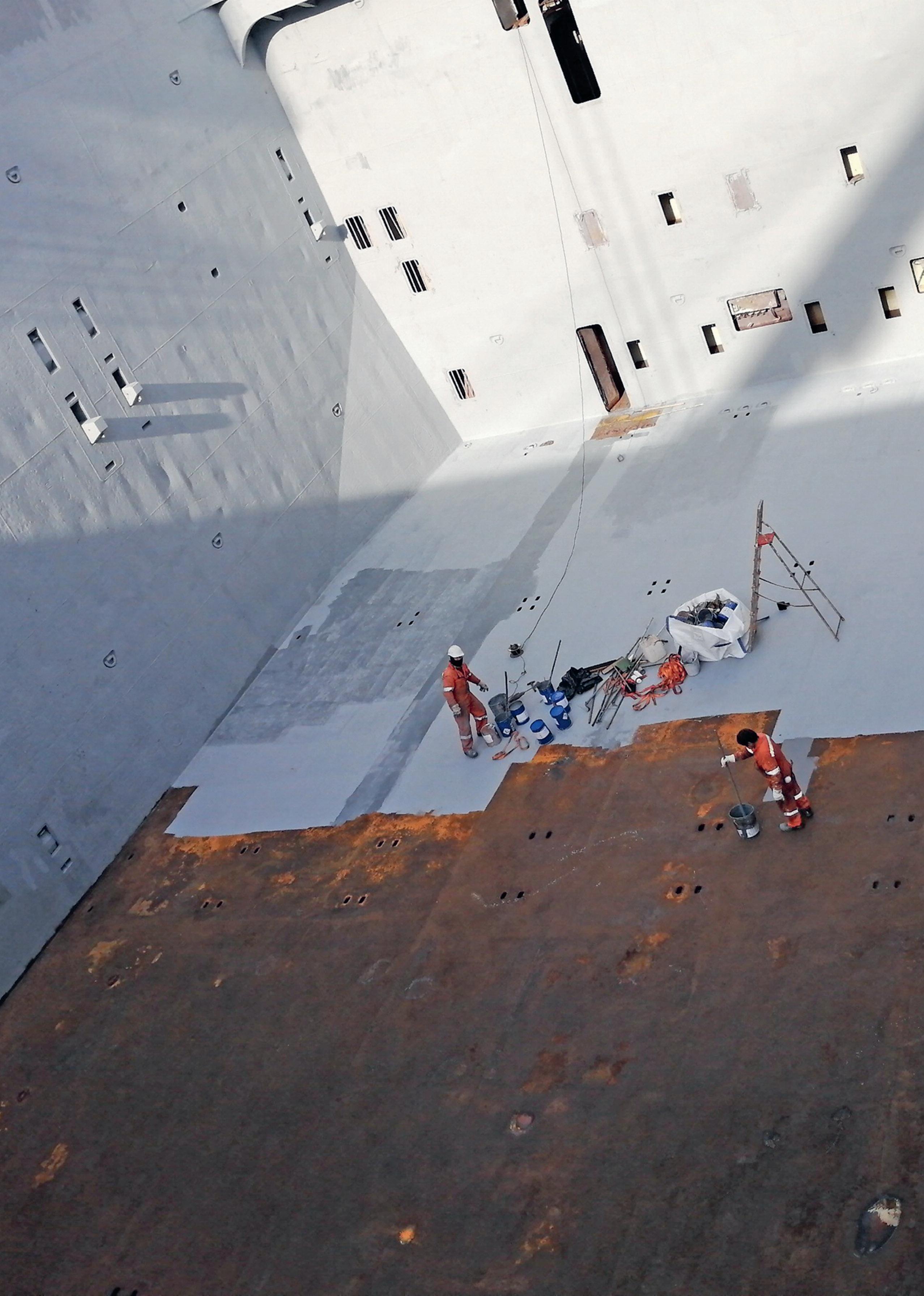
WestSEA Shipyard, Portugal
Shipowner: BOCS Bremen, Germany
Vessel: MV BOCS SPIRIT
Due to time restrictions, only a high-pressure water jetting was possible as a surface pre-treatment. Anyway –reliable corrosion protection.
Dry bulk carriers entered with INTERCARGO continue to demonstrate stronger performance than the global fleet average on safety and compliance, according to the Association’s latest Benchmarking Report.
The report highlights meaningful differences across the sector, with significant variations in inspection outcomes, operational risk and regulatory performance.
INTERCARGO-member ships consistently show a lower incidence of regulatory deficiencies and detentions compared with the global fleet.
“These results show that quality is measurable,” said John Xylas, Chairman of
INTERCARGO. “Responsible, quality operators are delivering safer, more compliant ships, and benchmarking helps identify strengths, highlights areas for improvement and promotes operational integrity throughout the industry.”
The report also identifies continued disparities in class and flag performance. Some parts of the global fleet remain consistently linked to higher levels of risk exposure and weaker inspection outcomes. These trends reinforce the importance of transparency, strong oversight, and data-informed decisionmaking in ship operations and management.
INTERCARGO also notes regional
shifts in enforcement activity, with some Port State Control regimes taking a more active approach to inspections and detentions.
These developments underline the importance of consistent and equitable Port State Control.
The Benchmarking Report draws on a range of public and commercial data sources. By identifying trends and supporting greater transparency, the Association seeks to strengthen safety, compliance and performance across the global dry bulk sector.
More information and access to the report is available on INTERCARGO’s website.
New insights from DNV’s Maritime Forecast to 2050 show that shipping’s energy transition is entering a new phase — one that is defined by strategic investment, accelerating fleet readiness, and emerging regulatory developments. With the IMO’s Net-Zero Framework (NZF) approved but pending adoption in October, and the number of alternative-fuel-capable vessels in operation set to almost double by 2028*, shipowners are shifting from preparation to action.
By 2030, the alternative-fuelled fleet will be able to burn up to 50 million tonnes of oil equivalent (Mtoe) of low-greenhouse gas (GHG) fuels annually, double the estimated volume needed to meet the International Maritime Organization’s (IMO) 2030 emissions target. Yet today, actual consumption of low-GHG fuels remains at just 1 Mtoe. This widening gap between capacity and use highlights both the scale of industry commitment and the urgent need for fuel producers and infrastructure developers to accelerate supply to match the fleet’s readiness.
“The stage is set for the next phase of the maritime energy transition,” said Knut Ørbeck-Nilssen, CEO of DNV Maritime.
“The IMO’s Net-Zero Framework has imperfections and greater clarity is urgently needed around how the collected money will be spent. It is already influencing investment decisions, operational choices and fuel strategies across the industry. Shipowners will adjust their strategic priorities pending the October IMO meeting, which will lay the foundation for the years and decades ahead.”
The ninth edition of DNV’s Maritime Forecast to 2050 provides a comprehensive analysis of the fuels, technologies, and regulations shaping the future of shipping, assisting decision-makers in navigating the next phase of the energy transition.
The report outlines several solutions that could help bridge the gap between fleet readiness and fuel availability:
Leveraging existing fuel infrastructure for low-GHG fuels, like biodiesel and bioLNG, combined with the adoption of flexible chains of custody models can significantly ease access to these fuels, incentivizing and accelerating both production and uptake
Energy-efficiency measures on newbuilds are increasingly deployed, reducing emissions immediately without requiring new infrastructure or supplychain development
Onboard carbon capture (OCC) is gaining traction, particularly for large vessels with available onboard space.
Modelling from the report shows that equipping 20 major ports with CO2 offloading infrastructure could enable the removal of up to 75 million tonnes of captured CO2 annually, potentially offsetting the need for 25 Mtoe of lowGHG fuels, as much as is needed to reach the IMO’s 2030 base target 2025 could be a breakthrough year for maritime wind energy. Wind-assisted propulsion systems (WAPS) are gaining broader commercial adoption, with claims of 5–20% reduction in fuel use for certain ships, according to vessel owners, operators and technology makers.
“The industry has made real technical progress in recent years,” said Eirik Ovrum, Lead Author of the report. “But these solutions are still operating in silos. To deliver impact, they need to be integrated into fleet strategies, supported by infrastructure, and recognized in compliance frameworks. That’s where the next phase of work must focus.”
This year’s Maritime Forecast to 2050 report urges stakeholders to prepare early and evaluate all cost-effective pathways, recognizing that compliance strategies will vary by vessel type, operational profile, and regulatory exposure.
*Data from DNV’s Alternative Fuels Insights (AFI) platform. As of August 2025, 1,794 alternative-fuelcapable vessels are in operation, with another 1,544 on order.
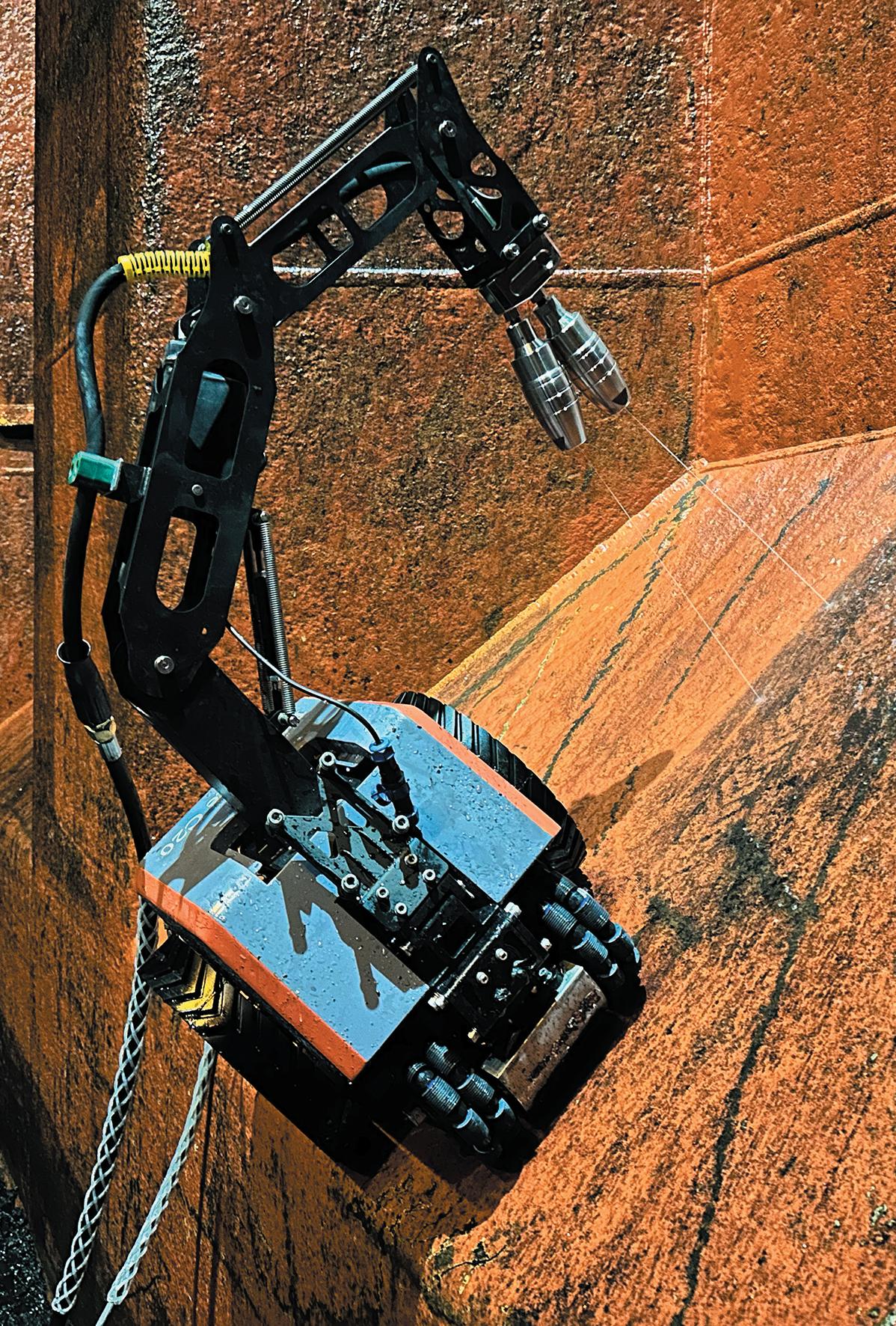
Keeping cargo holds inspection-ready has long been one of the most persistent headaches in shipping. The corrugated bulkheads, T-frames, and stiffeners that give strength to a vessel’s structure are also the very areas that trap residues and resist cleaning. Traditionally, these areas have demanded lance, long brooms, rope access, occasionally scaffold, heavy chemical usage and intensive manual labour — a costly equation in both time and safety risk.
But as shipping companies face rising scrutiny over safety, compliance, and turnaround times, the industry is beginning to ask: is there a smarter way forward?
The last decade has seen a quiet revolution in maritime maintenance. From hull inspection drones to crawler cleaning systems, robotics are steadily replacing jobs once deemed “inevitable” for crews. Cargo hold cleaning, however, has been slower to change. The complexity of the geometry and the sheer size of bulk carriers made automation a formidable challenge.
A crawler robot developed by RobotPlusPlus, is one of the first machines to seriously bridge that gap. Purpose-built for cargo holds, it tackles precisely those areas that were previously out of reach.
RobotPlusPlus’ crawler robot can navigate angles of up to 120 degrees.
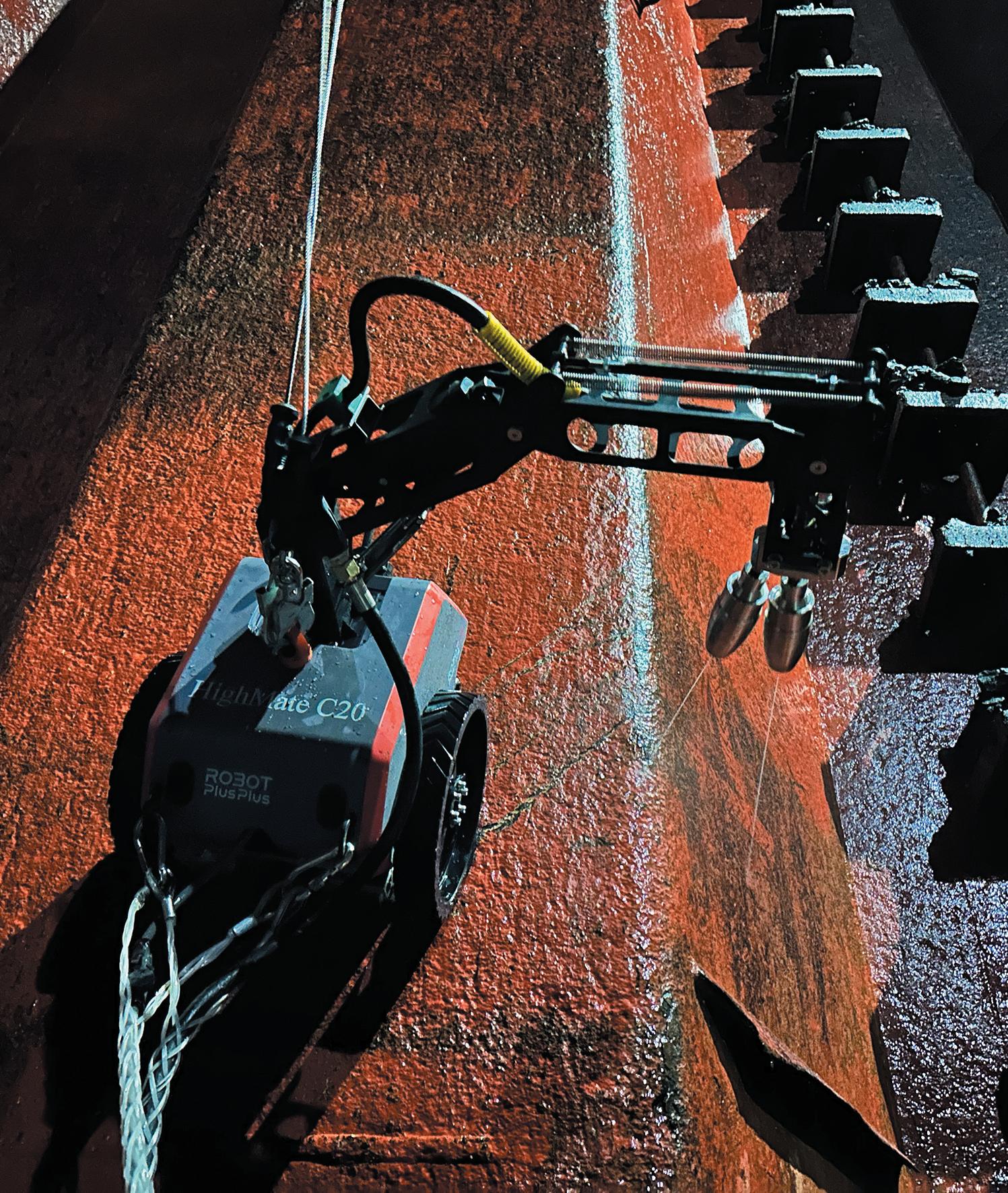
What sets the crawlers apart is not brute force but articulated precision. Its nozzle system and extension arms are engineered to reach behind T-frames and into corrugated corners — exactly where residues accumulate and inspections are most often failed.
The machine can navigate angles of up to 120°, work with either sea or fresh water, and operate effectively without chemicals (though additives can be introduced if necessary). This combination allows for flexible deployment on voyage or in port, while keeping environmental impact in check.
Not only it can reach further but it does it fast, on deployment it cleaned a cargo hold of a Panamax, from coal to grain in one shift.
The crawlers weren’t developed in a vacuum. It was designed in response to repeated failures in conventional cleaning –failures that result in costly re-cleaning, delayed turnarounds, and avoidable safety incidents. Traditional methods such as scaffolding and rope access require extensive setup, present major fall hazards, and often still fail to adequately reach highrisk areas like the back of T-frames. This
imperfect process doesn’t just strain budgets — it compromises entire voyage schedules.
The development of the crawlers are also a signal of where the industry is headed. RobotPlusPlus is already investing in a dry cleaning system, an innovation that could further reduce water consumption and extend the flexibility of robotic solutions.
As labour shortages persist, environmental regulations tighten, and schedules grow more demanding, the reliance on rope access and manual scrubbing looks increasingly outdated. Robotics are no longer a futuristic option — they are becoming the operational standard.
The maritime industry has always been conservative, and for good reason: reliability comes before novelty at sea. Yet when new technology proves it can deliver safer operations, lower costs, and fewer delays, adoption becomes not just possible but inevitable.
The robot may be one product, but it represents a broader shift. The question is no longer whether cargo hold cleaning can be automated — but how quickly shipowners and operators will embrace it.
PPG is responding to the fast-changing environment of the shipping industry, by significantly expanding its product portfolio with sustainably advantaged solutions, writes Ariana Psomas, Global Segment Director New Build and Dry Dock, PPG.
Our product diversification focuses heavily on meeting the growing customer demand for premium fouling control coating technologies that can help them minimize environmental impact and reach their sustainability targets.
The introduction of PPG SIGMAGLIDE® 2390 biocide-free fouling release coating more than two years ago reflects our focus on sustainably advantaged innovation. This silicone-based hull coating offers benefits which include up to 35% reduction in GHG emissions and up to 20% instant power savings compared to traditional antifoulings, while providing extended idle performance of up to 150 days.
Last year, we also launched PPG NEXEON™ 810 copper-free antifouling coating. Its unique formula can enable a total GHG emissions reduction of up to 25% compared to traditional antifouling coatings and supports resistance to idle times of up to 60 days with minimal speed loss. PPG Nexeon 810 antifouling features photodegradable biocides that minimize environmental impact while maintaining superior performance and colour retention throughout the vessel’s service life.
In addition to coatings innovation, we have introduced electrostatic coating application in the shipping industry. This application technology significantly improves transfer efficiency compared to traditional airless spraying, which results in reduced overspray, minimized waste, and a cleaner working environment for applicators. The electrostatic process uses charged paint droplets that are attracted to the vessel surface with near-perfect precision, lowering environmental impact and VOC emissions.
PPG’s investment into promoting the use of electrostatic application aims to encourage a shift towards a more sustainable operation in shipyards, with less coating overspray and waste providing an improved working environment for applicators. PPG’s successful experience with electrostatic application over the last 40 years in the automotive, aerospace and manufacturing industries has paved the way for the maritime sector adopting its use. We are the first in the shipping industry to
Electrostatic application of PPG hull coatings.
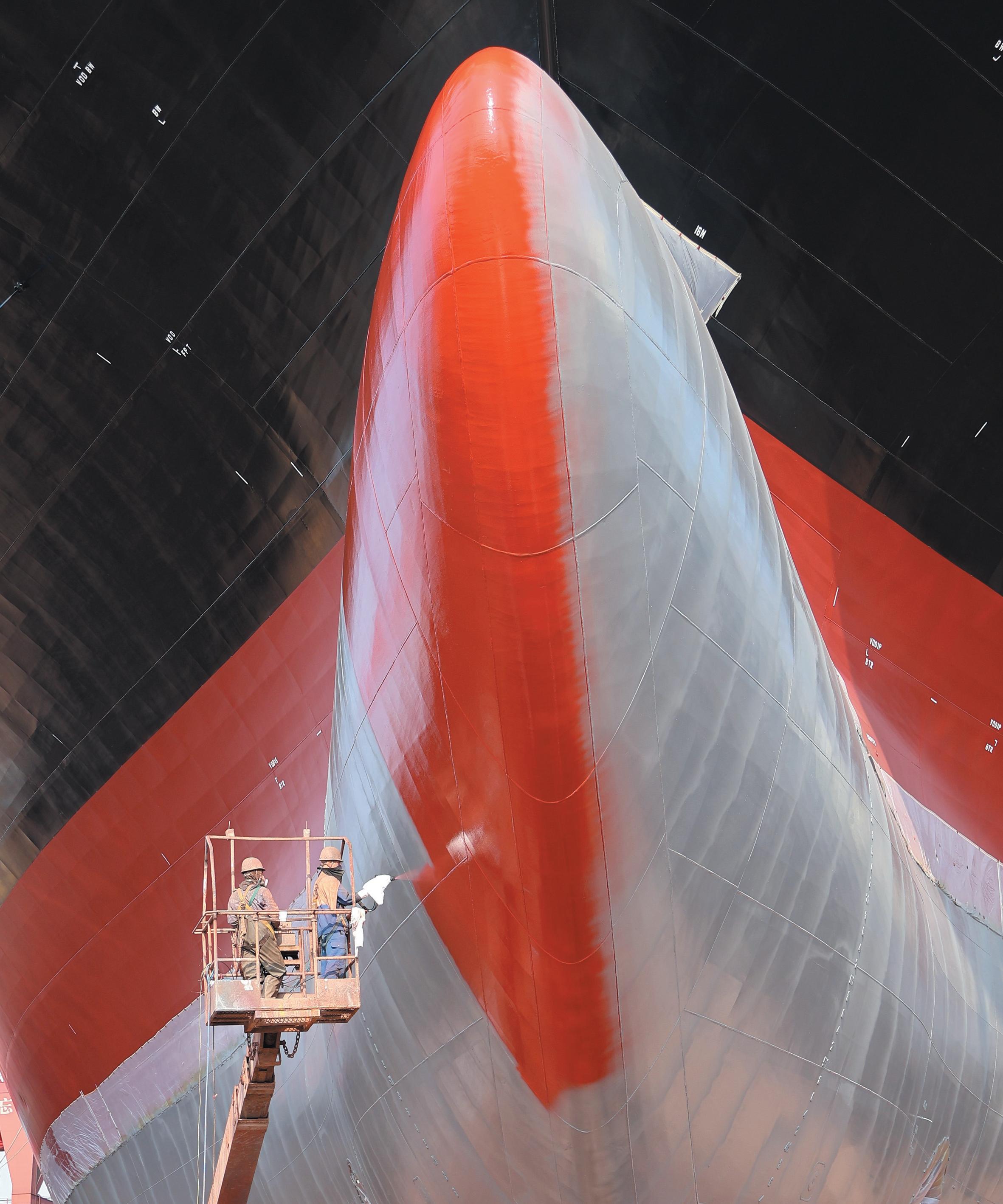
introduce this type of application, having developed coatings specifically suited for it. By investing heavily in innovation and R&D of our coatings, we develop products that deliver superior performance while meeting stringent environmental standards. Our specialized coatings are engineered to last longer, reducing the need for frequent reapplication and maintenance, which translates to both environmental and economic benefits for PPG and our customers.
We have seen an increase in demand for our sustainably advantaged hull coatings, PPG Sigmaglide 2390 fouling release coating and PPG Nexeon 810 antifouling. Thanks to their unique formulations, these coatings are ideal for electrostatic application, and we’ve experienced real success with this advanced method, particularly in reducing environmental impact and improving efficiency for our customers.
The EDR Antwerp shipyard achieved a 40 percent reduction in overspray with the electrostatic application of PPG Sigmaglide 2390 fouling release coating. This was the second successful electrostatic application
project we completed with EDR and was carried out on the underwater hull of the RoRo passenger vessel Stena Transporter from Stena Line. EDR’s commercial manager, Philippe Trouillard, said “Electrostatic application increases the weather window in which painting activities can take place, as well reducing overspray significantly. It’s impressive to see how the charged paint droplets are attracted to the vessel surface almost like a magnet. You only have to look at the dock floors at the end of the project to see how much paint has been saved from disappearing into the environment. Due to a cleaner operation, we have spent less time masking the vessel and covering the dock, saving valuable time and costs.”
Another electrostatic application project was carried out on the VLCC SIDR, a 336-metre oil tanker operated by Bahri Ship Management at the Asyad Drydock Company shipyard in Oman and used PPG Nexeon 810 antifouling. Ship Management President at Bahri Khalid Alhammad, said “A cornerstone of our environmental strategy is to reduce carbon emissions of our entire fleet and to achieve these
objectives, we constantly adopt the latest technologies in hull coating that would help reduce vessel emissions. Combining that with a sustainable coating application technique makes it an attractive combination to us.”
In addition, last year we have also recently announced the first PPG Sigmaglide fouling release coating drydocking for COSCO Shipping Energy Transportation Ltd, the largest tanker owner in China, using the electrostatic application. This was carried out on the Yuan Chun Hu, a 333 metre crude oil tanker owned by COSCO Shipping at the Liuhengdao shipyard in Zhoushan, China. PPG Sigmaglide 2390 coating was applied to the underwater hull, while PPG Nexeon 810 solution was used on the boottop.
We are observing a significant shift among ship owners as they review their existing coatings in response to new environmental regulations, such as the Carbon Intensity Indicator (CII) and the Energy Efficiency Existing Ship Index (EEXI), as well as the broader drive towards achieving Net Zero in the shipping industry. These regulations and goals are having a pronounced impact on the demand for specific types of coating products.
We have noticed a notable rise in the demand for hull coatings that can effectively reduce power demand and emissions. Products like biocide-free Sigmaglide and copper-free Nexeon are particularly sought after for their ability to

enhance vessel efficiency and contribute to emission reductions.
As ship owners aim to comply with CII and EEXI regulations, coatings that offer superior hydrodynamic performance and lower friction are becoming increasingly popular. These coatings help in reducing fuel consumption and, consequently, greenhouse gas emissions, aligning with the regulatory requirements.
The stringent environmental regulations are driving ship owners to prioritize coatings that not only meet but exceed regulatory standards. This shift is evident in the growing preference for advanced coatings that support sustainability goals.
Beyond regulatory compliance, these coatings provide economic benefits by reducing fuel costs through improved efficiency. This dual advantage of regulatory adherence and cost savings is propelling the demand for innovative coating solutions.
Overall, the push towards Net Zero and the introduction of new environmental regulations are significantly influencing the marine coatings market. Ship owners are increasingly investing in coatings that offer both environmental and economic advantages, underscoring the critical role of advanced coatings in the future of sustainable shipping.
ION Commodities, a global provider of energy and commodity management solutions, is relaunching Softmar as a SaaS platform, expanding beyond chartering and operations to address the new realities of freight management.
Volatility, sanctions, and tougher emissions and regulatory rules are redefining freight markets. Rate swings are squeezing shipowners’ margins, while traders grapple with rising costs and compliance obligations. This unpredictability has amplified freight’s role, making it one of the most critical variables in global commodity supply chains. Firms relying on spreadsheets, ERP systems, or static models often underestimate their exposure — leaving them vulnerable to losses and compliance failures.
Softmar addresses these challenges by unifying chartering, voyage management, and freight risk management across dry
bulk, liquids, and gas commodities in a single solution. A key enhancement is the introduction of Profit-at-Risk (PaR) analytics, designed specifically for illiquid freight markets to provide a more accurate, forward-looking view of freight exposure.
The enhanced Softmar solution also adds carbon emissions tracking, enabling companies to monitor and manage environmental costs. Softmar can integrate freight activity with ION’s Commodity Trading and Risk Management (CTRM) solutions, ensuring end-to-end supply chain visibility resulting in improved decision making and better risk control.
Softmar continues to support chartering and vessel operations — but now goes further to meet the demands of today’s market. Teams can estimate freight rates quickly and run scenarios; capture contract optionality (including laytime
terms and risk parameters); quantify risk across physical and derivatives freight with advanced mark-to-market analytics; manage voyages via a mobile-ready, multilingual interface; and integrate with ERPs and other systems. By consolidating operations and risk oversight in a single platform, firms can make better trading decisions, manage emissions exposure, protect margins, and ensure compliance.
“Softmar’s relaunch coincides with a fundamental shift in how freight must now be managed,” said Sunil Biswas, CEO at ION Corporates. “Freight management is no longer just about fixing vessels or managing risk in isolation. It now impacts profitability, compliance, and overall business performance. Softmar gives companies the clarity and control they need to protect margins and remain competitive in an increasingly complex market.”
Every day, bulk carriers deliver the resources that fuel economies and feed populations. Yet beneath the surface lies a sector facing complex new realities with stricter environmental rules and heightened crew welfare concerns, writes Mikko Kuosa, CEO, NAPA.
The Gard Crew Claims Report 2025 reveals that illness now accounts for more than four in five crew fatalities, with stress playing a central role in eight of the ten most common illnesses.
Layered on top of this human challenge is a regulatory environment that grows denser each year. Amendments to the Enhance Survey Programme Code, in force since July 2024, require closer attention to coatings and void space inspections. The Ballast Water Management Convention, with its February 2025 update to recordkeeping, has expanded documentation duties for seafarers. FuelEU Maritime, also effective this year, introduces emissions reduction requirements for all vessels above 5,000GT trading into the EU . The list goes on, and it will only expand further.
It’s not all doom and gloom.While we’re seeing shipping’s complexity increase, we’re also seeing innovation at pace with significant advances in shipping’s digitalization. NAPA’s solutions provide a direct response to these pressing challenges by optimizing voyages to meet decarbonization targets, streamlining data recording and reporting to support regulatory compliance, building efficiencies to minimize administrative burden for crew and support their wellbeing, all while connecting ship and shore for closer real time collaboration.
The conversation about crew stress has moved from anecdote to evidence. The Seafarers Happiness Index in early 2025 scored morale at 7.54/10, an improvement from pandemic lows but with ample room for improvement. Seafarers still face systemic challenges, consistently citing paperwork and regulatory reporting as a major source of pressure. For bulk carriers, which face layers of requirements on ballast water, garbage management, voyage reporting, and environmental records, it’s easy to see how this administrative workload can overwhelm.
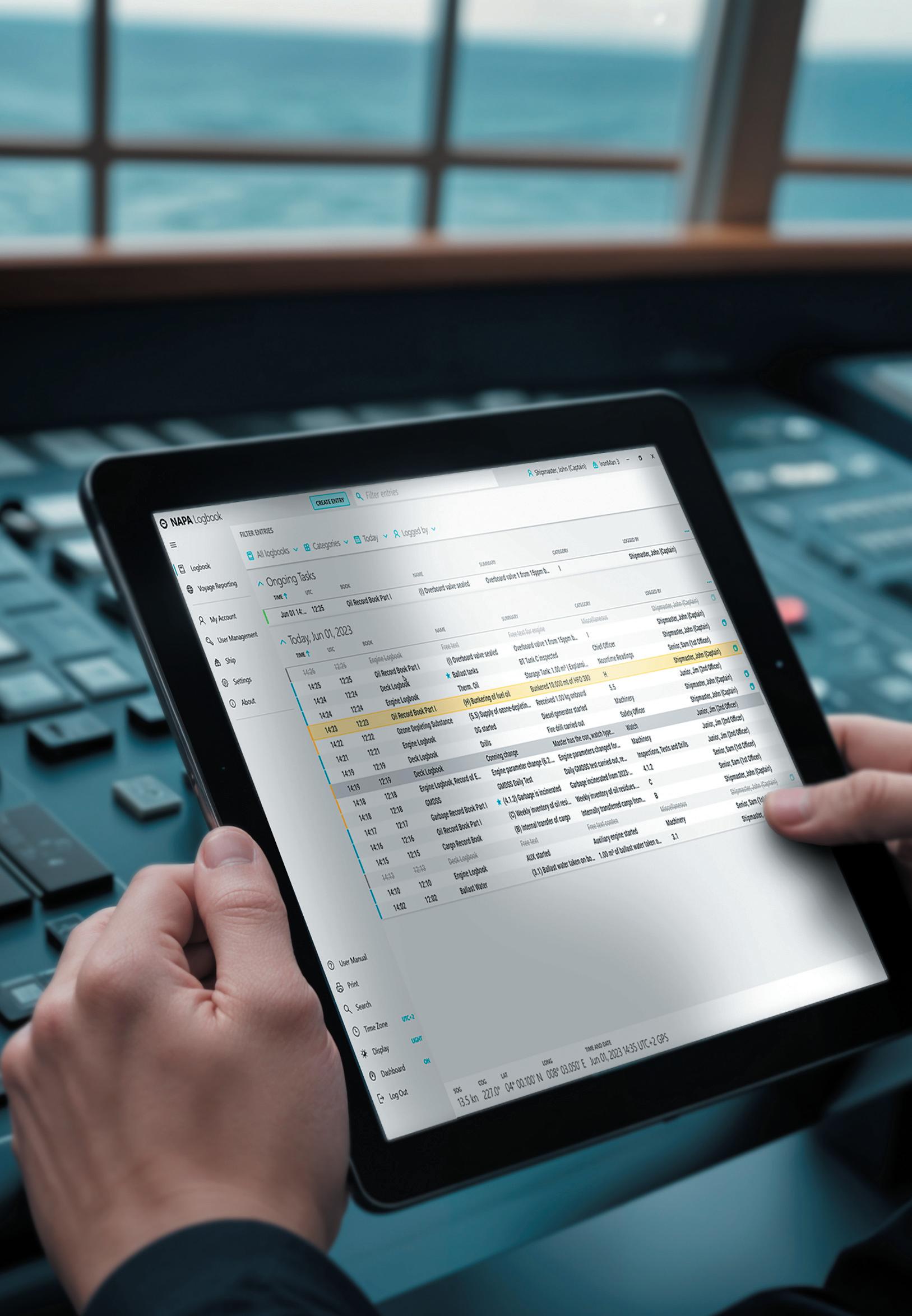
This is where NAPA Logbook comes into play. By automating data collection and reporting across deck, engine and environmental operations, it removes
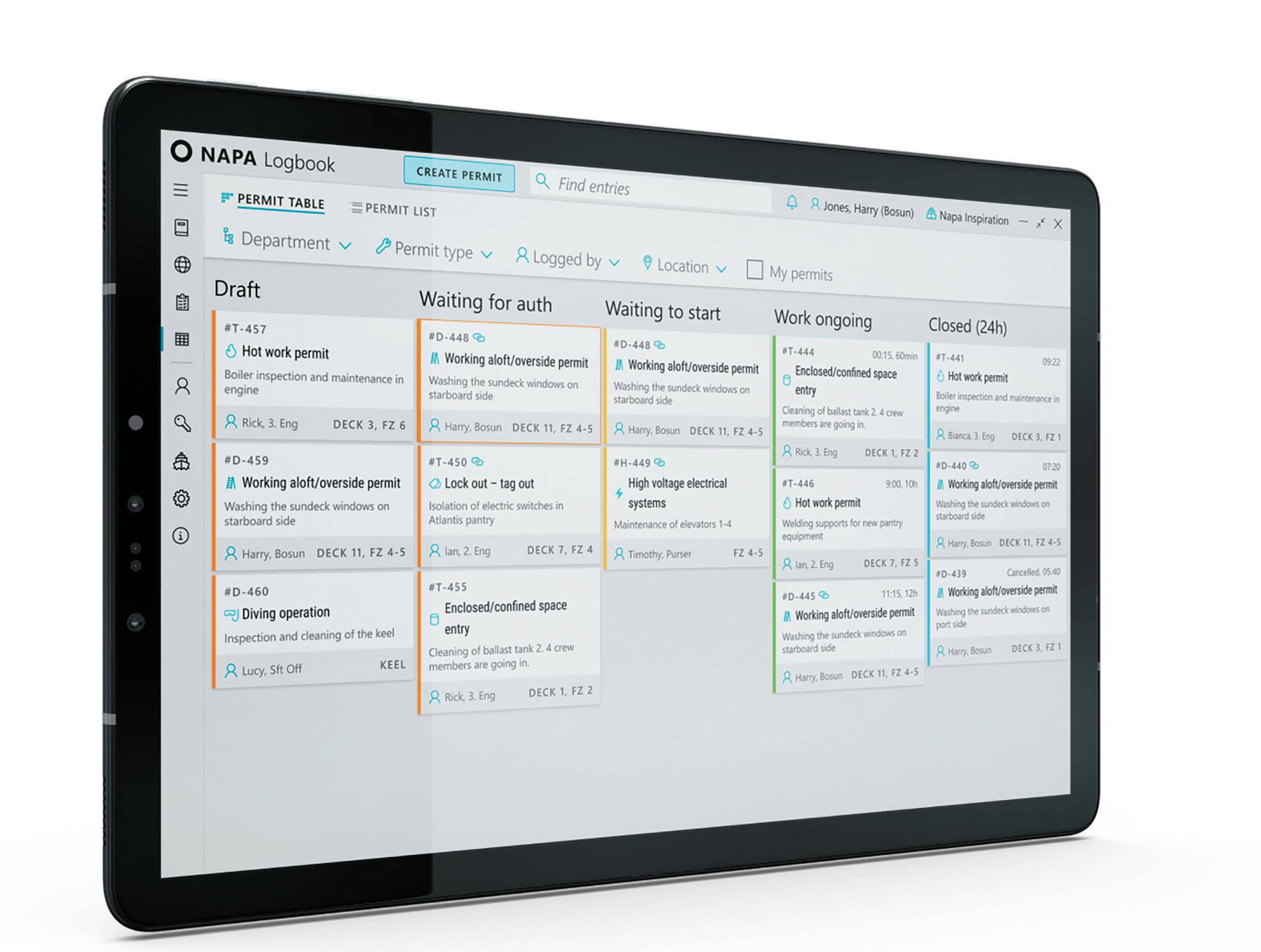
repetitive manual work and ensures data accuracy. Instead of duplicating entries for EU MRV or new FuelEU requirements, crews can rely on a single digital platform that captures, validates and transmits information seamlessly to shore and class.
The impact goes beyond efficiency. In practice, reduced paperwork means more time for safety-critical duties, fewer errors during inspections, and less stress in preparing for Port State Control Inspections. Major gas shipping company Anthony Veder, for instance, reported saving 2,000 hours of administrative time per vessel each year after adopting NAPA Logbook. Crew can now reinvest that time towards their core responsibilities rather than filling out forms.
By turning compliance into a background process rather than an active, daily struggle, digital logbooks contribute directly to crew welfare and operational reliability.
Bulk carriers, along with the rest of the industry face intense scrutiny under EU ETS and the new FuelEU Maritime regulation, which mandates a 2% reduction in GHG intensity in 2025 compared with 2020 levels, with steeper cuts to follow. Achieving compliance requires a mix of new technologies, alternative fuels, and smarter operations. Of these, operational efficiency is the most immediate and scalable solution available today.
NAPA Voyage Optimization provides this operational edge. Using advanced algorithms and extensive ship performance models, it identifies routes and speed profiles that minimize fuel consumption,
emissions or costs, depending on the operator’s priorities. Importantly, it adapts dynamically to changing conditions, including weather, charter party requirements or port schedules, ensuring both compliance and commercial flexibility When paired with clean technologies such as wind-assisted propulsion systems (WAPS), the potential savings multiply. A joint study by NAPA, Norsepower, and Sumitomo Heavy Industries demonstrated that combining rotor sails with optimized routing to take advantage of favourable wind conditions can cut emissions by up to 28% on average.
For bulk carriers trading long distances, often across variable weather patterns, these gains translate into meaningful compliance advantages under FuelEU, as well as direct fuel cost savings.
A practical example comes from IINO Lines, which has bulkers equipped with Norsepower Rotor Sails alongside NAPA Voyage Optimization to maximize their benefit. Rather than leaving savings to chance, operators can model different scenarios in advance, chart the most favourable routes, and later validate actual performance against simulations. This closes the loop between investment in clean technology and the operational practices that unlock its full value.
Voyage optimization delivers measurable, immediate, and scalable reductions that extend regulatory compliance timelines and strengthen commercial competitiveness. It also supports long-term decarbonization strategies by providing a data-driven foundation to assess the impact of future fuels or additional energy-saving devices.
The third piece of the puzzle lies in bridging the traditional gap between ship and shore. Bulk carrier operations are increasingly shaped by data, whether for regulatory reporting, performance analysis, or commercial benchmarking. Yet much of this data historically remained locked onboard, inaccessible to shore teams who could use it to drive fleet-wide improvements.
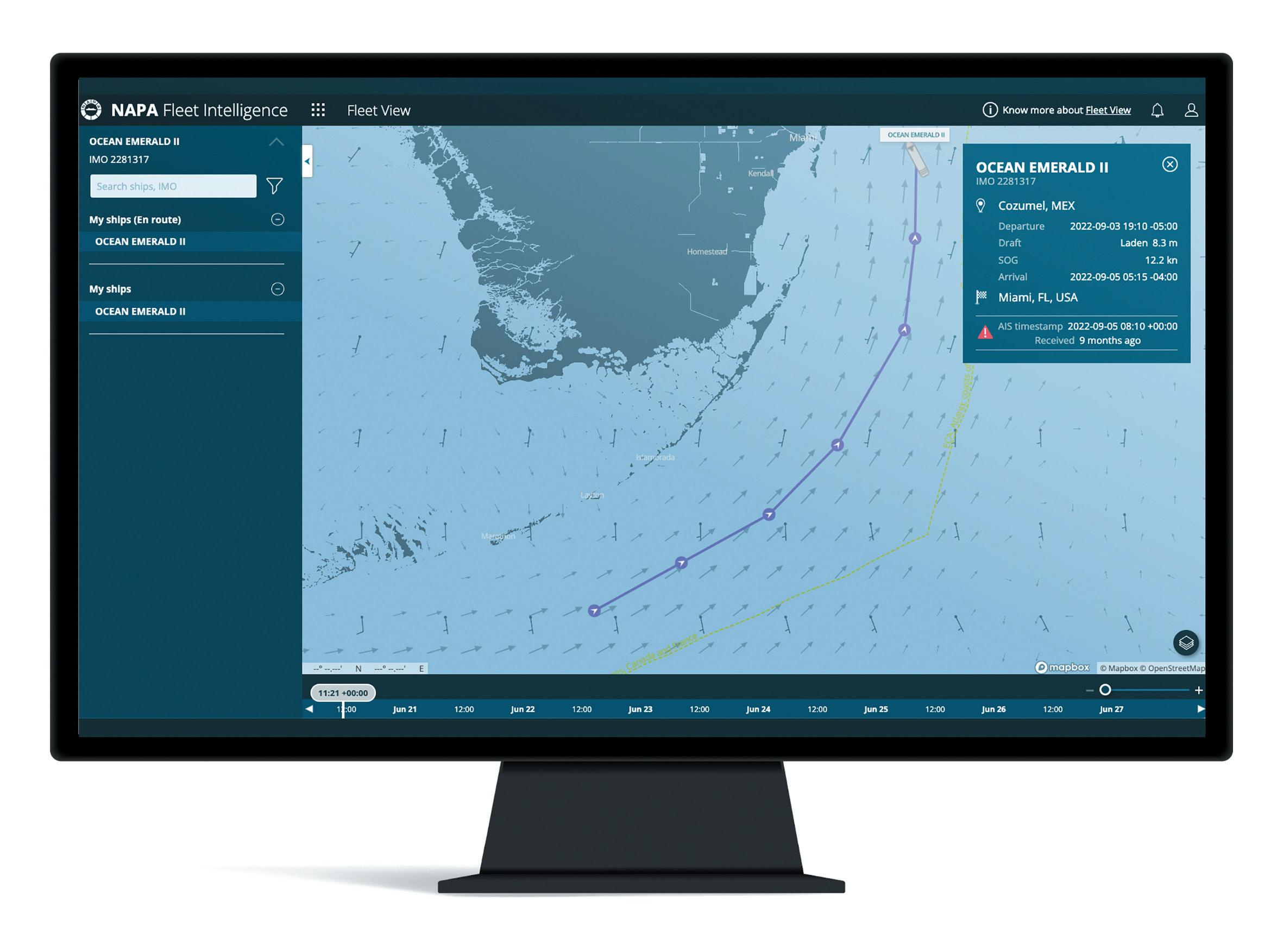
NAPA Fleet Intelligence changes that dynamic. By aggregating data from logbooks, voyage systems, and onboard sensors, it provides a real-time, fleet-wide picture of performance. Shoreside teams can track fuel consumption, emissions, and compliance metrics across multiple vessels, benchmark them against charter party clauses, and generate reports formatted for IMO DCS, EU MRV, EU ETS, or CII submissions. This is not just about reducing administrative hours, though those savings are significant; it is about ensuring that compliance and performance management
are proactive rather than reactive.
Take the example of NAPA’s FuelEU Module, developed following a 1,500-vessel pilot with ClassNK. By simulating compliance strategies, monitoring emissions in real time, and linking with Ahti Pool to balance obligations across fleets, the tool helps owners not only stay compliant but also actively control the financial impact of EU carbon regulations. For bulk carriers operating under charter, where margins are assessed voyage by voyage, this capability can mean the difference between profitability and penalties. Crucially, it enables operators to test different compliance pathways in advance — from speed adjustments to pooling strategies — and choose the most cost-effective option before committing to a voyage.
Beyond compliance, the feedback loop created by connecting ship and shore enhances long-term fleet resilience. Insights gained from daily operations feed back into maintenance planning, hull performance
monitoring, and even the design of future vessels. For bulk carrier owners that often trade in harsh conditions and rely on decades-long asset lifespans, this closed cycle of data and decision-making supports safer, cleaner, and more commercially agile fleets.
Bulk carriers are at the crossroads of global trade and global regulation. The rising tide of environmental requirements, the enduring challenge of safety, and the human cost of stress at sea demand integrated solutions. NAPA’s approach of relieving crews of unnecessary administrative burdens, enabling immediate decarbonization through smarter voyages, and building stronger links between ship and shore offers a practical way forward.
This is not digitalization for its own sake. It is digitalization as a lifeline for crew well-being, as a bridge between today’s regulatory challenges and tomorrow’s decarbonization milestones, and as a foundation for safer, more resilient bulk carrier operations.

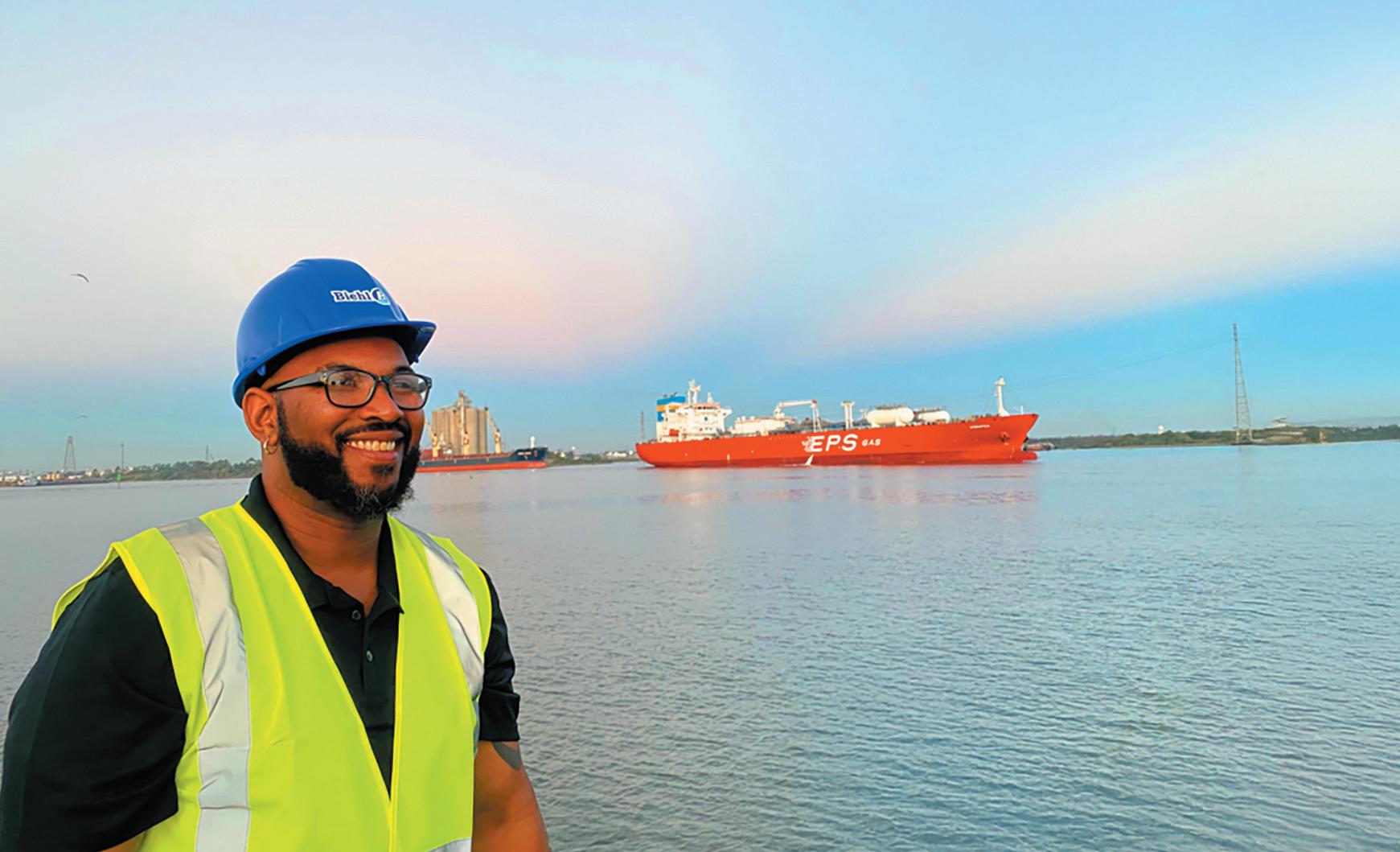
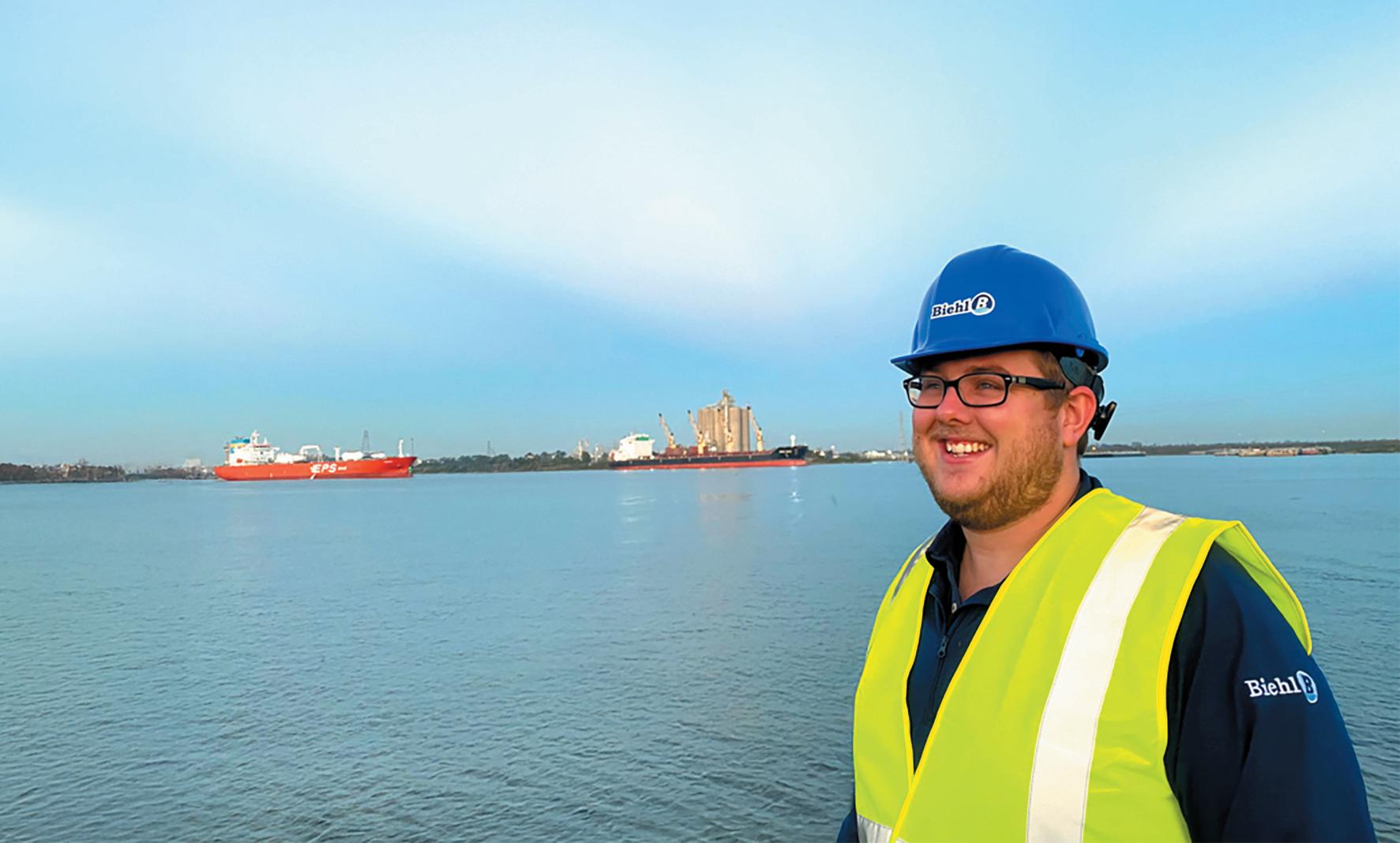
Amidst highly volatile market conditions, Biehl focuses on top-tier service and groundbreaking technology to stay the course.
The year 2025 is probably best defined thus far by high market volatility, turbulence and uncertainty, writes Neil Martin, COO, Biehl & Co. For Biehl 2025 also marks 120 years of delivering port agency services in the USA. As the shipping industry navigates the dizzying headlines dominated by wars, tariff uncertainty, alternative fuels, decarbonization, and plans to reignite US shipping, it is important to pause and reflect on the elements that support longevity; elements that help to navigate the rapidly
changing and uncertain environment that often confronts us.
Having endured two world wars, the great depression, oil crises, financial crises and a global pandemic, Biehl has some experience in this, remaining a stalwart of the agency industry throughout. This feat has been achieved by understanding and remaining connected to its customers and the global markets in which it operates. It is also the result of being prepared for market volatility and disruptions and being able to identify and adapt to change and new industry trends. And finally, no business can succeed if it does not deliver customers the service and support
required with diligence, honesty and integrity.
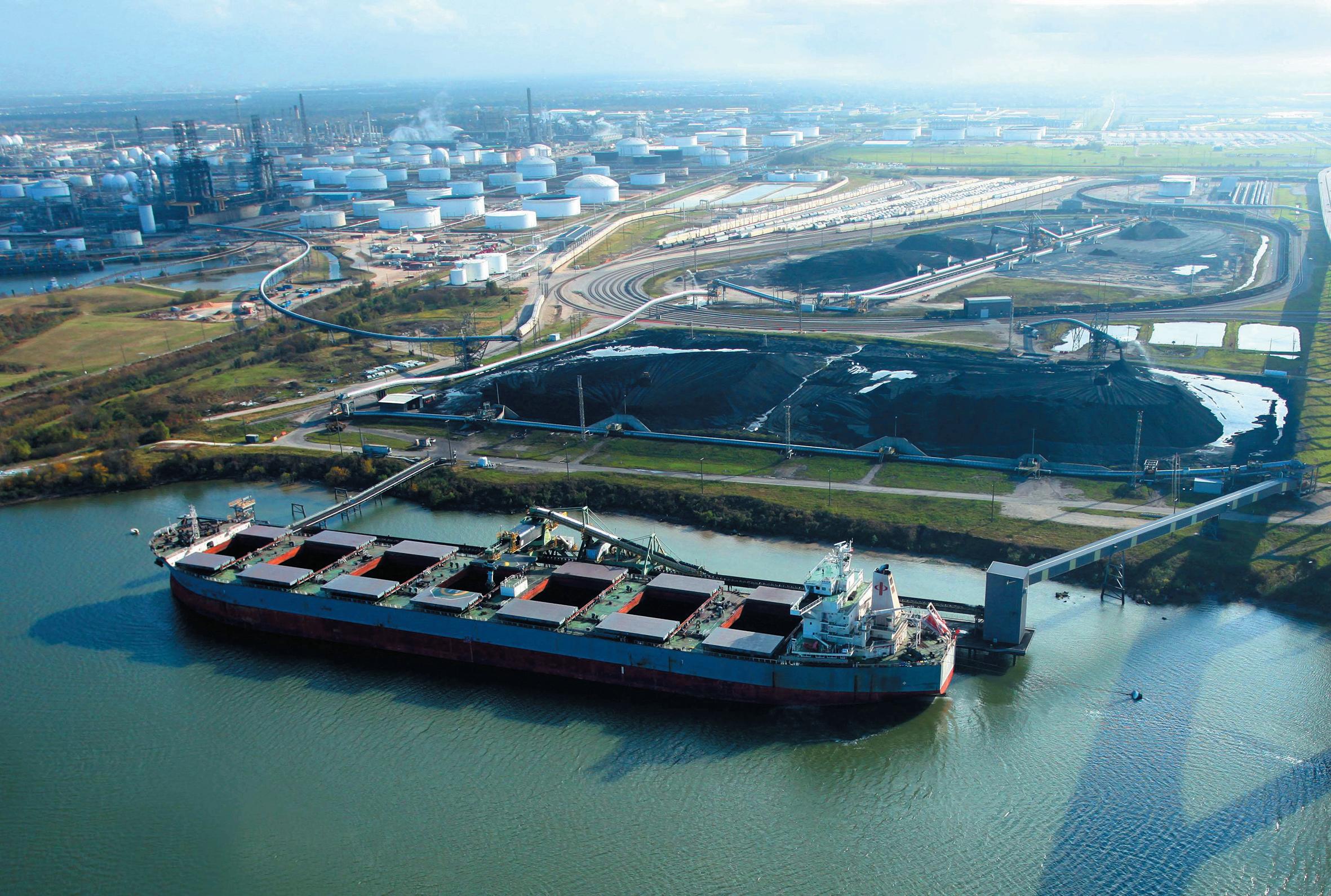
These traits and virtues have enabled Biehl to continue its long-standing support for the dry bulk sector. With more experience in the sector than most other agencies combined, Biehl has, throughout its existence, been a reliable provider of advice and services to cargo owners, ship owners, operators and managers engaged in the shipment of dry bulk cargoes. Today this includes cement, petcoke, steel, coal, grains, sulphur, biomass and aggregates. Biehl has no intention to change its relationship with the dry bulk sector and rather looks to continue building it.
The continued transition to a digital economy has seen remote working become the norm. This is often at the expense of personal interaction and personal relationships, both of which can deliver valuable insights and intelligence.
Biehl views personal relationships with key parties in each port as an essential requirement to guiding customers through market turbulence and helping them make informed operational decisions. Its relationships with the likes of Customs and Border Patrol (CBP), Coast Guard, pilots and terminals are crucial to ensuring that customer port calls run smoothly and efficiently.
From an operational perspective, port agents are also impacted by the current market volatility. Evidence of changing trading patterns requires that agents modify and adapt. Much has been documented about the potential reduction in US port calls in the container sector as a
result of tariffs and USTR regulations. This remains equally valid for the dry bulk sector. Changes to the ports that are called at are already being made in order to optimize revenues and minimize costs.
There are also the pervasive references to Artificial Intelligence that are impossible to ignore. While AI has the potential to add value in many ways, it must be assessed carefully to determine how it can best support internal processes and delivery of services. It is easy for this to become a distraction. Biehl has successfully deployed innovative solutions in 2025 that enhance how it communicates with customers and how it manages operational processes. This will only continue as it identifies where value can best be achieved.
As Biehl looks to the future, the same fundamentals that have served it for the last 120 years remain at the core of its business strategy. Quality of service continues to be paramount to its brand identity, and it looks
to systems, processes and solutions that will enable it to deliver this competitively. It is heavily invested in ‘connectivity’ with a view to providing customers with seamless access to data that improves decision making and reduces error.
Biehl is also committed to growth and expansion as part of its strategy and change is considered a constant. The year 2025 has seen several changes and new strategies deployed to future-proof the business, including opening an office in Tampa. Key ports in the US such as Houston are oversaturated in terms of agency businesses, and this will inevitably change as costs of operation increase while pricing pressures remain.
Biehl will continue to be focused on delivering the value it always has to the dry bulk industry and it is well positioned to do so. Irrespective of what the future may bring, Biehl is here to help customers stay the course.
Encouraging trends in the average number of bulk carrier losses1 each year do not disguise the need for vigilance in ensuring that fire safety systems on board are always ready for effective action, according to VIKING Life-Saving Equipment.
Spectacular and expensive fires on board container ships and car carriers continue to capture the headlines, but a blaze in a ship’s hold filled with scrap metal in Hull, UK, in June and an explosion on a coal carrier in Baltimore Harbor,USA, in August also put the safety of bulk carriers under scrutiny.
In August, the Transportation Safety Board of Canada also published its report on a 2023 bulk carrier engine room fire in Lake Erie. It highlighted how failure to reinstate injection line clamps created the conditions for the fire to start, while the fire suppression system failed to respond to remote or manual controls
Bulk shipping operators face continuous demands to keep firefighting equipment, extinguishers, and PPE ready for use.
Leading maritime safety provider VIKING Life-Saving Equipment works alongside owners to maintain readiness and to highlight both current and future compliance requirements.
PLANNING AND BUDGETING IN BULK
“In this sector specifically, there is a lack of full awareness of IMO 1318 amendments, which require critical changes to 20- and 30-year CO2 testing at 90% and 100% system coverage,” says Ronald Bamert, Global Service Manager MFS, VIKING LifeSaving Equipment. “These changes are necessary and demand advance project planning and budgeting.”
Bulk carriers will also be banned from using PFOS (perfluoro-octane sulphonic acid) in their firefighting systems from January 1, 2026, notes Bamert, and VIKING has made sure that the fixed solutions, applicators, and extinguishers it offers cover all compliance gaps. PFOS replacements will result in foams with different viscosities.
“Replacing PFOS requires careful planning and budgeting, covering inspection, possible system upgrades, disposal of old chemicals, system cleaning, foam replacement, and training,” says Bamert.
Benny Carlsen, Senior Vice President Sales and Global Service, VIKING, says that clients of the safety solutions provider increasingly opt for shipowner agreements, which offer ‘one-stop shop’ arrangements
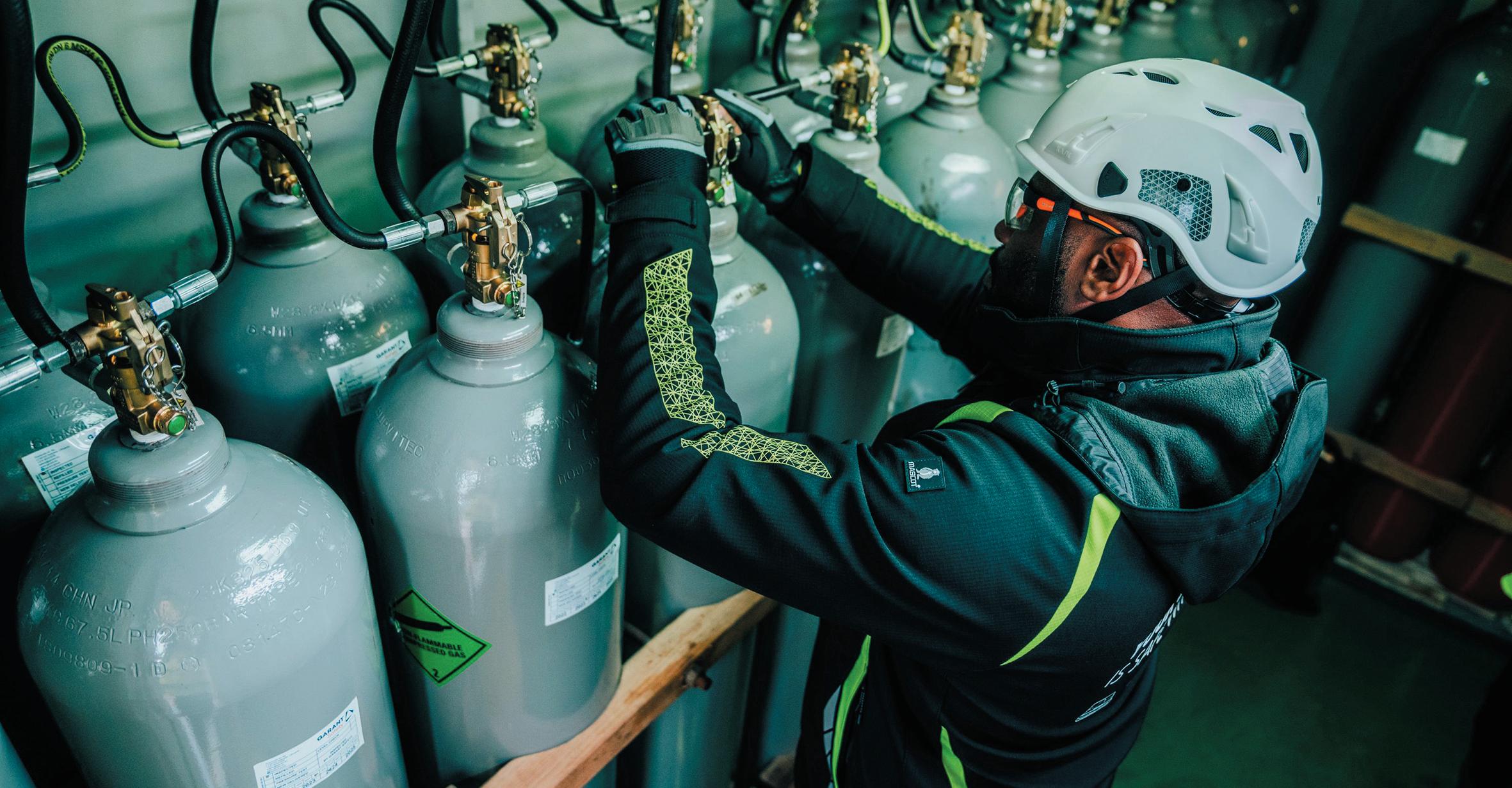
Maritime safety provider, VIKING Life-Saving Equipment, works alongside owners to maintain readiness and to highlight both current and future compliance requirements.
to cover a variety of needs. Lifeboat Service and Marine Fire Service are the two categories which shipowners seek to add to their agreements most frequently, he says, with good reason.
“VIKING has global service reach and 34 of its own service stations, and we’ve put in place a structured, large-scale training program — for VIKING technicians, authorized third parties, and for crew. The ability to offer the uniform lifeboat service capabilities anywhere in the world has become a competitive differentiator.”
Adopted for marine fire service, VIKING firmly believes the same approach can ensure firefighting equipment readiness for use at the time of need, and greater competence among personnel to use it, although Carlsen accepts that the specialized sector is subject to different dynamics.
From 2020, the IMO’s MSC.402(96) standard required lifeboat service providers to be authorized as working to manufacturer guidelines, in an acknowledgement by regulators that there was a need to enforce change.
“There is no doubt that there was a lift in lifeboat service quality after MSC.402, given requirements for skill levels, technician knowledge and certification,” comments Carlsen. “However, it’s also fair to say that enforcement by member states has been uneven.
“Where marine fire safety is concerned, there is even less uniformity. From the governance point of view, yes, there are requirements for inspections and tests, but the follow up can be lacking. Marine fire equipment servicing is also a more fragmented market, where many fire service businesses are rooted in local landside industries.”
The circumstances place even greater onus on VIKING and its competitors to
ensure owners prefer to tap into quality of service that is reliably to the agreed standard anywhere in the world, adds Carlsen.
“The success of the lifeboat service strategy and the strong progress we have made in fire safety solutions over the last three years persuade us that the same systematic approach in planning, training and skills-matching will drive demand for higher quality marine fire services. “
Earlier this year, VIKING continued its investment efforts in new products by launching a new VIKING YouSafe™ fire suit, including a Water Penetration Resistance barrier as standard. But service investments — in its network, and in training technicians, planners and customer-facing staff are also key to delivering harmonized and fully documented services best practice on marine equipment safety everywhere, says Carlsen.
VIKING’s unique, purpose-built Marine Fire Service Academy in Rotterdam has already fully trained 160 marine fire safety technicians, and the facility is delivering basic training to up to 55 technicians each year, and advanced training to 30 more, he adds. The Academy also serves VIKING customers by offering training for crew competence in system use and maintenance.
“We’ve developed a skills matrix that aligns training with vessel types and regional needs to ensure that the right expertise is available at each of our owned service stations worldwide, and to third parties,” comments Bamert. “VIKING has trained 80 marine fire service planners and is providing hands-on training to the sales force to build practical knowledge of equipment and service needs.”
Source: Source 1: INTERCARGO-Bulk-Carrier-CasualtyReport_2025-Pages.pdf
maritime development together,” says Johan Mattsson, CEO of Wallenius Marine.
“The establishment of the OVERSEA™ joint venture marks a significant milestone for us, solidifying the successful collaboration between ABB and Wallenius Marine over the past few years,” said Tomas Arhippainen, Business Line Manager, Marine Service & Digital, ABB Marine & Ports. “With OVERSEA™, customers can transform data into actionable insights, enabling them to not only improve their performance but also sustain it over time. Consequently, both vessels and customer offices can adopt sustainable improvements, enhancing energy efficiency, safety, and reliability.”
ABB and shipping company Wallenius Marine have formally established a new joint venture based in Stockholm, Sweden, to expand their OVERSEA™ collaboration and ensure customers will fully benefit from future-proof vessel performance management capabilities.
Launched in September 2022 as a collaboration between ABB and Wallenius Marine, OVERSEA™ is a combined digital solution and ‘fleetsupport-centre-as-a-service’ offering designed to help ship owners, operators, and managers enhance the efficiency and sustainability of maritime operations. OVERSEA™ leverages ABB’s significant expertise in ship technologies and the extensive fleet management knowledge from Wallenius Marine to enable measurable performance improvements.
The solution leverages ABB Genix™ Industrial IoT and AI Suite, which integrates the power of industrial analytics and artificial intelligence into an
enterprise-grade digital suite.
The solution collects and analyzes data on board of several vessels worldwide, with shore-based experts providing advanced decision-making support and tailored recommendations from the OVERSEA™ Fleet Support Center in Stockholm. As a result, operators are able to propose operational changes that can reduce fuel consumption and emissions while optimizing safety and reliability across their fleets.
“Our long-standing tradition of innovation and pioneering spirit is built on many years of experience in ship operations and advanced technical expertise. This makes us well equipped to quickly identify and respond to industry needs. Through our partnership and close collaboration with ABB, we can now bring our innovative fleet support service to a global market, and we look forward to continuing to drive
ABB is a global technology leader in electrification and automation, enabling a more sustainable and resource-efficient future. By connecting its engineering and digitalization expertise, ABB helps industries run at high performance, while becoming more efficient, productive and sustainable so they outperform. At ABB, this is called ‘Engineered to Outrun’. The company has over 140 years of history and around 110,000 employees worldwide. ABB’s shares are listed on the SIX Swiss Exchange (ABBN) and Nasdaq Stockholm (ABB).
ABB’s Process Automation business automates, electrifies and digitalizes industrial operations that address a wide range of essential needs — from supplying energy, water and materials, to producing goods and transporting them to market. With its ~20,000 employees, leading technology and service expertise, ABB Process Automation helps process, hybrid and maritime industries outrun — leaner and cleaner.

Vessel monitoring data has a significant role to play in optimizing decisions about hull coatings that help to deliver improved vessel performance, reduced carbon emissions and supports regulatory compliance for shipowners, writes Kazuaki Masuda, Technical Division Director, Nippon Paint Marine.
The IMO’s binding targets to achieve net-zero by around 2050 have made decarbonization an essential requirement for the shipping industry. While lowcarbon fuels are under development to help achieve net-zero, the required investment in their production and supply means such fuels are likely to remain limited in supply and expensive for some time. In these circumstances, operational and fuel efficiencies offer a timely response to tightening regulation.
In the current maritime landscape, owners are faced with difficult decisions to make regarding which technologies, among the wide range available, will offer the best solution to improve the energy efficiency of their fleet, while also taking account of the operating profile of each vessel. Shipowners and operators need robust data on the proven performance of the technologies they are considering in order to make informed decisions and secure a strong return on their investment. Having confidence in new technologies is only the beginning; with continuous support to monitor the energy efficiency of the solutions they use, owners can drive vessel performance and deliver decarbonization.
Developing insight from performance monitoring data and applying that to
technology selection requires the support of experts. From research and development to delivery and deployment, data collection and analysis is vital to identifying and optimizing how technologies can create opportunities for savings. Laboratory testing and on-going validation conducted by technical teams at manufacturers should be replicable by third parties, including academic researchers, to support shipowner confidence in product performance.
In-service performance data gathered from a range of data sources, including inspections, surveys and sensors, can be combined with ship performance monitoring data to analyse the impact of efficiency technologies on energy consumption. With this data and insight in hand, shipowners can look to optimize their technologies. For hull coating technology, performance monitoring during operations provide real-world track record that can inform operator decisionmaking and hone technology choices. At Nippon Paint Marine, our technical service representatives work with clients to collect verifiable data to facilitate decisionmaking about vessel coatings, including hold coatings.
Minimizing operational disruption due to the build-up of hull fouling that significantly reduces vessel efficiency and increases costs, can be problematic for operators. By working with experts to understand the ongoing performance of hull coatings as well as hold coatings, operators in segments such as the bulk sector, can minimize disruption to their operations and manage costs.
Hull coatings are the most widely used, available and effective clean technology solutions that have been proven to improve operational performance and lower CO2 emissions, by mitigating the impacts of drag from biofouling on the underwater hull of a vessel which results in an increase in fuel consumption. Every vessel must have a hull coating; selecting the right one to optimize vessel performance provides the industry with a unique and ubiquitous opportunity to reduce fuel consumption, emissions and associated costs through the latest technology designed to address bioadhesion.
Technology providers need to go beyond a simple supply relationship with their customers to help them evaluate, test
and implement advanced clean technologies. Applying their expertise beyond application and installation, hull coatings providers can advise on the best coatings to use for a given vessel with a specific operating profile and add further value by offering onboard maintenance training, performance monitoring and underwater inspection.
Nippon Paint Marine has worked with Oceanix, the ship maintenance technology provider, to validate speed-loss data and fuel savings for the A-LF-Sea and FASTAR coatings. The validations included vessels from multiple sectors, covering bulk carriers, container, chemical tankers and vehicle carriers to allow for a range of operating profiles . Applying the insights and learnings generated from these validations, Nippon Paint Marine’s technical service representatives facilitate biofouling performance monitoring for all applied coatings, conducting drag analysis, underwater inspections, and dry dock surveys to monitor fouling over the life cycle of the hull coating.
Furthermore, as part of RightShip’s Zero Harm Innovation Partners programme, Nippon Paint Marine is committed to share and validate data on coating and operational performance areas for its AQUATERRAS, FASTAR and A-LF-SEA coatings, that include hull roughness and emissions reductions. Creating reliable data sets that represent the real impact of technology when it is deployed will make it easier for shipowners to make informed decisions about specific technology deployment that deliver energy efficiency and carbon reductions at the lowest possible cost.
I nmarsat Maritime’s fully managed bonded connectivity service supports Norse Ship Management’s digitalization strategy with fast speeds, unlimited data, and global coverage.
Inmarsat Maritime, a Viasat (NASDAQ: VSAT) company, together with distribution partner Station Satcom have secured an order to install NexusWave on a bulk carrier managed by Singapore-based Norse Ship Management as the ship manager looks to meet the growing demands for crew and business connectivity across its fleet.
In line with Norse Ship Management’s digitalization objectives, NexusWave provides uninterrupted remote access to business-critical applications and real-time engine-monitoring, ensuring seamless data exchange between ship and shore The fully managed bonded connectivity service offers unlimited data and global coverage, enabling the crew to experience a homelike internet on board, where web-based applications perform as smoothly as they do on land.
Capt. Akshay Yadava, Managing Director, Norse Ship Management, said: “Crew welfare is our top priority, and providing a home-like internet experience onboard is increasingly vital to keeping our crews happy and motivated. With growing traffic demands on the commercial side and the need to ensure consistent, high-speed
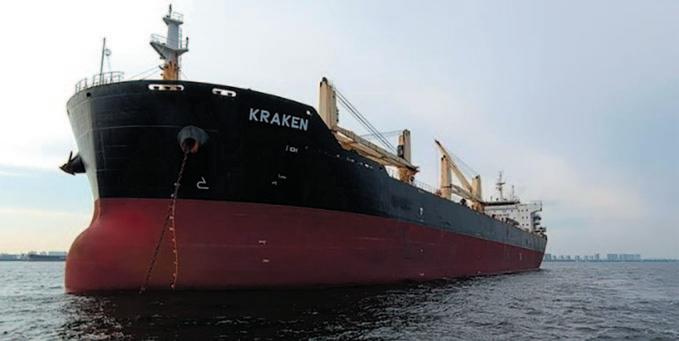
Inmarsat Maritime’s NexusWave will provide Norse Ship Management’s crew with a home-like internet experience on board its bulk carriers.
connectivity, we have selected NexusWave to upgrade our current system. We look forward to a continued successful collaboration with Station Satcom.”
NexusWave’s unique network bonding technology is designed to allow applications to leverage the combined speed and capacity of all available network underlays simultaneously, rather than relying on a single network at a time. This means ship owners and managers benefit from reliable, secure, and highperformance connectivity.
Anshul Khanna, Director Station Satcom Private Limited, said: “We are proud to be entrusted by Norse Ship Management to deliver NexusWave across its fleet. This partnership reflects Station Satcom’s commitment to enabling smarter, safer, and more connected maritime
operations. Our integrated deployment approach ensures Norse benefits from a single, robust platform tailored to its evolving digital needs.”
Justin Yi, Regional Director, Inmarsat Maritime, said “Norse Ship Management’s decision to adopt NexusWave highlights its forward-thinking approach to digitalization, with a clear commitment to enhancing crew welfare and operational efficiency. We extend our thanks to Station Satcom for its expert support in successfully delivering this deployment.”
Designed to meet the evolving needs of Inmarsat Maritime’s customers, NexusWave will be enhanced with the forthcoming integration of the nextgeneration ultra-high capacity ViaSat-3 Kaband network — a move that will further boost speed and capacity.
Icon Gulf Trading, the shipping arm of Dynamic Mining, and GeoServe celebrate one-year milestone in voyage management collaboration
A strategic collaboration between Icon Gulf Trading DMCC (part of the Dynamic Group) and GeoServe Energy Transport DMCC has enabled the successful shipment of bauxite from Guinea over the past 12 months. During this period, 12 cargo shipments, moving approximately 2mt (million tonnes) of bauxite, have been completed.
Icon Gulf Trading appointed GeoServe to manage end-to-end shipping operations, through its Commercial Voyage Management as a Service (CVMaaS) covering areas such as chartering, voyage execution, laytime calculations, port disbursements, regulatory compliance, and financial reporting.
This collaboration has brought a high degree of transparency and operational discipline to the shipping process for Icon
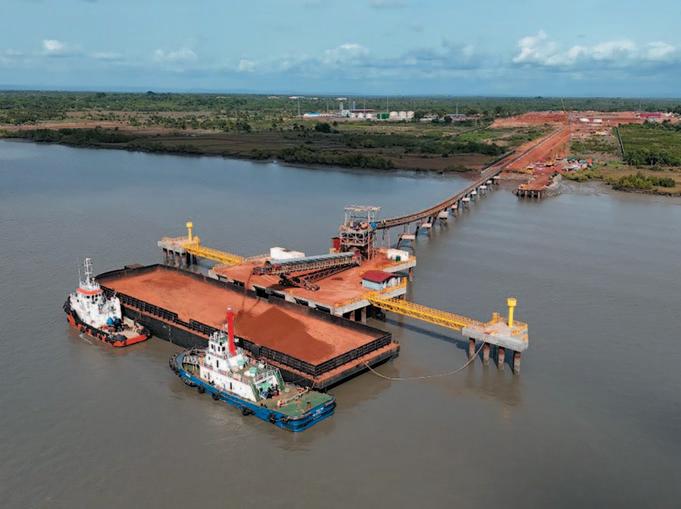
Gulf Trading, effectively optimizing the bauxite shipping value chain, thereby reinforcing Icon Gulf Trading’s ability to meet customer demand across global markets.
GeoServe CVMaaS is a complete preand post-fixture offering. This turnkey solution combines skilled professionals, proven processes, and a robust digital ecosystem into one cohesive service allowing traders and operators to focus on their core business and expansion strategies.
“Appointed as our shipping extended arm, GeoServe has introduced a layer of
operational transparency and professionalism that is essential in today’s complex maritime environment. The journey has just begun, as Icon Gulf intends to ramp up exports to 10–12mt of cargo per annum in a phased manner over the next two years, thereby chartering over 55 Capesize/ Newcastlemax vessels per annum,” commented Rajesh Sawana, Deputy General Manager at Icon Gulf Trading.
“We are proud of what we have accomplished together over the past year. Through this engagement, we have seen how a simple and scalable approach to voyage management can deliver real
impact,” said Alok Srivastava, Head of Shipping at GeoServe. “Despite disruptions and shifting market dynamics, our shared commitment to reliability, regulatory alignment, and long-term sustainability has remained unwavering. By offering an integrated ecosystem of solutions, we look forward to continuing to deliver measurable value to Icon Gulf Trading and the wider supply chain,” adds Alok.
The collaboration now enters its second year. Icon Gulf and GeoServe continue to deliver innovative solutions tailored to the evolving dynamics of global bulk commodity trade.
On 11 September 2025, Jotun announced another new milestone for its Clean shipping commitment through a commercial agreement with the Italian ship owner Ignazio Messina & C. for Jotun’s Hull Skating Solutions (HSS). This collaboration reflects a shared vision for innovation and sustainability, positioning Messina to navigate even the most challenging trades.
The vessel Jolly Rosa will use Jotun’s HSS, including the innovative HullSkater, developed in collaboration with Kongsberg, to ensure proactive cleaning as well as inspections on the hull. The solution combines high performing coatings, proactive monitoring and highend technical service, with the HullSkater, also offering a clean hull guarantee.
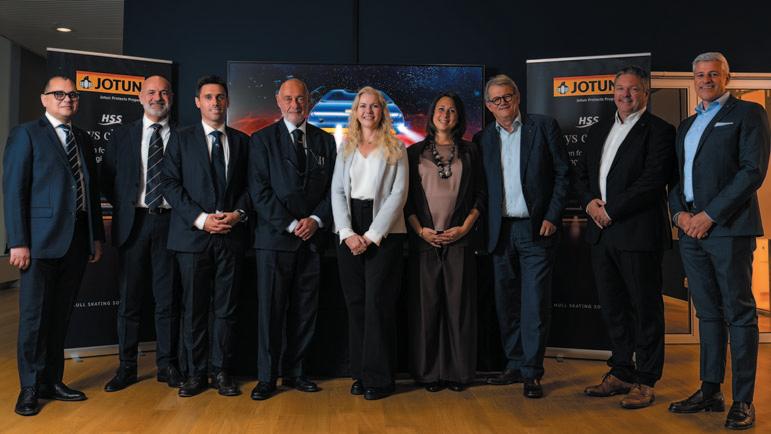
utilized various antifoulings as well as HPS from Jotun on other vessels.
“As a company with a long history of operating in complex and challenging trades, we are constantly seeking innovations and solutions that will benefit our operations in the long run. Jotun’s HSS will help us in the route towards more effective environmental sustainability targets. Thanks to this agreement, our ships’ hulls will perform better and we are oriented to further implement these new innovative technologies,” said Andrea Gais, CEO of Gruppo Messina Spa and Chairman of Ignazio Messina & C. Spa.
Jotun’s customized proposal was wellreceived by Messina, who recognizes the value of advanced hull protection and performance monitoring. The agreement that was officially signed during a ceremony at Jotun’s headquarter in Sandefjord, Norway, adds to Messina’s portfolio of Jotun solutions on their fleet, having
“We are proud to support Ignazio Messina & C. in their clean shipping journey. Not only will HSS provide excellent in-operation hull performance, but it will also position Messina as an innovative partner with sustainability as a main focus for their customers,” said Giulia Nebbia, Area Sales Manager at Jotun.
With this agreement the total Jotun systems applied across the fleet of Ignazio Messina & C. is expected to avoid approximately 11,800 tonnes of CO2 emissions annually, compared to market average products calculated based on ISO 19030.
This adds to the overall efforts Jotun is contributing to the industry with. In 2024 alone, Jotun coatings helped customers avoid 11.1 million tonnes of CO2 emissions, verified by DNV.
Messina will also benefit from Jotun’s HullKeeper programme, enabling real-time performance monitoring and fouling risk assessment. This empowers shipowners to
make informed decisions, optimize fuel efficiency, and maintain a clean hull throughout the vessel’s lifecycle.
“Hull performance management is getting ever more important for fleet management; minimizing hull resistance is the first step to improving the energy efficiency of the vessel in order to pursue environmental targets. Together with digital tools and monitoring systems, Jotun solutions will support our Technical Department in our decarbonization journey,” said Andrea Gais in Ignazio Messina & C.
Morten Fon, President and CEO of Jotun, added: “We are reliant on partners like Messina to be able to deliver on our mission: helping the industry cut carbon emissions, preserve fuel and protect biodiversity. This agreement not only strengthens the partnership between Jotun and Ignazio Messina & C. but also sets a benchmark for cleaner operations in the maritime industry. This inspires us to keep innovate and continue to deliver great solutions to the market.”
Properly implemented, efficient hull cleaning on the right type of underwater ship hull coating is the answer to optimum fuel efficiency, long term hull protection and the elimination of the hull-borne invasive aquatic species problem.
Because of the types of hull coatings in general use on the world fleet, the subject of hull cleaning has become somewhat controversial. Most of these coatings are not suitable for in-water cleaning.
This article examines how the Ecospeed hull coating and cleaning system cuts through this controversy and delivers excellent ship hull performance with the advantages of significant fuel savings and benefit to the marine environment.
Ship hull cleaning for performance is not a new subject.
The Greek author Plutarch (45–125 AD) discusses the benefits of clean ship hulls in his Symposiacs written around 100 AD.
“…for the ship continuing dry, not yet made heavy by the moisture soaking into the wood, it is probable that it lightly glides, and as long as it is clean, easily cuts the waves; but when it is thoroughly soaked, when weeds, ooze, and filth stick upon its sides, the stroke of the ship is more obtuse and weak; and the water, coming upon this clammy matter, doth not so easily part from it; and this is the reason why they usually calk their ships.”
More recently, in 1770, Captain James Cook on his trip around the world notes in his journal that he was looking for a suitable location to careen (beach and lay on its side) the Endeavour with the sole purpose of cleaning the ship’s bottom.
Later, ship hulls were cleaned by divers using hand and mechanical tools with the ship still in the water. This avoided beaching and careening or the more modern equivalent, drydocking.
Highly toxic TBT in hull paints gave the illusion that ship hull cleaning was an unnecessary thing of the past. It was soon discovered that TBT’s damage to the marine environment was extensive, severe and unsustainable. Nevertheless, during the “TBT era” the subject and practice of underwater ship hull cleaning went into decline in terms of repute, technology, skill and general availability.
However, the antifouling technology which replaced TBT-laden hull paint was relatively
Wooden sailing ship careened (laid on its side) for hull cleaning.
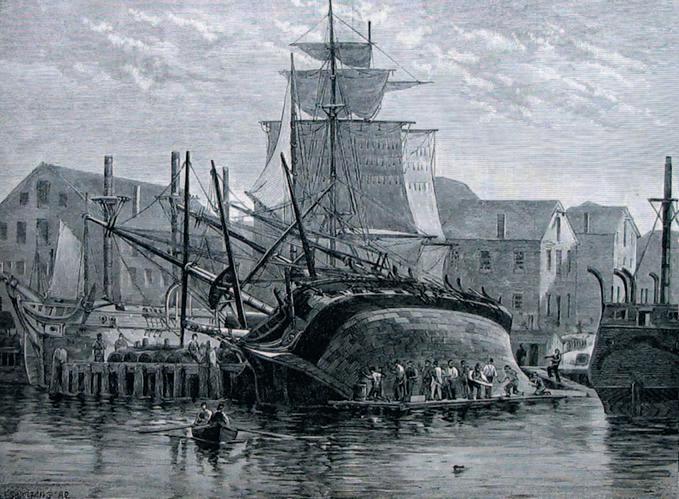
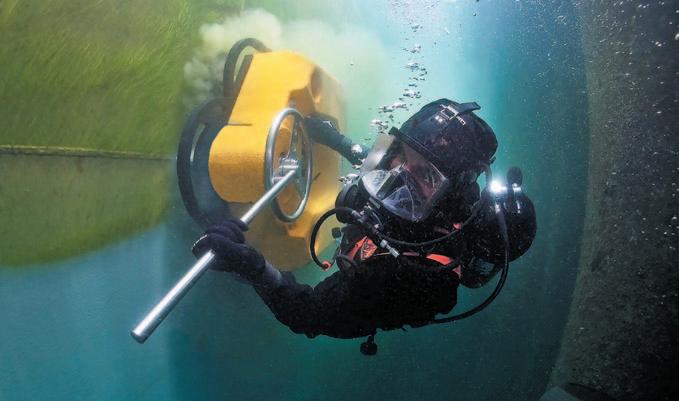
ineffective. All ship hulls develop a biofilm or slime layer at the very least, regardless of the bottom paint used, and this, combined with rough hull coatings which degrade over time, carries with it a fuel penalty of as much as 20% or more. These coatings could not be cleaned without damage to the paint and to the marine environment.
The hull coating industry has created a “damned if you do, damned if you don’t”situation for shipowners/operators which includes frequent drydocking and paint replacement, a built-in fuel penalty, and coatings which are ineffective in preventing fouling yet are not suitable for underwater cleaning (the only practical means of avoiding the fuel penalty incurred).
Today underwater ship hull cleaning thoroughly and efficiently done on an industrial basis and on a suitable hull coating is the answer to reducing fuel costs, cutting GHG emissions, preventing
the spread of non-indigenous species while avoiding marine chemical pollution.
ECOSPEED WAS INVENTED TO OVERCOME THESE PROBLEMS
There are two main liabilities of cleaning conventional AF and FR coatings:
1) Damage to the coating from the cleaning
2) Harm to the local environment.
The coatings in general use are not very tough and they are porous enough for barnacle glue to penetrate the coating scheme, all the way down to the steel. Because they are relatively soft, when one attempts to clean them, the coating is damaged by brushing even if only weed and slime are removed. This reduces the effective life of the coating and more fouling accumulates which then needs to be cleaned off — a dwindling spiral. Underwater high-pressure jets are not effective since they have to overcome the resistance of the water and have a strong
repelling force against the hull.
At the same time, cleaning coatings that are laden with heavy metals, biocides, silicone oils, PFAS, and microplastics, results in a pulse discharge of these toxic substances into the water column and the sediment. There they remain until stirred up and resuspended.
Ecospeed, on the other hand, is a hard coating which can be cleaned regularly without losing any thickness and without
any toxic substances being released into the water. It can also be high-pressure washed in drydock, but when cleaned underwater with the right tools, the result is a slight buffing effect which improves the hydrodynamic properties of the coating over time. This coating does not need to be replaced. Any mechanical damage can easily be repaired, leaving the surface as good as when the paint was first applied, just slightly smoother. So, ten years down
the line, you still have a well-protected hull with the original coating intact and the bonus of better fuel efficiency than when new.
Ship hull cleaning has a long history with very mixed results. When the right type of coating is used, it is the answer to high fuel efficiency without any harm to the marine environment.
Chevron announced on 3 July this year that Turkish shipowner, Susesea, has successfully upgraded the cylinder lubrication strategy across its fleet of six bulk carriers by adopting Chevron’s Taro® Ultra Advanced 40 (TUA 40). Working closely with Chevron Marine Lubricants and its regional distributor, Petrol Ofisi, Susesea has streamlined vessel operations and reduced cylinder oil feed rates by approximately 33%, delivering both technical and commercial benefits.
The six Japanese- and Chinese-built vessels, each with an average deadweight of 64,000 tonnes, are all equipped with MAN Mark 9 engines. These two-stroke engines demand high detergency lubrication to help maintain piston and ring land cleanliness, particularly when operating on very low sulphur fuels. Previously, Susesea’s engineers alternated between MAN Category I and Category II lubricants to manage this requirement, following a set schedule of three days on Taro Ultra 40 (Cat I) and one day on Taro Ultra 100 (Cat II). The system was effective, but complex.
By transitioning to a single Category II 40BN product, Susesea not only simplified onboard practices but also opened up new opportunities for procurement efficiency and long-term maintenance planning. Chevron’s TUA 40 has since become the preferred choice for all six vessels.
“Upgrading to a single Taro 40 solution means that we can now complete largescale purchases in strategic ports like Singapore and carry a full year’s supply. That has proven to be extremely efficient for our operations,” said Bilge Kagan Dogan, Technical Manager at Susesea.
He continued, “We initially decided to switch to Chevron Cat II 40BN cylinder oil based on two main advantages: improved cleaning performance compared to 100BN oils, and cost reduction. Altogether, Cat II 40BN oil has delivered great value for performance.”
Chevron’s Taro Ultra Advanced 40 is a high-performance 40 Base Number (BN)
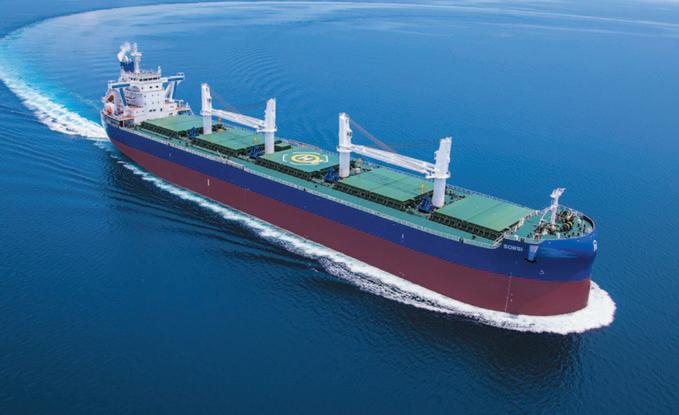
Category II cylinder lubricant approved by MAN Energy Solutions for use in modern two-stroke engines. As part of the implementation, Susesea worked with Chevron and Petrol Ofisi to conduct scavenge port inspections at each port of call and track iron content and base number retention onboard.
Feed rates were reduced in controlled increments of 0.1g/kWh, with all six vessels ultimately achieving consistent operation at 0.8g/kWh. The results confirmed not only compliance with Original Equipment Manufacturer (OEM) cleanliness targets but also improved piston ring and ring land condition across the fleet.
With visual inspections reporting improved scavenge cleanliness and liner condition, the shift to TUA 40 also helped reduce task complexity for onboard crews. Inventory management and maintenance planning have since become more straightforward and less prone to error, supporting higher levels of operational uptime.
The success of the Susesea transition demonstrates how Chevron’s TUA 40 can help technically focused operators reduce feed rates while meeting the demands of modern engine architecture and very low sulphur fuel oil (VLSFO) operation. By
simplifying from a two-oil to a one-oil strategy, operators can achieve greater control over procurement and logistics while reducing cylinder oil consumption and maintenance burden.
Chevron’s support throughout the process included performance monitoring, crew guidance, and lubrication strategy alignment with MAN ES specifications. The partnership model used with Susesea is part of Chevron’s broader commitment to supporting shipowners with compliant, field-proven solutions for the evolving fuel and regulatory landscape.
“It was a pleasure working with Susesea to support their adoption of Taro Ultra Advanced 40,” said Georgia Chaloulou, Technical Field Specialist at Chevron Marine Lubricants. “By closely monitoring the results and managing each step together, we helped ensure a successful outcome. Chevron is committed to providing practical, data-driven lubrication solutions tailored to each customer’s operational needs.”
“We are grateful for the guidance from Georgia Chaloulou, who supported us throughout the process,” added Dogan from Susesea. “Her expertise was instrumental in giving us confidence in the product.”
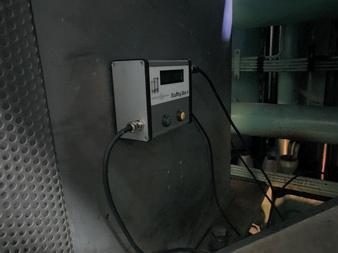
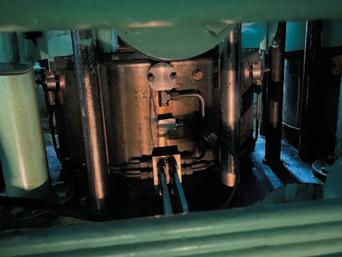
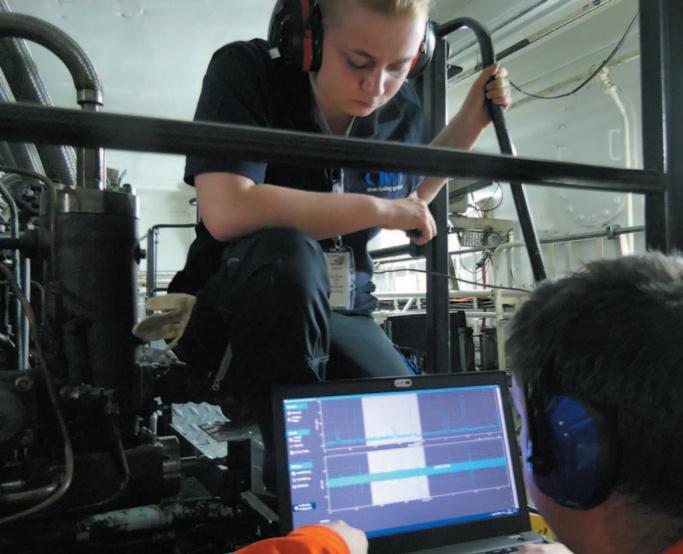
CM Technologies (CMT), a major provider of advanced condition monitoring solutions, is calling on shipowners and managers to join collaborative trials designed to capture vital data on one of the shipping industry’s most costly problems: cylinder liner scuffing in two-stroke engines.
Scuffing, a form of sudden severe wear, can result in catastrophic engine damage and vessel downtime. And while it’s a wellknown issue, typically affecting large twostroke diesel engines found on bulkers, tankers, and large container ships, the root causes are difficult to pin down. Operators, OEMs, and service providers have long struggled to predict or prevent the phenomena.
Germany-based CMT, however, has developed a system that can alert operators to early onset cylinder damage, but see seeks trial partners for critical data gathering aimed at validating the sensor’s predictive capabilities and to prevent
engine damage before it occurs.
“Scuffing is a silent killer. It can occur suddenly, and the damage can be extensive,” said Uwe Krüger, Managing Director at CM Technologies. “Despite the prevalence of this issue, even engine manufacturers don’t fully understand why it happens. What we do know is that it’s linked to a combination of factors, like lubrication failure, drastic load changes, recent overhauls, amongst other things. Our goal is to better understand the acoustic fingerprint of scuffing so we can prevent failures before they happen.”
CMT’s recently developed Scuffing Sensor system — a “stethoscope for cylinder liners” — uses high-frequency acoustic emission (AE) technology to detect the earliest signs of friction and wear from outside the cylinder.
Unlike other methods that rely on visual inspection or oil analysis performed weeks apart, this approach captures real-
time acoustic data without interrupting engine operation. By identifying wearrelated noise patterns, the system provides a potential early-warning signal before damage occurs.
Trial partners are invited to deploy the system onboard vessels equipped with two-stroke diesel engines. Ideally, these vessels will call at ports in Northern Europe, Germany, the Netherlands, Belgium or France, where CMT engineers can easily access them to install and retrieve data-logging equipment.
The system itself is unobtrusive, requires no modifications to engine internals, and is non-invasive. Mounted externally using magnetic brackets, the sensors require no disassembly, no drydock visit and no interruption to the ship’s voyage.
“There’s no need to open the engine or stop operations. The sensor system is magnetic, sits externally on the cylinder, and records data quietly in the background,” said Krüger. “We’re looking for operators that will let us place this technology onboard for one to three months. The process is simple, and the benefits could be significant.”
By participating in the trials, ship operators and managers stand to gain early insight into the scuffing risks on their engines, while helping CMT further develop the breakthrough diagnostic tool for the wider industry.
“If we can collect enough data from a range of engines, we can build a reliable library of friction noise patterns,” Krüger said. “This will enable us to deliver early warnings when problems are brewing, long before current monitoring methods can detect them. The benefits will be lower maintenance costs, less downtime, and better protection of what is undoubtedly the most critical, high value asset onboard a ship, aside from the crew.”
CMT believes this collaborative approach is key to cracking one of shipping’s most persistent maintenance problems.
“We’re not asking shipowners to shoulder any risk, just to let us listen to their engines. Together, we can create something that protects engines, saves money, and sets a new benchmark for condition-based maintenance.”
Shipowners or managers interested in participating in the scuffing detection trials are invited to contact CM Technologies.
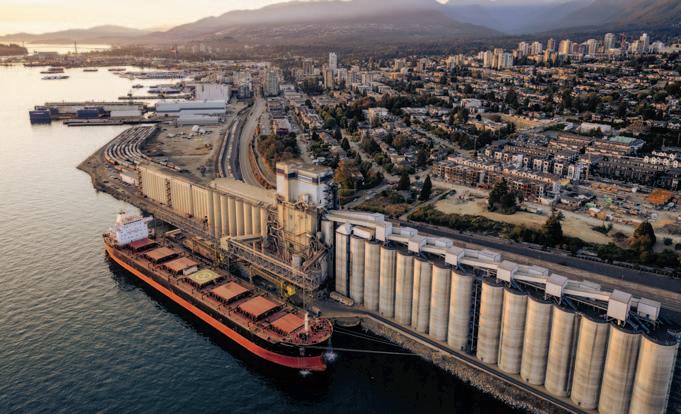
Near-record volumes of Canadian grain and canola oil is making its way to new and growing overseas markets via the Port of Vancouver this year, as Canada’s largest port supports efforts to diversify trading partners during global uncertainty.
Trade data released by the Vancouver Fraser Port Authority in September shows the port terminals helped Western Canadian farmers and producers move 17.1mt (million [metric] tonnes) of bulk and containerized grain exports in the first half of 2025.
This is an 8% increase compared to the same period a year ago and the second highest mid-year volume for grain exports on record, after 2021’s 18.7mt. It includes:
8.5mt of wheat exports, up 8% v compared to the same period 2024.
4.1mt of canola seed exports, up 12% v compared to the same period 2024.
2.3mt of specialty crops exports, v down 9% compared to the same period 2024.
Canola oil exports through the port were up 72% compared to the same period last year, at 0.7mt.
The Port of Vancouver’s 29 major terminals and 1,000-plus tenants moved a record of more than 85mt of total cargo in the first half of 2025, driven by a significant increase in crude oil exports after the Trans Mountain pipeline and terminal expansion came online in spring 2024.
“Canadians and their businesses depend on the Port of Vancouver to buy and sell the products they manufacture, farm, mine and stock their shelves with,” said Peter Xotta, President and CEO of the Vancouver Fraser Port Authority.
“As Canadians navigate a moment in time like no other, I want to acknowledge
the port community and our supply chain partners for rising to the occasion and moving record trade volumes so far this year. The Port of Vancouver has a critical role to play in meeting the moment as Canadian businesses seek to sell more of their products to more customers outside of the US.”
The Vancouver Fraser Port Authority is the federal agency responsible for enabling Canadian trade through the Port of Vancouver — which handles North America’s most diverse range of cargo and moves as much trade every year as Canada’s next five largest ports combined.
The Port of Vancouver plays a critical role ensuring Canadian farmers and producers can access diverse overseas markets –connecting Canada with more than 170 global economies. In the first half of 2025, the port helped ensure Western Canadian canola farmers and canola oil producers could reach new and growing overseas markets to help offset lower demand from the US and China. This included:
0.7mt of canola oil exports reaching v 12 global markets in the first half of 2025, up from 0.4mt going to four markets in full-year 2024 (China, U.S., South Korea, Peru). New and returning markets included Belgium, Mexico and Malaysia.
4.1mt of canola seed exports reaching v 13 global markets in the first half of 2025, up from 3.6mt going to four markets in full-year 2024 (China, Japan, UAE and Belgium). New markets included Mexico, Netherlands, France and Bangladesh.
The port authority is working closely with industry and government to plan and deliver investment in the gateway to boost reliability and capacity, and ensure Canadian businesses can continue to reliably access overseas markets.
Key investments that support the movement of grain and seed oil exports include:
DP World Fraser Surrey recently v opened a new facility that allows it export approximately 1mt of canola oil a year.
Construction is under way on the v Holdom overpass in Burnaby to enhance rail service to the North Shore, which handles about one-third of the port’s cargo including millions of tonnes of annual bulk grain exports.
An Active Vessel Traffic Management v Program that improves coordination and optimization of ship traffic will be expanded throughout the port later this year. The programme has already helped boost rail service to the North Shore trade area by 10%.
Procurement for the landmass and v wharf is now underway for 2.4 million TEU Roberts Bank Terminal 2 container terminal, which will unlock $100 billion in annual trade capacity on Canada’s west coast and support containerized agriculture exports
“For decades, and prior to tariff threats, along with our partners we’ve been working hard to grow trade capacity to meet demand,” said Xotta. “Today, our growth plans and partnerships are purpose built to help Canada rise to the occasion and get made-in-Canada products to more customers.”
“For example, we’re using new tech and tools via Active Vessel Traffic Management to facilitate thousands of ship movements a year –allowing us to improve visibility in how goods are moving through the port, better coordinate with supply chain partners and add capacity.”
The port has more than 10 major terminals able to handle bulk exports of grain and canola oil, and four that can move containerized grain exports. More than half of Canada’s overseas grain exports pass through the Port of Vancouver every year.
The Port of Vancouver’s mid-year 2025 cargo statistics are available on its website.
Investment includes v immediate £32m spend to grow steel and metals storage at the Port of Liverpool.
Plans include new v automated terminals in Liverpool and London Medway, with the development of a new automated rail facility in the Midlands.
Peel Ports Group is to invest £100m into the steels and metals sector in a move to enhance capacity and boost the efficiency of logistics.
The UK’s second largest port operator is progressing with £32m to add a further 140,000ft2 of storage at its Port of Liverpool steel and metals terminals.
Overall, across the Ports of Liverpool and London Medway, warehousing will be increased by 50% from the current one million square feet to create an additional 500,000ft2 of capacity.
Further plans include creating a second automated terminal in Liverpool dedicated to steel coils, as well as a new automated terminal for the Port of London Medway in Sheerness.
These will be developed to include rail connectivity by a new inland rail terminal in the Midlands.
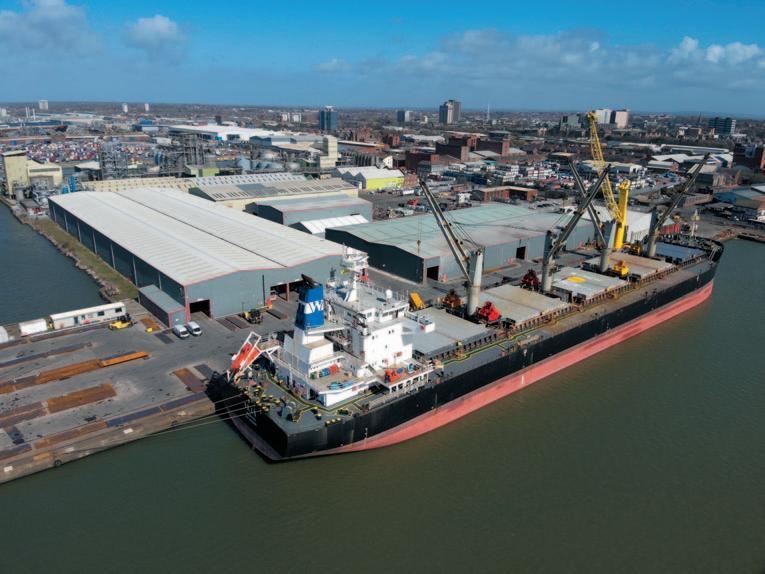
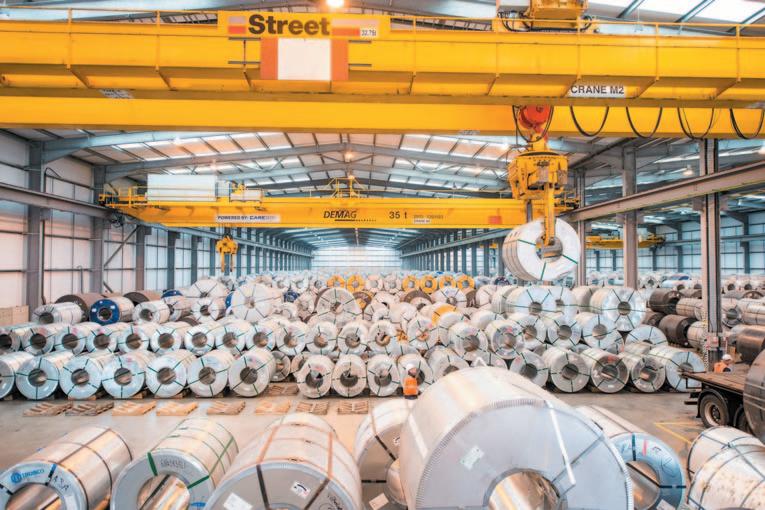
This fresh investment by the port group follows a record year for steel imports at the Liverpool facility and will help further grow the volumes of steel it transports across the UK.
David Huck, Chief Operating Officer at Peel Ports Group, said: “This is a game-changing investment for us.
“Demand for steel and metals handling across our port group, and the UK in general, has risen sharply over the past five years and
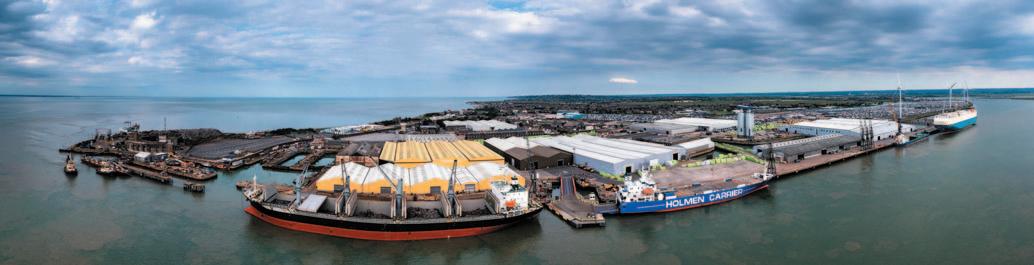
this will allow us to expand our support to the construction and manufacturing supply chain right across the country.
“This investment ensures we have the scale, speed, and specialist expertise to support our customers today and long into the future, helping to also address some of the storage and transportation issues the steel sector currently faces.
“With expanded capacity and a growing, dedicated steel handling team, we can now move more product, more efficiently than ever before. Our location in Liverpool is in the heart of Britain and gives us a clear advantage — perfectly placed to serve stockholders and fabricators nationwide, supported by excellent road and rail links.
“Warehousing will remain a key focus for the business, with further expansion already in the pipeline as we continue to future-proof our service for the UK’s critical industries.”
“The addition of a new rail terminal in the Midlands will allows us to efficiently connect the two strategically located deep-water ports of Liverpool and London Medway, boosting the efficiency of logistics for our customers and partners.”
The business is already working with customers to bring steel cargoes closer to major centres of demand across its seven statutory harbour authority ports and 24 terminals.
This is the second time in under two years it has extended its Port of Liverpool steel and metals terminal and will involve the creation of two newly dedicated warehouses at its Seaforth Dock to handle these products.
The port group has added a new team of specialist Stevedores at the Port of Liverpool and is actively recruiting for extra positions and training internal staff to enhance handling capability to meet the rise in demand.
The port now boasts more than 610,000ft2 of storage for the commodity, and this expansion means it will be able to store an additional 35,000 tonnes of steel and metals.
This fresh investment by the port group follows a record year for steel imports at the city facility.
The port group has the capability to store and handle many different types of metal products, including rebar, plates, coil and aluminium, and handles significant volumes.
In April, the company reported a
record-breaking year for steel imports at the Port of Liverpool, with volumes increasing by more than 35% year-on-year. 702,000 tonnes of bulk steel were processed at the port in 2024, coming from across the world including from South Korea, Vietnam, Taiwan, Turkey, and Europe.
The port operator also recently underlined its commitment to supporting UK steel and metals supply chains by becoming the first and only UK port operator to join the Aluminium Federation (ALFED).
Peel Ports Group is the UK’s secondlargest port operator, owning and operating
six of the UK’s most important ports (Liverpool, Heysham, Manchester Ship Canal, Medway (Sheerness/Chatham), Clydeport and Great Yarmouth). It also operates a container terminal in Dublin and owns BG Freight Line, which provides short sea container services between the UK, Ireland and mainland Europe and Peel Ports Logistics, one of the UK’s foremost shipping and freight forwarders.
Peel Ports handles approximately 70 million tonnes of cargo every year. Fourteen per cent of the total UK major ports traffic flows through ports operated by the Group. Headquartered in Liverpool, it employs around 2,000 staff.




























The regional drought impacting inland waterway operations in the Amazonas region of Brazil is forcing dry bulk terminal operators to think outside the box. To combat lower water levels, Super Terminais has received permission from the National Waterway Transport Agency (ANTAQ) to operate a floating dock at Itacoatiara, in Amazonas City, which is some 175km from the regional capital Manaus.
The new fdock, which is a designated Private Use Facility, will require no nearby storage warehouses and will uniquely handle dry bulk commodities, mainly soybean and corn.
The purely transshipment operation will take place at what is a 240-metre long quay, which is 18 metres wide, giving it an overall
operating area of 4,320m2. It will accommodate up to Panamax size deep sea vessels when it begins operations in January of next year.
Such an operation is made possible by the fact that the dock will be located at one of the deepest parts of the Amazon river, in an area that was temporarily used in 2024 to transship containers as a stop gap measures to overcome low water levels prevalent at the time.
The dock is positioned some 100 metres from the river bank and offers alongside draught of 34 metres.
From Itacoatiara, the 200km distance to Manaus will take an estimated 18 hours. Operations at the dock will run aroundthe-clock, with three shifts rostered.
Unloading equipment be used to transfer consignments from deepsea vessels to barges, which will then use the river to reach Manaus. Operations will definitely be provided between September and December, coinciding with summer in the southern hemisphere, although can continue beyond that period as required.
It should be noted that drought has become a highly disturbing feature in the region in recent times. In 2023, for example, Amazonas state experienced its worst ever drought, and predictions are for lower water levels on the Amazon river to continue into the foreseeable future. Manaus has a strong industrial base, but without sea access would not be able to function effectively. Barry Cross
Port, which is a subsidiary of Shandong Port Group (SPG), has set a new record for bauxite handling at its Longkou port area.
The vessel Aokailong 19 offloaded a consignment consisting of 6,400 tonnes of bauxite, thereby bringing the overall total for this raw material handled by Shouguang Port to 10 million tonnes, equivalent to an increase of 73.5% when compared to 2024.
The port has created a combined maritime and rail transport network, allowing bauxite to be more easily moved from mines to production units inland. This initiative has focused on the creation of ten main corridors, connecting resources with factories, and upgrading logistics and supply chain services for Chinese-African bauxite traffic. Barry Cross
In India, V.O. Chidambaranar Port Authority, which oversees VOC Port, has officially begun construction of its multipurpose berth number 10. The new facility, which will be 445 metres long, will have a draught
of 10 metres, although this will be dredged to allow vessels drawing up to 15.5 metres of water to dock. This will make it possible to accommodate ships of up to 125,000dwt.
Behind the quay, there will be a 7.4ha storage area, which will have heavy-duty pavement. The schedule is for operations to commence on 30 November 2026.
Barry Cross
In northeastern Spain, Pérez Torres Marítima has acquired what it claims to be the world’s largest articulated harbour crane for its operations at the Port of El Ferrol. The crane, which cost €4 million, is Sennebogen’s 895E model. It can handle up to 1,000 tonnes per hour whilst using 33% less fuel thanks to hybrid technology, which results in cleaner and more precise handling of bulk, general cargo and project cargo.
Physically, the unit weighs more than 400 tonnes and has an outreach of 40 metres when operating at a height of 50 metres. It is self-propelled, relying on more than 80 wheels to manoeuvre to any point in the Port of El Ferrol, making it extremely flexible operationally.
Barry Cross

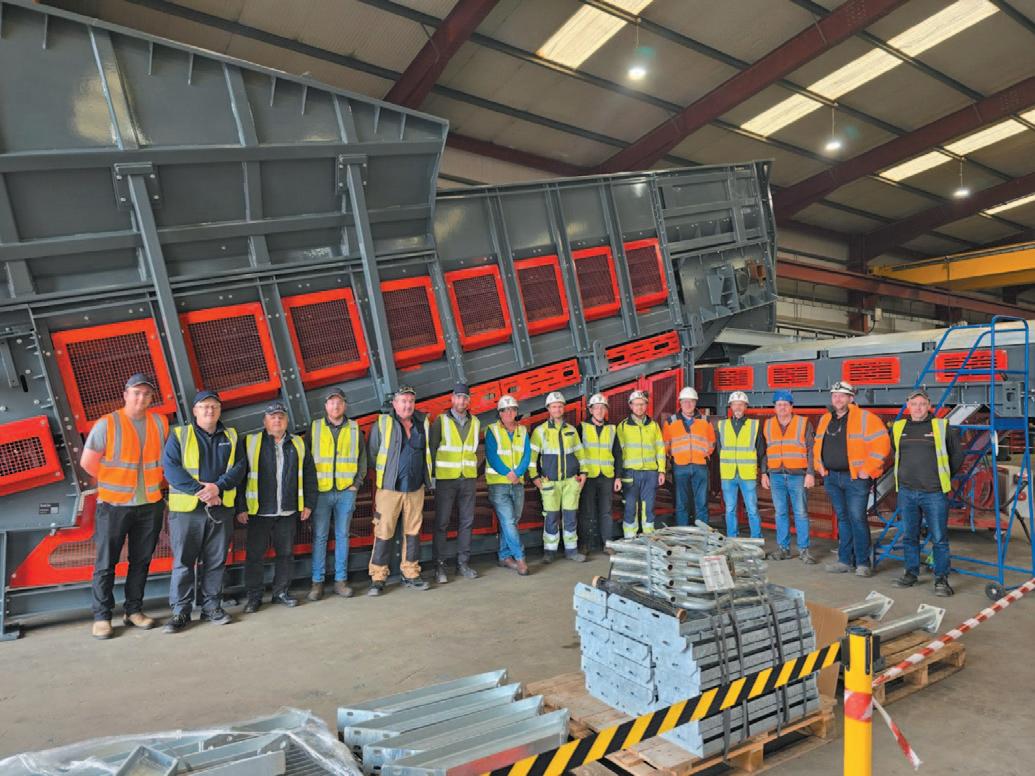
the supply of a new Titan Truck intake system as part of a mining company’s expansion in a Port in Ireland. This customer opted for the Telestack Titan S800-6 intake system for the efficient intake of lead and zinc products which forms a critical logistical interface for the export of the material.
result of Telestack’s extensive track record with proven Titan installations globally. The system will work within an existing unloading point, which aligns with the customized nature of Telestack product portfolio.
A key part of the selection was the customization needed for this project. The
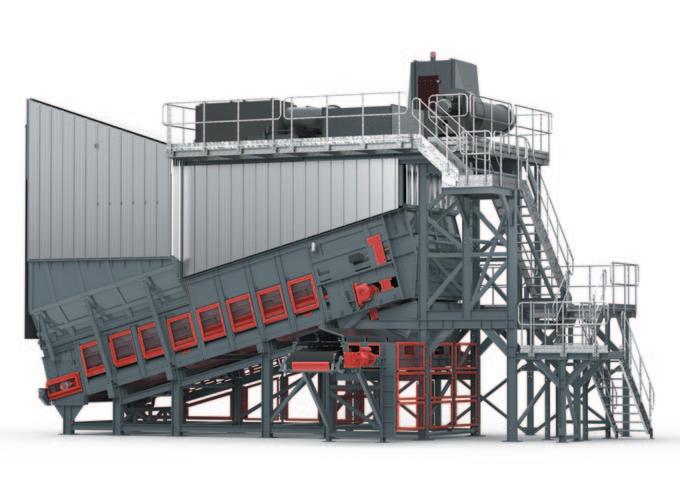
3D Conceptual render done for the customer as part of the contract signing.
required for the application including integrated dust enclosure and dust extraction filters to meet the environmental requirements on site, along with integrated access ladder/steps and maintenance walkways throughout for the operator. There is also an integrated panel including profinet module (Siemens) which allows integration into the existing control system along with Variable speed control (VSD) on all belts to ensure maximum speed and control into the system.
This unit is feeding onto an existing conveyor belt system, so Telestack included a 9m-long discharge conveyor (90° from the feeder) which will feed directly into the current conveyor in the plant.
FULLY DESIGNED, MANUFACTURED AND ASSEMBLED BEFORE DISPATCH FROM FACTORY
As with all of Telestack’s products, the TITAN S800-6 unit is fully designed, manufactured, fully assembled, tested and fully operation before dispatch. This ensures the quality and easy installation of the unit when arrives on site, allowing for a seamless build process.
Bruks Siwertell has secured a new order for a belt-type Siwertell shiploader from Savage, a prominent provider of industrial logistics and material handling solutions. The new shiploading system will be installed at the Pabtex terminal in Port Arthur, Texas, and will aid in the export of petroleum coke (petcoke) produced in the area.
USA-based Savage, a new customer for Bruks Siwertell, currently holds the operations contract for Pabtex, a specialized petcoke storage and handling terminal. Bruks Siwertell was selected to replace the facility’s existing shiploader, originally installed over 50 years ago.
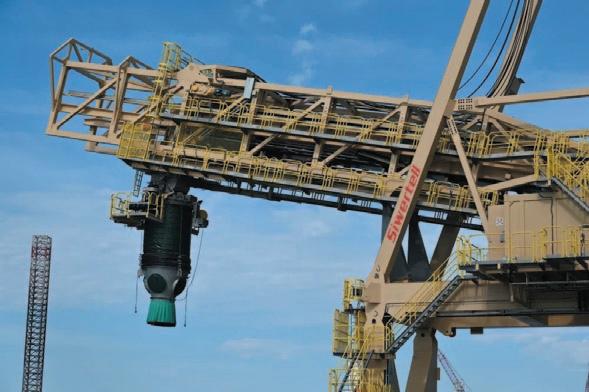
“Bruks Siwertell has a reputation for delivering efficient, high-capacity dry bulk handling solutions for challenging materials and demanding operations,” says Gregory Hausler, Sales & Service Director Americas, Port Technology, Bruks Siwertell. “This order highlights our commitment to supporting port terminal customers worldwide with innovative technology and strengthens Bruks Siwertell’s presence in North America.”
The new shiploader must meet exacting vessel throughput requirements and environmental protection capabilities and also be delivered and installed to a schedule that minimizes operational downtime.
“The Siwertell Type 5 shiploader was a perfect fit for the terminal, and our ability to offer a fully assembled unit, ready for shipment in just 13 months, was a decisive factor,” says Hausler. “Our engineering team tailored the design to meet specific dock load capabilities, which also accelerated the project timeline.”
Capable of delivering a continuous rated capacity of approximately 2,700tph (metric tonnes per hour) (3,000 short tons per hour) of petcoke, the Siwertell shiploader was selected for its proven performance and reliability. It has been designed to integrate into the existing dock and conveyor arrangement with minimal structural modifications.
The shiploader will feature integrated catch pans and a comprehensive washdown system to ensure effective material containment, a critical environmental consideration when handling dusty commodities like petcoke.
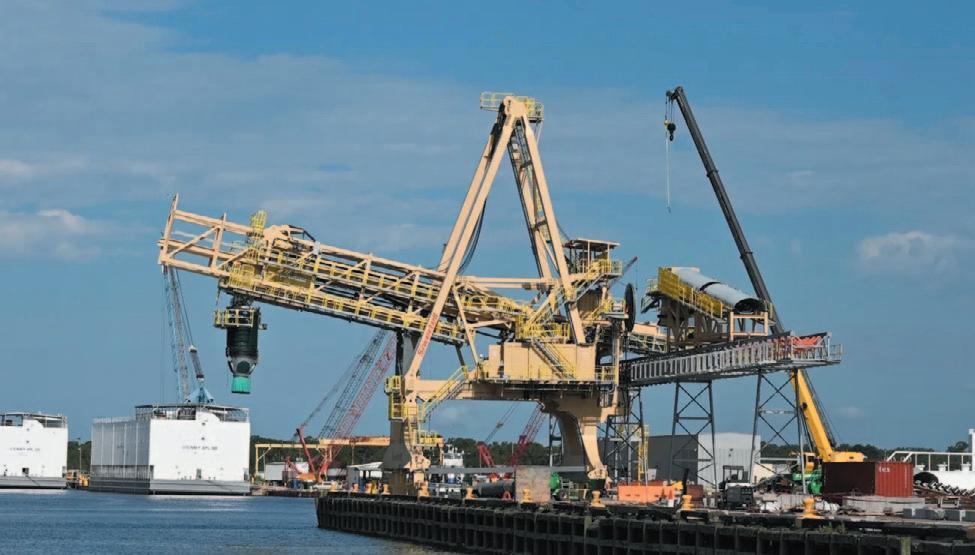
JSC “RIKON” has successfully commissioned a second RMG-type container gantry crane at the facilities of “First Dry Port Terminal” LLC in Tashkent, Uzbekistan. Following the successful implementation of the first project, which was reported in the March 2025 issue of Dry Cargo International, the company turned its attention to the supply of the next crane, in accordance with the previously concluded contract. This repeat order serves as a strong testament to RIKON’s reputation as a reliable supplier of high-tech, high-performance lifting equipment.
The new crane is identical to the previously installed unit and features a maximum lifting capacity of 41 tonnes under spreader. Key technical specifications include a 10.8m cantilever length, 7m operating outreach, and 17.1m span between the legs. The crane is equipped with advanced control systems from leading global manufacturers, ensuring exceptional reliability, precision in operations, and energy efficiency.
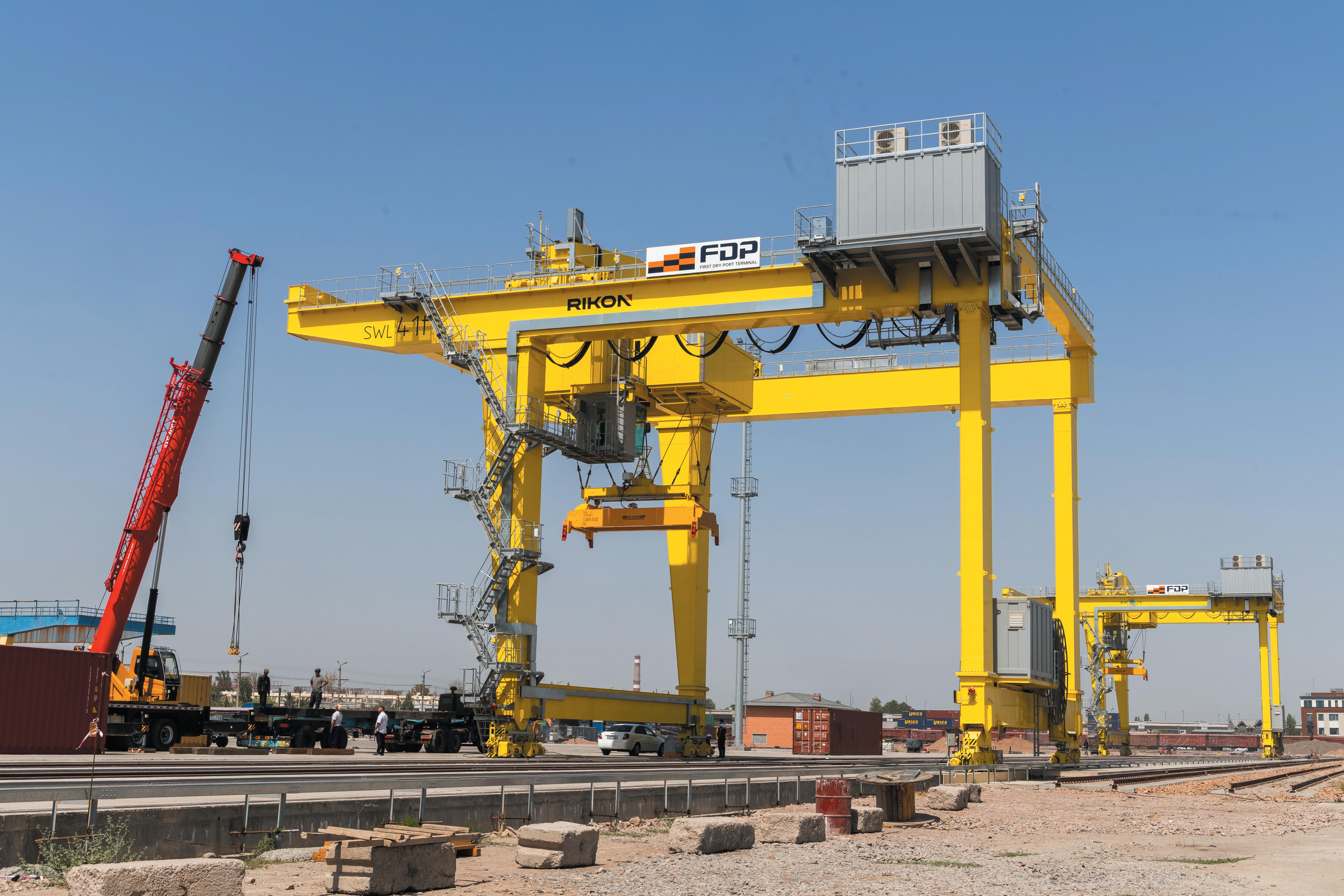
Like the first crane, the new RMG will handle container operations in the terminal’s expansion area, which serves as a crucial link in the international ‘East–West’ and ‘North–South’ transport corridors. The development of First Dry Port Terminal’s infrastructure, located on the historic Great Silk Road, holds strategic importance for regional economic development and enhanced trade connectivity between Asia and Europe. The terminal spans 22 hectares and features eight railway tracks with a total length of 5,300 metres, a covered customs warehouse, an open customs area, a customs control zone, and loading/unloading platforms.
The commissioning of this additional equipment will enable the terminal to handle growing cargo traffic more efficiently, boost operational productivity, and strengthen its position as a strategic logistics hub of international importance.
RIKON serially manufactures gantry container cranes for ports and container terminals, and this completed project reaffirms the company’s status as a reliable partner for modern logistics infrastructure development.















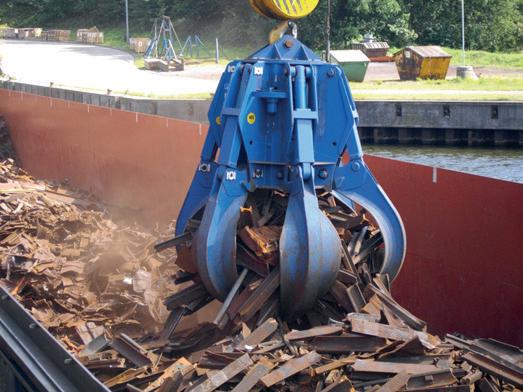






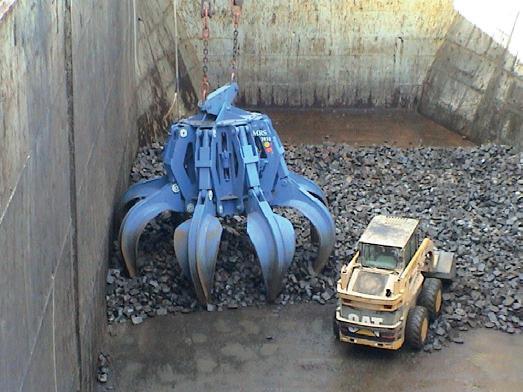



















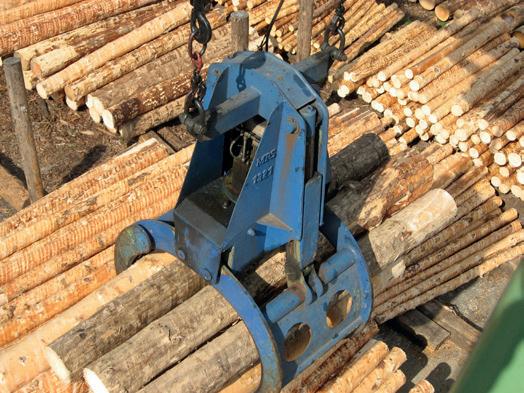
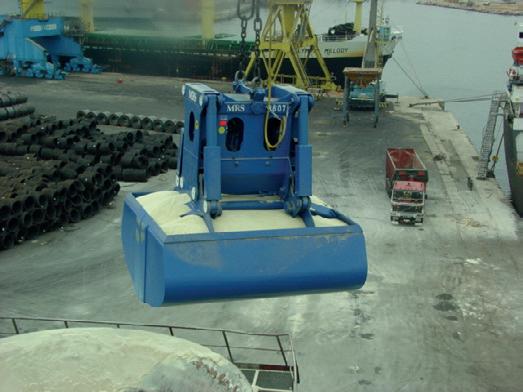
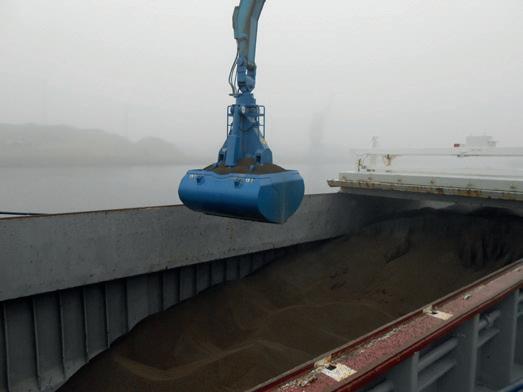
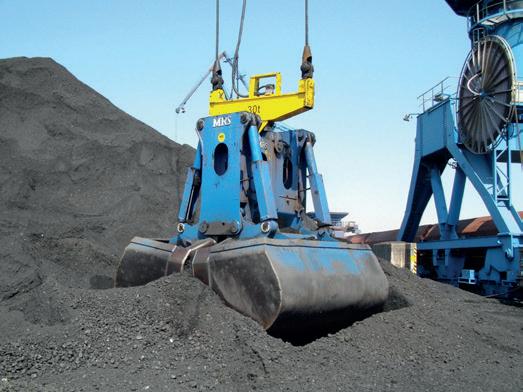
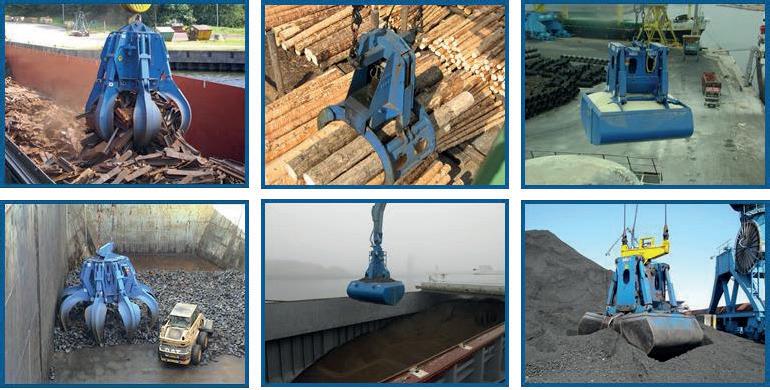






Goltens Worldwide subsidiary Goltens Company Ltd, Dubai Branch, has signed an exclusive distribution deal with German specialist in lifting solutions, PEINER SMAG Lifting Technologies GmbH (PSLT), under which Goltens Dubai and its local affiliates — Goltens Co. Ltd-Abu Dhabi, Goltens Red Sea (Saudi Arabia) and Goltens Bahrain Co. WLL — will exclusively represent PSLT’s comprehensive range of grabs and lifting accessories across the Middle East.
The move expands a long-standing collaboration between Goltens and Salzgitter-headquartered PSLT in the UAE, extending its reach to the broader regional market including Kuwait, Qatar, Oman and Yemen in addition to Saudi and Bahrain.
“At PEINER SMAG, our name stands for tradition, reliability and state-of-the-art load handling technology trusted by industries around the world. We’re proud to deepen our collaboration with Goltens — a globally renowned leader in marine and industrial services with decades of proven technical expertise,” said Günther Ribeiro-Vinzenz, Business Unit Director.
He added: “Goltens’ operational capabilities align perfectly with our commitment to delivering highperformance equipment combined with comprehensive support that drives customer success. This extended partnership marks a significant milestone in our shared commitment to delivering cutting-edge lifting solutions with global reach.”
Sandeep Seth, CEO of Goltens Worldwide, commented: “This partnership reinforces our commitment to delivering world-class solutions to our customers across the Middle East. PSLT has built a strong reputation and substantial market share in the region, and Goltens is well positioned to further increase that share. With our established network, technical expertise and in-region presence, we can provide PSLT customers with unmatched support and ensure rapid response for both sales and service requirements.”
PSLT, a global expert in hydraulic, mechanical and motorized grabs, as well as specialized lifting solutions for ports, ships and industrial applications, already enjoys a substantial presence in the Middle East and is widely recognized for its high-quality engineering and robust product performance.
The co-operation leverages Goltens’ extensive service infrastructure and local
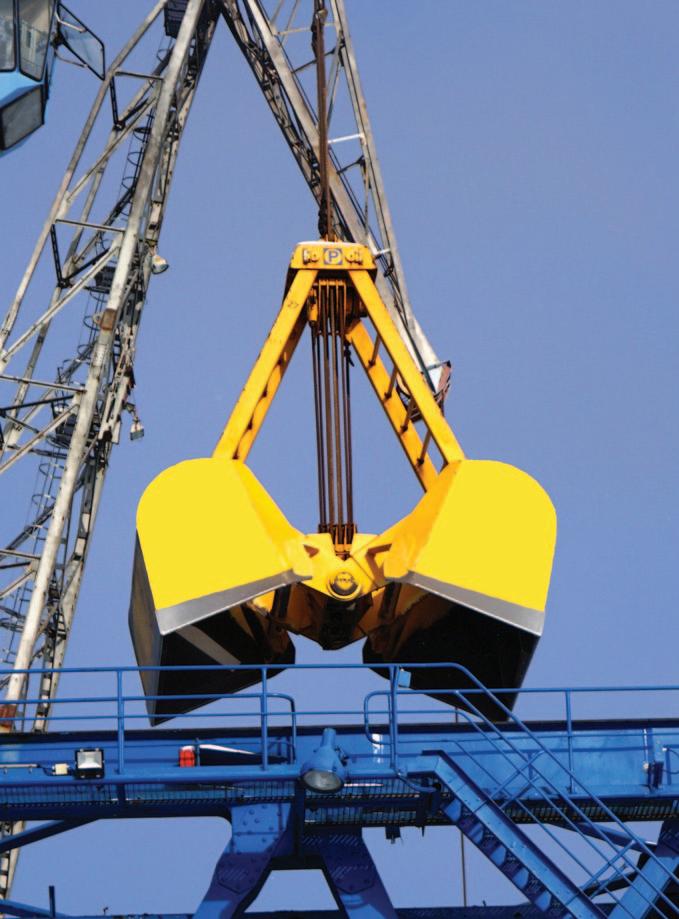
market knowledge with PSLT’s industryleading portfolio, ensuring that shipowners, port operators and industrial customers benefit from best-in-class lifting technologies supported by localized aftersales service capability.
Goltens is truly global and a trusted partner of choice providing comprehensive engine and turbine services, bespoke inplace machining solutions, energy control solutions, afloat services and environmental and sustainability compliance solutions from 28 locations in 15 countries across the globe, serving more than 3,700 clients each year.
PSLT is a globally recognized supplier at the forefront of the engineering and
manufacturing of high-performance grabs and slewing units for the bulk cargo industry. Headquartered in Salzgitter, Germany, PSLT operates cutting-edge production facilities in both Germany and Shanghai, China.
Building on the renowned quality and durability of the PEINER product line, PSLT delivers customized lifting solutions tailored to the specific requirements of diverse industries — including ports and terminals, maritime shipping, steel production, waste-to-energy, timber processing, recycling, and scrap handling.
With a robust global sales and aftersales network comprising over 30 locations worldwide, PSLT ensures rapid response times — wherever its customers operate. This comprehensive support infrastructure underscores PSLT’s commitment to operational excellence and long-term customer satisfaction.
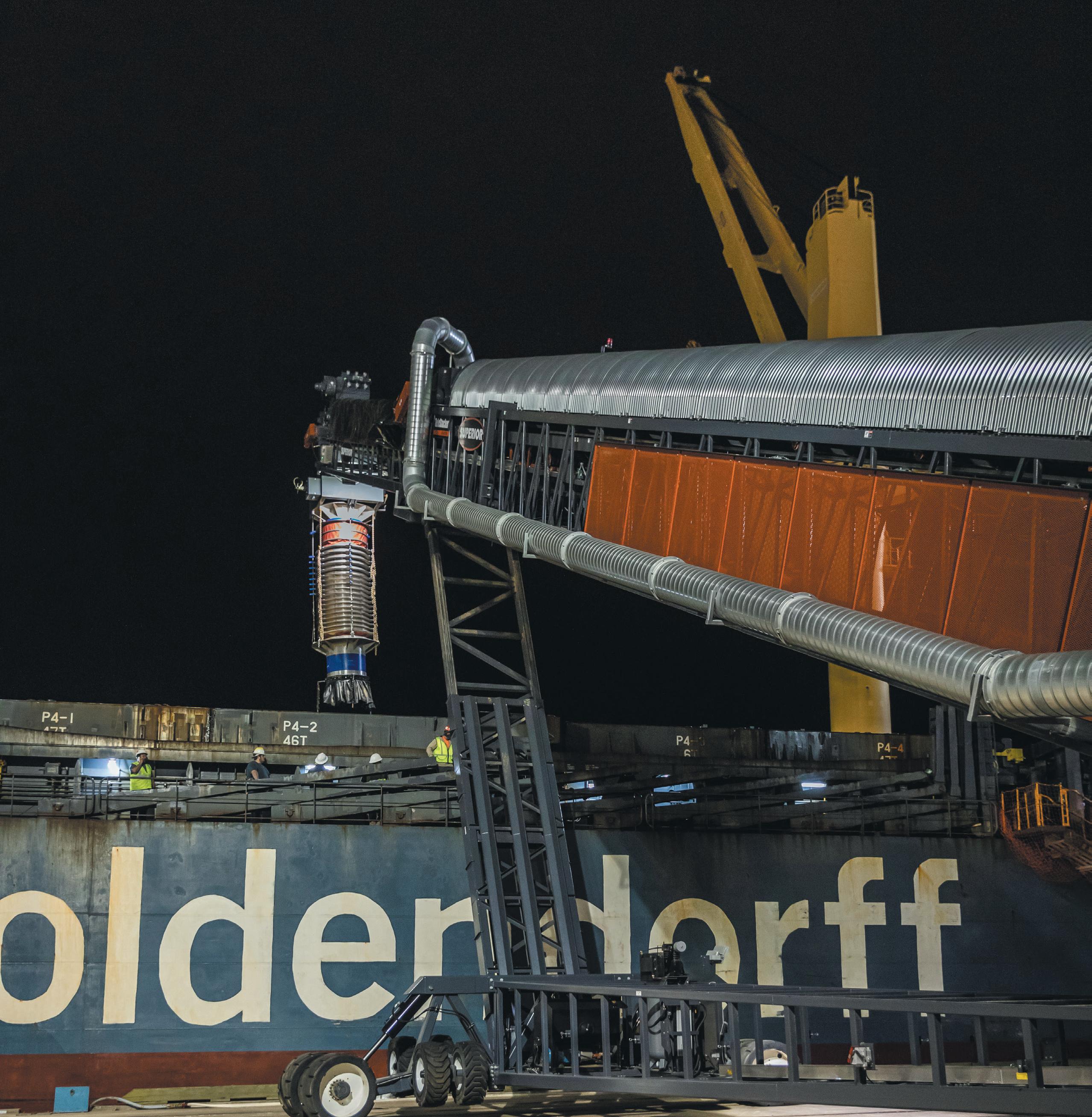
Conveyor
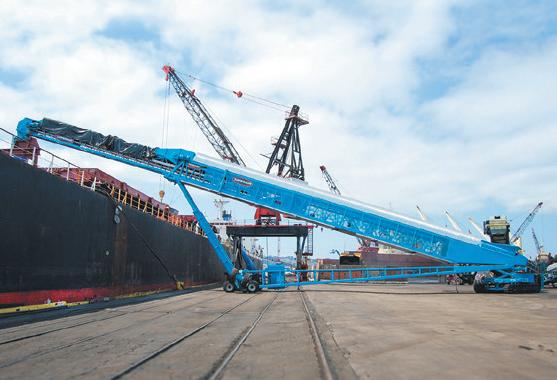
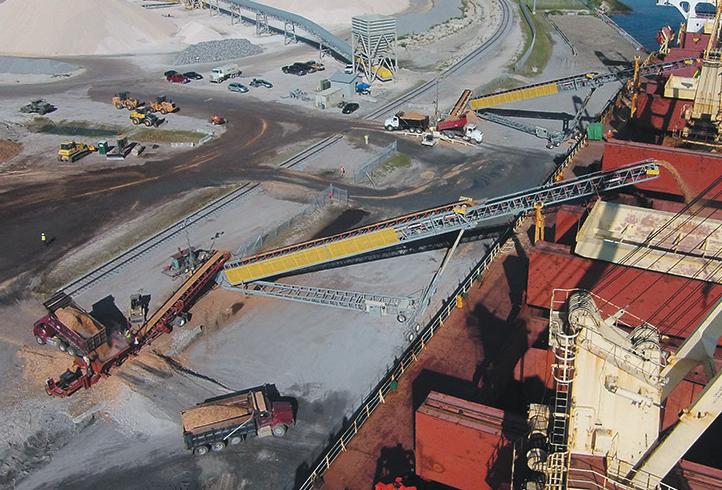
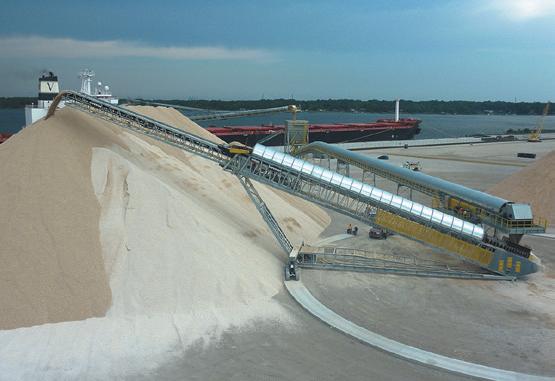
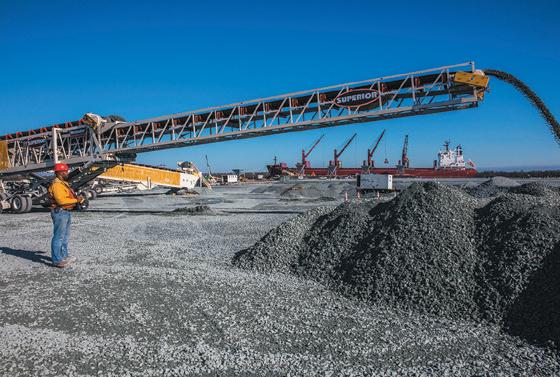
E-Crane has proudly announced the successful commissioning of a new 1800C Series model EH14317 PD-E for PT Adaro Logistics installed in Kelanis, Central Kalimantan, Indonesia. This significant milestone demonstrates E-Crane’s ongoing commitment to delivering world-class, efficient, and sustainable bulk material handling solutions across the globe.
The new E-Crane is installed on the coal transfer jetty known as B2B2, located on the Barito River in Kelanis. The crane will operate to transfer coal from 4,000dwt feeder barges to 1,5000dwt mother barges, streamlining Adaro’s transloading process and significantly increasing throughput capacity.
This project was executed in close partnership with E-Crane’s trusted Indonesian dealer, PT MCP (Multi Crane Perkasa), who provided vital local expertise, co-ordination, and on-theground support throughout the planning, installation, and commissioning phases.
As part of the commissioning process, the E-Crane team provided comprehensive on-site training for Adaro’s crane operators and technical personnel to ensure safe and efficient operations. Additionally, the E-Crane team monitored the first live barge transshipment, ensuring everything ran smoothly and performance expectations were met from the start.
During commissioning, E-Crane team leader Lucki Frangki Colay expressed his appreciation: “We would like to congratulate and thank both the Adaro and MCP teams for their excellent support and collaboration. Their professionalism and teamwork were instrumental in making this
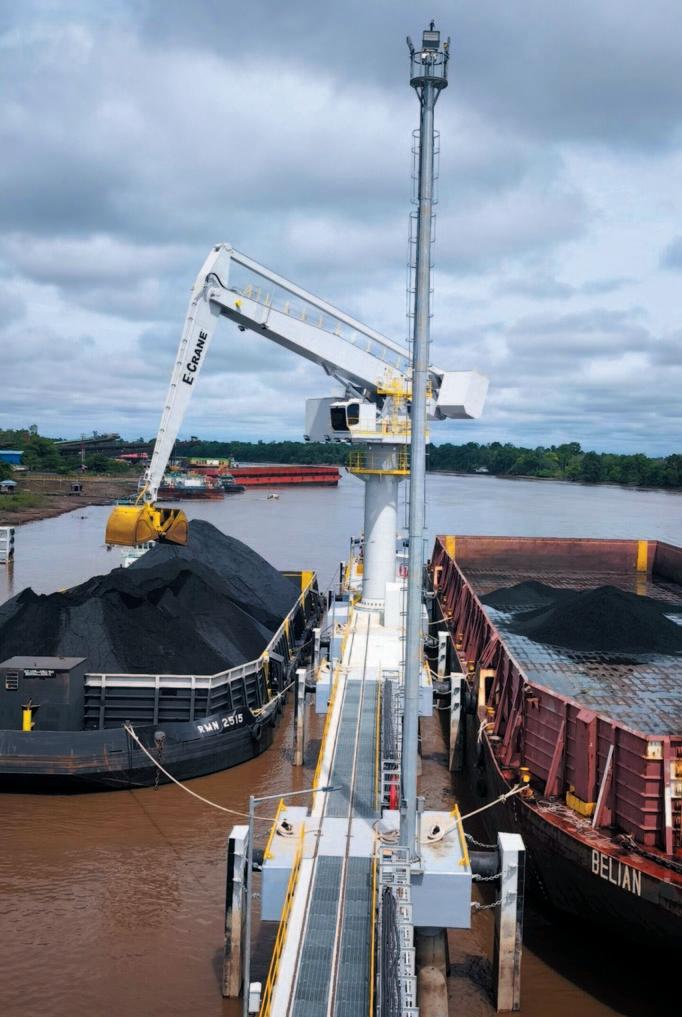
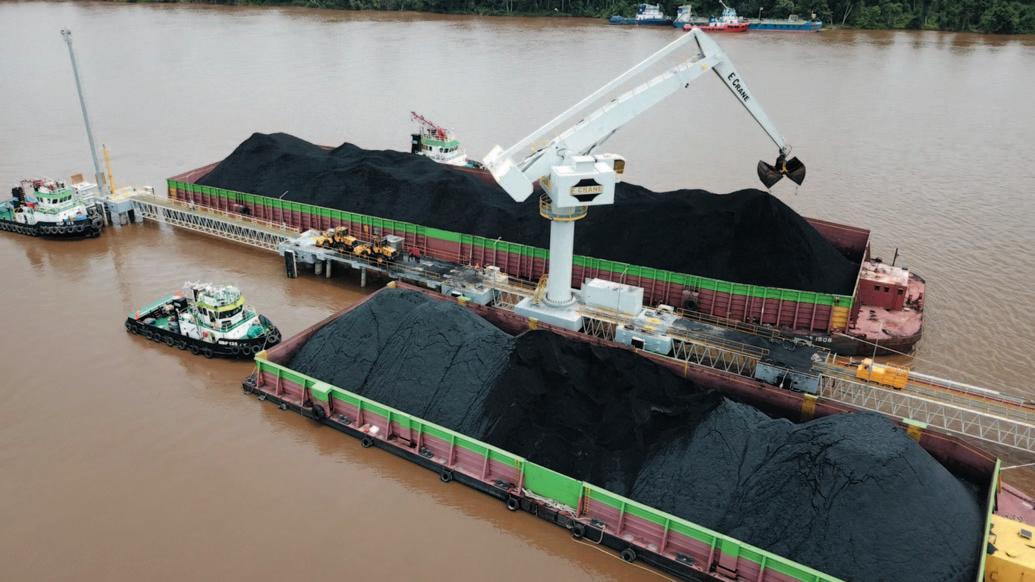

commissioning a success.”
This new installation marks the beginning of a new operational chapter for PT Adaro Logistics, part of PT Adaro Andalan Indonesia Tbk. As one of Indonesia’s major integrated logistics providers, Adaro Logistics handles the vital coal supply chain
from mining to shipping, including barging, transshipment, and port operations. The company’s focus on operational excellence, innovation, and sustainability made it a natural partner for E-Crane.
At the conclusion of the project, E-Crane extended its best wishes to the
Adaro team:
“We wish Adaro the very best with their new E-Crane and are confident it will be a highly successful project. We also hope this marks the beginning of a longterm partnership between E-Crane and Adaro.”
Katoen Natie is taking a new step in the modernization and acceleration of its port operations with the commissioning of three Mantsinen 300 cranes, spread over three quays in the port of Antwerp. With this investment in the largest hydraulic cranes in the world, the company aims to shorten the turnaround time of operations while further improving quality and safety.
Katoen Natie operates port terminals, logistics terminals and on-site terminals worldwide. The group also provides a wide range of semi-industrial services and designs, builds and manages logistics platforms and complete supply chains for various industries.
On 1 September, the new cranes were festively inaugurated in the presence of Katoen Natie chairman Fernand Huts and Mia Mantsinen, CEO of Mantsinen Group. During the ceremony, Huts not only symbolically received the key to the machines, but also a work of art by the Belgian artist D.D. Trans. The work — a miniature Mantsinen crane combined with a dinosaur — playfully refers to the T-rex skeleton that Huts purchased for his Boerentoren project.
In 2024, Katoen Natie ordered three Mantsinen 300 cranes on mobile undercarriages on rubber tyres, each equipped
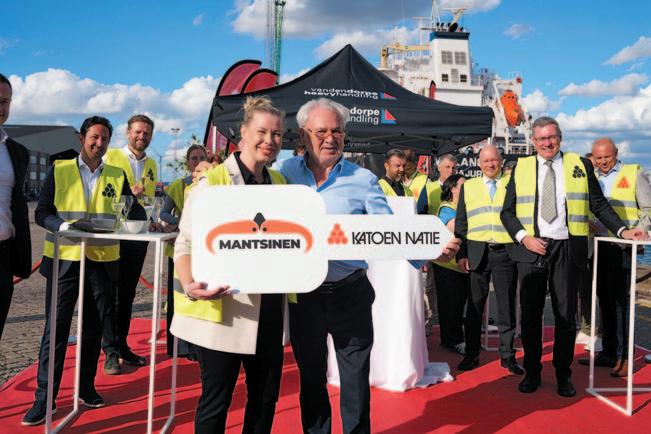
with a quick-coupling system and a set of specialized lifting attachments, through importer Heavy Handling. One crane could be delivered immediately from stock, while the other two were custombuilt and put into operation within a year.
The cranes are mainly used for loading and unloading steel products, wood packages, big bags and other breakbulk, but also for containers and bulk goods. The quick-coupling system allows operators to easily switch between a container spreader, coil clamp, bulk grab or other lifting equipment. Two of the three cranes are equipped with a high gantry chassis and a longer boom, which makes it possible
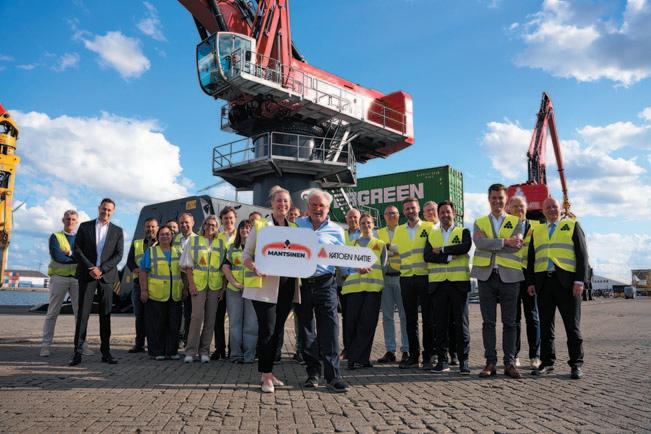
to load and unload larger seagoing vessels.
The choice for Mantsinen hydraulic cranes was well-considered. Katoen Natie had already gained experience with this type of crane through an earlier acquisition, and that experience was so positive that the company decided to make the switch to other locations as well.
In contrast to traditional harbour cranes with cable systems, the Mantsinen 300 works with a fixed arm and hydraulic cylinders. This results in faster work cycles, higher precision and increased safety during operations.
“This is an investment in safety and better service,” says Hendrik Geerts, Manager Operations. “With the Mantsinen cranes, we can handle ships faster, so that they can leave earlier. This saves our customers on mooring fees, for example. Despite the high speed, we continue to work very precisely. Thanks to the hydraulically controlled attachments, the risk of accidents or damage is also significantly reduced. This benefits both the safety of our people and the quality of the cargo. A real win-win.”
In addition, the cranes are equipped with HybriLift® technology, a hybrid drive that reduces exhaust emissions by up to 50%.
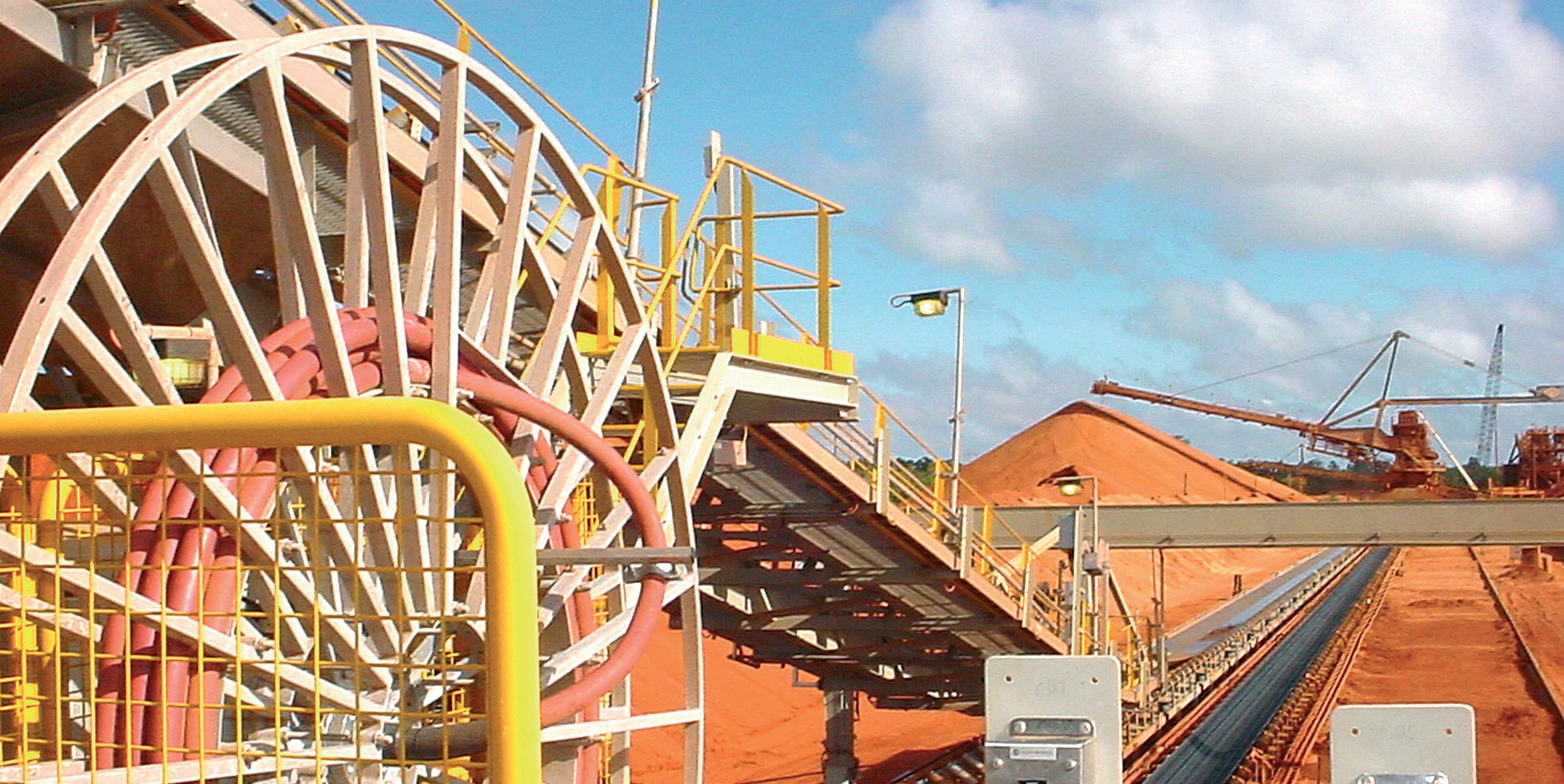



Motor Driven Reels
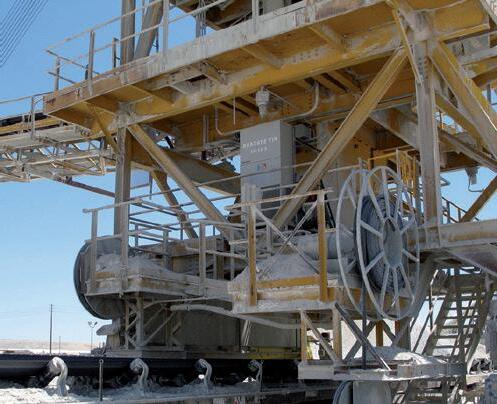
• Monospiral and Level-Wind configurations
• Rugged and dependable magnetic coupler for dusty environments




Cable Festoon
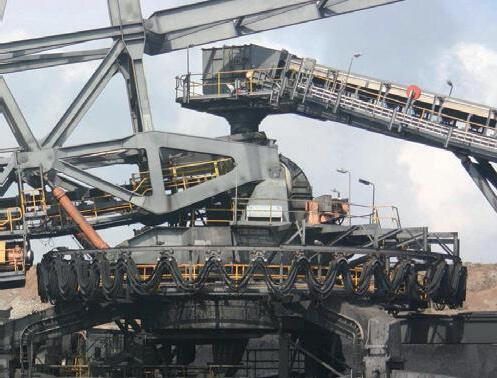
• Corrosion-resistant, long-life rollers; precision sealed bearings
• Systems customized for the application
• Preassembled option, for easy installation
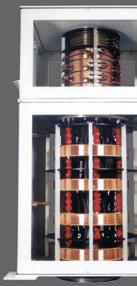


Slip Rings
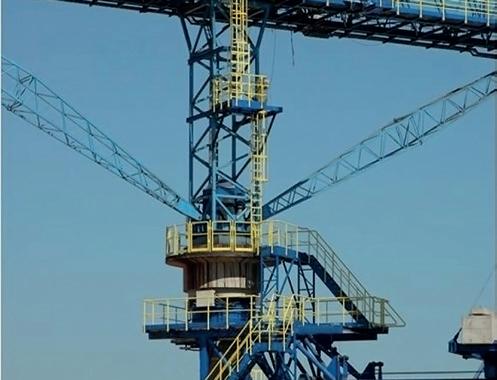
• Allow infinite rotation

• Combined power, control and media (water, air, oil, vacuum, other)
• Available with ATEX and SIL 3 certification
Conductix-Wampfler has one critical mission: To keep your bulk material handling operations running 24 / 7 / 365. You need proven, worryfree energy solutions - and Conductix-Wampfler has them. Our systems provide reliable electric power and water to stacker/reclaimers, barge and ship loaders/unloaders, bulk conveyors, tripper systems, and gantry cranes. Conductix-Wampfler systems are rugged, low maintenance, and timetested in tough, dusty environments. All products are backed by the largest sales and service network worldwide!
www.conductix.com
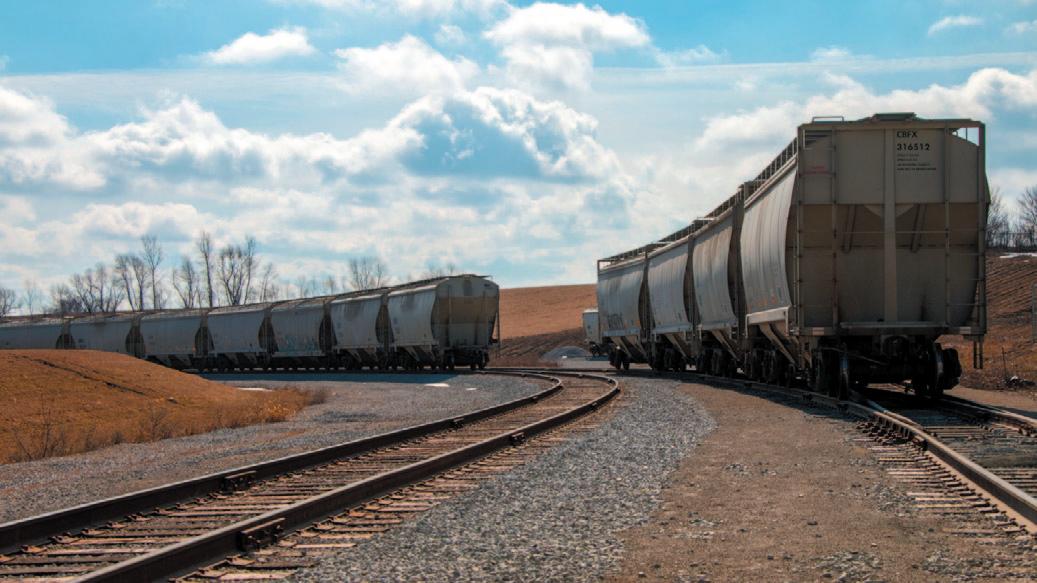
The global expert in bulk material flow accessories is introducing a redesigned railcar opener that improves ease of use and reduces potential hazards for workers.
The two-wheeled Martin® Gen 4 Railcar Opener from Martin Engineering delivers strong, controlled non-impacting power to open and close even the most difficult railcar gates. It features simple manoeuvrability and lateral turning wheels for moving capstans, outrigger support, and height adjustment. Additionally, the innovative “stepped” drive tip improves the gate opener’s contact with the capstan. This new design boosts efficiency, leading to less demurrage from stalling and a safer workplace, which results in a lower cost of operation.
“We’re excited about the fourth generation of this model because it’s been painstakingly designed over years using real-world feedback from customers,” said Marty Yepsen, Business Development Manager for Railcar Unloading Products at Martin Engineering. “We approached this with reliability and safety in mind, using heavy-duty materials for a long equipment life. The result is a non-impacting opener

that can compete with impacting-type openers. In fact, given the controlled force of the Gen 4, it may be preferred.”
Railcar openers are semiautomated systems controlled by a worker to enhance the speed, efficiency, and safety of unloading materials. A cargo train generally offloads into a storage facility or conveyor by dropping cargo through an underside opening sealed with a gate. A capstan connected to a shaft and pinion gear is used to open the gate.
A poorly maintained gate will require a great deal of force to open. Since most facilities do not know the condition of the gates upon arrival, it is wise to have an opener that has some range. The Gen 4 will generate the power necessary to open and close gates safely and without damage.
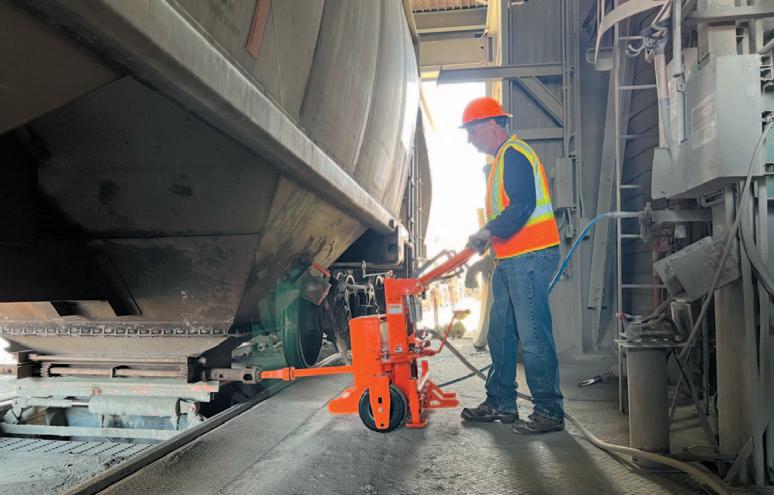
match various rail car capstan heights and to account for variations in unloading platforms. Fitting through 36-inch-wide door frames, the unit’s outriggers expand up to 67 inches (1,719mm) for greater stability during high torque operations.
The rugged steel-framed Martin® Gen 4 Railcar Opener requires an air supply of 75cfm at 100psi (2124 L/min at 6.9 bar). It delivers 3,750ft/lbs (5,080N-m) of nonimpacting torque to open tough gates without causing damage. The new ‘stepped’ profile of the replaceable drive tip provides more surface contact with the railcar’s capstan, reducing rollback of the opener under load. This minimizes wear and tear on both the drive tip and capstans.
Engineered for versatility across many applications, the Gen 4 allows easy adjustment of the driveshaft height to
Designed with ergonomic operation in mind, the handlebars are adjustable to accommodate different operator heights. The 10x4 inch (254 x 102mm) ‘Never Flat’ tyres make the 305 lbs (139kg) unit easy to manoeuvre and position by a single worker. One lever rotates the pivoting wheels 90°, allowing the unit to roll with a travelling capstan for increased unloading efficiency.
Although the industrial environment can be loud, the Martin® Gen 4 Railcar Opener is relatively quiet at only 88dBa, a safety feature that decreases the need for ear
protection and lowers noise pollution.
“The nearly effortless single operator design transforms a hazardous and grueling job into a comparatively routine and riskfree task,” Yepsen concluded. “Field tests have shown that the Gen 4 not only improves efficiency, which lowers demurrage, but it also increases safety and reduces labor costs. All this drives down operating costs and boosts ROI.”
Martin Engineering has been a global innovator in the bulk material handling industry for more than 80 years, developing new solutions to common problems and participating in industry organizations to improve safety and productivity. The company’s series of Foundations books is an internationally recognized resource for safety, maintenance and operations training — with more than 22,000 print copies in circulation around the world. The 500+ page reference books are available in several languages and have been downloaded thousands of times as free PDFs from the Martin website. Martin Engineering products, sales, service and training are available from 18 factory-owned facilities worldwide, with wholly owned business units in Australia, Brazil, China, Colombia, France, Germany, India, Indonesia, Italy, Malaysia, Mexico, Peru, Spain, South Africa, Turkey, Kazakhstan, the USA and UK. The firm employs more than 1,000 people, approximately 400 of whom hold advanced degrees.
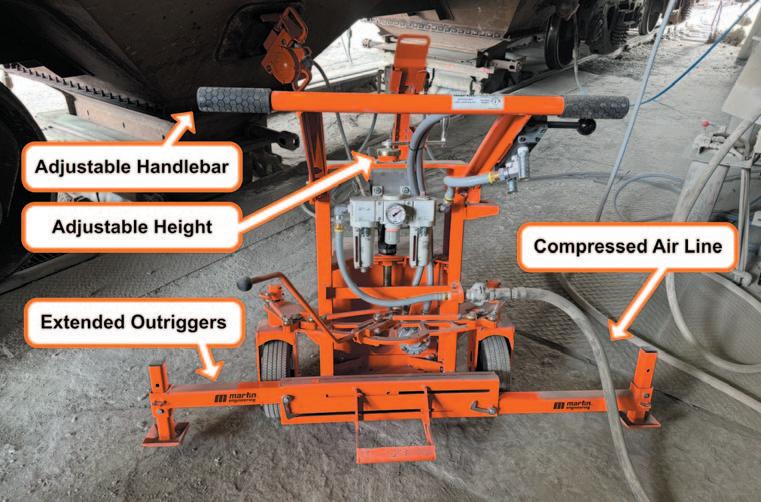
mobile bulk handling systems — cost saving and flexible
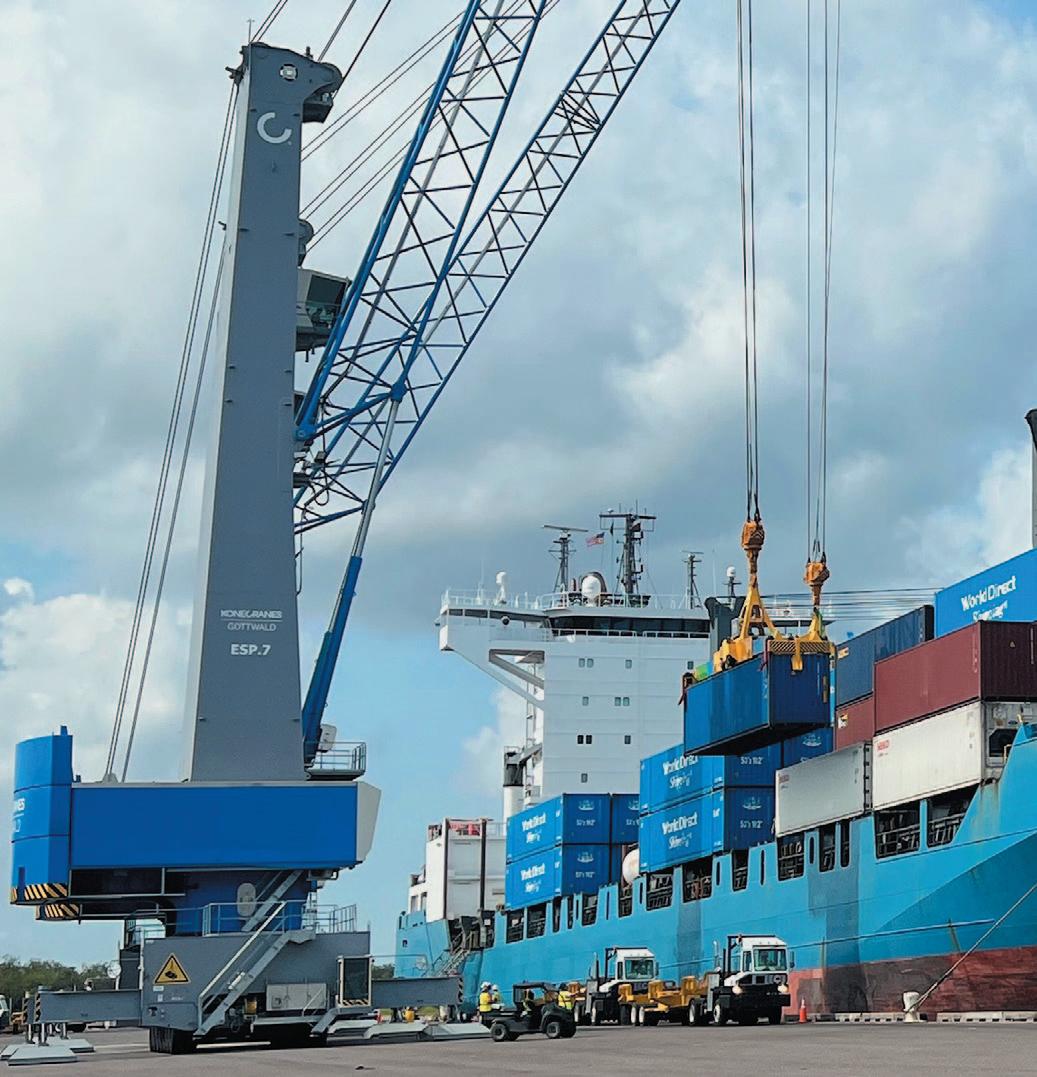
Industrial gateway in Greece powers eco-efficient growth with an electric Konecranes Gottwald ESP.7 mobile harbour crane
As part of a plan to double its capacity while controlling emissions, Port of Thisvi operator DIA.VI.PE.THI.V. S.A. has invested in a Konecranes Gottwald ESP.7 mobile harbour crane equipped with an external power supply. The order was booked in Q2 2025, with delivery and commissioning scheduled for Q1 2026.
The Thisvi Industrial Area is a major hub for Greece’s steel and aluminum manufacturing. Bulk raw materials arrive at the dedicated Port of Thisvi for processing, then finished heavy cargo products — mainly coated steel pipes — are shipped to markets across Europe, the Caspian region and the Middle East & Africa.
To boost capacity for handling this mix of bulk, heavy and general cargo, the new
Konecranes Gottwald ESP.7 mobile harbour crane will join two earliergeneration Gottwald cranes in operation at the port.
Designed for motor grab usage and equipped with a 20kV external electricity supply, the Generation 6 crane delivers its 51-metre working radius and 125-tonne lifting capacity with zero local exhaust emissions when connected to the grid. This also reduces noise in and around the port, while minimizing the vibrations that can cause wear over time.
“Our cargo mix and the port’s characteristics demand mobile harbour cranes that are extremely versatile and reliable. We’ve seen how this equipment from Konecranes consistently provides the
muscle we need in our daily operations. Adding the new electrified crane supports our goals of both doubling capacity and achieving greater eco-efficiency,” says Tasos Kaipis, Procurement & Logistics Manager, DIA.VI.PE.THI.V. S.A.
The order also includes TRUCONNECT® remote monitoring, providing the port operator with real-time data on the new crane’s operating patterns and overall condition. This helps in planning maintenance windows and reducing downtime, so the equipment can deliver consistently high performance over its long lifetime.
“The move to electrification is accelerating worldwide. By choosing a Generation 6 crane, Thisvi is boosting its
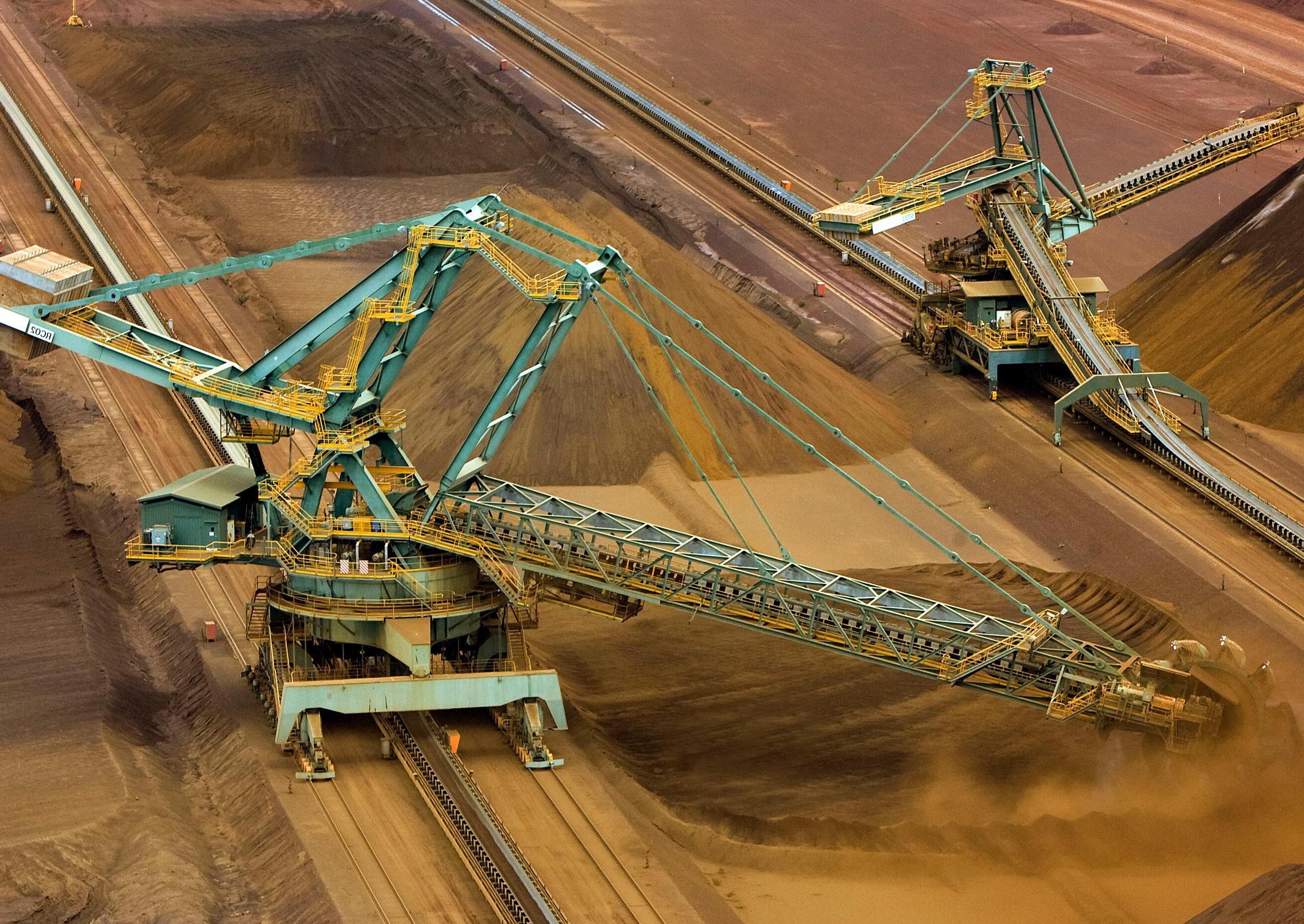
KOCH Solutions stands at the vanguard of material handling, driving progress with over three centuries of combined expertise and a global portfolio boasting 10,000 projects. At KOCH Solutions, we are redefining material handling excellence with our advanced stockyard systems. Meticulously engineered to cater to the dynamic demands of high-capacity operations, our solutions stand out for their modular innovation and seamless integration into existing workflows. Crafted from a blend of tried-and-tested components, each system we devise is a testament to our commitment to tailor-made efficiency. We don't just provide equipment; we deliver comprehensive, turnkey solutions that resonate with your unique specifications, ensuring operational effectiveness paired with economical investment and operating costs. Our ethos is to forge a path of progress in material handling that aligns with your vision of growth and efficiency.
KOCH Solutions GmbH | Karl-Koch-Str. 1 | 66787 Wadgassen Germany
Tel: +49 6834 470 0 | Email: info@koch-solutions.com www.koch-solutions.com
capacity with equipment that’s quieter, cleaner and built for the long haul,” says Alexandros Stogianidis, Regional Sales Manager, Konecranes Port Solutions.
This contract is part of Ecolifting, Konecranes’ vision to increase its handprint — meaning the beneficial environmental impact that can be achieved with its product and service portfolio — while reducing customers’ carbon footprints. From ecooptimizing diesel drives, to hybridization and fully-electrified fleets, Konecranes will continue to do more with less.
A strong focus on customers and commitment to business growth and continuous improvement make Konecranes a material handling industry leader. This is underpinned by investments in digitalization and technology, as well as the company’s work to make material flows more efficient with solutions that decarbonize the economy and advance circularity and safety.
Konecranes is a renowned global expert in
material handling solutions, serving a broad range of customers across multiple industries. It consistently sets the industry benchmark, from everyday improvements to the breakthroughs at moments that matter most, because it knows it can always find a safer, more productive and sustainable way.
That’s why, with around 16,500 professionals in over 50 countries, Konecranes is trusted every day to lift, handle and move what the world needs . In 2024, Group sales totalled €4.2 billion.
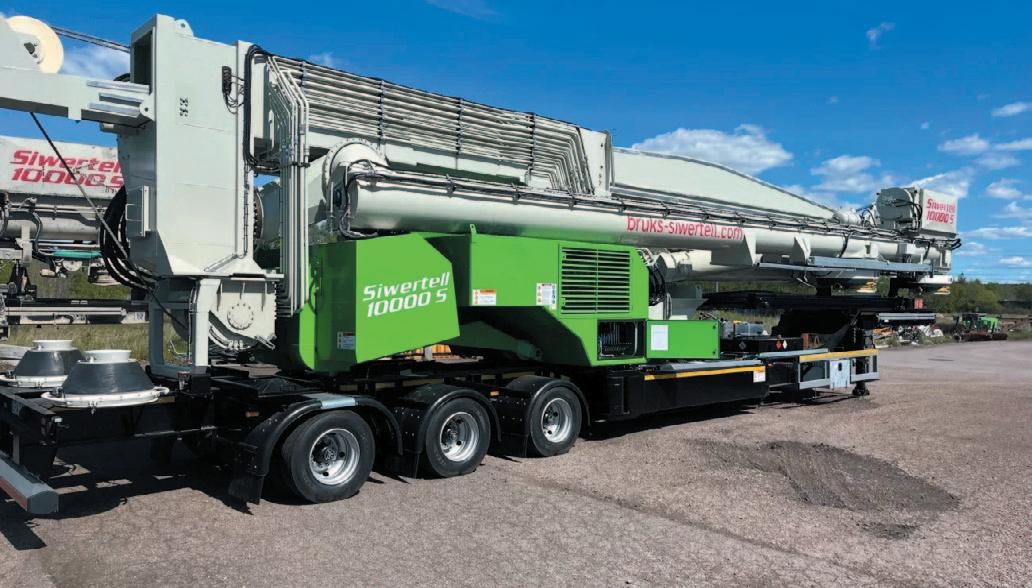
Bruks Siwertell has delivered a nextgeneration Siwertell 10 000 S road-mobile ship unloader to a returning customer operating in the Mediterranean region. This delivery marks the fifth Siwertell 10 000 S unloader currently in use within its fleet; two of which were purchased pre-owned from another operator.
“We are delighted to continue supporting our customer’s cement handling operations with this latest delivery,” says Jörgen Ojeda, Sales Director Mobile Unloaders, Bruks Siwertell. “Returning for its fifth Siwertell 10 000 S is a testament to the reliability, performance, and operational flexibility that our systems offer.”
The new unit will be used to discharge Portland cement at an undisclosed location around the Mediterranean Sea. With a continuous rated capacity of 300 tonnes per hour, the unloader is optimized for
small to medium-scale operations where fast vessel turnaround and high environmental-protection standards are essential.
“The Siwertell 10 000 S was chosen for its proven performance and mobility,” continues Ojeda. “It features a fully enclosed screw conveyor system, ensuring a spillage-free unloading operation with minimal dust emissions.
“The operator’s original pair of Siwertell road-mobile ship-unloaders were preowned, and its decision to return again to Siwertell road-mobile ship-unloading technology was due to its direct, positive operational experience with the equipment,” Ojeda explains. “A competitive price and short delivery time further reinforced this choice.”
Road-mobile ship-unloaders have a trailer-mounted design, which allows the
system to be easily relocated between berths without requiring fixed infrastructure, making it particularly wellsuited to ports with limited dry bulk facilities. Additionally, the double-bellows discharge system enables continuous truck loading, maximizing throughput and efficiency.
“We understand the pressures that bulk operators face today, with tight, competitive schedules, strict environmental regulations, and the need for cost-effective operations,” he emphasizes. “The Siwertell 10 000 S delivers on all these fronts, offering a reliable solution that can be quickly deployed and easily integrated into existing logistics chains.”
The operator’s latest Siwertell 10 000 S road-mobile ship-unloader was delivered fully assembled and tested from Bruks Siwertell’s premises in May 2025.
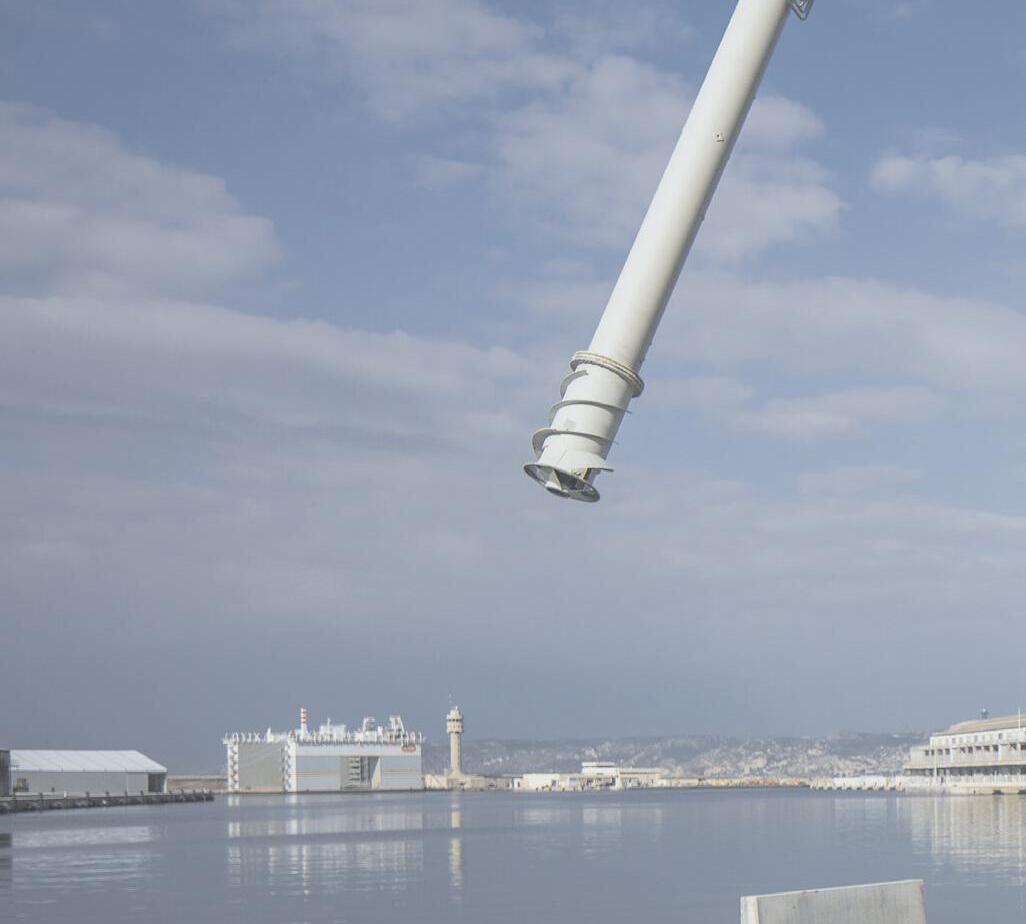

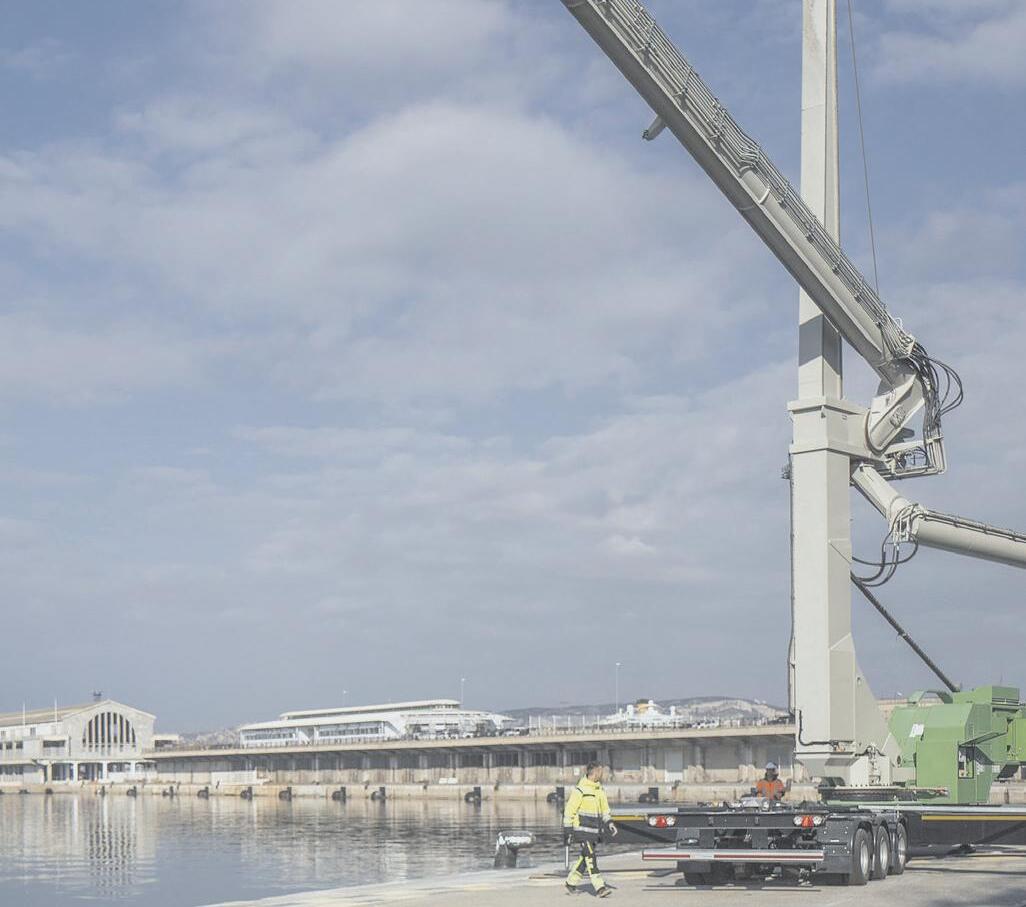
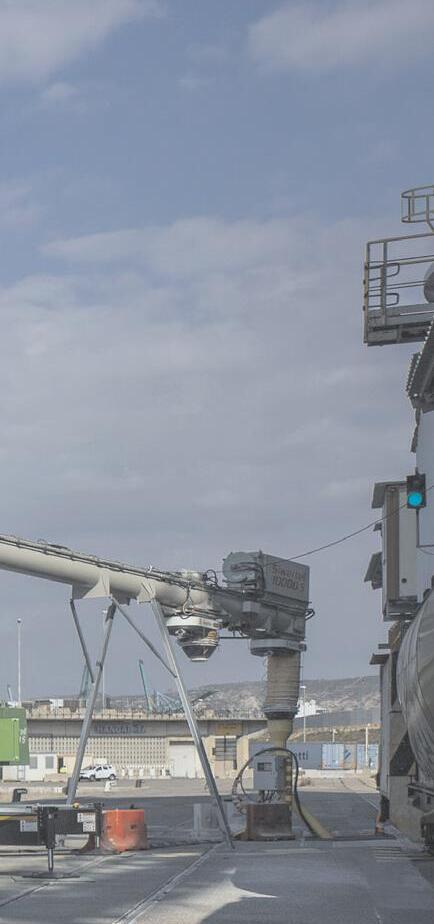
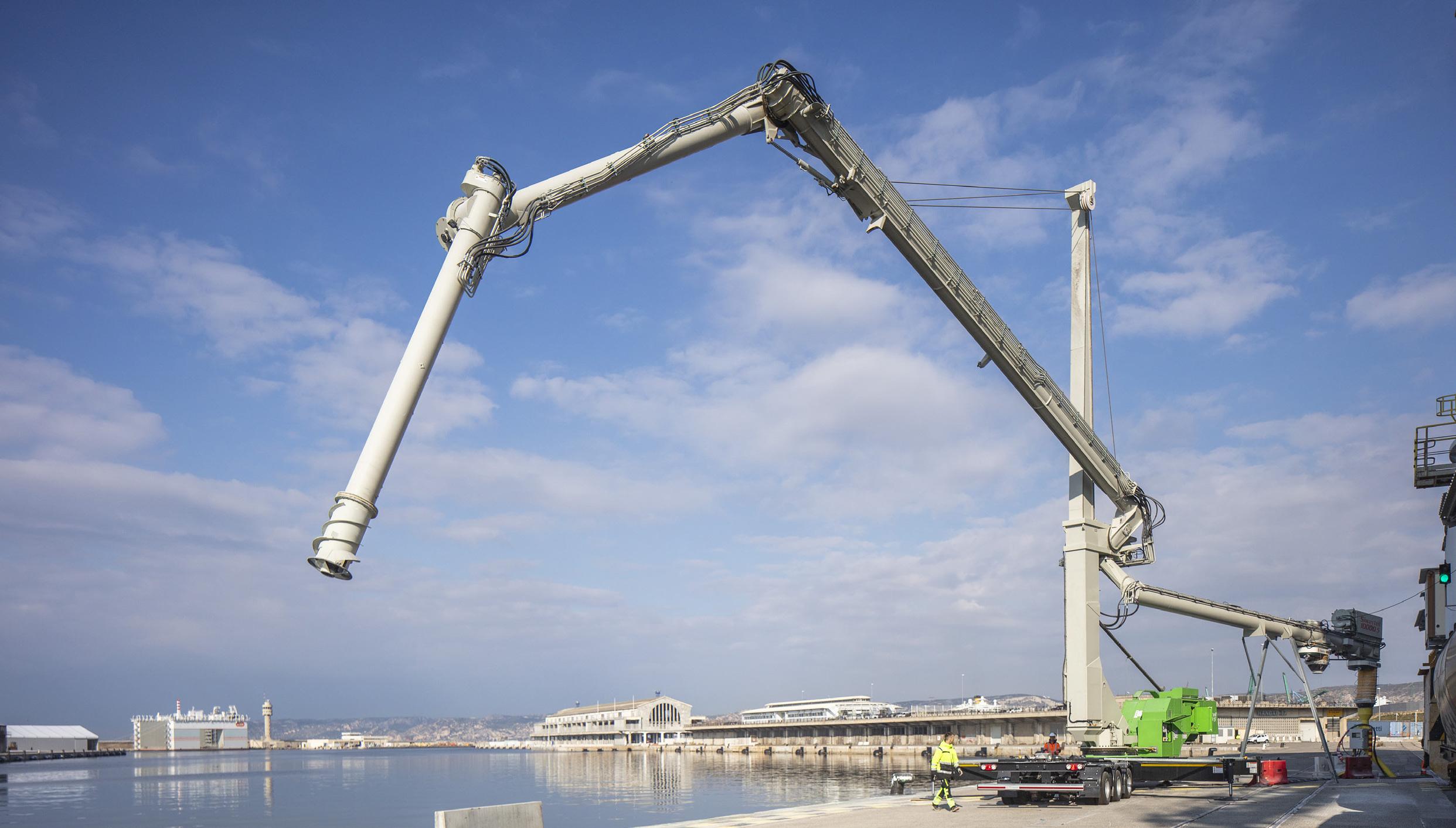
ovide the ideal solution for customers using jet oad-mobile unloaders pr Siwertell r
e than one e, especially when they have operations at mor with minimal infrastructur
onties of n one jetties , economical bulk handling operations. y, mentally friendly up to 500t/h, and have a totally enclosed conveying line, offering flexible, envir y bulk materials at capacities of ee-flowing dr location. They handle a wide range of fr
The SENNEBOGEN 730 E meets the high requirements of the British sawmill Pontrilas — high load capacity, manoeuvrability, and excellent ease of operation.
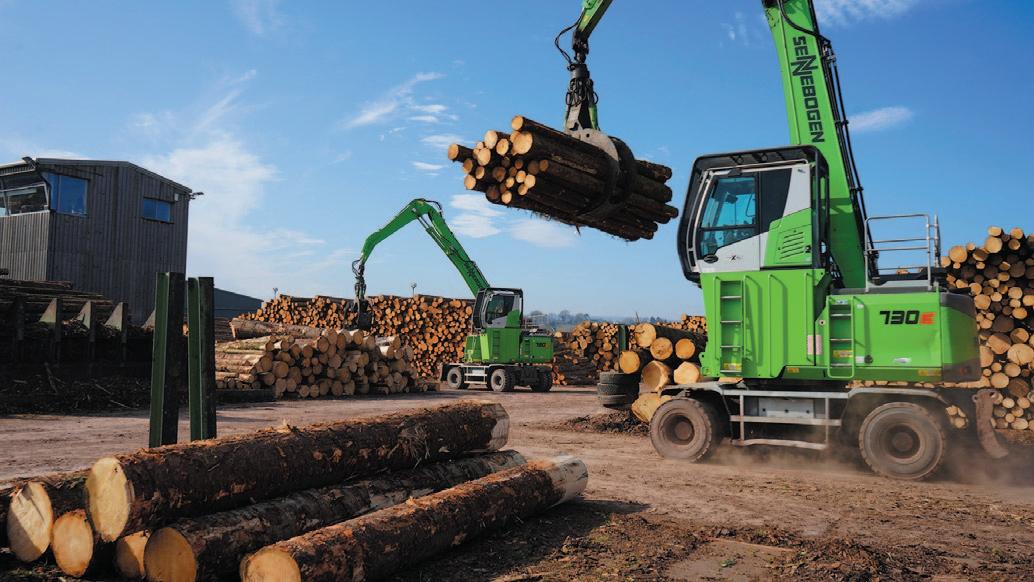
Around 400,000 tonnes of round timber are processed annually by Pontrilas Sawmills, a family-owned company located in the west of England. With over 70 years of experience, the company ranks among the largest sawmills in the country. To handle the often demanding timber volumes, Pontrilas relies on three SENNEBOGEN 730 E Pick & Carry timber handling machines — with great success.
Production runs in two shifts between
6am and 10pm, seven days a week. Space on the site is limited and the logistical requirements are high. Different lengths of wood, large quantities of round timber, the processing of a wide variety of hard and soft woods, and a high throughput rate present the team with new challenges every day. Pontrilas is therefore demanding when it comes to selecting its machinery: the machines in the sawmill must be powerful, agile, reliable, and efficient.
With two machines in regular operation and a third as backup, the company now relies on a fleet of three SENNEBOGEN 730 E Pick & Carry material handlers. The decision to invest in these machines came after the previous models became too small for the job. “With the 730 E, we can now use a 2m² grab instead of the 1.9m² we had before. That might not sound like much, but it means we can unload a truck
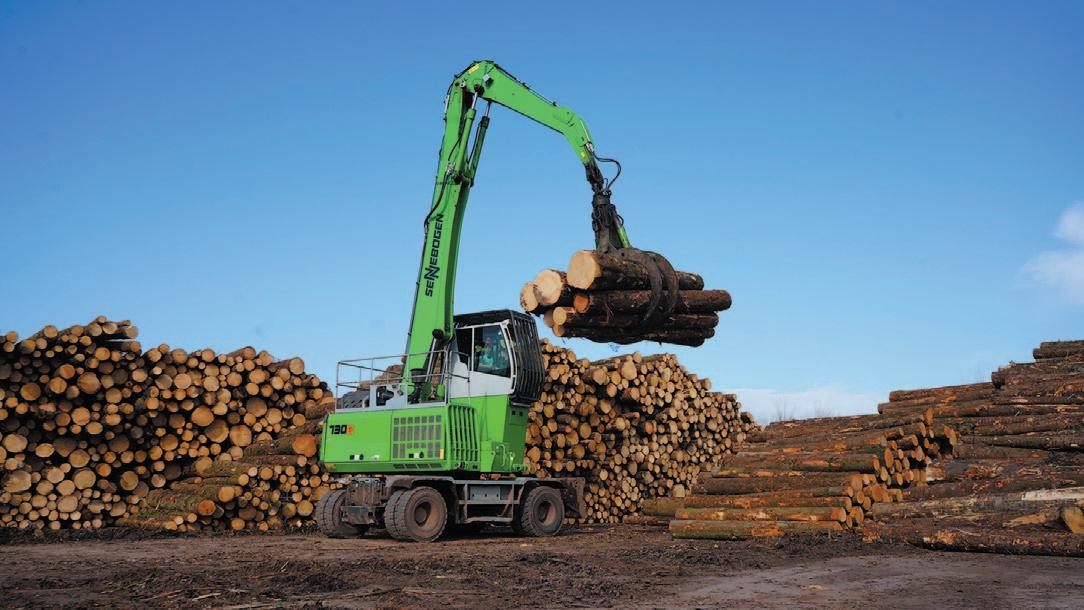
Impressive endurance runners: SENNEBOGEN machines operate reliably in two shifts, seven days a week, thanks to their robust technology, the SENtrack telematics system, and the impressive support provided by service partner Molson Group.
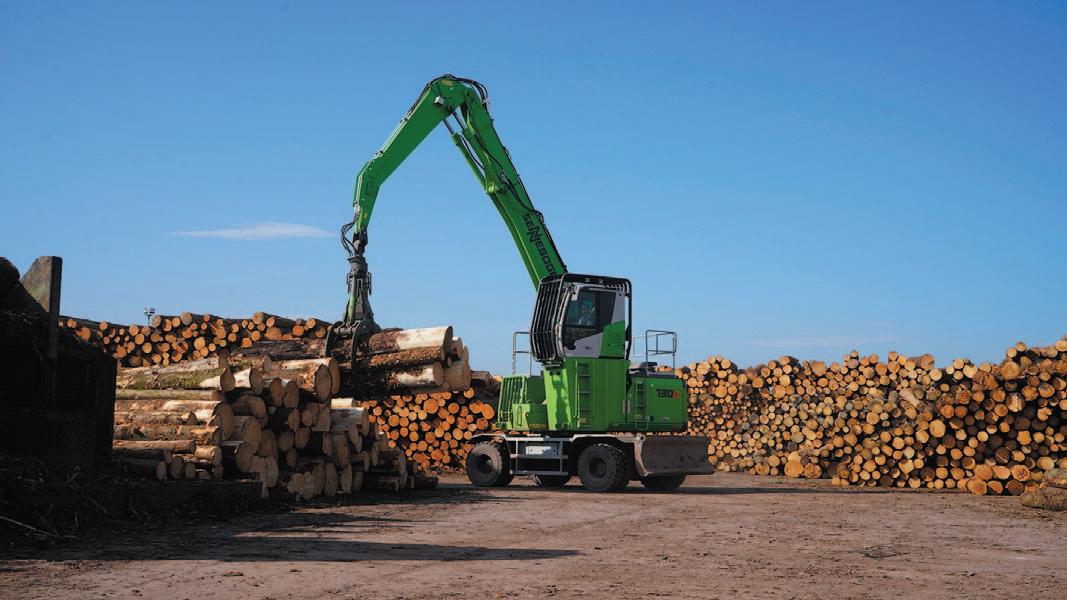
in two moves instead of three,” says Operations Manager Brian Pugh.
AGILE — PERFECT FOR ROUND TIMBER PROCESSING
“We needed a machine with high lifting capacity, excellent manoeuvrability, and good operator comfort — the SENNEBOGEN 730 E meets all our requirements.” Brian Pugh, Operations Manager, Pontrilas Sawmills.
The high handling volume on site constantly pushes storage capacity to its limits. “We often have a lot of wood on the ground at the same time. That creates space problems, and our previous machines, with their large counterweights, were frequently damaged, even by experienced operators,” Pugh continues.
With a turning radius of just 5.8 metres, the SENNEBOGEN 730 E is perfectly suited for tight working spaces. Thanks to all-wheel drive, four-wheel steering, and the center-mounted boom design, there is no need for large counterweights, and the machines remain stable and agile even when handling heavy loads. They are
particularly effective on the softwood line, where two of the machines are in daily operation and benefit from their superior manoeuvrability.
CONVINCING OPERATOR COMFORT & MAINTENANCE CONCEPT
The machines are powered by 168kW diesel engines — providing more than enough performance for all applications in the sawmill. A dozer blade supports quick repositioning of logs, and additional LED work lights ensure optimal visibility in all conditions. One key factor is the spacious Maxcab operator cab and the intuitive joystick control:
“Our team has responded very positively to the new SENNEBOGEN machines. The
cabs are spacious, offer excellent all-around visibility, air conditioning, and intuitive operation. They’ve been a real asset to our operation and are extremely reliable — even after five years of use,” explains Yard Manager Remus Kairys.
INDIVIDUAL SUPPORT FROM MOLSON
Sales and service for the UK are handled by SENNEBOGEN’s partner Molson Group, ensuring maximum availability. “Since we started using the machines, we have been extremely satisfied with Molson’s service. If my foremen can’t find a solution, it ends up with me. But I’ve never had to contact Molson — that speaks for itself,” reports Pugh. Pontrilas Sawmills uses SENtrack, SENNEBOGEN’s telematics system, to monitor the machines in order to simplify maintenance and detect faults at an early stage. According to Pugh, this helps to plan maintenance optimally and schedule it outside of operating hours or avoid downtime altogether.
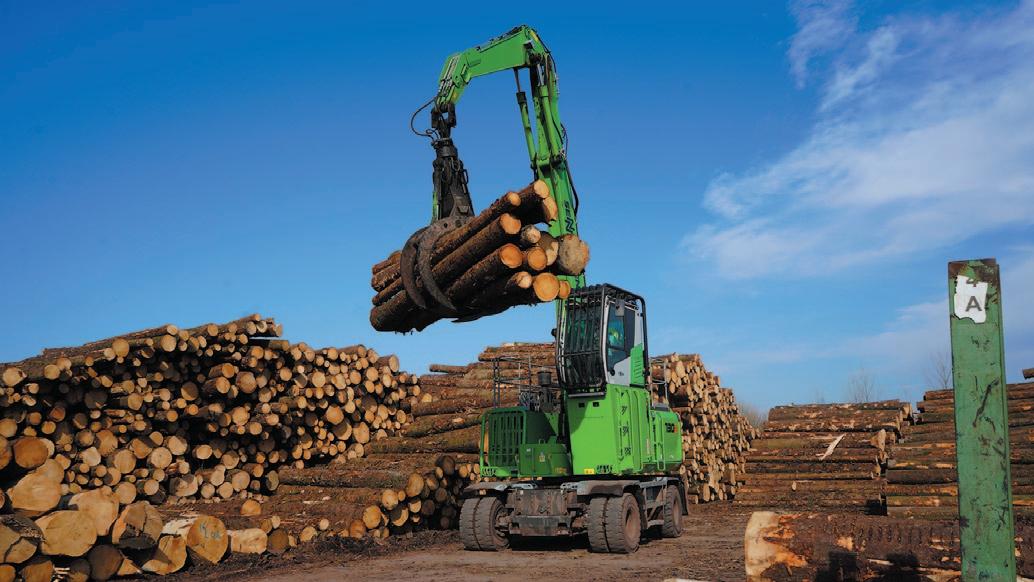
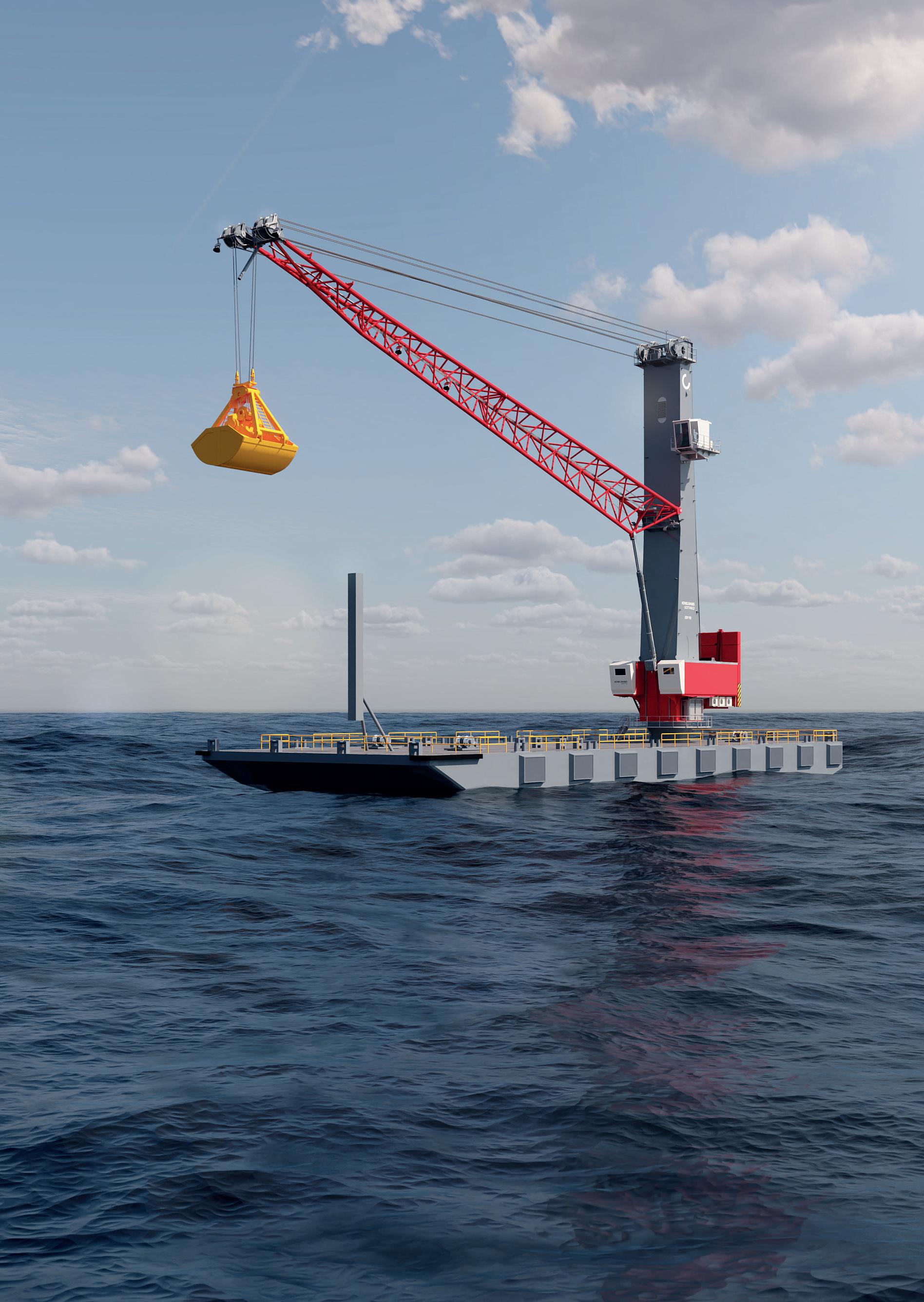









iththi ti6illi OG aterways. f transshipment on w er o w a po ald Cranes on Barge are ttw onecranes Go K
















our needs or y model f tion 6! new Genera our transshipment with our Strengthen y a. handling in the open se argo or continuous c open up new horizons f vironments. They ances in Marine En Applic ting or Lif ode f er C egist d’s R y under the Llo argo. They f c y kind o o handle an ability t ou with their tion 6 will impress y Our Genera




Vurmak Vuruskan Makine based in Turkey is a powerhouse with nearly 40 years of designing and building equipment for the bulk industry. Its products cover the entire bulk handling chain, and includes mobile and stationary solutions.
Mobile pneumatic & screw-type ship v unloaders: these are flagship products for Vurmak, and are designed for the cost-effective, high-capacity and environmentally friendly unloading of vessels. They offer terminals significant operational flexibility.
Big Bag unloading systems: Vurmak is v at the forefront of the market for these solutions. which are designed to unload FIBCs directly into cement trucks or silos. These systems can convey cement up to 300 metres, enabling dust free transfer of cement from bigbags to silos or trucks. Vurmak’s unloading systems are available in both mobile and stationary versions.
Vurmak’s other equipment for the bulk market includes:
Telescopic belt conveyors: Vurmak v manufactures adjustable, high-capacity telescopic belt conveyors for flexible material handling of parcels, packages, sacks, and bags.
Railcar loading stations: systems for v loading railcars with capacities up to 450tph (tonnes per hour), featuring remote-controlled, adjustable loading bellows for precise alignment and dust-free operation.
Bulk stock terminals: Vurmak v provides custom-tailored turnkey solutions for both vertical and flat storage of bulk materials like cement and ash, designed to minimize transportation and assembly costs.
Mixers (pan, planetary, and twin shaft): v Vurmak produces a range of premium quality mixers engineered for durability and high-level homogeneity, essential for high-class concrete and other blended materials.
Automatic mixer washing systems: v to complement our mixers, we provide automated high-pressure washing systems that clean the mixer’s interior efficiently, reducing water usage and increasing the lifespan of abrasive components.
Bagging equipment: Vurmak v
Big Bag unloaders (and below).
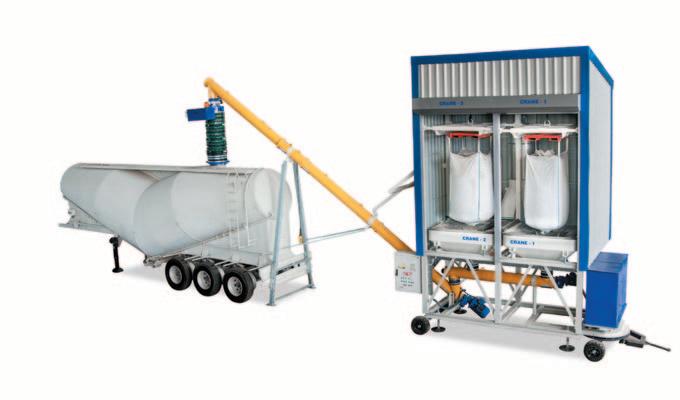
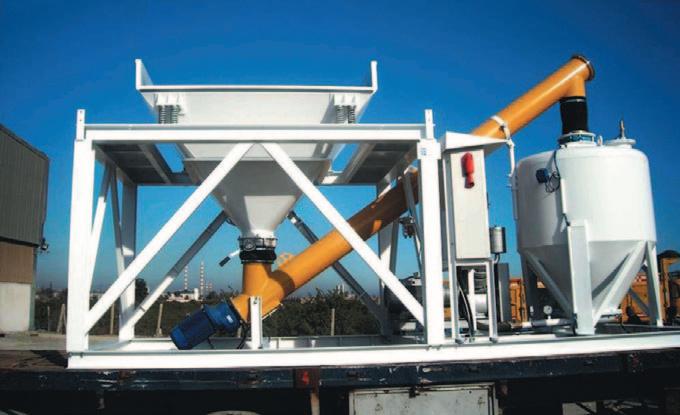
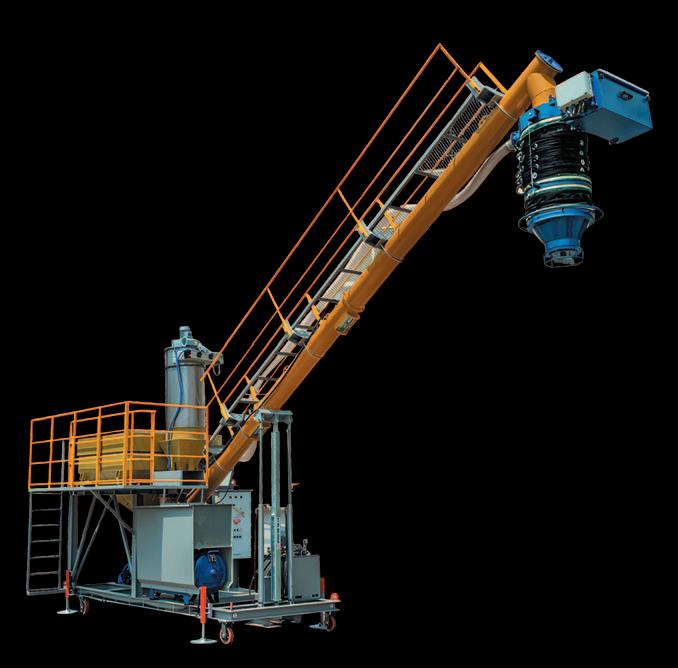
produces complete turnkey bagging solutions, including stationary and rotary packers designed to pack dry bulk materials like cement into 25kg and 50kg bags, with capacities up to 120 tonnes per hour.
Vanguard Machinery is a subsidiary of Vurmak and serves as the dedicated Research & Development division, driving innovation across its product lines to ensure it remains at the forefront of bulk handling technology.
Vurmak’s equipment is engineered to handle a wide variety of free-flowing dry bulk materials. The most common commodities include:
Cementitious products: cement, v ground granulated blast-furnace slag ( GGBS), and fly ash.
Construction materials: clinker and v other aggregates.
Agricultural products: grains, soy, and v other agri-bulk commodities.
Minerals: alumina, petcoke, and v various powdered minerals.
The design of Vurmak’s pneumatic and screw systems ensures gentle handling, which minimizes degradation of sensitive materials.
Vurmak’s client base is broad and global, spanning over 43 countries. It primarily serves:
Major cement producers and v importers: companies that need to efficiently import raw materials or finished cement into their markets.
Port and terminal operators: both v large, multi-purpose ports and smaller, dedicated terminals that require flexible and reliable unloading solutions.
Commodity trading houses: global v firms that handle the import and distribution of various dry bulk materials.
The market for bulk handling equipment is competitive and includes large, established global players like Liebherr, FLSmidth, Bruks Siwertell, and Van Aalst, as well as other specialized European and Asian manufacturers. Vurmak’s competitive strategy is built on its ability to deliver exceptional quality and value: High-quality, durable products: the v primary focus is on engineering excellence. Vurmak builds robust,
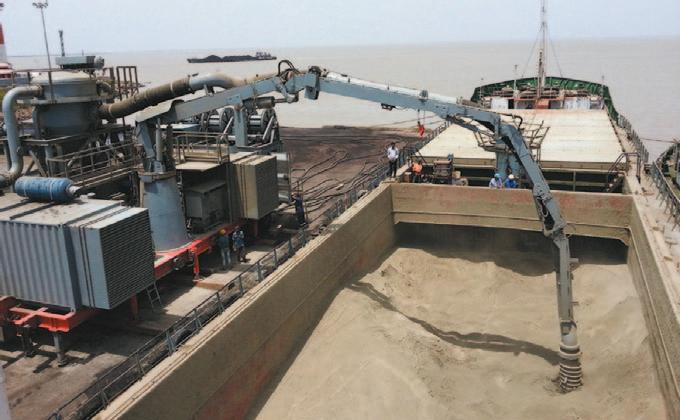
Dock-mobile ship-unloader.
Dock-mobile ship-unloader.
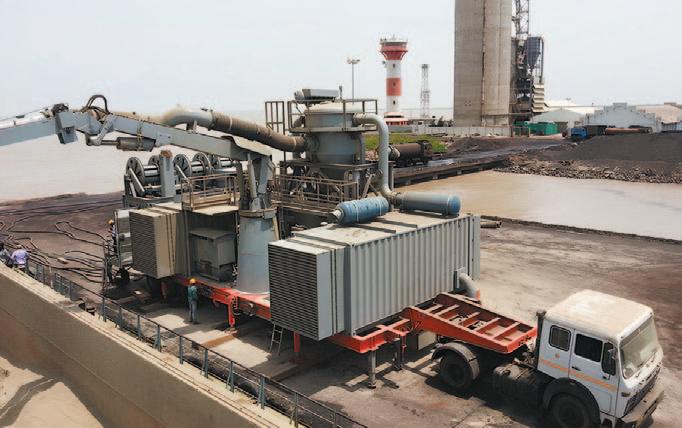
Road-mobile ship-unloader.
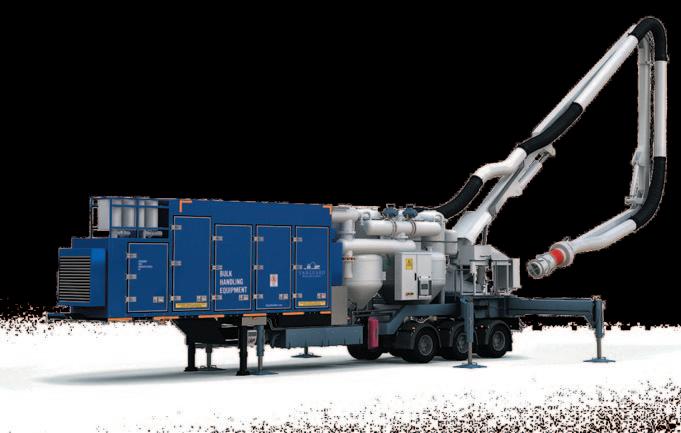
reliable equipment designed for longevity and demanding operational environments. This commitment to quality ensures its clients receive machinery they can depend on.
Affordable & cost-effective solutions: v by leveraging its efficient manufacturing processes and focusing on robust, practical designs, Vurmak offers equipment that provides a superior return on investment. Its products deliver the performance of top-tier brands at a more affordable
price point.
24/7 global service & fast support: v Vurmak’s complementary, around-theclock service ensures the user that they are never alone. Vurmak keeps critical spare parts in stock — items that would normally take months to source — and can connect remotely to every machine worldwide for instant troubleshooting. If hands-on help is needed, Vurmak provides expert video guidance or dispatches technicians globally.
Hitachi Construction Machinery Co., Ltd. manufactures the ZW-7 wheel loader range, from the ZW160-7 to the ZW310-7. The Stage V-compliant models have been designed to put operators in complete control of their workspace — and master even the toughest job site conditions — with industry-leading safety features and unrivalled comfort in the cab. Owners will feel in total control of their profit — thanks to their powerful performance, low total cost of ownership and exceptional efficiency — as well as their fleet and workload, due to remote monitoring tools and services provided by Hitachi.
The ability to work safely is vital, not only for the operator’s wellbeing, but also for the successful completion of any project. ZW-7 wheel loaders are ideal in this respect, as they are among the safest machines in the market, thanks to superb all-round visibility and intelligent systems.
To protect the operator and machine from potential hazards, they allow a superior view from all angles — especially with the excellent visibility to the rear and either side of the narrow engine hood. With the Aerial Angle camera system, operators also have an exceptional 270° bird’s-eye view of the job site, while the rear obstacle detection and warning system alerts them immediately if anything is close to the back of the machine.
After working a full shift in the spacious, fully redesigned cab, operators will feel less tired and more satisfied at their ability to work more productively. ZW-7 wheel loaders epitomize the ultimate in comfort, with some of the lowest noise and vibration levels in the market. They are especially easy to use thanks to features such as the improved seat with mounted electric pilot control levers, new monitor controller and convenient side switch panel.
Owners will be able to increase their profits due to the powerful performance, low total cost of ownership and exceptional efficiency of the larger models in the range, and the impressive fuel economy and versatility of the smaller models.
High levels of productivity are ensured by fast cycle times, a high breakout force and loading capacity, and improved acceleration on inclines thanks to sensors installed on several machine components. The RPM are automatically increased thanks to the auto power-up function, which maintains the machine’s travel speed

when moving uphill. As a result, the reduced cycle times enhance productivity and fuel efficiency.
Faster and more efficient short loading operations, due to the approach speed control feature, further satisfy owners’ requirements. ZW-7 models also load trucks more accurately, saving time and money, using the payload monitoring system. In addition, operators can monitor the fuel consumption thanks to the new ECO gauge and performance can be improved with several adjustable functions.
An ultra-reliable performance to significantly boost uptime is possible because ZW-7 wheel loaders are built with durable components, intelligent prevention systems and easy maintenance features.
The large ZW310-7 is designed to boost productivity in busy quarries and large recycling plants.
The smaller models, such as the ZW160-7 and ZW180-7, are renowned for versatility on a variety of applications. Three types of lift arms are available for the ZW180-7 — standard, high lift and parallel lift.
The parallel lift arm ensures effective handling through the lift range with less tilting variation of the attachment. It can also provide precise speed control when dumping and is suitable for use with fork attachments.
The larger ZW220-7, ZW250-7 and ZW310-7 are designed to boost productivity in busy quarries and large recycling plants.
High-quality Hitachi buckets and robust
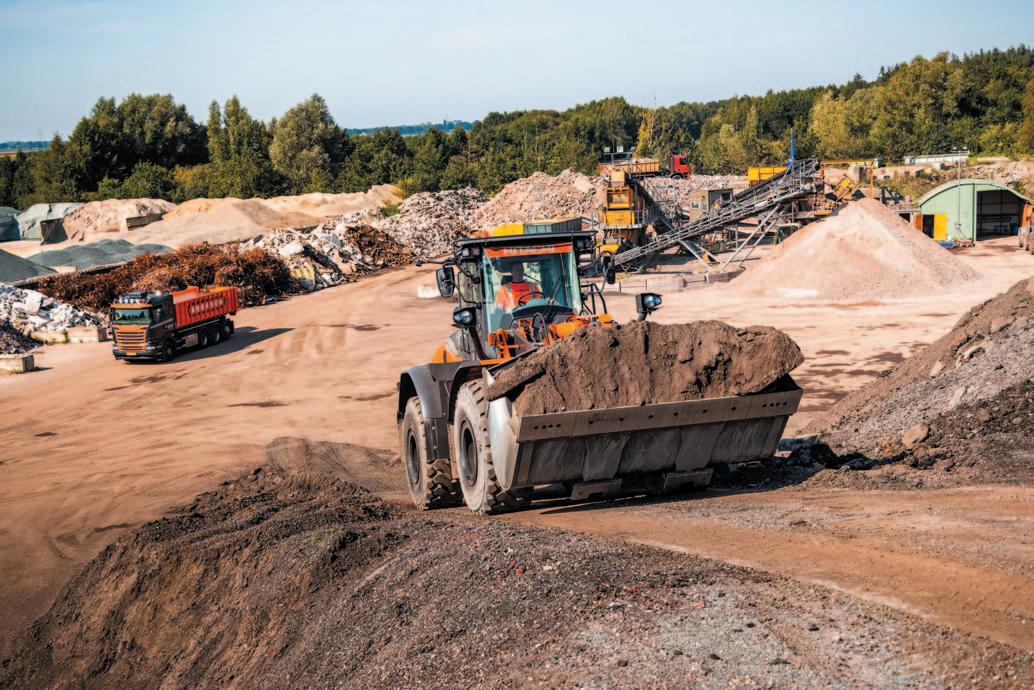
ground engaging tools (GET) will enhance performance and increase profit by maximizing productivity and uptime. Owners can choose from a wide range of Hitachi buckets to suit the application, with quick coupler connections also available. Hitachi GET fit precisely to attachments, and are quick and safe to install and replace.
Hitachi supplies its wheel loaders to a wide range of clients, including: aggregates suppliers; quarries; and large recycling plants, medium- to large-scale construction, civil engineering and rental companies.
These models are also available through Hitachi Premium Rental — customers can hire them for periods of one month up to one year, with competitive pricing and
flexibility to meet varying demands, enabling them to pay as they earn.
Hitachi has also introduced an all-in-one fleet management platform, LANDCROS Connect, to help owners increase the efficiency and productivity of their equipment. It gives them instant access to performance data on all their machines, with custom reporting tools focusing on key metrics, and smart geofencing for precise productivity tracking.
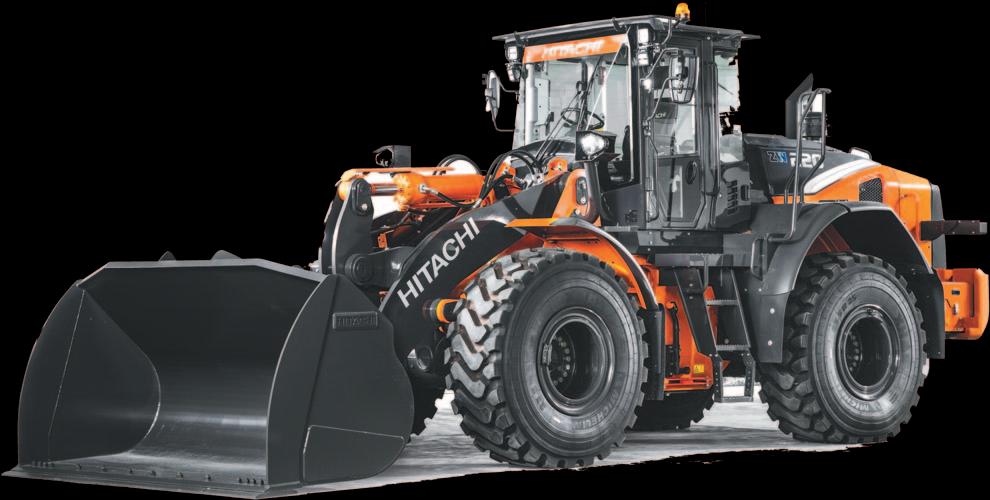
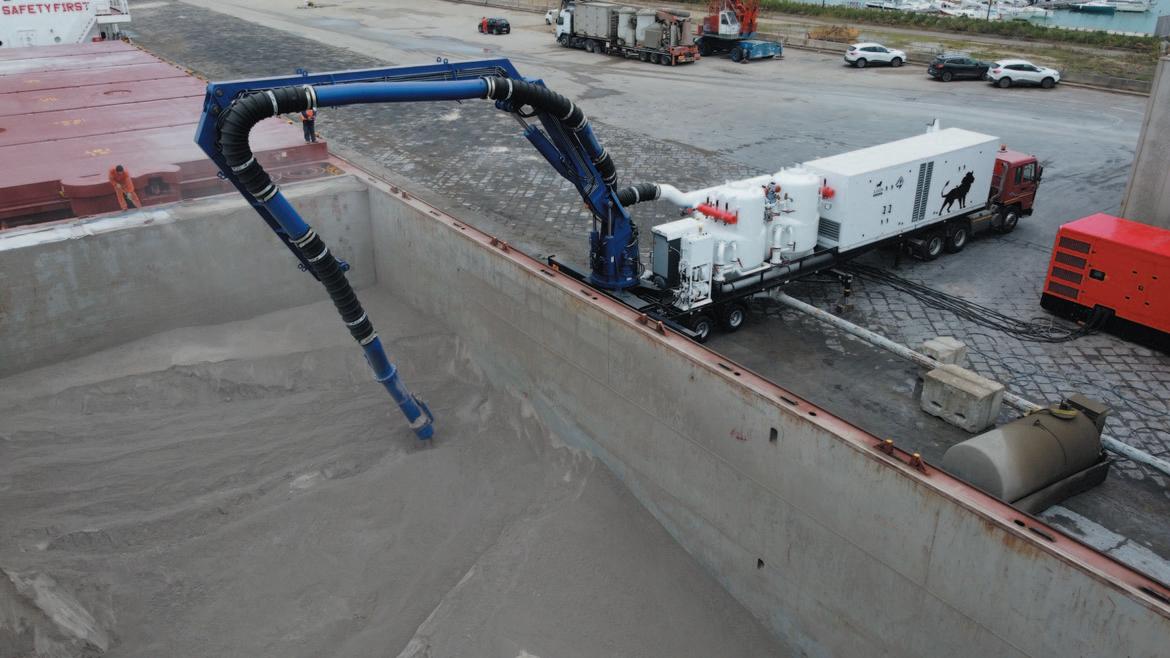
In today’s bulk handling industry, efficiency, safety, and environmental compliance are key drivers of innovation. One of the most significant operational challenges is controlling dust emissions during the handling, storage, and transportation of dry bulk materials such as cement. Excessive airborne particles not only pose serious health and safety risks but can also lead to product loss, increased maintenance costs, and environmental concerns.
Lion Bulk Handling is specialized in providing innovative solutions that minimize dust emissions while improving overall operational performance. With decades of expertise and a global presence, its dust-reducing applications set new standards in sustainable bulk material logistics.
Bulk handling processes, from ship loading and unloading to conveying, stacking, and reclaiming, often involve materials like cement, fly ash, alumina or any other dry bulk materials. These fine powders are prone to becoming airborne when transferred, creating several operational challenges:
Health & safety risks: prolonged v exposure to airborne dust particles can affect workers’ respiratory health and increase the risk of accidents due to reduced visibility.
Environmental impact: dust emiss- v ions contribute to air pollution, triggering stricter regulations and
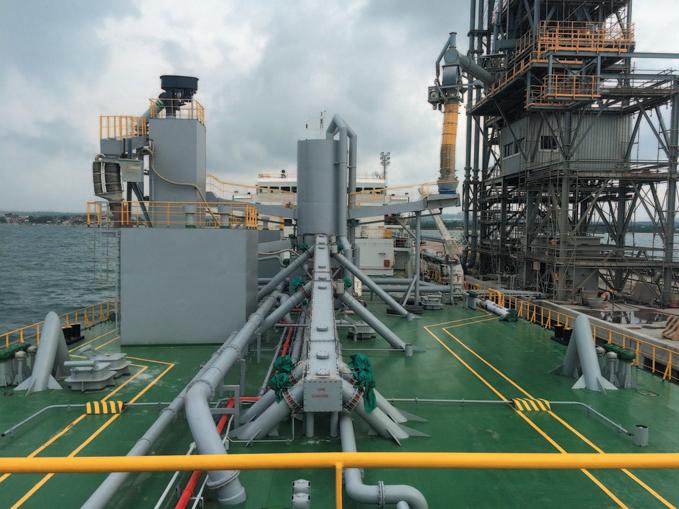
requiring companies to comply with international environmental standards. Material loss & product quality: v Uncontrolled dust leads to direct product loss and potential contamination, affecting profitability and quality assurance.
To address these challenges, industries need advanced solutions that reduce dust while handling these materials.
1. ENCLOSED SYSTEMS
Lion Bulk Handling has developed a comprehensive portfolio of dust-reducing applications designed to manage bulk materials safely and efficiently. Shiploading and unloading systems like the airslide loading system, or terminal to silo conveying systems, create a sealed environment that prevents dust from escaping during bulk material transfer. These systems ensure high loading capacities while minimizing dust and increasing efficiency.
2.
Lion’s automated systems are designed to optimize flow rates, reducing the conditions that cause airborne dust. Realtime monitoring and adaptive control systems ensure consistent performance under varying operational demands.
To reduce internal friction of particles airslides leverage the principles of fluidization to transport fine powders and granular materials. The core components
of an airslide system include a porous membrane, an air chamber, and an inclined conveyor.
All lion’s pneumatic ship-(un)loaders are equipped with built-in filter units with reverse-pulse cleaning to capture airborne particles. Also, large filters are installed in silos, conveyors and transfer points, capturing dust and returning the material back into the process. Together with the slight vacuum conditions, the dust is prevented from escaping.
By implementing all these cutting-edge technologies and comprehensive dustreduction strategies, Lion Bulk Handling delivers applications that outperform industry standards and are regarded as the best in the field.
Beyond dust-reducing technologies, Lion Bulk Handling distinguishes itself through deep expertise and tailor-made solutions for complex bulk handling challenges. Its specialist capabilities include:
Customized engineering: every bulk v handling site is unique. Lion Bulk Handling designs and delivers systems fully adapted to the specific material, operational constraints, and environmental conditions.
Turnkey project delivery: from v concept development to commissioning, the company manages complete project lifecycles, ensuring seamless integration and minimizing downtime.
Global service & support: With a v worldwide network of specialists, Lion Bulk Handling provides on-site inspections, system upgrades, training, and 24/7 support to keep operations running at peak efficiency. Regulatory compliance expertise: v The company’s solutions are engineered to meet the most stringent international health, safety, and environmental standards, supporting clients in maintaining full regulatory compliance.
As the demand for cleaner and safer bulk handling grows, Lion Bulk Handling remains committed to delivering industryleading solutions that meet today’s challenges and anticipate tomorrow’s needs. Lion’s mission is to support clients in achieving maximum operational
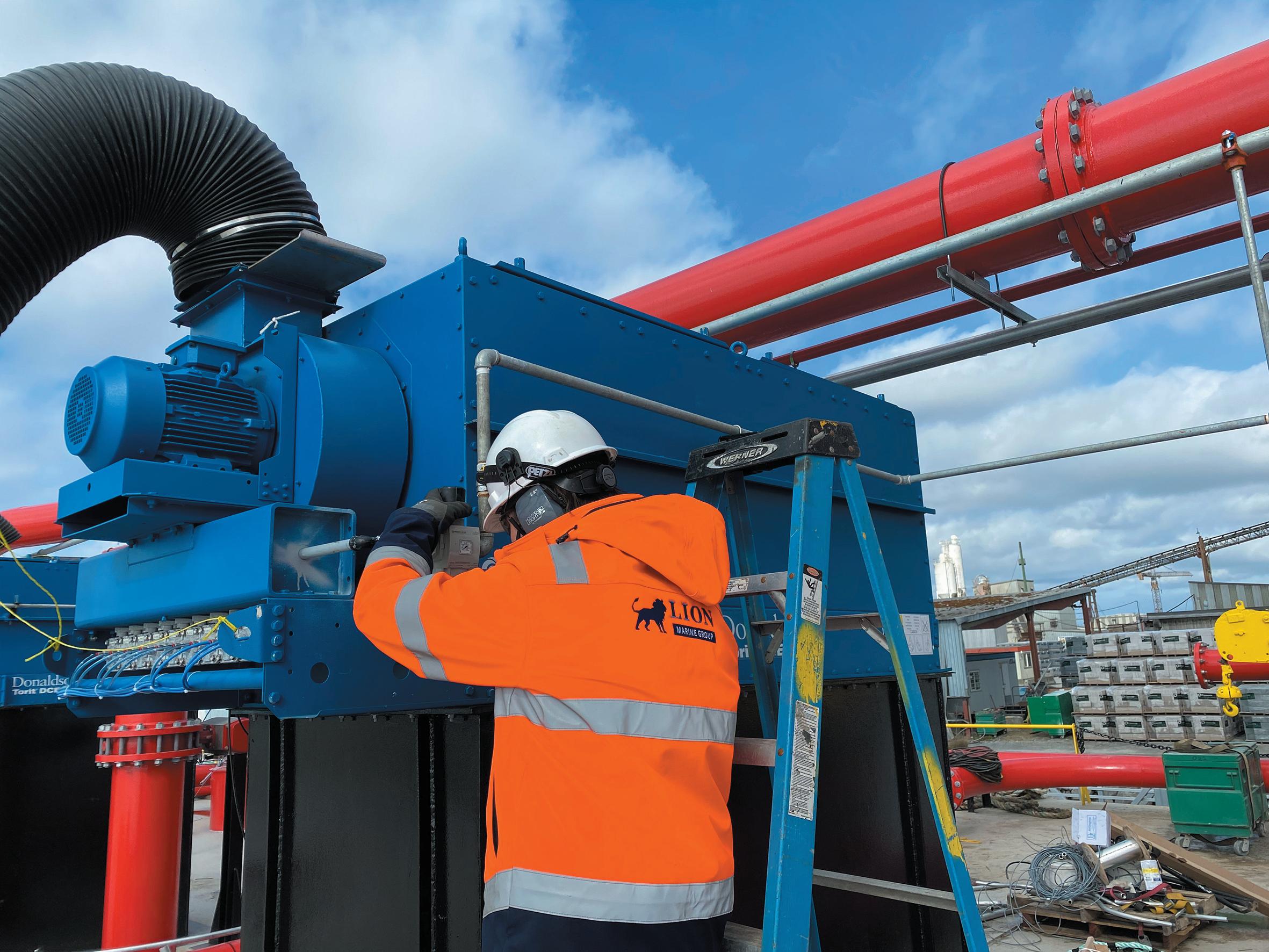
performance while minimizing their environmental footprint.
Lion Bulk Handling combines innovation, engineering excellence, and a
deep understanding of bulk material dynamics to help customers handle more, with less dust, less waste, and greater sustainability.
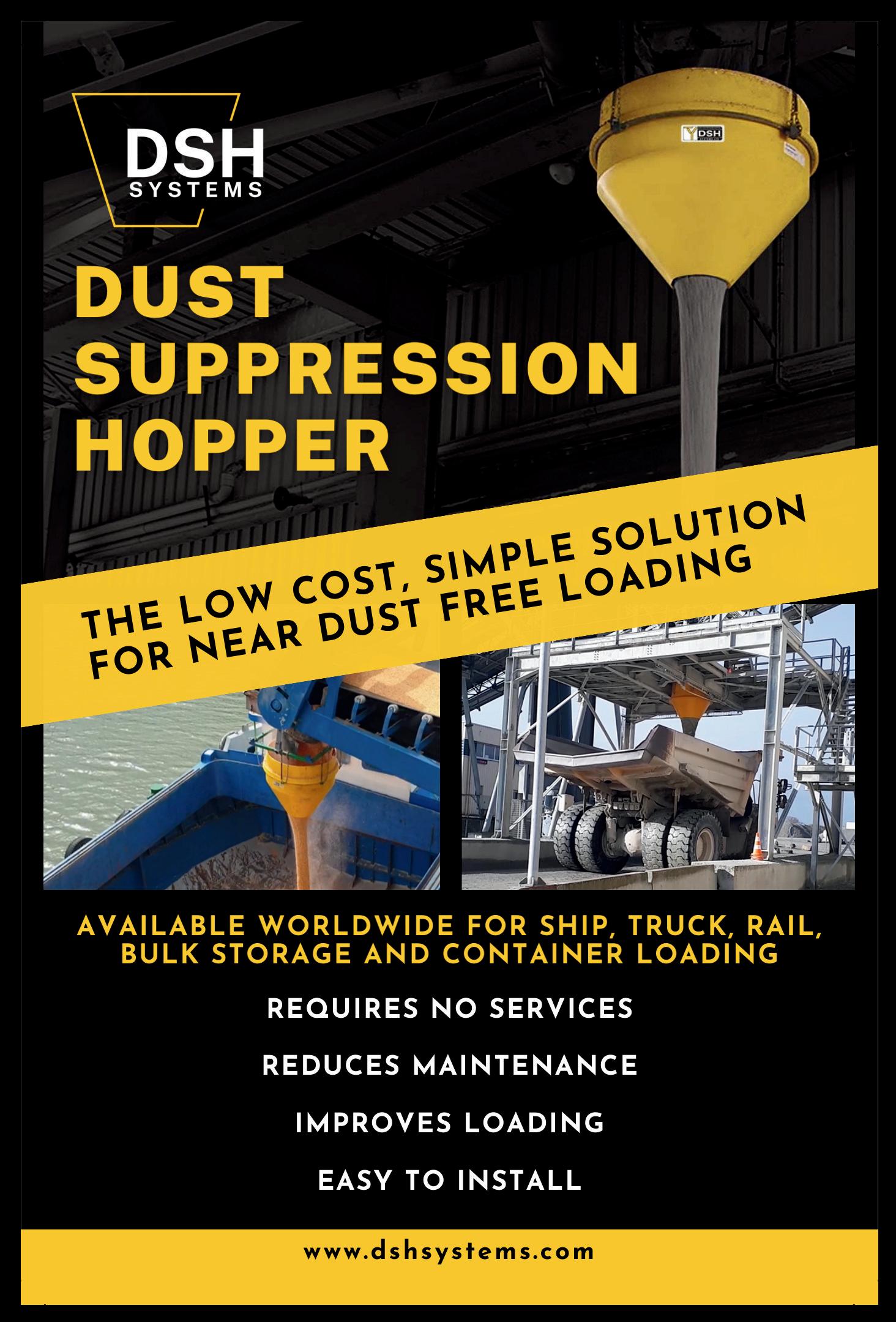
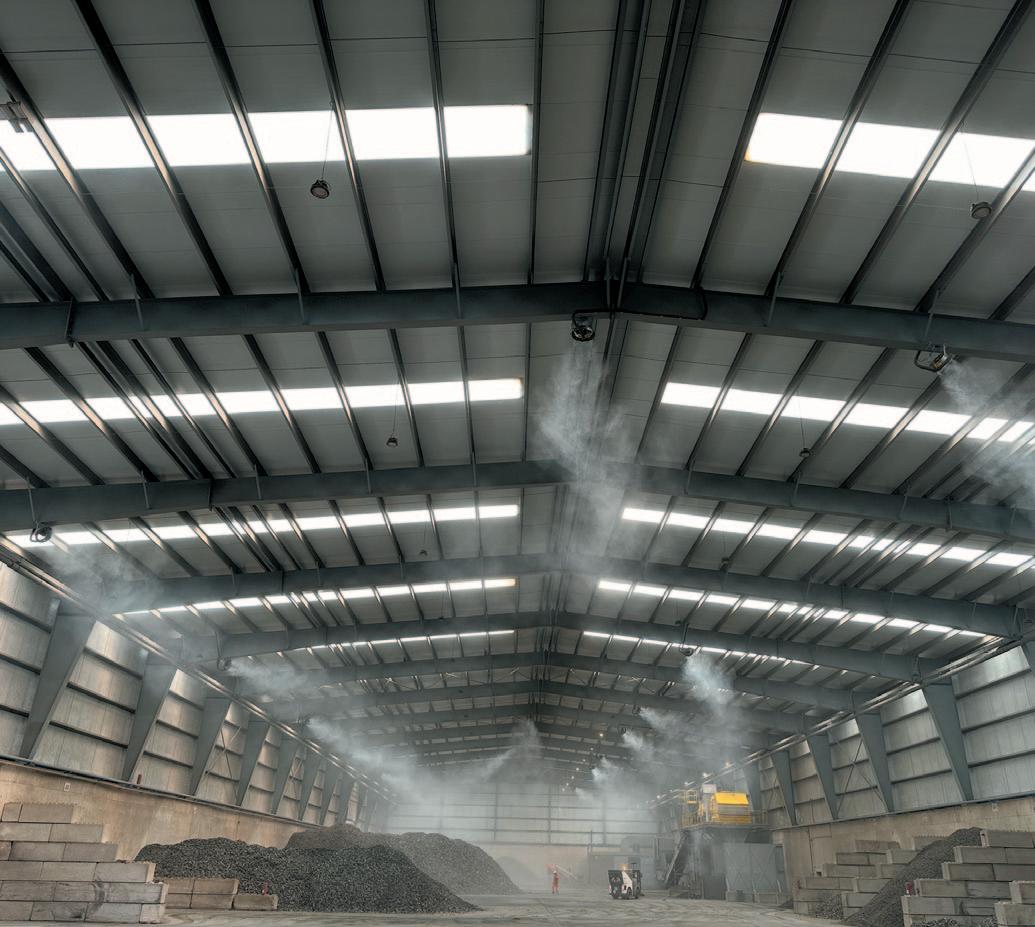
Imagine a really dusty indoor environment. You installed dust extraction equipment but the PM2s and airborne silica levels are still way too high. The problem with extraction is it is localized, and is expensive to install, operate and maintain, writes Mike Carter, Director, Mist-Air Dust Suppression Limited.
LEV suction vents around the building suck the airborne dust across buildings, ensuring the dust is constantly available for everyone to breathe.
Smaller particles, PM2s and PM1s, are easily be ingested into the lungs and tend to stay airborne permanently. These also contain heavy metals, VOCs, and organic compounds.
SO, WHAT IS THE ANSWER?
Fog cannons, rotary atomizers, lines of spray jets in the roof, air jets, bowsers driven around the site?
Any of these systems will suppress some dust, but they can also tend to soak the floors, machinery, stock and personnel, increasing the weight of the stock and creating slip hazards.
HERE IS THE ANSWER
mist-air® atomizes water into a micro fine fog that stays afloat in the air and does not drop to the floor, keeping everything completely dry. It can be installed in many areas for independent control.
Small or large areas are easily covered, for either new buildings or retrofits.
mist-air® actually prevents dust from forming and stops it migrating to other areas. The forming dust is attracted to, and collides with microscopic particles of fog, and is unable to stay airborne.
So, clean air without having to use huge electric motors , there are no bag filters to clean, and low power and water usage.
It is just so simple, so people just cannot
accept that they will get better suppression without spending millions of pounds on a complicated dust extraction system.
mist-air® began manufacturing this system over 50 years ago. The company designs, manufactures, installs and maintains them all.
Installed in over 6,000 sites worldwide covering recycling sites, EfW (Energy from Waste) and biomass power stations, ash handling, brick factories, quarries, tunnelling, foundries, paper mills, particle board factories, glass recycling, gypsum recycling, plastic recycling, port-hoppers, storage silos and buildings, the list is endless.
mist-air® is so confident in its proven system that it offers a full money back refund if the customer is not pleased with the system once installed.
mist-air® efficiently and cost effectively reduces airborne dust better than any other method.


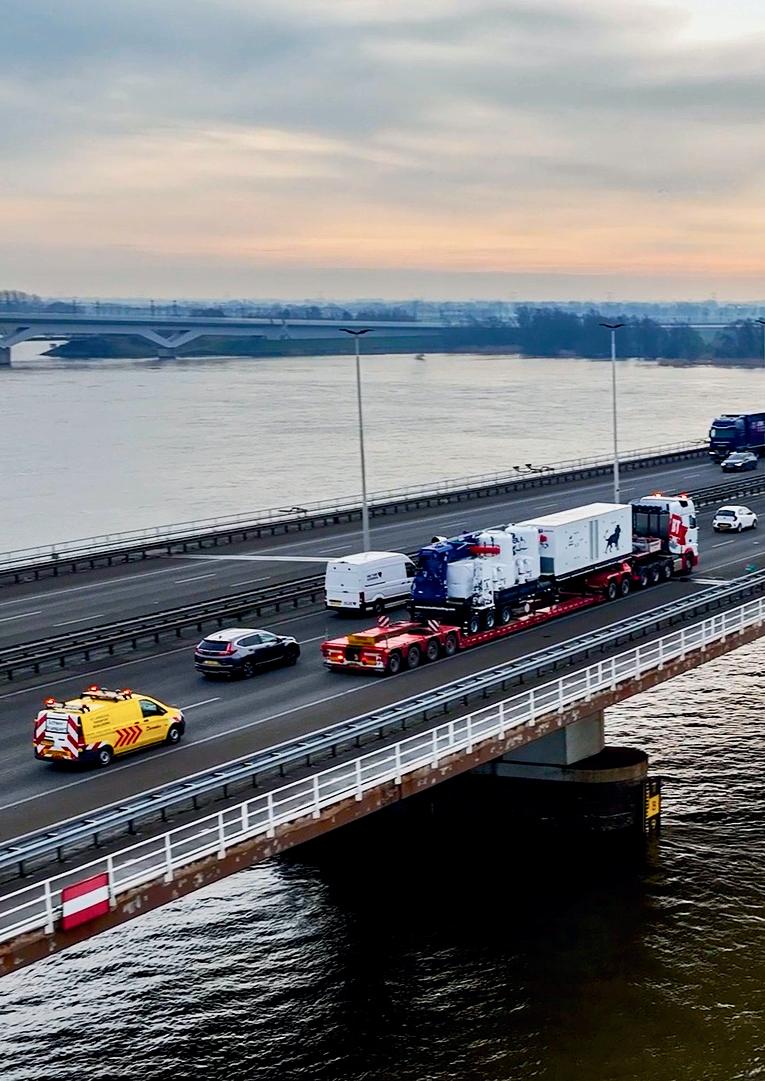



Dust emissions are increasingly under the spotlight as ports and terminals adapt to stricter environmental regulations and growing urban sensitivities. For more than 25 years, NEUERO Industrietechnik GmbH has been pioneering solutions that combine efficiency, reliability, and sustainability in ship loading and unloading technology.
The journey began in 1998 with the delivery of the SL800 shiploader (800tph [tonnes per hour]), the first to be equipped with NEUERO’s KIKO® system (Kick-In Kick-Out). At a time when conventional solutions relied on telescopic pipes with rotating shoes, KIKO® introduced a true alternative: horizontal-equivalent movement that could cover a hatch with minimal travelling. This innovation simplified operations, reduced downtime, and became a new benchmark in shiploading technology. Even after 25 years of continuous operation, the SL800 remains a symbol of reliability.
In 2002, NEUERO added the DLH® (Dustless Loading Head) to KIKO®, with the first installation in Kiel, Germany. This development marked the transition from mechanical innovation to a more holistic approach — combining efficient hatch coverage with genuine dust control. The DLH® system, still in operation today, proved that dust-free loading was not a future dream but a practical solution.
Since Kiel, every project has provided an opportunity to refine not only the mechanical design but also the intelligence of the system. NEUERO has continuously advanced automation and flow control, ensuring trouble-free operation under any loading condition. The company’s philosophy is clear: dust reduction is not only a matter of external devices but of internal system intelligence, ensuring consistent mass flow and minimizing human error.
A major milestone came when Silotrans expanded its operations with the SL1500 (1,500tph), equipped with both KIKO® and DLH®. This ensured dustless performance
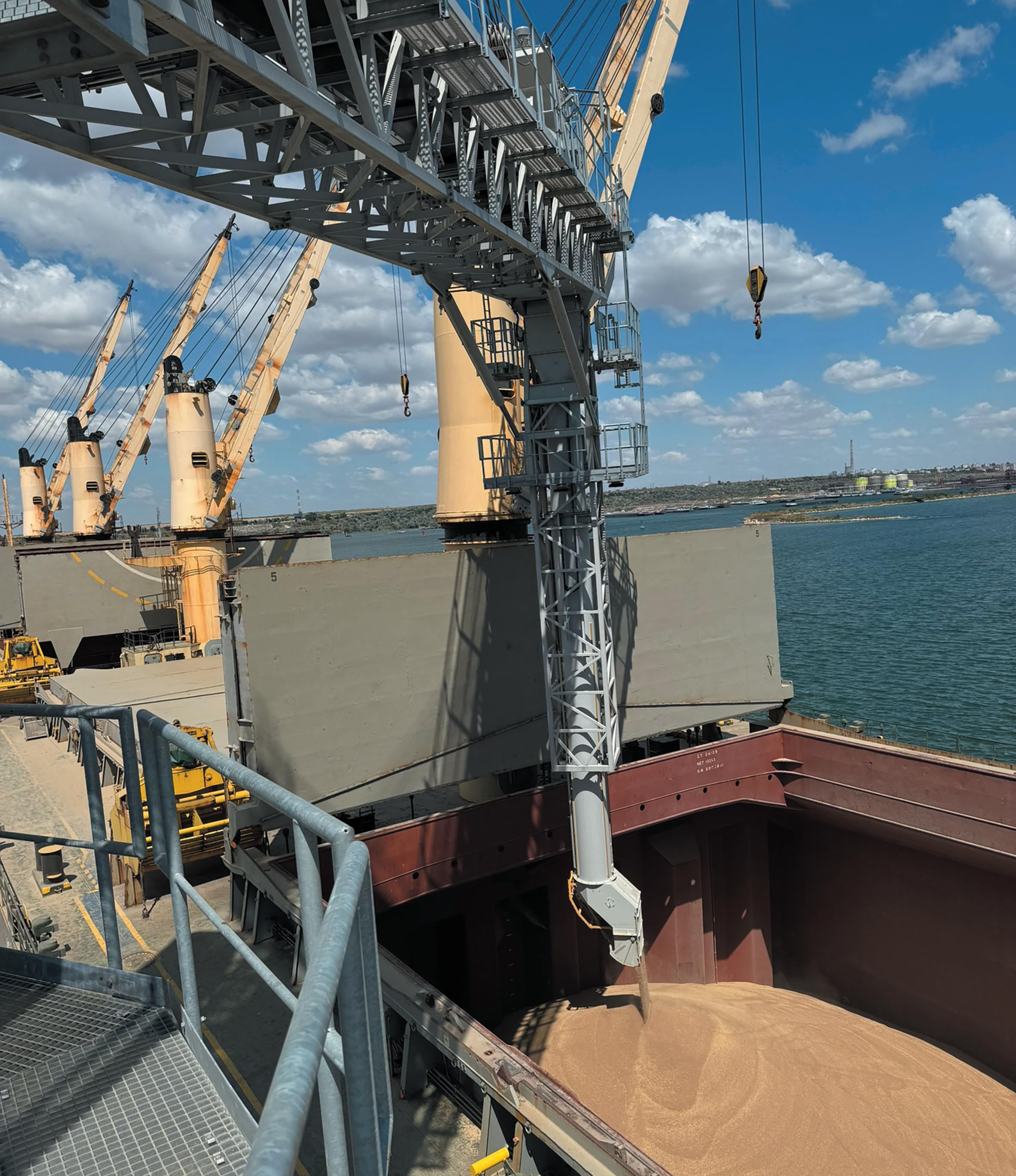
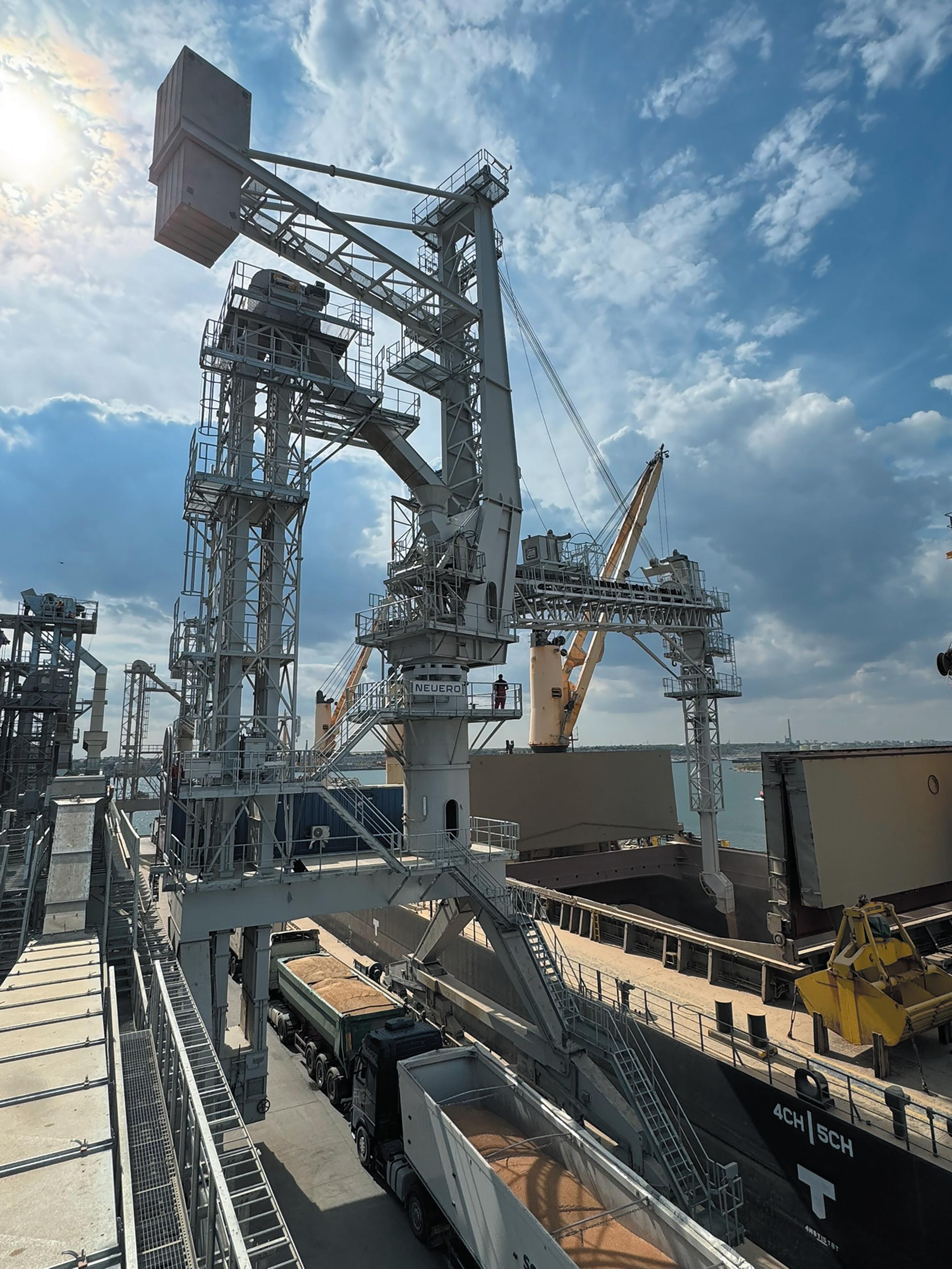
at higher capacities, while delivering the automation needed for efficient and safe operation.
In France, NEUERO recently supplied a shiploader to replace low-cost equipment that emitted unacceptable dust levels. With terminals often located near cities,
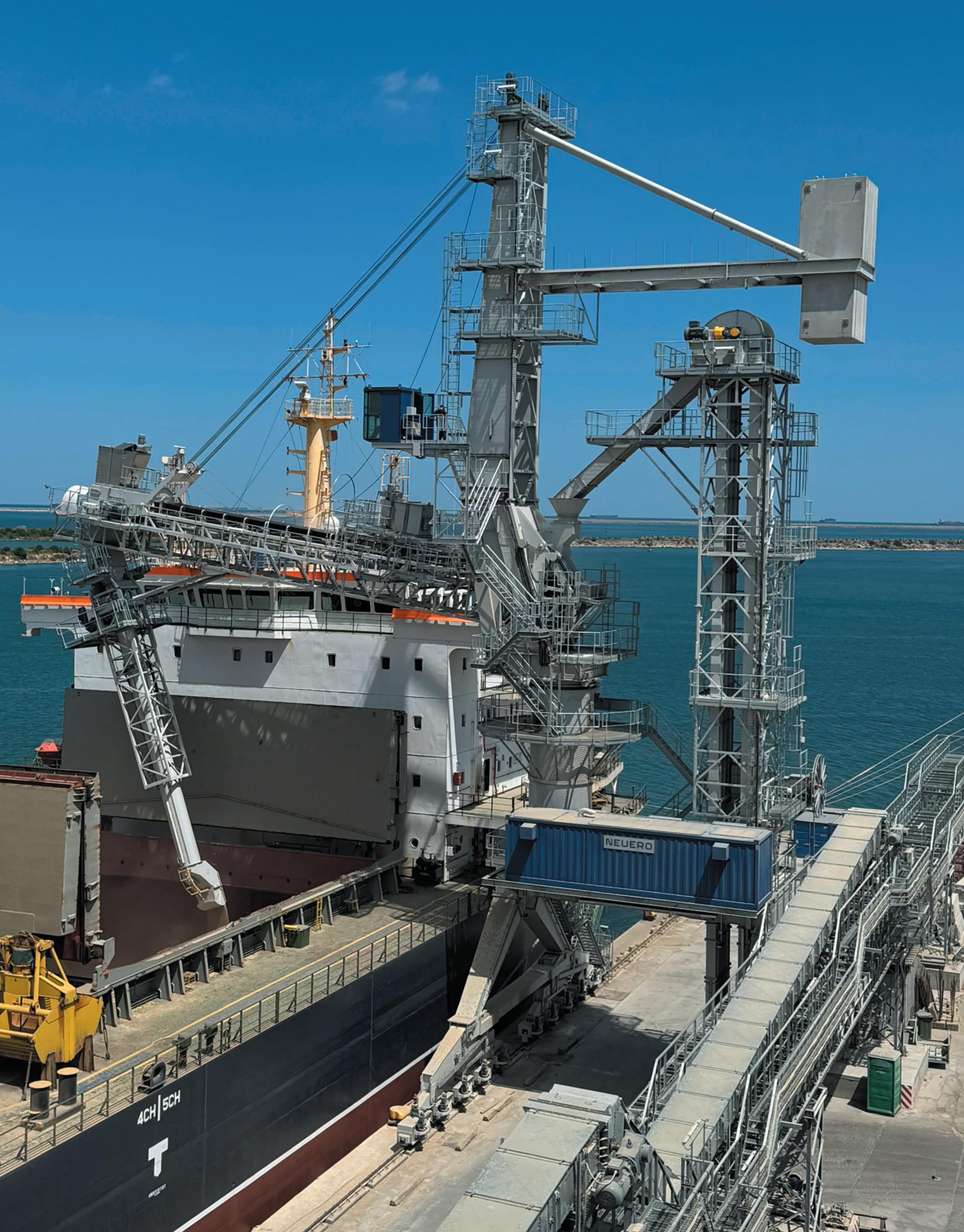
such solutions no longer have a future. Similar problem was learned in Germany, where Neuero was chosen by technical department but purchase department ‘found’ a similar cheaper, look-alike system. Superficial similarities, however, cannot replicate the embedded intelligence and decades of experience within a NEUERO system. True performance requires more
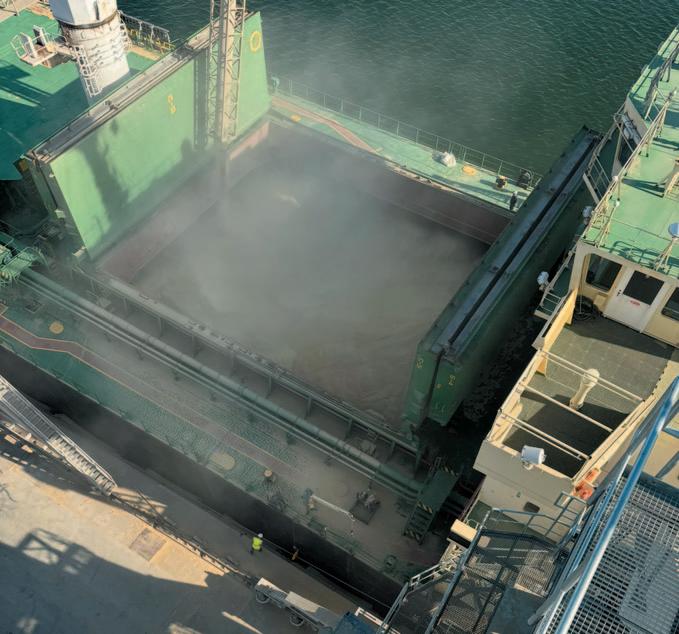
In 1998 the SL800 (800tph), was the first shiploader to be equipped with NEUERO’s KIKO® system.
than external design — it requires intelligent engineering.
Recently, NEUERO replaced older ship loaders equipped with jet slingers for urea loading. Understandably, operators accustomed to decades of one method are cautious about change. Yet these transitions are vital — not only for efficiency, but also for protecting health and the environment. NEUERO just supplied the 4th unit as part of site transformation.
Imitation in the marketplace only confirms NEUERO’s leadership. While others attempt to replicate appearances, they cannot reproduce the engineering intelligence, automation, and proven operational results that distinguish genuine innovation.
As NEUERO likes to point out: “Creating a plastic surgery that resembles Einstein’s face does not replicate the brain’s capabilities.”
True dust control is not achieved by
external design alone but through integrated automation, intelligent mass flow management, and decades of application experience.
From the first SL800 to today’s highcapacity, fully automated, dustless systems, NEUERO has consistently led the way. KIKO® + DLH® is more than a loading solution — it is a philosophy:
“Designed with intelligence, built for results.”
Modern industry is undergoing rapid transformation. Stricter environmental requirements, Ukraine’s course towards integration into the European Union, and growing public expectations are shaping a new vector for the development of the aspiration systems market. Grain Capital demonstrates how technological innovations help not only to comply with current regulations, but also to stay ahead of future standards.
From January 1, 2026, the maximum permissible concentration of dust emissions in EU countries will decrease from 10mg/m³ to 5mg/m³. This will be a serious challenge for many companies. However, the engineering team at Grain Capital’s design department is already
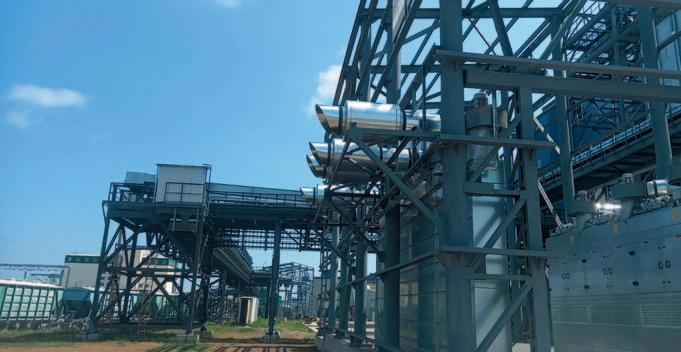
working on updating the design of aspiration equipment to meet stricter environmental requirements.
This is a strategic move, as about 30% of the company’s equipment is exported to Spain, Romania, Moldova, Latvia, and other countries.
Today, Grain Capital systems demonstrate a high level of efficiency: Actual emissions are 10–12mg/m³ v with a permissible level of 50mg/m³ in Ukraine; and
Dust concentration in production v facilities does not exceed 4mg/m³.
Thus, the company’s equipment already meets EU requirements, and modernization will significantly strengthen its position in the market.
FROM MINERAL FERTILIZERS
A particular challenge for engineers is dust emissions in the production and transshipment of mineral fertilizers. While technological approaches have been developed for grain dust, mineral fertilizers have a number of problematic properties: Hygroscopicity and aggressiveness, v leading to clumping.
Toxicity and corrosion of equipment. v High load on filter materials. v
Grain Capital specialists are working on solutions that will effectively reduce dust formation in such difficult conditions. These are aspiration projects at the stage of loading onto ships — using correctly selected filter sleeves, a pulse cleaning system, and wear-resistant metals.
The key approach is a comprehensive one: environmental audit of the enterprise, design, manufacture, and commissioning of equipment. This approach allows Grain Capital to take into account all the features of production and guarantee stable results.
CAPITAL’S
FROM PORTS TO AGRIBUSINESS
A striking example of innovation implementation is Grain Capital’s cooperation with the Mykolaiv Bread Products Plant, which is part of the OREXIM group of companies.
The enterprise, which had long specialized in flour production, was modernized into a modern port terminal. As part of the project, 72,000 tonnes of storage capacity were added, road and rail reception facilities were expanded, a 1km long berthing gallery was built, and a ship loading machine was installed.
All these solutions, including the development, manufacture, and supply of 127 units of filtration equipment, were
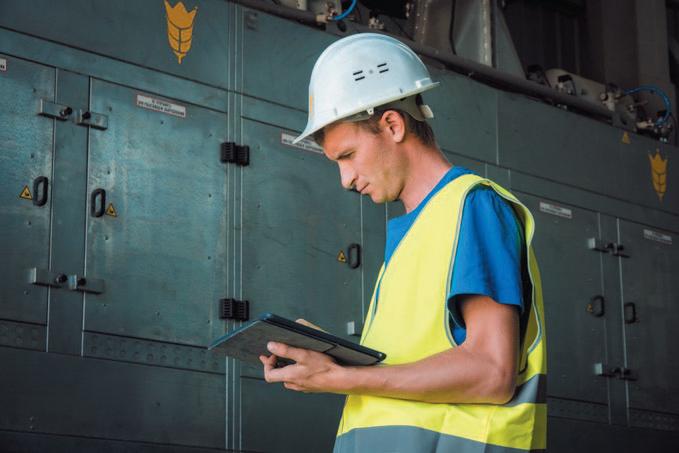
implemented by Grain Capital. The aspiration system covered all key dust generation points: road and rail reception; v transport galleries; and v cleaning complex. v
Another important project was the cooperation with PJSC ‘MHP’ Branch VKVC LLC ‘Vinnytsia Poultry Farm’ in the city of Ladyzhyn, Vinnytsia region. Grain Capital performed a range of works on the installation and commissioning of aspiration equipment for the autoreceiving unit.
The project included: manufacturing and supplying v aspiration equipment; installing air ducts and compressed air v lines; automating equipment operation; and v installing and connecting control v cabinets.
The technical equipment included filter cabinets and flap systems, which ensured effective dust suppression and stable operation of the equipment under conditions of intensive use.
The SMART intelligent control system developed by Grain Capital played a key role in both projects. Its uniqueness lies in
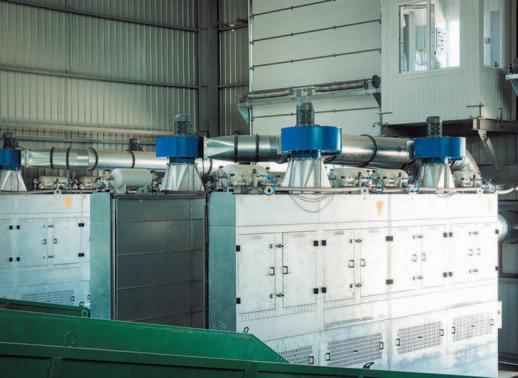
its comprehensive approach: integration of all functions into a v single system; self-diagnostics and statistics; v convenient interaction with the v operator; and advanced parameter control using v current, pressure, and air sensors. In practice, this means lower equipment maintenance costs, increased reliability, and the ability to control systems even from a smartphone or tablet.
Examples of Grain Capital’s activities prove that Ukrainian manufacturers are capable of not only meeting but also exceeding international standards.
New EU environmental requirements v are driving the modernization of aspiration systems.
The complex challenges associated v with mineral fertilizer aspiration are driving innovative solutions.
Practical projects at Ukrainian v enterprises confirm the effectiveness of Grain Capital’s modern technologies.
The development of dedusting technologies is not just a matter of compliance with legislation. It is an investment in employee safety, environmental protection, and the competitiveness of Ukrainian enterprises in the global market.
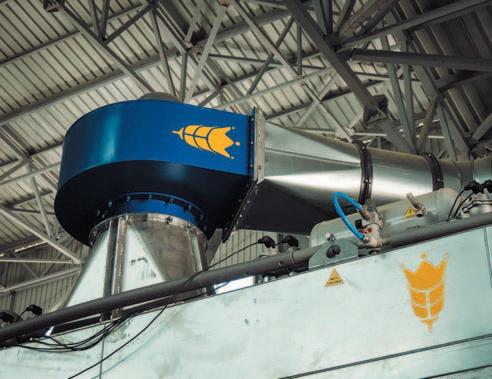
We have been conducting regular assessments of our FP nozzles since 2005 with results obtained from three tests: 2005, 2015 and 2025, writes Gonzalo Campos Canessa, CEO, The Raring Corporation.
The objective of the tests was to determine how our FP nozzles spray, the droplet size distribution, plume formation and stability. This information has enabled the necessary adjustments to be made to our design and manufacturing processes. Following the accumulation of sufficient data, we are now in a position to present the improvements made to our FP nozzles over time and to differentiate our nozzles from those offered by our competitors.
The objective of nozzle design and optimization is to engineer a nozzle that is both robust and capable of producing the desired droplet size while consuming an acceptable level of energy.
The primary function of our FP nozzles is to suppress dust generated by bulk material transferred in various ways within industrial facilities worldwide. In order to optimize the efficiency of dust control measures, it is imperative that the water droplets exhibit a comparable size to the dust particles. It is imperative to note that the respirable fraction of dust particles, which are known to pose the most significant health risk to humans, typically have a diameter of less than 10 micrometers. The primary objective of the FP sprays is to generate water droplets with a size that is sufficiently small to accumulate and agglomerate the majority of the dust particles, thereby facilitating effective dust control measures.
The ensuing results will be summarized as follows:
Dv(10) – Indicative of the 10th v percentile by volume of the spray.
Dv(50) – Indicative of the 50th v percentile by volume of the spray.
Dv(90) – Indication of the 90th v percentile by volume of the spray.
In 2005, the TRC FP nozzle was a fourpiece nozzle, similar to the one currently offered by competitors today.
The resonator is attached manually to the head. Due to the inherent nature of human interaction, it is inevitable that discrepancies will arise when assembling the two pieces. Additionally, the attachment of the resonator to the head is found to be inadequate, exhibiting a lack of structural integrity. Energy dissipation resulting from vibrations hinders the adequate fragmentation of water droplets, thereby impeding the formation of fine fog.
Average droplet sizes:
Dv(10):16.34μm v
Dv(50): 41.77μm v
Dv(90): 95.55μm v
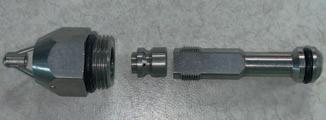
In 2015, the TRC FP nozzle was composed of three pieces, with the head machined into a single piece. Since then, advancements have been made in the field, resulting in improved droplet sizes. Nonetheless, there is still room for improvement, as the machining process necessitates the utilization of multiple CNC machines and human interaction to reach the final product. Additionally, the stem was still composed of two separate components.
Average droplet sizes:
Dv(10): 8.787μm v
Dv(50): 21.06μm v
Dv(90): 42.95μm v
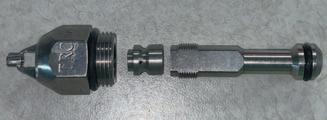
2025 SPRAY ANALYSIS REPORT:
The current nozzle is composed of two components. The head and stem are composed entirely of material machined on dedicated CNC machines, thereby ensuring uniformity among all components. This process is devoid of any human intervention, thereby guaranteeing consistency in the dimensions and properties of the finished FP nozzles. Additionally, the option of an abrasionresistant coated FP nozzle is available, which, while it does not affect performance, does provide an additional layer of protection in harsh conditions. This latest design allows us to create ADSTM Dry Fog with the correct water particles sizes to efficiently suppress the dust.
Average droplet sizes:
Dv(10): 3.428μm v
Dv(50): 6.588μm v
Dv(90): 14.201μm v
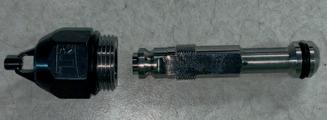
For over four decades, our company has been involved in the dust suppression business. We have dedicated a substantial amount of time and resources to the continuous improvement of our FP nozzles. This endeavour has been aimed at ensuring that our clients receive cuttingedge nozzles and fog systems, which are instrumental in effectively managing dust in industrial material handling environments. Sonic nozzles can superficially resemble FP nozzles, thus presenting themselves as a potential alternative. However, it is crucial to note that there exist substantial design and manufacturing improvements that set them apart, thereby significantly impacting their functionality and performance.
In any industrial facility, dust is a constant adversary. Whether captured in a baghouse, cyclone, or hopper, fine powders and particulates have a way of settling into stubborn, compacted masses. What should be a smooth flow of collected dust out of the discharge gate often turns into a frustrating battle against bridging, rat-holing, or sticky buildup on hopper walls.
Left unchecked, this problem can grind operations to a halt. Dust that doesn’t discharge properly not only disrupts material handling — it can compromise airflow, reduce collector efficiency, and even threaten compliance with emissions regulations. The irony is striking: systems designed to control dust emissions can end up becoming clogged with the very dust they’ve captured.
The key to solving this problem lies not in redesigning entire systems, but in keeping material moving once it’s collected. Two tools stand out as practical, reliable solutions: industrial vibrators and air blasters.
Vibrators transmit energy through v hopper walls and into the dust itself, shaking it apart so gravity can carry it through the discharge gates. Properly mounted, they appear nearly motionless, ensuring that vibration energy goes directly into the material, not wasted in the equipment.
Air blasters deliver powerful bursts v of compressed air that sweep dust off walls, seams, and corners where it tends to cake. They can work alone or in combination with vibrators to ensure every last particle moves out of the system. Together, these tools transform dust from a maintenance headache into a controlled, flowing stream of material ready for transport, disposal, or reuse.
This is where Global Manufacturing, Inc.
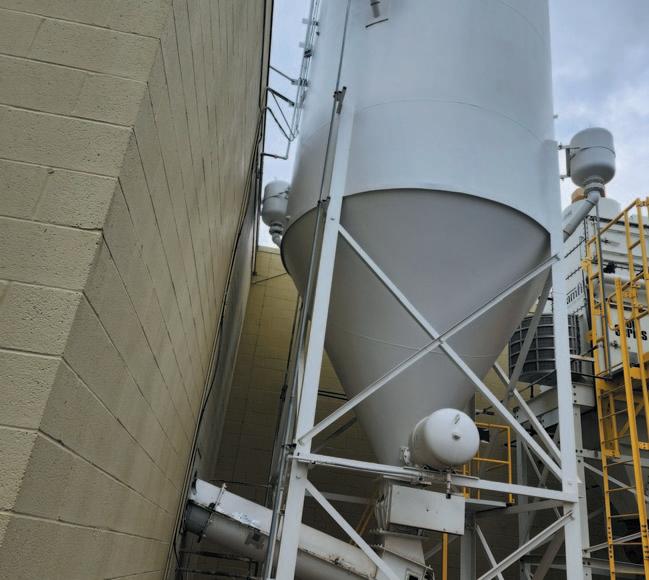
Global Manufacturing air blasters on a dust reclamation silo, which allows the customer to reuse the material in the production process.
has built its reputation. As a major American manufacturer of industrial vibrators and air blasters, Global specializes in helping industries turn clogged dust collectors into efficient, free-flowing systems.
These innovations stand out: Customizable vibrators: with v pneumatic, hydraulic, and electric options plus adjustable weights, these units let operators fine-tune force and frequency to match different dust types and system needs.
Durability for harsh v environments: from abrasive powders to corrosive dusts, Global offers coatings and ruggedized designs that stand up to demanding conditions.
Customer-driven enhancements: v Global continually adapts products to meet field needs, whether that means simplified repair kits, epoxycoated finishes, or ergonomic improvements.
Global also knows that technology alone doesn’t solve problems — knowledge does. That’s why it has built a library of ‘How To’ guides, offer tools like the Rotary Vibrator Calculator, and provide training for OEMs and distributors. Its mission is to help customers recognize problems, choose the right solution, and mount equipment correctly so vibration energy goes where it belongs — into the dust.
Dust may be persistent, but it doesn’t have to be disruptive. With the right combination of vibrators and air blasters, collected dust moves freely, keeping emission control systems efficient and compliant. By pairing innovative products with customer education and a Lifetime Warranty, Global Manufacturing, Inc. ensures that industries can fight dust buildup not with costly redesigns, but with simple, proven tools that keep material — and operations — flowing.
I’m sure most of you have experienced “The Glitter Effect”. Let me explain, writes Claire Cowie, Quality Manager at WeatherSolve Structures.
A friend of mine was recently doing some arts and crafts with her kids. She was telling me that even weeks after the crafting session was over, she was still finding little sprinkles of glitter everywhere. There was glitter in her car, on her clothes, and even on her desk at the office. She just couldn’t escape it! This is what I refer to as ‘The Glitter Effect’.
We joked that she needed to find a professional glitter wrangler immediately to round up all of the runaway sprinkles that simply would not behave.
I may have chuckled at her galore of glitter, but then thought to myself, “You know what, glitter is a lot like industrial
dust; once it’s loose, it’s very hard to contain!” Industrial dust gets into every nook and cranny, settles in the most inopportune places, and shows up in the most surprising places. Unless, of course, you can find yourself the dust equivalent of a professional glitter wrangler.
A glitter wrangler in the world of dust control doesn’t show up as a rhinestone cowboy with sequins, a lasso, and a widebrimmed hat to round up wayward dust particles. It enters the scene as a customdesigned wind fence carefully engineered and strategically placed to corral dust so it stops causing chaos.
Since glitter… I mean, dust, is such an amazing escape artist there is no room for guesswork. A wind fence must be
thoughtfully positioned to slow down wind, prevent the uptake of dust particles, and allow the settling of airborne dust all while preventing it from leaving the site. In other words, a well-designed wind fence keeps the chaos contained to make sure that site operations, nearby communities, and the environment are protected. It may seem like a big ask from our wrangler, but trust me, it’s a breeze. Here is why.
A wind fence wrangles dust in two ways:
1. It reduces the wind speed behind the fence if it is placed in the path of oncoming winds. This creates a calmed area on the other side. In this ‘calmed area’, or ‘sheltered zone’, the amount of dust that is picked up and carried away by the wind is reduced by approximately 50–80% depending on the conditions. A fence that
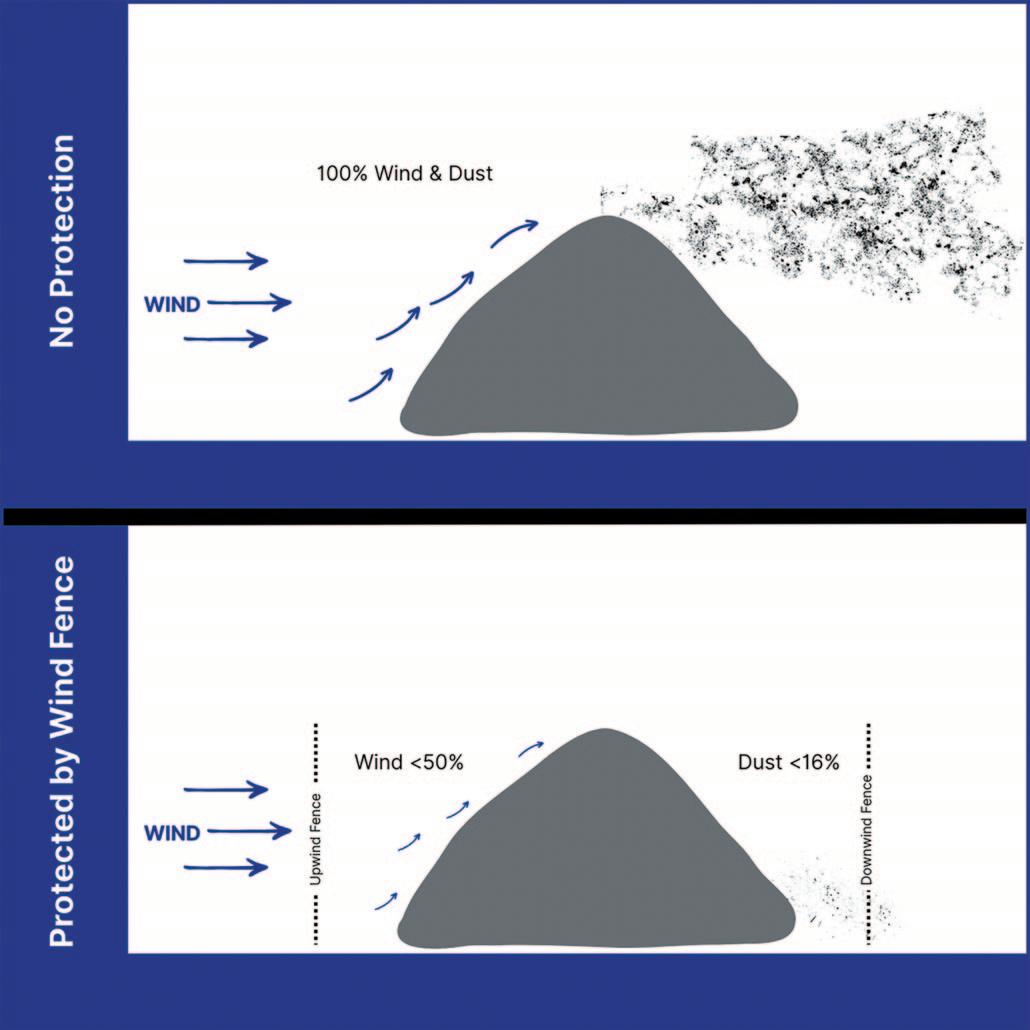
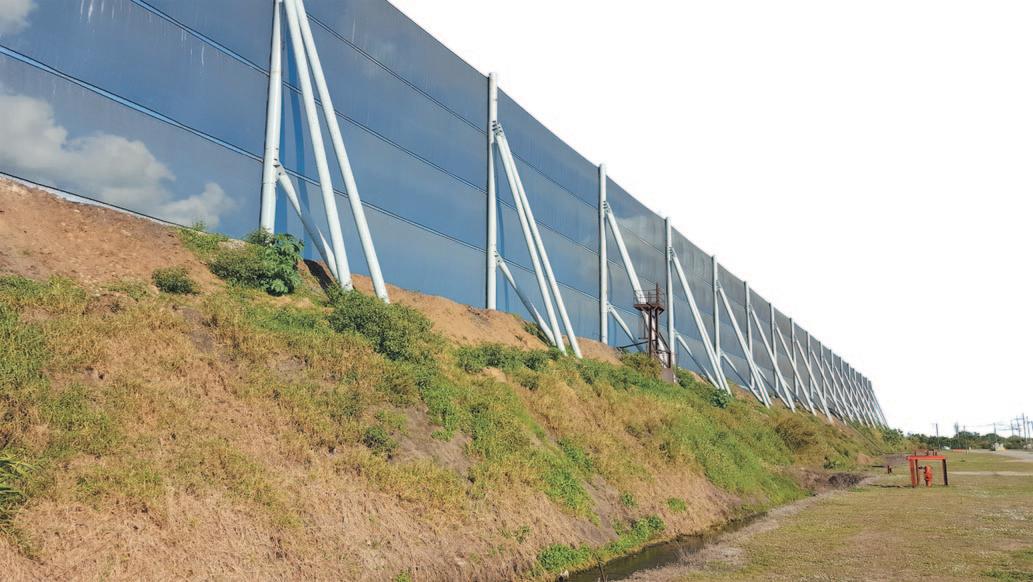
fence.
2. It acts as a catch fence to physically stop airborne dust from leaving the site. This type of fence works like an upwind fence, except exactly opposite. The fence is placed so that the sheltered zone is behind the fence. Approximately 70% of moving dust is caught by a well-designed wind fence, and about half of what passes through or over the fence settles in the calm area just past the fence (around 15%).
Think of this as leaving the kids playing in the craft room with the door closed. The outcome is glitter containment! A fence that wrangles dust this way is called a downwind fence.
Note: Fence height, fabric porosity, and orientation to the wind all control catch efficiency.
As the wind changes direction, an upwind fence may work like a downwind fence, and the other way around. The picture below shows how an upwind and downwind fence work compared to a situation without a wind fence.
I bought a new car a while back. The dealer boasted about the amazing fuel economy and all the other sparkly selling features. Now don’t get me wrong, the car works fine, but it just doesn’t live up to anywhere near what I was expecting. This is because the fuel economy they were spouting didn’t take into account where I live, how often I stop, how many hills I drive up, etc.… The same reasoning applies to wind fences for dust control.
Just because you’ve been told the placement for a fence and installed a porous wind fence structure doesn’t mean
the same thing when you determine what your true fuel economy will actually be, there is a list of things that must be considered.
Understanding how dust behaves at a specific site and developing an innovative solution to wrangle it is where the expertise of WeatherSolve Structures shines. They take all wind fence considerations into account. From contributing dust sources and the lay of the land, to dust type/size, operational needs, and access requirements.
Each type of dust behaves differently and each site layout, equipment type, and local wind patterns affect how that dust behaves. It takes careful analysis and dustwrangling expertise to make sure that your wind fence delivers effective results in a real-world environment, not just a figure found in a brochure.
Take for example a site that was using plant fibre leftovers as biofuel to provide electrical energy for their operations. This site had dust control measures already in place, but they just weren’t cutting the mustard. Dust and product were getting kicked up and blown everywhere, including on a nearby residential community. As you can imagine, complaints were being made left and right, so they called upon WeatherSolve to help find a solution.
Operations at the plant ran 24 hours a day with haulers adding to the stockpiles, loaders moving the material, and hoppers releasing material onto conveyors. All of this contributed to dust generation. The previous dust control system used bunkers (protective enclosures with solid walls) for dust control. Unfortunately, when wind encounters a solid wall, the airflow goes up the wall, accelerates as it goes over and
then causes a high turbulence zone of choppy, swirling air on the other side. You can imagine the effect this had on the wood fibres which are typically lightweight, low density, and porous. They are highly prone to being carried in the wind for greater distances than their more dense, heavier mineral counterparts. Think ‘The Glitter Effect’.
Computer simulations were used to analyse how particles and wind were behaving at the site and the WeatherSolve team came up with a solution. A fence covering 3.5 sides of the pile (to account for a small range of wind directions) with varying heights was designed and installed. One section of the fence acted as an upwind fence to reduce wind speeds and prevent the fibrous material from becoming airborne while the second section of the fence acted as a downwind fence to catch those pesky particles that were already in the air. The result was a huge success.
The fence not only prevented valuable fuel from blowing away, it prevented the dust from bothering the neighbours. This story has a happy ending with significant money saved in biofuel and no more complaints from the neighbours. It also emphasizes that taking a deep dive into the unique combination of factors at each site is important in achieving optimal outcomes. In this case, literal fuel economy. Pun intended.
At the end of the day, dust is a lot like glitter. It all may seem harmless at first, but once it’s loose, mayhem ensues. A welldesigned wind fence in all its many facets is generally the ideal solution. Anything less might be just glitter in the wind.
Grain processing facilities handle millions of bushels of essential commodities that form the foundation of the animal feed supply chain. From soybeans that become highquality feed to the various other grains used in livestock nutrition, these operations ensure agricultural products are processed efficiently and safely for animal consumption. However, grain handling presents unique challenges — particularly dust control during loading operations.
A recent installation at a grain processing facility demonstrates how the right equipment addresses these persistent dust issues while maintaining operational efficiency and product quality.
THE CHALLENGE : CONTROLLING GRAIN DUST DURING LOADING OPERATIONS
This grain processing facility manages various grain types throughout the year, requiring thorough cleaning processes between different commodities to prevent cross-contamination. During loading operations, the facility experienced significant dust generation as trucks were
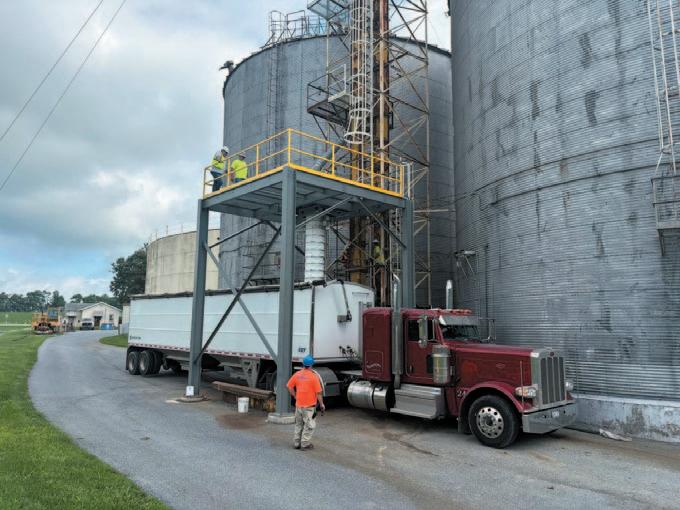
filled for transport to animal feed production facilities.
Grain dust poses multiple concerns for processing operations. Fine particles
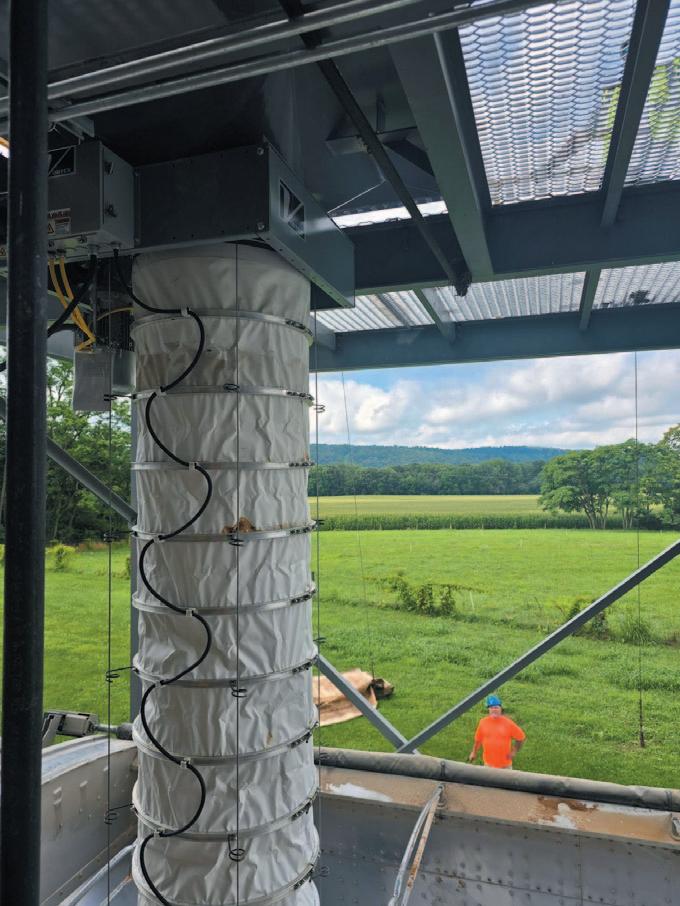
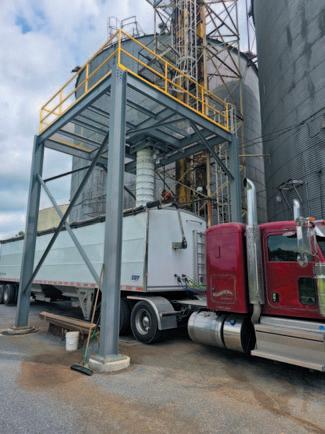
become airborne during material transfer, creating potential respiratory hazards for workers and contributing to product loss. Traditional loading methods often struggle to contain these fugitive emissions effectively, particularly when handling dry commodities like soybeans.
The facility’s existing loading system generated excessive dust plumes during truck filling operations. This dust not only represented product loss but also required additional cleanup procedures and posed compliance challenges with air quality regulations.
THE SOLUTION: VORTEX LOADING SPOUT AND INLINE FILTER SYSTEM
The facility selected a comprehensive dust control solution featuring a Vortex cone-incone loading spout paired with an inline filtration system. This integrated approach
addresses dust generation at its source while maintaining efficient loading rates.
The Vortex loading spout utilizes a stacking cone design that extends and retracts based on the fill level of the receiving vessel. As trucks are loaded, the spout maintains proximity to the material surface, minimizing the distance grain falls and reducing dust generation. The cone-incone configuration creates a controlled loading environment that contains fugitive particles.
The inline filtration system operates as an active dust collection unit, drawing displaced air and particles through highefficiency filter cartridges. During loading operations, the system captures airborne dust particles and uses reverse pulse jets to reintroduce collected material back into the load stream. This approach eliminates product loss while maintaining clean air exhaust to atmosphere.
The filtration system features verticallymounted filter cartridges that leverage gravity to assist dust release during cleaning cycles. Pleated polyester media provides 99.8% efficiency for particles one micron and larger, ensuring minimal emissions while extending filter service life.
The installation incorporates several design features that enhance operational reliability. The loading spout’s four-cable hoist system provides enhanced stability compared to traditional two or three-cable designs, distributing weight more evenly across lifting cables and reducing wear.
CNC-machined pulleys with precision cable grooves prevent cable fraying and ensure smooth extension and retraction cycles. The outer sleeve material contains fugitive dust while allowing flexible movement during spout operation.
The inline filter system operates only
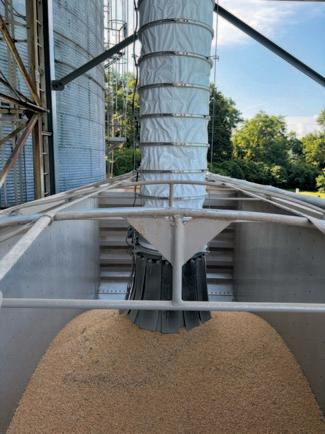
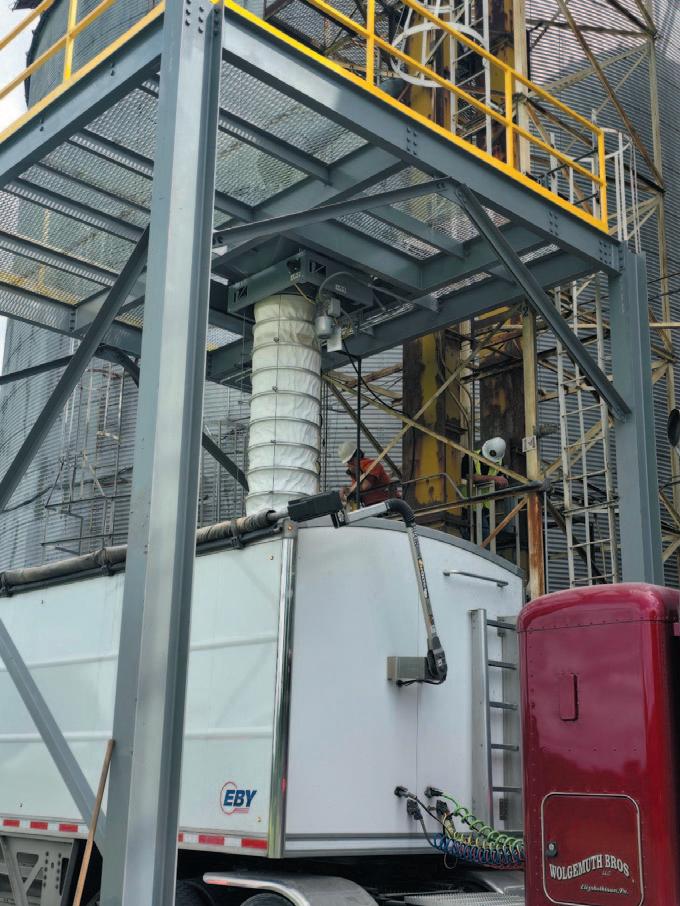
during loading operations, reducing energy consumption compared to central dust collection systems that run continuously. Magnehelic pressure gauges provide differential pressure readings to indicate when filter maintenance is required.
Quick-lock filter cartridge access panels allow rapid inspection and maintenance without tools, minimizing downtime during routine service procedures.
The integrated loading spout and filtration system delivers quantifiable benefits for grain processing operations. Dust emissions are reduced to less than 0.005 grains per dry standard cubic foot of exhaust air, ensuring regulatory compliance while protecting worker health.
Product recovery through the dust reintroduction system eliminates material loss that previously occurred with traditional loading methods. This recovered product represents direct cost savings and improved operational efficiency.
The self-contained design eliminates the need for extensive ductwork installations required by central dust collection systems, reducing both initial capital investment and ongoing maintenance requirements.
Modern grain processing demands solutions that balance operational efficiency with environmental compliance and worker safety. Dust control technology continues advancing to meet these evolving requirements while supporting the animal feed supply chain that sustains livestock populations.
Operators that face similar dust control challenges during grain loading operations are invited to contact Vortex Global to discuss how integrated loading spout and filtration systems can optimize their material handling processes. Vortex’s engineering team provides applicationspecific solutions designed for its clients’ operational requirements and commodity characteristics.
HAVER & BOECKER is a family-managed, midsize company with its headquarters in Oelde, Westphalia. Its expertise spans a wide range of industries, including: agriculture and farming; architecture and design; building products, construction chemicals and minerals; mining and raw materials; the chemical industry; electrical engineering and electronics; energy and environment; food and beverages; medicine and pharmaceuticals; mobility; hydrogen; water treatment; and cement.
This article focuses on the company’s expertise in cement handling, and how it is able to ensure that all its systems are effectively dust controlled. Here, Haver & Boecker answers questions and reveals its secrets for success.
Question: What bulk/cement handling/ packaging solutions does H&B offer?
Answer: HAVER & BOECKER is a pioneer in holistic bulk and liquid management and innovative industrial fabric solutions. As a powerful family of technology brands and experts, we’ve been developing, producing and distributing high-tech fabric products, machine and plant technologies, as well as services and digital solutions for customers, across all industries since 1887.
Our cement product range begins with vibrating screens, continues with packing machines and ends in complete packing and distribution terminals. Our products — for example, the ROTO-PACKER®, RADIMATPATHFINDER®, INTEGRA®, ELEMENTRA® and the IBAU inverted cone silo — are known around the world. New to the family are the AMICUS® robots, which are built to handle empty and full cement bags for depalletizing and palletizing.
Q: Could you please give technical details of these systems, such as what commodities they
can handle, what throughput is possible (tonnes per hour, etc).
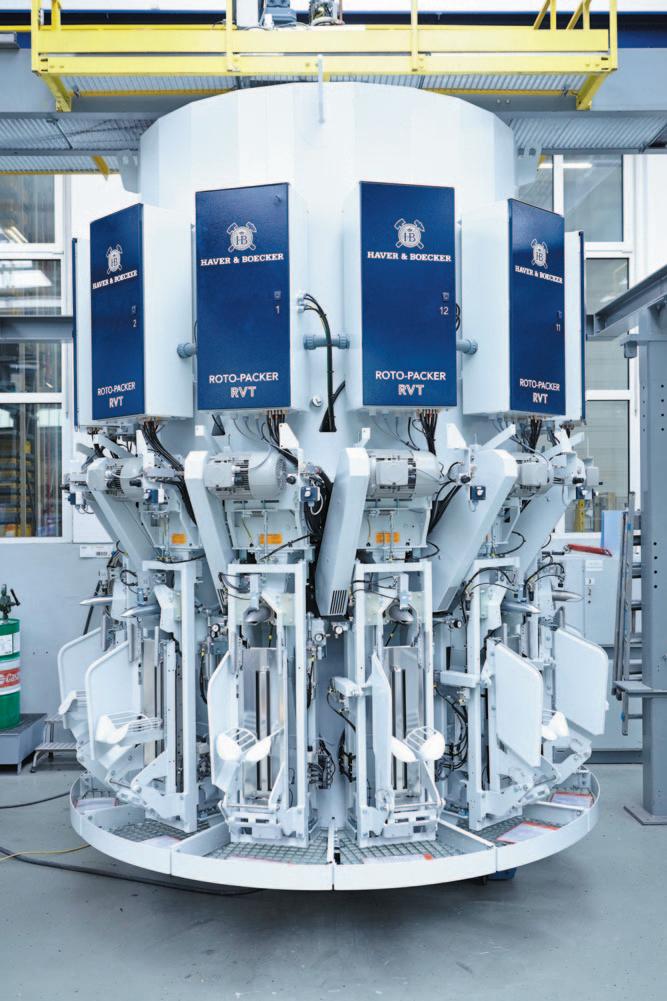
A: Our packing lines are customized solutions for each application. The ROTOPACKER® RVT, for example, can fill between 1,000–6,000 bags per hour depending on

the product and the bag characteristics. The advanced HMI allows our equipment to adjust for each product being packed. Similarly, the RADIMAT-PATHFINDER® and AMICUS® PAL and AMICUS® DEPAL can be adapted to meet the speed requirements of the packer, creating a fully automated packing line. The AMICUS® DEPAL would remove empty bags from the pallet before adding them to the RADIMATPATHFINDER®, which would then bring the bags to the ROTO-PACKER® RVT before being transferred to the AMICUS® PAL for palletizing. The fully automated packing line increases packing efficiency, accuracy and output by removing the need for manual processes.
Q: What technological developments have taken place at H&B over the past few years?
A: The newest technology everyone is talking about, across industries, is artificial intelligence (AI). Most industries are in the
middle of adapting AI technology to meet their unique needs. We’ve developed multiple AI-driven systems designed to monitor the packing line and minimize logistical errors.
One example is our QUAT2RO® Bag Check, which utilizes AI and camera systems to automatically verify whether the correct bag is being used on the packing line. QUAT2RO® Bag Check is used for the INTEGRA® IVx to recognize the bag being filled. If the system flags the bag as the incorrect type, the packing line stops to allow the operator to replace the bag. Another example is our recently launched QUAT2RO® Seal Check. QUAT2RO® Seal Check involves a camera system mounted to the conveyor line that recognizes when material is leaking out of a fully packed bag. When an issue with the seal is detected, the bag is diverted off the line to a separate area.
All of our AI-augmented systems can be integrated into QUAT2RO® Connect. The HMI dashboard provides additional data to streamline packing processes and predict where a packing line will see future bottlenecks. Our in-house AI experts monitor QUAT2RO® Connect to help operators figure out where issues are stemming from to help fix any systemic issues. All QUAT2RO® solutions can be retrofitted into all enclosed automated packing machines as an optional upgrade with QUAT2RO® Valve Check and QUAT2RO® Seal Check as an option for the ROTO-PACKER® RVT.
Q: In what way do your systems reduce/eliminate the emission of dust into the environment? Specific information on your dust-control systems would be very useful.
A: All automated packing machines feature dosing equipment, typically either a slide gate or a specialized shaft-sealed dosing unit. The type of dosing technology has a huge impact on dust emission during the packing process. We found that slide-gate dosing systems fail to close completely, leaving a gap through which dust can escape throughout the filling process. Each bag can result in a loss of up to 200 grams of product.
To address this, we developed the ROTO-LOCK® and ROTO-FEED® systems. The ROTO-LOCK® is a specialized shaft-sealed dosing unit that fully closes the feeding gate completely once a valve bag is filled. The rubber interface between the gates fully closes the system, ensuring no dust escapes throughout the packing process. When paired together with the ROTO-FEED®, an optional airless rotary feeder available for all ROTO-PACKER® models, the system becomes 70% cleaner than a slide gate dosing system and offers up to 8% faster filling.
Q: How does H&B cope with the specific demands of cement as a commodity?
A: HAVER & BOECKER has a tough time viewing cement as a commodity. Cement builds our world. It gives us places to live, roads to drive on, structures to ensure our mobility and locations in which we can work, play and enjoy culture. As a result, HAVER & BOECKER urges its clients to see cement as a product of investment. This why we developed PROcheck.
PROcheck is not just one tool but a holistic service philosophy and methodology. It’s structured around continuous process monitoring and
improvement across the entire lifecycle of cement handling equipment and plants — from initial design to long-term operation and optimization.
In essence, HAVER & BOECKER uses PROcheck to actively accompany and support cement producers with their systems, ensuring “perfect flow” and maximized productivity over time.
Q: Where are your systems used – ports, terminals, factories, etc?
A: Our subsidiary, IBAU HAMBURG, assists cement producers and traders in establishing marine cement terminals, offering tailored approaches depending on project size and duration:
Floating terminals: quick-deploy, v short-term solutions — ideal for a few months of use.
Mobile mini-terminals: suited for v medium- to long-term use with lower capacities.
Dome and flat storage systems: for v medium to long-term operations with high throughput, using more traditional silo designs.
IBAU provides small terminal packages capable of handling around 100,000 to 250,000 tonnes per year, featuring modular steel silos (two to eight units per project) with each silo storing 1,000 to 3,500 tonnes, equipped with pneumatic discharge systems, raised bottoms for direct loading into trucks or trains (up to 350tph [tonnes per hour]) and loading via telescopic chutes or mobile loaders. These custom-built steel terminals are valued for their flexible design, minimal civil works, fast installation and lower initial investment.
IBAU doesn’t just supply equipment, though. They handle the complete
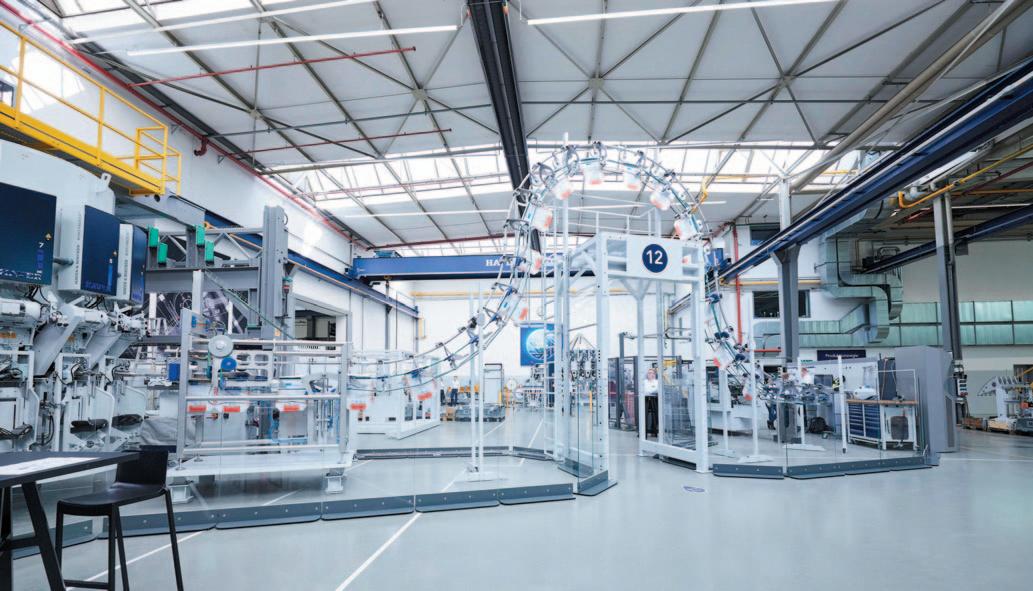
engineering, procurement and construction (EPC) of cement terminals. Their services include plant design, engineering, civil works, steel structure supply and erection, mechanical and electrical installation and full commissioning.
Q: Who are your major clients? Does this client base fluctuate? Do you have longstanding repeat customers?
A: Our goal is to become a partner with our customers, accompanying them throughout the lifespan of our equipment and beyond. We call this approach PROcheck. PROcheck systematizes all instruments and actions. We help customers keep an eye on the efficiency and potential of their processes at all times and optimize their success. It includes different services regrading diagnostics, process engineering, consumables, original parts, rebuilds and upgrades and further services like operation and maintenance.
Q: Can you give details (I know some may be confidential) on recent contracts/projects in which H&B has been involved?
A: A notable example is Malmö Northern Harbour Cement Import Terminal in Sweden. Considered by many to be the most beautiful cement terminal in the world, this project features:
Capacity: 30,000-tonne multi- v compartment silo (six chambers), 90m tall, 26m diameter.
Offloading rate from ships: up to v 1,000tph.
Dispatch: via three combined v truck/rail loading lanes (250tph each).
Fully automated operation, 24/7, 365 v days/year.
Project executed over 18 months v and handed over in March 2012.
Q: Do your systems meet international standards (ISO, etc.)?
A: Yes, our company operates a processoriented quality management system certified to DIN EN ISO 9001:2015. We also hold a number of individual certificates from independent testing institutes.
Q: What is it about H&B systems that means customers should choose them?
A: As mentioned above, HAVER & BOECKER isn’t here to just sell a machine or two. We know that a truly successful business relies on partnership. Not only are we going to get the right equipment for the material, but we provide continued, lifetime support for the equipment. Our customers receive the best solution for
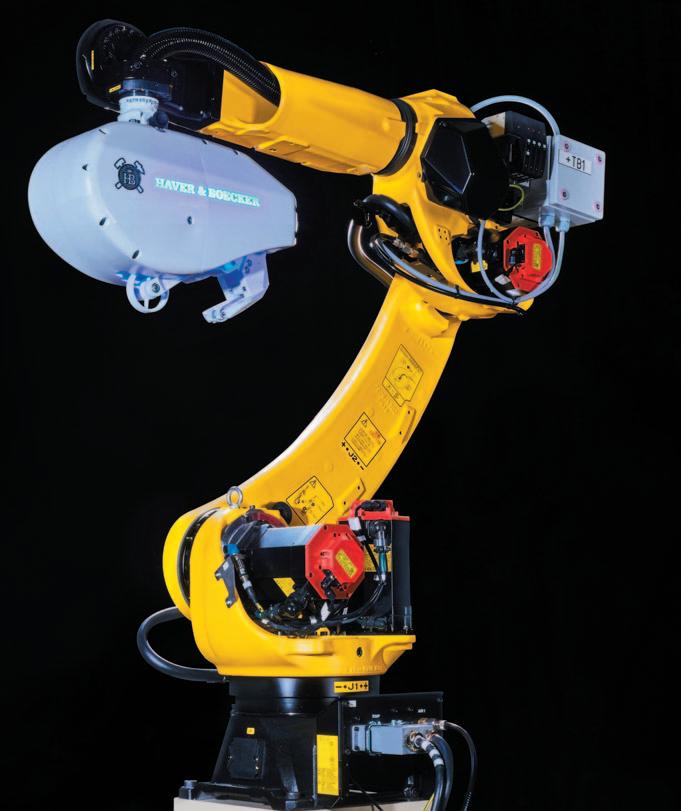
their specific application.
Our service team is available across the globe to assist the facility or provide a full Plant Optimization Plan, which takes into account all systems in the plant. Our team then puts together recommendations based on our visit to show where production deficiencies are occurring before recommending ways to improve processes.
This year, our Machinery Division is celebrating our 100-year anniversary as a company, which shows our longevity and commitment to the packing industry. Our recent celebrations have introduced our vision for the next 100 years as we continue to look forward to meeting our customers’ evolving needs.
Q: What does H&B do to remain competitive in a tight market?
A: We remain competitive through a variety of approaches. HAVER & BOECKER is synonymous with process experience, quality solutions, family values and commitment. Companies who work with us know they’re getting high-quality solutions designed specifically for their application and individual situation.
Q: Could you give me some general company background? Are there plans to expand? What geographical areas does H&B cover?
A: HAVER & BOECKER started with the Wire Weaving Division in 1887 with the invention of wire bag closures in the early 1900s. These closures eventually expanded into the cement industry, which gave them a front row seat to the introduction of the valve bag in 1925. Fritz Haver expanded HAVER & BOECKER into the Machinery Division by creating a cement packing machine. Since this innovation, the Machinery Division has only grown, developing some of the newest packing equipment technologies.
Today, our company operates on all five major continents. We’ve expanded into multiple industries and continue to monitor advancing technology in the field to implement the most efficient options to our packing solutions.
HAVER & BOECKER’s Machinery Division is celebrating 100 years this year. As a result, the company has created three distinct opportunities to visit and celebrate with them. The next and final event is on the evening of 3 December. If you’re interested in getting to know HAVER & BOECKER, its technology brands and their capabilities, this is the date to do it. Simply register under: Celebrating a Century HAVER & BOECKER Maschinenfabrik in Oelde.
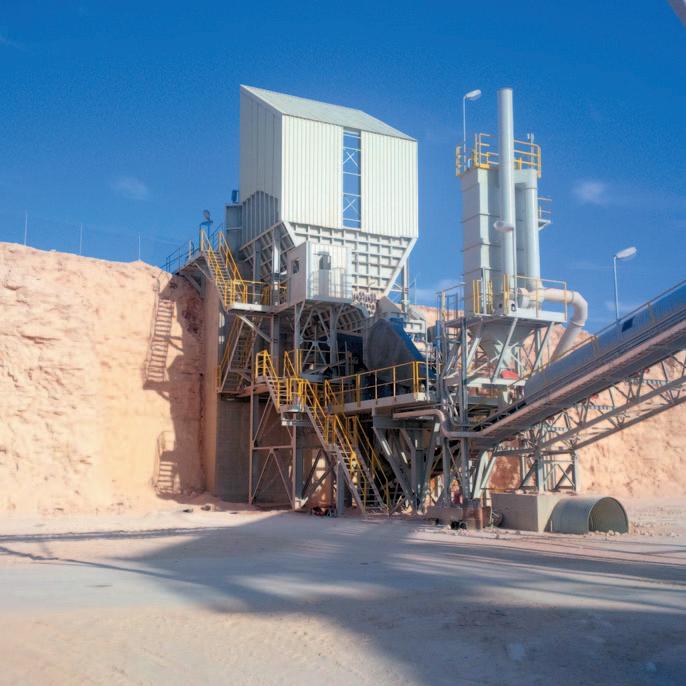
The management of dust emissions is one of the most pressing challenges in the quarrying, mining, and bulk materials handling industries. Crushing, screening, and conveying activities inevitably generate large volumes of dust, which, if left uncontrolled, can lead to environmental pollution, safety hazards, and regulatory non-compliance. Moreover, dust emissions affect product quality, reduce equipment lifetime, and can even damage relationships with local communities due to air quality concerns.
Quarry Mining LLC, based in Ras Al Khaimah, United Arab Emirates, has developed a strong reputation for delivering advanced dust emission control solutions. By combining German engineering and know-how from Favorit Filter with UAE-based manufacturing, Quarry Mining provides reliable, costefficient, and internationally certified dedust plants tailored to client needs.
At the core of Quarry Mining’s dust control solutions lies its partnership with Dr. Joachim Vollert of Favorit Filter, Germany. For decades, Favorit has been a pioneer in the design of high-efficiency bag filter systems, known for their durability, reliability, and performance in industrial applications.
Quarry Mining builds on this engineering expertise, manufacturing filter plants locally in UAE while retaining the proven design principles of Favorit Filters. This partnership ensures clients receive the best of both worlds: German engineering excellence at competitive UAE production costs.
Key highlights include: German-engineered filter systems v ensuring maximum performance and uptime.
OEM-level solutions that integrate v seamlessly into Quarry Mining crushing and screening plants.
Global track record with dozens and v dozens of filter plants already successfully operating worldwide.
While Favorit Filters provide the design foundation, Quarry Mining manufactures its de-dust systems in the UAE. This local production offers clear advantages for clients across the Middle East, Africa, and beyond:
Competitive pricing: By avoiding v costly imports, Quarry Mining delivers advanced filter plants at significantly lower costs compared to Germanmanufactured systems.
Faster delivery: Manufacturing in Ras v Al Khaimah allows for shorter lead
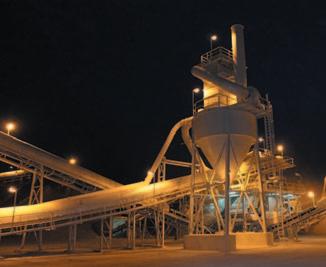
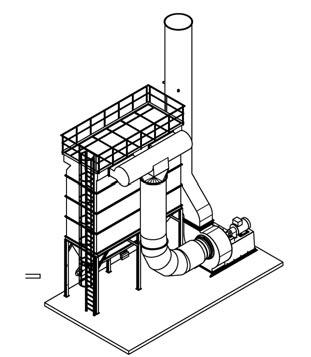
times and more responsive after-sales service.
Certified quality: All welders and v steel fabricators at Quarry Mining are EN 1090-2, Execution Class 3 certified. Compliance with International v Standards: Manufacturing and operations comply with ISO 9001:2015, ISO 14001:2015, ISO 45001:2018, and ISO 3834-2.
The Quarry Mining – Favorit Filter de-dust systems incorporate several technological advancements designed to maximize efficiency and reduce operational costs: S elf-cleaning bag filters: These v advanced filters continuously clean themselves, reducing manual maintenance and downtime.
Modular design: Flexible v configurations allow easy integration into new or existing crushing, screening, or conveyor systems.
Optional sifter system: Beyond dust v control, this option transforms collected fines into high-value byproducts, such as mortar and plaster material.
Energy-efficient operation: optimized v airflow management reduces energy consumption while ensuring consistent dust capture.
The benefits of Quarry Mining’s dust control systems extend far beyond compliance:
Reduced dust emissions: Cleaner air v for workers and nearby communities.
Improved health & safety: Safer v working conditions with reduced exposure to fine particles.
Stronger compliance: Systems v designed to meet and exceed increasingly strict environmental regulations.
Revenue stream from fines: v Collected dust and fines can be sold or reused, turning a waste product into an additional profit source.
One of the most notable projects demonstrating the effectiveness of Quarry Mining’s de-dust solutions is the upcoming installation of a large filter plant for a
quarrying operation in Morocco.
The client had previously invested in a filter system. While effective, the high price limited scalability. Quarry Mining, leveraging Favorit Filter engineering but producing locally in the UAE, was able to deliver an equivalent plant at a much more competitive price, without compromising on performance or durability.
This case illustrates Quarry Mining’s ability to provide German-quality technology with UAE-based cost advantages, making dust control solutions accessible to a wider range of customers.
As environmental regulations continue to tighten worldwide, dust emissions control will remain a top priority for industrial operators. Quarry Mining is committed to leading this effort by offering robust, efficient, and affordable filter systems that benefit both the environment and clients’
bottom lines. By integrating Favorit Filter know-how with local UAE expertise, Quarry Mining positions itself as a trusted partner for cleaner, safer, and more profitable operations.
Quarry Mining LLC’s dust emissions control solutions stand at the intersection of German engineering precision and UAE manufacturing excellence. With a proven track record of over 45 successful installations, advanced self-cleaning filter technology, and internationally certified fabrication standards, Quarry Mining is uniquely placed to meet the growing demand for dust control systems across the mining, quarrying, cement, and construction industries.
For plant operators seeking a reliable, cost-effective, and compliant dust emission solution, Quarry Mining offers the ideal choice.
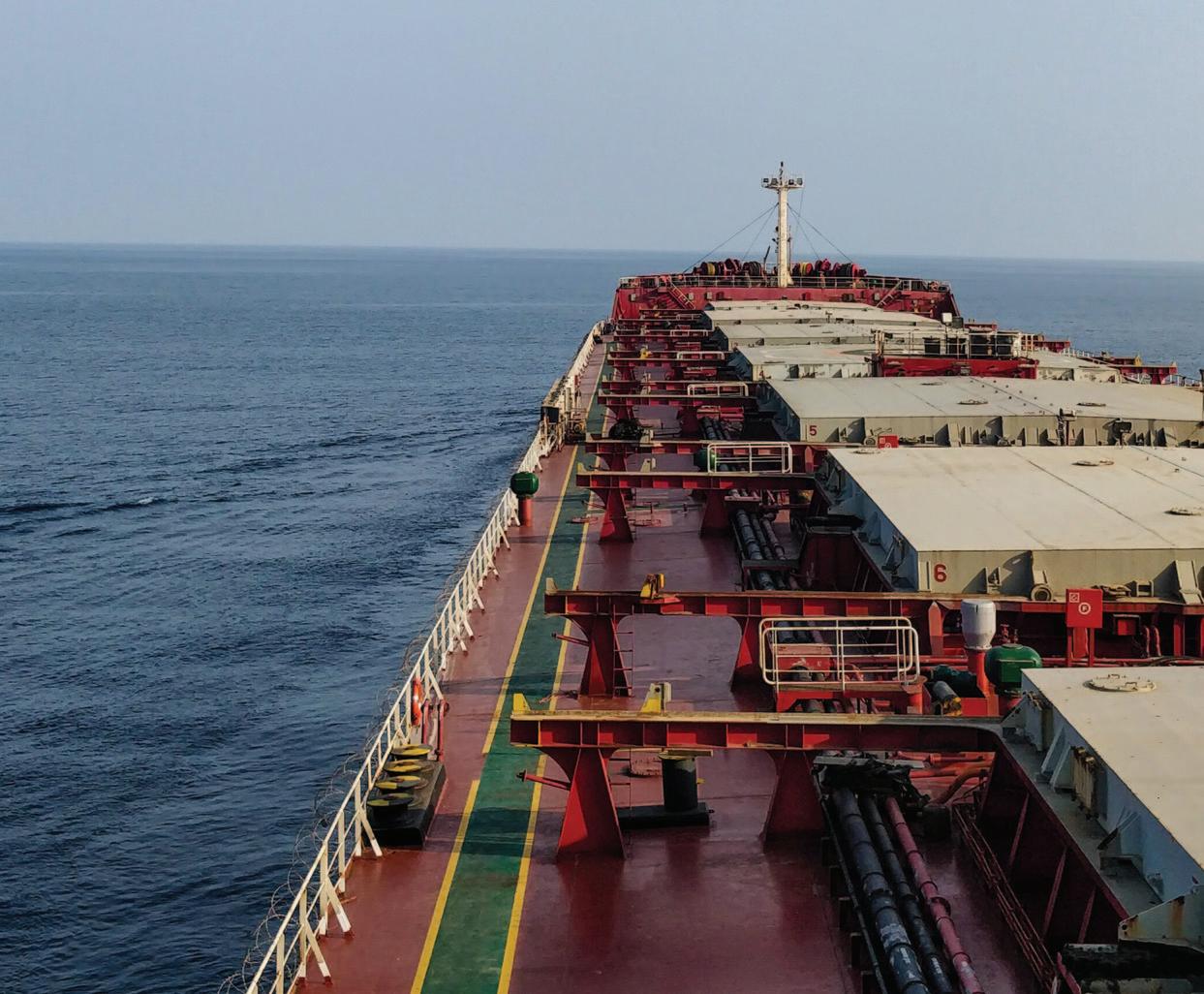
Before installation of K-Sure® Belt Support and K-Ultra Dual® Seal.
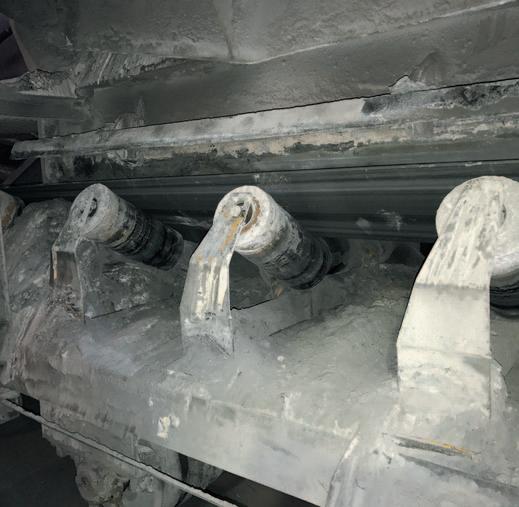
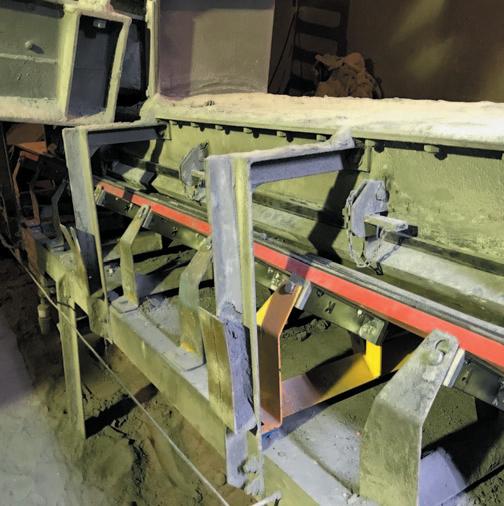
Kinder Australia Product: K-Sure® Belt Support and K-Ultra Dual® Seal
Product Category: Belt Support and Conveyor Skirting and Sealing
Location: Asia Pacific Region
Conveyed Materials: Lime
Conveyed Belt Width/Speed: 800mm / 1 metre per sec
Rate / tonnes per hour: 100
CHALLENGE :
Excessive material spillage and dust v emissions;
Excessive clean-up costs; v Premature belt damage and belt v tracking issues; Environmental dust and safety issues. v
For over 50 years our Asia Pacific customer has built a strong reputation for manufacturing high quality steel products and is a key supplier to a multitude of industries and markets.
Site inspections at the plant exposed major inefficiencies in material flow, as well as excessive material spillage and dust emissions between existing skirting and conveyor belt, due to the distance between frames.
These inefficiencies resulted in frequent shutdowns and spiralling clean- up costs necessitating recruitment of an external cleaning contractor to manage material spillage minimizing environmental and potential safety hazards.
Premature belt wear and tracking issues were also identified, with material becoming trapped under the conveyor belt and accumulating on the conveyor structure.
K-Sure® Belt Support System.
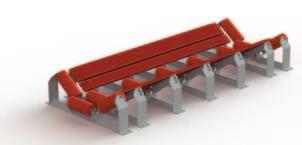
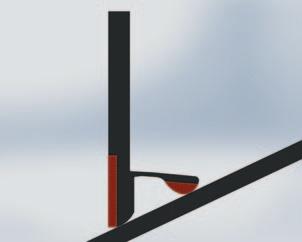
After two previous faultless installations of K-Sure® Belt Support System and K-Ultra Dual® Seal at the site, it was agreed this combined solution be rolled out within the plant’s impact zone, under the chute.
Two extra K-Sure® Belt Support frames were introduced to reduce gap support to 300mm solely for rail support, including a lead on frame.
K-Sure® Belt Support System supports the conveyor belt by absorbing the full impact of conveyed material at the transfer point. Delivering minimal belt damage, premature wear and importantly, a longer
After installation of K-Sure® Belt Support and K-Ultra Dual® Seal.
lasting conveyor belt. In addition, the KSure® Belt Support system simultaneously maximizes the effectiveness of the K-Ultra Dual® Seal’s intended function.
The existing conveyor belt was removed and frames packed carefully to ensure 100% linear surface. Prior working knowledge of the plants intricacies meant installation was conducted seamlessly & efficiently, with minimal time and labour, including drilling of extra frames.
Elimination of material spillage; v Significant reduction in clean-up costs v and time; Containment of environmental dust; v Customers product expectations v exceeded.
The plant can confidently confirm the recommended conveyor belt support and skirting solution has exceeded its performance expectations, with virtually no material spillage plus the facilitation of a continuous and uninterrupted flow of conveyed materials throughout the plant. Other positive outcomes include significant clean-up costs savings due to reduction in material spillage and dust containment.
The outlook sees the plant implementing the K-Sure® Belt Support and K-Ultra Dual® Seal solution within 3 other areas of the operations with the view of optimizing productivity, reducing its environmental footprint and sustaining its competitive edge in the steel manufacturing industry.
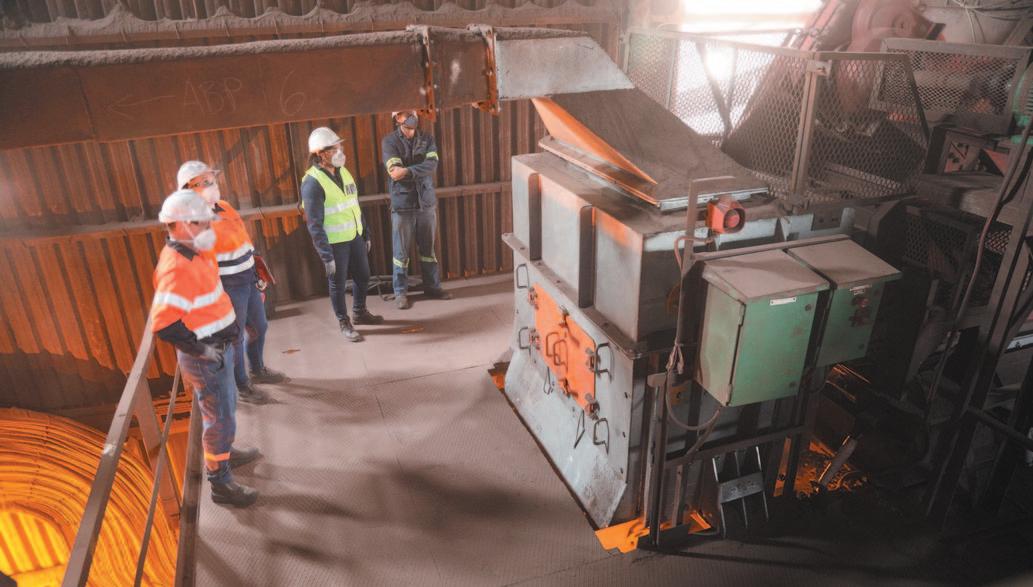
Dust generation has long been a critical challenge in bulk materials handling, with significant implications for safety, health and environmental compliance. Weba Chute Systems, a leading specialist in customengineered transfer point solutions, has positioned its technology as a proven way to dramatically reduce dust transmission while simultaneously improving operational efficiency.
In industries such as mining, power

generation, cement and ports, dust is more than a simple housekeeping concern. Airborne dust creates serious health risks for workers, contributes to environmental pollution and can trigger regulatory penalties when emissions exceed permissible levels. Dust also increases maintenance requirements, shortens equipment life and can even create safety hazards such as reduced visibility or combustible atmospheres.
“These are not minor inconveniences,” notes Dewald Tintinger, Technical Director at Weba Chute Systems. “Dust impacts the health of employees, the lifespan of equipment and the company’s environmental footprint. Left unchecked, it can cost operations heavily – both financially and reputationally.”
These challenges have intensified with stricter environmental regulations globally and a growing focus on sustainable operations. Companies are under pressure not only to comply with legislation but also to improve their ESG performance. Weba Chute Systems’ transfer point solutions are helping operators address these concerns head-on.
At the heart of Weba Chute Systems’ dustreduction capability lies its fundamental design philosophy – controlling the flow of material. Traditional chute systems often allow material to free-fall, leading to uncontrolled impact, turbulence and the generation of dust clouds. By contrast,
Weba Chute Systems are engineered to control both the velocity and direction of material flow.
“The principle is simple,” Tintinger explains. “If you reduce impact and turbulence, you reduce the energy that causes particles to become airborne.” By carefully directing material onto the conveyor in a streamlined manner, dust generation is drastically curtailed.
“Our designs are not generic. Every transfer point is engineered to suit a customer’s specific conditions, so the system works with the material rather than against it,” he adds.
A further feature of Weba’s design is the effective sealing of the chute system. Engineered with wear resistant liners and designed with attention to transfer geometry, the chutes prevent dust from escaping into surrounding areas. Where needed, dust suppression or extraction systems can be integrated seamlessly into the chute design, ensuring compliance with the most stringent emission standards.
Weba Chute Systems’ in-house design team uses the latest simulation software, including discrete element modelling (DEM), to predict material behaviour inside the chute. This allows the company to optimize liners, flow paths and sealing systems before manufacturing begins. The result is a custom-engineered solution that not only contains dust but also minimizes
A
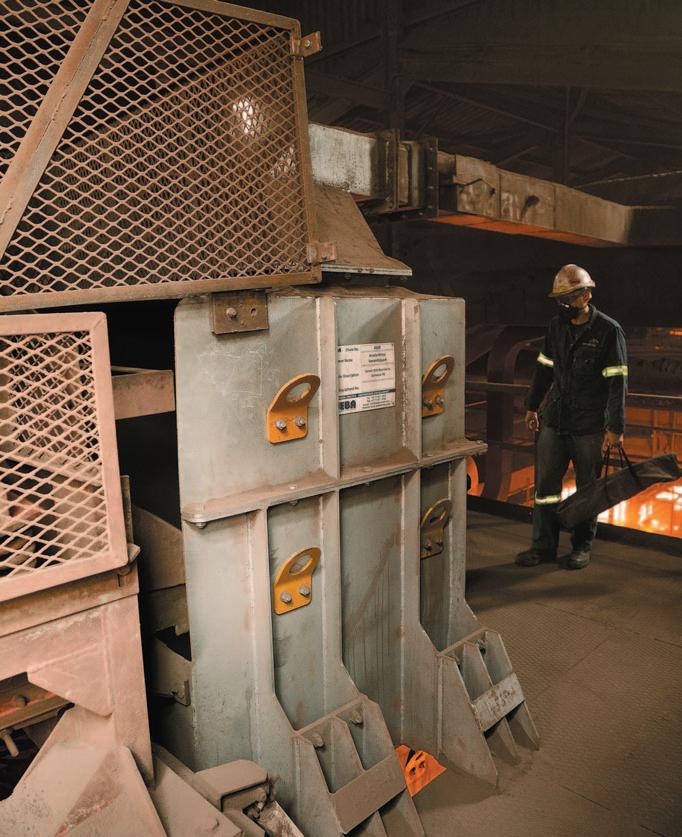
spillage and wear.
“Our DEM capability gives us a powerful window into how the material will behave,” Tintinger points out. “We can predict dust issues before they occur and design them out of the system – that is a real game changer.”
Reducing dust transmission is not just about compliance; it also improves the bottom line. Dust that escapes into the air represents a loss of valuable product. By containing material more effectively, Weba Chute Systems help customers improve throughput and reduce waste.
At the same time, less dust means reduced wear on conveyor components, lower cleaning and maintenance requirements and safer working environments. These gains contribute directly to operational efficiency and sustainability.
“As much as dust control is a health and safety imperative, it is also a cost issue,” says Tintinger. “Every ton of material lost to dust is revenue gone. By addressing dust, we protect both people and profits.”
screen
to conveyor transfer chute at a steel plant, designed with flow control and sealing systems to minimize dust, spillage and wear.
Weba Chute Systems’ dust-control solutions are in operation across a range of industries and commodities from mines to power stations, cement plants and other bulk handling facilities. Each system is custom engineered for its specific application, taking into account the type of material, the rate of flow, particle size and environmental requirements.
In ports and loading terminals, where dust emissions are highly visible and subject to strict monitoring, the systems ensure compliance while maintaining fast loading rates.
“Whether it is in large scale port operations or on a mine, the principle is the same,” Tintinger says. “Control the flow, contain the dust and you achieve safer, cleaner, more efficient operations.”
With decades of experience and thousands of installations globally, Weba Chute Systems continues to invest in innovation. Its dedicated research and development team works constantly to refine designs, enhance materials and explore new methods of dust suppression.
The company’s approach is not limited to the initial installation. Weba Chute Systems provides ongoing inspection and maintenance services to ensure systems continue to perform optimally over their lifetime. Customers benefit from reliable transfer points that remain compliant and efficient long after commissioning.
Tintinger says that as industries move towards more sustainable, responsible and efficient operations, dust control has become an imperative rather than an option. “Our engineered transfer points provide a holistic solution, reducing dust transmission, enhancing safety, safeguarding the environment and improving efficiency,” he says.
“By addressing dust at its source –within the transfer point itself – we help operators move beyond reactive measures and achieve proactive control.This not only ensures regulatory compliance but also delivers lasting value to both business and society,” Tintinger concludes.
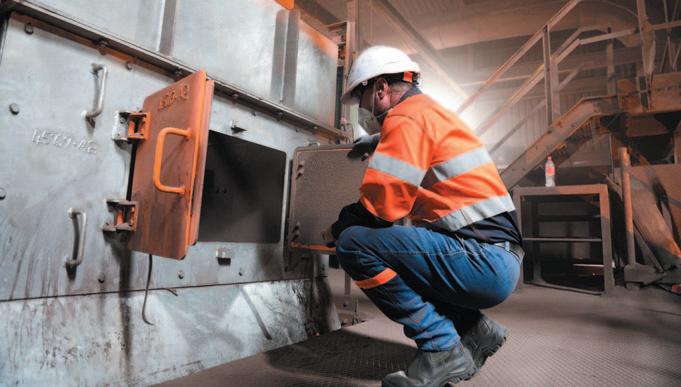
Splice joint problems are a major cause of stoppages for repair or replacement.
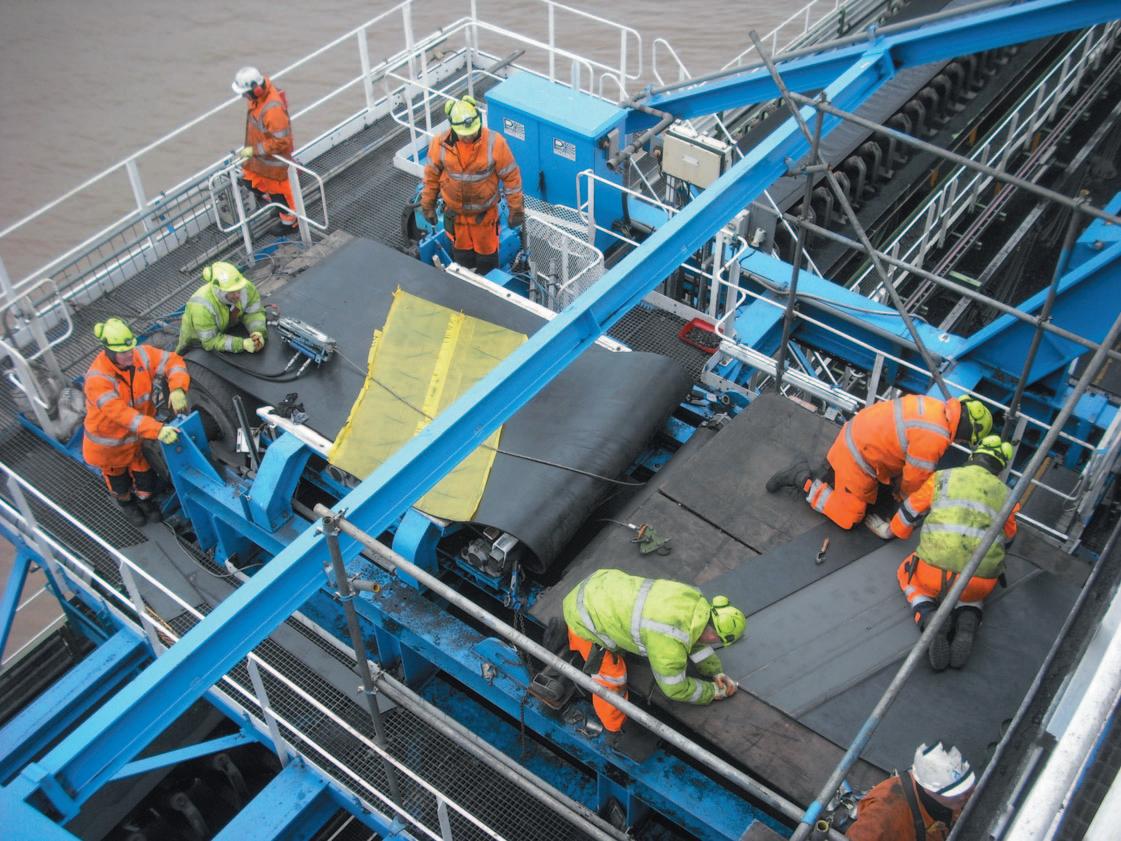
No time to lose: conveyor stoppages — the causes, the cost & the solutions
When a conveyor has to be stopped to carry out running repairs or unplanned maintenance, the materials being transhipped stop moving but the costs most certainly do not. In fact, quite the opposite, not only in terms of the remedial work itself but even more significant is the cost of lost and delayed output. Losses caused by conveyor stoppages in the bulk handling industry run into many millions every year and the primary causes are either the conveyor belt and/or the conveyor itself. Specialist Bob Nelson explains how much of that loss is entirely avoidable.







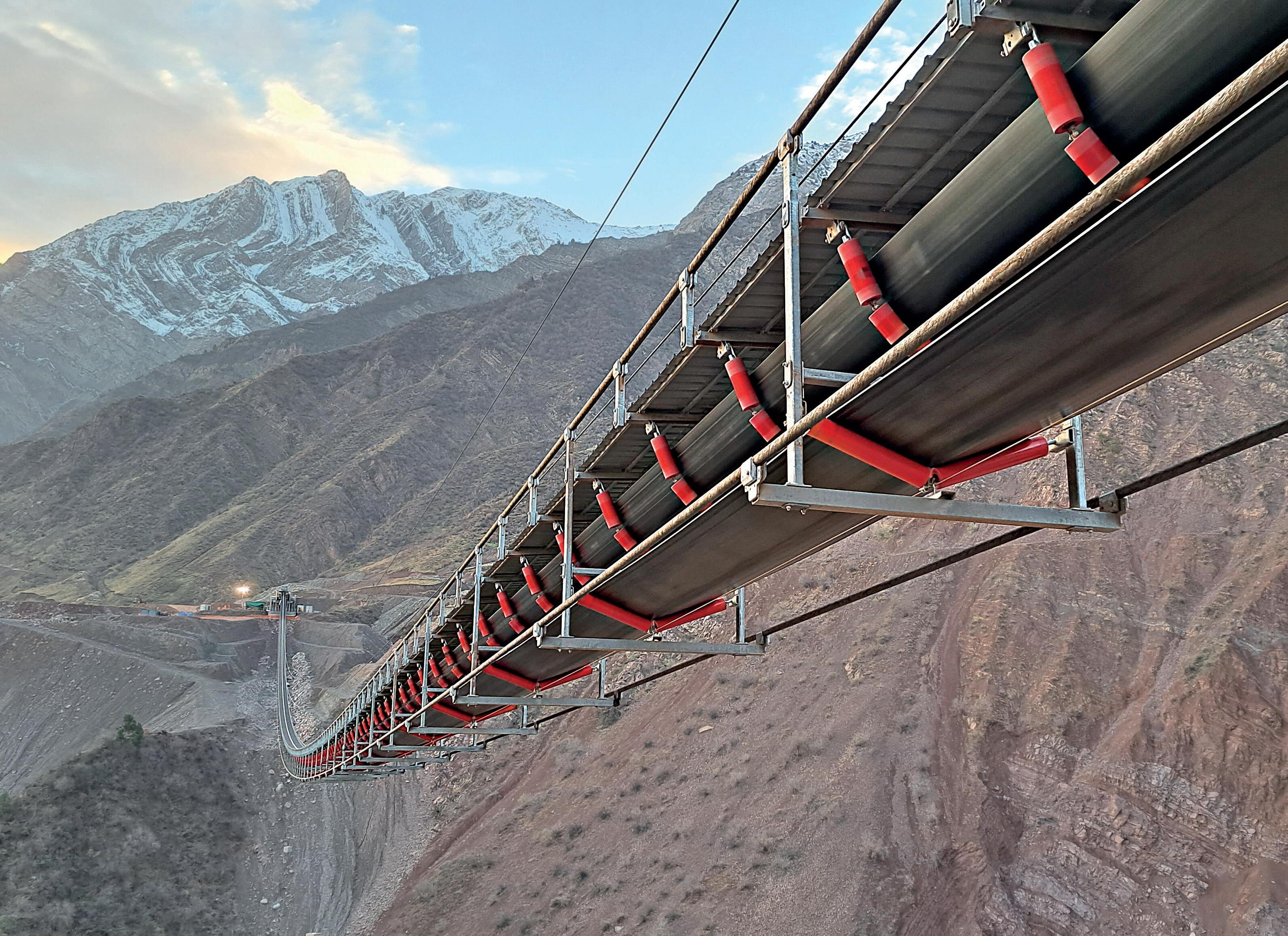

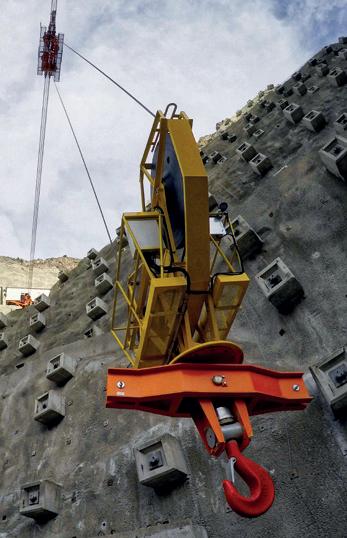
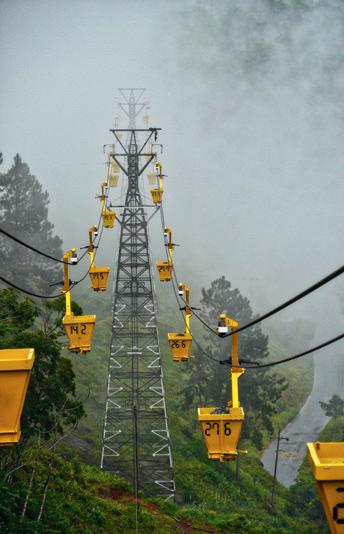
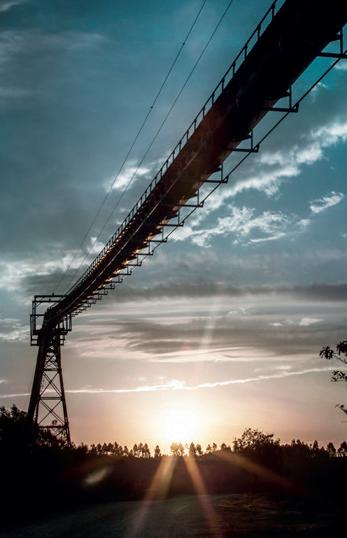


Unreliable splice joints: the weakest point of any conveyor belt is the splice joint. Consequently, splice joint problems are a very common cause of stoppages. Because of the serious loss of output, as well as the safety implications caused by sudden splice joint failure, it is critically important to maximize the strength of the splice and consequently its reliability and durability.
Apart from poor workmanship, joint problems are most prevalent in belting imported from Southeast Asia. The two most common causes are poor adhesion, particularly between the layers of the belt’s carcass and insufficient elongation (stretch) of the belt. Having the optimum level of adhesion has an enormous impact on the reliability of a splice joint. Adhesion levels that are too high can cause significant difficulties and prolong the making of both hot and cold vulcanized joints. Conversely, and far more commonplace, is that an inadequate level of adhesion compromises the strength of the joint.
As with nearly all other conveyor belt failings, the root cause of poor adhesion is the use of low-grade (read cheap) raw materials and poor-quality rubber. Lowgrade ingredients such as carbon black, vulcanizing agents and curatives all have a negative impact on adhesion levels, even when fresh, good quality splicing materials are used.
As with poor adhesion, insufficient elongation is symptomatic of low-grade belting, again due to poor quality rubber and fabric ply material. This is mostly an issue in areas where the belt needs to stretch, such as troughing and bending round pulleys and can cause localized tension build-up, which can have an especially negative effect on the integrity of the splice joint.
In addition, low elongation can lead to shear stresses that may in turn cause delamination (ply separation) issues whereas too much elongation can result in insufficient tension, which can lead to premature wear and tear.
How to improve splice joint reliability: because they are quicker and easier to make, the most common splicing method is the step splice, which requires the removal of one of the layers of fabric plies so that the belt ends can be overlapped and then either cold glued or hot vulcanized together. However, although it may take a little longer to make, a far stronger and more reliable joint is achieved using the finger splice jointing method, where a zigzag pattern is cut into both sides of the belt ends, creating several
Insufficient elongation can cause delamination.
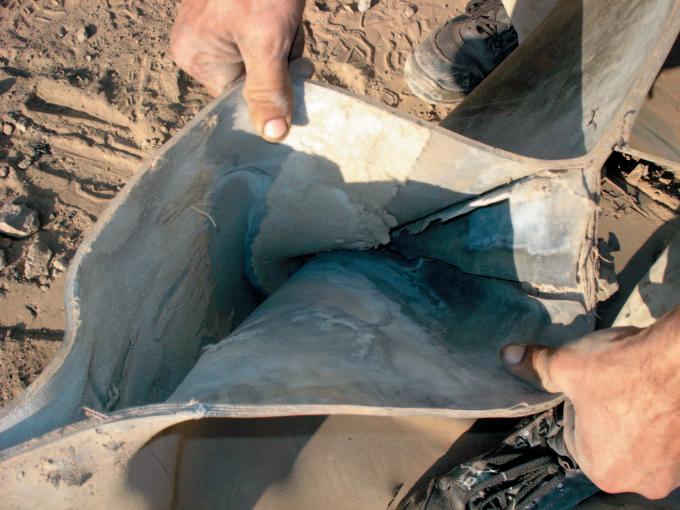
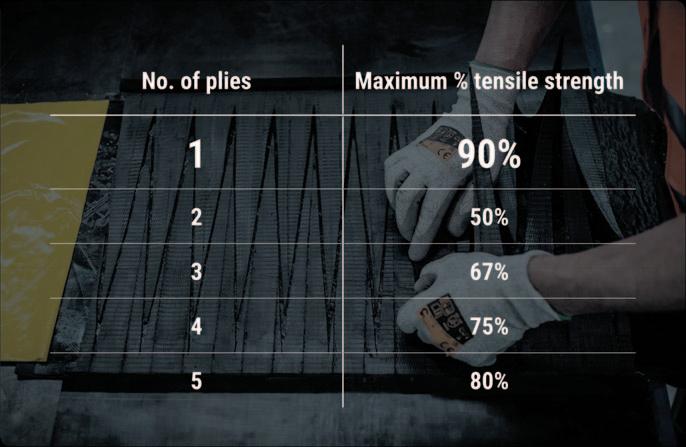
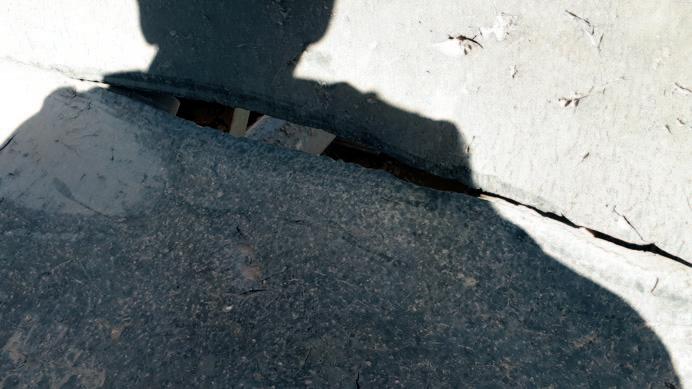
‘Cheap’
interlocking ‘fingers’. These are then aligned, interlocked together and finally bonded using a hot vulcanizing press to make a splice that is very strong and flat.
The enormous advantage of finger splice joints is that they retain up to 90% of the belt’s original tensile strength. By
comparison, a two-ply step splice only retains a maximum of 50% and a three-ply step joint only achieves a maximum tensile strength of 67%. Crucially, when the belt is working under load, the finger splice is vastly superior to a stepped splice in terms of resistance to dynamic failure. The
superior strength and durability of finger splices therefore reduce the frequency to repair and re-splice. An additional benefit is that this flatness makes it almost impossible for the joint to be damaged by scrapers.
Belt carcass related stoppages: the inner carcass is the core structural element of every conveyor belt, providing the inherent tensile strength and elongation (elasticity or ‘stretch’ under tension). There can be enormous differences in the strength and quality of the synthetic fabric used to create the carcass. This is entirely dictated by whether the belt manufacturer is at the ‘quality end’ of the market or the ‘cut-price’ end. Although they may be claimed to be the same specification, the strength under load both longitudinally and transversely can vary enormously. Although the longitudinal polyester strands of the fabric may achieve the required tensile strength, the use of the more costly nylon transversal weft material is kept to a minimum in an effort to minimize cost.
Consequently, rip and tear resistance is reduced, leading to stoppages to carry out patch and clip repairs and, in more serious cases, inserts or ultimately, whole belt replacement.
Outer cover related problems: the physical properties of the rubber are the single biggest influence on the length of a
Surface cuts in low grade rubber propagate more quickly and link up with other areas of damage, causing pieces of rubber to detach completely.
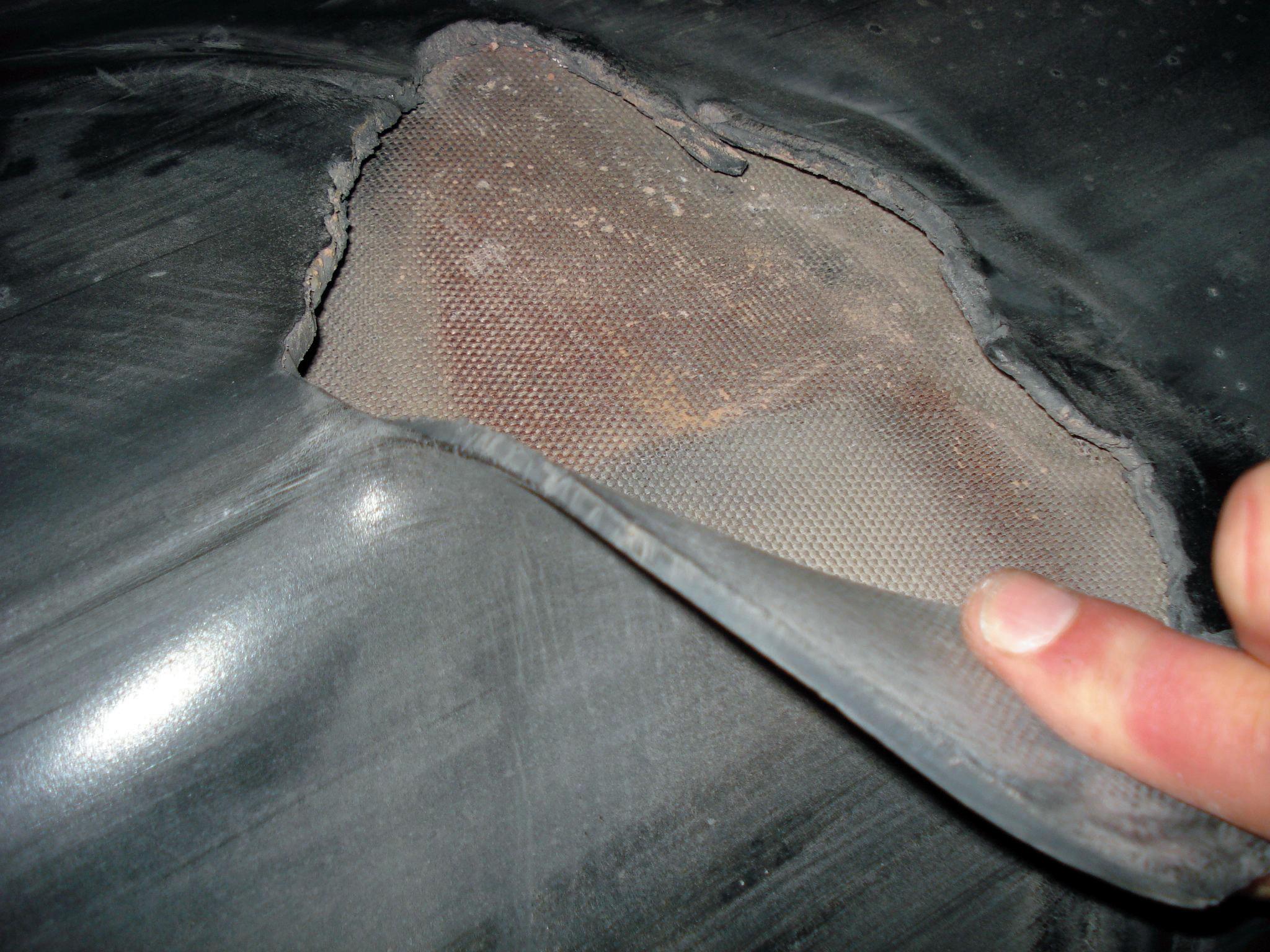
belt’s operational lifetime. The primary cause of cover damage is the use of rubber with an inadequate resistance to wear & tear, ripping, cutting and gouging rather than rubber that is deliberately engineered to withstand such demands. Much depends on the resistance to cut and tear propagation. If it is insufficient then even a seemingly insignificant area of damage can easily spread due to the continuous material loading and the flexing around the
drums and pulleys. In time, this links up with another area of damage causing pieces of rubber to be cut out from the surface and becoming yet another reason to stop and carry out running repairs.
Although the standard of its physical properties plays a critical role in minimizing the need to intervene and carry out repairs, it is important to bear in mind that rubber represents some 50% of the material cost of producing a conveyor belt.
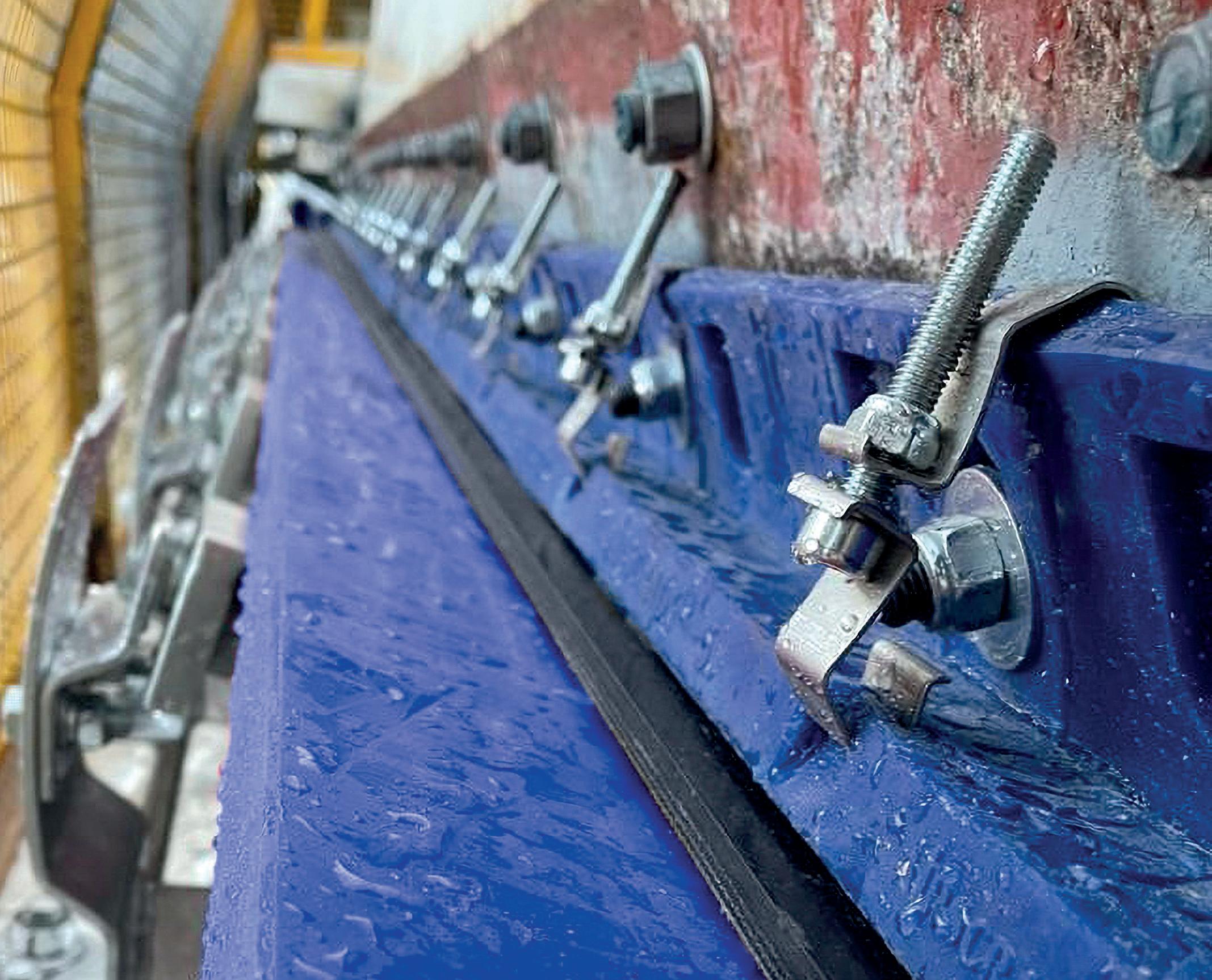
Consequently, it provides an irresistible temptation for manufacturers who want to create a price-competitive edge to sacrifice even the most basic standards of resilience.
Thicker is not the answer: when faced with recurring stoppages caused by belt damage, fitting a thicker, heavier belt is almost invariably not the solution. First and foremost, it is the quality, strength and design of the rubber and the inner plies that have the biggest influence rather than the thickness of the covers and the number of plies.
There are also a number of downsides including increased dynamic stress within a carcass that is too thick for the size of pulleys and drums and reduced flexibility in both length and width leading to troughing and handling problems. Thicker covers will also not prevent surface damage and its propagation, and neither will they prevent rip and tear. For rip, tear and impact damage problems, the only true solution is to fit belts that have been specifically engineered to handle such demands.
The conveyor: under-pinning all the issues concerning conveyor belts is the conveyor itself. Design elements suited to the installed belt are critical, for example trough transitions, convex curve radii and pulley dimensions. You can have the best quality belts in the world, but stoppages will still occur unless the conveyor, including all its components, are inspected daily. Regular, preventative maintenance, good quality components and a clean working environment all help to prevent stoppages and extend conveyor belt life. Other factors include making sure that any scrapers are correctly adjusted and that drum linings (where applicable) are in good condition.
Belt tracking is also important because a mis-tracked belt (often caused by material build-up on the bottom side of the conveyor belt, drums or pulleys) can catch on the conveyor framework.
Special weave patterns using super-strong synthetic strands like Fenner Dunlop’s X Series range are the best way to combat rip, tear and impact problems.
Double trouble — a damaged component and an unclean environment. Keep it clean.
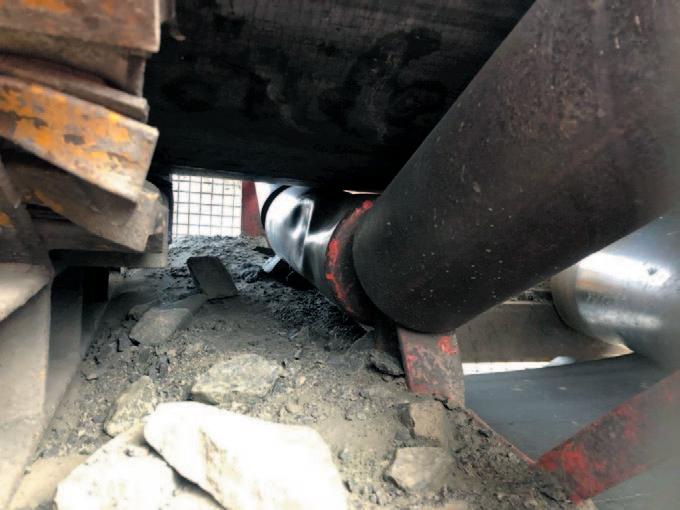
Repairing damage to conveyor belts caused by trapped objects is a big cause of avoidable downtime. When lodged in part of the conveyor mechanism or simply between the belt and the drum, even small, sharp stones can puncture the belt cover.
Larger objects can penetrate the carcass and, in some cases, cut the belt lengthwise.
The first step in reducing the risk is to identify where foreign objects and rogue

material is most likely to become trapped and take preventative measures such as installing skirts or screening.
Apart from increasing the chances of an object becoming trapped, waste build-up is a common cause of damage to idlers and drums, which can cause a lot of collateral belt damage. A significant proportion of belt damage is caused by incorrect installation of auxiliary equipment, damaged, protruding steelwork and components vibrating loose and ultimately becoming detached, all of which can be identified and rectified through regular inspection.
Downtime is hugely expensive and, more often than not, the use of low-grade components is the cause. The best advice I can give is to make the cost of such stoppages, together with the actual costs of repairs and replacements, integral to the calculation of the whole-life cost of conveyor components because the lowest price often comes at the highest cost.
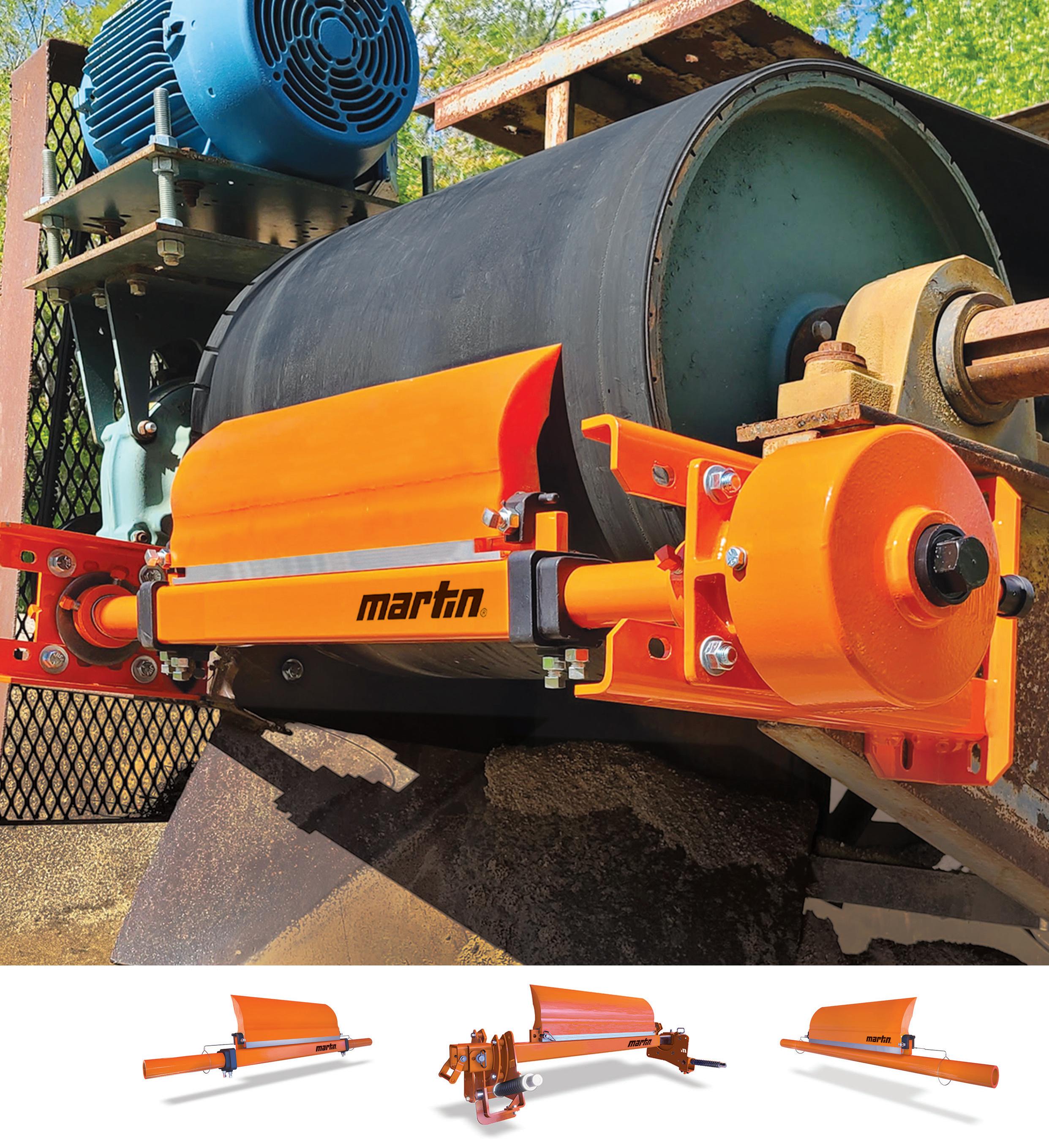
family of primary belt cleaners deliver industry-leading performance in the most demanding and varied mining environments. QC1+™ belt while minimizing the carryback that can lead to conveyor system damage. Our patented Continuous Angle Radial Pressure and our rugged mainframes ensure superior cleaning power throughout the blade’s service life.
Easy to maintain and quick to service, these robust QC1+™ Cleaners protect belt components from premature wear and minimize fugitive material issues — keeping your operation running smoothly, safely and more productively.
It’s been a decade – ScrapeTec won’t leave you in the dust
ScrapeTec marks ten years in business this year. The company — with its head office in Kamp-Lintfort, Germany — was founded as a two-person engineering start-up, with a single patent of its contactless transfer point sealing technology for conveyor systems.
Since its inception in 2015, the company has supplied more than 5,000 AirScrape systems to mining, cement, gypsum, power generation, steel, ports, fertilizer, grain and food products, as well as other bulk handling sectors in over 60 countries.
“The energy-efficient ScrapeTec AirScrape system uses the Venturi effect to create an airstream that seals transfer points without touching the belt. This design reduces dust and spillage, eliminates skirt friction and wear and lowers routine maintenance requirements,” explains Thorsten Koth, Sales and Distribution for ScrapeTec. “ScrapeTec’s innovative concept progressed from early trials in Germany to repeat orders, as operators sought to reduce downtime at transfer points. Initial interest came from cement and gypsum plants, where eight sales were concluded from ten site visits.
“Installations were soon completed in power stations, steel works, ports, sugar and salt facilities. In 2018 the business invested in trade events in Germany to expand its partner network and technical references. A collaboration with an engineering office in Peru led to the first large order within three months, followed by further installations at major mines as word of performance spread between operators.
“A maintenance manager involved in one of our early installations stated that if an AirScrape system could sustain a month without visible dust or spill and without transfer point stoppages, the company’s investment would already be recovered. That installation has since operated for four years without maintenance
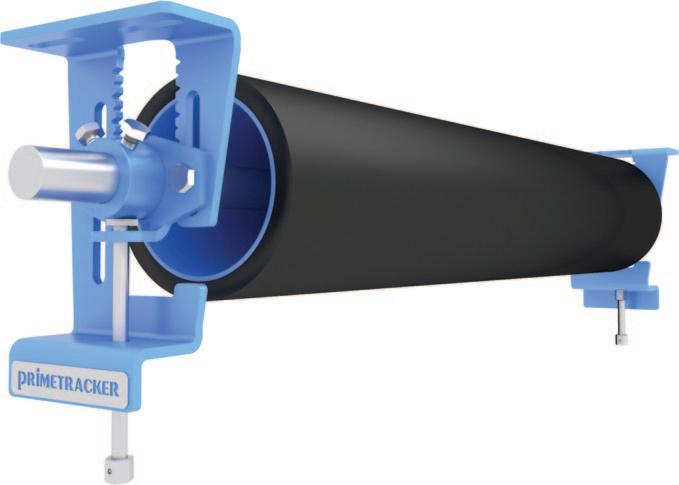
intervention at the seal.
ScrapeTec – which celebrates ten years of business this year (see below) – has developed advanced dust suppression solutions for conveyor systems used in diverse sectors. Typical industries include mining, cement, gypsum, power generation, steel, ports, fertilizer, grain and food products, as well as other bulk handling sectors.
“Independent operators in South America have reported dust levels reduced by up to 90% at transfer points, together with significant reductions in clean-up hours and unscheduled stoppages. South America is now our largest market, with projects in Peru, Chile, Brazil and Colombia spanning mining, as well as cement and gypsum.”
ScrapeTec’s PrimeTracker, a misalignment steering device designed to keep belts centred without adding friction. The next iteration adds sensors that monitor belt condition and provide operators with status information for predictive maintenance. Development is underway with a university partner in Kamp-Lintfort to validate sensing, signal handling and alert thresholds. This will allow operators to address wear before it results in unscheduled belt stoppages.
The company’s portfolio has expanded in line with demand for passive dust control at transfer points. Dustbox is used to control airborne dust at source without an
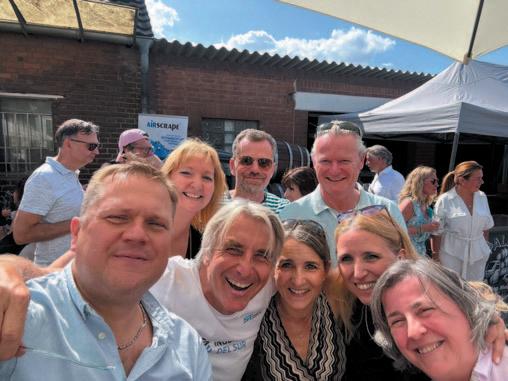
active dust collector. Where extraction is required, DustScrape assists the collector by stabilizing airflow and reducing entrained dust at the enclosure. This lowers energy consumption and reduces cleaning of ducting. A fertilizer operation has reported clean transfer points, while running DustScrape without routine maintenance and with reduced power draw at the collector.
These advanced conveyor systems — which meet stringent quality, safety and environmental standards — are available directly from ScrapeTec and from carefully selected distributors. ScrapeTec experts works closely with BLT WORLD in Africa and the United States, while Australia is developing through Kinder, with large mining houses embracing this advanced technology for high-tonnage applications.
Ingenieria del Sur (IngSur) supplies and supports ScrapeTec’s range of dust suppression systems in Peru, while Dank Consultores has partnered with ScrapeTec in Chile, focusing on mining and general industry.
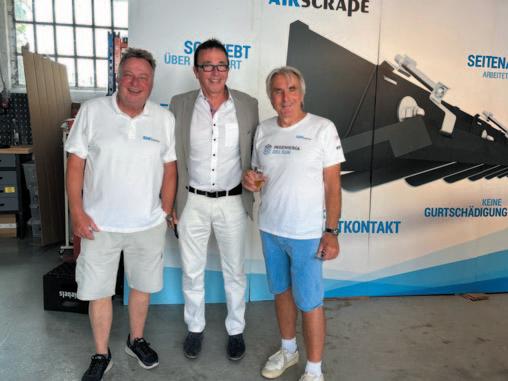
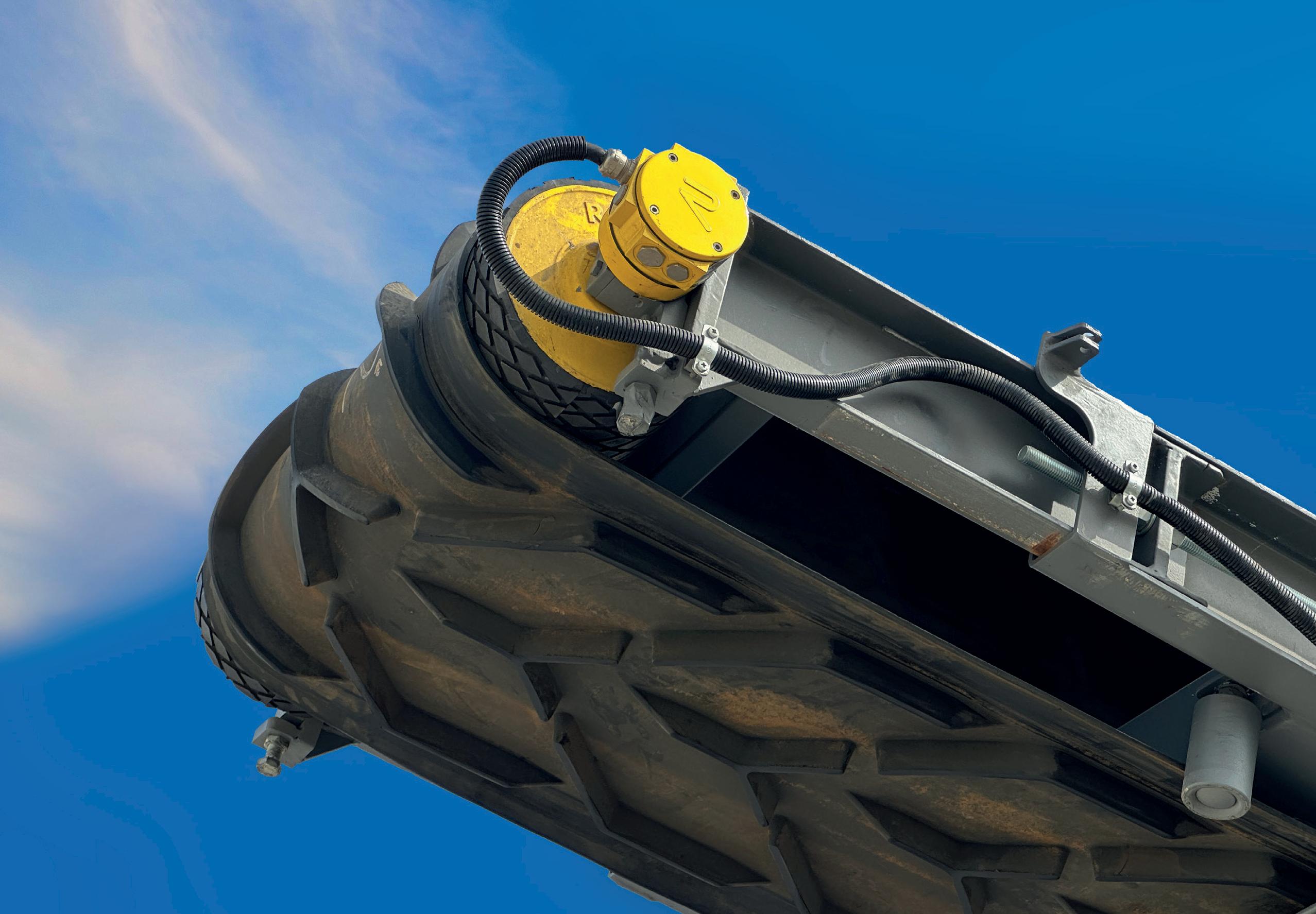
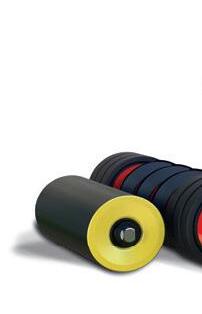
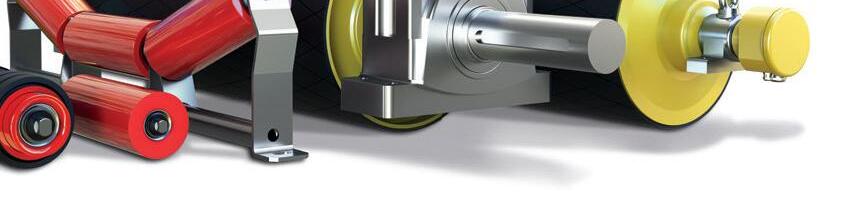
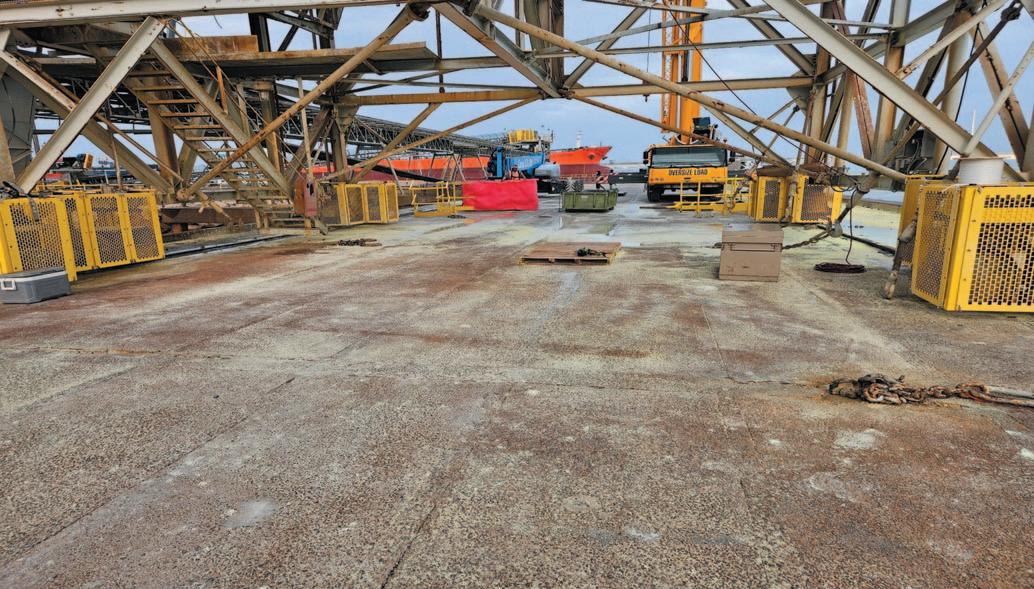
Cargo terminals are busier than ever. With larger ships, tighter schedules, and greater volumes of bulk material moving across ports each day, safety remains the foundation of efficiency. Equipment such as gantry cranes and conveyor systems
operate around the clock, often in challenging environments. To keep people safe while maintaining productivity, operators are turning to ASGCO’s Custom Guarding Solutions — engineered systems designed specifically to protect workers and equipment in demanding cargohandling applications.
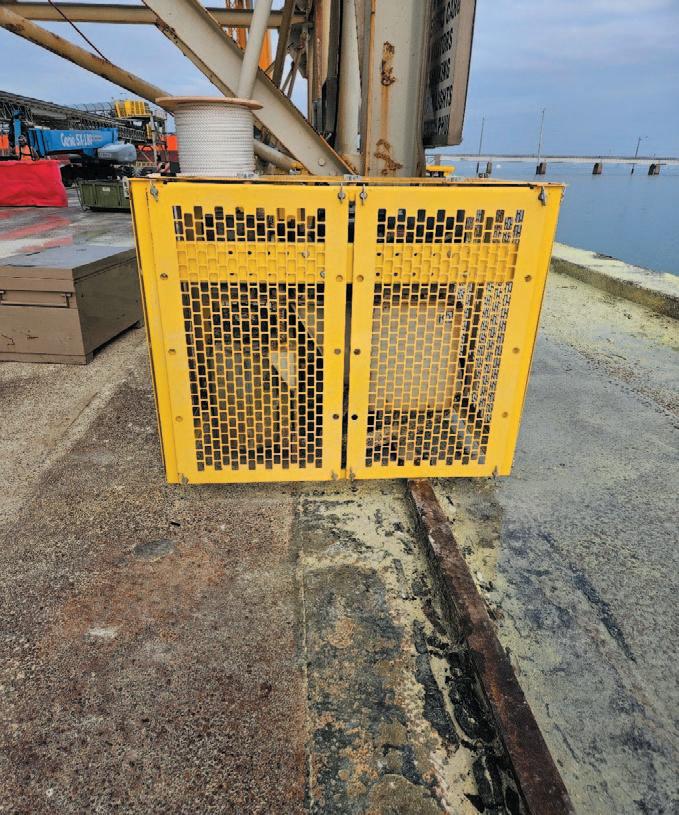
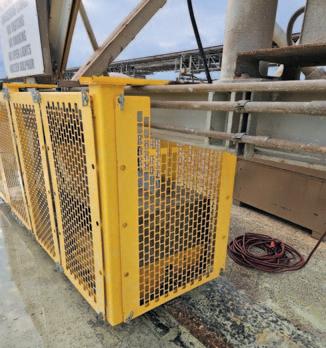
ASGCO’s Custom Guarding Solutions are precision-engineered barriers, covers, and enclosures developed to shield personnel from moving machinery. They are tailored to fit conveyor systems, transfer points, and gantry cranes, ensuring that critical equipment is both accessible and protected.
Unlike standard guarding, ASGCO’s designs are built for safety, efficiency, and reliability. Every solution is customized to the equipment and site, providing maximum protection without sacrificing maintenance access. With modular panels, quick-release features, and clear visibility, operators can safely service machinery while still maintaining the highest safety standards.








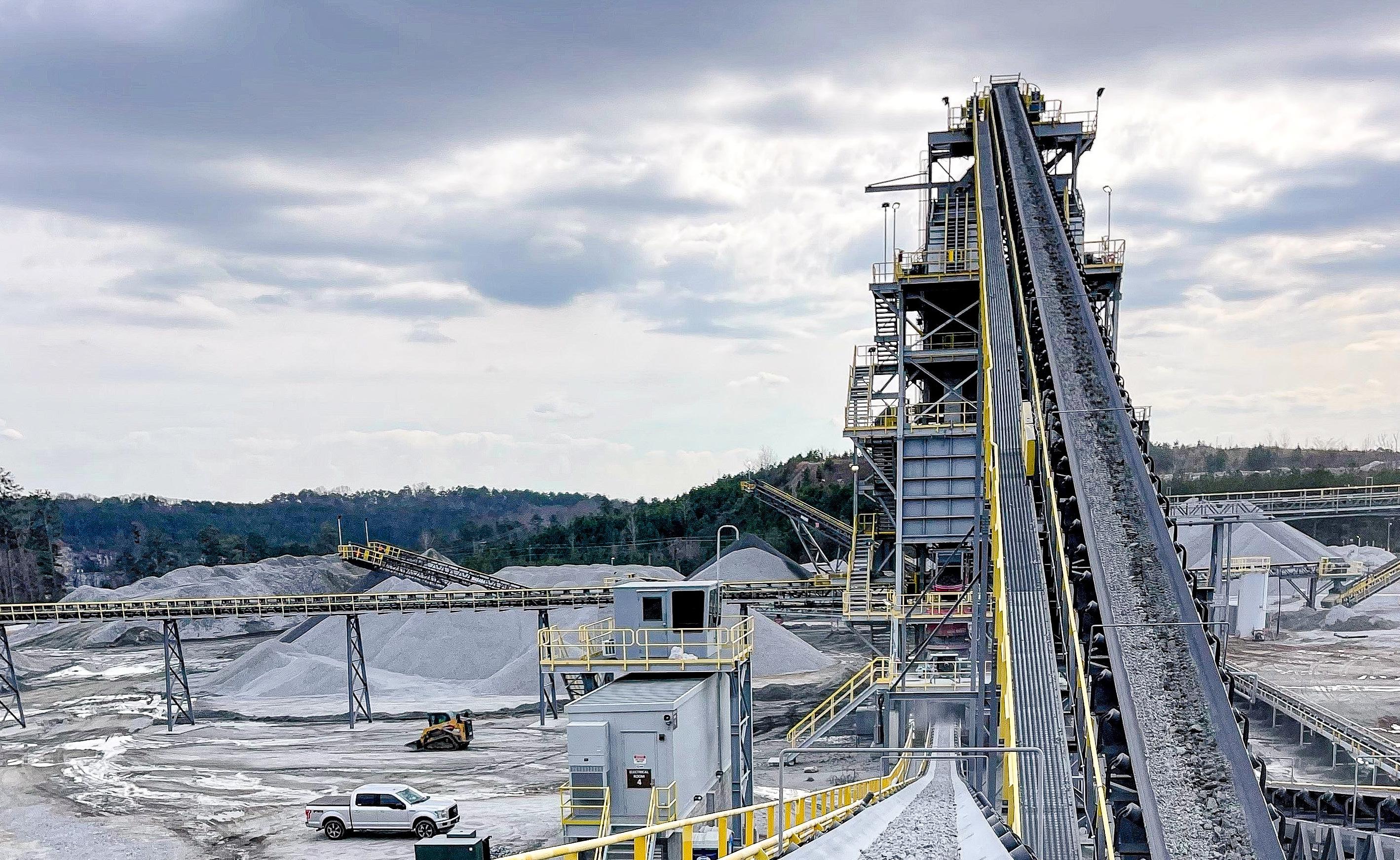


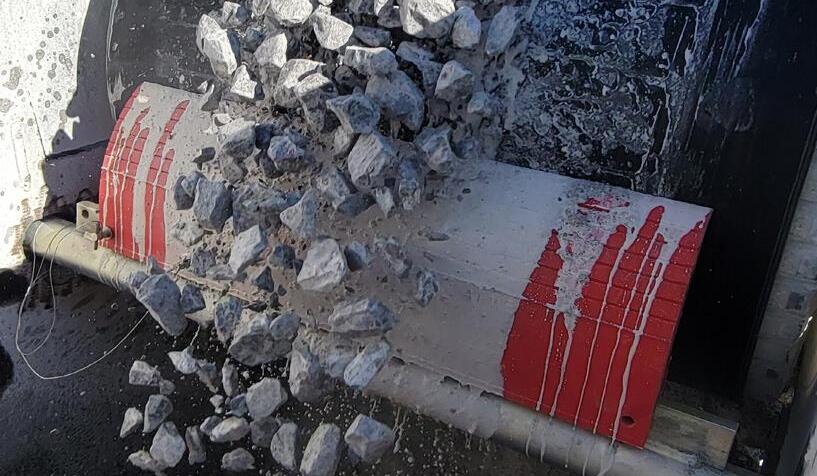









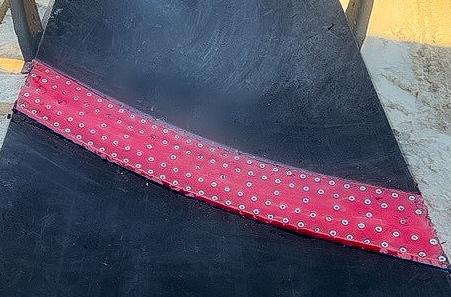





























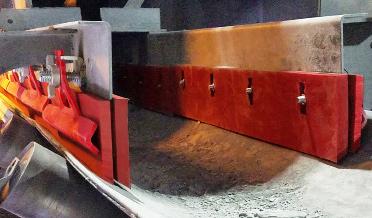













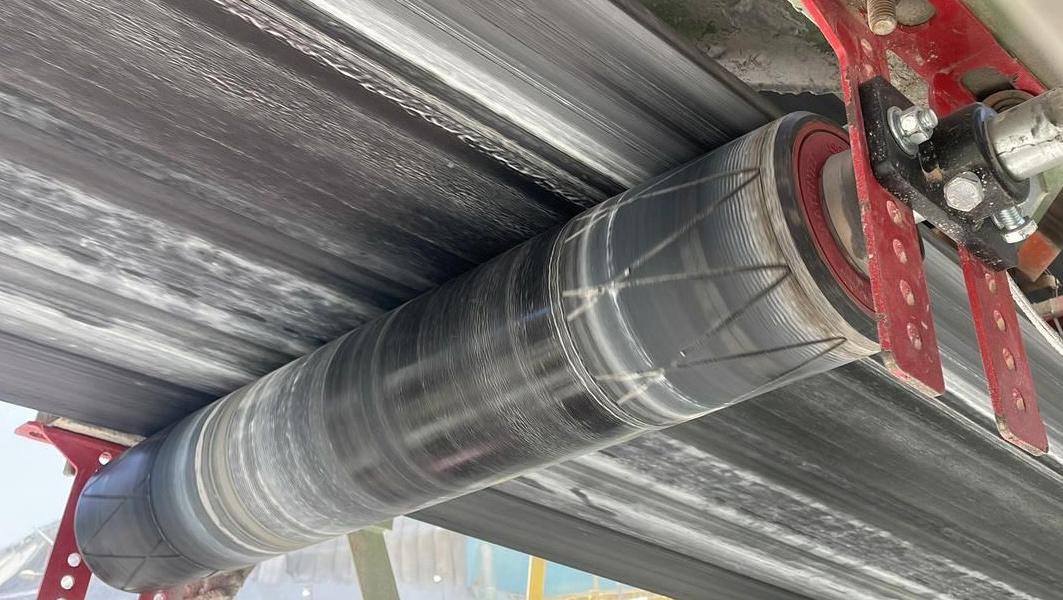










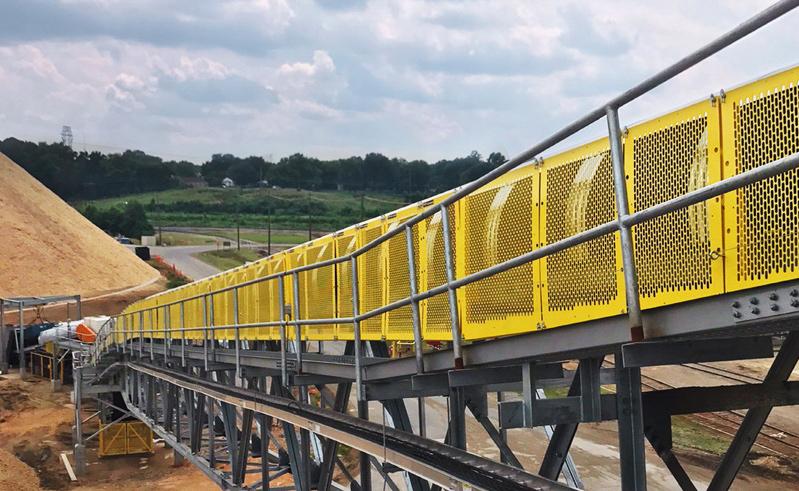


















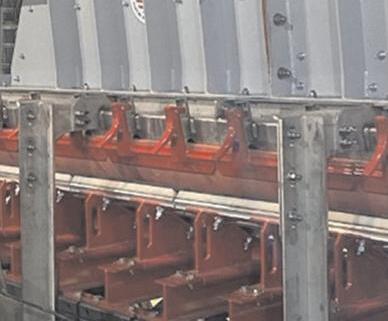


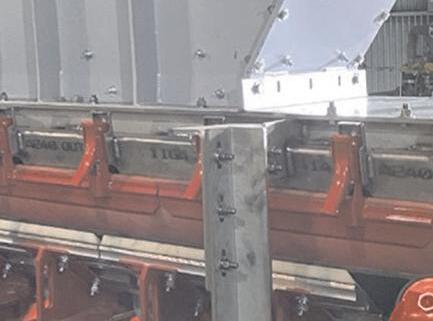





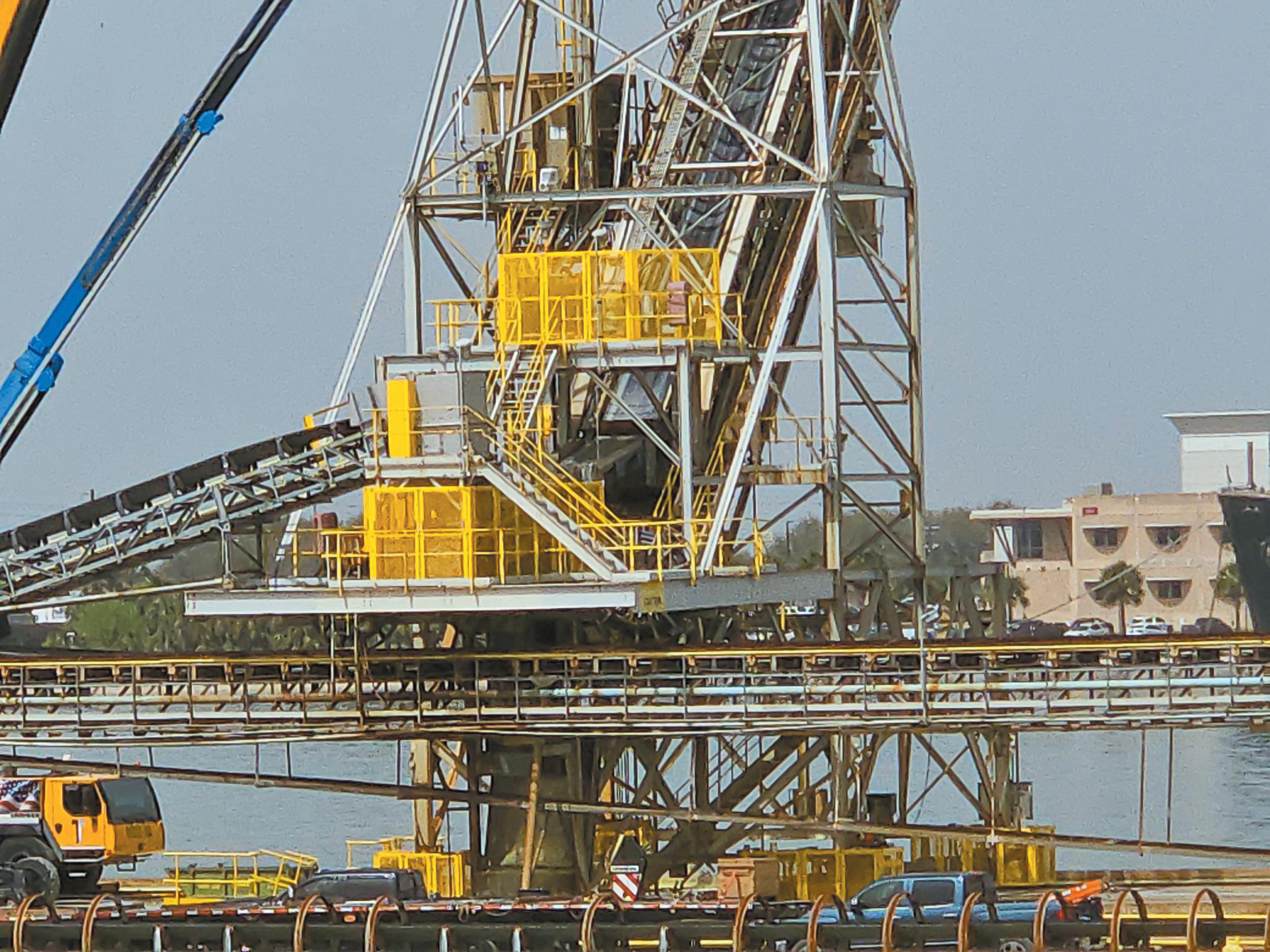
Bulk cargo operations involve constant movement of heavy materials, from coal and minerals to grain and containers. With so much equipment running simultaneously, risks of contact with moving parts, entanglement, or accidents are high.
ASGCO’s Custom Guarding Solutions provide a comprehensive layer of safety by: Protecting workers: prevent contact v with rotating pulleys, belts, and crane mechanisms.
Protecting cargo: reduce chances of v mishandling or equipment failure that could damage valuable shipments.
Meeting standards: designed to align v with OSHA, ISO, and port authority regulations, keeping terminals compliant and audit-ready.
Improving uptime: reduce downtime v caused by accidents or maintenance delays, ensuring smooth operations.
Every guarding solution from ASGCO is designed to withstand the harsh conditions of port operations. Using high-strength materials, corrosion-resistant finishes, and modular construction, these systems deliver long-term durability.
Just as important, they are engineered with ease of maintenance in mind. Hinged access doors, removable sections, and inspection windows make it possible for operators to conduct routine service
quickly and safely. Many systems also integrate with automated safety interlocks, shutting down equipment if a guard is opened or bypassed, ensuring protection is never compromised.
In today’s shipping and cargo industry, safety is not just about compliance, but about a performance advantage. Terminals that invest in ASGCO’s Custom Guarding Solutions protect their workforce, reduce insurance and operational costs, and build trust with their shipping partners.
With fewer accidents and less downtime, ports can meet tight schedules
and growing demand more reliably. Safety and efficiency go hand in hand, and ASGCO’s guarding solutions help terminals achieve both.
As ports modernize and increase automation, custom guarding will remain essential. ASGCO continues to advance its solutions, combining proven safety engineering with modern innovations such as integrated monitoring and predictive maintenance features.
The result is a safer, more efficient, and more reliable cargo-handling environment, one that ensures protection without slowing progress.
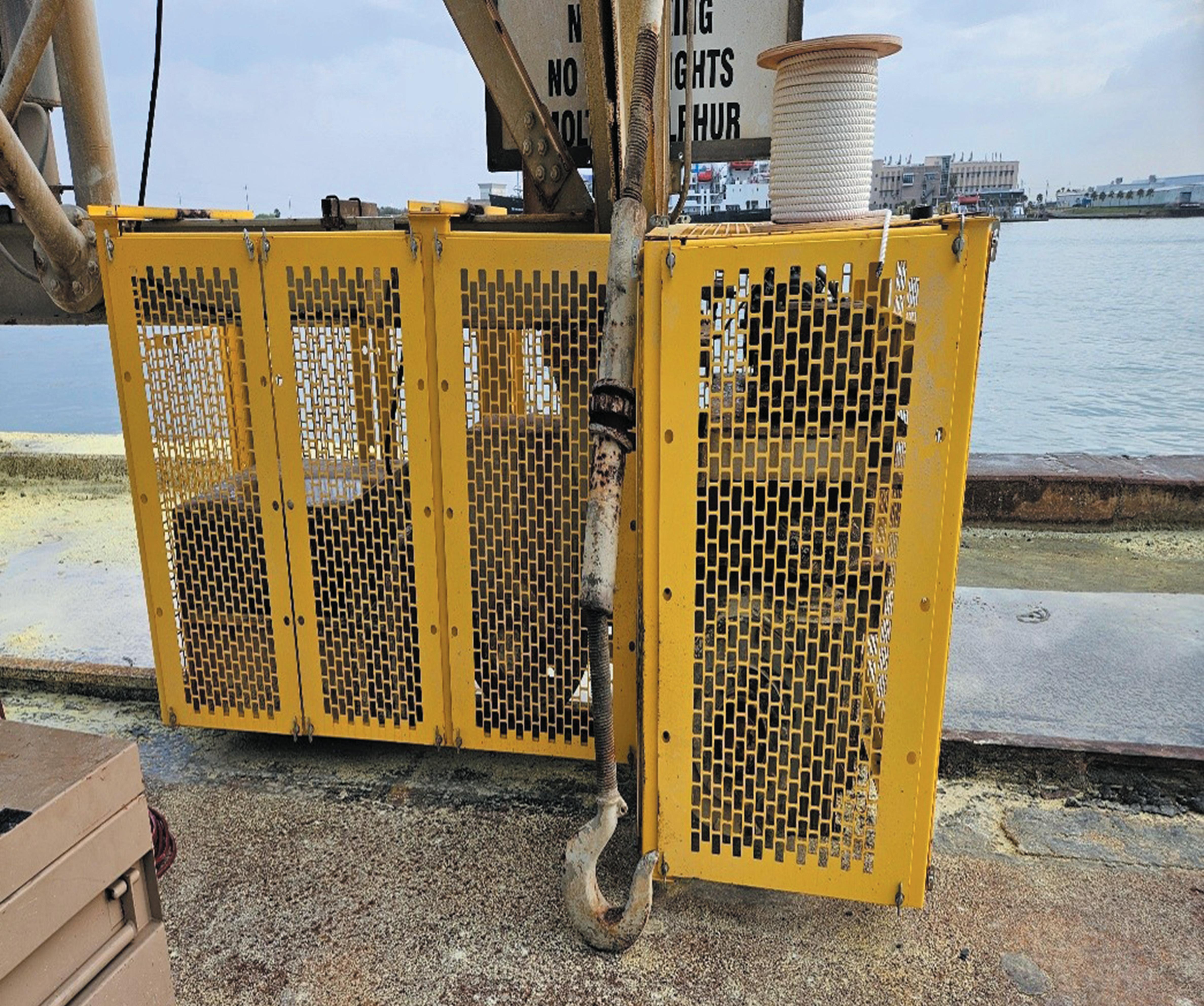









In mining and materials handling,the Hägglunds Quantum Powe motor reshapes reality with shared DNA. Adding a slim new connection block to the proven Hägglunds Quantum,it opens up an unthinkable space – stretching to 170 rpm a new dimension of productivity with Hägglunds. We drive what drives you.
Hägglunds is a brand of Rexroth. www.hagglunds.com


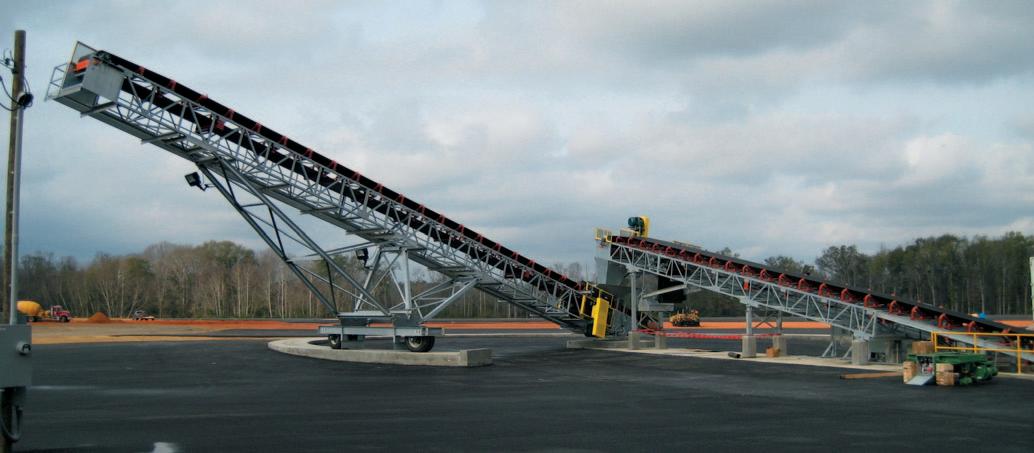
US company Imperial Conveying Systems (formerly Imperial Technologies) designs and provides high-quality conveyor systems for handling, preparing, and transporting bulk materials.
With the same team that has brought a combined 60 years of experience to building conveyor systems, ICS is continuing through the 21st century as a laser-focused, innovative, experienced, and cost-effective conveyor system solution for the bulk material handling industry.
Getting the job done quickly and efficiently is the operator’s top priority — but this is not possible when the conveying system is down. ICS has the experience and expertise to provide custom solutions in the conveying of bulk material through.
The core values of the company include:
Quality: striving for excellence in all v endeavours, delivering work that meets high standards.
Dedication: committing fully to v completing tasks and goals, demonstrating persistence and diligence.
Problem-solving: actively seeking v
solutions and being proactive in overcoming challenges.
Accountability: taking ownership of v responsibilities and commitments. No project is too big or too small for ICS, whether the client has a very small job or a multimillion dollar conveying system.
ICS promises to deliver the same level of service and professionalism to every customer, regardless of the project’s scope.
A knowledgeable team and reliable conveyor equipment mean that the customer can trust the job will get done and its equipment will spend more time in green light mode.
Equipment designed and assembled by ICS includes: conveyors; v transfer/chutes; v walkways; v platforms & enclosures; v loading applications; v third-party equipment integration; and v professional structural design in all 50 v US states, Canada, & Mexico
These high quality conveyor systems for handling, preparing, and transporting bulk
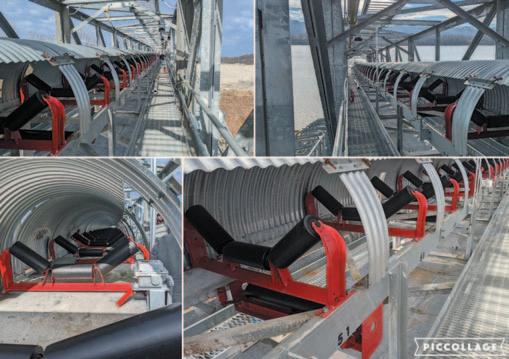
materials are suitable for a wide variety of industries: steel, aggregate, gypsum, sand, pulp & paper, recycling, wastewater, ship to shore, refuse, raw sugar, cement, coal, coke, rail, and power generation.
ICS is working in a very competitive market, so staying competitive means staying ahead — both in innovation and in customer value. It delivers smarter solutions, faster turnarounds, and longterm performance that speaks for itself. ICS focuses on three core areas to maintain its edge:
Customized engineering solutions: v every industry has unique challenges, and ICS does not believe in one-sizefits-all systems. The company’s engineering team works closely with clients to design conveyor solutions tailored to their specific operational requirements — increasing efficiency, safety, and reliability.
Continuous innovation: ICS v continually investigates the latest technology for durability, energy efficiency, and automation integration. Whether it’s smart sensors for
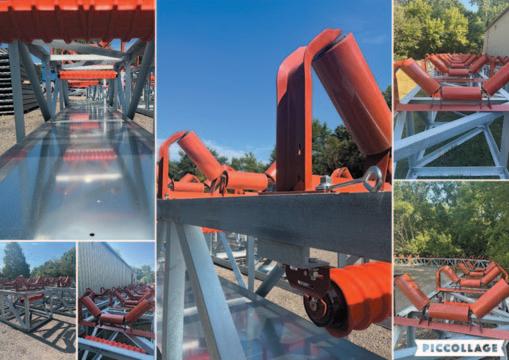












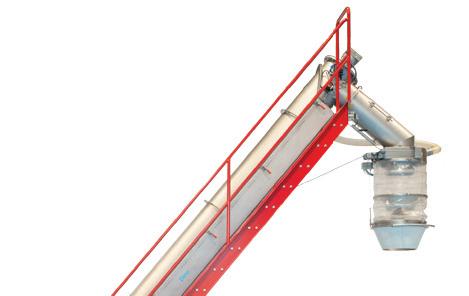

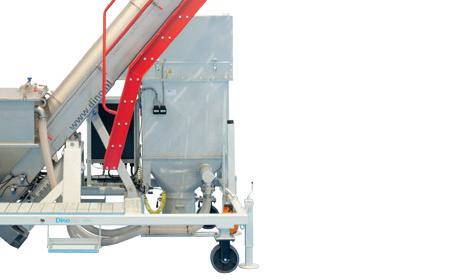





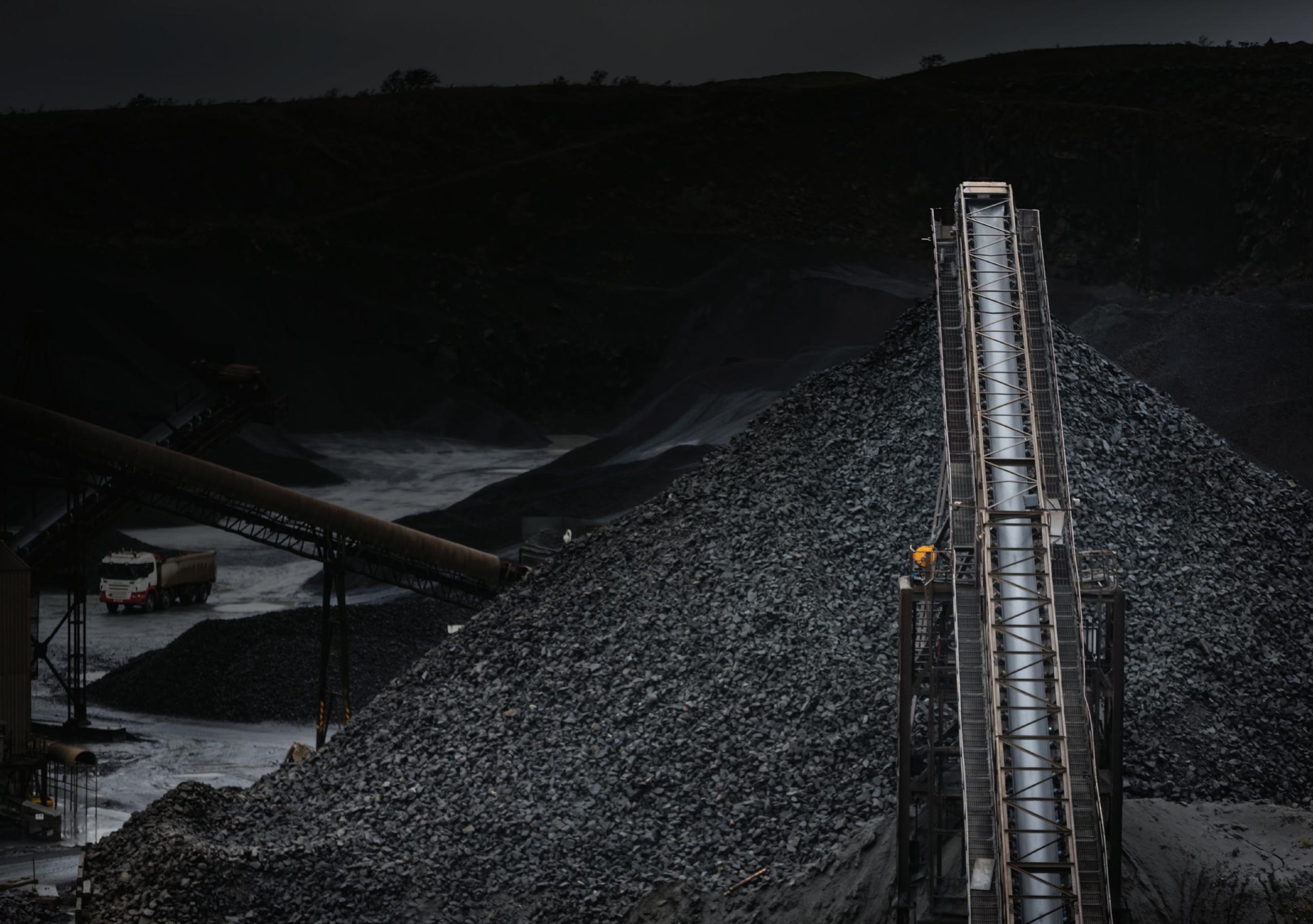














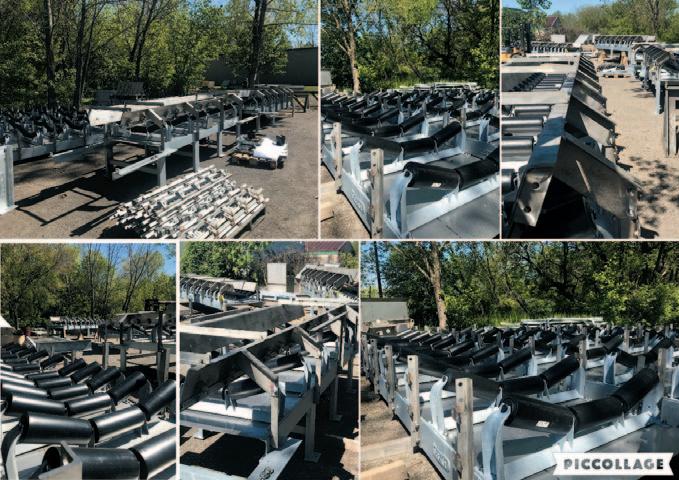
predictive maintenance or modular belt designs for easy reconfiguration, ICS is always pushing the boundaries of what conveyor systems can do. Customer-centric support: beyond v the product, ICS offers end-to-end support — from design consultation to installation, training, and long-term maintenance. Its responsiveness and commitment to uptime make it a trusted partner, not just a supplier.
ICS’s team provides budget analysis for potential projects, preliminary and plant arrangements, equipment recommend-
ations, and conveyor specifications. It is CEMA-accredited with 60+ years of combined industry experience. ICS is trusted by Fortune 500 companies. Its solutions include: design & build; v engineering study; v service & maintenance; v repair/retrofit; v replacement parts; v installation. v
Imperial Conveying Systems is a reliable one-stop shop for optimizing conveying systems.
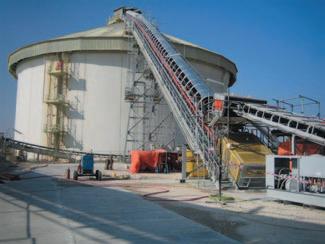
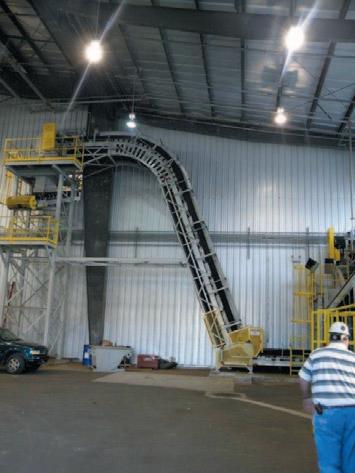
Whatever the customer needs, from regular maintenance, to engineering consolation services, to a custom project designed from the ground up, they know they can rely on ICS to deliver a solution that maximizes their return on investment.
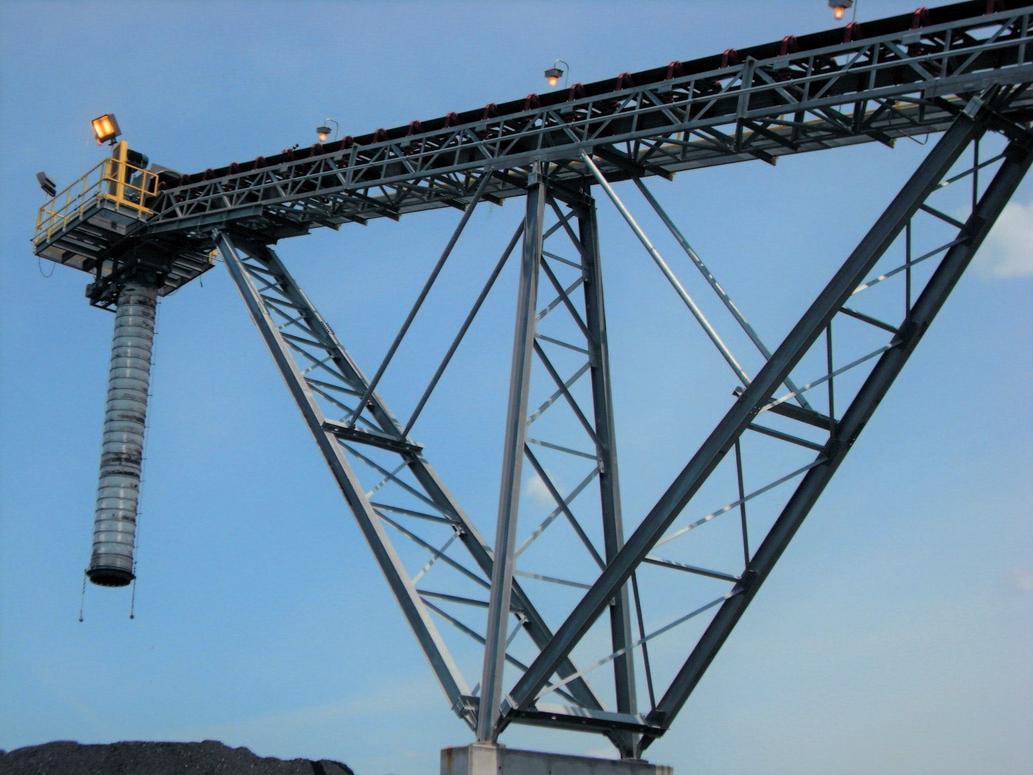
The Doppelmayr Group received a contract for the construction of an ore transport system at the premises of a major mining company in the Americas. This system will include the first Vertical RopeCon®, as well as the first Tunnel RopeCon®. It will transport ore from the underground mine across a tunnel and along a vertical shaft to the existing stockyard conveyor on the surface. This innovative concept is Doppelmayr’s answer to customers’ needs for efficient and reliable underground transport solutions.
A major mining company decided for a RopeCon®-based system to transport ore from its underground mine in the Americas to the existing stockyard conveyor. The Vertical RopeCon®, first of its kind in the world, will play a pivotal role in the transport chain, transporting the ore up an existing shaft, achieving a lift of more than 400m.
The Ore Transport System moves 700 tonnes of ore per hour, reducing the underground truck fleet along with the associated heat development and exhaust emissions. The drive of the Vertical RopeCon® is located on the surface, which, in addition, leads to less space requirements underground. A more than 1.25km-long horizontal Tunnel RopeCon®, also the first of its kind in the world, conveys the material from the underground mine towards the loading point of the Vertical RopeCon®. The horizontal system is suspended from the tunnel ceiling to save precious space in the tunnel. Together with the Vertical RopeCon® and two additional conveyors it will allow the automated material transport from the mine to the stockyard in a clean and efficient way, increasing safety while reducing operational expenses.
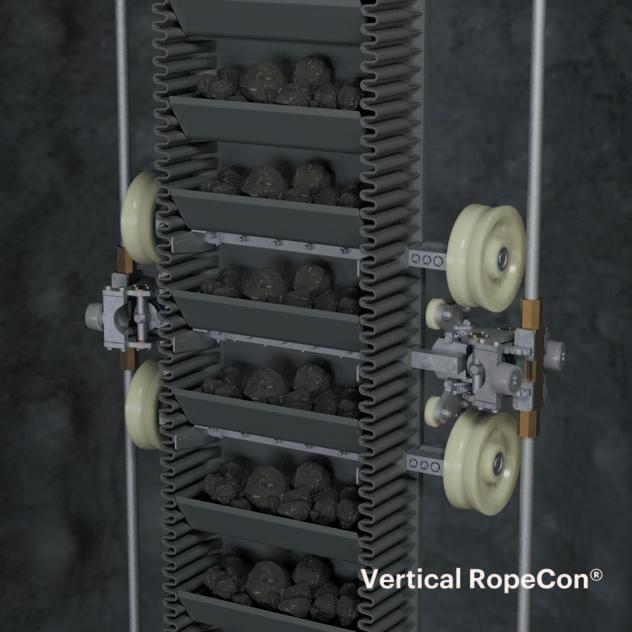
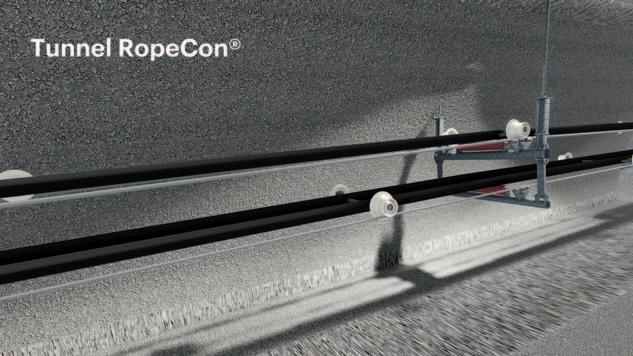
Commissioning of the ore transport system is scheduled for Q3/2027. This innovative concept addresses the mining companies’ needs for efficient and reliable underground transport solutions. Based on the proven
achieves impressive transport capacities and vertical lifts.
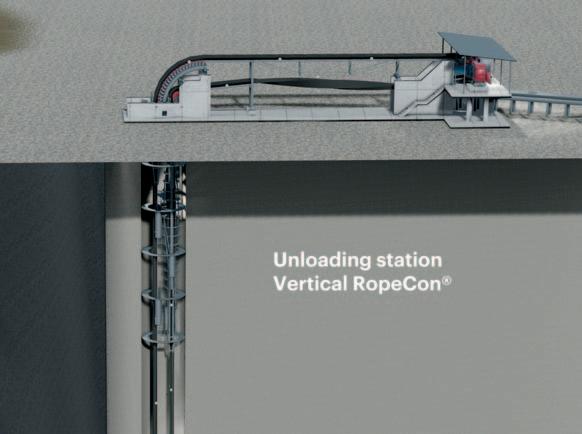
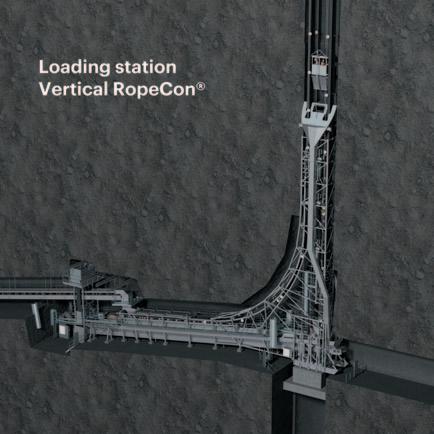
Conveyor systems are at the heart of modern bulk handling. Every day, millions of tonnes of minerals, fuels, aggregates, and raw materials move across belts in mines, ports, power plants, cement works, steel mills, and quarries worldwide. Behind the performance of these systems lie components that must operate reliably under extreme conditions. Gurtec GmbH, based in Germany, has been at the forefront of designing and manufacturing such components for decades.
With a production facility in Schöppenstedt, Germany, Gurtec manufactures a wide range of conveyor rollers, idlers, and pulleys, serving customers across Europe, the Middle East, Africa, and other international markets. The company combines German engineering precision with global supply capabilities, enabling it to support both large international projects and regional industrial plants.
The company’s core expertise lies in the manufacture of:
Conveyor rollers and idlers: from v light-duty applications in quarries and recycling facilities to heavy-duty rollers designed for the harshest mining environments. Diameters range from 63mm to 219mm, covering the full spectrum of bulk handling requirements.
Pulleys: engineered to handle high v

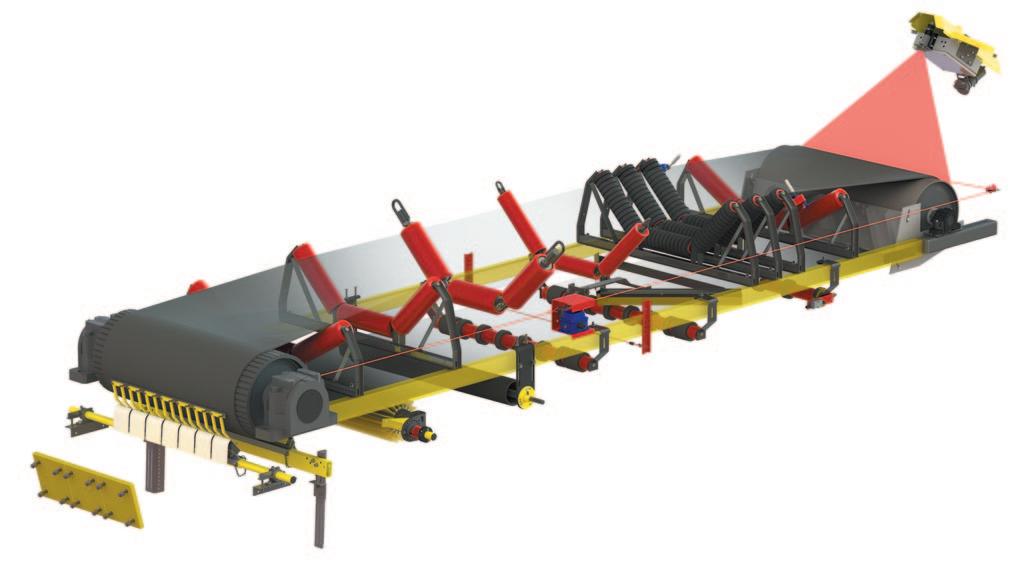
belt tensions and long operating hours, Gurtec pulleys are used in both mobile equipment and large-scale fixed installations.
Specialized solutions: these include v impact rollers, training idlers, and precision rollers for mobile crushing and screening equipment. These components are critical in the handling of commodities such as coal, iron ore, copper, clinker, cement, fertilizers, aggregates, and bulk materials used in power generation and steel production.
Gurtec’s equipment is used in a wide variety of industries, from mining and cement to steel production, recycling, and ports and terminals. In ports and stockyards, its components play a vital role in ensuring the reliable loading and unloading of ships, while in mines they contribute to the efficient transport of raw
materials over long distances. The company also supports OEMs of mobile equipment, ensuring robust performance even in compact, mobile conveyor systems.
Over the past years, Gurtec has delivered rollers and pulleys for major projects across Europe, the Middle East, and Africa. These include installations for mining operations, cement plants, fertilizer production facilities, and industrial process plants. Such projects highlight the company’s ability to meet demanding technical specifications, tight schedules, and the large-scale requirements typical of bulk material handling.
Bulk material handling places high demands on equipment, and Gurtec’s focus is to ensure that its components deliver
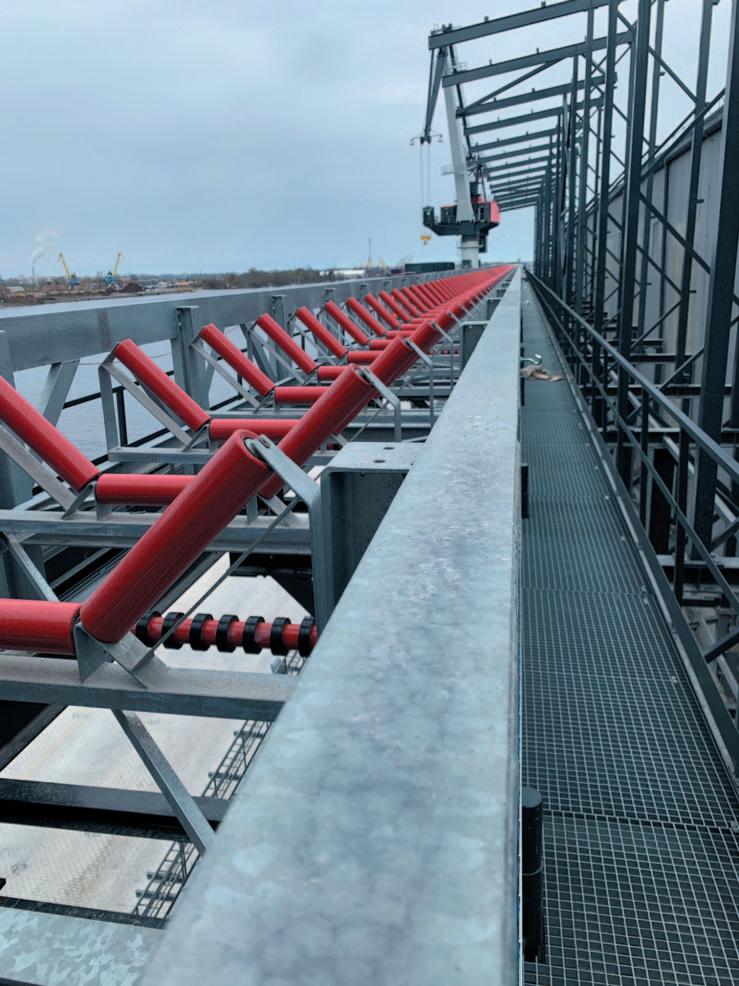
consistent performance over long service lives. Continuous improvement in manufacturing processes and quality control helps maintain reliability, even under extreme operating conditions. At the same time, the company is investing in modern production technology to enhance efficiency and ensure consistent product quality.
Another key factor is sustainability: optimizing energy use in production and developing longer-lasting components that reduce maintenance and replacement needs contribute both to lower operating costs and to more resource-efficient conveying.
Above all, Gurtec works in close partnership with its customers. By listening carefully to the challenges faced in mines, ports, and industrial plants, the company adapts its solutions to meet practical requirements — whether through specialized rollers for demanding environments or through support for modernizing existing conveyor systems.
One of Gurtec’s current focus areas is intelligent maintenance solutions that help customers reduce unplanned downtime. Developments include:
Sensor-based monitoring: prototypes v with integrated temperature sensors and digital connectivity are being tested to provide early warnings before failures occur.
Advanced belt condition monitoring: v modules that track belt wear and alignment, contributing to predictive maintenance strategies. These innovations reflect Gurtec’s philosophy of combining robust mechanical design with practical, user-friendly monitoring technologies that increase conveyor availability.
The demand for efficient, safe, and sustainable bulk material handling will only grow in the coming years. As mines and industrial plants operate under increasing cost pressure, and as environmental and safety standards rise, the role of reliable conveyor components becomes more critical than ever. Gurtec is positioning itself not just as a supplier of rollers and pulleys, but as a partner helping customers achieve cleaner, safer, and more efficient operations.
With its long history, strong engineering base, and commitment to innovation, Gurtec GmbH continues to live up to its guiding idea: “Backbone of Your Conveyor.”
When it comes to moving bulk materials, the demands of today’s terminals, transloading facilities and ports have never been greater, writes Trish Gavin, Western US Sales Manager, Cambelt International Cambelt International, headquartered in Salt Lake City, Utah, has built its reputation by engineering mobile bulk handling solutions that are rugged, versatile, and simple to operate.
Or, as Trish Gavin likes to put it: Cambelt International is really good at going really high, really fast, and really steep in a little footprint.
That phrase sums up Cambelt International’s approach to bulk handling — powerful equipment designed to achieve maximum throughput while occupying minimal space, all without compromising safety or efficiency.
Cambelt International specializes in custom-engineered conveyors and mobile transloaders.
The Scorpion Series: Cambelt v International’s flagship line of transloaders is designed for transferring bulk materials between trucks, rail cars, hoopers. The
Scorpion 3015, for example, is a selfcontained mobile unit that can be easily positioned for high-capacity loading and unloading.
Enclosed high incline belt conveyors: v unlike traditional open conveyor systems, our fully enclosed designs minimize spillage, protect the material being moved, and reduce dust emissions. Cambelt International is a professional in high incline. It can accommodate under rail, in and around existing structures, buildings, silos, reclamation domes, top feed designs, drive over options and so much more.
The gold standard in belts: Cambelt v International uses proprietary moulding to create one-piece, highprofile conveyor belts, forming the base, sidewalls, and cleats in a single cure. This eliminates weak points from post-vulcanizing, making the belts exceptionally durable in harsh conditions — high heat, abrasion, or chemical exposure — while ensuring the sidewalls and cleats never delaminate.
Cambelt International’s equipment is versatile enough to move all speciality bulk products, including: grains and agriculture products; fertilizer; cement and fly ash; aggregates; coal and biomass; salt and minerals; and wood pellets and specialty bulk products.
Whether it’s agricultural exports heading overseas or construction materials moving inland, Cambelt International systems keep material flowing efficiently from origin to destination. Its rugged engineering and smart innovation ensure reliable performance in a constantly evolving market.
Cambelt International serves a diverse range of clients — from exporters and logistics providers to energy producers and industrial facilities — all with the same need: move bulk materials quickly, efficiently, and reliably.
Cambelt International doesn’t just sell equipment; it partners with customers to understand their operations and provide solutions tailored to their exact requirements. Many return as their needs grow, a
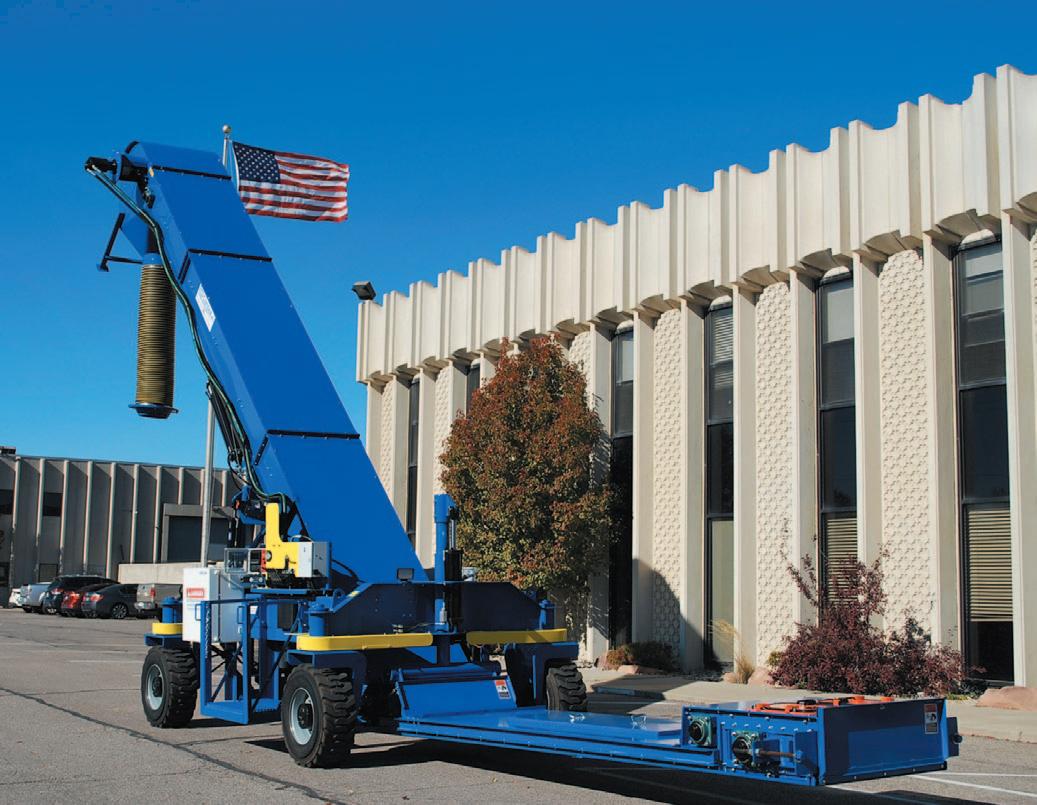
testament to the durability of Cambelt International’s designs and the trust it has built over decades. At Cambelt International, the running joke is that we specialize in going higher, faster, and in tighter spaces than most would think possible. Behind that lighthearted saying is some serious engineering — equipment built to deliver maximum capacity within a compact footprint. All systems are designed to move bulk materials efficiently while minimizing the need for costly infrastructure modifications. As global trade grows, the demand for sustainable, mobile, and adaptable bulk handling solutions will only increase. Cambelt International is committed to meeting that challenge with equipment that is rugged, reliable, and designed to evolve alongside our customers’ needs.
From ports to rail yards and beyond, Cambelt International is proud to play a role in keeping the world’s dry bulk commodities moving. And as always, it will keep doing what it does best — lifting high, moving fast, and making the most of every footprint.
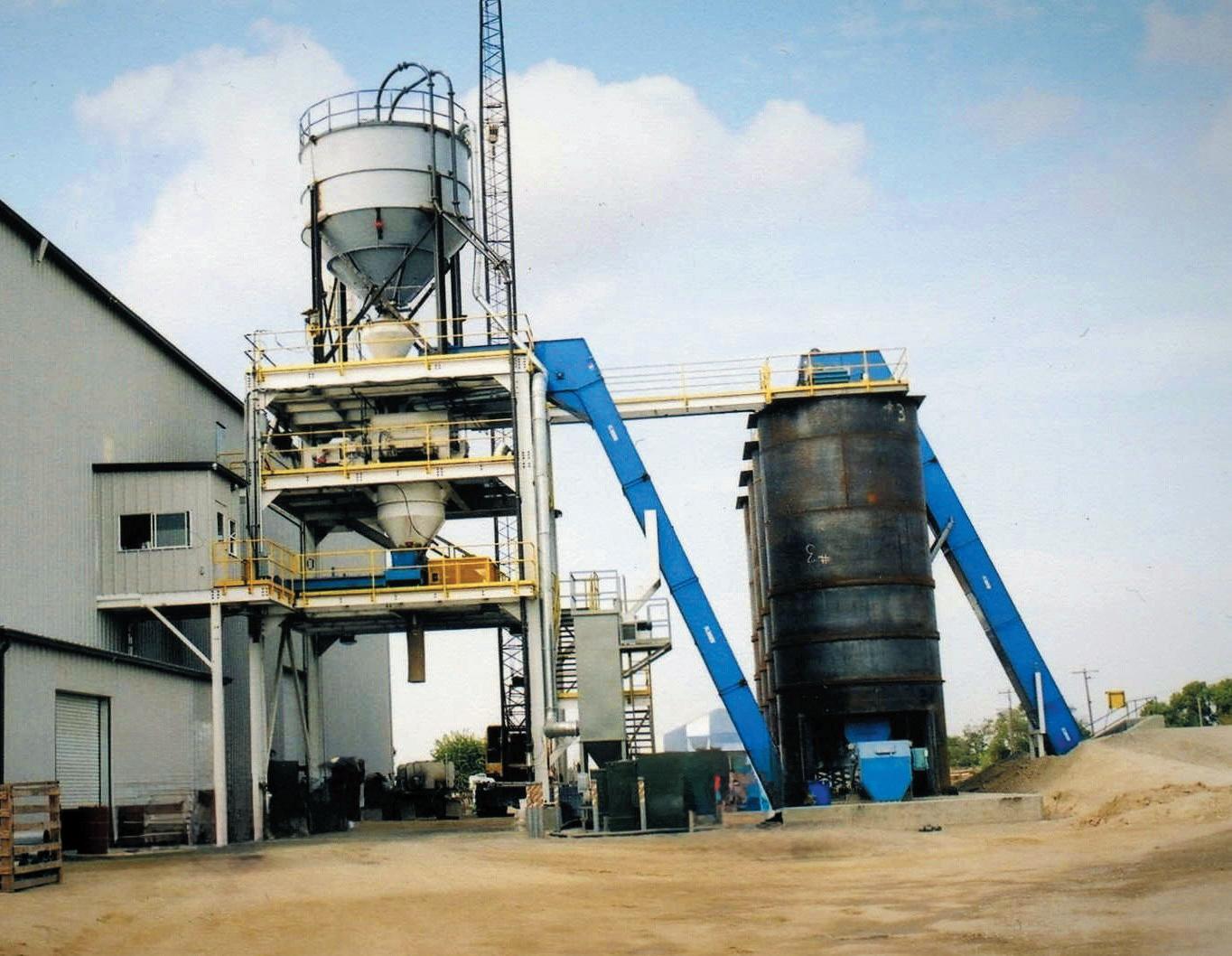
Founded over 60 years ago, Cambelt International began with a focus on enclosed vertical conveyor systems. Today, its equipment is trusted by industries around the globe to handle dry bulk commodities in some of the most challenging environments.
From grain elevators in the Midwest to port terminals on the coasts, and frac sand sites throughout the US, Cambelt International equipment is built to move product reliably and efficiently — no matter the setting.
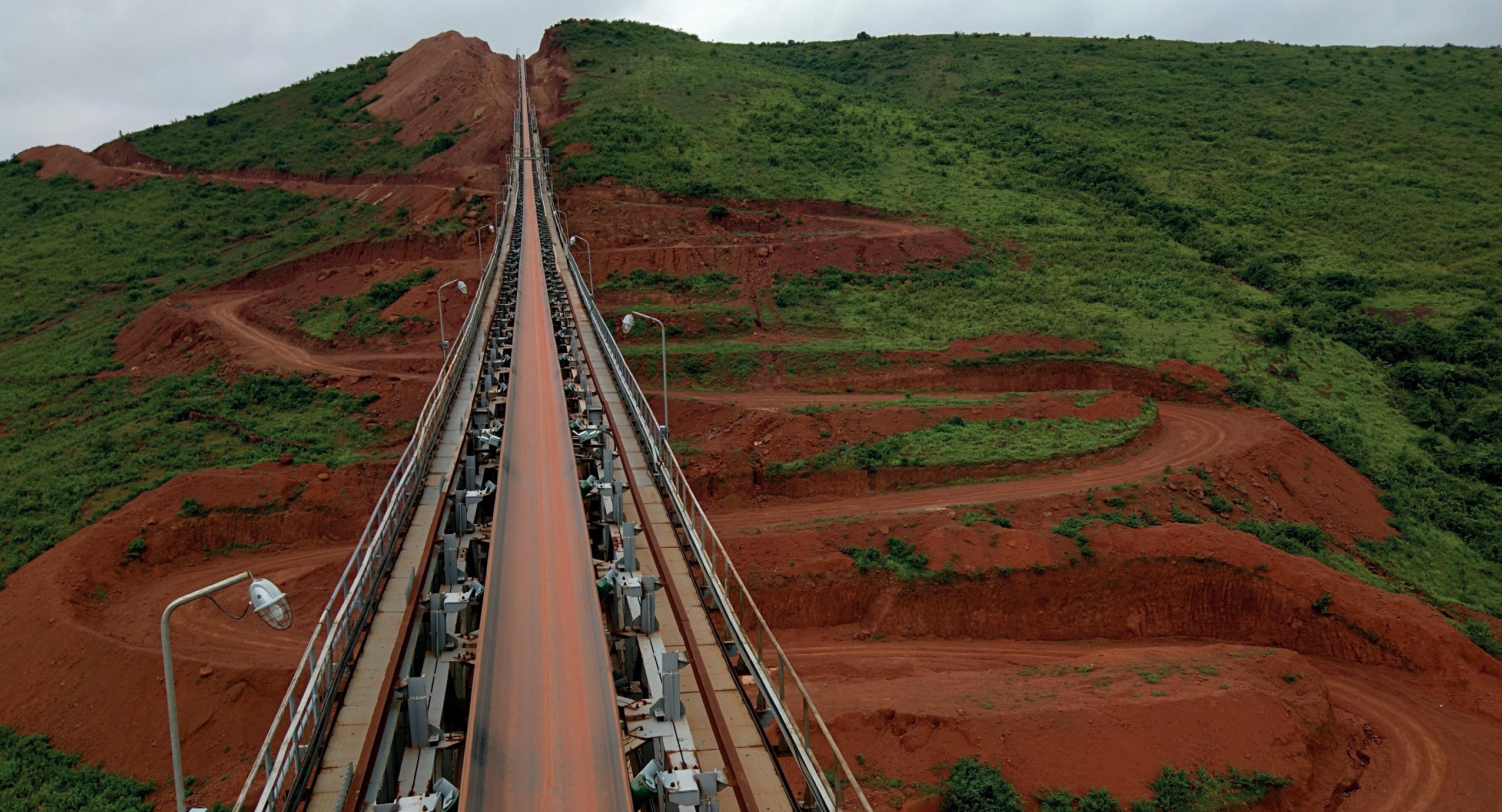




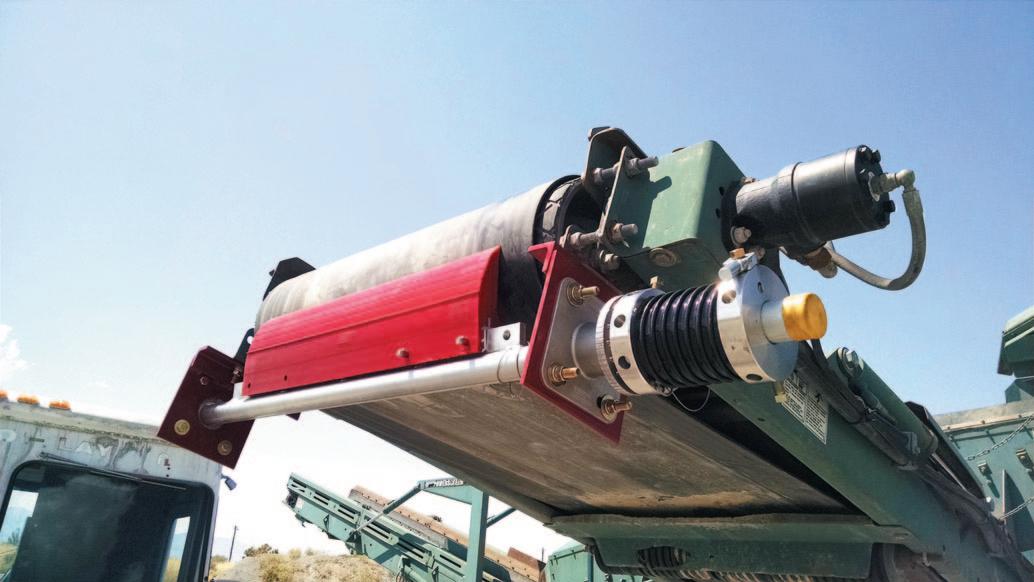
As a family-owned business since 1971, ASGCO® “Complete Conveyor Solutions” has been a trusted name in the bulk material handling industry for over five decades. Headquartered in Nazareth, Pennsylvania, ASGCO has earned a reputation for innovation, quality, and service across a wide range of industries. With a mission to provide safe, reliable, and cost-effective Complete Conveyor Solutions, the company is committed to helping customers reduce downtime, improve efficiency, and meet stringent safety and environmental standards.
From its in-house engineering and steel fabrication capabilities, to a network of field service technicians and training experts, ASGCO is uniquely positioned to solve the toughest conveying challenges across the
globe. Its product line is continually evolving, driven by hands-on field experience, customer feedback, and a dedication to continuous improvement.
ASGCO offers a large selection of conveyor components, equipment, and engineered systems, designed to handle everything from light-duty aggregates to extreme mining applications. The company motto, “Complete Conveyor Solutions,” reflects a product range that spans the entire conveyor structure, from head to tail.
Products like the Cradle Impact Beds,
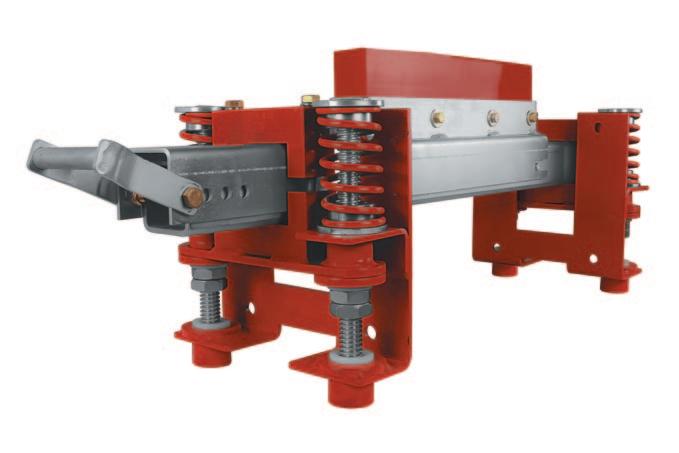
ASGCO’s Skalper® IV Primary Cleaner.
Slide-N-Roll Beds , ORG skirting , and Canoe liners are engineered to minimize spillage, suppress dust, and absorb the heavy impact of bulk materials at transfer points. These components are especially valuable in reducing maintenance frequency and preventing system damage.
ASGCO manufactures a robust line of primary, secondary and tertiary belt cleaners to eliminate carryback and extend the life of conveyor components. Innovations like the Skalper® IV Primary Cleaner with patented EZ Torque® tensioning and the Razorback® Bolt-Up Secondary Cleaner, paired with devices such as the Motorized Brush Cleaner or V-Plow, offer reliable belt cleaning for both high and low-speed systems.
Proper belt alignment is critical, and the Tru-Trainer® series by ASGCO provides automatic, self-adjusting tracking with a patented centre-pivot design. These systems ensure consistent belt alignment, reducing belt wear by minimizing edge damage, and maximizing uptime.
SAFETY GUARDING
Worker safety is a core value at ASGCO. The company offers a full suite of modular and custom guarding systems, including return roll guards, Safe-Guard® inspection doors, and belt lifters. The flat panel guarding is designed for easy
access and removal during maintenance, ensuring compliance without sacrificing usability.
TRAINING AND TECHNICAL SUPPORT
ASGCO trains maintenance crews and operators on topics ranging from basic conveyor troubleshooting to advanced vulcanized splicing. Hands-on, real-world training ensures long-term performance and safety in the field.
ASGCO products are used across a wide variety of industries that depend on efficient bulk material handling systems.
CEMENT AND AGGREGATE
From quarry rock to processed sand and gravel, ASGCO provides robust wear prevention, dust suppression, and spillage control solutions tailored to harsh, abrasive environments. These products help aggregate producers maintain uptime and manage silica dust exposure more effectively.
Above and below ground, ASGCO serves operations extracting coal, copper, phosphate, iron ore, and precious metals. The Mine Duty product line is built for extreme durability and includes reinforced belt cleaners, heavy-duty tracking systems, and high-impact load zone components.
POWER GENERATION
In both traditional and renewable energy sectors, ASGCO supports coal-fired plants, biomass, and co-generation facilities with reliable cleaning, tracking, and skirting systems. These solutions help operators reduce maintenance and meet environmental compliance targets.
SHIPPING, PORTS & BULK TERMINALS
Whether handling grain, fertilizer, or aggregate at shipping ports and receiving stations, ASGCO provides systems that reduce material loss and keep conveyor belts aligned, which is critical for minimizing costly downtime during loading and unloading operations.
RECENT PROJECT
SAFE- GUARD BARRIER GUARDING AND PINCH POINT MITIGATION CHALLENGE
In light of recent initiatives to improve workplace safety for employees, ASGCO was brought in to conduct a comprehensive walkthrough to identify all potential safety hazards. During the assessment, 24 areas were identified with
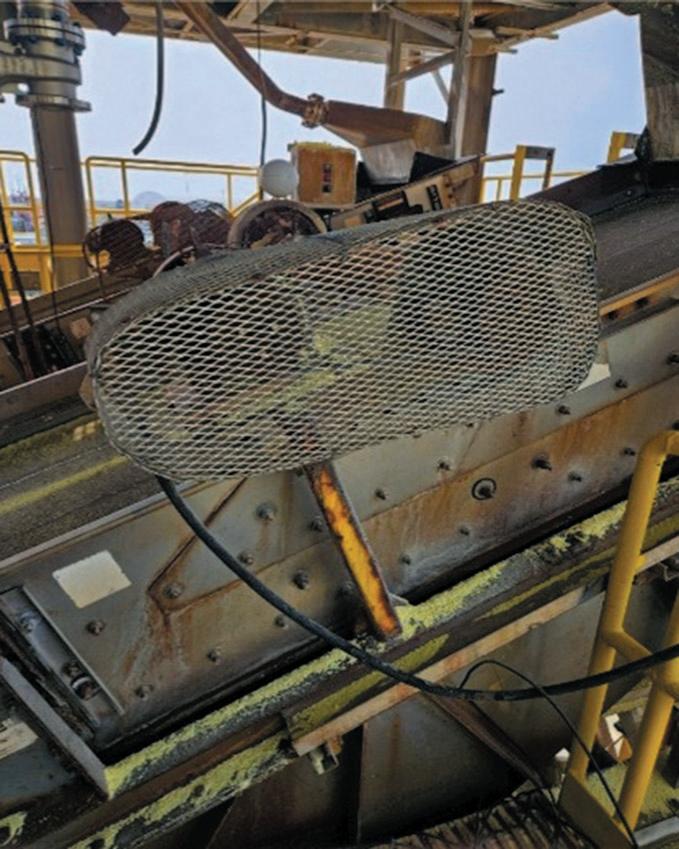
access to moving parts and pinch points, presenting potential risks to personnel.
ASGCO® engineering conducted detailed point cloud scanning across all areas that presented potential risks. This advanced technology allowed for precise evaluation and design of safety solutions, ranging from free-standing guarding to conveyor structure mounted guarding, as well as custom machine guarding.
The customer was more than satisfied with ASGCO’s comprehensive safety solutions, recognizing the added value and peace of mind the engineering team delivered. By addressing each area with tailored solutions, the result was a safer, more secure work environment that reduces hazards and improves overall operational safety.
For more details on ASGCO’s Custom Guarding Solutions, please see ‘Protecting cargo and workers: the role of ASGCO’s Custom Guarding Solutions in modern
ports,’ on p92 of this issue.
A defining feature of ASGCO’s success is its commitment to innovation and continuous improvement. The company’s engineering team works closely with customers to design products that solve specific problems in the field, using technology like 3-D point cloud laser scanning, and laser alignment services.
One of ASGCO’s most recent innovations is the Continuous Secondary Blade (CSB) Cleaner, designed to maintain constant belt contact and consistent cleaning pressure, even as the blade wears. This reduces maintenance intervals, improves cleaning performance, and extends overall equipment life. Options are available with and without tungsten carbide tips to tackle the toughest applications.
Additionally, ASGCO continues to invest in its in-house manufacturing capabilities, with a state-of-the-art steel fabrication facility in Nazareth, PA. This vertical integration allows for quicker turnaround, customized designs, and better-quality control.
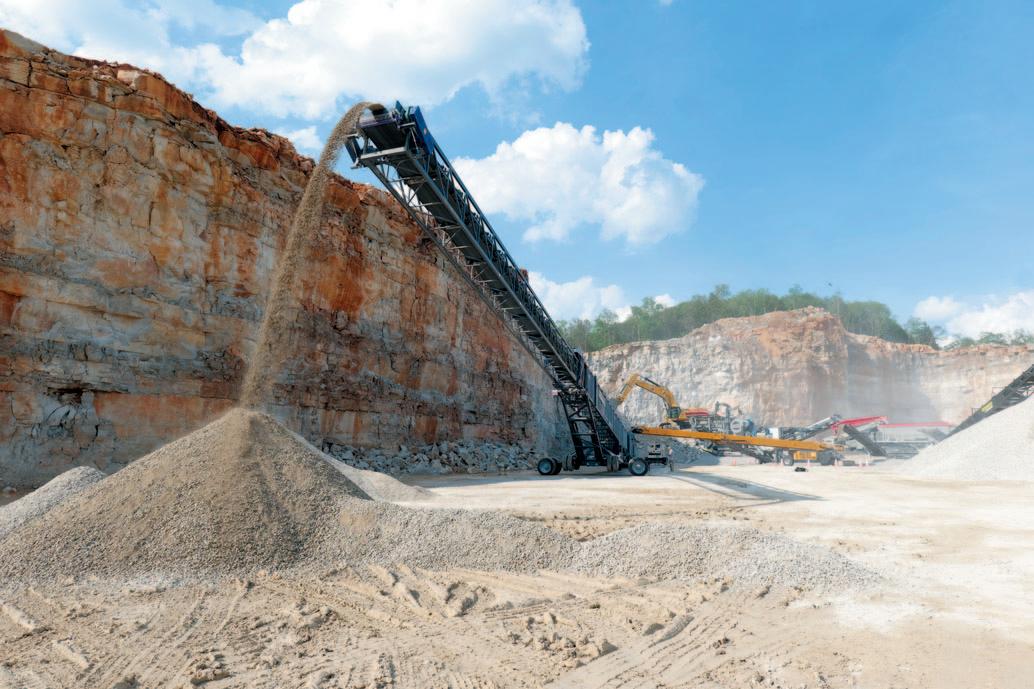
ProStack®, a major manufacturer of bulk material handling equipment, has launched the new TW 36-150, a 150ft (46m) radial telescopic conveyor. Designed specifically for the North American market and manufactured at the facility in Mt Vernon, Missouri, the TW 36-150 delivers excellent stockpile capacity with tool-free deployment.
The TW 36-150 has been engineered for multiple stockpiling applications including quarrying and mining, with features designed to maximize efficiency and ease of use. With a 150ft (46m) telescopic reach and radial capability, it delivers stockpile capacity that exceeds
48ft10in (14.9m) in height and accommodating up to 102,696 cubic yards (78,517m3) of material.
To meet the demands of the North American market, the TW 36-150 is fully road towable across the region and comes with a tow hitch as standard. A key highlight of this new product is its
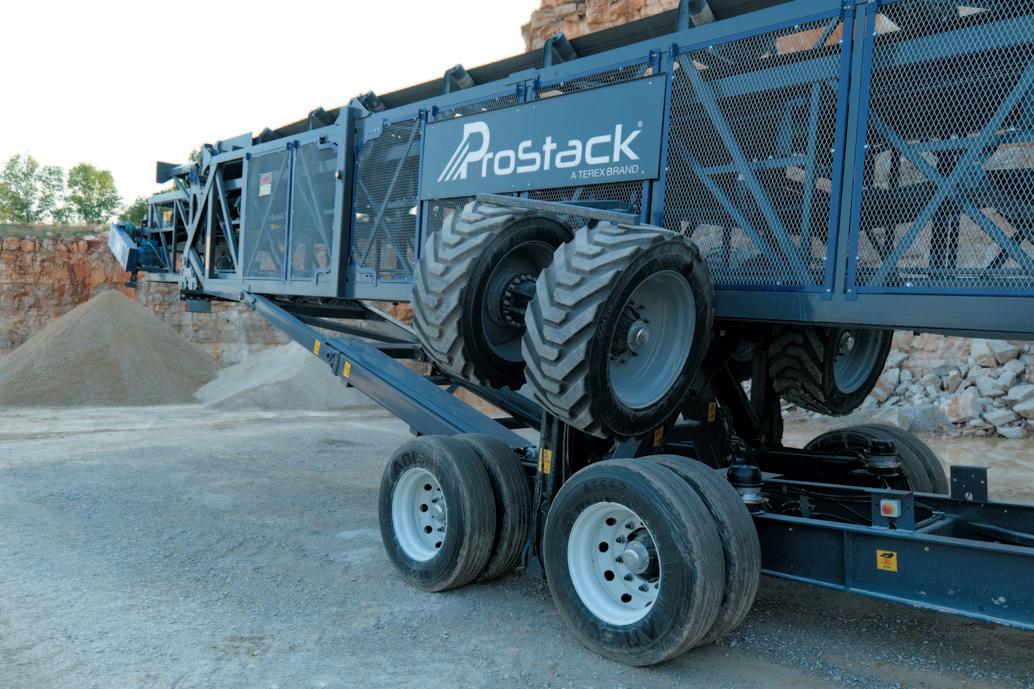
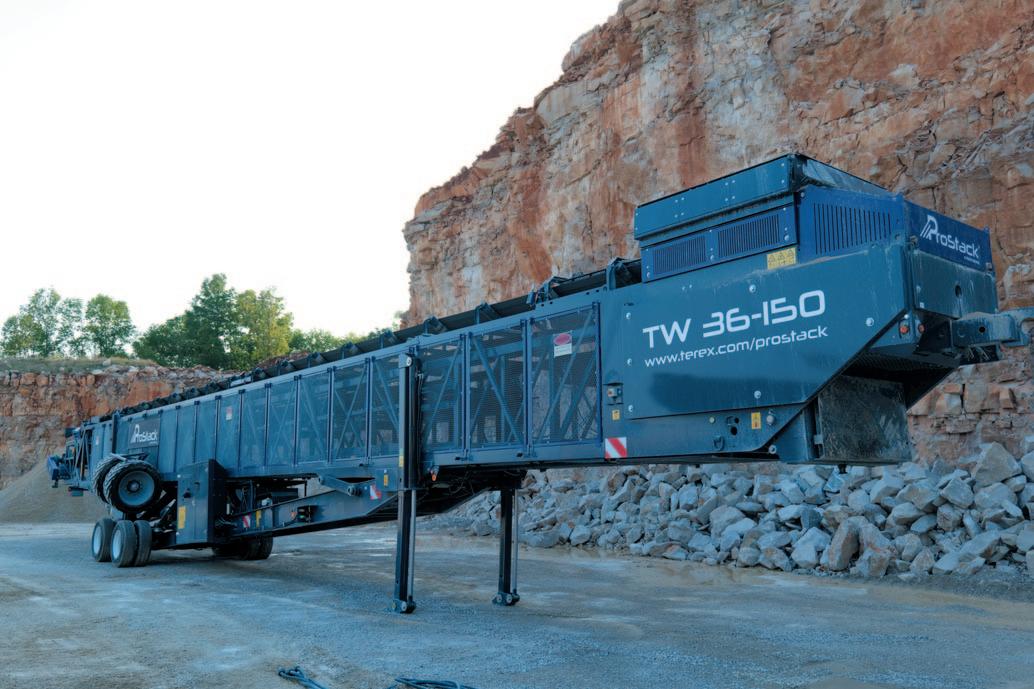
manufacturing location at Mount Vernon, a 100,000ft2 manufacturing facility purchased by Terex to support the growing need for mobile conveying equipment in North America. The facility enables ProStack conveyors to be transported directly to dealer locations by road, bypassing the need for on-site building.
The TW 36-150 also incorporates innovative design features that improve product quality, operational efficiency, and ease of use. These include standard automated stockpile patterns to help minimize material segregation, degradation, contamination, and compaction and deliver superior material quality and more efficient stockpiling. Furthermore, its user-friendly layout and tool-free deployment streamline setup eliminates the need for additional
tools or labour, reducing downtime in the field.
“This 150ft conveyor has been purposebuilt from the ground up for the North American market,” said Neil Robinson, Business Line Director for ProStack. “Our team focused on delivering a machine that not only meets the rigorous demands of high-production operations, but is also easy to transport, quick to deploy, and userfriendly. With tool-free setup and a range of reliability-driven features, the TW 36-150 is a game-changer for operators looking to maximize efficiency with minimal downtime.”
The TW 36-150, available to order now with delivery from ProStack’s Mount Vernon facility in Missouri, is the latest addition to the ProStack range of
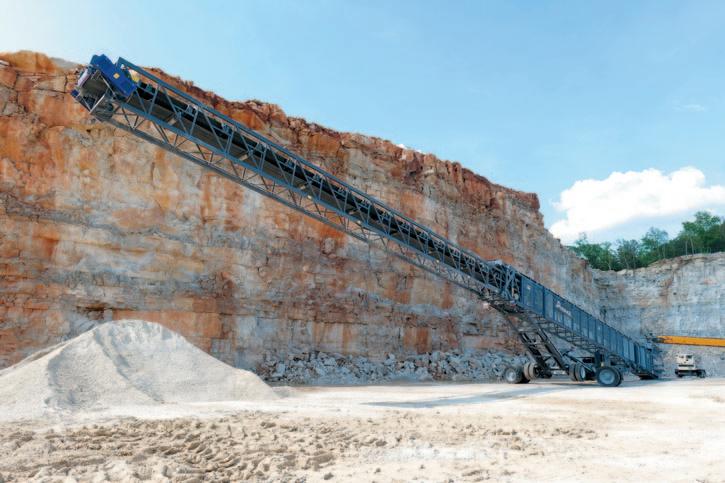
telescopic conveyors, which spans from 140ft to 190ft and caters to applications including quarrying and shiploading. Local service and maintenance are available through the ProStack North America distribution network that boasts factory trained technicians across 30 locations across the region, providing customers with receive prompt, professional support wherever their operations are located.
Terex Corporation is a global industrial equipment manufacturer of materials processing machinery, waste and recycling solutions, mobile elevating work platforms (MEWPs), and equipment for the electric utility industry. It designs, builds and supports products used in maintenance, manufacturing, energy, minerals and materials management, construction, waste and recycling, and the entertainment industry. Terex provides best-in-class lifecycle support to customers through its global parts and services organization, and offers complementary digital solutions, designed to help customers maximize their return on their investment. Certain Terex products and solutions enable customers to reduce their impact on the environment including electric and hybrid offerings that deliver quiet and emission-free performance, products that support renewable energy, and products that aid in the recovery of useful materials from various types of waste. Terex’s products are manufactured in North America, Europe, and Asia Pacific and sold worldwide.
This article explains how improvements to the design of bucket elevators — specifically key components including chains, belts, buckets and fixings — are opening up new opportunities to reduce operating costs, improve performance and extend equipment longevity in industrial materials handling applications, writes Claus Weyhofen
Bucket elevators are used to transport bulk materials in many industries and are particularly common in applications such as cement production, mining and agriculture. Moving tonnes of materials every hour, this equipment is subject to high stresses and loads and requires regular maintenance and replacement of worn parts to continue operating at its best.
However, the original equipment manufacturer (OEM) may charge a premium for replacement parts and incompatible components and fixings meaning it is not easy to switch to an alternative supplier. Being forced to replace components with like-for-like also limits the opportunity to upgrade equipment by benefiting from new designs coming onto the market. This is particularly detrimental to efforts to reduce energy consumption, improve sustainability and extend equipment life.
Obsolescence is another challenge. If the original bucket elevator manufacturer withdraws from the market or stops offering support for a particular model, obtaining replacement parts becomes increasingly problematic. Sometimes the only recourse is to invest in an entirely new elevator, with all the cost and disruption
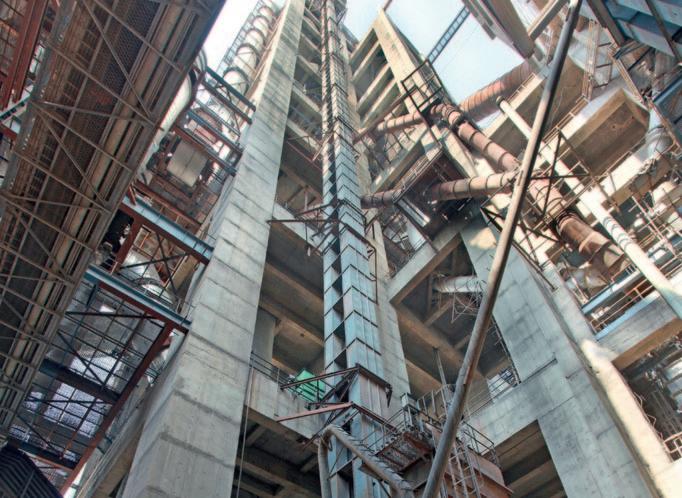
this involves.
BEUMER Group has reassessed the key components of its bucket elevators, redesigning and improving critical parts such as chains, belts, buckets and fixings to deliver numerous performance and cost benefits. Crucially, the new designs have focused on making BEUMER’s high-quality original parts compatible and interchangeable with those of third party equipment manufacturers — extending supplier choice and giving bucket elevator operators more opportunities to plan and implement improvements to their material handling systems in the most cost-effective way.
Bucket elevator chains are traditionally manufactured using inner and outer links
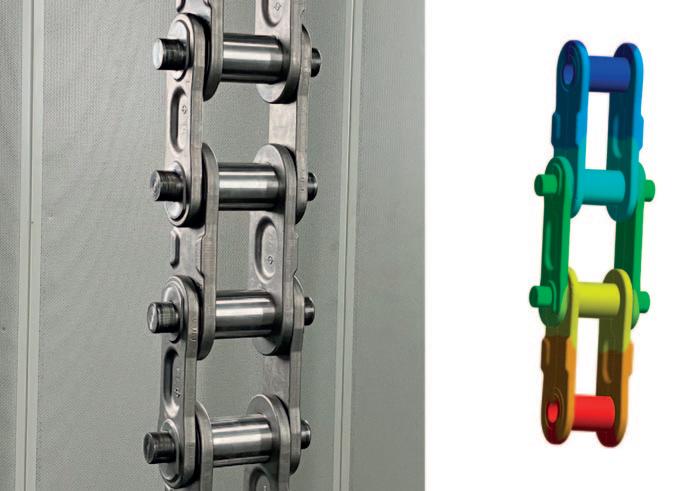
Figure 1: drop forging delivers material optimization and weight advantages in bucket elevator chain design.
that are fabricated from steel plates. With a uniform thickness of up to 20mm, these links can be quite heavy, which affects the efficiency of the bucket elevator.
BEUMER has opted to use drop-forged link plates for its new BZK Series of chains. This manufacturing process offers weight and strength advantages, because the material thickness can be varied to optimize the design of each link. For example, in the areas around the holes that need to absorb maximum forces from the bush and bolt during lifting, the material can be made thicker, whereas material elsewhere can be of thinner gauge (see Figure 1).
The new link design with variable material thickness optimizes the weight and strength of the chain without affecting the breaking loads. Compared to the old steel plate chains, the drop-forged design offers weight savings of between 11% and 27%. This means there is less dead weight to carry, which improves the chain’s lifetime. The reduction in dead weight allows for the use of the same chain over longer centre distances, and in certain cases, enables the application of a smaller chain with a lower breaking strength, where previously a chain with a higher breaking strength would have been necessary. This in turn reduces the resources required during manufacture, delivering a more sustainable design.
Vibration caused by the polygon effect of the chain is a common cause of welding seam failure on elevator buckets, and another problem that BEUMER eliminates with the new design. The elongated bolts and loose fit with bucket attachments on the BZK Series feature a larger hole
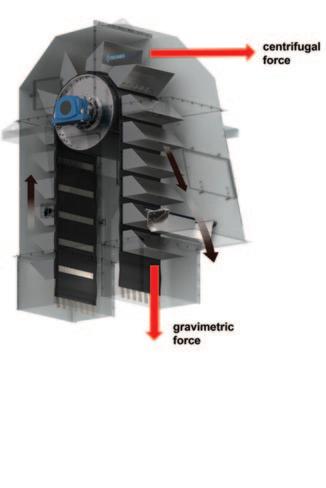
Figure 2: bucket elevator design, using centrifugal and gravimetric forces, has not changed for decades. BEUMER Group has now optimized the design of the elevator bucket.
diameter than that of the bolt, creating a gap that absorbs vibration to prevent welding seam failure. Enabling bucket elevators to be run smoothly at speeds of up to 2m/sec, this feature improves throughput and contributes to greater material handling efficiency.
The new optimized chain design allows the construction of bucket elevators with lighter chains but with the same breaking strengths as the previous heavier models. In addition, the reduced dead load enables operators to create systems capable of carrying higher loads. Crucially, the new chains can be supplied with a range of attachments, including drive rings and tension rings, that enable them to match the fixing arrangements on third party elevator buckets, so upgrading existing chains with the latest lighter and stronger alternative is possible without any equipment modifications, saving costs by allowing existing buckets to be reused.
In order to achieve vertical transportation and discharge of bulk materials, bucket elevators deploy a chain or belt mechanism and use a mixture of centrifugal and
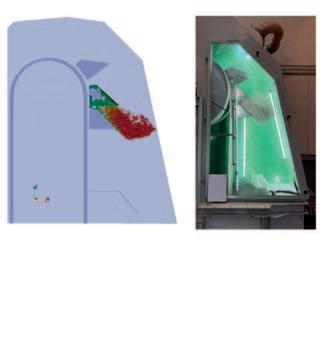
3: digital DEM mapping (left) and field test of a bucket elevator in Beckum, Germany (right).
gravimetric forces to discharge materials at the desired height (see Figure 2). Despite their widespread use, traditional bucket elevator designs have not changed significantly for decades and suffer from inefficiencies, particularly in terms of material backfall.
Backfall is the phenomenon whereby material falls back into the elevator boot instead of discharging cleanly. Backfall rates of up to 10% were considered to be normal, but can exceed 20% in some applications. Backfall material needs to be recovered, which means it is being lifted twice. This leads to higher operational costs, has an adverse impact on safety, and increases carbon footprint due to additional energy use and high wear rates on elevator buckets and casings.
BEUMER Group conducted a detailed study to understand the performance characteristics of bucket elevators. Digital DEM (Discrete Element Method) techniques and real-world testing were used to analyse the discharge behaviour of different materials and the impact of bucket design on efficiency (see Figure 3).
The research led to a significant redesign of the elevator bucket, altering its shape, fixing points and tipping points (see Figure 4). The new design enables higher operating speeds, increases capacity and optimizes the discharge parabola, ensuring materials pass cleanly over the discharge
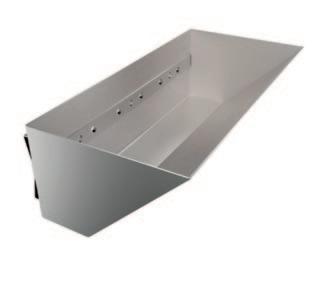
4: BEUMER’s new bucket design with a lower fixing point.
lip. Adjustments to the bucket profile and the fixing point on the belt or chain result in earlier activation of centrifugal forces and improved discharge efficiency.
THE NEW BUCKET DESIGN OFFERS SEVERAL ADVANTAGES:
Up to 98% efficiency by optimizing v discharge at the elevator head.
Up to 100% increase in conveying v capacity.
Up to 25% weight saving on tall bucket v elevators.
Reduced energy consumption due to v less backfall.
Improved discharge efficiency with v adjustable speed ranges.
Lower operational expenses through v reduced wear and tear.
A smaller carbon footprint due to v lower energy requirements and less steel usage.
On chain bucket elevators, combining the new bucket design with the new chain design will bring cumulative operational and performance improvements, particularly in high temperature applications where the use of a chain bucket elevator is essential.
However, chain bucket elevators have relatively high capital and maintenance costs (see Figure 5), so for applications with lower operating temperatures, many operators find that belt bucket elevators are the more economical option.
The good news is that the new bucket design can be incorporated into belt bucket
A major cement producer in India is already benefiting from BEUMER’s new bucket design. The customer’s bucket elevator used to trip frequently and was therefore not able to run continuously at the required speeds of 310tph. It also exhibited heavy backfall, causing serious damage to the descending strand and abnormal wear and tear to the buckets. There were also issues with high noise and dust levels.
A retrofit using the new BEUMER buckets eliminated unwanted stoppages altogether and there was no longer any measurable backfall at the elevator head discharge. Noise and dust emissions were drastically reduced. By swapping out its OEM buckets for the BEUMER alternative, the customer increased capacity by 11% and reduced energy consumption by 14%. Feed rates increased to 343tph.
5: Capital and lifecycle costs
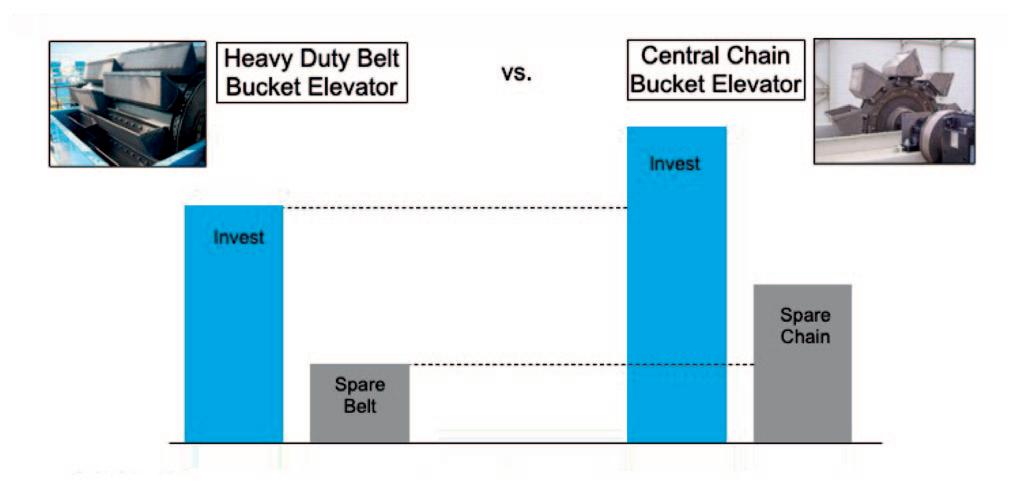
those
elevators as well — extending the operational and productivity benefits to other material handling applications. For good measure, BEUMER has also addressed some critical issues around belt design and bucket fixings that previously deterred some operators from using belt bucket elevators to transport coarse materials.
Belt bucket elevators are capable of lifting coarse materials in bulk in applications where operating temperatures are less than 130°C in continuous operation and maximum 150°C for short-term peaks, but there are several inherent design weaknesses that need improvement.
Elevator belts rely on inner steel cords to give them strength and endurance. This not only allows them to lift heavy loads but also prevents bucket fixation bolts tearing through the belt. If the steel cord gets exposed to the atmosphere and/or humidity, corrosion can quickly set in and dramatically reduce the belt’s strength. Inner steel cords on belts without steel cord-free zones frequently get damaged during punching or waterjet cutting of the fixation holes that are necessary to bolt the buckets onto the belt. These cut steel cords are then exposed to the atmosphere and the risk of corrosion. The outer rubber belt masks the problem, so operators can experience sudden and catastrophic belt failure (see Figure 6).
BEUMER has solved this problem by designing a steel rope belt that incorporates steel cord-free zones (see Figure 7). Rather than using a continuous steel mesh, the steel strands in the belt run in parallel along its length, with broad steel
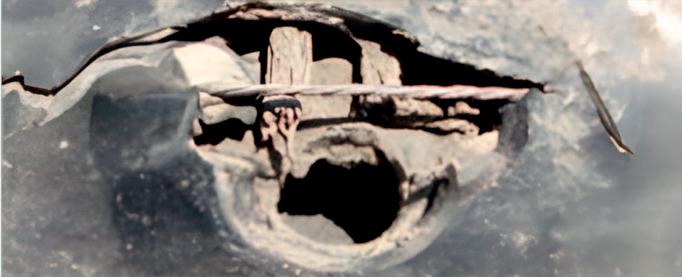
to
cord-free strips positioned at regular intervals. These steel cord-free zones correspond to the fixings on the new buckets, which means they can be bolted onto the belt without weakening it. BG Belts are available in strengths of between 1,000 and 3,300N/mm.
BEUMER belt bucket elevators featuring this design are operating successfully in many standard and heavy duty applications. One example is a roller press at a cement works in Argentina. The belt bucket elevator is used for recirculation of materials with grain sizes up to 40mm and lifts up to 1,100tph (tonnes per hour) in operating temperatures of 90°C (peak 100°C).
ABRASION
Another inherent weakness in existing belt bucket elevator designs is the gap between the rear of the bucket and the belt surface where material can become trapped, particularly at the point the bucket travels over the tail drum and the gap is at its widest. Once the bucket returns to the horizontal position this gap closes and the trapped material abrades the surface of the rubber belt, causing the belt to deteriorate.
A new seal design provides a simple solution, closing the gap between bucket
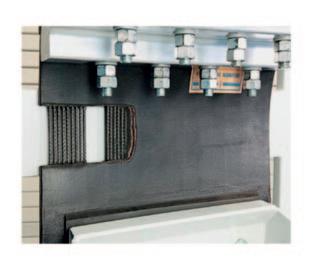
Figure 7: BEUMER BG Belts feature steel cord-free zones to prevent bucket fixings from compromising their steel core.
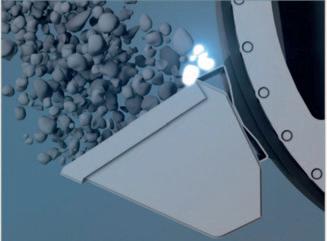
Figure 8: A new seal design ensures that materials can no longer cause abrasion by becoming trapped between bucket and belt. The seal is compatible with BEUMER and third party buckets.
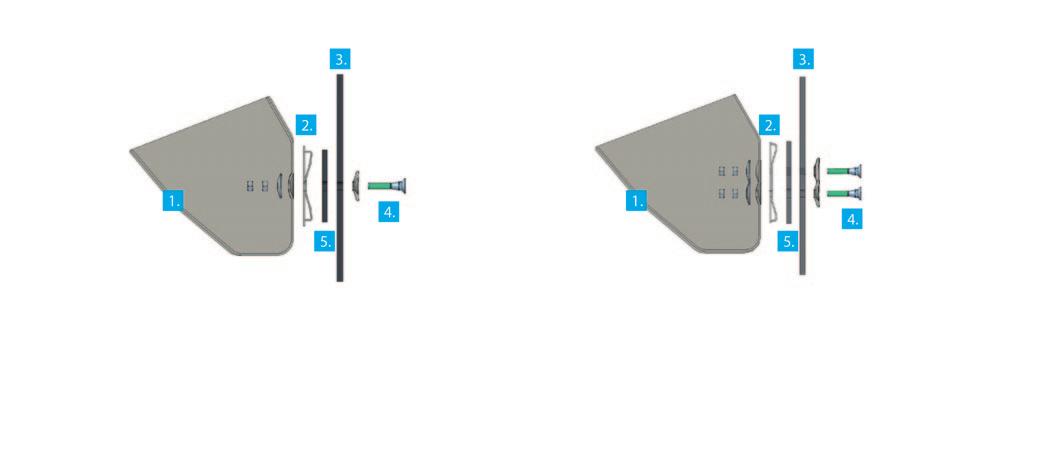
Key:
1. Existing bucket without bucket processing
2. BEUMER adapter plates for connecting the existing buckets to the BEUMER belt
3. BEUMER steel cord belt with wire-free zones in the area of the bucket mounting
and belt and preventing material ingress so that abrasion cannot occur (see Figure 8).
One further concern with belt bucket elevators is the fixings themselves. It has already been shown how bolts can create a weak point in the belt. Another issue with many bucket elevator designs is that they only use plate head screws — fixings that place high strain at specific points on the belt and make it more prone to ripping and tearing.
BEUMER addressed this issue by using a drop-forged fixing plate to spread the stresses. It can accommodate the M12 bolts commonly used by third-party manufacturers. In combination with the steel cord reinforced BG Belt, this fixing plate means that buckets cannot be pulled out of the belt. And for operators who wish to retain their existing third party buckets but take advantage of the new BG Belt design, an adaptor plate is available. As well as making it easy to combine components from different manufacturers, this adaptor plate will also optimize the profile of the steel cords in the belt as the bucket passes over the drum, further improving performance (see Figure 9).
The advancements in the design of chains, belts, buckets, and fixings detailed in this article significantly enhance options available to those involved in the operation and maintenance of bucket elevators. Benefits include:
Lower costs: the plug-and-play v solutions for chain, belt and bucket replacements simplify maintenance and reduce costs. They also give operators the ability to retrofit belt elevators into existing chain elevator
4. BEUMER bucket assembly material with segment fastening and countersunk head screw
5. BEUMER back-up plate for reducing the wear and tear of the belt
housings, offering unprecedented flexibility to deploy more costeffective technology without having to commit to a complete system replacement. This significantly reduces capital expenditure (CAPEX) and lowers operating costs (OPEX) — particularly as chain replacements are approximately twice as expensive as belt replacements.
Enhanced performance and v reliability: the improved component designs can increase capacity and performance and reduce the likelihood of component failure, as well as reducing mean time between replacements (MTBR) to optimize uptime.
Safer working environment: stronger v and more reliable chains, belts and fixings equate to fewer equipment failures, which reduces the risk of harm. Minimizing vibration and backfall reduces exposure to noise and dust to improve wellbeing.
More sustainable operations: v optimized design, better strength to weight ratios and less rework thanks to minimal backfall equate to significant reductions in energy consumption and waste, contributing to a lower carbon footprint and wider sustainability goals.
Greater flexibility: the new designs v are compatible with equipment from various manufacturers, facilitating upgrades without the need for major modifications. The flexibility to switch from chain to belt systems and combine existing and new components enables operators to respond with agility to changing market demands.
Greater vendor choice: BEUMER’s v
vendor-neutral designs open up the market, allowing operators to choose from a wider range of suppliers and combine equipment to meet their budgetary and operational requirements. The increased competition should result in lower costs and liberate operators from being tied to one OEM.
In summary, BEUMER Group’s innovative approach to the redesign of critical components in chain and belt bucket elevators has empowered operators with better technical choices. These choices not only lead to improvements in performance and reliability but also enhance operational safety and reduce both capital and operational expenses. The ability to choose from a broader range of suppliers due to the vendor-neutral design further drives down costs and fosters a more competitive market. As a result, BEUMER’s solutions are not just a series of technological improvements; they are driving a step change in supply chain relations that will lead to a more efficient, cost-effective and sustainable future.
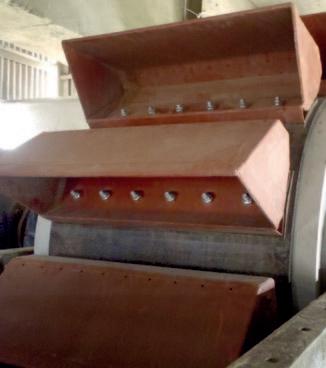
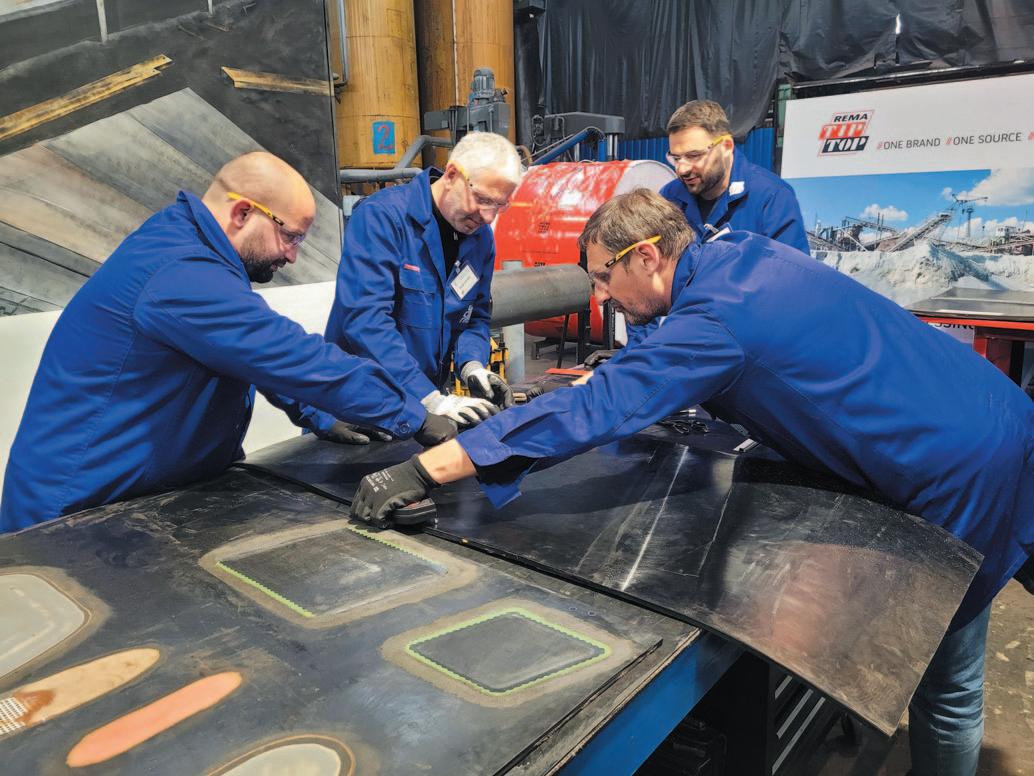
In conveyor technology, conveyor belts are essential for the safe and efficient transport of materials. The professional splicing of belt ends is crucial to performance. Whether the splicing is mechanical, cold-bonded, or vulcanized: the quality of this endless splice significantly impacts the operational safety, ease of maintenance, and costeffectiveness of a conveyor system. Henryk Myrzik has worked as a conveyor technology expert at REMA TIP TOP for nearly 20 years. In this interview, he discusses the most important aspects of professional belt splicing and shares insights on proven processes.
Q: Mr. Myrzik, could you please explain what is meant by the term ‘splicing’ in the context of conveyor belts?
A: ‘Splicing’ is a high-quality technique for joining conveyor belts. This technique is used when installing a new conveyor belt or replacing a damaged section. The type of conveyor belt determines the splicing method used. Here are two examples: hot vulcanization is used to securely splice two

Henryk Myrzik.
sections of steel cord belts. For fabric belts with several plies, however, a cold process can be used.
Both processes aim to ensure a uniform thickness of the belt structure along its entire length.
This significantly reduces mechanical loads during the conveying process, such as those from scraper systems. As a result, the belts and other components have a longer service life. The basis for this is the use of so-called stepped or finger splices. With finger splices, the prepared ends of the belt layers interlock — comparable to the interlocking fingers of two hands. When placed on top of each other in opposite directions, they create a wide, stable connection zone that enables homogeneous force transmission.
Q: In what ways does a professionally executed splicing process contribute to the safety and efficiency of a conveyor system?
A: A professional splicing process benefits the safety and efficiency of a conveyor system in several ways. For example, if the conveyor belt is damaged by wide cracks, it does not need to be replaced entirely. Not only does an insert save costs, it is also sustainable.
Additionally, such a repair usually takes less time. This means that the time during which the conveyor belt cannot be used is
shorter than if a new order has to be placed. However, it is important that splices are carried out professionally because a poor splice can cause the conveyor belt to tear. Consequently, not only can conveyed goods be lost, but people and the system structure can also be damaged.
Q: What are the different splicing methods?
A: There are three main methods: mechanical bonding, hot vulcanization, and cold vulcanization. Mechanical bonding is only suitable as a temporary solution. We recommend hot vulcanization, cold splicing, or cold bonding. In hot vulcanization, the ends of the belt are joined using heat and pressure with the help of a vulcanizing press. This process can be used with all belt types. However, there are exceptions if the belts are very small or narrow, in which case a vulcanizing press cannot be used. In this case, cold splicing is the right choice. Here, two belt parts are joined together using special adhesives. It is important to strictly adhere to the curing times.
Q: How long does a professional splicing of conveyor belts take?
A: Of course, this depends heavily on the strength and width of the belt, the size of the team, and the local conditions. Larger connections take around 24 hours, while smaller ones take around four hours.
Cleanliness is a key success factor, though it is not always easy to maintain in the close proximity of conveyor belt systems. On average, splicing the belt ends on these systems takes two shifts. During the first shift, the surfaces are prepared, sanded, and cleaned. During the second shift, the conveyor belt ends can be assembled and vulcanized.
Q: How do you recognize high-quality work, and what characteristics do you look for?
A: These processes require extensive experience with different materials and selecting the right ones. Additionally, the specified processing and curing times must be followed precisely. For instance, if the temperature is incorrect during vulcanization, the joints may open again after just a few weeks. Another indicator of quality is the absence of bubbles after vulcanization.
Q: How durable are belt splices?
A: As a general rule, the splices last as long as the belt — typically eight years. We continuously test the quality of our splicing materials and their adherence to standard specifications in the laboratory. Our results are 40% higher than the standard specifications, and our material has a longer storage life compared to that of other manufacturers. Each joint is labelled to show when and by whom it was created, so
the joint’s age can be checked at any time. Additionally, the MCUBE system from REMA TIP TOP helps system operators detect damage before it occurs and causes failures through live monitoring.
Q: Does REMA TIP TOP offer customer training courses on professional conveyor belt splicing?
A: Yes, our customers’ qualifications are very important to us. We regularly offer training courses at our customers’ premises around the world, including in Germany, the Middle East, Chile, and Brazil. We have teams around the world to support customers in maintaining their conveyor systems in the best possible way, ensuring sustainable and cost-efficient operation.
REMA TIP TOP is a globally operating system provider of services and products in the field of conveying and treatment technology as well as tyre repair. The company has a global service network and offers a wide range of rubber products, linings and coatings for both the industrial and automotive sectors.
Over almost a hundred years, the company has built up unique expertise in materials development and industrial services and is active in the sectors REMA Conveying, REMA Surface Protection and REMA Motion. DCi
Following the successful opening of the new Warehouse No. 32 in May – a state-of-the-art flat grain storage facility with a capacity of 64,000 tonnes – HES Gdynia has now commissioned three new grain silos with a combined storage capacity of 21,000 tonnes.
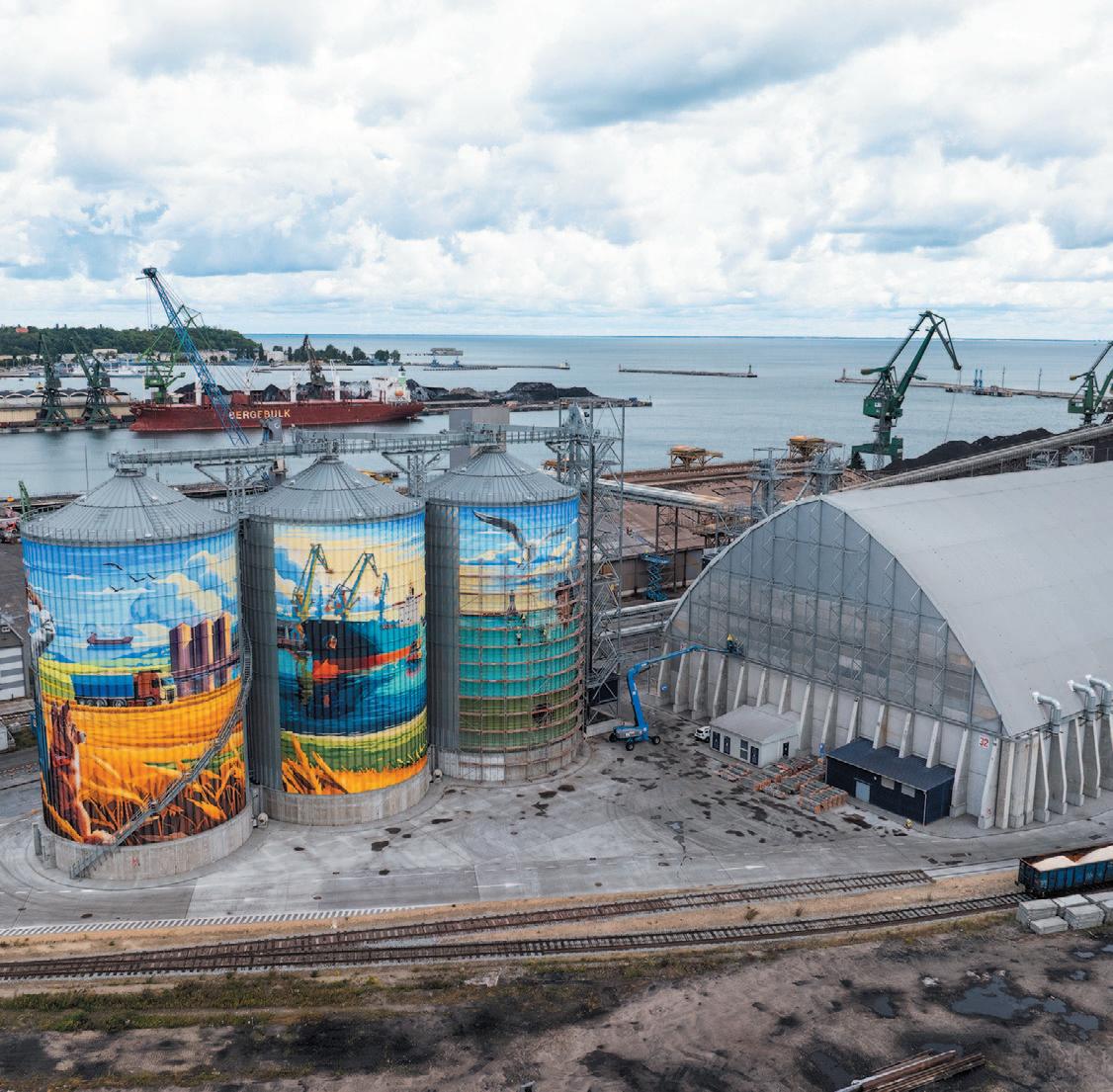
HES Gdynia marks completion of major agro investment: Poland’s largest grain handling hub now fully operational
HES Gdynia announced the completion of the second phase of its landmark investment at the Śląskie Quay, Port of Gdynia — establishing the largest grain handling and storage facility in Polish seaports, with a total capacity of over 240,000 tonnes.
Following the successful opening of the new Warehouse No. 32 in May — a stateof-the-art flat grain storage facility with a capacity of 64,000 tonnes — HES Gdynia has now commissioned three new grain silos with a combined storage capacity of 21,000 tonnes.
Together with its existing infrastructure, this expansion represents a fully integrated and automated grain logistics
hub serving the Baltic region.
HES Gdynia’s new facility now offers: 85,000 tonnes of automated grain v intake and dispatch capacity, A fully integrated conveyor system v connecting storage, handling, and vessel loading operations, designed for optimal efficiency and minimal environmental impact, four separate compartments in the flat warehouse together with three vertical silos for simultaneous storage of different grain types, modern truck and railcar loading/discharge points stations with bottom-discharge technology, reducing road congestion and
supporting sustainable supply chains, capability to efficiently handle both Panamax and Capesize vessels.
This investment boosts HES Gdynia’s grain export storage capacity by 150%, and annual grain throughput by up to 1.5 million tonnes. It strengthens Poland’s position as a key agricultural exporter, while delivering future-ready infrastructure to meet global market demands.
For over three decades, HES Gdynia has been a trusted partner for Polish agriculture. With this milestone, the terminal reaffirms its commitment to sustainable growth, innovation, and operational excellence.
Designed to protect: Our domes ensure dust-free operations, keeping your production clean and the environment even cleaner.

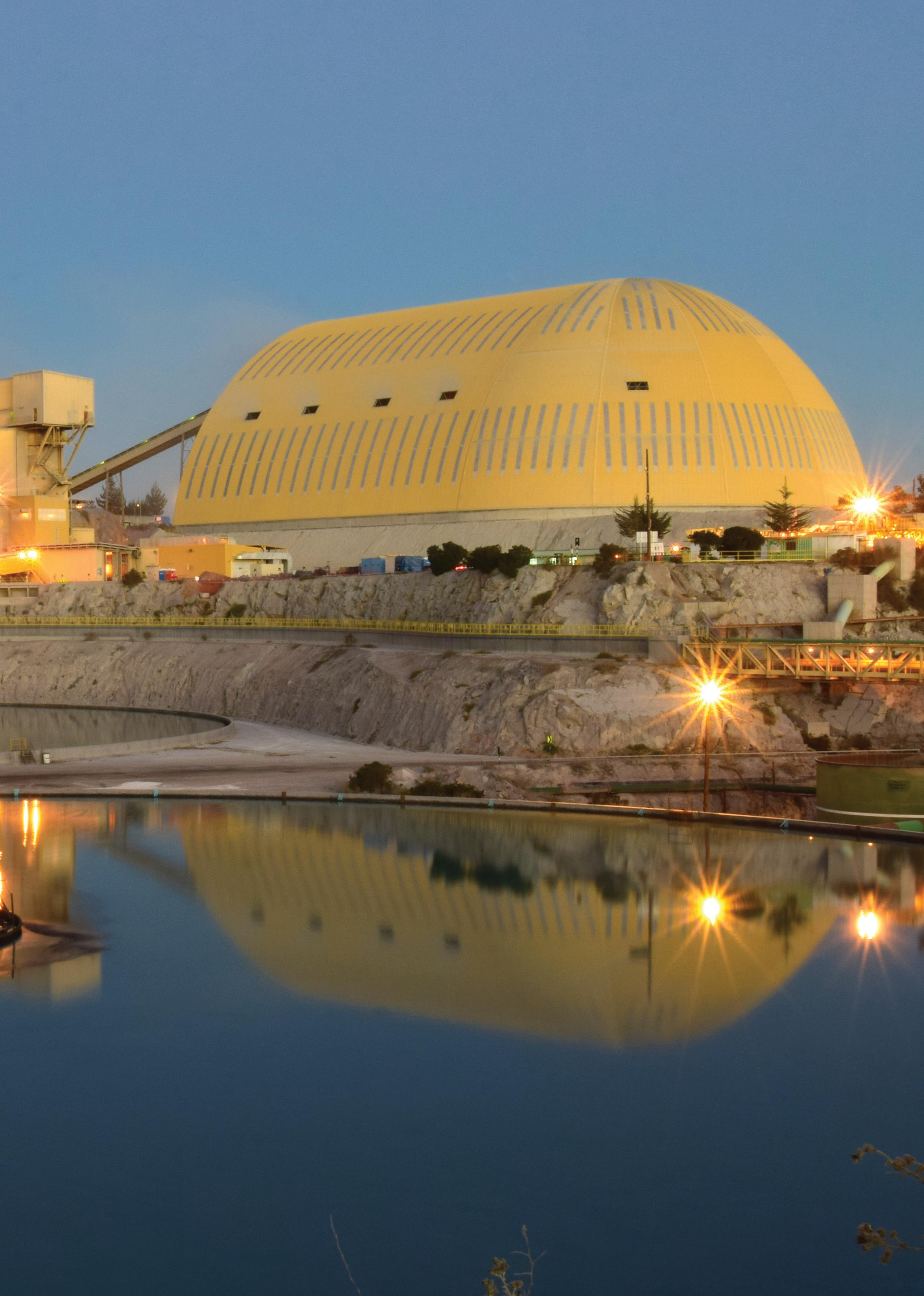

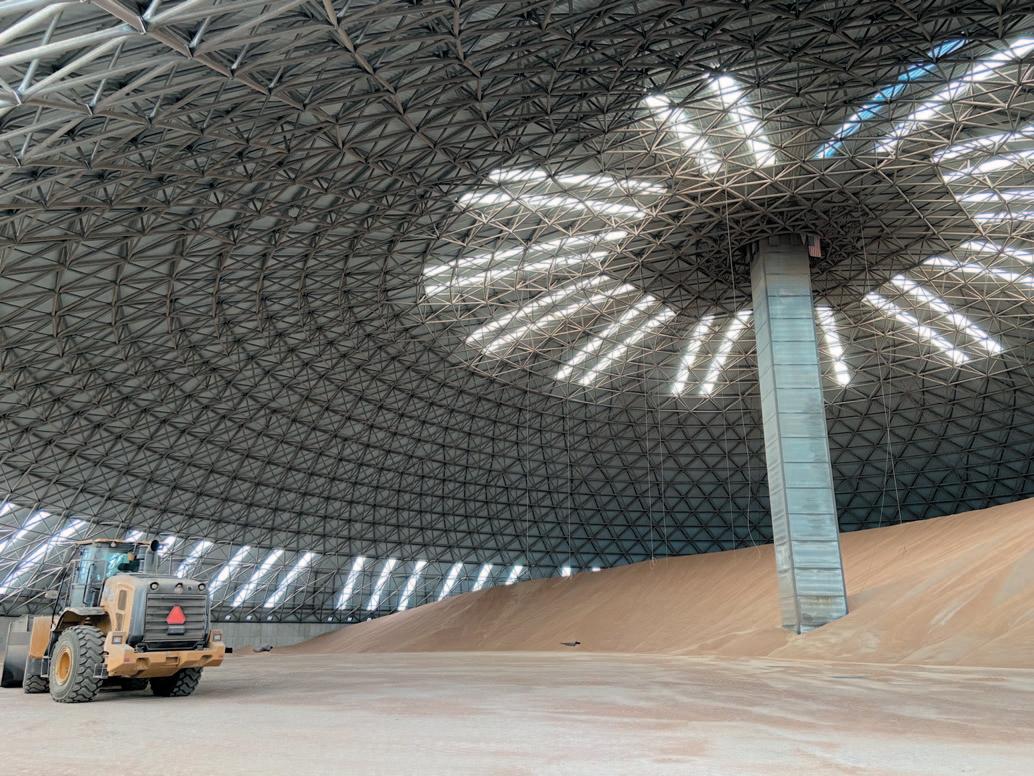
Agridome™ is Geometrica’s long-span dome system designed to convert ground piles into permanent grain storage, writes Alejandro Algara, Commercial & Technical Manager, Geometrica Inc . Built from galvanized steel and designed for efficiency, the Agridome offers a practical solution for agricultural operations looking to expand capacity, protect grain quality, and simplify handling.
The Agridome is designed to transform outdoor grain piling areas into long-term, fully protected storage while fitting seamlessly into current operations. Instead of requiring new layouts or costly site modifications, the dome can be erected around existing infrastructure such as bunkers, towers, or conveyor systems.
This retrofittable approach means that operators can continue using their familiar loading and reclaim methods, while gaining the benefits of permanent coverage. Inside the dome, the wide-span, column-free interior allows loaders, conveyors, and other machinery to move freely, improving efficiency and reducing bottlenecks. The
open floor plan is particularly valuable during peak harvest periods, when speed and reliability are critical.
The structure also incorporates translucent skylight panels, which provide daylight inside the dome and reduce reliance on artificial lighting. Combined with a weatherproof envelope designed to
resist snow, wind, and other regional conditions, the Agridome protects stored grain while ensuring year-round usability.
Although each project can be fully customized, Geometrica also offers standard Agridome sizes that shorten
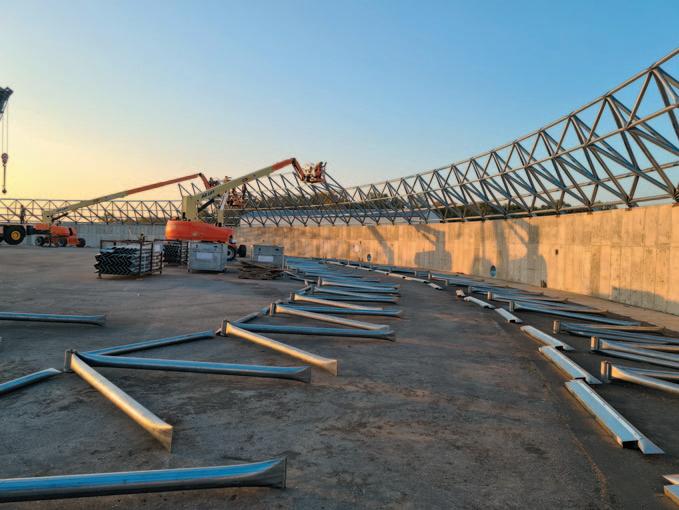
design lead times and reduce costs. For mid-size domes, ranging from 250 to 350 feet in diameter, typical holding capacities range from 1 million to 2.6 million bushels, depending on grain type and pile geometry.
Larger domes can be designed to enclose up to 10 million bushels, providing scalability for operations of all sizes — from regional co-operatives to export terminals. For facilities running out of bin space, the ability to cover several million bushels under a single enclosure offers a clear advantage in storage density and simplified logistics, while also serving as a complement to existing bins and extending the usefulness of the infrastructure already in place.
The Agridome employs the same design principles Geometrica has refined over decades of long-span dome construction. At the heart of the structure is a triangular lattice, the most stable and efficient geometric configuration for spanning large areas without interior supports. The primary structural elements include:
Tubes: cold-formed ERW steel, galvanized inside v and out to ASTM standards.
Hubs: solid aluminum alloy extrusions with v serrated slots, engineered to develop the full yield strength of connected tubes.
Purlins: pre-galvanized steel, factory-fixed to v support the cladding system and provide a smooth surface for panel installation.
Cladding: pre-formed galvanized and painted v steel panels, covering approximately 94% of the dome surface. The remaining 6% is clad with translucent fibreglass-reinforced plastic (FRP) skylights to provide integrated natural lighting. All joints are mechanical, ensuring efficient assembly on-site and durable long-term performance.
From the moment an order is placed and design information is provided, the Agridome supply process follows four stages, typically completed in about 31 weeks:
1. Design: lasting about six weeks, engineers generate the dome geometry, apply structural loads, and perform analyses to confirm performance. A design report and drawings are then submitted for client review and approval.
2. Fabrication: conducted at Geometrica’s Monterrey, Mexico plant, with the first truck of components ready about ten weeks after design approval. Fabrication continues until all components are shipped.
3. Freight: structural components, cladding, and accessories are carefully packed into steel frames and crates, labelled for traceability, and shipped.
4. Installation: dome erection begins immediately with the arrival of the first shipment. For a mid-size dome (250–350 feet in diameter), installation and cladding typically take around 12 weeks, depending on crew size and equipment. Local workers are supported by a Geometrica technical consultant
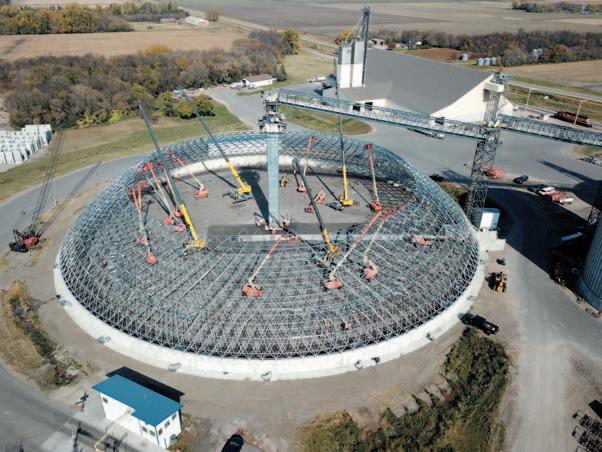
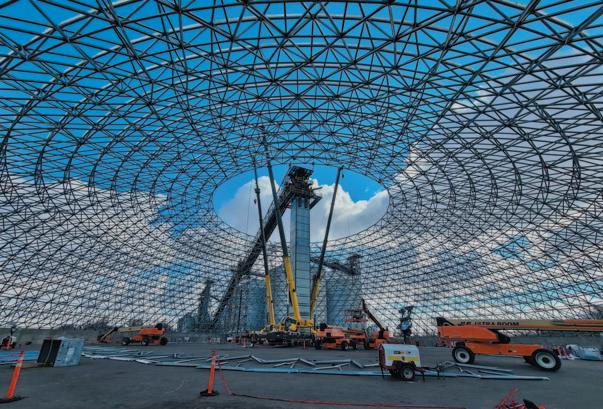
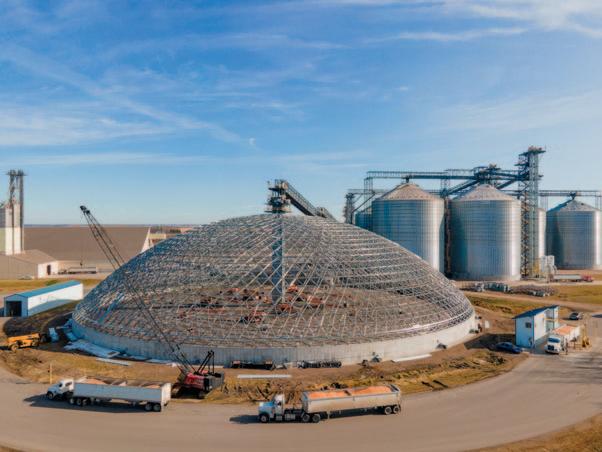
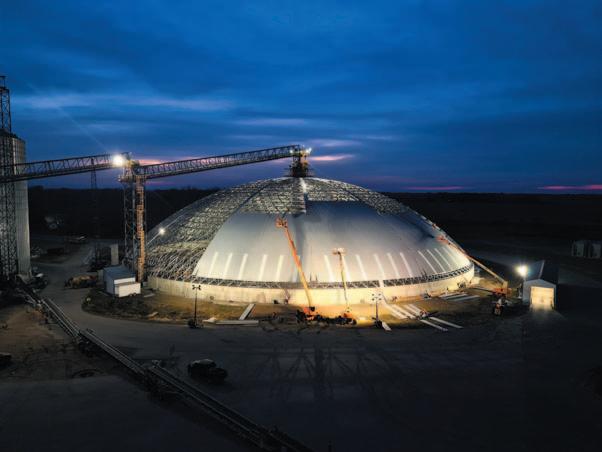
and installation expert to ensure proper assembly.
The Agridome is more than a protective cover; it is a structural investment that extends the usefulness of existing infrastructure. By retrofitting directly into current grain handling systems, the dome minimizes disruption, shortens construction schedules, and turns temporary storage into permanent capacity.
For agricultural operators, this means an upgrade rather than a replacement. Existing reclaim tunnels, conveyor systems, and loading practices continue to function as before — only now within a weatherproof, highcapacity enclosure designed for decades of service. This continuity is especially important for co-operatives and terminals that cannot afford downtime during peak harvests.
At the same time, the Agridome can consolidate what would otherwise require multiple bins into a single, highcapacity structure. Fewer access points, fewer transfer steps, and greater storage density translate into lower operating costs over the long term.
With a lead time of just over half a year from order to completion, the Agridome offers a clear path from open ground piles to long-term, efficient, and secure storage.
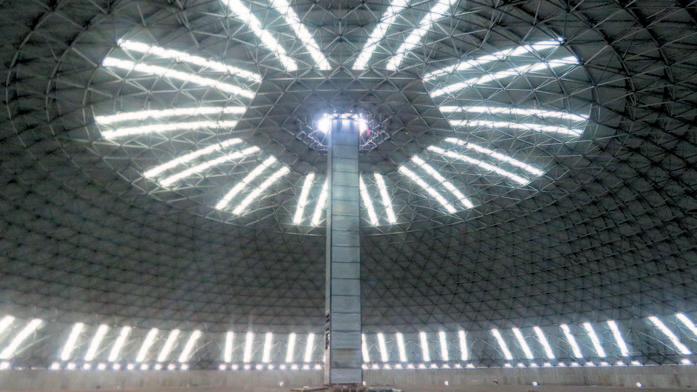
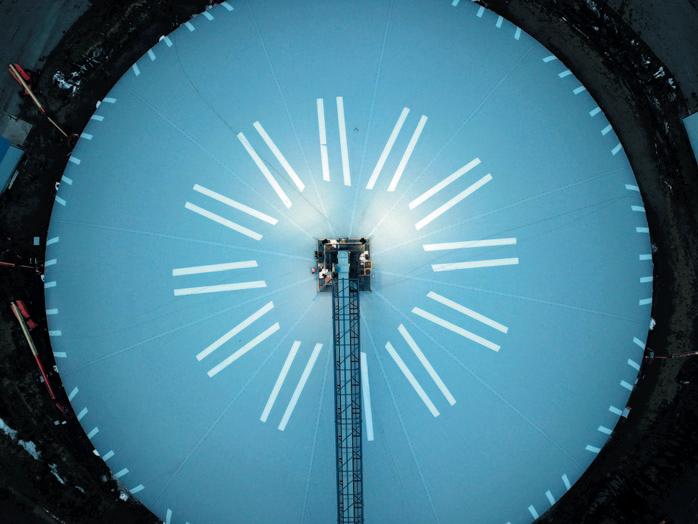
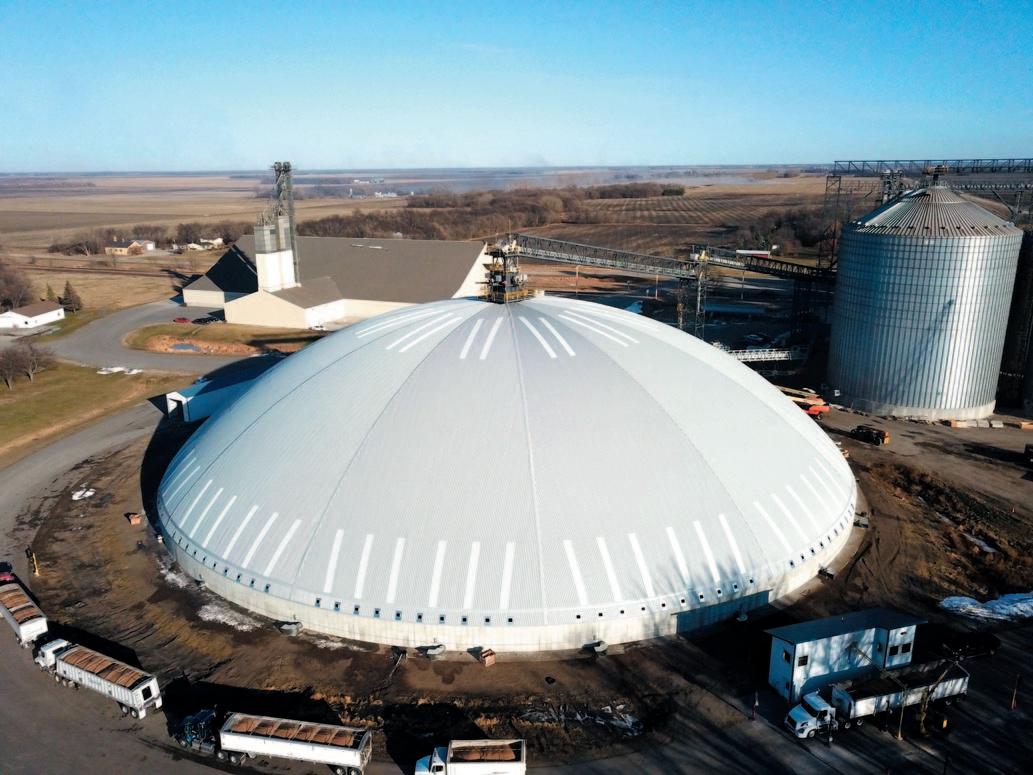
The delivery of an enclosed Eurosilo for coal and a second Eurosilo for storing flux is part of a major expansion programme at one of the production plants of one of India’s leading steel producers.
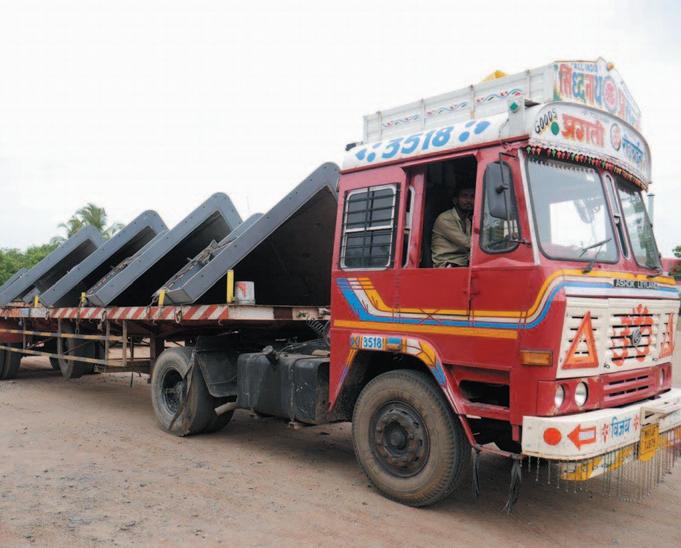
ESI Eurosilo and Aumund are pressing full speed ahead with the design and delivery of two Eurosilos at a steel plant belonging to one of India’s leading steel producers. This ground breaking project marks the first delivery of ESI Eurosilo within India. Being part of the worldwide AUMUND Group enables Eurosilo to successfully execute this project and to provide a suitable supply chain for the local demand
The delivery of an enclosed Eurosilo for coal and a second Eurosilo for storing flux is part of a major expansion programme at one of the production plants. This requires an upgrade of the internal logistics to ensure increased and continuous production at the steel mill. Flux is a vital additive for the melted steel to control the quality of the specific type of steel. Maintaining an uninterrupted production flow is also one of the design principles for the Eurosilos. “To support the production process, we need to combine optimal storage capacity with high throughput. The new silos must fit within the limited space at the steel plant and another requirement is enclosed storage, due to the heavy rainfall during the wet monsoons.” explains Richard Spaargaren, Sales Director at Eurosilo.
After the kick-off meeting with AUMUND, December last year, the project is steadily progressing well within the schedule.
“The engineering of the silos is finished, including detail engineering, at AUMUND in India and we’re now in the procurement and production phase. AUMUND has already delivered the steel parts that need to be embedded in the concrete foundations.
“Eurosilo will supply the key components, such as the screw conveyors with bearings and drive line, discharging system and firefighting foam spray system. AUMUND will supply complete electrical components, all other bought-outs including drives, mechanical and steel parts sourced & produced in India. Therefore, we need to convey our expertise to the AUMUND team and interact as clear as possible to tackle challenges and to ensure everything is up to specification. I’m happy to work with Project leader Sarath Kumar and Engineering manager Ajith Pandian,” Hanskamp added.
The project started about a year ago, when Eurosilo Sales Director Richard Spaargaren approached Sudip Kumar Hazra, Vice President-Business Development & Sales AUMUND Group. Together they started to work on a solution with a combined offer that would fit for all parties concerned. Sudip Kumar Hazra explained: “We studied every detail of the project to see what we contribute effectively from AUMUND in India, while ensuring that everything we proposed to the customer can be delivered as agreed.”
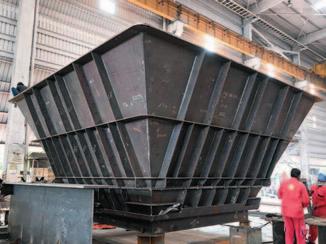
Richard Spaargaren stresses the great amount of trust that makes the collaboration work: “You can only do this if there is a high level of trust in the expertise from both sides. Also, the interfacing with the customer by AUMUND is invaluable for this project.”
The overall focus is to produce and ship all major components by the end of 2025 until March 2026. The assembly and installation of all components in the finished silos will take place during mid2026. Both silos are planned to be commissioned by the end of 2026. A challenge to be reckoned with are the heavy rain falls in the region, which may hinder the overall construction activities at the site. Hanskamp explains: “The wet monsoons this year effected the schedule of site activities but as per the client team they are well determined to catch up soon as per project plan”.
The Eurosilos will be used for coal as a fuel, and for flux (an additive) that upgrades the quality of the steel. Limited space at the steel plant, protection against the heavy rainfalls and continuous, automated output, are the key drivers to choose the proven Eurosilo system. This successful collaboration offers new opportunities for the Indian market. Eurosilo is looking forward to, in this way, take the Eurosilo system to more regions in the world.
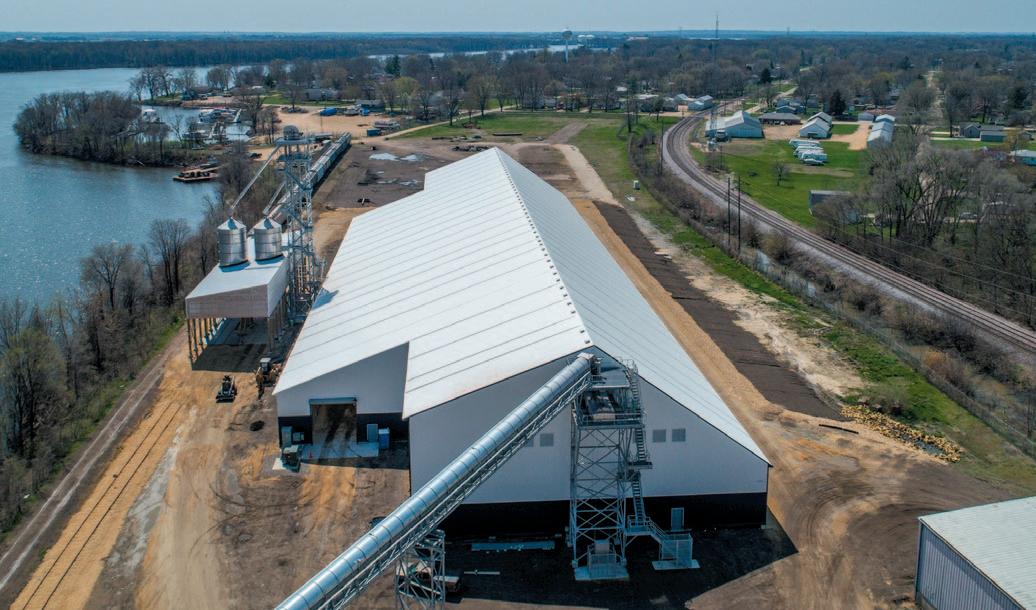
Tension fabric buildings have been used for decades as a practical and cost-effective way to enclose and protect bulk materials. In addition to their natural resistance to corrosive elements, the uninsulated fabric roof provides a high level of translucency, allowing natural daylight to flood the building’s interior and supply more than enough light for routine daytime work.
For many years, polyethylene (PE) was the go-to choice for fabric membranes on these structures, while polyvinyl chloride (PVC) was generally reserved for higherbudget applications. That changed when Legacy Building Solutions introduced a new PVC fabric designed to offer better performance and longevity, all while remaining comparable in price to standard PE fabric.
This upgraded PVC uses a tough woven base fabric that is finished with primer and lacquer layers. Independent testing has confirmed that it maintains more than twice the tensile strength of PE, meaning the fabric structure can achieve several additional years of service life.
The design possibilities of tension fabric structures took a major leap forward about 15 years ago when Legacy Building Solutions pioneered the combination of fabric cladding with rigid-frame engineering. Before that point, these buildings almost always relied on hollowtube, web truss frames. The transition to
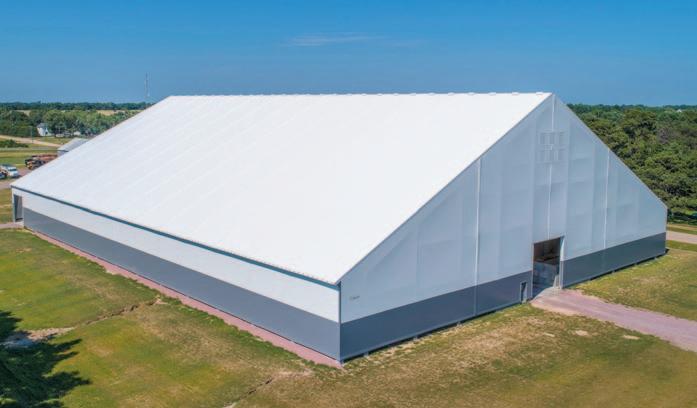
structural steel I-beams immediately elevated the credibility and engineering reliability of fabric buildings.
With a rigid-frame system, customers can fully tailor a building to their exact requirements, just as they would with traditional construction. Each project begins with a clean-sheet design to achieve the precise dimensions and floor plan needed. This capability has been especially valuable in the dry cargo sector, where long clear spans are frequently necessary to provide ample storage volume.
Structural steel I-beams make these wideopen spaces more economical to achieve, resulting in facilities with unobstructed floor areas for storage, loading, and vehicle movement.
When an operation calls for an
overhead conveyor or additional loads to be carried by the structural frame, those demands can be incorporated into the original I-beam design. Engineers use finite element analysis to strengthen the exact points where added support is required, avoiding unnecessary over-engineering of the entire structure and thereby reducing cost. By hanging conveyors overhead, operators preserve the full floor area for flat storage, truck access, and other day-today operations.
One of the reasons that fabric became a preferred cladding for enclosed storage buildings is that it is inherently corrosionproof, which makes it much more suitable than steel cladding for housing salt,
fertilizer, potash, or other corrosive commodities. The fabric itself will never rust, but the supporting structure beneath it could be at risk if not properly protected.
Hot-dip galvanizing is commonly used to guard against steel corrosion, but it is not always enough in harsh environments. Galvanizing can slow down the rusting process but does not stop it altogether. To offer more durable protection, Legacy incorporates blasting and painting lines in its own manufacturing operations, which allows the company to apply a highperformance epoxy coating to steel beams. This coating creates a protective barrier that prevents corrosive dust from ever reaching the steel surface.
Enhanced building design is one thing, but making sure the product is fabricated exactly as intended is another. Along with offering rigid-frame engineering, Legacy has also improved quality assurance by taking steel beam production in-house rather than relying on outside suppliers.
Historically, quality control in the fabric building industry was difficult because parts and materials often came from multiple vendors and were shipped straight to the jobsite. To solve that problem, Legacy invested in its own fabrication facilities and employs Certified Welding Inspectors to oversee each I-beam produced for every project. Having onsite inspectors provides the flexibility to adapt designs on the fly when customers request changes that impact the final design of the
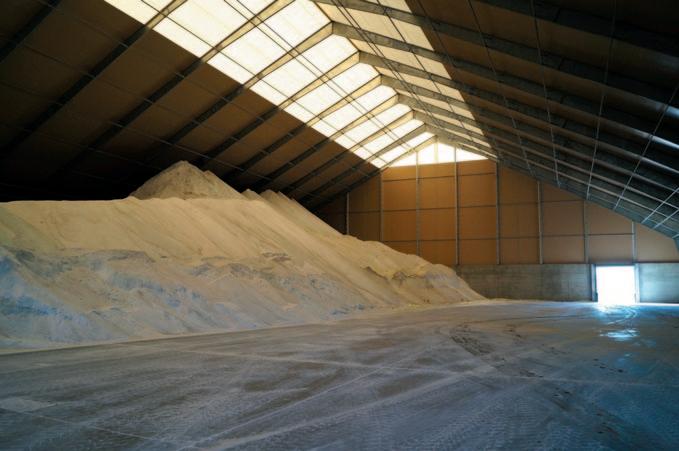
Legacy has its own onsite facilities to weld steel framing members and create fabric panels. Keeping these manufacturing services in-house shortens the supply chain and reduces reliance on outside entities. There are fewer steps in the process, fewer vendors to deal with, fewer shipping modals, and fewer ways for a building to be delayed.
Having full control of manufacturing allows the team to plan projects more efficiently. Because they know exactly when building components will be ready and where they need to be delivered, schedules can be better optimized. When potential delays are pinpointed, it’s easier to find workable solutions. By controlling every phase — from design to manufacturing to installation — Legacy is able to
consistently deliver some of the fastest project turnaround times in the industry.
Today’s tension fabric structures have become the preferred solution for many dry bulk operations, striking the right balance of flexibility, resilience, and longterm performance. With rigid-frame I-beams, they provide engineering freedom to customize layouts, integrate operational equipment, and keep floor areas clear and usable. Epoxy coatings ensure long-lasting corrosion protection, while durable PVC fabrics extend service life. Add to that faster construction schedules, lower costs, and proven performance in harsh conditions, and these buildings offer unmatched value for modern enclosed bulk material storage.
A major order in North Africa underscores the growing demand for TAKRAF’s bulk materials handling systems, designed to handle complex bulk materials reliably and safely and with minimal environmental impact.
TAKRAF Group continues to see buoyant global demand for its storage and handling technologies with the signing of a landmark contract for the supply of seven stockyard machines for a leading phosphate and fertilizer company in North Africa. This is the second significant order in the region in a short space of time and follows a previous order for mining equipment, comprising four state-of-theart TAKRAF Compact Spreaders, each equipped with an intermediate bridge and
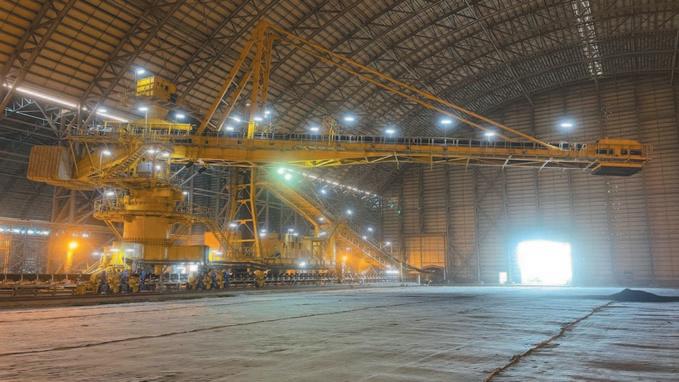
The latest order covers the engineering and supply of seven stockyard machines and includes four TAKRAF Stackers, two
and
While this landmark contract provides the Group with a strong foothold in the
North African region, TAKRAF machines are deployed worldwide, often in the most complex and demanding applications. Under such circumstances, TAKRAF Group’s technologies provide a robust and reliable solution under all climatic conditions, ensuring economical and safe operation and a low impact on the environment.
For example, also in Africa, TAKRAF Group supplied a 400tph (tonnes per hour) portal scraper reclaimer, which required special design considerations to accommodate the unique challenges associated with handling urea in bulk storage. Despite these challenges, the project was completed within the required tight schedule.
The portal scraper reclaimer, which was equipped with a main and auxiliary boom, was delivered for an enclosed storage application for a mega fertilizer plant in Nigeria. Design considerations included sealing all conveyor galleries and transfer towers to avoid moisture entry or exposure of the product to the outside environment. In addition, the portal scraper reclaimer was provided with a ‘de-lumper’ to break the lumps formed during storage.
Four TAKRAF Portal Scraper Reclaimers were supplied for a new multicommodity power plant in Japan. This advanced plant is fired by a combination of thermal coal and woodchips/biomass. The 1,100tph TAKRAF Scraper Reclaimers are located across two sites, conveying material from one warehouse to the other. With this flexibility, the system can be used to restore or if required mix material. Due to the redundancy required — two reclaimers are required to work on the same rail in the same warehouse — a dedicated safety and anti-collision system was implemented.
With a rail gauge of 52m and a doubleboom system in which the main and auxiliary booms are in line, the reclaimers are some of the largest built. Each reclaimer has a dedicated platform to carry a small bulldozer, which it can drop off at any location along the stockpile for cleaning purposes.
Other notable orders have included the supply of eight 1,500tph semi-portal scraper reclaimers and one portal scraper reclaimer over a period of five years to a major Chinese steel producer to operate within covered raw material storage. Four 1,250tph full portal scraper reclaimers were also supplied for a project in Bangladesh.
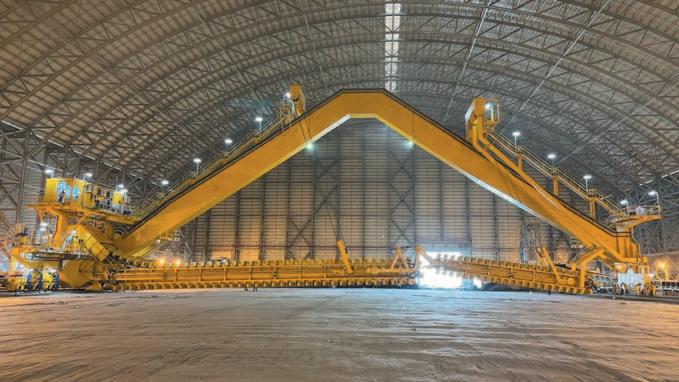
TAKRAF Group’s solutions for the handling and storage of bulk materials in enclosed spaces combine proven technologies with advanced planning, design and production techniques to ensure ontime delivery. Integral to the success of each project is the Group’s expert on-site advice, which takes into account territorial specifics and regulations from the start.
The TAKRAF product range suitable for enclosed storage and conveying covers both stockyard machines and conveyors, with tube conveyors becoming increasingly popular due to their numerous advantages. Also known as pipe conveying, this technology offers flexible routing, reduced transfer points and protection of the environment and material being conveyed from mutual contamination. As these conveyors are prone to belt twisting, they can be equipped with the TAKRAFdeveloped Automatic Belt Training System (ABTS). This patented measurement, control and training device ensures the correct overlap position at the discharge area of a tube conveyor.
TAKRAF stockyard machines suitable for enclosed storage and handling of bulk materials include combined stacker and reclaimers. These fulfill a dual role but also have the ability to operate separately as stackers or as reclaimers. This means they are suited to operations that require flexibility and not simultaneous stacking and reclaiming. Equipped with a bucketwheel boom, they are primarily employed with medium to high or even very high material flow rates.
TAKRAF’s range of bucket-wheel reclaimers includes boom-type machines suitable for medium to very high flow rates; bridge-type machines, which are more suited to applications where blending is important and material needs to be reclaimed with medium to high flow rates;
and drum reclaimers, which are ideal for homogenizing and blending of bulk material for sophisticated downstream processes.
For a fully automatic operation of bulk storages, the Group offers field-proven scraper reclaimer technology, which is being increasingly employed in enclosed storage applications for handling different bulk materials and for longitudinal and circular storages. Either side or portal scraper reclaimers (i.e. full portal and semi-portal reclaimers) or bridge-type scraper reclaimers are available. The choice depends on whether pure buffer storage is demanded or storage for homogenizing and blending of bulk materials for reclaiming is required.
With more than 400 scraper reclaimer installations worldwide, TAKRAF machines are used across nearly all industries and material types, offering high versatility, robustness, efficiency and low operating costs. Additional benefits include gentle material handling and reliable reclaiming of challenging bulk materials, such as sticky or abrasive types.
TAKRAF Group supports its products with comprehensive technical planning services, focusing on solution development, feasibility studies, capacity expansion and refurbishment of existing facilities. Services span the complete supply, erection and commissioning of bulk material facilities chain, as well as project management, quality control, preventive maintenance and modernization.
Thanks to its holistic offering and broad product portfolio, TAKRAF Group is well positioned to meet the growing requirement for enclosed bulk material storage and handling, a demand that is being driven by stricter environmental regulations and the need to protect material from adverse weather conditions.
TAKRAF Group continues to stand by its motto: “Innovation out of tradition – It pays to talk to a specialist!”
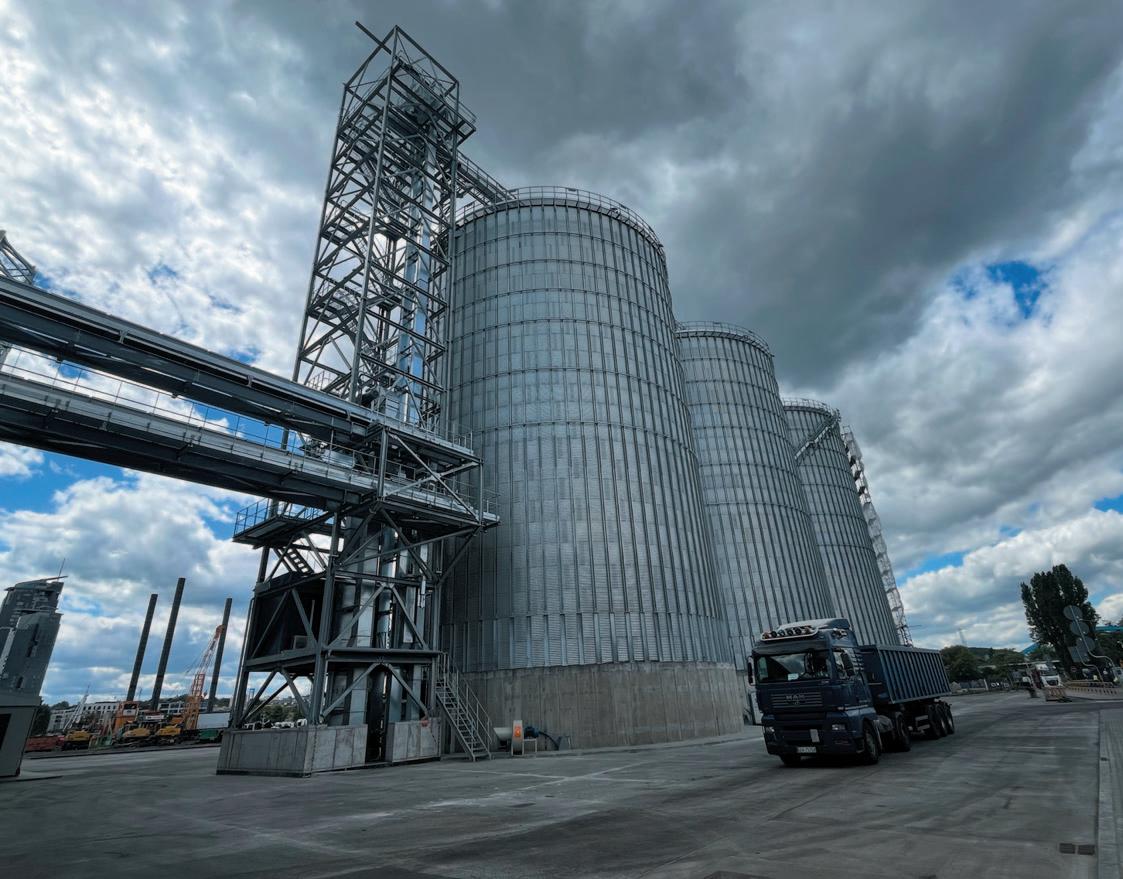
The HES Gdynia Bulk Terminal in the Port of Gdynia has recently completed a substantial investment aimed at significantly enhancing Poland’s grain export capabilities. This strategic project introduces a new, state-of-the-art grain warehouse and an array of modern silos, marking a pivotal moment for the Polish agricultural export sector and the Port of Gdynia itself.
The initiative directly addresses the systematic growth in the export of key grains, such as wheat and corn, from Poland. By expanding its infrastructure, HES Gdynia Bulk Terminal provides clients and the broader grain sector with increased opportunities for efficient transshipment and storage, reinforcing Poland’s position in global agricultural trade.
The construction of this expansive grain storage facility was a meticulously planned and executed endeavour, spanning
approximately one year from its initial ground-breaking.
Phase 1: Foundation and structural v groundwork (June–November 2023): the project commenced with extensive site clearing and ground preparation. This foundational phase involved the precise construction of numerous concrete pillars and the development of robust concrete walls, forming the primary structure of the warehouse. Heavy machinery, including excavators and cranes, were integral to these early stages, laying the durable base required for the largescale facility.
Phase 2: Framework assembly and v enclosure (December 2023–April 2024): following the groundwork, the focus shifted to the assembly of the warehouse’s metal framework. Workers meticulously connected large metal trusses on elevated platforms, leading to the rapid completion of the main skeletal structure. Subsequently, the distinctive arched roof panels were installed,
Louise Dodds-Ely
giving the warehouse its iconic shape and providing crucial protection for the stored grains.
Phase 3: Silo Construction and v finalization (May–June 2024): immediately after the warehouse’s main structure, the construction of the large grain silos commenced. This involved laying circular concrete foundations, followed by the swift assembly of the tall, cylindrical metal silo structures. The final touches included internal outfitting, preparing the facility for operational readiness.
The completed infrastructure boasts an impressive, combined storage capacity of approximately 85,000 tonnes. This includes:
21,000 tonnes for the newly erected v silos; and
64,000 tonnes distributed across four v chambers within the new warehouse. This substantial increase in storage space is critical for meeting the fluctuating demands
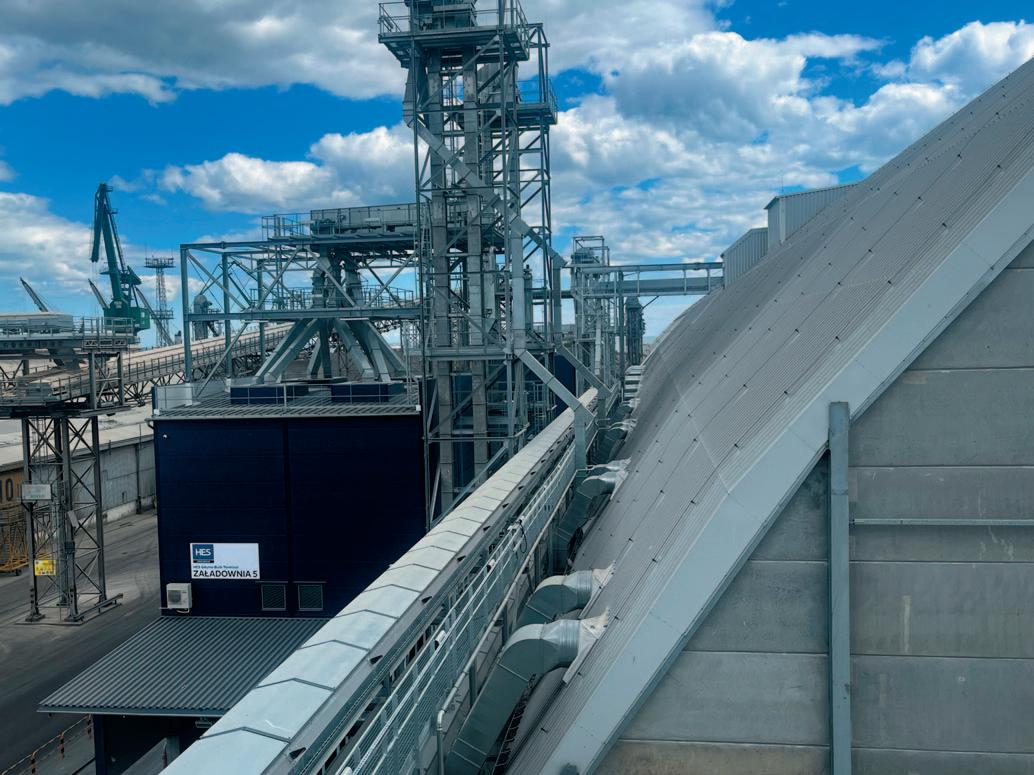
of the grain market and providing flexible solutions for clients. The facility is equipped to handle significant volumes of incoming and outgoing cargo, ensuring smooth and efficient operations within the busy port environment. The intake capacity is 1,000tph (tonnes per hour.
The investment by HES Gdynia Bulk Terminal holds profound significance
beyond just increased storage: Port development: it is a vital v component of the ongoing development of the Port of Gdynia, reinforcing its status as a leading maritime hub in the Baltic Sea region.
Economic growth: the project v contributes significantly to the local and regional economy by strengthening accompanying infrastructure, creating new employment opportuni-
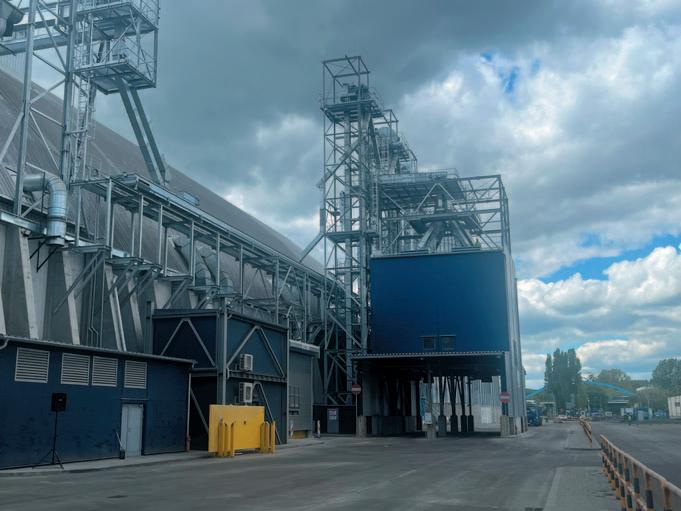
ties, and generating substantial income for the city of Gdynia.
Operational efficiency: the modern v design and robust construction ensure enhanced operational efficiency, allowing for faster and more reliable transshipment and storage of grains. Future-proofing: this investment is a v forward-looking commitment, designed to support future trade flows and facilitate sustained growth in Poland’s agricultural export sector for years to come.
Integrated handling system: each of v the four flat storage compartments and individual silos is seamlessly connected to three discharging points for railcars and trucks via bottomdump pits, as well as to four dedicated truck loading points throughout the warehouse.
Each storage unit is fully integrated into a central system, enabling flexible intake and dispatch operations via a conveyor network that ensures smooth, automated, and synchronized grain handling across the new facility.
This advanced setup significantly improves process optimization, reduces turnaround times, and enhances overall operational capacity.
Cleveland Cascades Ltd located in Thornaby, UK, has been in operation since 1992; it has developed its Cascade Chute System for over three decades. At present, Cleveland Cascades has over 700 operational systems working in bulk handling worldwide.
The cascade chute is a specialist loading system designed to control the flow of bulk materials in mass flow; this is a single stream of material moving in high volume at very low velocity through the chute. Mass flow reduces the liberation of dust and the low velocity down the cascade virtually eliminates the movement of dust-laden air within the surrounding shroud. The shroud is fitted to the outer of the cascade chute and eliminates the adverse effects of side winds.
It is understood throughout the bulk handling industry that cement-based materials can be challenging to handle and have the potential to create large amounts of dust during loading.
The cascade system is designed to control, limit and contain the dust created whilst loading bulk materials. The Cleveland Cascades systems are also designed to protect product quality by minimizing product degradation through the promotion of mass material flow as described above.
The first grain system to be supplied by Cleveland Cascades Ltd was in 1997. Over 60 systems have been designed and supplied since then for applications involving loading grains. The system types include Cascade and both Freefall variations for which Cleveland Cascades supplies either telescopic cones or tubes. The uses for the systems range from large shiploaders to smaller dedicated vehicle/ tanker loaders.
A major consideration for systems loading grains is the hazardous area requirements. It is extremely important that these are understood from the off-set and that the components selected are approved for use by a notified or certified body.
This is respective of the customers’ requirements and also the final destination of the system, as these will determine the project approvals to be satisfied whilst also identifying the applicable standards and regulations.
There are a variety of Cleveland Cascades Systems in use globally loading a variety of organic materials. Some
examples of Cleveland Cascades Systems loading grains are:
Supplied back in 2000, this system has been operating for over 20 years loading grains at Bristol Ports in the UK. During this time the system has seen extensive use and the fact that it is still operating today is testament to the quality of the systems which Cleveland Cascades Ltd supplies.
The system’s end-user reached out to Cleveland Cascades Ltd for support in updating the electrical system installed to ensure compliance with current ATEX regulations. This work was carried out with regards to the original system provided, and not for the shiploader as a whole.
Following an initial site survey visit, the scope of work was determined. Modifications to the electrical layout of the system were proposed whilst notifying the customer which equipment would have to be replaced. ATEX zoning and safe areas were identified and agreed upon during the visit allowing Cleveland Cascades Ltd to source the correct equipment.
A further site visit allowed the works to be completed and verified by one of Cleveland Cascades Ltd CompEx certified commissioning engineers before cold commissioning could take place to ensure that the system was back operational and ready to load again.
This system is a cascade shiploader specified for loading grain and was supplied in 2013 to Derince Port, Turkey. The fully extended length of the system is 18m with an operational retracted length of 3.8m.
The selected cone size for the project was Cleveland Cascades Ltd 1500 GRP
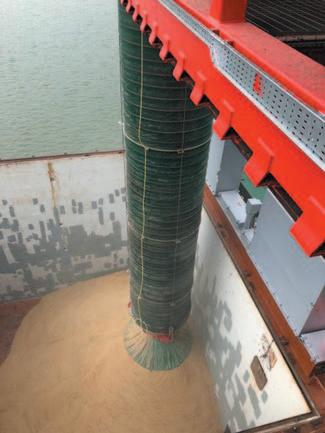
cones featuring 6mm thickness UHMW PE liners. These cones have a volumetric throughput capacity of 2,000m3/hr surpassing the 1,470m3/hr requirements of the customer for the given material specification and feed rate. By selecting a cone with a higher volumetric throughput capacity for the project, it is possible to allow for material surges which may occur. With this in mind, the volumetric throughput is expected to increase to 1,765m3/hr should the shiploader experience a surge in material.
Due to the liner selection and hazardous area requirements, an anti-static system had to be installed to the cones. This is done in the form of static earthing straps being attached between each of the cones, the top strap is then connected to the head chute with the bottom strap being connected to the carrier. This provides an earthing path for the static charge to dissipate during loading operations.
The system was provided with two alternative outlets, these being a heavy rubber skirted outlet and a rotating trimmer spout. These serve unique purposes with the skirt being used for loading in vertical piles, by maintaining contact with the material pile the quality of the product is maintained whilst suppressing any dust generated. Installing the trimmer spout provides the opportunity to reach the further corners of a ships hatch utilizing the available loading space more efficiently.
Three identical cascade shiploader systems were supplied in 2018 by Cleveland Cascades Ltd to load grains in New Orleans, USA. The expected material throughput per annum was declared as 3.4
Cleveland Cascades’ CC767 cascade shiploader, specified for loading grain, was supplied in 2013 to Derince Port in Turkey.
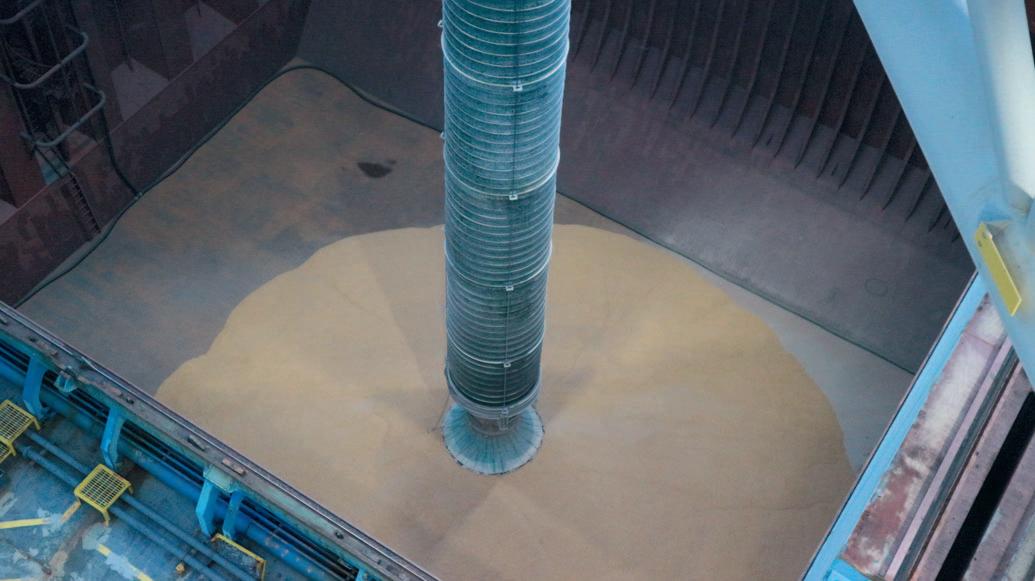
million metric tonnes. Because of the large quantities of material to be loaded through the system, it was of utmost importance to provide a robust loading solution.
A drum winch sourced by Cleveland Cascades facilitates the extension and retraction of the system, this is installed on the customer’s shiploader. In a fully extended state, the system reaches 39.6m long with a retracted length being either 9.0m or 11.6m, depending upon the attachment installed at the outlet, these being a skirt or trimmer spout respectively.
Cleveland Cascades Ltd 1700 GRP cones are used and feature ceramic tiles as a wear liner, the advantage here is that the
wear resistance properties are suited to the abrasive nature of the fast, free flowing abrasive material. The selection of ceramic tiles also eliminates the need for a static earthing system to be installed to the cone stack.
Due to the varying product densities the system was setup such that all of the products could be loaded at acceptable rates. The volumetric capacity of the 1700 cones is 2,800m3/hr and it was advised by Cleveland Cascades that the best results would be achieved at a volumetric throughput of up to 2,600m3/hr.
Both a skirt and trimmer spout were included in the original supply for the
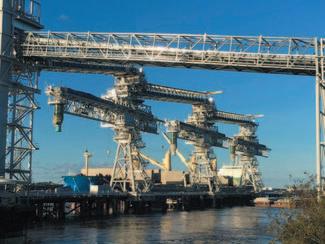
system. Following a commissioning trip by Cleveland Cascades Ltd engineers it was expressed that loading operations had to cease during any rainfall. The solution of implementing hatch chargers was proposed and subsequently designed and supplied to fit the existing system with all the necessary electrical equipment required for implementation to the shiploader PLC. This allowed loading to continue to during adverse weather conditions and reduced the downtime which had previously been experienced.
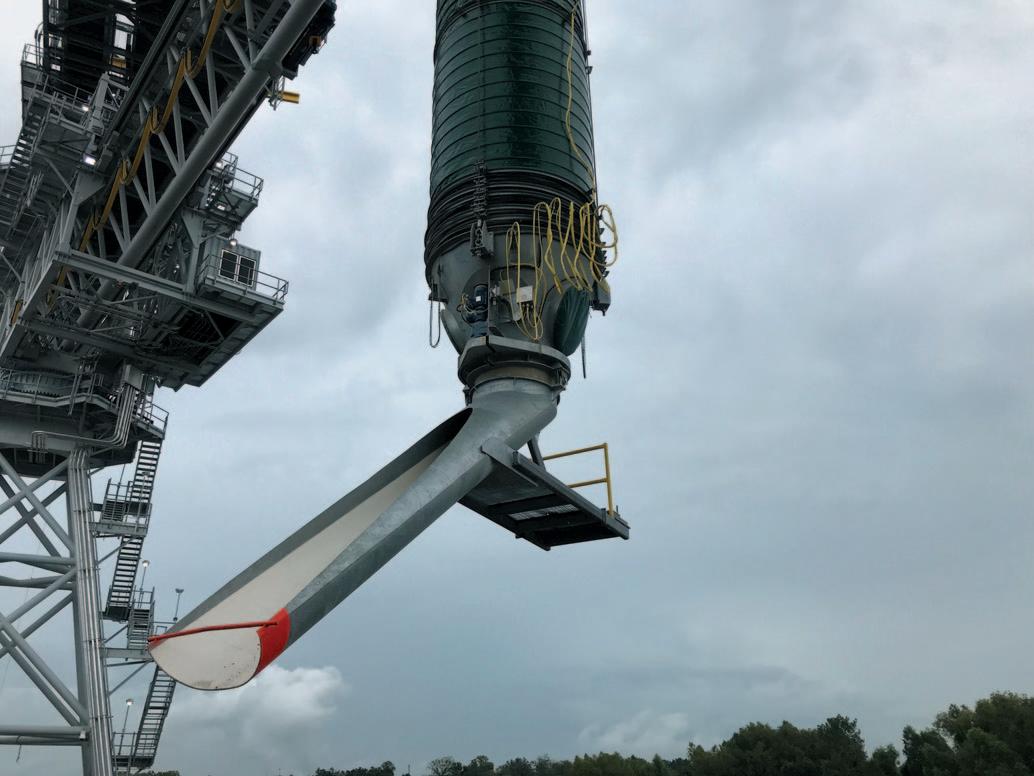
(And above) In 2018, Cleveland Cascades supplied three identical cascade shiploader systems to load grains in New Orleans, USA, with an expected material throughput per annum of 3.4 million metric tonnes. This required a robust loading solution.
A drum winch, installed on the customer’s shiploader and sourced by Cleveland Cascades facilitates the extension and retraction of the system. Cleveland Cascades Ltd 1700 GRP cones are used and feature ceramic tiles as a wear liner, which eliminates the need for a static earthing system to be installed to the cone stack.
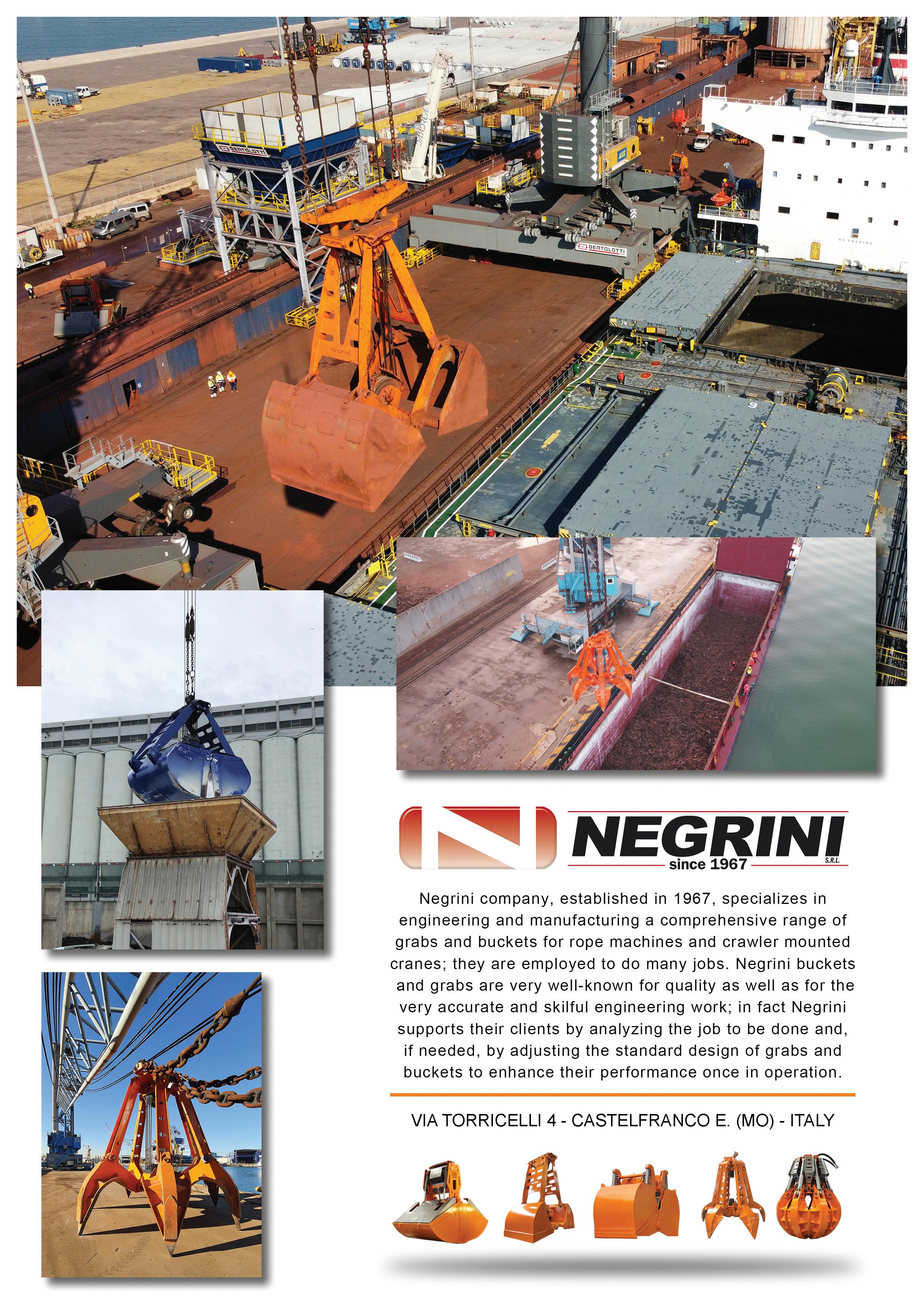
Grain feeds the world — that is a truth that cannot be denied. More than one-third of the earth’s population depends on wheat as a staple of its diet. When milled into flour, the grain accounts for almost 20% of calories and protein consumed by humans, more than any other single food source. Wheat is grown all over the world and of course, not necessarily consumed where grown. The crops are transported from one continent to another, coming through the local harbours.
And here is where Kinshofer comes into play. For more than 50 years now, Kinshofer has been a major manufacturer of high-quality attachments for truck mounted cranes and excavators. Especially in the last two decades, Kinshofer has become more and more interesting for the re-handling business, producing large re-handling clamshell buckets (C-Series) for excavators and carriers with an operating weight from 18 tonnes of up to 100 tonnes as well as smaller ones for loader cranes.
If you want to handle bulk material on industrial or harbour sites or transshipment stations in large amounts, it highly depends on the kind of ‘mass’ you want to grab when choosing the right attachment for the job. Wherever giant cranes, pneumatic vacuum elevators (grain blowers) or conveyors are not available or possible, the classical grabbing devices will always be first choice. Attached to an excavator, their mobility makes them extra attractive. And as grain is perishable, especially under humid conditions, it must often be unloaded fast and cannot wait for special unloading devices to arrive.
The sturdy Kinshofer re-handling clamshell buckets of the C-VHD-series are an all-round solution, not only for grain, but for many different materials that are
The Kinshofer C-VHD is often seen working on Dutch harbours. Pictured, the largest version C100VHD for up to 100t operating weight.
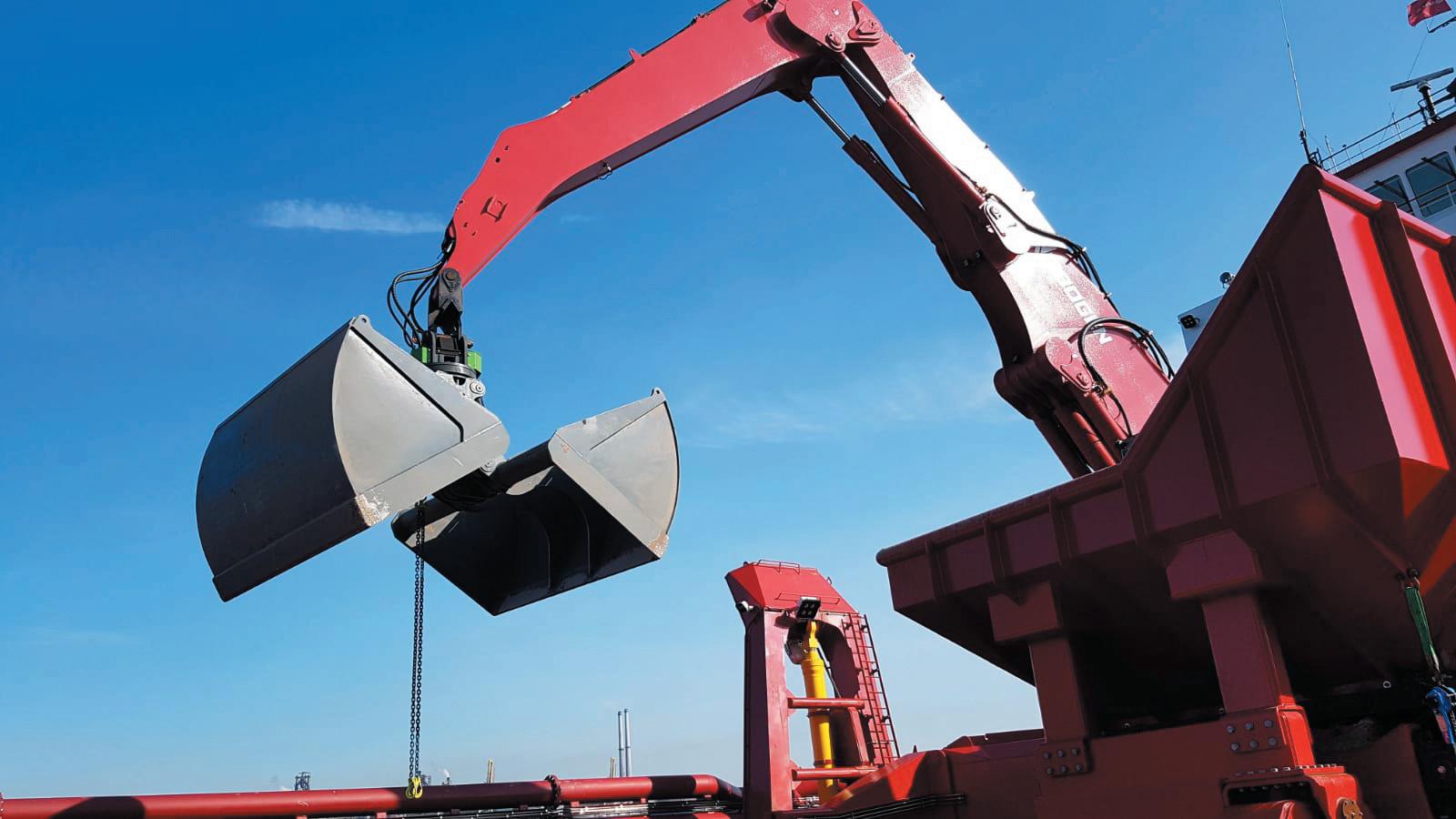
handled at harbours. They have been developed especially for the loading and unloading of bulk materials in large amounts. They feature high volume, torsion-resistant shells and thanks to the integrated 360° rotation, the grab can always be positioned precisely. Bearing points have been equipped with specially coated bushings and hardened pins. For especially delicate cargo like grain, there is also the option of closed shells. The shells of the C-VHD-series is driven by vertical hydraulic cylinders with piston rod protection.
To protect the handled goods even more, the C40VHD is also available with closed shells.
With a truck, it is easy to bring material to a designated spot — may it be a harbour or railway station. And even easier to load or unload a barge or wagon there with the Kinshofer re-handling grapples for loader cranes. Thanks to the dedicated shell design of the KM 622 and KM 602 grapples, there are practically no ‘left overs’ of the material to be picked up, as the working edges are vertical when the buckets are
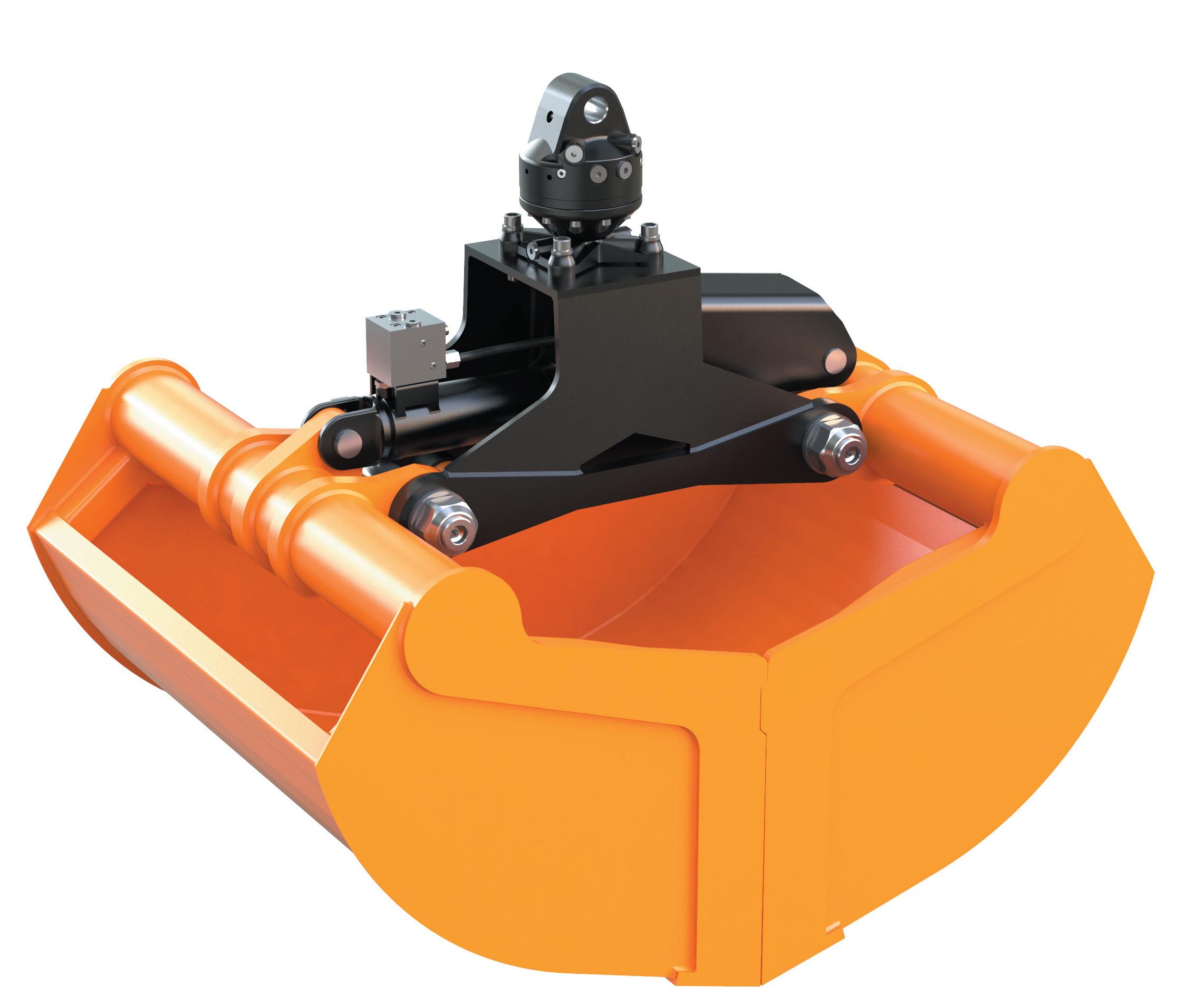
Equipped with a 360° hydraulic rotator for easy positioning with a loader crane: the KM 602 and KM 622 re-handling clamshell buckets.
open. This also allows a deep plunge into the pile of material. The low self-weight of the clamshell bucket guarantees a maximum load and due to the flat closing curve, the base of the wagon or barge will not be damaged during unloading.
The Kinshofer department for special solutions is frequently developing attachments for excavators and loader cranes for re-handling tasks, as this field of industry is getting bigger and more important every day. More dedicated tools for specific tasks or materials are needed and this is where the Kinshofer special developments come into action. Not only the tasks and materials might vary, but also the carrier machines. So Kinshofer can e.g. also equip portal cranes, which require especially designed grabs.
Kinshofer sticks strictly to innovation and quality. Thomas Friedrich, President & CEO of the Kinshofer Group, says: “Kinshofer continues its strategy to provide the industry with a ‘one-stop-shop’ solution of outstandingly engineered products to increase efficiency and, more importantly, profitability of our customers.”
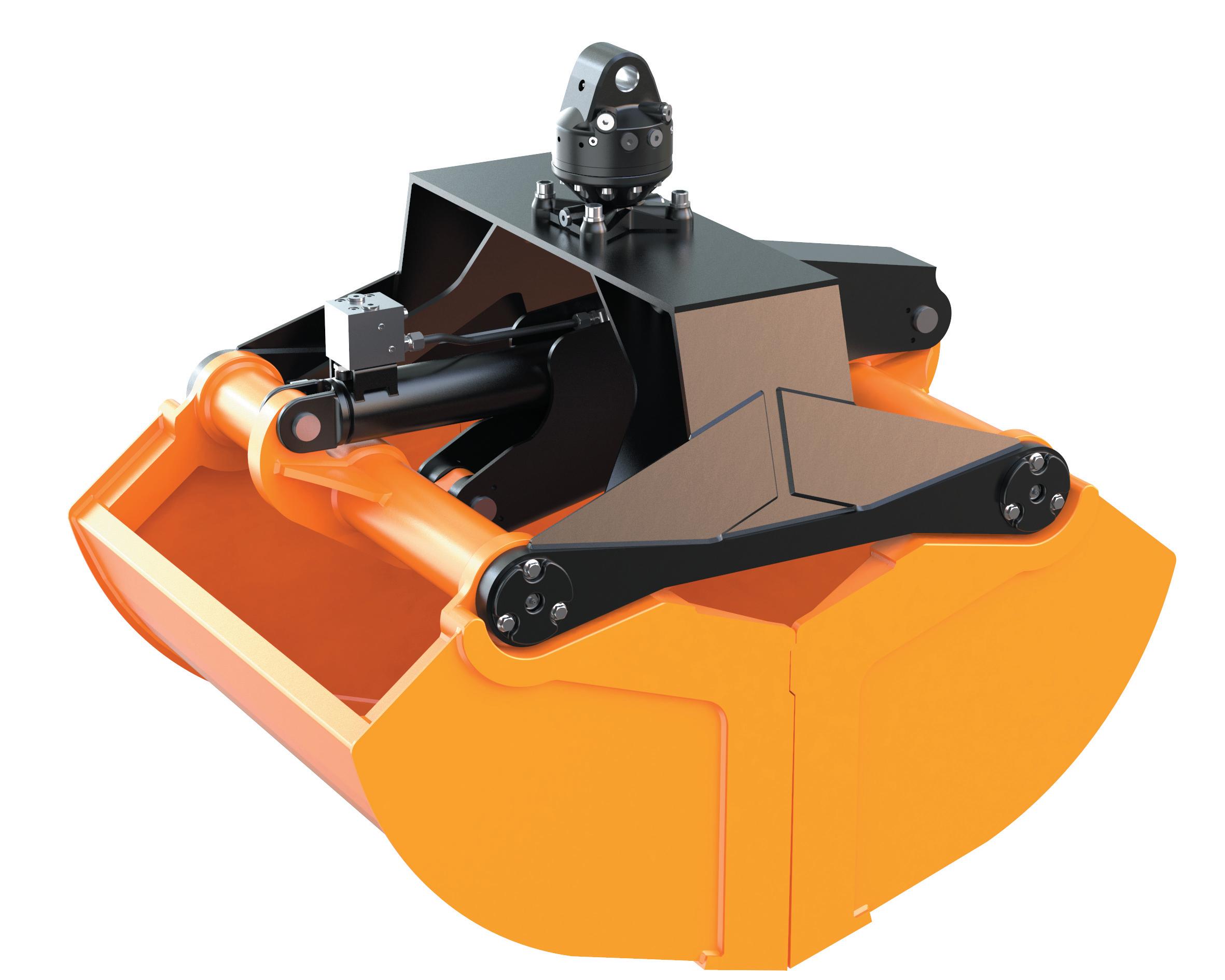




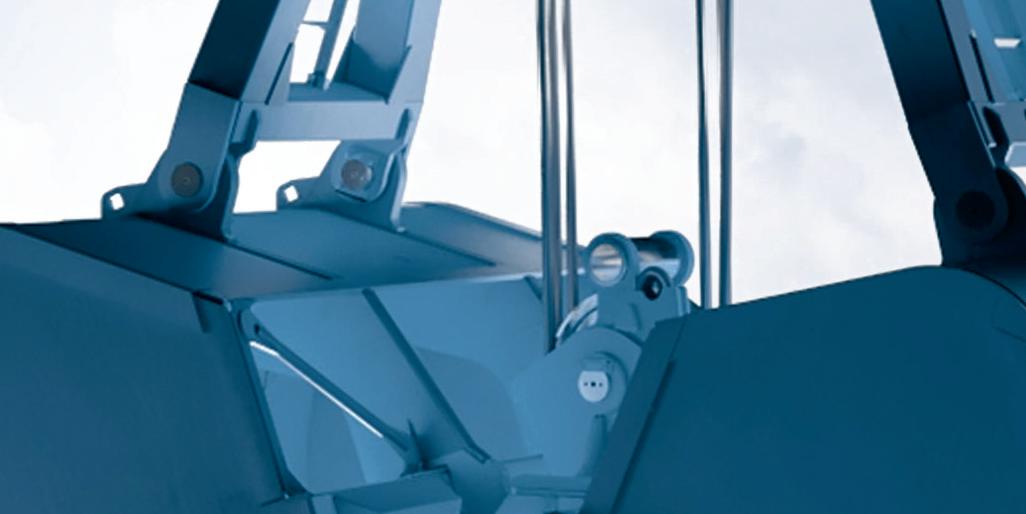














essionProf b b b ompanies in more than nal c hhhihli ff
V



orldwide w ountries w 110 c d bili ork with becauseourgrabso erstegengrabs e Ve gen grabs, cause our grabs o best productivity. Combining our ext the feedback from our loyal custome materials and unloading situations. W
ooking f L foorincreasedreliability and an extended lifespan? Let us know, b
offerthemthehighestrelia er them the highest relia tensive knowledge and exp ers results in optimized gra We call this ‘Grab Intelligen productivity, lower mainte because together we can m

bilityand y and perience with bs f foorallbulk nce’.
enance costs and ove mountains.












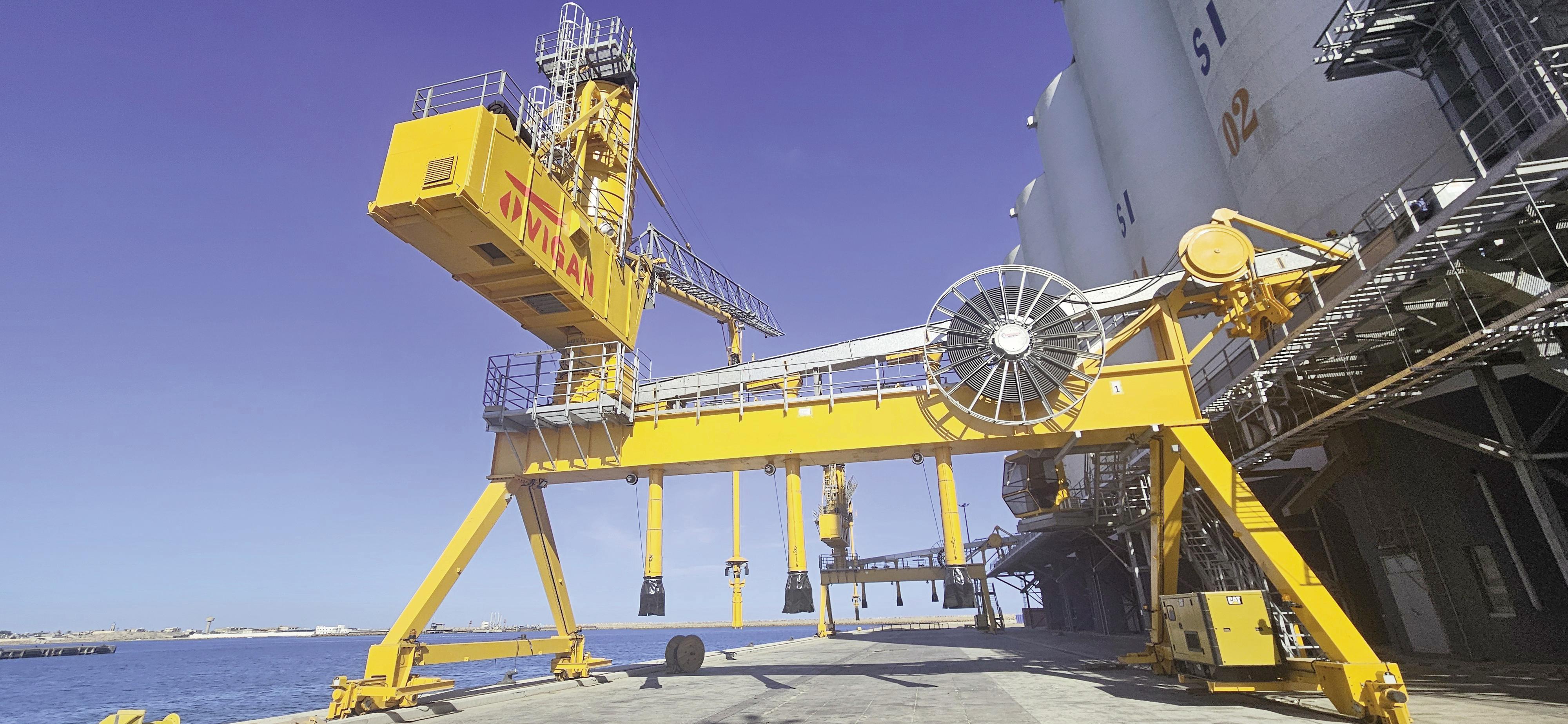
In an era where food security and supply chain efficiency are more vital than ever, VIGAN Engineering stands out as a key player in the transformation of bulk handling technologies. With over five decades of experience since its founding in 1968, the Belgian company has built a reputation for engineering excellence and innovation.
VIGAN offers a comprehensive range of equipment designed to meet the diverse needs of grain terminals worldwide: Grain pumps: compact, mobile units v ideal for rapid deployment, with capacities of up to 250tph (tonnes per hour).
Pneumatic and mechanical ship- v unloaders: fixed or mobile, with capacities up to 1,000tph (pneumatic) and 1,500tph (mechanical).
Shiploaders: adaptable to various v vessel sizes, with mechanical loading rates reaching 2,000tph.
Turnkey terminals: integrated v systems for unloading, loading, storage, and bagging operations.
MEETING GLOBAL DEMAND WITH EFFICIENCY
As global consumption of wheat, maize, and soy surges — driven by changing diets, urbanization, and the rise of convenience foods — grain logistics have become a strategic priority. Countries with limited arable land, such as Bangladesh, Taiwan, and the Philippines, are importing vast quantities of cereals to support domestic food production. In Africa, nations like Nigeria and Ethiopia are scaling up milling operations to feed rapidly growing populations.
VIGAN has responded to this demand with its flagship continuous ship-unloader, the NIV800. Capable of handling up to 800 tonnes per hour, this machine is redefining efficiency at ports around the world. In just one year, eight NIV800 units have been delivered to sites in Europe, America, Africa, Asia, and the Middle East— collectively capable of unloading over 20 million tonnes of grain annually.
One of VIGAN’s most ambitious achievements in 2025 was the delivery of two NIV800 units to APM Terminals in Puerto Callao, Peru. As one of Latin America’s busiest and most complex ports, Callao presented unique logistical and operational challenges. VIGAN not only supplied the equipment but also oversaw the entire unloading scope, coordinating with multiple engineering teams on a broader infrastructure project that included silos and belt conveyors.
The result? A benchmark installation that now boasts the highest pneumatic unloading capacity in the region—solidifying VIGAN’s reputation for delivering turnkey solutions under pressure.
Modern grain handlers face a host of challenges: environmental regulations, urban noise restrictions, and the need for energy-efficient operations. VIGAN’s response has been to innovate across every dimension of its equipment.
Efficiency is VIGAN’s motto. Its designs are free from outdated or unnecessary accessories, focusing instead on performance, reliability, and minimal maintenance. As a result, its machines are among the most efficient in the market, with exceptionally low operating costs. At the same time, VIGAN differentiates itself through advanced automation systems. While it remains cautious about unnecessary gadgets, VIGAN’s equipment

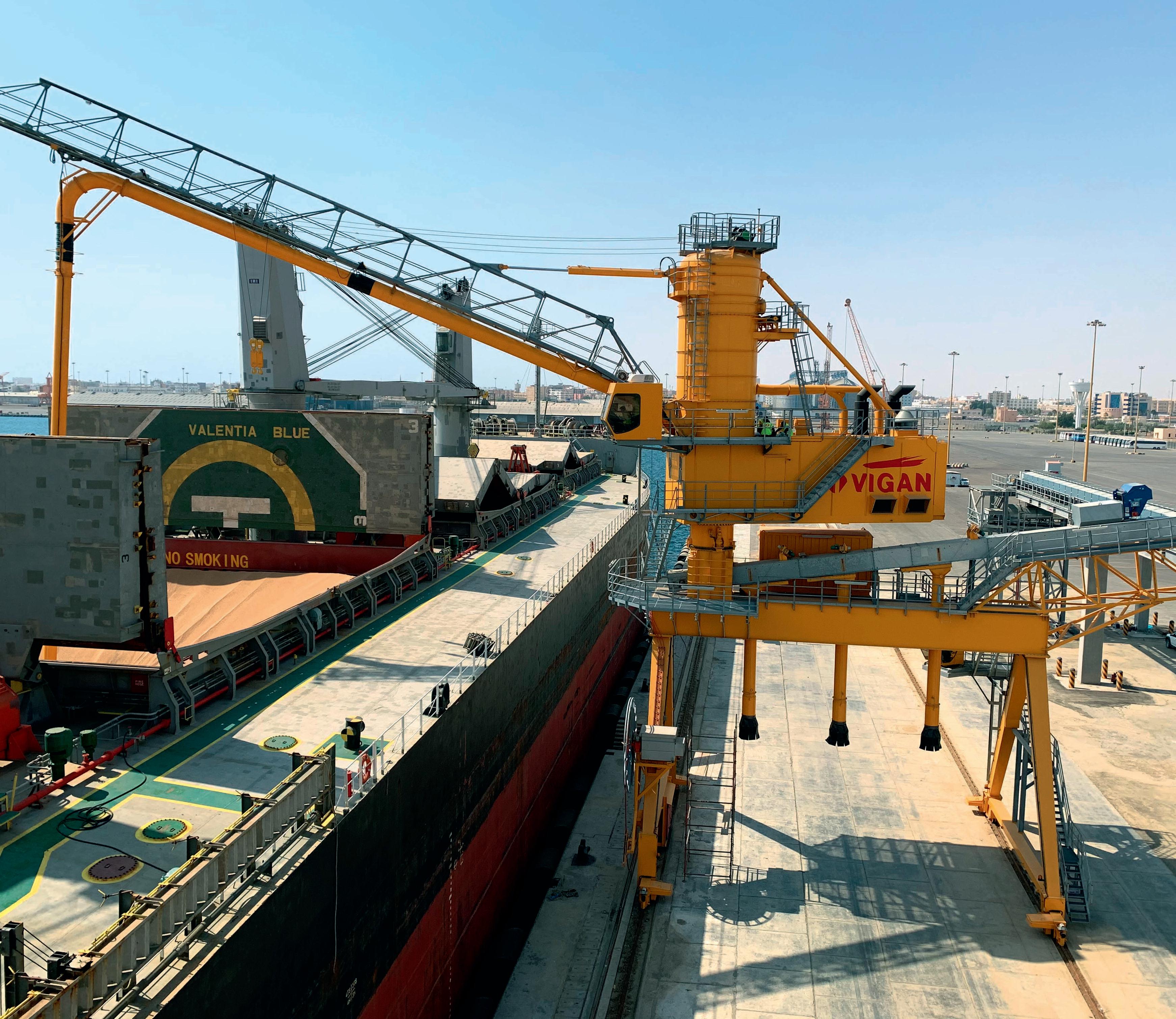
Pneumatic and mechanical ship (un)loaders
Up to 2500 tph for loaders and up to 1200 tph for unloaders.
Low noise & no dust emission
Turnkey solutions for cereals, soy flour, fertilizer, pellets and more...

integrates smart, robust automation that ensures optimized operation, seamless control, and adaptability to the most demanding working conditions.
Dust control is another priority. VIGAN’s pneumatic systems are hermetically sealed and equipped with advanced filtration, keeping dust emissions below 10mg/m³. Noise reduction is equally critical, especially in ports near residential zones. Through acoustic analysis and targeted insulation, VIGAN’s machines operate at noise levels as low as 60 decibels — meeting strict environmental standards without compromising performance.
Unlike many competitors, VIGAN retains full control over the design, manufacturing, and assembly of its machines. This vertical integration ensures not only quality and reliability but also the flexibility to customize solutions for each client’s unique needs.
From multi-stage turbines to turbulence-free elbows and adjustable airlocks, every component is engineered for durability and performance. VIGAN’s commitment to robust, proven technologies means its machines thrive even in the most demanding environments.
VIGAN’s success is built on a foundation of engineering excellence, customer focus, and a relentless drive to innovate. As global
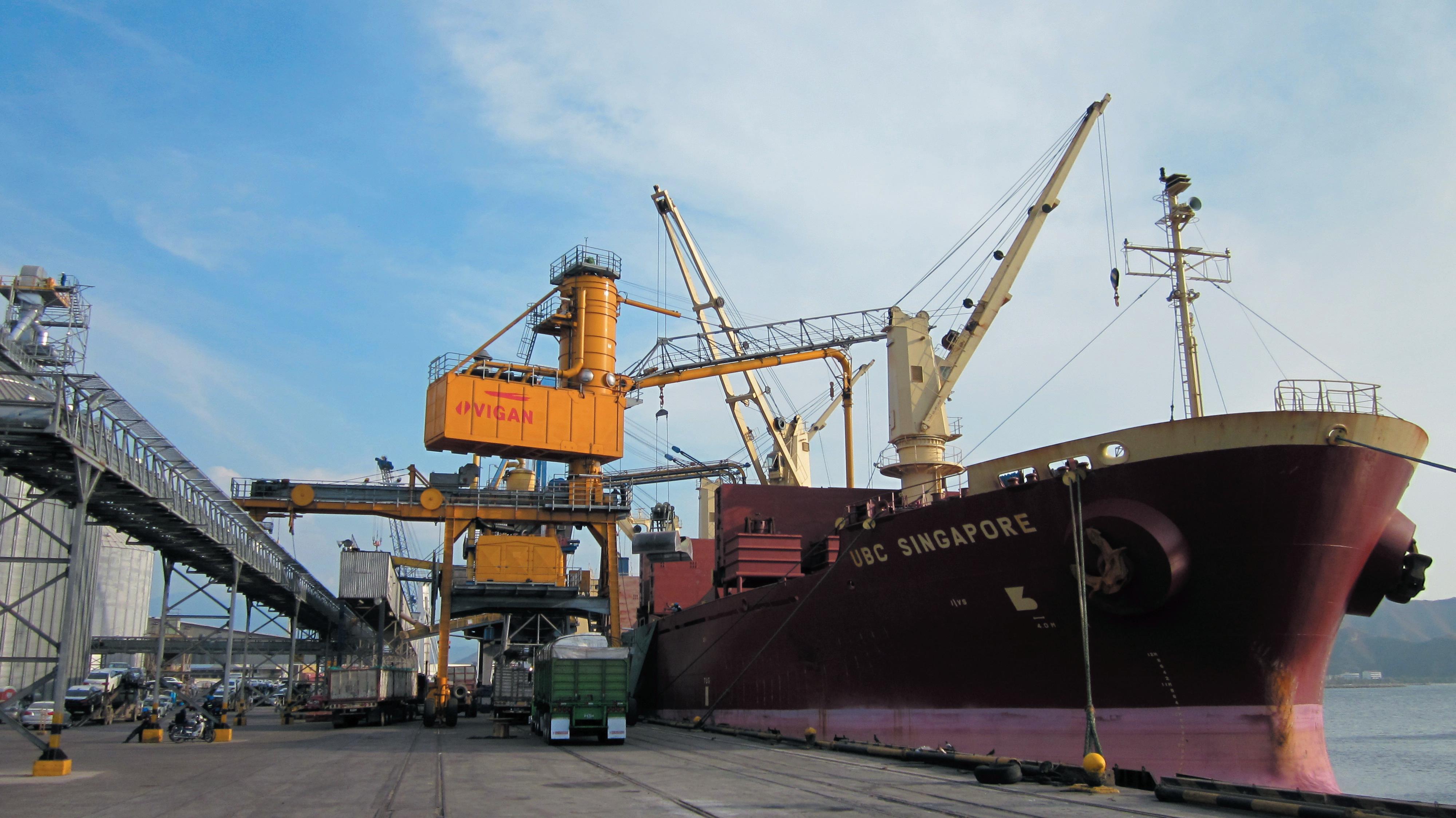
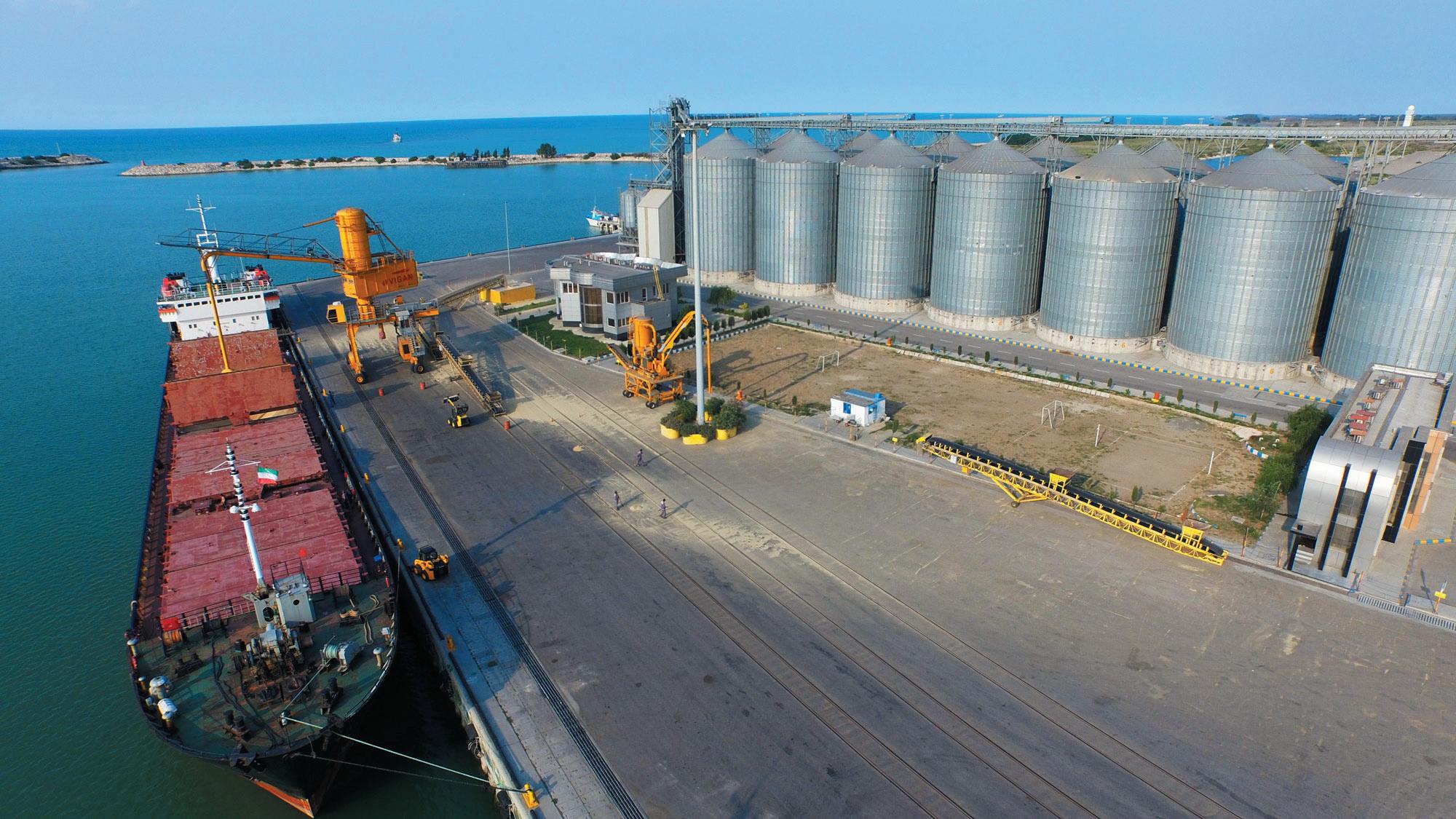
grain flows continue to grow and evolve, the company remains committed to delivering solutions that are not only technically superior but also environ-
mentally responsible and economically sound. With each project, VIGAN reinforces its position as a trusted partner in the future of grain logistics.
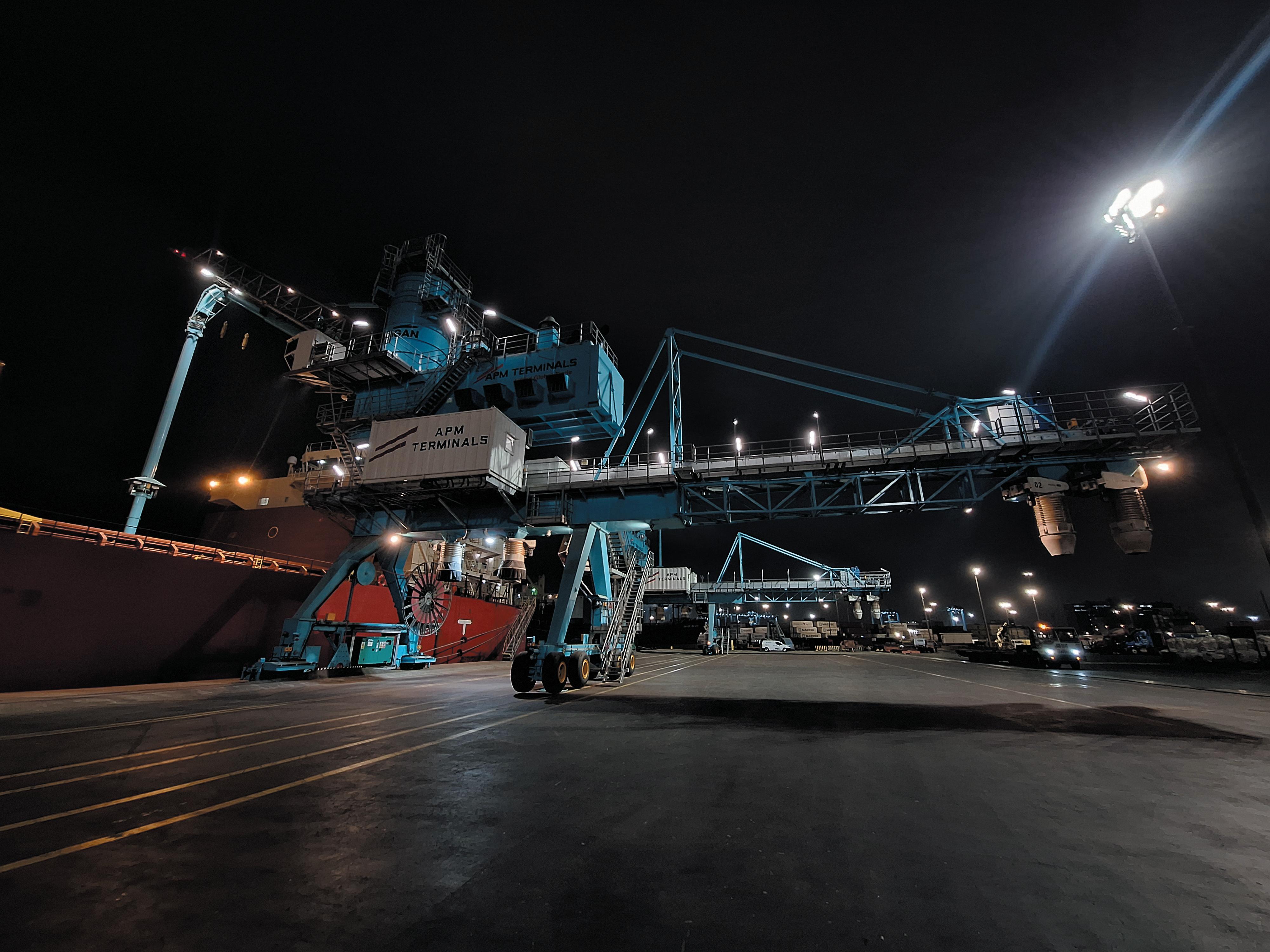



12 f 20mh












Mo r e v o c s Di e r


d n a H l a i er t Ma








ex.com er w.t w w
C - ld r Wo s h Fuc s fuch / s ler s s a l






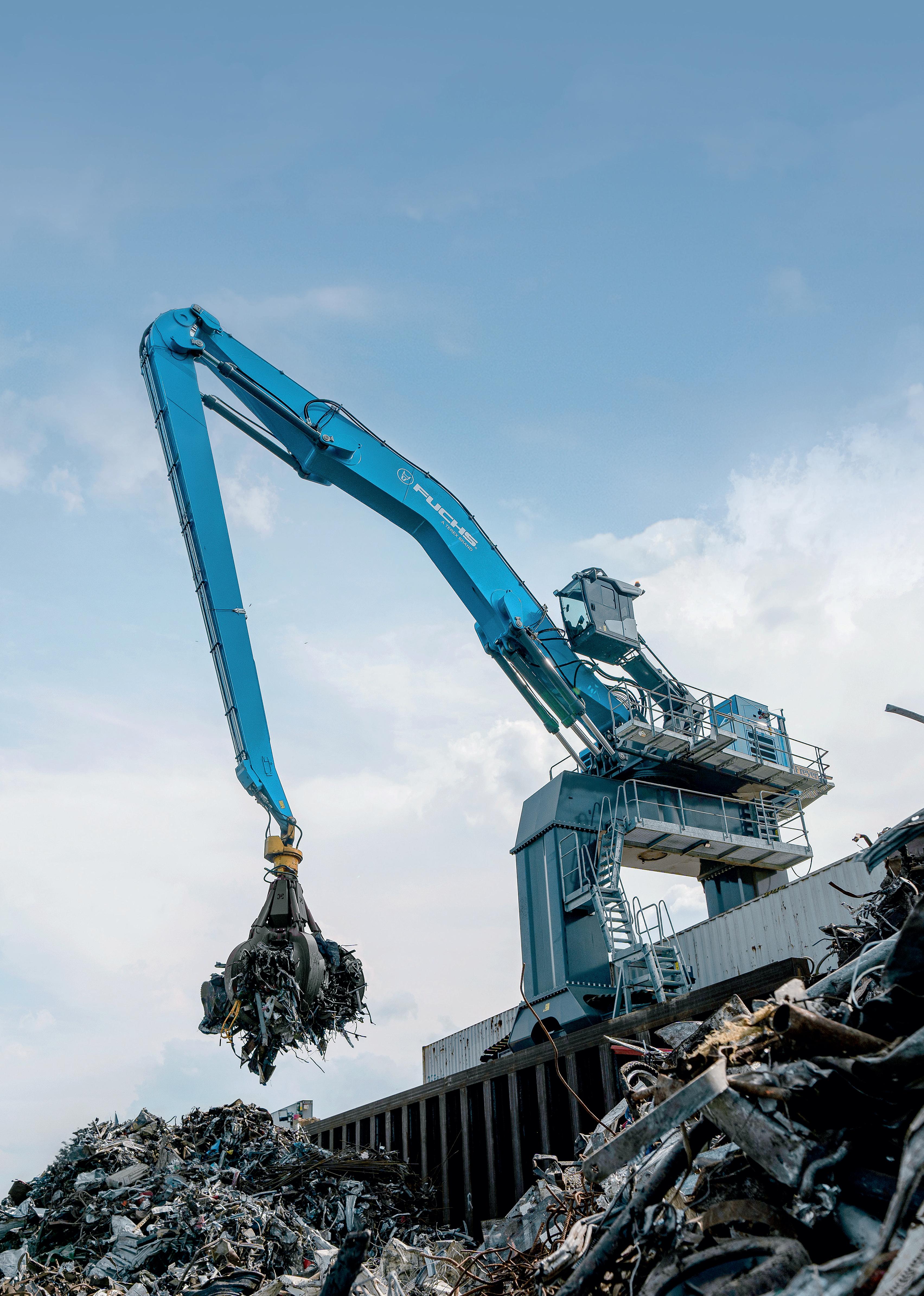
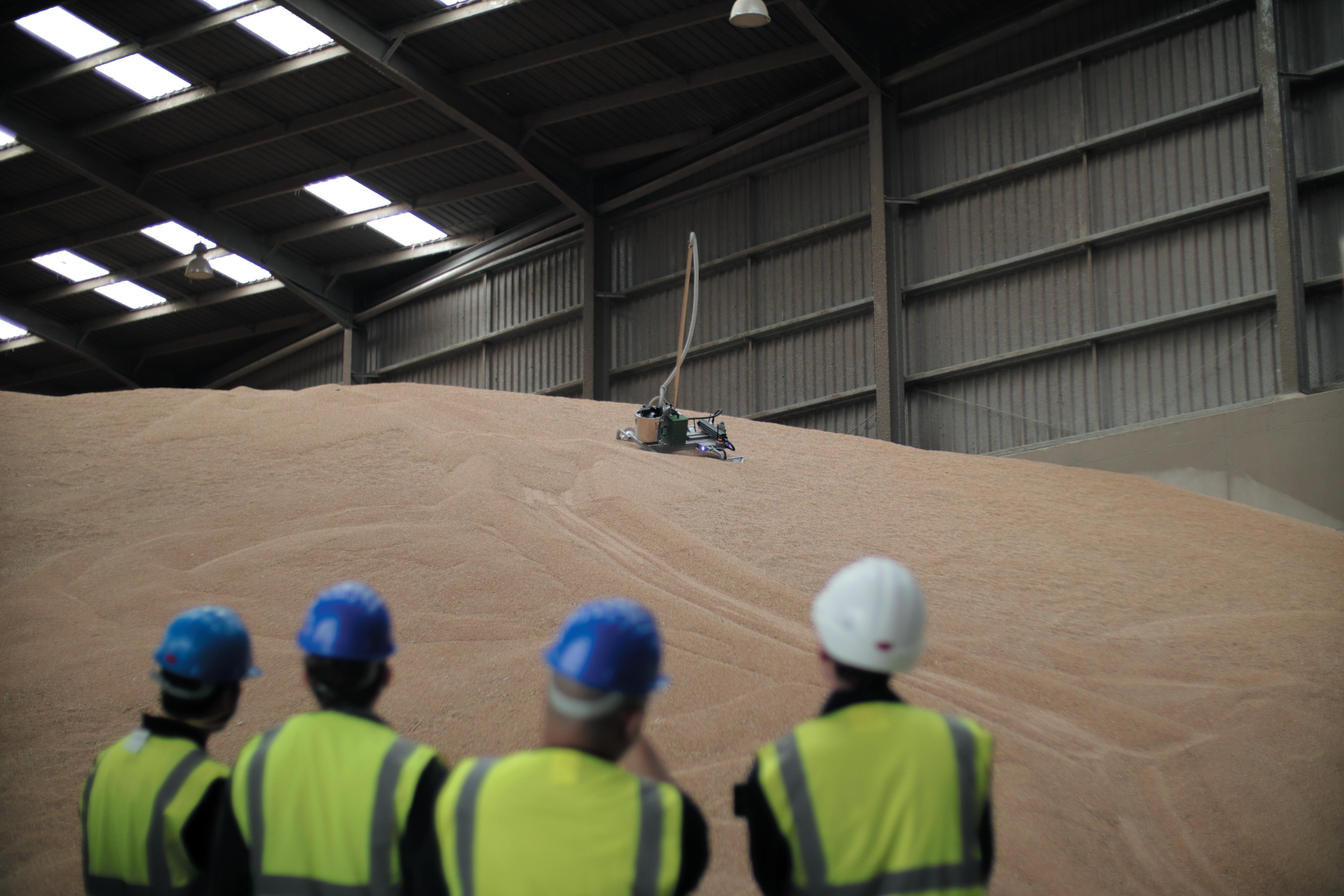
Cereal grains and oilseeds are the backbone of our global food system and one of the most important commodities in the bulk handling market, with billions of tonnes moved and stored each year, writes Sarah Ostberg, Crover. Ensuring their safe storage is essential for both food security and market stability. Yet operators continue to face persistent challenges: spoilage caused by hotspots, moisture build-up, and pests, which put billions of tonnes at risk annually. At the same time, workers’ safety remains a critical concern, with entrapment and falls still among the leading causes of accidents in storage facilities and dry bulk cargoes worldwide.
Crover has developed a solution designed to address these challenges headon. Its robots are the world’s first robots capable of moving through bulk grain, retrieving samples, and continuously monitoring conditions. Operators gain real-time insight into temperature, moisture, and CO2 while never having to step onto the grain themselves.
Traditional grain management relies on individual checks or a limited number of static probes, providing only partial insight into storage conditions. CROVER changes
that. By swimming through the bulk itself, it offers a far more representative picture of the environment, enabling earlier detection of risks and smarter, data-driven storage decisions.
As it moves, the robot stirs and aerates the grain, preventing crusting and bridging while promoting better airflow throughout the bulk.
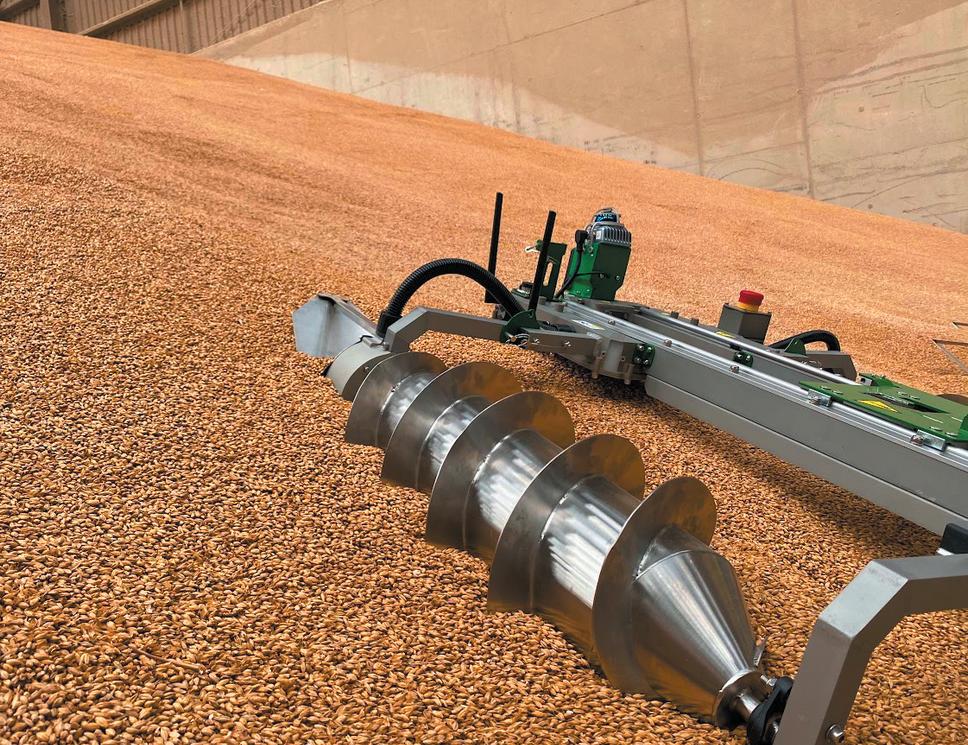
By addressing physical and environmental issues simultaneously, operators can intervene early, before minor problems escalate.
The latest model, CROVERPro V2, brings significant advancements to the grain storage market. Key features include: built-in LiDAR for accurate v environmental scanning and precise volumetric information; automatic software updates for v seamless performance improvements; sleeker design with enhanced v performance; CE and UKCA certification; and v
full automation-ready hardware , v with AutoCROVER enabling autonomous grain monitoring and sampling coming soon.
Perhaps most excitingly, CROVERPro V2 is designed for future automation. Once the upcoming AutoCROVER software is released, operators will be able to run the system fully autonomously, continuously collecting data without manual intervention. This reduces labour demands, increases monitoring frequency, and provides a real-time view of grain health like never before.
“Our technology gives operators the tools to see inside their storage like never before, act before problems escalate, and manage grain smarter every day.” said Dr. Lorenzo Conti, Founder & CEO of Crover.
All data collected by the CROVER robots is integrated into Crover’s cloud-based digital platform, SavingGrains. Operators can view trends, receive real-time alerts, and unlock visibility into grain conditions that was previously impossible. By providing a single source of truth for grain management decisions, SavingGrains helps operators maintain quality, reduce losses, and optimize storage management.
The CROVER technology has been deployed across a range of grain types and storage environments. Its flexibility and advanced features make it a unique tool for operators facing increasingly complex supply chain pressures.
Most recently, Crover partnered with Control Union, a global expert in inspection and certification services, to integrate robotic monitoring into grain inspection operations. This collaboration highlights CROVER’s ability to deliver safer, more efficient, and more representative sampling, enhancing both operational performance and regulatory compliance.
Crover’s competitive edge lies in its proprietary locomotion technology, which
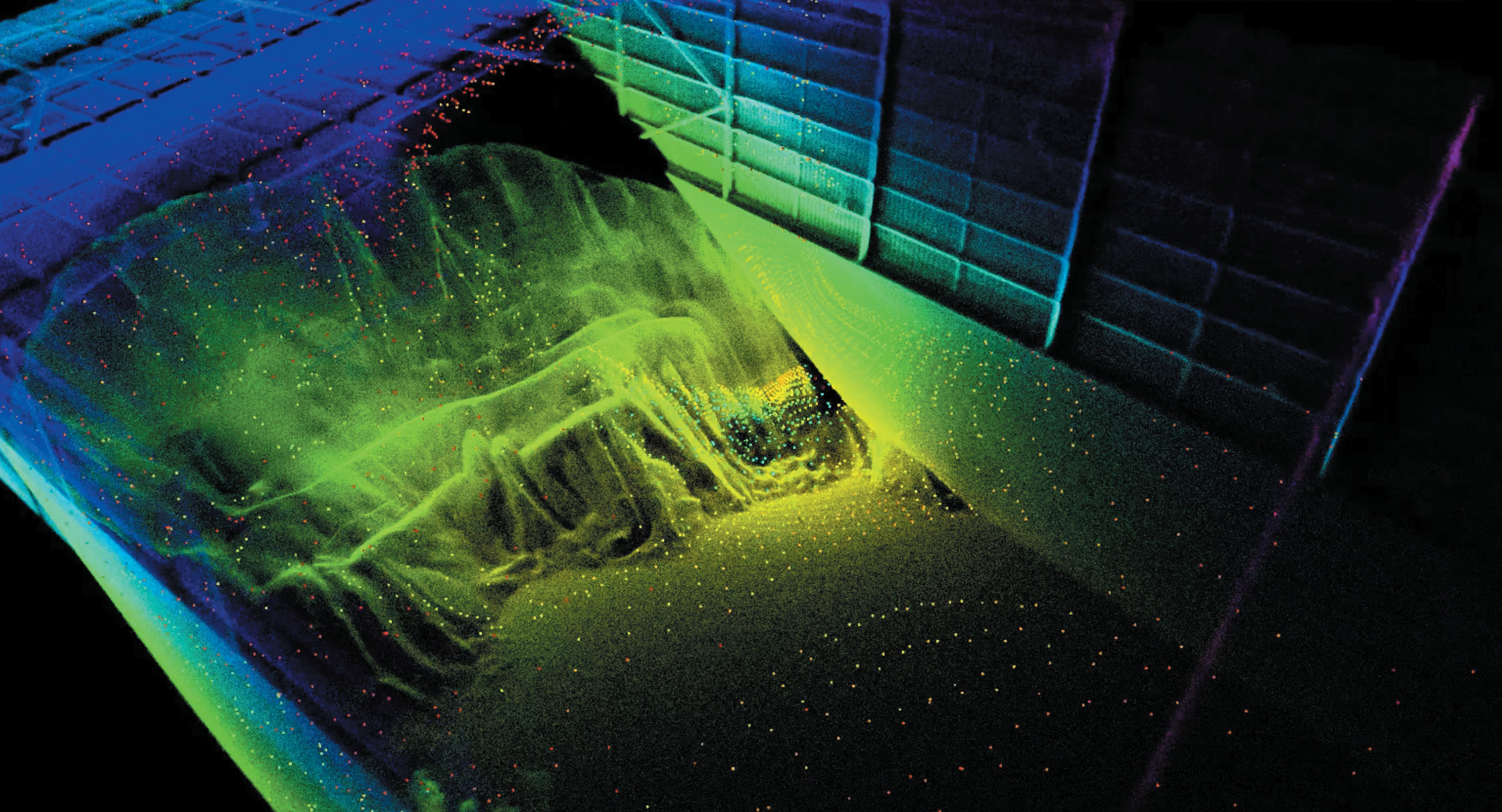
allows the robot to swim through grain and other bulk solids and powders and reach into the bulk, below the surface. When combined with advanced sensing and cloud-based data management, it sets a new benchmark in safety, efficiency, and accuracy; something traditional methods simply cannot match.
Crover is the company pioneering a new category of unmanned systems: that of devices capable of moving through bulk
solids and powders — it has developed the world’s first and only technology for robotic grain storage monitoring and sampling. Its patented grain-swimming robot provides real-time temperature, moisture, and CO2 data, helping grain storage and inspection operators like ports, grain traders, co-operatives and farmers reduce losses, improve safety, and optimize storage conditions. With support from leading institutions and governments, Crover is on a mission to revolutionize dry bulks management worldwide.
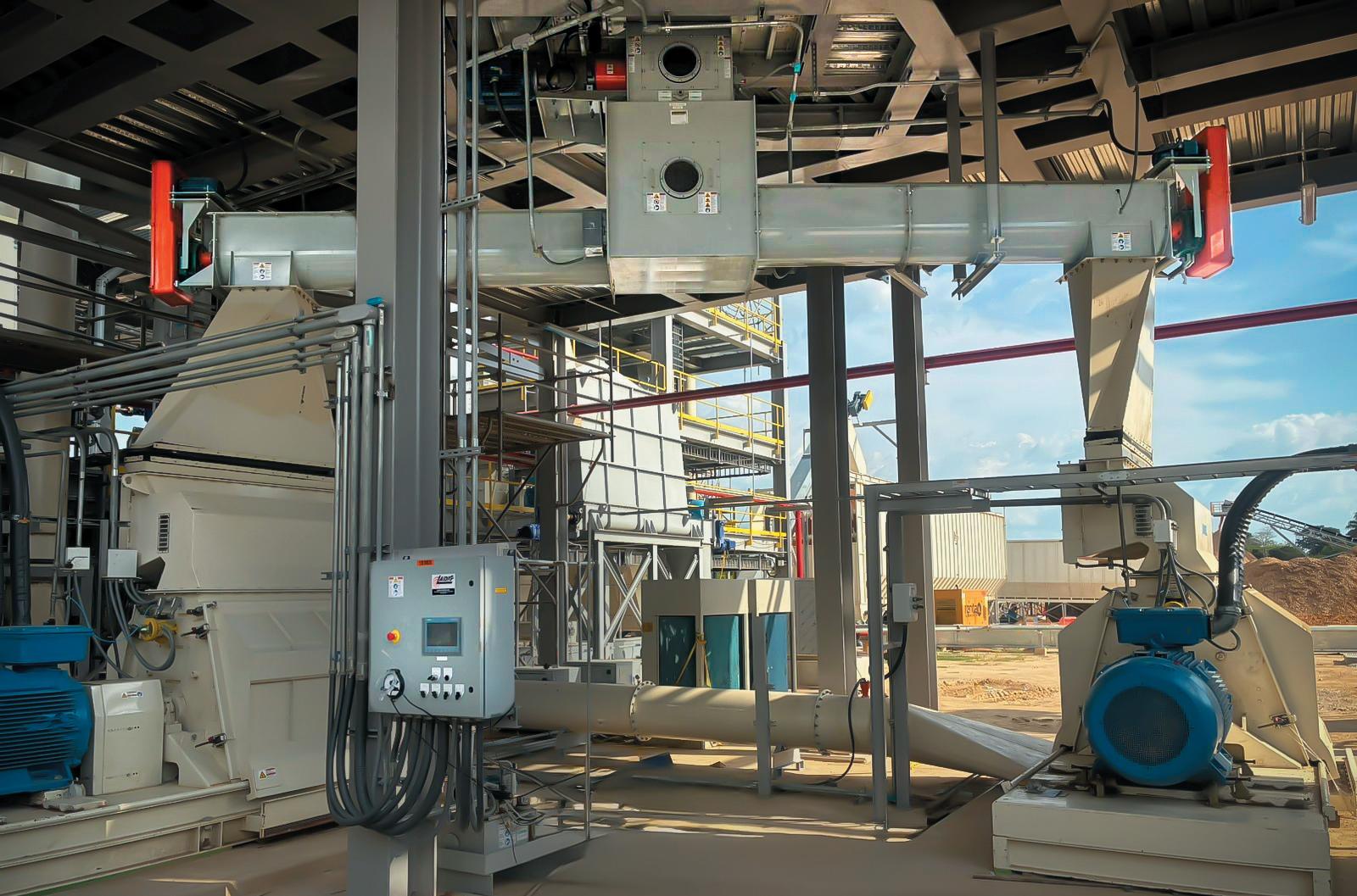
Grain may be one of the world’s oldest bulk commodities, but the expectations around how we move, store, and unload it are anything but old-fashioned, writes Mandi Steffey, Laidig Systems, Inc. What once always worked for a particular material or application may not anymore due to multiple factors, including tightening safety standards as well as material supply quality and availability. That’s why maintaining control from every angle becomes important very early on in the process for operators.
There are several variables that make managing grain storage a difficult and unpredictable task, ranging from material content to environmental factors. Since it is such a dynamic process, it is imperative that operators and plant designers take great care to work on the aspects that can be reasonably managed. Thanks to improvements in technology, automated reclaim and unloading is a great pillar to focus on in terms of perfecting quality and process control.
Laidig Systems, Inc., designs and manufactures fully automated, bottom silo reclaim systems for flat-bottom silos, coneoutlet silos, domes, and open material piles.
While the company’s equipment is used across biomass, pet food/byproducts, and other sectors, grain and meal handling continues to be a core application area— particularly in facilities that demand consistent and dependable material flow to meet process goals.
Here are three key areas that Laidig equipment is proven to solve in largevolume grain and meal storage: Blockages and wall material hang- v up: for grains and meals like sunflower seed and canola, material forming blockages or hanging up on the walls is very common. A Laidig reclaimer (typically used for meals or finer particles) or Laidig sweep (typically used for whole grains) actively agitates the material automatically from the bottom of the silo using a patented, heavy-duty auger design in which the auger rotates on its own axis and advances around the silo perimeter. This ensures that blockages and material masses are broken up and maintained before they become big issues.
Consistent output rate: for some v applications, consistent output for either process or truck/train/barge unloading is crucial to making sure
operations run smooth. Because Laidig automatically works to free up material and maintain a first-in, firstout (FIFO) material distribution pattern, output can be controlled with the push of a button and configured to optimal timing and scheduling.
Confined space entry: entering a silo v for any reason is unsafe, and it can be deadly in certain scenarios. Laidig reclaimers solve this problem on two fronts:
m Since material is much less likely to clump, bridge, and rat-hole, employees are less likely to have to intervene in stuck-material situations, keeping them out of harm’s way.
m Laidig equipment was designed to be maintained from key access points, ensuring easy and safe repairs for wear points.
STAYING COMPETITIVE : DESIGN CHOICES THAT MATTER ON THE FLOOR
It’s easy to claim ‘reliability’; it’s harder to build for it. Laidig’s approach focuses on a few practical points:
Heavy-duty drive and structural v design: Laidig reclaimers are sized for industrial jobs. They can start-up
under full loads with variable bulk densities and material bridging forces.
Cleanout performance: the equip- v ment is engineered to leave behind very little or no material (depending on site and process goals), which minimizes cross-contamination between material fills and reduces the need for manual cleanup. This is especially important where grain streams change frequently or where byproducts are sensitive to spoilage. Controls and data integration: v Laidig’s Smart Controls are designed to keep reclaim systems running efficiently, with continuous monitoring and alerts to safeguard equipment. Each application includes a customized control system with the Laidig Machine Interface™ (LMI), which uses advanced PLC technology to intelligently manage reclaimer functions under variable load conditions. The LMI™ provides both fully automatic operation and manual controls for maintenance, offering operators real-time visual and audio feedback. Seamless integration with a customer’s control panel and ethernet connectivity also enable remote monitoring,
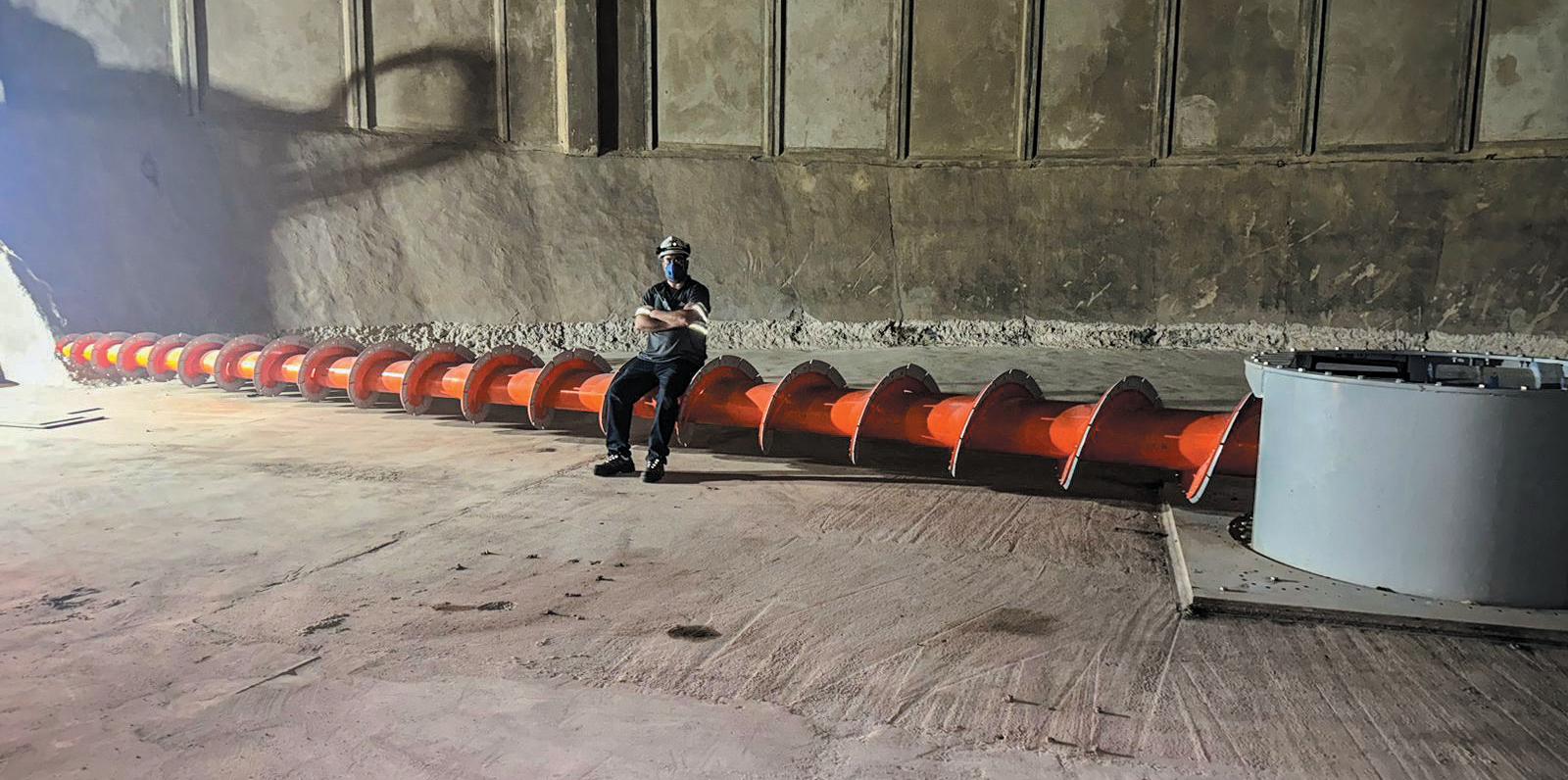
programming support, and data logging.
In the last year, Laidig has completed several significant grain, meal, and wood material-based projects ranging from new builds to strategic retrofit projects. Examples include: Brazil: soybean meal dome retrofit at v an oilseed or grain byproduct facility. For this project, Laidig placed a large X-Traktor™ reclaimer inside a dome that previously didn’t have any reclaim equipment. The dome went from having zero material movement to a full FIFO material distribution. Operators on-site are now able to fill trucks four times faster than before. Canada: two reclaimers for multiple v
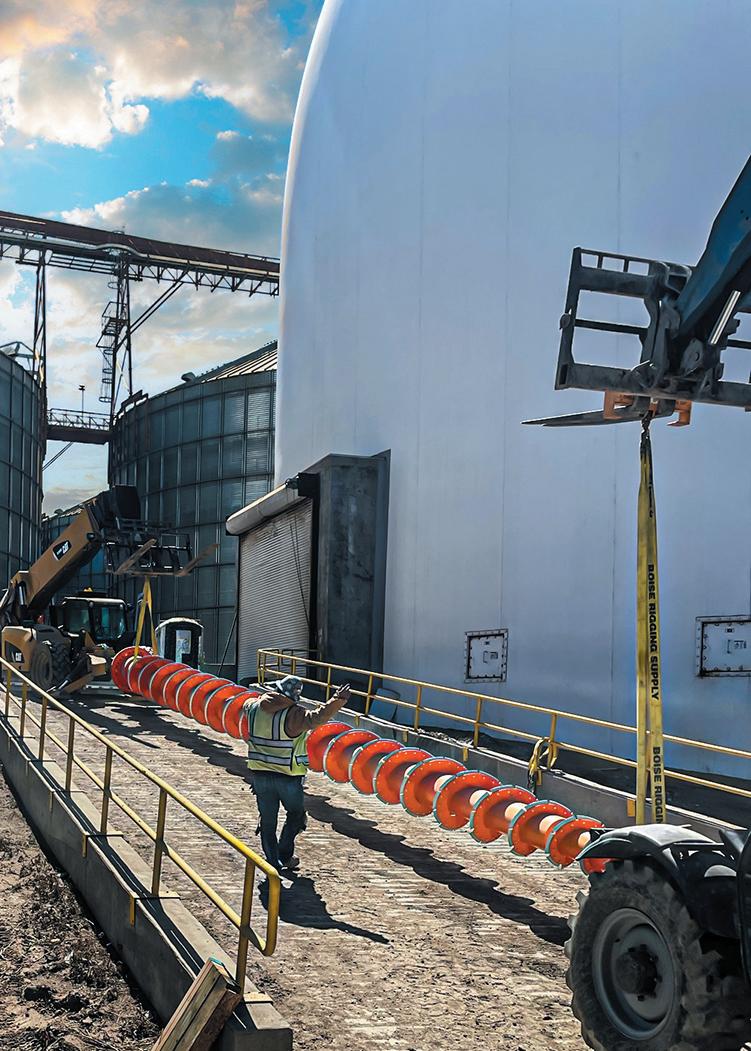
materials at port facility. For this project, Laidig installed two large Track-Drive reclaim systems that handle transloaded DDGS, soybean meal, and whole grains (interchangeably) for barge and ship loadout. Colombia: custom reclaimer feeding v two discharge systems at a wood pellet manufacturing facility. For this project, Laidig designed a highly specified cantilever reclaimer with two reclaim augers. Underneath the reclaimer, there are two discharge augers to feed two different fine grinders. The highly customized layout supports the client’s business, which is making wood pellets for European export.
Laidig’s reclaim technology serves as the critical link between stored grain (also meal and wood) and the conveying systems that move it through a facility. Its equipment is designed to handle compacted or variabledensity material in large silos and domes, while delivering a steady, controllable discharge to the next stage of handling. This consistency helps maintain reliable plant operation, improves inventory accuracy, and reduces downtime caused by flow interruptions.
Laidig Systems, Inc. — founded in 1961 and headquartered in Mishawaka, Indiana, USA — designs, manufactures, installs, and services automated storage and reclaim systems that are used worldwide across a range of industries and materials. With in-house engineering and fabrication, Laidig provides field installation support, commissioning, and ongoing support and service. Its core specialty is automated, bottom-reclaim technology, engineered specifically for difficult-to-flow materials and applications requiring stringent cleanout performance and loadout/recycle schedules. Laidig equipment can be used anywhere in the world and is guaranteed to work.
your storage
now for off-season construction — and four questions to ask before the project begins
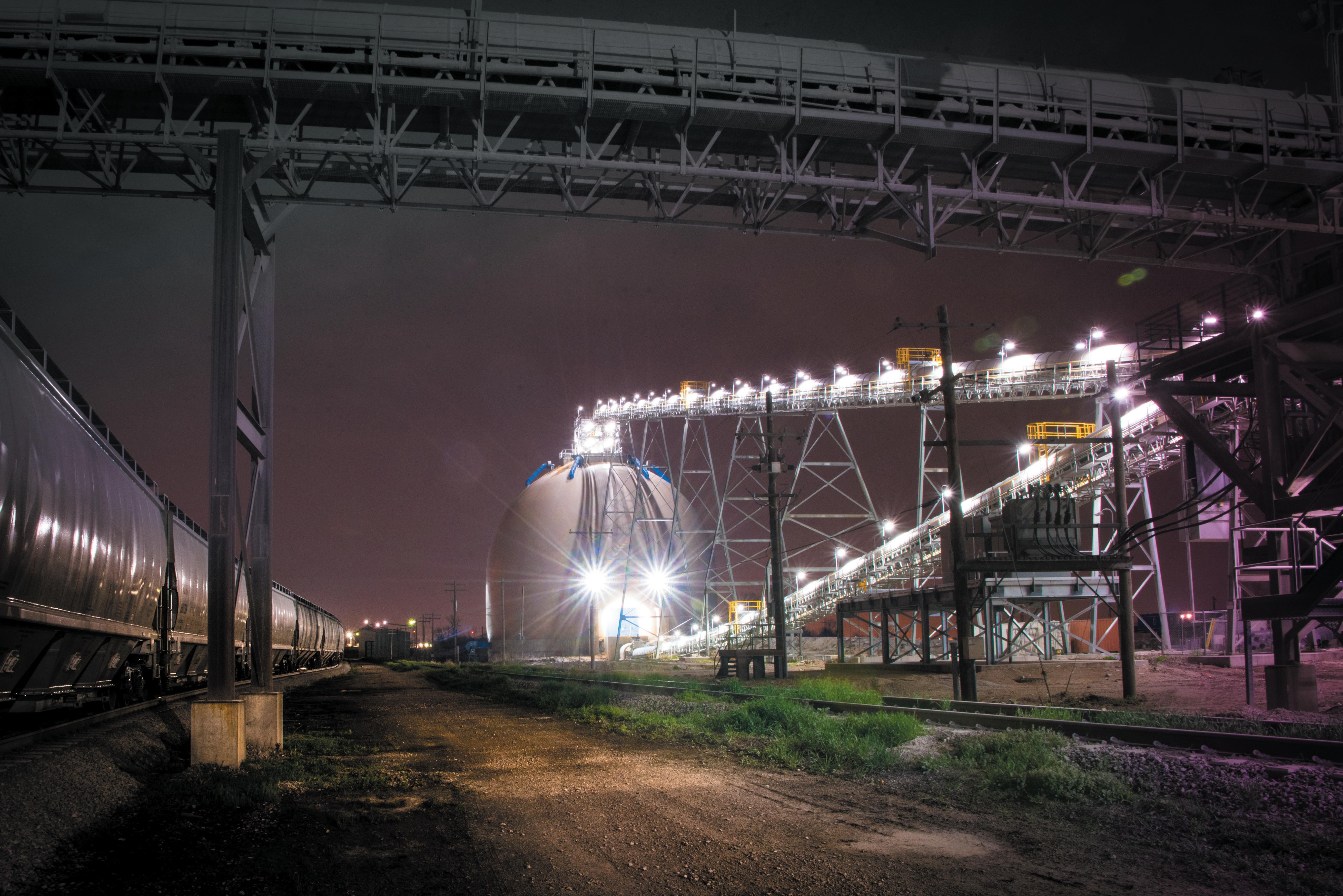
For storage projects where construction typically demands warmer temperatures, there’s another option: a DomeSilo can be built any time of year, with work marching right through the calendar, writes Rebecca Long Pyper for Dome Technology
“The industry norm is for new grainstorage projects to wrap up right before harvest. In contrast, a dome can be finished early in the calendar year, providing plenty of time for commissioning before product shows up,” said Dome Technology sales manager Heath Harrison. “With a winterbuild schedule, it can allow for several months of utilizing the new structure, getting staff used to it, finding the efficiencies, (and) fixing any potential issues before farmers start rolling in from the field,” he said.
Making the most of the off season starts with proper planning in the warmer months. Dome Technology then completes foundational concrete work before harvest while temps are pleasant. If new storage is being built in an area that is not impacted by the harvest, construction continues until completed, regardless of the weather. But if the site must be sensitive to the harvest, construction crews leave during harvest, then come back and complete the project during the winter.
The all-weather schedule works because a dome is built from the inside out. Once the outer membrane is inflated to create the dome shape, rebar and concrete are applied to the inside; once rigid, construction continues within the structure. Because of this method, “customers hardly know we’re there because the only impact is concrete trucks coming in and out; other than that, all the construction is inside the inflated airform,” or membrane, Harrison said.
Once you’ve decided on a dome, asking the right questions is key to securing the ideal handling system. Companies can use these questions to get the planning process started:
A: In discussions with engineers, companies should identify the desired type of throughput, whether the product will be stored long term or processed quickly, what type of transportation will move grain to customers, and more. If a dome is selected, those topics will be addressed during the preliminary phase to ensure the facility is optimal for the customer. Different reclaim systems will be
discussed early on, and multiple options are available. Desired throughput rate will inform the handling system and its size, but the type of equipment selected might largely be determined by cost. Grain is most commonly reclaimed via clean-sweep screw or auger that pulls material into a hopper. But some types of reclaim can’t move 100,000 bushels an hour out of a dome — that’s best achieved by a front-end loader or a Vibrafloor. However, the cost difference between those two options is substantial — the former might cost $150,000 to $250,000 versus $1 million for the latter. Since grain is a tight-margin industry, the more product a company pushes through, the more money they make, and many seek the least expensive system that can move the most volume.
With throughput shaping the entire process, engineers can identify the costs of various types of systems, and based on the speed and volume of reclaim, customers can choose the best system to meet their needs.
Q: What foundation system is best?
A: Traditional bulk storage often requires expensive deep-foundation systems based on the amount of weight the structure will hold. Dome Technology engineers have
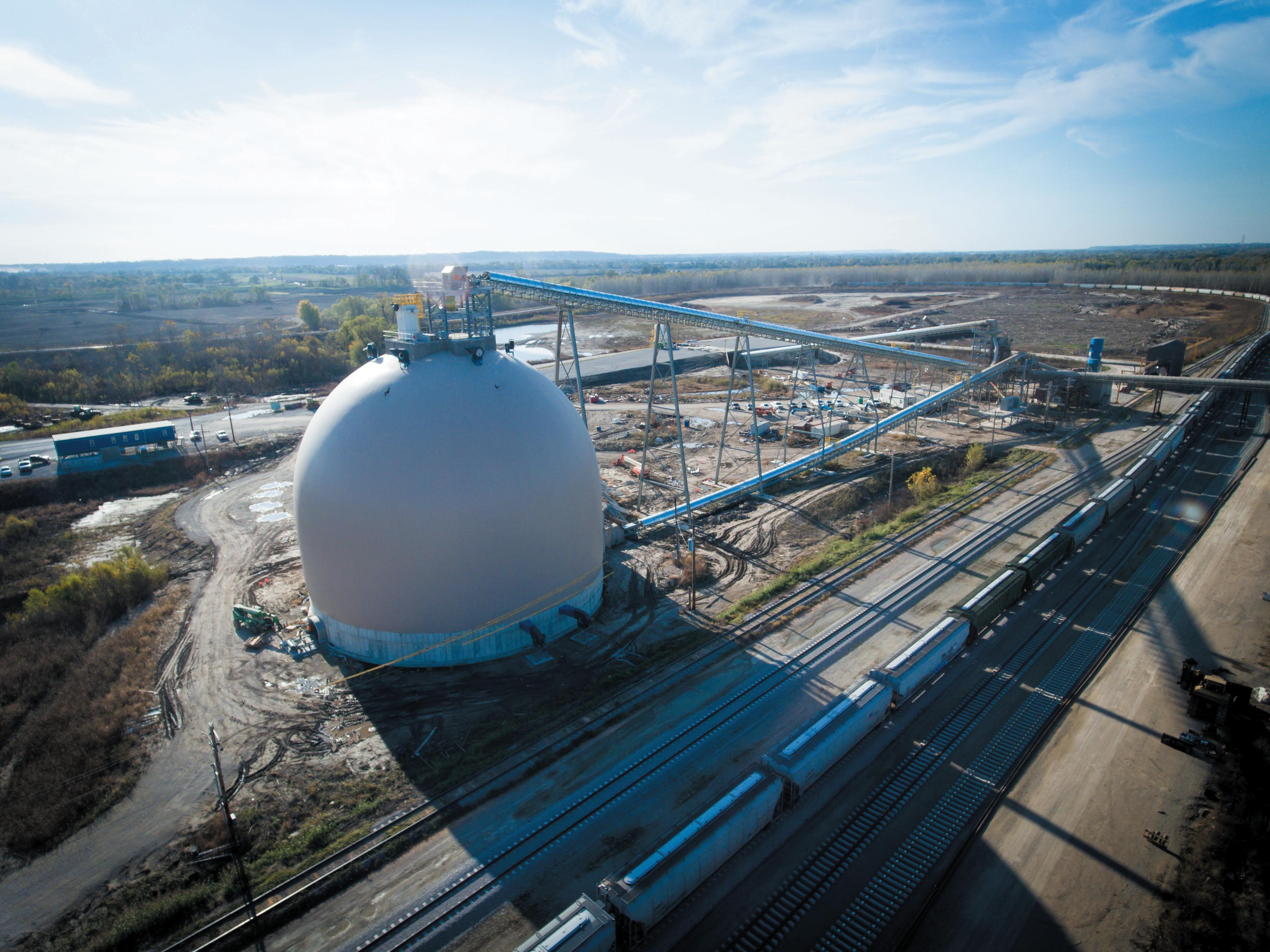
developed diverse and economical foundation solutions that can be chosen based on site geology. A dome’s strength provides high tolerance for total and differential settlement. That quality combined with geotechnical engineering and site analysis ensures substantial foundational strength. The combination of the ring foundation and the concrete shell distributes loading uniformly, even over irregular surface conditions. Customers can save millions as the need for deep foundations is reduced or eliminated.
Q: How do we combat flow issues?
A: Oily grains are prone to caking or bridging in storage, especially when product is stacked especially deep. When the

problem is severe, grains fail to free-flow. Breaking down a compacted pile within a dome is possible, and companies can choose from multiple methods to tackle the problem. A front-end loader can knock down product, but this approach is sometimes avoided because of safety concerns. Safer alternatives include a whipchain system to break product, air cannons that blast grains loose or a screw reclaimer capable of working under pile load.
Q: What are we forgetting?
A: An expert team that understands product qualities and reclaim options will guide customers in analysing all aspects of the reclaim process. Dome Technology
relies on two types of scope questionnaires, one for a fixed budget and another for a quick budget. So whether a project is imminent or simply hypothetical, companies can get a good idea of what’s available and how to reach their storage and handling goals.
Another advantage of front-end engineering is potential cost savings at each stage of the project. For instance, companies often ask what kind of civil work Dome Technology can complete. Depending on what’s most cost effective, Dome Technology’s team can either perform the excavation and backfilling on a project or hire a local contractor, whichever is most economical.
...thank you for proving our point. Advertising really does work.
To find out how you can benefit from advertising in the world’s only monthly dry bulk publication contact Andrew Hucker-Brown on E: info@dc-int.com. Tel: +27 31 583 4360
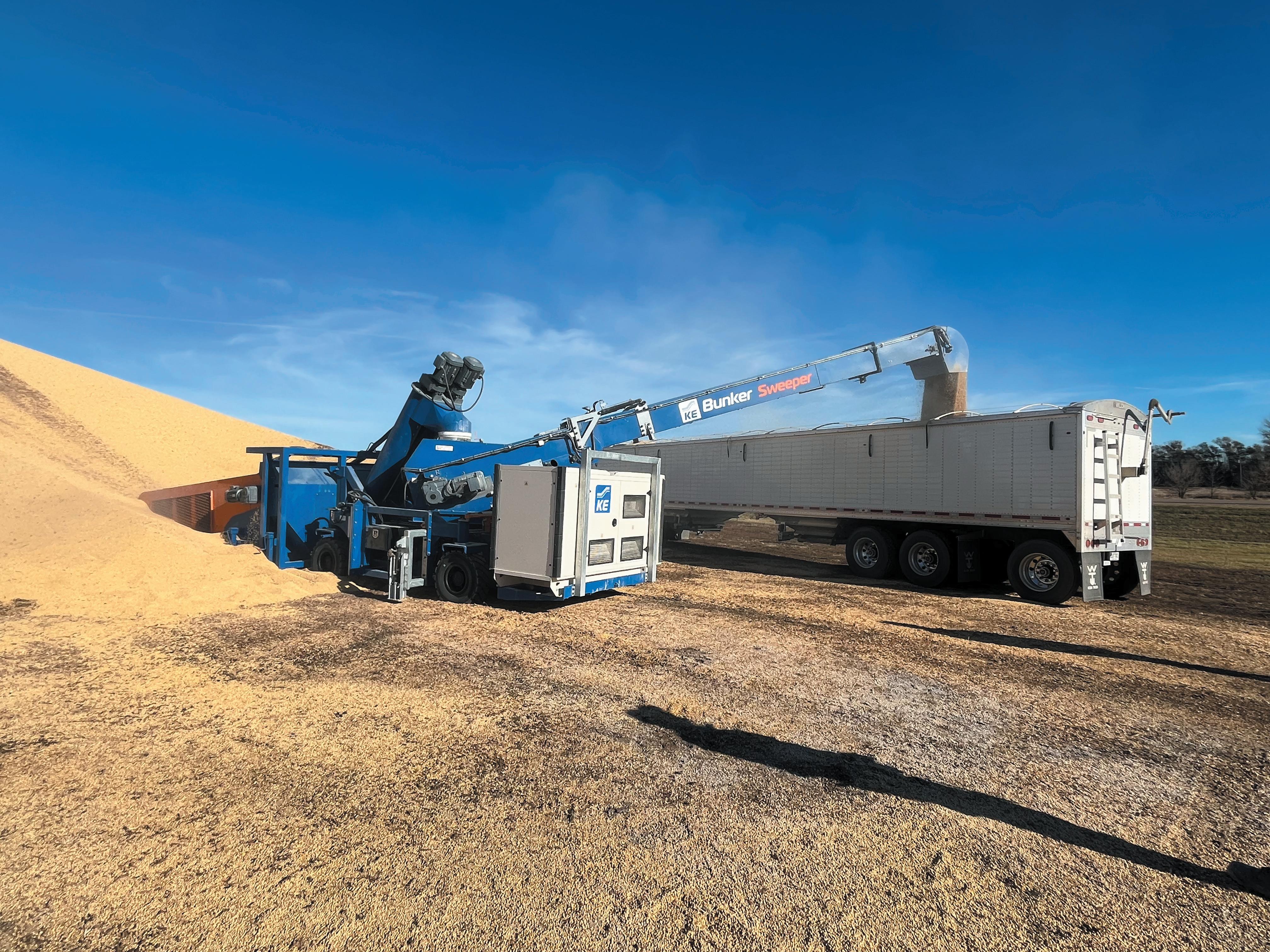
KE Agri International (KE), Kilic Engineering’s international brand, has been working closely with many of the larger grain handling companies across the United States to demonstrate its KE BunkerSweeper product, a machine specifically designed for the reclaim of agricultural products from open grain piles, bunkers and horizontal buildings or sheds, writes John Warda, KE Agri International KE has been supplying bulk handling equipment for grain handlers in Australia, Asia and the Middle East for over 50 years, servicing the agricultural industry with fixed and portable machinery over that period. Open stockpile storage facilities (grain piles or bunker storages) are prevalent in many grain producing countries, and KE has been concentrating on supplying its customers with improved solutions for these open bulk storage types with its specialized bunker inloading and reclaimer machines.
The BunkerSweeper is designed to make reclaiming grain from temporary storage, grain piles or sheds, directly into road trucks quick and easy, reducing operating costs for grain distributors and handlers, with its superior safety features
and remote-control operation making it one of the safest methods to move agricultural produce from a grain pile to a truck.
The new model reclaimer is selfpropelled (using hydraulic drives) which meets the needs of operators seeking an alternative to using front-end or payloaders or other less efficient mobile plant to recover products from open stacks and piles or from shed storages. The machine is compact and can be easily driven onto and off a flat-top trailer and transported from site to site as a standard semi-trailer load in most jurisdictions.
Since 2024, KE has been trialling its BunkerSweeper reclaimer at storage and handling operations across the mid-west of the USA.
Demonstrations of the BunkerSweeper reclaimer were undertaken in late 2024 and then again in February and March 2025 at over ten locations across Iowa, Kansas, Nebraska and South Dakota. Storages including horizontal buildings, round centre piles, various rectangular grain piles as well as basic unprepared base ground piles were all used in the US trials undertaken.
The demos went extremely well, with
customers impressed with the Sweeper’s versatility, speed of outloading and remotecontrol operation, amongst other features.
US companies involved in the demonstrations included ADM, CHS, Cargill, Viterra, Scoular, CVA, AgState, Aurora Co-op, Ag Partners Co-op and Southeast Farmers Co-op.
In the demonstrations completed to date, customers have noted that the BunkerSweeper’s flexibility to load at angles provides significant operational benefits when emptying product from round centre pile stacks.
Its ability to handle all grain product types included wheat, sorghum, soybean, oilseeds and also wet and clumpy corn was a feature of the machine which impressed many of the customers observing the machine for the first time.
Also during these demos, KE was also able to compete head-to-head with payloaders typically used for reclaiming from grain piles and was able to outperform the outloading operation currently in use by the customer.
This proven performance advantage combined with real dollar fuel and maintenance savings delivers a comparative
financial advantage over a front-end loader as well. This was proven in the USA working alongside current reclaiming techniques employed by grain handlers, demonstrating increased productivity (i.e. outloading rates) reducing reclaiming hours, and hence overall labour and operating costs.
Lower fuel usage and reduced maintenance costs compared to payloaders, safer operations with the operator using a remote-control unit away from moving plant and the stockpile, and the ease of transferring equipment between sites were all other benefits which KE believes will see the BunkerSweeper become a key part of US grain handling operations into the future.
Nevertheless, KE has continued to improve the machine, upgrading its current reclaimer which was used in the USA demonstrations with a newer version of the machine, branded the BunkerSweeper750. This latest model will have an increased loading capacity of 20% above the current machine. This enhancement will ensure that the KE machine can significantly outperform the current payloaders and other reclaimers observed operating in US grain piles, lifting the outloading rate from 600tph (metric
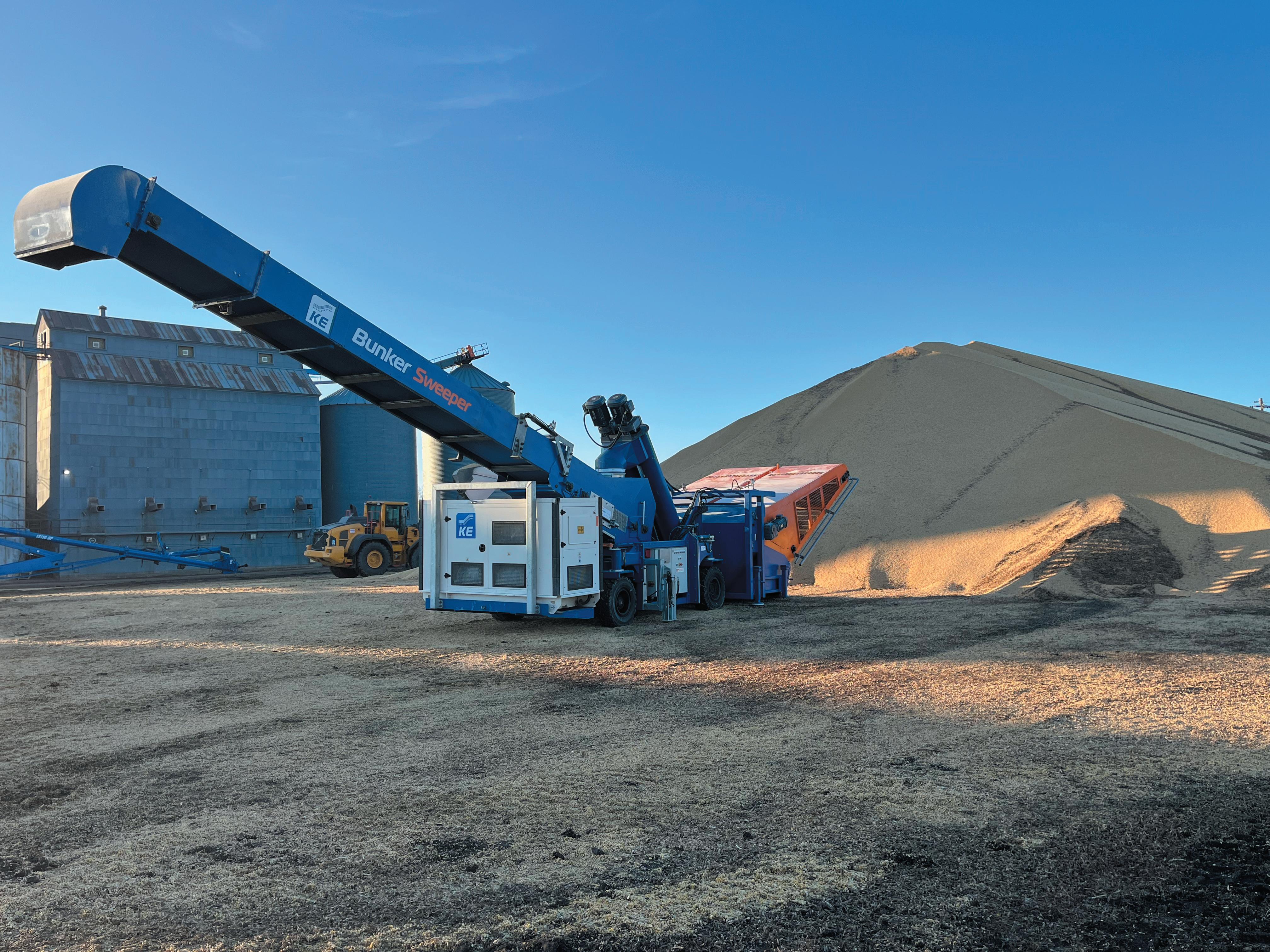
tonnes per hour) to 750tph, or 28,000 bushels per hour capacity.
Furthermore and in response to US customer feedback, KE is also increasing the driving speed of the machine as well as adding all terrain tires to assist movement on less developed grain pile base surfaces. A longer throwing spout on the outload swing conveyor to improve loading to the longest road trailers in use for reclaiming, is also featured on the new model.
Finally, in the development of the BunkerSweeper, KE has been focused on automation aspects of the machine with a goal to potentially have them operating autonomously in the longer term.
Although the initial reclaimers will be constructed in KE’s Australian workshops, plans are in place to have the BunkerSweeper750 reclaimer made by a partner engineering company in the USA under licence.
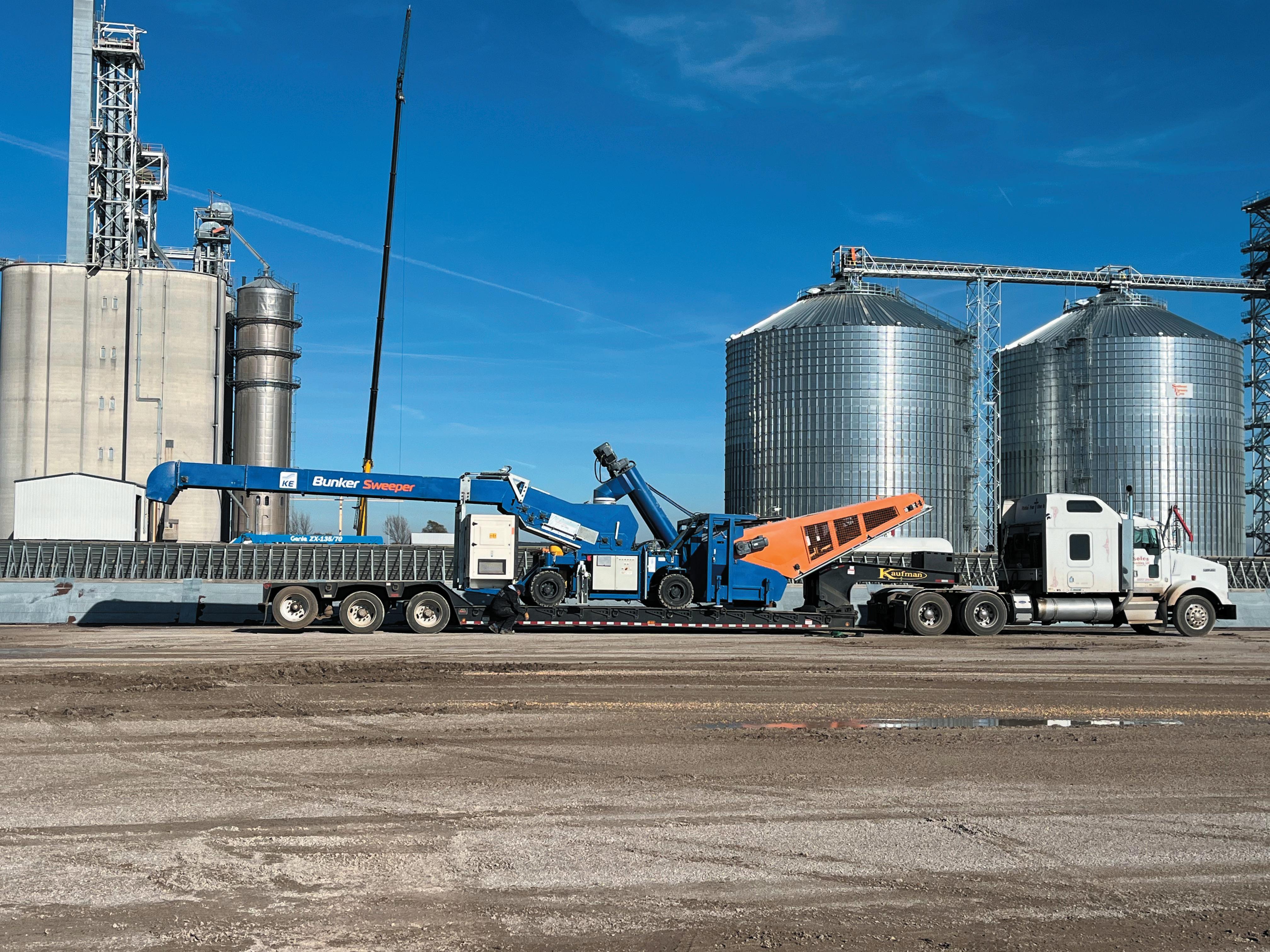
Processors face multiple challenges when it comes to moving grain and grain-derived products. Moisture and variations in particle size can cause flow stoppages, while dust generation raises concerns over cross-contamination and combustion hazards. Add to this the requirements for sanitary equipment design, and the flexibility to handle multiple grain types within a single facility, and it becomes clear why processors demand robust, enclosed, and adaptable material handling solutions.
Flexicon has earned recognition as one of the world’s foremost designers and manufacturers of bulk material handling equipment. Hundreds of grain and grainrelated processors worldwide rely on Flexicon systems to reduce dust, minimize waste, and maximize uptime.
Promoting consistent material flow is a key factor in optimizing grain production. Flexicon addresses these issues with rightsized storage and conveying systems engineered for reliable flow. Steep-walled hoppers with integral flow-promotion aids, including bin vibrators and agitation devices, promote consistent discharge.
For downstream movement, Flexicon provides three specific conveying technologies based on the material
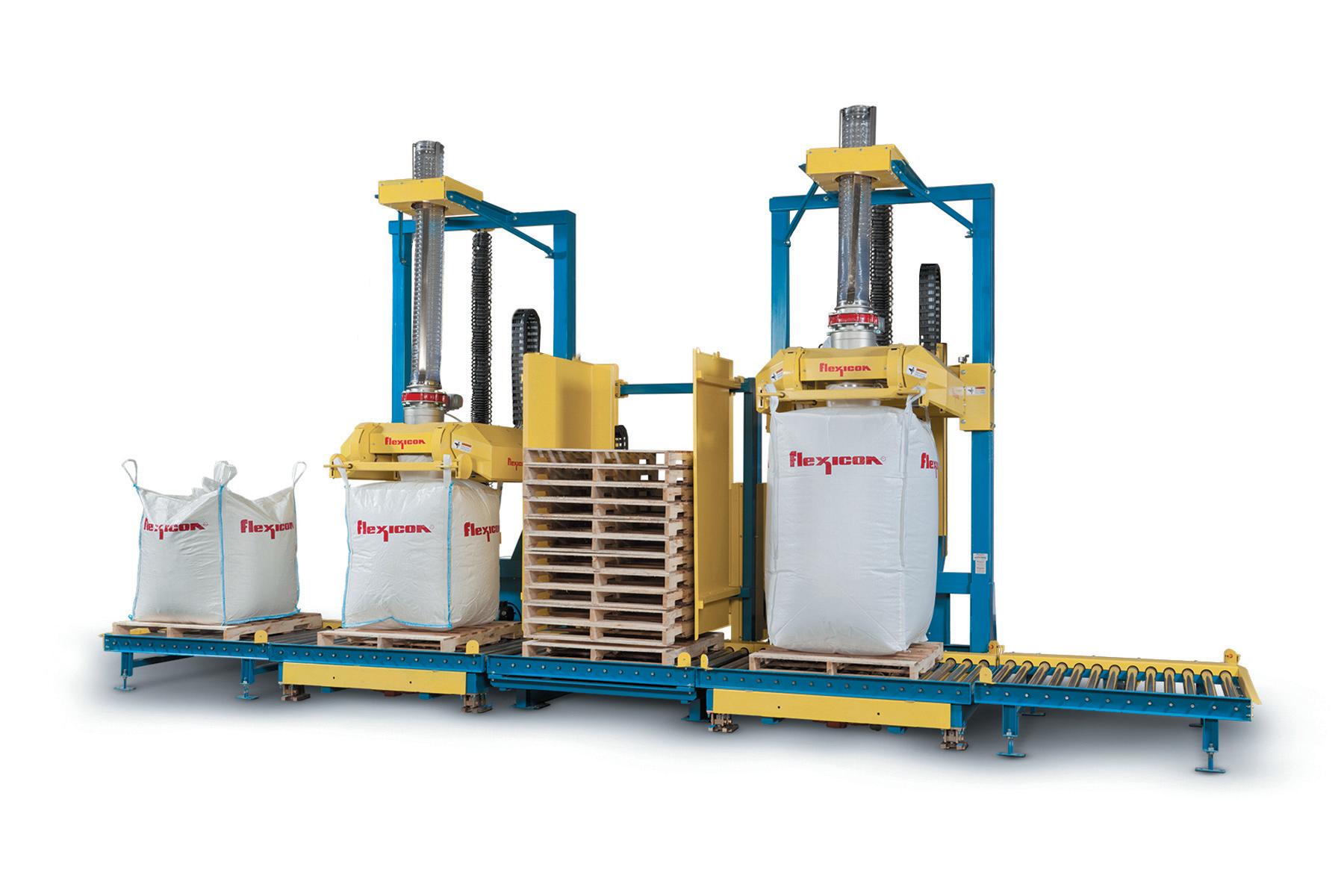
characteristics and the line rate. These include flexible screw conveyors optimized for pitch, spiral profile, and speed; tubular cable conveyors for ultra-gentle transfer with minimal degradation; and dilute-phase pneumatic systems designed for efficient and reliable operation.
Grain dust presents challenges that extend beyond basic housekeeping to air quality, explosion risk, allergen control, and cross-contact concerns. Flexicon addresses these issues with fully enclosed systems and standalone or integrated filtration options that help keep operators
Flexicon Bulk Bag filler and pallet dispenser.
safer and facilities cleaner. Each system is engineered to support compliance with applicable codes and industry best practices for combustible dust and sanitation and can be integrated into a facility’s overall dust mitigation strategy.
To help minimize residual material collection, Flexicon systems can include smooth-bore, crevice-free product contact surfaces, quick-release components, CIP (clean in place)-friendly options, easy access for dry cleaning, and validated cleanout procedures that minimize changeover time.
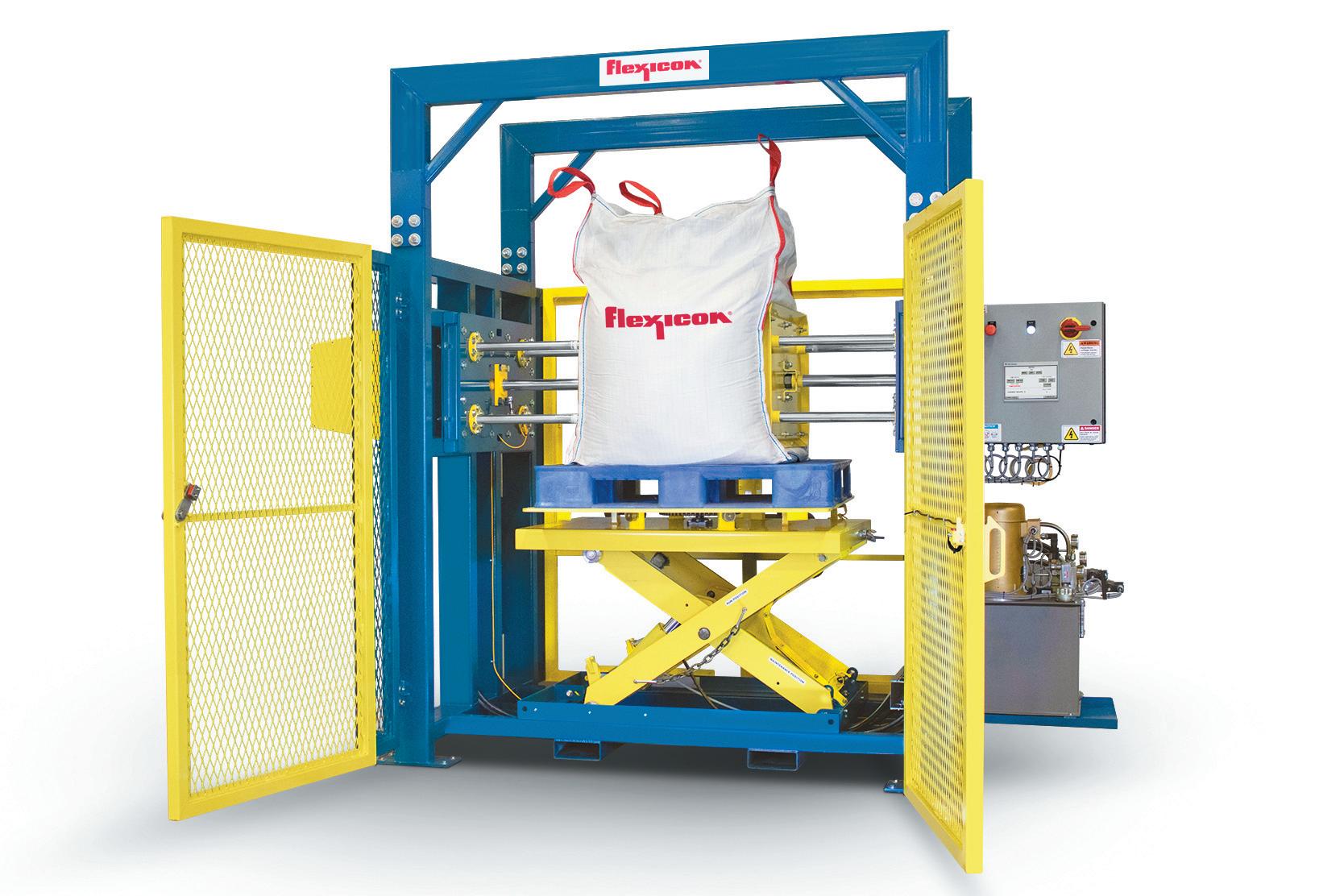
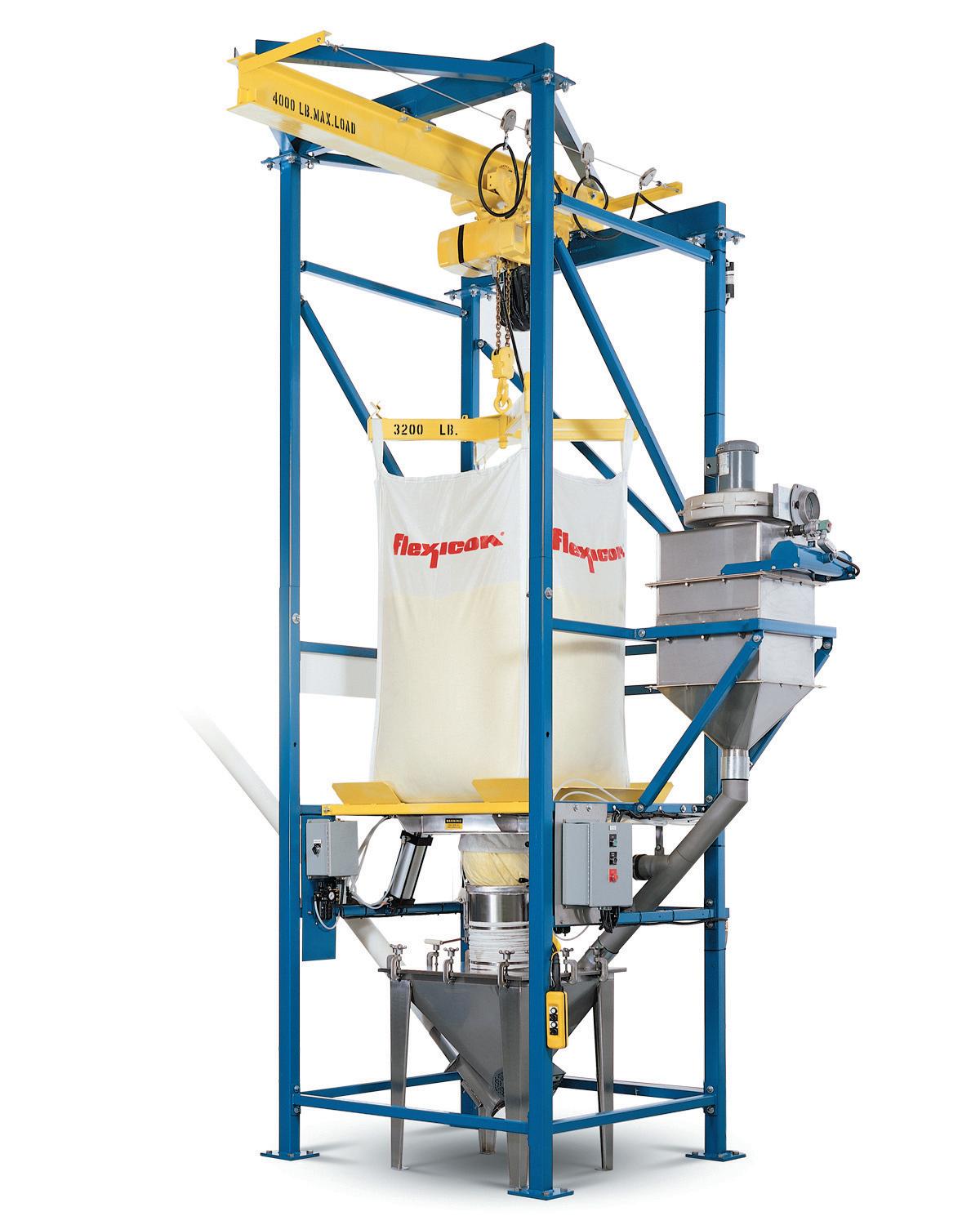
END -TO -END FLEXICON SYSTEMS FOR THE GRAIN HANDLING LIFECYCLE
RECEIVING & UNLOADING
Bulk bag (also known as big bags or v FIBC) dischargers with hoist-andtrolley or forklift-loaded frames, bag activation and flow promotion devices discharge intact grains, milled flours, starches, and bran from bulk bags. Container, drum, and box tippers v feature a lift-and-seal option that creates a dust-tight connection between the tipper hood and the container.
Mechanical or pneumatic conveyors v transfer material directly to and from silos, day bins, or process vessels.
STORAGE & CONDITIONING
Storage silos and day bins provide v large-volume storage for bulk materials, providing a buffer supply so the plant has a continuous material source. These are often equipped with conveying connections to move material downstream.
Bulk bag conditioners loosen v compacted ingredients that have
solidified during storage or shipment prior to discharge, reducing operator intervention and downtime.
CONVEYING BETWEEN UNIT OPERATIONS
Dilute phase pneumatic conveying v systems (positive or vacuum pressure) span longer runs and multiple pickup/drop points while keeping floors clear and transfers enclosed.
Flexible screw conveyors handle a v wide range — from 400+ kg/m³ flours to lighter extruded products — using application-specific spirals and tube materials. Mobile options are available. Tubular cable conveyors move shape- v sensitive or otherwise fragile cereals, puffed or coated pieces, and malts with exceptionally low breakage over complex routes.
Gain-in-weight or loss-in-weight v batching on load cells automates multiingredient recipes for breads, snacks, cereals, pet foods, and brewing/ distilling grists.
Integrated controls (PLC/HMI) v
coordinate sources, routes, and destinations with lot tracking and alarm management to support traceability.
Bulk bag fillers with densification and v de-aeration options hit target weights for flours and blends while improving bag stability and fill rates.
Drum/box filling stations keeps dust v contained and floors clean, with automated indexing for throughput.
Sanitary construction: stainless or v coated steel frames, polished product contact, sanitary welds, and tool-less access where appropriate.
Rated environment protocols: v systems engineered to integrate with plant protection measures (isolation, venting/suppression, grounding/ bonding) specified by the site’s safety programme.
Flour handling: to manage more than v 30 types of flour—each with unique flow characteristics — Goya Foods installed 16 automated Bulk Bag Dischargers, significantly increasing production capacity and output.
Seed lubrication: adding graphite to v seeds improves their flowability and planter performance, but it generates dust. A vegetable seed company overcame this challenge with a bulk bag discharger system
Harvested rice packaging: rapid filling v bulk bags with 2000 lb./907kg of rice helps this processor stay ahead of deadline driven production demands.
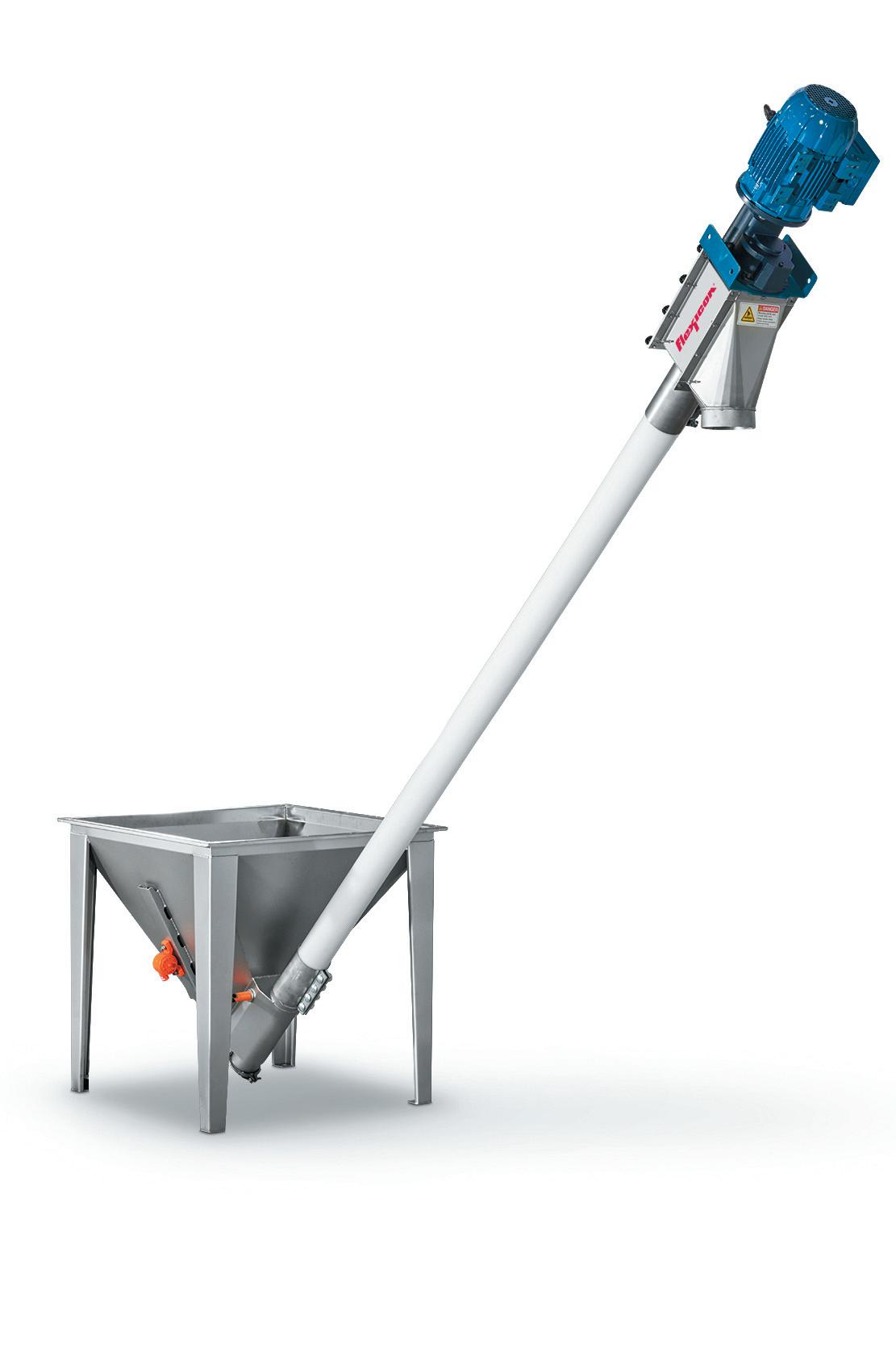
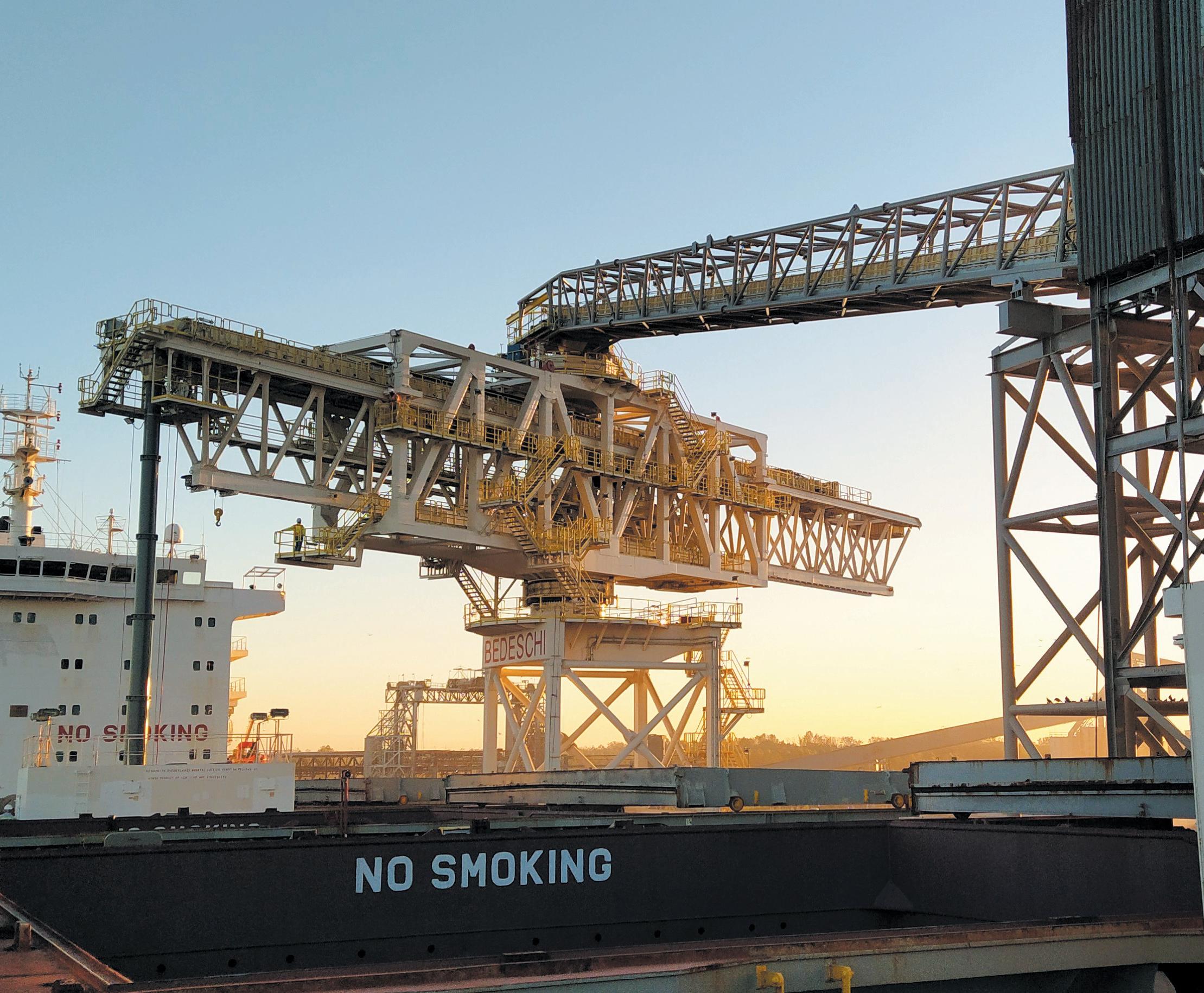
Founded in 1908, Bedeschi has stood at the forefront of bulk material handling and transport, pioneering advanced solutions with Italian engineering excellence for over a century. Headquartered in Limena (Padua), Italy, Bedeschi merges tradition with innovation to serve a global clientèle across the cement, mining, port, and grain industries. Today, as a family-owned company, Bedeschi operates internationally with subsidiaries in Australia, the USA, Germany and Hong Kong. It specializes in delivering turnkey solutions and cuttingedge equipment designed for performance, reliability, and sustainability. With over a century of experience, Bedeschi is recognized worldwide for its versatility and expertise in handling a comprehensive range of bulk materials. Its solutions, enable the efficient movement and processing of a wide range of materials, including minerals of all kinds, limestone, clinker, wheat, cereals, and soybean meals. This multi-faceted expertise is complemented by in-house capabilities: Bedeschi proudly operates its own
Westwego: Bedeschi engineered, manufactured, installed and commissioned a shuttle type shiploading arm capable of loading grain and oilseeds at 2,200tph on vessels up to 120,000dwt.
manufacturing workshop in Italy, where it designs and produces key mechanical components to the highest standards of quality and precision. This combination of technical mastery and direct production control allows it to offer tailor-made solutions that consistently meet the evolving needs of our clients worldwide.
Grain handling is a vital part of the global dry bulk market — as such, Bedeschi is deeply committed to providing comprehensive systems that optimize efficiency, safety, and product integrity. Its principal equipment for the grain industry covers the entire materials handling chain, from shiploading and unloading at the port to conveying until the processing plant. The main systems it designs and manufactures include: Shiploaders: Bedeschi’s shiploaders v are renowned for their robust construction, flexibility, and energy efficiency. Bedeschi provides both mobile and stationary solutions, designed to handle a full range of grains including wheat, corn, soybeans,
and barley. The company’s shiploaders are customizable to accommodate various vessel sizes and capacities. They feature state-of-the-art dust suppression systems, gentle product handling technology to minimize grain degradation, and advanced automation controls to ensure optimal performance and operator safety. The capacity range of these machines is from 100 to 10,000tph (tonnes per hour).
Continuous mechanical ship v unloaders: Bedeschi’s continuous mechanical unloaders are designed for high-capacity, low-impact grain discharge from vessels. Equipped with innovative chain technology, Bedeschi’s unloaders ensure minimal product loss, reduced energy consumption (especially vs pneumatic solutions), and ease of maintenance. Bedeschi has also developed a very interesting solution to unload meals and very compact materials, thanks to a rotatory scraper that breaks up the material before feeding the vertical

chain elevator. Bedeschi’s solutions can handle up to 1,500tph.
Conveyor systems: a vital link v between the port and storage or
Ashdod Port: Bedeschi designed a CSU that operates at a capacity of 1,200tph and features a cutter able to unload free-flowing as well as non-free-flowing (meals, DDGS) materials. To ensure operability with non-free-flowing materials, the CSU is equipped with a rotating cutter able to effectively de-compact any kind of meal.
processing units, Bedeschi conveyor systems are designed for maximum throughput and minimal grain damage, contamination and spillage. The
company engineers belt conveyors, chain conveyors, pipe conveyors and enclosed conveyor systems — with advanced dust containment features
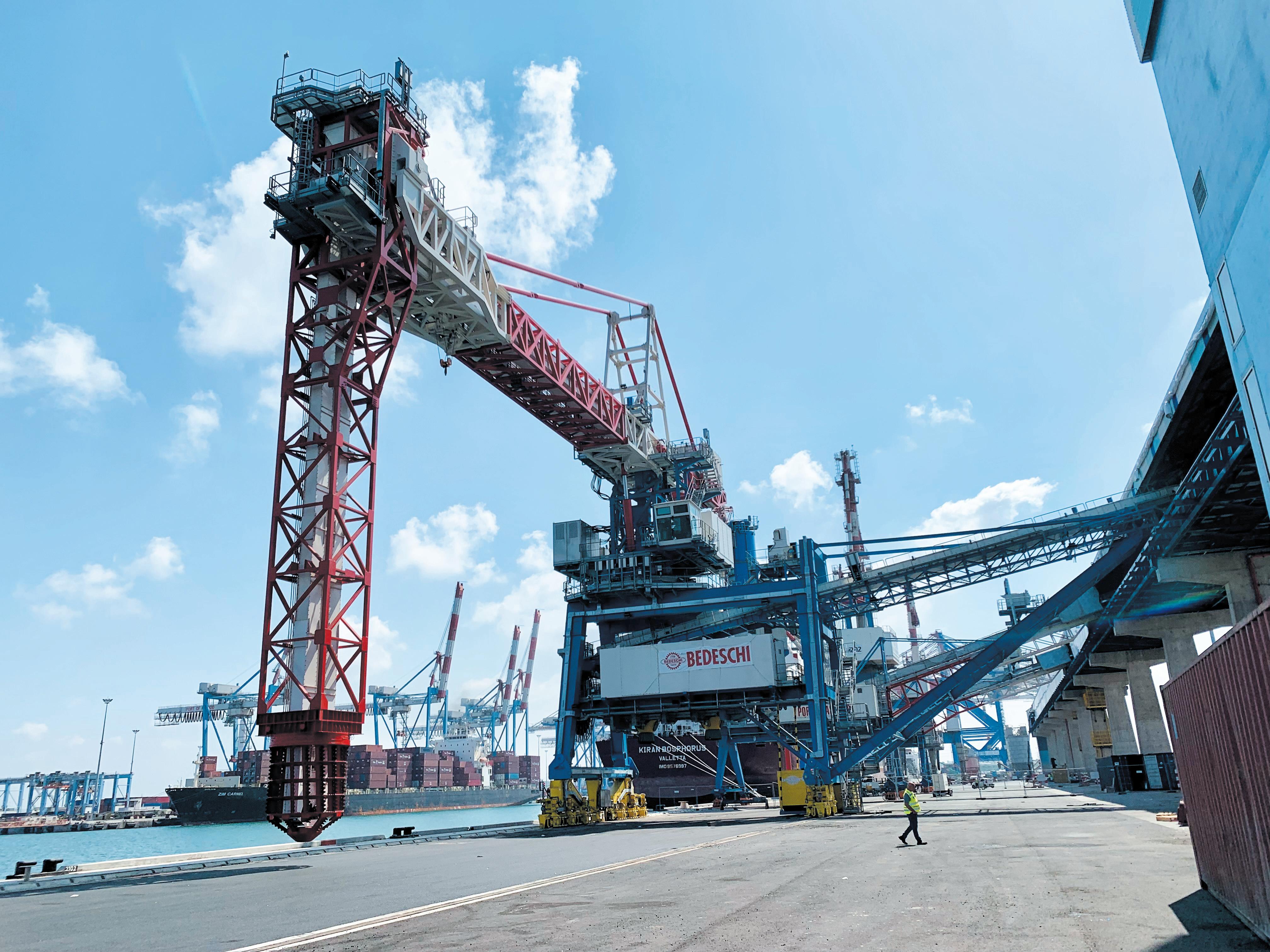
To find out how you can benefit from advertising in the world’s only monthly dry bulk publication contact Andrew Hucker-Brown on E: info@dc-int.com. Tel: +27 31 583 4360
and materials specifically selected for abrasion resistance and long operating life.
RECENT ACTIVITIES: CONTRACTS SIGNED AND PROJECTS COMPLETED
Bedeschi’s ongoing success in the grain industry is driven by a series of landmark projects and partnerships with leading operators worldwide. Below are some recent highlights from its portfolio:
MAJOR SHIPLOADERS INSTALLATIONS IN THE US
Westwego: Bedeschi engineered, v manufactured, installed and commissioned a shuttle type shiploading arm capable of loading grain and oilseeds at 80,000 bushels/h (2,200tph) on vessels up to 120,000dwt.
Reserve: Bedeschi supplied two v shiploaders with a capacity of 100,000 Bushels/h each for a facility on the Mississippi River. In order to reach the holds’ loading target (98% of total available volume) in any tide conditions, Bedeschi developed a KiKo mechanism that completely folds the vertical portion of the loading boom to work efficiently within the narrow space between the gallery and the ship.
MAJOR MOBILE SHIPLOADER INSTALLATIONS IN ADELAIDE, AUSTRALIA
Bedeschi supplied a fully mobile v shiploader on rubber tyres that can load grains and oilseeds on Panamax ships at a capacity of 1,000tph, received from trucks on a two-lane drive-over hopper that is fully integrated and mobile with the shiploader itself. The product is weighed and cleaned by a twin set of scalpers, sample according to local standards and finally load product dust free.
Ashdod Port: Bedeschi designed a v continuous ship-unloader (CSU) that operates at a capacity of 1,200tph and it features a cutter able to unload free-flowing as well as non-freeflowing (meals, DDGS) materials. To ensure operability with non-freeflowing materials, the CSU is equipped with a rotating cutter able to effectively de-compact any kind of meal. Thanks to the dimensions of this device, most of the products can be unloaded without the assistance of auxiliary Bobcats/ wheeled loaders, increasing safety and
reducing unloading time. Liverpool: Bedeschi has just delivered v another ship-unloader for a customer operating in the Port of Liverpool in the UK. This unit is able to unload material at a capacity of 800tph. Also this ship-unloader features a cutter able to unload free-flowing as well as non-free-flowing (meals, DDGS) materials.
Recognizing the evolving demands of global agribusiness, Bedeschi continues to invest in R&D focused on automation, emissions control, and product traceability. Its latest generation of equipment offers greater digital integration — remote monitoring, predictive maintenance, and seamless integration into clients’ digital ecosystems. Additionally, the company is dedicating significant resources in developing solutions
with the highest energy efficiency in the market, helping customers meet their energy goals. These efforts ensure that Bedeschi’s grain handling solutions are not only high performing, but also environmentally responsible, aligning with clients’ ESG objectives and Bedeschi’s commitment to delivering modern and environmentally friendly equipment.
Bedeschi’s track record in delivering reliable, high-capacity, and customizable solutions cements its reputation as a global expert in grain handling and logistics. As it looks to the future, Bedeschi’s dedication to engineering excellence, customer collaboration, and technological advancement remains firm. Bedeschi stands ready to continue supporting the grain industry with innovative systems that respond to ever-changing market demands — delivering efficiency, safety, and quality to every project.
6,000
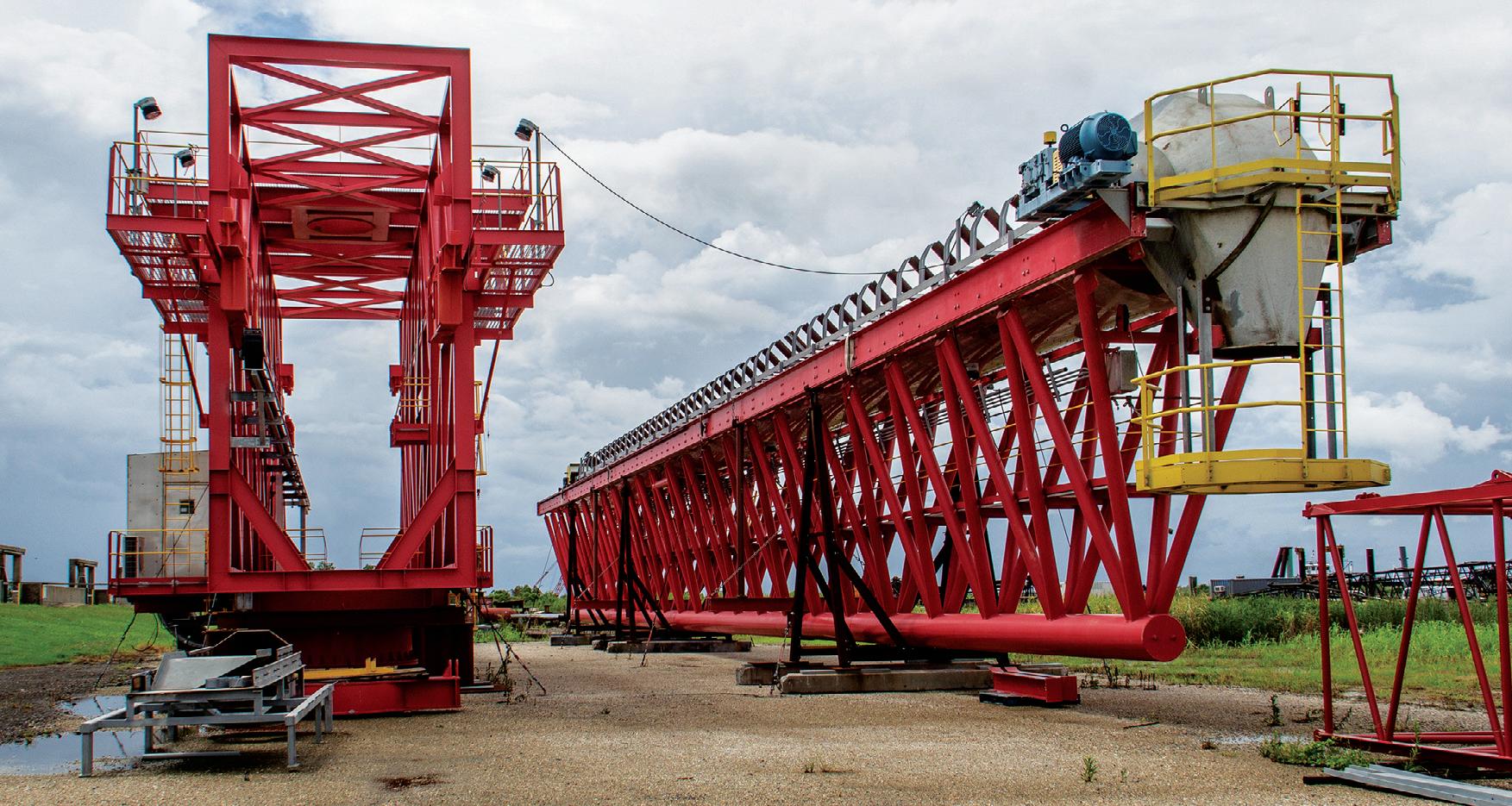
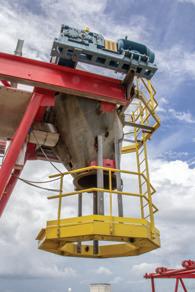
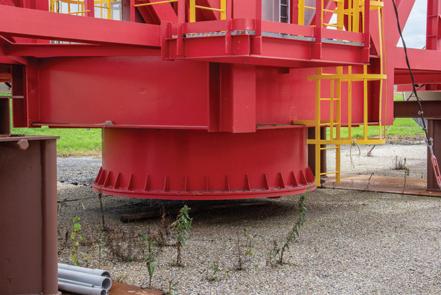
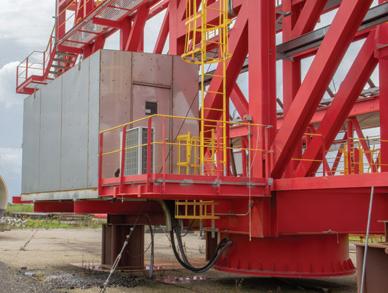
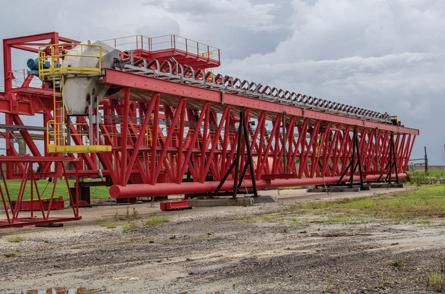

NEUERO produces the most reliable and high-quality bulk ship loaders worldwide. Environmentally friendly with less dust, less noise and more efficiency | neuero.de/en