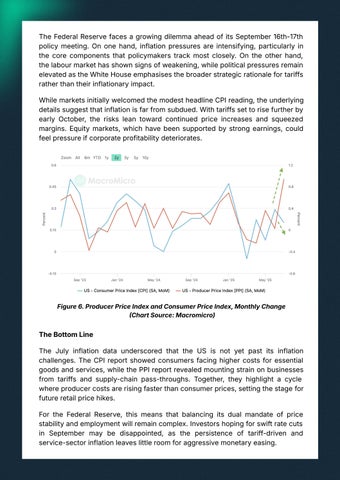
The Federal Reserve faces a growing dilemma ahead of its September 16th-17th policy meeting. On one hand, inflation pressures are intensifying, particularly in the core components that policymakers track most closely. On the other hand, the labour market has shown signs of weakening, while political pressures remain elevated as the White House emphasises the broader strategic rationale for tariffs rather than their inflationary impact. While markets initially welcomed the modest headline CPI reading, the underlying details suggest that inflation is far from subdued. With tariffs set to rise further by early October, the risks lean toward continued price increases and squeezed margins. Equity markets, which have been supported by strong earnings, could feel pressure if corporate profitability deteriorates.
Figure 6. Producer Price Index and Consumer Price Index, Monthly Change Chart Source: Macromicro)
The Bottom Line The July inflation data underscored that the US is not yet past its inflation challenges. The CPI report showed consumers facing higher costs for essential goods and services, while the PPI report revealed mounting strain on businesses from tariffs and supply-chain pass-throughs. Together, they highlight a cycle where producer costs are rising faster than consumer prices, setting the stage for future retail price hikes. For the Federal Reserve, this means that balancing its dual mandate of price stability and employment will remain complex. Investors hoping for swift rate cuts in September may be disappointed, as the persistence of tariff-driven and service-sector inflation leaves little room for aggressive monetary easing.